

CEDAR FALLS, IA
WEDNESDAY, APRIL 8, 2026
WEDNESDAY, APRIL 8, 2026
By Michael Spahn Assistant Sports Editor
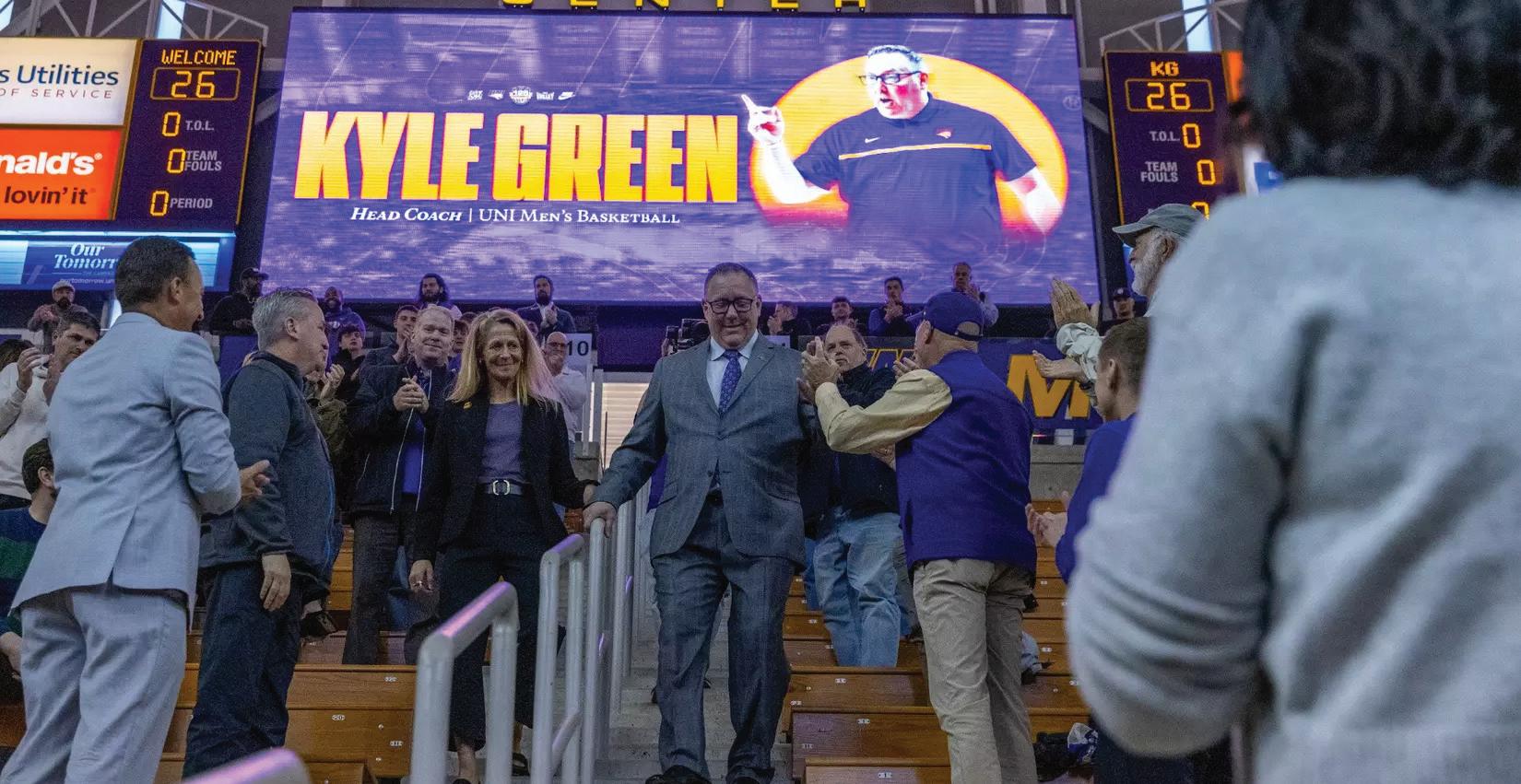
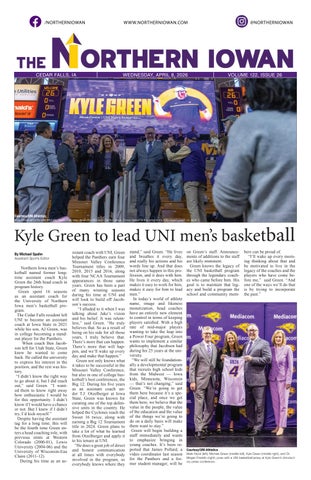
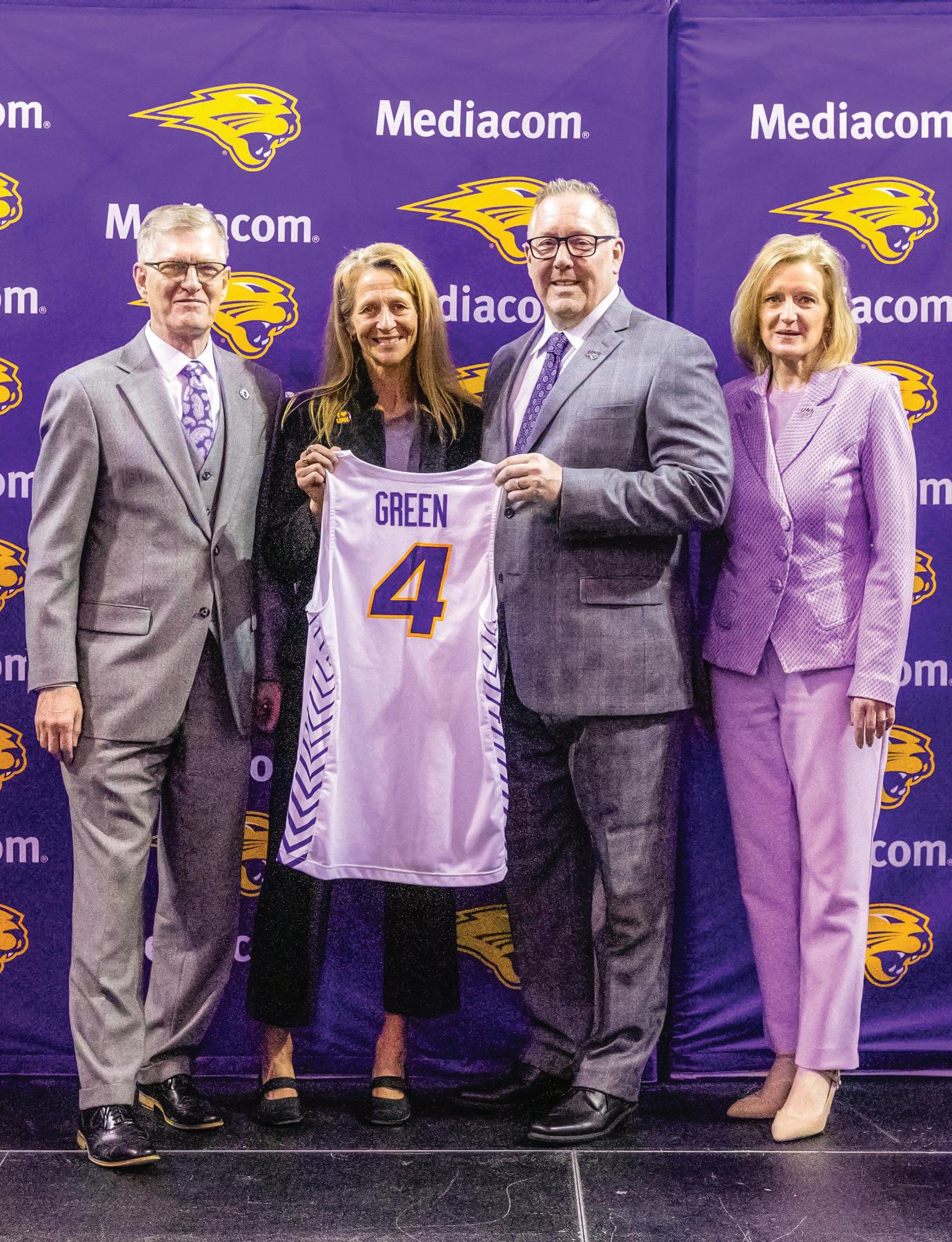
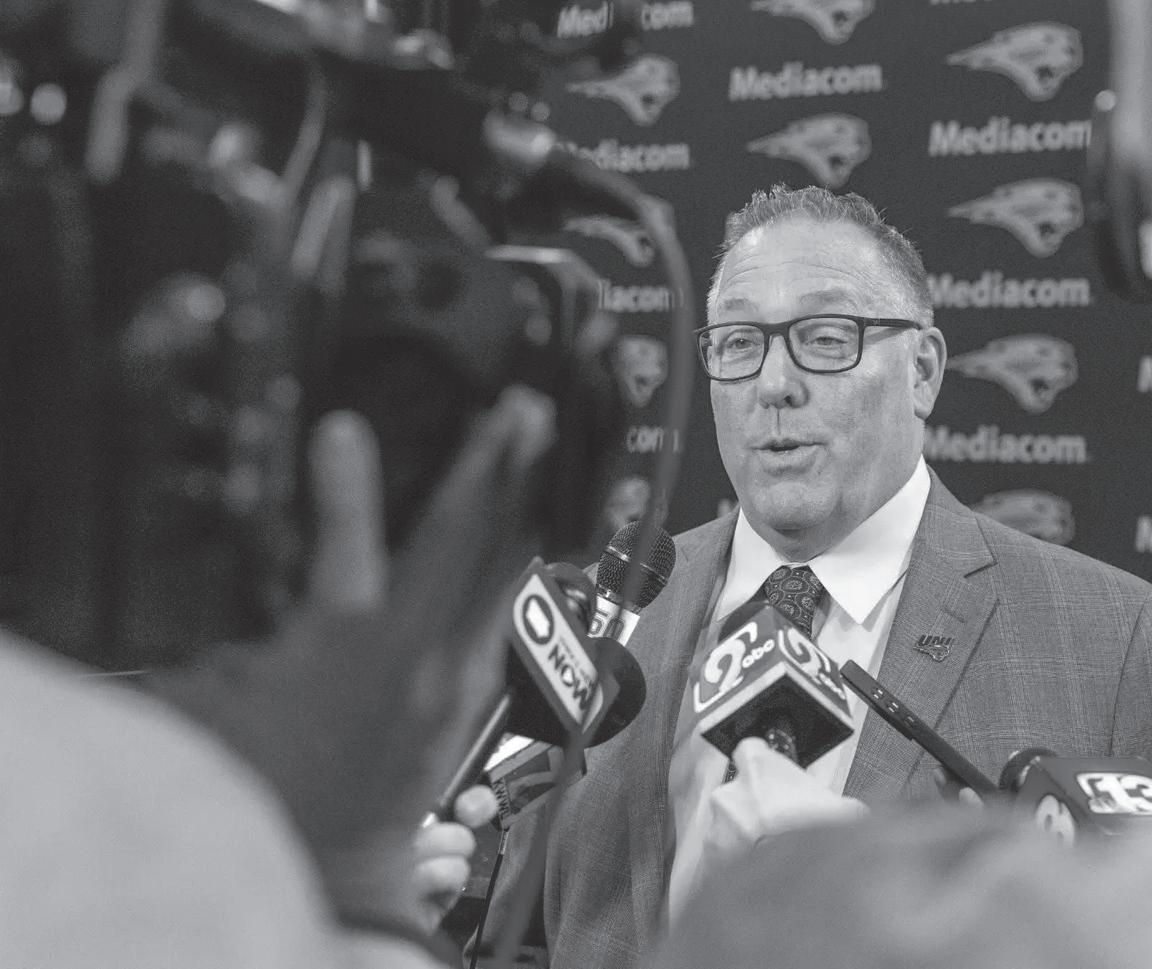
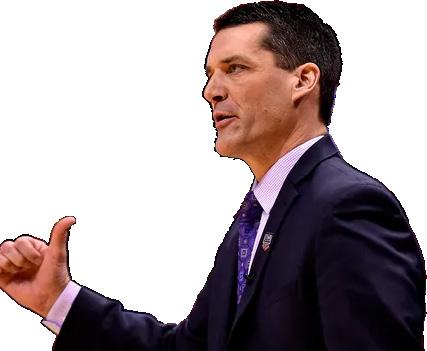
Northern Iowa men’s basketball named former longtime assistant coach Kyle Green the 26th head coach in program history.
Green spent 16 seasons as an assistant coach for the University of Northern Iowa men’s basketball program.
The Cedar Falls resident left UNI to become an assistant coach at Iowa State in 2021 while his son, AJ Green, was in college becoming a standout player for the Panthers.
When coach Ben Jacobson left for Utah State, Green knew he wanted to come back. He called the university to express his interest in the position, and the rest was history.
“I didn’t know the right way to go about it, but I did reach out,” said Green. “I wanted them to know right away how enthusiastic I would be for this opportunity. I didn’t know if I would have a chance or not. But I knew if I didn’t try, I’d kick myself.”
Despite having the assistant tag for a long time, this will be the fourth time Green enters a head coaching role, with previous stints at Western Colorado (2000-01), Lewis University (2004-06) and the University of Wisconsin-Eau Claire (2011-12).
During his time as an as-
sistant coach with UNI, Green helped the Panthers earn four Missouri Valley Conference Tournament titles in 2009, 2010, 2015 and 2016, along with four NCAA Tournament appearances in those same years. Green has been a part of many winning seasons during his time at UNI and will look to build off Jacobson’s success.
“I alluded to it when I was talking about Jake’s vision and his belief. It was relentless,” said Green. “He truly believes that. So as a result of being on his side for all those years, I truly believe that. There’s more that can happen. There’s more that will happen, and we’ll wake up every day and make that happen.”
Green not only knows what it takes to be successful in the Missouri Valley Conference, but also in one of college basketball’s best conferences, the Big 12. During his five years as an assistant coach under T.J. Otzelberger at Iowa State, Green was known for curating one of the top defensive units in the country. He helped the Cyclones reach the Sweet 16 twice, along with earning a Big 12 Tournament title in 2024. Green plans to take a lot of what he learned from Otzelberger and apply it to his tenure at UNI.
“He does a great job of direct and honest communication at all times with everybody involved in the program, so everybody knows where they
stand,” said Green. “He lives and breathes it every day, and really his actions and his words line up. And that does not always happen in this profession, and it does with him. He lives it every day, which makes it easy to work for him, makes it easy for him to lead men.”
In today’s world of athlete name, image and likeness monetization, head coaches have an entirely new element to control in terms of keeping players satisfied. With a high rate of mid-major players wanting to take the leap into a Power Four program, Green wants to implement a similar philosophy that Jacobson had during his 25 years at the university.
“We will still be foundationally a developmental program that recruits high school kids from the Midwest — Iowa kids, Minnesota, Wisconsin — that’s not changing,” said Green. “We’re going to get them here because it’s a special place, and once we get them here, we believe that the value in the people, the value of the education and the value of the things we’re going to do on a daily basis will make them want to stay.”
Green will begin building a staff immediately and wants to emphasize bringing in young coaches. It’s been reported that James Pollard, a video coordinator last season for the Panthers and a former student manager, will be
on Green’s staff. Announcements of additions to the staff are likely imminent.
Green knows the legacy of the UNI basketball program through the legendary coaches who came before him. His goal is to maintain that legacy and build a program the school and community mem-
bers can be proud of. “I’ll wake up every morning thinking about that and be motivated to live in the legacy of the coaches and the players who have come before me,” said Green. “And one of the ways we’ll do that is by trying to incorporate the past.”

Executive Editor
On April 8, students, faculty and staff are invited to volunteer as part of UNI’s Day of Service. The event offers an opportunity to give back to the Cedar Valley, which has supported the university for 150 years, while emphasizing hands-on, service-based learning.
UNI’s Day of Service is held in partnership with the Volunteer Center of Cedar Valley, along with project sponsors Veridian Credit Union and the R.J. McElroy Trust.
Additional support comes from community partners, including St. Stephen the Witness Catholic Student Center, ThreeHouse Collaborative Campus Ministries and Spiritual Leaders Association, SERVPRO, Young
Plumbing and Heating, Ashley Furniture, Foster’s Mattress and See What I Mean Consulting.
“The most important message or purpose of the day is to honor 150 years of service and giving, and supporting the community that UNI is thriving in,” said Julianne Gassman, director of community engagement at the University of Northern Iowa.
Gassman said planning for the event began in December 2024. This year’s Day of Service includes 77 projects across the Cedar Valley, with 2,156 volunteers registered and some opportunities remaining open until they begin.
“This is about the way that we learn about public health, or recreation, or accounting, or public relations, or whatever it is that we are majoring in,” Gassman said. “We can learn more about that through the service that’s going to happen on April 8.”
NORTHERN IOWAN
L011 Maucker Union Cedar Falls, IA 50614 www.northerniowan.com northern-iowan@uni.edu
319.273.2157
ESTELLE JOHNSON Executive Editor johnsecr@uni.edu 319.290.4955
JENNA WESTENDORF Managing Editor westejac@uni.edu 515.776.0176
LILY MUNNIK News Editor munnikl@uni.edu
COHEN KAMAUS Sports Editor kamausc@uni.edu
MICHAEL SPAHN Assistant Sports Editor spahnm@uni.edu
LUIS ALVAREZ Spanish Editor alvarlaa@uni.edu
OLIVIA HARRINGTON Assistant News Editor harringo@uni.edu
ELLISA ANDERSON Assistant News Editor anderebv@uni.edu
JENNA WESTENDORF Webmaster westejac@uni.edu
GRANT HOSPODARSKY Associate Multimedia Editor hospodag@uni.edu
CARTER BROWN Associate Multimedia Editor browncck@uni.edu
NAZIYA CRISP Assistant Digital Editor crispnaa@uni.edu
MACI SWANSON Head Photographer maciswan@uni.edu
ANELIA DIMITROVA anelia.dimitrova@uni.edu
CHRIS MARTIN christopher.martin@uni.edu
BETHANY WINGET Circulation Manager
Publisher reserves the right to refuse any advertisement at any time. The Northern Iowan is funded in part with student activity fees. All material is © 2025 by the Northern Iowan and may
LETTERS TO THE EDITOR Letters must be less than 300 words in length and are subject to editing. Not all submissions will be printed. Send submissions to northerniowan@uni.edu.
SEND US STORY IDEAS Tell us what’s happening on campus. Email submissions to northern-iowan@uni.edu. Do you want to have an event listed here? Email us at northern-iowan@uni.edu with information about the event to have it featured.

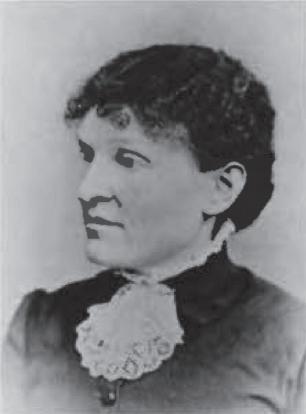
The first University of Northern Iowa woman professor who fought for equal rank and pay received special recognition on March 4, when history professor Thomas Connors paid tribute to her legacy with a talk titled, “UNI’s First Woman Professor: Laura Ensign and the Struggle for Fair Pay, Rank, and Faculty Governance under Gilchrist & Seerley.”
Ensign’s contributions to UNI history are especially noteworthy as the university marks its sesquicentennial milestone in 2026.
“As the school celebrates its sesquicentennial, her contributions deserve recognition,” Connors wrote of Ensign in an ebook he published on ScholarWorks in 2025.
Born in Castile, New York in 1848, Ensign moved to Iowa with her family when she was just five years old.
The family first lived in Delaware County, then in Waverly, until they settled in New Hartford, where her uncle, father and his two brothers were instrumental in the development of the town. Ensign had three sisters, though one passed away as a toddler.
“The remaining three grew up in a family who valued education, reading and faith,” Connors wrote, highlighting Ensign’s values that led to her and her sister Clara becoming teachers.
Ensign served as the principal at Cedar Falls High School prior to joining UNI in 1878, and for the next 14 years, she brought to campus her fighting spirit to raise awareness of how her female colleagues were underpaid.
In an irony of fate, she recruited UNI’s second president, Homer Seerley, who succeeded James Gilchrist, a man who Ensign often disagreed with over academic freedom and equity issues.
Ensign earned the rank of professor in history and geography in 1889, when UNI was known as Iowa State Normal School.
Connors became interested in Ensign’s story when he purchased her photo album on eBay. Although some pictures had been taken out by the family over the years, the pages still contained a number of small pictures of her students, likely gifts from her students to a beloved teacher.
“These are a sign of affection,” Connors noted in his talk, “and signs that Laura Ensign played a nice role in their lives, and she obviously cared about them because she kept them in her photo album with the pictures of her family and her colleagues.”
Ensign was at odds with President Gilchrist from the beginning of her time at UNI, ever since she was hired by the Board of Directors without his approval. In fact, Gilchrist
attempted to hire someone else, and any tensions were likely amplified by their close proximity.
“She lived, ate, and worked with her colleagues, pupils, and Gilchrist and his family in the same isolated building on a hill two miles from town,” Connors wrote in his book.
Despite these difficulties, Ensign made a substantive positive impact that shaped the university in her time and beyond.
The hiring of Seerley, by far “the most important figure in the history of this university,” was a big win, which Ensign was responsible for.
Seerley was previously the superintendent of Clinton Community School District, and was head of Iowa State Teachers’ Association.
Seerley served the campus community for 42 influential years.
Throughout her time at UNI, Ensign was an advocate for herself and her colleagues. One of the greatest ongoing battles for Ensign regarded salary.
At one point, the equalization of pay for all women decreased Ensign’s salary despite her expertise in history and geography.
Her salary eventually rose to $1,000 in 1886, which was greater than her salary before or after the equalizer.
Not only were women not paid as well as men for the same work, but only men were considered profes -
sors. Women were only considered as teachers before 1889.
By this point, Seerley had taken over the reins of the university,and he continued Ensign’s fight for equal rank and pay for all after she left in 1892.
As fate would have it, Ensign gained the recognition of a professor just minutes before another
in just an assigned field. This was one of Ensign’s largest disputes with Gilchrist, in which professors David Wright and Moses Bartlett voted on her side.
“Every struggle she gets in, she seems to win,” Connors said.
While Ensign was at what is now called UNI, she also made extra money by working in professional development, and writing textbooks or outlines in subjects like history and geography.
She started publishing them in Cedar Falls, until they were later published by Flannigan in Chicago in the 1890s. Her work was last published in 1940, three years after her passing.
The majority of the primary sources Connors included Homer Seerley’s correspondence and David Wright’s memoirs. Both were friends and allies of Ensign, and she continued to keep in contact with the two after she left the Cedar Valley.
Connors added, “There is one place you can find a monument tour, and that’s in New Hartford. And if you go to the family plot, which is in the front of the cemetery, the family tombstones are all row and they’re labeled mother and father and daughter and aunt … except for hers, she’s epitaphed as teacher.”
After her time at UNI, Ensign enjoyed traveling, lived in bigger cities, and participated in a number of professional endeavors while teaching at girls’ schools until she retired in 1931.
She never married, and usually lived at the school she was teaching at.
“Her life is defined by her career,” Connors said.
Although her time at UNI lasted only 14 years, Ensign left a palpable impact with her advocacy and her teaching.
The school newspaper wrote about her up to 25 years after her death. Ensign passed away in 1937 of
Her story is there. Nobody’s paid much attention to it.”
- Thomas Connors UNI professor
Alzheimer’s.
faculty member, Anna McGovern, a professor of methods, was awarded the rank.
“They still continue to hire women as instructors. They are more likely to hire men as professors, so that imbalance remains,” Connors said, “But you start to see women achieving that rank and being equal as a professor if not quite the salary.”
Ensign was also part of the fight in which the board and faculty allowed teachers and professors to teach in their specialty rather than
Learn more about Laura Ensign in the free document by Professor Connors, which is available on ScholarWorks.
“I’m hoping that maybe the library will create an accessible collection in the University archives,” Connors said. “I’m trying to get some assurance of that.”
“Her story’s there. Nobody’s paid much attention to it. So hopefully, maybe they will start now.”
Michael Spahn
Editor Asistente de Deporte Luis Alvarez Editor de español
G reen pasó 16 temporadas como entrenador asistente del programa de básquetbol de la Universidad del Norte de Iowa.
El residente de Cedar Falls dejó UNI para convertirse en asistente en Iowa State en 2021, mientras su hijo AJ estaba en la universidad destacando como jugador de las Panteras.
Cuando el entrenador Ben Jacobson se fue a Utah State, Green supo que quería regresar a casa. Llamó a la Universidad para expresar su interés en el puesto y el resto es historia.
“Yo no sabía cuál era la forma correcta de hacerlo, pero me comuniqué”, dijo Green. “Quería que supieran de inmediato lo entusiasmado que estaría con esta oportunidad. No sabía si tendría oportunidad o no. Pero sabía que si no lo intentaba, me arrepentiría.”
A pesar de haber ocupado el puesto de asistente durante mucho tiempo, esta será la cuarta vez que Green asume un rol de entrenador en jefe, con experiencias previas en Western Colorado (2000-2001), Lewis University (2004-2006) y la Universidad de Wisconsin-Eau Claire (2011-2012).
Durante su tiempo como asistente en UNI, Green ayudó a las Panteras a ganar cuatro títulos del Torneo de la Conferencia del Valle de Misuri en 2009, 2010, 2015 y 2016, así como a disputar cuatro participaciones en el Torneo de la NCAA en esos mismos años. Green ha formado parte de muchas temporadas ganadoras durante su etapa en UNI y buscará continuar con el éxito del entrenador Jacobson.
“Lo mencioné cuando hablaba de la visión de Jake y de su convicción. Era implacable,” dijo Green. “Él realmente cree en eso. Así que, como resultado de haber estado a su lado durante todos esos años, yo también lo creo. Puede pasar más. Va a pasar más y nos levantaremos cada día para que suceda.”
Green no solo sabe lo que se necesita para tener éxito en la Conferencia del Valle de Misuri, sino también en una de las mejores conferencias del básquetbol universitario, el Big 12. Durante sus cinco años como asistente del entrenador TJ Otzelberger en Iowa State, Green se le conoció por crear una de las mejores unidades defensivas del país. Ayudó a los Cyclones a llegar dos veces al Sweet Sixteen, además de ganar el título del Torneo Big 12 en 2024. Green planea aplicar gran parte de lo aprendido de Otzelberger
a su gestión en UNI.
“Él hace un gran trabajo de comunicación directa y honesta en todo momento con todos los involucrados en el programa, así que todos saben en qué situación están,” dijo Green. “Él vive y respira esto todos los días y sus acciones y sus palabras realmente van de la mano. Y eso no siempre sucede en esta profesión, pero con él sí, y él lo vive cada día, lo que hace que sea fácil trabajar para él y que sea fácil para él liderar a los hombres.”
En el mundo actual de Nombre, Imagen y Semejanza (NIL), los entrenadores en jefe tienen un nuevo factor que deben controlar para mantener satisfechos a los jugadores. Con una alta proporción de jugadores de conferencias medianas que quieren dar el salto a un programa de poder cuatro, Green quiere implementar una filosofía similar a la que tuvo Jacobson durante sus 25 años en la Universidad.
“Seguiremos siendo fundamentalmente un programa de desarrollo que recluta jóvenes de preparatoria del Medio Oeste, con chicos de Iowa, Minnesota, Wisconsin; eso no va a cambiar,” dijo Green. “Vamos a traerlos aquí porque es un lugar especial, y una vez que los tengamos aquí, creemos que el valor de la gente, el valor de la educación
y el valor de las cosas que haremos día a día harán que queramos que se queden.”
Hasta ahora no se ha registrado la entrada de jugadores en el portal de transferencias. Mantener cierta continuidad en la plantilla será clave para las Panteras en la próxima temporada.
Green comenzará a formar su cuerpo técnico de inmediato y quiere enfatizar la incorporación de entrenadores jóvenes. Se ha reportado que James Pollard, coordinador de video la temporada pasada para las Panteras y exasistente estudiantil, estará en el equipo de Green. Es probable que pronto se anuncien las incorporaciones al cuerpo técnico. Green conoce el legado del programa de básquetbol de UNI a través de los legendarios entrenadores que lo precedieron. Su objetivo es mantener ese legado y construir un programa del que la escuela y la comunidad puedan sentirse orgullosos.
“Me levantaré cada mañana pensando en eso y motivado a vivir en el legado de los entrenadores y jugadores que vinieron antes que yo,” dijo Green. “Y una de las formas en que lo haremos será incorporar el pasado.”
By Grant Hospodarsky Associate Multimedia Editor
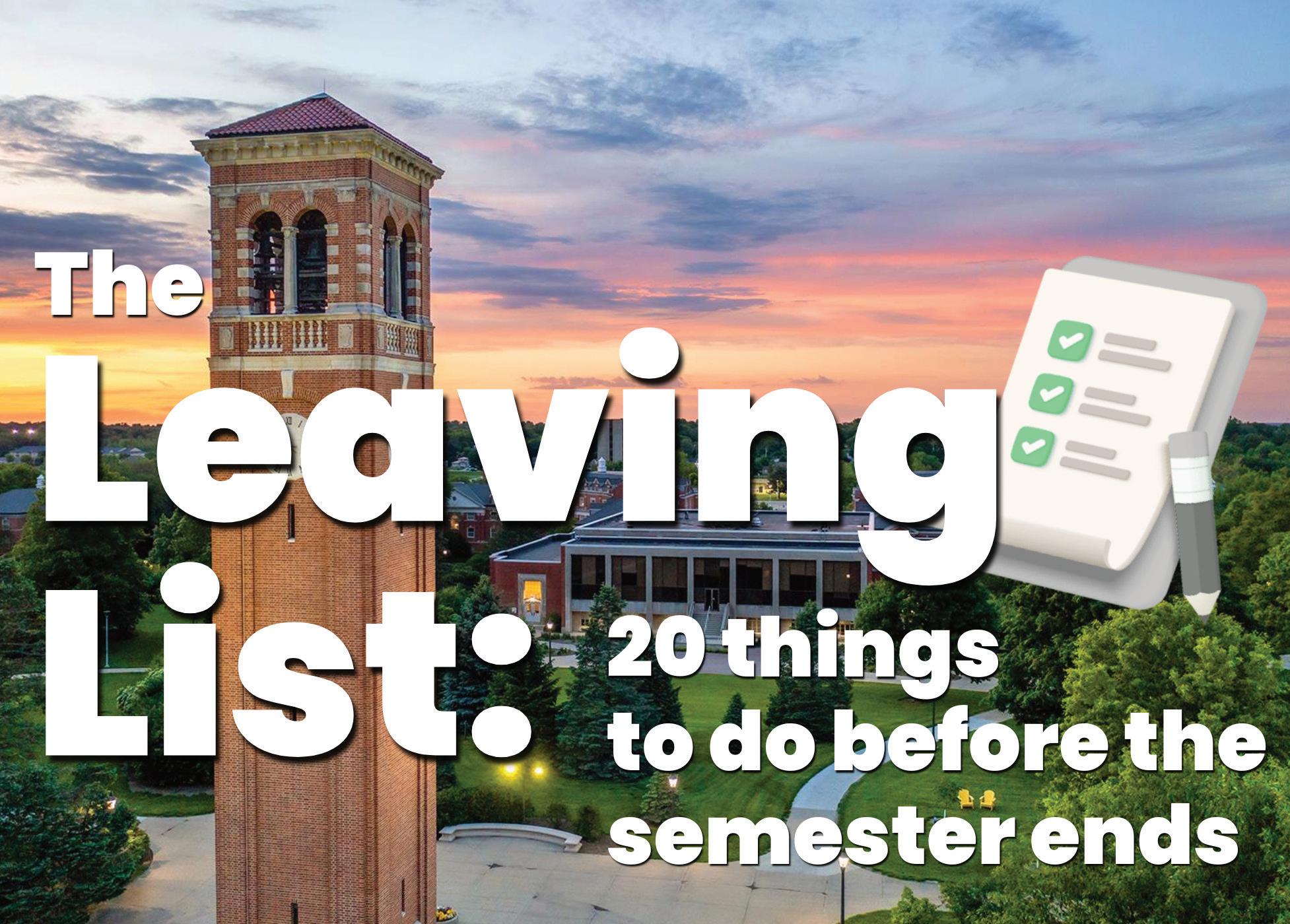
One Month. That’s how long you have until the end of the school year. One whole month. Roughly 40 days until commencement, to be more specific. This is how much time you have to do all the important things that you want to do before time runs out.
This number isn’t meant to scare you! It’s not there to make you sad! I’m simply giving you an idea of the amount of time you have left. I feel the same way. Over this winter break, I took a look ahead at the days of college I have left and crapped my pants (metaphorically). I realized it was up to me and me alone to get out there and DO things before I graduate.
Do not fret, our dear reader, for you are not alone. I want to help you get the very most out of your college experience. If you’re a senior like me, you know you don’t have much time. Don’t panic, but be intentional. So what should you do in the last forty days of the semester? Your last semester? The only person that can answer that is you. But here’s some of the things that I’ve picked to get me out and around this spring.
1. Take a walk on campus
2. Go to a School of Music performance
3. Play some pickleball
4. Stargaze off campus (wherever a good spot is)
5. Get a good drink at a bar (21+)
6. Study in the Botanical Center
7. Find a stranger and make a friend :)
8. Get a picture with Mark Nook
9. Go hot tubbing/swimming in the WRC
10. Get some food in Maucker you’ve never had
11. Find some art or sculpture on campus and admire it 12. Tell my favorite professors/faculty here how grateful I am for them 13. Eat at the dining halls (one last time) 14. Ride the library bikes around campus 15. Relax in the purple/gold chairs 16. Board game night 17. Reminisce on old locations (with friends, preferably) 18. Explore a building you don’t go inside regularly 19. Check out the library basement (specifically the museum) 20. Hammock and lower that cortisol (zzz…)
By InsideUNI
Laura Ensign arrived in Cedar Falls in 1878, joining the Iowa State Normal School faculty at a moment when the institution was still defining what it would become.
While she was not the first woman to teach at the Normal School, she would stay for 14 years and become a leader among her colleagues at a time when women’s authority in higher education
was still contested.
At the time of her arrival,
Ensign was already recognized as a skilled educator with strong views about how teachers should be trained.
At odds with the school’s
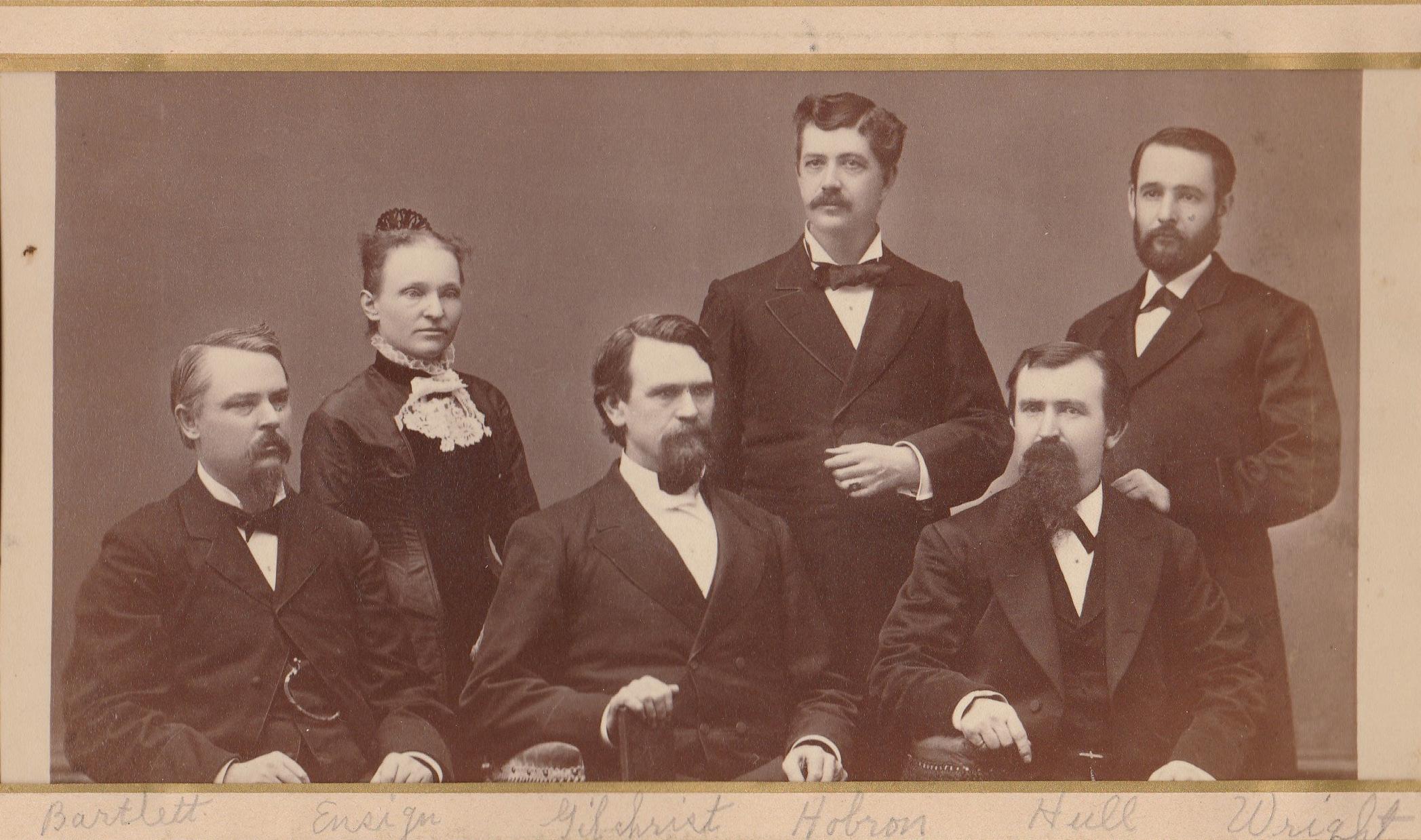
leadership, Ensign believed instructors should teach in their areas of specialization, and also became a leading voice in disputes over salary and rank.
These obstacles were compounded by a difficult relationship with Principal Gilchrist, the school’s first leader.
Despite that tension, Ensign remained deeply invested in the school’s future. She quietly worked behind the scenes to recruit Gilchrist’s eventual successor, her friend and fellow educator Homer Seerley.
No woman at the Iowa State Normal School held the rank of professor until 1889, when President Seerley pressed the Board to grant the title to women on the faculty and recognize women’s work as equal to men’s.
Ensign was the first woman to be promoted, marking a turning point for women across the institution.
While her career at the Iowa State Normal School ended in 1892, the legacy of her efforts remained.
The principles she championed — fair pay, academic specialization and professional rank — would become standard features of the institution as it evolved into a comprehensive university.
Ensign authored textbooks on pedagogy and grammar that became widely used throughout the Midwest. Through her writing, Ensign reached classrooms she would never see in person. Her textbooks were still in print when she died in 1937.
By Corey Wadsley Guest Writer
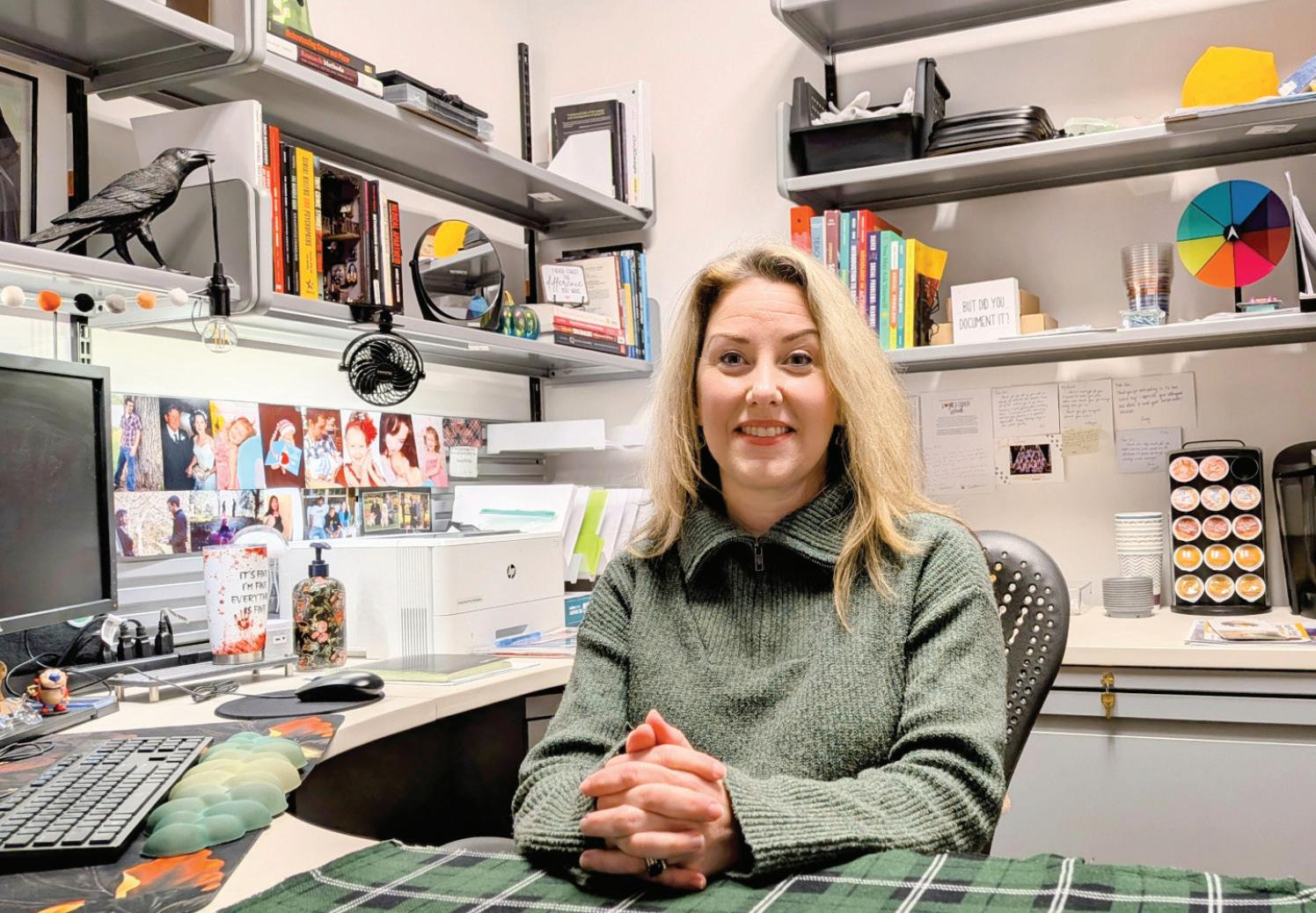
When Erin Pavioni teaches about homicide investigations at the University of Northern Iowa, she is not just speaking from a textbook.
Before coming to the UNI, Pavioni spent nearly 20 years working in different areas of criminal justice.
Her experience ranged from security work to working with fingerprint identification systems and transcribing interviews used in criminal investigations.
Now, Pavioni brings that real-world experience into the classroom as an assistant adjunct professor.
Originally from a small town in Arkansas with a population of around 5,000, Pavioni said her path after high school was not completely planned.
“I kind of bounced around after high school,” Pavioni said. “I even worked as a reporter for a little while.”
She eventually earned her bachelor’s degree in criminal justice in 2007 and began working in the field soon after. One of her early jobs involved working security for a stock exchange firm in Little Rock, Arkansas.
Later, she worked with the Arkansas State Police in the Identification Bureau, where she helped process fingerprints and worked alongside federal investigators using automated fingerprint identification systems.
Pavioni said those experiences gave her a deeper understanding of how criminal investigations work, especially behind the scenes.
For several years, she also worked as a transcriptionist, creating written transcripts of inter-
views, 911 calls and other recordings that were used in criminal cases.
However, her career took a different turn during the COVID-19 pandemic. Following the murder of George Floyd and the national conversations surrounding policing, Pavioni said she began to feel uncomfortable with the growing divide she saw within the system. “I couldn’t be part of that divide,” Pavioni said.
She eventually left that position and began working as a grants analyst for the Department of Corrections.
Around the same time, her husband’s job in IT brought their family to Iowa. Pavioni moved to Iowa in August 2021 with her husband and daughter after spending most of her life in Arkansas.
The move came with several adjustments.
“The biggest shock was the food,” Pavioni said with a laugh. She said Southern cooking tends to include more seasoning and richer ingredients than what she found after moving north. The weather was also a surprise.
“We didn’t have the right clothes for winter,” Pavioni said. “And the wind here is crazy.” Despite the adjustments, the move also created new opportunities for her family. Shortly after arriving in Iowa, Pavioni’s daughter, who had just turned eight, was able to go trick-or-treating for the first time.
Where they previously lived in Little Rock, Pavioni said it was not safe for children to go door-to-door on Halloween.
Although she misses family and friends back in Arkansas, Pavioni said she does not expect to move back permanently.
Instead, she has found a new home at UNI.
Her interest in teaching first developed while
she was working toward a doctoral degree. As part of the program, she was required to teach an undergraduate course while also conducting research and serving on university committees.
The experience helped her realize she enjoyed being in the classroom.
“I realized I loved teaching,” Pavioni said.
At UNI, Pavioni teaches courses related to criminal justice, including a class on homicide investigations, which was also the focus of her doctoral studies.
Homicide investigations contain a wide range of elements — such as determining the cause of death, identifying suspects, collecting forensic evidence and conducting interviews.
She said one of the best parts of teaching is getting to know students and hearing about their goals.
“I like making connections with students and learning about them as people,” Pavioni said. “Their fears, their hopes and their dreams.”
Outside of the classroom, Pavioni also advises a student organization called the Midnight Society, which focuses on discussions about true crime topics.
The club is open to students from any major and gives them a place to talk about criminal justice topics that interest them.
When she is not teaching, Pavioni said she enjoys listening to music as a way to relax. “I listen to everything,” she said, adding that her taste ranges from music from the 1940s all the way to modern artists.
After years working in the criminal justice system, Pavioni said teaching allows her to share what she has learned while helping students explore the field themselves. “I really do love teaching,” Pavioni said.
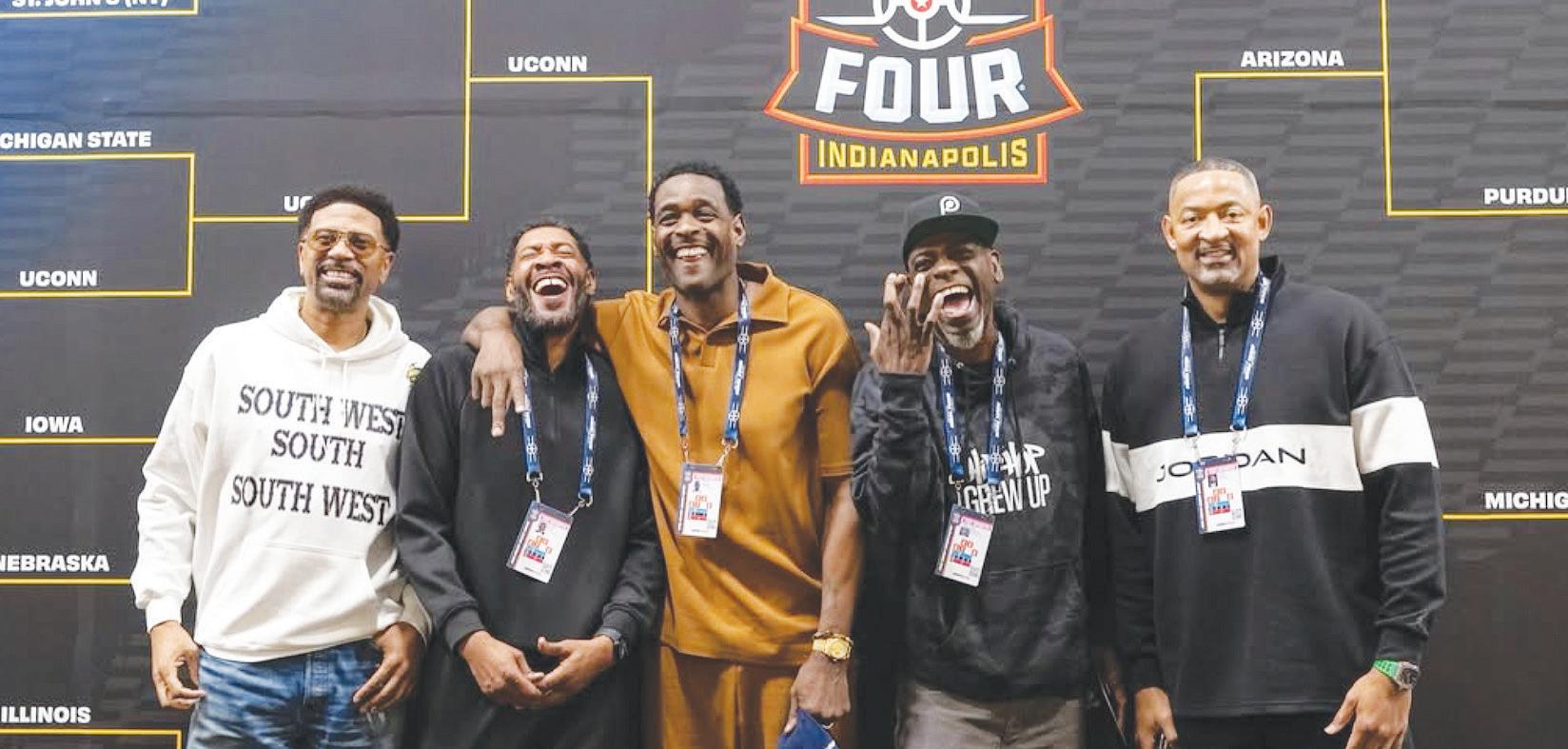
Photo Courtesy/Instagram @jalenvseverybody
The Fab Five played for the iconic 1991 Michigan basketball team, where all five started as freshmen in the National Championship game.
By Nicole Waters Sports Writer
Fans who watched the men’s college basketball Final Four on Saturday night got to experience something one of a kind in terms of broadcasting. The Michigan Wolverines were taking on the Arizona Wildcats in a game that would send the winner to the national championship. Those watching had the chance to tune in to what TNT Sports called an “altcast” that included the Fab Five from the iconic 1991 Michigan team. This altcast featured
Chris Webber, Jalen Rose, Juwan Howard (former Michigan head coach prior to Dusty May), Jimmy King and Ray Jackson. These five arrived at Michigan as freshmen in 1991 and advanced to back-to-back national championship games in 1992 and 1993, falling just short both times. They were the first team to start all freshmen in a national championship game while also helping revolutionize the sport.
Watching them on TV during the game was enjoyable and offered a different feel compared with a
traditional telecast. This marked the first time in quite a while that all five were together again, and it came as they watched their former team try to punch its ticket to the national championship. The vibe of the alternate cast resembled ESPN’s “ManningCast,” an alternative NFL broadcast featuring Peyton and Eli Manning along with celebrity guests.
Adam Lefkoe served as the lone host alongside the Fab Five, and he fit the role well. He brought energy and charisma and kept the conversation flowing. He
was quick with responses and asked effective questions throughout the broadcast. Having just one primary host also helped avoid overcrowding the discussion.
The Fab Five were able to be themselves during the broadcast and offer honest reactions to what was happening on the court. Their perspectives — shaped by their experiences as players and coaches — added depth to the viewing experience.
Another notable element of the broadcast was that all participants remained on screen together, rather than
cutting between speakers. This created a more cohesive and easy-to-follow presentation. Opportunities like this should be offered more often. While it may not appeal to every viewer, many fans appreciate an alternate broadcast that differs from the traditional style and brings a fresh perspective. An altcast also has the potential to attract more viewers by giving fans a chance to watch familiar figures share their insights in real time.
By Mason Kalkbrenner Sports Writer
Most UFC events are often highlighted by the men’s divisions, as their rosters have been around a lot longer and are much larger. But ever since the women’s division was introduced into the UFC in 2013, it has brought a whole new element to the company. In the past two weeks, the women have absolutely delivered, displaying new levels of talent and entertainment.
Of course, there are big names like Valentina Shevchenko, Zhang Weili and Kayla Harrison who always put on great fights. But none of these women fought these past two weeks. This is proof that the UFC women’s roster is deeper with talent than it has ever been and has an extremely bright future in the sport.
Two weeks ago at UFC Fight Night Seattle, the main event was a big one. Israel Adesanya made his return to the octagon after more than a year, his longest layoff of his career. He faced rising star and powerhouse Joe Pyfer in a middleweight showdown. While this fight was a great one, it wasn’t the fight fans were buzzing about afterward.
The co-main event between Alexa Grasso and Maycee Barber was a great matchup on paper, but it delivered an even better fight in action. Grasso, a former champion, faced Barber, who was on a seven-fight win streak at the time. While the fight itself didn’t last long, it was short and exciting. Both fighters were ranked in the top five of the women’s flyweight division, so it was bound to be a competitive, high-level bout.
The fight started, and it was abundantly clear that both women knew how dangerous their opponents were, but they weren’t afraid to exchange punches. They both delivered some strong striking combinations, a testament to their high-level boxing.
Broadcaster and former UFC champion Daniel Cormier spoke about this seconds before the fight ended, saying, “That’s the one thing I love about watching these women fight. Neither one of them is afraid to engage. They both will step into the fire, throw their hands and extend those combinations.”
Shortly after this line from Cormier, Grasso went
Courtesy/Instagram @aliceperieraufc
right into the fire and delivered a highlight-reel knockout. She allowed Barber to step in close and threw a quick one-two combination. The second shot, with her left hand, sent Barber sprawling to the canvas.
But the former champion wasn’t finished there.
To secure her victory, she jumped onto Barber’s back and locked in a deep rear-naked choke. Barber was clearly unconscious, but the swift combination from knockout to submission attempt was seamless.
The referee immediately stepped in and called the fight, granting Grasso her well-deserved victory. The crowd chanted “Mexico!” — Grasso’s home country. It was a beautiful finish and a candidate for knockout of the year. It was concerning how long Barber was unconscious, but she was able to stand on her own and was in good health after the fight. In her postfight interview, Alexa Grasso said, “Of course my striking is always the first weapon, but I was training so hard to get a finish by submission because I train jiu-jitsu a lot.
I wanted the finish.”
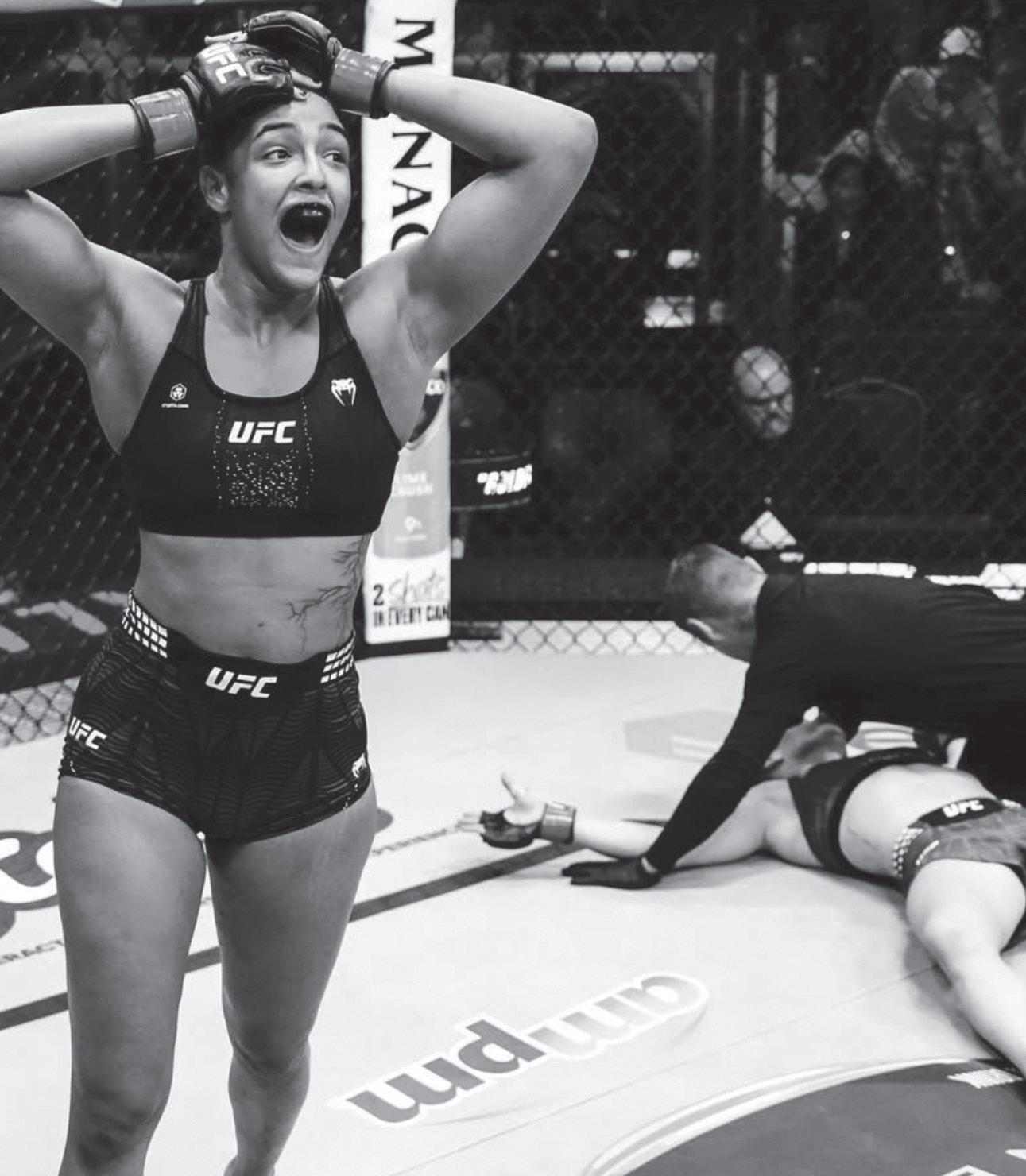
The following week at UFC Vegas, this knockout didn’t even take place on the main card and was still the talk of the night. In the bantamweight division, Alice Pereira and Hailey Cowan
faced off to help start the night. Both fighters were unranked and separated by a 13-year age gap (Pereira is 20, Cowan is 33). In fact, Pereira is the youngest active fighter on the roster. With this chip on her shoul -
der, she had everything to prove going into the fight.
The bout started with some solid striking, along with a mix of takedowns (2 of 3, 66.7%) from Cowan. Going into the second round, Pereira took it to another level. Within the final minute of the round, she delivered a devastating knee to Cowan’s face. Upon impact, Cowan fell limp to the canvas immediately.
Pereira followed it up with some ground-and-pound for insurance, but Cowan’s fate was already sealed. Referee Keith Peterson stopped the fight immediately, and the crowd erupted for Pereira. With everything on the line, the youngest fighter on the roster secured the best win of her career.
This knockout had UFC fans buzzing on social media, praising the women’s division and the pool of emerging talent. Pereira gave a passionate postfight interview and thanked her team, saying, “This win was for them. These are the people that brought me up in this octagon. They gave me all the support throughout this.”
Both Alexa Grasso and Alice Pereira put on masterclass performances in their respective fights. These two knockouts have helped shift the narrative about women’s MMA and have silenced critics. Fans can look forward to more fights like these from an ever-growing UFC women’s roster in the near future.
By Sam O’Hair Sports Writer
With the 2026 NFL Draft set for April 23, teams will soon be on the clock to select their talent of the future. For fans, waiting can be dreadful — so for many, now is the time to mock. Here is how I believe the top 10 picks could pan out.
Las Vegas Raiders, Fernando Mendoza, QB, Indiana
The easiest of the Day 1 selections belongs to the Raiders, who will hope to land their franchise quarterback. Not only has the QB-needy team felt like a perfect pairing for some time, but the signing of Kirk Cousins makes the landing spot even better. Las Vegas splashed its cash in free agency — it even appointed a new, young, offense-oriented head coach. It’s only a matter of time before Mendoza is a Raider.
New York Jets, Arvell Reese, Edge, Ohio State New York, which at one time anticipated drafting Oregon QB Dante Moore, instead lands the safest player in the class. Reese is the best football player in the class, plain and simple. The 6-foot-4, 240-pound edge can line up anywhere on the line or off the ball, all while consistently putting on the best tape in the country — an easy selection for the Jets.
Arizona Cardinals, David Bailey, Edge, Texas Tech
Another edge, Bailey follows Reese as Arizona selects a defensive lineman in consecutive drafts. The Cardinals could go in a lot of directions with the pick, but a good young edge is a valuable asset in this league. The Red Raiders edge racked up 14.5 sacks and would make a strong addition to a weaker Cardinals defense.
Tennessee Titans, Sonny Styles, LB, Ohio State Styles lands in Tennessee in a “take the best player available” manner. Like Arizona, Tennessee has a few glaring holes worth addressing with this pick — Styles simply seems the most qualified play -
er available. The 6-foot-5, 240-pound linebacker was a difference-maker all season on an outstanding Buckeyes defense.
New York Giants, Caleb Downs, S, Ohio State If not for positional value, Downs is another player who could climb the board. Early mocks had Downs going No. 1, which speaks to the caliber of player he is. The lockdown safety would join Sean Taylor and Eric Berry as the only No. 5 overall picks at the position — not bad for the Giants, who desperately need defensive backs.
Cleveland Browns, Carnell Tate, WR, Ohio State
Tate makes it three Buckeyes in a row and four out of the top six picks. The standout receiver resembles previous wideouts to come out of Columbus in the past decade. Shades of Chris Olave, but more so Garrett Wilson, appear when watching Tate — a skill set Cleveland has needed for some time.
Washington Commanders, Jeremiyah Love, RB, Notre Dame Washington addresses its gap at running back with the selection of Jeremiyah Love. The Notre Dame back is a true all-around weapon — a three-down back whose potential warrants the high
pick. Additionally, Love and Jayden Daniels would be a threatening pairing — think Derrick Henry and Lamar Jackson in Baltimore.
New Orleans Saints, Rueben Bain Jr., Edge, Miami
New Orleans feels like a very solid landing spot for Bain Jr. The Miami defensive lineman would be a versatile piece for an aging Saints defense. Bain Jr. isn’t a perfect prospect, but he was an absolute game-wrecker for a dominant Miami team last season — a risk worth taking for the Saints.
Kansas City Chiefs, Jermod McCoy, CB, Tennessee
Very few teams are in more need of a cornerback than the Chiefs, which McCoy could help address. The Tennessee corner has struggled with injury but shows Patrick Surtain IIand Derek Stingley Jr.-level potential. Mansoor Delane would also be a respectable pick, but McCoy’s upside can’t be ignored.
Cincinnati Bengals, Spencer Fano, OT, Utah Cincinnati has had a problem protecting Joe Burrow since drafting him first overall in 2020. Burrow has shown what he can do when in control, leading the Bengals to Super Bowl LVI — Fano feels like solid support in a system that isn’t broken yet. Francis Mauigoa out of Miami could also work, but the nod goes to Fano.
By Tyler Wood Sports Writer
The University of Northern Iowa softball team traveled to Evansville, Indiana, to face the University of Evansville Aces in a doubleheader on Friday, April 3. The first pitch was scheduled for 11 a.m. at Tri-State Orthopedics Field.
The Panthers got on the scoreboard first in the first game, scoring three runs in the third inning. Kate Lappe and Katelyn Callahan were on base when Ava Smithson hit a home run to bring all three runners home. The Aces responded with one run in the fifth inning, but the Panthers answered with two more in the sixth. Skylar Bensh brought in two runners and herself with a home run in the
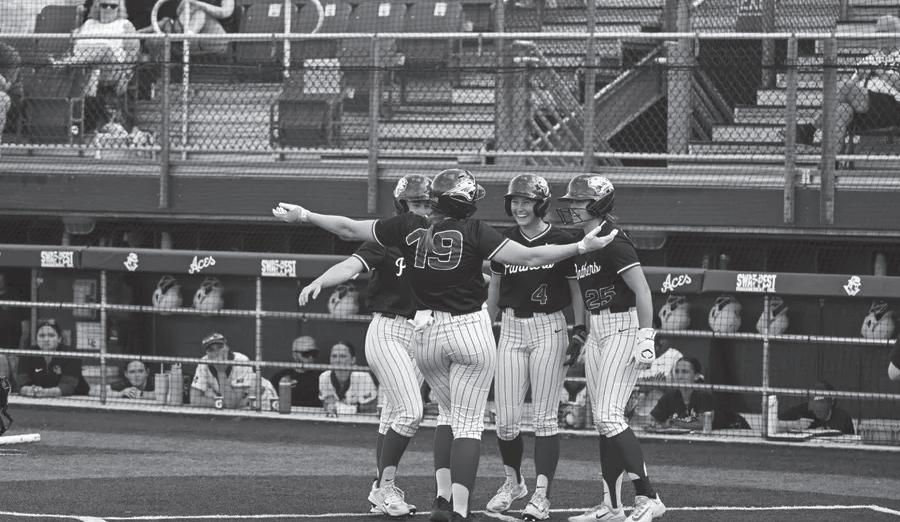
inning. She ended the game with three hits, four RBIs and two runs in five at-bats.
The Aces added one more
run in the final inning, making the final score 5-2 in the Panthers’ favor.
The second game was a
different story for the Aces, who got off to a quick start. They scored eight runs in the first inning after a grand
slam, a bases-loaded walk and three bases-loaded hits. The Panthers added three runs in both the third and fifth innings but could not complete the comeback. The final score of the second game of the doubleheader was 10-7. The teams were scheduled to play a third game, but it was canceled due to poor weather conditions.
The Panthers now have a record of 18-15, including a 6-4 mark in conference play. Their next game will be against the UIC Flames on Friday, April 10. The Flames have a record of 17-19-1 and are 6-9 in conference play. The Aces are now 16-18 overall with a 9-7 conference record. Their next game is scheduled for Tuesday, April 7, against the Southern Illinois Salukis.
By Carter Lust Sports Writer
For over 20 years, Ben Jacobson’s name was synonymous with UNI basketball.
But before his two decades spent as head coach of the Panthers, Jacobson was an assistant at his alma mater, the University of North Dakota. After playing as a guard for the Fighting Hawks from 1989 to 1993, Jacobson immediately joined the coaching staff at the start of the 1993-94 season. He spent seven years in his role before joining North Dakota State in a similar position in 2000. It was there that he reunited with now-retired head coach Greg McDermott, who previously was an assistant at North Dakota during Jacobson’s playing days. After just one season in Fargo, McDermott landed the head coaching
move to Division I in 1980. Jacobson posted wins over McDermott’s Iowa State squad and the University of Iowa, beating the Hawkeyes in Iowa City for the first time in program history.
After the Panthers reached the NCAA Tournament in 2009, Jacobson led them back to March Madness in 2010. It was there that No. 9-seeded UNI provided one of the greatest bracket-busters of all time, upsetting No. 1 overall seed Kansas on the back of Ali Farokhmanesh’s clutch 3-pointer to advance to the Sweet 16.
Then came the most successful season in UNI basketball history.
Jacobson led UNI to a program-record 31 wins during the 2014-15 campaign. En route to the record total, Jacobson achieved his 167th victory as the Panthers’ head coach on Nov. 15, 2014,
5-ranked Iowa State at the Big Four Classic in Des Moines. UNI carried this momentum into the MVC Tournament, where Wes Washpun’s late-game heroics sent Northern Iowa back to its eighth NCAA Tournament appearance.
In the first round, the No. 11-seeded Panthers used a last-second half-court heave from Paul Jespersen to take down the No. 6-seeded Texas Longhorns, 75-72. UNI’s run ended in the second round with an 92-88 loss to No. 3-seeded Texas A&M.
In the decade to come, Jacobson and the Panthers continued to see regular-season success but failed to secure another NCAA Tournament appearance — until the 2025-26 season.
UNI entered the MVC Tournament as the No. 6 seed, winning four games in four days to bring another conference
title back to Cedar Falls. With the MVC crown, UNI claimed a No. 12 seed in the 2026 NCAA Tournament.
Ultimately, the Panthers fell to Rick Pitino and his No. 5-seeded St. John’s Red Storm, 79-53.
Unbeknownst to many Panther fans, that would be Jacobson’s final season in UNI basketball history.
On March 30, 2026, Utah State announced it was finalizing a deal to hire Jacobson as the next head coach of the Aggies.
After 25 years in Cedar Falls, Jacobson now takes the next step in his collegiate coaching journey. When asked about his time with UNI in his farewell news conference, Jacobson told the media, “You certainly don’t put one word on it, the amount of fun we’ve had doing this and doing it here. The moments and memories that we have been a part of, but
get to take with us … they don’t go away, and they don’t change.”
All of the wins, the losses, the buzzer-beaters, the early mornings, the late nights, the heroics and the heartbreaks.
“Those are ours,” Jacobson said.
Now, Jacobson inherits a program that has been a stepping stone for many other NCAA head coaches. The Aggies have had four different head coaches in the past five years but have made the NCAA Tournament in six of the past seven seasons. Although the Logan, Utah, job has high turnover, the university has shown a knack for hiring head coaches and attracting competitive players.
Each Utah State hire has left for a job at a larger Power Five university, hoping to find continued success at a more prominent school. However, with the reinstatement of the Pac-12 for the 2026-27 season, the university now finds itself in what some may consider a sixth basketball powerhouse conference. The Aggies join Boise State, Colorado State (coached by Farokhmanesh), Fresno State, Gonzaga, San Diego State, Oregon State and Washington State in a new
Whether Jacobson decides to stay at Utah State long term or continue to build his way up the coaching hierarchy, one thing remains certain regarding
He will always be Ever

Across
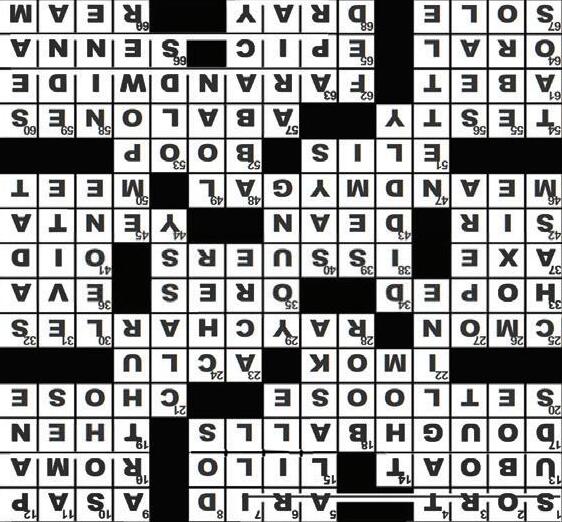
1) Do a laundry chore
5) Like the Sahara
9) Rush job initials
13) "Das Boot" vessel
15) Movie pal of Stitch
16) Oblong tomato
17) Dunkin' Donuts Munchkins, essentially
19) "At which point ..."
20) Uncage
21) Picked out
22) "How are you?" reply
23) Rights org.
25) "Follow me!"
28) "What'd I Say" singer
33) Didn't despair
35) Miners' take
36) Peron of Argentina
37) Dismiss summarily
38) Newspaper publishers, e.g.
41) Suffix with "fact"
42) Galahad's address
43) "Giant" star James
44) Meddlesome type
46) 1932 Spencer Tracy movie
50) Do lunch together, say
51) Yalies
52) Classic toon Betty _
54) Short-tempered
57) Sources of nacre
61) Assist nefariously
62) Just about everywhere
64) Like a griot's stories
65) Many a DeMille movie
66) Cathartic-yielding plant
67) Cobbler's piece
68) Heavy cart
69) Enlarge, with "out"
Down
1) Brewskies 2) Bassoon's cousin 3) Win in a walk 4) "Just do it" for Nike 5) Denali's state 6) Really rankle 7) Not up to par 8) Windows forerunner 9) Dudley Moore title role 10) Area of London or Manhattan 11) Iowa home of the Cyclones 12) French door part 14)_ McAn shoes 18) Crude sort 21) Well-bred 23) Yard size, maybe 24) "Moonstruck" actress 25) Bottomless pit
26) Spunk
27) "Aida" or "Carmen" 29) In one's salad days
30) Sierra_ (African nation)
3 1) Digital party notice 32) Co-Nobelist with Begin 34) Nothing, slangily
39) Weigh station user 40) Comes out with 45) Give authority to 47) Prickly plant
48) Head monk's jurisdiction
49) Usurer's offering 53) GM make until 2004 54) Pueblo town 55) Zaragoza's river 56) Jesse Ventura was one 57) Met highlight 58) Mudville _ (Casey's team) 59) Charlotte's "Different Strokes" role
60) Baseball feature
62) Paid, as a parking meter 63) Auto loan abbr.