North Coast Anglican
2026 | ISSUE NO
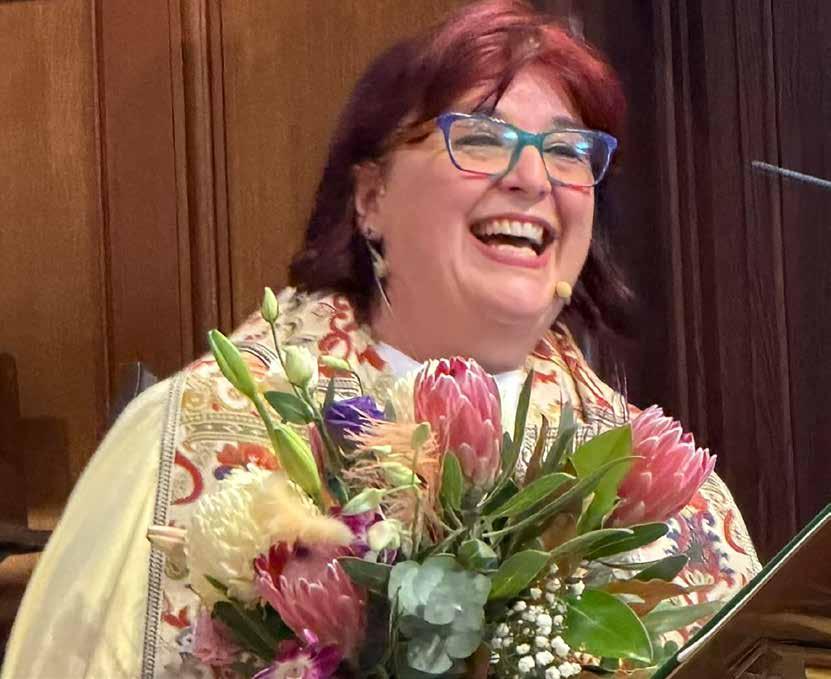
The Consecration of the Venerable Tiffany Sparks as a Bishop in the Church of God

2026 | ISSUE NO
The Consecration of the Venerable Tiffany Sparks as a Bishop in the Church of God
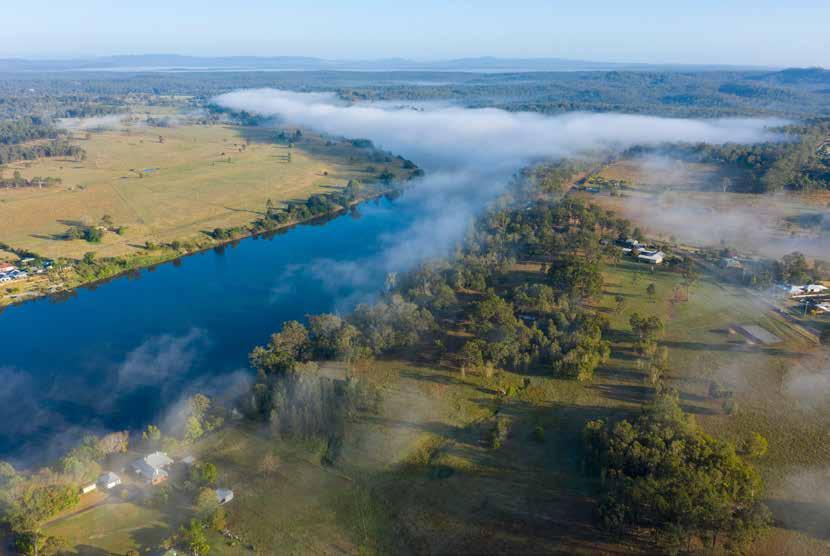
We acknowledge the Bundjalung, Arakwal, Yaegl, Githabul, Gumbayngirr, Dunghutti and Birpai peoples, the traditional custodians of the lands on which the Diocese of Grafton is based. We pay tribute and respect to the elders of these nations and peoples, both past, present and emerging, acknowledge their continuing connection to the land and waters, and thank them for their protection of the mountains, hinterland, waters and coastline since time immemorial.
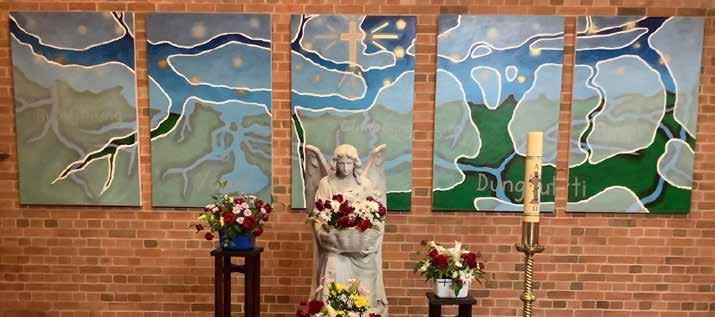
Front Page Image:
EDITORIAL TEAM
The Rev'd Vivian Hoskins, Jan Fryer, Kaytrina Jessup, The Ven. Tiffany Sparks, Anne Weekley, Maree Collett
EDITOR DETAILS
PO Box 4 Grafton NSW 2460 nca@graftondiocese.org.au
DESIGNER
Yoohoo McPhee - Grafton yoohoomcphee.com.au
SUBSCRIPTIONS
Australia
$16.00 p.a
Overseas
$28.00 p.a
CIRCULATION
Circulation: 1,000
ADVERTISING
Please contact the Editor for rates and bookings.
Please send articles by email as a Word Doc. attachment. Photographs must be sent as email attachments in JPEG format, with a file size of 500kb or greater. Please contact the Editor to 'pitch' article ideas and to discuss due dates, word limits and image requirements.
The Editor is not responsible for the opinions expressed by any contributors, nor do their views necessarily reflect the policy of this publication or of the Diocese. Acceptance of advertisements does not necessarily mean endorsement of the product or services.
At the time of writing, Pope Leo has been in the news for holding world leaders to account over the increasing number of senseless armed conflicts around the globe. Speaking the truth to power, he is reported to have said that the world is being ravaged by a handful of tyrants. Like all Christian leaders he is called to remind us of God’s priority for peace. God’s son Jesus, the Prince of Peace, began his ministry by preaching in the synagogue at Nazareth: The Spirit of the Lord is upon me, because he has anointed me to proclaim good news to the poor... to set at liberty those who are oppressed, to proclaim the year of the Lord’s favour (Luke 4:18-19). This message wasn’t popular in Jesus’ time and still offends many today, even some so-called Christians. Yet we are to proclaim it regardless of whether it’s going to be popular or unpopular. Proclaim the message; be persistent whether the time is favourable or unfavourable; convince, rebuke, and encourage with the utmost patience in teaching (2 Timothy 4:2).
As Anglicans, the Five Marks of Mission call us to transform the unjust structures of society, challenge violence of every kind and pursue peace and reconciliation (4th Mark). Sin is not only personal but also systemic. This Fourth Mark calls the Church to move beyond individual acts of charity to address the root causes of suffering: the “unjust structures” that perpetuate poverty, oppression, and conflict. This is costly, because those responsible for systemic injustice and exploitation don’t like being called out. Yet as the saying goes, the church must comfort the afflicted and afflict the comfortable.
May God give us courage and the right words to use as we live our lives witnessing to the Prince of Peace in today’s world.
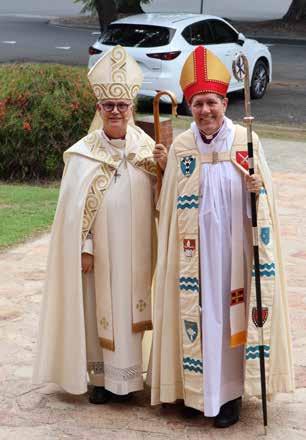
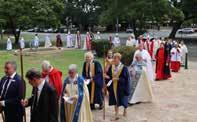
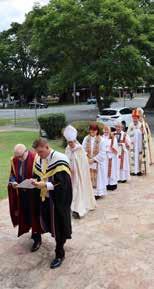
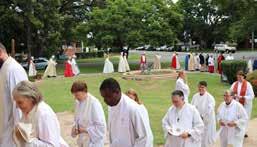
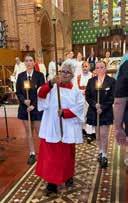
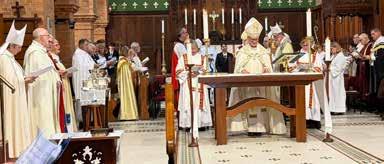
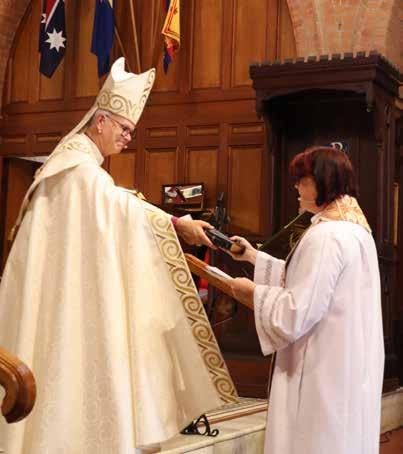
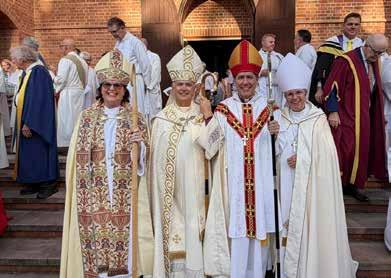
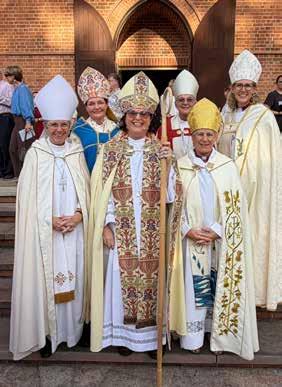
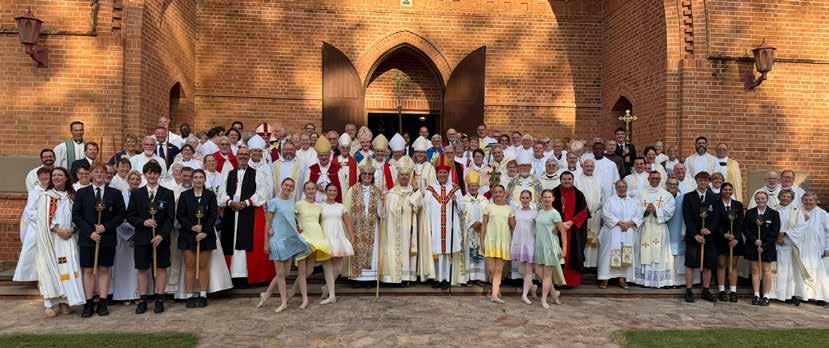
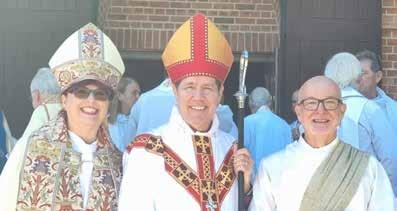
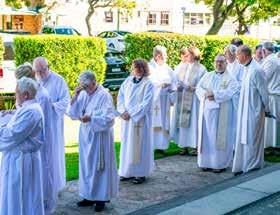
As a cradle Anglican I was humbled to be asked to be a clergy presenter of Archdeacon Tiffany at her consecration. Friends, family, current and former parishioners, Archbishops, Bishops and clergy from across the nation gathered on a warm Thursday afternoon in Christ Church Cathedral Grafton for a common purpose, to consecrate Tiffany Sparks as a Bishop in the Church of God.
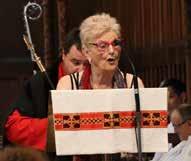
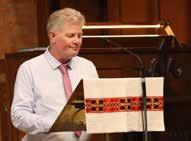
I had the privilege of hearing from some who attended, what the day meant for them:
“a joyous occasion to see the ministry of Tiffany identified and affirmed, and to feel the support of the national church”;
“the inclusion of so many lay people, the schools, the choirs, the dancers, and others forming a large part of the worship was very encouraging”;
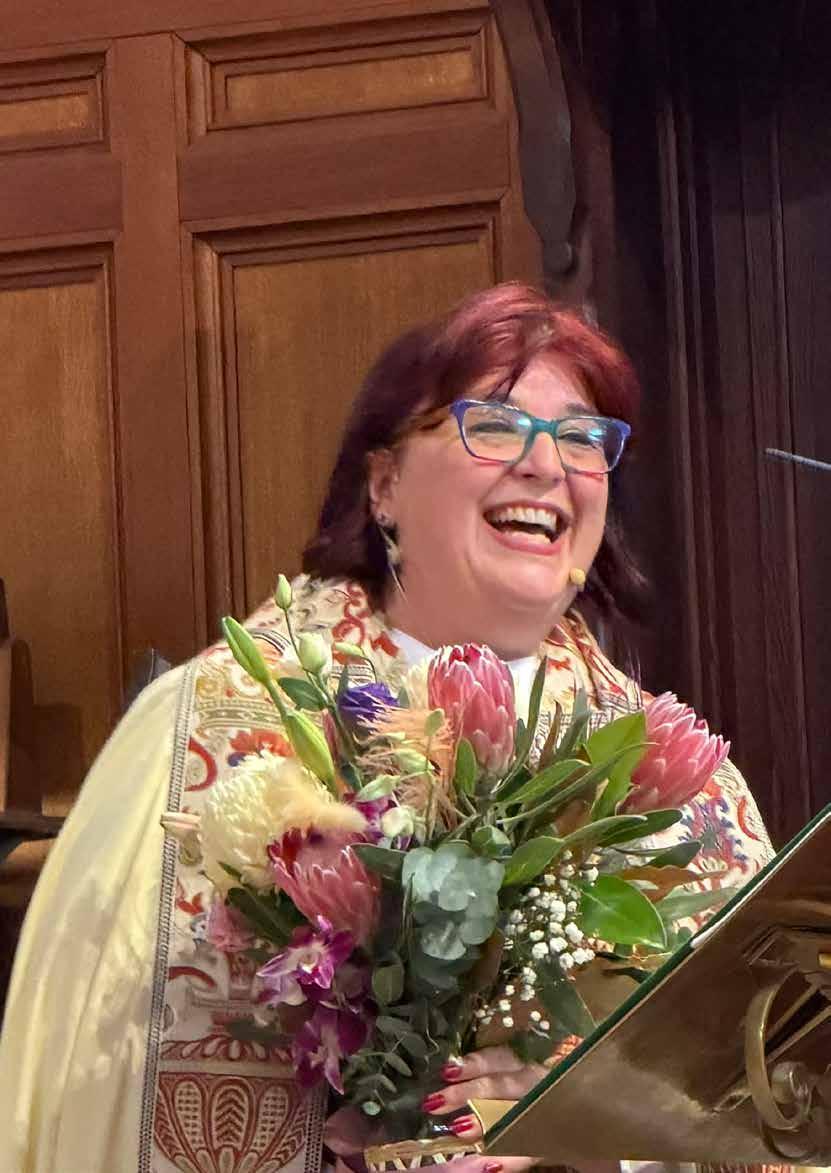
“A double bunger, recognition of her calling, a proud parent type moment having witnessed her growth, beginning as a companion with her in discernment all those years ago”;
“A confluence of Anglican identity as students saw themselves in the gathered community with the cathedral space welcoming diverse expressions through dance, choir and young people assisting in the formal liturgy “.
I could share in the spirit of each of these reflections and then to have the opportunity to witness the now Bishop Tiffany, stand before an auditorium filled with senior students of one of the schools of the Diocese of Grafton, as they gave thanks at their Foundation Day Assembly, is a memory I will always carry. The importance of the witness of her presence and ministry to those young people and those who will come after, I believe, cannot be overstated or fully known. ■
"to feel the support of the national church"
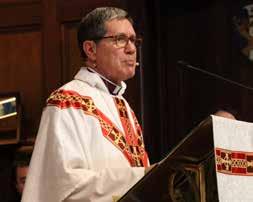
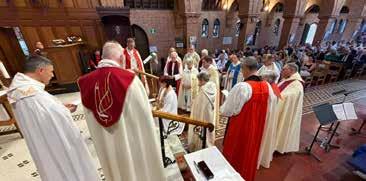
"a proud parent type moment"
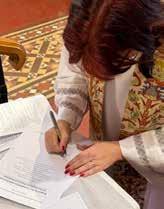
"recognition of her calling"
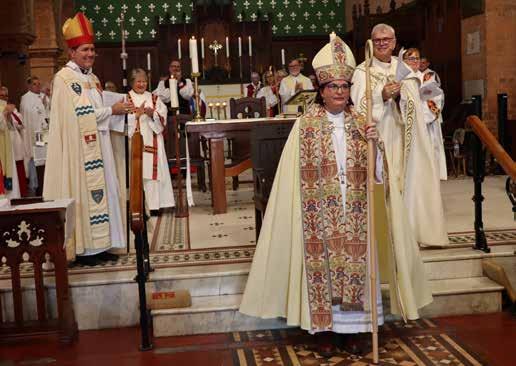
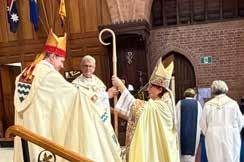
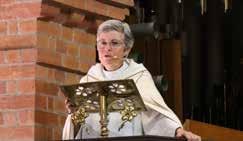
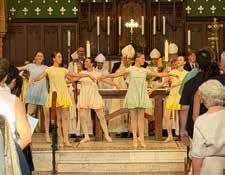
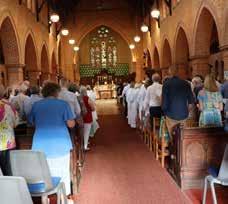
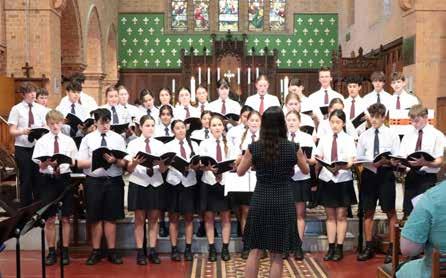
"a joyous occassion"
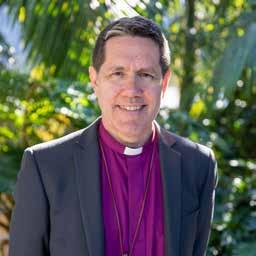
BY THE RIGHT REVEREND DR MURRAY HARVEY
It was a pleasure to be present in Grafton Cathedral on 12 March for the Consecration of Tiffany Sparks as a Bishop, to serve as Assistant Bishop in our Diocese of Grafton. This significant occasion in Tiffany’s life and in the life of the Diocese was well supported, with over 300 people from around the Diocese and beyond attending. Many more watched online.
Bishop Tiffany is our first Assistant Bishop. While Grafton Synod made provision for the possibility of an Assistant Bishop as far back as 1967, by adopting the Assistant Bishops Canon 1966 Adopting Ordinance 1967, no Assistant Bishop has ever been appointed until now.
Because this is a new thing for the Diocese, I thought it might be helpful to explain what an Assistant Bishop is and what they do.
Firstly, despite the title Assistant, they are in every sense a bishop.
As such, an Assistant Bishop can perform liturgical and pastoral acts that are reserved for bishops, such as Confirmations, Receptions and Ordinations. This role emphasises collegial assistance for the Diocesan Bishop, allowing the assistant to perform delegated episcopal functions as authorised by the Bishop of Grafton. This may also include managing administrative overflow and representing the diocesan bishop at designated times or events.
Canon Law Common to the Churches of the Anglican Communion permits diocesan bishops to appoint assistants with appropriate approvals and conditions, ensuring subordination to diocesan authority while enabling episcopal collegiality. In our case it was possible for the Bishop of Grafton to appoint an Assistant Bishop under the Assistant Bishop Ordinance 1967 and the Canon Concerning Holy Orders 2004, with the approval of the Bishop in Council. It also required the approval of the Primate of the Anglican Church of Australia, The Most Rev’d Dr Mark Short, and of the Metropolitan of New South Wales, Archbishop Raffel of Sydney.
Assistant bishops in the Anglican Communion primarily serve in a supportive capacity to the diocesan bishop, undertaking episcopal functions to aid in the oversight of the diocese.
In some dioceses, Assistant Bishops have responsibility for a geographical area or region of the diocese. For example, in Newcastle Diocese one Assistant Bishop has responsibility for the Coastal Episcopate, and another for the Inland Episcopate, whilst the Bishop of Newcastle retains overall oversight of the whole Diocese. In Grafton Diocese, Bishop Tiffany’s responsibilities are not based around geography, but rather around areas of ministry. She will continue to be responsible for things like ongoing professional development and training for clergy and licensed lay ministers, as well as for vocations to the ordained ministry, including discernment, formation and training. Her Position Description is still that of Diocesan Archdeacon and Ministry Development Officer, except that she will now also undertake “such episcopal duties as will assist the Bishop of Grafton in his or her role as Diocesan Bishop”.
The role and place of an Assistant Bishop is best understood in comparison to a Diocesan Bishop. The Diocesan Bishop (in our case the Bishop of Grafton) holds ultimate authority and pastoral care over a specific geographic diocese, acting as the "ordinary".
The Diocesan Bishop is the focus of unity in a diocese and has ultimate authority in matters of discipline, sacramental oversight, appointments, ordinations, and licensing. The Diocesan Bishop is President of the Synod. It is correct to say either “the Diocesan”, “the diocesan bishop” or “the Ordinary” when referring to the Bishop of Grafton. An Assistant Bishop on the other hand is appointed by the diocesan bishop to serve under their direction for certain delegated matters. Assistant bishops in the Anglican Communion primarily serve in a supportive capacity to the diocesan bishop, undertaking episcopal functions to aid in the oversight of the diocese.
While the Diocesan Bishop is elected by the Synod (specifically, in our case, Bishop Election Committee of the Synod), the Assistant Bishop is appointed by the Diocesan Bishop. Principle 38 of the Principles of
The Assistant Bishop has no right of succession to become the Diocesan Bishop once the current Bishop of Grafton resigns. This is specially ruled out by the Ordinance. The process for electing a new Diocesan Bishop is set out in Grafton’s Diocesan Governance Ordinance.
When attending Grafton Synod the Assistant Bishop is a member of the House of Clergy. In relation to General Synod and Provincial Synod, Assistant Bishops only attend if elected by their own Synod, and if they are elected, they become members of the House of Clergy at those Synods. This is because only Diocesan Bishops are members of the House of Bishops.
When participating in services of worship in the Cathedral, both Bishops may use their Crosiers (Pastoral Staff or Shepherd’s Crook), with the Diocesan Bishop using the Diocesan Crosier. However, if both bishops are participating in worship at a school, parish or other setting, only the Diocesan Bishop carries a Crosier.
We look forward to Bishop Tiffany’s ministry among us in this new capacity and we pray for her as she commences this ministry. ■
BY JAMES GALE

The first months of 2026 have arrived and gone with the kind of pace that leaves little room for sentimentality, yet plenty of room for meaning. The diary has filled quickly, the demands have been real, and the decisions have come with a weight that is both familiar and newly sharpened. Still, I find myself not discouraged but strangely encouraged: busy, yes - but busy with purpose.
There is something bracing about the start of a year when the Church’s life feels particularly alive. In the midst of meetings, papers, budgets, and the constant attention required to keep the machinery of a diocese moving, I keep returning to a simple Christian instinct: we are not merely managing an institution; we are stewarding a vocation. Our work, for all its administrative necessity, belongs to the larger work of God, patient, sometimes hidden, always formative
As we look toward the first session of the 39th Synod, I feel a genuine sense of expectation. Synod is never only a calendar event; it is one of the principal ways we practice being the Church together, clergy and laity, voices from across our communities, bound not by sameness but by prayer and common purpose. It is, at its best, a moment of collective discernment: imperfect, human, occasionally untidy, yet capable of surprising clarity.
The large round of elections that will accompany this session brings its own momentum. Elections are more than procedural necessities; they are a spiritual and cultural moment. They signal renewal, and they test our maturity. They invite us to ask what kind of leadership we need now, not merely who can fill roles, but who can help shape a culture of trust, accountability, and mission.
For me, this places three things squarely on my radar:
- Culture development, nurturing habits of collaboration, clarity, and courage across the whole diocesan life.
- Strategic alignment, ensuring our structures and resources are pulling in the same direction.
- Mission focus, resisting drift, and keeping the “why” in view when the “how” becomes consuming.
If strategy is a map, mission is the destination, and culture is the road we actually travel. Synod season, especially an election-heavy one, has a way of revealing whether those three are cohering or competing.
The “Bowlful of Broccoli” Lesson: Provision That Forms Us
Several matters early in the year have had me reflecting more deeply than usual on crisis management both as a discipline and as a spiritual test. Crisis does not arrive asking permission. It interrupts our plans, exposes our weak points, and demands decisions at speed. Yet crisis also clarifies. It brings the essentials to the surface: what matters, who we are, and whether our governance is strong enough not merely to withstand pressure but to respond faithfully.
In that sense, crisis is not only a threat; it can be a severe kind of gift.
This is not to romanticise hardship, nor to pretend that pressure is virtuous in itself. But a Christian way of seeing the world is often to look for grace amid reality rather than beyond it, to attend to what is given, and to ask how God might be at work even there.
I’ve been struck, in this season, by an image Christine Caine uses when she speaks about resilient hope: the experience of being given, a bowlful of broccoli instead of salted caramel ice-cream, not what you would have chosen, not what you were craving, but what will actually nourish you. The point is disarmingly simple: God often gives us what we need, not what we want, because He loves us too much to confuse appetite with health.
That image has stayed with me because it names something many of us recognise but rarely articulate: some seasons feel like comfort food, and others feel like vegetables. Both can be gifts. But only one may be what builds strength.
In governance and diocesan leadership, “broccoli seasons” arrive in familiar ways:
- the hard conversation we’d rather avoid,
- the risk we’d rather not name,
- the decision that can’t be delayed,
- the accountability that clarifies responsibilities,
- the discomfort of having to say “not yet” or “not this way.” These are not always what we want but they are often what we need if we are to grow in integrity, maturity, and resilience.
I’ve been asking myself: Do our structures help us see opportunities in crisis, and then actually realise them? That question feels increasingly central to the Registrar/General Manager task. It isn’t enough to “get through” a difficult season. We must become the kind of organisation, indeed, the kind of Church, that can respond with steadiness, transparency, and purpose.
Governance capacity, in this frame, is not cold compliance. It is the set of practices that allows mission to proceed with integrity. It includes clarity of authority
CONTINUED OVERLEAF
and accountability so decisions can be made without confusion or delay. Good information flows so we respond to reality, not assumptions. Risk awareness without risk paralysis so we act wisely, not fearfully and a culture of candour and prayerful discernment so hard truths can be spoken and heard.
And perhaps most importantly, the ability to keep people at the centre, even while attending to process. The Church is not a spreadsheet, and governance is not an end in itself. Our structures exist to serve the mission, protect the vulnerable, and enable faithful ministry.
If crisis is sometimes the bowl of broccoli, then one of the spiritual disciplines of leadership is to receive it without resentment, to ask what it is strengthening, what it is revealing, and what it is making possible, then to do the patient work of translating those lessons into better practice.
So yes, these first months of 2026 have been busy. But they have also been strangely energising. There is an opportunity in front of us, through the coming Synod, through a significant set of elections, through early-
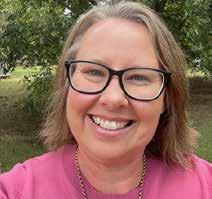
The Bishops Registry is very pleased to introduce and warmly welcome Julie Irvine, who has joined the Bishop’s Registry as our new Executive Officer Schools. In her role, Julie will support the work of the Schools Commission, strengthen connections between our schools and the Diocese, and assist school Chairs in their important governance responsibilities.
Hayley-Skye Smith has also joined the Registry as an Administration Support Officer, providing support to Maree and Kaytrina in administration and contributing to the ongoing improvement and upskilling of our archival processes.
year challenges that have forced us to sharpen our governance and deepen our resolve.
If we do this well, we will not merely conduct a Synod or complete an election cycle. We will strengthen the alignment between who we say we are and how we actually operate. We will become more capable of meeting difficulty with wisdom. And we will be better placed to invest in mission with confidence and coherence.
And if some of what we are being given in this season feels like broccoli, less immediately satisfying, more demanding to receive, then perhaps that is not a sign of God’s absence, but of His fatherly provision, forming endurance, strengthening judgement, growing capacity, and shaping a Church that can meet the moment with grace.
My prayer for this season is simple: that we would be given the grace to see clearly, choose wisely, speak truthfully, and act faithfully, so that, together, we might serve Christ’s purposes with courage and joy. ■
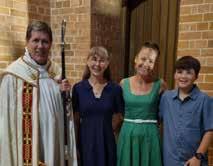
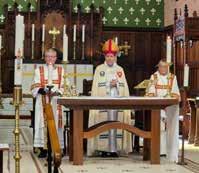
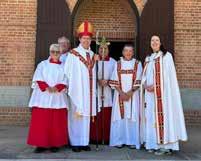
At the Easter Vigil at Grafton Cathedral three people were confirmed and there were also four baptisms and an Admission to Communion. It was great to welcome heaps of families including over 60 children join us for the service. Congratulations to all.
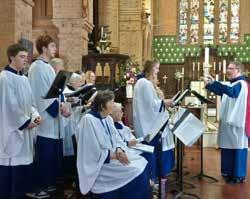
A glorious Easter morning as we celebrated the resurrection and the light of Christ among us. Congratulations to baby Albert on his baptism. With beautiful liturgy and music, the lighting of the new Paschal candle, and of course Easter eggs to share, it was a joyful celebration of new life and hope.
BY REV DR STEPHEN LAKE
In the name of the Father, and the Son, and the Holy Spirit.
In preparation for this sermon, I spoke with a number of Priests and asked, ‘What is the most important aspect of this special Eucharist for you?”.
All of them stated the renewal of vows was very significant to them and important in the yearly cycle of their ministry and leadership. I went on over the past week and thought further on the Renewal of Vows and renewal of commitment that will take place as part of the liturgy today.
Where did this all begin? I’m sure the beginning was different for each of us.
You may think - the beginning was our calling. Our calling into relationship with our loving God, our Baptism and the calling to ministry as a response to God’s love for us.
Those of us who are ordained, may think the beginning was when God’s voice emerged amongst the loud noises of life around us, whispering a call to us – a call to ordained ministry as a Deacon or a Priest.
For me, I think it all began in my mother’s womb where I was knitted together by God.
As described in Psalm 139, “For you created my inmost being; you knit me together in my mother's womb”.
I believe it was in the knitting, that I was initially being formed by God for my life ahead.
I also believe that my formation for ordained ministry began in the womb. That my formation continued through my childhood and then in my early adulthood the formation was further formalised and structured by the church leading to ordination as a Deacon.
I don’t remember how many times I needed prompting or prodding by God, or my Priest, or by the Bishop, to consider and engage in the formal formation process for ordination.
I do remember being asked by the Archbishop to be the Leader of the Household of Deacons in the Brisbane Diocese. He asked me once and I said “NO”. He asked me again and I politely replied “NO”. He did ask me a third time, and I finally was listening and replied, “YES”.
I think I was learning a God lesson.
In the Old Testament reading today we heard of the Lord calling Samuel three times.
We heard that Eli said to Samuel, “If he calls you, you shall say, “Speak Lord, for your servant is listening.” When the Lord called again, this time for a third time, Samuel did reply, “Speak, for your servant is listening.”
Were you a good listener when God called you into relationship or into ordained ministry and leadership? How many times did it take for you to hear and respond?
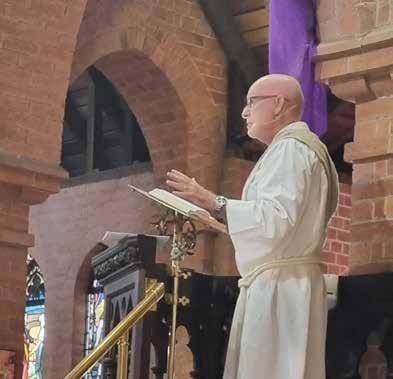
I’m reminded, from Tiffany’s consecration, of the three times Jesus asked Peter,
“Do you love me?”. The Gospel of John Chapter 21 reminds us that sometimes it does take three times to get through, to drive a message home, or to give us time to be challenged and to be able to genuinely respond.
Of course, this questioning by Jesus is a follow up to Simon Peter’s denial, three times.
I imagine all of us relate to how sometimes we may not be listening, we may be distracted or we may be in a deep, dark valley in an aspect of our lives – our leadership – our prayer life, our marriage or our view of our selves.
We may be in denial, we may deny three times, or more.
We do know and reflect on Peter’s story – the denials, the challenging and reinstating by Jesus, and the ministries, leadership and life Peter went on to undertake for the Lord.
We know of the hope and the love of our gracious God. We are continually reinstated by Jesus, just like Peter and we go on with our ministries, leadership and the future God has planned for us. We will fall but we are lifted up by God’s love and forgiveness.
Just a couple more ‘three times’ examples from scripture –
Paul’s prayer three times, in 2 Corinthians Chapter 12, asking the Lord to remove a thorn in the flesh.
Peter’s vision, in Acts Chapter 10, of something like a large sheet coming down from Heaven. Within it were four footed creatures and reptiles and birds. A voice said to Peter, “Get up Peter, kill and eat.” But Peter said, “By no means Lord, for I have never eaten anything that is profane or unclean.” This interaction occurred three times.
After the third time, the thing was suddenly taken up to heaven.
The Temptation of Jesus, three times in the wilderness, and Jesus’ three responses.
And finally, the triune repetition found in Isaiah 6 and Revelation 4, where the Seraphim cry, “Holy, Holy, Holy”.
The number three is deeply symbolic in Scripture –often relating to the Trinity and the completion of Divine work.
There are also three Holy Orders and for each order the renewal of vows today will be different.
So too, the recommitment undertaken by Licenced Lay Ministers – this opportunity will be uniquely yours.
As you dedicate yourselves afresh to God’s service, I invite you to listen to some of the key phrases to be used and hear for yourself which is particularly resonating today for you. What words or phrases is God highlighting specifically for you.
I promise not to say them three times each.
For LLMs – each of you from the Tweed and west, to Grafton, to Nambucca Valley and all the way to Port Macquarie –
You are called to be faithful in prayer, and by word and example, to minister to those for whom Christ died.
For Deacons (including myself) – let’s listen and notice the key phrases used as we recommit to our ordination vows – here are some of them -
Reading the holy Scriptures and assist the priest to teach the doctrine of Christ
Shape your own life, and that of your household, according to the way of God.
Constantly seek the help of the Holy Spirit to use and develop God’s gifts in you.
Promote unity, peace and love
Seek to set forward Christ’s kingdom in the world.
For priests – please consider and notice the key phrases used as you recommit to your ordination vows – here are some of them –
Christ summons us all to obedience and discipleship
Take up your calling with joy and dedication
Encourage and build up the body of Christ
Faithfully ministering the sacraments of God’s grace with reverence and care
Be a pastor after the pattern of Christ the great shepherd
Be a teacher taught by the Lord in wisdom and holiness
Love and serve the people caring alike for young and old, rich and poor, weak and strong.
Remember you will be called to give account before Jesus Christ
Depend on the Holy Spirit and on the grace of God
(The liturgy for ordination of a priest also states “We
have every confidence that you have already pondered these things deeply.”)
Believe that you are truly called to this order of priest
Be diligent in prayer and in the study of the holy Scriptures
Constantly stir up the gift of God which is in you
Faithfully and humbly minister
Encourage and enable those committed to your care to fulfil their ministry and mission in the world.
That is a challengingly long list for our sisters and brothers who are priests.
I trust you heard and noticed something from God for you.
Hands were laid upon you and you received the gift of the Holy Spirit
lead the Church in mission
send out ministers in Christ’s name promote unity, uphold discipline and guard faith teach and govern the people committed to your charge.
continue faithfully in ministry, watching over Christ’s own flock, and building up the flock in the unity of the Spirit and the bond of peace.
I ask you, again, now, to reflect and consider‘What is the most important aspect of this special Eucharist for you?”.
So, I ask you three times –
What words or phrases in this Chrism Eucharist are most important for you today?
What words or phrases in this Chrism Eucharist are most important for you today?
What words or phrases in this Chrism Eucharist are most important for you today?
AND how will you act and be different tomorrow, and next week, and beyond, when you consider and put into action, with God’s guidance and help, the words or phrases that God has highlighted for you today?
AMEN
BY THE REVEREND CANON CAMELLIA FLANAGAN TSSF
Sava, first archbishop of the Serbian Church d.1235 Feast day 14
Saint Sava is an important saint on the calendar of the Serbian Orthodox Church and in the Anglican Church his feast day is also 14 January. He was born in 1169 the son of Stefan Nemanja, the Serbian ruler and founder of the medieval Serbian state. Known as Rastko Nemanjić, he was a Serbian prince who was made Prince of Hum at an early age. As a ruler he was “mild and gentle, kind to everyone, loving the poor as few others, and very respecting of the monastic life. He showed no interest in fame, wealth, or the throne.
In 1192 he left home to join the Russian Orthodox monastic colony on Mt Ahos, where he was given the name Sava. He moved to the Greek Vatopedi monastery and in 1197 his father joined him. When Sava visited the Byzantine Emperor Alexios III Angelos at Constantinople, he obtained permission to restore the Hilandar monastery. With his father he moved to and restored the abandoned Hilandar monastery which then became the centre of Serbian Orthodox Christian monastic life. His father took the monastic name of Simeon and died in 1200. After his father’s death, Sava went to Kareya, where he built an ascetic monastery for himself. At Nicaea, in 1219 the Patriarch of the Greek/Byzantine Orthodox Church made him the first Serbian archbishop. Sava petitioned the Byzantine Emperor to grant permission for Serbian bishops to elect their own Archbishop in future. This was an especially important consideration in a time of frequent wars between the eastern and western powers, so this established the independence of the archbishopric of the Serbian Church. He worked hard establishing the Orthodox Christian faith since, though his father had been a Christian, many of the Serbian peoples were pagan.
When the Hungarian King Vladislav, declared war on Serbia, the archbishop not only brought about the desired peace for his country, but he also brought the Hungarian monarch to Orthodoxy. This further facilitated the historical existence of the autonomous Serbian Church and contributed to strengthening the Serbian state.
He visited churches across Serbia, he reformed monastic rules on the model of Athos and Palestine,
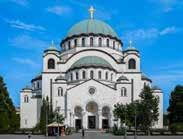
January.
and he established and consecrated many churches, strengthening the Orthodox in their faith. On his last journey he died in Bulgaria at the home of his kinsman Asan, and with spiritual joy he gave up his soul to the Lord in 1237. A pivotal figure in Serbian history, he established canonical law throughout the Serbian Orthodox Church and is revered as the patron saint of Serbia and education.
Saint Sava was the author of many prayers and liturgies, so can we share prayer with him?
O Lord Jesus Christ, the true Light of the world, Who created everything visible and invisible, give light to my heart and mind so that I may see Your truth. Grant me the grace to serve You with a pure heart, to seek You in every thought, word, and action. Teach me to love my neighbour as myself, and to seek peace in all things. Through the intercession of Your Most Holy Mother, and all the saints, grant me salvation and eternal rest. Amen.
“The Call of Levi”
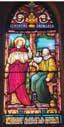
This window in the north aisle in the east end is sharing the space with the window depicting Jesus and Lazarus. The window is known as “The Calling of Levi” (Mark 2:14 and Luke 5:27) The call of Levi, the son of Alphaeus, the disciple known as Matthew, ‘ gift of Yahweh’, shows us that through Christ there is mercy to pardon the greatest sins. This is a message of radical transformation. Levi was a tax collector, for the Roman Empire and as a faithful, fair-dealing one was rare, Levi was despised as a traitor, a thief and a public sinner. The symbol of his profession is seen in the golden money bag at his feet as he sits in his booth with the record books on the bench close by. These are symbols of a life of material gain and corruption. When Jesus calls him Matthew’s hand is tentatively pointing towards himself, as if shocked at being chosen and asking: ” Could he really mean me?”
Jesus certainly is calling him because no one is beyond Christ’s grace and redemption. Matthew immediately abandons his lucrative business and leaves behind past sins radically changing lifestyle from serving money to serving God. Even his old identity as a social outcast is changed. His literary and record keeping skills now have a new purpose, that of telling God’s story in the gospel of Matthew. This shows all who will see it, that God can repurpose secular skills for spiritual purposes and in fact plans our path long before we know and recognise it.
Jesus demonstrating inclusivity, invited himself to the beautiful home of Matthew. In the distance is a magnificent house – the house of a rich and powerful man and Jesus eats with his invited friends, tax collectors and sinners to heal and accept not just the righteous but the spiritually flawed. Having been accepted by Jesus Matthew invited others to meet Jesus, at his dinner party, a reminder for us to lead others to Christ. St Matthew is the patron saint of Accountants and Tax Collectors. His feast day is 21 September. ■
KEVIN BOOTH, DIOCESAN RESTRUCTURE OFFICER (SOUTHERN ARCHDEACONRY)
It seems to have been a while since we last considered our Diocesan restructure program. You remember the one...we started a journey 6 years ago. How is that going for you in your ministry area? What has been happening?
In the lead up to Easter I was occasioned to take a fresh look at Ezekiel's valley of dry bones. I wonder what you make of Ezekiel's valley of dry bones (Ezekiel 37)?
An old battlefield no doubt! Over a lifetime of ministry it seems as if I have witnessed many battlefields, some have been actual battlefields, some have been churches! 'Will these dry bones live?!' Will they?!
Pairing this reading with the raising of Lazarus, I was reminded that it is the command of Yahweh, the call of Jesus and the breath of the Spirit that draws these bones together, that raises the dead and breathes new life and purpose into their being.
Reflecting on this in the light of the task of restructuring our various networks, I was struck by the obvious facts that in these stories it is Yahweh who brings the bones together, it is Jesus who raises the dead, it is the Spirit who breaths new life into lifeless corpses. Just as Yahweh does not owe anything to the bones, and Jesus does not owe Lazarus anything, it is us who belong to God, and it is God who draws us together. It is God's work to draw us together for mission. We are better together! This year we are again graciously called, like Ezekiel to speak his words of call and command to our ministry units and networks and expectantly watch and rejoice as these dry bones start to knit together.
The Diocesan Restructure Officer's role is a servant role to support processes that each of our Networks and Mission Districts already have in place, to support ongoing actions and help discern, train and enable future action.
Essentially I bring to the role a listening ear, a questioning mind and a missional heart. I have 33 years of ordained ministry experience and a further 15 years lay ministry experience to bring to the 'plate'. The Lord has blessed me with a richly diverse ministry. Variously I have been involved in Youth ministry, children's ministry, industrial
chaplaincy, high school chaplaincy, Army Chaplaincy, church planting, fresh expressions, church renewal and various parochial ministries in locations within Tasmania, Geelong, Afghanistan, Darwin, Brisbane and most recently Sawtell. (sounds a bit like 'I've been everywhere...'!)
My motto for our restructuring journey is: We are better together!
You may remember some of the key insights and feedback from our review in late 2024, the review highlighted strengths and concerns in communication, leadership, models of restructuring, and community engagement.
The key recommendations included a focus on our call, character and commitments as God's people, the establishment of a role to facilitate transformative leadership, communication and strategic planning, the development of an intentional locum strategy, support and development of effective pathways of leadership to enable the restructure process and enhanced communication.
This is your invitation to continue on a journey we all began six years ago. It's more than a program, it's a movement.
Contact and communication are key elements of being better together. Key options will include: face to face at Archdeaconry meetings and individually where required, a private LinkedIn group for the sharing of stories and resources, email, mobile messaging, zoom (once I have mastered it!). This will cut down excessive driving, especially in a time of stringency!
My commitment to you as we begin this new phase of our journey is first to establish good communication, secondly to support in the removal of barriers to growth, thirdly to provide resources where needed to enable growth. I am not committing to do it for you, but I am willing to be a companion on the journey. ■
Remember: We are better together!
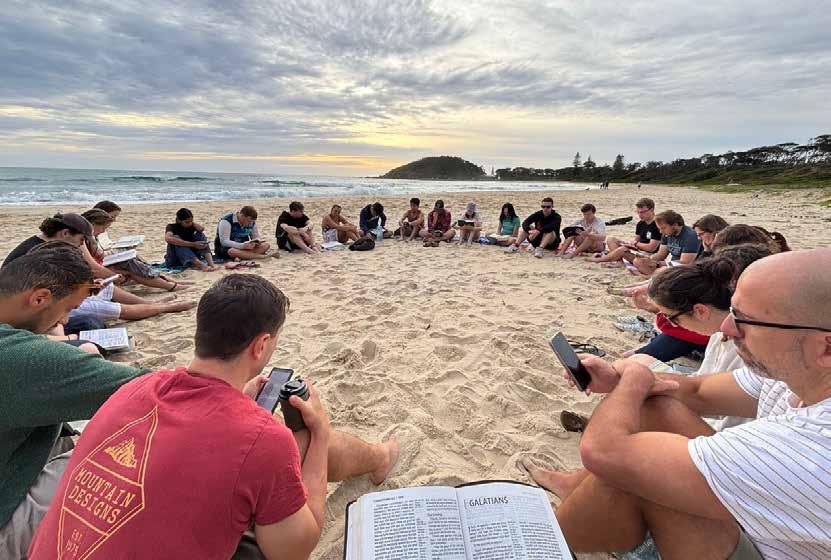
SUBMITTED BY MIKE DICKER, PRINCIPAL OF YOUTHWORKS COLLEGE
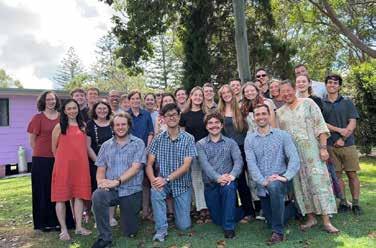
Youthworks College has been running an intensive subject on the Personal Life in Christian Ministry for its first-year students every year since the College was founded in the year 2000. The 10-day intensive, fondly known as “College Tour”, has been held at various locations on the east coast (from the Whit Sundays, to Hervey Bay and K’gari) but over the last 11 years it has been in residence at the Christian Youth Centre, Scotts Head.
Youthworks College is a member of the Australian University of Theology (AUT) and specialises in theological ministry education for effective children's and youth ministry. The student body is made of women and men who engage in gospel ministry with children and young people in a parish church context, school chaplains, and school teachers who are developing their practice in teaching ‘Christianly’. The Centre for Christian Education at Youthworks College is helping everyday teachers and schools think about how their Christian faith forms their practice and their students.
The intensive subject on Personal Life in Christian Ministry covers a range of topics for the formation of parish children's and youth ministers, school chaplains, and school teachers as effective, safe, ethical, and lifelong practitioners. The subject covers identity formation, spiritual disciplines, personality preferences, self-reflection, faithfulness in service, leadership, and the practical disciplines of working in a team, boundaries, relationships, and conflict resolution to name a few. This is conducted in a residential setting of life together while reading and reflecting on Dietrich Bonhoeffer’s book ‘Life Together’, and with the daily
rhythms of morning prayer (on the beach) and evening prayer (around the campfire).
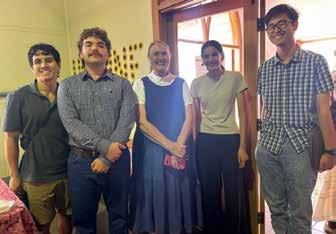
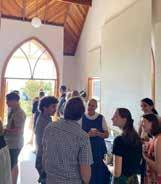
One of the outstanding features of this mid-north coast intensive is our annual visit for fellowship with the saints at Holy Trinity Macksville in the Nambucca Valley. For the last 5 years College students and faculty have joyfully received the ministry of Rev Peter Shayler-Webb and Rev Leslie Fotakis, the loving hospitality, fellowship, and service of the church, and it has become a great highlight of College Tour. The fellowship with Holy Trinity Macksville dovetails seamlessly with the learning outcomes of the intensive subject by encouraging and challenging students to consider and reflect on Christian ministry in different contexts. We are always encouraged each year by seeing and hearing about the variety and diversity of ministry initiatives in the Nambucca Valley, and challenged each year by the needs and opportunities for ministry on the NSW North Coast.
Some of the Youthworks College students will graduate and be ordained for Anglican ministry; some will be stipendiary lay ministers in Anglican churches and other denominations; others still will continue as school teachers in independent or state schools, or become chaplains in schools, universities, hospitals, aged-care, or the ADF. Wherever the Lord sends them to serve, their time spent in community and reflection during College tour will equip them for lifelong, safe, ethical, and effective gospel ministry. And their time spent in fellowship with the saints at Holy Trinity Macksville will shape their hearts to see the needs, joys, and opportunities for ministry in places like the North Coast of NSW. ■
"The Centre for Christian Education at Youthworks College is helping everyday teachers and schools think about how their Christian faith forms their practice and their students."
SUBMITTED BY MANDY
STARK
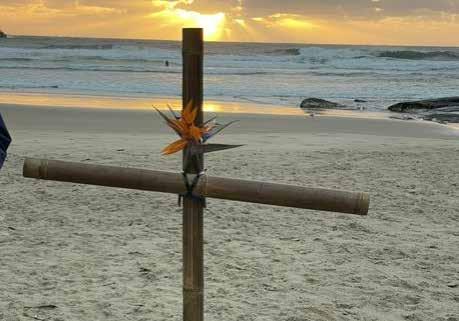
We gathered in the silent darkness, The dense, heavy clouds hanging ominously above.
Through the thin torch light, a cross erected, an altar created, Waiting for the Sun to rise.
In the early morning light, two women hasten to the tomb.
Spices in hand, their hearts heavy with grief.
Hoping to provide care for their beloved Lord, who had died. Unsure and uncertain, Waiting for the Son to rise.
Prayers offered, hymns sung, umbrellas lifted; Was it really like this? That first Easter morning?
The same sense of stillness, of reverence, of anticipation, of Hope? Waiting for the Sun to rise.
The Mary’s were met by an angel in dazzling white.
An angel with information they could barely comprehend, “Do not be afraid” Then the words they longed so desperately to hear,
“He has been raised”- the Son has Risen!
As the sun triumphantly broke through the clouds, We too, paused in silent wonder to acknowledge the magnificent glory.
A loud cry carried across the dunes, “He is Risen ! He is Risen Indeed!”
As it was, so it became. The sun rose, so too The Son has Risen!!
Thanks be to God!
SUBMITTED BY MANDY STARK
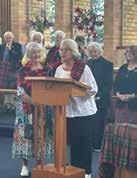
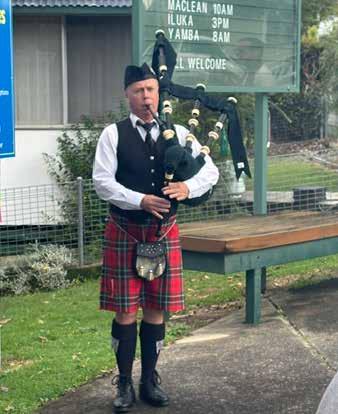
On Sunday the 4th of May, the Maclean Parish welcomed over 40 members of the Maclean clan, as they celebrated their annual gathering with the 'Kirkin' ( blessing of the tartans).
Our procession was led by a piper, and the banners of the clan. Archdeacon Kay Hart defininitely got into the 'tartan spirit' and spoke passionately about our 'kinship and unity' in Christ. Members of the clan brought forward their tartans (of many colours and designs) to be blessed.
While not your standard Sunday service, this was a wonderful opportunity to share our Anglican traditions with those who came to share and celebrate their kinship and stories of origin. A wonderful point of outreach to a community within and beyond our Diocese.
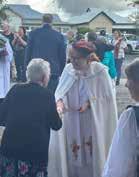
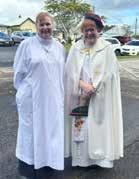
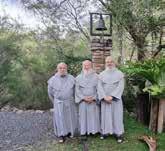
The Little Brothers of Francis welcomed Bishop Murray on his annual pastoral visit to their Hermitage at Tabulam. We are grateful for their prayerful presence in our Diocese.
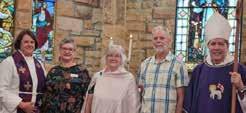
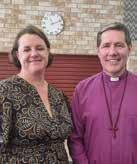
Congratulations to Jo, Jennifer and Barry who were confirmed by the Bishop today at Alstonville Anglicans
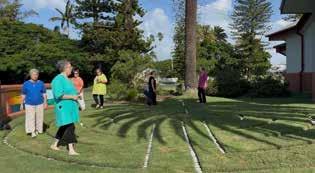
Come walk for peace Come walk as one Come be part of the wave
SUBMITTED BY
GRAHAM AND JAN FRYER
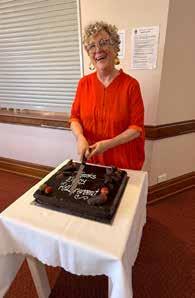
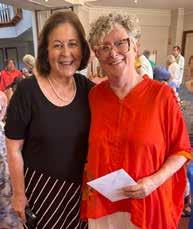
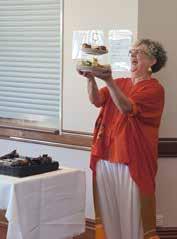
A high afternoon tea was held for The Reverend Cathy Ridd on Saturday 21 February 2026 to acknowledge her ten years of ministry and service in the Parish of Ballina giving thanks for her time as a Formation student, Deacon, Assistant Priest, Associate Priest, Priest-in-Charge and Rector. Reverend Cathy's special request was for ribbon sandwiches. The Mayor, Diocesan Archdeacon and Churchwarden each shared different aspects of Reverend Cathy’s contribution at the Diocesan, Parish and Community level- her outstanding leadership, wisdom, courage, creativity, vision, her compassion, pastoral care and commitment to social justice.
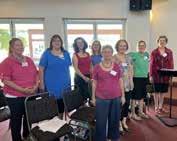
The following day a combined parish service included part of a Farewell Liturgy, concluding at the end of the Annual General Meeting. A feature of the service was the beautiful singing by the Threshold Choir.
The Reverend Mark Sibly commenced as Locum the following Sunday.
SUBMITTED BY
KERRY JOHNSTONVERIDITAS LABYRINTH FACILITATOR
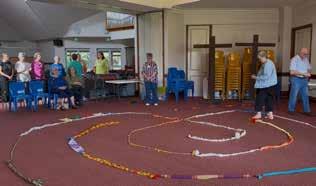
A Walk for Peace was held at St Mary's labyrinth, Ballina on Saturday 2 May 2026 as we walked as One at 1pm accompanied by the Threshold Singers.
World Labyrinth Day is an annual international event founded by The Labyrinth Society in 2009. Every year on the first Saturday in May thousands of people around the globe participate in this Walk.
They walk at 1pm local time to create a rolling wave of peaceful energy passing from one time zone to the next. It is a moving meditation for world peace and celebration of the labyrinth experience. Its purpose is to promote peace, unity and connection within ourselves and across all communities.
The twenty four walkers walked the indoor labyrinth and then moved to the outdoor labyrinth with access to handheld labyrinths.

SUBMITTED BY SIMON MCKINLEY
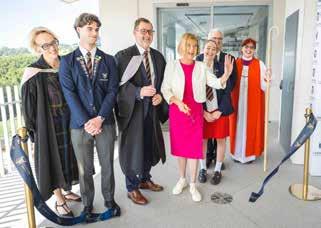
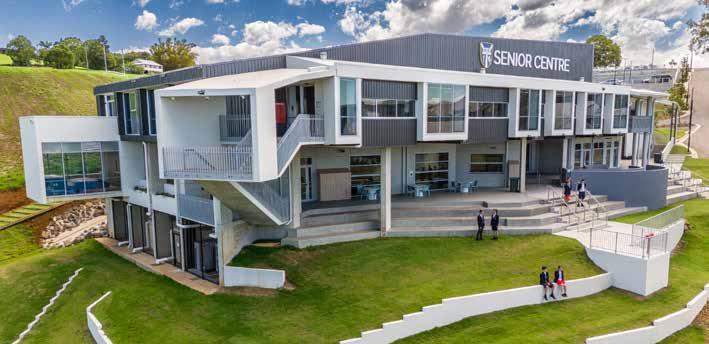
Lindisfarne Anglican Grammar School officially opened and dedicated its new Senior Centre and Trades Skills Centre Expansion in a special ceremony celebrating learning, community and future opportunity on Tuesday, 4 May.
The event brought together students, staff, dignitaries and community members to mark the significant milestone. School Captains Nicolas Leotta and Phoebe Robins reflected on the importance of the new spaces for the Class of 2026, describing the facility as “a place to study, learn, grow and imagine what the next stage of learning might look like.”
Assistant Bishop of the Diocese of Grafton, The Right Reverend Tiffany Sparks, offered the blessing and dedication of the new facilities, praying: “May it be a place where students and teachers will search for the wisdom that guides life, and strive wholeheartedly to stand by Christ as their teacher and guide.”
Principal Stuart Marquardt described the new Senior Centre and Trades Skills Centre Expansion as the culmination of years of planning, vision and collaboration, representing another significant milestone in Lindisfarne Anglican Grammar School’s commitment to providing outstanding learning
environments that support both academic excellence and personal growth. Situated at the heart of the Mahers Lane campus, the facilities reflect the School’s ongoing investment in contemporary spaces designed to inspire students and prepare them for future success.
The Hon Justine Elliot MP officially unveiled the plaques and opened the building, fittingly returning after opening the original Trades Skills Centre in 2015.
The new Senior Centre was purpose-built to support the unique needs of senior students, providing flexible learning spaces that encourage independence, collaboration and wellbeing. Featuring quiet study zones, seminar rooms, presentation pods and open-plan workspaces, the Centre mirrors the environments students will encounter in tertiary study and future workplaces. Expansive views, natural light and dedicated breakout spaces create a calm and purposeful atmosphere where students can prepare for life beyond school with confidence and focus. ■
SUBMITTED BY STEPHANIE MUNDAY-LAKE
AI is a mirror, reflecting back at us our best and worst qualities. We are going to decide on its implications, and those choices will shape what AI actually does for, and to humanity.
(Ethan Mollick 2024)
There seems to be more said and experienced about artificial intelligence each day. Our responses may swing from scared…sobering…or the sparking of opportunities not imagined.
In a March 2026 interview, Professor Joel Pearson (University of New South Wales) argues that ‘the impact of artificial intelligence is likely to be more complex than simply making people intellectually lazy.’ His concern is that ‘as individuals increasingly outsource their thinking, creativity, memory and decision-making, there is a risk of cognitive offloading leading to cognitive atrophy.’ Thankfully, Professor Pearson stresses this outcome is not inevitable.
Another commentary, also earlier this year, was made by Professor George Williams (Western Sydney University). His perspective may seem even more sobering, arguing that ‘artificial intelligence is not simply another technological shift, but a transformational force that will fundamentally reshape both the employment market and the purpose of university and school education’. Professors Pearson and Williams both assert that the future will place a premium on distinctly human capabilities. What, then, are the implications for the learning of the young people in our schools?
For School Councils and the Grafton Anglican Schools Commission, AI causes us to reflect on the core purpose of education: the intellectual, moral and spiritual formation of young people. Strategic and ethical perspectives focusing on our human, God designed, capabilities are already key values and beliefs in our schools. However, now the advent of artificial intelligence necessitates new responses and approaches, such as exploring and examining how to better answer the question, What is the purpose of schooling in an AI- shaped world?
How do we integrate thinking, discernment, ethics and creativity into the realm of AI, offering more to our students’ learning than cognitive knowledge? And how do our school leaders and teachers guide our young people in developing character, purpose and identity, along with meaning and wisdom?
These are difficult, even troubling issues, but we must apply our thinking, and then our action, to them. As Ethan Mollick says in the introductory quote above, AI in not inevitably bad news. If we can accept the challenge, it provides us with an opportunity for reshaping and refreshing Anglican education. We invite you to continue to journey with us and our school communities in your actions, thoughts and prayers, as we work our way through the strategic and ethical responses AI has presented to us.
We join with others across the Diocese in warmly welcoming Julie Irvine to the staff of the Bishop’s Registry as Executive Officer (Schools). Julie’s contributions will be particularly focused on supporting the Schools Commission in strengthening governance assurance, strategic guidance and support of School Councils across the Diocese, ensuring they remain places of authentic relationships, faith, and learning. ■
Even the lecturers depend on it. They use AI to write the exam papers, we use AI to cheat the exam, and then they use AI to grade our papers. It’s nuts.
(Bachelor of Business student, Curtin University, 2026)
LINDISFARNE ANGLICAN GRAMMAR SCHOOL
SUBMITTED BY REV
This year, our Easter services were marked by beauty, reverence, and a deep sense of joy as we gathered to celebrate the passion, death, and resurrection of our Lord. The solemn liturgies provided a meaningful space for reflection and renewal, drawing our community together in faith, love and hope.
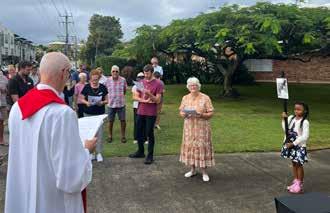
Among the highlights of the Easter season was the Agape meal shared before the Maundy Thursday service, fostering fellowship and connection. Another significant moment was the Ecumenical Stations of the Cross, shared in unity with our St Anthony’s Catholic brothers and sisters in Kingscliff, a powerful witness to our shared faith in Christ.
At St Mark’s Pottsville, Easter was celebrated in “fantastic” style, especially through joyful children’s activities. The garden came alive with fairies, and Easter bunnies delighted the young (and young at heart) by distributing chocolate eggs—an occasion filled with laughter and a lot of fun.
As we continue in the season of Easter towards Pentecost, may the risen Christ fill our lives with his love and joy, and renew us in holiness. ■
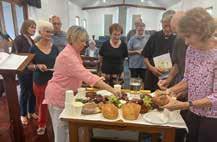
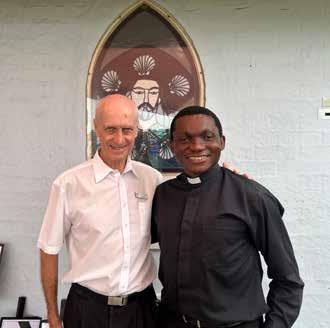
The garden came alive with fairies, and Easter bunnies delighted the young (and young at heart) by distributing chocolate eggs—an occasion filled with laughter and a lot of fun.
SUBMITTED BY HOLLY HEATHER
Local Coffs Harbour teenager Milla Adamson has claimed first place in the 14/15 years girls’ category at the 2026 JNJG Harvey Norman Sydney Week of Golf, a five-day tournament held across five challenging courses. Her impressive performance, including a decisive finish over the final two holes, earned her a three-shot victory and secured a place in the prestigious Bonville Champions Trophy later this year.
Milla, 14, began playing golf at age seven and quickly showed a natural talent for the sport. “I started competing when I was ten, and once I attended my first Jack Newton Junior Golf Tournament, I was hooked,” Milla said. “Since then I’ve been following the series and attending as many tournaments as possible around NSW.”
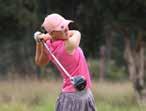
Attending Bishop Druitt College in Coffs Harbour, Milla is part of the school’s High Performance Program and trains six days a week under the guidance of her coach Ji McBryde, with support from mental coach Deidre Anderson. “I enjoy training and preparing for my next tournament,” Milla said. “Whether it’s drills or a round of golf to practice course management, I like to be on the course and keep improving.”
Looking ahead, Milla is thrilled to compete in the Bonville Champions Trophy. “This was a big ticket item on my vision board for 2026,” she said. “All the JNJG competitors want to go to Bonville, it’s the most prestigious event of the year, and it means a lot to me.” ■
SUBMITTED BY NAOMI
COOKE
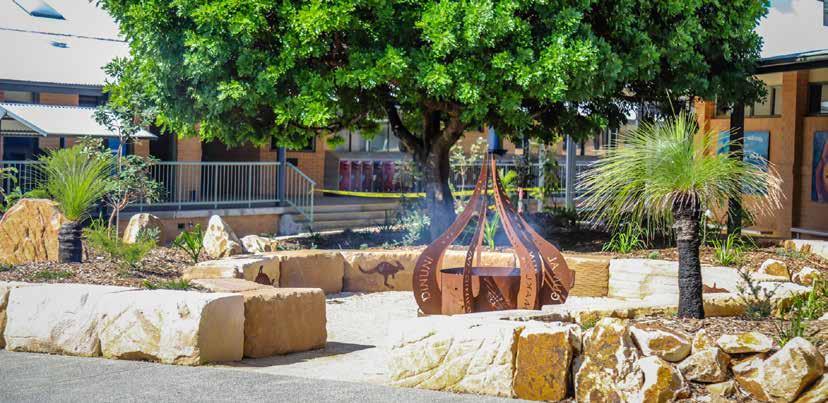
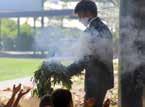
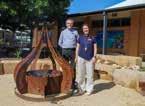
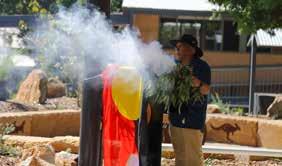
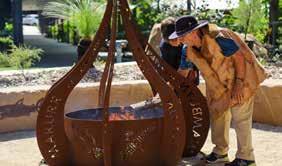
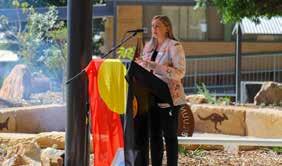
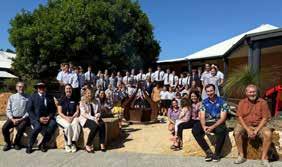
Recently at St Columba Anglican School, we had the honour of officially opening our new Yarning Circle and Cultural Garden with our First Nations students from Columba Cottage Early Learning Centre and SCAS, their families, members of our Executive team and esteemed guests. The ceremony was officially opened with a traditional Welcome to Country and Smoking Ceremony by Uncle Bill O’Brien, and included reflections from Ms Rosalyn Thomas (Wingara ISNSW), parent, Mrs Kayla Arthur, and Year 12 Indigenous Leader Matilda. Year 12 students Kevin and Chelsea were also involved in the smoking ceremony and closing prayer. The Yarning Circle and Garden was designed by Aunty Angela Roberts, featuring a sculptural fire pit and the seven Birpai totems, surrounded by sandstone seating.
Thank you to Independent Schools NSW, Bennetts Steel and the SCAS Facilities team for bringing the vision to life. The space allows our K-12 ‘Our Mob’ group to have a permanent yarning circle in the heart of our school - a place of cultural safety and connection that equally benefits every student and staff member in our school community. We welcomed too, as a special representative of the Grafton Diocese Dean Naomi Cooke. We look forward to sharing more about its meaning and significance to our students in Term 2. ■
"- a place of cultural safety and connection that equally benefits every student and staff member in our school community"
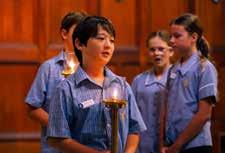
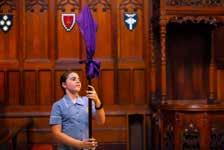

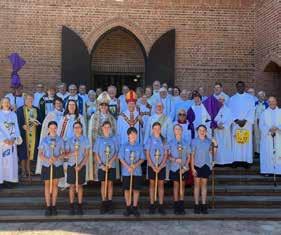
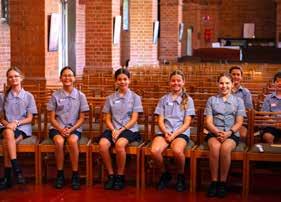
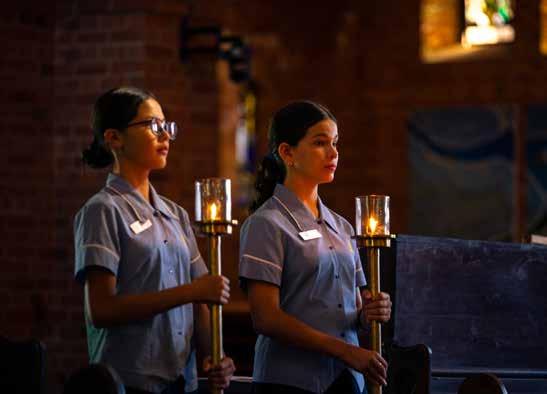
Our Year 6 Leaders did an outstanding job serving our Anglican community on the 26th March. They played a pivotal role in the liturgy for the Blessing of the Oils and the Renewal of Vows, and walked as acolytes (torch bearers) with the Diocesan Procession, The Dean's Procession, and The Bishop's Procession.
SUBMITTED BY HOLLY HEATHER
Bishop Druitt College is proud to announce that educators Isabel Horspool and Holly Dunn have been named recipients of the 2026 Rising Stars award by The Educator, recognising their outstanding contributions to innovation, leadership, and excellence in the Australian K–12 education sector.
The Rising Stars award celebrates high-achieving educators aged 35 and under who are making a meaningful impact through leadership, creativity, and measurable outcomes in their professional practice.
BDC Principal Simon Doyle said, “Both Isabel and Holly have demonstrated a strong commitment to educational excellence, embracing innovative approaches to teaching and learning while contributing to a culture of collaboration and continuous improvement at Bishop Druitt College.”
Doyle also said, “Their recognition reflects not only their individual dedication, but also the strength of the college’s supportive and forward-thinking learning environment.”
In addition to honouring individual educators, the Rising Stars program highlights schools that actively foster BISHOP
BISHOP DRUITT COLLEGE

early-career talent through professional development, mentorship, and a commitment to innovation.
“In addition to these Rising Stars awards, being previously recognised as both a 5-Star Best School and a 5-Star Employer of Choice by The Educator highlights the strength of our culture and community,” said Sue O’Connor, Deputy Principal. “Bishop Druitt College continues to be a place where educators are empowered to grow, lead, and inspire, ensuring our students benefit from dynamic and engaging learning experiences every day.”
The award recipients were selected following a rigorous national review process conducted by The Educator team, with a focus on demonstrated leadership, innovation, and tangible outcomes in teaching and learning. ■
SUBMITTED BY HOLLY HEATHER
Bishop Druitt College is proud to announce that Year 9 student and talented tennis athlete, Jackson Cheney, has been selected to represent NSW Regional athletes at the prestigious 2026 US Connect Training Camp, held from 12th to 30th September at the renowned John Newcombe Tennis Academy in New Braunfels, Texas, USA.
This exclusive camp brings together the top junior tennis players from regional New South Wales and Victoria, providing them with an unparalleled opportunity to train in a world-class academy environment and experience firsthand the demands of internationallevel tennis.
The 2026 US Connect Training Camp offers a full-time, high-performance training schedule where athletes like Jackson will develop their technical, tactical,
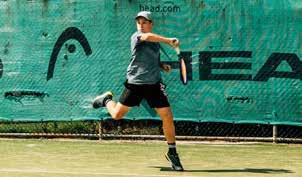
physical, and mental skills under the guidance of elite international coaches. The program also includes visits to five US colleges, including Texas State University and Trinity College, offering invaluable exposure to collegiate tennis pathways and academic opportunities in the United States.
Bishop Druitt College congratulates Jackson Cheney and wishes him every success as he embarks on this exciting chapter of his tennis journey. This selection highlights the strength of the College’s High Performance Program in nurturing regional talent and creating pathways for students to reach their full potential on the international stage. ■
SUBMITTED BY
HOLLY HEATHER
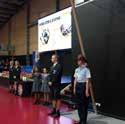
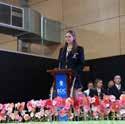
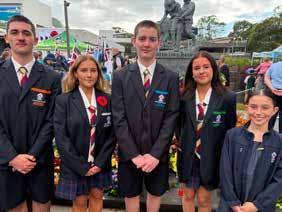
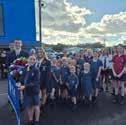
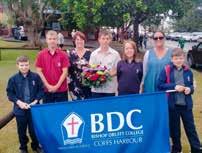
Bishop Druitt College was proud to see such strong representation across multiple ANZAC Day services this year, with members of our community attending commemorations in Bellingen, Coffs Harbour, Woolgoolga, Urunga, and Sawtell. Staff, students, and families came together in quiet reflection to honour the courage, service, and sacrifice of those who have served our nation. Each service provided a meaningful opportunity for our community to stand in respect and gratitude.
It was wonderful to see the BDC community united across the region, demonstrating the values of remembrance and respect. Whether laying wreaths, participating in services, or simply standing in reflection, our presence reflected the strong spirit of connection and gratitude that defines Bishop Druitt College. We are proud of all those who represented our school so thoughtfully.
We pay our respects to all who have served, those who continue to serve, and those who made the ultimate sacrifice for our country. Lest we forget.
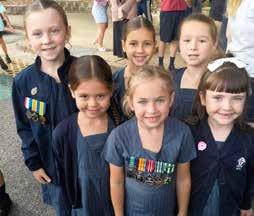
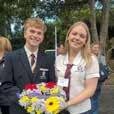
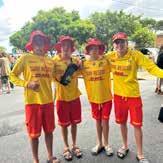
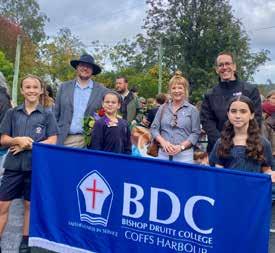
Bishop Druitt College had the privilege of holding a moving and respectful ANZAC Service. A sincere thank you is extended to our Primary and Secondary Leaders for guiding the ceremony with such dignity and care, and to all students and staff who contributed thoughtfully, including our speakers, performers, and those who helped shape the commemorative moments throughout the service.
It was a powerful and reflective occasion, serving as an important reminder of the courage and sacrifice of those who have served, and the responsibility we carry in honouring their legacy. ■


BY SISTER HELEN CSC
Last year two peacocks arrived unannounced in our area. They began moving around our property and those of our neighbours. At one point a peahen joined them. Then one peacock and the peahen left, leaving one peacock. He comes and goes, sometimes joined by the other peacock.
At the beginning, my two hens, Daisy, an elderly hen, and Red, were afraid of these birds, as can be seen above. The peacocks were large, and looked different. But, some time later, surprisingly, things changed.
I read recently in an article, a saying of Nelson Mandela. “If you want to make peace with your enemy, you have to work with your enemy. Then he becomes your partner.” (Nelson Mandela was the first Black South African President and an anti-apartheid activist.) Did the relationship that later developed between one of the peacocks and Daisy, reflect something of this quotation of Mandela?
The change in this relationship took place over some months. One day I noticed the peacocks and hens were having dust baths only 2 or 3 metres apart. Gradually they became used to seeing each other close by.
Then I saw that one peacock and Daisy, were standing and facing each other on our veranda. I took their photo and wondered what was happening in their relationship. A few days later I saw them together again. I watched, and soon realised they were interacting in a positive and interesting way.
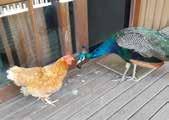
The peacock was looking at Daisy, and then gently pecking her face, neck and the front of her body - places she could not reach to peck herself. It seemed he was removing any lice or foreign bodies hiding among her feathers. After a while, Daisy quietly walked off.
Daisy, being old, no longer lays eggs and does less walking and running around than she used to do. She would come into the category of frail elderly people who lose the ability of doing activities to serve or help others, and move from ‘doing’ to ‘being’ in their relationships. Yet, on reflecting about her changed relationship with the peacock, I believe that, like many people, her ‘being’ was also her ‘doing’.
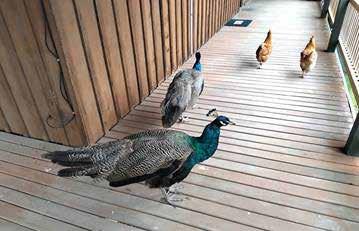
The relatively young peacock, less than 3 years old, was helping Daisy by getting rid of lice etc. in her feathers, and she was giving him food to eat and companionship. Their relationship had to be open and accepting of each other. It was not a dominating one by the peacock, or a fearful one for Daisy. They worked together to achieve something which benefited both of them. They were behaving more like family members and friends. Further, they were relating from different ages. What has this to say to us?
For we who are reckoned as aged, many things we could once do and enjoy are no longer physically or mentally possible for us to do. We depend more on others to help us. Changes we do not plan affect our lives. ‘Doing’ for us becomes less as we move into ’being’. This movement may, but we are all different, cause us to relate more closely with God, and in God’s love.
For example, we may discover that our prayer for others changes, as I mentioned in my last leaflet. I have found that instead of always praying from lists of names and events, I can sometimes just rest or relax in God’s love surrounding me. I open myself for God to pray through me, and for me to pray through God, as God wills. People sometimes come into my mind and I can surround them with God’s love. This prayer may reflect my ageing which causes me sometimes to want more rest and less stress in my life, but it also can develop inner resources although it may lead us to feeling isolated at times.
In prayer we might also reflect on our lives, giving thanks for so much, perhaps grieving or saying sorry to God about some past experiences. Dying can be something we may be reluctant to think about, but may need to consider. One thing we can be certain of, is that God’s love will be with us, surrounding and in us when we die, and for evermore.
Changes in our relationships take time, but they can benefit and even transform us and others. Enemies can become friends, and rejected people can be experienced as mutual trusted supporters. I believe that ‘being’, lived out by we who are aged, also can be identified as ‘doing’, when it results in quietly respecting and caring for others, and deepening our relationships with them and God. ■
APRIL REFLECTION
BY SISTER HELEN CSC
Lately our world seems to have experienced more than the usual number of conflicts between people and nations. There has been the war between Ukraine and Russia dragging on, a civil war with protesters being killed in Iran, fighting and destruction in the Gaza strip, and so on.
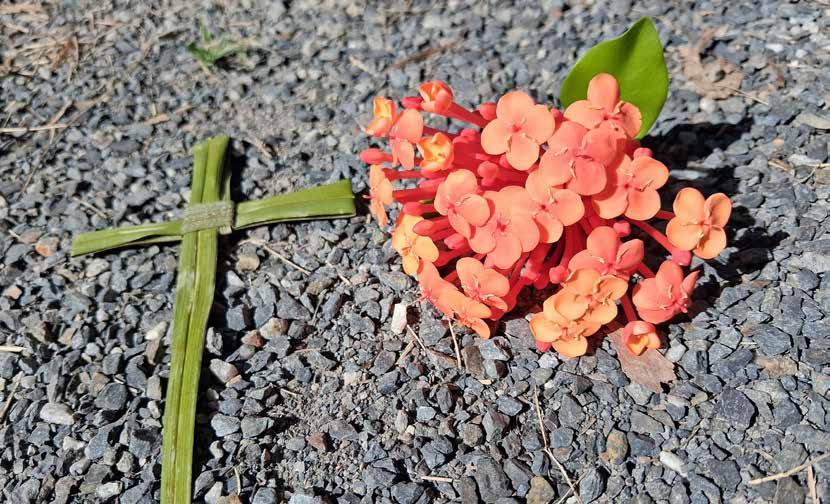
Above is a picture of a palm cross, and a flower made up of small individual buds and blossoms. It illustrates something of the past week, when we as Christians journeyed together through the Holy Week services and came to Easter Day. Along the way, we observed a number of events in which both suffering and joy, and death and new life, were embraced, deepening our love for God and others.
On Palm Sunday we received palm crosses, symbols of Jesus’ painful death and love. At the evening service on Maundy Thursday we recalled the farewell meal Jesus shared with his disciples before Passover. We were told in John’s Gospel that Jesus loved his disciples ‘to the end,’ but that Judas would betray him, and Peter would deny knowing him. At the end of the meal, Jesus acted as a servant. He took a towel and some water in a basin and washed the feet of his disciples. Jesus then urged his disciples to serve others and love one another as he loved them. Loving and suffering were mixed together.
Next came Good Friday. This was the day Jesus was flogged, mocked and died nailed to a cross, and yet we call this day, ‘good’. It was a day of pain and grief for Jesus and his disciples. We read that many of the women who followed Jesus watched him die, and saw his body placed in a tomb. It was not a ‘good’ Friday for them, but for one of the criminals dying alongside of Jesus it was indeed ‘good’. He asked Jesus to remember him when he came into his kingdom. Jesus replied, “Truly, I tell you, today you will be with me in Paradise.” (Luke 23:43.)
After Jesus’ death, Joseph of Arimathea and Nicodemus showed respect and reverence for Jesus’ body by obtaining permission from Pilate to take it and place it in a tomb. The next day was the Sabbath, so all rested.
In Matthew’s Gospel, Mary Magdalene and another Mary are identified as the first followers of Jesus to go to his tomb on Easter Day. Having witnessed his death and burial, they now went to the tomb with spices to anoint his dead body. There they experienced an earthquake, and saw an angel roll back the stone from the tomb and sit on it. The tomb was revealed as empty. The women were terrified but the angel told them not to be afraid, and to go and tell the disciples that Jesus had risen from the dead. In Luke’s Gospel, the women gave the message to the disciples, but were not believed. Later the women and many of Jesus’ disciples actually met the risen Jesus in various places, were frightened and then filled with joy. The risen Jesus was not always recognised straight away, his body was changed but bore the marks made by the nails and spear, proving his identity.
Turning to our own lives, we also, but not usually so dramatically, experience death and life, fear and love, suffering and rejoicing. God created us as free human beings and not robots who are forced to act in certain ways. Even as Christians believing God is with us, we are not assured of a calm and peaceful life. We follow Jesus and like him we suffer pain, and become anxious and stressed at times. But all is not lost. Not only at death are we changed and transformed by God, but often in our daily lives when we work through difficulties and discover we are experiencing, in some form, new life in God. Strangely, suffering can and does enable our spirituality and love for God and others to deepen.
to receive messages, then it was stolen. I had to buy a new one. I am still struggling to use this new phone, but with the help of another person I did manage to put the photo I needed on to page 1 of this leaflet! About the same time the lawn mower broke down allowing grass to grow unchecked until a neighbour did some mowing for me. I found that I was also helped when I, in turn, assisted someone else in need. I believe that God is with us when we both receive and give help.
At times, God’s love which surrounds us can be a resting place for us, diminishing our anxieties and fears, and drawing on the power of the Holy Spirit in us. Further, I find that peace, light from darkness, and life from death, can come when we stop to look and appreciate God’s presence in God’s beautiful world, with animals and nature, around us.
God created us as free human beings and not robots who are forced to act in certain ways.
Even when we are upset because we have hurt others, or we ourselves have been hurt by others, we can remember that the risen Jesus did not punish Peter who denied him, but enabled him to accept forgiveness when he asked him, three times, “Do you love me?” On being told that Peter did indeed love him, Jesus then replied, “Feed my sheep.” (John 21:15f). Peter was to give himself to help others.
Rowan Williams writes in ‘God With Us’, pp. 102-103, “The resurrection is not about the wiping out of our history, pain or failure, it is about how pain and failure themselves—humanity marked by history— may yet be transfigured and made beautiful.”
There are often times when I find that everything seems to be going wrong. Recently my phone refused
Death is transformed by God into new life, not taken away. ■

Always be humble and gentle
EPHESIANS 4:2
MAGAZINE OF THE ANGLICAN DIOCESE OF GRAFTON, NEW SOUTH WALES