




















It’s both exciting and challenging to take on the responsibility of Editor for Butterfy Gardener now, a time when our gardens mean so much. Recent studies reveal dramatic declines in animal populations, including butterfies. We humans are faced with a pandemic that threatens our physical and mental health. Our gardens are essential to providing habitat for stressed animal populations, and for helping us to stay healthy.
With the choices we make in our gardens, each of us has the ability to provide a safe haven for butterfies and other struggling species. Using plants that are native to the area in which we live, avoiding the use of pesticides and leaving fallen leaves in our fower beds are all easy, important things we can do to create an environment in which butterfies can thrive. In this issue, Debra Straub shares her growing understanding of the importance of her own garden.
Studies also show that being outside in nature is benefcial to our physical and mental health. Who needs to visit exotic places when with the right choices, the natural wonders in our own gardens ofer so many inspiring sights, like those Allison Snopek Barta encountered in her Minnesota backyard, or the explosion of American Snouts Lynne and Jim Weber experienced?
Thank you to outgoing editor Jane Hurwitz for her stewardship of Butterfy Gardener for the past nine years, and for being a mentor to me. Jane took the magazine to a new level of visual and intellectual interest.
Building on Jane’s foundation, we are introducing a new feature, In the Garden, and we have the frst article in a series about gardening techniques, as Randi V. Wilfert Eckel teaches us about propagating native plants from seed.
For those who don’t know me, I have been Associate Editor of this magazine for three years, and a frequent contributor before that. I am a naturalist at Bowman’s Hill Wildfower Preserve, a Pennsylvania Master Naturalist, and I have a blog, The Natural Web (https://the-naturalweb.org/). I hope to grow together with you in our understanding of how our gardens matter!
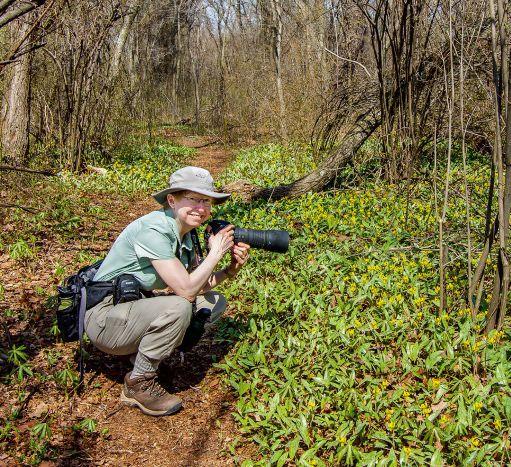
Editor Mary Anne Borge in Action Photo ©Jef Worthington
Share your own experiences through our new feature, In the Garden! Send us a favorite photo from your garden with a description of 50 words or less telling us about the photo and why it’s one of your favorites.
We’re always looking for Wanted or In the Garden features, articles based on your own experiences, conservation projects, chapter news, favorite nectar or caterpillar food plants, gardening tips, artwork, photographs, and poetry to share with our readers.
Please refer to our submission guidelines at NABA.org/pubs/bg.html.
Is there a topic you would like us to cover? Have questions, suggestions, or comments?
Please contact us at Borge@NABA.org.
Mary Anne Borge, Editor
Page 2 Butterfy Gardener
Butterfy Gardener is published quarterly by the North American Butterfy Association, Inc. (NABA). ©2020 by the North American Butterfy Association, Inc. All rights reserved. Views of contributors do not necessarily refect the views of NABA.
Editor: Mary Anne Borge
Associate Editor: Lauren Kovacs
Editorial Assistance: Sharon Wander
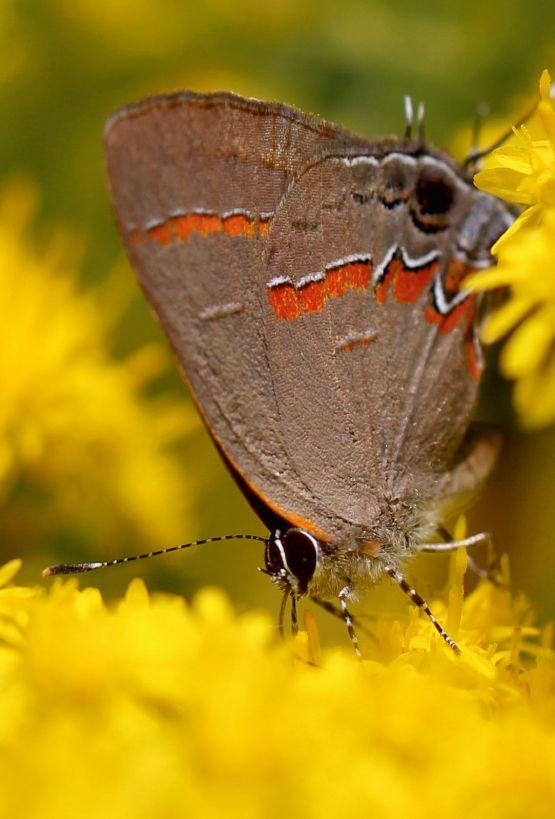
Above: Giant Goldenrod is a great late-summer nectar source for butterfies like this Red-Banded Hairstreak. Photo ©Randi V. Wilfert Eckel
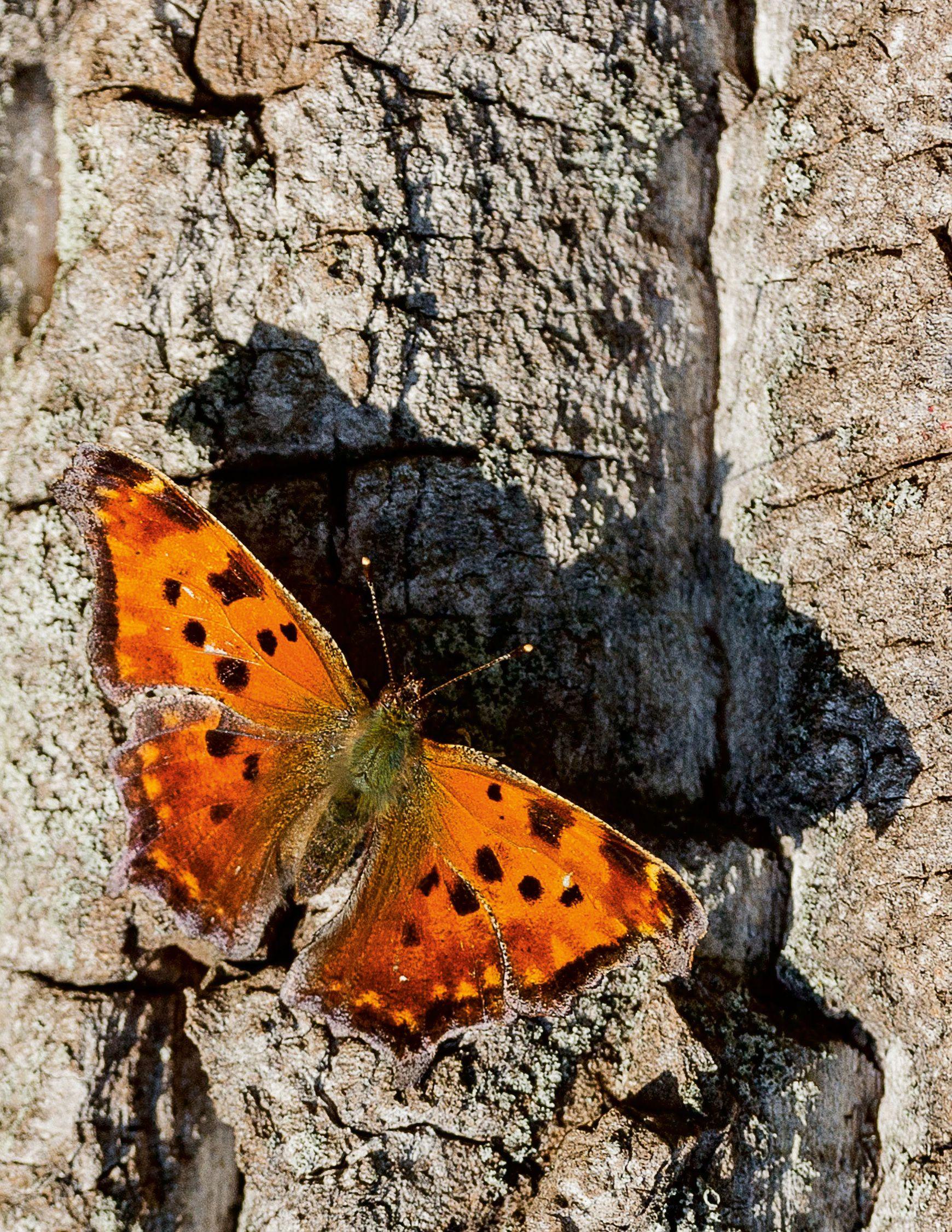
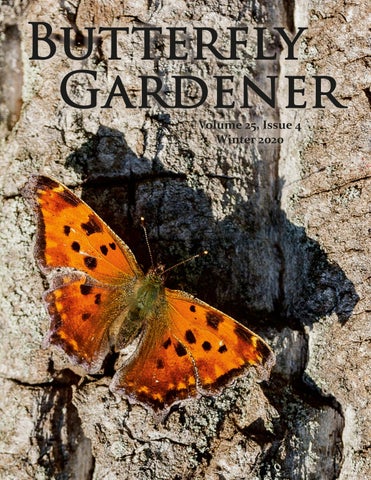
Front Cover: Eastern Comma
Photo ©Mary Anne Borge
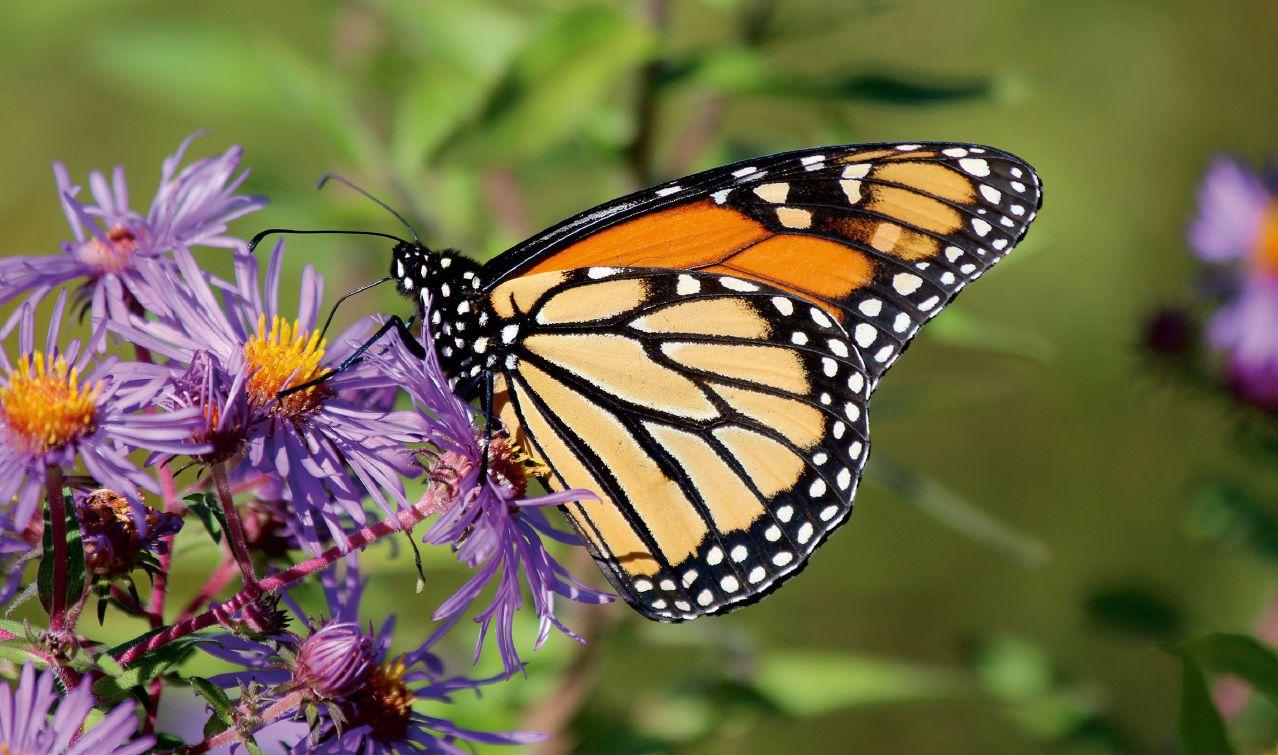
Rear Cover: Monarch nectaring on New England Aster along its migration route south for the winter.
Photo ©Katrina M. Eckel
Volume 25, Issue 4
North American Butterfly Association is a not-forprofit organization formed to educate the public about the joys of non-consumptive, recreational butterflying including listing, gardening, observation, photography, rearing, and conservation. Membership is open to all who share our purpose.
Our National Butterfly Center is located on approximately 100 acres fronting the Rio Grande in Mission, Texas. The Center uses native plants to create a spectacular butterfly garden that significantly benefits butterflies, an endangered ecosystem, and the people of the Rio Grande Valley.
The common names for plants in Butterfy Gardener are those used by the USDA, found at this website: https://plants.usda.gov/
Randi V. Wilfert Eckel
Looking out at the winter landscape, what’s a gardener to do? Begin to dream of next spring, of course! It’s time to plan for more fowering plants to entice butterfies (and moths!) to your gardens for nectar, along with diferent native plants to provide food for caterpillars. You can be well on your way to a garden upgrade by starting your plants from seed, and winter is the best time to do it.
Propagating plants from seed is fun and economical, but also sometimes challenging. It’s important not to wait too long to get started. You see, the seeds of many native plants require pretreatment that may take weeks to months—which makes winter a great time to begin. Success will depend upon understanding what each species of seed needs in order to grow.
Unless noted, photos ©Randi V. Wilfert Eckel
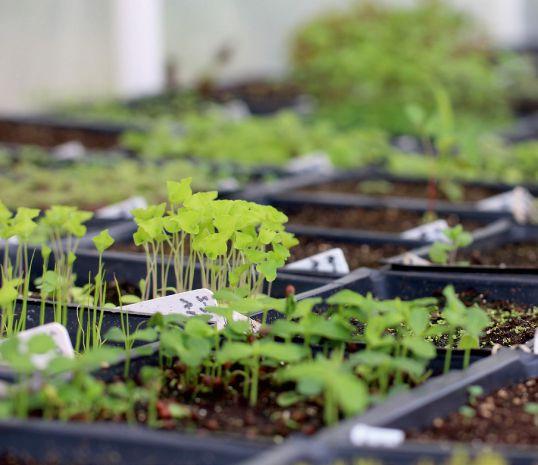
A variety of native plant seedlings in spring
In general, seeds should be planted no deeper than the thickness of the seed itself. Many native plant seeds are extremely tiny and can easily be buried too deep. “Surface sowing”—simply dropping the seeds onto bare soil—and then pressing the seeds onto the surface of the soil, is the best approach for tiny seeds. It is very important for seeds to have good contact with the soil.
Many native plant seeds require a period of cold stratifcation before they will grow. This means the seeds need to experience conditions that mimic winter in the ground, so the seeds must be in contact with a moist, cool substrate (sphagnum, soil, etc.) during this time. Without cold stratifcation, many seeds will stubbornly refuse to germinate. In the wild, this strategy actually protects the seeds from starting to grow at the wrong time of year.
To complicate things, diferent species have diferent cold-stratifcation needs (4 weeks, 8 weeks, 12 weeks or more). Of course, if your seeds require cold stratifcation, one of the easiest ways to grow them is to plant directly outdoors and allow Mother Nature to take over. If you are cold-stratifying your seed indoors, it is also quite easy—simply plant your seed in a well-labeled pot of moist (not wet) soil, cover with a plastic bag, and put the whole thing in the back of your refrigerator for the prescribed number of weeks, before moving it back to a warm, bright location. You can also stratify your seeds in a protected location such as an unheated garage or porch (but be sure to protect them from mice, pets, and other creatures).
When starting seeds indoors or outdoors, it’s important to remember that the most dangerous time in the life of any plant is just as the seed begins to grow. If tiny seedlings with minuscule roots dry out, they have no defense and will simply die. If they are too wet, they will rot. Indoors, the use of clear domes over seed pots can be very helpful to keep the air and soil moist. Supplemental light is also very important indoors—long days (12-16 hrs.), with the light source only inches away from your seedlings, will encourage stout, healthy growth. Outdoors, keeping an eye on your newly seeded wildfower beds in spring to make sure that they don’t get overly dry is also very important.
Let’s look at a few favorite groups of native plants and how to propagate them from seed.
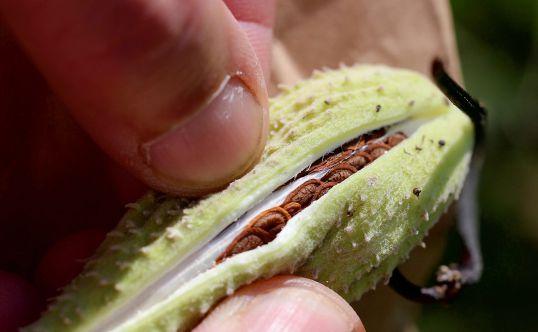
Milkweeds (Asclepias spp.)
If you fnd milkweeds, the storied host plants of Monarchs, hard to grow from seed, you are not alone. In truth, they are quite easy—but knowing a few tricks will greatly increase your success rate. First, most milkweed seeds need about 4 weeks of cold stratifcation. Second, they may look like large seeds but don’t be fooled by that: milkweed seeds need light to germinate—if you bury them too deeply, they will never grow. Third, milkweed plants don’t really like to grow in pots. Their large roots need space to spread down and out, so they are actually best seeded directly into the garden.
Failing that, plan to transplant your milkweeds into the garden when they are still quite young. Bear in mind that some milkweeds experience pronounced transplant shock—Butterfy Milkweed will stop growing for several weeks after transplant. Fourth, you will need patience with some milkweeds. Although Swamp Milkweed started from seed will grow quite large the frst year, others are not so fast, and some—like Butterfy Milkweed—stay quite small the frst year and, like many perennials, may take several years to reach mature size.
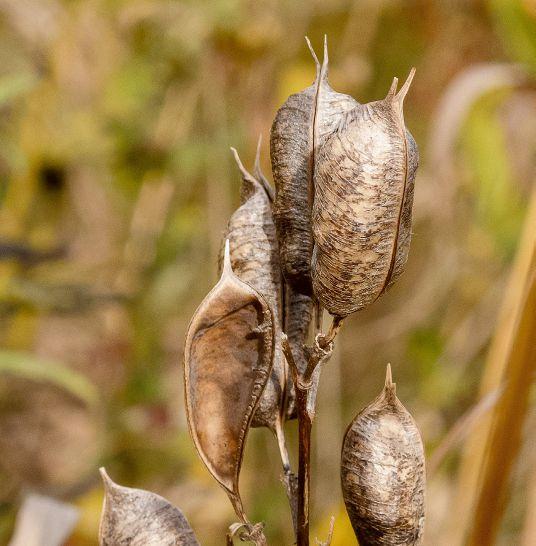
Wild Indigo (Baptisia spp.)
Senna (Senna spp.)
The large seeds of these plants, host to Wild Indigo Duskywings and Sleepy Oranges, respectively, germinate quite quickly after their dormancy is broken with a hot-water treatment. Just pour hot (not boiling) water over the seeds and let them soak overnight before planting. As with most Pea family members, adding a pinch of garden soil (from where you grow peas or beans in your garden) will inoculate the potting soil with Rhizobium, a benefcial symbiotic bacteria that these plants use to create nitrogen ‘fxing’ nodules on their roots, necessary to create the nutrients these plants require.
Continued on Page 8
Jim & Lynne Weber
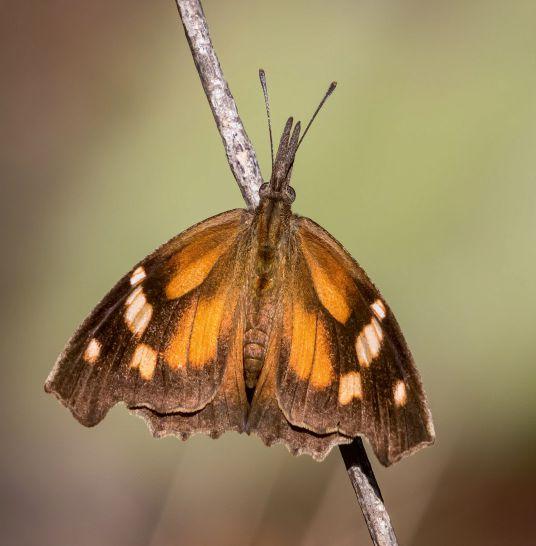
The change from late summer into early fall can trigger some unusual natural events, and at this time of year in Central Texas, we can often see periodic population explosions of the American Snout butterfy.
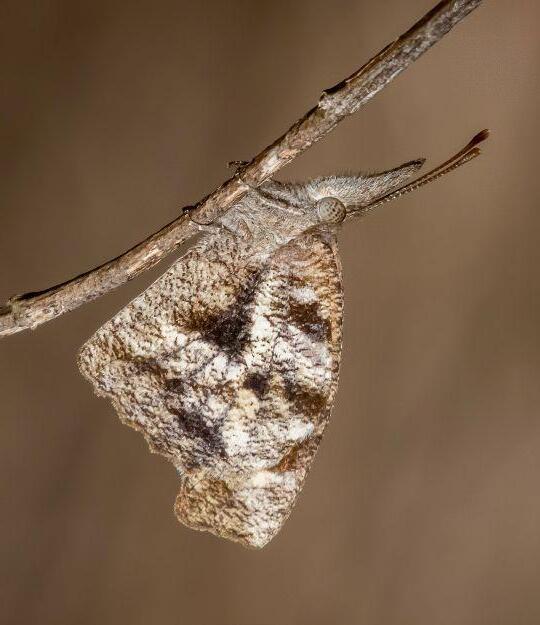
Frequently mistaken for migrating Monarchs, American Snouts are medium-sized butterfies with brown uppersides, wings orange at the base, and white spots near the tips of the forewings. Their undersides are patterned in mottled grayish-brown, much like a dried leaf.
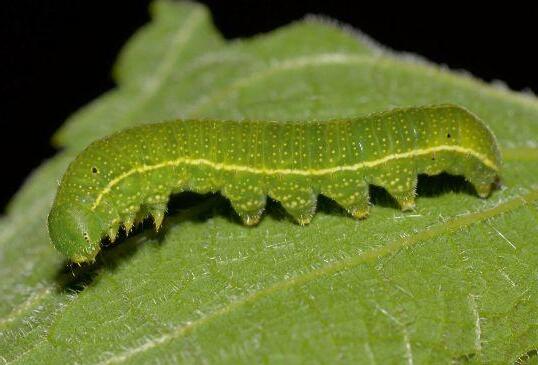
American Snouts are named for their elongated mouthparts, and when they hang from the underside of a twig, which they most often do, their “snout” resembles the stem or petiole of a leaf and their folded wings appear to be the dead leaf itself. It’s the perfect camoufage for defense against avian predators. In the caterpillar stage, American Snouts are green with numerous small yellow dots, and a narrow yellow stripe along the top and sides of the body.
Unless noted, photos ©Jim & Lynne Weber
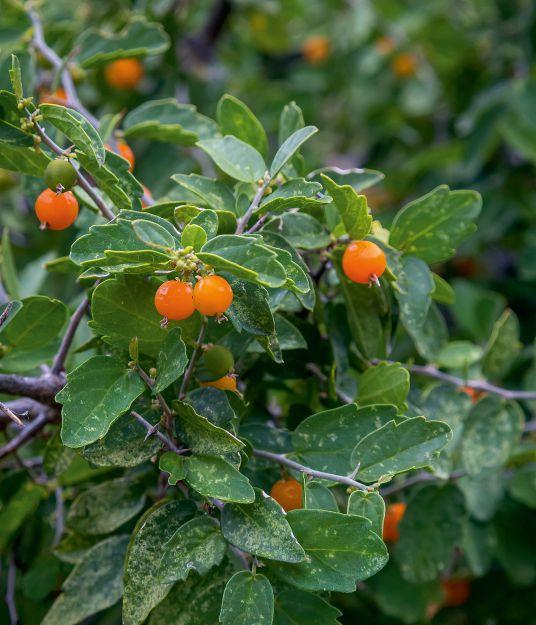
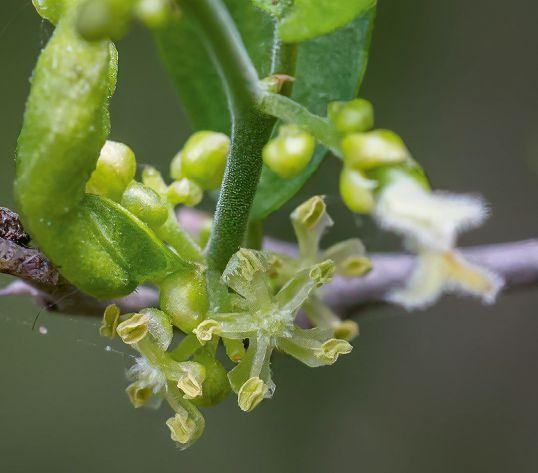
These caterpillars feed on all hackberry (Celtis) species, but in south-central and south Texas they prefer Spiny Hackberry because unlike other hackberries, this species grows new leaves in response to signifcant rains. Spiny Hackberry. also known as granjeno or desert hackberry, is a mediumsized, deciduous shrub that grows up to ten feet tall, with numerous spiny or thorny, strongly zigzagged branches and small, coarsely toothed leaves. Clusters of tiny greenish-white fowers bloom from February to May, and develop into small, shiny, yelloworange, feshy fruits that often persist after the leaves fall.
While Central Texas is at the northernmost boundary of the natural range of Spiny Hackberry, it is close enough that we get to experience what we call a “snoutbreak.” After a good rain, Spiny Hackberry plants quickly put out numerous new leaves. The American Snout lays its eggs on this fresh foliage, which provides the fuel for a signifcant number of its caterpillars. In Texas, it only takes 12 days for this butterfy species to go from egg to caterpillar to adult.
The ecology behind this interesting natural event is related to several factors. First, the population of American Snouts is positively correlated to the intensity and duration of dry periods that immediately precede signifcant rains. These droughts seem to greatly diminish the parasites that can harm and kill American Snout caterpillars.
Second, adult American Snouts wait out these long, dry periods by remaining in “reproductive diapause.” a state of arrested development/reproduction and decreased metabolism in response to adverse environmental conditions. This condition reverses when the rains arrive and trigger the third factor, new growth on the Spiny Hackberry host plants.
Female American Snouts will lay eggs exclusively on this prolifc new growth, as the young caterpillars can develop only on tender leaves. With the lack of parasites allowing more caterpillars to survive, and the hackberries providing an ideal food source, an American Snout population boom ensues. This caterpillar explosion typically leads to apparent complete defoliation of the host plants, but observation has shown that the defoliated hackberries continue to grow new leaves.
The “Snoutbreaks” of adults that follow are not migrations in the traditional sense, but rather large, mass-directional movements from patch to patch of suitable habitat where their preferred host plant exists.
Most often, “Snoutbreaks” occur in South Texas and Mexico, where Spiny Hackberry is plentiful. However, one of the largest recorded American Snout emergences occurred in late September of 1921, when over the course of 18 days and across a 250-mile-wide front, more than 6 billion southeasterly-bound American Snouts few over San Marcos in Central Texas. That’s an estimated 25 million per minute!
While not every year is nearly that spectacular, we always keep our eyes open in late summer to early fall, because about two weeks after a good rain, we can usually see a region-wide movement of American Snouts as they waft by in pretty impressive numbers!
Jim & Lynne Weber have co-authored Nature Watch Austin, Nature Watch Big Bend, and Native Host Plants for Texas Butterfies. Their next book, Native Host Plants for Texas Moths, is expected to be published in spring of 2020. Blog: naturewatchaustin.blogspot.com Photos: fickr.com/photos/webersaustin.
Continued from Page 5
Conefower (Echinacea spp.) Blazing Star (Liatris spp.)
These outstanding nectar plants also require eight weeks of cold stratifcation, but their seed is large enough that covering the seed with about 1/8” of soil works best. Additionally, Blazing Star germinates best when exposed to fuctuating temperatures (mimicking spring) after its cold stratifcation period is over. An unheated greenhouse or garage (with lights, of course), works very well for this.
Asters (Eurybia, Symphyotrichum, Doellingeria spp.) Goldenrods (Euthamia and Solidago spp.) Joe Pye Weeds (Eupatorium and Eutrochium spp.)
Although these excellent nectar and butterfy or moth caterpillar food plants are easy to grow from seed, the important thing to remember is that most of them require eight weeks of cold stratifcation. Also, since the seeds are very small, surface sowing is very important.
Of course, this is just an introduction to the fun of growing native plants from seed. At the end of the day just remember to always follow the directions that come with the seeds, and take heart—seeds want to grow! This is, after all, what they are for. Have fun, and happy planting!
Dr. Randi V. Wilfert Eckel has been propagating and working with native plants for over 35 years, and founded the mail-order native-plant nursery Toadshade Wildfower Farm (www.toadshade.com) in 1996 to further public awareness and availability of native plants. A life-long naturalist, lover of nature, entomologist, and confrmed plant and ecology nerd, Randi specializes in the interactions between plants and other living things.
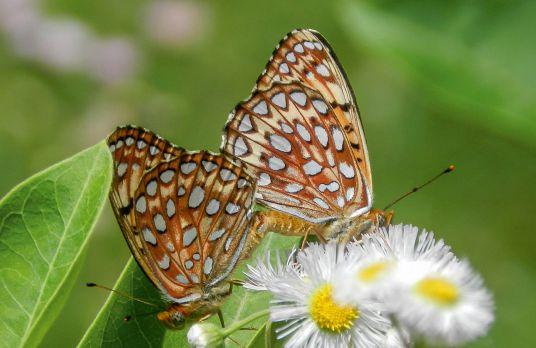
This was the 10th year of my research project, “On the Hunt for the North Woods butterfies.” So far I have located 89 of the approximately 90 species that are believed to inhabit the area of northern Minnesota where I live (according to Butterfies of the North Woods by Larry Weber), and the roughly 150 species found statewide.
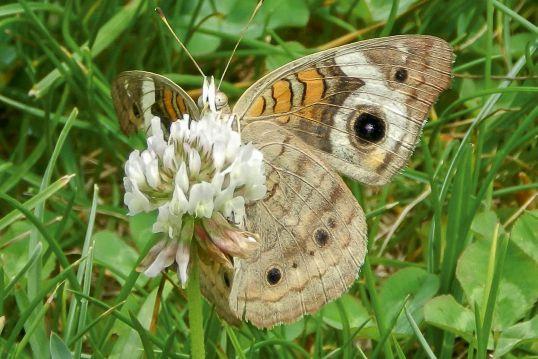
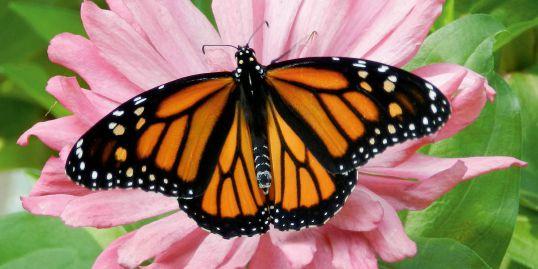
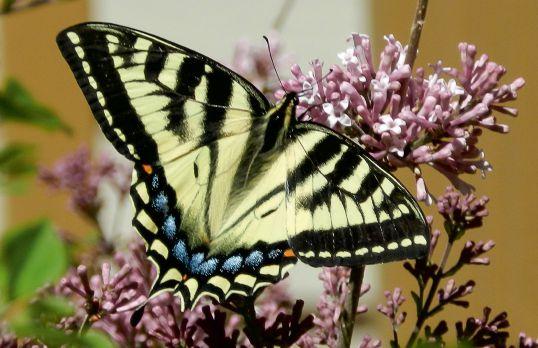
My love for gardening has attracted many of these butterfies right into our yard, with 38 species visiting my garden last summer! In addition to nectar plants for adults, I provide caterpillar food for more than 20 butterfy species. Some of this summer’s visitors were rare for me, including Arctic Skipper, Common Buckeye, Common Ringlet, Milbert’s Tortoiseshell, Atlantis Fritillary, Appalachian Brown, Question Mark, Eastern Comma, Banded Hairstreak, and Great Spangled Fritillary.
Our summer was cut short in October when skies became gray and temperatures dipped below normal, with snow arriving on October 17th!
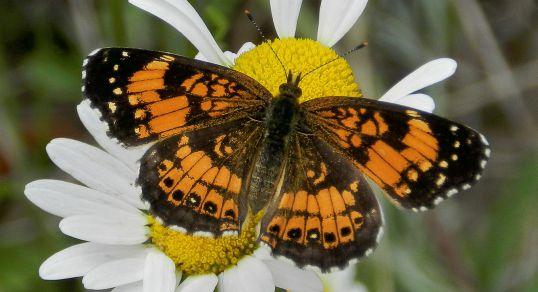
Allison Snopek Barta is a science teacher at Bagley Junior/Senior High School in Bagley, Minnesota and has been conducting the research project, On the Hunt for the North Woods Butterfies since 2011. She has a life-long love for gardening, and butterfies.








Lenora Larson


Known instars middle the
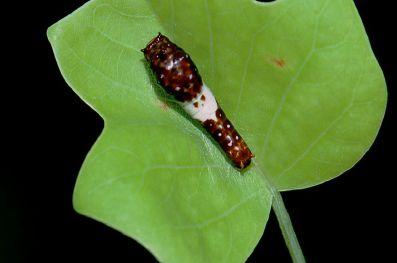
Eastern Tiger Swallowtail caterpillar masquerading as bird droppings fake a behind of leaves




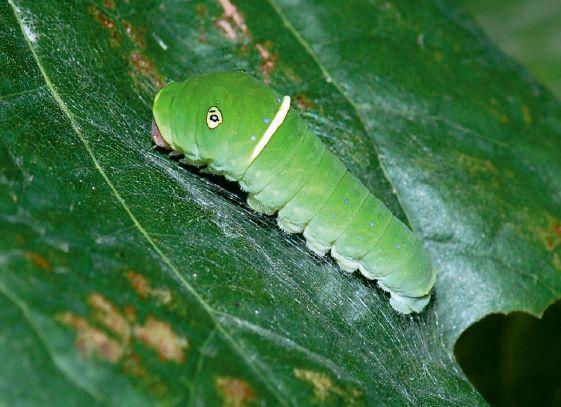
Since birds are their primary predators, Eastern Tiger Swallowtail caterpillars mimic very convincing bird droppings for their frst three instars (growth stages). This repugnant fecal disguise is brown with a white belt in the middle and a slight shimmer as though it were a fresh dropping. For the fourth and ffth instars, the caterpillar switches to another copycat ploy: fake eyes on its thorax help it to masquerade as a snake. The green body sports a yellow collar behind the thorax and is spotted with a pattern of blue dots across the abdominal segments. Totally adorable—but maybe scary to a bird! As the ffth instar prepares to wander of to pupate, usually in fallen leaves, its body turns a dark, blotchy brown to be less conspicuous among the leaves and twigs.

food preferences

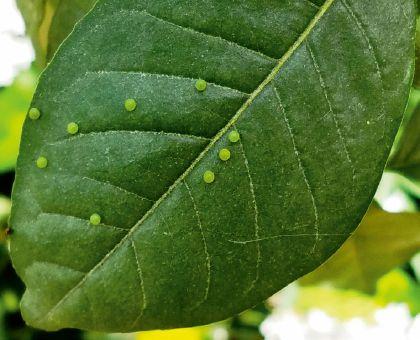
Eastern Tiger Swallowtail eggs on Common Hoptree leaf
Unlike the extreme food-plant specialization of many species, the Eastern Tiger Swallowtail caterpillar is fexible and consumes leaves from many woody species, including Tuliptree, Sweetbay, and other Magnolia family members; Black Cherry; Common Hoptree; ashes; willows; and others. The reward for this dietary fexibility? Eastern Tiger Swallowtails are among our most common butterfies and in no danger of extinction. Tuliptree is the preferred host in the Kansas City area, with Common Hoptree the second choice.
Easter Tiger Swallowtail caterpillar disguised as a snake, resting on its silk carpet

Winter hide-out

(Note: Common Hoptree is in the Rue Family and a favorite food plant for Giant Swallowtail caterpillars, which also mimic brown-and-white bird droppings. However, the caterpillars are easy to distinguish because the Eastern Tiger Swallowtail is wearing a white belt while the Giant has a big white butt!)
Special weaponry
When threatened, Eastern Tiger Swallowtail caterpillars erect a feshy orange osmeterium that looks like a snake’s forked tongue and emits a pungent aroma. This combination of visual and chemical defenses is designed to repel birds and mammals, as well as ants and other insect predators. Many insects, especially parasitoid fies and wasps, fnd their prey by the aroma of its frass (excrement). The fastidious Eastern Tiger Swallowtail caterpillar seizes each of its fecal pellets in its mandibles and hurls it away from the leaf, thus removing olfactory evidence of its presence.
Visual hunters such as birds are keen observers of any changes in their territory that might signal a tasty meal. Eastern Tiger Swallowtail caterpillars select a leaf as home base, laying down a silk carpet in the center of the leaf where the caterpillar rests motionless all day, hoping to elude hungry birds.
The caterpillars spend the night roaming about their host tree, munching on the leaves. When a leaf has enough chew holes to attract the notice of a curious bird, the caterpillar moves on, but chews through the leaf stem as it exits. The leaf drops to the ground, obliterating all evidence of a feeding caterpillar.
Eastern Tiger Swallowtails spend the winter as pupae, snugly tucked in their chrysalises attached to twigs or other surfaces. They complete their metamorphosis the following spring, and as a result are among the earliest butterfies we see. In the Midwest, we have two broods: spring and late summer. Farther south, the season is long enough for three broods.
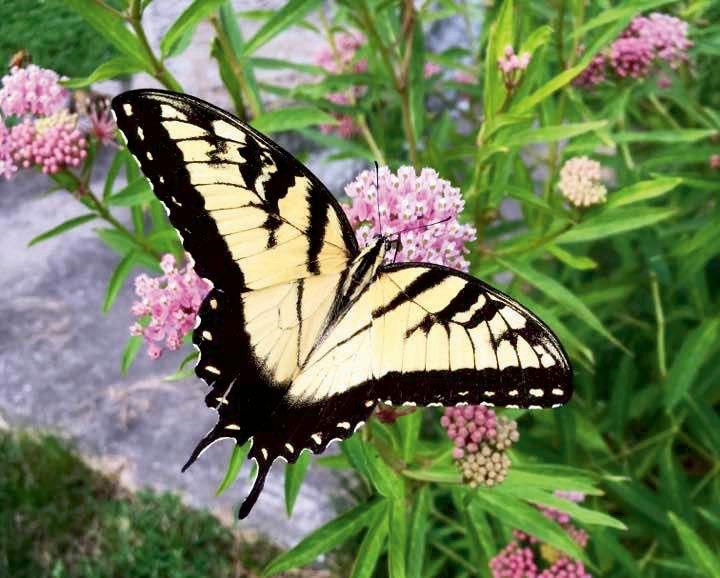
Eastern Tiger Swallowtails faunt their brilliant yellow and black stripes high in the forest canopy. Males patrol the treetops, ready to pounce on females who fy by searching for their caterpillars’ host plants.
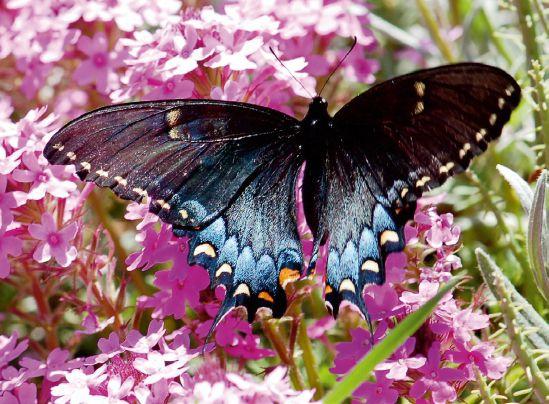


The pair swirls together in the air in an extended Lepidopteran love dance. After mating, the lady lays her green eggs one-by-one on the leaves of her caterpillars’ food plants, and the cycle repeats.
Male Eastern Tiger Swallowtails are always yellow with four black tiger stripes on each forewing. Females may be yellow and black, or (usually in the summer brood) they may confound potential predators by mimicking the colors of the unpalatable black-and-blue Pipevine Swallowtail.

Lenora Larson is a Marais des Cygnes Extension Master Gardener and a member of the Idalia Butterfy and Kansas Native Plant Societies. She loves to garden and host butterfies in the cruel winds and clay soils of Paola, Kansas. She may be contacted at Lenora.longlips@gmail.com.

And butterfies—that was a love I was born with as well. What little girl doesn’t love butterfies! Eventually, my three loves—for native plants, butterfies, and pollinators—were joined together, creating a passion for native-plant gardening for wildlife that has been flling my heart for nearly seven years now.
When we bought our house in small-town Pennsylvania 13 years ago, one of its major selling points was its big, empty yard. With approximately half an acre of available space, I had an empty canvas on which to work some gardening artistry. It was quite apparent that the previous owners had not been into gardening, as the only landscaping consisted of some half-dead hedges and two lonely hostas. The yard was basically a green desert, devoid of life. Although it was a cold and wintry December when we moved in, I was already dreaming of summer.
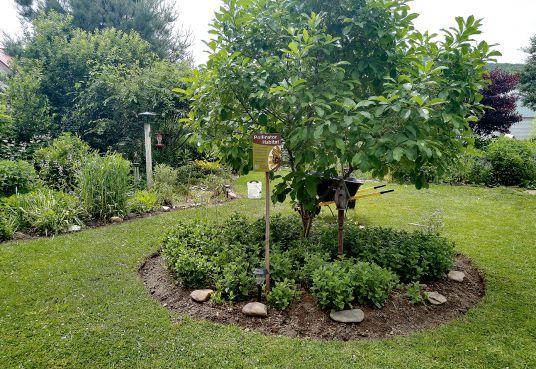
My love for gardening is part of my DNA. Growing up in rural Pennsylvania, watching my nana, a dear aunt, and my sweet mama all loving their fowers and gardens, made a lasting impression on me. I have always appreciated the beauty of fowers and the therapeutic pleasure of gardening, but those early years were spent planting things just for “pretty’s sake.” Over the last seven years, I have learned the importance of “planting with a purpose” for our butterfies, pollinators, and other wildlife, and have been trying to do my part to provide for their needs.
It all began in late summer of 2011, when my granddaughter asked to raise some Monarch caterpillars that she found in my garden. I had a few Butterfy Milkweeds but I planted them simply for the pretty orange fowers.
I had heard Monarch butterfies were attracted to milkweed, but I really knew nothing about caterpillar food plants, and the important purpose they serve, until that day. After much research, I learned a lot about butterfies, their caterpillar food plants, and what they need to feel welcomed in my gardens. I eagerly used all the remaining fall and winter months to plan what I would need for the following year’s garden: the caterpillar food plants as well as the nectar plants butterfies would love.
Over the course of the next couple of years, I also discovered a whole new way of gardening: going native! As I learned the caterpillar food plants that each butterfy species needs, I also learned how important native plants are to our ecosystem, including our pollinators and birds. Watching all of the Doug Tallamy videos I could fnd, I learned about the drastically declining numbers of Monarchs and other insects and the alarming loss of native plants that are necessary for their survival. These problems have multiple causes, including habitat loss, the use of pesticides and herbicides, the American obsession with “nothing-but-green-desert” lawns, urban sprawl, and the abundance of popular non-native ornamental plants.
I suddenly found myself wrapped up in a passion that had me captivated, one that became a very important cause for me to join and promote. There is so much at stake, so many lives depending on us. Beginning that frst spring, I was ready to do my part.
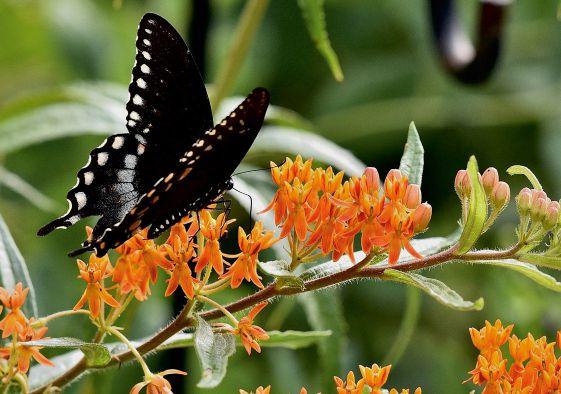
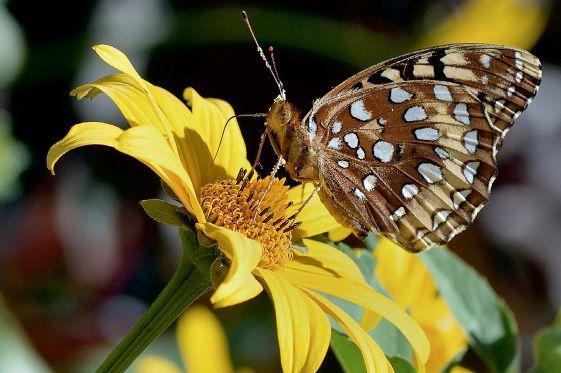
My husband and I dug out plants and shrubs that had no wildlife value. We added new gardens and expanded existing beds, replacing a lot of lawn. We planted native shrubs, small trees, and herbaceous perennials, gradually replacing most non-native plants with natives. I began planting with a purpose, and registered my gardens with NABA and other nature societies.
Hardly a butterfy was seen in my yard for the frst six years we lived here. Oh, the occasional swallowtails came to visit some of my annuals, and a few Monarchs would stop by in August and September to sip from my Orange Eye Butterfybush (this non-native species has since been replaced with native plants), but that was about it.
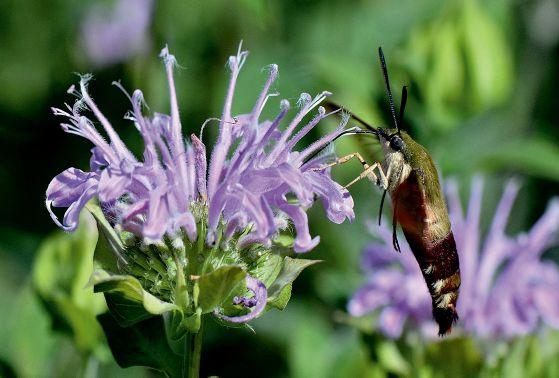
And now? What a heartwarming pleasure it is to sit on our backyard swing and watch all the activity foating, soaring, and buzzing around us. It is so amazing how something as simple as the right kind of plants suddenly brings so much life to our gardens. We see Red-spotted Purples; Black, Tiger, Giant, and Spicebush Swallowtails; American and Painted Ladies; Common Buckeyes; Red Admirals; Eastern Commas; Question Marks; Pearl Crescents; Baltimore Checkerspots; Eastern Tailed-Blues; various skippers, sulphurs, hairstreaks, fritillaries, and azures; hummingbirds; bees; hummingbird clearwing and other moths; and many other insect pollinators.
I have learned in such a magnifcent way that yes, if you plant it, they truly will come! Now that I plant with a purpose, I am rewarded with hours of smiles, watching all these fying beauties around me, as well as the satisfaction of knowing that I am making a diference in their precious lives. Life truly does begin in a garden. Just “go native” and see!
Some of Debra’s many native garden plants are listed on the following page.
Editor’s Note: Douglas W. Tallamy is the author of Bringing Nature Home and Nature’s Best Hope. Both books clearly explain the importance of using native plants for the continuing survival of animal species, including butterfies.
Herbaceous Species
Blanketfower
Red Columbine
Eastern Purple Conefower
Orange Conefower
Blue Wild Indigo
New York Ironweed
Common Milkweed
Swamp Milkweed
Woody Species
Chokecherry
Fringetree
Common Serviceberry
Scarlet Beebalm
Wild Bergamot
Cardinalfower
Culver’s Root
Fireweed
Heartleaf Foamfower
Foxglove Beardtongue
Spotted Geranium
Showy Goldenrod
Whorled Milkweed
Butterfy Milkweed
Allegheny Monkeyfower
Partridge Pea
Western Pearly Everlasting
Fringeleaf Wild Petunia
Field Pussytoes
Golden Ragwort
Nannyberry Viburnum
American Cranberrybush
Northern Spicebush
Blue Giant Hyssop
Lanceleaf Tickseed
Turk’s-cap Lily
Great Blue Lobelia
White Meadowsweet
Blue Mistfower
Clustered Mountainmint
Virginia Mountainmint
Obedient Plant
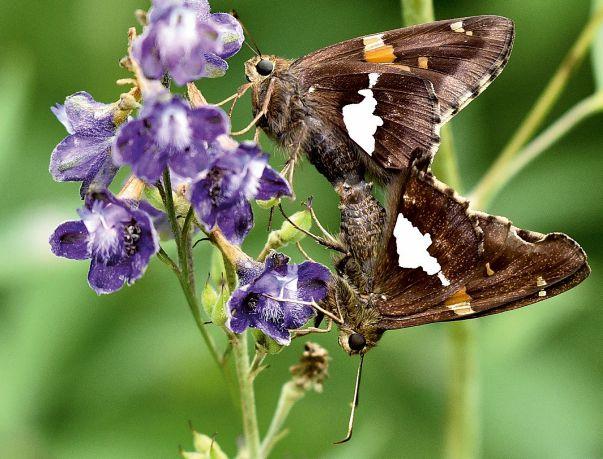
(Note: most also provide nectar.)
American Senna
White Turtlehead
Hoary Verbena
Golden Zizia
Trumpet Honeysuckle
Purple Passionfower
Little Bluestem
Big Bluestem
New Jersey Tea
Tuliptree
Pussy Willow
Downy Phlox
Fall Phlox
Wild Blue Phlox
Common Evening Primrose
Sweetscented Joe Pye Weed
Queen of the Prairie
Trumpetweed
Common Yarrow
Debra is a NABA member residing in Central Pennsylvania. She is passionate about native plant gardening and its essential provision of food and habitat for pollinators and other wildlife. When her hands aren’t playing in the dirt, she also loves photography, and capturing and sharing all the beauty found in her garden with her camera.
Yes! I want to join NABA and receive American Butterflies and Butterfly Gardener, and support the premier butterfly garden in the world, NABA’s National Butterfly Center.
Join at https://butterflies.naba.org/conserve/naba-membership/
Or mail us this form:
Name
Address
Email Telephone
Special Interests
For a $35 donation, receive NABA publications in either digital or print format. All higher levels of donations receive both digital and print versions. Outside the U.S., only digital is available at any donation level.
Regular $35. Choose digital or print format.
Family $45
Special sponsorship levels:
Copper $55
Admiral $250
Skipper $100
Monarch $1000
Institution subscription to all publications $60.
Additional tax-deductable donation amount $
Or donate online at butterfies.naba.org/conserve/donation/
Butterfy Gardener
naba@naba.org
4 Delaware Road
Morristown, NJ 07960
tel (973) 285-0907
fax (973) 285-0936
Membership Services
For questions concerning membership, magazines, or changes of address, please write to NABA Membership Services at the above address.
Occasionally, members send membership dues in twice. Our policy, unless instructed otherwise, is to extend membership for an additional year.
We may share your information with organizations that supply services or products that might be of interest to you. If you would like your name deleted from our shared membership list, please contact us.
Advertising
Butterfy Gardener welcomes advertising. Contact us for current rates and closing dates.