In the summer of 1996, I had just moved to England, placing the outbreak of mad cow disease and the divorce of Prince Charles and Princess Diana frmly at the forefront of my personal daily news. That summer also marked the initial issue of Butterfy Garden News, which would later morph into Butterfy Gardener, and which, with this issue, marks the beginning of its 25th year of publication. Much has happened in the intervening years but, surprisingly, much has also remained the same.
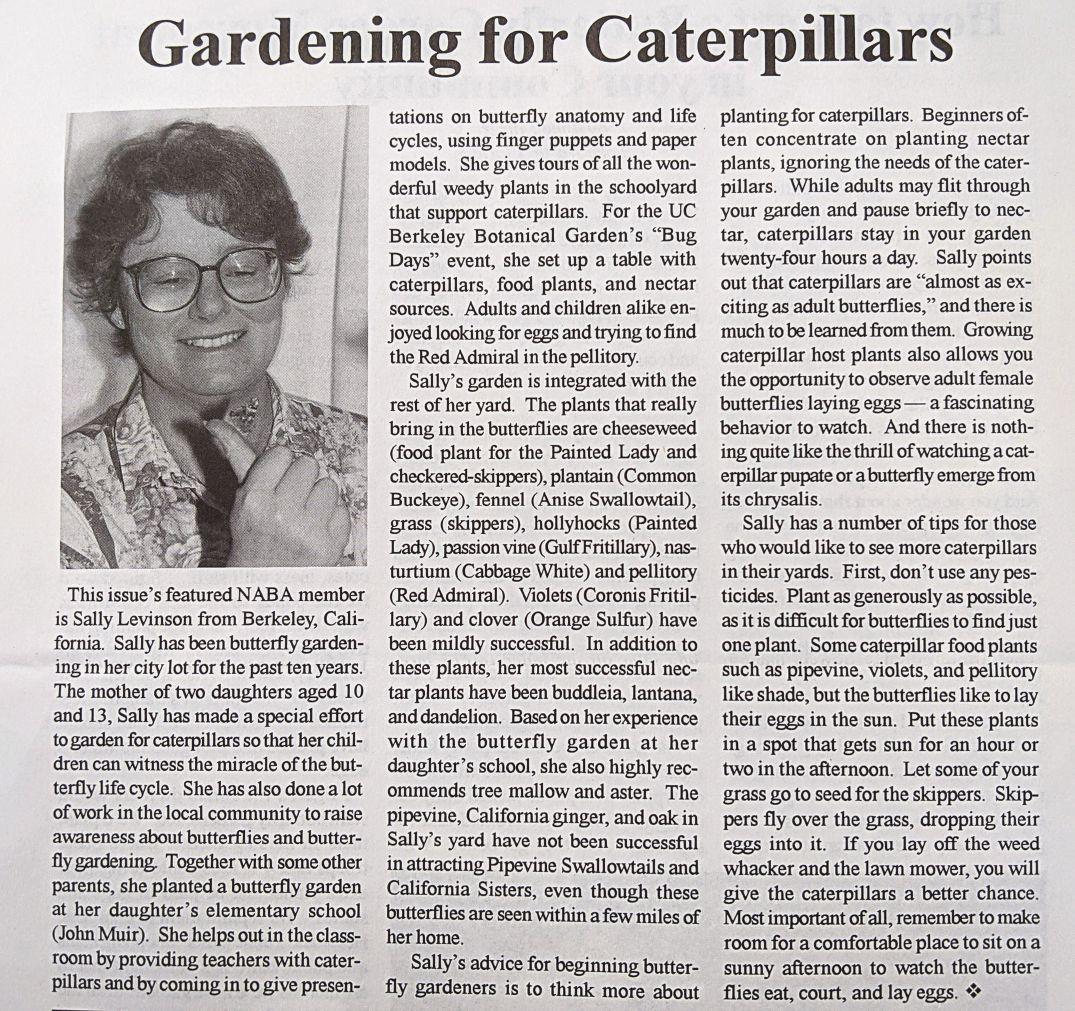
The frst issue of Butterfy Garden News contained a profle of Sal Levinson who was busy growing for butterfies in Berkeley, California. Long-time Butterfy Gardener readers will recognize Sal’s name from “Instars (for Kids!),” a column she wrote for many years for this magazine. The original 1996 Butterfy Gardener News profle is reprinted in this issue, along with Sal’s gracious update of her butterfy gardening activities.
The issue looks forward as well as looking back, featuring an article by a member of the newest generation of butterfy gardeners. High school student Duncan Jurman has nurtured an interest in butterfies for since the age of four. By working with a variety of mentors over the years, Duncan has created habitat, embarked on research, and educated many on the importance and beauty of butterfies.
The trauma brought about by mad cow disease in 1996 was the frst time many of us realized the fragility of our relationship with the natural world. Meat counters were bare in Britain, many farmers went bankrupt, and for a time it was unclear how the disease was spread. The current COVID-19 crisis has introduced disruptive change on a far more massive scale worldwide, but it is heartening to know that some things have not changed. Butterfies and other pollinators continue to go about their business, and people who love them continue to derive hope, comfort, and welcome diversion from them even in the midst of upheaval.
—Jane Hurwitz, Editor
CORRECTION: Vol. 25, Issue 1, page 4: An editorial comment, “As a bonus, the asters in the above list are caterpillar host plants for Pearl Crescent,” was inserted at the end of Pat Sutton’s article but was not indicated as such.
Editor: Jane Hurwitz Associate Editor: Mary Anne Borge
We want to hear from you! Please send Butterfy Gardener correspondence and submissions to: Jane Hurwitz, Editor, NABA, 4 Delaware Road, Morristown, NJ 07960; hurwitz@naba.org
Articles, gardening tips and observations, artwork, digital high resolution photographs, poetry and comments will be considered for publication. Please send self-addressed stamped envelope for items to be returned.
Advertising
Butterfy Gardener welcomes advertising. Please write us at: Butterfy Gardener, 4 Delaware Road, Morristown, NJ 07960, or telephone (973) 285-0907 or fax (973) 285-0936 for current rates and closing dates.
Membership Services
For questions concerning membership issues, magazines, or changes of address, please write to NABA Membership Services, 4 Delaware Road, Morristown, NJ 07960. Occasionally, members send membership dues in twice. Our policy in such cases, unless instructed otherwise, is to extend membership for an additional year.
Two
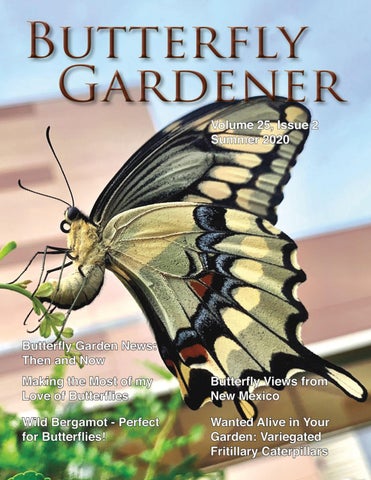
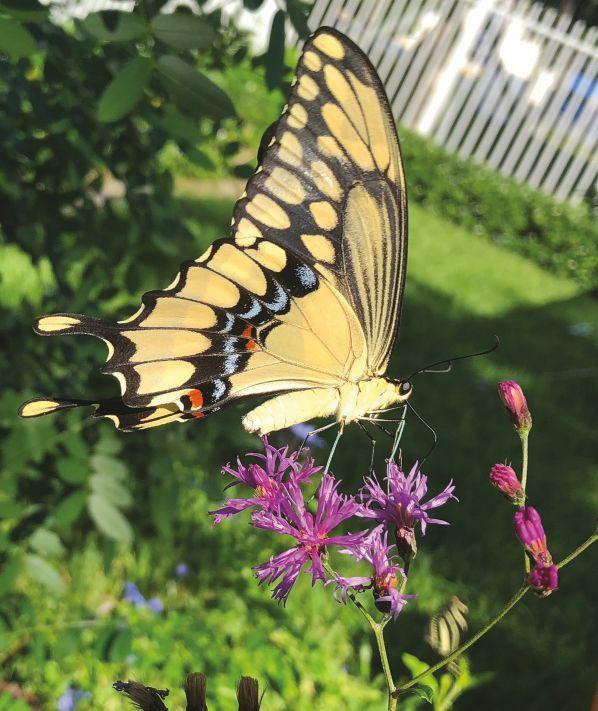
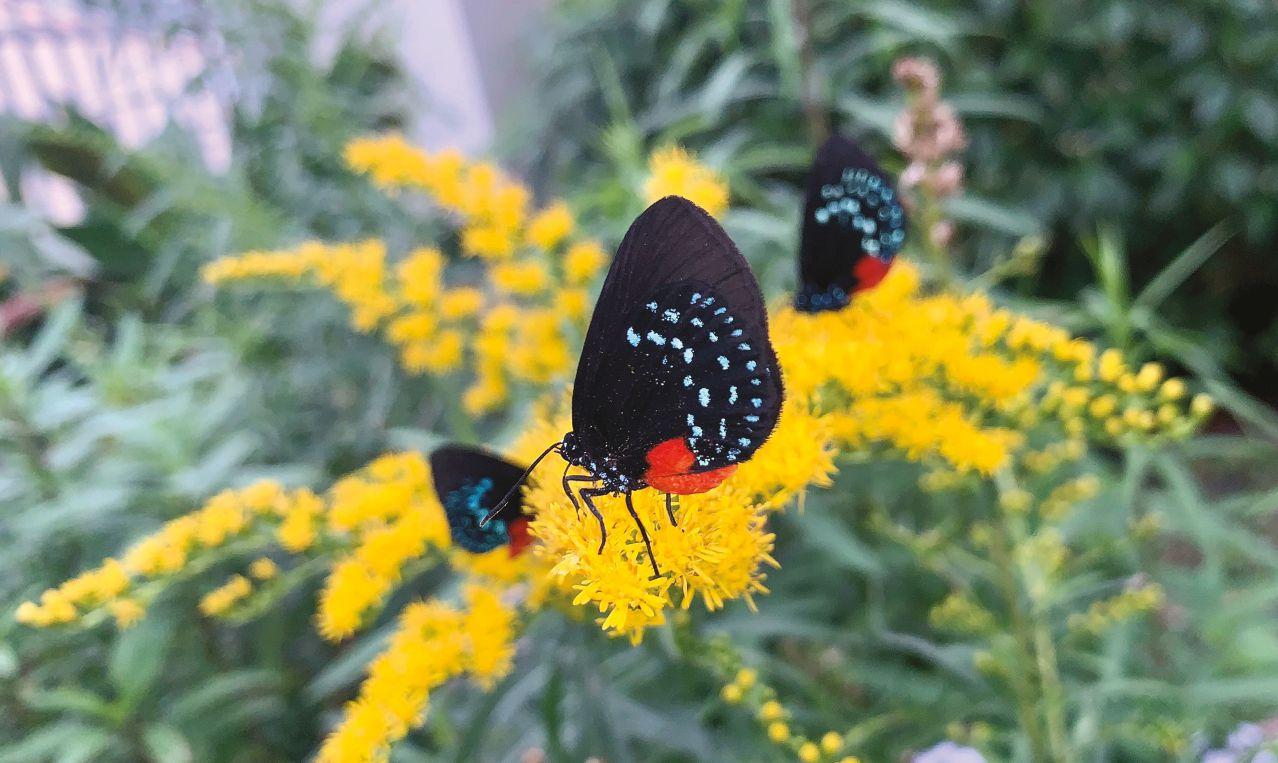
species that have visited the school habitat created by Duncan Jurman: Giant Swallowtail (front cover) and Atalas (back cover). Photo credits: Duncan Jurman.
Butterfy Garden News: Then and Now
By Sal Levnison
Editor’s Note: Since its inception 25 years ago, Butterfy Gardener magazine has grown from a black and white biannual newsletter (originally named Butterfy Garden News) to a quarterly fullcolor magazine. For many, the love of butterfies has been a lifelong passion as exemplifed by Sal Levinson who appeared in the frst issue of Butterfy Garden News and provided a brief update on some of her activities over the ensuing years
Since being featured in Butterfy Gardener Vol. 1, Issue 1, a lot has happened, and I have continued to share my love of butterfies and gardening through an ever-expanding variety of strategies.
As in 1996, I continue to interact with my local community by hosting information tables at events such as the San Francisco Botanical Garden’s Annual Gardening Fair, Bug Day at UC Berkeley Botanical Garden, Annie’s Annuals Butterfy Summit, and Cal Day at the UC Berkeley campus. Although I used to bring programs to schools when my daughters, Danielle and Charlotte, were younger, I now teach occasional classes at the East Bay Regional Parks Botanical Gardens and at the Albany Adult School.
Along with my brothers, I have created two movies–In the Company of Wild Butterfies, shown at events, and Secret Lives of Monarchs, detailing the Monarch lifecycle, presented to classes and also at events.
For many years I wrote a regular feature called Instars for Butterfy Gardener, which featured a papercraft project for children. Each papercraft included a few paragraphs about a particular aspect of butterfy life, a one-page template to color and cut out (similar to a page from a paper-doll book), and detailed instructions. The projects were later collected into a book–Butterfy Papercrafts: 21 Indoor Projects for Outdoor Learning—with illustrations by my daughter Danielle.
My philosophy is simple and straightforward: You don’t need to go on safari in Africa to learn to appreciate nature. You don’t need to visit a national park. You can plant caterpillar food plants anywhere, even the middle of a big city, and butterfies will fnd them and lay eggs. Once you have those, you can learn about a butterfy lifecycle up close. This small effort can connect kids everywhere with nature. Once they know about nature, they start to care, and I hope these caring youngsters grow into adults who support a healthy environment that benefts all fora and fauna.
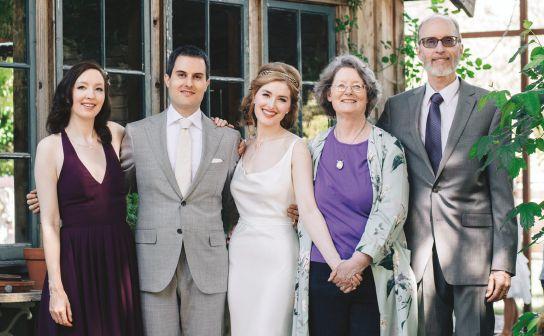
From planting a butterfy garden at her daughter’s elementary school 25 years ago to becoming mother of the bride, butterfies have been a constant source of inspiration for Sal.
Docuvitae
Making the Most of my Love of Butterfies
By
Duncan Jurman
I have loved butterfies for as long as I can remember. In fact, at 4 or 5 years old I started gardening with my dad to attract them. I had to negotiate for plots of land in our backyard until my parents realized that this was not a passing interest. Over the years, my school, Nova Southeastern University School, has really given me further opportunities to nurture my passion. Recognizing my unique interest and knowledge, the environmental science teacher asked me—as a 4th grader—to start teaching about butterfies, and I have been conducting butterfyrelated learning activities for the Lower School ever since.
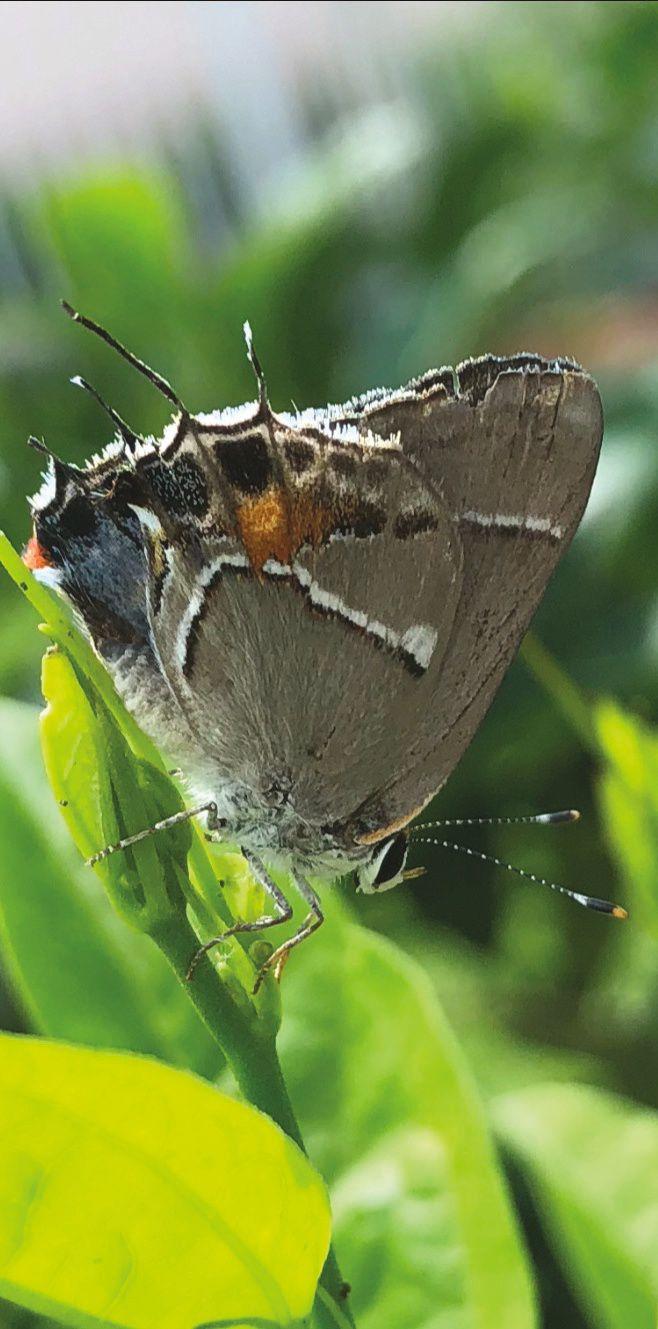
As a freshman in high school, I had the opportunity to create a garden along with a vivarium for students to immerse themselves in nature. The garden is currently being used across grade levels to provide experiential learning and conservation opportunities. I have taken the accompanying pictures in the garden, which has attracted nearly 30 species of butterfies (including the imperiled Atala and Martial Scrub Hairstreak).
My mentor, Upper School chemistry teacher Ms. Chana Goodman, shares my passion for butterfies and has provided me with ongoing guidance for both my school and community efforts.
I am now a Junior and proud to be the Youth Liaison for NABA’s Broward County Butterfy Chapter (whose board members Ms. DeWitt, Professor Koi, Ms. Strumski, and Ms. Gardenerd, have all been great supporters and advisors to me). Through the chapter I work to raise young
Martial Scrub-Hairstreak
Duncan Jurman
people’s awareness about the threats facing butterfies and actions we can all take to protect them. Along with other Chapter members I have met with the Mayor of Davie and plan to create a model garden in the town.
In partnership with the Broward County Public School System, I have been going around to area schools— often with caterpillars on plant cuttings in hand—to teach about butterfies, their habitats, survival strategies, and preferred plants. My initiative called Bring Butterfies Back—One Plant at a Time aims to get youth, in
Duncan as a beginning butterfy gardener
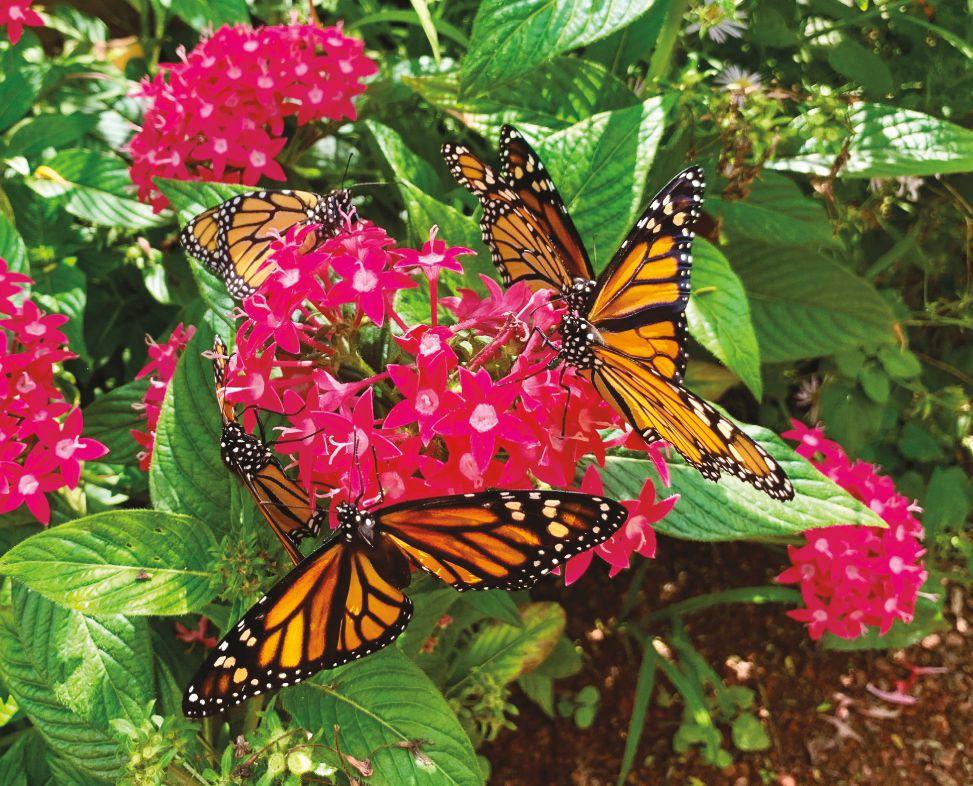
Monarchs
Duncan Jurman
Rory Jurman
In addition to his passion for butterfies, Duncan is very involved with his high school lacrosse team, and serves as President of his school’s environmental club and on the board of the school’s National Honor Society Chapter.
particular, more engaged by demonstrating that, starting with one plant, they can make a difference regardless of age. Over the years, at my school, at other schools, and at community events, I have reached more than 2,500 students, parents, and teachers.
Lastly, I have also been doing research with NSU professor Dr. Paul Arena, studying which Passifora species are the most productive food source for Zebra Heliconians by looking at larval survival rate, time to reach maturity, and wing length. The abstract of this research will be presented at the Florida Native Plant Society meeting in Jacksonville. Last summer, I had the opportunity to visit Cuba for nearly three weeks to immerse myself in studying that country’s butterfies with Dr. Marc Minno.
Giant Swallowtail
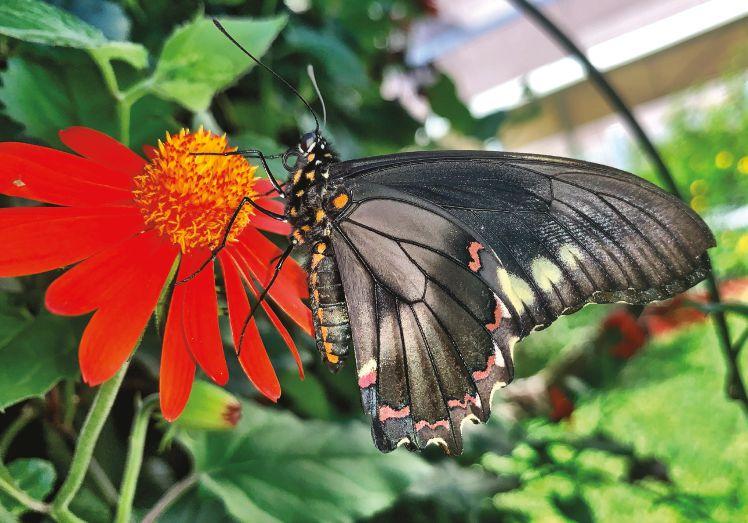
Polydamas Swallowtail
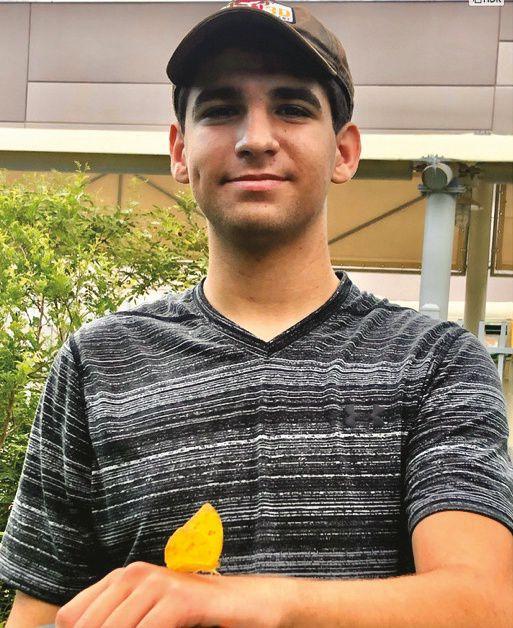
Duncan today
Rory Jurman
Duncan Jurman
Duncan Jurman
Wild Bergamot - P erfect for Butterflies!
Text and photos by Mary Anne Borge
Like so many members of the Mint family, Wild Bergamot has densely packed clusters of flowers that bloom gradually over a period of many days or weeks. Throughout that time, it offers a reliable source of nectar for flower visitors, while leveraging its own chances of reproducing by having flowers successfully pollinated. Those pollinated flowers will produce seeds to start the next generation of the species.
The flowers at the top of each cluster, or inflorescence, bloom first, while those lower down remain in bud, waiting for their turn to open for business. Gradually, row by row, flowers lower down in the cluster open. When they have finished their job of attracting pollinators, the petals of the uppermost flowers wither away while seeds enclosed in dry fruits develop, setting the stage for the next generation of Wild Bergamot plants.
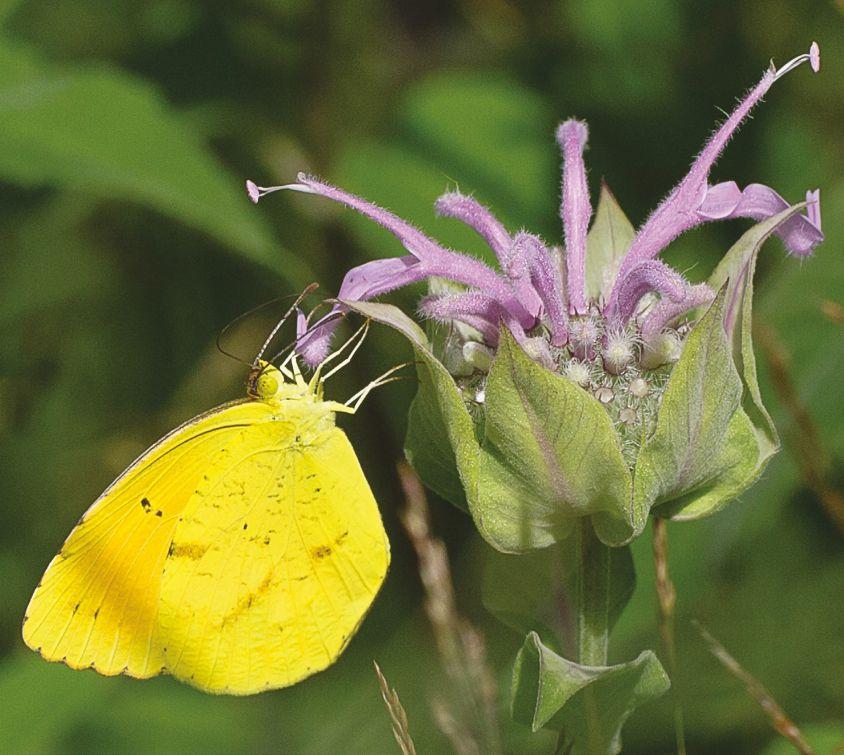
The shape of Wild Bergamot’s flowers is perfect for longtongued diners like butterflies. The petals of each flower are fused to form a long, narrow tube that directs the mouth parts of a thirsty forager to the tip of the flower, where the nectar reward is accessed. The flower’s reproductive parts extend just beyond the opening of the floral tube (corolla), so they will be the first things that any visitor to the flowers will encounter. If the plant’s design works effectively, the head, proboscis, or some other part of the forager’s body will A Sleepy Orange nectaring from Wild Bergamot. Only a few of the flowers in this cluster are blooming, the rest are still in bud.
brush against the flower’s reproductive parts, dropping off or picking up pollen. It’s a win for the butterfly (or other pollinator) and for the plant.
The light violet color of Wild Bergamot’s flowers is especially appealing to butterflies. If I wear a shirt that color while walking through a meadow, I often see butterflies fly toward me, until they realize that I’m not a good source of nectar and turn away, disappointed. Wild Bergamot flowers are attractive to butterflies from the small skippers to large swallowtails. Other long-tongued insects also visit, including several bee species, Hummingbird and Snowberry Clearwing Moths, and even hummingbirds. If pollination is successful, the resulting seeds may feed hungry birds. Where I live in New Jersey, American Goldfinches can often be seen scavenging the spent flower heads in late summer.
Wild Bergamot is an herbaceous perennial. It likes full sun to part shade, in dry to medium soils. It is native in every state of the contiguous forty-eight except California and Florida, and in Canada from British Columbia in the west to Quebec province in the east, as well as the Northwest Territories.
Mary Anne Borge is an Associate Editor of Butterfly Gardener, an instructor at Bowman’s Hill Wildflower Preserve, and a Pennsylvania Master Naturalist. She enjoys sharing her love of nature through her writing and photography at her blog, www.the-natural-web.org.
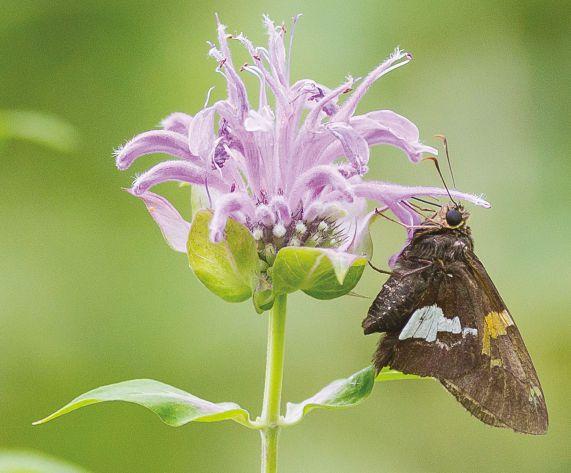
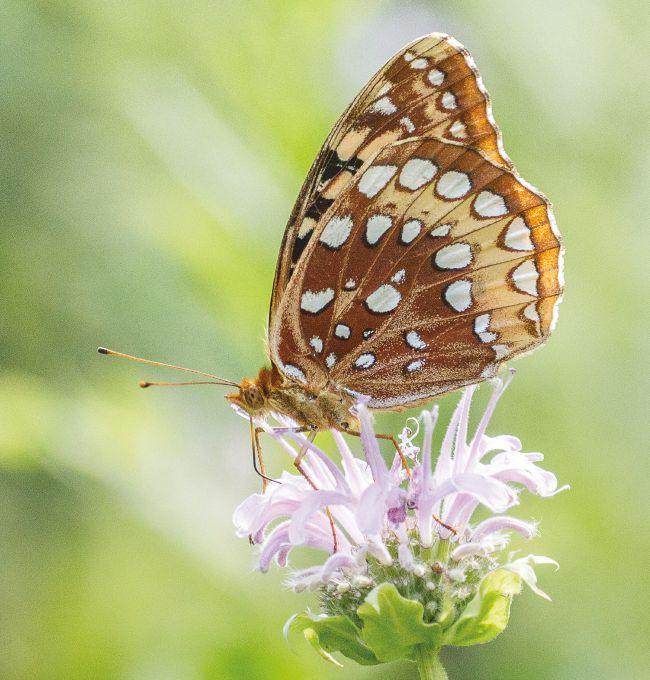
A Great-spangled Fritillary (above) and a Silver-spotted Skipper (left) nectaring from Wild Bergamot. The top flowers in the cluster are in bloom, those below are still in bud.
Butterfly Views from New Mexico
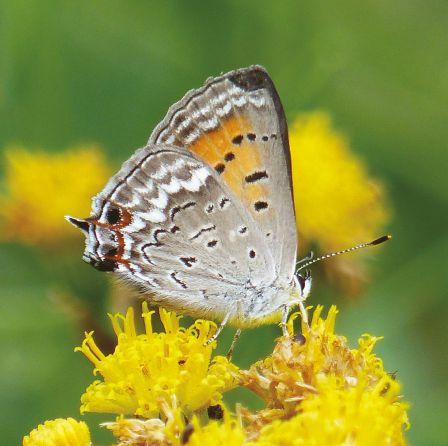
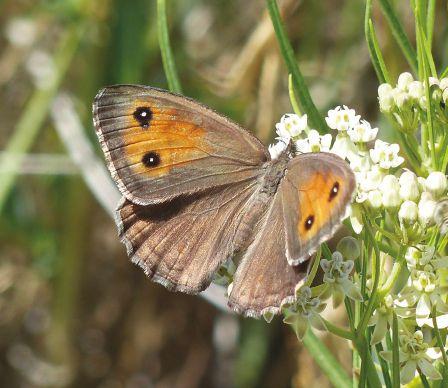
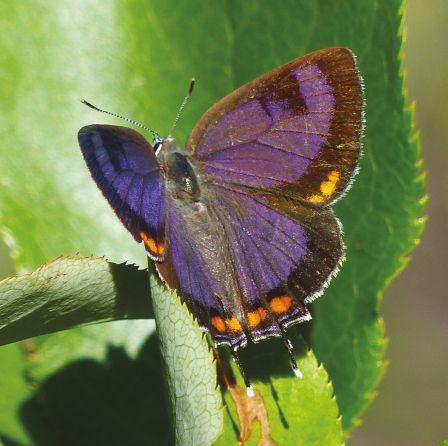
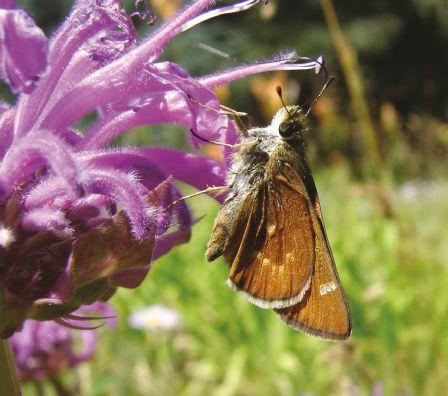
Photos by Steven Cary
Above: Tailed copper Below: Mead’s Wood-Nymph
Above: Colorado Hairstreak Below: Snow’s Skipper
Steven Cary, author of Butterfy Landscapes of New Mexico, will be presenting “An Introduction to Butterfies of North-Central New Mexico” at NABA’s 14th Biennial Member’s Meeting in Santa Fe, New Mexico, August 6 - 9, 2020.
For the Love of Butterflies
Please photocopy this membership application form and pass it along to friends and acquaintances who might be interested in NABA. www.naba.org
Yes! I want to join NABA and receive American Butterflies and Butterfly Gardener and/or contribute to the creation of the premier butterfly garden in the world, NABA’s National Butterfly Center. The Center, located on approximately 100 acres of land fronting the Rio Grande in Mission, Texas, uses native trees, shrubs and wildflowers to create a spectacular natural butterfly garden that significantly benefits butterflies, an endangered ecosystem, and the people of the Rio Grande Valley.
Name:
Address:
Email:
Telephone:
Special Interests (circle): Listing, Gardening, Observation, Photography, Conservation, Other:
For a $35 donation, one receives NABA publications as either digital or print. All higher levels of donations receive both digital and print versions. Outside the U.S., only digital is available, at any donation level.
Tax-deductible dues (donation) enclosed (circle): Regular $35 (must choose either digital or print — circle one), Family $45. Special sponsorship levels: Copper $55; Skipper $100; Admiral $250; Monarch $1000. Institution/Library subscription to all annual publications $60. Special tax-deductible contributions to NABA (please circle): $125, $200, $1000, $5000. Mail checks (in U.S. dollars) to NABA, 4 Delaware Rd., Morristown, NJ 07960.
Article and Other Submissions
Articles, gardening tips and observations, artwork, digital high resolution photographs, poetry and comments will be considered for publication. Contact Jane Hurwitz, Editor, hurwitz@naba.org
Advertising
Butterfly gardener welcomes advertising. Please contact us for current rates and closing dates at naba@naba.org, or telephone 973.285.0907, or fax 973.285.0936
Membership Services
If you have questions about duplicate magazines, missing magazines, membership expiration date, change of address, etc., please write to NABA Membership Services, 4 Delaware Rd., Morristown, NJ 07960. Occasionally, members send membership dues twice. Our policy in such cases, unless instructed differently, is to extend membership for an additional year. NABA sometimes exchanges or sells its membership list to like-minded organizations that supply services or products that might be of interest to members. If you would like your name deleted from membership lists we supply to others, please write and inform us at: NABA Membership Services, 4 Delaware Rd., Morristown, NJ 07960.
Variegated Fritillary Caterpillar
By Text Casey Laine
Known Food Preferences: Variegated Fritillary caterpillars feed primarily on passionfower, violet, and fax, but have also been found on purslane, lamb’s ears, mayapple, and others. Caterpillars may feed at night and tuck themselves up against stems or the undersides of leaves during the day. When grazing on low-growing plants, they can often be found on the ground as they move from a depleted plant to a fresh one.
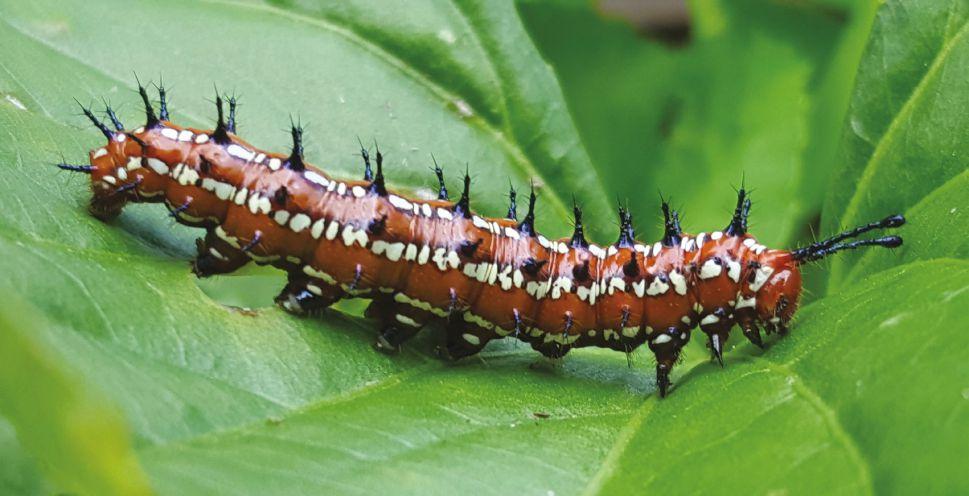
Known disguises: With glossy skin and vibrant colors, the Variegated Fritillary caterpillar is a striking garden visitor. Primarily red-orange, with longitudinal stripes in black and white on its back and sides, it bears a pair of black-clubbed spines on its head. Additional spines (called scoli) cover its body. It may reach up to two inches in length.
Special Weaponry: The bright red-orange coloring of the Variegated Fritillary caterpillar, suggestive of toxicity, may warn of predators seeking a meal, but if that doesn’t clinch it, the abundance of black spines—common among brushfoot butterfies— serves as further discouragement. These spines may also provide some protection from parasitic insects, such as wasps and fies, looking to lay eggs.
Laine
Winter hide-out: In the South and Southwest, Variegated Fritillaries typically overwinter as adults, but in the spring they commonly migrate as far north as Canada.
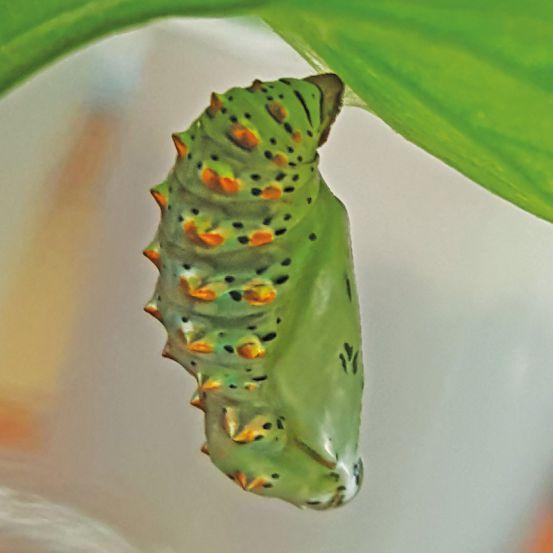
Reward offered: When caterpillars have eaten their way through ve or six instars, they begin pupation by suspending their bodies from an anchor of silk. The resulting chrysalis has a metallic sheen, from pale to bright green, with black markings and orange-gold projections.
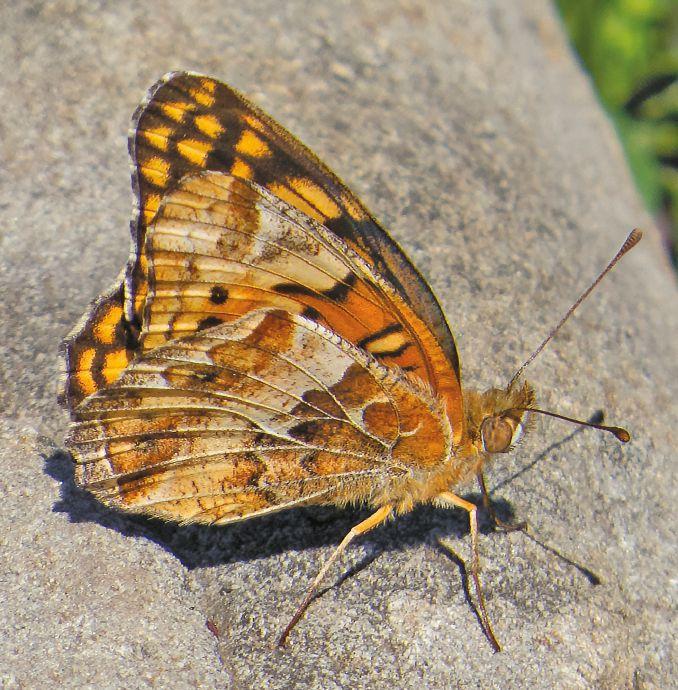
If capture is avoided: From one of the most beautiful chrysalises emerges the futteriest of butterfies. heir fight is low, with many dips for nectar. During breeding, males actively patrol for mates. Females deposit pale cream eggs singly on leaves or tendrils of host plants.
Variegated Fritillaries undergo multiple generations per year, with two or three broods in the North and four or more broods in the South.
Casey aine comes from a long line of talkative women. he works as an editor, and publishes an annual anthology of fiction and poetry. In her spare time, she chases butterflies with her camera.