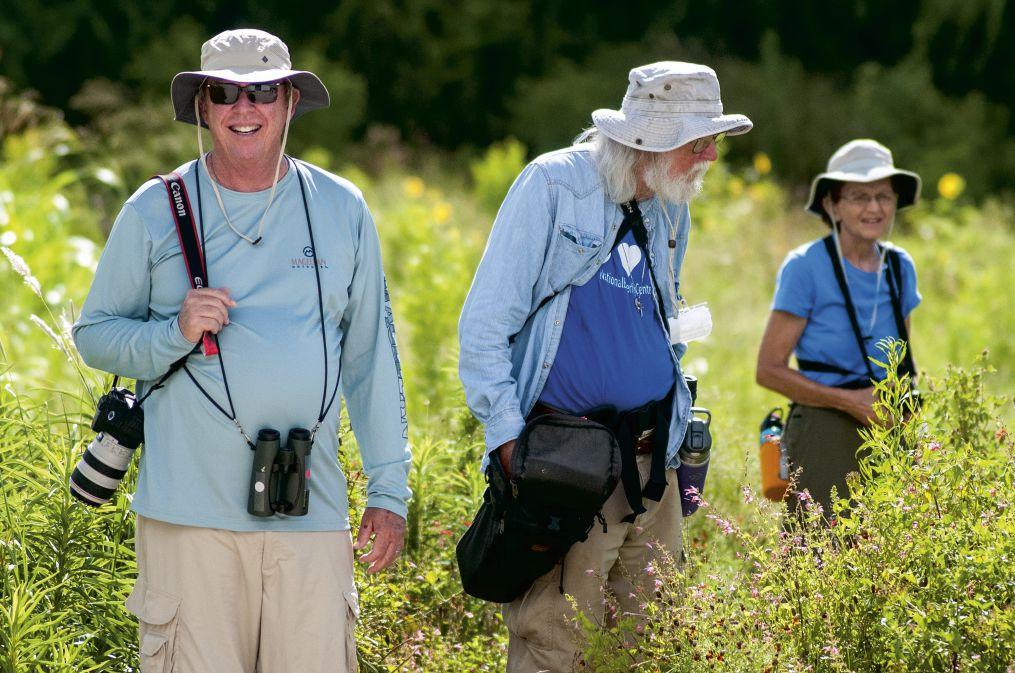
Marianna Wright, Executive Director of the NBC, will be awarded Defenders of Wildlife “Spirited Defender of the Year” award at a ceremony in Washington D.C. on Sept. 26. Congratulations Marianna! See the article on page 4.
Many NABA members enjoy receiving print copies of American Butterfies and of Butterfy Gardener. Other members prefer to receive their copies in digital form. Moving forward, those members with a regular membership will choose one form of publication delivery — either print or digital. Those members with family, copper and other supporting memberships may continue to receive both print and digital versions, although these members can also choose to receive only print, or only digital, if they so desire.
NABA is offering free trial memberships to people who have not previously been NABA members, if they help NABA monitor butterfies by entering data into the Recent Sightings page and/or participate in the NABA Butterfy Count program. The free, trial membership includes access to digital versions of NABA publications as well as access to NABA-Chat and other NABA programs. So, invite your friends, family and neighbors to participate in Recent Sightings and/ or the Counts, helping to monitor and conserve butterfies throughout North America — they will be rewarded with a free, trial membership.
The best guide to butterfy gardening — NABA’s own, of course! — authored by Jane Hurwitz, editor of NABA’s Butterfy Gardener, has been published by Princeton University Press. Keep an eye out for it.
We’d like to ask those NABA members who have planned estates, to consider including NABA and the National Butterfy Center in their plans. This will allow you to continue to help butterfies and conservation.
Please smile if you use Amazon to purchase anything! If you do, Amazon will donate a portion of the purchase price, at no cost to you, to NABA. Simply go to smile.amazon.com and follow instructions, choosing North American Butterfy Association as your charity.
You can now follow NABA activities on Facebook, Twitter, Instagram and Pinterest (and also by talking with actual people!).
Those of you who generously contribute donations to NABA and work at a large corporation may be able to double your contribution. Many corporations have matching gift programs. Check with your human resources or public relations dept. to see if your company have such a program.
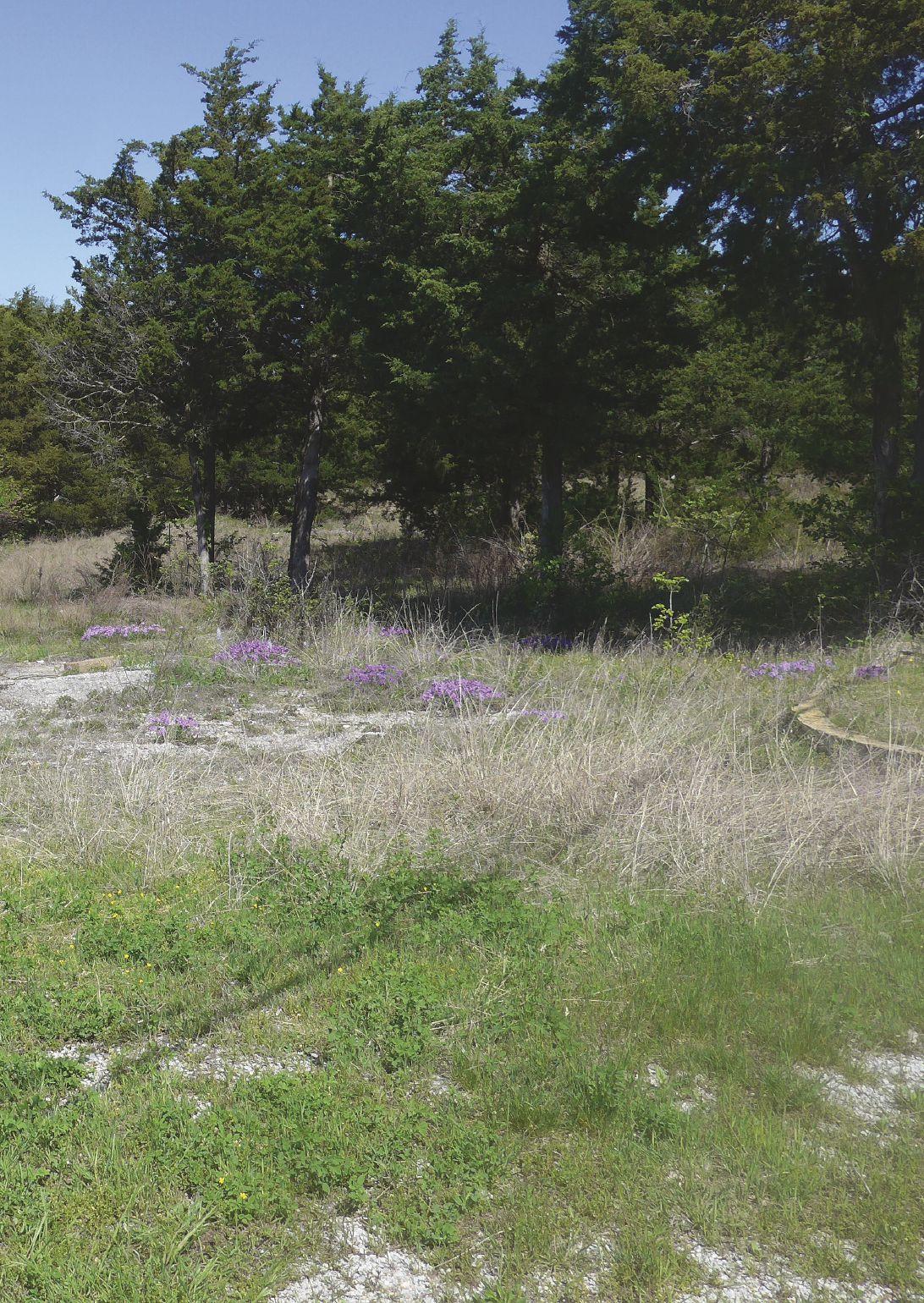
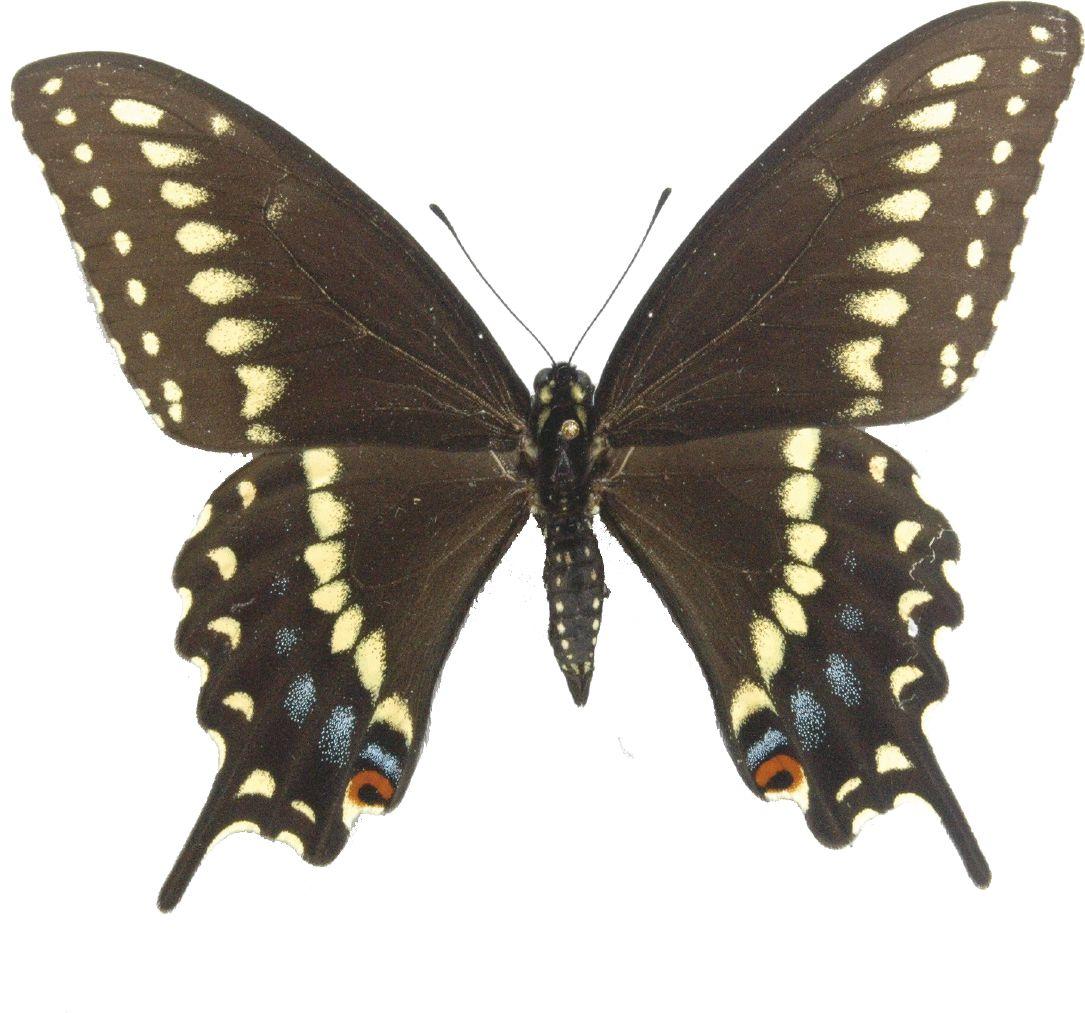
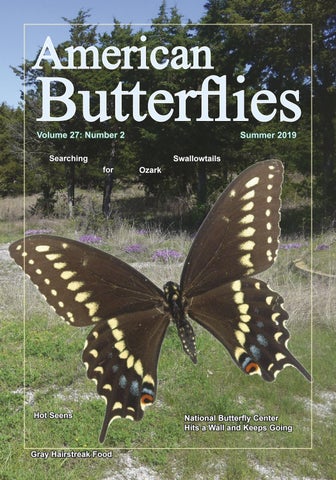
Front cover: Main photo, of cedar glade habitat along Highway UU in Benton Co., MO, showing cedars and Rose Mock-Vervains, among other plants, was taken by Jeffrey Glassberg on April 26, 2019. Photo of a paratype of Ozark Swallowtail was taken by John Tewell of a specimen given to him by Richard Heitzman. See article on page 22.
The North American Butterfy Association, Inc. (NABA), a non-proft organization, was formed to promote public enjoyment and conservation of butterfies. Membership in NABA is open to all those who share our purpose.
President: Jeffrey Glassberg Vice-president: James Springer Secrty./Treasurer
Ann James Directors: Jeffrey Glassberg
Fred Heath
Yvonne Homeyer
Ann James
Dennis Olle
Robert Robbins
James Springer
Patricia Sutton Scientifc Advisory Board
Nat Holland
Naomi Pierce
Robert Robbins
Ron Rutowski
John Shuey
Ernest Williams
Volume 27: Number 2 Summer 2019
Inside Front Cover NABA News and Notes
2 Birds v Butterfies: Different Keys to Life in a Man-Made World by Jeffrey Glassberg
4 National Butterfy Center Hits a Wall and Keeps Going by Marianna Treviño-Wright
22 My Big Life: Searching for Ozark Swallowtails, and how to recognize one in case of a miraculous encounter by Jeffrey Glassberg
38 You Are What You Eat
39 Gray Hairstreak on Black Prairie-Clover in Texas by Don Dubois
44 Hot Seens by Mike Reese
52 Contributors Inside Back Cover Readers Write
American Butterfies (ISSN 1087-450X) is published quarterly by the North American Butterfy Association, Inc. (NABA), 4 Delaware Rd., Morristown, NJ 07960; tel. 973285-0907; fax 973-285-0936; web site, www.naba.org. Copyright © 2019 by North American Butterfy Association, Inc. All rights reserved. The statements of contributors do not necessarily represent the views or beliefs of NABA and NABA does not warrant or endorse products or services of advertisers.
Editor, Jeffrey Glassberg
Editorial Assistance, Matthew Scott and Sharon Wander
Please send address changes (allow 6-8 weeks for correction) to: NABA, 4 Delaware Rd., Morristown, NJ 07960; or email to naba@naba.org
If you live in a typical American suburban area, most likely there are many different species of birds breeding in your yard or nearby. I live about 30 miles from Manhattan, and just today I saw, among many others, Eastern WoodPewee, Great-crested Flycatcher, Northern Flicker, Carolina Wren, Cedar Waxwing, Blue Jay, American Robin, Chipping Sparrow and American Goldfnch. These, and many others, all nest on, or near, my property. What allows these native birds to thrive in unnatural manmade suburbs?
These birds are found mainly in areas with a mix of trees and open areas. They need a particular structure to the environment rather than the presence of a particular plant or animal species. They don’t much care if the tree is native or not. And for food, they don’t much care if the insects or plants that they are eating are native. So if your property and the surrounding area has lots of Norway spruce, Japanese maples, Asian rhododendrons, Asian forsythia thickets and non-native grasses, many birds are as happy as larks (or House Finches).
Butterfies are more discerning creatures. To them the property described above looks like a movie set — it seems real but there’s nothing to eat! The caterpillars of most butterfy species can eat only one plant species, or a group of related plant species. And, with some exceptions, these are not plants usually planted in suburban yards.
Many of us know that, in most of the United States, if we plant parlsey or dill we have a good shot at seeing beautiful Black or Anise Swallowtail caterpillars on our plants. Or if we plant milkweeds of various species, our garden will probably be graced with Monarch caterpillars.
Less widely known is that many less
common and more geographically limited species of butterfies might well beneft from property owners growing the caterpillar foodplants that these butterfies require. For some butterfies, such as Atalas and Hackberry Emperors, the caterpillar foodplant is all that the butterfy needs — it doesn’t much care about the rest of the habitat. For most species, no one really knows about their needs because almost nobody actually studies the natural history of butterfies!
So, what can you do?
Grab a book, for example my A Swift Guide to Butterfies of North America,or a local guide that includes reliable fooplant information, and see what the butterfy species in your area are likely to be eating. When you identify a likely native plant candidate, then you have the fun of searching for a nursery that actually carries the plant -- good luck with that!
Here are a few suggested plants, with the butterfy they support and the general geographic area where the butterfy occurs (consult a guide book for details). Of course, many, many others are possible!
Naked Buckwheat, Gorgon Copper, California outside the Central Valley; Redberry Buckthorn, Hermes Copper, east of San Diego; Western Soapberry, Soapberry Hairstreak, central Texas and Oklahoma; Common Sweetleaf, King’s Hairstreak, Louisian to North Carolina; Stansbury Cliffrose, Desert Elfn, Utah and adjacent Nevada and Arizona; pineland croton, Bartram’s Scrub-Hairstreak, Bay Cedar, Miami and the Keys; Martial Scrub-Hairstreak, southern Florida.
Let us know what happens!

Please photocopy this membership application form and pass it along to friends and acquaintances who might be interested in NABA
Yes! I want to join NABA, the North American Butterfy Association, and receive American Butterfies and The Butterfy Gardener and/or contribute to building the premier butterfy garden in the world, the National Butterfy Center. The Center, located on approximately 100 acres of land fronting the Rio Grande River in Mission, Texas uses native trees, shrubs and wildfowers to create a spectacular natural butterfy garden that importantly benefts butterfies, an endangered ecosystem and the people of the Rio Grande Valley.
Name:
Address:
Email (only used for NABA business):______________________ Tel.:______________________
Special Interests (circle): Listing, Gardening, Observation, Photography, Conservation, Other
For a $35 donation, one receives NABA publications as either digital or print. All higher levels of donations receive both digital and print versions. Outside the U.S., only digital is available, at any donation level.
Tax-deductible dues (donation) enclosed (circle): Regular $35 (must choose either digital or print — circle one), Family $45. Special sponsorship levels: Copper $55; Skipper $100; Admiral $250; Monarch $1000. Institution/Library subscription to all annual publications $60. Special tax-deductible contributions to NABA (please circle): $125, $200, $1000, $5000. Mail checks (in U.S. dollars) to NABA, 4 Delaware Rd., Morristown, NJ 07960.
American Butterfies welcomes the unsolicited submission of articles to: Editor, American Butterfies, NABA, 4 Delaware Rd., Morristown, NJ 07960. We will reply to your submission only if accepted and we will be unable to return any unsolicited articles, photographs, artwork, or other material, so please do not send materials that you would want returned. For the type of articles, including length and style, that we publish, refer to issues of American Butterfies
Occasionally, members send membership dues twice. Our policy in such cases, unless instructed differently, is to extend membership for an additional year.
American Butterfies welcomes advertising. Rates are the same for all advertisers, including NABA members, offcers and directors. For more information, please write us at: American Butterfies, 4 Delaware Road, Morristown, NJ 07960, or telephone, 973-285-0907, or fax 973-285-0936 for current rates and closing dates.
If you have questions about missing magazines, membership expiration date, change of address, etc., please write to: NABA, 4 Delaware Rd., Morristown, NJ 07960 or email to naba@naba.org.

by Marianna Treviño-Wright
A view of a portion of an existing section of the border in the Lower Rio Grande Valley, showing how it enhances the natural and aesthetic environments.
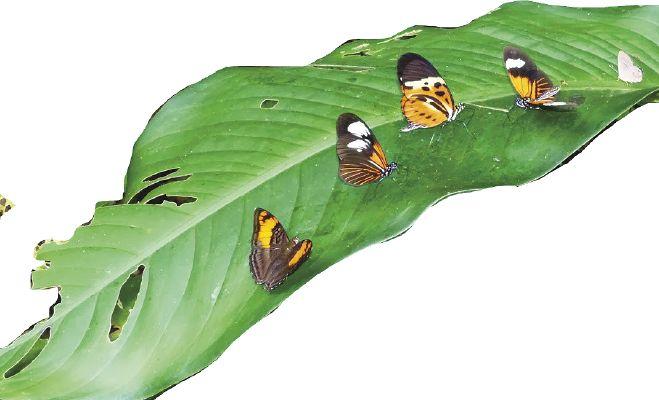
A pre-dawn awakening ahead of a beautiful day at the National Butterfy Center, used to be flled with the anticipation of Guatemalan Crackers, Malachites and an untold measure of magnifcent creatures!
Each morning was flled with dew and a long list of ‘to-dos’, designed to keep us growing. Staff meetings focused on guest experience, educational programs and maintenance tasks, inventory management and upcoming events. Not so long ago, I felt attuned to the seasonal
changes of the place, the peculiar rhythm of the plants, never static, and the special magic of the center, bustling with happy energy and contagious curiosity from members and schoolchildren.
But that was before the battle for a border wall began.
In retrospect, I relished the routine — that routine — before the ‘disaster tourists’ and MAGA hats started showing up, asking us to show them where Trump’s monument would be built from sea to shining sea.
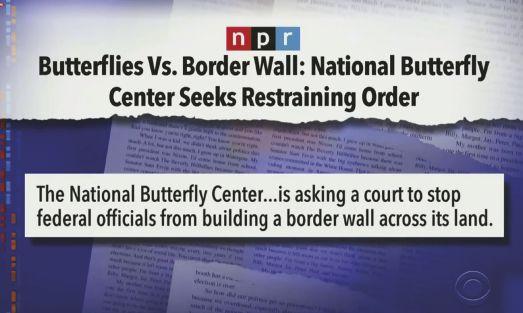
For those who have not followed us on Facebook or seen the stream of headlines related to the “Butterfies vs. the Border Wall,” allow me to bring you up to speed on how your project and our mission have been affected by a national agenda that is in direct confict with environmental conservation.
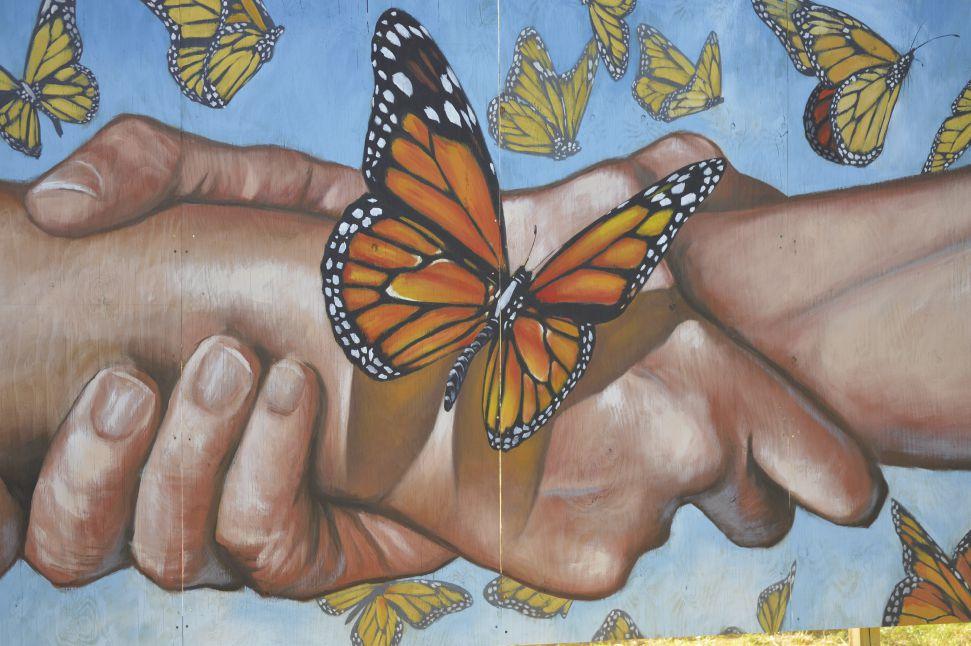
A portion of the “Welcome Wall” created by artist Ron English and erected at the NBC. April 26, 2019.
Several months after President Trump was inaugurated in 2017, we began to experience aggression and harassment from Border Patrol. By this, I mean our employees and visitors were subject to illegal stops and vehicle searches, intimidation and questioning, and the unlawful denial of access to part of the property. We found this exceptionally odd, given the fact that we have been here for more than a decade and had cultivated a cooperative relationship with the local feld offce. At this time, we even had a pair of dedicated Border Patrol Community Liaison agents assigned to us to support communication and security.
Late that June, our director of operations, Max Muñoz, and two employees crossed the levee on our property during regular business hours to survey plants and collect seeds. They were promptly surrounded by four Border
Patrol units, lights fashing and commands shouting, even though all staff vehicles are on fle with Border Patrol by make, model, year, color, license plate and photographs.
One month later, on July 20, 2017, I went over the levee with a vendor only to discover fve workmen from Tikigaq, an Alaskan corporation, cutting down trees, mowing vegetation and widening the dirt road on our property. When I asked them what they were doing, they explained the government had sent them to “clear this land from the levee to the river ahead of the border wall,” where we had recently planted more than 5,000 native milkweed and nectar plants to establish the Southernmost Monarch Waystation. This was nine months before any Congressional vote or appropriation authorizing border wall construction.
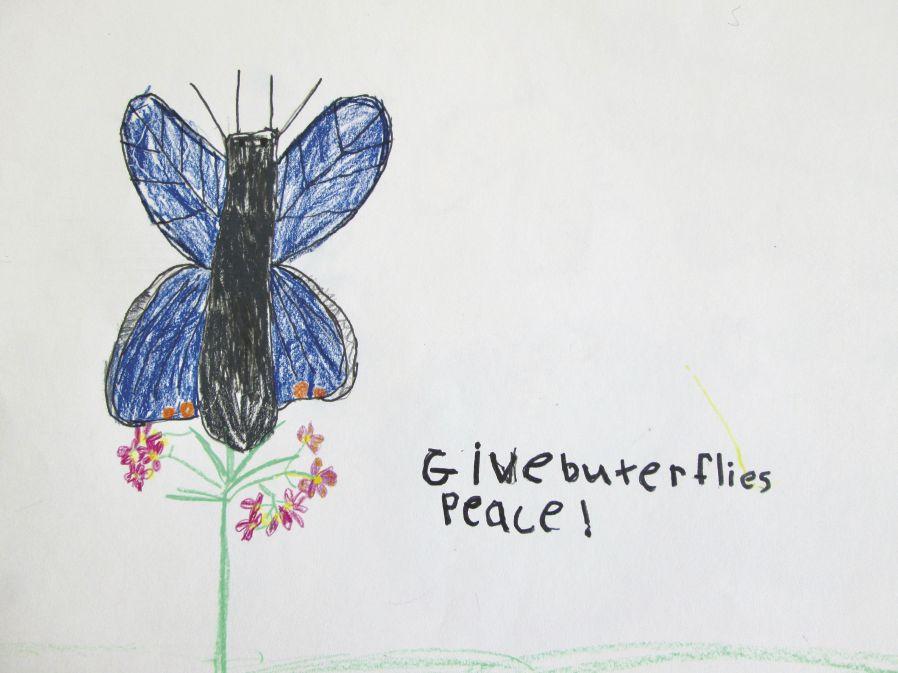
Above: Kindergärtners at the Park Day School, in Oakland, California, held their own fundraiser, selling native plant seeds, to raise money to protect the National Butterfy Center. They also created artwork that they shared with the NBC.
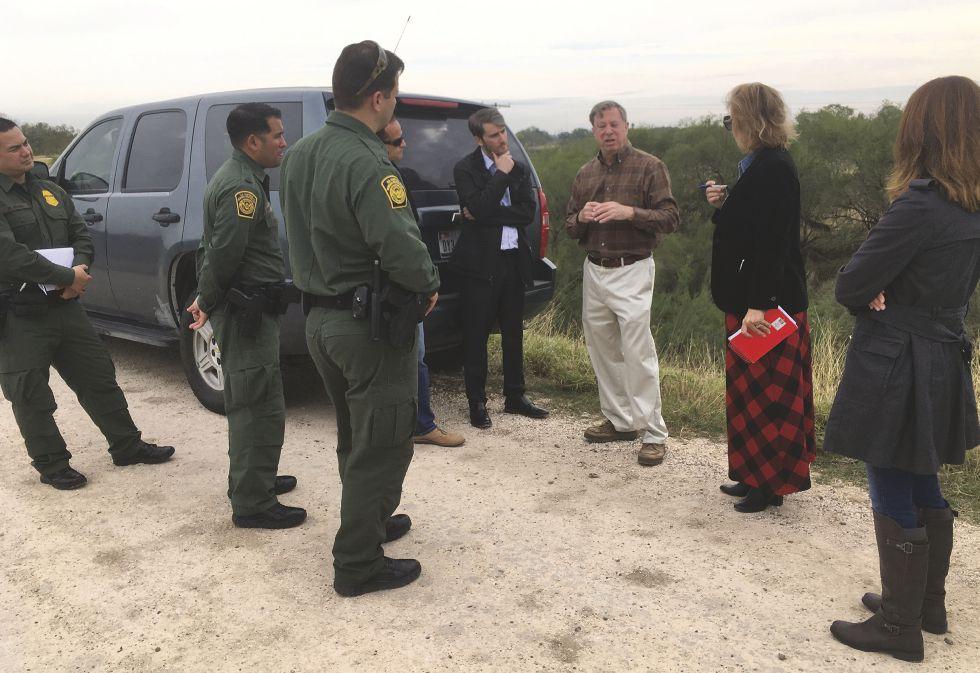
Opposite page top: Jeffrey Glassberg (third from right) and Marianna Wright (2nd from right) discussing border wall plans with eight representatives of the U.S. government on the levee where they plan to construct the wall. The non-uniformed individuals few in from Washington D.C. for the meeting. Apparently, the uniformed individuals (there were fve of them, not all in the photo) were there to protect them from us. Dec. 18, 2018.
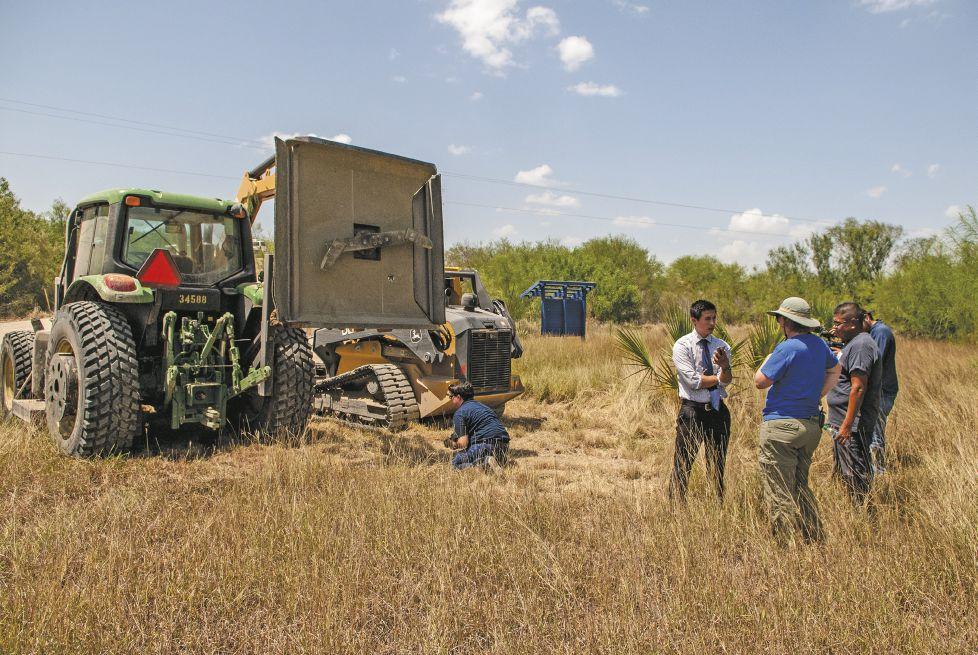
Opposite page bottom: On July 20, 2017, the Tikigaq Construction company, at the behest of the U.S. Dept. of Homeland Security, began clearing land on National Butterfy Center property. Show here are some of their equipment and an ABC affliate reporter interviewing Marianna. July 20, 2017. National Butterfy Center, Hidalgo Co., TX. scan of an unknown Park Day
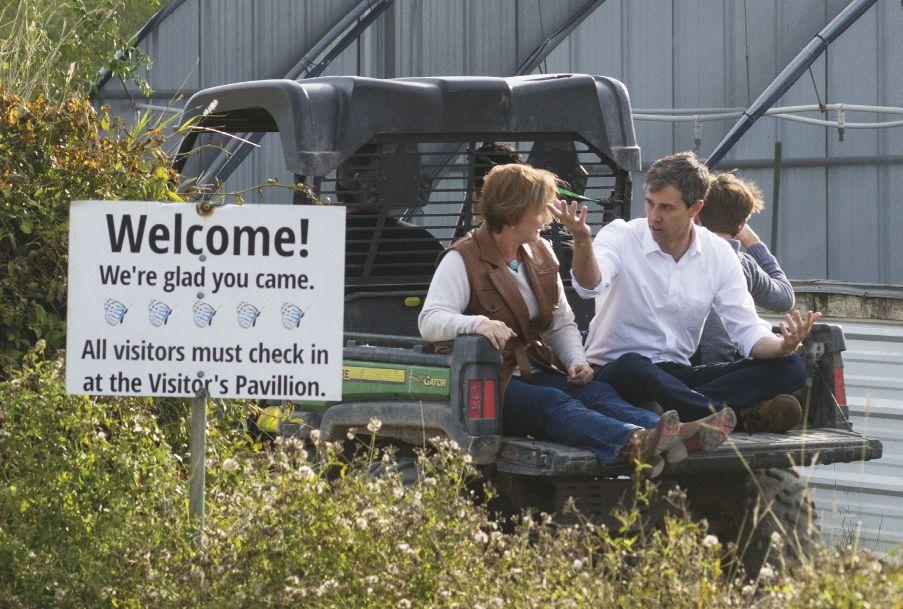
Above: Beto O’Rourke, then running to become U.S. Senator from Texas, began his luxury tour of the border when he visited the National Butterfy Center. Jan. 6, 2018.
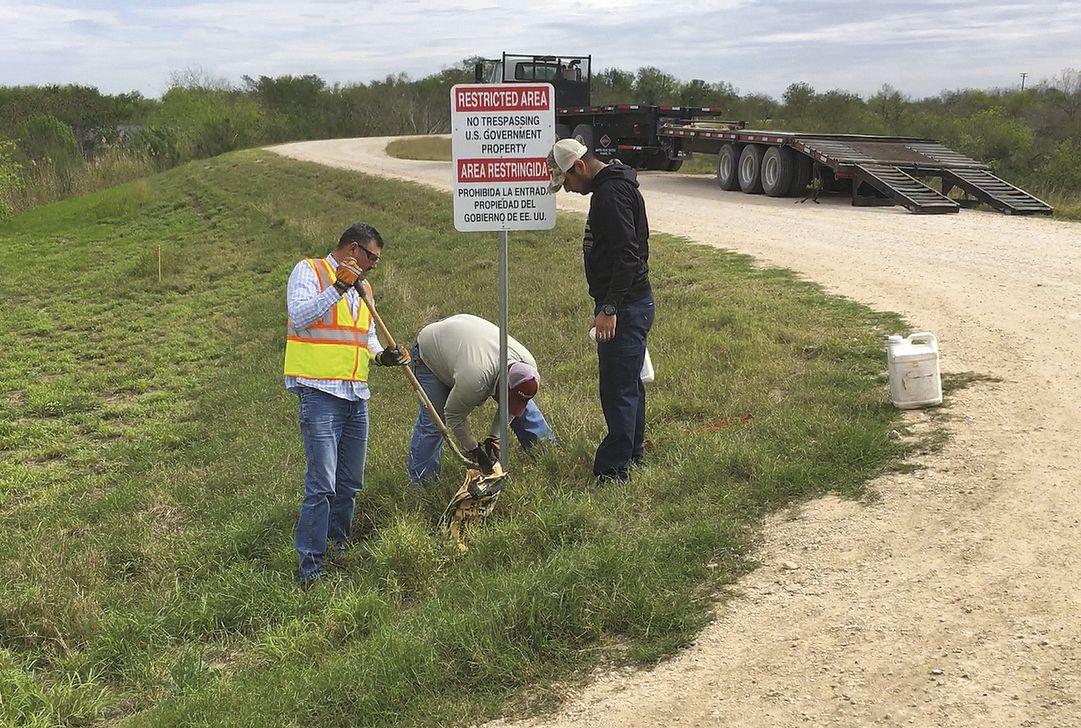
Opposite page top: Government workers illegally installing signs claiming that the land they are standing on is U.S. Government Property — it isn’t, it’s your property. Feb. 12, 2019.
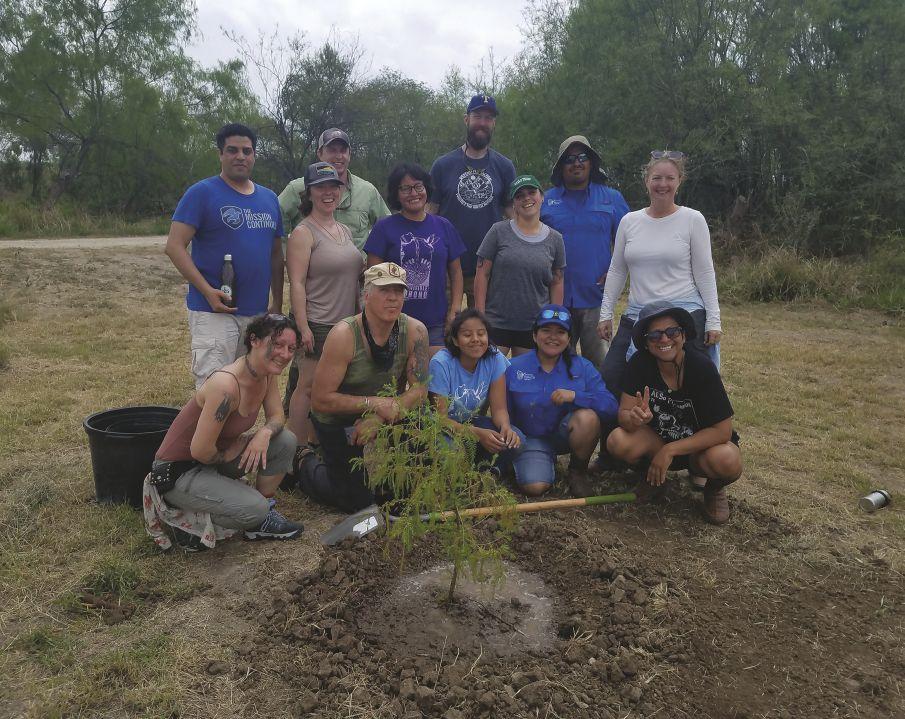
Opposite page bottom: Veterans participating in the Sierra Club Military Outdoors Program camped out at the National Butterfy Center while they learned about the ecosystems of the Lower Rio Grande Valley and how the border wall will destroy them. They planted a native Montezuma Cypress at the NBC — they named it “Libertad”. March 10, 2019.
The days and weeks that followed were surreal. On July 21, 2017, fve Border Patrol agents arrived at the center demanding to speak with me. When we met, they told me what I was claiming happened on our property had not happened. I asked them to get in their trucks and follow me to the area just south of the levee where the Tikigaq crew had left their Brush Hog and Brush Boom. There the agents observed the heavy equipment, as well
as the felled trees and other damage done by their contractor. They told me someone from the Customs & Border Protection Real Estate Offce would be in touch right away.
About a week later, on August 1, 2017, I had a meeting scheduled with representatives from the CBP Real Estate Offce, only to receive a text message that the meeting had to be canceled because they were “not ready to meet” with me. To my surprise, the former
The second Sunday of each month is “Kids Fishing Day” at the National Butterfy Center. You can see from the photo that we caught quite a few kids. The kids get to fsh, for free, off of our dock on the Rio Grande. However, in return, they are required to have fun! Aug. 11, 2018.
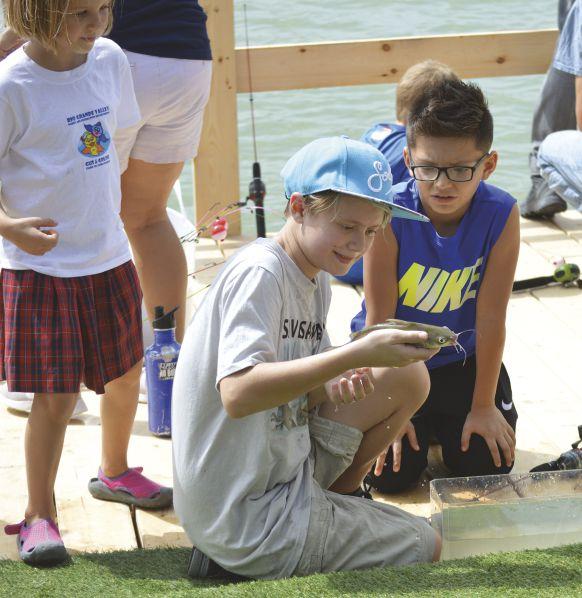
chief of the Rio Grande Valley Sector of Border Patrol, Manuel Padilla, showed up that morning instead. He came unannounced, in plain clothes, to inform me the government had indeed sent the contractors to clear our land and they would return in the future “with green uniform presence” to prevent me from running them off or interfering with their work. When I pressed Chief Padilla about this, “Would you really send armed, federal agents to stop private property owners from asking questions of employees from for-proft companies — send government agents to guard these private interests?” He replied, “People tend to get pretty upset when we use eminent domain to seize their land.”
Padilla also told me the frst border wall construction in a decade would begin at the National Butterfy Center and surrounding properties because we represented “the path of least resistance.” He said our section of the Lower Rio Grande Valley Wildlife Conservation Corridor, which includes Bentsen-Rio Grande Valley State Park and two
National Wildlife Refuge Tracts, involved the fewest private property owners, therefore, the government intended to start here.
At this point, we realized we were actually Ground Zero for Trump’s campaign promise, a vanity project we knew would achieve none of its purported objectives, like preventing immigrants from entering the United States. How did we know? Because none of the border wall built a decade ago in South Texas has stopped people, drugs or weapons from landing on U.S. soil. How could it, when it is built more than two miles inland in some areas (as it will be now), so that anything and anyone that comes across the Rio Grande River — the international boundary — and lands on the shore is in the USA. This is not our opinion of the effcacy of border wall, here; it is fact, unless President Trump makes the border wall the new international border and cedes thousands of square miles of our country to another, as he appears all too willing to do with our only source of freshwater, the Rio Grande.

Banksy is an anonymous, award-winning, England-based street artist, whose works of political and social commentary have been featured on streets, walls, and bridges of cities throughout the world. Banksy provided a stencil of a child laborer that the artist Ron English used to create this image of a child on a portion of the “Welcome Wall” at the National Butterfy Center. Marianna captured this image of real children playing in front of the installation. April 26, 2019.
Immediately, we began to gather resources to prepare for the onslaught. First, I called the offces of our senators and representative. Senator John Cornyn (R) sent his South Texas Regional Director and Community Outreach Advisor Ana Garcia to see me. I was shocked to learn she did not know the border wall was not built on the border, but inland, leaving Texans—U.S. citizens—with land south of the barrier. In fact, she was completely unaware that entire residential subdivisions, farms and businesses were effectively cut off from the United States by the border wall, where sections were already built. Senator ‘Ted’ Cruz (R) did not respond to requests for meetings, nor did any representative of his offce. When I called the offce of Representative Henry Cuellar (D) I was handed over to Mr. Stacy
Forbes, a Fellow from the Department of Homeland Security who serves on Cuellar’s staff. When I explained what Customs & Border Protection had done on our property, he was worse-than-rude, asking, “And? What do you want me to do about it?”
At this point, I was authorized by my superiors to have a full title examination done for the property and seek experienced legal counsel. Dr. Glassberg, president of the North American Butterfy Association (NABA), secured pro bono representation for us, thanks to the assistance of NABA member and attorney, Harry Zirlin, an Associate at Debevoise & Plimpton; while I reached out to the Texas Civil Rights Project, a nonproft, social justice organization with lawyers who represented landowners in the Lower Rio
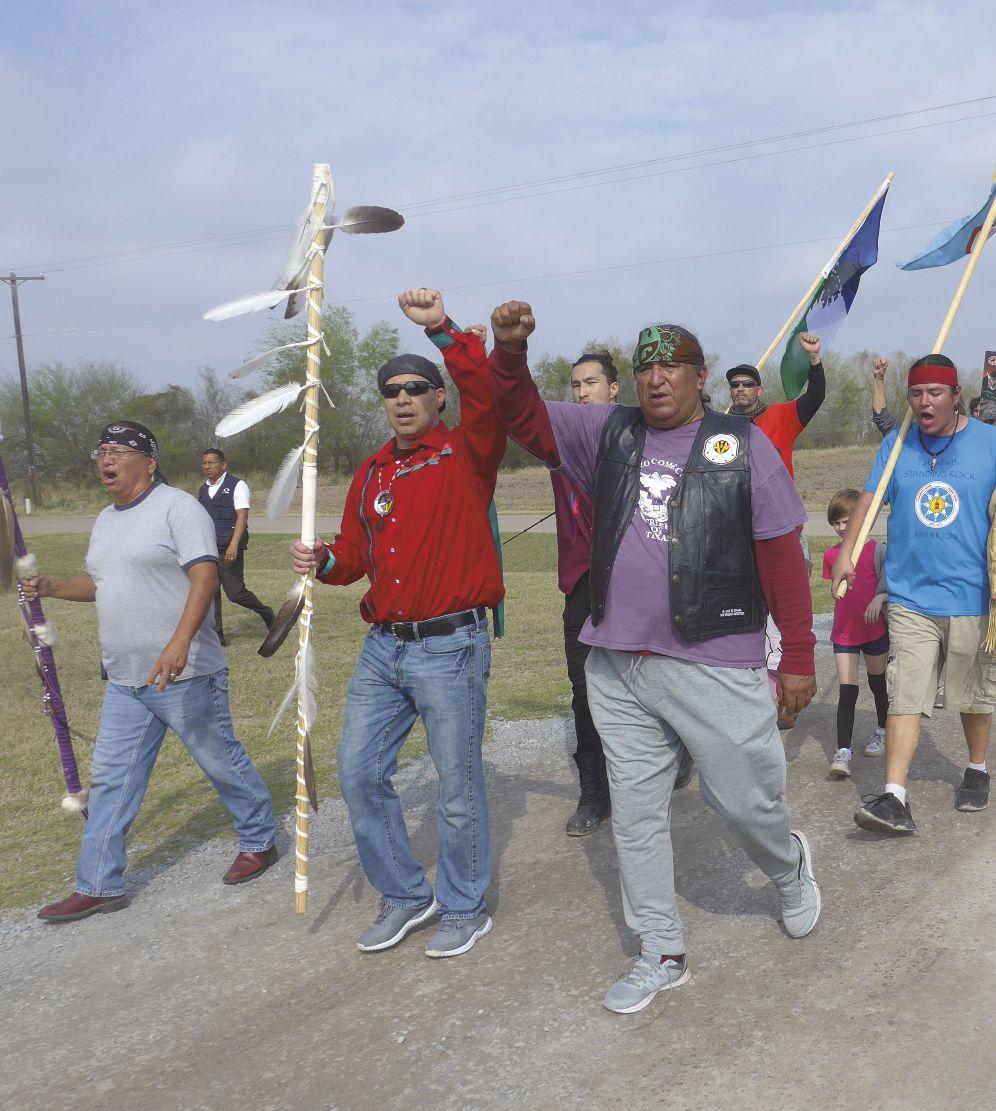
Laws waived for construction of a border wall include the Native American Graves Protection and Repatriation Act and the American Indian Religious Freedom Act. Because of this, and because of their distaste for the desecration of the land and their affnities with butterfies, the Carrizo Comecrudo Tribe of southern Texas and northern Mexico has taken a strong stand against a border wall. From Feb. to May, 2019, members of the Tribe camped at the National Butterfy Center.
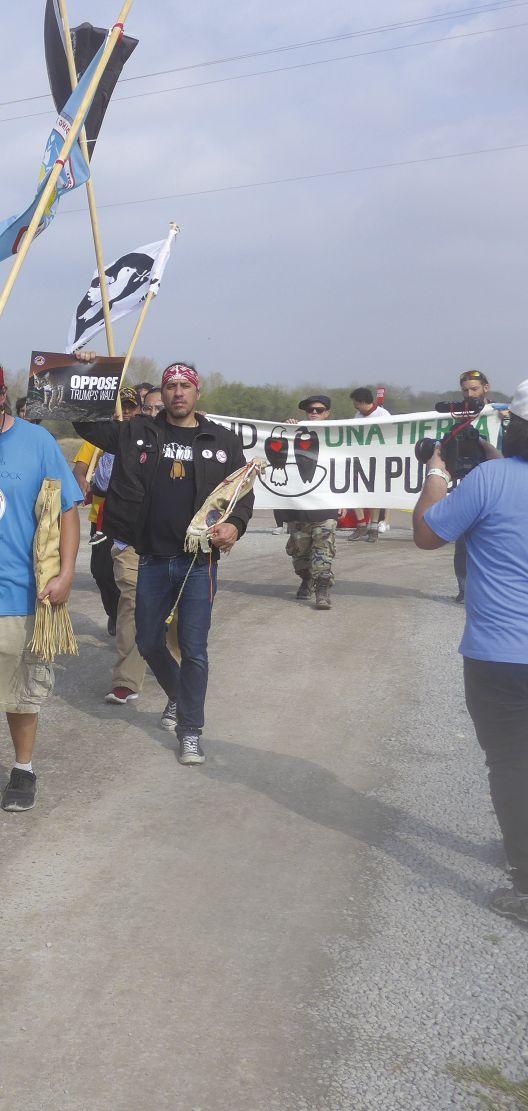
Above: Members of the Carrizo Comecrudo Tribe, led by Chief Juan Mancias, protest the planned border wall, marching onto the levee at the National Butterfy Center. Feb. 4, 2019.
Grande Valley when President George W. Bush’s border wall was built in 2008-2011. Our lawyers then led us in a crash course concerning the Immigration & Nationality Act of 1952, the REAL ID Act of 2005, the Secure Fence Act of 2006, the modern use of eminent domain, and all things related to border wall litigation.
As the fall of 2017 passed, we watched the unveiling of Trump’s border wall prototypes in San Diego from a distance with incredulity, only to laugh as these “impenetrable” and “unscalable” walls were breached, time and time again, in testing. In spite of all the rhetoric to the contrary, we hoped common sense would rule the day and Congress would deny Trump’s desire to “Build that Wall!” Then, in the midst of the federal budget battle for border wall, Border Patrol Agent Rogelio Martinez was mysteriously killed near Big Bend, literally, in the middle of nowhere, Culberson County, Texas; 3,813 square miles of desert with a population of 2,236.
Since the formation of Border Patrol in 1904, only 123 agents have died in the line of duty. Of the 123, only 47 have died as the result of any type of assault, with the overwhelming majority dying from “illness”, like heart attacks, and on-the-job accidents. Although National Border Patrol Council spokesman Art Del Cueto publicly denounced the politicization of Martinez’s death; another union spokesman, Chris Cabrera, echoed the president’s baseless claims, asserting Martinez and his partner were struck by rocks in a violent attack, likely by undocumented immigrants or drug traffckers — a claim that has since been disproven by multiple law enforcement agencies.
On November 19, 2017, Trump tweeted, “We will, and must, build the WALL!” in response to Martinez’s death, and we knew the proverbial shoe had dropped.
On December 9, 2017, following notice of our intent to sue and the 60-day waiting period required by the federal government for any party seeking legal redress to a grievance, we fled suit against the Trump Administration
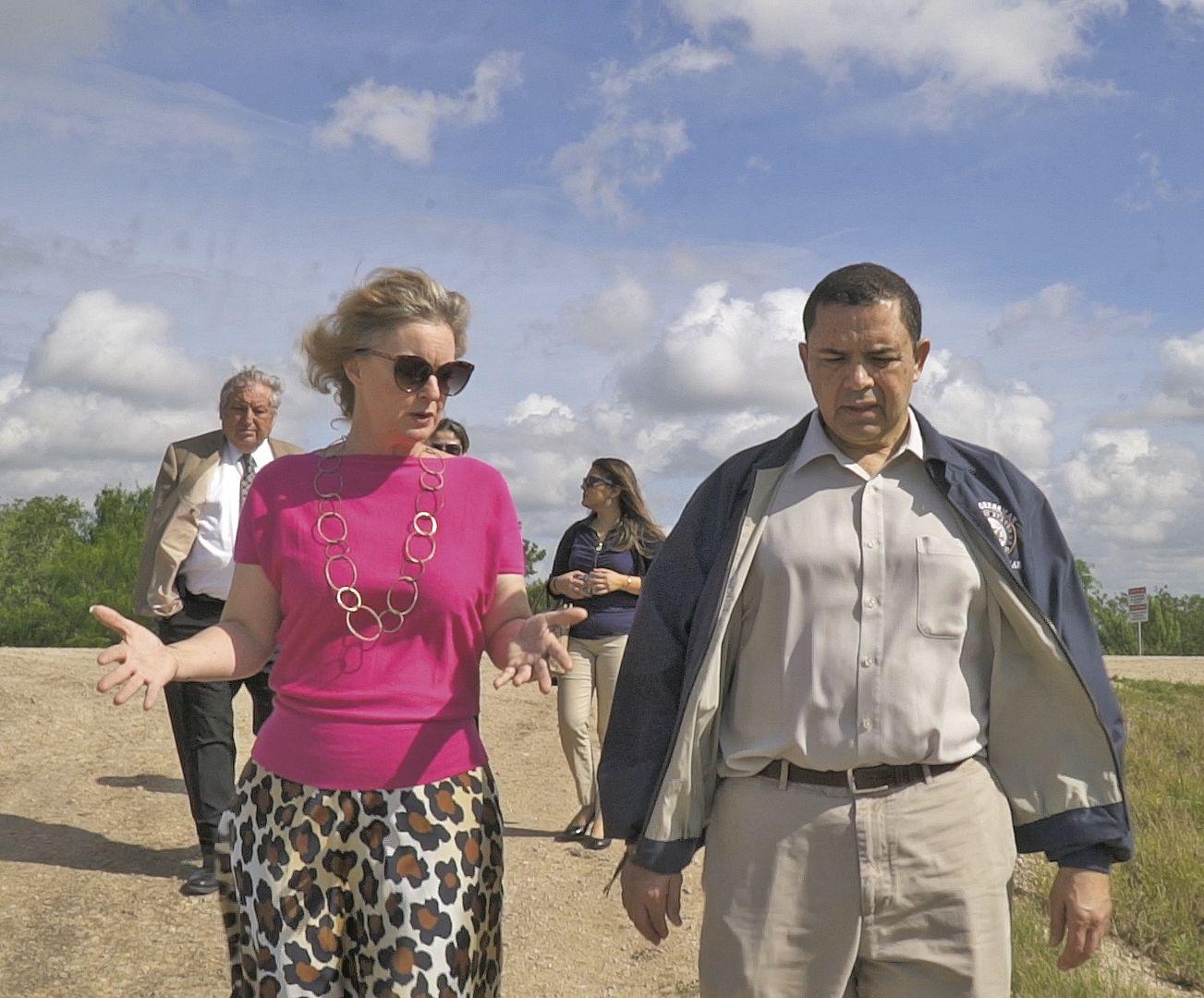
Congressman Henry Cuellar (right), whose district includes the National Butterfy Center, with Marianna Wright and Mission Mayor, Armando Ocana (back left) on the levee at the NBC. Congressman Cuellar introduced an amendment to the Consolidated Appropriations Act, 2019 that provided that “[n]one of the funds made available by this Act or prior Acts are available for the construction of pedestrian fencing...within the National Butterfy Center. Also excluded was La Lomita Chapel, Bentsen-Rio Grande Valley State Park, Santa Ana NWR and SpaceX. Although we are thrilled that this legislation apparently has bought us some time (it is said that President Trump’s executive order declaring a national emergency may override this legislation), some believe that Congressman Cuellar’s motivation may have been to smooth the way for a border wall, by removing irritants such as the NBC, that had become the focal point for national publicity and protest. Be that as it may, to be clear, we were, and are, in support of this exemption and were urging our contacts, including the chair of the Appropriations Committee, to include it. In the event, the bill was signed into law on Feb. 15, 2019, the day after the DC District Court dismissed NABA’s lawsuit against the U.S. government in the Valentines Day Massacre. NABA has appealed that ruling, fling briefs on June 5, 2019. Visit the NBC Facebook page to stay updated as events unfold. March 22, 2019.
and the Department of Homeland Security for statutory and Constitutional claims, based upon their egregious acts at the National Butterfy Center. If NABA was Plaintiff #1, I was defnitely Plaintiff #2, and the press took notice. Word of our lawsuit spread like wildfre, prompting hundreds of media requests. Our phones rang incessantly with inquiries and more than a few angry “patriots” making threats against me, personally, and the center. The holidays came and went without
much of a break from all the hoopla and what seemed like a hundred-thousand ignorant comments about how “butterfies can fy over the wall.”
In January, 2018, after a three-day government shutdown, Congress got down to wheeling-and-dealing in earnest. This activity culminated on March 23, 2018, when Trump received $641,000,000 for 25 new miles of “levee fencing” in the Rio Grande Valley Sector in the Consolidated Appropriations

Among the many special visitors to the National Butterfy Center were two NFL players — Demario Davis (in white) a linebacker with the New Orleans Saints and Josh Norman (in black) a cornerback with the Washington Redskins. At the NBC, we’re always having to play defense. You can see the hotbed of dangerous activity behind them as they sit on our fshing dock at the REAL U.S.-Mexican border with Marianna Wright. April 18, 2019.
Act, 2018, which passed the House and Senate with bi-partisan support.
In another strange twist, politicians and pundits boasted on television and in print that Trump had been defeated on the border wall front, with “no funding allocated for new walls,” but we knew this was false.
“Levee fencing” is border wall, by virtue of the scheme concocted a decade ago by our own Congressman Cuellar. Indeed, “levee fencing” has nothing to do with our levee system, except in the government’s attempt to exploit language in the levee easement in order to circumvent private property rights, a despicable plot for which Cuellar claimed credit in a September 19, 2017, meeting he hosted for local offcials.
In truth, all “levee wall” and “levee fencing” belong to the Offce of Border Wall Program Management under the Department of Homeland Security and are classifed as their “tactical infrastructure” for immigration enforcement, not food control. This is why the government cannot simply build the “levee wall” in the levee easement; rather, they must acquire the land for this project from private property owners by compensation and/or condemnation.
In June, I few to Washington, D.C. to meet with Congressional staffers about border wall funding, where many of them continued to assert there was no border wall in South Texas, and no funding for new border wall; so, this exercise in frustration mostly involved educating the people responsible for informing our elected offcials who enact policy for our country. It was disheartening, to say the least. Add to this the fact that Border Patrol was not releasing maps to the public or any information to affected landowners showing wall placement or design, a timetable for construction, or anything, rendering us fairly handicapped in proving our case.
All of this changed at the beginning of July, when an ally at Defenders of Wildlife in New Mexico, received an undated letter from Paul Enriquez, Real Estate and Environmental Branch Chief, U.S. Customs & Border

Protection, United States Border Patrol, Offce of Border Wall Program Management Offce, Program Management Offce Directorate. This letter not only included maps showing where CBP intended to place the new border wall, but described our wall, which would be approximately 18’ of concrete wall with 18’ steel bollards on top. It also gave basic information about the 150’ wide enforcement zone, the all-night lighting, the cameras, gates and new patrol road. All this showed Trump’s wall would be taller, more destructive, and require the seizure of more land than any previous border barrier.
On August 8th, I attended the Quarterly Landowner & Stakeholder Meeting at the McAllen Border Patrol Station, as I had done for the past six years. This meeting was packed with landowners and others I’d never seen before because Loren Flossman, manager of the Border Wall Program Management Offce, was present. As landowner after landowner asked questions about the border wall, with some unaware it had been funded and the government had already published the solicitation for construction bids in the Federal Register, Flossman fnally announced no more questions would be answered in the meeting. He stated, “If you have levee on
Opposite page: An intensely native Heart-leafed Hibiscus ignores the ruckus and blooms its head off at the National Butterfy Center. April 13, 2019.
your property, you are getting levee wall.” We were all instructed to schedule appointments with members of his staff, as there would be no public meetings and questions would only be answered in private meetings with affected landowners.
It was all downhill from there, as they say.
October 8, the Secretary of Homeland Security waived 28 federal laws, including the National Environmental Policy Act, the Clean Water Act and the Endangered Species Act to expedite border wall construction in Hidalgo County.
October 29, President Trump announced the deployment of over 5,000 active duty, U.S.
This page:
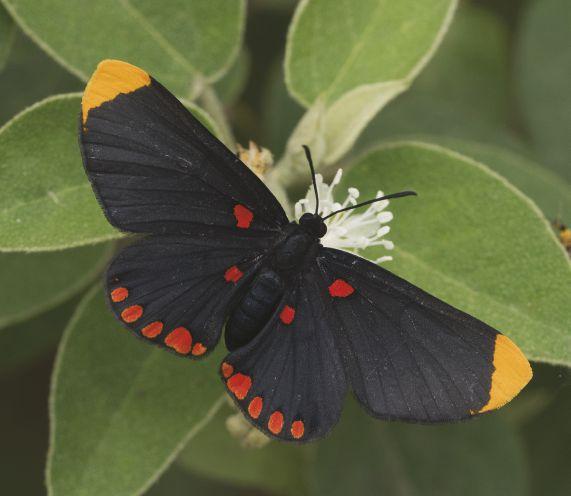
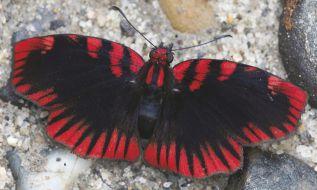
Left: In the U.S., Red-bordered Pixies are found only in the Lower Rio Grande Valley. This one shows off its smiley face at the NBC. Dec. 5, 2017.
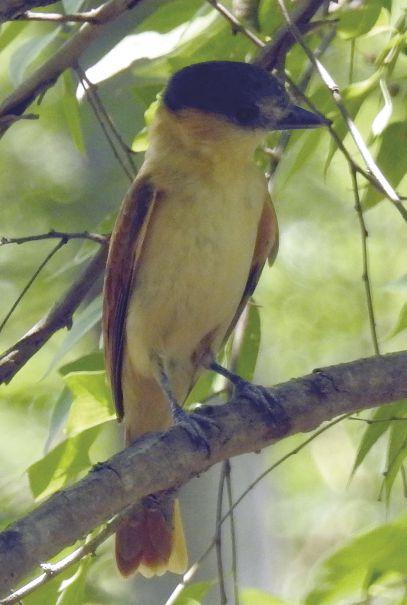
Below: This female Rose-throated Becard, a very rare stray to the Lower Rio Grande Valley, has spent at least a month at the National Butterfy Center. April 26, 2019.
On Feb. 13, the editor of American Butterfies was watching the ‘Late Show with Stephen Colbert’. Imagine his surprise when Colbert launched into an extended riff about President Trump and the National Butterfy Center, saying, among other things that “It’s like Trump’s people are saying, ‘I know kids in cages sounded evil, so we’ve toned it down: We’re just strangling butterfies!’”
“I am surprised Trump’s letting them get away with this,” Colbert joked. “After all, he’s got a lot in common with butterfies: They’re both fragile creatures with bright, iridescent coloring, and paper-thin skin. It’s just that Trump has never left the larval stage.”

military troops to the southern border, ahead of the mid-term elections.
November 6, Election Day, the Department of Homeland Security awarded SLSCO of Galveston, Texas, a $145 million contract to build 5.5 miles of border wall through the National Butterfy Center and surrounding properties.
December 3, the environmental and archaeological surveyors showed up at the center to conduct their sham surveys. Each for-proft company employee was guarded by a Border Patrol agent.
December 18, Dr. Glassberg and I met on the levee at the center with three representatives from DHS and CBP who were accompanied (guarded) by 5 uniformed Border Patrol agents.
January 16, I testifed before the House Natural Resource Conservation Committee concerning the devastating impact of border wall destruction on the Lower Rio Grande Valley Wildlife Conservation Corridor, the
National Butterfy Center, our community, our economy and our natural resources.
February 3, Super Bowl Sunday, the heavy equipment intended to de-vegetate our land for border wall construction began rolling in. It was parked overnight on the private property belonging to Mike Rhodes, next door to us.
February 4, Dr. Glassberg and I met with two representatives of Valbridge Property Advisers, hired by the government to appraise our land for eminent domain proceedings. These two were guarded by four uniformed Border Patrol agents, with another six agents “stopping by” to check on them.
February 11, Foremost Paving & Construction began methodically turning all of the trees and every living thing in them into mulch at the La Parida Banco NWR tract adjacent to Bentsen-Rio Grande Valley SP.
February 12, the International Boundary & Water Commission sent a crew to install signs on the levee on our property that said,
As with so much in life, events that are devastating and challenging to deal with, sometimes produce some positive outcomes. That has been our experience with the attempts to build a wall through the National Butterfy Center and the wanton lawlessness of the current United States administration. Although the reality of dealing with the possibility that we may be torn in two and witnessing the already happening widespread environmental destruction caused by border wall activities has been unnerving, at the same time, the outpouring of support from thousands of people and institutions throughout the country and been tremendously heartening.
Thanks to
The fantastic pro bono team at Debevoise and Plimpton, including Timothy Beeken, Harry Zirlin, Emily Hush, Nathan Noh, Adrian St. Francis, Joshua Smith, Alexa Busser, Andreas Constantin Pavlou and Madeline Silva
ACLU of Texas, including David Donatti
The Texas Civil Rights Project, including Efrén Oliveres
Carrizo Comecrudo Tribe
Center for Biological Diversity
Defenders of Wildlife
Earth Justice
No Border Wall Coalition and all member
organizations
Sierra Club
Our youngest activist allies at the University of Texas-Rio Grande Valley Environmental Awareness Club
The thousands of NABA members and non-NABA people who have donated to support the National Butterfy Center, many through our very successful Go Fund Me campaign.
The Three Amigas — Ruth Musgrave, Loretta Stadler, and Susan Wallace
My heartfelt thanks to our great staff at the National Butterfy Center — Jose Garcia, Teresa Garcia (bookkeeper), Nestor Gonzalez (get well soon Nestor), Luciano Guerra (outreach coordinator), Stephanie Lopez (nursery manager), Frances Madeson (media manager), Luther Mangrum, Max Muñoz (director of operations), Dale Oliver, Marcelo Saavedra, Omar Sauceda, Jackson Wright and Marianna Treviño-Wright (executive director). Not only are they all overworked and underpaid but, over the course of these past two years, they have had to deal with many indignities at the hands of Border Patrol and from some members of the general public, both over the telephone, via email, and in person. They have responded to these challenging times with grace and grit. I couldn’t be prouder
“U.S. Government Property No Trespassing.”
Then, on February 13, I received a totally unexpected call from Stacy Forbes in Congressman Cuellar’s offce. He called to tell me Cuellar had secured language in the 2019 DHS Spending Bill that clawed back the 2018 appropriation for border wall at the National Butterfy Center, as well as Bentsen-Rio Grande Valley State Park, La Lomita Mission, Santa Ana NWR, and Space X at Boca Chica Beach. I know he expected me to rejoice at the good news, but we already understood this was not a saving, but a temporary stay of execution. I thanked Stacy for the congressman’s work on our behalf, then asked him about the fake “state of emergency” news outlets were reporting the president planned to declare.
February 14, U.S. District Court Judge Richard Leon summarily dismissed our lawsuit against the federal government, more than 14 months after it was fled and without us ever receiving a single hearing. That’s right, we never got a minute in court to present our case.
February 15, Trump declared a State of Emergency at the southern border in order to circumvent Congress and take unauthorized monies — up to $8 billion — from federal agencies and programs to fund his border wall. As these monies were not appropriated by Congress, they came without restrictions; so, this put us right back in the crosshairs for destruction.
April 15, the steel bollard panels that will be set atop the 18’ concrete wall started arriving at a storage lot permitted for a “landscaping company” on Conway Avenue, where they continue to be stacked high, just down the road from us.
May 14, As reported in the Washington Post, CNN and other outlets, Trump, along with Advisors Stephen Miller and son-inlaw Jared Kushner, met in the Oval Offce with Senators to discuss the president’s new immigration plan, ostensibly crafted by Miller and Kushner. In response to less than favorable feedback from those
present, Kushner reportedly boasted, “We solved the butterfy thing,” referring to the administration’s plan to build border wall through our property.
In the latest development in this saga (as of drafting), on May 24, a federal court blocked Trump’s use of monies garnered under his State of Emergency declaration for border wall construction.
We are sure the administration will appeal this decision. Meanwhile, we’re headed into another federal budget battle, with the possibility — dare I say likelihood — of a third government shutdown, should Trump not get what he wants.
In the past, my updates to all of you have included wonderful news related to successful events, grant awards, benefcial programs and plantings. Alas, since the government contractors darkened our door in July, 2017, I’ve had no time to devote to grant-writing. Instead, I’ve made three trips to Washington, D.C. and one to Austin, all to educate and advocate on behalf of NABA. Still, we produced two great Texas Butterfy Festivals, and expect to do so again, this November. And in April, 2020, we will be launching the Wild Gardening Festival at the National Butterfy Center, a spring fing in South Texas, when the wildfowers are at their showy peak and the landscape should be ripe with butterfies, birds and blooms.
As always, your support has carried us through. Although we’ve lost a few members who feel “no sacrifce is too great” to build the border wall, who would apparently have us shutter; we’ve gained more who learned of us only as a result of this fght and the furious work we’ve done to help people understand how futile — obscene, even — the border wall is.
There is plenty I’ve left out of this report, ranging from offcial corruption and criminal conduct, to art installations and acts of solidarity in protest of the wall, but you get the idea and you will get the gate code to pass through the border wall, if it is ever built across the property.
With all of the national publicity about the National Butterfy Center, millions of people now know about the NBC. Hopefully, some of them (including maybe you?) will visit this fall. Also helping to spread the word about the NBC has been quite a few documentarians.
Two feature length flms have been made — Ay Mariposa, directed by Krista Schlyer; and The River & The Wall, directed by Ben Masters. And, there is a short flm, Bulldozing Butterfies: National Butterfy Center vs. Border Wall, directed by Sean Koenig. At least three feature length flms, and four or fve short flms, are in progress. Grab some popcorn and enjoy your time in the sun as a NABA member!


A remarkable look at the rarest butterflies, how global changes threaten their existence, and how we can bring them back from near-extinction
Cloth $24.95
264 pp. 5 1/2 x 8 1/2 16 color plates + 7 b/w illus.
Many of you have written and called, sending thoughtful messages of encouragement and concern for my state of being. At this point, I feel like that tattered and tossed butterfy that’s way beyond her glory days. You’ve all seen those individuals, the ones you aren’t sure whether to pity or congratulate for the state they’re in!
It’s been a wild ride, but I am not ready to fold it up. The National Butterfy Center is truly a treasure. It is something many of you have poured your hard-earned money and hope for the future into. For this reason, I will continue to defend it, vigorously, proclaiming, “She who fghts and fies away, lives to fit another day.” #Resist


A lavishly illustrated introduction to the world’s dragonflies and damselflies
Cloth $29.95
224 pp. 8 1/4 x 9 1/4 150 color illus.
by Jeffrey Glassberg

and how to recognize one in case of a miraculous encounter
Ready to start the year questing for butterfy species that I’m missing, on the night of Easter Sunday, I drove to Newark airport for my fight to Kansas City, Missouri to thrill to the dashing fight of an Ozark Swallowtail!
The small regional jet we were fying comes equipped with a device that pings the pilot when the plane gets over 10,000 ft. The device on this particular plane was overly enthusiastic and was pinging continually, even on the ground. Thus our fight was delayed, frst for an attempt to repair the device, then to swap out the device.
I spoke with the pilot and offered to alert him when we reached 10,000 ft., but this
obvious solution to the problem was rejected. When the pilot learned that it would take about 2 ½ hours to swap out the device, he initiated his own swap, calling in some heavy IOUs and moving us to another plane leaving from another gate, a hike away.
The new plane had been scheduled to fy to Jacksonville, Florida in about an hour, but the poor Jacksonville folks were in for a long night, as they now were fying on our original plane. It was a schadenfreude moment without too much of a dark side.
Rolling into Kansas City an hour and a half late, I found a rental car with built in navigation, found my hotel by the airport, and was asleep by 1 am.
The next morning, I awoke slight-eyed and squishy-tailed to fnd the sky covered by gray matter. The weather reports had predicted bad weather all week, but given the general inaccuracy of these predictions, I had ignored them. Now, I was learning that they are only right when they’re wrong (for me).
Still, I grabbed some breakfast, assembled my gear, and drove the 1 ½ hours from the Kansas City Airport to Harry S. Truman State Park. The sky was still completely gray, but it was warm, about 70 degrees.
I parked at the beginning of the Western Wallfower Trail and began hiking in through the section of woods. Almost immediately, 3
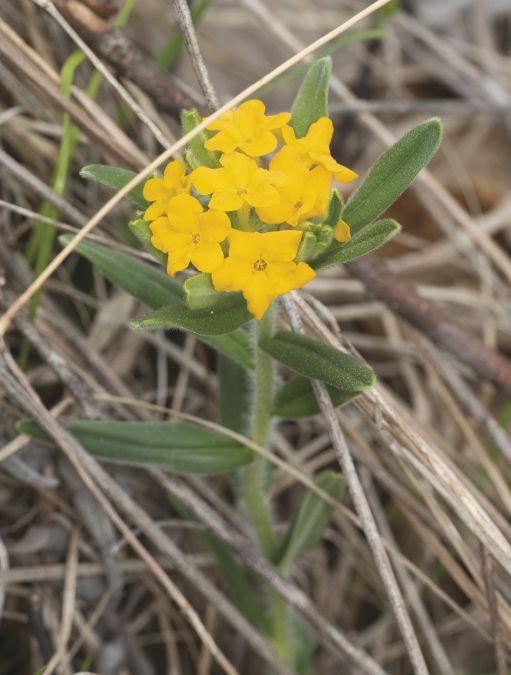
Springtime in the Ozarks means wildfowers. Without searching for them, wildfowers seen on this trip (I’m certainly no plant expert, these are my best guesses) included Violet Woodsorrell, Creeping Woodsorrell, Hoary Puccoon, Carolina Larkspur, Rose Mock-vervain, False Garlic, Birdfoot Violet, Common Blue Violet, Wild Hyacinth, Rue Anemone, Spring Beauty, and yellow star-grass.
Left: Violet Woodsorrell, a much frequented nectar source. April 22, 2019. Harry Truman State Park, Benton Co., MO.
Right: Hoary Puccoon. Although cited by Heitzman as a nectar source for Ozark Swallowtails, I never did see a swallowtail nectaring at one. April 22, 2019. Harry Truman State Park, Benton Co., MO.
Juvenal’s Duskywings few up. With young oaks coming up all over the place, this was a perfect area for females to lay their eggs.
Soon, I was in the more open section of the trail. Here, I was very happy to see blooming Rose Mock-Vervains and bright orange-yellow Hoary Puccoons, both because the plants are quite beautiful and because they are said to be some of the primary nectar sources for Ozark Swallowtails.
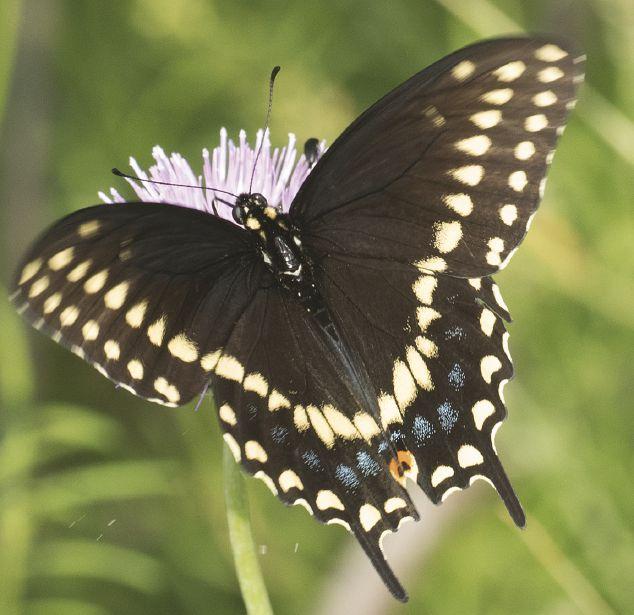
Even given the cloudy skies, it didn’t take long for a black swallowtail to zoom out of the woods to nectar at a mock-vervain eureka! Or so I thought. A closer look brought the excitement level way down as the putative Ozark Swallowtail morphed
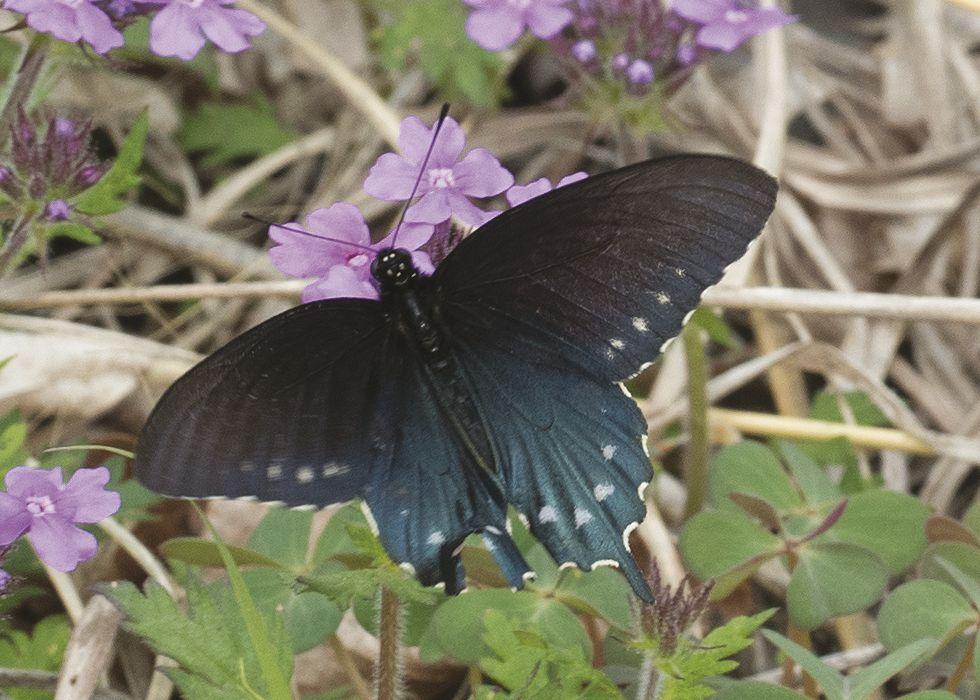
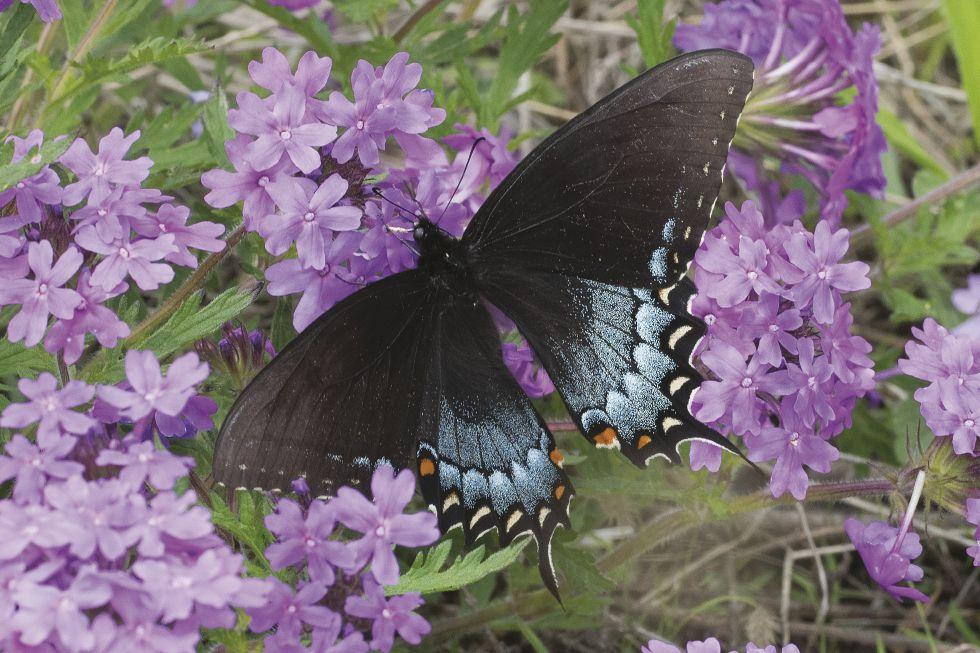
Two species of “blackish” swallowtails were seen on this trip: Pipevine Swallowtails, which were common; and Eastern Tiger Swallowtail females, which were uncommon. You can see that the native Rose Mock-vervain (which is a beautiful color in nature, when shown in photographs printed in four-color ink, the color is unfortunately rendered as dull and leaden) was an attractive nectar source for both species.
into a Pipevine Swallowtail. Beautiful, but disappointing none-the less. Over the next few hours, I would go on to see seven Pipevine Swallowtails, but no Ozarks. Either there were no Ozark Swallowtails around, or they are more sensitive to cloud cover than are Pipevine Swallowtails.
On this frst day, I did see a number of very attractive wildfowers, including Carolina Larkspur, Wild Hyacinth and Hoary Puccoon, and 13 species of butterfies: Pipevine
Swallowtail 7, Eastern Tiger Swallowtail 1, Falcate Orangetip 3, Gray Hairstreak 2, Eastern Tailed-Blue 45, Pearl Crescent 4, American Lady 2, Red Admiral 1, Goatweed Leafwing 3, Monarch 2, Juvenal’s Duskywing 15, Wild Indigo Duskywing 1, Common Roadside-Skipper 3. For more photos from this trip, visit my blog at https://butterfies. naba.org/
So, what is it about Ozark Swallowtails? Let’s start at the beginning.
Richard Heitzman was a Missouri postal carrier who spent most of his free time looking at butterfies. In the 1960s and early 1970s, he noticed that there appeared to be a population of “black” swallowtails in Missouri that behaved differently than Black Swallowtails. These swallowtails lived mainly in thick Ozarks woodlands and, unlike Black Swallowtails, when females were confned with Wild Carrots or dill, or parsley, they refused to lay eggs on these plants. In 1972, he found parasitized swallowtail caterpillars on Yellow Pimpernel growing in the woods. On April 29, 1973, he captured a female “black” swallowtail in the woods near Warsaw,
Missouri and when she was confned with Yellow Pimpernel, she freely laid eggs on the plant.
Largely on the basis of the differences in behavior and foodplant, which were said to be plants in the Parsley Family, including Yellow Pimpernel (the scarlet pimpernel rescued aristocrats from the guillotine, the yellow pimpernel rescues Ozark Swallowtails so that they can continue to elude humans), Hairyjoint Meadowparsnip (not a marijuana substitute) and Golden Zizia, Heitzman described the woodland swallowtail as a new species, Papilio joanae, now known as Ozark Swallowtail in 1973 (J. Res. Lep. 12:1-10). All of the type series were collected just northwest of Warsaw, Benton
This page: The next best hope for Ozark Swallowtail was found by Rick Borchelt along a woodland portion of the Western Wallfower Trail, feeding on a Canadian Licorice-root.
May 14 2016. Harry S. Truman State Park, Benton Co., MO.
Opposite page: A plot of the date collected versus the number of specimens collected on that date, gleaned from examining all known published records.
County, Missouri, most along highway UU, an approximately 3 mile stretch of road (see cover for a photo of a cedar glade along highway UU where many of the specimens may have been collected) running from route 7 to Truman State Park (which wasn’t established until 1976, three years after the description of Ozark Swallowtail).
Many people were dubious about the validity of Ozark Swallowtail as a distinct species. However, after examining mitochondrial DNA (1993. The Memoirs of the Ent. Soc. of Canada. 125: suppl S165, pp. 233-242.) and later, with Julian Dupuis, nuclear DNA (2015. Plos One: https://doi. org/10.1371/journal.pone.0241882) of species related to Old World Swallowtail, Felix Sperling and his associates concluded that Ozark Swallowtail is probably best viewed as a distinct species caused by hybridization.
And so, thus is it treated on the NABA Checklist and English Names of North American Butterfies Meaning that the author of this article is morally obligated to chase it.
It turns out that this is a problem. As best I can determine, there is no documented record of this species for almost 30 years, not since Heitzman collected two in 1990.
In late August, 2007, Craig Marks, reported that “Within Mark Twain National Forest, between Roaring River [state park] and the state-line, there are several hunting roads off of Highway 112...Finally, at a spot with numerous tall thistle stands along with other wildfowers, she came out of the dense underbrush, a fresh female Ozark Swallowtail. She fed at various thistle blooms about fve minutes, very skittish, never allowing me to approach closely, always nervously moving to another thistle stand. Then she abruptly disappeared back into the think surrounding forest not to reappear.” While I’m willing to consider that it’s possible that this was an Ozark Swallowtail, without more evidence I can’t say that this is solid documentation.
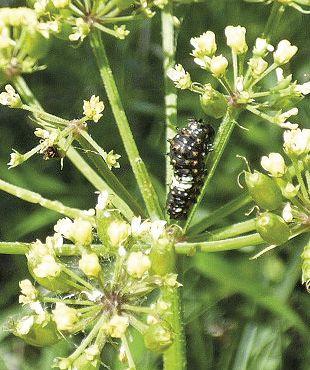
Finally, on May 14, 2016, Rick Borchelt found a few swallowtail caterpillars on Canadian Licorice-root growing in the woods just before it opened into a cedar glade within Harry S. Truman State Park. Although Black and Ozark Swallowtail caterpillars cannot be distinguished at this stage instar, given the plant (which is a woodland Parsley Family plant not heretofore known to host either species) and location, where Rick and Richard Heitzman found Ozark Swallowtails fying
years ago, I think that it is likely that the caterpillars were Ozark Swallowtails.
Last year, Rick’s fnding propelled me to Missouri, to Harry S. Truman State Park and its Western Wildfower Trail, both in June and again in August, as an examination of collection dates (see chart, above) indicated that those times of year, and late April, were the best times to fnd the butterfies. Both in June and in August, I discovered giant goose eggs. Amazingly, even giant goose eggs were preferable to most of the food available in the region.
Now, let’s go back to our most recent visit, already in progress.
Apparently, Missouri holds groundhog’s day on April 22, because when I awoke today, it was exactly as it was yesterday. Gray sky and glum face.
So, I used the morning to deal with various pressing NABA issues, mainly good, none of which are yet ready to be disclosed.
Around 11:30, I drove to Truman State Park. Around noon, the sun was actually visible for about 5 minutes but then went back to sleep. I was jealous. I walked around for the next 1 ½ hours and did see a few species that I hadn’t seen yesterday — but no Ozark Swallowtails. Because I’m a slow learner, there were some exciting moments that involved Pipevine Swallowtails. Also, the Redbanded Hairstreaks and Common RoadsideSkippers had just emerged, and so were particularly beautiful. Butterfies seen were: Pipevine Swallowtail 4, Gray Hairstreak 1, Red-banded Hairstreak 2, Eastern TailedBlue 15, Pearl Crescent 1, Red Admiral 1, Northern Cloudywing 1, Juvenal’s Duskywing 15, Horace’s Duskywing 1, Wild Indigo Duskywing 1, Common Roadside-Skipper 2.
After a dinner of enchiladas suizas, I watched the Brooklyn Nets get eliminated from the playoffs (the Wild Indigo Duskywings have NEVER made the playoffs). It was a particularly ugly game to
unfortunately end what was a great and fun Nets basketball year.
I wait on the weather gods.
Woke up this morning to discover that the weather gods were even angrier. Thick gray clouds and drizzle. So, not much happened. I did get to drive through Tightwad, Missouri for the umpteenth time. Unfortunately, I used up most of my allocation of Tightwad jokes in the article in the winter 2018 issue of American Butterfies, so I’m not giving up any of the rest of the jokes until I die.
Toward midday, the sky brightened slightly — still no sun — so I traveled to Shawnee Bend State Park where a three-toed box turtle was sauntering across the road. I briefy debated the ethics of shipping it to Asia to defray the costs of the trips, but then decided to move it to the side of the road. Once at the park, I took a walk down the Shawnee Bend Bluff Trail.
I saw exactly three individual butterfies, an Eastern Tailed-Blue, a Red Admiral and a Gemmed Satyr, and was able to get photos of each of them (see the blog at https://butterfies. naba.org/, for photos) demonstrating, once again, that one can obtain photos of the majority of individual butterfies one sees if one works at it.
Let’s take a break from the trip and consider how one might recognize an Ozark Swallowtail if one actually ran into one, distinguishing it from extremely similar Black Swallowtails. As already mentioned, probably the biggest clues would seem to be location and behavior. As Richard Heitzman says in Butterfies and Moths of Missouri, Ozark Swallowtail “is found in cedar glades and woodlands in the Missouri Ozarks...Males perch on trees and shrubs in small clearings at high points in the forest, watching for
Left: An Ozark Swallowtail caterpillar. Benton Co., MO.
Right: A Black Swallowtail caterpillar. Sept. 17, 2018. Apalachicola NF, Walkulla Co., FL.
females.” So Ozark Swallowtails hang out in woodlands, where Black Swallowtails rarely go.
However, just fnding a “black” swallowtail in a woodland would not be suffcient for one to conclude that it was an Ozark, because Black Swallowtails do sometimes enter woodlands. Finding a “black” swallowtails associated with a known caterpillar foodplant of Ozark Swallowtail would be better. And, if you see caterpillars, and/or eggs, on the plant, even better. Although early instar caterpillars appear to be indistinguishable from Black Swallowtail caterpillars, last instar individuals look a little different, with the black vertical stripes seemingly broken. [This may be a good place to correct an unfortunate attribution error in Caterpillars in the Field and Garden (Allen, Brock and Glassberg 2005). I recently noticed that the beautiful cover photo of an Ozark Swallowtail is incorrectly, and embarrassingly, attributed to Jeffrey Glassberg. The same photo on page 31 (no. 5) is correctly attributed to Richard Heitzman.]
I’m told by John Tewell, a friend and feld companion to Richard Heitzman, that Heitzman’s cat could distinguish the caterpillars of the two species. Heitzman had two same size cages, with Black Swallowtail caterpillars in one and Ozark Swallowtails in the other. His feline cat preferred to lie on the cage with Ozark Swallowtail caterpillars, even when Heitzman switched the cages of the
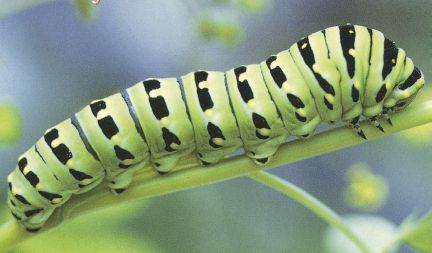
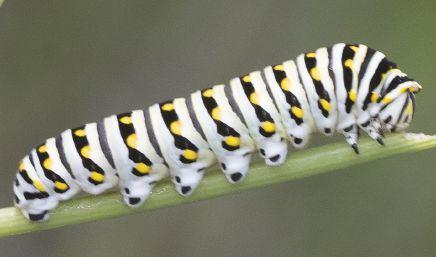
caterpillars. Tewell reports that even to the human nose, the caterpillars of the two species do smell a little different.
What about the adults. In his original description of Ozark Swallowtail, Heitzman distinguished it from Black Swallowtail as follows:
Males: upper surface; the apical spot of the postmedian yellow spotband is single and fairly short, on Black Swallowtail it is usually longer and/or broken into two spots. The submarginal yellow spots of Ozark are usually round while on Black the lower spots are frequently oblong. The blue spotband on the HWs of Ozark is complete while on Black there are usually only a few blue spots near the inner margin of all but the spring brood. The inner margin eyespot of most Black has a black central pupil, on most specimens of Ozark this pupil will touch the inner margin of the wing. Females: On Ozark females the costal spot of the postmedian band of the HWs above is small and obscured while on Black it is usually rather prominent. In both sexes the postmedian bands of the underside normally have more orange than those of Black; the ffth spot from the costal margin of the postmedian bands of the HWs of Ozarks are often no longer than spot four while on Black the ffth spot is frequently twice as long as the fourth spot.
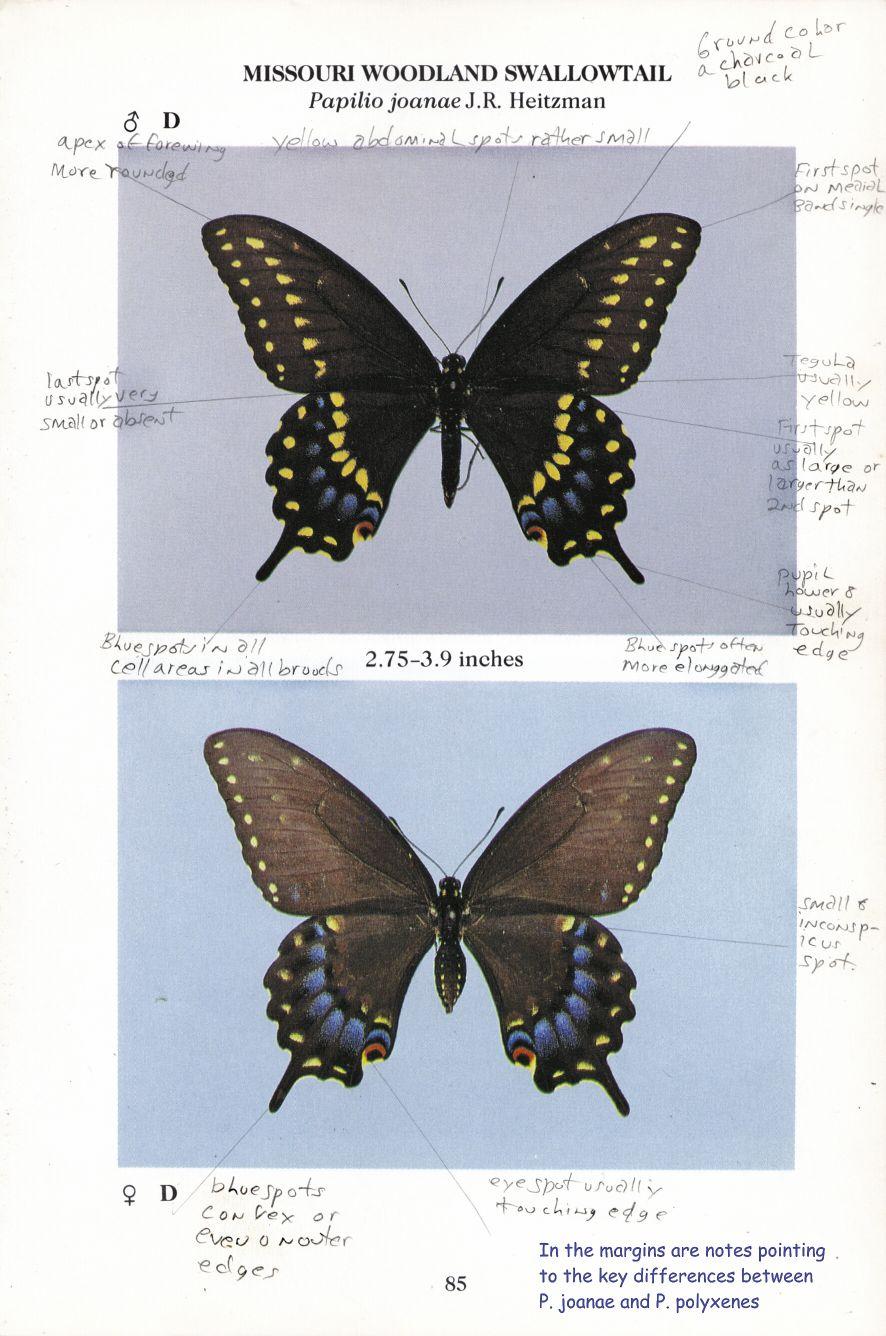
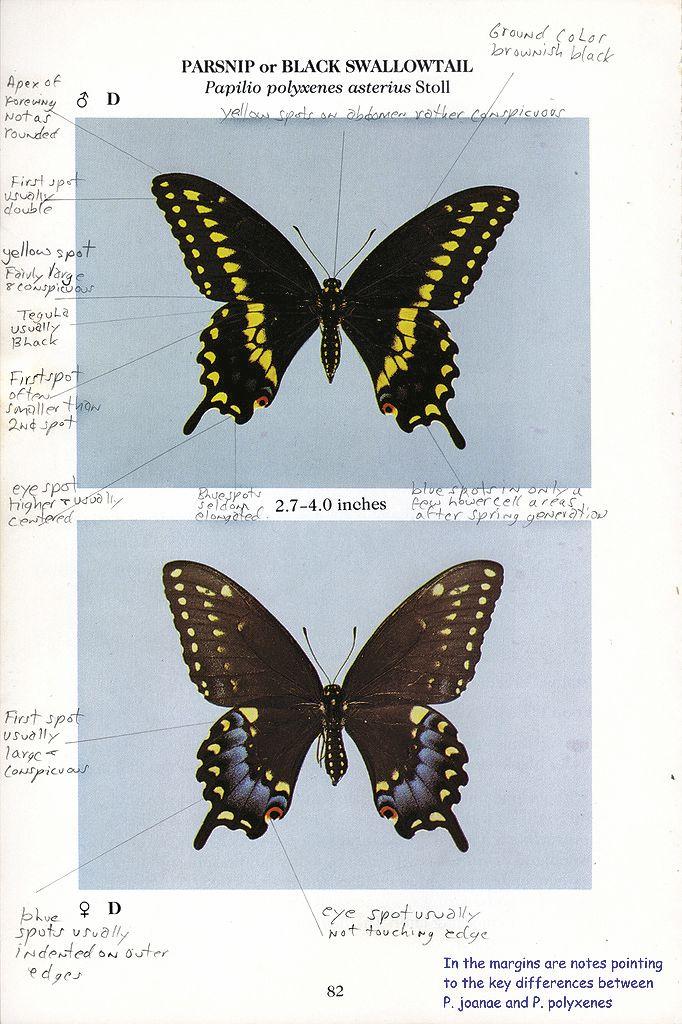
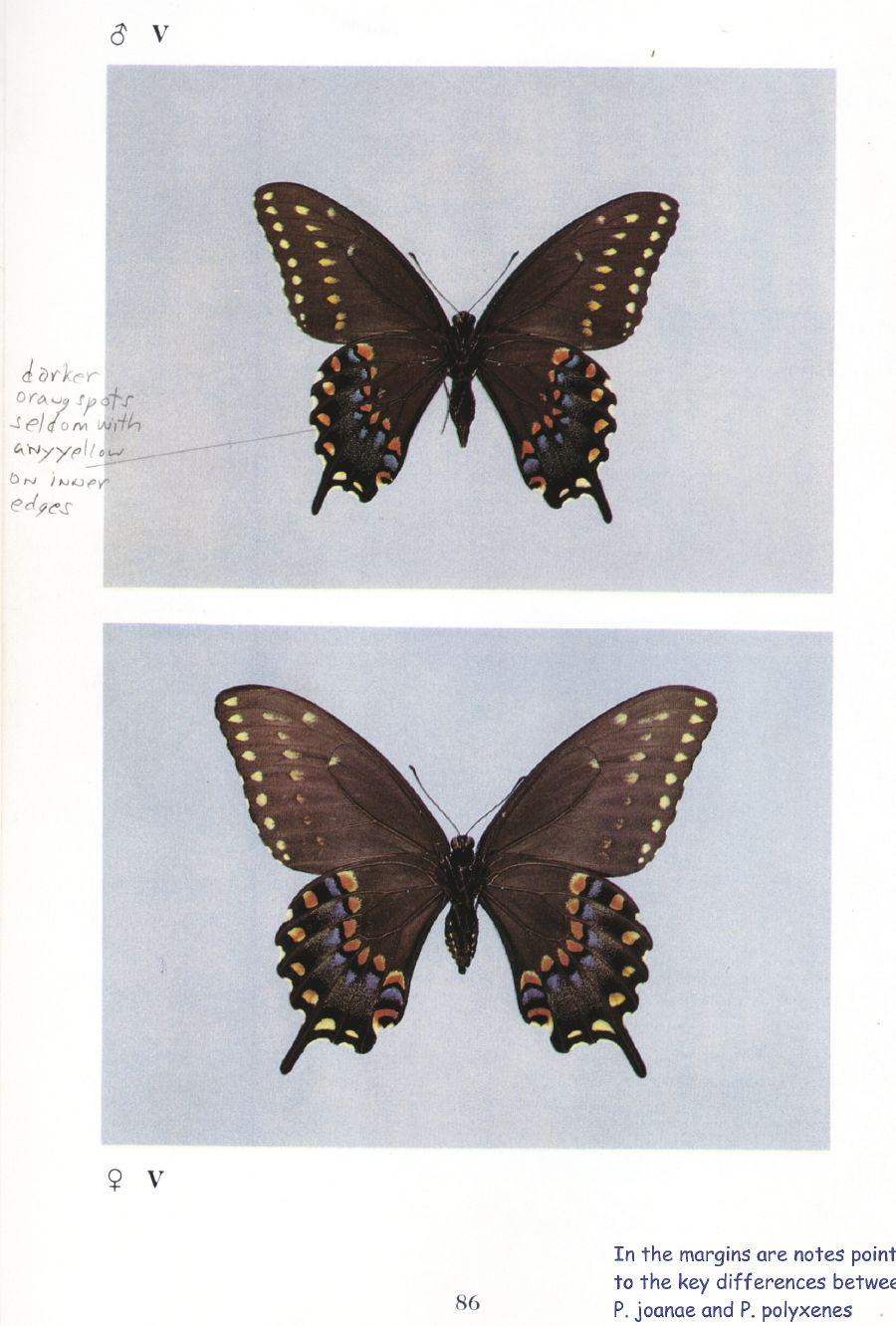
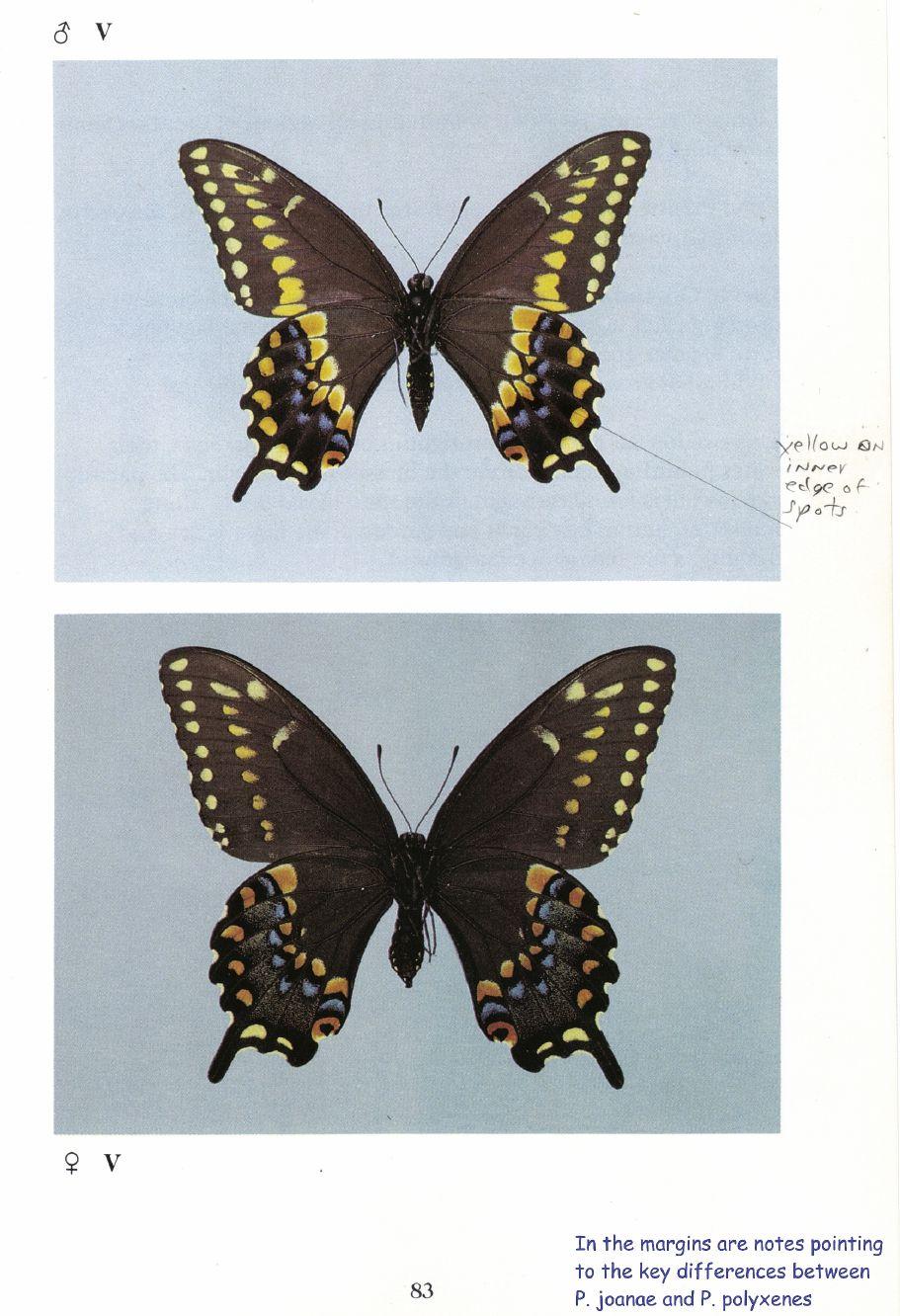
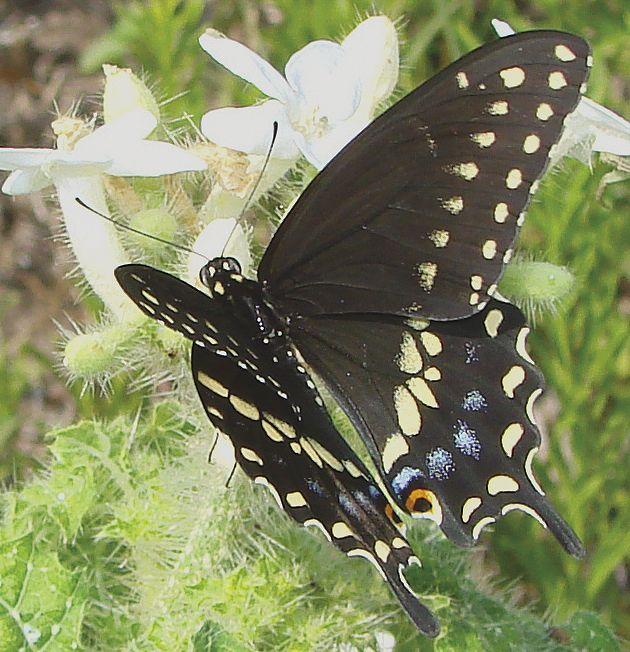
In Butterfies and Moths of Missouri, other than behavior, Heitzman includes no information about how to distinguish Ozark and Black Swallowtails. However, on pages 12 to 15 you can see Richard Heitzman’s hand-written annotations on the Ozark and Black Swallowtails plates that he included in his copy of Butterfies and Moths of Missouri. I examined 117 photographs and 75 museum specimens of male Black Swallowtails and 5 photographs (of specimens) and 3 specimens of male Ozark Swallowtails. All of the male Black Swallowtails had at least some yellow at spot 1 (see page 16). Most had strong yellow, as on the individual in photo 1. Two had reduced yellow and one, the individual shown in photo 2, had almost no yellow. So, I think that it’s fair to conclude that if one sees a male Black/Ozark Swallowtail perching in Ozark woods and the individual lacks spot 1, then
Pages 12-15: Photographs of four plates from Butterfies and Moths of Missouri (1987), by J. Richard and Joan E. Heitzman, with Richard Heitzman’s hand written notes detailing feld marks he used to separate Ozark and Black Swallowtails.
HW cell spot 113/117
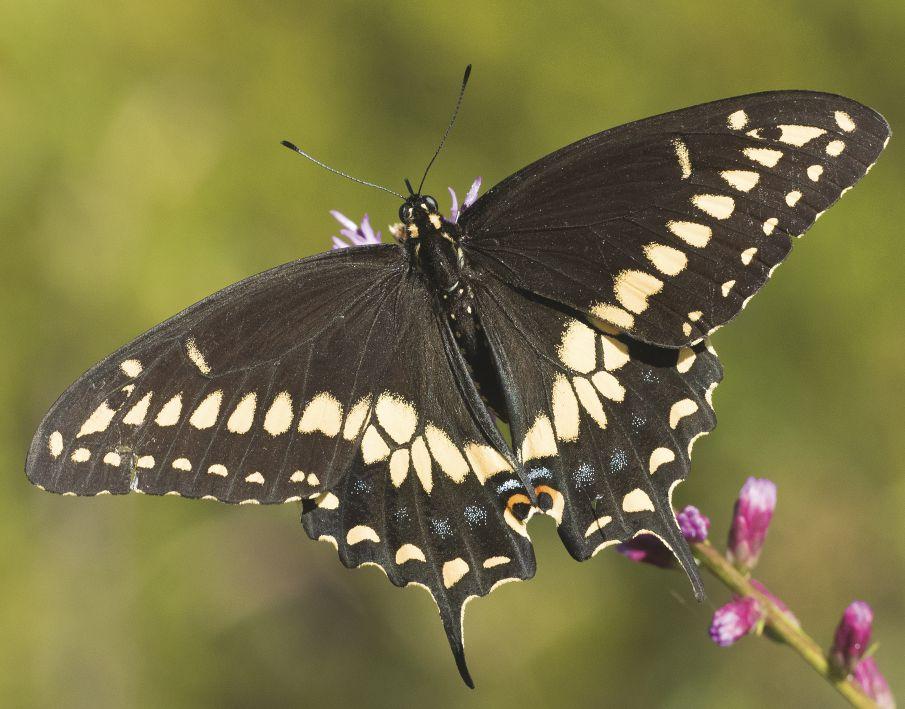
Above: A typical male Black Swallowtail, showing a strong yellow spot in the HW cell and a strong yellow spot at FW spot 1. Numbers indicate how many individuals, out of the total examined, had this feature. Sept. 21, 2016. Apalachicola NF, Walkulla Co., FL
Right: A Black Swallowtail almost completely lacking FW spot 1 (although HW blue is reduced, this may be a female). May 30, 2010. Aransas NWR, Aransas Co., TX.
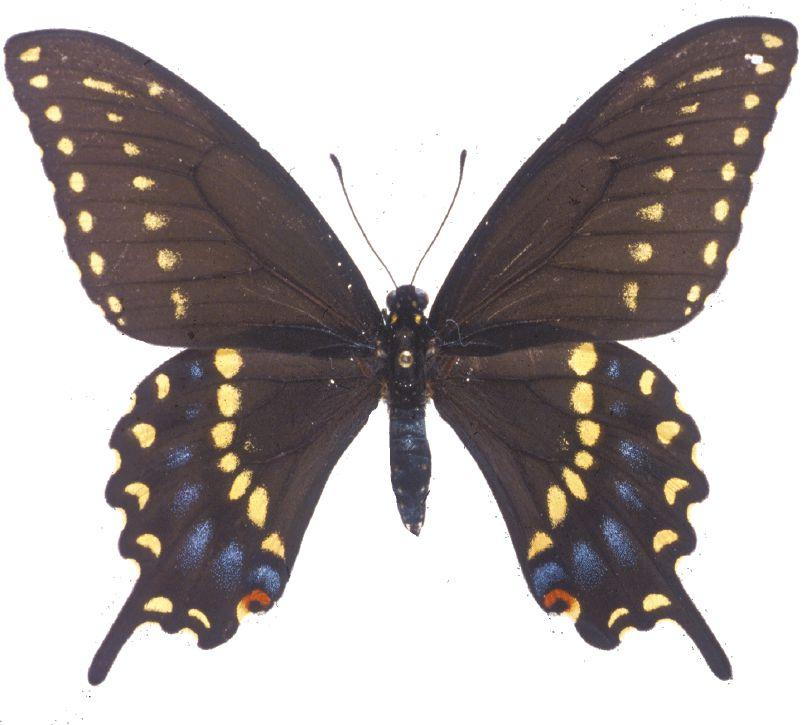
Above: A male Ozark Swallowtail, showing almost no yellow scales on the upperside of the HW cell and no discernible yellow at FW spot 1. Reared by J.R. Heitzman. University of Georgia specimen 2193026
Left: A male Black Swallowtail almost completely lacking yellow scales on the upperside of the HW cell. April 13, 2019. National Butterfy Center, Hidalgo Co., TX.
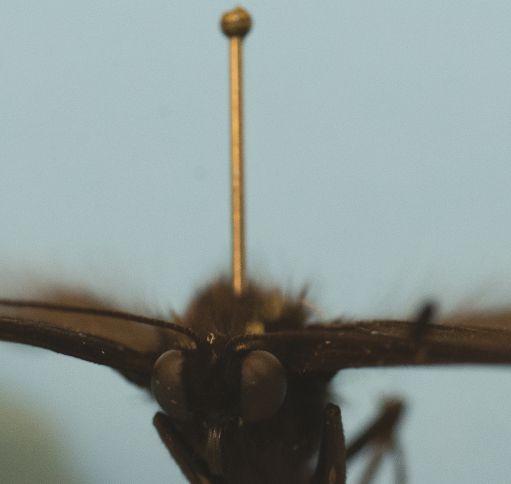
This page: A view of the face of the holotype male of Ozark Swallowtail. Museum specimen access courtesy of American Museum of Natural History.
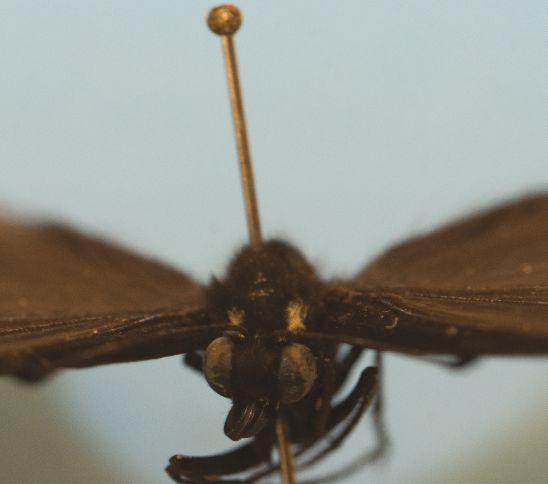
Opposite page: A view of the face of the allotype female of Ozark Swallowtail. Museum specimen access courtesy of AMNH.
it is almost certainly an Ozark Swallowtail. However, just because a swallowtail has spot 1 doesn’t mean that it couldn’t be an Ozark Swallowtail because a fair percentage of Ozarks (3 of 8 examined) (see, for example, cover photo) do have this spot.
Another mark worth looking at is the presence or absence of a yellow spot in the upperside HW cell of males. Of the 192 photographs and specimens of male Black Swallowtails that I examined, 186 had a yellow spot in the HW cell. Photo 4 (page 17) shows a male Black Swallowtail that lacks this spot. Only 2 of the 8 male Ozark Swallowtails had this spot. Please note that one needs to be cautious because female Black Swallowtails usually lack this spot and in some cases female Black Swallowtails can be mistaken for male Black Swallowtails. Although females usually have more extensive blue on the HW above and less yellow above, there is much variation.
As you can see on pages 12-15, Heitzman mentioned quite a few marks that he thought were useful in differentiating these species. While I don’t have enough knowledge to say that these marks aren’t useful, what I can say is that in looking at many individuals there
was suffcient variation to leave me confused about the utility of most of these. And I’m not sure that females can be confdently distinguished by appearance.
Lastly, Paul Opler, in Butterfies East of the Great Plains (1984) states that on Ozark Swallowtails “The front is usually yellow (not black).” He repeats this in Eastern Butterfies (1992) saying that Ozark Swallowtails are “Very similar to Black Swallowtail except front yellow.” I’ve always thought that by “front” he meant “face,” the area between the eyes. However, as you can see by examining the holotype male and allotype female of Ozark Swallowtail at the top of this page, their “faces” are black. Did he mean something else? I don’t know, but cannot see anything yellow on Ozarks that isn’t on Blacks.
Thursday, April 25
I again awoke with clouds in my eyes. But the weather report for today was for part sun after 2 pm — so there was some hope.
As was so much of this trip, the morning was spent waiting. With so much time during which weather made feld work pointless, I’ve listened to a lot of music on the car radio. At the top of the list was a recording of Leon Fleisher performing Brahms’ transcription for piano of Bach’s Chaconne from his partita No. 2 for violin. I had never before heard this recording and it was enthralling. It was actually worth the cost and effort of the entire trip. No kidding.
Although the weather prediction was for some sun after 2 pm, the sun actually appeared around noon and the butterfies then appeared as well, especially hairstreaks. In the sunshine of the rest of the afternoon, I saw 11 Gray Hairstreaks, 26 Juniper Hairstreaks, 1 Henry’s Elfn and 1 Red-banded Hairstreak. In what was a pretty good day for butterfies, in all, I saw 21 species today.
Unfortunately, Ozark Swallowtail was not one of them. Either Ozark Swallowtails are now gone or rare, are in a temporary down cycle, or have a weather altered fight time this year and last year. I still have tomorrow — but it doesn’t look good.
You Can Join the Team and the Fun While Providing Incentives to Meet the Challenge!
Send a note to NABA, 4 Delaware Rd., Morristown, NJ 07960, or an email to naba@naba.org; providing your contact information and how much you pledge to donate to NABA for each species seen (remember, only 21 are possible), or, hedge your bets and also pledge for each species not seen.
Today, it’s sun all the way. However, with so much time already in the feld, my expectations of seeing an Ozark Swallowtail were low.
I decided to take a different approach. On my car navigation system, I selected POI (points of interest), typed in Ozark Swallowtail and punched in “GO”. After a slight lag, I thought I heard a laugh. Then, I imagined Siri saying “that’s so funny.”
Not having any help from the cloud, I explored an area north of Truman State Park that included an open cedar glade and found more Pipevine Swallowtails. Also my only Southern Cloudywing and Sleepy Duskywing of the trip.
Back along Hwy UU and in Truman State Park, I found only the usual suspects.
Tomorrow, I fy back to New Jersey, my plane leaving at 6 am. So, I’m looking forward to my next try for Ozark Swallowtail, in 2021.
We have initiated a project to document the caterpillar foodplants of North American butterfies. For those who would like to participate in this photodocumentation, here are instructions:
Find an egg or a caterpillar (or a group of eggs or caterpillars) on a single plant in the “wild” (this includes gardens). The plant does not need to be native to the area — we want to document all plants used by North American butterfies.
Follow this particular egg or caterpillar (or group of eggs or caterpillars) through to adulthood, with the following documentation.
1. Photograph the actual individual plant on which the egg or caterpillar was found, showing any key features needed for the identifcation of the plant.
2. Photograph the egg or caterpillar.
3. Either leave the egg or caterpillar on the original plant, perhaps sleeving the plant it is on with netting, allowing the caterpillar
to develop in the wild, or remove the egg or caterpillar to your home and feed it only the same species of plant on which it was found.
4. Photograph later instars of the caterpillar.
5. Photograph the resulting chrysalis.
6. Photograph the adult after it emerges from the chrysalis.
7. If the egg or caterpillar was relocated for raising, release the adult back into the wild at the spot where you found it.
We would like to document each plant species used by each North American butterfy species, for each state or province. This is the 37th installment in this series!
In addition to appearing in American Butterfies, the results of this project will be posted to the NABA website. Please send any butterfy species/plant species/state or province trio that is not already posted to naba@naba. org.
by Don Dubois
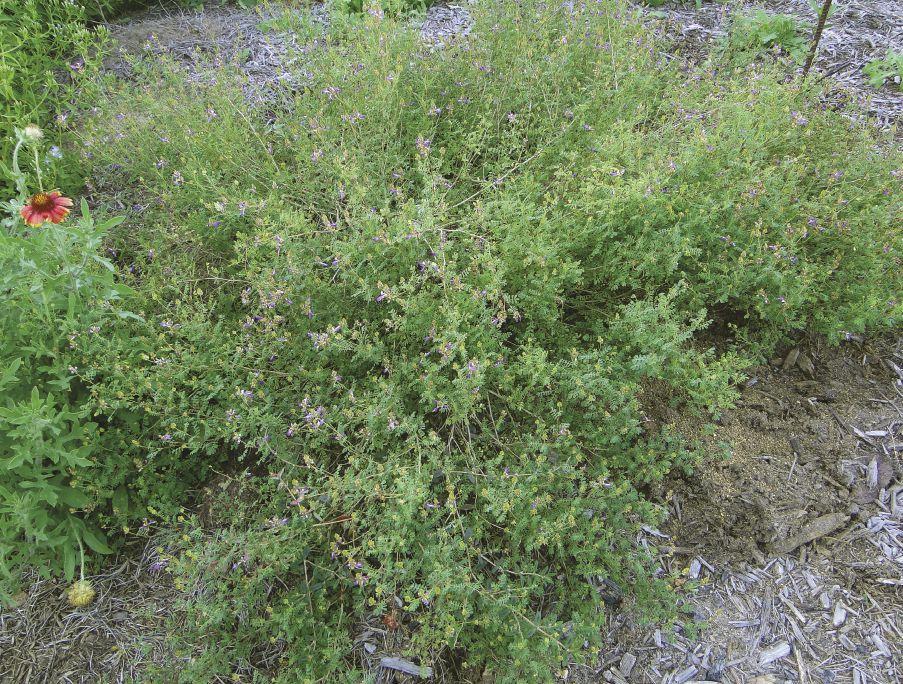
A Black Prairie-Clover helps the author’s garden produce a bumper crop of butterfies. Sept. 29, 2016. Montgomery Co., TX.
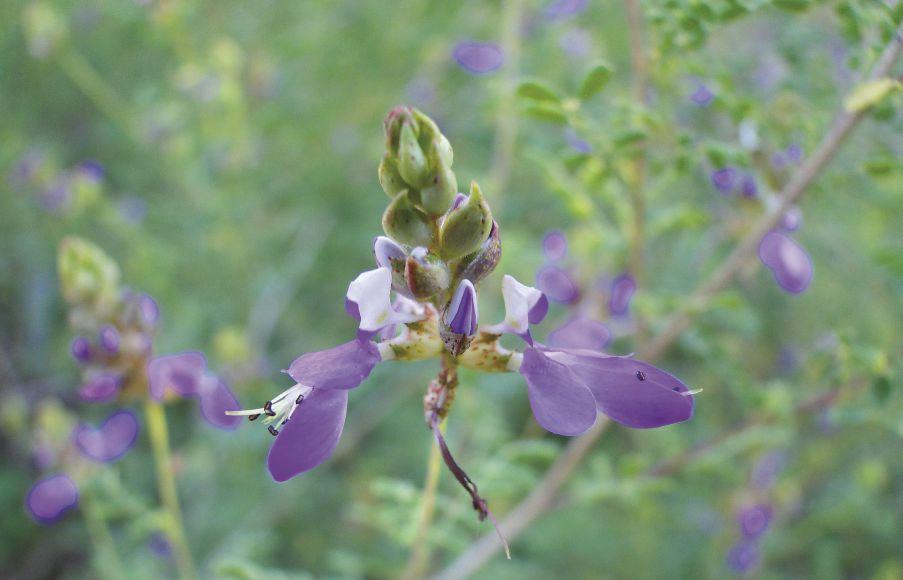
Black Prairie-Clover is a low-growing, mounding plant in the legume family. It is native to the central and western portions of Texas where it grows in dry limestone soils. It is an attractive plant with fern-like grayish foliage and purplish fowers. The plants in my garden were purchased at Mercer Botanic Gardens at an annual spring plant sale. They
are growing well in a raised bed in full sun with no supplemental water.
In mid-October several Ceraunus Blues were seen futtering restlessly among the stems and fowers of a black Prairie-Clover, seemingly never stopping. A search for eggs and early instar caterpillars was fruitless but eventually a plump caterpillar was spotted at
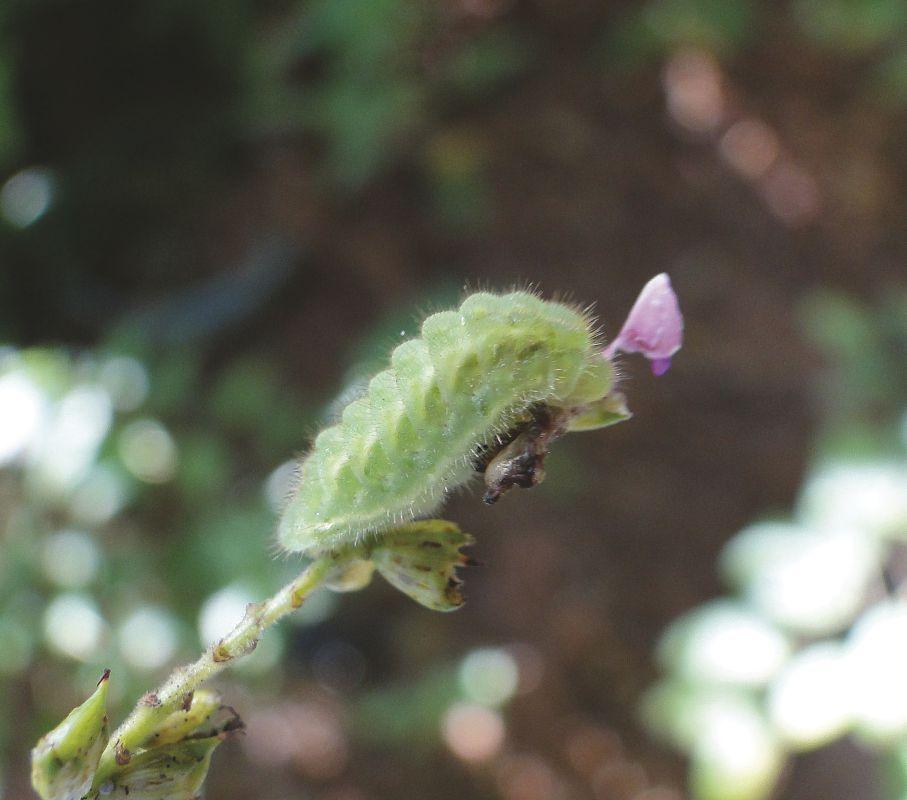
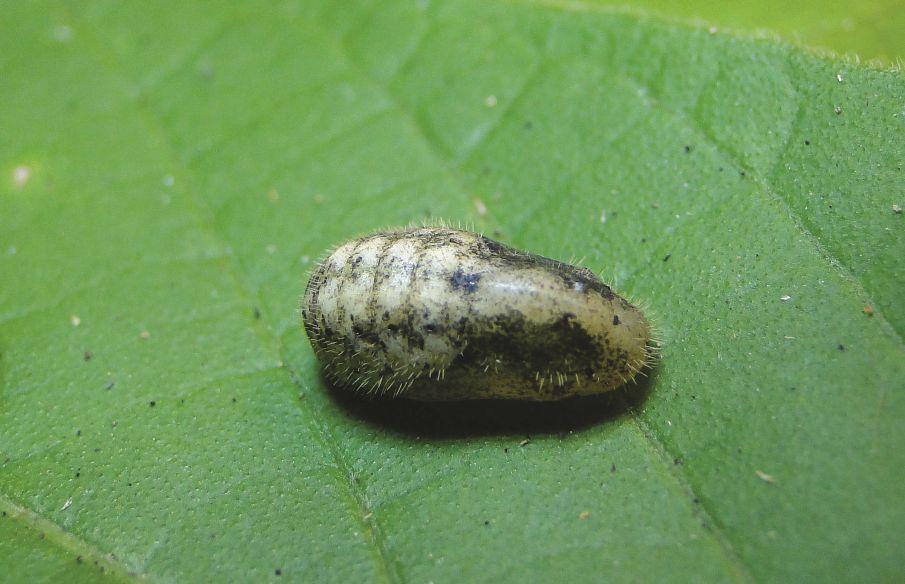
the end of a stem, munching happily on the blooms. The caterpillar and the stem it was on were brought inside and additional clippings were provided over the next few days until the caterpillar stopped feeding and formed a chrysalis. Approximately three months later, on January 21, a butterfy eclosed from the chrysalis.
However, the butterfy was not the Ceraunus blue anticipated, but rather was a
Gray Hairstreak. The butterfy was taken outside for additional photos but few immediately when removed from the jar that had served as its temporary home.
From observation of activity around this plant, it is anticipated that it is serving as a hostplant for the Ceraunus Blues and Southern Dogfaces as well as for Gray Hairstreaks. This butterfy potential makes it a worthy addition to butterfy gardens.
Opposite page
Top: Black Prairie-Clover fowers are attractive. Sept. 29, 2016. Montgomery Co., TX.
Bottom: A caterpillar was found on the Black Prairie-Clover. Oct. 22, 2016.
This page
The caterpillar went on to pupate. Oct. 27, 2016.
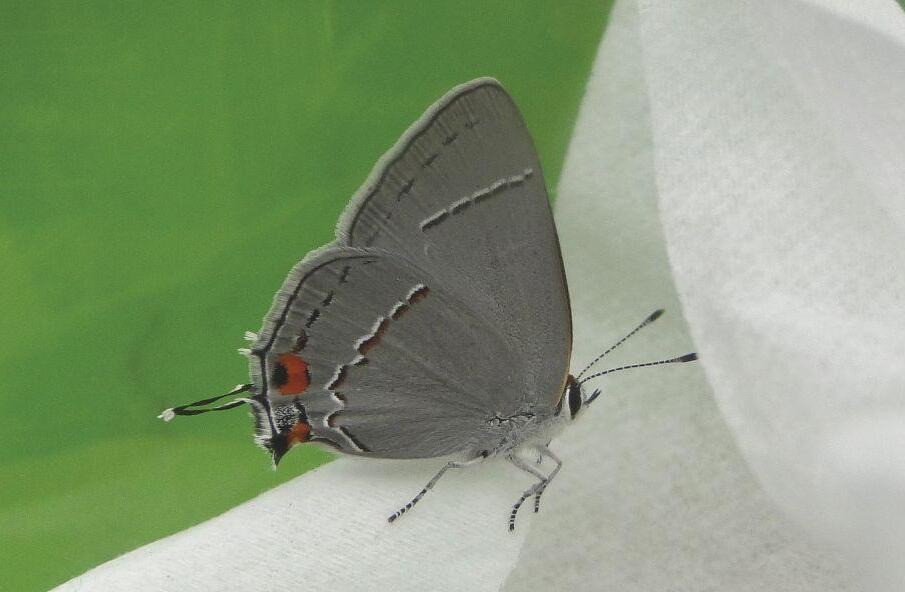
An adult Gray Hairstreak emerged from the chrysalis on Jan. 21, 2017.
Above: A drawing of the approximate range of Gray Hairstreaks. Purple indicates two broods, orange, three or more broods. Cherry spots indicate that strays have occurred there. (drawing modifed from A Swift Guide to Butterfies of North America).
Above: A drawing of the approximate range of Black Prairie-Clover, based upon county occurrence data from the Biota of North America Program. The species is native to Texas and southern New Mexico and has been more widely introduced. This might be a useful plant for your garden if you live within the range shown.
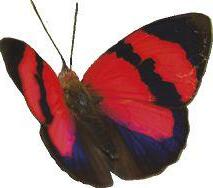
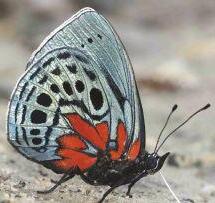


The frst butterfy for the season is always a “Hot Seen” after a long cold winter. A frst of the season butterfy, an Eastern Comma, was reported on February 4 by Linda Romine in the Shawnee State Forest, Scioto Co., OH; four days after the “Polar Vortex” moved out, Randy Harrod saw a Question Mark on February 24 in Nashville, TN; John J. Collins observed a Cabbage White on March 15 in Raritan, NJ; and William D. Flack, on March 24, along the Old Towne Way Woodlands Trails, Worcester Co., MA saw an Eastern Comma, his earliest butterfy sighting ever. Other frst of the year butterfies included a March 30 Cabbage White reported by Allan R. Loudell along Route 40 in Newcastle Co., DE; an Eastern Comma seen on March 31 by Joanne Langabee in Sarpy Co., NE; a Mourning Cloak reported on April 7 by Robert Bell in Tuttle Marsh, Iosco Co., MI; and a Mourning Cloak seen on April 9 by Renee Davis on the Hurleyville Rail Trail, Sullivan Co., NY.
Eastern butterfy sightings of note included a February 4 photo of an American Snout by Allen Belden in Rockwood Park, Chesterfeld Co., VA; A Florida White, photographed by Dan Jones on Feb. 24 in Progresso Lakes, Hidalgo Co., TX; Seven lifer Falcate Orangetips reported on March 9 by John and Nancy Crosby in Montezuma Bluffs WMA near Montezuma, Macon Co., GA; a Henry’s Elfn reported by Kathy Beza on March 16 in John C. Radcliffe Conservation Area, Chesterfeld Co., VA; and a March 24 report of two Question Marks, seven Eastern Commas, and one Mourning Cloak by Rick Borchelt in Patuxent National Research Refuge, Anne
by Michael Reese
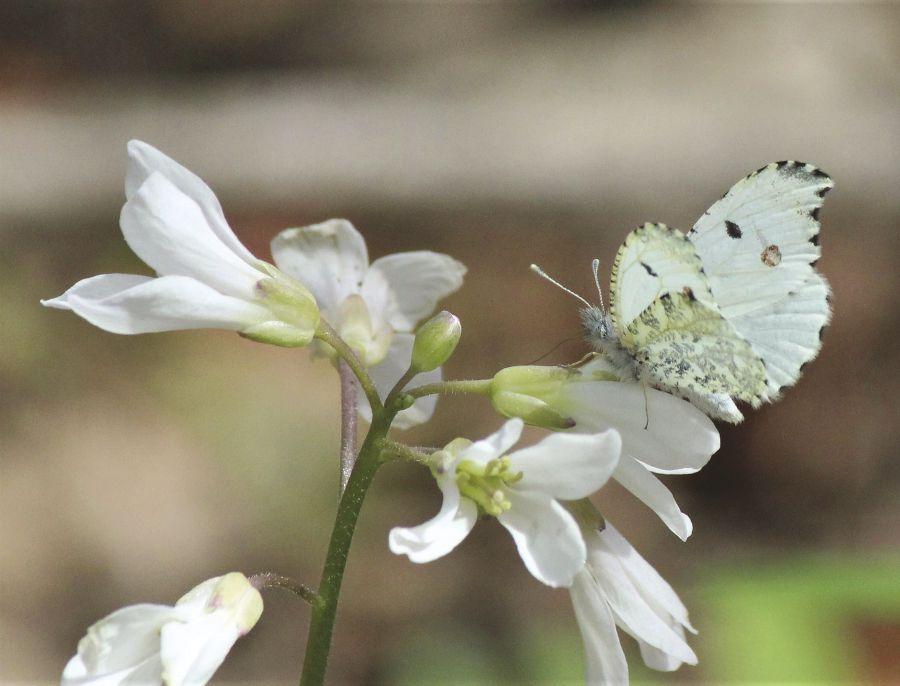
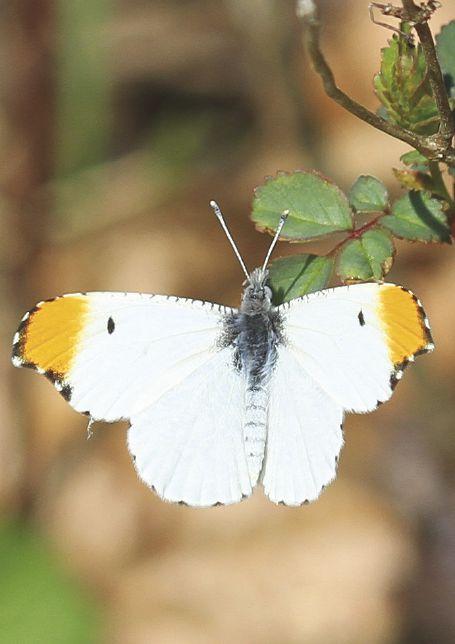
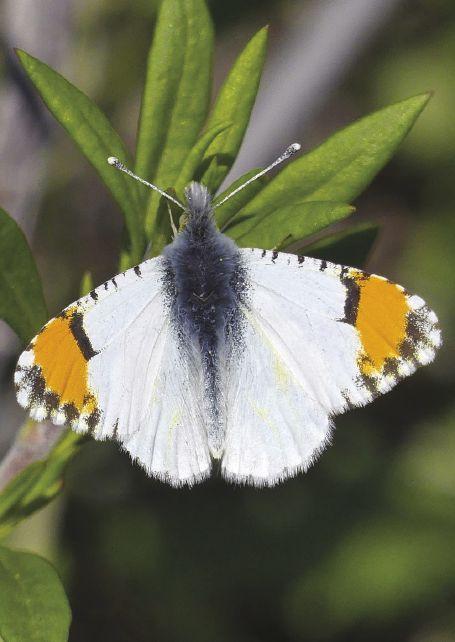
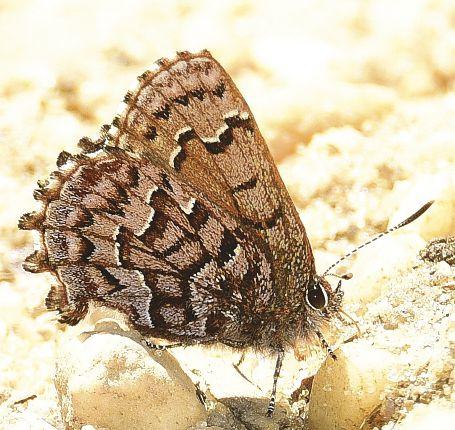
If it’s springtime, there must be an orangetip in here somewhere!
A female Falcate Orangetip takes some nectar from a hole at the base of a toothwort fower. March 9, 2019. Montezuma Bluffs WMA, Macon Co., GA.
Bottom
Left Another Falcate Orangetip, this time a male. March 9, 2019. Riverwinds Scenic Trail, Gloucester Co., NJ.
Right On the other side of the North American continent, a Desert Orangetip few a month earlier. Feb. 6, 2019. Fallbrook, San Diego Co., CA.
Arundel Co., MD. David L. Amadio reported a fresh male Falcate Orangetip on Riverwinds Scenic Trail, Gloucester Co., NJ on April 6; Anna Harris reported two Red Admirals on April 9 in St. George, Pottawatomie Co., KS; Randy Harrod had a lifer Southern Dogface on April 9 in Couchville Cedar Glade State Natural Area, Wilson Co., TN; and Marcus Gray & children saw an unexpected early American Copper on April 17 in their home garden in Huguenot, Orange Co., NY. Other eastern sightings included a Goatweed Leafwing, new to the site, and a Henry’s Elfn photographed by Joanne Langabee on April 21 in Fontenelle Forest, Sarpy Co., NE; three species of elfns (Brown, Hoary and Eastern Pine) and four Hessel’s Hairstreaks reported on April 24 by Rich Cheicante in New Jersey Pinelands National Reserve, Burlington Co., NJ. American Ladies were reported fying on the ocean continuously on April 24 by Andrew Block in Seven Presidents Oceanfront Park, Long Branch, Monmouth Co., NJ. Searching for Ozark Swallowtails in Missouri (see article page ??), Jeffrey Glassberg found 26 Juniper Hairstreaks, most nectaring at Fragrant Sumac) along highway UU in Benton Co., MO. Todd Eiben discovered Mustard Whites, thought to be extirpated in Ohio, on April 27 in Eagle Creek State Nature Preserve, Portage Co., OH; and on April 30 Lisa Quartararo saw her earliest ever Eastern Tiger Swallowtail in Woodbridge, Middlesex Co., NJ.
Western butterfy sightings of note included a February 6 sighting of nine species in Falbrook, San Diego Co., CA by Brett Badeaux which included Desert Orangetip, Sara Orangetip, and Mormon Metalmark; a beautiful Silvery Blue seen on Feb. 8 by Brett Badeaux near San Clemente, San Diego Co., CA; a February 24 sighting by William D. Beck in North Tucson, Pima Co., AZ of a Great Purple Hairstreak observed high in a tree after last weeks snowstorm; and thousands of migrating Painted Ladies on March 3 reported by Bart Jones in Anza-Borrego Desert State Park, San Diego Co., CA. On March 10,
C’mon, it was winter — what could possibly be fying?
What could be better than multi-hued gossamerwings?
Top left
Bordered Patches on the U.S-Mexican border at the National Butterfy Center, Hidalgo Co., TX on Nov. 1, 2018.
Top
Left A very fresh Eastern Pine Elfn. April 24, 2019. Pinelands National Reserve, Burlington Co., NJ.
Top right
Mexican Bluewings are the iconic butterfy of the National Butterfy Center. However, this one was photographed at Progreso, Hidalgo Co., TX on Nov. 1, 2018.
Right This ‘Sweadner’s’ Juniper Hairstreak was just north of the previously known range. Mar. 10, 2019. Shellman Bluff, McIntosh Co., GA.
Middle right
This Soldier was patrolling in Progreso, Hidalgo Co., TX on Nov. 1, 2018 (note the proximity to, and possible interdiction of, the Mexican Bluewing).
Left Another Juniper Hairstreak, this one of the nominate persuasion. April 25, 2019. Hwy. UU, Benton Co., MO.
Middle left
Right Recently described Big Bend Hairstreaks occur in the U.S. only in Big Bend NP. April 2, 2019. Brewster Co., TX.
Chestnut Crescents are rare immigrants to the United States. Very similar Brown Crescents have never made it across the border. McAllen Nature Center, Hidalgo Co., TX. Nov. 7, 2018.
Bottom right
Left A spiffy male Silvery Blue shows off his topside. Feb. 8, 2019. Near San Clemente, San Diego Co., CA.
In the winter, Queens are usually the most common butterfy at the National Butterfy Center. National Butterfy Center, Hidalgo Co., TX. Nov. 24, 2018.
Bottom left
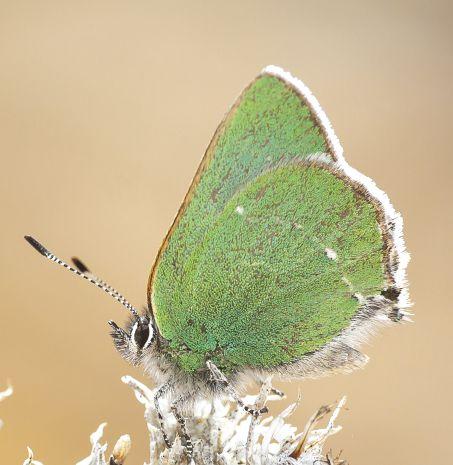
Right Humans less commonly intersect the path of Sheridan’s Hairstreaks and so, when they do, the beautiful green is especially appreciated. April 19, 2019. North Reno, Washoe Co., NV.
Yes Virginia, there is a Florida and, even in the winter, it brings butterfy gifts. This Martial Scrub-Hairstreak provided an uncommon view of its upperside. North of Griffn Rd., Broward Co., FL. Nov. 18, 2018.
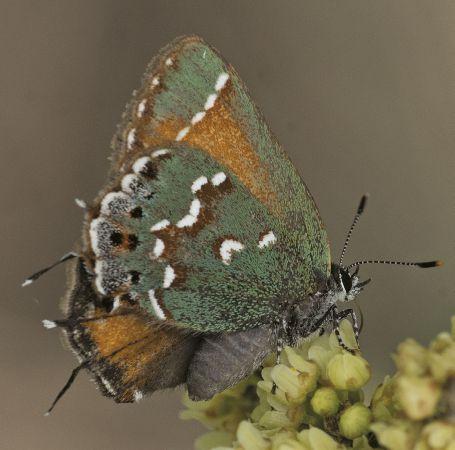
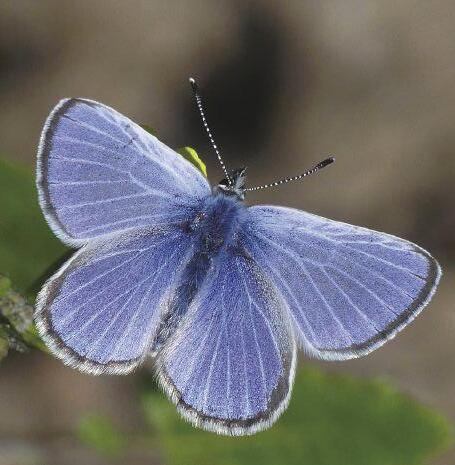
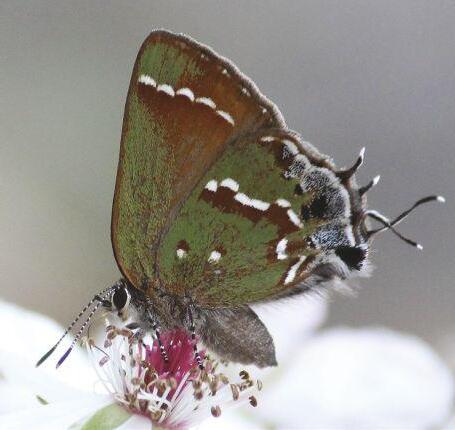
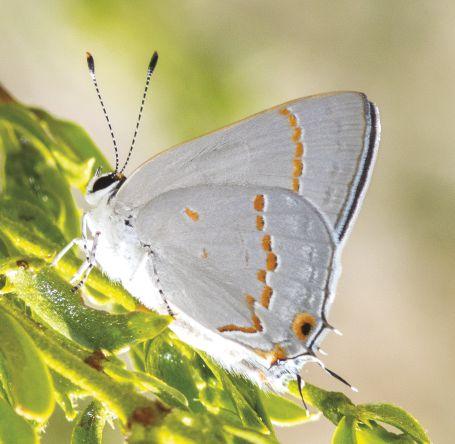
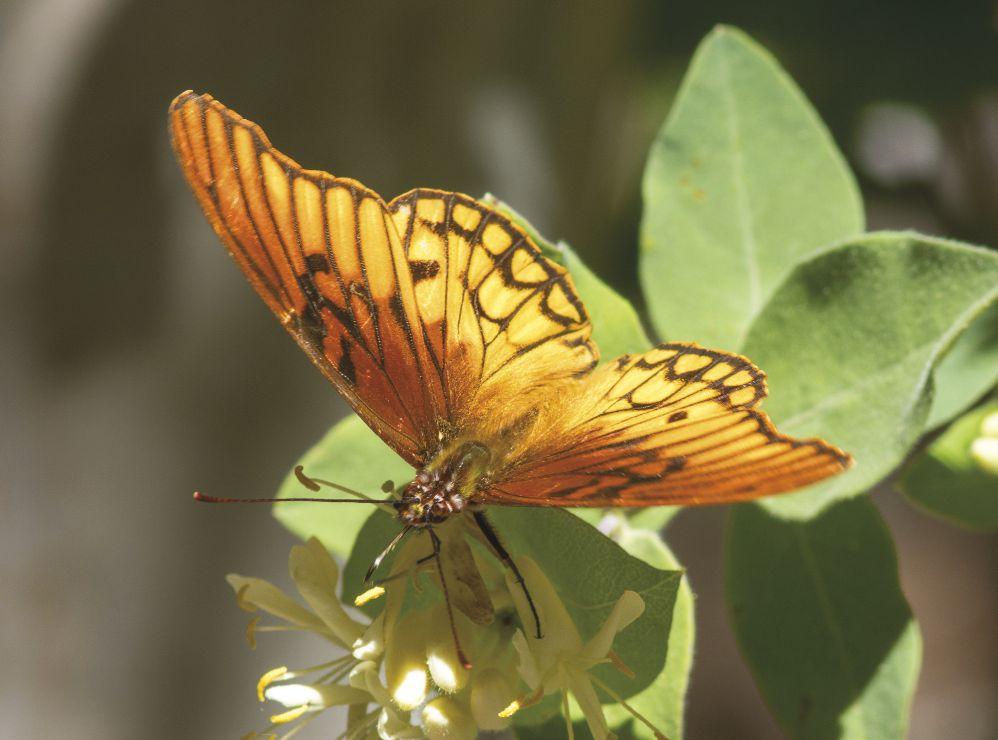
Michael Troyan observed 16 species including Tiny Checkerspot and Arizona PowderedSkipper in Catalina State Park, Pima Co., AZ. On March 22, William Beck saw 20 species, including a Meridian Duskywing. Mark and Holly Salvato observed 13 species on April 1 in Lawrence Wood Picnic Area, Davis Mountains, Jeff Davis Co., TX including Rocky Mountain Duskywing, Morrison’s Skipper, and White-barred Skipper; on April 2, at Big Bend NP, Brewster Co., TX, they saw newly described Big Bend Hairstreaks and Scarce Streaky-Skipper, and on April 4 they saw 29 species at Big Bend NP, Brewster Co., TX including 2 Mexican Silverspots (rare strays), Chisos Banded-Skipper, Scarce Streaky-Skipper, and Python Skipper. Other Western sightings included an April 2 sighting of a Small Checkered-Skipper on Mt. Lemmon, Pima Co., AZ by Larry Fellows (frst seen by Jill Johnson); a Mourning Cloak, the frst butterfy seen in the mountains this year by Venice Kelly, on April 6, two miles west of Pinecliffe, Gilipin Co., CO at 8,200’ elevation; an April 19 submission by Ken Wilson and Ray Bruun of Becker’s White, Sara Orangetip, and Sheridan’s Hairstreak in North Reno, NV; and an April 24 sighting by Steven Glynn in Box Canyon area, Pima Co., AZ of 19 species including Carus Skipper and Python Skipper
Florida butterfy sightings of note included a February 7 report by Ron Smith in Fort De Soto Park, Pinellas Co., FL of ten species including the frst Little Metalmarks of the season. On February 16 Tom Palmer observed 13 species including 18 Carolina Satyrs in Crooked Lake WEA, Polk Co., FL; Amelia Grimm saw nine species including seven Atalas in Long Key Natural Area and Nature Center, Broward Co., FL on February 17; and a March 3 report from Walter Wallenstein along US 27, just north of Griffn Road, west side, Broward Co., FL totaled 12 species, most nectaring on Bull Thistle, including 26 Twin-spot Skippers, 21 Gulf Fritillaries, and 22 Pearl Crescents. On March 8 Linda Cooper
One of two Mexican Silverspots seen in Big Bend NP on the same day. Although these individuals were likely strays, a number of recent records of this species, for example from Colorado, are probably escapees from butterfy zoos, that ridiculously are allowed to ship these into the Unted States. April 4, 2019. Brewster Co., TX.
A beautiful, freshly emerged Delaware Skipper was found at Paleo Hammock, St. Lucie Co., FL on Dec. 2. This is a late date for this species. Maybe something is happening with the climate?
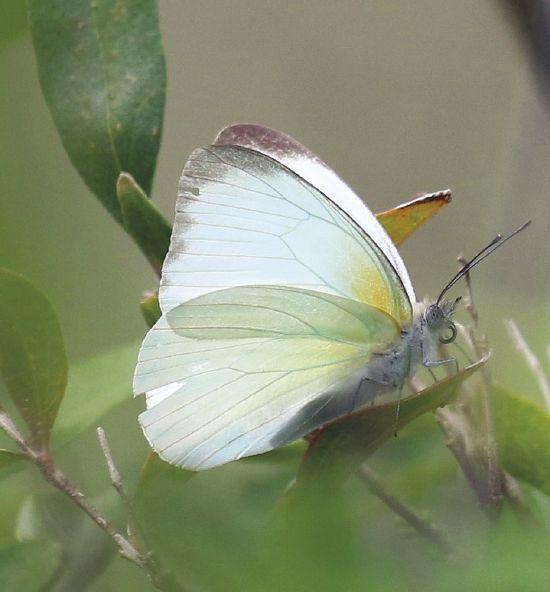
Left Florida Whites are rare to uncommon in the Lower Rio Grande Valley of Texas. Feb. 23, 2019. Progresso Lakes, Hidalgo Co., TX.
Isabella’s Heliconians are rare strays to the United States. This individual was nectaring at the National Butterfy on Jan. 12, 2019, demonstrating once again that any time of the year is a good time to visit the National Butterfy Center.
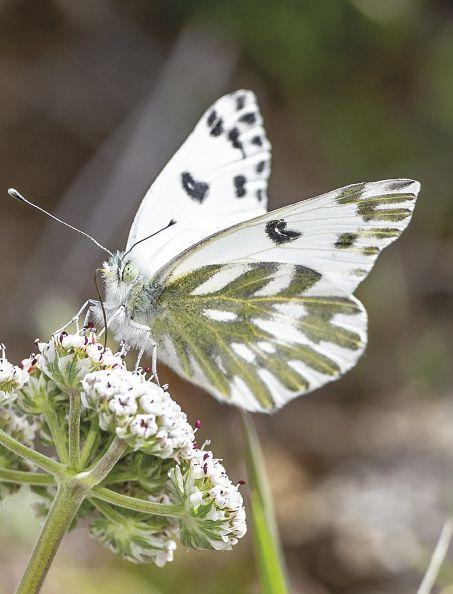
Right When the editor speaks with himself, there’s a general consensus that Becker’s Whites are the most attractive of any of the “checkered” whites. April 19, 2019. Red Hill, North Reno, Washoe Co., NV.
Dan Jones
and Ronda Spink saw 30 species including 13 species of skippers, 45 Palamedes Swallowtails and 32 Zebra Swallowtails in Bull Creek WMA, Osceola Co., FL; on March 9 JoAnna N Clayton reported only her second Fulvous Hairstreak in her yard in St. Petersburg, Pinellas Co., FL; on April 8 Ron Smith had an amazing count of 72 Mangrove Skippers in Fort De Soto Park, Pinellas Co., FL; and on April 27 Edward Perry IV reported 38 species including 12 Arogos Skippers and 131 Dusted Skippers in Bull Creek WMA, Osceola Co., FL.

Whether you see an unusual butterfly, an early or late sighting of a common species, or have a complete list of the species you have seen, we would appreciate hearing from you. Please send your butterfly sightings to sightings@naba.org. Those who record your sightings to the Butterflies I’ve Seen website can just click on “email trip” and send it to the address given above. Your sightings will go into the larger database and will also be available for others to see on the Recent Sightings web page.
Opposite page
Top
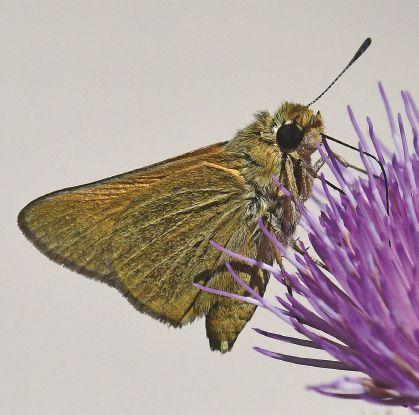
A few probable Scarce Streaky-Skippers were seen in Big Bend NP this spring. Unfortunately, it is not currently known how to separate Scarce and Common Streaky-Skippers in the feld. April 2, 2019. Brewster Co., TX.
Bottom left
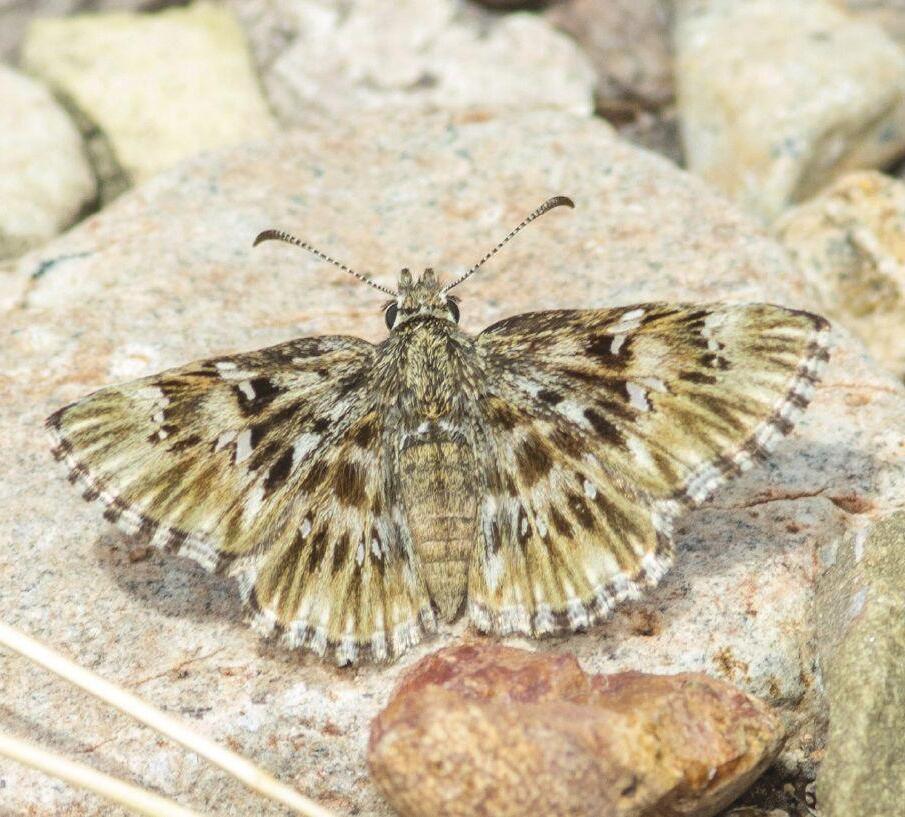
An amazing 72 Mangrove Skippers were seen at Fort de Soto Park, Pinellas Co., FL on April 8.
Bottom right
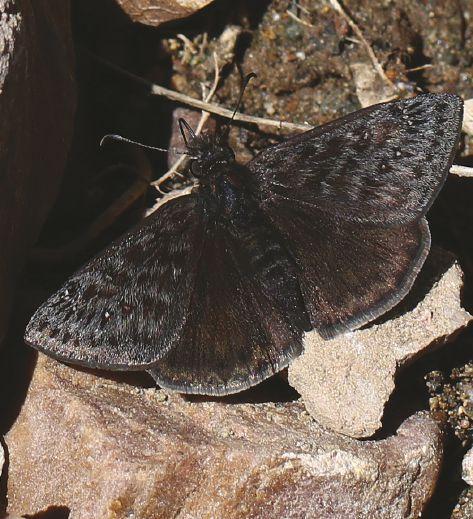
This page, top Arogos Skippers are always sights for sore eyes. This one was at Bull Creek WMA, Osceola Co., FL on April 27, 2019.
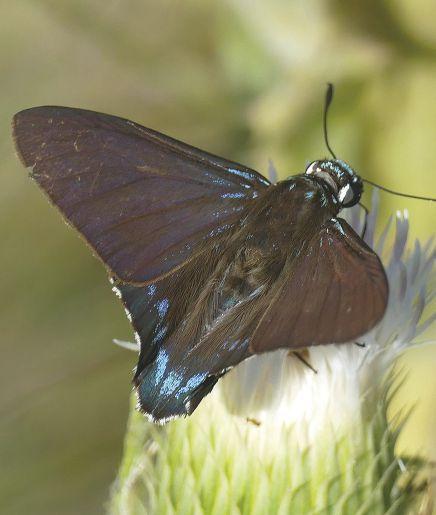
A male Meridian Duskywing. March 22, 2019. Peppersauce Canyon, Pinal Co., AZ. Ed Perry IV
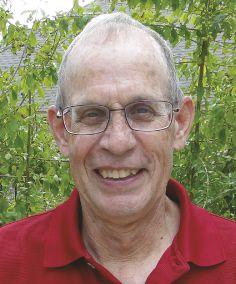
Don Dubois’ formal training is in the area of chemistry, with a Ph.D. from the University of Kansas. He retired in 2002 after working 32 years as a chemical researcher and relocated to the Houston, Texas area. Since then Don has busied himself converting a large barren backyard into a butterfy friendly habitat. This gardening effort has been rewarded with visits by over 80 species of butterfies, several of which were county records. His interest in butterfies and insects started at an early age and involved the usual insect collection. With the availability of good quality, reasonably priced digital cameras, collecting was abandoned in favor of photography. Don’s interest in native plants has been nurtured by volunteering with native plant specialists at Mercer Arboretum and Botanic Gardens.

Jeffrey Glassberg is a director and president of NABA. Jeff has followed butterfies since he was 5 years old living on Long Island, New York. He detoured to take an undergraduate degree in civil engineering and a Ph.D. in molecular genetics, then worked at Stanford University and Rockefeller University. In 1981 he invented DNA fngerprinting and co-founded a biotechnology company (Lifecodes) that commercialized this technique. Jeff is a past-president of Xerces Society, the author of the ‘Butterfies through Binoculars’ feld guide series, the editor of the ‘through Binoculars’ series (including Caterpillars, Dragonfies and Wildfowers) and
the author of A Swift Guide to the Butterfies of Mexico and Central America and of A Swift Guide to Butterfies of North America. He graduated from the Columbia University School of Law in 1993 and is a member of the New York bar. He is an adjunct professor of Ecology and Evolutionary Biology at Rice University.
Mike Reese updates the NABA Recent Sightings web pages. He enjoys photographing wild fowers, birds, dragonfies, and, of course, butterfies. He is an educator in Wautoma, Wisconsin and has been recording and documenting the butterfies that are found there for over 15 years. He also maintains a website on the Butterfies of Wisconsin.

Marianna Wright is Executive Director of the National Butterfy Center, in Mission, Texas, where she has the distinct pleasure of serving members and visitors who wish to explore and learn more about this pilot project of the North American Butterfy Association. A graduate of McAllen High School, in McAllen, Texas and of Columbia University in New York City, Marianna grew up bouncing between the city, country and coast, where her exposure to wildlife engendered a deep affection for the diverse and remarkable creatures of the Rio Grande Valley. Before joining the NBC, she was Executive Director of the Foundation for the Mission Regional Hospital. Now, she is privileged to spend her days “chasing butterfies” and sharing the NABA’s mission with stakeholders, school children and prospective supporters, in order to increase enjoyment of wild butterfies and awareness of issues related to their survival.

I am always so happy to renew my membership! Being on this butterfy kick and being a member of NABA is very therapeutic. Just a couple of days ago, when I went out to work in my yard, a butterfy few down and startled me. It was one that I’d never seen before, but had been wanting to see someday — a Mourning Cloak. Luckily, it was still there when I returned with my camera. This was so exciting for me. It really made my day! Thanks for all you do and for your great magazines!
Beth Wiechman, Sedgwick, KS
This is in reference to the editorial that appeared on page 2 of the Spring 2019 issue of American Butterfies (Vol. 27, No. 1), entitled, “Balancing the U. S. Constitution on a Butterfy’s Back.”
Since the judicial approach of intervention has been found wanting, I suggest you consider preparing a letter that members can download and sign and send to their Congressional representatives to seek assistance through the legislative process based on the letter referenced above. In this regard, having letters with your prepared text addressed, “Dear Representative _____,” and another addressed, “Dear Senator ___.” The members could fll in the name of their member of Congress to sign then send them by mail or email them. Additionally, if you have it downloadable on your website were it could be copied and pasted or attached as a pdf fle, this would facilitate this approach.
Paul Knapp, Palm Coast, FL You speak, we listen: A suggested letter is now available at the NABA home page, www.naba.org [Ed.].
On pg. 32, spring 2019, you misspelled the artist’s name. Its Salvador, not Salvatore. And on pg. 26, is this some species that reverses time? I appreciate what you do very much! Dell Erwin, Charlottesville, VA
We appreciate that you have noticed these details! As you know, Dali was a Spanish surrealist. If he had been an Italian surrealist, he likely would have been Salvatore. And, always wanting to be partially Italian myself, this was a natural surreal transition to make. On page 26, the three photographs are presented in reverse chronological order as a bow to Dali’s “Melting Watch” painting and because this arrangement was thought to be more visually interesting, as it resembles a face, with the two chrysalises as eyes and the caterpillar as a mouth (note that, as this is a Bordered Patch, the left eye is patched.) [Ed.].
Five month old Jaidan Malone is engrossed in the Spring 2019 “You Are What You Eat feature” of American Butterfies. Kathy and Jasmine Malone, Columbia, TN