
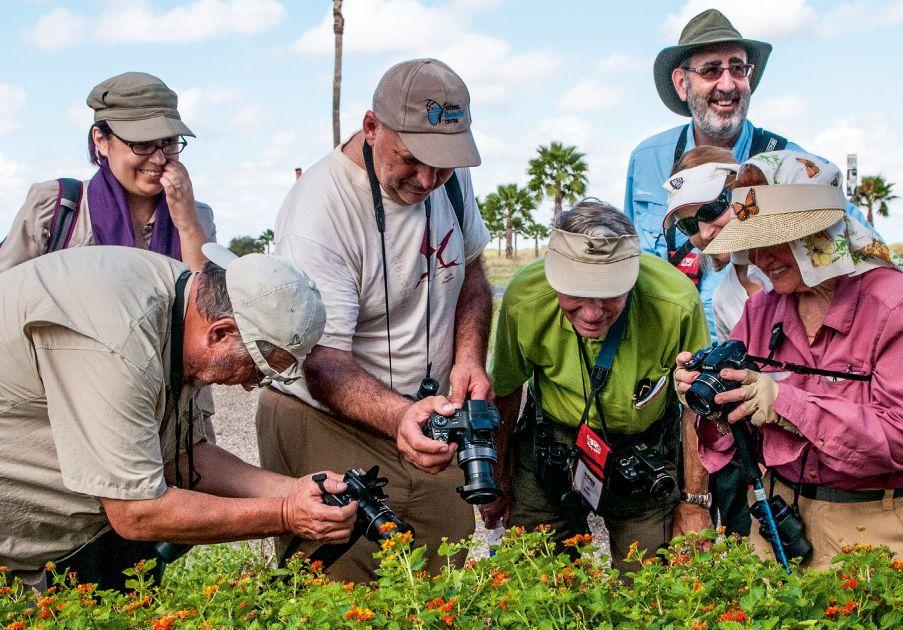
For years — many, many years — NABA has been trying to get the state of Texas to place a sign on the major east-west highway in the Lower Rio Grande Valley — U.S. 2, showing visitors and residents alike where to exit the highway to travel to the National Butterfy Center. We are really excited that, as of last fall, the sign is fnally up! We must be for real!
NABA is launching it’s frst membership drive. We’re asking NABA members to help sign up other butterfy lovers to advance the cause of butterfy conservation. The NABA member who brings in the most new members (family membership counts as two new members; free trial memberships don’t count) will be named NABA’s 2020 Giant-Skipper! The winner will have her or his photo in American Butterfies (unless not desired) and will win a beautiful and practical NABA tote bag as well as a NABA-logo bucket hat. To count, when the new member joins NABA, either online or using a paper application, the new member must include in the comments section “I joined because of [your name].” The cut-off date for this contest is July 31, 2020. Start your engines and drive!
NABA is offering free trial memberships to people who have not previously been NABA members, if they help NABA monitor butterfies by entering data into the Recent Sightings page and/or participate in the NABA Butterfy Count program. The free, trial membership includes access to digital versions of NABA publications as well as access to other NABA programs. So, invite your friends, family and neighbors to participate in Recent Sightings and/or the Counts, helping to monitor and conserve butterfies throughout North America — they will be rewarded with a free, trial membership.
Butterfy Gardening: The North American Butterfy Association Guide is, of course, the best guide to butterfy gardening. It is authored by Jane Hurwitz, editor of NABA’s Butterfy Gardener and published by Princeton University Press. If you don’t already have a copy, get one — your garden will thank you! If you already have a copy, why not get another to give as a gift?
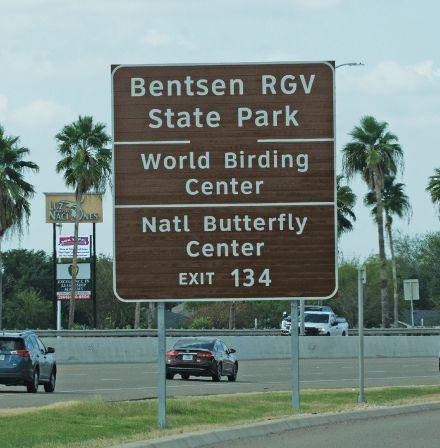
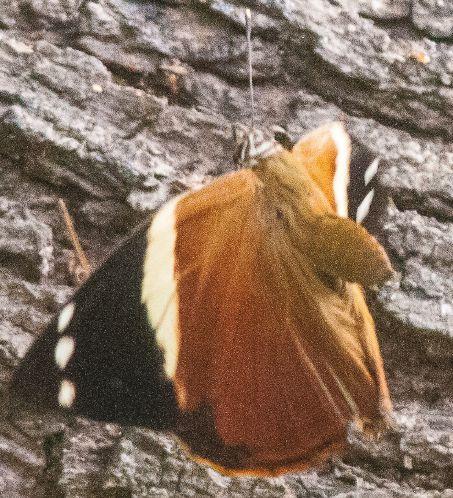
Mission, Hidalgo Co., Texas. Nov. 6, 2019.
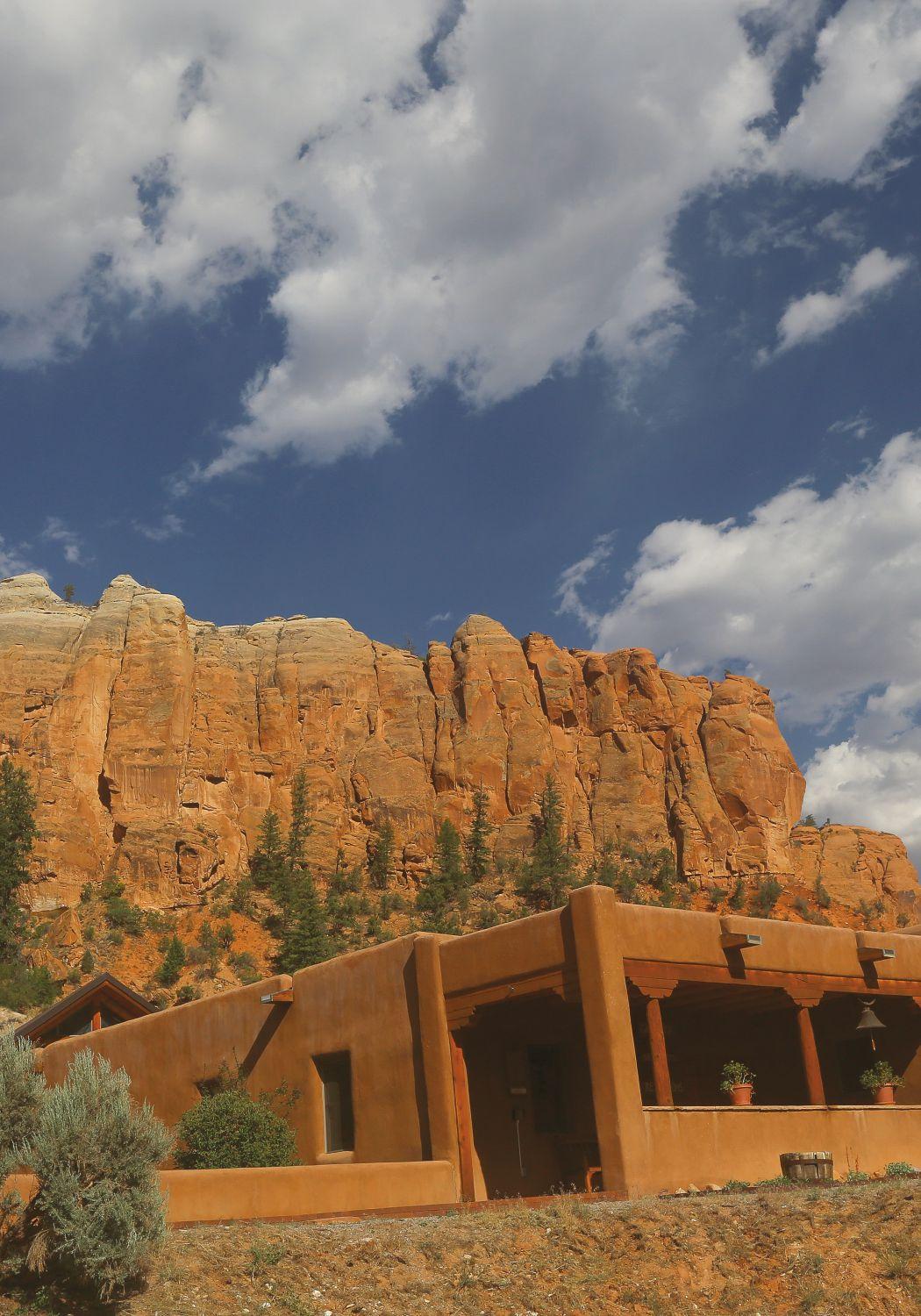
The 2020 NABA Members Meeting will be in Santa Fe, New Mexico, Aug. 6-9. The Santa Fe area is truly beautiful with great natural and cultural diversity. It also has many great butterfies. To register, go to www. naba.org and click on “Santa Fe Members Meeting”. See you there!
We’d like to ask those NABA members who have planned estates, to consider including NABA and the National Butterfy Center in their plans. This will allow you to continue to help butterfies and conservation. Thanks for your consideration!
Those of you who generously contribute donations to NABA and work at a large corporation may be able to double your contribution. Many corporations have matching gift programs. Check with your human resource or public relations dept.
Continued on inside back cover
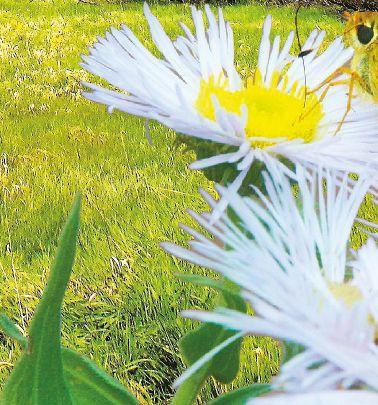
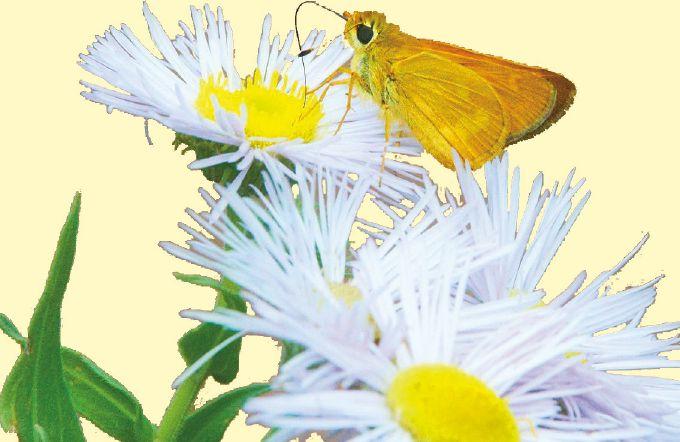
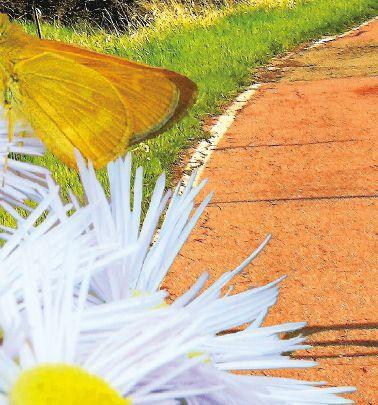
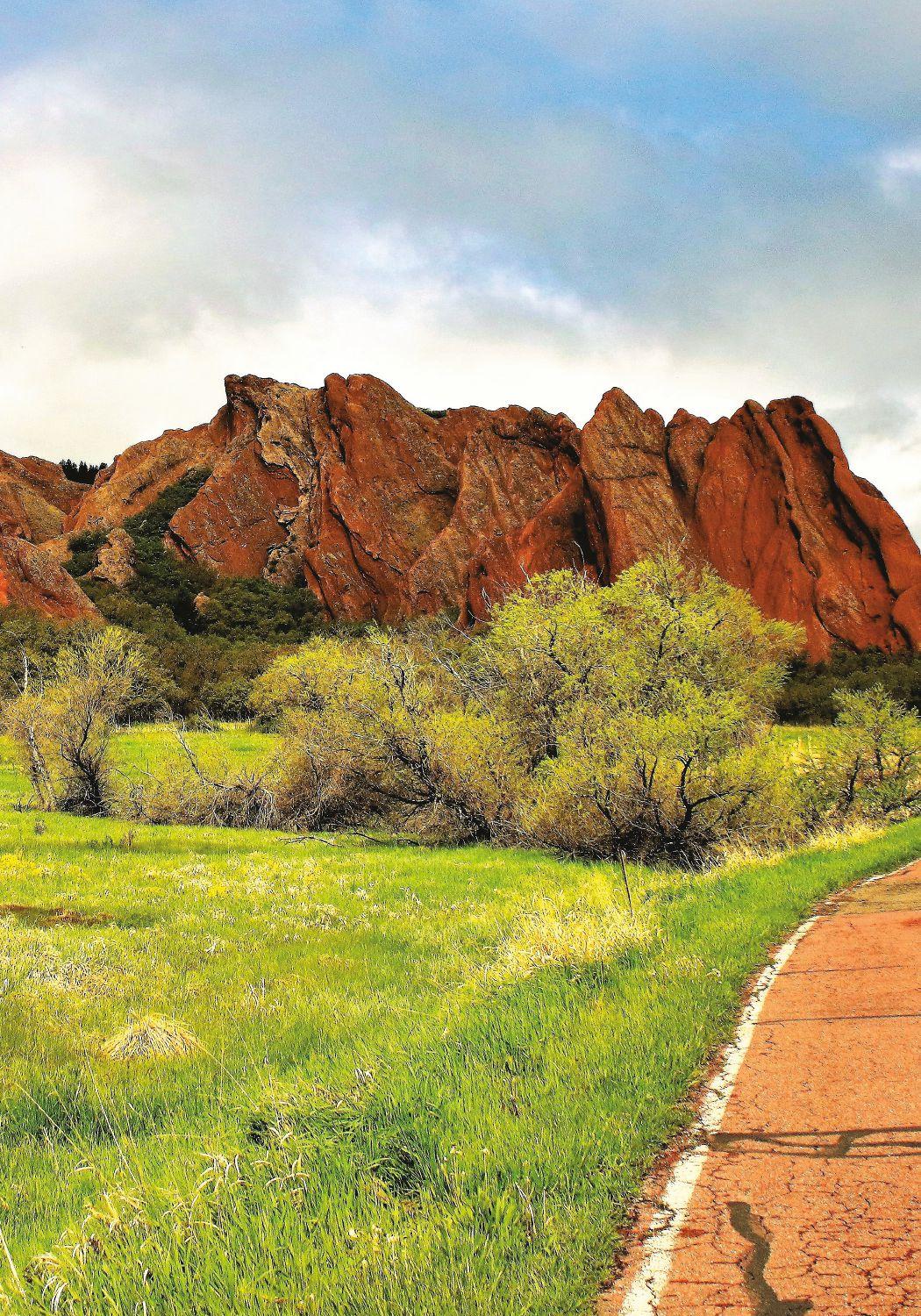
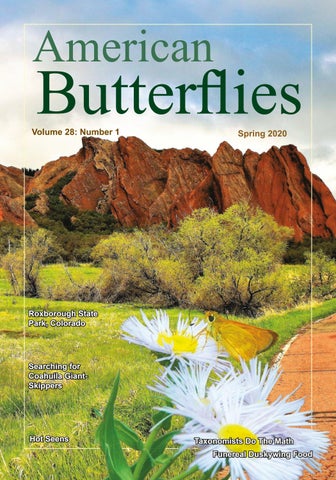
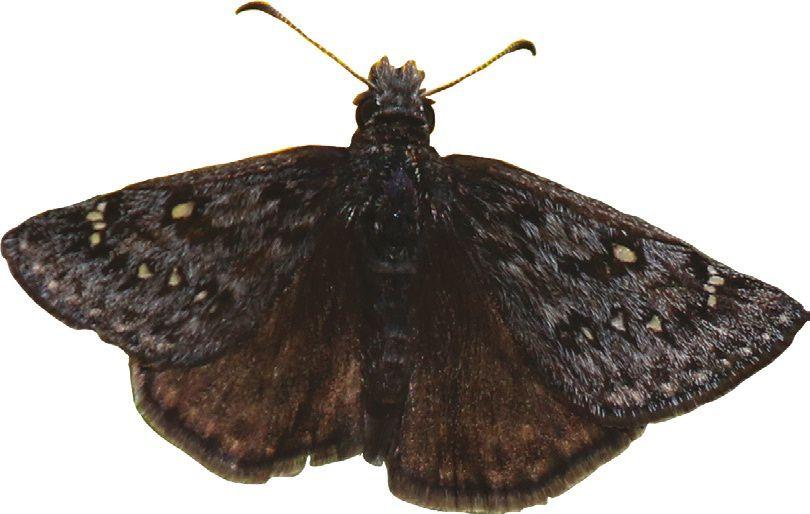
Front cover landscape photo by Jan Nagalski was taken on May 13, 2018. Inset photo of a Woodland Skipper on aster-like fowers was taken on Aug. 4, 2011 by Ron Birrell. Both photos were taken in Roxborough State Park, Douglas County, Colorado. See article on page 4.
The North American Butterfy Association, Inc. (NABA), a non-proft organization, was formed to promote public enjoyment and conservation of butterfies. Membership in NABA is open to all those who share our purpose.
President: Jeffrey Glassberg Vice-president: James Springer Secrty./Treasurer
Ann James Directors: Jeffrey Glassberg
Fred Heath
Yvonne Homeyer
Ann James
Dennis Olle
Robert Robbins
James Springer
Patricia Sutton Scientifc Advisory Board
Nat Holland
Naomi Pierce
Robert Robbins
Ron Rutowski
John Shuey
Ernest Williams
Volume 28: Number 1
Inside Front Cover NABA News and Notes
Spring 2020
2 Be a Good Girl or Boy and Go Play Outside by Jeffrey Glassberg
4 Defnitive Destination: Roxborough State Park, Colorado by S. Mark Nelson and Tessa C. Nelson
16 My Big Life: Part 5, Searching for Coahuila Giant-Skippers by Jeffrey Glassberg
26 You Are What You Eat 27 Funereal Duskywing on Poisonbean in Texas by Don Dubois
32 Taxonomists Just Wanna Have Fun: An Eighty-eight by any other name by Harry Zirlin
40 Hot Seens by Mike Reese
48 Contributors Inside Back Cover Readers Write
American Butterfies (ISSN 1087-450X) is published quarterly by the North American Butterfy Association, Inc. (NABA), 4 Delaware Rd., Morristown, NJ 07960; tel. 973285-0907; fax 973-285-0936; web site, www.naba.org. Copyright © 2020 by North American Butterfy Association, Inc. All rights reserved. The statements of contributors do not necessarily represent the views or beliefs of NABA and NABA does not warrant or endorse products or services of advertisers. Editor, Jeffrey Glassberg
Editorial Assistance, Matthew Scott and Sharon Wander Please send address changes (allow 6-8 weeks for correction) to: NABA, 4 Delaware Rd., Morristown, NJ 07960; or email to naba@naba.org
Those of you who regularly read this magazine may have noticed that during the past few years I’ve been traveling around the United States targeting the relatively small number of butterfy species that I haven’t yet photographed (or, in most cases, even seen).
Since I was fve years old, I have searched for butterfies, because I love to be in native felds flled with fowers and dancing with butterfies. And then, starting in the 1990s, I began to travel more widely, because I was working on creating butterfy feld guides, or updates to feld guides, and needed photographs of as many butterfy species as possible. Working on the Butterfies through Binoculars guides, and then A Swift Guide to Butterfies of North America, took me to almost every state in the United States and to hundreds of beautiful natural areas. Eventually, following a 2016 trip to Alaska, I realized that I had seen almost all the butterfy species that are resident in the United States.
I urge all of you to do something similar. Not to compete or be an obsessive lister, but rather use the motivation of seeing as many butterfy species as you can to spur you into spending more time outdoors and visiting ever more beautiful natural areas.
Obviously, not everyone has the resources, including time, to travel all over the United States searching for butterfies. But most people can, if they so desire, take the same approach to the butterfies of the state in which they live (if you happen to live in Texas, perhaps it’s a little more diffcult) and almost everyone should be able to travel around the county in which they live to see all of the
butterfy species found in that county. If you focus on your county butterfies, the odds are that you will add new butterfy species to your county’s butterfy list! And most importantly, you’ll get to explore all the nooks and crannies, the natural areas and the not-sonatural areas, of the region in which you live.
The advantages of the get-out-into-thefeld-as-often-as-possible approach, are that your efforts may help us learn about and conserve butterfies (be sure to enter your sightings into one of NABA’s monitoring databases), you’ll have tons of fun, you’ll learn not only about butterfies, but also about all of nature in your area — especially about native plants that are important for butterfies — and you’ll have a healthy lifestyle without having to pay for a gym membership and interacting with machines. I’m pretty sure that the continued low-stress exercise that butterfying allows at any age, and the release from the stress of everything else happening in the world that focusing intently on butterfies provides, will increase your lifespan. Plus, as a little-known butterfying bonus, there’s a direct correlation between time spent in the feld and the degree of satisfaction in one’s sex life (unless, like me, you’re a widow or widower.)
So get out there and have a Big Life. Look at it as your protest against the continued environmental degradation of the United States, documenting the beauty and wonder of what was once

Please photocopy this membership application form and pass it along to friends and acquaintances who might be interested in NABA
Yes! I want to join NABA, the North American Butterfy Association, and receive American Butterfies and The Butterfy Gardener and/or contribute to building the premier butterfy garden in the world, the National Butterfy Center. The Center, located on approximately 100 acres of land fronting the Rio Grande River in Mission, Texas uses native trees, shrubs and wildfowers to create a spectacular natural butterfy garden that importantly benefts butterfies, an endangered ecosystem and the people of the Rio Grande Valley.
Name:
Address:
Email (only used for NABA business):______________________ Tel.:______________________
Special Interests (circle): Listing, Gardening, Observation, Photography, Conservation, Other
For a $35 donation, one receives NABA publications as either digital or print. All higher levels of donations receive both digital and print versions. Outside the U.S., only digital is available, at any donation level.
Tax-deductible dues (donation) enclosed (circle): Regular $35 (must choose either digital or print — circle one), Family $45. Special sponsorship levels: Copper $55; Skipper $100; Admiral $250; Monarch $1000. Institution/Library subscription to all annual publications $60. Special tax-deductible contributions to NABA (please circle): $125, $200, $1000, $5000. Mail checks (in U.S. dollars) to NABA, 4 Delaware Rd., Morristown, NJ 07960.
American Butterfies welcomes the unsolicited submission of articles to: Editor, American Butterfies, NABA, 4 Delaware Rd., Morristown, NJ 07960. We will reply to your submission only if accepted and we will be unable to return any unsolicited articles, photographs, artwork, or other material, so please do not send materials that you would want returned. For the type of articles, including length and style, that we publish, refer to issues of American Butterfies
Occasionally, members send membership dues twice. Our policy in such cases, unless instructed differently, is to extend membership for an additional year.
American Butterfies welcomes advertising. Rates are the same for all advertisers, including NABA members, offcers and directors. For more information, please write us at: American Butterfies, 4 Delaware Road, Morristown, NJ 07960, or telephone, 973-285-0907, or fax 973-285-0936 for current rates and closing dates.
If you have questions about missing magazines, membership expiration date, change of address, etc., please write to: NABA, 4 Delaware Rd., Morristown, NJ 07960 or email to naba@naba.org.
by S. Mark Nelson and Tessa C. Nelson
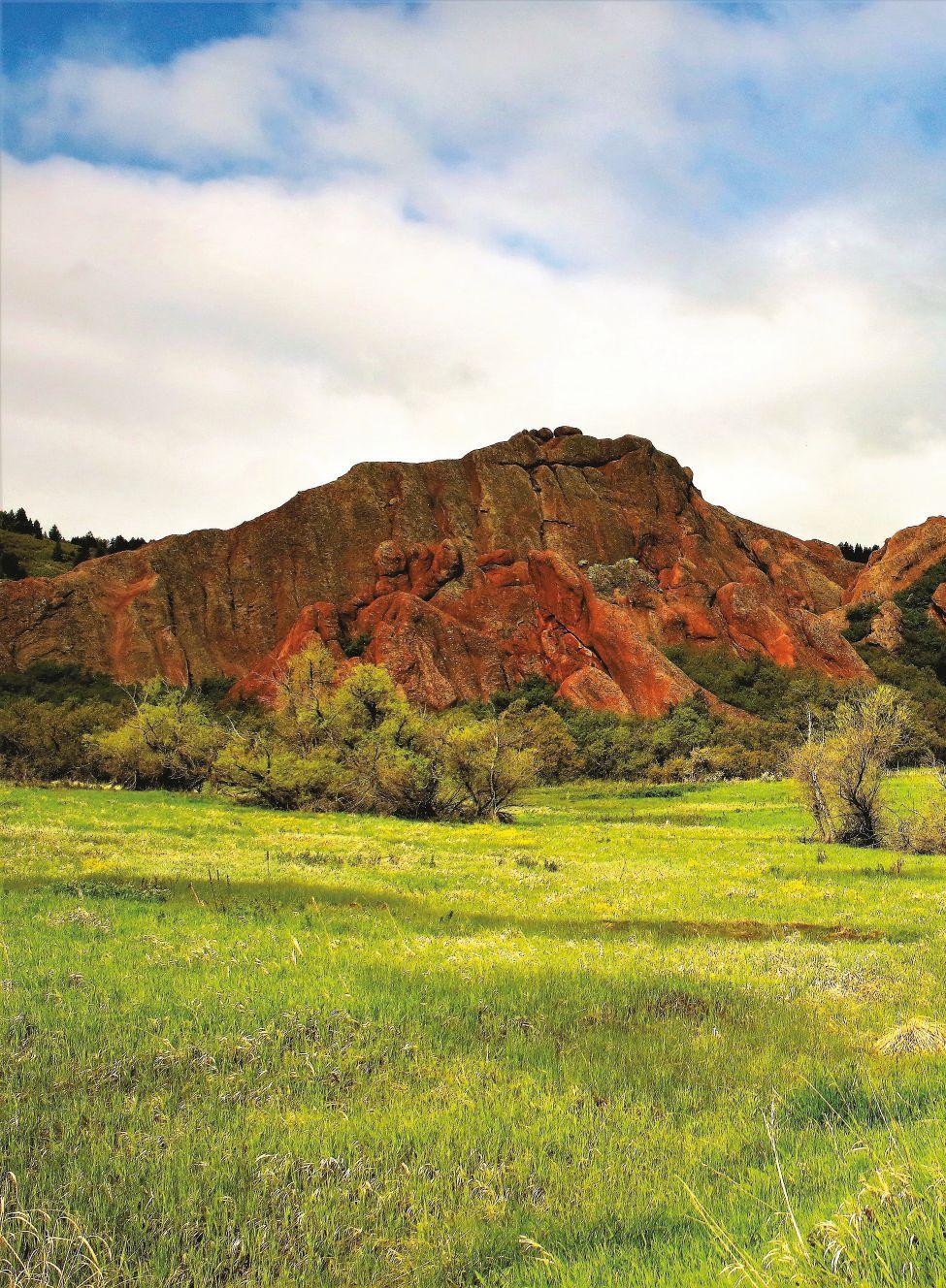
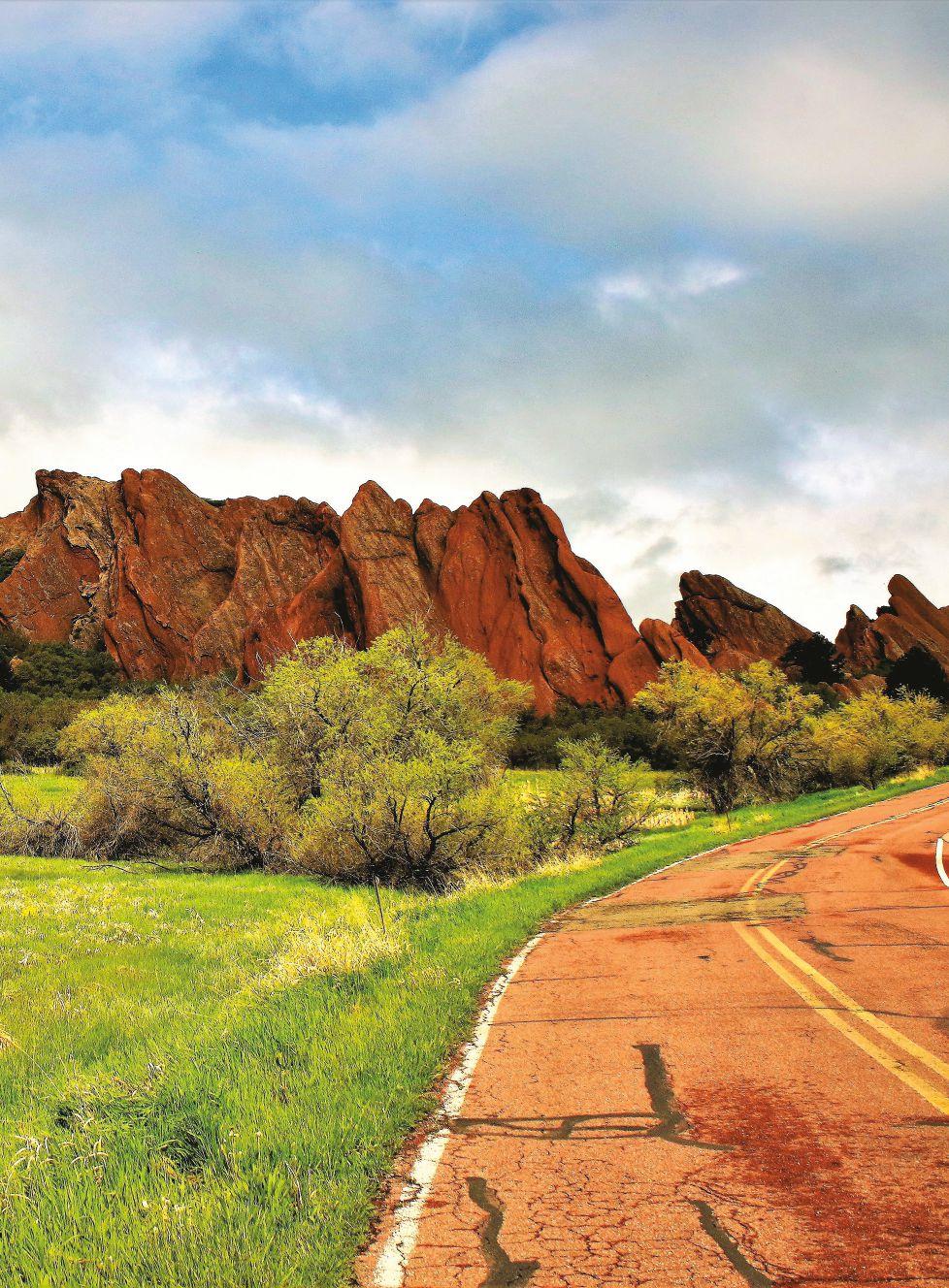
Main photo: A view of Roxborough State Park near the Visitors Center.
Inset: A Rocky Mountain Duskywing. A Both photos May 14, 2018.
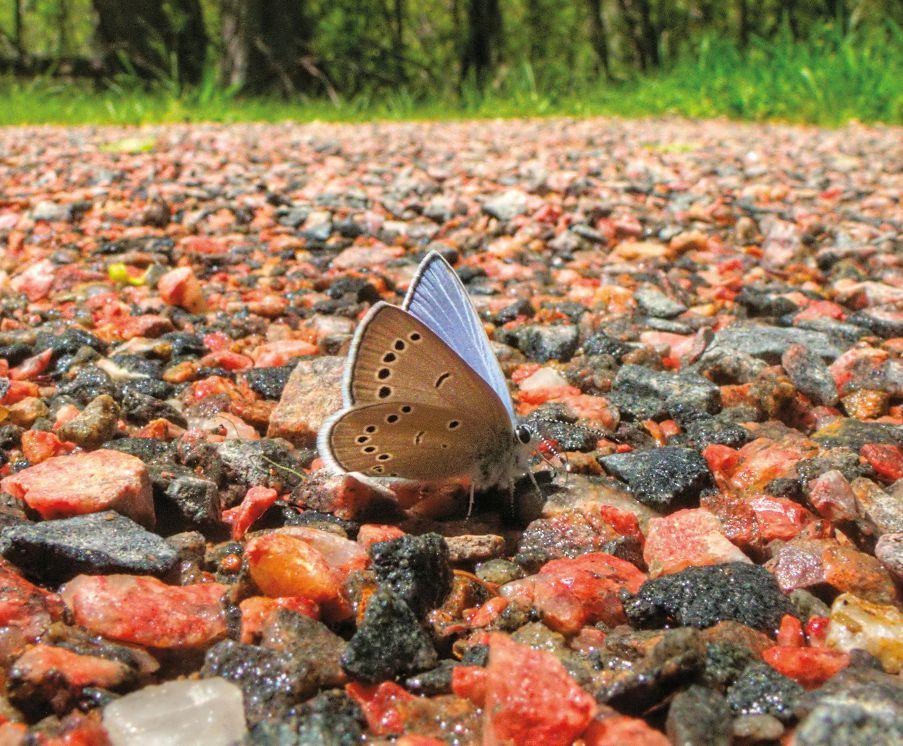
Top: A male Silvery Blue thinks that it’s camoufaged among the gray and orange rocks. May 24, 2017.
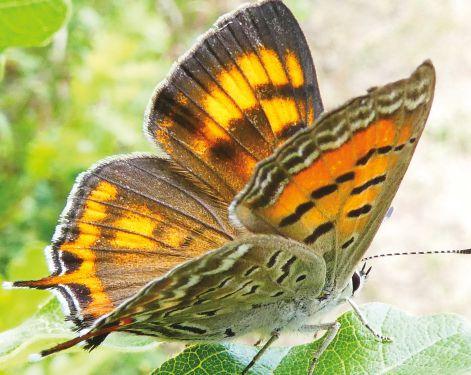
Bottom left: Tailed Coppers can be abundant. This female is radiant. Aug. 2, 2019.
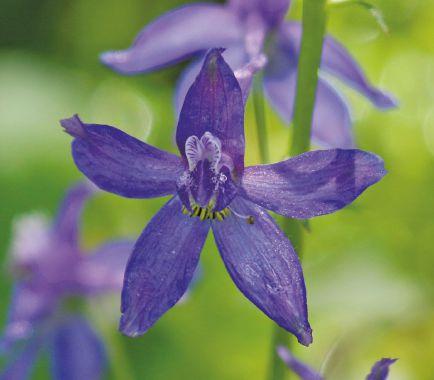
Bottom right: Don’t neglect the fowers, such as this Twolobe Larkspur. May 14, 2018.
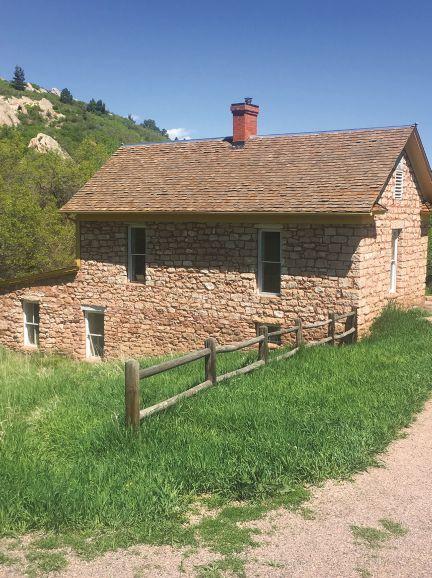
May 17, 2018.
is in the foothills of Colorado, just south of the city of Denver. Because of its location in the transition zone from plains to mountains, the park contains many biotypes within a relatively small area. The park is also well-endowed with eye-catching geological formations, with the Fountain Formation, the Lyons Formation and the Dakota Sandstone hogback tilted upwards and within close proximity of each other. Between these sandstone formations are narrow valleys that vary in moisture concentrations.
The combination of unique geology and ecosystem richness led to Roxborough being established as a state park in 1975 and to recognition as a National Natural Landmark in 1980. The abundance of habitats has resulted in high butterfy richness, with 101 species documented from surveys conducted in the late 1980’s and early 1990’s and again in 2018 and 2019.
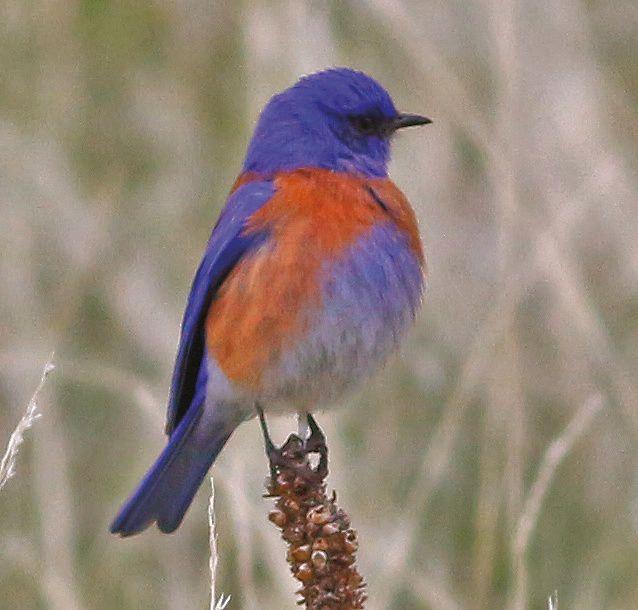
More than 150 species of birds can be seen at Roxborough State Park, including blue and orange Western Bluebirds. April 30, 2014.
The attractiveness of Roxborough has long drawn human attention. The park was frst inhabited by hunter gatherers around 6,000-3,000 BC. Later on, park benefciaries included Native American tribes such as the Apache, Ute, Comanche, Arapaho, and Cheyenne.
In 1889 Henry Persse acquired the property and frst named the area Roxborough, possibly a reference to the Persse family’s ancestral Irish home. Henry planned to develop the area as a resort, but only his stone house remains as a solid remnant of his past dreams.
Much of the Roxborough consists of Gambel Oaks and currants. Drier areas of grassland occur east of the Lyons geologic formation and extend to the Dakota hogback. Considerably wetter areas are found between the Lyons and west to the red rocks of the Fountain formation. This mesic area includes wet meadow and cottonwood/willow habitat. The topographically variable Lyons formation ridge in the center of the lower part of the park contains Ponderosa Pine, Gambel Oak, and Alderleaf Mountain Mahogany. Common

Above: Wild Bergamot is an attractive nectar source for small butterfies, such as grass-skippers, and for large butterfies, such as greater fritillaries. April 30, 2014.
Right: Aphrodite Fritillaries are very common at Roxborough. They are easily confused with much less common Atlantis Fritillaries, unless you look closely at their eyes. Aphrodites have amber-colored eyes, while Atlantis Fritillaries have bluegray eyes. July 22, 2013.
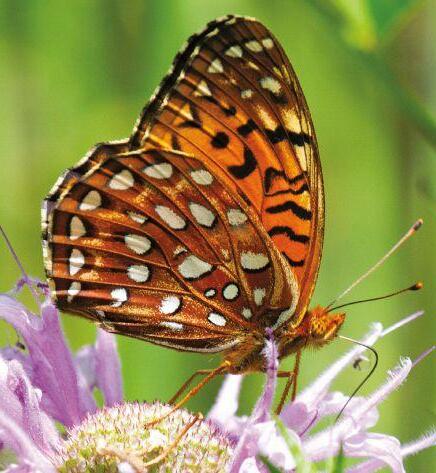
park nectar plants include American Plum which blooms in early May, Spreadfruit Goldenbanner fowers in June, Wild Bergamot and thistles (various genera) during the heat of the summer, and rabbitbrush in September. We have surveyed for butterfies while walking a path largely confned to the original park boundaries (ca. 500 acres in size) as established in 1975. Other areas, such as Carpenter Peak added to the park in 1984,
were not visited. Over time Roxborough SP has been enlarged and presently encompasses 3,299 acres. A portion of our standard butterfying path is off-trail and unavailable for public access. A large portion of the survey path, however, takes place along the Willow Creek and Fountain Valley Trails, both of which are open to the public.
Our visits typically occurred from March-October and took approximately 3.5
hours to cover the 6-mile distance. Starting times varied from 9:00 to 11:00 am and surveys were ended by about. 2:00 in the afternoon. Weather-wise, it may be blustery at Roxborough SP, especially from March to May. Later in the year, the wind calms down while temperatures increase through the summer, often exceeding 90 degrees F.
A fee ($8 for a day pass in 2019) is required to enter Roxborough State Park and parking is available just south of the Visitor Center and Park Headquarters. Restrooms are available here along with various beverages. The park is open from 8:00 am to 6:00 pm. Hiking is the only allowed use on trails and dogs need to remain at home.
Seasonally, the frst adult butterfies observed in February/March are Mourning Cloaks (well known for overwintering as adults), Hoary Commas and not often seen Hoary Elfns (atop Lyons Overlook). By April, duskywings, including both Sleepy Duskywings and Rocky Mountain Duskywings, make their appearance. These species are restricted to the spring and
early summer months, while less common duskywings such as Afranius (a relatively small species) and Horace’s, may be seen in both spring and late summer. All of these duskywings, except for Afranius, feed as caterpillars on Gambel Oak. Afranius Duskywing caterpillars enjoy a more herbaceous diet and they have been found feeding on lupines in the park.
Somber-colored Moss’ Elfns are present for just a couple of weeks in the early April landscape. These can be seen at the top of the Lyons Overlook and are sometimes relatively common on the west portion of the Fountain Valley Trail near the wetland. Blues such as Western Tailed-Blues, Silvery Blues, and Boisduval’s Blues are on the scene from May to the second week of July. About the time these blues disappear, Common WoodNymphs emerge, and then keep us company to the end of August. Cabbage Whites, introduced long ago to the United States, are common in mesic areas in the park from April through September. Common RoadsideSkippers may be observed at the Visitor
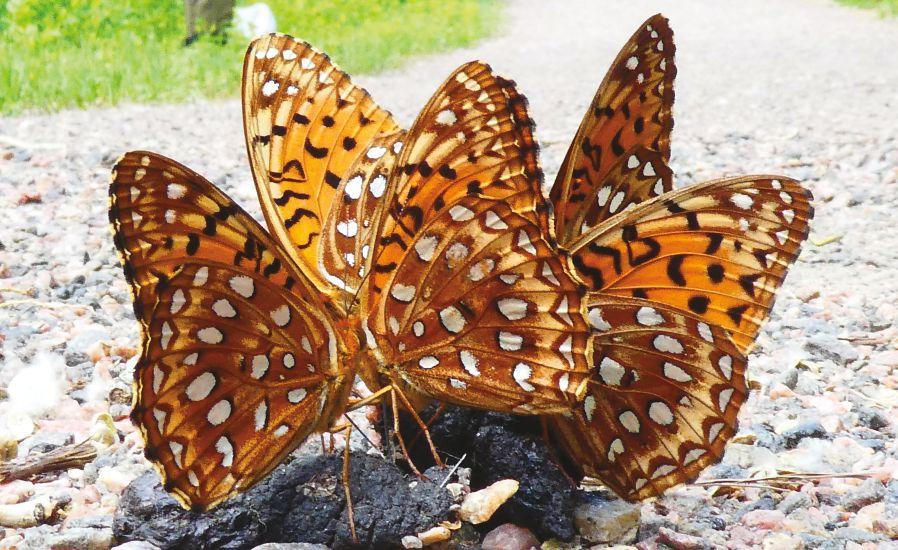
Below: Aphrodite Fritillaries enjoy tasty scat as much as the next butterfy. July 3, 2019.
Center’s garden starting in May. Also in May, if one is lucky, one might glimpse a Spring White on the trail to Lyons Overlook
The months of June/July are species-rich months. Along the survey path, as many as 36 species may be seen on a given day. Fritillaries are frst seen in June and soon paint the landscape orange. Mostly Aphrodites, there are enough Coronis, Callippe, and Edward’s Fritillaries thrown in to keep one watchful. Late in the summer a smattering of Atlantis Fritillaries add to the fritillary smorgasbord. These are most common just south of the Fountain Valley Trail wetland where they may be found nectaring at a patch of thistles.
A variety of swallowtails (Western Tiger, Two-tailed, Black, Pale, and Anise) in low numbers are hanging around in June and July. Shrub-feeding hairstreaks and coppers such as Banded Hairstreaks and Tailed Coppers
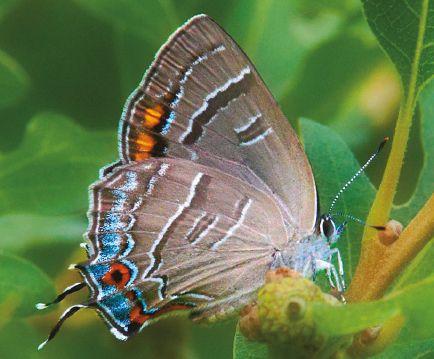
show up in July, with Colorado Hairstreaks arriving just behind those two. Colorado Hairstreaks seem to enjoy the more mesic patches of Gambel Oak (their caterpillar host plant) found along the westerly portion of the Fountain Valley Trail. Dun, Taxiles, and Silver-spotted Skippers are also creatures of July.
Later in the year, Woodland Skippers take over, and along with some of the fritillaries and the aforementioned wood-nymph take us to the beginning of September. The best spot to see Woodland Skippers is at the small drainage next to the Persse House, where Silver-spotted Skippers (their caterpillar host plant, American Licorice, is also here) occasionally join them. Tailed Coppers are often visible, especially late in the morning, on the short path leading from the parking lot to the Visitors Center. Dun and Taxiles Skippers are commonly seen along the Gambel Oak
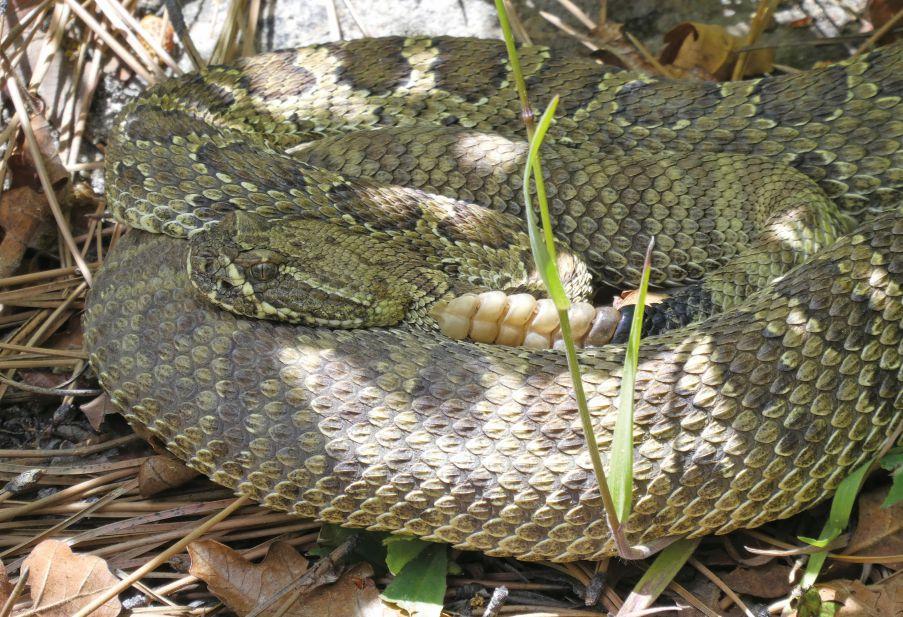
Top: Prairie rattlesnakes have the most extensive range of any U.S. rattlesnake species. This one was at Roxborough State Park on May 21, 2018.
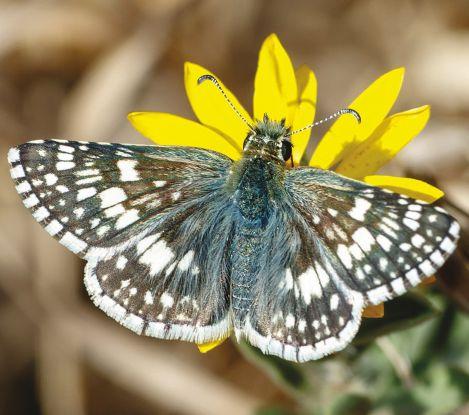
Bottom left: Common Checkered-Skippers are sometimes abundant at Roxborough State Park. Sept. 9, 2016.
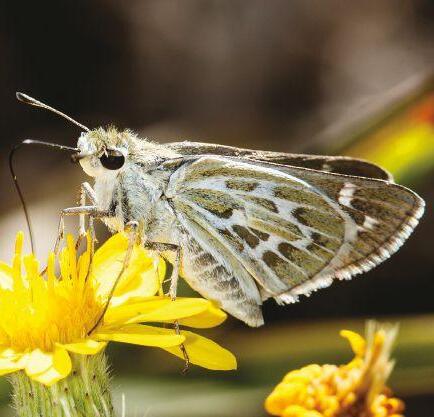
Bottom right: On the other hand, niftily-patterned Uncas Skippers are rarely seen at Roxborough State Park. Sept. 9, 2016.
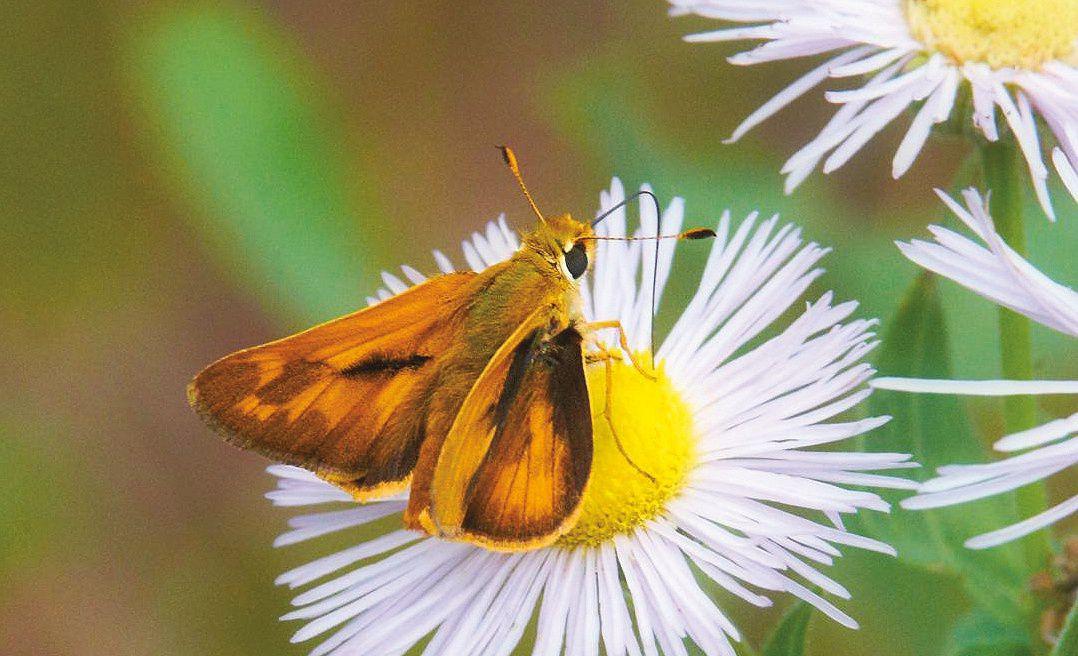
Above: Woodland Skippers, even though at the eastern edge of their range, are abundant at Roxborough. Aug. 4, 2011.
Right: Colorado Hairstreaks are common at Roxborough but are always a welcome sight! July 17, 2011.
canopied Willow Creek Trail just west of the Visitors Center. Very rarely, Delaware Skippers can be seen along the eastern portion of the Fountain Valley Trail at spots where Wild Bergamot blooms. Limited in abundance and with a very short fight period, it takes a bit of luck to spot a Delaware Skipper.
It’s time now for the back-to-school butterfies. Orange Sulphurs are still present in September as the environment begins to dry and Gray Hairstreaks and Common Checkered-Skippers become especially common. All of these may be seen along the
eastern portion of the Fountain Valley Trail, where they sometimes nectar at Smooth White Aster lining the trail. Juba Skippers get a second wind and become relatively abundant. It appears that their main task is to nectar at the fowers of the late season rabbitbrush in September. Patches of rabbitbrush are often adjacent to the eastern portion of the Fountain Valley trail where they attract the aforementioned Juba Skippers and a variety of fritillaries. Sometimes there are also very scarce Roxborough skippers such as Sachem and Leonard’s Skipper nectaring at the same
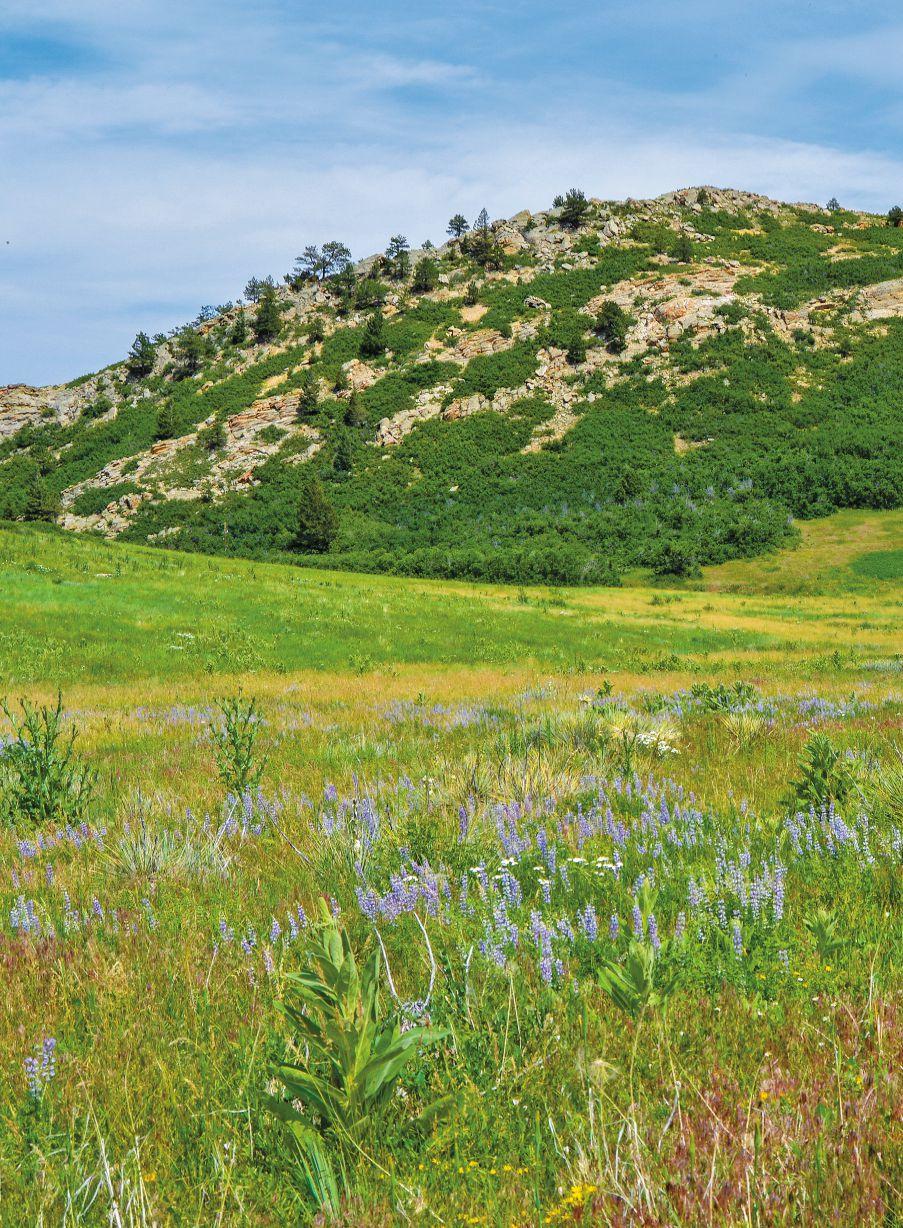
If you visit Roxborough State Park you’ll have to endure blue skies, lupines and other wildfowers, and beautiful scenery. It’s a tough slog but I’m sure you can do it! June 21, 2015.
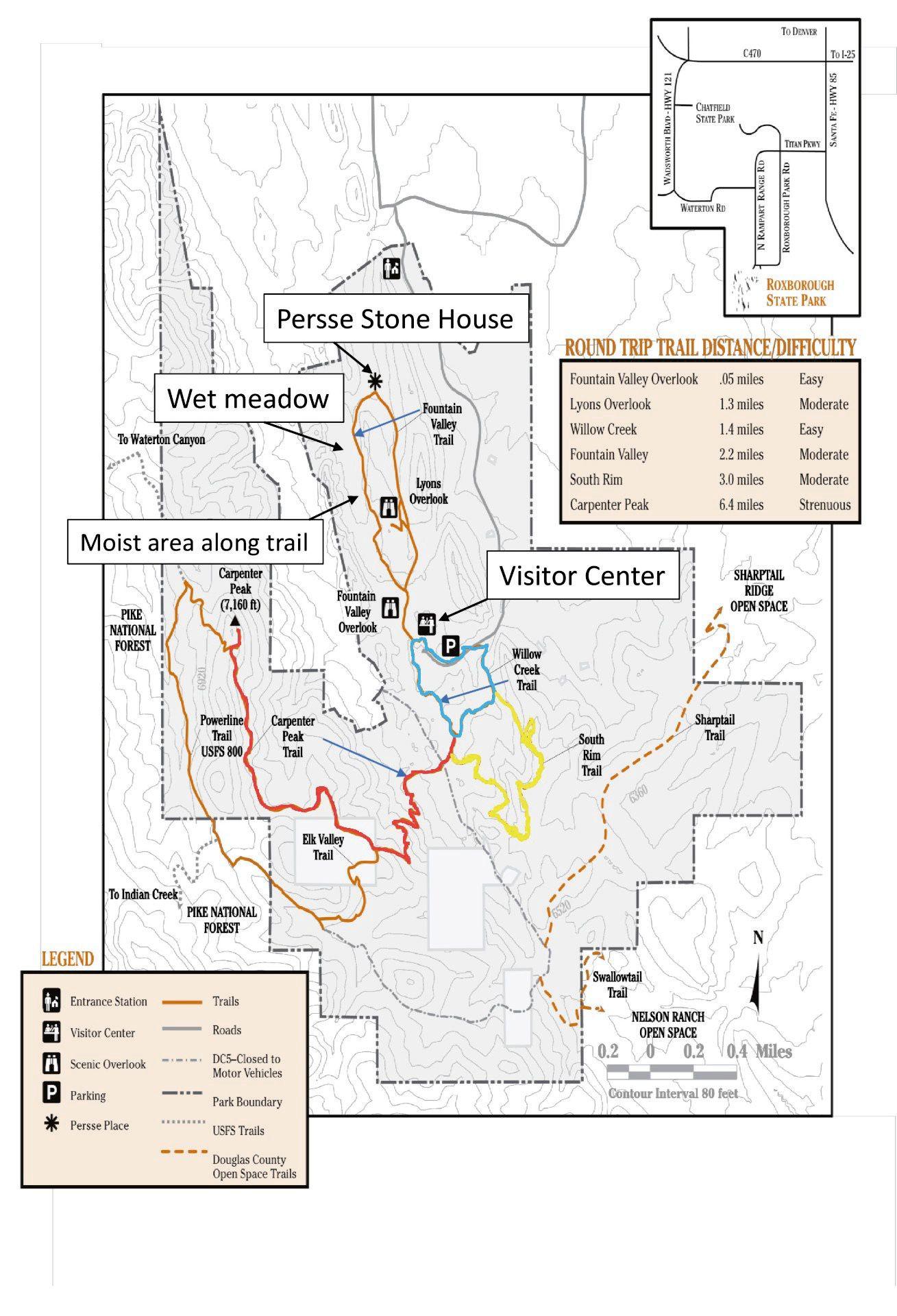
A trail map of Roxborough State Park.
The butterfy season often ends in October or November, sometimes as it began, with a lone Mourning Cloak spotted amongst the bare-branched willows.
We have spent little time on the South Rim and Carpenter Peak Trails. Carpenter Peak especially holds promise for some different butterfies due to its 7160 ft. elevation. For example, we wouldn’t be surprised if Phoebus Parnassians and Variable Checkerspots occurred there. At the very least, visiting Carpenter Peak will result in a solid exercise workout! Some interesting reports from the South Rim Trail include one of abundant Sheridan’s Hairstreaks and another of multiple Uncas Skippers.
NABA members that visit the Denver area might want to put Roxborough State Park on their list of places to visit. Most of the butterfies found at Roxborough SP can be seen from the offcial trails. One spot in particular, which is just south of the wetland area on the Fountain Valley Trail, entices several species of butterfies to skip about in plain view. This small portion of the trail seems to have just the right amount of moisture and other elements butterfies fnd appealing. Visitors may also take advantage of other parts of the park.
Abbreviations are: A, abundant, likely to see more than 20 individuals per visit to the right spot at the right time; C, common, likely to see 4-20 individuals per visit to the right spot at the right time; U, uncommon, likely to see 0-3 individuals per visit to the right spot at the right time, R, unlikely to see any individuals, but possible and S, stray, not seen most years. Numbers refer to months of the year, where January = 1, February = 2, etc. These abundance ratings refer to years and days with “ideal” conditions.
Black Swallowtail C, 6-8; Anise Swallowtail C 5-7; Western Tiger Swallowtail C 5-8; Twotailed Swallowtail C 6-8; Pale Swallowtail U 5-7; Spring White U 5; Checkered White A 6-9;
Western White U 4; Cabbage White A 4-9; Large Marble C 4-5; Olympia Marble C* 5-6; Clouded Sulphur A 5-9; Orange Sulphur A 4-9; Southern Dogface U 7-8; Mexican Yellow S 6; Sleepy Orange S 7; Dainty Sulphur C 6-9; Tailed Copper A 7-9; Gray Copper C* 6-8; Bronze Copper U 9; Blue Copper U 7; Colorado Hairstreak C 7-9; Coral Hairstreak U 6-7; Behr’s Hairstreak U 7; California Hairstreak C* 6-7; Banded Hairstreak C 6-7; Striped Hairstreak U 7; Bramble Hairstreak C* 6-7; Sheridan’s Hairstreak U 4-7; Brown Elfn U 4; Moss’ Elfn C 4; Hoary Elfn U 3; Western Pine Elfn U 4-5; Gray Hairstreak C 6-9; Marine Blue C 5-8; Reakirt’s Blue C 6-9; Western TailedBlue A 4-6, 8-9; Spring Azure C 5-7; Dotted Blue C 6-7; Arrowhead Blue C 6; Silvery Blue A 5-7; Melissa Blue C 5-8; Boisduval’s Blue C 6-7; Acmon Blue C 6-10; Arctic Blue U 7; Variegated Fritillary C 5-9; Aphrodite Fritillary A 6-9; Edwards’ Fritillary C 6-7, 9; Coronis Fritillary A 6-7, 9; Callippe Fritillary U 5-7; Atlantis Fritillary C 8; Mormon Fritillary U 6; Arachne Checkerspot U 5; Gorgone Checkerspot C 5-6; Pearl Crescent U 6; Northern Crescent C 6-9; Field Crescent C 5-9; Satyr Comma U 5-7; Hoary Comma C 3-6; Mourning Cloak C 2-10; California Tortoiseshell S; Milbert’s Tortoiseshell U 4; American Lady U 9; Painted Lady A 5-9; Red Admiral C 6-9; Common Buckeye C 7-9; Weidemeyer’s Admiral C 6-8; Hackberry Emperor U 7; Canyonland Satyr U 7; Common Ringlet C 5-7; Common Wood-Nymph A 6-8; Small Wood-Nymph U 7; Chryxus Arctic U 6; Monarch C 6-9; Queen U 8; Silver-spotted Skipper C 6-7; Northern Cloudywing C 5-7; Dreamy Duskywing U 5, Sleepy Duskywing C 4-7; Rocky Mountain Duskywing A 4-7; Horace’s Duskywing A 4-5, 6-8; Mournful Duskywing S 8; Pacuvius Duskywing U 8; Funereal Duskywing S 6; Afranius Duskywing C 5-6, 7-8; Persius Duskywing U 4; Common Checkered-Skipper A 5-9; Common Sootywing U 6-7; Russet Skipperling U 7; Garita Skipperling C* 6-7; Juba Skipper C 6, 8-9; Common Branded Skipper U 8-10; Uncas Skipper R 5-6, 7-9; Leonard’s Skipper U 9; Peck’s Skipper U 8; Tawny-edged Skipper U 6-7; Long Dash C 6-7; Sachem U 9; Delaware Skipper C 7; Woodland Skipper A 7-9; Taxiles Skipper C 6-7; Dun Skipper A 6-8; Common Roadside-Skipper C 5-7.

*These species were common in previous years but were not seen in 2018 or 2019.
To recap the frst four episodes, I am trying to fnd and photograph the 21 species of U.S. resident butterfies that I hadn’t yet photographed. Now at 17, Jim Springer and I are heading to Del Rio, Texas to search for Coahuila GiantSkippers. We want to see and photograph them because we want to see and photograph them — a pure pleasure play. But we are also looking to discover a viable population of this species on private land with the thought that NABA would then try to buy the land to create a Coahuila GiantSkipper preserve — well, that would be awfully pleasurable as well!
by Jeffrey Glassberg
“What’s the sound of
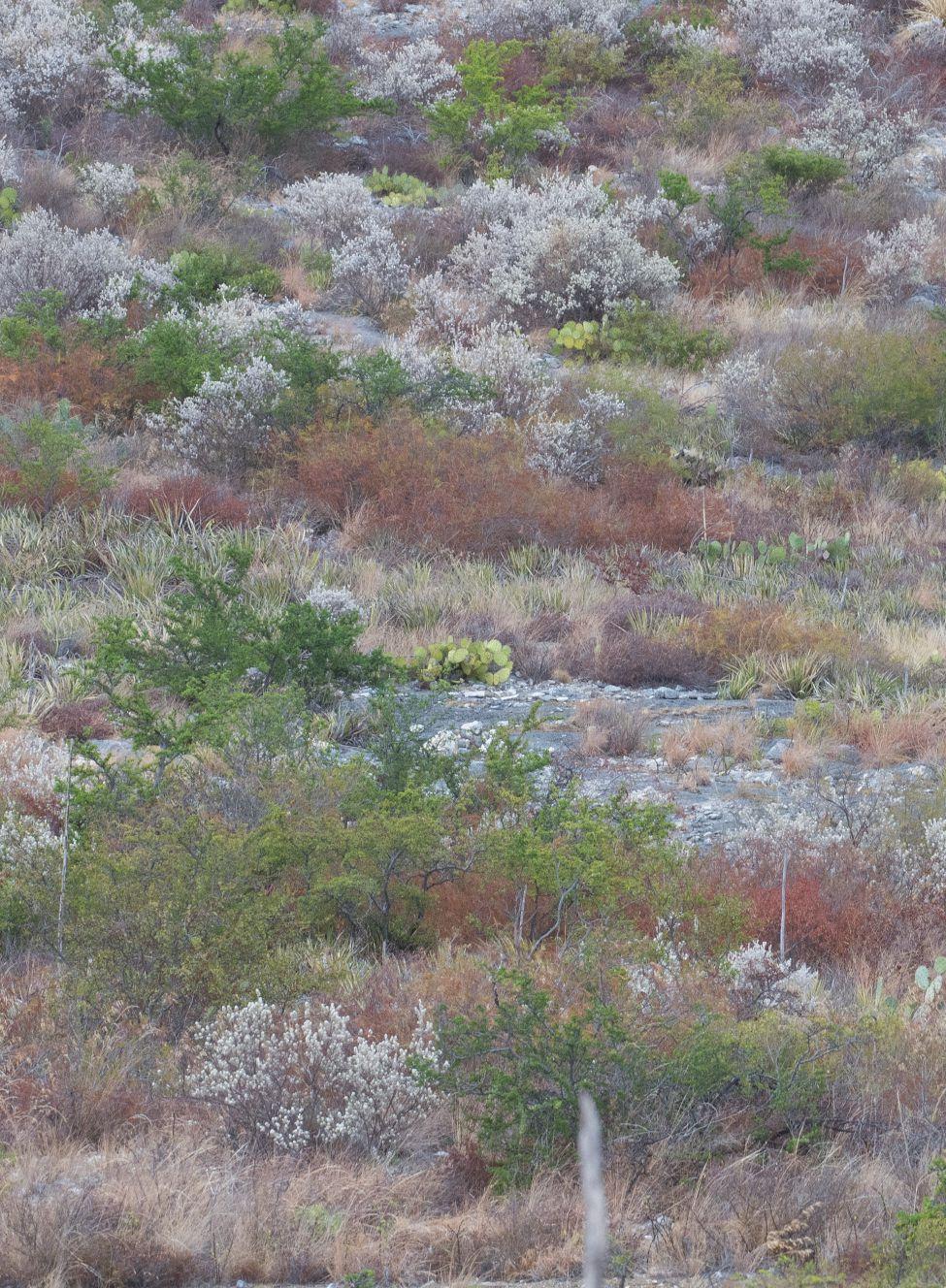
of one wing fapping?” See page 25 for the answer
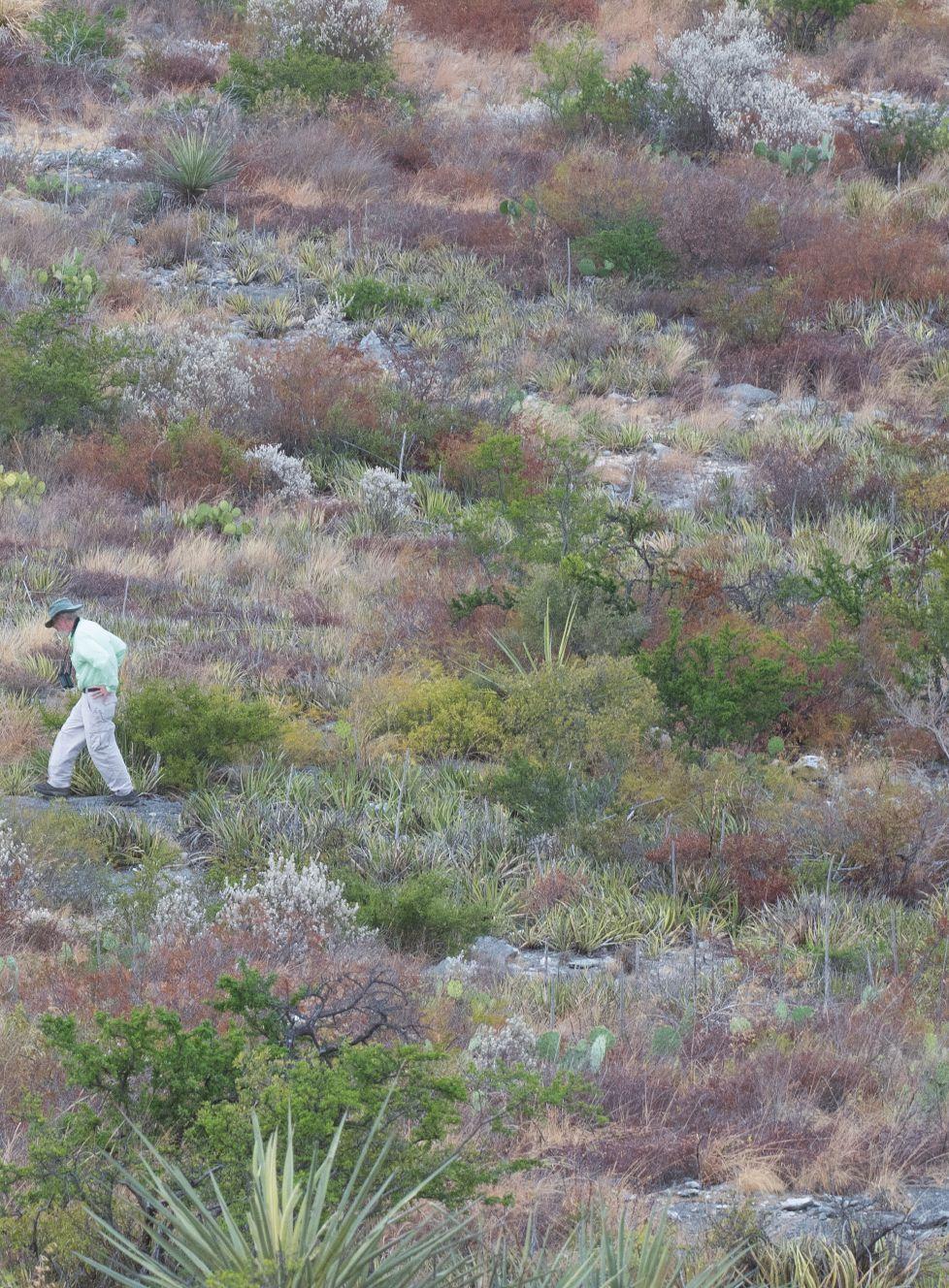
Jim Springer amongst the Lechuguillas. Sept. 21, 2019. North of Rough Canyon, Val Verde Co., TX.

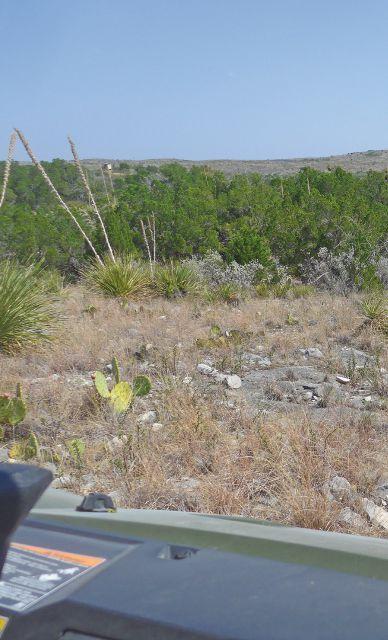
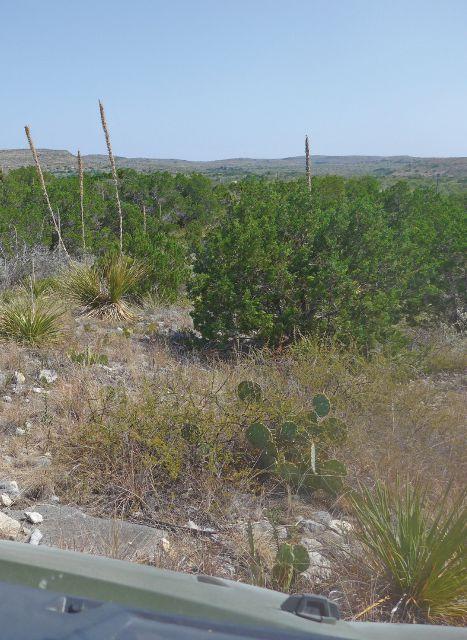
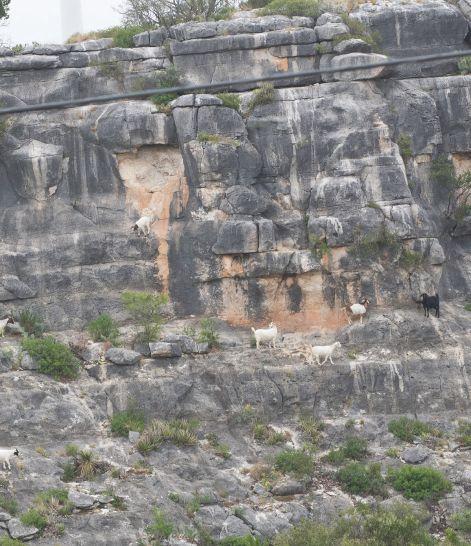
Realtor Clay Ellis took us around “for sale” ranches in this Ranger ATV. It was amazing! The puncture-proof tires were flled with foam, and pricklypears and Blackbrush Acacias proved to be no impediment to its progress.
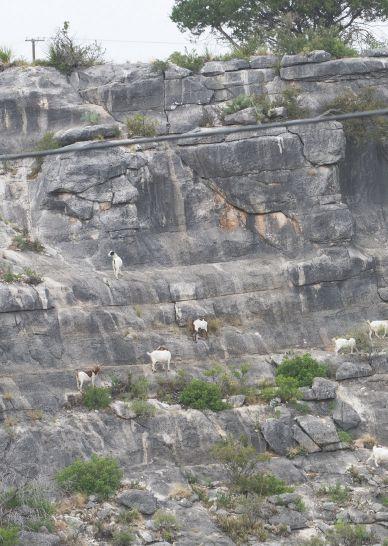
However, the feral goats were more nimble on cliff faces than was the Ranger ATV.
Prior to working on this installment of my big life, I thought that I was only missing 16 species. However, although I was sure that I had a photograph of an Orange Giant-Skipper, I can’t fnd one. So now, I’m back to missing 17 species!
Wednesday, September 18
We board our plane in Newark, heading non-stop to San Antonio. We have time to contemplate Coahuila Giant-Skippers*. Not
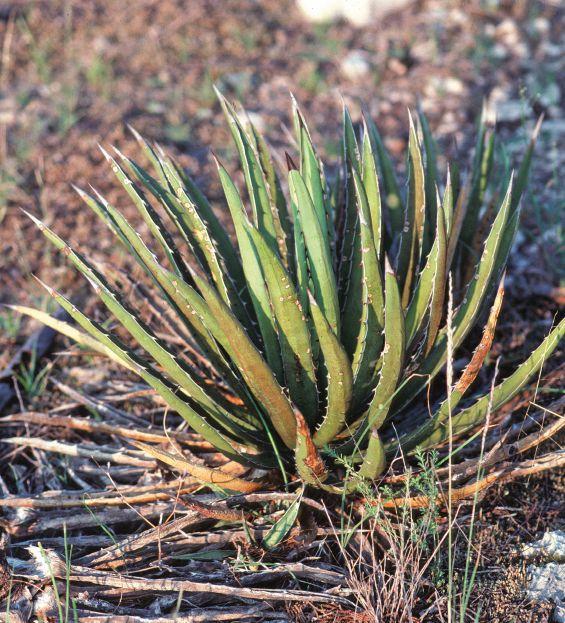
many people have seen one. Even fewer have seen an adult in the wild. As with many species of giant-skippers, it is much easier to fnd caterpillars or pupas than it is to see a wild adult. The caterpillar or pupas can often be found by searching the host plants for visual signs of caterpillar activity. As is the case for all of Coahuila Giant-Skippers close relatives, the host plant is a species of agave, in this case, Agave lechuguilla, whose sort of English name is Lechuguilla.
Until recently, most records of Coahuila Giant-Skippers were from the fall, almost all in September. For example, in the 1950s and 1960s, H.A. Freeman found more than 60 individual pupas of Coahuila Giant-Skipper in the Del Rio, Texas area and all the adults emerged from September 3 to October 8**.
I had been in the general West-Texas vicinity in September-October on three previous trips. Although I did manage to see a number of Mary’s Giant-Skippers in October of 1999, Coahuila Giant-Skippers have eluded me.
We arrive in San Antonio, get our rental car and head out, driving westward on the two and a half hour drive to Del Rio. It’s dinnertime and Jim is hungry. He espies a Billy Bob’s Hamburger joint on the south side of the highway but Glassberg is traveling at way too high a rate of speed to stop and we drive by it. A quick and spirited conference results in a dicey U-turn, because how often in life will we be able to get fantastic hamburgers made by Billy Bob? Perhaps never.
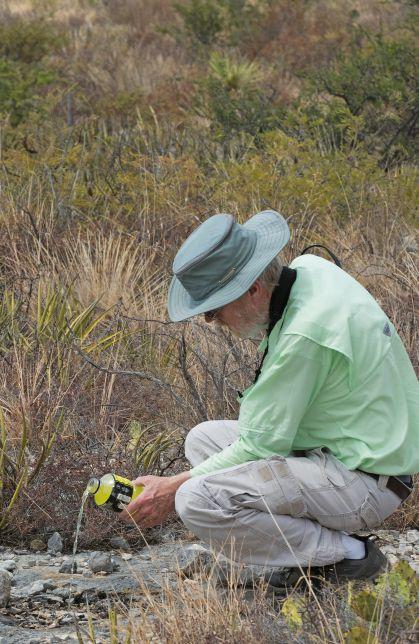
Jim Testing the Bounds of Propiety. North of Rough Canyon, Sept. 21, 2019.
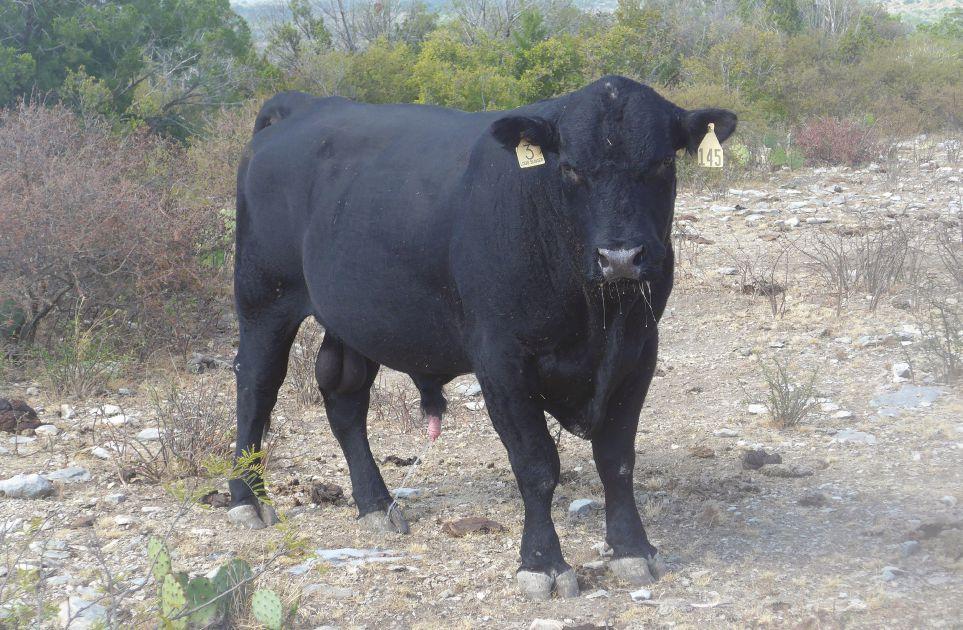
We saw this black bull creating a mudpuddling area. This made us consider creating some mud puddles of our own. Here, Jim uses his best black bull imitation to deliver Gatorade to a rocky Lechuguilla area.
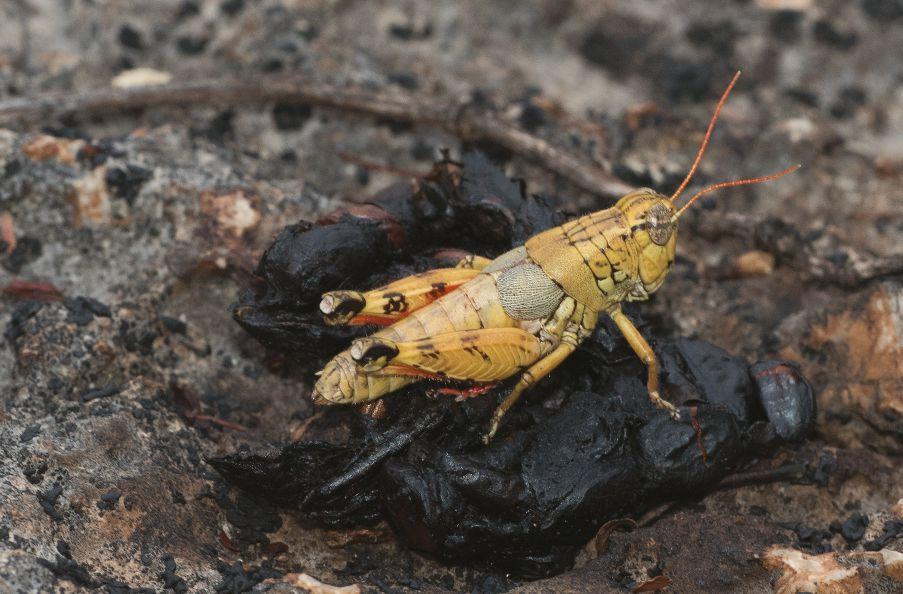
We checked the area early the next morning, but found only this grasshopper. Perhaps we should have brought the bull with us.

Above: We thought about drowning our sorrows in Lechuguilla — artisanal mescals being very trendy — but, instead, we decided to get up early and continue the search. Sept. 19. Del Rio.
Right: We ran into W.E. (Pete) Eckhart, all-around handyman and information source. We were quite surprised that he not only knew about the National Butterfy Center, but also knew that it was Tikigaq Construction that was frst found illegally clearing the land. He was knowledgable about the plants of the area as well. Sept. 20. Rough Canyon.

Finally, we make it to Del Rio and get to our hotel, a La Quinta Inn. If you ever make it to Del Rio, I urge you to stay anywhere but here. I won’t bore you with the gory details, but it was truly terrible. Actually, I’ll never again stay at a La Quinta Inn anywhere.
Thursday, September 19
We meet realtor Clay Ellis at his offce in Del Rio. He is going to take us out to some ranches that are for sale and that he believes have extensive stands of Lechuguilla. We’re pumped. He loads his ATV onto his pickup truck and off we go. We head north out of Del Rio and then turn east for a bit before arriving at the entrance to the frst ranch.
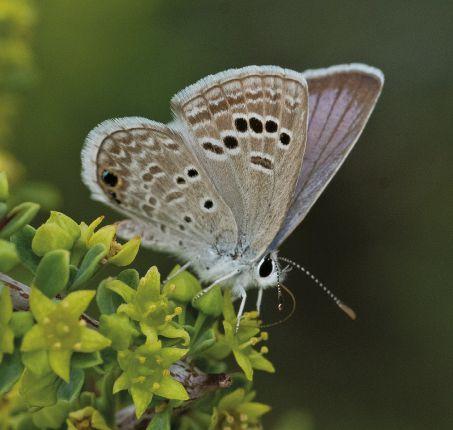
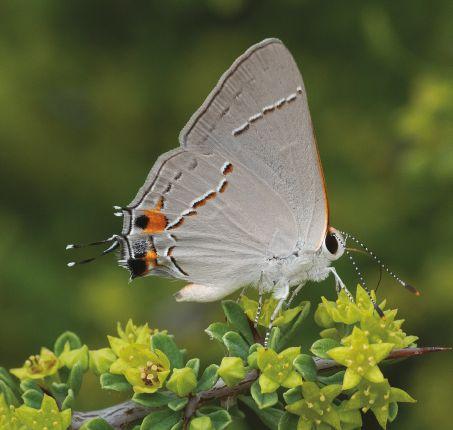
We saw more butterfies at Seminole Canyon State Park than anywhere else.
Most of the area is covered with junipers, that have become invasive in this part of the world, but we do locate some areas with quite a bit of Lechuguilla, but they don’t look quite right to me. We don’t see any giant-skippers, however, we do see a large black bull. He stares at us and urinates, either to let us know that this is his territory and we don’t belong, or just because he had to go. We spend perhaps an hour driving around this frst ranch, pretty much sticking to the roadways, before deciding that the habitat doesn’t seem to promise Coahuila Giant-Skippers.
We head to ranch number two, not too far away. Here is where Clay’s ATV really shone. While I cringed as we crunched over pricklypear cactuses, where previous experiences with those long spines had left deep puncture wounds in my brain cells, this ATV knew no fear. The balloon tires were flled with foam and appeared to be indestructible! Despite the impressive ATV, butterfies were few and far between. We
had seen a Common Buckeye by the black bull, but precious little else. Coahuila GiantSkippers were still unseen, and, despite the presence of Lechuguilla, the habitat didn’t look right.
We drive closer to Amistad National Recreation Area, to the Rough Canyon area. Here, the habitat seems much better (see pages 16-17) and we spend the afternoon searching all through the area. We enjoy the beautiful landscapes, flled with interesting Chihuahuan Desert plants, some of the most common being Blackbrush Acacia and Lechuguilla! Still, no Coahuila Giant-Skippers. Maybe they fy in the morning?
We’ll try again tomorrow!
We drive out to the Rough Canyon area and spend the morning walking through all of the large patches of Lechuguilla that we could fnd. Presumably because the area was in
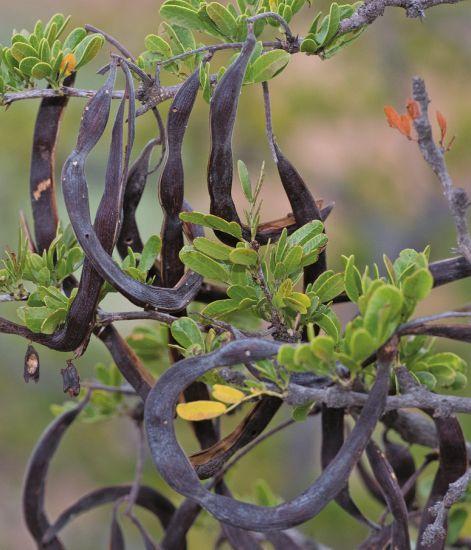

drought — there hadn’t been any rain since May — the Lechuguilla appeared desiccated and stressed. Naturally this distressed us as well. Perhaps the giant-skippers were waiting for precipitation to begin their fight.
Having no success, we drive to Seminole Canyon State park, an area that the Amistad NRA folks with whom we talked — Jack Johnson and Greg Garetz — recommended as a good area for stands of Lechuguilla. We never did fnd large amounts of Lechuguilla there — it may be that one needs to walk a long way to reach them — but we did fnd a few butterfies right along the short roadway — Gray Hairstreak, Reakirt’s Blues and a number of other species.
Late in the afternoon we visit a convenience store. Perhaps it is the sight of Red Bull reminding us of the black bull, but we decide to buy some Gatorade to create a tasty puddle for giant-skippers. Never having used Gatorade for this purpose, we had no idea
if it would work. We drove back out to Rough Canyon, picked a few spots that looked perfect for a puddle party and splashed Gatorade all over the rocks.
Early in the morning we drive to Rough Canyon to check on our Gatorade puddles. We fnd a handsome grasshopper, but nothing else. For part of the morning we walk through the stands of Lechuguilla looking and hoping for our large lepidopteran love interests. We plead with the Lechuguilla to release the Coahuila Giant-Skippers within them. Our pleas go unanswered and we begin to doubt the butterfy religion.
In the afternoon, we need to drive back to San Antonio, to catch our early morning fight on Sunday. Along the way, we stop at Jardin de los Heroes Park in Uvalde. A steady stream of Cloudless Sulphurs is migrating from the northwest to the southeast.
Across from our San Antonio hotel is a Pappadeaux restaurant, so we have an enjoyable dinner and consider “What is the sound of one wing fapping?” After suffcient libations, we decide that it’s “A giant whiff.” We’re thrilled to try again!
*Let’s consider Coahuila Giant-Skipper. The giantskipper Agathymus valverdiensis was described by H.A. Freeman in 1966. The holotype female was found 28 miles north of Del Rio, Texas and emerged on Sept. 16, 1963, reared on an “atypical” Agave lechuguilla In his original description, Freeman says of valverdiensis “Actually, in many respects, they show a closer relationship to the mountain species remingtoni (Stallings & Turner) than they do to estelleae, which is a plains species.” In “The Butterfies of North America” (Stanford University Press, 1986) Jim Scott placed valverdiensis as a subspecies of remingtoni (although he provided no data to support this placement) and, because much of NABA’s initial list of scientifc names was based upon Scott’s treatment, it is still so treated on the All photographs this article by Jeffrey Glassberg.
NABA list. Subsequently, a number of authors have treated valverdiensis as a subspecies of Agathymus estelleae, again without providing any data to support that placement. A case can be made that a subset of butterfy taxonomists presaged our current era, wherein data and facts seem to have become superfuous to many people who instead think that what matters is their “gut feelings”. Back to valverdiensis, the good news is that whichever treatment of the scientifc name proves to be best, the English name will remain Coahuila Giant-Skipper.
** So far as I am aware, all feld guides to U.S. butterfies, including mine, have stated that there is only a fall brood of this species, as there is with all other U.S. species of agave-feeding giant-skippers. However, in the past few years, all reports of this species have been from April! And, there is at least one report of Agathymus estelleae fying in April in Nuevo Leon, Mexico. So, it is certainly possible that more data will show that valverdiensis is best treated as a subspecies of estelleae
We have initiated a project to document the caterpillar foodplants of North American butterfies. For those who would like to participate in this photodocumentation, here are instructions:
Find an egg or a caterpillar (or a group of eggs or caterpillars) on a single plant in the “wild” (this includes gardens). The plant does not need to be native to the area — we want to document all plants used by North American butterfies.
Follow this particular egg or caterpillar (or group of eggs or caterpillars) through to adulthood, with the following documentation.
1. Photograph the actual individual plant on which the egg or caterpillar was found, showing any key features needed for the identifcation of the plant.
2. Photograph the egg or caterpillar.
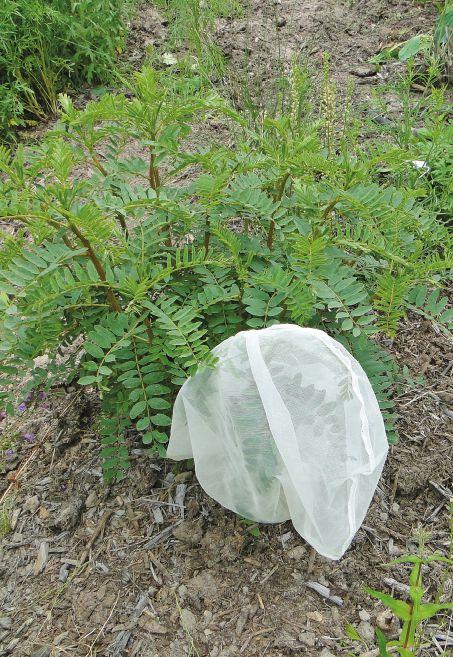
3. Either leave the egg or caterpillar on the original plant, perhaps sleeving the plant it is on with netting, allowing the caterpillar
to develop in the wild, or remove the egg or caterpillar to your home and feed it only the same species of plant on which it was found.
4. Photograph later instars of the caterpillar.
5. Photograph the resulting chrysalis.
6. Photograph the adult after it emerges from the chrysalis.
7. If the egg or caterpillar was relocated for raising, release the adult back into the wild at the spot where you found it.
We would like to document each plant species used by each North American butterfy species, for each state or province. This is the 41st installment in this series!
In addition to appearing in American Butterfies, the results of this project will be posted to the NABA website. Please send any butterfy species/plant species/state or province trio that is not already posted to naba@naba.org.
Don Dubois
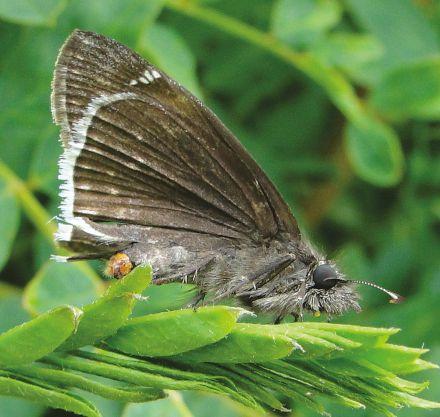
Left: A Funereal Duskywing laid eggs on a Poisonbean in the author’s yard. April 14, 2013.
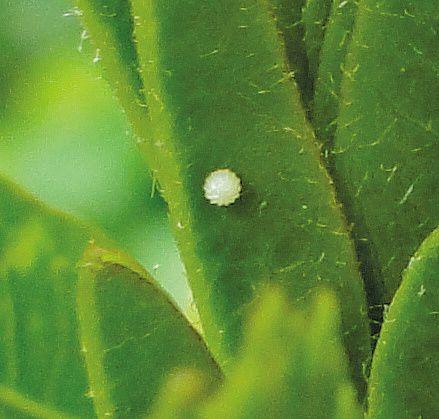
Right: One of the eggs.
Poisonbean (Sesbania drummondii) is named for its poisonous seeds, that may be lethal to grazing animals. Other common names include rattlebush, which refers to its mature seed pods, which rattle noisily when shaken. This woody legume grows to about ten feet and usually dies back to the ground in the winter. This year was one in which my plant did not die back so it is at its maximum expected height. This plant is common in the Houston, Texas area and is frequently found growing in low spots along the roadside.
In April of 2013 a Funereal Duskywing was seen egg-laying on the Poisonbean in my backyard garden. The eggs were sleeved so as to be able to document the anticipated caterpillars as they developed for the “You Are
What You Eat” project. However, no frass collected in the sleeve on the plant and no caterpillars were found. Apparently they did not survive and the project was abandoned.
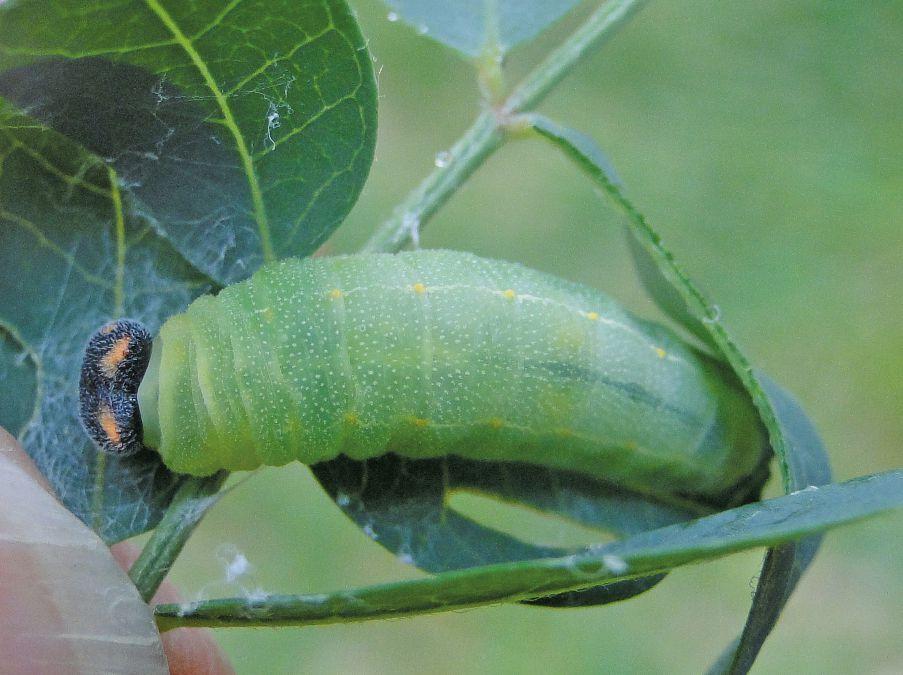
But, while on a nearby butterfy count in April 2017, a caterpillar was discovered inside a rolled leaf on Poisonbean. It was suspected that the caterpillar was an elusive Funereal Duskywing caterpillar and it was brought back to rear on additional clippings from the plant in my backyard.
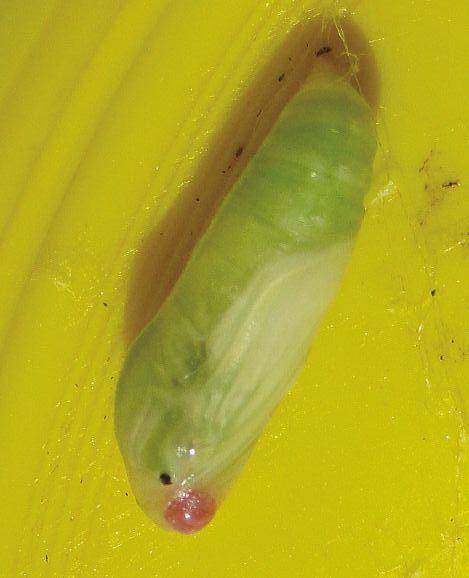
After an additional fve days on leaves provided, the caterpillar formed a jade green chrysalis with two dark raised bumps on an otherwise smooth surface. A week later two rosy red eye spots appeared below the dark spots and the shape of wings could be
Right: After seeing a Funereal Duskywing lay eggs on this poisonbean plant in the author’s yard, a portion of the plant was sleeved to protect potential caterpillars. However, none were found. April 23, 2013.
Below: Four years later the author found this caterpillar on a nearby poisonbean and moved it to his yard to feed. As do many spreadwing skipper caterpillars, Funereal Duskywing caterpillars sport two orange patches on their heads. April 10, 2017.
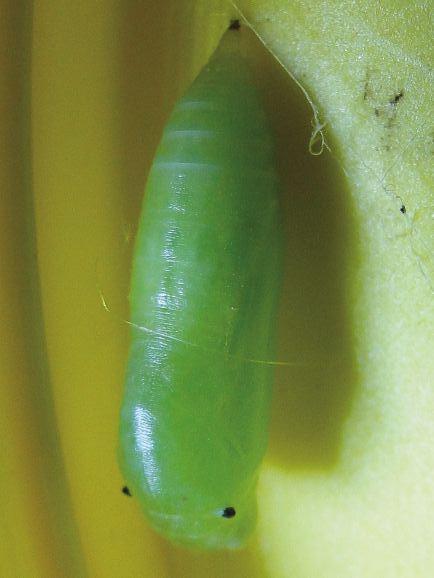
Above left: Five days after the caterpillar was found, it pupated. April 15, 2017.
Above right: A week after pupating, the chrysalis developed two rosy bumps. April 22, 2017.
Right: Finally, the rosy spots darkened and the adult Funereal Duskywing adult emerged the next day. April 25, 2017.
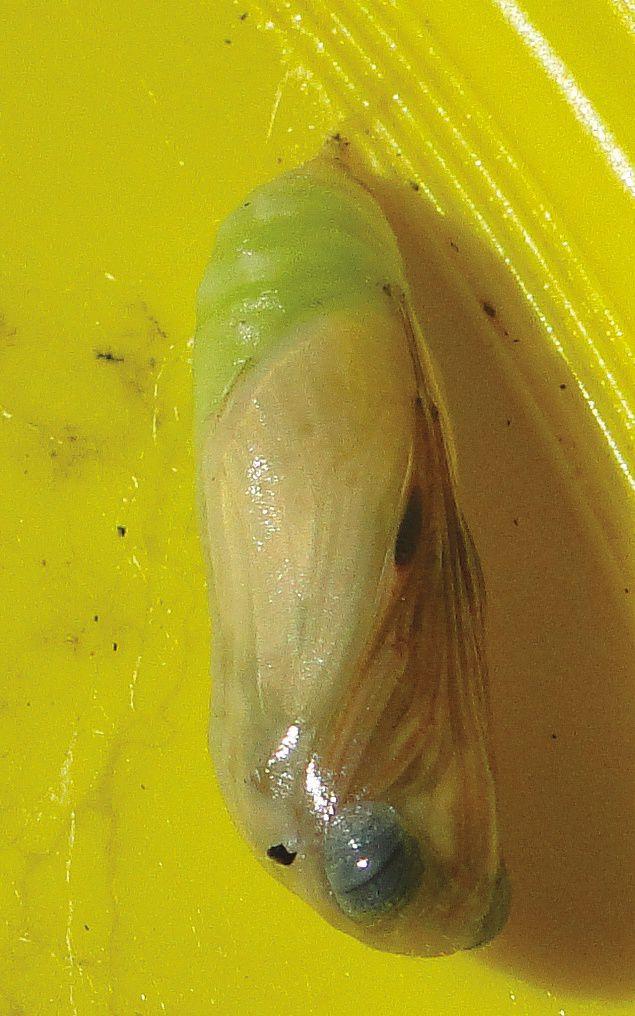
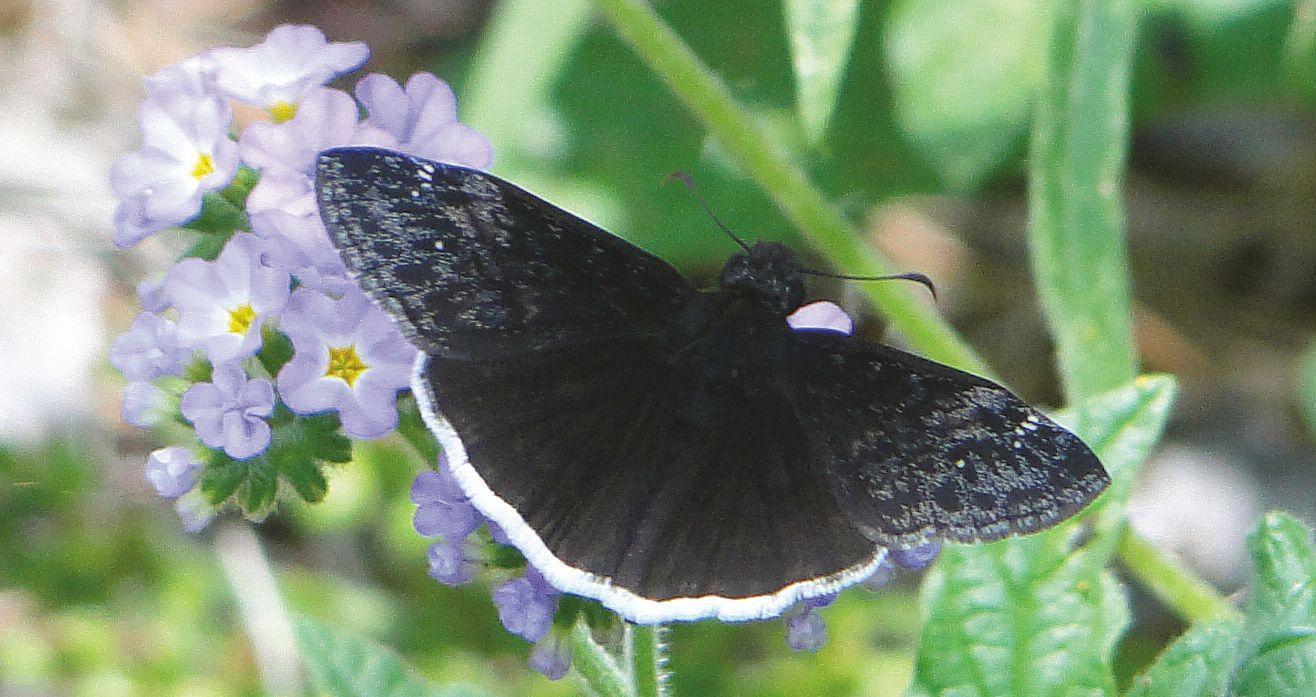
The adult Funereal Duskywing emerged on April 26, 2017 and almost immediately enjoyed the local Clasping Heliotrope.
seen. After another three days, the red eyes had darkened and the next day the butterfy emerged from the chrysalis. The butterfy was taken back to the Poisonbean where the original eggs had been deposited 4 years
earlier. However, the butterfy did not stay at the Poisonbean, and quickly moved on to nectar at a plant that appears popular with the smaller butterfies, Clasping Heliotrope.
Above: A drawing of the approximate range of Funereal Duskywings. Turquoise indicates one brood, purple, two broods, orange, three or more broods. Cherry spots indicate that strays have occurred there. (drawing modifed from A Swift Guide to Butterfies of North America).
Above: A drawing of the approximate range of Poisonbean, based upon county occurrence data from the Biota of North America Program. This might be a useful plant for your garden if you live within the range shown.


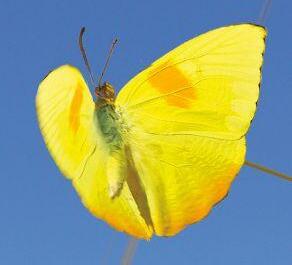
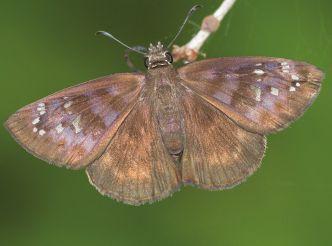
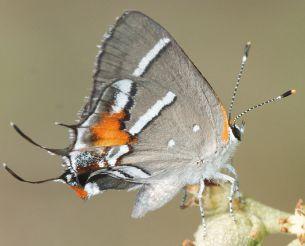
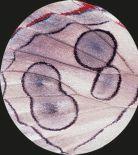


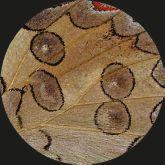
An eighty-eight by any other name (or number) wouldn’t count for as much
by Harry Zirlin
Butterfies have been around for tens of millions of years. Indeed, I keep seeing articles that push their imbibed nutrients from dinosaur poop. The markings and colors on their wings delight humans even though we were not around
Two Anna’s Eighty-eights, one showing off it’s monogram, the other its iridescent topside.
Top photo: June 12, 2008. Cascada Texolo, Xico, Veracruz, Mexico.
Bottom photo: Nov. 13, 2009. Rte. 175, km 75, Oaxaca, Mexico.
saside, we often see in the marks on (White M Hairstreak) punctuation
And it is this last group that is featured
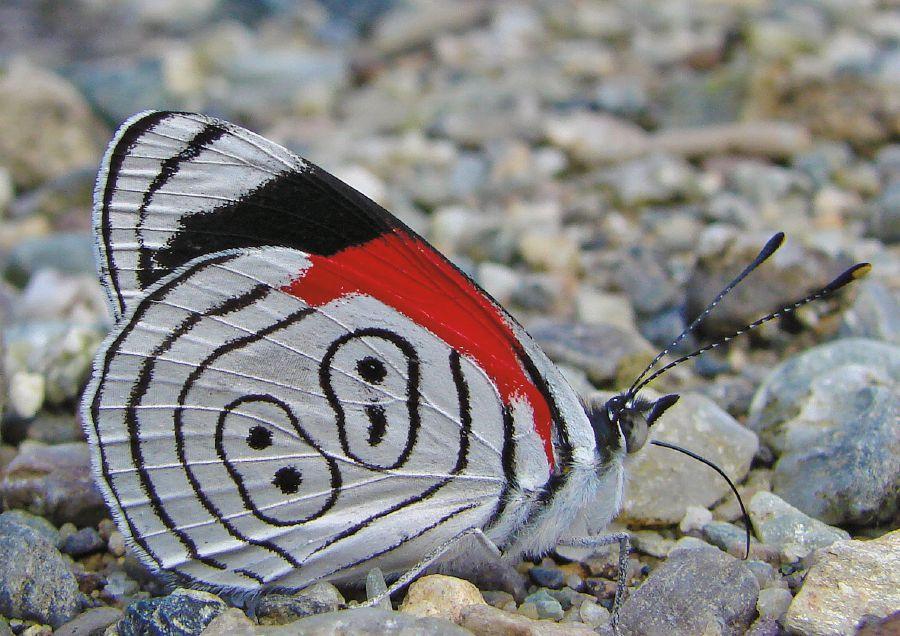
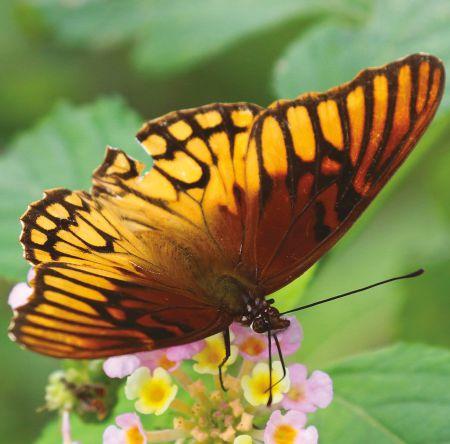
For drama and color, eighty-eights are hard to beat, no matter whether you’re enjoying their topsides or their undersides.
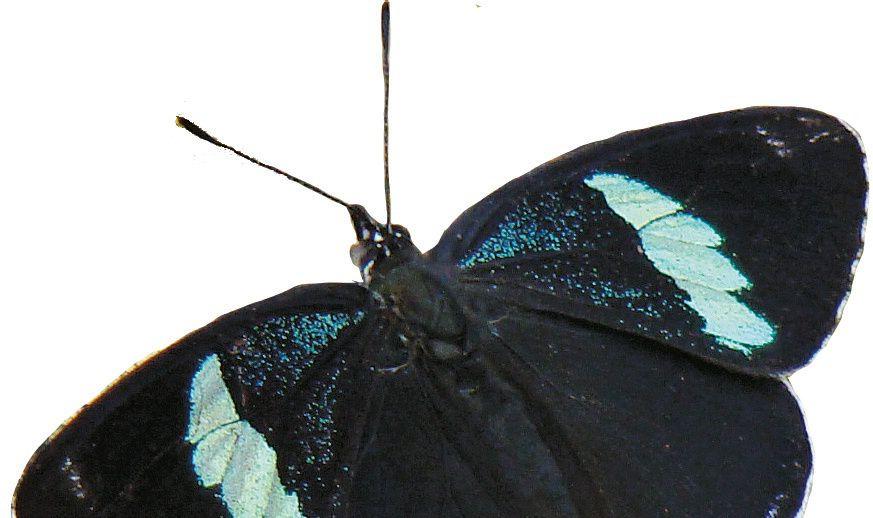
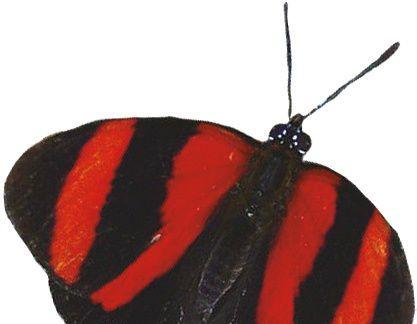
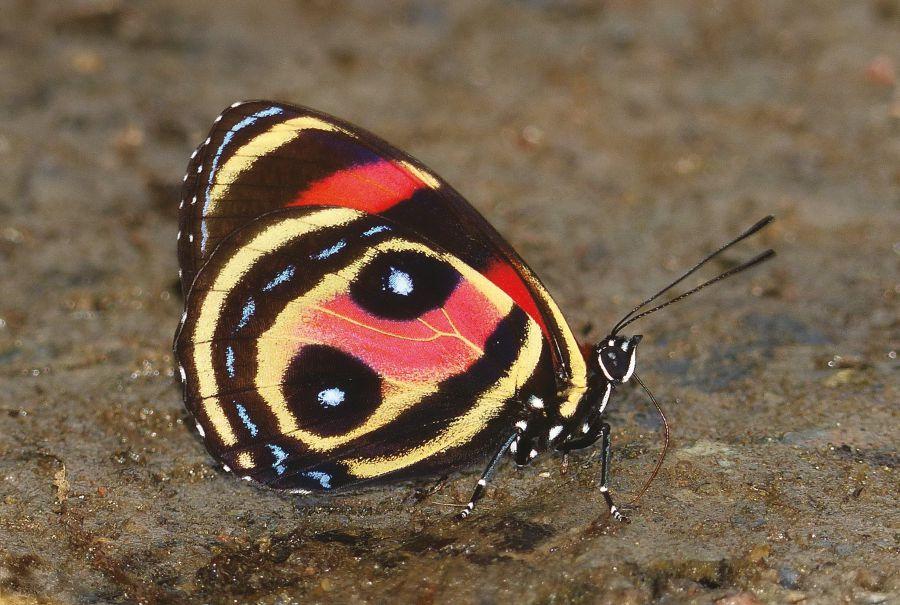
This page top: A Two-eyed Eightyeight, Callicore pitheas, with its striking red-and-black topside. This species may have been named for a Greek explorer, and you can see why you’d go out of your way to fnd one. Jan. 9, 2003. Cana, Panama.
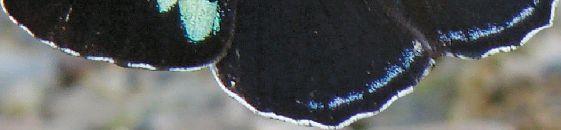
Bottom: The underside pattern of Twoeyed Eighty-eights is a real favorite. Feb. 15, 2018. Rio Claro, Antioquia, Colombia.
Spanning pages 34-35: The upperside of a Common Eightyeight, Diaethria clymena Oct. 23, 2013. Rio Pingullo, Napo, Ecuador.
I recall a poster, in this connection, and eights in the genus iaet ria (It appears that there are several versions of this poster online and for some of the markings as being from moths.) The
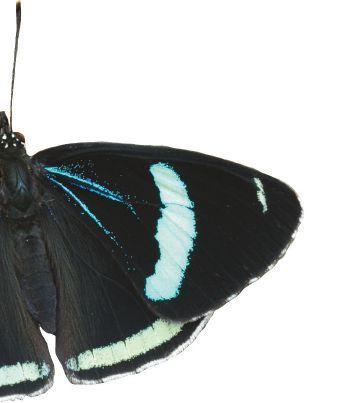
world. For good images of live shots, take 11 11
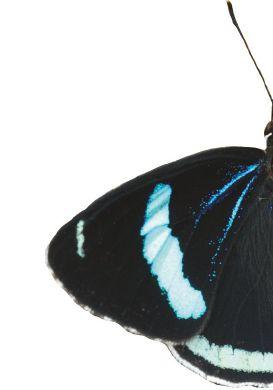
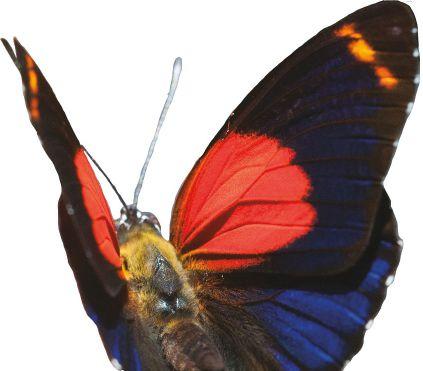
This page top Surprise! Most Blue-and-orange Eighty-eight, Callicore tolima, are actually blue and orange above (although the FW stripe can vary from red to yellow, depending upon location). Aug. 8, 2014. Misol-Ha, Chiapas, Mexico.
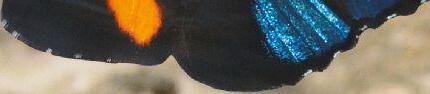
This page bottom The underside of a Blue-and-orange Eighty-eight. July 18, 2003. Misol-Ha, Chiapas, Mexico.
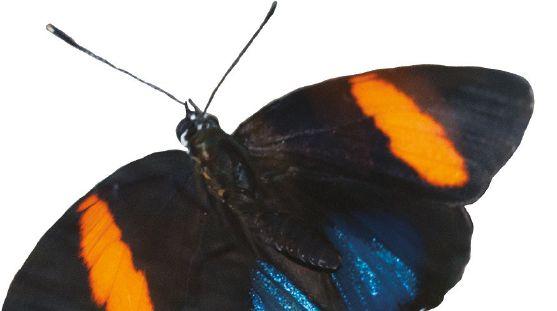
For more information about Blue-andorange Eighty-eight, see page 38.
means “beautiful pupils,” as in beautiful to the same markings as does the English eight without these markings is called
iaet ria I think is also based on the same markings inasmuch as “di” means two or so it could be a reference to the clear double in nature
A: astarte, asteria, astala, atacama, and anna, a ic re astarte, English name is a reference to the beautiful broken line of blue markings edging the
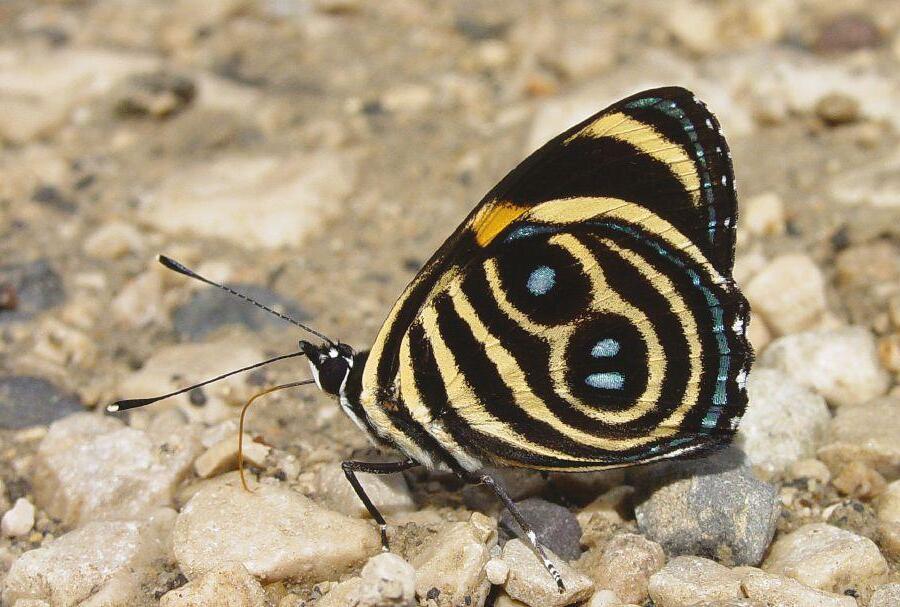
Yellow-rimmed Eighty-eights, Callicore texa, range from southern Mexico to Brazil and are quite variable over their large range.
Right: Upperside. Aug. 6, 2014. Bonampak, Chiapas, Mexico.
Below: Underside. July 18, 2003. Misol-Ha, Chiapas, Mexico.
Ishtar. All of them were not just deities of
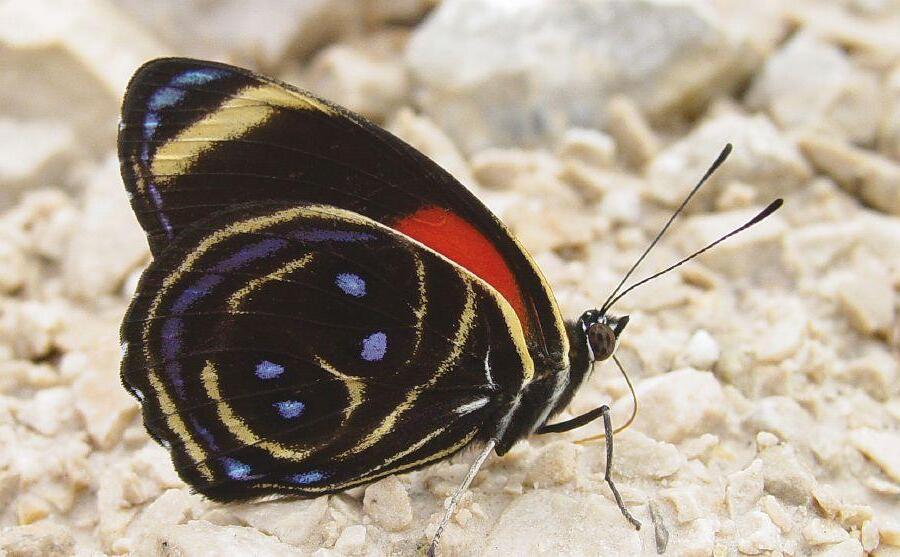
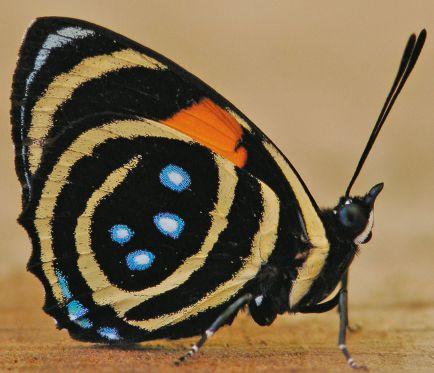
Above: Four-spotted Eighty-eight, Callicore brome. Jan. 10, 2006. Darien, Panama.
as an aside that there is a genus of small clams also named Astarte and an entire family of clams named for Venus (the Veneridae or Venus clams), perhaps because the goddess Venus was born of sea foam and rose from the sea on a bivalve shell, although the shell is often pictured, as in Boccaccio’s “The Birth of Venus” as a scallop, not a clam. In any event, I recall my art history professor at Pratt, the late Alvin Ross, showing a slide of The Birth Venus and quipping “Venus on the half-shell.” Colima Eighty-eight, Diaethria asteria, is named in English for the Mexican state of Colima where it occurs, but its scientifc name is again based on that of a mythical female being, in this case the Titaness Asteria. She was associated with falling stars (meteors and asteroids, of course) and her name means the “starry one”. Her mother was Phoebe and her sister Leto, both the names of other butterfies as well. Striped Eighty-eight, Callicore atacama, has the eyespots reduced to small dots and largely replaced by stripes. It occurs south into Ecuador, from where it was described from by Hewitson in 1852. Whether he believed it occurred in the Atacama desert of Chile I don’t know but I’d be surprised if it does myself. Both Navy Eighty-eight, Diaethria astala, and Anna’s Eighty-eight, D.
anna, were named by the French entomologist Felix Edouard Guerin-Meneville (17991874) in 1844. I assume Anna was named in honor of some female colleague of the author without having the energy to try and fgure out exactly whom. As for astala, I can only say that my online research efforts were thwarted by the search engine returning results for “Hasta la vista” which I do not believe was what Guerin-Meneville had in mind. It does appear to be a feminine name but cannot fnd a precise connection to classical mythology.
For the remaining names I will discuss frst those that were named for mythical beings or classical personages and leave the others, including the tougher ones for last. Common Eighty-eight, D. clymena, was named for yet another Titaness, Clymene. She was the daughter of Oceanus and Tethys and the goddess of both fame and infamy. The Titans, by the way, were the deities in Greek mythology that preceded the Olympian pantheon (Zeus, Apollo, Athena, etc.) that are more familiar to us. White-patched Eightyeight, D bacchis, has a name that appears to be based on the name Bacchus, the Roman god of agriculture, wine and fertility and the equivalent of the Greek Dionysus. Bacchis, with an “i” instead of “u” can either be a plural form of the god’s name or a feminine form of it. In either case, in addition to its prominent white patches, this butterfy has extensive purple coloring above that is reminiscent of both the grapes and wine so dear to Bacchus and/or his girlfriend(s) Bacchis. Four-spotted Eighty-eight, Callicore brome, may also have been named for Bacchus, as Bromios was another name for him. Two-eyed Eighty-eight, Callicore pitheas, seems to be named for the Greek geographer and explorer Pytheas of Massalia who was born in the Greek colony of Massalia (now Marseille, France) in 350 BC and died in 285 BC. Six-spotted Eighty-eight, Callicore lyca, has another name that echoes with classical overtones. Lycus (literally “the Wolf”) was, in Greek mythology, the ruler of ancient Thebes. But Lyca is the name that William Blake (1757-1827), the English
visionary poet and artist gave to the female character in ‘Little Girl Lost” written in 1794 about a young girl who wanders out into the wilderness, where “beasts of prey” (including wolves?) play a prominent role in the poem.
Blind Eighty-eight, Haematera pyrame, which does not have any eyespots at all, is one of the two species covered here not in the genus Callicore or Diaethria. The genus name means “blood red” and the upper side of this species fts that description. Pyrame is likely derived from the name Pyramus, a character in Ovid’s Metamorphis. The tragic love story of Pyramus and Thisbe has a similar structure to Romeo and Juliet. Orange-striped Eightyeight, D pandama, is another species with an obscure Greek name. “Dama” means fallow deer and Pan means the name is probably a feminine name as in Pandoras which means “all gold” although a name that means “all fallow deer” makes little sense to me.
Purple-vented Eighty-eight, Mesotaenia barnesi, was named by William Schaus (1858-1942) for William Barnes (1860-1930). Both Schaus and Barnes were important in the history of butterfy study and, indeed, the Barnes collection is a vital component of the National Collection housed at the Smithsonian Institution to this day. The remaining three eighty-eights all appear to be named for places. Blue-and-orange Eighty-eight, Callicore tolima, described by Hewitson in 1852, is named for a Department in Colombia, I believe. Yellow-rimmed Eighty-eight, Callicore texa, looks like it has the same root as the word the state of Texas is based upon. That word, “teyshas” is not from the Spanish language directly, but rather is from the Caddo language spoken by Native American inhabitants of the southern plains (a language spoken by only a very few elders remaining today). The word actually means “friends” or “allies” in the Caddo language, but the Spanish explorers apparently believed it referred to a tribal name, from which the land of Texas eventually took its name. Finally, Lipstick Eighty-eight, Diaethria gabaza, is either named for an ancient region
Regarding Callicore tolima: While working on this article, the editor followed up on the author’s surmise that the species was named for the Colombian department of that name. The editor noticed that all sources examined listed the type locality of this species as the country of Ecuador and that, in fact, a label on the type specimen says “Ecuador”.
Since there doesn’t appear to be a Tolima in Ecuador, the editor was confused (a common occurrence). The confusion was cleared up when, upon further investigation, the editor discovered that there is a town named Ecuador in the Colombian Dept. of Tolima. So, the type locality of this species is almost certainly Ecuador, Tolima, Colombia, not Ecuador the country.
that Alexander the Great marched on and conquered or the present day Gabaza in Niger. Inasmuch as it was named in 1852 by Hewitson, when the tradition of naming butterfy species for classical and mythical people and places was in full fedge, I will go with the region from the classical texts describing Alexander’s conquests. I will end by noting that just as not all the butterfies we call “swallowtails” actually have swallowlike tails, not all of the Eighty-eights have markings that clearly resemble the number 88. But that is not only a fne name to refer to this group in English, but I understand that in Mexico (at least) the butterfies in this group are referred to by non-scientists as “ochenta y ocho” and that’s good enough for me.
All photographs this article by Jeffrey Glassberg, except as indicated

he has seen for a number of species and on 1 Monarchs, 11 Painted , four Skippers, and two Ocola Skippers. Other October sightings included two Skippers 1 seen on October 1 1 of 1 and for together. On October 2 Steven Rosenthal and , a possible third brood, in Jones Beach State 3 in Rancho San photographed a , rare for 1 11 1 localities. John Stretch Park in West Palm
Nov. 4.
Opposite Top
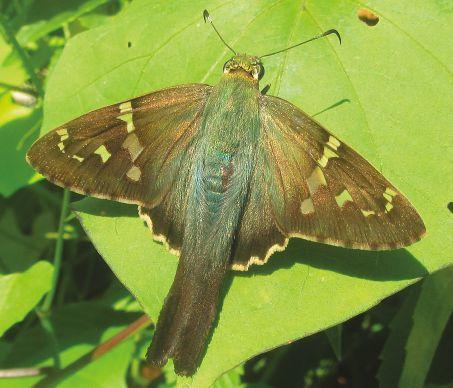
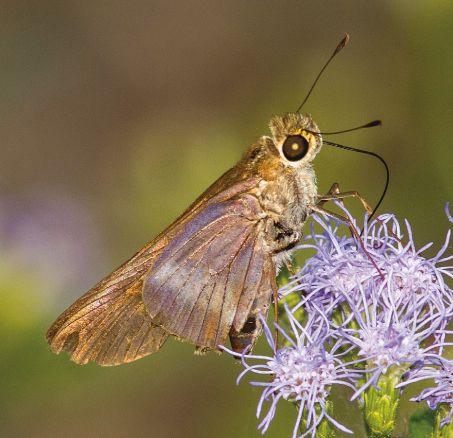
Long-tailed Skippers were found north and inland of where they sometimes stray.
Top Left
Oct. 1. Forest Hills, Allegheny Co., PA.
Top right
Oct. 1. Huegnot, Orange Co., NY.
Middle left a ’s Ski ers are er rare strays to the Lower Rio Grande Valley. Nov. 4. Estero Llano Grande SP, Hidalgo Co., TX.
Middle right Funereal Duskywings continue their range expansion. Oct. 14. Harris Neck NWR, McIntosh Co., GA.
Bottom
e t ir rec r a ue ’s Skipper in the United States. ati a Butterf e ter Hidalgo Co., TX.
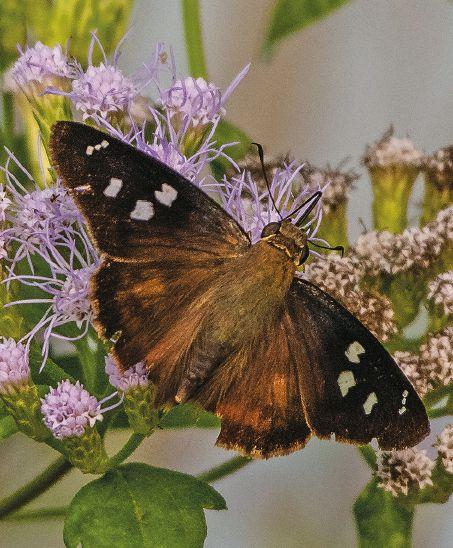
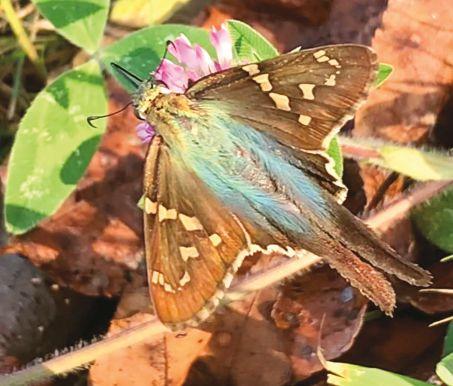
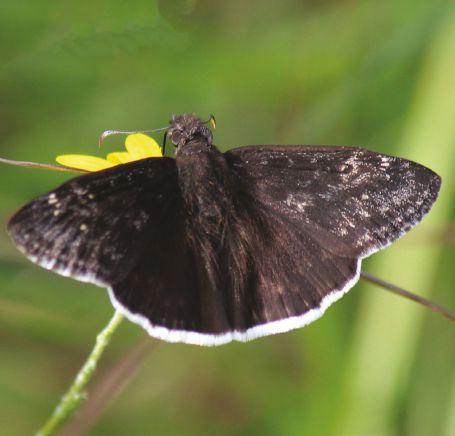
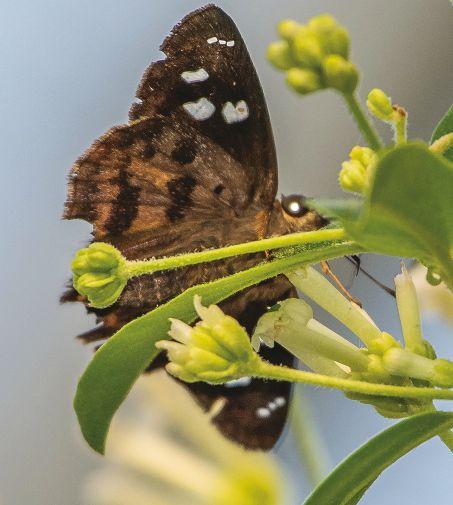
On October 6 Ed Perry, Linda Cooper and 13 others, at a feld trip to Bull Creek Wildlife Management Area, Osceola Co., FL, 26 of the 49 species observed were skippers in this annual “Bullied by Skippers” feld trip. Meske’s Skipper, Berry’s Skipper, Arogos Skipper, and Dusted Skippers were all seen on this day. Ed said, “As far as I know this has not been done in a single day.” Other sightings of note include an October 7 sighting of a Cloudless Sulphur in Scarsdale, Westchester Co., NY by Andrew Block, his frst one ever in his yard; an October 8 sighting from Youngsville, NY by Renee Davis of her frst Sullivan County Sachem; and an October 9 list by Joanne Langabee of 11 species including 121 Painted Ladies in Lauritzen Garden, Omaha, Douglas Co., NE, despite 100% clouded cover and freezing temperatures forecast for the next two days. On October 11 Randy Harrod reported his frst Long-tailed Skipper in his home garden in Davidson Co., TN; on October 12 Marcus Gray photographed a Bronze Copper, his 45th butterfy species in his garden in Huguenot, Orange Co., NY this year; and on October 12 Robert Gilson recorded 13 species including Little Metalmark in Francis Marion National Forest, Berkeley Co., SC.
Other October sightings included an October 13 sighting by Ron Smith of 68 Long-tailed Skippers migrating through, a high count of 22 Monk Skippers, and 2 Statira Sulphurs, in Fort Soto Park, Pinellas Co., FL; another October 13 sightings, this by Renee Davis, of a far north and inland Ocola Skipper at Stump Pond Rd., Youngsville, Sullivan Co., NY; and an October 15 observation of two Milbert’s Tortoiseshells at Rensselaer Polytechnic Institute, Troy, Rensselaer Co., NY by Ronald Hedden. John Lampkin and others on October 18, saw 25 species including Mallow ScrubHairstreak and Mangrove Skipper, both new to the Fred and Idah Schultz Preserve, Hillsborough Co., FL; and on October 19 Seth Ausubel reported a late Ocola Skipper
At the northern edge of its range and very late in the season, this Statira Sulphur was at Fort DeSoto Park, Pinellas, Co., FL on Nov. 23.
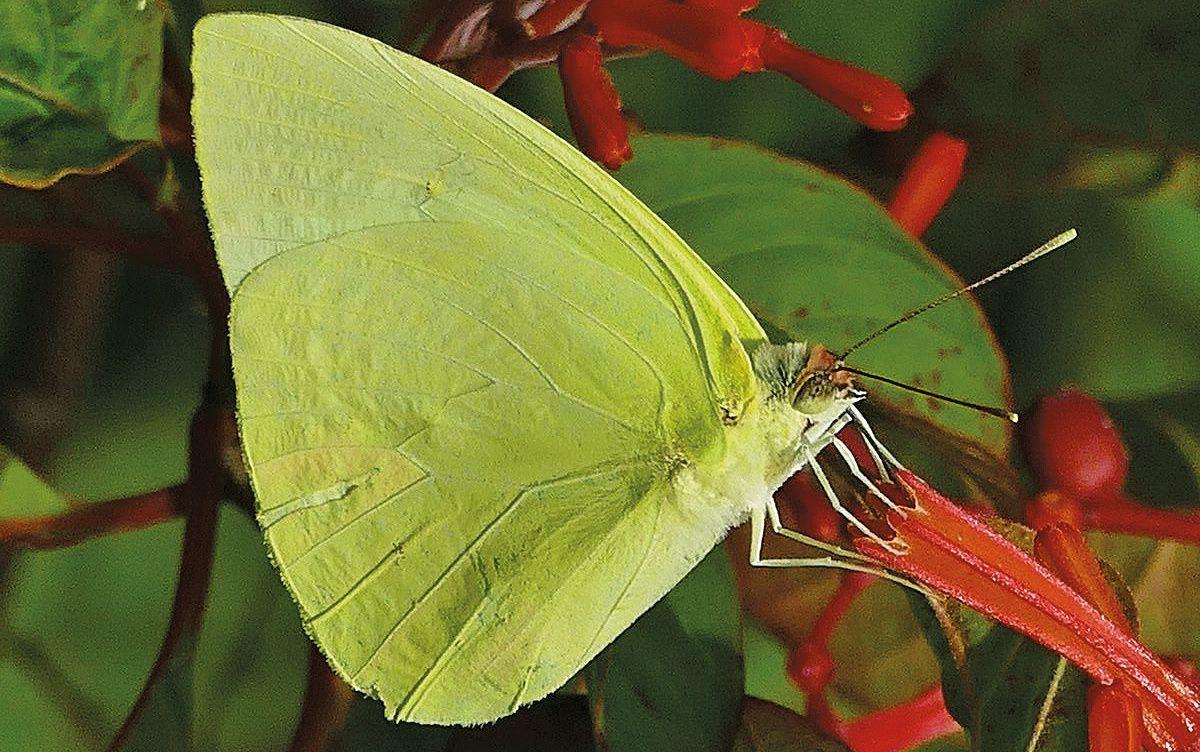
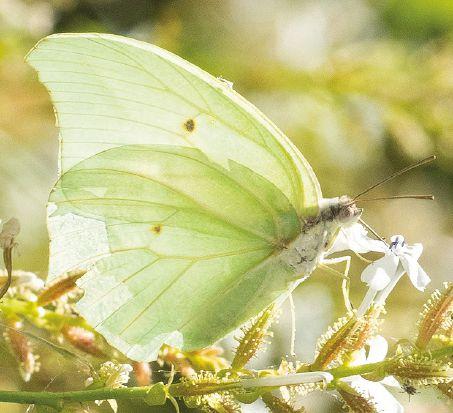
Both species of angled-sulphurs are rare strays to the Lower Rio Grande Valley of Texas. This fall, both species were present in the Valley, sometimes on the same day.
Middle left
Quite a few White Angeled-Sulphurs were seen, this one on Nov. 4 at the National Butterfy Center.
Middle right
Only a few Yellow Angled-Sulphurs were reported. This one was also at the National Butterfy Center on Nov. 4.
Bottom left
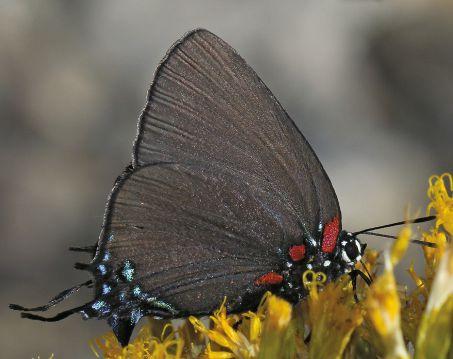
Great Purple Hairstreaks seem to have an affnity for Bart Jones. This one was one of 11 that he saw in the Morongo Canyon, Preserve, San Bernardino Co., CA on Nov. 4.
Bottom right
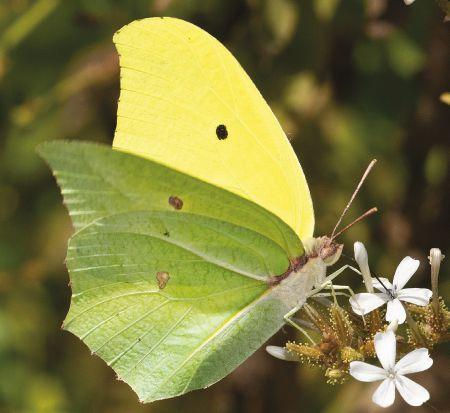
Many species are appearing earlier and fying later. This White M Hairstreak was photographed on Oct. 24 at Washington Crossing, Bucks Co., PA.
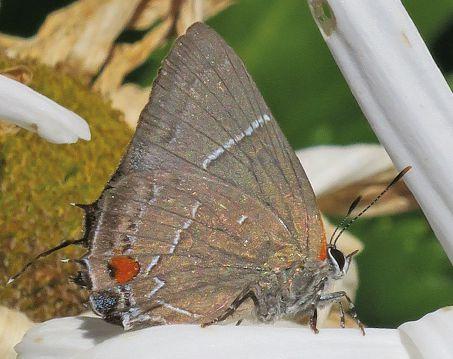
in Washington Crossing, Bucks Co., PA. On October 22 David H. Bartholomew saw 23 California Tortoiseshells and eight Mourning Cloaks migrating south in Rancho San Antonio Open Space Preserve, Santa Clara Co., CA; on October 24, Seth Ausubel found a very late White M Hairstreak at Washington Crossing, Bucks Co., PA and Linda Romine reported 20 species still fying at Meldahl Lock and Dam, Clermont Co., OH including 30 Variegated Fritillaries; and on October 26 Patrick Belardo saw a late Spicebush Swallowtail in Piscataway, Middlesex Co., NJ. Walter Wallenstein and Jeff Belth reported 14 species at Navy Wells Pineland Preserve, Miami-Dade Co., FL on October 26 including seven Baracoa Skippers and four federally endangered Bartram’s Scrub-Hairstreaks; and on October 28 Jim Wilkinson saw nine species including an Ocola Skipper and a Monarch in the Elkhorn Garden Plots, Columbia, Howard Co., MD.
November butterfy sightings included a November 1 Monarch reported by Renee Davis in Bashakill, Orange Co., NY; a November 2 sighting by Barbara Peck of four species including four Gulf Fritillaries, only very recently established this far north, still fying in unseasonably warm weather in Anderson, Shasta Co., CA; and a November 3 submission by Denis C. Quinn of four species including four Fiery Skippers 1 mile west of US route 1 on Mason-Dixon, MD/PA line, Chester Co., PA. Bart Jones saw 11 Great Purple Hairstreaks on November 4 in Big Morongo Canyon Preserve, San Bernardino Co., CA; also on Nov. 4, Mark and Holly Salvato saw an Evans’ Skipper, a very rare stray to the U.S., in Estero Llano Grande SP, Hidalgo Co., TX; also on Nov. 4, Jeffrey Glassberg found both a White Angled-Sulphur and a Yellow Angled-Sulphur at the National Butterfy Center; and on November 6 Ron & Lori Smith reported 11 species including fve Three-spotted Skippers, the farthest north for this species in Pinellas County, at Brooker Creek Preserve, FL. Mark and Holly Salvato,
Top
Julia Heliconians have recently established their northernmost Florida colony at the Fred and Idah Schultz Preserve on the Florida west coast in Hillsborough County. This female was photographed on Nov. 27.
Middle Left
Gulf Fritillaries are also moving north. Recently they have colonized northern California. This one was photographed on Nov. 2 in Anderson, Shasta Co., FL.
Middle right
Mexican Silverspots are beautiful rare strays to the U.S. This one was photographed in Progresso Lakes, Hidalgo Co., TX on Nov. 26.
Bottom left
White Peacocks had a boom year in Florida. This one was seen on Nov. 13 at Paleo Hammock, St. Lucie Co., FL, one of more than a thousand White Peacocks seen that day.
Middle right
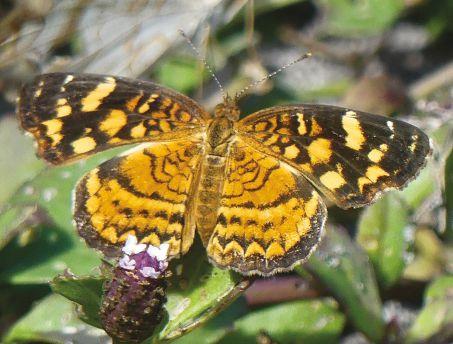
Cuban Crescents, usually rare to uncommon in extreme south Florida, had a population explosion in the fall and moved north of their normal range. This one was photographed in John Stretch Park, Palm Beach Co., FL on Oct. 4.
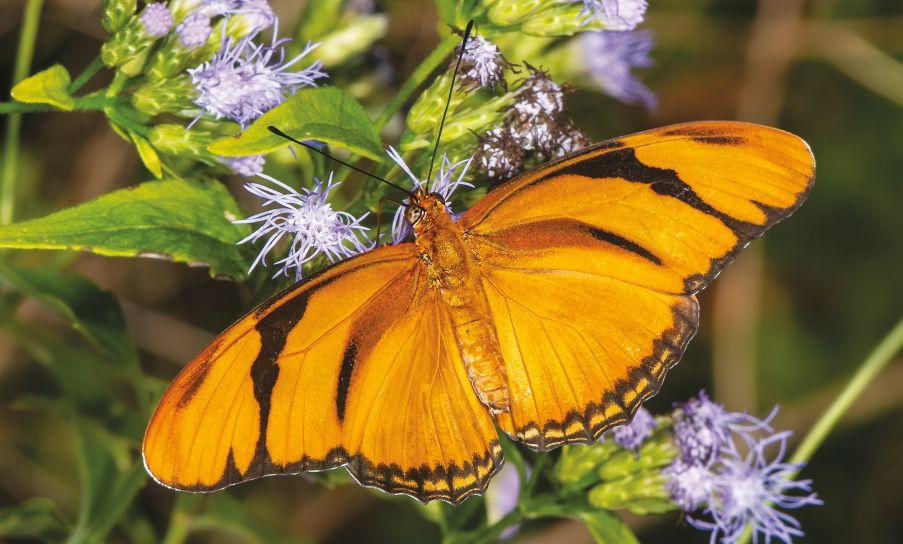
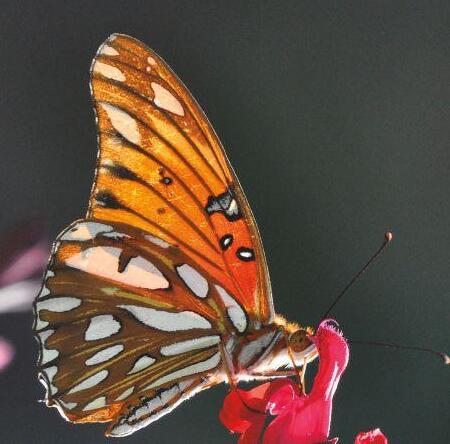
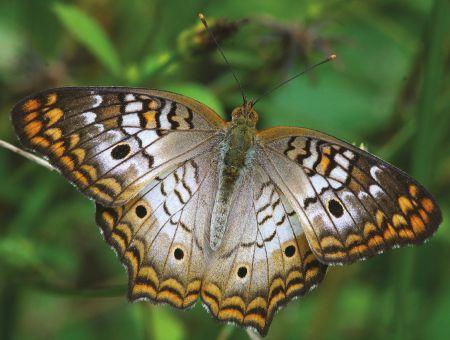
on November 5, recorded 45 species including Celia’s Roadside-Skipper and Guava Skipper in Bentsen-Rio Grande Valley State Park, Mission, Hidalgo Co., TX, and on November 10 Mike Troyan saw six species including Becker’s White and Wright’s Metalmark in Big Morongo Canyon Preserve, San Bernardino Co., CA. On November 11 there were nearly the last butterfy reports in the east including an Orange Sulphur and Sachem reported by Jim Wilkinson in Elkhorn Garden Plots, Columbia, Howard Co., MD; a Cabbage White seen by Andrew Block in Pelham Bay Park, Bronx, NY; a Cabbage White, Clouded Sulphur, and an Eastern Comma reported by Curtis A. Lehman in Forest Hills, Allegheny Co., PA; and Beth Polvino reported ten species still fying and three species of caterpillars still munching on their host plants in her NABA #1151 garden in Cape May Co., NJ.
Other November sightings included a November 13 report by James L. Monroe of 1000! White Peacocks in Paleo Hammock Preserve, St. Lucie Co., FL; and a November 14 sighting of 12 Queens and two Monarchs by Marcus Gray during a Monarch Joint Venture meeting in Desert Botanical Garden, Phoenix, Maricopa Co., AZ. On November 16 Karl and Dorothy Legler reported 13 species including a Guava Skipper at Valley Nature Center, Weslaco, Hidalgo Co., TX; and on November 18 David H. Bartholomew saw two Red Admirals, a species absent there during the summer months in Rancho San Antonio Open Space Preserve, Santa Clara Co., CA; and on November 23 John Lampkin and Erik Stabl recorded 20 species including Statira Sulphur, a new species for this site and frst found on November 21 by Eric, at Fred and Idah Schultz Preserve, Hillsborough Co., FL. Also on November 21, the frst of two Blomfld’s Beauties showed up at the National Butterfy Center, spotted and photographed by Luciano Guerra — they stayed around to delight visitors for a few days. To make matters even better, on November 22, a Manual’s Skipper was seen and photographed
at the National Butterfy Center — this being only the third record of this species in the United States. Back at the Fred and Idah Schultz Preserve in Hillsborough Co., FL, John Lampkin saw and photographed a Julia Heliconian. The colony here, apparently only recently established, may be the northernmost colony of Julia Heliconians in Florida.
A late warm spell resulted in a few additional sightings in the northeastern states including an Orange Sulphur on November 25 by John J. Collins in Raritan, Somerset Co., NJ; two Eastern Commas on November 25 seen by Linda Romine along Buzzard Roost Rock Trail, Adams Co., OH; a very late American Snout reported by Jim Wilkinson on November 25 in Blandair Park, Columbia, Howard Co., MD; and a November 26 sighting of a Red Admiral by Denis C. Quinn 2 miles south of Kirkwood, Lancaster Co., PA. On November 26 Daniel Jones and others observed 48 species in his yard in Progreso Lakes, Hidalgo Co., TX including Statira Sulphur, Mexican Yellow, Mexican Silverspot, Guava Skipper and Double-dotted Skipper.
Whether you see an unusual butterfly, an early or late sighting of a common species, or have a complete list of the species you have seen, we would appreciate hearing from you. Please send your butterfly sightings to sightings@naba.org. Those who record your sightings to the Butterflies I’ve Seen website can just click on “email trip” and send it to the address given above. Your sightings will go into the larger database and will also be available for others to see on the Recent Sightings web page.
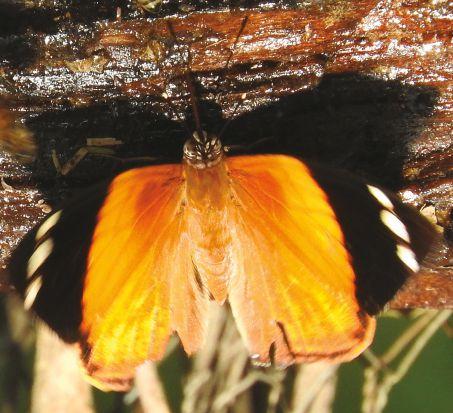
From Nov. 21 to Nov. 24, at least two Blomfld’s Beauties, a male and a female, delighted visitors to the National Butterfy Center in Hidalgo Co., Texas. This tropical species is a very rare stray along the United States/ Mexican border
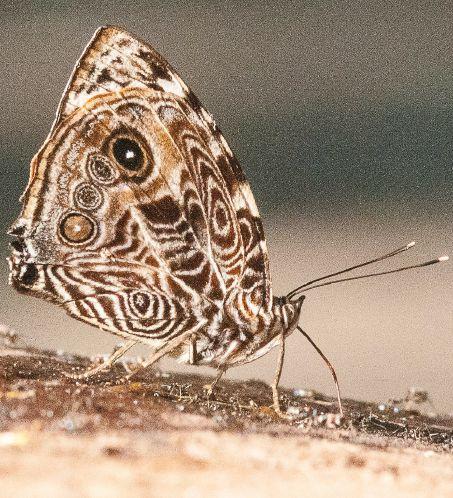
Top
The underside of the frst individual see — a female. Nov. 21. Middle
The upperside of the second individuals — a male, with brighter orange and without a cream-colored band on the FW. Bottom
The upperside of the female, with chestnut coloration and a cream-colored band on the FW. Nov. 23.

Don Dubois’ formal training is in the area of chemistry, with a Ph.D. from the University of Kansas. He retired in 2002 after working 32 years as a chemical researcher and relocated to the Houston, Texas area. Since then Don has busied himself converting a large barren backyard into a butterfy friendly habitat. This gardening effort has been rewarded with visits by over 80 species of butterfies, several of which were county records. His interest in butterfies and insects started at an early age and involved the usual insect collection. With the availability of good quality, reasonably priced digital cameras, collecting was abandoned in favor of photography. Don’s interest in native plants has been nurtured by volunteering with native plant specialists at Mercer Arboretum and Botanic Gardens.

Jeffrey Glassberg is a director and president of NABA. Jeff has followed butterfies since he was 5 years old living on Long Island, New York. He detoured to take an undergraduate degree in civil engineering and a Ph.D. in molecular genetics, then worked at Stanford University and Rockefeller University. In 1981 he invented DNA fngerprinting and co-founded a biotechnology company (Lifecodes) that commercialized this technique. Jeff is a past-president of Xerces Society, the author of the ‘Butterfies through Binoculars’ feld guide series, the editor of the ‘through Binoculars’ series (including Caterpillars, Dragonfies and Wildfowers) and the author of A Swift Guide to the Butterfies of Mexico and Central America and of A Swift Guide to Butterfies of North America He
graduated from the Columbia University School of Law in 1993 and is a member of the New York bar. He is an adjunct professor of Ecology and Evolutionary Biology at Rice University.
S. Mark Nelson Mark Nelson is a retired biologist. During his work years, he was kept busy monitoring various environmental impacts using aquatic invertebrates. He also spent a fair amount of time devising schemes for the use of butterfy assemblages in ranking the quality of riparian zones. The past couple of years he’s been planning and taking backpacking trips and fnishing up some papers from his past career.

Tessa Nelson dresses up like a dinosaur professionally. When she’s not roaring at preschoolers, she enjoys scanning Shakespeare, playing the harp, and putting on plays in breweries. She began her lepidopteran longings at a young age, a fitting fancy fostered by her father, Mark Nelson.

Mike Reese’s brief biographical sketch appeared in the Winter 2019 issue of American Butterfies.
Harry Zirlin’s fascination with butterfies and other insects dates to his early childhood. He travels extensively in the United States, studying and photographing butterfies. He supports this passion by working as an attorney in the environmental area at the New York law frm of Debevoise & Plimpton.

Jeffrey Glassberg, I love your quest for your “Big Life”. I don’t know if you know how many of us are living vicariously through you in the words that you print in your articles. Your descriptions put me in another place, right beside you, walking the trails, fording the marshes and scaling the mountains. I can see the butterfies just as you do, what a great feeling. Unfortunately, I do not have a neighbor’s frst born to sell and I’m not going to take out a mortgage on my home, so I don’t think I will be able to visit many of the places you have been. I think that’s why I like reading about them so much.
I hate the thought that sooner or later you will reach your goal of seeing the 21 species missing on your list. When that day comes, and I’m sure it will, I will be very happy for you, woohoo and a great big atta-boy. But for me it will be a sad day knowing that no more articles will be coming. No more hanging on your every word and picturing myself in the moment. I hope you will come up with another quest in your life so you can keep us on the edge of our seats, waiting, watching, and hoping. Thank-you Renee Davis, Youngsville, New York I’m so glad to learn that you (and, hopefully, others) are enjoying these articles. Thank you for sharing your thoughts about them. [Ed.]
The next NABA Photography Contest will be held in 2020. The winner will receive $300 and the 1st runner-up will receive $100. Winning entries will be published in American Butterfies. Photographs of adults must be of free-fying, unrestrained butterfies taken in the feld (not in a butterfy zoo), in Canada, the United States, or Mexico.
Photographs of immatures must be of eggs, caterpillars or chysalises taken in the feld, or at a location (e.g., one’s house or laboratory) within 20 miles of where the eggs or caterpillars were obtained. Submissions, which must be received by June 30, 2020, should be in the form of digital images, sent as high resolution jpeg fles to naba@ naba.org. Please include the photographer’s name in the fle name. Please limit your submissions to three images (only the frst three images received, per entrant, will be considered).
Entries must be accompanied by a signed statement giving NABA the right to copy and publish the photographs, both in print and digital form, and vouching that the photographs, if taken of adults, were taken in the feld, of free-fying, unmanipulated butterfies. If of immatures, the photographer’s statement must vouch that the immatures were either photographed in the wild; or within 20 miles of where found and if removed from the wild that they were reared through to adults (or attempted to rear through to adults) and released where they were found.
Please include detailed information about when and where the photographs were taken, as well as camera, lens, fash, flm, and setting information — to the extent known. Please include a telephone number and an email address where you can be reached.
Again, send your entries (maximum of three) to: naba@naba.org.
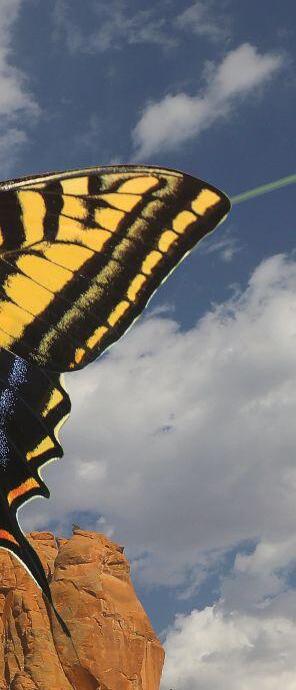
Back cover: Main photo by Malcolm Moran of the Monastery of Christ in the Desert, Abiquiu, NM (all rights reserved) taken March 28, 2013. Large inset Two-tailed Swallowtail by Ken Wilson, Albuquerque, NM taken May 7, 2014. Small inset Sandia Hairstreak by Jeffrey Glassberg, Sandia Mtns, NM taken on May 10, 1998. Come to the NABA 2020 Biennial Members Meeting in Santa Fe, in August 2020 for beautiful scenery, great butterfies and to make new friends.
Plant names used are those given at http://plants. usda.gov