Published in the United States by Ideapress Publishing. All trademarks are the property of their respective companies.
Cover Design by Victoria Kim
Cataloging-in-Publication Data is on file with the Library of Congress.
ISBN: 978-1-64687-045-5
Special Sales
Ideapress Books are available at a special discount for bulk purchases for sales promotions and premiums, or for use in corporate training programs. Special editions, including personalized covers, a custom foreword, corporate imprints, and bonus content are also available.
Non-Obvious® is a registered trademark of the Influential Marketing Group.
Read this book to learn how persuasive marketing can tell your story in a way that breaks through the noise, helping you keep your current customers while attracting new ones. Marketing influences how people act and what they believe. This book will teach you how to shape both.
DEDICATION
To my wife Chhavi, for being an inspiring force of optimism since the beginning who has never needed a big budget to find happiness.
Is This Guide for You?
If you picked up this book, you are not a dummy.
Many business guides treat you like an idiot. Some even say so on the cover. This is not one of those books.
The Non-Obvious Guides all focus on sharing advice that you haven’t heard before. This book is my contribution to the series, based on almost two decades of leading marketing strategy for some of the most recognizable brands in the world and then leaving to become an entrepreneur and start two businesses.
Like most of our authors, I would love to share these insights with you over coffee. Until I get that chance, this book aims to be the next best thing. I hope you find it entertaining and useful!
ROHIT BHARGAVA Founder, Non-Obvious Guides
i Introduction
PART 1—STRATEGY
Chapter 1
01 The Modern Crisis of Believability
➜ Cowboys, Ad Men, and Evil Marketing
➜ How Fake News Makes Our Lives Harder
➜ Three Reasons Consumers Distrust Everyone (Including You)
➜ How to Be More Believable
Chapter 2
11 How to Create a Marketing Strategy
➜ Why You Don’t Need a Chicken Strategy
➜ The World’s Most Common Marketing Mistake
➜ The Value of Being Different
➜ How to Craft Your Non-Obvious Marketing Strategy
Chapter 3
23 How to Understand Your Customer
➜ How to Think Beyond Demographics
➜ The Benefits of Stereotyping Your Customers
➜ How to Create a Customer Persona
➜ How to Empathize with Your Customer
➜ The Five Phases of a Customer Journey
Chapter 4
35 How to Position Your Business
➜ Why Positioning Matters
➜ The Five Elements of an Effective Marketing Message
➜ How to Write Your Tagline
Chapter 5
43 How to Build a Brand
➜ The Eight Types of Brand Names (and How to Use Them)
➜ The Importance of Brand Consistency
➜ Defining Your Brand—How to Set Non-Obsessive Guidelines
Chapter 6
51 How to Tell Your Story
➜ How to Tell Your Backstory
➜ How to Use Personality to Tell Your Story
Chapter 7
61 How to Inspire Word of Mouth
➜ Why Customer Satisfaction Doesn’t Matter
➜ The UAT Filter
➜ How to Be More Unique
➜ How to Be More Authentic
➜ How to Be More Talkable
➜ How to Inspire Your Employees, Teammates, and Vendors to Be Ambassadors
PART 2—EXECUTION
Chapter 8
73 How to Create a Marketing Plan
➜ The Art of Campaign Thinking
➜ How to Simplify Your Marketing Plan
➜ The Elements of a Marketing Campaign
➜ Why You Need Integration
Chapter 9
83 How to Create a Kick-Ass Website
➜ The Four Reasons People Visit Your Website
➜ The Five Elements of a Trustworthy Website
➜ How to Fix Your Website Quickly
➜ Going Responsive: Why You Need a Mobile-Friendly Site
Chapter 10
91 How to Use Social Media
➜ Why No One Likes an Evangelist
➜ The Biggest Myths About Social Media Marketing
➜ The Five Guiding Principles of Social Media
➜ How to Pick Which Platforms to Use
➜ Why Haters on Social Media Are a Good Thing
➜ Do You Need to Hire a Social Media Consultant?
Chapter
11
103 How to Do Content Marketing
➜ Why Content Marketing Is So Popular
➜ How to Find Topics People Care About
➜ How to Create Content to Show Your Expertise
➜ What Are You Good At?
➜ Why Curation Might Be Better Than Creation
➜ The Non-Obvious Content Marketing Library
Chapter 12
111 How to Work with Influencers
➜ Who Is an Influencer?
➜ How to Ask for Help from Influencers
➜ Why Brand Ambassadors Are Better Than Spokespeople
➜ How to Find Your Influencers
Chapter 13
121 How to Master Search Marketing
➜ The Elements of Search Marketing
➜ How to Find the Best Keywords
➜ SEO: How to Improve Your Search Ranking
➜ SEM: How to Run a Paid Search Marketing Campaign
Chapter 14
129 How to Use Email and Direct-Response
➜ Why Direct Marketing Isn’t Dead
➜ Five Keys to Creating Effective Email Marketing
➜ How to Grow Your Email List
➜ Direct Mail, Infomercials, and Other Direct Marketing
Chapter 15
141 How to Buy and Use Advertising
➜ Understanding the Four Types of Media
➜ How to Select the Right Media Channels
➜ How to Buy (and Negotiate) Advertising
Chapter 16
149 How to Generate Publicity That Matters
➜ The Two Sides of Publicity
➜ The Six Principles of Persuasion
➜ How to Generate Earned Media
➜ How to Encourage Positive User-Generated Content
Chapter 17
161 How to Do Event and Trade Show Marketing
➜ How to Stand Out at Any Trade Show
➜ How to Speak at an Event
➜ How to Be Great at Networking (Even If You Hate It)
Chapter 18
173 How to Measure What Matters
➜ Are You Using Feel-Good Metrics?
➜ Using Hero Metrics to See What’s Working
➜ Five Types of Marketing Data
➜ Using the Four A’s Model of Measurement
181 Conclusion
Endnotes
Index
About the Author
How to Read This Book
Throughout this book, you will find links to bonus worksheets, templates, and other resources designed to help you put the advice you’ll read into action. FOR ONLINE RESOURCES, VISIT: www.nonobviousguides.com/marketing
Referenced in the book, you will also see these symbols which refer to content that will further your learning.
FOLLOW THE ICONS:
TEMPLATES
One-page templates to help you strategize.
DOWNLOADS
Useful further reading.
TUTORIALS
Detailed lessons on how to do a task.
VIDEOS
Videos to watch online.
CHAPTER SUMMARY
Key takeaways and important points
In this book, you will learn how to . . .
Earn trust by being more believable in a skeptical world.
Understand your customer’s journey and how they think.
Create a memorable logo and persuasive tagline to stand out.
Use personality to engage your customers and build loyalty.
Build a one-page marketing plan to promote your business.
Strategically use social media, email, and the web without wasting your time.
Stand out at a crowded trade show or industry event.
Inspire your employees to promote your business.
Adapt your strategy in a world fundamentally shifted by the global pandemic.
Introduction
A few years ago, Elon Musk launched a car into space.
The stunt was part of his SpaceX company’s launch of the Falcon Heavy rocket, and it grabbed worldwide attention. After all, who could ignore a photo of a mannequin sitting in a Tesla Roadster orbiting high above the earth?
One media property even described it as “the greatest ever car commercial without a dime spent on advertising.” The stunt was perfectly in character for Musk, too.
He once bragged to a reporter about doing more than $1 billion in sales with no marketing, no advertising, and no sales force. This is the dream. If you can create a great product or a stellar experience, then all your marketing should happen effortlessly and without a budget, right?
The truth is marketing rarely works out like that.
In fact, it didn’t work out like that for Musk, either. While he might not have spent anything on traditional advertising, launching the car into space was a highly calculated and costly marketing stunt designed to inspire the same awe and curiosity that he aims to awaken with his products.
Marketing is how you share the story of your business with the world to inspire belief and encourage action.
For Musk, making you believe that his company can accomplish the impossible is part of the brand. It helps him sell more cars because many Tesla buyers feel as if they are doing their part to change the world and save the environment.
Although he probably would never describe himself this way, Elon Musk is a master marketer. I should know. I’m obsessed with marketing.
WHY NO ONE WATCHES TV WITH ME
I see marketing everywhere, and I can’t help paying attention to it.
I watch the promotional messages before a YouTube video even after the “Skip Ad” button appears. I take photos of the interesting disclaimers on restaurant menus. Most members of my family refuse to watch TV with me because I rarely fast-forward through
the commercials. I once nearly missed a flight because I started talking with an airport store owner about her marketing and lost track of time.
While I consume all this marketing, I build campaigns and strategies in my head. I imagine new ways for a business to tell its story every time I walk by. And I feel bad when I see great opportunities wasted.
For me, this fascination with marketing has been years in the making.
HOW I BECAME AN ENTREPRENEUR
After leaving my agency job more than five years ago, I started my first business with my wife, and a year later we started a second one. For each business, we had to build a brand, develop a marketing strategy, devise ways to attract and retain customers, and sell a service for one and a physical product for the other.
Along the way, I discovered that many things I thought I knew about marketing were wrong.
Instead of working with million-dollar advertising budgets, I was now an entrepreneur with a non-existent marketing budget.
So my thinking changed. I started working faster and avoiding waste. I focused on what succeeded and ignored everything else.
Within a few years, my first business surpassed $1 million in revenue. A year later, the second did the same. Then when the pandemic hit, we quickly pivoted both businesses to not only survive but continue to grow despite the global business downturn. More importantly, we shifted our marketing strategy to prepare for a time when the pandemic would end and we would get back to a “future normal.”
What was our secret? How did a traditional marketer like me reinvent the “big company” approach to prosper without relying on big spending?
I wrote this book (and updated this Second Edition!) to answer those questions.
PART ONE Strategy
The Modern Crisis of Believability
Twenty years ago—just as the Internet started to gain popularity—a team of researchers from Rice University decided to study how people consumed websites. While watching their subjects, they were surprised to see that nearly everyone avoided looking at the website areas reserved for banner ads.
The effect was so severe that researchers coined a term to describe it: banner blindness.1 It should have been a warning for anyone doing marketing as well because it illustrated a scary fact:
People hate marketing so much they often create an intentional “blindness” to avoid it.
Today you can create temporary email addresses to avoid spam, block ads, and mask your identity and location online. Social media automatically filters out messages that don’t align with your interests, political beliefs, and worldview.
The more people learn to ignore what they don’t find relevant, entertaining, or helpful, the harder you have to work to earn their attention. How can you navigate this skepticism and promote your business? The first step to rising above it is to understand why people have become so skeptical in the first place.
To do that, let’s take a quick jump back in time.
1.1 Cowboys, Ad Men, and Evil Marketing
In the 1950s, Darrell Winfield was about to become famous. While you might not know his name, you probably recognize the character he portrayed: the Marlboro Man.
The advertising campaign featuring Winfield as an iconic cowboy who loved Marlboro cigarettes ran for more than 20 years. It continued despite mounting evidence that the product he promoted was killing its customers.
The campaign led people into the ’60s and ’70s—a golden age of marketing and manipulation by advertising executives who shaped public perceptions on everything from Kodak film to German cars.
As Mad Men inspiration Jerry Della Femina famously joked, “Advertising is the most fun you can have with your clothes on.” If you spent the right amount and had the right message, you could influence public opinion on a mass scale.
During the 80s and 90s, advertising started to dominate television and expanded to digital media in the form of banner ads and emails. Many consumers started to see marketing as the enemy—a force whose goal was to use interruptions to sell something, even if it meant playing on their fears and insecurities.
Over the past 20 years, in many ways marketing has gotten worse. Whether it’s blatantly exaggerated “natural” food packaging claims or fashion and beauty advertising designed to make you feel inadequate, the flood of unbelievable marketing we all face makes it harder for any brand or message to stand out.
This history of increasingly manipulative marketing played a big part in creating a culture where people are wary of trusting anything they see, hear, touch, taste, or smell. Yet this is not the fault of marketing alone.
1.2 How Fake News Makes Our Lives Harder
People now get their news from angry commentators or snarky comedians who offer an angle to every story. These days all news seems biased by politics or tainted by personal opinions.
The truth has a media problem.
The Internet lets anyone share an uncensored message, and has created an ocean where polluted information rises to the top and lies get presented as truth. Social media and every new cycle of political elections continually make it worse.
You can’t take something bad off the Internet. That’s like trying to take pee out of a swimming pool.
—Grant Robinson, Blogger
Consider these recent story headlines:
➜ “Chocolate Milk May Be Better Than Sports Drinks for Exercise Recovery”
➜ “Why Hollywood Doesn’t Cast [insert any actor’s name] Anymore”
➜ “Chemical in McDonald’s Fries Could Cure Baldness, Study Says”
➜ “Bargain Teddy Bear Offer Sparks Violent Scenes Across Britain”
➜ “87-Year-Old Trainer Shares Secret to Losing Weight”
➜ “Sassy Seal Accidentally Slaps Man Across Face with an Octopus”
Even though headlines like these are misleading, they are also hard to resist because they engage our curiosity.
Click-bait headlines are changing our media consumption habits because we constantly must determine what is worth paying attention to. This combination of manipulative media and marketing has created what I call our modern believability crisis. Building trust or being believed is harder than ever before.
1.3 Three Reasons Consumers Distrust
Everyone (Including You)
The media and marketing worlds share much of the blame for the believability crisis. But how did it happen? Here are three contributing factors that have shaped our disbelieving world today:
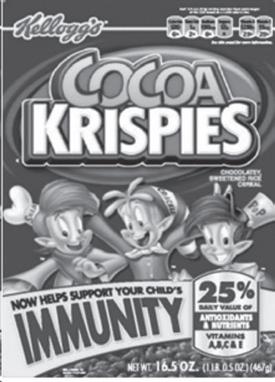
1. Real spin and actual lies: Every time we see a breakfast cereal that supposedly boosts our immunity or vitamins that are “scientifically proven” to increase our lifespan, our skepticism of all marketing grows. Claims that seem too good to be true often are.
2. Facelessness and corporate speak: Many organizations use language that is regulated by lawyers and hence sounds robotic and distant. People only trust what they can understand.
3. Media bias and fragmentation: With much of our news coming from biased sources, the sad reality is that people are choosing media that reinforces their own beliefs and ignoring the rest.
The inflated claims on this box led to a false advertising lawsuit.
Believability is a hard standard to meet today. After all, an individual business can’t reinvent people’s attitudes toward all marketing or media. The challenge reminds me of this joke I once heard:
Two boys are camping when they see a large, angry bear ready to attack. One boy calmly bends down to tie his shoes while the other looks at him. “What are you doing? You can’t outrun a bear!” he says. The first boy replies, “I don’t have to outrun the bear. I just have to outrun you.”
Clearly this isn’t a story of loyal friendship, but it is a lesson for your business. In a skeptical world, the key to winning is being more trustworthy than the competition.
1.4 How to Be More Believable
When I wrote my first book, Personality Not Included, I explored the idea that consumers trust companies that are able to act more authentically. I interviewed nearly a hundred business owners and professionals. Together they demonstrated that the more a brand of any size promoted its personality and generated a human
connection, the more trustworthy the brand was perceived to be. The brands that earned this trust sold more, had more loyal customers, and stayed in business longer.
How can you do the same thing? Here are a few tips:
TIP 1 TALK LIKE A REAL PERSON
I once read an interview in which the CEO of a large company defended himself by saying, “There was no nefarious activity. There wasn’t any desire to obfuscate or hide information.” Does this sound like someone you would trust? If you want to be believable, talk like a human—not a contract lawyer.
TIP 2 SHARE YOUR STORY
When fast-growing online T-shirt retailer Custom Ink talks about their brand, the story starts with one of their founders spending “long hours on his green couch,” a hand-me-down from his big brother. Such personal details bring the struggles of starting the company and overcoming its growing pains to life. People trust stories they can relate to.
TIP 3 BE UPFRONT AND HONEST
If someone didn’t ask, would you share the one thing you don’t do so well? Being candid about your weaknesses is hard, and most of us are reluctant to do so. When we started our publishing company, one of our founding principles was to be upfront and honest.
Sometimes I would start conversations with authors by sharing what we are not so good at. Very quickly, our authors realized that we would never exaggerate our abilities. Now when we say we can do something, our authors always believe us.
CHAPTER SUMMARY KEY TAKEAWAYS:
• Biased media and manipulative marketing have led us into the midst of a modern believability crisis.
• Most consumers today will be skeptical of your brand on their first encounter, so you must earn their trust.
• Focusing on authenticity and sharing the truth proactively are the keys to building trust.
How to Create a Marketing Strategy
Next to an abandoned basketball court on Chicago’s South Side, an unremarkable door looks as if it might lead to a tiny apartment building. Inside is one of the most unusual and extravagant dining experiences in the entire city.
EL Ideas, named for Chicago’s elevated public transit system, challenges nearly every convention of a typical high-end restaurant.2
Renowned chef Phillip Foss, who boasts an impressive resume having worked at some of the most famous restaurants in the world, delights in doing things a bit differently. With an open kitchen and only 20 or so diners per seating, he serves the first dish of his $155 tasting menu without any utensils.
This is the entrance lobby for EL Ideas restaurant.
The cutlery-free course is caviar served on a glass plate—and as diners look around in confusion, Foss reveals that the way to eat it is to lick it off the plate. The plate licking is a bonding experience meant to loosen up the entire room. Who can take themselves too seriously after doing that in public?
VISIT ONLINE RESOURCES FOR:
A slightly embarrassing video of me doing some plate licking at EL Ideas.
The rest of the evening continues to challenge culinary traditions. Foss wears a blue button-down apron that makes him look more like an auto mechanic than a Michelin award-winning chef. Patrons are invited into the kitchen to watch his team in action at any time during the meal.
The experience at EL Ideas is about much more than that caviar dish. From the entrance to the kitchen staff, the food presentation, and even the unusual invitation for diners to bring their own wine instead of having a house wine list with a hefty markup—every choice is intentional.
The one thing that Foss and his team don’t do is create a strategy around a single menu item.
2.1 Why You Don’t Need a Chicken Strategy
While each dish is important, a restaurant focusing on how to serve chicken would be like a coach focusing on how to tie players’ laces to win a football match. This is what I call a chicken strategy: the error of focusing on a small and relatively insignificant detail instead of the bigger picture.
No great restaurant builds an experience on a single dish.
If you ever sat down and thought, “We need a Facebook strategy,” that’s an example of similarly small thinking. Focusing on just one platform or element of your business is like EL Ideas concentrating on a chicken (or caviar) strategy.
The restaurant meal is a theatrical production, and everything from how the food is prepared to how your senses are engaged is something that you can’t help raving about, as countless people do online and in real life after the experience. Great marketing strategy always focuses on an experience, not a menu item.
2.2 The World’s Most Common
Marketing Mistake
When it comes to creating a marketing strategy, the worst way to start is by setting a budget.
Budgets can work a lot like deadlines. If you set a deadline for next Friday, you are virtually guaranteeing that your task will not be done until then. Most of us struggle to get a head start or spread a task out over time. Despite our best intentions, we almost never finish early.
Tasks will expand into the time you give them. Marketing budgets will do the same thing.
When you set a budget, you unintentionally create pressure to spend that money, whether it is smart and effective or not. This is one of the most common marketing mistakes by companies of all sizes.
Large companies waste millions of dollars on marketing and advertising because they spend money on the same things as in previous years. Their marketing is a habit instead of a strategy. And they know that they need to spend their designated budget, or the next year’s budget will shrink.
When you have a marketing budget of $10 million, spending any less seems like a failure. The same thing can happen with $1,000.
A better way to calculate your marketing budget is to consider what you want to do with it and what you want it to do for you. And if it is working, your marketing budget could be unlimited. Here’s how:
CASE STUDY: $1 MILLION MARKETING BUDGET
What if you could predictably generate $300 in profit for every $100 you spent on marketing? Here’s how the math could work:
Cost of advertising = $100
Products sold from advertising = 50 units
Cost of goods = $2 per product ($100 cost of product)
Sales price for product = $10 per product ($500 total revenue)
Profit = $300 (total revenue minus cost of product and minus cost of advertising)
In this scenario, when you spent $100, you generated $300 in profit after accounting for all your costs. If you could keep this performance ratio constant, spending $1 million in advertising would generate $3 million in profit. Now you have a milliondollar marketing budget.
Note to the reader: This scenario makes the optimistic assumption that your sales stay constant as you increase your spending on marketing, which is not always the case.
2.3 The Value of Being Different
If you don’t start your marketing plan by setting a budget, what should you do instead?
The best way to start a marketing plan is to understand how your business stands out from the competition. In Chapter 4, we will focus on the art of positioning, which involves finding the things that help you stand out from your competitors and be memorable to your customers.
Understanding what makes you different is always the ideal place to start your marketing plan. How can you decide where or even how much money to spend if you don’t know what you’re going to say? Being the best isn’t enough if nobody cares. Different is better than better.
—Sally Hogshead
We often think about being different in terms of better or cheaper. The problem is that such differences can fade. You might have a better location, selection, or price today, but that can change quickly.
The smarter way to stand out is by being unique. To see how this works, let’s look at the story of a small dry-cleaning company.
STORY: HANGERS DRY CLEANERS
Some dry cleaners try to promote themselves as being better— your clothes done the same day by 5 p.m.! Others focus on being cheaper—your shirts done for $1.99 each!
Hangers, a small chain of dry cleaners based in Kansas City, Missouri, focuses on being different. Its key differentiator is using vans to pick up and drop off customers’ dry cleaning. Unlike most competitors, Hangers also uses colorless and odorless liquid carbon dioxide to clean clothes, instead of toxic chemicals.
These choices are supported by quirky marketing such as returning clothing on hangers with funny taglines such as “In the closet and proud” or “You’re the 23rd person I’ve seen naked.” Such genuine personality, along with the convenience of home pickup and delivery, has helped Hangers operate profitably in a highly competitive and often commoditized industry for more than a decade.
2.4 How to Craft Your Non-Obvious
Marketing Strategy
Hangers knows that being better or cheaper at cleaning clothes is not enough. What sets the chain apart is legendary convenience delivered through the radical idea of picking up and delivering dry cleaning to a customer’s home or office. No one else does that, and even if competitors tried, it would take them a lot of resources to replicate the fleet of vans and the brand that Hangers has built.
This is what a real competitive advantage looks like: something that not only helps you stand out as different, but it’s also done in a way that would be difficult for someone else to duplicate.
What the Hangers example also teaches is that the best marketing strategy must start with a distinctive answer to this question:
What is the one thing you offer that is different and that your audience cares about?
The key here is that you need to be different and desired. Being different in a way no one cares about just makes you weird, and that’s not ideal.
Here’s a chart to illustrate this principle:
ORDINARY
DESIRED
Highly desired but not different
STUPID
Not desired or different
NONOBvIOUS
Different AND Desired!
WEIRD
Different but not desired
DIFFERENT
As you think through the right way to differentiate your business, be careful that you don’t lean too heavily on outside perspectives. There will be lots of people who have an opinion to share. Just remember you need to remain laser focused on what your customer actually cares about - not what your stakeholders or team members think.
In the next few chapters, we will explore how you can craft your best answer to this question and build it into an effective marketing strategy.
To start, you will first need to build a better understanding of your customers, so we will focus there next.
CHAPTER SUMMARY KEY TAKEAWAYS:
• The most common marketing mistake is setting a marketing budget before determining what you are going to say.
• A great marketing strategy always aligns with business strategy. Everything else follows from that.
• The best way to set your business apart is to focus on being different in a way that matters to your customers.
About the Author
Rohit Bhargava is on a mission to help the world be more openminded by teaching others how to be non-obvious thinkers. He is the founder of the Non-Obvious Company and an entertaining, original, and “non-boring” keynote speaker on innovation and trust. He previously spent 15 years in leadership roles at two renowned ad agencies: Leo Burnett and Ogilvy. Rohit is the Wall Street Journal best-selling author of 7 books and has been invited to deliver keynote presentations in 32 countries around the world. His insights have been used by the World Bank, NASA , Intel, Disney, Colgate Swissotel, Coca-Cola, Schwab, Under Armour, NBC Universal, American Express, and hundreds of others to win the future. Rohit is a popular Adjunct Professor of Marketing and Storytelling at Georgetown University and also writes a monthly column for GQ magazine in Brazil. He believes in listening before talking, is a lifelong lover of the Olympics, and lives and works with his wife and two boys just outside Washington, D.C.
WARNING: THIS IS NOT A GUIDE FOR DUMMIES OR IDIOTS. With special downloads, templates & guides!
Be more persuasive. Tell better stories. Stand out in a noisy & distracted world.
Today, consumers are more skeptical than ever. Whether you are selling a product or service, the challenge of marketing comes down to trust. But how can you build trust, earn more customers and differentiate your business in a world that seems to offer unlimited choices for everything? In this short guide, award winning marketer Rohit Bhargava will teach you just what you need to know to grow your business and stand out from the competition, no matter what you sell.
WHAT YOU WILL LEARN:
➜ Never set a marketing budget before creating a strategy.
➜ Create unstoppable word of mouth and win more loyal customers.
➜ Waste less time on social media and focus on what really matters.
“Recommended! A modern and effective playbook that anyone can use to attract more customers.”
JAY BAER
Author of Hug Your Haters
“To stand out in a crowded market, use this book as your secret weapon.”
DORIE CLARK
Adjunct professor at Duke University
ROHIT BHARGAVA is the #1 Wall Street Journal bestselling author of seven business books. He spent 15 years advising some of the largest brands in the world on marketing strategy before becoming an entrepreneur and starting two successful small businesses (so far!) with his wife Chhavi.
STAY NON-OBVIOUS. READ MORE GUIDES: www.nonobvious.com/guides