


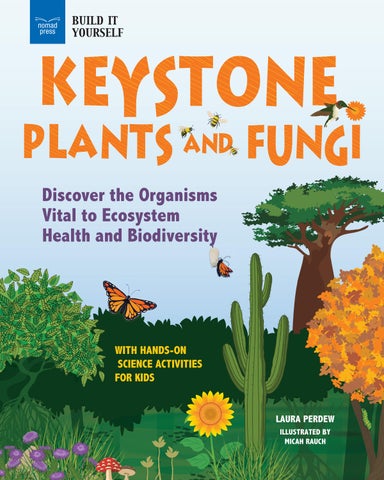
Discover the Organisms
Vital to Ecosystem Health and Biodiversity









WITH HANDS-ON SCIENCE ACTIVITIES FOR KIDS

























































LAURA PERDEW ILLUSTRATED BY MICAH RAUCH
Introduction
What are Keystone Plants? . . . 1
Chapter 1
Oaks . . . 12
Chapter 2
Baobab Trees . . . 25
Chapter 3
Brazil Nut Trees . . . 37
Chapter 4
Mangroves . . . 49
Chapter 5
Saguaro. . . 61
Chapter 6
Flowers . . . 70
Chapter 7
Grasses . . . 82
Chapter 8
Fungi . . . 95
Chapter 9
Supporting Native Plants and Trees . . . 108
Glossary • Metric Conversions
Essential Questions • Selected Bibliography
Resources • Index
Interested in primary sources?
Look for this icon.

Some of the QR codes in this book link to primary sources that offer firsthand information about the topic. Many photos are considered primary sources because a photograph takes a picture at the moment something happens —but watch out for fake ones! Use a smartphone or tablet to scan the QR code and explore more! You can find a list of the URLs on the Resources page. You can also use the suggested keywords to find other helpful sources.
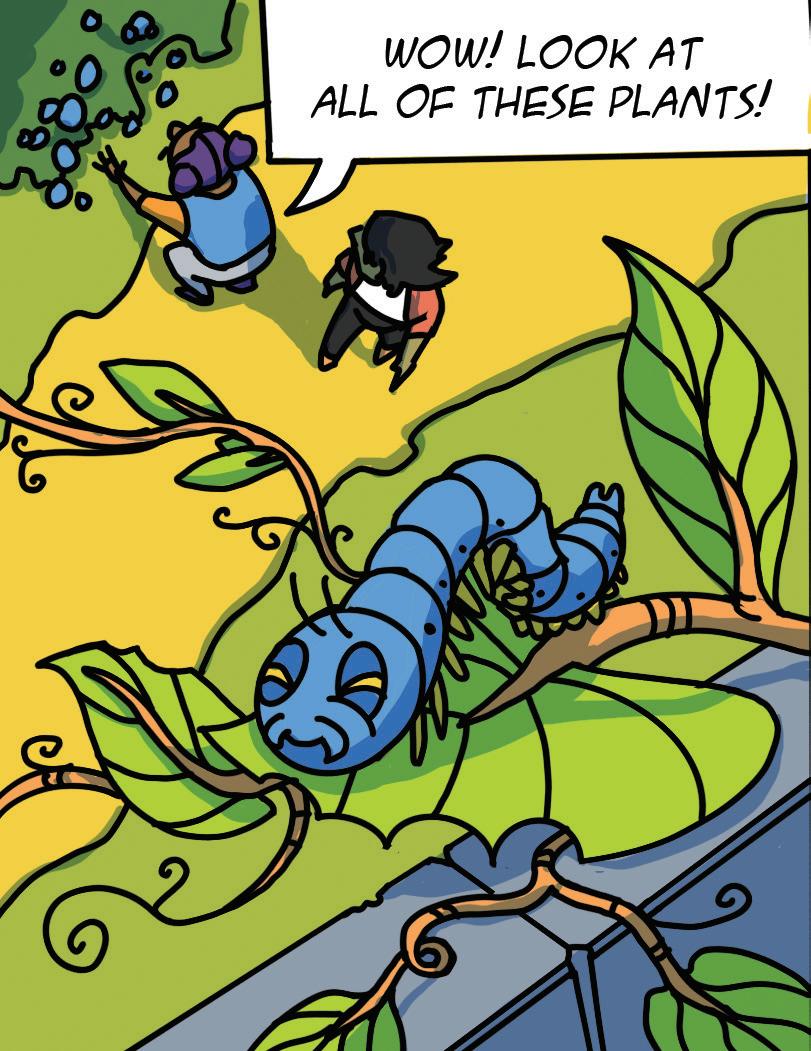
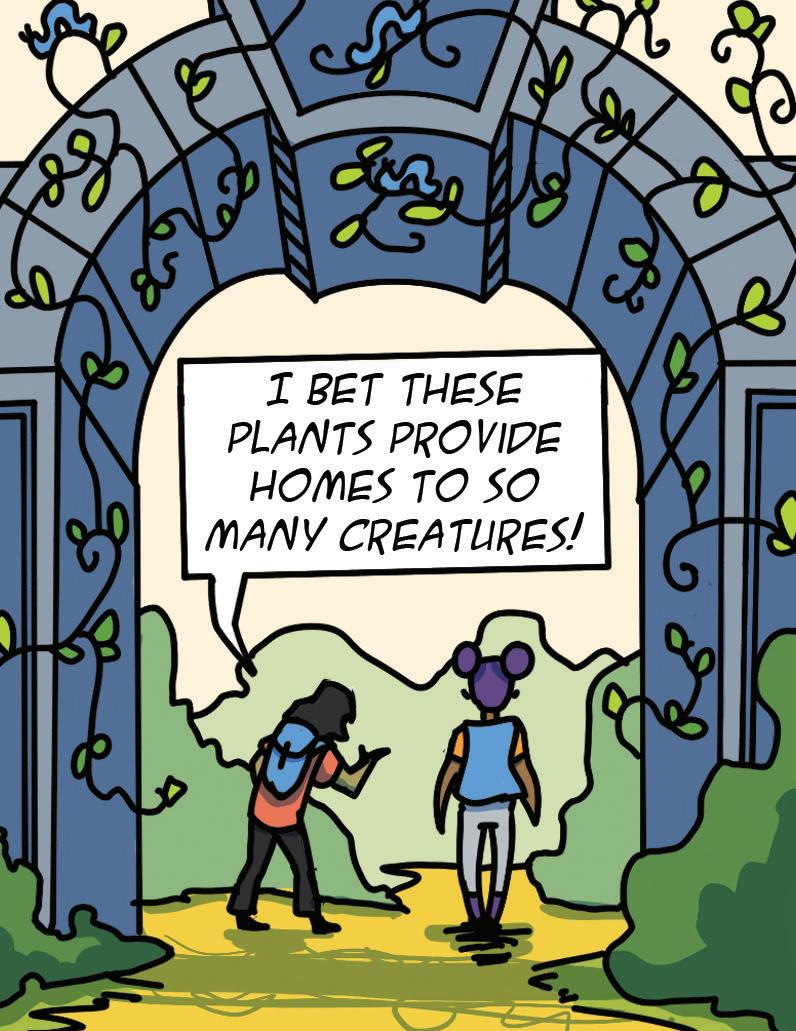
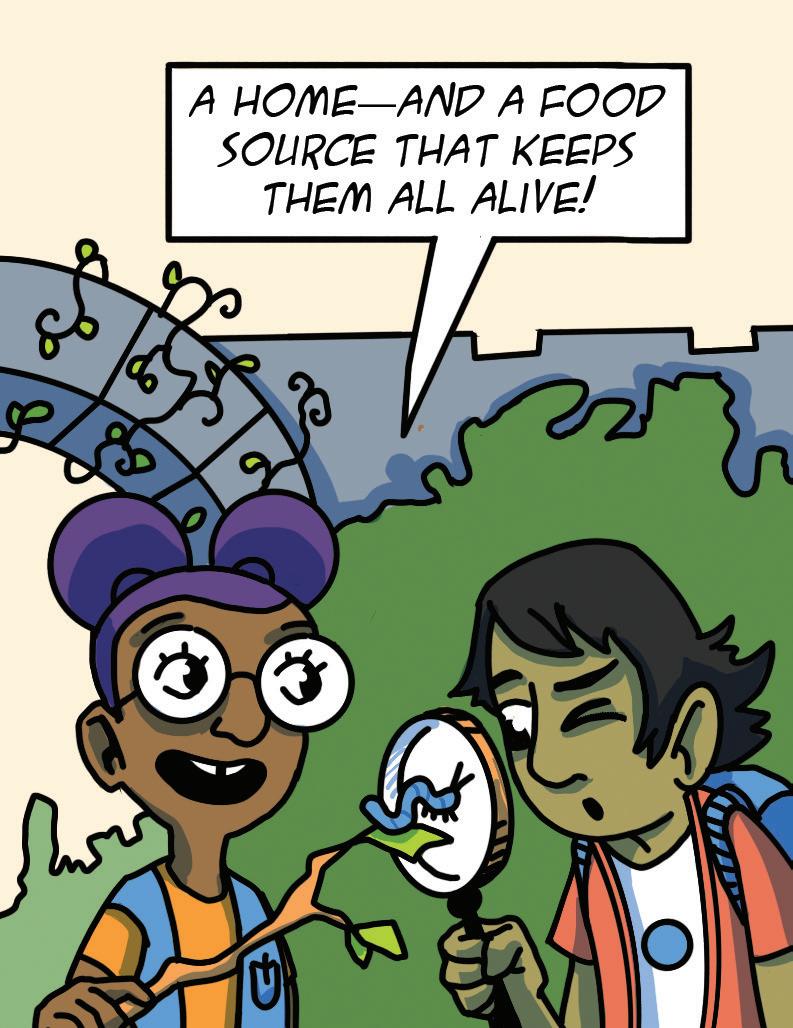
Every plant and animal species plays a role in the ecosystem in which they live. But some species are more important than others! at might seem like an odd idea. Isn’t every species vital to the health of an ecosystem? Actually, no, not to the same degree. In order to understand the extra important role of some plants, you must rst go look at an archway.
What does an archway have to do with a book about ecosystems? Take a look at the arch. It is made of interlocking stones or bricks. At the very top of the arch is the most important piece. It’s called the keystone. Without that piece, the entire arch collapses.
Why are some plants more important to the ecosystem than others?
Scientists discovered that the same is true in ecosystems. Some species are so important that without them, the ecosystem is at risk of collapse. So, what do we call those very important species? Keystone species!
species: a group of organisms that share common traits and can reproduce offspring of their own kind.
ecosystem: an interdependent community of living and nonliving things and their environment.
keystone: the central stone at the top of an arch that locks the whole together. Also, the central part of a system.
keystone species: a species that play such an essential role in their ecosystem that without them, the ecosystem is at risk of collapse.
zoology: the study of animals.
predator: an animal or plant that kills and eats animals.
food web: a network of interconnected food chains.
producer: a part of the food chain that includes plants, which make their food through photosynthesis.
herbivore: an animal that eats only plants.
food chain: a community of plants and animals where each is eaten by another higher up the chain.
carnivorous: a plant or animals that only eats animals.
This phenomenon—that some species are more important than others in an ecosystem—was first discovered in the 1960s. A zoology professor named Robert Paine (1933-2016) wanted to run a controlled experiment on a natural ecosystem to test a hypothesis about the role of predators in a food web.
Until that point, scientists thought that the number of producers in an ecosystem limited the number of herbivores. And that those herbivores then limited the number of predators. At the time, scientists thought that entire food webs were regulated by the amount of food available at the bottom of the food chain.
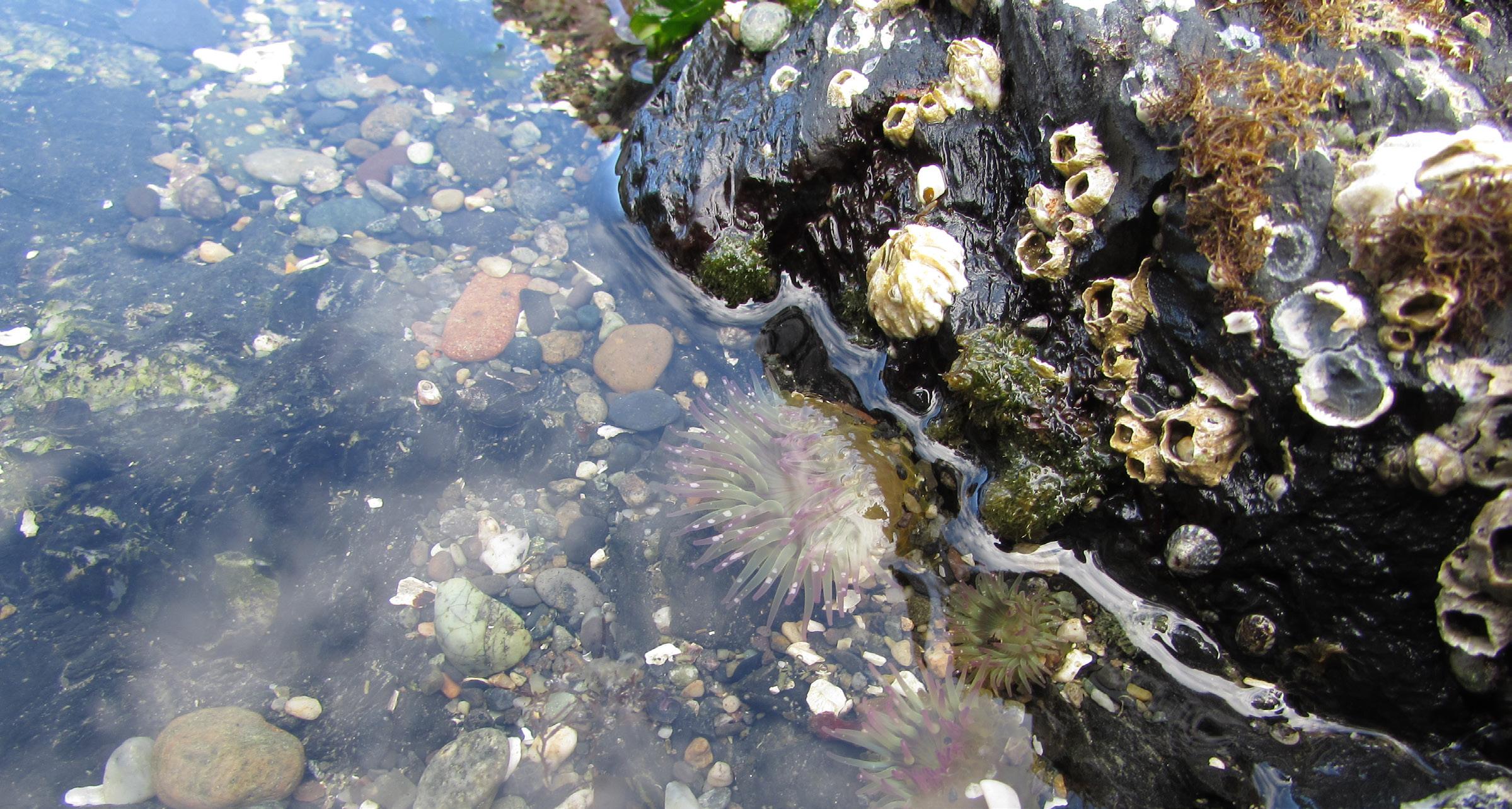
Paine discovered that the tidepools in Washington state provided the perfect natural laboratory in which to run an experiment. Each pool was its own tiny ecosystem. Paine began by observing the tidepools. He recorded all the species of plants and animals that lived there, and identified the food chain in that mini ecosystem. At the top of the food chain, he found a carnivorous purple starfish.
Paine wanted to see what would happen to that ecosystem without its top predator.
So, he removed the purple starfish from one tidepool. He left the starfish in the others. Then, he observed what happened and recorded his observations. If the tide washed a starfish into the experiment tidepool, he removed it.
Purple starfish can grow a new arm if they lose one. Sometimes, they can even grow a whole new body from one arm!
Within 18 months, the results were clear. Without the top predator, the ecosystem was drastically different. Where once there had been many different species, few remained. After eight years, mussels were the only species left in the tidepool.
The reason? When the starfish were present in the mini tidepool ecosystem, they ate the mussels. As predators, they kept the population of mussels in check. But without the starfish to eat them, the mussels took over and eventually pushed out all other species. The ecosystem collapsed.
Paine had discovered that some species play such an important role that removing them from their ecosystem has a devastating impact. Just like removing the keystone from an arch makes the arch collapse, removing certain species makes the ecosystem collapse. That’s why Paine coined the term “keystone species.”
wetland: an area covered some or all of the time by water, such as a marsh or swamp.
biodiversity: the diversity of life on Earth.
resilient: the ability to recover quickly from setbacks or difficult conditions.
entomologist: a scientist who studies insects.
behavioral ecologist: a scientist who studies animal behavior, how that behavior is shaped by its environment, and how an animal interacts with its environment.
native: a species that naturally originates and evolves in a certain area, developing complex relationships with other species in that ecosystem over time.
data: recorded facts and observations about something.
After Paine’s discovery, other biologists conducted more research and discovered that keystone species are part of all major ecosystems—oceans, grasslands, wetlands , forests, and deserts. We find keystone species all over the world and at every level of the food chain.
More than 75 percent of flowering plants rely on animal pollinators to reproduce.
Keystone species play a vital role. They maintain and promote biodiversity in an ecosystem. The greater the biodiversity, the healthier and more resilient an ecosystem is.
A scientific method worksheet is a useful tool for keeping your ideas and observations organized. The scientific method is the process scientists use to ask and answer questions. Use your science notebook to make a scientific method worksheet for each experiment you do.
Question: What are we trying to find out? What problem are we trying to solve?
Research: What is already known about this topic?
Hypothesis: What do we think the answer will be?
Equipment: What supplies are we using?
Method: What procedure are we following?
Results: What happened and why?
At first, researchers focused on other keystone animals. Scientists identified sharks, wolves, beavers, alligators, bees, flying foxes, wildebeests, bison, corals, and more as keystone species. It wasn’t until several decades later that Doug Tallamy, an American entomologist and behavioral ecologist from the University of Delaware, identified plants as keystone species.
In the early 2000s, Tallamy and his team researched the plants in the mid-Atlantic states. They wanted to measure how well native plants support food webs. The team looked at data on moth and butterfly caterpillars, and which plants each species eats. They discovered that a few plants supported hundreds of species, while other plants only supported a few. Can you guess what that led to?
Watch this video about Bob Paine’s experiment in the tidepools that led to the discovery of keystone species. In what ways were the tidepools a natural laboratory?
biomass: the total quantity or weight of species or organic materials in an ecosystem.
pollinate: to move the pollen from one flower to another so the plant can reproduce.
aerate: to allow air to flow through.
decomposer: an organism that breaks down waste, dead plants, and animals.
nutrients: substances in food, water, and soil that that living things need to grow and live.
ecoregion: an area defined by the environmental conditions there including soil type, landforms, and climate that determine the plant and animal species that live there.
ecosystem engineer: a species that greatly alters an ecosystem by creating, modifying, maintaining, or destroying it.
mutualists: two or more species in an ecosystem that interact in such a way that both benefit.
The discovery of keystone plants! The scientists’ work revealed that some plants are more important than others in the ecosystem. These keystone plants support not only the greatest diversity of species but also the greatest insect biomass.
Yes, this is a book about plants, but let’s pause for a short entomology lesson. Think for a moment about everything you already know about food webs and ecosystems. Everything is connected. And in that web, insects are essential. In fact, we could not live without them. Insects pollinate , aerate the soil, work as decomposers , recycle nutrients , eat pests, and provide a source of food for other animals.
Use the American Museum of Natural History’s website to learn more about biodiversity and why it’s important. What can we all do to help protect biodiversity?
Think about a bicycle. There are many pieces and parts that make up a bike. Each part plays a role, some more important than others. You could probably ride without a seat. You might even be able to make do with only one pedal for a while. But what would happen if you took the chain off? The bike might be able to roll for a short distance, but then it would stop. The same is true for insects. If we remove the insects, the world stops. That makes them keystone species, too!
To support food webs, we need a large number of insects, as well as a great diversity of insects. Here’s where it gets more complicated. We don’t need just any plant to support insects. We need those keystone plants. And we don’t need just any keystone plant. We need plants that are native within their range.
Plants can only play a role as a keystone species if they are native to an area. That’s why different ecoregions have different keystone plants.



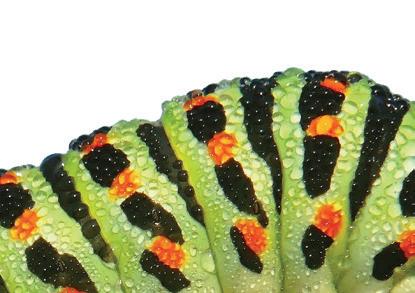


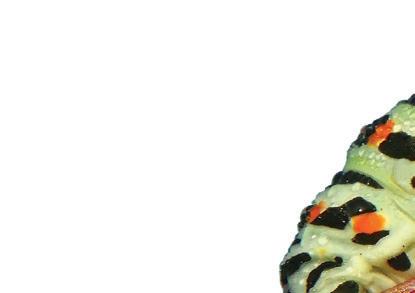
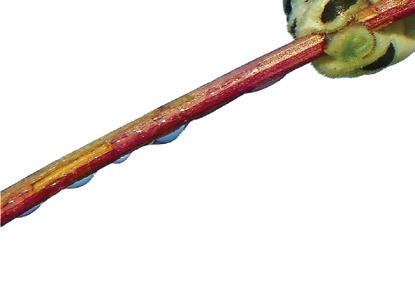
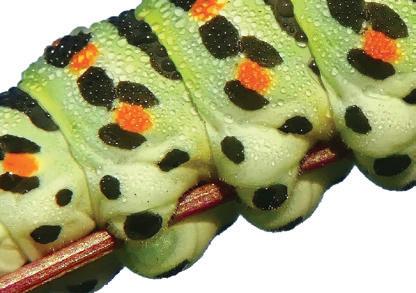
Ninety percent of caterpillars are supported by a mere 14 percent of native plants.


The discovery of keystone species started with starfish. Soon after, scientists discovered that sea otters are also keystone species because of their role in maintaining kelp forests. Sea otters prey on sea urchins, and without otters, urchins destroy the kelp and the ecosystem collapses. Since then, scientists have discovered many keystone animal species. Some are predators, including the sea otter and the purple starfish. Herbivores can also be keystone species because they act like nature’s gardeners, trimming and managing the ecosystem.
Other keystone species, such as the beaver, are ecosystem engineers. These species create, modify, and maintain ecosystems. There are also keystone mutualists. In this case, two or more species work together in a way that benefits both species and the ecosystem. If the mutualistic relationship changes in any way, or one species disappears, the entire ecosystem is impacted.
This video reveals the keystone role of beavers. What happens if beavers disappear from an ecosystem?

pollinators: insects and other animals that move pollen from plant to plant so new seeds can develop.
herbaceous: a plant with a green, soft stem including flowers and grasses.
Let’s look at an example to understand why native plant species are so important. Insects and other animals have co-evolved with plants across millions of years. A Brazil nut tree is a keystone plant in the Amazon rainforest of South America (more in about this tree in chapter three!). You can’t plunk a Brazil nut tree down in the western United States and hope it will support insects. The insects in the west aren’t adapted to that tree. That tree is not very useful to that ecosystem.
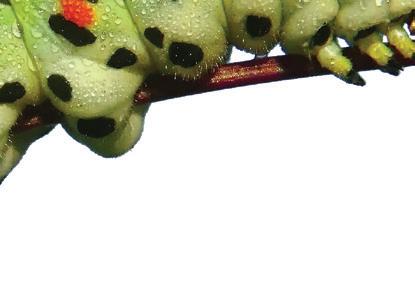
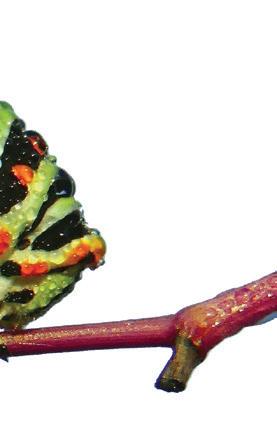
The original discovery of keystone plants focused on moths and butterflies and how those plants support caterpillars. You might be wondering: why all the fuss about caterpillars? Because birds love them. More scientifically speaking, caterpillars are essential to food webs because they are the main route by which plant energy is transferred to other animals. In fact, caterpillars transfer more energy from plants than all herbivores combined!
You can see where this is going. If caterpillars support food webs, we need plant species that support a great number and wide diversity of caterpillars. In North America, these keystone plants include oaks, willows, and black cherry trees.
Another important role of keystone plants is supporting pollinators. Very few herbaceous plants self-pollinate or use the wind to spread their pollen and reproduce.
Most rely on animal pollinators. Therefore, to maintain ecosystems and biodiversity, we need the plants that support pollinators. We’ll talk more about pollinators and flowering plants in Chapter Six.
The oldest oak trees are over 1,000 years old!
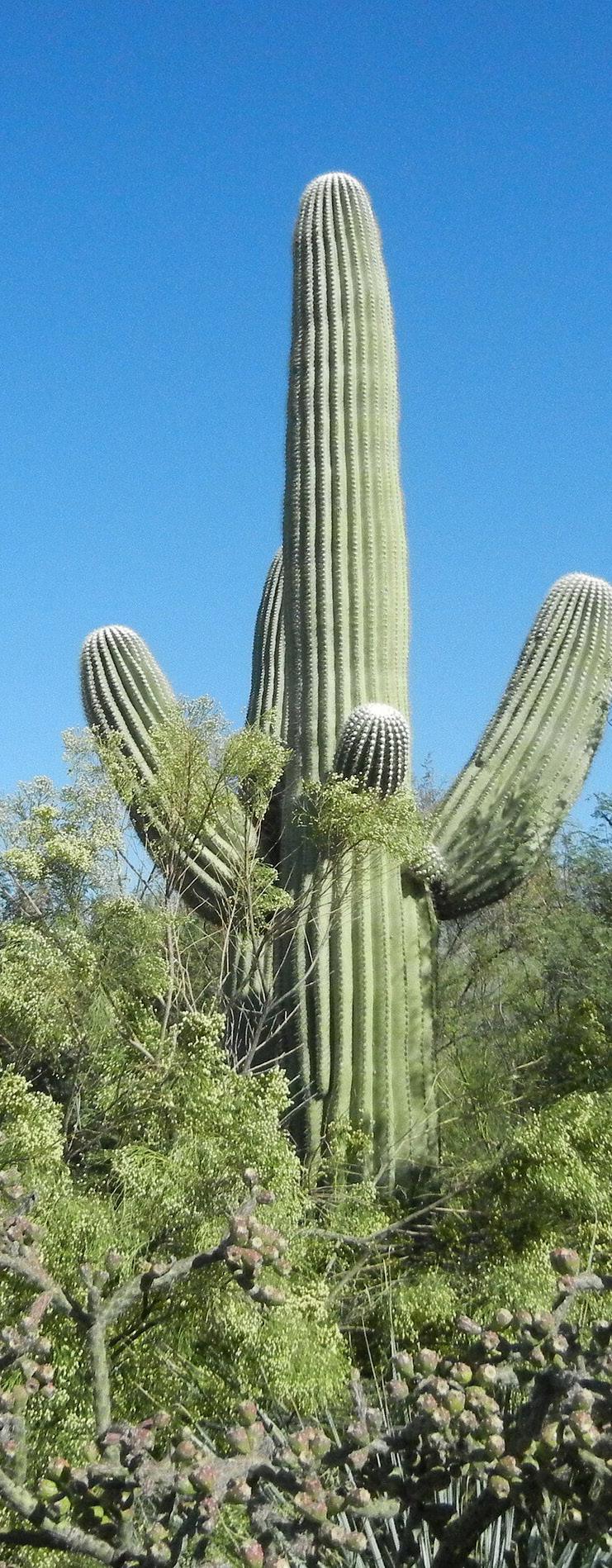
Keystone plants also provide essential food and shelter, especially in ecosystems where animals can’t get these services from other plant species. That is what makes the saguaro cactus a keystone plant— we’ll read more about their role as a keystone plant in Chapter Five. Other keystone plants anchor soil or sand, which prevents erosion. They buffer shorelines from wave energy and improve water quality. Some keystone plants—such as oak trees—are considered foundational species. They provide the base on which the entire ecosystem is built.
Interested in insects? Maybe you should think about becoming an entomologist! On Earth, an estimated 900,000 different species of insects make their home. That’s more than 70 percent of all species on the planet! However, most scientists agree that there are maybe millions of insect species that have not been described.
Entomologists study insect behaviors, life cycles, habitats, and the essential roles insects play in ecosystems. In addition, entomologists study insects’ relationship to humans, including their role in pollination, and the impact of pest insects and those that carry diseases. This work helps us keep ourselves, our pets, and livestock safe. The knowledge also helps us protect our crops, our ecosystems, and the insects themselves. Some entomologists use their knowledge to fight crime! When someone has died as a result of a crime, the police want to know when they died. Forensic entomologists look at the insects found on the body, which offer up clues about the time of death.
Watch this BBC video to learn more about the important roles that insects play on Earth. In what ways are insects vital to life on our planet?
foundational species: a species that provides the base on which an entire ecosystem is built.
hyperkeystone species: a species that can have an ecological impact on the entire planet.
conservation: the science of restoring, protecting, maintaining, and supporting nature.
Douglas Tallamy describes keystone plants as the framework of an ecological house. Just as homes are framed by wooden boards, ecosystems are supported by keystone plants. You can’t have an ecosystem without them.
In this book, we will examine several different keystone plant species, including trees, the saguaro cactus, flowers, grasses, and fungi. We’ll look at another kind of keystone species as well— hyperkeystone species. These are organisms that affect all ecosystems on the planet, both directly and indirectly. Can you think of something that has that much influence? How about humans? Scientists consider humans a hyperkeystone species because our behavior has an effect on the entire planet.
It takes between 6,000 and 9,000 caterpillars to raise one clutch of chickadees!
We’ll take a look at how humans impact keystone plant species. We will also see how people are using science to guide conservation efforts to support keystone plants and restore ecosystems. Ready to look at the plants around you in a new way? Let’s go!
Each chapter of this book begins with an essential question to help guide your design and creation of whacky contraptions. Keep this question in mind as you read the chapter. Keep the question in your mind as you read the chapter. At the end of each chapter, use your science journal to record your thoughts and answers.
Why are some plants more important to the ecosystem than others?
• a piece of string at least 6 feet long
• science journal
• magnifying glass
Biodiversity is important to the overall health and resilience of an ecosystem. Biodiversity includes all living species, from the tiniest microorganisms to enormous trees and animals. Scientists measure biodiversity to understand ecosystems, inform conservation efforts, and monitor ecosystem health. But how do they measure biodiversity in an area? They do a biodiversity survey.
By surveying biodiversity in a natural area near you, you can learn firsthand how scientists measure biodiversity.
› In a natural area, select a small part of the location to investigate—a pile of leaves, flowers, rocks, a patch of grass, rotting logs, etc.
For a look at the origins of life on Earth, watch this TedEd video. How did scientists determine the most likely starting point for life on our planet?
TedEd life origins
› Observe the environment outside your marked area. Sketch what you see including trees, water sources, fences, walkways, etc. Label the plants and trees if you know their names. Also, record the season and the weather—temperature, cloud cover, and humidity.
› Now, observe inside your marked area. Look carefully for animals and different plants. You may need to peek among leaves or turn over rocks or logs. Record and sketch your findings. Label the different species if you know their names. If you don’t, use the sketch and a description to research later.
› Count the number of species you recorded—that’s the species richness in that area.
Do a survey in the same location at a different time of day, in different weather, or in a different season. Compare the biodiversity you observe at different times. Do you see more species or fewer? Why do you think the number of species varies?

What plants are native to the area in which you live?
Why are some plants more important to an ecosystem than others?
Because they’re keystone plants!
Because they are keystone species!
Every species has a role to play in an ecosystem, but some roles are more significant than others. In Keystone Plants and Fungi: Discover the Organisms Vital to Ecosystem Health and Biodiversity with Hands-On Science Activities for Kids, young botanists examine the keystone plants that make the difference between a thriving ecosystem and a collapsing one. Oak trees, baobab trees, Brazil nut trees, mangroves, saguaro cacti, and certain flowers, grasses, and fungi are all considered keystone species that other species depend upon.
Keystone Plants and Fungi includes hands-on activities and critical thinking exercises to help all types of learners gain a deeper understanding of keystone plants’ critical roles. These activities, a narrative writing style, fun facts, words-to-know, and primary source links combine to take readers on an exploration of keystone species around the world.
Try these hands-on STEM activities!
Investigate and identify solutions to deforestation
Model pollution uptake by plants using celery
Create a pollinator garden
• Make a phenology flipbook
• Fight flooding and pollution with a garden
“Activities and accessible text bring the importance and complexity of biodiversity to upper-elementary and middleschool students.”
Booklist
Top 10
Books on the Environment & Sustainability for Youth: 2020

JUVENILE NONFICTION
EDUCATION RESOURCE
Distributed by Baker & Taylor Publisher Services To order: orders@btpubservices.com, 888.814.0208
For more information, contact Nomad Press: info@nomadpress.net, 802.649.1995
Books from Nomad Press include the following educational components:
Hands-on, science-minded activities
Links to online media
Essential questions
Text-to-world connections
Primary sources, including maps, photographs, and letters
Extensive back matter, including glossary, index, and resources
Guided Reading Levels and Lexile measurements
PUB DATE: SEPTEMBER 2026
PB: 9781647411602, $19.95
HC: 9781647411572, $24.95
eBook: all formats available, $12.99
Specs: 8 x 10, 128 pages, color interior with illustrations and photography
Ages: 9 –12
Grade Level: 3 – 6
Publicity & Marketing:
• Co-op funds available
• Major national galley mailing
• Amazon Merchandising program
• National trade advertising, including:
- Publisher’s Weekly
- Booklist
- School Library Journal