





CARLA MOONEY












Nomad Press
A division of Nomad Communications 10 9 8 7 6 5 4 3 2 1
Copyright © 2026 by Nomad Press. All rights reserved.
No part of this book may be reproduced in any form without permission in writing from the publisher, except by a reviewer who may quote brief passages in a review or for limited educational use. The trademark “Nomad Press” and the Nomad Press logo are trademarks of Nomad Communications, Inc.
This book was manufactured by Versa Press, East Peoria, Illinois, United States
November 2026, Job #Q26-00374
ISBN Softcover: 978-1-64741-164-0
ISBN Hardcover: 978-1-64741-161-9
This book has been officially leveled using the F&P Text Level Gradient™ Leveling System. Questions regarding the ordering of this book should be addressed to Nomad Press PO Box 1036, Norwich, VT 05055 www.nomadpress.net Printed in the United States
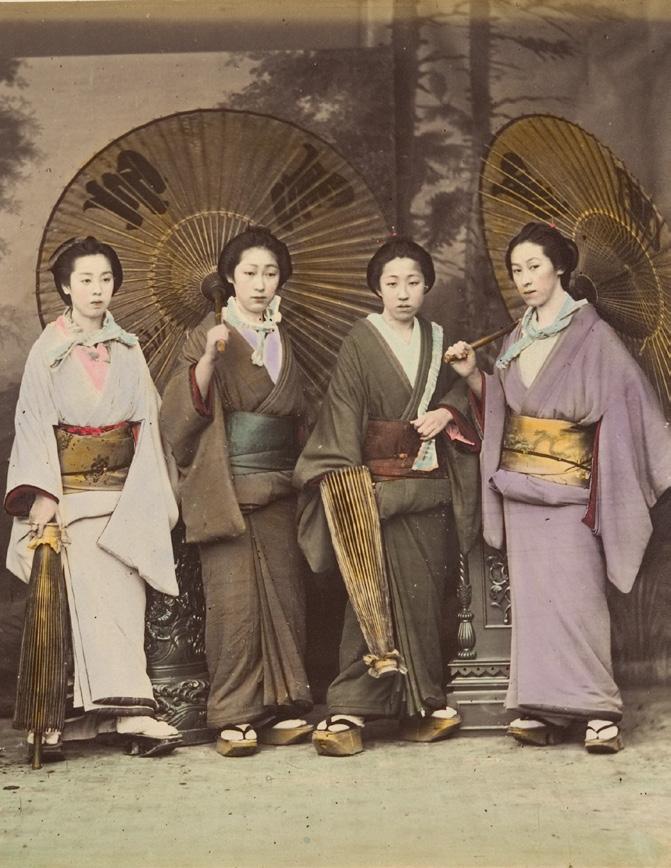
430 BCE: Herodotus writes about other cultures and describes customs and traditions of people in Egypt and Persia. His work shows early curiosity about cultural differences.
1859 CE: Charles Darwin publishes On the Origin of Species and explains his theory of natural selection. His ideas help scientists understand human evolution.
1871: Edward Burnett Tylor publishes Primitive Culture and gives one of the first clear definitions of culture.
1883: Franz Boas begins fieldwork in the Arctic. He later becomes known as the “Father of American Anthropology.”
1902: The American Anthropological Association is founded and anthropology becomes a recognized academic field in the United States.
1911: Boas publishes The Mind of Primitive Man. He argues that race does not determine intelligence.
1922: Bronisław Malinowski publishes Argonauts of the Western Pacific. He promotes participant observation, meaning researchers live with the people they study.
1928: Margaret Mead publishes Coming of Age in Samoa and studies how culture shapes teenage life.
1930s to 1960s: Major excavations take place at Olduvai Gorge, Tanzania, where Louis and Mary Leakey discover many important fossils.
1946: Chemist Willard Libby proposes the idea of radiocarbon dating. This method helps archaeologists determine the age of ancient objects.
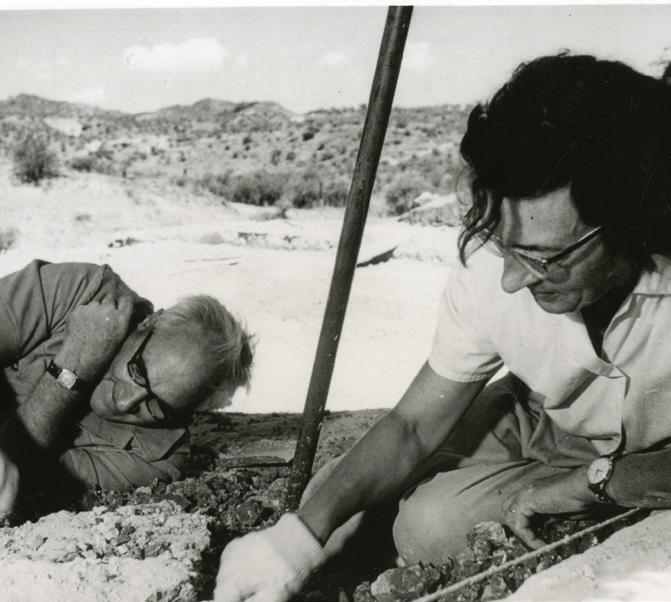
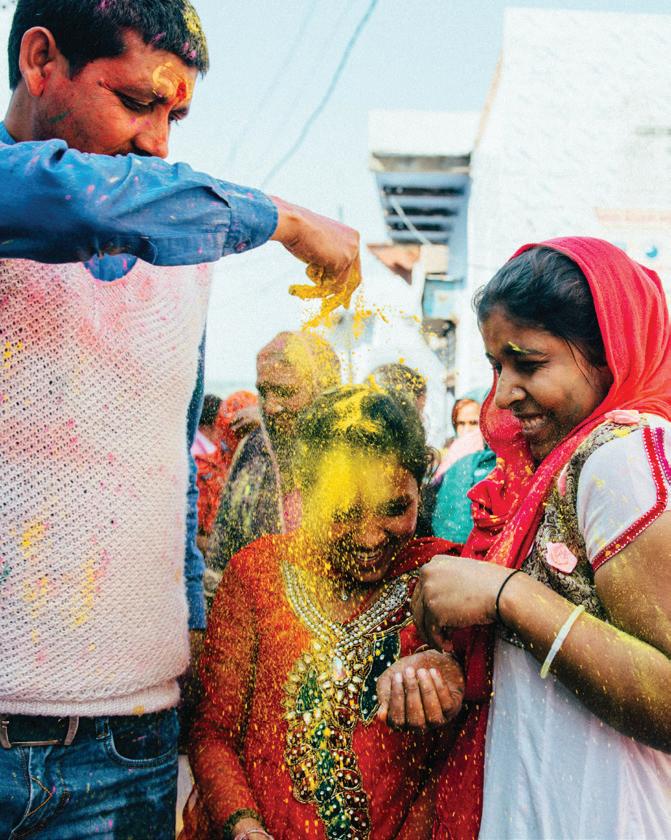
1959: Mary Leakey discovers the remains of Zinjanthropus boisei at Olduvai Gorge and establishes East Africa as an important site for human evolution studies.
1960: Jane Goodall begins studying chimpanzees. Her work connects primate behavior to human evolution.
1974: “Lucy” is discovered in Ethiopia. She belongs to the species Australopithecus afarensis.
1980s: Scientists start studying ancient DNA.
1996: “Kennewick Man” is discovered in the state of Washington. The find leads to debates about ancestry and repatriation of remains.
2003: The Human Genome Project is completed. The project helps scientists understand human genetics.
2000s: Globalization becomes a major research topic as anthropologists study how cultures connect and change.
2007: The remains of “Naia” are found on Mexico’s Yucatan Peninsula.
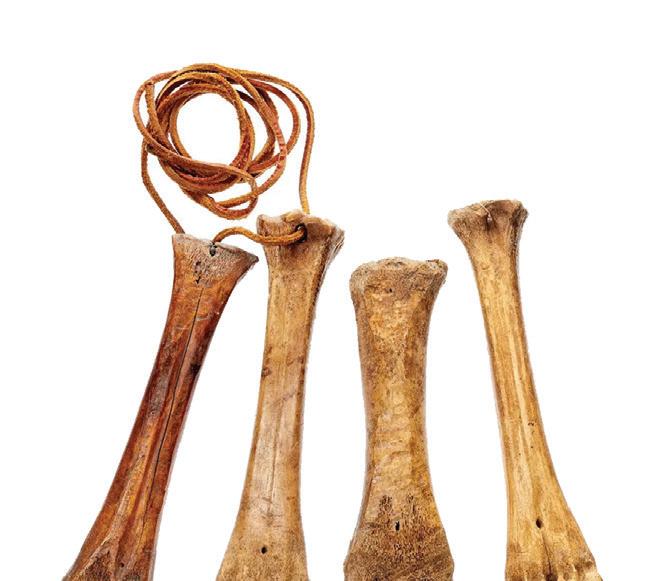


2010s: Digital anthropology grows as researchers study online communities and social media.
2010s: Medical anthropology grows as anthropologists help improve public health programs.
2020s: Anthropology focuses on environmental justice and migration. Researchers study how climate and inequality affect communities.
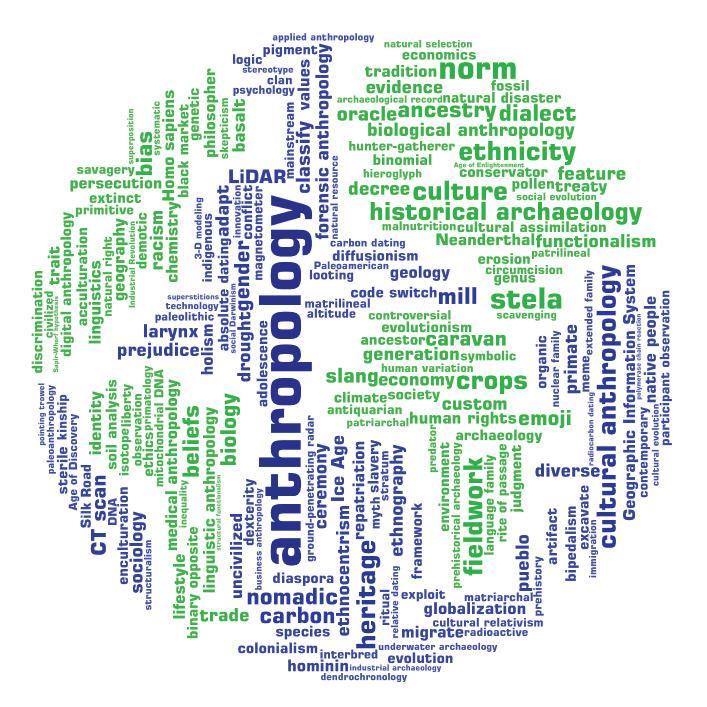






What is anthropology and why do we study it?









Anthropology is the study of what it means to be human and live in a human culture. By learning about the human race, we can make decisions that benefit all people, on both a personal and a global level.





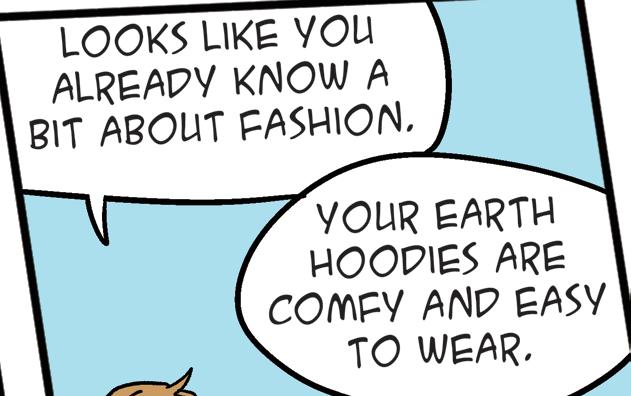




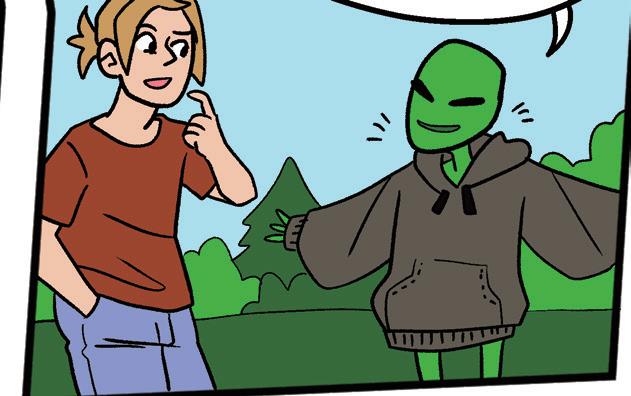

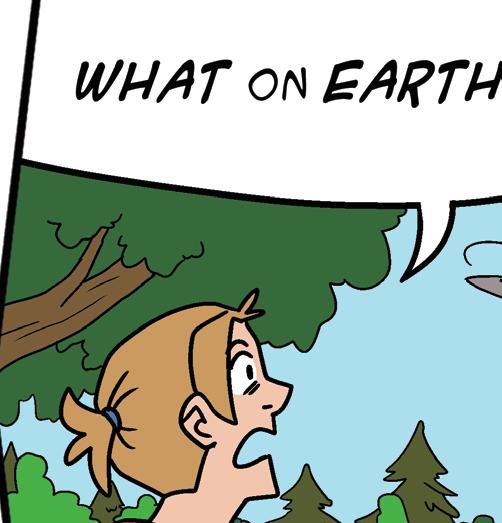
Picture this: It’s early afternoon as you walk through the woods with your dog, Archie. The path is one of your favorite trails, and the two of you hike here often. The summer heat has faded into a crisp fall morning, and leaves crunch with each step you take. Archie barks at something you cannot see and bounds up the hill to investigate. It’s probably another squirrel, gathering nuts for its winter nest, you think. You walk a little faster to catch up with him.
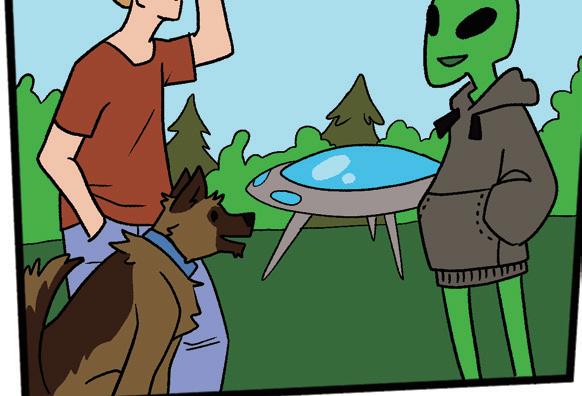
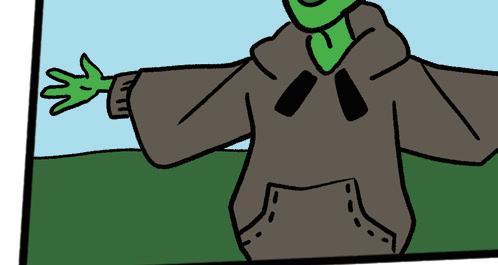
As you reach the clearing at the top of the hill, your jaw drops. What looks like a spaceship from a movie is sitting in the field. As you stare at the ship, a door silently slides open and a creature—an alien—steps out. The alien turns toward you and Archie and raises a limb in greeting. Nervously, you wave back.

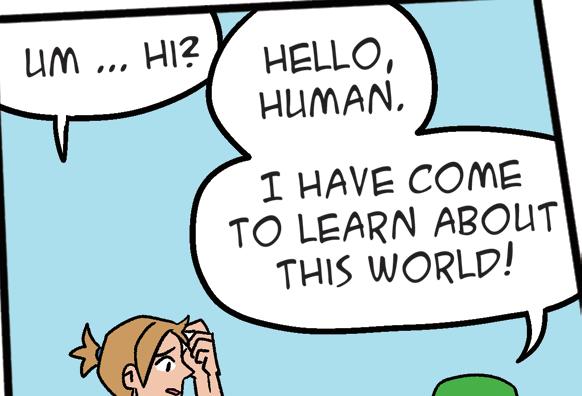
The alien approaches and, miraculously, speaks your language. “What are you?”
“A human,” you say.
The alien points to Archie. “Human, too?”
You shake your head and laugh. “No, Archie is my dog.”
The alien is fascinated. It is curious and eager to learn about the strange creatures that live on Earth. The alien explains that it has traveled across the galaxy, collecting information about stars, planets, and other life forms. It says humans are different from anything it has encountered so far in the journey.
The alien wants to understand humans. Why do humans behave differently in different places? Where do they live and work? What do they wear and why is clothing different around the world? What do they do for entertainment? Why do they speak different languages?
The word anthropology comes from the Greek words anthropos, meaning “human,” and logos, meaning “study.”
How do humans pass down information from generation to generation?
The alien wants to know where humans came from, how our species developed through time, and how we became what we are today.
That’s a lot of questions! But you know where to find many of the answers. Your Aunt Charlotte is an anthropologist who studies humans. If the alien really wants to understand what makes us human, talking to an anthropologist is one of the best ways to find out.
Primary sources come from people who were eyewitnesses to events. They might write about the event, take videos, post messages, or record the sound of an event. For example, the photographs in this book are primary sources, taken at the time of the event. However, be aware of fake photos and videos! Paintings of events are usually not primary sources, since they were often painted after the event took place. They are secondary sources. Why do you think primary sources are important? Why is it important to verify sources?
LOOK FOR THIS ICON.
Anthropology is the study of humans and their societies, past and present. It is a science built around one central idea: Humans are both similar and different in many ways, and those differences should be understood without judgement.
People have been curious about human origins for many centuries. Ancient philosophers questioned why people in distant regions lived differently. Travelers wrote about the unfamiliar customs and traditions they encountered in foreign lands.
Leaders tried to make sense of conflicts between groups. Families passed down stories to explain where they came from. Long before anthropology had a name, people wondered what it meant to be human.
As time passed, people realized that telling stories about our human past and development was not enough. To truly understand what makes us human, researchers needed a more systematic, scientific approach to studying humans. They needed to follow a step-bystep process to collect evidence, examine patterns, and draw conclusions about what makes us human.
As a result, anthropology grew into a scientific discipline that uses a wide range of research techniques, many borrowed from the hard sciences (such as biology, chemistry, and geology) and the social sciences (such as sociology, psychology, and economics).
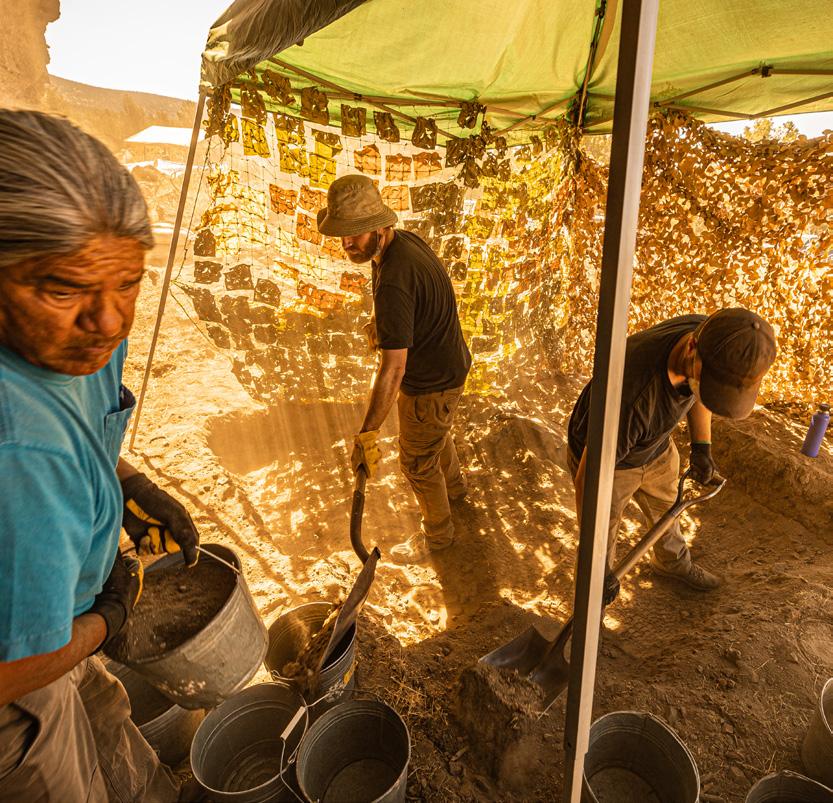
Anthropologists dig through ancient ruins to uncover past ways of life.
You can scan the QR codes in this book and explore more! Cover up neighboring QR codes to make sure you’re scanning the right one. You can find a list of urls on the Resources page.
If the QR code doesn’t work, try searching the internet with the keyword prompts to find other helpful sources. anthropology
Scientists believe that some Neanderthals had red hair.
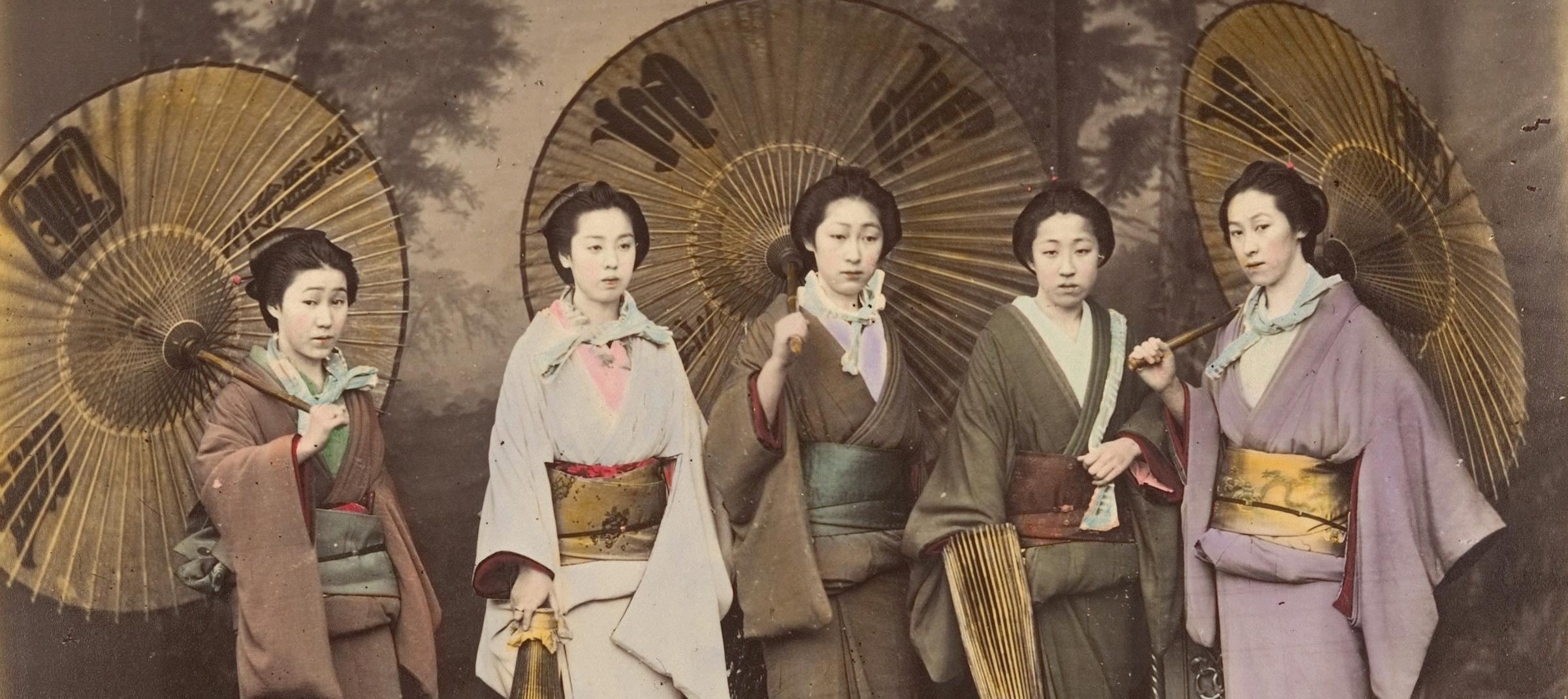
Anthropologists measure bones to understand human evolution. They travel to remote communities, observing how people work, celebrate, raise families, and solve problems. They record languages that are in danger of disappearing. They analyze artifacts, DNA, food remains, shelters, art, and everyday tools. In each case, anthropologists collect clues about human life wherever those clues may be found.
Sociology is another field of study closely related to anthropology. Sociology and anthropology are both social sciences that study people and their behavior. Yet there are some significant differences between the two fields.
Sociology is the scientific study of human society and the way people behave in groups.
Sociologists examine how individuals interact with one another and how communities and institutions are organized. They also explore how these systems shape our actions, beliefs, and opportunities we have in life. Sociologists focus on the present—they study modern humans and how they live.
In comparison, anthropology studies human societies in the past and present. They study humans who lived thousands of years ago and those living on Earth today. They study human societies worldwide, from the Arctic to the Amazon rainforest, and from small villages to global cities.
Anthropologists strive to understand the human journey and the events along the journey that influence who we are today.
While sociologists often study large populations and institutions, anthropologists often start on a smaller scale. They may study a specific cultural practice or a tiny community. Some anthropologists even live with a group for months or years, learning directly from the people they study.
Anthropology is a very broad field, with many areas of study. Therefore, anthropologists have divided it into four major subfields: biological anthropology, archaeology, cultural anthropology, and linguistic anthropology. Each studies humans in a different way, and together they create a complete picture of the human species.
One of the most important ideas in modern anthropology is the belief that something that is different is not better or worse. This idea, sometimes called cultural relativism, helps anthropologists approach their studies of different groups and cultures with respect. Instead of judging unfamiliar customs and labeling them as better or worse than mainstream customs, anthropologists try to understand why they developed and what they mean to the people who practice them. This mindset is essential for studying people of all cultures fairly and accurately.
World Anthropology Day is held annually on the third Thursday in February. It was created to share the wonders of anthropology with people worldwide.
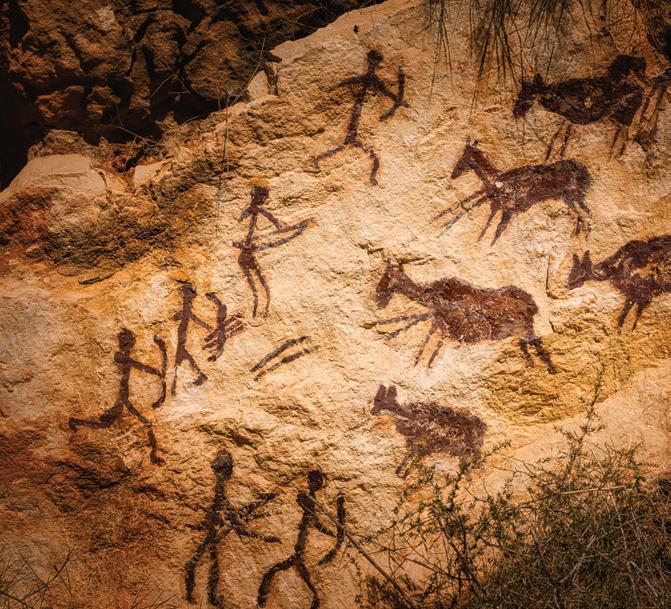
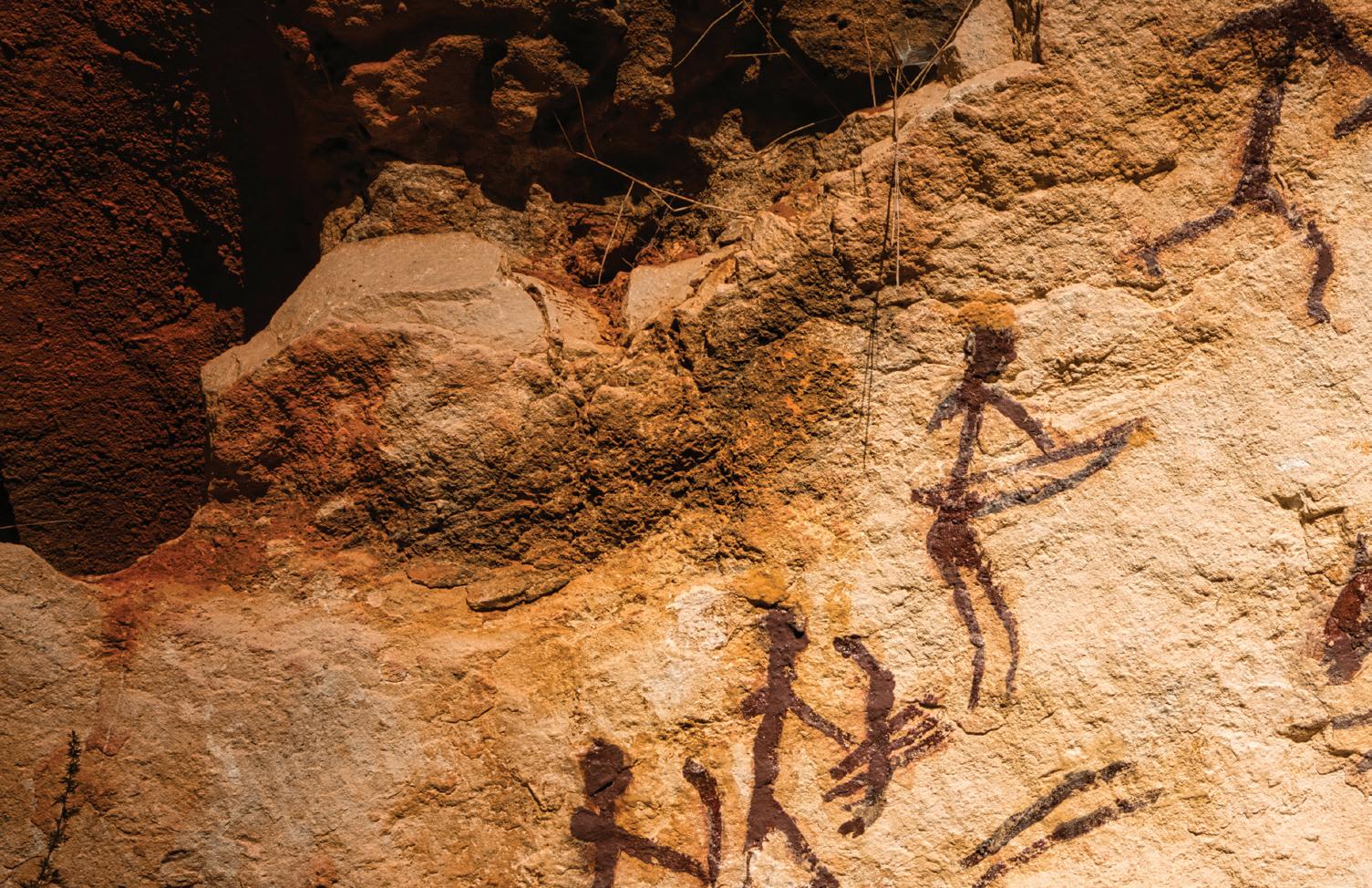
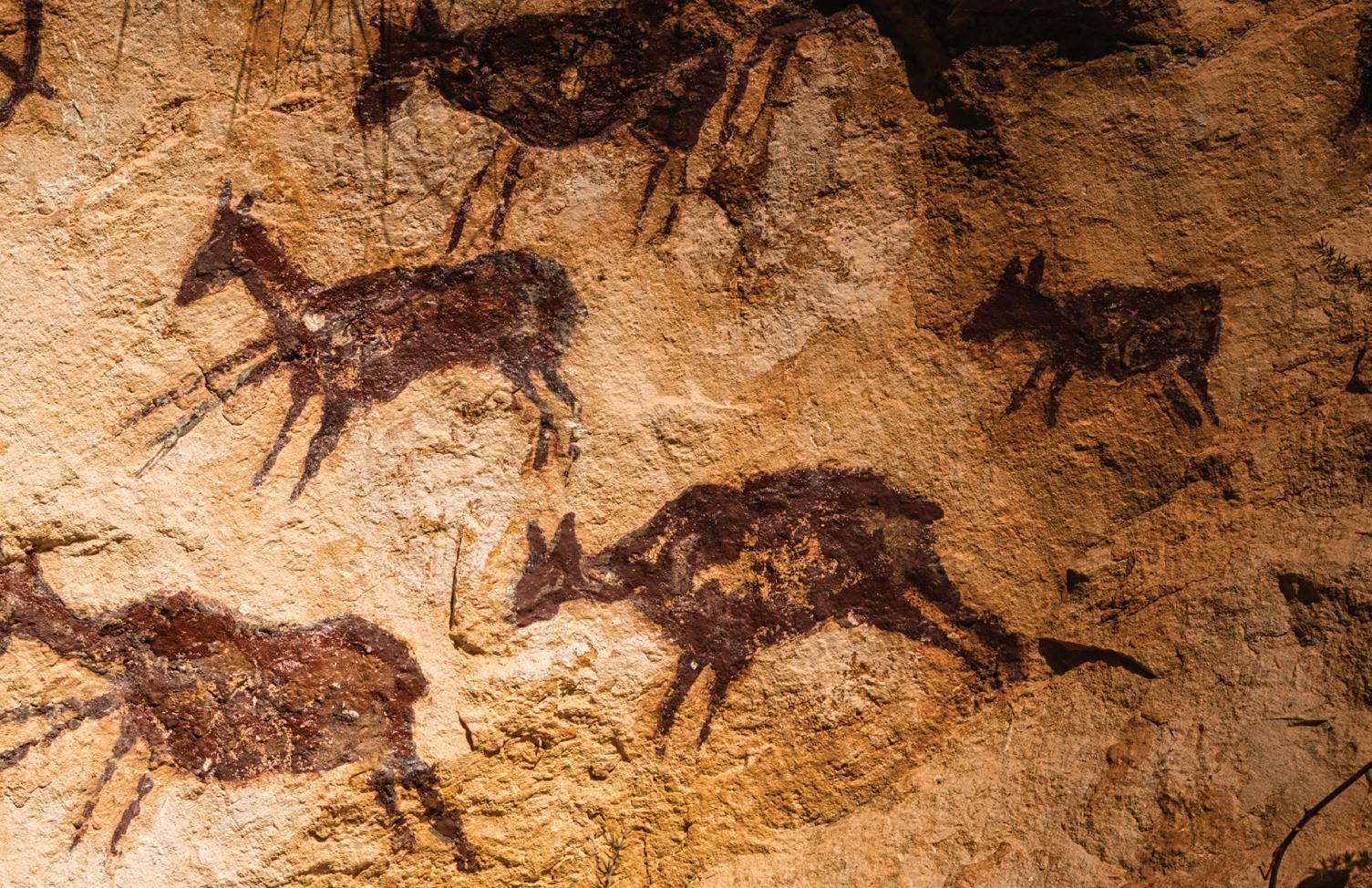
Ancient Aboriginal people told stories from their culture in paintings on rock walls. Watch this video to learn more about their work and art.
People come in all shapes, sizes, and colors. You have brown hair, while your best friend has red hair. Your father is tall, while your mother is short. People from Scandinavia tend to be lighter skinned and have straight hair, while people from Ghana are typically darker skinned and have curlier hair. These physical differences are also known as biological differences. Have you ever wondered how and why those differences came about?
Biological anthropology explores the evolution of human beings. It is also known as physical anthropology. This anthropology subfield seeks to understand how humans evolved and why differences—

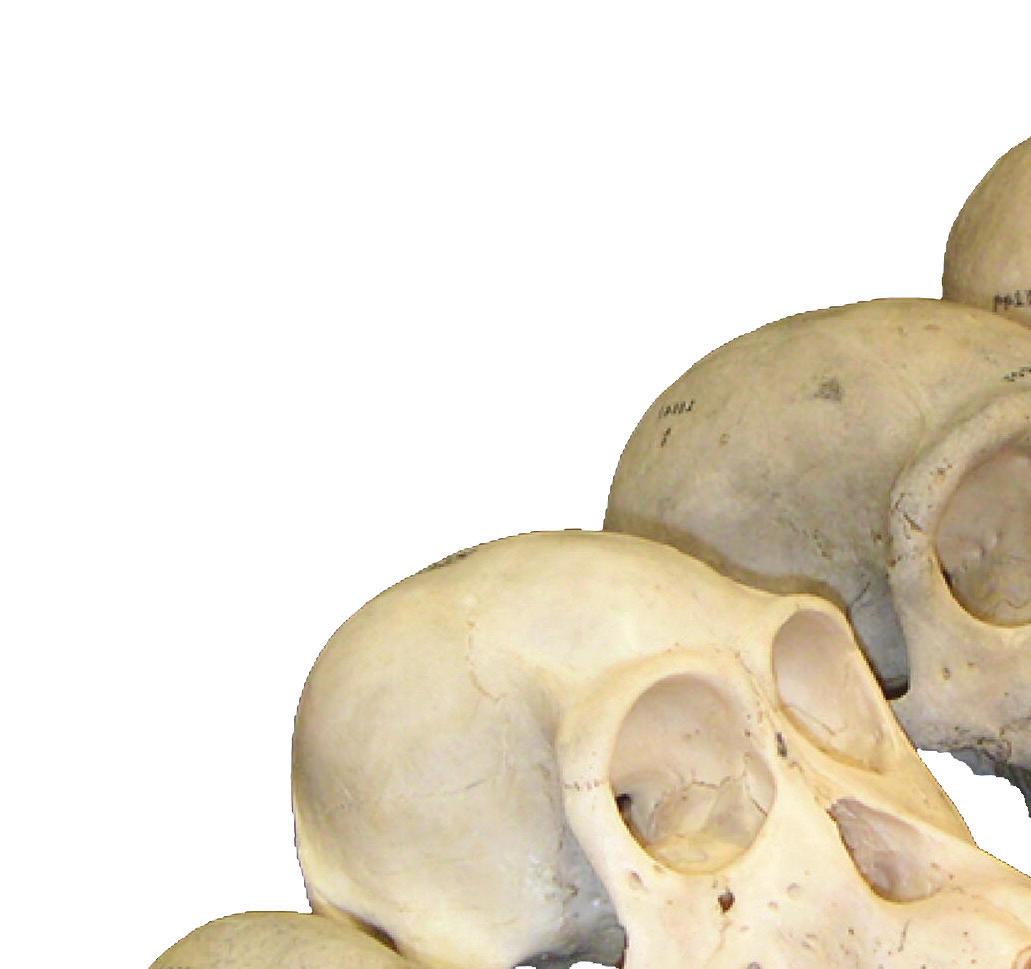

especially genetic variations—arose among humans.
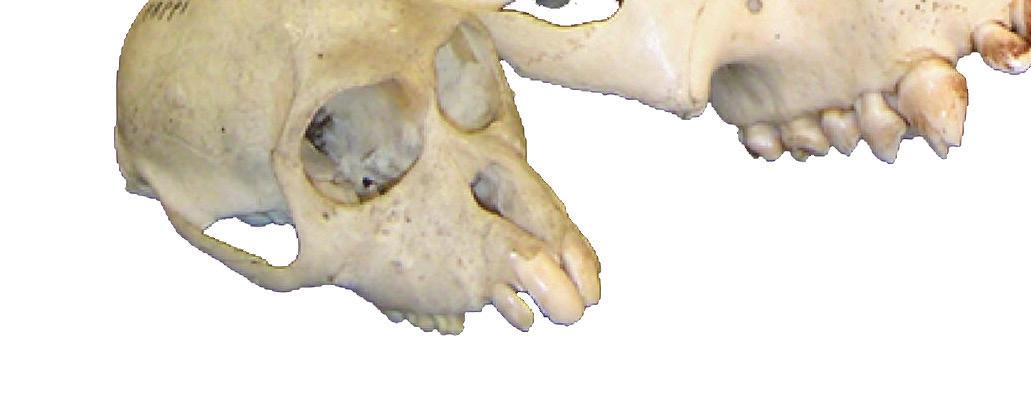
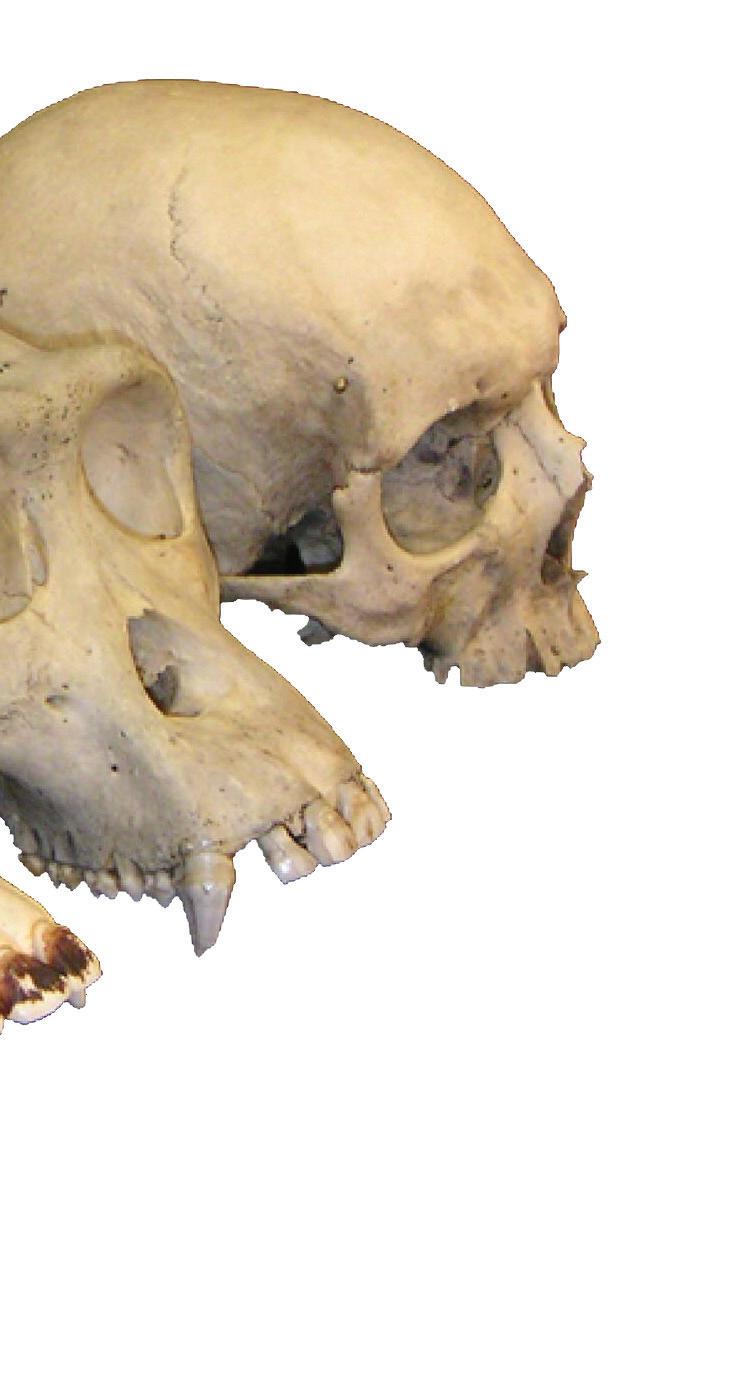
Biological anthropology compares the evolution of humans with that of their primate relatives, both now and in the past. It asks questions such as the following.
• Where did humans come from?
• How did our species of Homo sapiens develop?
• How are humans similar to or different from other primates?
• How have humans adapted to different environments?
• What can bones and fossils tell us about ancient humans?
To answer these questions and understand how humans evolved, biological anthropologists study fossils and skeletons. For example, they might examine a skull to determine the age, sex, diet, or brain size of an early human. Some study primates, such as monkeys and apes, that are our closest living relatives.
Analyzing the differences and similarities between humans and primates helps biological anthropologists understand how humans evolved from earlier species.
Biological anthropologists might study DNA to track how groups of humans migrated around the world. DNA can reveal relationships between ancient groups.
Millions of years of evolution have shaped the humans we are today. Biological anthropology helps us answer questions as to how our physical traits, from skin color to resistance to certain diseases, evolved in response to our environment.
The idea of culture is at the heart of anthropology. British anthropologist Edward Burnett Tylor (1832–1917) first defined culture in his 1871 book, Primitive Culture. He wrote that culture was “that complex whole which includes knowledge, belief, art, morals, law, custom, and any other capabilities and habits acquired by man as a member of society.” Tylor emphasized that culture is something learned and shared by all humans. Culture is not a single element but rather a vast network of interconnected elements, from art and tools to beliefs, morals, customs, and laws. Culture includes all aspects of a group’s way of life. It is something learned in society rather than inherited through biology. Tylor’s definition established culture as a universal human experience. It laid a foundation for studying diverse human traditions and the shared experiences and meanings of entire societies.
Many cultural anthropologists use a method called participant observation to gather information. They immerse themselves in the culture by living with the people they study. As part of the community, these anthropologists eat what everyone else eats, participate in daily activities, learn the language, and form relationships with other community members. This immersive experience helps them gain a deeper understanding of the culture.
They say you don’t really know someone until you know about their past. That’s certainly true in anthropology! Archaeology is a subfield of anthropology that focuses on ancient people and societies that existed long ago using the physical remains they left behind.
Archaeologists explore ancient sites to uncover artifacts such as tools, pottery, buildings, artwork, and weapons. These objects offer clues about how people lived back then. An archaeologist might uncover the remnants of an ancient city, a broken cooking pot, a spear point, or a decorated shell necklace. Each discovery tells part of the human story.
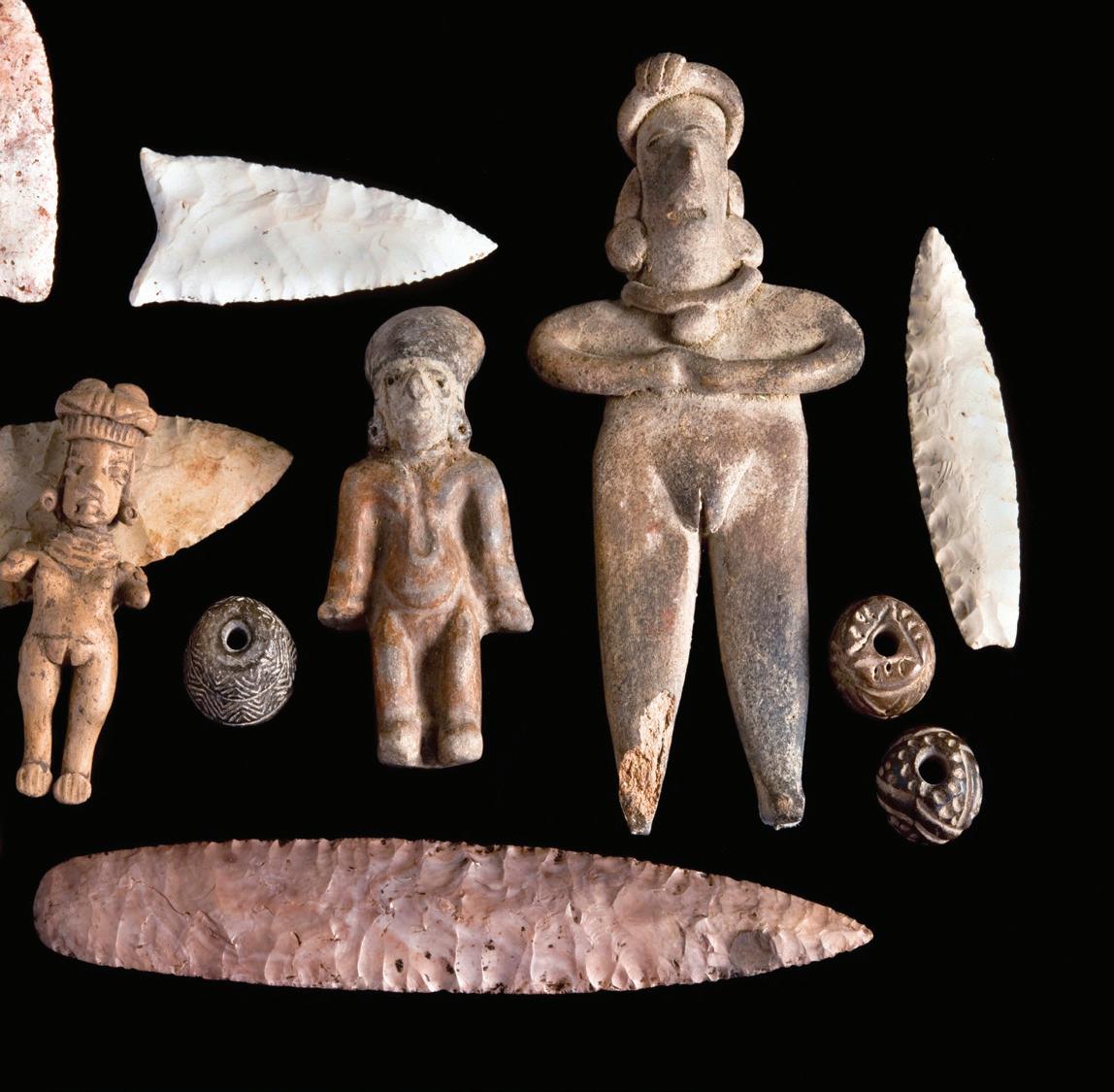
Archaeologists are like detectives. They carefully excavate ancient sites, searching to the smallest clues. When they find an artifact, they carefully record and analyze it. They use scientific techniques and tools, such as carbon dating and soil analysis, to better understand each artifact, when it was made, and how it was used.
Even the smallest artifact can reveal valuable information.
A tiny grain of pollen might show what crops ancient people grew. A pile of bones might show what animals they hunted. A child’s toy might reveal how families raised their children. With this information, archaeologists can build their knowledge about how and when our human ancestors lived.
While some anthropologists study the past, others focus on people living today. Cultural anthropology focuses on living people and their cultures. Although we are all humans, there are many differences in societies around the world. People practice different traditions, hold different beliefs, follow different religions, speak different languages, enjoy different foods, and more.
Cultural anthropology seeks to understand these differences and their origins. For example, a cultural anthropologist might study the following.
• How families are structured in different societies
• Why some cultures practice arranged marriages
• The importance of religious rituals in community life
• The role of music or food in daily celebrations
• How teenagers in different countries use social media
An Indian fable called “Six Blind Men and the Elephant” illustrates the importance of different perspectives when studying a subject. In the fable, six blind men come across an elephant for the first time. Each man tries to understand the strange creature by feeling it. One man feels the elephant’s side and describes it like a wall. Another man runs his hands over the elephant’s tusks and likens them to spears. A third man feels the elephant’s trunk and compares it to a snake. The fourth man feels the elephant’s legs and announces that it is a tree. The fifth man feels the elephant’s ears and says that he touched a fan. The sixth man holds the elephant’s tail and announces that it is a rope. Because each man felt a different part of the elephant, each had a unique picture of the animal. Each man’s perspective is different. Similarly, anthropologists study a subject from different subfields. Each brings a unique perspective to the study, and they can create a complete picture by combining their individual perspectives into a single whole.
According to some experts, more than 7,000 languages are spoken worldwide today. Many are in danger of disappearing.
Linguistic anthropologists often work with communities to document and preserve languages before they vanish.
The fourth subfield of anthropology, called linguistic anthropology, focuses on the languages of humans. Language is one of the most powerful tools humans have. It’s nearly impossible to imagine life without language. Language allows us to share ideas and express emotions. We use language to tell stories, share traditions, and teach children.
We make laws, run institutions, and shape societies with language.
Linguistic anthropology examines language. A linguistic anthropologist might study the following.
• How languages are structured
• How children naturally learn language
• How storytelling shapes culture
• How languages change through time
• Why some languages disappear
• How people switch between languages depending on the situation
What are some traditions you practice in your family? How did they come about?
In a world filled with billions of people, thousands of languages, and numerous cultural traditions, anthropology helps us make sense of our differences.
Through its four subfields—biological anthropology, archaeology, cultural anthropology, and linguistic anthropology—it paints a well-rounded picture of the human species.
Anthropology helps us answer some of the most fundamental questions humans can ask.
• Who are we?
• Where did we come from?
• What connects us?
• Why do we live so differently yet share so much in common?
Through anthropology, we can learn about how humans evolved, how we spread across the globe, how we built families and communities, how we created languages and beliefs, and how we continue to change today.
As you read this book, you might imagine yourself joining that alien visitor on a journey to discover the incredible variety of human life and the shared qualities that unite us all. Anthropology will guide you through our human past, present, and future possibilities. By the end, you might find that understanding others helps you better understand yourself.
• How does the climate where you live affect the types of clothing you wear? How does this relate to anthropology?
• What role do you think immigration plays in the study of anthropology?
Write down what you think each word means. What root words can you find to help you? What does the context of the word tell you?
- artifact - culture - evolution
- excavate
- participant observation
Compare your definitions with those of your friends or classmates. Did you all come up with the same meanings? Turn to the text and glossary for help.




Investigate


› newspaper or a plastic sheet
› rubber gloves
› items from one trash bag
› camera
› science journal and pencil
Did you know that people can learn a lot about you by simply looking at your trash? Anthropologists search through ancient trash to find clues about life in the past. The simple things people used and discarded every day, such as pottery, stone objects, and food scraps, can reveal a lot of information. Anthropologists can determine how many people lived in a house, what types of activities they did, and what they ate just by looking through the trash. What story does your trash tell? Put on your anthropologist hat to find out!
Get permission from an adult to go through a trash bag at your house. Pick a trash can from the kitchen or your bedroom skip the bathroom trash!
Cover a large flat surface, such as a table or floor, with newspaper or plastic sheets. You might want to do this step outside or in your garage.
Put on the rubber gloves. It is important to protect your hands.
Carefully take items out of the trash one at a time and place them on the newspaper or plastic. Put the ones you take out first near the top of your newspaper. Recreate the order and layers of trash from the can on the newspaper.
Once all the trash is spread in layers on the newspaper, make a list of what you found and where it was (top, middle, or bottom layer) in the can. Take a photo of the trash on the newspaper to document your investigation.
Imagine that you are an anthropologist who does not know anything about the people living in your home. Consider the following questions and write your answers and observations in your journal.
• Describe the objects found in the trash.
• What are the different categories of items found: food, packaging, household items?
• What was the most common item in the trash?
• Can you tell how many people live in the home from what you found in the trash?
• Can you tell the ages of the people living in the home?
• What types of food do they eat?
• Do they have pets? If so, what kind?
• What is the oldest object in the trash? What is the newest?
• Can you determine the last time the trash was taken out? How do you know?
• Can you tell who used and threw away each piece of trash?
• What story does this trash tell you about the people who threw it away?






Repeat this activity using a different trash can. Try a different can in your home or use some trash from a relative’s or friend’s home (with permission, of course!). What story does their trash tell?




Why do people study anthropology?

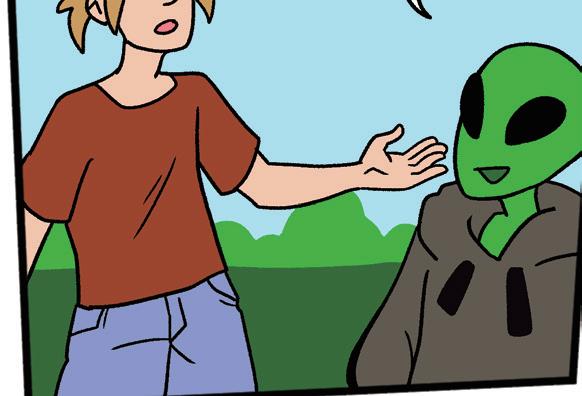

We
have always been curious about how we live, how other people live, how people used to live, and why. Studying anthropology gives us a chance to better understand ourselves and the world around us.



Curiosity about other people has existed for thousands of years. In Ancient Greece, a historian named Herodotus (484–425 BCE) was one of the first people to study and describe different cultures. He traveled to many parts of the ancient world, including areas that are now Libya, Ukraine, Egypt, and Syria.
During his travels, Herodotus did more than just pass through the land. He lived with the people, spoke with priests, and observed religious ceremonies. He carefully wrote down what he saw, including how people lived, what they ate, and what they believed. He learned about marriage laws, funerals, and daily routines in other cultures. He interviewed individuals and collected written stories about their lives. He even recorded local rumors and gossip—he wanted to understand everyday life as fully as possible.
Herodotus shared what he learned in his book The Histories, written around 430 BCE.
The book included detailed information about customs, laws, religion, and politics. It also contained exciting stories about oracles, gold-digging ants, and flying snakes—a mix of facts and legends! Herodotus’s The Histories is widely considered one of the world’s earliest works in the field that would later become anthropology.
Early people traded only with their neighbors. That practice slowly changed as trade and trade routes expanded. Traders traveled farther than ever to new places, met new people, and experienced new cultures.
In China, diplomat Zhang Qian (c. 195–114 BCE) traveled throughout Central Asia to negotiate trade agreements and treaties. Zhang’s interest in Central Asia helped spark the development of the Silk Road, one of the greatest trade networks in history. As traders carried goods between Asia and Europe, they exchanged ideas, learned about different cultures, and wrote about their experiences.
Merchant and explorer Marco Polo (1254–1324 CE) spent 24 years traveling from Venice, Italy, to Asia and back. He explored lands and places where few Europeans had been before. His best-selling book, The Travels of Marco Polo, was a detailed, comprehensive account of the people, cultures, economies, and geography of China, Central Asia, and more.
Another traveler, Ibn Battuta (1304–1368), was a Muslim scholar who traveled throughout North Africa and the Middle East for nearly three decades.
Learn about a journalist and his experiences walking the Silk Road. How might the stories of people who live along the routes of the Silk Road affect your life wherever you live?
The Silk Road was composed of 4,000 miles of paths and sea routes.
The Silk Road was a large network of trade routes that connected East Asia with the Middle East, Africa, and Europe. These trade routes began around 130 BCE during the Han Dynasty in China and remained important for more than 1,500 years. The Silk Road was not a single road but many routes that crossed deserts, mountains, and major cities. Merchants traveled in caravans, often using camels, to transport goods such as silk, spices, tea, porcelain, gold, and precious stones.
The Silk Road was important not only for trade but also for cultural exchange. Religions such as Buddhism, Islam, and Christianity spread along these routes. New ideas, technologies, and inventions— such as paper, gunpowder, and the compass—also spread between regions. Overall, the Silk Road helped connect distant civilizations and played a major role in shaping the history, economy, and culture of the ancient world.
Battuta explored most of the Islamic world and visited approximately 40 countries! He wrote about his travels in a book called A Gift to Those Who Contemplate the Wonders of Cities and the Marvels of Traveling.
The world opened up even more during the Age of Discovery (1400s–1700s). During this time, European explorers set out to discover distant lands, claim new sources of wealth, and establish colonies, even if the land was already populated by native people.
Portuguese sailors steered ships into the Atlantic Ocean and along the African coast. Bartolomeu Dias (1450–1500) sailed around Africa’s southernmost point, the Cape of Good Hope, opening a sea route to Asia in 1488. A few years later, in 1492, Christopher Columbus (1451–1506) sailed across the Atlantic Ocean and reached the Americas. And from 1519 to 1522, Ferdinand Magellan (1480–1521) led the first expedition to sail around the world, although he himself was killed in battle in the Philippines before completing the voyage.
As European explorers sailed to Africa, Asia, the Americas, and the Pacific Islands, they encountered societies they had never known before. They wrote about what they saw and collected tools, clothing, artwork, weapons, and religious objects. Back in Europe, these artifacts were displayed in private collections, museums, and royal courts. People studied these objects to learn about distant cultures—often without fully understanding their original meaning or use.
During this time, many Europeans viewed other cultures through a biased lens. They saw European cultures as superior and judged non-European societies as less advanced or uncivilized. This belief that your own culture is the best and other cultures are strange or inferior is called ethnocentrism.
European ethnocentrism shaped how explorers wrote about the new-to-them lands. In early anthropological accounts during this period, Europeans often described native people as primitive or savage. This ethnocentric lens also shaped how the Europeans treated the people they encountered. Often, the Europeans ignored or dismissed local cultures and traditions. They tried to force the people to adopt Christianity and European customs.
Ethnocentrism was also responsible for the way Europeans justified taking land from the people who lived there. European explorers claimed land for their countries, including England, France, Spain, Portugal, and the Netherlands. These powerful European nations established colonies across Africa, Asia, and the Americas. They exploited natural resources such as gold, timber, minerals, and furs.
Starting in the 1600s, the Age of Enlightenment (1600s–1800s), also known as the Age of Reason, swept across Europe. During this time, scholars emphasized the use of reason, science, and observation to understand the world.
Ibn Khaldun (1332–1406) was a Muslim scholar, historian, and thinker who lived in North Africa. He wrote The Muqaddimah, an important book about history and society. Khaldun believed history should be studied scientifically, not repeated as stories. He explained how geography, economics, culture, and social unity affect how societies rise and fall. He introduced ideas about social groups, governments, and economics that were far ahead of his time.
In many cases, Europeans brutally conquered and enslaved the native people who lived in the colonies.
Learn more about the discovery of Neanderthal 1 from this BBC report. How did this find change the human story?
Scholars questioned old traditions and the authority of kings and the Catholic church. They encouraged people to use logic rather than simply believe what authorities or superstition told them. Scholars also applied scientific methods to study a wide range of subjects, from how the world works to how people live together. The Age of Enlightenment promoted big ideas such as liberty, natural rights, and individual thinking.
Although anthropology was not a formal science at the time, Enlightenment scholars laid the groundwork for the study of human societies and cultures. They believed human behavior could be studied the same way we study nature, through firsthand observation and experience.
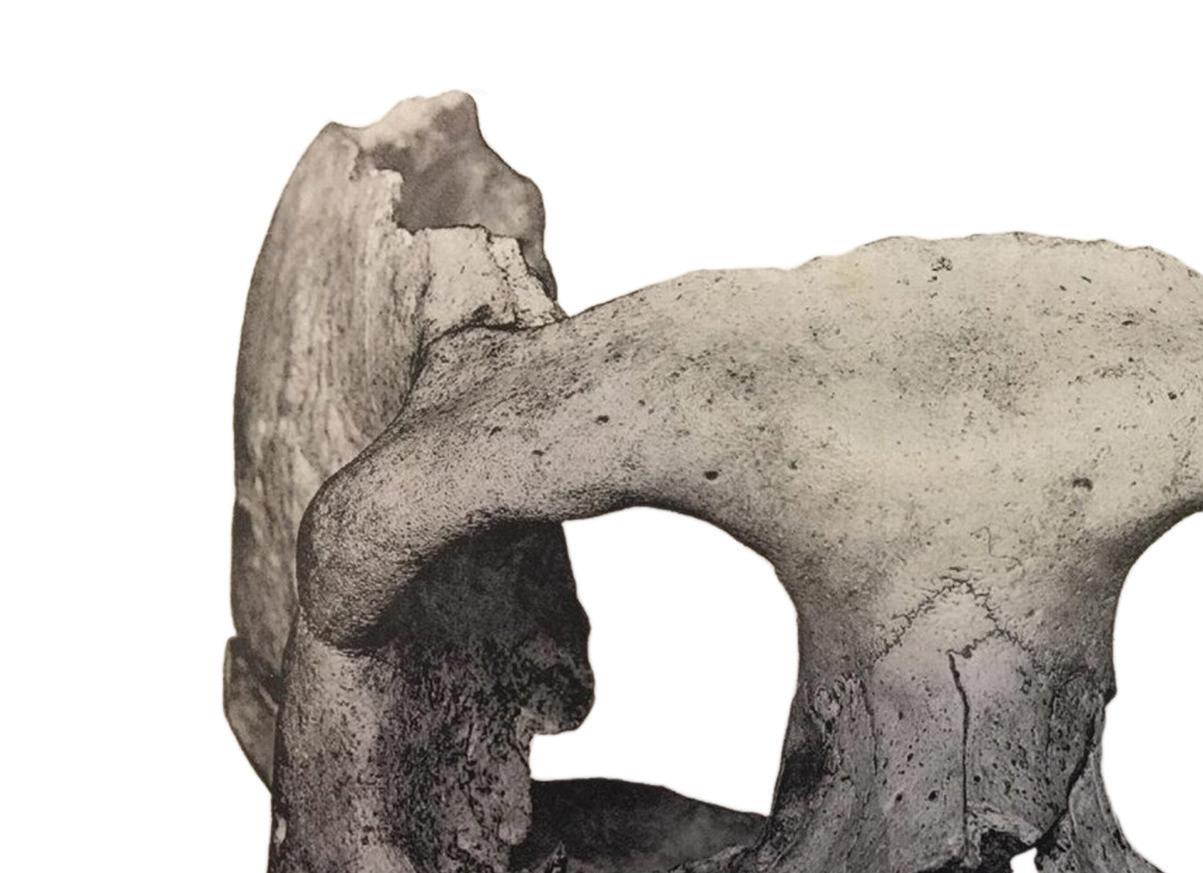




During the 1800s, new discoveries in biology and archaeology started to change how scholars thought about humans and where we came from. One of the biggest influences was biologist Charles Darwin (1809–1882).

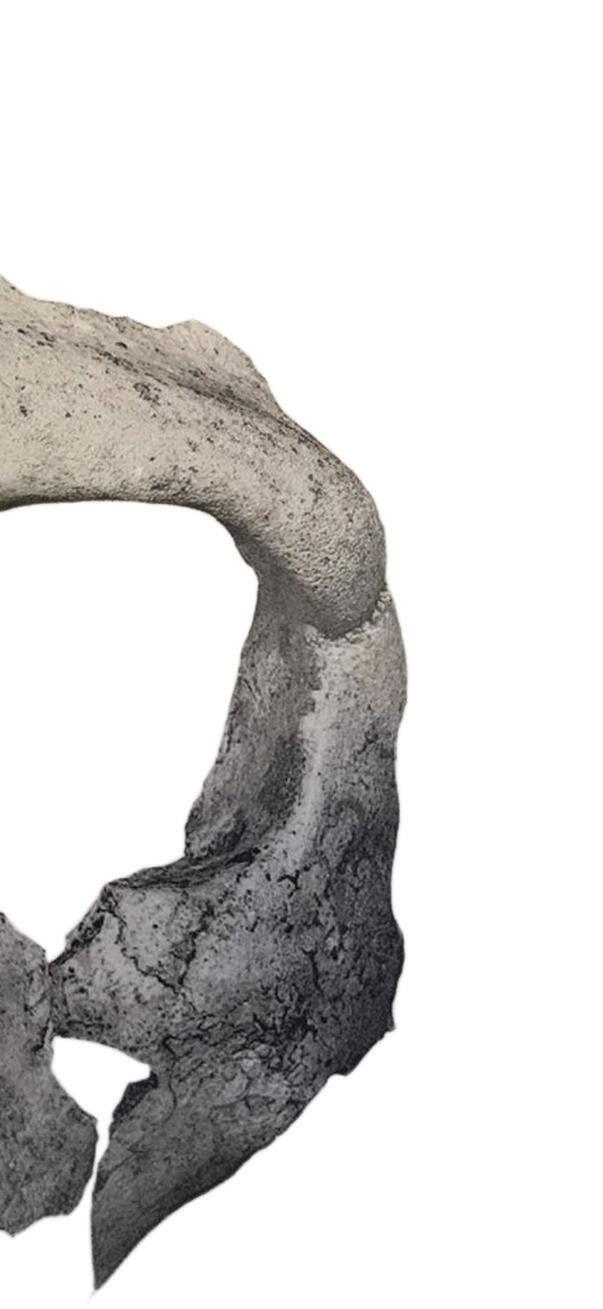
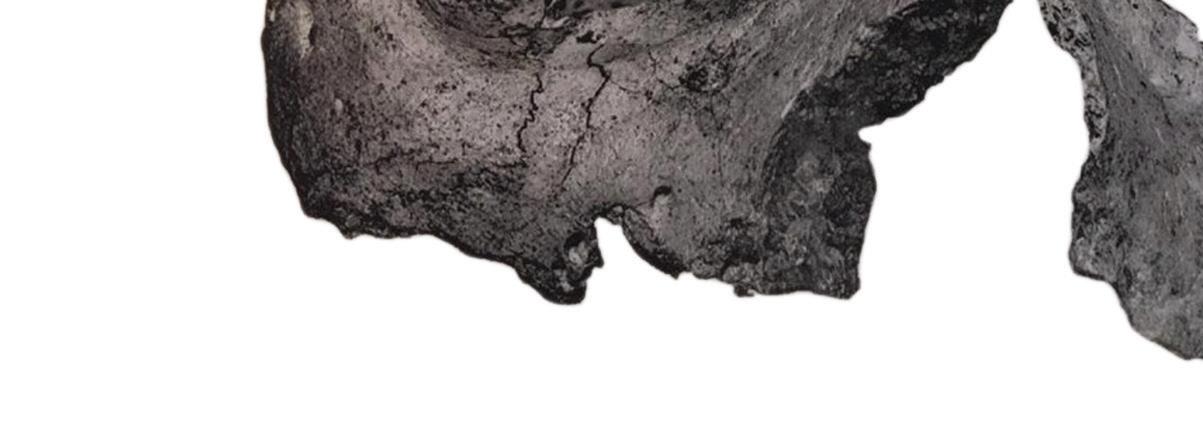
Part of a Neanderthal skull called “Krapina 3,” discovered in Croatia in 1899
Darwin introduced the theory of natural selection, which says living things change during long periods of time in ways that help species survive. He argued that humans evolved just like other animals and share a common ancestor with African apes.
Darwin also believed that humans’ large brains gave them a big advantage over other species, helping them develop language, tools, and technology.
Around the same time, archaeologists began learning how to match fossils with specific rock layers. This made it possible to estimate the ages of fossils. In 1856, scientists discovered the first Neanderthal fossil. The Neanderthals were an ancient human species. These discoveries helped show that modern humans had ancient relatives and a much longer history than people once believed.
During the late 1800s and early 1900s, many anthropologists supported a theory called social evolution. They believed that all societies followed the same fixed path, moving through stages from “savagery” to “civilization.” These scholars ranked cultures by these stages and usually placed non-European societies at the bottom and European societies at the top. They believed other cultures could become “civilized” only by copying European ways of life. Because of this belief, anthropologists often considered Indigenous societies as earlier, less-advanced versions of European society. Why would this be problematic?
After World War II, French anthropologist Claude LéviStrauss (1908–2009) introduced a new idea—structuralism. In anthropology, structuralism is a way of understanding culture by looking for the hidden patterns in how people think. Lévi-Strauss believed that no matter where people live or the culture they belong to, humans think in similar ways. He argued that basic mental patterns shape the myths people tell, the traditions they follow, and even the rules in their societies.
Structuralists study stories, family systems, and cultural traditions to look for these patterns beneath the surface. For example, many cultures have stories where a hero fights a villain, order defeats chaos, or good overcomes evil. Structuralism suggests that these repeated patterns are not accidental but reflect the shared way human minds organize the world. Although not all anthropologists today agree with structuralism, it played an important role in helping scholars compare cultures and understand universal patterns in human thinking.
One well-known diffusionist was British anthropologist W.J. Perry (1868–1949). Perry claimed that many major cultural developments— including farming, pottery, and complex societies—started in ancient Egypt and spread to the rest of the world.
Some scholars supported a different theory called diffusionism. Instead of believing all societies followed the same fixed path, diffusionists argued that cultures change by borrowing ideas from one another. Tools, beliefs, and customs spread through migration, trade, and contact between groups.
By comparing cultures, scholars thought they could trace where certain ideas began.
Although modern anthropologists no longer accept these ideas as accurate, the concepts played an important role in shaping early debates about human history and cultural change.
Another influential anthropologist was the Germanborn Franz Boas (1858–1942). During the late 1800s, many scholars believed in cultural evolution, the idea that societies could be ranked from “primitive” to “advanced.” Boas argued that every culture is shaped by its history and environment and should be understood on its own terms. This idea became known as cultural relativism, and it remains a key principle in anthropology today.
Social Darwinism is the belief that human societies follow the same laws of natural selection as plants and animals. This belief was often used to justify social inequalities and racism.
Boas also challenged scientific racism. At the time, many scholars believed that intelligence and behavior were determined by race. Boas used scientific research to show that human differences are mostly cultural not biological.
In his research, Boas measured the sizes and shapes of heads of people from many cultures. He argued that differences in heads were due to environmental and social factors instead of genetics. He also showed that variations in behavior primarily came from cultural differences. Boas used his work to challenge racist theories, including the idea that any one race was superior.
Boas developed the idea that anthropology has four main fields of study: cultural anthropology, physical anthropology, archaeology, and linguistic anthropology. He believed that researchers in all four fields of anthropology should work together to better understand the full picture of humans and their cultures. Boas also stressed the importance of doing original fieldwork. For his contributions, Boas is known as the founder of modern American anthropology.
In England, anthropologist Bronisław Malinowski (1884–1942) agreed with Boas that fieldwork was essential to understanding cultures. Malinowski traveled to the Trobriand Islands in the Pacific Ocean and lived among the Indigenous people there for nearly two years. He learned their language and participated in the community’s daily activities, which helped him better understand their culture.
After living among the Trobriand Islanders, Malinowski developed the concept of functionalism—a way of understanding cultures by looking at what different parts of a society do and why they matter.
Lewis Henry Morgan (1818–1881) was an American lawyer who became one of the first important anthropologists. He is known for studying Native American groups, especially the Haudenosaunee (Iroquois) Confederacy. Morgan was interested in kinship, or how different cultures organize families and relationships. His research showed that family systems can be very different around the world. In 1877, Morgan wrote a book called Ancient Society. In it, he argued that all societies move through three stages: savagery, barbarism, and civilization. He believed European societies were the most advanced. Today, many scholars say his ideas were unfair and biased. Even though some of his theories are criticized now, Morgan helped shape early anthropology and influenced later thinkers.
The basic idea is simple: Every part of a culture—including family life, religion, education, and laws serves a purpose.
Malinowski believed cultural practices exist because they keep society working and help individuals meet basic needs such as food, shelter, safety, and social belonging.
Another anthropologist who supported functionalism was A.R. Radcliffe-Brown (1881–1955). He focused more on how cultural institutions help society as a whole rather than individuals. This approach is known as structural functionalism.
For many years, most anthropologists were men. Often, their work focused on men in societies. They assumed that a man’s experience was everyone’s experience. In the 1900s, that assumption began to be challenged. More women began studying anthropology at universities and in the field. They brought their unique point of view and included women’s perspectives in their work.
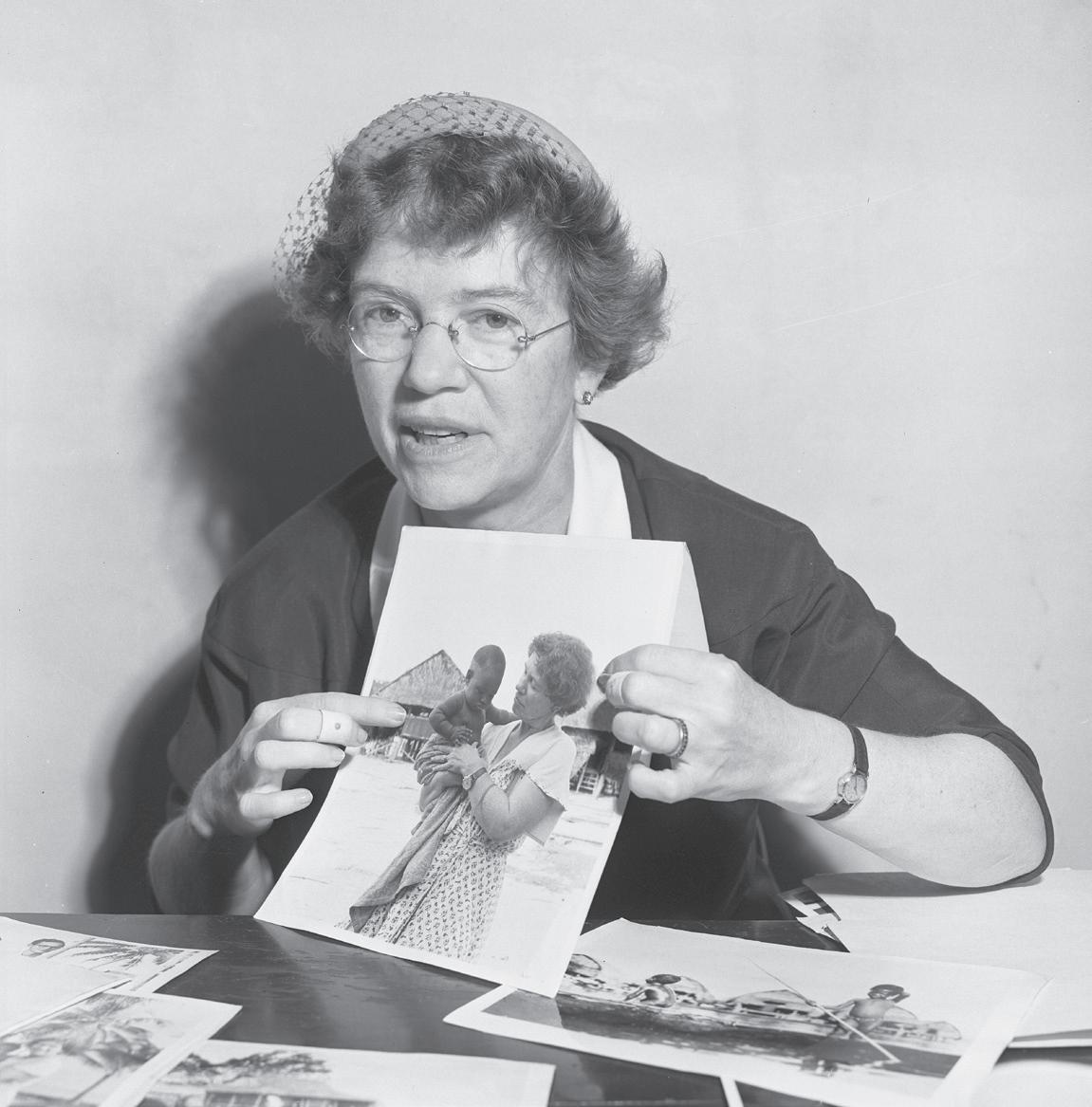
Margaret Mead displays photos of African families during a visit to California in 1954.
Credit: Los Angeles Daily News (CC BY 4.0)
One of the most influential female anthropologists was Margaret Mead (1901–1978). Mead studied adolescence and gender roles in places such as Samoa and New Guinea. Her work showed that human behavior is strongly shaped by culture not just biology. Mead helped make anthropology more accessible to the public through books and lectures. You will learn more about her in Chapter 4.
Another important anthropologist was Ruth Benedict (1887–1948). She focused on how different cultures develop unique patterns of values and behavior. Benedict emphasized cultural relativism and argued that no culture should be judged by the standards of another.
Zora Neale Hurston (1891–1960) combined anthropology and literature to document AfricanAmerican folklore and traditions in the United States and the Caribbean. She was also well-known for her novels, short stories, and plays that featured life in the southern United States for Black Americans.
In the next chapter, we’ll take a closer look at one of the four branches of anthropology—biological anthropology.
• Why is it important to look at older schools of thought through a contemporary framework?
• Why do we need people of different backgrounds contributing to anthropology?
“Research is formalized curiosity. It is poking and prying with a purpose.”
Zora Neale Hurston
Learn more about Zora Neale Hurston’s life and work at the National Women’s History Museum. How do you think her work in theater informed her ideas in anthropology?
Women’s History Museum Hurston
In the early days of anthropology, some anthropologists removed artifacts or human remains from communities without permission. In many cases, these artifacts and remains have cultural, spiritual, and historical meaning.
While some people believe that studying these materials can provide important knowledge about history and human evolution, others argue that communities have the right to control their cultural heritage and ancestral remains. In this activity, you’ll explore the case of the “Kennewick Man” and the related ethical issues.
The Kennewick Man was a skeleton discovered in 1996 in a shallow riverbed in Washington state. At first, scientists thought the skeleton might belong to a white settler, but further testing showed it was thousands of years old and Native American. Anthropologists wanted the remains to study, while Native American tribes insisted the remains be reburied.
What stories are told over and over in your family or friend group?
Read more about the Kennewick Man controversy in this article from NPR.
NPR Code Switch Kennewick
Consider these questions about ethics in anthropology from the point of view of an anthropologist, museum curator, or Indigenous tribe member.
• Is it ethical to remove artifacts or remains from communities without asking permission?
• Who should decide where artifacts belong?
• Should museums return artifacts and remains to their original communities in an effort called repatriation?
• How have standards and ethics in anthropology changed over the years?
• How should anthropologists work with communities today?
• Does scientific knowledge outweigh cultural beliefs?
Write a reflection or create a presentation about these ethical issues from one of those points of view.
Switch your point of view and consider the same questions. Do your answers change? Why or why not?
Inquire & Investigate
Write down what you think each word means. What root words can you find to help you? What does the context of the word tell you?
- cultural evolution
- diffusionism
- ethnocentrism
- evolutionism
- functionalism
- structuralism
Compare your definitions with those of your friends or classmates. Did you all come up with the same meanings? Turn to the text and glossary for help.
In many Western societies today, tattoos are often seen as a form of self-expression, fashion, or art. However, opinions about tattoos vary widely. Some people view them positively, while others associate them with rebellion or unprofessional behavior. In some cultures, tattoos have historical and cultural meanings. For example, in Polynesian cultures, traditional tattooing carries spiritual and social significance. Tattoos represent ancestry, identity, and status within the community. In this activity, consider how tattoos can be viewed through an ethnocentric or cultural relativism lens.
Sometimes, people choose to adopt traditional tattoo designs without understanding or respecting their meanings. Why can this be problematic?
What do tattoos represent in your community? Do people view tattoos positively, negatively, or both? Do opinions on tattoos differ within your community? If so, how?
Apply the lens of cultural relativism to the practice of tattooing. How might someone from a culture with sacred tattoo traditions view tattoos differently from someone who sees them as fashion? Why is it important to understand cultural meaning before judging a practice? How does cultural relativism help prevent stereotypes?
Imagine you are an anthropologist studying tattoo practices across cultures. Explain how you would describe tattooing without judging it. Write a short reflection.


How do we know how early humans lived?


Biological anthropologists look at physical evidence to learn how different species relate to and interact with each other.



In 2007, a group of underwater cave divers explored and mapped the Sac Actun cave system on Mexico’s Yucatan Peninsula, one of the largest surveyed underwater cave systems in the world. As they made their way through the deep, flooded caves, the divers discovered many bones at the bottom of an enormous chamber. The bones included those of saber-toothed cats, giant ground sloths, cave bears, and other Ice Age animals. And, on a boulder within the cavern, a human skull rested upside-down with its dark eye sockets turned toward the divers. They had stumbled across the well-preserved skeleton of an ancient teenage girl. The divers named her “Naia,” from a Greek word meaning “water nymph.” Realizing they had made a significant discovery, the divers reported what they had found to the National Institute of Anthropology and History in Mexico.
Scientists and cave explorers from Mexico, the United States, and Canada formed a research group to photograph, document, and study the site and its fossil record. They tried to answer many questions: Who was Naia? What was her life like? What brought her to the cave? What can we learn about her and her life from the bones she left behind?
Using carbon dating and other tests, scientists estimated that Naia lived between 12,000 and 13,000 years ago, near the end of the last Ice Age. At that time, sea levels were much lower and the cave was dry. Scientists believe that Naia accidentally fell into the pit, broke her pelvis, and died there.

Across thousands of years, rising sea levels flooded the cave, preserving her remains in the cool, dark water.
Anthropologists studied Naia’s bones to learn what her life was like. They believe she was between 15 and 17 years old when she died. Her leg bones suggest that she walked long distances but probably didn’t carry heavy loads. Her arm bones were smooth, which indicates that she likely didn’t do hard, repetitive work such as grinding seeds or scraping animal skins, activities that usually build strong arm muscles.
Naia provides a rare and powerful glimpse into early human life and the history of the Americas.
You can learn more about our human family tree at the Smithsonian’s Human Origins website. What are some similarities between the different hominins?
Naia’s bones and teeth did show signs of scarring, however, which is often linked to severe malnutrition. The lack of proper food may have slowed her growth and explains her small, slight body. Her pelvic bones showed signs that she might have given birth at some point before her death, even though she was very young.
human family tree
Naia’s skull and teeth gave scientists even more clues. For a long time, anthropologists believed the first people came to the Americas from Asia by crossing the Bering Land Bridge from Siberia. Eventually, these people spread south and became the Indigenous populations of the Americas. Scientists found, however, that some early human fossils found in the Americas looked more like fossils from Africa or the South Pacific. This led scientists to wonder whether a separate group of early people, called Paleoamericans, arrived in the Americas a different way.
Naia’s skull matched features of these Paleoamericans— she had a narrow face, wide forehead, eyes set far apart, and a jaw that stuck out slightly.
Naia had nearly a full set of well-preserved teeth.
Scientists were able to extract mitochondrial DNA from one of her teeth. This type of DNA helps researchers trace family lines across generations. The results showed that Naia shared DNA with some modern Indigenous groups in the Americas. This meant she was likely an ancestor of today’s Indigenous peoples and that her ancestors crossed the Bering Land Bridge.
Naia’s discovery helped solve a long-standing mystery. It showed that early people in the Americas may have looked more physically diverse than scientists once believed even though they came from the same ancestral group. Her remains support the idea that the first Americans migrated from Asia across the Bering Land Bridge.
The study of Naia’s remains shows how biological anthropology helps scientists understand humans and our past. Biological anthropology, sometimes called physical anthropology, is one of the four main branches of anthropology. It focuses on how humans evolved, how our bodies function, and how biology connects to culture. It asks big questions, such as where did humans come from, how are we related to other animals, and what makes humans unique?
Holism is the theory that you can’t understand one part of a culture—such as family life or religion—by looking at it alone. Instead, researchers must look at the whole picture. The economy, religion, family life, politics, environment, and history of a culture are all connected. A change in one area often affects the others. For example, you can’t fully understand a community’s food traditions without also thinking about its environment, beliefs, technology, and social rules. Anthropologists use holism to avoid oversimplifying cultures or judging them based on one trait. This approach helps them see how people’s lives are shaped by many factors working together. Holism reminds anthropologists to ask: How do all the pieces fit together?
Human evolution happened very slowly, step by step, as early humans adapted to their environments.
To help answer these questions, biological anthropologists study fossils from our early human ancestors. By looking at these fossils, scientists can see how humans changed across millions of years. For example, fossils show when humans began walking upright, how our brains grew larger, and when we started making and using tools.
Biological anthropologists also study human variation— the physical differences among people around the world. These differences include traits such as skin color, body shape, and facial features. Most of these traits developed as adaptations to different environments, such as hot or cold climates and varying levels of sunlight.
Another important part of biological anthropology is the study of our relationship with other animals, especially primates such as monkeys, apes, and chimpanzees. By observing how these animals live, communicate, and interact socially, scientists can better understand the traits they share with humans. By combining all this information, biological anthropologists gain a clearer picture of who we are, how we evolved, and where we came from.
Explore this interactive human evolution timeline from the Smithsonian’s Human Origins website. What impact might the climate have on human evolution?
Where did we come from? To answer that big question, we need to understand human evolution. Human evolution is the long story of how modern humans (Homo sapiens) developed from ancient ancestors across millions of years. Scientists have found strong evidence showing that the physical and behavioral traits all humans share today slowly evolved across about 6 million years.
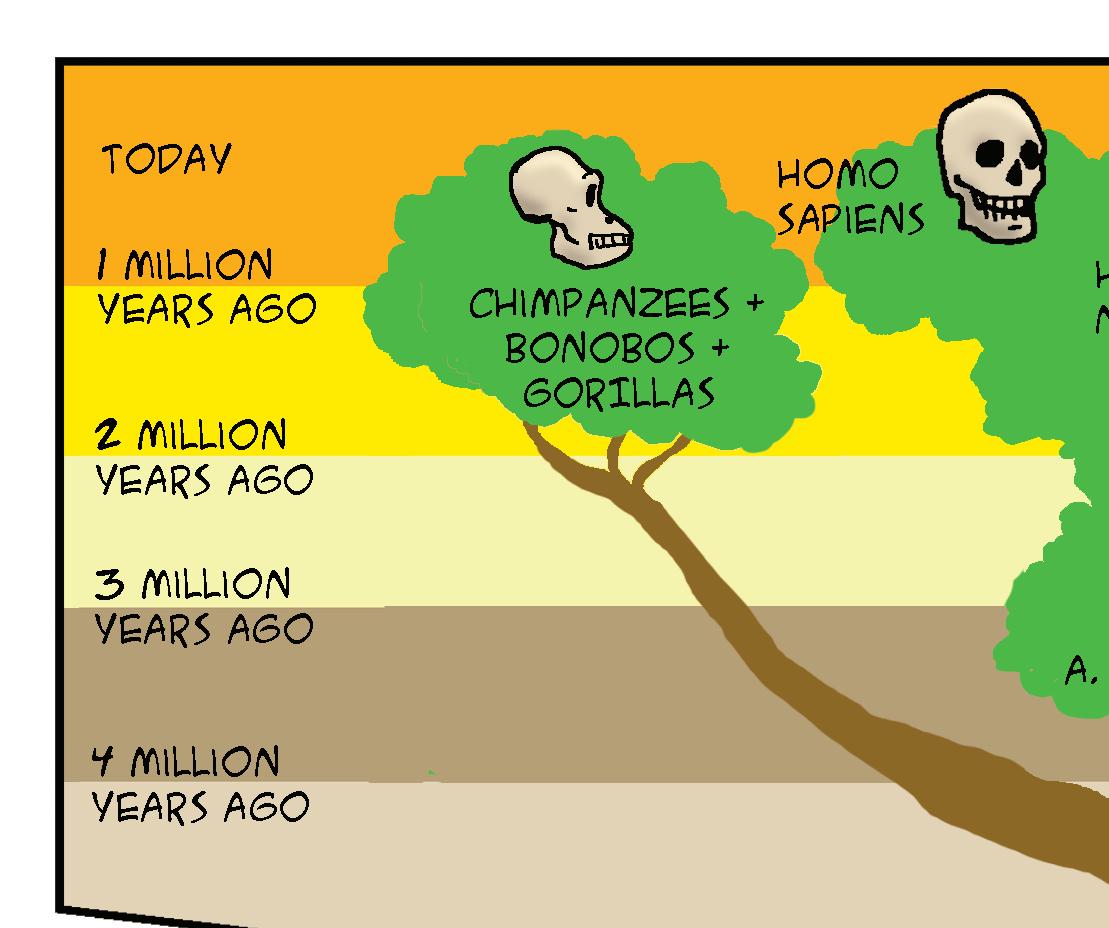

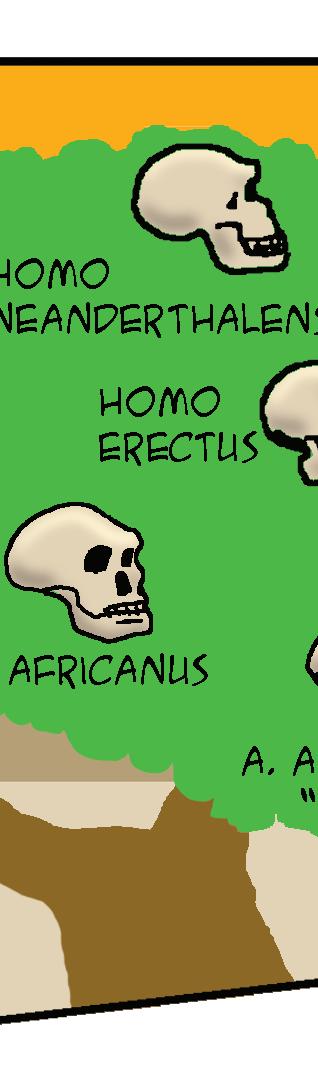
Humans are primates, which means we are closely related to some animals, including monkeys and apes. In fact, humans share a common ancestor with the African apes—such as chimpanzees and gorillas—that lived between 6 and 8 million years ago. Scientists believe that humans first evolved in Africa. The oldest human fossils, dating from 2 to 6 million years ago, are found there.
Hominins are all the members of our ancient human family.
Today, the only living hominin is Homo sapiens, which is us. But if we could travel back millions of years, we would meet many different hominin species that helped shape the story of human evolution.
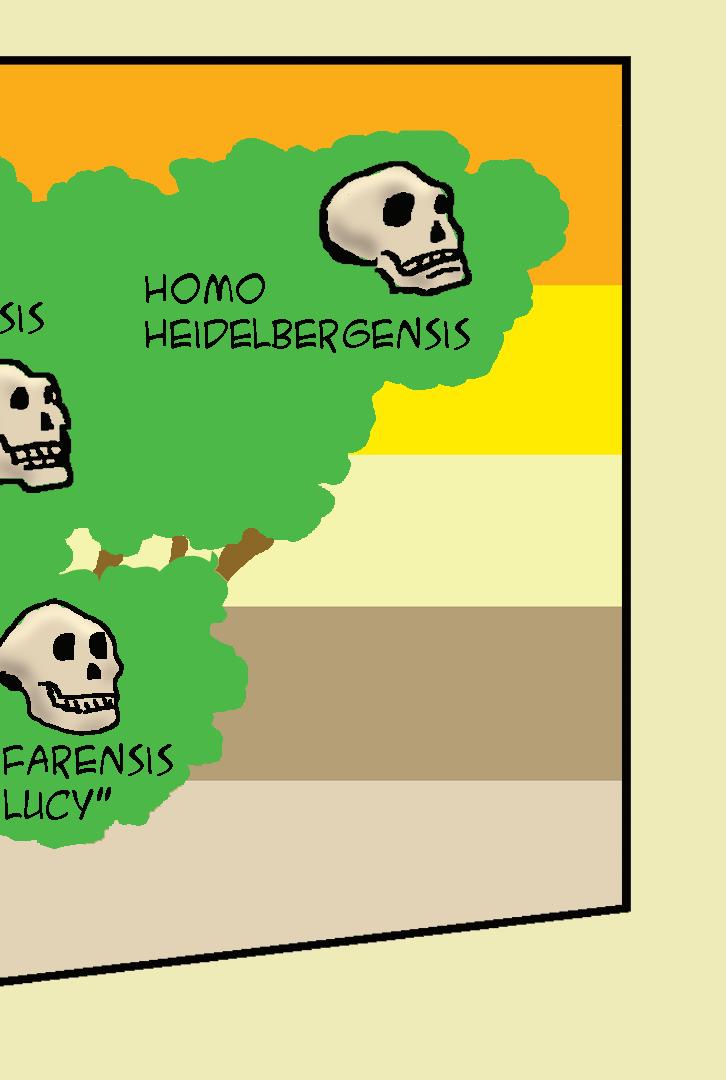
The word hominin includes modern humans and all our ancestors who are more closely related to us than to chimpanzees.
Other primates are not less evolved than humans—they just took a different evolutionary path.
One trait that distinguishes hominins from other primates is bipedalism, or the act of walking on two legs. Bipedalism was a huge step in human evolution and helped free early hominins’ hands for carrying food and using tools. Early hominins also began to slowly develop larger brains. The earliest hominins had small brains, but later species had bigger brains that helped them think, solve problems, and survive. Many hominins also made and used tools, which gave them an advantage when finding food or protecting themselves.
Scientists have identified 15 to 20 different early human species.
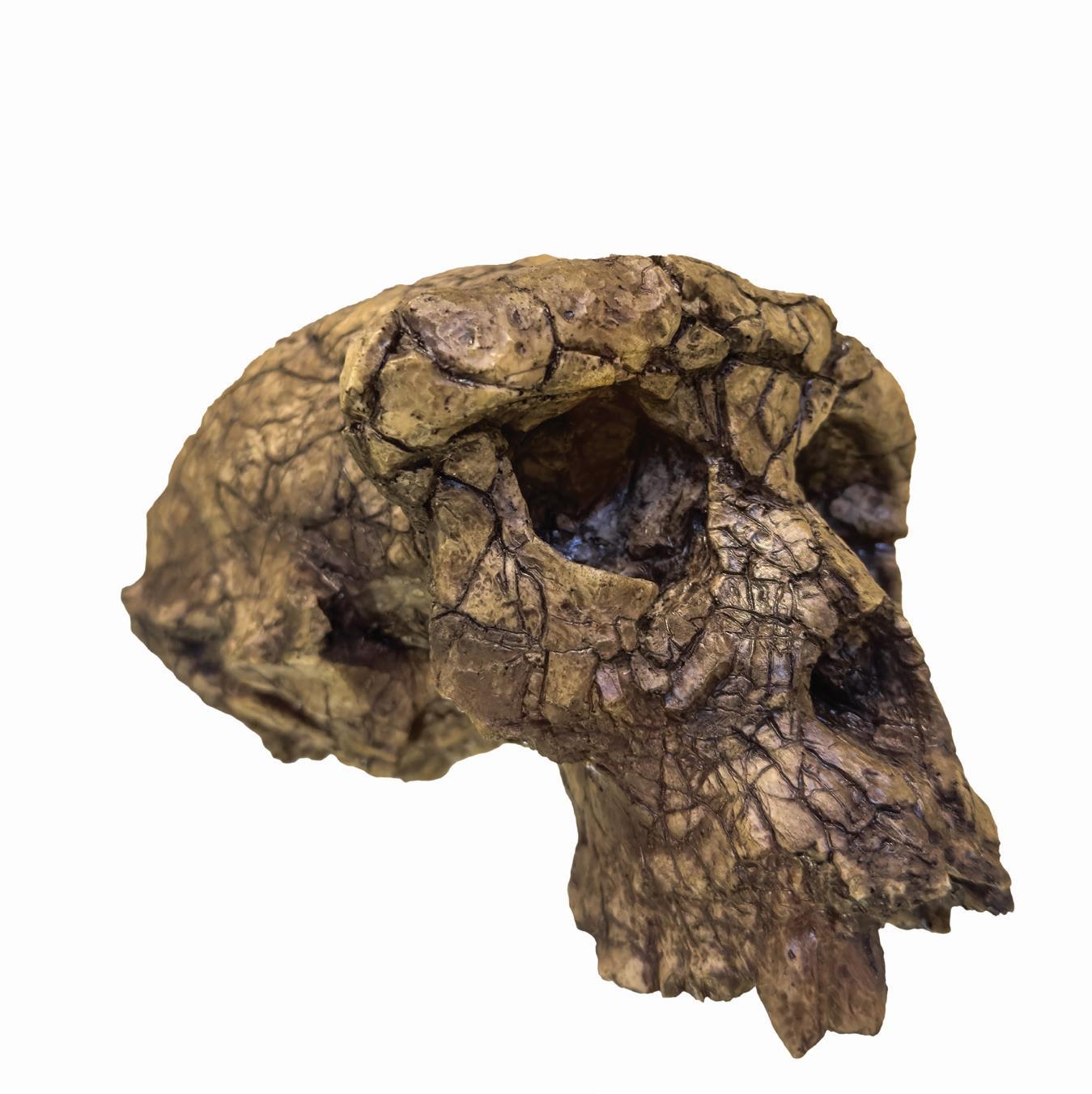
Some well-known hominins include Australopithecus , who lived about 3 to 4 million years ago and could walk upright. Then came Homo habilis, known for making simple stone tools. Later came Homo erectus, who used fire and traveled outside of Africa.
Around 100,000 years ago, Homo sapiens began leaving Africa and moving to new parts of the world. As they traveled to Europe and Asia, they encountered other human species already living there. Among them were the Neanderthals, who lived in Europe and parts of Asia about 400,000 to 30,000 years ago. By studying hominins, anthropologists can learn more about how humans slowly changed across millions of years into who we are today.
To learn more about human evolution, scientists called paleoanthropologists study ancient humans and their evolution. Fossils are an important way that scientists study human evolution. Fossils are the preserved remains of ancient plants and animals, including early human ancestors. These fossils are often bones or teeth found buried in rock layers. By studying fossil bones, paleoanthropologists can learn about our ancestors’ sizes and shapes and their movements.
For example, the shape of the pelvis and leg bones can indicate whether an ancestor walked upright. Teeth provide clues about diet. Sharp teeth might suggest meat-eating, while flatter teeth are better for grinding plants. The size of the skull helps paleoanthropologists estimate brain size. Larger brains are linked to more complex thinking. Some fossils, such as the famous “Lucy,” a 3.2-million-year-old skeleton found in Africa, show that early humans walked on two legs long before they had large brains.
Paleoanthropologists compare fossils from different time periods. This helps them see how traits changed slowly with time rather than all at once. The tools and living sites of early humans also show how they hunted, gathered food, and worked together.
Paleoanthropologists carefully study these clues from the past to piece together the story of human evolution.
Scientist Carl Linnaeus (1707–1778) invented a binomial, or two-part, Latin naming system that we still use today to classify and name all organisms based on physical traits. Under his system, each organism is given a two-word name. The first word is the genus to which the organism belongs. The second word is the organism’s species within the genus. Using this naming system, modern humans are classified as Homo sapiens.
Visit the forests of Tanzania with Jane Goodall in this CBS News video. How did her observations about chimps change the way humans saw themselves?
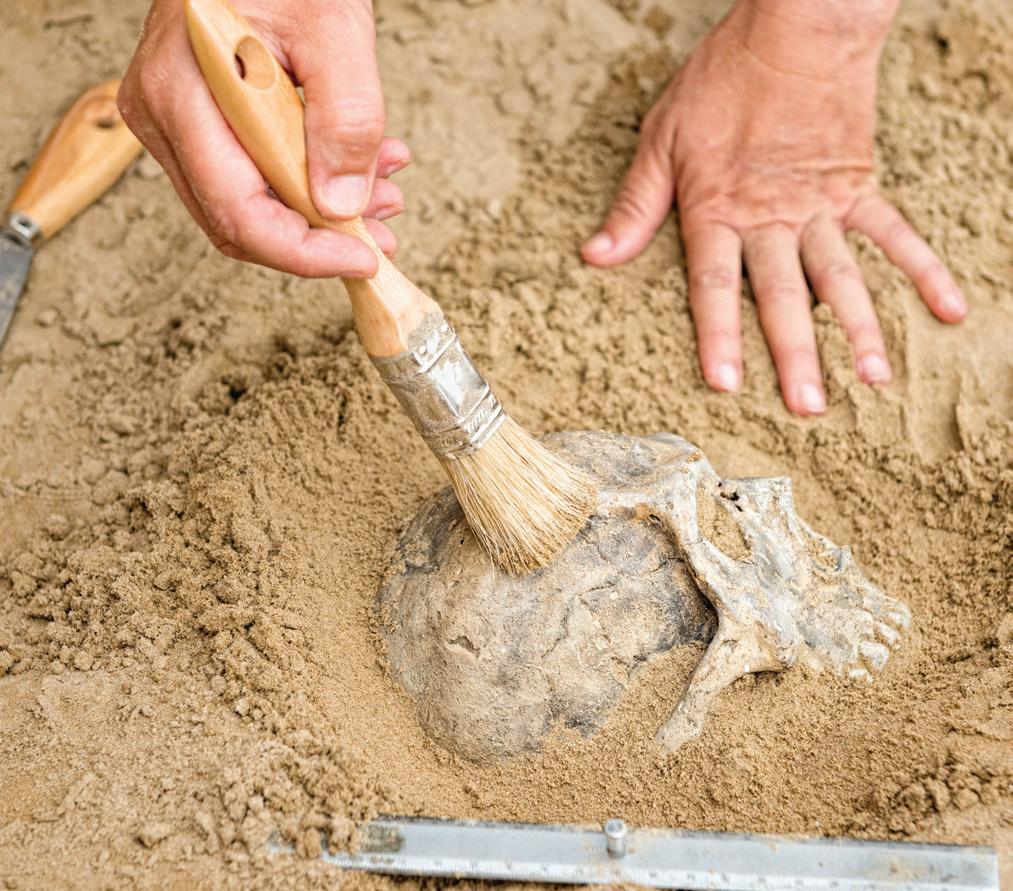
To find fossils, paleoanthropologists search in places where ancient bones are more likely to be preserved, such as dry deserts, caves, and areas where erosion has exposed old layers of rock. Scientists may walk for hours searching the ground for small bone fragments. Sometimes, local people or construction workers find fossils and alert scientists. Paleoanthropologists carefully dig out fossils using small tools such as brushes and picks so those delicate pieces do not break.
After they find and extract the fossils, scientists analyze them closely. They measure bones, compare them to other fossils, and use modern technology such as CT scans and 3-D modeling. Even small details, such as the shape of a tooth or the angle of a hip bone, can reveal important information. Scientists use several dating methods to estimate the age of a fossil—you’ll learn more about these methods in Chapter 3.
Artifacts found near fossils, such as stone tools or evidence of fire, help scientists understand how ancient humans lived and survived.
By understanding how humans adapt, biological anthropologists help us see both what makes us unique and what we all share as members of the human family.
Several important fossil discoveries have helped scientists better understand human evolution. Many of these discoveries were made during the mid1900s by Louis Leakey (1903–1972) and Mary Leakey (1913–1996), a husband-and-wife team of paleoanthropologists. The Leakeys believed in Charles Darwin’s idea that humans first evolved in Africa. They spent many years searching for fossils in East Africa, especially at Olduvai Gorge.
Olduvai Gorge, located in northern Tanzania, is one of the most important fossil sites in the world. A river cut through the land and exposed layers of rock called strata. These layers act like pages in a history book, with the oldest layers at the bottom. One layer, called “Bed I,” is about 2 million years old, making it an ideal place to search for fossils of early human ancestors.
Starting in the late 1930s, Louis and Mary Leakey discovered stone tools in Olduvai Gorge that were about 2.6 million years old, along with fossils of extinct animals and an ancient primate called “Proconsul.” The tools were simple stones used for cutting and hammering, suggesting that early human ancestors lived nearby. At first, the Leakeys focused mainly on finding tools, but soon they wanted to find the humans who made them.
In 2009, paleoanthropologist Tim White (1950– ) discovered a fossil called “Ardi” in Ethiopia. Ardi lived about 4.4 million years ago and showed a mix of human and ape traits. Ardi could walk upright but also had long arms and feet suited for climbing trees. This discovery helped scientists understand that early human ancestors were very adaptable and lived in ways different from both modern humans and modern apes.
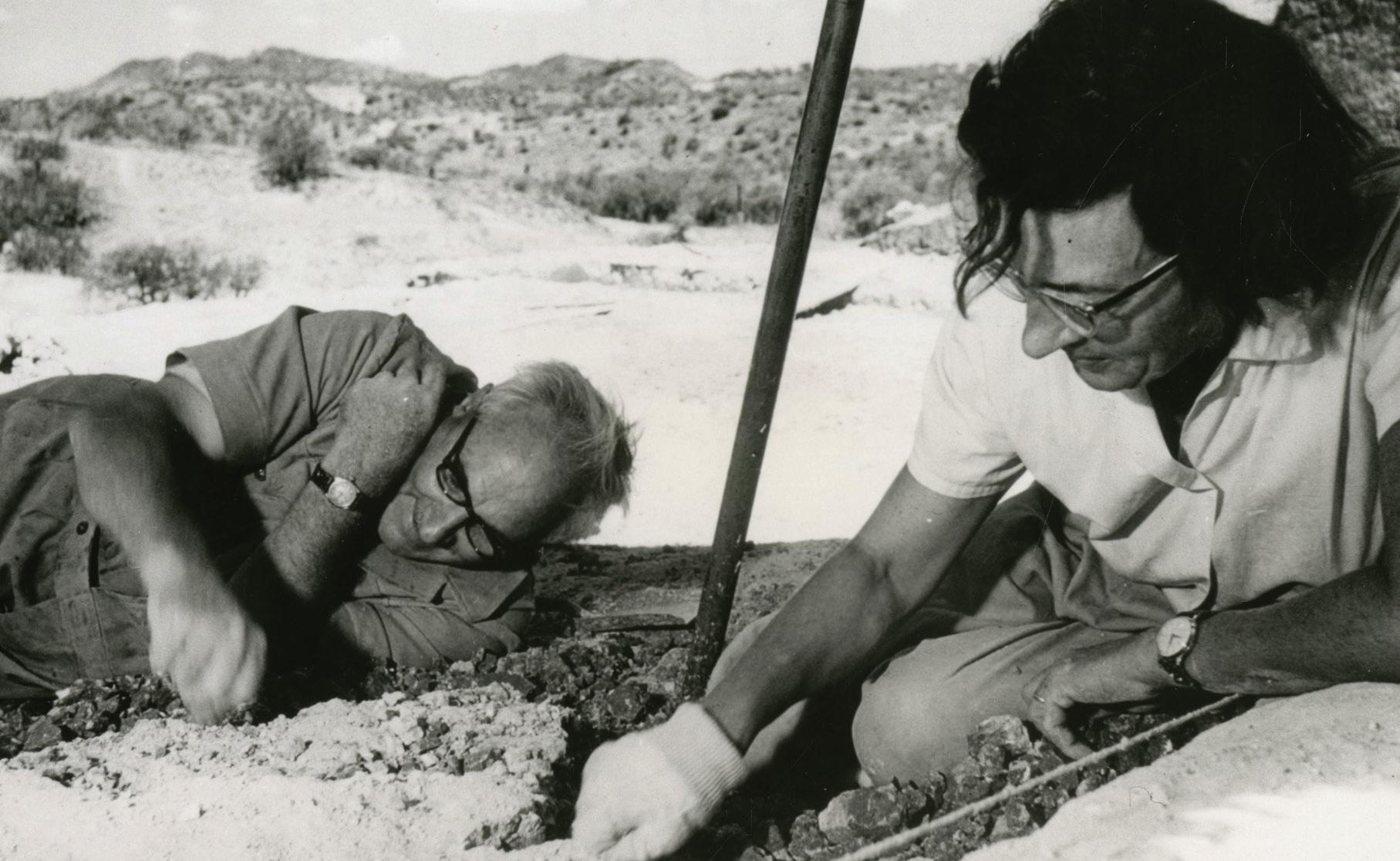
Later discoveries by other members of the Leakey family helped show that multiple types of early humans lived at the same time. Overall, the Leakeys’ work helped prove that Africa is the birthplace of humanity and showed that human evolution happened slowly across millions of years.
Watch an archival interview with Mary Leakey. How is this news coverage different from today’s?
In 1959, Mary Leakey made a huge discovery. She found fossil teeth and skull pieces sticking out of the ground near Bed I. During the next few weeks, the team uncovered more than 400 fossil fragments, which formed an almost complete skull of an early human ancestor. Known today as “Nutcracker Man” because of its large teeth, the remains of Paranthropus boisei were estimated to be about 1.8 million years old, the oldest known hominin at the time.
Just one year later, Mary Leakey and her son Jonathan discovered another fossil nearby. This one looked smaller and more advanced and was named Homo habilis, meaning “handy human.” Scientists believe this species was one of the first to make and use stone tools.
During the twentieth century, advances in molecular biology gave scientists an exciting new way to study ancient humans: DNA analysis.
DNA (deoxyribonucleic acid) is the genetic material found in all living things and passed down from parents to their children.
BBC Mary Leakey skull
For a long time, anthropologists depended mainly on fossils to learn about early humans. People in the field believed it was impossible to recover DNA from ancient remains. That changed in the 1980s, when new technology made it possible to extract ancient DNA from fossils. This breakthrough gave scientists powerful new clues about how humans evolved.
When anthropologists discover ancient fossils, they first decide whether the remains are good candidates for DNA testing. Teeth and the inner parts of bones are especially valuable because they help protect DNA from heat, moisture, and bacteria. To avoid contamination, researchers wear protective clothing and work in sterile rooms when handling the fossils. Even tiny particles of dust or skin cells can ruin a sample.
Collecting ancient DNA takes a lot of care and patience. Scientists carefully drill into a fossil to remove a tiny amount of bone powder, sometimes from just a single tooth. The powder is placed into a small tube, and chemicals are added to break down the bone and release the DNA. Because ancient DNA is scarce, scientists use a method called polymerase chain reaction (PCR) to copy the DNA millions of times so they can study it.
Ancient DNA is often damaged and incomplete, so scientists use powerful computers to piece the fragments together like a puzzle.
Once they reconstruct the DNA, researchers compare it to DNA from modern humans, other ancient humans, and even animals. By comparing the DNA from different species, scientists can see how closely related they are. These comparisons help scientists understand human migration, evolution, and adaptation. DNA evidence has also shown that early humans interacted and even interbred with extinct relatives, such as Neanderthals.
When people say, “race is a social concept,” they mean that race is something created by society, not something based on major biological differences. Scientists have studied human DNA and found that all humans are extremely similar to one another. The physical traits people often use to describe race, such as skin color, hair texture, and eye shape, are small differences that developed because of where someone’s ancestors lived. For example, darker skin developed to help protect the body in places with strong sunlight. But these differences are only on the surface. Genetically, humans are about 99.9 percent the same.
Some societies came up with the idea of race to group people based on physical traits. With time, these groupings were often linked to meanings that affected how people treated one another. But biologically, no clear lines separate humans into different races. We are all part of the same species: Homo sapiens. So, race as a social concept is a way society has chosen to classify people rather than a scientifically proven biological division.
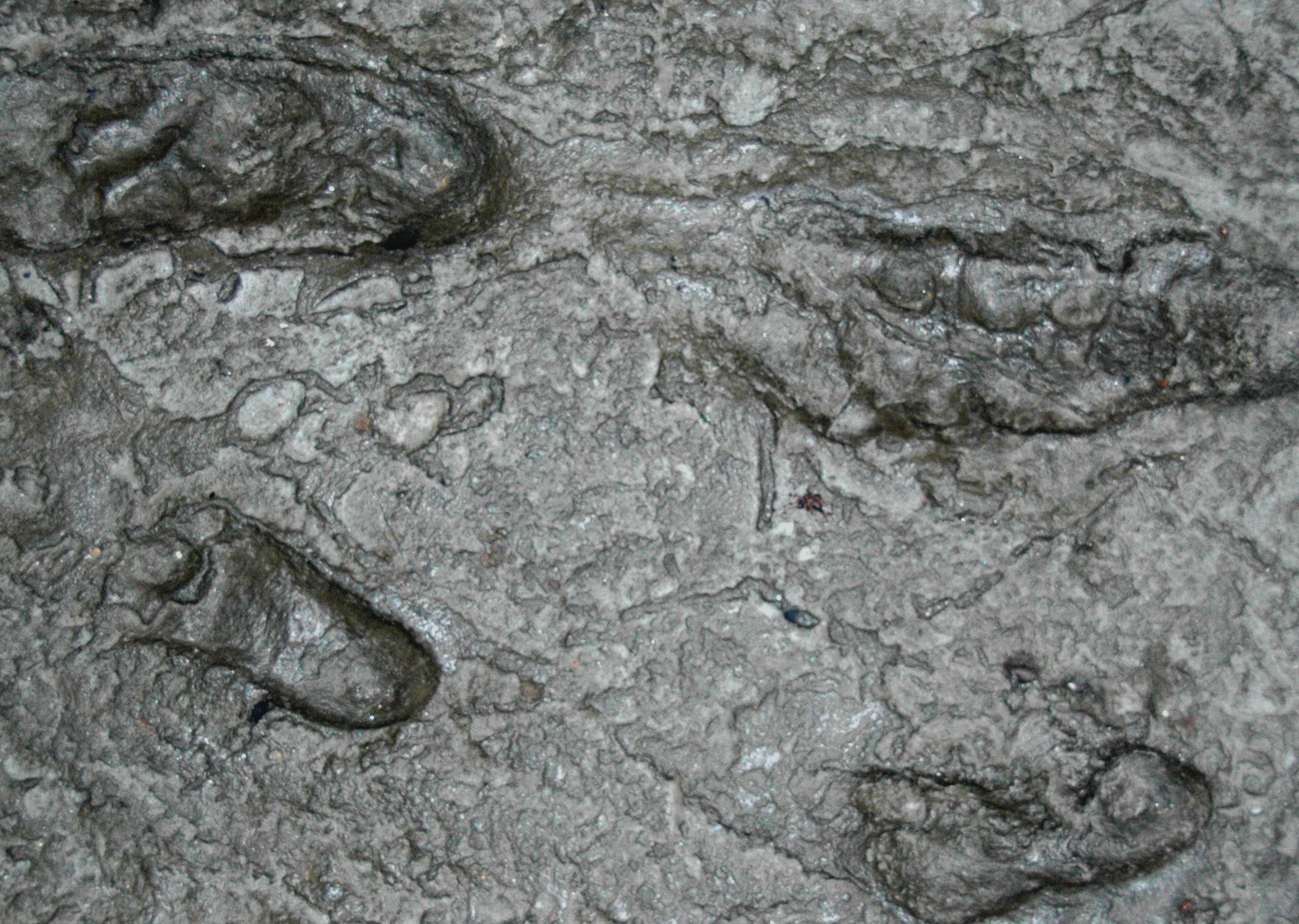
In 1978, Mary Leakey and scientist Paul Abel made an exciting discovery near Laetoli in Tanzania. They found a trail of about 70 human-like footprints preserved in volcanic ash. Scientists believe these footprints were made by three early humans about 3.6 million years ago. The footprints showed clear signs of walking heel to toe, with big toes lined up like modern human feet. This proved that these early humans were bipedal. The short stride in the footprints suggested they had short legs and that longer legs evolved later to help humans walk farther and faster.
Look around at any group of people and you’ll spot a lot of differences. You will see people with different skin colors, heights, body shapes, and hair textures. Even the ways our bodies respond to disease and stress can be different. Yet even though we may look very different from one another, we are incredibly similar biologically. Genetics show that humans are more alike than different. In fact, any two humans share about 99.9 percent of their DNA.
So where do these physical differences come from? During thousands of years, humans adapted to different environments around the world, and those adaptations shaped how we look and function today.
For example, being either bigger or smaller was a plus, depending on where one lived. A larger body could help protect against predators, but it also required more food and energy to survive. Smaller bodies needed less fuel but might have faced other challenges
Some adaptations helped humans survive in extreme environments. In very cold places, such as the Arctic, people have adaptations that help them stay warm and efficiently process high-fat diets. In hot desert regions, the human body adapts by sweating efficiently and conserving water. At high altitudes, such as in the Andes or Himalayas, people have adapted to lower oxygen levels.
Neanderthals may be extinct, but part of them lives on in many people today through our DNA. When modern humans met and interbred with Neanderthals thousands of years ago, the Neanderthals passed along some of their genes. As a result, many people today carry a small amount of Neanderthal DNA.
Some have larger lungs or higher red blood cell counts, allowing them to get more oxygen from the thin air.
Biological anthropologists study human variation. They look at factors such as health, diet, growth, and disease to understand how both biology and the environment shape our bodies. For example, anthropologists study how nutrition affects child growth, how daily habits can increase or decrease the risk of heart disease, or why some groups of people are more resistant or more vulnerable to certain illnesses. They also study how modern life, such as living in crowded cities or dealing with climate change, affects human health and adaptations.
This is often described as “nature vs. nurture.”
In 1974, American paleoanthropologist Donald Johanson (1943– ) discovered the partial remains of a fossil, later nicknamed Lucy, in Ethiopia. Lucy belonged to a species called Australopithecus afarensis and lived about 3.2 million years ago. She was only about three and a half feet tall, had a slim body, and shared some features with modern humans. Even though her brain was small, her skeleton clearly showed that she walked upright on two legs. This discovery helped scientists realize that walking on two legs, or bipedalism, came before large brains in human evolution.
Primatologists usually study primates in the wild, spending long periods of time observing how they eat, move, communicate, and interact with one another. These careful observations help scientists understand how early humans might have lived millions of years ago.
What are some physical traits that are different among you and your friends?
Some of our closest relatives on Earth are our fellow primates—including chimpanzees, gorillas, and monkeys. We share important traits with other primates, such as flexible hands, forward-facing eyes, and the ability to learn and solve problems. By studying how primates live, anthropologists can also learn about human behavior and better understand how humans have evolved.
The study of living primates is called primatology. By observing how primates communicate, use tools, and live in social groups, scientists called primatologists can make educated guesses about how early human ancestors might have lived. For example, when anthropologists study how chimpanzees use sticks to gather food, they better understand how humans began to use tools.
Some of the most famous primatologists made their discoveries by living near the animals they studied. Jane Goodall (1934–2025) was well known for her research on chimpanzees in Tanzania. Before her discoveries, many people believed that only humans used tools. But Goodall saw chimpanzees using sticks as tools to pull termites out of their mounds. She also discovered that chimpanzees have personalities, form close friendships, and experience emotions such as joy, fear, and anger.
Forensic anthropologists study human bones to help law enforcement, courts, and humanitarian groups.
Their work is especially important when a body is badly decomposed, burned, buried, or reduced to a skeleton and can’t be identified by fingerprints or facial features. By carefully examining bones, forensic anthropologists help piece together a person’s story to try to learn what happened to them.
They can estimate age because they know how bones grow and change through time. They can also estimate sex by studying the pelvis and skull. The pelvis might also show signs of childbirth.
Forensic anthropologists might also look at certain features of a skull to estimate its ancestry. While by themselves these traits can’t identify someone, they can help narrow down possibilities. Anthropologists also examine bones for signs of injury or disease. Broken bones, bullet holes, knife marks, or other injuries can offer clues about what happened and whether the injuries occurred before or after death.
Forensic anthropologists often work with the police and medical examiners to help solve crimes and identify missing people. Their findings can be used as evidence in court. They also help identify soldiers from historical battlefields, victims of natural disasters, and people affected by wars or human rights violations. In these cases, their work helps families find answers and gives communities the chance to honor those who died.
• How do anthropologists use some of the same methods to study ancient burial grounds and modern-day crime sites?
• Why are some scientific theories considered controversial? How might attitudes change for future anthropologists?
The study of human evolution was strongly influenced by the work of British scientist Charles Darwin. Prior to Darwin, most people from Western civilizations turned to the Bible to explain the origin of humankind. Darwin disagreed with the biblical explanation. Instead, he proposed that evolution was due to natural selection. Natural selection is the process by which living things change with time because individuals with helpful traits are more likely to survive and reproduce. Across many generations, these traits become more common in a population. Darwin argued that all species share common ancestors. This includes humans. He suggested that humans and other primates, such as chimpanzees, evolved from a shared ancestor millions of years ago. At the time, Darwin’s ideas were controversial, even among other scientists. However, eventually they became accepted and his work laid the foundation for modern biological anthropology.
Write down what you think each word means. What root words can you find to help you? What does the context of the word tell you?
- bipedalism
- forensic anthropology - fossil - hominin
- paleoanthropology
- primatology
Compare your definitions with those of your friends or classmates. Did you all come up with the same meanings? Turn to the text and glossary for help.
Hominin species evolved across millions of years as they adapted to changes in their environments. The earliest humans lived in Africa and slowly began walking on two legs, a big change called bipedalism. By walking upright their hands were free to carry food and use tools. Through time, early humans’ brains grew larger, which helped them think, solve problems, and work together in groups. Different species, such as Australopithecus and Homo erectus, developed new skills and features. Many of these species lived at the same time, but only one survived: Homo sapiens. In this activity, you’ll take a closer look at some of our human ancestors. How did they adapt and change through time?
Explore the Smithsonian Museum of Natural History’s “Human Family Tree” webpage.
Use this resource and other sources to gather information about these five hominin species.
• Australopithecus afarensis
• Homo habilis
• Homo erectus
• Homo neanderthalensis
• Homo sapiens
For each species, answer the following questions.
1. Time and Place: When did this species live? Where were fossils found? Did they migrate?
2. Physical Traits: Height, brain size (compared to modern humans), skull features (brow ridge, jaw size), evidence of bipedalism
3. Diet and Survival: What did they eat? Did they get their food by hunting or scavenging?
4. Tools and Technology: Did they use tools? What kind? Did they use fire?
5. Social Life: Did they live in groups? Did they care for the injured? How do we know? What were their burial practices?
6. Strengths and Limitations: What adaptations helped their survival? What may have limited their success?
Using the information you found, create a profile of each human ancestor. How does each help tell the story of our human past?
Create a chart to analyze the evolution across these human ancestors. What patterns, if any, do you notice?
& Investigate
Adaptations evolve across many generations because individuals with a beneficial adaptation are more likely to survive and pass this trait to their offspring. Examples of adaptations include a camel’s hump, which allows it to store fat for energy, and the shape of a bird’s beak designed to eat specific foods. In this activity, you’ll explore how environments have shaped human traits and adaptations through time.
Select an environment to study. For example, you might choose the hot desert, Arctic tundra, high mountains, or tropical rainforest.
Research the following questions about your selected environment.
• What environmental challenges exist here (temperature, sunlight, oxygen, food availability)?
• What physical traits might help someone survive longterm in this environment?
Repeat this analysis with a second environment. How do the environmental challenges differ in each location? How does that impact human adaptation and natural selection in each place?
• Why would those traits be helpful?
Imagine people have lived in this environment for more than 10,000 years. What traits would you expect to see passed down genetically from parent to offspring? Why would some traits become more common in the population through time?
Write a report or create a presentation to describe your findings.



How do we learn about early humans?




Archaeologists study artifacts left behind by past civilizations to learn more about the people who lived then.


In 1879, Marcelino Sanz de Sautuola (1831–1888) and his eight-year-old daughter, Maria, explored a cave system near the town of Santillana del Mar in northern Spain. The Altamira cave system had been sealed for many centuries by a rockfall, but a local hunter stumbled upon the cave system in 1868. Sautuola, an amateur archaeologist, heard of the discovery and was inspired to explore the cave after seeing Stone Age exhibits in 1878.
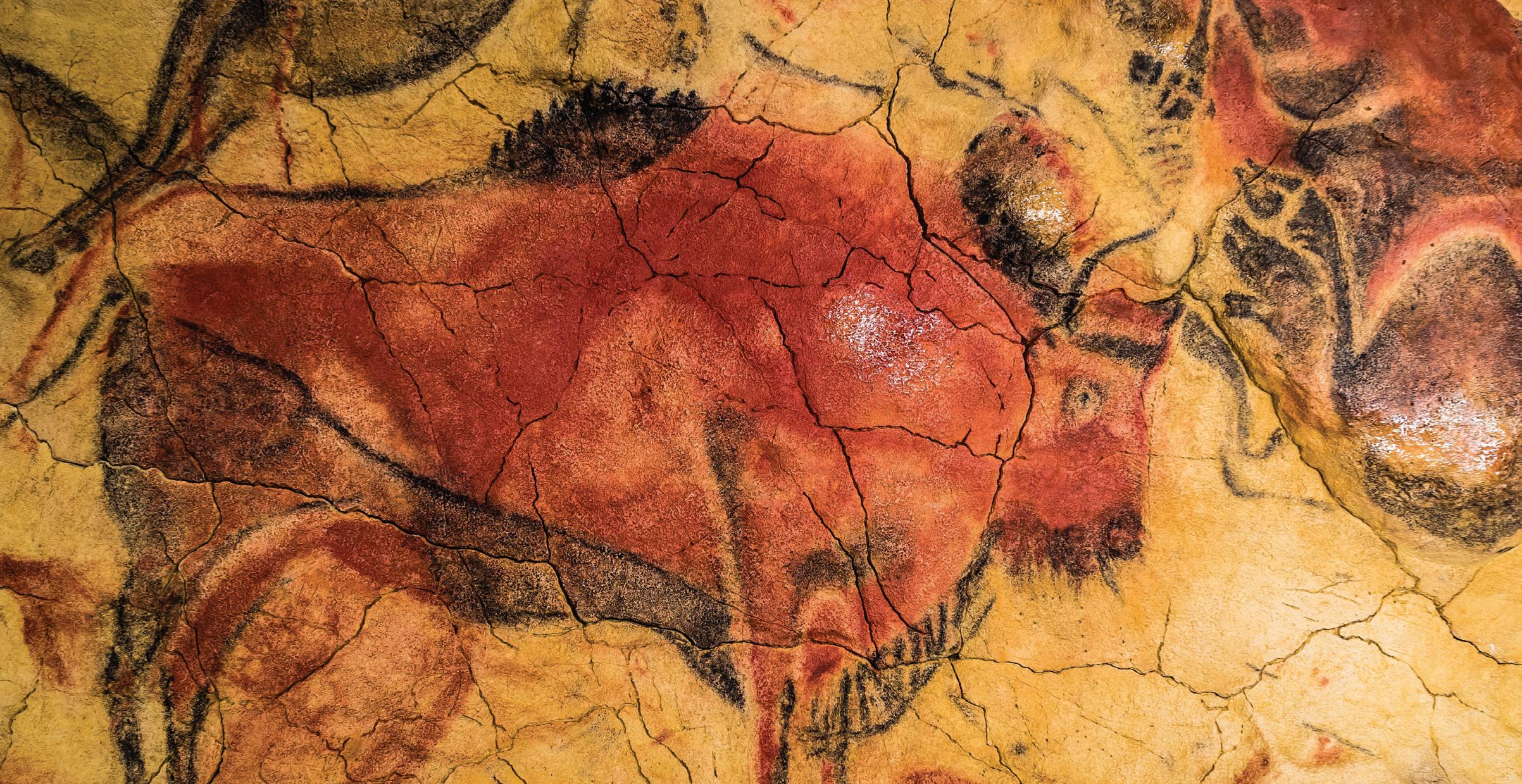
As Sautuola explored the cave, he scanned the ground, hoping to find prehistoric tools in the cave’s winding tunnels. However, Maria looked up at the cave’s ceiling and made an astonishing discovery. “Look, Papa, bulls!” she exclaimed and pointed. Dozens of cave paintings covered the rock ceiling above their heads.
The Altamira Cave contained hundreds of rock paintings on its ceilings and walls, which had been protected and preserved by the cave’s stable climate.
The paintings included images of bulls, deer, oxen, boars, and human-like figures. Many of the paintings were created using different color pigments. Sautuola was certain that early humans living in the Paleolithic Era made the paintings. The Paleolithic Era lasted from about 3.3 million years ago to about 10,000 BCE. Early humans during this period used simple stone tools and lived as nomadic hunter-gatherers.
However, Sautuola’s claims that early humans created the cave art were met with skepticism. In the late 1800s, the study of prehistory was just beginning. No one in the scientific community had seen cave paintings before, and few believed that early humans were sophisticated enough to create this type of art. Could they be a hoax? But then, more prehistoric cave paintings were discovered in France in 1902.
These discoveries changed how scientists understood prehistoric humans.
The Altamira cave paintings, estimated to have been made between 35,000 and 14,000 years ago, proved that early humans were highly creative and artistic. They used sophisticated techniques and materials to create the paintings and took advantage of the natural bumps and curves of the cave to make animals look realistic and three-dimensional. The paintings also revealed the types of animals people hunted for food. The purpose of the paintings may have been to tell stories about important events or they may have been part of religious practices.
Altamira helped prove that art and culture have been part of human life for tens of thousands of years.
The looting of archaeological sites is a serious problem in some parts of the world. People sometimes dig for artifacts— especially valuable items such as statues, coins, or jewelry—to sell on the black market. When sites are damaged or artifacts are stolen, valuable information about the past is lost forever.
To protect archaeological sites, many countries have laws that make it illegal to dig at historic sites without permission or to remove artifacts without proper approval. For example, in the United States, the Archaeological Resources Protection Act (ARPA) of 1979 makes it illegal to excavate or remove artifacts from federal land without a permit. People who break this law can face heavy fines or even jail time. International agreements, such as the United Nations Educational, Scientific and Cultural Organization (UNESCO) 1970 Convention treaty, also help stop the illegal trade of cultural objects between countries. These laws help preserve archaeological sites and discoveries so that future generations can continue learning from the past.
ARCHAEOLOGY: UNEARTHiNG THE PAST
Archaeology is a branch of anthropology that studies people of the past by examining the things they left behind. Instead of reading diaries or history books, archaeologists search for clues in the ground. These clues include tools, homes, jewelry, art, coins, pottery, bones, and even ancient trash. Anything that people made, used, or changed in the past can be important. Small objects that can be picked up and moved, such as tools, clothing, or artwork, are called artifacts. Larger things that cannot be moved, such as houses, fire pits, or postholes from buildings, are called features. By studying artifacts and features, archaeologists learn how people lived, worked, traveled, and built communities long before cameras, newspapers, or computers existed. In many cases, archaeology is the only way we can understand people who never had a written language.
Think about your own life for a moment. If someone dug up your house hundreds of years from now, what might they find? Maybe old phones, clothes, notebooks, toys, food wrappers, and furniture. From those items, a future archaeologist could make guesses about what you ate, how you spent your time, and what technology you used. Archaeology works the same way. By carefully studying artifacts, archaeologists try to answer big questions about human history. How did humans build societies? How did people survive in different environments? How did cultures change with time?
How do archaeologists figure out what life was like long ago? They rely on something called the archaeological record, which is basically everything that people in the past left behind. The tricky part is that this record is incomplete. Many things such as food, clothes, and wood break down with time and disappear. But some materials last much longer. Objects made of stone, pottery, and bone can survive for thousands of years. These artifacts can give archaeologists important clues about how people lived. For example, stone tools can tell archaeologists what kinds of food people hunted or gathered. Sharp, flaked stones often indicate that people hunted animals, while stone grinding tools suggest that people milled grains such as corn. Structures also tell a story. A small pit house usually indicates that a single family lived there, while a large pueblo with many rooms suggests a larger, more organized community.
Take a virtual tour of the Lascaux cave paintings. Do you see any similarities with modern day graffiti?
The way people buried the dead often reflects their beliefs about life and death. Some graves contain jewelry, tools, or food offerings, suggesting that people believed in an afterlife. The location of graves and the care taken in burials can also show respect for the dead and their social status.
Modern archaeologists work closely with local communities and make the protection of cultural heritage a top priority. They are careful to respect the people connected to that past. Before starting a project, archaeologists often meet with local leaders, landowners, and Indigenous groups to ask permission and discuss their plans. They listen to community concerns and make sure sacred places, burial grounds, and important cultural sites are treated with care and respect. In many cases, local community members participate in the excavation process. They may help with digging, recording finds, or sharing traditional knowledge that adds meaning to discoveries. Archaeologists also work to return artifacts to their rightful communities whenever possible. By collaborating, archaeologists and communities can protect history while honoring the traditions and beliefs of the people whose stories are being uncovered.
In many ways, archaeologists are like detectives.
They look at artifacts and ask questions. What is it? How was it used? Who made it? The shape of an object can give hints. A pot with a wide opening might have been used for cooking, while one found near a fire pit is even more likely to have been used that way. Some tools, such as spear points or stone knives, are easier to identify. Others are more mysterious. For example, the purpose of small figurines carved thousands of years ago is often unclear. Archaeologists might describe them as symbolic, ritualistic, or even artistic.
Humans have been curious about the past for thousands of years. One of the earliest recorded archaeological digs happened around 550 BCE. Nabonidus (615–539 BCE), the king of Babylon, ordered workers to dig into the foundation stones of an ancient temple because he wanted to learn about the people who built it. Even back then, people were interested in past cultures.
Starting in the Middle Ages, travelers often collected statues, coins, and carvings from ancient ruins. Many were excited about treasures made of gold or precious stones. These early collectors were not archaeologists the way we think of them today. They mostly searched for valuable or beautiful objects and ignored everyday items such as tools or pottery. They also didn’t carefully record where they found things. Because of that, much important information about the past was lost.
During the 1600s and 1700s, wealthy Europeans called antiquarians began collecting ancient artifacts. They studied coins, statues, and writings to learn about civilizations such as those in Greece or Rome. Sometimes, they dug at sites just to find impressive objects for their private collections or museums. They didn’t use careful digging methods, and they rarely kept detailed records. Even so, their interest sparked excitement about ancient history and helped archaeology grow into a more serious field of study.
By the 1800s, archaeology started to become more scientific. Researchers realized that where and how an object is found is just as important as the object itself. Instead of digging quickly, archaeologists began working slowly and carefully, removing soil layer by layer. They recorded the exact location of each item they discovered. They also used maps, drawings, photographs, and written notes to document their work. This careful approach made it possible for other scientists to study their findings and learn even more about the past.
The discovery of the Rosetta Stone in 1799 was a significant moment in archaeology and highlighted how the study of artifacts can help us better understand past cultures. The stone was carved from dark basalt in Ancient Egypt around 196 BCE and was originally part of a larger stone slab called a stela. A French soldier in Napoleon Bonaparte’s army found it while digging near the town of Rosetta (Rashid) in Egypt’s Nile Delta. The stone was named after the place where it was found.
Cave paintings such as those at Altamira show how early people expressed themselves thousands of years ago.
Examine the Rosetta Stone with Dr. Ilona Regulski, curator of ancient writing at the British Museum. Can you think of modern-day versions of a decree like this one?






So why was the Rosetta Stone so special? It displayed the same message written three ways: in Greek, Egyptian hieroglyphs, and a common Egyptian script called demotic. For centuries, no one knew how to read Egyptian hieroglyphs. The knowledge had been lost after Ancient Egyptian civilization faded away.

As scholars could read Greek, however, they began comparing the stone’s Greek text to the Egyptian hieroglyphs and writing. It was slow and careful work that took more than 20 years. Finally, a scholar named Jean-Francois Champollion (1790–1832) realized that many hieroglyphs stood for sounds, not just ideas. That breakthrough helped unlock the code. Scholars were then able decipher the message, a decree honoring King Ptolemy V (c. 210–180 BCE) of Egypt.




many hieroglyphs stood for sounds, not just ideas. That culture.







Because of the Rosetta Stone, historians were finally able to read Ancient Egyptian hieroglyphs and inscriptions.


















This opened the door to understanding more than 3,000 years of Egyptian history and culture. Today, the Rosetta Stone is displayed in the British Museum in London, where people from around the world come to see it.



Before archaeologists start digging, they use special tools and technology to study a site and decide where to excavate. Digging takes time and can disturb the ground, so they first try to learn as much as possible through old maps, photographs, government records, and written accounts. These clues can show where ancient buildings, roads, or settlements once stood. Archaeologists also use drones and aerial photos to look for patterns in the land. Differences in soil color, plant growth, or small bumps in the ground can indicate buried structures. Metal detectors help locate metal artifacts, while electrical currents passed through the soil can identify areas with stone walls, rubble, pits, ditches, or graves.
In addition, archaeologists use many high-tech tools to help find and study sites before digging. One of the most powerful tools is LiDAR (light detection and ranging), which uses laser pulses from airplanes or drones to create detailed, 3-D maps of the ground. LiDAR can even “see” through thick forests and has helped scientists discover hidden ancient cities, including large Maya settlements in Central America. Another important tool is ground-penetrating radar (GPR), which sends radio waves into the soil. When the waves hit buried objects such as walls or graves, they bounce back and create an image of what lies underground. GPR can help locate buried buildings, foundations, tunnels, graves, and even individual artifacts. It also shows how deep these features are below the surface.
For many years, people thought the city of Troy described in Homer’s Iliad was only a myth. Excavations that began in 1870 in modern-day Turkey revealed the remains of an ancient city and showed that Troy was real and had been built and rebuilt many times.
A broken cooking pot can tell archaeologists what kinds of food people ate. The shape of the pot might show how it was used, and tiny bits of food stuck inside can reveal ingredients.
Archaeologists also use geographic information systems (GIS), which are computer-based systems that create, store, analyze, and display maps with multiple layers of information. GIS can map site locations and look for patterns in large sets of data, such as where certain types of sites are typically found.
Magnetometers and other geophysical sensors help archaeologists detect small changes in Earth’s magnetic field caused by past human activity. Magnetometers are useful for finding burned areas such as hearths, fire pits, and burned structures as well as burials and pits.
Satellite imagery from space helps locate ancient roads, buildings, and settlements.
Watch this video to see how University of Cincinnati researchers are using LiDAR to explore Ancient Maya ruins. How is LiDAR making their work easier?
All these high-tech tools help archaeologists decide where to dig, how deep to dig, or even whether they should dig at all. The tools are often faster and cheaper to use—and can scan much larger areas—than traditional test excavations. After studying the results, archaeologists can focus on the places most likely to contain important artifacts so they can explore the past.
Excavating an archaeological site is very delicate work. Once a layer of soil is removed, it is gone forever—and so is the information it holds. Every layer of dirt tells part of a story about the past. That’s why archaeologists move slowly and carefully, sometimes digging only a few inches a day.
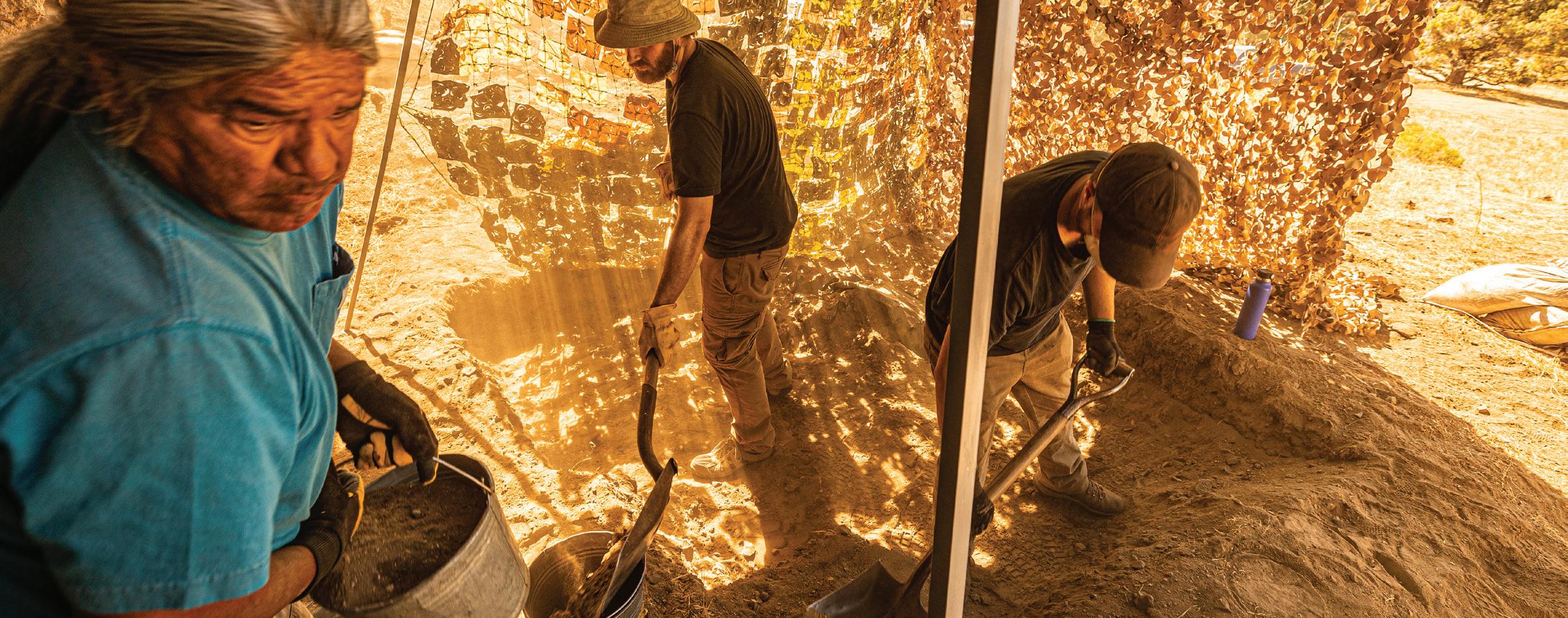
First, archaeologists use basic tools including shovels and spades to remove the top layers of soil. At very large sites, they may start by using heavy equipment such as bulldozers to clear thick surface dirt— but careful hand digging always follows. Once archaeologists get closer to important remains, they switch to smaller tools such as pointing trowels, brushes, dental picks, and even toothbrushes. A pointing trowel is especially important because it allows archaeologists to scrape away soil gently instead of scooping it up quickly.
As they work, archaeologists record everything. They place small flags to mark where they find artifacts. They take photos with measuring scales and write detailed notes in field notebooks. Even the color and texture of the soil offer clues about what happened long ago. If archaeologists discover fragile items such as bones or pottery, they use extra care to protect them. Sometimes, experts called conservators help preserve the fragile objects.
local
followed
Here’s a look at a day in the life of an archaeological dig at Virginia’s Jamestown colony. Why is it important to dig slowly and pay careful attention to the soil?
Rediscovery day in life
Imagine digging up an old clay pot or a stone tool. It looks interesting, but one vital question needs an answer right away: How old is it? Knowing the age of an artifact helps archaeologists understand when people lived at a site and how their lives connect to other events in history.
Archaeology is like putting together a huge puzzle of human history, and dating is an important piece of that.
If archaeologists know the ages of artifacts, structures, and bones, they can place them in the correct order. For example, if archaeologists find pottery in one layer of soil and stone tools in another, dating can show which came first. This helps explain how cultures changed through time, when new technologies appeared, and how people adapted to their environments. Dating also helps archaeologists answer big questions. When did people first live at the site? How long was the site used? Did different groups live there at the same time or at different times?
Sometimes, archaeologists determine age through relative dating. Relative dating does not determine the exact age of an artifact. Instead, it indicates whether something is older or younger than something else.
One important aspect of relative dating is the law of superposition. In undisturbed soil, deeper layers are usually older than the layers above them. If an artifact is deeper in the ground, it is probably older than an artifact that is closer to the surface. Also, items near an object can provide valuable information. Objects in the same layer of soil are usually from the same period. This helps archaeologists place artifacts in a timeline. Archaeologists also look at changes in artifact styles. For example, pottery shapes or decoration styles often change through time. If a certain style is known to be older, finding it at a site suggests that part of the site is from an earlier period.
Absolute dating provides a specific age, often in years. This method helps archaeologists put artifacts on an actual calendar timeline. Absolute dating uses scientific techniques to measure how long ago something was formed or used.
Radiocarbon dating is one wellknown method of absolute dating.
Radiocarbon dating can date organic materials such as wood, bone, and charcoal. Every living organism contains the element carbon. When an organism dies, the carbon in its body decays at a steady, predictable rate and releases carbon-14, a radioactive isotope. Radiocarbon dating measures how much carbon-14 remains in organic material. Because carbon-14 decays at a steady rate, scientists can accurately estimate how long ago the organism died.
Another absolute dating method is dendrochronology, or treering dating. Trees grow one ring each year, and seasonal weather conditions impact the tree’s growth. In years with a lot of precipitation, trees will typically have more growth. Knowing this connection, scientists can match the ring patterns in wooden objects to known timelines. This method can give very precise dates for wooden objects or structures. For example, when an archaeologist finds a wooden roof beam from an ancient dwelling, dendrochronology can match the annual growth rings of the beam’s wood to a known timeline and estimate the year the tree was cut down. The analysis might indicate that the roof beam came from a tree cut down in 1600 CE, for example.
Take a walk through some archaeological discoveries at Pompeii, Italy, with this video from Ancient Rome Live. What can art tell us about a society’s values?
By combining relative and absolute dating, archaeologists build detailed timelines of the past. Relative dating shows the order of events, while absolute dating provides approximate dates. Together, these methods turn artifacts into clues that help archaeologists understand our human past.
Some archaeologists specialize in different time periods and sites. Four main specialties are prehistorical archaeology, historical archaeology, underwater archaeology, and industrial archaeology. Each one helps tell a different chapter of the human story.
Prehistorical archaeology studies people who lived before writing was invented. This covers most of human history! Early human ancestors have been on Earth for at least 5 million years. Modern humans appeared around 50,000 years ago, but writing didn’t begin until about 5,200 years ago. Archaeologists look at physical evidence such as stone tools, pottery, cave paintings, bones, ancient fireplaces—called hearths— and even footprints to figure out what early humans ate, how they hunted, where they lived, and how they made tools.
What ancient civilizations thrived where you now live?
Historical archaeology studies people who left behind both artifacts and written records. Archaeologists in this field compare what people wrote with what is actually found in the ground. Historical sites include colonial settlements in North America, medieval castles in Europe, Civil War battlefields, and ancient cities such as Rome in Europe and Ping Yao in China.
For example, ancient Roman writers described the eruption of Mount Vesuvius and how it destroyed Pompeii and Herculaneum. When archaeologists dug up those cities, they discovered details about daily life, such as what people ate, how their homes were decorated, and even what they could buy in shops.
Underwater archaeology takes place beneath the surface of oceans, lakes, and rivers. Archaeologists explore shipwrecks, sunken harbors, and even entire cities. Water can preserve objects very well—wooden ships, cargo, and personal items are sometimes found in excellent condition. Underwater archaeologists use scuba gear, sonar, and remote-controlled vehicles to locate and map these sites.
Industrial archaeology focuses on the more recent past, especially the last few hundred years. Archaeologists study factories, mills, railroads, mines, and other industrial sites to learn how the Industrial Revolution changed the way people worked and lived. An abandoned textile mill or an old railroad station can tell the story of how towns grew and how industry shaped modern life.
Archaeology helps us understand ancient cultures. What about today’s cultures? That’s a whole other branch of anthropology we’ll explore in the next chapter!
Even tiny bits of pollen trapped in soil can tell scientists what plants grew nearby thousands of years ago.
Write down what you think each word means. What root words can you find to help you? What does the context of the word tell you?
- absolute dating
- feature - hieroglyph
- prehistory
- radiocarbon dating
- relative dating
Compare your definitions with those of your friends or classmates. Did you all come up with the same meanings? Turn to the text and glossary for help.
KEY QUESTIONS
• Why is dating an artifact an important first step?
• How do technology and careful human attention work together in archaeology?
ARCHAEOLOGY: UNEARTHiNG THE PAST
When archaeologists find an artifact, they analyze it by making careful observations, asking questions, and drawing conclusions based on the evidence. Now, it’s your turn to put on your archaeologist hat and see what you can learn from ancient artifacts about people who lived long ago.
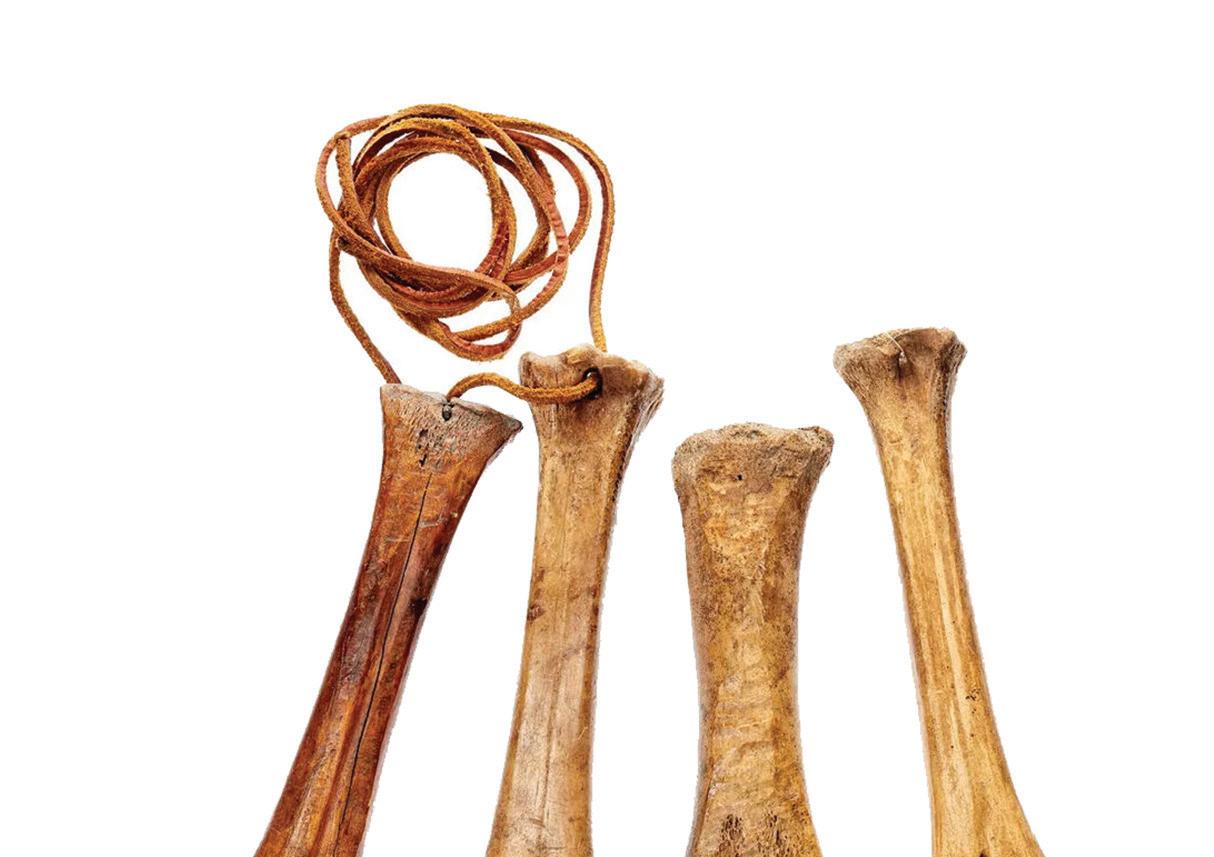
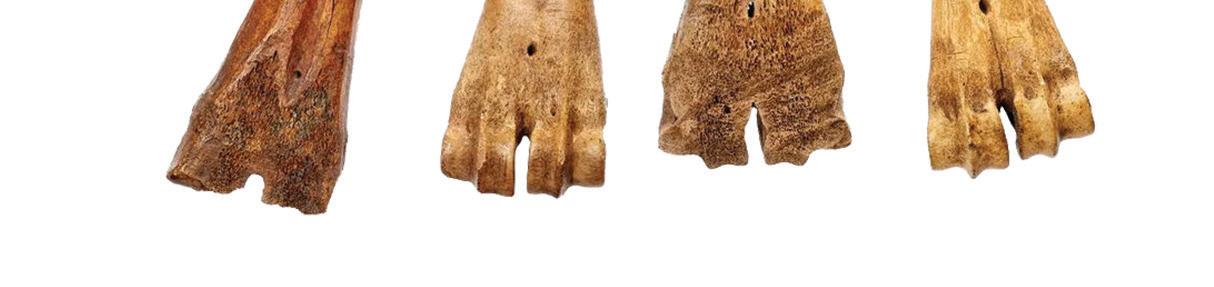
Artifact #1
• Material: Bone
• Date: 800–1100
• Period: Viking Age
• Dimensions: 207mm x 48mm

Artifact #2
• Material: Bronze
• Date: 11th century BCE
• Period: late Shang Dynasty
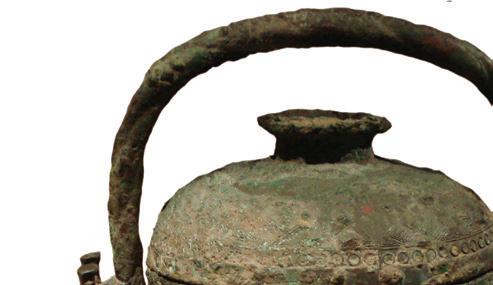
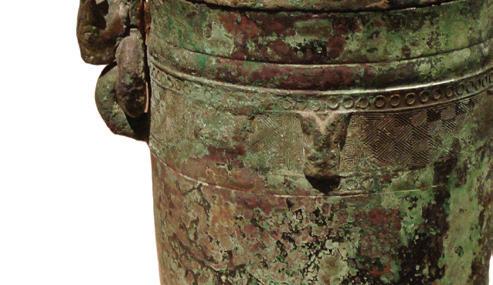


Select one of the artifacts or a different one to analyze. Using observation only, make notes about the artifact in your notebook. Describe the object’s shape, size, material, color, texture, signs of wear or damage, and any decorations or markings.
Using your observations, make some educated guesses about the artifact.
• What might people have used this object for?
• Who might have used it?
• Was it for routine use or special occasions?
• What does it tell us about the culture?
• What questions do we still have?
Think about where the object was found. Was it found near a home or a temple? Does that information change your analysis of the object? How is location important when analyzing artifacts?
Read more information about similar artifacts. How does this change or add to your analysis?
Write a short anthropological field note describing the artifact.
INVESTIGATE MORE
Consider the following question: Why do you think people created cave art? Explain your theory.
INVESTIGATE MORE
The Lascaux Cave is a complex of prehistoric caves in southwestern France renowned for its Paleolithic paintings. In this activity, you’ll take a virtual tour of the caves and see what you can learn about early humans from the ancient art there.
Take a virtual tour of the Lascaux Cave at this website. As you watch, take notes about what you observe.
• What animals do you see?
• Are humans present?
• What colors do you see?
• Are there symbols or handprints?
• Where are the paintings located (walls, ceilings)?
After you complete the tour, review and analyze your notes. Think about the following questions and write field notes about what you’ve learned.
• What do these paintings suggest about diet?
• What animals were important?
• Were these people hunters? Why do you think so?
• Why might paintings be deep inside caves?
• Could the art have religious or symbolic meaning?


What is culture?

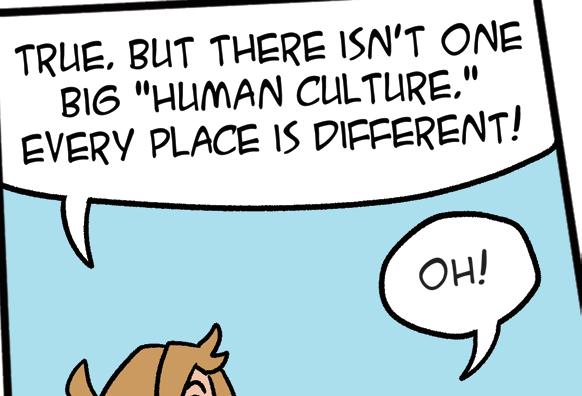

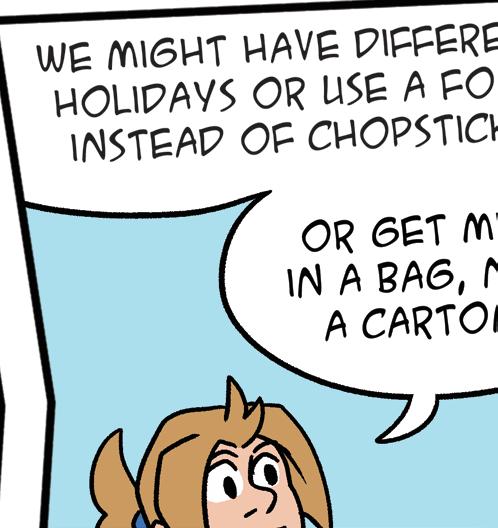
Culture is the collection of learned behaviors, beliefs, values, and traditions shared by a group of people and passed down from one generation to the next.


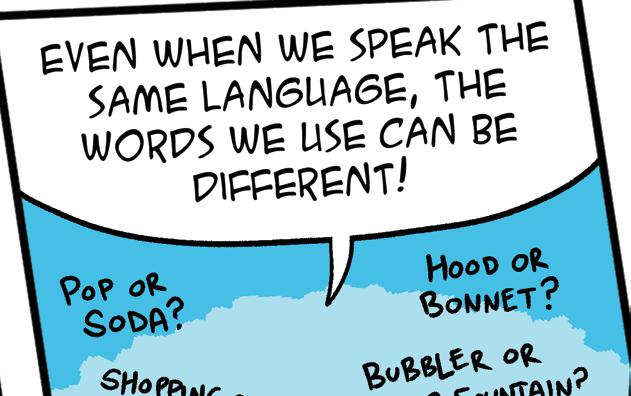

Imagine walking into a classroom where students speak a language you do not understand, eat foods you have never tasted, and follow traditions that are completely new to you. At first, it might feel confusing and even overwhelming. But, after spending time with these students, you might notice some patterns. You see how they greet each other, how they solve problems, what they value, and what makes them laugh. Slowly, their way of life starts to make sense.
This is the heart of cultural anthropology, the study of human cultures and the many ways people live around the world. Cultural anthropologists explore beliefs, customs, traditions, values, and everyday behaviors. They seek to understand what people do and why they do it. By learning about other cultures, we can also learn more about ourselves.
To really understand how people live, cultural anthropologists go out into the world, spend time with communities, and watch everyday life up close. This hands-on way of learning is called ethnographic research. It’s a way of studying a culture by being there and experiencing it firsthand.
When anthropologists live in a community, they join in—as participant observers. They may eat dinner with families, play games with kids, attend weddings or festivals, and help with farming, fishing, or cooking. By joining in, these scientists experience the culture similarly to community members. This helps the anthropologists understand what people do, why they do it, and what it means to them.
Fieldwork takes a lot of time. Many cultural anthropologists live in the community they are studying for months or even years. They learn the local language so they can communicate with people and better understand them. Because they stay a long time, they become familiar with everyday routines as well as special celebrations. They can also see if things change through time. For example, if anthropologists want to learn about life in a fishing village, they may live in the village, go out on the fishing boats, share meals with families, and listen to people’s stories.
While they are in the field, anthropologists carefully write down in their field notes what they see and hear. They record conversations, describe daily activities, and reflect on what they observe to help remember important details and spot patterns.
Acculturation is the process of people from one culture coming into close contact with another culture and beginning to adopt some of its beliefs, behaviors, language, or customs. Acculturation usually occurs when people move to a new country or live in a multicultural community. For example, someone who moves to the United States might learn English, celebrate the Fourth of July, and follow new social rules such as respecting strangers’ personal space. At the same time, they might keep traditions from their original culture, such as food, music, or religious practices. Acculturation does not mean completely giving up your original culture. Instead, it often means blending together parts of two cultures. Anthropologists study acculturation to understand how cultures change and influence each other through time.
Read about how the traditional Latin American rite of passage, the quinceañera, has evolved to celebrate 15-year-old boys. What rites of passage do you celebrate and how have they evolved through the years?
Later, anthropologists review the information in their field notes to better understand how a culture works. They create an ethnography, a written description of a society, to share what they learned with others.
Some cultural anthropologists study people who lived long ago, while others focus on people who are alive today. Some pay close attention to the small details of everyday life, such as how families share meals or greet each other. Others look at bigger systems—such as government, religion, or the economy—that shape how entire societies work. All this research helps create a fuller picture of what it means to be human.
Who are you within your culture? That big question is at the center of personhood. Personhood is what makes someone a “person” in a certain culture. It might sound simple, but different societies have different beliefs about who is a person and when personhood begins or ends.
Many cultures bury their dead. In New Orleans, Louisiana, graves need to be above ground because the city is built below sea level.


In some cultures, personhood begins at birth. In others, it may begin during a naming ceremony, at a certain age, or after a religious ritual.
Some societies even recognize personhood in ancestors, spirits, or parts of nature.
Rites of passage are special ceremonies that mark important changes in someone’s life. They show that a person is moving from one stage of life to another. Can you think of some rites of passage that happen in your society? For example, graduating from high school is a rite of passage. Other examples include baptisms, bar and bat mitzvahs, quinceañeras, weddings, and funerals. Anthropologists study these ceremonies by observing them, talking to community members, and learning what the rituals mean. Here are some more examples.
• A naming ceremony recognizes a newborn as a member of the community.
• A coming-of-age ceremony marks the change from child to adult.
• A wedding recognizes someone as a spouse with new responsibilities.
• A funeral marks the change from a living person to an ancestor.
Anthropologists interview people by asking questions about their beliefs, family stories, experiences, and hopes for the future. Some interviews might feel like casual conversations, while others are more formal with a list of planned questions.
Enculturation is the process of learning a culture’s rules and values. For community members, this starts in childhood.
By studying rites of passage, anthropologists learn how cultures decide when personhood begins, changes, or even continues after death.
During the early 1900s, anthropologist Arnold van Gennep (1873–1957) explained that rites of passage usually happen in three stages.
Separation:
The person leaves their old role.
Transition (liminal stage):
The person is “in between” roles.
Incorporation (reintegration):
The person returns to the community with a new status.
In many cultures, people may call someone “aunt,” “uncle,” “brother,” or “cousin” even if they are not biologically related. Family can be about more than genetics.
Religion and belief systems help people make sense of the world around them. They try to answer big questions. Why are we here? What happens after we die? What is right and wrong? Because of this, religion is often an important part of culture.
Anthropologists want to understand how religion works in different cultures and what it means in people’s everyday lives.
They study myths and stories, rituals and ceremonies, sacred texts, religious leaders, and special practices that are meaningful to believers.
The study of religion reveals how it influences shared values, traditions, and rules. Religious beliefs can affect daily life, perhaps by dictating what people eat, how they dress, or what actions are considered right or wrong. Religious ideas and traditions are also passed down from one generation to the next. By exploring these topics, cultural anthropologists gain a better understanding of how religion shapes cultures worldwide.
The idea of family might seem simple and familiar. Everyone belongs to some kind of family, even if they look different from yours. But when we look at cultures around the world, we quickly see that how people define a family in one culture is not always the same in another culture.
Different cultures have varying ideas about who counts as family. In some places, families are small and include just parents and children. In other places, families are large and include grandparents, aunts, uncles, cousins, and sometimes even close family friends. Even within the same country, families can look very different. Just think about the many types of families you know.
Because families are organized in so many ways, anthropologists study something called kinship. Kinship is the system a society uses to define family relationships—how people are connected through blood, marriage, adoption, and even social ties. Kinship helps answer important questions. Who counts as family? How are people related? What responsibilities do family members have toward each other?
Kinship includes several kinds of connections. Some are biological ties, such as parents, children, siblings, and grandparents. Others are marriage ties—spouses and in-laws. Still others may be social or chosen ties, such as adopted family members or close family friends who are treated like relatives.
Some societies focus on nuclear families, which include parents and their children. Others emphasize extended families, where grandparents, aunts, uncles, and cousins live together or nearby. Some cultures organize families into clans, which are large groups of people who believe they share a common ancestor. Others trace family identity either through the mother’s line (matrilineal) or the father’s line (patrilineal). No single system is better than another. Each was developed to meet the needs of a particular society.
In anthropology, sex and gender mean two different things, even though people sometimes use the words to mean the same thing. Sex is about biology and includes chromosomes, hormones, reproductive organs, and body structure. Biological anthropologists can sometimes tell biological sex by studying a person’s bones or DNA.
Gender is about culture. It includes the roles, behaviors, and expectations that a society connects to being male, female, nonbinary, or another identity. Gender is shaped by the beliefs and traditions of a community, and it can be different around the world. For example, the Navajo Nation recognizes a gender identity called Two-Spirit, which includes people assigned male or female at birth who take on the roles and identities of the opposite sex. Many cultures consider genders beyond just male or female. Anthropologists separate sex and gender because sex is biological, while gender is shaped by society. Understanding both helps them learn how different cultures think about identity and social roles.
Even though families may look different, they usually serve similar purposes. Families raise and protect children. They guide relationships and set rules about marriage. Families pass down property, traditions, stories, and knowledge from one generation to the next. What changes from culture to culture is the type of family that meets these needs.
At some point, you’ve probably filled out a form that asked you to choose your race. In the United States, options usually include categories such as White, Black, American Indian or Alaska Native, Asian, and Native Hawaiian or Other Pacific Islander. These categories were created to sort people into groups. But where did the ideas for these groups come from?
In the early days of anthropology, many scientists believed race was biological. They thought humans could be divided into natural groups based on physical traits such as skin color, hair texture, or skull shape. During the 1700s and 1800s, scholars created systems to classify people by appearance and geography. However, these systems reflected the biases of their time. They were often used to justify slavery, colonialism, and unfair treatment as people claimed some groups were superior to others.
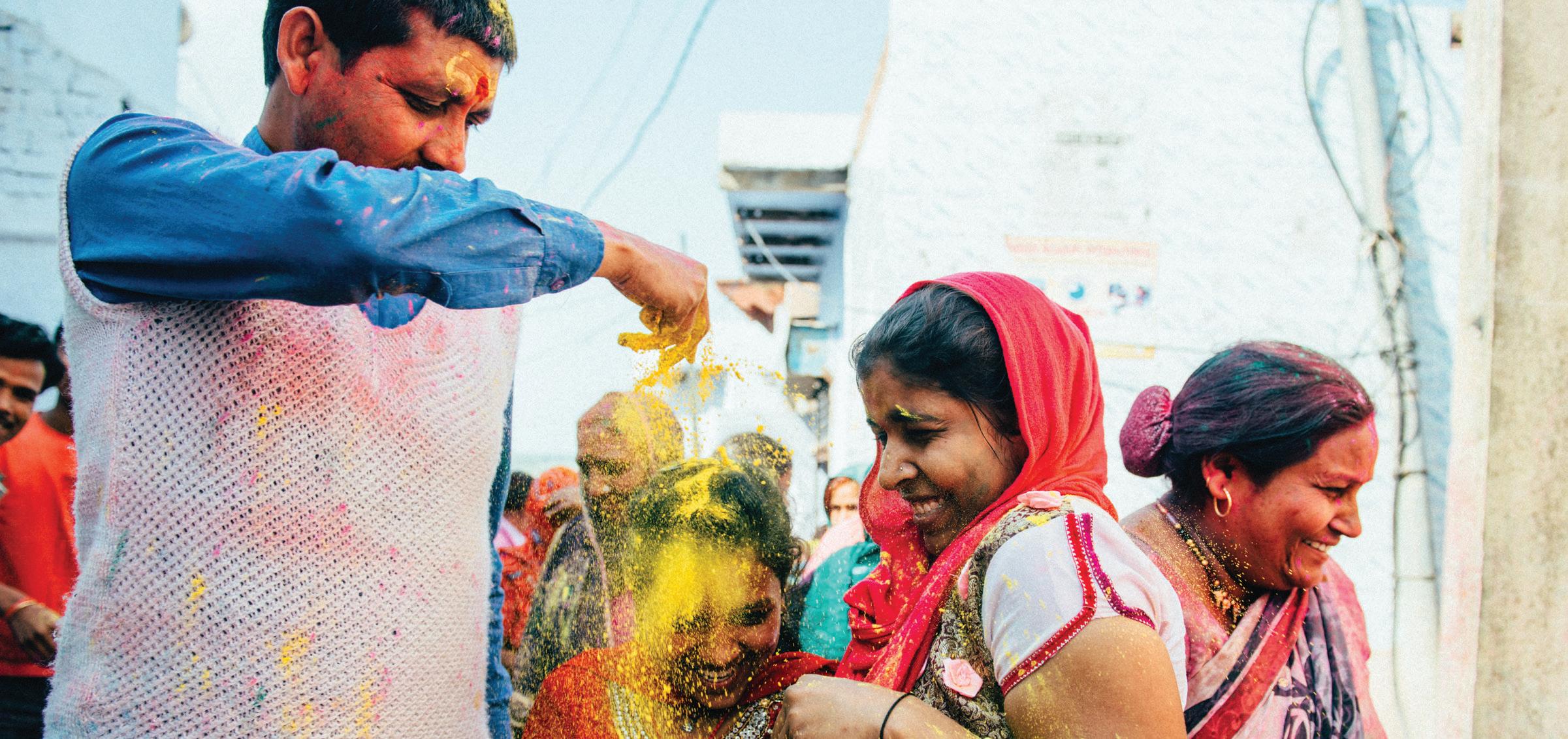

During the early 1900s, researchers began to question the idea that race was biological. The work of Franz Boas and others showed that culture, not biology, was the main driver of human differences. Also during the 1900s, new genetic discoveries revealed that humans are genetically very similar.
Today, anthropologists consider race to be a social construct. Race is not a biological fact but an idea that some societies came up with. These societies group people based on their physical characteristics and geography. However, even though race is not a biological fact, it can still affect how people are treated in society.
Do you describe yourself as Italian, Brazilian, or Japanese? Each is a type of ethnicity. A person’s ethnicity is based on shared language, traditions, history, religion, and customs. A person can identify with one or more ethnic groups, and these identities can change with time.
Anthropologists point out that ideas about race and ethnicity are shaped by history and power.
Many racial ideas developed during periods of colonization and slavery, when certain groups had power and others were treated unfairly. These systems of inequality influence society today. By studying such periods of history, anthropologists help explain how these ideas developed and how we can challenge them. The goals are to promote a more accurate and respectful understanding of our human differences and to reduce stereotypes and prejudice.
American cultural anthropologist Margaret Mead traveled to Samoa, spent several months living there, and got to know Samoan teenagers. She discovered that adolescence in Samoa seemed much calmer and less stressful than in the United States. Based on her research, she wrote Coming of Age in Samoa (1928), which became a bestselling book. It was also controversial because she compared American parenting to Samoan parenting. She argued that American parents were often strict and restrictive, while Samoan teens had more freedom to explore their community and relationships. Mead concluded that how people are raised and socialized (nurture) plays a bigger role than biology (nature) in shaping teenage behavior. However, in recent years, some critics have questioned parts of her research and whether she represented the Samoan people fairly.
The Minangkabau people of West Sumatra, Indonesia, are one example of a matrilineal society, where family lines, inheritance, and property are passed down through the mother’s side of the family instead of the father’s side. Among the Minangkabau people, children belong to their mother’s clan. Family property, especially land and houses, is passed down from mothers to daughters. Women play an important role in managing family property and maintaining family identity. A head woman runs a household that includes her female relatives, including sisters and their daughters. Young boys live in the female household until age seven, when they are circumcised and move to the local mosque to live until marriage. When they marry, men join their wives’ families. If the couple divorces, the man packs his things and leaves the household. What might a matriarchal society value that’s different from a patriarchal society?
Throughout human history, people have moved from one place to another in search of new homes. While biological anthropologists study how people moved in the past, cultural anthropologists study more recent migration. They spend time with people who move from one place to another and learn about their daily lives. Scientists study how migrants adjust to a new place, build a new community, and stay connected to their home culture. Anthropologists are especially interested in the human side of migration—why people decide to move, how migration affects families, and how traditions travel with them.
Anthropologists go into communities where migrants live and spend a lot of time there. They might live in the same neighborhoods, visit homes, attend community events, and observe daily routines. By being there in person, anthropologists can see how people find jobs, send their kids to school, practice religion, and support one another. This hands-on approach helps them understand migration from the perspective of the people who are experiencing it.
Anthropologists also talk directly with migrants through interviews and conversations. They ask about people’s journeys, why they left their home countries, and what challenges they face in their new homes. People may share stories about learning a new language, facing discrimination, missing family members, or trying to feel like they belong. These personal stories help anthropologists see migration as real human experiences.
Another important area of study is the way migrants keep their cultural traditions. Anthropologists look at food, clothing, music, holidays, and religious practices to see what stays the same and what changes when people move.
Anthropologists also explore how migration affects identity. People who move might feel connected to more than one place at once. They might feel strong ties to their country of origin while building a sense of belonging in a new home. Age and generation can make a difference. Children who grow up in a new country often see their identity differently from their parents.
British anthropologist Robin Dunbar (1947– ) developed a theory that humans can hold stable social relationships with about 150 people, a limit known as “Dunbar’s number.”
Finally, cultural anthropologists look at the bigger picture. They study laws, border policies, and economic conditions that influence who can move and where they can go.
Anthropologists understand that migration is shaped not only by personal decisions but also by larger social and global forces.
With time, cultures change. Cultural change occurs when a society’s beliefs, behaviors, and traditions shift. Anthropologists study several major drivers of cultural change, including innovation, contact with other cultures, environmental change, and conflict.
One cause of cultural change is innovation—new ideas, tools, or technologies. When people invent something new, it can change daily life and social habits. Consider smartphones. How did the invention of smartphones change how people communicate, learn, and entertain themselves? New medical treatments, transportation methods, or farming tools can also transform the ways communities survive and grow. With time, these inventions become part of a culture and influence what people value and expect.
A diaspora is a group of people who live in different places around the world but share the same national or ethnic background. Even though they may live far from their original homeland, they often keep connected through language, traditions, food, religion, or culture.
Contact with other cultures is a major cause of change. When different groups of people meet through trade, travel, migration, or the internet, they often exchange ideas, foods, clothing styles, music, and beliefs. This can lead to the blending of cultures and the adoption of new practices.
The environment also plays an important role in cultural change.
Climate, natural disasters, and available resources can shape how people live. If an area experiences long droughts, people may change their farming methods or move to new locations. Coastal communities may develop fishing traditions, while desert communities may focus on conserving water.
Conflict, including wars and political changes, can also cause major cultural shifts. When governments change, new laws and rules affect people’s rights, education, language use, or religion. Wars can force people to flee their homes, mix with other populations, or rebuild societies in new ways. These experiences can reshape traditions, family structures, and values.
Have you ever moved to a new town or state? What was it like to be the new kid?
Globalization has changed cultures by connecting people, countries, and communities more closely than ever before. With modern transportation, the internet, social media, and global trade, ideas and products can travel around the world very quickly. As a result, people are exposed to new food, music, fashion, languages, and ways of thinking almost every day, which lead cultures to borrow from one another and change.
Globalization also influences food. Fast-food restaurants such as McDonald’s and Starbucks can be found in many countries. At the same time, foods such as sushi, tacos, and pizza are popular around the world. A student in the United States might eat ramen one day and pizza the next.
A teenager in Brazil might watch videos in English, chat online with someone in Japan, or play video games with people from Europe. While globalization makes communication easier, it can also mean fewer young people use local or Indigenous languages. You will learn more about language use in Chapter 5.
Globalization also influences fashion. Jeans, sneakers, hoodies, and lots of other types of clothes are worn by young people in many countries, even if those styles did not start there. Social media platforms such as TikTok and Instagram help trends spread quickly.
Globalization can also influence values and lifestyles. Ideas about education, human rights, gender equality, and environmental protection spread through books, movies, news, and social media. Movements supporting these ideas often gain attention worldwide and inspire people in many places. Communities may adopt these ideas and blend them with their own traditions.
• Why might cultural anthropologists spend so much time living in the communities they study?
• How do rites of passage make people feel like part of a larger community?
Some migrants voluntarily move to a new place, while others are forced to flee their homes due to natural disasters, war, or persecution.
One clear way globalization affects culture is by spreading ideas and traditions. Are you a fan of K-pop? Korean pop music has fans around the world, including in countries far from South Korea. Holidays such as Valentine’s Day and Halloween are now celebrated in places where they were once unknown.
How would your research and experience change if you actively participated in the setting? Conduct more fieldwork in a setting where you are a participant. Compare your experience as a participant vs. an observer. How does it impact your fieldwork and research?
Cultural anthropologists go into the field to study people and cultures by spending time with them and observing their daily lives. Scientists use their research to create an ethnography, a detailed study of people and their daily lives. In this activity, you’ll conduct some fieldwork in a setting of your choosing. Then, you’ll create a mini ethnography, a written record of what you learned.
Select a setting to study—with adult approval. The goal is to choose a setting where you can observe everyday behavior. Some ideas include the following.
• Sporting event
• School cafeteria
• Library
• Family gathering
• Community festival
After you choose a setting, go into the field. Once you are there, observe the people around you.
• How do they greet each other?
• What groups, if any, do they form?
• What unwritten rules exist?
• What kind of clothing do they wear?
• How do they use the space?
• What language or slang do they use?
• Who is the leader or authority?
• What behaviors are rewarded or ignored?
Talk to people in the setting, ask questions, and participate in activities if possible. Take detailed field notes throughout the experience, including time, location, and behaviors observed. Remember to follow ethical rules.
• Do not record private information.
• Do not secretly record people.
• Do not interfere with anyone’s behavior.
• Remain respectful.
After making and recording your observations, review your notes and analyze what you learned. In your analysis, consider the following.
• What norms did you observe?
• What values seem important in this setting?
• Did you notice any patterns in behavior?
• Were there any social groups? How did they form?
• Who had power or influence?
• Would someone from another culture understand the behaviors you witnessed?
With this information, prepare a mini ethnography following this format.
• Introduction: Where and when your observations occurred
• Description: Objective details of behaviors and the setting
• Analysis: What does this reveal about culture?
• Reflection: What surprised you? Did you notice your own bias?
Write down what you think each word means. What root words can you find to help you? What does the context of the word tell you?
- diaspora - enculturation
- globalization - matrilineal
- prejudice - rite of passage
Compare your definitions with those of your friends or classmates. Did you all come up with the same meanings? Turn to the text and glossary for help.
How does media reflect and shape culture?
In this activity, you’ll examine media—such as commercials, social media posts, music videos, TV clips, or advertisements—to identify cultural values, beliefs, and norms.
Write a short paragraph to answer the following question: if a cultural anthropologist from 200 years in the future studied this clip, what might they conclude about our society?
Watch and analyze a short media clip, such as a commerical, a movie or TV scene, a music video, or an online advertisement.
• What do you see?
• Who is in it?
• What is the setting?
• What words or slogans stand out?
• What emotions do you notice?
Consider the cultural values being presented. What ideas seem most important in the message? Does it emphasize wealth, beauty, individual success, family, competition, or freedom? Who is the target audience?
Examine social roles. How are men and women portrayed? How about teenagers? Who appears to have power or control in the situation?
What behaviors are presented as “normal” and what behaviors are noticeably absent? Does the clip include any stereotypes?




Why do anthropologists study language?


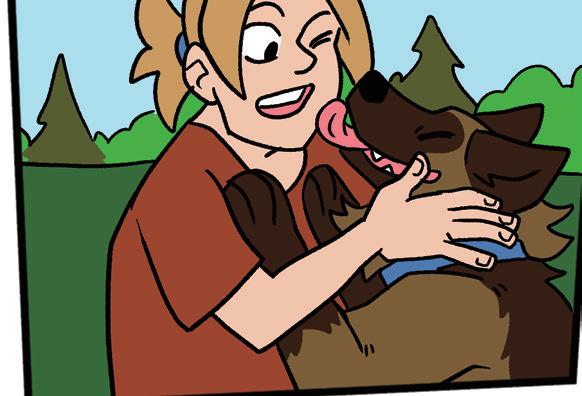

Language connects us, shapes how we think, and plays a big role in creating culture.
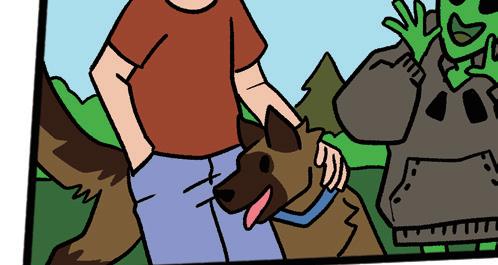




Imagine a world where no one could talk, write, or use sign language. How would people tell stories, teach kids, make plans, or even say “I love you”? It would be almost impossible! Language is one of the most powerful tools humans have. It helps people share ideas, express who they are, pass down traditions, and build relationships.
Linguistic anthropology is a branch of anthropology that studies how people use language and how language shapes our lives. Linguistic anthropologists want to understand what language means to people. They look at how our communication shows who we are, where we come from, and how we relate to others. They also study how languages change with time and try to record and protect languages that are in danger of disappearing.
Linguistic anthropology emerged during the late 1800s and early 1900s when researchers started to realize how important language is for understanding human behavior and culture. During the 1950s and 1960s, scholars created new ways to study language as a system of signs and symbols. These ideas helped linguistic anthropology grow into its own field of study.
Today, people in this field explore how communication shapes the way we think, build relationships, and foster identities.
Many believe language is one of the main ways humans express themselves. Without language, we would find it far more difficult to share ideas and traditions. That’s why linguistic anthropologists often study real conversations to see how language works in everyday life.
Language is a system people use to communicate through speech, writing, and nonverbal gestures such as hand movements and facial expressions. Language organizes sounds into words and words into sentences following rules called grammar. We might not stop and think about those rules, but we use them every day when we speak or write. Language is important because it helps people share ideas, solve problems, teach one another, and work together. The scientific study of language is called linguistics, and people who study it are called linguists.
Listen to the way people speak on Smith Island, off the coast of Maryland. Why do some areas foster dialects that are different from the surrounding regions?
Linguistic Anthropology Smith island
Humans are the only species that naturally develop full, complex language. Animals do communicate, but their systems are much simpler. Birds use calls to warn others about danger or to attract a mate. Dolphins use clicks and whistles. Some chimpanzees have learned a few signs. But none of these communication systems are as advanced as human language.
Human brains are specially designed for language, and our mouths and vocal cords let us make many different sounds that animals cannot.

Human language is also open-ended, allowing us to communicate in an unlimited number of ways. We can rearrange words to change the meaning of what we are saying. We can make up new words and expressions. We can talk about the past, the future, or even imaginary worlds.
Around the world, people speak thousands of different languages—many of those languages are connected to where people live. For example, many people in the United States speak English, while most people in France speak French. Experts estimate there are between 5,000 and 7,000 languages worldwide. All this variety shows how creative and diverse we are in how we communicate.
Humans aren’t born knowing a language. Babies learn by listening to the people around them and interacting with family members and caregivers. As they hear words repeatedly, they slowly begin to understand and use them. That’s how language is passed down as a part of culture, from one generation to the next.
When people share a language, they often feel connected. Inside jokes, slang, and local sayings help people feel they belong.
Language brings families, friends, and communities closer together.
Language is always changing. Some old words slowly disappear, and the meanings of other words shift with time. Imagine if your neighbor invited you to dinner “overmorrow” (which means the day after tomorrow) or said they didn’t like the “curglaff” (an old word that describes the shock of jumping into cold water). Those words were once common, but today most people have never heard of them!
At the same time, we are always creating new words. Think about words such as selfie, hashtag, and streaming. A few decades ago, these words didn’t even exist. Now, they are a normal part of everyday conversation. And new words such as rizz, delulu, or dad bod keep coming. Some of these fade quickly, but others hang around for generations.
Language and communication are both ways to convey meaning, but the two are different.
Communication is a process of exchanging information using a system of symbols, signs, and behaviors. Communication can include gestures, odors, sounds, or movements. All animals communicate in some way. By comparison, language is a human form of communication. It relies only on symbols to convey meaning. Language can be spoken, written, or gestured. Language adapts and changes, with new symbols and meanings being created.
Watch a rugby team perform the haka, a traditional ceremonial dance of the Māori people of New Zealand. What are they communicating?
World rugby haka
Follow a team of researchers as they preserve disappearing languages as part of the Enduring Voice Project. Why is it important to save dying languages?
We know that humans are not born knowing language. So, one of the biggest questions in linguistic anthropology is: How did language begin? Although anthropologists have no single answer, they do have several theories.
dying languages
Scholars believe that the first languages developed as early humans evolved. They might have uttered sounds that became connected to certain objects, actions, or meanings. Some scholars suggest that early humans began using sounds to coordinate activities such as hunting. Others think language grew from emotional cries or gestures. Another idea is that language evolved alongside toolmaking. As humans created more complex tools, they needed a way to teach others how to make them. With time, these sounds and movements became more organized. They developed into early, primitive languages.
But why did humans develop language when other primates did not? Anthropologists believe that three key human adaptations are the answer: the brain, the hands, and the larynx, or voice box.
The human brain evolved to have specific regions that control language.
Human hands developed dexterity to use writing tools, while the larynx sat low in the human throat, allowing humans to produce a variety of sounds. Scientists believe these adaptations set humans apart from other primates and allowed them to develop language.
Languages around the world may sound very different, but they share many similarities. Because of these shared features, many linguists believe that today’s languages may have evolved from a single, very ancient parent language. To better understand the thousands of languages spoken today, linguists group them into about 20 major language families. Languages in the same family often have similar words, sounds, or grammar rules.
The average American knows about 42,000 English words.
The largest language family is the IndoEuropean. About half the world’s population speaks a language from this group. It includes more than 400 languages spoken in Europe, in countries settled by Europeans, and in parts of South and Southeast Asia. English is part of this family, along with Greek, Latin, Hindi, Russian, and German. Linguists believe these languages can be traced back to an ancient language called Proto-Indo-European, which nomadic people in Europe and Asia spoke around 3000 BCE. As these groups moved to new areas, their language slowly changed and developed into many new languages.
Another important language family is the Semitic family. It likely began around 2000 BCE and spread as people moved throughout the Middle East and nearby regions. Today, it includes about 77 languages, such as Arabic, Hebrew, and Maltese. These language families show how languages are connected and how they have evolved during thousands of years.
The Sapir-Whorf hypothesis is a famous theory about the connection between language and culture, named after two scholars, Edward Sapir (1884–1939) and Benjamin Lee Whorf (1897–1941). Their theory was that the language you speak can influence the way you think. Language can influence what you pay attention to and how you organize ideas in your mind.
Linguistic anthropologists go out into communities, listen to people talk, and observe how language is used in everyday life. One way they study language is by recording and analyzing real conversations. They might listen to people talking at home, in school, at markets, or during celebrations. They record conversations, songs, speeches, and stories. These recordings help them notice patterns, perhaps how someone’s tone changes when speaking to an elder versus a close friend. They study pronunciation, grammar, vocabulary, tone, and rhythm to understand how a language works. They also pay attention to slang, jokes, and storytelling because these often reveal important parts of culture and social life.
Another way to study language is by comparison. When researchers compare two or more languages, they can spot shared words, sounds, or sentence patterns. The similarities can show that languages may have come from a common ancestor long ago. These language comparisons help anthropologists understand how languages are connected and how they have changed.
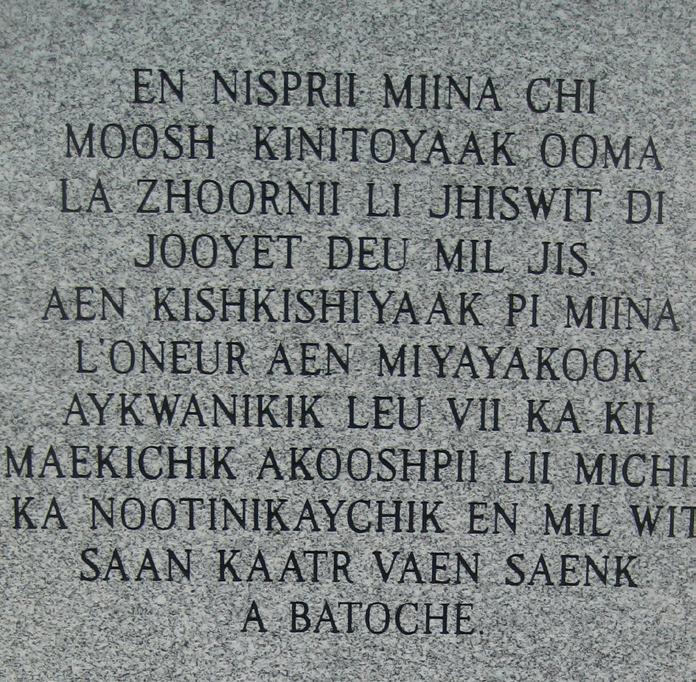
An engraving showing Michif, an endangered language of the Metis people of Canada and the United States Credit: Psychonaut (CC BY SA 4.0)
Linguistic anthropologists also study how children learn language. Around the world, babies start by babbling and slowly move toward speaking full sentences. By observing young children, researchers can see how humans naturally learn sounds, words, and grammar. This helps scientists figure out which parts of language come from the environment and which might be built into the human brain. It also helps identify speech or learning challenges.
Today, many languages are spoken by only a small number of people and are at risk of disappearing. Linguistic anthropologists work closely with native speakers to record these languages. They create dictionaries, write down stories, and save audio recordings.
The goal is to help protect important cultural knowledge and allow future generations to learn the language of their heritage.
Language plays a big role in how we think, what we notice, and how we understand the world. Linguistic anthropologists are very interested in the connection between language and experience because it shows how closely language and culture are tied together.
Let’s consider how different languages describe color, time, and family. Some languages have many words for different shades of one color, while others use just a few basic words. This can affect how people in each culture notice and describe colors. Time is another example. In some cultures, people talk about time as a straight line moving forward. In others, time is described as a circle that repeats in cycles. Words that describe families can also be different. Some languages have special words for older and younger siblings or different terms for relatives on a mother’s side versus a father’s side.
These details show what relationships are most important in a culture.
Imagine having a conversation with four people—from Boston, Mississippi, California, and Canada. They all speak English, but they sound very different. That’s dialect! A dialect is a version of a language that is spoken by a particular group of people or in a certain region. It has its own special way of pronouncing words, using vocabulary, and sometimes even forming sentences. For example, someone in the South might say “y’all,” while someone in the Northeast might say “you guys.” And if you know someone from Pittsburgh, you’ve heard them say “yinz!” Each one is a different dialect of English. Dialects are not “wrong” or “bad” versions of a language. They are simply natural variations that develop through time. A dialect can indicate where someone is from, their community, or even their cultural background.
Where did the slang expression “6-7” come from?
Learn about it and other slang expressions in this interview with Amelia Tseng, director of the linguistics program at American University. What is your favorite slang expression?
The words a language has for emotions, nature, or social roles often reflect what a culture values. For example, if a language has many words about teamwork and sharing, it may reflect a culture that values community. If it has many words about independence, that may reflect a culture that values personal freedom. With time, these patterns can influence how people act and make decisions.
CAS 6-7
Cave paintings, carvings, and early writing systems give hints about communication. These images suggest early humans used symbols to represent ideas and tell stories.
Language is also connected to identity. The way someone speaks can indicate their age, background, or the group they belong to. Teenagers often use slang that adults don’t recognize or understand. Many people also speak differently at home than they do at school or work. Switching between various ways of speaking helps people show different parts of themselves and feel comfortable in a range of settings.
Languages are always changing. Just as music, fashion, and technology continue to change, so does the way people speak. And languages will likely keep changing in the future. Linguistic anthropologists study these changes to understand how languages evolve, mix, and sometimes disappear.
When different groups of people interact, they often borrow words from each other. English, for example, has borrowed words from French, Spanish, Arabic, and many other languages. Languages also change when people invent various words for new ideas or technology, such as “smartphone” or “selfie.”
Another way language changes is through blending, or when two words are combined to make one new word, such as “brunch.” With time, small changes in pronunciation and grammar can build up. Eventually, this can lead to new dialects or even completely new languages.
While new words and languages are forming, others are disappearing. Globalization is a major cause of language loss. Around the world, many people use a few major languages for business, school, and the media. As a result, people may speak their local language less. Colonization often played a big role in language loss. In many places, the colonizers forced Indigenous people to stop speaking their native languages and switch to the language of the colonizer. Cultural assimilation, when people feel pressure to adopt a dominant culture, can also cause younger generations to stop learning their native language.
When a language disappears, culture is lost. Each language carries stories, songs, traditions, and unique ways of understanding the world. Important knowledge about plants, medicine, history, and local environments is often passed down through language. Losing a language means losing part of human history and identity.
Because of this, many people and organizations are working to protect endangered languages. Communities around the world are creating dictionaries, recording elders, and teaching children their heritage languages in schools. By protecting endangered languages, linguistic anthropologists make sure future generations can hear the voices of the past.
Sometimes, a person switches between two or more languages, dialects, or styles of speaking depending on the situation. This practice is known as codeswitching. For example, someone might speak Spanish at home with their family but switch to English at school or a student might use slang with friends but speak more formally when talking to a teacher. People code-switch for many reasons. They may want to fit in, show respect, connect with a certain group, or be better understood.

What emotions do you think this dancer is communicating?
Do you speak differently with adults than with people your own age? Why or why not?
Humans communicate in many ways—all these forms of expression help us share ideas, emotions, and meaning. An important part of communication is nonverbal communication, or messages sent without speaking. This type of communication includes gestures, facial expressions, eye contact, body posture, and personal space. For example, a smile can show friendliness, while crossed arms might suggest someone feels uncomfortable or defensive. Eye contact can show confidence or respect in some cultures, but in others, too much eye contact may be seen as rude. Even the amount of space people keep between each other can send a message. Standing close to someone may feel normal in one culture and uncomfortable in another. Nonverbal communication is shaped by culture, just as spoken language is.
Humans also communicate through music, dance, and art. Songs can express joy, sadness, pride, or hope.
A piece played on a piano or guitar can move us or make us happy. Dances can tell stories about historical events or spiritual beliefs. Paintings and sculptures can show what a society values or fears. Even without written words, these creative forms communicate powerful messages about identity, history, and culture.
In today’s world, communication has expanded through modern digital tools. People use texting, emojis, memes, and social media to connect instantly. A single emoji can replace a whole sentence! Memes use pictures and humor to quickly share ideas. Short videos convey ideas and moods at a rapid rate. Online language changes fast, with new slang and trends appearing all the time.
Humans are incredibly creative and adaptable in expressing themselves.
Altogether, communication includes far more than spoken sentences. From body language to music to digital symbols, humans use many tools to share information. By studying these different forms of communication, linguistic anthropologists can better understand how people connect, express identity, and build relationships across cultures.
• What are some non-verbal communications you encounter every day in school or at home? How do you know how to navigate them?
• In communities that have many words for one thing, what does that show about people’s values?
Al-Sayyid is a Bedouin village in the Negev Desert in southern Israel. What makes this village unusual is that it has a much larger deaf population than most places. Because the community was geographically and socially isolated for many years, hereditary deafness is common there.
Since many people in the village were deaf, the isolated community naturally developed its own sign language. This language is called Al-Sayyid Bedouin Sign Language (ABSL). It was not borrowed from other sign languages. Instead, it grew on its own within the village during just a few generations. Both deaf and hearing people use it in everyday conversations. Anthropologists have studied Al-Sayyid to learn how languages form and grow. They found that ABSL has its own grammar and structure, just like spoken languages, and is a complete language. The development of ABSL shows that humans are born with a strong need to communicate. When people need language, they create it. This village helps anthropologists understand that the ability to develop language is a natural part of being human.
Inquire & Investigate
Yo! Wassup? Slang is informal language typically associated with a particular culture, generation, or social group. The use of slang often gives people a sense of belonging. Slang can change quickly. An expression may not stay popular for long! Linguistic anthropologists study slang to understand how language evolves and how it helps groups to create a sense of identity. In this activity, you’ll conduct interviews to understand how slang is used by different groups.
Select one person from two different generations:
• One adult (parent, guardian, older sibling, teacher, grandparent, coach, etc.)
• One peer (friend or classmate)
Interview each person about their use of slang, taking detailed notes of their responses. For example, when interviewing an adult, you can ask the following questions.
• What slang words did you use as a teenager? Record at least five slang words.
• What did those words mean?
Can you think of any examples of slang added to the dictionary? Why do you think this happened?
INVESTIGATE MORE
• Where did you learn them—school, music, TV, neighborhood, social media?
• Are those words still used today?
• What slang do teens use now?
• Do you think slang is important? Why or why not?
When interviewing a peer, you can ask the following.
• What slang words did you use a couple of years ago? Record at least five slang words.
• What did those words mean?
• Where did you learn them—school, music, TV, neighborhood, social media?
• Are those words still used today?
• What slang words do you use now? Why do you use them?
• Do you think slang is important? Why or why not?
With the information you gathered in the interviews, create a slang comparison chart. What do you notice from your chart? Are slang meanings similar? Are some words replaced? Do some words have different meanings?
Analyze your information and think about what you learned. Consider the following questions.
• What differences did you notice between generations?
• Why do you think slang changes so quickly?
• How does social media affect slang?
• Does slang help people feel they belong?
• Can slang exclude people?
Write your observations and analysis in a short, one- or two-paragraph report that you can share with others.
Write down what you think each word means. What root words can you find to help you? What does the context of the word tell you?
- code-switching
- dialect - language families
- linguistics
- Sapir-Whorf hypothesis
Compare your definitions with those of your friends or classmates. Did you all come up with the same meanings? Turn to the text and glossary for help.
Code-switching means changing the way you speak depending on who you are talking to or where you are. Perhaps you change your language, accent, slang, tone, or level of formality. Some people also switch between two languages in the same conversation. Linguistic anthropologists study code-switching to understand identity, culture, and social relationships. In this activity, you’ll experiment with code-switching.
How would you say the same thing to different audiences? Let’s find out! Imagine that you want to communicate this message: “I can’t believe that happened.” How would you communicate this message to three different audiences? Rewrite the message for the following.
• A text to your best friend
• A photo caption
• An email to your boss
Recruit several volunteers of different ages and backgrounds to rewrite the same message. Compare the results. How does the way each person chose to rewrite the message reflect their identity?
INVESTIGATE MORE
Compare your three messages and consider the following.
• How did the wording change? Why did you change it?
• How does your audience affect the language you chose?
• What does this reveal about language and identity?


How can we use anthropology in today’s world?


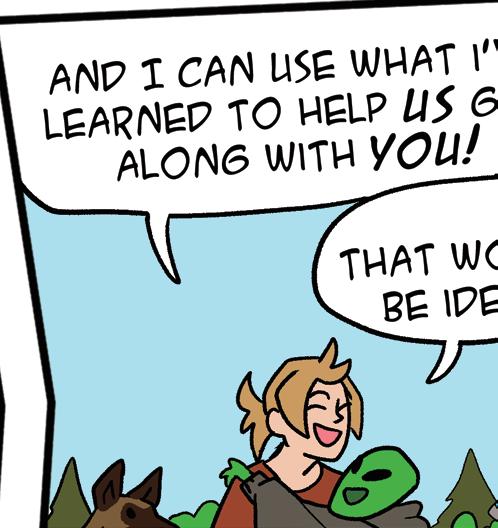
Applied anthropology looks at societal problems through the lens of culture and behavior.
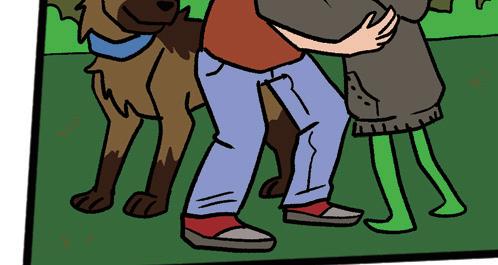


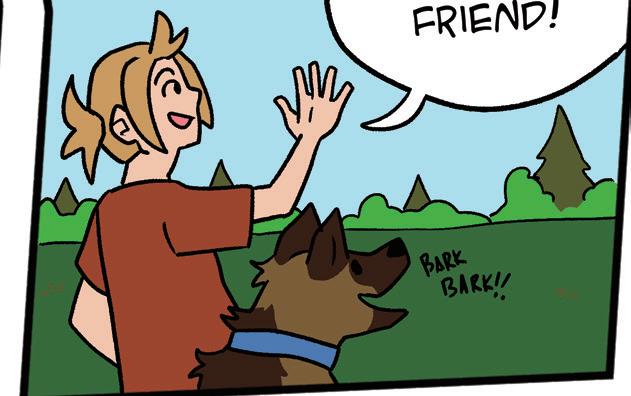
Some anthropologists are putting their knowledge and skills to work to solve realworld challenges. This field is known as applied anthropology. Applied anthropologists help solve problems in a wide number of industries, governments, and organizations. They may work as researchers, policy analysts, program evaluators, managers, trainers, community advocates, consultants, and more.
You’ve probably used one aspect of applied anthropology without even realizing it—business anthropology. When you use apps, shop online, or interact with customer service, there’s a good chance an anthropologist helped shape your experiences. Many large companies use anthropological research to better understand people and design products and services that fit real life. Business anthropologists look at how culture, beliefs, and everyday habits influence how people work, shop, and use products.
They talk to people, observe daily routines, and look for problems that slow things down or cause frustration at work. Business anthropologists also study customers to help companies design and create better ads, products, and messages that connect with their audience.
Medical anthropology studies human health and wellbeing. It combines ideas from biological anthropology, which examines how the body works and changes through time, and from cultural anthropology, the study of how culture and society shape people’s lives. Medical anthropologists see health as more than what’s happening inside the body. They see it as a wholeperson experience.
Along with understanding diseases and treatments, medical anthropology looks at how a person’s background, culture, income, politics, and environment affect their health. Medical anthropologists often do the following things.
• Study how different cultures understand health, illness, and healing
• Examine why some diseases are more common in certain places or communities
• Learn about people’s personal experiences with illness and how it affects families
• Question why people choose different types of healthcare, such as combining modern medicine with traditional healing
• Improve communication between patients and doctors so people can receive better care
Observation is an important skill in anthropology. This means paying close attention to what people do, say, and value. Anthropologists try to avoid judging what they observe. We judge when we compare others to ourselves and decide one is better. Instead of judging, anthropologists practice understanding by reminding themselves that every culture develops its own solutions to life’s challenges. For example, people in some cultures eat with forks and spoons, while others use chopsticks or their hands. None of these methods is better or worse. Each is simply a different tradition shaped by a culture’s history and environment.
Medical anthropologists try to understand the bigger picture around health, looking at science and culture together.
Internet memes are a part of modern culture and can reveal how people think and talk. Like cave paintings from thousands of years ago, memes are cultural artifacts that reveal details about our culture.
Have you ever wondered how your classroom curriculum, culture, and even appearance gets formed? Anthropology has something to do with it! In schools, anthropology can improve the way teachers educate and support students and design learning environments. Anthropologists study how students from different backgrounds experience school. They observe what is happening in classrooms, talk with students and teachers, and look for patterns in behavior, communication, and learning styles.
This information helps teachers create lessons that connect to students’ lives. Instead of using the same approach for everyone, teachers can include stories, examples, and materials that reflect their students’ cultures and communities.

Does your classroom have shared tables or individual desks? An anthropologist might have helped with that decision!
For example, if anthropologists notice that students learn better through group discussions instead of silent worksheets, teachers might add more teamwork and conversation to their lessons.
In some large U.S. school districts, applied anthropologists worked with teachers to better understand how students from different cultural backgrounds felt in class. They found that many students felt disconnected when lessons didn’t reflect their lives or histories. After learning this, teachers redesigned lessons to include culturally relevant examples. Math problems were connected to real-life situations in students’ neighborhoods, and reading lists included authors from many backgrounds. With time, schools saw higher student engagement, better attendance, and stronger relationships between students and teachers. When students see themselves reflected in what they are learning, they often feel more valued and motivated.
Many schools also have students who speak more than one language or come from immigrant families.
Applied anthropologists help schools understand how language barriers affect learning, how cultural differences shape classroom behavior, and why some families may interact with schools differently. With this knowledge, schools can improve English-language learner (ELL) programs, create family outreach that respects cultural values, and train teachers to communicate better across cultures. These changes make schools more welcoming and inclusive.
Digital anthropology is a branch of anthropology that studies how people use digital technology and how it shapes our lives. Digital anthropologists examine social media, smartphones, video games, online communities, virtual reality, and artificial intelligence. They ask questions. How does social media affect friendships? How do online communities create identity and belonging? How does technology change the way people communicate, work, and learn?
Instead of studying villages or cities in person, digital anthropologists may study online spaces, such as Instagram, TikTok, gaming platforms, or group chats. They observe how people interact, what kinds of language they use, and how culture develops in digital spaces.
Digital anthropology shows that modern culture has spread online. The internet is part of everyday life and part of human culture. By studying digital spaces, anthropologists can better understand how technology is changing human behavior, relationships, and society.
Applied anthropologists also study how students feel about school. Do they feel safe, respected, and motivated? Their research helps schools reduce bullying, improve school climate, provide mental health support, and build stronger relationships between students and adults.
When students feel understood, they are more likely to succeed.
Even within one culture, people can have very different beliefs, lifestyles, traditions, and opinions.
Anyone can learn to see the world the way an anthropologist does. Thinking like an anthropologist means being curious about people and paying attention to how and why they behave the way they do. It also means realizing that your way of living isn’t the only way. Every culture has its own beliefs, traditions, and values, and all are shaped by history, environment, and relationships.
Having an anthropological mindset means you try to do the following.
• Stay curious about people and cultures.
• Listen carefully and keep learning.
• Remember that your experiences affect how you see the world.
• Show respect for differences.
When you think this way, you slow down and ask questions instead of making quick judgments. You try to understand people’s choices rather than labeling them as strange or wrong.
Imagine a student in your class doesn’t make eye contact with the teacher. You might think that the student is being rude or not paying attention. But if you are thinking like an anthropologist, you might wonder if, in that student’s culture, avoiding eye contact is a way of showing respect. By being curious and open-minded, you can prevent misunderstandings and build better connections with others.
Anthropologists are naturally curious about people and cultures. They observe what people do and try to understand why people behave that way. When you start thinking like an anthropologist, you learn how to ask good questions.
• Why do people behave the way they do?
• What meaning does this tradition have?
• How does this practice connect to history or the environment?
• Who benefits from this system? Who might be left out?
These questions help anthropologists look beneath the surface. For example, instead of assuming a tradition is strange or outdated, they ask what purpose it serves. Maybe the tradition helps bring people together, pass down important knowledge, or show respect for elders.
Many customs that seem unusual at first make a lot more sense once you learn their background.
In this video interview, business anthropologist Emily Altimare explains how she became interested in anthropology and uses it in her job today. How could you use anthropology in your daily life?
Anthropology encourages us to appreciate differences rather than fear them. Instead of feeling uncomfortable when someone is different from you, you can see it as a chance to learn something new. At school, you might hear classmates speaking different languages, bringing foods from home that you’ve never tried, or celebrating holidays you don’t know much about. Rather than seeing these differences as strange, anthropology teaches us to see them as interesting and meaningful.
What are some different cultural behaviors you’ve observed at your school?
Anyone can learn to think this way, and you can practice it in everyday life. When you notice something unfamiliar, such as the way someone dresses, eats, celebrates, or communicates, pause and ask yourself, “I wonder why that is done this way?” That simple question opens the door to learning instead of judging.
Anthropological questions also help you see that people’s choices are often shaped by their environment and history. For example, food traditions grow out of what crops can be grown in a certain climate. Clothing styles might be based on the weather or religious beliefs.
Even school rules, family roles, or holiday traditions usually have stories behind them.
Another important part of asking these questions is thinking about fairness. When anthropologists ask, “Who benefits from this system and who might be left out?” they are trying to understand power and inequality. This helps them notice when certain groups have more opportunities than others and why that might be the case.
Asking these kinds of questions can change how you see the world. You become more patient, more openminded, and more willing to listen. Instead of jumping to conclusions, you look for explanations. That’s what it really means to think like an anthropologist: staying curious, thoughtful, and respectful as you learn about the many ways people live.
By thinking like an anthropologist, you can help avoid stereotypes and appreciate the differences among the world’s people. Stereotypes are simple, often unfair ideas about a whole group of people. For example, thinking that everyone from a certain country acts the same way or believes the same things is a stereotype. In real life, no group is that simple. Anthropology shows us that people and cultures are complex and full of variety.
When you learn about anthropology, you start to see people as individuals rather than labels. Instead of saying, “All people from this place are like this,” you begin to think, “Everyone has their own story.” That shift in thinking helps you become more open-minded and fair. It also makes you more likely to ask questions and listen rather than make quick judgments.
Overall, anthropology reminds us that there are many ways to be human. By avoiding stereotypes and embracing differences, we become kinder, more curious, and better prepared to live in a diverse world.
• If you could visit a past culture, which would you choose? Why?
• What areas of your life do you think could benefit from an anthropological examination?
Write down what you think each word means. What root words can you find to help you? What does the context of the word tell you?
- applied anthropology
- digital anthropology
- diverse
- stereotype
Compare your definitions with those of your friends or classmates. Did you all come up with the same meanings? Turn to the text and glossary for help.
Applied anthropologists work with communities to solve real-life problems. In this activity, you will act as an applied anthropologist who is studying your school.
Your school administrators want student input to improve the school environment. They have asked you to help. Gather information by creating a mini needs assessment in the form of a five-question survey for students. Make sure the questions are clear and open-ended. For example, you might ask the following.
• What is the biggest source of stress at school?
• Do you feel you have a safe space to talk about concerns?
• Do you feel connected to at least one adult at school?
• What would make school feel more welcoming?
• What changes would improve your school day?
Create a presentation that explains the problem and your findings. Describe your proposed solutions and how they will improve the school environment.
Interview students or conduct anonymous written surveys. Record the responses and look for patterns. Are there common concerns? Are any responses surprising?
Using the information you collected, develop three realistic suggestions to improve the school environment. Each suggestion should respect school policies and consider different student needs.
3-D modeling: creating a digital object that looks three-dimensional.
absolute dating: the science of determining the specific age of an object.
acculturation: the process of adopting some traits of another culture.
adapt: to make a change in response to new or different conditions.
adaptation: a change that happens in response to the environment, often in terms of physical or behavioral characteristics that help a plant or animal survive.
adolescence: the stage of life between childhood and adulthood.
Age of Discovery: the time from the mid-fifteenth century to mid-sixteenth century when many expeditions left Europe to explore the world.
Age of Enlightenment: the period from about 1685 to 1815 when European scientists and philosophers started to examine the world using reason rather than religion.
altitude: the height above the level of the sea. Also called elevation.
ancestor: a person from one’s family or culture who lived before.
ancestry: a person’s family background or origins.
anthropology: the study of human culture and development.
antiquarian: a person who collects or studies objects from ancient times.
applied anthropology: the use of anthropological research, methods, and theories to solve real-world issues.
archaeological record: all the physical remains left by humans from the past.
archaeology: the study of ancient people through the objects they left behind.
artifact: an object such as a tool, pottery, or jewelry made by people from a past culture.
basalt: a dark, hard volcanic rock formed from cooled lava.
BCE: put after a date, BCE stands for Before Common Era and counts down to zero. CE stands for Common Era and counts up from zero. This book was printed in 2026 CE.
beliefs: something accepted, considered to be true, or held as an opinion.
bias: a tendency to see things a certain way, perhaps unreasonably or unfairly.
binary opposite: a pair of contrary ideas, such as light and dark or life and death.
binomial: using two terms.
biological anthropology: the study of how people have evolved and adapted to their environment.
biology: the science of life and living things.
bipedalism: the ability to walk on two legs.
black market: the illegal buying and selling of products.
business anthropology: the use of anthropology to study, understand, and improve consumer behavior and experiences as well as business practices.
caravan: a group of people traveling together, often with animals, across long distances.
carbon: an element found in all living things, including plants. Carbon is also found in diamonds, charcoal, and graphite.
carbon dating: a method used to determine the age of organic materials based on the amount of carbon 14 they still contain.
ceremony: an event to celebrate or honor something, such as a god or a holiday.
chemistry: the science of how substances interact, combine, and change.
circumcision: the surgical removal of the foreskin from a human male’s penis.
civilization: a community of people with a highly developed culture and social organization that is advanced in art, science, and government.
civilized: refers to people who are advanced in art, science, and politics.
clan: a family group related through a common ancestor.
GLOSSARY
classify: to put things in groups based on what they have in common.
climate: the average weather patterns in an area during a long period of time.
code-switch: to change the way you speak depending on who you are talking to or where you are.
colonialism: the domination or rule of an area or country by a foreign country.
conflict: a period of disagreement that sometimes includes violence.
conservator: a person who repairs and preserves textiles, culturally important items, or works of art.
contemporary: modern, existing now, belonging to the current moment.
controversial: an issue that causes disagreement.
crops: plants grown for food and other uses.
CT (computed tomography) scan: a fast, non-invasive imaging test that uses X-rays to create detailed images of bones, blood vessels, and soft tissues.
cultural anthropology: the study of living people and their cultures.
cultural assimilation: when a group adopts the culture of another group.
cultural evolution: the idea that societies can be ranked and can change from “primitive” to “advanced.”
cultural relativism: the practice of approaching people in a group with respect and without judgment when studying them.
culture: the beliefs and way of life of a group of people, which can include religion, language, art, clothing, food, and holidays.
custom: a common tradition or way of doing things in a culture.
decree: an official order.
demotic: related to ancient Egyptian writing.
dendrochronology: the study of tree rings.
dexterity: skill in performing tasks, especially with the hands.
dialect: a regional variety of a language, often with its own vocabulary and pronunciation.
diaspora: people spread outside their original homeland.
diffusionism: the belief that cultures change by borrowing ideas from one another.
digital anthropology: the study of online communities and technology.
discrimination: the unfair treatment of a person or a group of people because of who they are.
diverse: differences among people, such as culture, language, or beliefs.
DNA (deoxyribonucleic acid): the molecule in all living things that carries genetic information.
drought: a long period of unusually low rainfall that can harm plants, animals, and humans.
economics: having to do with the resources and wealth of a country and the material welfare of humankind.
economy: a system of producing and consuming goods and services.
emoji: a small digital image or icon used to express an idea or emotion.
enculturation: the process by which an individual learns a culture and takes on its practices and values.
environment: everything in nature, living and nonliving, including animals, plants, rocks, soil, and water.
erosion: the wearing away of land by wind, water, or ice.
ethics: a system of moral principles that guide what is right or wrong.
ethnicity: the cultural identity of a person, including language, religion, nationality, customs, and ancestry.
ethnocentrism: the belief that your own culture is better than others.
ethnography: a detailed, written study of a culture.
evidence: something that proves, or could prove, the existence of something or the truth of an idea.
evolution: the process of change in living things through time.
evolutionism: the belief that cultures evolve on a fixed path.
excavate: to dig carefully to uncover artifacts or fossils.
exploit: to use something unfairly for personal gain.
extended family: a family unit that includes parents, children, and other relatives— such as grandparents, aunts, or uncles—typically residing within the same household.
extinct: no longer existing. All members of a species have died.
feature: in archaeology, a large, non-movable human-made remain such as a building.
fieldwork: collecting information at an actual site rather than in a lab. Work done by personal observation.
forensic anthropology: the study of human bones to solve crimes or identify people.
fossil: the preserved remains or traces of ancient plants or animals.
framework: a basic plan, form, or outline that supports something else.
functionalism: the belief that each part of a culture serves a purpose.
gender: male or female, and their roles or behavior defined by society.
generation: a group born and living at about the same time.
genetic: relating to genes, which are units of DNA and RNA that give organisms their characteristics.
genus: a subdivision of a family of organisms.
Geographic Information System (GIS): a system that captures, stores, analyzes, and presents geographical data of all types.
geography: the study of the earth and its features, especially the shape of the land and the effect of human activity.
geology: the science of Earth’s physical structures, the materials that make up Earth, and the processes that act upon them.
globalization: the process by which countries and businesses around the world share their cultures, goods, and economies.
ground-penetrating radar (GPR): a method that uses high-frequency radio waves to detect and create images of objects belowground.
heritage: something that is passed from one generation to the next, such as the cultural traditions and history of a group of people.
hieroglyph: a symbol in a written language that uses pictures and characters to represent words or ideas.
historical archaeology: the branch of archaeology that studies the material remains of societies that also left behind written records.
holism: in anthropology, the study of all parts of a culture together to understand it fully.
hominin: a member of the human family, including extinct ancestors.
Homo sapiens: the Latin species name for modern humans.
human rights: the rights that belong to all people, such as freedom from torture, the right to live, and freedom from slavery. human variation: the physical differences among humans.
hunter-gatherer: a person who hunts animals and gathers plants for food.
ice age: a long period when much of Earth was covered with ice.
identity: the unique characteristics of a person, country, or group.
immigration: moving to a new country to live there.
indigenous: native to a certain place; the original people of a region.
GLOSSARY
industrial archaeology: a branch of archaeology that studies factories, mills, railroads, mines, and other industrial sites from the past, especially from the Industrial Revolution.
Industrial Revolution: a period during the eighteenth and nineteenth centuries when largescale production of goods began and large cities and factories began to replace small towns and farming.
inequality: differences in opportunity and treatment based on social, ethnic, racial, or economic qualities.
innovation: a new idea, method, or invention.
interbreed: when members of different groups or species have offspring together.
isotope: a form of an element with a different number of neutrons.
judgment: the process of forming an opinion.
kinship: family relationships in a culture.
language family: a group of languages descended from one common language.
larynx: the organ in the human body that produces sound, also known as the voice box.
liberty: freedom, the ability to act or live as one chooses.
LiDAR (light detection and ranging): a surveying method that uses laser light to measure distances.
lifestyle: the way a person or group lives.
linguistic anthropology: the study of language and how people use it.
linguistics: the study of language.
logic: the principle, based on math, that things should work together in an orderly way.
looting: stealing goods, often during a disaster or conflict.
magnetometer: an instrument that detects, measures, and records the properties of magnetic fields.
mainstream: ideas or activities accepted widely by most people.
malnutrition: lack of proper nutrition.
matriarchal: related to a society controlled by women.
matrilineal: relating to or tracing descent through the maternal, or mother’s, line.
medical anthropology: the study of the way cultural, social, and biological factors influence health, illness, and health care.
meme: an amusing or interesting item such as a captioned picture or video that is spread widely online, especially through social media.
migrate: to move from one area to another.
mill: a building where materials like grain, wood, or textiles are processed.
mitochondrial DNA: DNA inherited exclusively from the mother.
myth: a traditional story that explains a historical or natural event.
native people: people with their own culture who live in an area before anyone arrives from another country.
natural disaster: a natural event, such as a fire or flood, that causes great damage. natural resource: a material or substance such as gold, wood, and water that occurs in nature and is valuable to humans.
natural right: a right that all humans are entitled to, such as life and liberty.
natural selection: the process by which organisms best adapted to an environment pass their useful traits to their offspring.
Neanderthal: an extinct human relative that lived long ago in Europe and Asia.
nomadic: moving from place to place rather than having a permanent home.
norm: something that is typical or standard.
nuclear family: a family group consisting only of parents and their children.
observation: the process of noticing a fact or occurrence.
oracle: a person or place believed to give wise or magical answers.
organic: something that is or was living, such as animals, wood, grass, and insects.
organism: any living thing, such as a plant or animal.
Paleoamerican: one of a group of prehistoric inhabitants of North and South America.
paleoanthropology: the study of ancient humans through fossils.
Paleolithic: relating to the earliest period of the Stone Age when people used rough stone tools.
participant observation: the process of living immersed in a group to study its culture firsthand.
patriarchal: related to a society controlled by men.
patrilineal: relating to or tracing descent through the paternal, or father’s, line.
persecution: hostility and illtreatment, often because of race, religion, or nationality.
philosopher: a person who studies knowledge, truth, and the nature of reality.
pigment: a substance that gives color to something.
pointing trowel: a small, narrow-bladed hand tool.
pollen: a fine, yellow powder produced by flowering plants. Pollen fertilizes the seeds of other plants as it gets spread around by the wind, birds, and insects.
polymerase chain reaction (PCR): a process used to make many copies of DNA.
predator: an animal or plant that kills and eats another animal.
prehistorical archaeology: the branch of archaeology that studies the material remains of societies that did not leave behind any written records.
prehistory: the time before written records.
prejudice: an unfair opinion about a person or group.
primate: a member of the group of mammals that includes humans, monkeys, and apes.
primitive: being less developed.
primatology: the study of primates.
psychology: the science of the mind and behavior.
pueblo: a communal village of stone or adobe homes often several stories high.
racism: negative opinion or treatment of people based on race and the notion that people of a different race are inferior because of their race.
radioactive: giving off energy from unstable atoms.
radiocarbon dating: a scientific method of dating organic material that is less than about 40,000 years old.
relative dating: the science of determining the order of past events or fossils without necessarily determining their exact age.
repatriation: the process of returning artifacts or remains to their original communities.
rite of passage: a moment or ceremony marking an important stage in a person’s life.
ritual: a repeated action with cultural or religious meaning.
Sapir-Whorf hypothesis: the theory about the connection between language and culture, that language can influence the way you think.
savagery: an uncivilized state.
scavenging: searching for and collecting anything useable from trash and other discarded materials.
Silk Road: an ancient network of trade routes connecting the Mediterranean Sea and China by land.
skepticism: doubt about the truth or value of an idea or belief.
slang: informal and quickly evolving language used by specific groups, often to create group identity and sometimes to exclude others.
slavery: when slaves are used as workers. A slave is a person owned by another person and forced to work, without pay, against their will.
social Darwinism: a misuse of Darwin’s theory of evolution to justify social inequalities and racism.
social evolution: the belief that societies develop in stages.
society: an organized community of people with shared laws, traditions, and values.
sociology: the study of human relationships and social problems.
soil analysis: the study of dirt to learn what it is made of.
species: a group of living things that have similar characteristics and can produce offspring.
stela: an upright stone slab or pillar carved with inscriptions or designs often to record information about a ruler. Plural is stelae.
stereotype: an overly simple and often inaccurate picture or opinion of a person, group, or thing.
sterile: free from germs.
stratum: a layer of material, such as rock, often one of several parallel layers. The plural is strata.
structural functionalism: in anthropology, the view that societies are complex, interconnected systems.
structuralism: in anthropology, a way to understand culture by looking for the hidden patterns in how people think, especially in terms of binary opposites such as light and dark or good and evil.
superstitions: beliefs that deal with nonscientific things, such as good and bad luck.
superposition: the placement of one thing on or above another.
symbolic: important because of what it stands for or represents.
systematic: performed according to a plan.
technology: the tools, methods, and systems used to solve a problem or do work.
trade: the exchange of goods and services.
tradition: a custom or belief that has been handed down in a community or culture through many years.
trait: a specific characteristic of an organism determined by genes or the environment.
treaty: a formal agreement between countries or groups. uncivilized: crude, not very advanced.
underwater archaeology: the branch of archaeology that studies human objects such as shipwrecks or entire cities that are underwater.
values: strongly held beliefs about what is valuable, important, or acceptable.
Use this chart to find the metric equivalents to the English measurements in this activity. If you need to know a half measurement, divide by two. If you need to know twice the measurement, multiply by two.
Page 8: kids.nationalgeographic.com/videos/topic/history-andculture#c985ae3d-93b6-4b02-8fc4-77b83d5e0331
Page 19: youtube.com/watch?v=x5etVYmoSVg
Page 22: youtube.com/watch?v=MLj6IwH5T7g
Page 27: womenshistory.org/education-resources/biographies/zora-hurston
Page 28: npr.org/sections/codeswitch/2016/05/05/476631934/a-longcomplicated-battle-over-9-000-year-old-bones-is-finally-over
Page 34: humanorigins.si.edu/evidence/human-family-tree
Page 36: humanorigins.si.edu/evidence/human-evolution-interactive-timeline
Page 40: youtube.com/watch?v=k5Q6-hh49mU
Page 42: bbc.com/videos/cjk4p822j41o
Page 48: humanorigins.si.edu/evidence/human-family-tree
Page 55: archeologie.culture.gouv.fr/lascaux/en/lascaux-cave-virtual-visit
Page 58: youtube.com/watch?v=klJBwnBHET8
Page 60: virtual.cincymuseum.org/jgzpc7h2bsacrk7g/#mayaone
Page 62: youtube.com/watch?v=MhIa7OJ8sN4
Page 64: youtube.com/watch?v=7FI1oGbQAwo
Page 68: archeologie.culture.gouv.fr/lascaux/en/visit-cave
Page 72: nbcboston.com/news/national-international/quinceaneras-for-boys-how-genz-is-reinventing-the-traditionally-gendered-latino-celebration/3160348
Page 87: linguisticanthropology.org/blog/2012/05/08/endangered-smith-island-dialect
Page 89: youtube.com/watch?v=yiKFYTFJ_kw
Page 90: youtube.com/watch?v=KB7kLNwKEVU
Page 94: american.edu/cas/news/6-7-slang.cfm
Page 107: practicinganthropology.org/s-napa-shots/snapashots-emily-altimare-2
Casil, Amy Sterling. 2022. Forensic Anthropology: Identifying Human Remains. Mason Crest, 2021. Hollihan, Kerrie Logan. Bones Unearthed! Abrams Books for Young Readers, 2021.
Indovino, Shaina. Women in Anthropology. Mason Crest, 2022. Quick, Megan. Anthropologist. Scientific American Educational Publishing, an imprint of Rosen Publishing, 2026.
Turner, Pamela S. How to Build a Human: In Seven Evolutionary Steps. Charlesbridge, 2022.
American Anthropological Association americananthro.org/practice-teach/what-is-anthropology
The British Museum britishmuseum.org
Jane Goodall Institute janegoodall.org
The Leakey Foundation leakeyfoundation.org
National Park Service: Archaeology nps.gov/subjects/archeology
Olduvai Gorge ncaa.go.tz/olduvai-gorge
Pompeii Sites pompeiisites.org/en
Society for Cultural Anthropology culanth.org
The Smithsonian’s Human Origins Project humanorigins.si.edu
The Anthropology Book: Big Ideas Simply Explained. DK, 2025.
Barrage, Rasha. The Little Book of Anthropology. Simon and Schuster, 2023.
Engelke, Matthew. How to Think Like an Anthropologist. Princeton University Press, 2018.
Fleck, Micah J. Anthropology for Beginners. Red Wheel/Weiser, 2020.
“History and Branches of Anthropology,” National Geographic, 2023. education.nationalgeographic.org/resource/history-branches-anthropology
Morris, Julia C. A Degree in a Book: Anthropology. Arcturus Publishing, 2021.
Smith, Cameron M. Anthropology for Dummies. John Wiley & Sons, 2021.
AAbel, Paul, 44 acculturation, 71 activities (Inquire & Investigate)
Analyze an Artifact, 66–67
Change the Environment, 110
Code-Switching Challenge, 100 Conduct Fieldwork, 82–83
Ethics and Anthropology, 28–29
Explore Human Variation, 50
Looking at Tattoos Using Cultural Relativism, 30
Media and Culture Analysis, 84
Meet Your Human Ancestors, 48–49
Slang Across Generations, 98–99
What Can We Learn From Cave Paintings?, 68 What Story Does Your Trash Tell?, 14–15 Al-Sayyid Bedouin Sign Language (ABSL), 97 Altamira cave paintings, 52–53 anthropology applied, v, 101–110 archaeology and, iv, 10–11, 51–68 biological, iv–v, 8–9, 31–50, 75, 103 cultural, iv–v, 10, 11, 69–84, 103 definition and description of, 2, 4–6 history of, iv–v, 17–30 importance and role of, 2–3, 12–13 linguistic, 12, 85–100 origin of term, 3 sociology vs., 6–7
applied anthropology, 101–110 anthropological mindset in, 106–108 asking questions in, 107–108 business anthropology as, 102–103, 107 definition and description of, 102–103 differences appreciated in, 108, 109 digital anthropology as, v, 105 education improved with, 104–106, 110 medical anthropology as, v, 103 archaeology, 51–68 archaeological record in, 55–56 artifacts and features in, 10, 52–68 cave paintings in, 52–55, 61, 68 dating artifacts in, iv, 62–64 definition and description of, 10–11, 54–55 excavations or digs in, iv, 10, 53, 56, 60–61, 62 laws related to, 53 origins of, 56–57 respectful behavior in, 56 Rosetta Stone importance to, 57–58 tools and technology use in, 59–60, 61 types of, 64–65 Ardi (skeleton), 41 artifacts analysis of, 66–67 in archaeology, 10, 52–68 dating of, iv, 62–64 in paleoanthropology, 40–41 removal or looting of, 28–29, 53
BBenedict, Ruth, 27 biological anthropology, 31–50
biological sex in, 47, 75 definition and description of, 8–9, 35–36
DNA analysis in, v, 9, 35, 42–43
forensic anthropology in, 46–47 fossils in, iv, 9, 33–34, 36–37, 39–43
human evolution in, v, 36–38, 40, 42, 47–49
human variation in, 36, 44–45, 50
Leakey discoveries in, iv–v, 40–42, 44
medical anthropology and, 103
Naia’s skeleton studied in, v, 32–35 paleoanthropology in, 39–42 primatology in, 46 bipedalism, 38, 44, 45, 48 Boas, Franz, iv, 24–25, 77 bones. See fossils; skeletons and skulls business anthropology, 102–103, 107
ANTHROPOLOGY | INDEX
Ccave paintings, 4–5, 8, 52–55, 61, 68, 94 Champollion, Jean-Francois, 58 code-switching, 94, 95, 100 Columbus, Christopher, 20 Coming of Age in Samoa (Mead), iv, 77 communication, 89, 96–97. See also languages; nonverbal communication cultural anthropology, 69–84 cultural change in, 79–80 culture studied in, iv, 71–72 definition and description of, 11, 70 fieldwork and ethnographic research in, 10, 71–72, 82–83 globalization in, v, 80–81 kinship and family in, 74–75, 76, 77, 78 media in, 84 medical anthropology and, 103 migration in, v, 78–79, 80, 81 race and ethnicity in, 76–77 religion and belief systems in, 74 rites of passage in, 72–73, 74 sex and gender in, 75 cultural relativism, 7, 24, 27, 30 culture, definition of, 9, 70
Darwin, Charles, iv, 22–23, 40, 47 dating, of artifacts, iv, 62–64 dendrochronology, 63 dialects, 87, 93 Dias, Bartolomeu, 20 diffusionism, 24 digital anthropology, v, 105 DNA (deoxyribonucleic acid), v, 9, 35, 42–43 Dunbar, Robin/Dunbar’s number, 79
education, improving, 104–106, 110 enculturation, 73 ethical issues, 28–29, 56 ethnicity, 77. See also race and racism ethnocentrism, 21 ethnographic research, 71–72, 82–83. See also participant observation evolution and evolutionism, iv–v, 22–23, 36–38, 40, 42, 47–49, 90 excavations, iv, 10, 53, 56, 60–61, 62
Ffamily, study of, 25, 74–75, 76, 77, 78 fieldwork, iv, 10, 25, 71–72, 82–83 footprints, 44 forensic anthropology, 46–47 fossils, iv, 9, 23, 33–34, 36–37, 39–43. See also skeletons and skulls functionalism, 25–26
Ggender, 75 globalization, v, 80–81, 95
Goodall, Jane, v, 40, 46
H
Herodotus, iv, 18–19 historical archaeology, 64–65 history of anthropology, 17–30
Age of Discovery and, 20
Age of Enlightenment (or Reason) and, 21–22
Boas’s influence in, iv, 24–25 cultural relativism in, 24, 27, 30 diffusionism in, 24 ethical issues in, 28–29 ethnocentrism and, 21 evolutionism in, iv, 22–23 functionalism in, 25–26
Herodotus’s influence in, iv, 18–19
Morgan’s influence in, 25 structuralism in, 23 timeline in, iv–v trade routes and, 19–20 women in, 26–27 holism, 35
Homo sapiens, 36–38, 39 Hurston, Zora Neale, 27
IIbn Battuta, 19–20
Ibn Khaldun, 21 industrial archaeology, 65 innovation, 79
JJohanson, Donald, 45
KKennewick Man, v, 28 kinship, 25, 74–75. See also family, study of L Laetoli footprints, 44 languages
cultural anthropology studying, 70, 71, 81 education and, 105 linguistic anthropology studying (see linguistic anthropology)
Lascaux cave paintings, 55, 61, 68
Leakey, Jonathan, 42
Leakey, Louis, iv, 40–42
Leakey, Mary, iv–v, 40–42, 44
Lévi-Strauss, Claude, 23 linguistic anthropology, 85–100 code-switching in, 94, 95, 100 communication in, 89, 96–97 (see also nonverbal communication) definition and description of, 12, 86–87 dialects in, 87, 93 dying or endangered languages in, 90, 92, 93, 95 evolution of languages in, 90 impacts of language in, 93–94 language changing in, 89, 94–95 language defined for, 87–88 language families in, 91 learning and sharing language in, 89, 92 methods of language study in, 92–93 slang in, 94, 98–99 Linnaeus, Carl, 39 Lucy (skeleton), v, 37, 39, 45
ANTHROPOLOGY | INDEX
MMagellan, Ferdinand, 20 Malinowski, Bronislaw, iv, 25–26 Mead, Margaret, iv, 26–27, 77 media, 84 medical anthropology, v, 103 memes, 97, 104 migration, v, 78–79, 80, 81 Minangkabau people, 78 Morgan, Lewis Henry, 25
Nabonidus (King of Babylon), 56 Naia (skeleton), v, 32–35 natural selection, iv, 23, 24, 47 nature vs. nurture, 45, 77 Neanderthals, 5, 22–23, 37, 38, 43 nonverbal communication, 87, 89, 96. See also sign language Nutcracker Man, 42
Ppaleoanthropology, 39–42.
See also fossils participant observation, iv, 10, 71, 82–83 Perry, W.J., 24 physical anthropology. See biological anthropology Polo, Marco, 19 prehistorical archaeology, 64 primates, v, 8–9, 23, 36–38, 40, 46, 47 R
race and racism, iv, 24–25, 43, 76–77
Radcliffe-Brown, A.R., 26 radiocarbon dating, iv, 63 religion, 20, 47, 74 rites of passage, 72–73, 74 Rosetta Stone, 57–58
SSapir, Edward/Sapir-Whorf hypothesis, 92
Sautuola, Marcelino Sanz de, 52 sex, biological, 47, 75 sign language, 88, 97 Silk Road, 19, 20 “Six Blind Men and the Elephant” (fable), 11 skeletons and skulls, 8–9, 22, 32–35, 36, 38–39, 42, 47. See also fossils slang, 94, 98–99 social Darwinism, 24 social evolution, 23 sociology, 6–7 structural functionalism, 26 structuralism, 23 T tattoos, 30 teeth, 34–35, 39, 42–43 trade, 19–20
trees, dating rings of, 63
Tylor, Edward Burnett, iv, 9 U
underwater archaeology, 65
van Gennep, Arnold, 74
White, Tim, 41 Whorf, Benjamin Lee, 92 women, 6, 26–27, 78
World Anthropology Day, 7 Z
Zhang Qian, 19
focus on social studies
Yes—all of those! Anthropology is the study of the development of human society. In Anthropology: The Science of Being Human, young scientists explore several fields of anthropology—including biological anthropology, archaeology, cultural anthropology, and linguistic anthropology—while examining significant items or events that show moments in time when the human race adapted to a changing world. Stories about past and current civilizations, key figures who made discoveries in the field, and interesting facts about the technology used to support the study of anthropology invite kids to dive deep into the story of our culture!
Links to online videos and primary sources, essential questions, text-to-world observations, hands-on activities, and research projects invite all types of learners to the table.
Try these experiments and activities!
• Explore ethics in anthropology
• Meet your human ancestors
• Analyze an artifact
• Conduct fieldwork
• Take a code-switching challenge
• Investigate human variation
Engineering: How the Six Simple Machines Support the World
“The STEM offering successfully pulls ancient devices into the twenty-first century, reinforcing math and science concepts and standards while whetting inquiry and curiosity.”
—Booklist
The Science of Seeds: Why We Eat Maize, Wheat, Rice, and Potatoes
$19.95