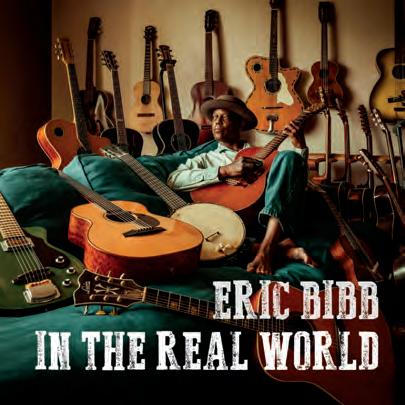
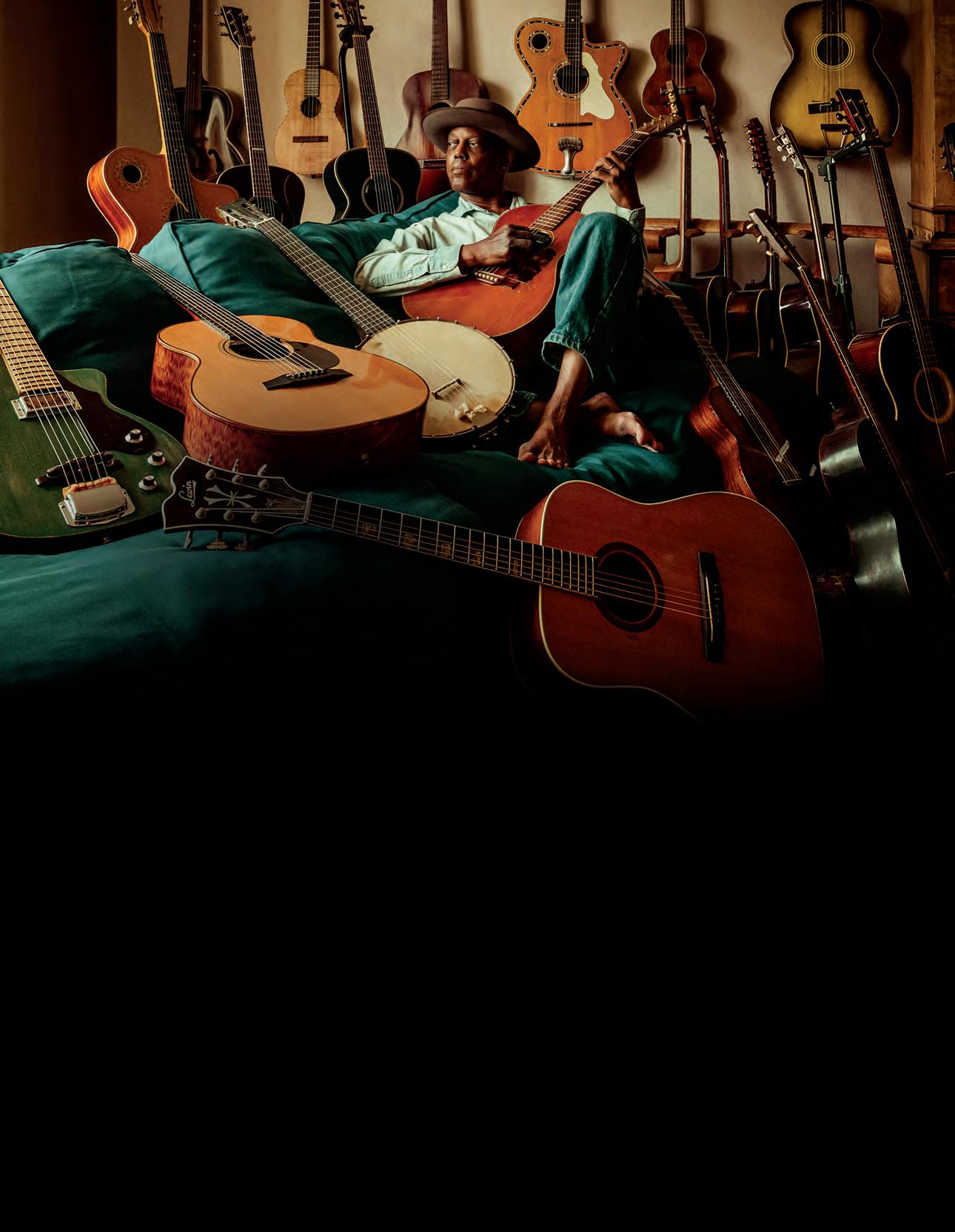
In The Real World is the latest album from blues troubadour Eric Bibb, following his Grammynominated 2023 release, Ridin’. Recorded at Peter Gabriel’s iconic Real World Studios, this album is a vivid representation of Bibb’s musical and personal evolution, offering a glimpse into the world he’s experienced and the hope he continues to foster through his music.
available October 18
“American roots music is the bedrock of American popular music.”
Amythyst Kiah, p. 61
5 HELLO STRANGER by
Hilary Saunders
6 IF THE SHOE FITS
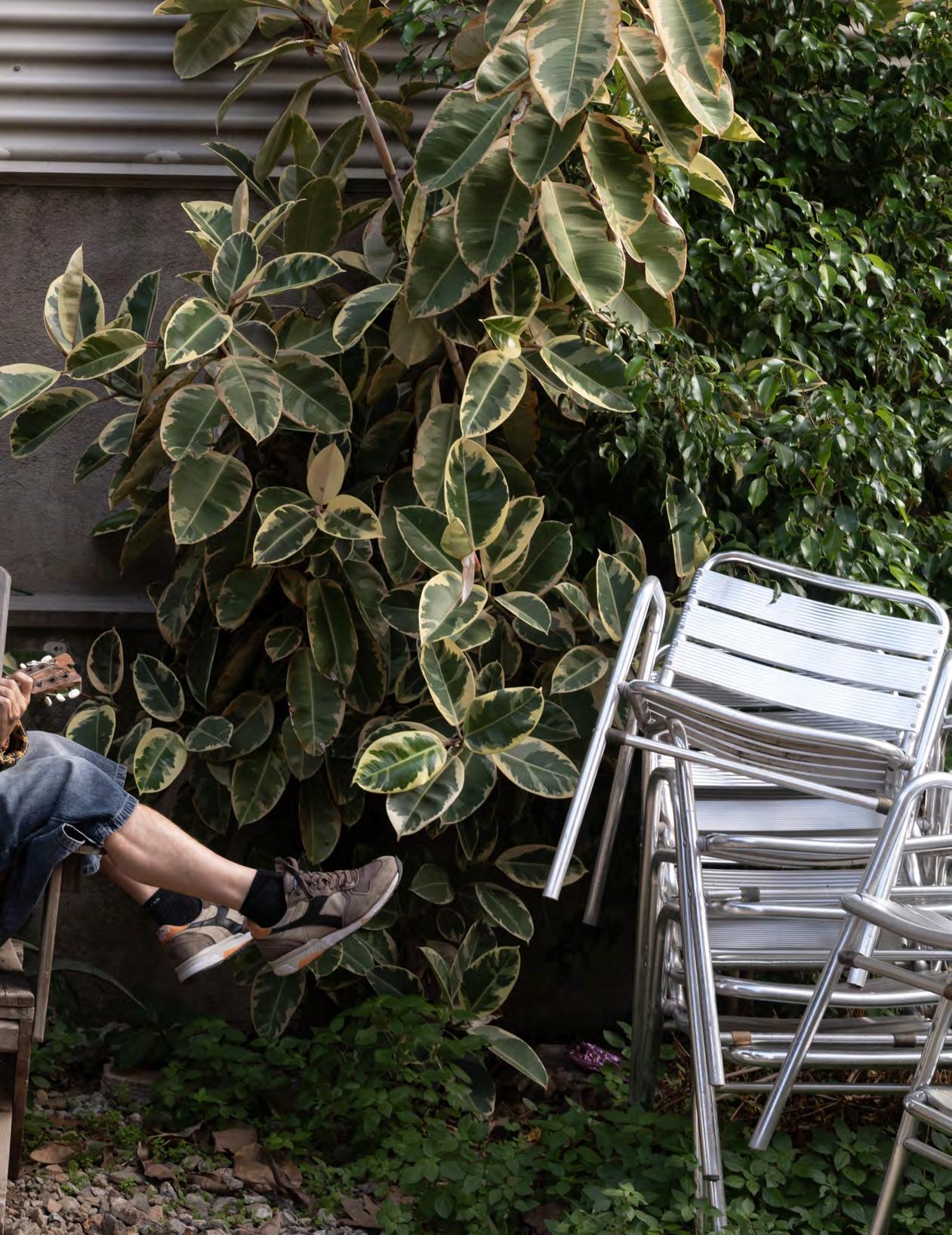
Trailblazer Manu Chao places music, fame, and message in his own context by Judy Cantor-Navas
14 STILL STANDING
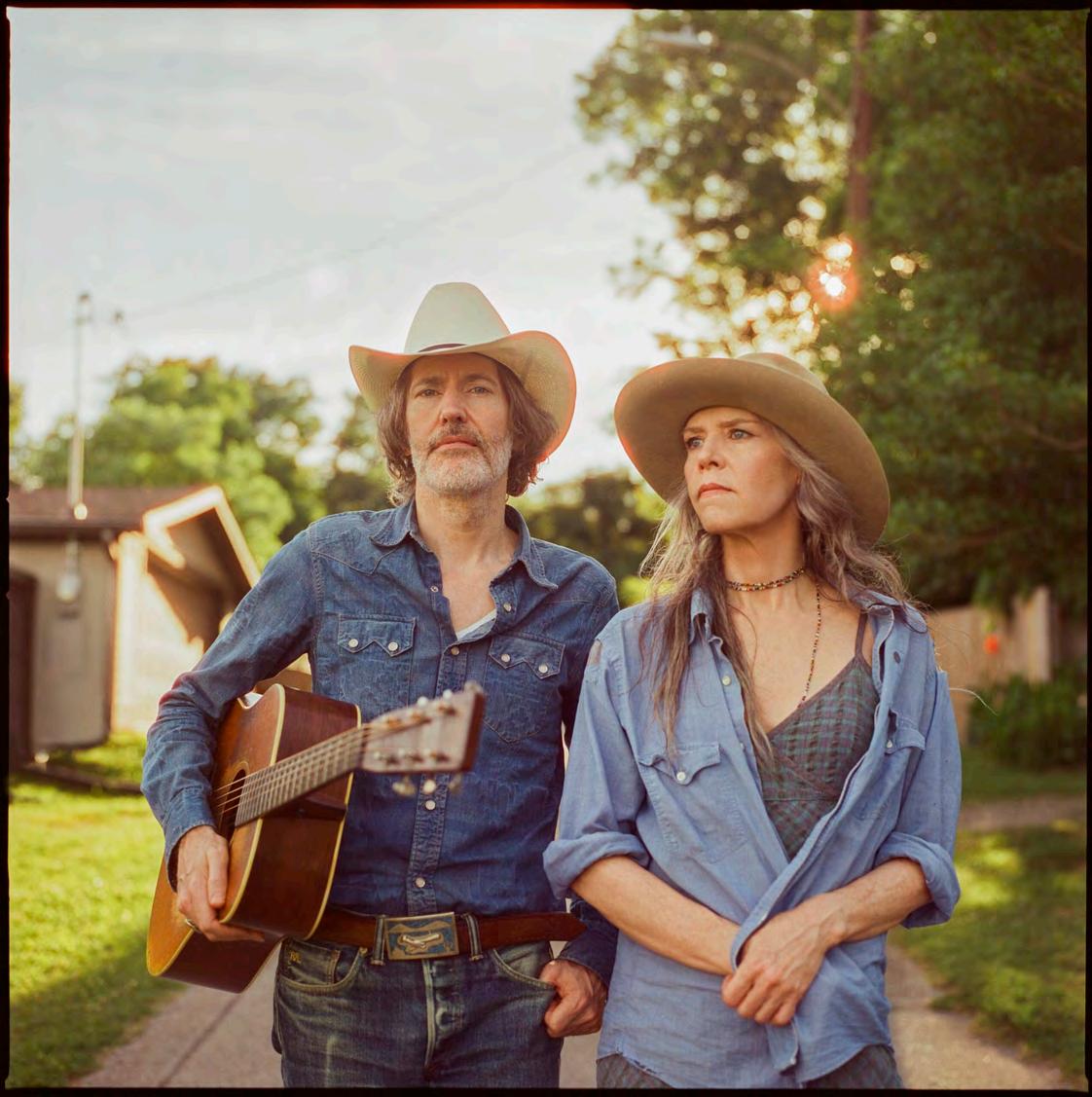
For Gillian Welch and David Rawlings, ‘Woodland’ is an anchor in the storm by Sean Moores
22 THE VIEW FROM INSIDE
‘Better Than Jail’ project’s prison songs support criminal justice reform efforts by Laura Scholz
30 OZZY OSBOURNE: THE DARK PRINCE OF OLD-TIME SINGING TRADITIONS by Rebecca Lovell
34 ‘LIGHTNING STRUCK’
Fifteen years after its release, ‘Diamonds & Gasoline’ still fuels Turnpike Troubadours by Josh Crutchmer
42 POINT OF PRIDE
The past and present of Chicano soul is forged from community by Jim Shahen
52 ‘IN THE PINES’
A wide range of artists find new resonance in a century-old folk song by Will Hodge
62 THE WHOLE STORY by Colleen McNally Arnett
66
LIVE FROM NEW YORK
50 seasons of musical moments on ‘Saturday Night Live’ by Colleen McNally Arnett
74
NATHANIEL RATELIFF’S SNL ‘REDEMPTION’ by Hilary Saunders
78 VINYL VITALITY
Nashville’s United Record Pressing has kept spinning for 75 years of music business changes by Margaret Littman
90
REVIEWS
94
CONTRIBUTORSS
96
SCREEN DOOR
What music carries by Jerron Paxton

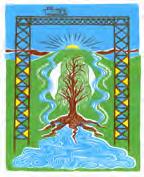
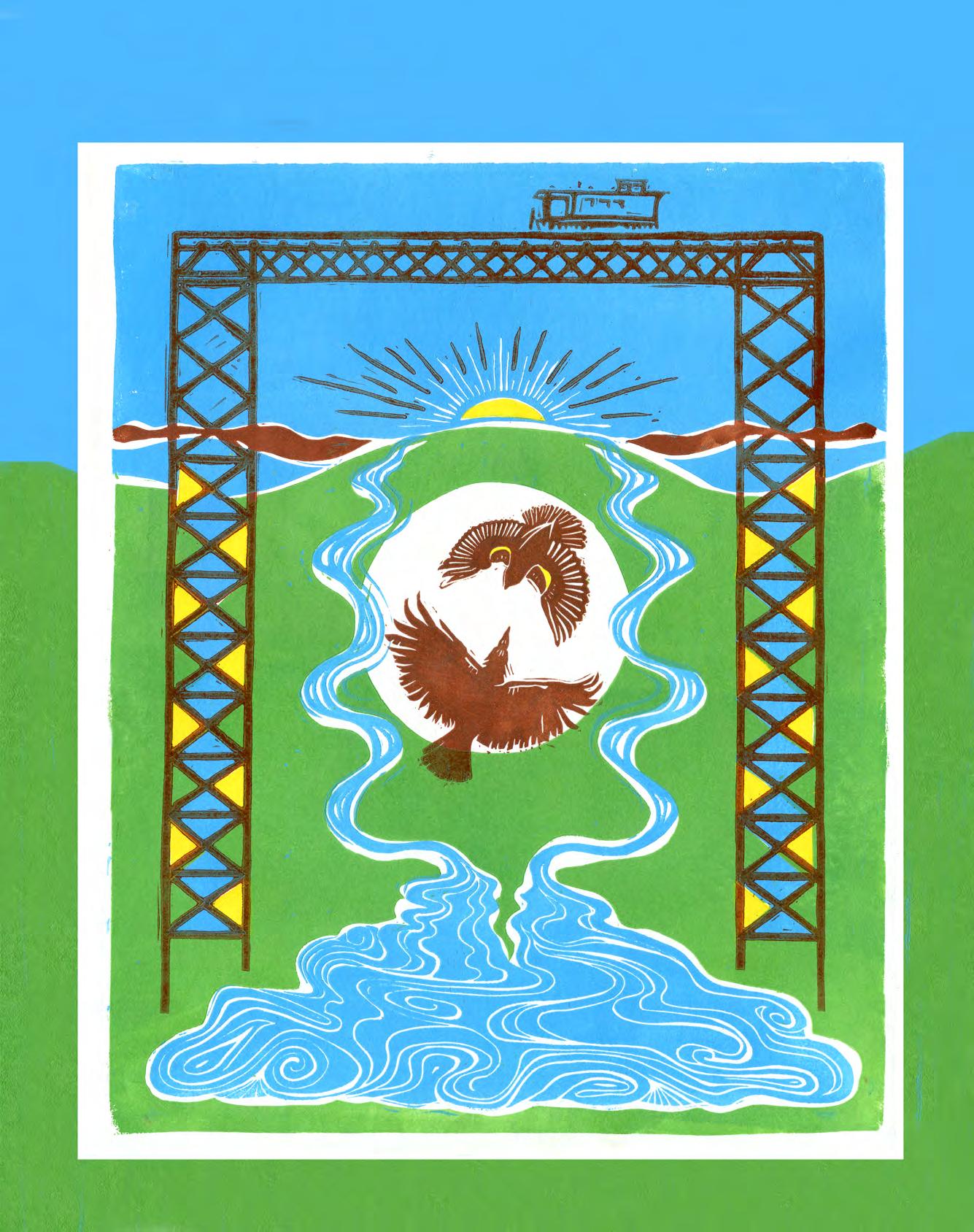
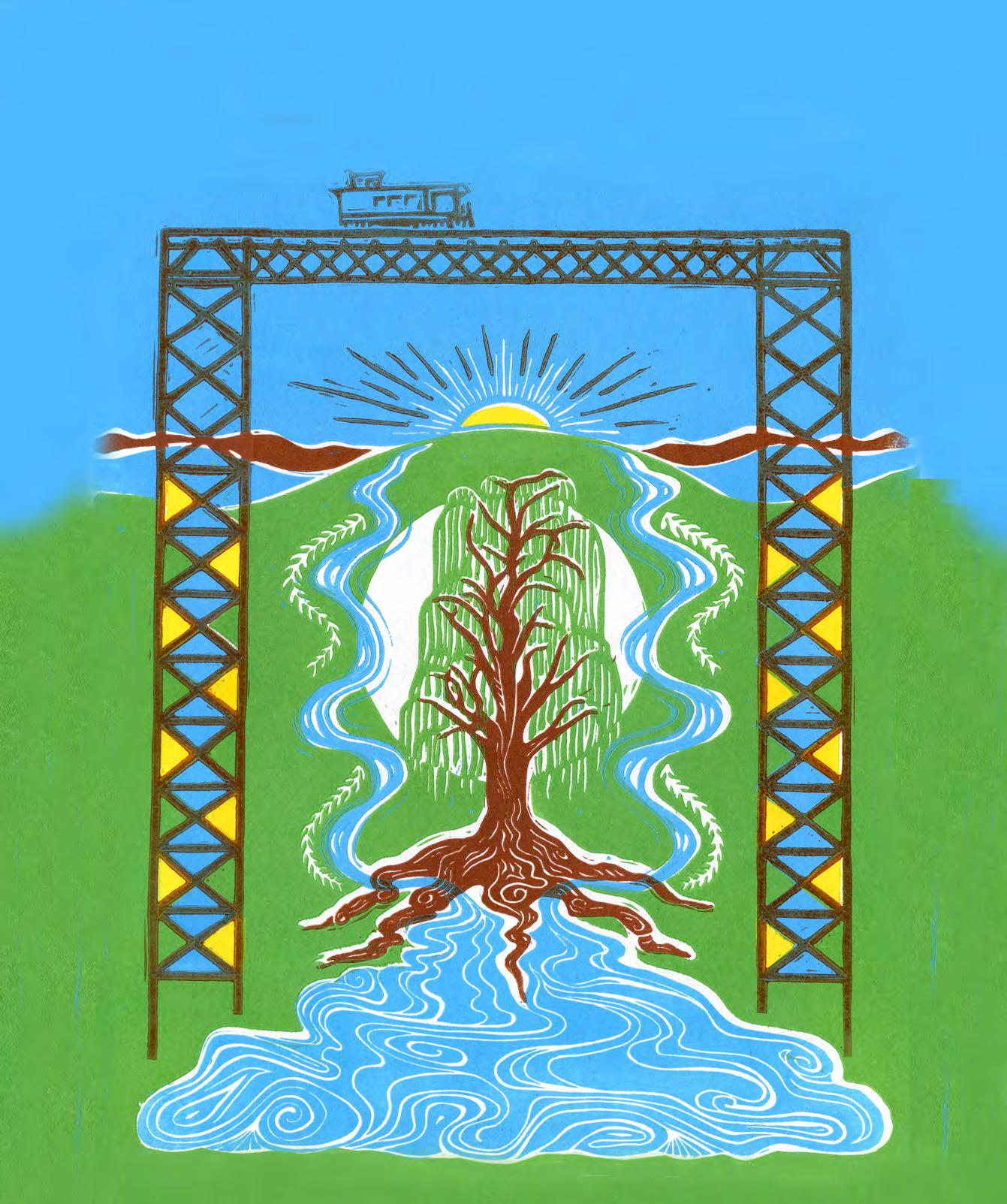
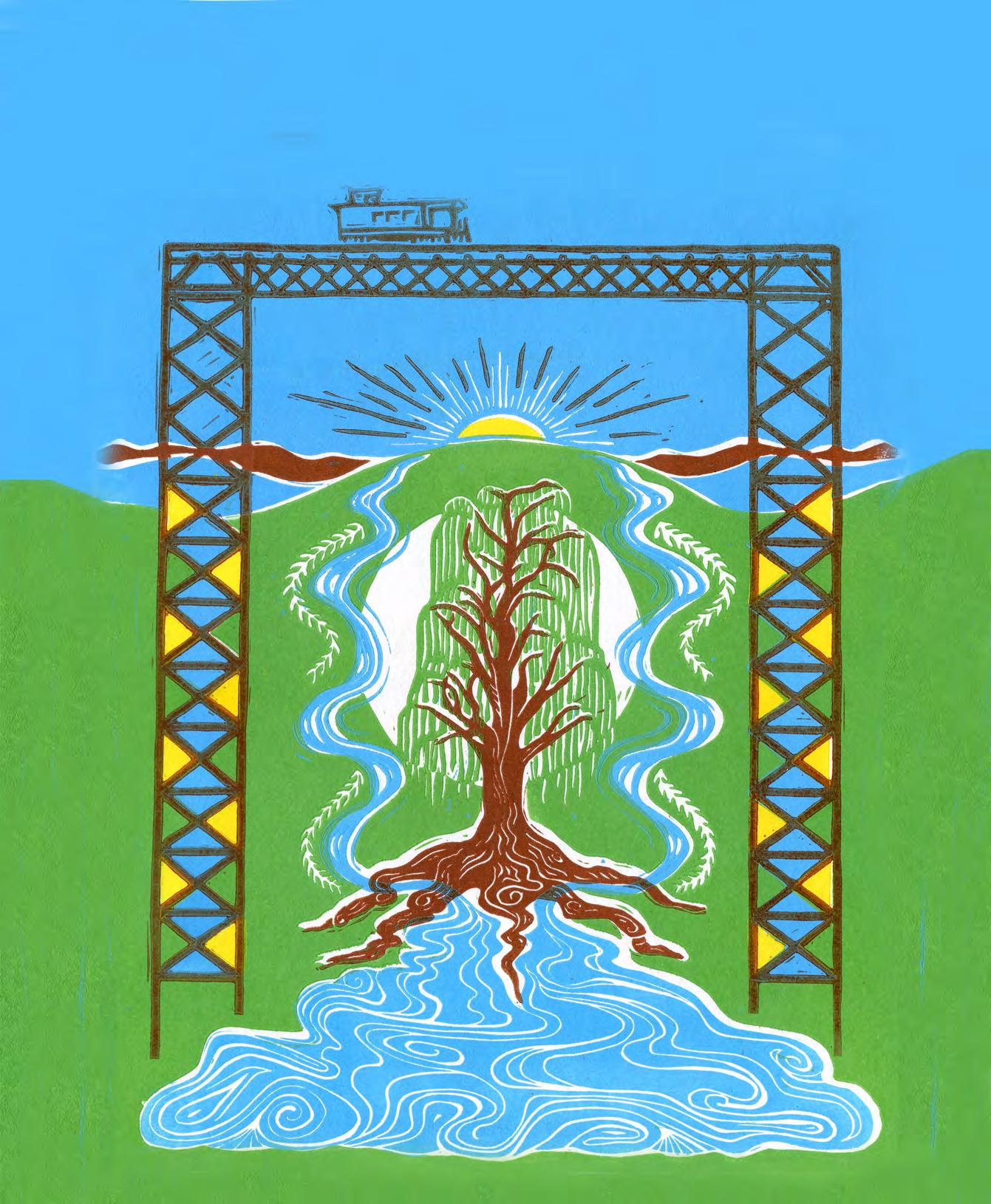
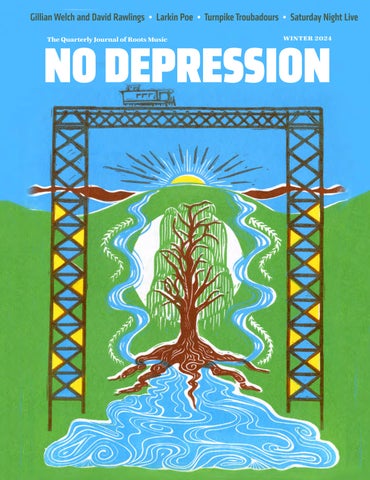
The cover is a hand-carved, handprinted linocut print inspired by Gillian Welch and David Rawlings’ album Woodland. Blackbird, crow, willow, and moon are framed by the wild and rising Cumberland River and an empty trainload of sky. Straightlined, manmade structures can’t contain the wild things. A very limited edition of handmade, original prints of the cover art are available at Lizzy.net, with a portion of proceeds going to hurricane relief in Tennessee and North Carolina.
— Lizzy Ross
NO DEPRESSION TEAM
Hilary Saunders Managing Editor
Stacy Chandler Copy Editor
Meredith Lawrence Web Editor
Sonja Nelson Advertising
FRESHGRASS FOUNDATION TEAM
Chris Wadsworth Publisher and President
Adam Kirr Chief Operating Officer
Matty Jackmauh Development and Community Engagement Assistant
WEB nodepression.com
TWITTER & INSTAGRAM @nodepression FACEBOOK facebook.com/nodepressionmag
GENERAL INQUIRIES info@nodepression.com
ONLINE ADVERTISING advertising@nodepression.com
SUBSCRIPTIONS store.nodepression.com
JOURNAL DESIGN & PRODUCTION
Marcus Amaker
Printed in Nashville, Tennessee, by Lithographics Inc.
No Depression is part of the FreshGrass Foundation. freshgrass.org
ISBN-13: 979899187260790000
©2024, FreshGrass, LLC
BY HILARY SAUNDERS
The Tønder Festival in rural, southwest Denmark has a tradition like none other I’ve experienced at a music festival anywhere in the world. After the last set in the main tent, all the musicians, volunteers, and staffers still around on Saturday night congregate onto the stage for a freefor-all singalong of “Will the Circle Be Unbroken.”
There’s even a special note on the festival schedule and app that expounds: “This song, deeply rooted in American folk and gospel tradition, holds special significance at the Tønder Festival. It symbolizes community, unity, and a shared love of music. As voices blend together, the song becomes a heartfelt expression of gratitude and togetherness, creating an unforgettable atmosphere as we collectively say thank you for another fantastic Tønder Festival.”
I was skeptical to a degree; I’ve been in this industry long enough to be able to sniff out manufactured sentimentality. But the Tønder Festival is special one. It’s one of the oldest and largest folk festivals in Denmark. Even though only about 7,500 people live in the town, nearly 15,000 come in each year for the four-day event.
Over the last 50 years, Tønder’s reputation has spread across North America, the United Kingdom, Scandinavia, and entire European Union. Pete Seeger and Arlo Guthrie have played. John Prine and Emmylou Harris have played. Younger artists like like S.G. Goodman and Jon Muq came last year. And these are just some who live in the United States! Last year, I also discovered bands like the harmony-centric Danish trio Twang, Norwegian folk-metal band Gangar,

and the Scottish bagpiping electronic outfit Peatbog Faeries.
After the Texas-based Western swing band Asleep at the Wheel finished its set in Tent 1 last August, dozens more people ambled on stage to join them. As those three sweet chords of “Will the Circle Be Unbroken” rang out, I felt my chest tighten ever so slightly, a little twitch in the corner of my eye. A couple thousand people started singing, “I was standing by my window … ”
This folk song, an old hymn that has lapsed into the public domain, never fails to hit me right in the feels. And standing side-stage, watching musicians from all over the world sing in unison and in harmony — in a town that’s closer to the German border than the Danish capital — struck me as particularly implausible and especially poignant.
This was my second time at the Tønder Festival through Folk Spot Denmark, an organization that
specializes in cultural export development and international networking. I was one of 40 music industry professionals invited to attend this year, and one of just three Americans. I’m always struck by the connections that are made at these kinds of things — between performers and audience members, among fans and among members of the visiting cohort, and even between people who haven’t met in person.
In fact, Tønder is how I discovered that musician Lizzy Ross drew, carved, and pressed the linocut design that became the festival’s 50th anniversary poster art. Ross told me that her band, Violet Bell, had played the previous year. That connection, as well as her thoughtful artistic vision, made her the perfect choice to create our Winter 2024 cover art.
The Winter 2024 issue covers a wide range of popular culture and current events. It includes features that explore the television shows MTV Unplugged and Saturday Night Live. It tackles social issues like the carceral system through a benefit compilation called Better Than Jail And of course, some of the most beloved roots musicians from around the world, like Gillian Welch and David Rawlings, Janis Ian, Manu Chao, and Turnpike Troubadours are included as well.
I’m grateful, too, to share original essays from the blues rock sisters in Larkin Poe and up-and-coming singer-songwriter Jerron Paxton. The issue closes with Paxton’s musings on education, in music and beyond. It’s a wise way to end another thoughtful issue of No Depression — highlighting music as a way to teach and learn, and to grow individually and communally.
Trailblazer Manu Chao places music, fame, and message in his own context
by Judy Cantor-Navas
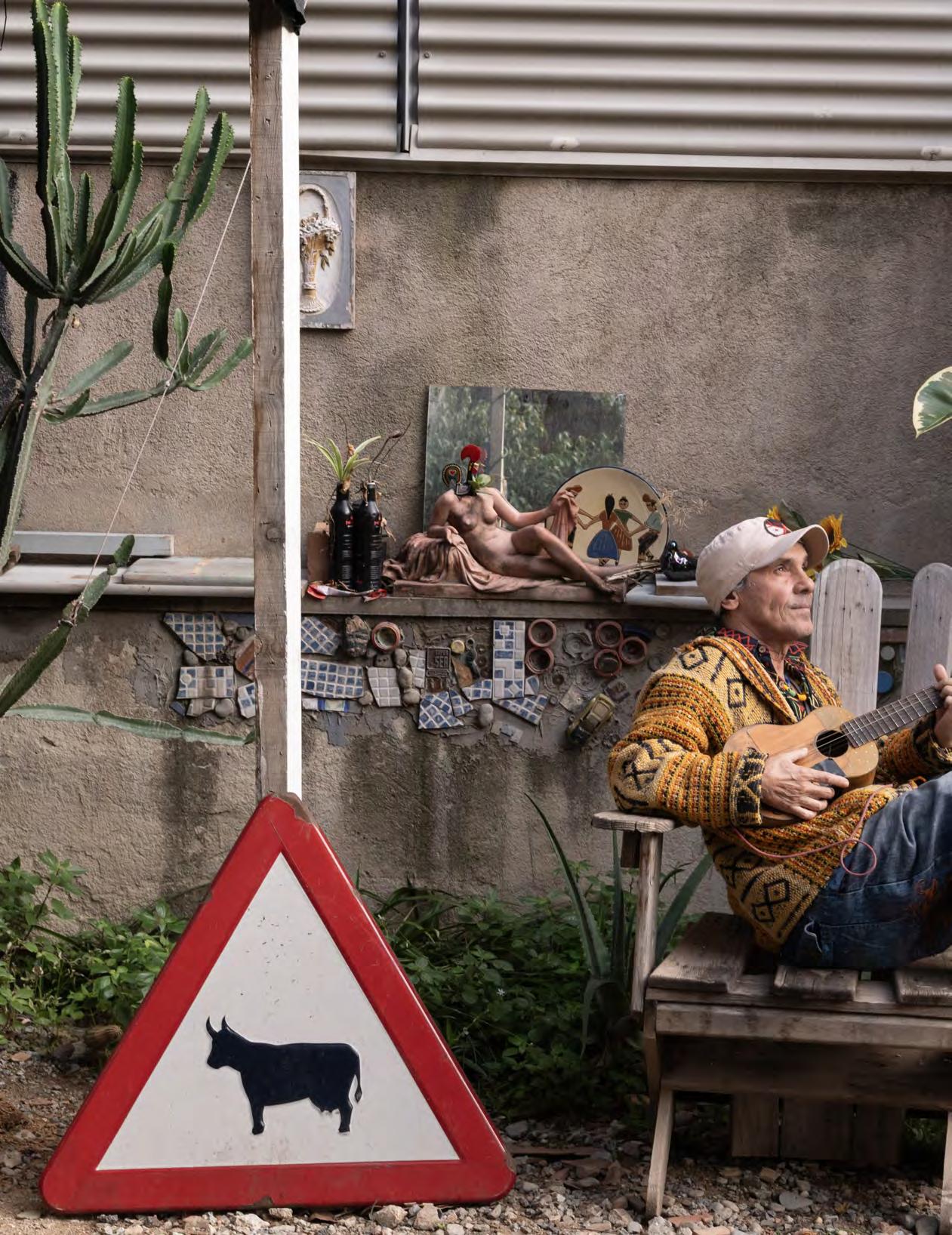
Vitry-sur-seine, a suburb on the fringes of Paris, made the news when hundreds of migrants were evicted from an abandoned factory there and forcibly bused away from the capital just before the 2024 Summer Olympics. Singersongwriter Manu Chao chose the same industrial area to play a concert coinciding with the September release of his album Viva Tu, appearing in a tent during a festival organized by a vital local cultural center called Le Kilowatt. Fewer than 1,000 people made up the capacity crowd, which overflowed to the edge of the stage. Chao sat there on a stool, grinning while playing acoustic guitar and
singing loudly, accompanied by Argentine guitarist Lucky Salvadori and Galician percussionist Miguel Rumbao. The concert was one of a series of appearances in France and Spain this fall that were promoted quietly, but sold out quickly and easily.
Viva Tu is Chao’s first album in 17 years, a 13-track set of polyrhythmic ballads in English, French, Portuguese, and Spanish, the most surprising moment of which is a duet with Willie Nelson titled “Heaven’s Bad Day.” The mosaic soundscape — with echoes of Cuba and Africa as well as flavors of flamenco and reggae — is classic Chao. But at 63, he’s settled into a slower roll with less of his former trademark electronic blips and
spoken samples. He can sing about society’s “collective suicide,” gunshots on the streets, and “fighting against all the pain in the world” in a way that feels like an emotional tourniquet applied to the constant flow of catastrophic news. He’s most effervescent on the title track, which translates as “Long Live You,” a corny and infectious all-ages crowd-pleaser whose meaning he sums up as “Believe in yourself: It only depends on you to be a beautiful person.” Chao has dedicated the record to “my neighbors and all the neighborhoods in the world!”
Viva Tu is not exactly a comeback album. Upon its release, Chao himself, seemingly without irony, remarked that his career is
behind him. He’s just been making songs. Notoriously avoidant to press, Chao has developed a roundabout way of engaging — insistent that reporters are given a transcript of an interview conducted by a member of his team. “Writing songs sometimes takes five minutes,” he says in his latest such dispatch. “Sometimes, it takes a week, eight months, or 10 years. In what we’re releasing now, some songs are over 10 years old. Others were written on the spur of the moment, just the day before yesterday.
“If the same shoe serves me for 15 songs, I keep the same shoe,” Chao adds, elaborating on the metaphor. “Why should I be forced to change? If with my old shoe, I can
express what I need to express, why would I bother inventing a new one? Unless it pleases me to invent a new one. If something new pleases me more than my old shoe, I’ll go for it.”
Chao’s old shoe theory is borne out by the fact that his popularity did not fade away when he didn’t release new music: He currently has more than 11 million monthly listens on Spotify. His decades-old anthems for refugees’ rights, unregulated marijuana use, and peace are as timeless as the issues themselves. Chao has remained connected to fans on his website and via social media, periodically posting new songs and supportive messages for various causes. Mostly, though, he’s seen as a rambling troubadour and activist on the
ground — one who shows up at demonstrations, community festivals, and possibly even at a theater in your town that’s announced via radio bemba, a Cuban expression translating to “word of mouth” that’s also the name of his record label.
Chao’s first two records — 1998’s Clandestino and 2001’s Proxima Estación: Esperanza —made him a Latin rock star, world music phenomenon, and the archetype for the fusion of music dubbed mestizo (which, in the Spanish of another era, means “mixed race”). Even his own family history has international and cross-cultural
lines: “Manu’s parents were from the Basque country, he was born in an immigrant neighborhood in Paris, and he grew up in Barcelona,” says musician and academic Max Wright. “Maybe you could say that Manu Chao was the father of the whole thing.”
In the ’90s, leading up to his first solo release and in the aftermath of its success, Chao could often be spotted riding his bike in Barcelona’s El Raval neighborhood, where immigrants live rough and where a new urban music was emerging that would become known as “the Barcelona sound.”
“ There was a lot of Arabic and African music and reggae combined with flamenco combined with Latin American music,” says Wright, a former member of Ojos de Brujo, one of the most popular groups to come out of that scene. Others included
08001, named for the district’s postal code; Catalan rumba rocker Muchachito Bombo Infierno; and the Argentine-Colombian band Che Sudaka, which took its name from a slur used in Spain for South Americans. Then a teenage beatboxer who played tablas and bongos, Wright would run into Chao at Mariatchi, a bar where musicians gathered that still stands as a landmark from a time before tourists flocked to Barcelona’s downtown en masse.
“Mestizo is a very Spanish way of naming something that’s Latin American,” explains Wright, currently an administrator at the Berklee College of Music in Valencia who also produces small music festivals in the Balearic Islands, where he grew up. “It was a word used to describe the community of Latin Americans in Barcelona, which
at the time really had not seen the light. Diversity in Spain has been a little behind in terms of cosmopolitan inclusiveness. It’s a country that’s been mostly white, except for the Gypsies of course.” He added that the artists who found each other in Barcelona then “were about standing for something, about generating a community and having that community sustain you.”
Even earlier, though, about 10 years before the release of Clandestino, a cohort of British DJs, producers, and indie label owners got together to devise a marketing plan to put the music of international artists marginalized from the usual record store categories into the hands of curious listeners. They came up with the name “world music.”
The record store term carried over to the live music circuit. In the

style of WOMAD (World of Music, Arts & Dance), conceived by Peter Gabriel and first held in England in 1982, programmers of international festivals were looking to discover artists off the beaten paths of mainstream pop and rock.
Clandestino’s fusion of sounds positioned Chao’s music within this arbitrary box of a genre, which encompassed everything from Malian salsa to Gregorian chants. The album entered the charts in France, where it would eventually go to No. 1, as well as in Austria, Belgium, Spain, Switzerland, and other European countries. Chao, who at the time was signed to Virgin Records, was, like his hero Bob Marley, appealing to mainstream international audiences; the record was ultimately went multiplatinum in multiple countries. His musical mix made his albums a fit
for record stores’ “world music” bins. But his biggest audience was the international Latin market, where he was embraced under the Latin alternative banner. Chao was in sync with other Latin American artists combining rock, rap, electronic music, and folklore. Many of the kids who had grown up with Che Guevara posters in their bedrooms embraced his music — both the postmodern songs of protest and the ones with messages of hope and change.
The eponymous single became a hymn for the rights of refugees as well as for the freedom to smoke marijuana. But as a whole, Clandestino represented Chao’s own well-timed call to action. The same year that the United Nations held a two-day, high-level dialogue to address globalization, which Secretary-General Kofi Annan
pronounced “the dominant feature of the times,” Chao sang declaratively, “Suenan los tambores de la rebelión” (“The drums of rebellion are sounding”), in the song “Lagrímas de Oro” (“Tears of Gold.”)
“[The album’s] idea seems to be to provide a voice of the streets, the immigrants and the dispossessed in the brave new world of multinationalism, and it is startingly successful,” Elijah Wald wrote about Clandestino in a review in the Boston Globe, calling the record “a cohesive and fascinating intercultural tapestry.”
Chao’s follow-up album, Próxima Estación: Esperanza (Next Stop: Hope), featured more of his creative patchwork of rhythms and ambient
samples. While still concerned with social issues, the record had a sunnier, almost tropical vibe, exemplified by the song “Me Gustás Tú” (“I Like You”) that permeated the soundtrack of the summer of 2001 in indie circles and beyond. But as his commitments increased together with his popularity, Chao backed away from stadium shows, mega festivals, and press junkets. He never sought that stardom.
“ The question we all ask ourselves is, ‘What is the solution to so much shit,’” he told a writer for Rolling Stone Argentina in 2000, when he was in the midst of a sort of vision quest in South America that combined concerts in clubs and gymnasiums, at least one visit to a prison, casual encounters with local musicians, and a lot of late nights in bars. “Unfortunately, I don’t have the answer.”
But just because Chao pulled
away from the music industry machine nearly 20 years ago doesn’t mean he disappeared. Instead, he’s tried to recuse himself from the fame that came with his first two records.
Chao last came back into the spotlight in 2007 with La Radiolina , an album that debuted at No. 1 on Billboard ’s Latin Albums chart. Then he fell off the mainstream radar again.
Since then, there have been tours off the beaten path and ticketaccessible concerts over the years in small venues or bars in Barcelona, Paris, and Oslo. He’s jammed with kids at a music school in Nepal, played standing in a forest in Argentina in protest of another destructive highway project, and in recent years sent frequent musical dispatches on social media from “the planet of good vibes.” He’s kept on traveling,
in Latin America, Europe, and in Asia, meeting and playing with other musicians. And always, Chao has been “hunting for moments,” as he describes it, compiling experiences that later show up in his songs.
Viva Tu , which came out in September via Because Music, arrives at a time when “world music” has been revealed and reviled as a pseudo genre. Even people who once championed it have put it to rest or are trying to think of a better way to classify music that falls outside of the predominately white and Western media categories. The word mestizo , which used to feel like a unifying concept, is now more broadly recognized as a racist conception.
As the world has continued to change, Chao has had his own revelations about what makes sense.
“Manu’s parents were from the Basque country, he was born in an immigrant neighborhood in Paris, and he grew up in Barcelona. Maybe you could say that Manu Chao was the father of the whole thing.”
Max Wright
musician and administrator at Berklee College of Music, Valencia
His message, as expressed in the song “Tantas Tierras,” about “fighting with all the pain in the world,” feels more urgent than ever. And he’s deepened his understanding about the lines between music and business, between surviving as an artist and courting fame. Chao, like other musicians, still has to make a living, and Viva Tu should yield some financial success. But the album is also an acknowledgment to himself and his fans that resisting the music industry machine doesn’t have to mean totally going off the grid. With Viva Tu, he seems to have settled somewhere in the middle.
“I have no fear in the sense that I assume my career is behind me,” he says. “I’ve had a wonderful musical career considering I don’t sing that well and I don’t play guitar that well; I’m doing very well. So, there’s no fear of whether it works
or not. Now, I need to surprise myself and feel personal interest in what I do to keep making music.”
He continues, “I believe we must go towards simple things. I also think that to reach simplicity, you first have to go through complexity. What makes me happy is achieving simple projects, writing simple songs.”
Chao’s current trio, he points out, can travel together in a car, eliminating a lot of the logistics necessary for a full band. “We continue to make a lot of noise in the venues this way,” he says. “And that’s a lesson that seems important to me and suits me well: You don’t need several semi-trucks or tons of instruments. That doesn’t speak to me anymore, even less so when the group that uses these huge infrastructures tells you that we need to change the world. … It’s not enough to say it; you have to start doing it.” ■
by Sean Moores
illian Welch admits to living inside her head sometimes. In 2020, that might have been the most desirable address in Nashville.
Woodland Sound Studios, the recording facility owned by Welch and longtime partner David Rawlings, was ravaged by a tornado in March of that year. Just 12 days later, the global COVID-19 pandemic shut down Music City. Touring stopped. Welch celebrated consecutive birthdays at home for the first time in more than 20 years.
One day, as she walked near the Cumberland River, Welch was called back into the world by a train crossing the trestle. Some of its cars had no sides. She was transfixed by the optical illusion; instead of freight, the train appeared to be carrying the sky.
“It really stopped me dead in my tracks, and I sat down on the
bench right there, and I didn’t get up until I basically had the first verse and the refrain line,” says Welch. “And then I walked home, and I told Dave, and he said, ‘Oh, that’s a good title.’”
“Empty Trainload of Sky” set the duo to work in earnest on their new album. Woodland, a 10-track testament to loss, resilience, and rebirth, marks the first collection of original material from Welch and Rawlings since 2017.
“One of the things that is in the songs is also this feeling of acceptance of things being indefinite, both indefinite and impermanent, that you may never get back to how it was,” says Rawlings. “You may just be moving on into a different world. And is that good? Is it bad? Or is it simply how it is?”
The songs on Woodland tell of unbreakable things being broken. Unthinkable things come to pass. Inevitability comes to call.
A mighty river — literally, and as a stand-in for this American union — dries up. But first, back to that train.
‘True-Life Mythology’
Trains have a rich history in folk songs such as “Freight Train,” “Rock Island Line,” and “The Wreck of the Old 97.” Trains symbolized escape. They carried things out of town, like freight or even one’s girl. They carried things to town, like mail or hobos. Welch and Rawlings romanticized Southern railroads on “Down Along the Dixie Line,” from 2011’s The Harrow & the Harvest. Welch also says that train whistles connect her with history and “a rich pool of experience and storytelling and true-life mythology. Just all kinds of stuff — folk songs and ghost stories and murder ballads and the devil and tales of redemption and salvation.
I see that everywhere I look.”
When this train crossed paths with Welch, who writes songs to make sense of the world and to explain herself, it was more than a train. It was laden with symbolism. It carried the tornado, its aftermath, the pandemic, and the surrealism that took hold in shut-down cities.
“It kind of shook me, this little vision,” Welch says. “And it was only in hindsight, looking at it in the context of the whole record … you can’t live in the South without knowing [what] people say about tornadoes. They say, ‘Oh, sky turned green, sounded like a freight train.’ ”
Since arriving in Nashville from Boston’s Berklee College of Music, where they met in the early 1990s, Welch, a Californian, and Rawlings, who grew up in Rhode Island, have quietly claimed a special corner of Americana.
Two albums on Almo Sounds, 1996’s Revival and 1998’s Hell Among the Yearlings, established them as a duo with sweet harmonies, intimate and introspective songwriting, and symbiotic guitar interplay. Their influences are ecumenical: Early country, bluegrass, Appalachian music, and even rock and roll are woven into their catalog. They’re also known for independence and self-sufficiency. They bought back the masters of their first two albums, which they reissued to launch their Acony Records imprint. They purchased Woodland Sound Studios in 2001. Ironically, it was on the market because of tornado damage sustained in 1998. They own a record-cutting lathe. Last year, Rawlings became a partner in a vinyl production facility, Paramount Pressing & Plating, in Denver. They
essentially control their music from the first inspiration to the finished product.
Their third album, 2001’s Time (The Revelator), received wide acclaim and set them on the path to becoming roots music royalty. That’s not just praise carelessly thrown around by writers and adoring fans. Fellow travelers in the folk tradition feel that way about them, too.
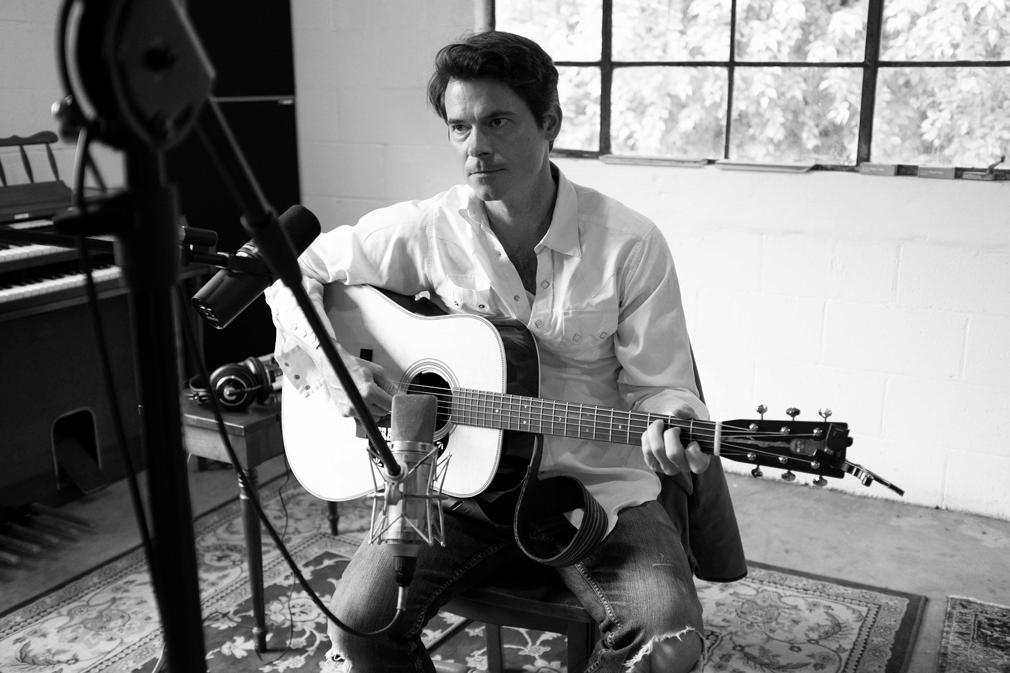
“ They’re like seeing Maybelle Carter and Jimmie Rodgers again,” says Old Crow Medicine Show’s Ketch Secor. Secor, who played fiddle on Woodland’s “The Day the Mississippi Died,” adds, “There’s like a portal to the past and the headwaters of our kind of music that they provide. I feel transported when I’m around ’em and they’re being musical, when I hear their songs. … I think it has something to do with their ability to make the past feel
present; sort of a shape-shifting type of magic trick.”
Much of that magic has been performed at Woodland.
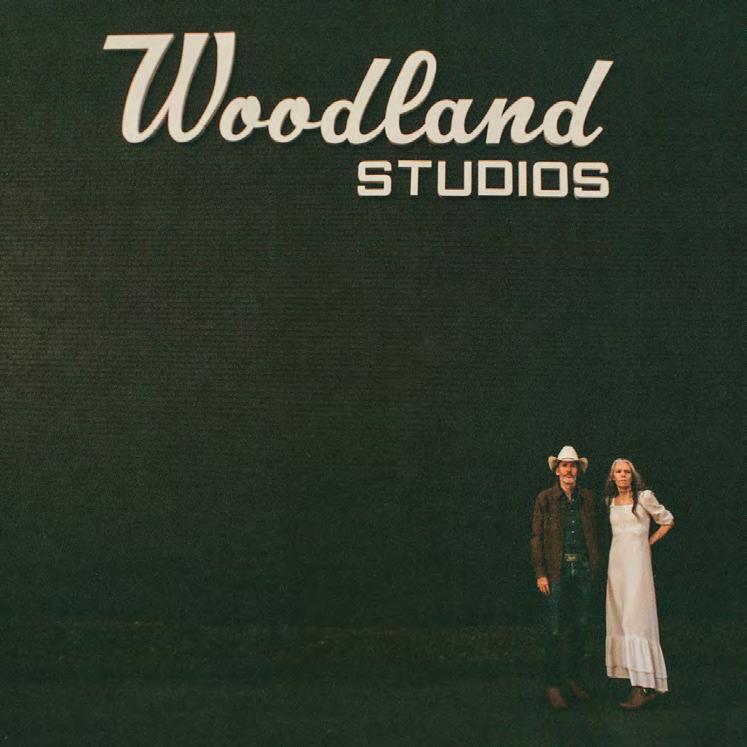
Woodland Sound Studios, built as the Woodland Theater in the mid1920s, opened in 1968. Dozens of notable records, including the Nitty Gritty Dirt Band’s landmark Will the Circle Be Unbroken, were made there. Revival was partly recorded there. But Welch and Rawlings couldn’t know what a huge role, as a studio and a symbol, Woodland would play in their lives.
The studio, and their artistic history, could have been destroyed that one terrifying night in March 2020 when a large tornado tore through Middle Tennessee. It tossed parked aircrafts like toys and leveled
homes before it crossed the Cumberland and barreled into East Nashville’s Five Points neighborhood, where Woodland is located.
Power lines were down. So was the vacant store across the street. Woodland stood, but its roof was peeled back like the top of a sardine tin onto the street.
Rawlings, Welch, and a friend scrambled to find dry spots where they could move their instruments and master tapes. Rain poured through a gaping hole where the roof had been and into the “A” room, where they record. With only iPhones and a flashlight to help them see, they were locked in a struggle against nature reminiscent of one of their early songs.
They saved the masters, but the damage to the building was substantial. Despite spending the
past four years and hundreds of hours overseeing and making repairs, which are still not complete, Rawlings was able to find levity in the question of how rebuilding Woodland, the studio, shaped Woodland, the album.
“It would be quicker to answer how it didn’t,” he says with a chuckle. “Because it shaped it in all the important ways that I think art can be shaped. Because there was an emotional overlay to the work and the experience both, from the recovery to just the attempted repairs. … Woodland, or those experiences in and of themselves, became the screen that filtered the songs that we ended up using. That’s the screen that caught them.”
One of those songs, “What We Had,” is framed by a relationship that also stands in for things lost in the early 2020s. Welch lays out a
romantic image that could allude to the touring life COVID took away.
“Seems like ancient history / You were sleeping, and I was driving,” she sings. “While you were lying next to me / I’d scan the blue horizon.”
Sonically, the song resembles Neil Young’s “Lotta Love” (from 1978’s Comes a Time, partly recorded at Woodland). Rawlings pushes his voice into a higher register, seemingly another nod to Young, singing, “What we had is broken now / though we thought we could never lose it.”
In a universal sense, the chorus, sung by both Welch and Rawlings and backed by swelling strings, expresses a longing for life before the storm and sickness.
I used to dream of something unseen It was something that
I thought I wanted so bad But now I only want What we had, what we had, what we had
The pandemic lockdowns left Welch and Rawlings with more free time than they’d had in years. The concert halls were dark. Their studio was unusable. But they remained productive. They turned a collection of songs recorded in their living room — traditional material and covers of artists such as Elizabeth Cotten, John Prine, and Bob Dylan — into the LP All the Good Times (Are Past & Gone). It won the 2021 Grammy Award for Best Folk Album. An archival box set, Boots #2: The Lost Songs, also arrived in 2020. A bespoke reel-to-reel tape edition of The Harrow & the Harvest came out last year.
And, of course, Welch had that
chance meeting with a train.
“It’s always kind of the same for us,” she says of the process of creating a new album. “It’s slow, and it’s drawn out, and it’s just so many false starts. And then, when we finally get on it, eventually there’s one song that when we start it, or when I’ve come home with the idea and then we address it together, we know that we’re actually working on the record.”
Once “Empty Trainload of Sky” clarified the situation, they quickly gathered steam writing new music. At one point, they were making a double album. That course changed in one evening.
“Dave, one night, came back from the studio and he had an idea,” Welch says. “He had a notion of how to boil down these over 20 songs into one album. He came home with a test sequence, and that is the sequence [that ended up on Woodland]. His
first swing at it is what you’ve heard.”
The album title, which was originally “Empty Trainload of Sky,” soon followed. “I was like, ‘That’s not really right. That doesn’t contain everything that the title should. Or there’s something deeper here,’” Rawlings recalls. “It wasn’t until we had a number of conversations and we’re thinking about it that the overlay of the studio really hit us as the defining feature.”
Another defining feature is the shared billing on Woodland, released digitally in August and on physical formats this fall. They were both credited on All the Good Times, but this is the first set of originals to carry both of their names. Together, they have made five Gillian Welch albums, two Dave Rawlings Machine albums, and one billed solely to Rawlings. They wrote all eight together. As a rule, the lead vocalist determined the name on the cover. Their early
albums are credited to Welch because Nashville favored female singersongwriters in the mid-’90s.
Says Rawlings, “If there had been a bunch of guy-and-girl folk duets at that time, they would have just slapped both of our names on it and we wouldn’t be having any of these conversations.”
Any discussion of the duo’s early years is likely to include esteemed singer-songwriter Guy Clark, who first took them out as an opening act in 1994, two years before Revival, and taught them about life on the road.
His influence marks Woodland in a special way as well. Welch woke up one morning in 2016 and saw on her phone that #GuyClark was trending. She knew what it meant. And she started writing a song.
“Hashtag” is a jarring title on a
Welch-Rawlings record. Their music often evokes America long before television, let alone X (formerly Twitter). In context, though, it encapsulates the need to create art, regardless of mainstream recognition.
“You laughed and said the news would be bad / If I ever saw your name with a hashtag,” Rawlings sings. “Mm, singers like you and I / Are only news when we die.”
“I mean, I just think that’s the first thing that we learned from Guy, that was so clear, was that he was doing it because of his love of the art,” Rawlings says. “And as much fun as we had … [when] we got around to talking about the music or what should be in a song … there was nothing more serious in the world.”
Another death, or a death rattle, inspired one of Woodland’s centerpieces, “The Day the Mississippi Died.” In 2022, a drought
dropped water levels of the Mississippi River to record lows near Memphis, Tennessee. A backup of 2,000 barges, unable to float, disrupted transportation of goods such as grain and steel. Salt water from the Gulf of Mexico also moved into the Mississippi and contaminated drinking water. The US Army Corps of Engineers, which dredged to maintain navigation, declared an end to the severe drought this year, but the situation remains fragile.
The backup, and the thought of the Mississippi — which has played such a significant role in American culture and commerce — being so profoundly broken left Welch feeling fragile, too. Like that train crossing the Cumberland, the image of the Mississippi shook Welch. Soon other feelings of loss and brokenness attached themselves to it. She started
two songs — one personal, the other a storyteller’s narrative. Both felt heavy-handed.
“And Dave, as the crackpot genius that he is, one day said, ‘Maybe they’re both the same song,’” Welch says.
They paired the chorus from the storyteller version with personal narrative. Finally, it clicked.
“We’re so minimal in our way, so we don’t have many tricks at our disposal,” Welch says. “The song has to be about something on the surface, but then has to have this dimensionality to it.”
Allegorical and apocalyptic, “The Day the Mississippi Died” digs into the changing climate behind such catastrophic drought as well as the state of American disunion. It starts with the micro, the narrator’s irritation with a neighbor. Then comes the macro, the drying up of the grand waterway that literally and
figuratively connects the North and South. The cracks are not only in the dry riverbed. There are fissures in the republic itself. “I’m just so disappointed, in me and you,” they sing. “We can’t even argue, so what else can we do?”
The chorus is a call to pour one out for a once mighty river and a polarized nation that has strayed from civility:
So fill ’em up once again, boys
Fill ’em up and over the brim, boys
There’s whiskey, but the water’s done run dry
So we’re drinking to the end
Of a long, long friend
And the day the mighty Mississippi died
Secor’s fiddle lends an old-timey feeling and contributes to the
“It’s always kind of the same for us. It’s slow, and it’s drawn out, and it’s just so many false starts. And then, when we finally get on it, eventually there’s one song that when we start it, or when I’ve come home with the idea and then we address it together, we know that we’re actually working on the record.”
Gillian Welch
past/present dynamic he cited in Welch and Rawlings’ music. But, except for their very earliest work, Welch says, there has been no intentional effort to write songs that evoke rural styles of the 1920s and ’30s. The perception of their songs existing in the past and the present simultaneously, she says, might arise because they are interested in writing about “the human condition” and the spectrum of shared experience. That timelessness isn’t as intentional as one might think.
Says Welch, “I am trying to have them be in the always, not in the past.”
This fall, Welch and Rawlings were focused on the present. They began touring again. Paramount pressed Woodland on vinyl. Normalcy
mostly felt restored.
Woodland’s closer, “Howdy Howdy,” is a benediction easily heard as Welch and Rawlings paying tribute to each other. While some of the album’s tracks are denser than their typical work, featuring, at times, bass, drums, pedal steel, a full string section, and even French horn, this song, with the sparseness of two voices, banjo, and guitar, recalls their early recordings.
“We’ve been together since I don’t know when,” Rawlings sings, a call that elicits a response of “And the best part’s where one starts and the other ends,” from Welch. They have traveled the highways and byways. They have weathered many storms, including the one that threatened their mortal and artistic lives. And just like their beloved Woodland, they’re still standing.
You and me are always gonna be howdy howdy You and me always walk that lonesome valley
“We have gotten each other through all of it. … The tornado and the pandemic and the complete absence of our normal life,” Welch says. “And what was left was both of us with our guitars sitting in the living room, playing songs. It was very obvious that was the only reason we were making it through. That’s why there was no way we could have said this was a Gillian Welch record or this is a David Rawlings record. That was just the height of absurdity. The record only exists because of the two of us and the music we make, so of course we had to. It had to be Gillian Welch and David Rawlings.” ■

‘Better Than Jail’ project’s prison songs support criminal justice reform efforts
by Laura Scholz
Johnny cash’s “Folsom Prison Blues.” Merle Haggard’s “Mama Tried.” Sam Cooke’s “Chain Gang.” Songs like these are prime examples of the long, rich history of roots music chronicling the lives and experiences of incarcerated people.
In Better Than Jail, a benefit album released in October, top Americana and roots artists including Bonnie Raitt, Cedric Burnside, and The War and Treaty contribute covers of some of these iconic tracks, alongside one original by Jason Isbell and Amanda Shires, to raise awareness and support for criminal justice reform.
The record is the brainchild of producer Brian Hunt, president of
Oscar- and Emmy-winning studio Believe Entertainment Group in New York and creator of the PBS music docuseries American Anthems.
“ There’s a really long history of blues singers and country and folk artists like Johnny Cash, Merle Haggard, and Bob Dylan who’ve humanized incarceration and drawn attention to it,” says Hunt of the benefit album’s genesis.
There are approximately 2 million people currently incarcerated in the United States — the highest rate of any country in the world, according to the nonprofit, nonpartisan Prison Policy Initiative. And mass incarceration disproportionately
impacts people of color, women, and low-income communities.
“ There are so many problems with the criminal justice system: It’s predatory, abusive, hemorrhaging money, and failing, and yet, it’s kind of a hard, amorphous cause to draw attention to,” says Hunt of why he decided to champion this cause.
Proceeds from Better Than Jail will benefit two nonprofits — Nashville-based Free Hearts and national organization Equal Justice USA — both of which advocate for criminal justice reforms like eliminating cash bail, communitybased incarcerated alternatives, restorative justice, and housing and education opportunities for people
reentering society.
With Better Than Jail, some of the most popular roots musicians today continue the time-honored tradition of using music to share stories, raise awareness, and make changes to the prison-industrial complex in America.
From traditional prison work tunes to outlaw country classics, songs about the injustice of incarceration have long been a part of the roots music canon.
To bring Better Than Jail’s concept to life, Hunt tapped his friend Kenny Greenberg, a Grammy-winning producer and
guitarist who’s worked with artists like Willie Nelson and Etta James.
“I’m kind of a blues nerd,” says Greenberg. “And there are so many old songs about prison and chain gangs that I was excited, from a musical standpoint, about what I could bring to this project as a producer and guitar player.”
When Hunt approached him about the concept, Greenberg was working on an album with legendary roots artist Bonnie Raitt and asked her if she’d be interested in recording Leroy Carter’s “Prison Bound Blues” for the project.
“ This was during the summer of 2020, and everyone was home, so we cut the track in Nashville and sent it to her, then she put her guitar
and vocals on it,” recalls Greenberg of the bluesy rendition of the 1920s classic.
He and Hunt started reaching out to other musicians, most of whom signed on immediately.
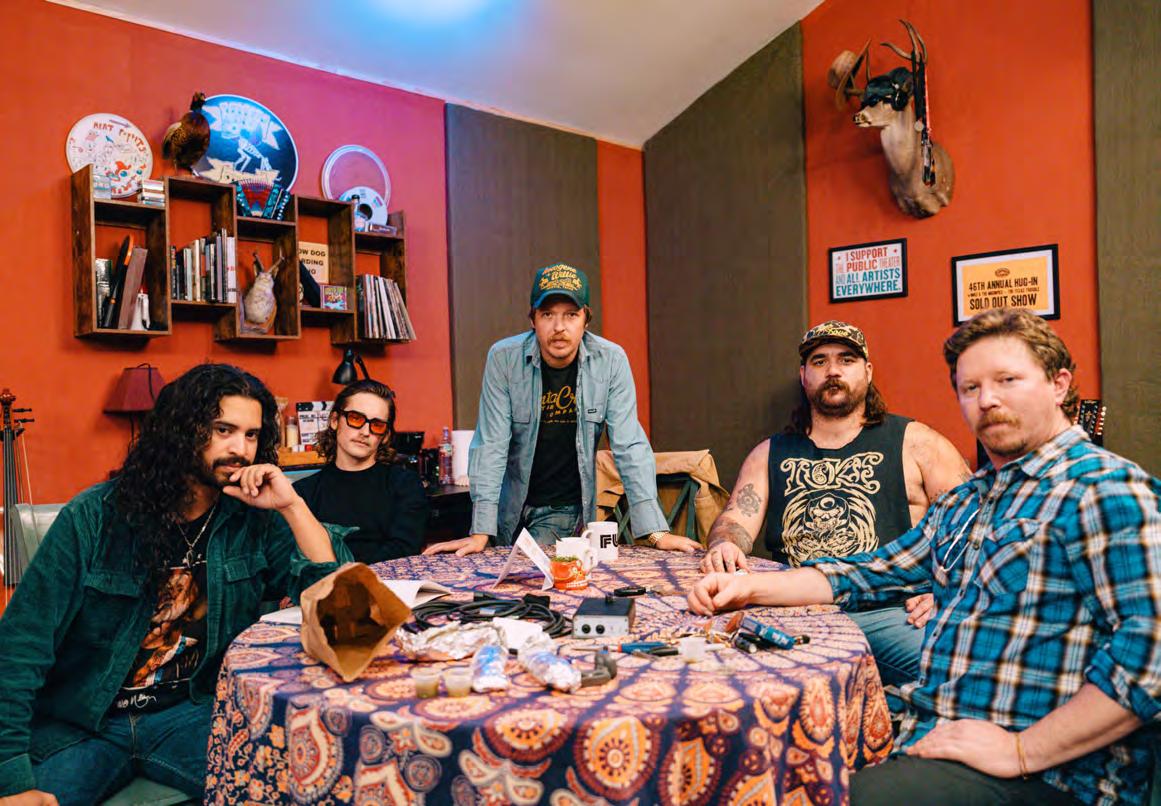
One of those artists was Mike Harmeier, frontman of neotraditional country and Americana band Silverada (formerly Mike and The Moonpies).
“ We wanted to take part in this album because it was a way for us to help speak for people who don’t have a voice on a subject that doesn’t always get a lot of attention,” says Harmeier.
“Every day, folks who can’t afford the cash bail stay locked up in pretrial detention before they’re convicted of
a crime — these are often for misdemeanor offenses, like marijuana possession here in Texas,” he continues. “I read a statistic that 3 out of every 4 Texans in county jails are just sitting in there waiting out the resolution of their cases.”
On Better Than Jail, Silverada brings honky-tonk swagger to Merle Haggard’s version of “I Made the Prison Band.” (Haggard famously played in a prison band while an inmate at San Quentin State Prison and was in the audience for Johnny Cash’s first-ever concert there in 1969).
Ha rmeier had never heard the song until Greenberg and Hunt suggested it. Still, he says, “Everyone knows [Haggard] spent his young life tangled up in the arms of the law before turning his
life around to become one of the greatest legends in country music, and we wanted to be part of his story on this album. …This project is a way for us to shed light on injustices in a modern jail system by putting our modern spin on classic songs about a system that needs fixing.”
Hunt says the album’s 12 songs “range in style, but all hang together in a really neat way, both sonically and thematically.” Margo Price offers a psychedelic-rock rendition of “The Hurricane,” Lukas Nelson brings a sparse earnestness to “I Shall Be Released,” and Old Crow Medicine Show powers through a rollicking, high-energy version of “In the Jailhouse Now.”
Tanya Trotter and Michael Trotter Jr. of The War and Treaty
bring their distinctive gospel-soul sound to the album’s opening track, “County Jail Blues,” originally recorded by Chicago’s Major “Big Maceo” Merriweather in 1941. Says Greenberg, “Tanya and Michael have this cool, soulful way of singing this song, and it’s just another example of how all of the artists brought their unique style to every track on the album.”
Inside American prisons, music has long been used as a way for incarcerated people to find connection, hope, and a creative outlet for their traumatic experiences — including in-prison concerts headlined by artists like B.B. King and Johnny Cash and
formal music therapy programs.
For Atlanta’s Clarence Harrison, who spent nearly 18 years in prison on a wrongful conviction for rape, kidnapping, and robbery before being exonerated by DNA evidence in 2004, music became a way to share his experiences with the deeply broken system.
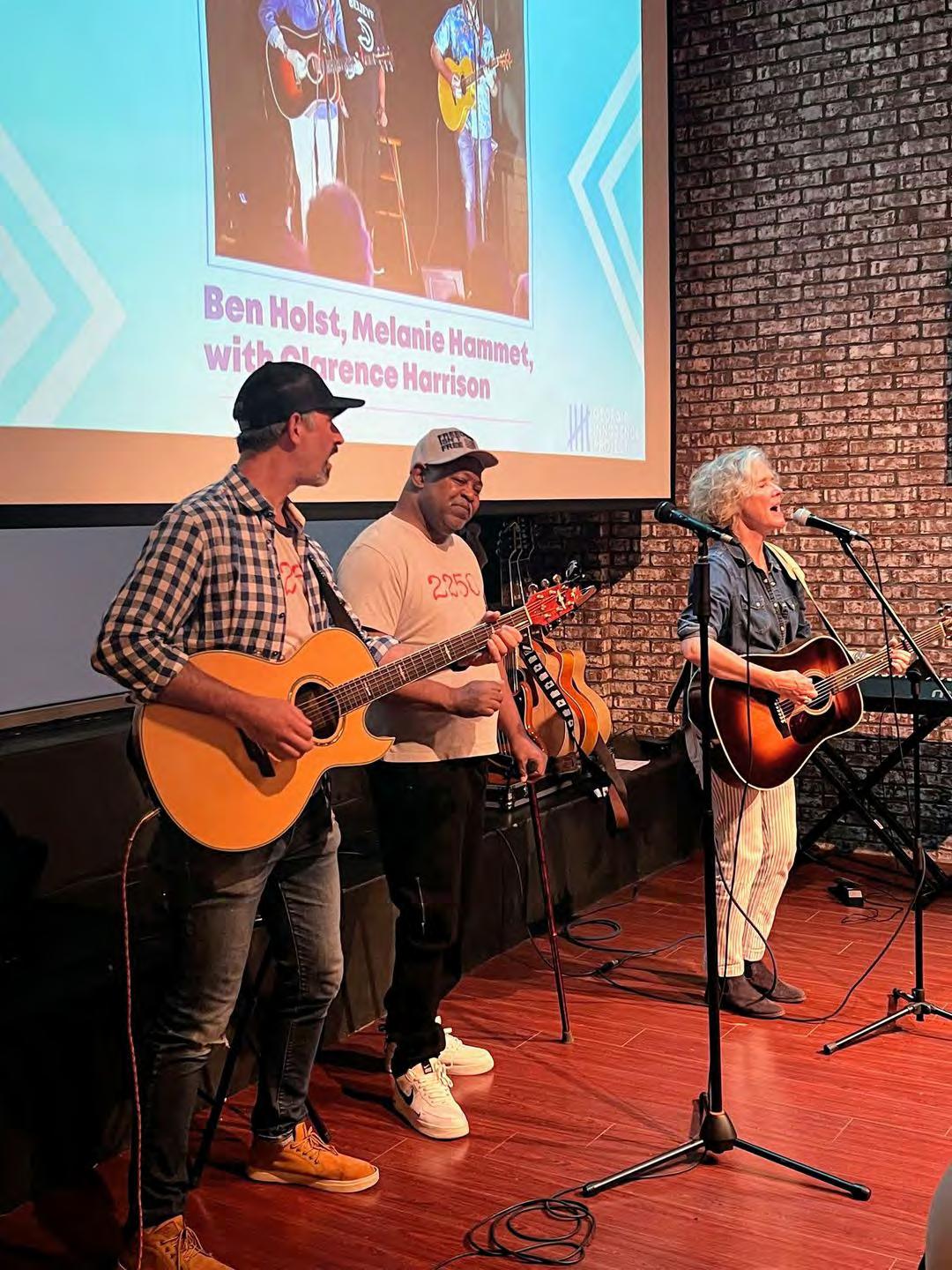
After his release, Harrison worked with two local musicians — Ben Holst and Melanie Hammet — to tell the story of his wrongful incarceration via his 2013 album, Life 20/20. Like Better Than Jail, the trio’s album explores themes like injustice, loneliness, sadness, and anger.
Ha rrison says putting his life to music with blues-tinged folk songs like “Big Black Truck,” about the vehicle he bought with his $1 million court settlement, helped
him heal and process his trauma.
“It was a way for me to tell my story to people and make them aware of wrongful convictions in Georgia and all the harm it causes people, during and after prison.”
To date, Life 20/20 has raised $100,000 for the Georgia Innocence Project, a social justice nonprofit that works to exonerate wrongfully convicted people like Harrison. He was the organization’s first-ever case.
Better Than Jail’s proceeds likewise will benefit nonprofits working to repair the justice system and the people affected by it. Initially founded to end the death penalty in all 50 states, Equal Justice USA works nationally to “transform the justice system from one that harms to one that heals,”
says Patrick Egan, chief of strategic communications. The nonprofit’s programming centers on restorative justice, breaking cycles of trauma, advancing racial equity, and building safe communities.
“My hope is that this project will shed a light on this work in cities and small communities around the country,” says Egan.
On a more local front, Free Hearts is a Tennessee-based grassroots organization that provides education, advocacy, and support to families impacted by incarceration. Dawn Harrington, a Nashville native and the executive director of Free Hearts, was a successful music industry professional before her own nearly year-long incarceration on Rikers Island in New York City in 2008.
While serving her sentence for carrying a firearm without a New York state permit (the gun was legally registered in Tennessee), she says she was initially angry because she felt like she didn’t deserve to be incarcerated and it was a “huge inconvenience” for her career.
“But then I really started noticing all of the injustices, all of the people who were in there because they couldn’t afford to pay bail or were trying to parent from 15-minute phone calls back home to their children, and that was my catalyst to start Free Hearts.”
When she was released, Harrington moved back home to Nashville, eventually launching Free Hearts — a nonprofit led entirely by formerly incarcerated women like herself — in 2016. In addition to transitional services like housing, counseling, job training, and education for those reentering
society, Free Hearts is committed to “changing all the laws that hold us back,” Harrington says.
Together with other communitybased organizations in Tennessee, Free Hearts helped pass laws to allow for community-based alternatives to incarceration for caregivers, end shackling of incarcerated people during childbirth, and restore voting rights for formerly incarcerated people throughout the state. Combined, the organization’s efforts have saved 2,400 years’ worth of incarceration time for people in Tennessee.
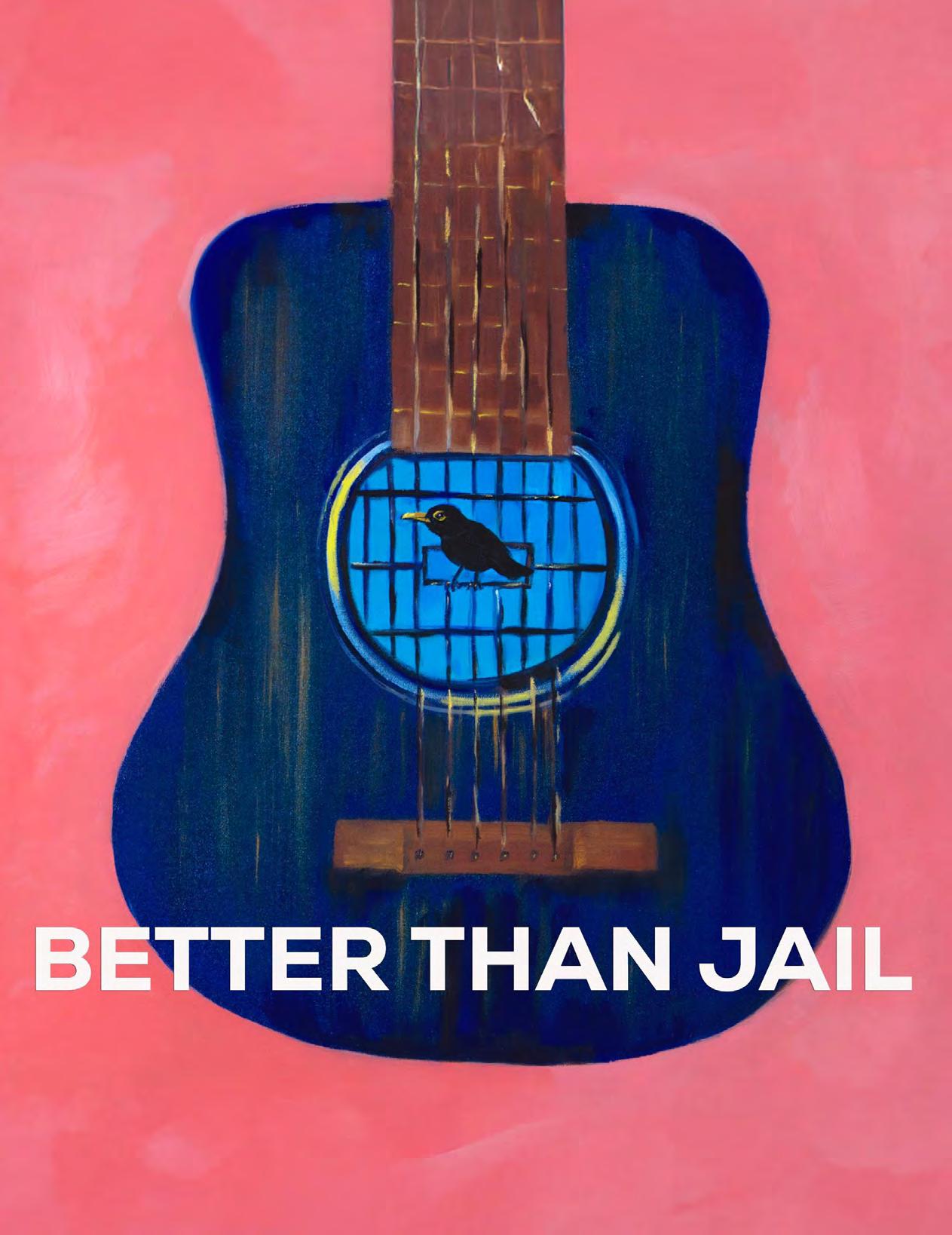
In addition to directing money to Free Hearts, Greenberg and Hunt commissioned the album’s cover art — a songbird emerging from guitar-string bars — from Omari Booker, one of the organization’s beneficiaries who found birds to be a source of hope and inspiration during his own incarceration.
Harrington says when she heard the album’s first single, Steve Earle’s rockabilly cover of “I Fought the Law,” it reminded her that there is “so much power and resilience in music.”
Ha rrison, who frequently speaks to school and community groups about his wrongful incarceration, agrees. “I think songs make it much easier for people to relate to me and my experiences,” he says.
For Harrington, connecting her former work in the music industry to her passion for social justice with this album has been a full-circle moment.
“We look forward to really using this album to help touch the hearts and minds of people who have maybe not considered this issue and learn how criminal justice impacts our communities at large,” she says. “There are things that are better than jail, and that’s what we’re pushing and advocating for.” ■
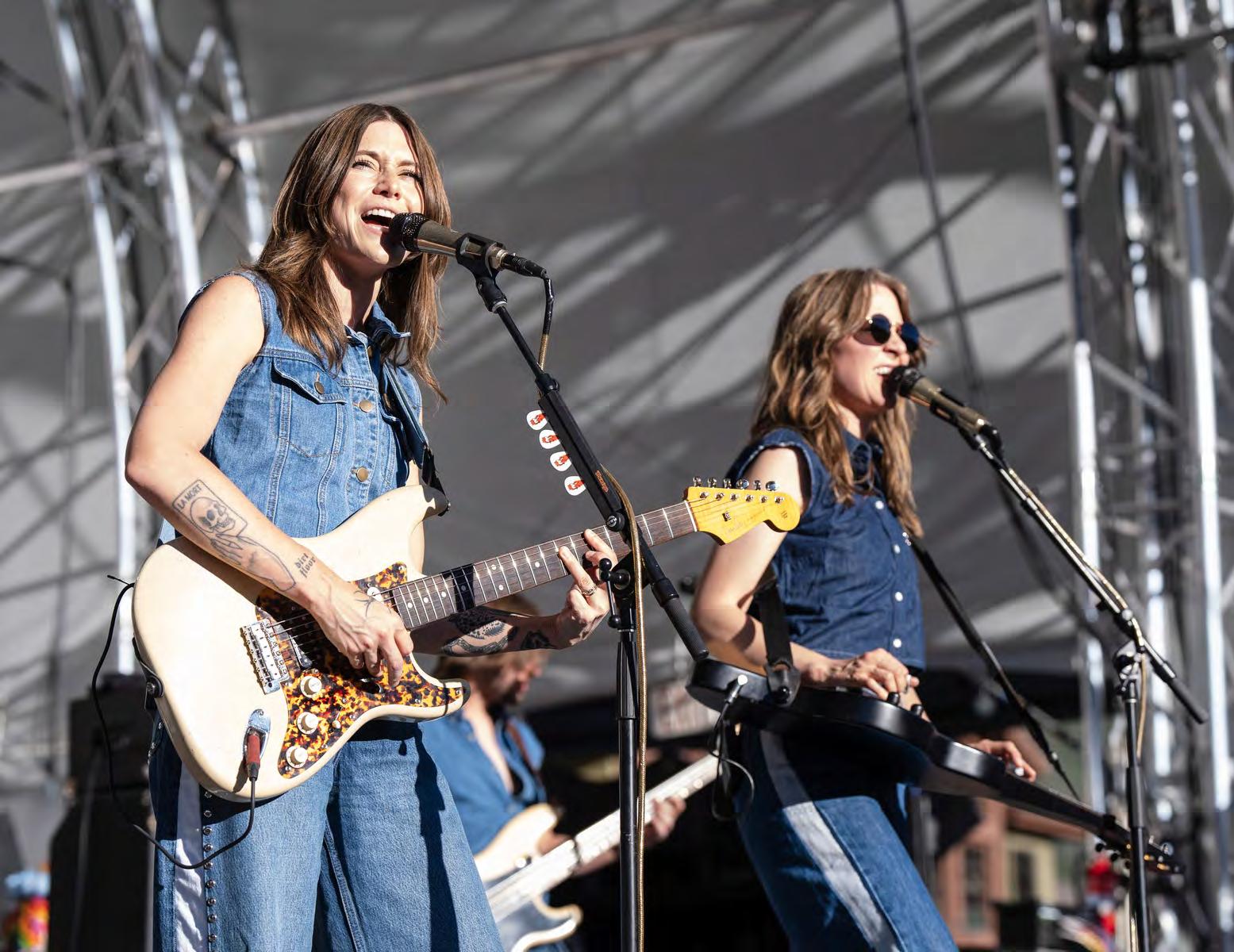
by Rebecca Lovell
For 30 oF my 33 years, I have been in love with Black Sabbath. One of my earliest, more vibrant memories relating to music is riding in the back of the family minivan, trying and failing (and then trying again) to memorize the lyrics to “Iron Man.” I don’t know how old I was, but I do know that I was strapped into a booster car seat. From first exposure, I was hooked. At that time, I didn’t know how to put language to my obsession, but I have come to understand that the response I had, and continue to have, can best be described as “primal.”
It’s an equal exchange — an eye for an eye, a tooth for a tooth, and an unadulterated human art form
eliciting an unadulterated human response. When you drop a needle on a Black Sabbath record, the music is so raw that you can still hear its heart beating through the speakers. That “heartbeat” manifests in the slightly pitchy guitars, the pushing and pulling of tempo as the players in the studio react off of one another — imperfect human elements preserved and presented to the listener.
Released in 1970, Paranoid is as relevant today as it was when it first hit the shelves. There is a palpable sense of danger that still clings to the album, untarnished by the intervening 50-some-odd years. How? What gives Black Sabbath such an unchallengeable timelessness? Barbarically bona
fide guitar riffs and brilliant songwriting aside, I like to think that the magic is in Ozzy Osbourne’s voice.
I am by no means a musicologist, but in recent years I have come to the not-so-secret opinion that Ozzy, in addition to being the Prince of Darkness, is also an old-time singer. He just so happened to sing oldtime songs in a heavy metal band. There are many terms used to describe the folk music of the southeastern United States, like old-time, bluegrass, gospel, mountain, and hillbilly. And while these terms are commonly used interchangeably, there are distinct differences and lineages. Derived from the ballads, hymns, and fiddle music carried across the Atlantic to
a yet unformed America by settlers of predominantly English and Scotch-Irish descent, “Appalachian” music represents one of the oldest forms of North American traditional music. As settlers of the colonial and revolutionary periods put down their roots in the deep hollers and grassy balds of the Appalachian mountains, their music naturally began to evolve. Borrowing from the musical influences of traveling tent revivals and medicine shows, Appalachian music began to diverge from its native source, acquiring a uniquely American sound.
Of ten referred to as a “high,
lonesome sound,” the voices of the Appalachian traditions are plaintive and unadorned; stark melodies are presented plainly, with little to no vibrato. Listen to “O Death” by Ralph Stanley or “Am I Born to Die” by Doc Watson. Both songs are sung a cappella, featuring dark lyrics that ruminate on the fleeting nature of existence. Now listen to “War Pigs” by Black Sabbath. And then listen to “Planet Caravan,” also from Paranoid. If you mute the instruments on “Planet Caravan” and strip away the warbled vocal effect, it doesn’t take a far flight of fancy to hear the melodic similarities between all
four songs. I think this can be attributed, in large part, to the specific tonal scales that inform the melodic construction of the majority of traditional folk music.
“ Western” music (as differentiated from “Eastern” music) is built upon diatonic scales. Simply put, diatonic scales are seven notes arranged in a specific pattern. There are seven commonly used “modes,” or patterns of scales: Ionian, Dorian, Phrygian, Lydian, Mixolydian, Aeolian, and Locrian. When listening to traditional Western folk music, the Dorian and Mixolydian scales are used time and time again to create the sorta
major / sorta minor, sorta harmonious / sorta dissonant melodies that we have come to identify with Appalachian music traditions. Black Sabbath utilizes these same scales, along with a heavy dose of blues-informed minor pentatonic scales, to create a sound that hearkens back to wiser, older musical traditions.
These wiser, older traditions have been weaving the lyrical themes of spirituality, mortality, fantasy, and grim reality together for centuries. With an ear finely tuned to the occult, Appalachian songs slice into the themes of death, evil, and violence with a blade
honed as sharp as that of any heavy metal band. Listen to “Pretty Polly,” “Omie Wise,” or “Tom Dooley” — three examples from the regrettably long list of mountain songs detailing the gruesome murders of women. These murder ballads, which typically feature unsettlingly upbeat music, will raise the hairs on the back of your neck. A primal response. An unadulterated human art form eliciting an unadulterated human response.
Maybe Black Sabbath has nothing to do with Appalachian music. Or maybe, to play devil’s advocate (I’m sure Ozzy would approve), there is a tie that binds.
For certain, there is the synchronicity of human derivation: a perpetual generational borrowing that connects those of the past to those of the future. The river of shared musical tradition is wide and deep, flowing from continent to continent, bleeding out of one lifetime and into the next. A shared lifeblood that, just maybe, pulses from the heart of Appalachia and straight into the veins of a Prince of Darkness. And what could be more metal than that?
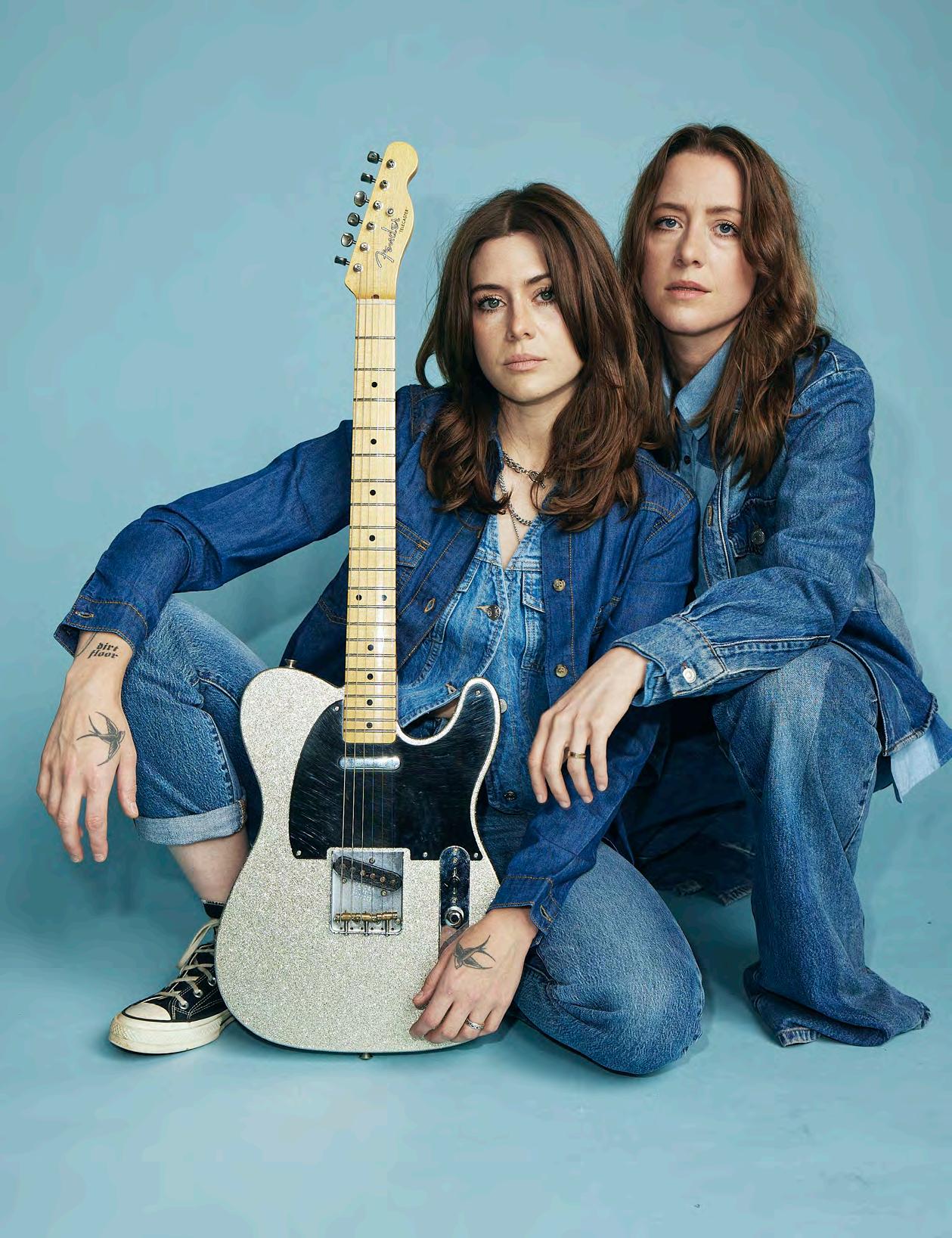
Larkin Poe’s new album, Bloom, will be released Jan. 24 via Tricki-Woo Records.
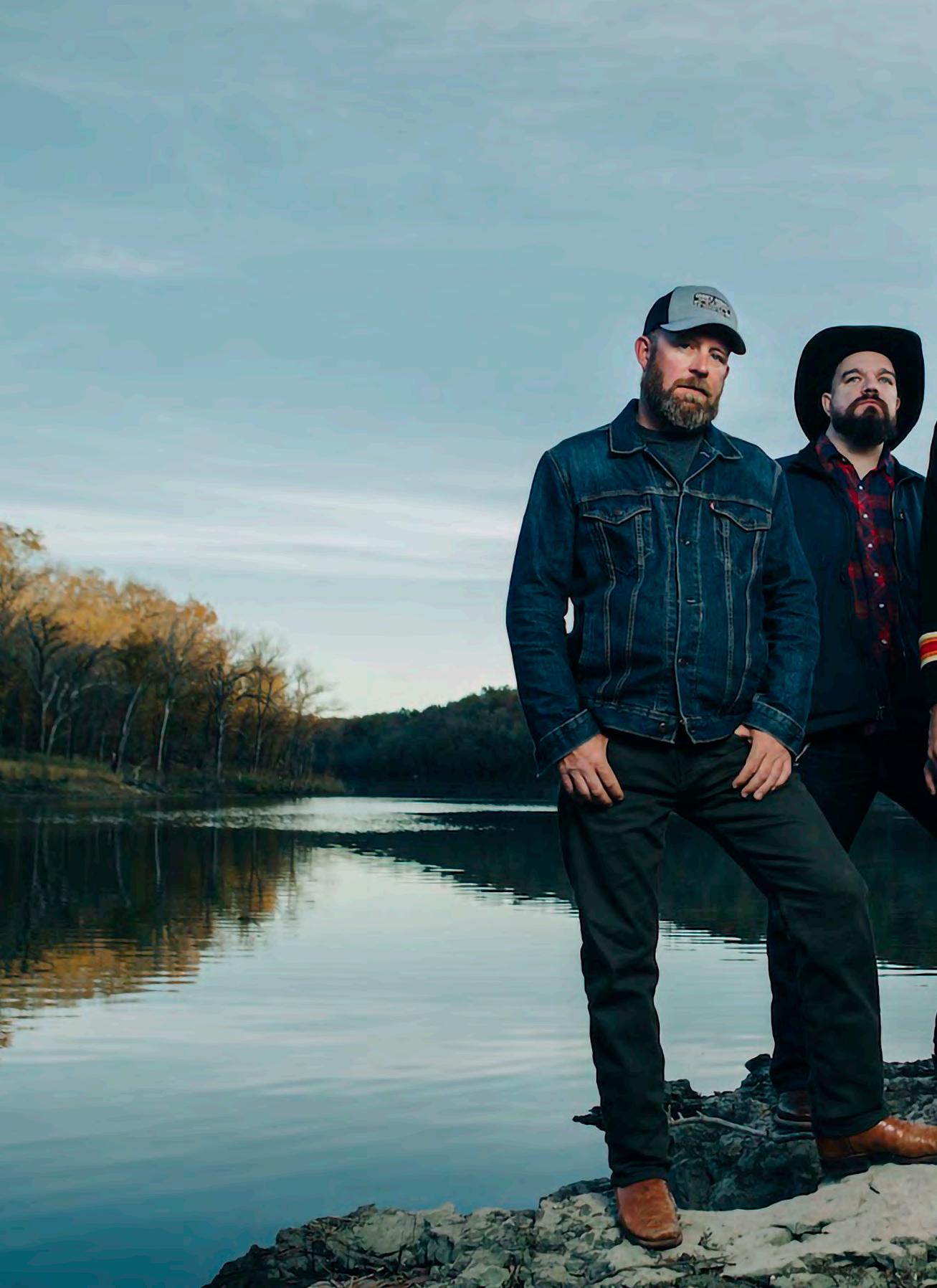
Fifteen years after its release, ‘Diamonds & Gasoline’ still fuels
Turnpike Troubadours
by Josh Crutchmer
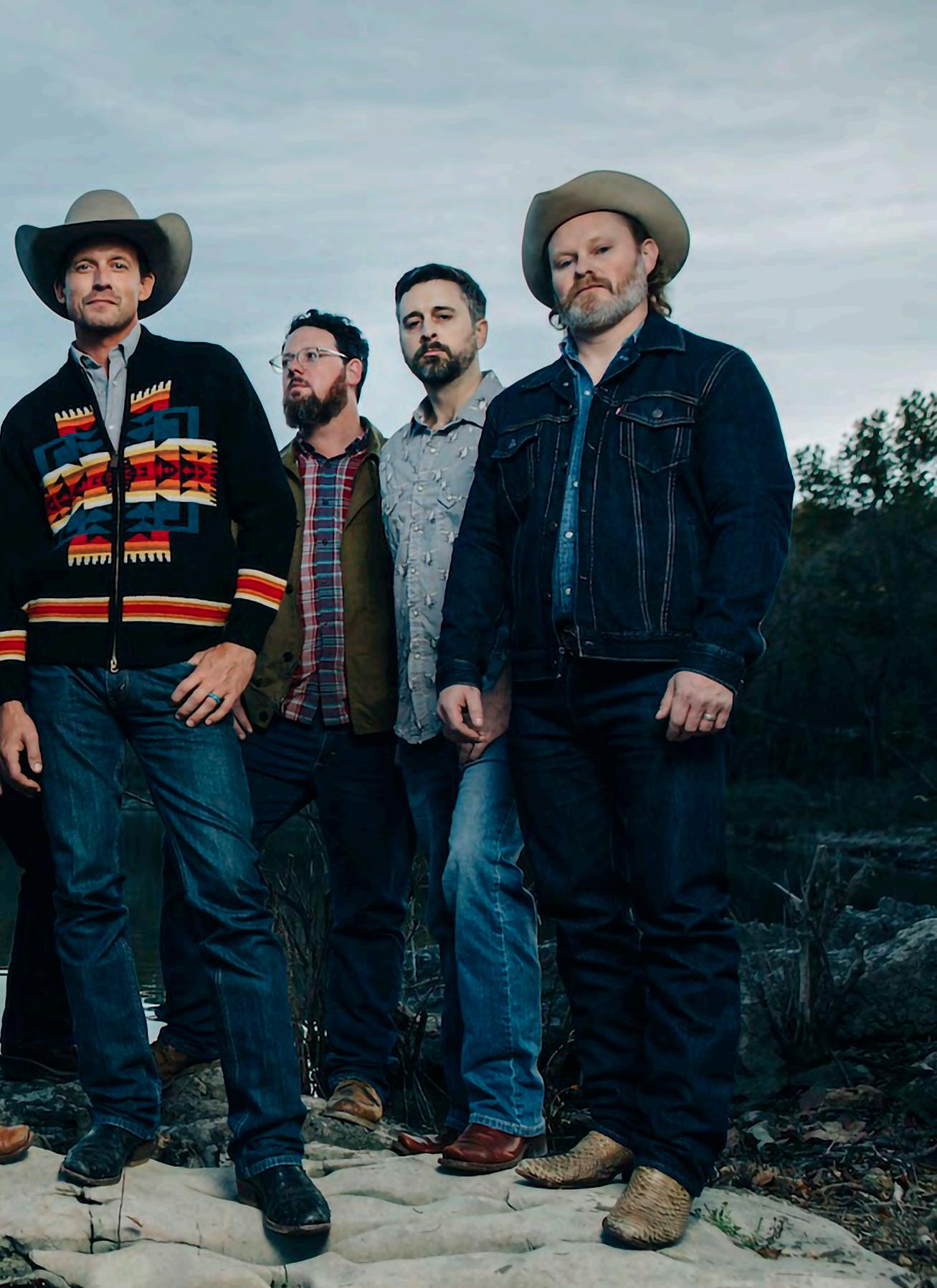
FiFteen years ago, an unknown country act from Oklahoma and a jaded frontman-turnedproducer came together in a basement studio and created a record that went on to reshape the Red Dirt and Texas music landscapes. Turnpike Troubadours’ Diamonds & Gasoline — the 12-track album the band claims as its debut — came out in summer 2010. Eight of the songs are mainstays in Turnpike setlists to this day, including tunes like “Every Girl” and “Long Hot Summer Days,” which the band routinely use to open and close concerts. In 2016, the readers of Lone Star Music Magazine even voted it the best Red Dirt album of the magazine’s era.
In retrospect, the album’s success and impact on the genre came about by happenstance and great fortune.
“It was the coolest — maybe my favorite recording experience to
date,” says Turnpike frontman Evan Felker.
When they founded the band in 2005, Felker and bassist R.C. Edwards named Turnpike Troubadours for Oklahoma’s Indian Nation Turnpike, the interstate they often drove from their Eastern Oklahoma homes to gigs in and around Texas. Shortly thereafter, they scraped together an album they called Bossier City, largely to have music to sell at concerts. But they weren’t satisfied with the record, and almost immediately realized they needed to make stronger music with a larger budget. This was at a time when Cross Canadian Ragweed and Randy Rogers — both renowned for piercing, original lyrics and seasoned, memorable melodies — were flagship acts in Texas, and Turnpike sought a record that would stand up alongside those artists.
The band underwent some changes in those early days, but by 2010 it was nearly set in its present-
day lineup of Felker, Edwards, Ryan Engleman on guitar, Kyle Nix on fiddle, and Gabe Pearson on drums. Hank Ealy would join the band on steel guitar and accordion in the mid-2010s.
At the time Turnpike was looking to make a polished album, Mike McClure found himself bored and cynical at his home in Ada, a college town in south-central Oklahoma. McClure had fronted The Great Divide for a decade as the band rose from the independent Red Dirt scene to an Atlantic Records deal, eventually enjoying a run as one of the most in-demand live bands in Texas and Oklahoma. But that band broke up in 2003, and McClure and his Divide bandmates would not reunite until 2010. He had a new project, The Mike McClure Band, which was heavier on rock, but lighter on fans.
Outside of The Great Divide, McClure was best known as Cross Canadian Ragweed’s producer, having worked on six of their records at well-known studios. At this point in McClure’s life, he had decided to take the lessons he had learned from the late engineer and producer Joe Hardy and turn his home basement into a recording studio he called “The Boohatch.”
Shortly after McClure worked on a record with a mutual friend, Felker reached out and asked if McClure would be interested in taking on Turnpike Troubadours’ new project too.
“We saved all our money from all of our shows for what seemed like forever,” Felker says. “Once we had enough money to do it and we had the songs together, we went down to Ada and just started hammering away at them.”
Among McClure’s production credits up to that point were Whiskey Myers’ 2008 debut album Road of Life
When the 2011 follow-up, Firewater, became a smashing success and established Whiskey Myers as the next big thing in Texas music, Road of Life was relegated to the band’s backstory. Today it’s considered the same sort of relic for Whiskey Myers that Bossier City is to Turnpike.
McClure didn’t know much about Turnpike Troubadours when Felker reached out. In those early years, the band’s reputation was as one of the hardest-partying bands across Oklahoma and Texas, and McClure was proud to contribute to that (which was another reason why members of The Great Divide were not on speaking terms around that time).
“I just remember it being really fun,” Felker says of making the record. “We drank a lot back then, and McClure also liked to party. So we stayed up late, and we just had a blast. It was awesome.
“It was like getting to hang out at your hero’s house — well, you know,
being invited there — and him liking you. But also, it was seeing for the first time that our songs stood up to some level of scrutiny.”
Once the album was out in the world, the sound of its defiant debauchery became a mainstay at college parties across the Midwest and was in regular rotation on bar jukeboxes and pre-concert playlists anywhere Red Dirt music could be found.
Felker and McClure both recall that the recording process for Diamonds & Gasoline was a smooth one, even though McClure used a basic, two-channel setup — far less sophisticated than what most studios would have chosen. Turnpike laid down one instrument at a time on each song, then brought the drums in last — a straightforward approach for an album layered with guitar and fiddle solos by Engleman and Nix.
For McClure, the album’s potential was immediately evident.
“Other studios have all the gear, brand new this-and-that, but you just don’t need that shit with the Turnpike Troubadours. Listen to these songs. Listen at ’em singing and playing them.”
Mike McClure
“Other studios have all the gear, brand new this-and-that, but you just don’t need that shit with the Turnpike Troubadours. Listen to these songs. Listen at ’em singing and playing them.
“I think the best thing that I did at that time was to get out of the way,” he continues. “That’s hard for producers to do. They want to put their stamp on a record, but I don’t. I want it to be that band sounding as good as that band sounds, and doing what they do, not what I say they should do.”
Turnpike swears that when Diamonds & Gasoline came out, there was no instant success or quick rise like is common in today’s social media-fueled market.
“You gotta remember, it looked like it blew up for us,” Felker says, “but we were in the trenches for years and years and years. Any time [we’d] get a break, we were still getting these reasons to wonder why
we were doing this. It was an even trade. It felt like any success that we had playing live shows, we’d still end up playing in the middle of nowhere, for nothing, to no one.”
Shortly before the album dropped in August 2010, Turnpike played a small festival at the Phoenix Saloon in New Braunfels, Texas. Festival organizer Brad Beleher, who also runs the Texas music website Galleywinter, says the band was booked for $400 and a case of beer and played to “less than 200 people, 190 of whom had never seen Turnpike before.” In November 2011, just more than a year later, Turnpike returned to New Braunfels to play a sold-out show with Jason Boland and The Stragglers to 800 people in Gruene Hall. Similarly in Oklahoma, the band played multiple shows at Tulsa’s Mercury Lounge, a dive bar with an indoor capacity of 80 people, before Diamonds & Gasoline came out. When they returned to Tulsa in 2011, they headlined the 1,700-capacity Cain’s Ballroom.
But the album didn’t just raise
Turnpike’s profile. It proved to be the band’s defining project.
“Every Girl” — an up-tempo love song that Felker co-wrote with Tulsabased pianist and singer-songwriter John Fullbright — became the album’s lead track and one of its biggest hits. (It was also the first song Turnpike played at their 2022 comeback concert at Cain’s Ballroom in Tulsa.) The unassuming, acoustic intro to the song gives crowds space to join the band in singing the opening verse as loud as possible.
The title track delivered levity as a love ballad on the otherwise up-tempo album. But it was the closing track, a cover of John Hartford’s “Long Hot Summer Days,” that redefined live music across Texas and Oklahoma and provided Turnpike with the tools to create one of the defining live-show spectacles in all of Americana music in the years since.
Hartford wrote “Long Hot Summer Days” as a fiddle-first folk song. His original version, released in 1976 on his Mark Twang record,
incorporates yodeling and clapping, almost like a sea shanty. When Sara Watkins put it on her 2009 self-titled album, she hewed fairly close to the original. When Felker first heard it, though, he envisioned it as a swampy, swinging country anthem.
When Diamonds & Gasoline dropped, “Long Hot Summer Days” became the signature moment of Turnpike’s live show. Long before the band had built out enough of a fan base to sustain a long run of shows in arenas and atop major festival bills, that song became to Turnpike shows what “Born to Run” is to Springsteen concerts. But the long-term impacts on the group — and ultimately the biggest reasons the band became the success it did — stretch across the entire record.
“[The songs] hold up,” says Felker. “And not just musically, but Turnpike fans still love them.”
Today, both Felker and McClure are sober, and the bands they front are
thriving. On The Great Divide’s first album in 20 years, Providence, McClure sang heavily about both sobriety and forgiveness. That record was named album of the year by the Texas Country Music Association in 2023.
Turnpike released three more albums in the seven years that followed Diamonds & Gasoline, all of which cracked the Top 10 on the Billboard country charts. The band saw its fanbase grow large enough to support sustained headlining tours in theaters and to curate and headline two major Red Dirt festivals — Medicine Stone in Tahlequah, Oklahoma, and Harvest Maroon in College Station, Texas. By 2018, the band’s heavydrinking, hard-partying lifestyle had completely overwhelmed Felker. He started missing shows entirely, leading to a stretch of highprofile cancellations before Turnpike went on an indefinite hiatus in May 2019 and Felker entered rehab.
With Felker sober, Turnpike
ended their hiatus in April 2022. Since then, the band has sustained a long run of sold-out shows in arenas, amphitheaters, and major festivals. Felker addressed his past head-on in “The Rut,” on Turnpike’s 2023 Shooter Jennings-produced A Cat in the Rain, when he sang, “I don’t miss the taste of liquor, or really anything about it, but the temporary shelter was a welcome compromise.”
Despite the staying power of Diamonds & Gasoline, the record never found much chart success. In reflecting on the record 15 years later, Felker prefers to let it stand on its laurels. The rest of Turnpike’s catalog has demonstrated the band’s standards, and they have never felt pressure to compete with their 2010 breakout album, either in the studio or in the minds of fans.
“Maybe I should, but I think that one was special, you know?” he muses. “It was just its own thing. It was like lightning struck — and it was one place, at one time. It was very much magic.” ■
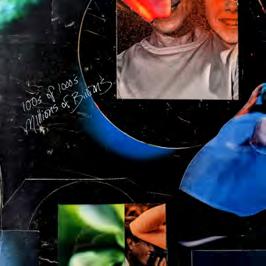
CHUCK PROPHET Wake The Dead
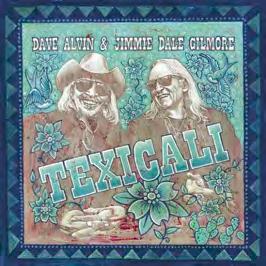
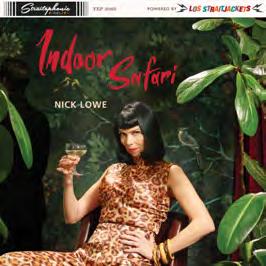
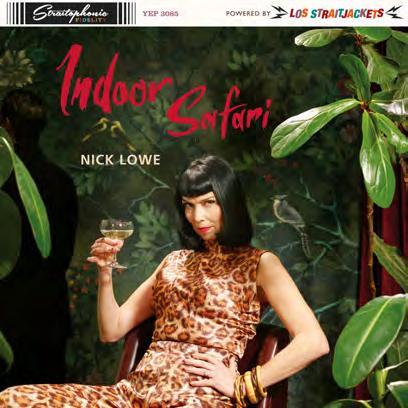
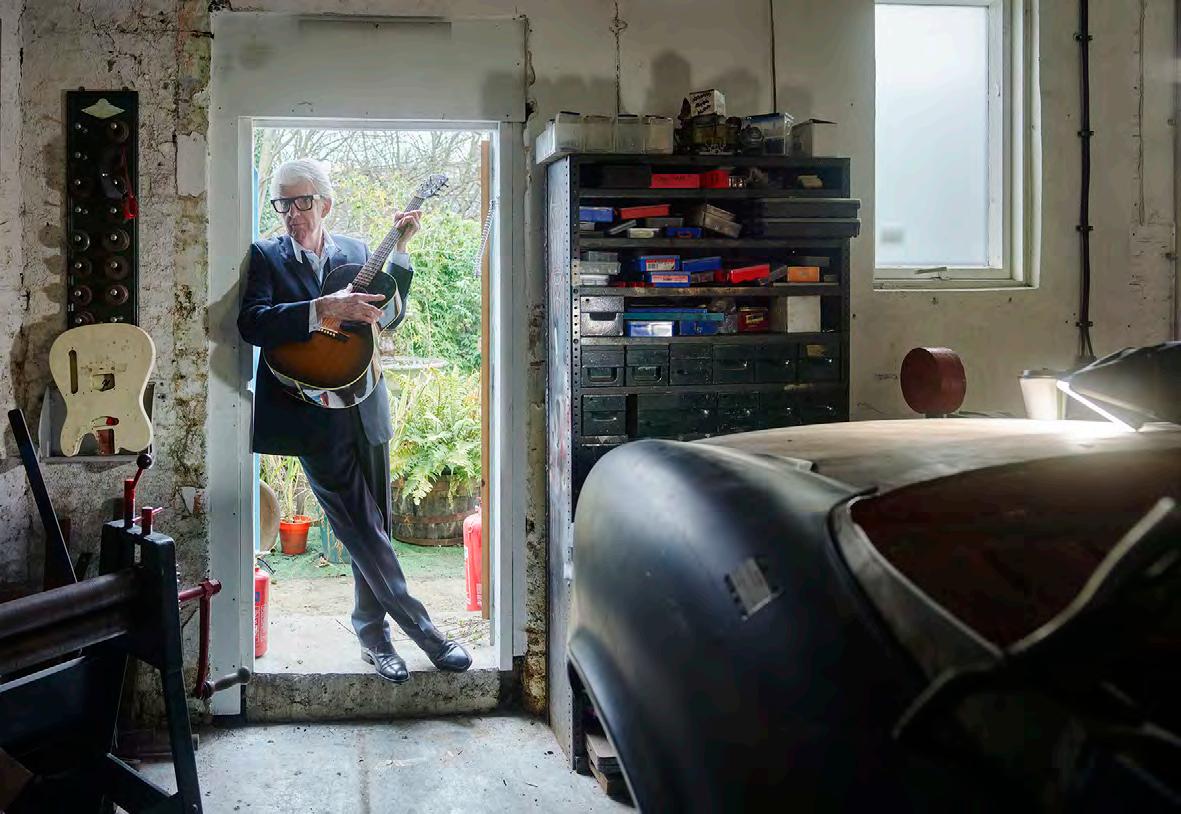
NICK LOWE & LOS STRAITJACKETS Indoor Safari
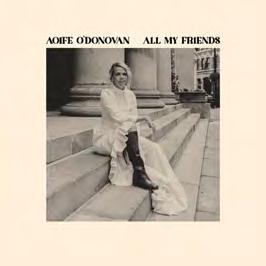
O’DONOVAN All My Friends
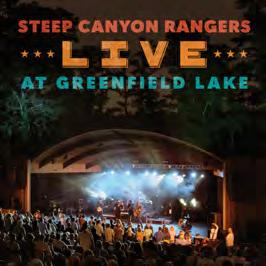
STEEP CANYON RANGERS Live at Greenfield Lake
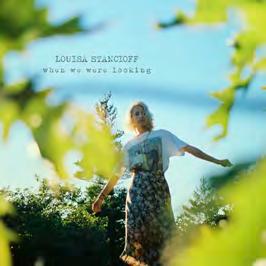
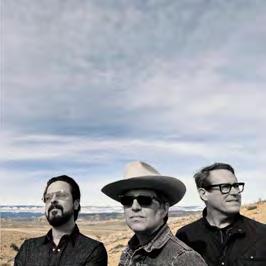
Looking

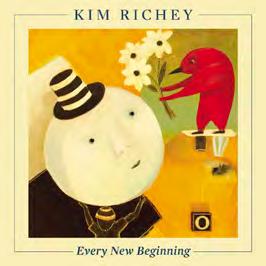
The past and present of Chicano soul is forged from community by Jim
Shahen
Sonically or culturally, soul music is far from monolithic. With its origins blending gospel, R&B, and funk in Black communities across America during the 1950s and ’60s, the genre’s qualities also vary by region, influences, and performers.
Motown Records in Detroit — home to Diana Ross and The Supremes, Smokey Robinson and The Miracles, Stevie Wonder, and Marvin Gaye — became known for its glossy, pop-friendly sound. The soul music by Otis Redding, Wilson Pickett, and Sam & Dave recorded at Stax Records in Memphis or Fame Studios in Muscle Shoals, Alabama, had a grittier, more bluesy tone.
Philadelphia International Records’ spin on the genre, led by Harold Melvin and The Blue Notes and The O’Jays, was a forerunner to the slickly produced R&B of the 1980s and ’90s. But despite these differences, soul music has certain sonic similarities:
funky rhythms, tight horn sections, and vocals that run from mellifluous to booming.
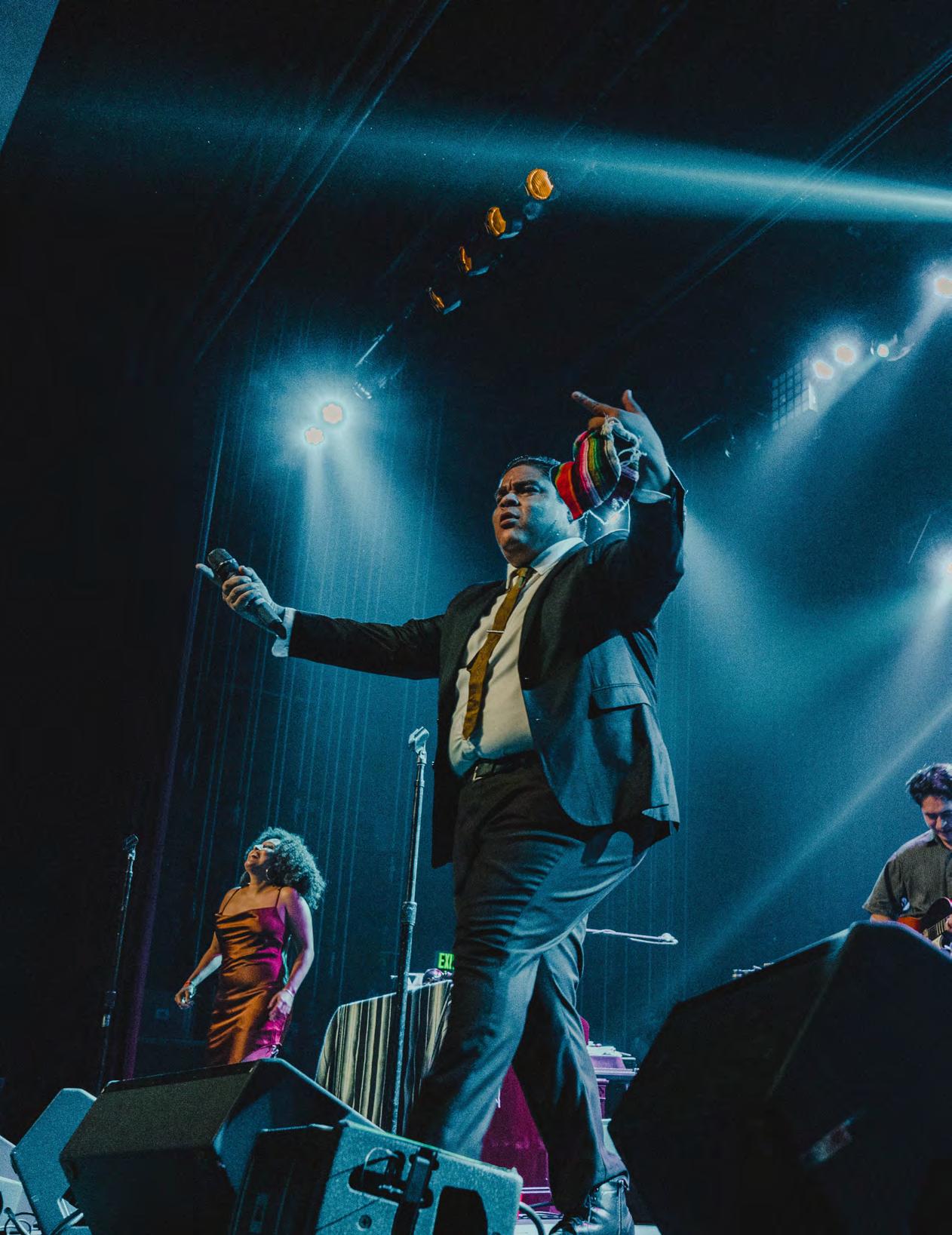
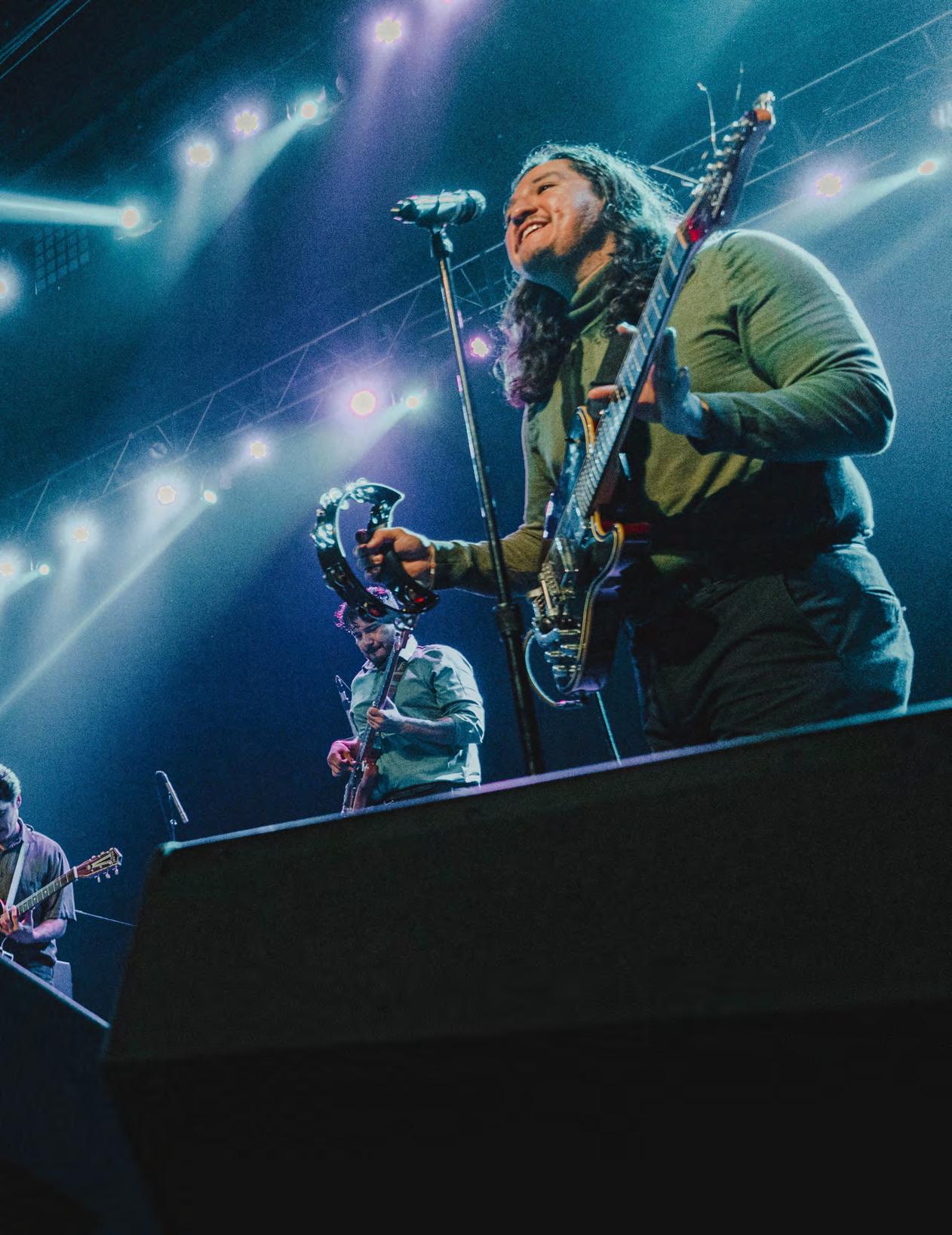
In America’s borderlands across Southern California and Texas, what’s generally referred to as Chicano soul incorporates many forms. This subgenre, which includes music written, recorded, and performed by Mexicans and Mexican Americans, is a marriage of rock and roll, doo-wop, and traditional Mexican folk from the 1950s.
But despite the “soul” in its name, Chicano soul is trickier to categorize, and the influences of the artists categorized under it span genres. Early rock and roll pioneer Ritchie Valens, ’60s garage rock legends ? and The Mysterians, the rock and soul of Thee Midniters, Sunny and The Sunliners’ smooth Latin R&B stylings, and WAR’s jazz-funk fusion sound, despite not sounding all that similar, are all technically
considered Chicano soul.
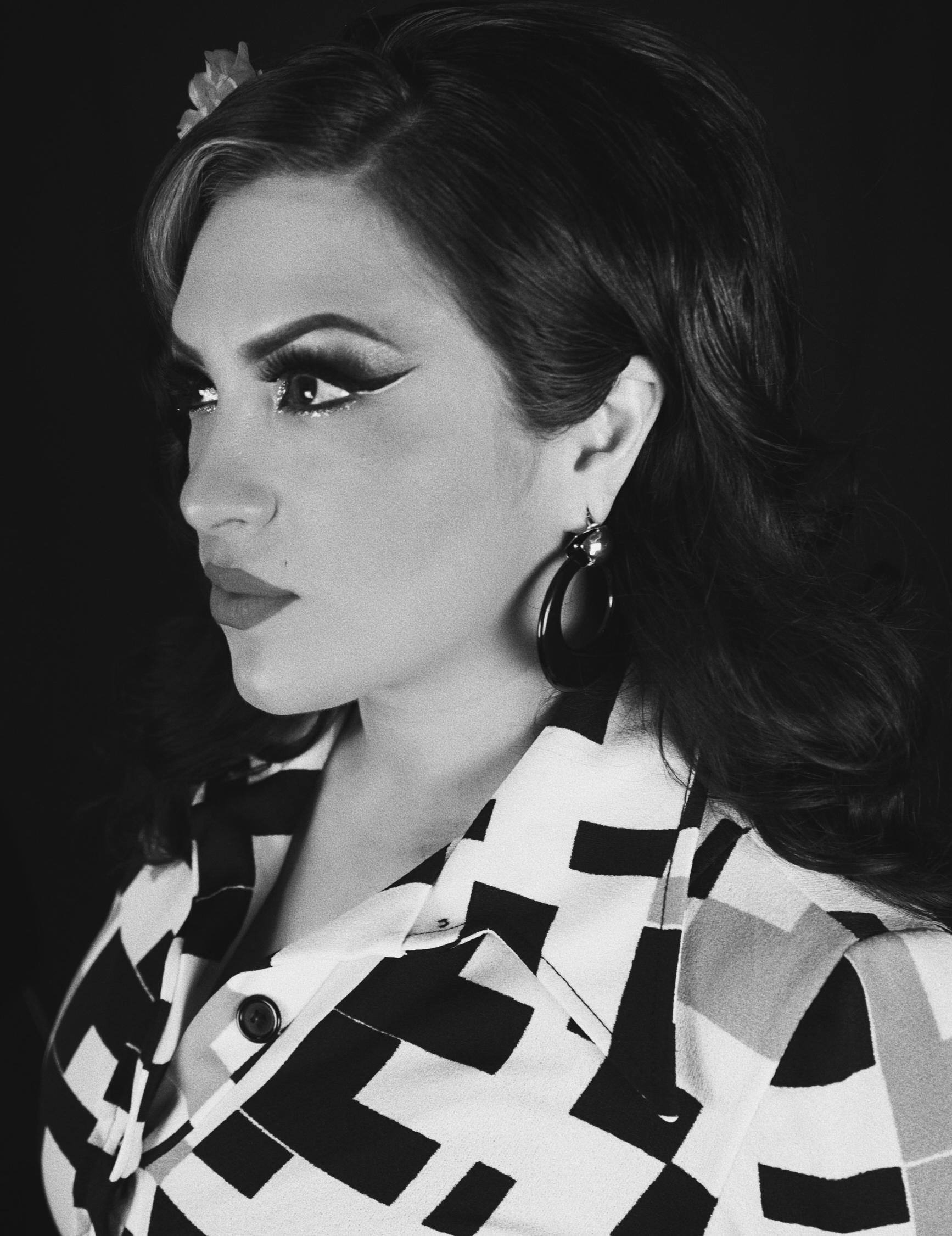
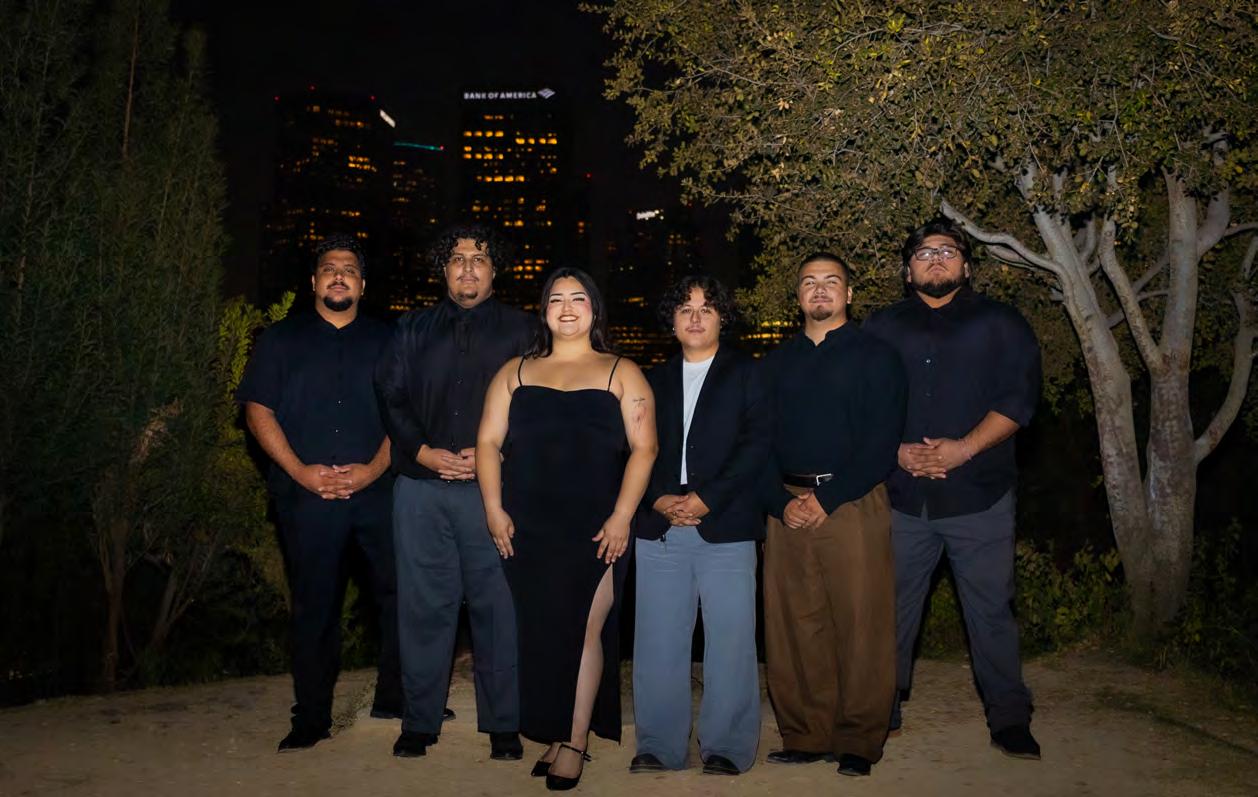
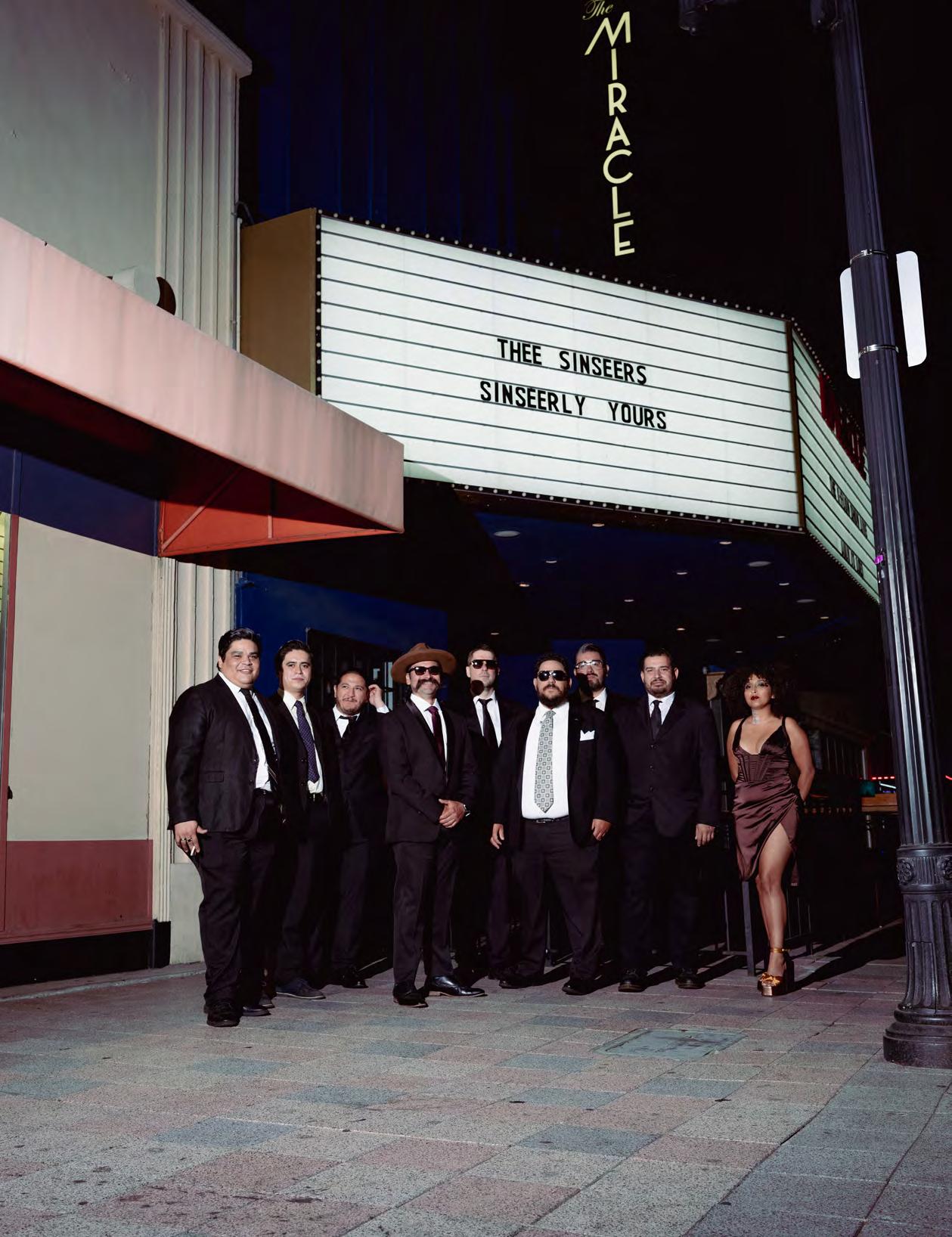
More recently, acts like Thee Sinseers, Thee Heart Tones, Jackie Mendez, The Altons, and Thee Sacred Souls are carrying on the Chicano soul tradition for a new generation. But continuing that legacy isn’t merely about the sound. It’s about the ways in which cultural traditions bloom and grow when impacted by different locations and influences.
“A lot of the music in LA is almost distant from what happens in Detroit, Chicago, and New York,” says Ruben Molina, a Los Angeles native and author of Chicano Soul, the definitive text on the Los Angeles and Texas Chicano music scene in the 1950s through the ’70s. “You have migrants from the south coming here and meeting so many influences — Black artists, surf music, rock and roll — and combining it with Mexican mariachi and boleros. It’s a melting pot.
“A lot of the music in LA is almost distant from what happens in Detroit, Chicago, and New York. You have migrants from the south coming here and meeting so many influences — Black artists, surf music, rock and roll — and combining it with Mexican mariachi and boleros. It’s a melting pot.”
Ruben Molina author of ‘Chicano Soul’
“Now you see another generation even more steeped in Mexican culture than we are. They started with mariachi, they know songs that go back to my generation, but also lean towards ska and rocksteady and come back to soul. It’s so cool to see it happening and see it still moving forward,” he adds.
Chicano soul is more than just a collection and blending of sounds. It’s the culmination of the past 70-plus years of the migrant experience in the American West and Southwest, and the values gleaned from it. The throughline in the subgenre is what the music has to say about its creators.
“I think it’s about the environment, the surroundings, work ethic, and approach,” reflects Joey Quinones, leader of Thee Sinseers. “San Antonio, East LA, it’s more about a sense of — and it’s kind of cheesy — a sense of family. Chicanos are very familial and you
can hear how much we respect it in the way we sing, the delivery. But we all take chances musically, it’s all a little different.”
The Chicano music that rose to regional, and in some cases national, prominence developed in the 1950s. Prior to that time, the songs performed by Mexican American musicians were a mix of rancheras (country), danzones (a swingadjacent form of dance music), rumbas, and jump blues. As rock and roll, soul, and doo-wop began to enter the public consciousness, teenagers on the West Coast saw an opportunity to expand their sonic palettes.
Jesse Belvin was one of the first Chicano artists to break through and find mainstream success. First, it was as the co-writer of the 1954 doowop ballad “Earth Angel (Will You Be
Mine),” made famous by The Penguins (and arguably best known as the song Marty McFly’s parents have their first dance to in the 1985 film Back to the Future), and his own 1956 single “Girl of my Dreams,” which cracked the Billboard Top 50. In 1958, Chuck Rio and his band The Champs won a Grammy for Best Rhythm & Blues Performance for the classic surf rock instrumental “Tequila.” That same year, Ritchie Valens became a teenage rock-androll sensation with chart-topping singles “Donna” and “La Bamba.”
Musically, these artists didn’t share many musical similarities. What they did have in common, however, was an ability to blend the music they grew up with and the new sounds they heard on the radio.
“By the time the 1950s roll around, teenagers were hearing Mexican music, doo-wop, soul, rock and roll. It was a really exciting time and the really young, they didn’t
have the barriers that older generations had on Black music being ‘the devil’s music,’” Molina says. “As we move forward, these kids have their own guitars and knew mariachi music because they learned it or their parents introduced them to it, and they start making their own bands and put that together with the big things they were hearing.”
Molina describes this first wave of Chicano soul as being “almost garage band with mariachi violins,” as different musical influences began to proliferate. But by the next decade, these Mexican American interpretations of local popular music grew into a trend that spanned regional and stylistic differences.
In the Midwest, ? and The Mysterians came to Saginaw, Michigan, as part of the post-World War II migration of Mexican Americans for agricultural and factory labor. The band’s 1966 hit single, “96 Tears,” ended up eclipsing the band itself, ultimately getting covered by soul legends Aretha
Franklin in 1967 and Jimmy Ruffin in 1969.
Chicano band Cannibal and The Headhunters had a minor national hit with “Land of 1000 Dances,” a cover of New Orleans-based R&B singer Chris Kenner. But Cannibal and The Headhunters’ added “na na na na na” breakdown inspired Wilson Pickett to record a similar take. Pickett’s rendition became his biggest pop single.
As the overt expression of cultural pride, artistically and socially, became part of the fabric in America in the 1960s and ’70s, Chicano soul changed. Acts like Carlos Santana, WAR, and Tierra explored jazz and funk-rock fusion. Thee Midniters, who preceded classic rock acts like Chicago and Blood, Sweat and Tears in the beginning of that period by integrating a horn section, congas, and keyboards into a garage rock sound, incorporated a message of Brown pride into their lyrical content with songs like “Chicano Power” and “The Ballad of Cesar Chavez.”
While political consciousness
and the dance rhythms of that time created a new era of Chicano soul, the songs of its first incarnation endured. Says Los Angeles-based singer-songwriter Jackie Mendez: “Those bands — Thee Midniters, Sunny — that style, they were the first Chicano bands we ever heard of. In the ’70s, other Chicano acts would cover them and you’d kind of backtrack and go, ‘Hey, why do I know that song?’”
Now, a new generation of artists and labels are both honoring the formative acts of Chicano soul and advancing the subgenre forward. Big Crown Records has released compilations of, reissued out-ofprint albums by, and organized a 2021 tribute LP to Sunny and The Sunliners. The legendary Los Lobos’ 2021 tribute to the Los Angeles music scene of its members’ youth, Native Sons, paid homage to Thee Midniters (“Love Special Delivery”), WAR (“The World is a Ghetto”), and The Jaguars
(“Where Lovers Go”).
This music has also provided a backdrop for new artists to flourish and formulate a sound. But these acts aren’t recreating something that was. Like the first wave of Chicano soul groups, they’re blending a musical tradition with the music and scene that they’ve grown up in.
Thee Heart Tones formed as high schoolers in 2020 during the COVID19 pandemic. Prior to starting the band, members Jorge Rodriguez, Peter Chagolla, Jeffrey Romero, and Walter Morales had been playing together in a heavy metal group throughout middle and high school. After keyboard player Ricky Cerezo joined, the outfit opted for a new direction.
“Jorge and Ricky were close friends and Ricky’s dad brought up the idea of a modern soul band,” Heart Tones lead singer Jazmine Alvarado explains. “Ricky’s dad is a
record collector and had all these rare oldies. Ricky and Jorge have so much knowledge about the music and most of the band was around it more than I was.”
Alvarado was pursuing solo acoustic endeavors at the time and “very into Spanish ballads, boleros, R&B.” She had grown up with and around more traditional Spanishlanguage music and was largely unfamiliar with soul music until Cerezo, who Alvarado knew from school, messaged her online to see if she’d be interested in singing with his developing group.
Cerezo sent her a playlist of Chicano soul classics as a primer and an original instrumental to write some lyrics and sing over, which became “Don’t Take Me as a Fool,” the second song on Thee Heart Tones’ 2024 debut LP Forever and Ever. It took writing and playing three
or four songs together before Alvarado felt comfortable as a soul singer, and she acknowledges, “Even still I’m learning.” While she continues to immerse herself in the genre and grow as a vocal interpreter of it, Alvarado has found what makes the music resonate with her.
“It has that different feel. I feel like today’s lyrics, you can blurt out pretty much anything and have it be a hit. There’s not much heartfelt experience,” she says. “With this music, there’s bands like Thee Sacred Souls, Thee Sinseers, The Altons, they have a lot of songs with what’s missing now. Chicano soul, it conveys a message.”
Like Thee Heart Tones, Jackie Mendez and Quinones of Thee Sinseers came to the form outside of a traditional soul scene and upbringing.
Mendez started her career as a singer in 2004, “playing a lot of
backyard shows” in her community’s ska and punk scene. From there, she drifted toward rocksteady and reggae. That sound became the foundation of the beginnings of her solo career in 2013, and with the group Steady 45s, she sings a reggae/ska hybrid.
Over time, her solo material has begun to incorporate more soul and traditionally Mexican arrangements alongside rocksteady influences, as can be heard on her recent singles “Come Back to Me” and “So Long.” Currently, Mendez is working on recording her first full-length album, a collection of her prior singles and new material rooted in her multi-genre passions. As she sees it, combining these seemingly divergent styles just makes sense.
“I’ve always loved reggae and ska, and ’60s early reggae was very influenced by Motown soul, it just has a little bit of a different rhythm,”
says Mendez. “The Chicano music, it’s always been around, and obviously as Mexican Americans it’s a soundtrack for a lot of us. Playing it is natural, in a sense.”
Quinones came out of the same ska and rocksteady scene as Mendez and started playing in bands as a 14-year-old in the early 2000s. While Quinones “just wanted to play punkrock guitar,” he was familiar with soul music and the works of Mexican American artists through his father, who was heavily immersed in that aspect of the culture.
In 2019, Quinones started Thee Sinseers “by accident.” Having just left a rocksteady group, he was looking for where to go next musically. He started tinkering with funk instrumentals reminiscent of The Meters, then started incorporating influences that included rocksteady, The Altons, doo-wop, songs like “La-La (Means I
Love You)” by The Delfonics, and the Chicano soul music he had heard growing up. The result was his first single credited to Thee Sinseers, “It Was Only a Dream.”
“I built the band around that one song and style. As we started digging in as a group, we got inspired by all the things that got us into music. When you put yourself out there, it comes out naturally,” Quinones says.
After recording singles for Daptone Records offshoot Penrose Recordings and for Colemine Records, Thee Sinseers released its first LP, Sinseerly Yours, on Colemine last March. It was vital to Quinones that the group was honest with itself and not look to “recreate something” from the past. But he did use the record to doff his cap to one of his favorite Chicano soul pioneers: The cover art to Sinseerly Yours pays homage to the cover of Thee Midniters’ eponymous 1965 record.
“It was important for us to let everybody know who we were inspired by. Thee Midniters were like The Beatles for us [Mexican Americans] in East LA and a big part of our lore and pride growing up. It was a chance to plant our flag and show we’re doing our music, our songs,” he says.
If there’s a commonality besides culture to the musicians and archivists of the Chicano soul scene, it’s that sense of pride. Molina feels it in today’s robust Mexican American music scene and in knowing that his book has provided a resource for generations of Chicano artists not only to discover these sounds, but also to advance them.
“I was talking to a member of Thee Sacred Souls and he told me, ‘My dad bought your book, and I
started looking up songs. It made me realize this is what I wanted to do,’” Molina recalls. “It makes me proud more than anything, hearing these songs that go back to my generation and hear a younger generation moving them forward.”
As Quinones alluded to in discussing Thee Midniters, the Chicano soul legacy and carrying it forward is a badge of honor for those who have drawn inspiration from it.
“A lot of people identify with it, there’s a lot of pride in the scene and [they] are drawn to that. We’re prideful of our roots, our culture, and hearing that music and saying, ‘Hey, this is what we grew up with,’” Mendez says. “Having fresh faces doing it now makes it very accessible. You don’t have to put on old records, you can be in the now and what’s happening and everybody starts popping out and gets inspired. It’s pretty cool.”
A wide range of artists find new resonance in a century-old folk song
by Will Hodge
“I thought about my own childhood and the girls I grew up with who were lost in purity culture or lost to growing up in a man’s world that was warped by religion. There were so many kids in my school addicted to opioids and people were just dropping dead all around me. Those were the stories I knew that were happening in the pines. I grew up in those pines, so I know what shivering the whole night through — both spiritually and psychologically — really means.”
Adia Victoria
As nirvana Was Winding down the filming of their iconic MTV Unplugged, it was clear they had not yet settled on a closer. Anxious MTV executives were praying to the grunge gods that frontman Kurt Cobain and his band would somehow save the hitherto hit-less session with a masterful acoustic repackaging of one of their recognizable smashes like “Smells Like Teen Spirit” or “Heart-Shaped Box” — anything other than one more down-tempo deep track or unidentifiable cover. Amid a cacophonous din of retuning instruments and intra-band discussions of which songs might work in this uncluttered live acoustic setting, Cobain lit a cigarette to buy a few precious moments to think. The
same frontman who had just opened his band’s newest album with the lyric “Teenage angst has paid off well, now I’m bored and old” seemed wholly unenergized with the notion of ending this atypical performance with just any old album cut. After a few more unfocused beats of inquisitive band chatter and unsolicited audience requests, Cobain seemed to be strumming an E chord aimlessly when inspiration struck. The quickest flicker of a smile crossed his lips.
“This was written by my favorite performer,” he declared, before spontaneously leading his band through a jaw-dropping version of “Where Did You Sleep Last Night.” Also known as “In the Pines,” this country-blues folksong has roots that trace back to the late 1800s. While
previous concert versions of Nirvana’s blues-goes-grunge homage had been muscularly interpreted through cranked amps, distortion pedals, and thundering drums, the band’s Unplugged version proved a far moodier affair. The unpolished acoustic groove, lumbering bassline, and groaning cello summoned a gloomy, melodic underpinning for Cobain’s delivery of the song’s sinister inquisitions and disquieting scene-setting.
Throughout the half-dozen iterations of the eponymous refrain, Cobain oscillated between halfpressuring, half-pleading the song’s anchoring inquiry (“My girl, my girl, don’t lie to me, tell me where did you sleep last night?”) and answering via the clever lyrical shift that finds the
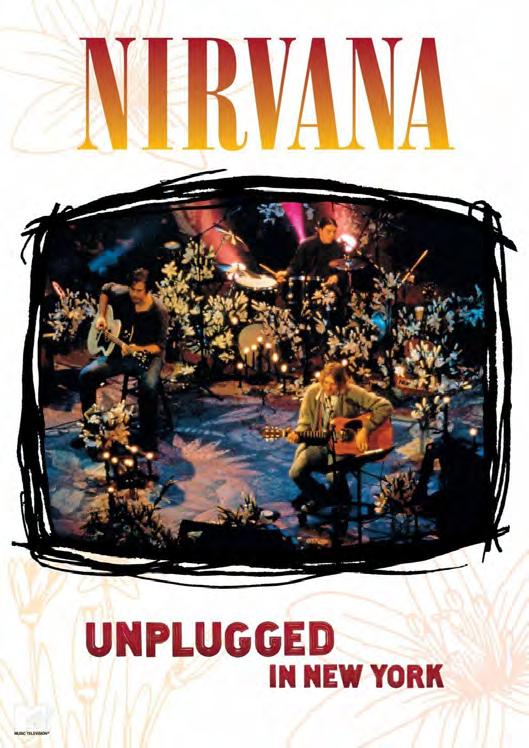
interrogated painting a chilling picture (“In the pines, in the pines, where the sun don’t ever shine, I would shiver the whole night through”).
On the final two passes, Cobain conjured the most arresting moments of the whole performance. He began the second-to-last round by jumping an octave and ratcheting up the abrasive textures of his signature howl. As the instruments rose to meet his escalating agitation and timbre, he fell deeper under the song’s spell, squinting his eyes tighter with each line.
By the last lyrics, a breathless Cobain began trading words for raw emotive catharsis. “In the pines … the pines … the sun … the shine,” he roared, before transforming the
phrase “I’d shiver” into an elongated death rattle that halted the band. He exhaustively eked out the words “the whole” before — as if suddenly struck by a bolt of lightning — his shockingly blue eyes snapped open and he heavily exhaled all he’d been exhuming. His culminating “night through” floated among the reassembled instrumentation like a restless ghost.
When Nirvana’s Unplugged was first broadcast in December 1993, it quickly became one of the most popular entries in the program’s catalog. In the aftermath of Cobain’s suicide four months later, it became even more entrenched in the pop cultural zeitgeist. MTV’s heavyrotation replays provided an unintentional soundtrack to a
grieving generation and a selfconstructed eulogy handcrafted by an era-defining artist.
Thirty years ago this November, when the Unplugged in New York companion album was released, it quickly went triple-platinum (and has since been certified 8x platinum) and won Nirvana its only Grammy. The band’s Unplugged rendition of “Where Did You Sleep Last Night” elevated the centenarian folksong into mainstream cultural consciousness in a manner unparalleled by any of its previous incarnations.
In recent years, the song has once again achieved a curious level of
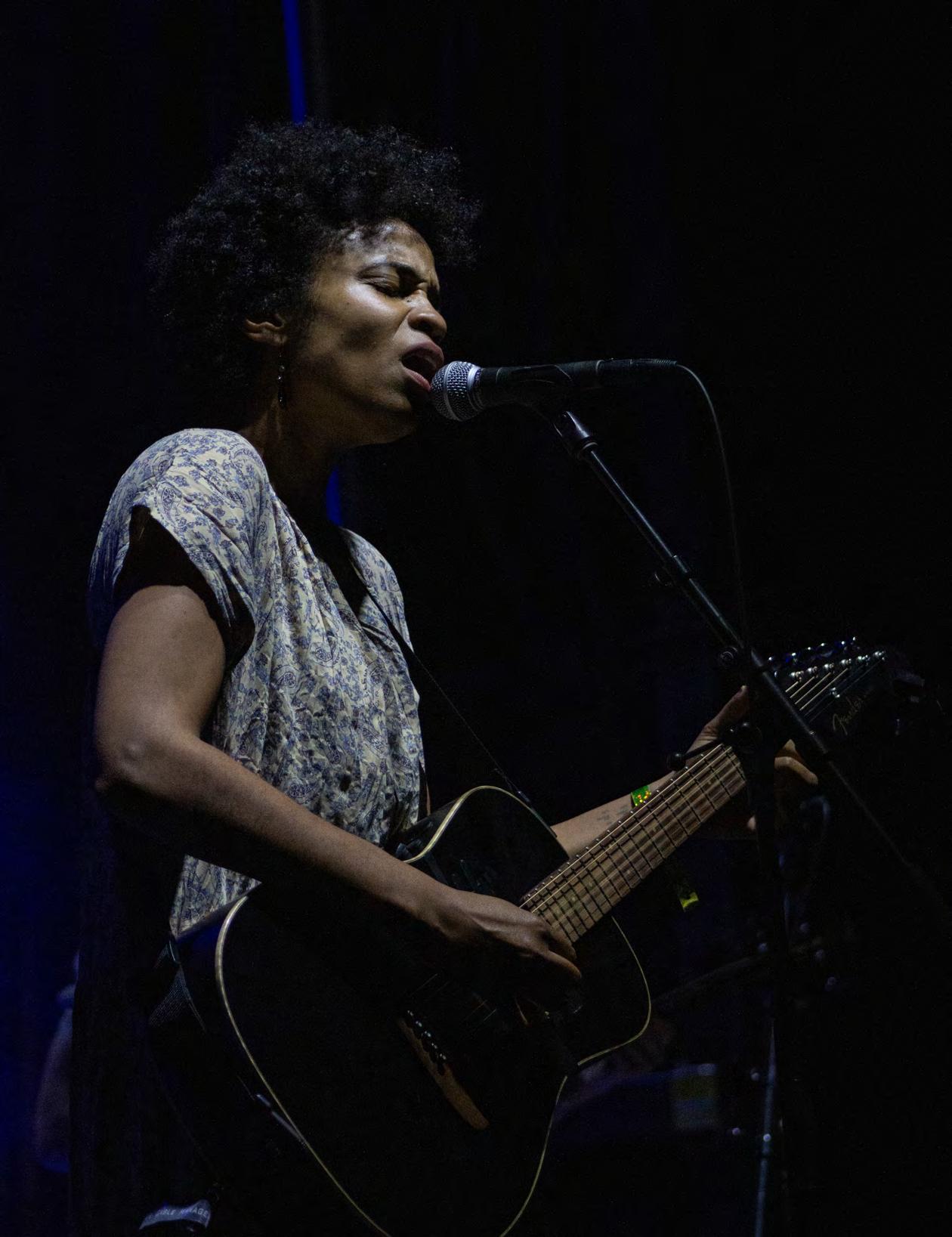
Amythyst Kiah
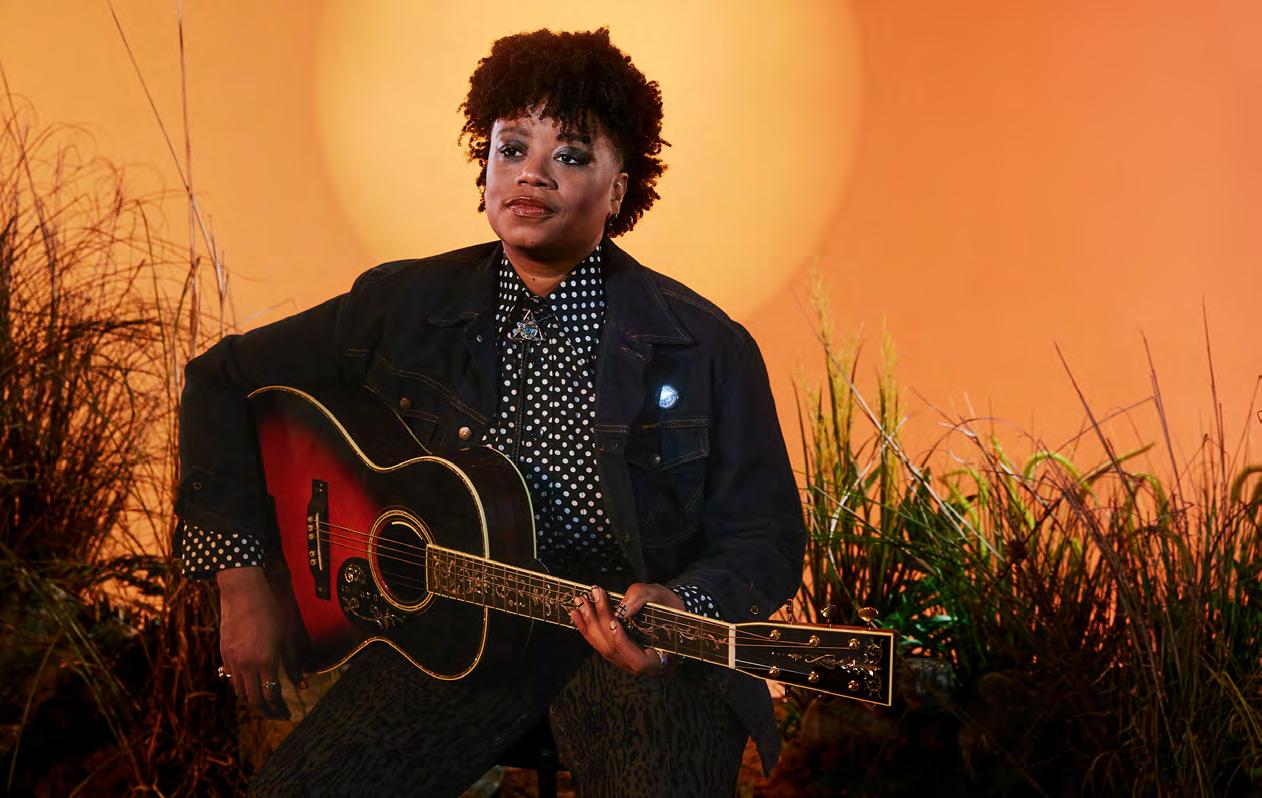
interest via a handful of nextgeneration roots artists whose own covers can be directly tied back to Nirvana — whose ongoing presence in the song’s story has now shifted from interpreter to influencer. Gothic blues singer-songwriter Adia Victoria and Southern folk-rocker Amythyst Kiah are both members of this unintentional club who have released covers of “Where Did You Sleep Last Night” directly inspired by Nirvana.
“I was only 7 when Kurt died, but when I heard Nirvana’s Unplugged cover of ‘Where Did You Sleep Last Night’ for the first time in 10th grade, I was so enraptured by it,” says Victoria. “I connected with the humanity of the lyrics, the cold dread of the known unknown, and the concept of the blues being the one place where you could put all these paranoid thoughts.
“The way he screams the word ‘shiver,’” she adds, “and then lets out that big sigh to finish.” She pauses briefly to find the right descriptor, but
concedes, “Man, I didn’t need anything else after that.”
A year after her celebrated 2021 album, A Southern Gothic, Victoria released a standalone single inspired by her Nirvana-induced introduction to the song. Her interpolation of “In the Pines” offers freshly penned verses influenced by her stiflingly conservative upbringing in South Carolina, with lyrics that sketch out a young woman’s fight for autonomy — if not over her life, then over her death.
“This song has always been very visual to me, and I really wanted to write a story about who else gets lost in those same pines,” says Victoria. “I thought about my own childhood and the girls I grew up with who were lost in purity culture or lost to growing up in a man’s world that was warped by religion. There were so many kids in my school addicted to opioids and people were just dropping dead all around me. Those were the stories I
knew that were happening in the pines. I grew up in those pines, so I know what shivering the whole night through — both spiritually and psychologically — really means.”
In 2024, Kiah released her own take on the song that was also sparked by watching Nirvana’s Unplugged. “I was probably about 8 or 9 years old when I first saw Nirvana do ‘Where Did You Sleep Last Night’ on MTV,” she recalls. “You could tell it provided inspiration for what would show up in a lot of their songs — that sense of lonesomeness and uncertainty that embodied a lot of what was going on in the grunge movement.”
A few months before this October’s release of her newest album, the Butch Walker-produced Still + Bright, Kiah released the single as “In the Pines” to hearken back to the self-ascribed “old-time stuff” she performed coming out of college. “I’ll always learn a song ‘as is’ first so that I can really get inside of it,” she says,
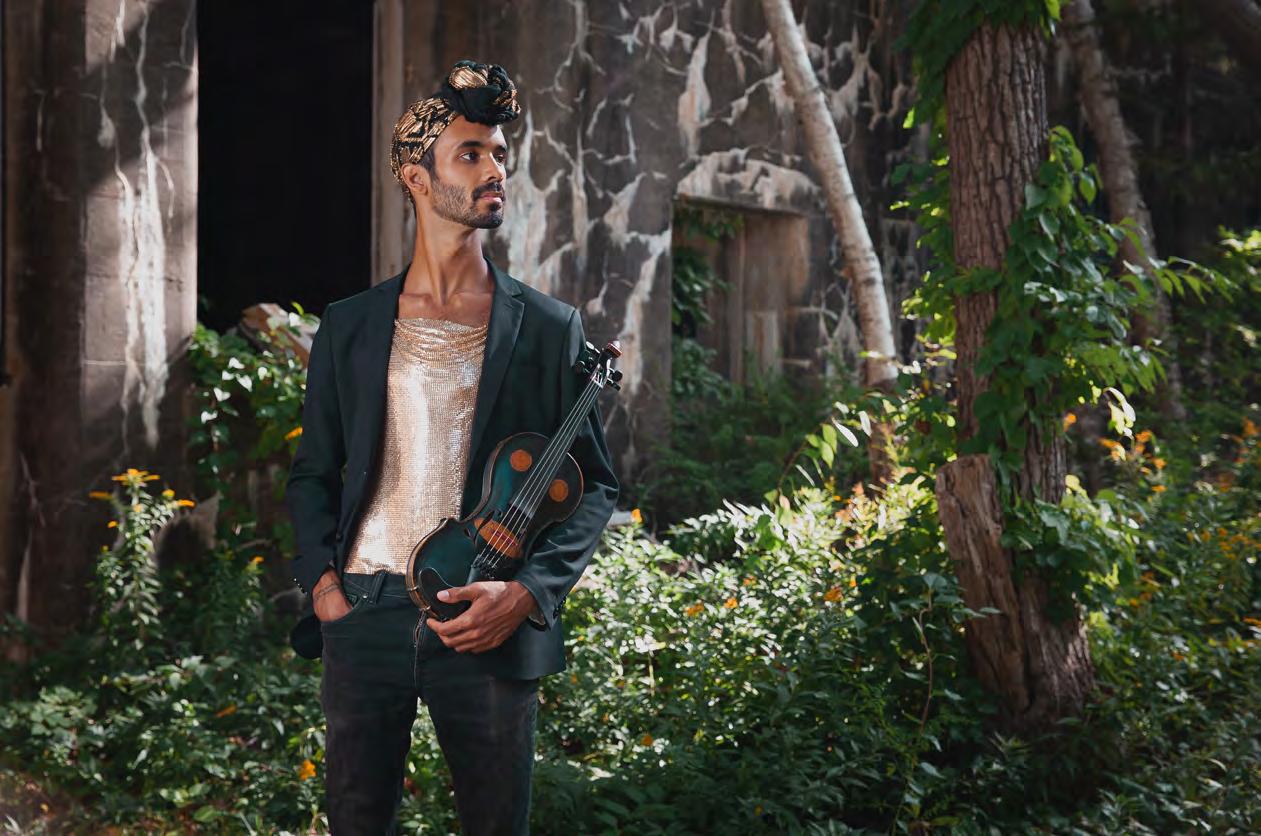
“but if the phrasing feels too tight, which happened with this song, I’ll rework it in a way that allows me to give my voice enough space. I stretched it into this hypnotic 6/8 rhythm and was like, ‘Yes, this feels more like me now.’”
Multi-instrumental Afrofuturist
Jake Blount, retro-tinged country singer Kaitlin Butts, and rock guitarist Terra Lightfoot have all added their own nuanced links to the song’s evergrowing chain recently as well. Blount included his fiddle-led version of “Where Did You Sleep Last Night” on his debut solo album, 2020’s Spider Tales. He personalized his take within his self-styled “genrequeer” framework by switching the inquisitive focus to male pronouns and branching out from the song’s oft-interpreted romantic dynamics into a wider spectrum of traumatic displacement and disappearance. Like his peers, Blount credits Cobain’s version for being his entry point,
joking with The Bluegrass Situation in 2020: “I’m sure there’s some Nirvana energy lingering from middle school Jake in this recording.”
Blount was later asked to contribute some atmospheric banjo to Victoria’s version as well. “I wanted someone who could really reinterpret what a banjo could sound like,” she says. “Jake made it very sparse and deconstructed — almost representative of nature itself — like a whippoorwill out in the wind. It never quite settles into full phrasing. It’s more a mood.”
In 2022, both Butts and Lightfoot added their covers to the song’s everexpanding canon as well. Butts closed her What Else Can She Do record with a country-noir rendition of “In the Pines,” telling Goldmine Magazine that she was first made aware of the song via Nirvana’s Unplugged.
While the majority of these variations are anchored in acoustic instrumentation, Lightfoot’s romp
through “Where Did You Sleep Last Night” features blistering electric guitar-playing and ferocious vocal growls. “Nirvana’s acoustic version came out when I was 8, so I probably heard that first,” she says, “But as an artist, I’ve always been able to communicate better with an electric guitar.”
Released as a standalone single that coincided with the launch of her own Midnight Choir record label in 2022, Lightfoot’s fiercely emotive fullband execution is even more impressive in the light of it being one of those magical one-take wonders: “I had been singing ‘Where Did You Sleep Last Night’ live for many years and had an intimate knowledge of how I liked to present it. I explained that approach to the band and we managed to cut it in one take on the last day of making my Consider the Speed record. It was almost an afterthought but there ended up being some real magic in it.”
Kaitlin Butts
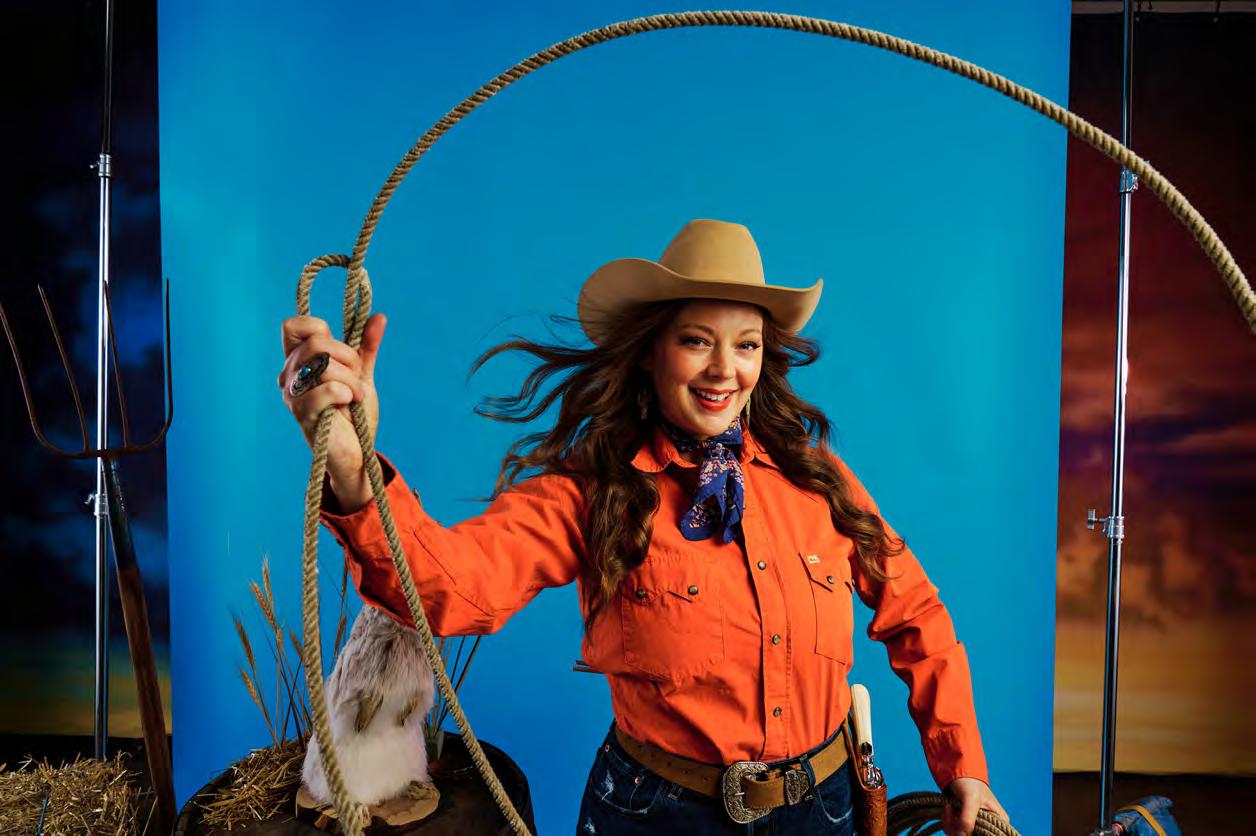
Each of these artists is quick to credit Nirvana for first bringing the song to their attention. But as learned students who understand folksong transmission, they also recognize the artist that inspired Cobain to cover the song in the first place — country blues legend Huddie “Lead Belly” Ledbetter.
By the time Cobain introduced his Unplugged version of “Where Did You Sleep Last Night” as being written by his favorite performer, he had already been pointing his more eagle-eyed fans toward Lead Belly for years. He first started covering the song live with Nirvana in 1989, occasionally wore Lead Belly T-shirts, and even included Lead Belly’s Last Sessions Vol. 1 on his famous “Top 50” favorite albums list (as seen in his posthumously published Journals).
Prior to Unplugged, Cobain had recorded the song at least twice, once
acoustically and once electrically. The former was a solo home demo captured on an old boombox in 1990 (available on the 2004 Nirvana rarities box set With the Lights Out) and the latter was a slow-burn, rumble-buzz version featuring Screaming Trees frontman Mark Lanegan on vocals and Cobain on electric guitar, released on Lanegan’s 1990 solo LP, The Winding Sheet. That version was originally intended to be part of a Lead Belly covers album that the duo dreamed about making. In his 2020 memoir Sing Backwards and Weep, Lanegan wrote of Lead Belly’s influence by recounting how he and Cobain would “spend hours at a time listening to his records and nothing else.”
Despite Cobain’s proclaimed admiration of Lead Belly, his attribution that the bluesman actually penned “Where Did You Sleep Last Night” is inaccurate. While Lead Belly’s handful of recordings and
performances from the 1940s did help popularize the tune (especially within blues circles and the midcentury folk revival), recordings of the song first materialized in the 1920s, with some of its earliest lyrical roots even being mapped as far back as the 1870s.
Folk music scholar Norm Cohen’s 1981 book Long Steel Rail: The Railroad in American Folksong devotes an entire chapter to the song’s winding backstory. He categorizes the song beneath the larger “In the Pines” umbrella and breaks down its two distinct lyrical tributaries — “The Longest Train,” traditionally popular with bluegrass and country musicians, and “Where Did You Sleep Last Night,” mostly found within blues, folk, and more modernized genres.
Cohen’s study leans heavily on the scholarship of ethnomusicologist Judith McCullough, whose 1970 doctoral dissertation on the song
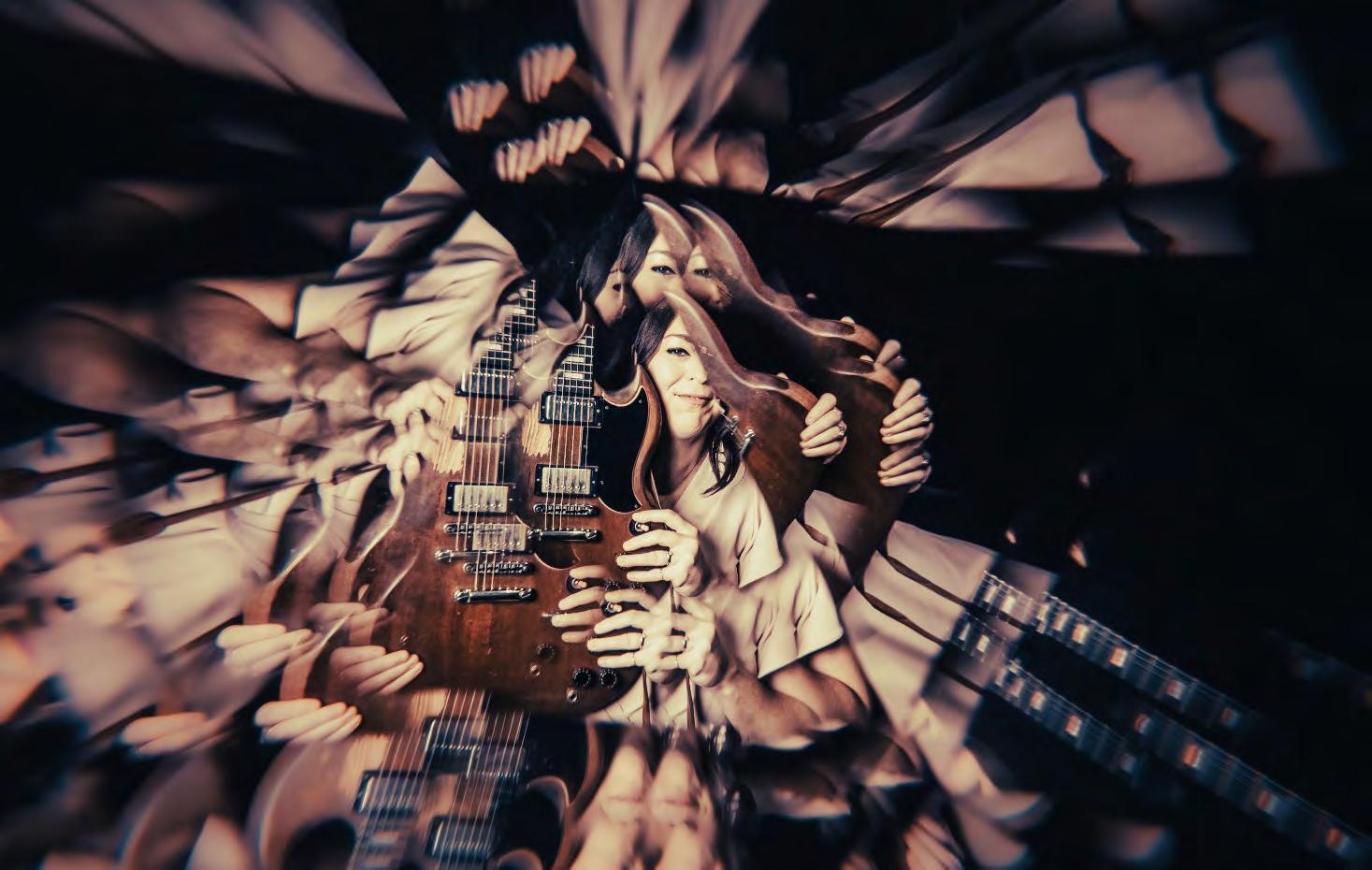
examined roughly 160 variations and found similarities across three lyrical elements, namely, the recurring “in the pines” refrain; different verses beginning with the line “the longest train I ever saw”; and various verses that reference a train-related accident.
Although McCullough found written evidence of the song documented in the 1910s and commercial recordings in the 1920s, it wasn’t until the 1940s that two artists delivered versions that really solidified each lyrical path for coming decades. In 1941, bluegrass progenitor Bill Monroe recorded his “Longest Train” version of “In the Pines” to great acclaim (his 1952 re-recording became equally enshrined); most artists who cover the “Longest Train” variation point to Monroe’s version as their influence. In 1944, Lead Belly released his first recording of “Where Did You Sleep Last Night.” Over the years, he would refer to the song by
various titles — “Black Girl,” “My Girl,” or “Where Did You Sleep Last Night” — depending on the nature of his audience at the time. Monroe’s bluegrass variation employed whimsical lyrics, train-like whistling, and country-flavored melodics, while Lead Belly’s blues variation was lyrically gloomier and verged into murder ballad territory.
In the following years, a plethora of roots-adjacent artists recorded their own variations. Some standout examples include The Louvin Brothers, The Kossoy Sisters, and Josh White in the 1950s; Joan Baez and Norma Tanega in the 1960s; The Carter Sisters and Pete Seeger in the 1970s; and Dolly Parton and Odetta in the 1990s and 2000s, respectively. In 2016 alone, Loretta Lynn, Fantastic Negrito, and Billy Bragg & Joe Henry recorded their own covers.
The song has also found surprising resonance in the wider pop world. It has been interpreted by
such musically disparate acts as industrial pop duo Sleigh Bells, rapper Kid Cudi’s alt-rock side project WZRD, and eclectic psych-rockers The Grateful Dead.
When grafting fresh tracks into the folksong vine, it’s also vital to tend to the music’s roots and origins. For newer artists, discovering the blues through grunge proved pivotal in their sonic journeys.
“When I found out that Kurt was a huge Lead Belly fan,” Victoria begins, “that absolutely sent me into blues music.” More than just highlighting a new sonic corner to enjoy as a listener, she describes that discovery process as being revolutionary in helping to find her own identity. “Including my music in the chain of the blues was a response to the cultural alienation I experienced in the larger Southern conservatism I grew up around. I
didn’t have what it took to really belong or be celebrated there. It wasn’t until I heard the blues that I felt included in a culture, a legacy, a tradition, and a process. I found that artists like Lead Belly and Skip James were the first ones who didn’t require anything other than me just showing up as I was. The blues was like, ‘That’s good enough because there’s a whole universe within you.’”
Lightfoot also discovered the historical trail from Nirvana back to Lead Belly during her early musical education. “Nirvana led me down the trail to Lead Belly, and when I first heard him, I felt like I had found my way home,” she says. “His guitar work — the ability to strum a 12-string with such strength while keeping a perfect rhythm and playing the bass melody underneath — is so inspiring to me.”
She continues, “Making the kind of music I do, I’m always inherently paying tribute to the great mothers
and fathers of rock and roll, like Lead Belly or Sister Rosetta [Tharpe] or Ma Rainey. It’s important to absorb as many early recordings as possible so we can pay proper respect to the artists and keep their memories alive.”
Kiah believes having a revered folksong experience such a huge mainstream moment is an important factor in the song’s longevity and expansive reach.
“There are going to be people that like Nirvana’s version and will never dig deeper,” she says. “It might be the closest to any old-time music they’re ever going to get. That’s still a win-win because there’s something to appreciate in each version and they should all be able to co-exist.”
Kiah sees the most recent serendipitous assortment of covers as being in direct conversation with Nirvana’s version from 30 years ago, Lead Belly’s “Where Did You Sleep Last Night” and Monroe’s “In the
Pines” from 80 years ago, and every other less-recognized iteration since then. “There’s something to be said for a song that’s been covered so much. You look at Nirvana and Lead Belly and Bill Monroe, just the breadth of their three styles alone. Then how each of us poured our own strengths into our versions. I’m always excited to hear old songs reappear in new ways.
“ To see this old-time blues song influence so many — including one of the biggest rock bands in the world — shows the inspirational power of Southern American folksongs,” she says. “American roots music is the bedrock of American popular music, and the reception and legacy of Nirvana’s Unplugged performance of ‘Where Did You Sleep Last Night’ is a great example of how contemporary music is still inspired by our musical elders. It all represents a cool fullcircle moment.” ■
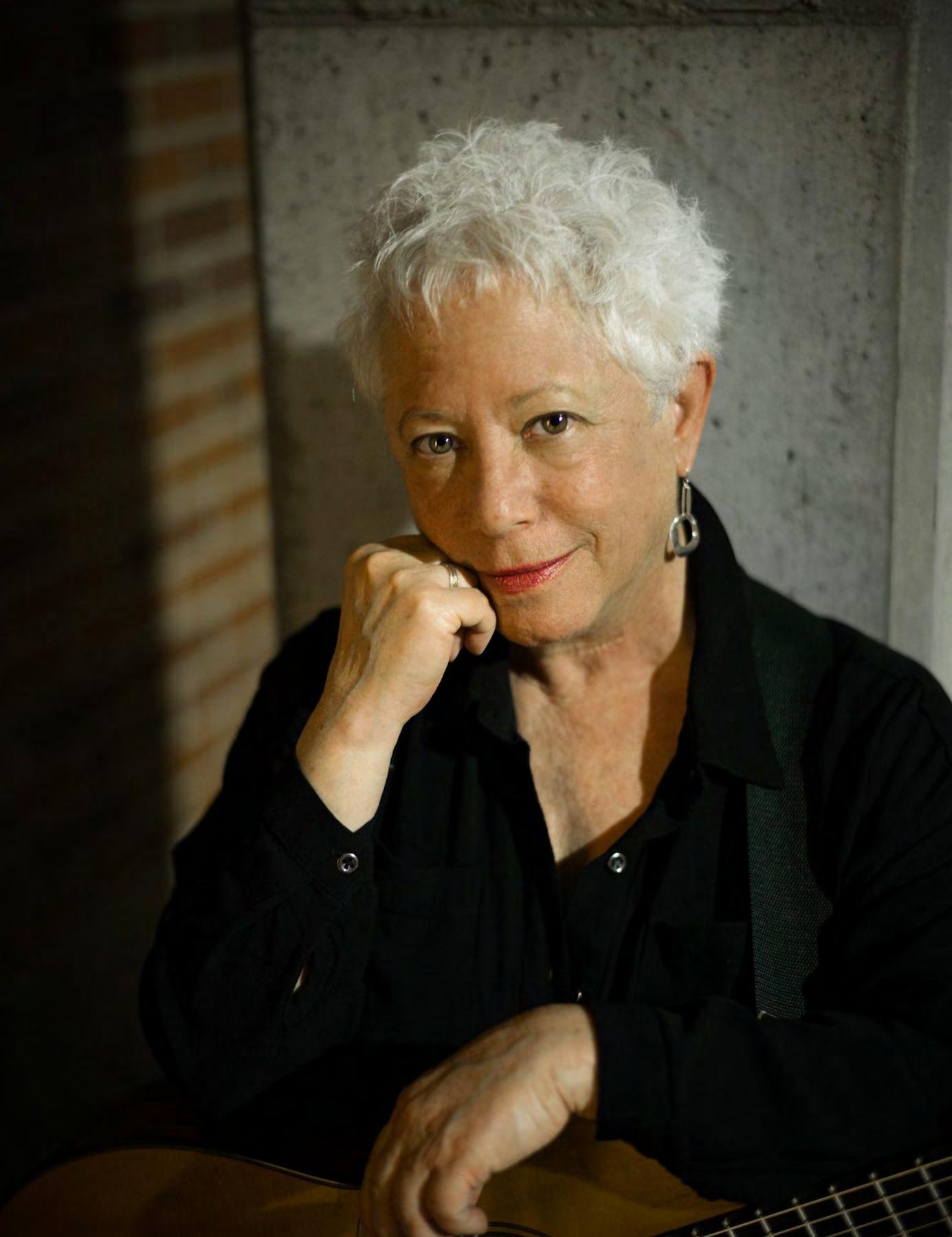
The Janis ian archives at Berea College in Kentucky is a new resource for music research, offering unfettered access to the singersongwriter’s personal life, family history, and prolific career. In 2022, Ian announced she was donating everything — from her baby shoes and signature boots to copyright paperwork, tax returns, and more — to the tuition-free liberal arts college with the requirement that the collection remain open to the public, offering an authentic and holistic look at the Grammy-winning singer-songwriter’s successes and challenges.
“Most schools create milliondollar stadiums. Berea creates million-dollar students,” Ian said in a press release. “My family and fans have supported Berea since 2004, first raising more than $600,000 in scholarship funding and now turning my life over to their brilliant archivists.”
The Janis Ian Archives opened in October with a weekend-long celebration and tribute concert featuring Amythyst Kiah, Aoife
Scott, Melissa Carper, S.G. Goodman, and Senora May.
Tim Binkley, head of Special Collections and Archives at Berea College’s Hutchins Library, emphasizes that Ian wanted open access to these documents for people to understand her authentically and honestly, both as an artist and businesswoman. “She was defrauded by one of her accountants and left a huge debt to the IRS that it took her years to repay, but she succeeded at repaying all that money that was basically stolen from her,” Binkley says. “Normally archives don’t show you the tax records of someone, but Janis insists. She wants people to get the sense that she persevered and then moved on. That can be a lesson for our students also and for the public: Your past does not determine your future.”
Project archivist Peter Morphew says one of the most critically important business documents among 30 boxes full of them is an agreement for her 1982 performance in South Africa. “She decides to break the cultural
blockade,” Morphew says. “To this day, she has fans from South Africa writing to her to say, ‘That’s the first time I ever saw an integrated band in an integrated venue and it changed our minds on Apartheid.” Visitors can glean insights into Ian’s relationships with colleagues such as Jimi Hendrix, Janis Joplin, Dolly Parton, and Willie Nelson. A listening station will also invite visitors to hear Ian’s recordings on vinyl, and her 1937 Martin D-18 guitar is available for strumming. “When you think about archives and manuscripts, the general rule of thumb is, ‘The less it gets handled, the better’ because that is how you preserve the longevity,” Morphew says. “But the guitar is the opposite. You actually need to play it by hand in order to preserve its providence.”
Adds Binkley, “The archives can serve as a basis for new creative expressions that also connect to the very interesting life story of Janis Ian.”
More information can be found at berea.edu/janisian.
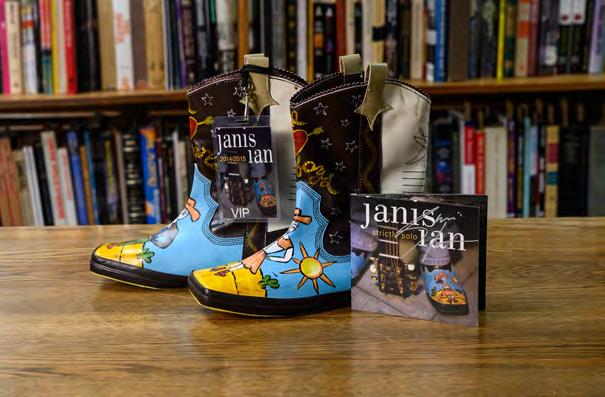
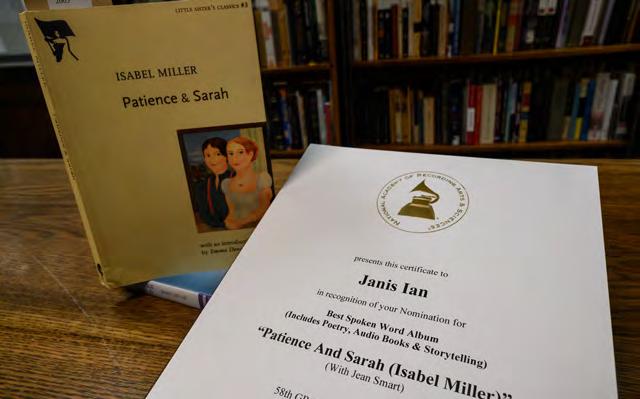
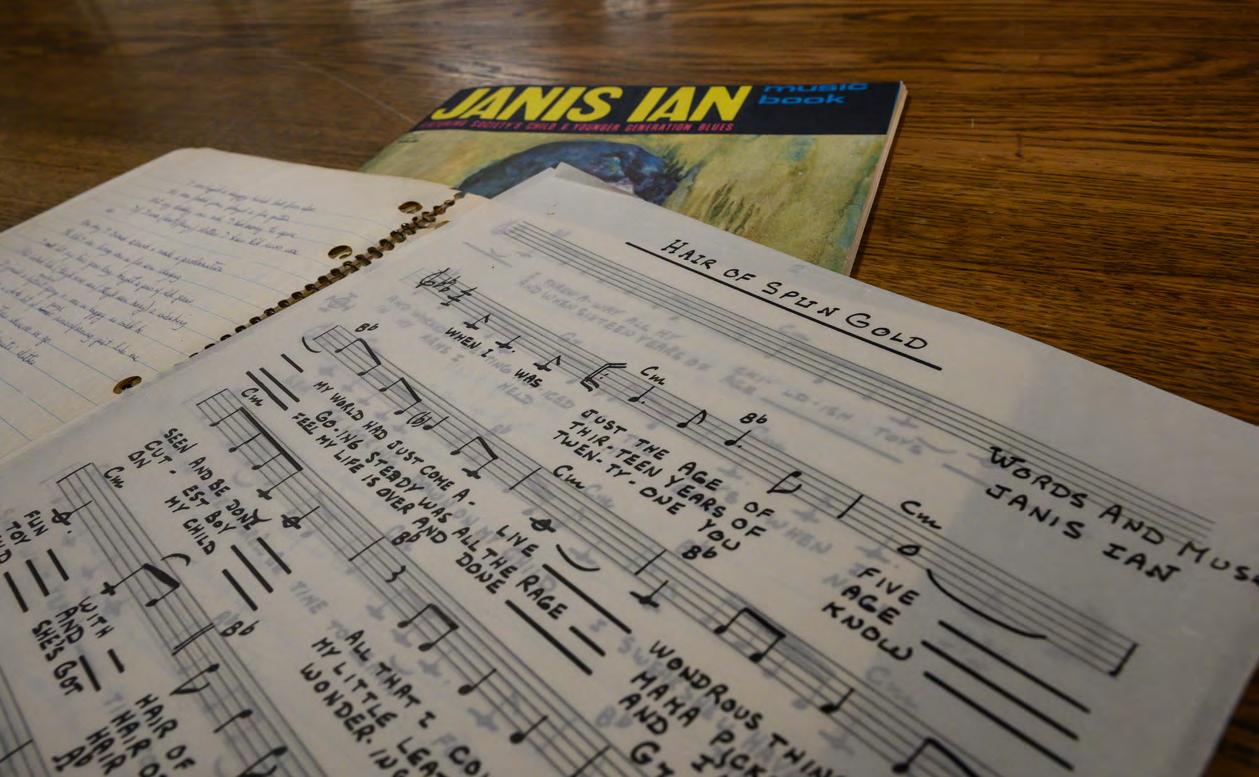
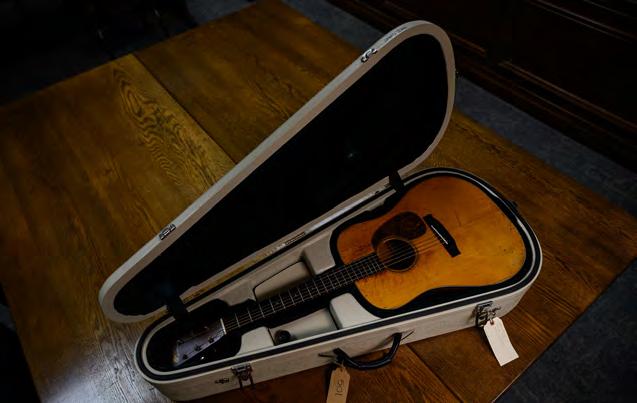
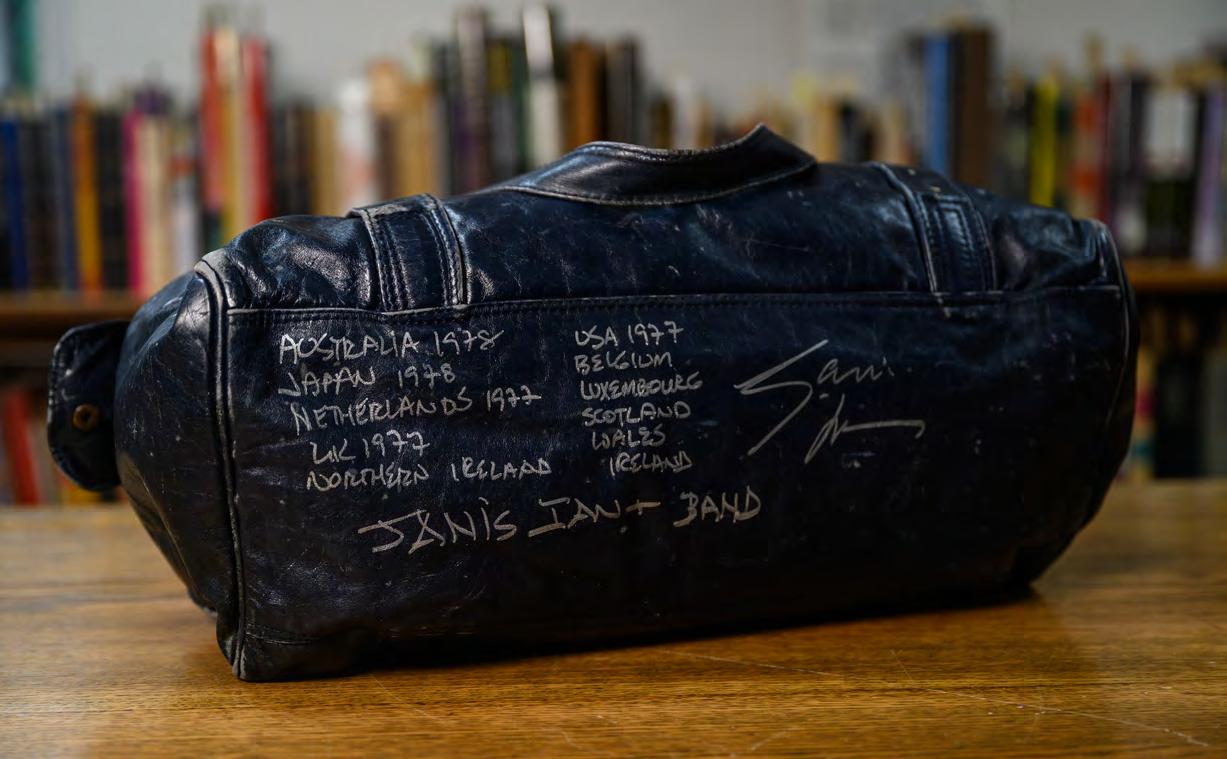
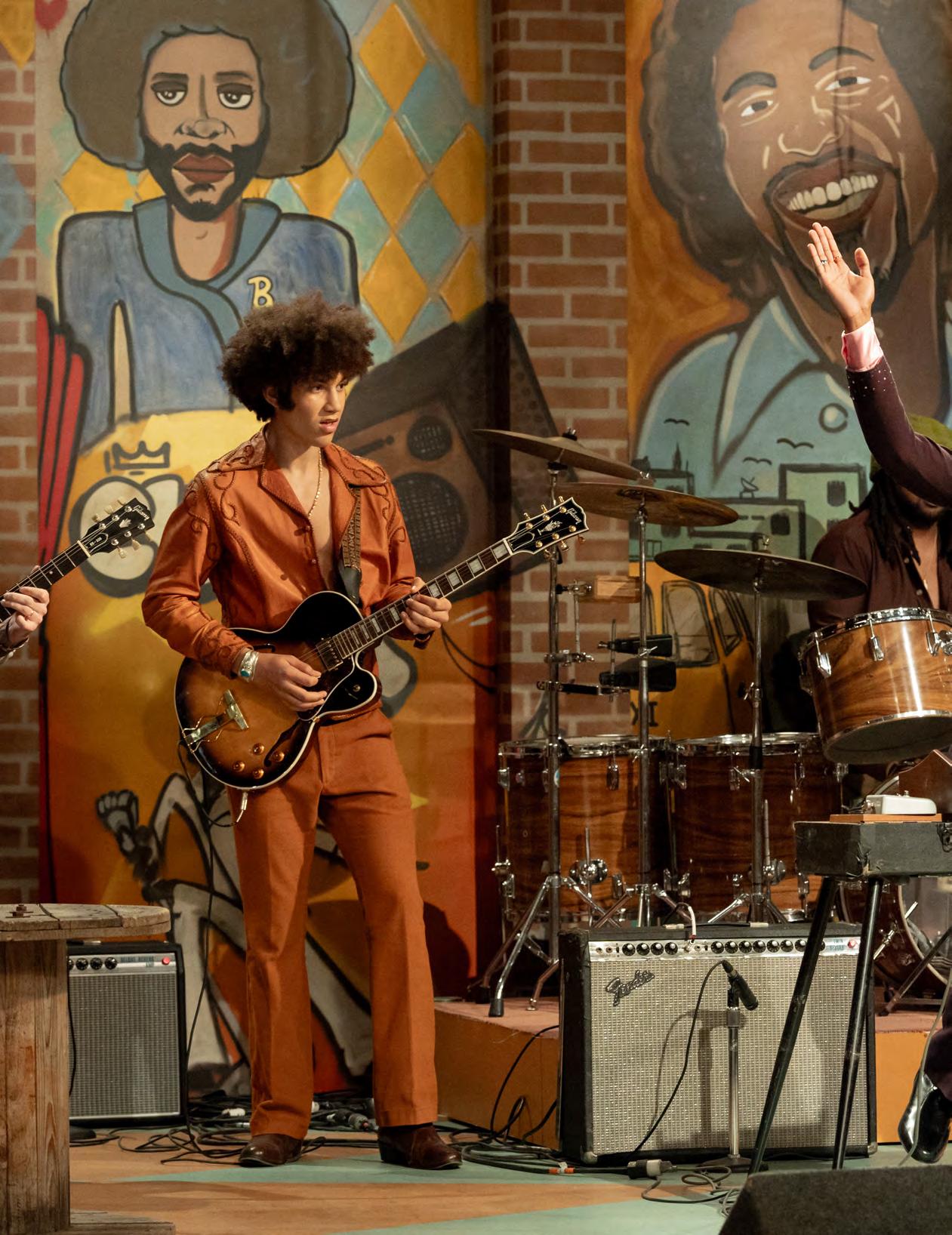
50 seasons of musical moments on ‘Saturday Night Live’
by Colleen McNally Arnett
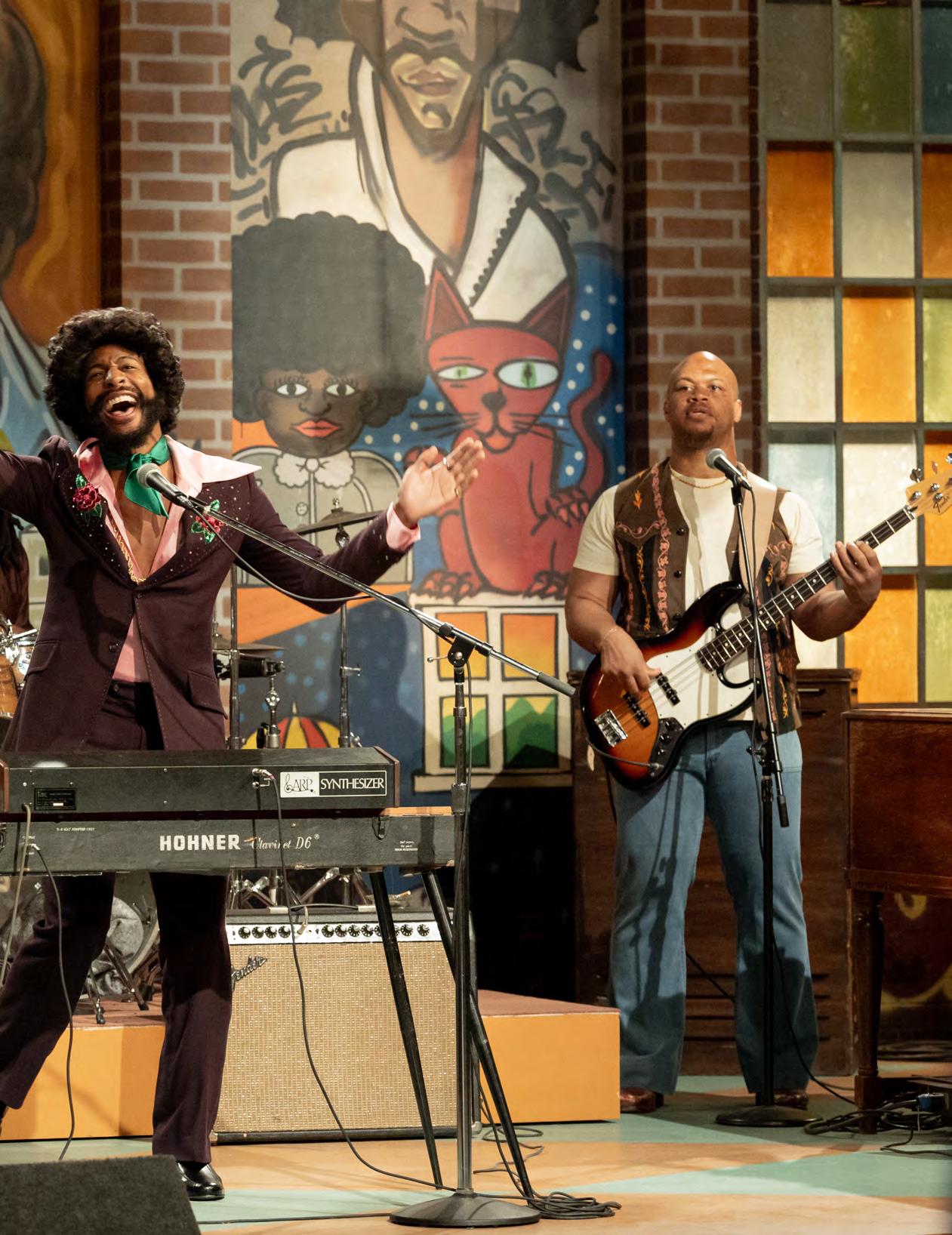
Chevy chase, dan aykroyd, Garrett Morris, Gilda Radner and John Belushi.
Since Saturday Night Live first hit the airwaves in October 1975, these talented performers have become synonymous with the series, and rightly so.
However, SNL has always been about more than its comedy sketches. For 50 seasons, the live show’s success has hinged as much on its musical acts as its cast, crew, and celebrity hosts.
This winning formula that has worked for half a century can be traced back to the show’s very first musical acts, roots music icons
Billy Preston and Janis Ian. Now, thanks to Sony Pictures Entertainment’s new film Saturday Night, which debuted at the Telluride Film Festival in August and was widely released in theaters in October, the public can relive the whirlwind 90 minutes leading up to the show’s revolutionary first broadcast. The movie follows SNL’s creator and producer, Lorne Michaels, as he attempts to convince NBC leadership to take a chance on a show with unknown actors and counterculture musical guests, zero narrative, and even less structure.
“ When you start to look at the history of SNL, it’s a wonder that it
ever made it to air,” the film’s co-writer and director Jason Reitman said during the film’s press junket. “They had everything against them and a network that actively just wanted to show Johnny Carson reruns on Saturday night.”
Spoiler alert: Not only did SNL make it to air, but the show and its music changed television forever.
SNL’s ability to bring visibility to rising musical stars has always been one of its biggest draws.
“SNL is a bit of a launch pad. It’s a very big deal to be on SNL,” says Dr. Stephen Tropiano, a professor of
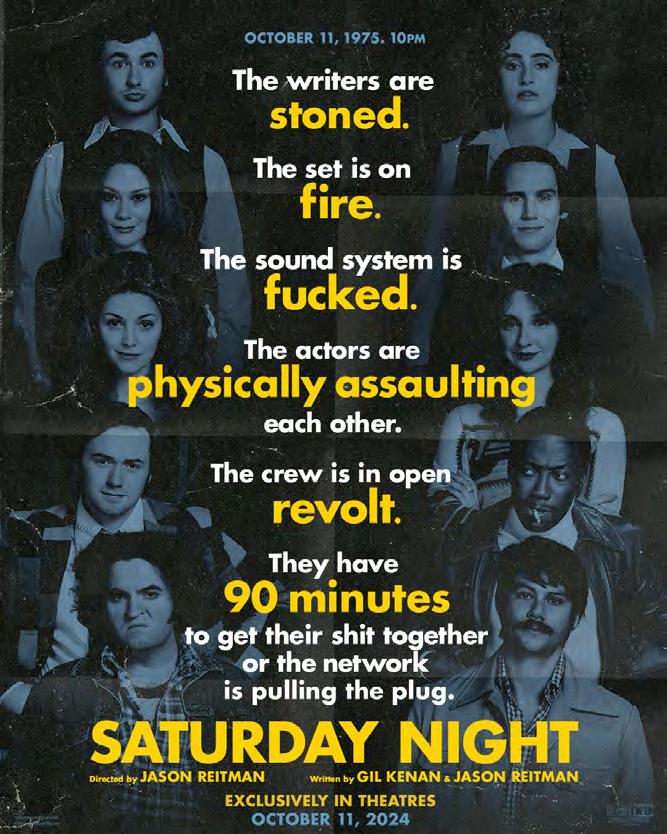
screen studies at Ithaca College and the co-author of The SNL Companion: An Unofficial Guide to the Seasons, Sketches, and Stars of Saturday Night Live. He recalls being introduced to artists like Kate Bush and Noah Kahan for the first time while watching the show.
According to Saturday Night: A Backstage History of Saturday Night Live by Doug Hill and Jeff Weingrad, Billy Preston and Janis Ian were not the first choices for musical guests for the SNL premiere. “Michaels was originally struggling to get Carole King and Stevie Wonder,” says Christian Schneider, a National Review columnist and co-host of the
podcast Wasn’t That Special: 50 Years of SNL. “It’s kind of fortuitous that it ended up being the way that it was.”
When Preston took the stage in Studio 8H at 30 Rockefeller Plaza on that auspicious fall night in 1975, the keyboardist and singersongwriter was already a bona fide star. The same month he performed his single “Nothing From Nothing” on SNL, the song reached No. 1 on the Billboard Hot 100 and became his second solo chart-topper in the United States after his 1973 hit “Will It Go Round in Circles.”
SNL wasn’t Preston’s first rodeo for live TV. In 1957, at just 11 years old, he appeared on The Nat King
Cole Show, playing a version of Fats Domino’s “Blueberry Hill.”
Throughout the 1960s, Preston performed with some of the decade’s biggest acts, including Little Richard, Sam Cooke, Ray Charles, The Everly Brothers, Rev. James Cleveland, The Beatles, and The Rolling Stones. Preston has received posthumous acclaim in recent years. In 2021, Ringo Starr inducted him into the Rock & Roll Hall of Fame (right around when The Beatles: Get Back documentary series, in which Preston featured heavily, premiered on Disney+). And at South by Southwest last year, Impact Partners Film premiered a
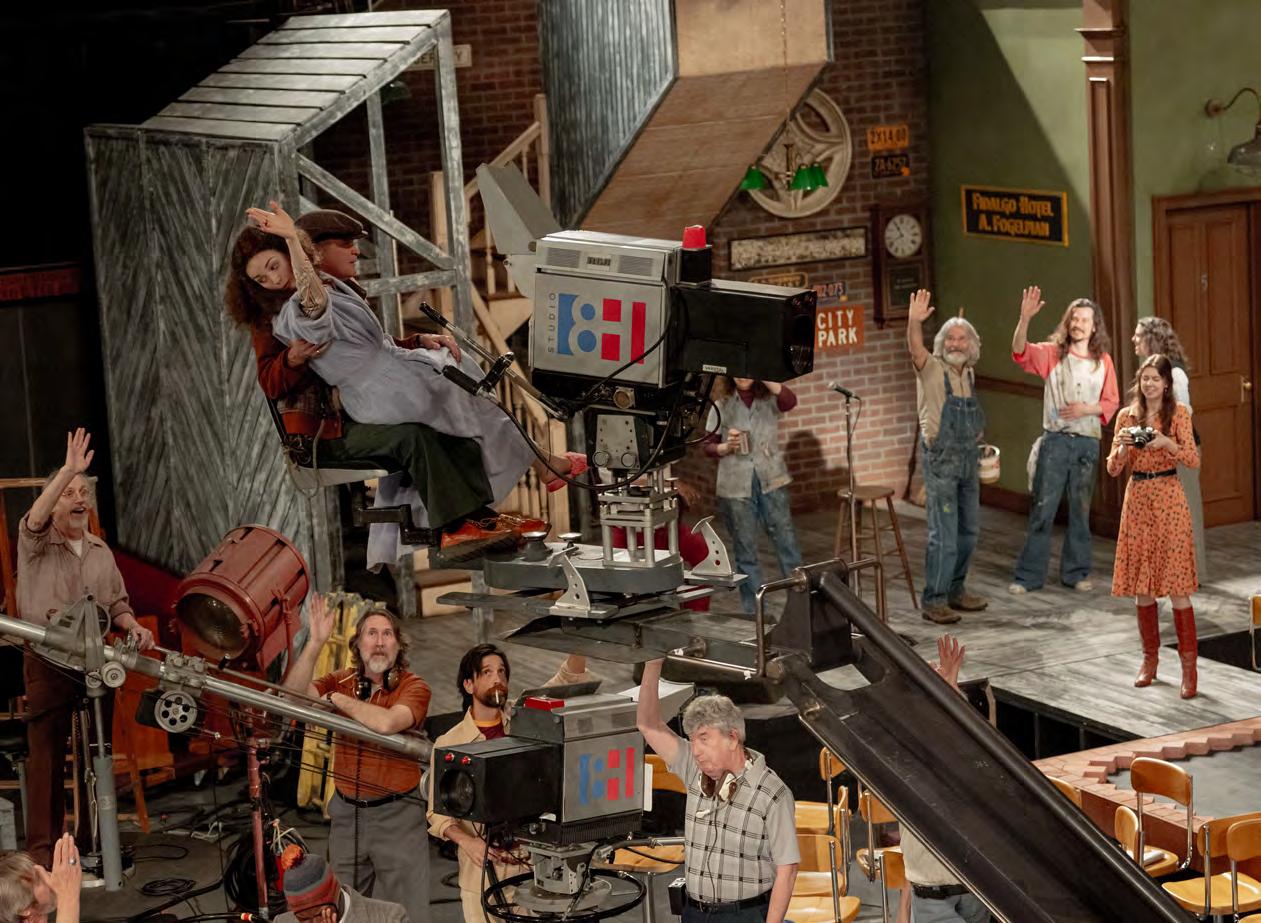
documentary titled Billy Preston: That’s the Way God Planned It, which explores Preston’s complex life and lasting musical legacy.
While Preston (who is reincarnated in Saturday Night by Jon Batiste, himself a brilliant pianist and former bandleader of The Late Show with Stephen Colbert) and his big band certainly commanded attention during the SNL premiere, Ian made the rowdy set and its live audience go quiet to tune into her soft vocals and acoustic guitar. She performed “Seventeen,” which was ranked No. 3 on the Billboard Hot 100 chart at the time.
Ia n, who is played in Saturday
Night by Naomi McPherson of the indie pop band MUNA, was only 23 during her SNL debut. Today, the 73-year-old has retired from singing, but her legacy continues to inspire young people. She recently donated her archives to Berea College in Kentucky with the stipulation that the records remain available to the public.
While the archives don’t include anything directly tied to her experience on SNL, the collection reinforces what Michaels knew back in 1975: Ian was an artist worth watching. In turn, says Schneider, spotlighting musical guests gave SNL a deeper sense of cultural relevance.
While Preston and Ian’s songs were trending on the radio waves in 1975, the artists themselves were not commonly seen on mainstream television. Their inclusion underscores part of what makes SNL so special, even five decades later: For a comedy sketch show, SNL takes its musical guests very seriously, with their carefully curated sounds helping to shape the show’s tone, format, and fanbase.
Overseeing each judicious booking is Michaels, who has led the show from its inception to the present, save for a hiatus between
1980-1985. The choice to highlight Preston and Ian demonstrates the show’s independence, says Schneider. “It wasn’t agents or media representatives coming to the show saying, ‘You have to have my person on,’” he explains. “It was Lorne Michaels looking out into the zeitgeist, seeing who he liked, who other people recommended to him, and making that choice.”
That sense of independence would help the show go on to book more artists who broke the tired, Hollywood mold. “In that first season, I think I counted 11 Black artists of the 24 episodes,” Schneider says. Among these were Martha Reeves & The Stylistics, Bill
Withers, Al Jarreau, and Preservation Hall Jazz Band.
When the show first aired, there was nothing like it on TV, says Tropiano. “Most of the original cast were people from The National Lampoon Radio Hour and improv groups. They were all sort of products of the ’60s, so SNL had a counterculture feel to it. Young people flocked to it because most television at that time, particularly in the ’70s, was more for parents than for the younger generation.”
Not only was there a lack of programs made for, or by, teens and 20-somethings, but there also weren’t many opportunities to watch these bands perform live,
outside of attending a concert or catching the occasional talk show appearance. “It was almost MTV before there was MTV,” Schneider says.
Since that initial episode, SNL has tweaked the show’s format, scaling down from two musical guests to just one per episode. The second episode brought together Paul Simon and Art Garfunkel — a historic reunion after a three-year separation.
Over time, the genres of music showcased also widened. There was the infamous Halloween 1981 episode when Belushi booked the punk band FEAR, which led to a mosh pit and reports of smashed
equipment. According to Lapham’s Quarterly, chaos ensued and a pumpkin hit SNL’s stage manager in the chest. “The real audience at Saturday Night Live was scared to death,” FEAR frontman Lee Ving said later. His band was permanently banned from 8H.
The late ’80s through the 2000s saw more and more hip-hop artists, as well as the rise of indie and alternative bands like Nirvana and Pearl Jam. A 1992 performance by Sinead O’Connor became one of the most controversial in the show’s history when her version of Bob Marley’s “War” replaced the lyrics of “fight racial injustice” to “fight sexual abuse.” O’Connor tore up a picture of Pope John Paul II, garnering more than 4,000 phone calls to NBC.
Rolling Stone ranks Neil Young’s
1989 appearance in the top five greatest musical performances in SNL history, crediting his performance of “Rockin’ in the Free World” for kicking off his career revival after a decade-long plateau. In 2021, Phoebe Bridgers made a statement of her own when she smashed her guitar onstage after strong performances of songs from her Grammy-nominated album Punisher while wearing her signature skeleton suit.
Despite SNL’s unpredictable nature, one constant is the jazzy opening number and interludes from the show’s house band. Written by composer Howard Shore — a founding member of SNL’s house
band — the series’ theme song sets the tone for each episode. If the show’s sketches are meant to reflect an all-night romp through New York City, then the house band captures the sound of that Saturday night.
The jazzy riffs feel spontaneous and colorful, the trumpet call akin to the horn of a taxi in rush-hour traffic, a burst of saxophone akin to laughter from the crowd at an improv show.
“ This is a New York show through and through,” Schneider says. “The opening music for sure has that jazzy New York feel from the 1970s and it still does. It’s an important part of the show in that regard.”
The house band typically plays the opening theme after the cold open as well as in between commercial breaks — an auditory glue that holds
“It wasn’t agents or media representatives coming to the show saying, ‘You have to have my person on.’ It was Lorne Michaels looking out into the zeitgeist, seeing who he liked, who other people recommended to him, and making that choice.”
Christian Schneider
National Review columnist and co-host of the podcast Wasn’t That
Special: 50 Years of
SNL
the show together. “They kind of make everything somewhat cohesive because if you go through an episode, you see how the music provides all the transitions between everything,” says Tropiano. “I don’t think the house band gets enough credit. They’ve had these really great people like Howard Shore and Paul Shaffer, and a lot of people who are in the band have been there a long time.” (SNL’s current band director, Lenny Pickett, joined in 1985 as a tenor sax soloist and was promoted to leader in 1995.)
For the Saturday Night movie, Batiste reinterprets those iconic jazz sounds for the film’s score. In true SNL spirit, Batiste pulled double duty, not only playing Preston but also creating the tracks live in realtime on the set. As a result, Batiste’s ticking score is as alive and heart-
racing as the film itself — a series of happy accidents.
“I’ve never worked with a composer like Jon Batiste. He is touched by God in a way that is really hard to explain,” said Reitman during the film’s press junket. “[Batiste] was there with his band on set, and I just started showing him scenes. I could show him a scene and he would know what to do with that. He would get the band playing and we would just start recording.”
Batiste told Variety that Preston was a big influence on the score: “I was carrying his spirit into the recording and the composition. So there was a lot of influence that’s not so direct musically, but it’s more like a patron saint of the score, somebody who’s watching over us.”
For the first few episodes of its
50th season lineup, SNL’s musical guests represented a breadth of genres, including pop stars with huge commercial appeal like Billie Eilish and Chappell Roan, classic rock legend Stevie Nicks, and country-pop darling Jelly Roll. But there’s always the mystery of who may be called next. Spontaneity— the kind of “yes, and” mentality that both improvisational comedians and musicians have mastered — is a key factor that keeps driving SNL forward.
“ The whole thing could fall apart,” Schneider says. “There’s that kind of dangerous element to that, and that goes for the musical guests as well. When you see something like that, you say to yourself, ‘I’m seeing something that I’ve never seen before, and this could all get crazy at some point.’” ■
by Hilary Saunders
Roots rock star nathaniel
Rateliff played Saturday Night Live in February 2021, when New York City was still taking COVID protocols very seriously. He recalls testing to get into the building, looking down onto a nearly empty Times Square, and rarely leaving his hotel room except to get food. It didn’t really color his debut, though; his only disappointment was not getting to go to one of those storied SNL afterparties.
“It was another layer of stress to be doing the … longest-running, coolest TV show [and] to have the
pressure of like, ‘Well, maybe somebody caught something on the way here?’” he says, calling from Rogers, Arkansas, on tour with his band The Night Sweats in support of their new album, South of Here. Personally, that was a confusing time for Rateliff. He had just released a solo record, And It’s Still Alright, in February 2020, and the messaging wasn’t really clear whether The Night Sweats had split up. (For the record, they were on a break.) Between the public confusion over the state of his band and the pandemic cutting his solo tour short after just 10 dates,
Rateliff recalls, “It basically felt like my career was over.”
During lockdown, Rateliff received a surprising request from an unexpected source: singer, actor, and five-time SNL host Justin Timberlake. The former *NSYNC star had been confirmed to play the protagonist in the drama Palmer, released in 2021 on Apple TV+, and needed a musical clincher.
Rateliff’s resulting “Redemption” starts off distant and nearly remorseful, before his massive voice cracks open the whole song. Not only did “Redemption” serve as the soundtrack to the film’s closing
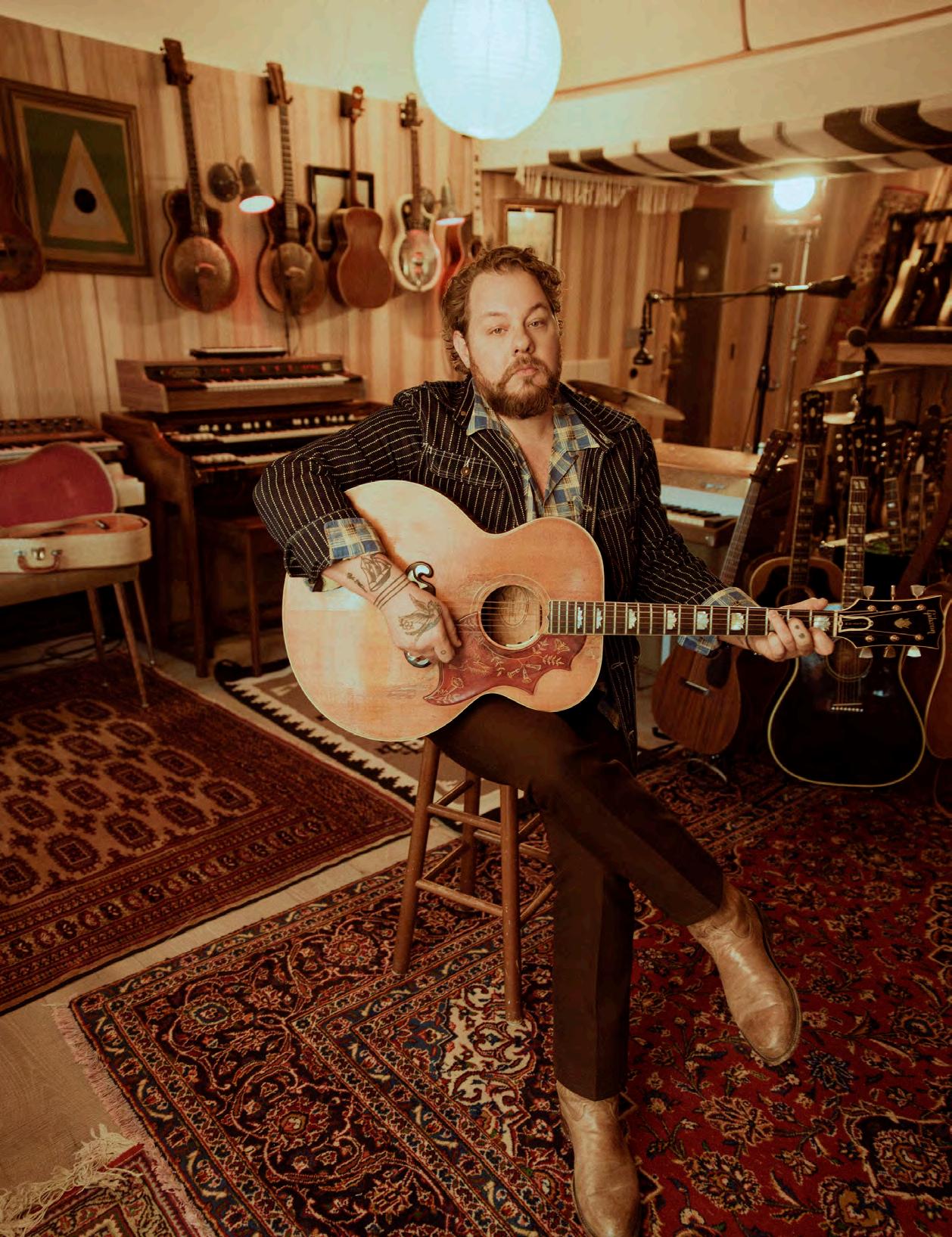
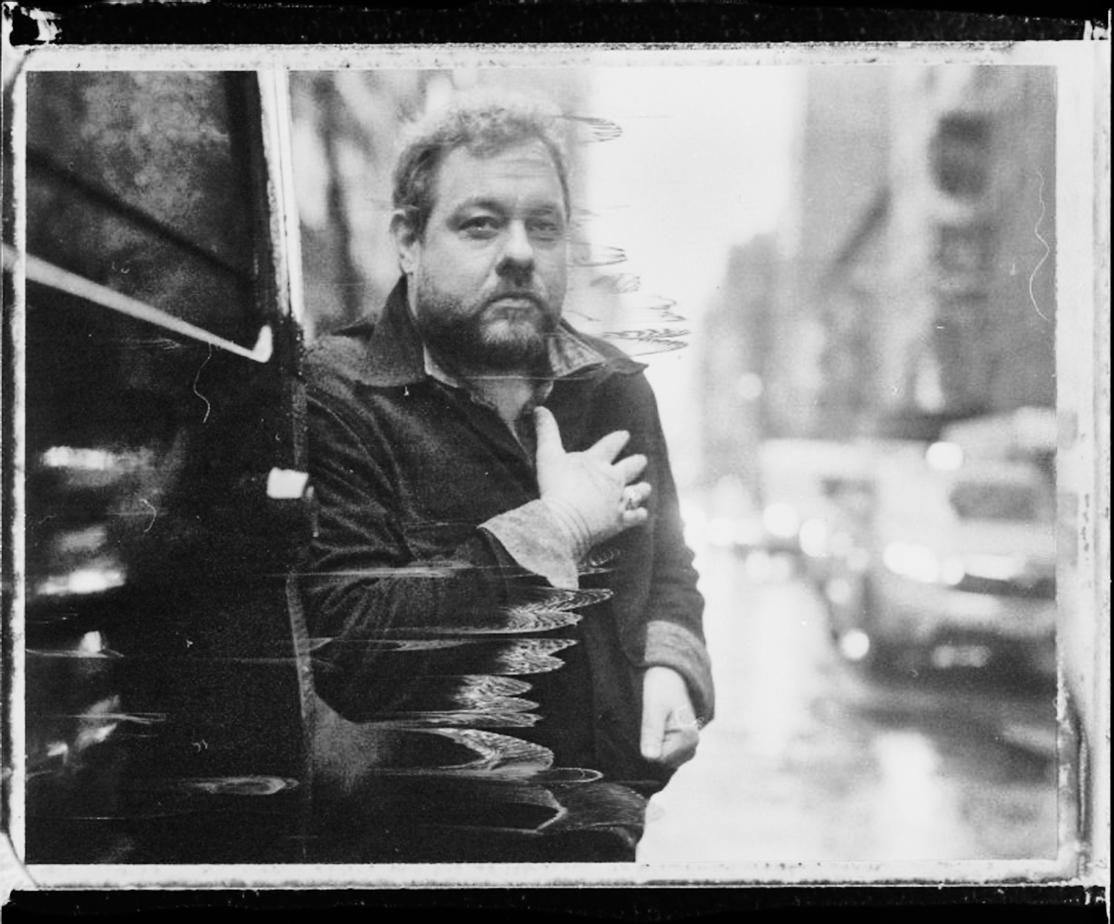
credits, but it also became part of Rateliff’s entry point to SNL.
A nother extraordinary link that got Rateliff to Rockefeller Plaza came from Tonight Show host Jimmy Fallon, who was a cast member on SNL from 1998 to 2004. Fallon had been playing the band’s stomp-clap hit “S.O.B.,” from their 2015 self-titled debut, around the Tonight Show studio and was the first to give Nathaniel Rateliff and The Night Sweats a shot on latenight television later that year.
“From the moment that we played that show, everything kind of changed,” Rateliff says, “which is
also because of SNL, because Jimmy wouldn’t have been there had he not had that show!”
Thanks to the band’s management and team pushing “Redemption,” and Fallon himself “still in Lorne’s ear,” Rateliff performed twice during his SNL debut — once as a solo artist playing the movie’s key song and once as the frontman for The Night Sweats, playing their 2018 song “A Little Honey.” Unofficially, Rateliff divulges, he actually played three times, giving the cast and crew an off-camera, encore performance of “S.O.B.” after they finished filming.
As that episode’s host, actress/ producer/director Regina King, introduced Rateliff for the first time, five blue spotlights seemed to cocoon him. Rateliff began gently strumming his gold Gibson hollow-body guitar to start “Redemption” alone before the stage lights widened to reveal a backing band bolstered by three background singers clad in white. When King came back to present Rateliff and The Night Sweats, the group returned together and in full force, with two keyboards, three horns, guitar, bass, and drums. The performances were unanimously considered successful, so much so
that Rateliff believes he and the band came out of the pandemic better than where they started.
To this day, Rateliff says that he watches SNL weekly every season.
Listing off the show’s early heroes like brothers John and Jim Belushi, Dan Aykroyd, and Bill Murray; 1990s cast members like Chris Farley, Will Ferrell, and Will Forte; and 2000s-era actor-comedian Jason Sudeikis, he lauds the show’s method of using humor as form of social commentary.
“Comedy as an art form is a reflection of what’s happening right now,” he says. “I think it’s important for us to see the humor in some of the
ridiculous things we find ourselves caught up in.”
He continues, “Growing up with SNL, you know, I feel like it’s been a part of my life. It was a part of my parents’ life. The comedians and actors that went on from there have really helped shape our culture over time. There’s all these characters that I grew up with that got their start on SNL. … I feel like their influence is everywhere. And I don’t know if people actually see that — the effect that SNL has had on our culture over an extended period of time. It’s pretty interesting to me, the amount of influence it’s had.” ■
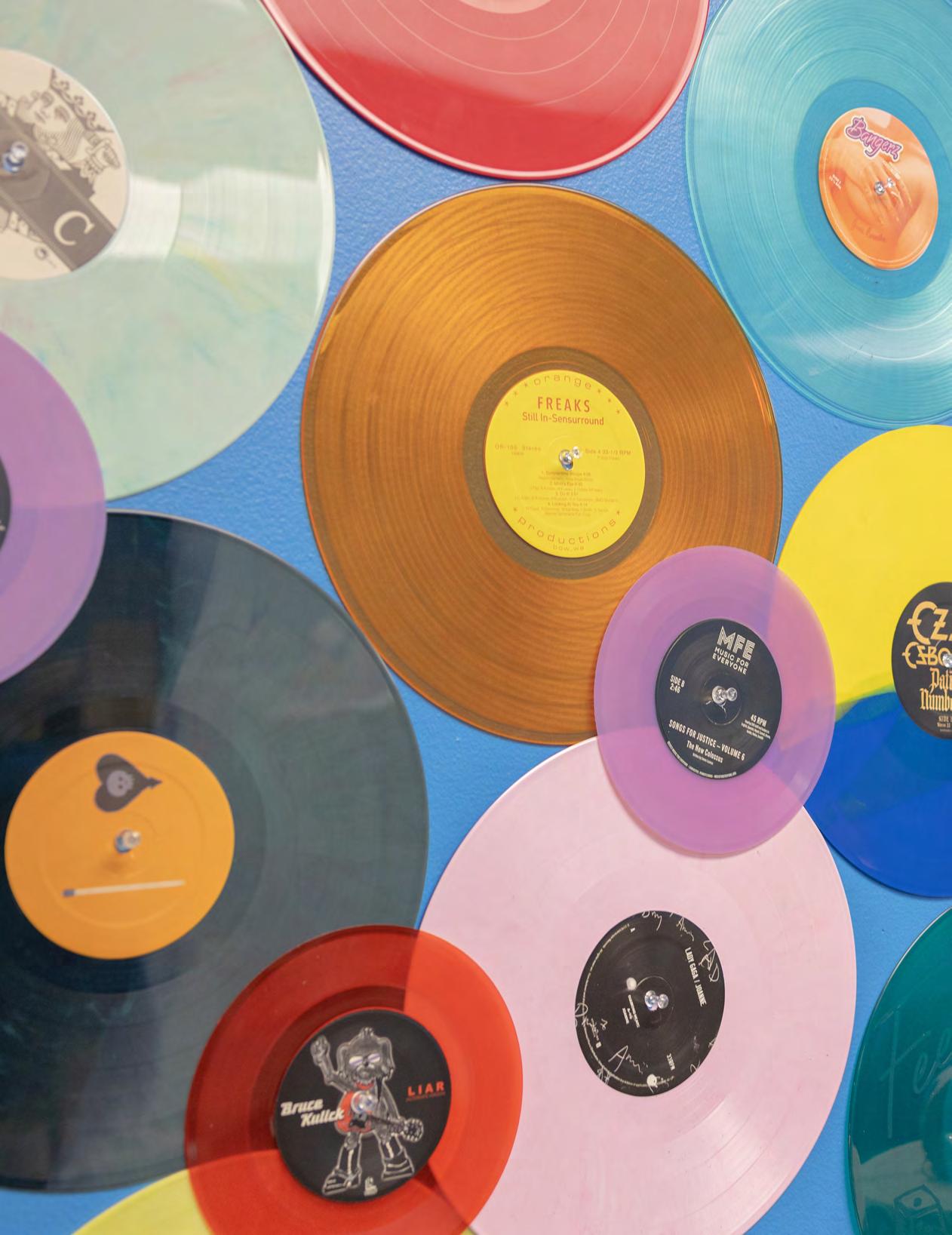
Nashville’s United Record Pressing has kept spinning for 75 years of music business changes
by Margaret Littman
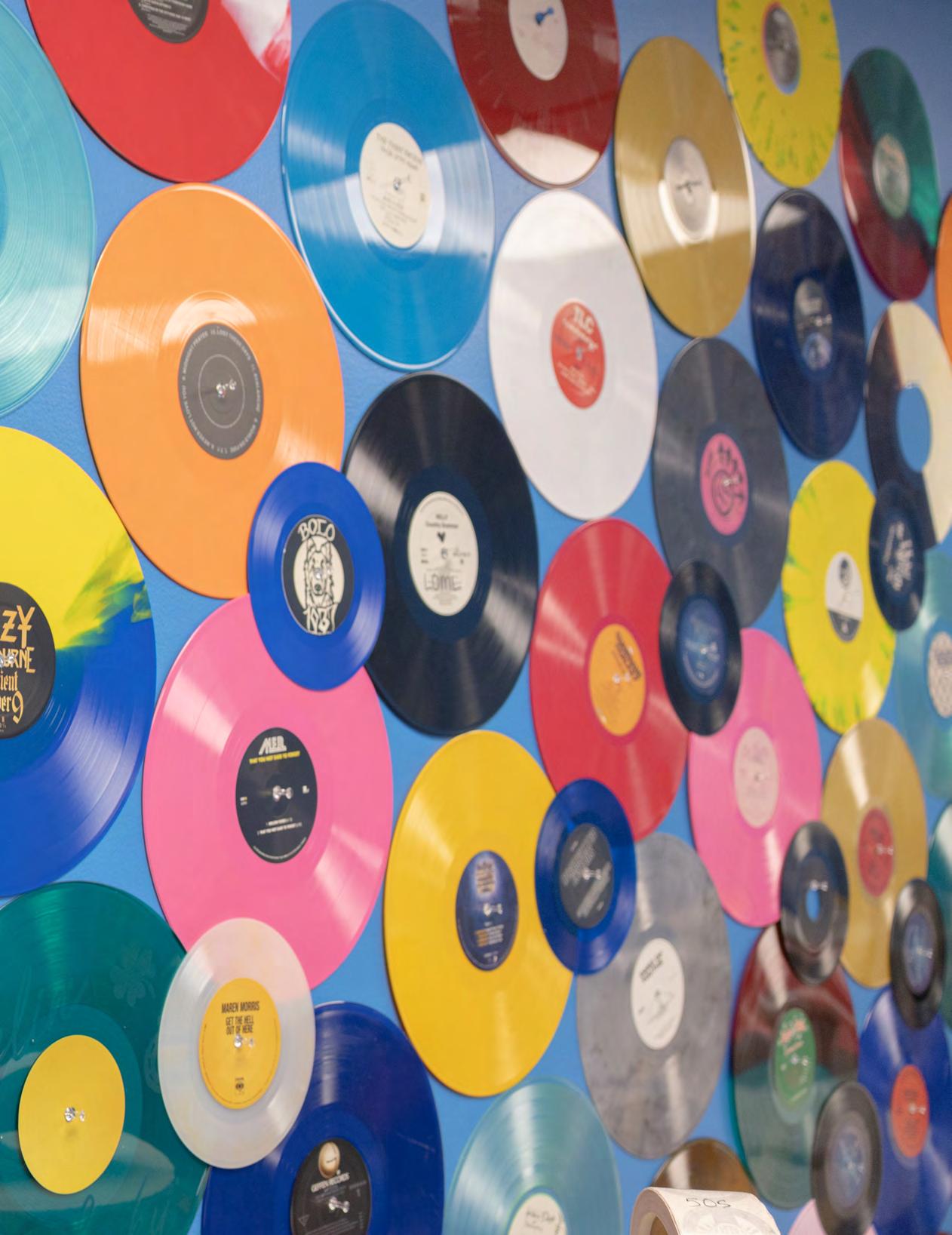
Dan tyminski has sPent four decades in the music business, winning Grammy and International Bluegrass Music Association awards, playing in Alison Krauss’ band Union Station, and singing for George Clooney’s character in the movie O Brother, Where Art Thou?. But it wasn’t until 2024 that he got to go to a record-pressing plant, unbox his new album, and sign the first copy right there, where the music had been physically produced.
“Stuff has always kind of showed up on a doorstep,” he says, describing his detachment from the process.
But for the release of Live From the Ryman in October, Tyminski was able to be more involved because the record was made at United Record Pressing in Nashville, where he lives.
“ When it comes to my fans, they’re all over vinyl. When you compare vinyl to anything else, it just requires more attention. There’s a process to putting on a record and listening to it: It brings you to a different place as a listener. I think you absorb more. It’s not like a disposable feeling of punching a button on a phone and then hitting skip as soon as you’re bored with a track,” he says. “You don’t pay the
same attention when listening as you do when you put on vinyl.”
According to Luminate, vinyl record sales are up more than 6% in 2024, and that doesn’t include independent record store sales. In the two years prior, sales increased more than 10%, according to data from the Recording Industry Association of America. United Record Pressing itself has reported increased demand in all genres.
Ga ry Kraen, general manager of 8 Track Entertainment, Tyminski’s label since 2022, credits bluegrass fans for much of the growth. “They really have a big, true passion for the music,” he says. “They do believe
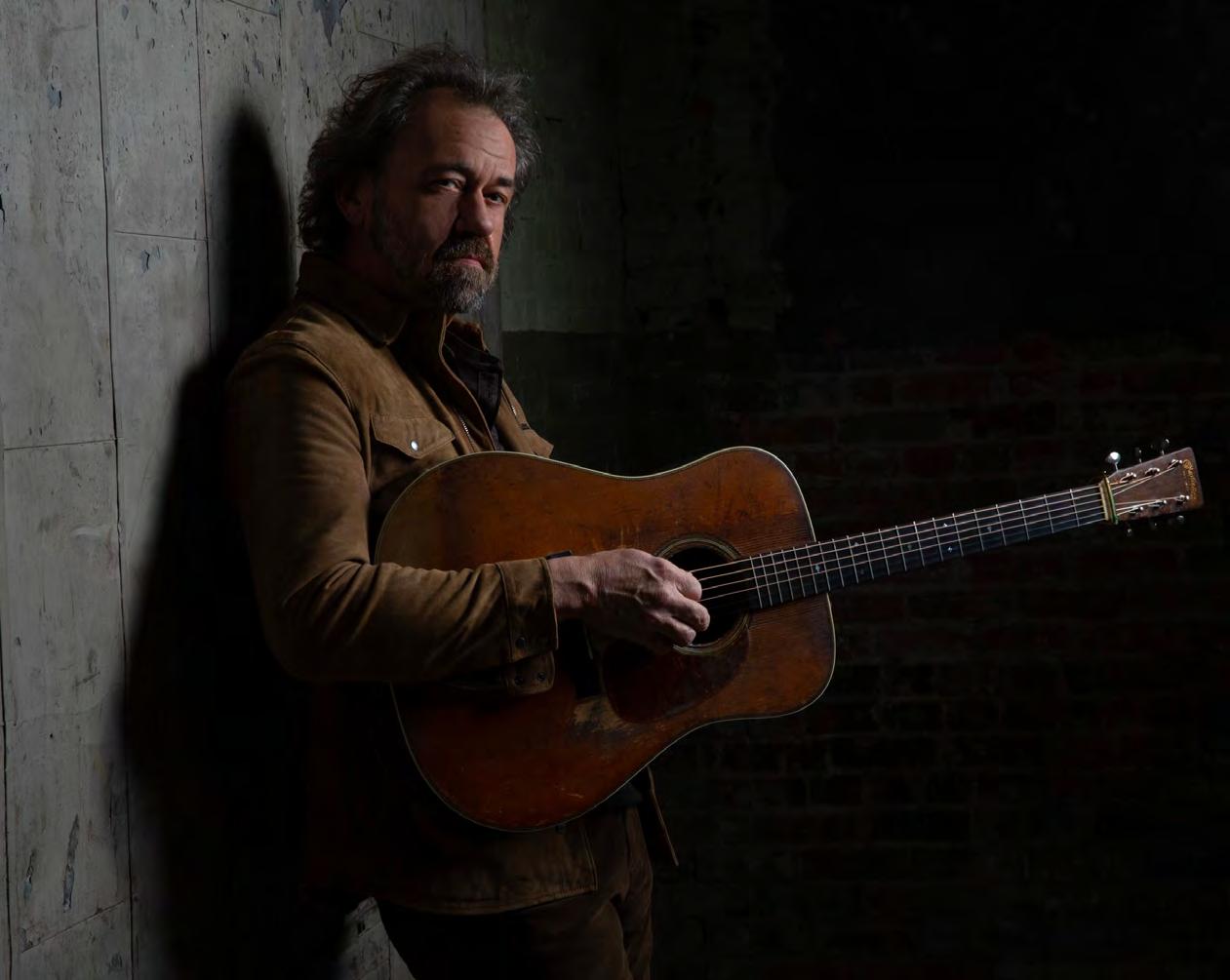
that vinyl recreates the sound, or what it is or as close proximity as possible, to what people hear live at festivals. These fans are into the history of the music. They stay at a performance until the very end, seeing every drop of sweat off the artist’s forehead. They read liner notes and know every [musician] playing on the record.”
Tyminski recounts a story of a friend telling him about a party where everyone “gathered around the hi-fi” when one of his albums made its way to the turntable. “I never hear people talking about, ‘Hey, we pulled up a digital streaming service and played your
stuff and had a really great time.’ … What brings people together is that experience of playing vinyl.”
While getting to unbox his newest recording on vinyl and visit the pressing plant may have been new to Tyminski, it was just another day in a 75-year history of making records at Nashville’s United Record Pressing. Founded in 1949 as a subsidiary of independent label Bullet Records, United Record Pressing was the first recordpressing plant in the South. And many other firsts followed. In the
1960s, the company pressed the first Beatles single in the US, “Please Please Me / From Me to You.” In the 1990s, it was home to The White Stripes’ first release, “Let’s Shake Hands / Look Over Me Closely.”
The company created what is now referred to as “the Motown Suite,” an apartment on the second floor of the company’s thenheadquarters on Chestnut Street. The space in Nashville’s Wedgewood-Houston neighborhood was a safe place for Black artists and executives to stay in the 1960s when they came to town to record and produce.
Over the years, the company has

changed names (it was once called Southern Plastics), locations, and equipment. But it has been a fixture in Music City, and it is positioned to stay that way.
Ma rk Michaels, United Record Pressing’s chairman and CEO, is a former consultant with McKinsey and Co. and a man who agrees with Tyminski on the exceptionality of the vinyl experience. “It is not sonic wallpaper, but something [listeners] really care about, something tactile,” Michaels says.
Michaels invested in the company and took over its leadership in 2007. (He also leads United Record Pressing’s sister company, URP Music Distributors, a vinyl record wholesaler.) In the 17 years since coming on board, he’s helped the company weather the huge swings in vinyl’s popularity,
seeing the medium move from a hip but anachronistic oddity, to the pandemic-era boom, to the more manageable mainstream growth today.
That included relocating and expanding and reworking operating schedules. And now the company is looking at ways to change the industry, making it more sustainable, and continuing to carve out United Record Pressing’s groove as an Americanmade and American-owned record press.
To date, United Record Pressing estimates it has pressed threequarters of a billion records, including Tyminski’s Live From the Ryman and records by Sufjan Stevens, Foo Fighters, Phoebe Bridgers, Cat Power, Jackie Shane, and many others. It’s all an
estimate, so they won’t know exactly when they hit the billion-record mark, but Michaels has a vision for how to get there.
Earlier this year, Michaels spoke to a crowd at United Record Pressing’s 75th anniversary party, pointing out that fewer than 1% of companies make it in business that long. United Record Pressing’s success, he says, is in part due to employees who are both loyal to the company and passionate about music. Each staffer’s bio on the company’s website lists their first concert (Michaels’ was Alice Cooper’s Welcome to My Nightmare tour). The personal ties run deep among the staff. On a recent autumn day, for example, Michaels treated a staff member to lunch for her birthday; she’s been with the company for 43 years.
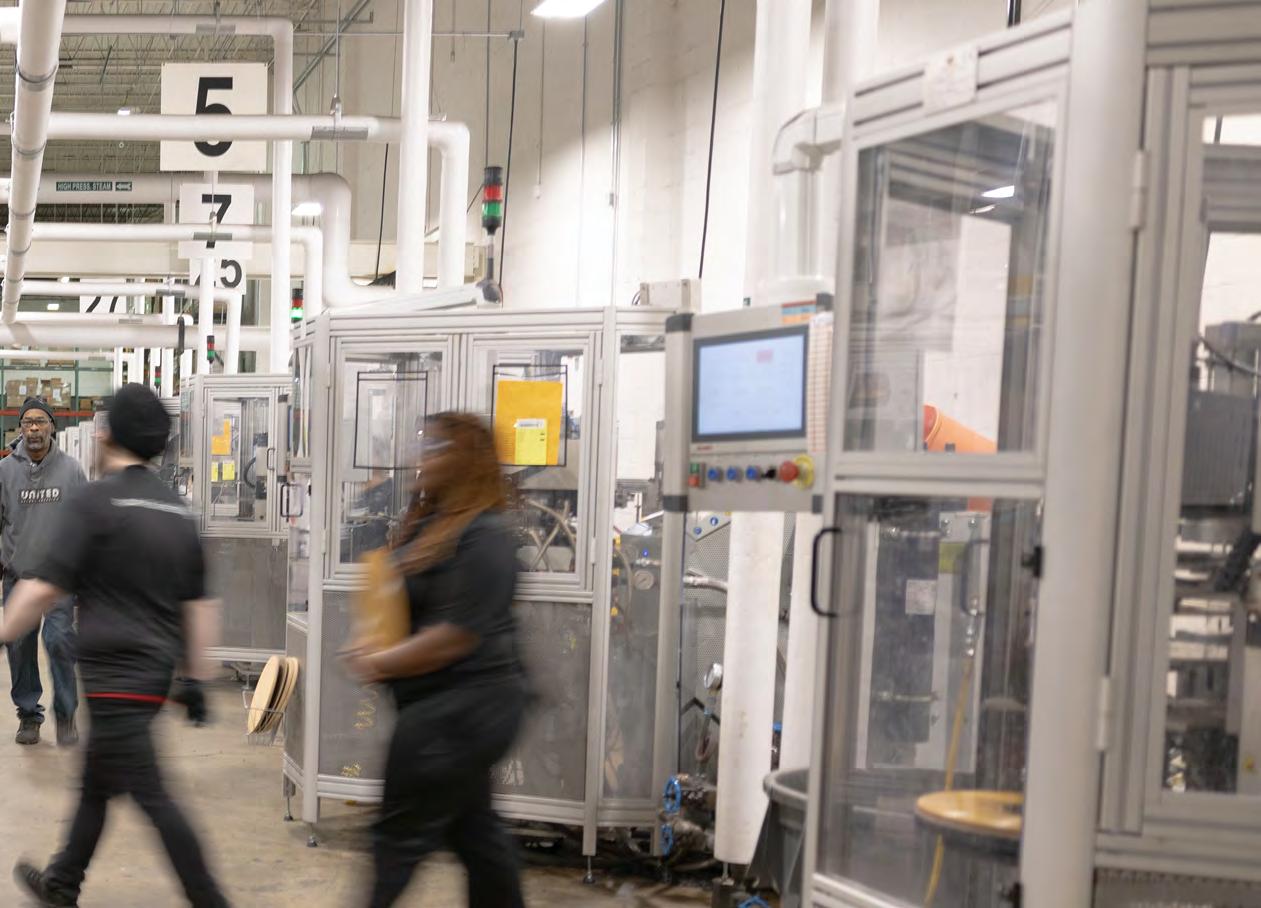
At the anniversary party, Nashville Mayor Freddie O’Connell DJed, spinning tunes for partygoers. While not a regular occurrence, this isn’t a rare sight in Nashville either. It underscores just how entwined the city and United Record Pressing are: You can’t have Music City without being able to press records.
As international record pressing has increased, Michaels says it is more important than ever to emphasize that United Record Pressing is not only America-based, but American-owned. He’s contemplating working with record labels to get approval to stamp “Made in Nashville, Tennessee” or something similar on every album.
“ We’re very proud. We employ 125 people here in Nashville and we’ve invested an enormous amount of capital in Nashville,” he says. “You go into a store today, and there are a lot of records that say, ‘Made in the Czech Republic,’ ‘Made in Mexico,’ ‘Made in Germany.’ I think it matters. I think it matters to the consumers. I think it matters to the artists. We don’t have a monopoly on music, but when you think of the importance of this country in the history and the future of music, I think it’s essential that you have a partner in this musical ecosystem that’s able to make quality vinyl products. It’s part of our ethos.”
Several developers approached Michaels and suggested he move the plant south of the border when it expanded in 2017. Labor would
have been less expensive in Mexico, but it wasn’t where he wanted to take the business. “This is where this company was born. This is where this company has grown up, and this is where this company is going.” To move, he says, would have been “antithetical to what we’re doing and for whom we’re doing it.”
The company ended up moving just four miles south, into six times the amount of space that they had in the 1962 building on Chestnut Street. They intentionally designed the facility to allow for new equipment and to streamline operations. On Chestnut Street, the presses ran six days a week. Now they are scheduled for four days a week (in 10-hour shifts). This allows a day of flexibility to work in a rush job or other urgent work.
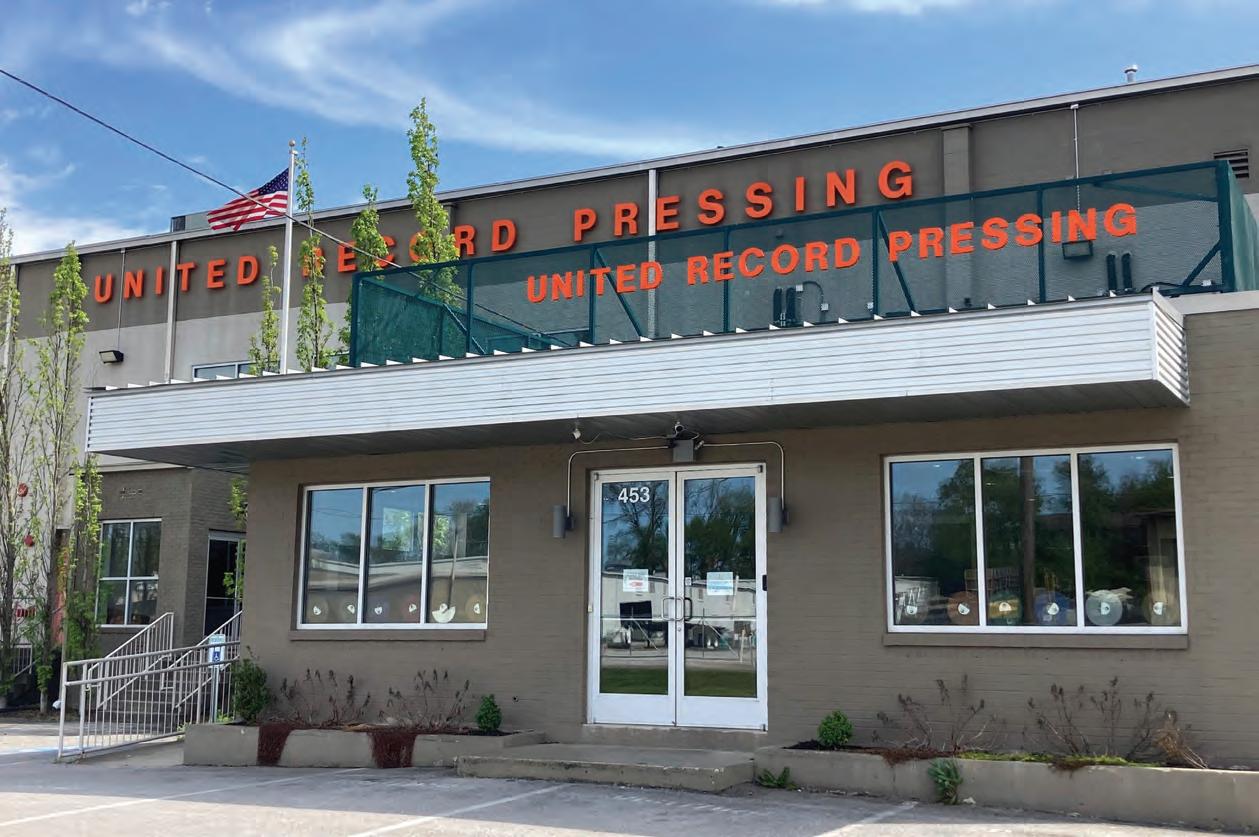
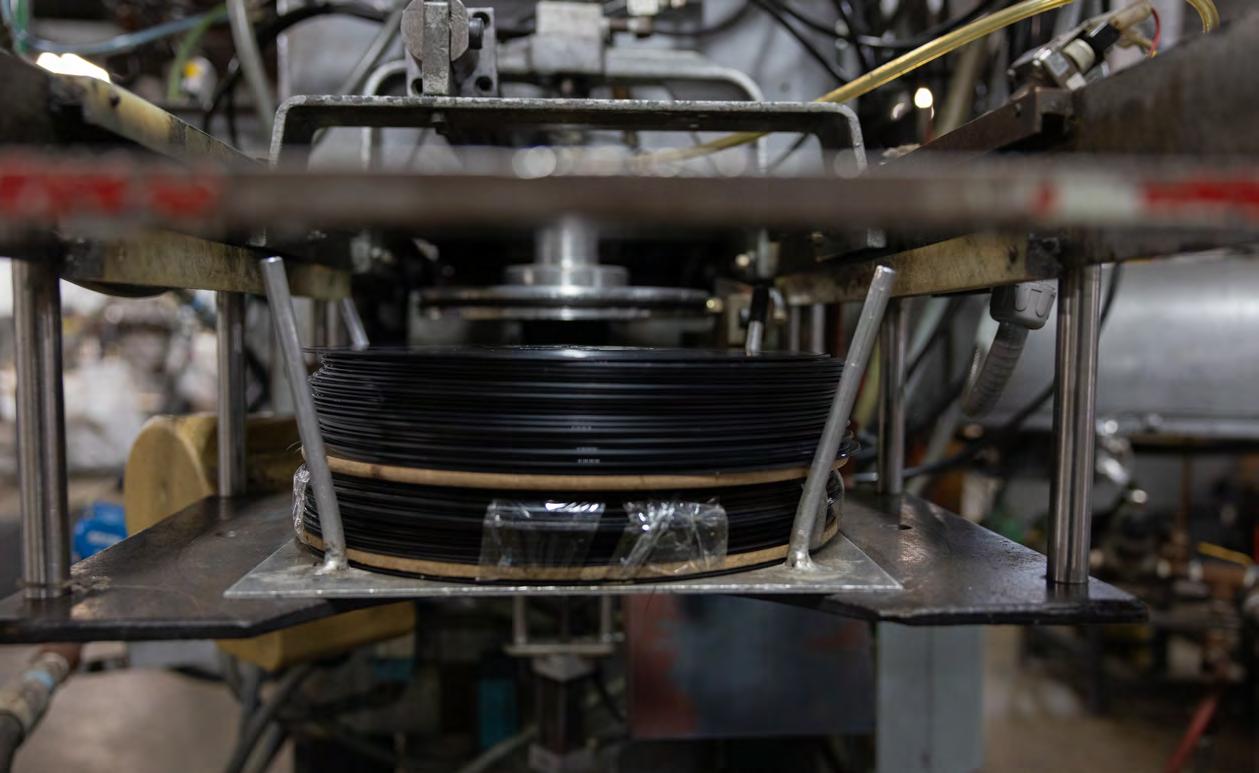
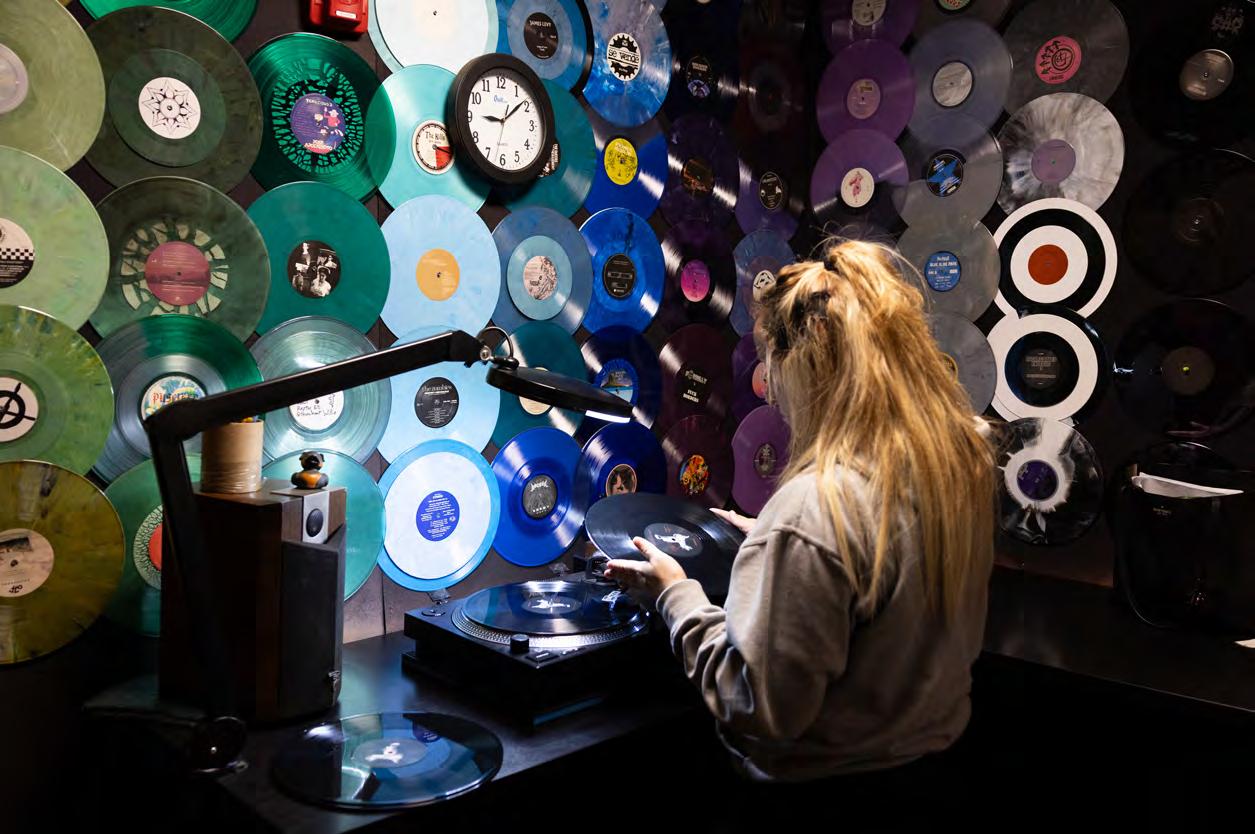
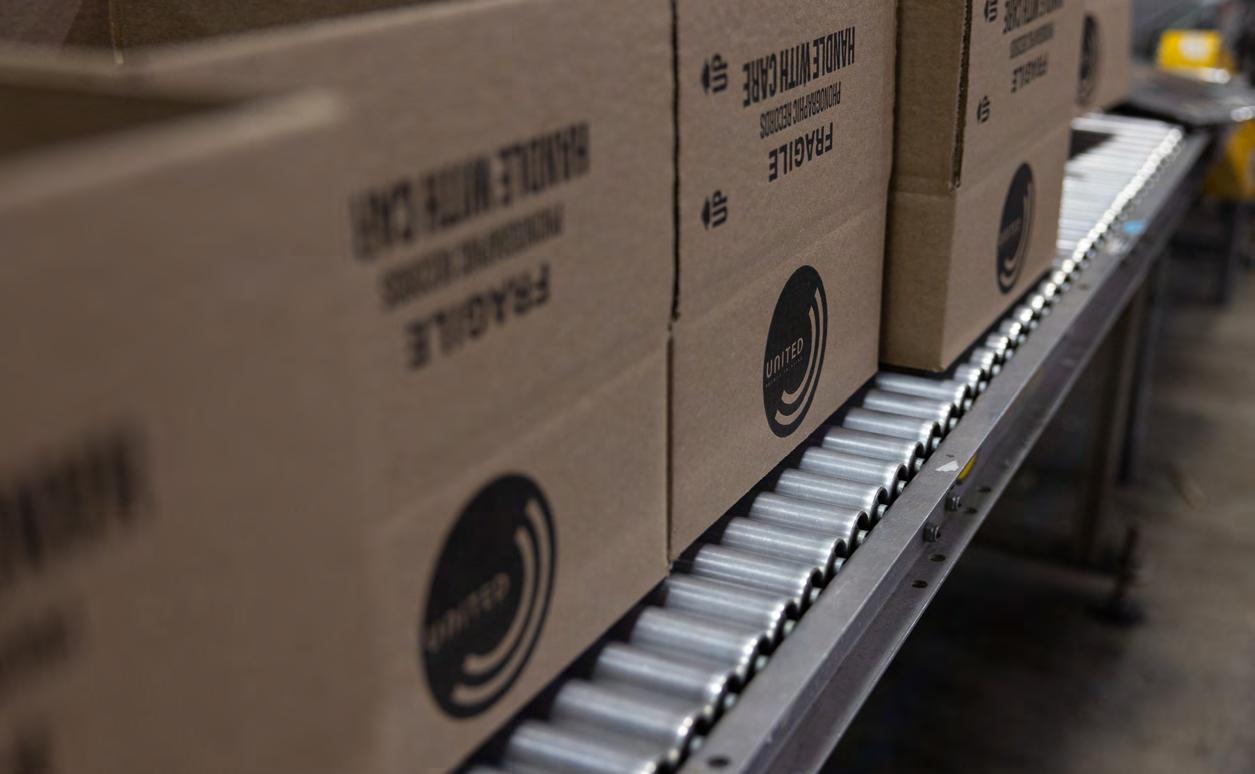
Then, in 2023, business was such that the company made an $11 million upgrade, with two dozen new presses and other improvements. Vinyl sales dramatically increased during the pandemic, Michaels recalls: “People had to stay home, and a lot of people chose to listen to records while they stayed at home then. People that were interested in music and really passionate about it couldn’t go see their bands play, because there was no touring, so everybody really leaned into vinyl.”
Big box retailers like Target and Walmart started carrying vinyl, which introduced the format to new audiences. More record pressing companies opened to meet demand.
Growth has settled into something closer to 14% annually, which Michaels says is healthier long-term than the 2020-21 boom.
Moving into that long term, there’s an emphasis on a more environmentally friendly way to press records. United Record Pressing is one of Sony’s Green Partners, a joint initiative of Sony Corp. and Sony Music Group that certifies that a company has gone through a year-long process of collecting and sharing data and demonstrating the measurable impacts of its processes, waste streams, and composition of
materials. “It’s our merit badge that says we don’t just say we care about the environment,” Michaels says. “We can prove it. It is a referenceable achievement. We’ve got the certification, and all of the reams of data.”
One example of United Record Pressing’s actions is taking the vinyl compound that is trimmed off a record, regrinding it, and then pressing it to make a recycled record, which sounds just as good as pressings on new vinyl.
“At the highest level, this is important because it’s the right thing to do as a corporate citizen, as a manufacturer,” Michaels says. But also customers, artists, and
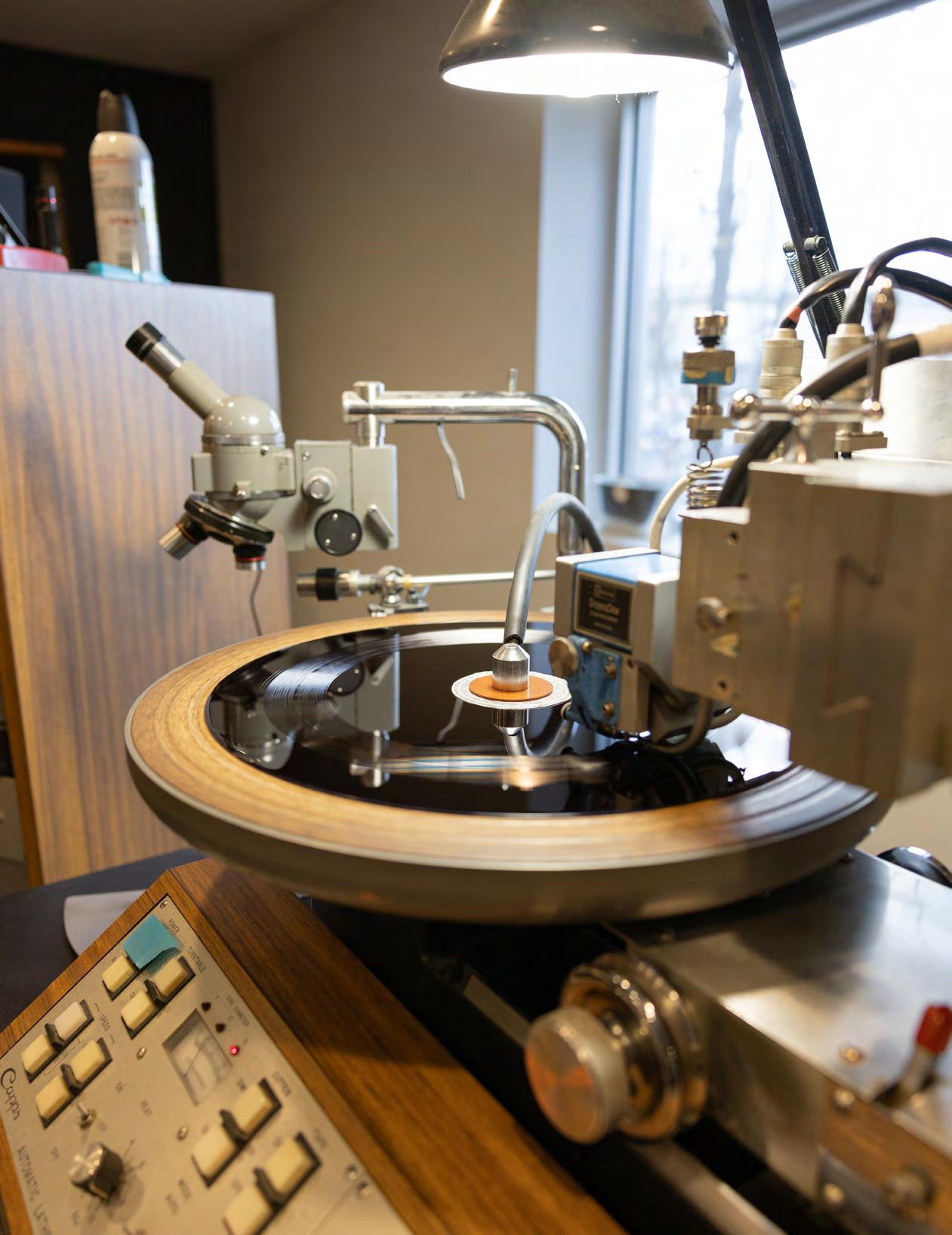
consumers are asking for it. Recently, the company pressed an album for an up-and-coming local artist named Elke, signed to Congrats! Records. The cover art for her album Divine Urge is a photo of her nearly buried in soil. Her team requested that United Record Pressing use recycled, earth-tone vinyl to press her record, a process that took a little bit of organization in regrinding scrap pieces from previous pressings, but it happened.
8 Track Entertainment’s Kraen, who is also vice president of programming and operations at Nashville’s Lightning 100 radio station, supports United Record Pressing’s efforts to make the business more sustainable. At the
radio station, he sees a lot of waste, such as unsolicited CDs that pile up, and he knows that’s not the preference of most artists or customers. “It’s really cool that they are being protective of the Earth.” Looking forward also means preserving the past. Michaels and his investment partner still own the 1962 building that was home to the original location of United Record Pressing. This midcentury modern edifice has a historic marker out front that highlights the guests who stayed in its Motown Suite, including Berry Gordy Jr., Smokey Robinson, and The Supremes. For a while after the 2017 move, the building was being used for storage. Now it’s vacant as restoration and
stabilization work is under way. Michaels and investors are investing in its preservation, with plans for it to open its doors again by the middle of 2025. They’re currently brainstorming ways that artists and the public can experience this architectural and historical gem of a building. Michaels promises that Upstairs at United, the series of all-analog recording sessions that used to take place there, will be back. Over the years, he says, artists have asked for that intimate experience to return.
In the end, Michaels says, the motivation for United Record Pressing’s innovation and longevity comes back to one thing: “Vinyl is the format that the artists prefer.” ■
























These are excerpts of reviews and stories originally published at nodepression.com, and you can read many more reviews — plus news stories, interviews, and columns — there. For more of what’s on our radar, follow No Depression’s “Best of the Month” playlist on Spotify.
Los Lonely Boys Resurrection BMG
Los Lonely Boys’ debut hit single “Heaven” elevated them from the Texas rock and roll landscape into the mainstream in 2004. The song reached No. 1 on the Billboard Adult Contemporary chart and won them a Grammy for Best Pop Performance by a Duo or Group With Vocal. Over the course of a career that’s now in its fourth decade, this band of brothers — Henry, Jojo, and Ringo Garza — has established a loyal fanbase with their electrically charged melodies and familiar voices.
of Revelation in 2013, Los Lonely Boys deliver breezy beats and light-hearted tunes with a few sobering messages weaved in that will likely satisfy the palate of longtime fans.
Los Lonely Boys took an extended hiatus when Jojo left the band in 2019. On Resurrection, their first album since reuniting in 2022 and since the release
Dawes
Oh Brother Dead Ringers
With the shattering strike of a snare, Oh Brother comes to life and so, too, does the latest iteration of Dawes: For the first time in nearly a decade, it’s just brothers Taylor and Griffin Goldsmith leading the charge. The 2023 departure of bandmates Wylie Gelber and Lee Pardini ushered in a new era for the folk-rock outfit and lent to a family jewel of a ninth album.
The album opens with a dose of wisdom on the lead single, “Wish You Would.” “If you want to be rock and roll / You gotta learn to let things go … To escape the hold / You have to disconnect your soul / And then you’ll find a truth that sets you free,” Jojo sings with earnest vocals. Henry and Jojo then dish out some blues-infused guitar riffs on “I Let You Think That You Do” and mix in some flamenco flair on “Dance With Me,” while the latter track and “Can’t Get No Love” are dance-floor ready. After 20 years in the music industry, Resurrection proves that the beloved band’s musical stamina is still going strong, and that Los Lonely Boys have a legacy that is likely to keep growing for decades to come. — Cillea Houghton
jam “Front Row Seat,” another shoulder-shrugging take on life as we know it. From there, an entrancing mix of philosophical prattle, satire-shrouded confessions, and happy-sad soliloquies parade.
Oh Brother is born from a barrage of jarring cadences and electric grooves as listeners are first introduced to “Mister Los Angeles,” a snide but catchy jeer at the modern world’s nipped-andtucked facade. It is quickly followed by the infectious
At moments, Oh Brother is uncomfortable and exposing. The pointed “King of the NeverWills” and the cynical “Hilarity Ensues” unfurl cinematic, cautionary tales about the lies we’re told and the ones we tell ourselves. However, the album is also forgiving and embracing. The tip-toeing “Enough Already” is a sympathetic ode to the in-betweeners. The sunshiny “House Parties” is a much-needed psalm of small joys.
Over the course of its nine tracks, Oh Brother cuts and consoles against a staggering soundscape where guitar-talking, folk-rock, bleary-eyed grooves, and a kind of misfit pop all blur into one succinct soundtrack for these unprecedented times. — Alli Patton
MJ Lenderman Manning Fireworks
ANTI- Records
Manning Fireworks, the new album by Asheville, North Carolina-based-based singer-songwriter MJ Lenderman, strikes the right balance between returning to the foundations of his breakthrough 2022 LP Boat Songs and tugging his sonics and songwriting forward. Recording most of the instruments himself and with an arguably even stronger set of songs, Lenderman proves that the depth people saw in his songwriting, with all of its quirky references to sports and Bob Dylan lyrics intact, was quite real.
of Lightning McQueen / Blacked out at full speed,” when a driver kills a reindeer in “Rudolph”).
Much of the appeal comes from how much Lenderman seems to identify with these characters and their foibles. At one point, he interjects, “please don’t laugh / only half of what I said was a joke.” This embodies the tragicomedy at the heart of his storytelling.
There are plenty of down-on-their-luck characters concisely rendered here, from the middle-aged divorcee in “She’s Leaving You” to the drunk in “Rip Torn” drowning in his cereal. Lenderman’s ability to balance humor and pathos is unerringly precise (“Kahlua shooter / DUI scooter,” goes the sad clown in “Joker Lips,” “Deleted scene
Laura Marling
Patterns In Repeat Chrysalis Records
Laura Marling’s latest album, Patterns in Repeat, was inspired by the birth of Marling’s daughter and the singersongwriter’s initiation into motherhood, but still covers broad thematic ground. Throughout the venture, Marling reflects on her life and the world into which she has brought her child, translating myriad questions, memories, hopes, and anxieties into a series of beguiling yet accessible songs.
As for the sounds and arrangements, Lenderman expands only a bit outside of the tried-and-true. While the guitar amps might be dialed back just a hair from the Exile on Main Street-style delirium of his previous record, Lenderman still solos with the might of Neil Young and the punk-rock upstart spirit of J Mascis. A richly melodic player and singer, there’s more than a whiff of Pavement, Teenage Fanclub, and peak-era Wilco in there too, particularly when he lands on a gorgeous hook or a supporting organ line. Manning Fireworks is not likely to reach a wider audience this way, but it’s the start of a rich body of work that could lead to a devoted cult audience for decades to come.
— Kyle Petersen
for her forays down various descriptive and narrative rabbit holes. This includes “Patterns,” a portrait of a ballerina named Zena. Functioning like a flipbook, the song portrays a handful of well-executed strokes illustrating how each of us, without exception, is subject to ageing and the decline of the body.
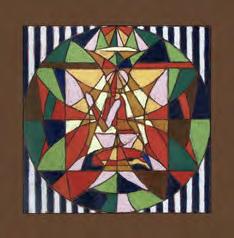
Opener “Child of Mine” is a guitarand-vocal tribute to family (“You and your dad are dancing in the kitchen”), “slowing down,” and the Edenic nature of childhood (“Everything you want is in your reach right now”). The track sets the stage
Patterns in Repeat spotlights Marling as she works with a relatively equanimous stance. Some listeners will miss the simmer and boil of earlier sets, particularly 2013’s Once I Was an Eagle and 2017’s Semper Femina. Others will be intrigued by Marling’s adoption of a more neutral tone. Even if some of these tracks unfurl like a dream you soon forget, the sequence as a whole points to Marling’s versatility — how her experiences feed her art, and how she’s committed to embodying her one and fleeting life. — John Amen
X
Smoke & Fiction
Fat Possum
Smoke & Fiction is being billed as X the band’s “last hurrah,” the kickoff for the group’s farewell tour. Given the no-bullshit attitudes of singer Exene Cervenka and singer/bassist John Doe, the health of guitarist Billy Zoom, and the way X has always comported itself as a unit, there’s no reason to believe these are empty words or marketing gimmicks.

But Smoke & Fiction isn’t merely a stroll down memory lane or a recitation of familiar themes. “Struggle” takes on the difficulties of relationships. It’s not a new concept, and when you hear Doe and Cervenka
sing the chorus together, it feels like classic X. But if you listen closely, it’s not merely more of the same. The sonic aesthetic is there, but the lyrics aren’t sung from the angst and passions of youth. They come from a place of experience, of knowledge.
Knowledge is important, and knowing when things have reached a logical conclusion is difficult. No one wants to see a band diminish itself with time and, a few high-profile arena rock exceptions aside, no band wants to go out diminishing itself and its reputation.
With Smoke & Fiction, X shows it has that knowledge. It’s a worthy addition to the X discography, a celebration of the elements and personality that have made X one of America’s greatest and most influential rock bands. — Jim Shahen
Wild Ponies
Dreamers
No Evil Records
Love has a way of expanding in the Wild Ponies’ universe. It’s in the way they interact with fans, both in person, with hugs and tears and personal stories swapped over merch tables, and on their social media and active Patreon community. It’s been all over their songs as they’ve made music together for the past two decades, and it’s on their new album, Dreamers
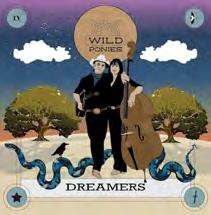
Up until a few years ago, Doug and Telisha Williams weren’t sure they wanted kids. They also didn’t plan on adding an adult to their relationship, but then they met and fell in love with Laura, who is now their partner in what they cheekily call “the wholesome polyamorous Americana dream.” This newfound familial bliss shows up on several songs on Dreamers.
“Hurt Your Heart,” set to a retro country beat, is a pledge to avoid causing pain in a relationship and to hold on to what’s good, whether it’s the comfort of sleeping next to someone or quiet morning coffee together before the kids wake up and the chaos of the day begins.
On Dreamers, love beams out beyond the Wild Ponies’ family, too. “Bury the Young” laments the toll mass shootings take in our society, not only for victims but for survivors too. The song started taking shape after the 2018 shooting at Marjory Stoneman Douglas High School in Parkland, Florida, when Doug and Telisha saw students who’d survived that trauma, including X González, speaking publicly about the need for gun control.
Ultimately, as they sing on “Breathe,” “Love is what knows you.” The song points the way to respite in small gestures — “the beauty in the broken,” “the hands that hold you” — a reminder that the little things that ground us have a mighty power. — Stacy Chandler
Jake Blount & Mali Obomsawin symbiont
Smithsonian Folkways
Jake Blount and Mali Obomsawin (Odanak First Nation) have worked nothing less than a miracle on symbiont The album continues the work of Blount’s Afrofuturist climate change epic The New Faith (2022) and Obomsawin’s portentous assertion of Indigenous music’s place on Sweet Tooth (2022). symbiont may best be considered as presentist and climate pessimist. Its collaborators foreground the elements of traditional African American and Indigenous music to confront the sense that civilization could end if we continue to inhabit the rapacious settler-colonial system that has wreaked havoc upon us all. symbiont begins with a framing narrative of climate
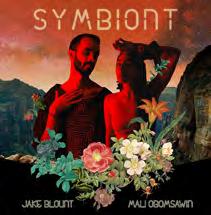
disaster and otherworldly bodies — the ancestors, ancients, or something else — intervening in our daily life and gaining followers (perhaps a prequel to The New Faith). But the reality is chilling enough, and the words of the ancestors in this music only help to heighten the stakes.
On “My Way’s Cloudy,” for example, Obomsawin lays down the melody with an ominous pace, her bass rumbling as guitars, synths, and the arrhythmic tic of, yes, an aloe plant connected to a synthesizer weave a vast tapestry of wrath. Ojibwe singer Joe Rainey’s vocals, the gospel melody, the replacement of the word “angels” with “ancients,” and the hip-hop-inspired loops present perhaps the clearest example of the album’s thesis: When these old songs are stripped of their colonial trappings, they hold a vast power that could only be hinted at sidelong under repressive enslaving and missionary regimes. — Rachel Cholst
Billy Strings
Highway Prayers
Reprise Records
On the high-octane Highway Prayers, multiinstrumentalist extraordinaire Billy Strings flies down bluegrass straightaways and careens around curves with blind speed. These songs pay tribute to the backroads and byways Strings barreled down in his youth, and some of them pay tribute to his high-speed heroes. Still others send up prayers that the road won’t age him before his time, or that it might provide some clear direction — if it’s not closed.
Randy Meisner’s “Midnight Flyer.” The high-flying instrumental “Escanaba,” with its Mexicali meanderings, is a paean to Escanaba, Michigan. “Seney Stretch” pays homage to a straightaway in Strings’ home state of Michigan. “Malfunction Junction” opens slowly, but soon accelerates, mimicking the speed with which drivers might whizz through intersections.
Strings and his band launch into an a cappella chorus to open the album’s first track “Leaning on a Travelin’ Song,” then scamper off into a propulsive bluegrass rambler that has echoes of
The rollicking romp “Gone a Long Time” is an ode to life on the road and the people, places, and things that might get left behind along the way. The bodacious banjo picking that drives “Leadfoot” fuels the comic tale of a driver who puts their foot through the floor in their Chevy Chevelle, speeding all around the county. In total, all 20 tracks on Highway Prayers showcase Strings’ lyrical ingenuity, his humor, and his never-waste-a-note guitar and banjo playing.
— Henry Carrigan
ANDREW SHERON founded the Brooklyn-based recording studio Conveyor in 2019, taking full ownership in 2023. A classically trained pianist and conservatory educated bassist and engineer, Sheron continues picking up instruments throughout his studies, travels, and professional journey. In his spare time, Sheron enjoys many forms of visual art, and painted the album artwork for his debut LP, The Late Great Bloomer.
COLLEEN McNALLY ARNETT is a writer and editor based on the beautiful Georgia coast. She has contributed to Savannah magazine, Men’s Journal, and Well + Good, among others. If she is not on her laptop, she is most likely on a long walk with her husband and rescue pup or sharing a meal with people she loves.
HILARY SAUNDERS is the managing editor at No Depression and her previous work has appeared in Paste, ESPN, Next City, The Jewish Daily Forward, and more. She’s a proud member of the Recording Academy, National Press Club, and Society of Professional Journalists, an alumna of the University of Miami, and a unironic believer that rock and roll can save the world.
JERRON PAXTON has made a name for himself by transporting audiences to the 1920s, captivating them with his mastery of early blues, jazz, and folk music. A true multi-instrumentalist, Paxton plays guitar, banjo, piano, fiddle, harmonica, and more, with a style influenced by legends like Fats Waller and Blind Lemon Jefferson. In 2016, he performed at Carnegie Hall’s Lead Belly Tribute alongside Buddy Guy, Eric Burdon, Edgar Winter, Kenny Wayne Shepherd, and other stars. Paxton currently serves as the artistic director of the Port Townsend Acoustic Blues Festival, and his talent and humor have earned him recognition in Living Blues Magazine, American Epic, and The Wall Street Journal.
JIM SHAHEN is a freelance writer from around Albany, New York. He’s the popular music writer for the Albany Times Union and has written for No Depression; Living Blues; Consequence of Sound; Vinyl Me, Please; and Bandbox. He’ll never stop telling people about the time he was buttdialed by George Clinton.
JOSH CRUTCHMER is a journalist and author based in New York. He is the planning editor for The New York Times and a contributor to Rolling Stone. A native of Oklahoma’s Red Dirt music scene, Josh has written three books about folk rock — Red Dirt (2020), The Motel Cowboy Show (2023), and Red Dirt Unplugged (2024) via Back Lounge Publishing.
JUDY CANTOR-NAVAS lives in Barcelona and tells stories about music and with music. Her Substack about Latin sounds and their history, which includes her serialized book about Panart, the first and forgotten Cuban record label, is cubaonrecord.substack.com.
LAURA SCHOLZ is an Atlanta-based writer and editor who has
covered wellness, culture, and travel for Bon Appétit, Eater, InStyle, SELF, Travel + Leisure, Well + Good, Women’s Running, and more. When not running marathons or teaching Pilates, she enjoys road-tripping and hiking with her husband and two dogs.
LIZZY ROSS is an artist, musician and songwriter based in Nashville. Her art is a multimodal exploration of relational ecosystems, nourished by a spirit of play and the wild. You can find her in the garden, singing harmonies, and on Instagram @lizzyross.
MARCUS AMAKER is Charleston, South Carolina’s first poet laureate. He’s an opera librettist, an electronic musician, an award-winning graphic designer, and a member of the South Carolina Literary Hall of Fame. He’s an Academy of American Poets fellow, and his poetry has been recognized by The Washington Post, The Kennedy Center, and more. His original opera, The Weight of Light, premiered at the Chicago Opera Theater in April 2024.
MARGARET LITTMAN is a journalist interested in Nashville’s past and its future. She last wrote about The Grahams’ secret 3Sirens recording studio for No Depression. Follow her work at @littmanwrites.
LARKIN POE’s Megan and REBECCA LOVELL place an even greater spotlight on their gift for storytelling on their new album, Bloom. The dynamic sister duo delves deep into personal narratives with universal themes of selfacceptance and individuality against a backdrop of contemporary blues and rock influences. Together, they venture farther along on their evolving musical journey with a collection of songs that resonate with introspection, authenticity, and a profound connection to their roots in American music.
SEAN MOORES is a managing editor at the military newspaper Stars and Stripes in Washington, DC. He lives in Virginia with his wife and daughter, a large handful of underplayed guitars, and an increasingly unruly collection of vinyl records.
STACY CHANDLER is the copy editor for No Depression’s quarterly journal and communications manager for PineCone, a nonprofit roots music promoter and presenter in Raleigh, North Carolina. Winner of the 2022 Rolling Stone Chet Flippo Award for Excellence in Country Music Journalism, she previously has written and edited for the Raleigh News & Observer, alumni magazines, accounting magazines, online college courses, and pretty much anything else that has words in it.
WILL HODGE is the creator/host of the new podcast Unplugged Revisited and a freelance journalist with bylines in Rolling Stone, the Grammys, A.V. Club, and various other outlets. When he’s not writing about the folkinfused symbiosis of classic country and punk rock, he can be found daydreaming about the hip-hop/new wave sonic wonderland of late ’70s/early ’80s New York City.
No Depression is brought to you by the FreshGrass Foundation, a 501(c)(3) nonprofit organization dedicated to preserving and promoting the past, present, and future of American roots music. In addition to publishing No Depression, producing FolkAlley.com, and presenting the FreshGrass Festival | Bentonville in Arkansas and FreshGrass Festival | North Adams at Mass MoCA in Western Massachusetts, the Foundation also funds cash awards for up-and-coming musicians. Visit freshgrassfoundation.org for more information.
No Depression is committed to producing the best roots music coverage, both in print and online at nodepression. com. With long-form stories highlighting the music’s stars and up-and-comers as well as its underreported issues, the quarterly editions of No Depression’s journal are essential reading for every roots music fan.
Included in this issue:
• J. D. Crowe & The New South at 50
• the first compilation of Ukrainian music since the fall of the USSR
• the pipeline from crustpunk to folkie
Between issues, stay current on roots music with news, reviews, and thought at nodepression.com. Here are just a few of the artists we’ve covered recently:
• Kris Kristofferson
• Joy Clark
• Rhiannon Giddens
• JD McPherson
• Joy Oladokun
• Lone Justice
• Phil Lesh
• Nanci Griffith
• Matthew Sweet
• Scott H. Biram
• Yasmin Williams
• The Deslondes




BY JERRON PAXTON
There’s a video of the 1973 Fleadh Cheoil, an Irish music festival and competition held in Listowel, County Kerry, during which a man was interviewed after what must’ve been quite the afternoon of indulging in spirits. The interviewer asks, “What about all these guitar players now that you’ve heard strumming various songs?”
As a casual lover of Irish music (although my neighbors I share a wall with might say it’s a fair bit more than “casual”), I’ve always assumed this was the interviewer acknowledging the influx of a bunch of open-tuned guitar players. At that time, the D-A-D-G-A-D tuning would have been a new fad in the traditional Irish music scene, compared to the standard tuning.
The interviewee, however, replies, “They’re good, but I like the music,” before launching into a rollicking reel on his fiddle. His love of, and preference for, a strong melody becomes obvious. The melody is the meat and potatoes of a song, while the rest seems to be seasoning.
Since the heavy commercialization of music in the West, poetry or lyrics tend to be what most people think of as music. Lyrics are very important, of course, and tend to articulate part of what the melody is saying. But the melody is the truest music.
Melodies speak across cultures where lyrics cannot. In the antebellum years, for example, Black musicians would grab songs they learned from all manner of people around them, including (and especially) Irish immigrants. Their voices had so much melody in them. And the small, original rhymes they
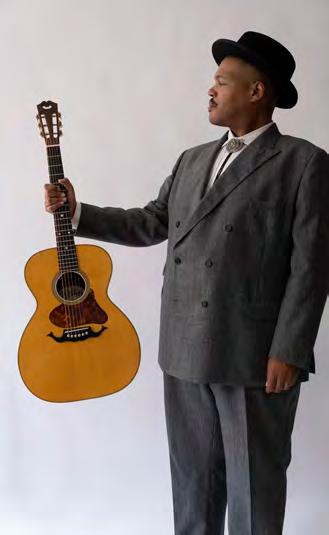
made up to songs like “Lord McDonald’s Reel” fit so perfectly that the classic fiddle tune is known as “Leather Britches” across most of the United States, reflecting the lyrics used to remember the tune.
This demonstrates a small bit of the power of melody, but the study of melody, harmony, and rhythm has received dwindling financial support in the United States. This lack of dedication to a fundamental art form has no doubt negatively contributed to this country’s ability to process and discern quality music from music that may be popular, but is “plastic” in many ways. Plastic things are to be used, discarded, and recycled. Quality music is more like an heirloom that is to be preserved, passed down, and cared for. Such insufficient training leads to a lack of exposure to quality music. And this is a disservice not only to generations of highly talented artists, but also to all people of the world who would
benefit from their works.
The education I received through the Southeast Symphony Association and the Los Angeles Center for Enriched Studies from the ages of 12 to 18 was not really musically unique. However, it did enable many people who grew up in South Central Los Angeles a way to explore a world beyond the neighborhood. My teachers encouraged me to continue down the path less traveled, but a path that was cut by many forebears. They applauded my coming to class with acoustic recordings of Blind Lemon Jefferson and Skip James songs, as well as a bluegrass version of old Black folk songs like “Cripple Creek” (which people in the neighborhood called “Come On Boys, Let’s Go to Hunting”).
This has led to worlds outside my wildest imagination and opportunities that humble and excite. For a young man who didn’t think much existed beyond the I-10 freeway, I have gone on to share the stage at Carnegie Hall with Buddy Guy to honor patriarchs like Lead Belly — whose roots run parallel to my own. I’ve grown into a man who has been given the honor to tell his own culture’s stories in front of hundreds of thousands of people around the world because my teachers encouraged me to do so.
Such is traveling down the road of music. It exposes you to geography, culture, and connections to people deeper than we can communicate through language alone. Hopefully, we will make sure that more youth have the opportunity to learn such an essential art form.
Jerron Paxton’s new album, Things Done Changed, is out now via Smithsonian Folkways.











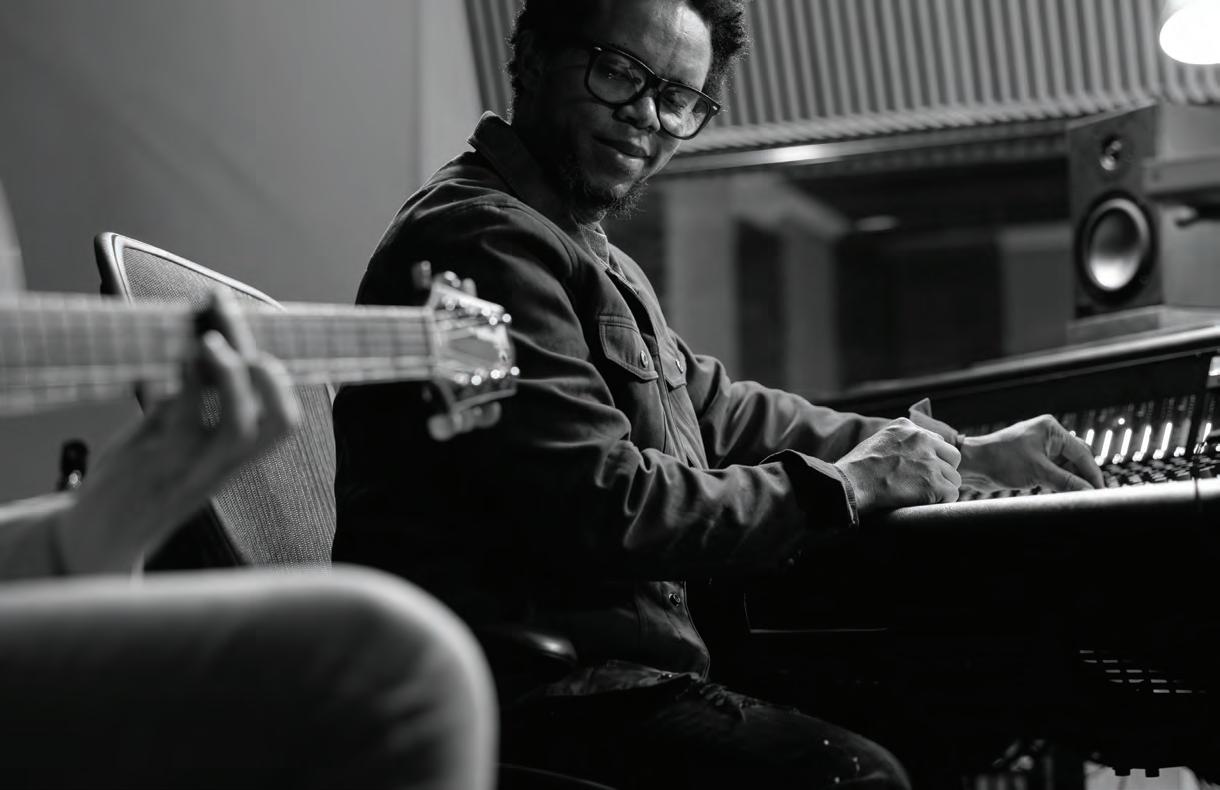
If you are an independent songwriter with music streaming in the United States, and you do not have a music publisher or administrator, it’s time to join The MLC and get paid for those plays!
At The MLC, we help creators (and their publishers and administrator partners) collect their mechanical royalties from streaming and download services accurately and on time.
Joining The MLC ensures that you receive all the mechanical royalties owed to you - and membership is FREE.
Our Support Team is here to help! Call us Monday – Friday any time between 8:00 a.m. and 6:00 p.m. CT at 615-488-3653.
$2+ Billion in Streaming Royalties Distributed with Over 45,000 Members themlc.com