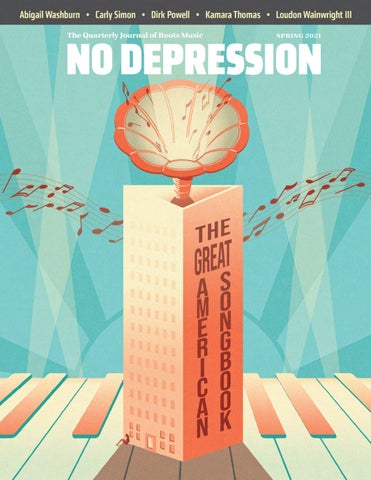
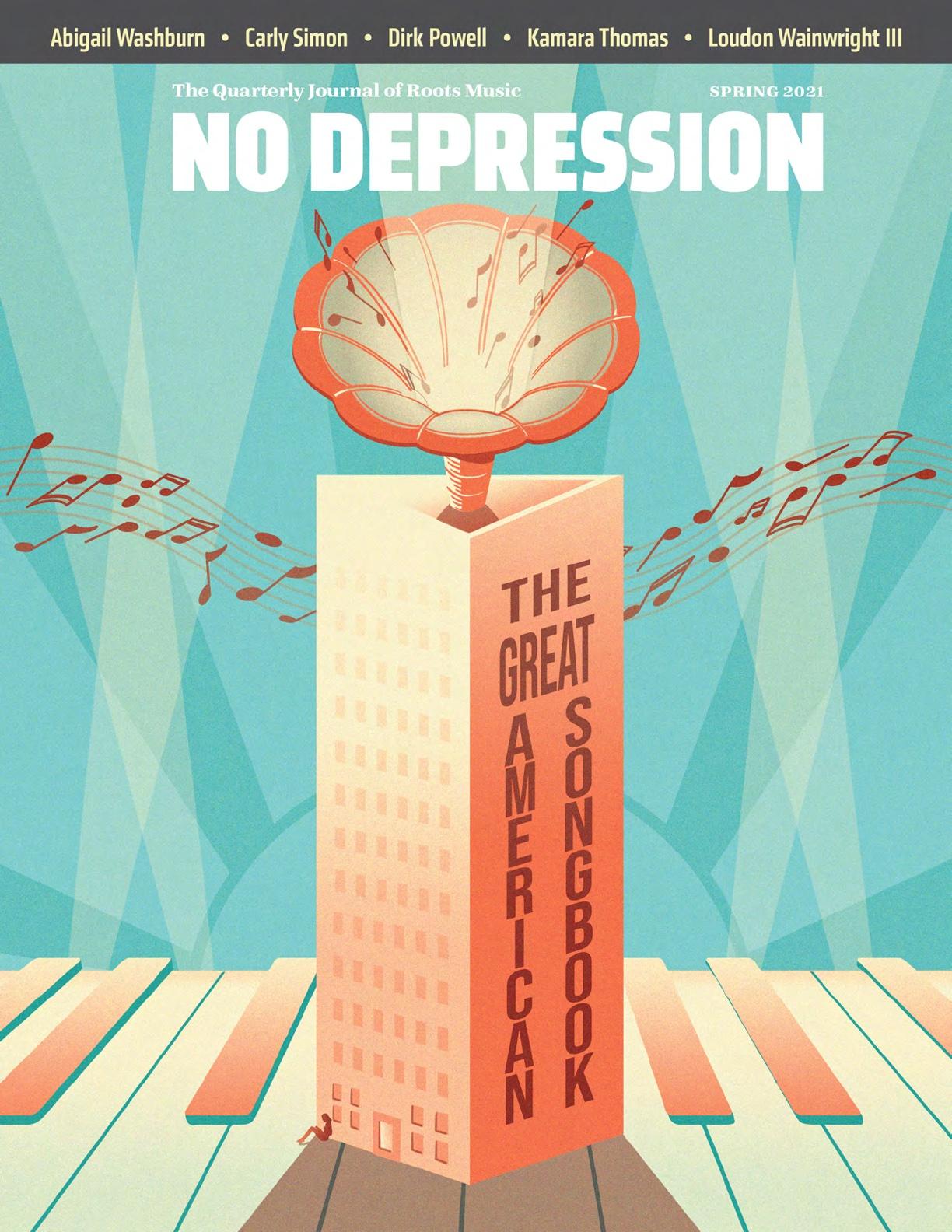
No Depression "The Great American Songbook" Spring 2021
“The
best songs are written by people who write specifically and broad enough to allow artists and fans to find their own places in the music. That’s what allows the Great American Songbook to remain relevant.”
Carolyn
Malachi, p. 68
5
HELLO STRANGER by Hilary
Saunders
6
CANON FODDER
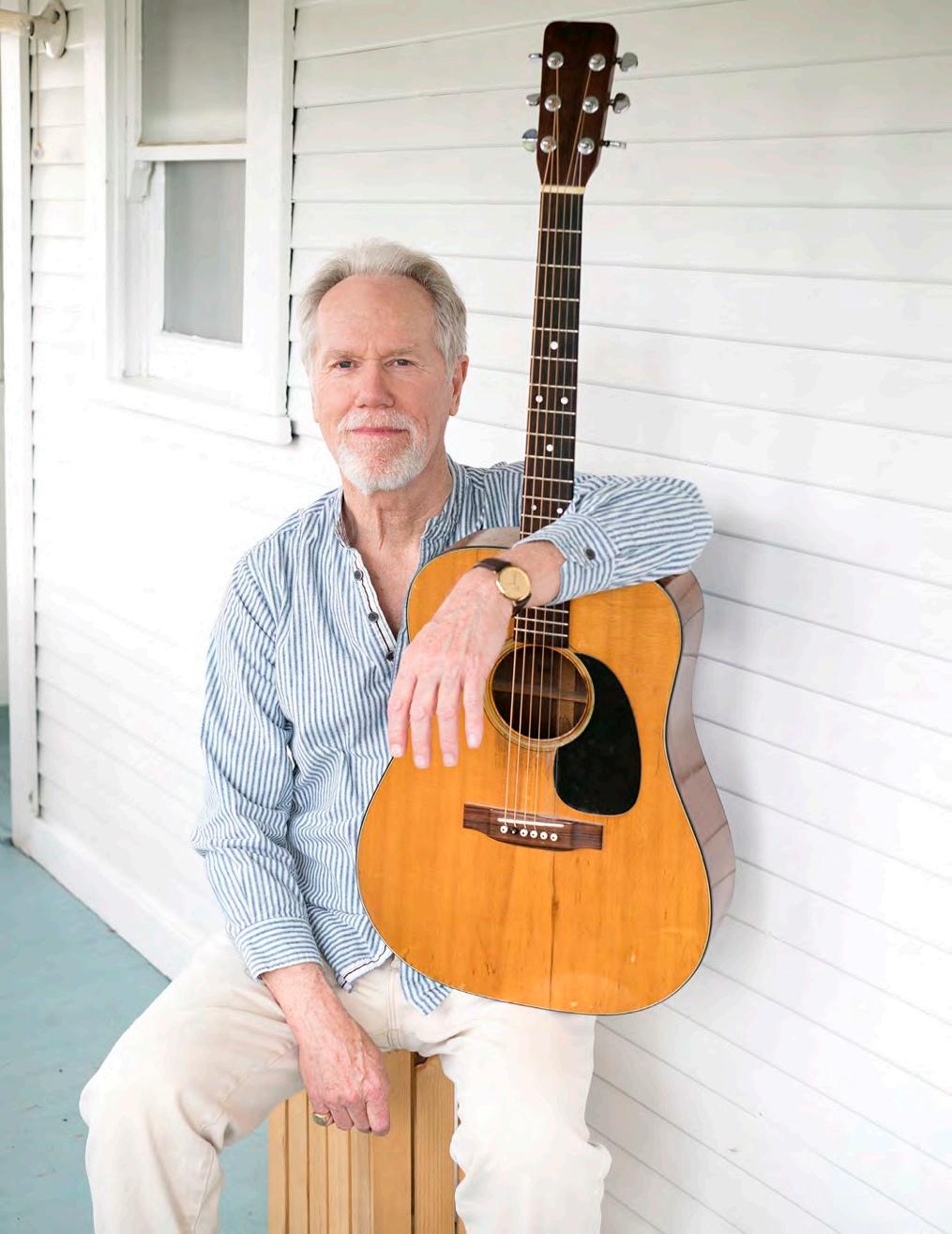
Loudon Wainwright III by Caitlin Wolper
8
THE MEN WITH GOLDEN EARS
Max Dreyfus, George Gershwin, and the rise and fall of Tin Pan Alley by Charley Ruddell
18 AN AMERICAN ICON: LOUIS ARMSTRONG by Hilary Saunders
24
VERSATILE VOICE
Rachael Price goes back to the (Song)book by Noah Berlatsky
28 REFRAMING ‘THE FATHER OF AMERICAN MUSIC’
Reckoning with blackface minstrelsy and the legacy of Stephen Foster by Kim Ruehl
38 CANON FODDER
Caleb Caudle by Caitlin Wolper
40
CARRYING A TORCH
Carly Simon’s most heartfelt standards album turns 40 by Charles Donovan
44 VIOLENT VERSES
Modern musicians grapple with the legacy of murder ballads by Stacy Chandler
54 WON’T YOU SPARE ME OVER
‘Oh Death’ haunts the American musical landscape by Stephen Deusner
60 CANON FODDER
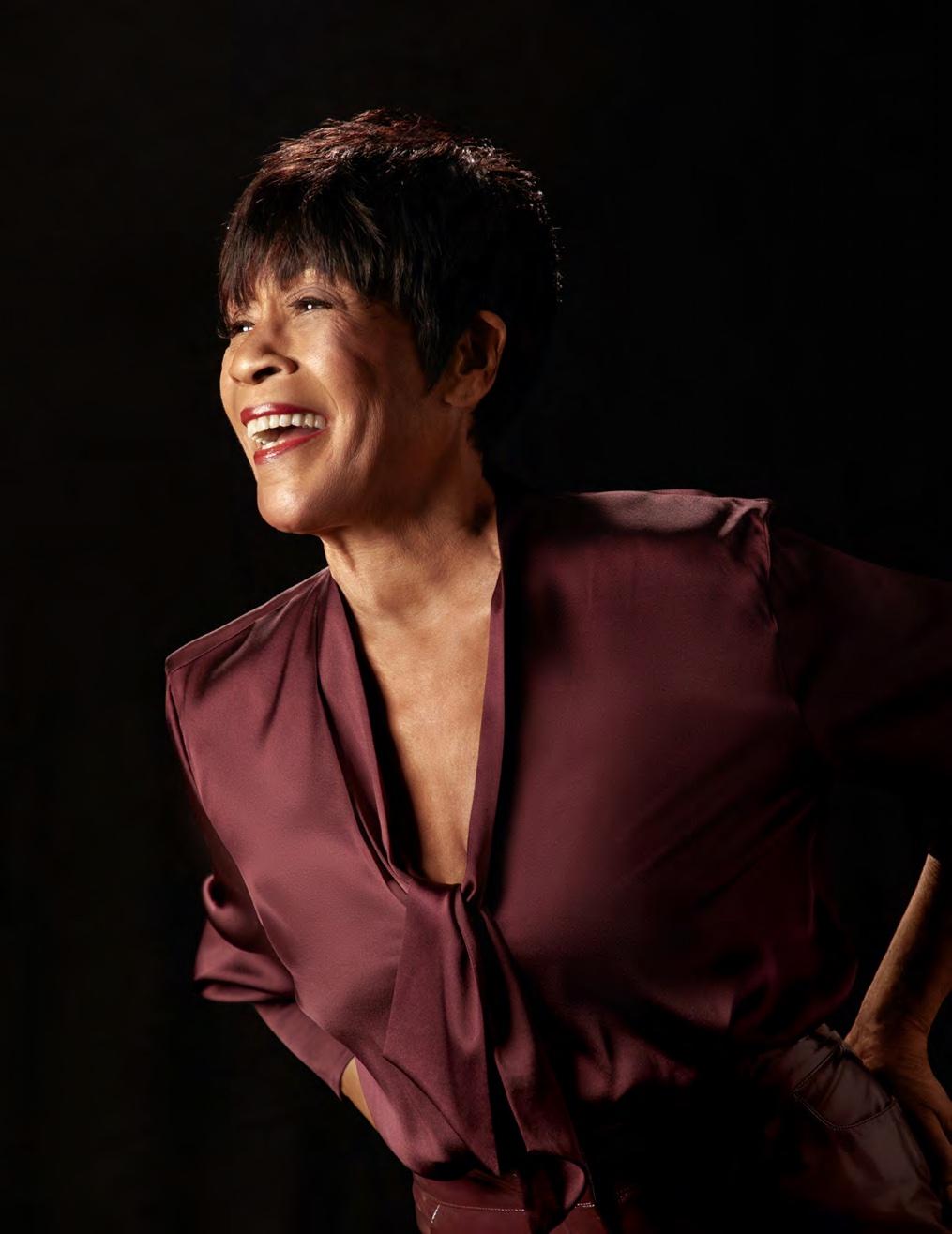
Bettye LaVette by Caitlin Wolper
62 SINGING IT TRUE
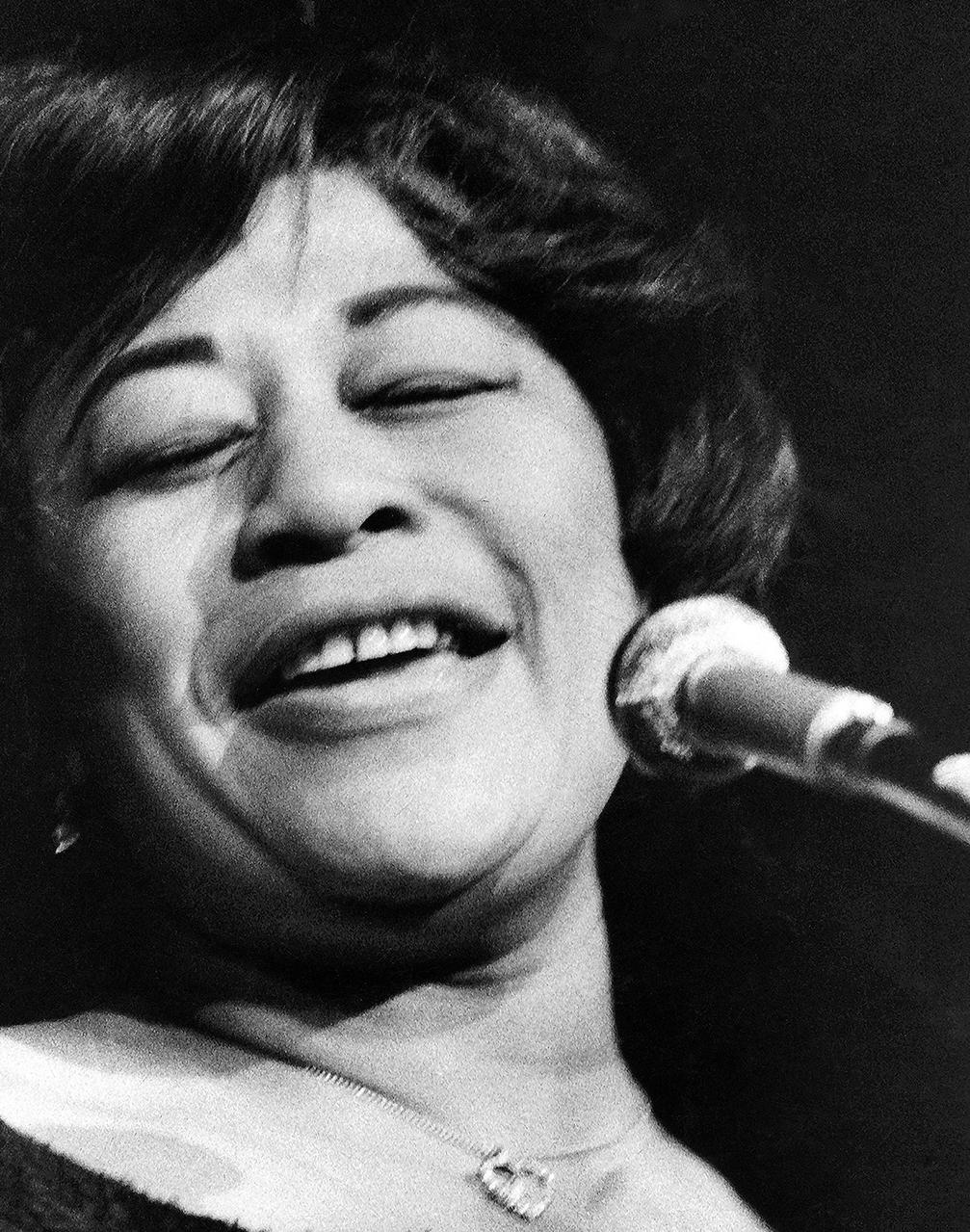
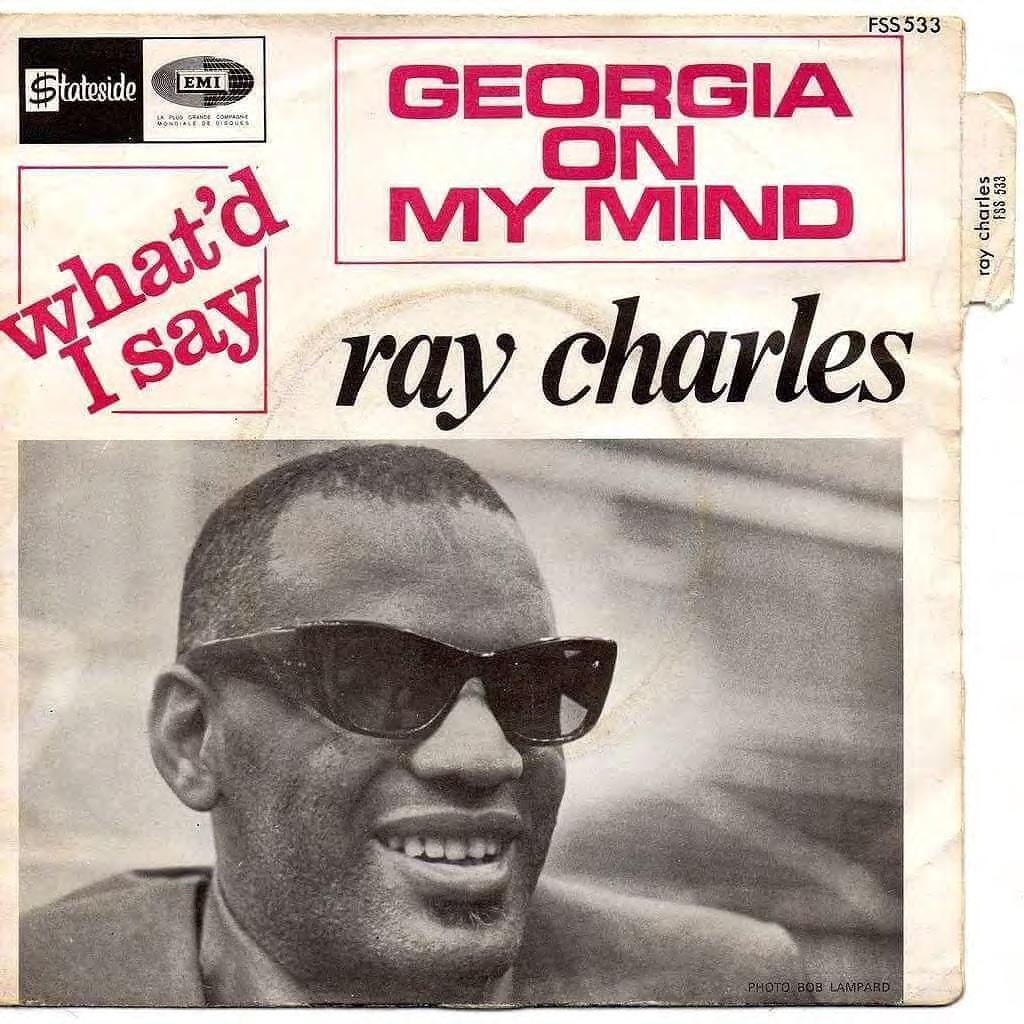
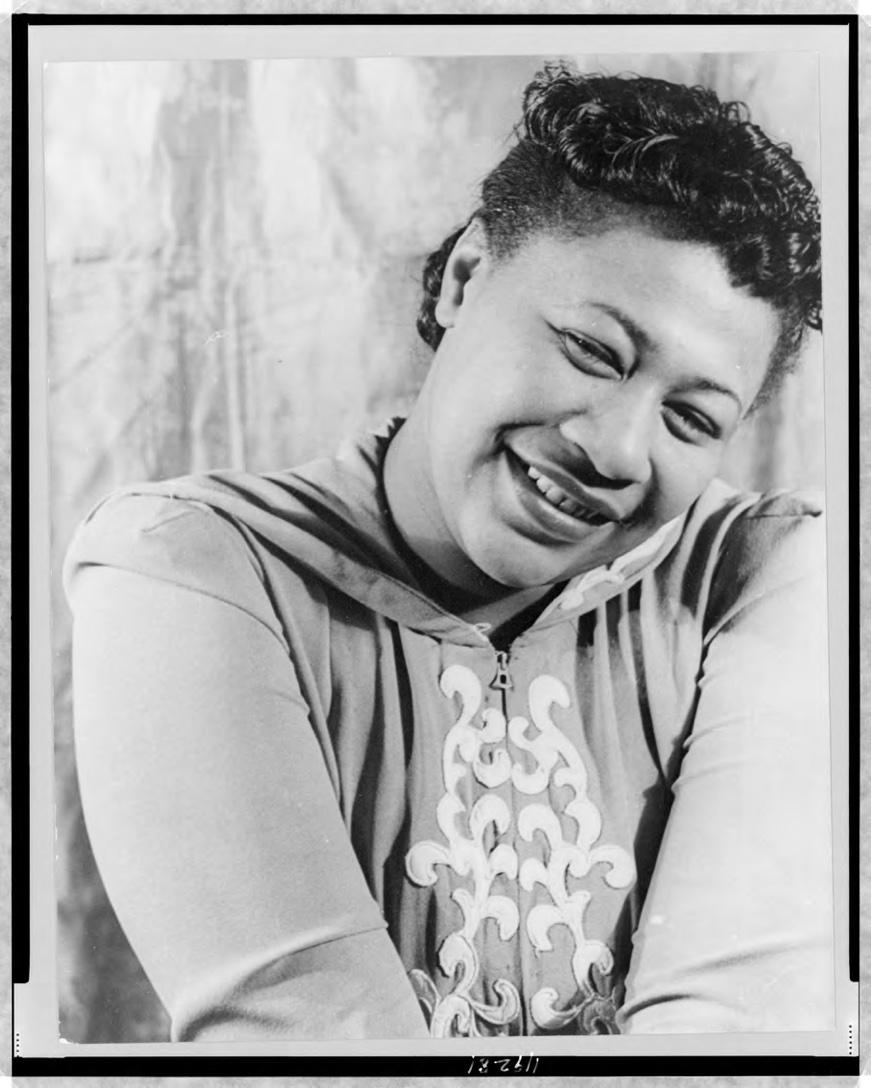
How Ella Fitzgerald, Ray Charles, and other Black musicians canonized the Great American Songbook by Marcus K. Dowling
70 CHECKING ALL THE BOXES
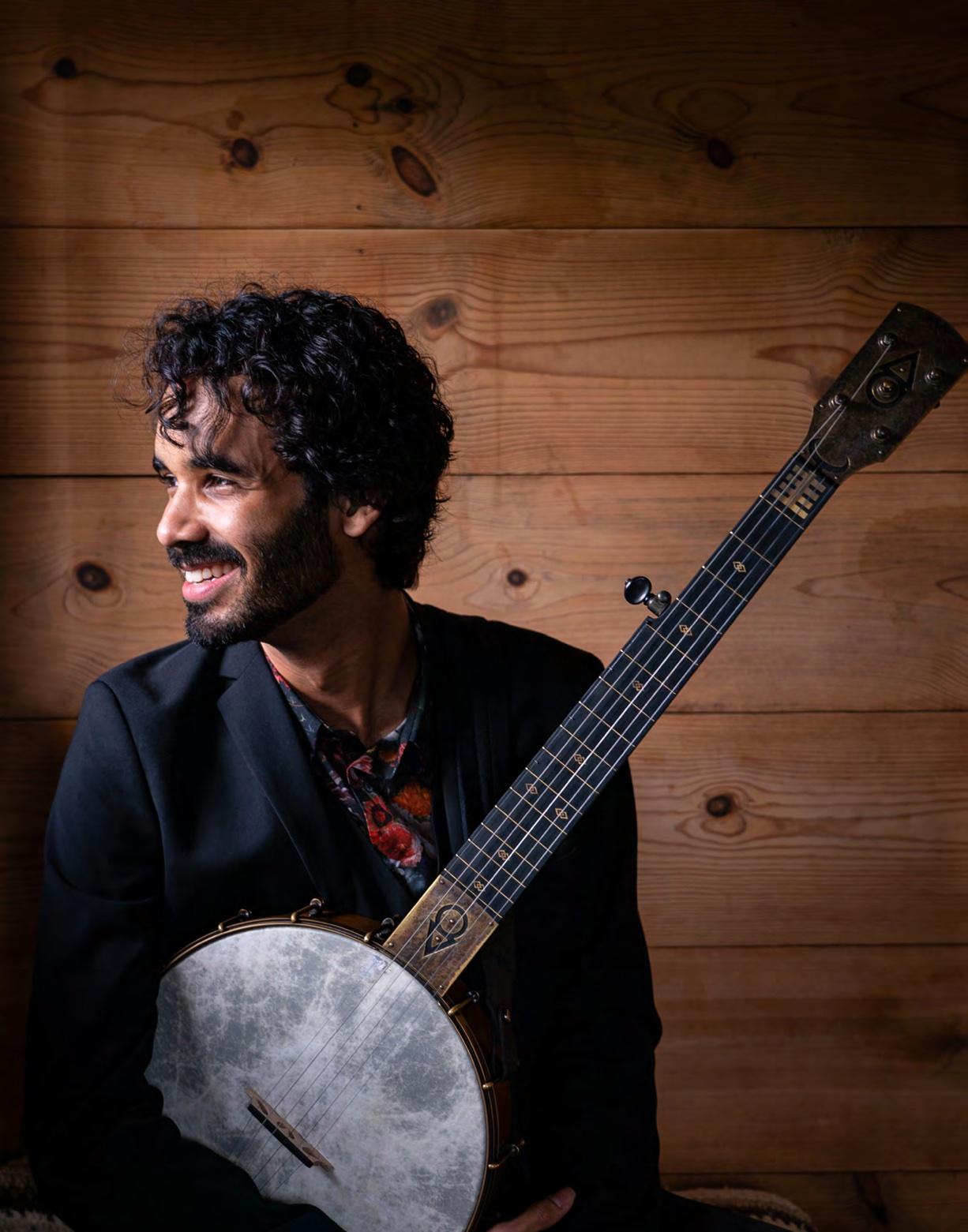
Julian Lage !nds inspiration in old classics and new collaborations by Greg Cahill
76 RUM AND COCA-COLA
The Great American Songbook’s Cuban crossover by Judy Cantor-Navas
90 CANON FODDER
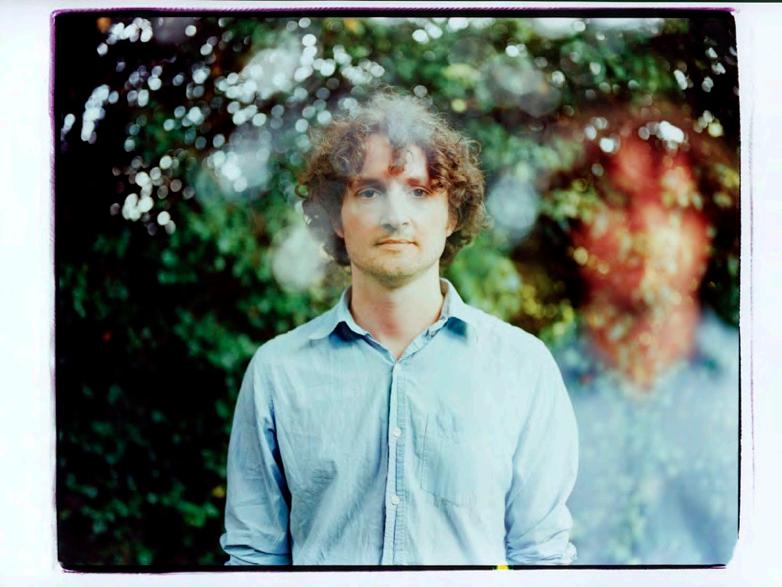
M. Ward by Caitlin Wolper
92 HOLDING THE LINE
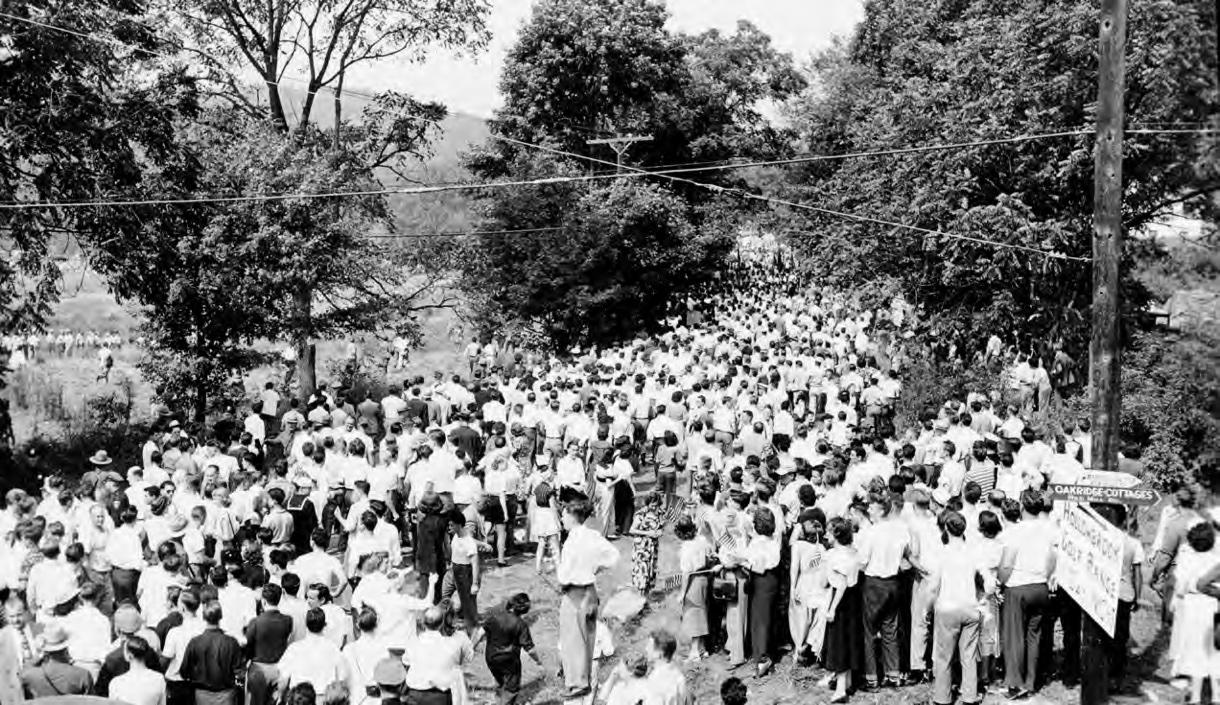
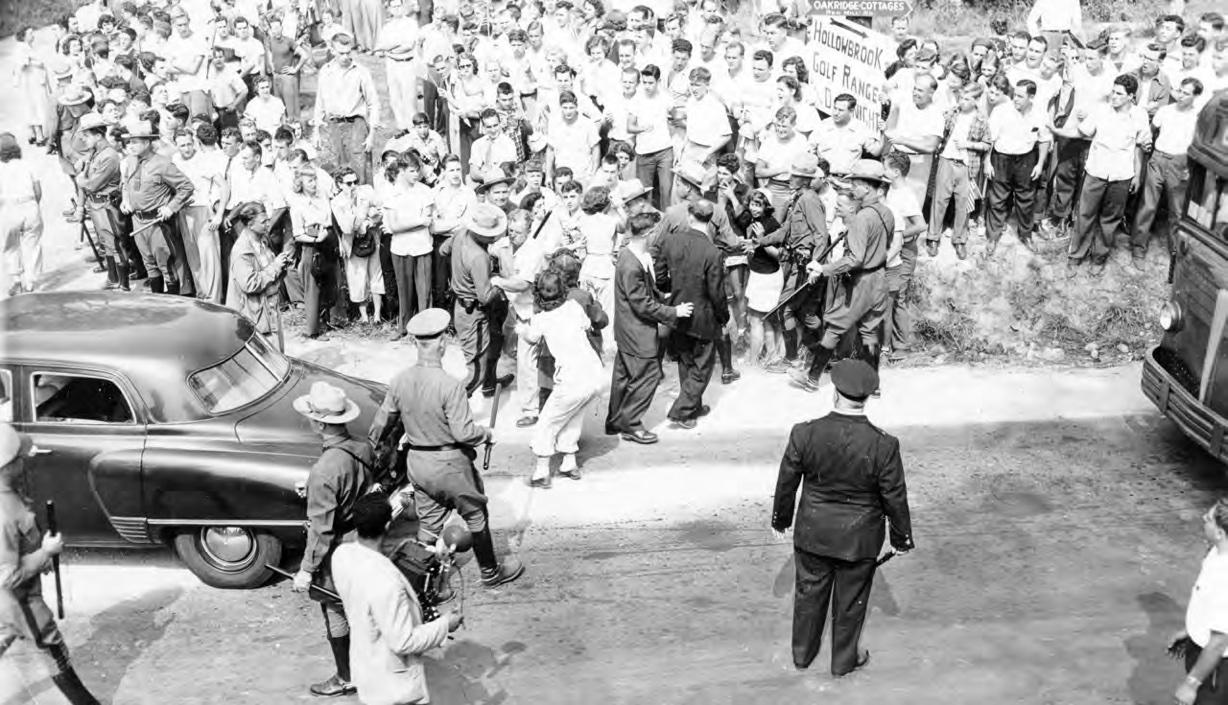
The history and legacy of the Peekskill Riots by Melanie Rock
98 A MIXED BAG
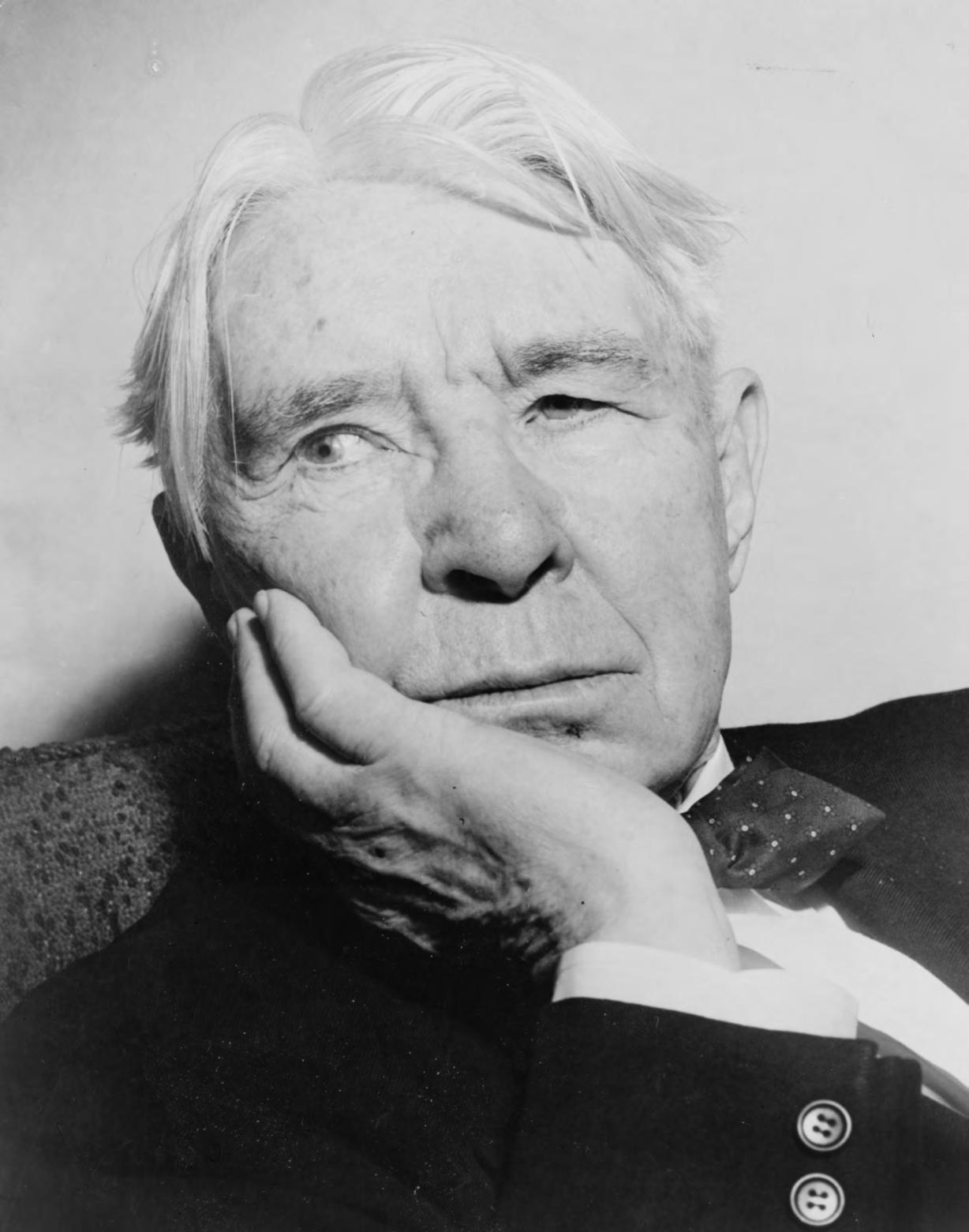
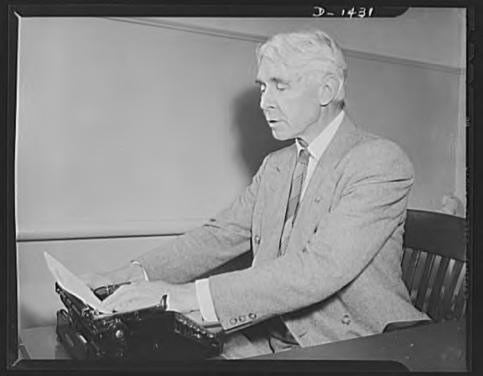
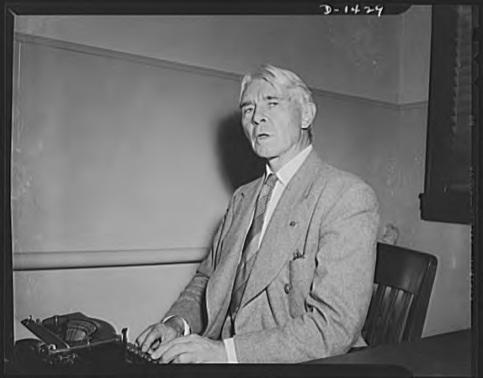
How Carl Sandburg’s ‘The American Songbag’ shaped nearly a century of folk music by Avery Gregurich
104 THE FLIP SIDE OF HISTORY
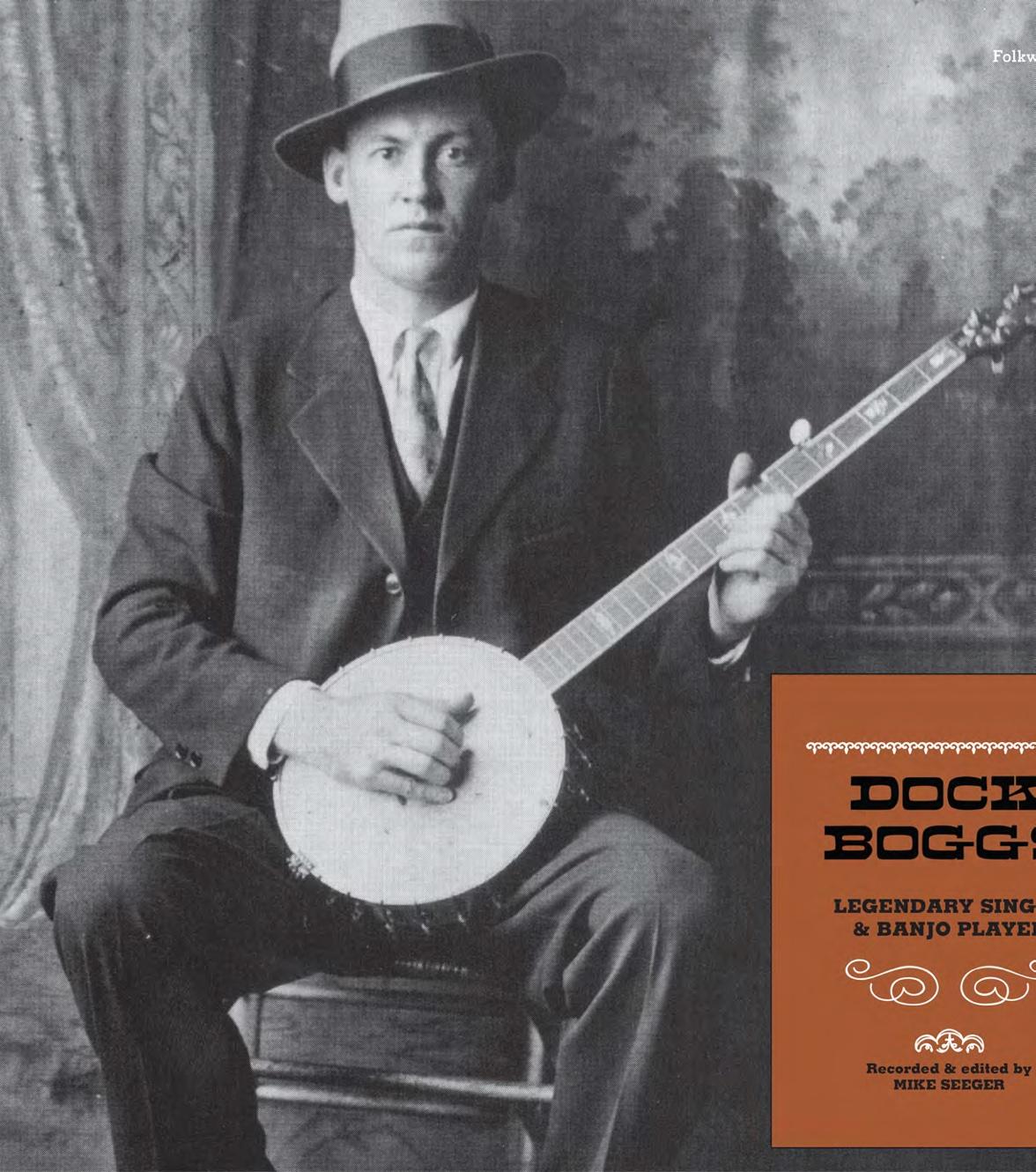
New box set presents a fuller picture of the ‘Anthology of American Folk Music’ by Allison Hussey
111 CONTRIBUTORS
112 SCREEN DOOR
Love Is a Long Road by Kamara Thomas
ON THE COVER
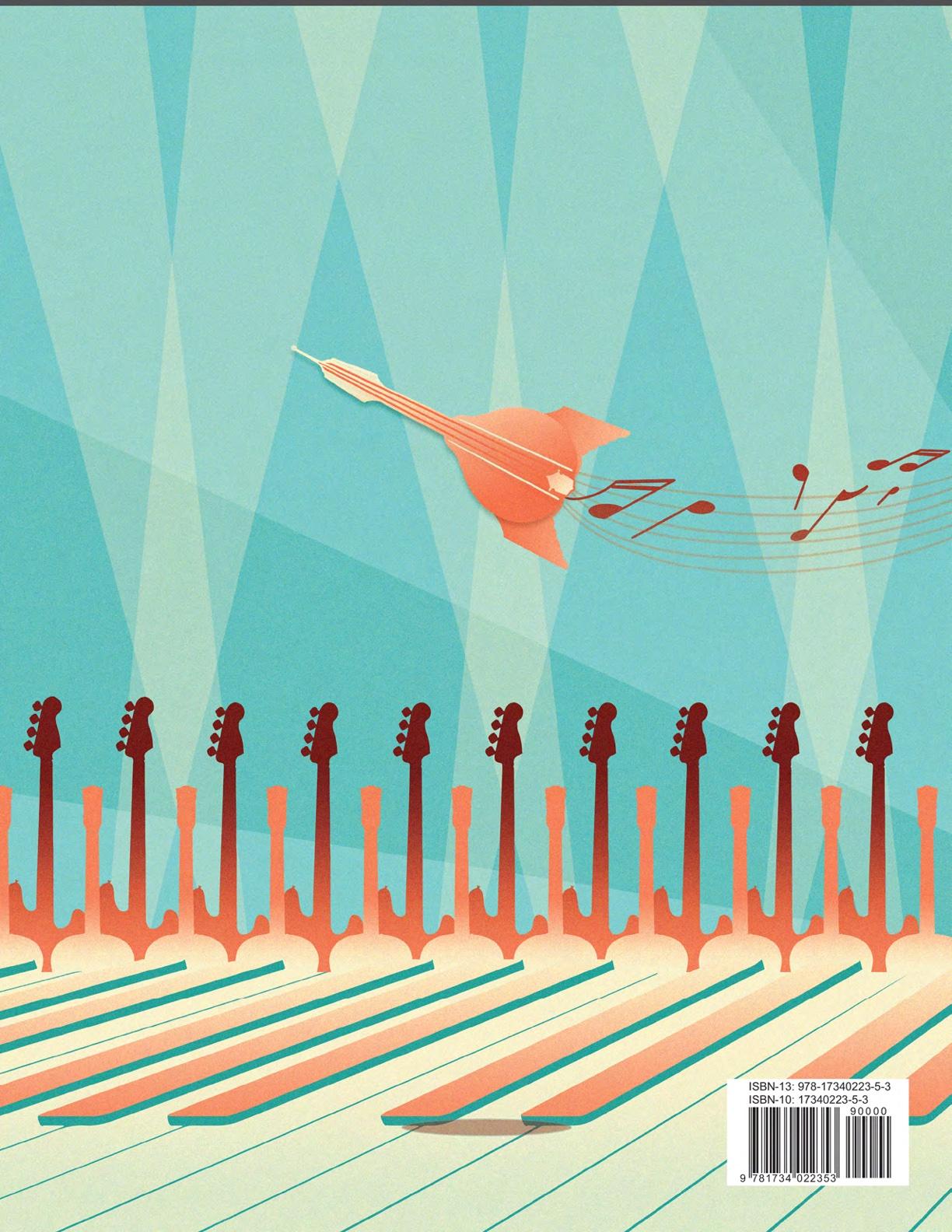
Raleigh-based visual artist and musician
George Hage designed the cover for our “Great American Songbook” issue. He drew inspiration from art deco architecture and colors and infused it all with a bit of contemporary whimsy.
It’s the day before Christmas and I’m thinking about Justin Townes Earle again. His 2014 album Single Mothers is playing from my shallow iPhone speakers and I suddenly remember that he wrote the gorgeous, languid ballad “White Gardenias” in honor of Billie Holiday.
“I think my favorite song that I’ve ever written is ‘White Gardenias,’” he told NPR during a Tiny Desk Concert the week before the LP came out on Vagrant Records. “It’s for Billie Holiday. You’ll notice that it almost feels like I’m gonna miss the spot that I’m supposed to start singing in. That comes from Billie Holiday — falling way behind the beat,” he explains before quipping: “It’ll scare the shit out of a rhythm section, that’s for sure!”
Holiday, of course, was a legend of soul, jazz, and pop singing. In the 1930s, she toured brie y with the Count Basie Band and clarinetist/composer Artie Shaw before recording her de,ning, de,ant work, “Strange Fruit.”
Earle’s death has haunted me since late summer, throughout the fall and into the winter. But it is spring now and new people have ,lled old o-ces and scientists have made and shared miraculous molecules that protect us from invisible pain. Though grief is not linear, something like hope feels like it might just icker again.
I read Rebecca Solnit’s Hope in the Dark during this period too — those days of dull repetition, fear, isolation, and mourning 300,000 killed by a virus, one from an accidental overdose, and others. At times, the small book infuriated me with its cautions of patience and reminders that we may never see the results of our actions. But one of the best lessons Solnit o.ers is that “grief and hope can coexist.” In fact, I believe our most hopeful actions stem from grief, for we cannot be moved toward change without seeing sorrow ,rst.
In my own waves of grief that crashed and steadied throughout the end of a hellacious year and the end of
BY HILARY SAUNDERS
this issue’s production cycle, I imagine talking to Earle about Holiday and the Great American Songbook. It would have been delightful — I can hear Earle’s deadpan humor and earnestness alternating in one-liner punches hitting like the pick and slap of his guitar strings — a perfect encapsulation of how this strange and malleable genre resonates with roots musicians today. Even without either of their voices, a sense of timelessness courses through the pages of the Spring 2021 issue of No Depression. It’s quite the historical issue, with multiple features that explain and contextualize this amalgamation of standards, pop songs, jazz hits, and showtunes from the ,rst half of the 20th century — from the rise of Tin Pan Alley to the near-forgotten riots in the Hudson Valley to crossover hits in Cuba. But this issue is also ,rmly rooted in the present, almost surprisingly so. Nearly a century a/er the heyday of this type of music, Rachael Price of Lake Street Dive, Julian Lage, M. Ward, Caleb Caudle, and so many
others continue to cite these songs and singers as in uences.
In our reading, however, the Great American Songbook also refers to a broader range of great American songs. We felt like it was important to assess tomes of traditional American music like Carl Sandburg’s American Songbag and Harry Smith’s Anthology of American Folk Music, as well as Dust-toDigital’s new follow-up box set, The Harry Smith B-Sides. And while sociologists, politicians, and ordinary residents and citizens continue to grapple with this country’s complicated history, No Depression writers found merit in mining our musical legacies like murder ballads and minstrel songs for what remains great and what in our songbook ought to evolve or simply not survive.
Ultimately, we found more questions than answers — a frustrating yield, despite such an important and fascinating romp throughout music and time. I’m ,nding hope in the fact that we’re asking these questions, though. One issue of No Depression won’t ,x systemic racism in the country music industry or erase the sexism and violence perpetuated through old-time songs. But identifying those patterns and asking questions about them might broaden our perspective, spark our curiosity and grow our empathy.
“What other stories can be told? How do people recognize that they have the power to be storytellers, not just listeners?” Solnit asks in her book. In music especially, we are all storytellers and listeners; we are as much a part of the songs as the melodies and percussion. And therefore I have to hope that we also have the power to challenge and change our musical narrative in time. For as Solnit continues, “Hope is the story of uncertainty, of coming to terms with the risk involved in not knowing what comes next, which is more demanding than despair and, in a way, more frightening. And immeasurably more rewarding.”
The Great American Songbook, most commonly de,ned as a collection of standards produced in the ’30s, ’40s and ’50s in New York City’s Tin Pan Alley, can still feel like a nebulous concept. Many of the songs have been re-recorded and covered thousands of times, constantly evolving with the times. No Depression spoke with four contemporary musicians, whose stories you’ll ,nd interspersed in this issue, about the impact these standards have had on their work, how they approach performing such a hallowed canon, and why they believe these songs persist. — Caitlin Wolper
CANON FODDER The Endless American Songbook Loudon Wainwright III
Loudon Wainwright III remembers one night when his parents were dressed to go out. He and his siblings waited in pajamas for the babysitter. There was music playing; his mother and father danced through the room.
“In those days, men and women — I’m sure [also] men and men and women and women — would hold onto each other and dance close to each other,” Wainwright says. “It’s such a beautiful, sexy, and romantic thing for a kid to see. I’m sure it was Ella Fitzgerald singing Rodgers and Hart, or Sinatra, or Fred Astaire, or Irving Berlin.”
The folk musician encountered the Great American Songbook in the 1950s, when he was a kid, courtesy of his father’s record collection. That collection encompassed Ella Fitzgerald, Frank Sinatra, Mel Tormé, Tony Bennett, and of course many more.
“Obviously in the ’50s and ’60s, I had rock and roll and Bob Dylan and The Beatles came along — but before that, my dad’s record collection was the well to which I went,” Wainwright says. “This is the ,rst music I listened to and really heard.”
His album I’d Rather Lead a Band, released last October, revives a number of these tracks. Working alongside music supervisor Randall Poster, producer Stewart Lerman, and bandleader Vince Giordano, Wainwright didn’t want to reimagine the songs entirely, but he made sure they didn’t sound archaic either.
“Stewart and Randy and I spent a lot of time trying to ,nd the right songs: There are obviously hundreds of songs we could’ve chosen. We whittled it down to 14 somehow, and that took several weeks, and we cut the record in three days,” Wainwright says. “When Vince Giordano and his band plays live, they want people to get up and dance. That’s what we were thinking about when we made our record.”
All the same, he says he focused more on lyrics than instrumentation — “I play the guitar and I play about ,ve chords, the same ,ve guitar chords I learned when I was 15,” he says — citing Rodgers and Hart, Rodgers and Hammerstein, Lerner and Loewe, and Frank Loesser as talented lyricists.
“In fact, my very ,rst publishing deal, the ,rst money I really made in the music business, I signed to Frank Music [Loesser’s publishing company],” Wainwright says. “The guy that ran that company saw me playing in a little folk club in New York City. I was an in-house writer at Frank Music, so that was a thrill.”
Wainwright attributes some of the tracks on I’d Rather Lead a Band to the Songbook, but he doesn’t see the Songbook as a strict document. To him, this album is more a re ection, in a broader sense, of what music has lasted.
“ They’re love songs, and also the up-tempo ones and even the slow ones are dance music,” Wainwright says. “I think that’s why people are attracted to it: It’s well-cra/ed and it’s deeply romantic.”
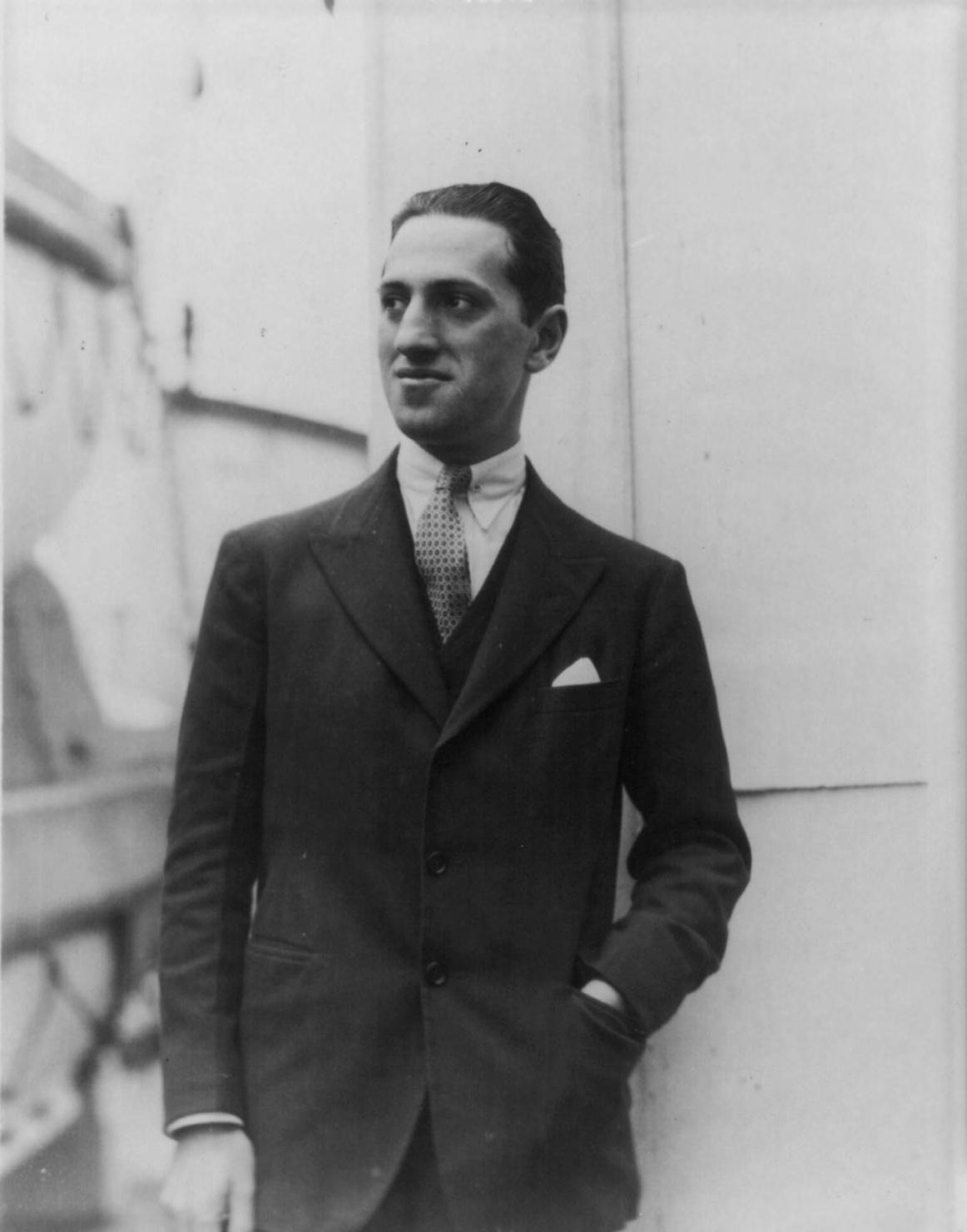
George Gershwin
THE MEN WITH GOLDEN EARS
Max Dreyfus, George Gershwin, and the rise and fall of Tin Pan Alley
By Charley Ruddell
COURTESY
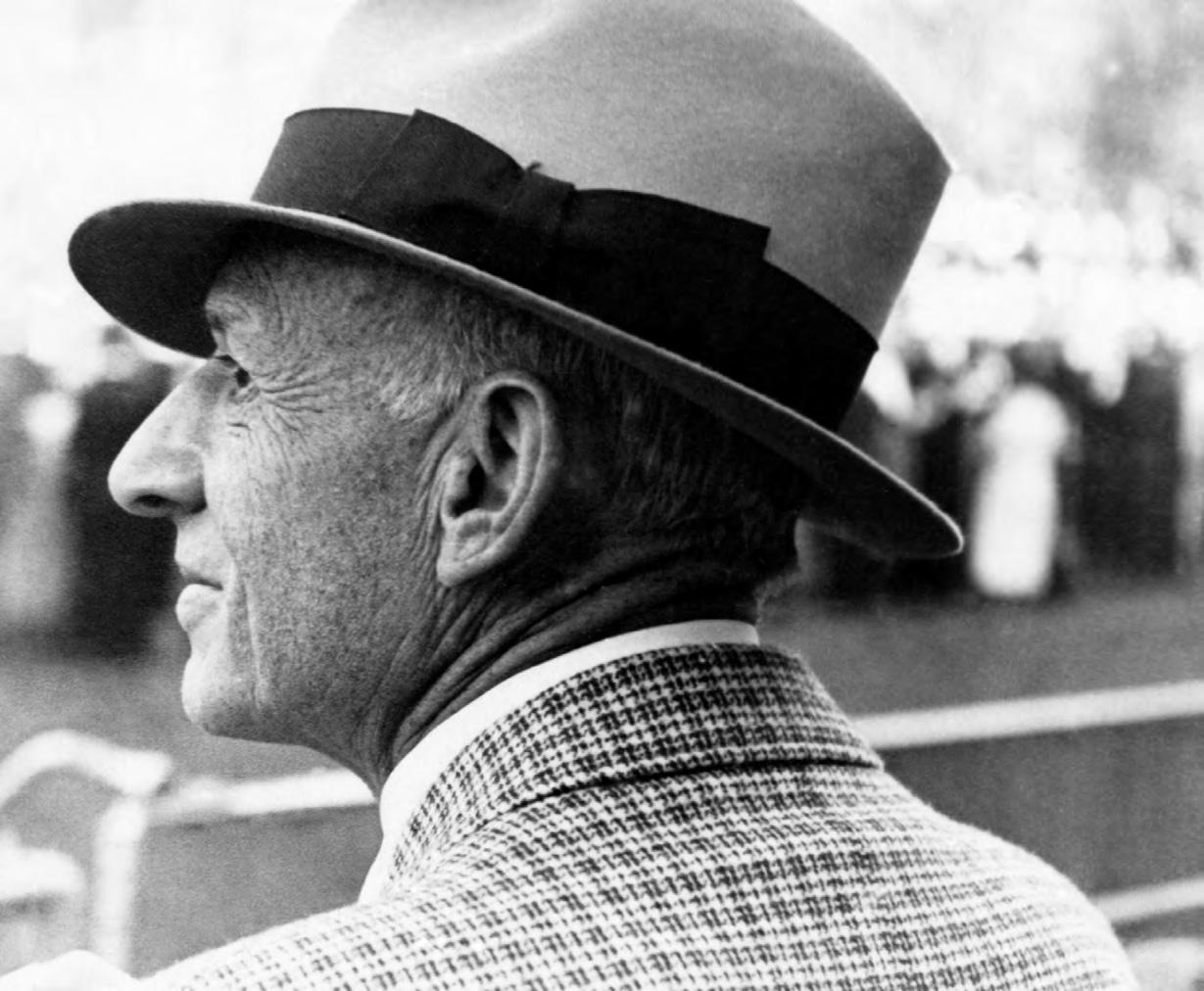
Max Dreyfus
“I think you could say every major Broadway composer, or at least the ones we think of as essential composers — anything that was on Broadway was with Max Dreyfus.”
Will Friedwald Author and music critic
On any given day in 190,, -he o-ces of T.B. Harms & Co. Inc. were seldom noiseless. Songwriters from around New York City circulated inside the publishing ,rm in guileless hopes of signing a contract. Upright pianos lined the halls and tired ,ngers clunked the keys, auditioning scores of tunes that would never see the light of day. It was no di.erent the day 19-year-old Jerome Kern walked into the building on 45th Street in Midtown Manhattan, a edgling songwriter, pianist, and native New Yorker chasing the dream of writing hits.
As told in a 1932 New Yorker pro,le written by S.N. Behrman, Kern sat in one of the o-ces and eyed a Prince Albert coat hanging in the periphery. It sparked within him a sense of nobility, a sign of aristocracy, a marked departure from the informal precinct of Tin Pan
Alley, just a mile downtown from the esteemed T.B. Harms o-ces in Midtown. He gleaned from his inspection that whoever owned that coat could make his career. It was an observation so true it could be bound by natural law, for the coat that hung in the o-ce belonged to none other than Max Dreyfus — a businessman with golden ears.
Dreyfus, ceaselessly coolheaded, sat and listened to Kern’s unpublished compositions. He recognized immediately that the young man playing for him could write a song, but reckoned his talents would be useful elsewhere. He hired Kern as a song plugger, a now long-lost occupation in which he would traverse the Hudson Valley to play songs and sell sheet music of popular British tunes recently contracted by his ,rm. Dreyfus’ business strategy centered around
selling, not composing; Kern’s compositions would have to wait.
Kern readily obliged and took o. to his post along the Hudson, while Dreyfus, concluding that the doe-eyed songwriter had believed the Prince Albert coat was his, subtly withheld the truth: Dreyfus had only rented the coat; he would wear it later that evening to a party for which he was hired as a pianist. As Kern would come to realize, Dreyfus was always one step ahead. He projected success for his subjects and possessed an uncanny ability to inspire loyalty, even when the truths behind his initiatives were malleable.
This story isn’t intended to suggest malfeasance (Dreyfus was notoriously protective of his employees), but rather to specify an instance within his greater scheme. Kern met Dreyfus at the precipice of his enterprise, perhaps at his sharpest and most ambitious. Their relationship formed in the same year in which Dreyfus made his ,rst move as a major player in Tin Pan Alley, buying the majority of shares in T.B. Harms, one of the most formidable music publishers in the world, from savings that he had stored over a decade of working his way up the company’s ranks.
The Rise
It wasn’t uncommon to ,nd teenagers roaming Tin Pan Alley in search of work at the turn of the century, much like Dreyfus did as a teenager in the mid1890s, a German immigrant with a bit of music training and a keen sales pitch.
In those days, nothing de,ned that stretch of the Flower District more than
the sound of a hundred clanging upright pianos being played at once. Tin Pan Alley, a block of modest apartment buildings on West 28th Street between 5th and 6th avenues, got its name from the jangling “tin pan” description of an old, decrepit upright piano. There, inside the cluster of street-facing apartments, groups of immigrant songwriters and enterprising publishers began assembling what would become the Great American Songbook note by note, penny by penny.
In the late 1800s, New York City’s entertainment district was centered in Union Square, where Thomas Harms had established T.B. Harms in 1860, but gradually, at the verge of the 20th century, publishing houses began migrating uptown. “Up until [1904], every 10 years or so, the nexus of entertainment was gradually moving from downtown to midtown,” says Will Friedwald, an author and music critic who specializes in early popular song whose work has appeared in The Wall Street Journal and The New York Times “It gradually went from Chinatown to Union Square to Madison Square, and then Herald Square, and ,nally stopping at Times Square.”
As publishers were moving north, American theater and popular music were ballooning as cultural benchmarks. Tin Pan Alley had inadvertently been established at the brink of the public’s voracity for just the sort of songs it was producing; the area became synonymous with the music produced there. At its peak in the early 1900s, Tin Pan Alley’s clanking pianos could be heard at all hours of the night, ambitious songwriters and publishers
scrambling between apartment buildings to write the next “Hello Ma Baby (Hello Ma Ragtime Gal),” or “The Sidewalks of New York.” The demand for a big hit was of primary importance, and writers, particularly Broadway composers like Gus Edwards and John Walter Bratton, had been elevated to the highest and most honorable class.
Dreyfus himself was working as a song plugger and arranger during this time for T.B. Harms, before the ,rm moved up to 45th Street in Midtown. Every couple of years or so, he would graduate to a new position, each more pro,table. In 1901, Dreyfus penned his own hit contracted by the ,rm, an instrumental ballad dubbed “Cupid’s Garden.” It was his dream to earn rank as a published songwriter, but Dreyfus, ever earnest and observant of the ,ckle industry, realized his specialty might not have been in composition, but rather in enterprising and talent scouting.
Perhaps it’s no coincidence that his big deal with T.B. Harms in 1904 was sealed amid a profound shi/ within the city. “When we talk about Broadway, we can use 1904 as a starting point because of the subway station,” Friedwald says. “That’s the point when the Times Square subway station opened. Times Square was right in between the two big train stations, Penn Station and Grand Central, so all of the bridge and tunnel people [commuters] could more easily get to Times Square.”
Whether Dreyfus had intentionally bought out T.B. Harms, the major holder in Broadway publishing, at the juncture of the city’s public transportation expansion is unknown. But whether the move was calculated or not, the savvy
entrepreneur, whose ,nger lay on the pulse of New York City’s working-class consumerism, came to monopolize music publishing just as the world’s musical theater capital became accessible to more and more Americans.
A New Talent
Dreyfus loved songwriters. As the T.B. Harms empire grew through World War I, he a.ectionately referred to his composers as “the boys,” and o.ered lucrative contracts bene,cial to the songwriters. “I think you could say every major Broadway composer, or at least the ones we think of as essential composers — anything that was on Broadway was with Max Dreyfus,” Friedwald notes. By 1920, Dreyfus owned virtually all publishing rights coming out of Broadway.
Jerome Kern had worked his way through the ranks and demonstrated his worth to Dreyfus, manifesting great success as the composer of “They Didn’t Believe Me” from the 1914 musical The Girl from Utah. Dreyfus would also scout and sign a young Cole Porter, the immensely successful duo of Rodgers and Hammerstein, the great Czech orchestrator Rudolf Friml, and lyricist Irving Caesar, who penned “Tea for Two,” one of the most frequently recorded songs in history.
But long before the fraternity of “the boys” was erected, an extraordinary young talent was scouring the streets of Tin Pan Alley as a song plugger, making 50 cents a pop on the side as a songwriter. Kern was the ,rst in Dreyfus’ circle to hear the young man play, his large, spindly ,ngers hammering a piano during rehearsals
for an upcoming Broadway musical revue titled “Miss 1917,” for which Kern was hired as a contributing songwriter. The second to notice the virtuosic pianist was music producer Harry Askins, who upon witnessing his rehearsal performances called for Dreyfus immediately.
Dreyfus walked into the rehearsal room hours later; Askins summoned the young man, who promptly soared through a number of pieces and humbly introduced himself as George Gershwin. He was hired on the spot and o.ered a generous salary of $35 a week. “Unlike most songwriters, he was a piano virtuoso,” explains Friedwald. “You had Cole Porter; Richard Rodgers could play con,dently, but not excitingly. Gershwin was the one who was a piano virtuoso, more than anybody.”
Gershwin ourished under Dreyfus’
watchful eye almost immediately. “It’s a fascinating thing, in that his biggest hit, by which we use the metrics to measure or qualify a hit, was his ,rst major song, ‘Swanee,’” Friedwald observes of Gershwin’s 1919 composition. It is particularly fascinating when skimming Gershwin’s trove of popular titles, considering the legacy of his opus “Rhapsody in Blue,” or the groundbreaking Porgy and Bess. In all of his profound proli,city, Gershwin struck gold early on, and Dreyfus had once again surged to the top.
A First-Rate Gershwin
It was Paris in the mid-’20s. Gershwin looked at the letter in his hands. It was from Maurice Ravel, the esteemed French classical composer, whom Gershwin had contacted about a
mentorship. He opened the letter; it read: “Why become a second-rate Ravel when you’re already ,rst-rate Gershwin?”
Like most of his peers, Ravel had recognized Gershwin as a revolutionary, a once-in-a-lifetime talent endlessly lit by a ame of genius. “Rhapsody in Blue” made him a household name, its boundless score distilling the very essence of New York City: elegant, bombastic, imaginative. It embodied the spirit of Gershwin’s roots, his auspicious beginnings on West 28th Street between 5th and 6th avenues, the advantageous hustle in Tin Pan Alley.
Back in Manhattan, Max Dreyfus’ wealth grew larger as the Roaring ’20s were underway, as Broadway excelled and popular song reigned. And for every Gershwin piece written, the Dreyfus name was branded in its paperwork. He
would publish everything Gershwin wrote through the ’20s and beyond, regardless of its commercial success. Dreyfus even formed a subsidiary of T.B. Harms called New World Music Corporation to allow Gershwin and his brother Ira to hold their own copyrights. (Dreyfus also owned a large share of this deal; he wouldn’t be so foolish as to allow total independence.) And far beyond the last days of T.B. Harms under Dreyfus’ management, he would continually champion Gershwin as a creative genius, a lucrative partner, and a friend.
Gershwin would need this support as he entered his most pioneering period in the mid-’30s, taking on the musical adaptation of DuBose Heyward’s novel Porgy, a heroic story of Black life in Charleston, South Carolina. The English-language opera, dubbed
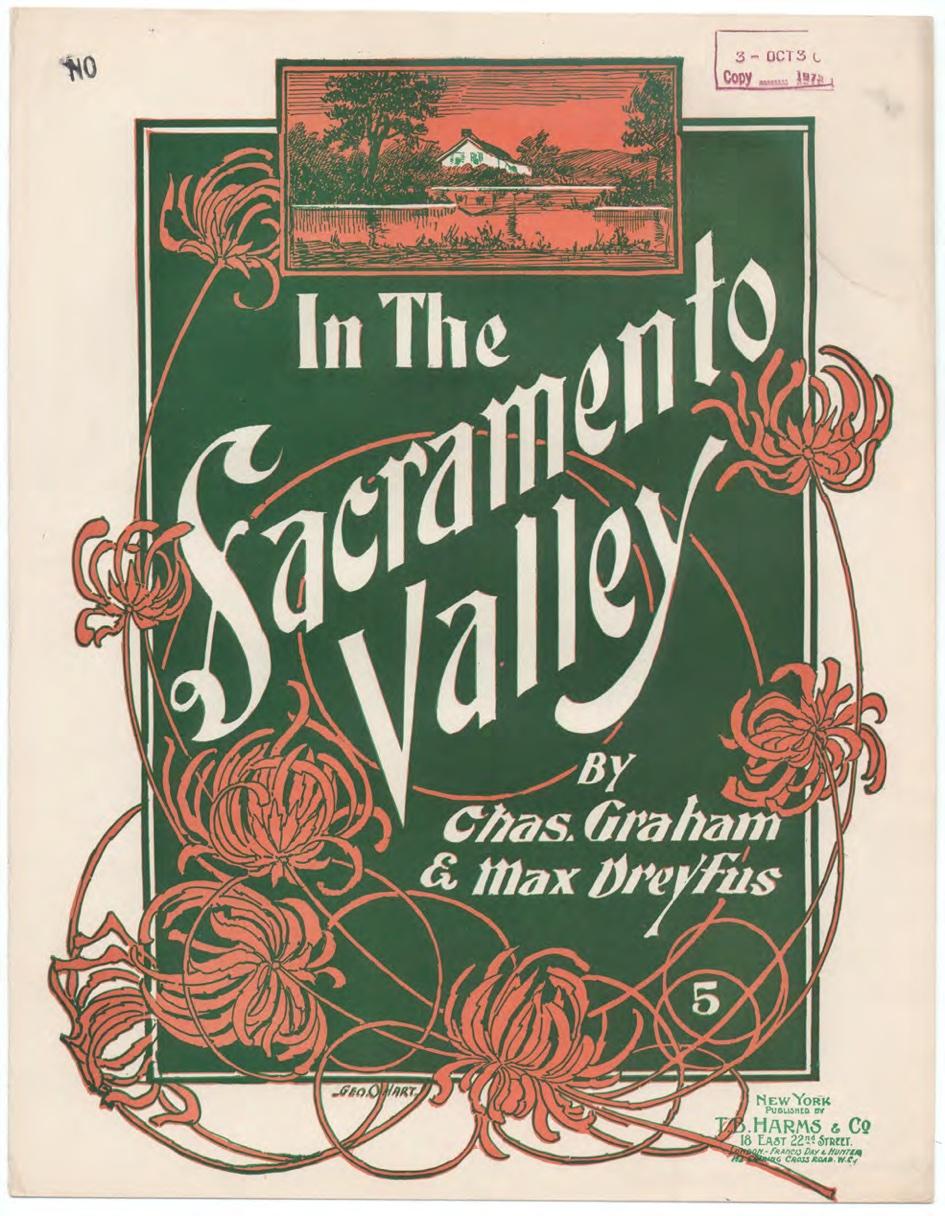
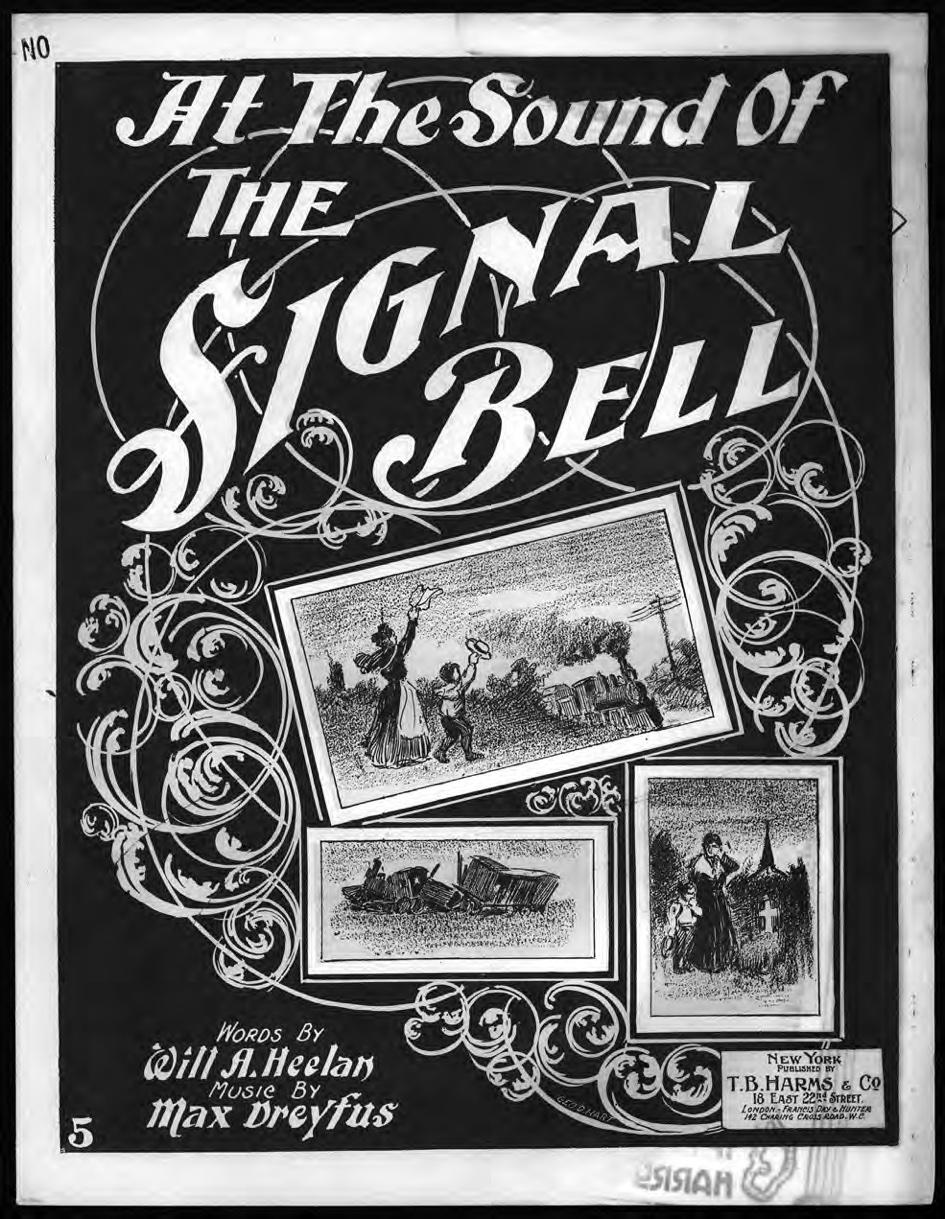
Max Dreyfus’ compositions, published by T. B. Harms & Co., New York, 1898
Porgy and Bess and featuring an allBlack cast, was an immense undertaking for Gershwin; it took two years for him to compose, including the song “Summertime,” now a staple tune in the Songbook. But the opera was simply too trailblazing, and was largely unpopular.
“ They should have let the Metropolitan Opera do [Porgy and Bess],” Friedwald explains. “They should have produced it as an opera instead of putting it on Broadway. People just didn’t know what to make of it.”
The commercial failure le/ Gershwin “devastated,” Friedwald notes, and ushered in a new chapter of his career. “Essentially, Gershwin wasted two years of his life, coming from a commercial point of view,” he says. Gershwin took o. for Hollywood, a place he had previously stayed and worked over the years, to compose music for moving pictures in relative solitude.
The Fall
When Max Dreyfus helped form the American Society of Composers, Authors, and Publishers (ASCAP) in 1914, the aim was to protect songwriters by ensuring their copyrights were protected, and to provide proper compensation. And that’s exactly what it did, and still does today, but little did Dreyfus know that it would topple the keystone of Tin Pan Alley.
Fi/een years a/er the formation of
ASCAP, Dreyfus would sell his shares in T.B. Harms to Warner Bros. as the Hollywood system began gobbling up publishing companies around the country to reinforce the booming moving picture business. He served as a consultant therea/er for many years before establishing the American branch of Chappell, a British publishing ,rm run by his brother Louis in London. All the while, ASCAP continued to run smoothly.
But ASCAP’s exclusivity became its biggest weakness. The organization favored the highbrow aristocracy of Broadway, failing to anticipate that eventually the zeitgeist would shi/, and what was once popular would fade. The days of “Give My Regards to Broadway” and “For Sentimental Reasons” were numbered as a new cultural wave began permeating New York from the South.
In the 1940s, a dispute between ASCAP and US radio stations yielded Broadcast Music Inc. (BMI), a direct rival for ASCAP in the realm of copyright holdings, where previously it was largely uncontested. A music publisher named Ralph Peer contributed greatly to the BMI catalog, championing folkloric Black music of the South, including the blues and gospel, and ushering in Latin and Cuban music from outside the US.
“Ralph Peer was the number-one guy for everything that really wasn’t what we think of as Tin Pan Alley,” says Friedwald. “He became one of the founders of BMI, and one of BMI’s strengths was that they were the ,rst to
pay attention to that, whereas ASCAP looked down its nose at it.”
The Brill Building, constructed in 1931 on Broadway and 49th Street, o.ered music publishers additional o-ce space at a time when the industry was sprawling, and many Tin Pan Alley ,rms migrated north once more. But one notable publisher opted out. “Almost as soon as [the Brill Building] opened — perhaps mainly because it was close to Times Square and all of these publishers needed o-ce space — music publishers started moving in almost immediately. But it was everybody except Dreyfus and the kind of high-pro,le Broadway writers,” Friedwald says. “It seemed to be the place where everybody except Max Dreyfus and the top Broadway people went.”
One of the building’s ,rst tenants was Peer, whose presence as a BMI representative spurred a renaissance of music publishing that would take the country by storm as the advent of World War II shi/ed the tastes of American consumers. R&B soon overcame the once steadfast repository of musical theater, and the Brill Building became the music publishing hub of New York City. Through the 1950s and ’60s, the Brill Building dominated American popular music, housing such proli,c songwriters as Carole King, Neil Diamond, Phil Spector, Burt Bacharach, and countless more.
Subsequently, Tin Pan Alley would fall at the hands of rock and roll.
A Relic and Reminder
As Howard Pollock detailed in his 2006 book George Gershwin: His Life and Work, 1937 was the beginning of the end for the celebrated composer. Pollack describes Gershwin’s head pounding as he sat facing the piano one evening, the San Francisco Symphony Orchestra stationed idly under the stage lights at the symphony hall, a full audience nestled in the velvet darkness. He smelled burnt rubber in the air during the special performance of his expansive Concerto in F. Then his ,ngers stumbled and he missed a note, and another, and his vision went black. In a wink, the keys reappeared as the static in his vision began to clear, and he concluded the vigorous Allegro agitato as if nothing had happened.
Back at his rented house in Beverly Hills, Gershwin’s mood was as turbulent. Others around him noticed a marked shi/ in his behavior as the year progressed. He was plagued by headaches and the persistent smell of burnt rubber. When he moved into an open quarter of lyricist Yip Harburg’s estate, his closest circle pondered the onset of mental illness.
It took only ,ve months for the brain tumor to impart its irrevocable damage. Gershwin collapsed one morning in early July and fell into a coma. Two days later, in a ,nal attempt to save his life, doctors removed the mass, a glioblastoma, from his brain, causing it to herniate. He was 38 years old.
News of Gershwin’s death stunned the world, one of the bright lights of the 20th century having dimmed far too early. But Gershwin’s compositions lived on in the annals of the Great American Songbook, particularly pieces written in his last days, like “They Can’t Take That Away from Me,” an iconic tune re-popularized by Frank Sinatra in 1954.
“ That ,nal phase of Gershwin in Hollywood is almost his most magical,” Friedwald says. “A disproportionate number of his great songs come from that ,nal Hollywood phase from 193537.” The Gershwin estate still controls the copyrights to many of his iconic works, due largely in part to the benevolent Max Dreyfus.
At the time of Gershwin’s death, Dreyfus was spending his summers on a 300-acre farm in Brewster, New York. He turned the stable barn into a clubhouse of sorts; it’s where he hosted “the boys” — Jerome Kern, Oscar Levant, Rodgers and Hammerstein, and others — the clubhouse out,tted with games and pianos for entertainment.
A/er dinner on these nights, Dreyfus would sit and play piano with Levant, and they’d revel in each other’s company; Dreyfus, the so/ spoken and poised industry magnate, living vicariously through the youth of his institution. Though Dreyfus would never make a name for himself in the colosseum of great songwriters, his name would carry enormous weight
among those who did make it there, a looming presence in the ranks of the Great American Songbook.
Dreyfus died at the farm in 1964 at 90 years old. He was survived by his wife, Victoria, and le/ a small herd of Percheron horses and some cattle. The clubhouse remained a shrine of sorts, the pianos slowly gathering dust as years passed and company became sparser.
One of the pianos was the ,rst Dreyfus had ever owned in America, a Steinway from the late 1800s that he acquired in the purchase of T.B. Harms back in 1904. It remained a relic of his success through his lifetime, a symbol of American virtue, emblematic of his meteoric rise as a great entrepreneur and a poignant reminder of a path he longed for but never fully traversed — that of a professional musician.
Like Gershwin’s Concerto in F, Dreyfus’ Steinway represented the beauty in tragedy. Gershwin’s ,nal performance of Concerto in F would signal the imminent demise of its creator; Dreyfus’ Steinway, a beautiful piece of work, would only see its true potential around the company of people more talented than himself.
These men, both great in their own respects, represented the duality of Tin Pan Alley’s legacy: the fragility of genius and the torment of sacri,ce. The Great American Songbook, de,ned both by genius and sacri,ce, would be far short of great without their golden ears. 0
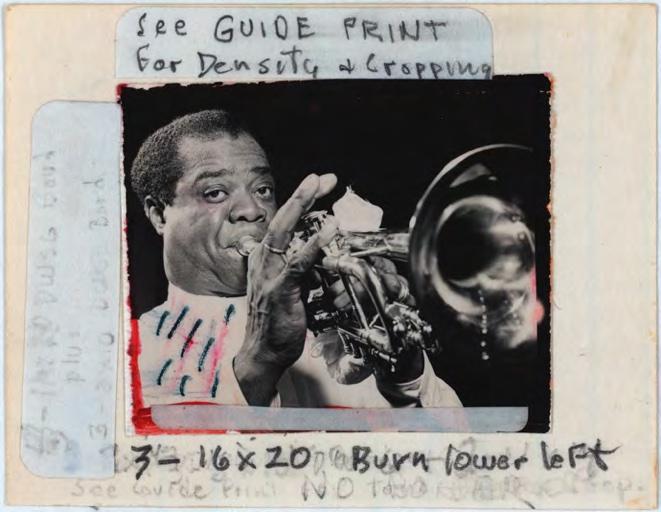
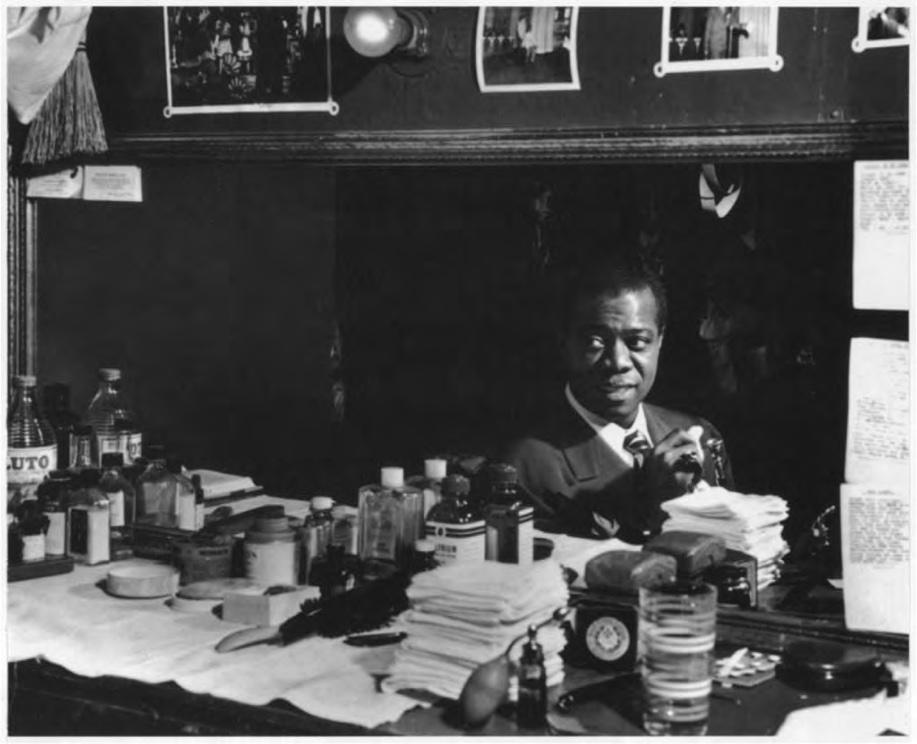
Louis a rms-rong is one of -he great American musicians in any genre, but his relationship with the Great American Songbook is a particularly special one. Born in New Orleans just a/er the turn of the 20th century, Armstrong’s musical in uences predated the beginning of the Songbook as a genre, and his legacy stretches far past the Songbook’s heyday.
Though he began his ,ve-decade career as a trumpeter, Armstrong grew into an esteemed vocalist as well. His gravelly baritone is iconic in songs like “What a Wonderful World,” “When the Saints Go Marching In,” and his version of Fats Waller’s “Ain’t Misbehavin’” (which became his best-selling release).
Armstrong also helped popularize improvisational scat singing on songs like “Heebie Jeebies” and “Hotter Than That,” which helped usher in bebop jazz. Ella Fitzgerald also became a notable scat singer and they collaborated for two full albums together for Verve Records, Ella and Louis and Ella and Louis Again, later reuniting on the soundtrack for Porgy and Bess.
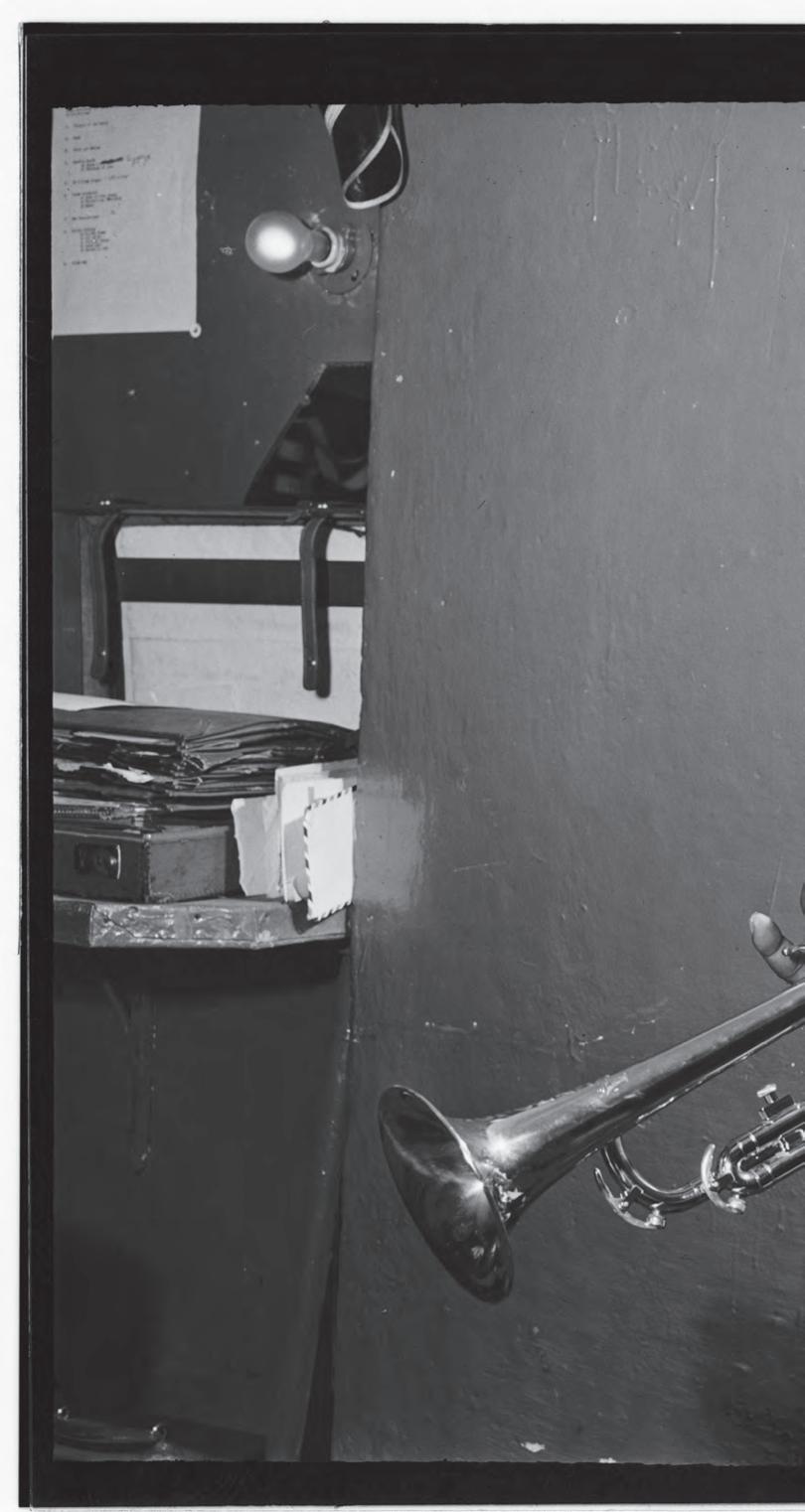
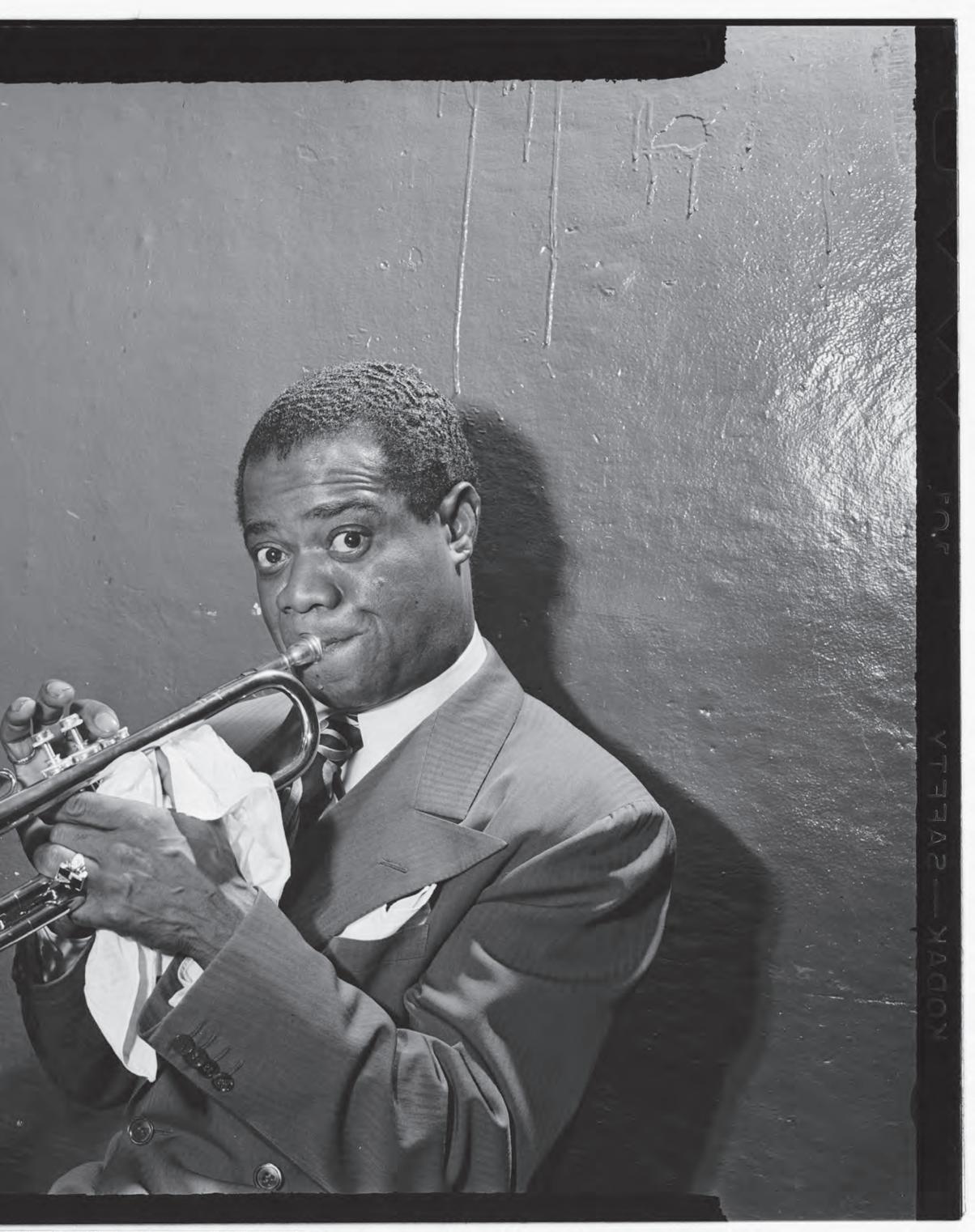
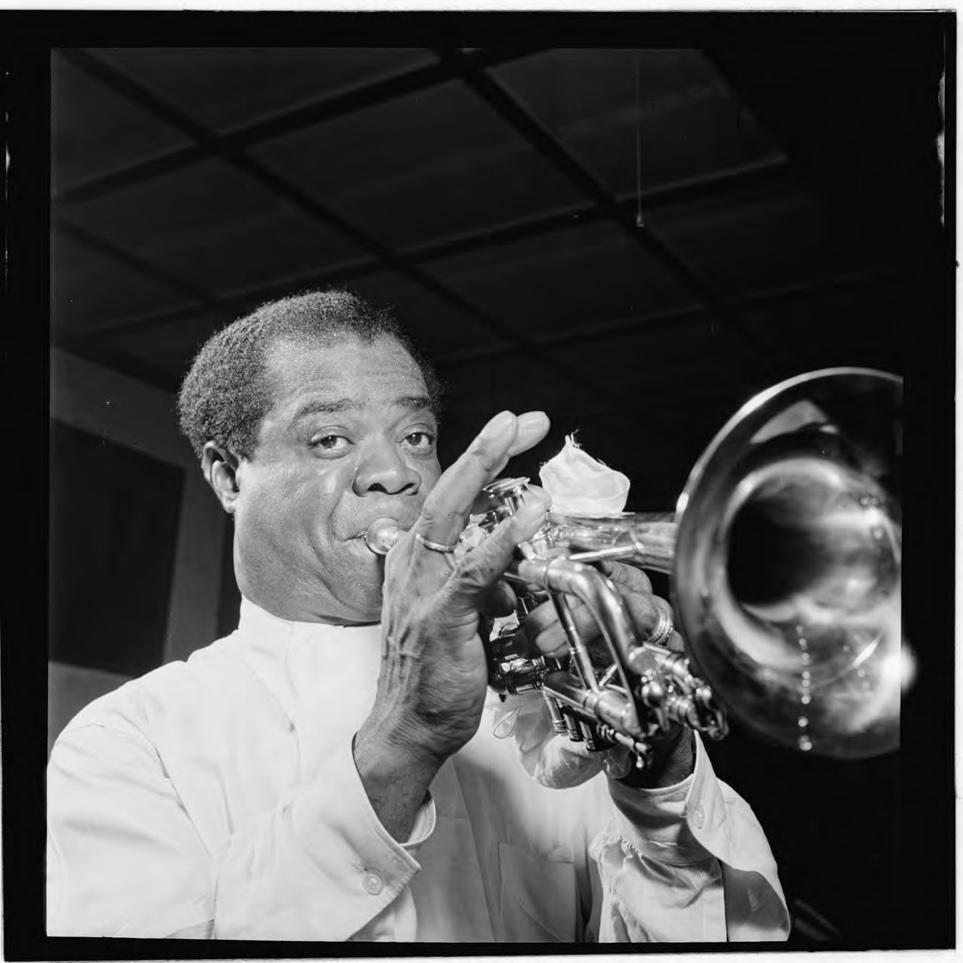
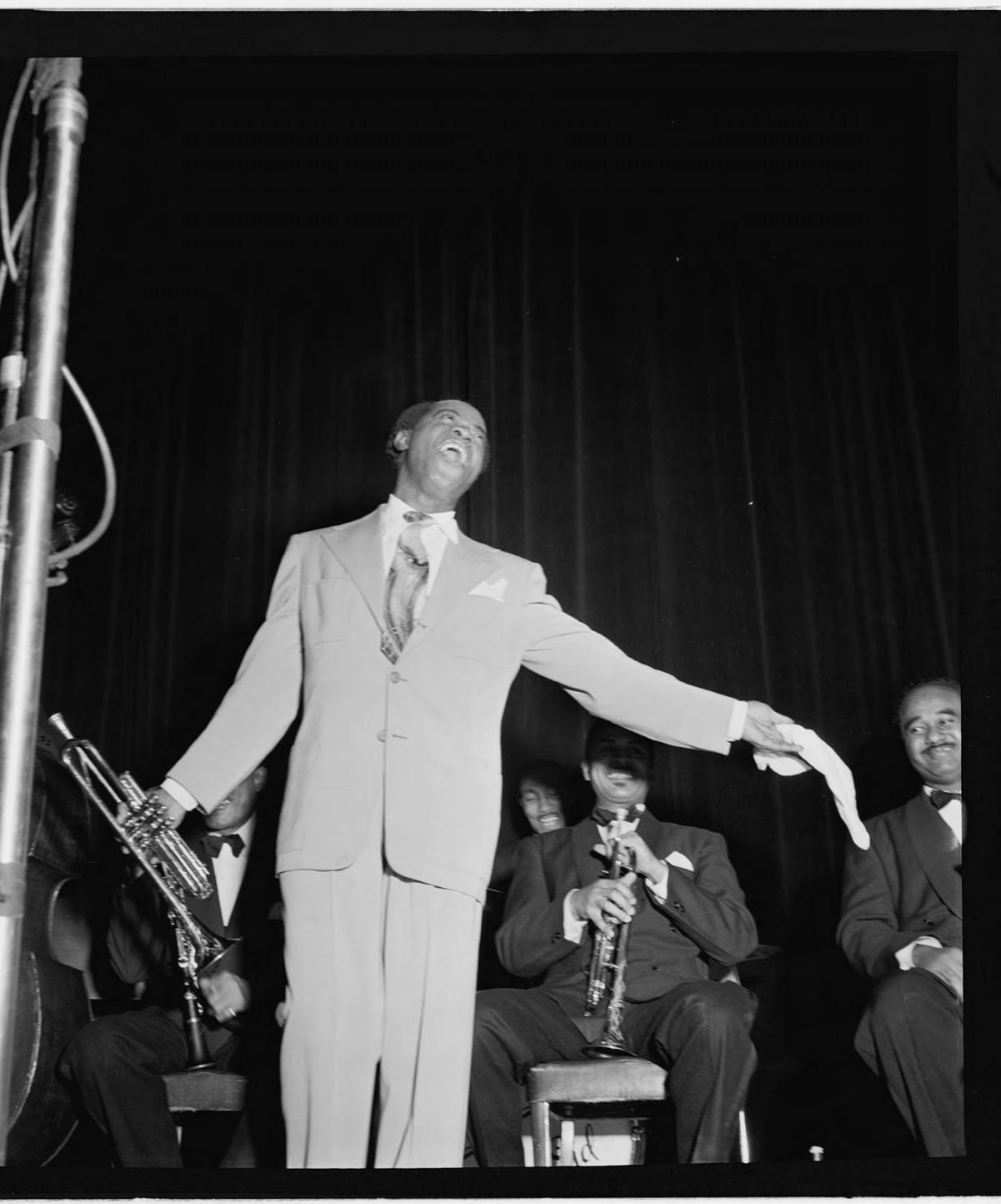
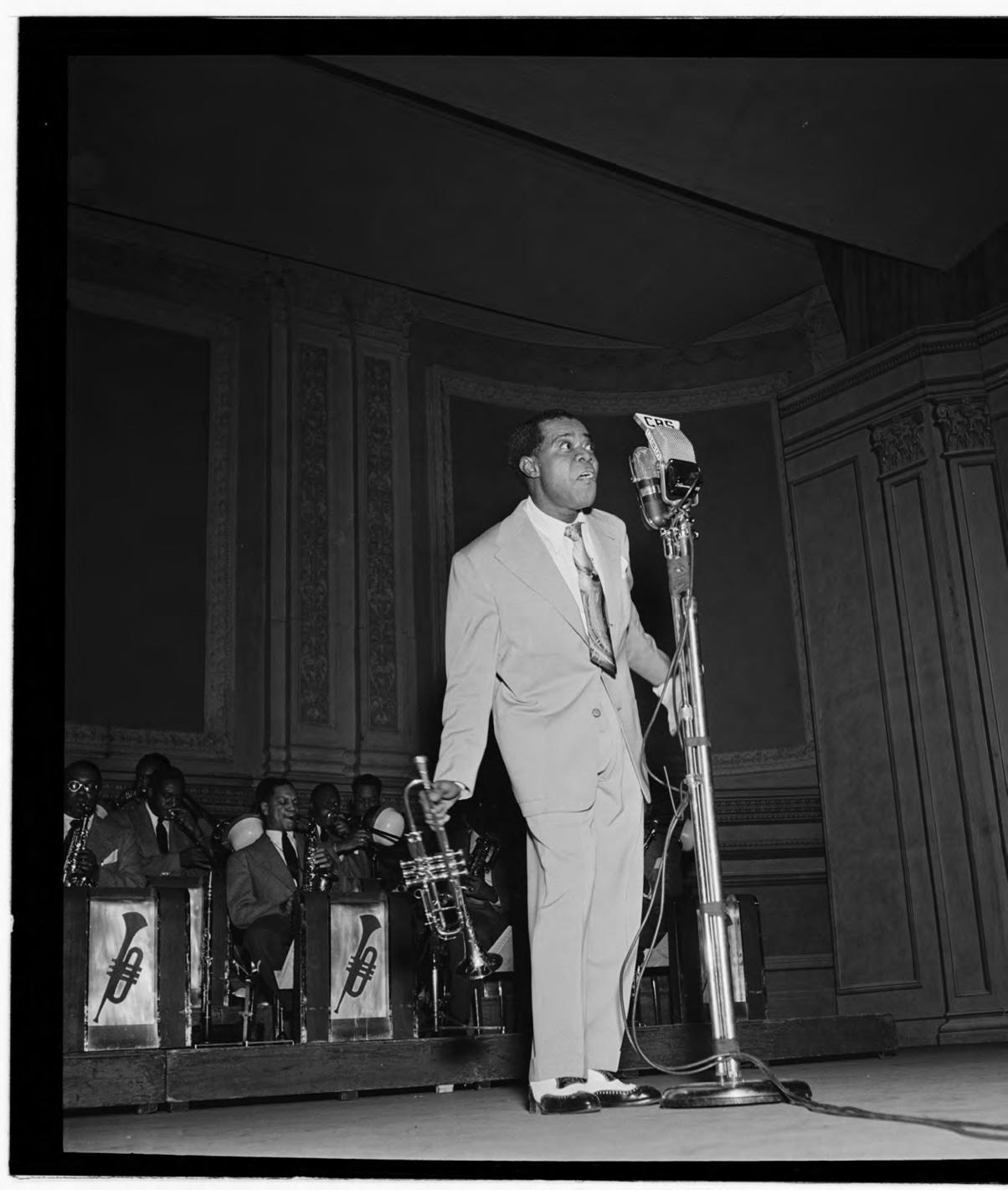
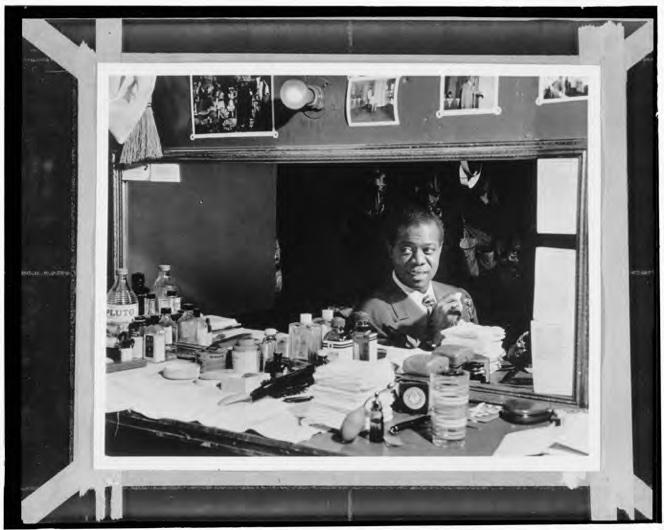
Armstrong’s career of instrumentals, vocal tunes, jazz, showtunes, and original compositions (some of which became jazz standards in their own right) represents one of the greatest crossover successes — in terms of both genre and race — in American history. These live photos and portraits by William P. Gottlieb, housed in the Library of Congress, help convey the vivaciousness of this Songbook titan. — Hilary Saunders
AN AMER ICAN ICON
Louis Armstrong at the Aquarium in New York City, circa July 1946.
Armstrong at Carnegie Hall in New York City, circa April 1947.
“My photo of Louis shows him just before the concert. The horn you see belongs to Bobby Hackett. Louis’ had just been stolen. Satchmo had to borrow a mute, too. All he had of his own for the concert was his mouthpiece, which he had in his pocket when the thief grabbed his case. Horn has since been recovered at a pawn shop.” — William P. Gottlieb for DownBeat magazine
These images were also published in Gottlieb’s photography book, The Golden Age of Jazz (Pomegranate), which was first published in 1995.
Louis
Louis Armstrong at Carnegie Hall in New York City, circa February 1947.
Louis Armstrong at Carnegie Hall in New York City, circa February 1947.
These images were also originally published in Gottlieb’s photography book, The Golden Age
which was first published in 1995.
Louis Armstrong at the Aquarium in New York City, circa July 1946.
of Jazz (Pomegranate),
VERSATILE VOICE
Rachael Price goes back to the (Song)book
by Noah Berlatsky
Rachael price s-ar-ed singing when she was four years old. Now best known as the lead singer of genre- uid band Lake Street Dive, she ,rst discovered her love of performing in Tennessee’s The Voices of Bahá choir, which her father, Tom Price, conducted. Her love of the Great American Songbook came later, when she heard “A-Tisket, A-Tasket,” a nursery rhyme-turned-jazz standard by Ella Fitzgerald and the Chick Webb orchestra. “It’s such an incredible recording,” Price says with a laugh and hint of wonder. “I still listen to it and I can’t believe it, in so many ways.”
Growing up, Price watched musicals voraciously — “a lot of the movie musicals like with Doris Day and Judy Garland and the big band movies,” she says, “so I was very enamored very early on with singing from the ’30s, ’40s, and
’50s. I feel like when I heard Ella Fitzgerald, it was just an extension of that. … She has so many recordings of when she’s super young, so I think it was easier for me to connect with a young Ella Fitzgerald voice because she sounds like a child, but she’s super swingin’ and [has] an incredible command over her voice. I could hear my child voice in that. And I felt like I could copy it.”
Price was a soloist with the worldtouring Bahá choir by the time she was 12; she recorded her ,rst solo CD, Dedicated to You, in 2003, when she was 17. The title track is a swinging, smallband arrangement of a Sammy Cahn/ Saul Chaplin/Hy Zaret song from the 1930s, sung with a irtatious, knowing control that sounds older than her years.
Price went on to study at the New England Conservatory of Music, where she continued to pursue her love of vocal
Rachael & Vilray
“It’s like being in a band. There are these give-and-go moments where you get to step forward and do something, and then you have to know when to step back and let somebody else do something and keep this thing moving forward.”
Chris Funk
The Decemberists
jazz. Her second album, The Good Hours, from 2008, is a stunning demonstration of her command of the classic Songbook. Her version of Duke Ellington’s “Mood Indigo” is an almost impossibly languid interpretation, the words spaced apart with exquisitely deliberate randomness, so it sounds like she’s swooning through virtually the entire song. And on the Harold Arlen/Johnny Mercer chestnut “That Old Black Magic,” she starts o. with a stunning a cappella verse, turning the goofy novelty into something darkly sorcerous.
Price says that as a singer what she most loves about the Songbook is the melodies. “They’re so perfect,” she gushes. “There was such a focus then on the construction of the melody. And it’s honestly like a feeling, like a physical feeling in my voice, that those melodies still feel so good to sing.”
At the same time, though, she recognizes that pop music today has moved to a very di.erent place. “I don’t really think that there’s a strong focus on melody, or on surprising, harmonic changes. And I’m not saying that in a bad way. What I ,nd very interesting in music right now is more based on exploration in rhythm.”
Lake Street Dive, which easily morphs between indie rock, alt-jazz, folk, and other genres, can be heard as a kind of ongoing negotiation between the melodic pop gems of the Great American Songbook and the more rhythm-based
music of The Beatles and classic soul. Founded in 2004 by a group of New England Conservatory graduates, the band includes trumpeter and guitarist Mike Olson, drummer Mike Calabrese, and double bassist Bridget Kearney.
On tracks like “Neighbor Song” from 2010’s self-titled album, Price channels a jazzier Dusty Spring,eld, her voice sliding around Kearney’s uid bass line while the rhythm section rocks and sways like those “neighbors making love upstairs.” Their cover of “Faith” on 2014’s Fun Machine imagines George Michael as Frank Sinatra, turning his passionate direct insinuation into playful vocal lines that scamper and shimmy, ushering the ’80s pop canon into the Great American Songbook.
In the following years, the group even moved toward funk. Keyboardist Akie Bermiss joined the quartet on their 2018 LP Free Yourself Up, his work lending a strong in uence to songs like “Red Light Kisses,” in which Price wails with a force more akin to Nancy Wilson than Ella Fitzgerald. Lake Street Dive’s most recent song, “Making Do,” released in September, features a big chorus, jagged guitar solo, prominent rhythm section, and slick production. Price sounds tough as hell, but it’s less jazzy than just about anything in her catalog.
Spirit of the Songbook
But Lake Street Dive’s evolution doesn’t
mean Price has abandoned her ,rst love.
In 2019, she and composer and guitarist Vilray released their eponymous Rachael & Vilray, an album of intimate jazz songs.
The two originally met as students at the New England Conservatory, but Vilray (who goes by the single name) dropped out and dri/ed away from music to work at a manufacturing plant in Queens.
When Price moved to Brooklyn around 2004, she tried to get him interested in a duo. But, he says, “I really was very reluctant because I wasn’t playing much at all. We did get together … a/er she twisted my arm, but I had no real con,dence in it at all, so it didn’t really go anywhere.”
The two kept in touch, though, and when Vilray started to play and perform again a couple of years ago, Price went to see him and was blown away. “I didn’t know the extent to which he was immersed in the Great American Songbook until I heard him play a show solo,” she says. “He’s really well acquainted with a lot of obscure songs from that time, the ones that didn’t make it into the pantheon.”
Songs like “Blue Moon” and “Autumn Leaves” have been performed so o/en, by so many people, and are so well known that it can be hard to connect with them, Price notes. “Whereas there’s all these obscure songs to mine from that era that have the same excellent construction, subtle wordplay, and humor, and love songs with these beautifully cra/ed
“The Great American Songbook stays relevant, because it’s so relevant in the culture. You hear it in every generation of moviemaker, every generation of TV maker. They keep it alive by putting it in people’s houses. And I think that it’s still very relatable.” Vilray
melodies that a lot of us have never heard before. And when I experienced that — I hadn’t really been singing jazz for a while — I realized that my connection to the music was just as strong and just as energetic as it had ever been.”
Rachael & Vilray includes a couple of classic covers, most notably the Peggy Lee standard “I Love the Way You’re Breaking My Heart.” For the most part, though, it sounds like a collection of Great American Songbook obscurities. But it isn’t. Instead, most of the 12-track album actually comprises new songs composed in the tradition of the great songwriters of the ’30s , ’40s, and ’50s. Vilray demonstrates an almost preternatural ability to capture the spirit, lyrical twists, and melodic invention of Porters, Gershwins, and Ellingtons past.
Those writers would o/en compose with a performer in mind, Vilray says, and he tries to do that as well. Price is so versatile that he enjoys instead giving her material tailored for “speci,c people from yesteryear.” “Without a Thought for My Heart,” he says, “expresses this weirdly melancholic and enthused idea in a very so/ way,” which Price infused with a theatricality similar to that of Peggy Lee. “Go on Shining,” with Jon Batiste on piano, recalls the dreamily good-humored music of Fats Waller.
The de/ly virtuosic “Laundromat Song,” with Price and Vilray harmonizing together, is inspired by the vocal group The Mills Brothers. “The Mills Brothers
were choosing lyrics to accentuate the rhythm,” Vilray says. “They would have a lot of consonants, so the words are almost more like a snare drum pattern than like a lyric. So I started o. that song with the ,rst lyrics, which are, ‘Drop your lucky nickel down the money slot.’ That’s just got a lot of pops in it.”
Part of the fun for both Vilray and Price was to see how she would take these songs composed for great singers from the past and turn them into something of her own. Vilray says that his favorite of Price’s interpretations in that respect is “At Your Mother’s House,” a song arranged by Jacob Zimmerman, which he wrote with the John Kirby Orchestra in mind. Kirby’s band was known for its suave, careful arrangements; it le/ so little room for improvisation that it was looked at askance by some jazz critics. But, Vilray says, “when Rachael laid her vocals over it, it became this Louis Jordan kind of thing, on the brink between jazz and rock and roll, even though there was nothing really in the arrangement that made it so. And that was an amazing, blow-mymind kind of moment to hear that in the studio.”
For her part, Rachael was hardpressed to pick a favorite song or performance. “Honestly, I love them all so much that every time I hear a new song, I can’t believe that I get to sing it. But I think that ‘Alone at Last’ is just an exceptional, special song. It completely
,ts within the style, but it also has melodic turns of phrases that I’ve never sung myself. That one’s really impressive. And very fun. And hard to sing,” she says, pausing to laugh. “That’s the same thing!”
Looking ahead, Lake Street Dive has new album, Obviously, due out in the spring, though it’s been di-cult with COVID-19 still spreading and band members located in Brooklyn, South Carolina, and Boston. “Recording remotely doesn’t really work for us,” she says, though they’ve been writing new material and releasing some videos, and they feel like they’re in a good place to start on the next record when the pandemic li/s.
Vilray and Price also hope to make another duo record. Vilray says they have songs and arrangements ready for whenever they can get back in the studio. There’s still a demand for music that sounds like it was written 90 years ago, as it turns out.
“ The Great American Songbook stays relevant, because it’s so relevant in the culture,” Vilray says. “You hear it in every generation of moviemaker, every generation of TV maker. They keep it alive by putting it in people’s houses. And I think that it’s still very relatable. You know, maybe it’s fewer people than it was in 1960. And certainly, it’s fewer people than it was in 1940. But I think that the culture keeps it as a real American tradition.” 0
REFRAMING ‘THE FATHER OF AMERICAN MUSIC’
Reckoning with blackface minstrelsy and the legacy of Stephen Foster by Kim Ruehl
“With minstrelsy — the history and the image of what it is — we are quick to shy away. You can be embarrassed, ashamed, hurt, disgusted, whatever, we want to just shut the door on these things. But I think it has a story.”
Dr. Dwandalyn Reece Executive committee chair at the National Museum of African American History and Culture in Washington, DC
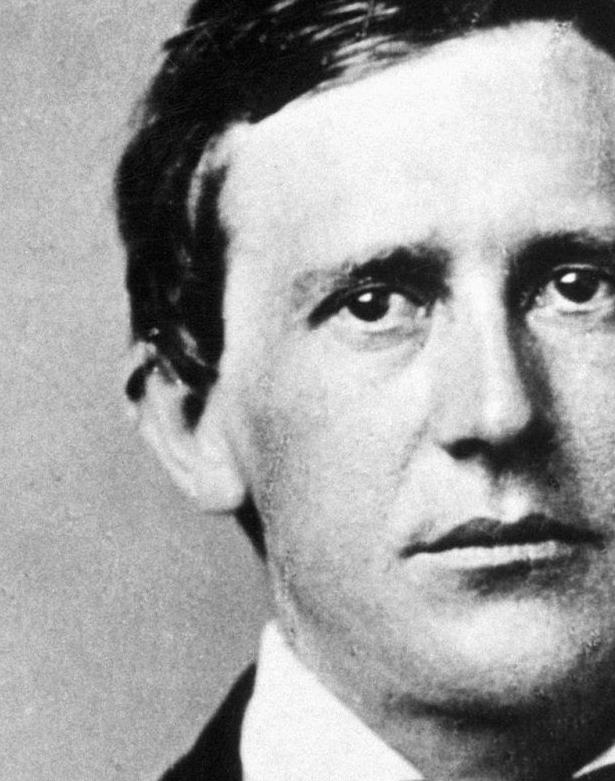
When s-ephen fos-er, o/en referred to as “the father of American music,” was 9 years old, he and his friends joined a theater group. For that brief moment, the young white boy — who would become known worldwide not for his stage performances, but for the wealth of songwriting he would release into the world — became a well-paid child star of the stage. Mimicking the prevailing form of entertainment that he and his friends saw adults enjoy in their corner of western Pennsylvania, Foster joined others who rubbed black grease on their skin and sang songs with titles like “Zip Coon” and “Jim Crow.”
As Ken Emerson explained in his 1998 book, Doo-Dah!: Stephen Foster and the Rise of American Popular Culture, “Stephen Foster was among the ,rst white boys to do what white boys (and the occasional girl) have been doing ever
since — mimicking black music, or what they think is black music and black style.”
From Foster to Elvis Presley to the present, white American performers have drawn from Black culture and tradition to build their own popularity and pro,t. Yet, even when the nation spiraled into civil war and later fought over civil rights for Black citizens, musicians of all backgrounds have always found common ground and collaboration despite, across, and even occasionally because of the discriminatory practices of their day. Still, it’s hard to look back at the kind of blackface minstrelsy that in uenced one of American history’s most proli,c songwriters as anything other than deeply bizarre at best, and disturbingly racist at least. But the songs that Foster and others composed for the minstrel shows of the mid-19th century retain value because they can be vehicles for
learning about just how commonplace and casual were the roots of racism in America.
Consider this now-o/en-omitted verse from “Oh! Susanna”:
I jumped aboard the telegraph and traveled down the river, Electric uid magni!ed, and killed !ve hundred nigger.
The bullgine bust, the horse ran o , really thought I’d die; I shut my eyes to hold my breath — Susanna, don’t you cry.
The verse is followed by a rousing banjo and vocal chorus as we all know it: “Oh! Susanna, oh don’t you cry for me / for I come from Alabama with a banjo on my knee.”
Because so much of the history of slavery is o/en tied up with images of the South, many assume that was the primary backdrop for the minstrel tradition. Like many other minstrel songwriters, Foster created music that was purely from his imagination of what enslaved Black people looked like and how they felt, having never actually experienced Southern Black people or culture ,rsthand.
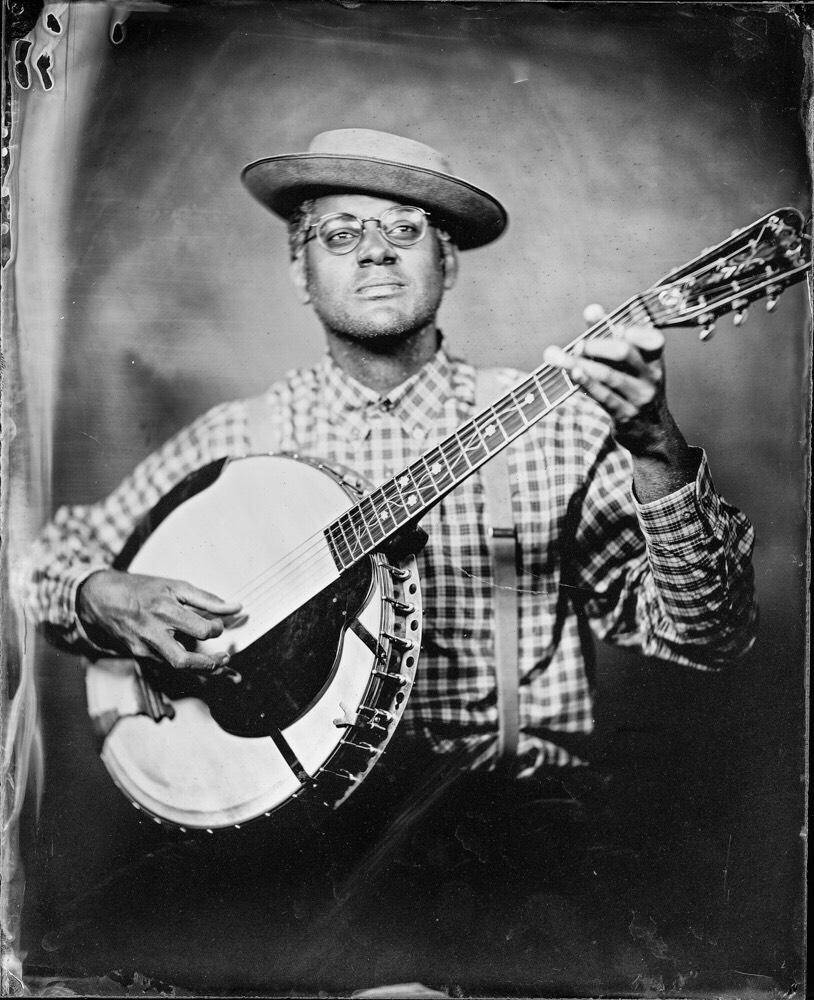
Folk singer-songwriter and song collector Dom Flemons explains this is something that neither began nor ended with blackface minstrelsy in America. Its roots stretch back to the European countries from which so many American immigrants came.
“ There’s a history of German folk orchestras,” he notes, “traveling and showing [o. ] folk dance music and folk instruments and whatnot. By the 1840s, this tradition turned into a presentation of African American plantation life as it was seen through the people who were putting this show on. … In those days, before mass media, this is the ,rst time you have any exposure to any of this foreign music at all. The best thing you’ve got is someone doing an impression of somebody. So the minstrel shows built o. of this idea.”
In his book, Emerson drives the point home: “A shared feeling of superiority to blacks was one of the few things that united a nation of immigrants, many of them more recent arrivals than the African Americans they mocked.”
Now, as the United States moves forward through ampli,ed racial tension that has played out on the streets and in government, it’s important to consider the way American musical traditions have impacted the journey to where we are now, both for better and for worse.
‘The First Movement of Minstrelsy’
Many people ,rst encounter minstrel music, speci,cally Foster’s songs, in childhood. Schoolchildren across the United States grow up knowing a verse or two of various Foster tunes like “Oh! Susanna,” “Camptown Races,” “Old Folks at Home (Swanee River),” and others. These songs are so pervasive, they’re
o/en called folk songs, although they have a known composer and were originally written for success in mainstream entertainment.
And it makes sense that childhood is the entrée for many to Foster’s catalog, since his own attraction to minstrelsy began early in life. In the 1820s and ’30s, when a young Foster was moving around frequently as his family struggled ,nancially, the opportunity to engage with minstrel shows was one constant in an otherwise somewhat chaotic childhood.
“Stephen Foster would compose so many songs about home in part because he seldom knew one for long,” Emerson wrote. And it would be this fact that would draw him to imagining stories of the dark-skinned people whom he had rarely if ever encountered in his daily life, those who had been torn from their homes and forced to serve someone else’s.
These days, folks are likely to make it to adulthood without encountering these songs’ original verses that are riddled with dialect and language we now recognize as racist.
But some, like Flemons, ask listeners to step outside of contemporary assumptions in order to understand the art for the role it played when it was created. A/er all, when most songwriters sit down to write a song, they are usually not thinking of how it will play a century later.
“ The ,rst movement of minstrelsy,”
Dom Flemons
“To acknowledge that African Americans have emotions, feelings like longing, love, heartbreak, loss, anger, any emotions besides working for the Man — that is the innovation of Stephen Foster. This does not mean that the songs are not without fault.”
Dom Flemons
Flemons explains, “came from a collection of singular players coming together and bringing these [stringband] instruments together. … Stephen Foster is a songwriter that is brought up near the Ohio River, Upper Appalachian area, connected with the greater Mississippi Valley traveling line for entertainers. So, he is part of this world of songwriters that are a part of what would become Tin Pan Alley in New York City. He is writing for an audience that is going to a minstrel show that is going up and down the Mississippi River. He is writing, to his imagination, the romantic images that would pull on the heartstrings of the American public.
“One of the things that makes Stephen Foster so innovative, in terms of the American Songbook, [is] hard to imagine now. But in a world where African Americans have no voice whatsoever, his songs are humanizing statements about the African American experience, even though they are very racist for our modern sensibilities. To acknowledge that African Americans have emotions, feelings like longing, love, heartbreak, loss, anger, any emotions besides working for the Man — that is the innovation of Stephen Foster.”
Flemons pauses before adding: “This
does not mean that the songs are not without fault.”
Revising and Reconsidering
Indeed, when Flemons performed a concert of Foster’s music in Cincinnati in 2015, he bumped up against some of the most problematic songs from Foster’s canon and had to wrestle with how to present them. Numerous other performers have struggled with this as well. Emmylou Harris and James Taylor, for example, who have recorded Foster’s music since the civil rights achievements of the 1960s, chose to omit the o.ensive verses altogether. Like them and many others, Flemons determined the best way to bring these songs into a modern context is to eliminate troublesome language.
For “My Old Kentucky Home,” he only had to strike the word “darkie.” For another song, “Ring, Ring the Banjo,” however, he struck all the lyrics and simply delivered it as an instrumental.
“‘Ring, Ring the Banjo’ has completely, outrageously o.ensive lyrics,” he says. “It’s not even worth telling you what the lyrics are, they’re so bad. You would just have to look up the sheet music and say, ‘Wow, okay, back in
the vault,’ in terms of the lyrics. So we handled that as a bones instrumental. I did it instrumentally and it wound up working out very nicely. It had some good breaks, and we arranged a wonderful version without using the words.”
Flemons also notes that he approved this interpretation only in the context of the Stephen Foster program. “But that’s not something I would take into my regular concerts,” he continues. “I would only do that speci,cally to show o. the bones and show o. the banjo in one particular way.”
Others, like Jake Blount, whose 2020 album Spider Tales tackles the legacy of racism in the American songbook, deliberately choose not to perform songs that began in minstrel shows. Early last year, Blount told Banjo News that minstrel songs only belong “in the archive. These tunes are the soundtrack to domestic terrorism. … My basic inclination is, if it’s a minstrel tune, don’t play it.”
This debate between retaining bits of history in a new context and just throwing it all into an archival vault, of course, is familiar beyond the realm of American music. It is the same type of debate that has swirled for years around the Confederate ag and monuments
across the South.
But there is a vast di.erence between a statue and a song. The former is o/en created to honor power, while the latter might be created for a number of reasons — from momentary emotions to topical statements within a brief bubble of time. When a statue is erected, it remains until removed, but a song once released from its writer may go through in,nite evolutions, may be broken up like an old car and used for its parts.
Emerson’s book spotlights one shining example of this. “Foster was skeptical, at times even derisive about the anti-slavery movement,” he wrote. “But that did not prevent abolitionists from turning ‘Oh! Susanna’ into ‘The North Star’: ‘Oh! Star of Freedom / Tis the star for me / Twill lead me o. to Canada / There I will be free.’”
This outcropping of the folk process should be taken in concert with the fact that white musicians have been imitating Black music — and other expressions of Black culture — for centuries, chie y because of how entertaining and in uential the minstrel shows were for the entire American entertainment industry. Its factuality doesn’t equate to acceptability, though; it only shows that American music was — and o/en continues to be — so tangled up with racial appropriation and cultural evolution. (“It’s almost as though blackface were inseparable from our national identity,”
wrote Emerson.)
Dr. Dwandalyn Reece, executive committee chair at the National Museum of African American History and Culture in Washington, DC, notes that, “With minstrelsy — the history and the image of what it is — we are quick to shy away. You can be embarrassed, ashamed, hurt, disgusted, whatever, we want to just shut the door on these things. But I think it has a story.”
She continues, “ As a museum … we want to be able to engage with di-cult things and understand what they are about. I see a lot of musicians wrestling with that, wrestling in a way that we could be honest: African Americans have been part of string traditions, folk music, Appalachian music for centuries. Since its origins.”
This is a fact that has become wellknown in the roots music world, where performers like Blount and Flemons, and Flemons’ former Carolina Chocolate Drops bandmate Rhiannon Giddens, have built their careers playing from the Appalachian stringband tradition. Giddens, in fact, counts among her instruments a replica of a minstrel banjo, which she wields as an opportunity to educate her audience during her live performances.
In 2018, she told NPR Music, “Before whites took up the banjo in the ’40s and the ’50s — that is, the 1840s and ’50s — they
were gourd instruments, they were homemade instruments and they sounded like this. They were deep and they were dark and that’s what the banjo sound was.”
That music fans the world over have come to know the banjo as a bright, jangly instrument is a result of appropriation that can be traced back to the minstrel stage. Whether one sees its usage there as an expression of racism or as a moment in the evolution of American culture is another matter. More likely, it is both these things at once.
Drawing Lines and Crossing Over
So is there any cultural bene,t to unpacking the in uence of minstrelsy on American culture? What about its legacy, speci,cally in the realm of American folk and roots music? Is it enough for “woke” people with good intentions to give credit where it’s due, or is there a better way to balance the centuries of in uence Black culture has had on white artists’ creations?
A/er all, there was a time when all the elements of what’s now considered roots music — country, folk, bluegrass, blues, and soul — were viewed by performers and audiences alike as one cohesive style, a musical Pangaea that was ripped apart by a sort of tectonic shi/ in American culture. When the recording industry reordered the
Jake Blount
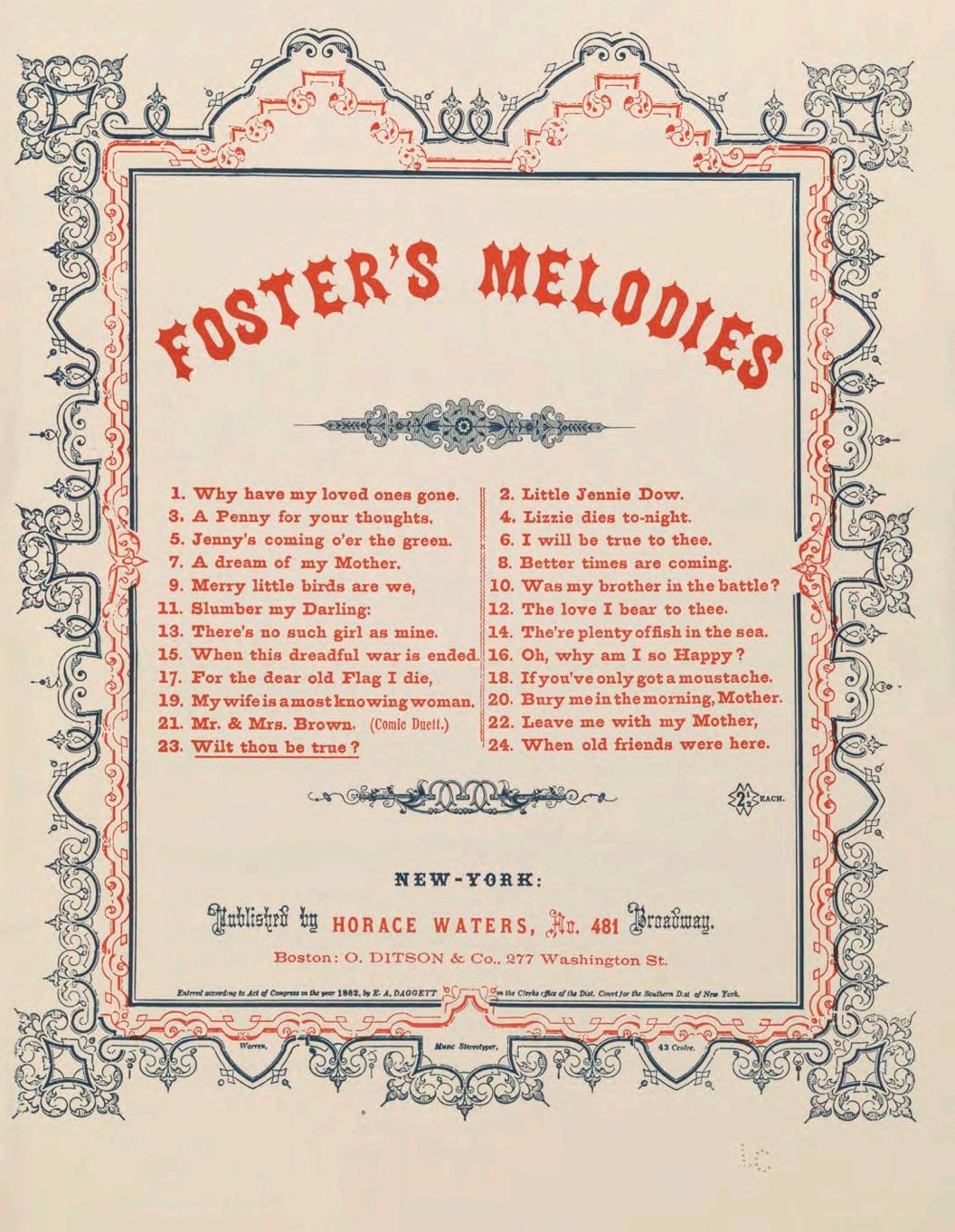
Sheet music from 1864. Words by George Cooper; music by Stephen C. Foster.
way musicians made a living, executives split musical styles up to market Black artists to Black audiences via “race music,” and white artists to white audiences via “hillbilly music.”
According to Reece, the recording industry’s decision from almost a century ago to split complex American music along the lines of race “really set a dynamic that continues to play out today.” She muses, “Who crosses [over]? Who is authentic? Who’s a character? Who’s a real version of this and that? These dialogues are always coming back in di.erent forms and instances. Are you doing caricature, or are you showing a level of appreciation? There are no easy answers, particularly because of the way culture works. With cultural landscape, you listen to something and you may be in uenced by it and it comes out in your music.”
To that end, it’s worthwhile to consider the in uence minstrelsy had on Black musicians a/er the Civil War. A/er all, the mode of performance was so pervasive and such a certain avenue toward ,nancial solvency for its performers that it’s not especially surprising that now-freed Black people might see in it an opportunity for both artistic and ,nancial advancement during the early days of Reconstruction. Indeed, Black blackface performers became incredibly popular on the circuit, ,nding audiences around the United States as well as performing abroad.
“It was the ,rst time you had African American performers being presented onstage,” says Flemons. “And they’re using their talents to make money, independent wages, which was kind of an interesting new choice. … It was the
,rst time you had large amounts of African American people that were entertainers traveling internationally: Australia, Tivoli, Belgium, France, because they have big music halls [where] they present these minstrel shows. Then they start having competing white and Black minstrel shows, and the like, all the way up to the 1890s.”
Here, Flemons ties the minstrel tradition to circus culture and, speci,cally, clowning. “Because you can’t tell who they are, [clowns] can say stu. that would be completely inappropriate in any other moment in society. ... Of course, in blackface minstrelsy, they turn that into a Negro clown. And so the Negro clown can say all sorts of things that a white guy can’t say, even if they want to say more. Again, the minstrel show is playing on an idea of the duality of American society.”
Reece takes this idea even further. “Minstrelsy is about seeing through the lens of a people and a culture, through someone else’s eyes,” she says. “Part of reclaiming anything that’s been used to oppress you is to take that same thing and use it as — I don’t know, maybe ‘weapon’ is too strong — but owning it and telling truth. So much of our history in the United States is [us] not wrestling with issues. … That history is wrapped up in our music today.”
Indeed, it’s wrapped up in the way Lesley Riddle’s unique approach to the guitar has instead been passed down through generations of country and folk players as the Carter Scratch, named not for the Black man who originated it but for the white woman who made it famous. It’s in the in uence of lesserknown blues icons like Robert Johnson
and Son House upon generations of farmore-famous white artists as variant as Bob Dylan and Robert Plant. It’s in the fact that organizations such as the Music Maker Relief Foundation have been formed simply to try to discover and promote the Black artists whose work has indelibly marked traditional American music. And it’s in so many other ways to try to draw a line between where appreciation ends and appropriation begins. That would be like trying to delineate at what shade, exactly, blue becomes green.
What we may understand now better than Foster could have in his lifetime is a result of a couple centuries of growth in American culture, although there are still more questions than answers. Nonetheless, blackface and minstrelsy still hold entertainment value in certain corners of society, as evidenced by white musicians pro,ting from intrinsically Black music styles or the occasional public ,gure backpedaling from photos of themselves in blackface at a party when they were younger.
“It’s more than just blackening your face and [indulging] the stereotypes,” says Reece. “It also did a psychic damage to African Americans. When those presences reappear over and over again, you’re reliving that trauma and perception.”
All the issues that tie together in the legacy of minstrelsy amount to “the ultimate sin that we’re still trying to struggle through with our public dialogue and the history of our country,” she says. “It all plays out in our music and it’s in our culture. What happens in our entertainment is a mirror of who we are as a society.” 0
By Caitlin Wolper
CANON FODDER The Endless American Songbook Caleb Caudle
Caleb Caudle believes there are numerous entry points into the Great American Songbook. Jazz fans might enter through Duke Ellington; country fans, like him, through Willie Nelson.
Caudle’s journey began with a 25-cent Goodwill buy: Nelson’s Stardust on cassette. With each song he discovered, he was inspired to seek out the original writers from Tin Pan Alley and earlier. One track in particular that has stuck with him is Billie Holiday’s jazzy rendition of “Autumn in New York.” Originally composed by Vernon Duke for the 1934 musical Thumbs Up!, Caudle says that Holiday’s 1952 version is “one of my favorite pieces of music ever.”
Caudle’s eighth studio album, Better Hurry Up, came out last April and was recorded at the infamous Cash Cabin, built in Nashville by Johnny Cash in 1979. Caudle compared it to “[feeling] like you’re in the shadow of giants.” With contributors Mickey Raphael, Dennis Crouch, Fred Eltringham, Russ Pahl, and others, Caudle produced original tracks alongside a cover of the Hank Williams classic “Howlin’ at the Moon.”
Caudle has a noted reverence for numerous genres of musical lineage; ultimately, he’s inspired by their relatable emotional bedrock.
“ To me, what it ultimately all boils down to is that these songs are timeless, and they were created in a space where I feel like the writers kind of knew that,” Caudle says. “I always try to take
that kind of approach with my music, and I think that’s probably from that same train of thought: ‘We can write this now and it’ll still be relevant in 100 years.’”
Of course, it’s not just the lyrics that mark a standard; the sound and singer cannot be forgotten. “The longevity comes not just from the writing, but from the people who were performing the songs, everyone from Frank Sinatra to the recent [Bob] Dylan stu. he did where he covered all the standards,” Caudle says.
Plus, the performer has to really feel what they sing. Caudle maintains that a good cover comes down to conviction — a sentiment certainly not limited to the ’40s and ’50s. Caudle sees songs by more modern musicians like Randy Newman at home among those older standards.
“I’m turned o. by anyone where I immediately know they don’t mean what they’re saying. A lot of singers, especially Billie Holiday — where it’s dripping with conviction always — you can’t really get away from it,” Caudle says. “That’s what it comes down to for me. I gotta know you mean it.”
He names John Coltrane’s version of “My Favorite Things” as an example: “It’s pretty far outside what you would typically think of, but it’s pure artistry and you’re seeing someone take it to a di.erent place, and still, it sounds like somebody who means it.”
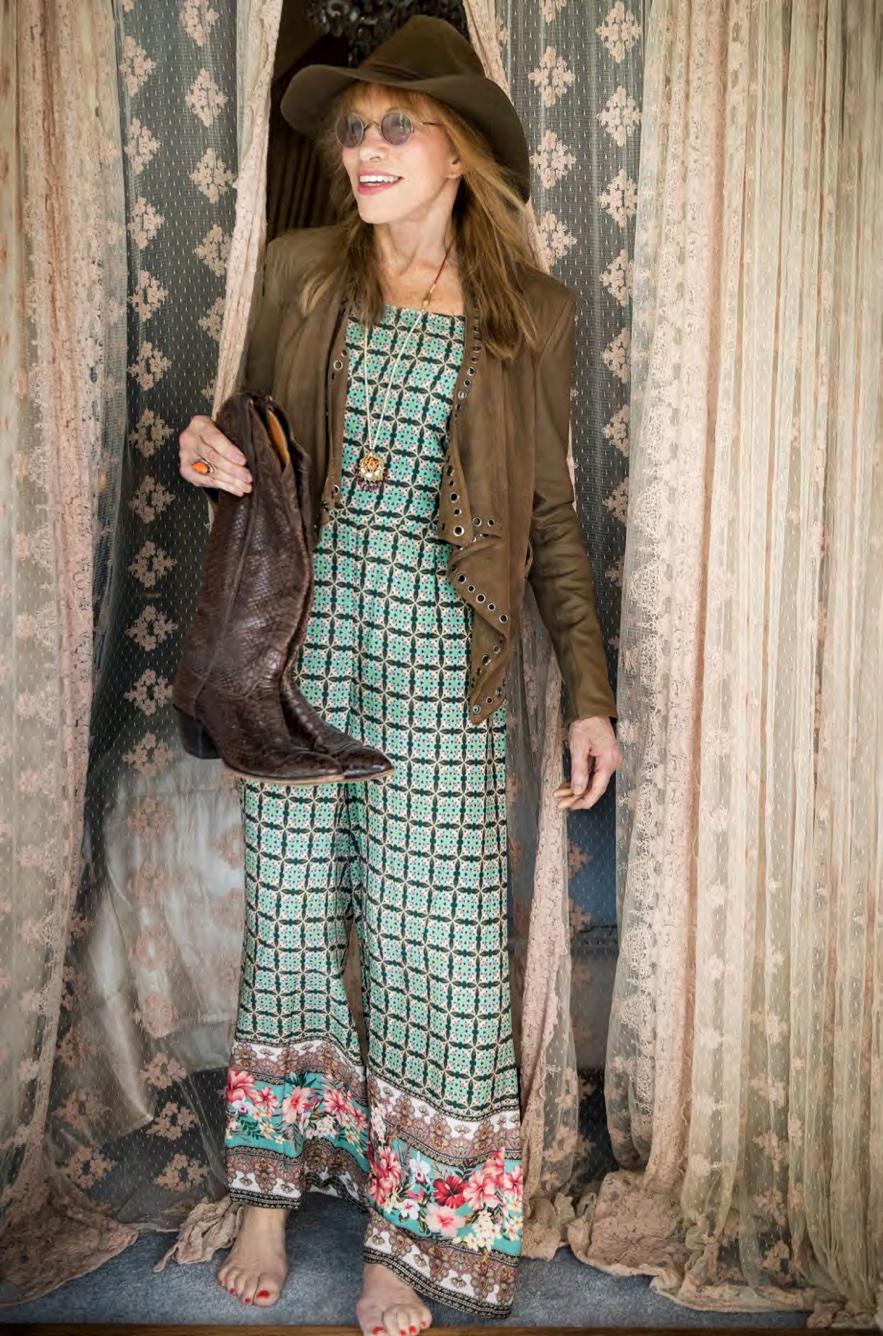
Carly Simon’s book about her friendship with Jacqueline Kennedy Onassis, Touched by the Sun: My Friendship with Jackie (Picador), was released in paperback in November.
CARRYING A TORCH
Carly Simon’s most heartfelt standards album turns 40
In 1981, af-er nine collec-ions of her own songs, Carly Simon made something without precedent among her peers — a themed album whose contents, 90 percent by other writers, spanned from the 1930s to the 1980s. Harry Nilsson’s A Little Touch of Schmilsson in the Night in 1973 was a straightforward oldies album, but Torch was di.erent. Its 11 loved-and-lost-andlosing-my-head songs mixed Rodgers & Hart, Hoagy Carmichael, and Alec Wilder with more recent, but lesser-known compositions by Nicholas Holmes (from the jazz–rock ensemble White Elephant), Stephen Sondheim, and Simon herself. The unexpected maneuver turned out to be remarkably prescient: Today, it’s almost obligatory for singer-songwriters to turn in a standards or covers album. Torch was far more enterprising and imaginative than most.
“I’d always wanted to do an album of torch songs, songs I’d known as a child because my mother sang them and my father played them on the piano,” says Simon, calling from Martha’s Vineyard.
by Charles Donovan
“My father published the songbooks of writers like Oscar Hammerstein, Richard Rodgers, Arthur Schwartz, and Howard Dietz, and we got to know those people. They would come to our house and play things like ‘I’ll Be Around’ and ‘Spring Is Here,’ so I knew those songs indigenously.”
The torch song — touching on lost, unrequited, or broken love — is an unusual notion; there aren’t many examples of song classi,cations for such speci,c emotional straits. There’s no genre, for example, for tunes about in,delity or heartwarming rapprochements. It wasn’t by chance that Simon was drawn in this direction. In 1981, her marriage to James Taylor splintering irreparably, she was living the torch experience. “Every song I chose had a resonance for me,” she adds. “It was a time in my life of lost love. I was carrying a torch for my marriage.”
Her label did not share her passion for the project. A/er years with Elektra, Simon was one album into a new deal with Warner Bros. 1980’s Come Upstairs,
a mod-ish rock album, had revived her fortunes a/er a slump in 1979. “Mo Ostin [former Warner Bros CEO] was very much against Torch,” she says. “That he put it out at all was, I guess, a concession. But they didn’t want to put any money into it.”
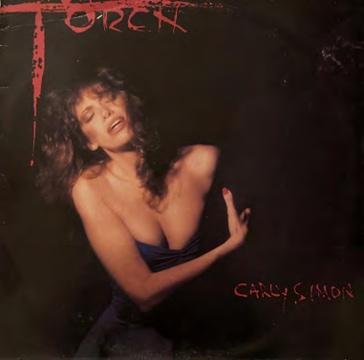
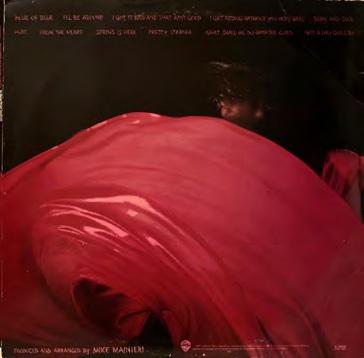
Lynn Goldsmith, the multimedia artist who shot the photo on the album’s sleeve, con,rms this. “Carly really had to ,ght the label. She was expressing herself as an artist, saying, ‘I don’t want to do the same thing all the time. I want to do what my heart is telling me to do.’”
Blending Old and New
Torch was quite unlike the perfunctory standards albums that would later become commonplace in the industry. These have tended to treat pre-rock pop as cozy, aural comfort food and o/en seem born of market research. Torch was the opposite — an act of un inching self-revelation. Simon made no overtly self-conscious attempts to alter her approach to singing, tackling each song
not as a period piece, but as if it were being sung for the ,rst time. Her rich, ardent voice, using glissando for an aching emotional e.ect, was a perfect match for the music.
“It was so natural and easy. I’ve never tried to sound like anyone else or to sound a certain way,” says Simon. “It’s just my voice coming out of me, Carly.”
Then there was the blending of old and new, of known and unknown; the jettisoning of obviousness. Song selections arose from informal jams with Mike Mainieri, producer of all three of Simon’s Warner Bros. albums, during the Come Upstairs sessions. The standards included “I Get Along Without You Very Well,” “I’ll Be Around,” “Spring Is Here,” “I Got It Bad and That Ain’t Good,” and “Body and Soul.”
Keen to achieve an unusual blend, Simon included “Hurt,” an R&B cri de coeur made famous by Roy Hamilton and Timi Yuro, and “Pretty Strange,” written by Jon Hendricks and Randy Weston, which appeared on Hendricks’ 1959 album A Good Git-Together.
But Simon also sought newer songs that could sit comfortably with the old. Mainieri had introduced her to his friend, writer and musician Nicholas Holmes. “I was looking for songs o. the beaten track,” she says. She selected two by Holmes, adapting the lyrics “to make them more mine and adjust them to being sung by a woman.” In “Blue of Blue,” the self-abasing protagonist has lost her lover, realizing too late the depth of her feeling. With a deliciously heartsick pace, despondent melody lines, and David Sanborn’s restless, swooning
sax, it establishes the tone of the album. Although there are orchestrations, they’re mixed subtly to achieve a cinematic nightclub ambience. The second Holmes entry is “What Shall We Do with the Child,” in which a woman re ects on an extinguished love a.air, bracing herself for questions from her fatherless infant.
The next puzzle piece was Stephen Sondheim’s “Not a Day Goes By,” from the musical he’d also completed in 1981, Merrily We Roll Along. Simon visited Sondheim at home for a private performance. “He said, ‘I’ll play you one that’s the end of the show but it’s actually the beginning because the show is front to back and back to front.’” As the composer played, Simon began to cry. She retrieved a pin from her blouse, pressing it to her earlobe in the hope that physical pain might stem her tears. “I was crying so hard and I didn’t want to stop him from playing. It was so beautiful.”
“Not a Day Goes By” is the apex of torch sensibility, a song whose narrator is reeling from excruciating loss, foreseeing nothing but a lonely lifetime of anguish and ,xation. “I love the fact that it doesn’t shirk from repetition — ‘Day a er day a er day a er day ... ,’” says Simon. “I used to think repetition was a cop-out, but in ‘Not a Day Goes By’ it is dazzling, the way it gets the thought and the emotion across and across and across, melodically and lyrically.”
Simon’s sole original composition on Torch was “From the Heart,” a snapshot of a moment in a drawn-out marital hostility when a partner realizes, with a
painful midnight lurch, that love matters more than being right. It’s tempting to trace a backward line from this song to “James” from 1980’s Come Upstairs and “We’re So Close” from 1979’s Spy. “We’re So Close,” an ironic torch song, depicts a union in denial, drained of the lifeblood of kind words, thoughtful gestures, and tenderness. “James,” one year later, frames love in more quixotic terms.
“From the Heart,” the concluding entry in this marriage trilogy, describes a sliver of hope in a moribund partnership with such openness that listener becomes eavesdropper:
One of us slipped last night And said “Darling” There in the middle of the night
Between dream and sleep
Did you say it or did I I don’t know But it interrupted the war.
“I wanted to have one song on Torch that was my own, if I could,” Simon recalls. “It was kind of an odd melody for me — I don’t think I quite got it right — but I think the words were pretty right on.”
Moved to Tears
Sessions for Torch involved multiple orchestrators (Don Sebesky, Marty Paich, Robert M. Freedman) with a core band of Warren Bernhardt (piano), Hugh McCracken (guitar), Anthony Jackson (bass), and Rick Marotta (drums). Featured guests were Sanborn, Lee Ritenour, and the Brecker Brothers.
Simon sang from the vocal booth at the
“Carly was making the album she wanted to make. This was before pop artists did ‘standards’ records. I give her props for that. My most vivid memory is of Stephen Sondheim in the control room weeping when he heard her singing.”
Scott Litt Engineer on ‘Torch’
Power Station, New York, with the orchestra in the main room.
“The atmosphere was great,” remembers Scott Litt, then a young sta. engineer. “It was pretty trippy with all the di.erent arrangers and musicians, but super fun. Carly was making the album she wanted to make. This was before pop artists did ‘standards’ records. I give her props for that. My most vivid memory is of Stephen Sondheim in the control room weeping when he heard her singing.”
Sondheim’s tears make perfect sense. Without recourse to camp or excess, Simon’s voice interrogates the substance of each song, bringing its de,ning emotion to the surface. She describes her process: “I’m a highly emotional person. I’ve learned over the years in recording studios to stay on either side of an emotion, either creeping up to it or, having felt it, going down on the other side. If I try to sing in the peak, I ,nd I can’t.”
No conversation about Torch would be complete without mentioning its cover. Simon’s LP jackets are frequently interpreted as titillation; in fact, they tell stories. For Torch, she’s in luxury eveningwear, in the grip of a strange, pleading dance. Her expression is ambiguous, as if it has passed through rapture on its way to something darker and sadder. The title is spelled out in bloody slashes of scarlet paint.
As Goldsmith, the photographer, recalls, “We were at Carly’s home in New York. She was going through her divorce and the ,rst time we tried shooting, she was crying so much that I said, ‘This isn’t working.’ I mean, it ,t Torch, but I didn’t want to be shooting while she was feeling
so low.” Goldsmith had recently met young Dynasty star Al Corley. “He was very tall and handsome. I thought, ‘She’s gonna like Al.’ I called him and said, ‘Would you like to come with me because I could use your help, and maybe you could be a model or help me move the lights around?’ And as soon as we arrived, there was chemistry and I knew Carly wouldn’t be crying.”
The winning shot was taken on the roof at nighttime. “I wanted to throw myself o. because I was in such a lather about the breakup,” says Simon, “but Al was a wonderful shoulder to lean on. Lynn played the music in the background and I was moving to it and you can barely see Al in the picture, but I saw a lot of him a/er that — he was my boyfriend for three years. Lynn picked the right guy.” On the cover, Corley’s black apparel and back-to-the-camera positioning render him almost invisible — an inspired touch, given that the songs on Torch are sung to vanished suitors.
The Test of Time
Torch met with a rave review in Rolling Stone and cracked the Billboard Top 50 upon its release. In 1983, when the ,rst part of Linda Ronstadt’s blockbuster trilogy with bandleader and arranger Nelson Riddle appeared, Mo Ostin realized the opportunity he’d missed. “He said to me, ‘I made the biggest mistake in my career by not pushing Torch,’” Simon recalls. The vindication, albeit too late, clearly means something to her.
“It was an almost uniquely vulnerable
point in her life,” says Sheila Weller, Simon’s ,rst serious biographer (Girls Like Us, Simon & Schuster, 2008). “Her son, Ben, had had an illness so distressing to Carly that she lost 25 pounds. Her marriage was at its breaking point. She had also had a kind of — very human — breakdown onstage in Pittsburgh. So Torch was born of that fear, terror, sadness, and di-culty. I have experienced what her friend Mia Farrow calls her lack of bu.ers, her lack of ‘celebrity’ protection of her emotions. What entered her performance of the songs, and her photo on the cover, is an example of that extreme — and quite radiant — emotion and humanity.”
Later in her career, Simon returned to conceptual standards albums with 1990’s My Romance and 1997’s Film Noir — both impressive. Even though it lacked the force of character and emotional investment of its predecessors, 2005’s soupy Moonlight Serenade (made in two days with arrangements supervised by Richard Perry largely without Simon’s input) restored her to the American Top 10.
Although Simon considers My Romance more cohesive, it is Torch where her recorded relationship with the Great American Songbook begins, taking listeners on a riveting journey to the bruised recesses of the human heart. Where more super,cial standards collections are forgotten, it remains as compelling at 40 as it was when it came out. “I got to do what I wanted to do as an artist,” says Simon. “It was a real departure and a very emotional, important album for me.” 0
VIOLENT VERSES
Modern musicians grapple with the legacy of murder ballads
by Stacy Chandler
“The murder ballad is a tradition in music, yes, particularly in country, blues, and bluegrass, but do we need to be upholding it and singing those songs anymore?”
Allison Moorer
I-’s a -ale as old as -ime: :oy meets girl, boy loses girl. Boy laments that his soul is consigned to hell because the reason he lost the girl is because he killed her.
It’s heard in “Pretty Polly,” in which Willie invites his ,ancée along on a cozy journey “over hills and valleys so deep” until they arrive, to her surprise, at a hole in the ground — the grave he tells her he spent the previous night digging just for her.
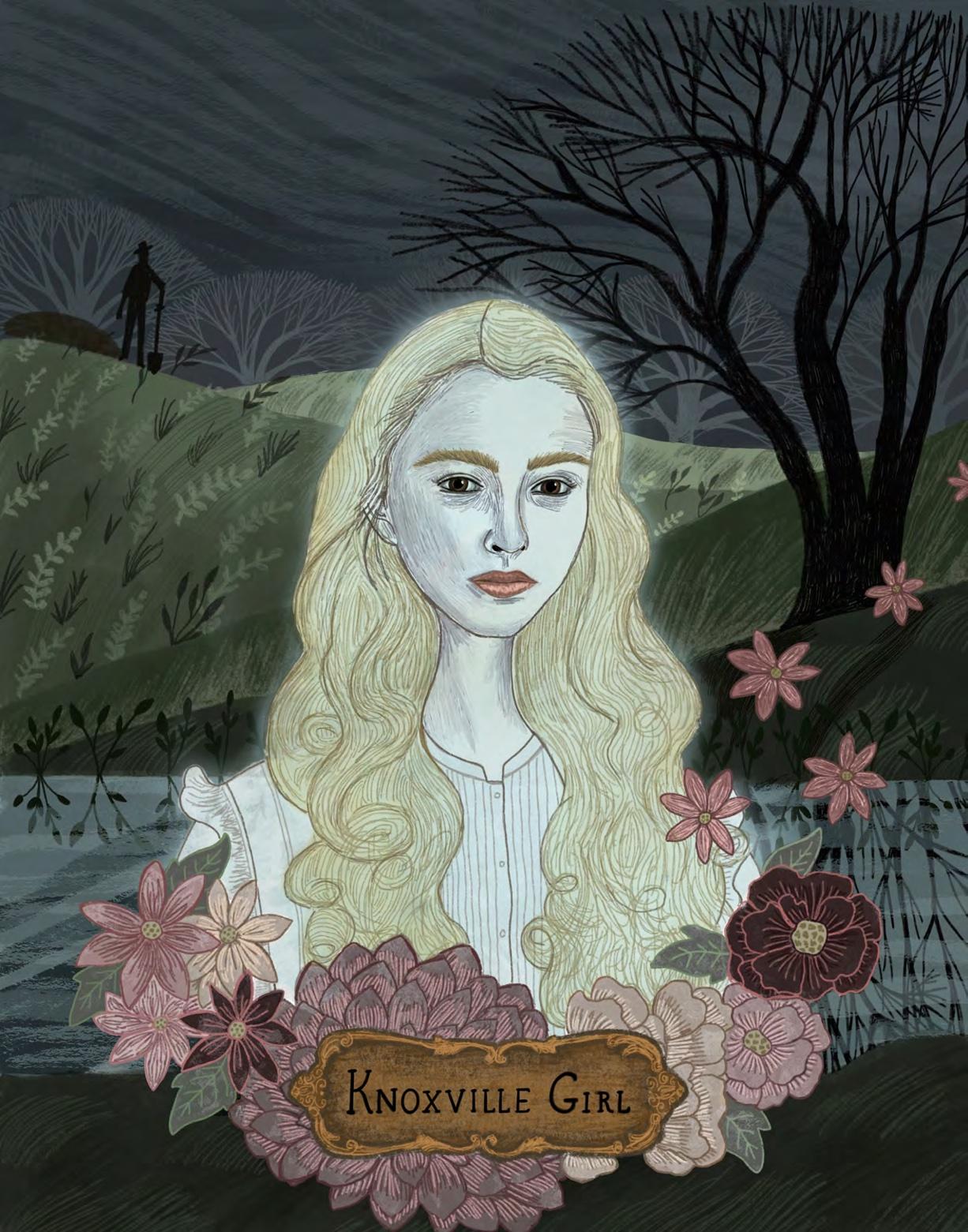
It’s heard in “Knoxville Girl,” where a di.erent Willie ends a Sunday evening stroll with his lady friend by beating her to death with a stick, then turning himself in the next morning because he feels kind of bad about it.
With some variations on the theme, the girl gets it in “Tom Dooley,” “Omie Wise,” “Little Sadie,” “Down in the Willow
Garden,” and many other songs, some centuries old, that have become part of the traditional music canon.
A playlist of these songs, all of which have real-life stories behind them, would feel like a macabre marathon of true crime podcasts — except no one is digging into motives or methods, and no one is crusading for justice. It’s just accepted that women were murdered in these songs, for reasons as scant as “dark and roving eyes,” the hint of an out-of-wedlock pregnancy, a troublesome past, or sometimes no discernable reason at all.
But not all of these men were total monsters: Some murder ballads take pains to assure listeners that he loved her, a/er all.
If that feels uncomfortably close to real-life, modern-day violence against
women, that’s because it is.
‘Pretty Polly’ Problems
Murder ballads put musicians in a bit of a bind. Can they sing lyrics like “He stabbed her in the heart and her heart’s blood did ow / And into the grave Pretty Polly did go” or “I took her by her golden curls and I drug her round and round / Throwing her into the river that ows through Knoxville town” without glorifying brutality? Is “tradition” a good enough reason to keep playing these songs in jams or onstage, o/en in the presence of young people who may well wonder why these stories continue to be told?
Dirk Powell, for one, can’t anymore. He grew up listening to his Papaw play “Pretty Polly” on banjo during family visits to Kentucky.
“He played an absolutely beautiful version of it, musically, that was very unique. And it was one of the songs of his that I was the most proud of because it was one that was most unique to him,” Powell says from his home in Lafayette, Louisiana. “You know, a lot of standard traditional songs, a lot of people play the same song and it sounds kind of the same and it’s great, but they haven’t really put their own spin on it. But he
played chords and had a way of doing it that I’d never heard anybody else do. So it was a precious song to me.”
Naturally, “Pretty Polly” became part of Powell’s own repertoire as he found his own genre-spanning spin on traditional American music.
“Like so many other people, I sang the words as if they didn’t mean anything, you know, as if they weren’t relevant to this moment, that they were from some other era and therefore didn’t have power,” he says.
But then a couple years ago, as he was singing “Pretty Polly” during a soundcheck, he found himself suddenly unable to ignore the song’s violent lyrics. How Polly expresses trepidation — “Willie, oh Willie, I’m afraid of your ways” — and begs for her life. How Willie puts his hands on her body and ends her life — “He stabbed her in the heart and her heart’s blood did ow.” And how he dispassionately covers the grave and heads home, “leaving nothing behind him but the wild birds to mourn.”
Hearing those lyrics coming out of his mouth, Powell thought of his teenage daughters.
“I remember my daughters watching me sing words like that to those kinds of songs. And watching them struggle to
accept them and then just ask themselves, ‘Why is this okay? Well, I guess if all the adults think it’s okay and everybody’s just brushing it aside, I guess it’s okay.’”
Powell decided he could no longer brush the song’s violence aside, so he decided to bury it. “I just thought, I’m not thinking about him anymore, the man who kills and abuses women. He’s not getting any more attention from me. He’s not getting any of that sort of romantic, anti-hero, weird glori,cation that doesn’t explore it in any real way. And sure, the song is called ‘Pretty Polly,’ but at the end of the song, it’s about him. He’s the one that turns to go home, leaving the turtledoves to mourn, and I just literally said to myself in the middle of a verse, I’m never singing those words again. I just can’t give it any more.”
For his next album, 2020’s When I Wait for You, Powell recorded a new song to replace that old standard. In “I Ain’t Playing Pretty Polly,” the verses relate stories of strong women in his family and the men who loved them well. “I ain’t playing ‘Pretty Polly’ or ‘Rosalie McFall,’” he sings in the chorus. “I ain’t playing ‘Knoxville Girl,’ no, none of them at all / No more tales of women killed by drunken violent men / They
don’t deserve their stories told / I won’t raise my voice again.”
As Powell started playing “I Ain’t Playing Pretty Polly” live over the past couple years, a few people viewed it as turning his back on tradition, a misapplication of modern sensibilities to a piece of historical music, he says. But he’s also received thanks from women who have themselves been victims of domestic violence, and that carries far more weight with him.
“If I have o.ered anything that shows them some understanding and makes them feel understood or seen, then that’s what it’s all about,” Powell says.
One such note of thanks came from a peer in the music industry, singersongwriter Allison Moorer, whose 2019 book and companion album, Blood, grappled with her mother’s murder at the hands of her father, who turned the ri e on himself immediately a/erward in the family’s Alabama front yard when Moorer was a teenager.
“I needed to hear this. Everyone should,” Moorer wrote in a social media post just a/er Powell released “I Ain’t Playing Pretty Polly” last summer. “The murder ballad is a tradition in music, yes, particularly in country, blues, and bluegrass, but do we need to be
upholding it and singing those songs anymore? I hope other musicians will take Dirk’s lead and stop retelling tales, real or imagined, of women being murdered because they were the object of some possessive drunk’s a.ection, or wait … let’s be honest … it isn’t and never has been about a.ection, it’s always been and always will be about control, obsession, and rage.
“Violence against women is a problem that we have failed to address in a real way,” she continued. “In many situations, it’s complicated. And the psychological e.ects of abuse are complicated too. But what isn’t complicated about violence against women is the very fact that it hasn’t ever been and never will be something that should be considered anything but absolutely intolerable.”
If It Bleeds, It Leads
As modern society has started to reckon with violence against women — examining its root causes and e.ects and adding laws and protections aimed at preventing it — murder ballads have stuck around. They haven’t died o. like their subjects did, because people can’t get enough of them.
Across time, languages, and regions, people love a story — and all the better if it’s set to music. Which is why ballads, songs that tell a story, have endured in the American folk tradition, sometimes for hundreds of years.
European settlers, particularly from the British Isles, brought most of the ballads familiar to American ears, though some sprang up from events that took place on this side of the pond. However loosely, they’re usually based on real events, whether persistent rumors that hung on through generations of seafaring communities or, in the case of killings, covered by newspapers and drawing breathless crowds outside courthouses.
Sometimes the songs were printed and sold on single sheets of paper called broadsides, but o/en they were shared simply by playing and singing the songs person to person or at small gatherings. As the songs transmitted, the details and sometimes even the titles changed over time, but the core stories tended to stay intact.
While some ballads celebrate heroes like John Henry or Casey Jones, many commemorate darker characters and events — the same impulse that drives our “true crime” obsession today.
Dirk Powell
Wild Ponies
LAURA SCHNEIDER
“If it bleeds, it leads,” quips Doug Williams of Nashville duo Wild Ponies. “It’s just like modern news.” Murder ballads dish up sensationalism — historians liken them to modern-day tabloid journalism — but also, Williams theorizes, a feeling of relief in listeners.
“You go back to Roman gladiators,” he says. “People could sit there in the stands, they could watch the lions eat a Christian and they say, ‘Well, shit, at least that’s not me.’”
There’s also a morbid curiosity in what would drive someone to kill, though few murder ballads provide anything close to a satisfactory answer.
“Not that it’s ever justi,ed, but what would drive someone to that point?” Williams muses. “You know, ‘her dark and roving eye’ doesn’t seem quite enough. So it’s just kind of looking at the human condition and what would push them into that position.”
Between the lines of murder ballads, listeners may well ,nd a warning, a moral to the story. On the surface, they might be a sort of public service announcement against lingering alone with shady men or the potentially ruinous
consequences of premarital sex. But you don’t have to dig too much deeper to ,nd another kind of warning as well.
“ They’re for entertainment, but also, just like our movies are, there’s a hidden message. There’s a hidden moral within it,” says singer-songwriter and banjo player Abigail Washburn. “In a lot of them, especially the ones where the women die, that hidden message has been ‘Woman, stay in your place. Or you will be killed.’”
Paying for Willie’s Sin
Four waves into the feminist movement, as the #MeToo movement li/s women’s voices and makes casual misogyny harder to ignore, that message hasn’t aged well, and some artists are taking a closer look at murder ballads and how and whether they can ,t into the modern world. For some, like Powell, shelving such songs and ,nding a new story to sing is the solution. But others are ,nding power in ipping the script, giving voice to the victims of these songs and forcing listeners to stop and understand what happened to them, and why.
Wild Ponies’ Telisha Williams was on a treadmill when she ,rst listened — really listened — to “Knoxville Girl,” a song she’d grown up playing and hearing in Southwest Virginia.
“I met a little girl in Knoxville, a town we all know well,” the song, most famously recorded by The Louvin Brothers in 1956, started in Williams’ headphones as she ran.
And every Sunday evening, out in her home, I’d dwell.
We went to take an evening walk about a mile from town, I picked a stick up o the ground and knocked that fair girl down. She fell down on her bended knees, for mercy she did cry,
“Oh Willie dear, don’t kill me here, I’m unprepared to die.”
She never spoke another word, I only beat her more, Until the ground around me with her blood did ow.
“I don’t know if it was just something about my body being occupied, and so I
was hearing it in a di.erent way,” she recalls from her and husband Doug’s home in Nashville. She broke her stride, hopped her feet to the sides, and let the belt go and go as she stood in shock. “It was like, hands on my hips, listening, and I was like … what??”
The only clue the song gives as to Willie’s motive is the Knoxville Girl’s “dark and roving eyes,” an imbalance of justice that haunted Telisha. A few years later, she and Doug came up with a way to put that haunting to good use in their song “Ghost of the Knoxville Girl,” the title track of their 2012 album.
“I am the ghost of the Knoxville Girl,” the song begins, “Doomed to wander around this world / I haunt the paths of jealous men / They all must pay for Willie’s sin.”
Go down, go down to the pits of hell Willie, dear, I loved you well. With the devil now you make your home,
For my brown eyes they never roamed.
“I feel like [‘Knoxville Girl’] was one of those songs that was just kind of a part of our songbook,” Telisha says, “and it seemed like easy access, for lack of a better term, because the ‘dark and roving eye’ seems such a ridiculous reason to be murdered, that it seemed really easy to be able to flip that, and for the ghost of the Knoxville Girl to be fully validated in her haunting. She was murdered for no reason, so full pass on haunting the shit out of every bad man forever.”
Washburn, too, felt moved to give a slain woman in a murder ballad a voice, a story of her own. On their ,rst album together, she and husband Béla Fleck included a recording of “Pretty Polly” that adds to the song’s usual rendition by weaving Polly’s name between verses like an otherworldly cry on the wind, like her memory is making itself known to the listener. And then, on the album’s next song, the woman singing (unnamed, but Washburn says the sequencing was intentional) speaks directly.
“If I had a shotgun / and you were in
the woods,” the ,rst lines of “Shotgun Blues” unfold, “I’d hunt you down / and tell you you’re no good.”
There’s a scene with the man — not the woman — on his knees begging for his life, and there’s compassion from the woman, tempered by realism: “If I thought you felt bad / ’bout what you done to me / I’d let you go / But boy you’re just too mean.” But what doesn’t happen on this murder ballad rebuttal is a murder. And that’s because revenge wasn’t on Washburn’s and Fleck’s minds when they were writing the song as much as rewriting the power structure that murder ballads reinforce.
“I just thought to myself, ‘Oh, wouldn’t it be great if I could just intervene in the middle of a ballad and say, ‘Man, what are you doing? This is ridiculous!’” she says.
“And if reason won’t work then I’m going to put you at the end of my shotgun. You’re going to feel what it’s like when the tables are turned and someone other than you is more powerful.
“So that song is really not about killing a man. It’s about turning the power
structure upside down and changing the trajectory. You know, it’s so much more powerful to redirect the trajectory of a life than it is to end it and put it in the ground.”
E ven as murder ballads like “Pretty Polly” and “Knoxville Girl” and so many others have persisted for so many years, new ones are springing up, but it’s no longer a given that the woman is the victim.
“Frankie and Johnny” is a relative youngster in the canon, having emerged in 1899 as a ripped-from-theheadlines commemoration of a woman shooting her lover after he was spotted with another woman. Under various names and with varying details, Elvis Presley, Johnny Cash, Sam Cooke, Louis Armstrong, and many others performed the song well into the 20th century.
E ven more recently, songs like Martina McBride’s “Independence Day,” The Chicks’ “Goodbye Earl,” and Gillian Welch’s “Caleb Meyer” have emphasized women in control of their
own destinies. It all reflects a shift in thinking about women and how we choose to cement our norms into song. But that doesn’t mean the work is done.
A Modern Discussion
A relic of the past can become so entrenched in tradition that we don’t even think to examine it. Think about the children’s song and game “Ring around the Rosie” — at some point as adults we learn it’s about the Great Plague (though it’s worth noting that some folklorists have cast doubt on that theory). But we’re far enough removed from that 1665 illness to shrug it o. But it’s not so easy to dismiss songs about violence against women, which is still very much a problem. The World Health Organization estimates that 1 in 3 women globally have experienced physical or sexual violence in their lifetime. Thirty-eight percent of murders of women are committed by a male partner.
Music alone won’t solve any of that — and doesn’t cause it, either. A song can memorialize a historic event, perhaps offering a reminder of past horror that has present ramifications. But a song can also help normalize something horrific, giving cover for those who don’t wish to confront it.
Sooner or later, it seems, every musician has to take a hard look at the lingering presence of murder ballads in the traditional songbook and decide how to navigate it from stage, in jam circles, and in their own hearts.
“I think people handle it very differently,” says Powell, “and I guess that was one of my points with [“I Ain’t Playing Pretty Polly”], is to have people look at it and ask the question and then answer it for themselves. … I had somebody, very early when I released the song, that was pretty offended say, “Well, I’m still going to play [“Pretty Polly”]. … And it’s like, well, okay, but we had the discussion, and that’s what I wanted to have happen. I think it’s worth having the discussion.” 0
Abigail Washburn
WON’T YOU SPARE ME OVER
‘Oh
Death’ haunts the American musical landscape
by Stephen Deusner
In -he la-e 1920s, moran lee “Dock” Boggs traveled from his home in Virginia to New York City to cut a dozen sides for Brunswick Records. But for reasons either never known or lost to time, “Oh Death” was not one of those songs, despite it being part of the coal miner and bandleader’s live repertory. He played the song o/en around Appalachia with his Cumberland Mountain Entertainers. As famed music writer Greil Marcus explained in his liner notes to the 1997 compilation Country Blues, whenever Boggs would start playing that number, his guitarist Scott Boatwright would josh him, “Get out of the graveyard, Dock!” It is not an upbeat tune, certainly not a dance number (and probably better described as a buzzkill), but most of Boggs’ listeners would have recognized it. Originally called “Conversations with Death,” the song has been traced back to the 1910s and an itinerant preacher named Lloyd Chandler, and its pleading refrain — “Oh Death, won’t you spare me over for another year” — had already been excerpted in other songs, most notably
the Pace Jubilee Singers’ 1927 recording of a very di.erent song with the same title.
We can only imagine how Boggs’ “Oh Death” sounded at the tail end of the 1920s, right when America was on the cusp of economic collapse. Eventually he disbanded his group, quit playing live, and committed to working in the mines, where he sweated out the Great Depression, World War II, the advent of rock and roll, and the Cold War. Shortly a/er he retired, Boggs made a return to the stage thanks to folklorist and musician Mike Seeger, who coaxed the old man into a studio. In 1963 — around the time President Kennedy was assassinated in Dallas — Boggs released his debut album, Legendary Singer & Banjo Player, on Smithsonian Folkways. That album marks his ,rst recording of “Oh Death.”
Boggs plays the song by himself — just his froggy voice and his jumpy banjo, both utterly distinctive. The music sounds unfathomably and ,ttingly lonely, which is how we all face death, and that impression is reinforced by his
bizarre and rigid phrasing. Boggs sings like rigor mortis is setting in: his limbs sti.ening, his throat closing. Death is there in the room with him as he sings, there in the room with you as you listen.
“I’ll ,x your feet so you can’t walk,” he testi,es solemnly. “I’ll lock your jaw so you can’t talk. I’ll close your eyes so you can’t see.” Later, Death commands, “Leave the body and leave it cold.” Few songs have depicted the act of dying in such ghastly terms.
Boggs likely knew more about death in 1963 than he did in 1929. Certainly, America did. From his throat, the song issues a warning: Everyone, whether king or peasant, president or voter, succumbs eventually. “No wealth, no land, no silver or gold — nothing satis,es me but your soul.” Despite its gospel origins, “Oh Death” is not a Christian song. There is no moral, no reassurance that heaven awaits the righteous; there is no intimation that hell awaits your enemies, either. Death is beyond religion, beyond morality. It simply is. There is no stopping it. You can only hasten it.
“Oh Death” is terrifying, but by
Camper Van Beethoven
turning the song outward — by addressing listeners directly — Boggs makes it impossible to shake, which may account for why he has been so long and so closely associated with it. His version summons images of the Great Depression and World War II, global pandemics and civil unrest, crowded hospitals and unmarked graves, but the song itself has grown beyond him. It has become a grim American folk standard with a long and oddly public life, taken up and reinterpreted across generations and genres, across regions and scenes. The speci,cs change from one version to the next, but the general horror remains the same. Everyone who sings “Oh Death” seems to inform the listener, “You too will face Death. You too will have this conversation.”
Timely Tie-in
Four years a/er Boggs recorded “Oh Death” for Seeger and four years before Boggs’ death in 1971, a band from San Francisco transformed the song into an anti-war anthem for the hippie set,
injecting it with outrage and vitriol. While not a wildly popular band, Kaleidoscope was certainly wild. They’d started out playing old-time songs, eventually mixing in local psychedelic rock and their own approximations of Eastern musical traditions. They rocked out on oud and sitar and bağlama. Dave Lindley, who became a popular session player in the ’70s and ’80s, played his guitar with a violin bow. Like many California bands of that time, Kaleidoscope staged happenings more than they played concerts, o/en accompanied by belly dancers, amenco performers, and a light show. But the mysticism of international styles only enamored them up to a point, and the band drew deep from the well of American popular music. They even covered Cab Calloway’s scat classic “Minnie the Moocher” on their 1967 debut Side Trips. Their cover of “Oh Death” also appears on that record. And they transformed it into a gangly beast with a curious two-step rhythm, a bassline shaped like a question mark, pots-and-
pans percussion like Jacob Marley’s chains, and a droning ,ddle like a razor across tender skin. Singer Solomon Feldthouse did an oddball take on Boggs’ sti. cadence, but become more animated when he cried out for his mother: “My eyes are aching and I cannot see. I feel the sheet pulling over me.”
There’s a grim hysteria to their version of the song, which dovetails with so much protest music being made during the early years of the Vietnam War. In fact, when the band played the Newport Folk Festival in 1969, Feldthouse launched into an impromptu sermon midway through the song, nearly throwing his bandmates o. course. The more he ranted, the more he connected the horrors in the lyrics to the horrors of warfare. He made the song a monument to the violence in icted on US soldiers as well as the violence they were commanded to in ict upon their enemy.
Twenty years later — at a time when the serial killer known as BTK Killer was taunting police by quoting “Oh Death” in letters to newspapers — another California band covered Kaleidoscope’s
take of Boggs’ tune. Camper Van Beethoven’s version, which appears on their 1988 album Our Beloved Revolutionary Sweetheart, replicates the loping pace right down to its inquisitive bassline. The band, which had injected enough humor in their lyrics to invite and eventually dispel the novelty label, didn’t necessarily intend to import the song’s political implications into the late 1980s. Frontman David Lowery recalls ,rst hearing the song at a bluegrass festival in the Mojave Desert back in the 1970s, but he had only recently discovered Kaleidoscope a/er a friend pointed out the similarities between the two bands. Covering the tune was a means of further distinguishing Camper Van Beethoven as hippies on the punk scene. Their version begins almost matterof-factly, with the stoicism of an instruction manual, as Lowery explains the way of all life, but it ends someplace very di.erent than where it starts. The groove grows tenser, Lowery sounds testier, his voice choked with audacity and outrage. The band stomps on the song. Listeners can almost hear the spittle at the sides of his mouth when he sings, “Cast aside the esh of thee, cast aside and set you free.”
“ There’s some macabre stu. to it,” says Lowery. “I was a young man and I think you relate to that stu. more in a comic, ghoulish way than you do when you get older. Kaleidoscope had the Vietnam War and the ’60s to put the song into context. In the ’80s, for Camper, it was more like a B-movie. But it was important that it said what it said because that made it a piece of counterculture. We tried to ,nd things that were odd and out of fashion, but were still unusual and shocking.”
As a piece of counterculture, Camper Van Beethoven’s “Oh Death” points a bony ,nger at anyone who might ignore Death’s horrors or — so much worse — might deploy Death as a political instrument. This was, of course, the tail end of the Reagan administration, which had boasted of American military might, portrayed poverty as a personal failing rather than a systemic imbalance, allowed AIDS to run unchecked through the gay community, and stoked fears of nuclear war in its Cold War chest thumping. Released just months before Reagan vacated the White House, Camper Van Beethoven’s “Oh Death” tries to take in all of America in that moment; death is all the same, whether from social neglect or a
sexually transmitted disease or a nuclear explosion.
An Unlikely Hit
In February 2002, Ralph Stanley took the stage alone at the Grammy Awards ceremony in Los Angeles to perform “O Death.” Without instrumentation, he sang it to a quieted room, turning that title into a high lonesome holler and shaking the ceremony out of its selfcongratulatory pomp. That speaks to the popularity of the O Brother, Where Art Thou? soundtrack on which it appeared, which by then had become an unlikely commercial juggernaut, but it also speaks to Stanley’s command of that song. The 74-year-old had been performing since 1947 and had been singing that song longer than Kaleidoscope had been a band and longer than Lowery had been alive. In 1999, producer T Bone Burnett asked him to make a new recording of the song, which would have turned out much like Boggs’ 1963 version if Burnett had had his way. But Stanley associated the song with church, speci,cally the Primitive Baptist Church, which tolerated no music other than the human voice. So Stanley recorded it
a cappella, and it became something like a hit for him — the kind of song that fans new and old scream for at shows.
Stanley’s version is arguably the most popular of all, recorded and released at the tail end of the 20th century. It speaks to ,n de siècle jitters: not just worries over Y2K complications, but to the sense that humanity was stepping into an unknown future. That may have spurred the success of O Brother, which took forms rooted in the early 20th century and brought them forward, but “O Death” is still an outlier on that album: a song that o.ers no comfort, that only reminds the listener that like those who came generations before them, death is the only destination. It grinds against the glibness of the Coen Brothers’ ,lm, which is set in a self-consciously cinematic version of Dock Boggs’ world, but it also runs counter to the co.eetable tastefulness of the soundtrack, with its polite depictions of the past. Even at the Grammys, the song was almost too real.
Just as O Brother forever altered the landscape of roots music, Stanley’s “O Death” inspired new interest in the song itself, which has been covered repeatedly in the 20 years since the soundtrack renewed interest in it. Sam Amidon, The
Tarbox Ramblers, Shakey Graves, Diamanda Galas, Kate Mann, Gangstagrass, Onkel Tuka, Rising Appalachia, Noah Gunderson, and many others have all put their stamp on the old standard. It’s a song, however, that can easily get away from its singer. Many of these versions sound overly solemn, even placid, which only points to the fact that “Oh Death” rarely tolerates beauty. Hushed, reverent performances miss the point completely. Death in the song is not a calm eternity of peace, but messy, ugly horror.
One of the most a.ecting versions from this young century is therefore also one of the weirdest. For their 2002 album The Executioner’s Last Songs, Pine Valley Cosmonauts — an acoustic o.shoot of the infamous Chicago-via-Wales country-punk out,t The Mekons — enlisted Diane Izzo to sing it. A local cult artist who only released one album in her lifetime, she slurs her words, chews on her syllables, and spits them out like tobacco juice. She sounds haunted, weary, as though she has clawed her way out of hell, but she also projects insolence and daring. It’s an audacious performance, as though she’s ipping Death the bird. The same year the Cosmonauts released that album, the US
was reeling from 9/11 and ramping up into a full military press in the Middle East.
“Oh Death” still haunts the American landscape, right alongside Death itself. Perhaps that has less to do with the power of this indelible song and more to do with something intrinsic to American life, or to life in general. There is always national tragedy, always bloodshed to foretell, always calamity to endure.
In 2007, Amidon o.ered a thoughtful and resigned version of “O Death” on his album All Is Well. It’s di.erent than Boggs’ version — more nostalgic for the life that is leaving him and less desperate in its pleading. “The thing about ‘O Death’ that is so complicated is that it’s so direct and so blunt, so it’s not a song you would always want to sing,” says Amidon, who released a self-titled collection of reworked folk songs in October.
“You might not want to sing it if you’re experiencing grief, although I’ve heard from friends who did listen to it with family members who were facing death and they found comfort in it,” he continues. “Facing death is not just sadness, but anger and fear and rage. Those feelings have their place. This song links to those feelings more than most songs would dare to.” 0
Sam Amidon
CANON FODDER
The Endless American Songbook
By Caitlin Wolper
Bettye LaVette
By her own estimation, it took Bettye LaVette 59 years to grow into the standards she’s sung. That’s how long she’s been performing — since she was 16 years old. Even though (like any teen) she wanted to sing modern songs, her manager, Jim Lewis, insisted she learn the standards.
“He wanted me to know a lot of songs, a lot of di-cult songs. He wanted musicians to respect me and he wanted me to have my own arrangements — those were the marks of class during the ’40s and ’50s,” LaVette says. “He was continuously telling me, ‘This music that you’re in love with, only about one out of 10 of them are going to last.’ ”
LaVette quickly realized, too, that standards didn’t just come from the ’40s and ’50s — songs included in the term also were created in the ’30s and even ’20s. She recalls singing Johnny Nash’s version of “Always” at home and her mother joining in.
“I said, ‘Mom, how do you know that?’ and she said, ‘I’ve known it since I was a little girl,’” LaVette says, noting that her mother grew up with Irving Berlin’s original from 1925. “Many of [these songs] came from the ’20s and we just didn’t know it.”
She has noticed that the Great American Songbook is di.erent for everyone: Their interpretation is o/en based on when they were born or when they got involved with music, almost like a rolling admission. While she said her husband might cite Bob Dylan as a member of the Songbook, she disagrees: “That’s not the Great American Songbook to me. It will be, but it’s not right now.”
The Great American Songbook means something di.erent for everyone, and it’s di.erent at every age. “If you ask, ‘What does this music mean to you?’ it means something di.erent than it did 25 years ago, and 25 years before that it meant
something di.erent yet again,” LaVette continues. “When you’ve sung for 59 years, your answer to this kind of question has so many more complexities.”
It’s one thing to sing a song like Etta James’ “At Last” when you’re 16, she says, and another altogether when you’re 74. That learned maturity is essential, something that’s clear on her most recent album, Blackbirds — her 2020 collection of cover songs, most of which were originally popularized by Black singers.
“I’ve grown into the songs now. It’s like some shoes or something that your big sister had, and then you ,nally got big enough to wear them,” LaVette says. “I’ve grown into the songs. They are nostalgic, they are something that happened to me long ago. It took me over 30 years to learn to sing these songs pro,ciently.”
Now she feels the words “standard,” “classic,” and “legend” are used very freely: “I had to grow into those words.” That’s not to say current music can’t earn such distinction — she’s con,dent certain songs, whether profound or silly (like Pharrell Williams’ “Happy,” she quips), will persist.
For a time, learning standards was a matter of career preservation — no matter what happened, those were the songs everyone would want to hear. All this time later, she’s carved out her career, growing into the songs and herself.
Thinking back on her teenage years, LaVette recalls a particularly memorable bit of wisdom from her manager, Lewis. He said to her, “You don’t know if you’re going to be a star or not … but in the event you don’t, you’ll know a lot of songs — if you learn how to sing them, you can work for the rest of your life.”
She adds slyly: “And I almost have.” 0
SINGING IT TRUE
How Ella Fitzgerald, Ray Charles, and other Black musicians canonized the Great American Songbook
by Marcus K. Dowling
Ella Fitzgerald in 1961
Genera-ions of iconic :lack vocalists have looked into the Great American Songbook — the canon of the most important and in uential American popular songs and jazz standards from the early 20th century — and created untouchable versions of its songs. Their sancti,ed, cosmopolitan, and uniquely Black interpretations result in timeless a-liations, o/en more lasting than those of the original white composers.
The rich tradition of Black musicians covering, and o/en elevating, the Songbook’s original recordings includes such standouts as Lena Horne’s work with Rodgers and Hammerstein’s “Surrey with the Fringe on Top” and Paul Robeson’s version of the duo’s “Some Enchanted Evening.” Ethel Waters’ take on Harold Arlen’s “Stormy Weather” and Nat King Cole’s version of Hoagy Carmichael’s “Stardust” and numerous others have become their own entries in the Songbook.
Black artists like Ella Fitzgerald and Ray Charles in particular enjoyed pop crossover careers that leaned heavily on the Songbook and have kept them relevant beyond their lifetimes. Charles’ 1960 album Modern Sounds in Country
and Western — a cover album of country classics — stands as one of the all-time great recordings. And most of Fitzgerald’s later career involved singing entire collections of songwriters and composers with multiple contributions to the Songbook.
Charles’ bluesy croak and Fitzgerald’s scatting jazz vocals teem with what traditionalists might consider surfacelevel imperfections, but that only added to the timelessness of the songs they sang.
In his 2013 book The Color of Sound: Race, Religion, and Music in Brazil, John Burdick described the sancti,ed African American gospel voice — as a creative device used in and out of sancti,ed music — as “hypnotic” and “vibrating at unexpected moments.” Moreover, it’s considered “breathy” and ,lled with “cracks, creaks, and squeaks.”
Imperfectly-perfect vocalists like Charles and Fitzgerald infuse their lyrics — especially those from the Songbook — with some level of African American cultural aesthetic, thereby reinterpreting their meanings.
“Great artists sing through the lens of a certain perspective,” says Grammynominated singer and producer Carolyn
Malachi. “Great Black artists frequently sing the Great American Songbook from a place that remembers [Black people’s] painful and challenging American experience.”
Saved by the Songbook
Fitzgerald in particular was one of the most important interpreters of the Songbook, regardless of race or gender.
“The work of Ella Fitzgerald is the American equivalent of classical music,” jazz writer Will Friedwald said in the 2019 documentary Ella Fitzgerald: Just One of Those Things. “What she did with the works of Jerome Kern, Cole Porter, and Duke Ellington are comparable to Bach and Beethoven.”
Ella Fitzgerald Sings the Cole Porter Songbook, released in 1956, was her ,rst recording for Verve Records, founded by Norman Granz, who was also Fitzgerald’s manager. At the time, Fitzgerald was two decades into her career and considered stagnant as an artist. Granz’s gambit was that recording her sophisticated style over classics would revive her career. The proof is in the results: The Cole Porter Songbook, the result of a three-day session with the label, is widely regarded
Carolyn Malachi
as one of the greatest jazz albums ever released. It was added to the Library of Congress’ National Registry in 2003.
“In the same vein that you cannot give informative opinion to movies if you have not seen Casablanca or Citizen Kane, or cannot discuss philosophy or religion if you haven’t read the Bible, it is impossible to give an opinion of female vocals unless you have imbibed from the waters of Ella Fitzgerald’s Songbook series,” Norman W. Harris wrote in his 2016 Jazz Weekly review of a remastering of the album.
Fitzgerald’s improvisational style de,ned her relationship with the Great American Songbook’s classics. And in particular, her ability to weave her voice around Buddy Bregman’s orchestra allowed for the lyrics of songs like “Anything Goes” — the title track of the 1934 musical about mistaken identities, budding romances, and a runaway heiress — to feel more caressed than coerced, as when belted by the likes of Ethel Merman. Fitzgerald’s style allowed for a coy take on one of Porter’s more ribald creations. These lyrics with this arrangement aren’t a tense and brash sexual overture. Instead, they’re owingly seductive and more honestly real.
Singing the Great American Songbook saved and then elevated Fitzgerald’s career. As Mel Tormé, a contemporary of Fitzgerald’s wrote in his 1988 memoir Mel Torme: It Wasn’t All Velvet, “[Fitzgerald] was in danger of
falling into the ‘cult singer’ trap, an abyss wherein only jazz fans and musicians appreciated her.”
Fitzgerald’s 1956 success with Cole Porter’s songbook allowed her to — as Tormé said — grow past singing in “smoky joints and out-of-the-way venues.” From there, she went on to record albums of works by Rodgers and Hart, Duke Ellington, Irving Berlin, and George and Ira Gershwin, all to great success. As Tormé summarized, “Her fame spread to the four corners of the earth, and in this country, she played where she wanted to.”
In fact, two years later, she and Louis Armstrong changed the course of the Songbook with their interpretation of Porgy and Bess — George Gershwin and DuBose Heyward’s 1935 folk-opera set in a Black tenement in Charleston, South Carolina. The song “Summertime” is the most covered song globally, with more than 25,000 recorded versions, according to the English National Opera, and Fitzgerald’s trumpet-like vocals convey a level of shared cultural awareness with the characters. Their album went on to win a Grammy Hall of Fame Award “to honor recordings of lasting qualitative or historical signi,cance.”
Fitzgerald continued to incorporate “Summertime” into her sets throughout the rest of her career, which is still celebrated today. Last October, Verve released a never-before-heard live recording from her 1962 European tour, The Lost Berlin Tapes. Toward the end of
the performance at the Berlin Sportpalast indoor arena, Fitzgerald introduces the song by saying, “We’d like to throw just one pretty tune in before we do the next song, sort of put you to sleep for a moment.” The crowd laughs audibly, then cheers wildly.
Sweet and Clear
Last year also marked the 90th anniversary of Hoagy Carmichael’s writing of “Georgia On My Mind” and the 60th anniversary of Charles’ cover of the song. Carmichael’s original has a clearspoken folksy appeal that pairs well with the bed of mellow jazz upon which it’s laid. He sings, “Georgia on my mind / Each day, Georgia, a song of you / Comes as sweet and clear as moonlight through the pines / Other arms reach out to me / Other eyes smile tenderly / Still, in peaceful dreams, I see / The road leads back to you, to you, my beautiful Georgia,” which sounds like the blissful, carefree recantations of a white antebellum landowner.
However, Charles’ version delivers an entirely di.erent interpretation. “It was just a beautiful, romantic melody,” Charles told author Joe Smith in 1987 for his book O the Record: An Oral History of Popular Music, regarding what drew him to “Georgia On My Mind.” “I sing ‘Georgia On My Mind’ true. I always sing what I sing true. I sang it the way I felt it.”
Born in Albany, Georgia in 1930, Charles grew up poor (the son of a
laborer and a laundress) and was raised by a single mother. By the time he was seven, he was fully blind. All of these experiences give heart to his performance, which became an honori,c reference to the sweetness and pride he found in the Peach State, despite its harsh and racist history.
“His voice is a craggy croak, tired and broken,” wrote Tom Breihan in Stereogum’s 2018 series “The Number Ones.” “But it’s beautiful, too. There’s sweetness and devotion in it.”
That devotion, o/en found in church music and gospel singing, was incredibly important to Black performers in the early 1960s, especially Charles. Born out of the backwoods, tent revivals, and small auditorium stages of the “Gospel Highway” and “Chitlin’ Circuit” tours, the rhythms, percussion, and energy evocative of these calls to prayer o/en found their way into Black interpretations of the Great American Songbook. In “Georgia” in particular, Charles’ female backing trio, The Raelettes, play a vital role with their calland-response. Charles plays the role of a Baptist minister preaching a reverential gospel: The verses are sentences and the hook is a period. As he pauses, Charles allows The Raelettes to emerge for a “can the choir say amen” moment.
Eventually Charles’ iconic, Grammywinning version of “Georgia on My Mind” — captured in just four takes — eclipsed Carmichael’s original. The state of Georgia even designated Charles’ version
the state song in 1979. Ultimately, the song succeeds because Charles sings with a style that blended pop sensibilities with an awareness of the cultural time and spiritual space into which the song was released. The result is a classic that is forever tied with his name, even more so than that of its composer.
Carrying the Message
Fitzgerald and Charles are among a century of Black artists who have mastered the ability to coax timeless performances out of the Great American Songbook. While their vocal techniques and timbres add nuanced perspectives to these essential American creations, Malachi argues that the sentimentality of the songs themselves contributes to their longevity. “It’s easy to curry favor with an audience when you can tug at their heartstrings,” she says. “Even as humanity evolves, the thread that ties us together and allows us to experience art — and draw certain distinctive meanings from it — remains the same.”
In fact, the Songbook still in uences Malachi in all of her e.orts, personal and professional. As the great-granddaughter of jazz pianist and educator John Malachi and a lecturer at Howard University’s Cathy Hughes School of Communications, she o.ers a multigenerational perspective on how to interpret the Songbook.
Studying Fitzgerald’s scatting and exible, multioctave timbre helps Malachi parse out vocal takes in her work as a
recording engineer and producer. “When I’m mixing a session, and I’m listening to a raw vocal track, I always listen for the honesty of the vocal performance. Black singers singing the Songbook have informed music with a style and avor that many try to, but shouldn’t be, replicated. Instead, their bold honesty should inspire your creative freedom.”
And even as a performer, Malachi leans on the power of interpretation and reinvention, continuing the tradition set by previous generations of Black singers who recorded songs from past eras. In her latest single, a jazzy cover of Phoebe Snow’s 1973 song “Poetry Man” that came out last June, she turns Snow’s plaintive folk-rock original into a soul ballad. Malachi extends notes with jazzy ourishes that add a hint of playful color, and her chops as an improvisational pianist add a joyousness to the original’s calm, re ective tone.
Ultimately, Malachi’s nuanced understanding of the Songbook helps her appreciate how a new era of Black vocalists can unlock their creativity and connect to their heritage — like Charles and Fitzgerald did before them.
“ The best songs are written by people who write speci,cally and broad enough to allow artists and fans to ,nd their own places in the music. That’s what allows the Great American Songbook to remain relevant,” says Malachi. “The writing and composition are clear enough where the power of the messages shines through most of all.” 0
Ella Fitzgerald in 1940
CHECKING ALL THE BOXES
Julian Lage finds inspiration in old classics and new collaborations
by Greg Cahill
Chris Eldridge and Julian Lage
When he was jus- a -eenaged jazz guitarist back in 2000, Julian Lage told his California hometown newsweekly The North Bay Bohemian: “As I play, I discover a spiritual element in the music. I meditate and I ,nd that this centers me and allows things to happen. You can’t force the music — you can’t force yourself into a groove.”
Twenty years later, Lage stands by that statement. “Music represents what it needs to represent at the time for each practitioner,” he says on the phone from his current home in Nashville.
“Maybe when I was growing up, I thought that I had to overcome certain challenges. But I find great delight in the things that each person uniquely struggles with and also in all the things we share in common. You kind of have your own karma with the guitar. As long as you go along with the ride, I think it’s very kind and friendly. That’s my experience with it.”
His karma has been good. Lage grew up in Santa Rosa, California, 40 miles north of San Francisco, and started playing guitar at age 5 a/er hearing his father strumming the instrument. At 12, he had already contributed to David Grisman’s Dawg Duos album, played on
the 2000 Grammy Awards telecast, and been the subject of the Academy Awardnominated documentary Jules at Eight. By 16, he had studied sitar and tabla at the prestigious Ali Akbar College of Music (where he met a future collaborator, the tabla master Zakir Hussain) and was composing for and performing with veteran jazz vibraphonist Gary Burton.
Now 32, Lage has a slight build and is so/-spoken, with a quick laugh, joyful nature, and gentle disposition. In 2009, he released his debut album, Sounding Point, with a band culled from his days at Berklee College of Music in Boston. Known for his improvisational skills, he has recorded nine solo, duo, and trio albums, including sessions with fellow guitarists Nels Cline of Wilco and Chris “Critter” Eldridge of Punch Brothers. His most recent album, 2020’s Love Hurts, features Dave King on drums and Jorge Roeder on bass (a follow-up record with that same trio is due out this spring).
Lage’s music o/en echoes the sound of such legendary jazz guitarists as Jim Hall and Pat Metheny, whose atmospheric styles are re ected in his playing. But his guitar heroes also include the late Clarence White, who played in The Kentucky Colonels before
joining The Byrds and becoming a country-rock pioneer. Another is Jerry Garcia, who had a lifelong connection to bluegrass, recording several bluegrass albums with Grisman. “I think once you start looking, a lot of guitarists have a deep connection with American traditional acoustic music,” Lage says. “As a guitarist, you don’t have to care about it, but once you do you realize it’s all laid out for you — then it’s easy to bridge the gap between American traditional acoustic music and modern jazz.”
In Standard Time
For Lage, standards are an important foundational tool that helps make him a better composer and player — his latest trio album includes “I’m Getting Sentimental Over You,” ,rst recorded in 1935 by Tommy Dorsey; “Love Hurts,” introduced by The Everly Brothers and popularized by Gram Parsons and Emmylou Harris; and “Crying” by Roy Orbison.
“Standards are the ultimate emblem of melody and harmony and form — it de,nes the tradition I come from,” Lage says. “If you’re going to talk about atmosphere and lyricism, you’re gonna
talk about ‘Stardust’ and ‘Embraceable You’ and ‘Body and Soul.’ Those are the texts that I return to, and anything that works there is going to work elsewhere. That’s the foundation for everything I’ve written, and even free improvisation leans on what you can learn from standards about what a satisfying contour feels like. If you play ‘(Somewhere) Over the Rainbow,’ by the end of that ,rst chorus, you’ve been changed. No matter what else you play, you end up asking, ‘How can I achieve that when I don’t have the bene,t of this great song?’ Because it forces you to think about the contour — the rise and fall, the tension and release. So standards are something I’ve been close to all my life and I feel that I am getting closer to them. They bring something to jazz that I want to celebrate.”
Yesterday’s standards wax and wane in popularity, and tomorrow’s standards may not even exist yet. But Lage believes that the current canon, with all its
uidity, contains a number of contradictions. “You might say a standard is something that’s classic and it’s 32 measures and singable. Well, not necessarily,” he says. “You might say it’s something with a vamp and a groove. Well, it’s not necessarily that either. So I think popular culture is what determines whether something sticks as well as how people interpret it. ‘My Favorite Things’ would have been a standard no matter what, but John Coltrane playing it sent that song to another level, so it’s now here to stay.”
Lage’s partner, the singer-songwriter Margaret Glaspy, has introduced him to new music while in quarantine together, including some potential new standards. Recently, they performed an at-home, acoustic rendition of Kacey Musgraves’ “Rainbow.”
“It’s a great song because it makes you feel something and it’s very clear,” Lage says. “It’s masterfully done. It’s one of those songs, like ‘God Only Knows,’ a
song that is harmonically and melodically and rhythmically and lyrically on point — everything is ,ring. … So if you’re searching for the next standards, look for those songs that check the most boxes for you.”
Always Hearing
“I realize this might sound like hyperbole, but I feel like he is already one of the all-time greats of the instrument,” says guitarist Chris Eldridge, who shared a 2017 Grammy nomination with Lage for Best Contemporary Instrumental Album for Mount Royal. “It’s a privilege to have a guitar duo together. I always want to just be better when I’m playing with Julian. I mean that in a very healthy way because Julian leads with warmth and love and is great at making everyone he plays with feel comfortable. I once told Je.erson Hamer, another guitar player friend of mine who was going to hang
“I think once you start looking, a lot of guitarists have a deep connection with American traditional acoustic music. As a guitarist, you don’t have to care about it, but once you do you realize it’s all laid out for you — then it’s easy to bridge the gap between American traditional acoustic music and modern jazz.”
Julian Lage
out and play with Julian, ‘It’s bizarre, but somehow you will never feel better about yourself as a guitar player than when you are playing with Julian.’”
Nels Cline, lauded for his technical and melodic guitarwork with Wilco, has had a similar experience playing with Lage. “I can get pretty neurotic about playing, but not when I play with Julian. He is always hearing what I play. This quality alone is liberating for me,” he says. “It relaxes me and hence feels nurturing to the point where I feel that I just play better when I play with Julian. If that’s not a strong connection I don’t know what is. … We play music. Together. We appreciate not only each other’s voices and sensibilities but, crucially, the music that happens from our combined e.orts. As Julian has said, it’s more ‘one big guitar’ rather than two sovereign individuals sparring or whatever.”
Lage typically doesn’t use traditional comping, the ubiquitous jazz
accompaniment technique in which a musician ,lls in around a partner’s lead lines with complementary harmony chords before stepping up to take their own moment in the spotlight. Rather, he overlays his partner’s guitar parts by playing empathetic lead lines and building textured melodies, perhaps a shadow of his classical Indian training. This technique is audible throughout Mount Royal. On “Old Grimes” and “Greener Grass,” Lage and Eldridge simultaneously weave cross-picked guitar lines to create lacy melodies. On “Goldacre,” they blend their divergent styles de/ly, with Lage adding moody minor-chord accents to Eldridge’s traditional bluegrass runs.
“Playing with Critter was a gateway that showed me I have access to these tools and they apply to a di.erent genre,” says Lage. “It wasn’t necessarily me taking on that di.erent genre. I’m not a great bluegrass guitar player, by any stretch of the imagination — I know
about four songs in the tradition. But I do love Critter and I love playing music with him. The music that’s dear to him is in that realm and I’m going to ,nd every way that I can to apply my understanding of his music and be a good and empathetic musical partner with him. … It just so happens that his realm is very guitar friendly.
“It makes as much sense as you want it to,” Lage adds, considering how to blend jazz and bluegrass, blues and country. “When I’m coming from a jazz perspective, I can see how you may not be inclined to see the way into basically American traditional acoustic music. You don’t have to, but if you choose to do it, you ,nd that a lot of the behavior around guitar technique — how you do it, how you frame it, how you conceptualize approaching soloing and accompaniment, all those principles — they’re very well laid out through the lens of traditional American acoustic music.” 0
RUM AND COCACOLA
The Great American Songbook’s Cuban crossover
by Judy Cantor-Navas
A young Omara Portuondo at the start of her career in Cuba.
PHOTO COURTESY THE GLADYS PALMERA COLLECTION / WWW.GLADYSPALMERA.COM
“Nat King Cole was crucial for Cuban musicians. Frank Sinatra was also important, but Nat was a musician who the Cuban artists really connected with. His period as a pianist in the ’40s was something that Cuban musicians knew well. And he was Black.”
Rosa Marquetti Cuban music historian
In her you-h, omara por-uondo had a voice that could evoke both a smoky lounge and a santería ceremony. By age 25, the future Buena Vista Social Club singer had already ,nished a tour of the United States with Las D’Aida, the celebrated all-female vocal quartet that had shared Havana cabaret stages with Nat King Cole and Edith Piaf.
Although Portuondo had no sights on a solo career, she agreed to go over to the recording studio at Radio Progreso in Havana for a session led by pianist Julio Gutiérrez, one of the most innovative arrangers in a country of boundless musical explorers. There she tracked an Afro-Cuban version of “That Old Black Magic” called “Magia Negra” that became the title song of her 1959 debut album.
Portuondo is bathed in red neon, cleavage spilling from her satin cocktail dress as she embraces a conga on the cover of Magia Negra. Throughout the record, she echoes Ella Fitzgerald in her phrasing, but she sings to the beat of percussion rooted in the sacred ceremonies of Cuba’s African slaves. The album also features “El Hombre Que Se Fue,” Gutiérrez’s adaptation of “The Man That Got Away” (like “That Old Black Magic,” composed by Harold Arlen), and Portuondo’s Spanishlanguage cover of Duke Ellington’s “Caravan,” together with romantic boleros, an Afro-Cuban praise song, and a amenco-tinged ode to southern Spain. Gutiérrez knowingly encapsulated the international sound of pre-revolutionary Cuba’s exuberant nightlife scene, while appropriating the
idea of “black magic” in a distinctly Cuban way. He also played up the exoticism that gave, and still gives, Cuban culture currency in the global market.
“Magia Negra was one of the most complex records ever released in Cuba,” says Cuban music historian Rosa Marquetti. “It’s an album whose production values and quality are equal to that of American recordings of the time.”
That assessment would have particularly pleased Gutiérrez, whose later numbers included a cha-cha-chá version of Bill Haley’s “Rock Around the Clock” and “Close Encounters of the Latin Kind,” a postmodern dance- oor novelty that set John Williams’ movie theme to a Cuban rumba beat.
Gutiérrez was a consummate musical shape-shi/er who throughout his life took particular delight in reimagining the music of the American Top 40. (He died in New York City in
unjust obscurity in 1990). But in the 1940s and ’50s, he was certainly not alone among Havana’s top musical talents in giving a Cuban twist to popular US tunes. Songs that were part of Cuba’s own hit parade included “Stormy Weather,” recorded as “Lluvia Gris,” by Portuondo and also by the young Olga Guillot, who turned up for what was her ,rst-ever recording session at Havana’s Panart Records studio in 1944 wearing bobby socks and saddle shoes. Guillot, who would become immortally known as the Queen of Bolero, also released Spanish versions of “Stardust” (“Polvo de Estrellas”), “Night and Day” (“Noche y Día) and “At Last (“Al Fin”). A stark and poignant rendition of Irving Berlin’s “Be Careful, It’s My Heart,” in English, by the iconoclastic pianist and singer Bola de Nieve stands out among other notable Cuban reimaginings of American songs. Magia Negra capped an era of a uid and constant musical exchange between
Cuba and the United States that would soon come to an abrupt end, and which to date has never been repeated. The title song, whose Spanish lyrics compare a lover’s voice to “the echo of a drum,” exempli,es the brilliant midcentury amalgamation of popular American melodies and Cuban rhythms that has since reverberated in the music of both countries, and beyond.
Shared Frequencies
A/er World War II, the volume was turned up on the musical frequency where Cuban and American music converged. Listeners in Havana could bop to the sound of Cuban big bands on radio programs like El Club del Swing. They could also tune in to broadcasts coming from radio stations in South Florida (just 90 miles north), which exposed the island audience to the latest American sounds. Havana concerts by Cole, Josephine Baker, Sarah Vaughan,
Bola de Nieve, whose repertoire included Irving Berlin’s “Be Careful, It’s My Heart”
and other American stars made headlines. Thanks to these shared frequencies and performances, Cuban musicians began making records with their own transformative versions of the same songs.
The in uence of Cuban music in the United States can be said to have really begun on a Saturday in April 1930, at New York’s Palace Theater, when Don Azpiazú’s Havana Casino Orchestra performed “El Manisero,” the song that would become known internationally as “The Peanut Vendor.” Azpiazú recorded the song that year for RCA Victor. As John Storm Roberts recounted in his 1979 book The Latin Tinge, his essential history of Latin music in the United States, “Victor was afraid it would be too strange for American ears” and was reluctant to release the single. But by early 1931, it had reached the top of the charts, setting o. a rage for all things Cuban.
“Azpiazú’s authenticity, coming at a time when El Barrio was beginning to develop as an alternate Latin center [in New York City], ensured that Cuban styles … would become part of American music,” wrote Roberts. In the ’40s, What Jelly Roll Morton had dubbed “the Spanish Tinge” had spread to indelibly
color the sound of American song with Latin rhythms; popular songs by Cuban composers become standards in American big band versions. While George Gershwin’s “Rhapsody in Blue” was frequently performed onstage by Ernesto Lecuona, the iconic Cuban composer’s own “Siboney” became a ballroom standard and was recorded by Connie Francis and Bing Crosby. Pianist Nilo Menéndez, a member of Lecuona’s orchestra, wrote “Aquellos Ojos Verdes,” which as “Green Eyes” was Anglicized in a hit version by Jimmy Dorsey, whose band took the song to number one on the Billboard charts in 1941. Glenn Miller also recorded “Green Eyes,” and bandleaders Xavier Cugat and Desi Arnaz, who were largely responsible for bringing Latin music to mainstream America, each laid claim to their own instrumental takes on the song. In the late ’50s, Cole would record the original, singing in his endearingly clumsy Spanish on his second of three crossover albums, A Mis Amigos. (In 2006, actor Ben A2eck reprised “Aquellos Ojos Verdes” when he sang it in the movie Hollywoodland.)
The demand for Cuban musicians increased in the US as the cha-cha-chá and mambo took over American
ballrooms in the 1950s. Enthusiasm for the Latin sound was further fueled by Hollywood movies featuring Arnaz or mambo king Pérez Prado, among other artists.
While Cuban rhythms ,red up dance oors in the US, popular American songs, particularly jazz vocals, inspired Havana musicians to create a whole new style of music. They called it !lin, a Cuban phonetic spelling of “feeling,” evoking the emotional swell of the music they so adored.
“We started writing songs that, harmonically, had a certain American touch about them,” pianist Frank Emilio Flynn told me in 1998, the day before his long-awaited US concert debut at New York’s Lincoln Center, at the age of 77.
“The thing was to take a song and give it the kinds of harmonies and melodies that we heard Sinatra or Nat King Cole sing.” In the ’40s, Flynn was a founder of a group called Loquibambia, whose other members included Portuondo as well as singer-songwriter José Antonio Méndez and guitarists and composers César Portillo de la Luz and Alberto Menéndez. During the band’s live radio debut, Portuondo was introduced as “Miss Omara Brown, the girlfriend of !lin,” as an homage to Billie Holiday.
“Filin was born out of the in uences of the American Songbook and jazz on these young Cuban guys,” notes actor Matt Dillon, the director of a new documentary about the pioneering scat singer Francisco Fellove. The late singer was another key member of that Havana bohemian scene, though he would soon move to Mexico, where he gained fame as “El Gran Fellove.”
“ They were hanging out and creating songs together in someone’s apartment,” Dillon adds during a recent phone interview. “They didn’t have money, they were poor, they were Black, they were mulatto, and they weren’t necessarily professional or in the ‘in’ crowd, but they were creating, doing these jam sessions.
“ These guys are listening to the [American] records. And that’s inspiring the way that they’re creating songs.”
Imitation and Innovation
Decades later, at a backyard party in Miami’s Little Havana in the 1990s, guitarist Alberto Menendez enthusiastically acknowledged to me that he and his friends “imitated” what they heard on albums by Cab Calloway, Ella Fitzgerald, Sarah Vaughan, and other American idols. But out of those derivations emerged a distinctly Cuban ballad style that would result in some of the greatest boleros of all time. They include Portillo de la Luz’s “Contigo en la
The marquee at New York’s Strand Theater announcing a concert by Xavier Cugat in the 1940s.
Francisco Fellove
Distancia” and Méndez’s “La Gloria Eres Tú.” The !lin composers embodied the fusion of Cuban and American music, as liquid a mix as rum and Coca-Cola. And like the drink known as the Cuba Libre, it has proved to be a combination as enduring as it is irresistible.
“It’s been something that’s totally organic in which the geographical proximity between the two countries, and the in uence of radio and cinema, played decisive roles,” Marquetti explains. “It was not something staged or contrived.”
While !lin became the soundtrack for gatherings in small smoky clubs, bohemian enclaves that were something like the Cuban equivalent of New York’s co.eehouses, the highball scene in
Havana was happening in the city’s exclusive nightclubs, where the diamond-draped and fur-wrapped ,gures of the American society women contrasted with the nearly naked bodies of the Cuban chorus-line dancers in extravagant Afro-Cuban-themed stage shows. At the center of the action was the famous Tropicana, where Armando Romeu presided over the orchestra for the better part of 25 years, starting in 1945. As Cuban writer Leonardo Acosta put it, Romeu was “rarely seen o. the premises.”
The Romeu Orchestra was known to feature Cuba’s ,nest musicians, who were uent in both American and Cuban idioms, including pianists Peruchín and Bebo Valdés and
trumpeter Generoso Jiménez, a veteran of Cuban icon Benny Moré’s band. Trumpeter Chico O’Farrill worked for a time as the orchestra’s arranger, a role he would also ful,ll for Duke Ellington, Benny Goodman, and Stan Kenton. In addition to the mambos, cha-chachás, and big band takes on rumba and Cuban son, the Armando Romeu Orchestra’s setlists included songs that the posh Americans who ocked to the Tropicana during their weekends in Havana would instantly recognize. Just a few months a/er the Hollywood premiere of the movie Casablanca, Romeu put out a single of “As Time Goes By,” with the pioneering Cuban jazz singer Delia Bravo (who was also Romeu’s wife) singing in heavily
Mambo king Pérez Prado and orchestra.
accented English. He also recorded versions of songs including “Take the A Train,” “Lady Be Good,” and “Honeysuckle Rose.”
But Romeu’s repertoire was not merely designed to please tourists. Romeu, who called himself an “unconditional admirer of Duke Ellington,” was a diehard jazz fan who was known to spend his spare time listening to the latest records that he received from New York, transcribing the arrangements of the tracks by ear. As Acosta recounts in his 2003 book Cubano Be, Cubano Bop, Romeu deemed this meticulous task his “favorite hobby in life.”
“Every young musician at the time was seeking something new,” says Walfredo de los Reyes Sr., the innovative Cuban-born drummer and timbale player in Julio Gutiérrez’s band, who had spent his teenage years in New York before returning to Havana at age 20. Now 87, he’s settled in Northern California a/er years spent performing in Las Vegas casino shows.
“It was an incredible era because the war had just ended in the ’40s. Everything was changing.”
‘The Perfect Combination’
As Cuban musicians began getting together for a/er-hours jam sessions, Cuban music’s presence on American
stages was cemented for time immemorial when Dizzy Gillespie met a young conga player named Chano Pozo, who arrived in New York for the ,rst time in 1946. Percussionist and bandleader Machito (Frank Grillo), a former member of Cab Calloway’s band, with trumpeter Mario Bauzá, his brother-in-law, had already made a signi,cant contribution to the incorporation of Afro-Cuban rhythms into the music of jazz big bands.
Gillespie hired Pozo for a now legendary 1947 concert at Carnegie Hall. Their collaboration was short (Pozo was murdered in a Harlem bar in 1948), but historic, resulting in “Manteca,” the song that has been served as the ultimate representation of what is o/en called “the perfect combination:” Latin rhythms and jazz.
The jazz cats whose albums were so prized by Cuban musicians began to arrive in Havana. An engagement by Woody Herman and his octet at the Tropicana in 1950 was a milestone event. Benny Goodman came to check out the scene. Sarah Vaughan and her trio jammed with Cuban musicians a/er their show at the Sans Souci club; among the songs they played together was the Hoagy Carmichael standard “The Nearness of You.”
Then Nat King Cole came to town.
Cole, accompanied by his trio; his wife, Maria; and six-year-old daughter
Natalie, arrived in Havana in March 1956 for his ,rst of three engagements at the Tropicana.
“It was a signi,cant encounter for both sides, as the famous singer and pianist who had always shown an inclination for Cuban music also had an in uence on Cuban jazz and ,lin musicians,” Acosta remembers. Cole’s trio fell in with Armando Romeu’s orchestra during the shows, together performing a song list that included “Love Come Back to Me and “It’s Only a Paper Moon,” as well as Cole’s signatures “Mona Lisa” and “Unforgettable.”
“Nat King Cole was crucial for Cuban musicians,” says Marquetti, the author of the Cuban music blog Desmemoriados and a biography of Chano Pozo. “Frank Sinatra was also important, but Nat was a musician who the Cuban artists really connected with. His period as a pianist in the ’40s was something that Cuban musicians knew well. And he was Black.”
Marquetti can count three AfroCuban singers who were referred to as “the Nat King Cole cubano.” The best known of them was Leonel Bravet, who was another founding member of the !lin group Loquibambia.
Cole cemented his position as the most celebrated link in the chain of American-Cuban collaborations with the recording of his ,rst Spanishlanguage album, Cole Español, with
PHOTO
Nat King Cole in New York City, June 1947
Desi Arnaz and his conga in the movie “Holiday in Havana” (1949)
arrangements by Armando Romeu, performed by his orchestra, which at the time featured Bebo Valdés on piano. Valdés coached Cole on the pronunciation of the Spanish lyrics of songs, including “Quizás, Quizás, Quizás,” later recorded as “Perhaps, Perhaps, Perhaps” by Doris Day. Romeu’s orchestra recorded the tracks at Havana’s Panart studio, with Cole sitting at the piano on one track to perform an instrumental version of !lin composer Portillo de la Luz’s “Tu Mi Dilirio.” At least some of Cole’s vocals were laid down later at the Capitol Records studios in Los Angeles. Released in 1958, the album was an instant classic in Latin America and a best-selling cocktail-hour album in the States.
Radio Silence and Renewal
Less than a year later, the ,zz would start to go out of the e.ervescent mixing of American and Cuban music. On New Year’s 1959, Cuban President Fulgencio Batista ed the island as Fidel Castro and his Revolutionary rebels stormed Havana. The withdrawal of American corporations and shuttering of the ma,a-backed casinos that had been the center of the city’s nightlife soon followed.
A/er the release that year of Magia Negra, the ,rst of more than 30 solo albums to date, Omara Portuondo continued to make appearances with the vocal group Las D’Aida in the United States until 1962, when a series of shows
at a Miami hotel was cut short due to the Cuban Missile Crisis and the group returned to Cuba. Diplomatic relations between the United States and Cuba were subsequently severed, and the vibrant back-and-forth of Cuban and American musicians soon turned to near radio silence.
In Cuba, as the ’60s began, !lin and other styles of music that had close ties to American sounds were no longer in the spotlight. The Cuban ballad form evolved to a more folk-rooted style, la nueva trova, whose socially minded songs were more in sync with the ideology of the revolution. Cuban artists ceased to tour in the United States. And while numerous talented Cuban musicians went into exile in the United States, the careers of many of them became casualties of the triumph of rock bands over dance orchestras, and, subsequently, the arrival of disco and club DJs.
Portuondo’s career continued in Cuba and beyond, though her tours skirted the United States for decades. In 1997, Ry Cooder’s Buena Vista Social Club suddenly returned the sound of Cuba’s yesteryear to the world, selling 12 million copies internationally. The release coincided with a loosening of US regulations and Cuba’s willingness to send musicians to the United States as cultural envoys in the wake of the fall of the Soviet Union and the loss of its main economic support.
The romance of Portuondo’s return engagement with the American public continues. Last November, at age 90, she
was nominated for a Latin Grammy for her latest solo album, Mariposas; in 2019 she also won the Latin Grammy Lifetime Achievement Award.
Over the decades, intrepid American musicians have made their way to Cuba, most o/en to perform at the Havana International Jazz Festival, keeping the collaborative spirit alive. But in 2015, a new era of Cuban-American musical exchange opened when American President Barack Obama and Cuban President Raul Castro restored diplomatic relations between the two countries. In the euphoric a/ermath of that agreement, The Rolling Stones gave a free concert in Havana for half a million people.
But by 2018, Donald Trump had put in place regulations severely curtailing travel to Cuba. Stirred by the repressive political climate, Cuban exiles began to oppose Cuban musicians’ appearances in South Florida, objecting to their alleged ties to the Communist government.
With the recent election of Joe Biden at US president, many expect diplomatic relations between the United States and Cuba to be normalized again (at least to the extent that Congress will allow), and new musical collaborations to follow. In the meantime, the music recorded in the 1940s and ’50s, from “Magia Negra” to “Stormy Weather” and “El Manisero,” serves as a testament to the two countries’ shared musical legacy, and a joyous reminder that artistic freedom should never be taken for granted. 0
CANON FODDER The Endless American Songbook
By Caitlin Wolper
M. Ward
Known for his solo work and previous bands — he was a member of Monsters of Folk and the “him” in She & Him — Matthew Ward is generally regarded as an indie-folk performer. But he’s hardly new to the Great American Songbook. As a young teenager, he listened to a pop tribute album for Cole Porter, and he took to Billie Holiday in his 20s.
“I had always put Billie Holiday in the category of music that I respect and admire but never really imagined it would be something that would take hold and live with me for decades,” he says. Clearly Ward (who performs as M. Ward) couldn’t shake the in uence: his Billie Holiday tribute album, Think of Spring, came out in December. Re ecting on this music, he says, “something about it felt eternal.”
But that brought up a speci,c challenge: tackling “eternal” material without regurgitating or tarnishing it. He lauds the covers on the 1990 Red Hot + Blue Cole Porter tribute album, citing the contributions by Sinead O’Connor (“You Do Something to Me”), The Neville Brothers (“In the Still of the Night”), and U2 (“Night and Day”); listening to that on repeat was “an eyeopener” when it came to the endless possibilities for reimagining existing classics.
When it came time to do it himself, he approached the covers on Think of Spring via his main mediums — acoustic guitar and voice, sometimes piano. In a way, his reimagining of Holiday’s songs isn’t so much a deconstruction; it’s a creation process starting with one of these initial instruments.
But sometimes the song rejects reinterpretation. For example, Ward initially recorded Holiday’s “The End of a Love A.air” for Think of Spring, but it didn’t make the ,nal cut because he didn’t feel like it was interesting or di.erent enough. Instead, he included a rendition of “All the Way” — a warmtoned acoustic counter to Holiday’s sultry, slow jazz original.
All these predecessors have had an e.ect on his own music throughout his career — he’s borrowed chord progressions, and he says his songwriting aims for that same lyrical timelessness. Of course, plenty has changed in the music industry since those standards were ,rst sung: “We went through this great stage in music where there was a song and that was it. Most of the time you couldn’t even put a face to it because, before TV, it was just the song and the lyrics. I’m not saying it’s better or worse than what we have now. It’s almost like a di.erent world.”
Now, optics play an enormous role in music consumption. The best song needs to be packaged with an engaging video, branded images, maybe a dose of viral dancing. Perhaps that makes it even harder for a new song to grow into a standard: It requires so many more facets.
“If we could tap into [what makes a song a standard] and somehow make it a logical inclusion, I think it would, in a way, kill it,” Ward says. “I guess if I have to boil it down, it’s that [the song] makes you feel something — it changes your mood or emotion in some way.” 0
HOLLY
Safety film negatives of Paul Robeson taken by photographer Gordon Parks in Washington, DC, in June 1942
HOLDING THE LINE
The history and legacy of the Peekskill Riots by
Melanie Rock
In -he summer of 19,9, pe-e
Seeger debuted his anti-fascist anthem “If I Had a Hammer (The Hammer Song)” at an open-air concert in the Hudson Valley, near Peekskill, New York. The show was a fundraiser bene,ting the Civil Rights Congress of Harlem, a legal defense organization with Communist Party ties. Hosted by The People’s Artists, an o.shoot of the folk musicians’ collective (and eponymous magazine) People’s Songs, it was the fourth in a series of annual concerts showcasing the music that fueled the nation’s broiling labor and civil rights movements. As in previous years, audiences were primed for an inspirational program of protest music, featuring the politically controversial headlining star, Paul Robeson.
A pair of riots, sparked by racism and Cold War paranoia, erupted in Peekskill in response to that concert. Their reverberations shook a nation already rattled by the polarizing e.ects of World War II and the burgeoning Red Scare. It was a moment marked by intense political division, unchecked government
corruption, uninformed fear of a Radical Le/, and immense socioeconomic inequality, not unlike the current state of America. But in that moment, folk artists cracked open the Great American Songbook and let protest music in.
Hostile Hometown
During the volatile years of the Great Depression, World War II, and the Cold War, the small city of Peekskill represented a microcosm of national tensions. An established Protestant citizenry cautiously absorbed the tidal in ux of unfamiliar newcomers. Catholic arrivals in the 1920s spurred aggressions by the local chapter of the Ku Klux Klan chapter, which veterans’ groups quashed as World War II erupted. In the summer months, the rural surrounds of postindustrial Peekskill felt the squeeze of city folks setting up camps and communes that evolved into permanent homesteads. In 1923, a collective community called Mohegan Colony was established a few miles outside of Peekskill’s city limits and earned the reputation of “Commie
hotbed” due to resident members’ le/leaning politics and presumed Jewish heritage. Notably, Mohegan Colony was the site of the People’s Artists’ ,rst Robeson concert, in 1946.
By the late 1930s, Robeson had become one of the most famous entertainers in the world. The son of a formerly enslaved man, Robeson was a championship footballer at Rutgers; graduated from Columbia Law School and passed the New York bar; spoke more than a dozen languages; and maintained a top-tier theatrical career on the world’s great stages. O/en billed as “America’s Negro,” Robeson constantly broadened his knowledge of international folk music, language, and culture while on tour. He became a popular lecturer on international a.airs, professing unity, equity, and peace while exuding authentic empathy for all oppressed people. And he consistently decried the systemic dehumanization of his Black countrymen. Robeson was one of the most renowned interpreters of the Great American Songbook throughout his career. As an actor and a singer, he knew
how to channel a deep sense of character in all his performances. Live — in musicals like Show Boat and as a headlining act — as well as on albums for Victor Records, Columbia, and others, his rich baritone communicated the sounds and standards of a changing America.
Shortly before the Peekskill concert, however, Robeson was publicly condemned for having made remarks before the Paris Peace Conference that were deemed anti-American back home. He’d suggested that Black soldiers refuse to ,ght a war on behalf of an unjust homeland, and expressed his fond appreciation for the high level of hospitality he’d enjoyed while visiting the Soviet Union, in contrast to the Jim Crow norms of the Southern states. In no time “America’s Negro” was issued a new moniker: “Commie N----r.”
The writer Arthur Miller proclaimed 1949 to be “the last Post-War year,” referencing the end of shiny optimism and the jolt of Cold War destabilization. Racist attitudes toward Black and Jewish people escalated as joblessness spiked and labor organizers partnered with civil
rights leaders in the ,ght for equality and justice. Fittingly, when People’s Artists advertised their Aug. 27 concert in Peekskill’s daily paper, The Evening Star, a stream of heated editorials followed, demonizing Robeson, the Civil Rights Congress, and the anticipated hordes of “pinko” fans who some feared would overwhelm the town. Some articles touted Nazi slogans and threatened violent opposition, while others staunchly disavowed the Klan and discouraged attendance for the sake of personal safety. But none foreshadowed the scope of hostility and hatred encountered by the ,rst wave of music fans to arrive for the event.
‘Parade
of Patriots’
Expecting an audience of at least 1,000, The People’s Artists had secured the 12-acre Lakelands Picnic Grounds and asked the writer/activist Howard Fast to serve as the concert’s chairman. In addition to Robeson and Seeger, the Aug. 27 bill included Hope Foye, Joan Schlesinger, and George Walker. Events of
that day, and those following, are documented in the pages of Fast’s now out-of-print memoir, Peekskill: USA. Published by the Civil Rights Congress in 1950, it o.ers his chilling, ,rsthand account.
While the organizers set the stage, an energized citizen’s brigade formed a selfdeclared “parade of patriots” that morphed into a ,erce guerilla army. They blocked the entrance to the picnic grounds, hurling bottles, stones, sticks, bricks, and agrantly racist epithets at arriving ticket-holders. Only 200 people made it through the gate, as cars and buses came under heavy attack. The protesters hung Robeson’s form in e-gy and burned a cross. Terri,ed organizers managed to turn Robeson’s car away before it reached the picnic grounds, and the show was abruptly aborted. But the 200 who’d gotten in were trapped. Police and two identi,ed FBI agents stood idly by as frenzied protesters ignited a massive bon,re of 1,000 wooden chairs, record albums, and pamphlets, lighting up the night.
In his book, Fast recalled: “All evening
Huge crowds gathered in support of the veterans who were opposed to the concert.
we had fought against the most monstrous and inconceivable mass lynching ever attempted in the northern states of America, not simply a riot or a mob demonstration, but a calculated attack to kill two hundred people.”
An estimated 20 people were injured, but many more were terrorized. Witnesses questioned the lack of police protection and the paltry number of o-cers that were present.
The next morning, a group of 1,500 concerned citizens organized a response. Calling themselves the Westchester Committee for Law and Order, they rescheduled the concert for the following week, on the a/ernoon of Sept. 4, Labor Day weekend, at a new site.
In the ensuing week, New York Gov. Thomas E. Dewey assigned guilt for the Aug. 27 attack to the concertgoers, not the protesters, and predicted a repeat of violence on the second try. Local media coverage fueled the ames: Some encouraged readers to stay away, while others suggested boycotts and protests. As a result, labor unions from across the tri-state region assembled a security detail in order to adequately protect the artists and attendees.
On Sept. 4, an interracial, all-volunteer security force of 3,000 unionists, veterans, and do-gooders from as far as Brooklyn surrounded the perimeter of the vastly
larger concert site, a ,eld within the nowdefunct Hollow Brook Country Club. An angry mob of thousands lined the roads approaching the main gate, armed with arsenals of stones. State and local police, who’d been refused admission, joined the protesters’ ranks, against a human chain of unionists ably shielding the ,eld. Their linked arms formed an impenetrable barricade, insuring 20,000 attendees the peaceful enjoyment of an unforgettable a/ernoon of music. Most were oblivious to the apprehension of two armed snipers with ri e sights locked on Robeson’s stage.
Sylvia Kahn opened the show with “The Star-Spangled Banner.” Leonid Hambro and Ray Lev played classical piano works by Chopin, Bach, Proko,ev, and Ravel, followed by the soprano Hope Foye. Pete Seeger wound up the crowd with “T Is for Texas” and “If I Had a Hammer,” followed by Robeson’s eclectic repertoire, which included “Go Down, Moses,” a string of European folk ballads, and a Russian aria from Modest Mussorgsky’s 1874 opera, Boris Godunov. A/er a brief appeal for funds, Robeson closed the show with his rousing re-interpretation of “Ol’ Man River,” the hit from the beloved musical Show Boat, the last lines of which he’d famously revised to serve his personal commitment to the cause of racial equality: “But I keeps laughin’/ Instead of cryin’ / I must keep
,ghtin’ / Until I’m dyin’ / And Ol’ Man River / He’ll just keep rollin’ along!”
Sound bites from the concert are archived on a 78 rpm record by Los Angeles-based folk music DJ Mario Casetta and distributed by the Peoples’ Artists and Charter Records. The recording features Robeson’s ,nale, the roaring audience in thrall, and then the unmistakable sounds of chaos building as police directed departing crowds along a nearly impassable exit route.
“ There were 900 police, deputies, and state troopers at Peekskill,” Pete Seeger told Casetta for a series of additional interviews soon a/er the events. “They allowed the mob to form along a 4-mile line of road, and directed all the tra-c down this only exit, and then stood by watching while all the hoodlums threw rocks through the windows of cars and buses. Heads were bashed in. Eyes were cut by ying glass. Cars were overturned and people in them dragged out and beaten. The police stood by and laughed. Hoodlum gangs went on a night-long reign of terror, all through Westchester County and clear down to 210th Street and Broadway. Then the police moved. They moved into the picnic grounds and they beat up the trade union guards.”
Said Fast, “That’s the sound of fascism. Not in Germany, but here in America. Remember it.”
Remembered in Song
While the Peekskill Riots remain under-reported and under-recognized in the context of American history, musicians shared their frustration through songs over time.
Just two weeks a/er the event, a/er having escaped the riot, Lee Hays wrote the lyrics to “Hold the Line” for The Weavers:
We shed our blood at Peekskill
And su ered many a pain
But we beat back the fascists and we’ll beat them back again!
Hold the line! Hold the line!
As we held the line at Peekskill we will hold it ev’rywhere
Hold the line! Hold the line!
We will hold the line forever
Till there’s freedom ev’rywhere.
The ,rst recording appeared on Casetta’s 78 recapping the event, and the song became an anthem of the civil rights movement. Seeger’s recording of it didn’t reach wider audiences for another 50 years, until its inclusion on the 1999 LP Headlines & Footnotes: A Collection of Topical Songs.
Woody Guthrie was at Peekskill too,
serving among the unionist security force and later riding home in Seeger’s battered car. The riot inspired his collection of 21 Peekskill songs, including “Talkin’ Peekskill” (with lyrics like, “I’ma tellin you kukluck hoodlum thugs / I’ma tellin you bloodyhound Nazi dogs/ I’ma tellin you twobit fascist rats / I’ma rollin back ta Peekskill with bulletproof glass!”) and “No More Peekskill” (“When that Nazi dust goes blowing / When a world at peace gets growing / I can walk and sing and dance with all my friends!).
Although most of Guthrie’s Peekskill lyrics were never put to music, his lyrics titled “My Thirty Thousand” became a song during the 1998 Mermaid Avenue collaboration between Billy Bragg and Wilco. While “My Thirty Thousand” was initially recorded that year, it was shelved as an outtake; Nonesuch didn’t release it until 2012, as part of the Mermaid Avenue: The Complete Sessions box set. Bragg sings Guthrie’s righteous words with his famed pointedness:
W hen Paul had sung and gone And the kids and babies home Cops came with guns and clubs And clubbed and beat them!
I’d hate to be a cop Caught with a bloody stick
’Cause you can’t bash the brains out of thirty thousand!
Unfortunately for Robeson, though, his performing career was derailed a/er the Peekskill riots. The House Un-American Activities Committee and the FBI blacklisted him and the mainstream press portrayed him as the riot’s chief instigator. Though he went on to perform on comeback tours throughout the United Kingdom, Western Europe, Russia, Australia, and New Zealand in the late 1950s and early ’60s, he struggled with severe mental health issues and ultimately retired in seclusion in 1963.
Robeson’s legacy as a civil rights activist and guardian of the Songbook remains in his actions and in his music.
At the end of his recording of the Peekskill riots, Casetta included an empowering address Robeson made to a huge Harlem crowd the next day. And in the wake of a tumultuous summer of protest in America yet again, Robeson’s words still ring true: “These Klan-inspired and policecondoned hoodlums cannot stop the song of freedom in America. We are going on singing and presenting our concerts in every corner of America. Let’s ,ght together.” 0
A MIXED BAG
How Carl Sandburg’s ‘The American Songbag’ shaped nearly a century of folk music
On day 218 of his “american Songbag Stay-at-Home Series,”
Stephen Gri-th sat down in front of his computer to record a rendition of the folk song “Si Hubbard.”
The tune, also known as “Hey Rube,” is a dusty relic of a song that hasn’t held up well over the years. Holding his 1920 Vernon parlor guitar and singing into a headset microphone, Gri-th started in.
“It’s 33 verses, no chorus, and it’s a very complicated narrative about the circus. And, as far as I can tell, it has no redeeming social value,” Gri-th says, laughing. “It was a tough one.”
For nearly a year, from his home in Asheville, North Carolina, Gri-th has been recording each and every song in Carl Sandburg’s The American Songbag, a tome of American folk music consisting of more than 280 songs and ballads ,rst published in 1927. (Gri-th counts more than 315 songs, including free-standing
by Avery Gregurich
verses and hidden songs tucked throughout the text.) When Gri-th holds up his “working copy” of the Songbag to the camera on a video call, it’s dog-eared, stickered, and its binding is entirely split down its spine. He hoped to have completed this project of recording performances of every song and posting them on his website, FolkSongIndex.com, by the end of January.
Within the Songbag, which stretches to nearly 500 pages, there are plenty of forgotten tunes, like “Si Hubbard,” published right alongside many of the foundational songs of American folk music like “Frankie and Albert,” “The Midnight Special,” “Those Gambler’s Blues”(which is known now as “St. James In,rmary”), “C.C. Rider,” and “Casey Jones.”
With each recording Gri-th posts, he includes Sandburg’s introductory texts, a prosaic mix of reference information and
advertisements for the songs themselves. Here’s the one for “Si Hubbard”:
Circus barkers made up as “hayseeds” sang and recited this piece in the 1880’s. It was published in the early Seventies with the title “Hey Rube.” Three boys in Pitts!eld, Illinois, asked a barker to teach them the words. He refused. The boys took turns listening, wrote down the words, joined the three parts and thus had the whole song. One of the boys grew up, became a Peoria lawyer, then a Chicago lawyer, and now on cold winter nights when there is no circus to go to, he sings it for his own boy.
Redeeming qualities for modern society or not, Gri-th has diligently worked through every page of the Songbag, even when he wasn’t sure what the point was or whether or not he understood the songs well enough to
Carl Sandburg in 1955
Carl Sandburg is shown here as he was writing the commentary for Bomber, the national defense motion picture just completed by the Office of Emergency Management film unit. Mr. Sandburg is famous as the Pulitzer prize winning author of The War Years, monumental biography of Abraham Lincoln, and as the author of numerous poems and other works. Mr. Sandburg is also famous as a musician, newspaper columnist and authority on Americans. The commentary for Bomber was his first excursion into film making. He volunteered his services to the defense program and served without pay. — Library of Congress
properly sing them. He’s studied them and sung them even when the book’s entries contain Black spirituals and minstrel songs that might be best to leave for other voices, or in the past entirely.
Gri-th chose the Songbag in the ,rst place because he was looking for a project to devote the rest of his life to, something he could “dig into that included my four main loves in life — literature, music, history, and religion.” Additionally, it’s a relatively untouched tome: He counts more than 100 songs that have never been recorded, even a/er nearly a century in print.
“I call his songbook the ‘mothership’ of American songbooks. I would say that Sandburg is the ‘big bang’ that separated folk music, followed by singersongwriters, from Tin Pan Alley and future pop,” Gri-th says.
He had been working on the project for over a year when the pandemic started. In some ways, the months of isolation helped him maintain his focus on the project and develop a deeper understanding of the songs and their origins. “What I’m trying to do is get inside the song like an actor gets inside of a character in order to try to ,gure out exactly what’s going on. That’s been very helpful,” he says. “I mean, in that regard, I’m glad the pandemic happened because I’ve really been able to get into
these, and it’s been just a joyous experiment.”
Finding Songs
Today, Sandburg’s legacy survives through his poetry, his expansive and Pulitzer prize-winning biography of Abraham Lincoln, and a series of children’s books. But Gri-th believes his work in compiling The American Songbag warrants that same merit. He points out that Ken Burns’ recent documentary series on country music puts The Carter Family at the start of country music. One of their ,rst recorded 78s, recorded in 1927 at the exalted Bristol Sessions, was “Bury Me Under the Weeping Willow,” released the same year that Sandburg included it in his Songbag.
Sandburg ,rst started collecting songs as a dri/ing teenager. Born and raised in Galesburg, Illinois, Sandburg dropped out of school a/er the eighth grade. He began traveling and working all across the Great Plains, working a series of jobs — milk wagon driver, hotel porter, bricklayer, stereoscope salesman, and farm laborer. He served eight months during the Spanish-American War, wearing woolen uniforms recycled from the Civil War. He lost 25 pounds in what he called the “dirty and lousy a.air,” but gained a scholarship to Lombard College back in Galesburg.
From there, he became a journalist in Milwaukee, and later served as a secretary to Emil Seidel, the ,rst socialist mayor of Milwaukee. He met his wife, Lilian Steichen, in the o-ce of the Milwaukee Social Democratic Party. A/er marrying and starting his family there, he moved to Chicago, where he began writing in earnest.
By the time he began working on the Songbag, Sandburg was one of the most well-known literary ,gures in the American consciousness. He’d written several well-received children’s books, reported ,rsthand about the Chicago race riots of 1919, and won his ,rst Pulitzer for his collection of poetry, Cornhuskers. He’d also traveled extensively, lecturing and reading poetry (,rst Walt Whitman’s, later his own) at venues from college campuses to county fairgrounds. He’d purchased his ,rst guitar in 1910 and found immediately that crowd sizes grew a/er he’d started closing his performances with a song or two. A/er these performances, members of the audience would present Sandburg with additional verses to the songs he knew and share with him songs that he didn’t.
Additionally, many of his literary friends, like Robert Frost, H.L. Mencken, and Sherwood Anderson, sent Sandburg songs. He also learned them ,rsthand from his friend John Lomax, who had
published Cowboy Songs and Other Frontier Ballads in 1910, many songs of which would later reappear in the Songbag.
In her 1964 book, Carl Sandburg: A Biography, Penelope Niven wrote about a night when Sandburg performed for his fellow journalists at the Chicago Daily News. Sinclair Lewis had just returned from a tour of Europe and the journalist Lloyd Lewis remembered Sandburg singing “The Bu.alo Skinners” for the group. Lloyd Lewis said, “It was like a funeral song to the pioneer America that is gone, and when Carl was done Sinclair Lewis spoke up, his face streaked with tears, ‘That’s the America I came home to. That’s it.’ ”
Handy in the Household
In its introduction, Sandburg envisioned the work as follows: “The American Songbag is a ragbag of strips, stripes, and streaks of color from nearly all ends of the earth. The melodies and verses presented here are from diverse regions, from varied human characters and communities, and each is sung di.erently in di.erent places.”
The songs are seemingly organized by Sandburg’s poetic whim, defying the then-convention of ordering songs by geographic region. “Dramas and
Portraits” and “Tarnished Love Tales or Colonial and Revolutionary Antiques” are gathered together, as are “Railroad and Work Gangs,” “The Big Brutal City,” and “Mexican Border Songs.”
Like the Songbag itself, musicologist Judith Tick sees Sandburg and his seemingly disparate works as re ection of the composite man.
“We so o/en separate artists into categories, as if somehow the Carl Sandburg who went around playing songs as a troubadour was di.erent from Carl Sandburg, the poet, but they’re the same. He’s one and the same person,” says Tick, a professor emerita at Northeastern University in Boston. “There’s a kind of poetic spirit in The American Songbag that’s easy to miss if you just start worrying about musical style, and how romantic they are. ... There’s poetry in roots music, so that poetry is symbolized in this wonderful volume.”
She credits the Songbag as the way that Americans in cities ,rst understood folk music. In some ways, the collection was merely good economics, the product of supply and demand: Families needed arrangements they could play on the piano.
“It was understood, especially because access to recorded sound was so limited in the late 1920s, that if you were going to hear music, you made music. They went
together,” Tick says. “Being able to provide music-making for yourself, your family, and your friends was a very important social skill, and getting arrangements that were up to date and interesting was also very important.”
Sandburg pictured his book as a sort of tool for households, as essential as a hammer, writing in the introduction that it is “a songbook to be sung rather than read. Music and the human voice command this parade of melodies and lyrics.”
Those melodies take many shapes in the Songbag. In the prefatory notes, Sandburg explains how some of the song arrangements were worked out: “In the arranging of a song I would usually sing it for the composer — and bring out my notebook sketch, a rough a.air rapidly penciled and as a document looking rather like a ‘shivaree’ than a quiet wedding.” Then, the composers were tasked with producing an accompanying arrangement.
Those arrangements varied widely from complex harmonizations to simple accompaniments. Various contemporary composers worked with Sandburg on the arrangements, including a young Ruth Crawford, who had taught Sandburg’s children to play piano and had become a sort-of adopted daughter to Sandburg. For the Songbag, Crawford contributed
arrangements of “Those Gambler’s Blues” (“St. James In,rmary”), “Lonesome Road,” and “Ten Thousand Miles Away from Home.” Later, she would marry Charles Seeger, raising their children, including Mike and Peggy, and her stepson, Pete Seeger. She also went on to work closely with John and Alan Lomax at the Archive of American Folk Song at the Library of Congress.
In 1921, a 21-year-old Crawford wrote in her journal of Sandburg: “One evening a/er a siege of wood chopping on the windblown, chilling lakefront and a boisterous, laughter-swept dinner with the two buoyant children, he sat there in the lamplight, singing song a/er song, simply, sometimes wildly, sometimes mournfully, his understanding voice winding in and out among the irregular nuances and accompanied by the stray chords on his guitar.”
Compliments and Critiques
When the Songbag ,rst appeared in the fall of 1927, it sold quickly, remained in print for decades, and was republished several times over the next several decades. While its popularity was immediate, it also garnered, and has sustained, various criticisms.
Music and art critic Alfred
Frankenstein ,rst met Sandburg in the 1920s, when Sandburg came to lecture at the University of Chicago. He subsequently traveled the lecture circuit with Sandburg, notating tunes that Sandburg was performing a/er his poetry readings. He had helped Sandburg with gathering and documenting the songs, many of which ended up in the Songbag But when he found out about the publisher’s plans to include harmonizations with the songs, he stepped away from the project. In Niven’s Carl Sandburg: A Biography, she quotes a letter Frankenstein wrote to Sandburg, asking, “Who in the hell is the at head that got the brilliant idea to harmonize these songs? There isn’t the slightest reason for publishing them so, and there are a million reasons against it.”
Today’s folk music scholars hold similar frustrations with the Songbag Robert Waltz works as the editor of the Traditional Ballad Index, a database that includes reference information on hundreds of folk songs. Waltz writes in an email that the Songbag is “almost hairtearingly aggravating for ballad scholars” because Sandburg “was just not very reliable.”
“Sandburg’s book, as a piece of folk scholarship, stands rather low. But it was easy to use, it was comfortable, it sounded
folky even though it was the work of a poet who was willing to ,ddle with things,” he says. “Despite that, it looked, to a nonexpert, fairly authoritative without being intimidating: a powerful combination, rarely found elsewhere.”
There were plenty of other contemporary songbooks of the time, many of which Sandburg lists in the Songbag as “An American Bookshelf of Song”: John Lomax’s Cowboy Songs and Other Frontier Ballads, American Songs and Ballads by Louise Pound, AmericanEnglish Folk-Songs Collected in the Southern Appalachians by Cecil Sharp, and Folk-Songs of the South by John Harrington Cox. But none enjoyed the immense and continuous popularity that Sandburg’s Songbag did.
The fact that the Songbag remained in print for more than 70 years a/er its initial publication shows its lasting in uence among generations of musicians and listeners alike. Je. Place, who has served as curator and senior archivist at Smithsonian Folkways Recordings for more than 30 years, highlights that reach.
“Almost every single collection we’ve got that has books in it of folk people, the Songbag is in there. I mean, it was kind of one of those things that everybody had on their shelf in their house, sort of like an
Stephen Griffith
almanac or dictionary or something, sitting on piano benches,” Place says. “I think a lot of those people who went on to become collectors and folk musicians, that was a pretty crucial book early on in their life.”
Place, who has won three Grammys for his production and his album notes, equates the popularity and subsequent impact of the Songbag on American folk music of the time with the later release of Harry Smith’s seminal Anthology of American Folk Music in 1952. Place worked on the 1997 reissue for the Smithsonian, which reintroduced Smith’s masterwork to yet another generation of folk musicians and listeners. Back in 1952, Place says, most of the records categorized as folk were uptown folk singers like Burl Ives, Richard Dyer-Bennet, and Marais & Miranda.
“That kind of real roots-to-the-earth kind of music that was on the Anthology, that edgy stu. that Smith really loved and found, that wasn’t available,” Place says. “That was kind of a revelation to people who liked folk music, like this is really cool stu.. It’s the same kind of thing with the Songbag. I bet in 1926, if you are going out to buy music, 90% of it was like Tin Pan Alley kind of arrangements and all that sort of stu., and then people thought,
this is just really crazy wild music. I’m sure people just thought they had found something di.erent.”
Preservation Is Paramount
The American Songbag has le/ a deep, incalculable mark on American roots music, in both its territorial foundations and its current, expansive state. If you trace a Dylan lyric down, cross reference the O Brother, Where Art Thou? soundtrack, or watch Dave Rawlings Machine play “Money Is the Meat in the Coconut,” the seeds can usually be found somewhere deep in the pages of the Songbag. There’s a comfort in knowing, a/er nearly a century in print, that the Songbag’s relevancy has only grown, not diminished, and that somewhere in the hills of North Carolina, someone is trying to remind us of American folk music’s everlasting ability to bridge the gaps between generations of musicians.
Reinterpreting these songs, therefore, is not a job that Stephen Gri-th has taken lightly. As he has pursued recording the entirety of the American Songbag, the biggest questions he’s asked himself have been whether some of these songs deserve to be broadcast at all, and whether he is the right person to do it. But ultimately,
he decided preservation is paramount in reevaluating our complicated American musical heritage.
“I’m not going to force people to accept the songs. What I want people to do is look at where these songs came from, and decide for themselves: Is it a song that in my conscience I can sing, or I can point to? Or is it a song that just needs to be, as far as I’m concerned, erased?” Gri-th says. “Can we still honor these songs that have been a.ected by the institutional racism in this country? I don’t want to throw out those songs. I just want to give them more context. If we care to look, we can ,nd out who we are and where we came from.”
Through his research and his performances, Gri-th has become a contemporary part of the folk process. He’s the latest in a long line of collectors of American song, picking through verses gathered by others or added themselves somewhere along the way.
“ That’s what folk music is. I try to tell my kids, this was before telephones and recording and all of that stu.. … People sang a song, they go back home, they want to remember it, they can’t remember it, so they make up their own words to go with it,” he says. “That’s the legacy of folk music.” 0
Charley Patton, 1929
THE FLIP SIDE OF HISTORY
New box set presents a fuller picture of the ‘Anthology of American Folk Music’
by Allison Hussey
The cover -o the anthology of American Folk Music bears a striking curio. The etched image depicts a hand reaching out of a sunbeam-spangled cloud to tune a singlestringed instrument — the Celestial Monochord — that sets the heavens and earth in tune with one another. It’s majestic and mysterious all at once, speaking to a broad and universal connection through music.
In 1952, Folkways Records issued the six-LP set curated by Harry Smith, a project assembled from the massive
collection of 78 rpm records that he’d begun collecting as a teenager. It covered pre-war gospel, blues, and other traditional music, piquing deeper interest in acts like The Carter Family, Charley Patton, Bascom Lamar Lunsford, and Blind Willie Johnson. Smith was a seeker and a scholar whose creative interests extended into ,lmmaking, visual art, music, and all the spaces in between. Within the sharp red covers is a treasure chest of American identities, organized by Smith’s own logic and creativity. The Anthology of American Folk Music
helped inspire the likes of Bob Dylan, Joan Baez, and Dave Van Ronk to write, establishing a subset of semi-standards that would power the folk revival activity of the 1960s. It in uenced a vast swath of artists who may or may not necessarily identify as folk musicians. The Anthology carried tunes like “The House Carpenter,” “The Cuckoo,” “See That My Grave Is Kept Clean,” and “Stagger Lee” into the wider public sphere, where they’ve endured as familiar numbers. It helped introduce Americans to the centuries-old English and Celtic Child Ballads, the seeds of
Charley Patton (on previous page), Andrew and Jim Baxter, left, and Cleoma Breaux and Joseph F. Falcon are featured on The Harry Smith B-Sides.
countless Appalachian yarns. It spread blues and banjo tunes from regional enclaves across the country, and, more broadly, it helped cohere a sustained interest in the origins and meaning of folk music.
Digging Deeper
Released last October, a four-CD archival box set issued by the Atlanta-based label Dust-to-Digital has plunged deeper into exploring the context of the Anthology’s old songs. Its 84 tracks appear on the opposite sides of the 78 rpm record sides that appeared in the original Anthology Eli Smith, a New York-based musician who runs the Brooklyn Folk Festival and label Jalopy Records in addition to helping lead the Harry Smith B-Sides project, notes that Folkways’ tactic of marketing to libraries helped the Anthology take hold across the country.
“It created a common repertoire for the new generation of folk musicians in New York City, but also nationally, and it created a canon of songs for them, which has been handed down through the successive generations to a certain extent until now,” Smith says.
Nearly 70 years a/er the Anthology, the Harry Smith B-Sides project developed in adjacent corners of
interest. On one side was John Cohen, a folklorist, ,lmmaker, and lifelong scholar who shares many of Harry Smith’s countercultural interests. Rani Singh, who worked closely with Smith as his assistant in the last years of his life and oversees the Harry Smith Archive, credits Cohen with helping connect Smith’s interdisciplinary pursuits in the public eye, most notably in a 1968 interview with Sing Out! magazine.
In 2013, Cohen recruited Eli Smith — his mentee and bandmate in the oldtime group The Down Hill Strugglers — to research and ,nd the ip-sides of every song included in the original Anthology. The goal, Smith says, was to complete listeners’ understandings of what the original 78s actually were.
“[The end result] would give you some clearer idea of the meaning and context of the music, as it was originally issued in the ’20s and ’30s, as it was originally heard by the people who originally bought those discs,” he says.
Once they’d tracked down the material, Cohen and Smith approached Dust-to-Digital’s April and Lance Ledbetter to see about releasing the project. With a roster already stu.ed with other collections of 78 rpm rarities from Thailand and Africa, as well as the landmark gospel set Goodbye Babylon,
the label seemed like a natural ,t.
In fact, they’d already begun enthusiastically brainstorming the concept with record collector Robert Nobley in 2004. At that point, they’d discussed, but had not begun anything; they sidelined the project, as o/en happens with ambitious endeavors such as these.
Like Smith and millions of others, Lance quali,es his introduction to the Anthology as life-changing. “It just blew me away. There was the music, Harry’s presentation, the graphic design, the text, his cutout images, it was just a transformative experience,” he says. “I always wanted to start a record label and I did not know what to do. That wasn’t where I had the vision of what Dust-toDigital would be, but that’s what put me on the path to get to that vision.”
With the recordings and research in hand, the Ledbetters, Cohen, and Smith set to work seeing the B-Sides project through to completion. Smith and Cohen recruited a number of collaborators — scholars, musicians, and others — to write liner notes for the set, paying homage to the quippy, quirky headline style that Smith deployed in his original collection.
For “Nobody’s Dirty Business” by Mississippi John Hurt, Hubby Jenkins
Burnett & Rutherford (shown at left circa the late 1920s) and Lionel Ziprin (right, circa 1952, shown with Harry Smith to his left and an unidentified friend behind) are featured on The Harry Smith B-Sides.
writes, “Man Demands Others Stay Out of the A.airs of His Tumultuous Relationship; Contemplates Reconciliation and Murder.” “Children Lose Their Mother Under Mysterious Circumstances; Fail to Complete Homework,” reads music writer Amanda Petrusich’s explanation of “Village School” by Nelstone’s Hawaiians (who were actually from Alabama). Other contributors include Rosanne Cash, Dom Flemons, Devendra Banhart, and Pokey LaFarge.
“I wanted it to be a snapshot of some people who I felt were strongly a.ected by the Anthology, and were carrying on the work of the Anthology in some way,” Smith says. “Some people approached it with some more of an academic bent, and that includes some academics and researchers. Other people that are more just straight-up musicians, artists, maybe came at it in a way that was free-spirited.”
Petrusich, who examined the world of rare-record collectors in her 2014 book Do Not Sell at Any Price, was drawn to the Anthology’s otherworldly appeal when she ,rst encountered it through the Smithsonian Folkways’ 1997 reissue. The liner-note project became a new way to inhabit the mind of someone whose work had made a prominent impact on
her own.
As a young writer, she’d write out passages that struck her from other writers she admired as a way of deepening her connection to the work. “Just to sort of see like, ‘Can I learn something about the rhythm of this, what does this look like in my hand?’ Just to try to kind of get closer to it,” she explains. “Trying to mimic Smith’s writing was sort of my way of doing that. It felt like both an opportunity to pay homage to him and another way to learn from him.”
For ,ddler Rayna Gellert, the in uence of the Anthology is even more personal. Like Smith, she was looped into the B-Sides project by Cohen and contributed to the liner notes. But when asked about where her relationship to the Anthology began, she laughs and o.ers, “In the womb.”
Gellert’s ,ddle lineage comes from her father, who realized as a young violinist in early 1960s New York that there was room for him to hone his chops as a ,ddler in the city’s burgeoning folk-revival and hootenanny scene. Barely a full- edged teenager, he taught himself “Sail Away Lady” from Uncle Bunt Stephens’ Anthology recording and soon established himself as a ,ddler for life. Gellert, in turn,
picked up the family trade.
From the perspective of an old-time musician, Gellert’s connection to the Anthology extends beyond her blood relatives. The music connects her to the wider family of people who carried this music through history until it arrived to her.
“I think of Uncle Bunt Stephens as this sort of spiritual grandfather in a way, musically, beyond that very speci,c starting point of the old-time ,ddle experience that I had growing up,” she says.
Reckoning with the Roots
Before the B-Sides project could come to fruition, Dust-to-Digital had to navigate the labyrinthine process of tracking down rights-holders to clear the usage of all 80-something songs — which sometimes meant butting up against monolithic major labels to which oldtime music wasn’t much of a pressing concern. But there was another snag as well.
As the project neared its ,nal stages, the Ledbetters realized that they couldn’t abide some of the tracks in the set that contained racist language. Their reckoning arrived amid the summer protests against police brutality in the
Furry Lewis (shown at left circa 1927) and Ernest Stoneman’s Blue Ridge Corn Shuckers (in Galax, Virginia, in 1928) are featured on The Harry Smith B-Sides.
wake of the murders of George Floyd and Breonna Taylor — at which point the B-Sides box sets were already in production. In June, they decided to recon,gure the set to remove three tracks, adding a slip of paper noting the change in the set. It came down to helping people enjoy the music and recognizing its value in all contexts, whether that’s a listener taking a studied approach or someone hearing these selections for the ,rst time as a result of streaming algorithms.
“ The Anthology is what turned me on to this music. We don’t want to be turning people away because they hear hateful lyrics,” says Lance Ledbetter. “That’s what it boils down to. The sustainability of this music is a part of that decision.”
Following the release of the set in October and the publication of a New York Times article about the project, the Ledbetters received even more feedback on their decision. Some supported it, while others accused them of historical erasure. But as the Ledbetters note, the songs removed from the set are easy to
,nd online for those who feel compelled to hear them; they’re not impeding anybody’s access to the work.
“We’re creative people who have the ability to make choices based on what we want to do. That’s a big part of Dust-toDigital — it’s the way it is because of choices that we make all the time,” April Ledbetter says, adding that she sometimes feels frustrated by what she sees when people express interest in hearing old songs that contain racial slurs. “I think they kind of don’t understand what they’re asking to hear. There’s a lot of hate there. Well, I’m not going to be a part of perpetuating that or making that easier for people to access,” she says.
The Ledbetters’ emphasis on facilitating positive connections with the records that Harry Smith collected aligned with what Rani Singh, director of the Harry Smith Archive, cites as Smith’s desire to let the music speak for itself.
“Harry Smith made a very deliberate choice in not naming the race or gender of the artists on the Anthology. He said,
speci,cally, that he wanted people to just judge the music for what it was,” Singh says, noting, “That was something that was very contradictory to the standard anthropological traditions and techniques of the time.”
The Anthology is an oddity, too, in regard to its status as a singular project for Smith. He got rid of most of his records a/er completing the Anthology, giving some to the Lincoln Center branch of the New York Public Library and others ending up with Folkways. He spent the rest of his life engaged in adventures in experimental ,lm and other media.
Generations of Growth
Though Harry Smith moved on from the Anthology, the collection continues to take hold among new generations of listeners. In early 2021, the new Bob Dylan Center is set to open in complement to the existing Woody Guthrie Center in Tulsa, Oklahoma. The Bob Dylan Center, also in Tulsa, will be
From left, The Carter Family, Jim Jackson, and the Rev. J.M. Gates are featured on The Harry Smith B-Sides.
“Harry Smith made a very deliberate choice in not naming the race or gender of the artists on the ‘Anthology.’ He said, specifically, that he wanted people to just judge the music for what it was.”
Rani Singh Director of the Harry Smith Archive
the new home for the books and records that remained in Smith’s collection upon his death in 1991 — materials that the Getty Research Institute couldn’t keep alongside his other papers in Los Angeles. This new preservation endeavor, Singh says, is part of a larger mission to connect the dots between di.erent performance arts.
“ Their mandate, as I understand it, is to really broaden out the interests of not just Bob Dylan and Woody Guthrie, but to really be thinking about creativity and how music gets fueled by so many di.erent types of artistry,” she says.
“Harry Smith — who had met Woody Guthrie early on in 1951 in San Francisco and certainly in uenced Bob Dylan over the decades — ,ts squarely into that into that mandate.”
And as Eli Smith points out, the technological advances of the last several decades mean that the Anthology now exists as part of a broader body of work that’s available to the public, thanks in part to labels like Dust-to-Digital as well as contemporaries like Bear Family
Records and Document Records.
“ The Anthology is no longer the sole resource that it used to be for many people, and I think that’s wonderful,” Smith says, “[It’s] something that people can really use and take advantage of to get a very serious education about what down-home, grassroots American folk music really is — what it sounds like, who made it, what their lives were like.”
Harry Smith’s record collection as heard through the Anthology and the B-Sides serves as a portal back to a period of history that was, for lack of a better term, “weird.” But “weird” is no pejorative; it instead captures the wide umbrella of listening to rare musical moments unburdened by expectations.
“ There is an aesthetic sense of the pure magic of the idiosyncratic weirdnesses of some of these records, where the thing that’s the most thrilling is just how freaky people’s approaches are to songs and instruments, and how individual these di.erent expressions are of these tunes,” Gellert says.
Petrusich, meanwhile, notes that the
Anthology encapsulates an era that occupied a completely di.erent mindset, music made by mostly ordinary people in the earliest days of the recording industry.
“I think there was a way of performing then, because the performers were not entirely aware that they were making a document that would long outlive them,” she says, continuing, “It was such a foreign and strange idea in that moment that there’s a kind of un-self-consciousness to the performances that I ,nd myself longing for in a lot of contemporary music.”
It’s this singular, enrapturing quality that’s helped the Anthology remain a pillar in the understanding of American folk music. With the original Anthology, Harry Smith o.ered in,nite seeds to curious listeners that inspired cascades of musicians, writers, and many more. That those seeds continue to yield fruit so many years later, through that original tome and the B-Sides, speaks to the unusual and lasting power of this particular songbook. 0
NO DEPRESSION
Part of the FreshGrass Foundation
No Depression is brought to you by the FreshGrass Foundation, a 501(c)(3) nonpro,t organization dedicated to preserving and promoting the past, present, and future of American roots music. In addition to publishing No Depression, producing FolkAlley.com, and presenting the inaugural FreshGrass Festival | Bentonville in Arkansas and the annual FreshGrass Festival | North Adams at Mass MoCA in Western Massachusetts, the Foundation also funds cash awards for up-and-coming musicians. Visit freshgrass.org for more information.
Summer 2021: Voices
A/er themed issues on instruments, gear, songwriting, and other tools, No Depression will dedicate an entire issue to the human voice. Summer 2021 will serve as quite the vocal issue, literally and ,guratively. Stories will take a deeper look at singing range, technicalities, and timbre, but also highlight individuals whose voices carry words of change, protest, and dissent throughout roots music.
Included in this issue: Connie Converse, Je. Tweedy, Sam Amidon, Sarah Jarosz, Margaret Glaspy, Widespread Panic, Maxayn Lewis, Branford Marsalis, and Elizabeth King and The Gospel Souls.
Fall 2021: Ghosts
No Depression will be ready for “spooky season” with the Fall 2021 issue! Called “Ghosts”, stories will highlight roots music folklore, legendary ,gures, forgotten histories, and contemporary musicians keeping these ethereal traditions alive. Of course, this genre of music has its share of ghosts — from characters in old standards to the many injustices that stymie equality in the music industry — and No Depression won’t shy from them either.
Connie Converse
Contributors
ALLISON HUSSEY is a native North Carolinian living in Brooklyn. She’s written about music and culture for No Depression, Pitchfork, NPR Music, Bandcamp Daily, She Shreds, INDY Week, and others.
AVERY GREGURICH is a writer living and working in Marengo, Iowa. He was raised next to the Mississippi River and has never strayed too far from it.
CAITLIN WOLPER is a writer whose work has appeared in The New York Times, Rolling Stone, Vulture, and more. Her ,rst poetry chapbook, Ordering Co ee in Tel Aviv, was published in October 2019 by Finishing Line Press. She tweets (with a bevy of exclamation points) at @CaitlinWolper.
CHARLES DONOVAN is a London-born journalist whose work has appeared in the Sunday Times Magazine, Record Collector, Shindig, The Evening Standard, and The Independent. As a copy editor, he has worked for Vogue and Boisdale Life. He produces album reissues for the Cherry Red and BGO labels.
CHARLEY RUDDELL is a freelance music journalist and critic whose work has appeared in Pitchfork, Aquarium Drunkard, WBUR, Reverb, and others. He is also a touring bandmate, co-songwriter, and loving partner to Aubrey Haddard, with whom he currently resides with in Brooklyn, New York.
GEORGE HAGE is a graphic artist and songwriter based in Raleigh, North Carolina. He has done design work for American Aquarium, Rayland Baxter, Chris Shi ett, music festivals, and more. When he’s not creating art, he’s creating music with his band, Jack the Radio, which recently released a full-length album, Creatures, with special guests Lydia Loveless, Tamisha Waden, and Jeanne Jolly.
GREG CAHILL is a San Francisco Bay Area writer. He is the former editor of Acoustic Guitar magazine and once listened for 10 minutes while Ramblin’ Jack Elliott described his favorite milkshake (it’s all about the viscosity).
HILARY SAUNDERS is the managing editor at No Depression and her previous work has appeared in Paste, ESPN, Next City, The Jewish Daily Forward, and more. She’s a proud alumna of the University of Miami and a ,rm believer that rock and roll can save the world.
JANE BEAIRD is an illustrator and ,ne artist living in Brooklyn. Her work uses organic imagery, storytelling, and a whimsical color palette to explore femininity and identity in the modern world. When she’s not painting or curled up at home with a book, you can ,nd her taking long walks in the city.
JUDY CANTOR-NAVAS is a writer devoted to preserving the legacy of Latin music. She was nominated for a 2020 Grammy award for her liner notes for the box set The Complete Cuban Jam Sessions, which she also co-produced. Judy is the translator of the new book Cha-Cha-Chá: A Dance and an Era, published by the Gladys Palmera Collection in Spanish and English editions, and she has served as Latin music consultant for a feature ,lm to be released in 2021. These days, Judy is at home with her husband and son in Barcelona.
KAMARA THOMAS is a singer, songspeller, mythology fanatic, and multidisciplinary storyteller based in Durham, North Carolina. Her solo album Tularosa: An American Dreamtime will be released later this year, and her band Aquarian Devils will release its ,rst single in February. Kamara directs work for ,lm, stage, and public spaces, and she also spearheads Country Soul Songbook, a performance and documentary project that spotlights underrepresented voices in country and Americana.
KIM RUEHL was an editor of No Depression from 2008 to 2017, bringing the magazine back into print in 2015 and ending her run as editor-in-chief. She has also written for Billboard, NPR Music, Yes Magazine, and others. Her book, A Singing Army: Zilphia Horton and the Highlander Folk School, is due in March from University of Texas Press. She lives in Asheville, North Carolina.
MARCUS AMAKER is Charleston, South Carolina’s ,rst poet laureate and an award-winning graphic designer. His poetry has been featured on PBS Newshour, TEDxCharleston, Alaska Airwaves magazine, and more. His eighth book, The Birth of All Things, was published by Free Verse Press in June. His third album with Grammy-winning musician/producer Quentin E. Baxter of Ranky Tanky will be released this year.
MARCUS K. DOWLING is a journalist, broadcaster, and entrepreneur based in Washington, DC. In the past decade, he has written for The Bitter Southerner, Complex, ESPN’s The Undefeated, The FADER, Mixmag, Pitchfork, Vibe, VICE, and more. As a wordsmith, Dowling is obsessed with history, appreciating the present, and loving the future.
MELANIE ROCK is a freelance writer and musician based in New York’s Hudson Valley. She’s currently developing a fulllength memoir, titled Browngirl Cleans Up, about growing up multi-ethnic in 1970s New York. Visit melanierock.com for more.
NOAH BERLATSKY is a freelance writer based in Chicago. He played the banjo brie y and poorly, but he misses it.
STACY CHANDLER is the assistant editor for No Depression. She also writes occasionally for the (Raleigh, North Carolina) News & Observer and various alumni magazines, and has copy edited daily newspapers, accounting magazines, shopping guides, online college courses, and pretty much anything else that has words in it. She lives in Raleigh with her husband, their daughter, a big dumb yellow dog, and an underused ,ddle.
STEPHEN DEUSNER is a Tennessee native now living in Bloomington, Indiana. His work appears regularly in Uncut, Pitchfork, Stereogum, and the Bluegrass Situation, among other publications. His ,rst book, Where the Devil Don’t Stay: Traveling the South with the Drive-By Truckers, will be out in Fall 2021.
Screen Door
LOVE IS A LONG ROAD BY KAMARA THOMAS
Try this mental exercise. For the following scenarios, envision the first face that pops into your mind.
Lone traveler, hitting the open road.
Rider on horseback, galloping into the sunset.
Good-looking drifter, crisscrossing the country.
Chances are, the character you saw was a white man. If you saw a woman, chances are it was a white woman. I’d be surprised if the first character you saw was black, brown, or queer. If you’re lucky, you envisioned yourself. If you’re white, I can assure you it was easier to do so. Does this mean that a black or brown or queer person never rode into the sunset or hit the open road? Of course not. But we have a collective struggle imagining that possibility. The reasons why are all over the news.
This struggle is the American Mythology Problem. This problem vexes me, because I’m a songwriter, and songs — especially country and Americana songs — are high-volume repositories of monolithic American mythologies. These genres — where we pride ourselves on that mix of traditionalism, storytelling, and authenticity — are swimming in a mythological bullshit that stinks in proportion to our willingness to call it out from our polite creative circles.
Stories matter. The characters and images we write into songs matter. The American Songbook should represent our entire community, because the stories we tell frame our collective reality.
I founded the Country Soul Songbook project to address this mythology problem in country and Americana by putting BIPOC and LGBTQ2IA artists into the spotlight — reinterpreting, archiving, and recreating the canon from our points of view. A new story (which is really a very old story) needs telling about where this music comes from and who belongs to it.
I’m hoping it will change minds and hearts to see a stage full of musicians that are usually marginalized or tokenized playing their own country and Americana music. I’m betting that a song like “Delta Dawn” or “Islands in the Stream” or “Close Up the Honky Tonks,” sung from the bodies of these folks, will flip an internal mythological switch that allows us to see more possibilities in the American story.
In October, we organized the first annual Country Soul Songbook Summit. Over four days and 35 hours of virtual gathering, we featured 65 BIPOC and LGBTQ2IA artists, entrepreneurs, scholars, and journalists who create and care about this music. We had conversations about representation, inclusivity, activism, and community. We redefined for ourselves what it looks like to be country, Southern, Western, American. We made a commitment as artists to lead the conversation. We left the Summit brimming with ideas and invigorated for the work ahead.
Songs die if they’re not sung. And if songwriters don’t build songs to last, the Songbook suffers and the culture deteriorates. So it has always been that the American Songbook is in the hands of artists, and it needs all hands on deck if it’s going to be part of the future. It’s time for artists to decide what we’re keeping or leaving behind, and what stories have yet to be told.
The good news is that stories created our mythology problems, and stories can correct them. Are the stories we’re telling ourselves true, or just what the genre has come to expect? Are we making space for a more expansive American story, or just reinforcing the oppressive systems we’re used to? As we barrel toward a future beyond imagining, will our songs become relics of an outdated and harmful American mythology, or firebrands that make the way a bit clearer for those who come after us? We love the Songbook too much to leave it languishing, don’t we?
Charles L. Hughes, whose book Country Soul: Making Music and Making Race in the American South helped inspire Country Soul Songbook, stated an idea at the summit that continues to inspire me. He asserted that musicians are historical actors, that we should see ourselves as such, and that especially collectively, the music we make has a greater power over our times than we might recognize.
Renovating America’s mythology will take work and generations of time. It will take songs, written and sung by a multitude of artists who look and see differently from one another, playing together onstage, one stage at a time. This will take courage, and I’m hoping a great many songwriters answer the call, so that one day we might have an American Songbook that represents America.