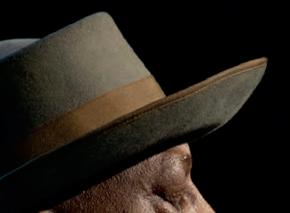
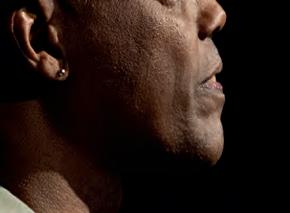
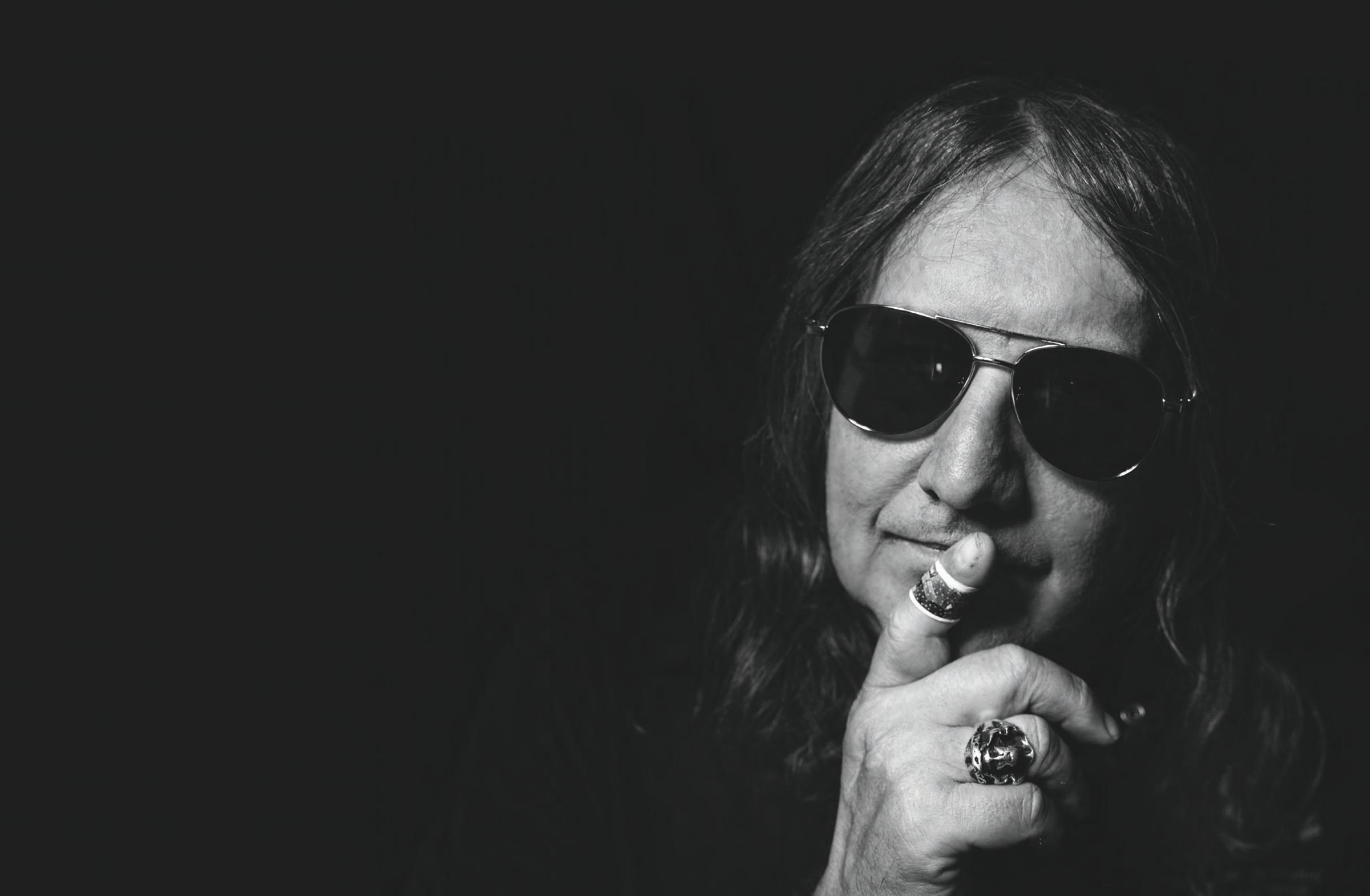
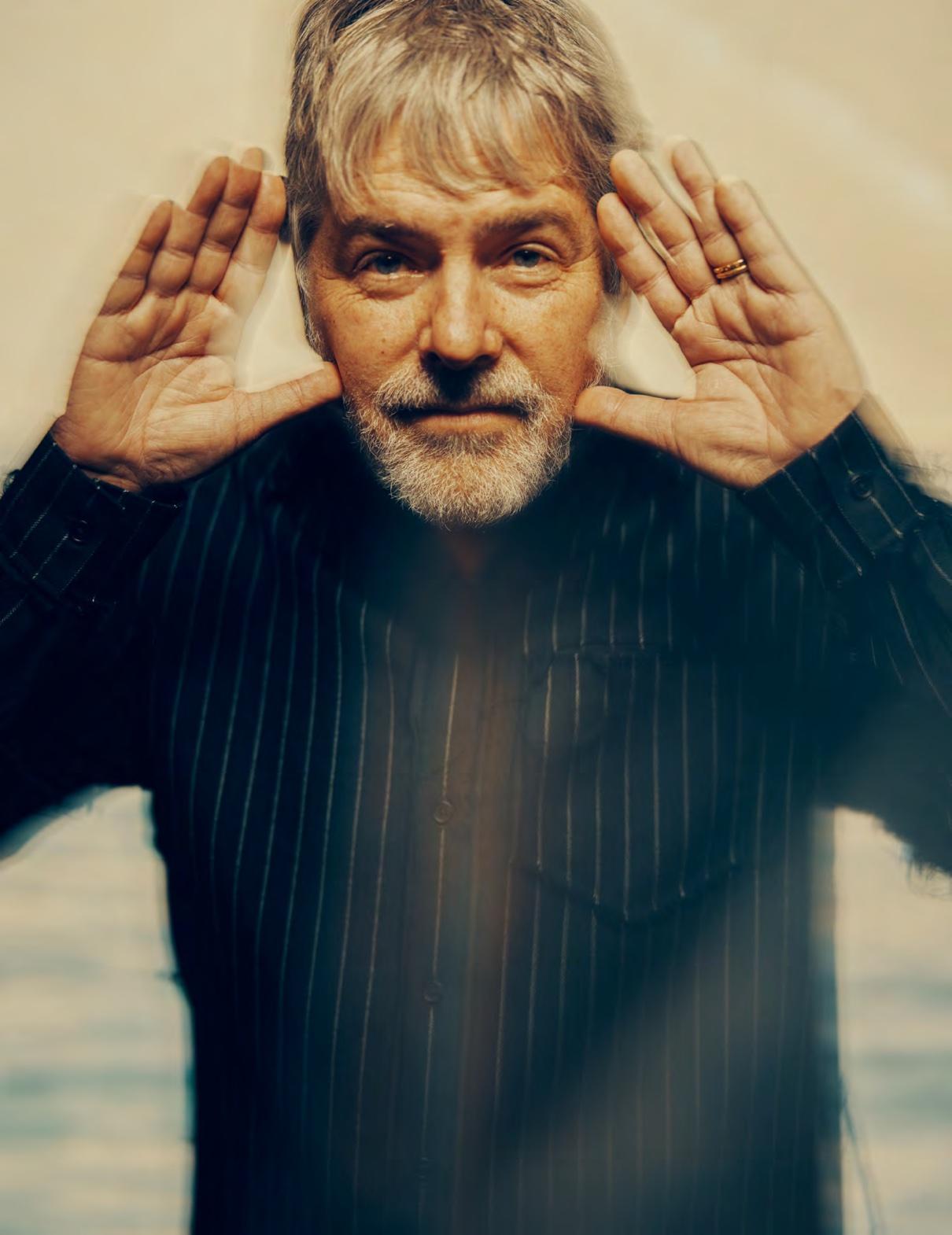
“It’s a process of joy. Making a good record is a joyful process in creating it and it’s gotta be joyful for people listening to it.”
Lee Fields, p. 19
5 HELLO STRANGER by Hilary
Saunders
6
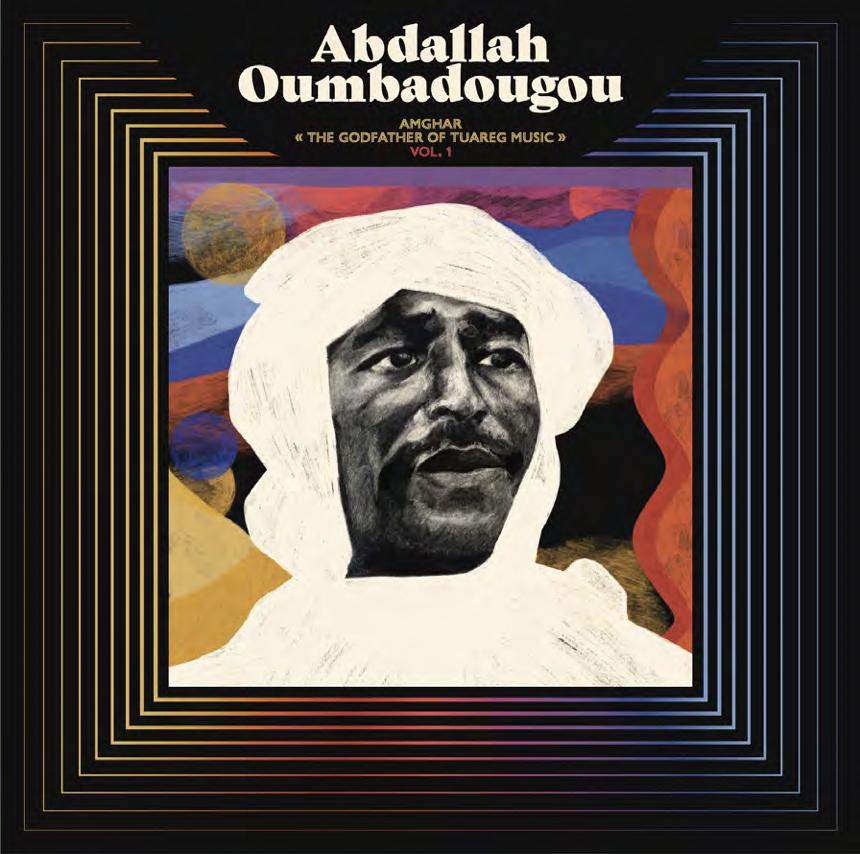
‘THE GODFATHER OF TUAREG MUSIC’
New compilation highlights the life and music of Abdallah Oumbadougou by Noah Berlatsky
14 CINEMA VERITÉ
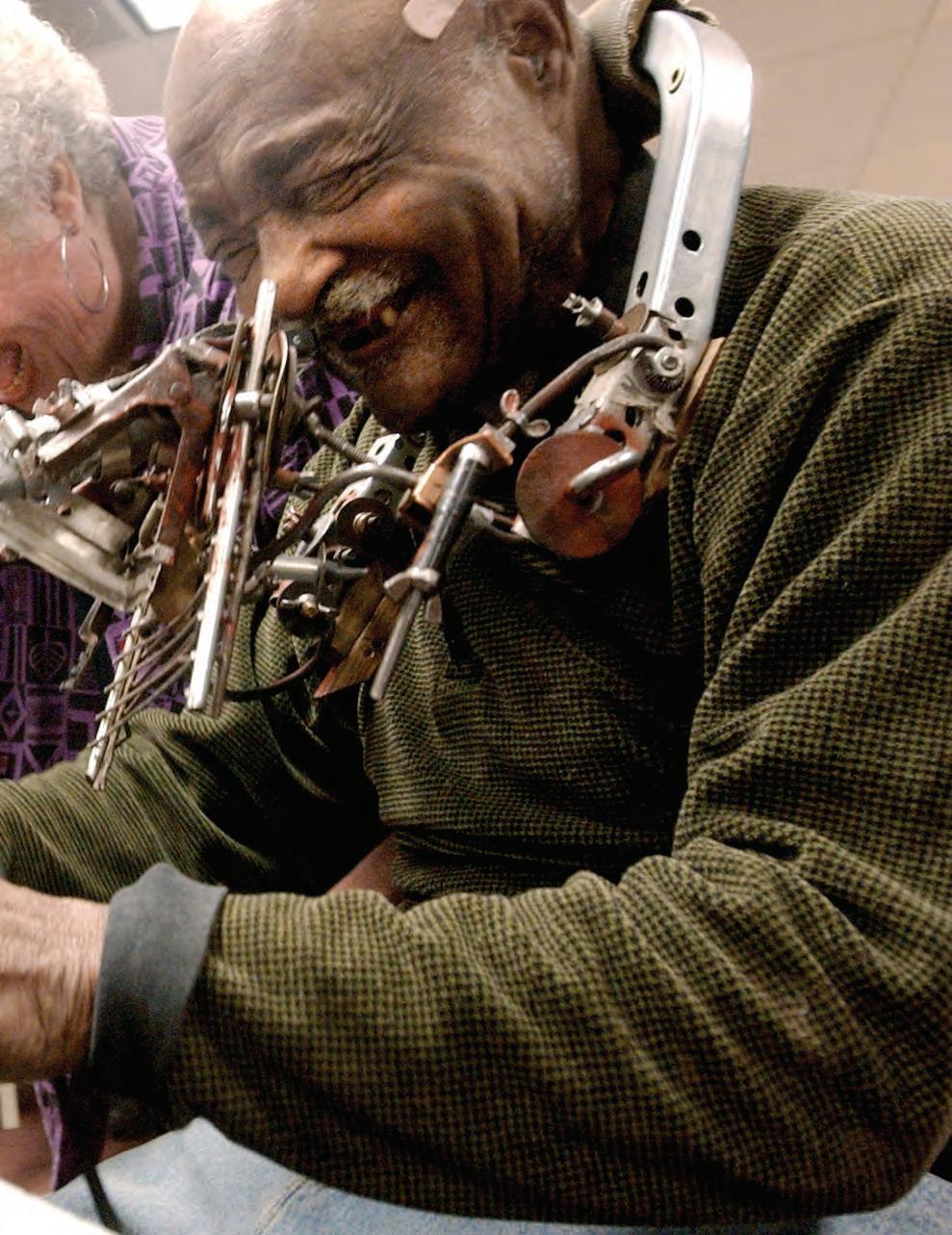
A new documentary traces soul singer Lee Fields’ story onstage and o! by Jim Shahen
20 CARRYING THE CULTURE
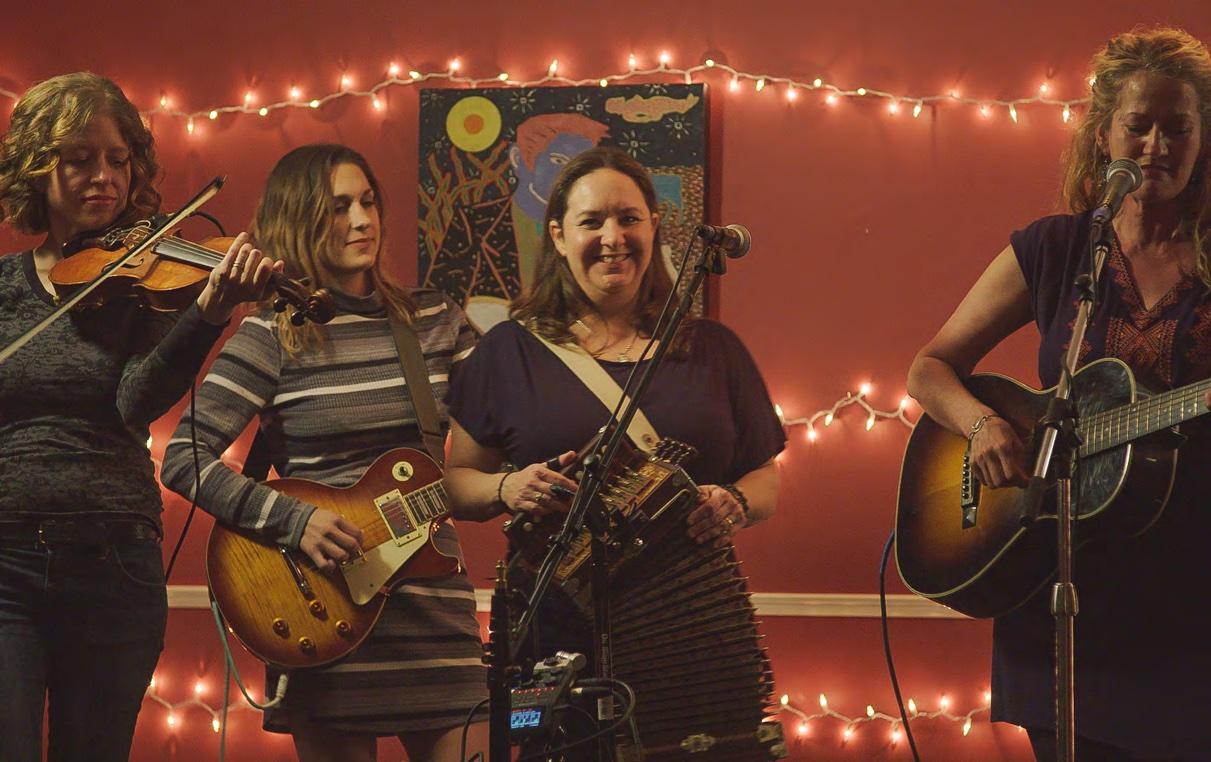
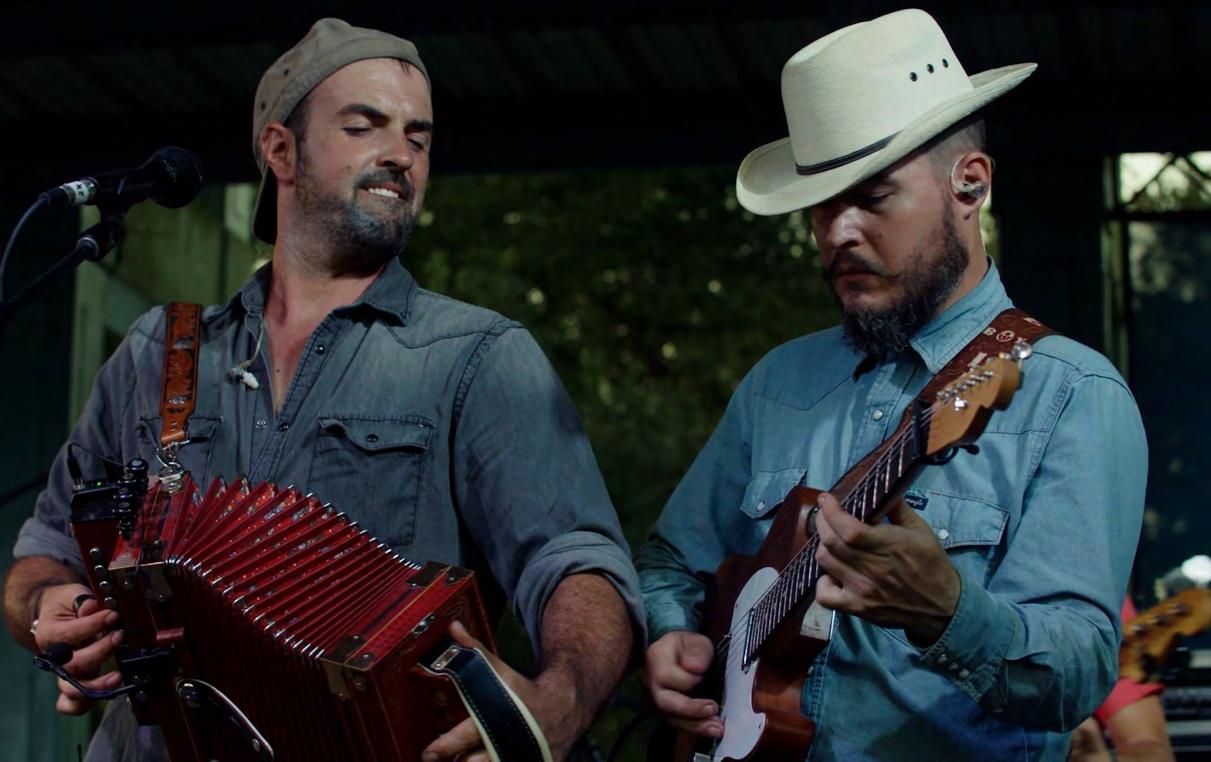
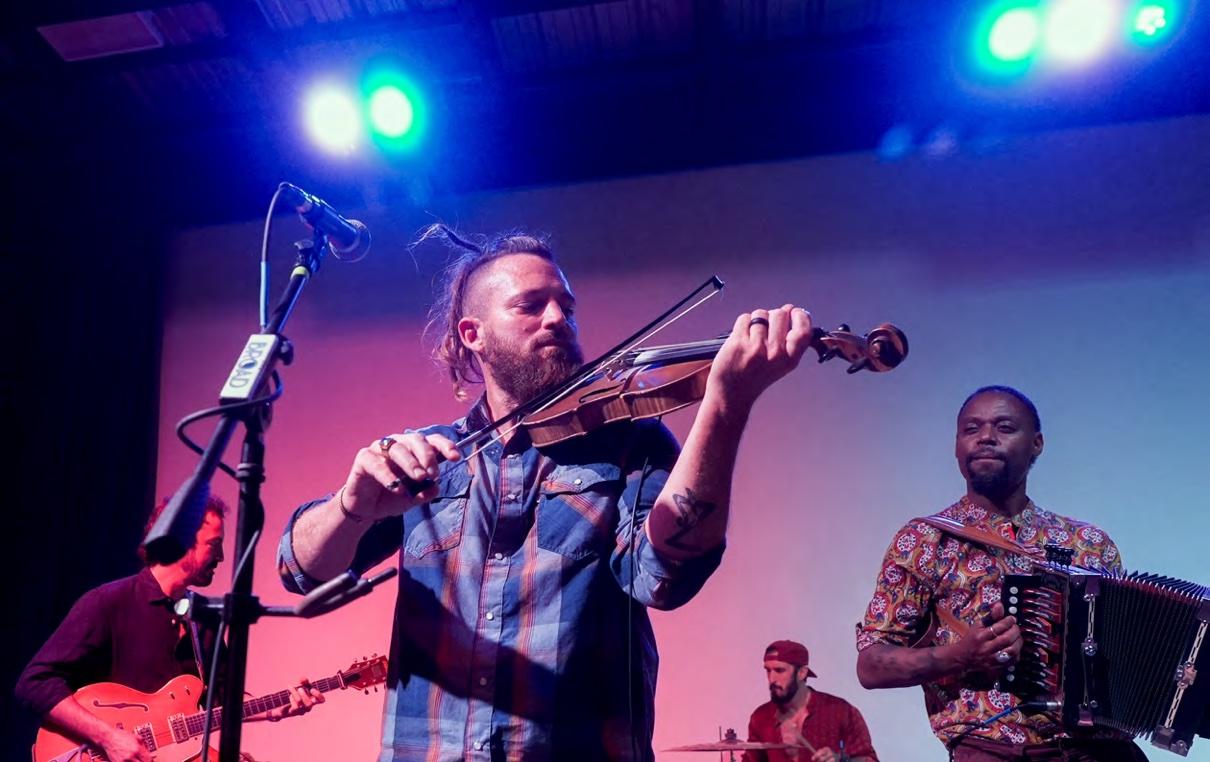
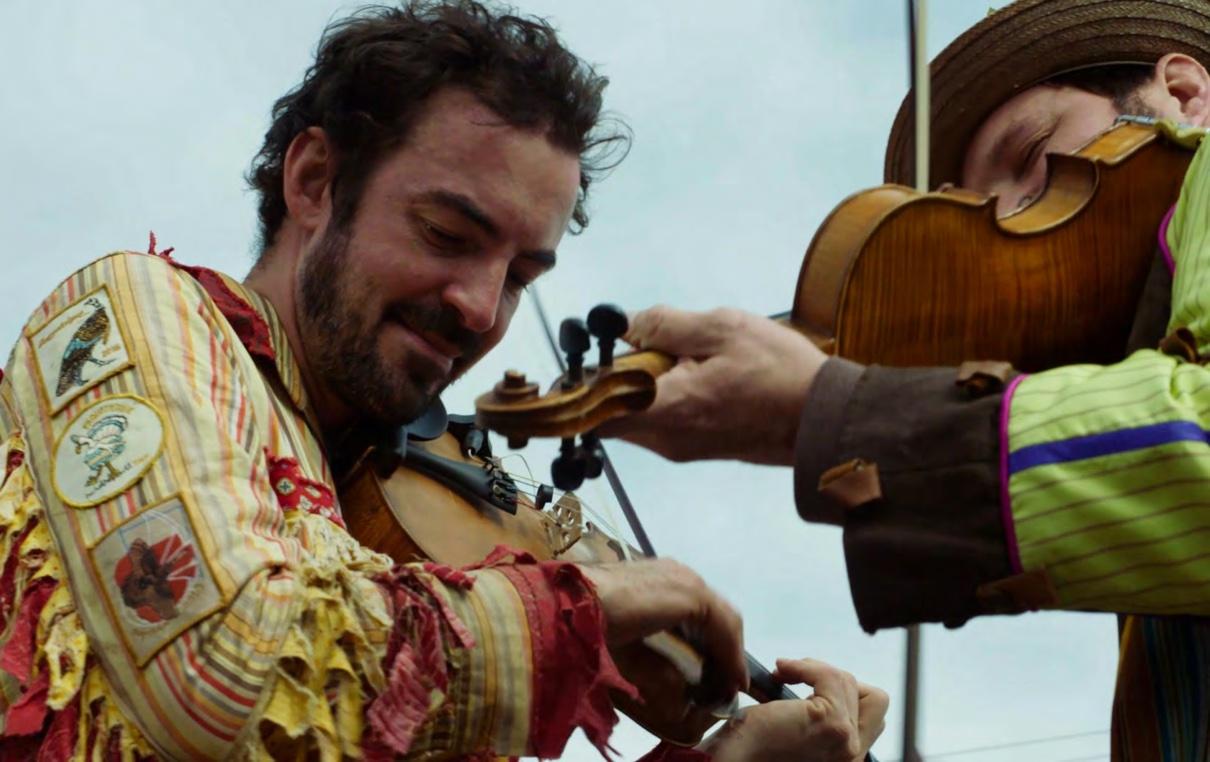
Roots of Fire is a feature-length documentary about the history of Louisiana Cajun roots music and those continuing this rich tradition
28
POWER PLAYERS
Wonder Women of Country combine strengths to create magic by Meredith Lawrence
34 A LIVING TRIBUTE
Fellow artists celebrate Drivin N Cryin’s Kevn Kinney with 100-song tribute project by Michael Elliott
42 MISSIONS IMPOSSIBLE
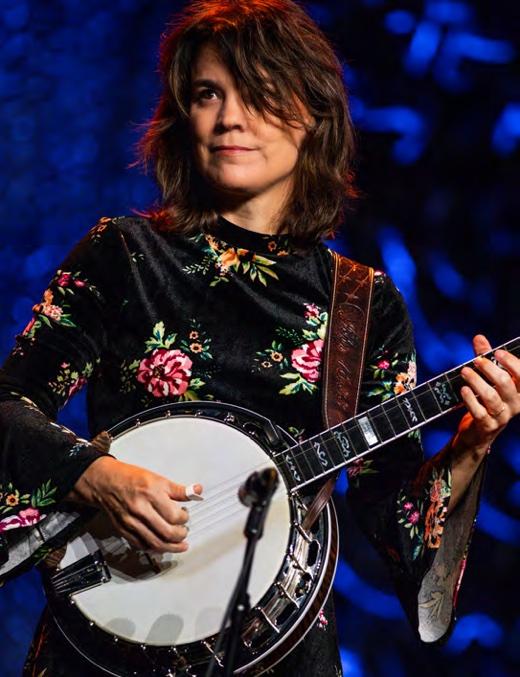
The people and moments that have propelled Béla Fleck and his banjo by Stacy Chandler
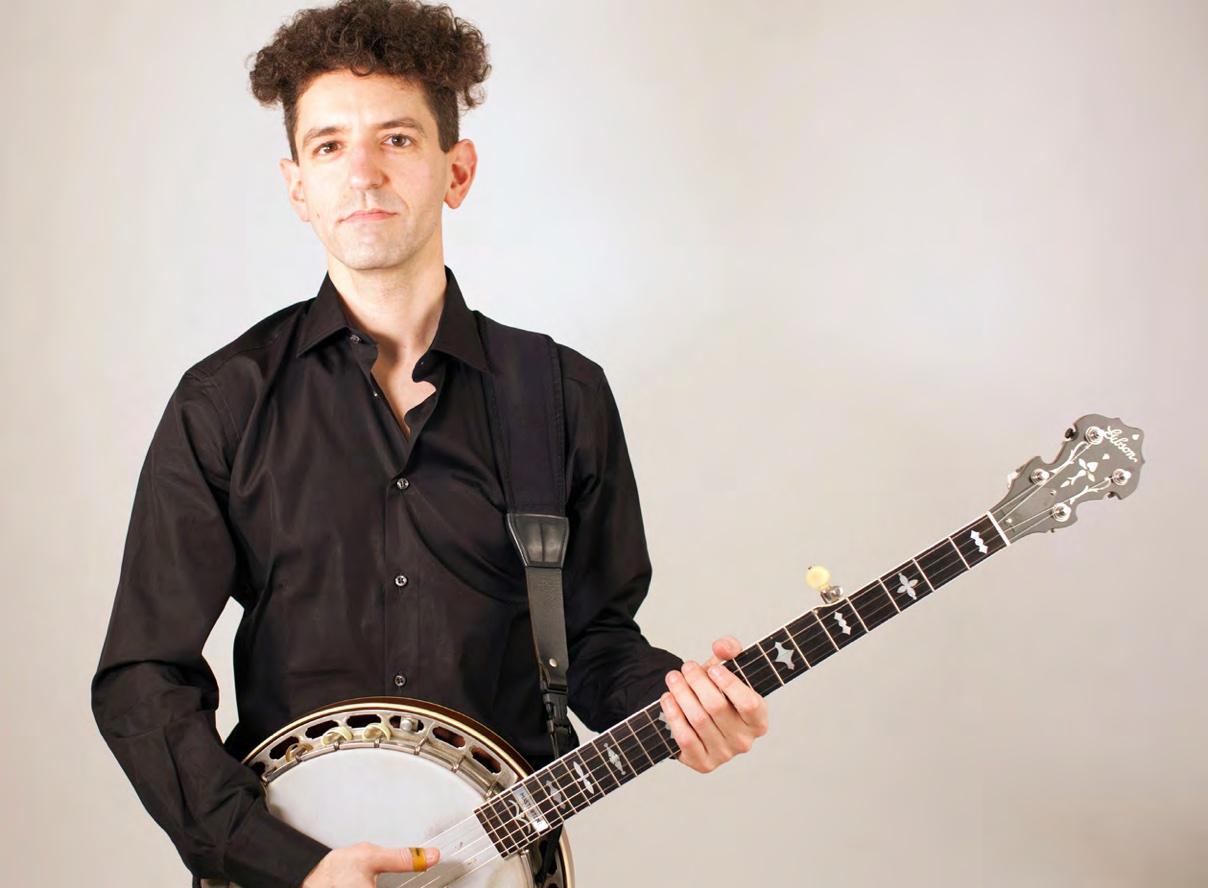
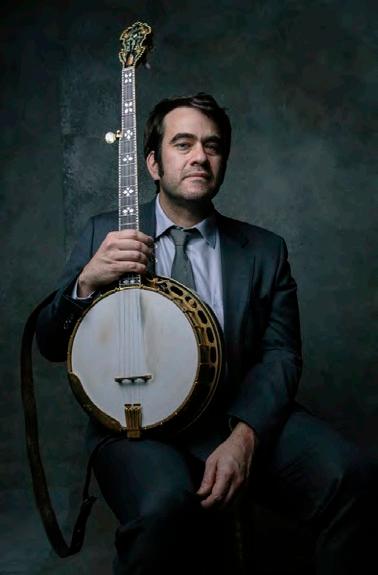
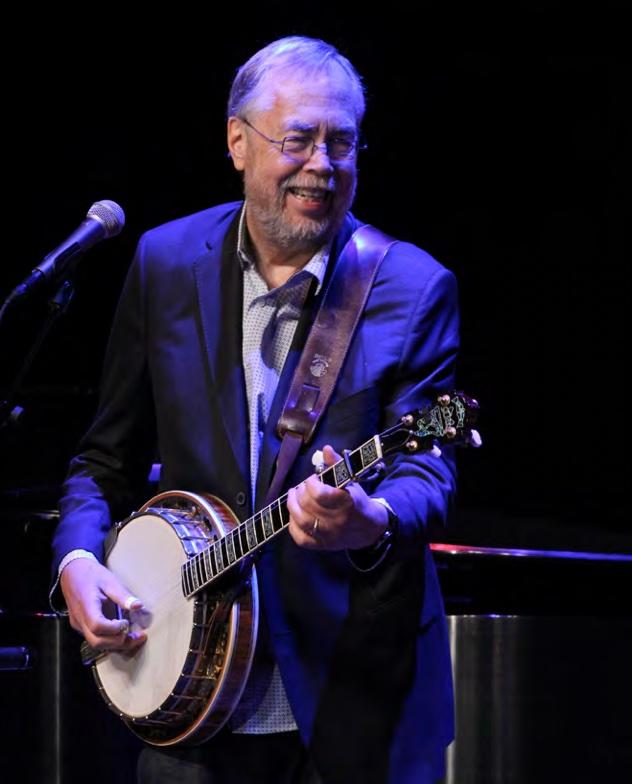
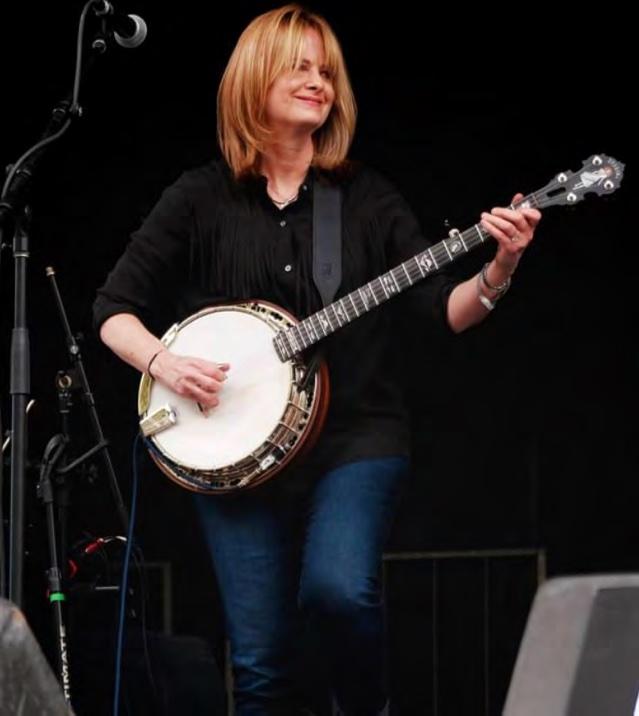
50 CHASING PERFECTION BY WAY OF THE BANJO by Béla Fleck Summer 2024 guest editor
60 ‘HISTORY WITH A BACKBEAT’
Small but mighty, a Michigan library system steers a blues series for 36 years by Caryn Rose
72 BLACK GIRLS MAKE COUNTRY HITS TOO
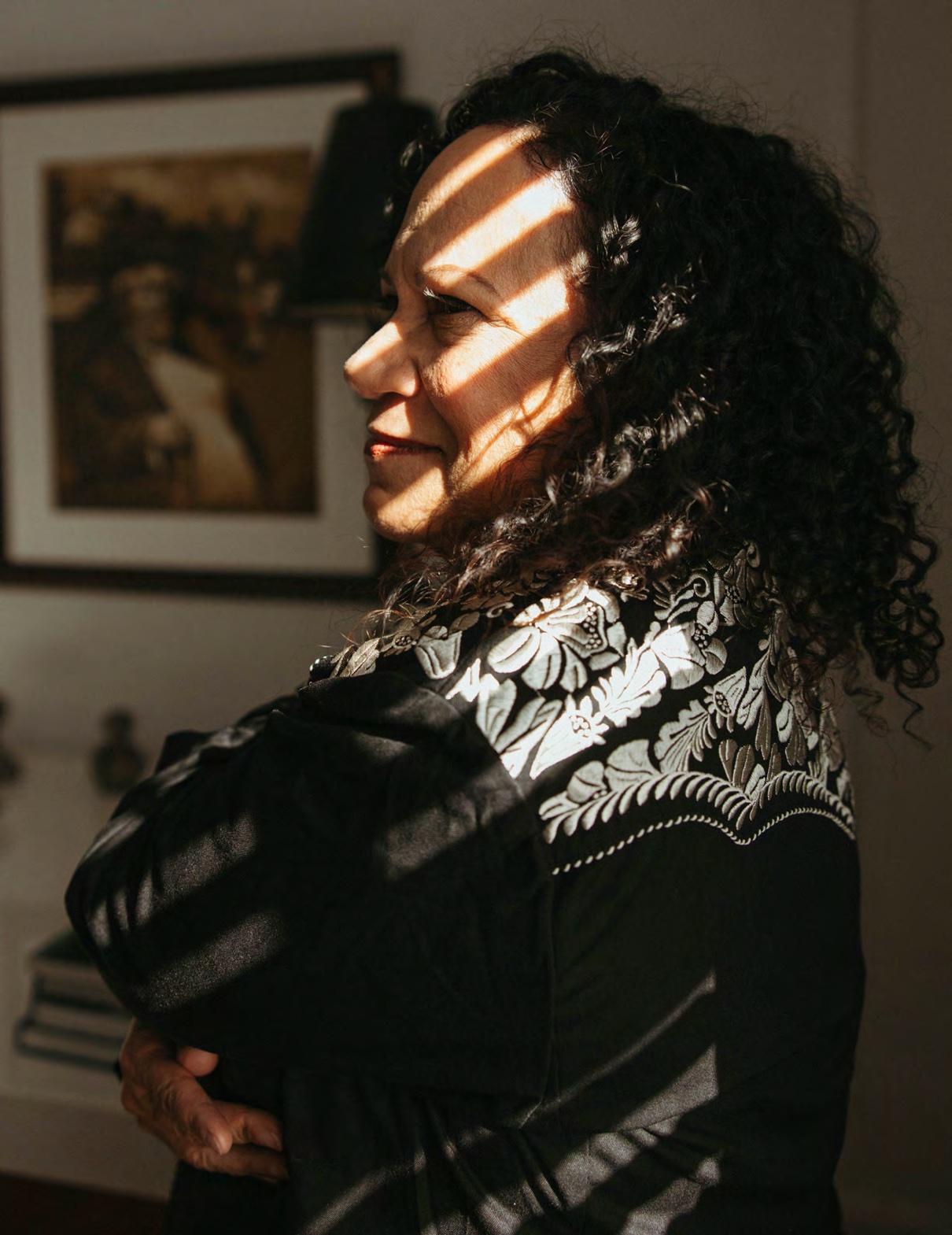
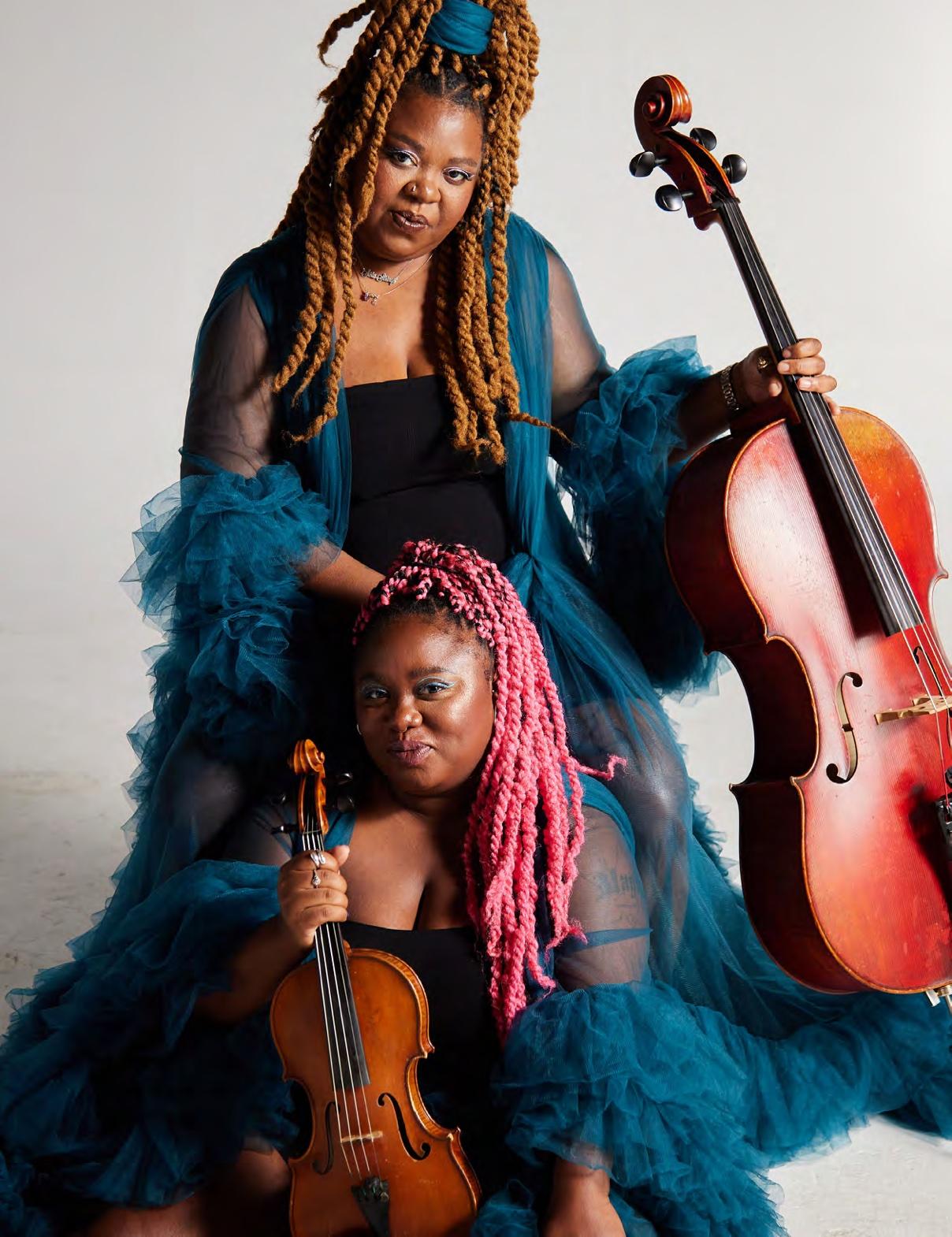
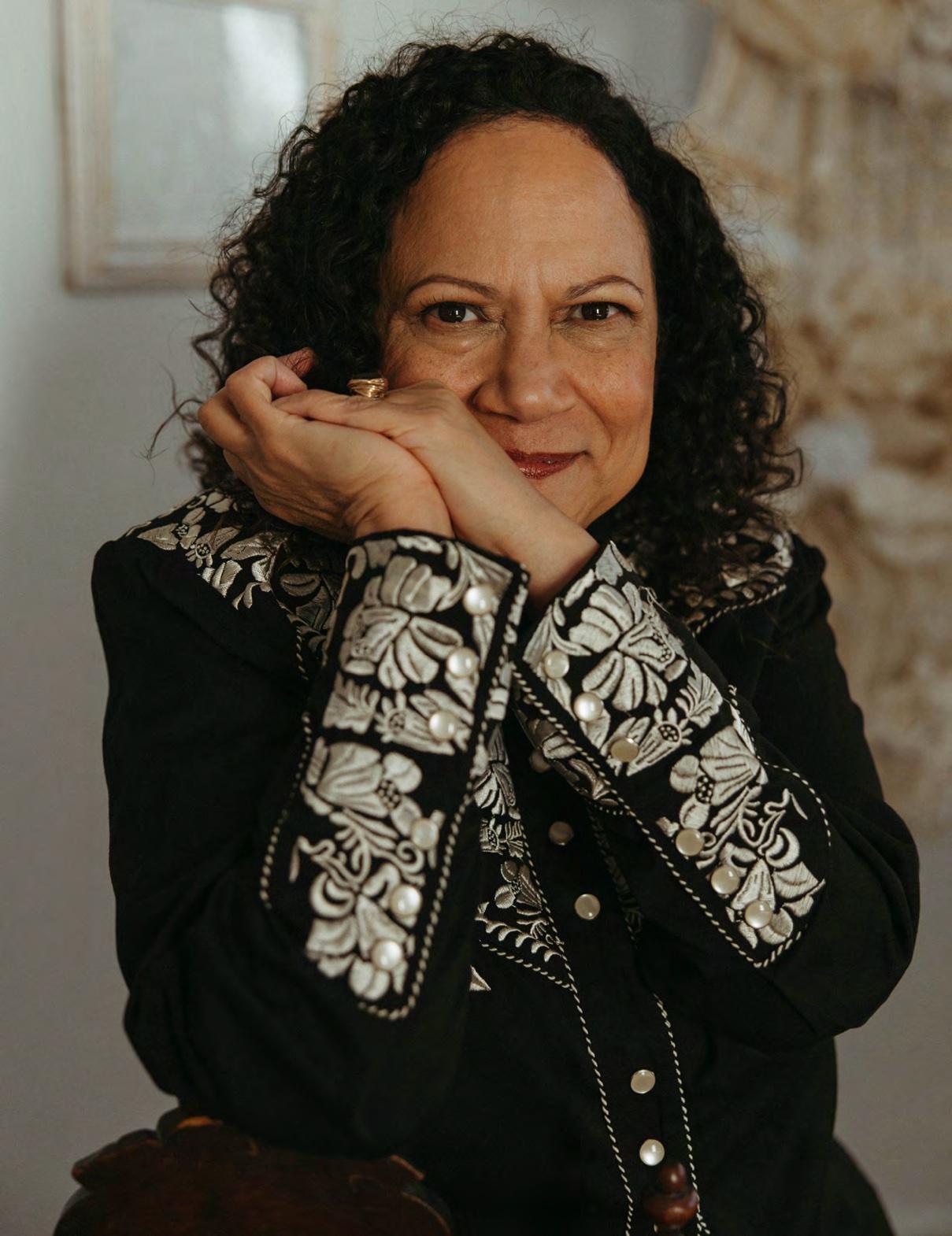
Alice Randall’s ‘My Black Country’ puts Black women musicians and stories back in the saddle by Cherise Johnson
82 ‘PHOBIA’
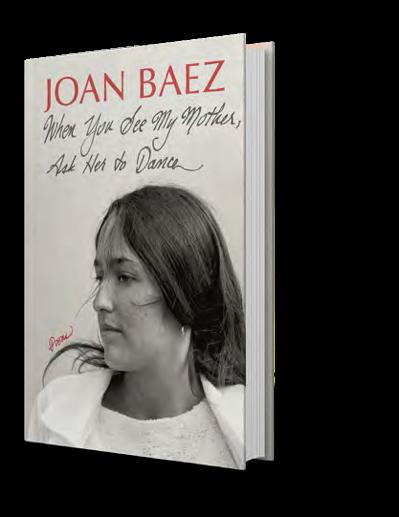
An original poem by Joan Baez
88 REVIEWS
94 CONTRIBUTORS
96 SCREEN DOOR
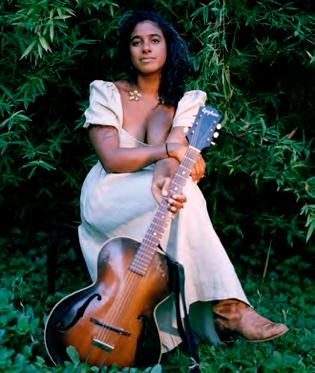
Tend, Grow, Release: On Making and Sharing Music by Leyla McCalla
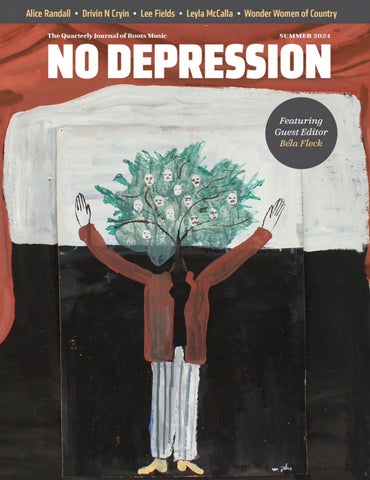
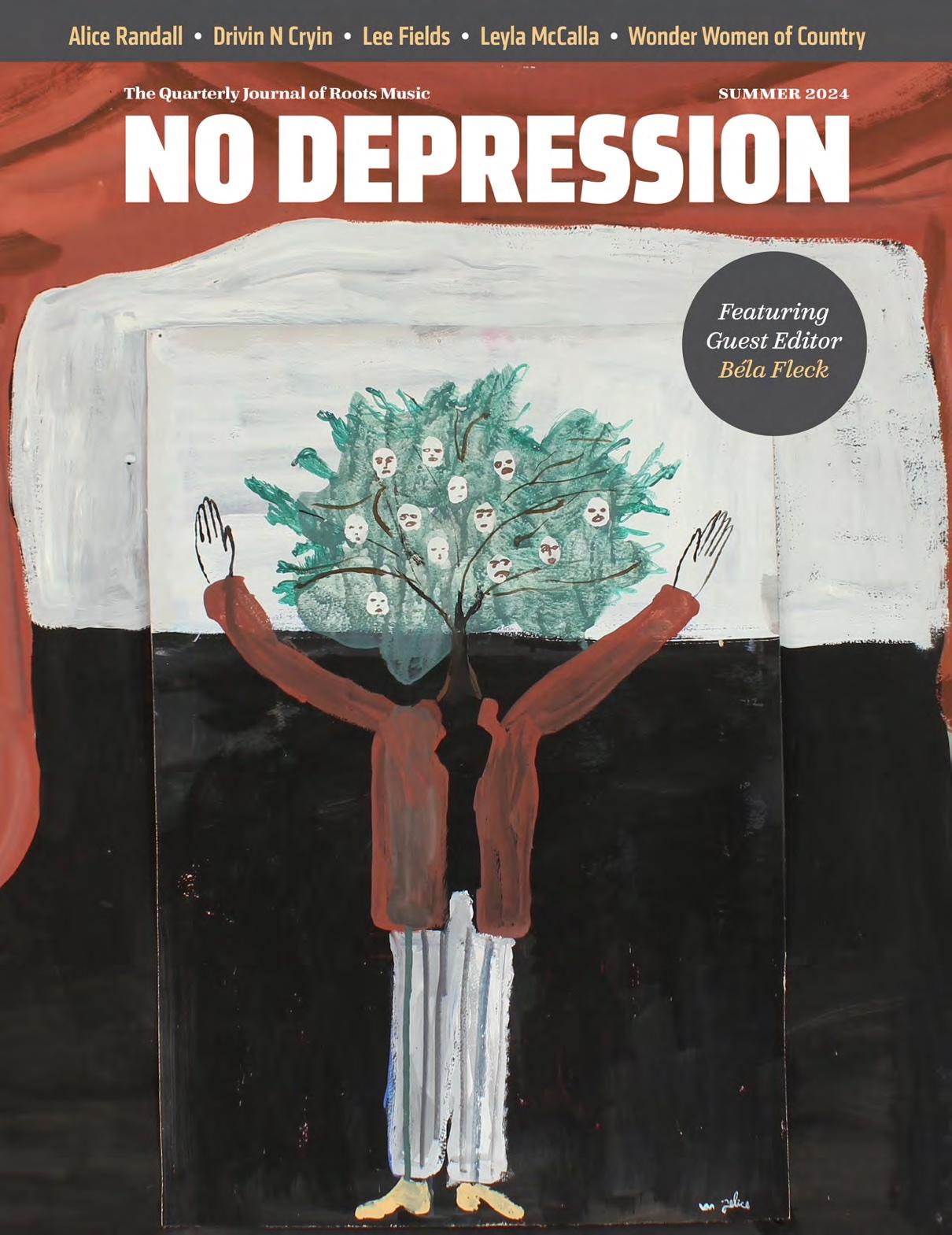
ON THE COVER
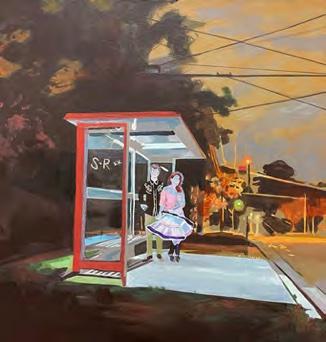
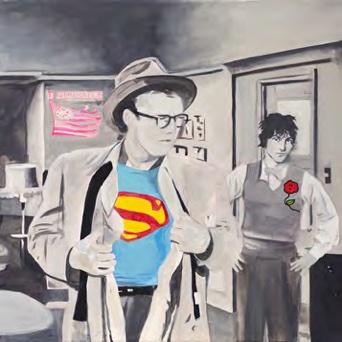
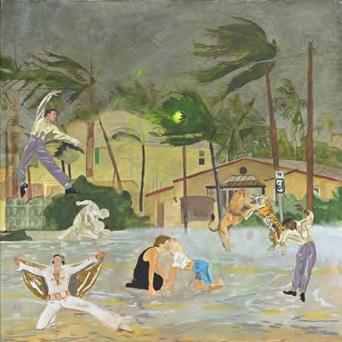
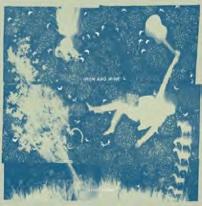
The cover painting shows a performer on a stage. The upper part of his body and head are supplanted by a tree. There are many faces hidden like fruit in the branches of the tree, and those faces represent the influences and experiences that created the performer. Additionally, the tree represents the roots and outward growth of the performer’s art. Finally, the performer’s voice is the wind that rattles the branches of the tree, carrying it forward. — Ian Felice
NO DEPRESSION TEAM
Hilary Saunders Managing Editor
Stacy Chandler Assistant Editor Sonja Nelson Advertising
FRESHGRASS FOUNDATION TEAM
Chris Wadsworth Publisher and President
Adam Kirr Chief Operating O cer Matty Jackmauh Development and Community Engagement Assistant
Back in March, I got the chance to see singersongwriters Aoife O’Donovan and Rosanne Cash in conversation together as part of The Grammy Museum’s New York City program series. O’Donovan’s latest record, All My Friends, had just come out, and the two discussed the centennial of women’s su rage, history versus historical ,ction, the creative process, and more.
The album, her fourth solo studio LP, came to fruition thanks to commissions from the Orlando Philharmonic Orchestra and the FreshGrass Foundation (No Depression’s nonpro,t publisher). And although O’Donovan maintained in our conversation for a story that ran on No Depression’s website that she’s not a political songwriter, the record was inspired by the 19th Amendment, which prohibits gender-based voter discrimination, and su rage activist Carrie Chapman Catt.
These topics hit even more heavily in yet another contentious election year. O’Donovan spoke about living in Central Florida, embracing local activism, and volunteering to raise awareness for regional candidates and statewide ballot measures.
But while the concept album’s narrative remains almost completely in the past, O’Donovan and Cash’s conversation contextualized its messages not just in the present, but into the future.
Both women on stage that night bonded over being mothers of daughters. And Cash, a-er asking O’Donovan who today carries on Catt’s spirit and momentum, mentioned the song “Someone to Follow” o All My Friends. Together,
BY HILARY SAUNDERS
they alluded to the lyrics:
I know whichever way the wind blows, you’re gonna face it. S tand tall, you can be someone to follow. You’re gonna make it.
According to O’Donovan, the song — which integrates Noam Pikelny’s measured banjo picking and Rob Burger’s chameleon-like according playing — began as a musing on Catt’s personal life before she became president of the National Women’s Su rage Association, but quickly morphed into something more pointed for her own daughter. Cash replied, “I think one of the chief responsibilities of a mother is to be optimistic. You can’t steal your child’s future by pessimism.”
Despite an evening full of brilliant music and conversation, it’s that line in particular that has stuck with me for months. I’m not a
mother, although members of our ND team are; I look to them and so many other women for the qualities that make a role model, caregiver, working professional, and leader. But those attributes can o-en be skillsbased, so Cash’s emphasis on radical hope as life choice felt especially profound.
Here at No Depression, we also have to work under the assumption of radical optimism — that storytelling is vital, that music still matters, that traditions still carry. It’s particularly exciting, then, to welcome songwriter, banjoist, and musical explorer Béla Fleck as our honorary guest editor for this issue. His decades-long career in bluegrass music and beyond — constantly perfecting and challenging form, tone, and meaning — echoes all of these beliefs. For the Summer 2024 issue of No Depression, Assistant Editor Stacy Chandler interviewed Fleck about his many musical and personal in/uences. And Fleck himself spoke with a number of his musical peers about what it takes to create the perfect banjo tone.
Each time we here at No Depression work to make another issue, we consider the state of roots music and the values of our audience. In some ways, it gets easier over time, as we continue to perfect our own systems and routines. But in other ways, it’s a bigger challenge with each passing day: The state of the world and the industry’s funding frustrations can feel insurmountable.
But like Cash said, I’m choosing hope — personally, professionally, and politically. And I encourage you, if you choose radical optimism too, to listen, to subscribe, and to vote in 2024.
PHOTOS BY NIKHIL SURESH
‘THE GODFATHER OF TUAREG MUSIC’
New compilation highlights the life and music of Abdallah Oumbadougou
by Noah Berlatsky
Asoulful, bluesy acoust,c guitar run begins, then eases into a loping, circling stride. A male chorus echoes the rangy, open yodeling lead vocalist — a sound half martial, half stirring camp,re sing-along.
Lé iyoutwane orgueza guer kalan Chatma idarnat rakinat guer kalan.
I’ve walked for years in the Ténéré through struggles for freedom.
The Ténéré, we roam it without di culty.
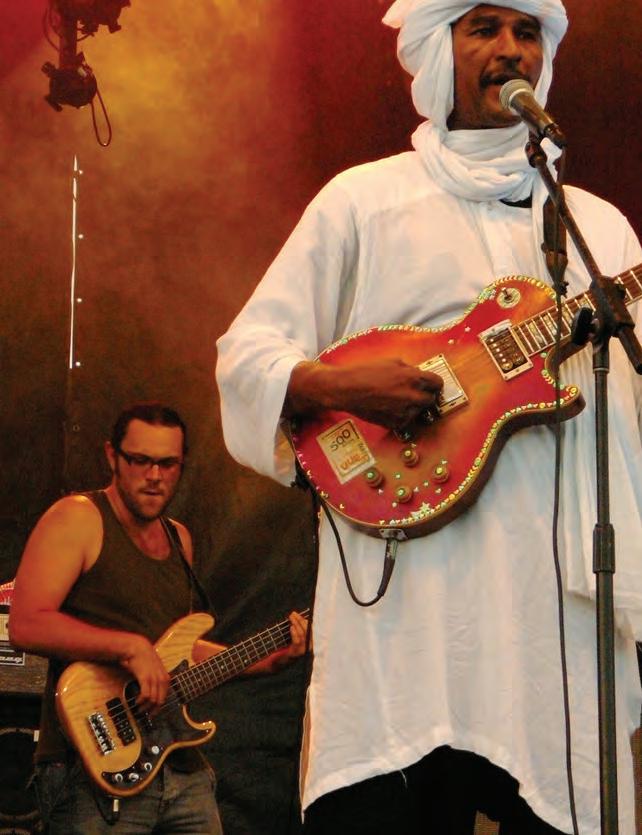
The song, “Le Iwitian Ourgueza Gueakelen,” honors the Ténéré desert in Niger while also mourning the current culmination of natural disaster, government oppression, and resulting uprisings in the region. It appears on the new compilation, Amghar: The Godfather of Tuareg Music — Vol. 1. The posthumous record features previously released songs from the large catalog of currently unavailable releases, newly discovered tracks, and live performances by Abdallah Oumbadougou, a key ,gure in the history of Tuareg guitar music. The
title, Amghar, translates to “tribal chief,” in the Tuareg language of Tamashek and re/ects the respect and in/uence Oumbadougou’s music had, and still has, especially in Niger.
Tuareg guitar music, colloquially referred to as the “desert blues,” has its roots in traditional Tuareg performance and American blues and rocks sounds. Malian guitarist Ali Farka Touré is generally credited with pioneering the form in the 1970s and ’80s, though the sound became a recognizable international subgenre when the Malian collective
Tinariwen began to tour internationally in the late ’90s and early 2000s.
Since then, Nigerian guitarists like Bombino and Mdou Moctar (whose new album, Funeral For Justice, came out in May) have also become popular in the West. Tuareg guitar has become familiar enough and popular enough that hybrid performers have begun to appear on the world music scene. The Berlinbased Onom Agemo & The Disco Jumpers and Ahmed Ag Kaedy, for example, have mixed Malian guitar into jazz-funk grooves, creating a kind of Tuareg fusion.
Despite this mini-boom of Tuareg music, Oumbadougou remains a relatively unknown ,gure outside of Niger. He never gained an international reputation, only touring Europe rarely and recording minimally. That may have been in
part because Malian guitar music was better known than the scene in Niger. It may have been because Oumbadougou was less e ective at self-promotion than bands like Tinariwen. Or, as John Sopkia, the label head at Strong Place Music (formerly known as Petaluma Records) who organized the Amghar compilation’s release, says, “Abdallah was just not a great businessman. He was a little bit loosey-goosey about everything.”
For whatever reason, Oumbadougou, who passed away in 2020, “got kind of le- out of the story,” says Sahel Sounds label founder Chris Kirkley. But while Oumbadougou isn’t well known in the West, he remains a legend in his homeland. Kirkley, whose label focuses on the music and culture of the Sahel, said that when he travels to Niger, “everybody knows
Abdallah.” Musicians attest to his importance too. “He was like a father to us,” Bombino said in a blurb for the compilation release, “like our ,rst inspiration.”
Response to Repression
The tracks on Amghar were selected from material provided by Oumbadougou’s son, Youssouf Abdallah, and include unreleased recordings and music from some albums recorded in France in the early 2000s. The extensive liner notes, written by Tinariwen’s former manager Andy Morgan, don’t include details on track-by-track provenance or personnel; most of that information is simply unavailable. But Morgan did provide an extensive historical overview of Oumbadougou’s career and in/uence.
Oumbadougou was born in 1962 in Tchimouménène, a small desert town in northern Niger. It was a di0cult period for the Tuareg, seminomadic, Muslim people of north and west Africa. Throughout the 20th century, French colonizers in this part of Africa repressed Tuareg people; independence movements among the Tuareg then divided their traditional territories among Niger, Mali, Algeria, Libya, and Burkina Faso. Brutal droughts hit the region in the late 1960s and early ’70s, and the Nigerien government began mining for uranium in traditional Tuareg territories, all of which heightened tensions.
At 14 years old, Oumbadougou traveled farther north to do brutal work at the uranium mines in Arlit. There he met a Malian guitarist who taught him to play and let him use his instrument in exchange for odd
jobs. Oumbadougou ,nally got his own guitar a couple of years later and began to supplement his income with performances at parties and weddings.
By 1985, drought and repression had inspired Tuareg resistance, and many young Tuareg men had traveled to Tripoli for training, since Libyan leader Moammar Gadha, was sympathetic to the Tuareg resistance movement. Tinariwen formed that same year in a Libyan military camp to entertain and inspire Malian Tuareg soldiers. Soldiers from Niger staying in Libya looked at the success of Tinariwen and decided they needed their own band to respond. They sent for Oumbadougou, who was already well-known as a performer and composer. According to Kirkley, only a few Tuareg performers in Niger, then or now, wrote their own songs,
so Oumbadougou was highly regarded. Upon reaching Tripoli, he quickly formed his ,rst band, Takrist Nakal, which means “rebuilding of the country” in Tamashek. Oumbadougou’s music, like Tinariwen’s, began to circulate on cassette tapes recorded and re-recorded on boomboxes.
Oumbadougou returned to Niger in 1989 and appeared on the Dan Gourmou Prize broadcast, a Nigerien award show akin to the Grammys, which greatly boosted his career. But he didn’t have long to enjoy such success. Tensions between the Tuareg and the governments of Mali and Niger escalated throughout 1990 as the Tuareg demanded territorial autonomy and the right to learn Tamashek in school. In May of that year, the Nigerien military launched a wave of violence, arresting, torturing, and murdering hundreds
“[Oumbadougou’s] melodies reflect many current themes: The revolution, love, peace, living together. Abdallah calls men to go out and make the revolution for a good cause given the injustices against the Tuareg people.”
Moussa Ibra “Abindi” guitarist, Etran del L’Aïr
of civilians in the town of Tchin-Tabaradene.
Oumbadougou, like many Tuareg men, joined the ,ght. He also contributed through his music; songs like the stirring “Anou Malane” encouraged Tuareg people to embrace the cause and ,ght for freedom. In response, the Nigerien government banned his music, destroying cassettes sold on the street and imprisoning people who had the music in their homes.
The rebellion ended in 1995 with Niger promising greater political representation and more uranium mining proceeds for the Tuareg. Oumbadougou’s music was no longer considered illegal and circulated freely again, and he went on to record a new album with Beninois producer Nel Oliver called Anou Malane. Re-released on Sahel
Sounds in 2019, the tracks include electrosynth /ourishes and programmed beats typical of the Afro-funk sound of the time.
Listening today, Anou Malane is a delightful stylistic mish-mash, and the release was quite popular in Niger at the time. However, Kirkley of Sahel Sounds says that the record probably does not re/ect Oumbadougou’s own stylistic choices. Niger had few recording facilities, so performers in the region had to travel elsewhere, and “wherever they went to, the engineers recorded music how they knew to record music,” Kirkley says. As a producer, Oliver was fond of adding drum machines on his tracks, so that in/uence spread when Oumbadougou recorded with him.
Amghar is much closer to how Oumbadougou probably would have sounded live at festivals or weddings
in Niger. It’s much less heavily produced than Oumbadougou’s recordings in Benin. But Oumbadougou’s performances o-en include percussion, which is rarer on Malian recordings. In contrast to Tinariwen’s slow, dramatic style, Oumbadougou played more upbeat songs, with more ornamented guitar lines.
The song “Afrikaya,” which was previously unreleased, is a good example of the range of Oumbadougou’s art. In fact, two versions appear on Amghar: The ,rst is an acoustic studio version with a hooky guitar line, which falls somewhere between Mississippi John Hurt and King Sunny Ade in good times and good spirits. The second version of the song is live, with much more ampli,cation, and includes prominent drums and a
stinging electric guitar. The lyrics, translated from Tamashek by French-based guitarist Moussa Bilalan of the band Ishamar, express de,ant optimism:
No water can quench it; no utterance can extinguish it. One day we’ll descend the mountains and serenely enter the cities
As they did in Vietnam and Ireland.
Listening to the two together is a bit like comparing Muddy Waters’ Delta blues to his electri,ed Chicago performances. The quiet determination of the acoustic e ort turns into a rousing, /ag-waving barn burner; it feels like Oumbadougou is celebrating a revolution won rather than anticipating the struggle.
Spreading Music
A-er the war ended in the mid1990s, Oumbadougou focused not just on his own recording and performing, but also on on advancing and preserving Tuareg music. He formed an academic nonpro,t called Takrist Ntada,
which set up music schools in Arlit and Agadez. There, Oumbadougou and others taught both the guitar and imzad, a one-string violin typically played by women; Oumbadougou’s mother had played, and it served as his ,rst introduction to Tuareg music.
In a country where guitars and instruments were scarce, and musical instruction even more so, Oumbadougou’s schools became central to musical culture and performance. As Morgan wrote in the Amghar liner notes, “Almost every artist in Niger today” spent time in these schools.
One performer who attended an Oumbadougou school was Moussa Ibra “Abindi,” a guitarist with northern Nigerien group Etran de L’Aïr. Abindi tells No Depression (via
translation by Sahel Sounds’ Lucia Maori) that he and his family would listen to Oumbadougou’s music on national Nigerien radio in the late 1990s. And in the early 2000s, Abindi and other members of his family, and ultimately his band, studied with Oumbadougou himself. “We learned to tune and handle the guitar properly, which was important and inspiring for musicians like us,” he says.
Abindi adds that “[Oumbadougou’s] melodies re/ect many current themes: The revolution, love, peace, living together. Abdallah calls men to go out and make the revolution for a good cause given the injustices against the Tuareg people.”
Oumbadougou’s music and message continues to live and thrive in Niger, even if the rest of the world
is only just discovering it. By labeling the compilation “Vol. 1,” Sopkia at Strong Place Music hopes that more of Oumbadougou’s music may ,nd its way to the West. Kirkley and Sopkia both say that there are many more unreleased Oumbadougou recordings, including music that circulated in Niger but was never digitized or received an o0cial release. There are albums released in France in the early 2000s, too, which have largely vanished. Whether that music will ever be available here is another issue. Gathering material is di0cult, and the audience is small. “This is not something I expect to make any money on,” Sopkia says. “It’s a labor of love. I love this music. I don’t know if anyone else would do this. So I raised my hand.”
In the meantime, Amghar: The Godfather of Tuareg Music — Vol. 1 represents a major addition to a small catalog, demonstrating why Oumbadougou is revered in his home country and by his peers around the world. On the brooding “Sarho Nawan,” which includes a haunting choral call and response and intricate guitar polyrhythms, Oumbadougou sings, “Your children / those of tomorrow, those of today / educate them so they free themselves from the grip of time.”
Strong Place Music’s compilation follows those instructions, educating listeners and freeing Oumbadougou from the grip of time, so he can sing again for anyone who will listen to his intertwined, eternal themes — the desert and freedom. 1
CINEMA VERITÉ
A new documentary traces soul singer Lee Fields’ story onstage and o by
Jim Shahen
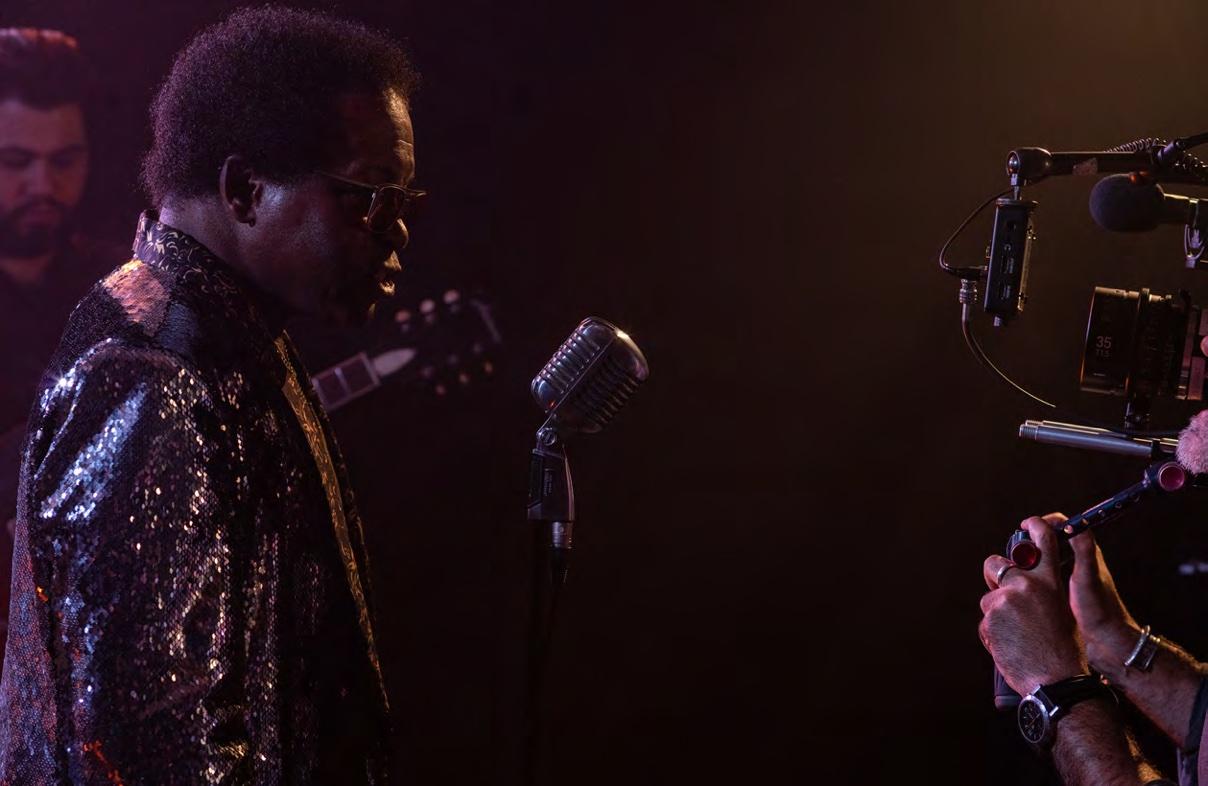
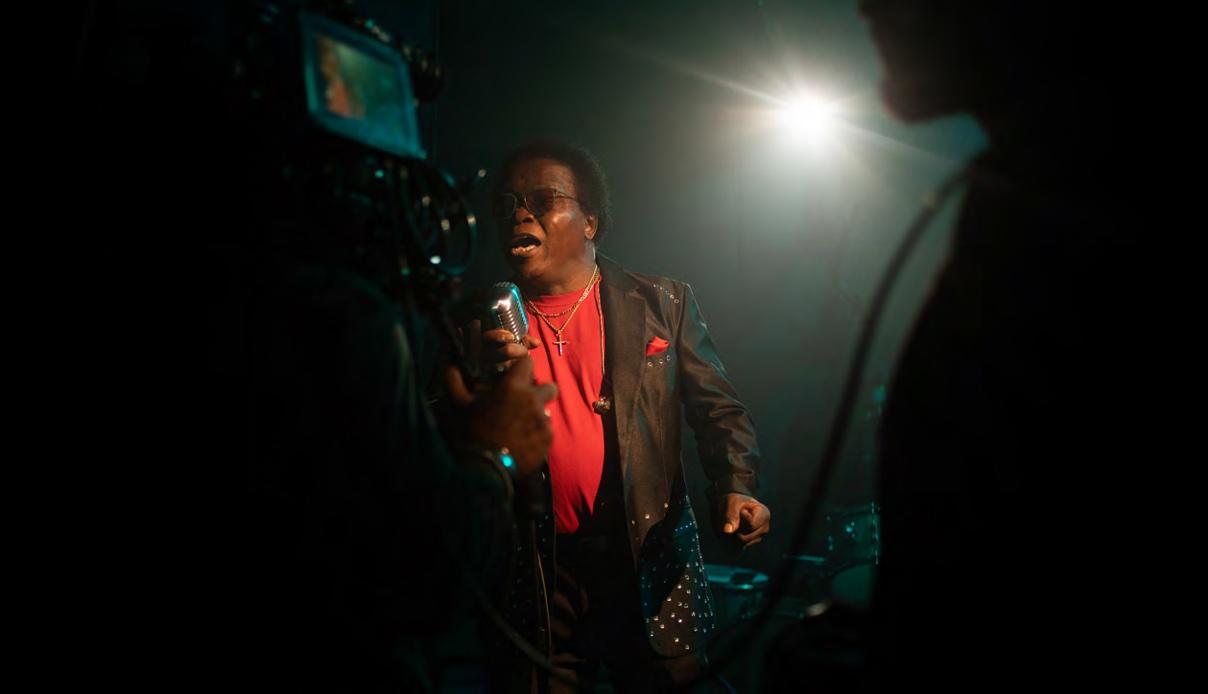
Lee f,elds f,rst tr,ed to make it as a soul singer in 1968, but it took 30 years for him to reach an artistic breakthrough. Now, at 73 years old, he’s more than made it; he’s thriving.
A string of critically acclaimed, commercially successful albums and a well-earned status as a must-see live performer have moved Fields from beloved cult ,gure to the mainstream. Still, Fields maintains a philosophical outlook: “I’ve always felt that I’ve had a purpose on earth, and my purpose is the smallest purpose. A lot of people like to say, ‘I’m the greatest,’ and I say, ‘Try being the smallest.’ The smallest particles are the greatest.
“Life is a very short journey and it’s a gi- to experience as much of it as possible. I want to see and do everything, see what it’s all about. The smallest particles can get everywhere and anywhere. They can get in where the biggest can’t.” Fields came to New York City from
his hometown of Wilson, North Carolina at 17 to pursue a music career. Despite cutting a host of singles and earning the nickname of “Little JB” due to his vocal and performative similarities to the Godfather of Soul himself, success as a solo act eluded him. A-er his 1979 LP Let’s Talk it Over failed to break through commercially, Fields sang backup for Kool & The Gang and gigged wherever he could to keep his musical dream alive. Eventually, he got into real estate and various side hustles to help augment his wife’s salary and help raise their children. Fields’ solo career gained traction in 1999, when he connected with Daptone Records founder Gabriel Roth for a series of singles that helped establish the then-upstart soul label and Fields. Roth was there at the start of Fields’ solo takeo and, through working with him on the 2022 LP Sentimental Fool, is with him now at his commercial and critical zenith. He’s seen ,rsthand how Fields’
singular perspective and journey are vital in understanding him.
“He’s a very analytical thinker,” Roth says. “Lee has his own kind of cosmology of the universe that he started developing in the early days, riding in a van to Nowheresville in the middle of the night, that he’s taken with him as he’s become this kind of obscure artist from the past into this modern legend.”
Now, audiences can see that introspection and Fields’ 50-year journey in pursuit of a dream through a new full-length documentary, Lee Fields: Faithful Man. For ,lmmakers Jessamyn Ansary and Joyce Mishaan, telling that story and bringing it to screens took on a bit of a meta quality: Much as the man himself has had a lengthy, circuitous career path, the documentary took a decade to go from concept to released project.
“He believed in himself as a musician, even when things weren’t happening. His experiences echoed
Jessamyn Ansary Joyce Mishaan
in our experiences getting the ,lm ,nished,” says Mishaan. “We found ourselves at every stage really having to say, ‘How are we going to do this thing?’ But at the same time, we never thought about giving up on it.”
Ansary sees a deeper purpose in completing the ,lm: “This all started with a promise to Lee that we were going to tell his story. We couldn’t fail on that, no matter what happened.”
A New Reality
The making of Lee Fields: Faithful Man dates back to 2013. Ansary was “struck by his voice” a-er being sent the video to Fields’ single “Faithful Man” from his 2012 album of the same name. At the time, Ansary was looking to move from working in the world of unscripted television into feature-length ,lmmaking.
Fields seemed an ideal subject for a documentary, so she contacted two people. First was Fields, to gauge his interest in being the subject of a ,lm.
Second was her longtime friend Mishaan, with whom she had worked on MTV’s Making the Band — a reality show that launched pop groups like O-Town and ran from 2000 to 2009.
Fields invited them both to his house in New Jersey. There, they pitched him on the idea of being the subject of a documentary, and during the get-to-know-you process, he sang for them in his garage studio. Fields has a well-earned reputation as an extraordinarily charismatic and compelling live performer, committed to moving audiences with powerhouse performances of his songs. Even at home in front of two strangers instead of thousands at a concert, Ansary says, “Lee gives his all in every performance. There he was with his lawnmower behind him, singing like it was Madison Square Garden.”
Fields’ garage performance convinced Mishaan of the need to make the documentary.
“I didn’t know his music at all, but
I’d wanted to make a music documentary and when he started singing in his garage, that was the moment. I was like, ‘Oh, this is my dream come true,’” she recalls.
For the ,rst few years, the ,lmmaking process was scattershot, matching Ansary and Mishaan’s experiences in the world of reality TV, where a narrative develops on its own. As Ansary puts it, “We came from the verité world, where you keep ,lming until a story emerges.”
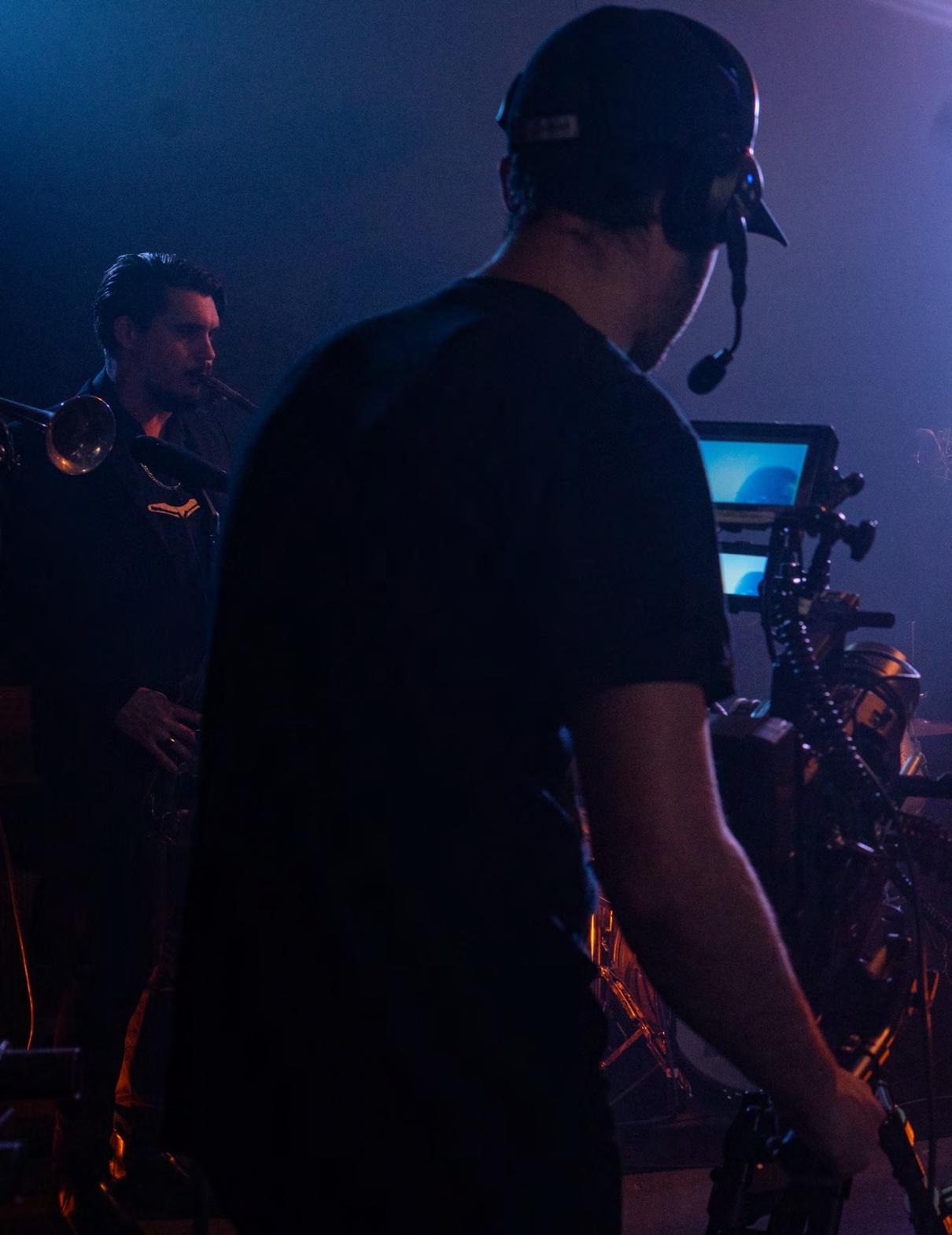
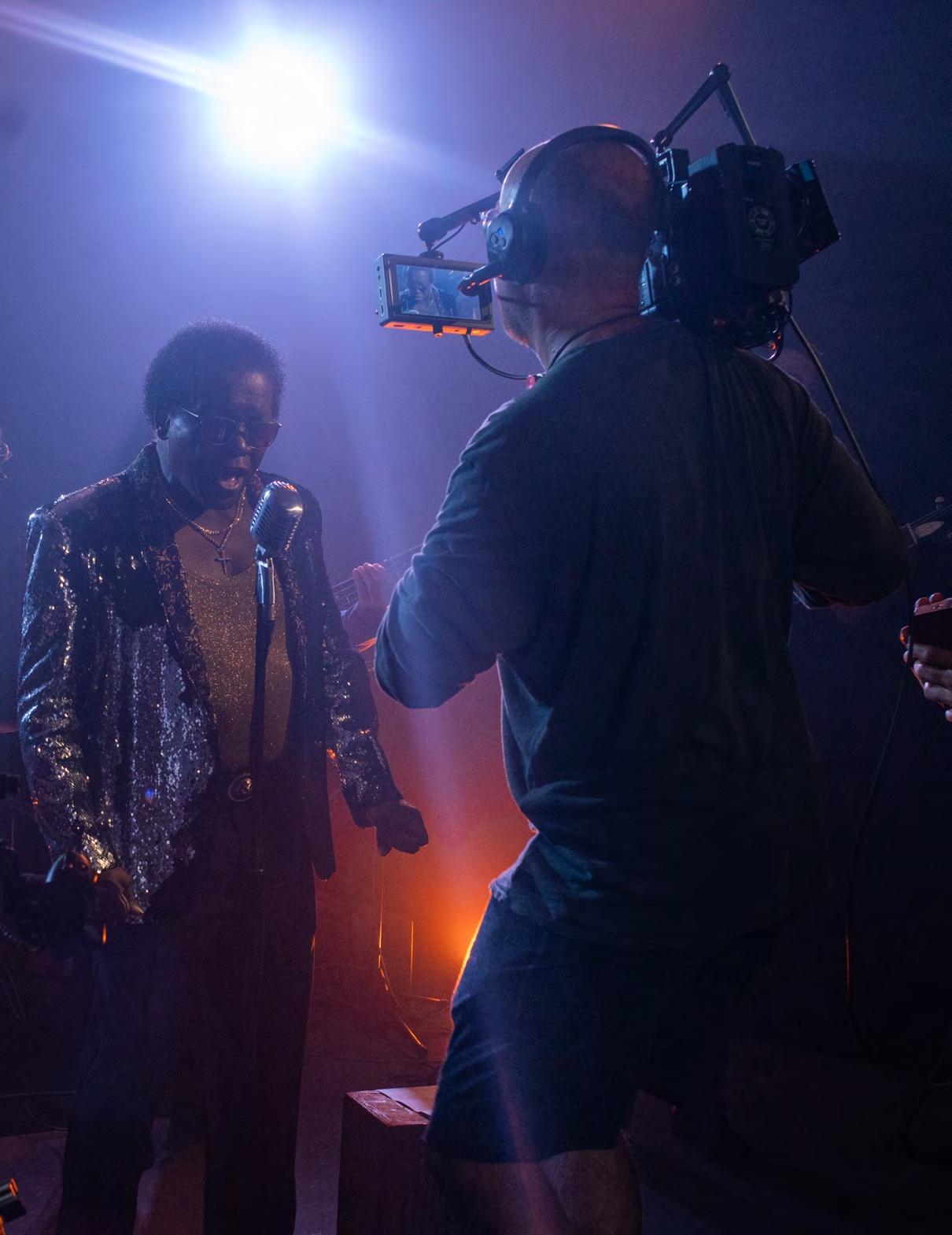
It wasn’t until 2018 that the narrative began to take shape. At that point, production costs began to increase, so they launched a Kickstarter campaign. Through a successful crowdfunding e ort that yielded $51,577 in just one month, Ansary and Mishaan were able to ,lm some of Fields’ live performances, hire re-enactors to create scenes to pair with Fields recollecting his childhood, and travel for interviews. They were readying the
documentary for release in 2020, but the COVID-19 pandemic derailed that plan. It turned out to be fortuitous, as they ended up re-editing and restructuring the narrative.
By 2022, Mishaan and Ansary began taking their documentary on the international festival circuit, where it screened in New York; Krakow, Poland; and Sydney, Australia. Some ,nal licensing and post-production took place last year, and in late February, Lee Fields: Faithful Man launched as a video-ondemand option on Amazon, Apple, and other streaming platforms.
The duo credits Fields for making the entire project possible, at every point in the process. They highlight his generosity and the ease with which he talks about his life, as well as his commitment to showing up at festivals to promote the ,lm. These experiences made the ,lmmakers feel that they gained real insights into Fields as a human being, not just an entertainer.
“From my perspective, Lee has been a dream, his willingness to show up and be himself, be an incredible
performer, no matter if it’s with me and Jess on camera or on stage. He shows up the same no matter what … lets himself and his music shine, and just gives o this incredible presence,” says Mishaan.
“When he speaks about it now, he says his life all … makes sense how it came together,” she continues. “What stood out to us, as we talked about that period in his life in the 1980s when it wasn’t coming together, he leaned into his faith and his marriage deeply. So much of his life now is really a testament to his faith and his relationship with his wife, and this incredible love they have for each other.”
For Fields, being the subject of a glowing full-length documentary has been an unexpected gi-, one that he’s taking in stride and that’s also made him re/ect on the road it took for him to get to where he is now.
“I was stunned when they told me they wanted to make a movie. I really didn’t think what I was doing was signi,cant. They did such a wonderful job telling my story, the scenes of me peeping through doors
as a kid and seeing ladies dancing, sitting on the porch singing, it looks exactly how it was, how I saw it,” Fields says. “Life’s been rewarding, man. If I had to do it all over, there’s not too many things I would change. Maybe nothing actually, because then I wouldn’t feel the way I do now.
“I’m very appreciative, but I don’t expect people to see me go, ‘Hey man, there goes Lee Fields!’” he says. “I’ve always taken it as trivial. Doing it is serious, but my expectations are whatever happens, happens. When I open up my suitcase, I become Lee Fields the entertainer. When I come o stage, I’m Lee the regular guy, who’s been married 55 years this October, trying to make sense of why we’re all here.”
Creative Chemistry
Of course, the avenue Fields uses to make sense of the world is song. While the documentary concludes by announcing his 2022 LP Sentimental Fool on Daptone Records, the ,lm has also served to rekindle the creative chemistry between Fields and Roth
“When I open up my suitcase, I become Lee Fields the entertainer. When I come o stage, I’m Lee the regular guy, who’s been married 55 years this October, trying to make sense of why we’re all here.”
Lee Fields
at the label, therefore hinting toward the future.
Before recording with him in 1999, Roth grew up a fan of Fields’ singles, like the minor hit “Let’s Talk It Over,” recorded in 1975 for London Records, and lesser-known late ’70s fare like “The Bull Is Coming.” They ,rst worked together almost on a lark, when Roth’s then-partner in upstart soul-funk revival label Desco, Phillip Lehman, located Fields’ Plain,eld, New Jersey, home address and suggested they reach out to see if he’d be interested in recording a couple singles with their group, The Soul Providers.
Fields, along with the late Sharon Jones, provided the start for Desco, which opened for business in 1996 and eventually morphed into Daptone Records in 2001. But while Jones’ albums became the foundation of the Daptone catalog, Fields’ contributions were only singles. By the mid-2000s, Fields had moved away from Daptone, signing with Truth and Soul and Big Crown Records, imprints founded by former Daptone accompanist
Leon Michels.
In 2021, however, Fields was looking to record a new album and reconnected with Roth. The result was Sentimental Fool, a project 20 years in the making. For Roth, the process of ,nally making a full record with Fields was even better than he had hoped.
“Doing this was huge for me. I really had this Lee Fields record in my heart since I met him. I just hear his voice in my head sometimes. It was a record I planned to make for such a long time,” Roth enthuses. “We’d just work — me and him on guitar — and just work on the songs for weeks, ,nd out which were the best ones, and if some were good, not great, ,nd the ones that were great.
“He loves the process, working the record the best he can, ,nding how to connect with the song.
Sharon was a live singer and the studio was something she felt forced to do. Lee’s the kind of guy who likes to break stu down and analyze it. He’s just able to elevate shit, take his time to get it right and really get into
the cra- smanship of it. I really enjoy working with him,” he adds. Fields found the renewed creative partnership just as invigorating as Roth did.
Sentimental Fool wasn’t merely the completion of un,nished business, it was the start of an ongoing working relationship. Now the two are in the early stages making the next Lee Fields LP, which they hope to complete this year.
“When I see someone, I see their physical bodies, but I also feel their spirits. When I see Gabe, I see a dynamo and I can feel his energy. Working with him is refreshing. He’s very deep, so deep, man. I can almost see his thoughts bulging out of his head. It’s a thrill,” Fields says.
“We’re in the process of writing songs now and that process hasn’t changed for me: I write a couple lines, listen to them, and I think about it from every angle, every possible image in my mind. It’s a process of joy. Making a good record is a joyful process in creating it and it’s gotta be joyful for people listening to it.” 1
CARRYING THE CULTURE
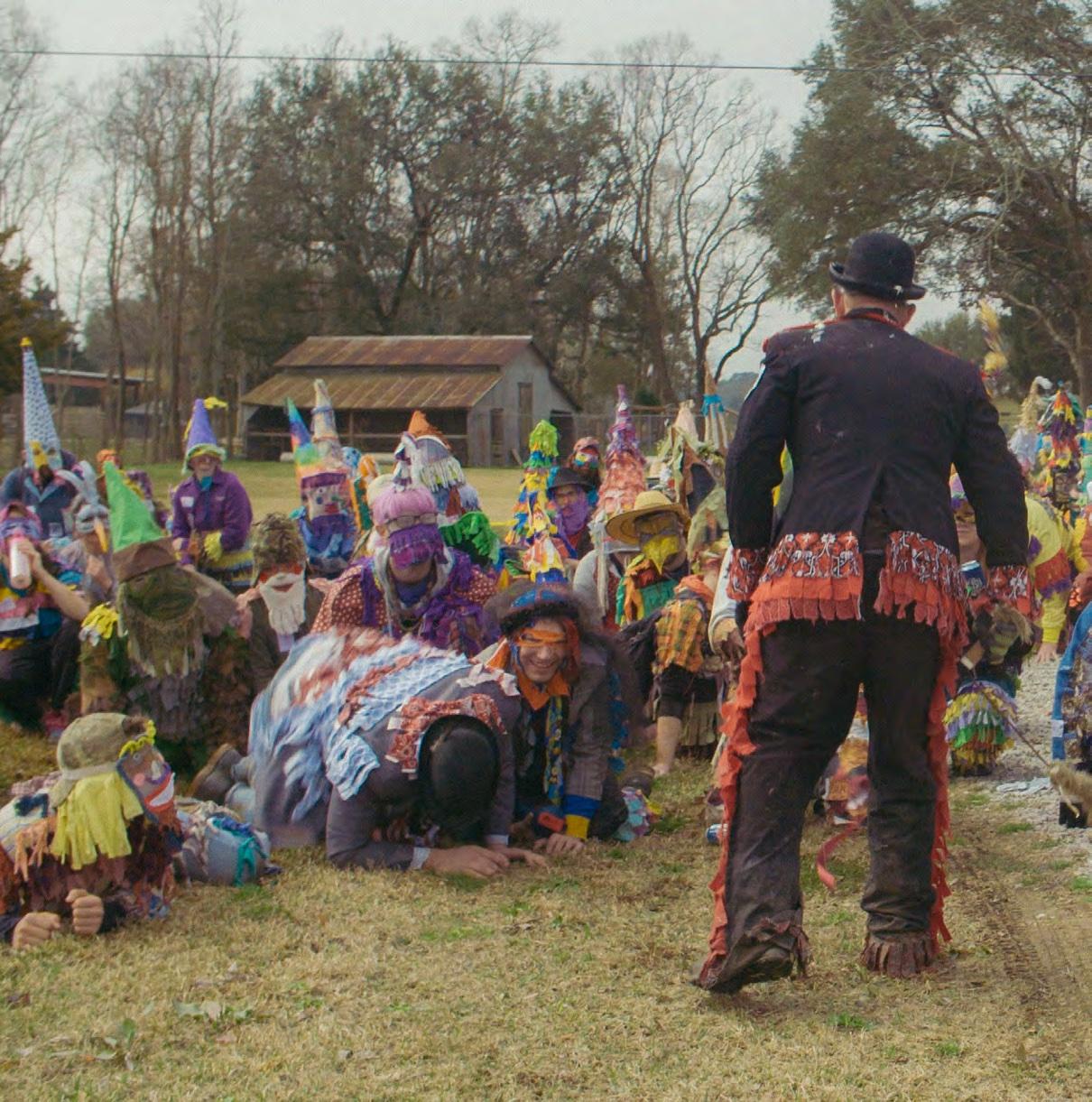
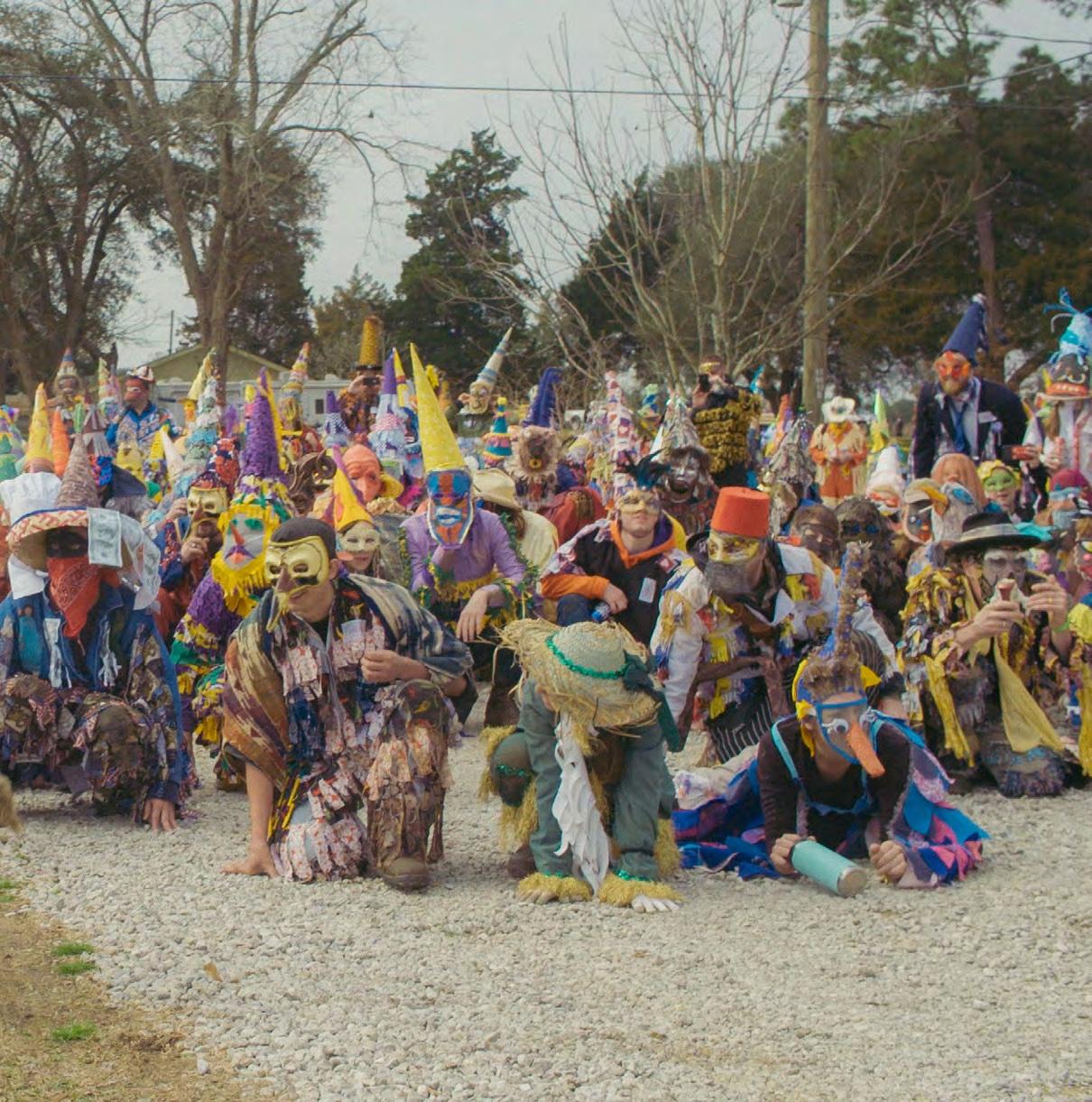
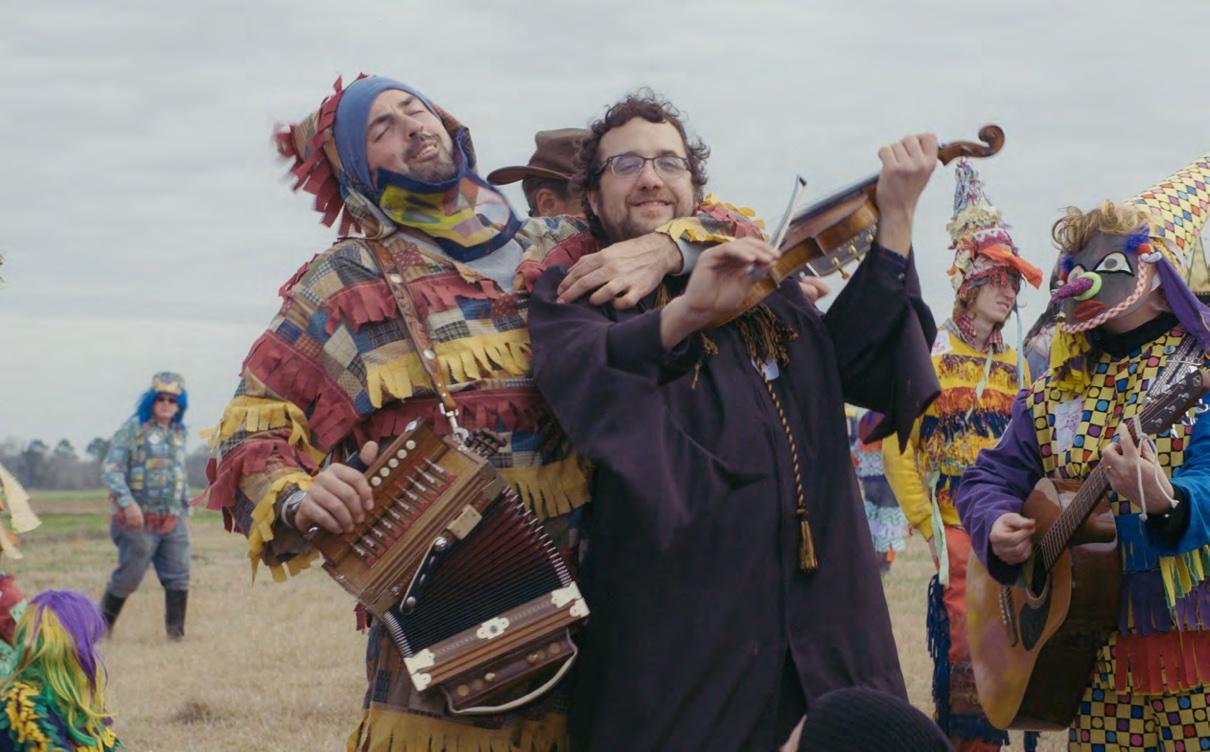
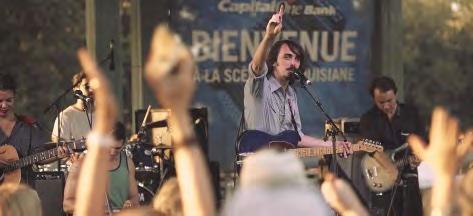
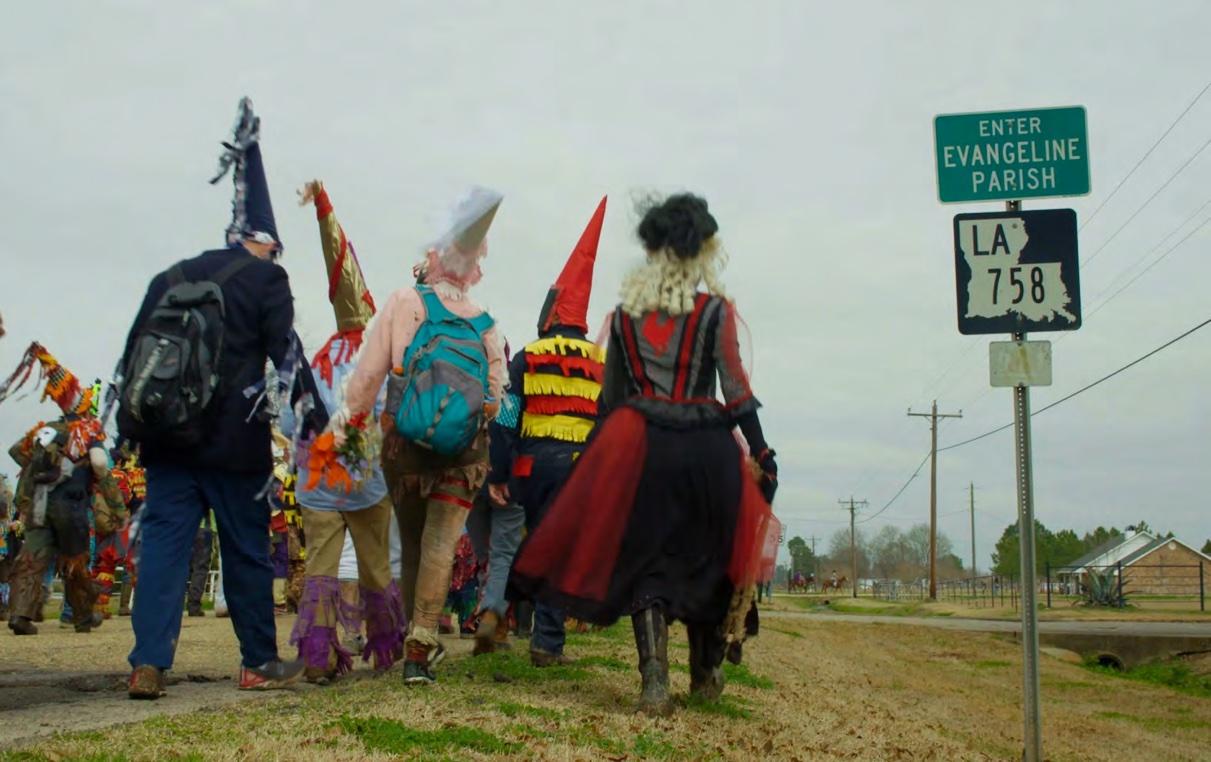
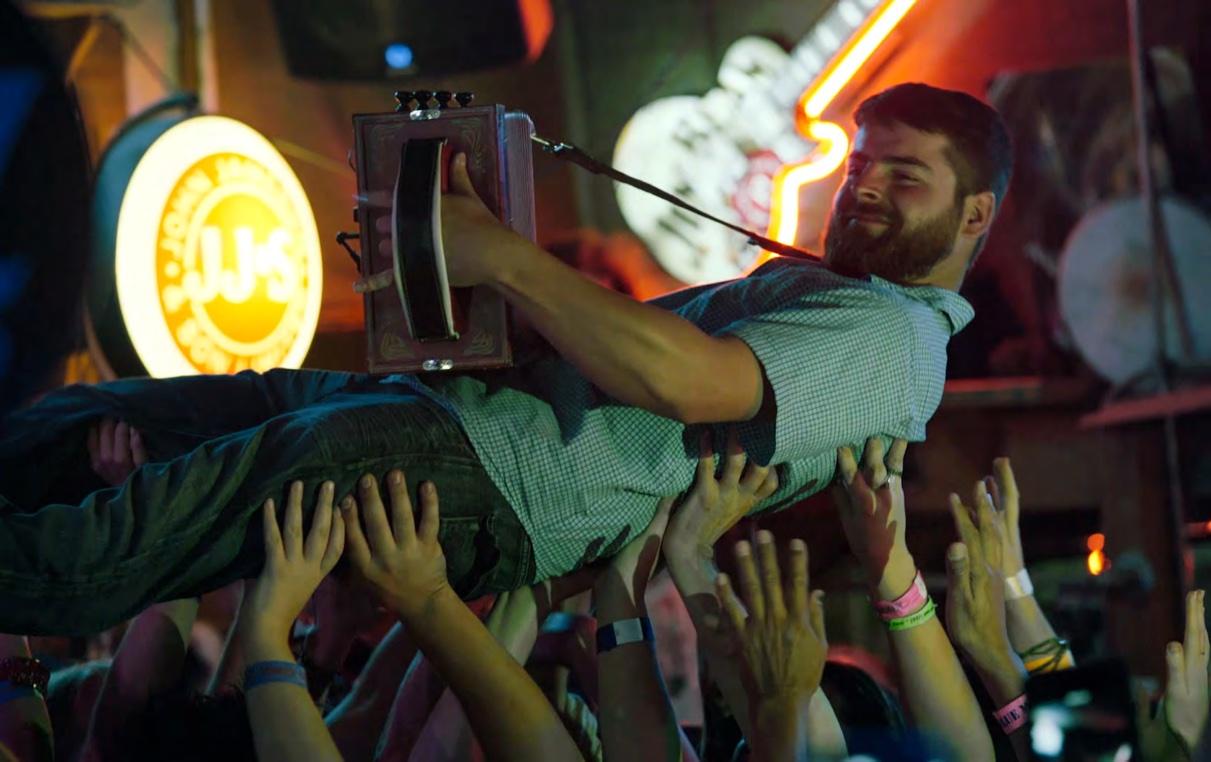
Roots of Fire is a feature-length documentary about the history of Louisiana Cajun roots music and those continuing this rich tradition. Local musicians like Kristi Guilory; Wilson Savoy of The Savoy Family Band, Pine Leaf Boys, and Courtbouillon; and Kelli Jones of Feufollet, as well as bands like T’Monde are featured in the ,lm, which has screened at 25 ,lm festivals and won 11 awards. The following essay by Roots of Fire co-director and co-producer Jeremey Lavoi traces the winding road that led to the documentary’s creation and emphasizes the need for cultural preservation and continuation. Additionally, Lavoi has granted No Depression permission to share a few exclusive stills and behind-the-scenes images from the ,lm. — Hilary Saunders
Why s0end a decade almost bringing your family and business to ,nancial ruin to make an indie documentary about a roots music that isn’t widely popular? Why leave San Francisco, where you have a growing production company, to live in the sweltering and ,ckle video market of New Orleans to be closer to the subjects of said documentary, jeopardizing your career and maybe even your marriage?
Insanity? Passion? Hardheadedness? Cultural responsibility? All of the above? Maybe. I’m sentimental. At 22, I le- my home in Lake Charles, Louisiana, for San Francisco, packing a U-Haul with too many treasured belongings. I lugged so much stu across the country that it barely ,t in my tiny new apartment. My
roommate and fellow Louisiana expat slept on a mattress in a spartan room. My room over/owed with books, music, clothes, and all the other things that I thought made me, well, me. What I did not bring with me, at least what I didn’t realize that I brought with me, was Louisiana. No roux, Tony Chachere’s seasoning, Cajun music, or hip waders from my grandparents’ craw,sh ponds.
In my mind, I was not that. I was a skateboarder. I made zines. I was a creative writing major at San Francisco State University. I left Louisiana behind, and was happy to have done it.
Well, it didn’t take long for me to get sentimental about gumbo and Mardi Gras. I was still surrounded by Louisiana people, a cavalcade of skateboarders that I’d grown up with who had migrated to the Bay Area
chasing skate dreams. We satiated our thirst for home with booze and Cash Money records. Our house parties were ,sh fries and craw,sh boils. We imposed the idea of Louisiana on California. The longer I was abroad in San Francisco, the more I missed home.
Yet, I did not move home. Instead, I started a career in television. Then I got married to my incredibly talented wife and creative partner, Abby Berendt. During that chapter, hurricanes Katrina and Rita ravaged Louisiana in the one-two punch of late summer 2005. I was traumatized through Reuters feeds at my job at Current TV. I felt an undertow pulling me home. So I went, kickstarting my documentary career with a short piece called Skating the A ermath. Working through the storms on video was cathartic, but le- me feeling a sort of culturally Catholic guilt about
Joel Savoy and Chas
Justus during Mardi Gras in Savoy, Louisiana
wielding a camera instead of a chainsaw.
Cut to several years later. Abby and I were in another state and stumbled upon a magazine that just so happened to be a Louisiana music issue. It came with a CD that included Chris Sta ord’s version of “ParlezNous á Boire,” a rock-and-roll take on a Cajun music classic. Until that moment, I thought of Cajun music as the soundtrack to dances my grandparents loved. It was background music to local commercials and the ubiquitous festivals of South Louisiana. I’d never felt that it was relevant to me.
Hearing that recording was an in/ection point for me and Abby. At the time, we were deeply enmeshed in the early days of Pandora internet radio, working and traveling with their content team making music documentaries. We lived music docs.
Sta ord’s recording felt relevant to us. We weren’t sure what the story was, but we knew there was something. Producing an unfunded doc from 2,000 miles away meant that we were forced to take our time. We used that time to listen, learn, and get to know the artists creating this infectious music. Eventually, we moved our lives to Louisiana. We settled on New Orleans as a base of operations. Home. We felt optimistic about being so much closer to Lafayette, and the artists we were documenting. Then a birth, as well as several deaths, hurricanes, and a global pandemic played their parts in extending the life of Roots of Fire’s production. In that decade-long journey from San Francisco to New Orleans, we discovered what the movie was really about and why we made all the sacri,ces.
Jourdan Thibodeaux opens the
movie with it: “If you’re not living your culture, you are killing your culture.”
It was about making something bigger than ourselves.
For me, it took a journey to California and a career in media to ,nd my way back to where I started. I’m still using cameras more than chainsaws, even though the storms keep coming, and I must occasionally use those too. I have a deep connection to French Louisiana and its people. Abby and I hope that Roots of Fire will seduce you in the way that only Louisiana culture can. Sharing this music with audiences around the world is how we live it.
— Jeremey Lavoi, co-director and co-producer, Roots of Fire
Roots of Fire is now available on DVD and on-demand on digital streaming services.
Chris Stafford passed on May 2, 2024. His death was an immeasurable loss to the Louisiana music community. It was his recording of “Parlez-Nous á Boire” that inspired us to pursue the Roots of Fire project, and that is just a fraction of the impact he made through his life and work. His band Feufollet was integral to the making of this film. We’re still processing our grief along with all of his friends and loved ones. We hope that his moments in this film bring people joy. — Jeremey Lavoi
Chris Stafford
Mardi Gras revelers
Ervin Frey
Chris Segura, Feufollet
Bonsoir, Catin
Pine Leaf Boys
Jourdan Thibodeaux
Director Abby Berendt Lavoi
Sound producer Stephen Thorpe
Director Jeremey Lavoi
Joel Savoy
― DAVE ALVIN & JIMMIE DALE GILMORE WITH THE GUILTY ONES ―
ASHLEY MONROE • THE BONES OF J.R. JONES • THE CACTUS BLOSSOMS
GABY MORENO • HISS GOLDEN MESSENGER • LARRY CAMPBELL & TERESA WILLIAMS
MADISEN WARD • MARGO CILKER • MIKE FARRIS • PAULA COLE
RHONDA VINCENT & THE RAGE • SARAH SHOOK & THE DISARMERS
SHANE SMITH & THE SAINTS • SHEMEKIA COPELAND • THE STEEL WHEELS
TONY TRISCHKA — EARL JAM: A TRIBUTE TO EARL SCRUGGS • UNCLE LUCIUS
VINCENT NEIL EMERSON • WILLIE WATSON • WONDER WOMEN OF COUNTRY ― ONE NIGHT ONLY: JOHN OATES ACOUSTIC BAND ―
A.J. LEE & BLUE SUMMIT • ARKANSAUCE • BRONWYN KEITH-HYNES • CALDER ALLEN
CALEB LEE HUTCHINSON • CASSANDRA LEWIS • CLAY STREET UNIT • CRYS MATTHEWS • DALE HOLLOW
DARIN & BROOKE ALDRIDGE • HARPER OʼNEILL • JALAN CROSSLAND • THE JEFF CROSBY BAND
JENNY DONʼT & THE SPURS • JESS NOLAN • JOE MULLINS & THE RADIO RAMBLERS • JOHN HOLLIER
JONTAVIOUS WILLIS • JUDY BLANK • KADE HOFFMAN • KIMMI BITTER • THE KODY NORRIS SHOW
THE LANGAN BAND • LIZZIE NO • MALIN PETTERSEN • MARY BRAGG • MAX MCNOWN
NIALL MCCABE • NOELINE HOFMANN • RETT MADISON • SAM OUTLAW • SHAY MARTIN LOVETTE
SHE RETURNS FROM WAR • TEDDY & THE ROUGH RIDERS • TRAY WELLINGTON BAND • WYATT ELLIS
AMERICANAFEST Special Performances* THE LONE BELLOW WITH THE NASHVILLE SYMPHONY
NATHANIEL RATELIFF AT ASCEND AMPHITHEATER
*Separately Ticketed Events
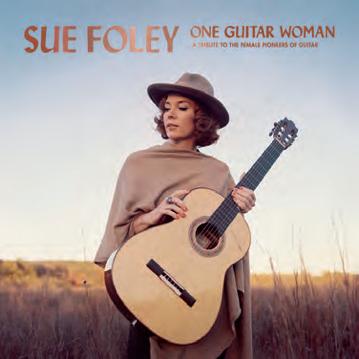
One Guitar Woman is devoted to the female pioneers of guitar – to celebrate women of independent spirit, vision, passion,
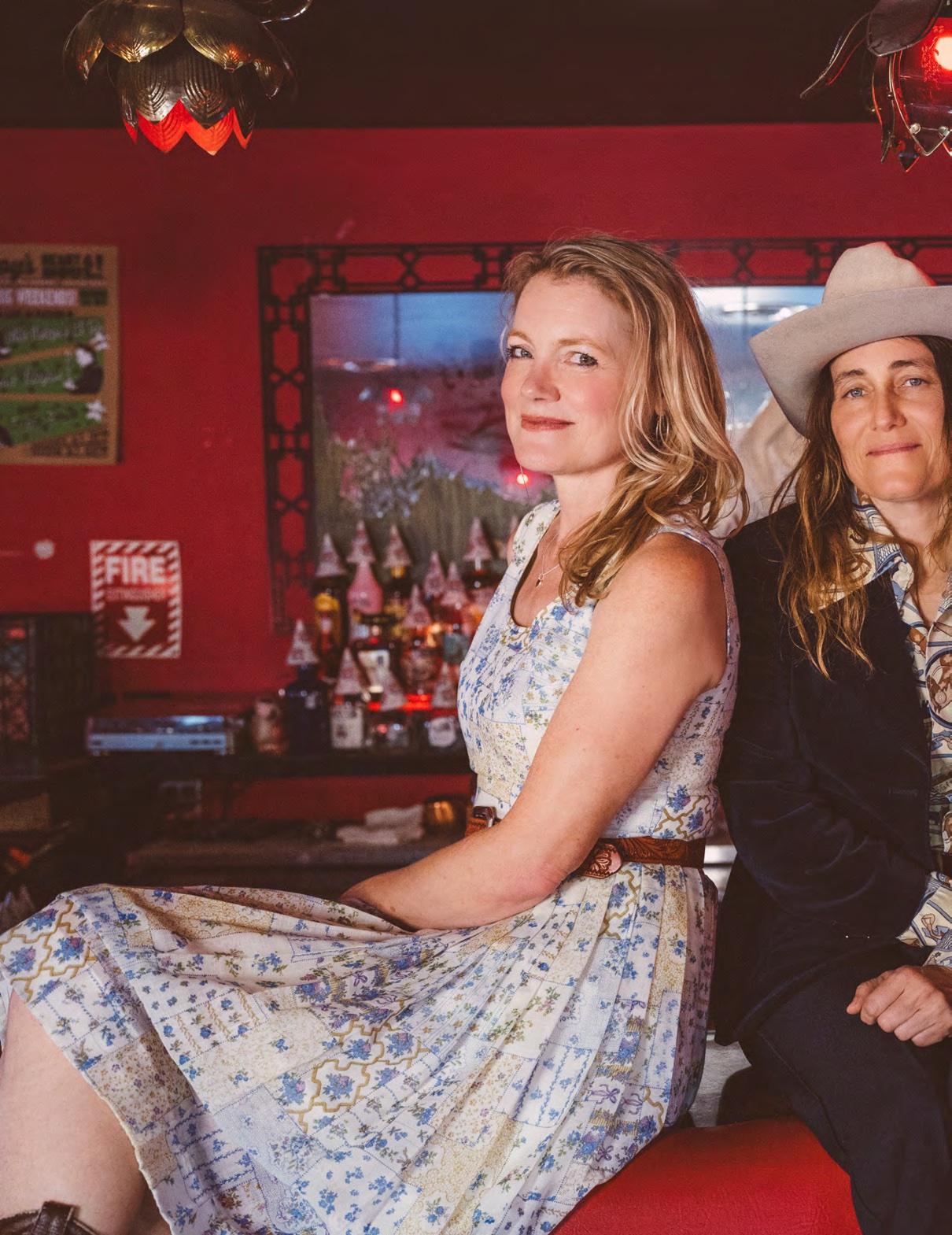
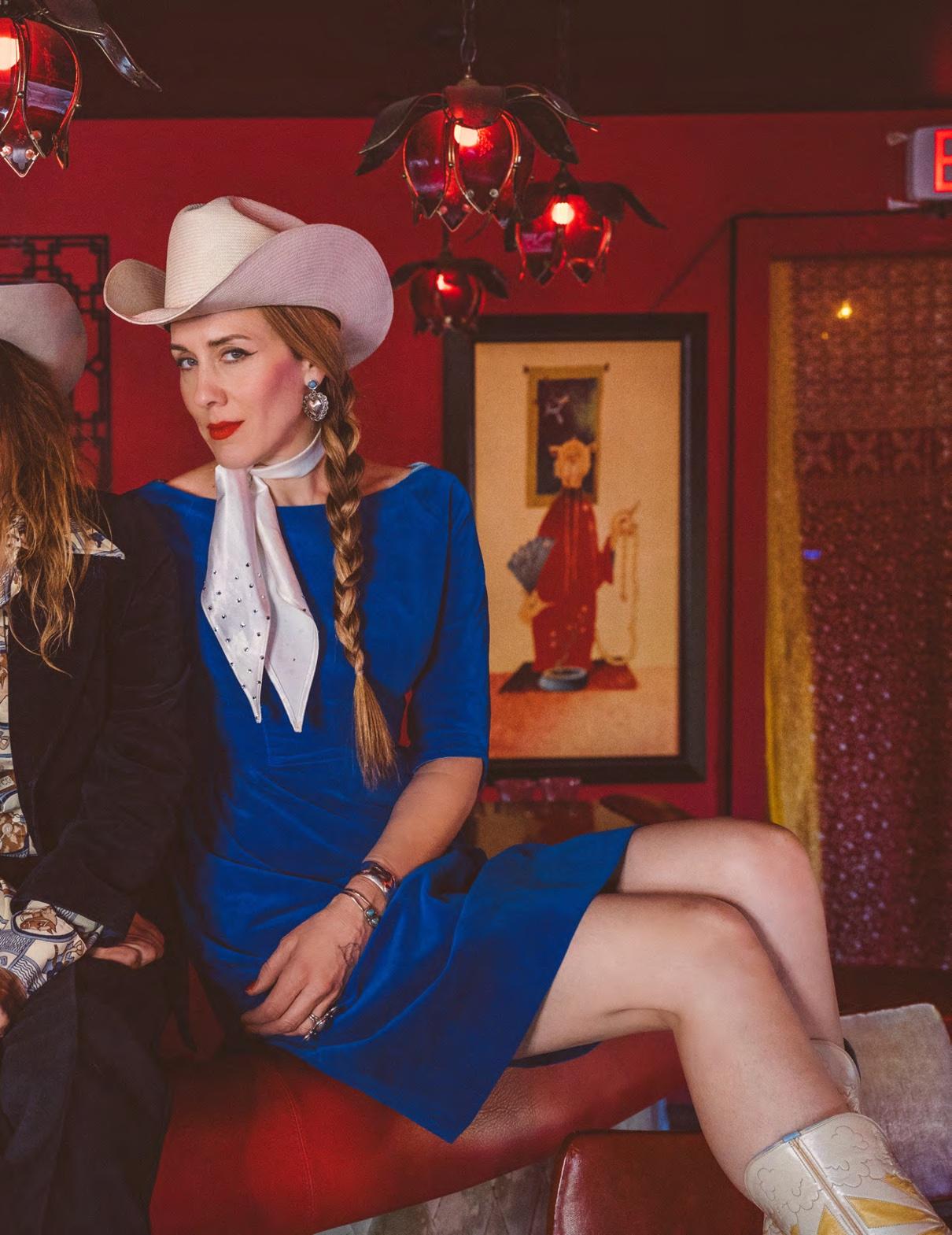
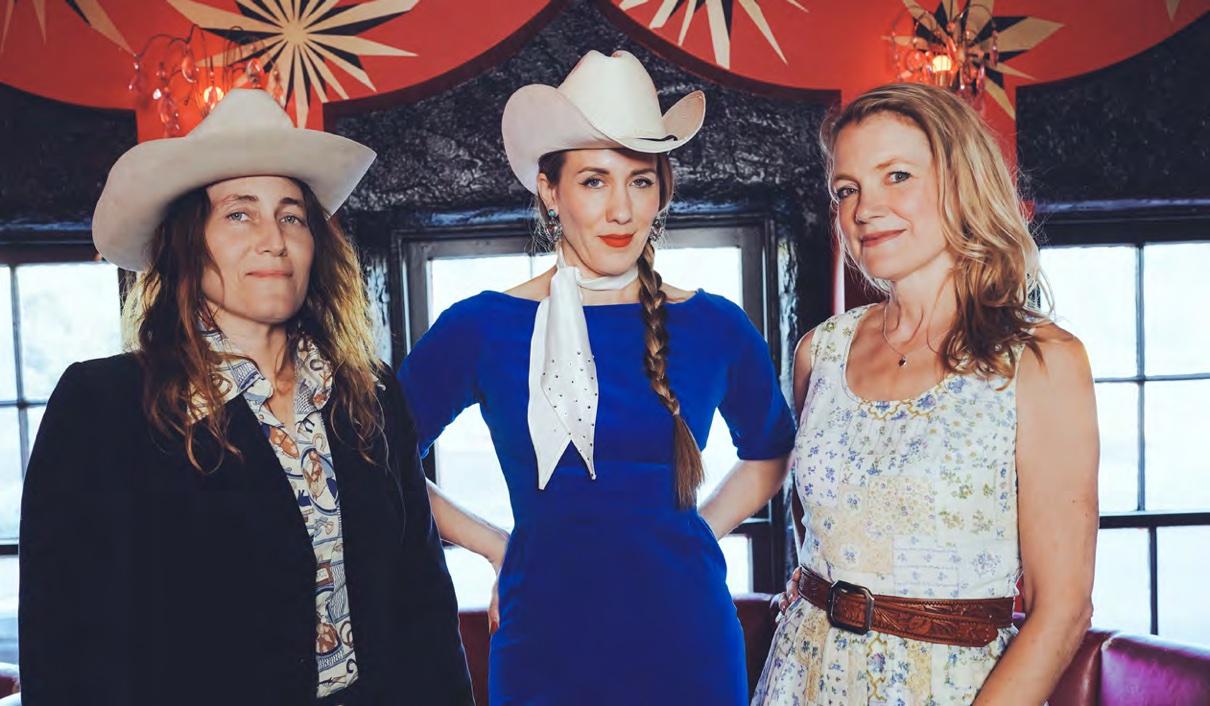
From left, Kelly Willis, Melissa Carper, and Brennen Leigh
POWER PLAYERS
Wonder Women of Country combine strengths to create magic
by Meredith Lawrence
The ne2ly m,nted supergroup Wonder Women of Country is just that — a wonder. Bringing three women together on stage and celebrating each in equal measure is a rare act anywhere, but especially in country music.
Uniting kindred spirits Brennen Leigh, Melissa Carper, and Kelly Willis, all of whom have established solo careers, the Wonder Women of Country eschew a songwriter-in-theround vibe. Instead, with Willis on rhythm guitar, Carper on upright bass, and Leigh on lead guitar and mandolin, they take turns performing songs written by each artist.
The moniker started as a joke from Leigh, a-er many failed attempts to name the group. Although they’re quick to note that they hold no superhero illusions, the bit has become quick shorthand for their mutual admiration.
“I think both of them are superheroes,” Leigh says on a group
Zoom call.
“I think you guys are both superheroes,” Carper responds.
“Okay, I think you guys are both superheroes, too,” Willis agrees.
The Wonder Women of Country formalized their union with the release of their eponymous record this March, a six-track EP of oldschool country music with simple, heartfelt lyrics sung in three-part harmony.
Kicking o the EP, Leigh entices a potential lover with her sultry, yodeling “Fly Ya to Hawaii.” Willis’ “Another Broken Heart” follows — a de,ant yet lovesick, tears-in-your beer barroom jam. In “Won’t Be Worried Long,” Carper slows down to wallow in the enduring comfort of familiar, favorite records. From there, the group taunts a lazy ex-lover with Willis’ innately two-steppable “A Thousand Ways” and laments planned obsolescence in Leigh’s jazzy love song “Hanging Onto You.” The album ,nishes with the group’s live show closer, a cover of John
Prine and Roger Cook’s “I Have Met My Love Today,” which Carper dubs “one of the most romantic love songs ever written.”
“ The songs complement each other, even though they’re coming from three di erent places. And also harmony-wise, there’s something alchemic that happens with these two,” Leigh says of her bandmates. “I love the way both of them write songs. When I bring one of my songs in, I love the way they make it sound. They know what to do on it; they’re subtle, they’re tasteful.”
Watching the Wonder Women perform is a chance to witness joy born of genuine friendship and communicated through song. In an industry that’s long sought to control women and the stories they tell, they’re making the music they love, unencumbered by expectations other than their own and sustained by both musical ,nesse and shared respect for each other’s artistry.
“I think that’s what [people mean] when they talk about
chemistry — when you can have three people come together and then something new happens that’s bigger than the sum of its parts,” says Chris Scruggs, who plays steel guitar on “Fly Ya to Hawaii” and has previously worked in the studio with Carper and Leigh.
Coming Up Country
Together, the Wonder Women of Country call back to an era when country music rooted its identity in the stories it told, not the stars who sang them.
“Country music has been, or at least was for a long time, for people of all kinds to get through hard times,” Leigh says. “We made a mistake, or something sort of bad happened, when it became about the singer.”
“Nobody was trying to write a song to get a hit,” Carper adds. “There’s just something about old music that it feels like it’s always going to be timeless.”
Leigh grew up listening to and
playing country music at home in North Dakota, where her parents taught her to entertain herself and them with music. The recorded music they listened to — Bob Wills and his Texas Playboys, The Everly Brothers, and Hank Williams — instilled in her a deep love and reverence for the stories told in country music and a conviction that the steel guitar is “God’s telephone.” Leigh began performing publicly at 14 and early on opened for Guy Clark and Ralph Stanley. To this day, she approaches playing country music as a superfan, drawing inspiration especially from late 1960s Nashville country and Western swing. On her latest album, last year’s Ain’t Through Honky Tonkin’ Yet, Leigh dropped her own version of a trucker song, “Carole With an E,” adding a memorable female character to a country subgenre saturated with male stories.
Like Leigh, Carper grew up listening to old country standards. She was particularly drawn to the
heartbreak songs because, growing up gay in a Christian household in Nebraska, she believed she’d never live the love songs she heard on the stereo. While she was a teenager and in college in Arkansas, Carper’s family band toured the Elks, American Legion, and Eagles club circuit. In her 20s, she dug into Jimmie Rodgers’ catalog and started writing her own music. She ,rst penned “Mama Tortilla,” a goofy spoof of a Sesame Street skit, then “Fish Slimin’ Blues,” inspired by her time working in a ,sh factory. These days, Carper plays a blend of timeless blues and swampy, jazztinged country music full of stories she likely wouldn’t have told in any era but this one —like the satirical “Pray the Gay Away” and the selfaware, sharply funny breakup song “Boxers on Backwards.” Willis came to country through rockabilly music. She joined her ,rst band, The Vibrato Brothers, at 16 a-er her drummer boyfriend encouraged her to sing. She played
her ,rst gigs in the thriving rockabilly scene in 1980s Washington, DC. When Willis graduated from high school, the band moved to Austin. Within two years, she had a solo record deal with MCA and promptly landed a single, “Little Honey,” in Thelma and Louise. In over her head in a cutthroat industry she now knows she wasn’t prepared for, Willis learned fast how to stand up for herself. But she didn’t start writing her own music until her label dropped her. In 1999, she decided to give music one more shot and released What I Deserve, on indie label Rykodisc, and launched her career anew, on her terms.
Before forming Wonder Women of Country, the three women had met in passing at festivals and gigs, and Carper and Leigh have performed together periodically since 2009. Carper recalls “begging” to play bass for Leigh; Leigh maintains she needed Carper, and the two co-write o-en. Their repertoire includes the heart-wrenchingly beautiful “Billy and Beau” about unrequited queer love, recorded on both Carper’s
Bu alo Gals band album, Where the Heart Wants to Go, and Leigh’s Prairie Love Letter. On the Wonder Women album, Carper and Leigh teamed up on “Fly Ya to Hawaii” and “Won’t Be Worried Long.”
Willis ,rst saw Carper and Leigh perform together at the Globe Theatre north of Austin in 2021, during the time she was splitting up from husband and longtime singing partner Bruce Robison. Looking down from a backstage balcony, she imagined how dreamy it would be to sing with those women, harmonizing together onstage a-er years of singing in loud bands with men.
“They’re both just such badass musicians,” Willis says. “I just loved their set so much. … You could hear the harmonies. It looked like such a good time.”
Screwing up her courage, Willis emailed Carper and Leigh later that year.
“It’s funny you were nervous to send it, because we were like, ‘Is that really her?’” Leigh recalls to Willis of receiving the email.
“Yeah, we both kinda couldn’t
believe that you wanted to play music with us,” Carper adds. What was supposed to be two weeks of gigs in early 2022 turned into recurring small tours in the years since.
Room for Everybody
Throughout the history of recorded music, especially country, women have been con,ned and de,ned by rigid rules and expectations designed by men. “You have to prove yourself because people are automatically going to think you’re less-than,” Leigh says. “It’s a ‘backwards in heels’ phenomenon: You got to do it better just to get the same amount of credit.”
In the genre’s history, women have been routinely dismissed and sexualized, banned and ostracized for singing about birth control (Loretta Lynn, “The Pill”), women’s liberation (Kitty Wells, “It Wasn’t God Who Made Honky Tonk Angels”), gender parity (Kacey Musgraves, “Follow Your Arrow”), and non-white perspectives (most
Black country artists). Willis recalls how, when she started out, her label and publicists pitted her against other women country artists. As recently as 2015, radio consultant Keith Hill urged country DJs not to play too many women or broadcast their songs back-to-back. SongData project principal investigator Jada Watson found that 75% of all charting country artists in 2022 were men, and songs by male artists made up 80% of the annual airplay on country radio that year.
But women continue to ,nd a way. Artists like Musgraves, Maren Morris, Mickey Guyton, and Margo Price have been steadily chipping away at the glass ceiling or disregarding it all together. And outside the mainstream, too, women country singers are helping open the genre for inclusion across gender, sexuality, and race, all while sidestepping long-written stereotypes.
“ That’s always been a pet peeve of mine, just as a woman, musician, and songwriter, that people would either intentionally or probably
unintentionally hear a song as gendered,” Leigh says. “You just have to make room for everybody. It’s not about any of those things, it’s about love and real stories.”
Even as the genre slowly shi- s, country supergroups of any kind remain scarce, according to Scruggs: “There’s something really interesting about a band with multiple people who front the group,” he says. “In country music, we usually end up with solo artists, or we end up with groups where there’s sort of a designated frontperson.”
Perhaps the best-known country supergroup is The Highwaymen, launched in 1985 and composed of Willie Nelson, Johnny Cash, Waylon Jennings, and Kris Kristo erson. In a subversive nod to their in/uence, when Brandi Carlile, Maren Morris, Natalie Hemby, and Amanda Shires formed their own group in 2019, they named it The Highwomen. Over the years, other groups like Trio (Linda Ronstadt, Dolly Parton, and Emmylou Harris’ short-lived, high-power group), Our Native
Daughters (Amythyst Kiah, Allison Russell, Leyla McCalla, and Rhiannon Giddens), and The Pistol Annies (Miranda Lambert, Ashley Monroe, and Angaleena Presley) recorded or played together.
But as an ensemble, Wonder Women remain exceptional both for their equal power and musical independence: “When they go on stage, the three of them are a selfcontained unit,” Scruggs says. “They’ve got all the ingredients: They’ve got rhythm guitar, they’ve got lead guitar, they’ve got upright bass. That’s the same instrumentation Elvis Presley started with.”
This spring and summer the Wonder Women of Country are hitting the road again and each tour brings new joy and camaraderie. By their own estimation, the Wonder Women are having so much fun together they might sometimes be mistaken for a comedy trio.
“Cowboy Jack Clement said, ‘If we’re not having fun, we’re not doing our job,’” Leigh says. “So I feel like we’re doing a really good job at doing our job.” 1
A LIVING TRIBUTE
Fellow artists celebrate Drivin N Cryin’s Kevn Kinney with 100-song tribute project
by Michael Elliott
Se4eral years ago, a large white conversion van traveled up from New Orleans to Hattiesburg on a dark Mississippi night. A police car started following, the cop ,guring he’d catch an easy DWI. The blue lights began /ashing just as a fully sober Kevn Kinney made his way onto the exit ramp. Casting his eyes upon the longhaired man behind the wheel, the o0cer asked to search the van. It was a mess — papers, fast-food wrappers, and musical instruments strewn everywhere — but no drugs to be found.
Eyeing the guitars, the cop asked, “Are you in a band?”
“Yeah,” Kinney answered sheepishly.
“What band you in?”
“Drivin N Cryin.”
The cop tilted his head before asking, “Like, ‘Straight to Hell?’”
“Yeah,” Kinney con,rmed.
The cop paused a beat. “What happened?”
“ The music business” is the simplest and most obvious answer. Over the last 40 years, Kinney became — and has remained — a cult hero and critical darling. He’s been in the business long enough to see his Atlanta-based band, Drivin N Cryin, in/uence multiple generations of musicians and his songs move through several genres, including college rock, indie rock, Southern rock, alternative, y’allternative, alt-country, and Americana. Yet through it all, he’s never strayed from the literate, proli,c, observant songwriting his many admirers know and love.
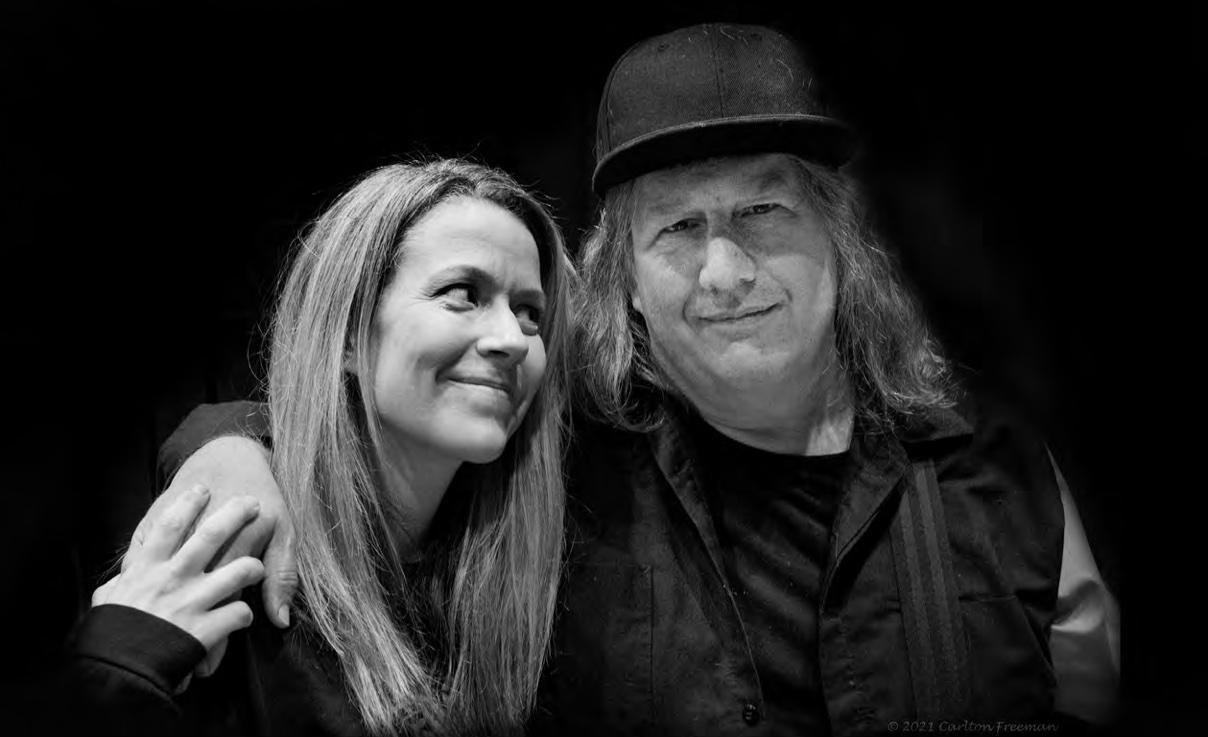
Now, thanks to the vision and tireless e orts of his wife, Anna Jensen, Kinney is getting the recognition he has long deserved with a 100-song tribute project released in batches starting last November. Fi-y songs are split between four physical albums, with 50 more tracks to be released as digital singles. Each physical collection is named a-er a line from
the Drivin N Cryin song “Let’s Go Dancing” and is being released seasonally. The ,rst, Said the Fire y to the Hurricane, coincided with 2023’s Record Store Day on Black Friday. The second, Split a Mountain in Two with a Flake of Snow, followed in the ,rst quarter of 2024. Spring’s Record Store Day saw the release of Said the Falling Rain to the Open Flame, and the series wraps this summer with Stopped a Freight Train with a Grain of Sand.
Going Big
The project began casually. Kinney turned 60 during the height of the pandemic, so in lieu of a traditional party, Jim Barber, Drivin N Cryin’s former manager, and Todd Ploharski, founder of Athens record store Low Yo Yo Stu , encouraged Jensen to compile video submissions of several of Kinney’s musical friends and colleagues performing his songs. “It was a big surprise for Kevn,” she explains. “It was like three
Anna Jensen and Kevn Kinney
CARLTON FREEMAN
“Quasi-political self-help love songs is kind of what we do. And they don’t have that section [in record stores].” Kevn Kinney
hours-plus of music. The material that came in was so amazing that we were like, ‘Okay, we have to do something o0cial with this.’”
It wasn’t the ,rst time they discussed a tribute album. “It was something I felt should have happened already,” Jensen admits. “There was talk of a tribute album happening sometime around the 25th anniversary [of the band] that just never came to be. Now I’m realizing probably why — because it just takes a lot of time and work.”
Barber and Ploharski encouraged Jensen to go ahead with the project. Artists who were friends of Kinney’s, or who had been inspired by Drivin N Cryin, lined up to help celebrate the songwriter and frontman’s 60th birthday in grand style. “I was pleasantly surprised with how quickly people said yes,” Jensen says. “Each time it was like an exciting, celebratory day, and I de,nitely started to gain con,dence from some of his friends that are already pretty well established. ... It gave me the
con,dence to at least try to do this. It’s a once-in-a-lifetime thing. I wanted a ‘go big or go home’ style of approach.”
Each of the four physical releases begins with a di erent version of “Let’s Go Dancing.” The ,rst volume, Said the Fire y to the Hurricane, begins with a cover by Drive-by Truckers’ Patterson Hood and R.E.M. alum Peter Buck.
“I’ve loved ‘Let’s Go Dancing’ since the ,rst time I ever heard it,” Hood says. “I ended up ,lming myself playing it on Peter Buck’s front porch with Peter and Scott [McCaughey] during lockdown for the occasion of Kevn’s birthday and that led directly to us recording it for this project.”
For Hood, honoring Kinney and Drivin N Cryin this way was obvious. “I ,rst heard of them around the time of their second album and saw them in Huntsville, Alabama, at the long gone Don’t Care Danceteria in early 1988. They were fantastic and I have been a fan ever since.”
“Let’s Go Dancing” remains a fan favorite due to its timeless, underdog
outlook. “It’s just this really strange enigma of a song,” Kinney says. “A lot of my songs I just see in dreams or channel them or they just kind of come to me very quickly. This was one of them. But it’s one of these songs. … Emmylou Harris, when I met her, she said, ‘I really love that song, “Let’s Go Dancing”!’ And I remember I met The Edge and he goes, ‘Oh yeah, Drivin N Cryin! I really love “Let’s Go Dancing”!’”
Hearing these di erent treatments of the song inspired Jensen to compile each volume with a di erent vibe. As a result, Said the Fire y to the Hurricane leans more indie/avant-garde, while Split a Mountain in Two with a Flake of Snow focuses more on country and soul. Said the Falling Rain to the Open Flame rocks the hardest, and Stopped a Freight Train with a Grain of Sand, according to Jensen, ,nishes o the project with a “so-er, but nuanced” sound.
The songs chosen represent all stages of Drivin N Cryin’s canon and
Kinney’s solo career. Some of the artists stuck closely to the original arrangements, while others took greater liberties. The four volumes feature big, nationally known names sprinkled with more regional artists, such as Anna Kramer & Easy Now, Clay Harper, Lynx Deluxe, Rare Birds, and Puddles the Clown. “One of the things that Anna’s done that I’m really happy with is she’s included a lot of our Atlanta music community,” Kinney gushes. “She’s really part of that fabric. She’s part of the Star Bar and The Earl, and she’s incorporated a lot of those people into this project, which I’m really happy about. People who are going to be famous, or maybe never will be.”
Legendary ,gures such as Wreckless Eric appear, as does Athens’ Pylon Reenactment Society (formed by former Pylon Vanessa Briscoe Hay). The project also includes such famous musicians as
Jamey Johnson, Shovels & Rope, Darius Rucker, and Jason Isbell and The 400 Unit, who recorded Drivin N Cryin’s “Honeysuckle Blue” on their Georgia Blue covers album in 2021. For this project, they contributed a scorching “Look What You’ve Done to Your Brother.”
Rucker is no stranger to Drivin N Cryin. In 2017, he recorded a version of “Straight to Hell” for his album When Was the Last Time, with cameos by country superstars Luke Bryan, Jason Aldean, and Lady A’s Charles Kelley. For Split a Mountain in Two with a Flake of Snow, however, Rucker chose “Lost and Found” from Kinney’s ,rst solo album, 1990’s MacDougal Blues (Elizabeth Cook and Butch Walker handle “Straight to Hell” on Split a Mountain in Two with a Flake of Snow as a powerful duet that rivals the original.)
Another highlight is Alejandro
Escovedo’s version of “Another Scarlet Butter/y” from Drivin N Cryin’s 1986 debut, Scarred But Smarter. “Alejandro’s de,nitely has a vibe,” says Jensen with a laugh. “We were saying it could be like the entry song for a show like The Sopranos or something.”
Escovedo cut the track in Italy while he was working on his latest album, Echo Dancing, which re-imagines songs from across his catalog. The record’s co-producers, Don Antonio and Nicola Peruch, helped him ,gure out how to rework the song. “[Kinney has] written so many great songs, but that one really struck me,” says Escovedo. “The lyrics were what connected me to the song. The words are amazing, I just felt this doesn’t need a lot of heavy arrangement in any way. It should be stark. And it should just really showcase the lyrics. And I think we did a good job on it.”
Escovedo listened to several of Kinney’s songs before settling on his pick, but Aaron Lee Tasjan knew right away which one he wanted to tackle. For his contribution, Tasjan rearranged “Broken Hearts and Auto Parts,” one of Kinney’s most-loved songs from his 2002 solo album of the same name. “It’s a beautiful, beautiful record,” Tasjan says. For his version, he stripped away the guitars and drums and delivered it as a straight-up piano ballad.
“He really seemed to love it,” Tasjan smiles. “And nothing in the world makes me happier than making Kevn Kinney happy.”
‘They Just Didn’t Pick a Lane’
Originally from Milwaukee, Kinney moved to Atlanta in 1982 for a day job. “I was not a popular musician in Milwaukee,” he confesses. “I had a punk rock band that every other
band member and their girlfriends came and saw on Tuesday nights. We had no draw.” He otherwise split his time working as a pharmacy technician and at Radio Doctors, “the absolute best record store ever in the world,” he says.
Upon the urging of his older brother (and fellow musician), Mikel, Kinney moved south and found work at a sewage plant making a few bucks more per hour than at the pharmacy back in Milwaukee. Still, for the ,rst six months or so in Atlanta, he lived out of his car.
Kinney eventually teamed up with Tim Nielsen and Paul Lenz, both members of the Atlanta-based band The Nightporters. “They were the opening act for R.E.M. back in ’84, ’85,” says Kinney. “They saw me play and Tim told me that I was going to be in his band.” Instead, Nielsen and Lenz quit their band and formed the ,rst version of Drivin N Cryin with
Kinney. “We sold out, like, our second show, so it was history from then on, you know?”
Buzz about the band’s live sets as well as their ,rst album, Scarred But Smarter, led them to sign with Island Records, which released Whisper Tames the Lion in 1988 and Mystery Road the following year. (Lenz lethe group before Lion and drummer Je Sullivan replaced him.) Each record garnered more success than the last, and the band got even more exposure by opening for R.E.M. on their Green tour.
The title track of Fly Me Courageous in 1991 became a rock radio staple, resulting in a certi,edgold record. Released in 1993, Smoke was a loud musical assault, yet sounded more joyous and celebratory than the grunge coming out of Seattle. Despite some airplay on rock radio and MTV, the record failed to reach the success of its
‘Let’s Go Dancing’ album art. Original pieces by Anna Jensen
predecessor. The band then moved to Ge en Records and dialed back the Drivin for a little more Cryin — or at least a return to a balance of the two.
The band’s name has always perfectly encapsulated the juxtaposition of its sound — part hard-driving rock, part introspective folk, and part sorrowful country. But that has also been a bit of a curse. “I know that one of the issues with Drivin N Cryin, as far as lacking marketability, was that they just didn’t pick a lane” Jensen says. “They’re kind of the forebears of Americana, but they never get any credit for that, not to be negative.”
For whatever reasons, Drivin N Cryin never reached the heights many of their contemporaries did. “Quasi-political self-help love songs is kind of what we do,” Kinney says with a laugh. “And they don’t have that section [in record stores].”
Hood can sympathize.
“[Kinney’s] pretty underrated as a songwriter,” Hood insists. “And Drivin N Cryin is o-en overlooked also. Their most famous songs are great but only scratch the surface on how ,ne his songwriting, and singing and guitar playing, is.”
Close to 40 years on, Drivin N Cryin is still actively touring and putting out albums (their latest being 2019’s Live the Love Beautiful). They’ve also acted unwittingly as a sort of farm team for guitarists. In addition to Buren Fowler, who handled lead guitar during the band’s commercial peak, other guitar-slingers that have ,lled the role include Sadler Vaden (who went on to join The 400 Unit) and Tasjan (who now has a critically acclaimed solo career and experimental new record, Stellar Evolution, which was released in April). Laur Joamets, formerly with Sturgill Simpson, is
Drivin N Cryin’s current guitarist. Tasjan ,rst saw Drivin N Cryin on MTV when he was 11 years old. “I think it was maybe Courtney Love hosting 120 Minutes,” he recalls. “She played the video for ‘Honeysuckle Blue’ and I just heard that ri . I was taken with that kind of music at the time; that style of jammy Southern rock — a guitar ri with a real attitude to it, but it had some sort of melody that went over top of it that was really memorable and hooky. I became one of the biggest 11-yearold Drivin N Cryin fans.”
Mostly, though, Drivin N Cryin’s music made him feel understood. “I just loved any anything that made me feel like I could see myself in the song somehow,” Tasjan says. “I think that’s what’s so great about Kevn’s music. It sounds simple enough that you really have no problem ,nding your own story within what he’s written.”
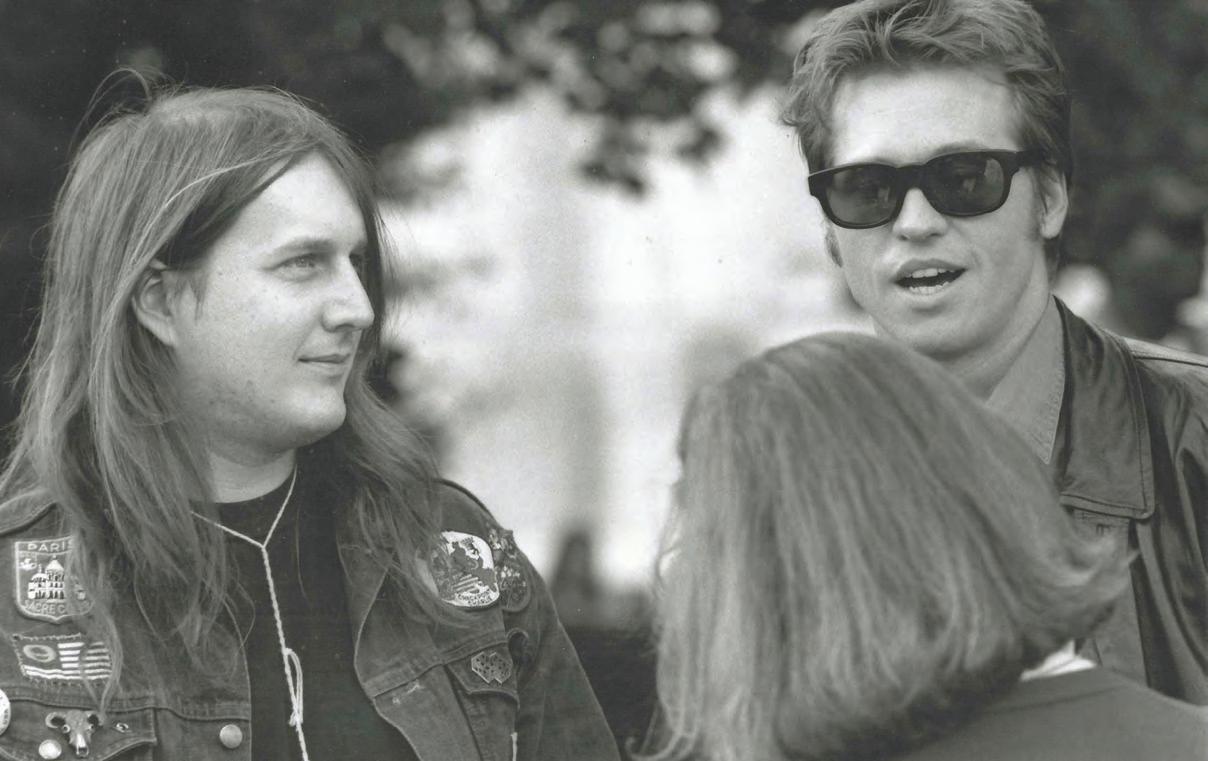
Kevn Kinney and Val Kilmer in 1992
Mutually Beneficial
One of the most impressive elements of this tribute is how each contributor connected with the music itself. But as Jensen maintains, the project needed to be “mutually bene,cial to everyone.”
Additionally, three elements di erentiate this project from regular Drivin N Cryin releases or Kinney solo albums. First, Jensen created all of the original cover artwork, with each piece re/ecting the title of the release. Second, all the artists that participated in the project were told they could keep their masters. And third, at Kinney’s insistence, all proceeds from physical sales are going to charity.
Many of the contributing artists wanted Kinney to earn a decent pro,t from the project, but Jensen stresses, “We feel like just shining a light on his
material is enough of a bene,t for us. We want the artists to bene,t from this, as well as the charities. So, if Alejandro’s song would get picked up by something like The Sopranos, it would be his master to sell!”
All proceeds from physical sales of the albums will be divided evenly among ,ve charities — the SIMS Foundation, which Escovedo co-founded to provide mental health resources and substance-use services for musicians and music industry professionals; How Big Is Your Dream, Ike Stubble,eld’s education-based youth empowerment organization; Out of the Woods, which o ers assistance for children with brain and spinal injuries; the FarmLink Project, which enables farmers and food banks to collaborate in ,ghting food waste and insecurity; and the Jesse Malin recovery fund through Sweet Relief.
Kinney still is in awe of the outpouring of love that resulted in this project, as well as Jensen’s determination to make it happen. “If she would have asked me before she called anybody, I would have said, ‘No. Don’t do that,’” he recalls with a laugh. “It doesn’t make any sense! I mean, it’s hard to sell records. It’s hard to navigate the waters of musicians and their management and record label egos; it’s almost an impossible task. I wouldn’t dare do it! And then she said, ‘Well, what if I did four [albums]?’ I said, ‘Are you out of your freakin’ mind?’”
For Jensen, it’s just a logical and practical position to take. “I was thinking just that how these tribute records come out pretty regularly from people who have passed,” she says. “And it’s such a shame that it can’t be done for someone that we love and admire while they’re still here to witness that validation.” 1
LLE LOVETT AN : LAHGE &: aASON :SBELL L:TTLE FEAT THE MAVER:CXS AND MORE?
MISSIONS IMPOSSIBLE
The people and moments that have propelled Béla Fleck and his banjo
by Stacy Chandler
Alot of 0eo0le can trace their ,rst exposure to the banjo to the opening theme of 1960s hit TV show The Beverly Hillbillies, and there’s no shame in that. “The Ballad of Jed Clampett,” laying out the ,ctional Clampett family’s oil-fueled rags-toriches story, was sung over music provided by Lester Flatt and Earl Scruggs, with Scruggs delivering the banjo’s distinctive sound to living rooms across the land.
That sound got a lot of people’s attention, among them a young Béla Fleck.
“I think I was either 4 or 5 years old, and we were visiting my grandparents in Flushing, Queens, and to get rid of us, they stuck us in the other room and let us watch television during the day. And on comes The Beverly Hillbillies,” Fleck,
now 65, recalls.
As soon as the theme song kicked o , Fleck was mesmerized.
“Hey, did you hear that? Wasn’t that incredible?” he asked his big brother.
“I don’t know, what are you talking about?” his brother replied.
At the end of the show, the theme played again.
“ There it is! There it is again! There’s that sound,” Fleck gushed. “Isn’t it amazing?”
“I don’t know,” his brother responded. “I guess it’s okay.”
And that, Fleck quips, “was my ,rst lesson in how banjo can reach out and grab one person, and the next person it leaves them completely unmoved.”
A-er hearing Scruggs’ three,nger picking on The Beverly Hillbillies, Fleck couldn’t get the banjo o his mind. But growing up in
New York City, he didn’t encounter the instrument very o-en. He stayed quiet for years about his simmering passion because he didn’t consider the banjo something he’d ever be able to conquer.
“I didn’t think anyone could actually play it,” Fleck says, “because it was so impossible what I was hearing.”
But the banjo — and the impossible — became what Fleck does best. He helped ,nd new frontiers in bluegrass in the 1980s with New Grass Revival, then formed The Flecktones to bend bluegrass into jazz. He delved into African music, a journey back to the banjo’s roots that was captured on a series of albums and in the 2008 documentary Throw Down Your Heart. And he launched recurring collaborations with a slew of standouts on other instruments,
including bassist Edgar Meyer, tabla player Zakir Hussain, and jazz pianist Chick Corea.
Along the way, Fleck has won 18 Grammy awards spread across an astonishing array of categories, including bluegrass, world music, Latin, folk, jazz, and classical. That’s one way to understand the depth and breadth of his music. Another is to look back with him at a few key moments and people that have shaped his playing and ,gure prominently in his most recent work.
Flipping the Switch
Although Fleck sidelined his interest in banjo as a child, he did get a guitar and took lessons. “I was one of those half-ass guitar students who likes music but doesn’t want to do the work,” he admits.
But when he was 15, his
grandfather surprised him with a banjo he’d found at a /ea market. “I /ipped out,” Fleck recalls. “I was like, “Oh my God, there’s one right there!” He brought the instrument back home with him on the train, and a fellow passenger tuned it for him and gave him a quick lesson. “And from then on, I was just hooked,” Fleck says. “It was like /ipping a switch.”
There was nothing half-ass about his approach to this instrument — “I became a very di erent person, a very obsessive person,” he says. “I couldn’t stop playing it. I was just trans,xed by it.”
He’s followed that obsession ever since, letting the music guide him, paying no mind to genres or expectations. There are no straight lines in his musical story. It has moved more like ripples expanding outward from multiple points of
inspiration.
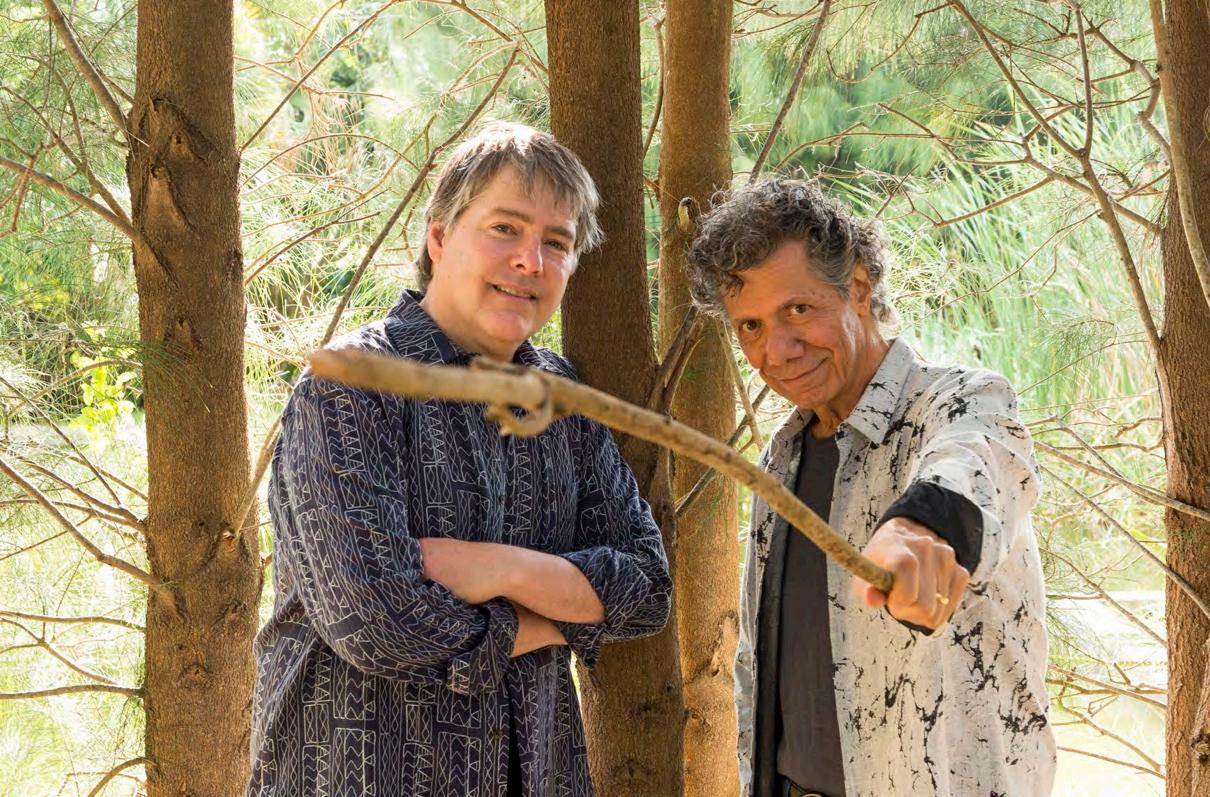
His latest project, Remembrance, is an homage to his long musical and personal friendship with Chick Corea, who died in 2021. Released in May, Remembrance compiles recordings from a tour they did together in 2019, as well as songs that took shape via audio ,les they traded during the pandemic lockdown.
Fleck ,rst encountered Corea’s music in high school, about a year a-er he’d started playing banjo. The teacher in his jazz appreciation class put on a recording of “Spain” and warned the class “you’ll hear something a little di erent.” What stood out to Fleck was that the song “moved in a di erent way” from other jazz pieces he’d heard, with shorter rhythmic lines that seemed like they might just be possible on a banjo.
“It sort of opened a door in my
mind to how banjo could ,t into jazz,” Fleck says. “ … It grooved in a di erent way than I expected, and I could relate it to bluegrass almost immediately. There was something about it that spoke to me the same way Earl Scruggs spoke to me, when I listened to Chick Corea play. I had to stop in my tracks and listen to what he was doing.”
Fleck started attending Corea’s concerts in high school and even wrote him a fan letter. Corea’s music had a profound impact on Fleck’s playing, pushing rhythm to the forefront of his approach. “I think as a banjo player, I’m a percussionist,” Fleck says.
A-er years of run-ins at parties and festivals, and a few guest contributions on each other’s albums, Fleck and Corea decided to record an album of their own. The
Enchantment, released in 2007, won a Latin Grammy and was the basis of a world tour that would add an enduring friendship to their musical collaboration. “He was always my hero, but we got to be human beings as well,” Fleck says, “and it was a wonderful, unexpected turn of events.”
Waxing Rhapsodic
The release of Remembrance came just a couple months a-er another project close to Fleck’s heart, a meticulous arrangement of George Gershwin’s Rhapsody in Blue for banjo.
Released 100 years to the day of Rhapsody’s premiere in New York City, Fleck’s Rhapsody in Blue album o ers three variations: The original score, here played by the Virginia
Symphony Orchestra and with banjo subbed in for piano; “ ‘Rhapsody in Blue(grass)’,” featuring fellow bluegrass virtuosos Michael Cleveland on ,ddle, Sierra Hull on mandolin, Justin Moses on dobro, Mark Schatz on bass, and Bryan Sutton on guitar; and “Rhapsody in Blue(s)” with mandolin player Sam Bush, dobro player Jerry Douglas, and bassist (and Flecktone) Victor Wooten.
Gershwin’s Rhapsody made its way into Fleck’s heart and mind not long a-er he ,rst heard Earl Scruggs’ banjo on TV, and it had a similar impact. He saw the movie Rhapsody in Blue, a 1945 ,lm about Gershwin’s life and music, with his uncle in a theater that showed old movies. His uncle was a giant Gershwin fan, and Fleck, in that theater, immediately understood why. “I got indoctrinated.
Béla Fleck with Chick Corea
“[Chick Corea] was always my hero, but we got to be human beings as well.”
Béla Fleck
I drank the Kool-Aid,” he recalls with a laugh. “I loved that movie, and I loved that piece from then on.”
But it was just a piece to savor listening to, not to play, he ,gured. A-er all, how in the world would someone go about translating a piece for full orchestra, led by a piano’s 88 keys, to a banjo’s ,ve strings, and that pianist’s 10 ,ngers to a banjo player’s use of three?
It turns out, all Fleck needed to ,gure out that impossible question was time. And he ,nally had some during the pandemic.
“There are other things I’ve come back to over the years that I didn’t think were possible that eventually did become possible at a later point in my development. So I came back to it during the pandemic, just sort of sni0ng it out,” he says. “… I started working out a measure at time,
seeing, ‘Is there any way I could make this work on the banjo?’ Honestly, I had my doubts. It was more just something to do, just a bucket-list question mark that I wanted to get o the list or get to it. But as I went along, I found that there was no measure I couldn’t ,nd a solution to, and I’d go through lots and lots of dra-s, but eventually I’d ,nd something.”
Measure by measure, phrase by phrase, he kept at it, and booked a few dates to perform his version live, including a debut with the Nashville Symphony last September. While the piece was still in his mind and in his hands, he decided to record it, but he wanted to time the release to coincide with Rhapsody’s 100th anniversary the following February — a short turnaround for any recording, let alone one so ambitious. And he needed
something to supplement the 18-minute classical adaptation. Thus the “Blue(s)” and “Blue(grass)” takes. “ ‘Rhapsody in Blue(grass)’ came to mind as kind of a really bad idea that wouldn’t go away,” he quips.
But the more he worked on it, the more it made sense. He ,rst brought in Sutton, who added a Tony Riceinspired rhythm with his guitar that unlocked the rest of the arrangement. Amid a tour for My Bluegrass Heart, his 2021 album returning to his bluegrass roots, Hull, Moses, Schatz, and Cleveland worked out their parts quickly, and the piece fell into “a unique place,” Fleck says. Rather than copying the orchestral version, it added something new to the conversation: “All of a sudden it became very clear that a great version was possible with that band.”
Once again, an impossible task
— translating Rhapsody for banjo, let alone three di erent ways — became possible. And with that particular bucket-list question mark turned into a check mark, Fleck is freed to reach for the next impossible goal that catches his ear.
From the Heart
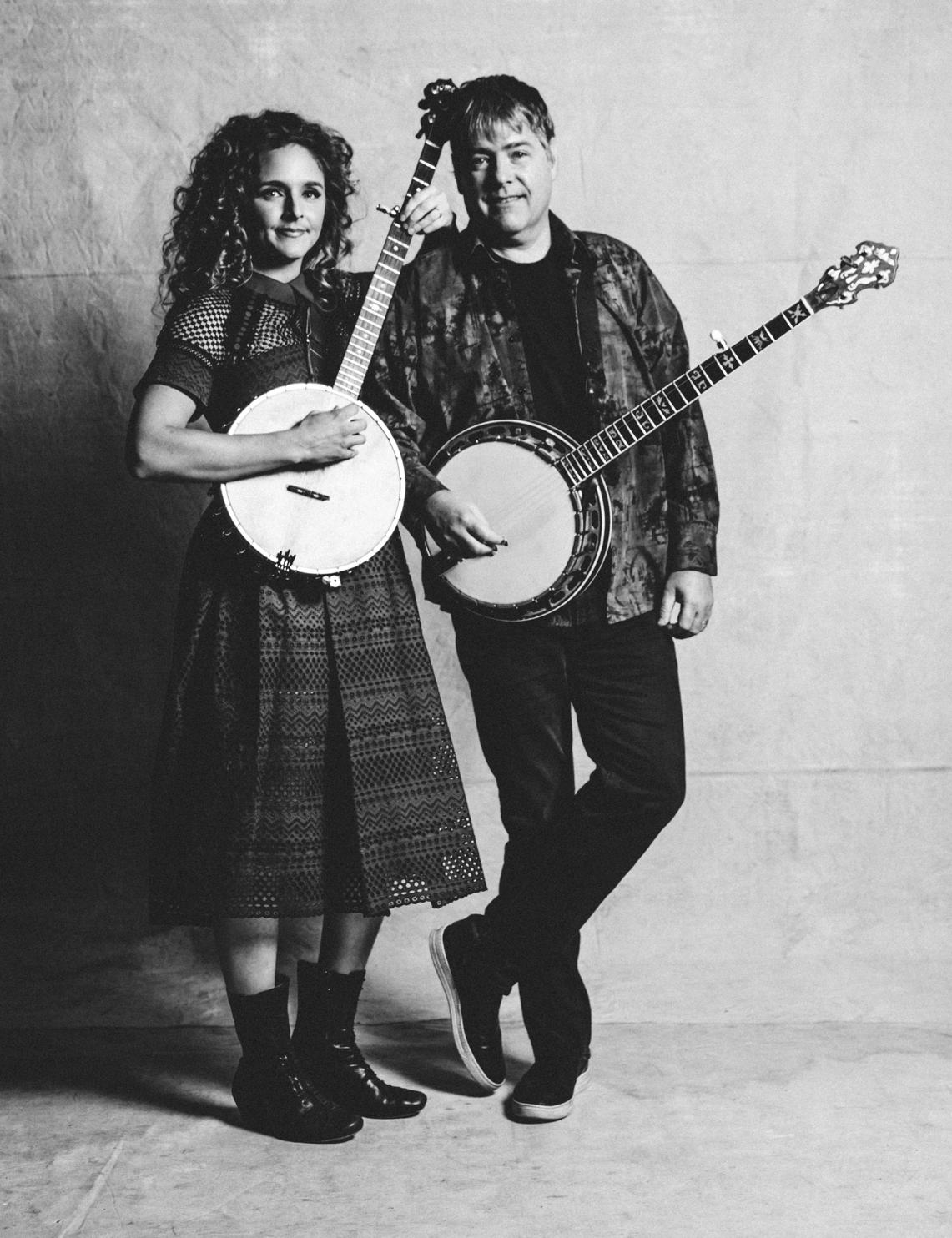
While Fleck’s collaborations have bridged genres and instruments, his most meaningful pairing is with a fellow banjo player: his wife, Abigail Washburn.
A-er playing together in Sparrow Quartet, which blended old-time and Chinese musical traditions in the mid-aughts, and marrying in 2009, Fleck and Washburn ,nally
performed and recorded as a duo a-er their ,rst of two sons was born a little more than a decade ago. It was a way for them to tour and record together, to sync their schedules and work around their newly expanded family life. But it worked musically, too. Fleck’s virtuosic playing and Washburn’s soulful clawhammer style and vocals blended into a fresh take on traditional music, one that was rewarded with a Best Folk Album Grammy for their 2014 self-titled debut. They released a follow-up album, Echo in the Valley, in 2017.
Playing as a duo with Washburn, Fleck says, “was a whole new in/uence, and the in/uence was about heart. It’s like, ‘What are you trying to say? How can you use your
abilities to serve these songs?’”
He still tours frequently with Washburn, with audiences o-en in stitches over the folksy, familial humor they dish up between songs. But even when he’s touring with other con,gurations, her emphasis on heart stays with him.
“I ,nd that musicality is more important to me than technical virtuosity at this point, even though it’s very important for me to play as well as I can, and I don’t want to lose my edge, and I want to be able to do the things I’ve been able to do, and I want to be better at new things,” Fleck explains. “That’s all got to be in the service of a piece of music or a feeling or a soul that matters, or it’s just throwing your ,ngers around.” 1
Béla Fleck and Abigail Washburn
CHASING PERFECTION BY WAY OF THE BANJO
by Béla Fleck Summer 2024 guest editor
We banjo 0layers can, on rare occasions, be thought of as quite picky people. But we really just want to get things right.
Sometimes we are even accused of being obsessive. Personally, I think that is quite unfair.
Banjo playing does take a certain type of personality. And to practice this fine art properly, I would maintain that there are some extremely important details that must be dealt with and understood.
Then everything is perfect.
For a while.
First there’s the actual picking part. We certainly must have the best picks! National made some
great ones nearly a hundred years back. But they kept changing the formula. There were the Oval 8’s, the Straight 7’s, the Patent Pending, and so many others. I like the 1960s USA ones, but no one else does much, which is why my collector friend Gabe Hirshfeld sent me a bushel of ’em — ’cause no one else wants ’em (and he’s a very nice guy). I use a pair every year or two, so at my age I’ll need at least 12 more sets to make it to the finish line. Depending on my genes and behavior, of course.
A number of companies have striven to make better picks then Nationals, but most of us lifers go, Nah. We like the old ones. Even at well over 100 dollars a set? Oh, yes!
Earl Scruggs (our Lord and
Creator) wore ’em a certain way and we all nodded sagely, Yes, that’s how we must do it! Only to find out that the only reason his picks hit the strings a certain way was because he wore his banjo strap over only one shoulder. And that was only so he didn’t have to take off his hat! The angle of the banjo over one shoulder made him need to push the banjo to the left with his arm, which turned his right hand to a particular angle.
I’ve observed that J.D. Crowe (our No. 1 Apostle)’s fingers are shaped very differently from Earl’s, yet he gets some of the best tone in banjo history. Crowe’s thumb sticks out way over the fifth string, while his first and second fingers loiter in the bridge area.
Then there’s that pesky Alan Munde, who holds his hand and turns his picks so that the thumb and fingers all hit the strings at the same distance from the bridge. Seems wise — but wait — Earl said to come up directly under the string. Alan is sure not doing that, but crap, he’s getting a great sound.
A nd then there’s John Hartford, who would put his fingers in the box of picks at the music store, pull ’em out, and refuse to bend or shape them at all, ’cause He wasn’t playing that game! Still, he pulled a fantastic tone, too, so who’s a poor picker to emulate?
This isn’t obsession, by the way. Just thoughtful analysis.
Moving on to actual banjos. Some of us are pre-war instrument guys. Those 1930s and early 1940s banjos are old and so expensive, so they certainly must be better!
My old friend and teacher Marc Horowitz swears that we are in the golden age of banjo building right now, and that new banjos are better than they’ve ever been. Well, I have to admit that when you get a good new one, it’s pretty darn good. And it don’t smell all funny. (Actually, I love the smell of a pre-war banjo. My very favorite pre-war banjo sat
in a puddle of water in an old lady’s basement for years before it got fished out and sold to me and ended up being my career banjo. You can still see the water lines inside the resonator.)
But new ones are generally disappointing for a pre-war guy like me. In fact, I have hated new ones for so long that when a good one turned up, I just couldn’t deal with it. Short story: I was super antiStelling (a distinctive “new” banjo company) for many years. I thought they were brash and not at all what good banjos were all about. I was on tour somewhere in Europe around 1980 with a day off when Sonny Osborne (our No. 2 banjo Apostle) came on the television. I was in the other room and thought, Oh yes, there’s Sonny sounding incredible on his pre-war Grenada — one of the best pre-wars ever created. But when I came around to look at the screen, he wasn’t playing his prewar; he was unashamedly playing a Stelling! I was pulverized with shock, as you can certainly imagine! He hadn’t wanted to take his Grenada to Europe, so there he was, sounding just like himself, great as usual. It was certainly confusing.
There’s a famous tale of Earl lore in which a banjo neophyte has an audience with his eminence. He shows Earl his beater (cheap) banjo, and Earl tries it. In Earl’s hands it sounds just like Earl’s Grenada (of course, the banjo of bluegrass music). We don’t want to talk about what Earl’s banjo sounded like in the neophyte’s hands, because that wouldn’t be polite.
Wouldn’t it be depressing if no matter what amazing banjo we acquired, we still mostly sounded like ourselves?
Here’s an abstract question: I wonder how much time I have spent studying these extremely important facets of banjo mastery. Let’s see: Suppose I spent five hours a week on these pursuits (an underestimate). Fifty-two weeks in a year gives us 260 hours per year. Multiply that by 40 years and it comes to 10,400 hours.
Have you ever read the book Outliers by Malcolm Gladwell, in which he postulates that it takes 10,000 hours to achieve mastery? It kind of makes me wonder what I would play like now if had put all that time into practicing.
You know, as I write this, it’s becoming crystal clear to me that
this subject is so much bigger than this puny little article. In fact, I’m now imagining a monthly column spanning many years. No, how about a book! A bestseller on The New York Times list seems inevitable to me at this point. And with all the money I make, I can buy more banjos! What?
You want it be shorter? How much shorter?
This is pretty short. How ’bout you make the print smaller? There’s a bunch of great fonts, I am told. We could sift through them all together!
Béla Fleck asked a few banjoplaying friends to obsess over their tone and other important matters with him. Here are their responses:
GREG LISZT
Are you satisfied with the way your banjo is sounding? Not exactly! Yet I still want to play it constantly.
Does someone else’s banjo sound better than yours? Quite possibly. Depends who is playing it!
Straight down the middle or from the side?
The important thing is to go straight down the middle from your own point of view.
Do you like gladiator movies? I might not say I “like” gladiator movies, but I’ve enjoyed every one
I’ve ever seen. Is enjoying something the same as liking it? Can you repeat the question?
Stainless or nickel?
Nickel for the fingerpicks. Stainless for the frets, cutlery, kitchen sink, etc.
Made in the USA, Patent Pending, or other?
I’m afraid you’ve caught me in a Hoffmeyer phase.
Do you feel like someone in your home is hurting your banjo?
Yes! Just having another person in your home will hurt the banjo’s feelings unless it is included in the proceedings. My grandmother was a psychologist and taught me all about these kinds of things.
NOAM PIKELNY
Are you satis ed with the way your banjo is sounding?
I’m satisfied, but not happy.
Does someone else’s banjo sound better than yours?
I’m not sure I’ve tried them all at this point.
Straight down the middle or from the side?
Side. And thank God I learned Alan Munde did the same or I would have had to quit entirely.
Do you like gladiator movies?
J.D. Crowe > Russell Crowe
Stainless or nickel?
18% nickel silver, no less, no more.
Made in the USA, Patent Pending, or other?
I like my 8’s like I like my eggs — oval.
Do you feel like someone in your home is hurting your banjo?
Is an attic technically part of a home?
TONY
TRISCHKA
Are you satis ed with the way your banjo is sounding?
Banjos, in general, are very temperamental. Like the weather, there are good days and off days. Today is a good day.
Does someone else’s banjo sound better than yours?
Going back in time a ways, I’d say
J.D. Crowe’s original [Gibson] RB-3. I had a chance to play it one time and I started out by hitting just the fourth string and suddenly felt like I was looking out over the Grand Canyon. I also played Snuffy Jenkins’ pre-war Mastertone. It had a pickguard on it, which meant your anchor fingers weren’t touching the
head, which really helped to open up the sound. It was like the sun shining brightly over a barren landscape.
Straight down the middle or from the side?
Both. And from above as well.
Do you like gladiator movies? I only watch gladiator movies on airplanes.
Stainless or nickel?
Though not as durable, nickel please.
Made in the USA, Patent Pending, or other?
Other, namely Sammy Shelor.
Do you feel like someone in your home is hurting your banjo? I have it placed on a high pedestal with a barbed wire fence coiled around it, so no harm can come to it.
CHRIS
DAVID M c CLISTER
ALISON BROWN
Are you satis ed with the way your banjo is sounding?
Most days yes, but some days no. But on those days, I assume it’s me and not the banjo.
Does someone else’s banjo sound better than yours?
Straight down the middle or from the side? Off-center.
Do you like gladiator movies?
Huh? Original Star Trek only!
Stainless or Nickel?
Nickel is a girl’s best friend, right?
Made in the USA, Patent Pending, or other? Other, Showcase 1941.
Do you feel like someone in your home is hurting your banjo?
My home is filled with banjo love. And a surfeit of electric basses.
KRISTIN SCOTT BENSON
Are you satis ed with the way your banjo is sounding?
Before or after I read this question?
Does someone else’s banjo sound better than yours?
Only if I’m playing it.
Straight down the middle or from the side?
Either, but let’s talk about the banjo.
Do you like gladiator movies?
I can stand a couple hours of staring at Russell Crowe, so sure.
Stainless or Nickel?
Stainless. Nickel isn’t worth a dime.
Made in the USA, Patent Pending, or other?
Other, Yates Hoffmeyer.
Do you feel like someone in your home is hurting your banjo?
The Ring camera will tell.
‘HISTORY WITH A BACKBEAT’
Small but mighty, a Michigan library system steers a blues series for 36 years
by Caryn Rose
Ann Rabson and Josh White Jr. perform at the 2004 Monroe County Library Blues Series.
It’s a fr,g,d tuesday n,ght ,n February in a rural part of southeastern Michigan, the kind of intensely dark and windy night when most people would choose to stay home. But tonight, the parking lot adjacent to the Ida Township Municipal Office building is completely full. The Ida Branch Library is hosting an event as part of the Monroe County Library System (MCLS) Blues Series, an event that has taken place every February since 1988 to commemorate Black History Month.
Danny Kroha, a guitarist and songwriter mostly known for his Detroit-based garage rock bands
The Gories and The Demolition Doll Rods, provides this evening’s entertainment. His appearance follows two recent efforts: In 2015, he released a blues-folk record called Angels Watching Over Me, and in 2022, he followed it up with Detroit Blues
The community room is standing room only for Kroha’s gig, with an occupancy limit of just 80 people. This is a typical turnout for
almost every event in the beloved blues series, which is held at multiple library branches in Monroe County’s library system throughout the month. It’s the most successful blues series that few people outside of southeastern Michigan have ever heard of.
Free and Open to the Public
Monroe County sits at the wrist of Michigan’s mitten, just over the state line from Toledo, Ohio. It’s the home of Monroe Shocks and Struts
Bill “Sauce Boss” Wharton performs at the 2009 MCLS Blues Series.
and La-Z-Boy, and currently bustling with dozens of cannabis dispensaries catering to folks coming across the state line. It is not a cultural destination; there’s not even a movie theater at the moment.
But throughout its 36-year history, the MCLS Blues Series has consistently featured the kinds of musicians usually found at larger blues festivals with big budgets and corporate sponsors. Elders such as Willie Dixon, Pinetop Perkins, Johnnie Johnson, Robert Lockwood
Jr., Marie Knight, and Hubert Sumlin have performed. Beloved Detroit artists like vocalist Thornetta Davis, electric blues guitarist Johnnie Bassett, and drummer and bandleader RJ Spangler have made the hourlong trek south for the Blues Series. And subsequent generations of blues talent like Alvin Youngblood Hart and Josh White Jr. have also been part of the series.
The Blues Series organizers aren’t trying to be blues purists; rather, they make an effort to
include gospel acts, zydeco, bluesfriendly jazz, and all kinds of roots music. According to Rev. Robert Jones, a blues performer and educator who’s been involved in the series from the start, if the organizers think an artist will fit into their wide definition of blues, they’ll book them and see how it goes.
That’s how the series booked Adam Weiner of Low Cut Connie, whose piano-centric rock music is not what than the series usually programs. Bill Reiser, who served as
Low Cut Connie
the Blues Series organizer from 1998 to 2021, had previously seen Weiner perform Charley Patton’s “Poor Me” and thought to himself, “That’s it. We can book him.” Weiner ended up being part of the 2020 Blues Series, performing in the children’s reading area at the Carlton Branch library in front of a full house.
Reiser began the evening by requesting that “the blues police” withhold their judgment; Weiner remembers that he played the Charley Patton song early in the set, and it was probably the moment he felt that the audience was on his side. “I had been presented as a rock and roll artist,” he says. “And I
realized these people have no idea that I spent so many years playing blues on a piano, so I’m going to play some straight blues for them on the piano. And that’s going to help the set a lot.”
All of the Blues Series events are free to attend and open to the public, and all of the performers are paid for their appearances. As part of the Series’ mission — and usually connected to the grant funding the MCLS receives for educational experiences — the performers are asked to incorporate some kind of explanatory or narrative element to their show. Reiser coined the phrase “History with a backbeat” as a tagline for the events: Audiences
are going to see music, but they’re also going to learn something.
A week after his gig, Kroha explains that current Blues Series organizer Tim McGorey “made a point of saying, ‘I need to talk to you on the phone. I need to tell you what the audience expects. ... When people come to this, they want to be educated. They want an educational experience. They want to know some history.’ ” As a result, he came prepared with a variety of stringed instruments, including an acoustic guitar, a dulcimer, a one-stringed guitar popularly referred to as a diddley bow, and a resonator guitar, and fielded questions about what he was playing.
DAVID NORBUT
Tim McGorey, left, and Bill Reiser at the 2012 MCLS Blues Series
Kroha notes that before he’d gotten the email from McGorey inviting him to participate, he’d never heard about the series before, despite it being Michigan’s longestrunning blues series. It even won the Blues Foundation’s 2009 Keeping the Blues Alive Award, the blues world’s most prestigious honor available to non-musicians.
In addition to Kroha’s appearance in Ida, this year’s Blues Series included Toledo-based Ramona Collins, who created a program exploring American roots music called “When Jazz and Blues Come Together” at the Temperance Branch Library; blues harp player Harmonica Shah and guitarist
Howard Glazer at the South Rockwood Branch Library; and Detroit-based vocalist Zoom and her band at the Ellis Library and Reference Center. Each year, the series’ showcase event is “The Big Gig!,” a multi-act event held at Monroe County Community College’s Meyer Theater, which had blues enthusiasts lining up hours in advance to make sure they were able to claim prime seats.
While none of these locations are typical venues for the performers or the attendees, there’s also no cover charge and no minimum drink requirement. “One of the things we try to do as a library is to remove barriers between us
and our patrons, or the patron and the material that they need, no matter what that material is,” says Nancy Bellaire, director of the library system. “This is the same kind of thing. We don’t want anybody to not be able to come because it costs money.”
A Musical Road Trip
The Blues Series started in 1988, when McGorey was a newly hired community services coordinator for the MCLS. His responsibilities included producing and assisting the library branches with programs for adults, and he wanted to incorporate something related to
Henry Gray plays piano at the 2009 MCLS Blues Series.
Rev. Robert Jones
music, especially the blues. He was a fan of Rev. Jones’ weekly radio program, Blues From the Lowland, which traced the blues from North Carolina, Chicago, and the Mississippi Delta from the 1920s to the turn of the century and aired on Detroit public radio station WDET from 1984 to 2003.
“I had been listening to Robert’s show on WDET for a number of years at that point, and [connected] with what he was trying to do, which was not just play the music, but to give background, to give context,” McGorey says. “And I thought, ‘Wouldn’t that be an interesting library program to do, to have somebody talk about blues in particular … and to see what the response would be from the community to attend a program
like that — a combination of music and education.’”
The series’ planning committee — which includes McGorey, Jones, and Bellaire, as well as Tom Ryder and William Wilt from Monroe County Community College — are amused by the notion that the initial events were based on any kind of dedicated research or demographic analysis. “It was more like, this is a cool event,” McGorey says. “This is an event that will put the spotlight on African American artists, it’s for Black History Month. We’re gonna intentionally put it in a library that has a larger African American population than any other county library. Let’s do it there.”
The first event in 1988 was a presentation from Jones titled “The
Evolution of African American Traditional Music.” Footage of that first event — featuring a young, not yet Reverend Jones standing in front of a painfully industrial polka-dotted curtain with a resonator guitar and a brain full of blues history — can be found on the MCLS YouTube channel. Since then, Jones has been part of the Blues Series every year. In 2021, the Big Gig! paid tribute to his contributions to the series over the decades.
Also seen in footage from that 2021 tribute is Reiser, who was still organizing and emceeing the series, in addition to his regular duties as the manager of the library system’s headquarters building. In 2020, Reiser described the series to the Monroe News as such: “It’s another
Arthur Migliazza plays piano at the Carleton Branch Library during the 2011 MCLS Blues Series.
“One of the things we try to do as a library is to remove barriers between us and our patrons, or the patron and the material that they need, no matter what that material is. This is the same kind of thing. We don’t want anybody to not be able to come because it costs money.”
Nancy Bellaire director of the Monroe County, Michigan library system
musical road trip across America, from the grit and grease of Detroit and Chicago blues, to some Philly rock and soul, and down to the Mississippi Delta, with one talented tour guide after another.”
Reiser became the event’s biggest cheerleader and its public face over the ensuing 20 years since McGorey left. His energy, sense of humor, and passion for the series were palpable, and attendees looked forward to seeing what Jones describes as his “Liberacestyle sport coat.” That’s why, when news came that Reiser had died of a heart attack at the end of 2021, the planning committee had to contend with the sudden loss of a friend and colleague on top of assuming the responsibilities for the series that Reiser had handled for years.
The 2022 Blues Series events featured a video tribute to Reiser, with highlights from throughout
the series’ history. It allowed the community to both mourn and celebrate, and it gave the library system some space to figure out how they were going to move forward with the series in Reiser’s absence. This year, they paid tribute to him with a barstool on the stage-right corner holding a framed photo and a glass vase with a single red rose.
Bigger and Better
The right combination of brainpower, creativity, and determination is how a small library system in a Midwestern state creates programming that’s nationally recognized, consistently funded, and award-winning. The people involved are passionate about the music, but they’re also dedicated to using it as an educational element, skilled at working within a system, and
committed to building on their successes year over year.
The planning committee is already working on the 2025 Blues Series. “The preparation is happening while the Series is actually going on,” McGorey says. Artists who were interested but unavailable for the current year get put on the shortlist for the next one, and the team does research and seeks out additional musicians they think could fit the mission.
A key element, of course, is funding. Everyone on the committee collaborates on grant applications and deadlines, along with other planning and preparation tasks. Bellaire says that they all work together to brainstorm “what might work and who might complement each other, who is going to fit in what size library. But until we know what our grant monies might be, they don’t lock in anything.”
Peter “Madcat” Ruth and Rev. Robert Jones at the 2012 MCLS Blues Series
Bill “Sauce Boss” Wharton performs at the 2009 MCLS Blues Series.
Arthur Migliazza plays piano at the Carleton Branch Library during the 2011 MCLS Blues Series.
It’s impossible for anyone on the committee to name a favorite year, but many speak readily and happily about memorable performances. Jones, for example, mentions performances by Hubert Sumlin in 2005 and Marie Knight in 2008, since she played with his church’s choir.
A nd in 2009, slide guitar player Bill “Sauce Boss” Wharton made gumbo onstage with help from members of the committee, who bought ingredients and chopped vegetables. “This guy’s dumping them in the pot that he is literally cooking onstage,” Jones remembers. “And then he goes and grabs his guitar, makes all kinds of double entendre jokes and stuff, and at the end of the night, everybody gets to sample his gumbo.”
It only took a few years of presenting the Blues Series for its organizers to realize that this
responsibility would be a part of the rest of their careers with the MCLS. Jones recalls the moment that rang true for him: In 1990 Willie Dixon played during the third annual Blues Series. It was so popular that the organizers had to move the show from the library to a local gym, which was ,lled to capacity too.
“So you had this nationally known blues personality, writer — no doubt the greatest blues writer of his generation — bass player [and] arranger for Chess Records,” Jones begins. “And then we had this wonderful genius of a raconteur and musician, a ,ddler and mandolin player named Howard Armstrong. And two of my contemporaries, Rich and Maureen Delgrosso, a husbandand-wife team, mandolin and piano player. And I think that’s when it took o … . I’m sure that’s the point at which we just kind of knew we had to keep trying to make it bigger and better.” 1
Hubert Sumlin performs at the 2005 MCLS Blues Series.
BLACK GIRLS MAKE COUNTRY HITS TOO
Alice Randall’s ‘My Black Country’ puts Black women musicians and stories back in the saddle
by Cherise Johnson
Al,ce randall 2as
3 years old when she wrote her first country song, “Daddy Don’t Go to That Bar.” Born in the spring of 1959 in Detroit, just a few months after the birth of Motown Records, Randall would go on to become the first Black woman to earn a No. 1 song on the Billboard Hot Country chart for co-writing “XXX’s and OOO’s (An American Girl),” a hit for Trisha Yearwood in 1994.
Randall made the choice to get into songwriting professionally at age 19, and by 23 she called Nashville home. There, renowned country singer-songwriter Steve
Earle helped guide her songwriting journey. Their musical partnership began one evening after Randall attended his performance at Nashville’s storied Bluebird Cafe. Feeling inspired, she reached out to Earle with an idea to collaborate on country songs written by a Black woman. Earle was intrigued, and taught her what he knew about songwriting in the country music business while nurturing her talent.
Randall quickly realized that her country songs would likely never be sung by anyone Black, and it was even less likely they’d be sung by Black women. The only Black woman who gained any sort of commercial success in country
music during Randall’s youth was Linda Martell, who in 1970 became the first Black woman to play the Grand Ole Opry. Randall’s pleas to label executives to sign more Black women so they could sing her songs went mostly unheard throughout her career.
But 30 years after the groundbreaking success of “XXX’s and OOO’s,” Randall has finally seen her songs interpreted by Black women on a compilation album titled My Black Country: The Songs of Alice Randall, released in April by Oh Boy Records.
In addition to the album, Randall released a memoir titled My Black Country: A Journey Through
Country Music’s Black Past, Present, and Future. Published by Simon & Schuster in April, the book serves as a historical, yet personal archive of Black American country music from its origins until modern times. Together, the My Black Country book and album mark Randall’s timely charge toward reclaiming country music for Black American women.
“I wanted to get in there and change the hard hearts of bigoted people,” she says.
Layers of Meaning
According to Randall, the title My Black Country has three meanings.
First, it honors the foundation laid for our nation by a number of formerly enslaved (and sometimes free) Black Americans. This includes Benjamin Banneker, whose surveying work helped build the Pentagon and White House, as well as Harriet Tubman, who helped free hundreds of slaves via the Underground Railroad and through her military intelligence work for the US Army during the Civil War.
Second, My Black Country acknowledges the role that Black Americans have played in the music industry, particularly in gospel, rock, and country genres. Simply put, it’s a declaration that
country music is Black music. The stories sung in what are now country music classics are the tales of Black cowboys.
In particular, the Rock Island Railway line played a crucial role in how Randall’s hometown of Detroit became the epicenter of Black music, largely because of Motown. Black musicians stepping off the train, which connected Chicago to the Mississippi River, were greeted by Pullman porters, who were often retired Black cowboys. These Black cowboys carried a wealth of storytelling songs that were adopted by record labels and put on the radio after being recorded by white singers, thus creating a
murky swamp of white country artists crooning Black stories. For example, “Rock Island Line,” written by Clarence Wilson of the Rock Island Colored Booster Quartet as a jingle for the railway, was first recorded by John Lomax as sung by Arkansas convict Kelly Pace in 1934. But it was made famous by Johnny Cash in 1957.
Finally, Randall decided to call these parallel projects My Black Country to honor Black voices across history and industries. “America is Blacker than people recognize,” she says. “The South is Black, but the West is also Black.
California has tremendous African, Black, and brown influences. The United States owes so much to the genius and industry of Black people and so does the genre of country. To me, I’m emphasizing unrecognized Black genius. I talk about my Black country and my Black country.”
As Randall sees it, there are six main influences in the recipe for country music: Scottish, Irish, Celtic, English, and African aesthetics, with an evangelical Christian touch. She offers another kind of explanation in story form:
“Imagine the first baby being born in America to an enslaved
African woman in the 17th century. While her baby is at her breast in her arms, that woman has in her head some African melodies that she remembers. She’s a person who’s been stolen from Africa, brought to the New World. She’s hearing Irish, Scottish, and English ballads sung around her as she moves. She may be working in the house, working in the field, but she’s exposed to English, Irish, and Scottish culture. She’s hearing these new songs around her as she’s serving at the table or even working in a field.”
Randall adds that many
“The United States owes so much to the genius and industry of Black people and so does the genre of country. To me, I’m emphasizing unrecognized Black genius. I talk about my Black country and my Black country.”
Alice Randall
enslaved women were also likely introduced to evangelical Christianity. “She’d also be hearing about this person called Jesus and she’d be hearing about heaven. And if she was going to be hearing about hell, and if she thinks her life is hell on earth, she’s going to be thinking about going up to heaven. If she’s hearing any of that as evangelical Christianity, we get songs like ‘Welcome Table’ and ‘I’m Going to Tell Jesus How You’ve Done Me.’
“She’s hearing these English, Scottish, and Irish songs that tell a story with those melodies, plus remembering African melodies in the African sense of a sacred space, plus she’s hearing about this place
called heaven. So she puts that all together and she sings a song to her baby. And that’s country music.”
Group Effort
The women sharing Randall’s reclamation on My Black Country are some of the most powerful in roots music today — “Genius” grant recipient Rhiannon Giddens on “The Ballad of Sally Anne,” Color Me Country streaming radio host Rissi Palmer on “Who’s Minding the Garden,” Grammy-winning Allison Russell on “Many Mansions,” Valerie June on “Big Dreams,” and Leyla McCalla on “Small Towns (Are Smaller for Girls).”
But none of this would have been possible without Randall’s daughter, award-winning author and activist Caroline Randall Williams, who was instrumental in the development of this project. She introduced the women heard on My Black Country to her mother and was crucial in guiding the creative process alongside producer Ebonie Smith, who was tasked with tailoring each song’s sonic reimagination. Additionally, Williams’ version of “XXX’s and OOO’s,” which samples DeFord Bailey (an early Grand Ole Opry star who has been crowned by Randall as “the father of Black country”), closes out the album with a personalized, spoken-word
rendition of her mother’s iconic hit.
“I love that when Caroline performs ‘XXXs and OOO’s,’ DeFord Bailey is invited to the feast,” Randall says. “He helped the ,rst Black man who was ever elected to be state senator in the state of Tennessee, Senator Williams, by writing and singing and performing a political jingle for him. [Senator Williams] is my daughter’s grandfather and DeFord helped him get there. To me, that is all kinds of Black girl magic in multiple layers.”
The 11 Randall-written songs on the My Black Country album reclaim their intended lyrical aesthetic when performed by Black musicians, a shifrom their original recordings by
white artists. Radney Foster’s singing of “He was Black as the sky on a moonless night” on his 1992 version of “Went for a Ride” sounds questionable in 2024, but there’s a di erent connotation in Adia Victoria’s whispered vocals here. It becomes clear, as Randall con,rms, that the lyric refers to a Black cowboy. Randall was inspired to write “Girls Ride Horses Too,” a top 10 hit sung by Judy Rodman in 1987, a-er watching Willie Nelson and Merle Haggard performing “Pancho & Le-y” at the second annual Farm Aid bene,t concert in Texas in 1986. She penned an interpretation of it from the perspective of a woman.
“Black women were being caught
up in the drug trade and even sometimes getting longer sentences because they had no one to plead or they didn’t have enough information to get o ,” she says. She used the ballad form for “Girls Ride Horses Too” to tell the news of what was happening at the time.
On My Black Country, the musical duo SistaStrings sing “Girls Ride Horses Too” with a sense of dreamy soul. Together, sisters Chauntee and Monique Ross introduce a steady gait to the acoustic track before advancing into the story’s rhythmic, hoofstomping dramatics, drawing the listener into Randall’s horse-riding tale through their rich vocals and orchestral mastery.
“It was the lyric ‘I did what I had to do’” that moved Chauntee the most, she says. “She did what she had to do, and, yeah, girls are riding horses too. Sometimes you do have to do what you got to do; and sometimes that may look extraordinary to someone else.”
Making Strides
For Randall, it’s an honor to have Black voices finally singing her words and satisfying to see the foundation she’s been laying over the years has not been in vain. When she ,rst began writing country songs for Music Row, she recognized immediately the slim chance of Black women being the vocalists for her lyrics. But since then, Randall has witnessed great strides in the ,ght for Black women’s representation in country music.
SistaStrings’ Chauntee says the renaissance of Black women in country music — in Nashville in particular — has been happening for some time.
“A lot of folks are only just now getting aware of it because of Beyoncé’s Cowboy Carter,” she says. “But ever since I moved [to Nashville], I’ve been privy to a bunch of conversations about the shi- that’s been happening.”
Her sister Monique elaborates, “For people who aren’t involved in the Nashville community, maybe it’s new for them, but we’ve been seeing the work happen. … We’ve been seeing Black artists working extremely hard and being true to their country selves, or queer artists working and being true to their country selves.”
Says Chauntee, “We’re linking arms, babe.” 1
PHOBIA by Joan Baez
Although she’s retired from performing, legendary singer, songwriter, and activist Joan Baez still keeps quite busy. She draws, paints, and writes regularly and earnestly, and her debut book of poetry When You See My Mother, Ask Her to Dance was published by Godine in April.
The compilation, which comprises four sections, features works in honor of Baez’s contemporaries such as Jimi Hendrix, Bob Dylan, Judy Collins, and Leonard Cohen. But it’s also a deeply personal work, with other poems honoring her younger sister, singer-songwriter Mimi Fariña, and recalling childhood memories.
This selection, which No Depression has exclusive permission to reprint, is titled “Phobia.” It’s particularly meaningful in the collection, according to her editor, Joshua Godine. In her author’s note, Baez acknowledges her diagnosis of dissociative personality disorder — what she called “developing multiple personalities as a way of coping with long-term trauma” — in 1990, and how it has impacted her writing. In fact, many of the poems in When You See My Mother, Ask Her to Dance were written during the early years of her diagnosis, between 1991-97, and while some of the entries in this compilation come from di erent perspectives, “Phobia” seems to speak to the complex processes of navigating such a condition.
Baez will be traveling across the US and discussing When You See My Mother, Ask Her to Dance with noted authors and musicians throughout the summer. For more information, visit JoanBaez.com. — Hilary Saunders
Joan Baez is a dynamic force of nature. Her commitment to music and social activism has earned global recognition, including induction into the Rock & Roll Hall of Fame and the Ambassador of Conscience Award, Amnesty International’s highest honor. Retired from active performing since 2019, she has devoted much of her time to the “Mischief Makers” series of paintings, portraits that immortalize risk-taking visionaries she has known who have brought about social change through history, from Dr. Martin Luther King and Bob Dylan to the Dalai Lama and Patti Smith. Baez’s acclaimed book of drawings, Am I Pretty When I Fly?, was published by Godine in 2023.
PHOBIA by Joan Baez
I had learned how to endure it, how, in fact, to bargain with it, to befriend it, to control it, to accept it as a sickly inner shadow, and with superhuman e ort to bear it when it seemed unbearable. We became partners, my phobia and I.
Then, after thirty-odd years of clumsily dancing with my faithful partner, I began a process unlike any I had experienced up to that point.
I began deep-diving into the unconscious and discovering an ever-growing community of inner beings; retrieving memories, drawing, painting, dancing, writing poetry, keeping a journal; screaming, raging, smashing glass, finding the sorrow beneath the rage, then soothing and comforting my now intimate inner beings and myself; finding not only solace but joy by bathing in the creek, having tea in our most floral cup, watching an Attenborough series on monkeys, throwing o my clothes and dancing under the full moon, no matter where I was: in a pumpkin patch in Idaho, a fire escape in Italy, a lakeside in Sardinia, or a copse in the Black Forest; in short, transforming, finding freedom over mere functionality, healing rather than patching up, wholeness in place of fractured shards.
There seemed to be no limits on what could unfold as I let go of fear, little by little, eventually sending my dance partner ingloriously into retirement—or on to do the foxtrot in someone else’s ballroom.
These are excerpts of reviews and stories originally published at nodepression.com, and you can read many more reviews — plus news stories, interviews, and columns — there. For more of what’s on our radar, follow No Depression’s “Best of the Month” playlist on Spotify.
The Taj Mahal Sextet
Swingin’ Live at The Church in Tulsa Lightning Rod Records
When Taj Mahal, now 81, says “Gather around me,” it’s as much a command as an invitation. But if you’re that close to Mahal already, you don’t have much of a choice. His aura will draw you in and the music will bind you to him. On this latest live recording from The Church in Tulsa, Leon Russell’s former studio and o0ce for his Shelter Records label, Mahal and his sextet lay down a 10-track set that maps out a rambling journey through Mahal’s lengthy and wondrous catalog.
Ingano — and special guests of dobroist Rob Ickes and guitarist and vocalist Trey Hensley make for a stellar group. Ickes and Hensley are no newbies to Mahal’s pantheon, having enlisted him to sing the lead track on their 2019 duo release, World Full of Blues.
From the kicko , Mahal keeps the crowd spellbound with his music and his voice — sounding like he’s gargled with hot tar, a few gravel chunks mixed in. Mahal alone would be enough to hold an audience’s attention, but the addition of his band — bassist Bill Rich, drummer Kester Smith, and guitarist/Hawaiian lap steel player Bobby
Trail of Flowers
Rounder Records
The funny thing about dreams coming true is that the wanting never stops. Wanting to feel settled but wanting to chase every opportunity is sort of the conundrum of trying to “make it” as an artist, and really for anyone who has ever felt the cosmic pull toward greatness. This is the line Sierra Ferrell finds herself straddling on her latest release Trail of Flowers, a full-hearted collection of songs sung straight from the chest.
Songs on Swingin’ Live trace Mahal’s life and career. The record gets started with “Betty and Dupree,” a song Mahal recorded with The Hula Blues Band on 1998’s Sacred Island. “Queen Bee” is an old Mahal staple, ,rst appearing on 1977’s Evolution (The Most Recent) and then again on 1997’s Señor Blues. And “Sittin’ on Top of the World” features Ickes as a slack key stand-in as Mahal growls his way through a laid-back version of a song handed down from The Mississippi Sheiks in the ’30s ,ltered through Bob Wills, Howlin’ Wolf, the Dead, and Cream over the years. In total, it’ll make listeners sorry they missed it live, but grateful that Mahal had the grace to preserve these recordings for current and future fans.
Grant Britt
Sometimes on Trail of Flowers, Ferrell is wistful about it, as with album opener “American Dreaming,” an anthem to soundtrack that unglamorous rise to the top. In other moments, it’s coded in something less heady, but more gritty and real, like “Fox Hunt,” a feisty, fiddle-laden dust-up channeling the energy of a hunter’s quest to catch their prey, “just trying to survive.”
Though Ferrell is a long way from her days of roughing it, hitchhiking, and train-hopping, that scrappy drive to survive remains fully intact, eversearching, always running toward something.
That unending exploration extends to Ferrell’s sound, too, as she continues to prove her knack for keeping one foot in the past and the other firmly planted in the present. Her clear passion for that old-time rootsy sound never holds her back from exploring what else she’s capable of in a wide-ranging space of country, pop, and even soul, all of which suit the loveliest creaks and rasps in her rich voice. With all of Ferrell’s best instincts at play, Trail of Flowers knows no bounds. Maeri Ferguson
Sierra Ferrell
Right On Nettwerk
Minnesotan singer-songwriter Siri Undlin records under the moniker Humbird, with a rotating group of musicians orbiting around her, and her third record Right On is her loudest yet. Where her sound was previously quiet and contemplative, it now rages and simmers.
Undlin wrote most of the album from the journals she kept while touring, and it shows. These are true-blue road songs, observations of a changing world seen through the windows of a van, many of which had already been played live several times before they were recorded. Undlin describes them as weathered, ,tting given the kind of scrappy energy that permeates the album from the opening title track. “Right On” is a
simple nod of encouragement to keep trying even when you feel like quitting, a positive mantra to kick o an album about persevering in the face of what can feel like apocalyptic times.
No matter how much time she spends traveling, Undlin’s path has always led her back home to the Midwest, the place where she feels most like herself. Recording the album in Eau Claire, Wisconsin, with her trusty friend and producer Shane Leonard at the helm, Right On is innately inspired by this region. Undlin knows its northern /ora and fauna, rivers and blu s, vast farmland, and highways deep in her bones, and it shows in the details of songs like “Blueberry Bog” and “Corn,elds and Roadkill.” Ultimately, Right On is a distillation of this philosophy, a record cra-ed around Undlin’s love of the place that brought it to life. Maeri Ferguson
John Moreland Visitor
Old Omens/Thirty Tigers
In 2023, singer-songwriter John Moreland stepped away from the touring life — and even set his smartphone aside — for six full months. “I needed to not do anything for a while and just process,” he said of the recuperative period in press materials. On the other side, more songs emerged, musically sparse and simple, loaded with important questions and insightful gleanings informed by the digital shutdown.
Visitor features 10 of those songs, along with two lovely interludes to complete the sequence, and Moreland handles all instrumentation save for an appearance on lead guitar from longtime contributor John Calvin Abney on “The More You Say the Less It Means.” The restrained arrangements place Moreland’s wordsmithing in the center ring — further emphasizing these lessons learned.
“ The news keeps coming steady again / Our condition shows its teeth again,” sings Moreland on Visitor’s opener, “The Future Is Coming Fast.” He begins by admitting, “By now we all know how this goes,” painting us as willing participants in unhealthy practices. Not everything is so bleak, but Moreland takes his time before changing the subject: There’s a purposeful intent to reveal the way things are before waxing poetic about the way they could or should be.
There’s no happy ending to be found on Visitor, but Moreland was never here to please the audience. He even explains as much on the title track, “I will not be your puppet or your payment / Your easy entertainment / for I’ve made amends to me.” Moreland’s artistic integrity will only allow him to tell the truth, and he’s past the point of such false hopes. Still, the music that’s le- is an honest companion, an important presence in the void that presses us to pay attention to what matters most.
— Matt Conner
Humbird
Charley Crockett
$10 Cowboy
Son of Davey/Thirty Tigers
Albums such as Welcome to Hard Times, Music City USA, and his last release, The Man From Waco, highlight Charley Crockett’s unique meld of the tragic, the wistful, and the satirical. With his 13th album, $10 Cowboy, he offers his most fully realized set. Occurring as a cross between Hank Williams, a low-key carnival announcer, and the Coen brothers’ Buster Scruggs, Crockett has perfected his craft: $10 Cowboy is a 2024 standout.
The title song combines lounge-y synths, ringing acoustic guitars, and hyper-catchy hooks. Grounded in a vintage mix, the tune also exudes a semi-surreal vibe. This is Nashville meets Las Vegas; imagine a Grand Ole Opry production scripted by David Lynch with advice from the ghosts of Roy Rogers and Gene Autry.
Adeem the Artist
Anniversary
Four Quarter Records/Thirty Tigers
Rockers. Love ballads. Tragedies and picket songs. They’re all here on Adeem the Artist’s Anniversary. Recorded over ,ve days with Butch Walker and a slate of Nashville’s ,nest, Anniversary is Adeem’s follow-up to 2022’s White Trash Revelry, which landed them a nomination for Best Emerging Act at last year’s Americana Music Awards and an appearance at the Grand Ole Opry.
“America,” meanwhile, points to Crockett’s soul and R&B influences, including a dance-y beat and sax part that owes as much to Maceo Parker as it does to Muscle Shoals. When Crockett sings, “America I love you / and I fear you sometimes,” he could be adopting the voice of an immigrant struggling to embrace “the dream” or stepping up as a spokesperson for someone who has spent years laboring but doesn’t have much to show for it. The piece is topical, modish — a tribute to the hard-working and unsung — without being heavy-handed or overtly political.
Throughout $10 Cowboy, Crockett proves himself an exemplary melodist and unmistakable singer, projecting a persona — downhome yet worldly-wise, no-frills yet poetic, stoic yet sincere — that eludes simple categorization. Drawing from broad sources, Crockett seamlessly integrates various atmospheres, tones, timbres, and poses, all the while remaining loyal to the country genre. John Amen
drums, arena-ready choruses) can be felt most on songs like “Nancy” and the queer country ballad “One Night Stand.” Elsewhere, “Plot of Land” and “Wounded Astronaut” knowingly borrow from John Prine, but Adeem makes the forms their own, reckoning with relationships gone by and the absurdity of trying to build an existence at $15 an hour. “Socialite Blues” packs in all the Bourbon Street horns that could be conjured out of Walker’s Nashville studio, The Butcher Shop.
Descending ,rst into a crash of cymbals, Anniversary begins with “There We Are,” a gun,ghter ballad that just happens to be about love. The tune takes us through the scenes of a life shared, from the banks of the Tennessee River and right back to their dad’s old Pontiac where it started. These verses could be photographs, could be memories. Walker’s trademark production touches (strong kick
Twice Adeem reclaims the pop country form for necessary protest anthems. On “Nightmare,” they /ip the naive “Don’t Tread on Me” ideology on its head. Fellow recovering religious kid Katie Pruitt lends her voice to the chorus. And on the ,nal track, “White Mule, Black Man,” Adeem recounts the murder of two Black men in Knoxville a century apart. Throughout, the album contemplates existence, both public and private, and how the world intersects with their, and our, dreams and desires. Avery Gregurich
Kyshona Legacy
Soundly Music
Kyshona invites listeners to ,nd pride in their histories on her stunning new album, Legacy. The album is sonically in/uenced by her late grandfather HT, who led his church’s choir: These songs are a new gospel of honor, veneration, tradition, approaching our current moment with grace and bravery.
Legacy was inspired by Kyshona’s genealogical research with The Smithsonian Institution’s National Museum of African American History and Culture, which specializes in helping Black patrons trace family histories lost and disrupted by American enslavement. Kyshona incorporates her
family’s own archive of choir performances and sermons to craft a throughline from her immediate ancestors to the deep past — and back to the future.
In addition to the Armstrong family, Legacy highlights the creative family that Kyshona has built, and this is the key to its success. She co-wrote many of these songs with Caroline Spence, Jess Nolan, Brittney Spencer, Aaron Lee Tasjan, her own brother Kelvin, and others. The songs feature performances by Ruthie Foster, Keb’ Mo’, Ellen Angelico, and more. In each song, Kyshona and her collaborators have an undeniable chemistry. No one person outshines the others, as there is not only a clear regard for each other, but a commitment to serving the song itself. This is leading by example. Musically or politically, we can only build legacies by building with each other. Rachel Cholst
Iron & Wine Light Verse Sub-Pop Records
For an artist like singer-songwriter Sam Beam, who has operated under the stage name Iron & Wine since 2002, there’s always a maddening and mystifying distance between his short-hand persona (bearded, honey-hushed singing folkie) and his actual recording output (varied, layered, experimental, near-cinematic). Beam actually played into that persona a bit on his last solo full-length, 2017’s Beast Epic, with some of the most restrained and stately arrangements of his career.
But as his new album, Light Verse, quickly a0rms, he is still at heart as much a recording artist as an acoustic folkie and is largely intent on thinking about his records as wide-screen canvases on which his songs are just the raw material. This time Beam worked alongside a handful of Los Angeles-based musicians and producer Dave Way (John Doe, Macy
Gray) in his Laurel Canyon studio, and the bones of the songs on Light Verse are both looser and more freely experimental, o-en conjuring up a more ramshackle version of the layered psych-pop elements of 2007’s The Shepherd’s Dog. However, the real sonic departure comes from violinist and composer Paul Cartwright, who in addition to providing sweeping chamber music accompaniments on many tracks also wrote elaborate arrangements for a 24-person string section. The prominence of these strings across the record o-en makes them a central character, or even a foil, for Beam’s vocals.
Beam has always been an elliptical yet sharp songwriter, and his ability to mine his own (aging) perspective on life’s big themes continues to give his creative output verve and purpose. When you combine that with his equally engaging adventurousness as a record-maker, you have a career that easily continues to entrance. — Kyle Petersen
Spring 2024 Contributors
Eighteen-time Grammy winner
BÉLA FLECK is a celebrated musical adventurer who has both explored the banjo’s complex global history and unlocked the breadth of its possibilities. For more than 30 years, he has led Béla Fleck & The Flecktones, the groundbreaking quartet inspired by jazz, funk, bluegrass, and beyond. He has written and performed three banjo concertos and traced the African origins of the banjo with the awardwinning 2008 documentary Throw Down Your Heart. His latest album, Rhapsody in Blue, was released Feb. 12 on the centennial of the premiere of Gershwin’s original, and Remembrance, his ,nal duo album with Chick Corea, was released in May.
CARYN ROSE is a writer, researcher, and historian. Her most recent book is Why Patti Smith Matters. She currently resides in Detroit.
CHERISE JOHNSON is a Los Angeles-based music journalist from Texas with expertise in storytelling through digital content. She’s held sta positions at HipHopDX, Revolt, and UPROXX, where she was responsible for the curation of UPROXX Sessions and all things digital. You can ,nd her chronically online @yourcheriseamor.
HILARY SAUNDERS is the managing editor at No Depression and her previous work has appeared in Paste, ESPN, Next City, The Jewish Daily Forward, and more. She’s a proud member of the National Press Club and Society of Professional Journalists, an alumna of the University of Miami, and a unironic believer that rock and roll can save the world.
IAN FELICE is an artist from the Catskill mountains of New York. He is a painter, poet, and lead singer and songwriter for The Felice Brothers, whose forthcoming record, Valley of Abandoned Songs, will be released on June 28 by Million Stars Records.
JIM SHAHEN is a freelance writer from around Albany, New York. He’s the popular music writer for the Albany Times Union and has written for No Depression; Living Blues; Consequence of Sound; Vinyl Me, Please; and Bandbox. He’ll never stop telling people about the time he was butt-dialed by George Clinton.
LEYLA MCCALLA is a Haitian-American songwriter and multiinstrumentalist based in New Orleans. She sings in English, French, and Haitian Kreyol and plays cello, banjo, and guitar. In addition to her solo work, McCalla is a founding member of Our Native Daughters (with Rhiannon Giddens, Amythyst Kiah, and Allison Russell) and an alumna of Grammy awardwinning Black stringband The Carolina Chocolate Drops. Her new album, Sun Without the Heat, is out now on ANTI Records.
MARCUS AMAKER takes daily naps and is Charleston, South Carolina’s ,rst poet laureate. He’s also an opera librettist, an electronic musician, an award-winning graphic designer, and a member of the South Carolina Literary Hall of Fame. He’s an Academy of American Poets fellow, and his poetry has been recognized by NPR, The Washington Post, The Kennedy Center, and more. His 10th book is Hold What Makes You Whole. His original opera with Gillian Rae Perry, The Weight of Light, premiered at the Chicago Opera Theater in April.
MICHAEL ELLIOTT is a native North Carolinian and a radio veteran of more than 30 years. His work has appeared in No Depression, PopMatters, Album-ism, Americana UK, and The Bitter Southerner. He’s also the author of Have a Little Faith: The John Hiatt Story, and he’s curr-ently working on his next book, a history of swamp rock, for Oxford University Press.
MEREDITH LAWRENCE writes and photographs interview-driven stories about music, art, and culture. Her work has appeared in GRAMMY.com, Vox, American Theater Magazine, Saddle Mountain Post, Alta Journal, and more, and she holds an M.A. in arts and culture writing from Columbia Journalism School. She grew up in Oregon and currently lives in Brooklyn, New York.
NOAH BERLATSKY (he/him) is a freelance writer in Chicago. He blogs at Everything Is Horrible, and he just released his ,rst poetry collection, Not Akhmatova (Ben Yehuda Press).
STACY CHANDLER is the assistant editor for No Depression and winner of the 2022 Rolling Stone Chet Flippo Award for Excellence in Country Music Journalism. She previously has written and edited for the (Raleigh, North Carolina) News & Observer, alumni magazines, accounting magazines, online college courses, and pretty much anything else that has words in it. She lives in Raleigh with her husband, their daughter, and a very pampered dog.
NO DEPRESSION
Part of the FreshGrass Foundation
No Depression is brought to you by the FreshGrass Foundation, a 501(c)(3) nonpro,t organization dedicated to preserving and promoting the past, present, and future of American roots music. In addition to publishing No Depression, producing FolkAlley.com, and presenting the FreshGrass Festival | Bentonville in Arkansas and FreshGrass Festival | North Adams at Mass MoCA in Western Massachusetts, the Foundation also funds cash awards for up-and-coming musicians. Visit freshgrassfoundation.org for more information.
Summer 2024
No Depression is committed to producing the best roots music coverage, both in print and online at nodepression. com. With long-form stories highlighting the music’s stars and up-and-comers as well as its underreported issues, the quarterly editions of No Depression’s journal are essential reading for every roots music fan.
Included in this issue: A pro,le on Linda Thompson, a history of non-country artists like Bob Dylan and Beyoncé dabbling in the genre, exploring a newly invented instrument made by Noel Paul Stookey (of Peter, Paul and Mary), Jerry Garcia at the Bluegrass Hall of Fame Museum, and so much more.
Between issues, stay current on roots music with news, reviews, and thought at nodepression.com. Here are just a few of the artists we’ve covered recently:
Alejandro Escovedo
Andrew Bird
Joe Pug
Dawn Landes
The Avett Brothers
Iron & Wine
The Brother Brothers
Old 97’s
Marcus King
Adrienne Lenker
TOM OLDHAM
Linda Thompson
Screen Door
TEND, GROW, RELEASE: ON MAKING AND SHARING MUSIC
BY LEYLA MCCALLA
t’s a really good time for you to be visible online,” a friend shares over the phone. I had been talking about the particulars of what it will take to lift my latest project into the world. I am not alone. This is not my first time. I’m an artist on a major independent label. I am somewhat known. I am somewhat jaded. Still, the miracle of having arrived at this moment of release is not lost.
Every album both has a story and is trying to tell a story. It’s an interesting convergence; one story is grounded in the economic and logistical reality of making the album and the other is tilling the soil and communing with the spirits, pulling from the subconscious to conjure the songs. With some distance from the process of making my latest record, Sun Without the Heat, I’ve arrived at the place where I can finally allow myself to bask in the wonderful alchemy of it all. Release is liberation from the thing. With it, I can actively let go of my earnest attachment to what the album is supposed to do in the world, and sink into the cathartic purge of what I am no longer allowing to be just mine.
The album, as an art form, will always have a home in our collective consciousness. The artist formerly known as Prince once said, “Like books and Black lives, albums still matter.” Despite the dismal record sales of our times, where the focus in marketing has shifted to “content,” the magic of the product still bears a lot of weight. Even as labels struggle to turn a profit, listeners return to albums for depth and complexity in a way that “content” consistently fails.
A big discussion in the music industry these days always seems to revolve around how we survive as
recording artists in the age of streaming, where unfettered access to any artist’s catalog can be acquired with a few clicks. The market is completely saturated, but listeners still seek out new sounds. People will always return to the art form of albums for connection to artists. For musicians, the album is our thesis, our novel, our dissertation. It is a stamp of ourselves. It is created at specific times and in specific places, but once released, can resonate through all of space and time.
For Sun Without the Heat, it was a practice in surrender and allowing the songs to come through. Collaboration with my longtime bandmates laid the foundation for the record and me; unlike with my previous albums, I had no attachments to what I needed anyone to understand about me or my history in order to write these songs.
While that was liberating in and of itself, I honestly worried that there might not be enough material to pull from. I felt like I was jumping off a creative cliff, singing, “Will she jump? Will she swim?” The overwhelm of the task at hand had tricked me into
wondering if I had ever even made any art at all. We’ve been raised in a society that fragments us and tries to get us to sell the easily digested, bitesized version. It’s so easy to fall into the trap of forgetting that our true pursuits are ingenuity and imagination — making things out of whatever we have.
Making an album is about clearing the cobwebs, shaping and sharing stories, and allowing songs to come through. Creativity is not something that can be packaged and sold. It needs to be experienced. There are so many recipes that exist in the world, yet the formula never produces the same results. That’s why we are still on the hunt for the albums that make us feel something and delight and surprise us.
Songs are fickle and their meanings change — sometimes even while writing them — and over time, you hear them completely differently. I imagine my work as a fig tree that needs pruning and redirection until harvest. The joy in the care and attention to the songs is essential. But the real sweetness comes in the release, when the fruit is ripe and ready for picking.
Writer Sophie Strand says, “If I feel myself, like a compost heap, beginning to melt, it means that I am also melting into another story.” This is a strong contender for my creative manifesto. There is paradox in participating in the music industry, and we have to make the album, but we also have to commit to the melting. We can’t forget to turn the compost. Perhaps the only way to get free is to keep tending the soil, prepare for the harvest, prepare for release.
Sun Without the Heat is out now via ANTI- Records.