
NO DEPRESSION
“The power of having a voice is one of the greatest gifts to share in this human experience.”
Tanya Trotter, p.13
Hilary Saunders
Sign language interpreters connect deaf audiences to the music they love by Stacy Chandler
by Chris Pierce
Songs and circumstances can alter how musicians sing
‘MA’ TO THE MAX
Behind the scenes of Ma Rainey’s Black Bottom with singer Maxayn Lewis by Charles Donovan
SINGLE SENTENCE SINGS
Prose offers songwriters another way to tell their stories by Jason Heller
Allison Russell finds a way to tell her painful story through song by Hilary Hughes
76 THE AIR AS YOUR TERRITORY
Tracing the legacy of civil rights music by Kim Ruehl
84 CULTURES COMING TOGETHER
Cha Wa shares the stories and sounds of New Orleans with the world by Erica Campbell
90 HEARING A WHOLE WORLD
50 years of Karen Dalton’s ‘In My Own Time’ by Laura Stanley
94 THE SONGS AND THE SINGERS
Tribute records let new voices shape the music by Zach Schonfeld
102
ANGEL BAND
Leslie Jordan revisits hymns of his childhood by Chuck Armstrong
111 CONTRIBUTORS
112 SCREEN DOOR
Sing the Whole House Down by Adam Weiner
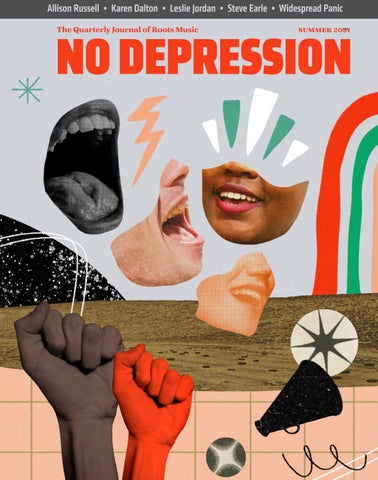
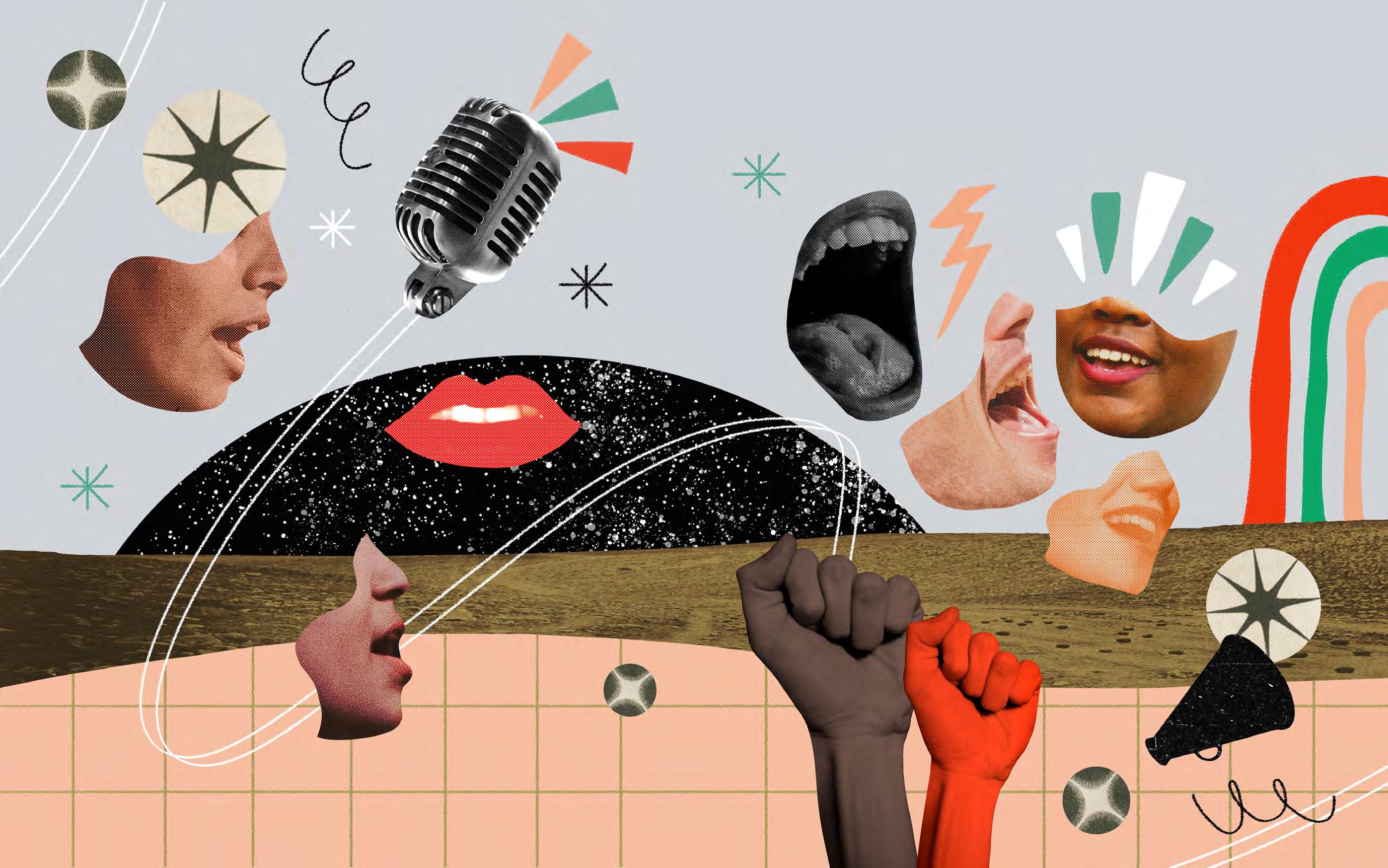
ON THE COVER
Jenny Chang-Rodriguez used a mixedmedia approach — a collage of illustrations and photographs — to visualize the Summer 2021 issue of No Depression. The faces and fists show the ways our voices carry meaning in roots music.
NO DEPRESSION TEAM
Chris Wadsworth Publisher
Hilary Saunders Managing Editor
Stacy Chandler Assistant Editor
Sonja Nelson Advertising
Adam Kirr Digital and Retail Marketing
Maureen Cross Finance/Operations
WEB nodepression.com
TWITTER & INSTAGRAM @nodepression FACEBOOK facebook.com/nodepressionmag
GENERAL INQUIRIES info@nodepression.com
ONLINE ADVERTISING advertising@nodepression.com
SUBSCRIPTIONS store.nodepression.com
JOURNAL DESIGN & PRODUCTION
Marcus Amaker
Printed in Nashville, Tennessee, by Lithographics Inc.
No Depression is part of the FreshGrass Foundation. freshgrass.org
ISBN-13: 97817340223609000013 ©2021, FreshGrass, LLC
Hello Stranger
BY HILARY SAUNDERS
My best friend since elementary school is a singer. To this day, she sings in church services, choirs, and other gatherings, even if her actual profession lies outside of the music industry. Growing up, she was the lead singer in our rock and roll band, but also the person who taught me about singing nuances and techniques — the difference between a head voice and chest voice and the importance of using your diaphragm.
After years of working up the courage to sing along with the radio or records, as well as taking some ear-training classes in college, it’s pretty safe to say I can match pitch. I love taking long drives, blasting sing-alongs and embracing the sounds. (Tom Petty’s Wildflowers and Sam Cooke’s Live at the Harlem Square Club live in my car’s six-CD changer pretty much permanently.) Much to my permanent chagrin, however, I am not a good singer, nor will I ever be one.
It’s taken me much longer to realize more relevant truths about singing: You don’t have to be a good singer to sing out loud and enjoy it. Singing together is one of the most inspiring and powerful acts of humanity. Our voices can be utilized effectively outside of carrying a melody atop a song.
During my tenure at No Depression, we’ve published entire issues on technology in the music industry (FallWinter 2018’s “Innovate”) and instruments, gear, and digital innovations in roots music (Summer 2020’s “Tools of the Trade”). But we’ve
yet to devote a book to the human voice. Until now.
The Summer 2021 issue, “Voices,” explores the timbres, tones, and techniques prevalent among roots music vocalists. One in-depth feature explores the history of yodeling (which is deeper and more diverse than many might suspect!), and another digs into the differences between singing for stage and film. In a beautiful photo essay, nine of our favorite roots musicians write about both how and why they sing. Many other stories in this issue
highlight the voices that carry messages of praise and protest throughout roots music. Multiple pieces celebrate the role gospel music and hymns play — from beloved actor-turned-singer Leslie Jones on his star-studded debut and Memphis sacred-soul singer Elizabeth King’s latest release. And on the heels of her new book, A Singing Army: Zilphia Horton and the Highlander Folk School, out now via University of Texas Press, former No Depression editor-in-chief Kim Ruehl writes about the power of vocal groups like the Freedom Singers to enact social change.
I’ve always considered myself a writer before an editor, so it felt especially poignant to use my voice in the “Voices” issue. When speaking with Sara Watkins for the story I wrote about how voices change, she specifically told me to tell you how much she misses singing with and performing for you:
“Even before the pandemic, there was a lack of people singing together. Church used to do it, but that’s not a place that as many people go to anymore, so that doesn’t play as much of a common role in people’s lives,” she says. “So I’m really looking forward to singing with people, not even in harmony, just like, saying the same things with a group of people! It’s a powerful thing.”
She’s right: The sounds of human voices all together is a powerful thing. To me, it’s one of the most magical things about being alive. I truly cannot wait to see you all at a show sometime, singing together somewhere, safely, and soon.
Singers on Singing
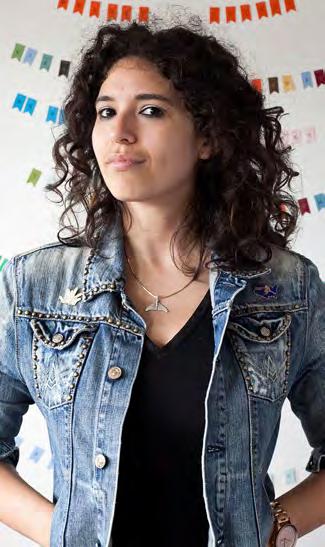
Voices are like fingerprints; no two are exactly the same. No Depression checked in with nine of our favorite musicians to learn about how and why they use their voices. Some praised the technical traits learned in their classical training, while others highlighted the so-called “imperfections” that make their voices distinct. Their reasons for singing also varied — from deeply personal to spiritual to communal — and we’re honored to share their voices, so to speak, here. — Hilary Saunders
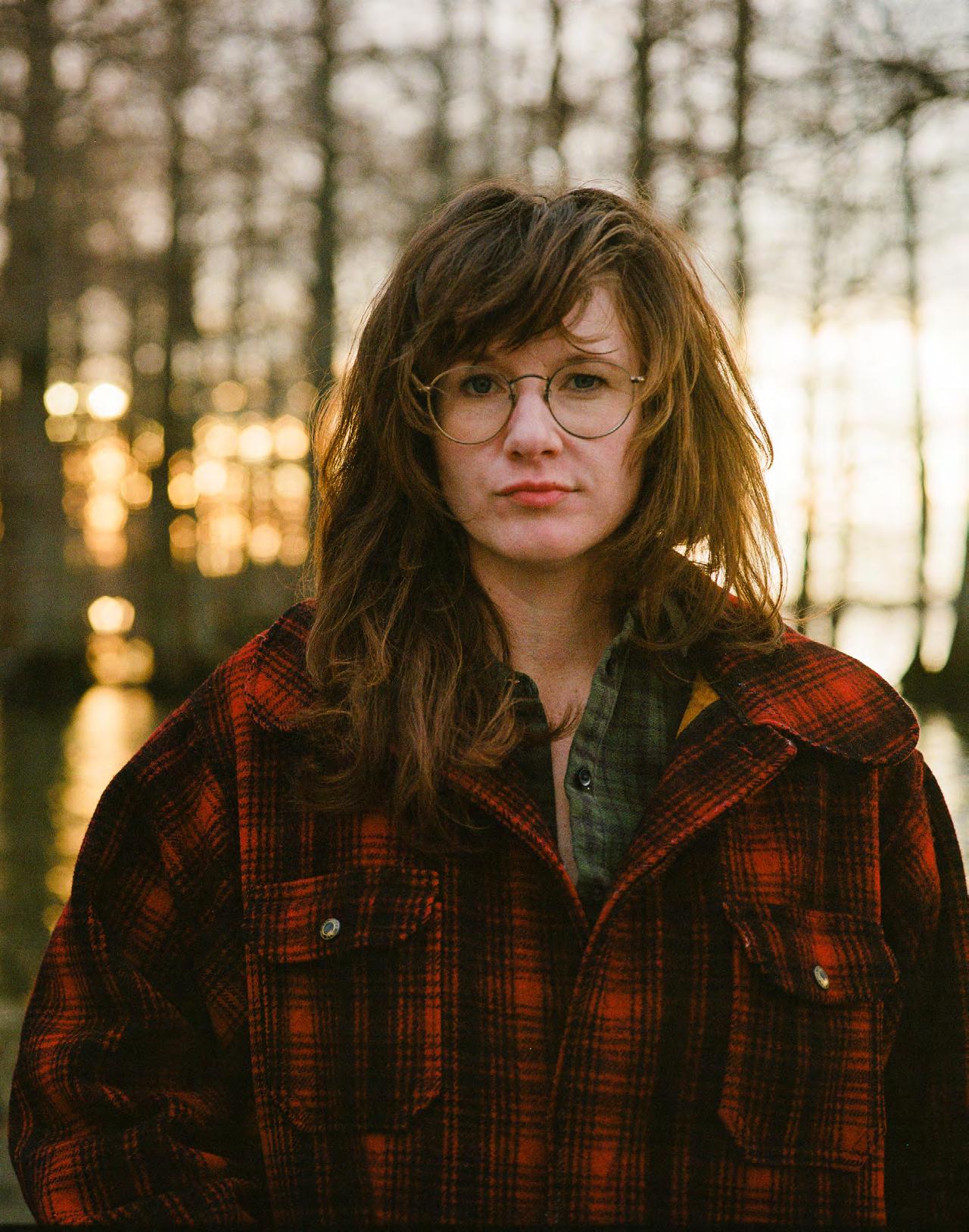
S.G. Goodman
Despite having a month of classical training at a local music shop, my time there came to an end when I realized the expectation was for me to perform souldraining renditions of popular musicals. When I think about where my actual vocal education was found, it was on a pew at my hometown church. I associate harmonies with the faces of women who would perform during Sunday services. When I sing alto, I sing in the style of Mrs. Lilly Mae. Or when I sing soprano, I mimic the style of Mrs. Edna Earle. It was there I internalized the idea that your voice could reach the heavens, and despite how those views have shifted with age, I know that my body still falls into the rhythm and tradition to wail in a way that could reach the divine.

DANIEL DORSA
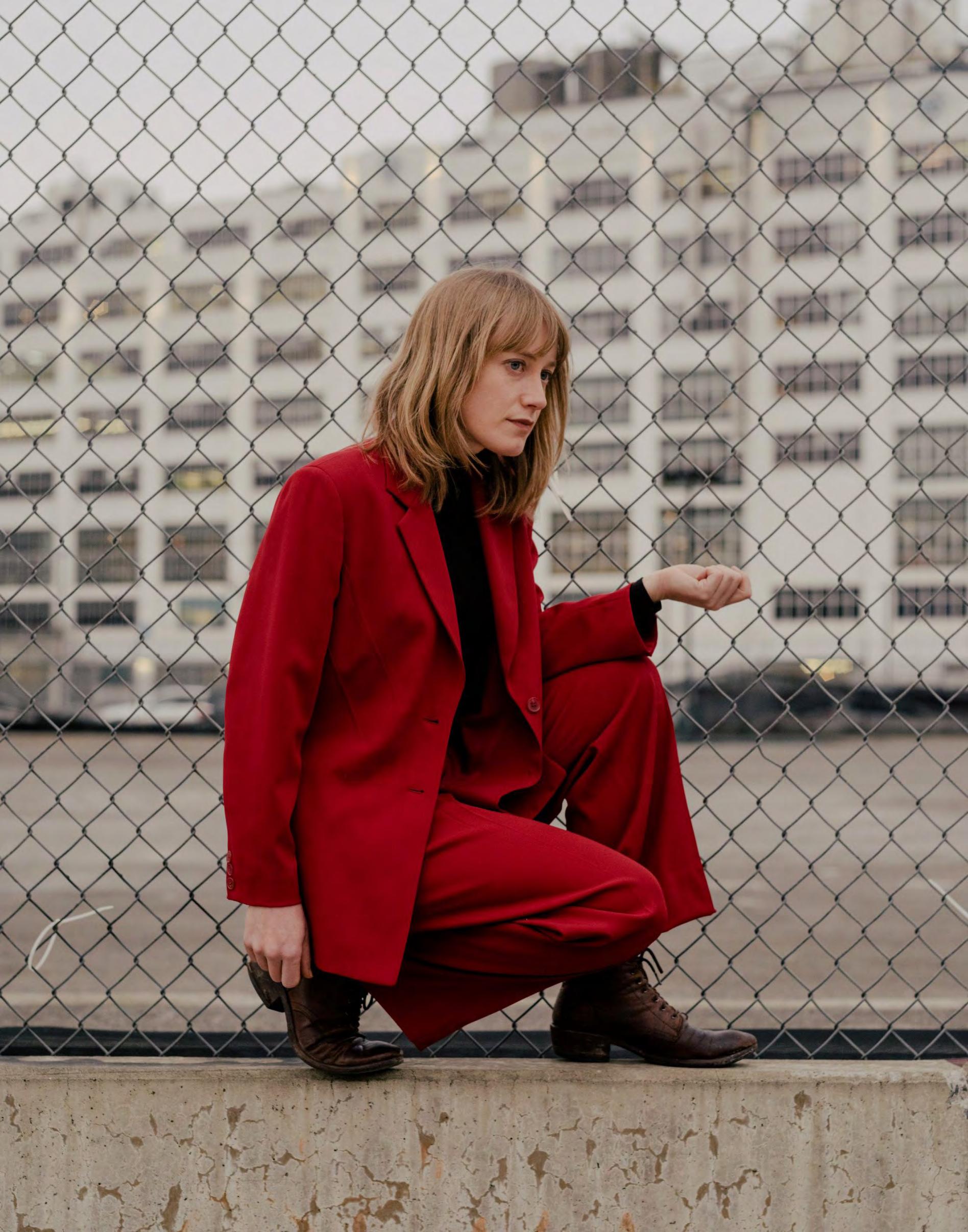
Tamara Lindeman
I sing softly. And despite years of sound engineers and monitor engineers and recording engineers and wellmeaning strangers telling me I should sing louder, I continue to sing softly. To me, the whole point of a microphone is that it allows one to sing softly, to bring the listener close without moving, to be next to someone even when you’re far apart. A microphone is an instrument of intimacy, and intimacy is everything, I think, when we’re trying to understand each other.
The Weather Station
If you spend time in a crowd, or an organization, or a group, what you’ll notice is that the loudest voice tends to be the one that is heard. But when we level the playing field, when we give every voice a finely calibrated microphone, when we take a moment to listen and really hear, I think soft voices can carry more expression, more nuance, more complexity. I can’t express myself right when I sing loudly. When I sing loudly, all I can do is hit the notes. It’s when I sing softly that I feel like I can access my full
range of expression, when I feel like I can allow my voice to carry many conflicting emotions at once, when I feel like I can access the intimacy that I think carries my music the best.
I salute the loud voices, the ones that can carry, the ones that we need in a crowd. But I prefer to sing softly, to sing in a way that you have to listen closely to in order to understand. What I say in my soft voice is not the same thing I might say in a loud voice. That doesn’t mean my soft voice shouldn’t be heard.
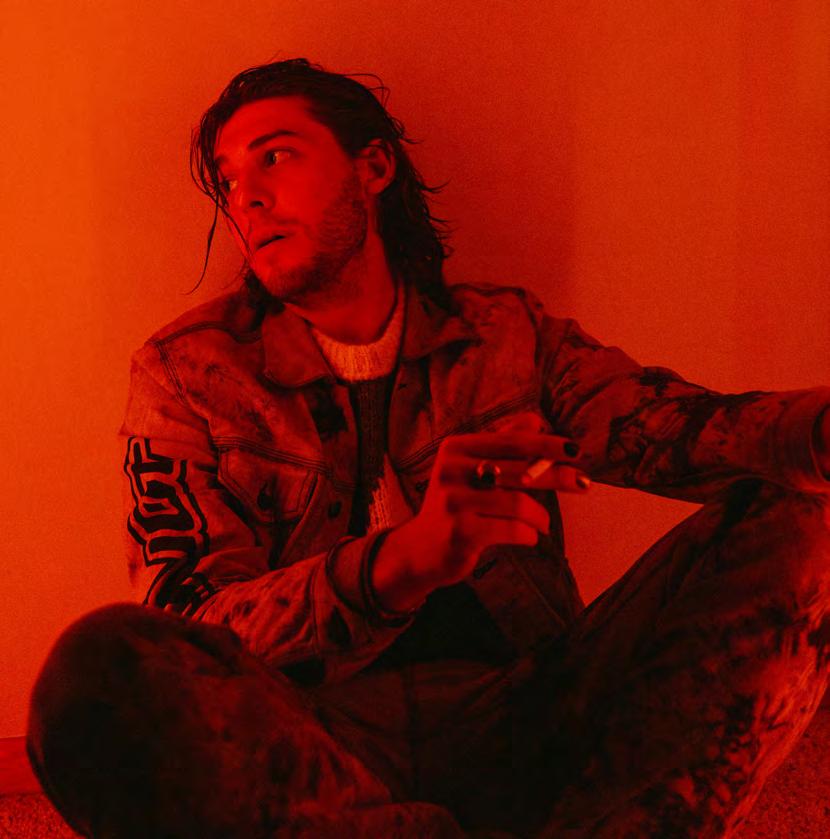
Sam Williams
I never took lessons to learn how to sing, so there’s a lot of imperfection in my voice. I’ve heard people say they hear the emotion in the rawness and rasp of my tone. Like Leonard Cohen said, “there’s a crack in everything, that’s how the light gets in.” My grandfather, Hank Williams, wasn’t always known for his voice, but something about the warm intent behind it attracted so many people. I sing to share my story, empower people, and carry my family name on. I think when my album comes it will be really cool to see how a bloodline ebbs and flows but stays current over time.
Daniel Lanois
I had the fortunate experience of recording many gospel quartets when I first got started with record making. To hear the placement of the four parts provided me with the best education that I’ve been able to apply since to all of my harmony singing work.
My recent work with Heavy Sun benefited from this knowledge. Should you dial up the song “Power,” you will hear block harmonies that demonstrate what I’m speaking of. But the best part of it all is the blend. It’s not about standing out; it’s about listening to your mates and blending to get to that magic place.
There’s nothing like harmony, for focus and cleansing of the soul.
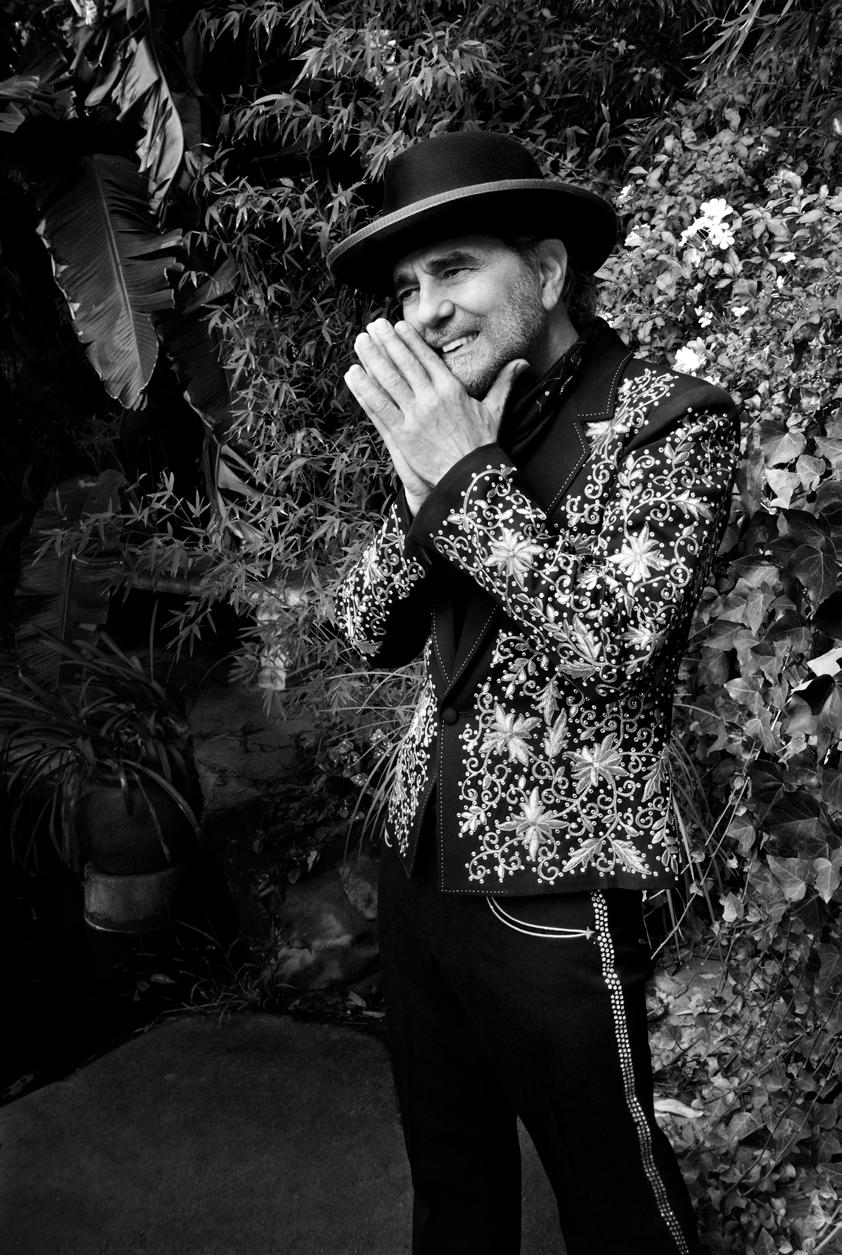
FLORIA SIGISMONDI
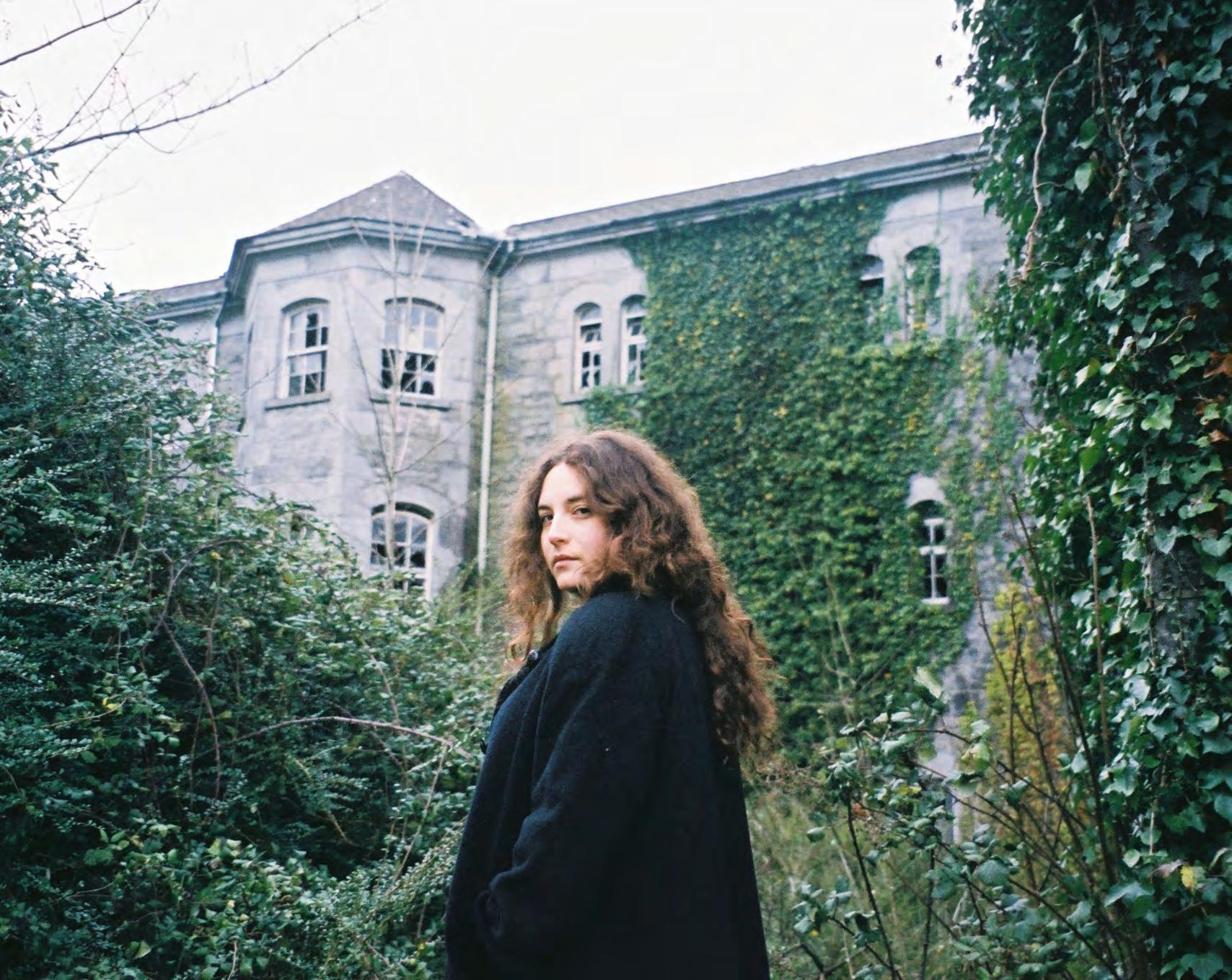
Cinder Well
The voice is this built-in instrument that we all have and we learn to wield right out of the womb. For me, this makes singing the most direct route to expression — no tuning pegs or plucking of strings required. Sometimes I sing a phrase to myself before I play it on a fiddle or guitar, because my voice knows so much better than my hands. Singing focuses my mind and settles my nervous system. I like to
close my eyes and to see the story and lyrics in my mind — whether they are my own or traditional — and I can lose myself in that for a rare moment of stillness and clarity. My voice doesn’t always come out exactly how I imagine it inside of me, but I try to drop my attachment to the imperfections and keep moving forward in the song. Sometimes the room falls away and we’re in the story together.
I love to sing.
Chris Hillman
I didn’t always feel comfortable as a young man starting out as a singer, mostly because of a serious lack of confidence. Oh, I could sing in tune, but didn’t have the commitment, the soul, and feel for the song I was singing. I gradually learned how to take a more forceful role in presenting the song. I soon learned it was about acting, and phrasing the lyric in a musical, rhythmic
way. I listened to those around me and drew from them as they drew from others in their learning quest.
I studied everyone from Frank Sinatra to Ella Fitzgerald, Muddy Waters, and Lefty Frizzell. I loved them all. I sang along with the car radio whenever and wherever I could. I was becoming a singer and I loved it.
Learning to breathe properly is a lesson unto itself because the power
comes from the diaphragm, not your throat, and when I learned this, I found my voice.
When you’re singing in a duet, trio, or quartet or a full choir you blend with others, you breathe with others, you phrase each lyric with others in creating the right notes.
For me, after six decades playing music, I have been blessed in finding that voice that eluded me for so long.
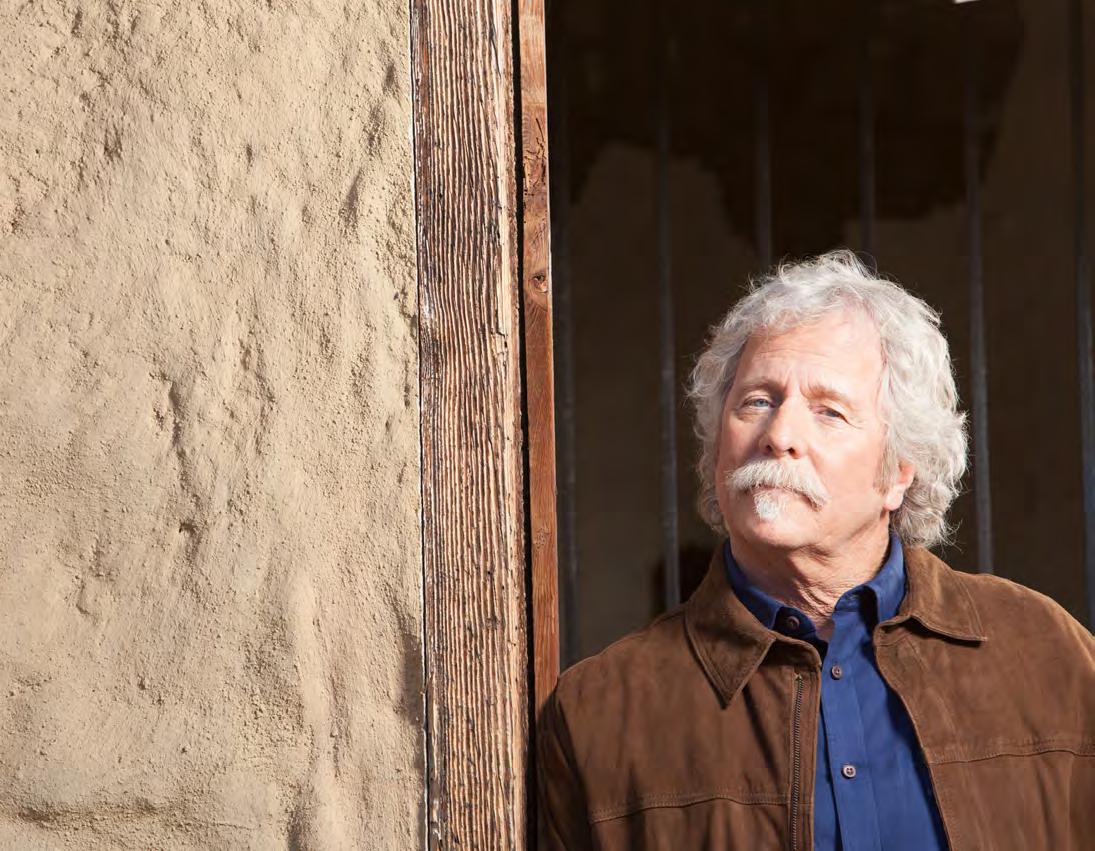
LORI STOLL
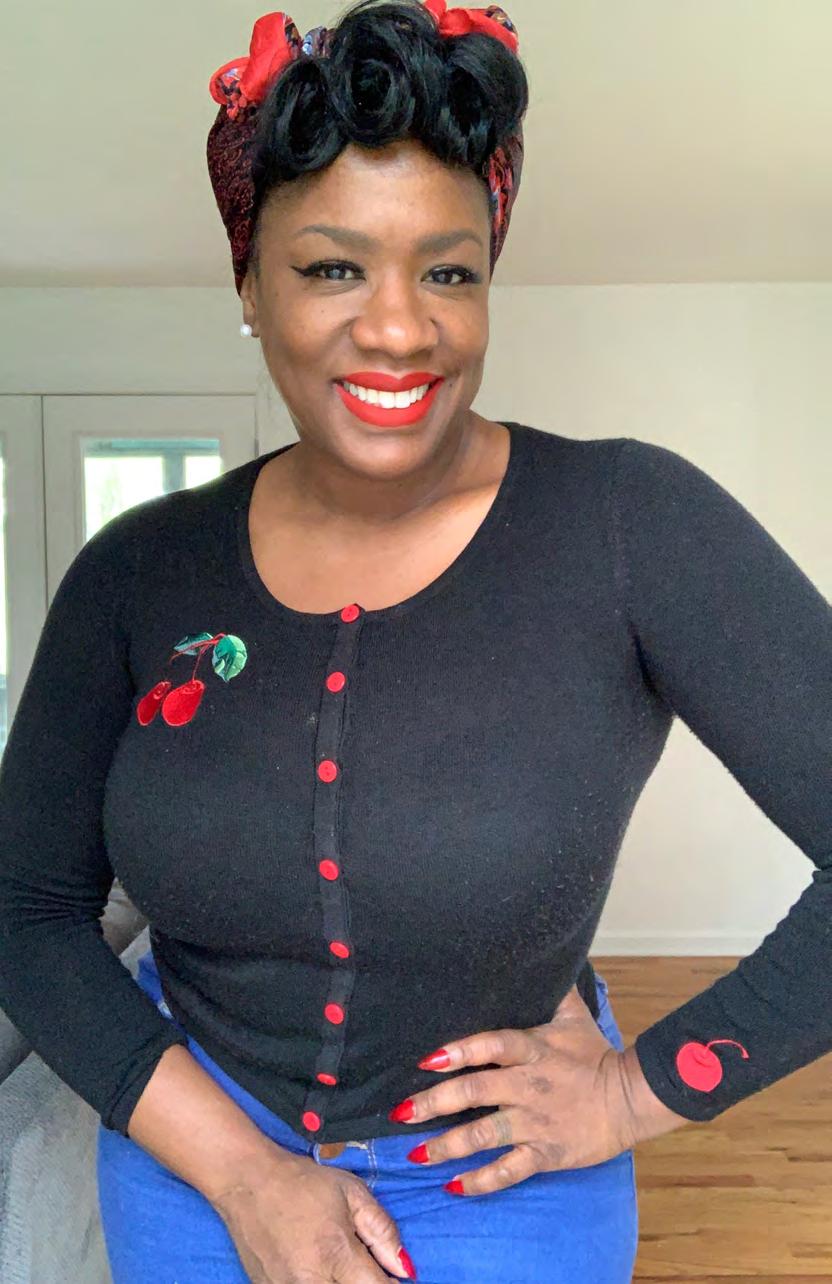
Tanya Trotter
The War & Treaty
I’ve tried to make sense of the sound that comes out of the human body, but I always fail to put it in words. The power of the human voice, when used properly, is indescribable. When asked how I sing or what techniques I use, I am always hesitant to answer. And only because the mere thought of having a gift that can shift emotions, culture and shape our lives is such a supernatural experience for anyone who has the ability to do it. I started my technical vocal training at Potomac High School, Duke Ellington School of the Arts, and Morgan State University. I soon learned that technique is the foundation; however, it is up to me to make the notes come alive once the melody and lyrics become a part of me. When combined with other instruments, my voice simply becomes a part of the musical story.
Every instrument in a song, including the voice, helps tell a story. Of course, there are things that I have to do to execute a song, such as breathing and using your body, but connecting to the song is the most important part of singing to me.
Once I have connected to the song, I don’t lean solely on my technique. There’s a level of adrenaline that rushes through my body that’s hard to describe. I just let the notes flow and the energy from the atmosphere take over.
The power of having a voice is one of the greatest gifts to share in this human experience. The thought of being able to use my voice to bring a variety of emotions to another human being still is so overwhelming. Every time I am given the opportunity to share my light with an audience is a gift from God.
Sarah Jarosz
I’ve been singing practically from the moment I came into the world. Music was always around and, like breathing, singing was just something I always did. I don’t have memories of a time in my life when singing wasn’t a frequent and lifeaffirming activity. Some of my most cherished memories are harmonizing with my mom in the living room or singing along to a record on a road trip or just a drive into town to gas up the car. Singing sews magic into daily life.
Tim O’Brien was my first vocal hero. His singing is effortless and grounded — it carries emotional weight while floating along like a feather on the wind. I find that my favorite singers’ voices are merely an extension of their speaking voices. The meaning behind a song is most deeply felt when there isn’t affectation in the singer’s voice. They’re merely setting their speech to music.
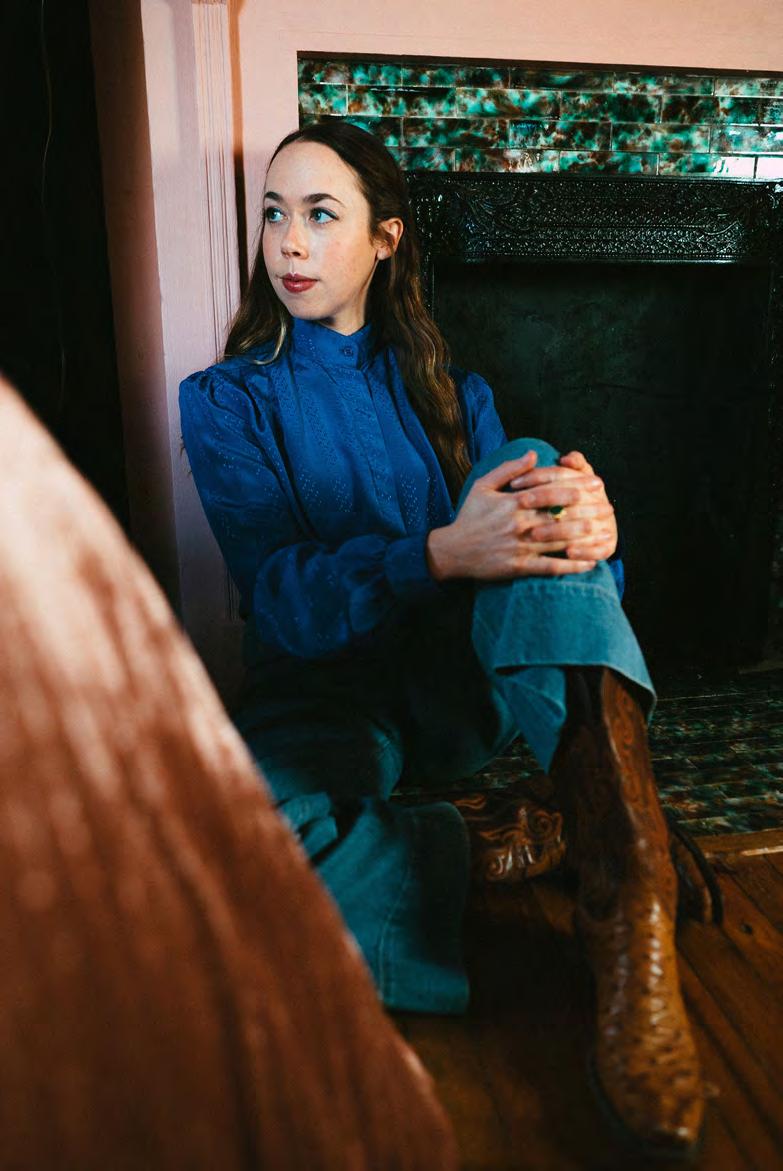
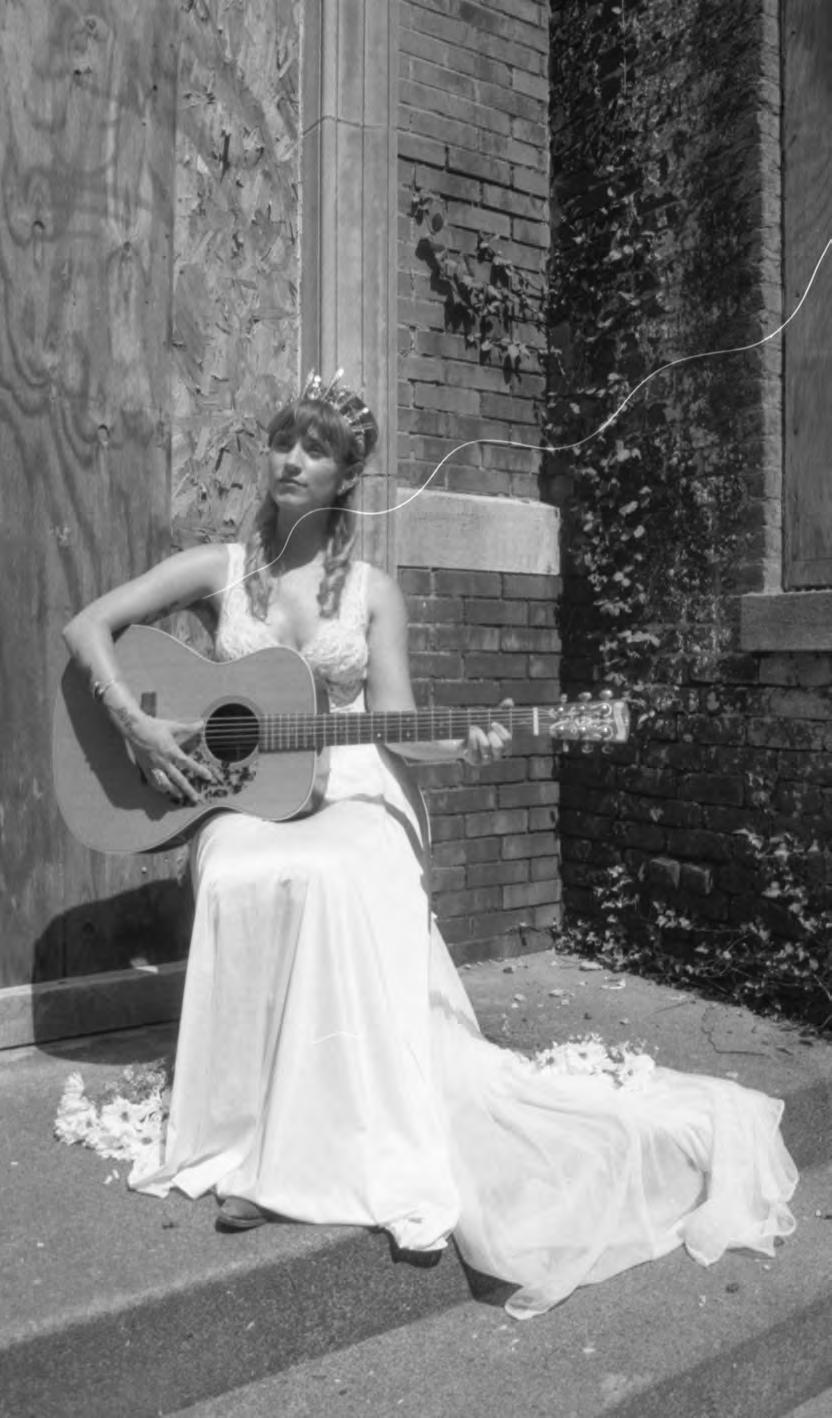
Sierra Ferrell
I never really had any vocal training, but have been singing ever since I could talk. My family used to live on top of this giant hill in West Virginia and would often go to the Baptist church near my house to sing. I was also in choir during middle and high school. Singing is my passion and what I love to do — I even enjoy encouraging others to sing, especially if it means getting them out of their comfort zone.
When I sing, I try to be aware of my breath to make sure that I’m singing from my gut rather than my throat. Funnily enough, I was (very briefly) trained by an opera singer when I was a teenager. He told me that I needed to gain 50 pounds so that I would have the weight to push the sound out with my stomach. I didn’t gain the weight, but his recommendation confirmed the importance of singing from the gut.
I would describe my singing style as a mix of folk, Americana, honky-tonk, country, jazz, and punk. I listen to a broad array of music and have a variety of influences. I adore Dolly Parton, Nina Simone, Patsy Cline, Ella Fitzgerald, and Jimmy Martin. Listening to a combination of different genres and influences has helped me develop my own unique sound.
FINDING THEIR VOICES
Songs and circumstances can alter how musicians sing
by Hilary Saunders
KANNETHA BROWN
Anjimile
When Peter Stam Pfel answers the phone in his Manhattan home, he — without prompting — wants to talk about the previous issue of No Depression, “The Great American Songbook.” His current behemoth of a project, Peter Stampfel’s 20th Century, was released in February via Louisiana Red Hot Records and comprises 100 songs over five CDs, with 88 pages of liner notes, history, and personal reflections. Each song represents a year in the 20th century, so a good chunk of his quirky, folky interpretations (like the 1927 song, “Blue Skies,” composed by Irving Berlin for the Rodgers and Hart musical Betsy, and his 1936 selection, “The Way You Look Tonight,” written by Dorothy Fields and Jerome Kern for the film Swing Time) fall into the category of what the spring issue covered. Not bound by genre, the wideranging compilation also includes songs like Elton John’s “Goodbye Yellow Brick Road” for 1973, Bruce Springsteen’s “My Hometown” for 1986, The Spice Girls’ “Wannabe” for 1996, and John Prine’s “In Spite of Ourselves” for 1999.
Stampfel, a multi-instrumentalist and founding member of the 1960s
psychedelic-folk band Holy Modal Rounders, began recording songs for this project 18 years ago. But his voice has changed drastically in that time: In 2018, he was diagnosed with dysphonia. The condition, according to the National Spasmodic Dysphonia Association, refers to any abnormality regarding vocal quality, pitch, volume, or vocal effort. And approximately 7.5 million Americans have some sort of challenge using their voices.
“Its causes are threefold. They are genetic, aging, and misuse of voice,” explains Stampfel, who will turn 83 in October. His dysphonia is audible in conversation and in certain songs on Peter Stampfel’s 20th Century, but it doesn’t seem to hinder him. Mostly, his voice is creakier and quieter than it once was, like it takes significantly more effort to emit sound.
To address this sudden shift in timbre, Stampfel endured multiple medical procedures and also hired a vocal coach. He’s thrilled that he and his coach grew up in the same part of Milwaukee and that he can still take lessons and practice over Zoom during the pandemic.
“My vocal coach, she has me lying on the floor and vocalizing a couple times a
day, like five or 10 minutes at a time,” he says. “When you’re lying on your back, your body’s totally relaxed, so you can vocalize without having to use any of your muscles to support any other part of your body.”
He describes one exercise in particular: “You make an E-A-O-U-I-AH noise sustain as long as possible, over and over again.”
Stampfel’s vocal coach is also teaching him how to sing with a microphone. “It’s the basis for crooning,” he says, alluding to more Songbook-era music included on Peter Stampfel’s 20th Century. “When the microphone came along, suddenly you didn’t have to project so that they can hear you in the back row! With her help, my voice is coming around to be something that’s usable and because I’m using a microphone now, I can even do some things that I couldn’t do before! I can use a more subtle approach that I basically didn’t take before,” he says, chuckling.
“I’ve never been a subtle singer, you know!”
Likewise, the nearly-79-year-old Jerry Williams Jr., who performs as (and answers to) Swamp Dogg, says that his voice is capable of more nuances now
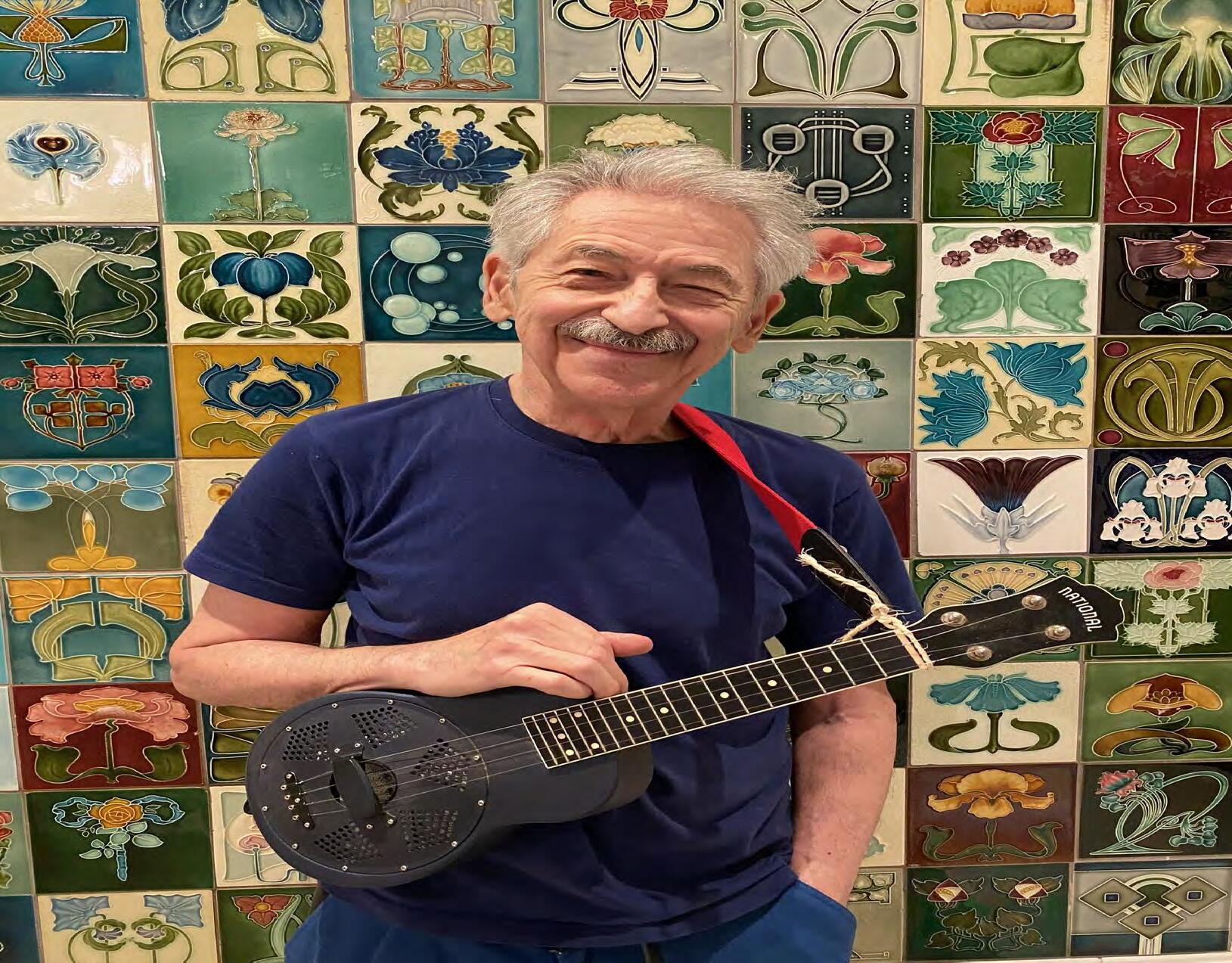
Peter Stampfel
than in his youth.
It’s especially audible on his most recent EP, Sorry You Couldn’t Make It Demos, a collection of demos from the 1970s and ’80s that he eventually re-recorded for his soul-turned-country album of the same name from 2020. On the original version of “Please Let Me Go Round Again,” for example, Swamp Dogg’s voice is slightly higher and cleaner than the gravelly take on the studio album. On the LP, both his voice and that of featured guest John Prine (whose voice also changed drastically during his career, due to cancer treatment) have a roughness that’s more expressive in their communication of the cheeky, yet heartbreaking lyrics: “Please let me go ’round again / Oh, life, can’t you afford me another chance? / If you’ll let me go ’round again / I’ll build a better mousetrap from a far more better plan.”
When asked how his singing voice has changed over his six-decade-long career, Swamp Dogg exclaims, “The weird part — and I’m not gonna question it too much if that’s what God wants to happen, let it happen! — I sing better now than I did
when I was 30 years old!”
He explains, “I’ve got a better range; I’ve got better rhythm chops. I can do things with my voice that I had never done. Most of these things that I’m discovering, maybe I could have done them all along and I was just scared to do it. In my case, it’s gotten better. It still doesn’t make me Tony Bennett or Frank Sinatra or Sammy Davis or none of those people. But my voice is much better. I handle lyrics better. I relate to songs to the point where I know what I’m singing about.”
Change by Choice
Singing voices change for a number of reasons, many of which are intentional. Even something as seemingly simple as switching genres of music can impact how singers sing and how their voices sound.
Fiddler and singer-songwriter Sara Watkins grew up in the bluegrass community and began her professional musical career as part of the Grammy award-winning trio Nickel Creek when
she, her brother Sean Watkins, and Chris Thile were just children. In that group, each member alternated singing lead and harmony, and the style of music often necessitates a louder vocal style, often referred to as a “high lonesome sound.”
Watkins says that she learned a lot about singing while working with Alison Krauss on the Nickel Creek records Krauss produced, but that she really started to find her voice in her early 20s, when she and Sean started a residency at the Los Angeles club Largo. The challenges of learning to sing to the back of the room, perform songs in different styles (like The Jackson 5 and Dolly Parton, she notes), and collaborate with a range of guests helped her learn what her voice was capable of and how she wanted to use it.
Since then, Watkins has released two albums with her brother as Watkins Family Hour, one with the harmony-rich trio I’m With Her (with Aoife O’Donovan and Sarah Jarosz), and four solo records under her own name. The most recent, Under the Pepper Tree, came out in March via New West Records.
Sara Watkins
Just like on the fiddle, when you’re learning a tune, you find the best way to jump into different registers. You have to switch fingers at some point to move from the low part of the neck to the higher part of the neck. There’s always more than one way to do it and you just find the way that is the most natural for the particular thing that you want to do. That’s a normal thing for me to think about on the fiddle, but it took me a long time to realize that I also need to put that kind of thought into song.”
Sara Watkins
Under the Pepper Tree includes 15 songs from Watkins’ childhood that she wanted to record and pass along to her 3-year-old daughter. While still firmly rooted in her usual folk instrumentation, the songs themselves required different vocal work from Watkins.
“ The nature of these songs, so many of them vintage Disney and having this very certain vintage Disney quality to them, I was really looking forward to going in that direction with my vocals for the first time. I’ve never had a reason to indulge in that particular sound before! And it was really fun! It felt like a really great excuse to kind of put on this different costume, almost … like wearing a different coat,” she says.
“ There’s this specific sound that I kept calling ‘wishing well vocals.’ The source imagery of that was when Snow White is singing into the well … and it comes back to her in the echo and they eventually sing together,” Watkins continues. “It’s a belllike, reverberant, very round tone. And it takes up a huge amount of air space. That was something that I kept referencing, going into the album, where we could put
these ‘wishing well vocals’ as a sound on the record that gets revisited.”
This specific vocal sound is especially audible on songs like “Pure Imagination” from Willy Wonka & the Chocolate Factory (1971), which has an impressively difficult melody, and “Second Star to the Right” from Disney’s Peter Pan (1953). The latter, she says, is at least a key higher than she would have written it for herself.
At various points throughout her career, Watkins has worked with vocal coach Lis Lewis (whose previous clients include Britney Spears, Linkin Park, and Jack Black) to identify tricky singing spots and figure out how to work through them. Watkins says this singing process is not unlike that for instrumentalists: “Just like on the fiddle, when you’re learning a tune, you find the best way to jump into different registers. You have to switch fingers at some point to move from the low part of the neck to the higher part of the neck. There’s always more than one way to do it and you just find the way that is the most natural for the particular thing that you want to do. That’s a normal thing for me to think about on the fiddle,
but it took me a long time to realize that I also need to put that kind of thought into song.”
Similarly, Laura Jane Grace of the punk band Against Me! had to change the way she sang on last year’s Stay Alive, her debut folk-rock record under her own name. The entire album, recorded to tape at Steve Albini’s Electrical Audio studio in just four days, comprises 14 tracks of just Grace and her acoustic guitar.
Occasionally a drum machine kicks in on “Shelter in Place” (which was actually written pre-COVID) and “SuperNatural Possession” or an electric guitar on “So Long, Farewell, Auf Wiedersehen, Fuck Off.”
But this minimal tracking and instrumentation is a sharp departure from Against Me!’s plugged-in, raw, and shredding sound. Looking back at the band’s nearly 25-year career, Grace recalls, “My voice has changed a lot from record to record and, specifically, a lot of that has to do with just being in a punk band. As the amount of shows you were playing per year kicked up, it just wasn’t possible to scream in certain ways every
single night. … As my band started adding parts and being louder and louder, I noticed that I instinctively push harder with my voice when I’m playing with a band to try to match the volume. So that even changed the way I sung.”
She found that screaming over the rest of the band made her blow out her voice more often, and as a result, she had to learn new tactics in order to maximize what she’s capable of singing. These days, she relies on an app called Vocal Ease for warmups and on proper hydration and the anti-inflammatory properties of raw ginger, radishes, and pineapple.
When recording Stay Alive, Grace realized how much changing the style of music meant that she had to change her singing. “Instead of me trying to sing over the band, this is just me and an acoustic guitar,” she says. “[We] tracked the vocals and guitar at the same time because I didn’t have to worry about the volume of the band, so I sang in a different way. I sing with less push when I do not have a
band behind me.”
Embracing Change
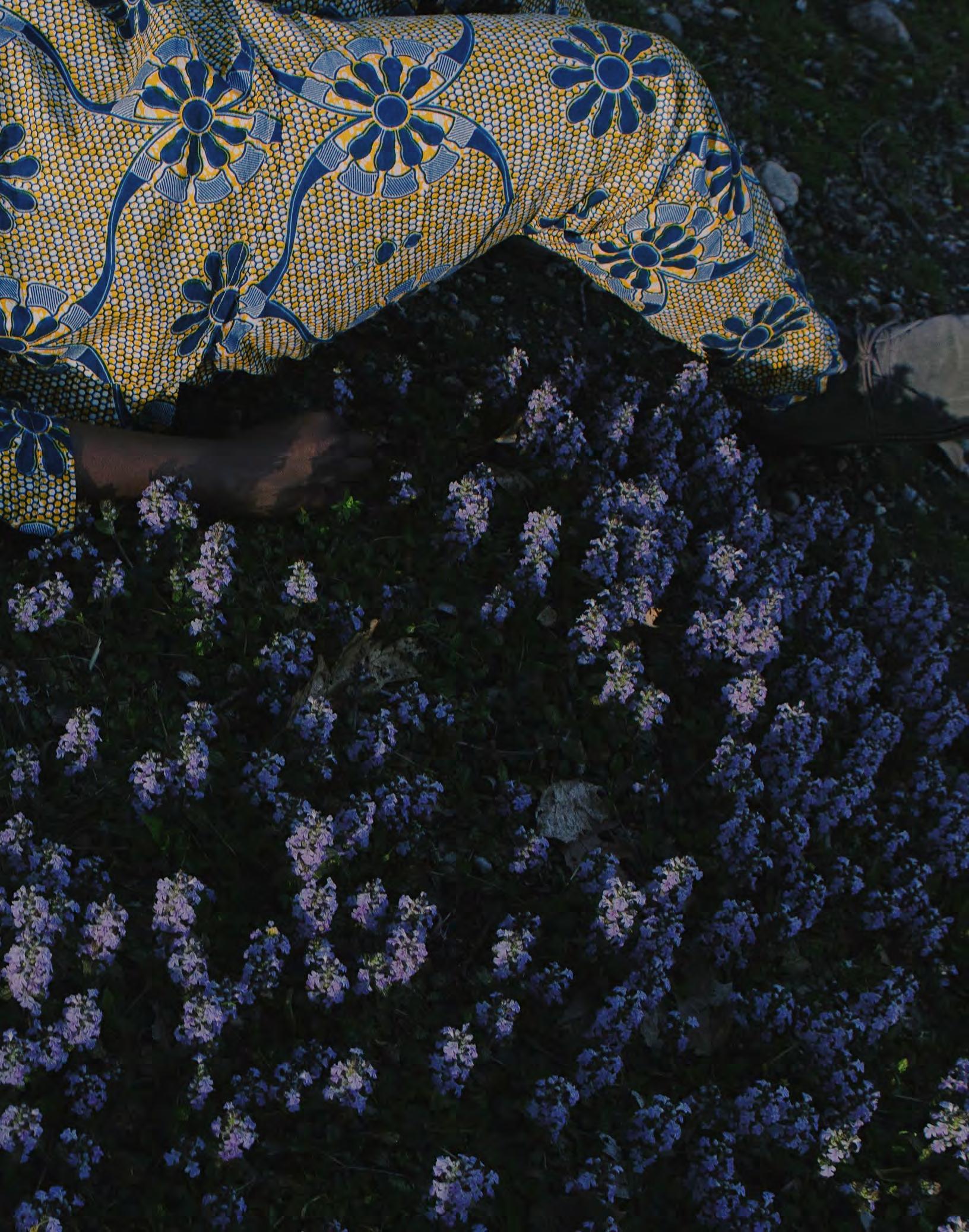
Grace, who is one of the most open transgender activists in music today, explains that neither her singing voice nor speaking voice changed during the course of her hormone replacement therapy (HRT). Anjimile Chithambo, who performs under their first name, is also trans and open about their transition. By choosing to take HRT, their voice has changed significantly in the past few years.
“I think I first started taking testosterone in 2017 and my voice got deeper immediately. That was the one thing that kept me from taking testosterone I think for years — I was afraid it would change my voice,” Anjimile begins. “It was a shock to the system because I had spent all these years in choir and I was in a cappella in college and I would describe myself as
someone who was very into having vocal control and vocal precision. And when I starting taking testosterone, that went out the window! My voice was cracking, I would open my mouth to sing a note and some other hella different note would come out!”
The majority of the nine tracks on Giver Taker, their full-length debut that came out last fall via Father/Daughter Records, were written before Anjimile started HRT. The autobiographical album is a journey, covering topics like organized religion, immigration, and sobriety through acoustic guitar picking and ambient synths that float to choirlike heights. As a result of the vocal changes, they had to figure out how to adjust some of the songs to more manageable keys before recording. Some, they say, were easy to transpose on guitar. Others took more musical manipulation. But the process of adapting to the vocal changes was mixed. “It took a lot of acceptance and gentleness, but also
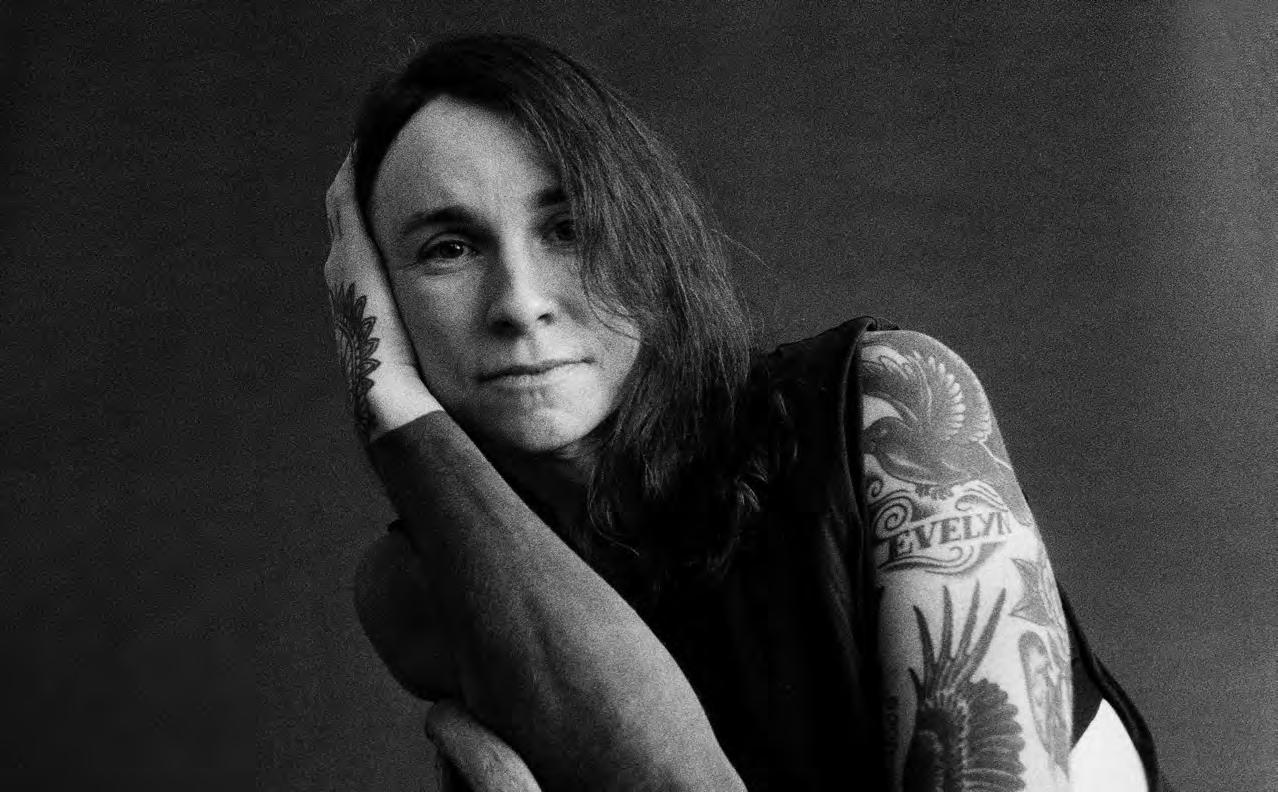
Laura Jane Grace
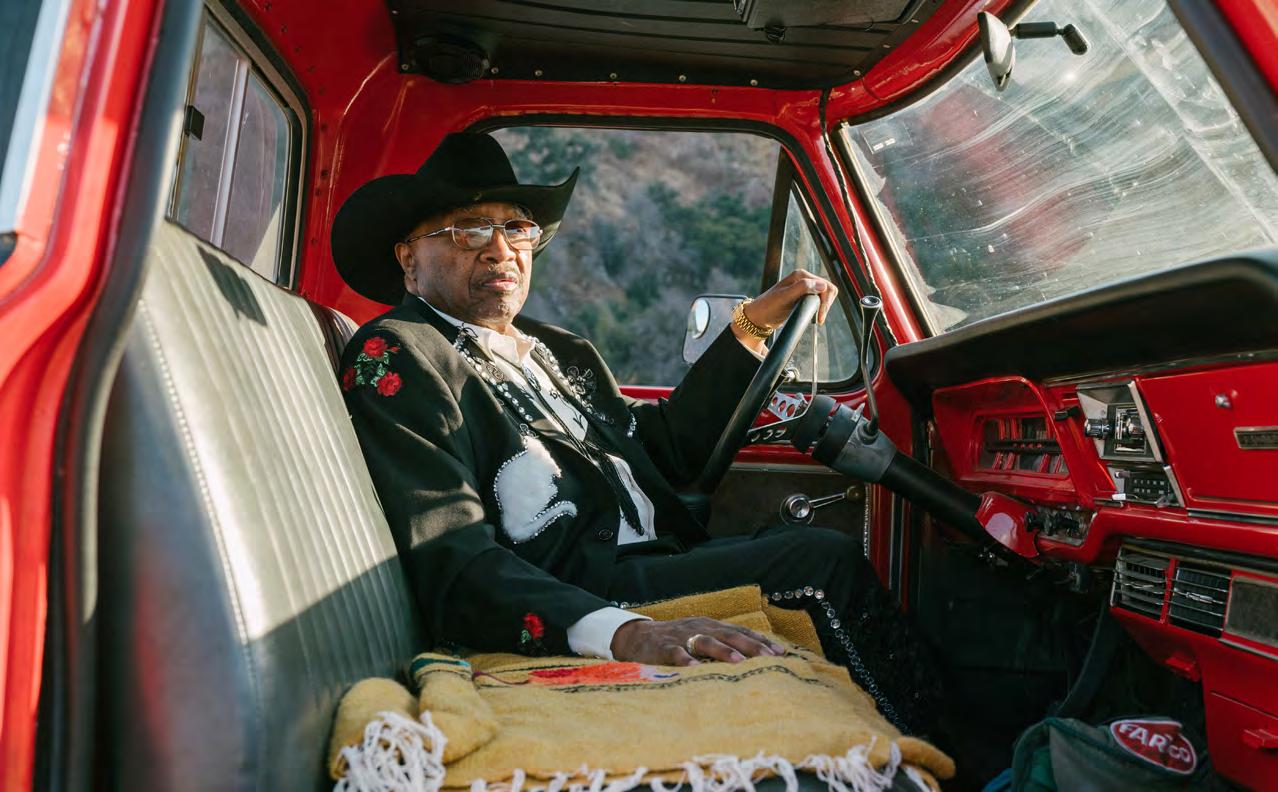
[there was the] excitement of the change to get me used to it,” Anjimile says. “There was definitely a grieving process in terms of losing the strength and height of my upper register. I now have a falsetto, where I just used to be an alto/soprano II … now it’s more of a tenor/baritone. So there was a mourning period for that high strength I once had in my voice, but I really learned to love the sound of my higher register at this point because it’s like a thousand times more fragile than it used to be. And I need to sing really gently when I’m singing high to preserve my voice. And I think that almost makes it more powerful and impactful when I’m singing in a higher register because it’s so slight.”
That fragility is part of what makes Giver Taker such a powerful record. Anjimile’s vulnerability shines on songs like “Ndimakukonda,” a 98-second love song that translates to “Warm Hearts” in Chichewa (the native language in Malawi, where their parents are from) and “In
Your Eyes,” about gender, family, and history. The tenuousness of their vocal timbre helps communicate a sense of hope throughout the songs’ confusion and grief.
These days, in addition to writing and recording new music, Anjimile also teaches vocal lessons to queer singers and folks going through HRT. They hope to help guide others through the process of vocal changes.
“My main goal is … to have folks be gentle with themselves because it’s really easy to get frustrated,” they say. “The reality is that it is a changing, fragile, delicate, unpredictable instrument once testosterone is involved, and hammering home that compassion is important.”
Regardless of why and how voices may change, Anjimile raises an important point: The human voice is a wild instrument that we all have the power to wield. And doing so with compassion is the best way to use it. ■
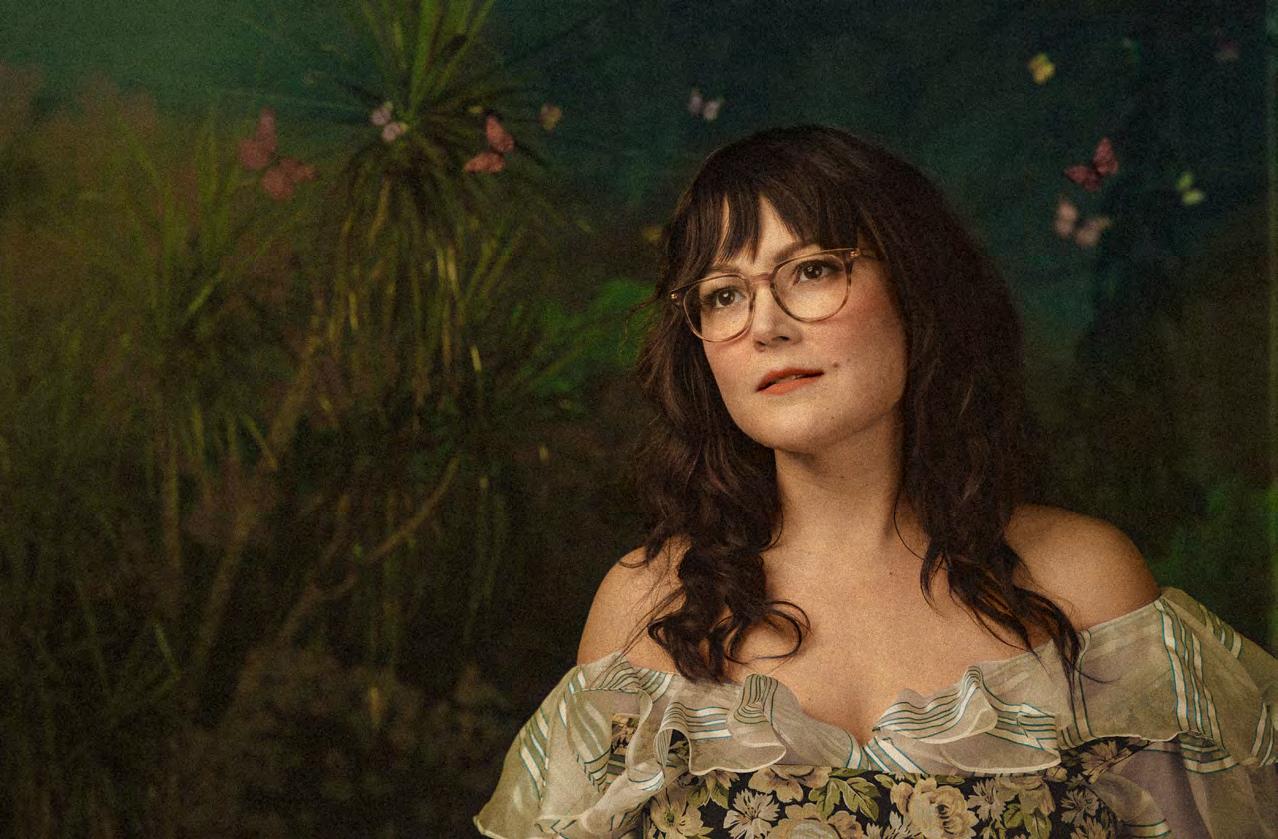
Swamp Dogg
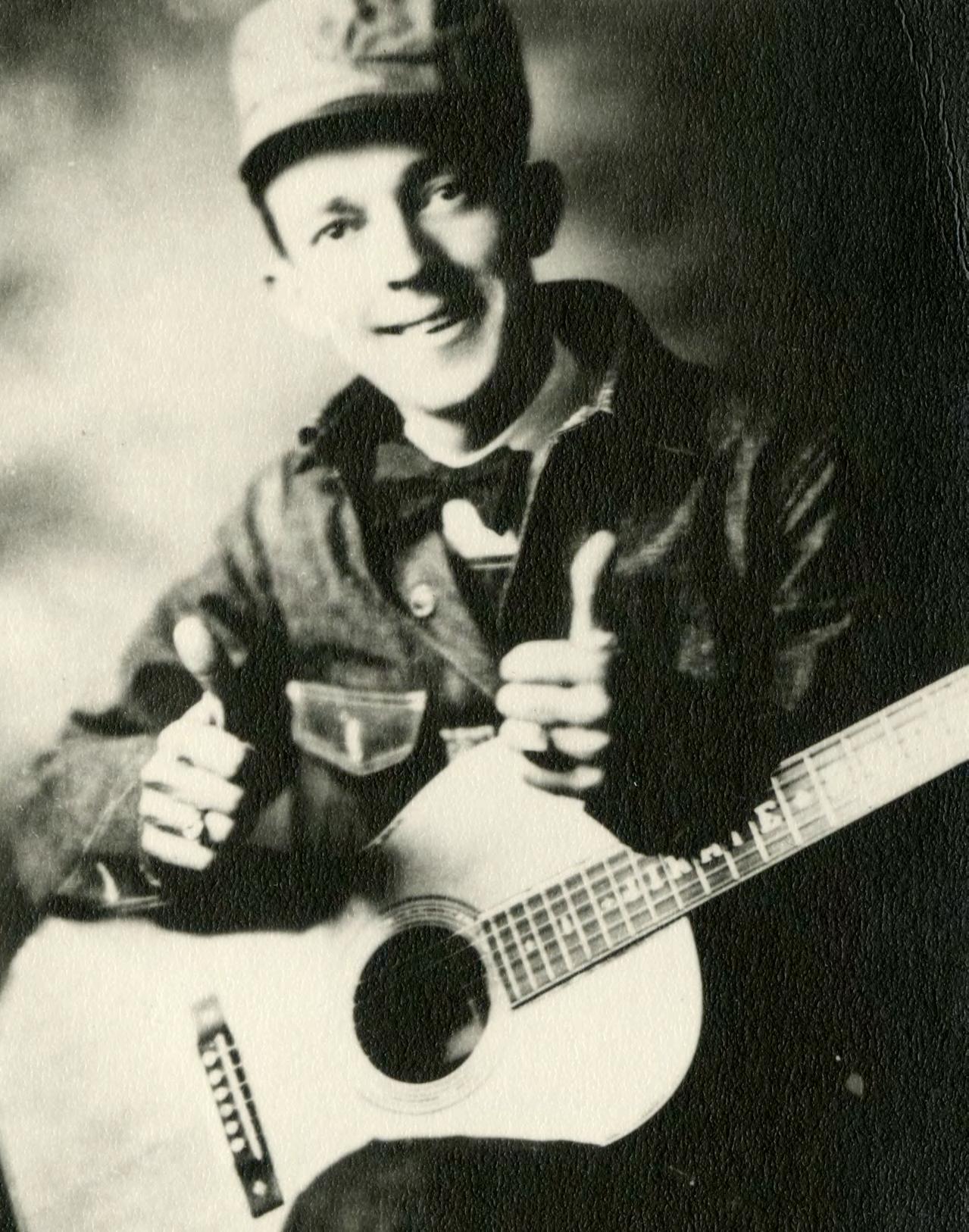
Jimmie Rodgers
CALL OF THE COWBOY
A history of yodeling in roots music
by Liz Tracy
“When you’re singing regularly, when you sing loud and proud and push from your abdomen, it’s kind of a release of some kind and relieves stress and makes you feel a little more like you have got some stuff off your chest. With yodeling it’s like that plus a little bit more.”
Scott H. Biram
AS a child in arkanSaS, nick Shoulders’ young, cracking voice bounced off the rocky holler in his parents’ yard. It was there, against the backside of a mountain in the Ozarks, that he found ways to call out to friends nearby and practice yodeling.
“We came up with a whooping holler kind of thing,” says the 31-year-old, who has performed using the moniker Okay Crawdad. “We did it over and over again, and I realized how to get more projection out of using my diaphragm and belly. At a certain pitch, my voice would leap another octave up.” In those woods, Shoulders also practiced the related skills of whistling, bird calls, and mouth trumpet.
He also explored yodeling through parody. “My grandfather was this very bombastic singer, he recorded a bunch of really weird Patsy Cline covers in the ’80s. I was around this kind of vibrato-
rich … deep South kind of singing,” he says. “I got into doing it by kind of impersonating … my grandpa a little bit.” Most recently based in New Orleans, Shoulders has been spending the pandemic in Arkansas, where he readied his first solo release, Home on the Rage. Released under his own name and on his new label, Gar Hole Records, in April, the album features a full whistle track and quickly sold out of its first vinyl pressing. Shoulders’ story of how he came to yodel, through landscape and lineage, is reflective of many who have found their voice and let it crack in the wind, off of mountains, and across plains.
What Makes a Yodel
The history of the yodel is surprisingly layered and weighted. Yodels arose around the world from the lungs of many, but it isn’t a part of every culture’s repertoire. As a kind of musical currency,
it was spread through immigrant and slave ships, missionaries, airwaves, and on the backs of horses. The yodel found its most hospitable home in American popular roots music through many avenues and voices.
A yodel may evoke memories of “The Lonely Goatherd,” sung by Julie Andrews in the 1965 classic The Sound of Music, or Slim Whitman’s “Indian Love Call” that blew alien brains up in 1996’s Mars Attacks! But the yodel is a primitive call and its journey from the Stone Age to the big screen wasn’t a straight line.
Our emotional response to a yodel is “DNA-encoded,” according to yodel expert Bart Plantenga, author of YODELAY-EE-OOOO: The Secret History of Yodeling Around the World and Yodel in Hi-Fi: From Kitsch Folk to Contemporary Electronica.
The yodel started with a prelingual call, says Plantenga, who is based in Amsterdam. It eventually developed musical qualities and was next incorporated into wordless songs or a “pre-Gregorian scat.” It was then applied to a basic song structure, serving as a refrain. Eventually, the “yodel song” evolved into its own entity and later was commercialized through professional performances and recordings.
In his first book, Plantenga notes that yodels may mimic landscapes, train tracks being built, or coyotes howling. This vocal ornamentation, which is primarily considered a cowboy’s work song, has been used to communicate across rural landscapes, to conjure magic or in courtship rituals, and even as war cries.
“Before language, there were humans who had to eat who learned to make calls to lure the animals into a trap,” he explains. “That’s where the bird call [comes from]. There’s a lot of association between the bird call and yodels.” In his first book, he quotes folklorist Alan Lomax, who noted, “Mankind has used voices to work animals for thousands of years. The singing milkmaids of the Hebrides, the shepherd piping to his flock, the Kansas dairy farmer piping Muzak into his milking barn.”
Although many people think of the yodel as “kind of like the heavy metal of the pre-electric period … intolerable and kitsch,” says Plantenga, he explains that it can also be soothing: “Cowboys, to calm the herds, if they were flustered by a thunderstorm or something, would yodel a lullaby.”
Timothy E. Wise, author of Yodeling and Meaning in American Music, writes
that the word “yodel” is derived from the German jodeln, meaning “to call, to cry, and to sing.” While there are many kinds of yodels, it is often described as the back and forth between a head voice and chest voice with a defined register break. However, Wise writes that “what matters is that the break should be recognized as intentional” and that the “break in the voice is made for some kind of expression of emotion or significance.” He terms the “yodel moment” a “yodeleme” and says it’s “the precise moment when the break from modal voice into loft or vice versa occurs.”
A yodel is similar to a holler, which Plantenga calls “the unsophisticated cousin of yodel. That’s what they do in the South to call the pigs and cattle. It’s unornamented and unrefined, more based in utility than in entertainment.” While both Black and white people employed the holler, Plantenga quotes the famed landscape architect Frederick Law Olmsted in his first book as saying he heard “Negro jodling,” as he called it, at the early date of 1853 in South Carolina, a “long, loud, musical shout, rising and falling and breaking into falsetto.”
Estelí Gomez, 35, is a member of Roomful of Teeth, a Grammy award-
winning ensemble of eight classically trained singers who use unusual vocal effects to perform commissioned compositions. They learn techniques from master teachers in styles like Alpine yodeling, belting, Persian tahrir, Inuit, and Tuvan throat singing. Gomez is also an assistant professor at Lawrence University’s Conservatory of Music in Appleton, Wisconsin, and offers private singing lessons that include yodeling.
Gomez herself grew up listening to Mexican and Spanish yodeling on tracks like Trio los Panchos’ “La Malagueña” and her father’s favorite, “El Pastor” by Spanish child star Joselito.
“I would sing along with Alanis Morissette’s Jagged Little Pill and The Cranberries. That style of music definitely has yodeling, but is not called that. It’s ‘an expressive voice break,’” she says with a laugh. “You wouldn’t say, ‘Alanis Morrisette, that famous yodeler.’ However, absolutely she is using that break between registers as an expressive device.”
That break is what makes the yodel powerful and “satisfying,” she says. “It has emotional content without
necessarily assigning words.” Typically, classical singers smooth over that defining break.
Gomez explains of the yodel, “It is sort of a quiet yell, a controlled, redistributed, super energized sound.” Shoulders agrees, calling it “just a controlled yell.”
What Does It Feel Like to Yodel?
Scott H. Biram is an ordained minister, producer, and musician who is also known as the Dirty Old One Man Band. Born and based in Texas, he’s performed his signature yodel and songs in venues all over the globe, including Lincoln Center in New York City and the Roundhouse in London. The 47-year-old is set to host a radio show on Gimme Country, released Fever Dreams last November, is working on a new album, and is considering starting his own label. When Biram was younger and playing with bluegrass bands, the yodel was their show-saver. “If the show was going to shit, I could yodel and impress everybody,” he says. It has continued to be a saving grace as he’s evolved
musically. “As a one-man band, you have to have some gimmicks, some fireworks here and there.” Since he was the only one of his musical friends who yodeled, it also helped him stand out.
“It is another instrument. It can take the place of a guitar solo,” he explains. “It’s kind of like playing arpeggios on the guitar.”
As a child, Biram loved doing tongue twisters and listening to his father’s roots music albums by Lead Belly and Doc Watson. He was inspired to yodel by Don Walser, Texas’ “Pavarotti of the Plains,” who he saw open for Butthole Surfers at the Austin Opera House. In his twenties, Biram realized he could yodel along with Walser as he drove to his job as a cook, where he’d practice his new skill in the walk-in cooler.
Biram started with a slow yodel so that his voice would break octaves. “No disrespect to Jimmie Rodgers, but that’s kind of the easier version of yodeling, it’s kind of slow, more straightforward yodeling,” he says. “To do the fast, rolling [yodel] where it sounds like there’s a turkey in your gullet takes some practice,” he admits.
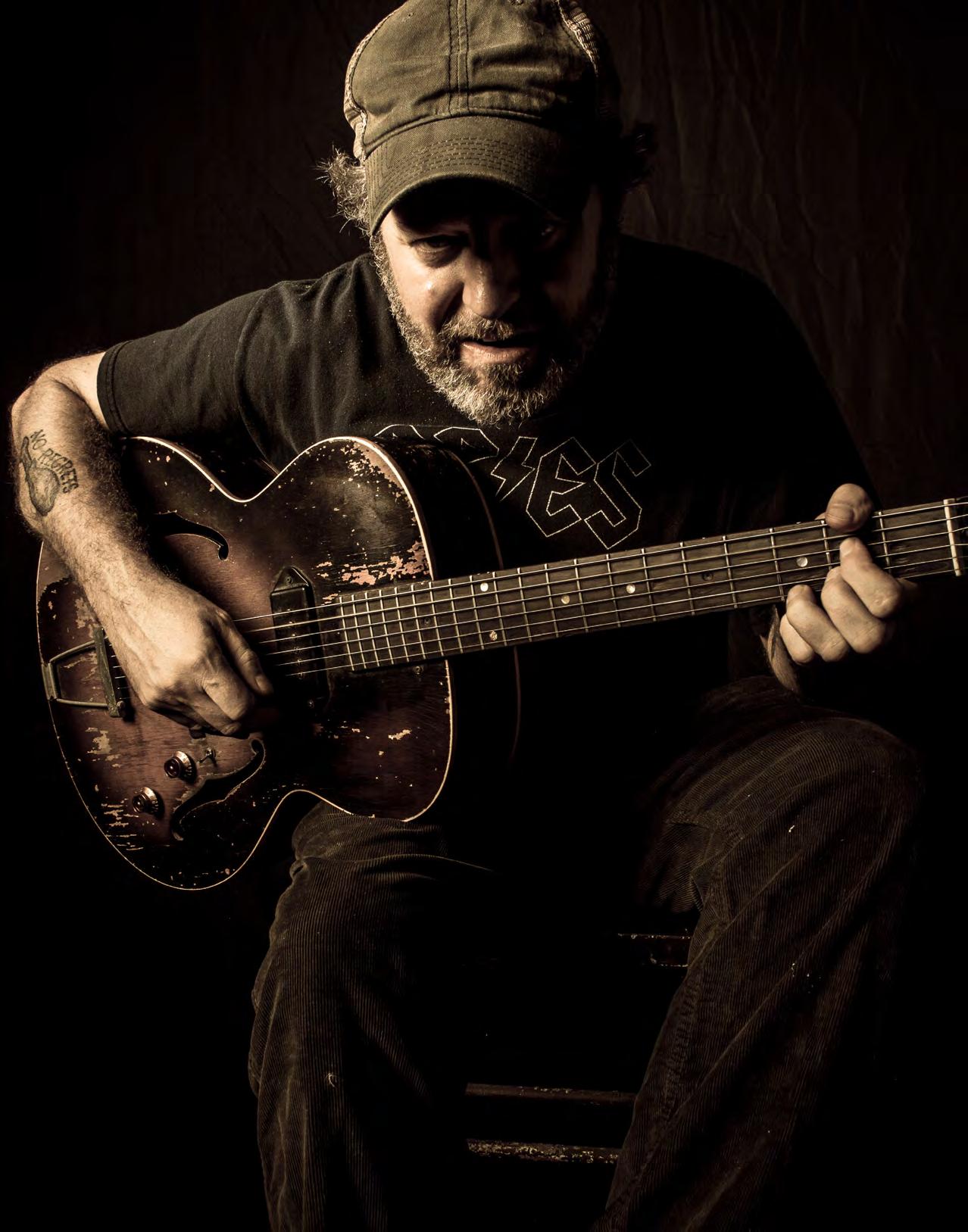
Scott H. Biram
“When you’re singing regularly, when you sing loud and proud and push from your abdomen, it’s kind of a release of some kind and relieves stress and makes you feel a little more like you have got some stuff off your chest. With yodeling it’s like that plus a little bit more. It’s very satisfying when you can pull it off. It feels really good.”
Once Biram broke his leg on tour by slipping at a gas station in France. Laying on the ground, his first response was to yodel. “My body just went to that to get it out of it,” he says.
As he’s aged, he says his voice isn’t as limber as it once was. He’s more likely to pull off a yodel when his voice is conditioned, but not worn out. “It’s kind of a very thin line. On tour I can only really do it the first few shows … after that there’s the nightmarish version.”
Gomez’s experience of the feeling of yodeling mirrors Biram’s. “Tension is a dirty word so often in classical singing, but the sensation of pressure and release, or that musical tension and release, is very satisfying,” she says of the practice.
“ To be able to wield that vocal style has this subconscious communication of confidence,” Shoulders says. You have to have comfort with your “range and gusto.” He gained his power to project by
making loud barn owl calls. “You have to almost physically squeeze that thing out of your body,” he says of yodeling. You don’t hear people try to yodel, he points out, because yodelers have spent hours and hours by themselves practicing it. “The way we talk about singing is that it’s unattainable, ethereal, you have it or you don’t. It’s a craft like anything else. What you hear in people who are yodelers or break-note singers is they’re flexing a muscle they’ve built, using their voice as a tool.”
Making It in America
Despite some yodeling appearing in early American classical music, yodeling is a sound of the people, a folk sound, a working man’s sound. “While [the yodel] may seem omnipresent, it tends to find its most comfortable home in areas outside music’s mainstream, in hillbilly or in cowboy music, for example,” writes Wise in his book on the subject.
While many believe yodeling in American popular music is influenced only by Alpine yodels, Wise notes that the main influences come from Africa, Hawaii, and Europe. Plantenga agrees, adding that some Native American cultures also yodel.
The Pygmy people of Central Africa use gorgeous call-and-response yodeling to speak to the forest before a hunt and as part of other rituals and ceremonies. While these famed Pygmy yodelers were not enslaved by white men and brought to America, neighboring African groups who were used similar vocalizations.
“Yodeling was taught to white guys, white cowboys, the ones you see in the Roy Rogers and Gene Autry movies, in the 1800s from freed slaves and vaqueros who also had falsetto singing and yodeling.” Plantenga says. “It kind of dispels this idea that a bunch of people came from Anglo countries and became cowboys and were already yodeling.”
Many early yodelers in North America were from Switzerland, Germany, and Austria. Swiss Mennonites and Anabaptists came to America starting in the late 17th century and set up colonies. The yodel helped give them their identity in this New World. German and Austrian yodelers arrived in greater numbers during the early 19th century. Around that time, these singers of European ancestry began touring the nation as Tyrolean yodeling groups with their complicated, undulating calls.
Traveling minstrel shows were influenced by those mobile yodelers.
BONICA AYALA PHOTOGRAPHY
Roomful of Teeth
Minstrelsy was a dominant form of entertainment in America until vaudeville emerged. In the 1920s, yodelers like Al Bernard and Frank Kamplain recorded a number of songs Wise describes as “bluesy blackface pieces with yodeling” that also had some Alpine influence. These were “attempts to stereotype African Americans through vocalization.” It became a comedic tool, stripped of its beauty, thanks to the ugliness of minstrelsy. Around that time, Plantenga notes, Black singers were also noted for their yodels, including blues musicians Tampa Red and Stovepipe Johnson.
Mexican vaqueros, or cowboys, who yodeled before American cowboys existed were an influence on the cowboy sound by way of land and sea. Plantenga says that while the falsetto is perhaps indigenous to Hawaii, yodeling was introduced by either missionaries or, oddly enough, vaqueros from Southern California who crossed the Pacific around the turn of the 19th century to care for a herd of cattle gifted to Kamehameha II, second king of the Kingdom of Hawaii.
Hawaiian music gained some popularity in mainland music with the opening of the Hawaiian Pavilion at the
Panama-Pacific International Exposition in 1915, according to Wise. So much so that in 1916, Tin Pan Alley — the dominant music publishers and songwriters in the US at the turn of the 20th century — produced dozens of Hawaiian songs. Some of the songs included what Wise calls “ragtimeinflected yodeling” and some were influenced by the blues.
Jimmie Rodgers, “The Singing Brakeman,” brought the yodel to the mainstream in a new way with his 1928 hit, “Blue Yodel No. 1 (T for Texas).” Rodgers, probably the most influential country yodeler, learned to yodel while working on the railroads with Black Americans and borrowed from their work songs and blues music. His blue yodel songs have been interpreted by Dolly Parton, Bill Monroe, and many others. Meanwhile, Canadian Wilf Carter shot to fame in the US as “Montana Slim” by yodeling with more of an Alpine slant.
“Many cities and towns didn’t allow integrated concerts,” Plantenga says, but musicians, “they mixed all the time. Louis Armstrong has a couple of yodels and worked with Jimmie Rodgers. Those are key to me to show that despite the overwhelming historical generalities around segregation, musicians found
ways to get around it and shared tricks of the trade … making links across prejudices and laws.”
The early-19th century romantic movement idealized the natural world and those who live in it, pushing cowboys into the limelight. In the 1930s, cowboy and Western-themed songs and hillbilly music were popularized through radio and film. Given that the yodel is used as a call to herds across lonely landscapes, the pastoral, solitary life of cowboys made them a prime conduit for the yodel. According to Wise, it became a cowboy signifier. “Yodeling found its contemporary habitat,” he writes.
Musicians like Hank Williams strengthened that cowboy image and tweaked the sound with a mid-word voice break. Plantenga wrote, “‘Lovesick Blues’ tore down the house and fans would faint when he yodeled — with audiences sometimes demanding 14 encores.”
Many yodelers from this time were bequeathed honorary titles, like the “King of the Yodelers” for Kenny Roberts. Patsy Montana, the first female country star to have a million-selling single with “I Want to Be a Cowboy’s Sweetheart” in 1935, was known as the “Rodeo Sweetheart” for her cowgirl garb and
energetic yodels. The first female country music radio DJ and “Queen of Yodeling” Rosalie Allen also had a hit with a yodeling cover of “I Want to Be a Cowboy’s Sweetheart” in the 1940s.
There were other famed female yodelers, like the “Yodeling Blonde Bombshell” Carolina Cotton, who starred opposite the “Singing Cowboy” (and sometime yodeler) Gene Autry, and the “Queen of Rock ‘n’ Roll” and rockabilly, Wanda Jackson, who found fame in the 1960s with “Let’s Have a Party.” Jackson was inducted into the Rock and Roll Hall of Fame in 2009.
The yodel flowed across musical genres. While yodels and howls in early blues music influenced Jimmie Rodgers, Rodgers actually taught the great bluesman Howlin’ Wolf to yodel. Howlin’ Wolf then created his own influential signature sound. Neither of them was the first famous blues yodeler: It’s said that “King of the Delta Blues” Robert Johnson also yodeled.
The yodel also found a home in jazz with musicians like Leon Thomas, who yodels in “Pharaoh’s Tune (The Journey),” and in folk music with singers like Goebel
Leon Reeves, famous for “Hobo’s Lullaby.” Sam Cooke’s “gospel yodel” may not meet Wise’s definition of yodeling, but is popularly regarded as such.
In 1996, 14-year-old LeAnn Rimes jumpstarted the yodeling tradition yet again. She had the idea to add a yodel to her hit “Blue,” which was originally set to be sung by country legend Patsy Cline a generation earlier. “Blue” won the Grammy for Best Country Song in 1997.
The Yodel Endures
The biggest misconception of yodeling, according to Plantenga, “is that it’s dying,” but his second book aims to dispel this myth.
The yodel endures through the voices of singers like Jewel, Beck, the late Dolores O’Riordan of The Cranberries, and many others. Pop stars Justin Bieber and Benny Blanco revive it on their 2020 song “Lonely.” British roots singersongwriter Yola belts out the occasional yodel, as does indie-folk artist Angel Olsen. Pharis and Jason Romero’s 2020 LP Bet on Love was nominated for Best Album by the International Folk Music
Awards, and Pharis yodels beautifully on the title track.
Nick Shoulders is one more artist who is making the yodel his own today. In New Orleans, he was part of a street music scene where he found musicians who studied country musicians that came before and are creating their own neo-traditional country styles.
It prompted him to listen to his grandfather’s recordings and sing with his grandmother. He realized, “I could pursue this not just as novelty; this is a craft.” He reveled in the voices of his idols, Almeda Riddle and Roscoe Holcomb, who grew up in landscapes similar to his own and possibly found the scope of their vocal power in nature as well.
“I wanted to be relevant and play traditionally,” Shoulders explains. His growing success is a testament to the future of the yodel. “That high waver,” he says, “just does something to people’s brains.” And for that reason, the sound of the yodel continues to bounce back at humanity, as if echoing, from mountain to mountain, each time sounding a little bit different, each time evolving. ■
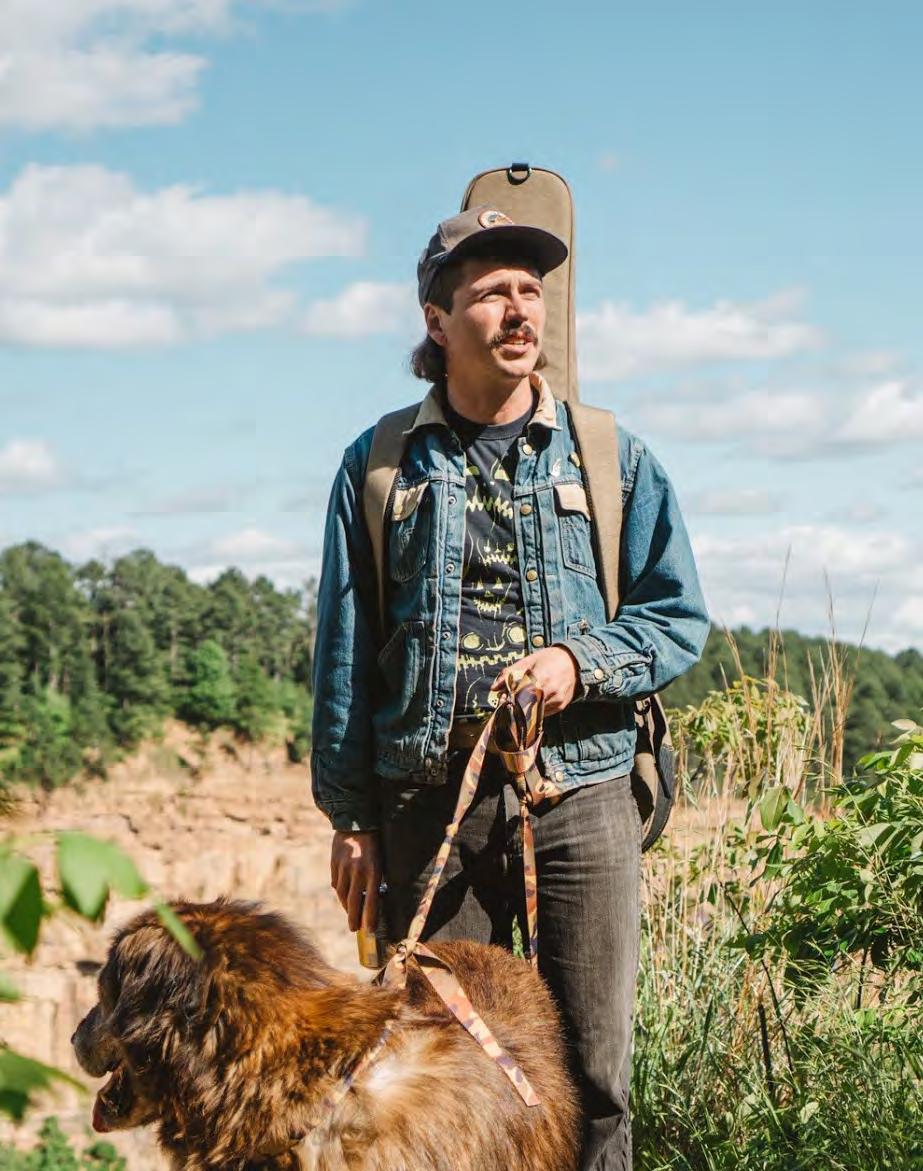
Nick Shoulders
UNEARTHED SOUNDS
Inside the Memphis sacred-soul revival
by Alan Richard
In a reStored memPhiS brownstone dating to the 1860s, Pastor Juan D. Shipp danced and pointed through the studio window as his old friend Elizabeth King, who’s been called the Memphis Queen of Gospel, sang a new song of joy.
At 82 years old, Pastor Shipp —a music producer and local DJ on Memphis’ new community radio station WYXR as well as a former small record-label owner — was urging King and the backing Vaughn Sisters to deliver their verse with just a little more punch.
King, now 76, with her hair whitishgray and her step a bit slower than when she was recording popular local singles in the 1960s and ’70s, was singing about the end times. But she was also reflecting on the current state of affairs in America, with the sisters ringing in with the call and response:
Callin’ right wrong (Right wrong!)
Callin’ wrong right (Wrong right!) Lets me know why we’re livin’ in the last days.
While it was just another day of music in Memphis, the session marked a step
toward rebirth for the city’s groovy gospel music.
In his 2010 book Soul Music: Tracking the Spiritual Roots of Pop from Plato to Motown, author Joel Rudinow writes that soul music establishes and honors “a lineage linking African American secular music innovations with the work of the African American church.” Sacred-soul music, therefore, maintains that musical flow, replacing secular lyrics with religious ones.
Although Memphis had been a hotspot for sacred-soul around the 1960s, the secular-meets-spiritual genre is seeing a revival. In late 2019, Bible & Tire Recording Co. released a collection of King’s early gospel sides and unreleased tracks called Elizabeth King and the Gospel Souls: The D-Vine Spirituals Recordings, which Shipp produced. And in April, King released an album of allnew recordings, Living in the Last Days.
For King, this new musical journey is the answer to a prayer. After nearly 50 years without making a record — despite singing in church and on radio for many years — she wanted the chance to reach others beyond the neighborhoods of Bluff City.
“Somebody thought enough of me after all those years to want to invest in me at an old age. That’s a blessing from God,” says King. “It really means something to me, because it’s really a way of life for me.”
That Bluesy Touch
In 1969, Pastor Shipp was a DJ on gospel radio station KWAM in Memphis. Frustrated by the poor quality of some local recordings, he took matters into his own hands.
He’d heard about Tempo, a little recording studio downtown at the corner of Union and Hernando, across from the Greyhound bus station and just a few blocks from Beale Street. He dropped into a little cafe next to the studio and found Clyde Leoppard, a rockabilly pioneer who sometimes played drums on sessions at nearby Sun Studios and later joined the Snearly Ranch Boys.
Leoppard agreed to rent the studio to Shipp for his gospel recordings. Many of the hundreds of records Shipp produced there — some of them lost to time — feature funky wah-wah guitar, rare even now for gospel music. It gave the records a touch more soul than most.
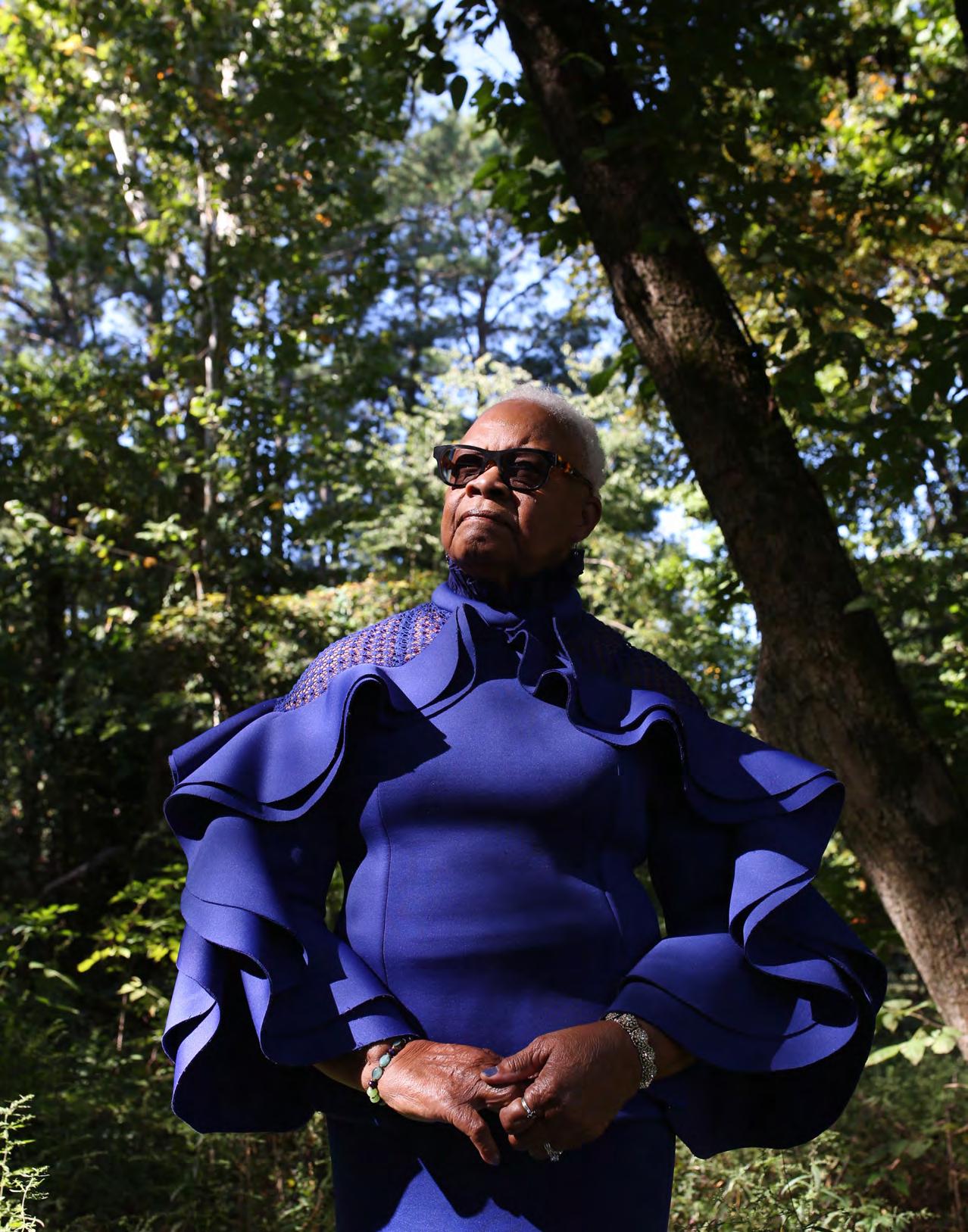
Elizabeth King
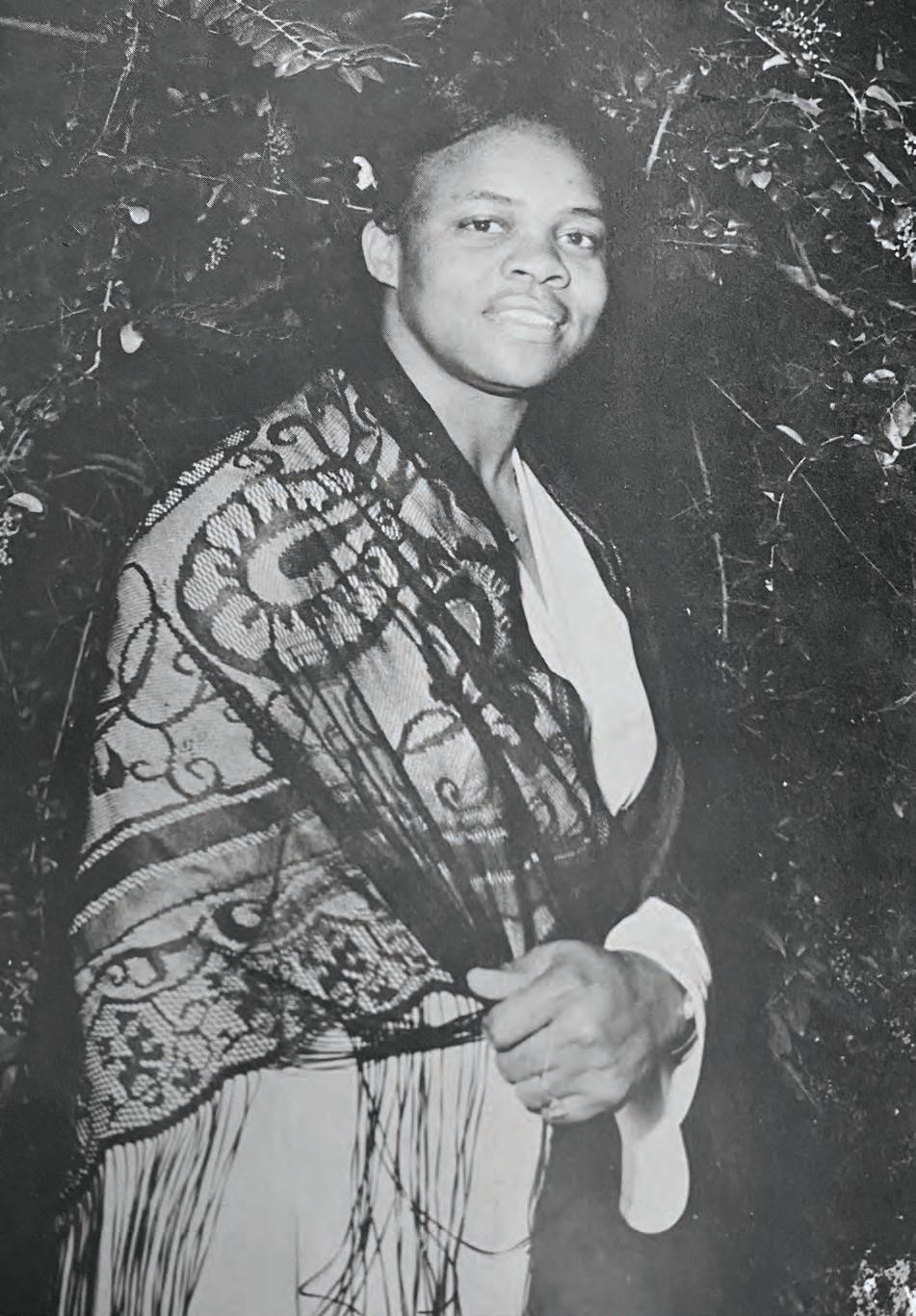
Elizabeth King (captioned as “Sister Liz King”) in an undated photo from Mt. Olive Baptist Church.
“It has that ring, that bluesy touch to it,” Pastor Shipp says of the Memphis gospel sound during a break in one of the recent sessions with King.
In those earlier years, word had begun to spread of Shipp’s tutelage and recordings, and groups from Detroit, Alabama, and nearby Arkansas and Mississippi were flocking to Memphis to record their own 45s to sell at the outdoor festivals and churches where they performed. Shipp kept producing these gospel singles into the late 1980s.
Shipp had two labels back then: D-Vine Spirituals for King and other top acts and JCR Records for singers or groups who weren’t quite ready for prime time.
“I knew the local groups,” Shipp says. But the groups who began to contact him from afar, “they knew me.”
‘Musical Archaeology’
Bruce Watson, a middle-aged white fellow, longtime music producer and record collector, and founder of Bible & Tire, kept running across the funky 45s that Pastor Shipp had made with the gospel artists.
“Gospel music to me was like it is for so many other folks — it’s really hard to listen to,” Watson says. But not Shipp’s records. “That was soul music. That was blues — they just talked about God and Jesus. It touched me in a visceral way.”
Much of Watson’s work involves unearthing lesser-known American music. As the veteran in-house producer
and engineer at Fat Possum Records (which is based in Oxford, Mississippi, about a 90-minute drive southeast of Memphis), he’s helped the label reissue old recordings and create new ones by bluesmen T-Model Ford, R.L. Burnside, and Junior Kimbrough, as well as find newer acts such as The Black Keys.
As Fat Possum began to explore a wider musical territory, Watson started Big Legal Mess Records in 2009 to focus only on roots music. He’d already released an exceptional collection called The Soul of Designer Records, culling songs from another deep-soul, rawgospel Memphis label.
Five years ago, after many years in Mississippi, Watson sold his recording studio in the community of Water Valley to Matt Patton of Drive-By Truckers and moved north to Memphis. There, he built Memphis Record Pressing, the first new vinyl manufacturing plant to open in the US in decades, but he sold his part shortly thereafter. He used the proceeds to open Delta-Sonic Studios in 2018 and started Bible & Tire in 2019 to focus on gospel records, naming the label for a shop he’d spotted in Kentucky that carried both. The label’s slogan is: “Retread Your Soul.”
Watson might never have found his way to Pastor Shipp and the sacred-soul gospel legacy without musician friend Michael Hurtt, who would dig for old, independently released 45s when he’d visit Memphis on tours with his New Orleans-based bands The Royal Pendletons and The Haunted Hearts.
There was something about the D-Vine Spirituals and JCR records that stood out. To Hurtt, they were passionate and innovative, and the labels’ collections seemed endless. The link: Pastor Shipp’s name was on all of them.
Hurtt and Pastor Shipp first connected about 10 years ago. They started asking around town about what might’ve happened to Shipp’s master tapes, leading them to Clyde Leoppard’s old studio in nearby Olive Branch, Mississippi, where Leoppard’s family revealed that all of Shipp’s master recordings had been water-damaged and needed salvaging. After rescuing the tapes, the men brought them to Electraphonic Recording in Memphis, a studio owned by their musician/producer friend Scott Bomar, who plays in groups like The Bo-Keys and Impala, and whose film credits include the 2005 film Hustle & Flow. They stayed in storage there for years, but when Watson began asking Hurtt about the pastor’s recordings, the three struck a deal to begin re-releasing the old material.
An arduous process of listening to, transferring, and cleaning up the tapes ultimately yielded The Last Shall Be First, The JCR Records Story, Volume One, released on Bible & Tire in 2020. Volume Two is set for release later this year and Hurtt is writing the liner notes again, like he did for The Soul of Designer Records Hurtt, who’s now based in Detroit, calls Shipp’s older recordings a “piece of musical archaeology” that allows listeners
to hear some of Memphis’ grassroots talents in their unadorned glory. “You put these records on and they just come to life,” he says. “There’s so much mystique here.”
But Pastor Shipp knew these recordings were special all along. About their rediscovery, he says, “I consider it divine intervention.”
A Memphis Mix
Like much of the music Pastor Shipp produced, King’s songs seem divined from the sounds that converged in Memphis — church music, the blues of the Mississippi Delta and downtown blocks where Robert Johnson and other greats spent many a night, and even country and rockabilly made just down the street at Sun Studios.
Raised in Tallahatchie County, Mississippi, King joined the church choir as a girl and began singing with her parents at just three years old. Growing up, her father, Mack Brock, would play the harmonica around their home and her mother, Bessie Brock, would sing.
“She had a voice that … when she sing a hymn, the whole church would have tears in their eyes,” King recalls. “It fills me up when I talk about it.”
King married young and moved to Memphis and joined a vocal group before going solo. Later, at church, she met the Gospel Souls, an all-male group who, like King, had recorded for Designer Records. That’s where she met Pastor Shipp, who was friends with her second husband.
One of the first songs they recorded together was the old hymn “I Heard the Voice,” which stayed on local charts for five years and opens the 2019 compilation of her old singles. “I heard the voice of Jesus say,” she sings softly on her old hit, as the doo-wop style harmonies of the Gospel Souls swoop in. By the end, King becomes a fiery shouter, reminiscent of
famed Stax Records singer Carla Thomas, but with more grit.
Shipp clearly remembers those first sessions with King nearly five decades ago.
“I was in the studio with Liz when we were cutting ‘I Heard the Voice.’ And she wasn’t singing it the way I wanted her to sing it,” he told Memphis columnist Jared “Jay B.” Boyd for a story originally published in the Daily Memphian. “I said, ‘Liz, sing this song like you are making love to Jesus.’”
King’s voice continues to stand out on her new album, which is like a legacy being handed across generations. Living in the Last Days features a range of collaborators of all ages and backgrounds, as well as traditional songs that have been modernized.
King’s backing band on the album, The Sacred Soul Sound Section, includes guitarist Matt Ross-Spang — who has production or engineering credits with the Rev. Al Green, John Prine, Margo Price, William Bell, Jason Isbell, and more — and a horn section comprised of Memphis veterans like Art Edmaisten and Jim Spake. Additionally, two iconic Memphis groups who recorded with Shipp decades ago provide harmonies — The Vaughn Sisters (comprised of Pastor Carolyn A. Brown, Deborah Ballard, and Mae Hicks, who are all kin to bluesman Johnny Ray Daniels) and the D-Vine Spiritualettes. The Sensational Barnes Brothers, whose own excellent record on Bible & Tire was released in 2019, also sing backup on five tracks. (Watson had seen the brothers at Bomar’s nearby studio and met them while producing a record for bluesman Robert Finley, but as it turned out, King had once been the Barnes brothers’ babysitter.) Additional guest appearances from other younger, mostly white musicians include Al Gamble from Alabama-based St. Paul and the Broken Bones and Rick Steff from the
Memphis-based Lucero, both on organ, and local singer William Graves.
On the opening track, “No Ways Tired,” the bass thumps and the guitar’s wah-wah crunches as King’s weathered, yet powerful voice cuts through. Then comes the upbeat title track, which made Shipp dance in the studio, a groove laden with gospel organ, and Will Sexton’s funky guitar clearing the way for King.
Another song, “Testify for Jesus,” was first released as a 7-inch single for Record Store Day in 2020. But that was the second time King had recorded it: Her original single for Designer in 1970 now sells for $50 or more online.
“I like the old version and I really like the new version of it,” King says. “It’s kind of like a wake-up call, where you put the cream in the coffee. It kind of makes you want to move, do a little more for Christ.”
The new album closes with her beautiful, rustic take on “You’ve Got to Move,” a song perhaps first released in 1948 on a 78-rpm record by the Two Gospel Keys, a duo of Emma Daniels on guitar and Mother Sally Jones. Sister Rosetta Tharpe later covered it, as did Blind Boys of Alabama, Sam Cooke, Mississippi Fred McDowell, and, most famously, The Rolling Stones on 1971’s Sticky Fingers.
King’s meeting of the souls with Shipp and Watson gives new life and lends new ears to a subgenre of gospel that otherwise might have been lost. The whole endeavor has fostered new friendships across generations and backgrounds and introduced King and the sacred-soul sound to a wider audience than she could have ever hoped and prayed for.
“At my age, I am living in the last days,” King says. But, she continues, “I am no ways tired, and as long as God gives me strength, I’m going to sing, after all of these years passed by.” ■
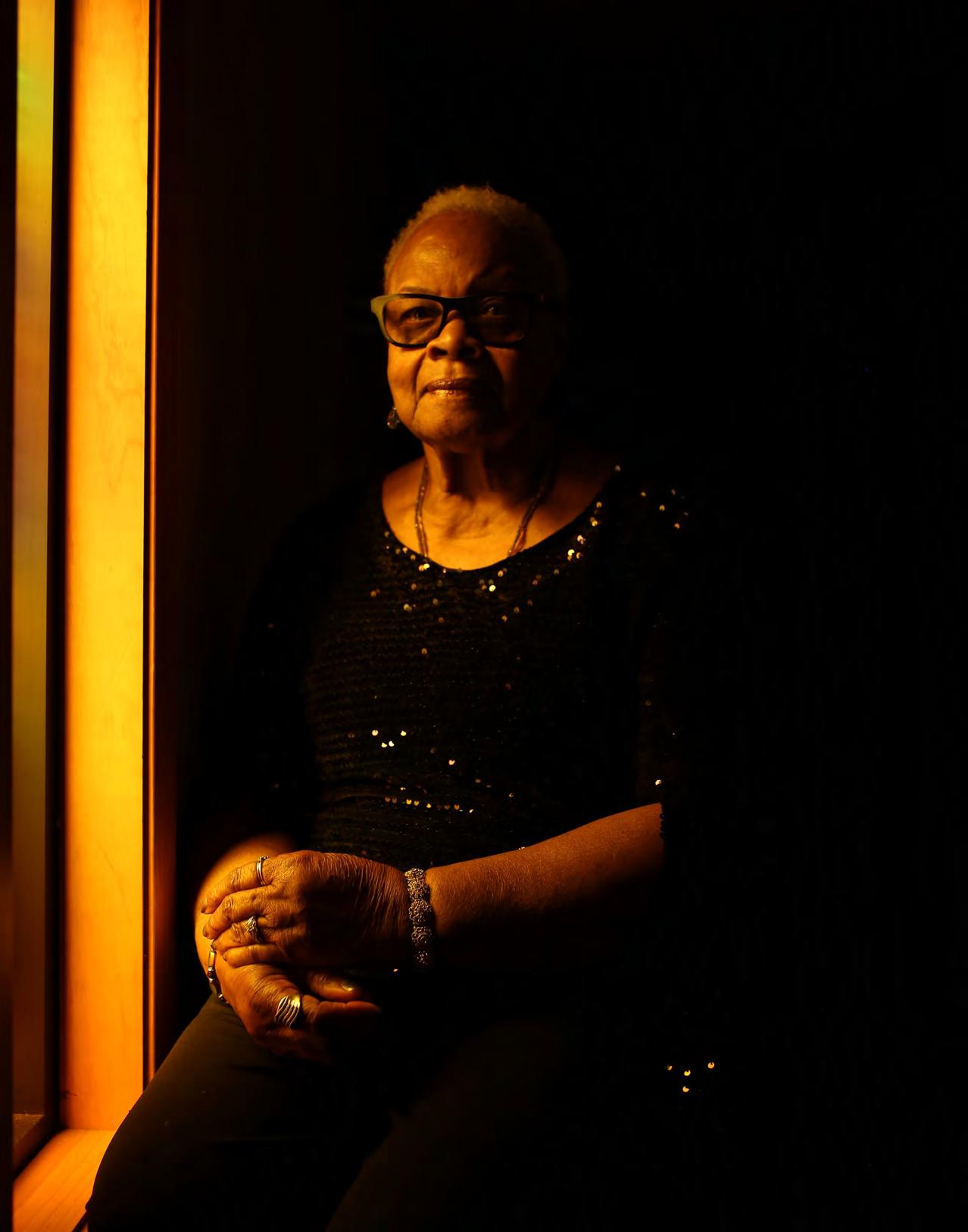
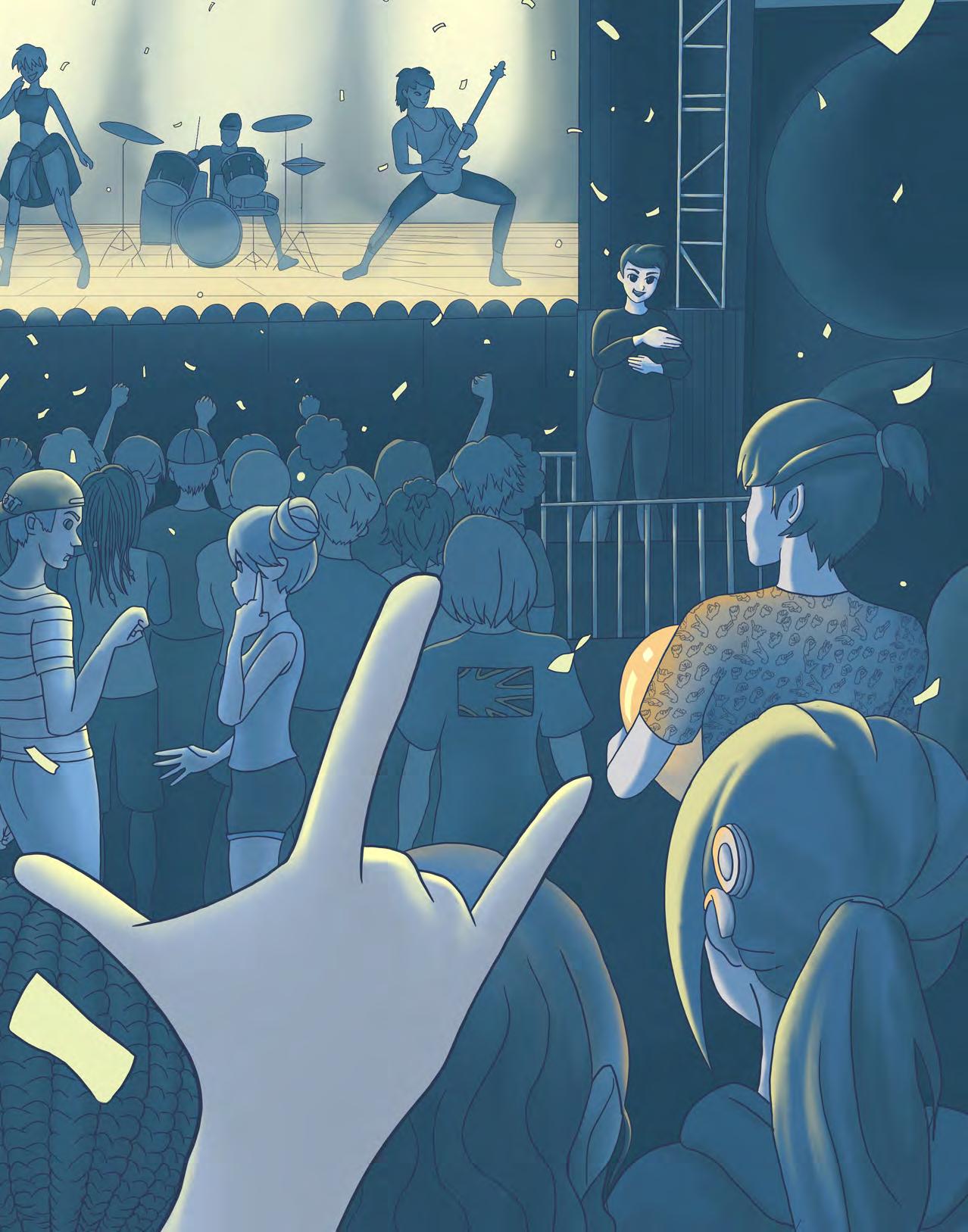
MORE THAN WORDS
Sign language interpreters connect deaf audiences to the music they love
by Stacy Chandler
Deaf muSic fanS attend concerts for the same reasons that hearing music fans do: for the energy of a live performance, the feeling of community, and the power of music to connect and transport and teach.
“ There’s just so much happening at a concert beyond words,” says Edie Jackson, a South Carolina-based American Sign Language (ASL) interpreter who has worked at concerts and festivals for nearly a decade and a half. “It’s just this shared energy in this building or in this festival that you can’t really put words on to begin with. And then you’ve got the lights and the light show and the social aspect of it, all your friends are there, you’ve got this crazy amount of bass vibration. You’ve got this nutty vibration that’s just adding to that connected energy.”
But the words of a song do matter, no matter how they get in. Which is why ASL interpreters are vital to the enjoyment of deaf music fans like
George Martens, who has been attending concerts — particularly those of The Grateful Dead and its successor, Dead & Company — for more than three decades. He’s part of a community called “Deafheads,” fans who have found each other at shows and experience the music in ways that vary according to each individual’s particular abilities and preferences, but that differ from the rest of the venue’s hearing audience. Many of them hold inflated balloons during shows, absorbing the music’s vibrations and adding an additional bit of fun to the section in which they’re seated.
Another commonly shared experience is having to advocate for themselves at venues that may be unfamiliar with — or in some cases inconsiderate of — their needs.
The Americans with Disabilities Act, originally passed into law in 1990, requires “any place of public accommodation” — including music venues and festivals — to provide an ASL
interpreter if a patron requests it. But there are few guidelines beyond that. Deaf concertgoers often need to work with a venue far in advance to make sure not only that an interpreter will be present, but that their seats will be positioned so the interpreter is visible throughout the show.
“It’s often been a struggle,” Martens says via an interpreter on videoconference. “It’s a lot of energy to get shows to be accessible to us. I do think it’s much better and things are improving, and I think they’re going to continue to.”
‘Music Is Medicine’
One of Martens’ earliest musical memories is going to New York’s Lincoln Center with his mother when he was 9 years old. Wearing specialized headphones helped him take in the classical music he saw being performed on stage.
“I was blown away, like, ‘Wow, music is
amazing!’ And that sort of got me into it and turned me on to music,” Martens says. But it was several more years until music became a regular part of his life. “I hated having to wear this big, bulky device that was very visible, and I’d get bullied if I wore it. So I just kind of gave that part of my life up and got really into sports.”
But as a teenager, he found himself drawn to music again, he recalls. “I wore these big headphones and plugged them into the stereo system. And I just was like, ‘You know what? I don’t care. I love this and I really enjoy it. So I’m going to get into it.’”
In addition to the Dead, he loves blues, jazz, bluegrass, and folk. At concerts, he likes to be near the front so he can see the interpreter but also so he can feel the vibrations and be close enough to the band to lip read. At home, he wraps his hands around a portable speaker while he listens to music, usually in his living room, where the walls are adorned with Dead posters.
“When I was born and my mom
found out I was deaf, the first thing she thought was, ‘Oh, no, George will never be able to hear music,’ and here I am loving music,” he says. “So I thank my mom for exposing me to music and encouraging me to enjoy it. For me, music is medicine.”
Warren Snipe, better known as Wawa, and very well known since January as the man in the maroon shirt and tie who gave an ASL interpretive performance during the national anthem at this year’s Super Bowl, is a music maker as well as a music fan. Deaf since birth, he calls his style of music “dip-hop,” describing it through an interpreter as “hip-hop through deaf eyes.”
“What I’m trying to convey in my music is explaining deaf culture, through hip-hop as a platform,” says Wawa, who recently released an album titled Wamilton and a COVID-19-themed single, “Loud.” “What I’m trying to do is introduce the whole world to the deaf culture, which is just so beautiful and rich, and I want to invite them into our
world so that they can see our world from different eyes.”
ASL performances like the one at the Super Bowl are another way he extends the invitation. Beyond just interpreting lyrics, ASL performers aim to fully embody the people on stage, using large movements and facial expressions to transmit emotion and artistry. “As an ASL performer, you’re really taking on more of the characteristics of the performer that’s singing, it’s not just the words,” he explains. “You have their lyrics and you have the music and you’re really transforming it into three-dimensional space.”
Whether at the Super Bowl or a somewhat smaller venue, ASL performers provide a service for deaf and hearing audience members alike, Wawa argues.
“ They actually attract hearing persons as well, because then they see the performer using ASL. They see that there’s a nice mixture and there’s a camaraderie — we’re all there to enjoy music. And so that’s the commonality we
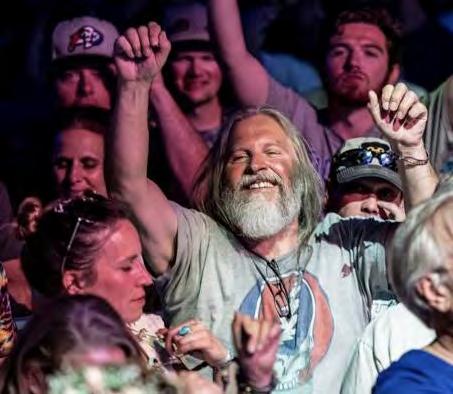
George Martens attends a Dead & Company show in Boulder, Colorado, in 2018.
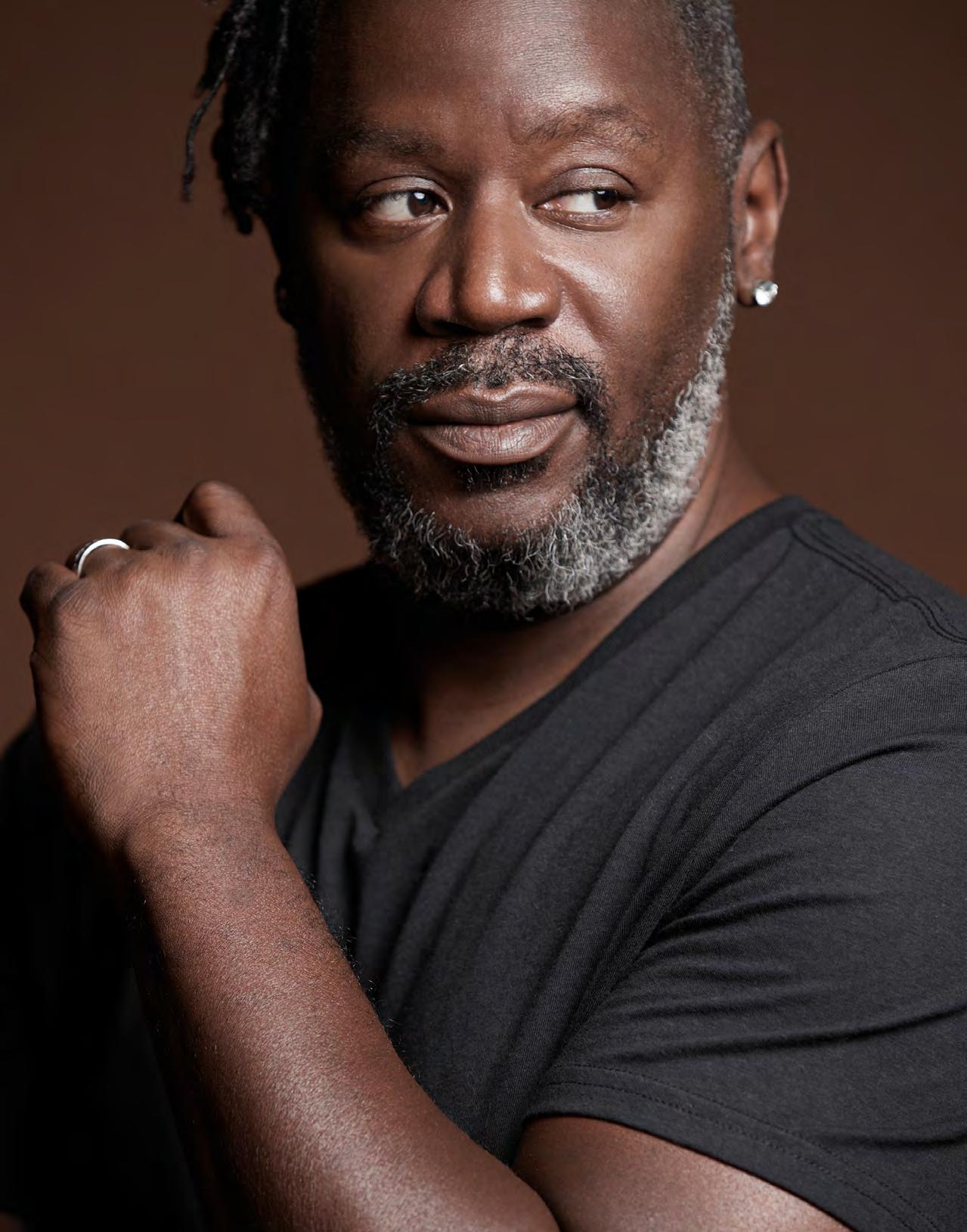
Warren Snipe
“As an ASL performer, you’re really taking on more of the characteristics of the performer that’s singing, it’s not just the words,” he explains. “You have their lyrics and you have the music and you’re really transforming it into three-dimensional space.”
Warren Snipe
have regardless of deaf or hearing.”
Found in Translation
ASL shouldn’t be confused with signed English, various systems in which users communicate every word of spoken English, and in some cases individual letters, with a hand sign. ASL is its own distinct language, with its own grammar and sentence structure. It’s best to think of it not as English at all — people who know ASL may not be able to understand British Sign Language, for example, and Black American Sign Language has significant variations from ASL.
As with any translation from one language to another, interpreters have choices to make about how to convey meaning, and a responsibility to do so with accuracy and sensitivity. Music, with its subtleties and subtexts, is a particular challenge, but one that some creativeminded interpreters gladly embrace.
“It’s art,” Valerie McMillan, an ASL interpreter in North Carolina, says of interpreting music. “You can put me and another skilled interpreter beside each other, and we would never interpret the same way.”
The decisions each interpreter at a
concert makes in the moment involve much more than just translating words. ASL interpreters use hand signs, facial expressions, and body movement to convey not just the music’s lyrics, but also meaning and mood. McMillan works to communicate unspoken qualities like tempo even before singers begin.
“I think that’s important because we’re interpreting for a variety of deaf people,” she says. “And when you don’t know who you’re specifically interpreting for, you want to incorporate as much as you can, because maybe bits and pieces of it resonates with someone, it connects with someone.”
During the livestreamed Shout & Shine showcase at the International Bluegrass Music Association’s virtual conference last fall, McMillan’s interpretations were visible to all viewers in an inset screen as the bands performed. Her hands moved gracefully along with the words, even when they piled up fast, and her face amplified the emotion in each song. But she didn’t take a break during fiddle solos or even for entirely instrumental songs. Her hands mimicked the instrument players’ motions, but her face really told the story, taking on the emotion of the piece as her
hands and body communicated the tempo and rhythms.
It’s not a technique taught in school, or a choice that every interpreter makes when an instrumental song is on the set list. But McMillan, who was born to deaf parents but has full hearing herself, does it because she knows it might matter to someone like her father, who would ask her, when she was a child, to put on music by Michael Jackson or Earth, Wind & Fire.
“He liked them because, one, they were entertainers. He had no idea what they were saying, but they were entertainers for sure,” she says. “And their beats. He felt the beat and he would go, ‘Give me the words,’ and I’d have to sit home and interpret the music as best as I could as a child. If I didn’t know the word itself, I gave it here” — a joyous grin spreads across her face — “gave him the full meaning of the song. And so it just comes natural for me to know to incorporate that.”
Navigating Nuances
Edie Jackson began her career teaching deaf and hard of hearing students, but added ASL interpretation at live music events as a side gig after watching an
“There is such a familiarity there, she knows our whole catalog. There’s the person that’s been down that road so many times it’d be like having a band member playing as opposed to having somebody just trying to fill in. She’s so familiar that she just gets in the groove and, you know, we jam together.”
John Bell
Widespread Panic
interpreter at work during a Tracy Chapman concert. She had interpreted a few local concerts in small venues when she got a call for something very big: a Widespread Panic show at Red Rocks Amphitheatre in Colorado.
She knew some of the band members through her husband, who had once worked on their crew, and when they got a request for ASL interpretation, they remembered her line of work and got in touch. Fourteen years later, she’s still their go-to interpreter, flying out to shows on evenings and weekends to fit around her teaching job.
It’s an unusual relationship since generally venues, not bands, arrange for ASL interpretation. But Widespread Panic has made working with Jackson a priority, marking her importance to the band as well as to their fans, many of whom, hearing or not, consider her a key part of the show.
“ There is such a familiarity there, she knows our whole catalog,” says Panic singer and guitarist John Bell. “There’s the person that’s been down that road so many times it’d be like having a band
member playing as opposed to having somebody just trying to fill in. She’s so familiar that she just gets in the groove and, you know, we jam together.”
Jackson and other interpreters are ready and able to hang with improvisation when needed, but to do their best work, they learn the songs inside and out in advance and hope that the band will provide a set list so they know what to expect at the concert and can even practice their signing before it starts. And when things go really right, the band will even take some time to discuss the concepts behind their songs with the interpreter, which aids in a more accurate — and artistic — interpretation.
Before a Widespread Panic show, Jackson and Bell will often have a quick huddle to go over new songs, or new twists on old songs. Bell tries to explain not just literal meanings, but also the emotions and intentions in the music.
Because ASL and English aren’t the same language, every moment of interpretation involves choices, a navigation of nuances to make a message clear but to leave room for an audience
member to make their own associations.
“I don’t want to just lay it out there all in black and white; people have their own interpretations of songs,” Jackson says. “So you don’t want to give away too much, but knowing exactly where they come from, I feel comfortable giving somewhat of an interpretation.”
A hearing person watching Jackson on the side of the stage might assume she’s dancing along to the music, and she is, but there’s meaning in every movement. She uses her shoulders and hips to mimic drum and bass parts, and like that rhythm section, her timing in interpretation is important: She wants her audience to laugh at the band’s jokes or get the shock of “something naughty” in a lyric right along with everyone else, she says.
Even as Jackson — like most interpreters — works hard not to distract from the main event on stage, it’s hard not to pay at least a little attention to someone using their whole body to communicate the wide world of meaning packed into a song. Bell himself tends to take notice, even after 14
years with her at side stage.
“It’s fun to watch her when you’re on stage, but I have to not do that, because I get distracted,” Bell says with a laugh. “You sing the lyric and you go, ‘Oh wow. That’s what that looks like!’ But then I gotta go put my head back in the game.”
Opening Opportunities
When Toshi and Pete Seeger launched the Clearwater Festival in New York’s Hudson Valley in 1966, accessibility was a core part of the mission — a pioneering aim decades before the ADA would be put in place.
“One of the things that I remember … is that Toshi said, ‘When you say folk music is music of the people — which people?’” says Jody Prysock, an ASL interpreter who started working with Clearwater soon after its founding. “And so Clearwater had interpreters.”
The Falcon Ridge Folk Festival, about 80 miles north, adopted that same ethos into its own founding a couple decades later, and Prysock was one of two inaugural interpreters for that event.
Several more have since been added. The festival hires interpreters every year, whether or not they’re requested, a choice that has wide reverberations.
“There are people who’ve come and seen interpreters and they want to become an interpreter, or they want to become a teacher of the deaf, or they just have an understanding of another cultural, linguistic minority that’s marginalized, or they’re an employer and they never thought of hiring a deaf person,” Prysock says. “So the implication is you can’t be myopic. You can’t just look at this as about an interpreter on the stage and what is it going to cost me. It’s about bringing people to the table.”
Still, even three decades after ADA became law, many festivals and venues view ASL interpretation as an afterthought, a task added to the to-do list only if someone asks for it. When a request does come in, important details — like lighting for the interpreter and clear sight lines for deaf patrons — often get overlooked. Interpreters are used to arriving to the gig early and troubleshooting in the frantic few hours before
showtime.
ASL performer Wawa wants things to go more smoothly for deaf artists, too. While some have been able to gain a foothold in mainstream pop culture — like Signmark, a Finnish rapper signed to Warner Music, or Mandy Harvey, who competed on America’s Got Talent — he sees a lot of room for improvement. Like most other deaf music fans and creators, he’s worked hard to make the industry aware of the importance and power of accessibility. But it’s up to the hearing to listen.
“There’s opportunity to be more open and to be welcoming and to let this deaf talent in and give them an opportunity to show what they can do,” he says. “I just wish that we weren’t looked down upon and discounted because of their assumption that we can’t enjoy music, that we can’t make music, which is untrue. And so if you want to find out these things, don’t judge us without asking us. Meet us halfway and try to enter into our world. We have so much to give and we’re ready to do so. It’s the 21st century. So the time is now.” ■
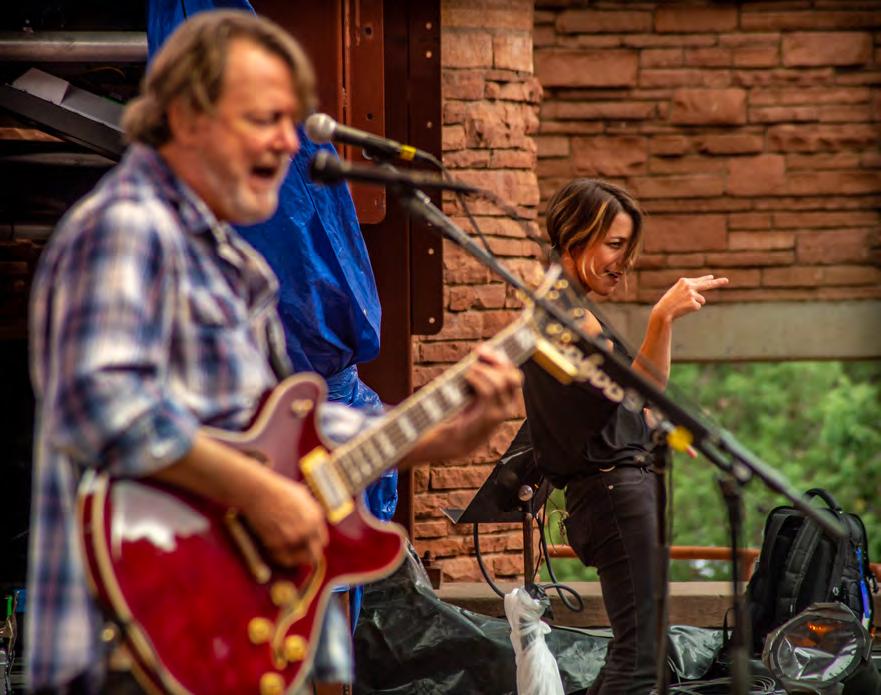
Edie Jackson provides ASL interpretation at a Widespread Panic concert at Red Rocks in 2018.
A Warrior for My Voice
by Chris Pierce
The human voice constantly reminds me of the power of our spirit and our capacity for renewal. Sound is energy, and our voices contain our wisdom, fragility, courage, and influence. My personal relationship with the power of the human voice started like many others, with nurturing sounds from my parents — the gentleness of my mother and father singing, whispering and laughing as I listened in wonder. When I was young, music flowed through our home and had the capacity to instantly take over every cell of my body. I remember milk crates containing vinyl records of the great singers and orators of our time. Folk sounds. Rolling and rocking sounds. Blues and rhythm sounds. Classical sounds. Jazz sounds. Sounds of joy and anthems of pain, or hope, love, peace, and justice. I discovered how the human voice shifts the energy in a room, on a stage, or even on our entire planet. Music and its power in my home became personal to me. I soon had a deep desire to lift my own voice in song and to shelter in that sacred place as I grew into my future.
Growing up, I found myself gravitating to communication through singing and musical conversation. I realized that singers can uniquely share perspectives and that songwriters have the capability and responsibility to open the door for emotion, and for spiritual and physical healing. Our voices have the ability to achieve miraculous results through openness and vulnerability. It became apparent to me that I must sing my truths, sing from the depths of my being and celebrate authenticity.
However, when I was a teenager, I went deaf. I was diagnosed with otosclerosis, a rare hereditary hearing disorder. My heart was broken, my soul was in crisis. It felt equivalent to losing a loved one. I dreamt of sounds and visualized musical compositions in hopes that miraculously I’d wake up and be able to hear again. Thankfully, through the support of family and the community, I was able to have surgery on my right ear and get some of my hearing back. It was a grueling process and I had to learn voice placement in conversation and song over again.
Losing and regaining part of my
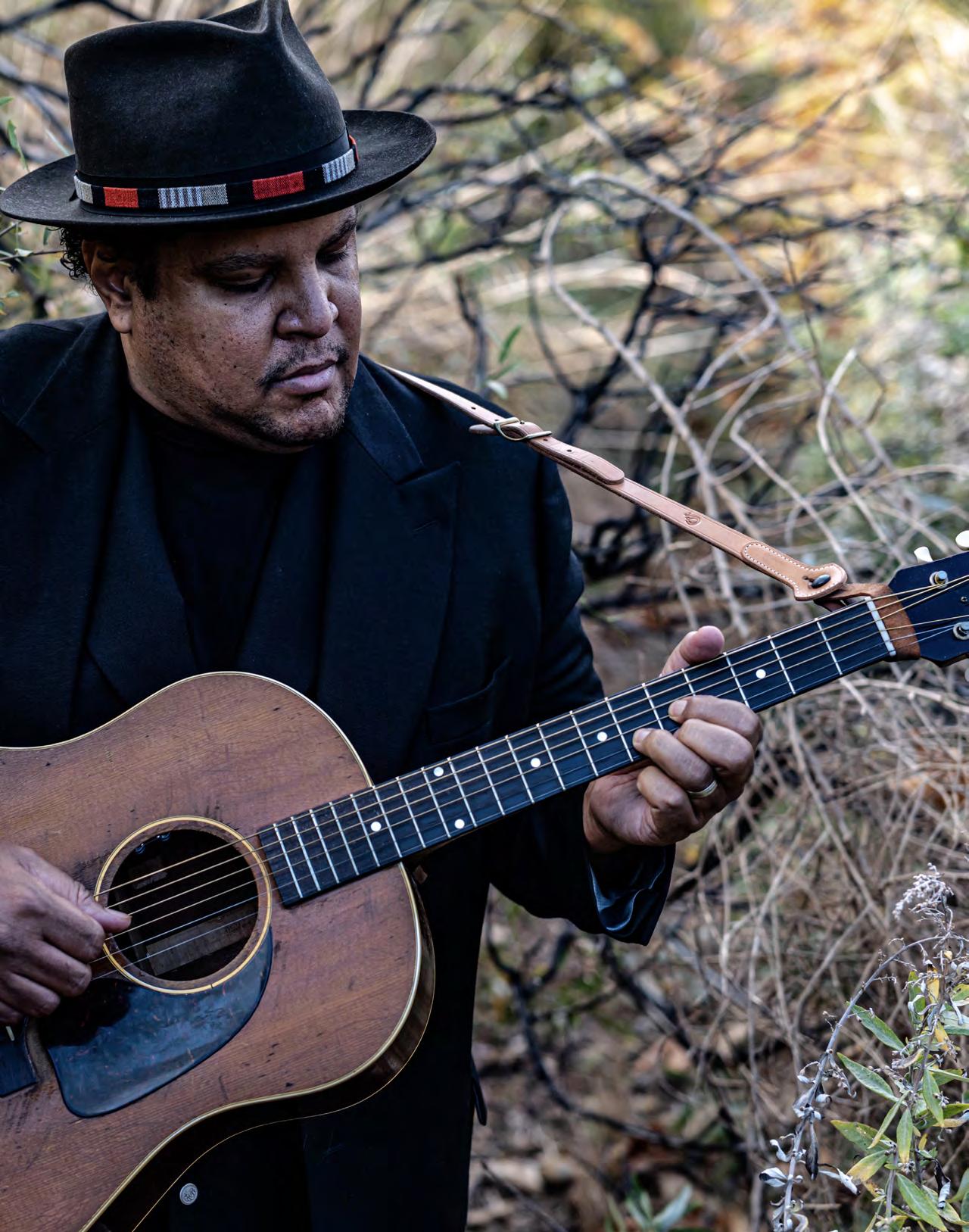
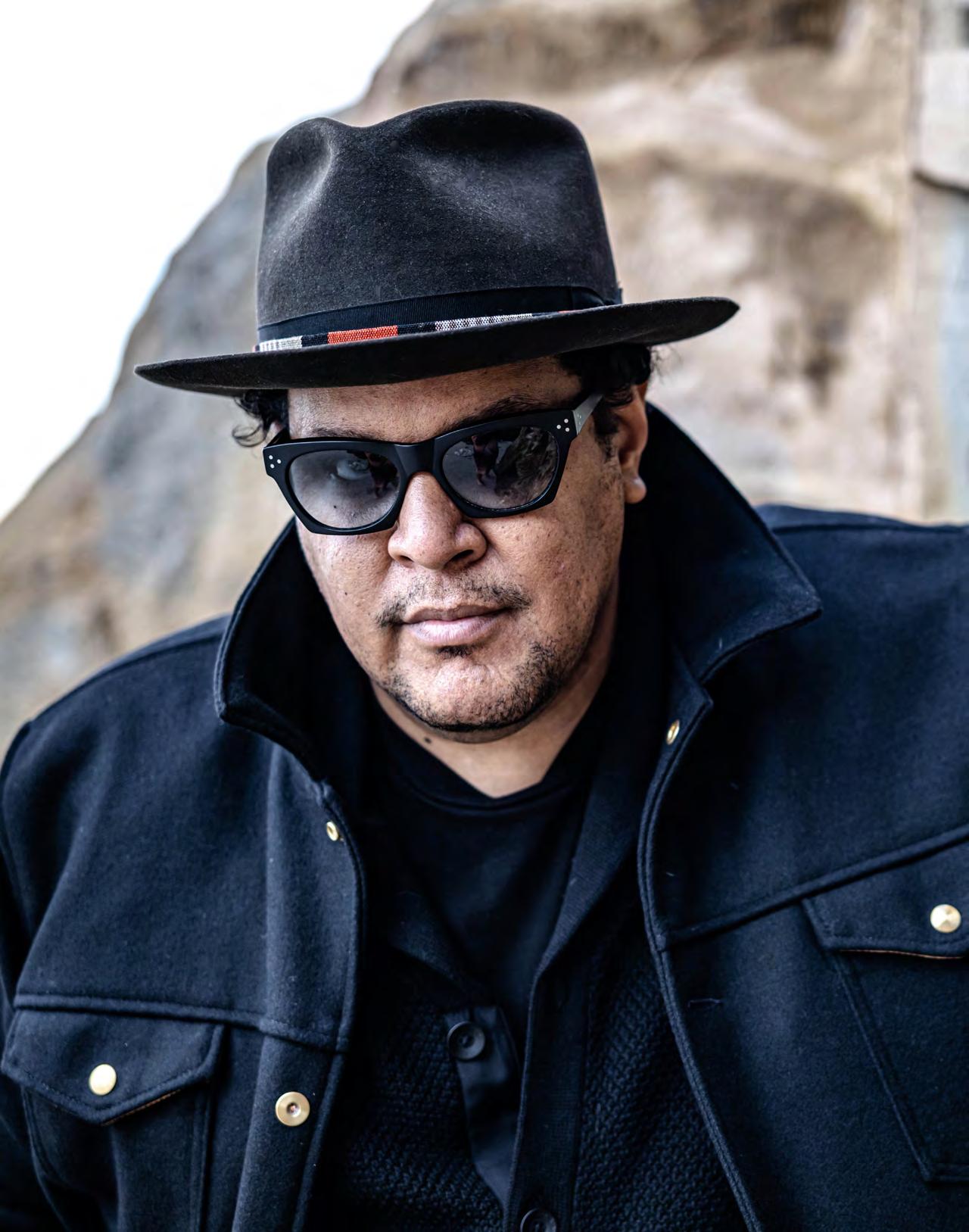
“Rediscovering my voice has renewed my joy in singing and communicating, but from an extremely vulnerable place.”
Chris Pierce
hearing offered me a challenging, yet exciting choice: I could allow deafness to deter me from singing, or I could face the storm and embrace the mountain ahead of me. I found the courage to fight for my voice. Everything sounded different at first, but my love for singing was deeper and more powerful than ever before. I began to learn sounds over again, one by one.
My head is now filled with my voice at an extremely loud volume. It’s sort of like plugging your ears and speaking. Sometimes, sound feels like being in a giant cave. Sometimes I hear nothing. I had to ease slowly into the process of speaking and singing again. It has been very difficult and frustrating, but I refuse to give in. Still deaf in my left ear, with only partial hearing in my right, the process continues to be constant learning and discovery.
Rediscovering my voice has renewed my joy in singing and communicating, but from an extremely vulnerable place. I read lips, I read eyes, I read body language. I reach out in conversation and in song in the effort to communicate and speak to the heart. My personal journey throughout the years has helped me explore the miraculous ways I can use my voice as a source of motivation, change, dissent, and healing even when
only the faintest of notes ring through. I sing from my soul. I’m a warrior for my voice and the gift of song. Every day I fight for this gift. I’m thankful for the challenges as they help me reimagine my relationship with singing and sound. It is a blessing to be a lifelong student of human expression and emotion. Sometimes that means notes as gentle as an autumn leaf falling from a tree. Other times, that means pushing out guttural notes that have the power of a freight train. Soul singing to me is the attitude of always serving the song and the emotion of the moment. I cling to the stillness of energy before every song like the moment before a rocket ship launches into orbit.
The sacredness of the human voice is ancient and has a unique ability to reach through to the core of our beings. Let us sing strong and sing loud, individually and together as part of the great chorus of humanity. I am thankful for every breath and embrace our collective voices. I’m thankful for the battle for expression of my own voice. Let us all be warriors for the great choir of humanity, and despite the obstacles, let our voices ring loud and strong.
Chris
Pierce’s newest album, American Silence, is out now via Pierce Records.
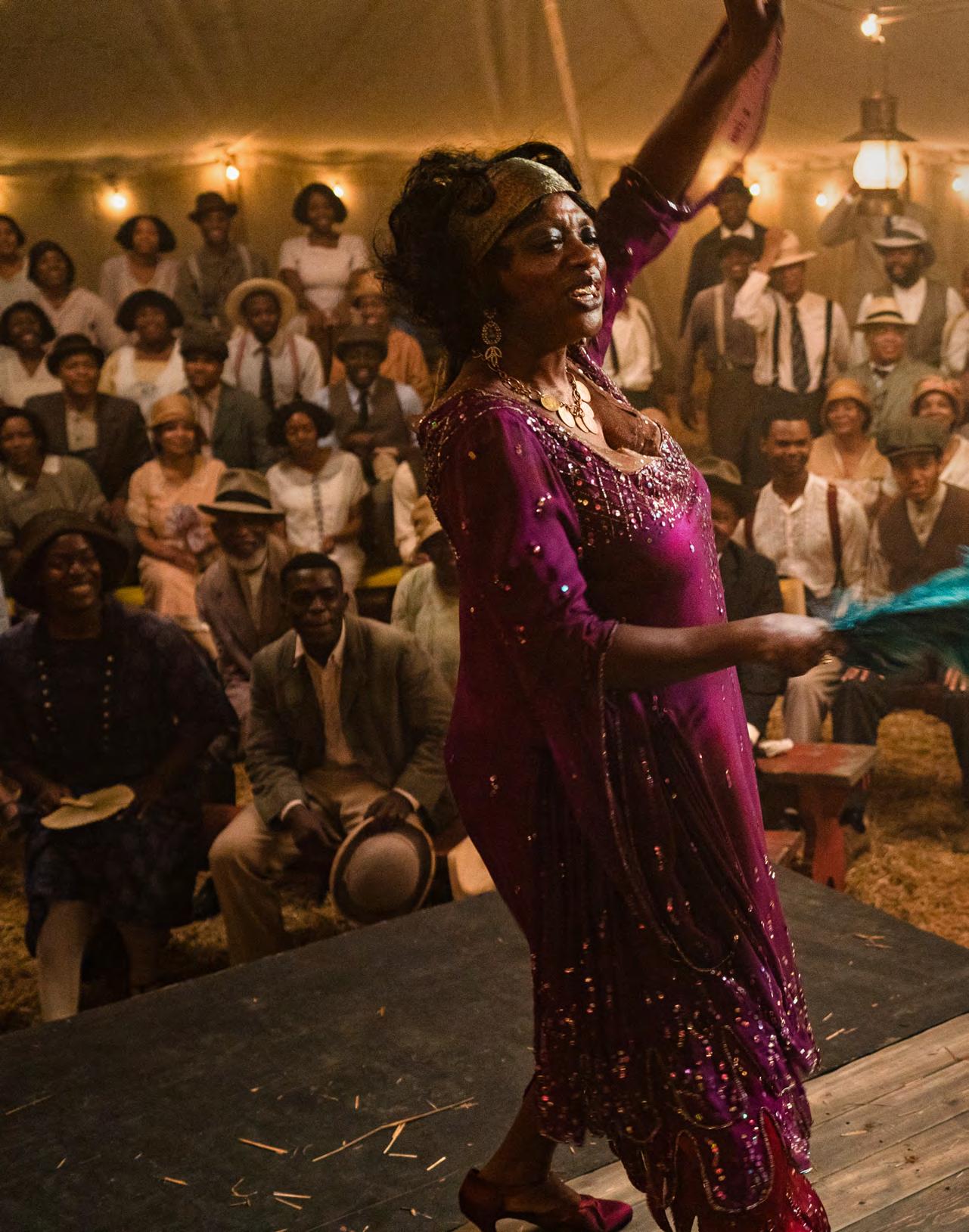
‘M A’ TO THE MAX
Behind the scenes of ‘Ma Rainey’s Black Bottom’ with singer Maxayn Lewis
by Charles Donovan
Ma Rainey’s Black Bottom (2020): Viola Davis as Ma Rainey.
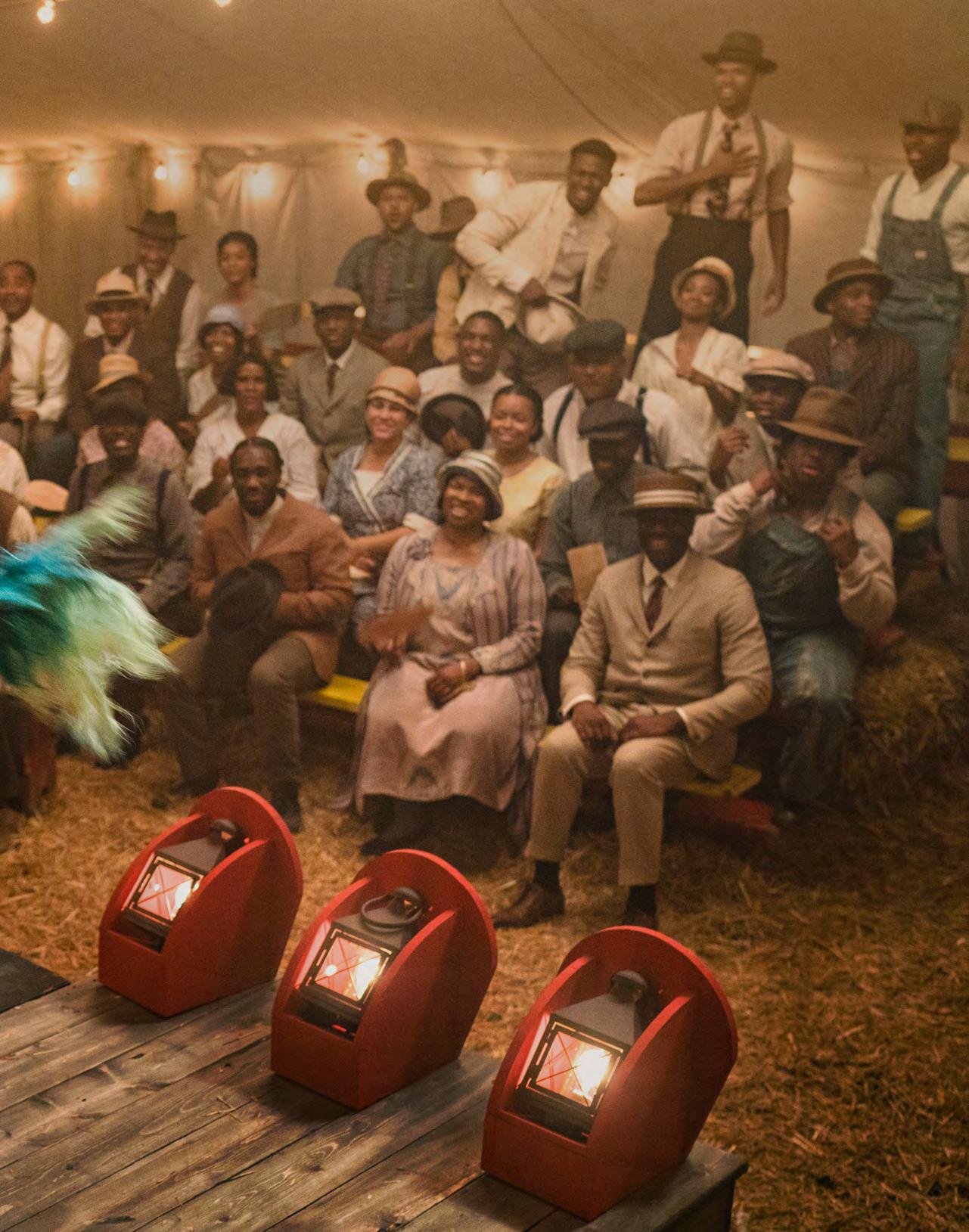
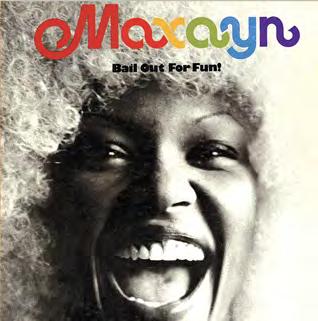
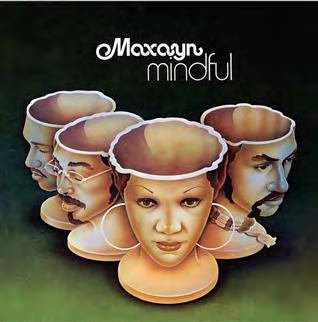
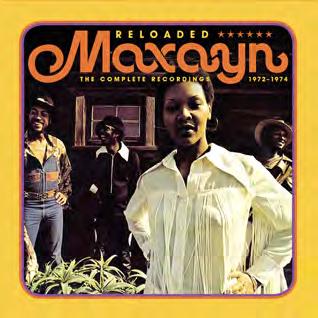
It’S nightfall. two young boyS scamper through the woods. A dog-bark splinters the air. And then, before a single word’s been spoken, comes a musical moan, a bittersweet blues hum that sounds lived-in and rich with experience.
Ma Rainey’s Black Bottom, the Netflix adaptation of August Wilson’s 1982 stage play, opens as such. Directed by George C. Wolfe, the film began streaming in December and earned praise that lasted well through awards season, with the late Chadwick Boseman winning Best Actor and Viola Davis nominated for Best Actress in a drama at the Golden Globes.
Eventually, audiences see that the voice prefacing the movie belongs to famed blues singer Ma Rainey, brought to life by actress and producer Davis. But the stirring, worldly-wise singing is dubbed in by Maxayn Lewis. The action pivots on a 1927 recording session in
Chicago. Gertrude “Ma” Rainey, already a star, has to be vigilant and assertive at every turn in order not to be ripped off in the music industry. It’s clear she’s learned through bitter experience. Boseman’s Levee, a traumatized up-andcoming trumpeter, provides the story’s tragic counterweight.
Although Lewis is not on screen, her role is as vital as that of the film’s marquee names. Lewis is a music industry legend whose talent encompasses blues, rock, funk, pop, and beyond. Keyed-in musicians and followers of the ’60s and ’70s R&B and funk scenes know her name, but now there’s a chance for the wider film-going public to get to know her as well.
Lewis broke into show business at an international level in the 1960s, when she was barely into adulthood. Known then as Paulette Parker, she enlisted as one of Ike & Tina Turner’s Ikettes. Having scarcely left her home state of
Oklahoma, she was thrust into the top tier of the music industry, touring the world with one of the hardest-working musical revues of the century. But the full extent of her talents — songwriter, pianist, singer — only emerged the decade after, when she became known as Maxayn (a childhood nickname) and formed a group of the same name with her future husband, Andre Lewis, as well as Marlo Henderson and Emry Thomas.
Maxayn (the band) recorded highconcept, socially conscious funk rock for Capricorn Records. The label had notorious distribution problems, but the group still managed a chart breakthrough with its second album, Mindful (1973), and a coveted slot on the television program Soul Train, where they performed their space-funk reinterpretation of The Impressions’ “Check Out Your Mind.” Less than two years later, they disbanded, but Lewis
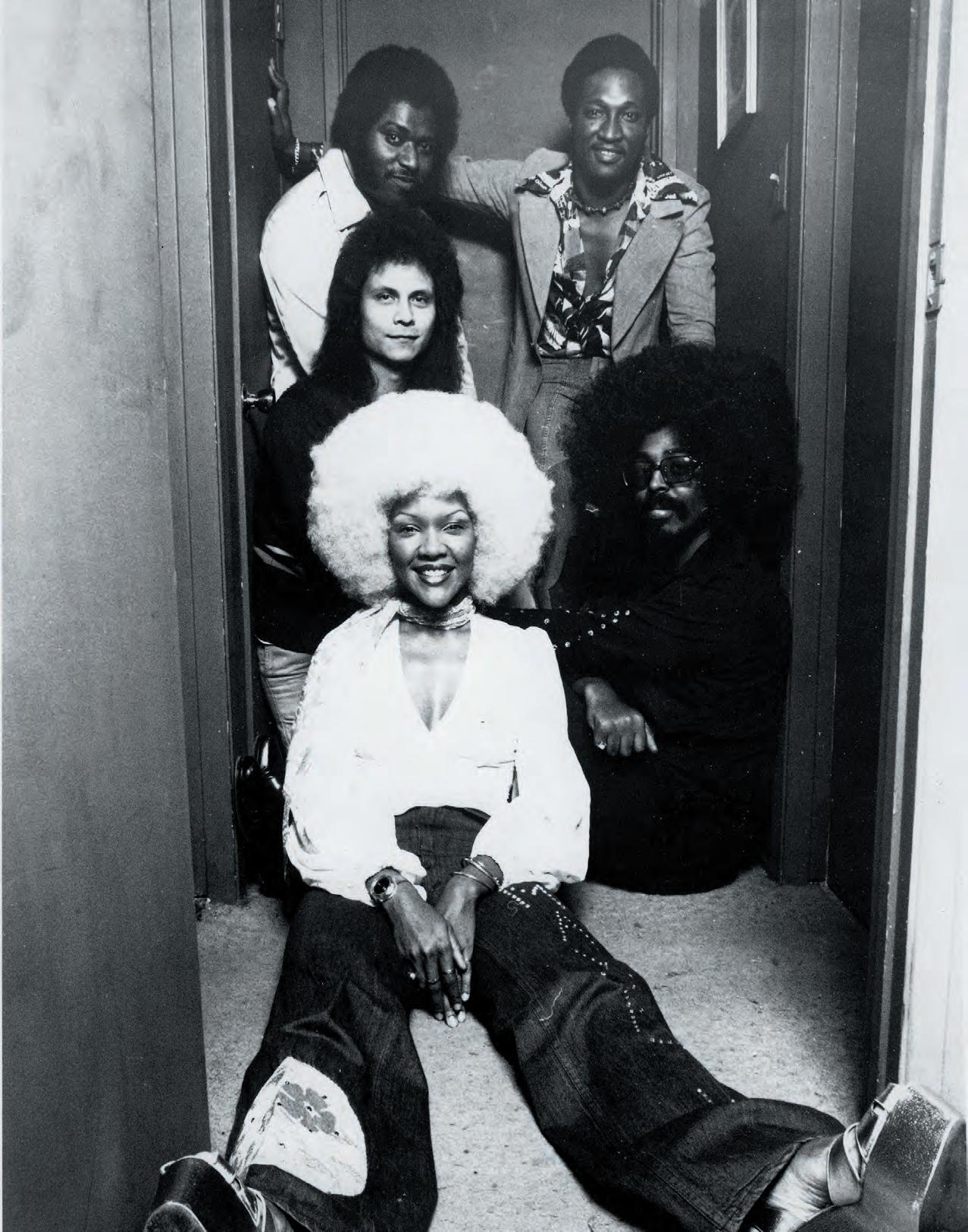
Maxayn
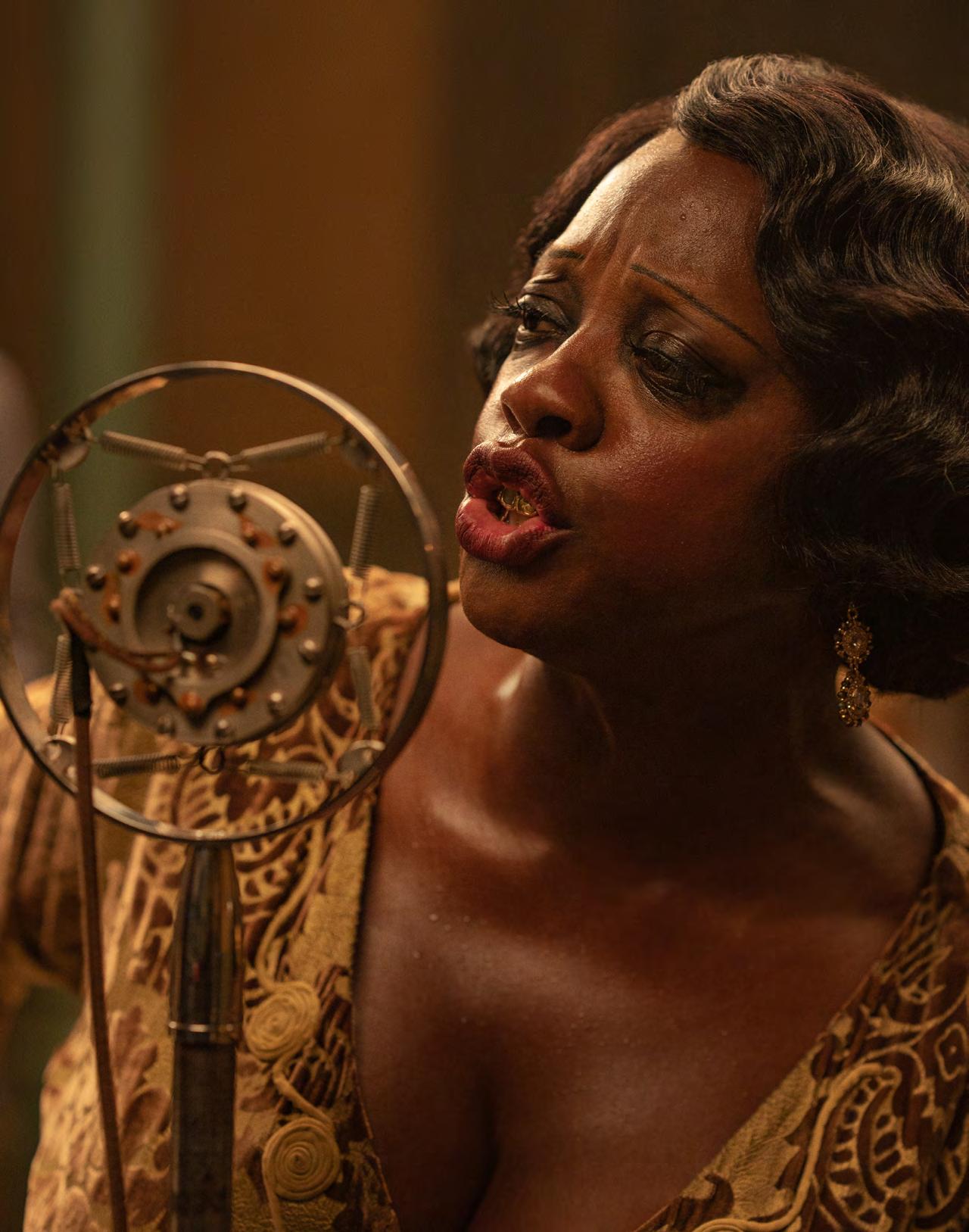
Ma Rainey’s Black Bottom (2020): Viola Davis as Ma Rainey.
“Maxayn grew up in a time when the blues was in all American music, be it jazz, R&B, rock ‘n’ roll, or gospel. I had faith that she would be able to create a sound that would represent the emotional meaning of the lyrics, a sound of the past and the present, authentic and relatable.”
Branford Marsalis
went on to sing backing vocals for Rufus, Donna Summer, Simple Minds, Duran Duran, Ray Charles, The Doobie Brothers, Ricky Martin, and countless more. Today, the critically reappraised Maxayn albums are available as a boxed anthology called Maxayn Reloaded, which was released in 2017 via Cherry Red Records.
Getting the Call
The telephone call that clinched Lewis’ Ma Rainey performance came thanks to a recommendation from Bruce Hornsby, Lewis explains over a Zoom call from her Los Angeles home. Even through a computer screen, she exudes the bright, sparkling energy of a woman whose creative life has been on a roll for several decades, sometimes above and sometimes beneath the radar of public attention.
“I met Bruce Hornsby way back before he had a record deal when he and I were doing demos. He was playing piano. I play as well but I wouldn’t put myself in a league with him because he’s a genius at it,” she begins. “He was doing that style he does — it’s a method that’s like mathematics, the way he plays a leading tone on a fifth. I said, ‘That’s really different! You should do
something with that!’ And the next thing I knew, he’d made ‘The Way It Is’ and he’s never looked back.”
The overture itself was made by Branford Marsalis, the film’s musical director and score composer. “I learned that Branford talked to Jervonny Collier, the bass player, asking him about someone who could sing vintage blues, and Jervonny mentioned it to Bruce. And they both told Branford, ‘Get Maxayn,’” she says. “Branford called me from Louisiana and asked me if I could do it, but he didn’t say Ma Rainey’s Black Bottom. He didn’t really give me the backstory at that point.”
Lewis’ invisible film role is one of those rare, happy instances of the perfect job going to the perfect person. “Maxayn grew up in a time when the blues was in all American music, be it jazz, R&B, rock ‘n’ roll, or gospel,” Marsalis says. “I had faith that she would be able to create a sound that would represent the emotional meaning of the lyrics, a sound of the past and the present, authentic and relatable. She did an amazing job.”
But Lewis is more than just a blues aficionado; her life is steeped in the genre. Although she studied classical piano at a conservatory, her childhood
exposed her to Junior Parker, Ruth Brown, Ray Charles, John Lee Hooker, and Elmore James. After leaving the Ike & Tina Revue in the late ’60s, she joined a festival tour with Bobby “Blue” Bland, whom she calls “the Rolls Royce of blues singers.” Years later, she created a blues history program for the African American Studies department at the University of California, Los Angeles.
According to Lewis, the trait that separates a true blues singer from an ersatz one is timing.
“Lots of people don’t have respect for the blues. They want to make money from it and they think they can do it,” she says. “But I listen to some of them and almost everything they play and sing is in the wrong place and that’s what they don’t understand. They come in at the wrong place. The phrasing is inauthentic. They know the melody, they know the chord changes, but with the timing they have no clue. The secret of the blues is placement — where you come in. People are anxious they’ll be left behind, so they dive in too soon.”
Singing the blues untrue couldn’t be more jarring to her. “It’s like walking into a room where there’s a crooked painting and so the whole room feels off. That’s what a lot of the famous people
calling themselves ‘blues artists’ feel like to me.”
Lewis cites one exception: “A long time ago, I met Mick Jagger and he’s studied this stuff. The Stones really did their homework when they were younger. He’s the only rocker I’ve ever met who has really understood the blues and the importance of where you come in.”
Magic for Ma
To make the Ma Rainey project fly, Lewis had to pull off the feat of singing from four different perspectives — maintaining her own voice, honoring Ma Rainey’s, matching Davis, and embodying Davis-as-Rainey. “I didn’t want to just mimic,” she says. While there’s many a mimic who could have listened to the original Ma Rainey recordings and then sung accordingly, the end result would have been superficial and revealed a hollowness within.
Instead, Lewis’ performance captures not only the sound, but the spirit of Ma Rainey. “I was familiar with Ma Rainey and her music,” says Lewis. “I was familiar with Bessie Smith and another woman, named Mamie Smith, no relation, who was the first woman to
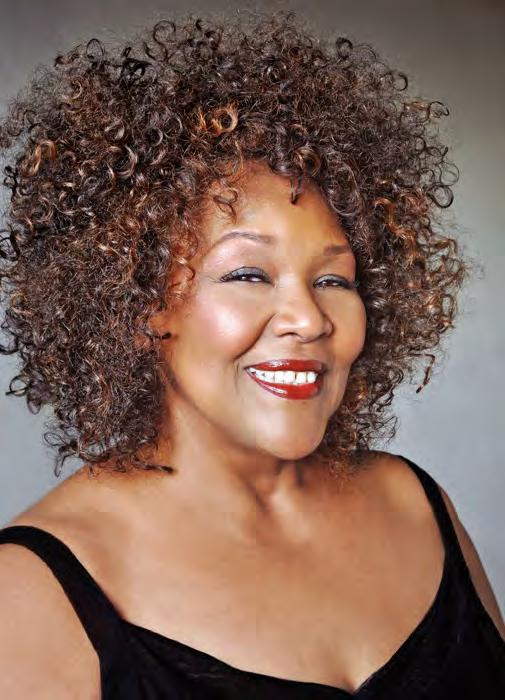
record blues in America. Bessie Smith and Ma Rainey were actually friends. They were encouraging to each other in a world that was male dominated. But the thing that really makes the film important to me is not only that Ma Rainey was a woman, but a Black woman in post-slavery America, which was then Jim Crow America. She had the courage and the will to do what she
did. She was badass, really tough. She didn’t take any scruff from anybody; she charted her own course. She had to stand her ground, but at the same time she had a heart of gold. She had this dream and this music in her heart and she had to fight really hard.”
But making sure Lewis’ voice seemed plausible emerging from Viola Davis on screen proved challenging. The filmmakers tried two methods: First, Lewis traveled to New Orleans to record the songs in a live session with the musicians. “The idea was that Viola would learn the songs and lip-synch to the recording,” she says. When this approach didn’t yield the desired results, they turned the process on its head: “They called me and said, ‘We’re gonna need you to come back in.’ I had to go to a studio and sing to Viola’s lips moving on the screen.”
The fragile, painstaking art of “reverse lip-sync,” singing to the movement of an actor’s mouth, is beyond many people’s abilities. But in addition to talent, Lewis had another advantage to call on: For many years, she’s been a singing/performance coach. “I’ve learned that when people are singing or speaking, they have a cadence which informs how they breathe,” she says. “If I watch you breathe, it’s almost
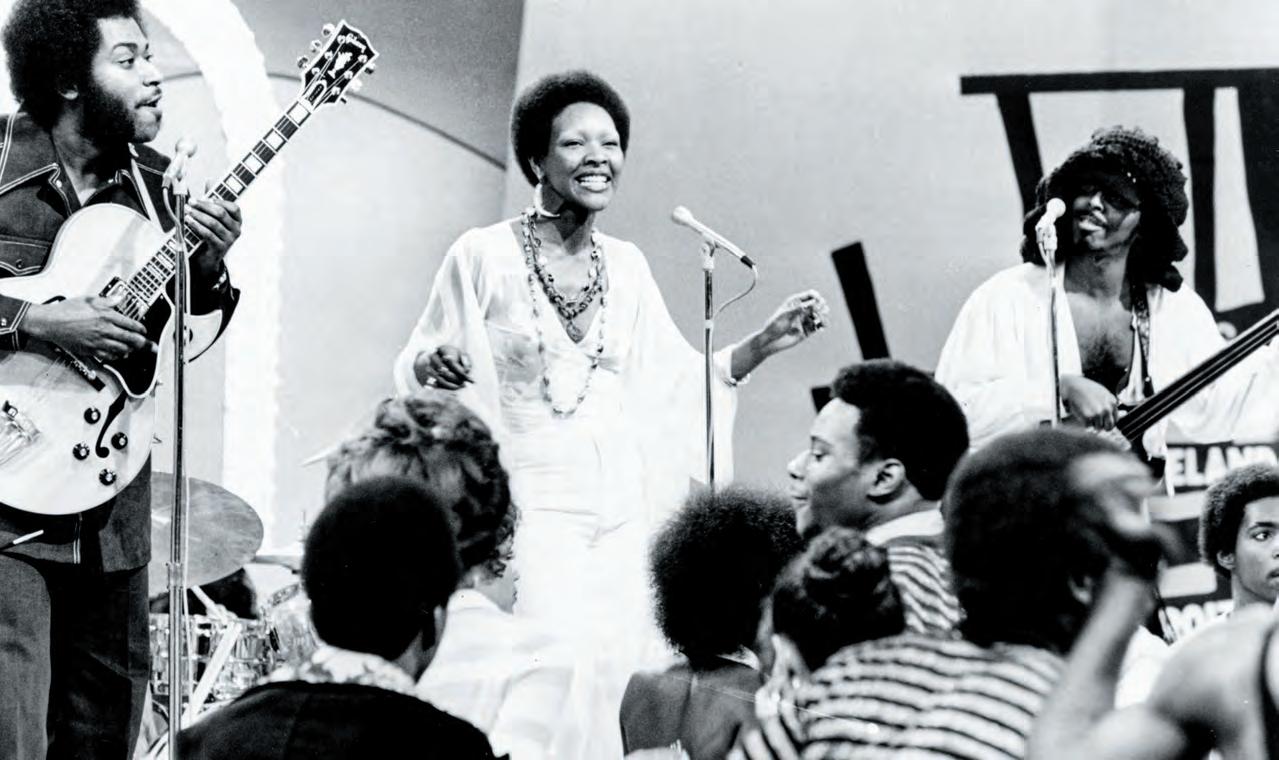
like I can count your cadence and time how you speak. That’s my method and I can do it with just about anybody.”
Observing the breathing of experts is a task Lewis sets for her students as part of a vocal-building and performanceenhancement program she calls, pun intended, “The Max Factor.”
“I have my students listen to Tony Bennett, because the way he moves through a melody, the way he handles the lyrics, the way he breathes … he is a king at it. I say, ‘Sing with him, breathe with him, and watch him.’ And when they do it, it gives them an insight that they wouldn’t otherwise have, and they learn why his phrasing, the way he tells a story, is so effective.”
As work on the soundtrack progressed, Lewis was struck by how little has changed for Black women in music since Ma Rainey’s rise in the late1920s and ’30s. The racial power dynamics of the wider world are still very much at play within the entertainment business, she says.
Lewis points to some key quotes from Rainey in the script. She says, ‘They don’t care about me. They just want these songs, this music, so they can make money, but they don’t care about me,’” Lewis summarizes. “And we’re still
there! The music industry in America, especially for Black women, is a tough road and a narrow path. Songwriters who are thoughtful and doing really great work don’t get attention because they’re not scandalous enough. They’re not outrageous and controversial like Cardi B and Megan Thee Stallion. I think about someone like Brenda Russell — we never see her! She’s a very good friend of mine, an excellent, smart lady, really talented and beautiful, but we don’t see her. The industry is not focused on quality with Black music.”
Then there’s the tendency, with the bestselling music monthlies and their writers, most of them male, to see the entirety of popular folk music as “men plus Joni Mitchell.” Lewis continues, “I like Joni Mitchell, don’t get me wrong, but they praise her as the queen-fallenfrom-heaven but are mute when it comes to recognizing Black women like Brenda.”
Adding to the Whole
Lewis’ next musical project is Maxayn Lewis and the Homemade Cookies, with Bobby Watson from the funk band Rufus on bass, Land Richards on drums, and Allen Hinds (who has played with
Roberta Flack and Natalie Cole) on guitar. The group specializes in songs by a broad span of writers, including Bobbie Gentry, Lennon/McCartney, and Tears for Fears, taking each one to a place that transcends its cover status. Alan Abrahams (Joan Baez, Les McCann, Ladysmith Black Mambazo) is producing the album, planned for a May release.
“In spite of all the sadness of the pandemic, this is a bright spot that’s kept me engaged and hoping for the future,” says Lewis. “It’s turning out really well. I’m excited but I don’t want to get too excited.”
And then there’s the Ma Rainey’s Black Bottom soundtrack, which mixes Marsalis’ original score with Lewis’ stunning recreations of the title track and “Hear Me Talking to You.” It wasn’t eligible for the 2020 Grammy Awards because it came after the August eligibility deadline, but will instead compete in the Music in Film category in 2021.
“I loved working with Branford and George Wolfe,” Lewis concludes before adding, with modest understatement, “and I’m so glad that my part adds to it. It doesn’t take away from it, it adds to the whole.” ■
Maxayn on Soul Train in 1973.
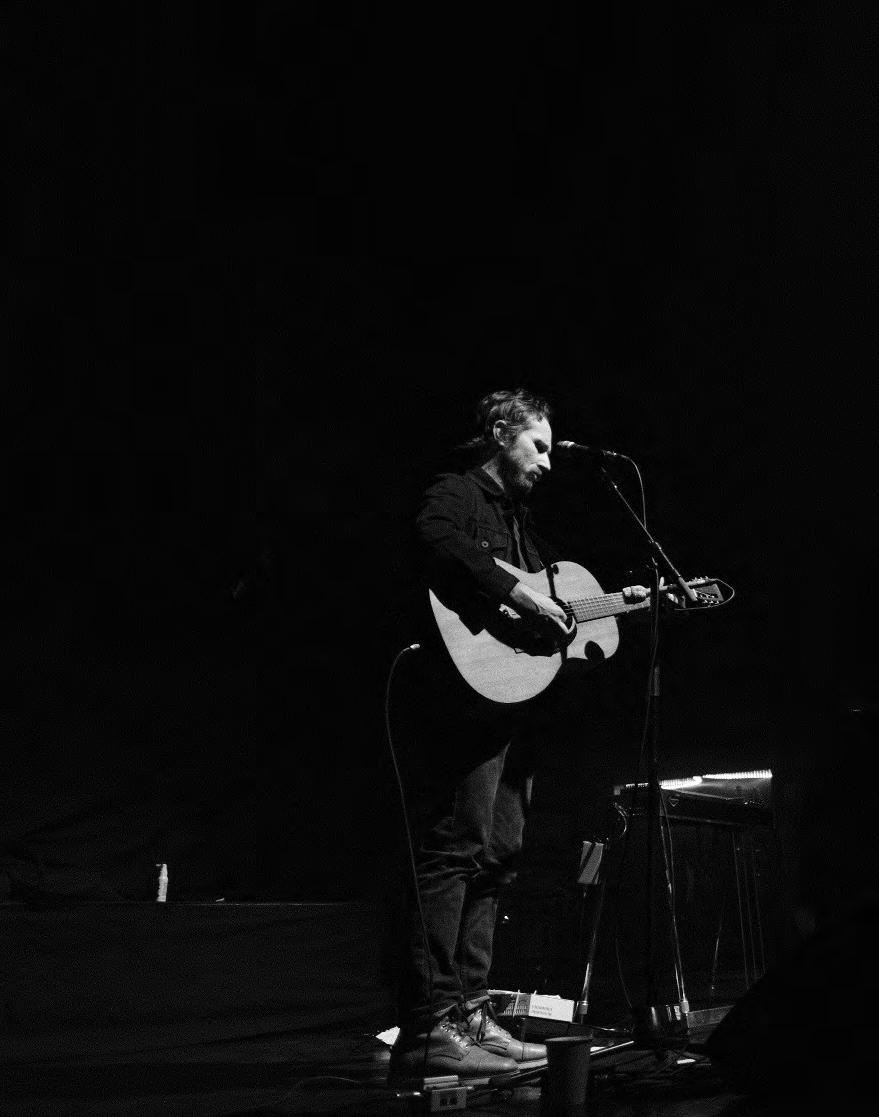
Will Johnson

EVERY SINGLE SENTENCE SINGS
Prose offers songwriters another way to tell their stories by
Jason Heller
“A short story or a book needs to be well paced to keep people reading. Like a song, it needs to have a rhythm. There has to be a flow, and a sense of inevitability to the building of paragraphs and chapters, like the build in verses of a song.”
Mary Gauthier
“
BookS and Shit.” that’S what Steve Earle calls his literary pursuits over the past 20 years, an outgrowth of his legendary body of music that’s resulted in the short story collection Doghouse Roses and the novel I’ll Never Get Out of This World Alive. Published in 2001 and 2011, respectively, these books gave his storytelling much more space to sprawl.
Since his early days as an aspiring singer-songwriter in the ’70s, Earle has nurtured a love for spinning yarns throughout his lyrics — a knack encouraged by his mentor, the late Guy Clark, one of the masters of the storysong. And while Earle can be modest about his prose, or even paint it as a side hustle, his books are far from “shit.”
Doghouse Roses and I’ll Never Get Out of This World Alive deal with many of the same topics and themes that teem inside Earle’s music: addiction, redemption, the ghosts of history, and the mythic realm of Texas, where the Virginia-born Earle came of age.
Another adopted Texan, Will Johnson, also knows a thing or two about
morphing from songwriter to author. Like Earle, he sings heartworn, hardbitten stories — with his projects Centromatic and South San Gabriel as well as in various high-profile collaborations over the years with the likes of Jason Molina and Jay Farrar. And on Johnson’s most recent album, 2020’s acoustic El Capitan, he whittles his songs down to frayed, brittle points.
In March, Johnson became a published novelist. His literary debut, If or When I Call, takes place in his native Missouri, and it’s a portrait of a rural family stretched past the point of breaking. He drew inspiration from what he absorbed as a touring musician, including “conversations overheard, the constant presence of human folly, and the mundane and occasionally victorious movements we cycle through with others — or totally alone in our daily lives. That’s a deep well, and there’s a lot to draw from just driving around the country, playing shows.”
Earle and Johnson aren’t alone. The list of roots-inflected songwriters who have dipped their toes in prose may not
be long, but it’s impressive — including Radney Foster, Mary Gauthier, Josh Ritter, Alice Randall, Robbie Fulks, Patty Larkin, Laura Veirs, Rod Picott, John Darnielle of The Mountain Goats, Rennie Sparks of The Handsome Family, and Willy Vlautin of Richmond Fontaine. Most on that list have had a short story or two published; a handful have tackled whole novels. Poets and memoirists among the songsmith crowd abound, but making the bigger jump to writing fiction is something few dare to do. As it turns out, that challenge of adapting their voices can be a source of frustration as well as fuel — if not both, simultaneously.
Finding Another Voice
For Foster, it was a matter not of choice, but survival that pushed him to venture into the rocky world of literary publishing.
“It really started as a ‘How do I stay sane?’ sort of project,” says the country icon, talking about his 2017 book-andalbum combo, For You to See the Stars. After bruising his vocal cords in a flyfishing accident in 2016, he lost the use of his voice. While recuperating, the fear that he may never sing again took hold. “I wrote a note — since I couldn’t talk, it was on piece of paper — to my wife. It said, ‘Hey, I’ve got an idea for a short story based on a song I wrote six months ago, and I’m going to write it to keep from going crazy.’ She picked the pen out of my hand and wrote on the same piece of paper, ‘You should, ’cause you’re driving me crazy.’”
As his voice returned, he bounced from short stories to their corresponding songs — such as “Sycamore Creek,” a novella that revisits the song of the same name, with the same characters reminiscing decades later on a misspent
summer after they graduated high school. Foster says that writing a book and an album in tandem was “a really good thing, a really good challenge. It opened me up to writing in lots of different ways.”
Survival sparked Earle as well. When he was released from prison in 1994 after serving time for possession of weapons and narcotics, he began a stint in rehab that led him to trying his hand at fiction.
“My sponsor, when I got clean, told me start journaling,” he says. “It was the first things that I wrote, not to set to music, in my life. And one of those journals turned into a short story called ‘Doghouse Roses.’ That one was very biographical. I changed my name to Bobby Charles, and he was just as fucked up as I was.”
Still, his confidence as an author was slow in coming. “Just pure insecurity made me think, ‘Songwriting is the only
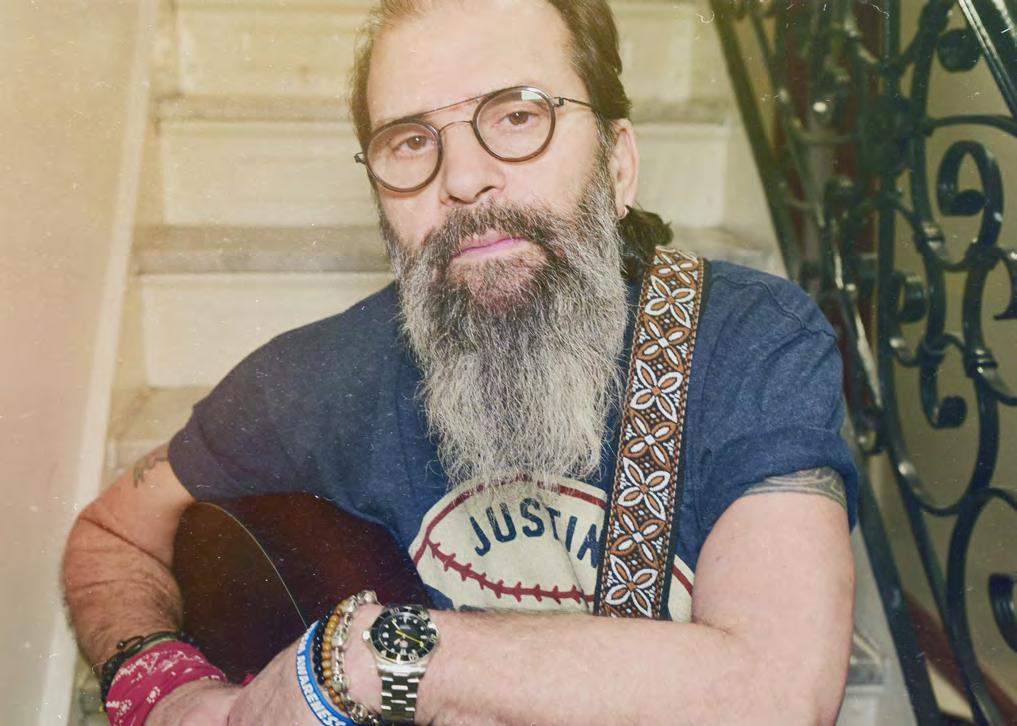
Steve Earle
thing I could do. I have an eighth-grade education. How could I ever write a book?’” Yet he did. Then he wrote another. “I don’t believe in writer’s block. I don’t think it exists. What existed for me was a heroin and cocaine habit that took every bit of energy, psychic and physical, that I could muster.”
Darnielle’s former side-hustle as a music critic — he once reviewed albums for eMusic — along with his stature as a songwriter was the springboard for his debut novel, 2014’s Wolf in White Van. It was nominated for the National Book Award and dazzled readers with its mix of harrowing character study and popculture commentary. His previous book was an extended meditation on Black Sabbath’s Master of Reality, published in 2008 as part of the album-focused 33 ⅓ series, and it was as much of an exercise in fiction as it was a piece of journalism.
On the other hand, Vlautin’s path from frontman of an alt-country group to acclaimed author — his new novel The Night Always Comes was released in April — was more of a straight line. He started writing songs alongside short stories as a teenager, and the two felt like pieces of the same puzzle. From that point on, he says, “I was always just chasing the story.”
Multimedia Influences
Musicians are usually wide open when it comes to talking up their influences. Especially in genres like country and folk, the continuum of tradition is sacrosanct. It’s less often, however, that songwriters speak at length about their literary heroes. That is, unless those songwriters also craft prose.
Randall, for instance, loves to wax academic about her favorite authors. The first African American woman to write a number-one country hit — namely, Trisha Yearwood’s “XXX’s and OOO’s (An American Girl)” from 1994 — Randall has also collaborated with Foster and Earle. But her position as a college
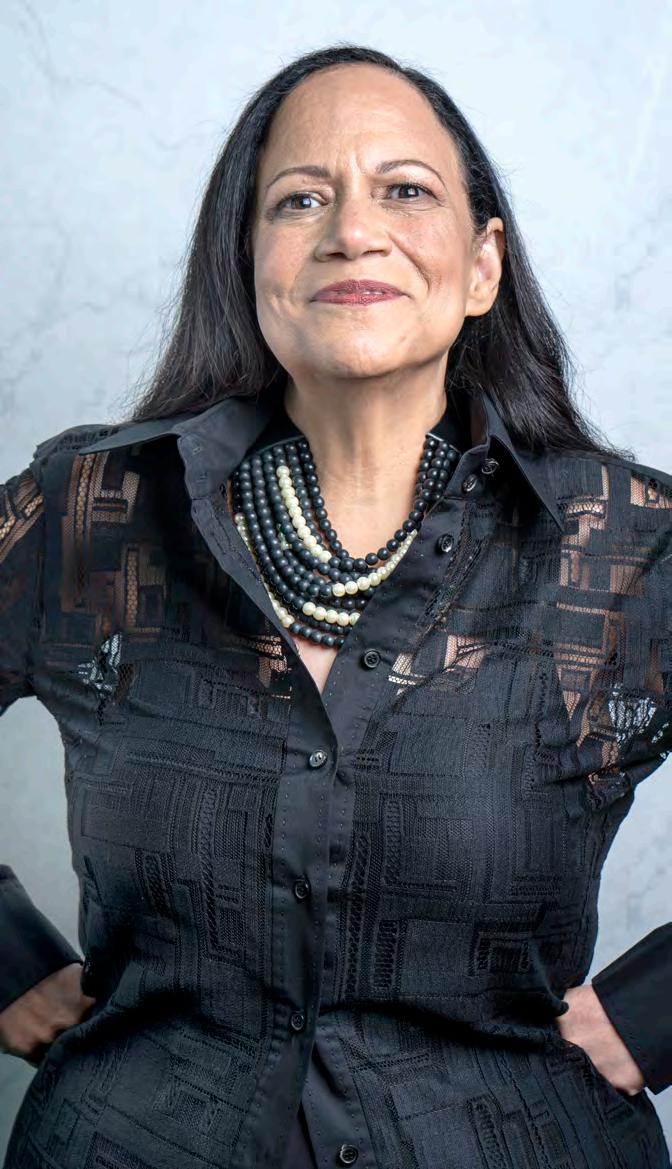
JOHN PARTIPILO
Alice Randall
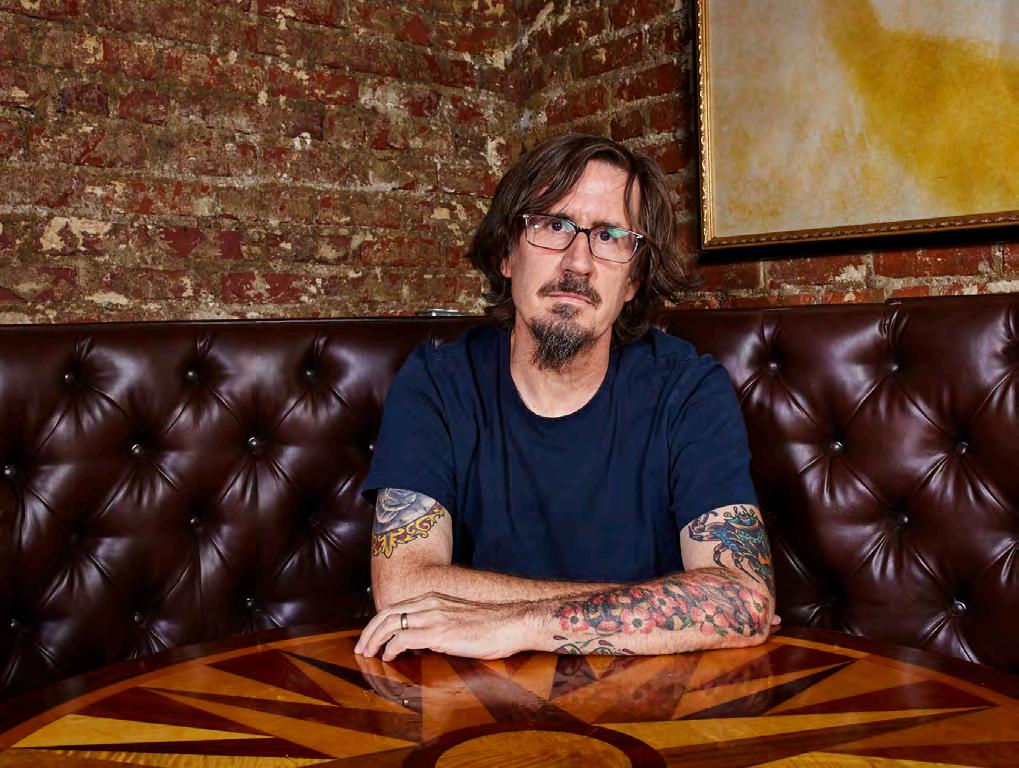
professor as well as a Harvard-educated author lends even more intellectual heft to her work. Her 2001 debut novel, The Wind Done Gone, radically reimagines Margaret Mitchell’s Gone With the Wind from the perspective of a slave.
“Emily Dickinson has had a tremendous impact on my songwriting, as has the King James Bible,” Randall says. She also cites Zora Neale Hurston and Alice Walker as inspirations. But ever the country-music champion, she says that although she sees the venerable Henry James as “a genius for exploring complex point of view, overlaps of how you see yourself and how you see
yourself being seen, and how you are seen that you don’t see,” she still thinks that “Merle Haggard did it better.”
Numerous other authors of high esteem make it onto the requiredreading lists of these songwritersturned-authors. Both Johnson and Foster cite the debt they owe to the quintessentially Southern fiction of Eudora Welty. Darnielle raves about the Catalan novelist Mercè Rodoreda, “whose compression of images and swift-moving narratives are master classes in writing” — a lesson that Darnielle applies to his own lauded novels and his narrative-rich, snippet-of-
life songs in The Mountain Goats (whose new album Dark in Here is due out in June).
In Sparks’ pantheon of authors that helped shape the magical savagery of her stories, Gabriel García Márquez reigns. “I always go back to García Márquez’s One Hundred Years of Solitude for inspiration on how to tell a story,” she says, whether that story is a haunting Handsome Family song or a six-page fever dream in her book Evil. “I love words that conjure up a bigger reality than the one we see around us all the time. Words should illuminate. I find it physically painful to hear a song with filler words in it like
John Darnielle of The Mountain Goats
baby, babe, honey, and so on. Not to mention the how creepy all that infantilizing is.”
Vlautin names John Steinbeck. Foster claims Raymond Chandler. Randall channeled her love of Dickinson into “Many Mansions,” a song she co-wrote with Mark Sanders and that was recorded by Moe Bandy in 1989 that starts with a line borrowed from one of the poet’s greatest works, “‘Hope’ is the thing with feathers.” (Yes, the man partly responsible for “Where’s the Dress” also sang, perhaps unknowingly, the verse of Dickinson.)
And Earle has gone so far as to base one of his songs, 1999’s “Dixieland,” on one of his favorite novels, the Civil War saga The Killer Angels by Michael Shaara. One author’s name looms even larger over Earle: Raymond Carver, one of the short story’s greatest practitioners.
“Because I wrote pretty complicated stories in four-minute songs for years
and years, my problem when I started writing prose was taking time and not revealing everything so quickly,” Earle says. “A Raymond Carver story can be 50 pages, and four minutes have gone by in the story.”
Techniques that Transfer
Literature influencing music is one thing; music influencing literature is another. When songwriters shift their voices from aural to written, their musicality often colors the prose. When Foster rolled up his sleeves and began drafting For You to See the Stars, he asked friend and author Shari Smith for some guidance. Her advice, according to him, was “make every single paragraph in this thing, every single sentence, sing.” Luckily, he was used to doing exactly that. Once prompted, he found ways to consciously use elements he’d long employed
songwriting — such as tone, timbre, texture, phrasing, melody, and tempo — in his prose. At the same time, he learned what not to carry across mediums.
“Rhyming is absolutely your friend in songwriting,” he says, “and absolutely not your friend in prose.”
Gauthier takes a similar approach, writing prose like how she crafts music.
“A short story or a book needs to be well paced to keep people reading. Like a song, it needs to have a rhythm,” she says.
“There has to be a flow, and a sense of inevitability to the building of paragraphs and chapters, like the build in verses of a song.”
Her short story “The Holiday Inn Again” — published in the 2009 anthology Amplified, which also features tales by Sparks, Fulks, Larkin, and Veirs, among a bevy of Americana songwriters — is a stunning example. On the surface, it’s a simply told story about a girl whose
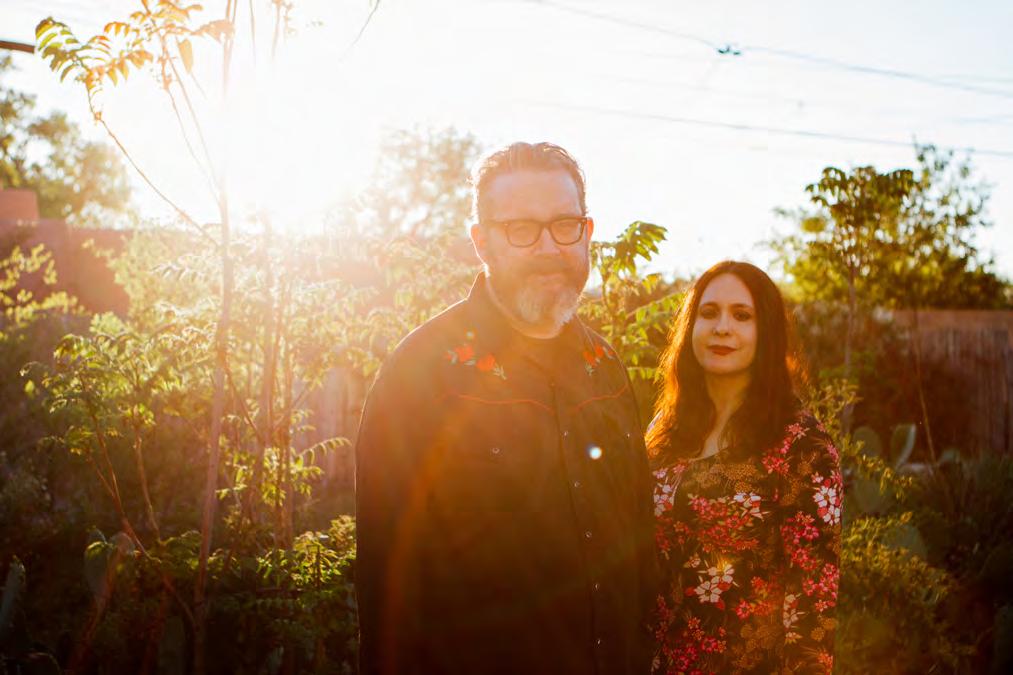
The Handsome Family
mother struggles to free herself from an abusive husband. Underneath that, cadence ripples and beats resound. A poolside radio plays Stevie Wonder’s “You Are the Sunshine of My Life.” The girl munches doughnuts in the backseat of a car on the drive to school, each bite punctuating a sense of emptiness and loss. The clipped pulse of Gauthier’s songs becomes the metronome for her prose.
The beat propels Randall’s prose as well. “Always, always, I write as drum, I write for the rhythm of the words. I hope my prose caries some meaning, through its rhythm even if you didn’t speak the language,” she says. And Ritter admits that he “absolutely” views his writing — such as his 2011 novel Bright’s Passage — in a musical way: “I think there’s certainly a rhythm to speech and to storytelling. Dialogue is the most obvious example, but writing of all kinds takes its
beauty from a kind of inner order.”
Bringing the Words to Life
In her songwriting, Randall doesn’t sing her lyrics or compose the music that accompanies them. She’s a lyricist in the tradition of Nashville’s Music Row or musical theater on Broadway, part of a truly collaborative act that sees her written words interpreted not only vocally, but also instrumentally. And there can be as many translations as there are translators.
“ There’s a song Walter Hyatt and I wrote, ‘Get the Hell Out of Dodge,’ that has been recorded multiple times, and each version brings out new layers of meaning,” she says. “In the Toni Price version, the narrator, she’s gone, baby, gone. But first, she’s calling out verbal abuse as significant abuse. In the Eden Brent version, there’s threat, entreaty,
and enmeshment. She’s staying, but she’s stating the price. In the Hank Thompson and David Ball version, they convey the pain certain men felt waking up in an era of women’s liberation and empowerment. It’s the old war between the sexes, and the men have lost.”
The Handsome Family, whom many might recognize for providing the theme song for the first season of the HBO series True Detective (“Far from Any Road” appears on the band’s 2003 album, Singing Bones), has a decadeslong career in alt-country and indie folk. Rennie Sparks, who writes the lyrics for her husband, Brett, to sing, says their marriage plays out in the alchemy of pen and microphone, both in stark contrasts and subtle intricacies. “I’m always amazed by how much Brett adds to a story by his phrasing and voice,” she says. “I do think there is a kind of psychic nakedness to people when they
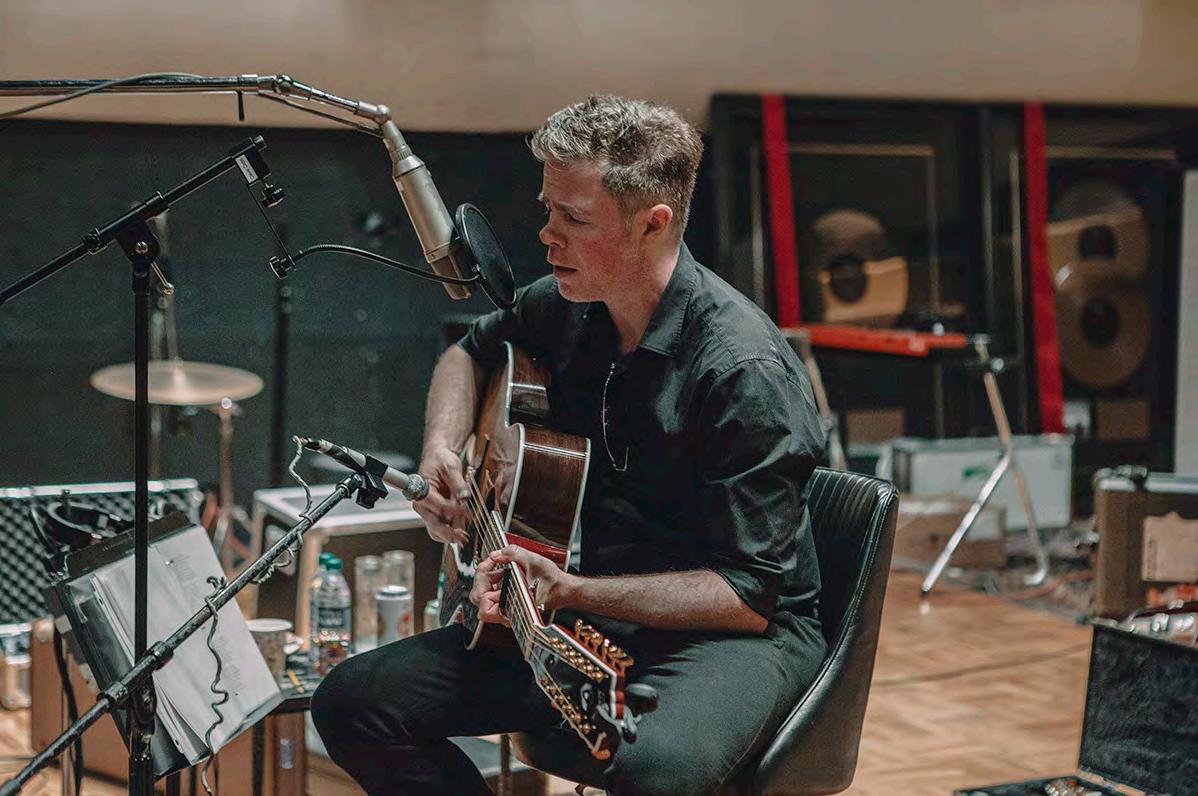
Josh Ritter
sing. You reveal yourself in your singing voice in a singular way. When my husband sings my lyrics, I forget that I wrote the words. He makes me feel like it’s his story.”
Vlautin also writes lyrics for a bandmate to sing. In his country project The Delines, his words are delivered by lead vocalist Amy Boone, and it’s spurred him to rethink his lyrical process. “I don’t have much of a voice, so I write songs that fit it,” he says. “But when writing for The Delines, it’s different. I love Amy’s voice, and with her singing, I can write biggerthemed songs. I can write love songs or bigger ballads because she can really sing them, and she’s got such soul to her that she can pull it off.”
Darnielle goes so far as to say, “Written lyrics don’t really exist,” before elaborating, “I mean obviously they do, but they’re just blueprints for the song. They’re of no real value on the page. This is why I never used to print the lyrics on our album sleeves, but people kept asking, so now I do. Maybe there’ll be a book of them someday. But song lyrics are only really alive in the context of the song. They are, for me, inseparable from melody and rhythm.”
Johnson sees things more viscerally. Referring to the way sung lyrics animate the written word, he says, “It can be something as simple as a note choice, a slight voice crack, or the flow of air in the delivery of a note or a line. I think those
nuances and those abilities to evoke a feeling within the listener are what make music the highest form of communication that we have available to us. To me it goes beyond the bounds of language.”
Storytelling Chops
Language is more than just a tool for songwriters and authors. It’s a way for the two to connect and learn from each other — even if the songwriter and author dwell in the same head. Says Foster, who loves to read excerpts from his short stories between songs when he performs live, “I’ve always been a storyteller. And expanding your storytelling chops never hurts you with what you’re known best for.”
It never hurts the listener either. Or the reader. Or anyone who falls between the two. “The whole point of writing in more than one discipline is that one feeds the other,” says Earle. “I think there was a time when all artists were polymaths, you know? We may concentrate on one thing they did, but they worked in different mediums. It’s a selfish thing, making art. It really is. Trying to create something out of nothing is so important to me. I’m just trying to keep it going, keep making something. Diversifying a little bit artistically became necessary.”
That kind of creative diversity also gives insight. Like his songs, Darnielle’s
novels give voice to a plurality of quirky characters, unreliable narrators, contradicting vantages, and smudged windows through which to view an unfolding story. “In a book, I can revisit an idea or a scene several times, and circle it. You know, like an animal sniffing something, looking at it from this angle and that, getting bunches of perspectives,” he says. “Songs tend to land much harder punches. They’re pyrotechnical. Songs are jewels, books are buildings. It would be nonsense to ask a question like, ‘What’s better, a jewel or a building?’ It depends on whether you’re getting dressed for the night or looking for a place to live.”
While some artists find different voices in different mediums, Earle writes like he speaks, like he sings. It’s a drawl that’s always seemed liable to seep out in any direction that would have it, be it on a page or in the air. “One time I told a friend of mine who was an author that I wish I’d stayed in school so that I could write books,” he remembers — and it bears noting that the year was 1977, before the popularization of audiobooks. “He told me, ‘No, man. What you’re doing as a songwriter is probably more viable as literature than anything on the printed page. You’re making literature that people can listen to in their cars.’”
Henry James might spin in his grave at the thought, but for Earle and company, that’s just about right. ■
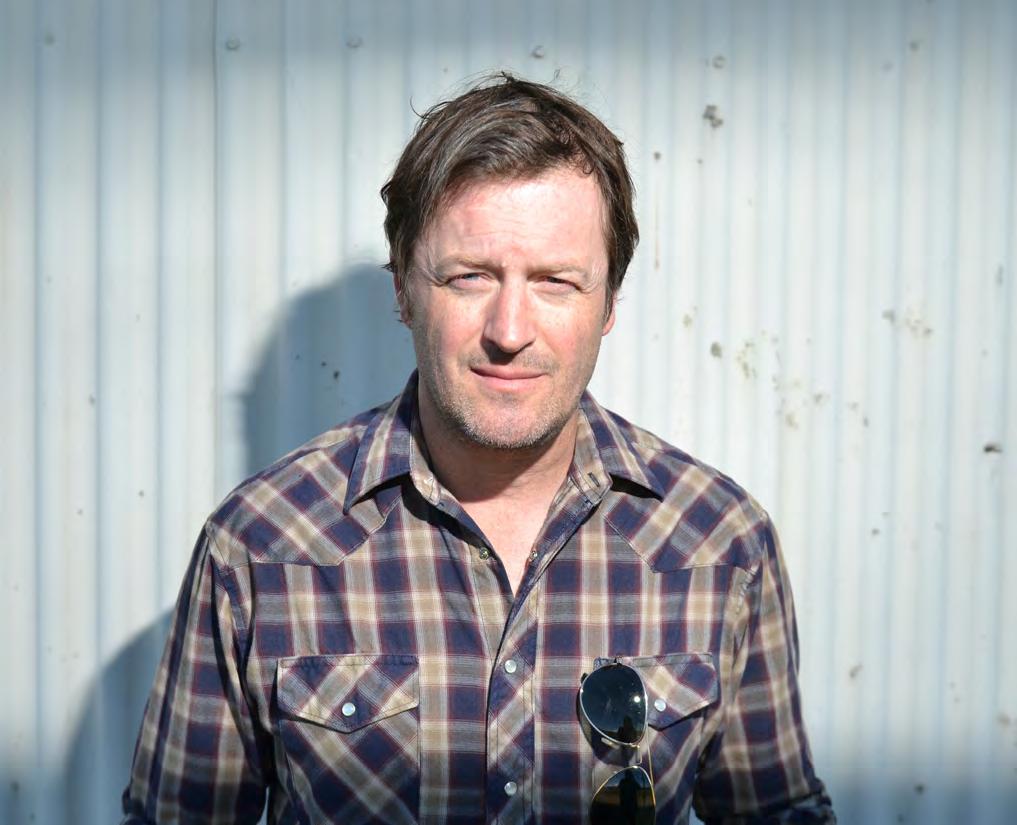
Willy Vlautin of The Delines
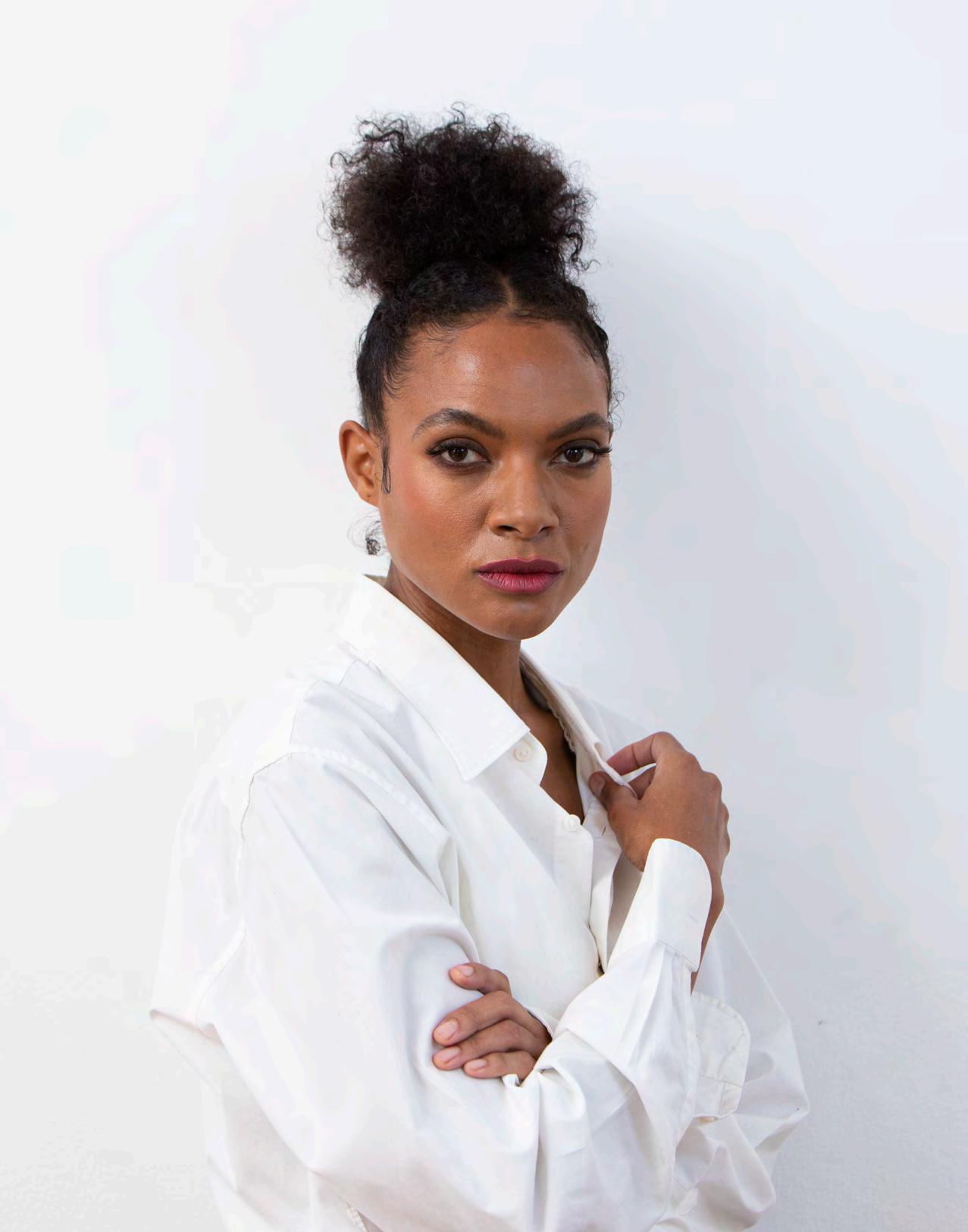
OPEN UP MY VOICE
Allison Russell finds a way to tell her painful story though song by Hilary Hughes
In the Summer of 2019, Singer, songwriter, and multi-instrumentalist Allison Russell hit the road with Our Native Daughters — her supergroup of a roots quartet with Rhiannon Giddens, Amythyst Kiah, and Leyla McCalla — for a tour that was, quite literally, a family affair. The moms in the band brought their children along for the ride, which meant that Russell and her young daughter, Ida, shared a bunk on the packed bus for the weeks-long journey. During the day, the tour nannies took the kids on adventures in whichever city they’d stopped in while Our Native Daughters sound-checked and prepared for their gig. At night, their mothers gave voice to the deep pain, transcendent joy, and the traumas, both modern and inherited, they’d experienced as Black women while reflecting on these sinister afflictions on their ancestors and
themselves.
Every night, Russell would sing “Quasheba, Quasheba,” one of her contributions to the group’s 2019 album, Songs of Our Native Daughters. Over mournful strings and a steady beat, Russell’s voice — luminous and empathetic, yet resonant with a vibrato steeped in sorrow — invoked the strength of one of her relatives. Russell grew up in Montreal, first in foster care and then with her mother and her adoptive father — a white supremacist who abused her, sexually and emotionally, throughout her childhood — before she left home at the age of 15. She eventually reported him to the authorities, and he served a brief sentence for his crimes.
Russell didn’t connect with her biological father and the Black side of her family until 2018, right when Our
Native Daughters had begun to work on the album. While getting acquainted with him and her newfound family, she learned that a distant cousin had delved deep into their Grenadian lineage and traced its roots to its matriarch, Quasheba, who had survived the unspeakable horrors of slavery.
“She endured things that I can’t even imagine — being ripped from home, culture, language, any kind of love from her family,” she says of her muse. “She survived the Middle Passage and multiple sails. She survived constant abuse and rape, and her children being taken and sold. She survived all of that — and that’s why I’m here, and that’s why my daughter is here.”
After her performances, Russell would return to her bunk, where Ida was sleeping, and she would write. A floodgate opened, one that heralded a
breakthrough and a reckoning all at once, as songs started “pouring out” of her. Through telling Quasheba’s story, she had finally arrived at a place where she could completely, and candidly, tell her own.
Excavating History
Outside Child, released by Fantasy Records in May, is a debut solo album and an autobiography for Russell. She had never before written directly about the waking nightmares of her childhood and the scars they left behind, and the record serves as a testimony of her survival.
Though Russell understood the drastic differences between Quasheba’s plight and her own childhood, she saw several parallels as she wrote. “I had this almost dissociative, strange understanding of how similar our lives had actually been,” she says. “My childhood was essentially a form of enslavement to a white supremacist man, my adoptive father, who essentially
believed that he owned me, and that I was less human than he — that was at the core of his treatment of me. He was the product of abuse himself, of course, as most abusers are. … I didn’t even understand, fully, what an intense block I had before finally delving into this material and excavating that history, and stepping forward as an artist in my own name.”
The 11-track album begins with the languid and jazz-inflected “Montreal,” a melancholic ode to her hometown and a prologue for what follows: She weaves recollections of the abuse she weathered throughout the album, along with the perspective forged by her internal work to overcome it.
After fleeing Montreal as a teenager (an escape she details in “The Runner,” the hardest-rocking track on the record), Russell landed in Vancouver, where she became an active member of the city’s folk scene. She played banjo, guitar, and clarinet in Fear of Drinking and Po’ Girl, the folk outfit she founded, as she honed her chops as a songwriter, and found a
home on each stage of the folk festival circuit. In 2006, she met Giddens, her future Our Native Daughters bandmate, at the Vancouver Folk Festival.
Midwestern folk artist JT Nero came into her orbit when he toured through Vancouver, and their musical admiration grew into a creative and romantic partnership: They first collaborated on Nero’s 2011 solo effort mountains/forests, and eventually she joined Nero in Chicago, where the couple formed their roots-rock duo, Birds of Chicago. The duo released its self-titled, crowdfunded debut in 2012 and built an international following with 2016’s Real Midnight and 2018’s Love in Wartime They started a family when Ida was born in 2013.
Although Outside Child didn’t coalesce until Ida reached grade school, the album really begins with her arrival.
“When I became a mother, a lot of things shifted for me, and I started to have an urgency about telling my story, because I know how all these cycles of abuse work,” she says. “You get shamed
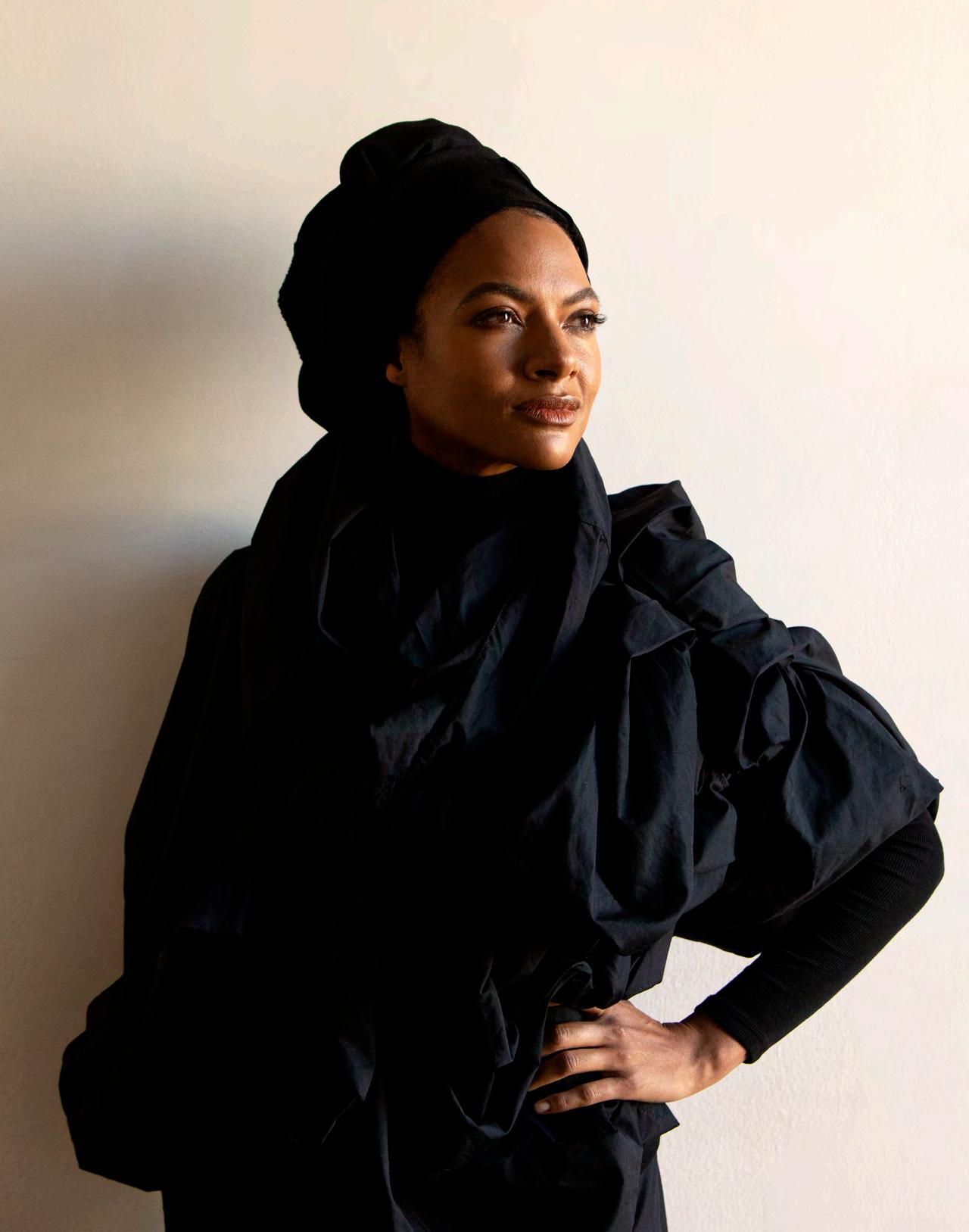
“The delivery is paramount with a record like this. You can’t over-sing it. You can’t under-sing it. You can’t over-shrill it or over-stylize it or over-effect it, and you must feel it in every line.”
Yola
into silence, and that aids and abets a continuance of the cycle. When I became a mother, I realized I couldn’t be part — even tacitly, or implicitly — of continuing that cycle. In order to break it, truly, not just for me but for hopefully future generations, would be to directly face it and deal with it and talk about it and sing about it and do whatever I could to shift it.”
Voice as a Vessel
Today, Russell and Nero are based in Nashville, and they share a home with soul singer Yola, who’s been their dear friend since the moment they met at the Calgary Folk Festival in 2017. When Russell set out to record Outside Child in 2020, she invited Yola and other close musician friends including Erin Rae and Ruth Moody to join her in the studio. Many conversations transpired at their kitchen table — about Outside Child and the abuse that informed it, but also the strength and vulnerability of Black women and the reductive portrayal of their stories across popular culture.
“ The thing that I found really
inspiring about this record was that it was nothing but nuance,” says Yola, who contributes backing vocals to “The Runner.” “It doesn’t cast a broad brushstroke across the nature of what happened to her and the story as she walks you through her childhood, [and] how she moved through these moments and that trauma … moments of beauty, and moments of horror, and moments of stagnancy, and moments of movement, and moments of growth, and moments of love.”
At times, Russell is so forthcoming with her story, so vulnerable and present in the pain of it, that the sadness and violence that informs Outside Child are nearly too much for the listener to bear. When she sings of putting the length of the country between her and her abuser on “The Runner,” we’re invested in her journey to Vancouver. When her voice cracks and breaks on “The Hunters,” pleading with her mother and adoptive father to explain themselves, the pain is palpable as the melody disintegrates. Other times, she contextualizes her stories through the larger lens of violence that BIPOC women face, most staggeringly on the modern spiritual
titled “All of the Women.” Moments of relief are precious throughout, and “Poison Arrow,” which sees her returning to Montreal and reclaiming the street of her childhood, feels especially hard-won.
Language, both literal and figurative, is vital on the record. Russell often transitions between vivid descriptions and fantastical metaphors: escapism reigns on “Hy Brasil,” where she sings of mystical black rabbits and daffodils on a fictional island in the style of the traditional Scottish folk melodies her grandmother used to sing. “The Hunters,” which invokes magic-realist imagery of a pack of wolves being less savage than her parents, alludes to the violence she faced without obscuring it. She also alternates between French and English, fluidly switching languages as she mines her memories without losing listeners in translation. This bilingual narration not only speaks to her readiness to share Outside Child, but also her ability to convey the gravity of it in every measure — and how her voice is a vessel of that.
For Yola, the quality of Russell’s voice and its power is the key to Outside Child:
Without its shades, dynamics, and vulnerable imperfections, the album is incomplete. “The subject matter alone can you take you on a journey, but I can tell you with confidence that if you delivered that with less poise or with a tonality that was shrill in any way, it would be hard to get the message across,” Yola says. “The delivery is paramount with a record like this. You can’t over-sing it. You can’t under-sing it. You can’t over-shrill it or over-stylize it or over-effect it, and you must feel it in every line.”
She continues, “It would be easy to sing her way through this without that depth, to take that level of depth for granted. It’s not easy to do vocally. It’s not easy to not get drawn into style over substance. And so I was floored by the nuance of her tonality, and just when the voice wants to come and it’s strong, it hits you right in the fricking gut ... there’s a certain quality in her voice when you can tell when it’s coming from a place of interacting with a lyric, interacting with the sentiment, interacting with the emotion, interacting with the story.”
Outside Child is radical empathy at work, and the quality of Russell’s voice
embodies it — as do the loving life, and family, she’s built for herself in spite of the hate she’s faced. It’s a conduit for that pain, but also proof that it did not silence her. After the tumult of 2020, Russell is adamant that the threads of Outside Child remain untied: This is her chapter, but it’s unfinished, and it’s part of a broader story — one that started even before Quasheba, and will continue after Ida is grown.
“Birds of Chicago is literally my family, it’s my partner and I. Our Native Daughters, those are my sisters, my chosen family,” Russell says. “I have felt very empowered in these projects, but at the same time, I was hiding, you know? In some ways, I was still running. Even just putting my own name on a record was something I was really terrified of. I realized that so much of that was to do with this indoctrination, this brainwashing into feeling shame of self, and that I had to face that fear. I had to open my voice up wider than I ever had before and just stand in my own truth and experience and say, ‘This is of value.’ ... Maybe it will be helpful for someone to hear this experience and perspective. Maybe it’s worth sharing.” ■
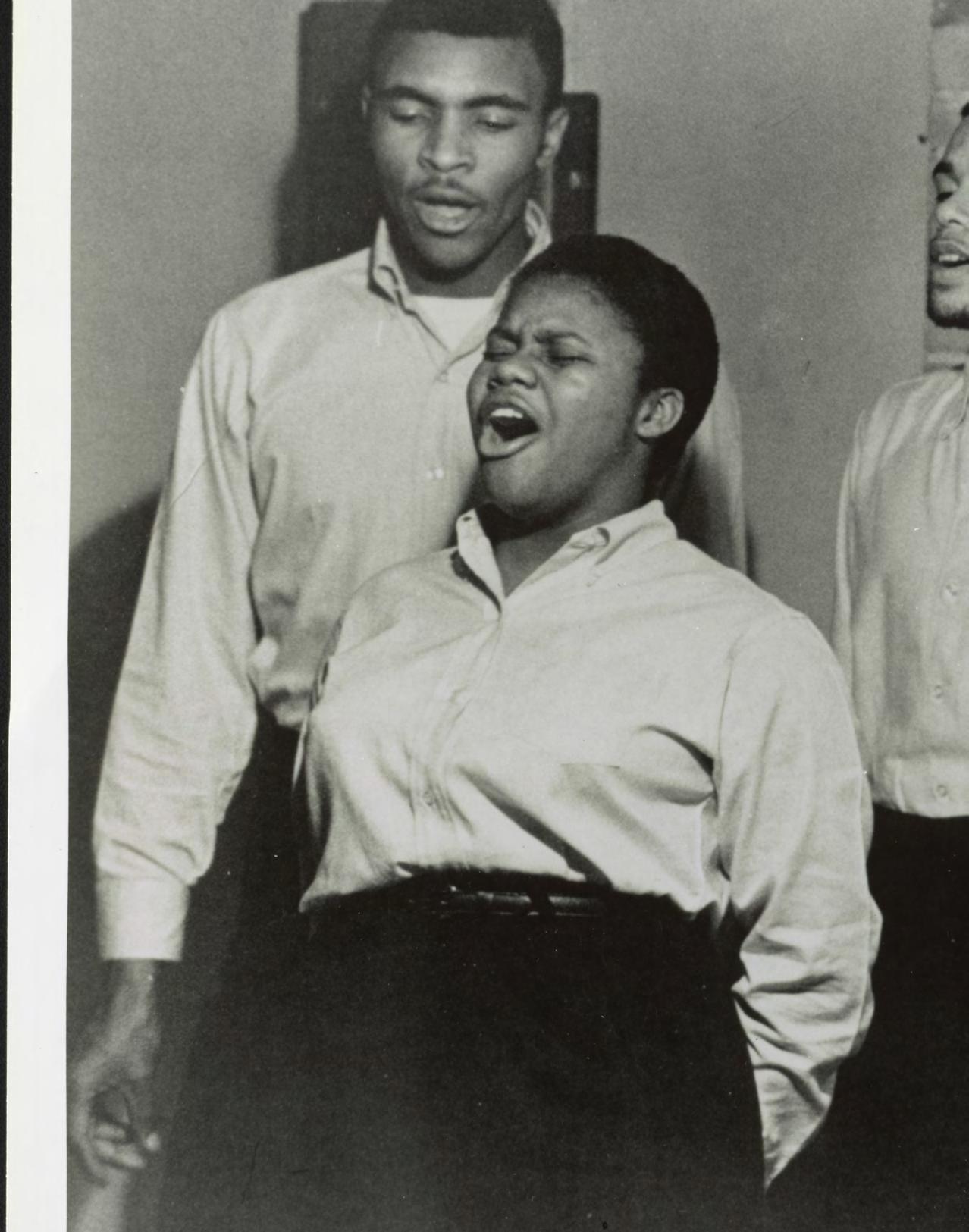
THE AIR AS YOUR TERRITORY
Tracing the legacy of civil rights music
by Kim Ruehl
The Freedom Singers, from left, Charles Neblett, Bernice Johnson Reagon, Cordell H. Reagon, and Rutha Mae Harris, singing at the Caffè Lena in Saratoga Springs, New York, in 1963.
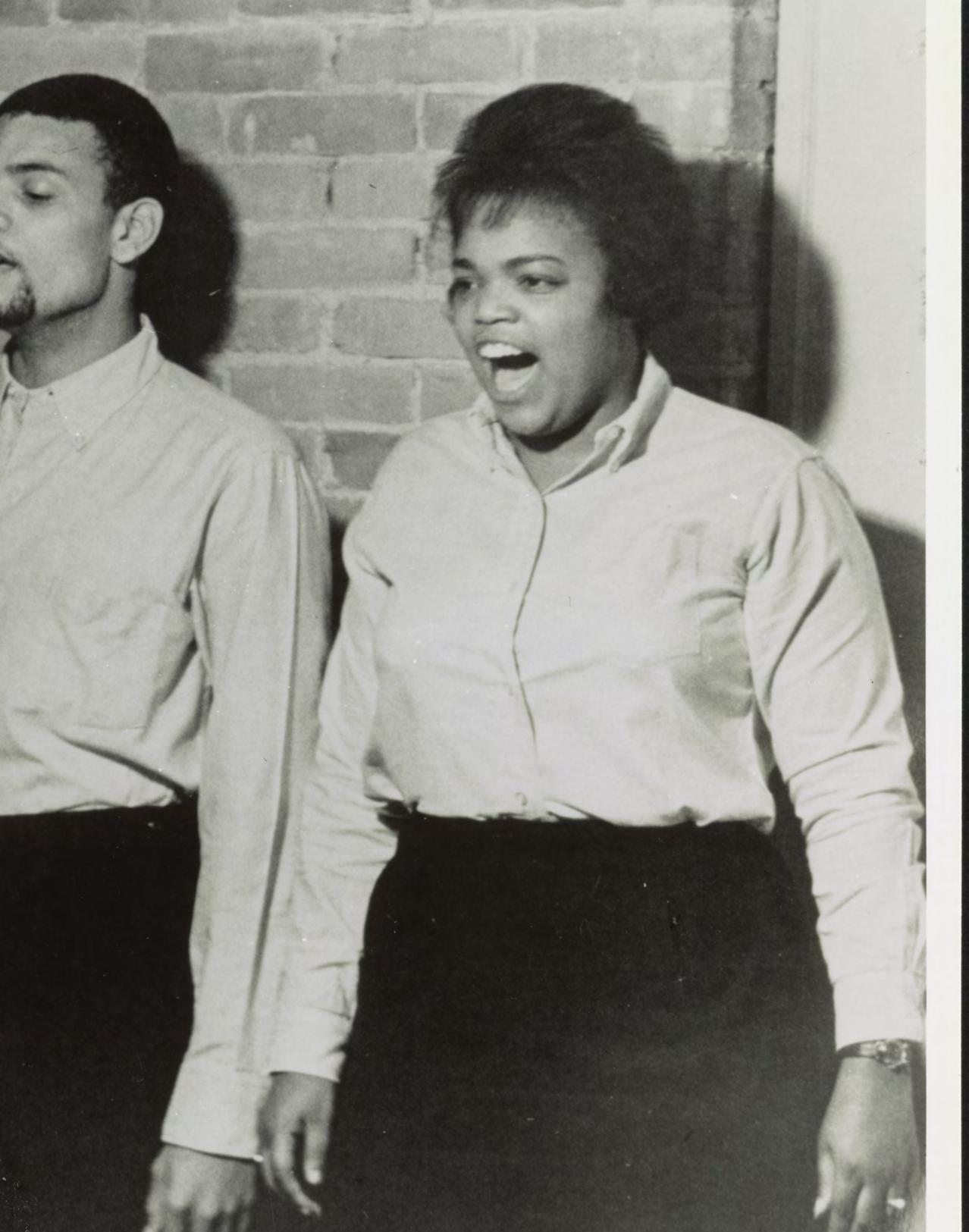
“By the time we formed the Freedom Singers, we were transporting a microcosm experience. So we would be these four people standing in this hall, singing and talking about the movement.”
Dr. Bernice Johnson Reagon
The imageS are So PervaSive, even those who weren’t born yet can picture them now — the crowded streets, integrated crowds, and signs with slogans like “I Am a Man.” Implicated in every mental image of the civil rights movement of the 1950s and ’60s is the soundtrack of the time, artists like Nina Simone, Sam Cooke, The Staple Singers, and Odetta. Songs like “We Shall Overcome,” “Blowin’ in the Wind,” and more.
But relying on these musicians and recordings alone to tell the story of civil rights music is to erase the way music was — and often still is — used strategically to change hearts and minds and ultimately shift cultures and policies.
Indeed, music was so vibrant in the middle of the 20th century, when large swaths of young people became involved in one of the most successful social movements in modern history, because of the way cultural organizers and other activists used it at marches, rallies, and mass meetings. Most of it was never recorded. It existed outside of the music
industry, and that fact is perhaps what makes it one of the most vivid examples of the way a generation found its voice.
Dr. Bernice Johnson Reagon, music scholar, song leader, and founding member of both The Freedom Singers and Sweet Honey in the Rock, summed up music’s role in the movement to journalist Bill Moyers in 1991: “The communal singing that people do together is a way of announcing that we’re here, that this is real, and so anybody who comes into that space, as long as you’re singing, they cannot change the air in that space. The song will maintain the air as your territory.”
Charging the Air
The story of music in the civil rights era has many beginnings, but this chapter started in 1962, when Martin Luther King Jr. was arrested and thrown in jail in Albany, Georgia.
By then, King had been a leader in the movement for a little more than six years; his star rose when he took to the pulpit in a Montgomery, Alabama,
church and called for a boycott of the city buses at the end of 1955. And though Black folks and white allies had been organizing for changes in the nation’s civil rights laws for generations at that point, then-26-year-old King’s oratory power and insistence on nonviolent action caught the attention of the evening news.
Within a few years, King and others had built an organizing mechanism through their Southern Christian Leadership Conference that used Black churches for mass meetings about civil rights struggles. This choice to put the church at the center of King’s efforts was, among other things, both convenient — he was a minister, after all — and strategic. The Black church had always provided a safe place for resistance. It had connective tissue built into it, and connection was vital to a movement asking people to come together who had been strategically kept separate by those in power. Besides, people were used to discussing hard truths at church, were used to being led and ruminating on remote things like freedom. They were also used to singing in church. People were familiar with hymns that song leaders would turn into freedom songs, like “Woke Up This Morning with My Mind on Jesus,” “Lift Every Voice and Sing,” and “I’m Gonna Sit at the Welcome Table.” Characteristic of the form, the latter had a melody and lyrical arc that populated numerous songs, like “I’m-a Gonna Climb Up
Jacob’s Ladder” and “God’s Gonna Set This World on Fire.” That common structure allowed song leaders like Reagon to alter something slightly and everyone present would know just how to join in.
Within a few years of King’s appearance in that Montgomery church, students across the South, inspired by him and other leaders, had taken to resisting Jim Crow laws by sitting down at Woolworth’s lunch counters across the South to buy themselves a meal. They refused to respond to violent threats, to people pouring hot coffee on them, to people spitting in their faces. Centuries of persistent oppression aside, suddenly there were news cameras to catch their resistance, daring the nation to not look away.
By 1960, they had formed the Student Nonviolent Coordinating Committee (SNCC). They held training sessions for nonviolent resistance and practiced through role-playing in churches, homes, and at places like the Highlander Folk School in Monteagle, Tennessee. And they sang.
Black folks had always sung their resistance, using song to get through the day during the slave centuries. They used song as code for the Underground Railroad — lyric and melody mapping their way to literal freedom as they sang songs like “Follow the Drinking Gourd.”
So, it was not unusual when, at the SNCC organizing convention in Raleigh, North Carolina, in 1960, they asked Guy
Carawan, Highlander’s music director, to play that old labor hymn “We Shall Overcome.” At least some of those present were aware that young Black women such as Lucille Simmons had adapted the song from a hymn by another young Black woman named Louise Shropshire 15 years earlier in South Carolina. Those women had taught it to Carawan’s predecessor, Zilphia Horton, who taught it to Carawan.
Indeed, that song and others like it — from the Black Baptist hymn tradition as well as from the labor movement — became so pervasive in organizing efforts that SNCC leaders Cordell Reagon and Charles Neblett started talking about creating a singing group. Folksinger and ardent ally Pete Seeger encouraged them. As Carawan’s wife, Candie, recalls, Seeger’s wife, Toshi, felt that a singing group, which could tour around, might open people up to the ideas of the movement while also raising funds.
With that advice ringing in their heads, Reagon and Neblett went to Albany in 1962. There they found a community of Black folks who were accustomed to singing out and through their struggle.
“Albany has a really deep, deep tradition of singing — old style, line-out hymns,” Candie recalls. “In Guy’s mind, it was one of the places, as he traveled throughout the South, where this really rich, deep tradition of singing already
“Part of why the Freedom Singers worked so well is because they were [using] popular hymns. You’re really taking songs people already know and changing the words. And the word changes for those songs don’t really shift the meaning of the songs. They kind of reinforce the meaning of the songs. They take it beyond a religious context and apply it to the contemporary challenge.”
Wendi Moore-O’Neal
Co-director of Southerners on New Ground (SONG)
was there. There was already a movement in Albany before there was SNCC, … [so] SNCC was going to wind up being in a vanguard position, with a lot of young people willing to take such tremendous risk and all.
“But there was plenty going on before that. There was already really important singing. … Bernice [Johnson] and Rutha [Mae Harris] would have already been part of singing in the movement even before the SNCC organizers came over and tried to crystalize things.”
Indeed, Johnson had a voice that packed such remarkable strength that it instantly filled any room with power and energy. And she was not the only one. There were numerous singers in Albany who could have led the music of the movement, and out of that group emerged the undeniable combination of Johnson, Harris, Reagon, and Neblett. They named themselves the SNCC Freedom Singers, and Toshi Seeger got to work booking their engagements.
Johnson eventually married Cordell Reagon and earned her doctorate from Howard University, becoming a scholar in the fields of music and cultural history. In 1988, she explained to NPR: “When the news reporters began to come down [to Albany, Georgia] … well, what they began to write about was the singing. No matter what the articles said, they talked about
singing.
“Press was very difficult to get,” she added. “So the Freedom Singers came out of a need to have another kind of structure to generate support. … By the time we formed the Freedom Singers, we were transporting a microcosm experience. So we would be these four people standing in this hall, singing and talking about the movement.”
They attracted both dollars and reporters to a cause whose time had long since come, but none of them were in it for the money or fame. That they were able to garner both was something they just saw as useful to the success of the movement. Underneath it all was the music and the truth about these freedom songs: They worked.
And they continue to work. Wendi Moore-O’Neal, a co-director of Southerners on New Ground (SONG) who has dedicated her career to this kind of music-fueled cultural organizing, who has studied Dr. Reagon’s work and carries it forward, explains: “When I sing with people, I’m not trying to actually get us to sound good because that’s not my bag. I’m actually trying to get us to charge the air with our power, with our life force, to feel our power and to collectivize it. I’m trying to reinforce our beliefs that hold us together. I’m trying to give us experiences that help us to be a group and experience
solidarity — exhibit, practice solidarity. I’m trying to reinforce our demands, you know. … I’m wanting people to understand what’s being said.
“Part of why the Freedom Singers worked so well is because they were [using] popular hymns,” she adds. “You’re really taking songs people already know and changing the words. And the word changes for those songs don’t really shift the meaning of the songs. They kind of reinforce the meaning of the songs. They take it beyond a religious context and apply it to the contemporary challenge.”
Mind Stayed on Freedom
Before the Freedom Singers materialized, the Montgomery Trio was one of the most notable singing groups in the movement, Candie Carawan says. It was their 13-year-old member, Mary Ethel Dozier, who added the “We are not afraid” verse to “We Shall Overcome” during a middle-of-the-night police raid. That song’s effectiveness has been celebrated time and again, but it is by far not the only one that was updated and adapted to the civil rights struggle. There were plenty of others one could pull from Baptist hymnals, changing a few small words — changing “Jesus” to “freedom” was a favorite shortcut, as in “Woke Up This Morning with My Mind
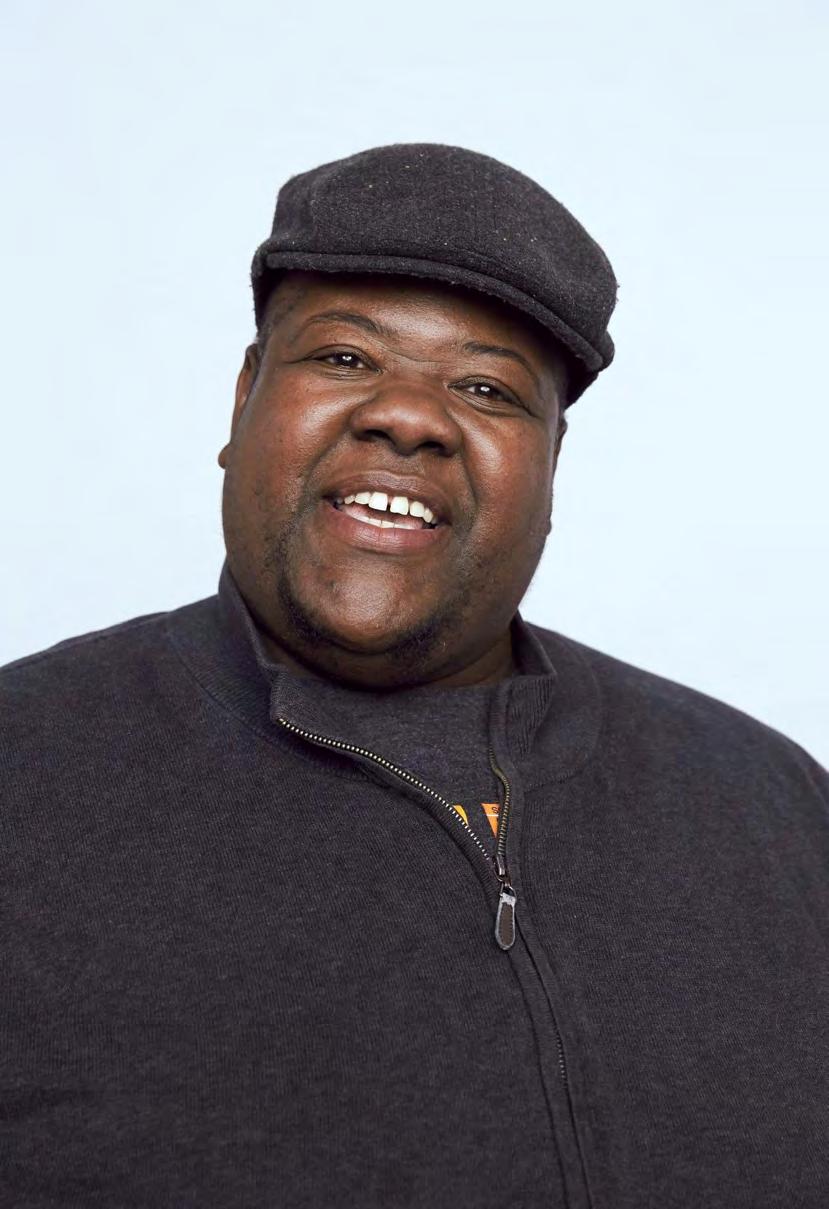
Stayed on Freedom.”
Song leaders also waffled back and forth between whether it made better sense to sing from the “I” or the “we.” Regardless, employing any of these songs during a tense moment of a march, or to open a rally, was an opportunity to galvanize support around the shared interests of those participating in the movement. It was also a way to call the roll, to welcome all those present into the cause.
In 1991, Bernice Johnson Reagon
explained to Bill Moyers: “In the Black community, when you want the communal expression, everybody says I. So if there are five of us here, and all of us say I, then you know that there’s a group. … ‘This little light of mine, I’m gonna let it shine.’ Me. When the march goes, I am going to be there. It really is a way of saying, ‘The life that I have, I will offer to this thing.’”
Reagon went on to talk about the extent to which Black people had been denied personhood, had been expected
to fade into the background. To do their job and know their place. This happened, she said, “to the extent that people really had to go through a barrier to stick out. … [So,] It’s a very arrogant stance, saying, ‘Everywhere I go, I’m gonna let it shine.’”
One thing that is often lost when reporting about that era of civil rights organizing, when looking at images of crowds singing, is just how many I’s were present and joining in, asserting that “arrogance,” when they sang with Reagon and her peers. And this is one reason why the Freedom Singers remain the primary singing group to whom historians refer when discussing singing during the civil rights movement.
Yet, there was so much music involved with organizing in the 1960s. In his foreword to the Carawans’ 1992 songbook, Sing for Freedom: The Story of the Civil Rights Movement Through Its Songs, SNCC founding member and co-founder of the Southern Poverty Law Center Julian Bond namechecks a number of other singing groups who would be remembered easily by participants, but perhaps not so much by the record-buying public: There was the Congress of Racial Equality (CORE)’s Integration Grooves, Jimmy Collier and the Movement Singers, the Selma Youth Choir, and others. Every church had its
Wendi Moore-O’Neal
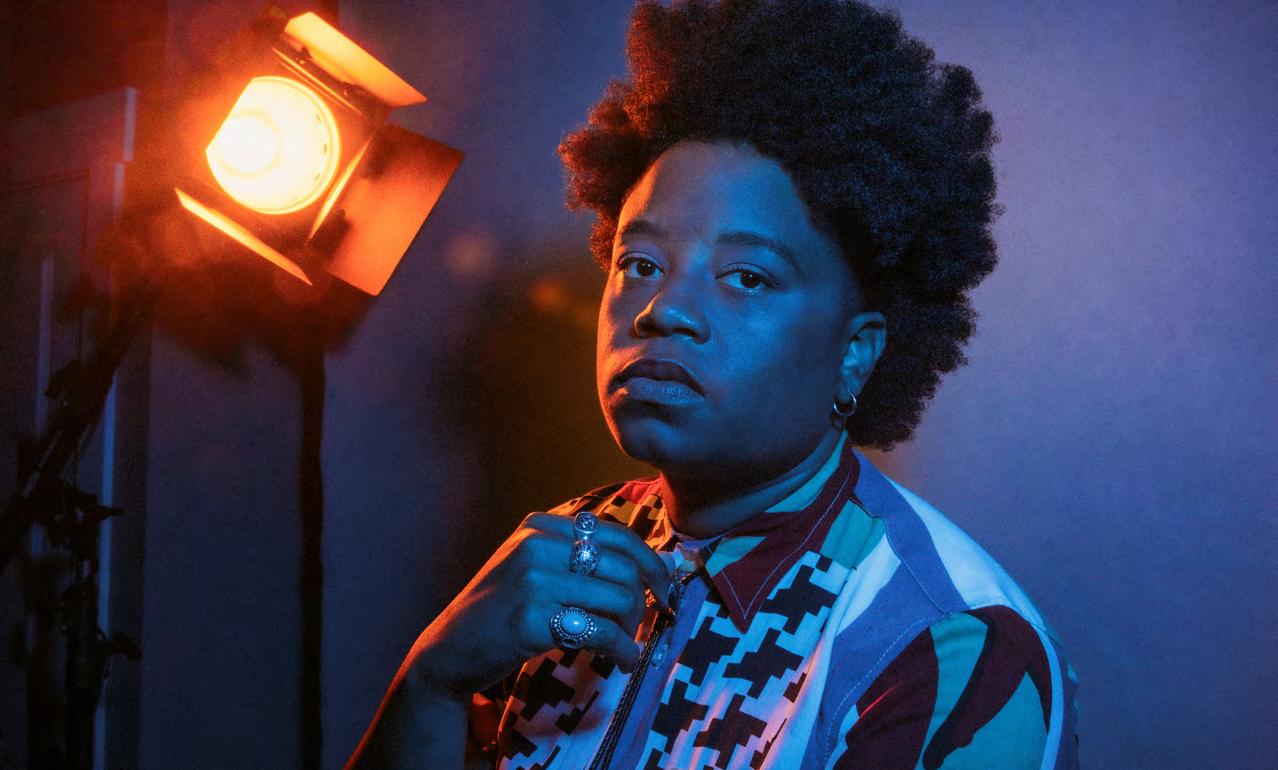
choir, every community had its groups, and every group contributed to the way music moved the movement forward through both peace and strength.
Candie Carawan still champions the innumerable music makers whose names will never be known. “To me,” she says, “so much of the music that emerged, including with the SNCC Freedom Singers, already existed. ... It was just kind of a fluke who ended up being identified to be the ones to carry it out of the South, for other people to hear it.”
Then, as now, there was no reliable way to predict which musicians would garner a national audience and which ones would remain pinned to their hometown doing the day-to-day work of movement building.
SONG’s O’Neal believes that however music is made and used, it is vital to the mission of shifting culture toward a world where all are welcome and treated with equal dignity, or King’s vision of Beloved Community. Her focus remains how best to use music in song circles — she calls it “congregational singing,” galvanizing groups around a cause — as well as on the street or at gatherings. There, songs take on a life of their own, as people who are
demanding change develop their own relationships with the songs.
“ There was a time there,” she says, “when you didn’t see people using freedom singing. Now I show up places and I don’t know anybody [there], but I hear songs I’ve taught. It’s an amazing experience.”
Another current example of this “congregational singing” is the Poor People’s Campaign’s Moral Voices Choir, directed by Yara Allen and Charon Hribar. In Georgia, O’Neal points to Jill Cartright, who has used music to organize progressive voters around the cause of turning Georgia blue and demanding an end to cash bail, in a way that honors the legacy of Reagon and the SNCC Freedom Singers.
Cartright, says O’Neal, “was at Spelman just as Dr. Reagon was at Spelman. She is the statewide organizer for SONG in Georgia right now and she’s been … doing get-out-the-vote work. Not only in Atlanta, but also in Albany, where Dr. Reagon is from.
“One of the things she does is she can blow. She uses songs not just to sing [for an audience], but to fire up the spirit. We’ve been working through very
discouraging times. I’ve seen her use songs to pull people together and to get people hyped and to reinforce the ideas, reinforce our analysis. I see her sharing songs a lot, and I see a direct line between the Freedom Singers and her.”
‘South Gotta Change’
It is perhaps a testament to the effectiveness of organizers such as O’Neal, Cartright, Hribar, and Allen who are committed to carrying forward the legacy of the singing movement that it has become acceptable — encouraged, even — for recording artists in Nashville, New York, and elsewhere to include social justice-themed music on their albums. Artists like Tré Burt, Sunny War, Allison Russell, and Rhiannon Giddens have made a point of remaining allegiant to their roots while making music the mainstream (read: predominantly white) music media is no longer willing to ignore.
Alongside them is Amythyst Kiah, who began her career singing old-time music from her hometown of Johnson City, Tennessee, but has risen to greater prominence as one-fourth of the
Amythyst Kiah
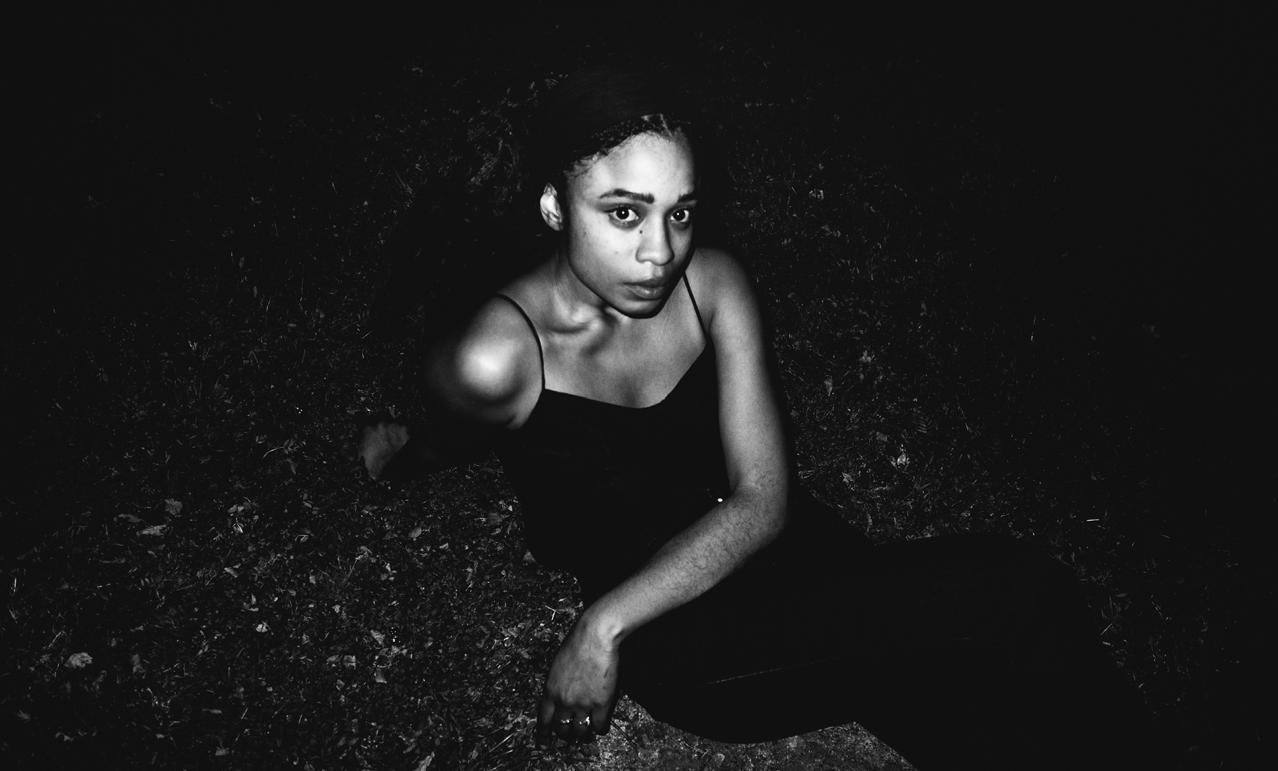
supergroup Our Native Daughters with Giddens, Russell, and Leyla McCalla.
“I certainly wasn’t thinking, ‘I’m going to be an activist, I’m going to be part of the movement,’” she says on forging the group. “I was never really openly vocal about my politics because I was gigging in the Bible Belt, in a place where there’s a lot of neo-conservative white folks. I was usually the only Black person at a show, especially when I was playing old-time festivals. In my mind, I had to keep my guard up because I want to play this gig, have an opportunity to come back. I figured it would be safe for me to just play music. I guess I was just shutting up and singing for a while.”
Still, she adds, “I wanted to be able to live authentically and speak my truth. I was still finding a way to do that and so … it was like, ‘Okay here’s my chance, I don’t have to do this alone.’”
The potential music carries to inspire even its makers to realize they aren’t alone when they struggle for justice is something performers and organizers have in common.
Especially when people have been separated by the pandemic, the ability to find great recorded music that speaks to
the moment fulfills a certain need. As cultural organizers have known for decades, people need to hear their own thoughts and feelings reflected back at them before they find the confidence to make any change, whether those thoughts and feelings are about love and loneliness or whether they’re about a restless yearning for widespread cultural awakening. It is the latter, in response to the visible organizing, that has given rise to some of the most exciting artists of this generation.
Indeed, the decision performers make to use their voice to amplify a movement is always praiseworthy. In 1963, Seeger exercised his allyship when he said from the stage at Carnegie Hall, “If you would like to get out of a pessimistic view yourself, I’ve got one sure remedy for you: Go help those people down in Birmingham or Mississippi or Alabama. All kinds of jobs that need to be done. It takes heads and hearts and hands to do it, human beings to do it.”
About a half-century later, that same kind of education and advocacy was championed by Giddens and her band, the Carolina Chocolate Drops, who used their time onstage to clue in their white
audiences about the history of Black contributions to American folk music. Kiah and her Our Native Daughters bandmates have done the same both onstage and off. And their contemporaries, like singer-songwriter Adia Victoria, have joined in too. Victoria, whose mother is a community organizer, has talked about how she used her year in quarantine studying up on the history of Black music in her native South Carolina. On the heels of her remarkable, stirring 2019 album, Silences, Victoria dropped the surprise single “South Gotta Change” last summer. In it, she sings:
I stood up to the mountain
Told the mountain, “Say my name.” And if you’re tired of walking Let the children lead the way … We’re gonna find a way The South gotta change.
Many Southerners agree with the determination that the South needs to change. Indeed, the powerful voices of Southern Black women and men have been demanding it — singing it — for generations. ■
Adia Victoria
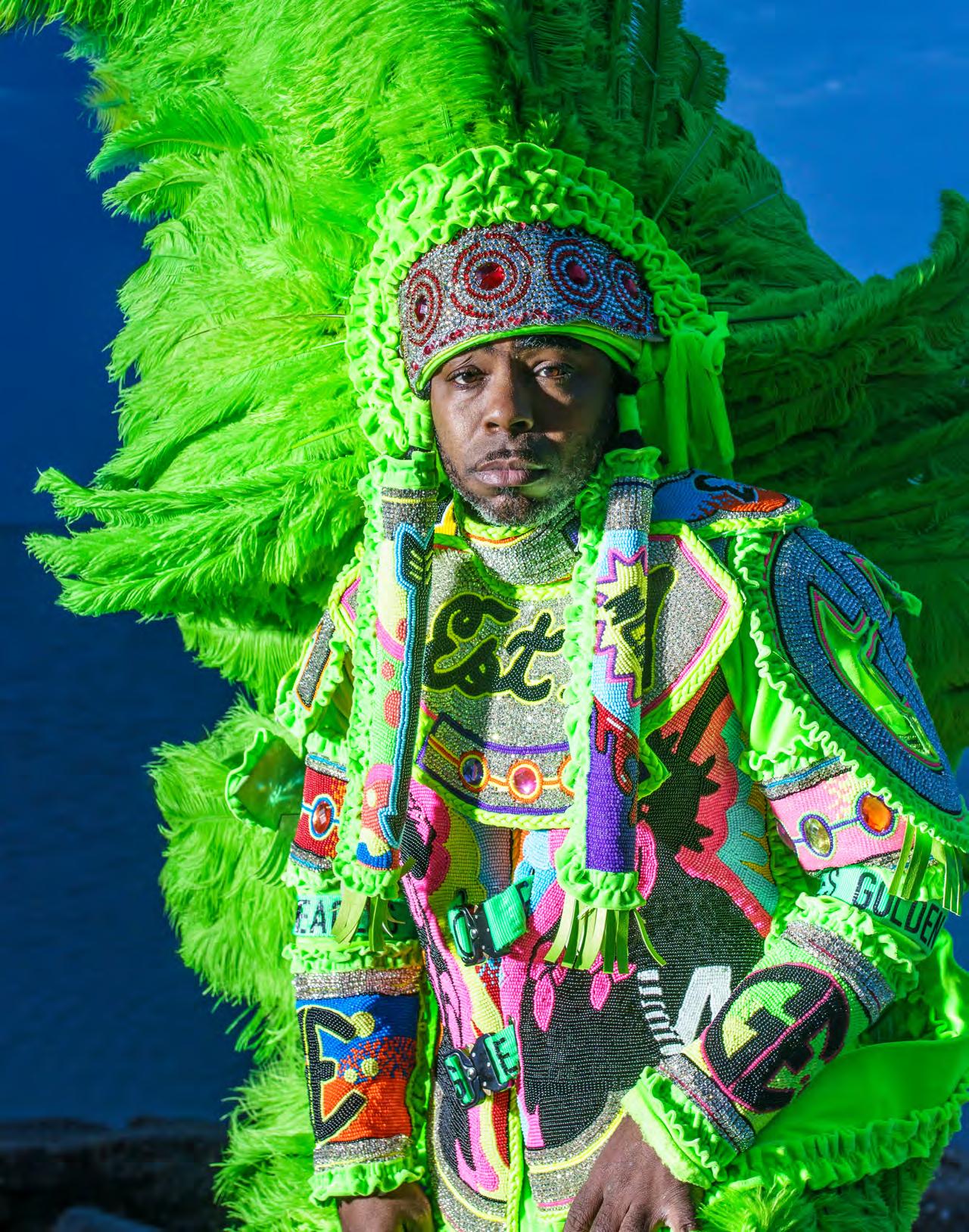
Joseph Boudreaux Jr.
CULTURES COMING TOGETHER
Cha Wa shares the stories and sounds of New Orleans with the world
by Erica Campbell
Three memberS of the band Cha Wa gather on a video call in their hometown of New Orleans. Founder and drummer Joe Gelini, lead vocalist Joseph Boudreaux Jr., and trumpeter, vocalist, and percussionist Aurélien Barnes joke and laugh easily, reminiscing about an intense game of Mario Kart, one of the band’s favorite after-show pastimes. But when discussion turns to the band’s new album — My People, released in April via Single Lock Records — and the historical significance of Mardi Gras Indians, Boudreaux Jr.’s voice grows serious with intention, making space for reverence between each word.
The Mardi Gras Indians, also known as Black Masking Indians, participate in the annual Carnival season by crafting and wearing costumes inspired by ceremonial Native American wares. Boudreaux isn’t just well versed at telling this history, he’s part of it. He’s the son of Big Chief Monk Boudreaux of the Golden Eagle tribe (one of nearly 40 Black Mardi Gras Indian “tribes” or collectives) and has been taking part in masking, the art of creating and donning the elaborate suits, since before he could walk. He’s also been performing since he was just 10 years old.
The history of segregation in Mardi Gras celebrations spans from their inception in 1837 to well after Jim Crow laws were declared unconstitutional. In fact, New Orleans didn’t officially pass legislation to desegregate Mardi Gras krewes until 1992, according to the African American Intellectual History Society.
“Black men of the neighborhoods were not able to actually celebrate the mainstream Mardi Gras with the floats and the krewes; they weren’t allowed to actually participate,” Boudreaux says. “The Black men of those neighborhoods would put on suits that they would make from their hands with any kind of jewelry they could find, any kind of materials, sequins, anything that would give shine to it. They did that to pay homage to those Native Americans that actually helped slaves escape.”
Long before the first Europeans arrived, the area now referred to as New Orleans was called Bulbancha, a Choctaw term meaning “the place of many languages” or “the place of many tongues.” It was a nod to the many Indigenous groups who traded and lived in the multiethnic, multicultural area. According to Bulbancha Is Still a Place, a zine authored by Indigenous scholars and community members originating
from New Orleans, there are multiple possible origins for the Mardi Gras Indians. The common retelling is that Indigenous people had used their knowledge of the land to guide fugitives who’d been enslaved through the bayous and swamps of Louisiana and aiding them on their path to freedom. And today, Black Mardi Gras Indians pay living tribute to that past, donning vibrant feathers, headdresses, and masks created through a meticulous process.
“When people see Mardi Gras Indians, especially native people who are not from Louisiana and who don’t know that history, one of the first things they say like, ‘Well, isn’t that just like white people wearing war bonnets at music festivals, or something like that?’” says the zine’s editor, Dr. Jeffery U. Darensbourg, a member of the AtakapaIshak Nation of Southwest Louisiana and Southeast Texas. “It’s a more complicated issue than that because many of the people who are in these Black masking communities are in fact of native ancestry and they come out of a mixture of traditions and a mixture of those native and African cultural traditions.”
The pageantry is only one aspect of Mardi Gras Indian culture, Boudreaux
“If you listen to New Orleans music, like brass bands, they’re based on these African rhythms, these rhythms from the Caribbean, which are ultimately, essentially from Africa. This has been a place of influence and the undercurrent of American music.”
Joe Gelini
Cha Wa founder and drummer
explains; the music is integral as well. “Typically, it would start off with just a tambourine, maybe a glass bottle, any kind of percussion instrument to get the chants,” he says. “Mardi Gras Indians chant the same way the slaves did. They communicated through the drums and the chants. That music over time developed and grew into a whole different kind of genre in New Orleans.”
What resulted is a distinctive sound, one embodying a cultural synthesis only New Orleans can offer and one Cha Wa has tasked itself with presenting to the world. It’s a sound that has rarely made its way into the mainstream, save for some rare examples.
The song “Iko Iko,” which repeats the Mardi Gras Indian chant “jock-a-mofee-nah-nay,” is one of the most recognizable examples. It was made popular by The Dixie Cups in the 1960s and spawned countless covers, including by Dr. John and Grateful Dead in the ’70s. The lyrics tell the story of a parade collision between two tribes of Indians: “My flag boy and your flag boy / Were sittin’ by the fire / My flag boy told your flag boy / I’m gonna set your flag on fire.”
But the mixture of African folk music, jazz, R&B, hip-hop, rock, and soul was first brought to the forefront by
Boudreaux’s father. As a member of The Wild Magnolias in the ’70s, Joseph Boudreaux Sr. played the inaugural New Orleans Jazz & Heritage Festival and released the first studio-recorded music from Mardi Gras Indians. Says his son, “We are just creating our own style with that foundation.”
‘Coming for Ya’
The band took its name from the traditional Mardi Gras Indian chant “Cha Wa,” which roughly translates to “We’re coming for ya!” They hope to do just that with My People, their third record, by sharing music that blends traditions and perspectives of both Black and Indigenous communities while honoring and giving voice to both.
“Originally these songs came about through a culture of being able to be yourself and be free,” Gelini begins before retelling a story Boudreaux Sr. told to him. “[Boudreaux Sr.’s] parents’ generation didn’t want to speak Native American amongst each other in public because they were worried they’d get put on the reservation. He’s 79 years old but if you think about it in context, it’s not very long ago.”
The shared oppression of Native American and Black people is woven
into the fabric of New Orleans’ past and present; even the fancy hotels currently lining the storied streets of the French Quarter used to have slave auction blocks in them. That history seeps into the music, because, as Gelini puts it, “we’re living amongst this background.”
“You have all these cultures coming together. If you listen to Mardi Gras Indians, if you take the rhythms themselves, they are inherent in the original rock and roll recordings that were produced at Cosimo Matassa’s [studio] in the French Quarter with Little Richard and Fats Domino,” Gelini shares, his voice quickening with excitement. “You take those rhythms and the call and response, from a musical standpoint that influenced rock and roll, funk, rhythm and blues, jazz, it’s an amalgamation of all these Caribbean rhythms. If you listen to New Orleans music, like brass bands, they’re based on these African rhythms, these rhythms from the Caribbean, which are ultimately, essentially from Africa. This has been a place of influence and the undercurrent of American music.”
This rich musical mixture is prevalent on My People, as Cha Wa aims to translate the sweat, communication, and celebration of a second-line band into the confines of an album.
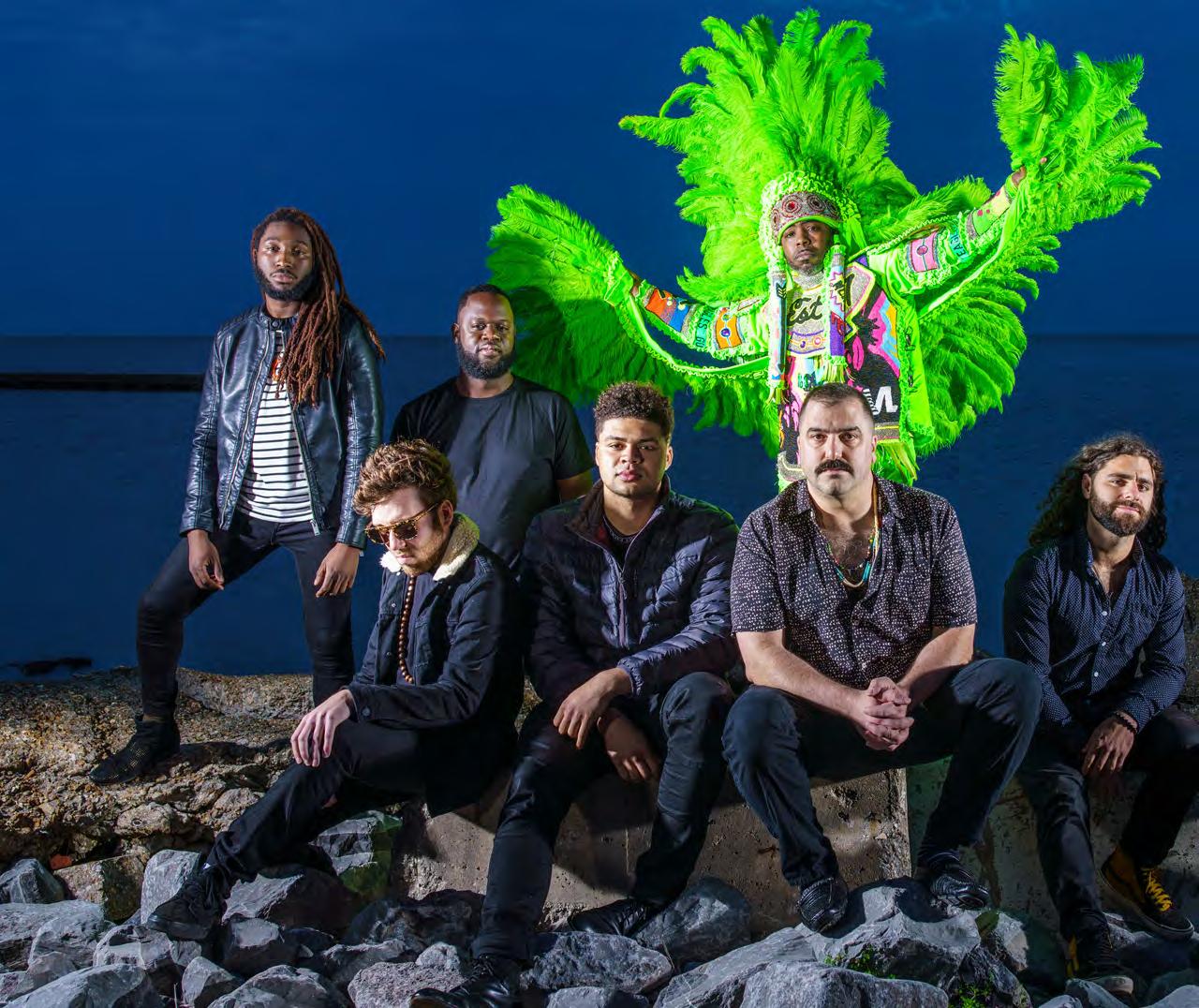
Barnes wrote the opening title track in hopes of capturing the essence of New Orleans and the people in it. “We’ve been through a lot in this city in terms of slavery, segregation, and the current poverty state that a lot of people live in, discrimination, gentrification,” he says. “But throughout all of this, there is still something that exists, that’s very intangible and indescribable. I haven’t been able to describe it really except for in this song.”
Through his lyrics, Barnes takes listeners on a journey from “Rich people living in paradise / poor people under the bridge at night” to “My people we’re still here and one day we gonna all be in the same boat.” Backed by upbeat
percussion and swelling trumpets, “My People” toes the line between celebration and recognition of hardship.
“It speaks directly to the nature of our city,” Boudreaux explains. “We are a city that’s so resilient we choose to find that very bright line in everything. Even through death in our city, we celebrate life, instead of mourning, we dance. What our band represents, being able to have a good time in spite of everything that’s going on around us, knowing that we, as a people, [are] going to get through it.”
From start to finish, My People somehow captures the taste of freshly caught seafood, the vivid colors of Carnival, the humidity rising from the
Mississippi River. Songs like “Second Line Girl,” with its reminiscing on the smell of barbecue smoke and eye contact with a soul-stopping Creole queen, pull you into an experience. With its refrain, “Ain’t no place I’d rather be / Down on a Sunday in New Orleans,” Boudreaux confirms, “You can’t listen to a song like ‘Second Line Girl’ and not feel like you’re just there.”
The album closes with “Shallow Water,” which opens with a traditional Mardi Gras Indian chant. The song was recorded on location at Handa Wanda’s, a famed location where Indian tribes practice their music and dance routines shoulder to shoulder on Sunday nights. The repetitiveness and rhythm cycles of
Cha Wa
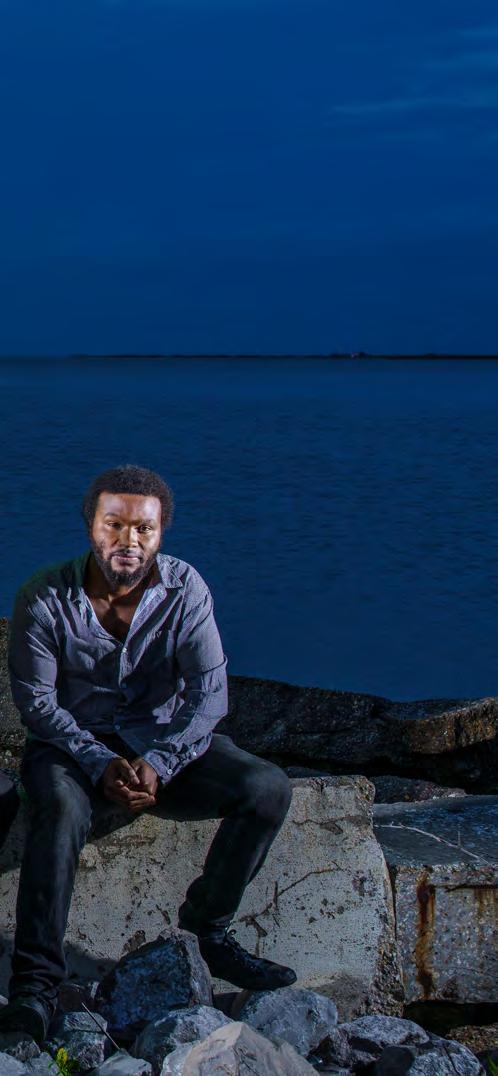
the song are trancelike, and with the historical location as its backdrop, there’s almost something sacred about it.
A City’s Sound
The New Orleans sound is complex, fluid, and unlike anything else in the world. It’s worlds apart from Southern music or specialized sounds from nearby places, like Texas or Muscle Shoals. It even stands apart from what’s heard in other parts of Louisiana. Cha Wa is keenly aware of this, and although they’ve been described as a jazz or funk band, they refuse to lean on genre marketing tools.
“I try to stay away from categorizing anything. I really don’t like the fact that
there’s such thing as the category of jazz where anytime somebody sees a horn, they’re like, ‘Oh, well they must be a jazz band.’ I’m like, we don’t play jazz, that attracts only old people and scares young people away,” Barnes says with a laugh. “Even the term ‘jazz,’ there’s lots of racism behind that too. Jazz is the name that white people gave to the music. No Black person that was playing that type of music during its inception called it jazz. They’re just playing music.”
With My People, Cha Wa wants to give people all over the world the same musical respite New Orleanians view as a necessary daily practice. They understand what their music means in this moment, one marked by protest against social
injustice and by a worldwide pandemic that highlighted the disparities of health and wealth not only in their hometown, but throughout this country.
Though Cha Wa is intentional in sharing the roots behind its music, band members are careful to make sure it doesn’t become derivative. Each band member perfected their musical prowess for years before even joining the band; with each other, they’re just bringing new life to it.
“It’s just a family of guys getting together, making music with one common goal in mind,” says Boudreaux, “to stay true to yourself, stay true to the music, and have a good time. Just make it fun.” ■
HEARING A WHOLE WORLD
50 years of Karen Dalton’s ‘In My Own Time’ by
Laura Stanley
Karen dalton made the familiar sound distinct: With a mesmerizing, singular voice, paired with her agile guitar and banjo playing, Dalton shaped others’ words to feel like extensions of herself. In My Own Time, her second and final studio album, released 50 years ago, features a broad range of soul, country, and traditional songs, including “In a Station” by The Band’s Richard Manuel, “When a Man Loves a Woman” by Calvin Lewis and Andrew Wright, and “How Sweet It Is,” penned by the songwriting team of Holland-Dozier-Holland.
Los Angeles-based singer-songwriter Julia Holter, who contributed to the 2015 Tompkins Square Records compilation Remembering Mountains: Unheard Songs by Karen Dalton and recently composed the soundtrack for the 2020 documentary In My Own Time: A Portrait of Karen Dalton, characterizes Dalton’s “sensitivity to melody” as a special component of her craft. “[Dalton] has a very magical voice,” says Holter. “There’s poetry to it. You hear it and it feels like
you’re hearing a whole world.”
Dalton was part of the vibrant folk music scene of Greenwich Village in the 1960s, and her artistry entranced her contemporaries. In his 2004 memoir, Chronicles: Volume One, Bob Dylan called Dalton his “favorite singer,” adding, “Karen had a voice like Billie Holiday’s and played the guitar like Jimmy Reed and went all the way with it.” In My Own Time was produced by Harvey Brooks, a bassist on Dylan’s Highway 61 Revisited, and was released in 1971 on Just Sunshine Records, the label of Woodstock Festival’s co-creator Michael Lang.
Between Dalton’s talent and the buzzy names attached to the record, In My Own Time had the potential to be a hit, but it never was in Dalton’s lifetime, which was cut short due to complications from AIDS in 1993, when she was just 55 years old. But In My Own Time lived on, finding its audience posthumously. The album was reissued by Seattle-based label Light in the Attic Records in 2006, and since then has swelled in popularity. Dalton’s unmistakable voice now spills out of
coffee shops’ speakers and her songs are featured in movies and television shows. On Spotify, “Something on Your Mind” has been streamed more than 19 million times. This fall, Light in the Attic will, once again, celebrate In My Own Time with the release of a 50th anniversary edition.
Ahead of Its Time
In My Own Time was recorded over six months at Bearsville Studios, located outside of Woodstock, New York, and owned by prominent music manager Albert Grossman. Where Dalton’s first record, It’s So Hard to Tell Who’s Going to Love You the Best (released on Capitol Records in 1969), has a crackling intimacy to it, In My Own Time is more polished and includes expansive fullband tracks.
Alongside Brooks on bass, Dalton’s backing band included drummer Denny Seiwell (Paul McCartney and Wings), pianist Richard Bell (Full Tilt Boogie Band), Bill Keith on steel guitar, and many others. The bright sounding “How Sweet It
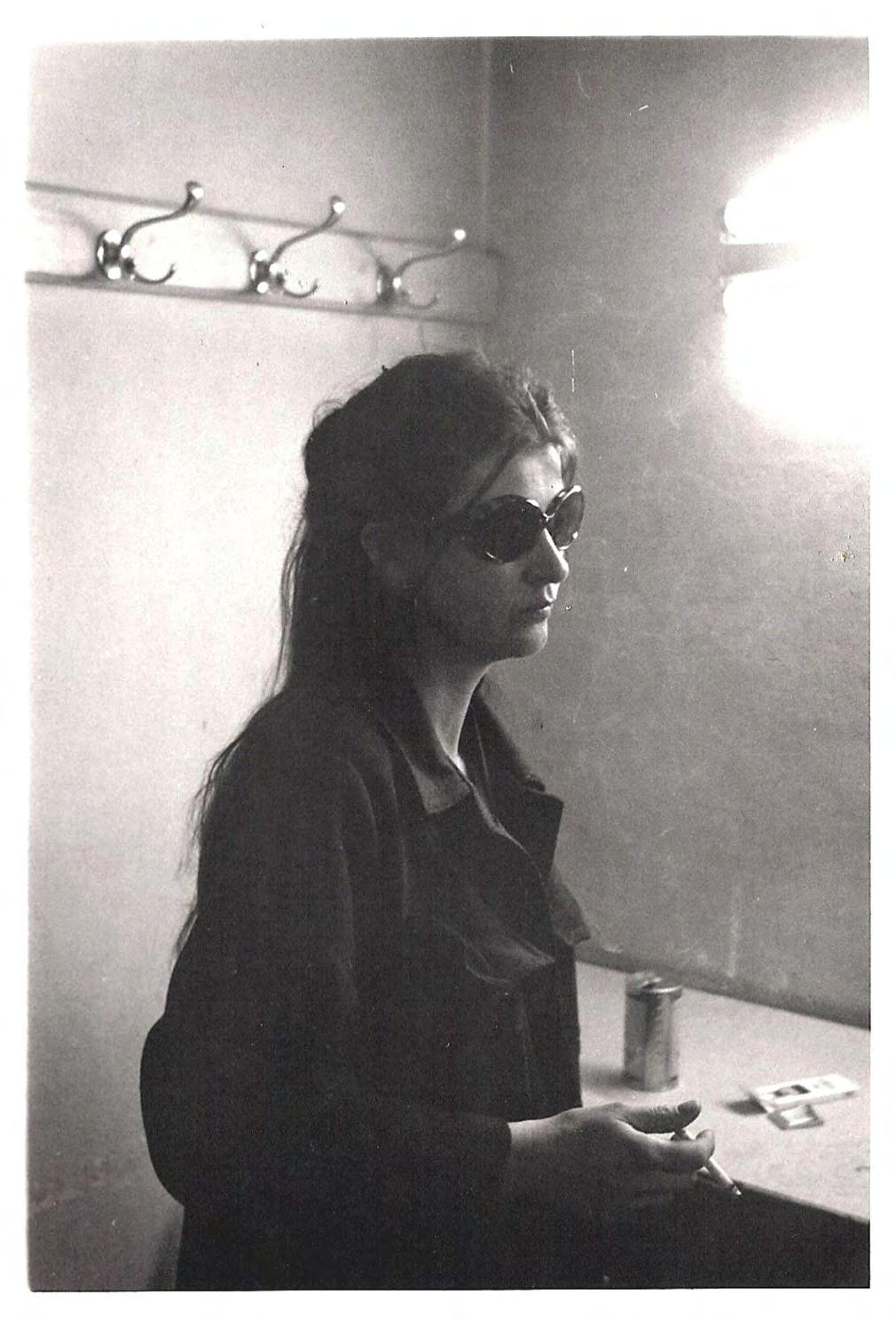
Karen Dalton
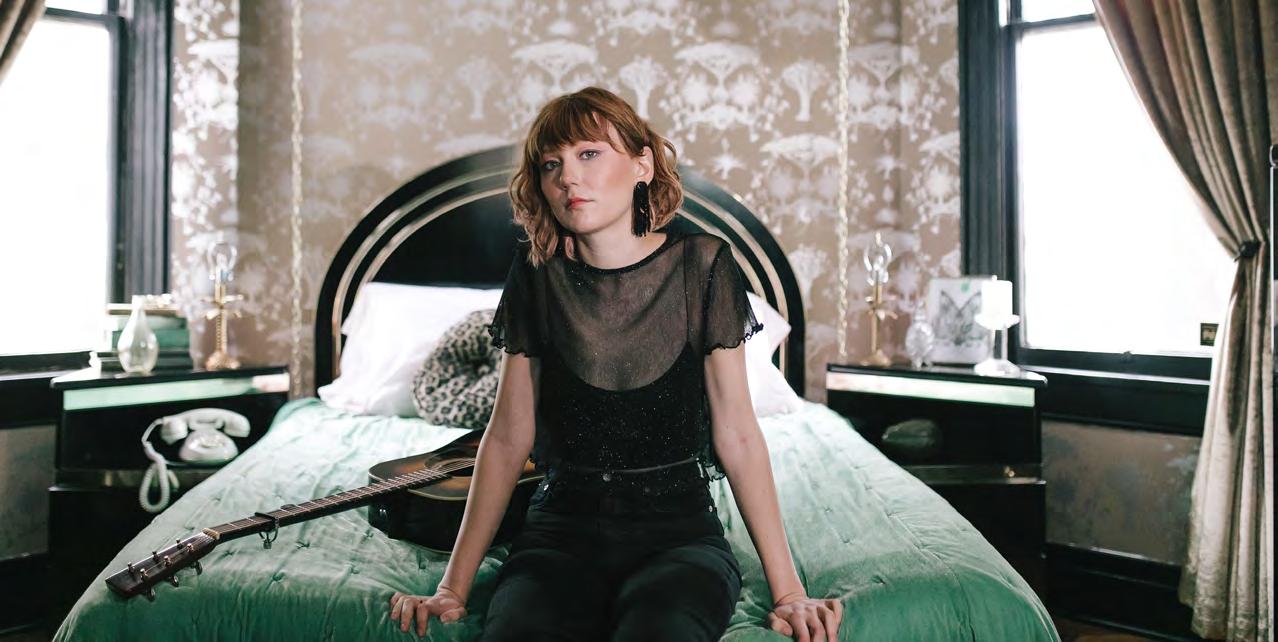
Is” grooves playfully with interwoven guitar parts while “In My Own Dream” (written by blues artist Paul Butterfield) is a woozy tune where Dalton’s voice faces off against John Hall’s forlorn guitar solo and wins. Additionally, she rearranges George Jones and Leon Payne’s saccharinesounding country ballad “Take Me” into a bluesy and heartbreaking plea. Dalton sounds enervated, weighed down by the unpredictability of love.
The assortment of the songs Dalton interprets reflects her expansive influences, but despite the varied nature of In My Own Time, the album wasn’t embraced by a large audience. Richard Peete, who co-directed last year’s documentary alongside Robert Yapkowitz, posits that changing tastes factored into why the record wasn’t initially a commercial success.
“Popular music was shifting then and it was getting a little less out of folk,” says Peete. “We talk a lot about Karen’s timing and it feels like for a lot of her life she was just off a little bit. If [In My Own Time] would have come out five or 10 years earlier, it could have done really well.”
New Audiences
Light in the Attic Records began its pursuit of reissuing In My Own Time around 2003. Founder and co-owner Matt Sullivan describes the label’s persistence in getting Lang, owner of the album’s
master recordings, to sign off on the reissue: “I remember thinking that even though it’s hard to get Michael Lang to come around to let us reissue it, I’m not going to leave this guy alone,” Sullivan says. “I will do anything to be involved in any way to try and see this come to fruition because more people need to hear [In My Own Time].”
Accompanying the reissue are materials that tell a story of the album’s burgeoning influence: There’s an essay on In My Own Time by music historian and Patti Smith Group guitarist Lenny Kaye, excerpts from an interview with Nick Cave where Cave names Dalton as his favorite female blues singer, and a Daltoninspired poem by singer-songwriter Devendra Banhart.
Mark Linn is the founder of the archival label Delmore Recording Society, which released three collections of Dalton’s recordings: Cotton Eyed Joe in 2007, Green Rocky Road in 2008, and Karen Dalton–1966 in 2012). Linn, along with producer and DJ Nicholas Hill, was one of the first people to rediscover Dalton’s music and helped to lay the groundwork for Light in the Attic’s reissue of In My Own Time. He recalls walking past a line of people waiting to get into a club in Nashville to see Banhart perform around 2007. He overheard them speaking passionately about Dalton. “It was the weirdest thing in the world to me at that point,” says Linn, who then thought
Dalton was still a hidden treasure, via email. “I did a double take each time it happened.”
“I believe that truly great and original artists (musicians, painters, photographers, dancers) will find an audience eventually,” Linn notes. “And that staying true to yourself is worth it.”
“Not to be cliché, but the title In My Own Time really sums up Karen as being somebody who is not necessarily ahead of her time, but was doing things her way,” Sullivan says about Dalton’s lasting impact. “I think people will be listening to this music forever.”
He adds, “And Karen’s voice on that album is something that’s totally unmistakable.”
Dalton’s voice really is the cornerstone of her songs. Attempting to describe it — warm and prickly, twangy, soulful and ragged with emotions — is its own poetic exercise. Australian singersongwriter Courtney Barnett told Pitchfork in 2015, “[Dalton’s] voice is so heartbreaking […] No one else has a voice like her. Crackly and hoarse and so damaged and vulnerable.”
In his essay included in the 2006 reissue of In My Own Time reissue, Kaye wrote, “[Dalton’s] voice was as much horn as vocal chord [sic], a muted trumpet or alto saxophone that slid downward toward the bluish.”
Dalton’s voice is dynamic throughout In My Own Time. On “Are You Leaving
Molly Tuttle
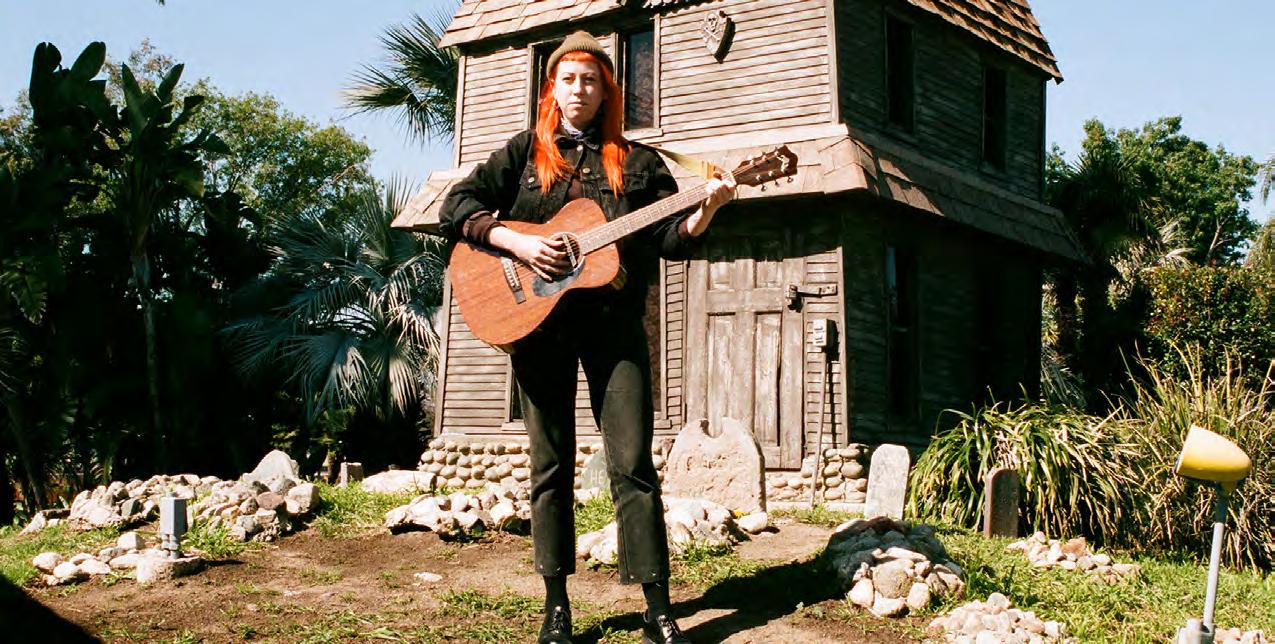
for the Country” (written by Richard Tucker), she sounds at peace, letting each syllable drift breezily out of her mouth. On the stark traditional tune “Katie Cruel,” Dalton matches the lonesomeness of the song’s protagonist. On the album’s centerpiece, “Something on Your Mind” (written by Dino Valenti), Dalton soars above the heavy guitar chords and pushes herself, voice cracking, to offer a perennial reminder: “Well, you know, you can’t make it without ever even trying.”
Dalton led a tough life, which lent an unconventional approach to her musicmaking. She left her home in Oklahoma at 21 after two divorces, tried (if not always successfully) to parent her two children well, and struggled with addiction throughout her life. Her experiences left an indelible mark on her music, one that resonated with many listeners. “I think the same reason that people like Bob Dylan liked her and were drawn to her is because she was authentic and singular,” Yapkowitz says.
“You can hear how much she cares about what she’s doing,” he adds. “I think very few musicians can translate that raw emotion, and there’s something unique to her about it. When you hear Leonard Cohen’s voice or Lou Reed’s voice, you’re like, ‘Oh, that’s Lou Reed.’ You immediately recognize it and I think the same is true for Karen. It just sounds like Karen.”
Transcendent Talent
Fifty years after its release, In My Own Time continues to beguile and influence listeners. Los Angeles folk singer Shannon Lay included a version of “Something on Your Mind” on her 2019 record August after being introduced to Dalton’s version through Spotify’s algorithm. “I immediately wanted to learn how to play it,” says Lay about hearing the song for the first time. “There’s those specific voices that are no one but theirs and she’s just got that incredibly broken but perfect [voice]. It blows my mind every time that I hear it because I’ve never heard a voice like it before.”
Lay adds, “Music can convey pain in such a beautiful and relatable and cathartic way, and I think she really achieves that to the nth degree.”
Nashville-based bluegrass and folk artist Molly Tuttle, who included “Something on Your Mind” on her 2020 album of cover songs …but i’d rather be with you, discovered Dalton in high school after reading that she was Dylan’s favorite singer. The first Dalton song that Tuttle came across on YouTube was “Katie Cruel,” which perfectly coincided with her learning how to play the clawhammer banjo. Tuttle learned the song and it became a staple at her early shows.
“Her voice is just so haunting. You can tell she’s lived a hard life and I think
the first time I heard it, the tone of her voice really struck me. It doesn’t sound like anybody else. It gave me chills,” Tuttle says.
“I always forget that she didn’t write [the songs on In My Own Time] because they feel so authentic to her. I think that’s what makes a good cover: people who choose songs that really speak to them and bring their own life and their own voice to the songs that they’re covering.”
That authenticity that Dalton brings to In My Own Time is a quality that continues to captivate listeners. When conformity feels like the only path to take, Dalton’s voice is a reminder that there’s beauty in being yourself.
“I think she’s quite genuine in what she does,” Lay says. “The amazing part of how saturated music is now, all of these things are more accessible than they have ever been, so I think when you come across something that is genuine, it’s so apparent. I get that from her so much. I love that you can really feel that she was born to share this part of herself.”
Sullivan lists the In My Own Time reissue as one of his personal favorite projects that Light in the Attic has released in its 20 years. “It’s one of those records that I never ever want to stop listening to,” he says. “It’s so pure and genuine. Her voice and those performances, they transcend.” ■
Shannon Lay
THE SONGS AND THE SINGERS
Tribute records let new voices shape the music
by Zach Schonfeld
Emma Swift
It waS 2017, and the auStralian singer-songwriter Emma Swift was going through a severe period of depression and writer’s block. She was, in a word, stuck. “I couldn’t get out of my own head and out of my own sadness to write my own songs,” Swift says of that time four years later. “I was really struggling.”
Swift knew the way out would be to create music. But she didn’t have any material of her own. Instead, she booked time at Magnetic Sound, a studio in Nashville, where she lives, and recorded covers of some of her favorite Bob Dylan songs. She didn’t release them. But the exercise did, as she says, “spark that love for music that I still had flickering inside.”
For months, and then years, Swift forgot about the record. She resumed writing her own work. She moved on. “It just lived in a Dropbox file on my computer,” Swift says — until 2020, when the world shut down. After Swift’s touring schedule ground to a halt that March, it seemed like a good time to return to the Dylan tribute project. “I had a bit of space from it,” Swift says, “so I could see inside the reasoning behind the song selections a little more, and meditate on what it was all about.”
Swift recorded two more Dylan songs from home, including the then-new “I Contain Multitudes,” an anomaly — all other songs she covered fall within
Dylan’s “classic” period, roughly 19651975. “It’s a profoundly beautiful meditation on art and life,” Swift says of the Rough and Rowdy Ways track. “When Bob Dylan released it in April of 2020, I became completely obsessed with it.”
Altogether, she had eight Dylan covers, resulting in an album-length tribute. Cheekily titled Blonde on the Tracks (a play on the two Dylan records most represented), the record bridges the gap between what Dylan famously called the “wild mercury sound” of his mid-1960s albums and the dreamy, Laurel Canyon feel of her own countryrock arrangements. While it features strong accompaniment from a backing band of Nashville musicians, including
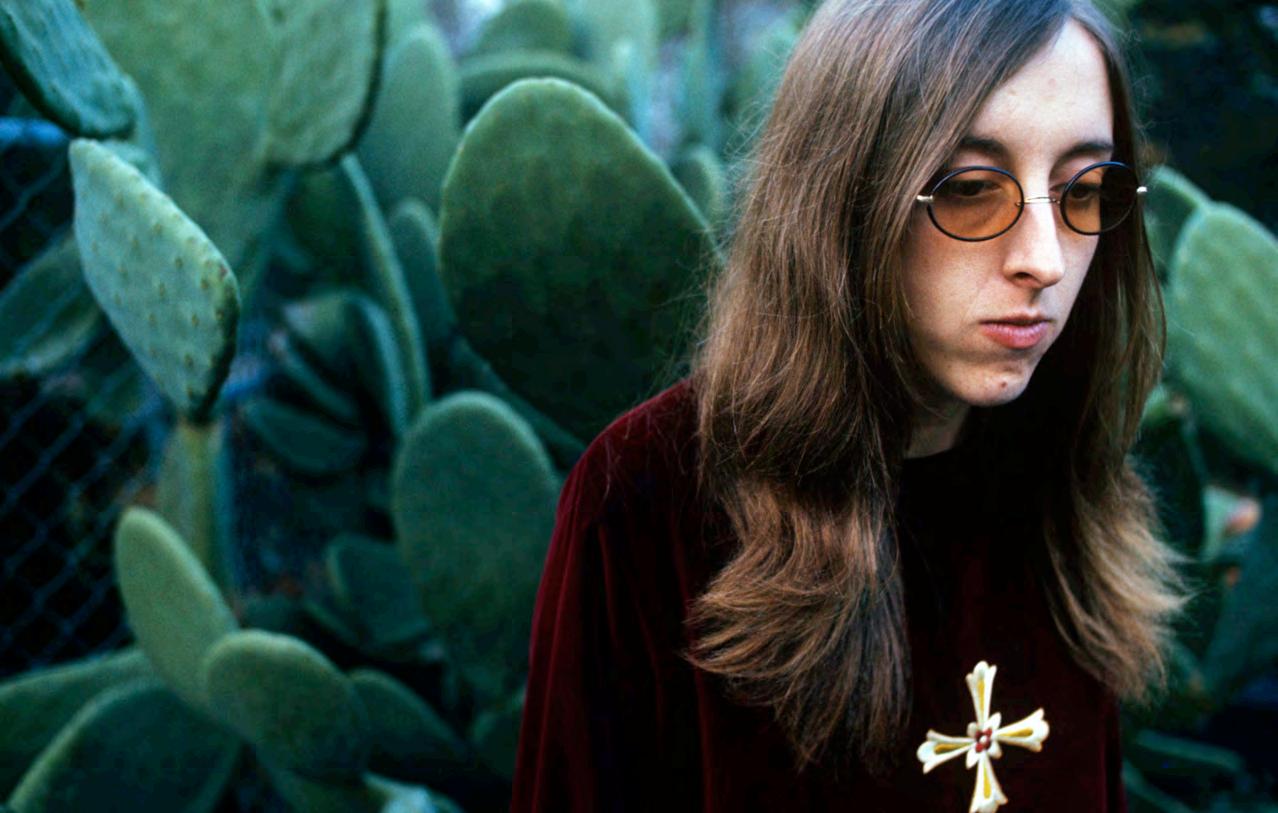
Judee Sill
Swift’s partner, British songwriter Robyn Hitchcock, the album centers around Swift’s clear, bright voice — a far cry from Dylan’s wheezy croak.
Swift’s vocals tease out the rich melodic texture of canonical, though not too obvious, Dylan numbers like “Queen Jane Approximately” and “Sad Eyed Lady of the Lowlands.” “Because I have one of those sad, melancholy voices, I think I’m giving a reflectiveness to the work, a pensiveness that might not exist in the original interpretations,” Swift says.
At times, her voice may even bend the meanings — slippery as they may be — of Dylan’s songs. Take the epic, 12-minute “Sad Eyed Lady of the Lowlands” for example. “I think a woman doing that song adds an extra layer of sadness,” Swift notes. “It almost becomes autobiographical in that sense.” Then there’s “The Man in Me,” a fan favorite from Dylan’s 1970 New Morning album. Swift says that in her hands, the song feels more like an exploration of the masculine and feminine side of the psyche that we all have within. “There’s a wink in it, I think, when doing that song from a female perspective.”
Although she’s mainly focused on writing original material, Swift still rattles off names of other songwriters she’d be inclined to give the tributealbum treatment someday. There’s Leonard Cohen (“I would love to do his songs”), John Lennon, Nick Drake, Nick Cave — “and I’m very conscious right now that I’m mentioning all dudes,” Swift adds. “I don’t know that I have anything to add to the canon of Joni Mitchell songs by being another woman doing Joni Mitchell songs.”
A New Weight to Waits
Blonde on the Tracks is one of several recent covers albums that find creative and moving ways to both reinterpret and subvert iconic musical voices. Other examples, such as 2019’s Come On Up to
the House: Women Sing Waits or 2021’s Down Where the Valleys Are Low: Another Otherworld for Judee Sill, belong to the oft-dismissed format of the tribute album, a ’90s cultural phenomenon that has improbably survived into the streaming age.
Or perhaps the tribute album (by definition, a compilation of different singers interpreting one songwriter’s oeuvre) has been underestimated all along. In his new 33 ⅓ book about one of the benchmarks of the tribute album genre, 1991’s I’m Your Fan: The Songs of Leonard Cohen, author Ray Padgett sings the praises of the format and meticulously traces its history, from formative ’80s compilations to majorlabel ’90s cash-ins to DIY Bandcamp releases from recent years.
“I will defend the tribute album’s potential and can rattle off dozens of great examples that defy the format’s critics,” Padgett writes. Still, he admits, plenty are terrible: “A tribute album lives and dies on its curation.”
Padgett’s book observes that most tribute albums are woefully maledominated. The 2019 release Come On Up to the House, featuring an all-female lineup of singers interpreting the Tom Waits songbook, sought to improve the balance. It’s a folky, ballad-heavy affair, one that separates Waits’ songwriting from the gruff Cookie Monster voice associated with it. While the weaker performances risk flattening the seedy edge of Waits’ music in a sea of sentimentality, the best ones pose the same question as Blonde on the Tracks: How does it affect a song when the voice singing it is so radically removed from the voice the song was written for?
“I personally always love singing male lyrics,” says country singer Shelby Lynne, who contributed a cover of early the Waits standard “Ol’ ’55” with her sister, Allison Moorer. “Songs meant for men are usually great choices for women to sing because you get a different
perspective, but at the same time it’s coming from a place of understanding. I hope Tom was digging it.”
Musician and author Warren Zanes, who produced the tribute record, agrees that certain voices can shift the resonance of Waits’ lyrics. He points to “Georgia Lee,” a devastating song about a 12-year-old Black girl murdered in 1997. Throughout the song, Waits asks: “Why wasn’t God watching?” On the tribute, Phoebe Bridgers delivers the track in a far more fragile voice. “I felt like her voice connected to the protagonist of the song’s narrative in a very different way than Tom Waits’ did,” Zanes says. “When I went back to the Waits version, it’s almost like it was now haunted by Phoebe Bridgers. That, to me, is successful.”
Like Dylan, Waits’ songs have been passed down to younger generations through endless covers spanning disparate genres. Unlike Dylan, however, Waits never really courted commercial success in the first place. Thus, several of the singers who’ve covered his work in the past have imbued it with far more mainstream appeal than Waits himself did. For instance, Bruce Springsteen covered Waits’ rousing ballad “Jersey Girl” so frequently during the 1980s — and made it into such a live favorite — that audiences routinely assumed Springsteen had written it.
“When Springsteen did ‘Jersey Girl’ live, for some people, it was like, ‘That’s my favorite Bruce song!’” says Zanes. “Because of the way he inhabited the song.” Springsteen’s voice is certainly more palatable than Waits’ voice, but still retains some of the ragged edge. (It doesn’t hurt that the song’s wistful, working-class aura is well-suited to Springsteen’s style — or that Springsteen is an actual Jersey boy.)
On Come On Up to the House, neo-soul singer Corinne Bailey Rae reinterprets “Jersey Girl” with a light, jazzy touch. In a 2019 interview with American Songwriter, Rae described the track as
“such a tender song, a rejection of cynicism for simple love.” But the meaning also shifts slightly: The chorus (“I’m in love with a Jersey girl”) now suggests a love affair between two women. “I really wanted her to not change the gender,” says Zanes. “I wanted it to be a woman singing to and of a woman. But that felt like too personal a choice for me to push it one way or another. And then it just came back, and she didn’t change the lyric. I loved that.”
Meanwhile, the album takes its title from a cover “Come On Up to the House,” released on Waits’ 1999 LP Mule Variations and interpreted by the Portland folk trio Joseph. Though she’d never listened to Waits before being asked to contribute, Natalie Closner Schepman, one of three sisters in the
group, was deeply moved by the song. After recording their cover for the album, Joseph began playing it regularly in their live sets, swapping out Waits’ husky growl for three-part harmony.
“ To me, this song is written to someone in pain,” Schepman says. “What we’re bringing to it is just all of the dynamics between the three of us and our own personal stories. And when we sing the song, I’m thinking of those personal stories that those words are a balm for. I really feel that balm whenever we sing it.”
A Different Light
While most tribute albums center around famous songwriters, they can also lift lesser-known cult artists out of
relative obscurity. That’s the case with Down Where the Valleys Are Low: Another Otherworld for Judee Sill, a 2021 tribute to the undersung singer-songwriter Judee Sill.
Signed to Asylum Records in the early ’70s, Sill lived a troubled life marked by tragedy and addiction and completed just two records before she was found dead in 1979 with a needle in her arm. Yet her extraordinary music — rich with uncommon chord changes and hymnlike choral arrangements — has since been championed by everyone from Andy Partridge to Carrie Brownstein to Joanna Newsom, who in 2015 described her to Vogue as, “a genius orchestrator.”
Down Where the Valleys Are Low is the pet project of producer/musician Lorenzo Wolff, who first heard Sill’s
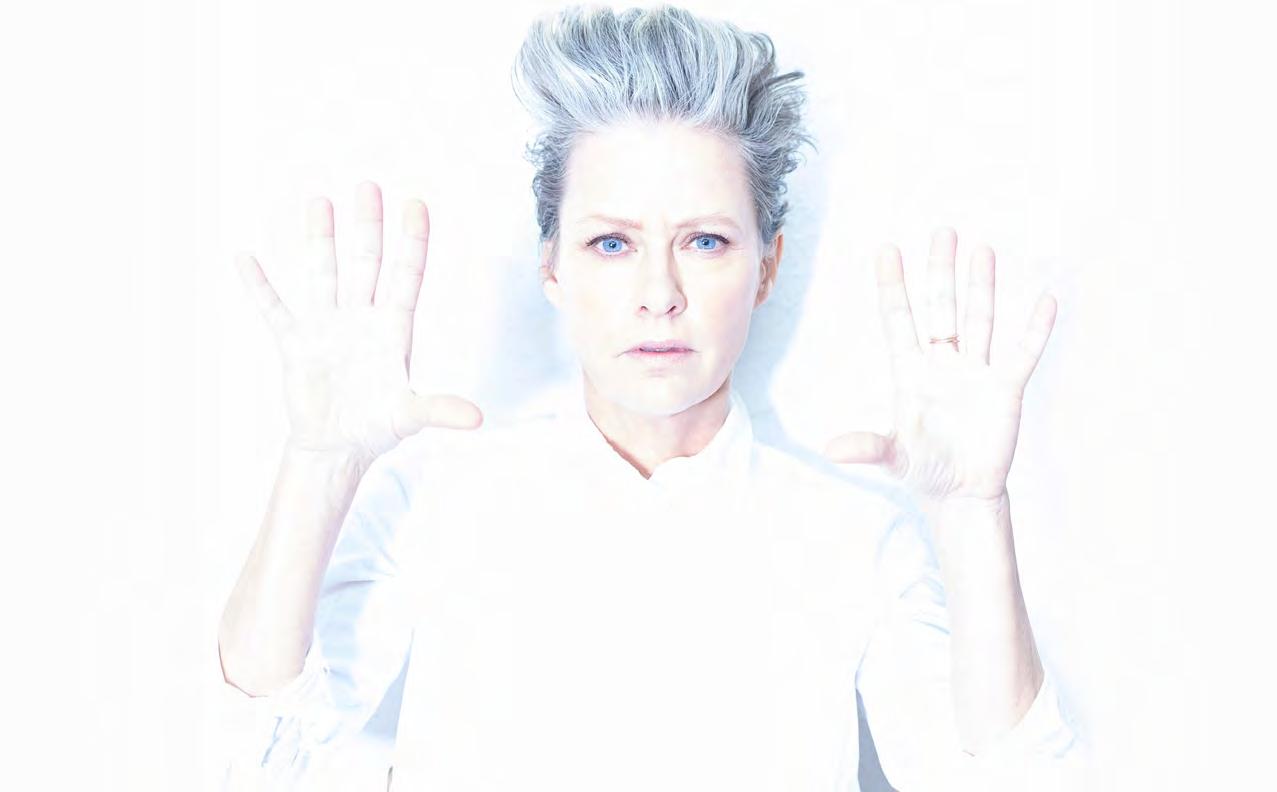
Shelby Lynne
music while on tour a decade ago. A tourmate was obsessed with California music of the ’70s and would make playlists while on the road. Sill’s music “really stood out,” Wolff says. “On first listen, you could think that she’s scary Carly Simon. But the more you listen to her story, and the more you listen to the way she’s delivering it and the lyrics, there’s this whole spectral realm that she’s building. And the more you learn about her life, the more that realm starts to make sense.”
Wolff chafes at the term “tribute album,” and in his defense, this isn’t a typical one: He created and produced the music himself, then recruited different singers to interpret the songs through his arrangements. The result is hardly faithful to Sill’s piercing voice and gentle
twang instrumentation. Singer Emily Holden turns “The Kiss” into a swooning dream-pop symphony, while breakout indie-rocker Bartees Strange — one of the album’s more high-profile guests — brings a stomping country-rock swagger to “The Pearl.”
Of course, pure imitation was never the goal. “You can get a guy who kinda looks like Freddie Mercury who can hit those notes. I think it’s great that people do that, but it’s not as exciting to me as putting a new perspective on someone’s work,” Wolff says. “For example, having Bartees sing — you would never picture a young Black man from Oklahoma singing Judee Sill’s music. It’s exciting to be able to interpret her music with that kind of a voice behind it.”
Wolff doused the songs in distorted
sonics and lush synth beds, which occasionally veer into grating territory. But he was determined to create a presentation of Sill’s music that didn’t already exist.
“ There’s a level of vitriol that some of these singers had that Judee doesn’t really let out in her music,” he says. “I wanted to present that earthbound, aggressive thing that didn’t necessarily rise to the surface in the recordings she made. I think partially that’s because if you’re a woman in 1971 in Southern California, there’s not really room for that character on Asylum Records or on FM radio. But at the time, Judee was a more complicated person than the mainstream was able to accept.”
Who knows if Sill would agree, as Wolff knows she had combative

Joseph
“You can get a guy who kinda looks like Freddie Mercury who can hit those notes. I think it’s great that people do that, but it’s not as exciting to me as putting a new perspective on someone’s work.”
Lorenzo Wolff
Producer, ‘Down Where the Valleys Are Low: Another Otherworld for Judee Sill’
relationships with many of her collaborators. “I was imagining what it would be like if she was in the studio with me as we were making this record,” he says. “And I think the way she would have expressed herself would have been by telling me to fuck off.”
Healing Transformations
A truly great cover song doesn’t just replicate the magic of the original. It rearranges the molecules, teasing out emotions that listeners may not have realized were there. Consider Leonard Cohen’s “Hallelujah” — a song whose journey to modern standard was crucially aided by the I’m Your Fan tribute album, which featured John Cale’s cover of the then-obscure song. Cale’s spare rendition spotlighted the song’s gorgeous melody, which Cohen’s version had obscured behind murky, mid-’80 production techniques.
Yet it was Jeff Buckley’s cover, three years later, that transformed the song into a stone-cold classic. Buckley’s extraordinary, four-octave voice was the agent of that transformation. “While Cale’s voice is lovely in its understated way, Buckley’s was otherworldly,” Padgett writes in his I’m Your Fan book, “a soaring croon that could bring chills to even the most jaded listener.” That voice infused “Hallelujah” with a sensuality
and longing that wasn’t palpable in the original.
But a vocal range like Buckley’s isn’t necessary in order to infuse a cover with an intense new emotion. Sometimes, an aged, grizzled voice is the right vehicle. That’s the case on J.T., a recent covers album that country-rock legend Steve Earle recorded to honor the songs of his late son, Justin Townes Earle.
The elder Earle and his backing band, The Dukes, recorded the album in a state of grief last October, less than two months after Justin died from an accidental drug overdose. He released it on Jan. 4, which would have been Justin’s 39th birthday. Earle was motivated not only by the need to mourn his son, but also by a desire to preempt other tributes. “I did not want to be asked to be on a tribute record with several people that I thought absolutely were enablers and helped kill him,” Earle told The New York Times.
On J.T., Earle’s voice is gruff and ragged, imbued with the gravity of loss and a measure of mortality that perhaps wasn’t present when Justin first recorded these songs. On the standout “Turn Out My Lights,” taken from Justin’s 2008 LP The Good Life, Earle’s pained voice — combined with the heartbreaking context of the recording — shifts the song’s meaning. Justin had written the song about a lost love, but when Earle
sings “You’re here with me every night / When I turn out my lights” over mournful fiddle whines, it invokes the loss of his son. The lyrics remain the same, but their resonance is transformed by the voice and context.
Such a poignant shift in meaning sometimes occurs when the voice covering a song is older and more weathered than the original singer, bringing a sense of life experiences to the song that the writer never anticipated. The most famous example is Johnny Cash’s cover of Nine Inch Nails’ “Hurt.” The song transformed from a nihilistic Gen X manifesto into a remarkably moving farewell from a frail old man.
As for Earle, he found recording his son’s music to be a balm during difficult times. The recording process “wasn’t cathartic as much as it was therapeutic,” Earle told The New York Times. “I made the record because I needed to.”
In a strange way, that’s not so different from how Emma Swift found making a covers record therapeutic during her own difficult times. Her only regret is wishing she’d delved into Bob Dylan’s ’80s and ’90s material.
But of course she can always do another Dylan tribute someday. “Dylan made three Sinatra records,” Swift muses. “There’s nothing really stopping me from making three Dylan records.” ■
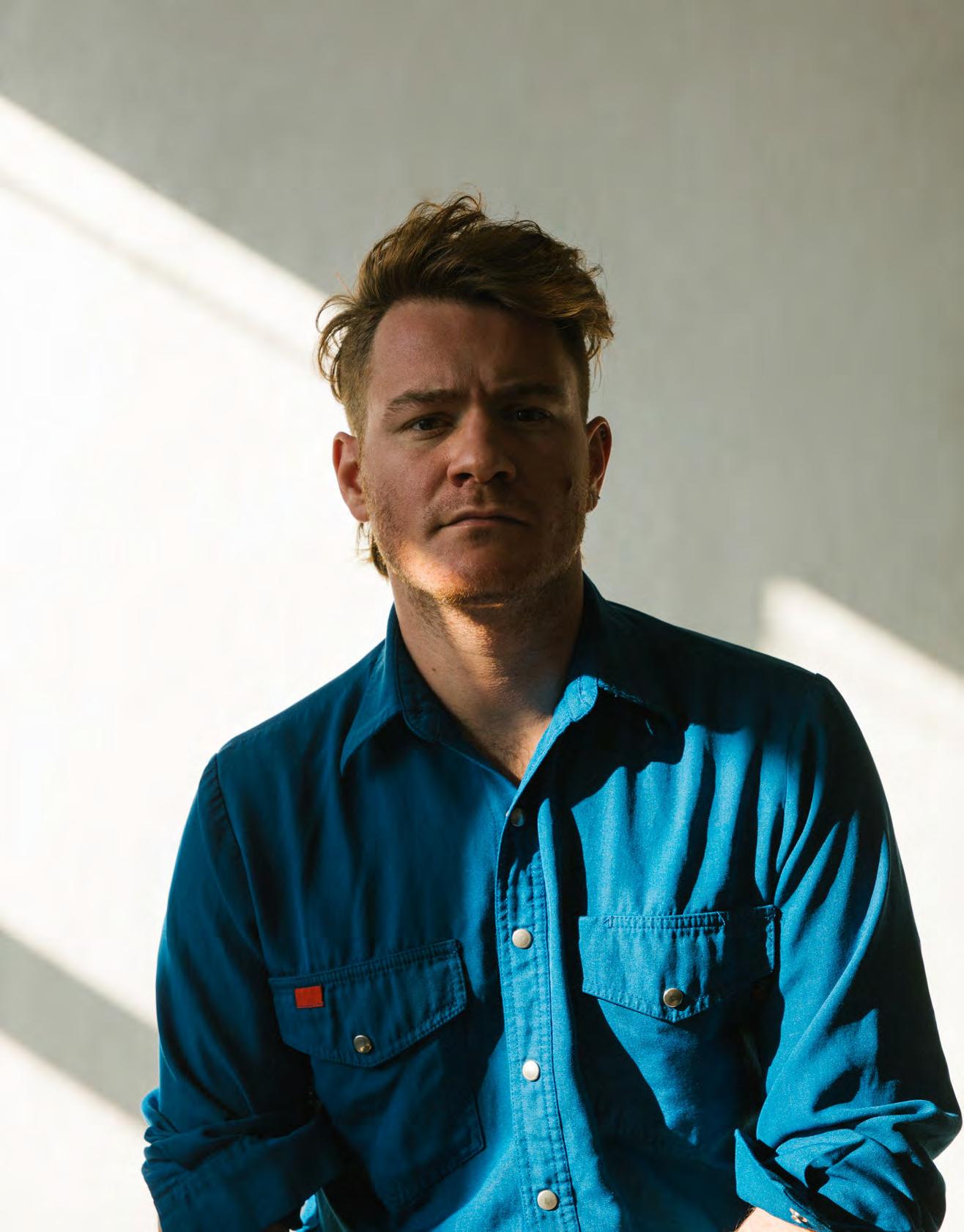
Lorenzo Wolff
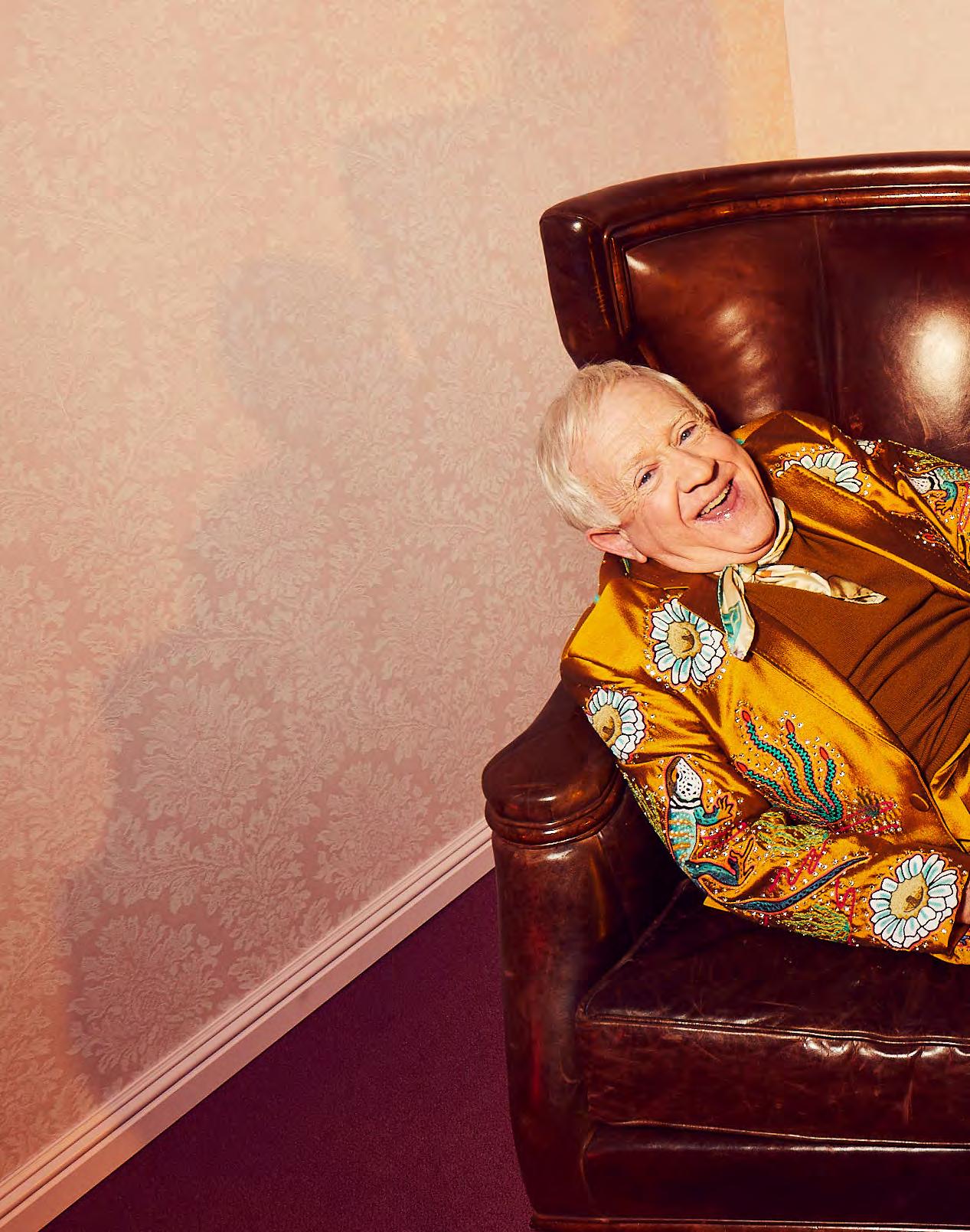
ANGEL BAND
Leslie Jordan revisits hymns of his childhood
by Chuck Armstrong
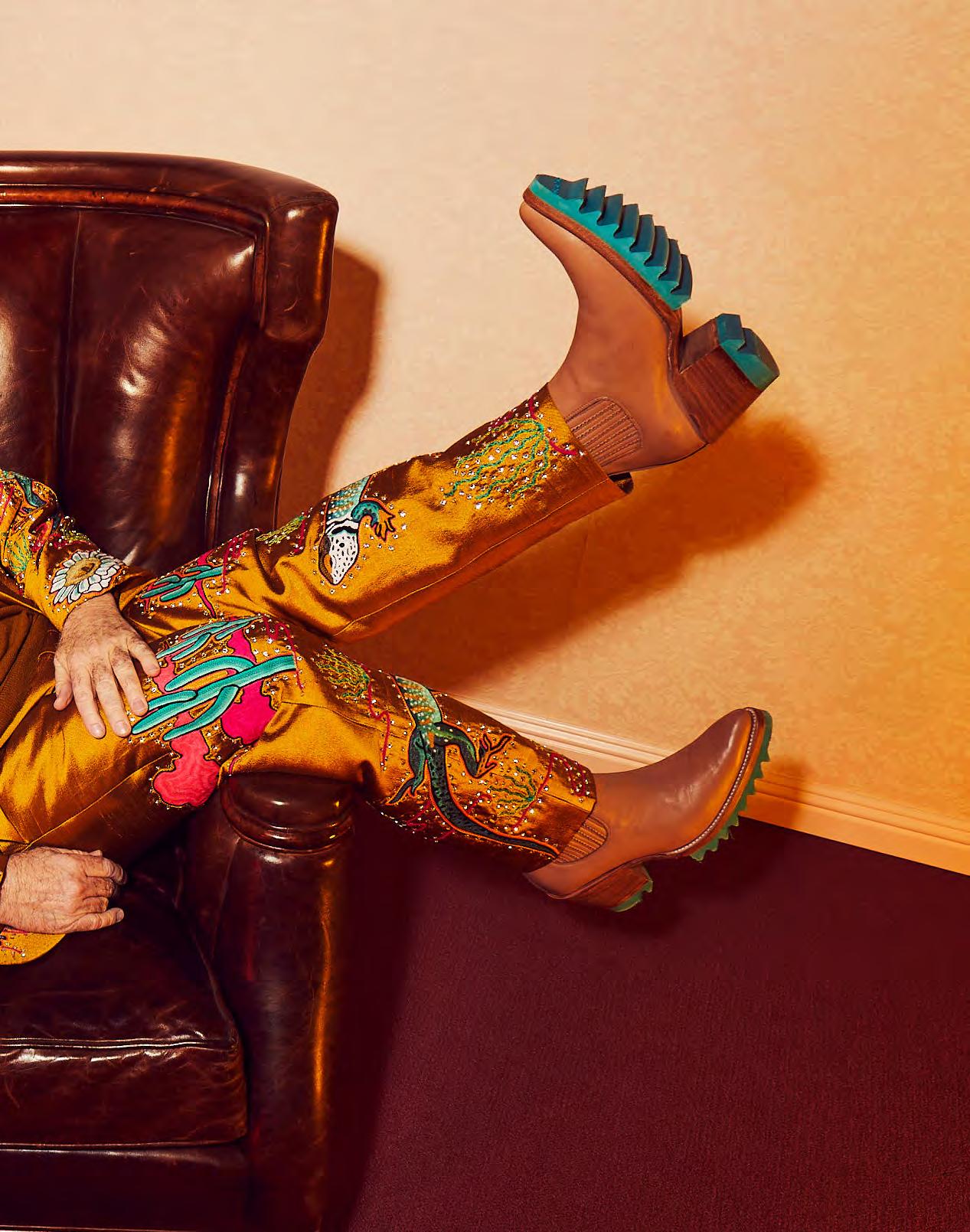
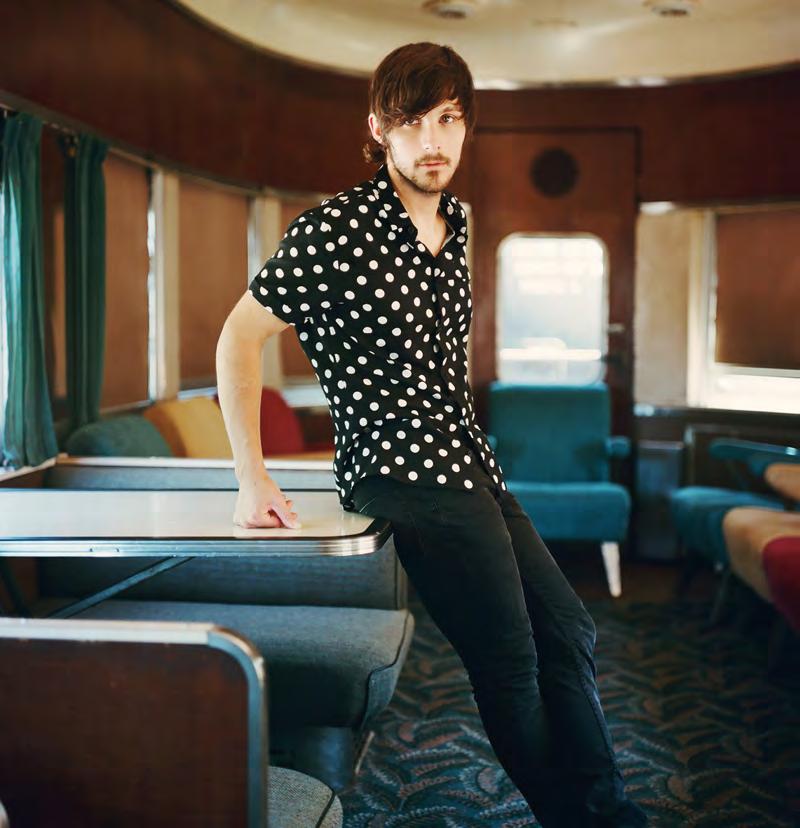
LeSlie Jordan haS an unmistakable voice, though it might be more recognizable when put to use in his acting career than in his singing. He’s been acting and writing for more than three decades, using his endearing and comedic gifts to bring joy to others.
After spending some time exercising race horses — “It’s all I wanted to do, but I can’t be a jockey, I’m too fat,” he says — Jordan decided to go back to school when he was 27 years old. He thought he might get into journalism because he liked to write, but after a friend told him to take the Intro to Theater class for his arts elective, he found his true calling.
“I never performed, I never did high school plays,” says Jordan from his home in Los Angeles. “I was always funny, but that was just to keep the bullies at bay. In this class, we did improvisations and it hit me like a drug.” His first experience with an audience was when he began to fully understand the power of his voice.
“We were doing this upscale show called What the Butler Saw by Joe Orton, a terribly deep, black comedy,” Jordan says, retelling the story in his best English accent. “The night that I was to walk on stage for the first time, the director pulled me to the side and he said, ‘If you get cute, I’ll break your legs.’ So, I went on stage and I got so cute.”
Jordan recalls the director was “salivating” with anger, but he didn’t care. The audience applauded and laughed at everything he did, and he felt something he had never felt before in his life. That specific onstage experience sticks with him: “That was the moment that I thought, ‘Wow, I have to harness this in the right ways.’ That was my moment.”
Now, at the age of 65, Jordan is harnessing the gift of his voice in a new way. In April, Platoon released his first musical project, Company’s Comin’, an album of reimagined hymns, new gospel songs, and snippets of classic melodies delivered in spontaneous,
“I used to sing ‘Workin’ on a Building’ at any church revival, dirt parking lot bluegrass festival, or nursing home that would have me, a chubby 13-year-old banjo pickin’ kid who knew bluegrass musicians like most my age knew WWE wrestlers. And I imagine Ashley McBryde’s relationship to the song goes just as far back as mine. These songs are part of a shared litany, and to know that we share that sacred history with Leslie and Travis and Danny (and the Stapletons and Dolly!) is what makes Company’s Comin’ so special for me. When we sing about the unbroken circle coming all the way around, this is exactly what we’re singing about.”
— Charlie Worsham
conversational bursts, featuring a guest list of some of the best country musicians working today.
A Hit with Hymns
Jordan’s first foray into television was acting on shows like The Fall Guy and The Wizard in the mid-1980s, and he eventually landed a small role on the big screen in the Richard Pryor film Moving in 1988. Since then, he’s held hilarious roles on sitcoms like Hearts Afire and Will & Grace, and has become an awardwinning actor, acclaimed comedian, and gay icon.
Music always affected him, but it wasn’t until songwriter Travis Howard, his longtime friend and collaborator, began a weekly Instagram series in May 2020 called “Sunday Mornin’ Hymn Singin’” that the idea for Company’s Comin’ started to come together.
“I was actually doing this hymn thing on my Instagram, with a meager little following, and Leslie told me, ‘Let
me get a piece of that,’” Howard says. Rather than wading into the politicization of the novel coronavirus pandemic or offering his opinion on the growing racial injustice in the country, he decided to pick up his guitar and do what he calls “a little Sunday churchin’.”
Just as the title suggests, the two friends spent Sunday mornings sharing their favorite hymns from their childhoods growing up in the church. The videos on Instagram were never professionally shot or overly polished; Howard would handle guitar and backup vocal duties while Jordan took center stage. Though he’s not a trained singer, Jordan’s passion for hymns rang through.
Jordan’s voice, coupled with his massive fanbase, brought the duo a lot of praise. “An atheist told us he tunes in to hear the music,” Jordan says, just as baffled today as when he first heard it. “It’s just so healing to know that so many different kinds of people love this music.”
Growing up in a very devout Baptist family in East Tennessee, Jordan’s whole life was centered around the church. “I didn’t know anyone who didn’t go to church and I didn’t know anyone who drank alcohol,” he says. “When you grow up like that, it’s all you know. You want to be a good Christian boy, you want to follow those teachings.” As he better understood his own sexuality and tried to reconcile it with what he was hearing on Sundays, he left the church when he was 17 years old. Howard shares a similar experience with his own childhood. Growing up in a Pentecostal church in Georgia, he always wrestled with the guilt of that context. “You’re 14 years old and you’re in danger of hellfire if you touched your dick,” he says. Though he laughs thinking about it now, there is an obvious frustration with the reality of his childhood. “I was just a kid and felt all this guilt and shame, having to beg for God to let me back in. When I met Leslie, I was 29 years old, and I identified
so much with all of the shit that he was dragging around.”
Danny Myrick — another mutual friend and collaborator on Company’s Comin’ — also knows the complexities of growing up in the church. The son of a preacher in Pascagoula, Mississippi, he started writing songs when he was 14 years old. He moved to Nashville in 1984 to write gospel music and celebrated his first No. 1 hit, “Jesus Is the Light,” when he was 17. It didn’t take long for him to have several more chart-topping tracks, but even with the success, something didn’t feel right.
“I just couldn’t get past the shame and the guilt,” Myrick admits, reflecting on his childhood and his time in the gospel music industry. “The only thing that mattered in my household was your relationship with God, and that can be pretty fragile, and when that is tied to your parents, it can be incredibly damaging when things go awry. I eventually left it and went into country music, and I felt a freedom like I had
never before. I got away from songs that could really only say one or two things, and now I felt like I could finally tell stories about all of life.”
But, like Howard and Jordan, Myrick still loved the music of his past.
“I think there’s something about the fact that most of these songs were written a long, long time ago,” Myrick says. “It’s almost like recipes from your family, but hymns are on another level because they involve God. My granddaddy was the first voice I heard singing some of these songs, and he talked about his granddaddy knowing these songs. You’re sharing something from decades and decades ago.”
The musical heritage of church resonates with Jordan, too. Though he walked away from the world that flooded him with guilt and shame for being gay so many years ago, he never left the music of his faith.
“What’s interesting,” Jordan says, “is this journey from 17 to 65 years old has taken me to a place where I’m perfectly comfortable with who I am, what I am,
and I can revisit these songs without any axe to grind, without any bad memories.”
Making Connections
Thanks to the viral fame of his Instagram hymn singing, in September 2020, Jordan was invited to host the CMT Top 20 Countdown and to sing a song on the weekly TV show. Though he’s never one to shy away from the spotlight, he said he’d sing only if his friends Howard and Myrick could join him. “The three of us grabbed dinner and we decided we’d sing a little ‘Delta Dawn,’” Myrick remembers. “And Tanya freakin’ Tucker heard our performance.”
Call it divine intervention or simply a lucky coincidence, but after Tucker heard the trio sing her 1972 hit song, she sent Jordan a direct message on Instagram and gave him her home phone number.
“I was on the phone with Tanya Tucker,” Jordan says, just as giddy and excited as any fan would be. “It was
crazy, and then it all just kind of happened. We were all of a sudden recording.”
On Company’s Comin’, Tucker duets with Jordan on “When the Roll Is Called Up Yonder,” a hymn written in 1893 that has been recorded by Loretta Lynn, Johnny Cash, and Willie Nelson. Tucker’s contribution made it obvious that this record was looking a lot different than anyone had expected.
“It’s pretty safe to say that we got whoever we wanted, but we weren’t going through managers,” Howard says. Though he didn’t have a typical music industry background to bolster his requests, Jordan used his own voice to personally reach out to the artists with whom he wanted to collaborate. “This was all direct messages. Leslie was just direct messaging people.”
One of the biggest cheerleaders of the project was Brandi Carlile, who sings on “Angel Band,” a hymn that was first published in 1860 and gained some mainstream attention in 2000 after its inclusion on the O Brother, Where Art

“I think anytime we see the LGBTQ+ community represented positively in the church, progress is being made. I hope this record can encourage even more religious groups to embrace the LGBTQ+ community and create a safe space for everyone to come together despite their differences.”
— Katie Pruitt
Thou? soundtrack. Much like singing inside a sanctuary, Carlile and Jordan aren’t beholden to any script or formula on the track; they sing and lift their voices to the heavens while also celebrating one another.
“Brandi is such a sterling human being,” Jordan says. “She taught me that I’m a gay person of faith. It’s hard to be a gay person of faith, but I love that she showed me what that means.”
Leaning into the communal nature of hymn-singing, the rest of Company’s Comin’ is filled with other sterling human beings, including Katie Pruitt on their beautiful rendition of “This Little Light of Mine,” Ashley McBryde and Charlie Worsham on the fast-paced “Workin’ on a Building,” Chris and Morgane Stapleton on a horns-soaked “Farther Along,” and Eddie Vedder on a ukulele-inspired hymn for the 21st century.
“Eddie didn’t grow up with these kinds of songs, he’s more agnostic, he was never really in the gospel world,” Myrick explains. “Travis and I went back
and forth and thought about doing a Johnny Cash song, but that didn’t really fit what we were doing. So I came up with an original on the ukulele, this thing that felt kind of old-school and King James-y. But I wrote it fast and happy.”
When he sent the track to Howard, he suggested slowing it down, and they worked on it until it was ready to send to Vedder. “We were so anxious and nervous,” Myrick admits. “I was such a big fan of Pearl Jam. … I can’t put into words what it was like creating a demo for Eddie Vedder.”
Regardless of the anxiety felt, Jordan is quick to interject with how the track, “The One Who Hideth Me,” was received by Vedder.
“He devoured it,” Jordan says. “His wife told me he never does this, but he locked himself in the studio.”
In case Vedder wasn’t a high enough mark for Company’s Comin’, Jordan got the Queen of Country on the record, too.
“I’ve been a Dolly Parton fan since I drove from the University of Tennessee
in Knoxville to see her in 1973,” Jordan fondly recalls. “‘Jolene’ came out in ’73. I was there, and from then on, everything she does … well, you can’t find anybody who does what she does. She walks the walk; she talks the talk. She’s a woman of faith, but she’s not going to throw it down your throat.”
For Jordan, there was no greater or more humbling experience than to have Parton accept his request to duet on “Where the Soul Never Dies” — which also features Worsham on mandolin and acoustic guitar — but it was another singing partner that brought him a sense of the power of what he, Myrick, and Howard were doing together.
“I remember hearing TJ Osborne’s voice — my God, what a voice,” Jordan says. “So, we recorded “Sweet By and By” and I laid down my part, and then he came in and did his.” Not long after recording, Osborne shocked the country music world by announcing that he is gay.
“Sweet By and By” has been sung inside churches all over the world since
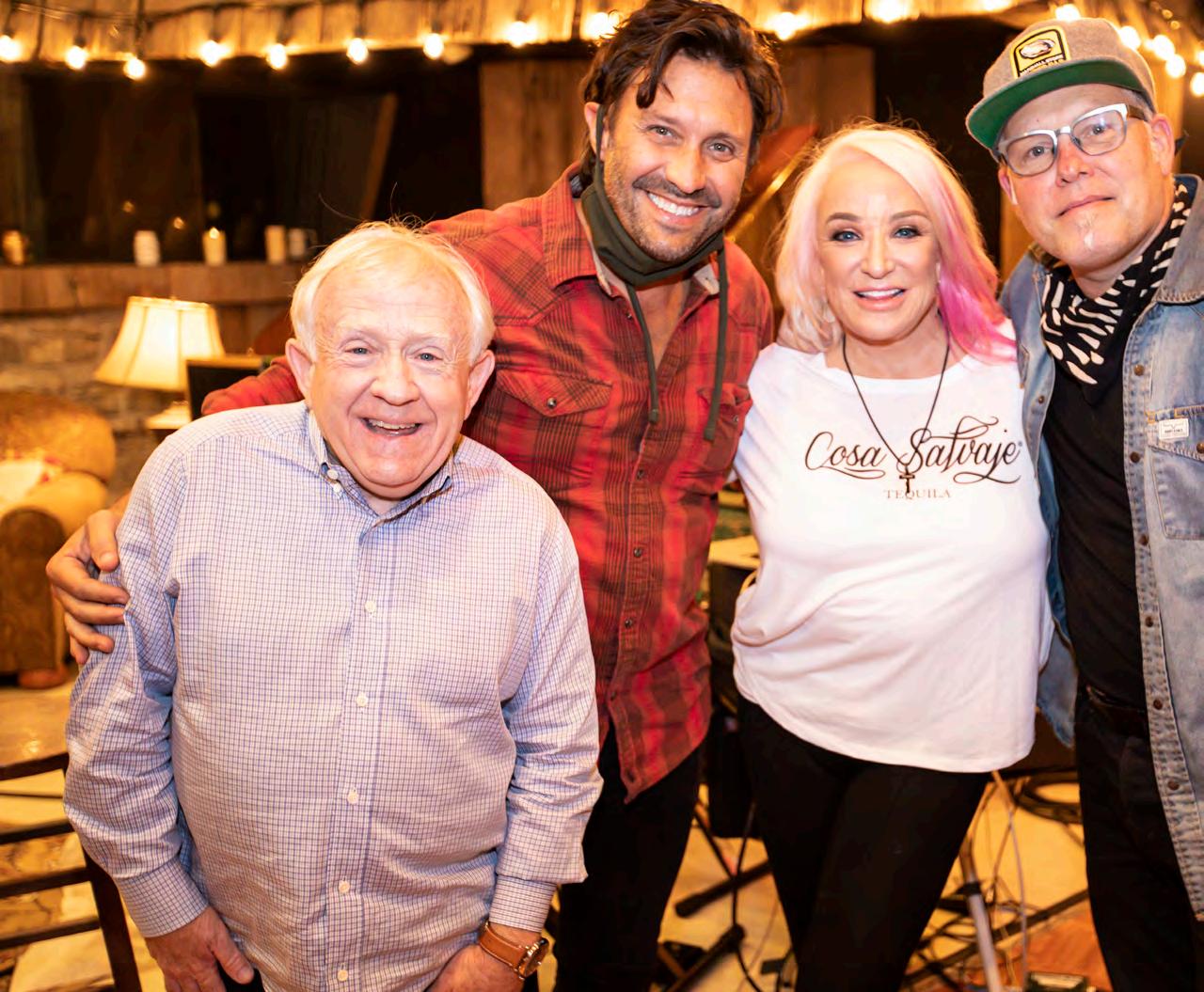
1868, and while the hymn is renowned for its beautiful chorus, with the help of Osborne, Jordan made it uniquely his own. With Osborne’s voice ringing out over the final line, “We shall meet on that beautiful shore,” Jordan once again goes off-script and adds a closing, succinct psalm as he responds to his duet partner: “And I’m gonna see my daddy.”
“ The way Leslie says it, I break down every single time I hear it,” Howard says.
Jordan doesn’t need a flawless singing voice to affect those listening; the character and honesty of who he is comes through and overpowers any
imperfections that might exist. Osborne felt that unique, faith-filled power of Jordan’s voice before he ever set foot inside the studio.
“ TJ wrote me the sweetest email about his journey and how much it meant to him for me to call and ask him to be on this album, at that time in his life when he was wrestling with his decision to come out of the closet,” Jordan says, pausing for a moment to honor the courage of his friend.
“ That’s when I realized there’s a little more at play here than just us singing songs. That’s music at its finest, when people are moved in ways like that. I’m just so proud. My gosh, I’m proud.”
‘What a Journey’
There is something distinct about the music of the church as compared with the teachings of the church. While the latter is often masked in doctrinal and theological arguments that can change from generation to generation, the former is lifted up to the heavens with timeless joy and expectant, universal hope for all. The power of a hymn resides in the community that sings it. After all, the gospel is not about keeping this joy and hope to oneself or coercing others into submission based on one’s doctrinal stances, but rather about sharing this profound truth and yearning with others.
From left, Leslie Jordan, Travis Howard, Tanya Tucker, and Danny Myrick
“You start sharing that communal love, that’s when people really start getting moved,” Myrick says. “I think there’s a big need for that, and Leslie, for me, he is such a perfect mouthpiece for this love and grace. I hope this record fills that need.”
“It’s different being a hymn-singer than being a Christian,” Jordan adds, acknowledging the encouragement and support from his friend. “Do I believe everything I was brought up to believe? It doesn’t matter. That’s irrelevant. What I’ve learned is that we all seek. You keep an open mind and you keep an open heart.”
Jordan began to better understand this when he entered his first recovery
room for his abuse of drugs and alcohol. Though he’s been clean for more than 22 years, he still thinks about that first experience in recovery.
“It was like church,” he says firmly. “But it was like a church with a god of your own understanding. It was and still is an amazing journey. People say they’ve found faith. No, you haven’t. You may have it today, but you could lose it tomorrow. And then you’ll find it. And then you’ll lose it. It’s a journey. For me and my journey … wow, what a journey. This album, it just cemented everything for me. Singing these old hymns and still loving myself and loving the music, it really is a journey.” ■
Joan Baez
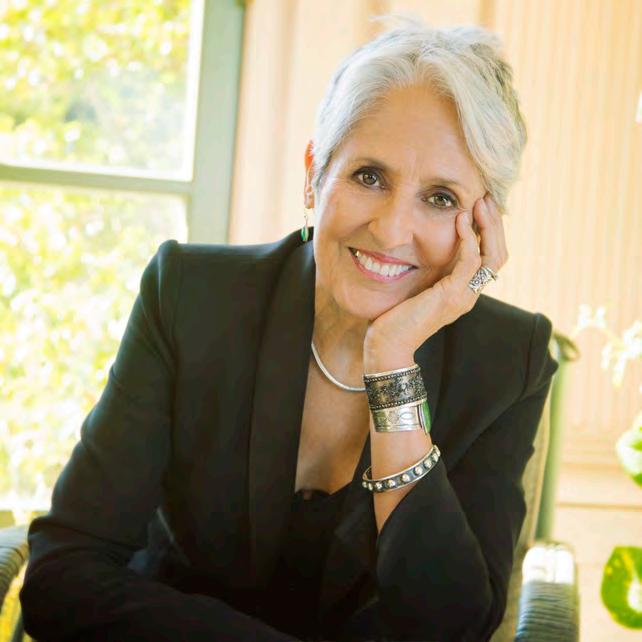
NO DEPRESSION
Part of the FreshGrass Foundation
No Depression is brought to you by the FreshGrass Foundation, a 501(c)(3) nonprofit organization dedicated to preserving and promoting the past, present, and future of American roots music. In addition to publishing No Depression, producing FolkAlley.com, and presenting the inaugural FreshGrass Festival | Bentonville in Arkansas and the annual FreshGrass Festival | North Adams at Mass MoCA in Western Massachusetts, the Foundation also funds cash awards for up-and-coming musicians. Visit freshgrassfoundation.org for more information.
Fall 2021: Ghosts
No Depression will be ready for “spooky season” with the Fall 2021 issue! Called “Ghosts,” this edition’s stories will highlight roots music folklore, legendary figures, forgotten histories, and contemporary musicians keeping these ethereal traditions alive. Of course, this genre of music has its share of ghosts — from characters in old standards to the many injustices that stymie equality in the music industry — and No Depression won’t shy away from them either.
Included in this issue: Jean Ritchie, Joan Baez, Jim Lauderdale, Lucy Dacus, Ian Brennan and Marilena Umuhoza Delli, and more.
Winter 2021: Good News
To help us all celebrate getting through yet another year of unprecedented times, No Depression aims to close 2021 on a positive note. The “Good News” issue will focus on what never seems to be covered enough these days — stories of kindness, positivity, and success in roots music and the musicians who have overcome some daunting obstacles to get to where they are today.
By subscribing to No Depression, you’re helping support independent media and the future of roots music!




DANA TYNAN
Contributors
ADAM WEINER, aka Low Cut Connie, is a rock and roll musician from Philadelphia whose critically acclaimed album, Private Lives, came out in 2020. Since March of that year, he has been broadcasting a twice-weekly livestream series called Tough Cookies. He has covered over 600 songs on the show.
ALAN RICHARD is a veteran journalist and editor of the SoulCountry music blog. He lives in Atlanta.
CHARLES DONOVAN is a London-born journalist whose work has appeared in the Sunday Times Magazine, Record Collector, Shindig, The Evening Standard, and The Independent. As a copy editor, he has worked for Vogue and Boisdale Life. He produces album reissues for the Cherry Red and BGO labels.
CHRIS PIERCE’s storied career has him nurturing multiple projects alongside his critically acclaimed ninth solo album, American Silence. Current collaborations include War & Pierce, Leon Creek, and an original musical for the stage titled Reverend Tall Tree’s Blues Opera, as well as song placements across the film and television media landscape. Pierce walks the talk: His firsthand experiences have amplified his genuine concern for racial and social injustice, and these themes permeate his work.
CHUCK ARMSTRONG grew up on a farm outside of a town of about 150 people in northeast Kansas. Today, he and his family live in New York City’s beloved and complex neighborhood of Hell’s Kitchen. He is a pastor, writer, and record collector.
ERICA CAMPBELL is an entertainment journalist and post-punk rock devotee with stories on music and culture featured in Glamour, Nylon, and Architectural Digest. She’s the former music editor of Consequence of Sound and owns a collection of star ornamented boots that would make David Bowie proud.
HILARY HUGHES is a freelance writer and editor whose work has appeared in Billboard — where she wrote a 2019 cover story on Mariah Carey — Esquire, NPR Music, Rolling Stone, the Village Voice, and more. Dolly Parton is at the top of her interview bucket list.
HILARY SAUNDERS is the managing editor at No Depression and her previous work has appeared in Paste, ESPN, Next City, The Jewish Daily Forward, and more. She’s a proud member of the National Press Club, alumna of the University of Miami, and a unironic believer that rock and roll can save the world.
JASON HELLER is the author of Strange Stars: David Bowie, Pop Music, and the Decade Sci-Fi Exploded, and his writing has been published by The New Yorker, The Atlantic, Rolling Stone, Pitchfork, and NPR. He lives in Denver.
JENNY CHANG-RODRIGUEZ is a freelance illustrator and currently the art director at the TODAY show. When she’s not drawing or daydreaming, you can find her laughing at dog memes, obsessing over astrology, or researching a new dessert place.
KAILEY ASHTON is an illustrator based out of Boston. Her digital and traditional work expresses ideas she is passionate about through color theory and line quality. Check out her work at kaileyashtonart.com.
KIM RUEHL was an editor of No Depression from 2008 to 2017, bringing the magazine back into print in 2015 and ending her run as editor-in-chief. She has also written for Billboard, NPR Music, Yes Magazine, and others. Her book, A Singing Army: Zilphia Horton and the Highlander Folk School, is out now via University of Texas Press. She lives in Asheville, North Carolina.
LAURA STANLEY is a freelance writer from Toronto. In addition to No Depression, her work has appeared in Exclaim! Magazine, She Shreds, and Under the Radar. Please send her book recommendations.
LIZ TRACY is a music and health writer based in Washington, DC. Her articles have appeared in The New York Times, The Atlantic, and Rolling Stone. She finds joy in British mysteries, tropical beaches, and her son’s laugh. You can read her work at theliztracy.com.
MARCUS AMAKER is Charleston, South Carolina’s first poet laureate and an award-winning graphic designer. His poetry has been recognized by The Kennedy Center, PBS Newshour, NPR, Edutopia, and more. His eighth book, The Birth of All Things, was published by Free Verse Press in 2020. His third album with Grammy-winning musician/producer Quentin E. Baxter of Ranky Tanky will be released this year.
STACY CHANDLER is the assistant editor for No Depression. She also writes occasionally for the (Raleigh, North Carolina) News & Observer and various alumni magazines, and has copy edited daily newspapers, accounting magazines, shopping guides, online college courses, and pretty much anything else that has words in it. She lives in Raleigh with her husband, their daughter, a big dumb yellow dog, and an underused fiddle.
ZACH SCHONFELD is a freelance journalist and writer based in Manhattan. He was formerly a senior writer at Newsweek. His first book, Ghetto: Misfortune’s Wealth, was published by the 33 ⅓ series in November 2020.
Screen Door
SING THE WHOLE HOUSE DOWN BY ADAM WEINER
Many years ago, when I was working in New York City gay bars, a kind but honest patron told me, “You’re a fabulous piano player, but you’re a terrible singer.” He wasn’t wrong. I was doing the piano bar circuit, dishing out schmaltz for tips, and I bombed more than I hit. On one particularly embarrassing night, a deaf customer leaned on the piano staring gleefully at me, while all the hearing customers stayed on the other side of the bar, waiting for me to stop. Fluttering my eyelashes kept those jobs for me, but my voice was nowhere to be found.
I wanted so badly to be a performer and to make a living doing it. I never thought of myself as any great shakes as a singer, and I did a lot of things to hide my natural voice. For the most part, I got by with theatrics and humor and cleverness.
In a strange and unexpected twist, I actually made it. A decade or so removed from the lounge act, I found myself touring internationally as Low Cut Connie, performing my songs for thousands of people, with a healthy number of television and radio appearances. People started referring to me as a “rock and roll star” in articles. I didn’t necessarily agree, but I was paying my rent. Wherever I ended up was surely the result of showmanship and hustle, not my singing.
And then, in another unexpected twist, the whole world shut down and I found my voice sitting right next to me on the couch. 2020 took the gigs away — all the living, fire-breathing entertainment of the world disappeared as we went into isolation. The economy of art evaporated overnight, and for me, what was left was art itself.
With quarantine, a chapter in my performance career ended. I put my gold sequin jacket in the closet, sat at my piano, and sang for no one but myself and my wilted plants. I don’t know how I sounded; I just knew how I felt. To think that my loved ones — friends, family, fans — were facing illness, unemployment, isolation,
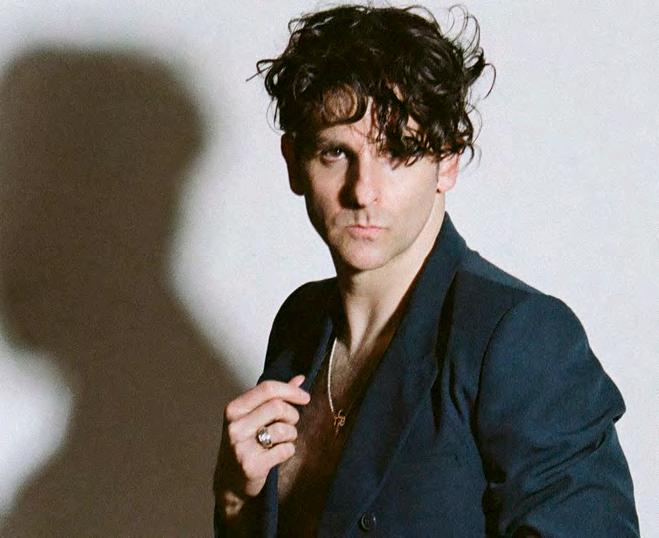
racism, depression, and a societal unraveling was devastating. And to endure it all without music and hugs was too much to think about. I started singing at home to change my frame of mind, and I realized that maybe I could change other frames of mind too.
I began a series of free live broadcasts from my spare bedroom that were naked and honest. I called it Tough Cookies. I sang for people and told them it would all be okay. We’re gonna make it: I was preaching that to myself as much as anyone else. I sat in my underwear at the piano and sang. No stage lights, no script, no gimmicks, no hiding — just real, live, unadulterated song time. People from over 40 countries started tuning in to see me strip everything away and sing my ass off until everyone felt a little bit better. I didn’t always sound good, but I swung for the fences every time. It was terrifying and beautiful.
A year later, I have sung over 600 songs. I have sung everything from Mary J. Blige to Ozzy Osbourne to Celia Cruz. The Cardi B cover was a pain in the ass
to learn, but damn what a tune. I’ve sung Louis Armstrong, Dolly Parton, and Lana Del Ray. I’ll try anything once. ICU nurses and COVID patients have sent us pictures of themselves watching Tough Cookies in the hospital. Children have created remote watch parties with their parents and grandparents and sing along with me at home. It’s been a whole world of emotions and connections that I never knew performance could create.
My opinion on the quality of my voice hasn’t changed a whole hell of a lot. But my understanding of what I can do with what I got has dramatically shifted. I’ll sing a whole goddamn house down if I have to. I’ll stop all the pain and strife and fucked-uped-ness of the earth with musical sounds. For one hour, I open up my big mouth on the internet and try to stop a pandemic dead in its tracks, because I believe I can.
Tough Cookies streams live on Facebook every Saturday night from 6-7 p.m. ET. Low Cut Connie’s covers album Tough Cookies: The Best of The Quarantine Broadcasts is out May 19.
ISBN-13: 978-17340223-6-0
ISBN-10: 17340223-6-1