NO DEPRESSION

“What folk music feels like to me is music that attempts to stay as close to our own humanity as possible … folk music is music by folks and for folks.”
Jude Brothers, p. 39
5 HELLO STRANGER by
Hilary Saunders
6 SECOND ACT
Beloved as an actor, Josh Radnor nds new creative energy in music by Rachel Brodsky
14 WHY GIRL GROUPS STILL MATTER
Rich harmonies and joyful stage presence resonate in today’s music by Jim Shahen
24
LEARNING TO LEAN
Community carried Hurray for the Ri Ra through grief on ‘The Past Is Still Alive’ by Rachel Cholst
30
ARKANSAS TRAVELERS
Songwriters set out to speak the truth about the land, the history, and the way forward by Meredith Lawrence
42 THE POWER OF ‘COMMITMENT’
Bobby Darin’s unexpected journey to folk music by Michael Elliott
50 FAMILY MATTERS
Siblings and musical collaborators
The Bacon Brothers share a passion for storytelling Spring 2024 guest editors by Laura Scholz
62
WHOSE BLUES
As blues music modernizes, so do the voices of those making it by John Morrison
72 UNEXPECTED CONNECTIONS by Michael Bacon Spring 2024 guest editor
74 THE NEW LEGENDS OF COWTOWN
Abraham Alexander and the community rede ning North Texas music by Courtney E. Smith
80 FIRE AND ICE
Old and new folk songs connect Icelandic musicians — and the world — to a rich cultural history by Hilary Saunders
90 REVIEWS
94 CONTRIBUTORS
96 SCREEN DOOR
The End Is the Beginning: Tales From an Artist in Recovery by River Shook


ON THE COVER
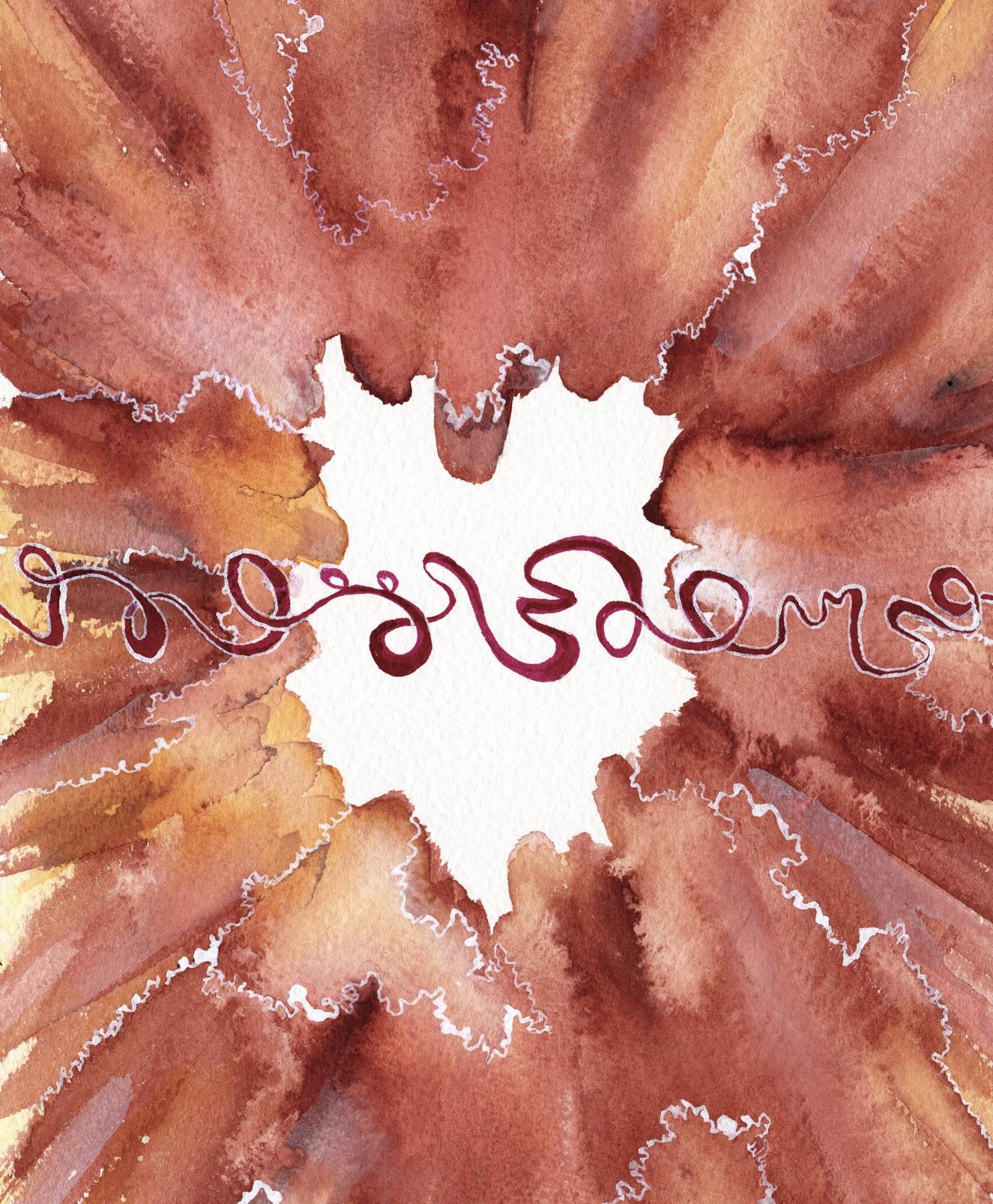
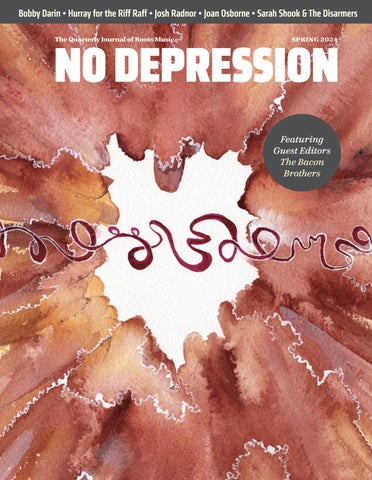
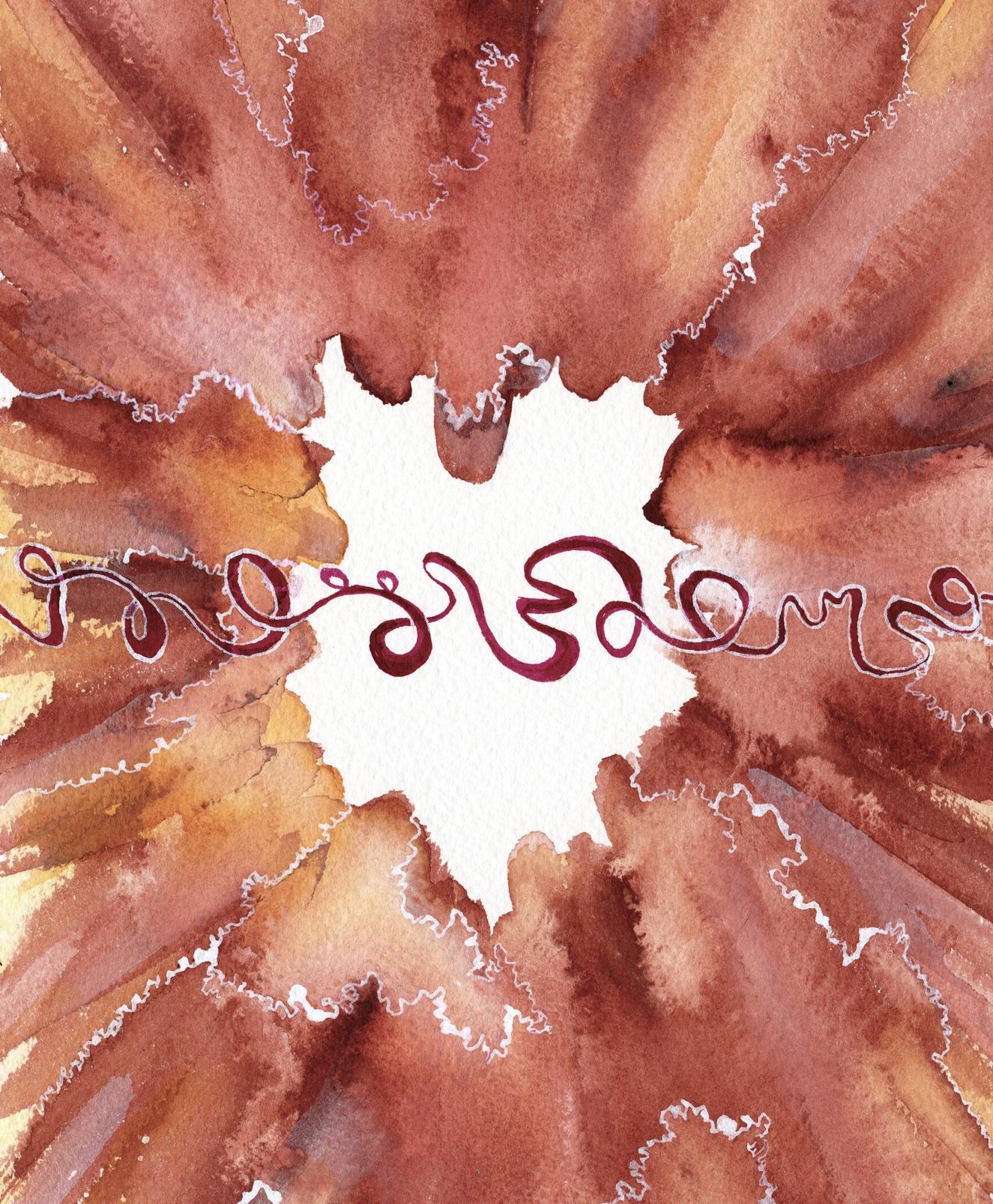
The Spring 2024 issue features original artwork by beloved singer, songwriter, and musical interpreter
Joan Osborne, whose most recent album, Nobody Owns You, came out last year. She writes:
I began painting during the pandemic when I was unable to tour. I think I was searching for a visual representation of what it feels like to sing. Different language, but same impulse — radiating energy and an embrace of the viewer/listener.
More information about Joan Osborne’s paintings can be found at joanosborne.com.
NO DEPRESSION TEAM
Hilary Saunders Managing Editor
Stacy Chandler Assistant Editor
Sonja Nelson Advertising
FRESHGRASS FOUNDATION TEAM
Chris Wadsworth Publisher and President
Adam Kirr Chief Operating O cer
Maureen Cross Finance/Operations
Matty Jackmauh Development and Community Engagement Assistant
WEB nodepression.com
TWITTER & INSTAGRAM @nodepression FACEBOOK facebook.com/nodepressionmag
GENERAL INQUIRIES
info@nodepression.com
ONLINE ADVERTISING advertising@nodepression.com
SUBSCRIPTIONS store.nodepression.com
JOURNAL DESIGN & PRODUCTION
Marcus Amaker
Printed in Nashville, Tennessee, by Lithographics Inc.
No Depression is part of the FreshGrass Foundation. freshgrass.org
ISBN!13: $%$&$&6(11%%6$(((( ©)()*, FreshGrass, LLC
Hello Stranger
BY HILARY SAUNDERS
The sun doesn’t really set in Iceland in the summer.
Last July, I had the chance to attend a folk music festival in the tiny northern town of Siglu+ör,ur. Organized by the local Folk Music Center, the -ve-day annual event highlights Nordic and international folk songs, dances, chants, and more.
Leaving the Herring Era Museum which hosts many of the festival’s concerts and allows bands to play on its full-sized oak -shing ship from 1946 that’s housed inside — the sky is as blue at 11 p.m. as it was at 11 a.m. As some of the day’s performers join the festival director’s two Gen Z sons in singing a cappella Icelandic choir songs during the most chill a/erparty ever, pink clouds streak above the harbor and snowcapped mountains in the distance, signaling that 2 a.m. has come and gone.
Months later, the -rst snow of the season has -nally melted on New York City’s streets. The days are brutally short again, and I’m reminiscing about Icelandic summer with Sigur Rós’ 1999 album Ágætis byrjun on my turntable, a candle from Fischersund (the boutique scent company co-created by Sigur Rós vocalist Jónsi) lit on my co0ee table, and a mineral mask from The Blue Lagoon geothermal spa on my face. The papers and booklets and brochures from my summertime travels form a semicircle around me as I cling to these sounds, smells, and memories

to try to capture a scene and an experience that are so far from my own daily reality.
One of the weirdest things about being a journalist is being airdropped (in this case, literally) into a di0erent neighborhood, country, culture, or beat and then reporting on it. I’m o/en torn on how best to achieve this for the sake of the story itself: When I can, I try to empower writers who come from similar backgrounds to report on what’s familiar to them. This o/en yields more nuanced reporting and can help elevate writers who have been systematically marginalized.
On the 1ip side, there’s a certain kind of energy to a story when a writer gains entry to a previously unfamiliar environment. Plus, we
have to work that much harder to try to understand the community in order to share it as authentically as possible with readers. And personally, any chance I have to travel and report is pretty much the dream.
In Iceland, I was reminded that o/entimes in journalism, the story you think you’re chasing is not always the one that ends up being told. Staying aware, meeting new people, and asking questions are key tenets in this -eld. But keeping an open mind and in-nite curiosity are what keeps the heart in what we do.
I ended up writing about the mostly-Reykjavik-based musicians who are trying to preserve Iceland’s traditional folksongs and build upon such styles for both local and international audiences. There’s no way to summarize the breadth of Icelandic cultural and sociopolitical history in a mere 2,500 words, much less capture the ethos of a scene burgeoning in real time. But a/er experiencing the remarkable kindness of these musicians, learning about their musical heritage, and sharing maybe a few shots of the country’s infamous caraway-1avored spirit Brennivín, I realized that the story was right there all along: how musical traditions shape our communities and how supporting niche communities can help us build a more diverse and more accepting future. 2
VICTORIA HOLT
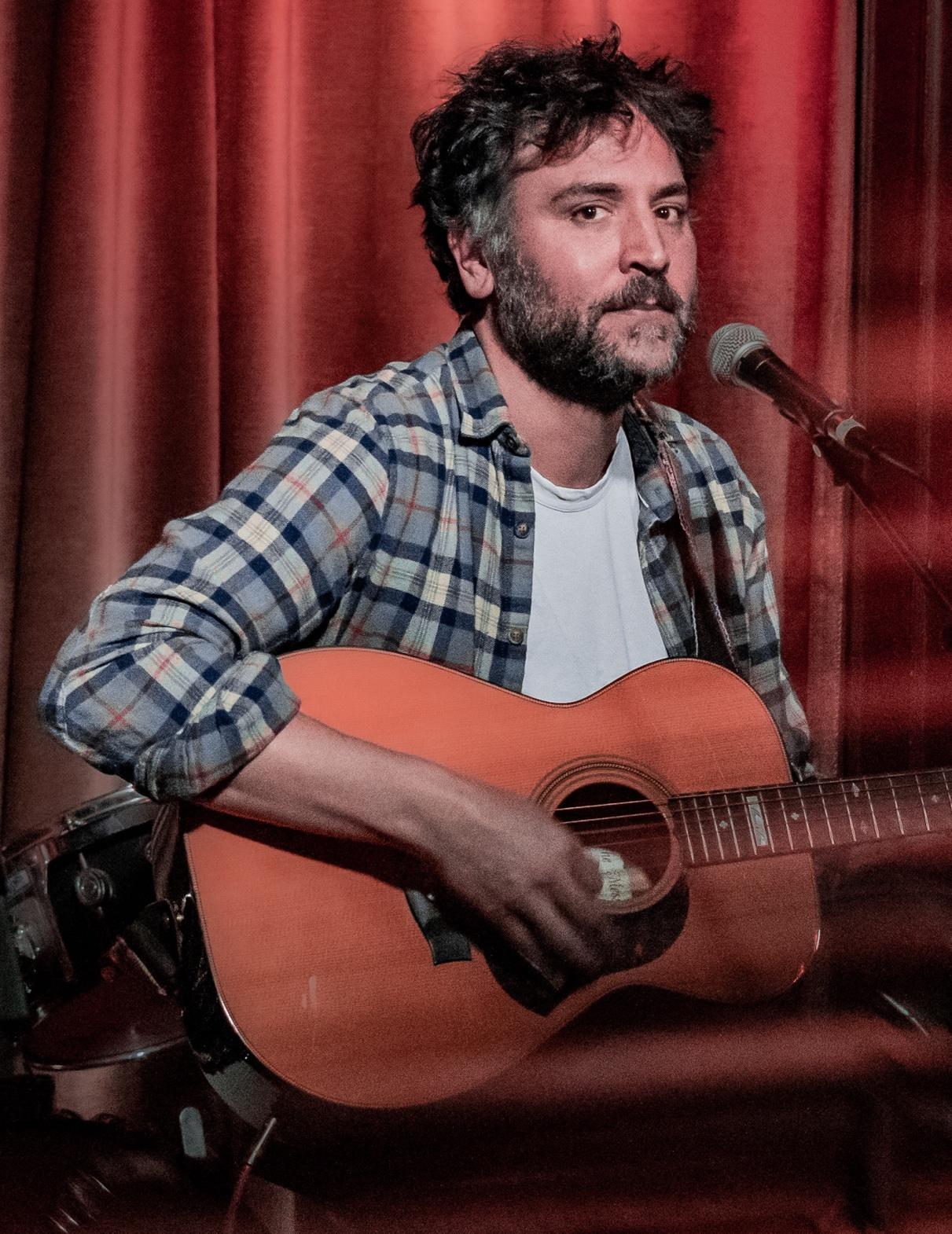
PHOTOS BY NIKHIL SURESH
Beloved as an actor, Josh Radnor finds new creative energy in music
SECOND ACT
by Rachel Brodsky
Josh radnor does not spend much time thinking about How I Met Your Mother. “I’ll tell you this,” he admits with a wry grin over Zoom: “I don’t think about it that much until journalists ask me about it.”
Sitting in the New York apartment he currently shares with his wife, the 49-year-old actor, -lmmaker, writer, and musician has long since moved on from the hugely popular CBS sitcom that ran from 2005 to 2014 and put him on the pop cultural map as the hapless, lovelorn architect Ted Mosby. Within the last two decades, Radnor has written and directed two feature -lms (2010’s Happythankyoumoreplease and 2012’s Liberal Arts), appeared in the buzzy Hulu adaptation of Ta0y
Brodesser-Akner’s Fleishman Is In Trouble, played a 1970s Nazi hunter in the Amazon original series Hunters, and is currently on board to direct sci-- thriller The Leaves. And in November, Radnor released his debut solo album as a singersongwriter, Eulogy: Volume I Radnor may still have mixed emotions about the place How I Met Your Mother holds in his career, but he does have the show’s infamous blue French horn hanging on his wall. If nothing else, the “Smurf penis” (as it was dubbed in the pilot episode) is a sentimental keepsake serving as a daily reminder of the job that made it possible for Radnor to pursue his wildest creative dreams. “Sometimes I think of How I Met Your Mother as my patron,” he says.
“It allowed me to be an indie -lmmaker and a musician and songwriter. It freed me up creatively: I don’t have to take jobs that don’t resonate with me.”
Musical Confidence
Eulogy: Volume I, a stirring collection of folk-Americana songs that chronicle a period of immense personal change and rebirth, began to take shape in the fall of 2021, when a newly single Radnor found himself temporarily “exiled” from the Los Angeles home he’d shared with his ex. With his dog Nelson in tow, a discouraged Radnor drove back to his hometown of Columbus, Ohio, where he caught up with family and a few old friends and waited for a
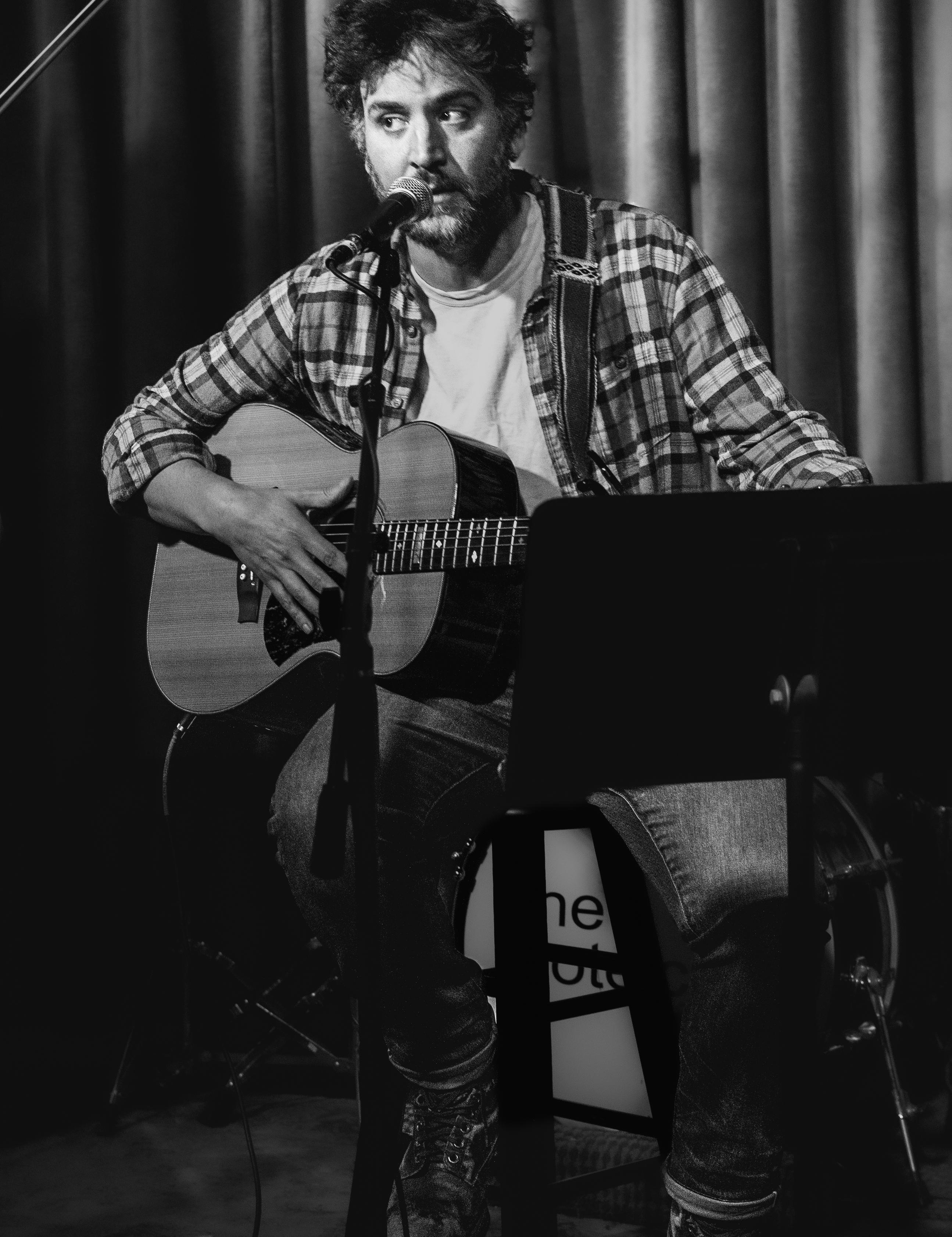
“The best I can do is keep making stu and thank people when they say how much they love the show, because it’s allowing me to be a musician and continue to do all this stu that I love.”
Josh Radnor
potential acting job in New York to materialize.
This personal and professional liminal state eventually led Radnor to keep driving. The following winter, Radnor landed in Nashville, where he rented an Airbnb, turned that into a makeshi/ studio, and spent the next month writing and recording nearly 50 original songs — later winnowed down to 24, the second batch of which will be released this year — with musician friends Kyle Cox, Cory Quintard (Volunteer), and Jeremiah Dunlap.
“It was bliss,” Radnor says of his time writing and recording in that Airbnb. “It met me at the right time. I was in a lot of confusion and despair. Even though I knew that relationship ending was the right thing, it was still hard, and just being caught by music and a town I really love, just being able to throw myself into it, with these guys who I just really adore and trust.
It was very healing.”
Comprising 12 minimalist, acoustic-driven compositions that mine heartache, loss, patience, aging, masculinity, regret, dissolutions, and renewal, Eulogy: Volume I is not Radnor’s -rst foray into music. A/er meeting and becoming good friends with Australian pop-rock -gurehead Ben Lee on the set of How I Met Your Mother, Radnor found himself cra/ing melodies and lyrics with Lee. One song begot another and another.
“The next thing I know, we’re playing in Hotel Cafe, and people are coming out to see the shows,” Radnor recalls of the duo’s early collaboration, a folk-pop project they simply called Radnor & Lee. “It was an equal partnership. [Lee] really encouraged me to -nd melodies that were living in me. I knew I could write lyrics; I knew I had a sense of rhythm and rhyme, but I was shocked to discover how much music was in me. He was
the one who encouraged that, while at the same time teaching me a lot about songwriting.”
In addition to touring the US, Australia, and South America, Radnor & Lee released two LPs, 2017’s selftitled record and 2020’s Golden State Their alliance soon gave Radnor the con-dence to pick up an acoustic guitar and piece together his own songs — something he still sounds surprised to be doing. “I always thought [playing guitar] was a superpower that you had to start when you were young — college, at the latest,” Radnor says. “I didn’t pick it up until I was over 40, so I’m ba3ed and delighted that I’m actually doing this.
“I had a lot of impostor syndrome [at -rst],” Radnor admits of performing solo. “I think I huddled very close to Ben those -rst couple years because he’s legitimized as a musician, to say the least.”
Looking back, Lee recalls, “It was
always fun playing together because our collaboration was rooted in friendship, but increasingly I came to realize there was a lot more that Josh wanted and needed to say than was possible within a duo. … The last time I saw him perform at his LA show I was deeply impressed with the voice he is -nding as a solo artist. The audience relates to him, and also aspires to be like him. It’s a quality you can’t fake or buy. People feel like he is a trusted friend. And he is increasingly relaxing into the role of solo performer and creating a beautiful space for the audience.”
With every solo show Radnor plays now, he feels his con-dence growing. “Something humbling and beautiful about coming to see my shows is knowing that they’re going to be imperfect,” he says. “It’s not like watching Pavarotti, John Butler, or someone who’s going to pin you to the back of your seat with their guitar
prowess. That’s not what my shows are. I can play well enough to tell the story I’m trying to tell, and that’s all I ever really wanted. I certainly want to keep learning the guitar and [become] more dynamic of a player. But in terms of what I really wanted to do, which was tell stories, I’m doing it right.”
Growth Mindset
In many ways, singing, songwriting, touring, and recording feel like inevitable steps for Radnor, a cerebral, thoughtful speaker who at many points in the conversation cites the value of artistic growth. Growing up in Ohio, Radnor remembers connecting to his parents’ vast vinyl collection, which spanned ’60s pop, rock, and folk changemakers like Simon & Garfunkel, The Beatles, Bob Dylan, and Jim Croce. Later, as a grad
student in ’90s New York, Radnor fell in love with Indigo Girls, Tracy Chapman (“that -rst record knocked my socks o0 ”), Joni Mitchell, and Counting Crows — “anyone who I felt like was telling the truth,” he says. In the early 2000s, one of Radnor’s greatest artistic in1uences was Irish singer-songwriter Damien Rice, whose 2002 debut album O with vocalist Lisa Hannigan “was the most beautiful thing I ever heard.”
“O might be the album of my life in certain ways,” he says. “It was the album I couldn’t get enough of … I saw him, like, eight times in a year or two. There was something he was doing; there was some spell he was casting. I suppose if there’s an aesthetic that I’m chasing, it’s whatever Damien Rice was doing around the time of that record.”
Though Eulogy, Volume 1 is meant to evoke imagery around funerals, death, and uncertain
endings, the very act of releasing music symbolizes what Radnor, the artist and storyteller, spends his life chasing: evolution.
“I like having these di0erent storytelling forms,” Radnor says. “Sometimes you get an idea, and you say, ‘That’s a song. That’s not a movie.’ There’s something nice about letting the content dictate the form. It’s all storytelling to me.”
He continues: “I’ve had a couple of people say, ‘Your music would work really well in your movies,’ which is quite a compliment. When you’re younger, you’re imitating your favorite artists because you don’t have your voice. And I feel like I -nally have my voice. I think my audience is starting to understand what my aesthetic is. That doesn’t mean I want to be pigeonholed there forever — my next album could be a radical departure. But I do think it’s
taken me a while to -gure out the things I’m interested in exploring.”
As a songwriter, Radnor places greater emphasis on confessional, poetic lyricism than on getting every -nger-pick and chord just right. On the ambling, trumpet-tinged “prebreakup song” “Heaven Knows,” Radnor dissects the days leading to separation, with the understanding that each path in this fork in the road leads to certain pain. On the redemptive, harmonizing “Learning,” Radnor unpacks vulnerable emotions men are socialized not to publicize while embracing the humanity in a full range of feeling.
Later, on the ruminative album closer “Joshua: 45, 46,” Radnor considers the passage of time as another mid-40s birthday looms.
“You feel like you are 17 / Your back says you are 45 … In a week you will
be 46 / The birthdays come without warning,” he murmurs. “Joshua: 45, 46” is also the only album track that directly mentions how America knew him best. “And I get stopped in airports because I played an architect / Some people think that’s who I still am / It used to drive me crazy, and some days it still does / But I’m learning how not to give a damn.”
Constantly Rewriting
It’s easy to see how, even a decade a/er How I Met Your Mother went o0 the air amid mixed reviews and a universally disliked series -nale, Radnor is still be -nding his way out of its looming shadow. A/er all, playing the lead on a nationally syndicated, Friends-like sitcom narrated by the late Bob Saget is not exactly a normal job. The show continues to resonate, living on via
cable reruns and streaming platforms and frequently mentioned in nostalgia-bait listicles around the web.
“I interpreted [Ted] the best I could,” Radnor says. “But when someone wants you to be that character forever, it’s a very strange request. It’s asking you to stop moving and growing. They’re really asking me to retire and stop being myself. They want me to be this one thing. It’s almost violent or hostile, and imprisoning. … It’s misunderstanding the whole nature of being an artist, of being creative, and even being alive, which is all about evolution, change, death, rebirth, all the things we’ve been talking about. The best I can do is keep making stu0 and thank people when they say how much they love the show, because it’s allowing me to be a musician and continue to do all this stu0 that I love.”
Radnor continues, examining the upsides and downsides of being so closely associated with a character like Ted Mosby. Then he remembers something Lee told him when they were getting started. “Ben used to say, ‘It’s like you’re a musician who had a massive hit song and you have to play it at every show. They’ll listen to your new stu0, but you’ve got to play that song. You have to honor that you had something that found its way into the center of culture.’
“I don’t want to come o0 as ungracious,” Radnor concludes. “I’m grateful to that show. It would be like wishing away a decade of my life, and I don’t want to do that. My life changed in massive ways. [But] it is hard, especially for someone like me, who is always looking to rewrite. I have no choice but to keep moving forward.” 2
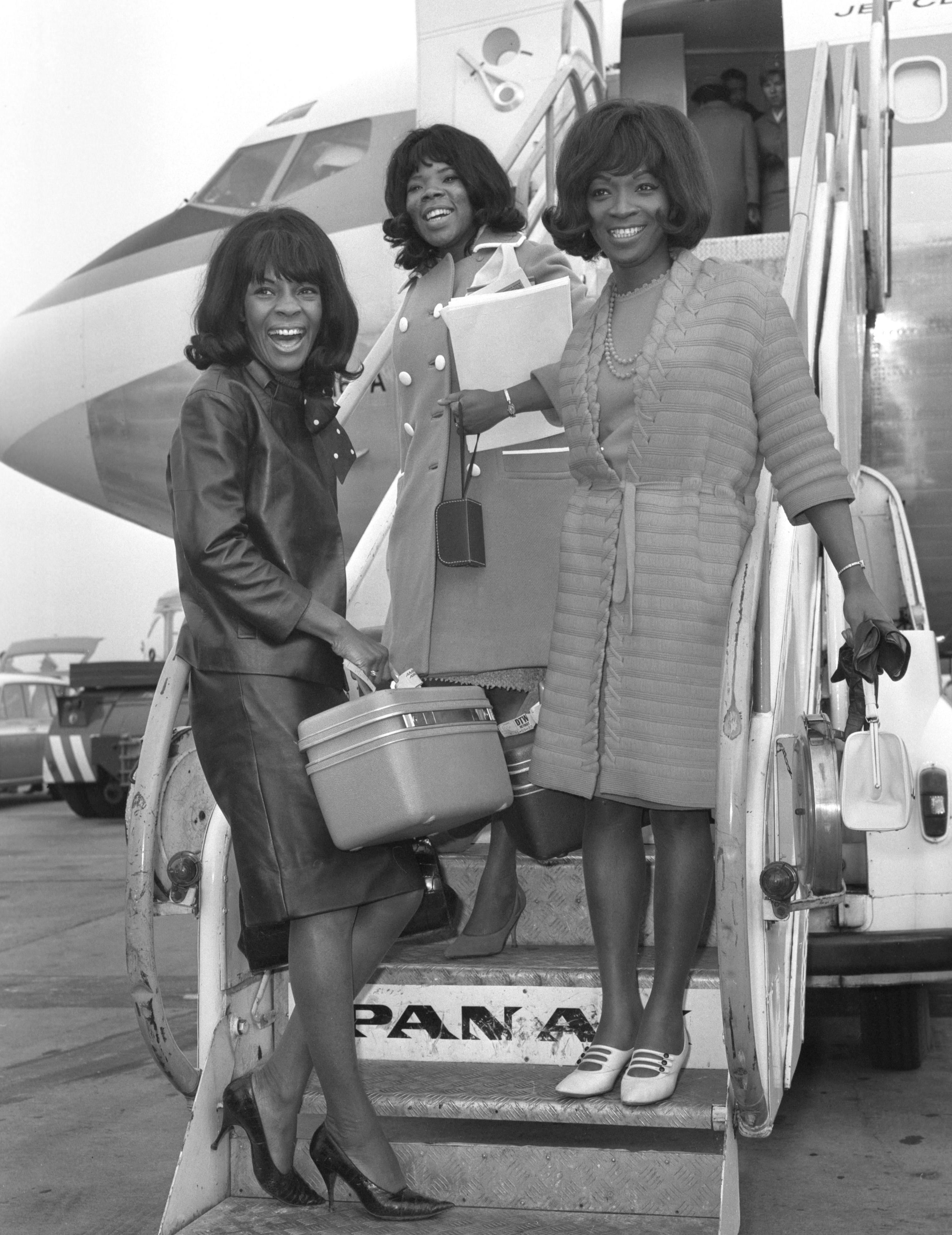
The Vandellas
WHY GIRL GROUPS STILL MATTER
Rich harmonies and joyful stage presence resonate in today’s music
by Jim Shahen
The phrase “,irl ,roup0 can conjure many ideas: To start, there’s the look — three or four women with glamorous, matching dresses and immaculately coi0ed hair. And that imagery only becomes more magni-cent when such high style is paired with synchronized movements and harmony-rich vocals imbued with unadulterated joy.
Since the girl group sound -rst rose to prominence in the late 1950s, much of the narrative has centered on the producers, songwriting teams, and session artists that recorded the tracks. It’s a storied one that includes people like
Phil Spector, Carole King and Gerry Go4n, Jerry Lieber and Mike Stoller, Berry Gordy, The Wrecking Crew, and The Funk Brothers.
But the women who brought to life seminal tracks like “Will You Love Me Tomorrow,” “He’s So Fine,” “Be My Baby,” and “Chapel of Love” — songs maybe not recognizable by name, but almost certainly by sound — have rarely received the consideration and appreciation they’re due. This is beginning to change, though, as contemporary artists invoke classic girl group legacies and the wider industry acknowledges and lauds their contributions to the American music landscape.
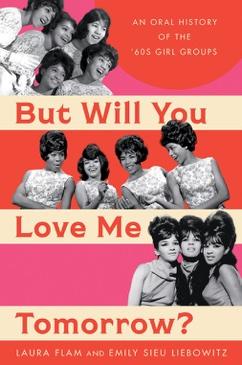
Built on more than 300 hours of interviews with more than 100 people, the recent book But Will You Love Me Tomorrow? An Oral History of the ’60s Girl Groups by Laura Flam and Emily Sieu Liebowitz provides a platform to women from dozens of girl groups from the 1950s, ’60s, and ’70s. It highlights the people behind the songs, the highs and lows of their careers, and the in1uence these acts had on music and culture.
“The time between Elvis and The Beatles is considered a murky time [for music and pop culture], but it’s only murky because of the acts we use to de-ne those times,” says Liebowitz. “The Beatles didn’t come
“I didn’t know I was going to be in a girl group, but I learned that being in one is something that’s bigger than yourself. I really love sisterhood, that bond that happens when you’re vulnerable, singing together. It’s not only about the music, it’s about self-love, respect, empowering yourself and others.”
Stacy Johnson
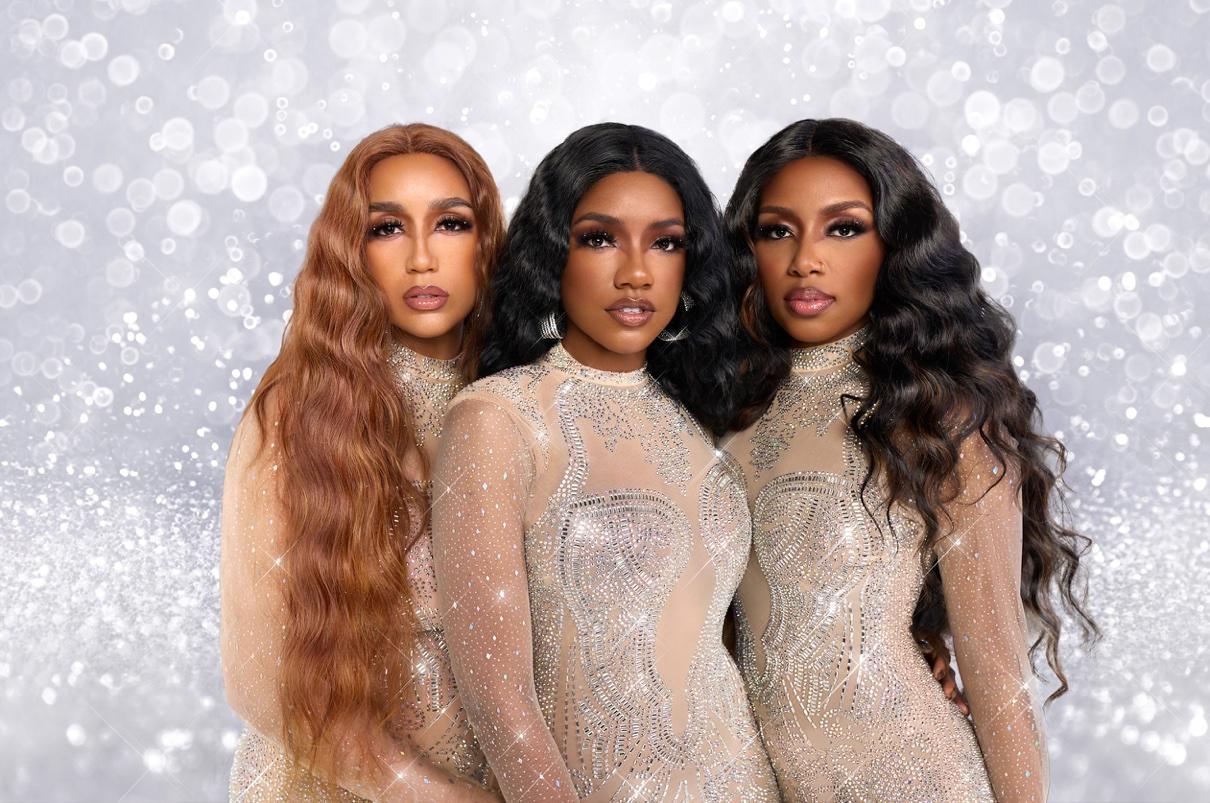
The Shindellas
out of nowhere; there were these women, women of color. The music industry presents a whitewashed history of American popular music. That leaves a hole where these contributions are. We were lucky to hear and share these stories.”
For the artists themselves, having the opportunity to discuss their accomplishments and artistry was necessary.
“We haven’t all received our recognition, it’s overdue. But Will You Love Me Tomorrow? let people tell their stories,” says Beverly Lee, the last remaining founding member of The Shirelles. “We’re trying to rewrite our history. But you can’t keep good women down and we’re showing the world what we’re about.”
While these seminal acts work to receive their well-earned plaudits, the vocal harmonies and stylistic
approach they popularized is still relevant to current music.
Kasi Jones, Stacy Johnson, and Tamara Chauniece formed The Shindellas in 2016 and released their breakthrough album, Shindo, last October. The LP and the group’s harmonic interplay show the evolution of the girl group sound and why girl groups still matter in roots music and beyond.
“I didn’t know I was going to be in a girl group, but I learned that being in one is something that’s bigger than yourself,” says Johnson. “I really love sisterhood, that bond that happens when you’re vulnerable, singing together. It’s not only about the music, it’s about selflove, respect, empowering yourself and others.”
Chauniece adds, “We’re honoring our past and pushing forward to the future. It’s healing to
hear our harmonies, the three of us sonically. It’s really beautiful to hear women’s voices together.”
Finding a Sound
One of the de-ning characteristics of the girl group sound is how multiple voices come together in song. It creates something pure and powerful and not easily replicated in other styles.
“We spent a lot of time talking to these women and listening to the songs,” says Flam. “There’s something still so fresh and modern about the songs. Their voices are so amazing and harken back to a time of joy and innocence in a way that is so appealing. There’s this ethereal magic.”
For the girl groups of the 1950s and ’60s, it was an approach that came naturally. As But Will You Love
Me Tomorrow? lays out, these acts, consisting primarily of relatives and close friends, grew up singing and harmonizing together for fun around their neighborhoods, at church, and at school. At the time, labels were more regionally focused, as opposed to the international conglomerates that have since developed, which inspired a generation of plucky young musicians and hopeful managers and moguls to cut records and try to get them played on local radio stations.
The Shirelles emerged from Passaic, New Jersey, in 1957. Beverly Lee and Shirley Owens, along with a pair of friends, were encouraged to perform at their high school talent show, where Lee recalls that they sang “I Met Him on a Sunday” and “tore the house down.” In the audience was Florence Greenberg, a
parent looking to get involved in the music business.
Greenberg started her own label, Tiara Records, and released “I Met Him on a Sunday,” the -rst of 14 of The Shirelles’ singles to land in the Top 50 on pop music charts between 1958 and 1963. Overnight, Lee and her classmates went from students to pop stars. As The Shirelles steadily developed into one of the top pop acts nationally, other groups began to develop with their own approach to the form.
“We were in school the -rst time we heard our song on the radio; they played it over the intercom. Then we were playing the Apollo and theater circuit and got on-the-job training on the chitlin circuit,” recalls Lee. “We loved to do new, exciting things. We had this raw energy and passion.
“There was an innocence to our songs. It was good music that told a
story you could relate to,” she continues. “But what was unique about it was everybody had their own sound. You had us with a New Jersey sound, Motown had The Marvelettes, The Crystals were part of the New York sound.”
Sisters Barbara Ann and Rosa Hawkins and their cousin Joan Marie Johnson founded The Dixie Cups in 1963, a group that cultivated a style rooted in their New Orleans hometown. Similar to The Shirelles, they performed capably at a high school talent show and landed on the radar of a burgeoning music mogul (the unscrupulous Joe Jones), who brought them to New York City in the hopes of cutting a hit track.
As Barbara Ann Hawkins explains, The Dixie Cups presented a di0erent style, one that helped them turn a track that went nowhere
The Shindellas
for several of their peer groups into one of the most iconic songs of all time.
“All of the groups had hits and all of us were the same but di0erent. Most of the girl groups had a lead singer and background singers. We were a little di0erent; most of our songs, we sang them in harmony because we liked what that sounded like,” she says.
“When we got to New York, we went from company to company, and everybody wanted us, but Joe kept saying, ‘They’re not giving us the right deal,’ which meant money up front for Joe. We ended up with Leiber and Stoller, and they gave us Je0 Barry and Ellie Greenwich’s song ‘Chapel of Love,’” Hawkins continues.
“We heard it and asked, ‘Do we have to sing it like this? Give us a minute to work it out,’ and came up with it the way it is. They didn’t tell us it was already recorded by The Ronettes and The Crystals and wasn’t a hit. A/er that we went home to New Orleans and Joe told us, “Girls, you have a hit on your hands,
you’ve got to go back to New York.”
Recognition and Remuneration
In 1964, The Beatles were the zeitgeist. The Fab Four is credited with revolutionizing pop music, but the group’s early years are steeped in the work of girl groups, particularly that of The Shirelles.
In 1960, The Shirelles recorded “Boys” as a B-side to the charttopping single “Will You Love Me Tomorrow.” A year later, the group had a Top 10 hit with “Baby It’s You.” When The Beatles released their debut LP Please Please Me in 1963, it included covers of “Boys” and “Baby It’s You,” both of which were staples in the band’s early live shows. And when The Beatles came to America in 1964, they were greeted by The Ronettes, who later toured the UK with the Fab Four. Given their documented appreciation for girl groups, it’s only -tting that The Beatles’ initial chart-topping run was halted by “Chapel of Love” that June.
“The Beatles had the Top 100
chart sewed up and we were told, ‘Your chance at having a No. 1 record is 150 million-to-one,’ Hawkins remembers. “We didn’t know how many records were being released, we just knew that getting on the air was a big mountain to climb. Then we went to No. 1, knocking The Beatles o0 the top of the chart.
“We didn’t really get the recognition we should have for that because we were Black. If we were white, we would have had dolls and lunchboxes.”
The lack of cultural recognition and -nancial remuneration is a recurring theme for the girl groups. But Will You Love Me Tomorrow? covers this comprehensively, from the fact that record sleeves couldn’t feature photos of Black artists, lest they o0end white Southern listeners, to how many acts still are engaged in legal action to receive their fair share of royalties and writing credits.
These e0orts to gain (or regain) acknowledgement for their work remains particularly frustrating because the songs themselves have
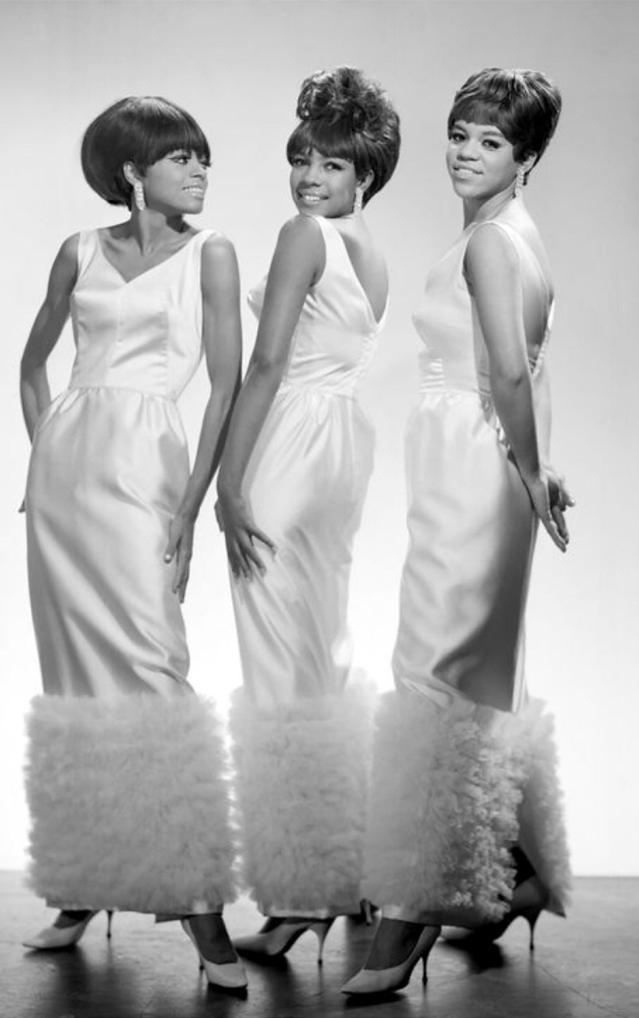
The Supremes
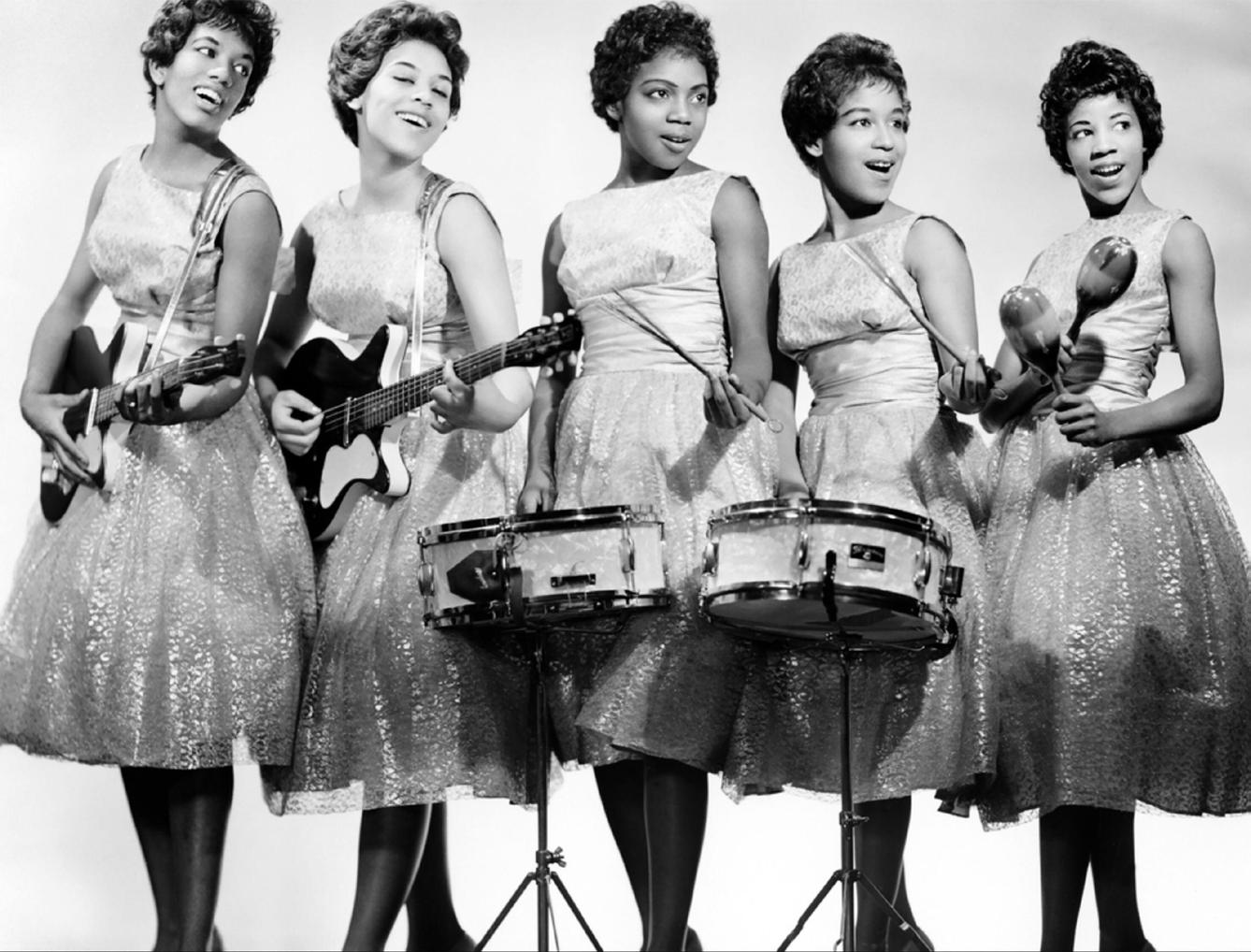
The Chantels
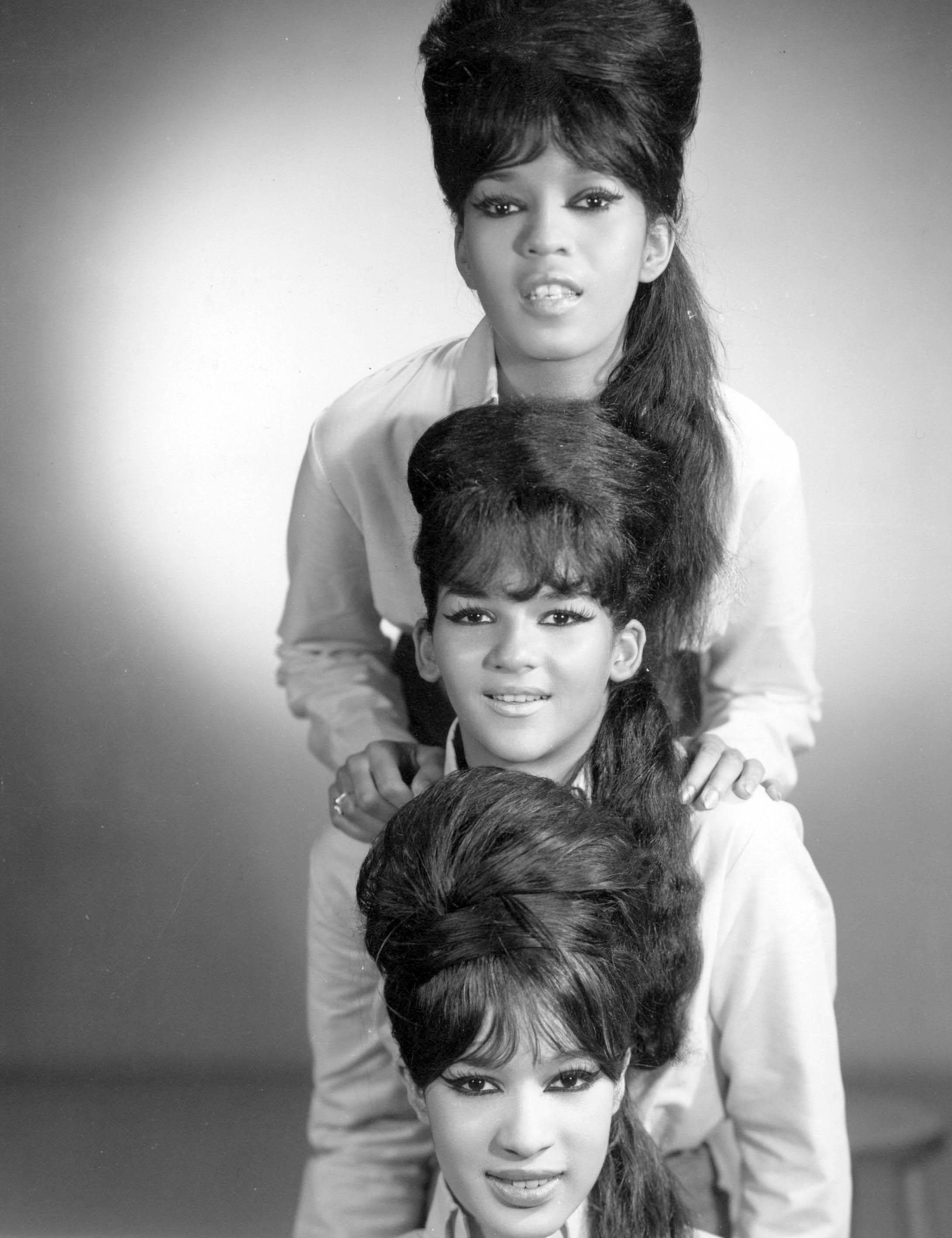
The Ronettes
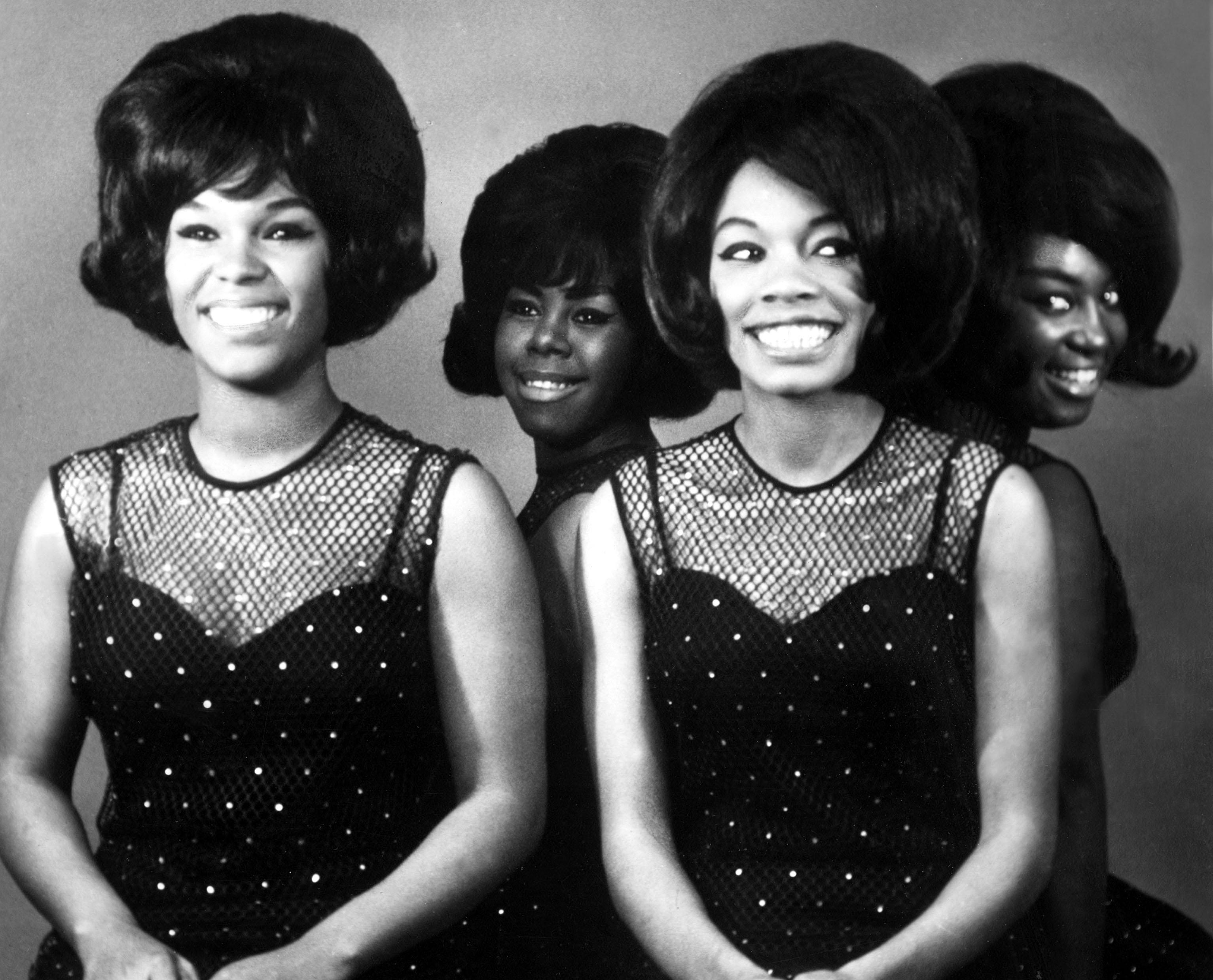
le/ an indelible mark on popular culture. Flam notes that many of the singles and groups found a second life in the 1980s and early 1990s due to their placement in -lms The Big Chill, Stand By Me, Dirty Dancing, and Goodfellas. And the material has retained a lasting in1uence on generations of musicians: Protopunk and punk bands The New York Dolls and The Ramones included covers of The Shangri-Las and The Ronettes, respectively, on their essential early albums. Patti LaBelle had success in the early 1970s with her rendition of “I Met Him on a Sunday.” Red Hot Chili Peppers guitarist John Frusciante
performed “Will You Love Me Tomorrow” regularly during the band’s 2006 world tour. The Dixie Cups’ second chart-topping single, “Iko Iko,” has been tackled by countless artists, most notably The Grateful Dead and Dr. John. Bruce Springsteen performed The Supremes’ “Someday We’ll Be Together” on his 2022 soul covers record Only the Strong Survive
The girl groups also inspired generations of Black, female acts. There’s a direct connection from the musicality and fashion of acts like The Supremes, The Ronettes, The Shirelles, and The Dixie Cups to popular early ’90s R&B groups like
En Vogue and SWV and Destiny’s Child in the 2000s. It’s a multigenerational legacy that groups like The Shindellas are continuing today.
Empowering Women
The concept for The Shindellas started when Louis York, the duo of Grammy-nominated writer/ producer Claude Kelly (Bruno Mars, John Legend, Miley Cyrus) and Grammy-winning writer/producer Chuck Harmony (Fantasia, Bruno Mars, Janet Jackson), established the Nashville-based music collective Weirdo Workshop in 2015. Harmony
recruited Stacy Johnson and Kasi Jones, and added Tamara Chauniece a year later.
“Chuck had an idea for a girl group and empowering women,” Jones says. “He had been listening to ‘Chapel of Love’ and thinking, ‘Where is this in music?’ In 2016, he told me about his idea with The Shindellas. I had always wanted to be in a group, and when we -rst sang together, there was this moment of, ‘Oh my gosh, this is right where I’m supposed to be.’”
While The Dixie Cups’ classic single provided the inspiration for cra/ing The Shindellas sound — all three vocalists share lead vocal
responsibilities, as opposed to one taking lead and the others performing backup vocals — the group re1ects a wide range of stylistic in1uences.
Jones grew up with The Supremes, The Pointer Sisters, and the soundtracks to movie musicals, and graduated with a degree in musical theater. Chauniece and Johnson learned harmonies and group vocals through singing in church as kids. All three possess a fondness for ’90s girl groups and see The Shindellas as an amalgam of the various artists that inspired them to sing in the -rst place.
“We see ourselves as the sum of
all our in1uences, everything you’ve heard and some things you’ve never heard,” says Chauniece. “There’s our Mount Rushmore — The Clark Sisters, Pointer Sisters, Andrews Sisters, The Supremes, SWV, En Vogue, TLC — every era is really beautiful and we continue to carry all of those artists with us.”
Since -rst getting together, The Shindellas have released three projects — the Genesis EP in 2019, the 2021 full-length Hits That Stick Like Grits, and last year’s Shindo. But the recorded output is secondary to the time The Shindellas have put in to work on their harmonies, synchronize their dance and
“The music industry presents a whitewashed history of American popular music. That leaves a hole where these contributions are. We were lucky to hear and share these stories.”
Emily Sieu Liebowitz co-author, But Will You Love Me Tomorrow? An Oral History of the ’60s Girl Groups
wardrobe, and become a cohesive unit both on and o0 the stage.
Johnson renovated her garage in Nashville into a rehearsal and meditative space for the group to “just bond, essentially, get to know each other, our voices, strengths and weaknesses.”
“There were de-nitely some challenges at -rst and it took time to build trust, shield your ego, and learn to put the song -rst, allowing the music to be the most important thing. Now, when one of us has a challenge, all of us feel it,” says Johnson. “We hold each other up, support each other. It makes [a music career] so much easier. In ‘Hot Wiggle,’ our rehearsal space, we spend a lot of time together
practicing our movements and vocals and how we want to express each song. It’s become a special place where we can build our strength.”
Adds Jones, “When people -rst heard us sing, they said, ‘You sound like you’ve been singing together forever.’ At -rst there’s this fear of losing yourself and your essence, but you learn how important you are in a group; when someone is singing lead, you still have to be present, still performing on stage. There’s more choreography, movement, all these things that make you a better performer. We become three parts of a whole.”
With tracks like the danceable soul-pop of “Last Night Was Good
for My Soul,” Supremes-esque “Ooh La La,” and R&B ballad “Think of Me,” Shindo captures the sound of a group ready for a larger audience. And The Shindellas are beginning to -nd it, as 2023 saw them perform on The Today Show and embark on their -rst US headlining tour.
Ageless Songs
Several of the girl groups of the 1950s and ’60s still perform live. For Beverly Lee, shows with the current Shirelles lineup allow her to remain connected with the music and fans that have made her 65-year professional singing career possible, noting that “it makes people feel hopeful and makes


them dance.”
Barbara Ann Hawkins, who became the sole original member of The Dixie Cups a/er her sister Rosa passed away in 2022, keeps her group active on the New Orleans music festival circuit and private events.
This summer marks the 60th anniversary of “Chapel of Love” — or as Hawkins describes it, “bringing happiness to people” — and her goal is to have a celebratory event, complete with special guests and a fundraiser for the charity established in her late sister’s honor.
Hawkins is thankful to still be able to perform in front of audiences, and she’s eager to celebrate one of the tracks that made
it all possible. “It’s a gi/ from God, every time we can go out and sing. When we walk on stage, people enjoy themselves. We enjoy singing and seeing people coming together, having a good time. It’s awesome,” she says.
“I was at the store recently, talking to the saleswoman, and a younger woman walked up. The saleswoman asked her if she knew who I was and the girl said, “Oh I wasn’t born back then.’ Then the woman started singing ‘Chapel of Love’ and the girl sang along with her! It’s ageless, a classic, one-of-akind, even if you don’t know who The Dixie Cups are. This song has lasted so long, it doesn’t matter what age you are, you know it.” 2
JOSHUA
Emily Sieu Liebowitz
Laura Flam
LEARNING TO LEAN
Community carried Hurray for the Ri Ra through grief on The Past Is Still Alive
by Rachel Cholst
BY
PHOTOS
TOMMY KHA
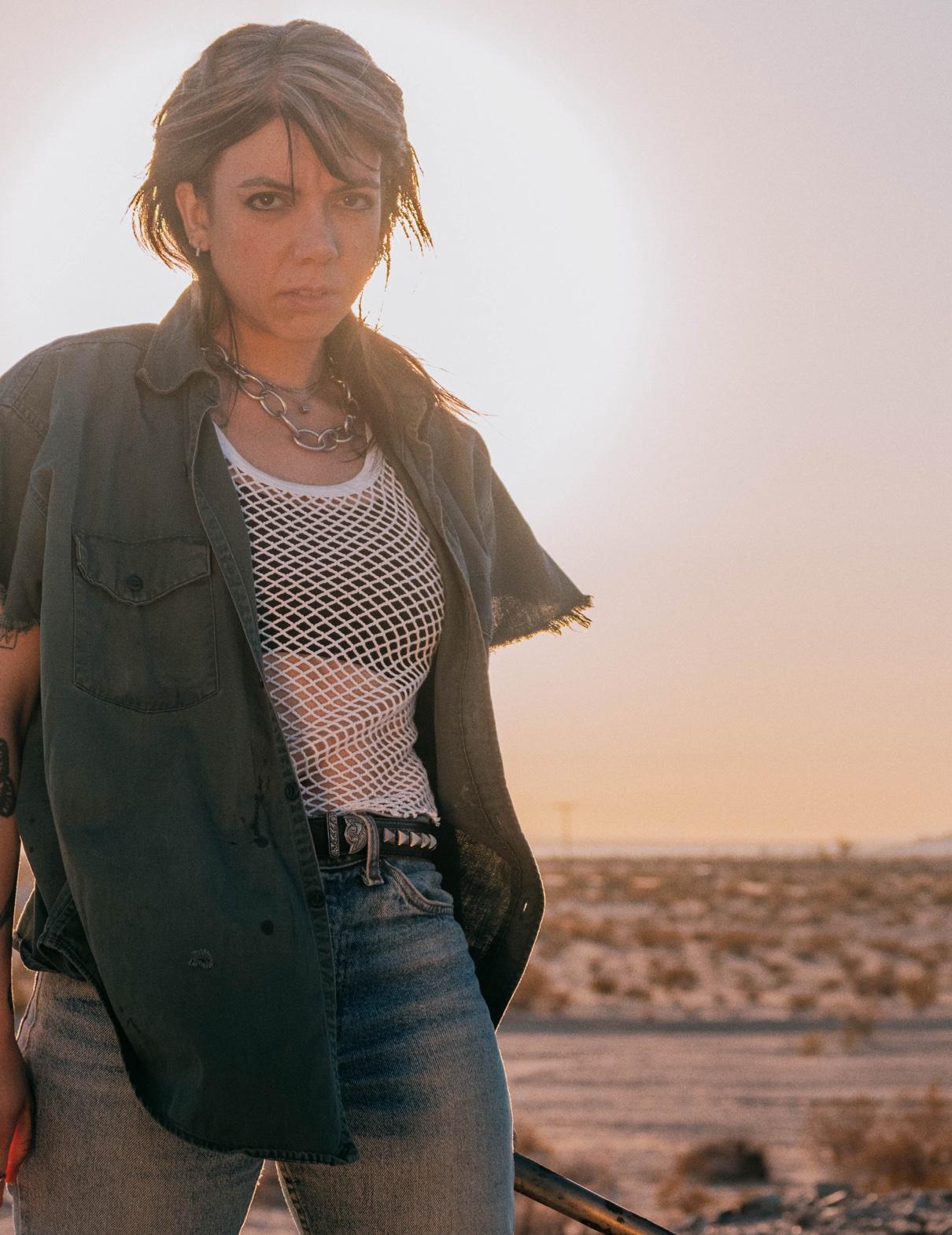
Time does stran,e things on The Past Is Still Alive, the ninth studio album by Hurray for the Ri0 Ra0. Singer, songwriter, and frontperson Alynda Segarra simply bends time to their will, seeking to understand the juxtaposition of past, present, and future.
Segarra -rst earned national recognition with 2014’s electrifying Small Town Heroes, an album that bottled the energy of old-time music and folk, shook it up with urgent political messaging of environmental justice and LGBTQ+ rights, and let the potent combination -zz once uncorked.
That energy has carried Segarra as they’ve explored di0erent genres while mining their past, rooted in
the punk communities of New York, New Orleans, the Bay Area, and the train cars that carried them between those places. The Past Is Still Alive, released in February via Nonesuch Records, -nds Segarra calculating what that all adds up to — the sum of their parts.
‘Little Ghosts’
Segarra grew up in the Bronx, the second child of two Puerto Rican educators. Their father, Jose Enrico Segarra, was a jazz musician and a Vietnam vet who struggled with PTSD.
And their mother, Ninfa Segarra, served as the president of the New York City Board of Education before she dissolved it during the Giuliani administration, enforcing politics and policies that were much more
conservative than young Alynda’s. It was a di4cult environment for a young person with a selfdescribed “baby boy soul” to grow up. As a result, Segarra spent much of their teenage years in the vibrant punk and DIY communities of the Lower East Side, particularly around Tompkins Square Park. It wasn’t long before Segarra began hopping trains to New Orleans and the Bay Area.
“When I go to New York [now], I see so much of my past transferred onto what I’m looking at,” they say. “Some things have changed so much: I’ll see a fro-yo shop or something and I’m like, ‘Oh my God, I used to drink there on the sidewalk!’”
They continue, “I talk about that world a lot in this record because it was the beginning of me starting a
community in the punk scene and learning how to -nd a path out of the life that I was living.”
This dynamic is most poignant in “Snake Plant (The Past Is Still Alive).” The peppy acoustic guitars, adventurous horns and strings, and enveloping vocals give the song a gentle golden hue — a fondness for the past with no trace of nostalgia. Here, Segarra shares snapshots of their childhood as well as reveling in the crust punk hedonism of their youth:
Camp re on the Superfund site
Garbage Island
Fucking in the moonlight
Play my song for the barrel of freaks
And we go shopli ing when it’s time to eat
They don’t really know
my name
So happy that we escaped from where we came
Many of the places and people in these memories are now gone, lost to drugs, suicide, and gentri-cation. Segarra found that holding these memories close only caused the good memories to slip away as trauma blanked out the rest. “I’ve lived this life that I’m very proud of, but I also don’t know what to do with a lot of these precious memories because they’re so sacred to me and I don’t want to exploit them or commodify them.”
For Segarra, The Past Is Still Alive is an attempt to ensure that these memories are preserved for posterity: “My relationship with New York has become so much about allowing change to 1ow
through me. I’m faced with my mortality. I see little ghosts.”
Grief and Love
Segarra found that their Bronx and Puerto Rican roots made them stand out in the folk music world. While people o/en associate Segarra with stereotypes of the South Bronx — the poverty, gang violence, and danger of the streets — they actually grew up in the middle- and working-class neighborhood surrounding Van Cortlandt Park in the northern end of the borough.
“People are confused by my upbringing, or they tokenize it. It becomes kind of a fetishization,” they say. “When I put out Small Town Heroes, people asked, ‘How did a little Puerto Rican kid from
“I fell in love again with writing songs and I fell in love with poetry again and just being able to rest in words.”
Alynda Segarra
Hurray for the Riff Raff
the Bronx end up playing this music?’ I’m just like, ‘Have you ever heard of the folk revival that happened in New York City?’ … Also, I have the internet!”
Their next album, 2017’s The Navigator, was a genre-spanning tour de force, a concept record that imagines a magical realist journey through the Bronx, with workingclass people of color banished to a gentrifying neighborhood called Rican Beach. Segarra is working with their friend, playwright C. Julian Jiménez, to turn The Navigator into a musical, and an early reading took place at Joe’s Pub last June, just a short walk from those same Lower East Side stomping grounds of Segarra’s youth.
In 2022, Segarra surprised longtime fans with the experimental Life on Earth. Produced by Brad Cook, the album found Segarra delving into electronic music and spoken word, with a reading by acclaimed poet
Ocean Vuong on the song “nightqueen.”
But when Segarra reunited with Cook in 2023, they knew things would be di0erent on their next project: Segarra’s father had passed away in February, a month before they recorded The Past Is Still Alive Segarra and their father had always connected through each other’s music, with Jose cheering on Alynda throughout their career. Segarra had written many of these songs during lockdown, and only realized later how many of them were about their father. Before Jose passed, Segarra had used writing and touring to numb their past trauma. But facing their grief also meant facing their ine0ective coping mechanisms. “As Americans, we don’t talk about grief enough,” Segarra says. “This experience really knocked a lot of pride out of me — pride that had me thinking, ‘I don’t want to bother anybody. I don’t want to be too much. I don’t want to be that friend who always needs something.’”
As a result, Segarra leaned heavily on their collaborators during the recording sessions for The Past Is Still Alive. Closeness with drummer Yan Westerlund, a longtime member of Hurray for the Ri0 Ra0, and Cook, returning to produce, proved comfortable and familiar. But newer bonds with contributing musicians Meg Du0 y on guitar, Libby Rodenbough on -ddle, Matt Douglas on saxophone, and multi-instrumentalist Phil Cook became vital as well.
“There’s something really important about reaching out to my friends and saying, ‘I don’t know how to do this,’” Segarra says.
“There’s a lot of insight that you can get if you’re allowed to have the space and time and support.”
As the producer, Cook helped recruit musicians like Rodenbough (part of the North Carolina stringband Mipso and a solo artist) and prep them for the emotional weight of the sessions. Though they were only together for a few hours of
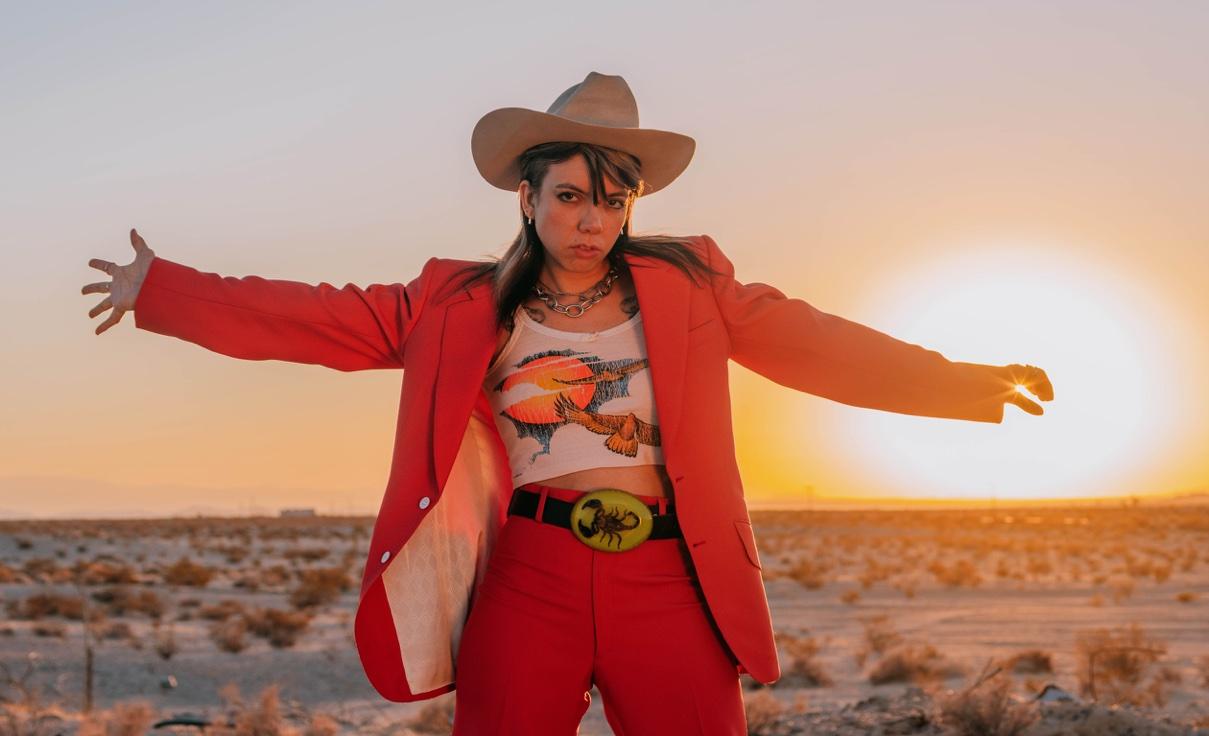
recording, Rodenbough was impressed by what she saw as Segarra’s willingness to let go: “They had an ease, a sense that they know that life is bigger than a single record cycle. Part of what makes them an artist is being able to be deeply emotionally present with whatever their current work is.”
Such trust and communication among collaborators and friends helped Segarra let their guard down in ways, pushing aside their drive to prove what they could accomplish and focusing on the songs in front of them: “I fell in love again with writing songs and I fell in love with poetry again and just being able to rest in words.”
This joy is evident especially in the collaborations on the album. Duets with S.G. Goodman (“Dynamo”), Conor Oberst (“The World is Dangerous”), and Anjimile (“Ogallala”) unfurl like landscapes viewed from the boxcar of a train, the voices complementing each other with gentle inevitability.
Work Ahead
For as much as Segarra sees The Past Is Still Alive as capturing speci-c crossroads in their life, the record also serves as a broader political statement. As a teenager, they supported the post-9/11 anti-war movement and rallied against New York City’s brutal gentri-cation measures enacted in the name of “counterterrorism.” Segarra rode with Critical Mass, a monthly group bike ride that advocated for safer (and greener) infrastructure for bicyclists in New York City, and organized with Food Not Bombs, a collective that distributes free vegetarian and vegan food across the country.
“Ogallala,” the album’s last song, weaves these causes together in a climactic 1ourish powered by New Orleans horns, swaying steel guitars, and the hypnotic pulse of Segarra’s electronic music. It’s a collapsing of their individual past, present, and future as they deliver pronouncements about what’s at
stake for humanity — fear of climate change, political repression, inspiration from loved ones, and radical hope to carry themselves and listeners through the challenges ahead.
As Rodenbough says, “You come away from this album feeling like there’s work to be done, and we can do it. We’re still alive.”
Segarra believes that the work ahead is rooted in building meaningful relationships with each other.
“People in the generation older than me were constantly telling me that blood family is what is important and that friends come and go. We need to get rid of that concept,” they say. “Community is so important. [Writer and activist] adrienne maree brown talks about like digging in, not out — going deep with people and really giving and also understanding that you deserve that type of care as well. Being a lonely famous person is not going to get me through the apocalypse.” 2
ARKANSAS TRAVELERS
Songwriters set out to speak the truth about the land, the history, and the way forward
by Meredith Lawrence
Jude Brothers
“It started to be clear that my cultural heritage was not some theatrical act or some kind of hat I could put on, that it was actually a very deep, intense shadow that deserves to be illuminated.”
Nick Shoulders
Ar2ansas troubadour
Nick Shoulders is singing about a landscape some 2,000 miles away from the Lucky Barn stage at Pickathon, a musical festival outside of Portland, Oregon. In the late-summer swelter, listeners over1ow the seating to form informal cross-legged rows on the 1oor up front and stand shoulder-toshoulder along the walls. On stage, Shoulders’ long mullet drapes over his shoulders and his cheeks 1ush red from the heat as he sings and yodels:
I wish that every golf course became a WMA And every politician knew the rent that we paid Just to drink ourselves to death And go to jobs that we hate Oh to be fenced in.
Inspired by Cole Porter’s wideopen-space and freedom-loving anthem “Don’t Fence Me In,” Shoulders’ song replaces the threat of jail with social shackles — rent, soul-sucking and back-breaking jobs, and thoughtless land development. Released a few weeks a/er country singer Jason Aldean’s “Try That in a Small Town” (broadly decried as racist and glorifying gun violence), Shoulders minces no words with his song — “And truckers’ bodies twist from a life in the saddle / Is it freedom ringing in your ear or just a death rattle?” — implying in an Instagram post that his single is the antithesis of Aldean’s.
“I think that exploitation of speci-cally rural Southern pain, but rural pain in general, of disenfranchisement, of taking advantage of that inequality that’s baked into it, and convincing people
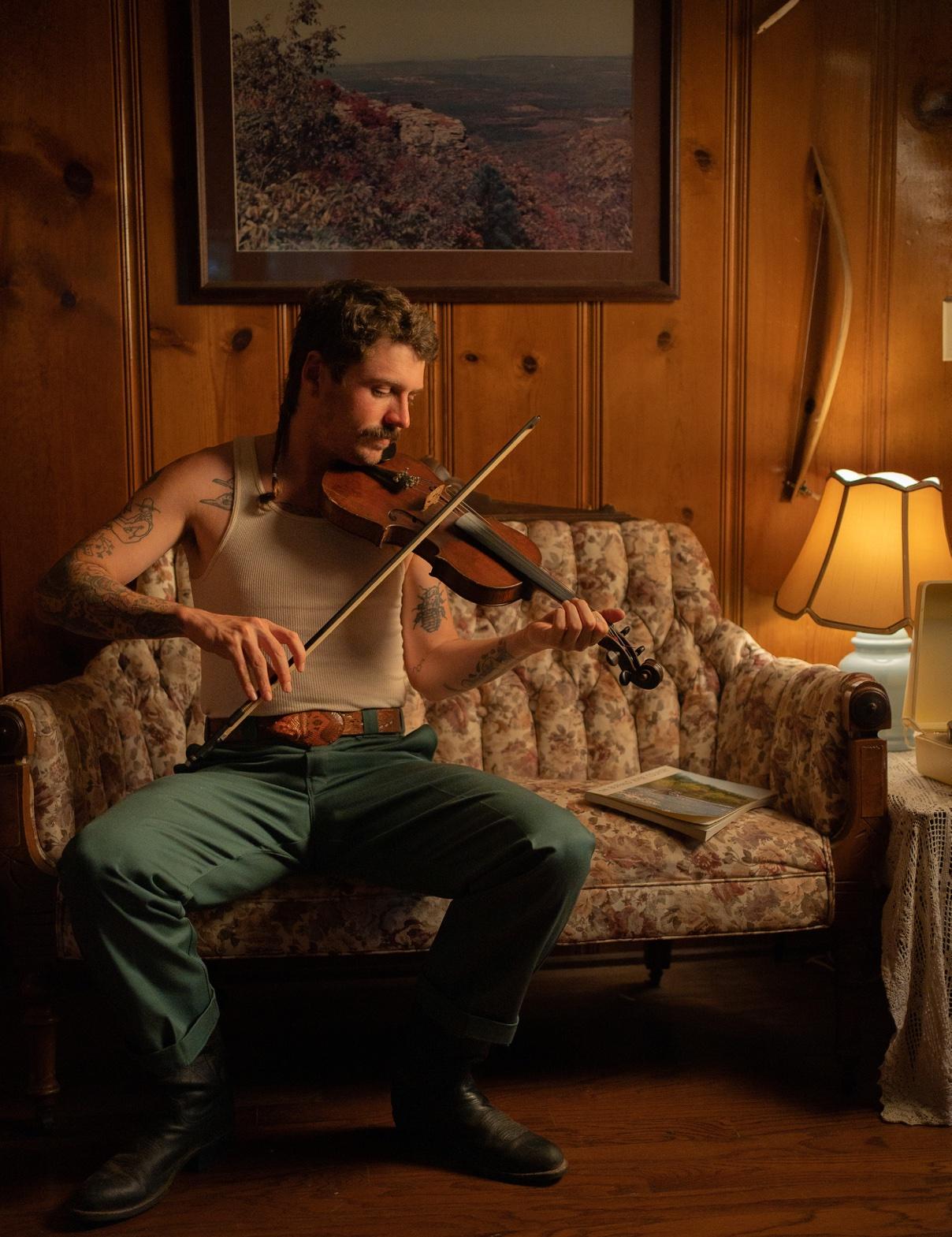
Nick Shoulders
to keep getting that chain tighter, to keep lengthening that noose so that somebody can keep control over their lives, I think that’s one of the most insidious, horrible things you can do as a person with a platform in this world,” Shoulders tells the Pickathon crowd.
Many of music’s greatest folk artists and protest songs arise from moments of divisive cultural tumult. In Arkansas especially, the early 21st century’s crucible of social change, against the backdrop of increasingly intolerable living conditions, fostered a crop of folk musicians who responded with messages of love, rage, and hope. These days, artists including Shoulders, Bonnie Montgomery, Dylan Earl, Melissa Carper, Willi Carlisle, Jude Brothers, and others are cranking out erudite, feminist, queer, climate activist, and capitalist-critical tracks with candor and wit that make their music approachable and relatable. They’re chronicling the world around them, tackling its issues and their hopes for resolution, and building a repertoire of new folk music that’s both tethered to history and forged in the proclivities of this cultural moment.
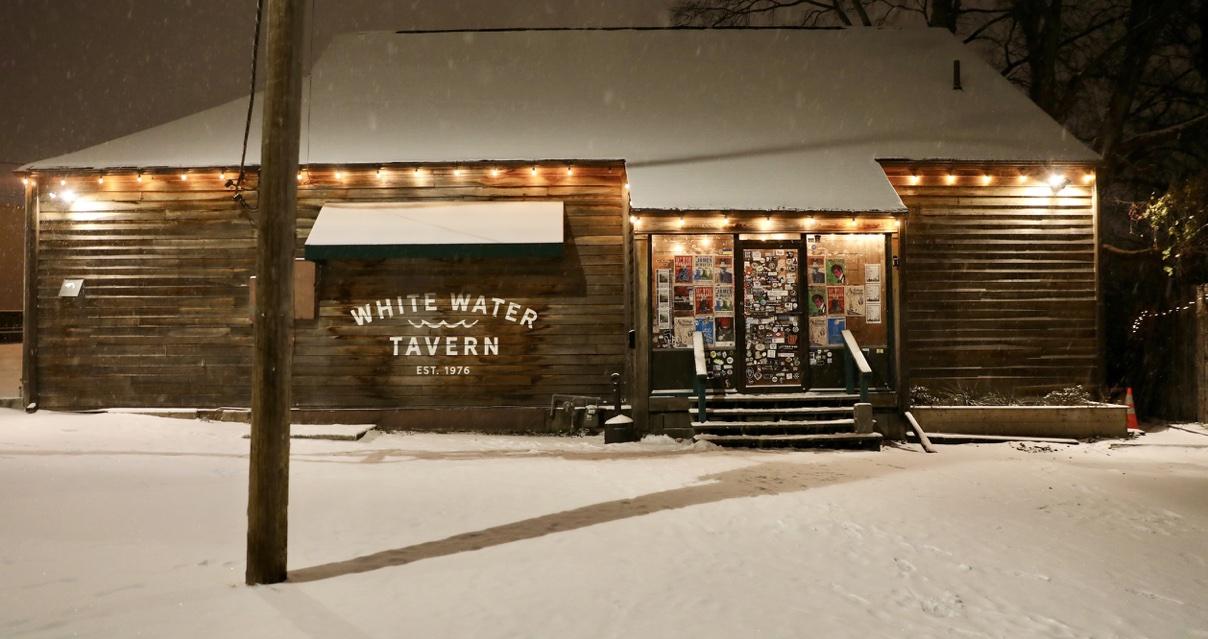
“Rejecting so much of the ignorant hateful shit that we all grew up with can be life-changing … it’s such a huge part of their burgeoning success. Having rural — especially Southern people — tell the truth and be passionately progressive is important, and that is folk music at its best,” says Matt White, former owner and current booker and promoter for the White Water Tavern in Little Rock, where everyone in this tight-knit scene has played.
Tucked away on a gravel spur next to a set of train tracks in Little Rock, the White Water is a must-stop for artists, Arkansas-based and otherwise. Entering the dark, woodpaneled beer joint feels like stepping back in time. String lights hang over the long plank bar and above the stage, and a jukebox presides over the corner by the bathrooms. The walls exude the musty smell of decades of beer and whiskey.
“A lot of these places are disappearing and a lot of artists are playing these corporate venues that are kind of cold. So the White Water is just still an old-school mainstage. And you can feel the history walking in there,” says White. “There’s
something about the bar as a community center.”
Musical Landscapes
Arkansas was formed by lopping o0 the bottom of the Missouri Territory a/er that general area became a place for displaced Indigenous tribes forced out of their homeland along the Trail of Tears. Its name derives from the Osage language.
The 25th state, Arkansas is geographically and biologically diverse, containing forested mountains like the Ozarks and Ouachitas, a lush delta, and numerous state and national parks. Because of its natural resources, the state is also heavily mined and fracked. It’s the country’s fourthlargest cotton producer, as well as the birthplace of Walmart, infamous for homogenizing small towns and quashing local businesses.
Walmart’s internal philanthropic arm, the Walmart Foundation, has donated $1.7 billion to charities, many of which are centered in Northwest Arkansas and contribute to the region’s growing cultural arts scene. The area is home to the Ozark
Folk Center and new contemporary arts museum The Momentary. It also hosts events like the Ozark Mountain Music Festival, King Biscuit Blues Festival, and FreshGrass Festival | Bentonville (presented by No Depression’s nonpro-t publisher, the FreshGrass Foundation). The dichotomy makes for a complicated, and o/en contradictory, cultural relationship.
Of course, Arkansas folk musicians were creating and sharing music about their lives, history, and working conditions long before money began to 1ow into the region and music technology began to codify songs. Historically and currently, their music has stemmed from all kinds of American vernacular music — Ozark folk, classic country, honky-tonk, blues, roots, and more — and in1uenced it, too.
For example, Arkansas-born Alexander Campbell “Eck” Robertson’s 1922 record of “Sally Gooden” and “Arkansas Traveler” is considered the -rst country music recording. Decades later, schoolteacher-turned-musician Jimmy Dri/wood scored a hit with
“The Battle of New Orleans,” a song he wrote to help his students recall history (John Horton’s version hit No. 1 on the Billboard Hot 100 Chart in 1959), and went on to record many environmentally and socially conscious albums. Some of roots music’s most in1uential artists hail from Arkansas, including Johnny Cash, Blaze Foley, Sister Rosetta Tharpe, Al Green, Conway Twitty, and Iris DeMent.
With little music infrastructure to speak of, Arkansas artists thrive on a scrappy, DIY ethos, says Kurt DeLashmet, who founded Fayetteville-based GarHole Records during the pandemic with Shoulders. (GarHole is Arkansas’ most active record label and distributes music by Shoulders, Earl, Brothers, and Montgomery).
Unencumbered by industry norms and bred in the state’s long history as a mistreated and exploited land, Arkansas musicians are more concerned with the stories they have to tell than with -tting into any one box.
“We like to say, jokingly, ‘unAmericana,’” DeLashmet says. “We try to think of it as something
that might sonically fall into these weird, troubled genre spaces that don’t really mean much, but maybe they’re a little more self-aware, or a little bit more peculiar, and come from oddballs and mis-ts.”
No Depression checked in with a few of the roots musicians coming out of Northwest Arkansas to learn about their music and the region.
NICK SHOULDERS
As a child, Shoulders o/en crawled halfway up the stairs of his grandparents’ house to listen to his grandpa practice warbly gospel music for church. Shoulders taught himself bird calls and his signature loud, warbling yodel as a way to entertain himself, projecting it across long distances in rural Arkansas to reach the neighbors. But as a teenager, he thought that noise good for little other than annoying people.
Shoulders started his music career by yelling his frustrations -rst in a high school punk band — what he fondly refers to as his “boots in
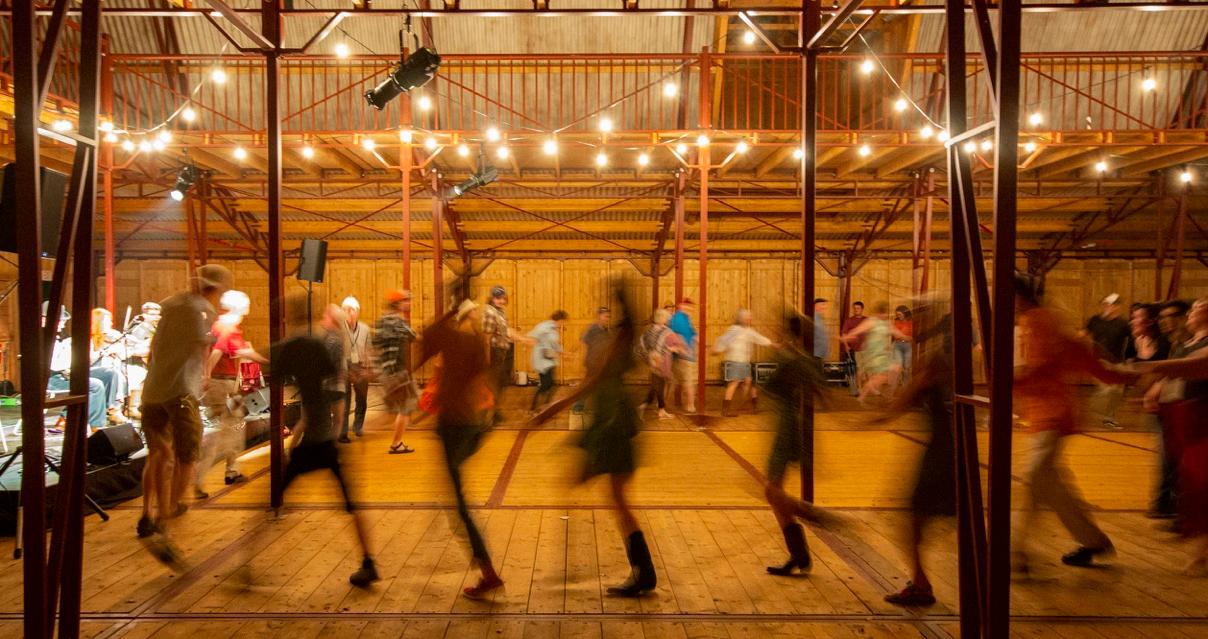
Square Dance in the Tulip Barn at FreshGrass | Bentonville, 2022
the dryer thrasher band,” Thunder Lizards. Even then, he’d entertain the audience with old-time tunes played on the harmonica he kept in a shirt pocket while the guitarist tuned. But as he got older, he realized that he was shouting about issues he cared about and turned to the music he grew up around as a better form of communication.
A short stint living in Colorado made him so “desperately homesick” that he bought a banjo and connected to the sounds of his childhood as his vocal inheritance. A/er his grandfather died, Shoulders’ grandmother started singing the same songs Shoulders was discovering. Her dementia made it hard to carry on a conversation, but she’d held onto long-silent harmonies to traditional folk and gospel songs from the 1920s and 1930s, and she and Shoulders rediscovered them together.
“I realized that the content of the
singing, the old ways that people had largely neglected or forgotten outside of this region, that they had only hung on because of poverty that was a direct result of civil war and the removal acts,” Shoulders says. “It started to be clear that my cultural heritage was not some theatrical act or some kind of hat I could put on, that it was actually a very deep, intense shadow that deserves to be illuminated.”
Shoulders traced the music he felt was generationally linked to the systemic devaluing of his homeland. “There’s something to be said for the idea of the internal colony that America’s coasts and our cities are really propped up, and their prosperity is dependent on, the exploitation and long-term destruction of the rural interior,” he says.
Those same systems of oppression that devalued humanity directly impacted the creation of
country music. Shoulders’ songs — which combine the ferocity and euphoria of punk music with country music’s characters and melodies — comprise almost an anthropological project designed to reorient folk and country music history and center people mistreated by this country’s complex economic and social systems.
“When I started to place what I had inherited vocally within the context of what it means to be Southern, it suddenly took on a much more urgent meaning,” he says.
“That is also part of my responsibility within this music is to make sure that the pain that I saw, I guess the pain that I felt … that I didn’t shy away from that pain.”
Shoulders’ career took o0 during the pandemic, fueled by a viral Western AF video of his song “Rather Low,” an increased interest in cultural history, and fans’ long hours free for discovering music online.
Freshly back on the road in 2021, he was confronted with rapid--re snapshots of communities devastated by drought, broken economies, and poverty, reminding him of the su0ering he knew from his home state. To process it all, he started writing the songs that comprise his 2023 album, All Bad, including “Won’t Fence Us In.”
“I wrote that song from the front seat of the van,” he says, “just watching the terrible things go by and aware that people needed the medicine, a way to yell it back, to embody their rage and grief.”
WILLI CARLISLE
Willi Carlisle started his music career in Illinois screaming punk lyrics in grungy bars frequented by out-of-work Rust Belt workers whose angst fueled his own. But he became
disenfranchised with the pain of constant anger. Drawn in by the pure human connection he felt at the square dances where he -rst heard folk music, he moved to the Ozarks in 2011, seeking to learn from the music traditions there.
For him, Arkansas folk music (which he dubs the “heirloom tomatoes” of American music) contains the quintessential combination of top-notch material performed at high levels. This “beautiful, cultural ephemera” is made all the more precious because, as Carlisle puts it, “it’s not a performance, it is a society. That, to me, felt so much better.”
Carlisle spent his formative folk music years immersed in the oldtime and -ddle traditions in Fayetteville. As his career has taken o0, he’s constantly recon-gured how to make music that honors the folkways he admires but is relevant for contemporary audiences.
“The folk song was about the life of human beings whose story wouldn’t be told otherwise,” Carlisle says. “It is also, at its best, a way that people keep in touch with cultural traditions that have not proven to be monetarily advantageous, but still maintain their beauty and worthiness and still deliver joy to the people that participate in them.”
For Carlisle, these living traditions act as antidote to a disconnected modern society: “If you put Ozark old-time music against Mario Kart, I guarantee you more people in the Ozarks have played Mario Kart than have heard Ozark traditional music. You lose the battle. You’re demanding the impossible,” he says. But the -ght is essential anyway. “This is how you do spiritual warfare against the total captivity of your minds and the totally determined nature of your life by civil society.”
On his latest album, Critterland,
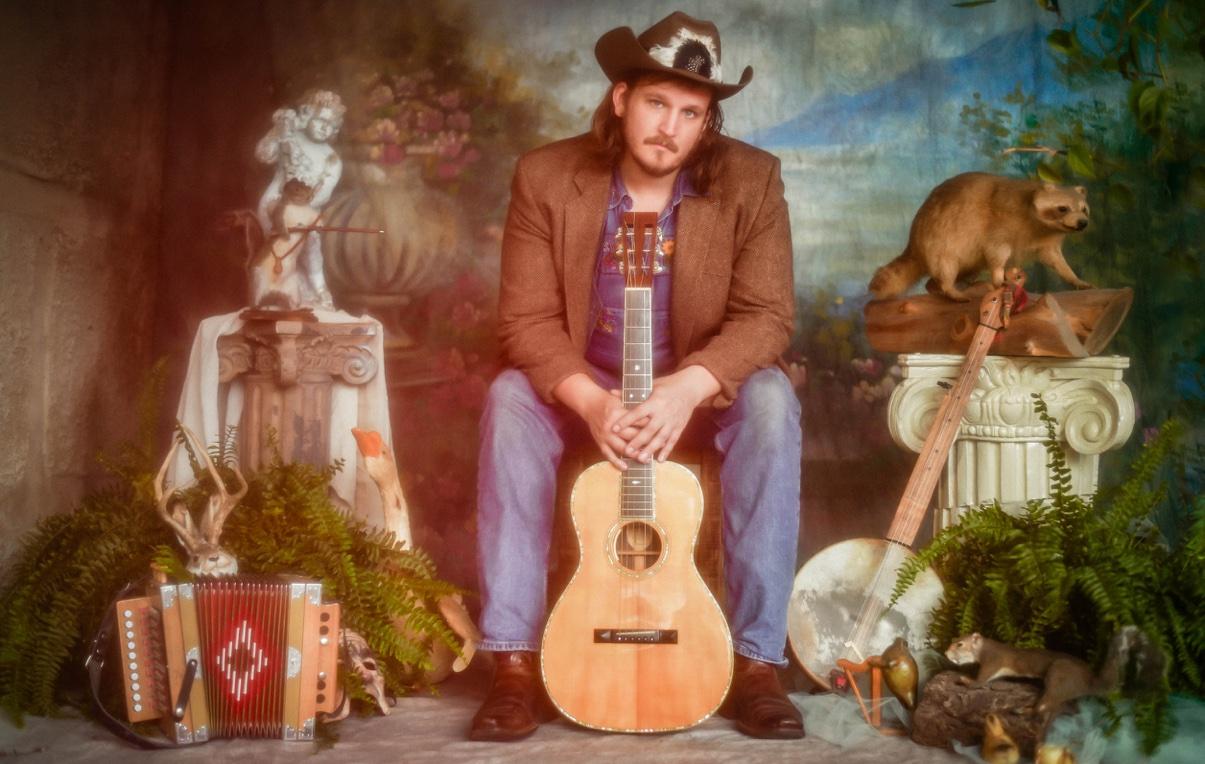
Willi Carlisle
Jude Brothers
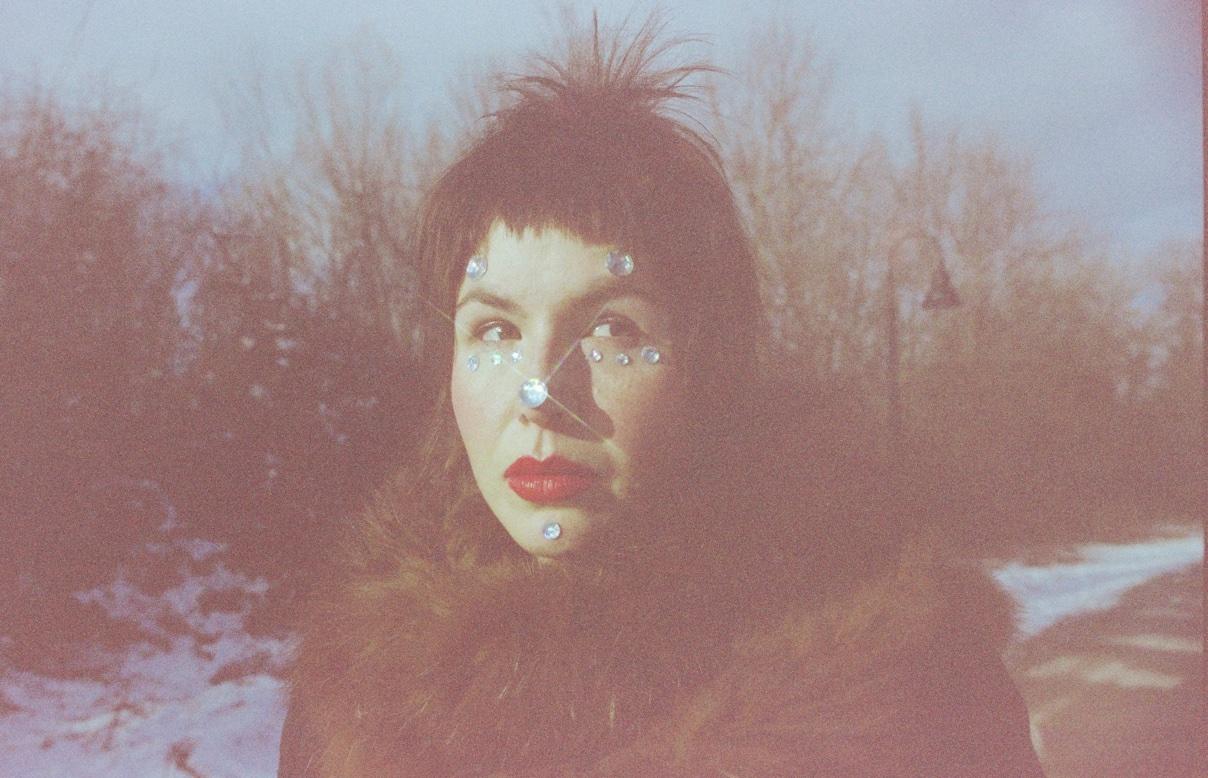
which came out in January on Signature Sounds Recordings, Carlisle takes on cultural and familial generational trauma, spinning cleverly worded tales alongside folky banjo, 1at- and -nger-picked guitar, pedal steel, and button-box accordion. Carlisle contemplates how and what we inherit with “The Arrangements,” as he plans for the funeral of an imagined, troubled father. On “The Great Depression,” he spins an acoustic Dust Bowl ballad into a 21st-century allegory. He conjures the desperation and beauty in a love a0air that runs its course through drug addiction in “When the Pills Wear O0.” And he skewers capitalism-fueled greed in “The Money Grows on Trees,” a sevenminute talking blues tirade recorded during a storm and based on the true story of an Arkansas drug dealer and the corrupt cop who controlled his livelihood.
As a quasi-outsider to the region,
Carlisle considers himself a revivalist. He sought out old and obscure music for the sake of knowing it and the feeling of connection to something bigger.
Lately, Arkansas -ddler Pete Howard, whom Carlisle met in his -rst jam circle in the state, noticed a younger generation voraciously consuming the old traditions, too. “I think there’s more impetus happening with a generation of people that are really learning it in a serious fashion,” Howard says. “They’re seeing how these traditions are connected, and they’re staying up late not to just sing their own songs, but to share songs back and forth and to share -ddle tunes back and forth.”
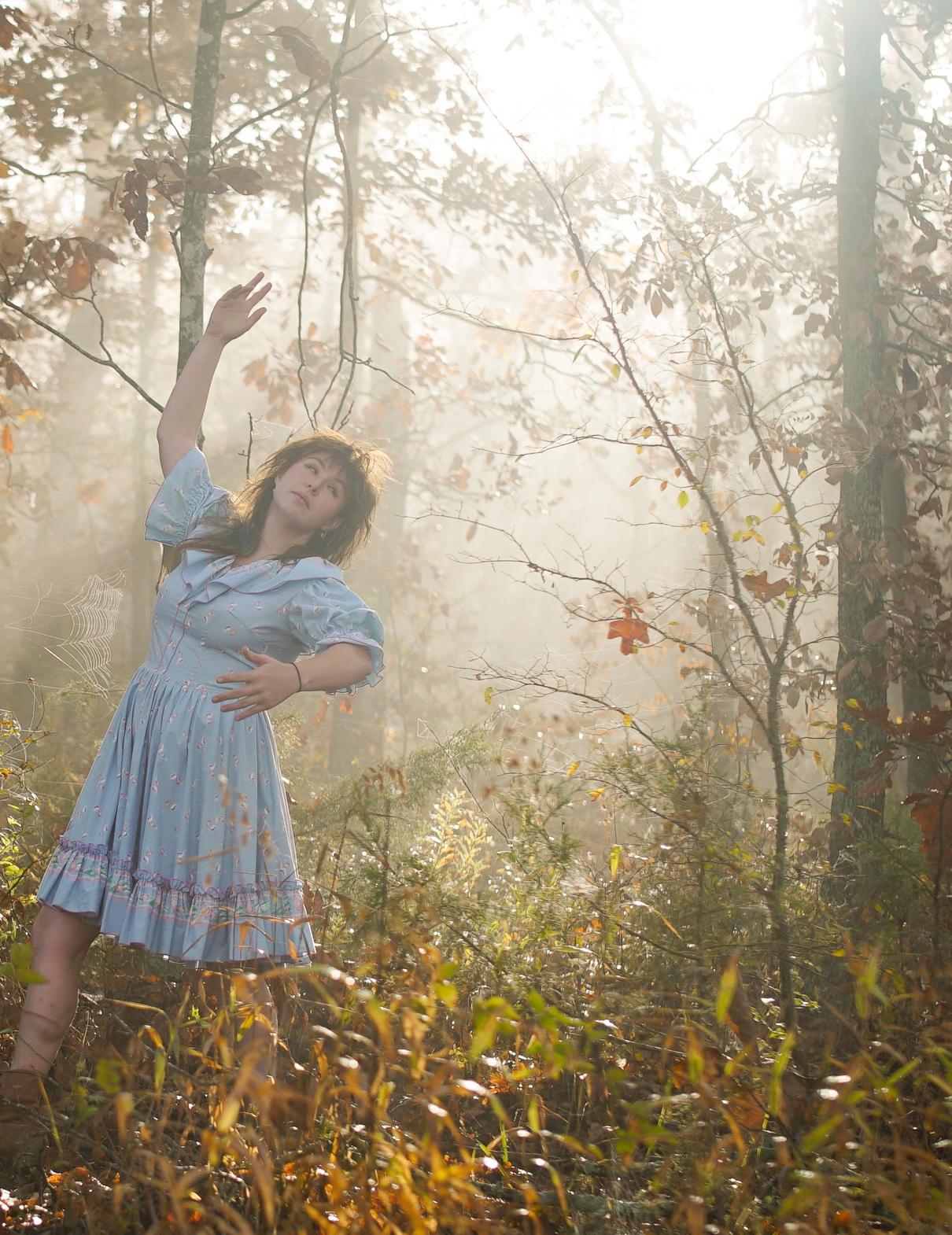
JUDE BROTHERS
Arkansas’ deep folk traditions felt as much a part of the landscape as the
mountains and trees to Jude Brothers growing up. But like many overlooked, misunderstood places, their upbringing in Springville and Fayetteville bore little resemblance to stereotype: “I think people o/en want this 1attened experience in the idyllic hillbilly narrative,” they say. “People are o/en disappointed when I tell them I grew up listening to Kate Bush and smoking doobies in the backyard at my parents’ house in Springdale, Arkansas, downwind of the Tyson chicken factory and upstream of the pig farm.”
Seeing Arkansas in “technicolor” requires a nuanced understanding, Brothers says, one that recognizes a state long stereotyped and blamed for political and social circumstances foisted upon it.
Dualities dictate their song titles, like “thank you for letting me go / thank you for letting me grow!”, and o4cial artist handle jud.jude.judith (which o0ers multiple names to embrace their “1uid and manifold identity”).
“Since I was very small, I’ve felt drawn to in-between places. I’ve been drawn to contradictions,” they say. “I have a tendency for ruminating; it is one of my top activities. And in my ruminating, I o/en -nd that the longer I chew on something and I think it over, the more o/en that conclusion comes to accepting some sort of contradiction.”
Featuring their bright, haunting voice accompanied by harp, Brothers’ -rst full album, 2023’s render tender / blunder sunder, is a profound processing of a lifealtering breakup and reclamation of their own voice. Finding peace within contradiction by uniting two seemingly disparate concepts, they start with a small distinction: “doubt/ doubt!” a swelling, almost celestial consideration of insecurities from an all-consuming relationship. They build to a sense of resolution in the airy, 1owing “practicing silence/ looking for water!” and close with
subtle joy on “last song/upper galinas!”
“O/entimes the most honest songwriting that I’m most proud of comes from — I’ll get a phrase, maybe it’s a line or two lines stuck in my head,” Brothers says. “Eventually I’ll sit down with the harp, and I’ll think about whatever those two sentences were, and then I’ll build a song around that feeling or that concept and -gure out how that story wants to be told.”
While many folk musicians choose to accompany themselves on guitar or banjo, Brothers plays their truest music on a harp named Lady Amalthea. They dabbled in guitar for years, but when they found a dilapidated Celtic harp in a music school closet, they felt a deep connection. Exploring drumming from West Africa and folk songs from East Africa and Ireland while also listening to Lucinda Williams on repeat, they cobbled together music that sounded remarkably like the
many disparate traditions that comprise Arkansas folk music.
“What folk music feels like to me is music that attempts to stay as close to our own humanity as possible … folk music is music by folks and for folks,” Brothers says.
BONNIE MONTGOMERY
Searcy, Arkansas, where country singer Bonnie Montgomery grew up, nestles in the land where the Ozark Mountains meet the Arkansas Delta. During her childhood, movies and dancing were censored, and it’s a dry county to this day. But downtown, Montgomery’s grandparents’ record store, Quattlebaum Music, became a community center and hangout for Montgomery — “a very Mayberry vibe,” as she describes it — and o0ered her -rst introduction to
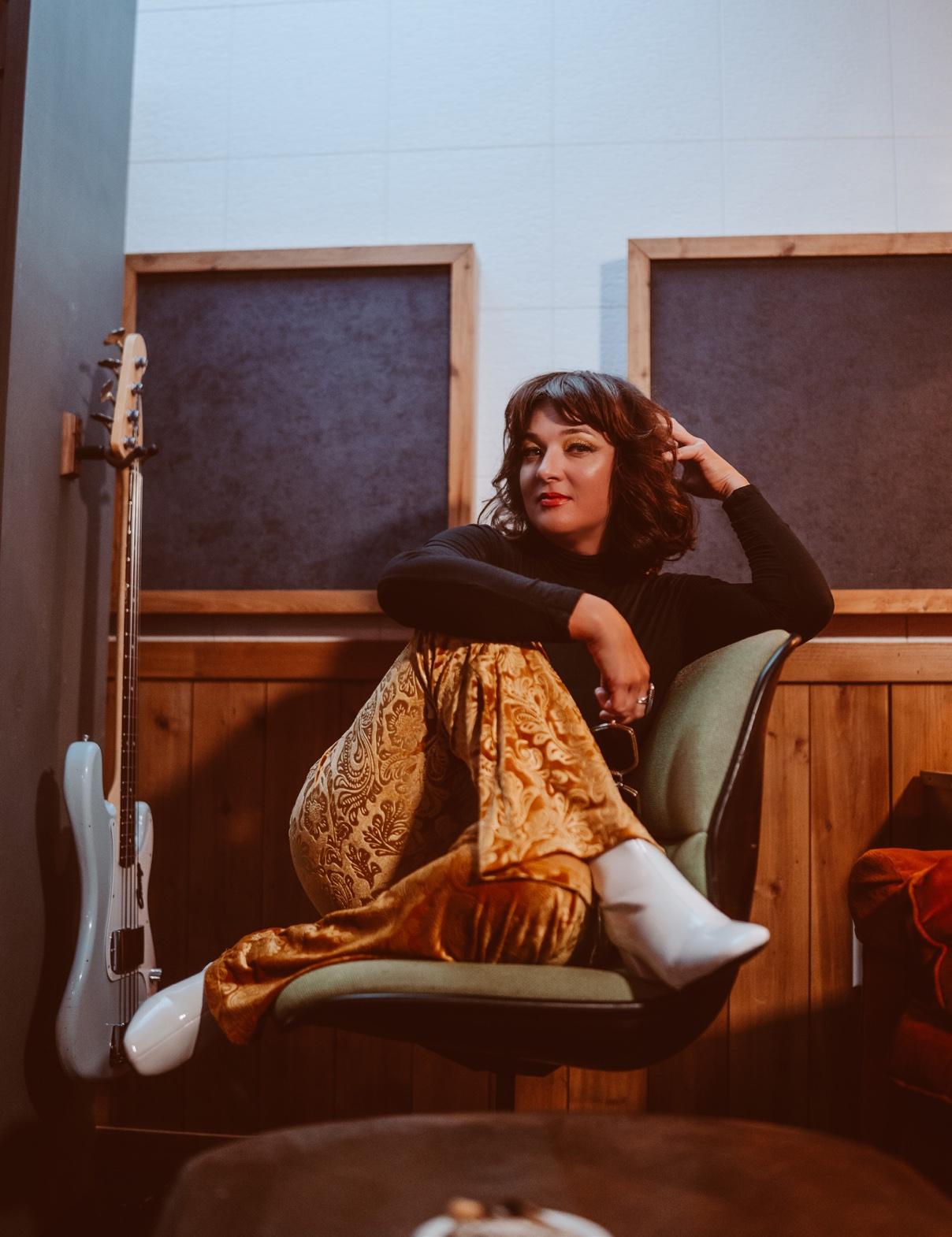
Bonnie Montgomery
musical instruments.
Montgomery’s grandparents -lled their home with country classics, allowing themselves vulnerability and joy at singalongs on every holiday. They started Montgomery singing in church at age 3 with a Pignose amp. In high school, she fell in love with orchestral music. Intent on a music career, she studied classical music and opera in college. But like many of her fellow musicians, she didn’t appreciate Arkansas until she le/. While teaching English in China a/er college in the early 2000s, Montgomery started writing.
“I started to realize the gravity of what I had around me all the time as a child. I also started having emotions that I couldn’t express anywhere else but songs,” she says.
Montgomery’s early work includes Boat Songs 2002, an album inspired by her freighter trip to China; Billy
Blythe, a folk opera about Bill Clinton’s youth; and her 2014 selftitled LP debut. At the heart of Bonnie Montgomery is an old-school country opus called “Joy,” a song about her larger-than-life grandfather, Ivan. In addition to co-owning the music store, he was a cattle auctioneer and a bail bondsman. He was friendly with the cops, brought Dolly Parton and Porter Wagoner to the county fair, and ran a pawn shop called Sweet Ivan’s Stop ‘N Swap that had a collection of pedal steel guitars so coveted that players from across the country came to the auction a/er he died.
“He was a character, but he didn’t give a shit what anybody thought about him,” Montgomery says of her grandfather. “He would tell me, ‘Anything in this world you want to be, you can.’”
In his spirit, Montgomery’s latest album, 2023’s River, spans immense musical range. On
“Modern Cowgirl’s Dream,” a gleeful honky-tonk romp, she unapologetically celebrates the kind of fun she could only dream of growing up. On “I Was Fine,” she admonishes an ex with an irresistibly cheeky steel guitar hook. Adding steel guitar whine to strings in “Half Drunk,” written when her father was dying, she dwells in the in-between moments of mourning. And on “Seventeen,” sung from the perspective of a childhood friend who drowned on a swimming trip, she evokes rushing water with bongos and violin.
“I’ve always thought Arkansas was the most vibrant place,” she says. “There’s a freedom here for me that is really exciting and invigorating and it’s not boxed into a genre. … It starts with extremely down-to-earth tendencies — almost to a fault — and a friendliness and a curiosity about the world.” 2
THE POWER OF ‘COMMITMENT’
Bobby Darin’s unexpected journey to folk music
by Michael Elliott
‘At the 4rossroads,0 the opening track on the 1967 album
Bobby Darin Sings Doctor Dolittle, finds the once charttopping superstar vocalizing his uncertainty to the world: “So I stand / at the crossroads of life / This way or that way / Well, which shall I go?” By the end of the song, he reaches the conclusion, “Only my heart can know.” At the time, Darin was singing the words of librettist Leslie Bricusse, but the sentiment could have flowed straight from his pen.
Dolittle was a passion project for Darin. But for his longtime label, Atlantic Records, it was just the latest unexpected and confusing turn in a career that kept them
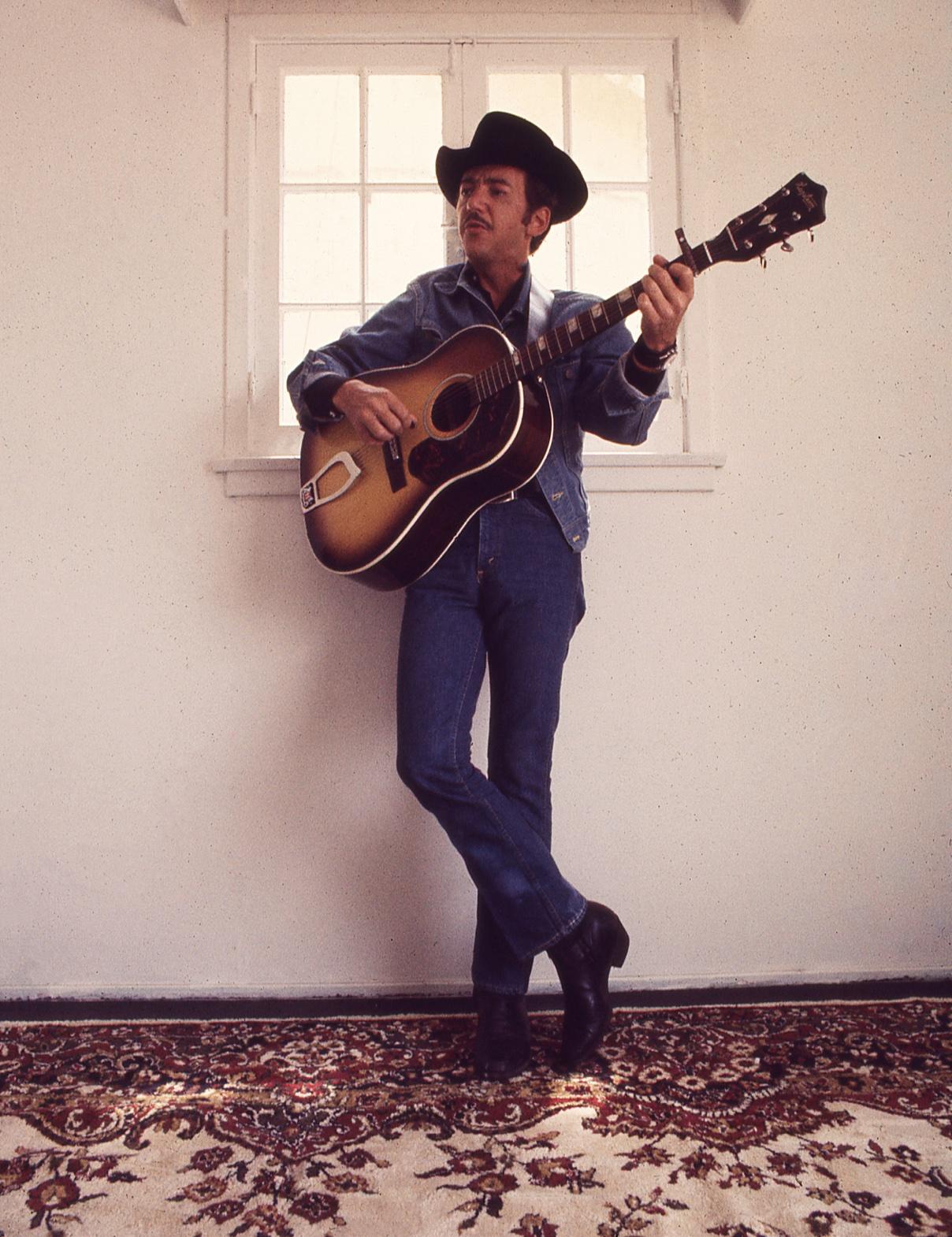
guessing on how to promote Darin’s music and to whom. This time, it was an album of songs that appeared to be aimed at children from a movie that famously bombed — not the sort of thing at the center of the cultural zeitgeist during the Summer of Love. Reeling from such a commercial failure while in the midst of a divorce from actress Sandra Dee, Darin began to take notice of what was happening around him. Though he’d always been an activist (he’d taken part in a 1965 civil rights march to Alabama and openly opposed the war in Vietnam), he decided to pour himself more deeply into causes such as racial equality and, for a moment, considered politics. By the late ’60s, he’d started his own label,
Direction Records, in order to make the music he wanted — music that reflected the times and his outlook on them.
Now, 55 years later, Direction Records is relaunching, starting with a re-release of Darin’s 1969 foray into folk, Commitment, that came out last December. It took a national tragedy and a devastating familial revelation for Darin to commit to such a musical and personal transformation, but Commitment reveals an artist willing to immerse himself fully into the folk music idiom. Direction Records plans more archival releases and projects in 2024, with the hope that Darin’s unprecedented career, especially his contribution to the folk world, is given the re-evaluation it deserves.
The Chameleon
Every few years, Darin seemed to change direction musically. The East Harlem-born belter started out in 1958 as a rockin’ and rollin’ teen idol with songs like “Splish Splash,” “Queen of the Hop,” and “Dream Lover.” But by the end of the decade, he was already switching gears. As his son Dodd Darin recalls, “[Atlantic Records president] Ahmet Ertegun thought he was insane when my dad said, ‘I now want to do an album of standards.’” Ertegun told Darin to stick with what brought him to the party: Be a pop star.
But Darin was unmovable, insisting that he use his royalties from “Splish Splash” and “Dream Lover” to -nance the album himself. The result was 1959’s That’s All,
which included such careerde-ning moments as his reimagining of Bertolt Brecht’s “Mack the Knife” from The Threepenny Opera (which won the Grammy for Record of the Year at the same ceremony where he was awarded Best New Artist) and “Beyond the Sea,” which hit No. 6 on the Billboard Hot 100 chart. That’s All is regarded by many as one of the most sudden and important transitions in pop history, and it was only Darin’s second album.
Such a transformation would be noteworthy for any career, but for Darin, it was just another style he wanted to explore. He started playing the lucrative nightclub circuit in 1959, the same year “Mack the Knife” hit, appearing at the Flamingo in Las Vegas, New York’s Copacabana, and similar halls. It
was on this circuit that he honed his cra/, becoming not only a singer, but an entertainer. It was a skill he used to transition to television, hosting his own variety show by 1961 at the age of 25. Just three years later, he received an Oscar nomination for Best Supporting Actor for his role of Cpl. Jim Tompkins in the wartime dramedy Captain Newman, MD. He had already won a Golden Globe in 1962 for Most Promising Newcomer in Come September, a -lm that also included 18-year-old Sandra Dee. They married shortly a/er production on the movie wrapped. In 1963, the folk music revival was in full swing, and Darin had become fascinated by its strippeddown arrangements and bold, reallife storytelling. He recorded the album Golden Folk Hits and started
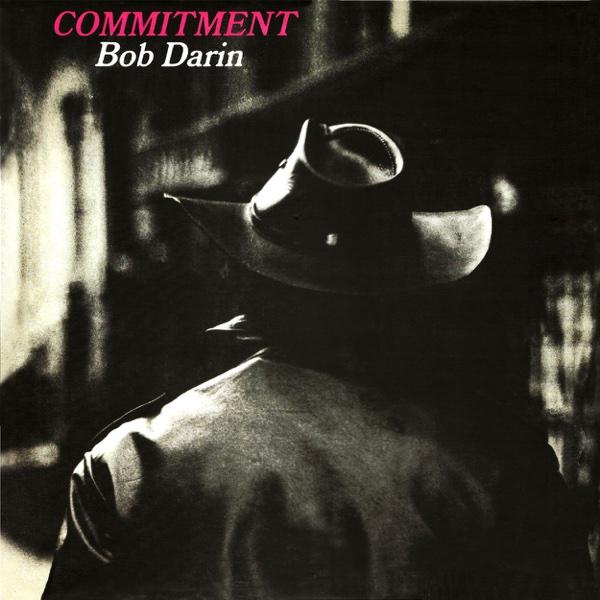
Original 1969 cover of Commitment
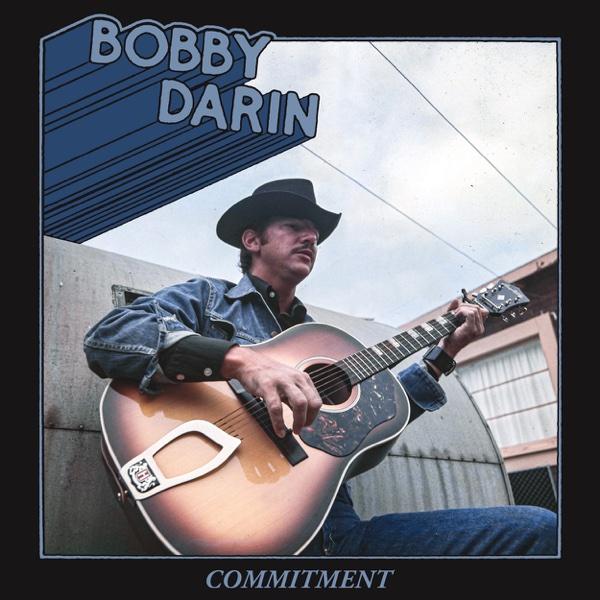
2023 reissue of Commitment
working a folk set into his nightclub act, hiring a young guitarist named Jim McGuinn away from the Chad Mitchell Trio. (McGuinn soon changed his -rst name to Roger and went on to form The Byrds). Darin o0ered to double McGuinn’s salary, even letting him share the spotlight to sing harmony during the folk sets. Darin became a mentor to McGuinn, advising him to not just stick to one form of music, that if he wanted to start with rock and roll and strike it big, he could do anything he wanted a/er that.
Revelations and Revolutions
Although Darin pivoted between his nightclub act and movies and television throughout the 1960s, his love of folk music never waned. In 1966, He had a Top 10 hit with Tim
Hardin’s evergreen “If I Were a Carpenter,” cementing his credibility in the folk community. A couple of years later, he began campaigning for Robert F. Kennedy’s presidential run. Kennedy urged Darin to run for political o4ce himself, and Darin seriously considered it. A/er months of campaigning, Darin was with Kennedy on June 3, 1968, discussing their political futures. Just a/er midnight on June 5, Kennedy was assassinated at the Ambassador Hotel in Los Angeles.
“My dad was a bright guy,” Dodd Darin says. “He cared about the issues. I mean, people won’t associate him with the March on Washington, but he was there. He had his heart in the right place. … He never forgot that he was from the streets of New York. He always
related to the underdog.”
It was during this consideration of running for o4ce that Darin received the news that would change his life: At 35 years old, he learned that Nina, the woman he thought was his sister his entire life, was actually his biological mother. She revealed the news to Darin to keep someone else from discovering it in the glare of a political spotlight. According to Dodd, this knowledge was one of the driving factors in his father’s stark musical shi/
“Their fear was if he went down the path of politics,” Dodd explains, “Some gumshoe journalist would dig up birth records and he would learn this. So, Nina had to tell him directly. And that was obviously very uncomfortable and painful. He was devastated.”
Polly, the woman who Darin
“My dad was a bright guy. He cared about the issues. I mean, people won’t associate him with the March on Washington, but he was there. He had his heart in the right place. … He never forgot that he was from the streets of New York. He always related to the underdog.”
Dodd Darin
thought was his mother, an old vaudevillian who had inspired him to perform to begin with, was his grandmother. “[Polly] was the reason he had con-dence,” Dodd says. “Because she saw his talent and encouraged him. My dad thought the world of Polly. He never really recovered from that.”
Darin never knew his biological father, as Nina never revealed his identity. “The man that my dad related to as a father, and the man who worked two jobs to keep them fed, was Charlie Ma-a,” Dodd continues. “I know it’s a funny play on words. But Ma-a was really his last name.”
The culmination of these personal revelations, in addition to the tragedy of Kennedy’s assassination, le/ Darin, according to his son, “in a tailspin.” He felt it was time to reset his priorities.
New Directions
Appearing on daytime television talk show The Mike Douglas Show in July 1970, Darin re1ected on his mindset over the last two years.
“A/er Senator Bobby Kennedy was assassinated, a whole slew of things happened inside me that I felt needed some correcting,” he explained. “The changes that I felt were necessary could only come from within. I had to do something about the way I was living, my approach to things, my values in general. And it took me about eight or nine or 10 months to realize that everything I was surrounded by was alienating me from myself.”
Looking in his closet, Darin was disgusted by the excess he found: There were 90 pairs of shoes, 85 suits, and 12-15 tuxedos. There were the multiple houses and cars. In
stark contrast to his lifestyle, Darin saw the inequality around him. Considering this, he realized he couldn’t sing the old hits anymore; he needed to make a change. “I found that if I hadn’t,” he told Douglas. “I would have been destroyed spiritually.”
On 1968’s Born Walden Robert Cassotto, Darin had written, produced, and arranged all the songs; songs with themes that re1ected what he was witnessing around him and on the evening news. He was singing for change and concern about the environment as he railed against greed, racism, and police brutality. On “In Memoriam,” he also paid tribute to Kennedy. The in1uence of The Beatles, The Rolling Stones, and Bob Dylan become more obvious in his work. He jettisoned the tuxedos in favor of denim and buckskin; he
even said goodbye to his hairpiece. “I just sold everything,” Darin admitted to Douglas. “Cars, electronic equipment, boats, houses, you name it, I just got rid of it.” He purchased an 18-foot trailer and placed it on Pfei0er Beach in Big Sur, California.
“It’s God’s country,” Dodd says. “Beautiful ocean, mountainous area. Just solitude. It was some of the best times I had with him. You know, just father-son time. He wasn’t consumed by career crap. He had friends that owned a huge ranch up there. They let him put that trailer on [their land].”
Dodd was only around 8 years old, but he remembers those days well. “We would get up and chop wood. We would do chores around the farm. We’d play catch.” Evenings were spent hanging out with a small group of friends. Darin kept a tape
recorder close by, where he would record ideas for lyrics to work on later. Some of those ideas would eventually make their way to what became Commitment, his 1969 album that most explicitly revealed his transition into a folk-rock troubadour.
Recorded for his own label, Direction Records, Commitment leaned into the funky, strippeddown arrangements Darin -rst 1irted with on Born Walden Robert Cassotto. His politics and worldview came into even clearer focus with the lyrics. Dylan’s in1uence is evident both in the choice to go by “Bob” Darin on the cover and in songs like the opening “Me and Mr. Hohner” and “Distractions (Part 1).”
On “Hohner,” Darin’s nightclub entertainer persona gives way to an almost detached, weary, and resigned observer of everyday
injustices with a surprisingly funky beat and delivery that predates hiphop by almost half a decade.
“Distractions” combines the personal and political as Darin’s concerns move from Vietnam to a middle-aged woman who asks for his autograph while admitting, “I used to hate you.” On other songs, such as “Sausalito (The Governor’s Song),” Darin reveals a pleading vulnerability, while “Jive” re1ects the laid-back vibe he’d cultivated at Big Sur.
“This era of Bobby’s music is lesser known and I think a really good part of telling the Bobby Darin story,” explains Amy Abrams, manager of Darin’s estate, who helped relaunch Direction Records.
“This is his foray into folk music, where he was writing the songs and he switched over to guitar. This music is really representative of the
unknown Bobby Darin story we’re looking to share with people right now.”
Both the digital and physical re-releases of Commitment come with four bonus tracks and new artwork. Originally a stark, blackand-white shot of a hatted Darin, the new cover has the folk singer facing forward, guitar in hand, hat on head. Also, the “Bob Darin” that adorned the original release is now “Bobby Darin.”
“That was an issue of great discussion among us,” Abrams says. “But he had switched back to Bobby before his death and was using Bobby as his name for the remainder of his career. So we felt that was a choice he made for us.”
‘Play the Hits’
Contrary to what some critics charged at the time, Born Walden Robert Cassotto and Commitment were not attempts to cash in on the folk-rock trend or to cater to the Woodstock generation. Instead,
Darin followed his muse — something he’d always done.
“One of the things that worked against my dad, historically, is his jumping around in styles,” Dodd admits. “Critics, even fans, liked to put him in a category. ‘He’s an R&B guy. He’s a soul guy. He’s, you know, whatever.’ And my dad jumped around a lot, and I think that sort of hurt his musical gravitas, historically. But when Bob Dylan went from acoustic guitar to electric, it was like sacrilegious! … It’s an evolution. My dad broke through at 22 years old and he died at 37. So, he just did normal evolving as an artist like every other artist, but because he did it in a condensed time, I think he took extra 1ak.”
By doubling down on his folk obsession with these records, Darin’s career took a hit. Neither Born Walden Robert Cassotto nor Commitment charted at all. Between the pair, only the -rst album’s “Long Line Rider” entered the Billboard Hot 100, peaking at No. 79. Nevertheless, he took his love of this music to
Vegas. He was so committed that, for a while, he refused to sing anything but his new material. “They were paying him $40,000 a week in 196970 money, and people were walking out,” Dodd says. “They wanted Bobby Darin the showman. They wanted the tuxedo.”
Elvis Presley, a longtime friend, was in the audience at one of those shows. He met with Darin a/erward and urged him to play the hits, to give the people what they want. It caused Darin to re1ect, realizing that the music he loved and the entertainer that made people fall in love with him to begin with could co-exist a/er all.
“What I’ve come to know is … I need that kind of existence, but I also need to perform,” Darin confessed on Douglas’ show. “Until I went away and took that time, I did not know that I needed to perform. So now what I’m able to do is maintain a kind of balance between a simplistic existence [and the stage].”
The tuxedo returned, as did the hairpiece. But halfway through the
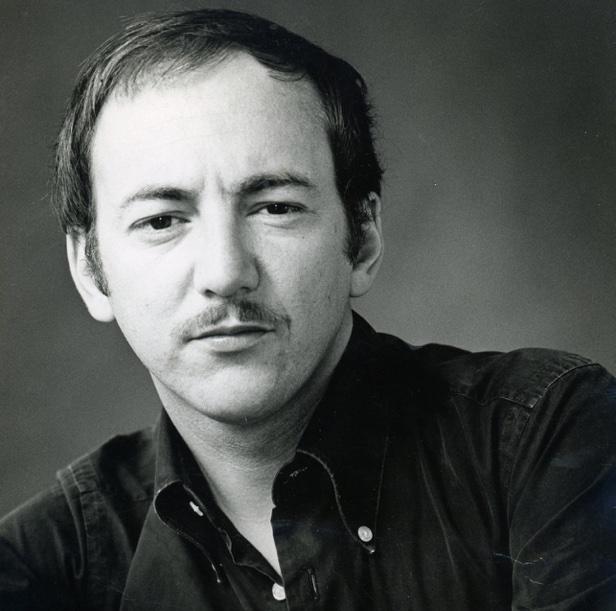
show, he’d self-e0acingly remove both and strip it back to songs like “Midnight Special.”
“At the end of his life, I feel he -nally found a balance both in his daily life and on a 90-minute nightclub stage,” Dodd considers.
“The audience would hear ‘Mack the Knife’, of course. They’d hear ‘Beyond the Sea.’ Sometimes ‘Dream Lover,’ but then he also would do [his original] ‘Simple Song of Freedom.’
He’d also cover artists of the day — James Taylor, Laura Nyro. It was a mixture of music, and I think had he lived he just would have gotten better and better.”
Instead, an illness that had plagued Darin for years -nally took its toll. As a child, he su0ered from recurring bouts of rheumatic fever, causing him to endure a weak heart throughout his life. He died following emergency open heart surgery in December 1973 at just 37 years old.
In the years since, Darin’s stature as a true musical icon has not diminished. He received a star on the Hollywood Walk of Fame, was
inducted into both the Songwriters Hall of Fame and the Rock and Roll Hall of Fame, and received a Grammy Lifetime Achievement Award, which his son Dodd accepted on his behalf.
Now, with the relaunch of Direction Records, his story will continue, with more of Darin’s work in the vaults. “Certainly, there will be more physical releases of albums we’ve already released [digitally],” Abrams says, “but there are a couple of things yet to come that have not been heard.”
While it confounded labels and fans in his time, Darin’s genrehopping and chameleon-like persona is what ultimately has maintained his popularity for more than 65 years since his -rst hits. It’s an approach now appreciated by one unlikely kindred spirit, Neil Young, who confessed to writer James Henke in a 1988 Rolling Stone interview, “I used to be pissed o0 at Bobby Darin because he changed styles so much. Now I look at him and think he was a fucking genius.” 2
FAMILY MATTERS
Siblings and musical collaborators
The Bacon Brothers share a passion for storytelling by
Laura Scholz

The Bacon Brothers are No Depression’s guest editors for Spring 2024
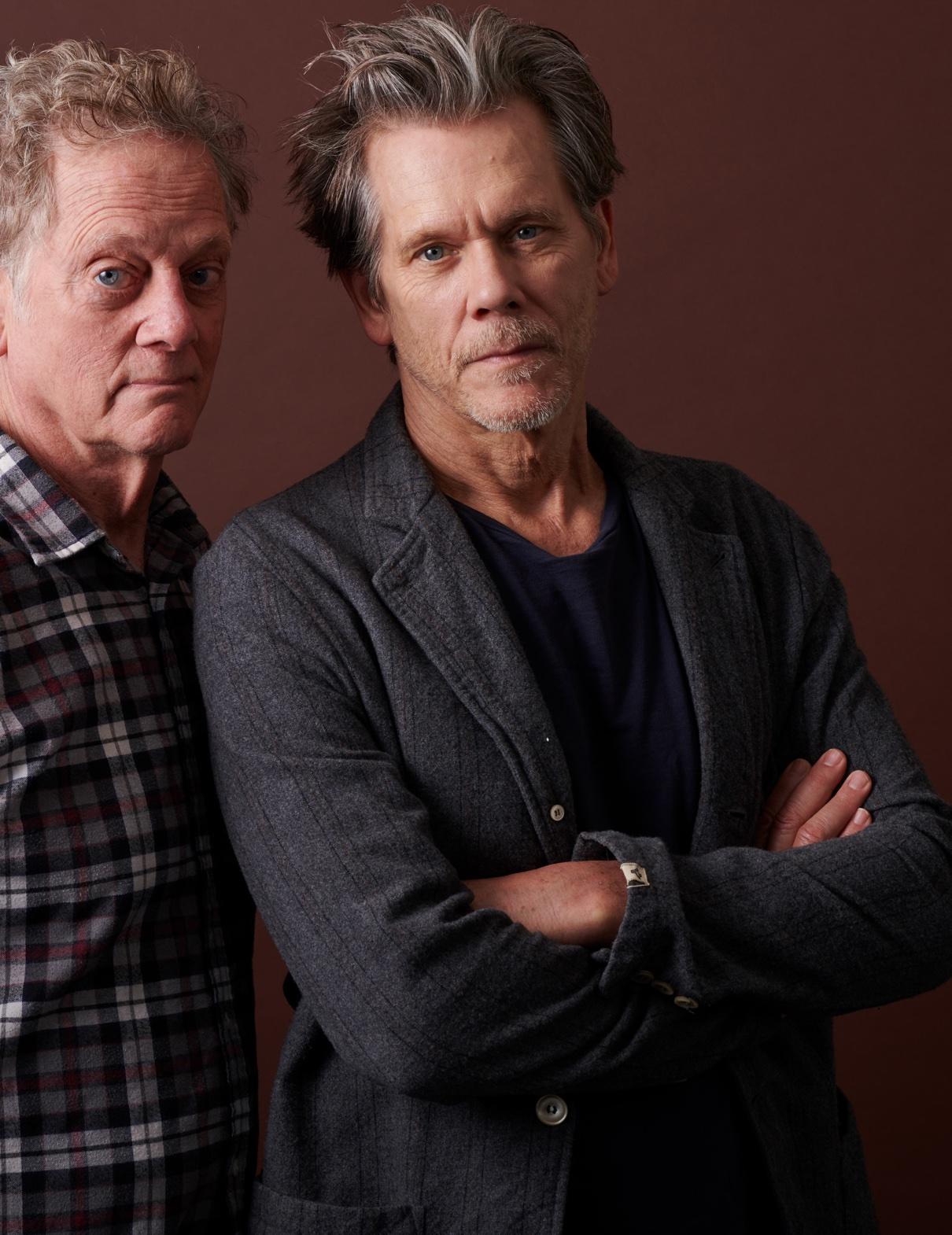
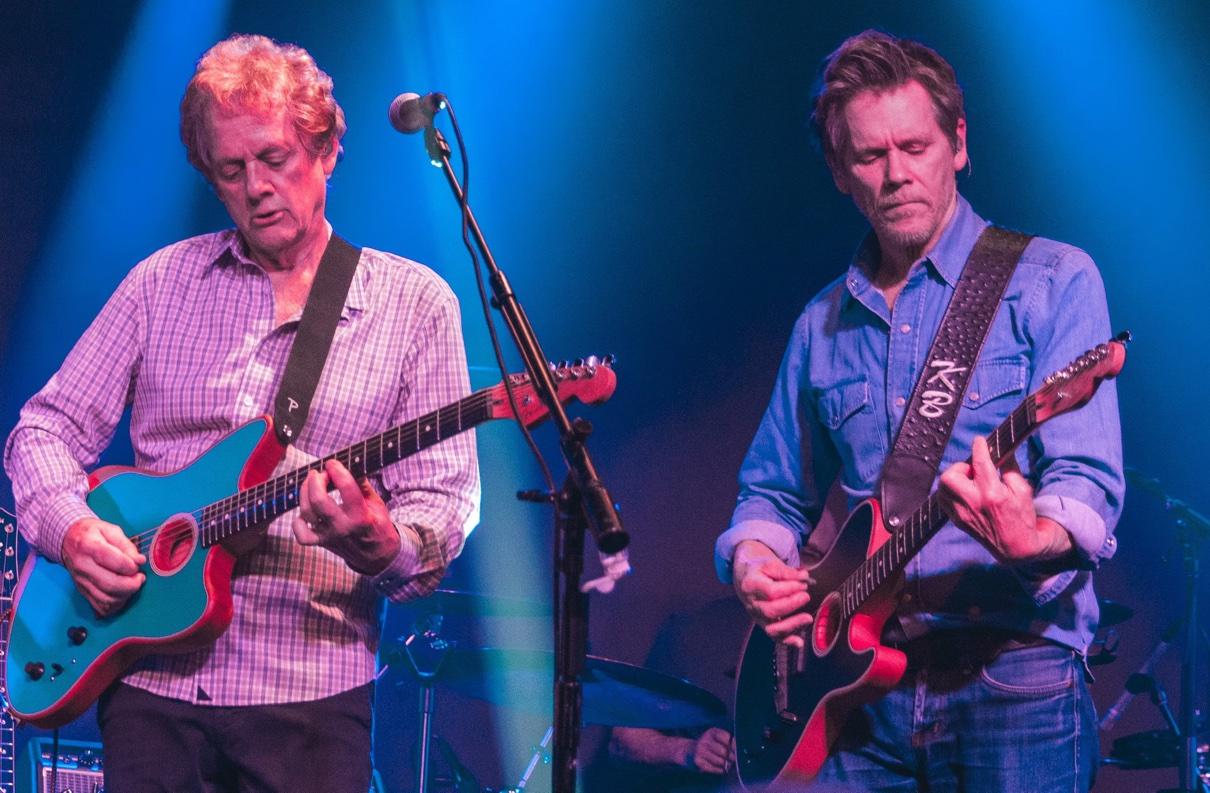
Mi4hael and 2evin Bacon have been playing music together for their entire lives. The acclaimed creative duo — older brother Michael is an Emmy award-winning -lm and television composer; younger brother Kevin is an A-list Hollywood actor and Golden Globe and Screen Actors Guild award-winner — have been writing and performing songs as The Bacon Brothers for nearly 30 years.
Their 12th studio release, the rollicking, yet re1ective Ballad of the Brothers, comes out April 19.
According to Michael, the title track “Ballad of the Brothers (The Willie Door)” — a honky-tonk-style tale about two “city slicker” brothers who bring down the house at the famed Gruene Hall in New Braunfels, Texas — is semi-autobiographical.
Two East Coast brothers hit the road in an Edsel station wagon
They &ipped a coin and they headed west to a random destination
If they saw this great big world, they’d get their lives on track
“One of the things I love about being in the band is traveling and taking everything in,” says Michael. “We end up in places you’d never be, like New Braunfels, and I love to wonder what life is like in those towns.”
Of the historic dance hall there, Michael continues, “Gruene Hall is this really idiosyncratic, historic place. … There’s no artist entrance, so you climb up some stairs and through this open window to get on stage.” The so-called “Willie Door” is named a/er legendary singersongwriter and frequent Gruene Hall
guest Willie Nelson.
As for the song’s genesis, Michael recalls, “The last time I was there, I was thinking of [me and Kevin] as two guys from Philly being in Texas, and this fantasy of two brothers who have nothing going for them and are total nerds taking a road trip and end up at Gruene Hall, and this Faustian kind of thing came to me.
“They don’t play guitars or have anything — all the sudden they transform and become these rockand-roll stars,” he says of the song’s -ctional brothers, whose moment in the spotlight mirrors the Bacons’ real-life fame.
Band of Brothers
Kevin and Michael’s transformation into professional musicians was much more gradual than the semiautobiographical version in “Ballad of the Brothers (The Willie Door).”
Initially, the Bacon brothers followed di0erent creative paths: Michael as a full-time performing musician, then a sta0 songwriter for Combine Music Publishing Co. in Nashville before becoming a composer for prestige projects such as Finding Your Roots with Henry Louis Gates Jr. on PBS; Kevin as an in-demand Hollywood actor with roles in acclaimed -lms like Footloose and Apollo 13. But they continued to make music together and o4cially formed their sibling band, The Bacon Brothers, in 1995. Kevin plays guitar, harmonica, and percussion, while Michael plays cello and guitar. The pair take turns singing and songwriting, occasionally working with co-writers, including for “Take O0 This Tattoo” and “Losing the Night” on the new record.
The co-writing process reminds Michael of his early days as a sta0
songwriter: “You can be in the thick of songwriting with one or two people you’ve never met, and they ask you really personal questions, like, ‘How do you feel in your relationship when this happens?’ and it can be an uncomfortable thing,” he says. “But when you come up with a great song at the end of the day, it’s a really good feeling; strangers are no longer strangers, and you really have a bond.”
Despite Michael having the established career in the music industry, Kevin is actually the more disciplined writer of the two. He o/en captures inspiration in the moment via voice notes on his phone but jokes, “I never label them, so sometimes I go back and run through them just to hear what’s up.”
One of those ideas resulted in “Airport Bar,” a lush track about a doomed relationship, and the -rst song Kevin wrote for the new album:
“I was walking through an airport with my bro and seeing people drinking at 9 a.m., waiting for the future,” he says. Another song, “Old Bronco,” is a tongue-in-cheek meditation on aging that took inspiration from his vintage 1969 truck.
Although Michael wrote “35 Cents,” that song is partially about his brother. It’s about “a songwriter and the person who has to live with them,” Michael explains. “A real songwriter never lets anything go; they can be walking down the street and see a sign and have an idea and stop and pull out their phone to capture it. My brother is really good at that.”
In addition to “35 Cents” and the title track, Michael penned “Let It Be Enough,” a tight harmony tune he says the brothers o/en sing as a preconcert warmup along with vocal exercises to keep their voices sharp.
Like their voices, Michael says the brothers’ songwriting and musicality have only improved with time. “When I -rst started writing songs with Kevin, he didn’t even play the guitar,” he says. “He’d sing the melody, and I’d help him turn it into chords and charts.”
Now Kevin is a pro-cient guitarist and has a recording studio in his home. The two frequently pass tracks back and forth to share notes and arrangement ideas. And while Michael takes pride in drawing out his brother’s musical nature, The Bacon Brothers’ collaborators also respect their combined impressive technique and captivating style.
“Michael has this classically trained background that he uses to really stretch the musical aspect of a composition, and Kevin has a unique way of painting pictures with lyrics to tell a story,” says Kimberly Kelly, who co-wrote “Take O0 This Tattoo” with the brothers and her husband, fellow Nashville-based songwriter Brett Tyler.
“I’m a big fan of their writing and
how … stylistically across the whole spectrum the music is,” says vocalist and violinist Brian Fitzgerald, who has recorded tracks with The Bacon Brothers since 2019 and is featured on “Take O0 This Tattoo” and “Ballad of the Brothers (Willie Door)” on the new album. He’s also played a few live gigs with them over the past couple of years and notes that “the band is super tight with truly killer players, too.”
Business and Pleasure
Michael says that growing up, the close-knit Bacon family o/en played and listened to music together. His -rst family musical collaboration was a jug-style band with his sister, Hilda. The family listened to a wide range of music, from radio broadcasts of the Philadelphia Symphony Orchestra to 1970s-era singer-songwriters like Jim Croce and James Taylor to rock bands like Led Zeppelin and local Philly soul music.
These varied genres in1uence the
duo’s unique sound, an amalgamation of folk, rock, soul, and country they call “forosoco” — also the title of their 1997 debut album.
Like that -rst LP, Ballad of the Brothers re1ects those diverse in1uences, from the folk-country sound of the title track to the Motown-inspired soul of “Put Your Hand Up” to the alt-rock edge of “Take O0 This Tattoo.” The latter was produced by Kevin’s son, Travis, a composer and member of industrial band Contracult Collective.
Originally written as a country tune, Kevin says they felt the track “could be a rocker,” and Travis infused it with his “very modern electronic sensibility.” The song also features a -ddle solo — an unusual choice for a rock song, and another example of the brothers’ energetic, genre-defying sound. As Fitzgerald, who played the solo on the record, says, “I decided to lean into a gritty stankface kind of -ddle thing, and the live audience reaction to the song has been awesome.”
Touring can be di4cult for two
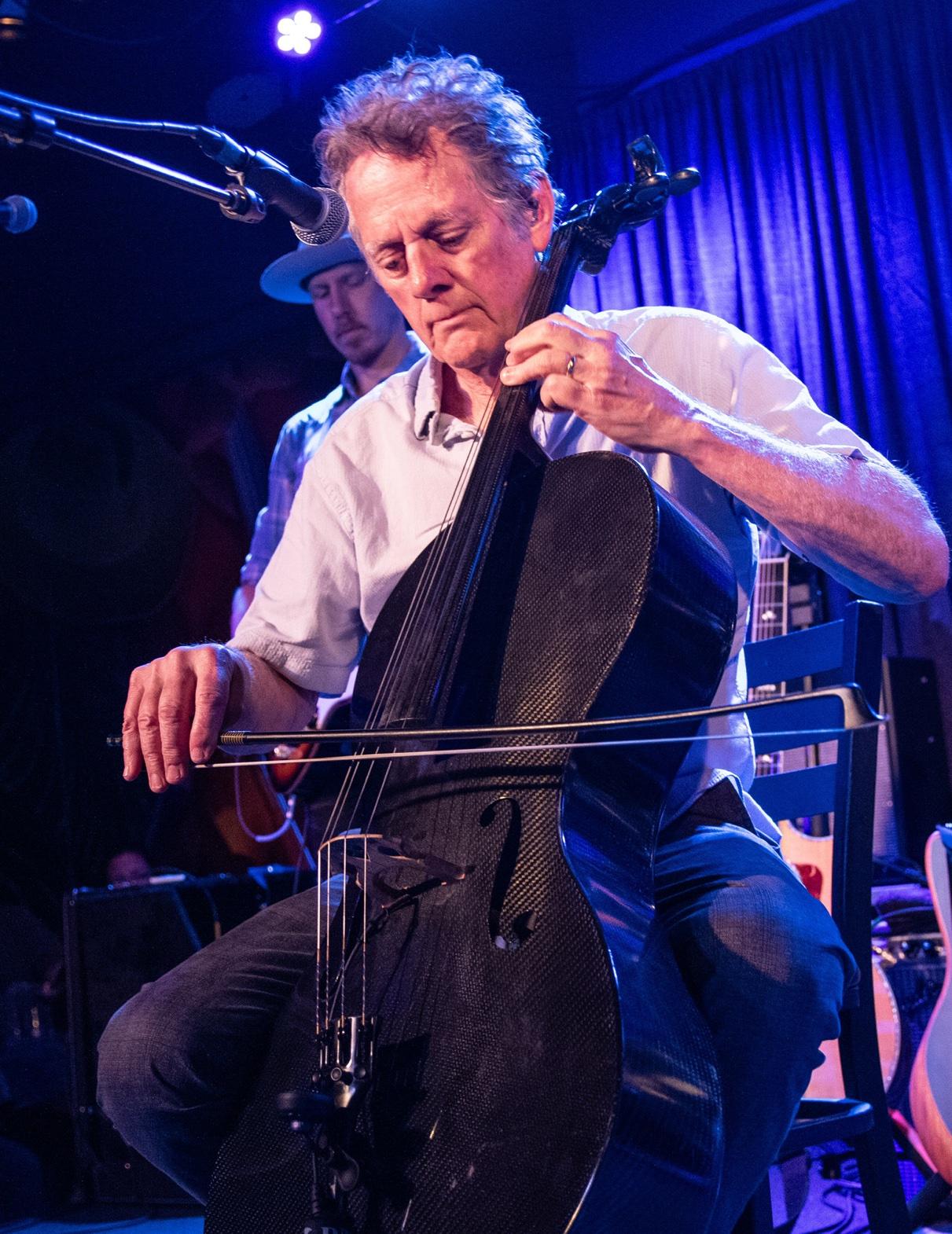
Michael Bacon
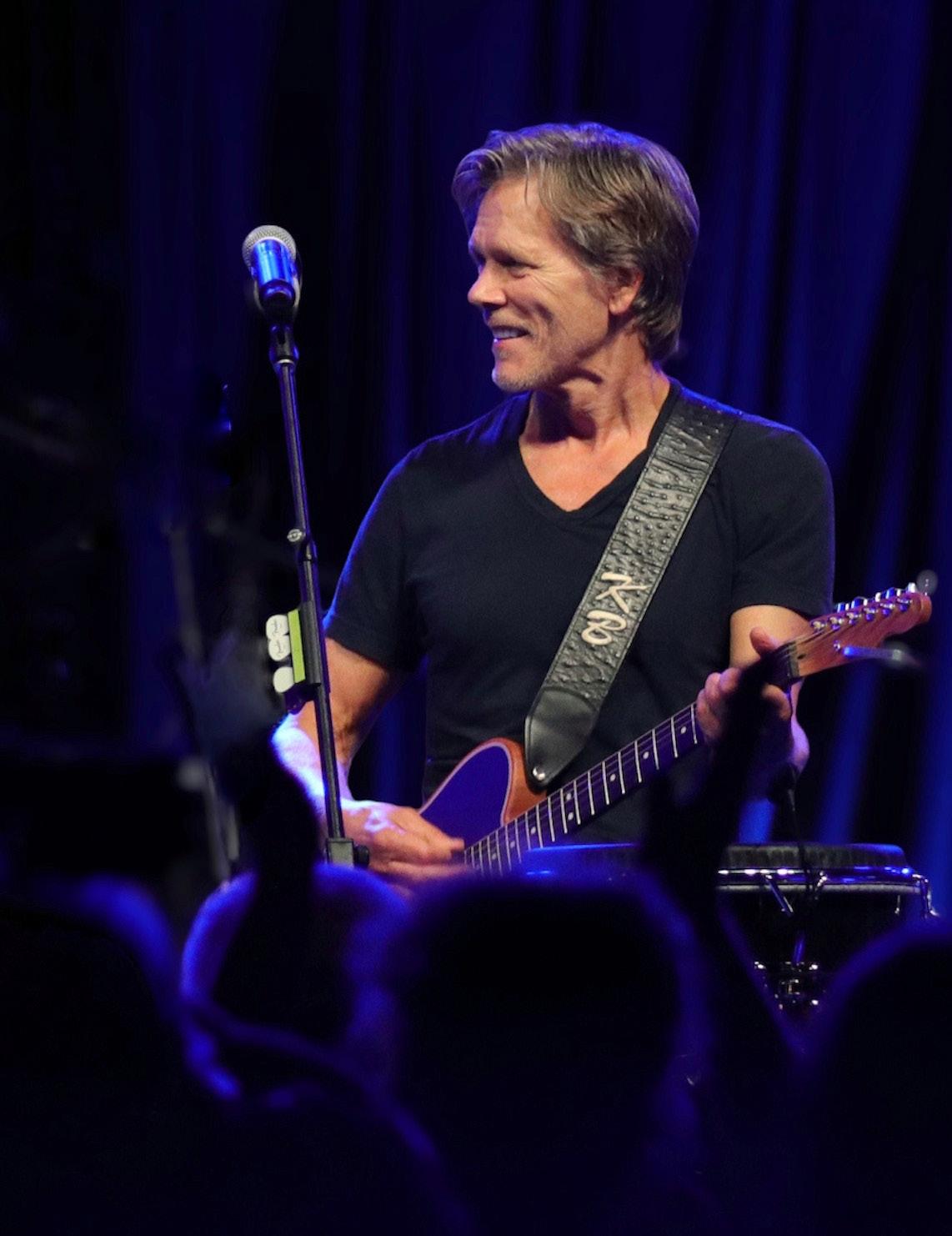
Kevin Bacon
well-established creative professionals, though. Dates have to -t in between Michael’s teaching and composing projects, Kevin’s -lming schedule, and the other band and crew members’ obligations. Still, like the record’s titular brothers, Kevin and Michael have headlined shows at Gruene Hall as well as storied venues like Carnegie Hall and the Grand Ole Opry. This summer, they also have some gigs con-rmed in upstate New York.
“When you’re in business with someone, one of the basic necessities is trust, and with a family member, that’s embedded in the whole relationship,” explains Michael. “Most people mine and Kevin’s age are not going to spend three hours alone together driving to a gig, so this band gives us lots of opportunities other brothers don’t have time to do.”
The brothers savor every chance they get to play live together. “We travel with nine people and everyone has to be healthy, and some guys [in the band] have other jobs, too,”
Michael says. “It’s kind of a rolling circus, and we couldn’t do it without fantastic management, agents, publicists, and a great group of musicians.”
Supporting the Next Generation
Already successful in their own lives and careers, the unadulterated joy of making music together keeps The Bacon Brothers going. Additionally, their passion for music education and integration shines through all their work.
That strong musical foundation the Bacons formed at home was also reinforced in the classroom when they were growing up. “We went to public school, and music, lessons, and instruments were part of the curriculum back then,” Kevin says. They remain committed to that cause.
In 2019, The Bacon Brothers served as ambassadors for the Grammy Music Education Coalition and hosted dozens of local high school musicians at a pre-show
soundcheck to talk about their careers in music. They also want to make sure budding musicians get access to instruments. In 2022, Kevin wrote an ode to his hometown, “Philly Thing,” with proceeds from the digital track and music video providing $15,000 worth of instruments to Philadelphia-area children and teens involved in Rock to the Future, an organization that o0ers free student-driven music programs. In the past, they’ve also worked with New York City-based classical radio station WQXR to distribute donated instruments to student musicians in city schools.
The joy they found in music in their youth keeps them returning to the studio and the stage, even a/er 12 records and nearly 30 years of touring. Says Michael, “As long as we keep collaborating and writing songs and working with these guys in the band, and it’s something we both really enjoy doing, we’ll get up on that stage for an hour and a half and play.” 2

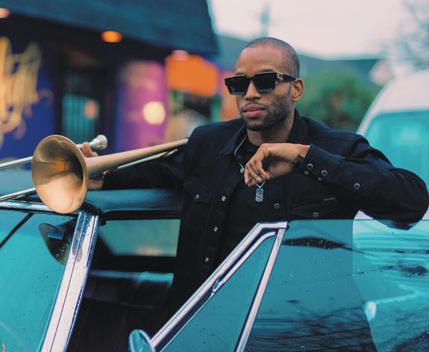
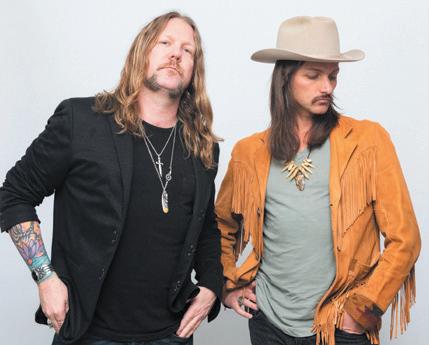
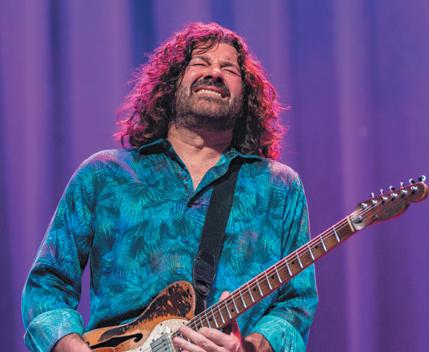
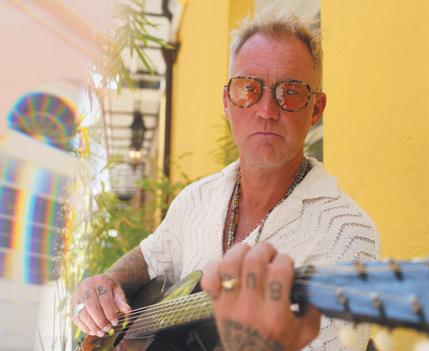

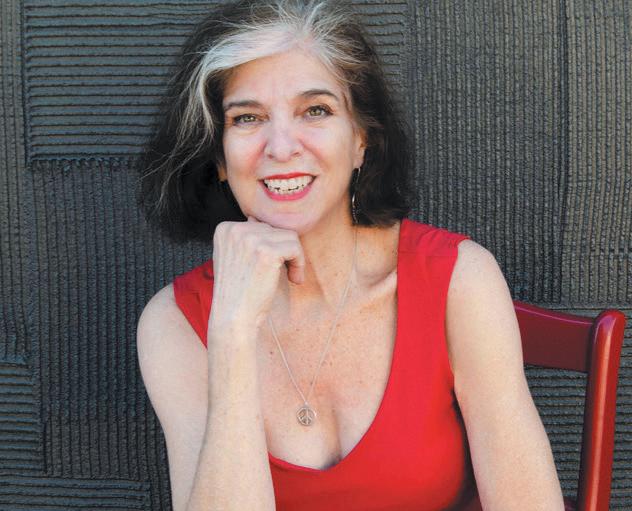
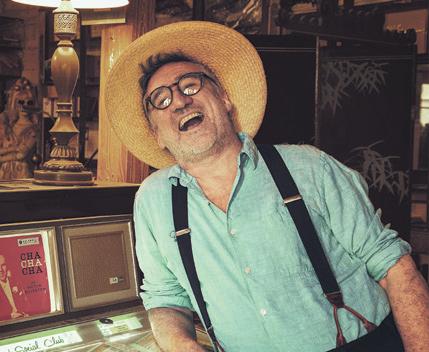
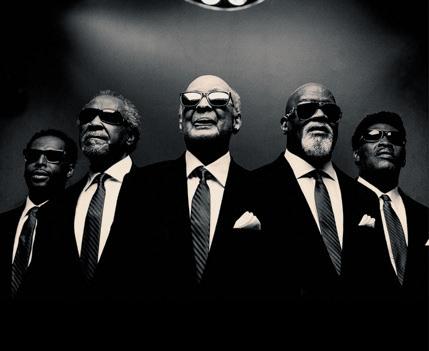
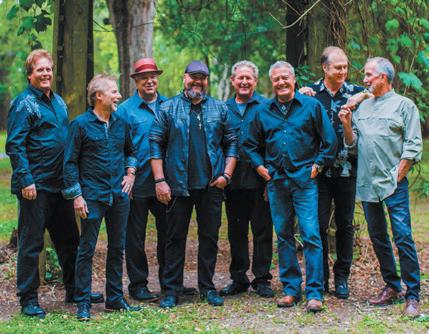

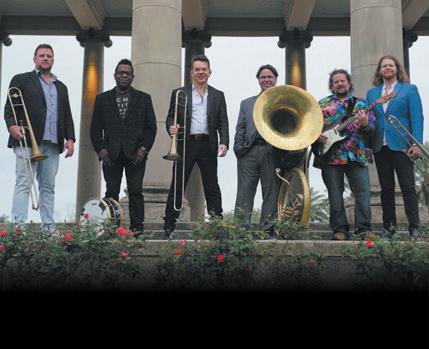
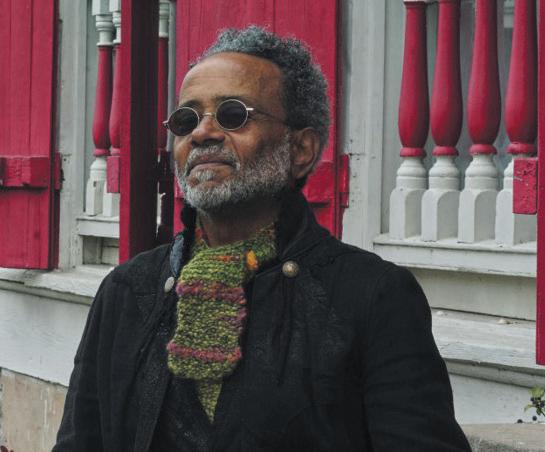
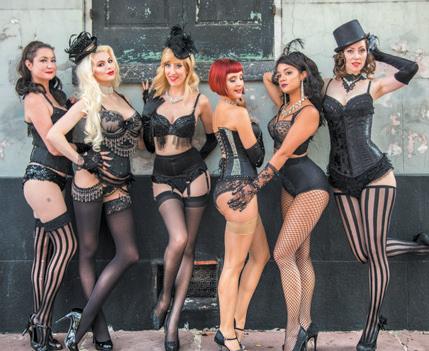
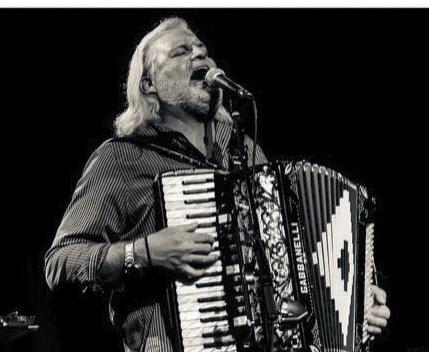

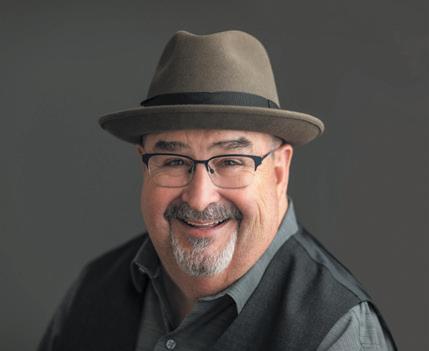

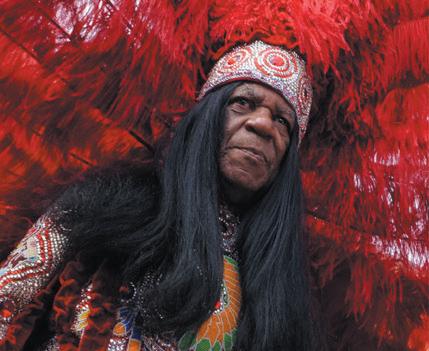
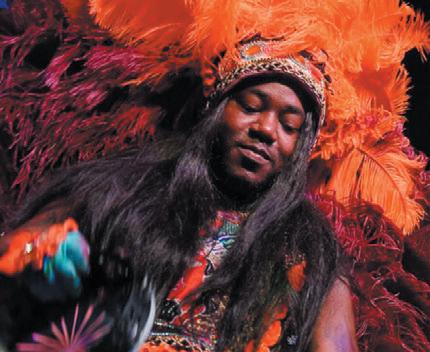




Trombone Shorty & Orleans Avenue
Marcia Ball
Bonerama
John “Papa” Gros
The Allman Betts Band
Jon Cleary & The Absolute Monster Gentlemen
John Boutté
Sierra Green
The Soul Rebels
Bender Brass Band
Dwayne Dopsie and the Zydeco Hellraisers
Tab Benoit
Blind Boys of Alabama
Minx Burlesque
Big Chief Monk Boudreaux
Anders Osborne
Louisiana’s LeRoux
Johnny Sansone
Boudreaux



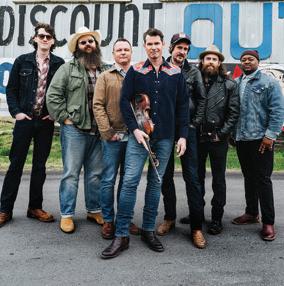
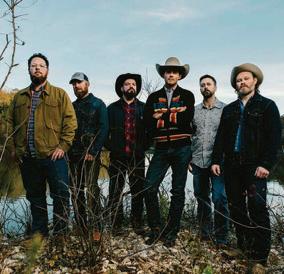

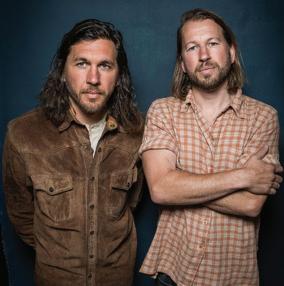
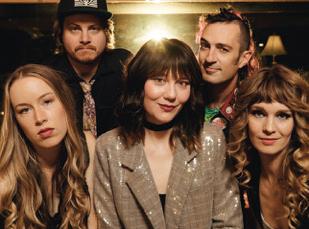
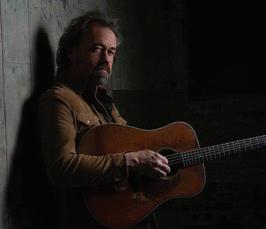
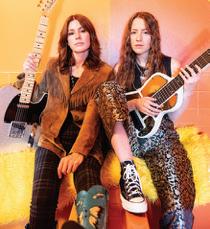

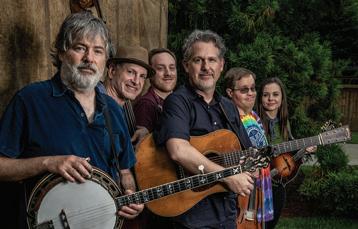



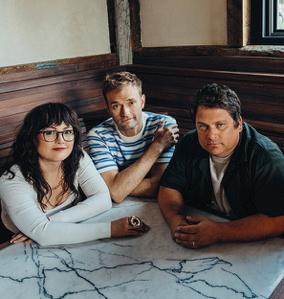
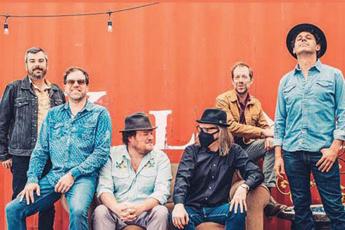
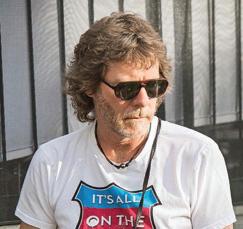
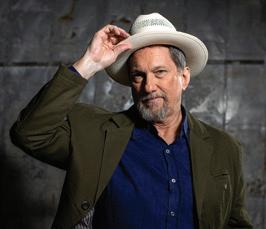


Steep Canyon Rangers
Larkin Poe
Dan Tyminski Band
Molly Tuttle & Golden Highway
Lukas Nelson + POTR
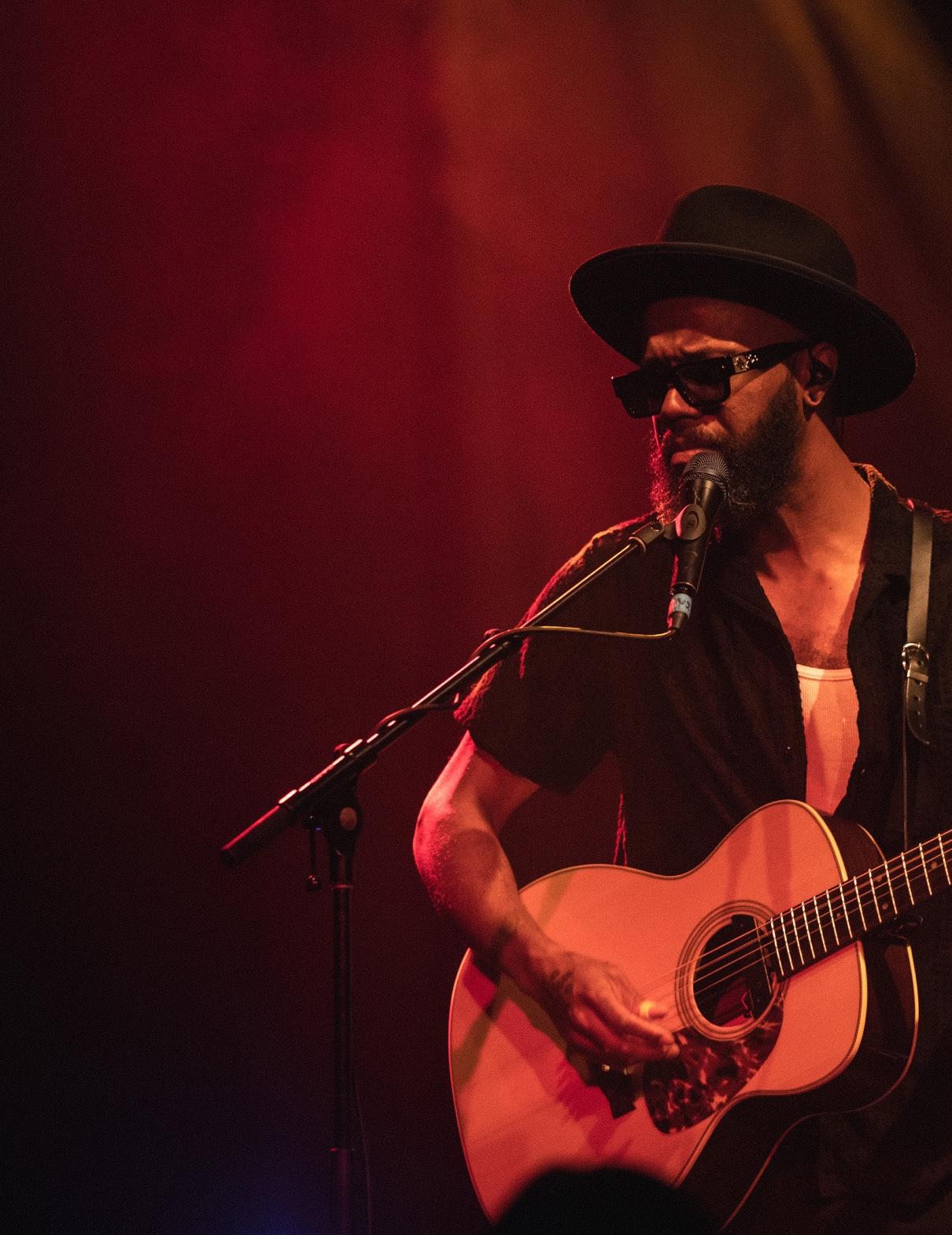
SAMER GHANI
Buffalo Nichols
WHOSE BLUES
As blues music modernizes, so do the voices of those making it
by John Morrison
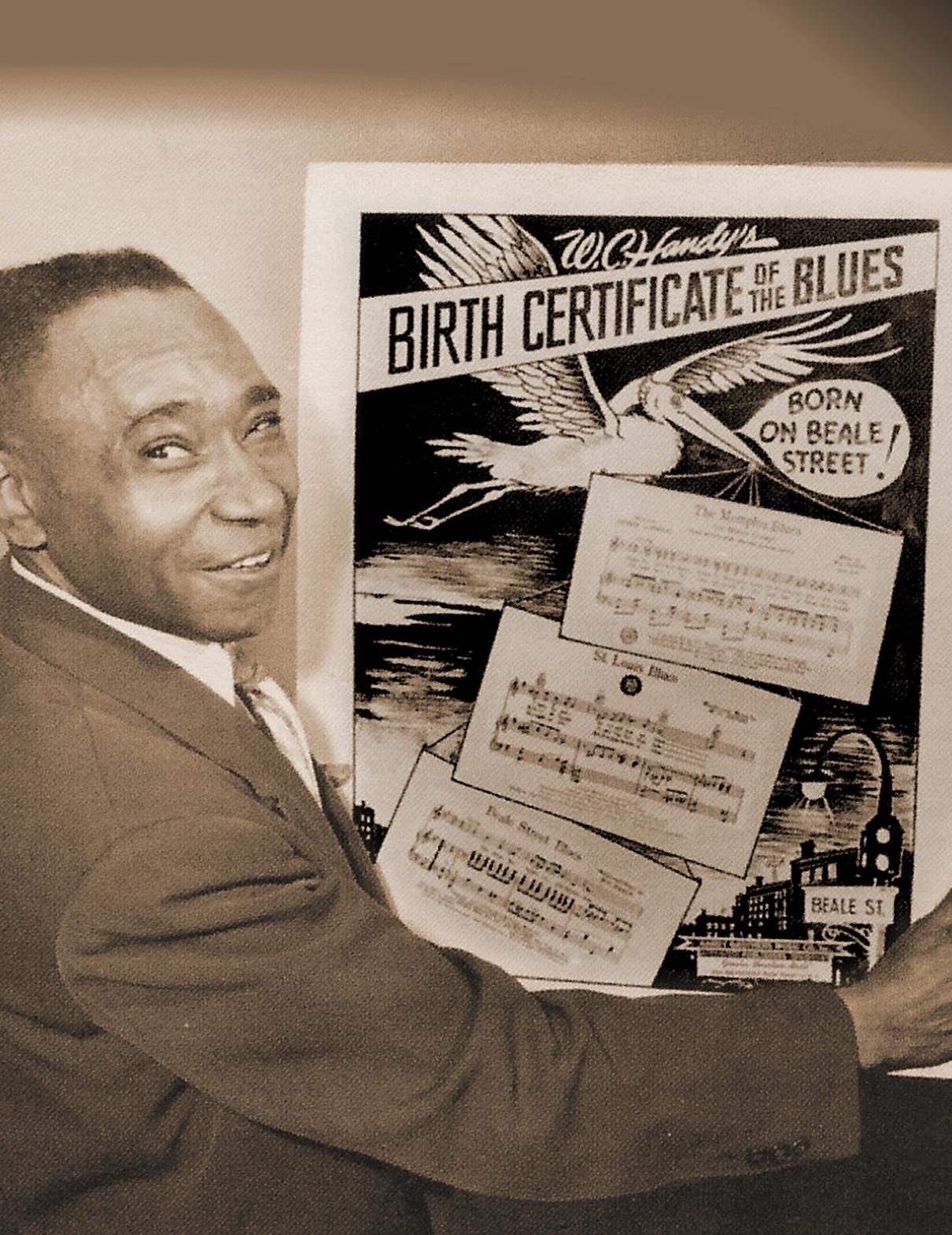
W.C. Handy
Carl ni4hols, who performs under the stage name Bu0alo Nichols, is a singer, songwriter, and guitarist. Born in Houston but raised in Milwaukee, Nichols embraced the guitar as a teenager, playing the blues as well as punk and heavy metal. Toward the end of his teenage years, Nichols began to dig deep into American roots music a/er a trip to the blues’ ancestral homeland in West Africa, more than 4,000 miles away from his home.
In the 13 years since that fateful trip, Nichols has grown into a force in the contemporary blues scene. His 2021 self-titled album, Bu alo Nichols, is a stunning update of traditional country blues, while 2023’s The Fatalist injects those
in1uences with a dose of hip-hopstyle production.
“When I was about 18, I started playing a lot of West African music,” he says. “I had some friends and people in my community that were from Senegal, Mali, and Guinea. That was my whole world socially and musically. In 2010, I went to Senegal for a month and I just came back with this really deep appreciation for their music, but it also made me feel like I was missing something of my own culture. I just really wanted to feel that connection to my own culture.”
As a genre, blues music is o/en relegated to a niche corner of the market. But in recent years, more and more dynamic young artists like Nichols are using their own experiences to push the style into
the future. Like any kind of music, the blues is in constant dialogue with its own past.
A Musical Migration
In his landmark 1963 book Blues People: Negro Music in White America, writer and cultural critic Amiri Baraka (previously known as LeRoi Jones) stated that the stylistic evolutions of Black music are a direct re1ection of the socioeconomic conditions of Black people in America. Turning his eye to the development of “primitive blues,” Baraka traces the music’s emergence to the relative autonomy and freedom of movement that Black folks experienced in the immediate wake of slavery’s abolition.
“The blues is formed out of the same social and musical fabric that the spiritual issued from, but with the blues the social emphasis becomes more personal.”
Amiri Baraka
author, ‘Blues People: Negro Music in White America’
“The limited social and emotional alternatives of the work song could no longer contain the growing experience of this country that Negroes began to respond to,” he wrote. “Also, the entrance of Negroes into the more complicated social situation of self-reliance proposed multitudes of social and cultural problems that they never had to deal with as slaves.”
Freed from the restrictive and collective nature of labor on the plantation, Black musicians developed a new style of music based on individual performance. Under these new social conditions, blues singers found themselves preoccupied with the nuances of love, loss, loneliness, and economic struggles.
At its core, the blues was a music with deep roots in the rich musical tradition that enslaved Africans brought to the Western hemisphere, but it was designed to re1ect the concerns and experiences of a newly free Black population. “The blues is
formed out of the same social and musical fabric that the spiritual issued from,” Baraka wrote, “but with the blues the social emphasis becomes more personal.”
A/er slavery’s abolition in the United States in 1865, life as a free Black person in the South was no less harsh or cruel. While Black workers were no longer con-ned to the plantation by law, they o/en found themselves compelled by economics to perform the same tasks for their former masters. The state deputized militia-style formations of white men and tasked them with enforcing the law, which o/en meant harassing and arresting Black people for irrational o0enses such as assembling a/er dark and legal vagaries such as “idleness.” Lynching reached its height in the decades immediately following abolition, with the highest frequency of the violent crime occurring between 1882 to 1901.
The blues emerged against this social and political backdrop, which
also initiated the Great Migration, in which an estimated six million African Americans moved from the South to the North, Midwest, and western states. Naturally, people brought their cultures and traditions — including music — with them, and the blues took root and permutated in cities like Chicago, Detroit, Memphis, Kansas City, and New York. The “social and musical fabric” that Baraka identi-ed in his book as the wellspring from which the blues was born remained, but the Great Migration spread the music nationwide.
While the invention of famous Mississippi Delta-style blues cannot be traced to any single individual, the sound itself is distinct and singular — a solo vocalist accompanying himself with a 12-bar chord progression played on guitar. Delta or country blues music personi-ed the o/en lonely, alienated emotional timbre of the Black man in the postreconstruction South and eventually
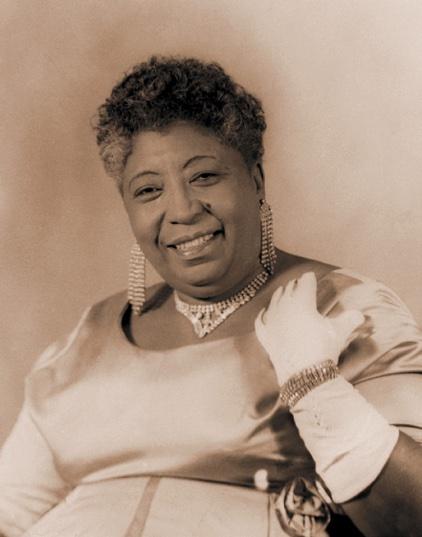
became synonymous with musicians like Robert Johnson, Son House, and Huddie William Ledbetter (aka Lead Belly). The songs of these country bluesmen are still widely known, idolized, and studied among music fans. Just last year, in fact, the Smithsonian published musicologist Robert “Mack” McCormick’s long-lost manuscript, Biography of a Phantom: A Robert Johnson Blues Odyssey, illustrating the public’s lasting fascination with the mythical musician.
In the 1920s, Black women took center stage as the primary innovators of the blues. Singers like Bessie Smith, Ma Rainey, and Mamie Smith took the world-weary disposition of the blues and injected it with -ery, brash vocal stylings and lush piano and brass-focused arrangements. Songs like Mamie Smith’s “If You Don’t Want Me Blues” and Bessie Smith’s recording of “Nobody Knows You When You’re Down and Out” were some of the
most emotionally sophisticated recordings of their day — blues as a re1ection of Black life in the city. With thousands of Black Mississippians moving to Chicago in the 1920s, ’30s, and ’40s, the Midwestern city eventually established itself as a major center for the blues. Chicago artists like Muddy Waters, Howlin’ Wolf, and Willie Dixon went on to electrify the blues and remain some of the genre’s most in1uential musicians. By tracing the music’s history and major stylistic shi/ s, it becomes clear that the blues moves in accord with the people who play it.
New Reality, New Voices
Today, the social climate that African Americans live under is radically di0erent from the one that -rst produced the blues. Throughout the 1960s, multiple pieces of federal legislation (including the Civil Rights Act, Voting Rights Act, and Fair Housing
Act) outlawed segregation, a reactionary measure designed to punish and strip away rights from newly freed African Americans in the wake of abolition. The industrial labor market that drew many Black folks up north and to the Midwest during the Great Migration has largely been outsourced beyond US borders.
Today, the musical fabric that birthed the blues — the pentatonic scales, 12-bar structures, and vocal delivery styles — lives on in contemporary hip-hop, R&B, gospel, and jazz. In recent years, a wave of young musicians has seen success playing the blues alongside other old American folk music like country and bluegrass. Even a cursory listing of present-day luminaries like Shemekia Copeland, Jake Blount, Christone “King-sh” Ingram, Eric Gales, Sunny War, Gary Clark Jr., and Valerie June reveals that a new generation of musicians clearly understands both the musical tradition and profound
Ma Rainey
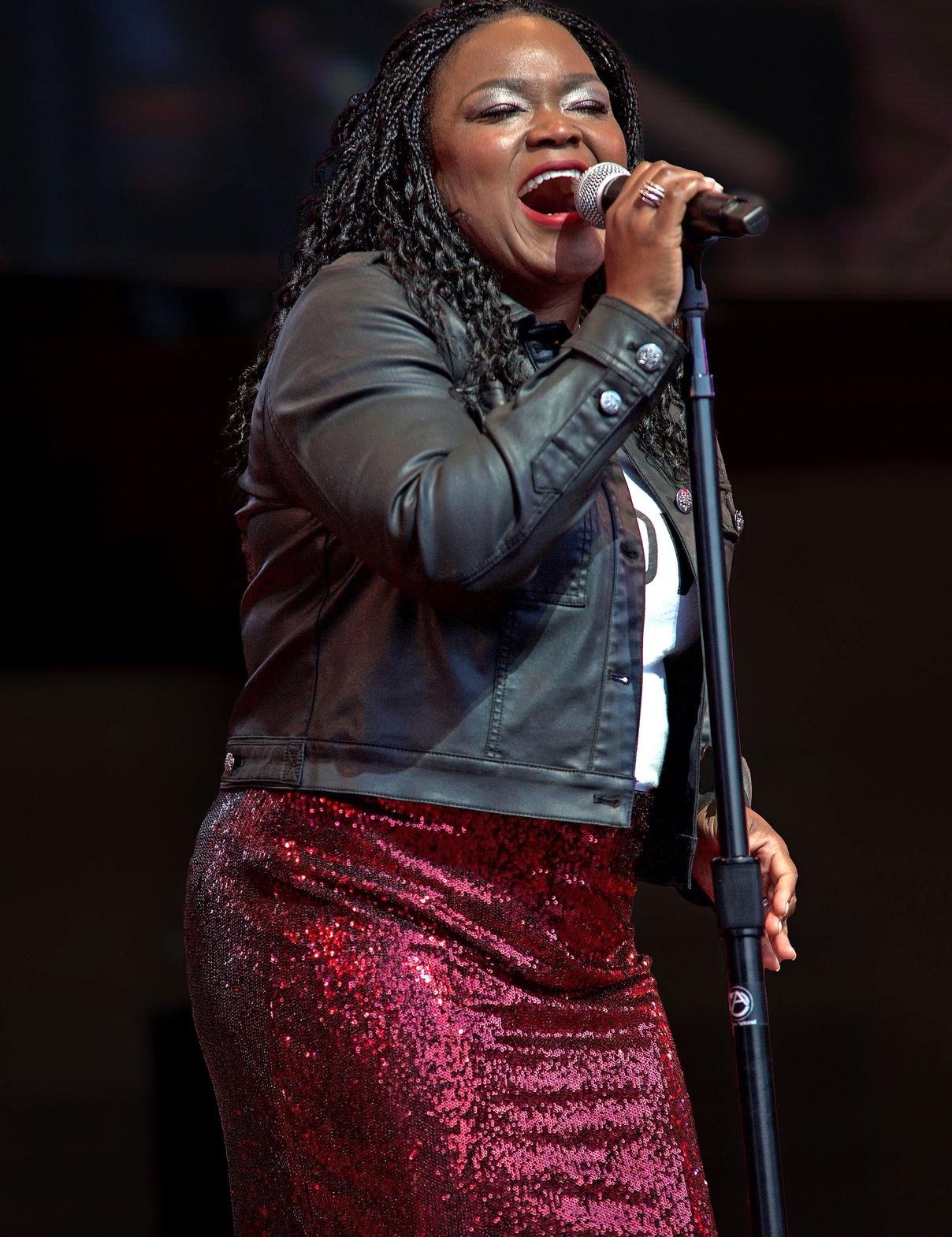
PETER HURLEY
Shemekia Copeland
ZZ Ward

emotional truth upon which the blues was founded.
The questions of who the blues is for and who gets to play it are inseparable from the music’s meaning and purpose. Despite his successes, Nichols acknowledges that there is a fundamental contradiction in being a Black man playing traditionally Black music for primarily white audiences.
“There’s a real pressure in the blues to be an entertainer and to serve this role,” Nichols says. “Even the places that the music usually exists, like restaurants and resorts and cruise ships. It blows my mind that people don’t see the irony. This music that was born out of the Black experience in the United States — which at the time was pretty grim in so many ways — has now become this place where middle-class white people can escape their problems.”
In a genre with such a deep connection to the Black experience, non-Black musicians face their own set of challenges when reconciling their presence in the blues scene. ZZ
Ward is a singer, songwriter, and guitarist who was born on the East Coast and raised in Oregon. She grew up singing the blues with her father, honing her skills at jam sessions and cutting her teeth in area blues clubs. Her latest album, 2023’s Dirty Shine, retains the blues sound she grew up with, but integrates elements of pop, rock, country, and hip-hop. When asked about her experiences as a white woman playing these historically Black forms of music, Ward identi-es the core emotional power of the blues as the main factor that attracted her in her youth. The context came later.
“When you’re a kid, you don’t think about that stu0,” Ward says. “I think the reasons that I connected with the blues were based on that emotion that I felt with no bias and not knowing about any history. But as an adult, I would say that I really love music so much, and I love the blues.
“I know that I’m white,” she continues with a laugh, “but for me,
it’s that emotion that I really connect with regardless of what color somebody’s skin is. I’m honored to play the blues and be inspired by it.”
Still, there’s a lingering fear that the blues won’t be able to progress any further without respecting both the genre’s racial and sociopolitical history and its living culture. Nichols explains that by incorporating contemporary sounds like drum machines and electronics into the blues, he hopes to create the kind of friction required to push the music forward. The big, booming trap drums and samples on tunes like “You’re Gonna Need Somebody on Your Bond” give The Fatalist a fresh, modern sound. Nichols sees this as a direct opposition to both white blues purists who try to limit such experimentation and young Black musicians who struggle with their own notions of validity and respectability.
“Something I wasn’t even aware of until recently is how white people
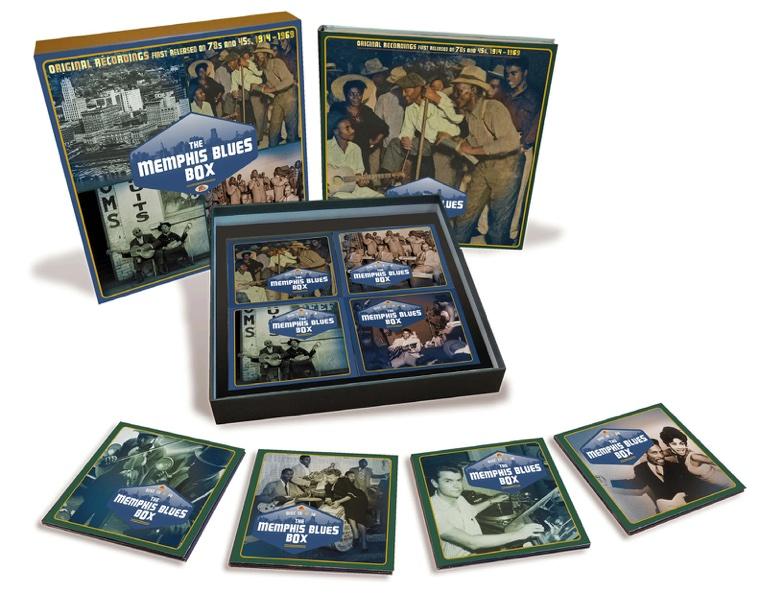
love to use the blues as this kind of measuring stick for what is acceptable for Black people,” Nichols says. “That’s always in the back of my mind. I’ve changed my sound a lot over the last few years because I feel the need to challenge those people. I had to challenge myself. I think it’s necessary. ’Cause the blues has not really been challenging for a very long time.”
The Blues and the Here and Now
The question of what the blues means in 2024 can only be answered by taking a critical look at the music’s past while making an informed and sober assessment of its present. Clearly, the genre still maintains its popularity. Last year, for example, Bear Family Records released a revelatory compilation, The Memphis Blues Box: Original Recordings 1914–1969, featuring 534 songs on 20 CDs
all recorded in the city known as the “Home of the Blues.” Starting with disc 1, track 1 — W.C. Handy’s legacyforming song “Mr. Crump and The Memphis Blues” — the massive box set (it weighs almost 10 pounds) aimed to preserve at least one side of every blues 78 or 45 rpm disc that came out of Memphis in that time frame. As a whole, The Memphis Blues Box ensures that recordings of formative greats like Howlin’ Wolf, B.B. King, Memphis Minnie, and others receive proper historical context and contemporary reissue treatment.
Another compilation released last year helps contextualize American blues history in a di0erent way. Some Mississippi Sunday Morning, a 15-track album credited to Parchman Prison Prayer, comprises contemporary -eld recordings from the Mississippi State Penitentiary, or Parchman Farm, one of the oldest
active prisons in the country. In its 120+ year history, the infamous maximum-security men’s prison has detained a number of Mississippi’s best blues singers, including Bukka White, Son House, and R.L. Burnside. While this musical legacy is notable, the racial discrimination determining the prison’s makeup is not unusual: Although the 2023 US Census found that 37.8% of the Mississippi population is Black or African American, Black people make up roughly 60% of Parchman’s current population.
One Sunday morning in February 2023, producer and engineer Ian Brennan came to Parchman to record the music that the prison’s residents were making, just as American folk archivists Alan and John Lomax had done in the 1930s and ’40s. The parallels are all too similar, and the men currently incarcerated are creating
Bear Family Records’ Memphis Blues Box
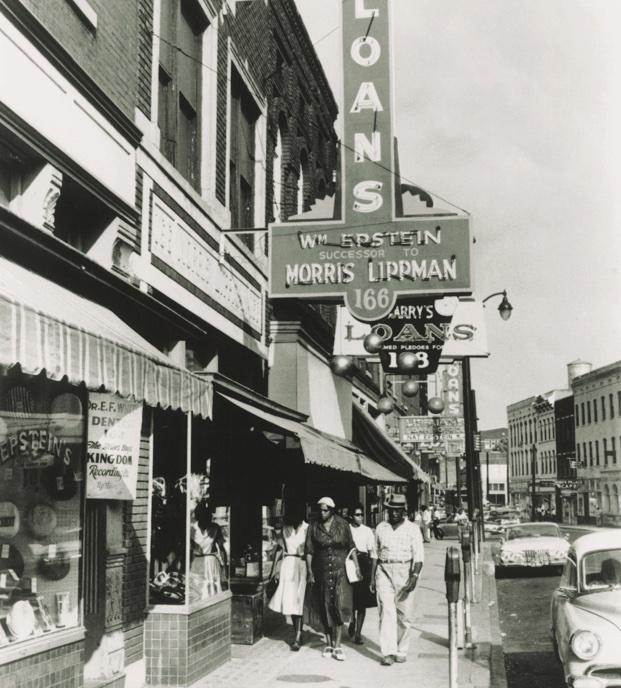
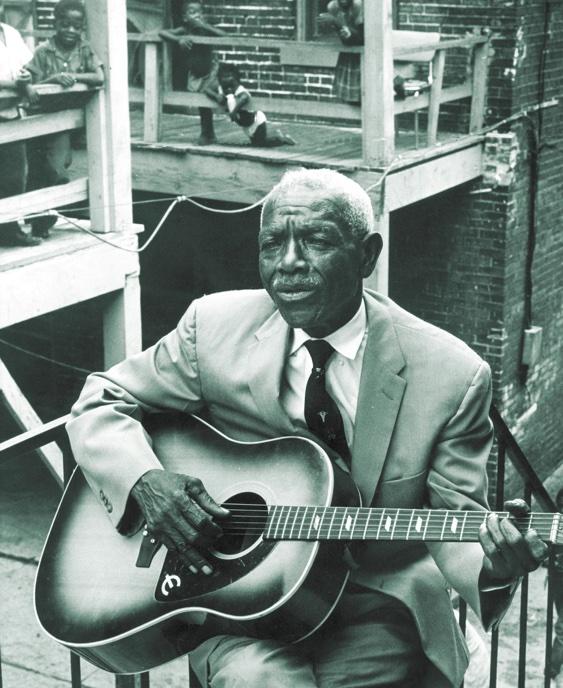
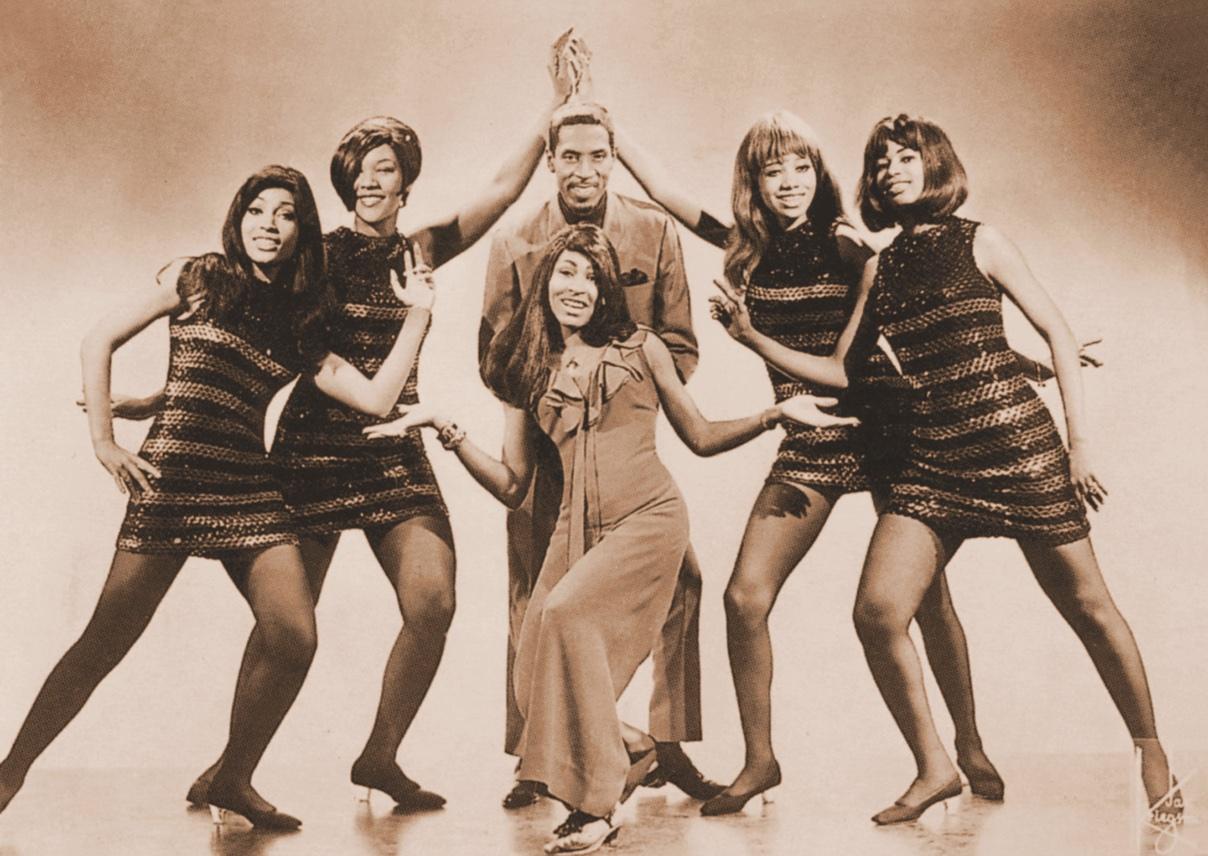
Ike + Tina Revue
Furry Lewis
Beale Street 1957
UNEXPECTED CONNECTIONS
by Michael Bacon
The Bacon Brothers are the guest editors of No Depression’s Spring 2024 issue.
Thundering from its origins in West Africa and into the Deep South, the blues are an irresistible force. Single, itinerant performers who needed a new audience every night spread their 12-bar blues as they traveled, in1uencing American cities with very di0erent results based on the extant European cultures they encountered:
The blues tagged along in the northbound dusty boots and suitcases of the Great Migration up through Memphis when it ran head-on into the verse/chorus form of traditional folk songs of the British Isles. And pow! Rock and roll was born. But in my listening, I’ve found echoes of the blues that can’t be explained by geographical, cultural, or temporal nearness.
Here are a few examples that have always intrigued me.
Claude Debussy’s “Prelude to the Afternoon of a Faun” (1894) and early blues guitarists and vocalists (late 1800s)
French composer Claude Debussy used 1at 7ths (dominant 7th chords) and diminished chords to establish the key of his works (instead of as a
means of resolving dissonant melodies). In “Prelude to the A/ernoon of a Faun,” a 10-minute symphonic poem, Debussy liberates the tonic to be a chord of the moment, not a conduit for repose in the future. This technique creates a feeling of vagueness and ambiguity, although he bristled when described as an “impressionist.” Similarly, early blues composers like Skip James transformed tonic chords into 1at 7th chords, suggesting distant, unresolved tension amid the ups and downs of the human condition.
Elvis Presley (1957) and Aboriginal clapping sticks (40,000 BCE)
The comparison between Scotty Moore’s guitar playing in “Jailhouse Rock” and Aboriginal clap sticks draws me in like a magnet. Just as 12-bar blues crashed into the French marching band culture in New Orleans, its arrival in Memphis comingled with the British Isles’ A-B-A form.
“Jailhouse Rock” is an example of the in1uence the former impacting the latter: If you take out the -rst four measures, you have straight 12-bar blues, but this time with a verse and
chorus in a 16-bar format. Elvis swings and Scotty plays straight. But that’s not the point I’m trying to make. Swing and straight time played simultaneously is technically wrong, but it creates an infectious groove that may not be planned or taught. Likewise, these Indigenous Australian percussive tools were traditionally played in rhythms alternating between what we’d now call straight and swing time. This fusion is spontaneous and intuitive.
Igor Stravinsky’s “The Rite of Spring” (1913) and Robert Johnson’s “Cross Road Blues” (1936)
Stravinsky showed a penchant for irregular meters, placing emphasis on unexpected notes and rhythms. This certainly made it interesting for choreographer Vaslav Nijinsky’s dance techniques! As itinerant blues musicians fanned out across the South, they didn’t need to keep to meter restrictions with their playing: They didn’t have, nor could they a0ord, backing bands.
Michael Bacon is a faculty member in music at Lehman College.
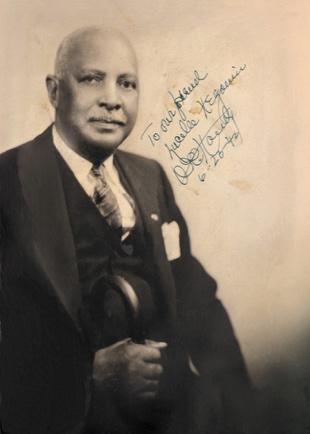
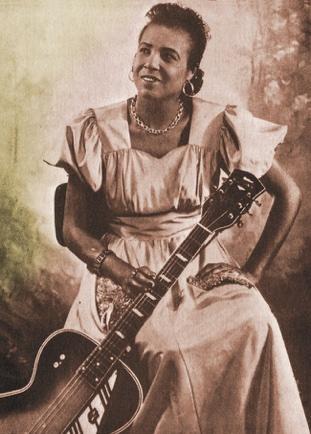
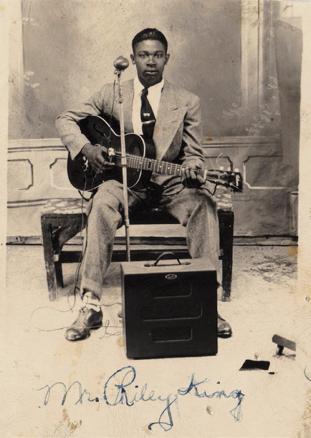
their own music like prisoners before them. While the stylistic range on Some Mississippi Sunday Morning is broad enough to include gospel and hip-hop, the spirit of the blues lies in the heart of standout songs like “Step Into the Water,” “Solve My Need,” and “I Gotta Run.”
While there’s an inspiring cadre of younger blues musicians preserving these traditions and pushing them into the future, elder and established blues musicians like Taj Mahal, Bobby Rush, and Buddy Guy are maintaining their own popularity, as well as mentoring younger up-and-comers like Christone “King-sh” Ingram and Samantha Fish.
Shamekia Copeland, a modern blues legend whose 2022 record Done Come Too Far was nominated for a Grammy for Best Contemporary Blues Album, has proven herself to be more than
adept at combining a traditional blues sound with genres like jazz. Just last year, she contributed a track to the fantastic compilation album Basie Swings the Blues, a collaboration with The Count Basie Orchestra. Copeland commands the ensemble with power and fury on “I’m A Woman,” her voice wringing every drop of emotion out of a lyric and melody.
When asked about the challenges that the blues faces in today’s musical landscape, Copeland stresses the importance of “getting our music in front of more young people.” She also believes that the blues can o0er an outlet of expression for young people: “God knows this world is already giving them the blues. We can o0er them a way to sing about life’s problems rather than let them get them down.”
These dynamic experiments — like Copeland singing the blues
with a big band ensemble and Nichols integrating drum machines into modern blues — ensure that the genre remains open to new approaches and experimentation. Coupled with the fact that there are still a considerable number of people playing and listening to the older, traditional styles, the state of the blues in 2024 is encouraging. Regardless of the sociopolitical changes that surround and shape it, the blues will always be a home for our deepest and most human feelings and experiences.
“Blues today is moving in new directions.” Copeland says. “Singing about issues that look ahead to the future. Blues today isn’t just about ‘My baby le/ me, ain’t that sad?’ It’s about the environment, women’s issues and rights … and once in a while, it can still be about love gone wrong. But it’s so much more than that.” 2
W.C. Handy
Memphis Minnie
B.B. King

Abraham Alexander live at The Majestic Theatre in Dallas, Texas
THE NEW LEGENDS OF COWTOWN
Abraham Alexander and the community redefining North Texas music
by Courtney E. Smith
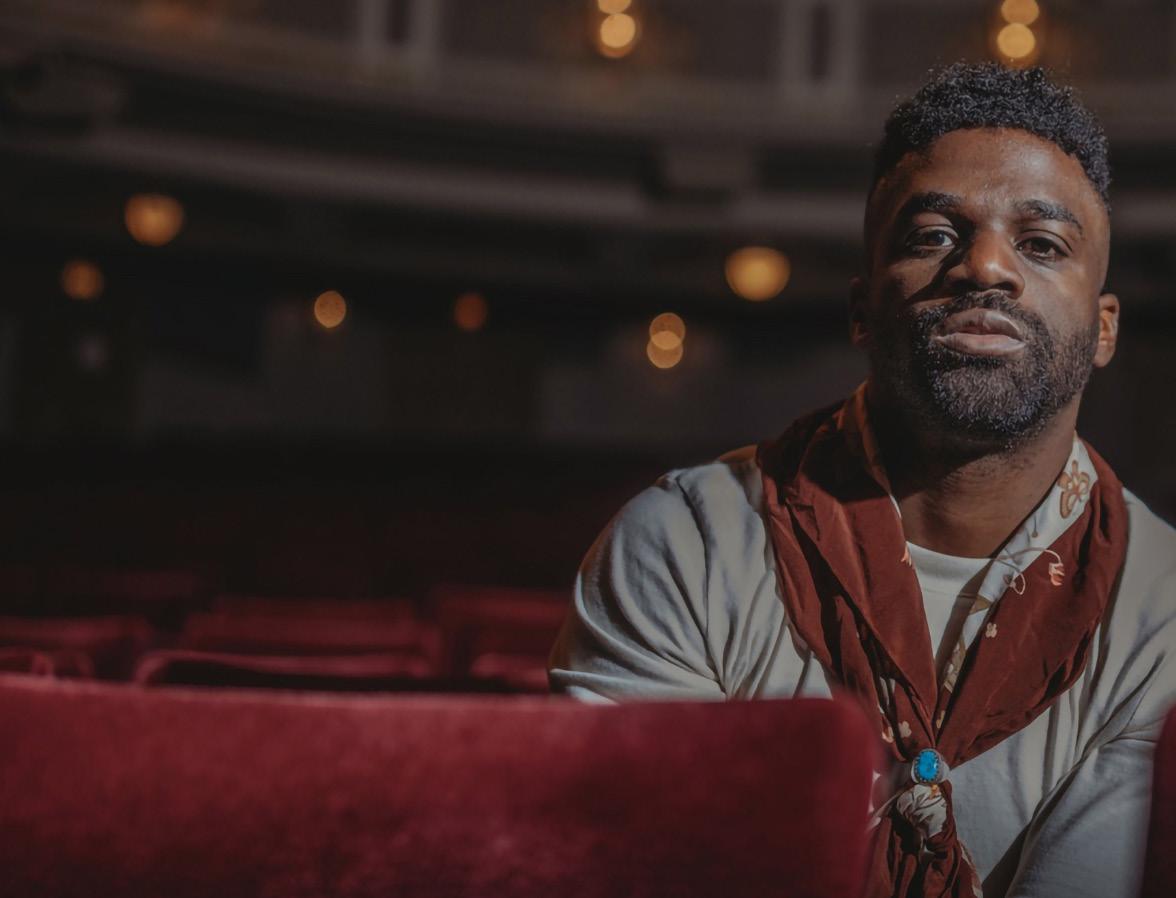
On a 4ool thursday night in December, Abraham Alexander takes the stage at Dallas’ Majestic Theatre. The Fort Worth-based singer-songwriter traveled east for the evening to play a sold-out show in the century-old theater, one that has hosted some of the state’s most prestigious artists, including Lyle Lovett, Willie Nelson, and Leon Bridges, as well as a long list of musicians from outside Texas. But Alexander brought a little of Fort Worth with him, aside from his cowboy boots and Gibson Dove Studio acoustic guitar emblazoned with Western detailing. It’s the vibe; the stage is lit in the style of a West
Texas sunset that matches the slow, soulful sound of the music on his debut album, SEA/SONS, which came out last year.
Although Fort Worth is o/en lumped together with Dallas in the sprawling area known as “the Metroplex,” the cities are as di0erent as can be, considering their geographic proximity. Dallas is a city full of modern architecture and art, as well as one where corporations like Texas Instruments, ExxonMobil, and Toyota are headquartered. Business travelers 1ock to the city’s hotels and the endless highways full of cars evoke a perpetual rush hour.
On the other hand, Fort Worth is said to be the city where the West
begins. It is still known as Cowtown, a name that came from the 1800s, when folks traveling the Chisholm Trail knew it was the last stop for supplies before heading west. It is the home of the Stockyard District and the Cowgirl Hall of Fame & Museum, and many of the city’s streets are still paved with red bricks laid down a hundred years ago. It embraces that past in its aesthetics and its slower pace.
Its image might bring to mind cowboys in 10-gallon hats, but Fort Worth hasn’t produced that many well-known country musicians. Instead, it’s where free jazz founder and multi-instrumentalist Ornette Coleman called home. It raised legendary gospel singer Kirk
Franklin. It’s a varied scene that Alexander sees himself re1ected in.
“As a performer, I want to invite people from all walks of life in to feel like they’re part of something bigger than themselves,” he says.
According to Tom Martens, director of the Fort Worth Music O4ce, the city is evolving to be a hub for all kinds of music. “When people think of Fort Worth, they think of guys with guitars,” he says. “But there’s a lot of cool stu0 happening, especially with the emerging DJ culture and the indie hop-hop scene.”
It’s where Leon Bridges, known for transforming R&B into rock, hails from and still lives. And now it’s home to Alexander and his own brand of folk and soul. “Fort Worth
still holds on to that Texas identity, even though it is holding on to all these di0erent cultures,” Alexander says of his city. “That culture morphs into what Texas is … and there is a love for Texas that is unlike any other state. It’s magical.”
Chance Encounters
Alexander was born in Greece to Nigerian parents, but rising racial tensions in Europe in the early 2000s prompted the family to apply for the green card lottery in the US. His parents won one of the rare chances (the US State Department only issues 50,000 Diversity Immigrant Visas each year) and they settled in Arlington, a suburb just a few miles outside of Fort Worth, when
Alexander was 11. Although he didn’t speak English when they arrived, Alexander was able to connect to his peers through sports: He planned to become a professional soccer player.
Tragically, his mother and one of his brothers were killed by a drunk driver not long a/er the move, and the loss made family life for Alexander and his siblings di4cult. His father, a jazz musician who had played with Fela Kuti back in Nigeria, was not a stable -gure as a solo parent; the boys were removed from their home due to abuse and Alexander was eventually adopted by his foster parents, Donnia and Je0 Olesko. Alexander avoided music initially because of his father, but when an injury in his 20s sidelined his hopes of becoming an athlete, he
found himself searching for a new passion. A former girlfriend gi/ed him with a guitar and music seemed to -nd him.
In fact, a chance encounter in 2014 changed his whole trajectory. While waiting on a friend’s stoop, Alexander saw some guys unloading musical equipment out of a car. Reminiscing, he says that a voice inside told him to go talk to them. It turned out they were working on Bridges’ debut album, Coming Home, and were looking to capture a range of background voices and tones. They invited him to join the session — his -rst time in a recording studio. That album, on which Alexander hummed in the background, won the 2015 Grammy for Best R&B Album.
It took 10 years for Alexander to go from background vocalist to singer and songwriter and selling out the Majestic. A/er his experience on Coming Home, and at Bridges’ suggestion, he began writing songs and performing at open mics. One of those earliest opportunities came at
Fort Worth’s now-defunct Live Oak Music Hall and Lounge, right around when Coming Home started gaining acclaim. The venue’s owner, Brooks Kendall, introduced Alexander’s music to Martens at the Fort Worth Music O4ce. That led to an opportunity to play one of the city’s mixers, still held weekly in Sundance Square (the downtown district named a/er Butch Cassidy and the Sundance Kid). Events like those led Alexander to participate in the Texas Music Takeover, a program organized by the Texas Music O4ce that sends local talent to learn and perform in London. Inspired by the trip, he considered trying to stay in the UK, but ultimately signed with Dualtone Records in Tennessee and moved back to Texas.
Music in the Metroplex
If Fort Worth and Dallas are twin 1ames in the Metroplex’s music scene, a third hot spot is Denton. It is home to the University of North Texas as well as a lot of its music
school graduates and musicians who wanted out of big city life, but not out of town altogether. One of those folks is Matt Pence, who co-produced and mixed Alexander’s album. A veteran of the Dallas music scene, Pence played drums in Centro-Matic, South San Gabriel, and Shakey Graves, having collaborating with Sarah Ja0e as well.
Pence and Alexander met at “one of Leon Bridges’ shindigs,” Pence recalls. “By the time we got around to -nally introducing ourselves by name, I already knew that I needed to work with him. I tried to play it cool when he recognized my name,” Pence says.
Alexander ended up heading up to Denton to record SEA/SONS with Pence at his Echo Lab studio. He had previously worked with Pence on a cover of Simon & Garfunkel’s “Bridge Over Troubled Water” for the Truth to Power Project compilation in 2021, which convinced him to return for his LP. “I feel like he is a philosopher -rst, and then a producer/engineer/and all the other slashes you can put a/er
“Coming to Texas, it was the one time when I could embrace everything that I am and not necessarily have to pick between being Nigerian, Black, or Greek. That has continued to carry on through my music, where Texas has allocated a way for me to be fully myself.”
Abraham Alexander
Matt Pence’s name,” Alexander raves.
SEA/SONS took years to compose: Some tracks, like “Heart of Gold,” had origins as far back as 2014, while other songs emerged during the pandemic. The song “Stay,” for example, is about Alexander’s decision to be a Texan artist a/er his trip to London. “Coming to Texas, it was the one time when I could embrace everything that I am and not necessarily have to pick between being Nigerian, Black, or Greek. That has continued to carry on through my music, where Texas has allocated a way for me to be fully myself,” he says.
But it took seemingly the whole Metroplex community to perfect SEA/ SONS and release it. That circle of being in Dallas bands, going to parties thrown by Fort Worth musicians, and working out of a studio in Denton is part of how Alexander met and collaborated with artists like Gary Clark Jr., who recorded the guitar solo on “Stay.” It’s also how he connected with musicians and producers like Beau Bedford (The Texas Gentlemen), Jason Burt (Electrophunk), and
Charley Wiles (a session guitarist who played with Bridges), all of whom contributed to SEA/SONS
“I had no idea what I was getting into, and I probably wouldn’t have lasted as long as I have if not for people giving me positive criticism on my songwriting,” Alexander says. “It takes a village. We root for each other to succeed, and one spotlight being shone on one person re1ects on the others.”
Local connections even led him to collaborating with Mavis Staples. Alexander’s manager, Amy Miller, was previously the program director for KKXT, North Texas Public Broadcasting’s music station, and hosted a local radio show for seven years. Her network led to Alexander and Staples’ duet on “Déjà Vu,” a heartbreaking song inspired by the story of Kalief Browder’s wrongful imprisonment at Rikers Island for three years without a trial. (Browder was charged with stealing a backpack and was illegally held in solitary con-nement and beaten by guards. He maintained his innocence until
his untimely death by suicide in 2015, two years a/er his release from prison a/er the charges were dropped.)
“It was an honor having [Staples] be part of that song in particular. Hearing her voice on it feels like a matriarch speaking and everyone is sitting down to listen,” Alexander says, alluding to her activism since the civil rights movement.
Telling the song’s story from the stage at the Majestic, Alexander speaks about how Browder’s story could have been him, his brothers, or many people he knows. In fact, that night in Dallas seems to represent a full-circle moment for him: When the Majestic opened and artists like Duke Ellington and Cab Calloway played, Black theatergoers were only allowed entry via an alley door to a service elevator to the highest balcony seats. One hundred years later, Alexander’s hometown album release show feels as much like a rewriting of North Texas musical history as a premonition of who the new legends of Cowtown might be. 2

Harpa concert hall in Reykjavik, Iceland
FIRE AND ICE
Old and new folk songs connect Icelandic musicians — and the world — to a rich cultural history
by Hilary Saunders

The frozen, vol4ani4, island nation of Iceland is a source of fascination for so many artists.
Approximately halfway between North America and Europe and in between tectonic plates, Iceland is o/en called “the land of -re and ice.” There are glaciers, geysers, waterfalls, volcanoes, and a substantial number of visitors from around the world who want to experience it all in person.
Despite a population of less than 400,000 people, Iceland welcomes more than two million visitors each year — a ratio of about -ve tourists to every local. Although it’s not part of the European Union, Iceland is part of the Schengen Area (the European border-free movement zone) and has been integrated within the European Economic Area since 1994, which facilitates international travel as much as business. It’s a fast-growing country,
with a culture historically concerned with modernization and international cultural acceptance, if not complete assimilation.
One of Iceland’s greatest exports is music. In the 1980s, The Sugarcubes (featuring a 21-year-old Björk as well as drummer Sigtryggur Baldursson, who now is managing director of Iceland Music, the country’s national export program) helped put Iceland on the musical map. Björk went on to become an international superstar, beloved for her experimental and avant-garde compositions and collaborations that dabble in genres like post-punk, jazz-fusion, contemporary classical, and more.
In the 1990s, Sigur Rós built on that momentum of cross-genre, experimental Icelandic music, garnering international success with its 1999 album, Ágætis byrjun. As more people listened to Icelandic music, they began to compare — and con1ate — Iceland’s natural
beauty with the way they perceive it to sound.
“People associate Iceland with either music or nature or both. And for many, there exists a natural link between the two,” Tore Størvold wrote in his 2023 book Dissonant Landscapes: Music, Nature, and the Performance of Iceland. “This history has impacted the international consumption of Icelandic popular and classical music, spurring discursive tropes that connect music to Arctic landscapes and geological features.”
However, he argued, “This link is neither straightforward nor natural; it is rather the result of a long history of images and imaginings of the Icelandic nation that have been activated and repurposed in speci-c instances of contemporary music.”
Into the 2000s and 2010s, more straightforward pop and folk began permeating the airwaves in Iceland and crossing digital divides. Most recognizably, Of Monsters and

Aerial view of Reykjavik, Iceland
Men’s 2011 debut LP, My Head Is an Animal, topped the charts in Iceland, Ireland, and Australia; its propulsive folk-rock more similar to other contemporary bands (and thereby less distinctly Icelandic) drove Of Monsters and Men to No. 3 in the UK and No. 6 on the Billboard 200 chart in the US.
These days, Eurovision pop sensation Da,i Freyr and jazz vocalist and 2024 Grammy awardwinning cellist Laufey are among the Icelandic musicians with the largest international recognition. But smaller bands, particularly folk musicians, are also reaching new audiences outside of the island. Ásgeir has been successfully touring across English-speaking countries for the last 10 years, since the English version of his debut alternative folk album, In the Silence, was released. And labelmate and recent collaborator Arny
Margret (their single “Part of Me” came out in December) is one of the most exciting up-and-coming Icelandic singer-songwriters. The 23-year-old is signed to a British label, works with an American publicist, and has toured the US, Canada, UK, and EU since her debut LP, they only talk about the weather, came out in 2022.
Margret’s Martin 0-18 acoustic guitar hangs on the wall behind her as she sits down for a Zoom conversation. Inspired by musicians like Gregory Alan Isakov, Leif Vollebekk, and The Paper Kites, her songs like “abandoned” highlight a quiet -ngerpicking precision, while tracks like “balcony” showcase her so/ singing and confessional lyrics. And since she writes almost exclusively in English, it’s easier to market her music outside of Iceland.
“I feel like all of the folk artists
are kind of like trying to get outside of Iceland because there’s not the biggest interest in Iceland. The US and other territories are bigger for that kind of music,” she says.
“The music industry in Iceland is so di0erent from the way that we export music out of Iceland. The music in Iceland is mostly mainstream pop and really di0erent from what I do. I feel like it’s changing a bit, like people are listening more to folk. But I know at least one other folk band, and they’re trying to move outside of Iceland, because Iceland is such a mainstream, pop music country at least for now. Maybe, and hopefully, it will change.”
Reconnecting With Culture
Iceland does have a long history of folk traditions, including in music. But its most famous folklore stems
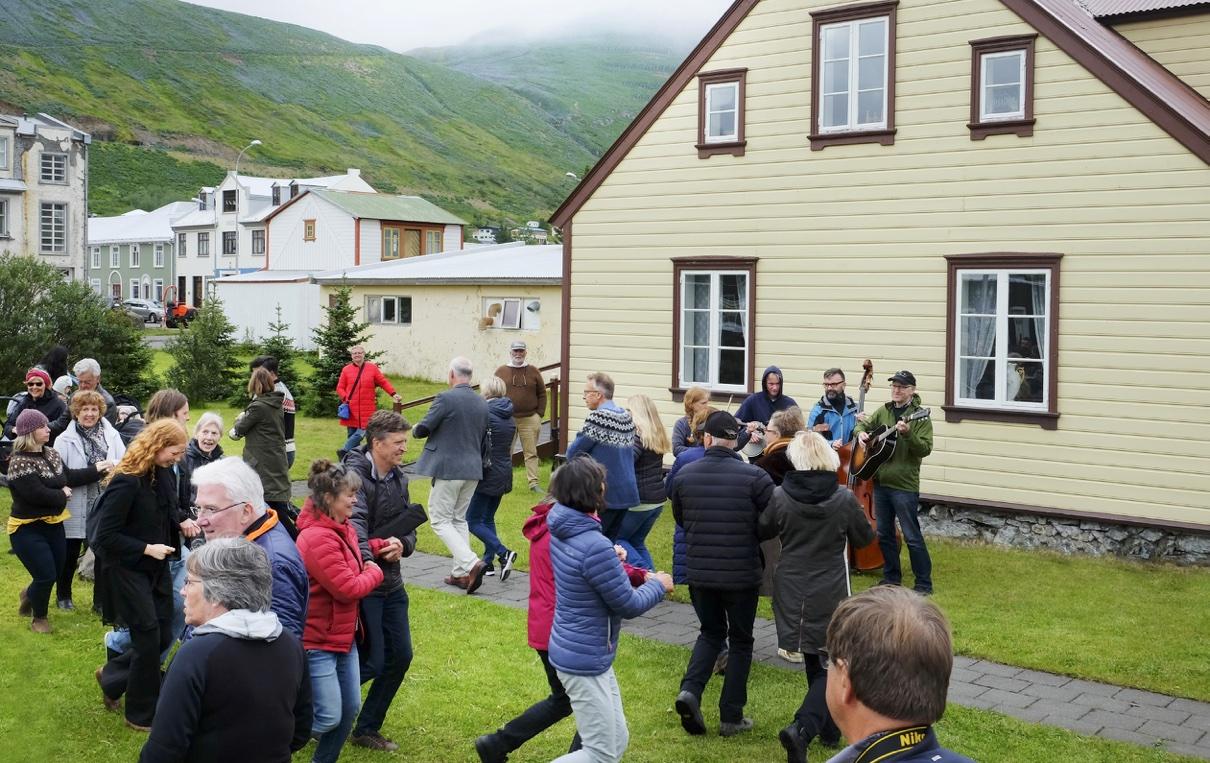
Dancing outside the Folk Music Center in Siglufjörður
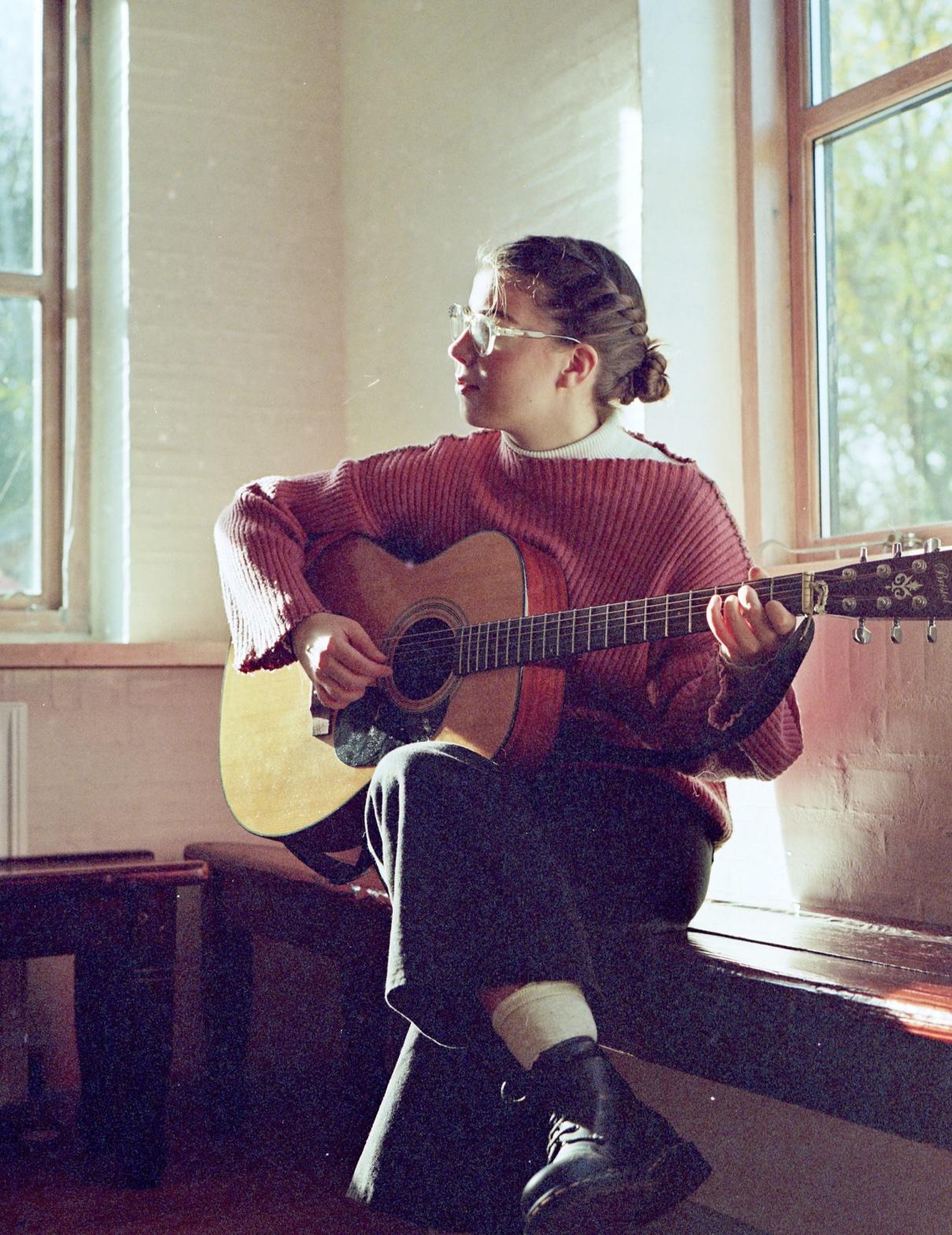
Arny Margret
from literature. The Icelandic Sagas were written in the 13th and 14th centuries, but told of Viking conquests, settlers’ challenges, mythical allegories, and more from up to 200 years prior. Some of these sagas became rímur, epic rhyming poems that were chanted or sung. One of the leading contemporary rímur singers, Steindór Andersen, collaborated with Sigur Rós on a 2001 limited-edition EP featuring six interpretations of these poems; this recording was one of the -rst to bring more mainstream attention to the form.
Rímur served as one of the only forms of entertainment a/er days of farming or -shing, as Iceland was a sparsely populated agricultural society in the 13th and 14th centuries. Most people lived in turf houses, tor æir, made of birchwood and covered with and insulated by the land itself. People
would gather in the main room, the ba(stofa, for warmth, socializing, and entertainment.
According to the travel agency IcelandTours, almost 90% of Icelanders still lived in these turf houses in the countryside in 1890. About 10 years prior, reverend, composer, and musical collector Bjarni 5orsteinsson began to take interest in preserving Icelandic folk traditions. Like an Icelandic Alan Lomax, he traveled around Iceland to collect, attribute, and preserve folk songs. 5orsteinsson ended up with several hundred songs, some of which were shorter versions of rímur, while many others had hymnal or religious roots.
His -ndings, compiled in a book called Íslenzk )jó(lög (Icelandic Folk Songs), were so undervalued in Iceland at the time that it took the Danish beer company Carlsberg to provide funding for his research.
The book was only published between 1906 and 1909; the Folk Music Center in the tiny northern +ord town of Siglu+ör,ur has an original copy.
From 1892 to 1898, 5orsteinsson lived in the house that’s now the Folk Music Center. An organization dedicated to his memory and cultural contributions bought the house, renovated it, and reopened it in time for the 100th anniversary of his book in 2006. Today, the Folk Music Center is the only museum dedicated to preserving and promoting Icelandic folk music traditions. As part of its work, the museum launched an annual festival in 2000 that celebrates musical traditions from Iceland and the wider Nordic community.
Housed inside the Folk Music Center are two rare instruments that visitors are encouraged to play. The Icelandic -ddle, or (la, is a boxy wooden instrument that rests
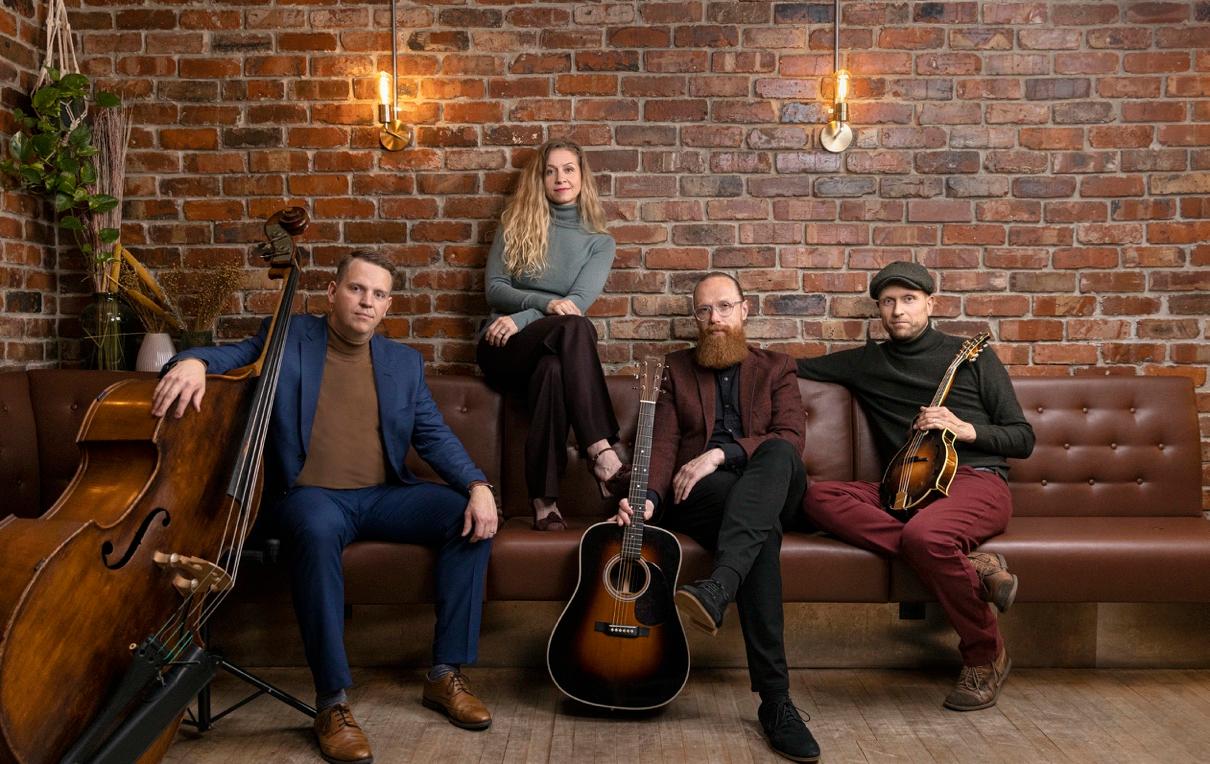
Brek
horizontally on a person’s lap or a table. It has two strings, usually metal, and is played with a bow. The other instrument, the langspil, is similar in size and shape to a contemporary dulcimer or zither; it usually has three strings and can be hit, plucked, or bowed.
The langspil was originally played in the main room of the turf houses as sort of droning accompaniment to religious music. The oldest written records of the instrument date back to the 18th century, which, compared to the Icelandic Sagas, is relatively modern. Similar instruments, like the langelieik in Norway and the hummel in the north of Germany and the Netherlands, existed at the time. According to Eyjólfur Eyjólfsson, one of Iceland’s experts on the langspil, it’s safe to assume that the instrument was an adaptation of such international
versions that merchants brought with them to Iceland.
Eyjólfsson, an operatic tenor, 1autist, ethnomusicologist, and teacher, contextualizes this instrument through the framework of what he calls “a certain cultural rupture.” Germany invaded Denmark during World War II. But because Iceland was still a kingdom of Denmark, the Allies — -rst Britain and then the US — invaded Iceland in order to deny Germans access the important trade port.
A/er Icelandic independence from Denmark in 1944 and the end of the war in 1945, Iceland experienced a dramatic industrial and cultural shi/. “In this process, we made this jump from culture that was more or less unchanged from medieval times to the 20th century,”
Eyjólfsson explains. “In my view, and many people agree with me on this, we’re still sort of recovering
from this rupture. We still haven’t really settled and established our relationship with cultural heritage.”
About the musical part of that cultural heritage, Eyjólfsson continues, “This is one of the main topics that I felt drawn to in dealing with the langspil — what kind of role it plays in the relationship people have with cultural heritage in this country.”
Renewed Interest
There’s a small community of Icelandic musicians who are working not just to preserve this sort of early folk music, but to expand upon it in innovative, contemporary ways. Since recordings of rímur chanting have survived, but instrumental langspil playing wasn’t recorded, “We have no idea really how people played them or how they how they sounded
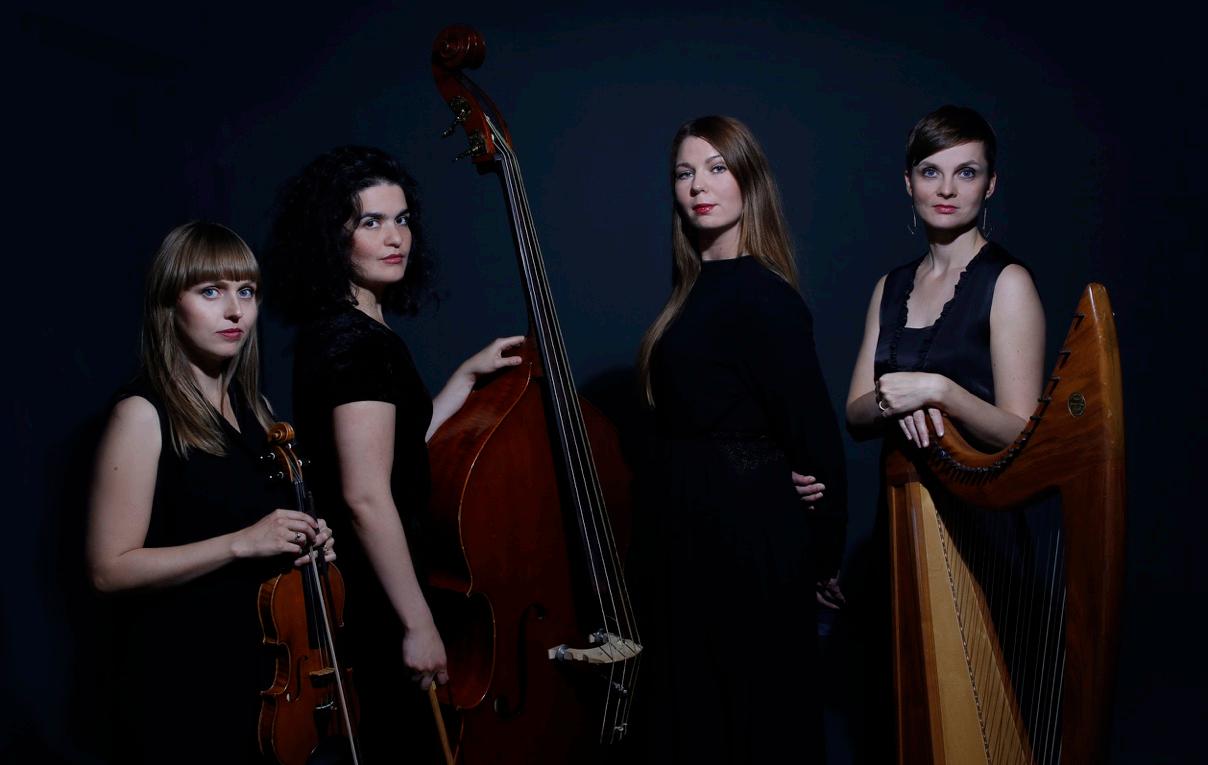
UMBRA
in the past,” Eyjólfsson says. Therefore, Icelandic musicians today aren’t bound by rigid rules of style or sound.
Hafdís Huld is one of the most famous musicians in Iceland today. She began her career at just 15 years old as part of the electronic group GusGus and has since traversed multiple styles of music as a solo artist. Her 2012 record of lullabies, Vögguvísur, combines Icelandic folk songs, classic children’s songs translated into Icelandic, and original music. And for the last four years, Vögguvísur has been the No. 1 album in Iceland, with more than 68 million streams.
A/er a summer a/ernoon chatting outside Reykjavik’s modern Harpa concert hall, with her youngest child gleefully riding his tricycle around the harbor-front patio, Huld continues the conversation via email: “I think there are two di0erent kinds of folk music happening in Iceland. There are the traditional old Icelandic songs and then there are Icelandic artists telling stories through acoustic music that is more in line
with what is happening in the international folk scene. And many of us, like myself, do both.”
Huld’s newest album, an all English-language record called Darkest Night that came out in February, trades the more folkloric traditions of her lullabies record for a contemporary style. Musically, the two records share an acoustic singersongwriter structure, but Huld adds 1ourishes of synths throughout Darkest Night, especially on songs like “Blind Spot” and the closing “So/er Shade of Blue,” to highlight her light-as-air vocals.
Since playing the Folk Alliance International conference and festival in 2019, during which she was the -rst Icelandic artist to be invited for an o4cial showcase, Huld has noticed the local scene evolving more rapidly. The international welcome and acceptance seems to have bolstered musicians already playing folk music in Iceland.
“We have now formed a little society for folk musicians in Iceland so that we can share our experiences and connections, and the Iceland Music export o4ce has been helping
folk artists from Iceland make international connections,” she says. Still, a sense of community is di4cult to cultivate and maintain. The lack of music industry and infrastructure due to Iceland’s size, location, and population is only exacerbated by folk and traditional music’s stylistic niche. There are two regular, annual events celebrating folk music and traditions in Iceland, but each takes a broader perspective: The Folk Music Center’s festival in Siglu+ör,ur promotes Nordic music more generally and the Vaka Folk Festival in Reykjavik emphasizes rímur chanting and traditional folk dancing.
There’s a sense that everyone knows each other in such a small scene. Eyjólfsson lauds a group called Funi, comprised of Bára Grímsdóttir and Chris Foster, two musicians and langspil players who help organize the Vaka Folk Festival alongside another folk musician, Linus Orri. The band Brek — comprised of guitarist Jóhann Ingi Benediktsson, pianist Harpa 5orvaldsdóttir, mandolinist Gu,mundur Atli Pétursson, and double bassist Sigmar
5ór Matthíasson — are quick to shout out other Icelandic folk musicians like UMBRA, Blood Harmony, Lón, and Svavar Knútur.
Writing collectively a/er reveling together over Icelandic beers and shots of Brennivín on a still chilly but bright summer night, the members of Brek explain that even with the Folk Music Center’s festival and Vaka Folk Festival, Iceland still lags behind other Scandinavian countries in terms of folk festivals and other organized e0orts to preserve its own cultural heritage.
“We try to mix di0erent types of music and music traditions together in our own way, but still try to maintain some kind of an Icelandic voice. A big factor in that is we mostly sing Icelandic lyrics and that alone gives our sound a special color that people don’t hear very o/en,” the band wrote collectively via email of their self-titled debut, which won the Icelandic Music Award for Folk Album of the Year in 2022. “To us, it is important to show the Icelandic language to the world because even if it is largely based on the old Nordic language from the Viking age, it is not
spoken by many and needs to be preserved. That, on its own, is a way of preserving Icelandic folk tradition.”
Alexandra Kjeld, bassist and vocalist (and occasional langspil player) in the Icelandic trad-folk band UMBRA, also notes the stark di0erence between how Iceland and other Nordic countries not only preserve, but also teach music and folklore. Having signed with a Finnish booking agency and toured across Norway, Sweden, and Finland, as well as around Europe, the band noticed the lack of governmental -nancial support, academic curricula, and overall community in their home country.
Through their own four records as UMBRA, members Gu,björg “Gugg6” Hlín Gu,mundsdóttir (violin, vocals, and langspil), Arnger,ur María Árnadóttir (celtic harps, organ, harmonium, and vocals) and Lilja Dögg Gunnarsdóttir (alto/lead vocals, 1ute, and percussion), and Kjeld inject baroque and choral elements into original folk noir songs.
“Much like most musicians, we do
not want to be conformed to one category or one style,” says Kjeld. “But at the core, we are very much about early and traditional music revival. We do so using both old and modern instruments, using our voices, [and] creating and shaping our own musical identity.”
That revival is beginning to take shape in bigger ways, in and outside of Iceland. “There is de-nitely an awakening going on, and there are perhaps some di0erent facets to this sudden ignited interest. Part of it is the seeking of a community, of coming together to celebrate our roots and traditions … another part is a kind of self-brought duty,” says Kjeld. “I feel that many in the ‘roots’ community in Iceland, myself included, feel the need to -ll in the gaps, to provide material, solutions, and alternatives where there is nothing.
“I feel like all of us in the Icelandic folk bubble are very seriously and ardently trying to ignite awareness, trying to spark interest and create a buzz, whilst coming together, sharing our experiences, and having fun doing it.” 2
REVIEWS
These are excerpts of reviews and stories originally published at nodepression.com, and you can read many more reviews — plus news stories, interviews, and columns — there. For more of what’s on our radar, follow No Depression’s “Best of the Month” playlist on Spotify.
Lizzie No Halfsies
Miss Freedomland Records/Thirty Tigers
Halfsies has a foot in both New York City and Nashville, and at least a toe dipped in quite a few genres. Partially recorded in both cities, the album de-es categorization. Singer, songwriter, guitarist, and harpist Lizzie No fearlessly 1exes her muscles across pop, country, rock, folk, bluegrass, and all the gray areas in between. Her songs are earnestly melodic but narratively complex, catchy but soul-stirring, from the rollicking guitars of “Lagunita” to the delicate vocals of “Done” and “Deadbeat,” the complicated worldbuilding of “Annie Oakley,” and the kicks of twang in “Getaway Car” and “Shield and Sword.”

kind of avatar of herself. It feels safer that way, to plumb the depths of her own despair, relive brutal bouts of depression, and remind herself of all the survival tactics she’s had to save up. And that’s where Miss Freedomland — a character that references a now-defunct amusement park in the Bronx that No has co-opted like a suit of armor to guide her through these songs — comes into play.
Populated with vivid details, No’s songs revisit traumas both faded and fresh, but she does it through a
Embodying Miss Freedomland as she navigates all the hard stu0 felt just as empowering for No. Maybe it’s what gave her the con-dence, the freedom, to try new things on Halfsies: to co-produce and call the shots, to cold email Sheryl Crow’s drummer Fred Eltringham and ask him to play on the record, to assemble an all-star community of collaborators, to write about experiences and pain she hadn’t been ready to dredge up before, to play country music (a fraught genre for No) unapologetically, to trust her instincts. Maeri Ferguson
William Elliott Whitmore
Silently, The Mind Breaks Whitmore Records
Troubled souls who need an ally on the rocky road of life may -nd a kindred spirit in Iowa’s William Elliott Whitmore. Continuing to dispense hard wisdom more than two decades a/er his debut, this plainspoken country-folk troubadour ponders existential angst and other primal issues on the compelling Silently, The Mind Breaks. The good news: We’re all in this together. The bad news: We’re all going to die.
A no-frills a0air, this unsettling yet invigorating album is essentially a one-man show, mixing Whitmore’s banjo, acoustic guitar, and kick drum with gritty, determined vocals. Occasional support musicians fail to dispel the sense of a solitary truth-teller
on a mission, compelled to deliver a dark message. Whenever the psychic burden of Silently, The Mind Breaks seems overwhelming, Whitmore adds a rousing shot of gallows humor, unleashing the kind of mordant wit Randy Newman would admire. Recalling early ’60s protest songs, “Bunker Built for Two” sets apocalyptic visions to a jaunty beat. The rollicking “Break Even” could be a comic lament from the early days of country music, recounting mundane trials from a leaky roof to coyotes in the henhouse to a losing poker hand. The closing track, “A Golden Door to an Empty Place,” mournfully regards “forgotten souls forever gone,” let down by religious dogma. This bleak parting dispatch aside, Whitmore’s -ery heart infuses Silently, The Mind Breaks with the kind of de-ant energy that makes surviving this mad world a tad easier.
Jon Young
Sarah Jarosz
Polaroid Lovers
Rounder Records
Though it must have been a brutally sad goodbye when Sarah Jarosz le/ her longtime home of New York City in 2020, her new city suits her. Polaroid Lovers, the seventh studio album from the proli-c songwriter with a voice of gold, is Nashville through and through. It has the buoyancy and spirit of the best ’90s country confections, more a vibe than anything technical. Whether or not Jarosz meant to pay tribute to the Martinas, the Trishas, and the Pattys, Polaroid Lovers listens like a love letter to the sound they mastered. Cra/ed in collaboration with renowned producer and writer Daniel Tashian in her now-home of Nashville, the album is her most sparkling outing yet, -lled with country-pop gems

that play to the enormity of Jarosz’s vocal strength. Jarosz is doing more than just trying on the bedazzled suit. She’s wearing the hell out of if under a bright spotlight, letting it bring out in her all the parts that were hidden before. Even in the album’s sparser moments, Polaroid Lovers sounds like Jarosz taking a leap. Jarosz’s folk roots are still present on the record, but maybe more than ever before she is leaning into something a little louder and shinier, and the self-assuredness that sounds so fantastic on her. There’s a co-write with fellow modern-day country queen Natalie Hemby, “Good At What I Do,” which seems to -nd Jarosz right on the cusp of fully living in this chapter. “Am I good at what I do? / Do I live up to the kings? / Will my words go on forever / When my voice no longer sings?” she wonders. If Polaroid Lovers is any indication, the answer is a fullthroated yes. Maeri Ferguson
Cary Morin
Innocent Allies
Famed Western artist Charles Marion Russell has been a guiding -gure in Cary Morin’s life for as long as he can remember. Now, one of Russell’s paintings adorns the cover of Morin’s latest album, Innocent Allies — a collection of 12 original songs inspired by Russell’s life and work and two covers. Morin is a roots and “Native Americana” artist who’s been performing music since 1983. His work has won multiple Indigenous Music Awards and an Independent Music Award, and a live performance of his song “Jug in the Water” was named one of NPR Music’s Best Live Sessions of 2020. His reputation as a musician is built on his intricate and unique Piedmont-inspired guitar
-ngerpicking and his soulful voice that delivers lyrics largely drawn from his life growing up in Great Falls, Montana.
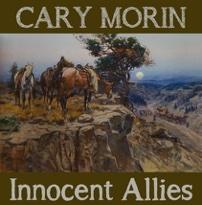
Innocent Allies marks Morin’s 10th album in 12 years. Written and recorded over the last year and a half and mixed by Grammy-winning producer Trina Shoemaker, the record is his -rst to be self-recorded entirely in his home studio. Morin played all the guitars and pedal steel on the record and sang along with his wife and musical partner Celeste Di Iorio. Through the process of creating Innocent Allies, Morin has been able to use Russell’s paintings as a musical and lyrical ekphrasis to access parts of his own story. It’s that rare, earnest passion project that allows both the subject and its interpreter to 1ourish, and one that has taken Morin a long time to get just the way that he wants. — Avery Gregurich
Spring 2024 Contributors
The BACON BROTHERS, featuring Emmy Award-winning composer Michael Bacon and A-list actor Kevin Bacon, have spent the better part of three decades exploring their mix of folk, rock, soul, and country music they call “forosoco.” To date, they’ve released a dozen records and have performed worldwide, from headlining gigs in Japan to American performances at iconic venues like Carnegie Hall, the Grand Ole Opry, and Gruene Hall.
COURTNEY E. SMITH is a writer based in Dallas, where she works as the editor for Eater Dallas. She’s the host of Songs My Ex ruined, a podcast, and the author of the book Record Collecting for Girls.
HILARY SAUNDERS is the managing editor at No Depression and her previous work has appeared in Paste, ESPN, Next City, The Jewish Daily Forward, and more. She’s a proud member of the National Press Club and Society of Professional Journalists, an alumna of the University of Miami, and a unironic believer that rock and roll can save the world.
JIM SHAHEN is a freelance writer from around Albany, New York. He’s the popular music writer for the Albany Times Union and has written for No Depression; Living Blues; Consequence of Sound; Vinyl Me, Please; and Bandbox. He’ll never stop telling people about the time he was butt-dialed by George Clinton.
Throughout her 25-year, multipleGrammy nominated career, JOAN OSBORNE has never been an artist con-ned to one space. She has utilized her incredible voice through her own songs while also becoming one of her generation’s -nest interpreters. Osborne has shared the stage with artists ranging from Stevie Wonder and Mavis Staples to Bob Dylan and Lucinda Williams, and she continues to seamlessly blend into any genre. She has sold over three million albums and continues to release new music; her latest album is Nobody Owns You.
JOHN MORRISON is a writer, producer, and DJ from Philadelphia. For the last 25 years, Morrison has worked as an independent music journalist, documenting and reporting on Philly hip-hop culture. His writing has appeared in the Philadelphia City Paper, NPR Music, The Wire Magazine, Red Bull Music Academy, and more.
LAURA SCHOLZ is an Atlanta-based writer and editor who has covered wellness, culture, and travel for Bon Appétit, Eater, InStyle, SELF, Travel + Leisure, Well + Good, Women’s Running, and more. When not running marathons or teaching Pilates, she enjoys roadtripping and hiking with her husband and two dogs.
MARCUS AMAKER takes daily naps and is Charleston, South Carolina’s -rst poet laureate. He’s also an opera librettist, an electronic musician, and an award-winning graphic designer. He’s an Academy of American Poets fellow, and his poetry has been recognized by NPR, The Washington Post, The Kennedy Center, and more. His 10th book is Hold What Makes You Whole. He is currently writing an opera with Gillian Rae Perry as part of Chicago Opera Theater’s Vanguard Initiative.
MEREDITH LAWRENCE writes and photographs interview-driven stories about music, art, and culture. Her work has appeared in GRAMMY.com, Vox, American Theater Magazine, Saddle Mountain Post, Alta Journal, and more, and she holds an M.A. in arts and culture writing from Columbia Journalism School. She grew up in Oregon and currently lives in Brooklyn, New York.
MICHAEL ELLIOTT is a native North Carolinian and a former radio veteran of more than 30 years. His work has appeared in No Depression, PopMatters, Albumism, Americana UK, and The Bitter Southerner. His -rst book, Have a Little Faith: The John Hiatt Story, was published in 2021 by Chicago Review Press.
RACHEL BRODSKY is a writer, critic, reporter, and podcaster living in Los Angeles. Her writing about music, entertainment, and culture has appeared in the LA Times, LA Magazine, Stereogum, The Ringer, SPIN, InStyle, Bustle, The Guardian, Vulture, Rolling Stone, and more. Rachel also co-hosts *IN SYNC, a needle-drop podcast celebrating the marriage of music and moving images.
RACHEL CHOLST is an educator and writer in New York City. Her work has been featured in No Depression, The Nashville Scene, Wide Open Country, The Boot, and her own long-running blog and podcast, Adobe & Teardrops She is also the editor of the queer country music zine Rainbow Rodeo and the co-creator of the indie comic series Artema with Angela Boyle.
RIVER SHOOK is a songwriter, producer, and recording and touring artist based in Chapel Hill, North Carolina, who leads both the country-punk band Sarah Shook & the Disarmers and a solo indie rock out-t called Mightmare. They are a collector of experiences and observations, whose clear-eyed, unafraid, and autobiographical storytelling documents real people with real dreams, atmospheric pasts, and inescapable problems — all presented without -lter or pretension.
STACY CHANDLER is the assistant editor for No Depression and winner of the 2022 Rolling Stone Chet Flippo Award for Excellence in Country Music Journalism. She previously has written and edited for the (Raleigh, North Carolina) News & Observer, alumni magazines, accounting magazines, online college courses, and pretty much anything else that has words in it. She lives in Raleigh with her husband, their daughter, and a very pampered dog.
NO DEPRESSION
Part of the FreshGrass Foundation
No Depression is brought to you by the FreshGrass Foundation, a 501(c)(3) nonpro-t organization dedicated to preserving and promoting the past, present, and future of American roots music. In addition to publishing No Depression, producing FolkAlley.com, and presenting the FreshGrass Festival | Bentonville in Arkansas and FreshGrass Festival | North Adams at Mass MoCA in Western Massachusetts, the Foundation also funds cash awards for up-and-coming musicians. Visit freshgrassfoundation.org for more information.
Summer 2024
No Depression is committed to producing the best roots music coverage, both in print and online at nodepression. com. With long-form stories highlighting the music’s stars and up-and-comers as well as its underreported issues, the quarterly editions of No Depression’s journal are essential reading for every roots music fan.
Included in this issue: Naomi Judd, a new compilation of Alice Randall’s songs featuring Rhiannon Giddens and Allison Russell called My Black Country, Thee Sinseers and the Los Angeles chicano soul revival, and more
Between issues, stay current on roots music with news, reviews, and thought at nodepression.com. Here are just a few of the artists we’ve covered recently:
Lizzie No
Sarah Jarosz
Cary Morin
Gaby Moreno
Chatham County Line
Madi Diaz
Aoife O’Donovan
Charlie Crockett
Sierra Ferrell
Brittney Spencer




Screen Door
THE END IS THE BEGINNING: TALES FROM AN ARTIST IN RECOVERY
BY RIVER SHOOK
It’s July 15, 2019, and I have the worst hangover of my life. I just woke up in Winnipeg, Manitoba, to a slew of unread texts and missed calls from my partner, frantically checking on me. I must have blacked out again because I came to in a heap, still ensconced in my scruffy black jeans, faded T-shirt, and my size-too-big Ariat boots laced up and tied around my ankles. It would be a miracle if I brushed my teeth before I face-planted in my pillow last night, and Jesus quit me in the aughts.
My head throbs as I quickly tap out a sorry-Ipassed-out text and press send, squinting at the tiny time display in the upper left corner of the cracked screen. Van call in 20 minutes, fuck. I stuff my charger into the closest pocket and dig for a toothbrush, a clean black T-shirt, and my waning deodorant stick. Shrugging myself into my backpack, I grab my guitar and pedalboard case and hit the elevator for a stomach-churning descent to the bottom floor. I maneuver my gear carefully through the warm din of the bustling hotel kitchen, exchanging knowing smiles with the kitchen staff, and find our old band van Goldie, waiting patiently at the loading dock for the usual stragglers to materialize. The trailer door stands agape. I stow my two black hard cases securely before slinking headlong into the comfort of a turquoise-patterned blanket on my bench and letting my backpack slip to the floor. I don’t know how I know, but I know: I just quit drinking. Forever. I’m eight months sober when the world shuts down. My band can’t tour for the foreseeable future, and
sticking with my fledgling endeavor, sobriety, means finding a new fixation. From a duplex in the woods of North Carolina, I write, produce, and engineer an entire album armed with a Scarlett 2i2 audio interface and a crotchety 2012 MacBook Pro, a ratty SM 57 mic, and an ancient version of GarageBand.
By 2022, I’m a machine. In a single year, I released Sarah Shook & The Disarmers’ third studio album,
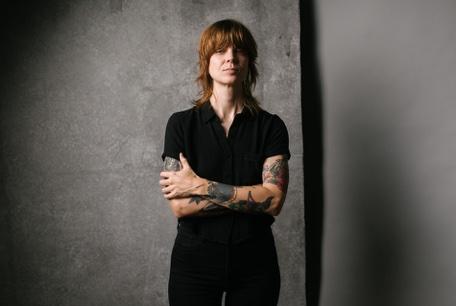
Nightroamer, and my solo debut as Mightmare, Cruel Liars. I produced a debut album for emerging country artist Izzy Ryder and juggled two bands, all while navigating 138 days of touring in eight countries and shifting gears seamlessly back into Mom Mode for my incredible son between tours. Quitting drinking was never about saying no to alcohol. It was about building a future me who could say yes to all this and not fold under the pressure.
It’s 2023, and I’m furiously writing for the new Disarmers record with any shred of free time I can unearth. I’m organizing my production notes, finalizing lyrics, and perfecting riffs in vans, in airplanes, in hotel rooms. My schedule is grueling. I miss my son. We’re careening around North America in a GMC Savana. We’re
throttling the motorvägar and autopistas of Europe in a Sprinter. We’re in North Carolina tracking a new record. We’re hurtling toward the promise of tonight’s venue and the beaming faces of our fans in Toronto. We navigate van breakdowns and tire blowouts, blizzards in Oregon, dust storms in Texas, show-canceling illnesses, the departure of two band members after the Europe tour, a drummer with a sprained wrist, and a rabies scare. Without the escape of alcohol, I face it all head-on. My well of inner strength deepens with each challenge, with every loss. I am the Pacific. I am the Mariana Trench.
This spring, The Disarmers release our fourth studio album, and it might be the best thing I’ve ever done. Revelations demonstrates a significant arc in songwriting, signifying both personal and artistic growth, and rather than entrust this celestial body of work to anyone else, I produced it myself. Since I put down drinking I have been pushed to the outer limits of my energy, imagination, and creativity, and remained resilient. I see the younger me so clearly with my long hair, gangly limbs, size-too-big boots, bloodshot eyes, and crooked grin. Dehydrated and sleep-deprived, lumbering south in a beat-up Chevy 1500 towards the Ponderosa pines of Montana. That bedraggled backslider chose a future that changed everything. And I’m releasing Revelations in honor of the first moment I chose myself instead of a shot and a beer. 2
Revelations is due out March 29 via Abeyance Records/Thirty Tigers.
JILLIAN CLARK
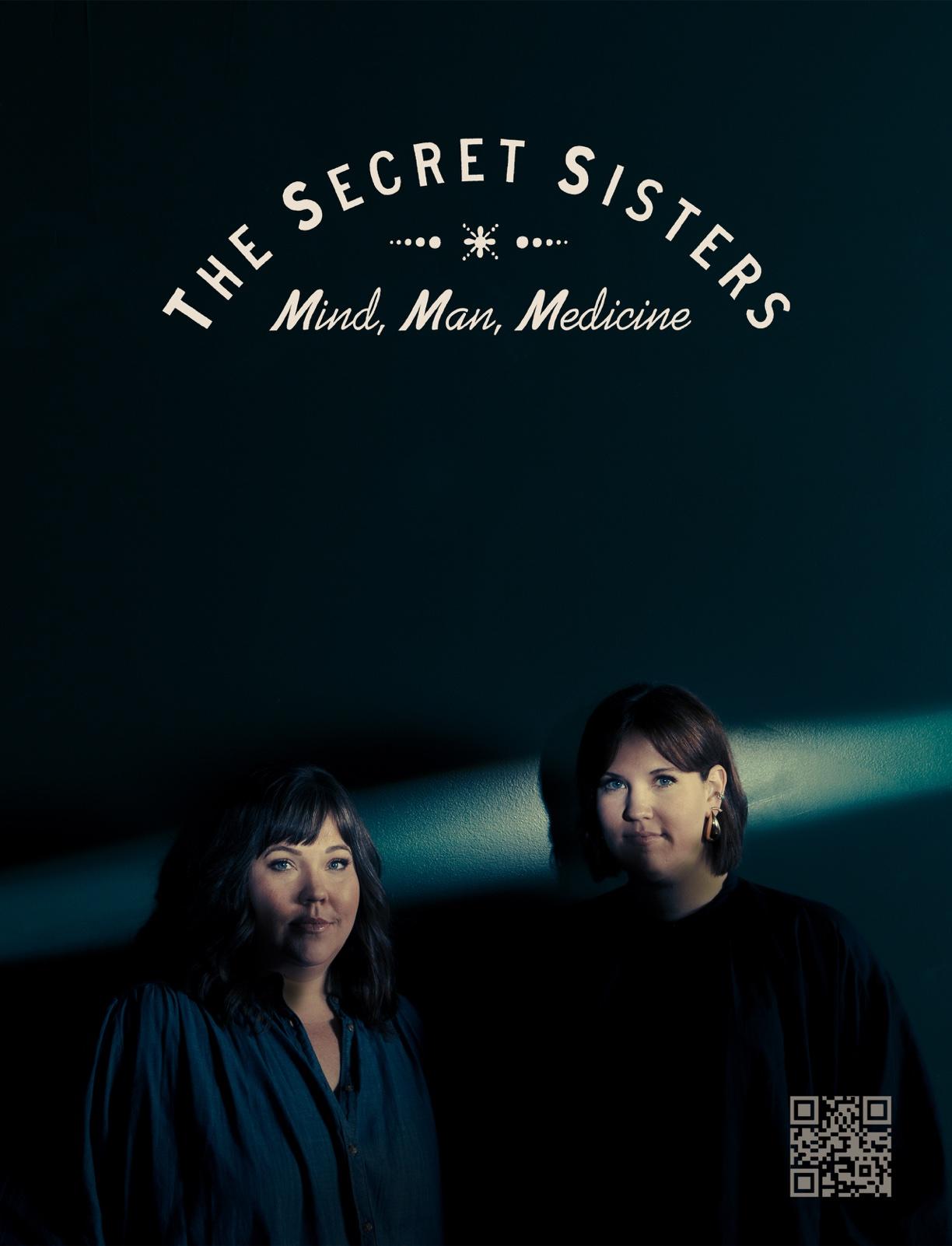



$1.5 Billion in Streaming Royalties Distributed to Over 34,000 Members


Are You Receiving Yours?
Do you or your clients have music streaming in the U.S.? The MLC may have money for you!
The MLC collects royalties from U.S. streaming services and then distributes them to songwriters or their music publishing partners.
Join The MLC today to start getting paid for your plays.
Membership is FREE!


Join Today!