“Every human being has a responsibility to be accountable to their society. Musicians are just the tip of the iceberg.”
Ani DiFranco, p. 134
5 HELLO STRANGER by
Kim Ruehl
8 CAN WE COME TOGETHER WHEN WE LISTEN APART? by Mark
Erelli
10 RULE BREAKERS
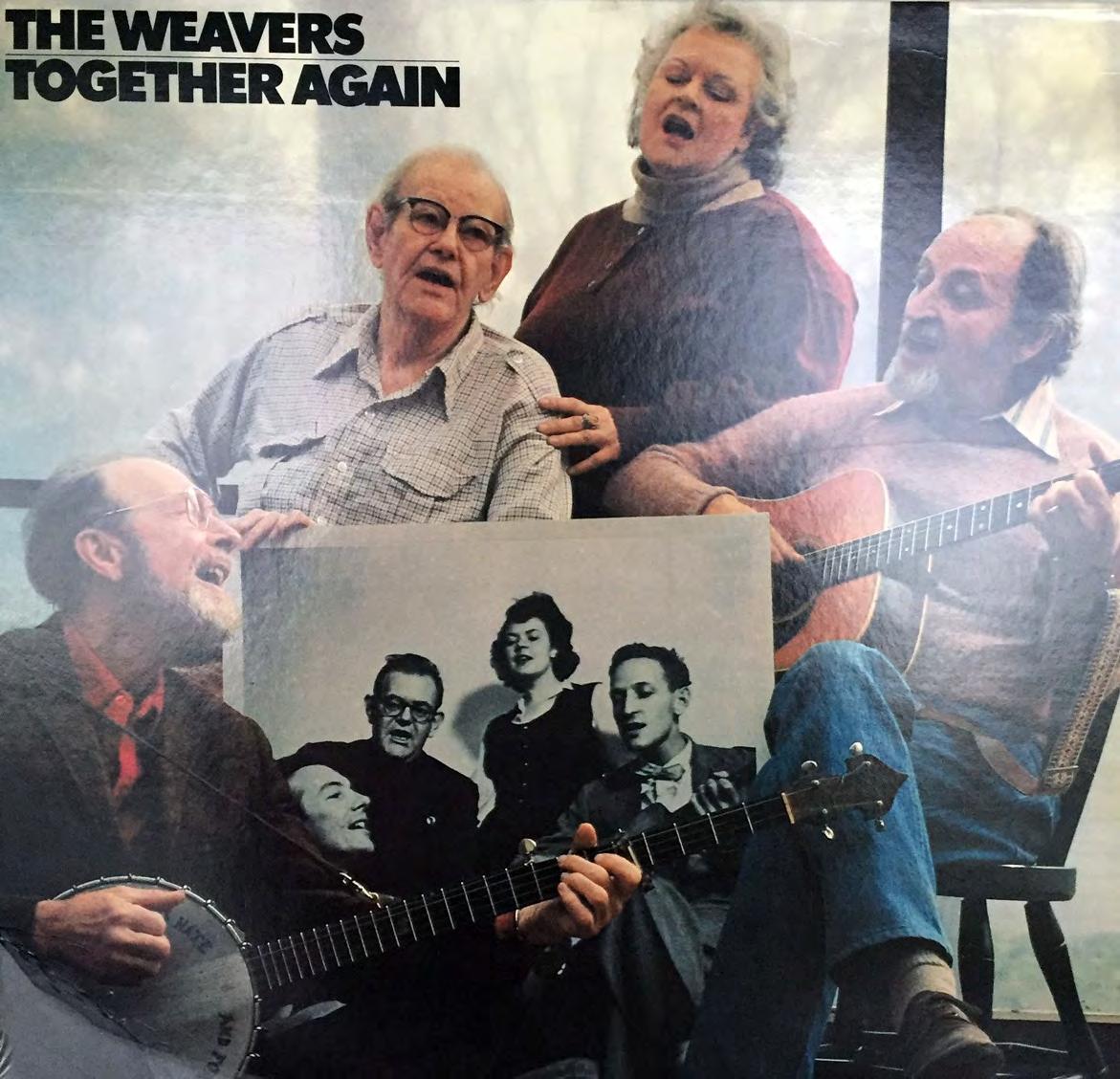
The times shut down the Weavers, but their influence was timeless by Scott Alarik
20 THE ROAD AND THE HIGHER PLAIN
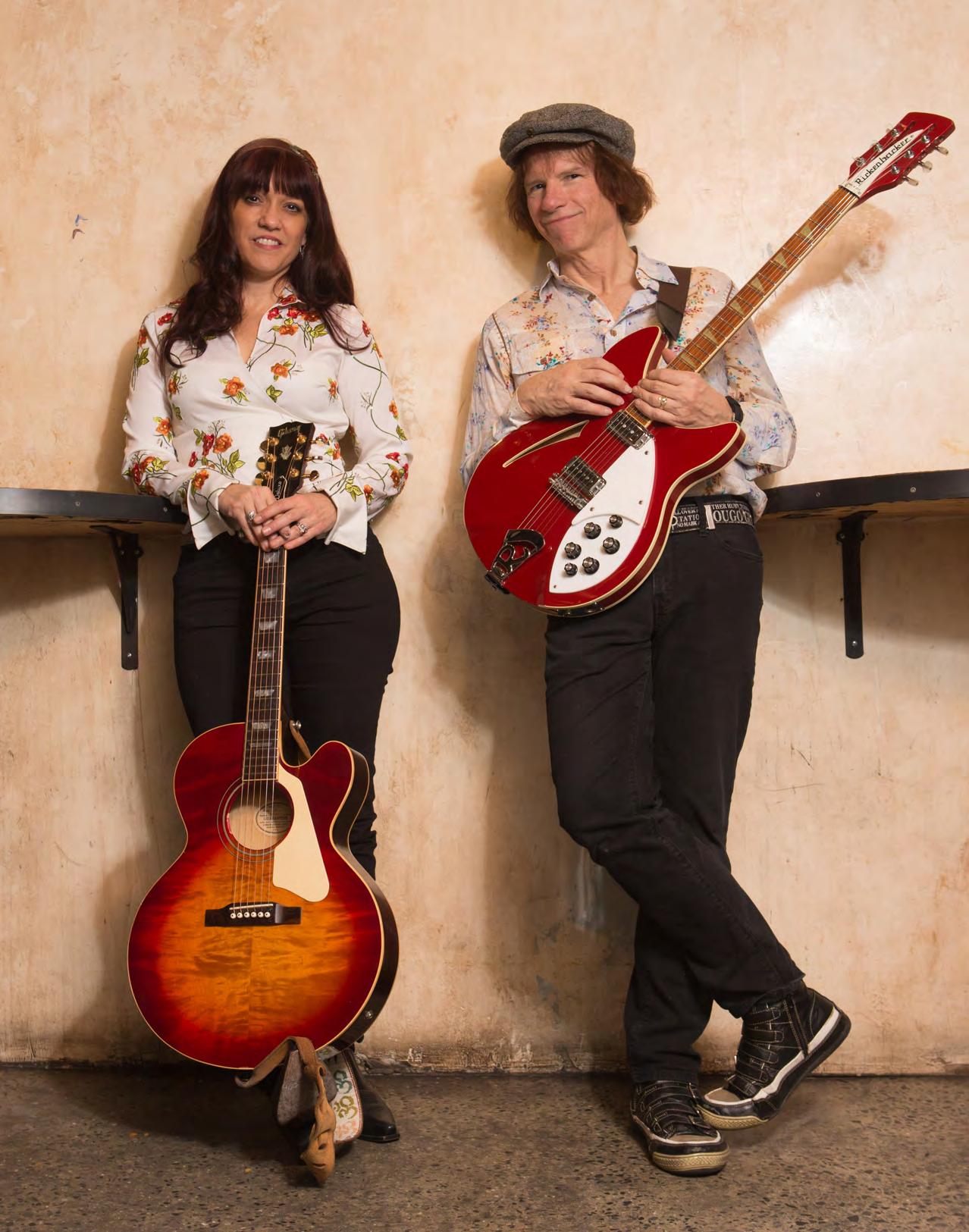
The Kennedys use their songs to show, not tell By Lee Zimmerman
24 VILLAGE PEOPLE
The Little Village Foundation finds music that needs to be heard by Terry Roland
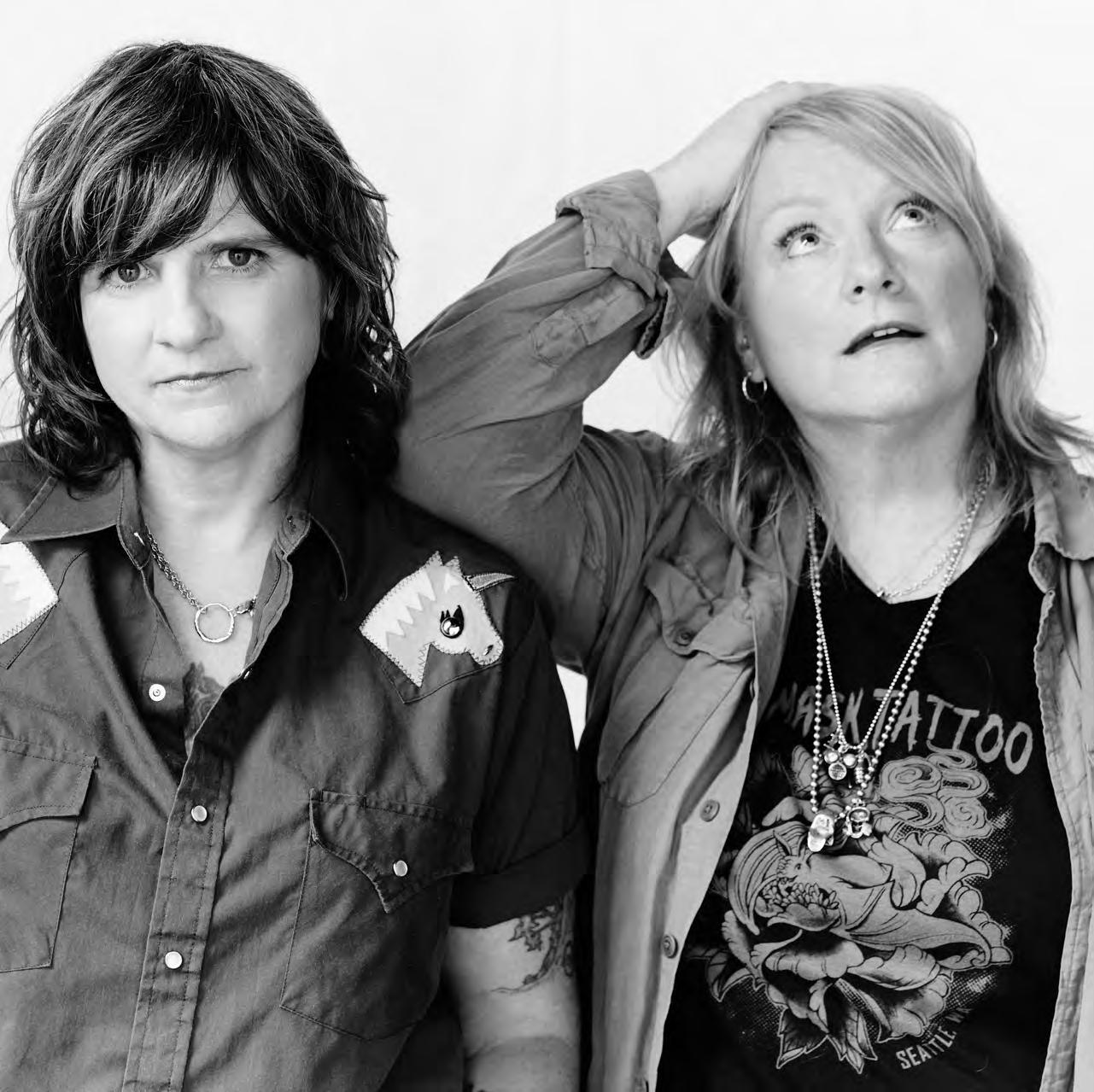
30 FOR SOME, SPEAKING UP MAY BE THE ONLY WAY OUT by Amy Ray
34
CULTURE AND STRUGGLE
The organizing history of “We Shall Overcome” by Lizzy Cooper Davis
42 THE CAMPFIRE PROBLEM
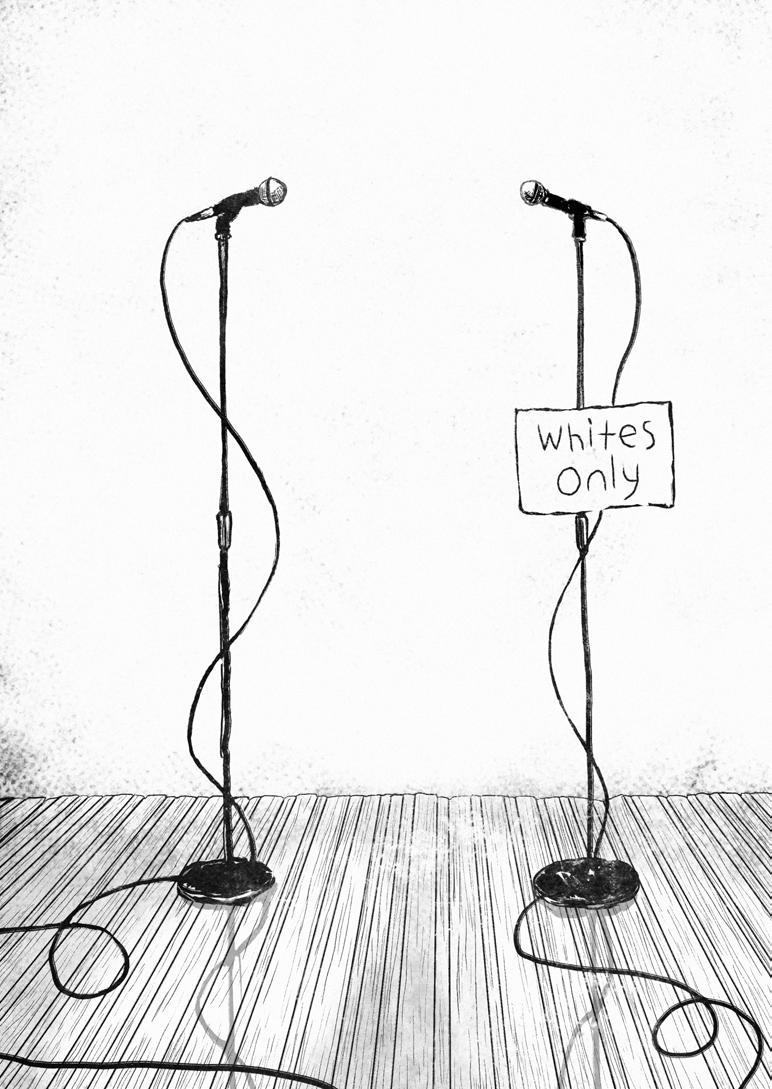
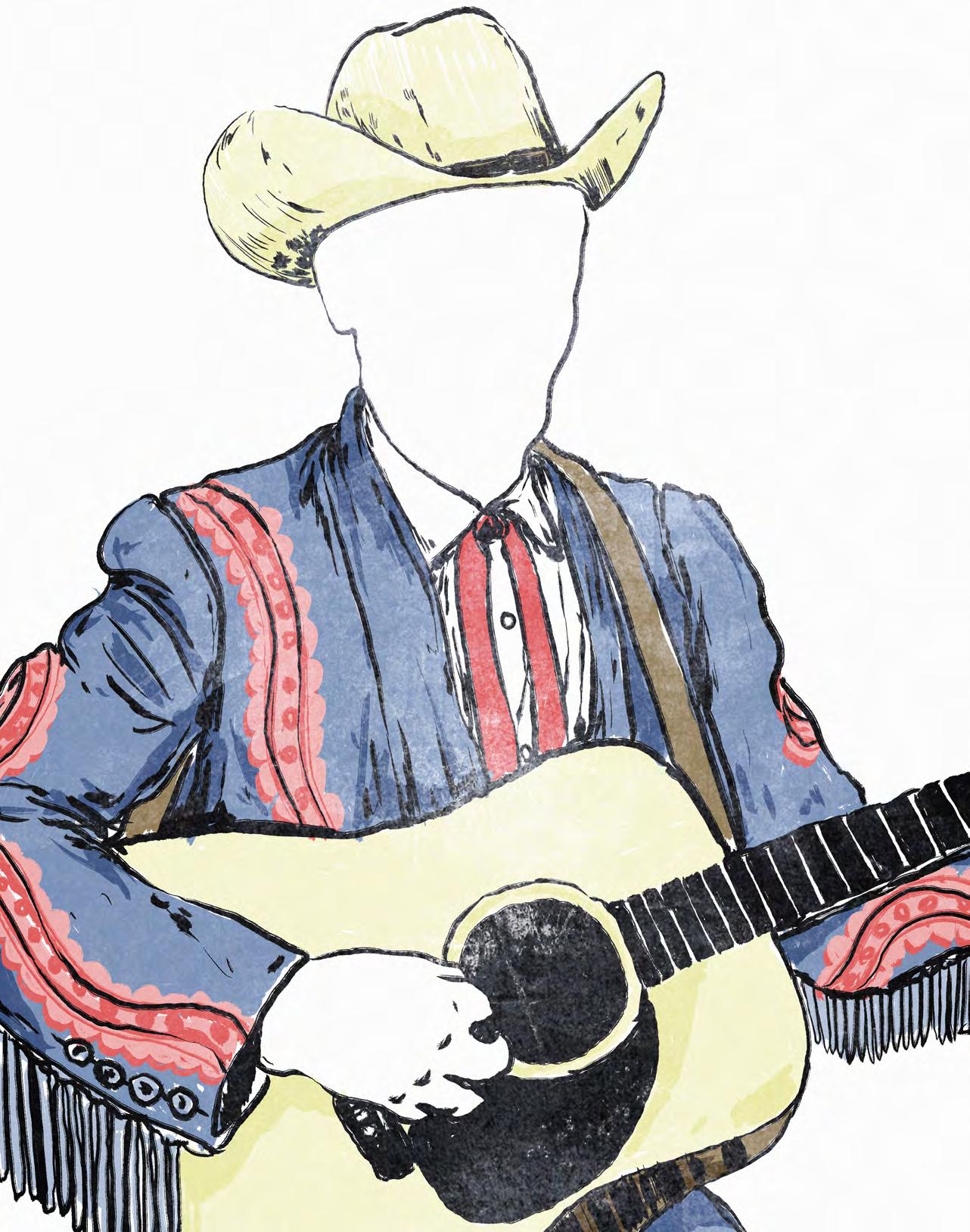
Navigating the tension between whiteness and blackness in country music by Geoff Nelson
52 PUTTING THE LIGHT OUT THERE
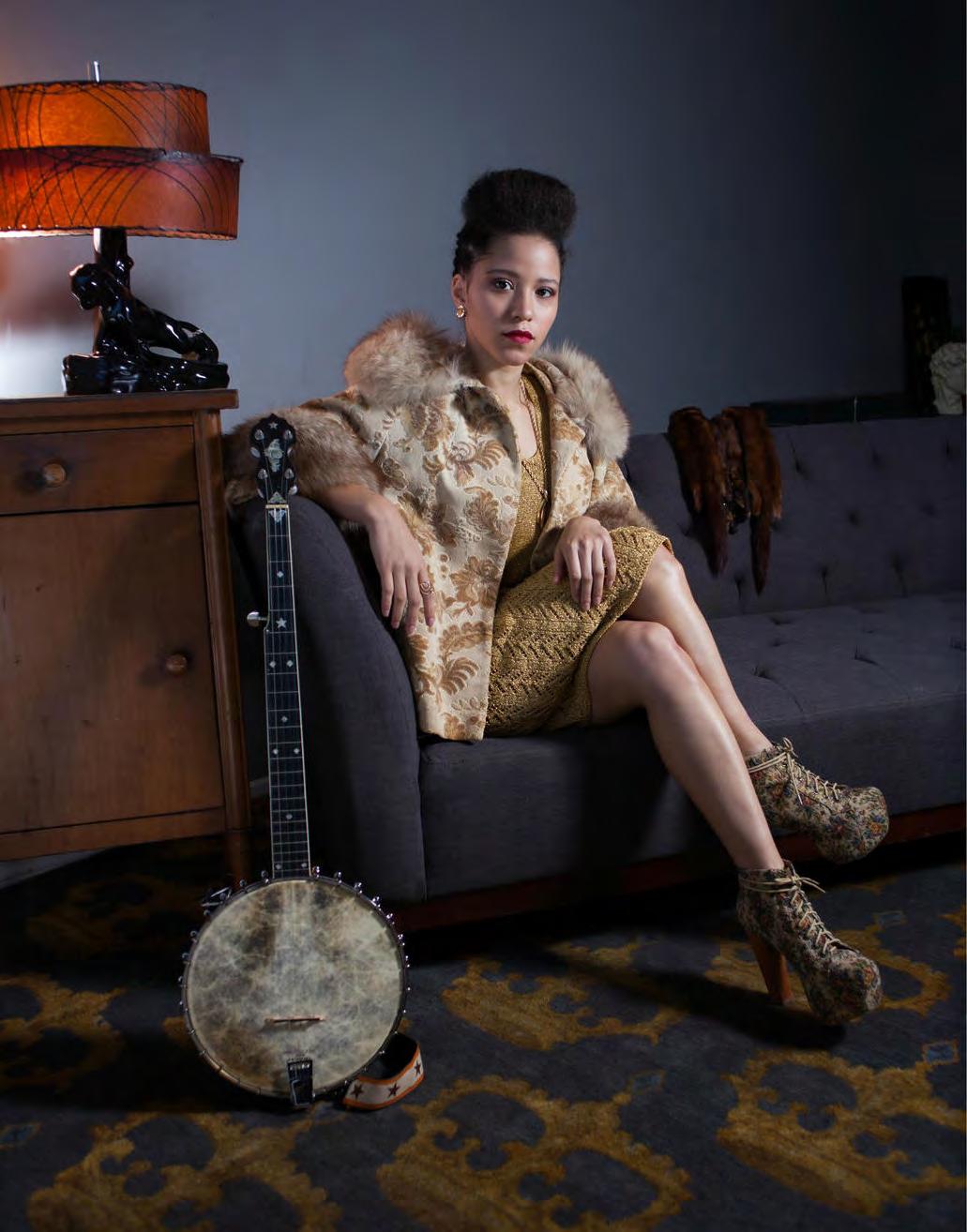
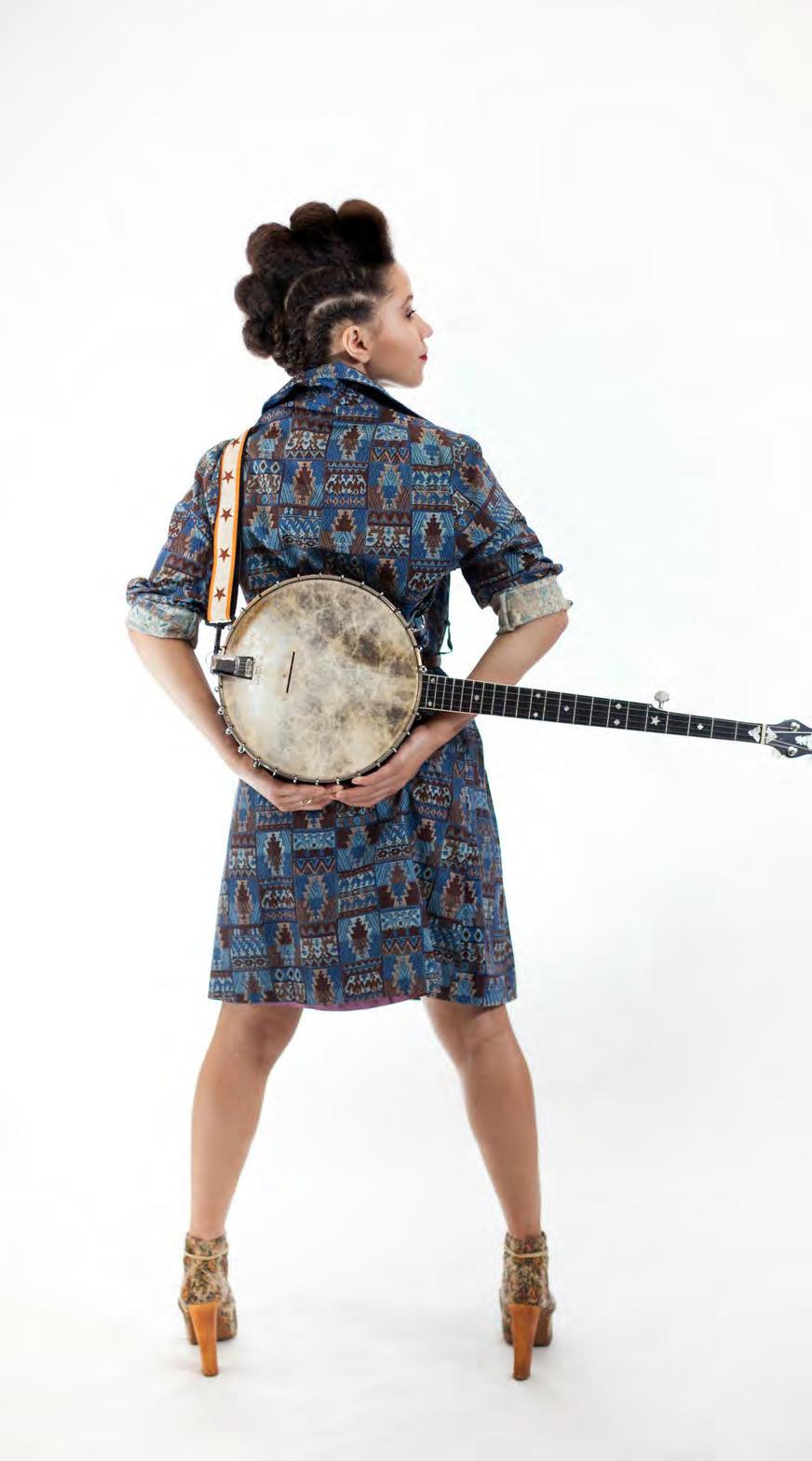
Kaia Kater and Erin McKeown discuss “otherness” in music By Kelly McCartney
58 THE WORK IS NEVER DONE
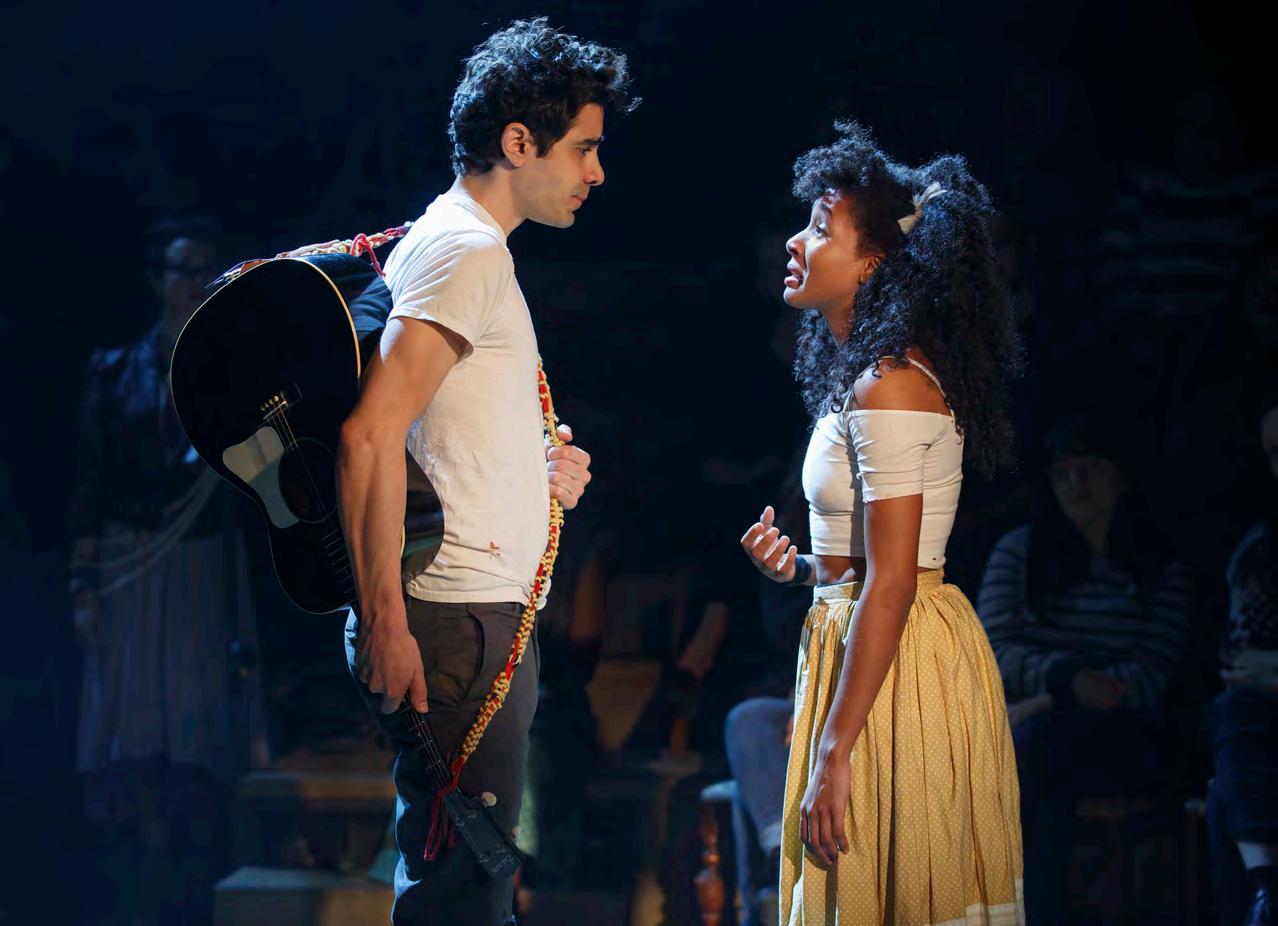
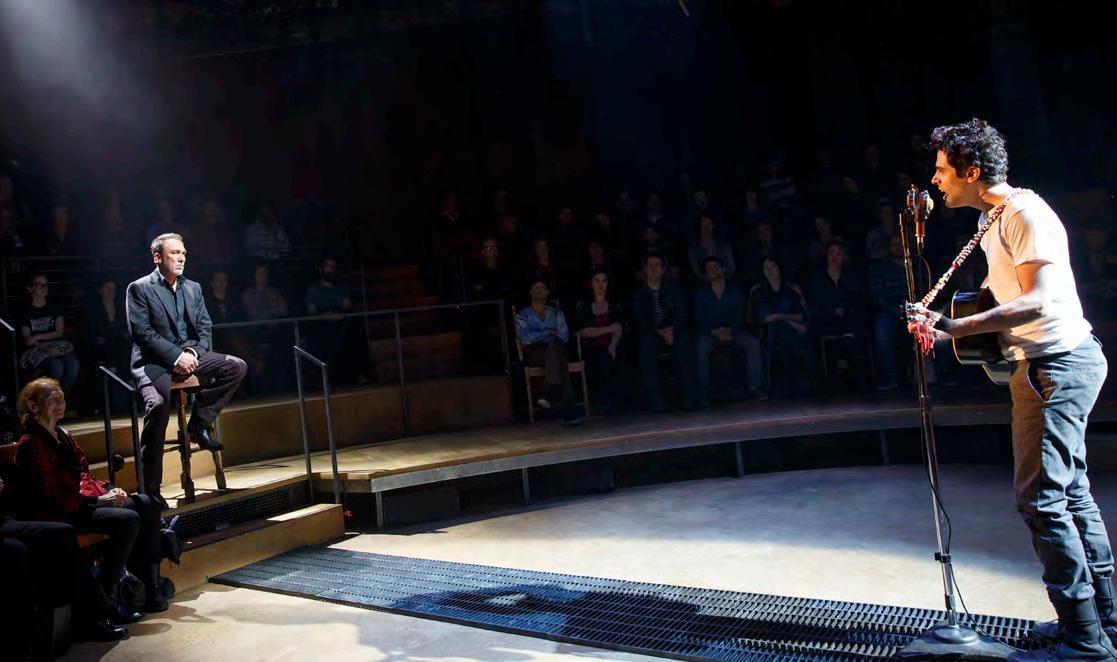
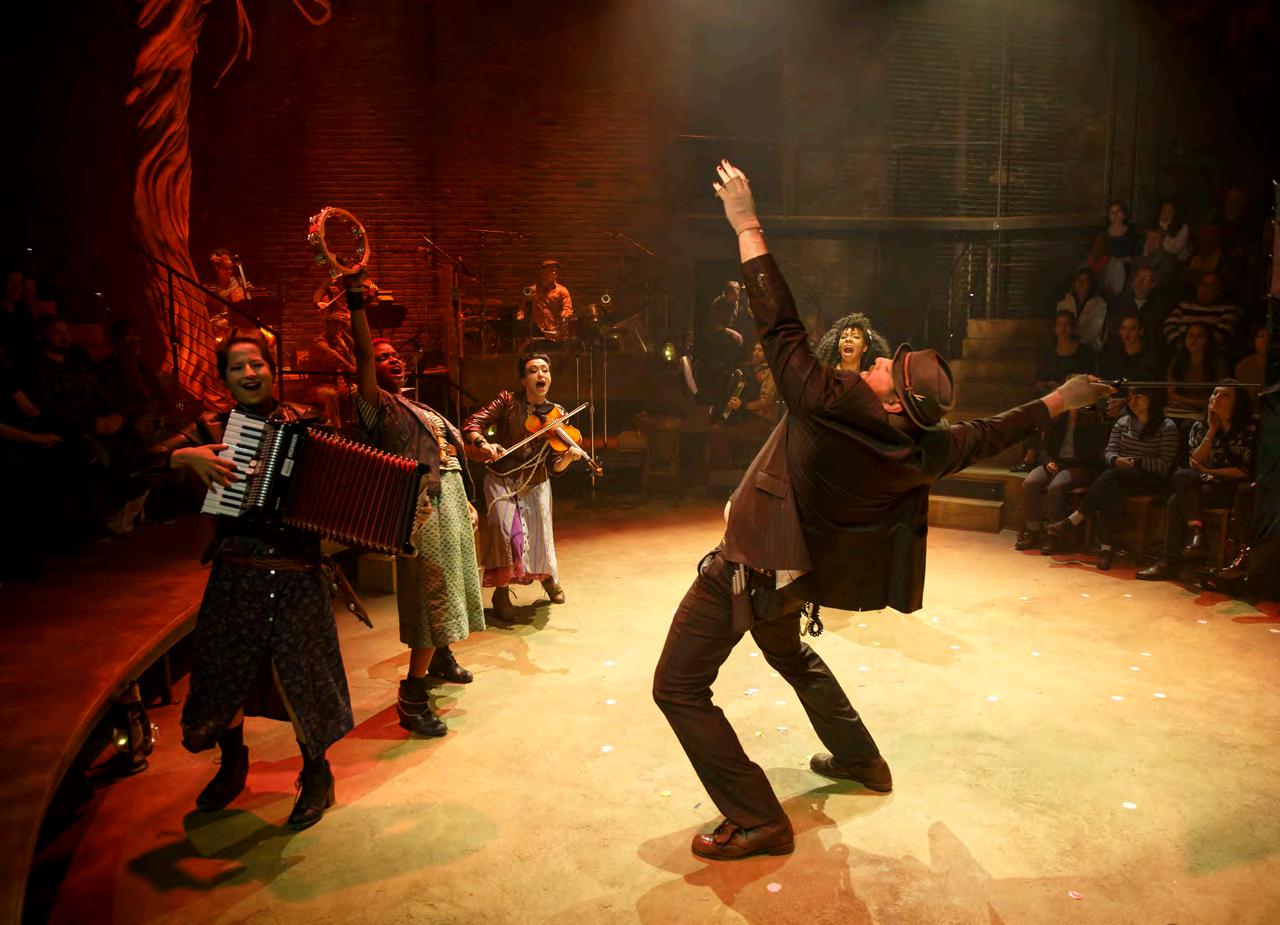
A decade in, Anaïs Mitchell’s folk opera “Hadestown” gets new life by Kim Ruehl
64 HOWARD ZINN’S “HISTORY” FINDS ITS WAY TO SONG by Allison Moorer
68 IN YOUR FACE
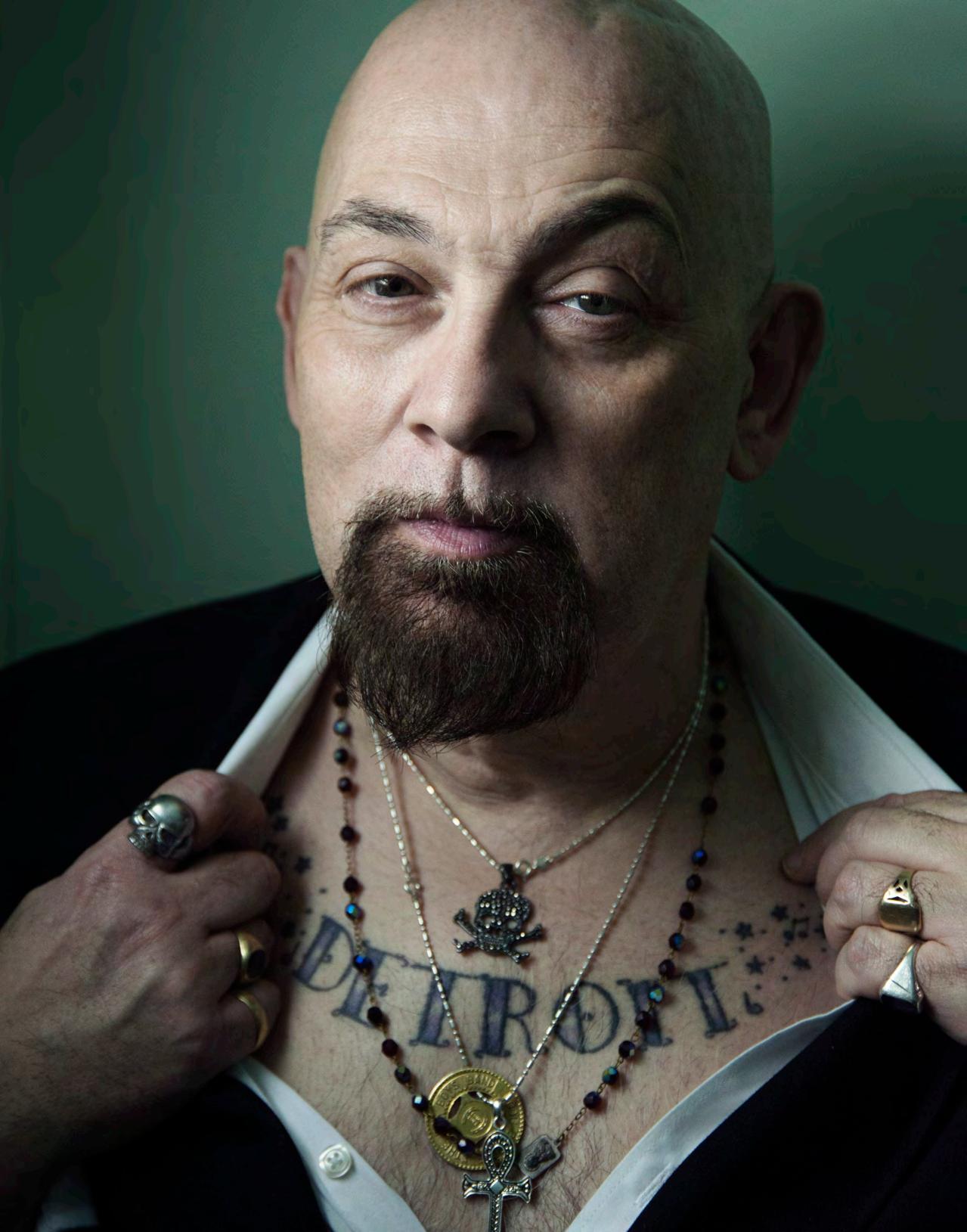
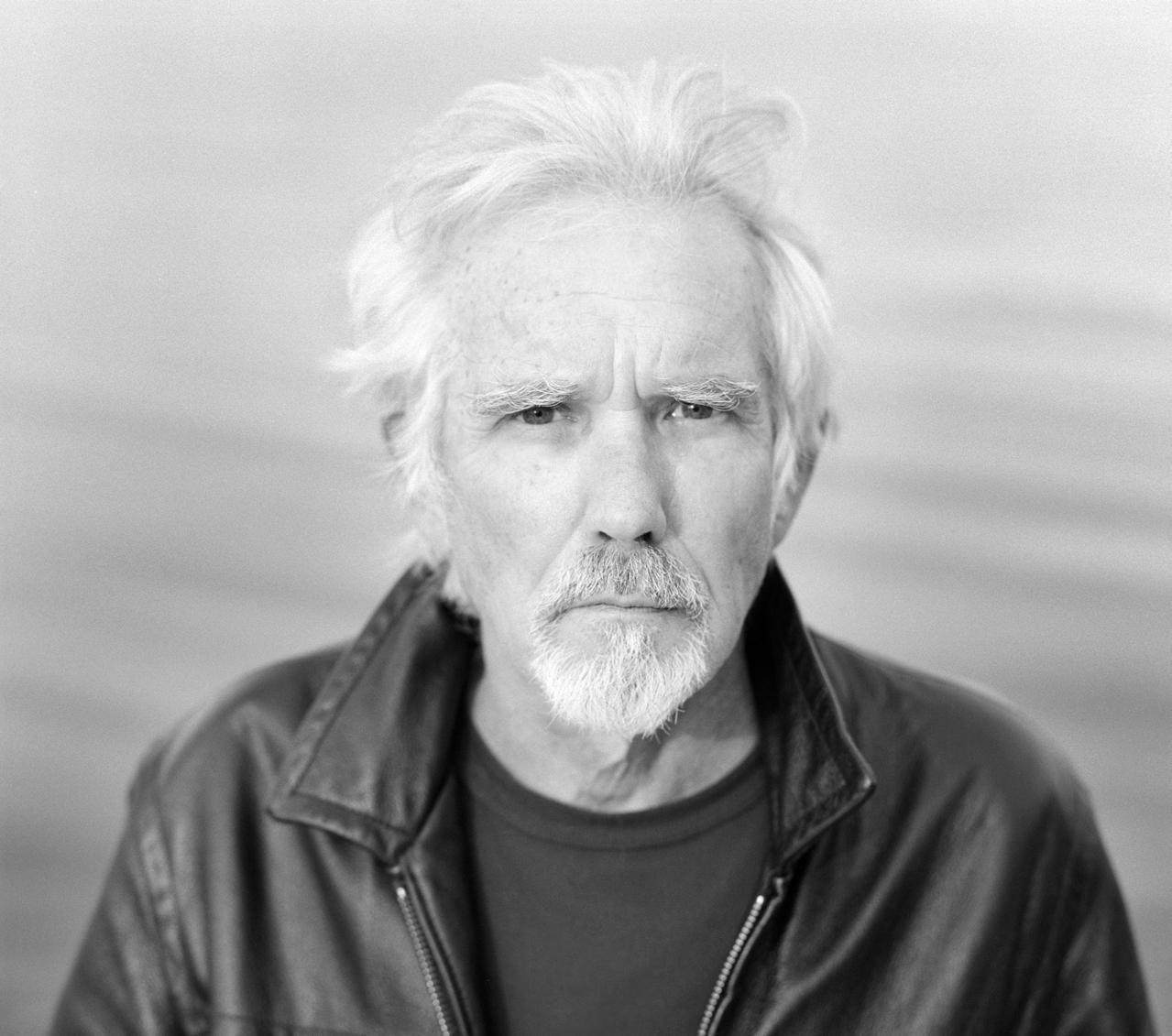
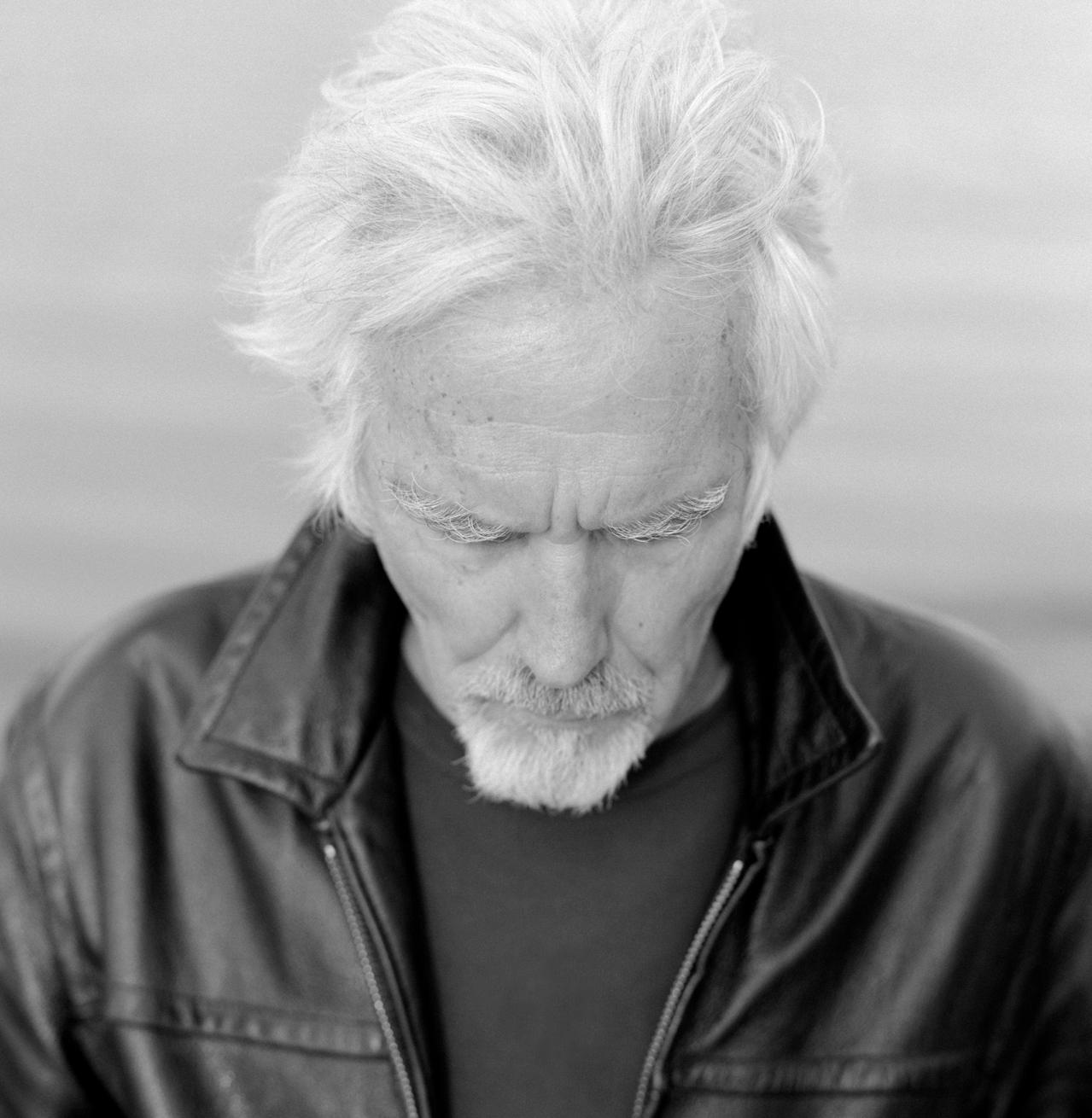
Portraits of artists getting real
78
THERE’S YOUR TROUBLE
Considering the Dixie Chicks controversy, with hindsight 20/20 by Holly Gleason
86 SEMPER HI-FI
After 21 years in the Marine Corps, Chuck Hawthorne decided it was time to sing by Mike Seely
92 SURMOUNTING VETERANS’ TRAUMA THROUGH SONGWRITING by Mary Gauthier
96 SONGS FROM THE GUT
A conversation with John Prine by Holly Gleason
102 THE OUTSIDERS
As music machinery rolls on, Hamell on Trial and Johnny Dowd stand apart by Don McLeese
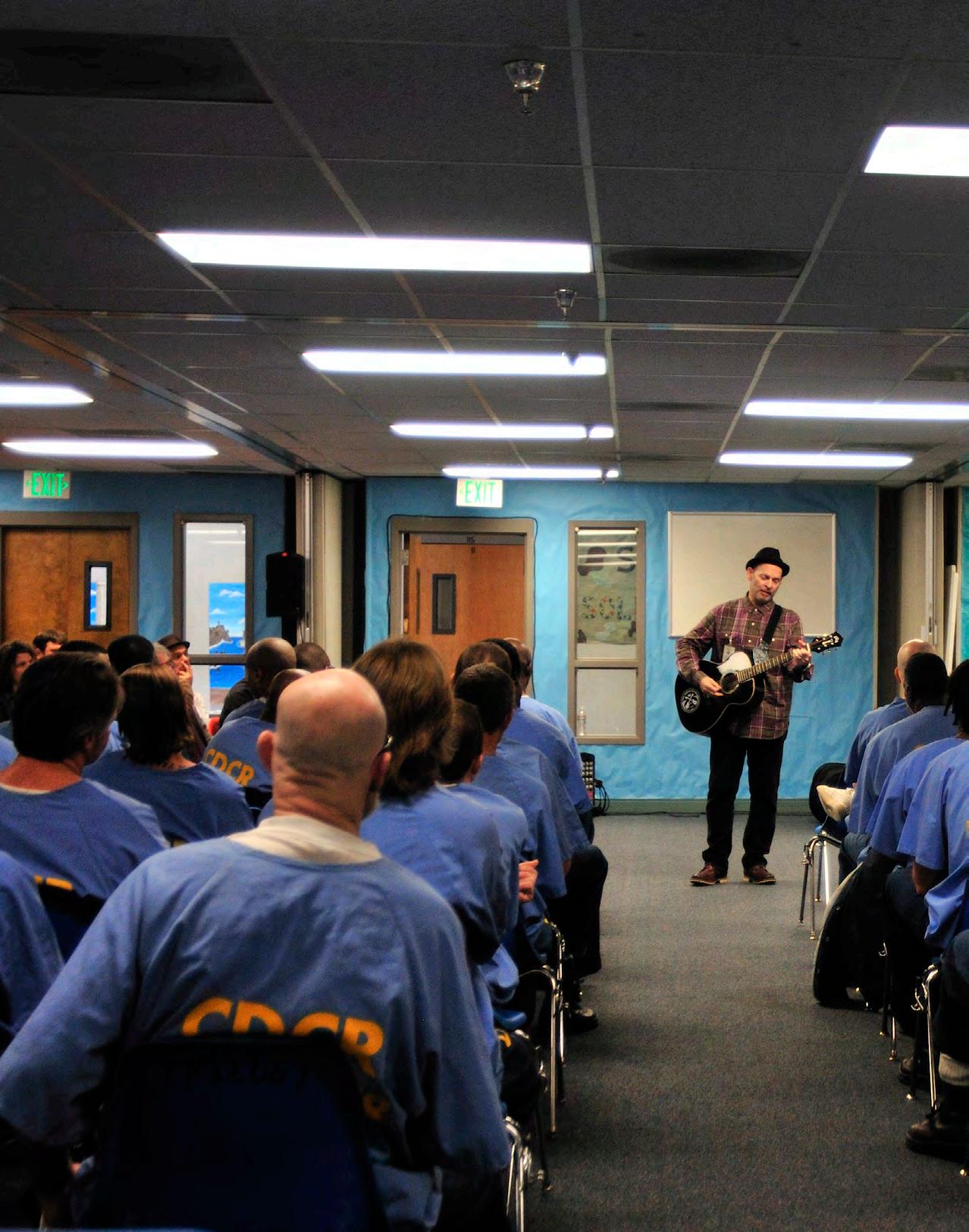
108 FROM FRET TO FREEDOM
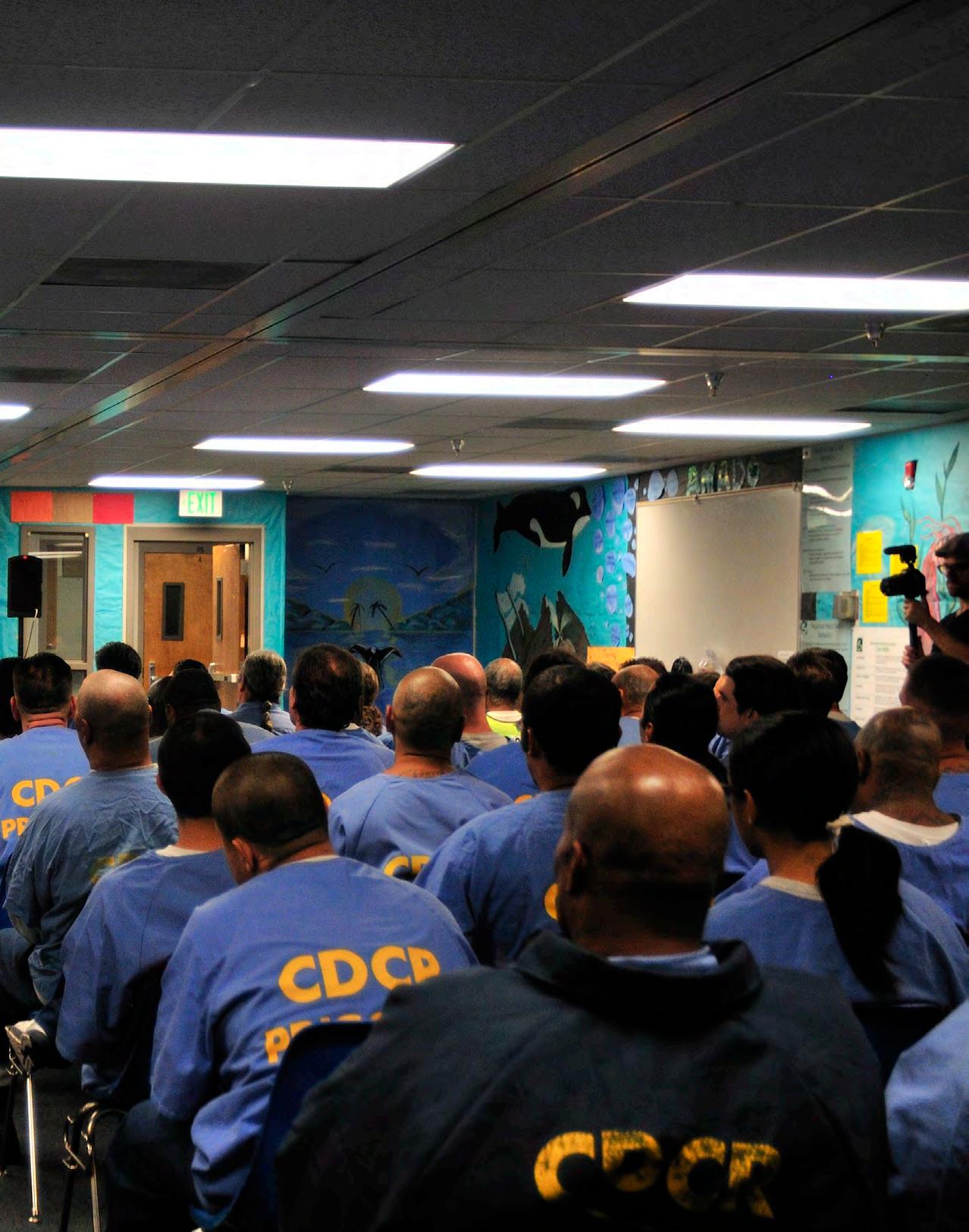
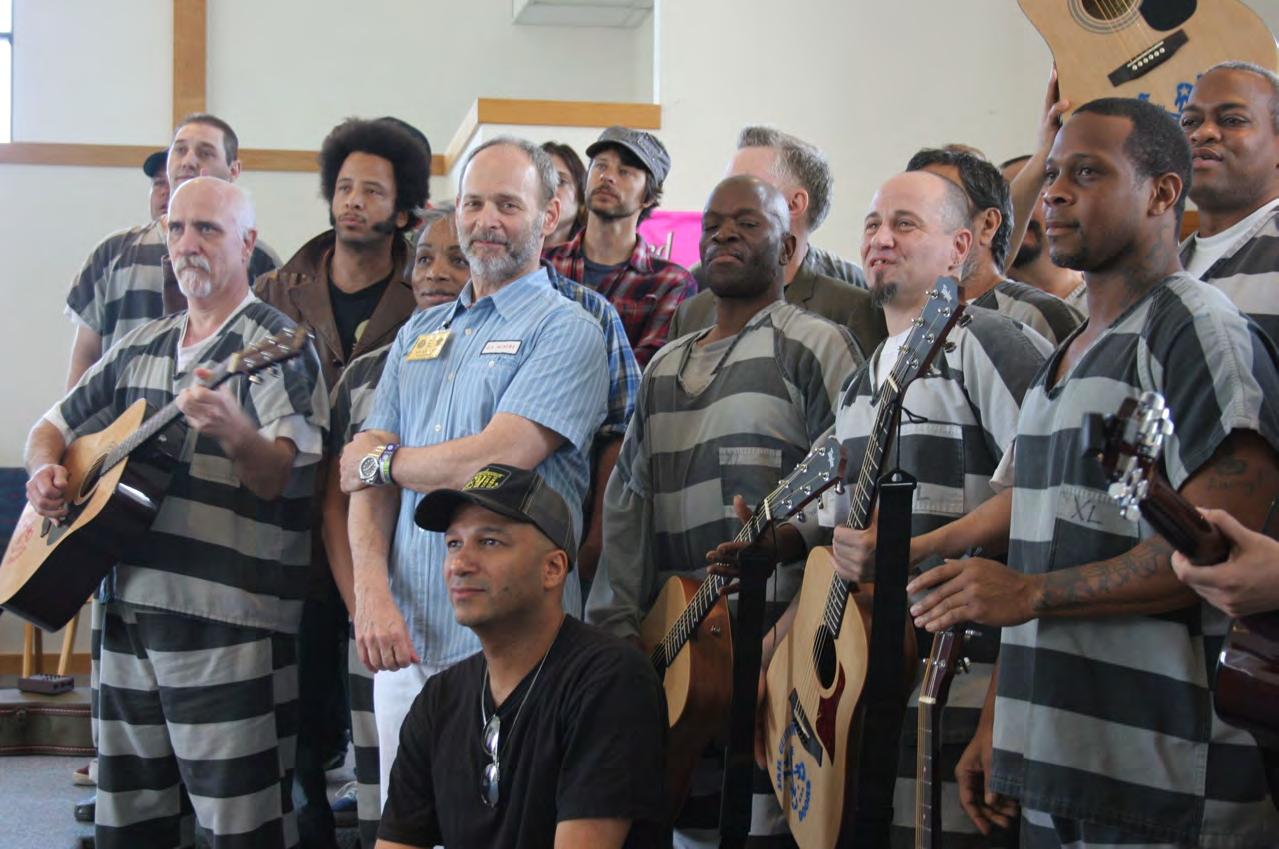
The power of music in prison by Caroline Gnagy
118 HOW TO WRITE A PROTEST SONG by Eliza Gilkyson
120
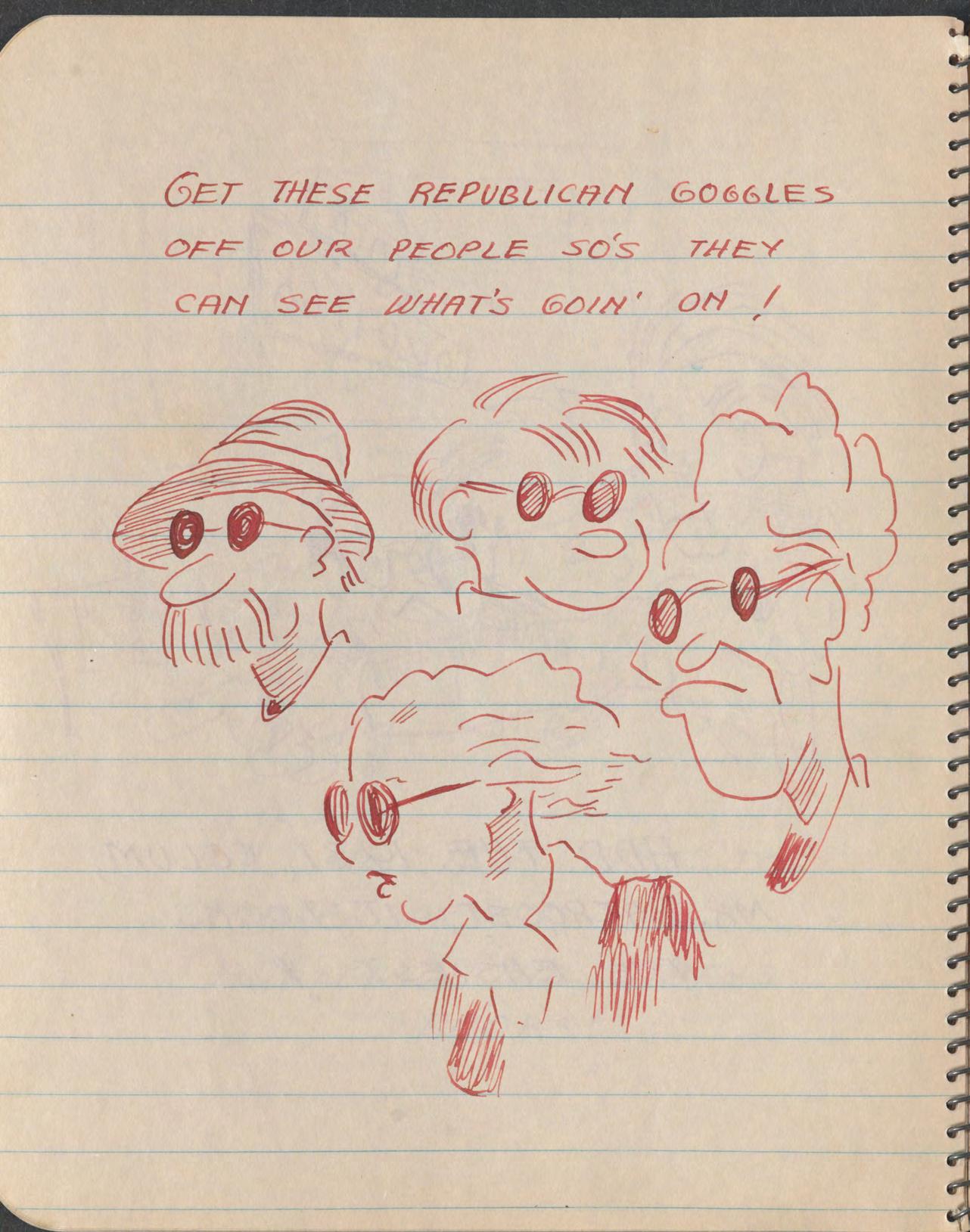
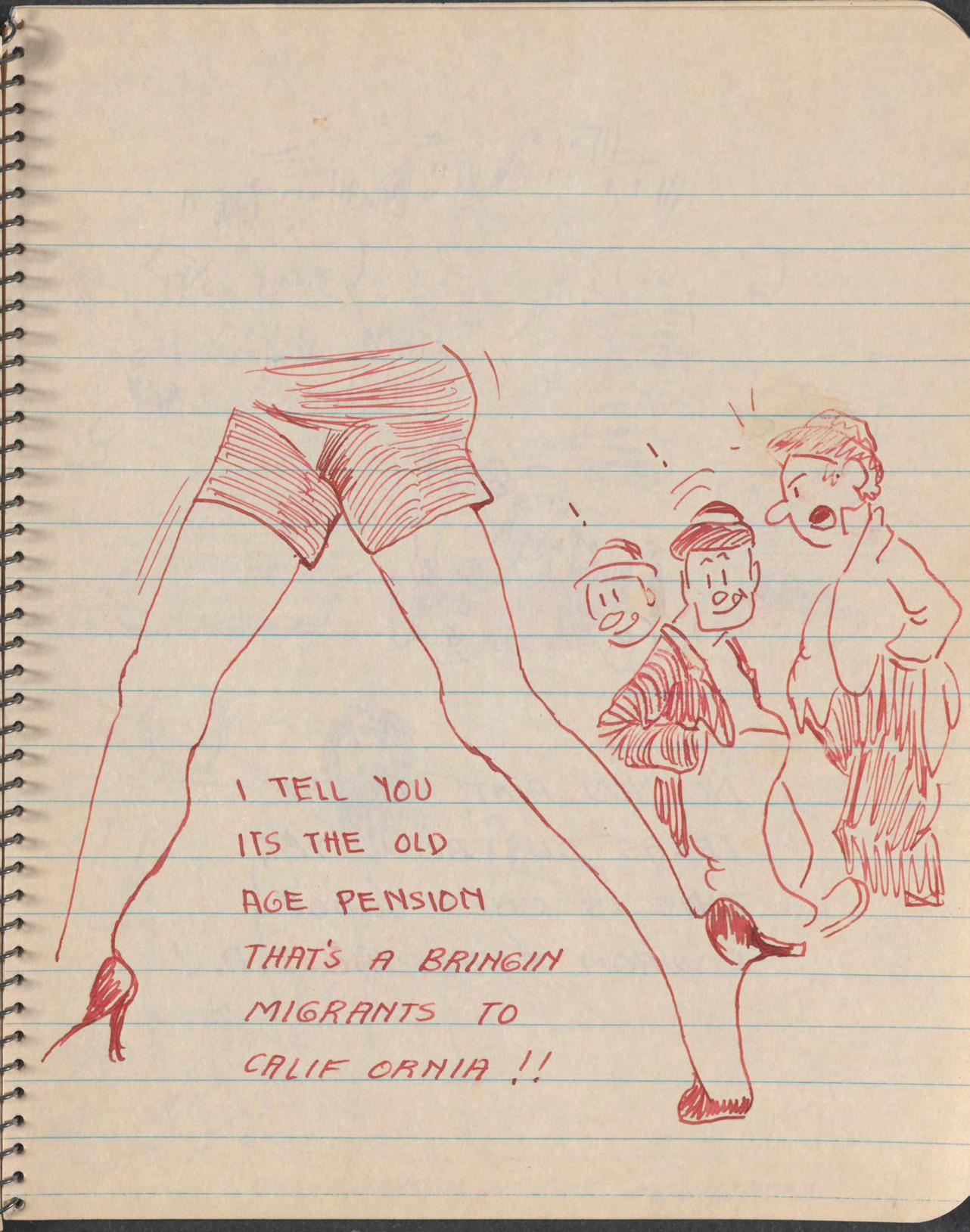
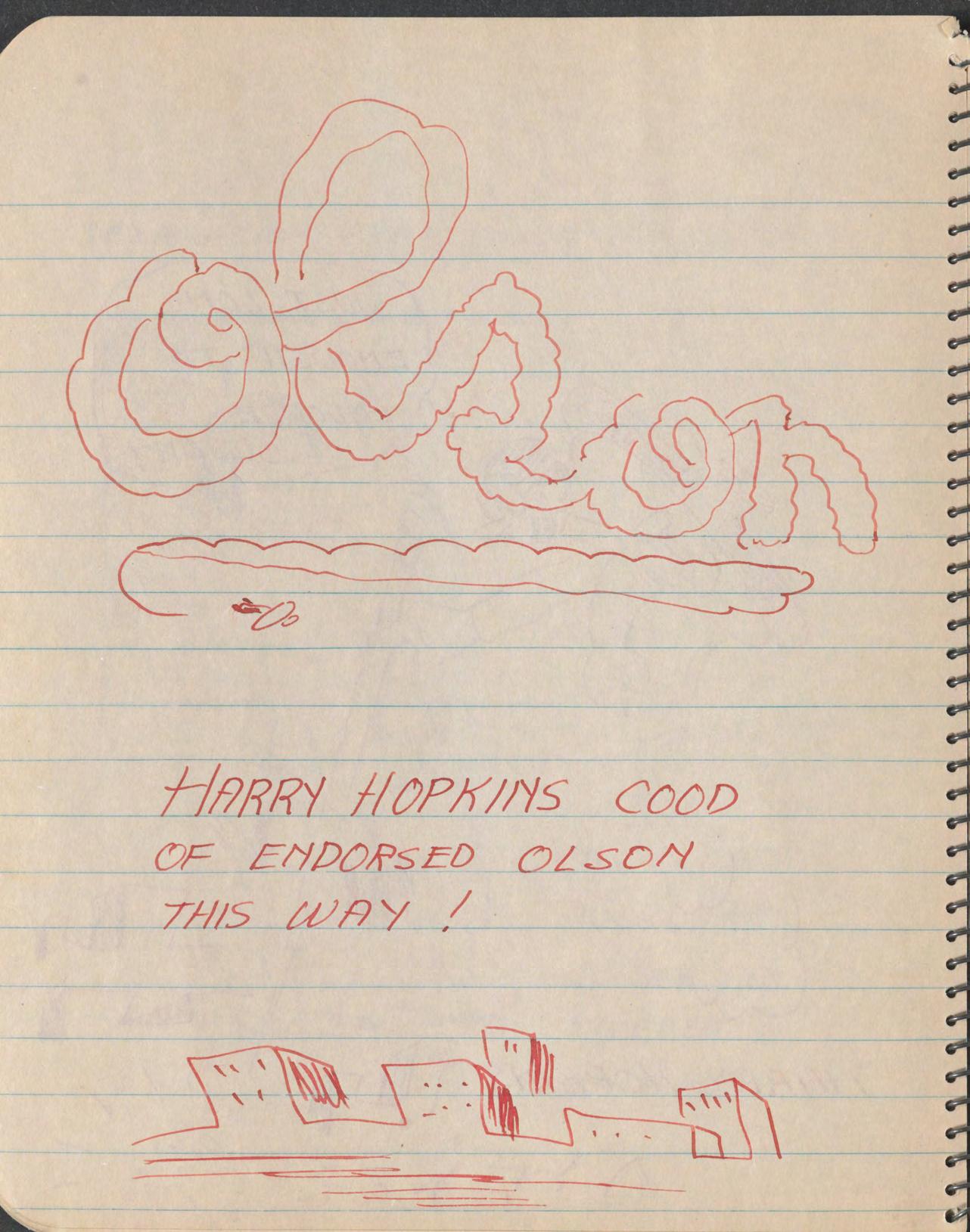
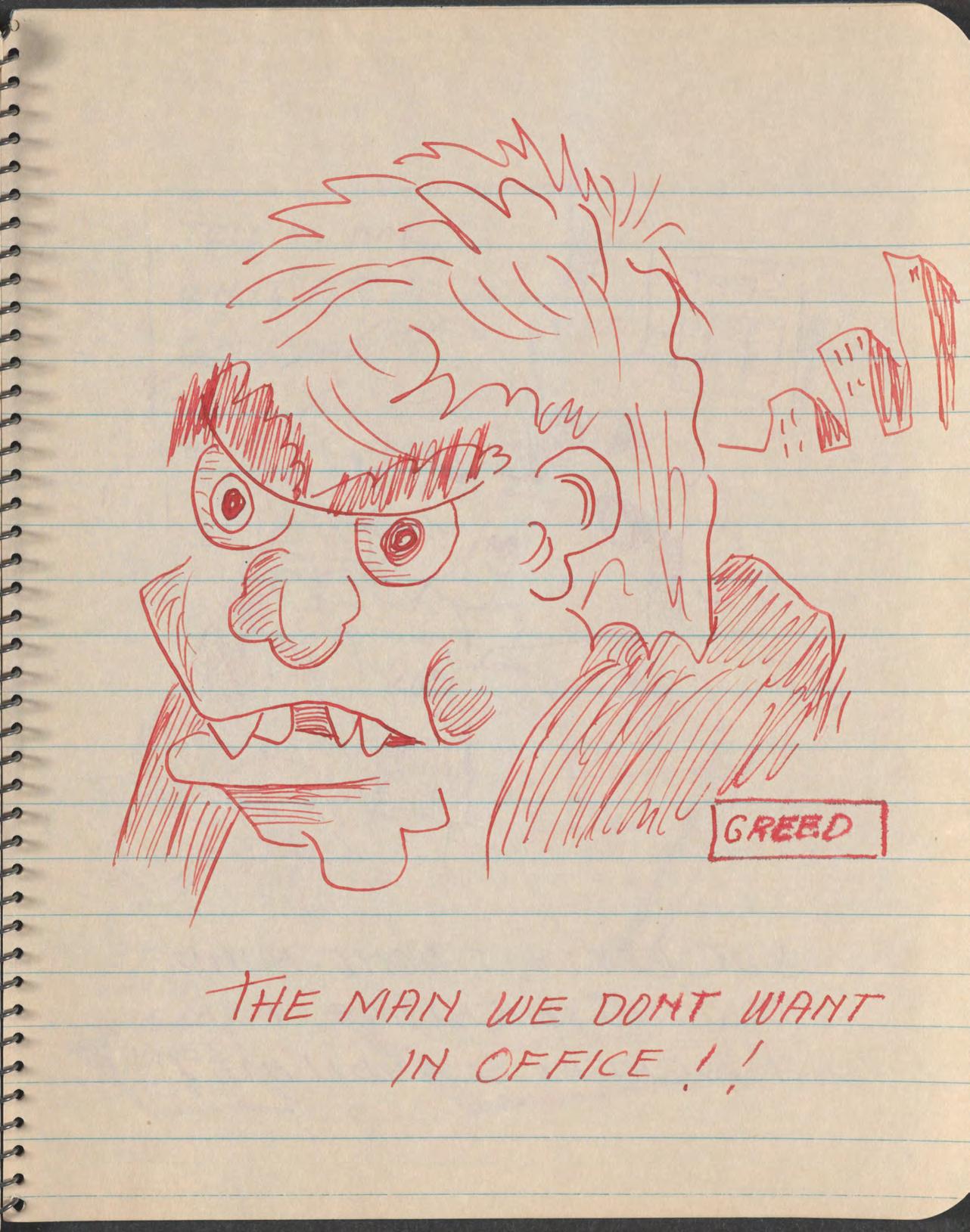
SO’S THEY CAN SEE WHAT’S GOIN’ ON
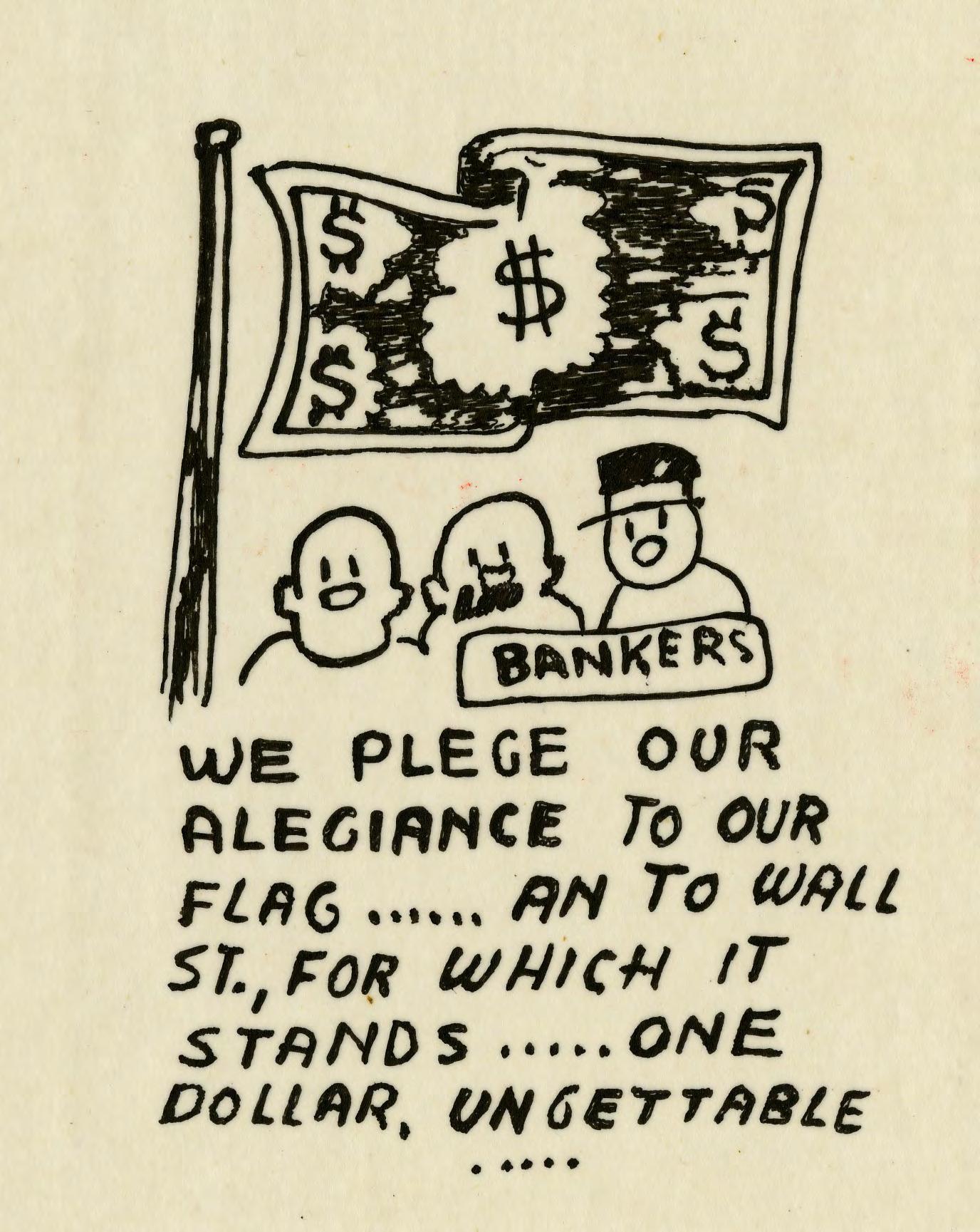
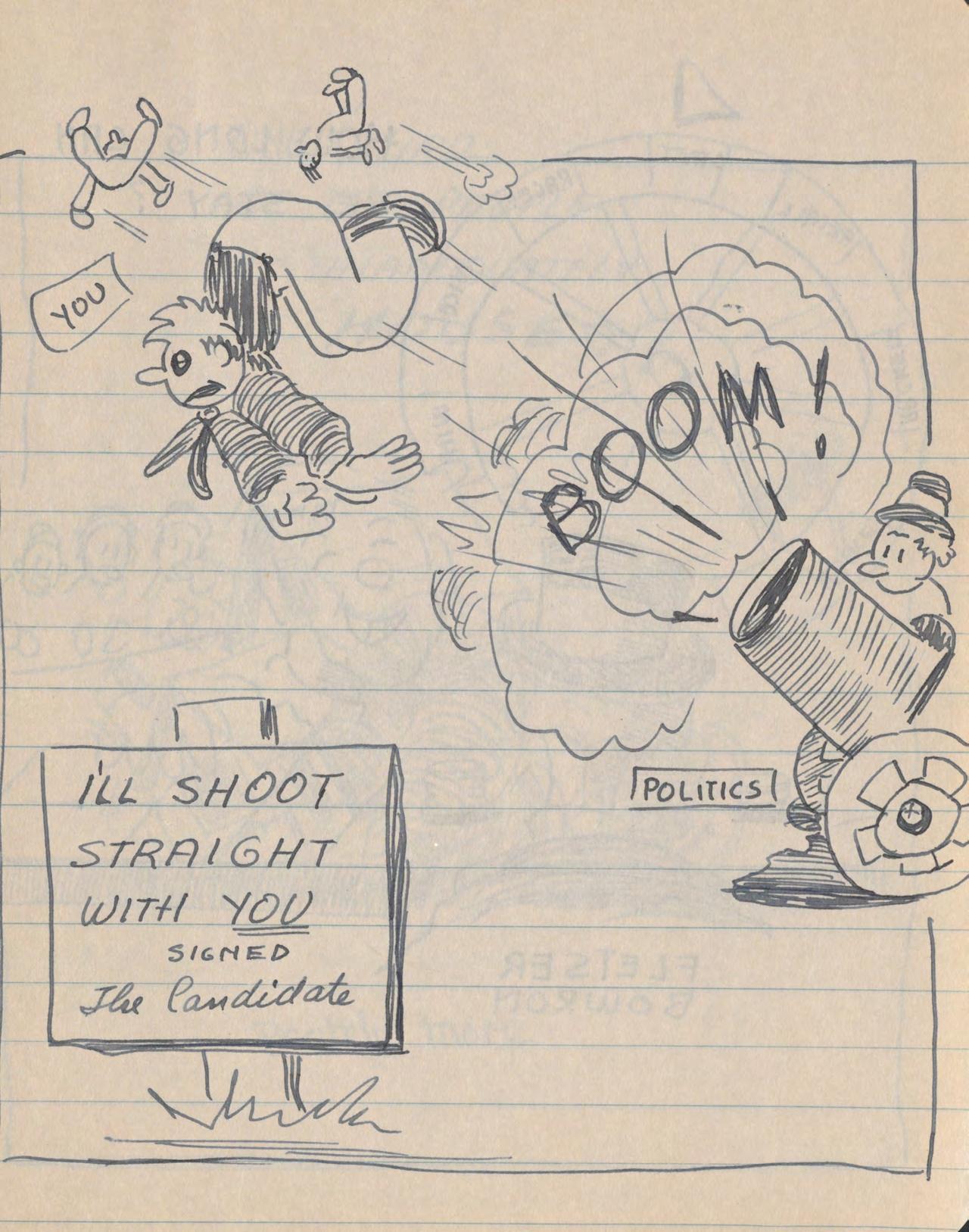
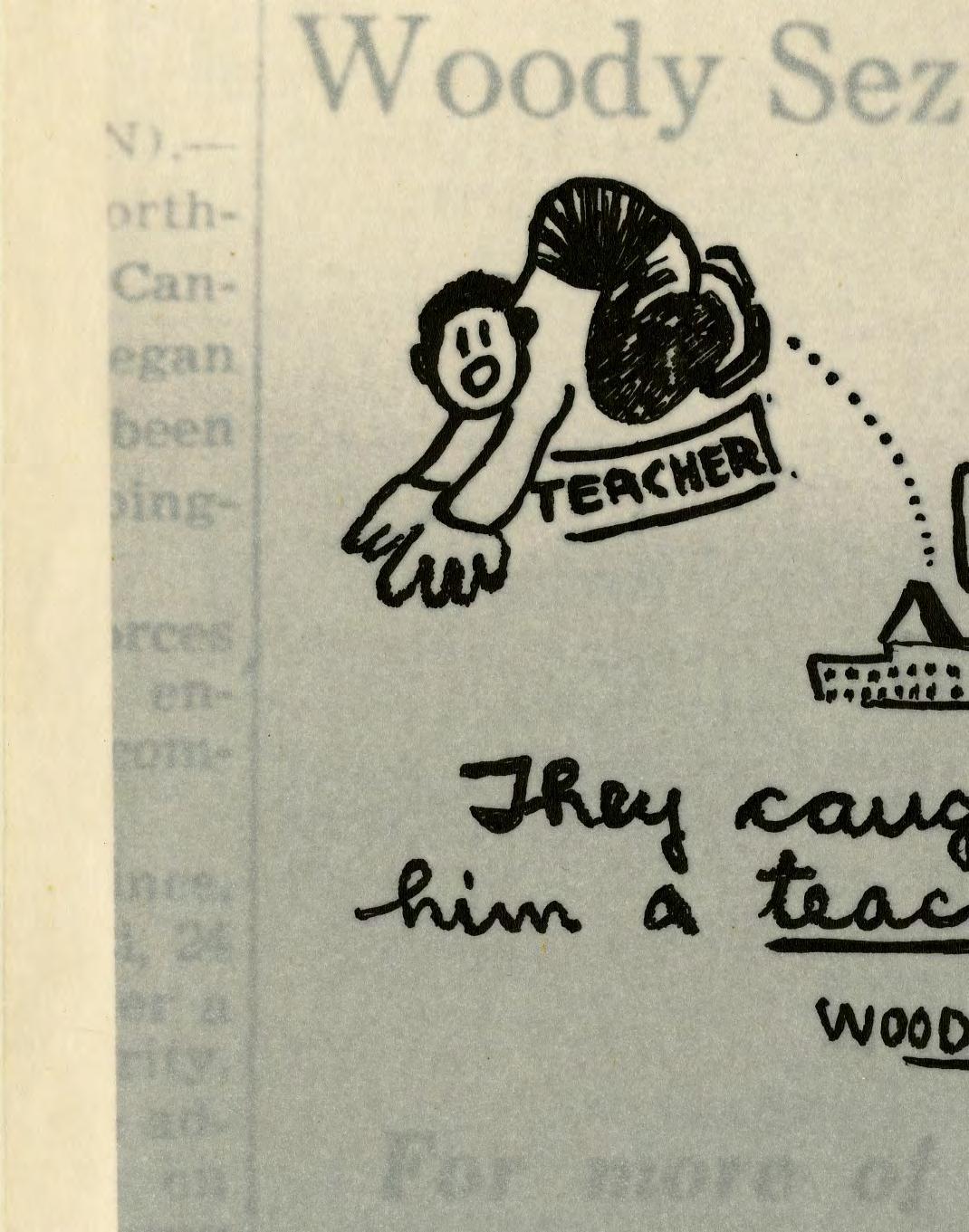
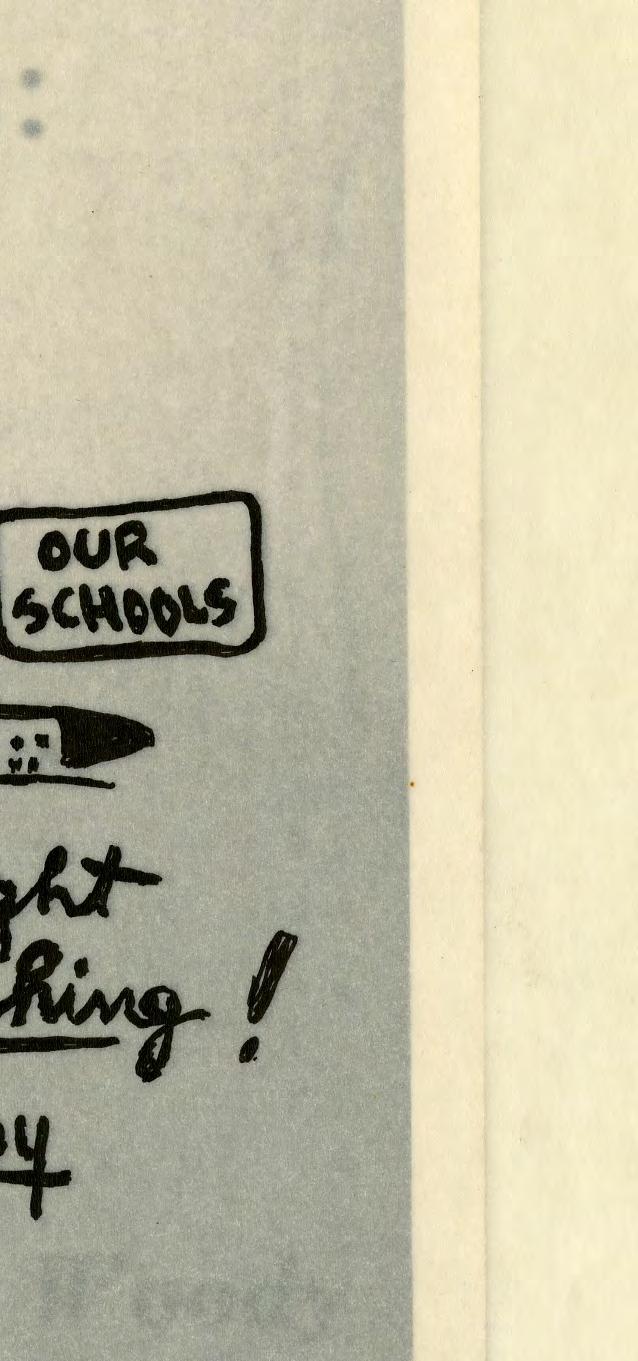
Editorial cartoons courtesy of the Woody Guthrie archive
130 FIGHT OR FLIGHT
Artists use their voices against controversial North Carolina law by Stacy Chandler
136 THE END / THE BEGINNING
Artists speak out as rents rise and weirdness withers by Jody Amable
141 CONTRIBUTORS
142 SCREEN DOOR by Scott Miller by Chris Wadsworth
ON THE COVER
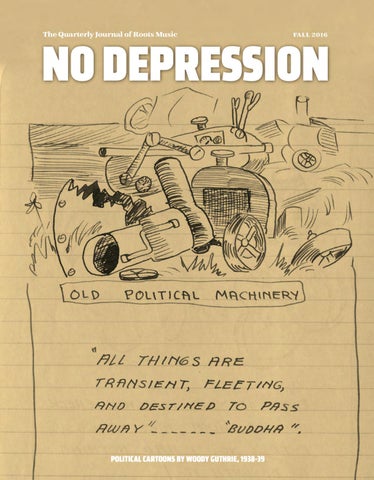
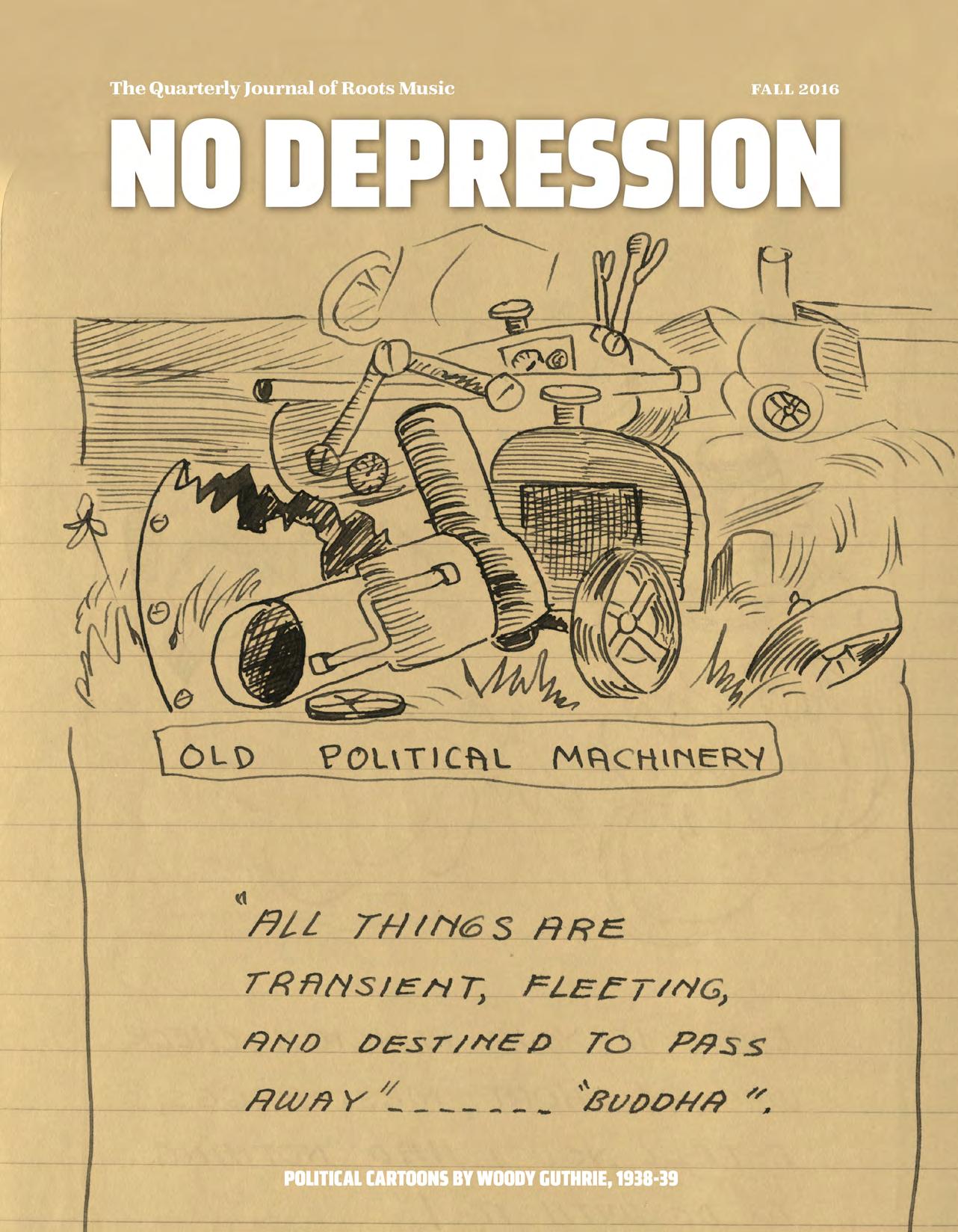
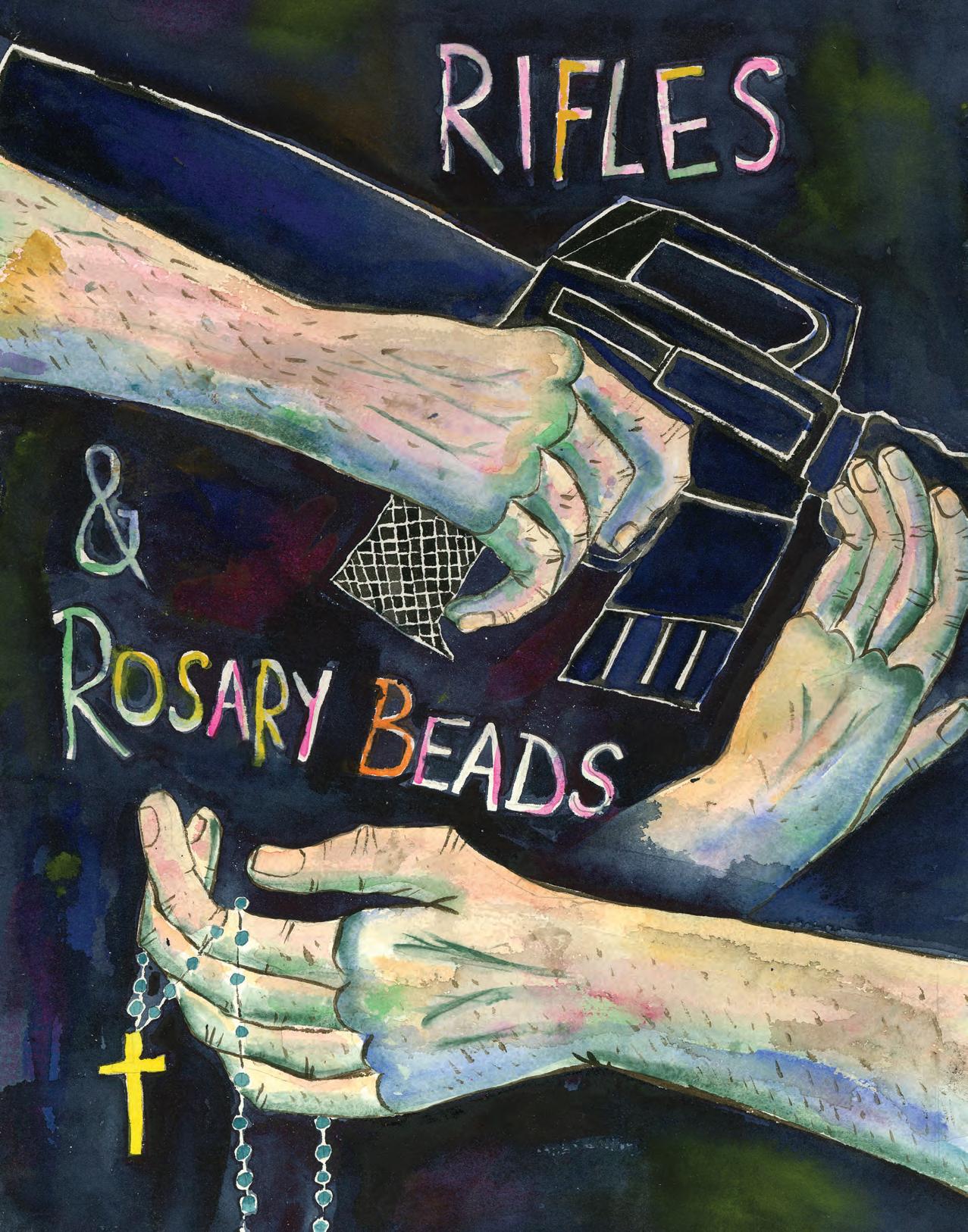
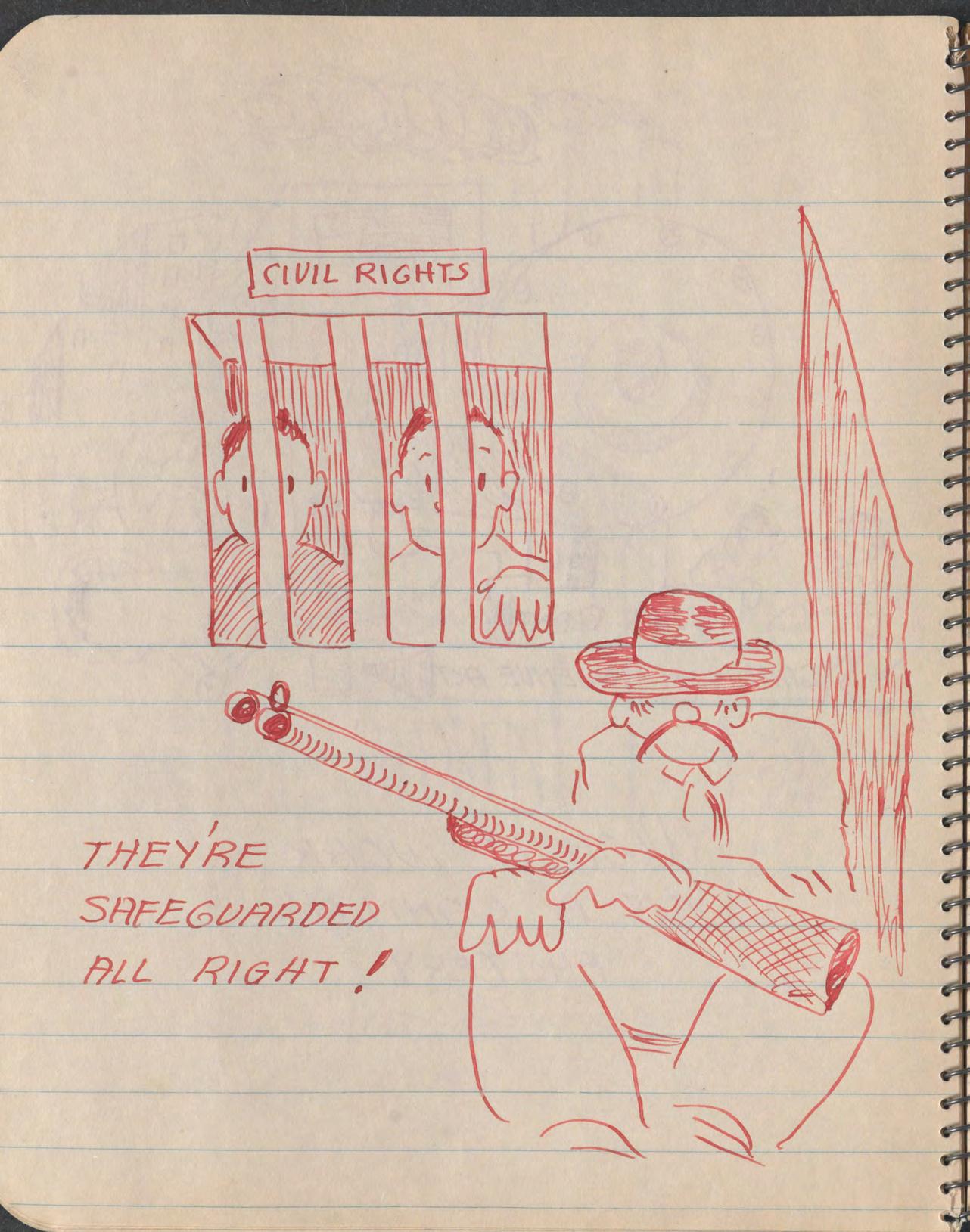
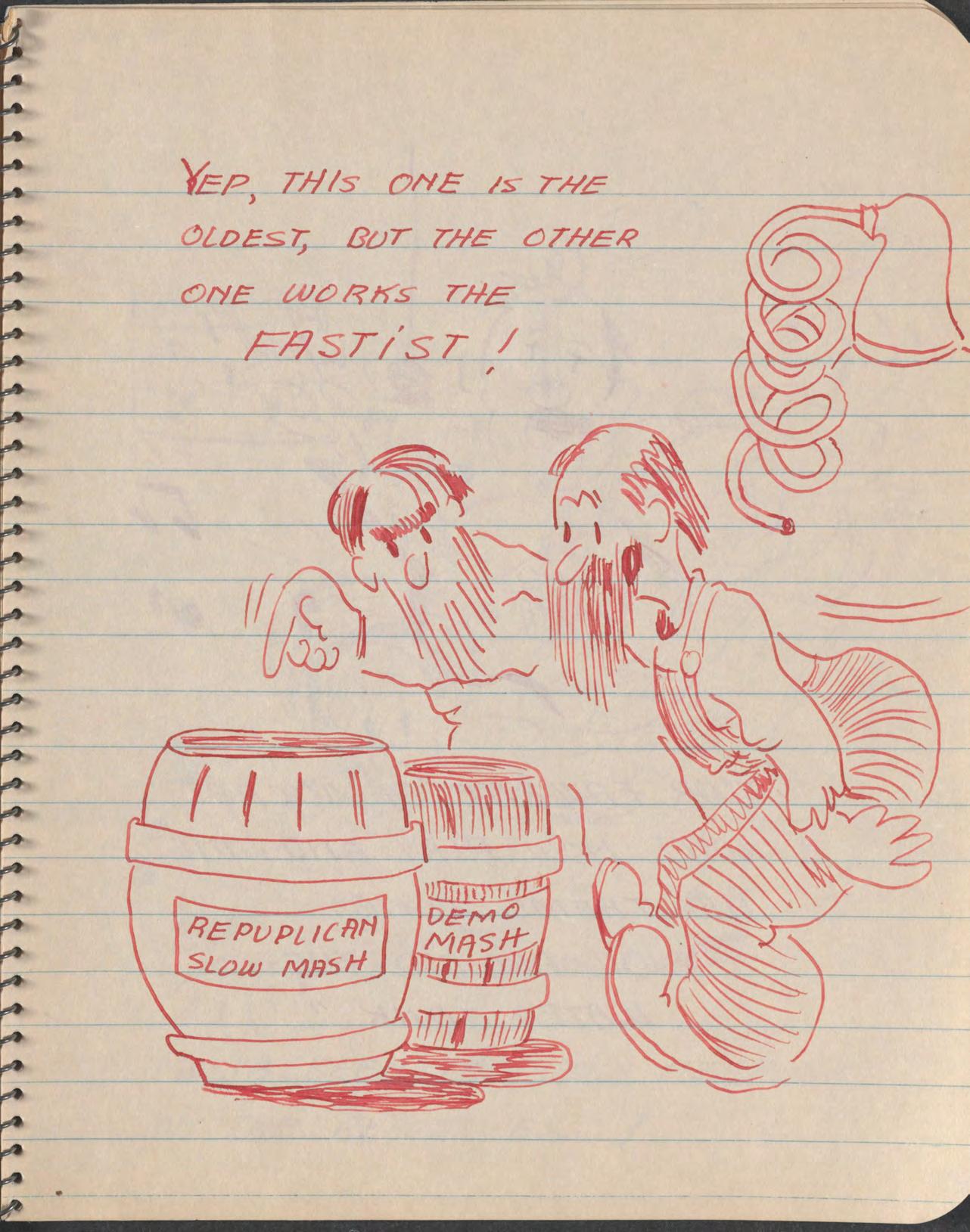
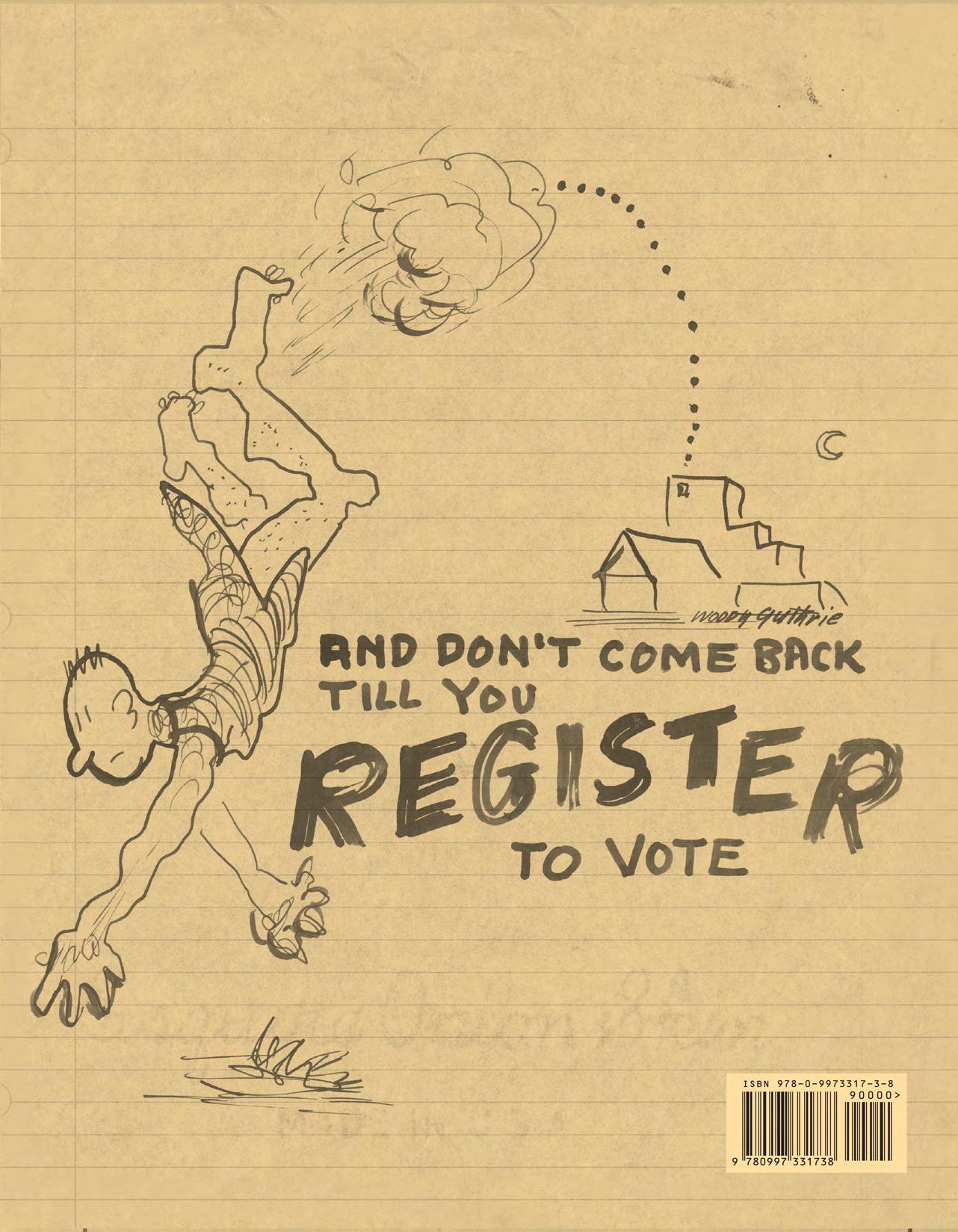
At least since Woody Guthrie, musicians have spoken up about what they see happening in the world. Sometimes they speak up onstage or in an interview; other times they choose to let the music do the talking. When it was time to design a cover for our “Speak Up!” issue, we knew about Guthrie’s penchant for political cartoons, and we knew we had the perfect cover image. Thanks to the fine folks at the Woody Guthrie Archive, we’ve been granted the opportunity to run a handful of his drawings. You see two on the cover, and will find others inside. This particular collection was drawn in 1938-39, though they could just as well have been drawn last week. It’s as true in the world as it is in music: For better or worse, some things never change.
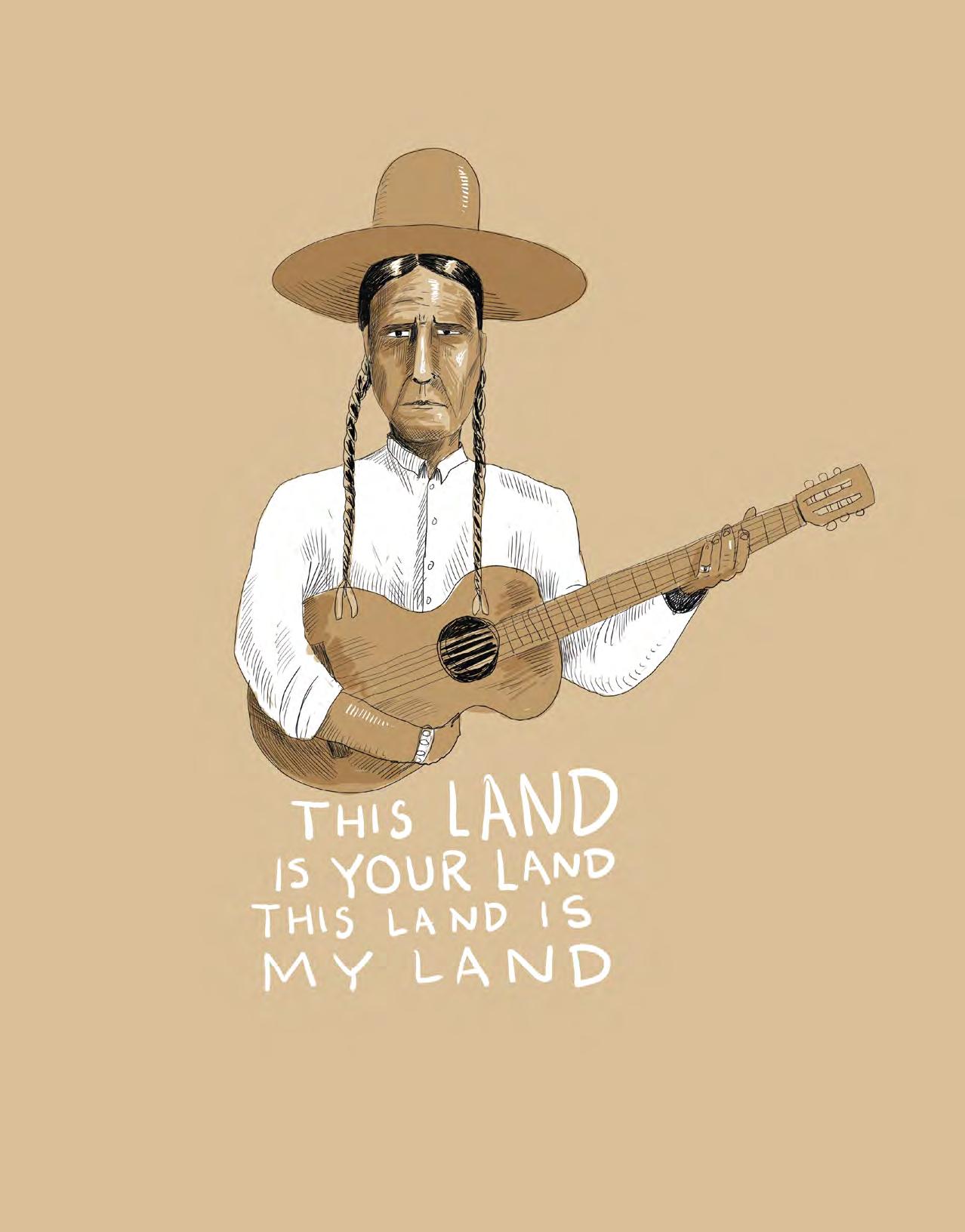
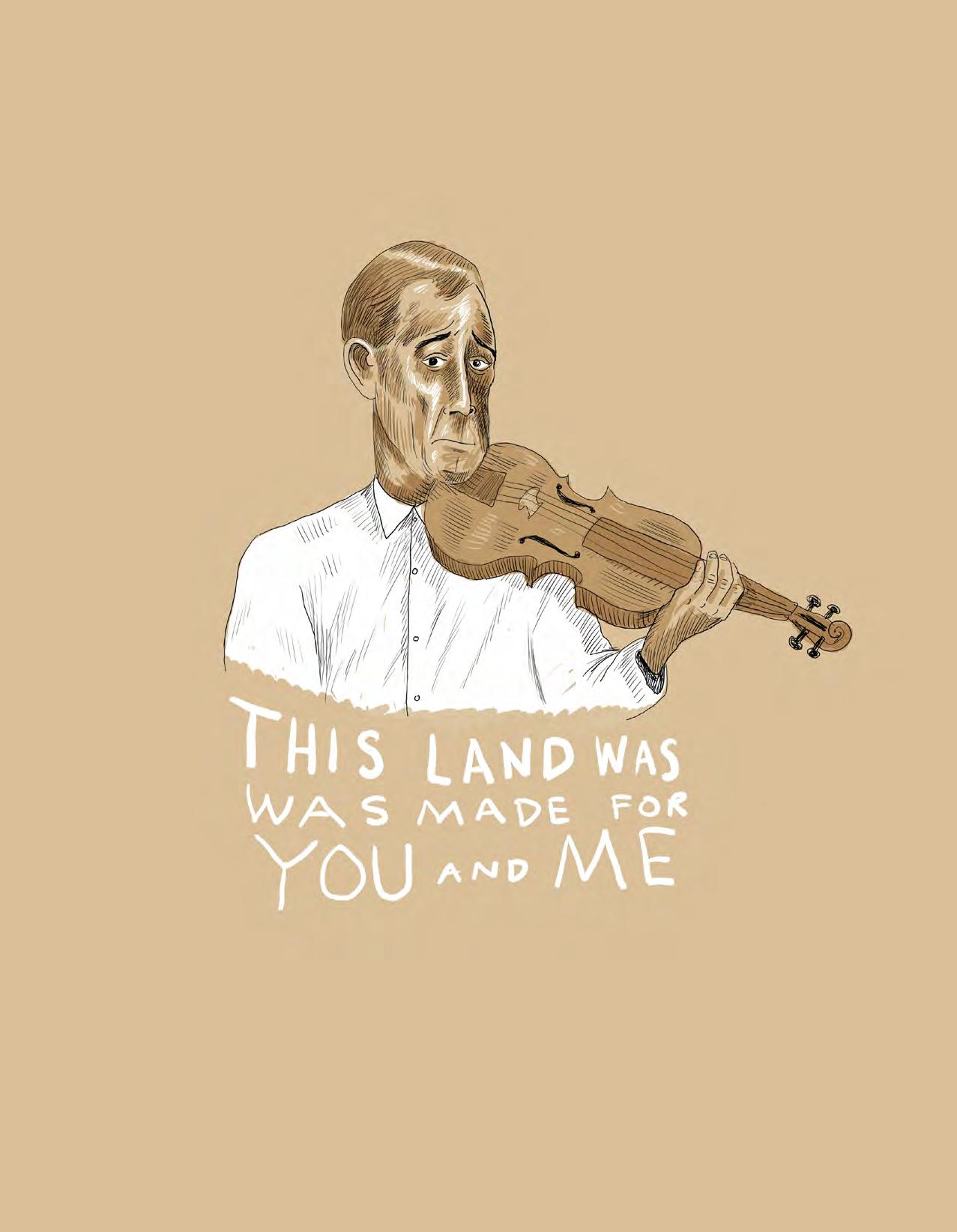
Inside covers: Lyrics from “This Land Is Your Land” Illustrations by Drew Christie.
You might think the first instruments humans made were drums. It would seem, anyway, that our basic desire to unleash a controlled sound might come from a need to bang on something. Certainly, when we’re at a loss, the desire to hit something is universal. But no. The oldest musical instruments that archaeologists have found are flutes.
A flute makes a sound by channeling breath through a pipe. As you cover the holes along its length with your fingers, you stretch the sound. But covering flute holes is a precision task. For starters, our hands are large and a flute is thin. To land a fingertip on a flute hole requires balance. There’s no banging about it.
Between that and the careful, controlled exhalation you must blow into the flute — either directly or across the surface of another hole — the instrument calls upon its player to enter a place of calm focus.
I began my life in music as a flautist. For all the reasons listed above, it’s not an easy instrument for an adolescent to master. As the years passed and I proceeded further, I watched friends with horns just wailing. Same with the drummers and string players. Watching everyone else so unbridled with their music — banging and sawing and strumming and blowing with full force — started to make the flute seem boring to me. I eventually put it down and picked up a guitar.
Music has never been boring since. But I return to the flute at times like these. It’s been quite a year. There’s no sense pussyfooting around it. I imagine
most folks reading this have been bowled over at least once by something happening on the news; many of us have been bowled over again and again. In years like this, it becomes clearer why humans began making music in the first place, and more intriguing that they began — as far as we know — with flutes.
After all, history has slowly — sometimes painfully so — marched us toward a more peaceful world. We no longer run from wild animal predators. We no longer wander the earth in search of food. We recognize genocide as a bad thing and cooperation as a good thing. There are always dark forces in the world, but as a human race, we’ve established societies, laws, neighborhoods, common courtesies. We are a peaceful people, despite the small worldwide minority of violent actors.
But thousands of years ago, before all this, people sat down and made flutes. Can you imagine? They were nomads and hunters. Life was dangerous and unpredictable. And yet there somebody sat, carving a reed or a branch until it was smooth, with equidistant key holes, for no reason other than to blow into it and create a quiet, high sound. They used the music to call to one another from long distances, to communicate, to protect one another across the empty darkness. And yes, they used the music to entertain.
These are the same reasons we make music thousands of years later, in 2016. It’s a luxury of technological innovation that we can now “get lost in the music” that someone else, whom we’ve never
met, made months, years, decades ago.
No matter the mode of delivery, we are still using music for the same reasons — to call to one another, to connect.
Music can grab a hold of the world at chaotic times like these and fashion it into something digestible. It can make us, in just three minutes, forget about the chaos so deeply, so profoundly that we come out the other side of a short song feeling a little bit healed. Feeling heard and seen and understood and having, for three minutes, transcended the loneliness of mortality.
As a musician and storyteller, I see no division between the world in which we live and the music we make, though I understand the wish people have to untether that world from their musical escape. But artists are humans who live in this world. To make the music that can stir our every emotion, an artist must be completely open and vulnerable to their own emotions — emotions that are spun into chaos when the world feels chaotic.
The act of making music itself is a defiance against that chaos. As Amy Ray writes in her essay, “For Some, Speaking Up May Be the Only Way Out” (on page 30), not every song needs to be about the struggle, but the decision to sing and play in the first place is, itself, a refusal to be silent. There is no music, then, without the speaking up.
So as we get ready to decide who may make the most difficult decisions about the future of our civilization (please register and vote!), now seemed the time to consider all the ways artists speak up. Our goal is not to “get political,” but to explore what happens when people meet the world where it is and, instead of running and hiding, they gather and sing.
NO DEPRESSION
Can We Come Together When We Listen Apart?
“What is your favorite protest song?” feels like a quaintly old-fashioned question, akin to inquiring about my favorite Dixieland jazz or ragtime number. As a former evolutionary biologist, I conjure up mental images of a musical natural history museum — dusty shelves packed with glass jars of pickled song specimens from days of yore (e.g., the 1960s). I imagine taking one off the shelf, blowing the cobwebs off the label, and reading “Nuclear War Protest Songs,” a species once widespread but that has experienced a rather dramatic reduction in range.
I don’t mean to throw any shade at the protest music of the ’60s, or the rich wellspring of spirituals and anthems that arose from earlier civil rights and labor movements. “Blowin’ in the Wind,” “If I Had a Hammer,” “We Shall Overcome,” “I Ain’t Marching Anymore,” “Strange Fruit,” “A Change Is Gonna Come” — these are all stirring, timeless classics. I can’t sing “This Land Is Your Land” with kindergarteners at my son’s school without feeling a righteous love of country and the desire to make it better well up inside me. But I’ve also been at rallies where the crowd breaks out in a protest song chestnut and it’s left me a bit sad and defeated. When 50 years or more have passed, and we still revert to singing the same old songs, it starts to feel as though nothing has changed.
by Mark Erelli
Of course, protest music has never gone away. Crosby, Stills, Nash & Young’s “Ohio,” Edwin Starr’s “War,” and Joni Mitchell’s “Big Yellow Taxi” kicked off the ’70s. The ’80s saw Peter Gabriel’s “Biko,” NWA’s “Fuck the Police,” and Bruce Cockburn’s “If I Had a Rocket Launcher.” Ani DiFranco, Steve Earle, Sinead O’Connor, Bruce Springsteen, Rage Against the Machine, and many more carried the torch in the ’90s and beyond.
Every decade has its own species of darkness, as well as its own voices to rage against the dying of the light.
Perhaps “protest song” feels like such a dated designation not because of any inherent limitation to the form, but rather because of how media is now delivered and consumed. I’ve personally witnessed the demise of albums, cassettes, and CDs, and the subsequent rise of personalized, narrowly tailored algorithms and on-demand content. It’s hard to convince me that all this hasn’t come at the expense of a shared pop culture language. It’s hard for the people to rise up and fight the power when we’re all sequestered at home, watching and listening to whatever we want on Netflix and YouTube.
In my own way, I have tried to carry the tradition forward, with post-9/11 anthems like “The Only Way,” the Hurricane Katrina lament “People Look Around” (which I wrote with Catie
Curtis), and the gun violence epidemicinspired “By Degrees.”
I could fire off a whole bunch of potential modern protest song classics, like Josh Ritter’s “Girl in the War,” Eliza Gilkyson’s “Tender Mercies,” and “Conor Oberst’s “When the President Talks to God.” But how many people are familiar with these works? Have any of these songs inspired a nation and served as a galvanizing call to action the way that those of the ’60s once did?
No, protest music isn’t dead, but in recent years it has felt ineffectual and impotent. Maybe that’s not all because of the music — well-written protest songs are as powerful as ever. Consider Hurray for the Riff Raff’s “The Body Electric.”
But when anyone can listen to anything all the time, what are the chances everyone will tune in to the same song all at once, let alone at the very moment it might most speak to us?
I have devoted my life to songs, and I believe wholeheartedly in their divine power. If a song can break the heart or open the mind of a single person, there is nothing to prevent it from doing the same for the masses. When so many of our problems are intensified by isolation, there is great potential for change in the thing that helps us all find some emotional common ground.
So what, you ask, is my favorite protest song? The next one that actually works. ■
RULE BREAKERS
The times shut down the Weavers, but their influence was timeless by Scott Alarik
“People who sit on the sidelines and say, ‘Oh, they should have done this or not done that,’ they just do not know. It really is wrestling with the devil. Sometimes in a wrestle you have to give in or get your arms broken. And sometimes you don’t. It’s a lifetime process, deciding what’s important.”
Ronnie Gilbert
i t had never happened before. The careers of the most popular musicians in the world were destroyed because of their political beliefs. At the peak of their commercial success, the Weavers were banished from the music industry, their records stripped from record stores and jukeboxes, their songs banned from the airwaves.
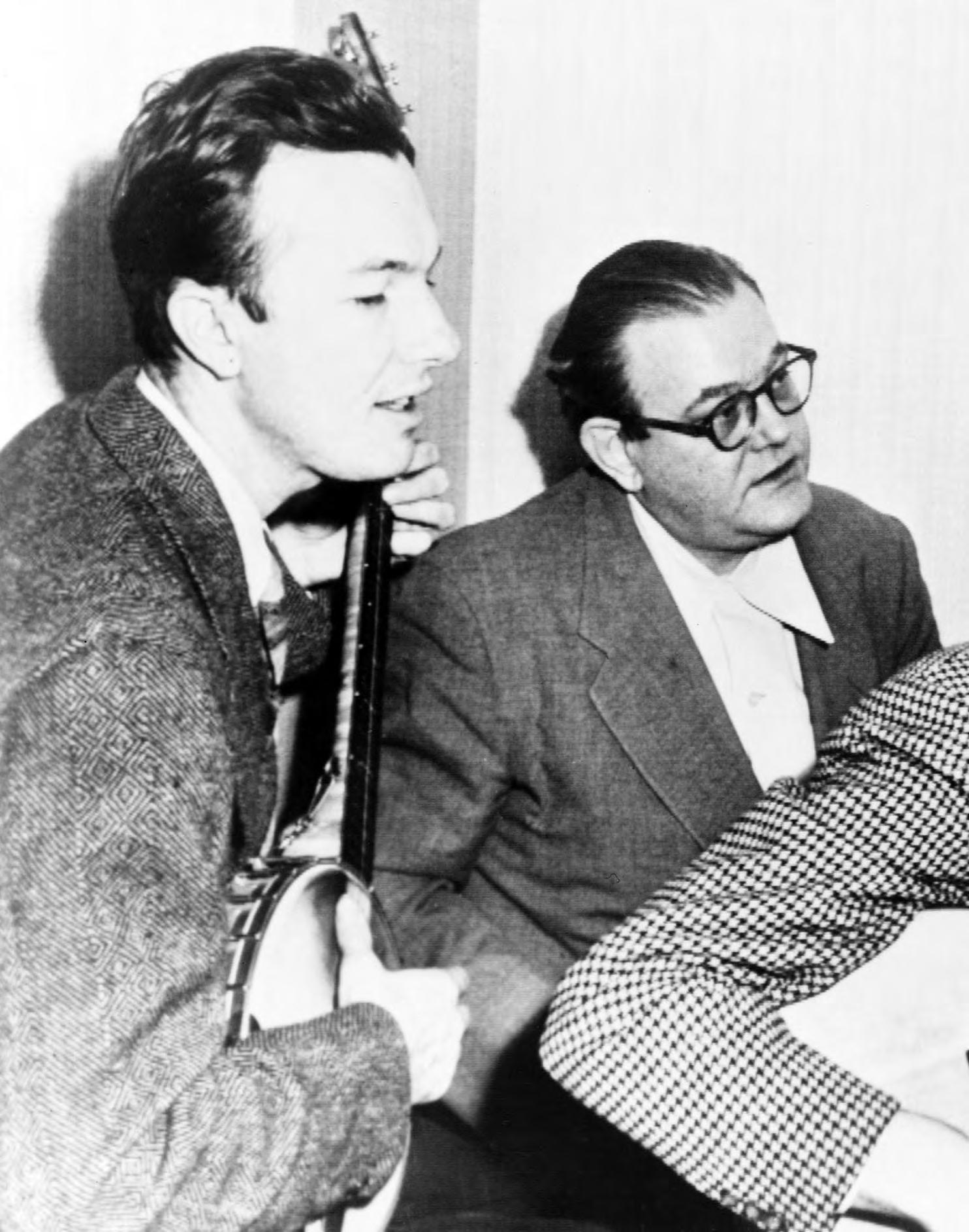
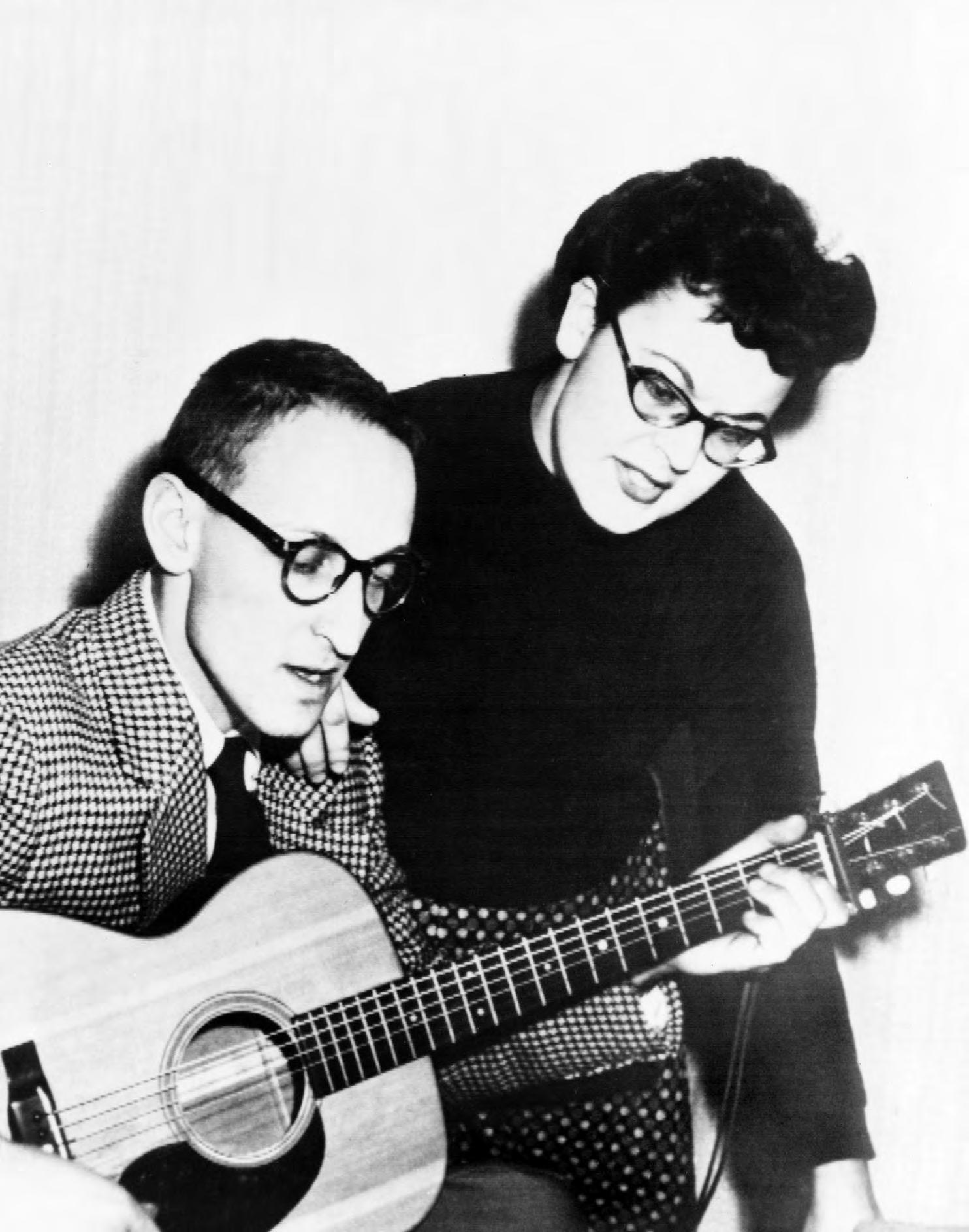
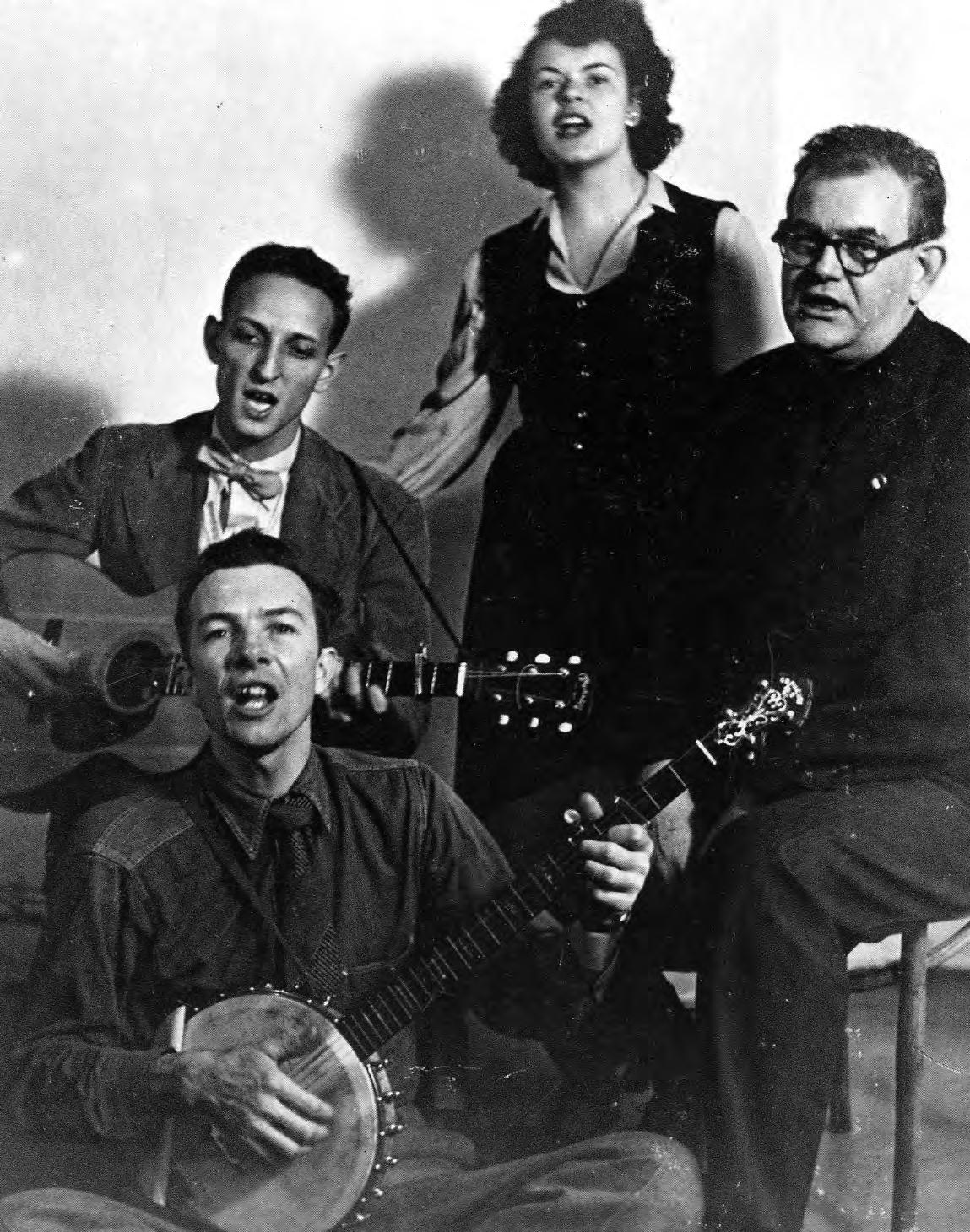
From 1950 to 1951, the quartet of Pete Seeger, Lee Hays, Fred Hellerman, and Ronnie Gilbert sold over four million records for Decca, producing an unprecedented string of hits with folk songs never before thought to have broad commercial appeal. The Weavers packed the swankiest nightclubs and concert halls with their exuberant harmonies, bold instrumentation from Seeger’s banjo and Hellerman’s guitar, and a globe-trotting repertoire that had the whole country singing “Goodnight, Irene,” “On Top of Old Smoky,” “Wimoweh,” and “Midnight Special.”
That all ended when they were blacklisted in the anti-Communist hysteria of the McCarthy era. Many
others had their career destroyed by the blacklist, but none with the commercial success the Weavers were enjoying, and at the peak of their fame and earning power. Before they were blacklisted, the Weavers changed popular music. Afterward, they changed the world.
The songs the quartet popularized, the stands they took, the issues they wrestled with about how to present folk music in the commercial arena, and the ways they melded traditional and professional aesthetics profoundly shaped the way we still perform and understand folk music — and its uneasy place in the music industry.
“ Think about the impact of the Weavers on the music business,” says Noel “Paul” Stookey of Peter, Paul and Mary. “The mystery of artists who follow their passion and [make] money at it — that’s totally mystifying to someone who’s only in it for the money. The fact that the Weavers were passionately involved in their music, and that all that stardom crap didn’t matter to them, was an invitation to participate on a much more profound level in your life and your work.”
Singer-songwriter Judy Collins, who herself helped popularize folk music, adds, “The Weavers created this mounting interest in the diversity of life portrayed in song, and a sense that whatever your [life was], it was worth singing about. It made us want to sing
about how we really live, because that’s what the Weavers had done.”
Indeed, so many of the songs we think of as ’60s folk standards were actually popularized by the Weavers a decade earlier: “This Land Is Your Land,” “Wimoweh,” “Pay Me My Money Down,” “Rock Island Line,” “You Made Me a Pallet on the Floor,” “Twelve Gates to the City,” “I Never Will Marry,” “House of the Rising Sun,” even “Kumbaya” and “If I Had a Hammer,” which was written by Seeger and Hays.
Even more influential than their repertoire was the group’s revolutionary approach to ensemble singing. Instead of one lead singer backed by harmony parts, the Weavers presented interchanging melody lines that put the focus on the song. The richness of the group’s vocal harmonies encouraged audience participation and brilliantly professionalized the raw power of the social singing traditions from which the group had emerged. It created a template for folk groups that ignited the ’60s revival: The Kingston Trio, which began as a Weavers cover band, the Limeliters, Clancy Brothers, and Peter, Paul and Mary, who often referred to themselves as “Pete’s Raiders” in tribute to Seeger.
In England, the Weavers inspired a folk fad called skiffle — artists using acoustic guitars and washtub basses sang songs from the Weavers’ repertoire. The Quarrymen were a skiffle band before they steered toward rock and changed their name to The Beatles.
‘Wrestling with the Devil’
In 1994, I interviewed Pete Seeger, Ronnie Gilbert, and Fred Hellerman for a now-defunct little paper called The New England Folk Almanac. Knowing they were talking to a fellow folkie, they were remarkably candid. Those interviews have not been seen for over 20 years, and are included here, though everyone else I’ve spoken to has been exclusively for this publication.
Back then, Seeger — who passed away in 2014 — told me, “We showed that there were ways a quartet could work without being soprano, alto, tenor, and bass. We were one great alto singer, Ronnie, and three baritones, trying new things because we wanted to translate a style of music which folk out in the country had put together out of old traditions, into something that would appeal to new audiences in the city. I think our approach said to other people, there’s no harm breaking some rules.”
Recognizing how their approach to the music helped shift people’s perception of it, Hellerman added, “I am constantly being confronted by people who take me aside in the most personal ways — as if they were telling me one of their big secrets in life — and say, ‘When I was young and heard the Weavers, it changed my life.’ I’m very touched by that, but I’ll admit I don’t really know what they’re talking about. Because, you see, I never had the experience of sitting out front and hearing the Weavers.”
Hellerman’s bandmate Ronnie Gilbert, who passed away last year, took the point even deeper. “If you’re going to be in the commercial world,” she offered, “there are certain ways that things are done. If we accepted that we wanted to be on the charts, wanted to do TV shows, and wanted to bring folk songs to a broad listenership, then obviously we had to make some concessions. People who sit on the sidelines and say, ‘Oh, they should have done this or not done that,’ they just do not know. It really is wrestling with the devil. Sometimes, you know, in a wrestle you have to give in or get your arms broken. And sometimes you don’t. It’s a lifetime process, deciding what’s important.”
The Weavers were all lifelong leftists who met through their involvement in the labor movement, the Communist Party, and other progressive groups. After World War II, Pete Seeger and Lee Hays founded a national network called People’s Songs to promote and distribute
labor movement songs and traditional folk music.
In 1948, People’s Songs held a Thanksgiving hootenanny to raise money. By chance, Seeger, Gilbert, Hays, and Hellerman — some of whom had previously performed together with the Almanac Singers — found themselves on stage together. The combined power and sweetness of their voices was something they immediately felt. Under his breath, as the cheers grew and grew, Seeger whispered, to his friends, maybe to himself, “Gosh, we may have something here.”
The group was immediately deluged with requests to perform. In her wonderfully amiable memoir, A Radical Life in Song, Gilbert recounted their struggle to find a name. While they argued about it, they billed themselves as the No-Name Quartet. Finally, they settled on The Weavers, from a 19thcentury radical play by Gerhart Hauptmann about a Silesian labor strike.
“ The name evoked something preindustrial and handmade,” Gilbert wrote. “It was folky and comfortable and not too cozy.”
That Tough Stuff
Though anti-communist hysteria always cast its shadow over the group, that shadow grew blacker in August 1949, when the Soviet Union detonated its first nuclear device. Stalin had an atom bomb, and the Communist threat became real and frightening to war-weary Americans. The US attorney general’s list of subversive organizations grew to include peace groups and any leftist organizations suspected of having communist sympathies or membership. It didn’t take long for People’s Songs to wind up on the attorney general’s list.
At the time, the Weavers were singing mostly for labor rallies and fundraisers. Their arrangement ideas became more complex and inventive, focused always on the song, replicating the simple
“We didn’t know what was going to happen [at Carnegie Hall]. McCarthy had been weakened, but HUAC was still going strong. I guess that concert was a way of showing you were opposed to the blacklist.”
Pete Seeger
beauty of social singing.
“Someone might start with melody, but then move to harmony, vocal lines crossing,” Gilbert wrote in her memoir. “Anyone could lead. We’d take turns close to the microphone and then back off … leaving frequent instrumental phrases. We were happy vocal acrobats.”
The group was unable to get enough paying gigs, however, and were about to call it quits when Seeger’s wife, Toshi, convinced him to give it one last try. Seeger had performed solo at the Village Vanguard nightclub, and its owner, Max Gordon, had agreed to bring Seeger back, but said he couldn’t afford the quartet. Well, said Seeger, what if we all sing for what you offered me?
“Max kind of laughed,” Seeger recalled, “and said, ‘Well, I guess I can’t turn that down.’ He was intrigued by us nuts willing to work for such low wages.”
Contrary to popular mythology, the Weavers were anything but overnight hits. They started out strong, as all their leftie friends came to support them. Then business slowed to a trickle. One of the few regulars was a young pop singer named Harry Belafonte, who credits Vanguard shows by the Weavers and Josh White for guiding him to folk music.
Gordon thought the Weavers had potential and extended their engagement to six months, despite the slim crowds. That decision paid off when another frequent customer, Gordon Jenkins, approached them about recording. He was the music director for Decca Records, and his orchestra was among its most reliable hitmakers.
“ The head of Decca, of course, knew I was a left-winger,” said Seeger. “He said, ‘Oh, these people aren’t commercial,’ and left the room. Wouldn’t even bother listening to us. But Gordon [Jenkins] whispered to me, ‘I’ll get you in my next session.’”
The Weavers’ first single was released as a Gordon Jenkins record, with the quartet as guest vocalists. They sang their revved-up version of the Israeli folk song
“Tzena, Tzena,” with some English lyrics written by Jenkins. It was an immediate hit, but Decca remained unconvinced.
The Weavers began their first tour, headlining at ritzy nightclubs all over the country. Seeger said, “We really wanted to see if we could solve the problem of how to make songs like ‘Midnight Special’ and ‘Take This Hammer’ intelligible to folks in the cities. And that was also a problem with the people who hired us. I remember a nightclub manager saying to us, ‘Why do you sing this song, “Take this hammer, carry it to the captain.” People come here to drink and enjoy themselves. Just forget all that tough stuff.’ ”
People all over the country called their local radio stations, clamoring for more Weavers. Disc jockeys began to play the B-side to “Tzena, Tzena,” a lilting version of Lead Belly’s “Goodnight, Irene.” The record immediately shot back to the top of the charts, becoming a bigger seller than it had been with “Tzena, Tzena” as the lead single.
“Goodnight, Irene” became a national craze. It became a pop standard, covered by Frank Sinatra and Vic Damone. The title entered American vernacular as a slang equivalent of “That’s all she wrote,” or “The party’s over” — as in, “Then DiMaggio hit it out of the ballpark, and it was ‘Goodnight, Irene’ for the Red Sox.”
Decca rushed to sign the Weavers. Their first recordings were often accompanied by Jenkins’ lush and badly dated orchestral arrangements.
Listening today, the hokeyness can be both endearing and off-putting. We’re used to grit in our folk music, raw fiddle lines, artfully leathery voices, sinewy grooves. But this was 1950, a culture used to the satin slickness of Sinatra and the daintiness of Patti Page. To that America, the Weavers’ sound was stunningly earthy and primal.
That was especially true of Gilbert’s bold alto dominating the male harmonies. Her unrestrained power greatly influenced the first wave of
female folk stars in the ’60s. Joan Baez, Judy Collins, Judy Henske, Odetta, and Mary Travers of Peter, Paul and Mary all claimed Gilbert as a formative influence.
In the notes to the epic four-CD Weavers retrospective Wasn’t That a Time, the late Travers wrote of Gilbert, “When I heard the Weavers, I found another voice, one that was definitely the voice of a strong woman, someone able to stand on her own two feet and face adversity. … There was a tremendous sense of joy and energy and courage. [It told me] you’re not a misfit, there’s somebody else out there with a big voice.”
The Weavers scored hit after hit, always wrestling with Jenkins’ arrangement ideas. For “On Top of Old Smoky,” he insisted on bringing in a trained bass singer. The Weavers treated him like an FBI informant at a union meeting. But the singer he brought in was Terry Gilkyson, another pioneer in bringing folk music to mainstream ’50s audiences, in B-movie Westerns and with one of the first revival groups, Terry Gilkyson and the Easy Riders.
Gilkyson’s daughter, Eliza, is an eloquent, humanistic, and perennially popular singer-songwriter. Despite her father’s rude treatment by the Weavers, she grew up loving them.
“What the Weavers started,” she says, “really morphed into the collegiate folkgroup sound that was more about entertainment. But the Weavers came out of the solidarity movement, the old Left. To them, it wasn’t about the individual, it was about the collective. The Weavers were the first to commercially take the old folk songs and turn them into a communal event. And that comes out of that old union-meeting style of singing.”
The struggle between Jenkins and the Weavers is evident throughout “On Top of Old Smoky.” Terry Gilkyson’s trained bass begins the song, the smoothness clashing with the folksy instrumentation. But Seeger soon turns it into a sing-along, speaking the lyrics before each line, as if he were exhorting a
labor rally. Decca got at least one trained pop singer onto a Weavers record — and the Weavers responded by making it a sing-along. Solidarity forever, indeed.
Folk Music Model
As folk’s commercial trailblazers, there were so many questions to resolve. For example, what do professional folksingers wear? In those days, pop musicians either dressed in formal attire or elaborate costumes. Neither felt right. There were attempts to gussy them up. Toshi Seeger managed to talk the men into wearing matching green corduroy jackets. Glowering into the mirror, Pete muttered, “Where will all this lead?”
For their first Town Hall concert, manager Harold Leventhal cooked up a scheme to get them into formal attire. He said that when leftist hero Paul Robeson sang at Town Hall, he wore a tux. That was good enough, and Leventhal proudly watched as the men trooped onstage in rented tuxes, Gilbert in a formal gown. Then he looked down and saw that Seeger was wearing red socks. That ended the Great Tuxedo Experiment.
“We finally decided we should just be ourselves,” Gilbert said. “We’d dress up nice, but basically the same way we would offstage.”
It’s easy to overlook the impact of that decision now, but it was groundbreaking in 1950, and would soon become the norm for folk musicians and any others wishing to express personal authenticity in their music.
As the threat of the blacklist grew, though, the compromises became more difficult.
“We came on the scene as the blacklist was mounting,” said Gilbert. “So we didn’t do most of our political songs. We did them when we could, but didn’t try to put them out in the media. Nobody would have played them. People have to grapple with that all their lives, don’t they? What stands are worth taking? And it was a very difficult time.”
After their first network TV appearance, the Weavers were listed in Counterattack, a right-wing newsletter written by former FBI agents. “The folksinging quartet composed of Pete Seeger, Fred Hellerman, Lee Hays, and Ronnie Gilbert is well known in Communist circles,” said the listing. Another TV appearance was immediately canceled.
The group went on tour, wondering if their careers were over — and that’s when disc jockeys began playing “Midnight Special.” Ca-ching trumped ca-Communist, for a while.
Pete Kameron, co-managing the group with Leventhal, tried to negotiate with Counterattack, pledging that the Weavers would not sing political songs and would avoid major media appearances. Seeger was told of the deal and remembered saying, “I’ll go along, but I will feel like a prisoner.” To this day, no one knows whether Counterattack ever thought they’d made a deal with the Weavers. But they certainly didn’t keep it.
The group scored another huge hit with Woody Guthrie’s “So Long It’s Been Good to Know Yuh,” which Guthrie himself rewrote for commercialfriendliness. Then Counterattack published its dark masterpiece, “Red Channels,” the bible of the blacklist. It named Seeger, but not the rest of the group. Van Camp’s Beans immediately cancelled its sponsorship of a proposed 15-minute network TV series with the Weavers.
As 1950 ended, two things were true: the Weavers were the most popular music group in the world, and the blacklist was tightening its grip.
Attacks came in waves.Counterattack issued demands for “patriotic Americans” to protest the Weavers’ appearances, followed by orchestrated letter-writing campaigns by conservative groups like the Knights of Columbus and the American Legion. Nonetheless, the Weavers continued to be a moneymaking machine for Decca, radio, and
the powerful jukebox industry.
When the Weavers were booked at the Ohio State Fair, the Knights of Columbus sent Gov. Frank Lausche past copies of Counterattack. He requested the Weavers’ confidential FBI files from Director J. Edgar Hoover, who broke the law by providing them. Lausche leaked the files to the press, including reports detailing labor rallies and leftist fundraisers at which the Weavers had performed.
A newspaper story about the files, with the headline “Exposed,” was syndicated nationwide. The Weavers knew the end was coming. Seeger wanted to quit, frustrated with the futility and the endless compromises. The others argued that they should stick it out, not surrender. Besides, they said, millions of people were finally hearing — and enjoying — folk songs. Seeger agreed to stay.
Right-wing letters flooded into Decca Records, demanding to know why they were still recording these anti-American Communist traitors. Of course, Decca knew exactly why: these anti-American Communists were making them millions of very American capitalist dollars.
The final blow was struck when an FBI informant testified before the infamous House Un-American Activities Committee, or HUAC, detailing the leftist rallies at which the group’s members had appeared and citing the lyrics of protest songs they’d sung at them. All four Weavers were served subpoenas to appear before HUAC. Decca dropped them, and removed all their records from its catalog. Radio stations stopped playing them, and their hits disappeared from jukeboxes. The Weavers’ popularity had lasted just two years, and they were still the most popular vocal group in the world. But it was all over — for a while.
Outlaw Allure
Despite being blacklisted from major venues and television appearances, the Weavers kept performing at smaller and
“The lesson we learned from the Weavers is that politics is really about the way people live, the way they love, the friends they have, the things they do, finding your way — all the things that are relevant to what it means to be human.”
Judy Collins
smaller venues, then drifted their separate ways without formally breaking up. Gilbert resumed an acting career and settled in as a wife and mother.
Hellerman became a prolific arranger, studio guitarist, and songwriter, penning songs for Belafonte and other folk artists. Hays returned to his writing career, saying, “If it wasn’t for the honor, I’d just as soon not have been blacklisted.”
Seeger was the only Weaver called to testify before HUAC, and he refused to talk about anybody’s politics but his own. He was convicted on 10 counts of contempt of Congress and sentenced to a year in prison. While he appealed his case (which was overturned in 1962), he began what he would later call the most important job he ever did. He committed to continue singing, however he could. He performed house concerts, grade schools, progressive summer camps, and colleges. A rebellious new generation was drawn to his earthy songs, rolled-up sleeves, electrifying banjo, and down-home charisma. The fact that Seeger was an actual by-god outlaw made him irresistible.
“I just went from school to school to school,” he said, “singing the songs of Woody Guthrie and Lead Belly, and introducing a new generation of young people to folk music. And out of them, of course, came a whole lot of great musicians.”
The local papers would not cover a concert by a blacklisted outlaw, of course, but the John Birch Society often contacted the papers to say they would picket Seeger’s concerts, giving them front-page publicity. “Those poor John Birchers,” he said. “All they did was sell tickets for me.”
In 1955, Leventhal thought it might be time for a Weavers reunion concert. There was growing anger at the excesses of the blacklist. A year earlier, red-baiting Wisconsin Senator Joe McCarthy had fatally overreached by claiming there
were Communists at the top level of the US Army, an incomprehensibly stupid move when the incredibly popular president was Dwight D. Eisenhower, a retired Army general who’d been supreme Allied commander during the Allied invasion of Europe. McCarthy was carved to pieces by tough Army lawyer Joseph Welch, who permanently turned public opinion against the blacklist when he snarled at McCarthy, “Have you no sense of decency, sir? At long last, have you left no sense of decency?”
Leventhal approached Town Hall and was abruptly refused. He went to Carnegie Hall, which told him he could rent the space for Christmas Eve. Hellerman said, “[Carnegie Hall had] never heard of the Weavers, thought he was crazy. Maybe if they’d heard of us, they wouldn’t have rented to us, either.”
“We didn’t know what was going to happen,” Seeger said. “McCarthy had been weakened, but HUAC was still going strong. I guess that concert was a way of showing you were opposed to the blacklist.”
More than 3,000 people showed up, so many they had to set up chairs on the stage, and hundreds gathered outside.
Prominent New Yorkers, tired of the blacklist, walked defiantly past FBI agents taking down names.
“It was an amazing, amazing moment, just electric,” Gilbert recalled. “That came from some place besides, ‘Oh, it’s nice to hear them again.’ It felt like a statement.”
Freed of the old commercial restraints, the Weavers sang about the fight against slavery and the doomed leftist fight against fascism in the Spanish Civil War. They sang labor anthems and African-American spirituals with a yearning for freedom that took on special meaning when sung by these blacklisted singers.
The concert was recorded by an eccentric little classical label named Vanguard and became an underground hit with the new folk generation. (Vanguard soon became the premier folk label of the ’60s.)
Songwriting legend Tom Paxton still remembers the first time he heard the Weavers at Carnegie Hall in a friend’s room at the University of Oklahoma. “Out came Pete’s banjo, the introduction to ‘Darling Corey,’ ” he says. “By the time we finished Side 2, I had undergone a chromosomal rearrangement, from someone who loved folk music to someone who simply had to do it. That album absolutely blew me away. I could not believe the musicality, the scope of their repertoire, from ‘Kisses Sweeter Than Wine’ to lullabies, to a song from the Spanish Civil War.”
After a long silence, Paxton adds, “It felt like I was hearing the truth.”
Paxton certainly learned the right lessons from the Weavers. He remains one of our finest singer-songwriters and an absolute master at the friendly alchemy of the folk stage. People come to his shows as fans and leave as friends, fellow travelers, and true believers.
Like Paxton, Noel Stookey is making some of the best music of his career these days. His soft voice is as gripping as ever, and his graceful guitar work is wonderfully displayed on a cozy new CD, At Home, which he self-released last year. But as he looks further back, to the Carnegie Hall concert, he says that version of the Weavers — liberated, ironically, by the blacklist — was the group that did so much to incite both the rebellious spirit and idealism of the ’60s folk generation. Stookey’s former bandmates, Peter Yarrow and Mary Travers, both attended the Carnegie Hall concert, though they did not meet for another five years.
“ The fact that the Weavers were so clearly guided by principles and values — that they believed in all these things they sang about — created a kind of alignment for us,” Stookey says. “There was no real organization to folk music back then, and yet there was a certain alignment. Anytime you’d mention the Weavers, you were aware of stands they were taking, and you didn’t want to be on the other side of them.”
Beyond that, the Weavers pointed young people to a different American history, an underground story of struggle and poverty, oppression and solidarity. “You learned how to parse history based on what the Weavers stood for,” Stookey explains. “And that became incorporated in your song choices. Notions of equality and injustice became part of what you were aware of.”
In a very real sense, then, the 1960s folk revival became the music industry’s punishment for blacklisting the Weavers.
Judy Collins thought the group’s biggest impact was in how their repertoire encompassed the entire human experience. They did not present politics as something separate from life, but as the way we understood our lives collectively, the way we worked together to improve our lives. In that, she said, they had a huge and largely unrecognized impact on the ’60s songwriter movement, of which she was such a crucial early champion. She still is, as shown by her heart-wise collaboration with thoughtful songwriter Ari Hest, Silver Skies Blue (released last June on her own Wildflower Records).
“ The lesson we learned from the
Weavers,” Collins says, “is that politics is really about the way people live, the way they love, the friends they have, the things they do, finding your way — all the things that are relevant to what it means to be human.”
What is a Folksinger?
The Weavers re-formed, but it was clear how much they’d drifted apart. It finally ended in 1957, over a cigarette commercial. Seeger was the lone dissenter. The others argued the commercial could further weaken the blacklist’s power. Pete said he’d think about it. That night he said was leaving the group and didn’t care to discuss it.
“I just felt I would be unhappy trying to do it,” he said. “If it had been an ice cream commercial or blue jeans, I probably wouldn’t have objected, but I didn’t smoke. But mainly, it was just too much to be a member of the group, along with my own growing family and doing bookings on my own.”
The Weavers continued for several years, replacing Pete with Erik Darling, then Frank Hamilton and Bernie Krause. “They were kind of yesterday’s news by the time we were all in the Village,” Paxton said. “The punch was kind of gone without Pete. They’d stopped feeling relevant.”
The Weavers finally disbanded after a reunion in 1964, one year before Bob Dylan went electric at Newport Folk Festival. They had a final get-together, captured vividly in Jim Brown’s 1980 documentary, Wasn’t That a Time. Hays died in 1981, Seeger in 2014, and Gilbert in 2015. Hellerman is still making music.
Looking back in 1994, Seeger expressed regrets about how well the Weavers had succeeded at professionalizing folk music.
“People now think of folk music as a branch of the pop music field,” he said.
“Some grandmother sitting in a rocking chair singing a song to her grandchildren that she learned from her grandmother, well, she’s not a folksinger. To most people, you’re not a folksinger unless you’re a professional on a stage with a microphone. I’m not happy with that at all.
“I think some of the things the Weavers did were really silly,” he added, “but that’s perfectly normal. Looking back, I guess I wish we’d stuck to our guns more. On the other hand, you can look back on the history of American music and say — yes, in the middle of the 20th century, there was this interesting group who took old music from the countryside and introduced it to people in the cities, some of which became heard across the nation.”
Stookey takes it a little bit further. “They were our kin,” he says, “our big brothers and sister; the ones that did the dishes and made the beds when no one else was around — and passed on to us the valuable things in life.”
A generation later, those valuable things the Weavers passed on have continued to resonate. Eliza Gilkyson explains, “An old leftie named Abe Osheroff said, ‘Solidarity is love in action.’ That’s what the Weavers did, including the corniness, the community, the resistance, the empathy. To me that’s their legacy and the centerpost around which I aspire to dance.” ■
L to R: Pete Seeger, Lee Hays, Ronnie Gilbert, Fred Hellerman
THE ROAD AND THE HIGHER PLAIN
The Kennedys use their songs to show, not tell by Lee Zimmerman
Most M usic of any W o rth is inspired by passion — for the music itself and, in select cases, passion for a purpose. While the passion that was so pervasive in the folk music burst of the ’50s and ’60s has dissipated to a degree, Pete and Maura Kennedy (The Kennedys) have kept it alive for the better part of their two-decade career.
The pair’s supple folk-rock sound is heavy on literary themes and packs some obvious influences — Bob Dylan, the Byrds, Laurel Canyon, and innumerable Greenwich Village icons from yesteryear — but it’s their humanitarian values and allegiance to populism that is most responsible for their unwavering optimism. That, and some early inspiration that helped to point the way.
“At first, I was learning to play the guitar and then doing every possible gig, from bluegrass to classical,” Pete Kennedy says. “That was my focus — to learn everything about the guitar, to learn everything about music, and to gain all this experience. My career might have been very different if I just kept on doing that. But halfway through, I started working with other artists.”
One artist in particular opened his eyes to the possibilities inherent in a song. “Getting to play with Kate Wolf at the Birchmere club in Alexandria, Virginia, was a huge thing,” he recalls. “The lyrics of her songs were so important, and people were actually crying while she was singing. It was completely different from playing in a bar where you were just trying to keep people animated and drinking beer. I started seeing music in a different way. And playing with Nanci Griffith and recording [her 1993] album Other Voices, Other Rooms was an opportunity to explore a whole amalgam of songwriters who felt the same way.”
Then, in 1995, just before Pete and Maura — then newly married — were set to embark on a tour in support of their debut album, River of Fallen Stars, Pete’s father passed away. “We were at the hospital, just the two of us,” Pete recalls,
“and [my father] called us over and took our hands and said very quietly, ‘You got to help the people.’ That was the last thing he said to us and it was like the summation of his life.
“So we left on tour with that totally fresh in our minds. [It] carried over to the next album, Life Is Large, as well. It gave an underlying meaning to the music, so that our criteria would always be based on empowering and uplifting people without being preachy about it.”
Leading the Way
The Kennedys’ determination to make meaningful music has proven effective — and other songwriters have taken note of the example they’ve set.
“Over the years,” says singersongwriter Lucy Kaplansky, “we’ve done lots of shows together, and I’ve always been knocked out by their musicianship and their singing, and of course their intricate harmonies. But there’s also a lovely, optimistic, joyful spirit in their writing, their singing, and their arrangements. It’s partly driven by their obvious affection for each other — which is infectious — but there’s also a sense of hopefulness that comes through … it’s never been about fame or money [for them]. It’s always about the music.”
Narissa Nields, whose band the Nields has shared stages with the Kennedys, says Pete and Maura “embody hope, pure and simple. To see one of their shows is to experience this emotion viscerally. A lot of musicians talk a good game about peace and love and hope. The Kennedys live it.”
This determination to “live it” instead of just preaching it has long steered the duo’s songwriting, which places narrative above all else, pulling the listener into a believable struggle instead of telling them what to believe.
“Bob Dylan … wrote kind of preachy, political songs,” explains Maura, “but very early on he got away from that because he realized that it was better to tell a story and let the listener decide how he or she feels about things. And that’s what we try to do. We try to tell a story and let the listener decide. We know in writing that story how we feel about it, but we try very hard not to impose our feelings.
“One of Pete’s songs on his solo album [Heart of Gotham] is called ‘Unbreakable,’ and you could say that’s a song about immigration,” she adds. “But
it doesn’t come out for immigration reform. It just tells a story of his Irish ancestors coming to America and basically carving New York City out of bedrock. When you hear that lyric, you think those are valuable people and they have stories of their own. They’re not just statistics.
“[Similarly,] there’s a song on one of our albums called ‘Living the Dream,’ which is about an undocumented kid. It doesn’t say we need to let this little girl have her path to citizenship; it just tells her story. I have a song on my solo album, about a seamstress who’s an undocumented immigrant. We just tell the stories, and the stories are more powerful because there’s a human experience behind them, rather than just saying, ‘This is sad and we need to change this.’ People connect with [stories] more.”
The Kennedys’ most recent album West, released in late 2015, is a good example. Some of its songs were pulled from other songwriters (the late John Stewart’s ravishing “The Queen of Hollywood High” and the Records’ otherwise-obscure “Perfect Love”), while others were originals that owed their inspiration to earlier idols (the Buddy Holly-like “Locket” and the Chuck Berryinflected rocker “Travel Day Blues”). The imagery is always spectacular, whether in “Travel Day Blues” and its earnest roll call of musical and literary legends or the title track’s freewheeling return to the open road.
In fact, the road is a constant companion for the Kennedys — both in life and in their songwriting — and is a frequent allegory for life’s journey. West explores that overlap with songs like “Good, Better, Best,” which offers a fine example of how a glimpse toward new horizons can be an analogy for imminent revelation:
W hen my way was dark and the road did wind
You came along and you showed me a sign.
“I used to read the Kennedys’ Endless Tour newsletters from my miserable office in midtown New York City,” says Ken Anderson, one half of the duo Hungrytown and a Kennedys collaborator in ad-hoc folk combo the Strangelings. “They made me believe that a fun and rewarding musical life on the road was possible, even if you weren’t a
“Stories are powerful because there’s a human experience behind them, rather than just saying, ‘This is sad and we need to change this.’ People connect with [stories] more.”
Maura Kennedy
huge name on a huge label. Pete and Maura were probably the main motivating force behind our decision to leave our day jobs, move to Vermont and subsequently take our music on to the open road.”
The newsletters Anderson refers to often contain short stories and essays that detail the Kennedys’ encounters in everyday life and how small details can have a bigger meaning. Their poetic attention to detail is a literary element that is another frequent motif throughout their work.
Both identify with and gain inspiration from the authors whose work fills the bookshelves in their Greenwich Village flat.
“If songwriting is storytelling, why not emulate the master storytellers?”
Pete says. “You can start with Homer, but definitely with Chaucer and Shakespeare, and then fast-forward to America with Twain and Steinbeck. That’s going to pull you in a different direction from people who may be similar to you.”
He continues, pulling his love of literature back to the idea that stories can be more powerful than straightforward sociopolitical discourse. “If Shakespeare had written an opinion piece on feuding clans,” he says, “he would have a much more limited audience than he did when he wrote Romeo and Juliet. The tragedy at the end [of the play] … that message comes across. It’s more effective to tell a story in beautiful language, one that’s touching
and full of tragedy, than it would be to just go into a polemic about the basic issue.”
The Kennedys’ story songs engage the audience both spiritually and intellectually — something that results from the amount of time they spend taking in spiritual and intellectual inspiration. “I remember having a conversation with Janis Ian several years ago,” Maura recalls. “We were talking about writing and she kind of summed it up when she said, ‘Well, garbage in, garbage out.’ If you’re sitting around watching sitcoms all day, your language is going to reflect that.”
Thus, the Kennedys express their view of the world around them, using everyday encounters as analogies for life lessons to which listeners can likely relate. They see this as the way that they can help people, and they’re constantly striving to raise the bar on their imagery, lyricism, and the messages baked into their musical narratives.
“I remember early on someone asking me, what were our goals as musicians,” says Maura. “All I could think was, I want to keep writing a better and better song. I want to find a better and better melody. The challenge of being better than you were last year is a good thing. We raise the bar on ourselves all the time, and I would hate for it to be the opposite of that.”
Pete picks up the thought where his wife left off. “Modern songwriting pivots off of Highway 61 Revisited and Bringing It All Back Home, he explains.
“Early on, Dylan would pore over a book called French Poetry in Translation, and he very freely brought that into popular music. He’s the one that raised the bar in the first place. So you can’t listen to that, or Leonard Cohen or Townes Van Zandt or Nanci Griffith, and then say ‘I think I’ll write a mediocre song now.’ It just doesn’t work. You’ve already been exposed to the good stuff and you have to aspire to that.”
“We don’t think, ‘Let’s write a song with a ’60s melody,’” says Maura. “We just think, ‘Let’s write a great melody.’ I think a lot of what makes those classic melodies sound great are the contours, and the way the melodies follow the cadence of the line as it’s sung. I think that was important to the people who were writing music in the ’60s.”
They recognize that their songwriting harkens back to another era, but it’s the Kennedys’ idealism that truly spurs them on — as does Pete’s father’s advice. It has inspired them for 20 years to write songs that resonate with a kind of soaring sentiment that opts for meaning over mainstream appeal, even in the face of adversity. It draws from iconic influences and follows a tradition that’s been passed down through generations.
“Some of what we do may appear retro to people because we don’t have hip-hop dancers around,” Pete explains, “but it’s actually because we try to identify that timeless element. A person playing a guitar and telling a story is timeless.” ■
Mariachi Mestizo
VILLAGE PEOPLE
The Little Village Foundation finds music that needs to be heard
by Terry Roland
hen i performance by James Cotton Blues harmonica like Jimi Hendrix played guitar. I wanted to be James Cotton. I wanted to play the way he did, like I could call down the thunder with that little harmonica while I was on a three-day
reunion in the Panhandle one evening, an unassuming grandma stepped up to me, saw me struggling, and asked, “Can I see that harmonica?” As she began to play, something magical happened. She recreated the sound of a high, lonesome railroad train whistle followed by the chug of the engine. She broke into the most beautiful country song I’d ever heard. I was spellbound. In that spineharmonica. But I never forgot that Texas grandmother and the music that came
hat was the summer I discovered you didn’t have to be a star on a concert
ore recently, I’ve learned that the greatest musicians and songwriters may live right across the street. That’s also the view of veteran blues keyboardist and founder of Little Village Foundation Jim Pugh, who told me that great talent is too often hidden in our towns and cities, far from the spotlight so often reserved for only the most famous names. It is the mission of his Little Village Foundation to find this talent that lives outside our
played and recorded with Robert Cray, Van Morrison, and Etta James, and he founded the Little Village Foundation in 2014 with the desire to help artists who would otherwise be overlooked by the industry. Pugh sought out musicians who reflected their communities and brought a sense of cultural identity to their music.
foundation would help the individual
I was finished with the road,” he says. “I’d traveled all over the world. It sounds glamorous, but it’s not something you look forward to at 60. So, I looked at the things I always loved the most, which
Aireene Espiritu
COURTESY OF JIM PUGH
In some cases, helping these artists has been like an act of redemption, resurrecting talents and careers that had fallen by the wayside. Pugh makes sure that each artist Little Village works with doesn’t pay a penny to get their record made. The albums themselves are professionally produced by Pugh and his friend Kid Andersen, who also provide their considerable instrumental skills on keyboards, guitar, sitar, and percussion. The artists receive a monetary stipend along with 1,000 copies of their CD to market however they choose. The artists are linked up to social media and online streaming services.
Little Village’s first wave of releases came in 2015. The artists included talent as diverse as Dave Ellis, a singing cowboy from Central California, and Wee Willie Walker, a veteran bluesman who was resurrected out of obscurity with his album, If Nothing Ever Changes.
This year’s schedule includes the youthful Mariachi Mestizo, singersongwriter Aireene Espiritu, bluesman John Blues Boyd, and Indian-American solo artist Aki Kumar.
Little Village artists are a diverse group who are all driven to have their music heard and embraced as they invite us to their own utterly unique world. Rather than seeking celebrity, they celebrate the music.
Growing a Little Village
Pugh describes the genesis of Little Village as an outcropping of his worldview. “Little Village represents the way I’ve lived since I was a teenager,” he says. “It combines everything I love: music, diversity, and helping people. My real talent isn’t in musical virtuosity, but in being able to feel and reflect the emotional commonality between different kinds of music.”
This intuitive lean toward finding the connections across genre lines is the essence of the diverse roster of artists signed to Little Village Foundation. Each is compelling, each has a strong reason for making their album, and each is woven into the tapestry of today’s American music. They stand for the America we all know is there beneath the loud rantings that dominate our political discourse these days.
For Pugh, this project has become a
proactive, positive way to surmount the anger that has been gaining so much traction during a divisive election season. “You know, [we all] may not agree on the immigration issue today,” he says, “but it’s hard not to smile and feel goodwill when you hear the music of artists like Mariachi Mestizo.”
The stories behind the discovery of the artists also explain a great deal about the foundation and its leader. “I just wander around, talk to people, run into musical situations that mean something to me,” Pugh says. He discovered Mariachi Mestizo while driving through the group’s hometown of Delano, California, just north of Bakersfield.
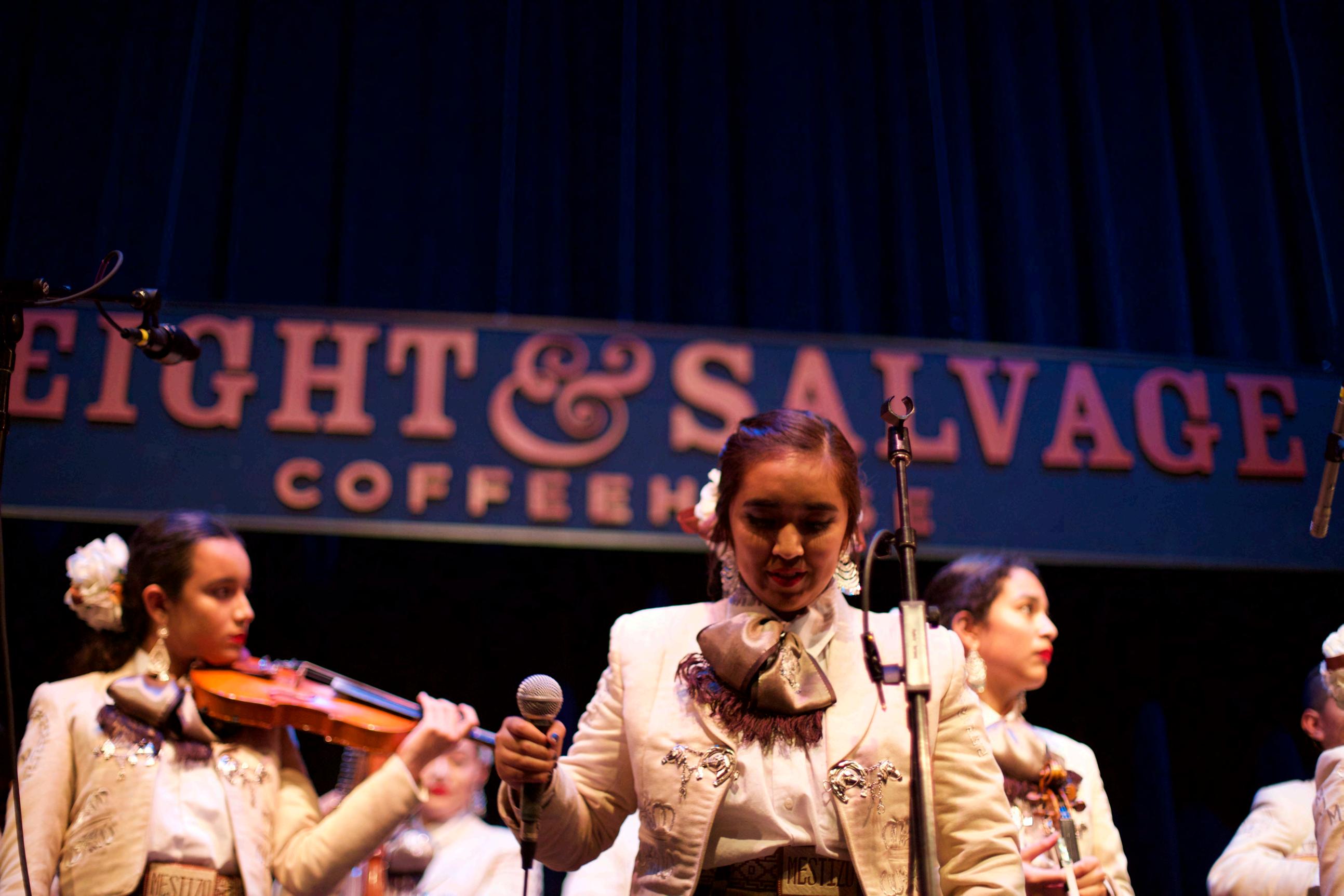
He was looking for an all-female mariachi band to provide an alternative to the machismo found in Western culture, and someone pointed him toward Mestizo — a band comprised of 12 high school girls and three boys. They were playing in a park for a community event. “Something in the emotion behind their music really jumped out at me,” he recalls.
Indeed, the history of California’s music culture extends back to early 19th century, when the Golden State was still part of Mexico. Thus, mariachi music is not an import; it is as American as it is Mexican. It never actually left its homeland.
The unique blend these young musicians have created, with the leadership of mariachi master Juan Morales and the Mariachi Studio in Delano, carries the influence of early Mexico’s Mestizo subculture, which began during the Spanish conquest in the early 17th century. Originally, Mestizos were Mexican-born people with origins in Europe and other integrated cultural and racial backgrounds. So, this band of youth well represents today’s Californian-Mexican experience and connection through music.
With their debut album, Te Doy La Libertad, Mariachi Mestizo have recorded songs steeped in the traditions of Mexico, with the emotion of the finest romantic ballad singers. The quality of their voices and the emotion behind them transcend culture and language and leaves the listener waiting for more from these young musicians.
The sound of this album is sweetened by Pugh’s ingenious idea to record it live
in the main room of Capitol Records, where Frank Sinatra and Nat King Cole made their classic, sonically warm music. According to Morales, “Jim really liked what we were doing. He fell in love with the story and he said he wanted to go a step further and take us to Hollywood to record at Capitol. That was a shock for us. For the kids, it was like a dream.” The session took four hours. It was mixed down into two tracks, resulting in a vibrant, accessible album full of passion, humor, laughter, and tears — all inherent in the mariachi tradition. At times, the young singers break down into tears as they perform passionate songs of innocent love. Their work transcends their own culture, into something more universal.
The Stories of Places
While Mariachi Mestizo draws from music that has been familiar to California for many years, singersongwriter Aireene Espiritu’s cultural and musical pilgrimage has come from distant lands.
Born in the Philippines, Espiritu came to the United States when she was 10 years old. She grew up in three cultures: the old country, the new country, and the marriage of both worlds. This is also an apt description of the music found on her Little Village Foundation release, Going Back Where I Belong. It feels like a kind of homecoming.
Espiritu grew up in Northern California’s Bay Area. During childhood, her family custom included weekend afternoons with music by her uncles on ukulele and guitars. Her orientation was always toward the stringed instruments of those early days. But what led her to pursue music as a career fell at her feet. It was on a fateful afternoon spent browsing in a bookstore that Alan Lomax’s book, The Land Where the Blues Began, literally fell off of the shelf. She began to explore the influence of Lead Belly, Woody Guthrie, and Bessie Smith. Then, she began writing her own songs. With her own unique twist, Espiritu presents an irresistible and inspired sound that is as soulful as it is engaging. She combines the writing skill of John Prine with the vocal talent of Etta James. The result reveals a powerful new talent.
She has recorded two albums of original material with the help of a family of skillful musicians in L.A. and San Francisco.
Pugh discovered her in a way similar to how he found Mariachi Mestizo. “I was at a Folk Alliance in California,” he remembers. “There were so many artists there who were being promoted and given so much attention. I saw Aireene, this tiny girl with this ukulele and this great voice, holding a capacity crowd in this small corner of the conference. It seemed to me she needed to be heard.”
It took some time to find just the right project for her. Her second album, Put Back Charlie, was critically successful and allowed her a fine calling card to book shows as she made her way into the international house concert circuit. But Pugh wanted something special for an artist with such a distinctive vocal talent.
The right project came from Oakland, California, where 80-year-old R&B singer Sugar Pie DeSanto lives. DeSanto was born to a black mother and a Filipino father. She grew up to be a great singer and entertainer. R&B great Johnny Otis, of “Willie and the Hand Jive” fame, added her to his road show revue in 1955. She also toured with James Brown in 1959. She scored a top five hit on Billboard’s R&B charts with “I Want to Know,” resulting in a contract with Chicago’s Chess Records in 1962. It was at Chess where she recorded probably her most famous song, “Soulful Dress.” In 1965 she recorded a duet, “Do I Make Myself Clear,” with Etta James.
DeSanto’s recordings, which are rare and few, reveal her to be a bridge between the sweet blues vocals style of Etta James
and the pop-friendly rock sound of Tina Turner.
However, it was in live performance where DeSanto carved out her legend. She was known for a dynamic stage presence. Her performances, preserved on YouTube, suggest a singer who is as comfortable in a roadhouse as she is on a big-city concert stage. At a time when sexual suggestion was taboo, DeSanto could boldly pack the lyrics to songs like “Rock Me, Baby” with innuendo as she strutted about the stage in full rapport with the band, like an early version of Mick Jagger. Even in her 80s, in a recent performance, she danced with attitude and jumped into the arms of one of the musicians as she sang the classic “In the Basement.”
Today, DeSanto is the feminine counterpart to Howlin’ Wolf and Muddy Waters. In fact, she is wilder than both, making those blues giants look tame on stage. The union between Espiritu and DeSanto was a natural fit. However, there was some question of how Espiritu’s blues approach would mesh with DeSanto’s more electrified style. The answer: phenomenally well. Espiritu’s Little Village album, Back Where I Belong, based on the music of Sugar Pie DeSanto, encompasses a journey from Espiritu’s homeland through the heartland blues to that big-city blues sound championed by DeSanto.
“I had heard Sugar Pie years before, but it never crossed my mind to sing her stuff. It was Jim’s idea, out of the blue. I said, ‘Why not?’ We found some songs that stood out. I didn’t just want to do her popular songs.”
The songs on Back Where I Belong are
filled with the life of Espiritu’s spirit, and they come channeling through the power of her voice. She captures gospel and folk-blues and ultimately lands in the arms of songs that sound as though they could have been recorded at Stax in Memphis in the early 1960s. There are also some of the Filipino folk songs that Espiritu learned from her uncles when she was a child. For those, Pugh encouraged her to get her uncles into the studio.
“It all happened organically,” she says. “Initally, it was a tribute to Sugar Pie. We were sitting around and I started playing ukulele at breaks and I said, ‘Here’s the Filipino folk songs I learned from my uncles.’ Jim said, ‘Why don’t we record your uncles!’ They had only ever played in our living room.”
Early in July, at a release party for the album at Freight & Salvage in Berkeley, California, Espiritu had a rare opportunity to meet and perform for DeSanto. “I was so scared,” Espiritu says. “I was waiting for her to yell at me, but she was so gracious afterwards. She thanked me for keeping her music alive.”
Healing Power
John Blues Boyd is a testament to the redeeming power of music and to creativity that can find its birth at any time in life — no matter one’s age, occupation, or circumstance. The 71-year-old began working the Delta lowland cotton fields of Mississippi when he was seven years old. He was always interested in music, but focused his work on hard labor for the next 60 years, then retired from his job as a hot tar roofer in 2007 to care for his ailing wife. When she passed away in 2014, Boyd lost his way in grief.
“ The blues really saw me through when my Dona died,” he says. “It was hard, you know. We had been married 49 years. … I took care of her for 10 years when she had been so sick. When she died I thought I’d be alone. But Jim and Kid showed up with friends and we had a blues show. It was beautiful. I didn’t know I had so many friends.”
What could have dealt a mortal blow to Boyd’s spirit was turned around through musical alchemy as he returned to songwriting — one of his greatest passions when he was a young man. He
Aki Kumar
“Alan Lomax was an academic, an archivist. What I do is more about the heart. It’s for the human connection and love of people and their music.”
Jim Pugh
began writing songs to console himself. They seemed to just flow out of him. At one point, he wrote eight songs in one day. Music brought life back to him and it brought him back to life.
When Pugh signed Boyd to Little Village, his lifelong dream was realized. The album of original blues songs that he unleashed, The Real Deal, is a revelation of up-front, full-bodied, bold, dynamic blues. It’s fully charged, electrified. Some songs stomp and jump, while others lean on a tilting kind of R&B. There are clear influences here, including Big Joe Turner, Junior Parker, B.B. King, and Ray Charles. What is most remarkable is that these are original songs that sound as though they could have been written and recorded during the Chess Records creative peak years. They’re realized fully, with big horn arrangements, raging electric blues guitar, a full brass section, percussion, and Pugh’s soulful and skillful organ.
But, its Boyd’s story —his late-in-life debut after the loss of his wife and years of hard labor — that drives home the lesson that music connects us to each other in a way that is vital and life-giving. Boyd would have gone unnoticed were it not for Pugh and Little Village Foundation. This is a clear example of the redeeming and healing power of music. In today’s ever-changing world of music trends, this album and artist might otherwise never have seen the light of day.
Bollywood and the Blues
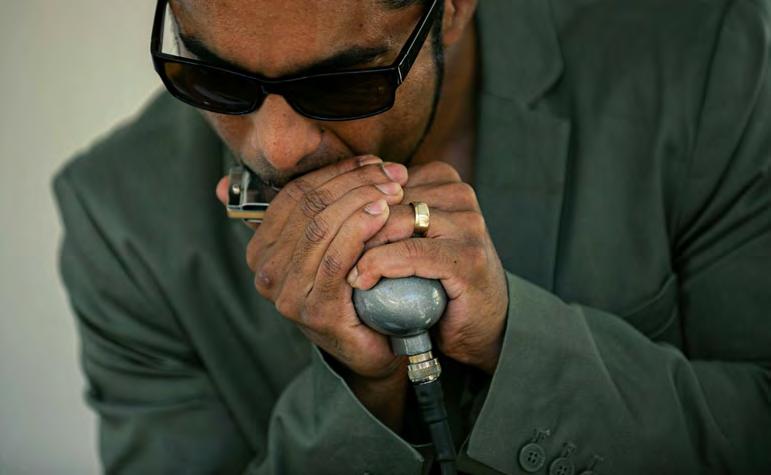
If the other three artists from this year’s Little Village roster share a sense of purity in their pursuit of genres rooted deeply within American music ethos, then Aki Kumar and his album, Aki Goes to Bollywood, is the most diverse and fusion-based work of them all. A longtime student of the blues harmonica, Kumar was born in India. In America, he has been a dedicated student of blues harmonica great David
Barrett. But when Pugh first met Kumar 10 years ago, he remembers him playing in the style of Little Walter.
Kumar’s music is unexpected. Americans are not used to hearing a sitar play blues licks. But Aki Goes to Bollywood is inventive and unafraid to take risks. It has to be heard to be believed. It is an album of traditional Indian songs, reshuffled and arranged into a contemporary blues musician’s dreamland. The music carries a mix of international flavors, bringing together elements that may have otherwise seemed too diverse to blend, though nobody told Kumar that.
At the center of it all, his musical soul rages. He pushes boundaries, transcends the traditional Indian elements with jazz and rock and roll textures, and sings out these pop and traditional Indian songs in both English and Hindi.
Kumar’s approach will prove jarring to the world of blues and Indian music purists. It may not satisfy traditionalists from either culture, but as the everbroadening and re-defining world of American roots music goes, Aki Goes to Bollywood is an unassuming fit. The song “Back to Bombay,” for example, reinvents “Rolling and Tumbling” into a country-blues jam with a sitar and roaring harmonica as the lead instruments.
“ ‘Back to Bombay’ is a strange thing,” says 36-year-old Kumar. “[It comes from] this immigrant thing — you feel this longing to touch these certain things you miss about home, to find the things you don’t find here in the US. You are always in two worlds.”
Aki Goes to Bollywood is the kind of uncompromising work that makes legends and helps to create new genres of music. It is reminiscent of early Los Lobos in the way it is able to waltz across musical and cultural boundaries while retaining a solid blues-rock edge. For Kumar, the release transcends even his wildest dreams. ”This concept had been in my head a lot, but Jim and Kid
Andersen pushed me to get it done,” he says. “Without people like that bringing this to reality, it never would have happened. I am so grateful that I met these guys.”
About the Heart
If the Little Village artists sound too diverse, musically, to be in the same room — or the same genre — listen a little closer. Pugh finds the magic and the commonality in the emotional charge behind each artist.
When asked if he feels like a modernday Alan Lomax, he replies, “This really is something I need to address. Alan Lomax was an academic, an archivist. What I do is more about the heart. It’s for the human connection and love of people and their music.”
With that in mind, it’s not a stretch to say that there is a distinctly American flavor to Pugh’s and Little Village Foundation’s work. All of the albums he’s released are based deep in the roots of each artist’s unique world. Some sing in their native tongue with a strong nod to their native culture. But, make no mistake, this is the music of America’s true heartland — the one that is not divided by politics or pop culture preferences, but that lives around the corner and smiles a good-morning greeting when passing by.
“With racism coming back to the surface [lately],” says Aireene Espiritu, “These artists are heard [in] places not exposed to diversity. I just want to turn down the lights, play in the dark, have people be touched by performances and have them see [that] you don’t have to judge by looks; feel … how it touches you.”
This is American roots music in the truest sense — we have, after all, always been a nation of immigrants; a place where millions have come from around the world for generations to see their dreams come true.
And they have always brought their music and culture with them. ■
For Some, Speaking Up May Be the Only Way Out
by Amy Ray
What i kno W about freedo M of expression is that people die for it, and sometimes people die from lack of it. Freedom of expression takes different forms — how you present your body, your art, your words. Each of these things is inextricably linked to the others, and how they intersect with your life is often a reflection of your privilege.
In Syria, for example, exercising freedom of expression is not only lifethreatening, it’s almost physically impossible. Imagine having no food or water, no real shelter. You’re bombed or shot at every day — every day is an Orlando, a Dallas, a Newtown — and yet you still have the fortitude to broadcast your words over the internet and risk your life to communicate with the outside world. Of course, people living under this kind of oppression and suffering need their voices and their stories to be heard. Their survival depends on it.
As an artist, I must acknowledge that exercising and strengthening freedom of expression means amplifying other voices as much as — or more than — my
own. Not every song has to be about struggle, of course; but if you value your freedom, you’d best be protecting and advancing someone else’s.
Through the Indigo Girls’ work with Honor the Earth — a group that supports indigenous environmental and cultural sustainability — I have seen countless Native communities in which survival has been inextricably linked to creativity and freedom of expression.
For one group of Zapatista women I met in Chiapas, Mexico, in 1996, freedom of expression — as well as their means of income — meant being able to stockpile and access supplies for their textiles and weaving without having to walk through the jungle into town, where they might be raped by soldiers from the Mexican military. The Zapatistas had to create their own infrastructures in the middle of a rainforest in order to be autonomous and free from suffering, and to give themselves room and leverage in their struggle for equity. Their survival depended on it. So, in the midst of relentless, low-intensity warfare, the
Zapatistas’ poetic missives went out over email and social media. Those messages helped to protect them from greater harm and drew outside attention to their struggle.
Closer to home, when Native children in America were forcibly sent to boarding schools in the late 19th and early 20th centuries, the main reason was to kill the “Indian” in them, to assimilate them into American society. If you can’t speak your language, you lose your culture; if you lose your culture, you perish. In Native America’s case, loss of culture has meant a world of problems: high rates of infant mortality, diabetes, alcoholism, domestic violence, and unemployment among them.
But the genocide of indigenous peoples in the United States didn’t stop with physically wiping out whole communities, sending them to boarding schools to be assimilated, or consigning them to reservations; it continues today through government policy, disrespect for treaty rights, and corporate unaccountability for environmental devastation.
Not every song has to be about struggle, of course; but if you value your freedom, you’d best be protecting and advancing someone else’s. Amy Ray
The reason Native communities fight for their language, land, and culture is because they know their survival depends on it. They have found their survival in art and song, creative farming practices, and inventive economic practices that put a premium on freedom of expression and culture.
‘Shame on You’
More personally, in 1998, when Indigo Girls embarked on a short tour of selffunded shows at Southern high schools to promote the arts, we ran up against restrictions on expression right away. At our first show in Loganville, Georgia, I sang the words “I keep fucking up” — in my song “Shame on You” — without censoring them. After complaints about profanity, other schools started canceling our events. I agreed to take the lyric out. I realized that I didn’t mind censoring a lyric from a song if it meant being able to share art with high school kids and give them a positive image of what it means to be queer. After all, queer kids still commit suicide in big numbers because of lack of acceptance and selfhate. But it was plain to see as the shows fell like dominos: The parents had gotten word that the lesbians were coming to town, and they wouldn’t stand for us being role models for their children. We didn’t need to politicize the shows; the students did that for us. They held
protests against both the censorship and the homophobia, and we held alternate shows at all-ages clubs. Censorship was used as a tool against us, but the idea of us being queer was a lot more disturbing than the lyrics to our songs, so the controversy became more about freedom itself than the words we chose to sing.
Freedom from Within
Even as a white queer person who has the protection of community and a loving family, I know that my fight against homophobia and transphobia must incorporate a fight against racism and classism.
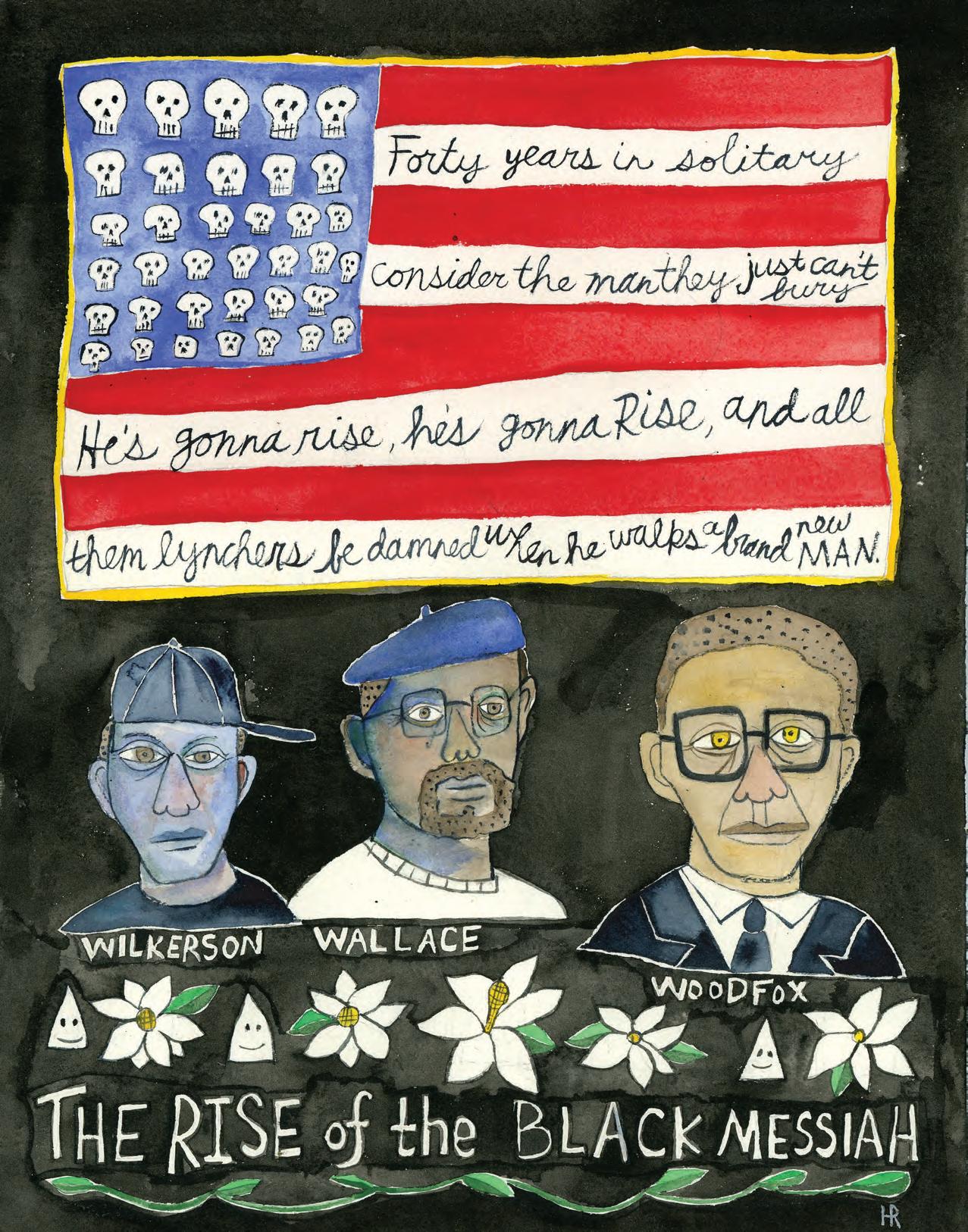
At no time has this been made clearer to me than in 2007, when I received a letter from an African-American man, Herman Wallace of the Angola Three, who had been in solitary confinement at the state penitentiary in Angola, Louisiana, for 34 years. Angola had once been a slave plantation and was still run like one. So make no mistake, Wallace’s blackness was the deciding factor when he was pegged — along with Albert Woodfox and Robert King — for the murder of a corrections officer during a prison riot in 1972.
He was challenging the racism of the criminal justice system and organizing within the prison for more humane conditions, under which prisoners could live free from rape and violence.
Wallace maintained the three men’s innocence throughout his prison time, tirelessly advocating for himself, Woodfox, and King, and a world free of racism and Jim Crow-like ideology.
His letter to me was one among many he wrote to artists and musicians, making a plea for us to spread his story. It took me six years to write my song, “The Rise of the Black Messiah,” but I knew that my privilege to freely express myself could not be taken for granted.
His and others’ legal appeals brought Wallace his freedom in October 2013, when a federal judge in Baton Rouge ruled that his indictment was unconstitutional because the grand jury had excluded women.
When he finally left prison, Wallace was suffering from liver cancer and died two and a half days later.
For him to endure more than four decades in a 6-by-9-foot cell meant realizing his own freedom literally had to be an “inside job” — the freedom of his mind, freedom from hate and bitterness, not losing his ability to reason and write and be an activist for criminal justice reform. His freedom of expression allowed him to endure and at last to leave behind the physical walls of his cell forever.
In his final hours, Herman Wallace was able to exercise free expression one last time as he uttered the words, “I am free, I am free.” ■
L to R: Amy Ray and Emily Saliers
L to R: Guy Carawan with SNCC organizers Bernard Lafayette and James Bevel
CULTURE AND STRUGGLE
The organizing history of “We Shall Overcome”
By Lizzy Cooper Davis
i n July of 1959, ar M ed officials raided the Highlander Folk School in Monteagle, Tennessee, during the final night of a weeklong leadership workshop for black and white participants of the burgeoning civil rights movement. They cut off the lights for nearly two hours, searched the building, assaulted some of those present, and carted others off to jail. Neither the workshop nor the raid was unusual. Since its founding during the Depression by Myles Horton, the son of a white sharecropping family, Highlander had been a hub for multiracial and intergenerational groups of Southern organizers. It had always operated under threat from state authorities and the Ku Klux Klan. The fact that the intrusion was not unusual, however, did not make it any less frightening, and while nonviolence countered the tactics of the raid, song combatted the fear.
One among those huddled in the dark began humming “We Shall Overcome.” Others joined in, and then Mary Ethel Dozier, a black high school student from Alabama, invented the now-familiar lines, “We are not afraid. We are not afraid. We are not afraid today.” Dozier’s improvised verse was taken up by the rest of the group, and the song reclaimed space and galvanized spirits until the end of the raid.
At this point in time, “We Shall Overcome” had been sung regularly at Highlander for years, but had yet to become the anthem of the civil rights movement. Most of those in attendance had likely just learned the song from Guy Carawan and Septima Clark, High-
lander’s white music director and black education director. The two had been collaborating for months to support traditional black singing on the movement’s front lines by incorporating Carawan’s song-leading into Clark’s trainings throughout the South.
Carawan and Clark both missed that night’s singing, however, as they had been among the first to be arrested and were already on their way to jail — an experience that threw their differently racialized relationships to power into stark relief. As the arresting officer took roundabout routes along dark roads and switched cars to avoid being followed, Carawan demanded to know their rights, but Clark, fearing for her life, desperately urged him to keep quiet. While the interracial group they had left behind asserted unity in song, Clark and Carawan found themselves very much at odds.
From ‘I’ to ‘We’
The musical history of “We Shall Overcome” is rooted in traditions of black cultural resistance, but its social history — the experiences of those shaping its use — tells of the triumphs and struggles of cross-racial coalitionbuilding. Dozier’s impromptu transformation of fear into sung resistance drew on her background in the black congregational church and experiences as both a participant in the Montgomery bus boycott and member of the Montgomery Gospel Trio, the boycott’s core song-leading body. The song she sang that night in 1959, however, was not a traditional black song but a strategic revision crafted for political use by black and white cultural organizers. As Highlander-affiliated activist and song-leader Wendi O’Neal says, “The song [marks] the freedom movement as a desegregated moment. A moment when black and white were singing together. When we started to say ‘we’ and not ‘I.’”
There are tensions inherent in this move from “I” to “we” — tensions highlighted by Carawan and Clark’s ride to the police station that night, and extending into contemporary debates about how best to narrate the song’s interracial history and legacy. But facilitating such charged engagements across difference is the life’s
work of “We Shall Overcome.” It evokes ongoing determination and, as scholar and civil rights-era song-leader — and founder of Sweet Honey in the Rock — Bernice Johnson Reagon says, “if you feel the strain you may be doing some good work.” Recovering the struggles and strategies of those who shepherded the song to prominence reveals that “We Shall Overcome” is not simply a brilliant anthem; it is the result of brilliant organizing.
From Church to Frontlines
“We Shall Overcome” originated in black spiritual and gospel traditions and was transformed from church hymn to protest anthem by black women of the Southern labor movement. It is a melodic descendant of turn-of-the-century gospel standard “I’ll Be Alright” and a lyrical descendant of “I’ll Overcome Someday,” a spiritual copyrighted in 1900 and credited to the popular Philadelphia minister Charles Albert Tindley.
In 1945, Lucille Simmons and other black women workers of the integrated Food, Tobacco and Agricultural Workers’ Union of America (FTA-CIO) Local 15 brought it to their five-month strike of a Charleston, South Carolina, cigar factory. Their picket line sound reflected the local’s overwhelmingly black and female membership and resonated with other music emerging from the increasingly integrated unionism of the Congress of Industrial Organizations (CIO). Emphasizing the song’s call for fierce determination and its “prayer of relief,” as picketer Lillie Mae Marsh Doster described it, the Charleston workers performed a slow-paced version from nearby Johns Island — one that stretched the refrain “I’ll Overcome” into “I Will Overcome.” They changed the “I” to “We” to better reflect the collective voice of the integrated union and, with added verses such as “we will win our rights” and “we will organize,” it quickly become the theme song of the strike.
Two years later, “We Will Overcome” was brought to Highlander. Workers from Charleston’s Local 15 shared it in a workshop led by Zilphia Horton, the white director of Highlander’s cultural arm and wife of its founder, Myles Horton. Zilphia had formalized an
extensive set of cultural programs in support of the labor movement, including publishing personal narratives, producing workers theater, and collecting and disseminating traditional music. Her tireless efforts and nuanced understanding of the organizing potential of song led Highlander to be nationally recognized by the unions as the “singing labor school.” Upon hearing “We Will Overcome,” she was instantly taken by its power and began featuring it in her trainings and picket line songbooks. After becoming part of Highlander’s repertoire, the song underwent a series of revisions, mostly by white folksingers. As Myles Horton later reflected, “it probably developed independently where it came from, but it had its own life at Highlander.”
Early on, Zilphia Horton gave it an Appalachian rhythmic style befitting her accompaniment on the accordion and eventually taught it to her friend Pete Seeger. Seeger sang it around the country, gave it a more rigid rhythmic structure and added the verses “the whole wide world around” and “we’ll walk hand in hand.” Seeger is often credited with changing the “will” in the song’s refrain to “shall,” but he recalled in a 2004 interview that Septima Clark also felt “shall” “opened up the mouth better than ‘will.’”
“We Shall Overcome” welcomed and inspired a new cadre of organizers in the early 1950s as Highlander shifted its focus from workers’ rights to racial violence and segregation. Seeger sang his version at Highlander’s 25th anniversary gathering in 1957, where Dr. Martin Luther King Jr. — who attended with Rosa Parks — heard it for the first time. Days later, King remarked, “There’s something about that song that haunts you.”
The Power of Black Song
Zilphia Horton died in an accident in 1956, and three years later Californiaborn folksinger Guy Carawan succeeded her as Highlander’s musical director. Carawan had been passionate about radical change since his college years but was moved to action after hearing King speak alongside a powerful choir in a
black Boston church. He called Myles, whom he had known for some time, to see how he might support the movement. After three mournful years without Zilphia, Myles recognized the need to fill her shoes, and by the end of their conversation Carawan was packing his bags for Tennessee.
Carawan arrived with extensive knowledge of international folk songs and their political uses, graduate training in folklore, two successful solo albums, familiarity with Zilphia’s work, and mentorship from Pete Seeger, Lee Hays, and Alan Lomax. He had learned “We Shall Overcome” from his California singing partner Frank Hamilton, who had added his own chord progressions on the guitar. Although an experienced folksinger and folk song scholar, Carawan did not have a sophisticated understanding of the structures and lived realities of the Jim Crow South or the nuances of the burgeoning desegregation movement he was about to join. As he would later recall of his arrival at Highlander, which had already become a leading hub for civil rights organizers, “I was still a babe in the woods.”
His education came fast and furious from the extraordinary black organizers with whom he found himself working. In his first months at Highlander, he led songs for residential workshops on “Integration and Citizenship” facilitated by Septima Clark — whom King later called the “mother of the movement” — and at gatherings across the South of King’s Southern Christian Leadership Conference (SCLC). Captivated by Clark’s leadership and craving immersion in the folk culture of the black South, Carawan spent that winter working as her driver on Johns Island.
He led “singing schools” for the adult literacy and citizenship education program Clark, her cousin Bernice Robinson, and organizer Esau Jenkins were in the process of developing. The shock of seeing a Northern white man working as a Southern black woman’s driver gave way to suspicion for many elder islanders as Carawan’s approach to song-leading clashed with their own. Carawan adjusted his approach, and his “singing schools” grew to successfully
bolster organizing efforts on the island. In addition to shaping Carawan’s own song-leading, the collaborations he witnessed and supported that winter among Clark, Jenkins, Robinson, and Johns Islanders changed the face of the civil rights movement. Their Citizenship Schools spread throughout the Sea Islands, were replicated across the Deep South, and ultimately yielded hundreds of community teachers, nearly 100,000 newly literate Southern blacks, and 42,100 voters.
The mentorship Carawan received that winter was invaluable, but seeing the inextricable link between island organizing and black congregational singing was transformative. As Carawan would later write, “that experience really changed my life.”
The night Carawan arrived on Johns Island, Esau Jenkins took him to an allnight service at the island’s praise house, Moving Star Hall. Carawan was familiar with more hierarchical church services and was surprised by the community-led gathering he witnessed at the praise house. Each person had the opportunity to lead prayer, offer testimony, preach, or raise a song. Carawan was awed by what he described as the “true spirit of community ownership” in Moving Star Hall and described it as “the most moving and democratic form of worship [he’d] ever encountered.”
More than just a worship service with extraordinary music, the hall embodied the values of democratic leadership cultivated by the likes of Clark, Jenkins, Ella Baker, and Myles Horton — values that countered reliance on the hierarchy of charismatic leadership from above by investing in grassroots, community leadership from below. The music, Carawan learned, was not simply an organizing tactic but the embodiment of organizing principles. That first night with Esau Jenkins, Carawan realized he had joined a remarkable organizing campaign whose leaders understood, more deeply than he, the important role
of and lessons inherent in black culture.
“I recognized that something very special was taking place in that hall and in that community,” he wrote in a 1995 article co-written with his wife, Candie. “Here was the richness of an incredible African-American heritage and a courageous campaign to participate in the modern and changing world by gaining literacy skills and becoming registered voters. Esau Jenkins was the rare kind of grassroots community leader who understood both the value and beauty of the older folk culture and the necessity to fight for progress and change.”
Among the songs Carawan learned anew from Johns Islanders were “We Shall Not Be Moved,” “Keep Your Eyes on the Prize,” and the parent song of the movement’s soon-to-be anthem, “I Will Overcome.” Despite his extensive studies of folk music and travels across the country and the world, Carawan’s Johns Island experience stood out. He wrote during that winter trip, “I’ve never heard singing mean so much to people as it does to them.”
Rise and Remaking
Carawan returned to Highlander at the beginning of 1960 having learned three things: the organizing power of black song, a refined method for teaching songs and song-leading skills, and a musical repertoire tailored specifically to the civil rights movement and prominently featuring “We Shall Overcome.” The traditional a cappella “I Will Overcome” he had learned on Johns Island would have been more appropriate for the black freedom movement, but by 1960 Zilphia Horton and Pete Seeger’s “We Shall Overcome” had been featured and taught at Highlander for over a decade, and its rhythmic patterns, forged by folksingers with backgrounds closer to Carawan’s, better suited his musical style.
Within six months, he had taught
this version to students of the Nashville sit-ins and to activists at three catalytic gatherings: Highlander’s annual weekend-long college workshop in early April, Ella Baker’s inaugural meeting of the Student Nonviolent Coordinating Committee (SNCC) two weeks later, and a weeklong “Sing for Freedom” cohosted with Septima Clark in August and advertised as Highlander’s “first musical workshop.” The song’s power was instantly felt while being sung at SNCC’s founding meeting, and its signature stance — arms crossed right over left — was spontaneously born.
As the song spread throughout the movement, it received another series of revisions. During the 1961 Freedom Rides, new verses were developed on buses and in jails. Later that year and into the next, black song leaders on the front lines of SNCC’s campaign in Albany, Georgia, reinserted black congregational rhythms and improvisation that had been flattened or erased by Carawan’s strumming style on the guitar and banjo.
As Reagon remembers, Albany is where the song was “delivered back into the full range of expression of the black choral tradition.”
Years later, Carawan remembered Reagon, a Georgia native and leader of the Albany movement, interrupting his teaching of “We Shall Overcome” by saying, “lay that guitar down, boy!” Once his guitar was no longer guiding the singing, his even pulse and chord progressions were changed into a triplet rhythm and harmony more consistent with the a cappella sound of the black church.
Albany’s Cordell Reagon, Rutha Mae Harris, and Charles Neblett joined Bernice Reagon as the movement’s song leaders. They became known as the Freedom Singers and toured the country as the education and fundraising arm of SNCC. They and other young activists sang “We Shall Overcome” throughout the South, folksingers popularized it on
stages across the North, and televised protests and concerts brought it to living rooms nationwide. The song quickly became, as Dr. Martin Luther King Jr. would later call it, “the battle hymn of our movement.”
All Rights Reserved
The song’s overwhelming popularity led Carawan, Seeger, and Horton to copyright it in 1960 — a controversial move Seeger later described as a “defensive” one intended to protect the song from cooptation and commodification. In Seeger’s memoir he remembered his manager, Harold Leventhal, saying, “Pete, if you don’t copyright this song, some Hollywood character will. He’ll put new lyrics to it like, ‘Baby, let’s you and me overcome tonight.’ ” Reagon remembers Seeger wanting the copyright to reflect its authorship “by American Negro people,” but copyright law requires attribution to specific individuals — an importation from European laws designed to protect classical music’s singular composers and written scores rather than oral tradition’s alternative notions of authorship and ownership. It was decided the copyright would read: “Musical and lyrical adaptation by Zilphia Horton, Frank Hamilton, Guy Carawan, & Pete Seeger. Inspired by African American Gospel Singing, members of the Food & Tobacco Workers Union, Charleston, SC & the Southern civil rights movement.”
Seeger’s wife, Toshi, set up the copyright with Pete’s publisher, The Richmond Organization (TRO), and founding partner Al Brackman handled all requests for the song. Brackman’s charge, as outlined in extended exchanges with those named on the copyright, was to protect the song’s legacy rather than maximize its profits. All requests for its use in commercials or other circumstances thought to compromise its integrity were — and continue to be — routinely denied.
Guidance from Reagon and Vincent Harding, a black theologian and colleague of King, ensured all royalties received from approved uses were put into a “Freedom Fund” exclusively for the black freedom movement. In 1963, the following sentence was added to the copyright text: “Royalties derived from this song are being contributed to The Freedom Movement under the trusteeship of the Writers.”
In addition to being integral to the song’s civil rights-era life, Reagon has also been a leading force in the rigorous and sometimes quite contentious oversight of the copyright. Brackman consulted her whenever he was unsure about a request — a practice passed on to his successor, Larry Richmond, and continued to this day — and Carawan, Hamilton, and Horton followed guidance from her and Harding on how best to disseminate royalties. It was under her leadership that funding parameters were redefined to specify that grants would go exclusively to black-led cultural organizing projects in and for the black South. Reagon also codified practices to publicize the fund and oversaw much of the training grant recipients received.
In 1965, management of the copyright was signed over to Highlander.
The We Shall Overcome Fund, described as a “living memorial” to the song, was established as a repository for royalties and resource for activists working at the intersection of “culture and struggle.” An advisory committee was established to publicize the Fund, evaluate received proposals, and make granting recommendations to Highlander’s board. Reagon was a founding member of this committee and represented cultural workers of the civil rights movement along with Harding. The committee also included Dorothy Cotton representing SCLC, Faye Bellamy representing SNCC, and Carawan, with the support of his collaborator and wife, Candie, representing Highlander. Harding, who had decided that his
peace-making work was best served by a sole organizational affiliation with the church, soon left the committee. The remaining founding members worked tirelessly — and sometimes through great conflict — to protect the song’s legacy and shepherd its continued work.
To some, the copyright and its control by two institutions founded by white people — TRO and Highlander — feel like an affront to the spirit and history of black freedom singing. Throughout the copyright’s 56 years, this arrangement has sparked conflict among insiders and critique from outsiders. The white names on the copyright threaten to eclipse the song’s black history, and oversight by the Highlander board compromises the Fund’s independence. The most public critique came in April 2016, when a lawsuit was filed against TRO describing the copyright as both “unlawful” and “wrongful.” The suit is frequently described in almost entirely sympathetic media coverage as endeavoring to “liberate” the song to the public domain. Yet despite ongoing struggles, the Fund has supported decades of organizing and scaffolded a number of contemporary movements. Although it does not resolve larger questions about how or if the law should have a role in regulating traditional culture, the Fund stands as a pioneering effort to navigate this complex terrain. Flying in the face of European-descended copyright laws ill-suited to protect traditional black music and the cultural values it embodies, the Fund rewrites notions of legal ownership and reward and has supported hundreds of Southern black cultural workers. Reagon, who has been on the frontlines of the Fund’s struggles and triumphs for 56 years, has called it “one of the most amazing copyright structures” in our nation’s history.
Recovering Hidden Histories
Histories of “We Shall Overcome,” like those of the civil rights movement,
frequently suffer from distorting oversimplifications. Investment in bracketed timeframes erases histories of sustained struggle. Focus on charismatic leaders eclipses the work of grassroots organizers. Celebration of white allies prematurely curtails understanding of black organizing. And reliance on the written record ignores those without privileged access to the archive.
The work of Zilphia and Myles Horton, Pete Seeger, and Guy Carawan was invaluable, and they leveraged their privileged access — to audiences, funds, publishers, travel, and time — to powerfully bolster the song’s trajectory. Nonetheless, their work rests on the visionary efforts of under-recognized black cultural workers including Lucille Simmons and the black women of the Charleston FTA-CIO; Septima Clark, Esau Jenkins, Bernice Robinson, and Johns Islanders of the Citizenship Schools; and SNCC’s Freedom Singers Cordell Reagon, Bernice Johnson Reagon, Rutha Mae Harris, Charles Neblett, and others of the Albany movement. Further, Reagon, Vincent Harding, Faye Bellamy, and Dorothy Cotton indelibly shaped the song’s continued political use as founding members of the We Shall Overcome Fund, and a new generation of guardians has succeeded them. Tufara Muhammad served as the Fund’s outreach worker and Highlander’s cultural organizer from 2004 to 2015, and Omari Fox, Ebony Golden, Wendi O’Neal, and Carlton Turner currently lead the advisory committee.
Thus, as the song continues to be leveraged in movements for change — most recently in the wake of the Orlando massacre and in response to the continued deaths of black people at the hands of police — the organizing history of “We Shall Overcome” and the commitment of this lineage of cultural workers deepens our understanding of what it means to sing for freedom. ■
L to R from center: Septima Clark, Alice Wine, and Bernice Robinson meet with Johns Islanders.
42 THE CAMPFIRE PROBLEM
JEFFREY TURNER
Navigating the
tension between whiteness and blackness in country music
by Geoff Nelson
What
if the “story of America set to music” excludes enormous sections of the American population?
in the fall of 1965, the renoWned author James Baldwin and editor of the National Review William F. Buckley traveled to Cambridge University to debate one another. Two of the most famous public intellectuals in American society, the pair attracted a sold-out crowd. Nearly 500 undergraduates packed the chamber of the Cambridge Union Society. (Footage of the contest, watched by an overflow audience on closed-circuit television, is viewable these days on YouTube.)
Over the course of an hour, Baldwin and Buckley explored the proposition before the debating society that night: The American Dream is at the expense of the American Negro.
Baldwin spoke first. Affirming the resolution, his voice resounding with his regal, slightly affected timbre, he articulated the moment of racial consciousness that happens for young black Americans. “It comes as a great shock around the age of 5 or 6, or 7, to discover that the flag to which you have pledged allegiance, along with everybody else, has not pledged
allegiance to you. It comes as a great shock to discover that Gary Cooper killing off the Indians — when you were rooting for Gary Cooper — that the Indians were you.”
For Baldwin, the colonization and imperialism of the American South and West, the removal and destruction of Native Americans, was inextricable from the fate of America’s black community. While Baldwin’s emphasis on decolonization might have sounded familiar in 1965 to the sons of a recently collapsed British empire, his rhetoric sounded — and still sounds — inflammatory to many Americans, who tend to view Gary Cooper’s cowboy as a sort of universal icon. But from Baldwin’s point of view, Gary Cooper was hunting him as well; the cowboy was the problem.
A State of Mind
In 1973, then-President Richard Nixon declared October to be Country Music Month. He drew a clear line connecting country music to the nation’s soul. “Today, no matter where men and women happen to live,” he declared, “country music may be one of the truest voices speaking to and for them. … [It] describes not just a locale but a state of mind.”
The next year, while speaking at the opening of Opryland — the theme park
These are hard conversations to have, within or without the music. Country doesn’t merely have a problem with race, artists and fans of the genre have practically agreed not to talk about it.
built on the legacy of the famed concert venue — the 37th president went even further, saying country music “makes America a better country.”
Almost 20 years later, George H.W. Bush restated these ties between American nationalism and country music during the height of the first Gulf War. The senior Bush re-declared “Country Music Month” for October 1991. “To listen to a country and western song is to hear the story of America set to music,” he declared. “It is a story of patriotism and hard work, a story of faith, opportunity, and achievement. … Of course, while country [music] speaks from the heart of the American people, it has — like liberty itself — a great and universal appeal.”
These two declarations had more than just an idea in common. In both cases — 1973 and 1991 — America was at war and the president drew attention to ties between the history of country music and American nationalism.
While American country, alt-country, bluegrass, and other derivations of roots music no longer venerate explicit images of the cowboy, the mythology still pervades deep into the consciousness of white America. Though some of the particulars have shifted, one only needs to watch advertising for American-made pickup trucks — usually with a country song in the background — to know that the romanticism of the American cowboy remains embedded in our cultural practice. When we say the Dallas Cowboys are “America’s Team,” we are telling a truth deeper and darker than we might realize.
Returning to Baldwin’s point, though, how could Nixon and Bush’s words fit with a world where “the Indians were
you”? What if the “story of America set to music” excludes enormous sections of the American population?
As Baldwin seemed to be saying, being black in America meant unpacking these coded mythologies and the degree to which they were hostile to your presence, the degree to which parts of America were not intended for you. Thus, we can only imagine what Baldwin might have thought about the rise of mainstream American country music — a process that was well underway in his lifetime. You may imagine what he might have thought of allegedly progressive alt-country, if he had lived to see it, what he might have thought of even the most popularly appropriated signifiers of American roots music: bands like the Avett Brothers and the Lumineers. After all, for much of America’s black population, country music and its many subderivations — basically, anything that isn’t explicitly “blues” — sounds like Baldwin’s Gary Cooper: It isn’t for you, and it might be hostile to your presence.
Every summer, I sit around a campfire in Vermont for a weekly event called “Lessons and Carols.” It happens on Friday night, on that brittle fulcrum where one week ends and another has not yet begun. Following the same architecture week to week, the gathering is a group of white people, mostly, who read short fiction and poetry, interspersed with campfire sing-alongs frequently drawn from the broad Americana tradition. Most of these people are liberal, coastal elites. Most of them are teachers of literature in either public or private secondary education. Most of them are versed in some version of critical race theory.
And yet, here we all are, on the night
I’m thinking of now, reading the very long and very depressing Sherman Alexie story “What You Pawn I Will Redeem,” and then singing the Shakey Graves song “Dearly Departed.” The tune by Shakey Graves roots itself in a pretty duet between a male and female vocalist and the folksy hook, “You and I both know this house is haunted.” On this night, a nice guy named Josh from Providence, Rhode Island, leads the singing and Kelsey from Boston joins in on the harmony. They sound great.
“Dearly Departed” is immediately singable, drawn from the same rustic, melody-forward formula that gave the world “Wagon Wheel.” Our voices raise into the starry Vermont sky, joining the pops and sparks from the fire. The pines encircle us, the fire throws their shadows into the receding mountain topography. Some people harmonize, up a third, the bourbon burning little holes in our inhibitions. People look at each other with special intensity that happens, a bit buzzed, after midnight. The night is ours.
“Lessons and Carols” isn’t just passive interaction with whiteness; it represents the active creation of it. To be sure, all of it is done implicitly, a perfect object lesson in what scholar Ju Yon Kim calls the “racial mundane.” Our whiteness barely registers as notable to the participants. Like the air we breathe, our whiteness in this moment is so obvious, it becomes hard to see, hard to understand. I doubt many of the folks there worried about what the music and our passive reception of it might have implied to outside theorists, to people like James Baldwin. We all slept well that night. That we read a Sherman Alexie story — written by a Native American
author — does that pay the karma police? These are not bad people; we are not the racists.
And yet.
Geoff Mann, professor of global and political economy at Simon Fraser University in British Columbia and an avowed country music fan, wrote in a 2008 article for the journal Ethnic and Racial Studies, “Significant segments of post-World War II country music have always embraced canonical elements of US conservatism: tradition, faith, family (of the ‘traditional’ sort), nationalism, and so on. … Country music is widely perceived to be ‘white music’ — produced by white people, consumed by white
people, apparently appealing almost exclusively to white people, at least in North America. This is not merely received opinion, but is confirmed by virtually every scholar of the genre.”
Thus, despite the fact that plenty of black people live in the actual “country,” country music, it would appear, has a problem with race.
Think of the last time you heard a major country, alt-country, bluegrass, or roots music artist speak or sing about racial inequity in America. Consider their silence. Think of how many of those artists are white. Think of the fan bases of those artists. Look around at the shows. None of this whiteness is
accidental. It wouldn’t be a stretch to guess that if you’re reading these words, you’re a white person in America. Meanwhile, the stakes for this cultural disenfranchisement grow immeasurably high. Black and brown bodies are destroyed daily and we can watch the footage thanks to someone’s iPhone camera. We pause for a moment of silence, but the silence of artistic communities has a different shape, a different color. These are hard conversations to have, within or without the music. Country doesn’t merely have a problem with race, artists and fans of the genre have practically agreed not to talk about it.
Conor Oberst (who declined to comment for this article) is a comfortably political artist. He seemed to know that country and alt-country fans didn’t want to hear it on the Bright Eyes song “Four Winds.” Oberst sings powerfully about a troubled and racialized America. The song indicts America with a metaphor about the apocalypse — we are the End of Days. Toward the end, he sings, “So it’s off to Old Dakota where a genocide sleeps.” The lyric represents a rare digression into the brutal imperial conquest of North America, the Big Truth that undergirds the very ground on which we stand: All of this was taken by force. Our government put people who didn’t agree with the theft in camps. True story: Adolf Hitler loved playing cowboys and Indians as a child in fin-de-siècle Austria. You can guess for whom he was rooting.
In the song’s video, Bright Eyes plays under a tent to a carefully stereotyped “country” audience: all white-skinned and plaid-wearing, a few in cowboy hats. In the world of the video, everything is initially fine — the band codes as a “country” band visually. But then Oberst starts to sing. The crowd boos lustily, throwing trash and bottles as Oberst warbles along, referring to the United States as “the Great Satan.” It’s excellent theater, telling a truth about the degree to
which “country” audiences want — or even can handle — socially conscious music, how much the genres of country and alt-country are willing to talk about the racial oppression on which they may be built.
Learning Identity
Before we go any further, it may be useful to define what we mean when we talk about “race” and “country music.”
Most people accept the phenotypic differences demarcating race (e.g., skin pigment, hair color), while rejecting concepts of genotypic difference. The idea that races possess any innate qualities based on genotype (aka racial essentialism) has thankfully taken its place in the dustbin of intellectual and scientific history, alongside eugenics, social Darwinism, and other horrifyingly regressive 19th-century doctrines. In the place of racial essentialism, scholars tend to understand racial differences in terms of socialization. It is now generally accepted that people are products of their environments, not any nonexistent racial biology.
When someone says, “race is a social construct,” they refer to the idea that different races have experienced different socialization based on artificial — but no less real — structures. Race becomes, in this light, a performance, much in the way theorist Judith Butler argued gender was performative in her 1990 landmark work, Gender Trouble. Butler argued we are born with a sex but we learn a gender. Similarly, we are born with different racial physical characteristics — skin, hair, etc. — but our racial identities grow around us.
As for country music, the definition grows considerably more blurry. Only under the broader umbrellas of roots and Americana music does country ever include the blues. Yet country music and the blues share such vast musical genealogy that it is remarkable how the two genres have become “raced” so differently.
In a 2009 article for Criticism titled
“Country Music and the Souls of White Folk,” Erich Nunn, author of the seminal book Sounding the Color Line, writes: “The music listed as ‘hillbilly’ in record company catalogs was in fact steeped in African-American traditions and shared by whites and blacks, yet in the 1920s it was distilled into a form that came to be identifiably — indeed quintessentially — white in the public mind.”
Nunn quotes an exchange from a recorded interview between John Lomax, a collector of American folklore, and “Blind” Willie McTell, a black blues player. McTell says, “Now we take our white race of the Southern states. They play a little bit different from we colored people. … And still, we have still down in the alley of blues, just like the whites when they play they yodelin’ songs.”
That interview, from 1940, offers a window into the racial lines between American musical traditions — McTell cannot describe the difference; he can only note it. “The logic of race [McTell] proposes is not exclusively ocular — the logic of sight,” Nunn writes. “Rather, in an important sense, the conception of racial difference he elaborates is aural — the logic of sound.”
Like the famed “definition” of pornography — you just know it when you see it — when it comes to the racial differences in roots music, you just know it when you hear it. But historians typically like more specificity.
Nunn argues the fears over integration during the Great Migration lead to the racialization of country and blues, a social construct of genre that left the two musical styles divorced despite their shared heritage.
Genres Divide
Music genre distinctions are themselves constructions. Karl Hagstrom Miller, a professor of history and music at the University of Texas at Austin, staked out a similar thesis in his 2010 book, Segregating Sound. Miller’s argument rests on the creation of segregated record companies, the capital imperatives in
selling music, to discuss how genre distinctions themselves forged color lines in American music.
Of the period 1880-1920 Miller writes, “Through a process I call segregating sound, a variety of people — scholars and artists, industrialists and consumers — came to compartmentalize Southern music according to race. A fluid complex of sounds and styles in practice, Southern music was reduced to a series of distinct genres associated with particular racial and ethnic identities. … Such simple links among race, region, and music were new. They did not reflect how generations of Southern people understood and enjoyed music.” Miller further enumerates how Jim Crow legal structures enforced these new genre codes, creating “a firm correlation between racialized bodies.” Audiences began to expect black performers to play “black music,” and white performers to play “white music.”
Like race, genres are social constructs. In fact, the social construction of musical genres in general is intimately tied to race. But it’s more than a historical project; it requires consistent reification. Mann writes, “If country sounds white, it is perhaps worth considering the possibility that something the status of ‘white culture,’ something like a purportedly American whiteness — however historically baseless — is not reflected in country music, but is, rather, produced by it. … [C]ountry music not only ‘talks white,’ but it is ‘whites’ who hear it, and whose whiteness is produced and reproduced by what they hear.” This is what scholars mean when they say that the abstraction of racial identity can be constructed, made practical, reified, through even simple — and not explicitly or even intentionally racist — acts like singing a song around a campfire.
In the history of country music, though, there are far more troubling incidents than a campfire sing-along on a vaguely rootsy Shakey Graves song. As Miller makes clear in Segregating Sound, the civil rights movement and threats of
desegregation drove country music further and further into its own whiteness.
Lamenting What’s Lost
Aaron Fox — an associate professor of musicology at Columbia University — highlights the example of “Johnny Rebel,” born Clifford “Pee Wee” Trahan. Rebel released white supremacist songs like “Nigger Hatin’ Me” on Reb Rebel Records throughout a run of narrow commercial success in the 1960s. Reb Rebel proudly displayed white supremacy throughout the era of mandated desegregation and the civil rights movement of the 1960s, releasing albums with titles like For Segregationists Only
The reappropriation of Confederate symbols during this era is no surprise — the conspicuous display of the Confederate flag in the American South re-emerged at the same time.
The political and social pressures of a changing South — namely, federally mandated desegregation — brought the Civil War and the “Lost Cause” types back into mainstream discourse. In 1962, Claude King’s “Burning of Atlanta” — featuring the refrain, “The South will rise again” — made it into the Top 10 on the country chart, crossing over as a minor pop hit. David Allen Coe, a far more famous example, frequently deployed the word “nigger” in his music.
Country is not only “raced” music in the way it signifies and codifies whiteness, but the history of abject racism weighs heavily on the genre, opening it for scrutiny in a fashion, rightly or wrongly, that is less frequently applied to mainstream rock or indie rock. It is beyond a doubt that modern country music surged in popularity during the peak of the civil rights movement, a damning indictment of the genre’s implicit or explicit politics. Still, citing the most lurid examples of white, Southern racism does little to unpack how country music came to signify
whiteness and how it perpetuates itself as a “white” genre. It does little to explain my campfire problem.
Professor Mann insists it has a great deal to do with the lyrical content of country songs. Not only does the instrumentation and Southern accent of country music signify a form of nostalgia, but Mann contends the lyrical “pastness” of the genre also stakes out clear political, and concurrently racialized, boundaries. Mann calls the emphasis on nostalgia in country music the “often rueful narrative of loss which invokes not only loss itself — death and aging, divorce, displacement, etc. — but also implies or explicitly constructs that which has been lost.” Any fan of country will find a sort of density of nostalgia in the lyrical content of many of the genre’s most famous songs.
Mann cites Merle Haggard’s “Are the Good Times Really Over?”, quipping wryly about the implications. “The good times ‘back before Elvis’ — are also back before Brown v. Board of Education, not to mention the civil rights movement,” he writes. If country music and its fans worry over a lost world, one may well wonder what is it they wish we could return to.
Even a song as seemingly banal as George Strait’s 1987 hit, “All My Exes Live in Texas” conforms to Mann’s suggestion of nostalgia as one of the organizing principles of country music’s racial identity. Country music is littered with such songs of lost love. Though only communicating a sense of romantic loss through narrative, Strait’s song tells more than he knows: It is loss itself for which the country music fan pines.
We must unpack such a profound interest in this kind of nostalgia. Mann connects the politics of phrases like Donald Trump’s “Make America Great Again” slogan with musicology. “More precisely than straightforward conservatism, this dehistoricized innocence, a naïve victimhood, is crucial to the politics of time in country music, and to much of contemporary
whiteness.” He tells me later over the phone, “When we say country music, what we mean by that, comes into being around the era of desegregation. … That’s what any conservative politics is tapping into right now. This notion that ‘you stole my world — you bastards stole my world, and I want it back.’ ”
Bad Memories
Unsurprisingly, nonwhite audiences — especially in the American South — have considerably less nostalgia for the way things used to be. For many of those people, there is no romance in a past America; the past America was even more hostile to their existence than the current iteration is. You can’t want to “Make America Great Again” if America still isn’t great for you, and was even worse in the past. As the Wood Brothers’ Oliver Wood notes, “A lot of black folks don’t want to go back there either. They don’t want to go back to the traditional stuff because they don’t have any nostalgia for those times. Those are bad memories.”
Of course, like whiteness, even this imagined past doesn’t exist in any concrete way; it must be constructed in the imagination. Standardized for cultural inflation, the lives of most people would have seemed just as confusing and difficult in the 1960s as they are today. The particulars change but the feeling of loss remains.
White people have been worrying about the end of “traditional society” from Edmund Burke’s panic over the French Revolution to Oswald Spengler’s fear-mongering 1918 polemic, The Decline of the West. Fetishizing the past is common vernacular for many white folks. Like nostalgia for a lost relationship, when longing for the past, one is tempted to edit out complexity, forgetting all the frustrating, daily marginalia, forgetting how an ex interrupted your stories or the way their downturned mouth always subtly annoyed you. The details disappear with
time, replaced by a hole that fills with desire. Folks inspired by a phrase like “Make America Great Again,” like many country music fans whose hearts jump at the nostalgia in their music, merely long for longing’s sake. David Foster Wallace called this “the constant gnawing sense of having had and lost some infinite thing.”
Part of this is fueled by patriotism, at least the brand of patriotism one finds in country music. Like George H.W. Bush’s exaltations of country music’s connection to essential “Americaness,” country artists often define the patriotic through some ineffable “Southernness.”
In Zac Brown Band’s song “Chicken Fried,” this mixture of patriotism and ethereal “Southernness” collide. Brown asserts and defines his rural upbringing, his traditional family structure, and Southern life generally under the aegis of the phrase “chicken fried.” It becomes a heuristic for knowing the South, for knowing the country.
Even more bizarre, the title is an intentional malapropism of a popular Southern food item that has been appropriated from the black community. In the third verse, Brown sings:
I thank God for my life
And for the stars and stripes
May freedom forever fly, let it ring
Salute the ones who died
The ones that give their lives
So we don’t have to sacrifice
All the things we love chicken fried.
An attuned listener can easily hear Brown’s cocktail of patriotism, Christian conservatism, and militarism. Brown directs the listener — not explicitly toward nostalgia as Mann would define it, but, rather, to a sort of fragility of Southern existence. In Brown’s syllogism, without the many deaths of our men and women in arms, we/he would not have “the things we love, chicken fried.”
Brown defines “chicken fried”-ness as “Cold beer on a Friday night/a pair of
jeans that fit just right” and “the touch of a precious child/to know a mother’s love.” Through these supposed universal signifiers, in terms of sound and lyrical content, he affirms a vision of fragile whiteness under invisible attack.
Brown wrote the song in 2003, when, one can assume, working backwards, our nation went to war with Saddam Hussein to protect a certain “chicken fried”-ness. The enemies of “Chicken Fried” are outside Zac Brown’s world, but, given the dense signifiers of whiteness in mainstream country music, astute listeners may well wonder what else threatens “Chicken Fried.” Based on everything I’ve read (Brown declined to comment here), Zac Brown isn’t a racist, but the “raced” sound of “Chicken Fried” does a more hidden, still insidious job, akin to the work of Johnny Rebel.
Words and Identity
None of the language around race and music is simplistic. It involves deep reading of cultural symbols, and at least a basic understanding of both critical race and linguistic theories. It can be frustrating to consider the ideological power of speech and cultural signifiers. Think for a minute of all the ideological work that goes into the word “boy” or “girl.” Consider when an individual boy or girl acquires language, reads the word, begins to understand its power, and in so doing begins to become subsumed by a discourse that predates him or her. The same is true for the individual black, white, or brown child.
To wake up in the world is to come to grips with the political and social powers of language and cultural expressions like music. Even more frustrating, to realize one’s identity in these terms often solidifies social and linguistic structures. Discovering one’s whiteness perpetuates whiteness, discovering one’s maleness perpetuates maleness, discovering how country music is raced threatens to more deeply “race” it.
We can work to subvert these things,
but the coding is so deep, so historical in nature, it can feel immutable.
Columbia’s Professor Fox recognizes the complexities that muddy the waters of country music’s race and class distinctions. “Country is black music,” he notes, explaining the genre’s urban and rural origins in the early part of the last century as well as its diverse racial background.
In New York in the early 2000s, a subculture of Caribbean black musicians in Brooklyn played country and western music in churches and nightclubs. “There were all these guys from Granada, St. Lucia, Jamaica, Trinidad, and Barbados,” says Fox, “singing Kenny Rogers and Charlie Pride, and putting out records full of country and countrygospel in neighborhoods that have [since] gentrified to be incredibly expensive and white — Bed-Stuy especially.”
Fox knew of these black country musicians, but most of the white performers and fans of the alt-country scene didn’t seem to, even though the clubs they frequented were mere miles from the locus of the black Caribbean country scene. “Both [scenes were] happening in Brooklyn, and they were completely unaware of each other,” Fox marvels.
Indeed, dealing with country music’s racial history can often feel like inhabiting what James Baldwin called two different “systems of reality”: one white and one black. Country music remains white because listeners continue to hear it that way. It’s a powerful, circular logic.
Mann elaborates. “Race, culture, or ideology are not only produced, but must be constantly reproduced,” he says. “The idea that country music ‘sounds white’ because its ‘origins’ are white — even if such a story were true — misses the essential process through which the music’s ideology of whiteness must be reproduced over time, day in and day out.” The problem with country music’s racial dynamic, in other words, isn’t that
There was never an empty, wide-open West; it was full of people when white folks arrived. Those people were silenced by the cowboy. This is our nation’s history, the history of country music.
we remember it too well; it’s that what we remember about it is wrong, incomplete.
Oliver Wood sees hope in the past. Referring to a biography he recently read about Sun Records founder Sam Phillips, Wood says, “That’s one of the ultimate Americana stories — Sun Records and Stax Records, where white music and black music come together to create what they called rock and roll for a while. There’s always this sort of overlapping of black music and white music.”
Fox is optimistic, too. He sees no reason why the hegemony of whiteness in country and roots music needs to persist. The thing about linguistic and social structures is that we make them, and we can change them too. Getting rid of the commercial boundaries around genres would help. Fox contends, perhaps unsurprisingly, that scholars of the genre play an integral role in salvaging the lost history of Americana music, the burden of “queering” the history of country in the hopes of saving it. “The larger analysis that my colleagues and I make is that genre is diminishing in salience by the
year. The economic structures that genre provided in the industrial era have transformed into a post-genre space. … You can do archival deep-dives that produce lateral and diverse collections.” He calls this new notion of American music, “a genre of one.” Fox makes it sound like a good national project, this remembering rightly thing. Make America Remember Again.
Where Change Takes Root
The actual history of country music — the one contained in the muddy waters of American roots music over about 150 years — is complex. Like so much of our nation’s history, the challenge remains to see beyond dominant narratives, especially the ones silencing some voices while privileging others. Nixon and Bush weren’t far from the truth when they said that country and western music is American music.
But there was never an empty, wideopen West; it was full of people when white folks arrived. Those people were
silenced by the cowboy. This is our nation’s history, the history of country music. The romantic view we now have of the Old South is a lie built on a pile of other lies. Our nation was built by stolen labor on stolen land. And yet from these profound injustices emerged the beginnings of American popular music.
There is no history without words, no memory without speech — it’s why you can’t remember anything before you could speak. But by the time we can speak and read, we are already participating in an ideological system that predates us. It’s the words keeping us from changing the world.
It takes deep ideological work to imagine a world where country music could reclaim its historical diversity. It would take sustained effort as we continue to wake up in a world that we didn’t make, a world we participate in from the moment we can remember. A world where whiteness is underscored in the most seemingly innocent moments, where the cowboy and the campfire are the problem. ■
PAULINA MOURZINA
PUTTING THE LIGHT OUT THERE
Kaia Kater and Erin McKeown discuss “otherness” in music
By Kelly McCartney
t hough the styles of M usic under roots music’s tent include myriad genres from blues to bluegrass, its power players — and often its audience — mirror society at large with white, straight men standing at most of the gates. As in the broader culture, to be an “other” of any kind often forces artists to step around those gatekeepers in order to step up to their own musical missions. So I wondered what might come of a conversation between two seemingly different artists who have forged successful careers despite their “otherness.”
Across some 20 releases in 17 years, queer singer-songwriter/guitarist Erin McKeown has played her hand with equal parts style and substance. But, over the past few years, she has upped the ante by folding her previously private activism into her music. Her latest offering, According to Us (released June 24 on TVP Records), blurs musical boundaries even while it illuminates cultural imperatives.
Canadian upstart Kaia Kater grew up in a home filled with art and artists, as her mother ran folk festivals in both Ottawa and Winnipeg. Now 22, she released her sophomore album, Nine Pin, in May on Kingswood Records to much critical acclaim.
Her artistic evolution is keeping pace with her personal exploration of what it means to be a young, biracial woman with a banjo. And the question of “what it means” is where our conversation — which has been edited for flow — began.
KELLY M c CARTNEY: I’d like to dig into the differences and similarities that exist for various “others” in roots music — whether as women, people of color, or queers. Let’s start with your similarities. As women, albeit in different generations and different genres, what sorts of issues have each of you bumped up against in this predominantly male milieu?
KAIA KATER: A lot of what bristles my feelings is, when I’m at conferences — this happens a lot with older men who think they are giving me advice — guys will say, “What you’ve got going is really cute!” Or, “You’ve got a really cute look.” Things like that really don’t feel professional. It’s like, “If I were a guy, would you tell me that I had a really cute look?” It’s hard to fight [that] because they feel like they are giving you a compliment.
One radio DJ who saw my live performance — I do body percussion, sometimes, as part of it. I was doing some hambone, and he told me after the show that I should probably not do percussive rhythms involving my upper chest because it’s distracting. He said, “You draw attention to your breasts, so you probably shouldn’t [do that].” Then he said, “Or you should wear a better bra.”
It was so surprising. The worst thing was that I was kicking myself because that was a teachable moment for me to be like, “Well, actually, maybe you need to check yourself. I don’t need to do anything to make you feel better or more comfortable.” It wasn’t even that egregious. It wasn’t like I was wearing a lowcut top or anything. It was really just his own psychology around it. It’s been tough trying to find my voice and feel okay about maybe sometimes coming off as a bitch or coming off as strong and confident.
ERIN M c KEOWN: Well, I’m really sorry you had that experience. The interesting thing about listening to that story and
thinking about this issue in general — I think the sexism that I’ve seen in the music industry is really no different than the sexism that is in culture, in general. That’s just workplace harassment that lots of different women deal with in lots of different ways all the time. I get rankled by the injustice of [it]. I have had experiences like that in the music industry.
The thing I [want to] say about my own personal experience is that I’ve been on a curiosity about my gender for a long time, which has been personal and I think I would be on that journey no matter what my job was. But in the music industry, your appearance is a big-deal part of your success, one way or another. It is, unfortunately, inextricable from what you sound like.
My gender — and how I want to express it — has bumped up against some things in the music industry. … There was one of my early records where [I was told], “If you choose not to do this glamorous photo shoot, then you may have a harder time reaching certain audiences.”
Early on in my career, I went along with it. I thought if I did certain things, if I looked a certain way, if I sounded a certain way, I would achieve the kind of success I was looking for. So I made some photos that made me feel awful and not like myself. Then I had a different experience on the next record, where I made a choice to have short hair and wear a suit on the cover of it and [I] was told, “People are going to know you’re gay. Are you ready for that?” Not like, “Don’t do that.” But, “Are you ready for that?”
In a certain way, that’s the same thing as what Kaia was talking about. I think, ultimately, where I’ve arrived is [realizing] that none of those things worked anyway. [Laughs.] It didn’t work to try to conform to right or wrong, or an idea of what success might look like in
“It’s important to remain complicated, to not fit into a binary of what people think that you should do or should sound like. ‘Oh, here’s a black girl. She’s going to sing about black protest songs.’ I think that’s amazing, and a lot of amazing women are doing that. But I’m still negotiating my relationship with race.”
Kaia Kater
Kaia Kater
the music business. I didn’t become as mainstream and popular as I wanted to be. So I feel like my contribution to this discussion is [my determination] to continue to be visible, to continue to be complicated around my gender and around being a woman, and [how I] identify with women. If I can keep surviving and keep complicating things like that, then that’s my answer to it.
KM: You keep it complicated with your music, as well. You are always coming from different directions. Kaia does that less than you, but she’s coming from an under-represented demographic. That must be at least a little bit fun — not letting people rest on their preconceived notions about what it is each of you do.
EM: I actually feel like that’s the purest reflection of my inherent personality. [Laughs.] If I had any other job, I’d probably behave the same way. I am, by nature, somewhat defiant and resistant. … I’m a little contrarian.
When I was starting out, I never stepped up and said, “I’m going to do this on purpose.” Certainly, if I had any control over it, again, there would be different consequences. I do think the music industry prefers when you are one thing and make the same record over and over again. It just seems easier for everyone and that’s never been my nature.
KK: That’s a really great point. I remember having a conversation with my publicist on my very first record. He’s a great guy and he made a point to ask me whether race should be mentioned in my bio.
I think I had my own internal battles about it because I’m mixed-race — my mom is white and my dad comes from the Caribbean, so I’ve always felt that I floated in the middle of things. In a way, now, I’m thankful for it because, like you said, Erin, everything is not one way or the other. Everything is very complicated. And it’s important to remain complicated, to not fit into a binary of what people think that you should do or should sound like. “Oh, here’s a black girl. She’s going to sing about black protest songs.” I think that’s amazing, and a lot of amazing women are doing that, like Leyla McCalla and Rhiannon Giddens and Valerie June. But I’m still negotiating my relationship with race. There’s a song I have on my album
that is the first song — the only song — I’ve ever written about race. It’s called “Rising Down,” and it’s about the Black Lives Matter movement. At the [release party in Toronto], I started talking about why I wrote it. I wrote it after the death of Tamir Rice in Cleveland. As I was talking about it onstage, I felt myself get so emotional. It was something that felt so close to me, such a personal part of myself, that it was a risk sharing it with the audience, [to] have them hold that and take it for what it is. I remember [feeling] so raw.
I still have not sorted out all my emotions around [race]. That’s why it’s hard to bring it up in a live context. I think it’s a lot more complicated than being just one thing — being black or female or mixed-race or gay or whatever.
I don’t know about you, Erin, but I don’t want to be defined by just one thing, because [my music is] so much bigger than that.
EM: I one hundred percent agree with that. Something that I have to be reminded of all the time [is that] there’s a difference between music and the music business. We probably have a lot of stories about the marketing and [business] side of the whole thing. Then there’s the part of performance, that Kaia was just speaking to, about how we want to talk about our music or present ourselves in a performance setting. And then there are the actual bones of the music. In some ways, I prefer talking the most when I’m talking functionally about how the music is put together.
[For example,] I’m interested in the ways different musics occupy the same sonic space, the ways that they sit with each other, the ways that the differences rub up against each other. I’m most interested in those conversations when it’s functionally about music. Where it’s like, “If I build this song with this beat, then put this chord progression over it and they are coming from different musical references and different cultural references, what happens?” Then I’m interested in stepping back out and saying, “What happens when I, as a white queer woman, play those songs?”
The least interesting conversation, to me, is, “What does my publicist have to say about that?”
KK: [Laughs.] Right! Right!
EM: And, “Does someone want to buy
this music?” We’re talking about different layers of where this stuff is happening. For me, the most interesting part is in the bones of the music.
I think, in your case, Kaia, the banjo is a really interesting centerpiece for that conversation.
KK: Yeah, it’s quite interesting, I think, because only in the last decade has the banjo been associated with being, historically, a black instrument. When I started learning it, I was like, “Wow. This is a really hyper-white instrument!” All of the other banjo students were white, but I just really liked it. Only after the Carolina Chocolate Drops and Joe Thompson did it come it up that, “Oh, wait. It’s not such a white instrument after all.”
It really is interesting, the politics around music.
EM: My experience, being an electric guitar player and a woman, has been interesting. [When] you’re in the elevator with people who have no idea who you are, [they’ll say], “What kind of music do you play?” You have to figure out how to answer that question. Then some older dude who knows about guitars always [asks], “What you got in there?” Most people assume, if I am a female-bodied person and carrying a guitar, that it’s an acoustic guitar. And it’s not. And I get mad about it.
It’s similar to what Kaia was saying: There’s a tremendous tradition of women playing electric guitars.
KM: I want to touch on things that both of you said: the part about being defined by your artistry rather than anything else and also the part about the bones of the music, putting the artistry first, setting aside your “otherness” in order to be represented by your art. I see all of that in your music and yet you each put your otherness to work in songs like “The Queer Gospel” and “Rising Down.” Does that come from inspiration or a sense of responsibility?
EM: At different points in my career, it’s come from different places.
I have always been someone who’s felt a deep sense of social justice and I had a kind of artificial wall between that and my music. I thought that I would suffer some financial- or attentionoriented consequences if I made music that was more politically minded or more in line with how I felt personally.
Honestly, it was very tiring. I just made a decision to drop the wall and, for better or worse, to try to write from a more justice-oriented place, because that’s where my life was. And it felt more responsible. It felt like the right thing to do.
KM: So inspiration and responsibility sort of collided for you?
EM: They did. And it stays complicated. There are a lot of things I care about and it’s hard to put that stuff in a song. It’s not always singable.
The tension in the music that I’m making currently, is “Good song or good message?” Can you have both? I’m working through that, but I certainly feel a deep sense of responsibility to put my identities and my politics to work in a way that, again, remains complicated but is useful.
KK: I really identify with what you’re saying: “Can you make a good song and a good message?” How is it, also, that you bring it up with the audience in a way that doesn’t make them feel excluded?
For example, with “Rising Down,” the music is part of a West African dance piece that was choreographed by my modern dance teacher, Laurie Goux, when I was going to school. The school basically said, “We want a piece about the black experience.” We were like, “What? We’re still wrestling with who we are.”
I was speaking to Laurie — she’s African-American and from Chicago — and a friend of mine, Katharine Manor — she’s a black tap dancer from Maryland. We were all together trying to create this piece. When we let every-thing go and started talking about what really upsets us in our daily lives, what really is tough to go through, in conjunction with watching the news, it came from a place of, like you were saying, Erin, “Okay. Let’s write it how it is. Let’s tell it how it is. Let’s not make everything ‘Kumbaya.’ ”
There’s a line that says, “Your gun is always at my temple,” which is like, every time we go out in public, we feel like we have to not have our hands in our pockets and we have to look as non-threatening as possible. I think that’s even more true for black men than it is for black women. That was a very hard process to go through, to write from a very honest spot.
We do have a responsibility, as artists. We can choose to take it on or not, but we
have a responsibility, as artists, to try and get a message across, in some way. I don’t know whether it succeeds or fails, but I think you have to keep trying, at least.
KM: That line — “Your gun is always at my temple” — also speaks to the shootings in Charleston, Orlando, and elsewhere. It’s an invasion of our safe spaces. So how do you find people and places that are safe without getting pigeonholed? You don’t want to play to just gay people in a gay club or just black folks in a black venue.
EM: If the goal is to connect and share, pick up the right tool in the right situation and be useful about it and say the right thing.
In terms of safe space, I’m sure I’ll keep doing what I do, but I certainly have times when I’ve thought, “What the fuck?!” [Laughs.] “What kinds of physical consequences might come my way?”
[The Orlando shooting was] the first time I’ve thought that. I haven’t had to often think that. And I certainly understand the privilege of not having to think about my safety in those ways, or in quite this way. But I will say that, right now, the question is heavy and open for me.
KK: I’m living in Toronto and I definitely, after living in the States for four years, understand how one can feel threatened due to so many guns being present — concealed carry, open carry, and all these things.
I had this conceptual understanding
of the States, but, once I went down and lived there, I think it was a very sobering experience because it showed me how easy it is to give hate a voice — and a very violent one.
There are tensions in Canada. We have a very long history of racism and oppression with our aboriginal populations, as well as black populations and LGBT [people]. So it’s not like our hands are clean. But going down there, [I saw] how heated the climate is and how scary it is to be down there. I just can’t imagine, Erin, living in the States after Orlando and how you can feel safe at all, going out while maintaining your identity, maintaining who you are while people are trying to erase it.
After the Charleston shooting, I called my teacher, Laurie, because she’s my mentor, and said, “I don’t know what to think. It’s so horrible.” Her response was, “Yeah, well, we have work to do.” We just have to get back to work. We have to keep pushing on this. It’s almost our duty, for the people who were lost. We fight for them and their memory and fight for the future.
I hate the word “tolerance” because it implies this tacit “You do your thing; I’ll do my thing.” We’re very different, but [it’s important to] embrace those differences and realize that we all have something to contribute [that can] enrich each other’s lives. You just have to keep putting the light out there. ■
Erin McKeown
THE WORK IS NEVER DONE
A decade in, Anaïs Mitchell’s folk opera “Hadestown” gets new life
by Kim Ruehl
d o W nt o W n Ma nhattan has long been a hotbed of folk music, intricately woven into a community of coming-of-age artists and sociopolitical concerns. Once upon a time, this cocktail of culture was served up in Greenwich Village, where jams, hootenannies, and occasional protests took place regularly. On West 4th Street, a young Bob Dylan moved in, near Gerde’s Folk City, the nightclub where he made his New York debut. But Dylan eventually grew weary of the West Village (see his scathing ballad “Positively 4th Street”) and moved upstate; with that, the center of New York’s folk music scene began its long migration east to Brooklyn.
But it was in the East Village this past summer, on East 4th Street between Bowery and 2nd Avenue, where you could find a perhaps unexpected venue for American folk music. The New York Theater Workshop is a testing ground for
outside-the-box productions, and there, from May through August, a decade-old folk music project held court: the New York debut of a professional theatrical adaptation of singer-songwriter Anaïs Mitchell’s folk opera Hadestown
In a year when derivations of folk music have driven two Tony-nominated Broadway shows — Steve Martin and Edie Brickell earned a nod for their banjo-driven Bright Star musical, while Hamilton has employed urban folk music (aka hip-hop) to run away with nearly all the Tonys — Mitchell’s little show on a side street in the East Village may seem like small potatoes. But the show earned praise from The New York Times and packed enough houses that its run was extended twice. Even buzzworthy Hamilton creator LinManuel Miranda dropped in to check it out, then gushed about it on Twitter, calling Mitchell’s music “thrilling” and
L to R: Damon Daunno as Orpheus and Nabiyah Be as Eurydice in the New York Theater Workshop production of Hadestown.
imploring his followers to “GOOOOOO.”
The story of Hadestown is pulled from the ancient myth of Orpheus and Eurydice, a pair of down-on-their-luck lovers who slog through a difficult world with little more than their love and Orpheus’ musical talent to keep them warm and fed. But as winter sets in and the money runs low, Eurydice’s doubt begins to take hold. One day, she encounters Hades, who promises her a life without want if she’ll follow him to the underworld, where he reigns as king.
Much as she loves Orpheus, she’s hungry and desperate. She follows Hades, and, before she realizes what she’s done, sells her soul and becomes trapped in his underworld. When Orpheus learns of this, he sets off on a long journey to save her — something he’s only sort of able to do when Hades’ wife and conscience Persephone convinces him to hear Orpheus out. The singer unleashes a song so beautiful and melodic that it sails right into Hades’ heart, reminding him
of his core and his humanity. With that musical mirror held to his face, Hades takes pity on the pair of young lovers and lets them head for home, under one condition: Orpheus must walk in front and must never look back to see if Eurydice is following. If he does look back, he will lose her forever.
“You let them go,” sings Persephone, glimpsing her husband’s heart for the first time in a long while.
“I let them try,” he replies.
In Hadestown, freedom is never free.
‘Why We Build the Wall’
Hadestown began when Mitchell was a young singer-songwriter based out of Burlington, Vermont. “The first couple lines and songs I wrote truly came out of nowhere, and just seemed to be about this tale,” she recalls. “The fact that I ever attempted to go ‘all the way’ with writing a full-length piece of musical theater had to do with, a) the crazy challenge … and
delight of having one or two hours during which to tell a single story, rather than the three-and-a-half minutes I’m used to in songwriter world. And, b) the truly amazing collaborators I’ve had along the way, including Michael Chorney, Ben T. Matchstick, Todd Sickafoose, Rachel Chavkin, and all of the actors and musicians who have brought the piece to life over the years.”
After a few performances as a “DIY community theater show” in New England, Mitchell had the opportunity to record Hadestown as an album, with producer Ani DiFranco singing the part of Persephone on the disc. DiFranco was able to get her old friend Greg Brown on board as Hades — Mitchell had written the part with him in mind. A chance tour through Europe opening for Bon Iver inspired Mitchell to ask Justin Vernon to take the part of Orpheus, and the cast was gathered to record in DiFranco’s New Orleans studio. Following the album’s release, Mitchell toured the country,
Orpheus (Damon Daunno) makes his case before Hades (Patrick Page) to win Eurydice’s freedom.
“ ‘Hadestown’ is … a portrait of a world as much as a portrait of individual characters. The very act of people gathering together to tell stories and sing songs is as old as the hills, and is inherently political.”
Anaïs Mitchell
delivering Hadestown with rotating casts of local musicians wherever she went.
As an album, Hadestown (released on Righteous Babe Records in 2010) straddles the chasm between straight-up folk music — with New Orleans flavors — and theatrical cast recording. There is clearly a narrative threading the songs together, but you can spin the tunes on random and they hold up just fine as singular compositions.
In fact, Mitchell has taken to performing them herself in recent years, between tunes from other albums like Hymns of the Exiled (2004) and Young Man in America (2012). The fact that they’re so powerful in or out of context is partially by design, and partially a result of Mitchell’s unique voice as a songwriter. Many of her narratives outside of Hadestown follow a mythological arc as well, whether pulling from the Bible, Greek or Middle Eastern mythology, or her 2013 reworking of the Child ballads with Jefferson Hamer.
As is true of all those mythologies, Hadestown’s music tackles sweeping, timeless, universal themes like happiness, fear, love, desperation, and the battle between good and evil, as well as direct issues like the balance of wealth and power and — more specifically — the building of a wall to keep out unwanted people.
“Why do we build the wall, my children?” Hades sings in his guttural growl, like the leader of a cult or a heartless dictator. His workers echo his question before answering back: “We build the wall to keep us free and the wall keeps out the enemy — that’s why we build the wall.”
The song, which falls somewhere toward the middle of Hadestown, and the
narrative march on, following a spiral down, through the layers of the underground, separating those inside from those without, establishing an “us” and “them” without need for deep explanation.
In Hadestown, it’s best not to think too critically.
Because we have and they have not
Because they want what we have got …
W hat do we have that they should want?
We have a wall to work upon
We have work and they have none
And our work is never done
And the war is never won
And the enemy is poverty
And the wall keeps out the enemy
And we build the wall to keep us free
That’s why we build the wall
We build the wall to keep us free
Everything in the song — its rhythm and phrasing and repetitive, plodding melody — feels like a bit of hypnotism. Its twisted idea is almost believable as long as you blindly follow the descending staircase of its logic. It’s a powerful song alone, when Mitchell sings it in her shows — between love songs and tunes about her daughter — as her mousy alto creaks loud like the hinges of an ancient door thrust open, and her eyes fix on a distant point. She becomes a channel for the world of the song, and it can be rhapsodizing even in the most crowded rooms.
“Maybe it’s a folk music thing,” she says. “At some level I’m always after the song that feels like it can walk on its own legs, make its way around the world without needing me to sing it. The idea … that maybe someday the song could exist and no one remembers who wrote it — that’s very inspiring. But it’s actually quite
tough to make songs like that that are also capable of doing the work that is required, story-wise, of a dramatic show. That has been a steep learning curve for me in this latest phase of developing Hadestown.”
Part of the leap that happens when you place the song in context is being able to trust it on someone else’s voice. When Hades sings it — whether Greg Brown on the recording or Patrick Page onstage at New York Theater Workshop — the song gets way dark. The voice is so low and grinding, it feels like a chunk of your conscience singing, the little devil on your shoulder trying hard to cloud your head and heart and draw out the basest levels of your humanity.
On the night I saw Hadestown, Page’s voice so embodied the growl of darkness that the audience didn’t know what to do but laugh at first — the kind of uncomfortable, absurd, shifting-in-your seat giggle that emerges along with the chills on your neck.
It’s a powerful introduction to the character, who seems all darkness and death and fear. It’s a stark contrast to the ballad Orpheus composes throughout the tale, with its la-la-la refrain and its allegorical approach to an imagined, mythical Hades — even when that ballad strikes an urgent, desperate tone (“Wait for me!” he sings, thrusting forward in a plea to his love, “I’m coming for you”).
In the walls of the theater, “Why Do We Build the Wall” — and, for that matter, the entire tale of Hadestown — felt particularly timely a decade after its writing, as a major party’s presidential candidate forged a platform on, among other things, building a wall on the border of the US and Mexico. Though she couldn’t have predicted how true the words might one day ring when she
wrote them, Mitchell readily admits the questions raised by the show were no accident.
“Certainly it has always felt like the social commentary was an essential part of the story,” she says. “Hadestown is … a portrait of a world as much as a portrait of individual characters. The very act of people gathering together to tell stories and sing songs is as old as the hills, and is inherently political.
“When I was younger,” she adds, “I was very influenced by protest music and aspired to write about politics via song the way an op-ed writer might. I think I wanted my songs to have some kind of ‘answers’ in them. At some point that no longer felt authentic to me. I was drawn
more toward storytelling as a way of humanizing and emotionalizing political events and ideas.
“Someone else can write a way better op-ed than me. Someone else can have the answers. I’d rather raise the questions and hopefully make people feel things.”
If politics is the science of navigating our shared space, the politics of Hadestown exists in the space between the believers and the followers; the artists and powerful political interests. It would be difficult — and probably inadvisable — to ignore the parallels between Mitchell’s work, and the ancient tale from which she pulls, and the issues in front of our modern world. But that’s
precisely why Hadestown has continued to resonate for 10 years and counting, through its numerous evolutions, as waves of political discourse have risen and fallen and the average person has pressed forward through and despite it all.
“Myths and folk music are never going out of style,” says Mitchell. “I think the themes in Hadestown will — unfortunately — always exist. There will always be rich and poor, there will be walls between them, there will be the penniless idealists and artists, there will be the compulsive businessmen estranged from joy and nature, there will be choices between the heart and the stomach … and we will tell the tale again and again.” ■
Hermes (Chris Sullivan) narrates the story of Orpheus and Eurydice, with company singing backup in a New Orleans-style jam.
Howard Zinn
Allison Moorer
Howard Zinn’s “History” Finds Its Way to Song
by Allison Moorer
at ar ound t W o o’clock on the afternoon of Jan. 15, 2009, in the pitchblack house of the Performing Arts Center in Malibu, California, I sat about 10 rows back from the stage watching Bob Dylan rehearse and then film “Vigilante Man,” and “Do Re Mi,” two songs written by Woody Guthrie. Ry Cooder and Van Dyke Parks accompanied him as he stood, guitarless, shuffling his cowboy boot-clad feet into a quirky dance that only he could make look cool. Diane Lane sat to my left. Josh Brolin stood beside fellow producers Anthony Arnove and Chris Moore, who huddled near the cameras. Morgan Freeman waited to be called to his mark, rehearsing his piece in the green room backstage. I, too, was waiting my turn to perform. I wasn’t sure how I ended up in such company, but I had been asked to sing Yip Harburg’s Depression-era anthem “Brother, Can You Spare a Dime?”
The project that had brought us together was called The People Speak, a documentary based on Howard Zinn’s book A People’s History of the United States and its companion piece, Voices of a People’s History of the United States, written by Zinn and Arnove.
A People’s History is a singular volume, and it has shaken the world of United States history for 36 years by inspiring readers to investigate more deeply what they’re taught in school — and more importantly, what they’re not. Zinn’s book turns the myths of the largerthan-life characters that were typically esteemed upside down — instead drawing attention to their less honorable actions — and highlights the real stories of everyday people who shaped American history. Simply, it tells the untold.
Voices of a People’s History takes it a step further, including more oral accounts, speeches, essays, poems, and songs of dissenters of all stripes who were assumed to have no power or dignity until they fought back against the atrocities hurled at them and made their voices heard.
Zinn passed away in 2010. It is largely through Arnove’s efforts that his work lives on, vibrantly — not just on bookshelves, but on stages across the United States and beyond.
When I asked how the project came together, Arnove told me, “Voices began with Howard’s experiences talking to readers of A People’s History of the United States who were drawn to the words of people in the book who spoke out against injustice. I remember that was my own experience reading the book. Even though I grew up in Indiana, I did not read about the great socialist Eugene Debs, who had lived in nearby Terre Haute, [and I didn’t] encounter any of his brilliant speeches until I read them in Howard’s book. So Howard understood that people were drawn to the eloquence and clarity of those voices.
“Howard also had an appreciation for theater,” Arnove continues. “His family had worked in theater, and he wrote three plays. In fact, I first started working with Howard because of his play Marx in Soho, which I had the great privilege to publish and help tour. So, when we started working on the book that would become Voices, I think we had in mind that we would eventually try to find some way to create a performance. But we imagined it would really just be a oneoff event.
“ Then, when we organized that first reading in 2003 — with Kurt Vonnegut,
Alice Walker, James Earl Jones, Patti Smith, and others — we were overwhelmed by the response of the audience. We realized the format somehow really spoke to audiences. And now we are in our 13th year, with well over a hundred performances in the United States, and also now new versions in Ireland, England, and Australia.”
Speaking to the Present
The staged performances of Voices of a People’s History of the United States are full of readings — Viggo Mortensen has delivered Bartolome de Las Casas’ “The Devastation of the Indies: A Brief Account.” Wallace Shawn has read Zinn’s own “The Problem is Civil Disobedience.” Kerry Washington and Alfre Woodard have interpreted Sojourner Truth’s “Ain’t I a Woman?” The actors find the work compelling, rewarding, and are happy to give their time for such a labor of love. Arnove has been moved by their generosity.
“We have been thrilled that so many musicians, actors, poets, and other artists have been drawn to Voices,” he says. “So often, actors have to do work that does not speak to their core values or passion. The chance to read the words of union organizers, abolitionists, and great dissenters such as Helen Keller, Debs, John Brown — and do so in front of an enthusiastic, appreciative audience — is rewarding and immediate. This is vivid, dramatic material and it speaks to the present.”
With over two million copies sold, A People’s History still inspires from within rather than by deploying any sweeping, overarching themes. It continues to show us that sometimes all it takes is one
person to make a noise that makes a difference. Its depiction of history teaches us that all divergent opinion begins in one mind, and every change begins with one action — sometimes in song. Often it’s those songs that catch the most ears.
And those are the songs featured among the rousing readings that form Voices of a People’s History of the United States. These are no knee-jerk, jingoistic, put-a-boot-in-your-ass, hacked-out ditties designed to get a reaction from an audience that ultimately only fill the performer’s pockets. These are songs that dig into the emotional depths of and truths about oppression, outrage, desperation, and struggle — songs written for those who couldn’t or can’t sing themselves. These are songs containing a spirit that is not suppressible by anyone’s bank account.
What would any movement be without them? Music unites, galvanizes, and zooms into the heart of a cause. Imagine the labor movement without the work songs of Woody Guthrie and Joe Hill, or the civil rights movement without “We Shall Overcome” or Sam Cooke’s wondrous “A Change Is Gonna Come.” Music can transport us, make our fights easier, and give shades and subtlety to the feelings that words alone sometimes cannot express. It can also remove the nuance when needed and instead challenge and inspire us to simply raise our fists in protest. Songs bring us together to lock arms and look forward, to keep working toward a better world.
I was first asked to participate in Voices in May 2006. I sang “Brother, Can You Spare a Dime?” and “A Change Is Gonna Come” in the Great Hall at the Cooper Union college in New York City, where a young Abraham Lincoln once spoke. It felt like good work to do, and I’ve been doing it ever since, most recently at The People’s Summit in Chicago. The voices of Voices still inspire me to contribute my own voice, to try to improve the world somehow, to recognize that I would not have the opportunity to do so
had it not been for those who found the courage to use their voices.
Joe Henry, Tom Morello, and Steve Earle have all performed Woody Guthrie’s “This Land is Your Land,” and most definitely have not left out the “no trespassing” verse that we don’t learn when we sing it in elementary school. Teddy Thompson gave a beautiful interpretation of Elvis Costello’s Falklands War-inspired ballad “Shipbuilding” at a Lincoln Center performance in 2015. Hayes Carll delivered a stark and moving version of Bob Dylan’s “Masters of War” on the same night. “Strange Fruit,” “George Jackson,” and many other astounding tunes have given depth to each performance that wouldn’t be reached without them.
“ There are too many highlights to mention,” Arnove says. “For The People Speak documentary, we had the remarkable privilege of recording Bob Dylan covering two Woody Guthrie songs. That was one of the great moments of my life, let alone this project. We have had various artists sing a cappella versions of ‘Strange Fruit,’ which is simply one of the great songs of the entire popular songbook. Each time, it’s been heartbreaking.
“Music opens up new worlds to people,” he adds. “Listening to Bob Dylan, Jimmy Cliff, Joan Baez, Peter Tosh, Patti Smith, the Beatles, and the other albums in my parents’ record collection fundamentally formed my worldview. It helped me define a different set of interests and priorities than the one that my schooling or immediate environment wanted for me. Music speaks to our longing, hope, desires, needs. And when it’s truthful, when it’s honest, it has a truth and clarity that is unique. I love theater. I spend my life with books. But music still reaches me — and moves me — in a way that is unparalleled.”
It moves the musicians as well. Carll offers: “I initially took part because I’m a fan [and] student of history and it was an opportunity to learn and hopefully be inspired. It ended up being that and so much more. After watching the
performance, it was clear that those voices — persistent, passionate, and courageous — are as relevant today as ever, and that we as citizens would do well to hear them. They serve as inspiring reminders of the struggles, sacrifice, and bravery that formed and continues to form this nation.”
Thompson adds: “To hear the words and sing the songs of our forefathers — so eloquent, so strong in the face of oppression and conformity, [is] an invaluable reminder to all of us to speak up and speak out for what is just and good.”
The job of the artist has always been to reflect the world back to itself. And engagement with the world is a requirement of that job if one is to do it properly.
“ Though I was certainly aware of its existence, I learned the true significance of Howard Zinn’s A People’s History of the United States while traveling and working with Harry Belafonte,” recalls singer-songwriter and celebrated record producer Joe Henry. “Through many conversations, Harry instilled in me a sense of urgency regarding how we allow our national narrative to be framed and shared, and how a true accounting impacts our collective way forward; how our past is engageable and ever-evolving — not static history. I took it all to heart; thus when I was invited to participate in a performance in Los Angeles celebrat-ing the book’s 35th anniversary, I felt not only honored to be asked but duty-bound to represent.
“I opened the evening by singing Bob Dylan’s ‘George Jackson’ — a one-off single from 1971 that tells the story of the Black Panther leader’s assassination at San Quentin prison earlier that same year,” he recalls. “And I helped close it out with Woody Guthrie’s ‘This Land Is Your Land,’ sung in duet with Tom Morello; and it seemed fitting, as both songs defy a false image of the American character and challenge anyone listening to take responsibility for their place upon its landscape. That seems to me to define
both Howard Zinn’s mission statement and his legacy as an American patriot.”
Many artists have told me they feel film is the strongest medium. After all, it combines image, dialogue, and often music. But I would argue that music alone wins by a large margin, considering all of its portability and its facility to morph in an instant to fit the situation at hand. Howard Zinn knew that. Anthony Arnove knows it, and every artist who sings the songs of freedom knows it.
It doesn’t matter if you’re standing on a hallowed stage or a standard street corner — if the right combination of voice, melody, lyric, and truth reaches the right set of ears, it can change the mind in between them. ■
Tom Morello
Jesse Williams
In Your Face
Portraits of artists getting real
When the world spins into madness, music is order and beauty and hope. It gives us a place to channel all the anger and excitement, the fear and determination — the universal humanity we all share. It often comes from a struggle to connect, to find the purest truth within and hold it up, vulnerability be damned. That’s what makes a great performance equal parts fantasy and raw, uncaged reality. To take us there, the artist reaches into the darkest and brightest, calmest and most chaotic parts of themselves to find words and melody that might help us all move and feel — and maybe even heal a little bit. Sometimes it emerges in a sort of meditative state, a curiosity, or a sudden burst of unexpected joy. Other times, it’s like a tectonic event, invisible at the surface until it comes roaring out. Our photographers have captured such moments on the faces of artists during shows all over the US. — Kim Ruehl
Rhiannon Giddens
BOTH PHOTOS: C. ELLIOTT
Arlo Guthrie
Patti Smith
Sharon Jones
Todd Snider
Steve Earle
Ben Harper
Exene Cervenka
THERE’S YOUR TROUBLE
Considering the Dixie Chicks controversy, with hindsight 20/20 by
Holly Gleason
“The Dixie Chicks? They’d transcended country, and were a mainstream act. You looked at it and went, ‘An off-handed comment didn’t just derail a career, did it?’ And not just a little toy train running down the tracks, either, but a full-blown locomotive.”
Lon Helton
i t Was early 2003. t he di xie Chicks were easily the biggest girl group in history — and also the biggest act in country music post-Garth Brooks. Fresh from guesting on Saturday Night Live, with the United States on the brink of sending troops to Iraq, the multiplatinum blondes flew to London to begin their Top of the World tour.
To say life was good for the Dixie Chicks at that time would be putting it mildly. Natalie Maines, Martie McGuire, and Emily Robison (the latter two sisters, maiden name Erwin) were on the top of the world. Fresh, brash, down-home, they were blindingly good musicians whose musical aggression swept a new sonic template into country. Their acousticdriven sound — vocals way up in the mix, a brightness to their records — packed a wallop even on their ballads.
The trio’s recording of Americana ace Bruce Robison’s “Travelin’ Soldier” had just hit No. 1 on the country chart. The song was timely, though cast in the era of the Vietnam conflict. It followed the story of a small-town girl who would never see the soldier she loved again. It seemed the Texas-based trio could do no wrong as they took the stage for the tour’s first show at London’s Shepherd’s Bush
Theater. And that’s when the Lubbockborn Maines uttered the 12 words that derailed everything.
“Just so you know,” Maines was quoted by the British daily The Guardian as saying, “we’re ashamed that the president of the United States is from Texas.”
The reaction wasn’t immediate, but came in a matter of days. An off-handed comment — paraphrased, perhaps shaded to reflect the UK’s feelings toward the coming military action in Iraq — set off a flashfire that incinerated a trio whose first two albums, Wide Open Spaces and Fly, won Grammys and were diamond-certified for sales of 12- and 10-million copies, respectively.
Maines’ quote was never reported in full: “Just so you know, we’re on the good side with y’all,” Maines had begun, having spent several days watching the growing protests outside the band’s Hyde Park hotel. “We do not want this war, this violence, and we’re ashamed that the President of the United States is from Texas.”
Some of their detractors say it was because they said it on foreign soil. Some suggested it was because they were disrespecting the president of the United States, at a time when the facts seemed to be on his side. Tim McGraw told Time in 2006, “You’ve got to remember this is a family skirmish, and it’s possible there’s more than one thing going on.”
McGraw’s comment hinted — without saying so explicitly — that these
girls might’ve been too uppity, too hard to handle, too independent. If the hoedown “Sin Wagon” had suggested libertineleanings (“That’s right, I said, mattress dancing,” Maines euphorically yowled) and the humorous if lethal “Goodbye Earl” stood up to spousal abuse, these weren’t good girls sitting quietly and looking pretty. Regardless, the white flash became a blaze that destroyed everything in its path. “Travelin’ Soldier,” which had just hit No. 1, took a swan dive into the abyss.
Frank Liddell, owner of Carnival Music and Robison’s publisher, still shakes his head. Marveling about it in 2016, he says, “Twenty years in the business, working with Jim Lauderdale, Decca Records, ‘Angry All the Time’ and ‘Anything But Mine’ ... I’ve never seen anything like it. One to 39 to gone — BAM! — just like that.”
Just like that was just how it happened, too. Once the Associated Press picked up The Guardian’s review, the story hit America’s daily papers and local radio stations like a tornado. The internet then was hardly what it is now; social media was only gestating. But once the story started to move, it kept going — and going.
Suddenly, 12 words that a country singer said onstage at a concert had become a national news story. People were calling in, sounding off, staging protests. From steamrollers crushing the Dixie Chicks’ CDs to waste receptacles set up for the “trash,” it became a giant, hysterical media op.
“Previously, there were little pockets of outcry in country music,” says Country Aircheck Publisher Lon Helton, then Nashville bureau chief of Radio & Records. “Small interest groups complained about [Loretta Lynn’s] ‘The Pill,’ or Tim McGraw’s ‘Indian Outlaw.’ But generally, it’s unhappiness over a song. The only other act I’ve seen have careerending impact was Tracy Lawrence [for beating his wife].
“But the Dixie Chicks? They’d
transcended country, and were a mainstream act. You looked at it and went, ‘An off-handed comment didn’t just derail a career, did it?’ And not just a little toy train running down the tracks, either, but a full-blown locomotive.”
Looking at the debacle through history’s lens, it’s hard to see the comment as even somewhat offensive. After all, we’re in a presidential nomination cycle in which former Speaker of the House John Boehner referred to primary candidate Ted Cruz as “Lucifer in the flesh.” Presidential hopeful Marco Rubio tried discrediting his opponent Donald Trump by making sarcastic comments about the eventual Republican nominee’s penis size. And Trump called both Cruz and Democratic nominee/former senator/former Secretary of State Hillary Clinton “a liar.” Trump also suggested Fox News’ debate moderator Megyn Kelly has “blood coming out of her eyes, out of her wherever.” At a time when we’re asked to believe all of those things pass for legitimate political discourse, it’s hard to imagine Natalie Maines’ off-handed comment — which she delivered in much more civil language — imploding such an until-then successful music career.
“When I heard it, I stopped for a second,” remembers guitarist David Grissom, the Chicks’ new-at-the-time bandleader who’d played his first full show in London. “Backstage after the show, I asked [people what they thought]. A couple of the more conservative guys sorta laughed; they said, ‘Aw, that’s nothing.’ It really wasn’t.”
“We thought it would blow over,” says CMT (Country Music Television) President Brian Philips, who’d had a hand in breaking the Chicks as the means for branding Texas music nationally on KPLX, 99.5 FM in Dallas. “CMT, in spite of the feedback, never pulled their videos. Our presumption was: This will pass and the Chicks will be right back in their glory.
“On principle, we at CMT would never be led by the nose, given some minor political dust-up or conflict,” he adds. “These women were at the top of their game; they were self-contained artists in a town where everything feels built and staged. That authenticity really connected to the pop consciousness, too. People could sense that, and you’d hear, ‘I don’t like country music, but I love the Dixie Chicks.’ That portends good things.”
While the Chicks were playing shows across Europe, then Australia, the antiChicks momentum in America was gaining traction. The touring musicians would call home to increasingly concerned families and friends.
Lipton Tea, who’d signed on to sponsor the Chicks’ Top of the World tour, were lukewarm about the whole thing. Being aligned with this refreshing trio of world-class musicians, the brand got a little more than it bargained for when the tempest hit. Deluged with complaints, Lipton Director of Consumer Services Linnea Johnson responded to the angry emails in a message that was then posted on the internet by disgruntled consumers. Her thorough, empathic, but professional response read in part:
Thank you for your recent note regarding remarks made by Natalie Maines of the Dixie Chicks. It is important for us to hear from our consumers and listen to their concerns.
As you can imagine, we did not expect a political controversy to arise when Lipton became a sponsor of the Dixie Chicks’ upcoming ‘Top of the World’ concert tour. In this time of national crisis, we believe it is important for Americans to come together behind the values of freedom, democracy, and tolerance that have made the United States of America into the country it is today.
We have every reason to believe the Dixie Chicks sincerely regret the distress Ms. Maines’ comment has caused.
Lipton’s statement went on to quote Maines’ subsequent apology as well as the myriad ways the Chicks had displayed their patriotism through the years. It was a long way to go in an attempt to calm angry country music fans and disgruntled tea drinkers.
Shut Up and Sing
As the fury grew, so did the Chicks’ unhappiness about what they perceived as their First Amendment rights being trampled. What might have been a dust-up grew into a hailstorm, as the Chicks started processing the news stories, protests, and character assassinations to which they were being subjected.
“In America, you fight back with more free speech,” says Ken Paulson, president of the First Amendment Center and former USA Today editor in chief. “It’s the power of rebuttal — only this felt like something else. They were a perfect storm: on the eve of war, their dissent was mistaken as subversion ... and people who loved [the Dixie Chicks’] music didn’t like the way they thought.”
The incident called to mind one that surrounded the Beatles, when John Lennon flippantly suggested that his band was more popular than Jesus. Protests followed then, too, and as Paulson recalls, “[Reaction to the Beatles] was an absolute earthquake! We had record crushing in both cases; it was as close to book burning as rock and roll can get.
“ The other parallel,” he adds, “[was that] the Beatles stopped touring — and it put the Dixie Chicks out of business.”
In the award-winning 2006 documentary Shut Up & Sing — which began with the intention of documenting the group at the top of their career and
turned into a chronicle of this debacle — we see the Chicks’ manager, Simon Renshaw, explaining to the band that they had received a credible threat against Maines’ life, and they had a picture of the believed assassin. In that moment, what should have been an inherent right to speak out became instead a bullseye on the brash singer. Something she believed in in principle became something else entirely when her life was on the line.
R.J. Curtis, then program director at Los Angeles country powerhouse KZLA, never stopped playing the Chicks’ records in spite of the furor. He recognized not just a lynch mob mentality, but an opportunistic tilt from the format that had benefitted from the three women’s aggressive musicality, sense of humor, and penetrating songs.
“With years of perspective, I feel like the first time around, country radio blew it. They jumped on the bandwagon — and that’s not thoughtful. [Stations] wanted to get on TV, so they stoked it with events like steamrolling or burning CDs, taking calls on the air. They wanted to seize the moment and get that exposure, only to be called ‘a local country station.’
“And the momentum and hate for those girls? Not only were my air staff and street teams abused for our playing them, I was deluged with emails and calls. But that’s also the point: I had someone say, ‘I’m never listening to you again if you don’t quit playing the Dixie Chicks.’ So I asked how much they listened now, and they admitted they didn’t ... ‘But now I won’t ever listen to you.’ Well, that’s not my customer.”
As country radio fanned the flames — or merely responded to local pressure — Curtis, now the country editor at music trade publication All Access, was at one of a handful of stations that stuck by the Chicks. Cumulus Media, on the other hand, temporarily pulled the Dixie Chicks’ songs from its country stations — and wound up in front a Senate subcommittee led by John
McCain, who told CEO Lewis Dickie, “It’s a strong argument about what media concentration has the possibility of doing. If someone else offends you, and you decide to censor those people, my friend, the erosion of our First Amendment is in progress.”
Push and Pushback
The Dixie Chicks’ concerts had been important promotional vehicles for country radio as well as celebrations for the fans. The trio’s remarkable musicianship and showmanship allowed them to sell out arenas — something that remains a rare feat for women in country music.
But suddenly there were 50 television news crews standing by when the Chicks hit Greenville, South Carolina, for their first US concert. Nonetheless, the music reigned inside the building. When the women heard the first dissension of the evening, Maines invited the crowd, on the count of three, to get it all out and boo for 15 seconds. It didn’t take long for the jeers to turn to cheers. Suddenly, music trumped an awkward moment; the Chicks refused to feed the anger. Looking into the crowd, there were placards expressing every opinion possible, but there was also a sea of faces singing along with everything they had.
It should’ve blown over. Kanye West was forgiven — and in many circles forgotten — after saying in 2005 that President Bush didn’t like black people. What was different in the case of the Dixie Chicks was the way the story didn’t seem to have an end.
“Nobody would shut up,” Country Aircheck publisher Helton says a little sadly. “I think the country’s emotions were still pretty raw, and so were the Chicks’. If one side pushed, the other side pushed harder. Then the other side pushed back even harder. The nude Entertainment Weekly cover shot? Natalie in the ‘Dare to Be Free’ T-shirt? Or the FUTK shirt? In ’03, [country] fans
were a little older … and they certainly wore their patriotism a little more directly.”
At the Academy of Country Music Awards, the Chicks beamed in remotely. Maines — in her FUTK shirt — caused a sensation as the media and backstage buzz questioned whether her shirt might be saying “Fuck You Toby Keith.” While official word from the Chicks’ camp was that FUTK stood for “Freedom, Unity, Together in Kindness,” there was no denying that Keith had taken shots at Maines and projected her next to Saddam Hussein during a song at his concerts. In response, Keith’s always rabid supporters kicked over another
hornet’s nest.
Jack Sussman, executive vice president of Specials, Music & Live Events at CBS, wasn’t concerned about Maines expressing her opinion during the awards show. “It didn’t bother me from a controversial point of view,” he recalls. “It was an internal squabble amongst country artists, but the FCC has rules about profanity.”
Sussman, who oversees the ACM Awards and Grammys, knew the Chicks were a lightning rod, but still respected their artistry. “There were people who were concerned about [them performing] ‘Goodbye Earl’ on the Grammys,” he says. “But why would I think for a
minute it’s a bad idea to perform a great piece of music that’s popular and really delivers? Because it suggests it’s a bad idea to beat your wife?
“And with [the Bush comment], they were very vocal about what a lot of people were thinking. … [Other people] thought, ‘It’s not going to make any difference. I’m only one voice.’ Then this massive group says it, and you think, ‘I’m not alone, because I don’t agree with the war and what the president’s done with our troops.’ ”
Who Left Whom?
The Top of the World tour, which sold out
“They write perfectly from a female point of view. Since they left, people have bitched endlessly, ‘Where have the country women gone?’ To paraphrase the Chicks, ‘They’re a long time gone, and they ain’t coming back again.’ ”
Brian Philips (CMT)
in a day, soldiered on. The seeming animosity faded. But somehow, it never quite died out. The Chicks were not silenced, but the cool-down never happened, either.
Rather than make another record in Nashville with the team that helped them sell over 30 million albums, the group went to Los Angeles to record 2006’s Taking the Long Way with producer Rick Rubin. A gorgeous work that eschewed more overt mainstream country forms, the album still relied on fiddle, banjo, mandolin, and Dobro. Again, they tapped the same existential universality of Wide Open Spaces, only this time, the songs’ themes were more about reckoning, self-determination, and standing up for oneself.
They did the cover of Time, returned to 60 Minutes, saw the release of the Shut Up & Sing documentary, and shared an Oprah episode on controversy with Madonna. They also hit the road for the Accidents & Accusations tour, their first on sale since the controversy began.
While seven dates were cancelled due to slow out-of-the-box sales — and Houston never went on sale because local radio wouldn’t take their advertising money — the Chicks sold out major arenas across Canada and in New York City, Boston, Philadelphia, Los Angeles, Denver, Tacoma, and Washington, DC. They gave a more somber show, but the band’s musicianship drove the 23-song
set that drew heavily from Taking the Long Way.
Still, the conflict wasn’t over. Columbia Records played the new album for programmers at the 2006 Country Radio Seminar, then gave the stations copies of the album. Several country radio stations — most notably in Los Angeles; Portland, Oregon; and Miami — began playing the new music.
When the tour came through L.A., Curtis remembers finding himself in “the twilight zone.” Country radio had asked Columbia to release anything except the obvious rebuke “Not Ready to Make Nice,” but that song became the clear single — and KZLA was playing it. But listening to another station on his way to work as the Chicks’ Staples Center show approached, Curtis saw how literally they meant its lyrics.
“It was surreal,” he says. “I’d been asking to get one of the girls on the air to promote the show, and [had] been given this runaround — even though I never pulled their songs, was playing ‘Not Ready to Make Nice’ and an album cut in light rotation. Sitting in traffic, I hear Natalie on Hot 97’s morning show, saying how country radio won’t play the Chicks, that nobody else in L.A. is playing their music.”
Cur tis’ frustration is palpable a decade later. “Here she is playing this ‘poor us’ card, saying no one will play their music. But it wasn’t true. It just
didn’t make a very good story.”
A few days later, the Chicks’ manager, Simon Renshaw, called from London, informing Curtis that country radio wasn’t a part of their plan — only then did Curtis realize that “no one [had] informed country radio.”
Lon Helton — whose weekly syndicated countdown show skipped playing a Chicks song due to requests from the stations who carried it — is quick to mourn the loss of the Dixie Chicks in the realm of country music; but he’s also unsure of how much blame to put on country radio. “Who left whom?” he asks. “Did we leave them? Or did they leave us? You can tell [the Chicks] were disappointed by the [lack of] support of the country community. ... But the incredible polarization, I’ve never seen anything like it.”
He then adds, “I think some of the people surrounding the Chicks didn’t do them well in terms of putting fuel on the fire. Maybe they thought the controversy would help.”
Not Ready to Make Nice
Taking the Long Way went on to win Album of the Year and Best Country Album of the Year at the 2007 Grammy Awards, while “Not Ready to Make Nice” took both Record of the Year and Best Country Performance by a Duo or Group. Drawing a line in the sand, the Dixie
Chicks held their ground — and delivered an emotionally charged performance of the song on the show.
“One of the nice things about the Grammy organization is they’re colorand politically-blind,” says Grammy Awards producer Ken Ehrlich. “They’re not ignorant. They know their role and understand supporting artistic freedom and encouraging artistic voices, from Macklemore and Ryan Lewis to Elton John and Eminem.
“We were certainly aware of country radio’s feelings, but I will tell you: I can’t remember one moment when there was a question about whether we’d book them or not.”
CMT President Brian Philips, who at the height of the controversy reached out to do major programming and offered to beam the Chicks in from Holmdel, New Jersey, to open the 2016 CMT Music Awards show, feels their pain. But he also marvels at their willingness to cut off the fans who grew up loving their music.
“You know how many things get papered over in this town?” he asks. “A lot of us were working to salvage the situation [in spite of everything]. The hate mail we got for continuing to play the videos ... the [mainstream] media made famous the objections and objectors who portrayed country in the worst light. ... But
what about the millions of people who agreed with [the Dixie Chicks]?
“I feel bad when they said they got death threats,” he continues. “But so did I! They traced one threat down to someone 280 miles from my front door — and I had people ask me, ‘Is it worth it?’
“[But CMT] stood with them because we believed they were important contributors to the soundtrack of our times. They write perfectly from a female point of view. Since they left, people have bitched endlessly, ‘Where have the country women gone?’ To paraphrase the Chicks, ‘They’re a long time gone, and they ain’t coming back again.’ ”
Thus, a decade after Taking the Long Way, this bit of American music history remains complicated. Were the Dixie Chicks silenced? Did they walk? How did this happen? And could the tangled mess ever unravel? Just as importantly, in this year’s hyper-strident election cycle, could a simple statement of conscience that’s as tame as “I’m ashamed the president of the United States is from Texas” destroy this type of momentum for someone else?
For Gary Bongiovanni, editor-inchief of touring industry trade publication Pollstar, the numbers the Dixie Chicks are doing this year — with no help from radio, little promotion, not even a new album — suggest letting their
music do the talking may be the answer. On Pollstar’s Top 100 Midyear North American Tours list, the Chicks are No. 31, with an audience averaging 14,413 people each night — outdrawing mainstream country stalwarts like Carrie Underwood, Jason Aldean, and the Zac Brown Band.
“ They’re back without apology, and in hindsight, they weren’t wrong,” Bongiovanni says. “You speak out, you always take a chance — and the country was in such a polarized place at the time. They’re not selling out everywhere, but the truth is almost nobody sells out like that. They’re playing arenas and large amphitheaters, big places and doing big numbers. Being able to do that without a new record says a lot about their audience and their music.”
As for the Dixie Chicks (my attempts to contact their publicist and management went unanswered), Natalie Maines offered her direct insight in The New York Times.
Before their tour kickoff in Cincinnati this summer, she told Times music writer Alan Light, “I’m really proud of what went down. I spoke up for what I believe — that’s what art is about and musicians should be about. And if I’d known anybody was listening, I would have said something to really make a mark.” ■
SEMPER HI-FI
by Mike Seely
After 21 years in the Marine Corps, Chuck Hawthorne decided it was time to sing
a feW years ago, austin singersongwriter Dustin Welch was asked to contribute a track to Voices of a Grateful Nation, a fundraising album for The Welcome Home Project, whose mission is to foster understanding between military veterans and civilians. Welch was never in the service, but had written a tune called “Sparrows” based on an amalgam of stories from Vietnam vets he’d known.
As he toured in support of the album, Welch met a number of veterans who told him that they’d always wanted to write a song or learn an instrument. “Finally, I just went, ‘Shit, we could probably make that happen,’” recalls Welch. “I played a few benefit gigs, took the money, bought a bunch of guitars, passed them out, and started these chapters.”
The chapters he’s talking about hold regular song swaps and music lessons for veterans under the banner of Soldier Songs and Voices. The first group was started at Cheatham Street Warehouse in San Marcos, Texas, which sits hard by a set of railroad tracks roughly halfway between Austin and San Antonio. Near Texas State University, the classic honkytonk was an early proving ground for the likes of Stevie Ray Vaughan, George Strait, James McMurtry, Todd Snider, Terri Hendrix, Jamie Lin Wilson, and Bruce Robison, among others.
There, on a muggy Monday night in April, a sign on the front door read, “Welcome Home.” On the patio, Welch and a group of combat veterans chattered, chain-smoked and swigged Mason jars filled with Shiner Bock as the sun set mercifully. A few of those guitars Welch purchased were strewn about.
At a picnic table separated from the tracks by a chain-link fence, a tall man named Chuck Hawthorne — salt-andpepper beard, cowboy hat, denim shirt — picked up a guitar, started noodling, and talked about the aftereffects of his two intense tours in Iraq. He often encountered dead dogs on the side of the road that were stuffed with
improvised explosive devices (IEDs). Because of this, since returning home to the Austin area, he’s been unusually wary of roadkill and roadside trash.
Ferrying two dozen soft tacos — con queso — to the table from a joint across the street named Garcia’s, a veteran named Dee started talking about the most tactical places in a restaurant to sit, should violence break out.
Hawthorne shifted focus to his older comrades, explaining that while World War II veterans were dubbed “The Greatest Generation,” those who served in the first World War were called “The Lost Generation,” as unemployment, incarceration, and suicide rates spiraled out of control when they returned from battle. Having retired earlier this decade from a 21-year career in the Marine Corps to try and make a go of it as a musician, Hawthorne likened the experiences of those vets to that of his modern-day colleagues. “What the hell are you supposed to do,” he crooned, accompanying himself on guitar, “when your daddy done walked on the moon?”
As Hawthorne sang the song, “The New Lost Generation,” the patio fell silent. His voice — a cross between Gordon Lightfoot and Eddie Vedder, equal parts reassuring and combustible — was aggressively alluring, beautifully complemented by that of his girlfriend, the accomplished Houston tunesmith Libby Koch, who lent harmonies to his next selection, a rendition of Terry Allen’s enchanting “What of Alicia.”
“In music, you’ve got some people who build up a following, like Hayes Carll,” says the well-respected San Marcos-based musician Adam Carroll. “Then you’ve got a Sam Baker, who just comes out of nowhere. It makes people say, ‘What the hell, where’d that come from?’ And I think Chuck has that Sam Baker-like quality. When I first heard his songs, I felt like I was at one of those
parties with a bunch of old hippies and they were like, ‘Stop smoking weed and come listen to this.’ ”
The most moving song off Hawthorne’s 2015 debut album, Silver Line, is “Post 2 Gate,” the true story of a small Iraqi boy who sold cans of soda to US soldiers in order to support his impoverished family. One day, a suicide bomber attacked the American base, and the boy was killed. Not many songwriters bring the sort of credibility Hawthorne does to a tune like this; fewer still can claim to have written it in one of Saddam Hussein’s former palaces while on active duty in Iraq, as Hawthorne did.
At 44, Hawthorne is unlike most up-and-coming Americana singers in Austin’s supportive yet overstuffed music scene. He’s far older, has been to virtually every corner of the Earth, and eschews love songs for bluer-collar fare. His military pension puts a roof over his head when many musicians are couchsurfing, and his time in the trenches leaves him undaunted by the relentless touring and DIY ethic required of an independent artist trying to grind out a living in a profession where nobody really knows which way is up anymore.
“I don’t think anybody has a handle on what’s happening in the music
“It’s hard to go from life-and-death to putting a finance report together. We’re losing 22 veterans a day to suicide. It’s a horrible problem, this transition, these guys with PTSD. Healing through music or horseback therapy — whatever. We’ve got to do something about this.”
Chuck Hawthorne
industry right now,” says Hawthorne. “Unfortunately, being good’s not good enough anymore.”
But being lucky helps, like when a slick-looking stranger approaches you at an airport and asks what you’ve got in your guitar case.
Too Hungover to Chat
When Hawthorne was a boy growing up in Amarillo, Texas, his sister taught him to play a toy organ and sing. But it wasn’t until 1992, when he was stationed on the USS Iwo Jima, that he learned to play guitar.
“ These recon guys break out guitars,” he says. “I walked over and said, ‘Hey, man, that’s something I want to learn.’ I started writing songs shortly thereafter.”
In 1995, he was accepted to a commissioning program at the University of Texas, where he discovered the music of Townes Van Zandt and honed his performing chops on small stages around Austin, landing his first proper gig at the hallowed Broken Spoke.
“ This music scene just flipped me out,” he says of his first stint in Austin. “I thought, ‘Holy shit, when I get out of the Corps, I’m coming back here.’”
He met his wife, a writer, during his time at UT, and stayed in the Corps to support her artistic pursuits. But when his military career ended in 2011, so too did his marriage, so Hawthorne packed up and stayed with some friends near St. Louis for a year before returning to the Austin area for good in 2012.
“I didn’t know what the fuck I was doing,” he says of that period. “I was half-
ass looking for a day job, but my heart wasn’t in it. I never quit writing songs, and had developed a pretty good catalog. I’d never planned on touring or gigging hard. I got tired of people asking me, ‘What are you doing?’ So I said, ‘The next son of a bitch that asks me that question, I’ll tell him I’ve got a job and it’s called songwriter.’ ”
But selling songs was tough in Austin, which lacks the publishing infrastructure found in a place like Nashville. Dejected, Hawthorne returned to St. Louis to visit his friends, and got really drunk the night before he was to fly home. His connection was at Chicago’s O’Hare Airport, which is where he met the Canadian-bred blues legend Ray Bonneville. Only at first, Hawthorne had no idea who Bonneville was, and wanted nothing to do with him.
“I’m in the airport and hungover and didn’t want to talk to anyone,” recounts Hawthorne. “I see this guy with a guitar slung over his back. He’s standing there and talking on his phone and I didn’t want to have any fuckin’ thing to do with him. So the gate opens up and I walk as far away as I can from him. On the plane, he sat down right next to me. He says, ‘Man, are you on tour?’ I said, ‘No, man.’ I said, ‘How ’bout you?’ And he named like five places, and I knew every fuckin’ place he’d played. We start talkin’ about guitars and music, and I said, ‘Don’t try songwriting, ’cause there ain’t no fuckin’ money in it.’ I had no idea I was talking to an award-winning songwriter. … It turns out that he had been in the Marine Corps in Vietnam, so he and I related on that level.
“I got a cowboy hat and a Martin D-28. He’s a blues guy with a fedora and a Gibson electric,” he adds. “I think he had me stereotyped right off the bat. He was nice enough to share contact information with me and tell me to send him some songs, but I’d heard that shit before. I sent him four songs, and 30 minutes later he wrote back and said, ‘Let’s meet for coffee.’ It just went gangbusters from there; he pulled all these great artists [into the studio for me]. I was always gonna make a record, but there’s no way if I’d self-produced that record I could have got guys like Gurf Morlix and Eliza Gilkyson to come in for it.”
“I could see and feel right away that there was something about Chuck that spoke of a unique depth and experience,” says Bonneville, chatting from his car as he drives himself from a gig in Des Moines, Iowa, to another in Sparta, Illinois. “Chuck was a combat soldier with the heart of a true poet. I think that is rare, and what sets him apart. He’s kind of an hombre. He’s got some salt on him. He’s not a rookie in this world.”
The fruit of their collaboration, Silver Line, was well-received Stateside, but received a particularly enthusiastic response in the UK, where it charted and was named one of the top albums of 2015 by The Telegraph. As a result, Hawthorne hooked up with promoter Rob Ellen of Medicine Music and recently played 23 dates in as many days in England and Scotland.
“I kind of want to make it an annual event, because I’ve heard from more than one person that this kind of music is more appreciated over there than here in
“Chuck was a combat soldier with the heart of a true poet. I think that is rare, and what sets him apart. He’s kind of an hombre. He’s got some salt on him. He’s not a rookie in this world.”
Ray Bonneville
the US,” says Hawthorne. “I don’t have any delusions of grandeur, but I think it’d be a good thing to do. I know Bonneville goes to Europe at least once a year.”
That Little Dork with the Ammo Belt
Hawthorne’s dad was a gas-pump mechanic who would come home, read a Bible verse and chase the Lord down with straight vodka. When he died, he left his tools to his son, who eventually penned the song “Gospel Hammer” about this particular course of events.
Hawthorne also wrote a song — “Dragon Flies” — for his 4'11" mom, about how she’d drag him along to Stratford, Texas, when she got tired of dealing with Hawthorne’s dad. She’d drink and dance as a very young Hawthorne looked on. His folks eventually got a divorce, about which Hawthorne isn’t bitter.
“I had a great upbringing,” he says of his childhood in Amarillo. “My father drank and my parents got divorced when I was 9 or 10, but it was no sob story. I wouldn’t change anything. Kids are pretty resilient; I wasn’t affected by that in any damaging way. It kind of makes you grow up quick, but I was an old soul from the beginning.”
Hawthorne lived with his father, while his mom ultimately remarried. “My dad gave me a lot of freedom — just enough rope to hang myself with,” he recalls.
Jamie Hicks grew up next door to Hawthorne, by his estimation, “all the way from kindergarten to when he took off for the Marines.” Hicks now works for the Department of Homeland Security in Dallas, but he dabbles in photography on the side, which led to his shooting the cover portrait for Silver Line
“We pick up a conversation where we
left it the last time — doesn’t matter if it’s been six months or two years,” says Hicks of his long friendship with Hawthorne.
Hicks says he and Hawthorne weren’t reared on the affluent side of Amarillo, which made the military “an option for kids to improve their station in life.”
While both he and Hawthorne were part of their high school’s Junior ROTC program, Hicks elected not to enlist, explaining, “I asked too many questions; the military was never my cup of tea.”
But for Hawthorne, serving his country was a calling from an early age.
“I was that little dork on your block who had the helmet and ammo belt and played war all the time,” he says. “By the time I got to high school, I got into that JROTC unit and things just kind of took off from there.”
By the time he got to Fallujah, Hawthorne was his unit’s commanding officer.
“He was awesome,” says one of his former subordinates, Sgt. Maj. John Sackett, who now lives just outside Camp Lejeune in North Carolina. “He was very personable, a sound leader.”
At night, Hawthorne would play Johnny Cash songs for his charges. Last summer, on the 10th anniversary of Sackett’s son’s battle to overcome brain cancer, Hawthorne visited his old comrade, with Koch in tow. “He and Libby came out and put on a private show for 60 or 70 people in the backyard and spent the night,” Sackett recalls. “It was pretty awesome.”
While Hawthorne is wary of being pigeonholed as a war-themed artist, he realizes he’s uniquely positioned to help his fellow veterans through his art — specifically through Soldier Songs and Voices. He teaches music at chapters throughout Texas, primarily at the Bugle
Boy in LaGrange.
“You’re working with people who would jump on a grenade for you, literally,” says Hawthorne. “So I can imagine a guy who left that and went into the corporate world, where there’s a lot of backstabbing and all that bullshit. It can be a tough transition. It makes you miss your brothers and wonder where your life is going and question the value of what you’re doing now. It’s hard to go from life-and-death to putting a finance report together. We’re losing 22 veterans a day to suicide. It’s a horrible problem, this transition, these guys with PTSD. Healing through music or horseback therapy — whatever. We’ve got to do something about this.
“Seeing guys come out of their shells, finally facing the PTSD that they’ve had since Vietnam,” he continues, “I think they always knew something was there, but this thing doesn’t end for these guys, and they’ve hidden it for so long. You finally kind of break down the walls they’ve built up, whether that’s out of bravado or masculinity. I’ve seen it build up to the point, particularly with Vietnam guys, where something debilitating starts to happen and they can’t figure out what’s going on, and it ends up being a mental thing that gets traced back to PTSD.
“It’s pretty profound to see someone in their 60s finally face this demon that they’ve buried, and deeply, for years and years, through music and being able to sit around and talk. As a musician, I come in with automatic credibility. We play a few songs, and we end up just shooting the shit about the military or the weather, anything — stuff that even their wives might not know about. Through music, they may be able to talk about it to their wives. Now there’s a nice,
communication tool. That’s pretty fuckin’ profound.”
Sex on a Rug
When you play the Tractor Tavern in Seattle’s Ballard neighborhood, where Ray Bonneville once lived, you know you’ve made it in a “phew, I guess I can make a living playing music” sort of way. When you play the back room of Hattie’s Hat, a few doors down, you get a free dinner and a hat to pass for tips. On May 18, the night after Guy Clark died, Chuck Hawthorne played a generous amount of Guy Clark covers at Hattie’s Hat.
Three days earlier, Hawthorne was sitting on a chair in J.D. Miller’s living room in Tumwater, Washington, guitar in hand. Prior to the performance, as the host cooked wood-fired pizza, a woman strolled up to Hawthorne and told him he looked like he could be Don Williams’ son. She was right. He gets that a lot. So a bit later, at this humble house show that he built an entire West Coast tour around, he covered Williams’ “Good Ole Boys Like Me.”
Later on, with his bellowing laugh having fully won over an elderly Sunday afternoon audience, Hawthorne covered Townes Van Zandt’s “If I Needed You,” a song Williams sang beautifully with Emmylou Harris. Mixed in was his latest original, “The New Lost Generation.” You could have heard a pin drop until Hawthorne lightened the mood.
“I think the only way you follow a song like that is with one about sex on a Navajo rug,” Hawthorne says before launching into Tom Russell and Ian Tyson’s “Navajo Rug.”
War hero, cut-up, road warrior, tender crooner — somewhere, somehow, there’s a synergy to all that. “The one thing I get from Chuck is he’s just on cloud nine to be living this kind of life. It’s not for wimps,” says Adam Carroll. “I think that [for] the people who really appreciate him, it will pay off.” ■
Surmounting Veterans’ Trauma through Songwriting
by Mary Gauthier
years ago, i asked Willie nelson why he thought people loved his sad songs so much. He said that when people found out heartache could happen to him, they figured what the hell, it happens to everybody.
As social animals, humans are built to relate by adjusting, adapting, and imitating each other. Deep engagement and the ability to enjoy each other’s company is what gives our life meaning. To be connected is to be joyful. To be disconnected and out of sync, meanwhile, can be sorrowful, heartbreaking. The need to be seen, heard, and loved is primal and fundamental.
Songs help us get in sync with others. At once timeless, weightless, invisible, and alchemical, they serve as both individual and mass connectors. They speak our hearts, minds, and souls; they show us that the experience of love and heartbreak are the same for everybody.
That kind of resonance is of particular importance to those who have been traumatized. Trauma, by its very nature, is removal: Something has happened for which there are no words. Because it is unspeakable, the experience can feel impossible to convey. To be traumatized is to be separate and alone. The isolation that comes from this kind
of removal can and does become lifethreatening. Traumatized people need bridges back home.
‘Got Your Six’
I was invited to write songs with veterans. Not for them, but with them. Through a group called Songwriting With Soldiers, I work with other songwriters to shape veterans’ words, experiences, and wounds into songs.
Before I go further, I feel I should impress upon you that silence is the soldier’s code. Those who have seen combat do not talk about it; those who talk about it have not seen it. Coming out the other side alive is enough. Soldiers talk to each other, when they talk at all. Asking them to talk to a songwriter is a stretch, but no matter the context, when a veteran feels heard and seen, not judged or evaluated, they open up.
My first veteran co-write was with two women soldiers in a retreat center outside of Austin, Texas. After the initial hellos and small talk, we got down to business.
They sat next to each other, whispered in each other’s ear, held each other’s arm. I asked them to tell me about their friendship. Did they serve together?
Were they battle buddies?
They looked at me and said, “We have each other’s six.”
“What? What’s that?” I asked.
They were surprised I’d never heard the term.
“You know,” one soldier said, without emotion. “I’ve got her back. She’s got mine.”
“On the battlefield,” she explained, “12 o’clock is in front of you, six o’clock is behind you. To have someone’s six is to have their back.”
To have someone’s six means you’d die for them. When the full weight of that hit me, I knew I was entering another world, one I knew nothing about: In their world, people die for each other.
I understood quickly that part of these women’s deep bond is survivor’s guilt, the aching memory of those they’ve lost. They carry that weight everywhere they go.
As they talked, I listened without judgment to the stories they told me — and the ones they could not fully articulate. I watched their body language, noted the rise and fall of their voices. We sat together for a couple hours. I took notes. Then I went to my room and tried to mold what they said into a song. I did my best to make sure it conveyed what
they felt, what they said, what they believed.
I played it for them the next morning. They pointed out spots where the words were not exactly right. We kept working. After a few more passes, we had it.
When I played the full song from start to finish, their eyes lit up and their faces opened. Watching them wide-eyed, filled with wonder after hearing their song for the first time, I shared in their delight. We laughed and high-fived after the last note rang out. We resonated. We were in sync. We’d written a song we were proud of, called “Got Your Six.”
‘I Don’t Know How to Explain’
Articulating inner life through song has a power all its own. It contains a key that unlocks things. Something profound happens when people feel heard and seen, something deeply healing.
For most of my life, I second-guessed my perceptions and talked myself out of what my gut was telling me. I struggled to know what I knew, to see what I saw. I know well that when you can’t trust your own grasp of reality, you are not safe. You have no way of protecting yourself. It’s a vicious cycle that invites danger, addiction, and tragedy. Songwriting helped me figure out, and put into words, how I truly felt, perhaps for the first time. It also helped me see how I came to be the way I was. Like many songwriters I know, I believe writing songs saved my life. It helped show me the way out of the prison of not trusting my own perceptions.
Watching the soldiers’ faces light up in awe of the power of a song was a trip back to the beginning for me, a full-circle experience.
A few months later, in another Songwriting With Soldiers session, I wrote with a young veteran who looked me in the eye and said, “I don’t know how to explain how I feel except to say my soul
hurts.” He looked down, and there was a long silence.
I waited, let the silence linger, tried to take in the bigness of what he’d just told me. He’d been quiet the whole retreat, standing to the side, sitting alone. He was clearly troubled — and deeply sad.
After a few moments, I asked him how he deals with that feeling, how other service members deal with that. He said everyone has their own way of dealing, but in Iraq there were a lot of white knuckles holding rifles tightly, and plenty of other fingers rolling rosary beads in circles, over and over again. As he spoke, I heard the title “Rifles and Rosary Beads,” and suggested we write a song with that title.
As we worked over the next couple of hours, his detached posture changed, his demeanor shifted. He started making eye contact, leaning toward me. He became engaged.
His head nodded when I got it right. I asked him more questions, he supplied answers; I’d make them rhyme and sing them back to him. His head began nodding faster as the song developed. His eyes lit up, and his lips — which had been firmly set in a straight line the entire weekend — began to ease into a small, shy smile around the corners of his mouth. When I missed what he was trying to say, he shook his head and corrected me, and this opened him up to tell me new stories, express new feelings.
We reached a point where what he was saying became overwhelming to me. I told him I needed a minute. I put my guitar aside and broke down. When I looked up, I saw he was crying too. We let the emotion move through, then we regained composure and kept going.
When we had finished writing, I asked him to sit down and close his eyes, and I played him his song, softly. After the last note rang out, his whole body relaxed in relief. It was as if time had
reversed itself. He looked younger and more alive. Even the lines on his brow had softened.
I asked him how he was feeling. He had tears in his eyes and said he wanted to hug me. I closed my computer, opened my arms, and we embraced. He hugged me tight, the way a child would. The song had broken through walls of separation and gave him a small ray of hope. He had been seen, heard. We’d written his truth into a song and provided something real he could hold on to, a small rung on the ladder to help him pull himself out of trauma’s hole.
It was an intense song; his story is difficult. But we both stood up, high-fived, and did the touchdown dance when the last words got written. It was beautiful, joyful.
Soldiering On
My experience with these and other soldiers has left me with the pressing question: Why must anyone “soldier on” silently when we now know doing so is a destructive and dangerous route, especially for those who’ve seen active battle?
We need each other; we are lost without each other. Songs connect us. They help us heal emotional blows so low that their frequencies reverberate in our bodies and souls for a lifetime.
Songs are not just products for a marketplace. They are spiritual medicine for a world gone wrong. They help reset the balance in favor of hope and freedom. They have the power to remind us that, beyond the horrifying events that have plagued human history — beyond the nightmarish legacy of war and violence — love abides.
All people start to heal the moment they feel seen and heard.
Through song, the dominant narrative of a wounded person’s life can be rewritten into a story of healing. This
Songs are not just products for a marketplace. They are spiritual medicine for a world gone wrong. They help reset the balance in favor of hope and freedom. They have the power to remind us that, beyond the horrifying events that have plagued human history — beyond the nightmarish legacy of war and violence — love abides.
happens not by trying to write a healing song but by simply keeping it real, singing the truth. Real, honest songs can move a seemingly frozen story along, thaw it, and release some of the infection.
The song becomes a step beyond the self, toward others — others who have perhaps felt the same way. Songs change lives by making beauty out of the beast. Soldiers’ songs, especially, are prayers for peace. Though not exactly therapy, the process is deeply therapeutic: It’s the making of art.
Bigger Than Us All
In November of last year, I was honored to perform on the Grand Ole Opry on a night that happened to be the Opry’s 90th birthday. I brought a friend with me to play harmonica: Iraq war combat veteran Josh Geartz, who co-wrote the song we played.
As I sang the first lines of the song, the room became electrically charged. I could feel people emotionally reacting to the words.
Looking back now, who the hell knows W here the soul of a dead soldier goes
Josh sat in his badass six-wheeled, all-
terrain wheelchair on stage right and laid down beautiful harmonica parts. As I sang the words of the first chorus, I felt an even deeper energetic tightening.
I shouldn’t be here, you shouldn’t be gone But it’s not up to me who dies and who carries on I sit in my room and I close my eyes Me and my guardian angel are still on the ride
The sold-out audience, the musicians, employees, and ushers inside the Ryman had all become one, mesmerized by the power of Josh’s story. I glanced down at the front row and saw men fighting back tears, transfixed, empathizing with the hell Josh and other veterans have been through.
When I finished singing the second chorus, KABOOM, the drums and bass came crashing in for the solo, raising the hair on the back of my neck, almost lifting the ceiling off the Ryman. It was a glorious sound – expressing the will to live, the urgency of our need to believe, uplifting, defiant, hopeful in the face of trauma and loss.
I looked at Josh — wireless mic in his hands, harmonica between his
lips — and he looked back, smiling at me under his hat. It was a moment I will never forget.
As the last note of the song rang out, the audience jumped to their feet, many with tears on their cheeks. They clapped and cheered, the house lights came on and off, the clapping and cheering got louder.
The band looked at Josh, put their instruments down, stood, and started clapping. I did the same.
In so many ways, it was a classic Opry moment: a sustained standing ovation, a deep acknowledgement of a single veteran’s service, a thank you to all veterans who serve, and a 90th birthday celebration for the greatest long-running musical institution America has ever known. It was a little taste of heaven on earth, a sense of purpose bigger than us all.
I think of this moment whenever I feel like almost all the news on TV is bad, when we are on the verge of new wars, new terror attacks, and new threats of multiple kinds of violence, and I am grateful for the power of song to open us up.
I’m grateful for the power of love to bring us together. I’m grateful for the knowledge that songwriting is one of the healing arts. ■
SONGS FROM THE GUT
by Holly Gleason
A conversation with John Prine
John prine, the original “neW Dylan,” has always written songs with a deep heart and a strong empathy for the people who go unseen. Veterans ensnared in addiction, old people who are forgotten and alone, alienated women ignored in their marriage, strip-mining coal companies, and patriotism as First Amendment tourniquet are all part of the iconic singer-songwriter’s canon — and they’re all captured with a tenderness that heightens the commentary.
On the precipice of 70, the Chicagoborn and -raised Prine has always brought the political to the personal without stridency. Using his narrative story-songs to show instead of tell the way hypocrisy, cruelty, or indifference undermines our humanity, Prine has become one of America’s — and Americana’s — best loved artists. Having read at the Library of Congress, seen his self-titled debut inducted into the Grammy Hall of Fame, and continuing to headline major festivals and multiple nights at Nashville’s Ryman Auditorium, Prine remains as vital today as he was when he was just a postman playing open mic nights at the Earl of Old Town in Chicago.
With the sudden death of longtime manager Al Bunetta in 2015, Prine
ruminated about what he wants his music to yield going forward. Slated to release For Better or Worse, a second country duets album featuring Alison Krauss, Susan Tedeschi, Holly Williams, Lee Ann Womack, Amanda Shires, Kacey Musgraves, and more this September, he’s turned Oh Boy Records and his career management into “the family business,” with his son, Jody Whelan, at the helm. This new order to his creative life has inspired him — and he’s looking at returning to the studio for an album of new songs in 2017.
After all the years and miles, Prine remains as topical as ever. For an aw-shucks guy with a candy heart, that was never the master plan. But, as Prine would tell you, “things become clichés for a reason,” and his songs likewise contain so much truth that they continue to resonate across the decades.
In a recent conversation, Prine and I talked about how much he’s enjoying being back on the road. The Grammy winner also considered his legacy, how topical songs inform us, and why the Peabody Mining Co. is still mad about “Paradise.”
HOLLY GLEASON: With the new album on the way, are there any plans that stand out?
JOHN PRINE: Going into [the Americana Music Association conference] week, we’re going to do my first album at the Station Inn, in sequence. We’re going to film it, which I think will be very cool. Most of the songs we play [regularly] anyway, but three or four, we have to learn.
HG: That first album is definitive, as debut albums go. Do you ever look back and marvel?
JP: I wish I knew the guy who was writing those songs. I think that guy left. I haven’t seen him since he signed with a record company, when it all became professional. It takes a certain amount of innocence out of [the songwriting] when that happens — because you know you’re writing songs to be recorded. Basically, I’m the same guy, but the guy who wrote those first songs, he didn’t know if anyone was going to listen or hear them. He was just writing.
HG: Did you realize how much social commentary there was?
JP: I was always writing more observations. That was how I saw the way people lived. It was how it looked to me, how it felt, how it smelled.
At a point, I stopped giving people names. There were so many characters it started to feel like a soap opera.
“I was always writing more observations. That was how I saw the way people lived. It was how it looked to me, how it felt, how it smelled. At a point, I stopped giving people names. There were so many characters it started to feel like a soap opera. ”
John Prine
HG: But there was so much commentary.
JP: I didn’t know any better. Have you ever heard any stories about guitar players who listened to Chet Atkins and Les Paul? Les Paul, especially. They would dub parts over another, and layer things up. But you’d get some guitar player out there who didn’t realize [that’s what they’d done], and they’d think, “Well, if they can do it ...” And [they’d] teach themselves how to play something that was actually multiple parts.
I didn’t know any better either. So I threw everything in. I went through the weight of the world, and included it all when I was writing.
HG: Bob Dylan obviously set the standard, plus some of the other writers of that era.
JP: They were huge for me. If it wasn’t for Bob Dylan, on the strength of wanting to play Hank Williams songs for my father, I doubt I’d have wanted to write. But Dylan opened the door. No, Dylan built the door, [then] opened it, and left the door open for a whole lot of us to walk through. He cut a path through that door and forward, and long after he’s gone, people will still be following that path.
HG: What was it about Dylan?
JP: I really liked his singing. I thought he phrased [things] real cool and a lot of thought went into how he did it. The way he sang really pulled you into the words, and what he was saying. That raised up what he was writing, too.
HG: And the politics of his work, did that inform yours?
JP: I didn’t consider myself very political — and I didn’t consider myself a folksinger. It was just the route I took, and the clubs I played. But really, I liked country and rock and roll. What I learned to play was what my older brother taught me, and that was a big part of “the style” I have now.
HG: But you got inside some very heavy things, John.
JP: I wasn’t really looking for something to write about. I was interested in words — the sounds of words and the way the words worked off each other.
HG: So you’re going to sidestep the literary aspect of what you do.
JP: I enjoyed English when I had a teacher who knew enough to leave you alone and let you follow your imagination. If they wanted me to memorize verb parts, I hated that. But if the teacher wanted me to write dialogue for two characters on an escalator, I’d go to town. Get an “A,” ace that.
I wasn’t much of a reader. I got hooked on John Steinbeck, because of his shorter books — The Pearl, Cannery Row, Sweet Thursday. Then I gradually approached the longer ones, though I still haven’t read The Grapes of Wrath. I thought the movie was so good with Henry Fonda and all; I know the book’s always supposed to be better, but I can’t imagine how.
Stories and Characters
John Prine’s songs — whether written in his early 20s or somewhere in his 60s — have always been literary, always turned on the small details of regular lives, as well as the craggy-voiced baritone’s singular metaphors and images.
“Angel from Montgomery” has become the postmodern torch singer’s go-to, based largely on Bonnie Raitt’s recording of it, where she wailed for escape from her mundane life:
Make me an angel that flies from Montgomery
Make me a poster from an old rodeo.
Country fans know Miranda Lambert’s version of “That’s The Way the World Goes ’Round,” with its profession of being “naked as the eyes of a clown.”
Prine’s 45-year-old debut, John Prine, contains songs that became standards for a reason. They were miniatures of seemingly real situations, rendered with close portraits and a compassion that got listeners to lean in. It contains the potsmoking and alternative lifestyleembracing “Illegal Smile,” the gently tugging song of lonely old people ignored and unseen in “Hello in There,” the halfspoken, half-sung tale of romance for two unwanteds, “Donald and Lydia,” the revved-up folk indictment of empty patriotism in “Your Flag Decal Won’t Get
You Into Heaven Anymore,” the country lament for a soldier consumed by his memories and addiction in “Sam Stone,” and the Appalachian-style frolic “Paradise.”
I couldn’t resist asking him for specifics.
HG : If you weren’t trying to say something, are you surprised how topical these songs from John Prine remain?
JP: It’s amazing to me — particularly “Sam Stone” and “Flag Decal.” If somebody had bet me money on their lifespan, I would’ve said three, four years. Vietnam was going to be over, and we wouldn’t need them anymore. But because of the way it all went down, the war didn’t just end. We brought the boys home in waves, and left some there ... and as time has gone on ...
HG: You mean everything in the Middle East?
JP: There’s no war – just sending people to “protect your interests.” You still get a ribbon if you get killed, but there’s no principle being fought for or protected. And when you get back, people don’t know what you were really fighting for, so it’s hard.
HG: Do people tell you their stories? Is that how you know?
JP: You can feel it, Holly. Just the reaction [“Sam Stone”] gets in the show. It’s not nostalgia for this song; that sadness is right now. It’s something very real to the people who’re hearing it.
HG: In “Sam Stone,” there’s the matter of heroin, to cope with what can’t be shared.
JP: It’s a huge teenage problem now, even in the upper-class suburbs. And it’s so quiet, too. I only find out when I ask my boys. They’ve had friends OD, and kids in well-to-do families who seem well-adjusted.
I don’t know why people don’t get the idea heroin isn’t good for you. I’ve had friends try to talk me into it; encourage me. They only do it once a month — and they’re all dead or their lives are severely damaged.
When I was writing “Sam Stone,” I didn’t know too much about it then, but I thought, “Wow, heroin must be really fun or good, because why would they throw everything away for it?” People’d steal from their mother, forget about their
kids, let their life go. They wouldn’t even look back.
HG: Was there a “Sam Stone”?
JP: It rhymed with “home.” But I knew the character. He’d just got back home from the service. I knew several of those guys, and they all ended up different ways, but it was never good.
I hung out with a fairly rough crowd as a teenager. There were certain things I just wasn’t there for. If they were gonna rob somebody or were hurting somebody. I didn’t see the point in that, so I just didn’t come around. But a bunch of us got drafted at the same time. Five of us went in on the same day; four went to Vietnam. Nobody came back the same. Even the ones who didn’t see combat — it was that thing of not knowing. Being over there, you could just go for a beer, and with the landmines everywhere, your friend could step on one, and that was that.
HG: You went to Germany.
JP: I felt as lucky as when I was a little kid. When the orders came down, one in 10 maybe didn’t go to ’Nam. In January of 1966, when I got called, LBJ had gone from 23,000 troops to a half-million on the ground over there. So pretty much everybody who was drafted went.
They sent me to Louisiana for training, and I figured they were setting me up for a rice paddy somewhere. But when I took the aptitude test, I didn’t open the quiz book, just wrote A, B, C, D, A, B, C, D over and over — and it came back I was some kind of mechanical genius.
Somebody in Germany’s time must have been up, and they needed that skill set. I was classified a heavy duty construction mechanic. I always felt if I just went my way and walked down the street, if I didn’t lift the hood, I’d be okay.
HG: You wrote “Some Humans Aren’t Human” on Fair & Square. That was pretty straight commentary.
JP: You know, I thought the talking part was pretty mean [“You’re feeling your freedom and the world’s off your back / Some cowboy from Texas starts his own war in Iraq”]. Taking George Bush apart intelligently … but I’m not a mean person, and I don’t ever want to pick on one person like that. I like to let people draw their own conclusions.
Part of what the listener gets from the song — that’s part of the song.
I don’t want to hit people over the
head with [anything], but give them something they’ve seen before, maybe in different colors. Or actually show them what they’ve seen, so they realize they’re looking at it.
Mister Peabody’s Coal Train
Prine does an exquisite job of “showing” in his song “Paradise,” also from his 1971 debut. For him, it was a tune about the place where his parents came from. But the catchy campfire favorite also made a powerful environmental statement by holding a child’s memory against a landscape changed forever by strip mining.
The song’s lyrics place blame on the Peabody Coal Company for changing the landscape of large portions of Muhlenburg County, Kentucky. But, as Prine’s song says, the company was still in business.
When, in 2013, a pair of activists were arrested while protesting at Peabody’s annual shareholders’ meeting — which had been moved to Wyoming to avoid scrutiny — the activists’ lawsuit against the coal company opened with a portion of “Paradise.” Peabody Coal countersued two years later, trying to have Prine’s song removed from the suit.
JP: All I was trying to do [with “Paradise”] was tell the story about my mom and dad’s hometown. All I was saying was if you were there, this is what you would see. You’d see the World’s Largest Shovel, which tore up this little town. It was, evidence of what was happening, you couldn’t miss it.
If they hadn’t made such a fuss, nobody would’ve even realized — or thought much about the song. But they went after me, and people started paying attention.
HG: They came after you again, too. You’ve just had a federal judge affirm your song.
JP: There was a federal lawsuit where they quoted a couple verses [as part of the complaint]. Peabody, when they saw my verses, they countersued and got so incensed. That’s what [Peabody] went after, not the infraction they were being sued for.
When the federal judge finally ruled [on Peabody’s complaint], he not only said my lyrics didn’t defame them, [but]
“I
don’t know if I’m heading in the right direction yet, and I never approach anything thinking I’m gonna make a statement, really. I just let the songs come from my gut.”
John Prine
they were the truth. He upheld the song, and even quoted “Blowin’ in the Wind” in the summary he wrote.
A few weeks later, Peabody declared bankruptcy.
HG: And that song — like so many you’ve written — is as timely now as ever.
JP: Yes, I guess so. It was never the plan. But it’s [turning out that way] ...
I’m gonna sing “Paradise” at Yosemite in August for the 100th anniversary of the [National Park Service]. President Obama is going to give a speech, and it’s a big deal. I’m honored to be part of it.
My wife, Fiona, is a really big fan of the president. They were born on the same day and the same year. She really wants to meet him, especially while he’s still in office, so I figure this is my chance.
HG: You have empathy as a writer. It seems like that’s where so much of your commentary ends up coming from.
JP: I’m opinionated as anybody. I see people and envision what they’re like, what they’re life is — and I might be totally wrong. But as a writer, I’m trying to come up with a good story. Those stories, I guess, show things.
But I like to say I work off raw imagination and good instincts. That’s why I usually turn down ideas to write songs for movies. It’s somebody else’s idea. I can’t come to the conclusion they might want me to.
HG: And yet, your songs in movies are so potent. I think about “Angel from Montgomery” in Into the Wild, for example. That’s one of those songs that says so much about the way marriage betrays women. That’s such a feminist truth that’s shown, not told.
JP: [Laughs.] I’d written “Hello in There,” and I had this friend [in Chicago] named Eddie Holstein who wrote a couple nice blues songs. He had an incredible appetite — and sometimes I’d take him to lunch just to watch him eat all this food.
One day I took him for a big German lunch. He said, “You and Steve [Goodman, Prine’s best friend and fellow Chicago folkie] wrote a song together about old people. Why don’t we write a song about old people?”
Well, I’d written everything I wanted or had to say about old people [with
“Hello in There”]. I thought about it for a minute, didn’t want to hurt his feelings, so I said, “Well, how ’bout a song about a middle-aged woman who feels a lot older than she is?”
HG: That’s where “Angel from Montgomery” came from?
JP: When I took on the subject, I wouldn’t have thought of it, if he hadn’t suggested a song about old people. When he said, “Naw, it’d never work,” I thought, “Hmm, that’s actually a pretty good idea. This woman has to be quietly mad.”
I went home and started working on it: her husband wasn’t abusive, he just didn’t talk much or pay her any attention, and it quietly drove her crazy. People didn’t want to get divorced back then, ’cause of the kids or social convention, you know? It was very looked down upon, unless there were special circumstances, especially in the ’40s and ’50s.
People just didn’t do that. They had affairs.
HG: “Hello in There,” meanwhile, is a song about old people who are forgotten. As a young man, you saw that issue when it wasn’t something you and your audience would’ve been plugged into. Now, well, it’s not quite a crisis, but…
JP: I’m 69. Things in this world don’t change that much. ... I see how we treat old people, just like we did then. And my audience is about my age, so if they’re not thinking about themselves, they’re thinking about their parents.
HG: So what’s to come?
JP: I write in little bunches, then I write a song that tells me which way a record’s gonna go. Fair & Square came together with “Taking a Walk,” about a guy who’s so isolated and lonely, he’s just out there walking. It wasn’t what the record was about, but it was the heart of it, I think, emotionally.
Right now, I don’t have that song. But the songs I’ve got are about relationships, not so much men and women, but more man-to-man — or person-to-person. I don’t know if I’m heading in the right direction yet, and I never approach anything thinking I’m gonna make a statement, really. I just let the songs come from my gut. That way I know they come from a pure place.
That’s really the best way to do it. ■
Ed Hamell
THE OUTSIDERS
As music machinery rolls on, Hamell on Trial and Johnny Dowd stand apart by
Don McLeese
Johnny Dowd
“I’m motivated by equal parts inspiration and desperation. I have this little niche that I have carved where I have to play. I have no options. There’s nothing else I could do at this age, having painted myself into a corner.”
Hamell on Trial
the Music that hits hardest often lurks in the margins of the industry, on the periphery, under the cracks. That is where you’ll find the likes of Hamell on Trial and Johnny Dowd — a couple of defiantly independent artists who might be visionaries or cranks (or both), and whose music defies all category, convention, and formula.
We might think of them as “outsider artists,” a term borrowed from the visual arts, where it connotes those who don’t proceed through the conventional channels of certification — art school, galleries, museums. They’ve forged their own paths, discovered their own internal logic, played by their own rules. They’ve created a world delineated by their vision, skewed though it may be. They color outside the lines.
The “outsider artist” label was initially applied to the art made by patients in mental wards, to work that was “raw,” “naïve,” “self-taught.” Often “disturbed.” For musicians as well as visual artists, it typically represents a triumph of passion over polish and technique. Outsider artists have something they are burning to say, something that they and maybe a small but fervid fan base recognize as significant, even crucial, even if the mainstream culture barely knows they exist. And what they have to say is what we need to hear.
Not that Ed Hamell or Dowd belongs in a mental ward, at least not any more than I do, but there’s something powerfully refreshing and affirming about the persistence of such artistry in the face of corporate rock, even as that corporate monolith is crumbling. In the early days of
rock and roll, when Hamell, Dowd and I first heard the alarm — the great cultural wake-up call — all great rock and roll was outsider music. Or “jungle music,“ as some of our parents racially slurred.
It was made by oddballs, by madmen, sold by schemers and hustlers who ran shoestring labels. You think Little Richard had a choice between screaming “Tutti Frutti” and selling insurance? Did Jerry Lee Lewis simply decide not to join the family firm? They did what they did because they had to, because what they did was who they were.
So it is with Hamell, whose in-yourface abrasiveness shakes you with its musical urgency. Or Dowd, whose dark visions articulated in his deadpan voice practically slither into your nightmares. There’s an unnerving impact to the music of such outsiders, in music that simply wouldn’t exist if they didn’t, and if they didn’t continue to persist in the face of all conventional wisdom and common sense.
Last Men Standing
“Sometimes I feel like the last man standing,” says Hamell, who titled his most recent album (he now has a dozen) The Happiest Man in the World. “I’m motivated by equal parts inspiration and desperation. I have this little niche that I have carved where I have to play. I have no options. There’s nothing else I could do at this age, having painted myself into a corner, that would garner me the money that I currently get playing.
“ The good news is that I really love
every aspect of what I do. I love the writing, I love the editing, love the recording, love the playing — I love it all. I love the driving in the car. I love the fact that I get to go sing my little anarchist, potty-mouth little songs to 40 people and make enough to pay the rent and, maybe, put my kid through college.”
Similarly, Dowd told me, on the eve of releasing Execute American Folklore, the 12th album of his critically acclaimed, commercially negligible career, “Music, it’s just good. It’s always good, can always make you feel good. I love everything about it. I love doing it, I love listening to it, I like thinking about it. And I don’t think I’ll ever have any cynicism about music. Or about my career. It would just be so sad for me if that happened. I’d sure like to be a lot more successful and make a lot of money. On the other hand, it’s just unbelievable that I’m as successful as I am. And the main thing is, there is no level of un-success that would stop me from making music. It’s just fun.”
When I mention each to the other, they recognize that they have something in common — not necessarily musical, but in their position within the musical cosmology. They’re a couple of older guys — Hamell nearing 60, Dowd pushing 70 — in what’s generally considered a younger person’s racket. A couple of artists who have never lost faith in what they are doing, who could never conceive of not doing what they are doing.
“We’re very similar in that we’re real, genuine indie, not pretend indie,” says Hamell of Dowd. “I don’t know if
there’s any similarity in music, other than no attempt at commercial concession is made. He’s kind of a Grumpy Gus, and that’s okay. I think he might be more of a genuine Americana artist, where I’m very cautious about that whole Americana thing. But my definition of Americana is more Tom Waits-y, and he definitely falls into that.”
“We did a couple gigs together,” says Dowd. “They weren’t very well-attended, but it was a good time, and we are somewhat complementary, similar acts. He’s kind of off the wall, and I’m kind of off the wall. We’re different, but I think anybody who saw us both would say we’re pretty off the wall. Either in a good way or a bad way.”
Both are a bracing alternative to an industry that went bad, an industry that began to resemble any other, where rock and roll had once provided such a subversive alternative to show business as usual. At the time Hamell and Dowd were arriving at semi-adulthood, a majorlabel deal was the only possible goal for a rock aspirant, and commercial airplay on heavily formatted stations was the only means to the goal of some sort of success.
Throughout that era of gold and platinum, the burgeoning music industry referred to the albums it released as “product.” And it’s the nature of product that it can be assembled by interchangeable cogs in the machine. As one cyborg sang, “There’s only one way to rock.” And maybe there was, if you were Sammy Hagar.
Joni Mitchell famously sang of “the star-maker machinery behind the popular song.” Hamell later recorded an outsider’s anthem about a guy who desperately wanted in. “Get in the Game” — a flurry of outsider bravado set to an acoustic guitar that could be charged with assault and battery, from his 1996 indie album, Big as Life — had him spray-shooting his lyrics like bullets from a machine gun:
I’m an odds and ends man, I’m a player and a fan and I just want to get in the game. I got my research down, I ain’t no painted clown, I know the difference between happening and lame.
By his own account, Hamell had long been trying to get in the game, playing some 300 dates a year for seven years, fronting a Syracuse, New York, band called the Works, like banging his head against a brick wall. When the band broke up, Hamell tended bar at a bucketof-blood joint (which would provide plenty of material) and started crafting a new strategy, as a one-man acoustic guerrilla anti-folk artist, with the nerve of Iggy Pop, the aggression of the Clash, and the idealistic urgency of Woody Guthrie.
His ambition or delusion — or whatever — convinced him to move from Syracuse, which might as well have been Saturn as far as the music industry was concerned, to Austin, Texas, which was at least on the industry’s radar because of South by Southwest and its club scene. Hamell was no kid when he moved to Austin, and he wasn’t really a roots artist either. He wasn’t going to be the next Stevie Ray Vaughan or Asleep at the Wheel. But Austin often seems to be a comfortable fit for artists who don’t fit anywhere else — witness Roky Erickson and Daniel Johnston, the outsiders’ outsiders.
Hamell’s strategy wasn’t designed for comfort, but for speed. He was running out of time and chances, a bald guy in his mid-30s, a big chip on his shoulder, a solo acoustic guitarist who owed more to the Ramones than to James Taylor. Not exactly an easy sell. He wanted to land a regular gig, get a record deal, get noticed, and get out.
That the strategy worked — and ultimately earned Hamell a major-label deal at the ripe old age of 39 — is the sort of miracle you’d have to be a True Believer to anticipate. That he has continued to rage and burn as a one-man music machine for almost two decades since — long after the major label deal went south, along with so much of the major label music industry — is a testament to the amount of faith and commitment it requires to do what Hamell does, to live as he lives.
Princes of Darkness
The year after Hamell’s Big as Life introduced a singular vision, Johnny Dowd arrived out of nowhere — make
that Ithaca, New York — with the stunning Wrong Side of Memphis, a timewarped collection of murder ballads, cheating songs, and tales of the underclass. He could have been the evil Robert Mitchum’s sidekick in Night of the Hunter. He was making his recording debut with a self-released cassette at the age of 48.
Austin is where Dowd’s story seems to intersect with Hamell’s. That’s where I met and first wrote about them both — two middle-aged men (three, including me), each benefitting from a boost in attention accorded by SXSW. Where Hamell was a wisecracking New Yorker who had headed to Texas to find a spotlight, Dowd was born in Fort Worth and raised in Oklahoma, which he left as soon as he could. Despite decades in Ithaca, New York, running his own moving company, Dowd hasn’t lost his drawl, nor his attention to hardscrabble detail.
If he had rewritten the Woody Guthrie songbook, we might have “This Hell Is Your Hell” and “Pastures of Empty.” Compared with Dowd, a notorious prince of darkness such as Nick Cave might be Barry Manilow.
The way he explains his conversion from fan to committed artist, it was almost a burning bush moment, courtesy of Martin Scorsese. Seeing the Band’s The Last Waltz when he was barely employed — as a dishwasher — convinced Dowd that rock might be his holy grail.
“I had listened to so much music, I had danced to so much music, I had felt so much music,” he explains. “So when I went to see that big movie The Band did, I thought, ‘It’s great, but it’s nothing that I couldn’t do.’ Me and my partner went down and bought a guitar and a bass, and started playin’. With what I knew and what I felt, it didn’t seem like it would be that difficult. And it’s very difficult! It’s very difficult to sing. But if you don’t know anything about it ahead of time, you don’t know how difficult it can be.
“I had no idea if I had any limitations,” he adds. “I didn’t know if I could sing. I’d never tried to sing. So I started out delusional, and my career ever since has been a slow process of lowering my expectations.”
He initially put together a band of
friends and family called Neon Bible. They learned together, some faster than others. Musicians came and went. It must have seemed like a dead-end hobby. Except to Dowd.
“People started getting married, and having a kid, buying a house. And I’m going, ‘You’re wasting your lives! You’re messing with the band here,’” he remembers with a laugh. “So everybody dropped off, and no one was left but me.
“And I had this 4-track, and it was just practice, really, learning how to use it, record something. And then I made some cassettes and gave them to some friends, who liked them. So then I just started mailing them blind, about 400 of them, to Billboard and lots of other places. [I] never made a follow-up call, but I started to get some reviews, and then we did well in Austin.”
With songs like “Murder” and “Wages of Sin,” sung in a monotone that augurs doom, Wrong Side of Memphis made it sound like Dowd had crawled out of a Louvin Brothers songbook, a fully formed artist, an all-American original. And lest this seem like a novelty, a oneof-a-kind anomaly, he followed it with Pictures from Life’s Other Side, where material such as “The Girl Who Made Me Sick” and “Nobody’s Flesh But Hers” found him penetrating even deeper into the underbelly of American noir.
Since then, it’s been an album every year or two, some with a very good band, more recently with a drum machine and some vocal and instrumental support. He’s also shown a more playful side in his development of the character “Johnny,” the tormented romantic and doomed obsessive, whom he distinguishes from John Dowd, the guy
who still supports himself with his moving company.
“It’s like, right here, [I am] John talking to Don, but Johnny is something different,” he explains. “I can’t go from this, running a business, stuff like that, right to the rock and roll part, which is ‘Johnny.’ Johnny’s always young. They’re connected, but it’s just healthier psychologically.”
Also healthier psychologically is Dowd’s perspective on his material, which has never lost its jagged edge, but which has shown a more playful side with his drum-machine experimentation. If there’s something a little funny about Johnny — odd, but also ha-ha funny — rest assured that the artist is in on the joke.
“If you don’t see any humor in what I’m doing, it would just be depressing,” he says. “You wouldn’t really be getting the thing. But it’s like a man walks down a street, slips on a banana peel and falls down. That’s funny, but it’s also tragic. [He] falls down, hits his head, and kills himself. For me, there has to be humor in everything, but maybe sometimes I’m too subtle. And it’s not funny ha-ha. It’s more like, ‘Oh my God!’ The best comedy makes you uncomfortable. Like Richard Pryor setting himself on fire. Is that funny? Yikes!”
Dowd describes Execute American Folklore as “a real toe-tapper” (a line some might remember from Jerry Lewis in The Nutty Professor) and explains the inspiration behind the title: “There was a review in this Dutch alt-country magazine, and I Google-translated it. The guy really didn’t like the record, I forget which record it was, and at one point he said, ‘Johnny is trying to execute
American folklore.’ And I went, ‘God, that’s the perfect description of what I’m trying to do.’ Execute it, but in a respectful way. I can’t and I don’t want to regurgitate the past. I want to make a contribution.”
And so he has. And so has Hamell on Trial. And so have a handful of other artists I could have included: Paul K, Thomas Anderson, Maurice Mattei. Dig deep enough into any of their extensive catalogs and you’ll find highlights that rank with the music of their heroes, and likely your heroes. Maybe Dylan or Lou or Iggy or whoever. Yet each of these artists is defiantly singular and stubbornly independent — as if they had any choice. It’s tough to sell out unless somebody’s buying.
Such music can be more meaningful than much of what has been enshrined in the Rock and Roll Hall of Fame. Sure, many of the big names there are fully deserving, but many others are just money machines, triumphs of marketing, squalid symbols of the corporate rock monolith at its most insidious and empty. Stick around this rock racket long enough — as a musician, journalist, whatever — and you’re likely to get cynical. You usually become infatuated with rock and roll during adolescence, which is also a period of hero worship. Then you grow older, more cynical, and some of those heroes no longer seem as heroic anymore. Neither Hamell nor Dowd ever lost that sense of rock’s possibility, that its impact can be life-changing. They still have heroes who’ve changed their lives. I sometimes think I’ve grown too old for rock heroes, but writing this story reminded me I still have them. My heroes are artists like Hamell on Trial and Johnny Dowd. ■
“I can’t and I don’t want to regurgitate the past. I want to make a contribution.”
Johnny Dowd
The power of music in prison
by Caroline Gnagy
FROM FRET TO FREEDOM
“If I can put a guitar in a prisoner’s hand, and task [them] with telling [their] story … taking their experience and their complex emotions and writing them down, putting it in a form that makes a piece of art — it’s transformative. … They can start to see themselves differently.”
Wayne Kramer
it’s March 2010, and inside the Travis County Correctional Complex in Austin, Texas, the chapel is filled with sounds of celebration. In front of the large wooden cross — festooned with purple drapery signifying the Lenten season — stands an unassuming man in his early 60s. He’s got short hair and a close-cropped beard and wears a blue shirt. There’s a passionate look in his eyes as he speaks to the assembled throng. “This is an ancient principle; it’s a simple idea,” he says. “If you can get [your] feelings out in the music, in the song — and you put them out in the world — it helps you connect. Because when you tell the truth about how you feel … then I’ll connect with your truth, I’ll identify with your truth, and that makes me feel like I’m not so alone.”
The man is not a religious officiant; he’s Wayne Kramer, lead guitarist of seminal 1960s rock band MC5. Kramer uses expansive gestures as he talks earnestly to the large audience of stripeclad inmates, men and women alike, who are housed in the complex. Best known for his place in rock music history, Kramer is also one of the founders of Jail Guitar Doors USA, the mission of which is to bring music to the nation’s nearly 2.3
million incarcerated adults. The program offers musical instruments for inmate use, as well as music and songwriting mentorship, at around 70 correctional facilities across the country — from Sing Sing Correctional Facility in New York State to Las Colinas Detention and Re-entry Facility in Southern California.
Quiet Beginnings
While the idea of creative expression is indeed “ancient,” the practice of providing prisoners with musical instruments and opportunities to create and perform music isn’t nearly so — nor is it a universal truth. But when examined more closely, numerous programs of varying sorts have existed in facilities throughout the United States and beyond for more than a century.
In Texas, the history of music in the prison system extends to the first several decades of the 20th century.
When the state’s prison system began, in the late 1840s, the established penal management tactic included prohibiting communication of any kind — verbal or nonverbal — between prisoners, even as they worked side by side. The objective was to remove all sense of identity and individuality, with the intent that no inmate could “corrupt” another one. Violations of the enforced silence were met with whip lashes.
As penal reform progressed, the methodology of silence was abandoned. Inmates — especially black inmates in Southern prisons — sang together, swinging their tools in solid rhythms as they worked. Their songs were forever immortalized in the early 20th century by the field recordings of ethnomusicologists such as John Avery Lomax, Alan Lomax, and, later, Bruce Jackson.
Meanwhile, a popular culture identity for America gained traction in the latter half of the 19th century, and by the early 20th century media such as newspapers and radio — rising in conjunction with the Progressive era — burgeoned, bringing far-reaching, formerly isolated communities together. Texas was among the first states to employ radio as a public relations tool for its prison system, and through radio, the previously unheard power of prisoner music unleashed itself into the American consciousness.
Thirty Minutes Behind the Walls
Beginning in March 1938, listeners, who had read in newspapers about the violence and brutality of the prison system, turned their radio dials to WBAP out of Fort Worth. They listened to the incarcerated men and women of Texas perform songs of love and loss, the Wild West, and soldiers far away. They heard these songs — mostly well-loved popular songs — along with humble and highly personal stories of rehabilitation, hope, and positive change. The weekly halfhour variety-style radio show of music and entertainment was called Thirty Minutes Behind the Walls. Long known as one of the toughest in the nation, the Texas prison system experienced a public relations renaissance as a result.
Thirty Minutes Behind the Walls took place at the Huntsville unit of the Texas state prison. The pioneering radio show became a bona fide hit, striking a chord with a public hungry for hope after the struggles wrought by the Great Depression. Several thousand fan letters
were received after its first episode aired in March 1938, and at its zenith Thirty Minutes received over 100,000 fan letters in a year. Music was the “feel-good” focus, but in addition the show presented interviews with prison officials and government representatives, serving as a canny platform for political rhetoric.
Once the public learned of the inmates and their compelling stories, demand grew to see these acts in person. A live floorshow was held at the prison prior to the radio show each Wednesday, each performance drawing hundreds of spectators. Lines formed outside the prison walls; souvenir programs with inmate bios sold like crazy. Before long, the performers — primarily the all-male country and western band the Rhythmic Stringsters and their female counterparts, the Goree All-Girl String Band — were allowed to take their songs on the road, playing homecoming celebrations, rodeos, state fairs, fiddle contests, and more. The music spread happiness and good cheer, garnering curiosity and compassion, more than anything, as the public started to view the prisoners as not so different from themselves.
Of course, the prisoners weren’t much different from the listeners. For the inmates, being a member of the Thirty Minutes cast held personal importance for several reasons. Practically, their forays outside the prison gave them a rare opportunity to eat food that was far superior to the fare served in the prison. Others wanted freedom and the sight of a far-off horizon. Still others viewed their participation as direct evidence of their rehabilitative potential to the officials who held their fates in hand.
The show and the bands’ public appearances also led to widespread public recognition, which meant letters, gifts, and sometimes money that could be put toward clemency appeals. But the biggest gift the inmates received was from themselves, obtained through their
musical endeavors. Succeeding at musical performance or songwriting offered a thrilling sense of accom-plishment, with all of its associated therapeutic effects. They had a chance to again be seen by the public as fully human and, most importantly, to re-establish a sense of humanity within themselves.
As the decades progressed, public support and legislation for incarcerated adults in Texas prisons and jails underwent myriad changes in focus and attitude. Today, 70 years after Thirty Minutes Behind the Walls began, the era of public support for prisoner rehabilitation has all but ended in Texas. Nonetheless, some people, like Kramer, are still working to increase awareness of the inmate experience, showing how music remains an integral part of positive change for the inmates of Texas and other states.
“What I’ve found,” Kramer said in a recent interview, “is that if I can put a guitar in a prisoner’s hand, and task [them] with telling [their] story … taking their experience and their complex emotions and writing them down, putting it in a form that makes a piece of art — it’s transformative. … They can start to see themselves differently.”
Kramer knows firsthand the empowerment and positive change that music can generate in an incarcerated population. He is a former inmate, having battled addiction in his youth. His band, MC5, formed in the mid-1960s and attained worldwide fame with their 1969 debut album, Kick Out the Jams. By the mid-’70s, however, the group had disbanded, and Kramer became involved in illegal activities such as dealing drugs. In 1975, he was arrested for selling cocaine to two undercover agents and was subsequently incarcerated for two years at the Lexington Federal Prison in Kentucky. In an era that was somewhat warmer toward supporting arts in corrections, Kramer was fortunate enough to be able to make music while serving his sentence.
Wayne Kramer
Goree All-Girl String Band
“We were able to cobble together enough gear to have a band and perform regularly in the prison,” he says. “And the prison was progressive enough that I was allowed to have my own guitar.”
Jail Guitar Doors
Putting guitars directly into inmates’ hands is the main goal for Jail Guitar Doors USA — an idea ultimately credited to UK singer-songwriter Billy Bragg. Bragg’s website explains how in 2007, he was alerted by a local musician about the need for musical instruments in a nearby unit, HM Prison Guys Marsh in Dorset, England. The musician and addiction counselor Malcolm Dudley had used a found guitar in his work with the inmates at Guys Marsh and was so impressed by the resultant changes in their mindset that he sought Bragg’s assistance in obtaining some instruments for the inmates. Bragg understood the therapeutic effects of music, and purchased six guitars for the Guys Marsh unit. Then he made it his mission and founded an initiative that became Jail Guitar Doors (named for the Clash song), firm in the belief that “playing guitar and writing songs can help an individual to process problems in a non-confrontational way.”
“I took a bunch of my friends into Sing Sing, and one of them was Billy Bragg,” says Kramer. “And he was telling me about this independent initiative he had formed in England called Jail Guitar Doors that provided instruments for prisoner rehabilitation. By the time we had finished the show I said, ‘Billy, I think this is a great thing you’re doing. You’re British and you’re doing this in England. I’m an American and I’m an ex-convict and I’m a musician. I’d like to do this in this country.’ He said, ‘Good, because I was just about to task you with it!’ He said, ‘You’re the only one that can do it.’”
So, in 2009, Kramer and his wife, Margaret Saadi Kramer, partnered with Bragg to found Jail Guitar Doors USA. With the United States possessing the
largest prison population in the world, they had their work cut out for them.
“I watched for 30 years after I was released, as more and more people just like me went to prison and they were going for longer sentences and under worse conditions,” explains Kramer. “I kept wondering, when was somebody going to say something about … this increase? When I went to prison, there were … 350,000 [inmates] in the federal system, and 300,000 in all the state systems. And then I watched that number grow — first by tens of thousands, then by hundreds of thousands, then by millions!
“ Today we have 2.3 million of our fellow moms and dads, brothers and sisters, uncles and cousins, husbands, wives — under lock and key. And so just the natural human being in me said, ‘This is wrong. There must be some ethical action I could take to help mitigate the damage, which is incalculable.’ ”
In Texas, the dubious possessor of the toughest, largest prison population in a nation of the same, a publicly visible outlet for inmates’ musical expression does not appear to exist in its programming — other than music performed in faith-based programs such as gospel singing at chapel services. Once a bastion of prisoner rehabilitation through music in the 1930s and on through the ’70s, today’s Texas prison system is home to the nation’s largest inmate population who, for the most part, remain silent.
However, in part due to Jail Guitar Doors USA, other correctional facilities in Texas are exploring the possibilities of prisoner rehabilitation through music. The Travis County Correctional Complex joined the program in 2010, and has remained involved. Austin-based musician and artist Jean Synodinos has been working with the women inmates of Travis County for three years, and has plenty to say about the therapeutic aspect of Jail Guitar Doors for inmates and
teachers alike.
“I’m just going to go ahead and say it. This one hour a week is my church,” Synodinos says. “It’s the most powerful hour of my week. Period. And if I’m feeling lousy, all I have to do is be in a room with those women — who are just like me, except they got caught — and I remember what it’s like to be a human being again.”
Every Tuesday morning, Synodinos enters the Travis County Correctional Complex in Del Valle to mentor eight inmates — all of whom are participants in addiction recovery programming — in guitar and songwriting. “Most new students are so genuinely giddy,” she says. “They’re like, ‘Holy cow, I get to do this,’ and it makes them feel human again. And it reminds them that they have not been forgotten [just] because they’re back behind these huge fences.”
The idea that performing music makes one “feel human” seems to be a universal one among those who participate in Jail Guitar Doors, and one of singular importance when employed as part of a correctional approach. “Learning guitar music — it’s a skill that teaches far, far more than where to put your fingers on a fretboard,” Synodinos explains. “This is a nonviolent, creative opportunity for personal expression.”
Though that expression is important while an inmate is serving their sentence, it also has the potential to improve their lives once they are released. Synodinos adds, “What I hear a lot of is that they’ve got someone in their family who plays. They [get] really excited and say, ‘I can’t wait to get out and show them that I can play this.’”
Though inmates feel empowered to create with a Jail Guitar Door instrument in hand, the guitars usually aren’t made available to them outside of class. At the Travis County Correctional Complex, for instance, Synodinos reveals that “they are not allowed to touch the guitars or practice them in between classes. They’re only putting their hands on that
guitar once a week.” As a result, she’s shifted her approach over the years from guitar-specific instruction to the art of songwriting. That’s where creative expression really breaks down boundaries and settles into the inmates’ consciousness —when they see how they could be forever changed as a person, even as they exist in a setting where they are rarely treated as an individual.
Kramer explains, “Prison is designed to tell you ‘You have no value. You have no worth. You’re a number. You’re a crime. You’re a bed space.’” Meanwhile, he says, creating music “teaches someone the secret of how to work, how to stay in one place and accomplish a task and create something of beauty that says, ‘This is who I am.’ … It’s an opportunity to create an alternative, or an argument, against what the prison experience teaches you [about yourself].”
Songs of Steel Bars
Two historical examples of this stand out above the rest. Huddie Ledbetter, aka Lead Belly, performed a song he wrote especially for Texas Governor Pat Neff, which resulted in his being granted a conditional pardon in the 1920s. Lead Belly’s use of music as a way to negotiate his freedom became legend, and contributed greatly to his unique impact on American popular music. Similarly, a little-known story of a Texas inmate named Raymond E. Hall provides an example — if not an outright missing link — as to how the “prison song” became part of country music’s cultural narrative.
In the mid-1920s, in a rundown area next to the rail yards of Oklahoma City, Hall, an itinerant railroad worker, met a fellow railman named Jimmie Rodgers. Rodgers, later dubbed the “father of country music,” was a sometime musician — not yet famous — the day that he and Hall sat down and exchanged stories about life on the great American railroad. They also shared a
few songs. Hall sang a tune called “Take Me Back Again,” claiming that he’d written it a few years back while serving time in the Oklahoma State Reformatory. Rodgers apparently liked what he heard, and left his contact information with Hall when they parted a few hours later, telling Hall to look him up if he ever came up with some songs he thought Rodgers could use.
Four years later, in 1929, Rodgers was out on the road, selling records to beat the band while Hall was beaten and barreled for numerous — and undeniably reprehensible — infractions inside the Texas state prison. By then a bona fide country music star, Rodgers received a letter from his old railroad pal, and didn’t hesitate to respond. Rodgers asked whether Hall had come up with any song material he could use. Hall sent Rodgers “Moonlight and Skies,” which eventually evolved into a prison song — half truth, half embellishment — about the crime that had landed Hall in the Texas penitentiary. In the song, an armed robbery by two men occurs during which one of them, Blackie, is shot and killed. The other man in the song is captured and sent to prison.
Rodgers liked the prison aspect of “Moonlight and Skies” because he was essentially on the hunt for a song that could rival Vernon Dalhart’s early ’20s smash hit, “The Prisoner’s Song.” He ended up recording “Moonlight and Skies” and entered into a collaboration with Hall that resulted in several more songs.
Although several of the songs Hall wrote earned financial success from which he could benefit, he was in prison serving a life term for multiple violent crimes — some of which he’d committed while incarcerated — so there he stayed, unable to negotiate for release until the late 1970s. However, in the 1930s Hall accomplished quite a lot from his cell. He wrote articles and opinion pieces for the Texas Prison Echo, the inmate-run newspaper. He received national acclaim
for a poem he’d written, acknowledged in the 1942 volume Who’s Who in American Poetry. And, most tellingly, his songs about crimes — and the steel bars of their punishment — were recorded by Jimmie Rodgers, who had an undeniable influence on country music with his numerous songs about ramblers, criminals, and the forgotten men.
Music, Addiction, Transformation
While songwriting and music-making can provide both an emotional escape and a reminder of an inmate’s humanity, the principle of recovery plays a large role in prison music programs, too.
The mid-’80s found rock musician David Crosby behind bars in Texas, serving a drug sentence after a highly publicized court case. He gives a detailed account in his autobiography, Long Time Gone, emphasizing how difficult it was to begin serving time while going through an unspeakably intense heroin withdrawal, and how music helped make the experience somewhat more bearable.
“If I have one overriding impression of [the Lew Sterrett county] jail,” Crosby writes, “it’s … people yelling, … things clanging, metal doors slamming. Clanging and banging all the time, while I was kicking heroin and freebase cocaine. I couldn’t sleep. I couldn’t eat well. I lay there and rolled over and over in my bunk.”
After a time, Crosby improved somewhat and began to get letters, some of which originated from the Huntsville unit of the Texas state prison. Knowing he was a musician, the inmates encouraged Crosby to request a transfer from the Lew Sterrett County Jail in Dallas to the Huntsville or Wynne units of the Texas prison, where conditions were, surprisingly, an improvement over Lew Sterrett, and where he could play in a band. Crosby applied, the transfer was approved, and in March 1986, he entered the Texas prison system at Huntsville. Soon after his transfer, Crosby began to
“If you play music with somebody, especially if you’re trying to write a song together, you’ve got to talk to them. And if you talk to somebody, you start to realize that you have more in common than you have in difference. And I’ve had guys tell me, ‘So-and-so over there, I never liked that guy. But you know, we wrote that song together and yeah, he’s all right.’ ”
Wayne Kramer
dabble in songwriting again. He was later assigned to the Wynne Unit, where he could perform once more.
“When I was in the room playing with these guys, I was actually happy,” he writes. “I started being creative. I’d write these lyrics to myself in the middle of the night. I’d dream about a song and wake up to write down the lyrics. Then I’d write more lyrics. I’d try to be alone, separate from the band a little while, so I could work on more tunes.”
Stories of Change
Jean Synodinos and Wayne Kramer speak happily of the success their work with Jail Guitar Doors has had with the inmates of various correctional facilities — and both have even more to say about their students’ talent.
In her classes, Synodinos shows the inmates guitar chords to work on, and when they’re dismissed, they have some tasks to think about — especially with songwriting — for their contributions at the next session. “The class is incredibly flexible,” she explains. “It’s not a rigid curriculum for me. It’s essentially based
on three chords and the truth. And so, week after week, their fingers are stronger, their sense of time and tempo is stronger. While the inmates may not be able to access guitars between Jail Guitar Doors sessions, the results are astounding. When they come back to class, they’re just terrified they’re going to have forgotten everything they learned the week before — and they never do. They build — in a real way — without even having had to practice. I’ve never seen anything like it, … but it’s universally true; they are significantly better every single week, as long as they’re staying connected and the enthusiasm is there.”
In California, Kramer describes his own eye-openers during sessions at a correctional facility where he frequently volunteers. “Our program runs on a semester basis in the L.A. County jail, and our guys — they write some brilliant stuff,” he enthuses. “I mean, I wish I’d written some of those songs! They’re very talented and they write in all genres. It goes from prog rock to punk rock, from rap to R&B, gospel, country — I mean it’s amazing, the stuff they come up with.” Collaboration between the inmates —
including some who might not otherwise work together — has been no less remarkable. “When I was in prison in the ’70s, we didn’t have racial or gang associations,” Kramer says. “Everybody was just like, [it’s] us against ‘the Man.’ ”
But in California, especially in the last 40 years, gang warfare has become a permanent part of urban culture. In prison, gang associations remain strong. But Kramer explains that Jail Guitar Doors is having none of that.
“We will mix up the crowd and one week you might have the prog rock guitar player working with the rapper,” Kramer explains. “And what happens is — if you play music with somebody, especially if you’re trying to write a song together, you’ve got to talk to them. And if you talk to somebody, you start to realize that you have more in common than you have in difference. And I’ve had guys tell me, ‘So-and-so over there, I never liked that guy. But you know, we wrote that song together and yeah, he’s all right.’ ”
Synodinos sees inspiring examples of inmate collaboration at the Travis County Correctional Facility, too. “We had about eight women in the class, and they were
crazy, fun people,” she says. “While we were working on our three chords, they started collaborating on a song. I was writing the lyrics up on the white board, we were refining the lyrics as we went. Everybody felt incredibly free to make suggestions. Nobody put anybody else down. … My task for the week, before the next class, was to [have them] go off as a group and figure out a final set of lyrics and start to think about melody together.
“[When] they came back the next week, they had an even better version of the lyrics, including a great bridge. We worked up the melody and we applied those three chords. By the end of that second class, they were playing it, they were singing it, they were harmonizing, and one or two women were dancing. They gave themselves a band name in that hour. … It was magic. I don’t know how else to put it.
“Recently a very young and shy
woman was in class,” she adds. “It was a smaller class, and it was her first class. She’d never picked up a guitar before. She was probably the most gifted, quickest learner I’ve ever seen. By the end of class, everyone in the room — and I’m not joking — was cheering her on because the speed of which she was grasping this, and articulating the work on the fretboard, was so stunning. Everybody was just in tears at the end of class.”
Keeping the Momentum
In the 1930s, the public learned about Texas inmates and their talent through the incredibly widespread medium of the radio. Men and women “on the outside” learned of these inmates’ transgressions, sympathized with them, and understood their plights. And because the public was so aware, the support for music in Texas prisons lasted
for nearly five decades. Since the 1980s, though, changes in legislation, society, and mass media fixations have altered public perception of incarcerated people. One might argue that public support of arts in corrections has dwindled to some extent because fearmongering and internet “reporting” in recent decades has taken its toll on a generally uninformed, even unconcerned public.
In light of all this, UK prison official Paul McDowell believes there’s a need to increase public support and awareness of programs like Jail Guitar Doors. In a message on the organization’s website, he notes, “It’s going to be really tough to change the minds of the media and the public who have a very, very different view as to what should be happening to prisoners in prisons.”
Public perception notwithstanding, the benefits of programs like Jail Guitar Doors are real. Without public funding of
Wayne Kramer (standing, in blue) and Tom Morello (seated, in black) with inmates.
“Funding is the big challenge. If you want to save the baby seals, money comes flying out of people’s pockets. Convicted felons, not so much.”
Wayne Kramer
arts and music in corrections, most facility programs are in danger of disappearing — sooner, if not later. Yet the stigma of the cause remains a struggle. Many people are scared to advocate for, or donate money on behalf of, the incarcerated — something Kramer admits is probably the organization’s biggest obstacle, though he has seen music programs put a “human face on people that we demonize.”
Kramer points out that the success of such programs extends far beyond his own experience. The benefits of arts in corrections have, in fact, been studied, and with overwhelmingly positive results. Referring to the work of California corrections advocate Larry Brewster, Ph.D., Kramer cites academic studies that have been performed on a number of arts in corrections programs, including Jail Guitar Doors and Tim Robbins’ prison-
based theatrical initiative, Actors’ Gang. Such studies, Kramer says, “track inmates that participate in arts in corrections, and they have lower recidivism rates and lower disciplinary actions.
“Funding is the big challenge,” he adds. “If you want to save the baby seals, money comes flying out of people’s pockets. Convicted felons, not so much.”
Yet Kramer states that what’s really needed is instruments for the inmates and some volunteers to mentor them — not exactly a costly endeavor. Still, when a corrections official who manages an arts program steps down, and their replacement is not interested in pursuing the initiative, funding and support can be dropped instantaneously. The public never really knew about most of these programs in the first place, so there’s rarely a large-scale public outcry.
But when the public is aware,
amazing things can be accomplished. The Texas prison system, for example, could take a cue from the inmate musical programs of its past, from Thirty Minutes Behind the Walls up until the era of David Crosby’s incarceration.
Reable Childs was a member of the Goree All-Girl String Band, and in a 1940 episode of Thirty Minutes, she eloquently voiced many of her fellow inmates’ perspectives.
“ This program is as important as vocational training,” she said at the time. “[It] fits the hand and mind to do useful work in life. … But what can the hands and mind do without a heart to give them life? If our spirits are broken by disapproval by the public, our vocational training is wasted. But now that WBAP has taken us to the public as human beings, we feel that our future is not hopeless.” ■
Jean Synodinos
How to Write a Protest Song
by Eliza Gilkyson
i’M not alWays a fan of “Message” music. I’d rather hear a song that’s melodic, imaginative, and lyrical than one that has an earnest message but lacks those qualities. It’s too easy to talk about the world’s problems without exploring where they came from, and I believe that good political music should include a deeper analysis.
There are different kinds of message songs, too. A “topical song” can be used almost sacrificially to address an immediate issue. It often has a short shelf life and appears dated later on. A “sociopolitical song” addresses root problems and remains relevant and timeless because the political, economic, and social hierarchies it confronts are globally entrenched.
The most timeless “freedom” songs challenge the systems of power. When we admit, for example, that white supremacy and patriarchy are alive and well in a world defined by a predatory economic system, then we must ask ourselves: What is our responsibility as human beings and artists in regard to the plight of others who are not so fortunate as we — people born into a reality they cannot change due to its oppressive structure? It’s important to keep questions like this in mind as we’re writing.
Of course, it pays to actually know what you’re talking about, to have researched the subject and understood
all the contributing contextual factors — political, historical, and otherwise. That’s why, when I want to write such a song, I ask myself a few questions about a few typical lines and themes before I get started:
If I recognize that political leaders and corporations in the US and other first-world nations are perpetuating an unfair balance of power, extracting natural resources in unregulated conditions, leaving third-world citizens and the poor to bear the brunt of the fallout, then what exactly does it mean to “fight and die for freedom” in this country? How do I express this in allegory and symbolism without pontification?
If I’m not angry, frustrated, and grieving over the dire losses and lifethreatening conditions of the ecosphere and its ecosystems due to humaninduced climate change, then how can I write about the wonder of “God’s creation”?
If I don’t see the connection between my level of comfort and the discomfort of others, how can I write a believable song about love, compassion, and peace?
If I don’t think that the system is rigged across the board against nonwhite people, women, the poor, and LGBT people, then how can I write a freedom song that is truthful and
relevant?
If I am writing political music that won’t offend anyone, how effective can it be?
If I’m not ready to bear the wrath of those who don’t want the balance of power to change — whether out of ignorance, fear, hatred, or personal gain — then how do I write a song that contains real sociopolitical commentary?
Can I lift myself out of my obsession with my own comfort and recognize that, if I really believe in the moral principles and spiritual values I claim, we are in this together — all of humanity?
In such a crucial time as this, I see more of a need than ever for songwriters to make the effort to paint the truth in song, and I hope these questions might inspire others to write.
For me, the most effective political songs lead us — through storytelling, historical context, allegory, and symbolism — down a path where we can see and feel with our own eyes, hearts, and imaginations how actions and outcomes are connected in our lives and in the systems that are in place in our world. These songs are not self-serving; they speak to communities and collectives and invoke compassion and understanding for those who are suffering.
We need those songs — in every genre and every form — now, more than ever. ■
SO’S THEY CAN SEE WHAT’S GOIN’ ON
Editorial cartoons courtesy of the Woody Guthrie Archive
The history of editorial cartoons can be traced back to the 18th century in England, though it was during the following century that the form really took hold in the United States. While he has become better known and beloved for his folk songs like “This Land Is Your Land” and “Pastures of Plenty,” Woody Guthrie was a gifted editorial cartoonist in his day. He spared no ideology and no political party with his clever, pointed, skewering drawings. The folks at the Woody Guthrie Archive provided us with a handful of his sketches from his personal notebooks as well as some that were published in newspapers. Including the two that grace the cover of this issue, each of these cartoons was drawn in 1938 and 1939 — a few years before the US became involved in World War II — though many of them appear just as timely now as they would have then.
FIGHT OR FLIGHT
Artists use their voices against controversial North Carolina law
by Stacy Chandler
Chatham County Line
like a suMMer thunderstorM, North Carolina’s House Bill 2 started as a distant rumble but quickly built into something much darker and more dangerous.
Early in 2016, Charlotte’s City Council had passed an ordinance adding sexual orientation and gender identity to its list of statuses protected from discrimination. Citing fears that the protections could create “major public safety issues” by allowing transgender citizens (or people masquerading as such) to use public restrooms appropriate for their gender identity, instead of what’s on their birth certificate, the state’s governor, Pat McCrory, along with several Republican lawmakers, threatened to pass legislation that would override the ordinance. At that point, the dust-up was but a blip on the evening news, far from the main story, an item that made most North Carolinians roll their eyes and look forward to never hearing about it again.
Except it didn’t go away.
A month later, lawmakers hastily convened a one-day special legislative session, and, in just 12 hours, House Bill 2 — the Public Facilities Privacy and Security Act — passed the House, then the Senate (after Democratic senators walked out in protest of not being given enough time to read the bill), and then landed with a resounding metaphorical thud on McCrory’s desk.
Along with the bathroom restrictions, the bill also blocked local governments from making their own anti-discrimination ordinances or, for that matter, increasing minimum wages. Workers no longer had the ability to sue in state court for discrimination on any basis.
At 10 o’clock that night, March 23, the bill was signed into law. And suddenly that little blip on the news was a monstrous thunderclap that echoed into giant headlines, impassioned Facebook wars, street protests, and divisions among a population already boiling under the heat of living in a battleground state in a presidential election year.
But for the most part, even then, the storm was raging only within the borders
of North Carolina. It took a memo from The Boss a few weeks later to bring it to the national conversation.
Showing Solidarity
Two days before an April 10 show scheduled in Greensboro, North Carolina, Bruce Springsteen issued a statement that raced across social media like a lightning bolt. It opened with a brief description of HB2, calling out the restriction on gender identity-based bathroom use that earned it the nickname “the bathroom bill” as well as the provision that blocked workers from taking discrimination lawsuits to state courts. From there, Springsteen’s message continued:
“To my mind, it’s an attempt by people who cannot stand the progress our country has made in recognizing the human rights of all of our citizens to overturn that progress. Right now, there are many groups, businesses, and individuals in North Carolina working to oppose and overcome these negative developments. Taking all of this into account, I feel that this is a time for me and the band to show solidarity for those freedom fighters. As a result, and with deepest apologies to our dedicated fans in Greensboro, we have canceled our show scheduled for Sunday, April 10th. Some things are more important than a rock show and this fight against prejudice and bigotry — which is happening as I write — is one of them. It is the strongest means I have for raising my voice in opposition to those who continue to push us backwards instead of forwards.”
Reaction was swift and divided. Even though tickets were refunded, many fans lamented airlfare and hotel bookings gone to waste. Some raised concerns about the effect of the cancellation on hourly workers — sound crew, food vendors, parking attendants, and more — at the venue where the show was to have taken place. But there was also
plenty of support for the move and the attention it brought to HB2 and the fight against it.
Other artists took note of Springsteen’s boycott and started pondering their own actions in response to HB2. Many — including Pearl Jam, Maroon 5, Ringo Starr, Itzhak Perlman, Ani DiFranco, Boston, Demi Lovato and Nick Jonas, and others — likewise canceled their planned dates in North Carolina in protest of the law.
But some decided to stick with plans to perform, using the opportunity to speak out and, in some cases, make sizable donations to North Carolina-based groups working to repeal HB2.
Brandi Carlile kept her headlining slot at MerleFest, a late-April music festival in Wilkesboro, North Carolina, mentioning her wife and their daughter between songs and remarking that she knew “North Carolina doesn’t always look like its politics” before launching into “The Story” and a cover of “Born to Run” by — that’s right — Bruce Springsteen.
Also making statements and/or donations in connection with their shows in North Carolina were Beyonce, Dead & Company, Death Cab for Cutie, the Dave Matthews Band, Joe Walsh, the Lumineers, Selena Gomez, Tedeschi Trucks Band (who made gender neutral restrooms available at their show), Mumford & Sons, Gregg Allman, Animal Collective, Jimmy Buffett, Duran Duran, and Brett Dennen.
Cyndi Lauper, long a champion of LGBT causes, took her June 4 date in Raleigh as an opportunity to educate herself and others.
“I think the best way I can do my part is to turn my show into an entire day to build public support to repeal HB2,” she said in a statement. Before her show, Lauper toured the LGBT Center of Raleigh and met with local LGBT youth to hear about their experiences and thoughts on HB2. She also donated proceeds from her show to Equality NC.
“Hell no,” rock singer-songwriter/ guitarist Laura Jane Grace (Against Me!) said on social media in response to
questions about whether she might boycott a show planned for May in Durham, North Carolina. Grace was born Thomas James Gabel in 1980 and came out as a transgender woman in 2012. Despite the fact that she presents as female, HB2 requires her to use the men’s restroom because her birth certificate classified her as male. She not only played the North Carolina show, but she also brought a lighter along and burned her birth certificate on stage in protest of the law.
Hitting Home
For artists from North Carolina, staying away was an unthinkable option. The same day that Springsteen announced his cancellation, North Carolina native Rhiannon Giddens posted on her social media accounts: “By the way ... I’m not canceling my show in Greensboro. Or Asheville. Or Charlotte. I’m a North Carolinian & I believe [in] fighting from within.” Other North Carolina-based bands, including the dBs, Mipso, the Connells, Tres Chicas, and Southern Culture on the Skids, performed at several shows across the state titled “Stand Against HB2” that raised money for Equality NC and QORDS, an overnight camp for LGBT youth.
Raleigh-based Chatham County Line was touring out of state when they decided to take action. They didn’t boycott, and they didn’t give speeches from the stage. Instead, their statement was visual.
“For 15 years we have proudly performed in front of our North Carolina state flag,” the band wrote on its Facebook page. “We believe music should bring everyone together. Unfortunately this flag does not currently convey that message. Heartbreaking, but this comes down until HB2 does.”
It was a painful action for the band, recalls John Teer, Chatham County Line’s mandolin and fiddle player. But it was a decision its four members came to pretty quickly and very firmly.
“It’s the loudest thing we could say without having to … speak it out to
everyone,” he says. “That action speaks louder than words, in a way. It’s the loudest thing we could say collectively as a band.”
It was also a way for a band that’s not overtly political, at least publicly, to make a statement while keeping good vibes intact, says lead singer and guitarist Dave Wilson.
“We decided … that having that flag behind us had become a distraction from what we’re there to do, which is to sing songs and make people feel good and make people happy,” he says. “We don’t want people sitting there looking at the flag thinking about what’s going on in the world. Music has a purpose, and a majority of its purpose is to make people forget about the problems and enjoy themselves, get lost in a moment, get lost in a story, in a song.”
But, he concedes, songs that directly address the world’s problems have “an immense power.” He cites “Ohio,” Crosby, Stills, Nash & Young’s song released in the aftermath of the Kent State shootings in 1970, and Chatham County Line rarely performs without playing their own song “Birmingham Jail,” about the deaths of four young black girls in the 1963 church bombing at the hands of “scared white men.”
“I feel like music does have a purpose, socially, to comment on what’s going on in the world, just like journalism does. It shines a light on things that maybe people aren’t thinking about,” Wilson says. “I think you have to let the powers that be know that they are in check, in some ways, by people who have a voice that reaches as many ears or more than their voice does.”
Chatham County Line got mostly positive responses to their action, Teer and Wilson say, both in real life and on social media, though some fans expressed displeasure, either because they opposed the band’s stand or because they opposed taking any stand at all.
Disagreeing is one thing, Wilson and Teer say, but “shut up and sing” isn’t a view they’re willing to consider. Teer keeps in mind the famous quote attributed to Woody Guthrie: “It’s a folksinger’s job to
comfort disturbed people and disturb comfortable people.” But Teer thinks that job isn’t only up to folksingers.
“If you believe in something and it disturbs you, and you feel like you need to say something, well then you should say something,” he says.
If you’re not Bruce Springsteen, your boycott or statement or removal of a state flag backdrop might not make headlines on its own. But every little bit counts, Teer says: “I think those are ripples. I think it promotes awareness and conversation, and I think that’s key.”
Momentum
Folksinger Ani DiFranco made a statement, too, but she didn’t do it in North Carolina. On April 14, instead of making a planned announcement of her headlining show at Durham’s July Fourth weekend Festival for the Eno, she announced she wasn’t coming.
“ Today I stand arm in arm with my community, friends, family and fellow citizens in condemning this unjust law. And while I was looking forward to coming to Durham, I cannot in good conscience do so at this time,” the statement read, in part. “When one of us is oppressed, all of us are oppressed, and only through the strength of our collective action will change occur.”
The decision to stay away was “a super hard choice,” DiFranco says, and one she tried to mitigate by urging fans to check out and support the festival’s environmental activism.
“My instinct, when there is a problem in a place, is to go there and address it directly,” she explains. But in this case, there was momentum in a different direction. Springsteen had made headlines by cancelling his show, and DiFranco also noticed the stir made by businesses like PayPal and Deutsche Bank, which cancelled or froze expansion plans in the state. She saw other states — including New York, Vermont, and Washington — banning their workers from non-essential official travel to North Carolina. Several
businesses and organizations moved planned conventions out of the state, and others, including Bank of America, Time Warner Cable, Apple, and NASCAR spoke out against the law.
In July, the NBA announced it was pulling its 2017 All-Star Weekend, an event that can bring as much as $100 million into the host city’s economy, out of Charlotte. “We do not believe we can successfully host our All-Star festivities in Charlotte in the climate created by HB2,” the NBA said in a statement.
“ That is a very powerful form of protest,” DiFranco says. “Often the only type that people in power respond to, that any people respond to, is getting hit in the pocketbook.”
Another hit to the pocketbook loomed from the Department of Justice, which alleged in a lawsuit filed against North Carolina in May that HB2 violates the U.S. Civil Rights Act and Title IX. If the DOJ prevails (the case had not reached trial by press time) and the law stays on the books, the state could lose billions in federal funding for education, transportation, housing, and more.
While DiFranco has written songs and spoken out for causes including LGBT rights throughout her career, she believes this was the only time she’d cancelled a show in protest. It’s not a tactic that works for every performer, or in every instance, she says, but timed just right, it can be an opportunity.
“If I was going to boycott every state that has a regressive law, an inexcusably regressive law that is anti-human and creating more problems than it’s solving, then there’d be very few states I could play in. There’s just so much wack shit everywhere,” she says. “A personal boycott by Ani DiFranco is not very effective in this world. The fact that all of these businesses were leading the opposition to this law meant that it had so much more power behind it, and I felt like that was a real opportunity, because I think that artists on their own can’t do this shit. You need people of conscience running corporations, running
“It felt like there was a momentum that kind of got going immediately after that was passed and if I lent my body and my weight to it, you know, maybe we could do something, maybe we could change something.”
Ani DiFranco
businesses, people other than artists like myself responding to these things. It felt like there was a momentum that kind of got going immediately after that was passed and if I lent my body and my weight to it, you know, maybe we could do something, maybe we could change something.”
Ain’t Gonna Play Sun City
Changing something has been a central aim of music-making since time began, and today’s musicians carry that torch. Woody Guthrie and Pete Seeger were wellknown masters of the form, and the civil rights movement brought white and black artists together around the cause of equality. Beyond songwriting, artists discovered they could make a statement through their presence at protests — or they could protest by not being present, as the Beatles, Ray Charles, and others did by refusing to play gigs in venues that segregated audiences.
Musician boycotts have gained traction in the modern era of mass communication, though. In 1985, Steven Van Zandt led Artists United Against Apartheid, which recorded “Sun City” and asked musicians not to play at the South African resort of the same name. More recently, in 2010, Rage Against the Machine frontman Zack de la Rocha led Sound Strike, a boycott of performances in Arizona in protest of SB1070, a law that instructs police to ask the immigration status of anyone they detain or arrest if they have “reasonable suspicion” the person is in the country illegally. Nine Inch Nails, Kanye West, Massive Attack, Sonic Youth, My Morning Jacket, and Conor Oberst all signed on with Sound Strike, as did Steve Earle, though he said a few years later that he regretted boycotting.
“The fact of the matter is, in retro-
spect, I really regret missing coming to Tucson ... because I think I would have been more effective coming to Arizona and running my mouth off,” he told the Arizona Daily Star ahead of a performance in the state in 2014.
Some well-informed mouth-running is exactly what LGBT rights group Equality NC recommends when artists concerned about North Carolina’s HB2 have called them asking for advice before playing shows in the state.
“As a North Carolinian and a giant music fan, I want people to come here,” says Matt Hirschy, the organization’s director of advancement. “I want them to play here, I want them to invest in North Carolina, and invest in making North Carolina better, and certainly invest in the groups trying to make North Carolina better so that they won’t have to worry about it moving forward. And I think we’ve seen a lot of groups do that.”
Many musicians who have played in the state since HB2 passed have made donations to Equality NC, the Human Rights Campaign, and other groups working to combat the bill and work for LGBT rights on a local level. Hirschy says Equality NC has received donations from artists ranging from $1,000 to $75,000, and by midsummer that had totaled at least $150,000.
“We’re very, very grateful for everyone to make whatever impact they can in this crucial moment,” Hirschy says. The boost in funding allowed the organization to put up a strong fight against HB2 as lawmakers reconvened for a regularly scheduled session (the provision barring discrimination lawsuits in state courts was repealed, but otherwise the bill was left unchanged from its original form). It also helped strengthen the group as it girds for the even longer game, he says. “It really allows us to not only fix things
and work toward fixing things in this moment, but also position for the next moment, and the moment after that.”
Giving a Shit
Hirschy, too, has heard the backlash from artists’ actions in connection with HB2, the complaints from people who would rather just hear some music without things getting all political. But he says that speaking out from the stage isn’t just a fad blowing in on an electionyear wind.
“ This is not new. It’s been going on since music’s been around,” he says. “Music’s an international language, and the people who speak that language know that it’s always been used for making our world a better place.”
He goes on to suggest that the shutup-and-sing people aren’t being “true fans.” “I think music is meant to be something that connects people, and even connects people that don’t necessarily always agree,” he says.
Whatever form it takes, speaking out is how change happens, first in a trickle, and then in a flood. But it’s not just up to musicians to do it.
“I think that every human being has a responsibility to be accountable to their society,” says DiFranco. “Musicians are just the tip of the iceberg. I think each of us in our way can effect change, can speak out, can be present in it all, can give a shit.
“I think we’ve been sort of mindmelded into forgetting that we have so much power, if we choose to exercise it. That’s the beauty of democracy. I think we’ve been kind of flailing and failing for many years because we’ve been made to forget. I feel like my responsibility is no different from yours, and I’m just trying to meet it in my way, in my sphere.” ■
Ani DiFranco
THE END / THE BEGINNING
Artists speak out as rents rise and weirdness withers
by Jody Amable
Tomo Nakayama
aM erican folk M usic has long been intertwined with social issues. Consider the bulk of Woody Guthrie, Pete Seeger, and Lead Belly’s catalogs as examples. But over time, the strain of social justice in folk music thinned. These days, all you really need in order to be classified as a folk musician is an acoustic guitar, and maybe some unexpected instrument like an accordion or mandolin.
Nonetheless, artists’ passion for social change still simmers, and in major cities across the country, it’s being excavated and reapplied to a prevalent issue for many urban young people today: the gentrification of once-vibrant communities and subcultures. It’s happening all over, but the most
obvious and oft-cited example is the San Francisco Bay Area. While San Francisco has long held a place in the popular consciousness as a bohemian town of free concerts, concern for the environment, and an anything-goes atmosphere, that’s now being flooded out by wealth from a string of tech booms, leading to the displacement of long-time residents— many of them working-class artists and musicians.
San Francisco-based singersongwriter Kevin Patrick, who performs under the name Field Medic, isn’t really a folksinger. “That’s, like, the only song I’ve ever made that’s like that,” he says, seated in front of a wide window in his living room, where one can look out onto a typically foggy San Francisco day. The
nature of Patrick’s recording process — just him and a drum track, laid down in his home in the city’s Excelsior neighborhood — makes him acoustic, but stops short of folk.
Nonetheless, the song he’s referring to — “Fuck These Foolz That Are Making Valencia Street Unchill” — made the rounds earlier this year on local blogs. Due to its flawless harnessing of vintage protest music styles, the tune has inserted him into the center of the Bay Area’s folk scene. “I’m not a super-political person,” he admits. “It’s just kind of how I felt in that moment. It’s also a feeling that everybody living here in my scene [has had] for a little while. Everybody talks about it.”
San Francisco and the surrounding area are indeed changing. And in recent years, there have been a small spate of protest songs written about this evolution, yearning for a return to the old, weird city.
Progressive bluegrass band the Brothers Comatose know this firsthand. After being evicted from their Haight Street house last year, they decided to do what came naturally — write an entire album about it. The title track from this year’s City Painted Gold is a less-than-
veiled reference to the veneer of glamour and luxury that’s taken over in parts of the city that were once a little rough around the edges, or at least a little more down-to-earth.
“We’re more of a light-hearted band,” says Ben Morrison, one of the brothers that makes up the core of the group. “To name an album after something like that was very out-of-character for us.”
The Brothers Comatose were evicted from their house for the same reason as everyone else they knew — new, less socially conscious landlords bought the building and kicked them out. All across the city, landlords and owners know they can make more renting their units to the tech workers flooding the city, who are typically paid more than they know what to do with and who are willing to settle for pretty much anything in exchange for the convenience and perceived status of living in San Francisco proper.
“We were in the living room of our Haight Street house, writing these songs as [the gentrification was] going on around us,” remembers Morrison. He adds that, even though the disc’s subject matter is a departure from the band’s usual good-time numbers about city scenes and touring life, he’s pretty sure
their fans are still in their corner. “Serious shit happens,” he says — a recognition of the universal. “You just have to embrace it.”
Field Medic’s Kevin Patrick is still in his house, but not without some sacrifices. He shares it with three other people — his brother, also a musician, and two members of local band Owl Paws. Their home is a dwelling, a clubhouse, a recording studio, and an art studio: As Patrick speaks, drawings and sketches from his roommate flutter on the wall behind the couch. Using the house for multiple purposes, and multiple people, saves on rent and studio fees.
Patrick wrote the song that’s made him locally famous in a moment of frustration, overwhelmed by the changes he was seeing in the city — specifically on Valencia Street, a corridor of cool in the city’s Mission District. “I was walking ... with Derek [of Owl Paws] because he works out there, and it was the first time I’d been on Valencia Street in probably two or three months,” Patrick says. “[There were] all these new shops, all these ... tourists. The morning after, I took this walk, and I just wrote this song.”
He forgot about it for a while, then came back to it after his frustration with the rising trend of artists being priced out of the neighborhood reached a tipping point. “It’s definitely beyond Valencia Street. I was … feeling more like people were looking at me [funny]. I was walking down Valencia Street like a month ago in these overalls and these frat boy-looking guys [shouted] ‘Fag!’ [at me]. I was like — ‘What? You’re in San Francisco!’ I couldn’t even believe that that energy was in the air.”
The song was released via a few local blogs in March. During the writing process, it seemed natural to ditch Field Medic’s usual whimsical sound and transpose it to the folk tradition. Patrick based the melody — strongly — on Bob Dylan’s “With God on Our Side.”
Rounding off the Edge
Meanwhile, across the Bay in Oakland, crafting a record around the headspinningly fast reinvention of his hometown felt like the obvious route for Xavier Dphrepaulezz, too. In the East Bay, as folks fleeing San Francisco’s rents spun into Oakland, the Xavier Dphrepaulezz
gentrification process started a little later, but ramped up faster.
As the frontman for Fantastic Negrito, which makes “black roots music for everyone,” Dphrepaulezz harnesses the raw emotion of blues to tell the story of Oakland — historically a black community.
“Fantastic Negrito is really steeped in that tradition,” he says over the phone, from an East Coast tour with Seattle rocker Chris Cornell. He goes on, namechecking artists who’ve inspired him to choose his musical direction: “Skip James, Robert Johnson, Charley Patton … these are the fathers of worldwide pop culture. I just thought … this was really the direction [I wanted to go].”
So a few years ago, after seeing the slow erasure of local culture happen not only in Oakland, but all over the country while on tour, he concocted the idea for an album addressing it. The Last Days of Oakland, released in June on Blackball Universe Records, is somewhere between a protest and a paean — it’s less angry and less wistful than similarly themed music from Field Medic or the Brothers Comatose, and it strikes a balanced portrait of where Oakland is, culturally, at the moment. “The end of something,” Dphrepaulezz muses, “means an opportunity for something new to happen.”
Dphrepaulezz gained the attention of the NPR crowd last year as the winner of its first Tiny Desk Concert contest, with a foot-stomper of a song titled “Lost in a Crowd.” Following that national debut, The Last Days of Oakland is a more polished, blues-oriented effort, but is no less powerful. The power, this time, is locked mostly in Dphrepaulezz’s lyrics. The album’s opener, “Working Poor,” arrests with harsh but real juxtapositions between the rapid rise of small-batch, microbrewed, pour-over culture that has infiltrated many areas of Oakland — and elsewhere — and the parts of the city that are still wracked by violence and poverty (“Sip fancy coffee / Step over body”).
“I miss how edgy it was,” Dphrepaulezz says of the Oakland in which he came of age. “I miss the creativity. I really miss that. Not to say it’s all gone ... it was
just happening. Truly electric. That sense of edge and that sense of adventure [is gone].”
Of course, this is not just a concern of artists in the Bay Area. Cities like Seattle, Los Angeles, New York — with their hipster enclaves like Ballard, Laurel Canyon, and Brooklyn — have gone through it, too. “In many places that we go, we hear that same story,” says Morrison of the Brothers Comatose. On tour, he’s noticed a similar disparity in Portland, Denver, Nashville, and elsewhere.
“It’s funny,” he says, “Because you hear people [say things] like, “Fuckin’ Californians, moving here from San Francisco.’”
Dphrepaulezz confirms: “I just finished a tour of Europe. It’s pervasive [there too].”
Tomo Nakayama has seen it in Seattle. The former frontman of orchestral indie pop group Grand Hallway, who has since built a workable career as a solo singer-songwriter, has lived in and around Seattle since second grade. Among musicians, he’s a rare longtime resident, and he has watched the “slow shifting” of the economics of the city push artists and families out of town, to Tacoma and beyond. The town used to have “a really distinct Seattleness” that he says is getting harder and harder to find.
It’s striking how closely Nakayama’s story resembles those of Bay Area musicians. It doesn’t inform his songwriting as directly as it does for his Californian compatriots, but Seattle’s situation is similar to that in the Bay – as of early this year, Seattle’s rents were the tenth highest in the nation, after having crept up over the last decade or so. While that city’s average one-bedroom rent of $1,750 is a drop in the bucket compared to San Francisco’s $3,500+ (most expensive in the nation), the city is still seeing longtime residents pushed out by new, wealthy tech employees.
The changes aren’t all bad — Nakayama says he’s seen an increase in diversity in his neighborhood. Meanwhile, once the murder capital of California, Oakland has seen homicide rates fall for the last five years.
“ The bad side of it can be that what you thought was ‘cool’ is gone,” Nakayama adds. “The good side can be, ‘Yeah, this neighborhood is safer.’ I lost family members to gun violence. Safer is a good thing.”
Not everyone’s going away quietly, though. Nakayama’s been playing more house shows recently, because he finds it’s more financially viable, and also more fulfilling. “The audience is way more attentive,” he says. “[There’s] more of a sense of community.”
Last month, he played a show in Seattle’s Capitol Hill neighborhood, an area that’s changing fast, at the home of a long-time resident who refuses to leave. “All the buildings are being torn down, but there’s this one guy,” he says. “We just had a little potluck and had a show. That’s the kind of setting I get the most out of. And it’s more profitable because it cuts out the middleman.”
Though Morrison has since moved to Oakland, he stays connected to San Francisco and has faith that some San Franciscans will turn things around. “[Venues like] Slim’s, Great American — they’re run by people that will fight for the scene.”
Clearly some of the old, rabblerousing spirit in these cities is still there. So is this really different from any other boom and bust?
“It’s just a cycle,” says Nakayama about what the future holds for Seattle, and what’s more, his residency there. “The hipness that makes people want to move to the city gets displaced. I feel like that cycle’s getting shorter and shorter.”
“It’s sucking the culture out of San Francisco,” says Morrison, “which is very dear to me and dear to [the Brothers Comatose].” He holds no grudges, though. “I don’t want [what happened to us] to happen to those people, either. I don’t want a bubble to burst so musicians can move back.”
Though these artists each mourn the loss of their respective cities — in song and in speech — they all remain pretty optimistic. They have to. “Old Oakland is gone. Old Oakland is never coming back,” says Dphrepaulezz. “[But] I really do believe the end of something is the beginning of something.” ■
Contributors
ALLISON MOORER is a music industry veteran who has been nominated for Academy, Grammy, Americana Music Association, and Academy of Country Music awards. Her writing has appeared in Guernica, Performing Songwriter, and elsewhere. She is an MFA candidate in nonfiction at the New School in New York City, where she lives with her son.
AMY RAY is a Grammy-winning singersongwriter from North Georgia. She has released eight solo recordings in addition to her 14 studio albums with the Indigo Girls. She’s also a co-founder of Honor the Earth, a nonprofit organization founded to raise awareness and financial support for Indigenous environmental justice.
CAROLINE GNAGY is a musician and writer from Lawrence, Kansas. She now works out of Austin, Texas, and is the author of Texas Jailhouse Music: A Prison Band History (History Press, 2016). A longtime rockabilly and country music performer, Caroline is also known for her music with roots acts Caroline Casey & the Stringslingers and the Casey Sisters.
COLIN SUTHERLAND is an illustrator and designer living in the mountains of North Carolina. He finds inspiration in centuryold fiddle tunes, vintage print ephemera, and the bawl of his bluetick coonhound.
DON M c LEESE has been a critic for the Chicago Sun-Times and the Austin American-Statesman, a frequent contributor to Rolling Stone and a senior editor for the former incarnation of No Depression. His most recent book is Dwight Yoakam: A Thousand Miles From Nowhere. Don is a journalism professor at the University of Iowa.
DREW CHRISTIE is a Seattle-based animator and illustrator. His work has been featured by The New York Times, Huffington Post, The Atlantic, and others.
ELIZA GILKYSON is a singer-songwriter and activist based in Austin, Texas. She has released 22 albums since her 1969 debut. She has won numerous Austin Music Awards and Folk Alliance Music Awards and has been nominated for a Grammy. She was inducted into the Texas Music Hall of Fame in 2003.
GEOFF NELSON is a writer based in Brooklyn, New York. His work appears regularly in Impose Magazine and Consequence of Sound.
HOLLY GLEASON has written for Rolling Stone, The Los Angeles Times, and others. A 2016 Rock and Roll Hall of Fame/Case Western Reserve Center for Pop Music Studies Fellow, she is editor of the anthology Woman Walk the Line: Women Writers on the Female Country Artists Who Marked Their Lives, due in fall 2017 from the University of Texas Press.
HOWARD RAINS is an artist and fiddler obsessed with painting and playing an archaic style of fiddling from his home state of Texas. He enjoys traveling and performing with his wife and musical partner.
JODY AMABLE is a writer based in the San Francisco Bay Area whose work has been seen in The Bay Bridged, Metro newspapers, and Ravishly. She lives in San Jose with her accordion, a record collection, and a dog she loves more than most people.
KELLY McCARTNEY is the managing editor of the Bluegrass Situation and a freelance writer for No Depression, Curve, and Folk Alley. She lives in Tennessee.
KIM RUEHL spent her 20s chasing the songwriter dream before falling into a career as a writer. She is the editor of No Depression, and her work has appeared in CityArts, Seattle Weekly, Billboard, NPR, and elsewhere. She lives in Asheville, North Carolina, with her wife and kid.
LEE ZIMMERMAN has been a freelance writer for publications like American Songwriter, Blurt, and Billboard for 20 years. He lives in Maryville, Tennessee, with his wife.
LIZZY COOPER DAVIS is a graduate fellow at the Radcliffe Institute for Advanced Study, where she is completing her dissertation on the freedom songs of the civil rights movement. She teaches at Harvard’s Bok Center for Teaching and Learning and with The Posse Foundation. She is mama to Johari and Kamara and lives in Boston.
MARK ERELLI released his debut on Signature Sounds in 1999, after earning a graduate degree in evolutionary biology. In addition to his solo work, Erelli has gained notoriety as a multiinstrumentalist and producer, accompanying Grammy-winning artists such as Lori McKenna, Paula Cole, and Josh Ritter.
MARY GAUTHIER is a singer-songwriter and author of the short stories collection Amplified (Melville House). Her essays have appeared in Performing Songwriter, Capitola Review, and elsewhere. She’s writing a book for Yale University Press on the art of songwriting, due in late 2017. She lives in Nashville, Tennessee.
MIKE SEELY is a freelance writer and former editor of Seattle Weekly. He lives in Seattle, Washington.
SCOTT ALARIK is a journalist and singersongwriter who covered folk music in the Boston Globe for over 20 years. He has authored two books — Deep Community and Revival: A Folk Music Novel, which won the Benjamin Franklin Silver Award for Popular Fiction.
SCOTT MILLER is a Virginia-based singersongwriter with degrees in history and Russian studies. He divides his time between touring as a musician and managing his family’s cattle farm.
STACY CHANDLER is the copy editor and social media manager for No Depression. She is a freelance journalist living in Raleigh, North Carolina, with her husband, their daughter, a big dumb yellow dog, and a fiddle.
TERRY ROLAND grew up in West Texas and Southern California. His writing is informed by his love for the diverse and eclectic quality that is the best in American music, including country, bluegrass, blues, soul, jazz, gospel, and rock and roll.
WOODY GUTHRIE was a prolific songwriter, author, and visual artist who penned thousands of songs in his lifetime and wrote a small handful of books, including his autobiography Bound for Glory. He died in 1967 after a long battle with Huntington’s disease.
Screen Door
THE DEATH OF IDEALISM, OR “WHATEVER HAPPENED TO HINKY DINKY PARLAY VOO?”
BY SCOTT MILLER
July 1 was the 100th anniversary of the Battle of the Somme during World War I. A.J.P. Taylor wrote in his book First World War, published in 1963, “Idealism perished at the Battle of the Somme.” Well, there you go. That’s when idealism was apparently killed, on the very first day of the battle along with almost 20,000 British soldiers. That figure does not include those wounded. Or the French. Or the Germans. The battle lasted 141 days, and there were over 1.2 million casualties.
Personally, I might have gone with something earlier in human history to pinpoint the “death of idealism,” but “the first oyster eaten in summer” doesn’t have the same gravity.
It’s a shame that the war to end all wars didn’t actually end all wars. But hey, we got some great songs out of it: “It’s a Long Way to Tipperary,” “Keep the Home Fires Burning,” and “Over There,” just to name a few. There were also some antiwar songs like “I Didn’t Raise My Boy to Be a Soldier,” but they weren’t as popular. Those were different times. Or were they? Let’s ask the Dixie Chicks.
“Whatever happened to Hinky Dinky Parlay Voo?” I was actually asking this question out loud the other day, because we have an old working Edison player at my great-grandparents’ house, and this was one of my favorite songs to play when I was a kid. I couldn’t find it in the stacks of records on top of the piano where we
keep “the hits,” and that song by Al Bernard was my first choice when I was asked to submit something on topical songs.
“ That record is in the basement with all the other offensive ones,” I was told. Offensive? This was a post-World War I song about another World War I song, “Mademoiselle from Armentiers,” so it’s a timely song about a topical song — how cool is that? Remember when Tony Orlando followed up “Tie a Yellow Ribbon ‘Round the Old Oak Tree” with “With Every Yellow Ribbon” during the first Gulf War? You don’t? Because it was offensive. I could just as easily have written about that song and the dilution effect of other sequels, like “Snoopy vs. The Red Baron,” which was revived as “Snoopy vs. Osama.”
Anyway, I found it: “What Has Become of Hinky Dinky Parlay Voo?” It has some doozies for verses that would not pass muster in today’s politically correct climate. For example:
Many the son of Abraham has eaten the ham for Uncle Sam Many a colored soldier’s hand that rolled the bones in no man’s land
But the tune is undeniable — said to be popular in the French army during the 1830s. There are several claims to the lyrics, but the version sung by Al Bernard, aka “The Boy From Dixie” (1888 -1949), is the one I know.
W hat has become of Hinky Dinky Parlay Voo?
Do you remember everything that you went through?
You may forget the shot and shells but you’ll never forget the mademoiselles.
It makes me think maybe idealism wasn’t killed after all. Maybe folks just shifted focus from a League of Nations to a Confederation of Coquettes.
By the way, Al Bernard has also been credited with the first recording of what would become Western swing with his version of “Hesitation Blues.” But since he came from the vaudeville/minstrel show days, he’s become “something of a pariah,” according to musician/smart guy Eugene Chadbourne. That’s a shame. He was quite popular. He was also quite good.
All this to say, I would have a hard time trying to explain the difference between a “topical” song and a “timely” song, but as for a “good” song, I know it when I hear it.
Maybe “What Has Become of Hinky Dinky Parlay Voo?” is more a timely song, and those guys were just jumping on a wave and trying to make a buck.
Remember the good ol’ days of the last European war?
I bet there are lots of married men who wish they were back in the army again
Hinky Dinky Parlay Voo!
Great art has been made for lesser and less idealistic reasons. And so what? Did Neil Young make a buck off “Ohio” after the Kent State shootings? Would that make it less great? What if Picasso was an asshole? Are all his works rotten? Are we to dismiss an advancement in science or medicine because the human being that discovered/stumbled upon it was fallible? Was idealism killed at the Battle of the Somme or was it the impetus for the killing? Whatever happened to Hinky Dinky Parlay Voo?
Judging the past and/or art through today’s lens is a slippery slope into slippery bullshit. It’s revisionist and that makes me nervous.
I wish it made more people nervous. Great men have done awful things; awful men have done great things. See what I did there? I used a semicolon. ■