The Quarterly Journal of Roots Music
The Quarterly Journal of Roots Music
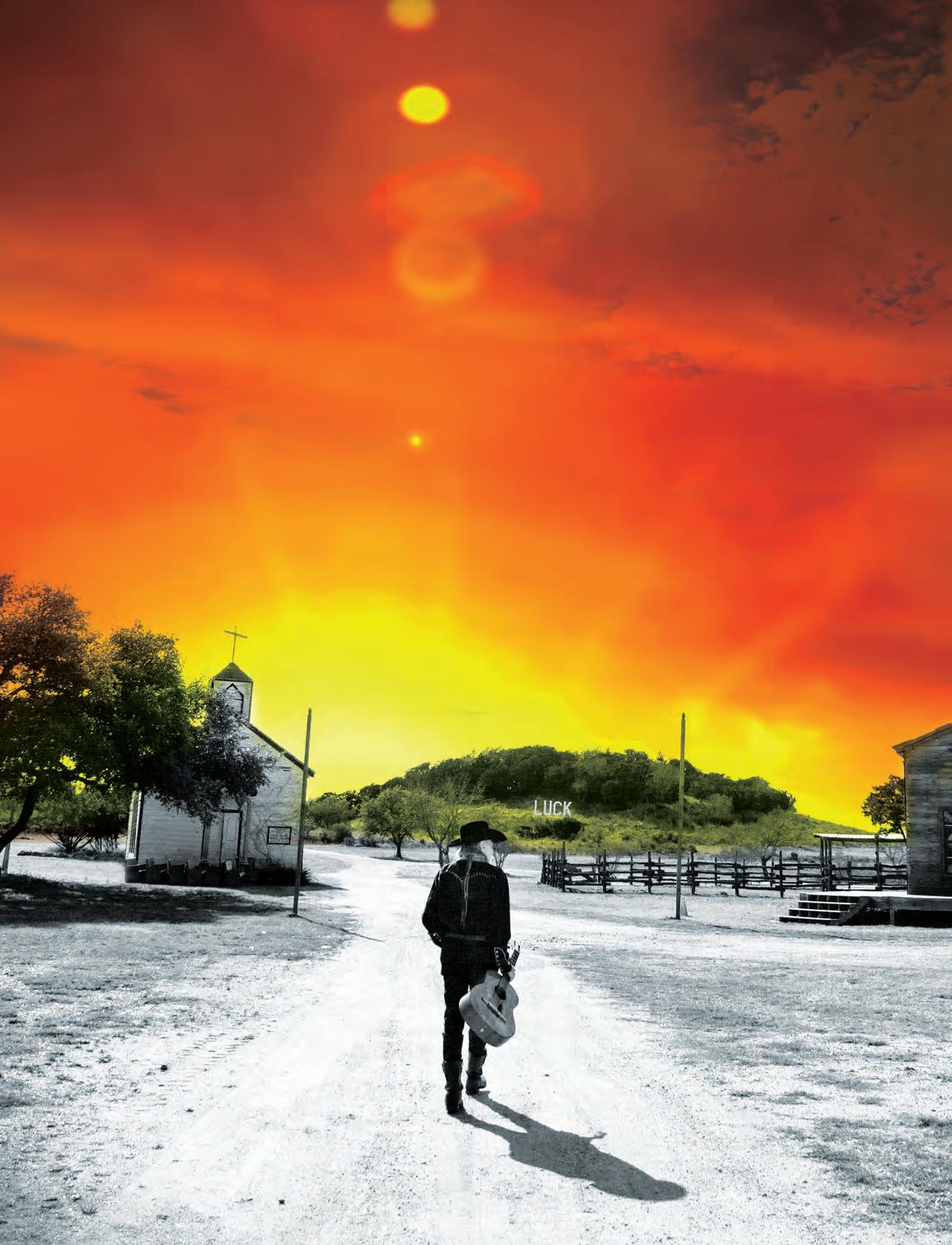
“A Beautiful Time is a delightful album from beginning to end” - NO DEPRESSION
The new studio album features the single “I’LL LOVE YOU TILL THE END OF TIME” written by Chris Stapleton & Rodney Crowell.
Also features five new Willie/Buddy Cannon compositions plus amazing covers of Leonard Cohen’s “TOWER OF SONG” and The Beatles “A LITTLE HELP FROM MY FRIENDS”
“Music continually brings joy and hope to the people and a voice to continue to make their presence known.”
Louis Michot p.21
5 HELLO STRANGER by
Hilary Saunders
6 BACK TO THE BLUES
The Black Keys frontman Dan Auerbach fosters a new wave of roots music by Jon Young
14 FOLLOWING THE FEVER
Leyla McCalla explores her own sound and that of Haitian history by Avery Gregurich
22 DANCING THE TUNE
Traditional music and dance continue a timeless conversation by Stacy Chandler
30
Inside the Nashville Ballet’s revival performances of ‘Lucy Negro Redux’
38
SONG AND DANCE WOMAN AND MAN
The intersection of Woody Guthrie’s folk music and Martha Graham’s dance revolution by Kim Ruehl
50
REUNITING THE HERD
Donna the Buffalo moves bodies and spirits through its GrassRoots Festival by Erin Donaghue
56 LIVING FOR THE ONES
Bonnie Raitt blazes a path via music and activism by Michael Elliott
64
THE DRUMBEAT OF HISTORY
Meet candombe, Uruguay’s most prominent and percussive form of roots music by Luis Minvielle
70
Lee Bains & The Glory Fires honor their region’s everyday movers and shakers by Mia Hughes
76
Michael League’s musical movement to a small town in Spain by Judy Cantor-Navas
86 ‘THE DIVERSITY OF BLACKNESS’
Fort Worth festival celebrates community and aims to decolonize roots music by Hilary Saunders
95
96 SCREEN DOOR
Opening the Lens by Trey Anastasio
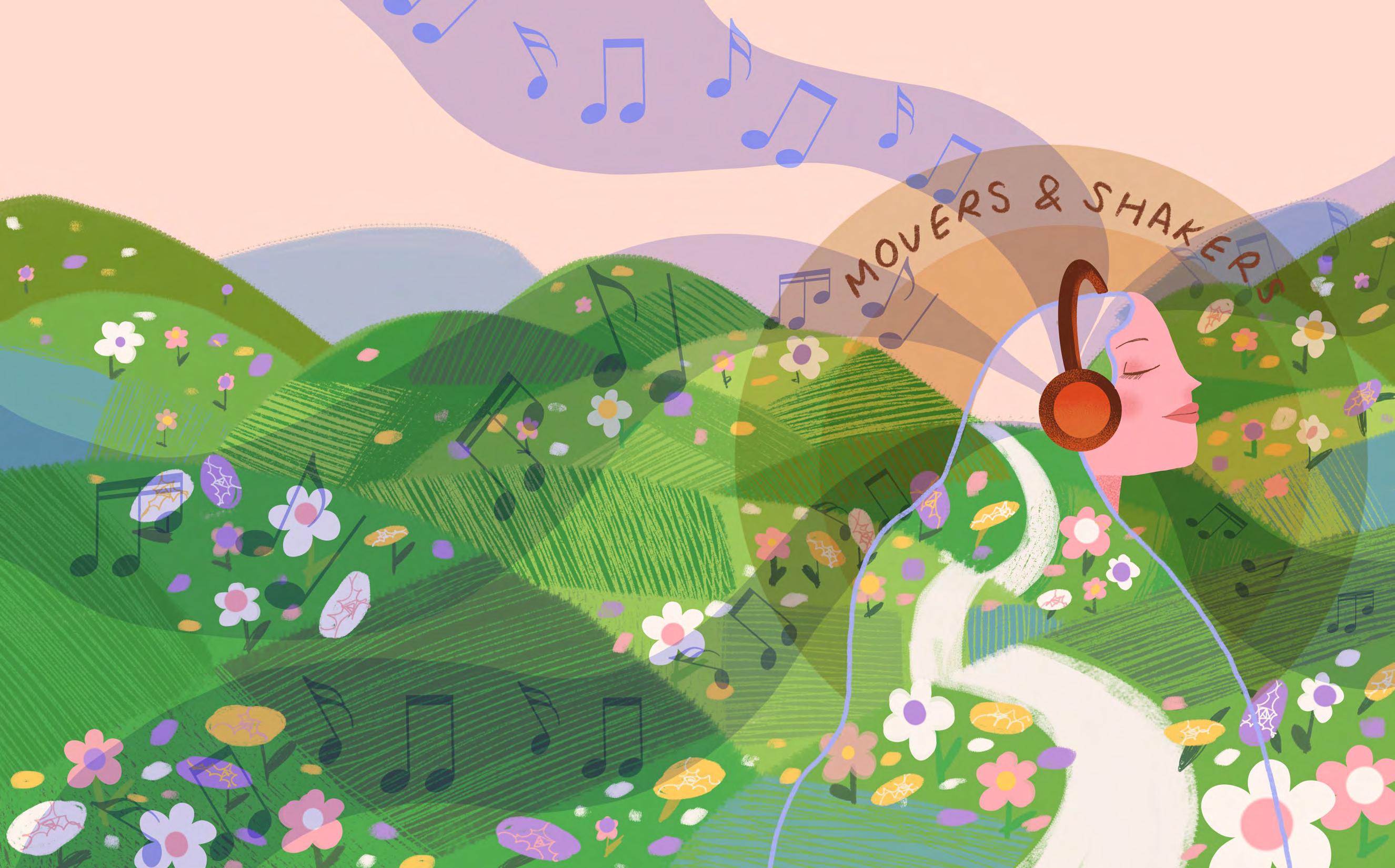
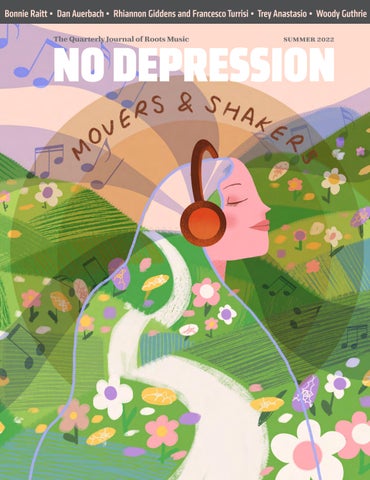
Visual artist and recent graduate Ni Ma designed the cover art for “Movers & Shakers” with physical and emotional movement in mind. The path winding through the subject’s hair symbolizes a journey through space, time, geography, and sound — all facets of this issue’s theme.
NO DEPRESSION TEAM
Chris Wadsworth Publisher and President, FreshGrass Foundation
Hilary Saunders Managing Editor
Stacy Chandler Assistant Editor
Sonja Nelson Advertising
Adam Kirr Director, FreshGrass Foundation
Maureen Cross Finance/Operations
WEB nodepression.com
TWITTER & INSTAGRAM @nodepression FACEBOOK facebook.com/nodepressionmag
GENERAL INQUIRIES info@nodepression.com
ONLINE ADVERTISING advertising@nodepression.com
SUBSCRIPTIONS store.nodepression.com
JOURNAL DESIGN & PRODUCTION
Marcus Amaker
Printed in Nashville, Tennessee, by Lithographics Inc.
No Depression is part of the FreshGrass Foundation. freshgrass.org
ISBN-13: 979-8-9860117-0-7
©2022, FreshGrass, LLC
BY HILARY SAUNDERS
I’ve been thinking a lot about leadership lately. In terms of the theme of this issue, “Movers & Shakers,” I’ve been thinking about the influential roots musicians trying to make our scene a better place — the performers challenging the status quo, the players demanding safety while touring and appropriate compensation from streaming, the bands singing the quiet parts of their experiences out loud, and the organizations set up to support them mentally, physically, environmentally, and emotionally.
It’s exciting to share these kinds of stories, of both recognized and unsung “Movers & Shakers,” and to celebrate their contributions to roots music. This issue features profiles on individuals like the legendary blues guitarist Bonnie Raitt, and how her playing and her representation for women guitarists has shaped her 50-year career, as well as The Black Keys’ Dan Auerbach, and how he’s used his varied experiences to help mentor other roots musicians.
This issue also highlights stories with broader scopes pertaining to social and geographic movements. We wanted to emphasize elements of bodily movement, dance, and percussion as well, leaning into what actually makes us move and shake.
Assistant Editor Stacy Chandler looked at the intersection of traditional dance and roots music, checking in with Jake Blount, Nic

Gareiss, and April Verch. And former Editor-in-Chief Kim Ruehl explored the relationship between Woody Guthrie, Marjorie Mazia, and modern dance.
But beyond getting this issue to print, I’ve been thinking a lot about the broader scope of what it means, and what it takes, to lead. Here at No Depression , and within the FreshGrass Foundation, we’ve been wrestling with what it will take to lead this publication to a stable and self-sustaining future. Journalism isn’t usually considered a profitable enterprise these days; it’s consumed and treated as a public service. But that makes this work, oftentimes an art form in its own right, even more of a risky venture. Nonprofit media especially needs financial support, but there’s no
one fixed model to ensure that kind of success or longevity. So, in the coming weeks, months, and issues, we at No Depression will be shaking things up a little bit in an effort to secure our editorial future. We’re working on incorporating additional breaking news stories on nodepression.com and figuring out better ways to align our shortform digital coverage and longform journal reporting. We’ll be taking a breather from issue themes starting in the fall, in hopes of being able to expand the scope of what we cover. You might even see a few select, relevant-to-roots-music ads in print. And there’s plenty more we’re planning behind the scenes that we can’t wait to share with you soon. There are no easy answers to what makes nonprofit journalism survive and thrive these days. But we do know that thanks to you, No Depression has a strong base of loyal readers. We know that we provide a vital service to musicians, fans, and industry members who give a damn about these songs, stories, and people. And we’re going to keep doing whatever it takes to be not just the leading source for roots music coverage, but also a leader in independent arts media. It takes creativity, drive, flexibility, strength, and patience to be a leader, to be a “Mover & Shaker,” and we’re ready to accept that challenge. Thanks for joining us as we explore, experiment, and welcome what comes next.
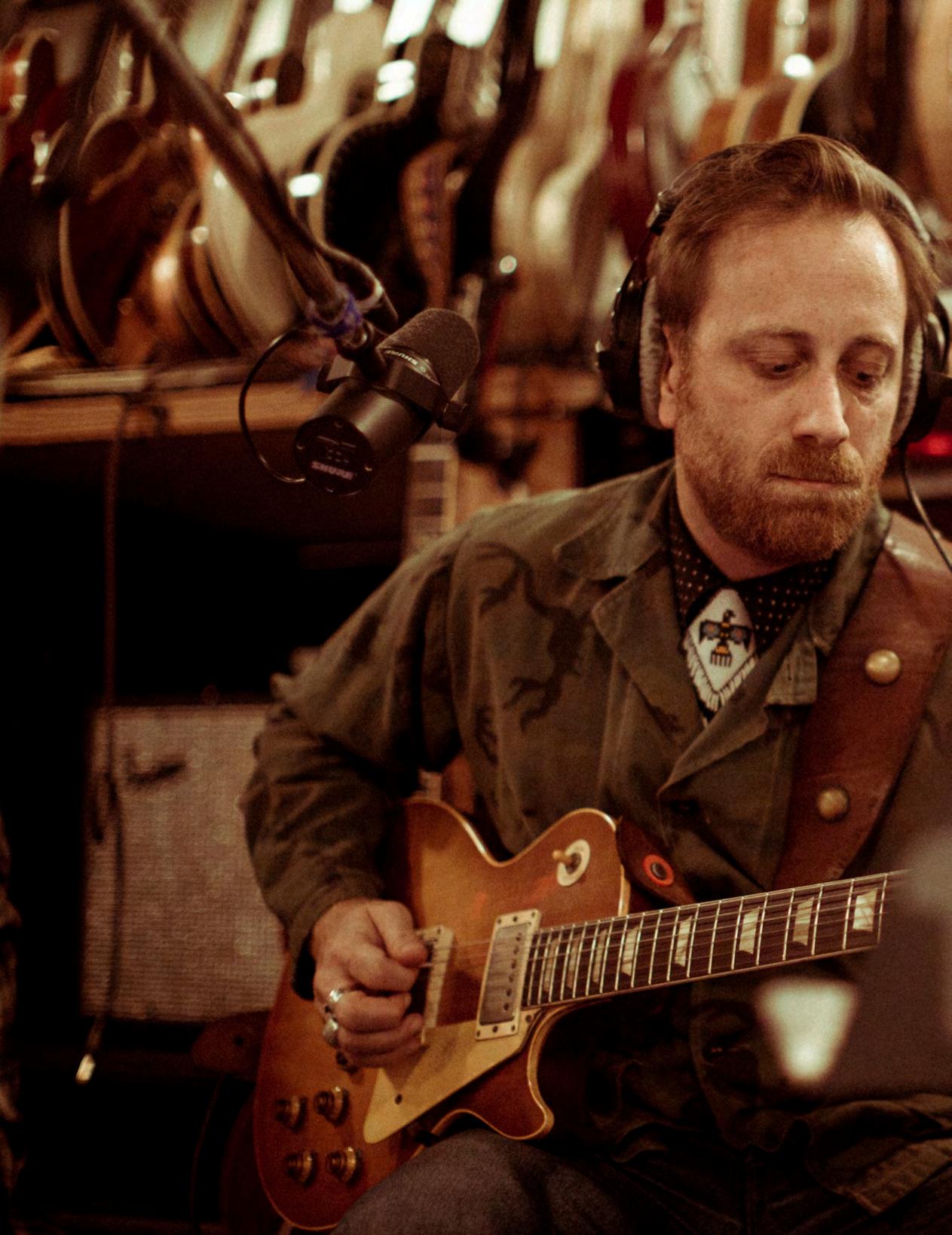
The Black Keys frontman Dan Auerbach fosters a new wave of roots music
by Jon Young
It always comes back to the blues for Dan Auerbach. The singer-guitarist of The Black Keys, along with drummer Patrick Carney, propelled out of Akron, Ohio, to arena-filling stardom with a raw sound grounded in electric blues. Last year, the duo served up Delta Kream, a sizzling album of covers of Hill Country blues songs by the likes of Junior Kimbrough, R.L. Burnside, and other inspirations that were originally released on the Fat Possum label more than two decades ago.
The Keys’ sustained popularity gave the Nashville-based Auerbach the financial resources to launch his Easy Eye Sound studio in 2011 and, in 2017, the Easy Eye Sound record label, which has provided a platform for a wide array of roots
music — from pop-soul (Grammy nominated Yola) to bluegrass (The Gibson Brothers) to juke-joint blues (Grammy nominated Jimmy “Duck” Holmes). Still, the blues has remained closest to his heart.
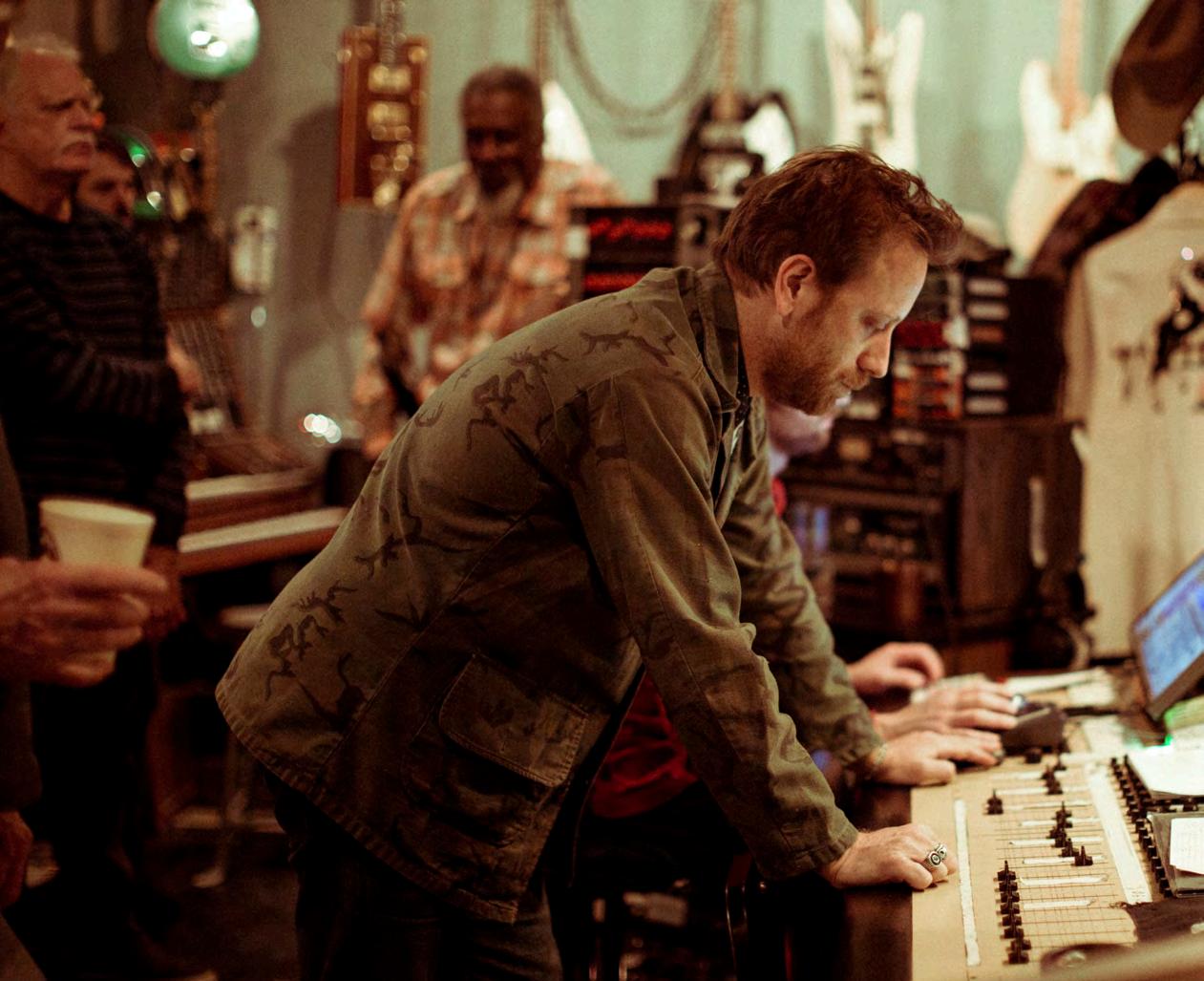
The Easy Eye studio and label were a long time coming for Auerbach, who always aspired to do more than play rock star. “The Black Keys started as a recording project,” he explains. “Pat was the first person to show me a reel-to-reel machine, and I’ve been obsessed with recording ever since.”
Auerbach set up shop in Nashville in 2011. He recalls, “I went straight from Akron to here. It’s the only other place I’ve ever lived. I bought a building because I wanted to build a studio, something modest, like Sun or Muscle Shoals Sound, studios I loved. Those big, high-
dollar studios didn’t make a lot of records that I liked.”
Moving to Nashville enabled Auerbach to collaborate with writers like John Prine and recruit session legends such as drummer Gene Chrisman and keyboardist Bobby Wood to play on recordings at Easy Eye. “They never lost it, but some of these older guys hadn’t been working that much,” Auerbach says. “They were used to working in the old style, but now it was a Pro Tools city. They would come into my studio and say, ‘Oh, my God, this is how we used to record with Chips Moman.’ And I could just see them coming to life. To be able to work with them and talk with people like John Prine … I feel so grateful.”
Auerbach’s freelance work as a producer helped lay the groundwork for his own record
company, he explains. “I was pretty much doing the job of an A&R man 10 years before I had a label. When I worked with Dr. John or Valerie June or Lana Del Rey, I was doing the same thing I’m doing now: assembling musicians and co-conspirators, curating a sonic landscape especially for that artist. But now I get to place it on my own label, which is really nice.”
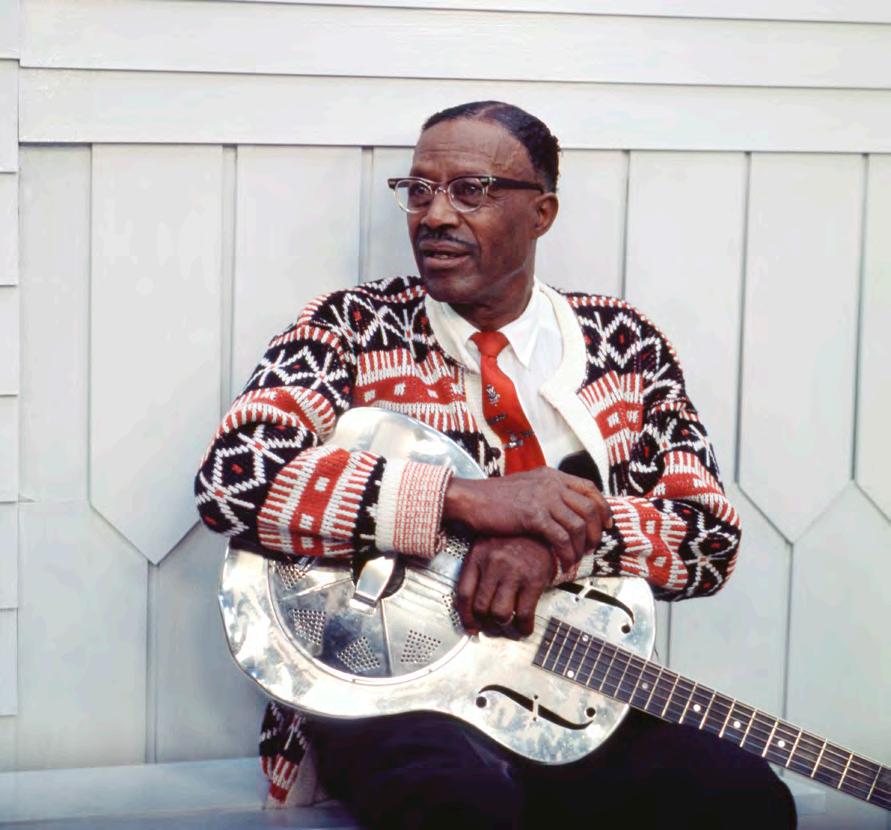
In March, Easy Eye Sound reached into the past to present an archival gem: Son House’s Forever on My Mind, which was released in March. Recorded in late 1964, shortly after House’s rediscovery and months before the landmark Columbia sessions that put him back on the map, this previously unreleased live
set captures the Delta blues legend solo and at his most powerful.
“My dad had the Son House Columbia recordings and would play them all the time,” recalls the affable Auerbach, speaking from his home in Nashville. “Even before I played music, I had these Son House songs in my head.”
Blues promoter, photographer, and onetime Broadside editor Dick Waterman played a central role Son House’s return to public performance, from spearheading the singer’s rediscovery to arranging his tours. He and two colleagues went looking for him in June 1964. They went from Mississippi to New York, where they finally found him in Rochester, retired from working on the railroad. As Waterman recalls, “We convinced him he could come back
and play again and make some money. That was all right with him, but we had to persuade his wife, who was very church-oriented and didn’t like the blues.”
Prepping House to perform for audiences again took some time, since the blues great hadn’t played his own songs in decades, Waterman says. “Fortunately, I knew Al Wilson — this is before Canned Heat — and Al knew all the records Son House had made for Paramount in the ’30s and for Alan Lomax in the ’40s. Son would sit knee-to-knee with Al and play the songs along with him, and say, ‘I’m getting my recollection back!’ Without Al Wilson there would have been no Son House comeback.”
Waterman became Son House’s manager and booked a tour for him, including a date at Wabash College
in Crawfordsville, Indiana, on Nov. 23, 1964. That specific show was recorded and ultimately became Forever on My Mind. Says Waterman, “Later, as he toured, Son would tell funny stories between the songs, but on these first dates there were no stories, no jokes. This is the real naked, raw Son House out of the Delta. He was the greatest live artist I ever worked with.”
Over the years, Waterman discussed releasing his stash of live blues recordings, which also includes shows by Mississippi John Hurt, Skip James, and Mississippi Fred McDowell, with various labels, but nothing came to pass.
Introduced to Auerbach though a
mutual friend, Waterman knew he was finally in the right place.
Says Auerbach, “Dick came to Nashville with a box of reel-to-reel tapes, and we came to an agreement. I love the sound of Forever on My Mind. It has a warm, intimate feel like no other. When Son House was younger, he had all this youthful energy, but the music from this period seems more lived-in, more personal.”
Auerbach sees a direct connection between the electrified Hill Country blues that inspired The Black Keys and the fierce solo performances of Son House.
“Blues was always music for the community, especially the Hill
Country stuff. It was based around playing at parties, playing at juke joints, getting people up on their feet. I think that has a lot to do with why those Fat Possum albums were recorded in juke joints, where the performers were most comfortable. Son House was like that too, but from decades earlier.”
Easy Eye Sound has released albums by established performers ranging from soul singer CeeLo Green to controversial country veteran Hank Williams Jr., whose new LP, Rich White Honky Blues, features covers of blues greats like

R.L. Burnside and Lightnin’ Hopkins. But mostly, the label tries to spotlight the work of what Auerbach calls “overlooked voices.”
He uses his own experiences with The Black Keys — at labels ranging from Fat Possum (where, he reminisces, “[we] watched them grow from two people in a tiny office to a couple of dozen people with a warehouse”) to Nonesuch to Warner Records — to create a collaborative environment in which these musicians can thrive.
“When Pat and I started, one of the things that held us back was our inability to open up to other people,” Auerbach says, reflecting on their early resistance to collaborating
“Blues was always music for the community, especially the Hill Country stuff. It was based around playing at parties, playing at juke joints, getting people up on their feet.”
Dan Auerbach
with outsiders. “It was based on insecurity. I would say insecurity is what destroys 90% of all musicians. The first time Pat and I opened ourselves up to someone else in an actual studio, after five records, we quadrupled our fan base!
“So when I meet people for the first time, one of the things I’m asking is: Is this person scared and hiding in a hole, or are they ready to step out and create? Do they think they know it all, or are they confident enough to share their talent with someone else? Once I meet an artist, I can usually make up my mind pretty quickly. I can hear potential in people, and I definitely go to places in my mind
thinking about what is possible. But you don’t want to overthink it.”
One of Auerbach’s triumphs has been his collaboration with soul singer Robert Finley, who was already in his 60s when he released his first album, Age Don’t Mean a Thing, in 2016 before coming to Easy Eye. Auerbach hired Finley to record songs for the soundtrack of the graphic novel Murder Ballads in 2017, and things snowballed from there. Says Auerbach, “The first time Robert walked into the studio he was undeniably a star. He took up all the oxygen in the room. He’s larger than life, full of warmth and love for making music with other people.”
The easygoing Finley recalls the
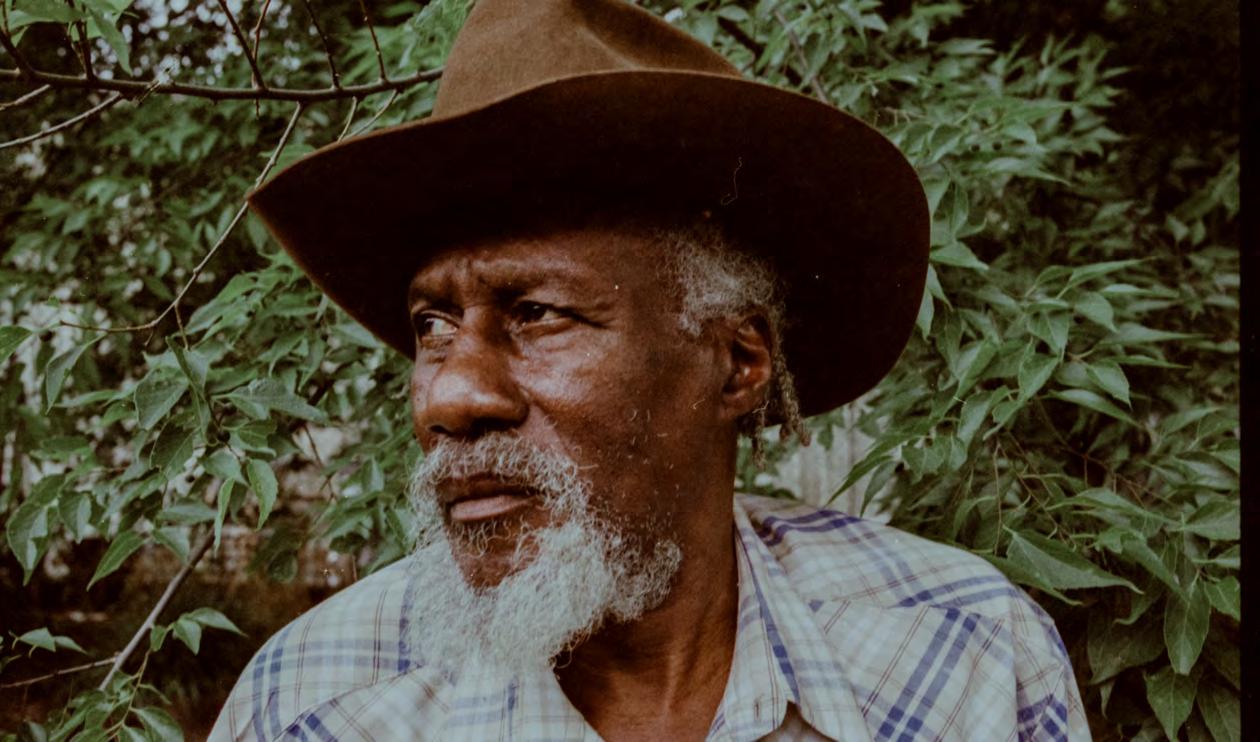
immediate chemistry with Auerbach. “We had four days to do four songs for Murder Ballads, and we finished them in half a day. I didn’t know anything about Dan before that, but it was like we’d been together for 40 years. Then we were sitting around the studio and he asked me if I was interested in doing an album. Naturally, I was. He said he hadn’t heard anybody sing soul music like that since Ray Charles.”
The resulting album, Goin’ Platinum, came out later that year and consisted of songs written by Auerbach and a host of collaborators, including John Prine and Nick Lowe, before Finley entered the picture. However, Auerbach had a different plan for their next collaboration. “Our first album together just kind of happened,” he recalls. “For the next time, I wanted him to write the songs, tell about his life.”
The outcome was 2021’s Sharecropper’s Son. As Finley remembers, “We never had a
disagreement about anything. I never worked with anybody who was so easy before.” At one point, he says, “The band was jamming in the studio and I really liked the groove, so Dan said, ‘Sing something to it.’ I sang about my childhood, reminiscing about growing up on the farm, and it went on for 15 minutes.”
Auerbach’s instincts also came into play with Alabama native Early James, a young singer-songwriter who draws on folk, country, and blues. “Dan had seen me in a shitty YouTube video and invited me to Easy Eye,” says the soft-spoken James. “I played him a couple of songs and he offered me a record deal.” Having only done a little bare-bones recording in Birmingham on his own, James wasn’t sure he was ready to step up to the next level — “not at all!” he recalls. “I don’t think that’s a feeling you inherently have unless you’re somewhat delusional. I was intimidated.”
But James soon found himself thriving in Auerbach’s supportive environment. “We didn’t talk about things much. It all happened organically. The whole album [2020’s Singing for My Supper ] only took two or three days, with no more than five takes a song. It was so easy.”
In the process, James became a convert to Auerbach’s collaborative approach to writing, sharing composing credits on the album with him and with others in the Easy Eye universe. “I’d never started from scratch on a song with somebody else before, so it was a little scary at first,” James says. “Now I can’t see doing it any other way. It’s a whole lot of fun. I still write by myself some, but you often come up with a more interesting song if you bring your strong ideas and other people bring their strong ideas.”
As with Finley, Auerbach ensured James had more input on their second album together. For
Strange Time to Be Alive , due out in June via Easy Eye, he invited James’ longtime musical partner, bassist Adrian Marmolejo (who was absent from Singing for My Supper ), to participate. Auerbach calls the new record “more cohesive, it’s more James’ sound.”
James is “a real poet,” Auerbach says. “He probably wouldn’t call himself that, but he is. He’s very cerebral, but his voice is so guttural. It’s a very interesting combination, hard to classify.”
There’s nothing Auerbach would rather do than embrace the life he’s already living. “I like to wake up early and go to work, so making 12 records a year is not really a big deal for me.”
He shrugs off the suggestion he’s doing something altruistic by paying it forward, opening doors to success for others. “I get as much out of it as the other musicians, because when I work on a project, it makes me feel
fulfilled, gives me a sense of purpose.”
He continues, “I love just getting in a room with a bunch of people, being creative, making stuff up. It’s the greatest joy, to be honest. Ninetynine percent of the time, when I’m in the studio I might be playing tambourine, a little rhythm guitar. I’ll take a lead if you need it, but I’m never the one who wants to jump out there and do it. Playing live shows is fun — it definitely pays the bills — but it’s a whole different thing.”
In fact, Auerbach and Carney are reconvening in July for a tour — The Black Keys’ first shows since 2019— in support of their new LP, Dropout Boogie, which came out in May.
In a way, the new album and tour bring Auerbach back to the blues once again. “I don’t sit around playing Black Keys songs. It’s been three years since I’ve played them, and I forget everything, so I’ll need at least a week to rehearse,” Auerbach says with a laugh. “I’m like Son House, I guess. I need to be reminded of my songs!” ■
Leyla McCalla explores her own sound and that of Haitian history
by Avery Gregurich
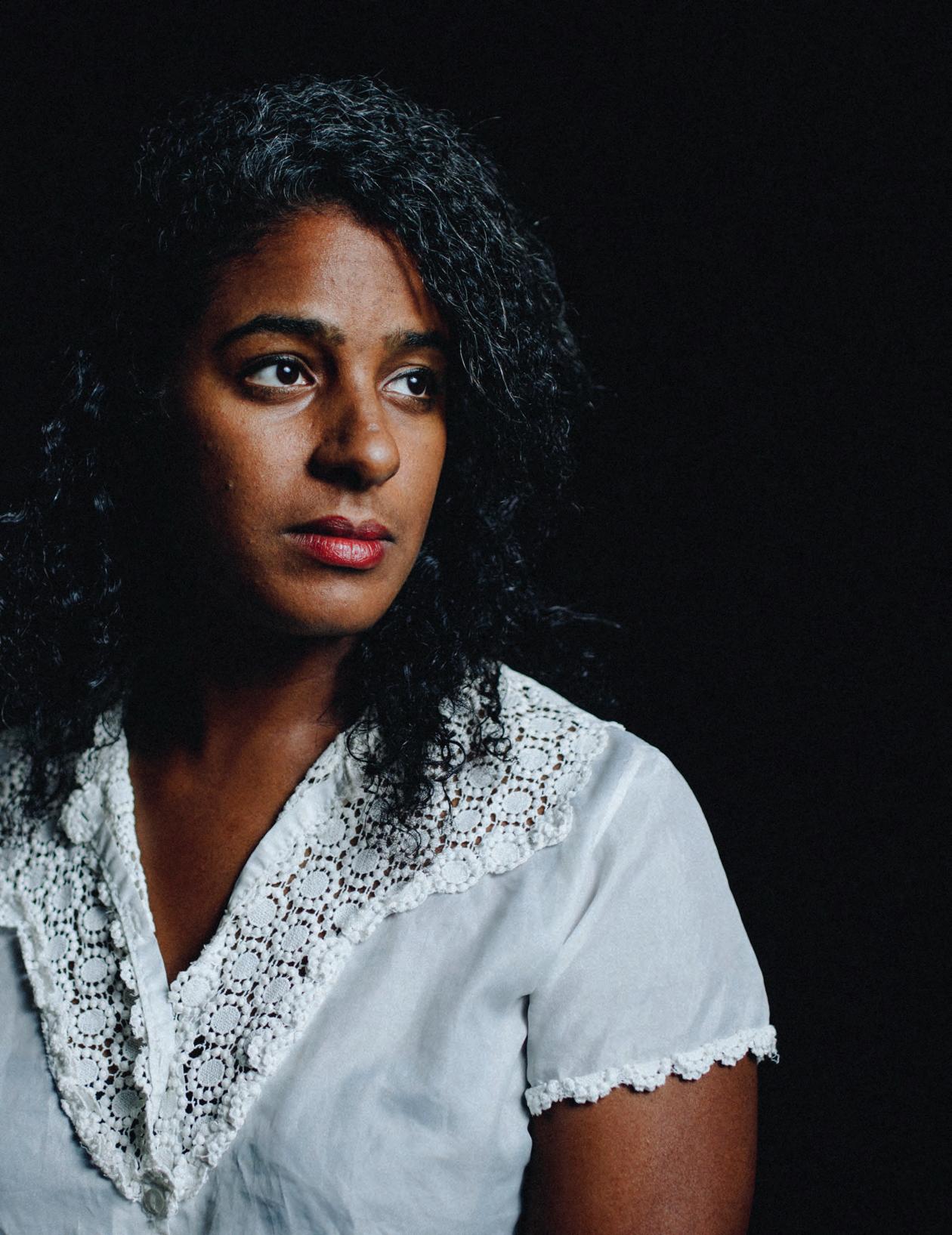
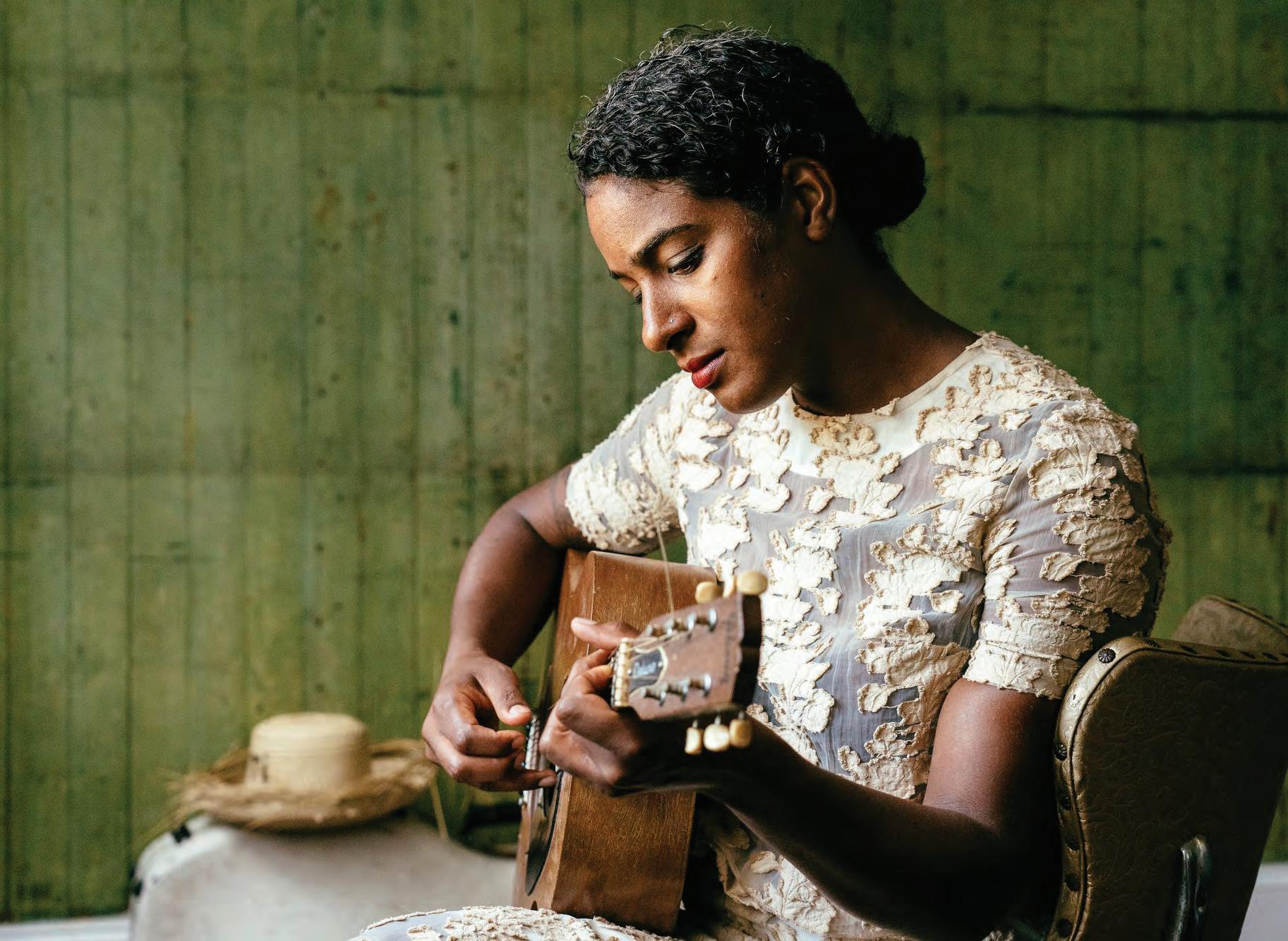
As she speaks, wind begins blowing and rain starts pounding on the front door of Leyla McCalla’s New Orleans home. McCalla, a multiinstrumentalist, singer, and composer, is talking about her memories of recording with Our Native Daughters. She’s preparing for the release of her fourth solo studio album and ANTI- Records debut, Breaking the Thermometer, which came out in May.
As she gets up to close the door, the Zoom call freezes for a moment on an empty chair at a kitchen table. It seems like a fitting metaphor for someone who, after more than a decade of work, is ready to embark on a new post-pandemic journey into uncharted territory.
The daughter of Haitian emigrants and activists, McCalla grew up in Maplewood, New Jersey. She started playing the cello in elementary school and became serious about the instrument in junior high. She continued to study it in college, first at Smith College and then at New York University, specializing in performance and chamber music. While at NYU, however, she started questioning her path.
“I was having kind of a crisis of, ‘Am I just like a cellist for hire? Am I gonna play in all these bands forever? Or am I composer? Should I try singing?’” McCalla recalls. “I was between all these different places just trying to locate what my work should be as a musician and
open myself.”
She says that a single show changed her life and her music: watching cross-cultural cellist Rufus Cappadocia and percussion virtuoso Bonga Jean-Baptiste’s Vodou Drums of Haiti at a party in Brooklyn. “Rufus was playing cello and it was my first time seeing the cello in that context. It was like what we call ‘extended technique’ in the classical world,” she says. “The cello was not the same instrument, not even the same construct as what I was learning. I just had this overwhelming feeling of, ‘Whatever that thing is, that’s what I want to do … forever.’ ”
Up to that point, McCalla had spent her life studying the cello through a Western European lens. “I needed to learn how to make this instrument sing beyond Bach and all
these things that I was being taught at school. I really became more invested in challenging all the things that I had been taught about how to play the cello, and also figuring out which of them really felt important to me, important to the health of my body, in approaching this instrument.” In 2010, she moved to New Orleans in order to pursue the life of a full-time street performer. She says the move also began reconnecting her with her own Haitian roots.
Shawn Myers, McCalla’s longtime drummer and percussionist, says she was one of the first musicians he saw perform when he relocated to the city. McCalla was playing with her trio at the Siberia Lounge and, as Myers remembers, “Her cello playing was really what floored me because
it’s such a unique sounding instrument. Hearing it done in a way that lends itself a little bit more to a rhythmic atmosphere obviously piqued my interest.”
Myers picked up on other musical details from that performance as well, like McCalla’s specific fingerpicking style. “She really has a strong kind of approach to fingerpicking that creates a very strong undulation … [which] really conveys a very strong sense of rhythm and character.”
McCalla’s life and career transformed in 2011 when she joined the Grammy-award winning stringband The Carolina Chocolate Drops, playing alongside Rhiannon
Giddens, Dom Flemons, Hubby Jenkins, and Adam Matta. “I went from playing on the street and biking around with my cello and feeling the sun every day and basking in the life of a street musician in the French Quarter to playing sold-out shows with The Carolina Chocolate Drops,” she says. “I think my first time at soundcheck I was afraid of the sound of my voice.”
She toured for several years with the Chocolate Drops, and appeared on their 2012 album, Leaving Eden She says that her time with the Chocolate Drops gave her the foundation to begin finding her own path in the world of roots music.
“The Carolina Chocolate Drops gave me the opportunity to make a living as a musician while doing really meaningful work, both musically
“The pattern that has continued through all my records is doing research, reading, understanding, listening to old songs, trying to understand what the world was like when those songs were written or where those songs come from.”
Leyla McCalla
and creatively, research-wise, and historically. And then it gave me the opportunity to figure out what I wanted to make, what I wanted to put out there,” she says.
Many of the band’s members appeared on McCalla’s first solo album, 2014’s Vari-Colored Songs: A Tribute to Langston Hughes, which incorporated Hughes’ poetry with traditional Haitian folk songs and McCalla’s original compositions.
She had been working on the album for several years, establishing a process that she has followed ever since. She elaborates: “The pattern that has continued through all my records is doing research, reading, understanding, listening to old songs, trying to understand what the world was like when those songs were written or where those songs come from. All of those things are something that I’ve done in each one of my records.”
On her second album, 2016’s A Day for the Hunter, A Day for the Prey, McCalla blended her own interpretations of traditional Haitian folk tunes with jazz-based stringband music. It also featured performances by Cajun punk fiddler
Louis Michot and jazz guitarist Marc Ribot. Around the time she was working on her third album, 2019’s The Capitalist Blues, she got a call from Giddens, who had remained a friend and mentor since their days in the Chocolate Drops.
Giddens invited McCalla to join her in Lafayette, Louisiana, for a few days to contribute to an album she was recording for Smithsonian Folkways. That record began as a part of Giddens’ research into the role of the banjo in 19th-century minstrel music, work that McCalla had been watching her pursue since their time together in The Carolina Chocolate Drops. Once they were in the studio with Allison Russell and Amythyst Kiah, the project shifted to reflect their current experiences as Black female musicians. The culmination of their work and collaborations ultimately became the 13-track album Songs of Our Native Daughters, one of the most lauded releases of 2019.
‘Breaking the Thermometer’
On Breaking the Thermometer, McCalla combines her personal and
family history with that of Haiti itself. The album includes visceral details of McCalla’s childhood, spending summers in Port-auPrince with her grandmother Jackie, as well as larger sociological context from an unexpected source.
Radio Haiti, which broadcast from the island nation from 1957 to 2003, was the first independent radio station to report local news in Haitian Creole. Throughout its history, Radio Haiti broadcast news and commentary, interviews with political prisoners, investigative journalism, and performances of Haitian folk music in an effort to contest the repressive Haitian government, particularly the Duvalier regime. Jean Dominique and his wife Michèle Montas jointly operated the station until Dominique was assassinated in 2000. Montas continued to run the station until 2003, when she closed it amid threats against the staff and relocated to the US.
In 2013, Duke University acquired the archives of Radio Haiti from Montas, and in 2016, Duke Performances commissioned McCalla to create a multidisciplinary
by Greg Cahill
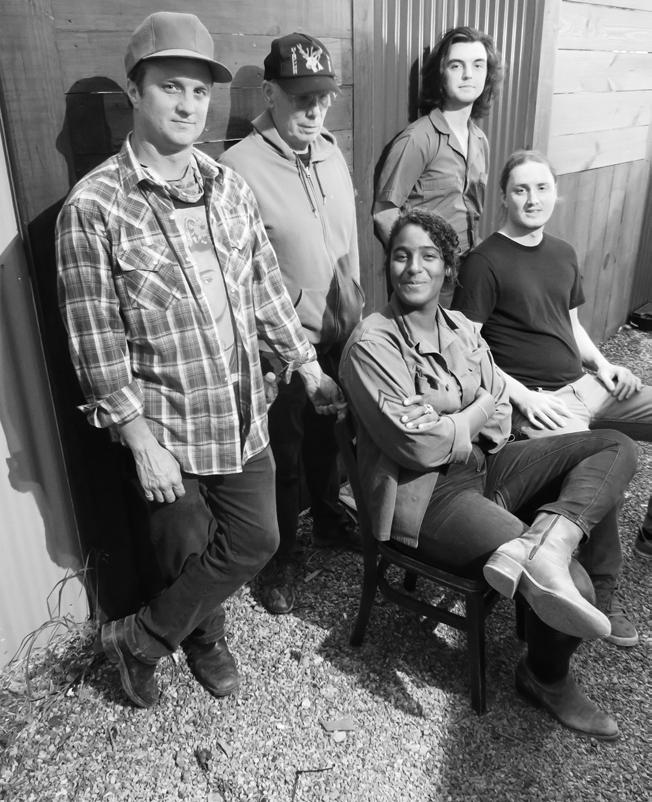
In spring 2021, grammy awardwinning Cajun fiddler Louis Michot recorded an album called Tiny Island near his home in rural Arnaudville, 20 miles north of Lafayette, on an actual tiny island in the Louisiana bayou. The album reunited him with Leyla McCalla as they shared linguistic and musical traditions from Louisiana and Haiti, respectively.
The two met five years earlier in New York City, connecting through a mutual love of Caribbean music.
“The first time we performed together live was when Leyla joined me along with the two violins of Pauline Kim and Conrad Harris of String Noise for a special set at my residency at The Stone in New York City in 2016 [released in 2020 as Le String Noise and credited to L.E.S. Douze],” Michot recalls. “Bringing Cajun and Haitian, Créole and Kréyol songs together with New York avant-garde compositions and improv showed how far we can all go to bridge each other’s genres.”
Tiny Island, released last fall on Michot’s Nouveau Electric Records label, is a world away from the bustle of New York City, both geographically and musically. It was recorded outdoors on one magical night as the musicians gathered under the stars around a flickering campfire. The idea for Tiny Island arose during the COVID-19 quarantine.
“Once the pandemic hit, I barely turned on an amp for months, but began busking online and eventually explored the realm of virtual
acoustic jamming remotely with other musicians to continue music performance,” says Michot, who previously toured with Arcade Fire
theater project for their From the Archives series. With help from former Duke professor and Haiti specialist Laurent Dubois (who now serves as the co-director of the Democracy Initiative at the University of Virginia) and project archivist Laura Wagner, McCalla started exploring the materials, listening to hours of Radio Haiti broadcasts.
“I started with just a basic curiosity about my experience, my identity, and trying to understand that in and of itself. Then I felt like I needed some validation in approaching this work at all, and it took me a long time to even realize that I needed that. I was having a lot of imposter syndrome,” she says. “It’s political, it’s heavy, it’s social. It’s something that generations have refused to talk about because it’s too painful. I thought, ‘Am I doing the right thing or am I just patting myself on the back?’ because I wanted to be really aware of those things.”
McCalla even reached out to Montas for guidance about the project, and McCalla included part of their conversation on the
Breaking the Thermometer track “Still Looking.” As the residual percussion from the previous track fades away, McCalla weaves in the audio recording of Montas giving her blessing and encouraging such study: “We have so many of your generation who are linked to Haiti through their parents, but they don’t totally identify themselves as Haitian. But they are still looking for their roots. They are still looking for things that will attach them to the country.”
McCalla says her new album is a more fleshed-out soundtrack to the theater piece Duke commissioned, titled Breaking the Thermometer to Hide the Fever. These 15 tracks feature a montage of voices from radio broadcasts, traditional Haitian tunes, and original compositions. McCalla’s powerful voice, singing fluently in English and Haitian Creole, weaves it all together.
By understanding these voices through a modern lens, Breaking the Thermometer serves as an album that challenges the very idea of history, both personally and collectively. “There’s a proverb in Haiti that says if you’re Haitian, it’s
like there’s an invisible umbilical cord between you and Haiti at all times that ties you to the country,” McCalla explains “We all have that, you know, but we have so much else that we’ve been experiencing as well.”
She tries to sing these feelings on tracks like the dreamy ballad, “Memory Song.” Between sweeping “oohs,” McCalla wonders:
How much does a memory weigh? W hat’s the price our bodies will pay?
How does this honor not feel like a burden?
As it gets harder, I can’t find the words.
Through her work, McCalla constructs a new thermometer, a measurement of her own design. She weighs the gratitude for and privilege of creating against the heaviness of her chosen subject with grace and a sense of universality.
“ This album has been like a lucid dream, like just digging for these memories,” she says. “I didn’t grow up in Haiti, but I didn’t grow up without Haiti either.” ■
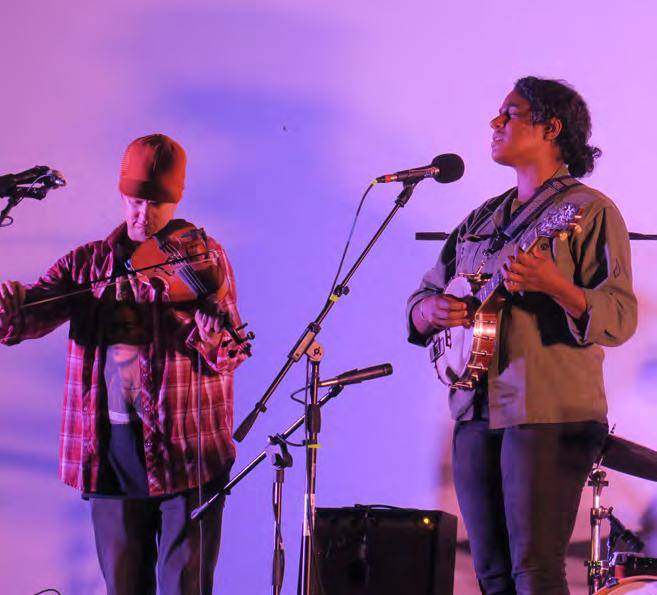
and The Violent Femmes and studied with the late Cajun fiddling master Willie Durisseau.
“Tiny Island is to me a culmination of the virtual performance experiences, where after a year of figuring out a new way to connect with audiences, I finally said, ‘Let’s do this one at night, on my tiny island, and all acoustic (except Mark Bingham’s electric guitar). Let’s let it breathe with the night.’”
Ned Sublette and Ariana Hall filmed the Tiny Island sessions for “a tour stop” on NOLA Reconnect, a virtual visit to Louisiana. “It was a pretty surreal experience,” Michot says of that night. “It was like we were camping out together around a little fire, taking turns talking, telling stories, sipping our drinks, and listening to nature. There were none of the usual distractions of amplified sound balancing and rowdy audiences to affect our flow. The frogs started chirping rhythmically each time we started a
song, and would even stop when we would finish. It was dynamic. I don’t think any of us had ever experienced collaborating so directly with nature.
“Tiny Island brought us life in a time of darkness, and we’ll always remember that when it plays.”
Four months after Tiny Island’s recording, though, Hurricane Ida battered southeast Louisiana, including the bayou where they’d played the songs. The Category 4 storm made landfall near the Gulfside town of Port Fourchon on Aug. 28 and brought 150-mph winds, torrential rain, and widespread flooding to the region.
One of the most important things Michot realized after the storm was that these rural Louisiana communities are particularly vulnerable to power outages and electricity issues due to natural disasters. In response, he started the Louisiana Solar Fund (within CRIA) to help equip residents with solar panels and batteries to see them through long waits to reconnect with the region’s electrical grid.
Michot has continued to leverage his musical standing and network to spread awareness of the benefits of renewable energy. Last November, The Lost Bayou Ramblers hosted the Louisiana Sunshine Festival to raise additional funds for the Louisiana Solar Fund. The goal is to preserve a region that Michot has come to cherish for its iconic music and traditional folk culture.
It’s a connection that is embodied in the Tiny Island recording project: “With roots in New Orleans and Haiti, the musicians on Tiny Island are from tiny islands, with different worldviews than the surrounding lands — an experience that is not always understood by the outside world — and music becomes the best way to communicate and bring recognition to one’s culture,” Michot says. “Even through the hardships of natural disasters and social upheavals, the music continually brings joy and hope to the people and a voice to continue to make their presence known.” ■
Michot’s response was immediate: Within days, members of his main musical groups, Michot’s Melody Makers and Lost Bayou Ramblers, began organizing relief caravans to transport supplies to residents of bayou parishes Lafourche and Terrebonne. In collaboration with the Cultural Research Institute of Acadiana (CRIA) and the Footprint Project, they brought multiple truckloads of food, water, and construction supplies to storm-ravaged communities. They barbecued, patched roofs, and installed solar panels and battery systems for Indigenous Pointe-Au-Chien community, many of whom were living in temporary shelters. In total, they raised more than $40,000 for relief efforts through a social media campaign.

Traditional music and dance continue a timeless conversation by Stacy Chandler
Nic gareiss was sitting on the floor in front of a stage at a traditional arts festival in Michigan, 8 years old on a spring weekend, when he felt something move — literally and figuratively. As he watched and listened to the music, he could also feel the thump of the dancers’ feet against the boards, a transmission of something beyond words that traveled from the stage directly into his own body, and his heart and mind too.
“It was just a very special moment,” recalls Gareiss, now a dancer and researcher who frequently performs with roots musicians like Jake Blount, Allison de Groot, Bruce Molsky, and The Chieftains. “Even when I think now about solo shows that I create, I’m sort of trying to recreate that experience in some ways.”
Music and dance have always gone hand in hand, each enhancing the other for both performer and perceiver. But at some point, their paths diverged, and now a music fan can take in a whole day of festival performances without spotting a dancer onstage, or dance alone to a recording at home, no band or caller needed.
But the fact remains that traditional music and dance, with their entwined histories, are a natural pairing, a transcendent experience for body and mind, and some of today’s artists are determined to keep the two forms together, right in time, hand in hand, head to toe.
Austria has the waltz and Spain has the flamenco. But the United States hasn’t had a national dance for most of its existence.
Starting in the mid-1960s, square dance groups made multiple pushes for Congress to designate that style of dance the official dance of the United States, but those efforts were met with almost immediate controversy, mostly from fellow square dancers who squabbled over how the form was defined.
In 1982, however, the Senate finally passed a resolution to make square dance America’s national folk dance, and the House agreed, with one key amendment: The designation had to be temporary, so it lasted only through 1983. Since then, there’s been no official American folk dance.
As with American traditional music, the strength of American traditional dance is in its diversity, and in the regional flavors that make it vary from place to place and from performer to performer. Traditions (many of which borrow from cultural dances of other countries and peoples) include square dancing, clogging, contra, buck dancing, flatfooting, stepping, tap, jazz, and, of course, a wide spectrum of Indigenous dances. What’s universal among all of these dances is that music makes it move.
The step-dancing style that April Verch learned growing up in Canada’s Ottawa Valley has roots in that region’s logging camps, which were staffed by people from Ireland, Scotland, Germany, Poland, France, and elsewhere.
“We were always told the story about how these guys worked hard all day and life in the lumber camps was so hard. And then at night the music would come out, and maybe some moonshine, and things got lighter and the stories started flowing,” Verch says.
Even after those hard days of work, the loggers weren’t content to just sit and listen to the small instruments that a few among them

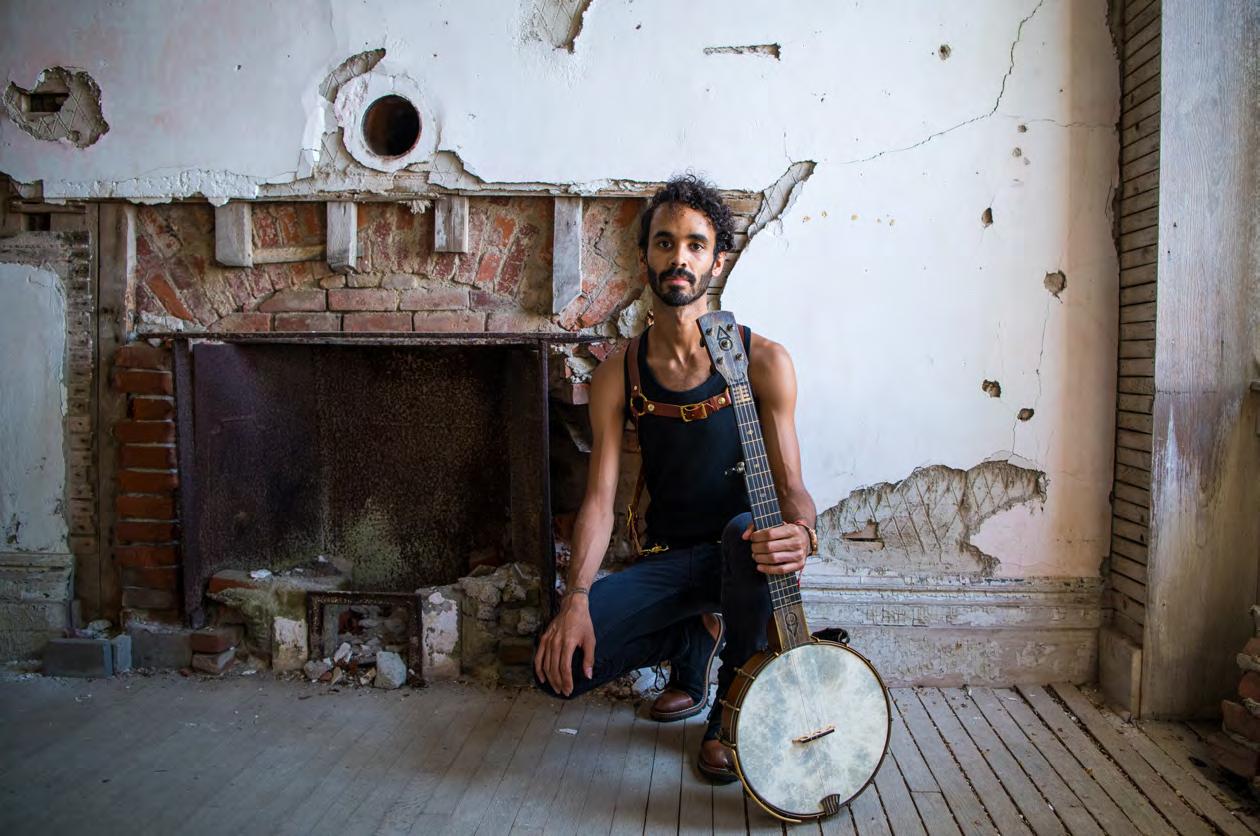
could manage to take with them from camp to camp, so they used their feet to accompany the music.
“Some of them probably remembered steps, but some of them probably were just imitating what they had seen or remembered,” Verch explains.
She grew up in that tradition, with parents who attended local dances on Friday and Saturday nights and, like other families, brought their children along. Verch started taking step-dancing lessons, a style that harkened back to that logging camp tradition but had absorbed other dance elements along the way.
“I just thought every kid did that, that’s why I started it,” Verch says of the lessons that set her on the path of her current career as a fiddle player, singer, and dancer. “It wasn’t a passion at first; it just looked like so much fun, and every time I was around it, people were having a ball. There was something about the
energy and the community of it. As a 3-year-old, of course you want to be a part of that!”
Both Verch and Gareiss now understand dance as researchers as well as performers, and there is plenty to study as traditional dance evolves into the modern world and the modern world reassesses the stories that have been told about traditional dance.
In college, a professor pointed out to Gareiss that he was doing ethnography — the hands-on study of human social relationships — every time he walked into a dance class. And that professor was right: Then and now, Gareiss thinks about the lives behind the dances he learns. Maybe a dance comes from Irish American immigrants or shifted homelands as people moved during the Great Migration. “I was learning about their lifeway through their movement,” he says. “It’s a little tiny keyhole, but [it] can provide
tremendous insight into the way that people think and move through the world.”
Gareiss has continued his studies, specializing in ethnochoreology — similar to ethnomusicology, but for movement. In his research, he looks at “the ways that gender, sexuality, and national identity all come together” in traditional dance, with a particular focus on LGBTQ Irish step dancers. During the pandemic shutdown, Verch had time to dive more deeply into the past, present, and future of her own dance lineage — what dance scholar Janet Schroeder terms “dancestry.” In a project called Steps From the Heart, Verch and UK step dancer Simon Harmer researched the work and impact of their biggest dance influences, Donnie Gilchrist and Alex Woodcock, respectively. The result was a paper, a presentation, a dance Verch and Harmer choreographed together (but
“One of the things that sets [Gareiss] apart as a dancer is how intricate his melodic approach to dancing is. He’s not just pounding out rhythms that sort of match up; he’s really attentive to the way the tune falls together. And in some cases it almost feels like he’s playing more melodically than I am.” Jake Blount
performed separately), and a challenge to other dancers to use the routine as inspiration for expressive choreography of their own.
“We both firmly believe that in order to move things forward, you have to have a strong respect and knowledge of the past and where the dance came from,” Verch says. “And you don’t have to stay there. You don’t have to only dance like your mentor danced, but it’s important to pass that on in some way.”
Jake Blount takes a similar view of tradition in the music he plays, finding songs and stories via intense research instead of taking for granted a canon that has erased contributions of Black and Indigenous creators. Through his fiddle, banjo, and voice, he makes room in roots music’s history, and in its future, for a range of identities
that reflects the real world and thus rings with power and truth.
For his 2020 debut album, Spider Tales, Blount recruited a band of like-minded old-time musicians — and he knew he wanted a dancer as well.
“I was trying to reclaim a lot of things and paint a more detailed picture of the Black stringband tradition than I felt had been presented before,” he says. “And part of that is that I don’t think dance had necessarily been highlighted in that way.” (Except, he points out, by The Carolina Chocolate Drops, whose live shows often incorporated buck dancing from co-founder Rhiannon Giddens.)
“When you’re talking about the evolution of Black music and African to African American music in this country, it’s also important to remember that most percussion instruments were legally not allowed, that Black people were not
allowed to own drums or things like that because they could have been used as signal devices and slave rebellions — and in some places were,” Blount explains. “So all of those percussive approaches to music had to shift elsewhere. And, of course, we’re familiar with things like bones and spoons or whatever, but another big part of that was dancing. So for me, putting this thing together, it was really important to find a way to incorporate that, to bring percussion back into it in a way that felt honest and felt respectful of the way that the tradition had evolved.”
While conducting research in college, Blount crossed paths with Gareiss at the Irish Arts Center in New York City, and they continued to connect each summer at Gareiss’ Earful of Fiddle Music and Dance Camp in Michigan, where Blount was an instructor. So Gareiss was a natural choice to provide percussion
on two songs on Spider Tales. (He’s credited with “feet” as his instrument in the liner notes.)
To prepare for his work on the album, Gareiss immersed himself in the trove of historical recordings Blount had found and thought about how to interpret those sounds and the stories into movement.
“It’s quite similar the way you might think about fiddle and banjo players sitting down and playing together, where we’re saying, ‘Oh, do you know this tune? Let’s play this tune,’” Gareiss says. The aim, he explains, is to be true to the recording, but to be in dialogue with it as well. “I think we’re at a place in archival research where it’s more like a discussion with those recordings instead of it being a replication.”
On “Move, Daniel,” a slavery-era song from the Gullah Geechee people of coastal Georgia, Gareiss says he and Blount sought to “get inside” a rhythm that stems from an African-derived dance tradition called “shouting” that pairs movement with call and response, clapping, and tapped rhythms on a wood floor. Gareiss’ footwork keeps a driving rhythm and Blount’s banjo picking adds urgency to the track as his voice guides Daniel along a safe
route to steal from his master’s smokehouse.
The video for Spider Tales’ first track, “Goodbye, Honey, You Call That Gone,” opens on Blount taking his banjo out of its case and Gareiss tying on a pair of well-worn dance shoes, just two performers getting ready to commune in a tune. As the music unfurls, Blount and Gareiss face each other, and there’s clearly a musical conversation taking place. Gareiss watches Blount’s fingers on the banjo neck, and Blount takes in Gareiss’ feet and the graceful movements of his body, nodding and tapping his own foot in time. Several times, they smile, carried along by the groove of the tune, which Blount found on Alan Lomax recordings of Mississippi banjo player Lucius Smith.
“One of the things that sets [Gareiss] apart as a dancer is how intricate his melodic approach to dancing is,” Blount says. “He’s not just pounding out rhythms that sort of match up; he’s really attentive to the way the tune falls together. And in some cases it almost feels like he’s playing more melodically than I am. So I think I’m able to interact and engage with him the same way with any other musician. Of course, Nic is invested in breaking down the dichotomy between musician and
dancer because there’s so much over overlap in what we’re doing. And I think that that definitely is part of the experience of making music with him.”
Verch’s intersection of music and dance takes place within one body: her own. Within her sets — whether solo, with The April Verch Band, or in duos with musician Joe Newberry or her husband, Cody Walters — she switches between singing, fiddling in the Ottawa Valley tradition she grew up in, and step dancing, often within the same song.
Verch’s spirited dancing can catch eyes and create memories at festivals where she’s often the only dancer fans might see on music stages, but pairing the forms wasn’t a career choice for Verch so much as just the thing that felt most natural to her.
“ The two are really intertwined for me,” she says, “and the dancing is more than about the show. The dancing to me is almost like another instrument.”
Instead of a set melodic or harmony part, though, her feet are playing a looser role within the tune. In recent years, Verch says, she’s tried to set aside choreography, instead simply letting the music move her, with “certain licks that you
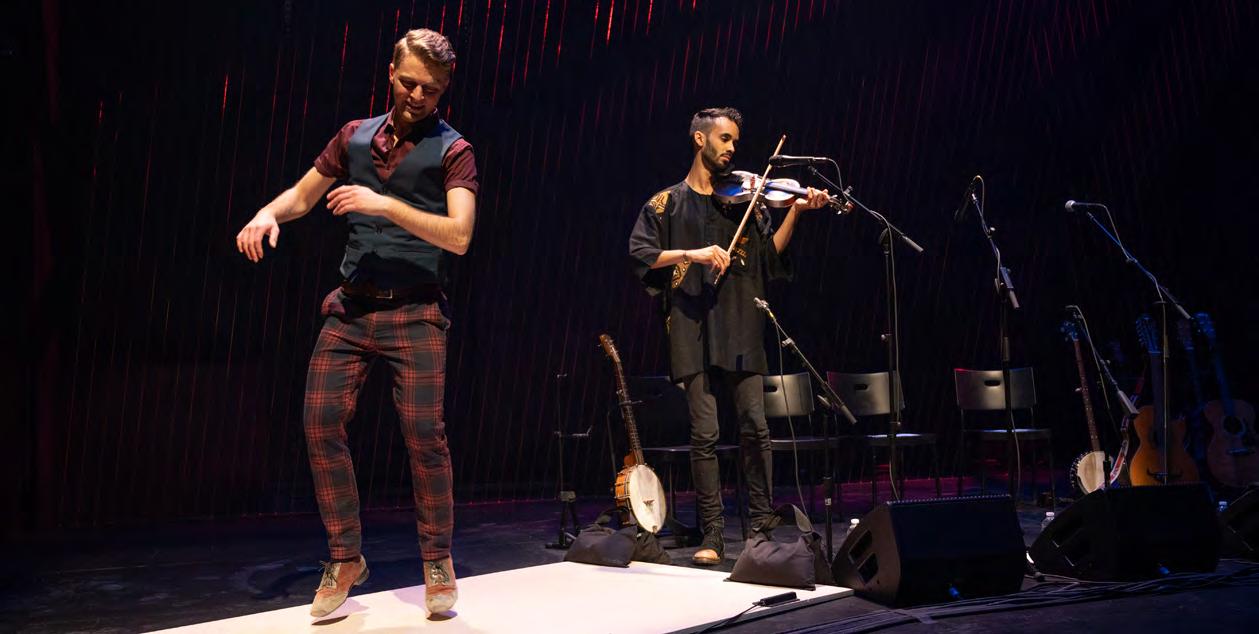
know with your feet” providing a foundation but otherwise letting the song and the dance inform each other. A sad song feels different in her feet than something sunnier, she says, and that emotional weather and the song’s backstory come out in the dance just as it does as she bows her fiddle or sings. The aim, she says, is simply “trying to dance the tune.”
While music is more accessible than ever in this digital age, opportunities to see or participate in traditional dance are harder to come by. Few workplaces host an after-hours hootenanny anymore, and Friday night dances no longer serve as most communities’ social centerpiece. But people still love to dance (see TikTok for proof), and even if the audience is seated for a concert of traditional music, it’s hard to find a set of toes that aren’t tapping along.
With artists like Gareiss, Verch, Blount, and many others reclaiming dance’s history and shaping its future, the connection that’s always existed between music and dance continues, tapping into something old, yet reaching out in exciting new directions. What doesn’t change is the conversation that takes place between
the two forms when they’re performed on the same stage, and the way they beckon the audience to be part of it.
“I’m like a tour guide through a fiddle tune,” Gareiss says. “I’m trying to say, ‘Look at this cool bow ornament over here, or check out this amazing syncopation.’ I’m trying to use large gestures to illustrate what’s happening and also just respond to it myself.”
He recommends that audiences use sound as well as sight to appreciate a dancer’s movements, but the sense of touch too, thinking about how their feet are contacting the stage, how their body is moving through the air, the vibrations coming through the floor — the same thing that caught his attention as a child all those years ago.
Verch, too, describes dance as so much more than a visual art, especially when paired with live music. Want proof? Close your eyes, she advises.
“Take a moment to close your eyes, and not make it all about what you’re seeing,” she says. “You definitely don’t want to do that the whole time, but listening to it as another instrument and appreciating it in the context of the tune can really tell you a lot and give you a different perspective.” ■
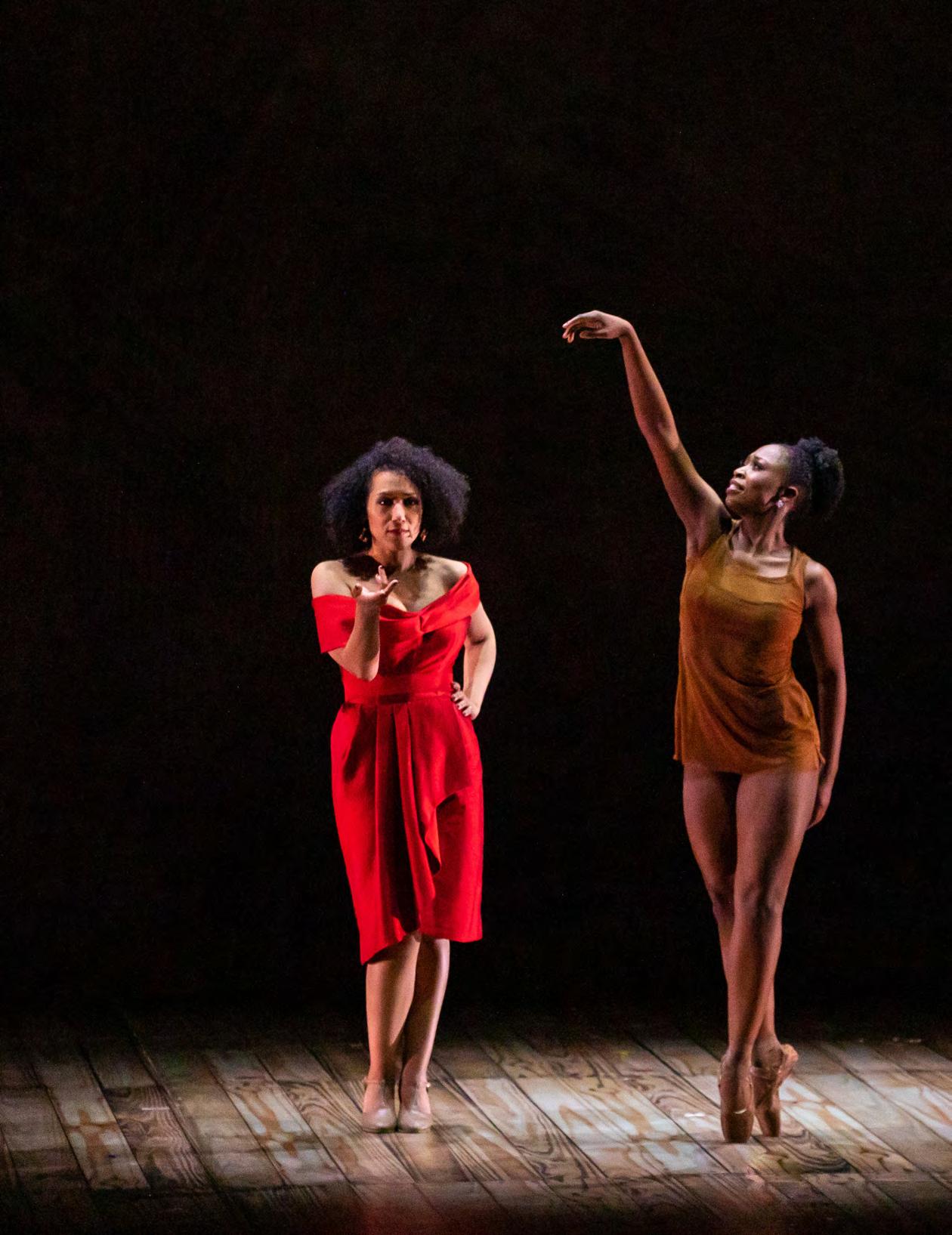
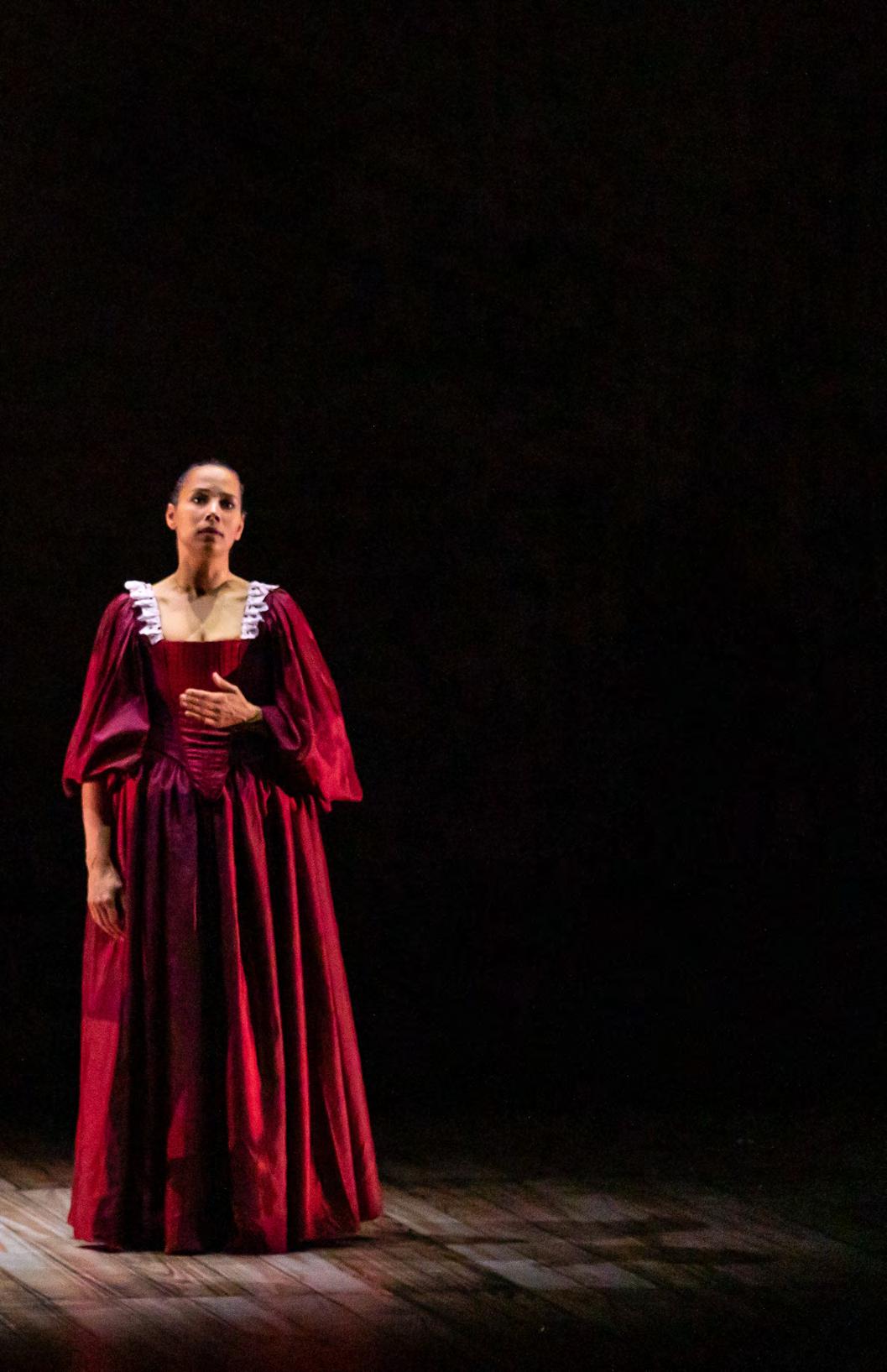
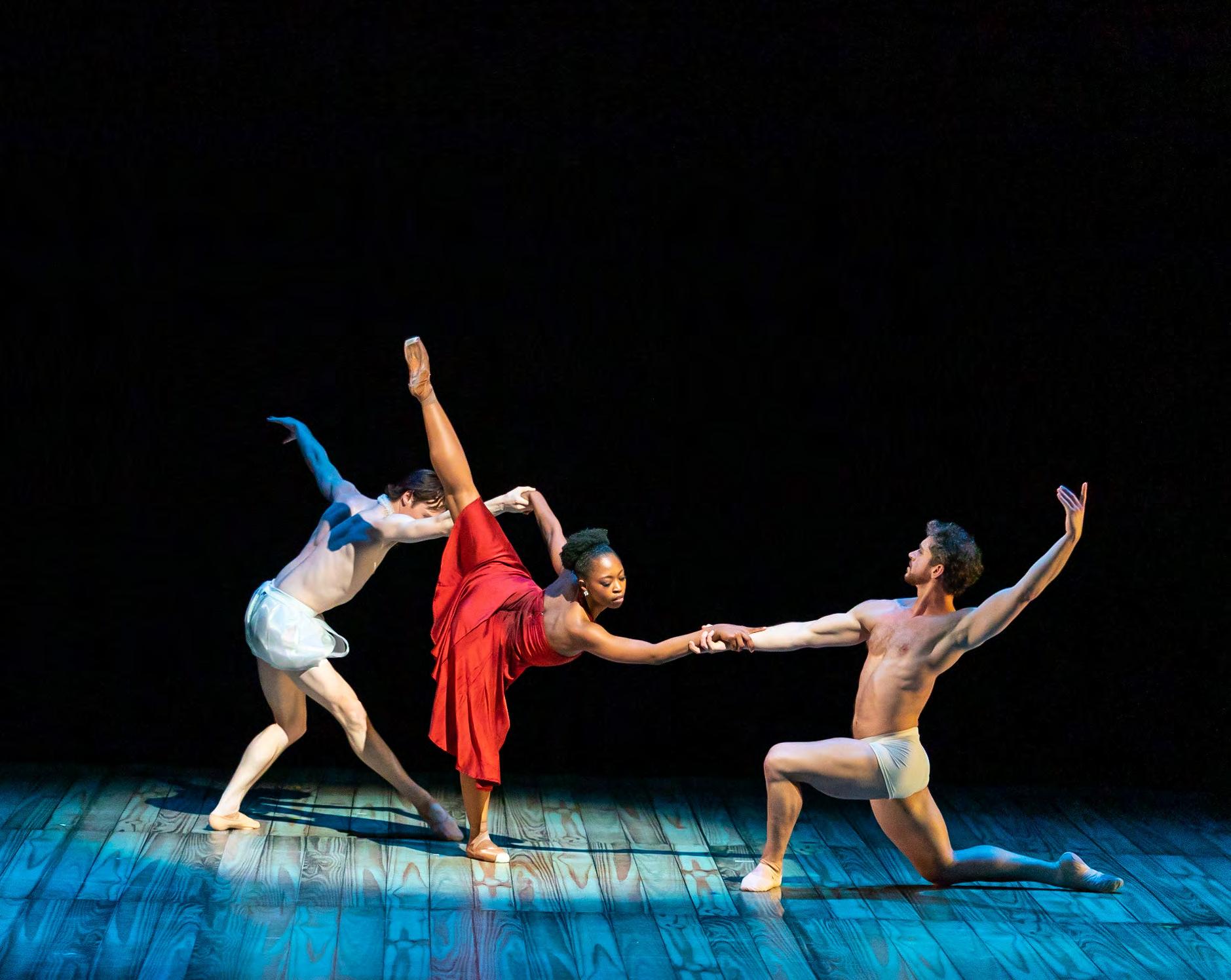
Inside the Nashville Ballet’s revival performances of ‘Lucy Negro Redux’
William Shakespeare wrote 154 sonnets, published in one complete collection for the first time in 1609. These Renaissance love poems explore themes still considered taboo even today — lust, queerness, misogyny, violence, and more.
In sonnets 127-154, a character known simply as the “Dark Lady” emerges. For centuries, scholars have debated the identity and origin story of the “Dark Lady.” But in 2015, author and poet Caroline Randall Williams published her own take, Lucy Negro, Redux: The Bard, a Book, and a Ballet, in which she interprets this mysterious character as a Black woman, possibly even a sex worker and brothel owner. Through a range of narrative forms and linguistic styles, she explores this thesis, giving voice to the women of Shakespeare’s stories and positing what role women of color ultimately played.
Williams’ book gained such intrigue that Paul Vasterling, artistic director of the Nashville Ballet, worked
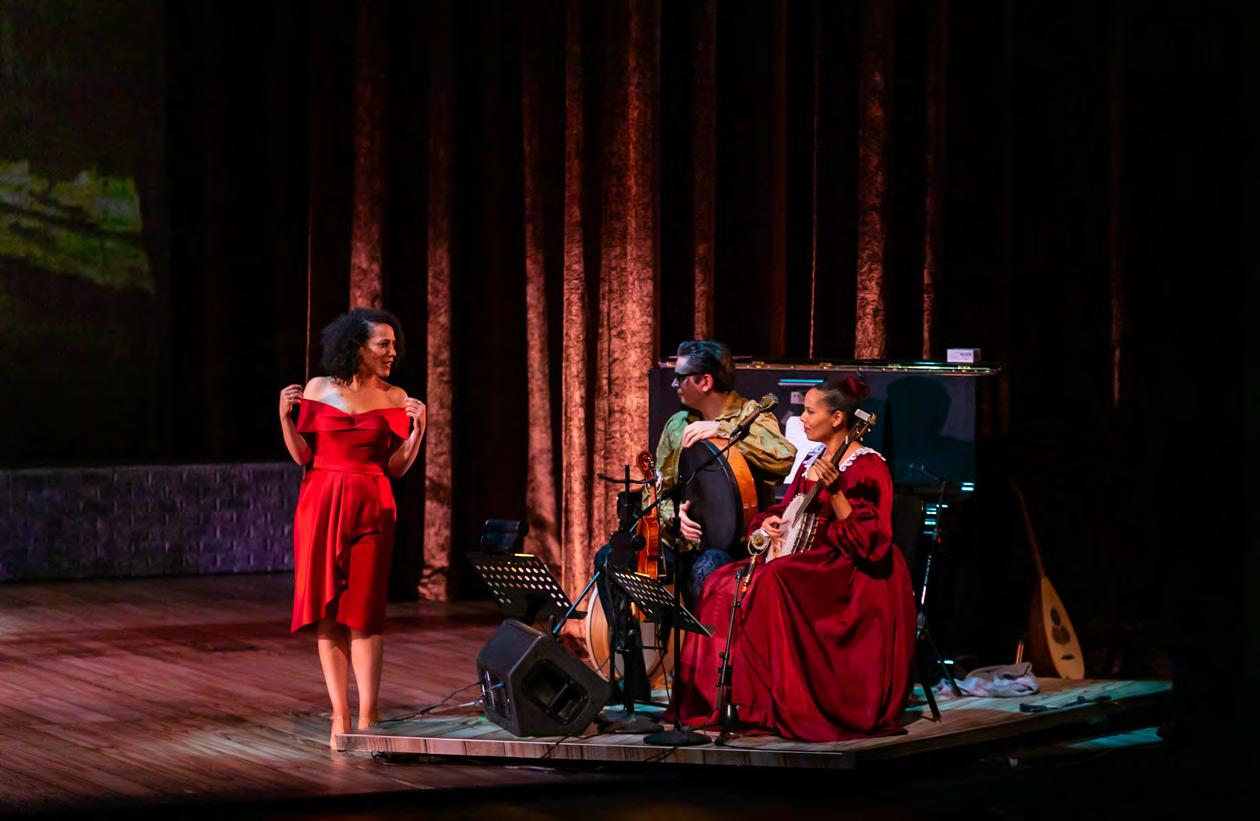
with her to create an interpretation for the stage. Vasterling crafted original choreography and MacArthur “Genius” award winner Rhiannon Giddens composed the music. Lucy Negro Redux — a modern ballet and spokenword performances set to live music by Giddens and Francesco Turrisi — premiered at the Tennessee Performing Arts Center (TPAC) in Nashville with three sold-out shows in 2019.
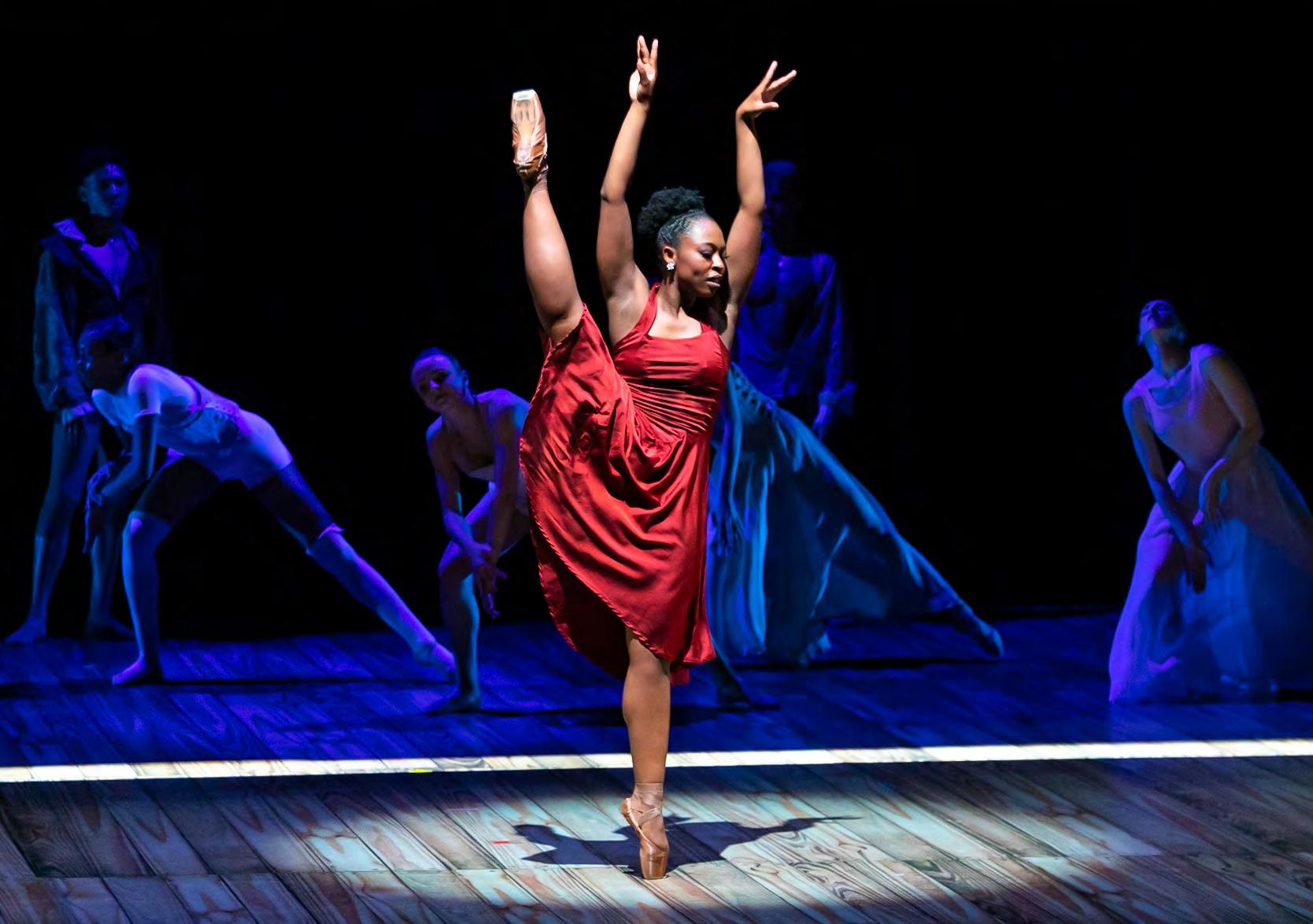
After a three-year hiatus, Lucy Negro Redux returned to TPAC’s James K. Polk Theater in March, kicking off a national tour with dates in Colorado, New Mexico, Missouri, and Virginia. One of the Nashville performances was also filmed for the award-winning PBS series Great Performances, scheduled to air later this year.
The Nashville Ballet sent No Depression exclusive photos by Karyn Kipley that illustrate the relationship between music and bodies and what it means to be a “mover and shaker.”
— Hilary Saunders
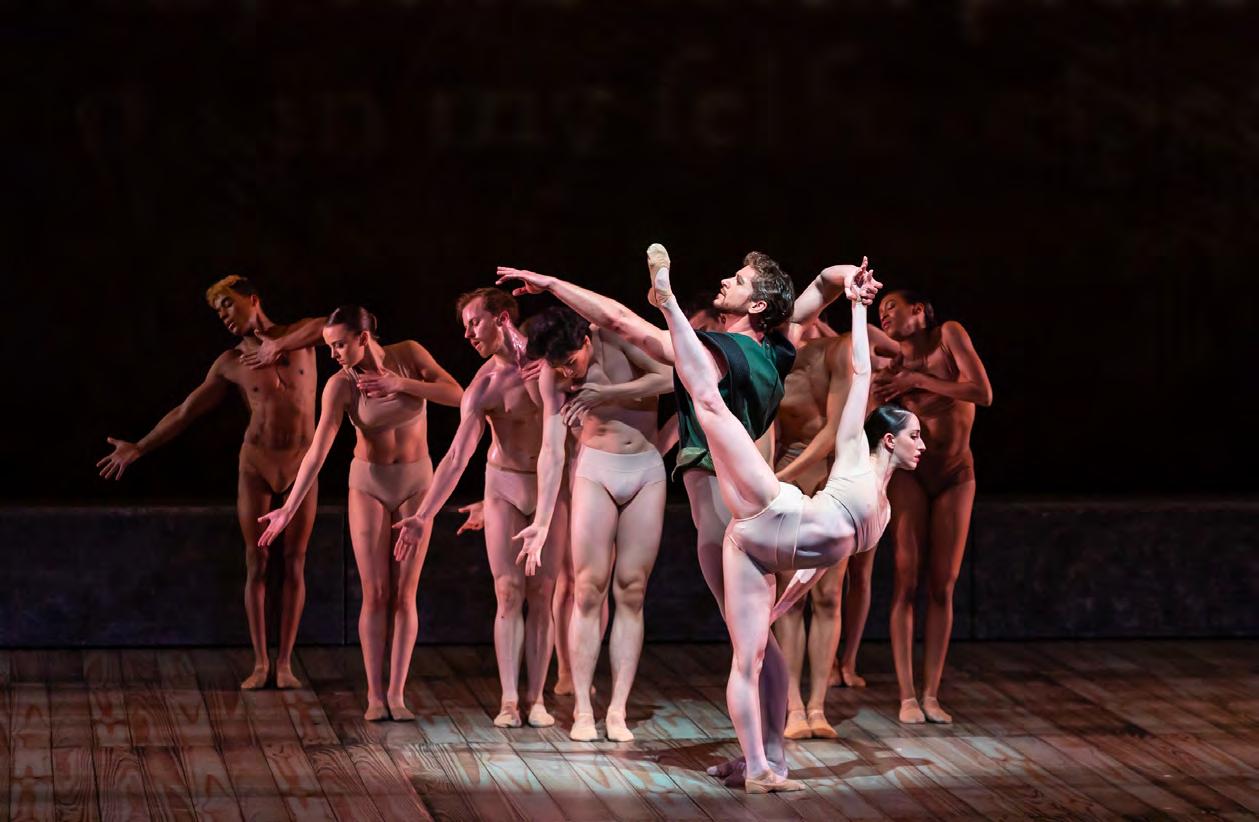
“Lucy Negro Redux is for anyone that has ever felt othered because of who they are — whether it be for their gender, skin color, or who they love. Our hope is that audiences will walk away with new perspectives of one another that spark important conversations, challenge tradition, and, most importantly, create an empathetic understanding of each other’s experiences.”
Paul Vasterling
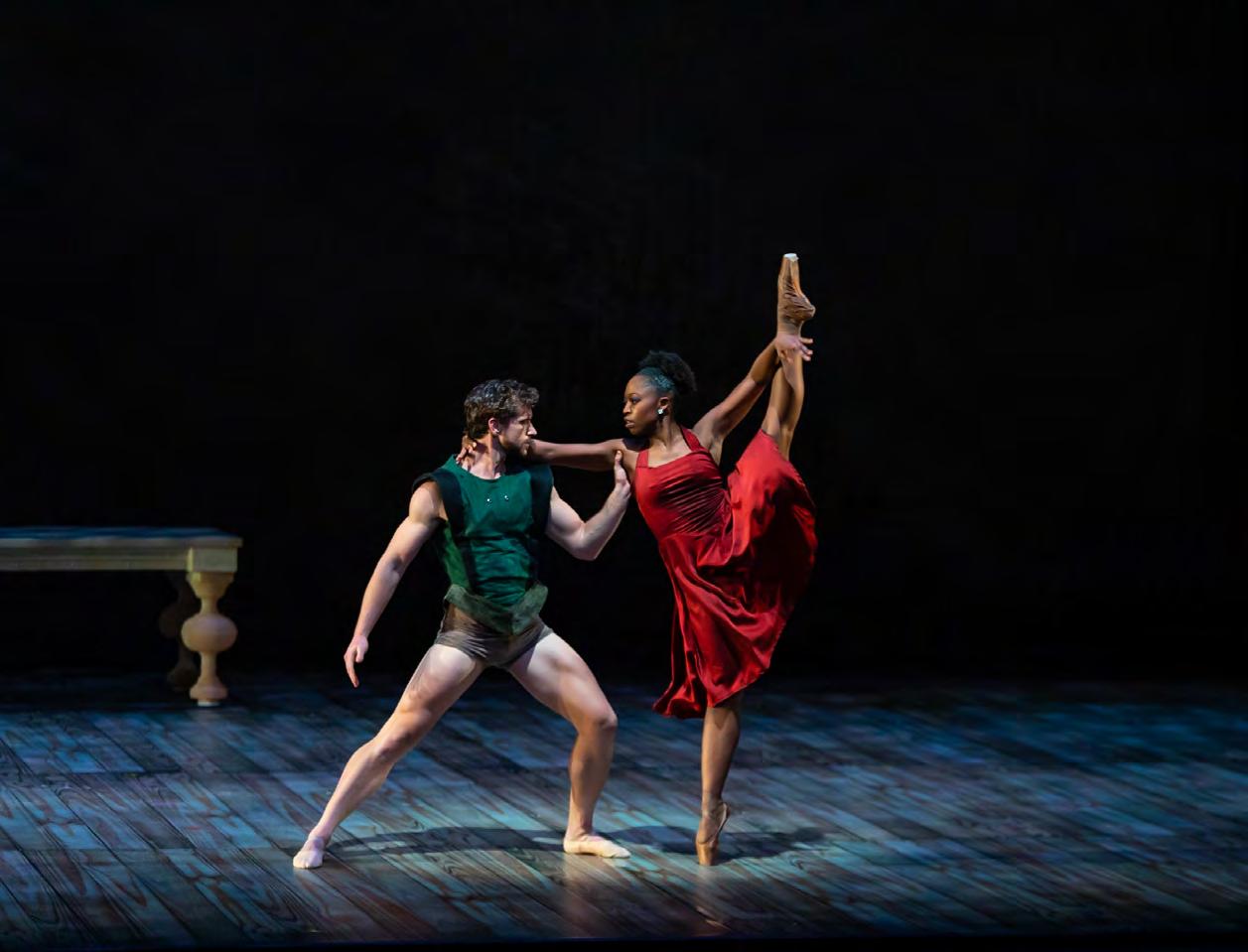
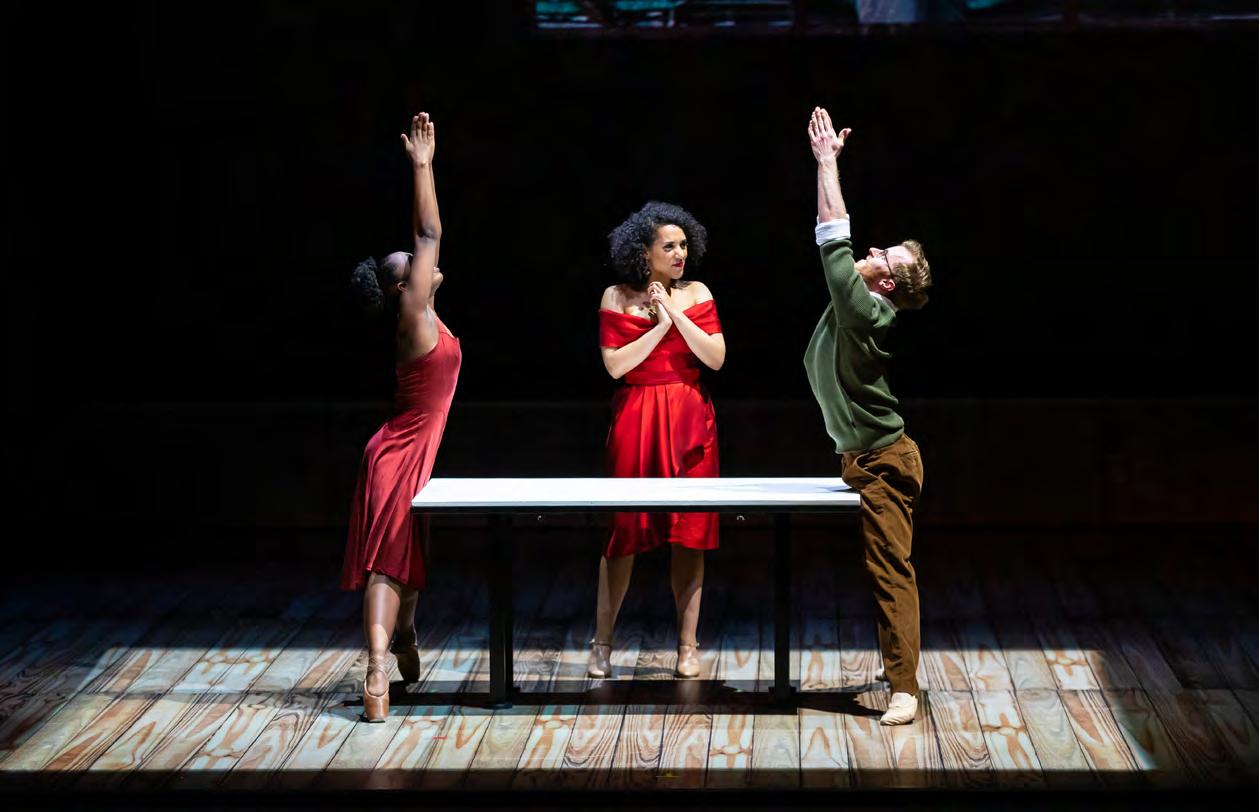
“It’s an extraordinary gift to see the fruit of your imagination brought to life, in any form. Getting the book published at all was a dream. Paul Vasterling’s vision to turn it into a ballet was a bigger, wilder dream than I even knew to wish.
I hope that people walk away with a new way of looking at color, at women, at bodies, at the possibility of collaborative, multigenre art. This show is the work of so many minds meeting, and the fact that I get to participate in a performance that lives in all of these intersections continues to stagger me and bring me a great deal of joy.”
Caroline Randall Williams
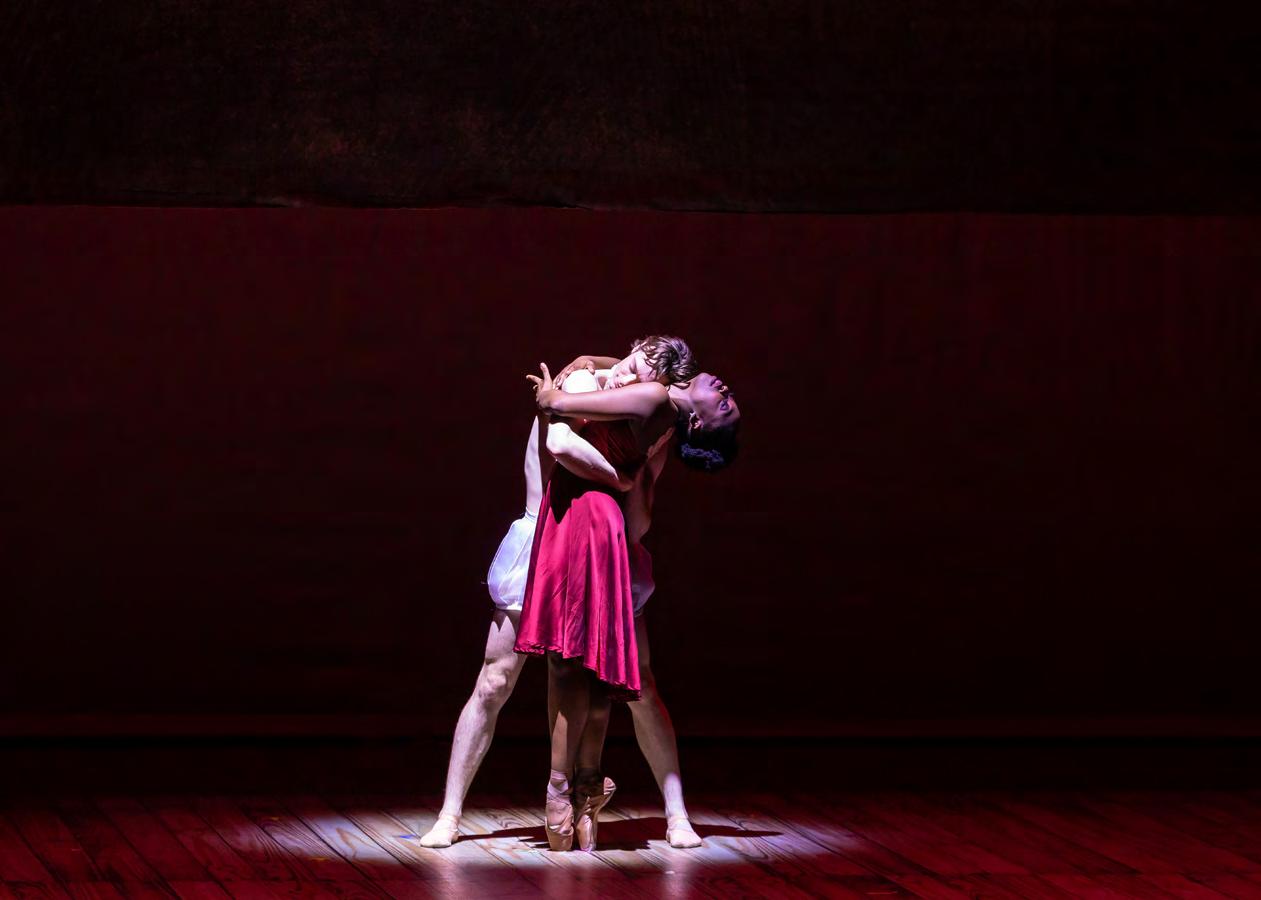
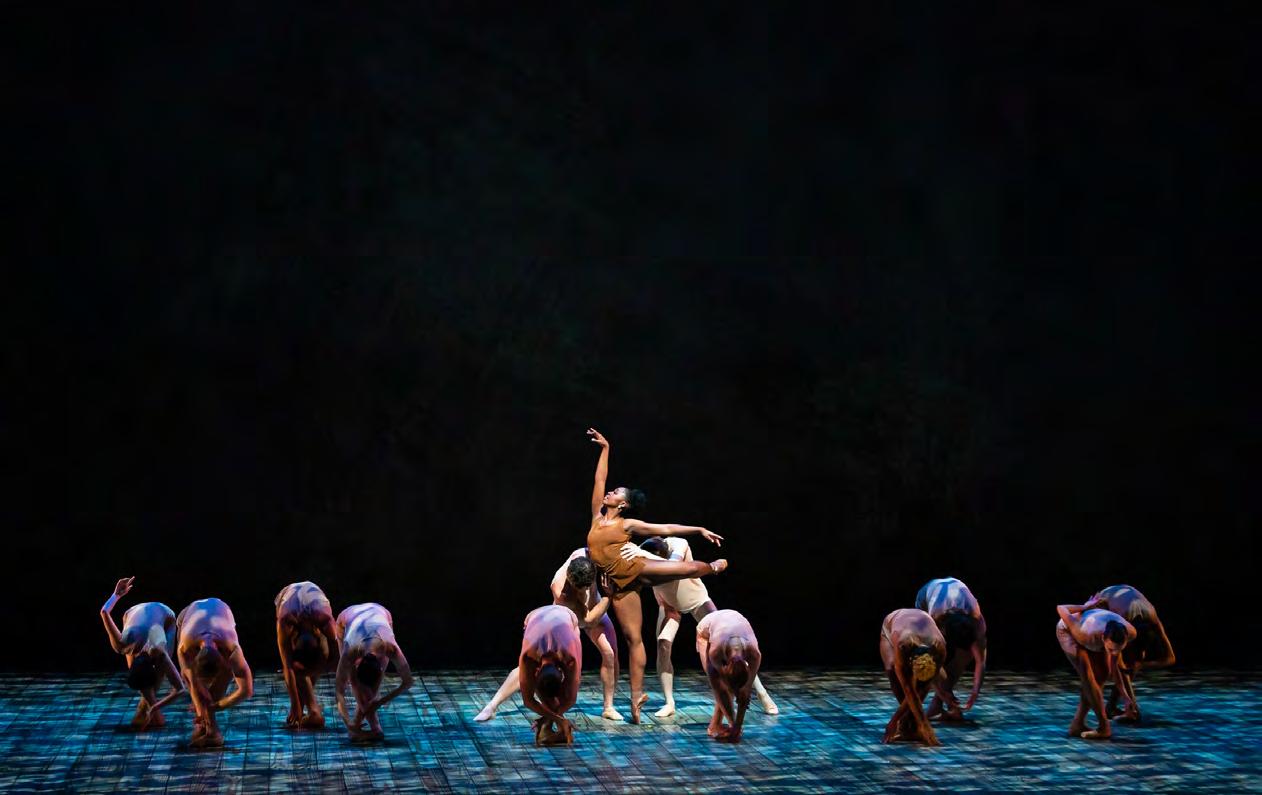
“We look to the dancers for a lot — to take cues from them, to match our musical improvisations to their energy, movements, and expressions. Our music feels their bodies, and their bodies fuel our music.”
Rhiannon Giddens and Francesco Turrisi
“A few years ago, I was approached by Paul Vasterling about this amazing book of poetry he had discovered from Nashville author Caroline Randall Williams — exploring the prospects of a mysterious Black brothel owner, Black Luce or Lucy, being the inspiration for some of Shakespeare’s most beautiful poetry. I knew immediately I had to be a part of telling Lucy’s story and creating this ballet that highlights Black art and a Black woman’s point of view, and is one of the few parts choreographed for a Black prima ballerina within a regular ballet company. Francesco and I were new into our musical partnership (literally a day in), and we always laugh because I went into that relationship asking, ‘Do you want to write music for a ballet with me?’
The rest is history.”
Rhiannon Giddens
by Kim Ruehl
Dance out to the deep stream Dance out to your vote box
Dance down to your office
Dance over to your counter
Dance up your big stairs
If your husband gets jealous Dance out to new lovers
— Woody Guthrie, August 1947
SongsandArt,WordsandWisdom
in 1942, choreographer and dancer Sophie Maslow premiered her landmark creation, Folksay. The 18-minute modern dance suite was undergirded by songs from Woody Guthrie’s Dust Bowl Ballads, which had been released two years earlier, and featured folk dance elements alongside the modern dance Maslow had studied under Martha Graham. Given the stress and fear of World War II, Maslow wanted her suite to remind audiences of the beauty and strength of common Americans, and Guthrie’s Ballads spoke to her on that level.
She took her creation into rehearsals and had her dance company in near-perfect shape when she got the idea that maybe Guthrie would be willing to deliver the music live, during the dance performance.
On one of the only live concert recordings of Guthrie’s lifetime, The
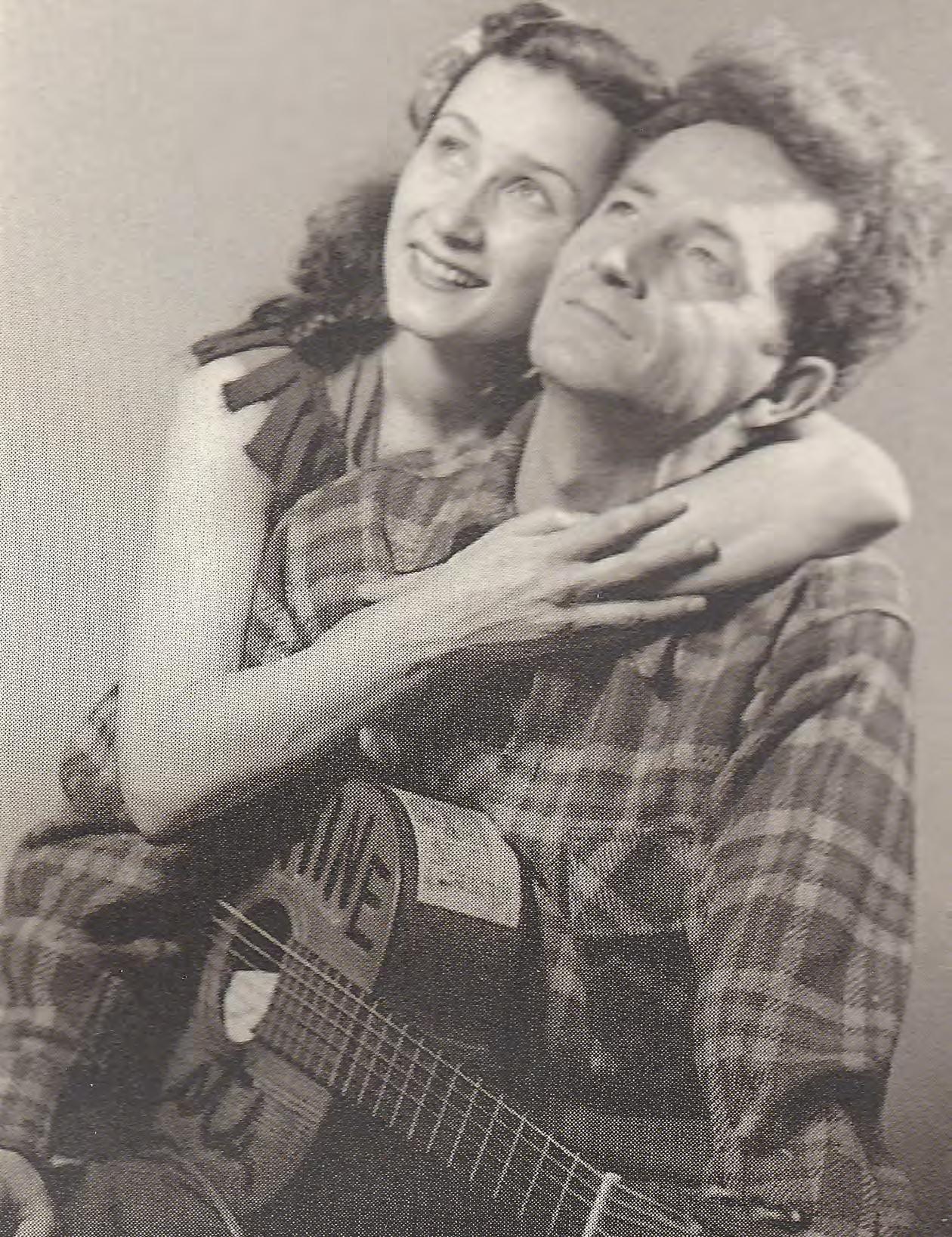
Live Wire: Woody Guthrie in Performance 1949, Marjorie Mazia — a dancer with the Martha Graham company who married Guthrie in 1945 — reminisced about the night she and Maslow went to his house to invite him to participate in Folksay
“[Sophie] said, ‘Instead of using the record I’m going to ask Woody if he would do it in person, on the stage, because I think it would be so effective,’ Well, when I heard her say that, I said, ‘Sophie, I am going with you, to look for Woody.’ And I came to then what was known as Almanac House. There was a great big loft, on 6th Avenue down here in the Village, and I remember picturing in my mind’s eye what Woody was going to look like. You see, I hadn’t seen a picture of him, but I had pictured a very tall, thin man and sort of thinking of Oklahoma cowboy. I could see the boots and the high hat and the kerchief, you know. And I
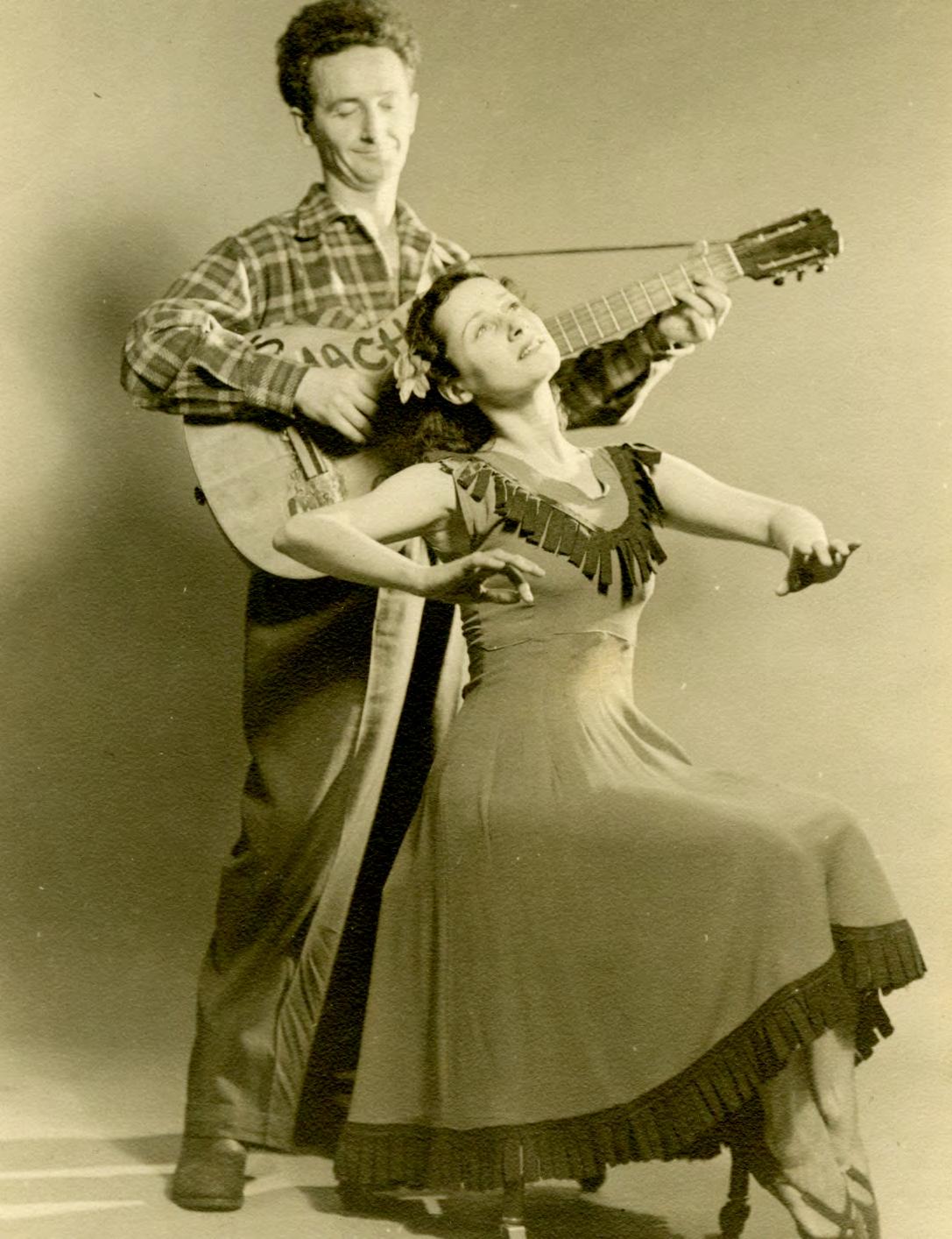
“Whenever the dancers had a party, the musicians were there. Whenever the musicians had a party, the dancers were there. So that was very common and that continued into our house.”
Nora Guthrie
walked in and way in the distance I see this little, tiny guy with what I thought when he turned around was kind of a high forehead and beady eyes and he looked as if he were asking a question. That was the look on his face. And he didn’t look anything like what I had imagined, but it was truly love at first sight.”
Maslow and Mazia told him their idea. Faced with two beautiful dancers offering him a paid gig, Guthrie eagerly agreed, and off they went to rehearse.
Of course, the reality of a folk singer entering a room full of highly trained professional dancers was more romantic in theory than in practice. Guthrie, a hard-touring musician, was accustomed to playing songs slightly different every time. He would improvise verses or instrumental breaks. He would speed up and slow down for artistic effect. This did not jive with the carefully timed choreography, where everything is planned to the even count of the written or recorded music. The dancers had rehearsed to
the recording, but Guthrie had been playing these songs for a few years since leaving the studio. The songs had changed for him, and now the dancers were struggling to make their choreography sync with the music. In a later performance, immortalized on a recording titled Woody Guthrie: The Live Wire, he explained to his audience, “When a bunch of dancers get to dancing, if you make a missed beat, or a missed count on your guitar, they bump into each other. I mean, they kick each other with their knees and elbows and some are up in the air and some are down on the floor.”
Afraid that her work could unravel so close to its premiere, Maslow enlisted Mazia to organize Guthrie so that the performance could go on without the dancers crashing into one another. Somehow, she was successful, and the debut performance of Folksay went off without catastrophe. In fact, the piece was so well received that Maslow would continue to produce it with various companies and assorted
dancers for the rest of her life. Guthrie and Mazia, meanwhile, quickly spun into a passionate affair. Both were married to other people when they began it. Mazia’s husband lived in Philadelphia, while Guthrie’s wife was in Texas with their children. But when Mazia became pregnant with Guthrie’s child the following year, they divorced their respective spouses and committed to one another.
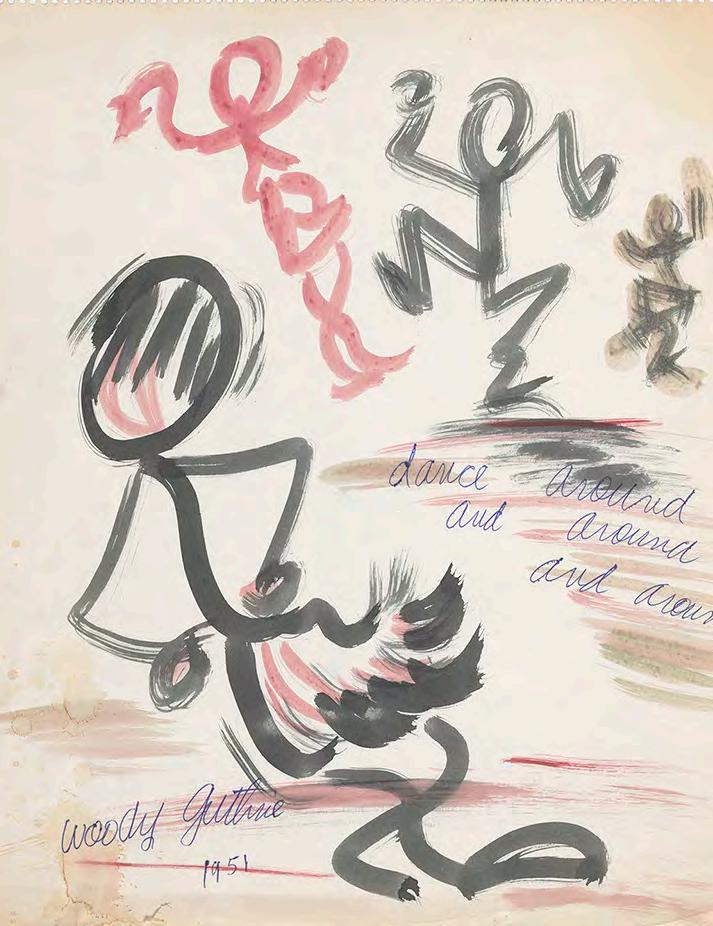
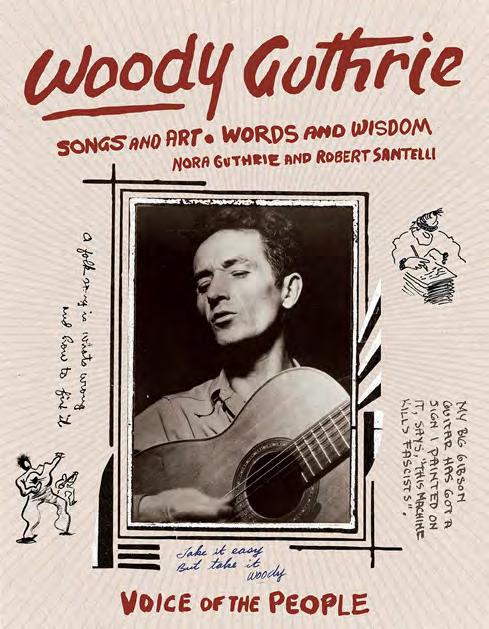
Because his new wife was beholden to the Graham company and its occasional touring performances, Guthrie stayed home in Brooklyn with the children while Mazia followed her art. The music and writing and art he created during this time — many of his journal pages were decorated with paints, crayons, and other supplies Guthrie picked up at the corner bodega — is some of the most revelatory in his career and can be found in a book their daughter Nora edited and released at the end of 2021, Woody Guthrie: Songs and Art, Words and Wisdom.
Though celebrated primarily for the folk songs he wrote — thousands of them — and his influence on the trajectory of American folk music, Guthrie was as much prose writer and visual artist as he was musician.
“B.B. King’s got Lucille,” says Guthrie’s granddaughter Anna Canoni, senior operations manager at Woody Guthrie Publications Inc. “Woody doesn’t have a Lucille. Woody had his notebooks.”
It was the notebooks that he took with him when he went wandering — whether around New York City or further afield. And though he is often associated with hopping trains and traveling alone, like most artists he thrived best in community.
In Oklahoma and Texas, his community was blue-collar working people trying to survive what historian Timothy Egan called “the worst hard time.” Migrating away from horrible dust storms to promising Los Angeles, Guthrie found his place among radio
personalities and Hollywood actors. And in New York, he found a new community of artists interested in the overlap of the arts and a burgeoning new wave of the labor movement.
The musicians in that community formed a bit of a collective and called themselves The Almanac Singers, holed up in that Greenwich Village loft. Guthrie would come and go, crash on the couch, sit at the table, and write a dozen songs in a row. Also in that loft were Pete Seeger, Lee Hays, Butch Hawes, Bess Lomax, and a rotating cast of others.
But as storied as the Greenwich Village folk music community of the early 1940s was, they were not insular about their craft. Filmmakers, painters, actors, radio commentators, and dancers all came by and spent time. It was a bohemian era in the Empire City, and Guthrie was one among many from all over the United States who were converging on Manhattan — like generations before and since — to find out what they could do with their art.
Nora Guthrie, who was a dancer before developing the Woody Guthrie Archive, points out that her parents’ creative community “preceded what happened in SoHo years later, when dancers and directors and filmmakers — everyone from Andy Warhol to other people — started mixing and collaborating with each other. But this happened in the ’40s. Whenever the dancers had a party, the musicians were there. Whenever the musicians had a party, the dancers were there. So that was very common and that continued into our house [in Brooklyn].”
What’s more, Guthrie wasn’t the only one among his peers to marry the dancers who came to these parties. Nora lists a number of dancers who married into her father’s wider artistic and intellectual community: Toshi Ohta, a dancer with Margot Mayo’s company, married Pete Seeger. Graham dancer Jean Erdman married author Joseph Campbell. Jane Dudley married the filmmaker Leo Hurwitz.
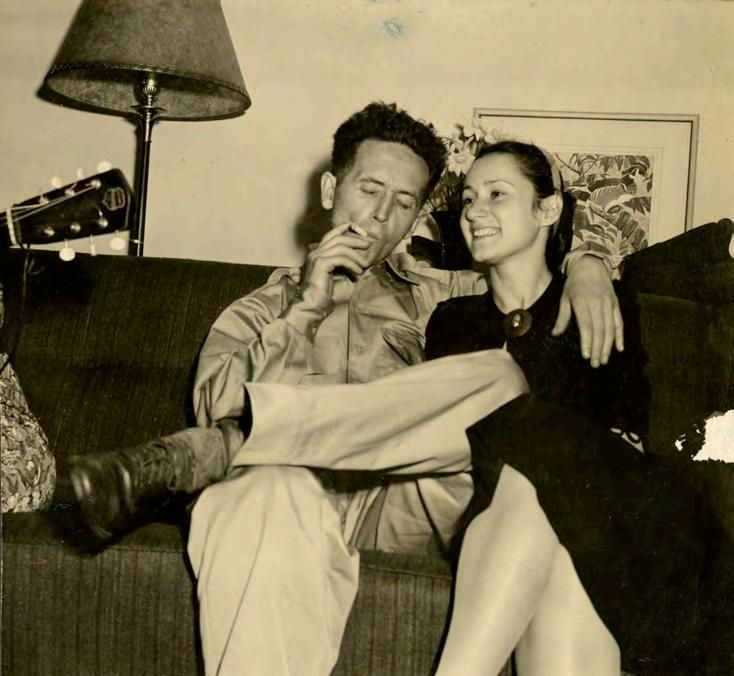
Manhattan’s vibrant arts scene produced a parade of cultural revolutions in the 20th century. There was the Harlem Renaissance vanguard in the 1930s and Guthrie and Mazia’s crowd a decade later, followed by the Beat poets of the ’50s, the hootenanny folkies of the ’60s, Warhol’s pop art collective, and so on. Conscious of the stars these stories may put in the eyes of outsiders, Nora simplifies the historical significance of her parents’ social circle this way: “They’re all hanging out together. They’re just having a beer together in the room.”
She continues, “It was kind of ordinary. It wasn’t anything special. They all had children at the same time. All the dancers got pregnant at the same time. Their kids grew up in the same place and played together as the moms rehearsed with the Graham company or the dads babysat together. So that’s my memory of the whole thing. It’s just like your parents had best friends maybe on a bowling team or
something. That was their bowling team.”
Two years after Guthrie’s comically disastrous initial rehearsal for Folksay, Martha Graham debuted one of her greatest masterpieces, Appalachian Spring, in October 1944. The ballet was set to original music by Aaron Copland, who had titled it “Ballet for Martha” before she gave it a name she pulled from a poem by Hart Crane.
Copland’s score was rooted in folk music, riffing on the Shaker hymn “Simple Gifts” and, according to a history on the Martha Graham Dance Company’s website, Graham’s choreographic vision was pinned to a story of young lovers starting their life together. To depict everything they encountered at the start of their marriage, she borrowed elements from folk dancing, including “square dance patterns, skips and paddle turns and curtsies, even a grand right and left.”
The premiere cast for Appalachian Spring featured Graham herself, Erick Hawkins, May O’Donnell, Merce Cunningham, Nina Fonaroff, Pearl Lang, Yuriko, and Marjorie Mazia. Granted, Mazia was cast in some of Graham’s most memorable pieces during her decade and a half with the Graham company. But dancing in the premiere of a ballet that employed folk dance elements set to folk music two years into her relationship with one of the country’s leading folk singers set off a flurry of interest and inspiration.
In many ways, Mazia was only just beginning to straddle the complementary artistic visions of her mentor and her husband. While Guthrie in 1944 was still quite young and cementing his place within his art form, Graham had opened her Midtown dance studio in 1926. Committed to reimagining dance, she focused on what she saw as the most foundational movements: contraction and release.
“A woman has children with
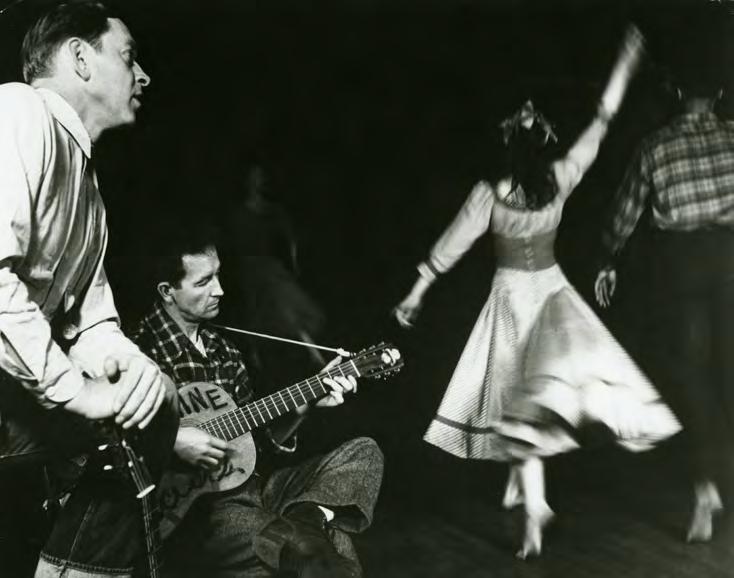
contractions and releasing,” explains Canoni, who studied the Graham technique. “‘Contract and release’ is used as a methodology of life, as a way of existing. And then Graham was able to channel that into movement.”
Ruminating on the similarities between Graham and her grandfather, Canoni clarifies that people who change the world aren’t always the easiest people to be around. Guthrie is often described as a womanizer and a wanderer, as well as unreliable. She points out that even Pete Seeger, who looked up to Guthrie the way a younger brother might, noted that he was hard to live with.
“Pete even said, ‘I hated being with him and I missed him when he was gone,’” Canoni recalls. “[He’s] living in a communal house where he’s not doing the dishes and going shopping but he’s sitting there and writing 20 songs a day, not participating in the communal lifestyle. … But for Marjorie, it wasn’t that. She loved him. She saw the
creativity. She could see the creativity and allow it to exist and facilitate it in a way where that individual could be productive. And maybe that’s Marjorie. … She had this gift for seeing people and allowing them to exist while supporting their creative endeavors.”
Nora goes further on this point, explaining how this played out in their home: “My mother used to put these schedules on the refrigerator for him, as if he was a 2-year-old,” she says. “Wake up at 7, have breakfast from 7:15-7:30, go for a walk from 7:30-8, come back and start writing … hour by hour, minute by minute. When he was working on Bound for Glory, she disciplined him to write that book. In this way: She said, ‘When I come back from rehearsal, I’m going to read what you wrote. I want five pages.’ It sounds kind of silly. It’s not because he was immature. It’s because nobody had taught him how to do that. He found that he could get a lot more done that way.”
Thus, there was a certain giveand-take about Mazia and Guthrie’s marriage. Beyond their romantic, emotional, and sexual chemistry — and the discipline he learned from her that helped him become so productive — there was also a great amount of alchemy in the interactions between their primary art forms. At the beginning of their relationship, before they had children, he would meet her at the studio. And while he waited for her to finish, he’d sketch the dancers’ movements in ways that truly captured the essence of Graham technique.
Nora included some of these sketches in Songs and Art, Words and Wisdom, and in them one can easily see how Mazia’s modern dance world was beginning to influence Guthrie. His sketches of women from before he met Marjorie often show them from behind, doing domestic labor like tending to children or working in the kitchen. The lines are round and gentle. There is affection, but also
disregard.
When he began to sketch Mazia and the Graham dancers, the lines became more precise and artful. A trained dancer can recognize the positions he drew as he tried to capture women in powerful artistic moments. In general, his sketches of women in New York show them leaning more fully into their entire power, and he began to see them as vital workers alongside the men.
Many attribute Guthrie’s new lease on feminism to musicians in his circle, like Sis Cunningham and Bess Lomax, as much as to his wife. But watching the dancers rehearse gave him a new perspective on what was possible with art, an understanding he perhaps didn’t have as he compulsively created on his own time.
As Nora explains, “When he met the professional dancers, he was shocked at how disciplined they were. It was like he went to church. He was shocked that they warmed up for an hour, the way they took care of their feet, the way they took care of
their body — those temples. Woody was just a rough rider. He didn’t have any of that domestication at all. I think the dancers domesticated him. He learned about structure, discipline, rehearsal, hours that you put in before a show. He called choreography like architecture. He joked that if one thing is in the wrong place the whole building falls down, and dancers are like that.”
She adds, “He had [only ever] seen people on the road just making a living, day to day. It was all improvisation in a way. Everything before that was [him] looking at life as an improvisation: Where are we going to live? What are we going eat? What am I going do? Where am I going go? What kind of job am I going to have? Dancers were just the opposite of that.”
And Guthrie was a creative sponge. Watching Mazia rehearse, sketching in his book, he wasn’t just fascinated by an art form that was new to him, he was studying it and exploring what qualities he could use in his own art. As much as his
improvisational way of life was part of how he sourced his creativity, when Mazia gave him structure, he was happy to find it helped him produce more.
He was open to the world in ways most people fear, proving a catalyst for understanding and interpretation to which so many artists can only aspire. Of course, the same was true of Mazia’s mentor, Graham, who Canoni describes as “a complete pioneer.”
She continues, “[Graham] channeled stories into powerful and dramatic movement. … She changed the direction of dance. Her art is something completely unique. And then from there, there’s [Merce] Cunningham and [Anne] O’Donnell and [Paul] Taylor. There’s all these other modern dance techniques that fall off that main tree, but she grew a whole new tree. … Everyone kind of comes from that well, that original well, and makes their own little creeks and paths, but you can certainly see how it all comes back to Martha in so many ways.”
Given the artistic legacies of her dance mentor and her husband — two visionaries who changed the course of their respective disciplines — Mazia’s own trajectory in the center of this Venn diagram carried substantial influence as well. She was a strong woman in her own right, who boasted reserves of determination, creativity, and power. Canoni tells a story about her grandmother that captures this beautifully:
“Marjoriewas living in Philadelphiawhen shewas a teenager,with herfamily, and she fell in lovewithdancing. She applied fora scholarshiptocome toNew York and studyunderMartha Graham. Shewon the scholarship, came toNewYork, and she joined the firstclass. Shewas sitting in the front. She haddance training,but in Philadelphia, maybe notupto Graham’s standards. SoMarjorie is at the frontoftheclassandtheystart
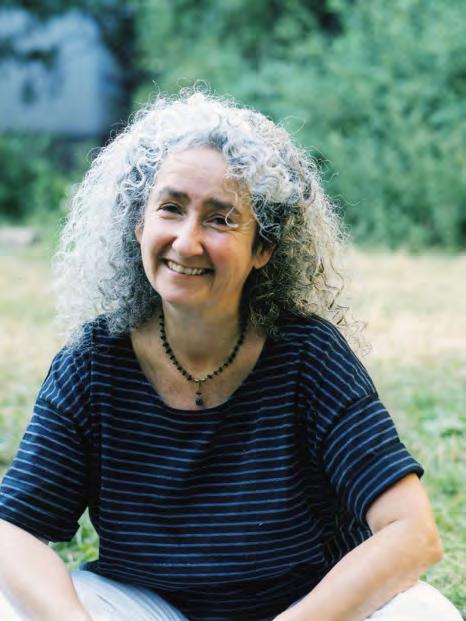
dancingandMarthalooksatherand scoldsher,somethingalongthelines of,‘Youdon’tbelonginthefrontrow. You’renotgoodenough.Gotothe backrow.’And[this]bringsmy grandmothertotears.Shekeepsit together,butshe’sbroken.Herfirst experiencewithMarthaGrahamand she’s kind of broken. She went to the back of the line and continued the class. She builds this resolve and determination to become the best dancer in the entire class and not take astepforwarduntilMarthainvites her herself. So she works so hard — again,thisisherpassion,completely, 110%—soshe’sworkinganddancing andfinallyonedayMarthagoes,‘I wouldloveMarjorietodemonstrate thispart,thewayshe’sdoingthis.’ And that was the moment she’d been waitingfor,forweeks.Longstory short,mygrandmotherbecame Martha’sassistant,thefirstdancerto teachtheGrahamtechniqueoutside ofMarthaGrahamherself.My grandmotherjoinedtheMartha Grahamcompanyandwasinthe companyforabout15years.”
She also became known as the “organizer” of the group, which is why Maslow enlisted her to whip Guthrie into shape during the Folksay rehearsal. Mazia’s organizational instincts came from growing up the daughter of Jewish immigrants in Pennsylvania.
“My grandmother came here as a 14-year-old to be a doctor,” says Nora. “That was her dream. You couldn’t do that in Russia, in the shtetl, where she was living. Their focus was very much on education, getting somewhere with that education. The joke of a Jewish guy being a doctor or a lawyer is somewhat true. And for the girls too. So [Marjorie] was very, very welleducated in many different areas. There wasn’t a day that you would just hang out and do nothing. She writes that Woody taught her how to be free, how to loosen up, how to not know what’s happening.”
Throughout the rest of their lives together, Guthrie wrote about Mazia in glowing, romantic terms, and incorporated dancing into much of his work. In a composition he called
“You and I,” from February 1947, he wrote:
You are my bright fire, I am your ash pile; I am your fingers and you are my hands; You are my sunshine, I am your starlight; You are my woman, I am your man.
But just as Mazia organized her husband while still giving him plenty of space to retain his creative and spontaneous impulses, Guthrie likewise gave her plenty of space to be her well-organized self. When he became sick with Huntington’s disease, she organized his journals in a way that created a foundation for Nora to eventually build the Archive. After he died, she committed to finding a cure for Huntington’s and traveled the world recruiting neurologists, advocating to the US Congress, working with President Jimmy Carter on funding, and organizing patients for better
research and treatments.
Notably, she also opened and ran a dance studio in Brooklyn where she occasionally enlisted her friends — groundbreaking Graham dancers like Merce Cunningham and Erick Hawkins — to come by and teach children the Graham technique.
Their legacies, jointly and individually, continue to inspire — in music and dance and beyond. In fact, Canoni plans to write a book about her grandmother’s life that will also illuminate aspects of Mazia and Guthrie’s continued influences.
“ The Woody Guthrie we have now would’ve only been through those who knew him and chose to tell the story,” Canoni says. “But for us to be able to have the entire archive of family materials that Woody took along the way, with him, in his travels … ” She trails off, appreciating the breadth of that gift.
“She saved all the materials that became the Woody Guthrie Archive,” she adds. “She gave us Woody Guthrie.” ■
Donna the Buffalo moves bodies and spirits through its GrassRoots Festival
by Erin Donaghue
In 1991, the members of donna the Buffalo found themselves creating music amid the worldwide AIDS crisis. The western New York-based Americana band rounded up friends and held a benefit concert at the State Theatre of Ithaca to support the fight against the deadly virus. It was so successful that what started off as a single show evolved into a yearly festival, the Finger Lakes GrassRoots Festival of Music & Dance in nearby Trumansburg.
More than 30 years later, GrassRoots is still a local mainstay that draws nationally renowned headliners and a devoted crew of festivalgoers, many of whom are part of Donna the Buffalo’s self-organized fan group, lovingly dubbed The Herd. But Donna the Buffalo is once again finding itself creating music amid a global health emergency: this time, COVID-19.
Co-founder, singer, and guitarist Jeb Puryear describes one of the band’s functions as bringing magic by creating joy in a crisis. And after two years of postponements, stress, and uncertainty, the four-day festival is scheduled to return to the Trumansburg fairgrounds in July, when the band will finally be able to celebrate the festival’s 30th year.
Puryear and fellow co-founder and multi-instrumentalist Tara Nevins first connected more than three decades ago while playing old-time fiddle music at festivals throughout New York state and the southern US. The two started writing songs and playing with friends, and the group evolved into Donna the Buffalo in 1989. The band traveled extensively to folk festivals where they were exposed to a variety of traditional music styles,
including Creole, Cajun, and zydeco music. Those influences are apparent in their sound, which also draws on country, rock, and bluegrass, a mingling of styles Nevins calls “about as Americana as you can get.”
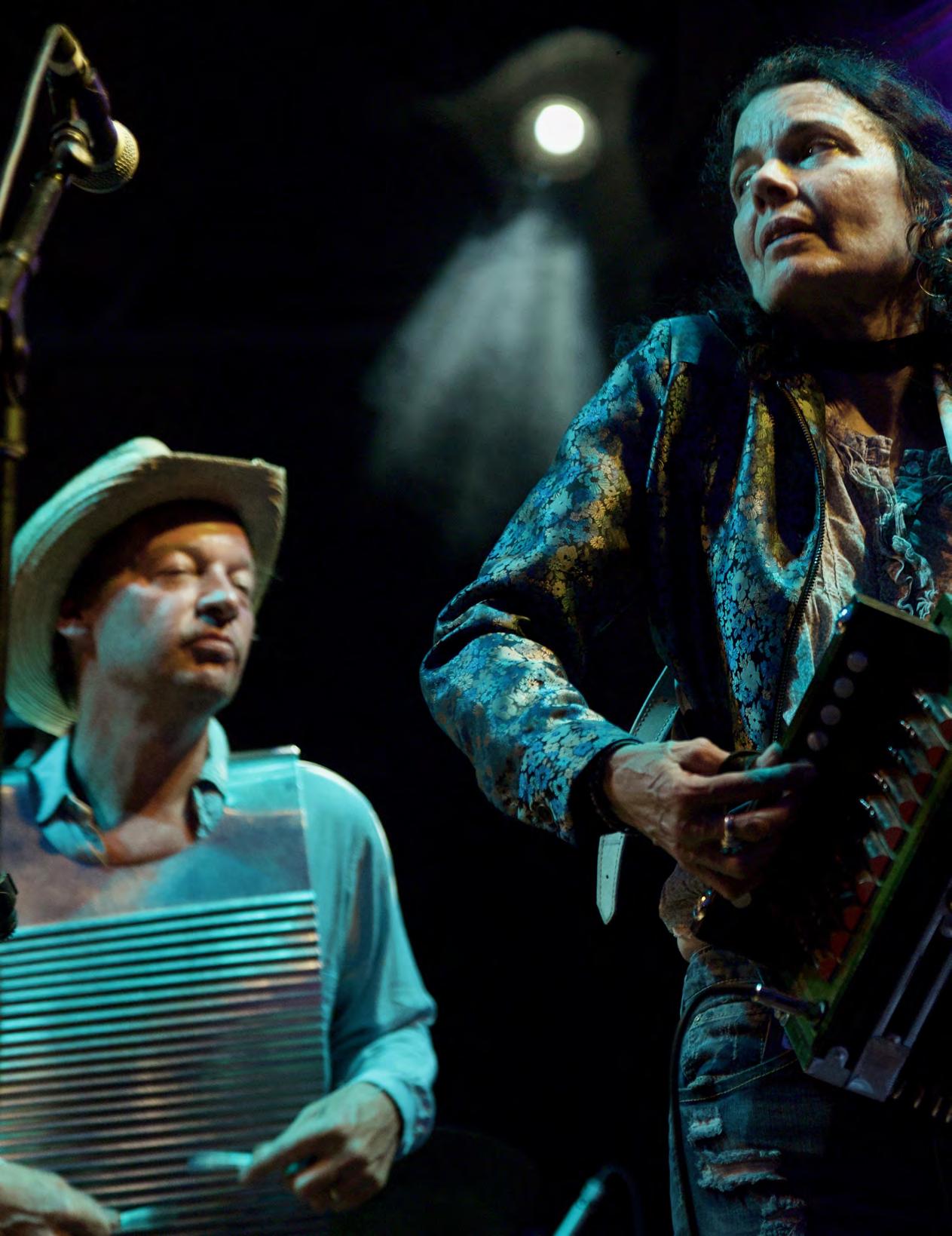
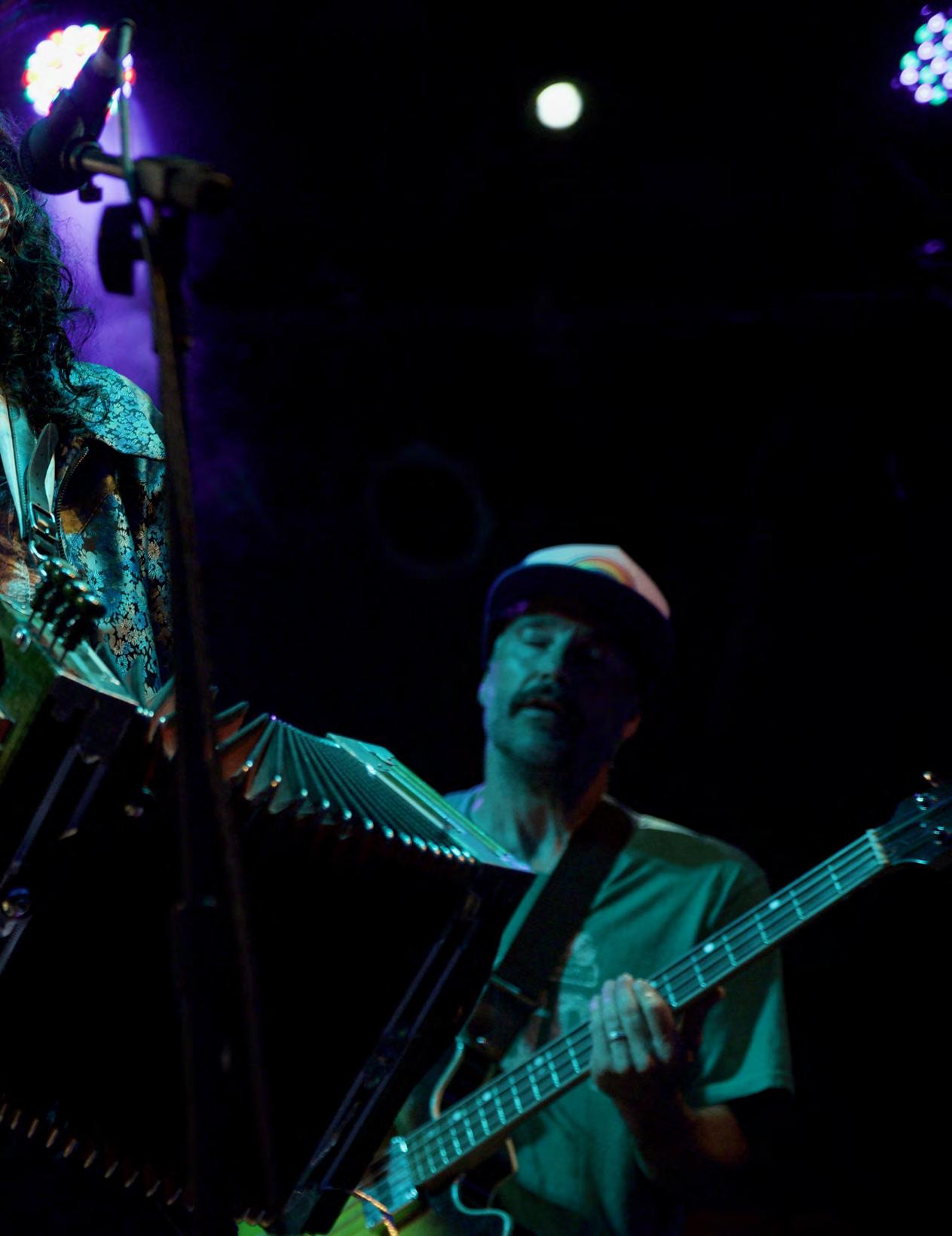
And their high-energy performances never fail to make people move — something that came as a bit of a surprise at first, says Nevins, who performs on vocals, guitar, fiddle, accordion, and washboard. “When we first started as a band, we had no idea what anybody was going to do when they heard our music. For some reason, people dance.”
While they’re known as a “dance band,” Nevins says it’s more than their rhythms that engages their fans. Their songwriting draws on themes of social consciousness, community and the power of the human spirit, and Nevins says their audience can often sing back their songs word for
word. For example, on “I Love My Tribe,” an ode to community from the band’s 2018 album Dance in the Street, Nevins sings, “I put my faith yeah in those I believe / Yeah I believe in the love of a friend.” Or on “All Aboard,” off 2013’s Tonight, Tomorrow and Yesterday, Puryear sings of the hope that emerges from offering compassion to others:
We are completely sure There’s no way to keep the future down With a message of love That resonates with the living of life And the life of the living What we’re looking for is there for the giving.
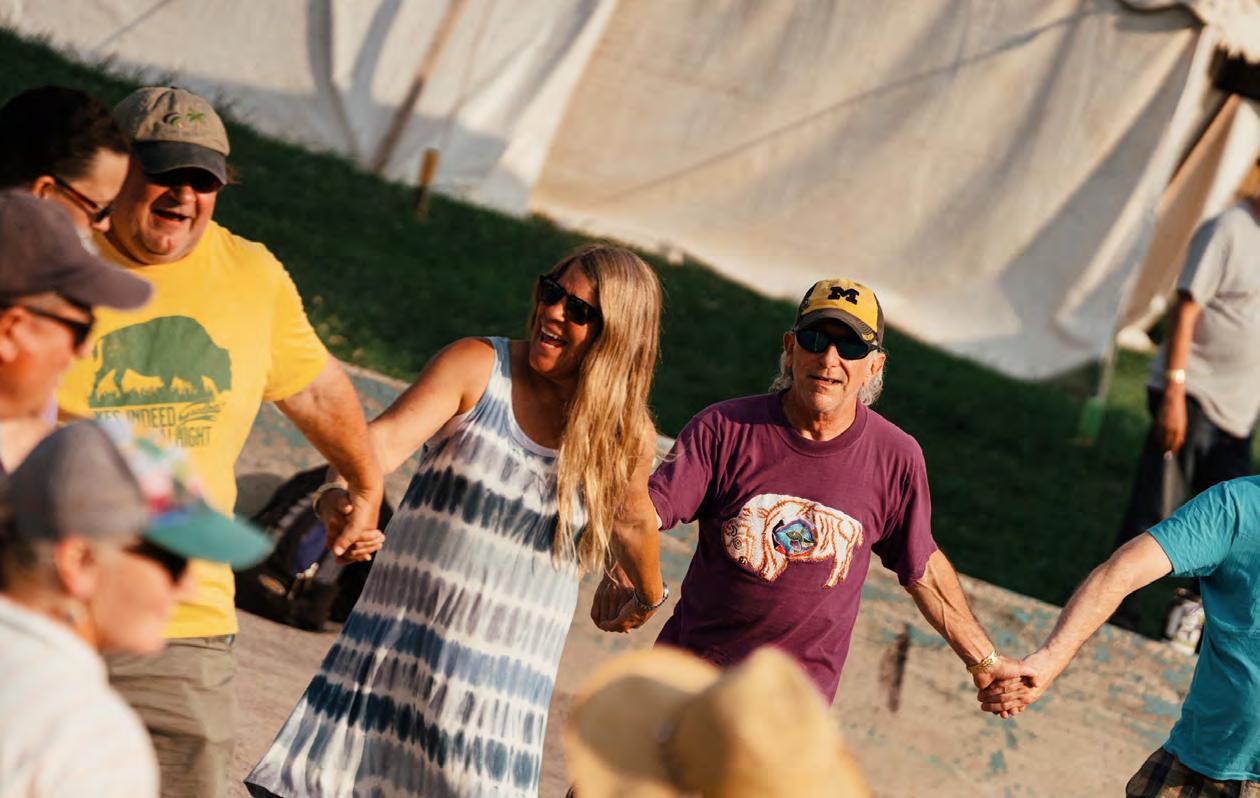
The band’s music has always been about connectivity, which is evident in their songwriting and raucous live performances. Members of The Herd
follow the band around to an extended network of festivals (including additional GrassRoots Festival events in Pittsboro, North Carolina, and Virginia Key, Florida), in the tradition of fan networks of bands like Phish and The Grateful Dead. Many who have followed the band for years say the connections they’ve formed with fellow members of The Herd have developed into lifelong friendships and even committed partnerships.
Fans say this connection is more vital than ever now, as they slowly emerge from the collective trauma and isolation of the past few years.
Seventy-two-year-old Paul Roberge, a North Carolina linguistics professor, is a 19-year fan along with his daughter Maggie, 32. Roberge recalls bonding with his daughter over the band after she swiped his CD as a 12-year-old. The two started traveling together to see their shows, and would
eventually make lifelong friends through The Herd. Roberge credits those strong relationships between Herd members for pulling the community through the bleakness of COVID-19. “The void that was created will be healed,” Roberge says. “There’s a lot of satisfaction and reassurance that our friendships have held together in spite of the interruption.”
Herd member Africa JohnsonJacob even credits Donna the Buffalo with bringing her together with the man she would eventually marry. The Florida resident saw Donna the Buffalo for the first time on the couple’s first date about 10 years ago. She remembers being blown away by the band, whom her now-husband had been following for decades, during their performance at a festival in St. Petersburg.
“Let me tell you, I was in awe,” says Johnson-Jacob, 50. “I had never heard this kind of music — the fiddle,
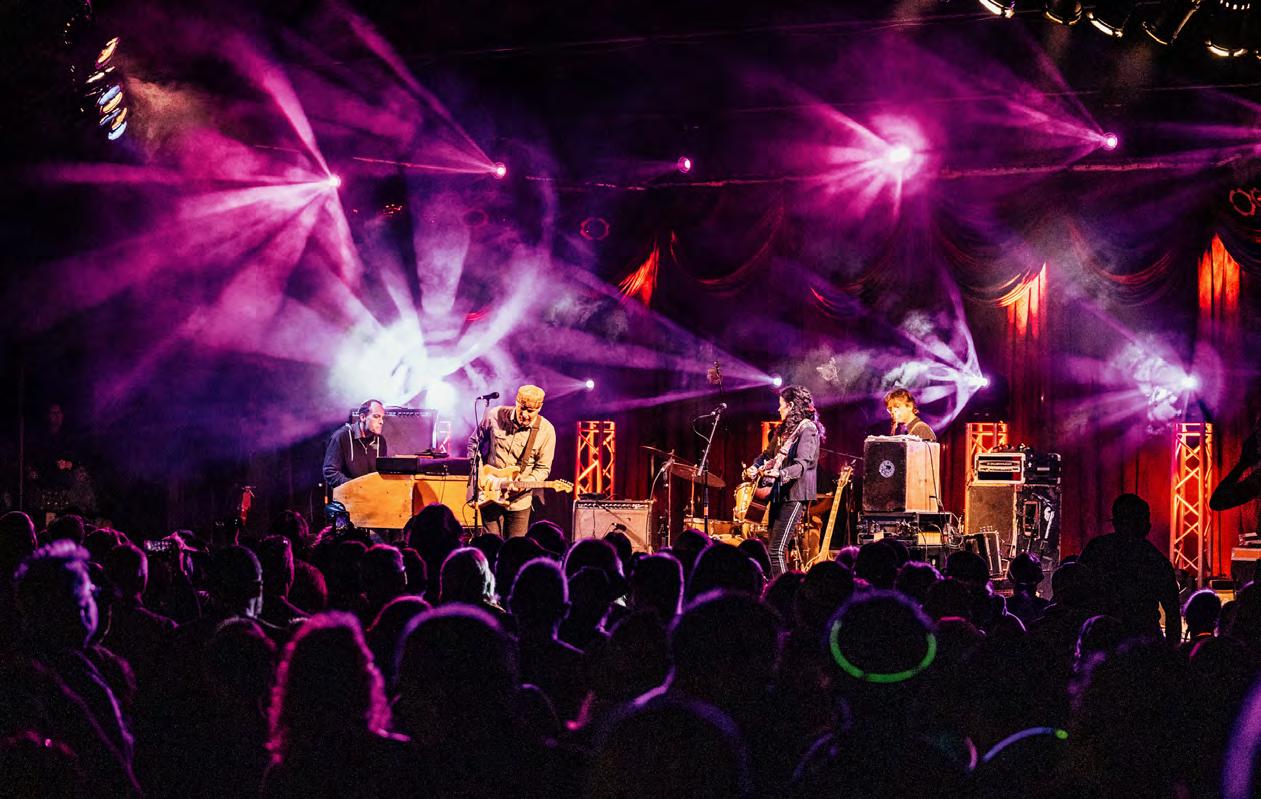
Donna the Buffalo performs to a scaled-back crowd in Trumansburg in 2021 after COVID-19 forced the band to cancel its GrassRoots Festival two years in a row. The festival will return in full force to celebrate its 30th anniversary in July.
the violin, the washboard, it was just unbelievable.”
Johnson-Jacob says she considers herself to be a bigger fan of the band than her now-husband, Art, 61. She calls their live performances a spiritual experience, saying they allow for intimacy with the band and fellow fans and a way to purge her stress and anxiety. But when COVID halted live performances in 2020, that outlet was suddenly gone, and Johnson-Jacob fell into a depression.
“When we go see Donna the Buffalo, it almost brings us back to the roots of the spiritual connection. It’s like going to Mass, to the pastor, you connect back with God,” she says. “When we didn’t have that, we had conflict in our home … my husband kept saying, ‘Oh my God, we need our medicine.’ … The root of the problem was we were missing our music.”
The couple stayed connected to the band and their Herd family throughout the pandemic, watching several livestreamed performances online.
Nevins recalls those online sessions, which she said lifted some of the heaviness the community was feeling. “People were so excited,” she says. “They wanted to reach through the phone, and we just kind of wanted to reach out to each other.”
In 2021, the band was able to organize scaled-back summer concert events with limited lineups and socially distanced seating, including at their Shakori Hills GrassRoots festival site in North Carolina.
That first live show was “really profound,” Nevins says. “It just felt like we were brushing the dust and the rocks off and climbing out of this rubble, and then we found each other again, like, ‘Oh yeah, you’re still out there! There you are.’ ”
Even though Donna the Buffalo maintains a busy touring schedule, their main GrassRoots Festival in Trumansburg is a yearly highlight. And this year’s 30th anniversary celebration will be a much
anticipated homecoming for fans after the pandemic uprooted their beloved tradition.
This year’s performers include The Infamous Stringdusters, Marty Stuart & His Fabulous Superlatives, Peter Rowan’s Free Mexican Airforce with Los Texmaniacs, Keith Secola, and more. The lineup always spans a wide variety of traditions, including gospel, Navajo, and zydeco, and features a hefty slate of national touring acts and local and regional bands.
“Forming relationships with so many different musicians from different cultures ... that in itself is one big moment of amazing community, of people of all different kinds, from different cultures all sort of coming together,” Nevins says.
Many of the festival’s core group of musicians return annually, explains Rosie Puryear, Jeb’s niece, who’s also part of the festival’s booking team. Rosie has been involved with festival organizing in some capacity since she started as a 13-year-old office volunteer during
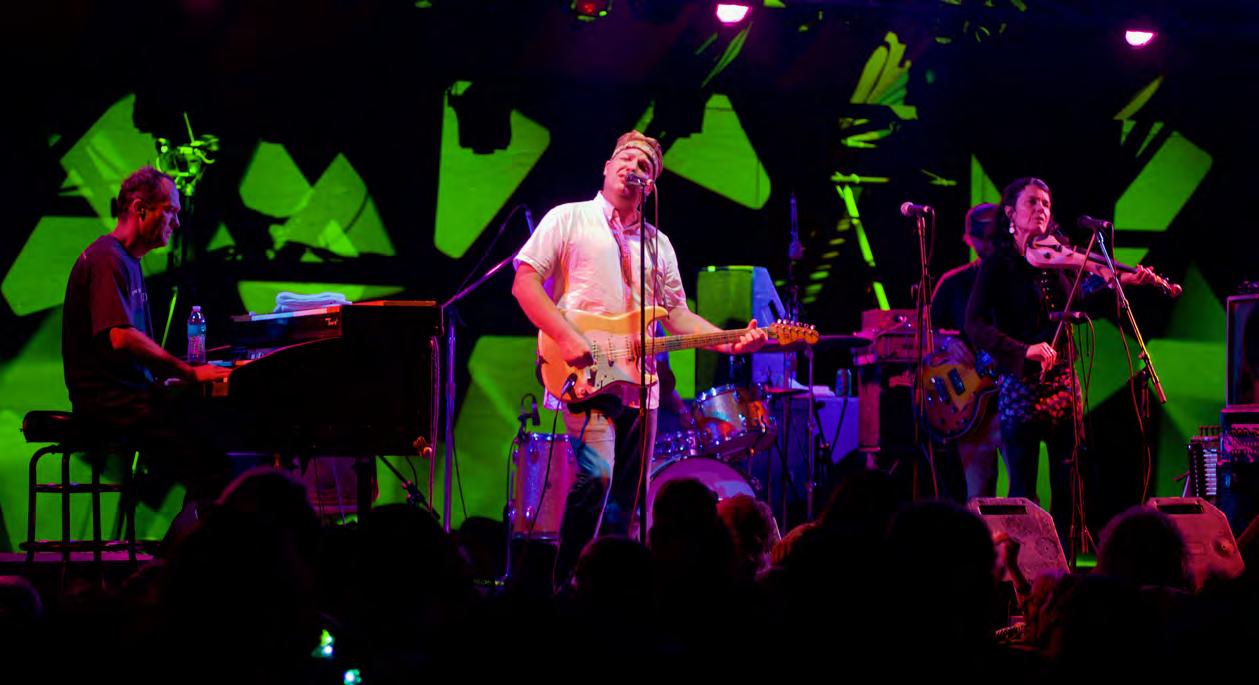
the second annual GrassRoots festival in 1992. After she graduated from college in 2002, she started working at the festival full time.
“Nothing is off the table,” Rosie says, when it comes to the type of bands on stage. The festival centers around roots music, highlighting bands like Toots and the Maytals, Valerie June, Railroad Earth, The Del McCoury Band, Steve Earle, Drive-by Truckers, Patty Griffin, Indigo Girls, and Lake Street Dive. Other bands, like Silversun Pickups and Giant Panda Guerilla Dub Squad, have fallen well outside the genre.
The festival is designed to promote a freeing, family atmosphere, Rosie continues, avoiding commercial sponsorships and attracting attendees of all ages. Organizers shy away from VIP sections, barricades between the stage and audience, and extensive backstage setups.
“One of the results of that is that the bands have an amazing rapport with the audience,” she says. “It’s very interactive. The audience can walk right up to the stage. Bands
often tell us it’s one of their favorite places to play, because the audience is just amazing.”
A dedicated dance tent keeps the energy high throughout the four-day festival, but dancing is an integral part of the audience’s participation at every stage. And on Saturday night around midnight, festival mainstays Preston Frank & His Zydeco Family Band start their traditional Cajun and zydeco party that keeps people moving until sunrise.
“ This is not a festival where people bring their lawn chairs and line them up in front of the stage and sit down and watch a band,” Rosie says. “This is a festival where everyone is on their feet.”
Nilu Jimenez-Ross, a 43-year-old Herd member who loves to dance close to the stage, describes the experience as “this alternating current of energy that goes between the band and the audience.” She continues, “They see you getting into it, and it makes them play harder, and it goes around and around. It’s just pure bliss.”
Now, as Donna the Buffalo begins
to tour again and festivals return in full swing, Nevins calls the experience both joyful and surreal. “It feels great to see everyone again. It feels great to be doing this again, but I think there’s an emotional fatigue of sorts, or some sort of low-grade depression that everyone’s shedding.”
Likewise, the GrassRoots team is hopeful that this year’s festival will be a much-needed opportunity for connection and healing after two years that have left people profoundly changed.
“I don’t think I’ve ever been so excited for the festival,” says Rosie. “I get excited for the festival every year, I get this energy build happening, especially in the spring, but this year feels different. It’s so much more special, sacred.”
She continues, “It will be a homecoming. … I keep picturing being there — standing there, walking around, seeing everybody, hearing the music from the stages — and it seems like a dream. I keep picturing the way it’s going to feel to be there again, and it’s almost too good to be true.” ■
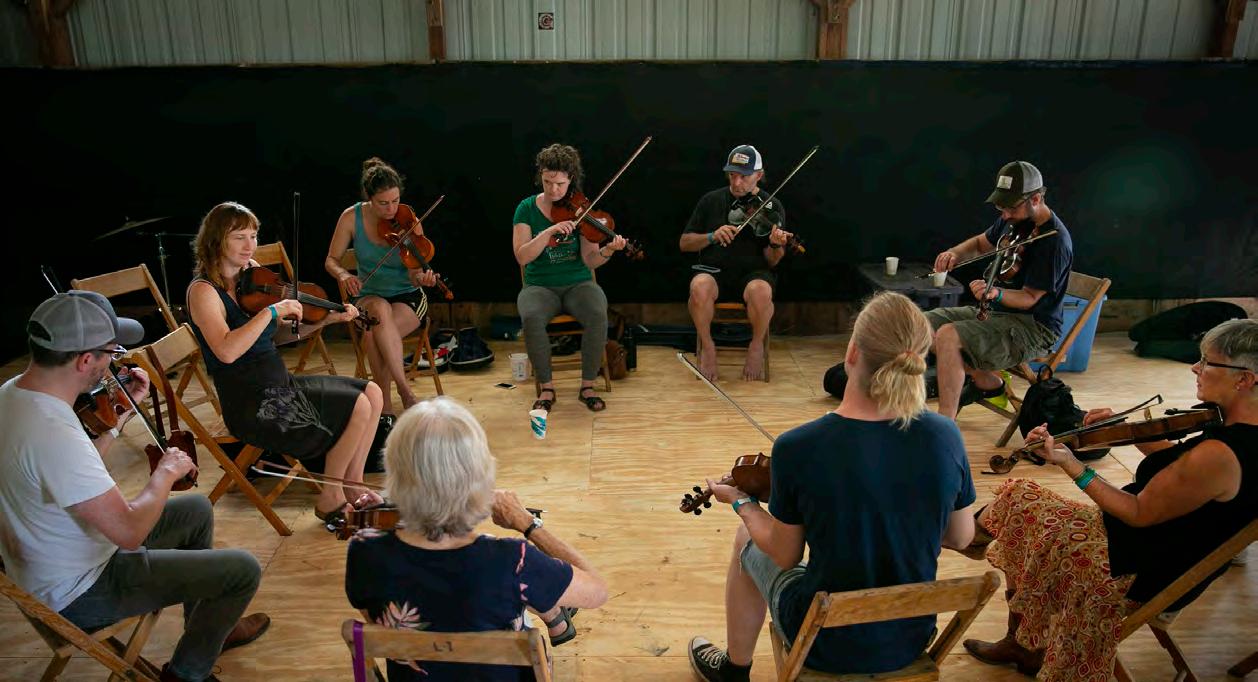
Participants practice their musical skills at 2019’s Culture Camp, a series of music and dance workshops that precede the annual Finger Lakes GrassRoots Festival of Music and Dance.

Bonnie Raitt blazes a path via music and activism
by Michael Elliott
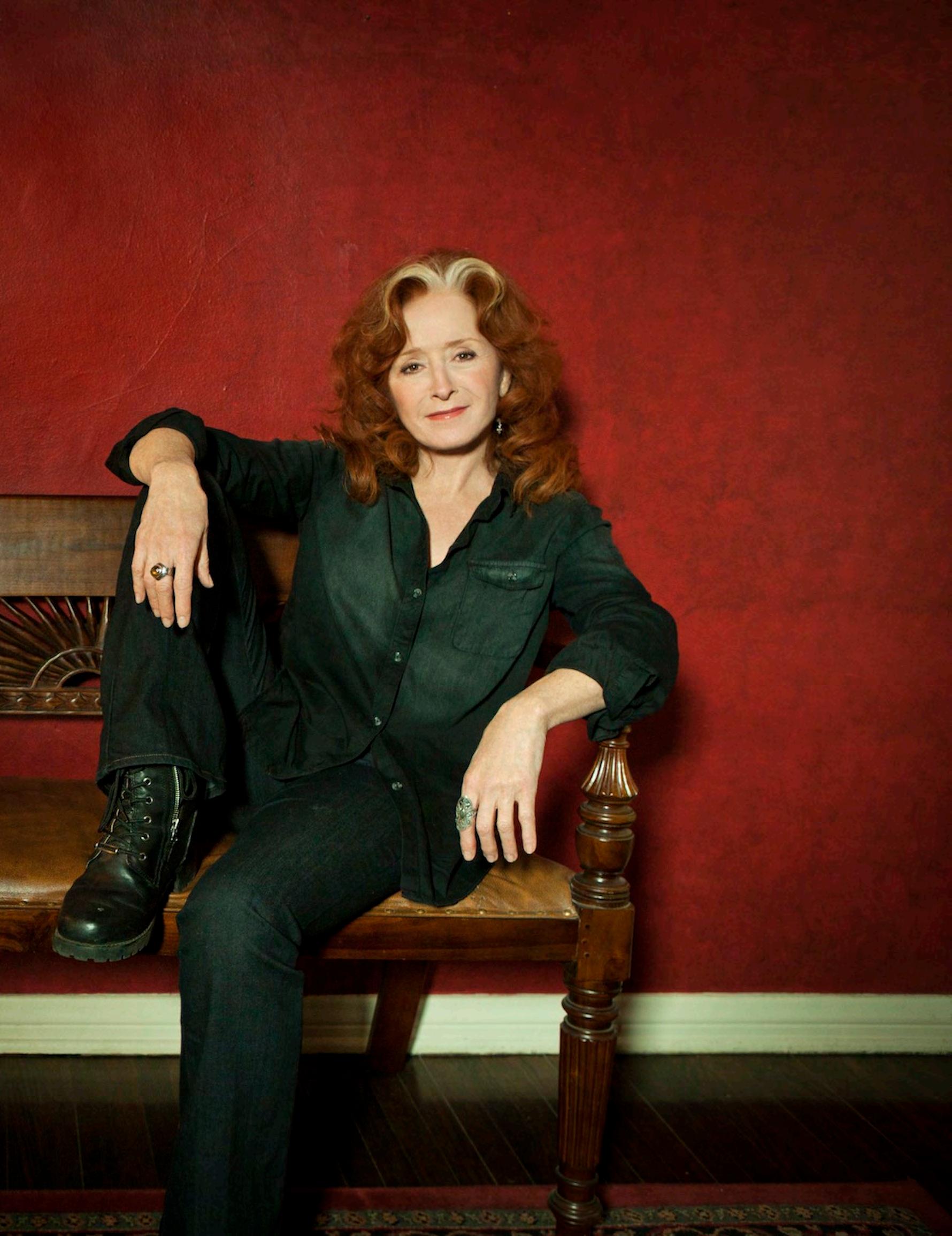
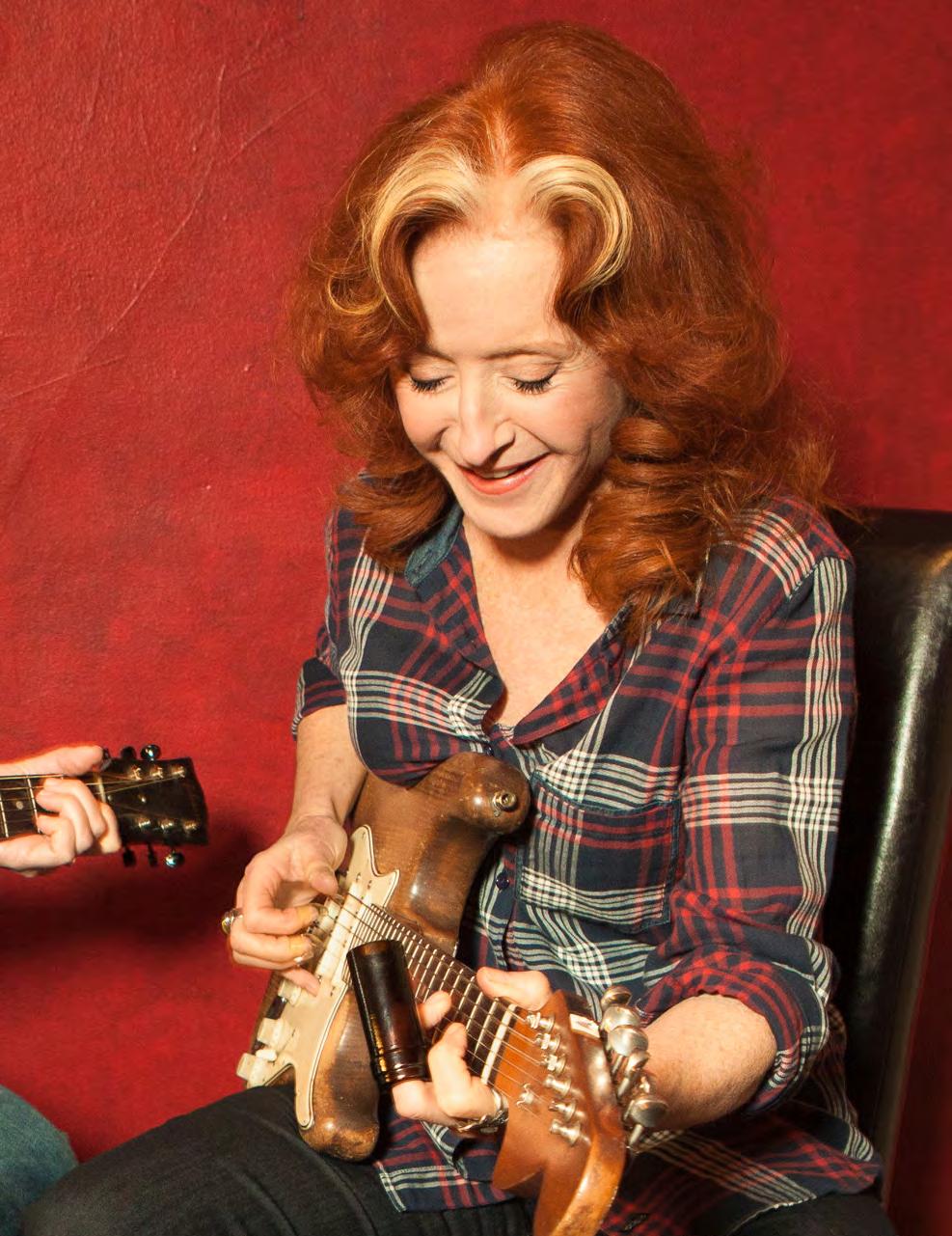
Bonnie raitt is not one to sit around and complain about the world’s problems.
During the height of the pandemic, she participated in a dozen benefits for multiple organizations and political candidates, including the National Alliance on Mental Illness, Farm Aid, The Concert Across America to End Gun Violence, and more. Even when she was stuck at home during pandemic shutdowns, the longtime activist and Rock and Roll Hall of Fame inductee showed no sign of slowing down.
This year, Raitt is the recipient of both the Billboard Icon Award and a Grammy Lifetime Achievement Award, but they come after a difficult time. Over the last two years, 14 of her friends and family members passed away due to COVID-related issues and other causes. That sense of loss inspired her and guitarist George Marinelli to co-write “Living for the Ones” for her latest album, Just Like That … ,
which came out in April via her own independent label, Redwing.
“I wanted to write about loss and how we’re getting through these last couple of years,” she says from her home in Northern California. “Whether it’s the election circus, George Floyd, the climate crisis, or the pandemic, it’s an unprecedented time.”
Yet “Living for the Ones” isn’t a solemn ballad of mourning. It’s a driving, defiant blast of resilience, urging listeners to seize the day. Learning to cope with loss has been on Raitt’s mind since 2009, when she lost her older brother, Steve, followed shortly thereafter by her friend and bandmate Stephen Bruton. “I coped with it by telling myself, ‘I’m going to live for the days they didn’t get to have,’ ” she says.
A singer, musician, and acclaimed sound engineer, Steve Raitt was diagnosed with brain cancer in 2001. Doctors gave him six months. He defied that diagnosis for eight years, becoming a competitive water skier in the meantime. In his
final year, however, a second tumor was discovered, leading to partial paralysis and eventual blindness.
Bonnie saw the fight in him, and it gave her the power of perspective. “Every day when I could open my eyes, look out the window and see these beautiful trees, and I was able to get out of bed and all my limbs were working … it cut my self-pity and complaining way down,” she says. “So I wanted to put it in a song for this album. I hope it gives a different point of view for those that are wondering how they’re going to get through. Let’s just stop complaining and remember the people that will never get to have just another day.”
That determination, perspective, and empathy has guided Raitt’s career and life. She grew up in 1950s Los Angeles, the only girl in between two boys, Steve and David (also a musician). Their father, John, was a Broadway star, while their mother,
Marge, was an accomplished pianist and vocalist. By the time the kids came along, the family had converted to Quakerism, identifying with its ideals of pacifism, social justice, and mutual respect. “The principles that inspired Gandhi and Martin Luther King inspired my folks as well,” Raitt says. “I’m still integrating my philosophy, activism, and life through that lens.”
While Quaker values guided her activism, she was also captivated by the blues and folk boom of the early 1960s, which she first witnessed at Quaker summer camps, watching older kids around the campfire strumming folk songs from Odetta and Woody Guthrie and Joan Baez. “She was the queen,” Raitt muses. “And she was a Quaker!”
Inspired, she taught herself guitar by age 9. By 14, she was engrossed in country blues after scoring a copy of Blues at Newport 1963, which exposed her to Sonny Terry and Brownie McGhee, John Lee Hooker, Mississippi John Hurt, and John Hammond Jr.
As a student at the Harvard Radcliffe Institute, she studied social relations and African studies.
“I was planning on working for the American Friends Service Committee, the team that was undoing what colonialism had done,” she says. It was also the height of the anti-war and feminist movements. “The pill came in my freshman year. That was fantastic,” she recalls. “Everybody was out in the streets marching. It was a thrilling time.”
There, in greater Boston, she started gigging around in coffee shops and clubs, where she eventually met legendary promoter Dick Waterman. He introduced her to Mississippi Fred McDowell, Skip James, Arthur “Big Boy” Crudup, Robert Pete Williams, Buddy Guy, Junior Wells, and Son House. “It was an unbelievable treasure trove of legends,” Raitt recalls. “I took a semester off after my sophomore year to hang out with those blues guys.”
She and Waterman became a couple and she was soon playing gigs and festivals. At first, it was just for fun. “I never expected to do it for a living,” she admits. “I just was going along to learn at the feet of my heroes. I knew they weren’t going to
last forever. I could always go back to school.”
Growing up in Los Angeles, Raitt’s knowledge of the civil rights struggle in the South was confined to her television screen. McDowell told her about race riots and life in the Jim Crow South. “I learned so much about what it was like to be Black and in the South in his era, to plow fields and cotton.” she explains. “It was living history. He would play these songs; they were coming right from his life. I not only loved the way he played, I loved him as a person.”
These musical and life lessons informed her own playing style: the finger-picking she’d been developing since childhood and the bottleneck slide she picked up from Lowell George, her own Hawaiian lap steel-playing grandfather (who taught her “Jesus Loves Me” when she was 6), and others. “You didn’t have to finger the chord,” Raitt says. “You could just move this bar up and down the neck and sing any song you wanted.” After receiving a glowing review for a performance at the Gaslight Club in New York, she caught the attention of Warner Bros.
Records, which released her selftitled debut in November 1971. She remained with the label until the mid-1980s, becoming a master interpreter of a variety of rootsbased music.
‘Girls Can Do This’
Throughout her career, Raitt has made a point of championing songs and songwriters that inspire and reflect her taste, rather than chasing current trends. She exhibited that with her funked-up take on Del Shannon’s 1961 classic “Runaway,” her first charting hit in 1977. She’s covered songs by her blues idols, including McDowell, Sippie Wallace, and Robert Johnson, as well as by unsung writers such as Chris Smither and Karla Bonoff. Most famously, she’s taken John Hiatt’s “Thing Called Love” and John Prine’s “Angel From Montgomery” and made them her own.
Raitt is also an accomplished songwriter in her own right, as she’s proven over 18 studio albums, including her newest. The 10-track Just Like That … flows with easygoing confidence. Her
songwriting prowess shines on its four originals, especially in the sparse title track, which was inspired by a news story centered around organ donation and how it impacts everyone involved; how “just like that, your life can change.” Elsewhere on the record, she glides through stellar finds such as The Bros. Landreth song “Made Up Mind” and Al Anderson’s “Something’s Got a Hold of My Heart,” a song she’s been holding on to for years. “Al still can’t believe I did it,” Raitt laughs. “It has stayed with me all this time because it’s just so intoxicating. It’s the simplest groove. I just love it so much.”
Looking back, Raitt acknowledges that having a female blues guitarist on a major label’s roster in the early 1970s was, unfortunately, a novelty. “I know I got a record deal because there weren’t that many female blues guitarists. Rory Block, Ellen McIlwaine — we all came up at the same time,” Raitt says. “I’m not an incredibly original singersongwriter. I like to think the mix of songs I do is what sets me apart, but I know my slide playing is
something that makes me different and I’m proud that it’s what got me in the door.”
After Raitt barreled through that door, she did her part to keep it open for other women, although it hasn’t always been easy on those who followed. Blues guitarist and singer Sue Foley cites Raitt as an inspiration, but admits being another red-headed female guitar slinger conjured the inevitable parallels. “I love Bonnie Raitt,” she assures. “It’s just that I got compared to her all the time. I couldn’t shake it.” Foley’s first album, Young Girl Blues, was released in 1992, while Raitt was still riding high with Luck of the Draw, the follow-up to her Grammy award-winning breakthrough, 1989’s Nick of Time
“All of a sudden, there were a lot more women guitar players,” Foley says. “Bonnie had a huge hand in it, because having role models is so important. She opened the door for a lot of women to feel accepted playing guitar, to feel like they could go shoulder-to-shoulder with the guys.”
Foley, in turn, inspired a young
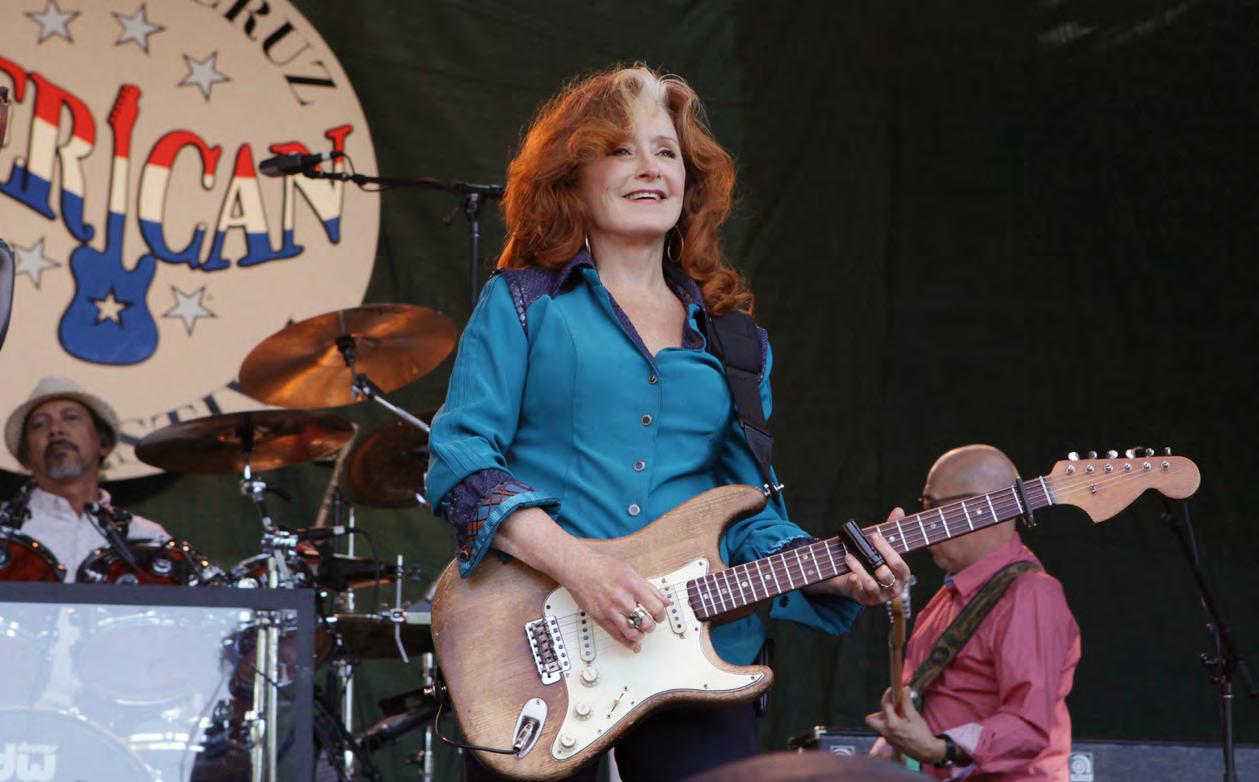
Susan Tedeschi. “I saw her play and I was blown away,” Tedeschi says. “Listening to Magic Sam and seeing Sue Foley was the reason I picked up an electric guitar. She made me go, ‘Oh, shit. Girls can do this!’”
To the music industry in the 1980s and ’90s, the idea of a female guitar player was still a novelty. “We’re all in her shadow in a way,” Foley says. “People would tell me I sounded like Bonnie, but I don’t sound anything like Bonnie. … I never played slide. I love it, but forget it. I’m not going there. I’m just gonna do my thing.’”
Tedeschi faced similar comparisons to Raitt early in her career. She notes their similar influences, including singers like Mavis Staples, Aretha Franklin, and Billie Holiday. But, she says, “I definitely had my sound before I knew who Bonnie was, but that doesn’t mean I haven’t taken from her since then. She’s definitely a hero of mine.”
The reductive, gender-based nature of these comparisons
frustrates Raitt. “Art shouldn’t be competitive,” she says. “AC/DC is a great band, and so is Joan Jett. She’s not ‘good for a female rocker.’”
Embarking on her first full tour since before the pandemic, Raitt is continuing to use her influence to make a difference, and in more ways than representation. Over the course of her 50-year career, she’s worked with nearly 300 organizations, all of which are listed and hyperlinked in the “Activism” section of her website. “We only support groups that are doing really good things with the funds,” she assures.
And on this tour in support of Just Like That … — which runs through November — one dollar from every ticket purchased will be donated to grassroots local, regional, and national organizations whose work focuses on safe and sustainable energy, social justice and human rights, environmental protection, and blues/music education.
Special Benefit Seats are also available for every headlining show. According to Raitt’s management, these seats are located within the first 10 rows of the venue and are priced above face value, with the differential to be donated to charitable organizations vetted by the team and in line with Raitt’s activism.
Raitt’s status as a role model isn’t exclusively musical; her character sometimes speaks louder than her Stratocaster.
“ There was a period where I was doing commercials,” says Kim Wilson, vocalist/harmonicist of roots and blues legends The Fabulous Thunderbirds. “I think I had a song in a Coors ad. Oh, boy, she did not like that! She asked me, ‘What are you doing?’ I’m going, ‘Well, I’m sorry. You know, I gotta make a little money.’ I didn’t realize the history of some of these corporations. She’s very well versed in that kind of stuff. She’s a beautiful person first, and a beautiful musician second.”
Bonnie Raitt’s admirers span far and wide — across genres, countries, and more. Many of her roots music contemporaries shared some of their favorite memories about her with No Depression for this article.
Terry Adams, NRBQ
NRBQ, the rock-and-roll institution fronted by pianist/ vocalist Terry Adams, is opening select dates for Raitt this year (other special guests include Lucinda Williams, Mavis Staples, and Marc Cohn). “We played colleges together back in the ’70s,” Adams recalls. “We kept running into each other in a lot of places. She did great versions of two of my songs, and I play those songs with her every now and then. We go way back.” (Raitt’s 1982 album, Green Light, included two Adams-penned NRBQ staples, the title track and a rousing take on “Me and the Boys.”)
Now that they’re going on tour together, Adams says that Raitt is welcome to guest with the band during its set anytime. “She’s an honorary member of NRBQ, anytime she wants,” he says. “It’s not easy to get in this band, but she’s got what it takes.”
Jimmie Vaughan, The Fabulous Thunderbirds
Other early admirers include roots and blues legends
The Fabulous Thunderbirds, with whom she’s played several gigs and festivals over the years. “She’s a fabulous singer and slide player,” guitarist Jimmie Vaughan gushes, “as good as anybody anywhere. I mean, who can sing better than Bonnie?”
Vaughan left the Thunderbirds in 1990, the same year his younger brother Stevie Ray died in a helicopter crash. Soon after, Jimmie organized a tribute concert in Stevie Ray’s honor. “The Stevie Ray tribute on Austin City Limits was really fun,” he remembers. “We had Aaron Neville, Robert Cray, Eric Clapton, Buddy Guy … and then there was Bonnie.”
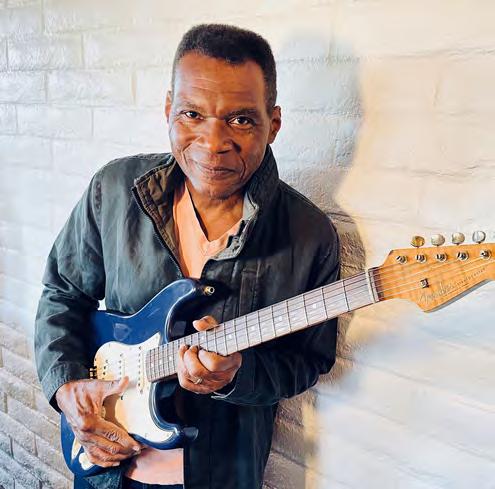
Robert Cray
Robert Cray likewise has fond memories of the Stevie Ray Vaughn tribute show. “Bonnie kicked everybody’s butt,” Robert Cray says with a laugh, recalling Raitt laying down a ripping take of “Pride and Joy.” “I mean, the sound of her on the bottleneck. She dominated that whole room of men. She just took care of business.”
Cray remembers first meeting Raitt in the early 1980s. “She came to see our band in Portland, Oregon,” he says. “She just popped in backstage. We were all nervous because she’s famous, you know? But she was so down home and personable. She’s been that way ever since.”
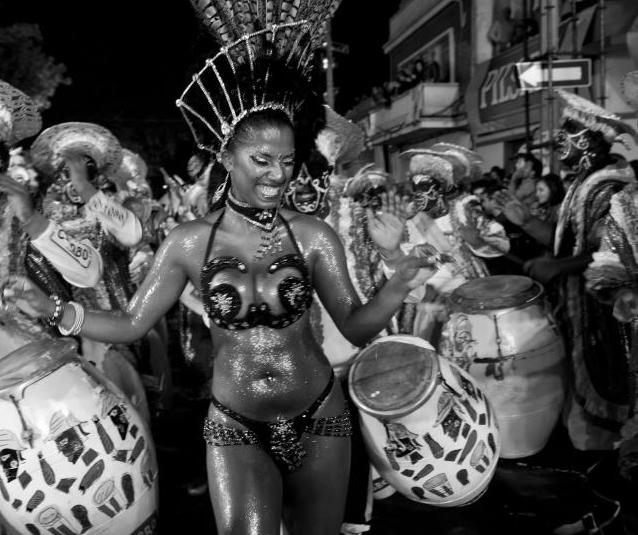
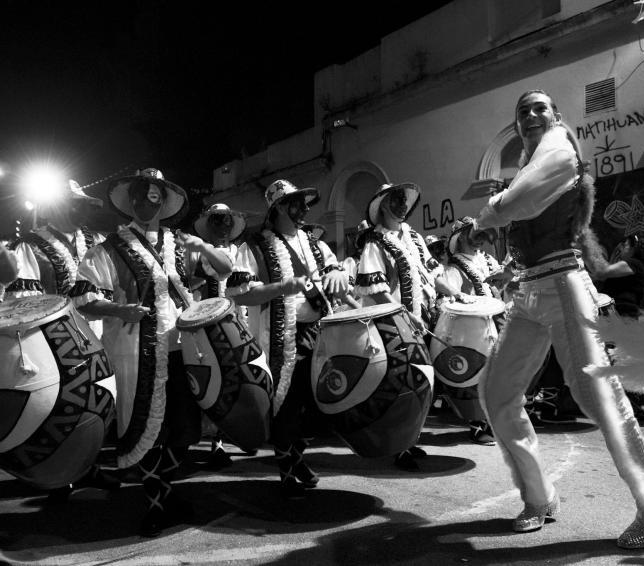
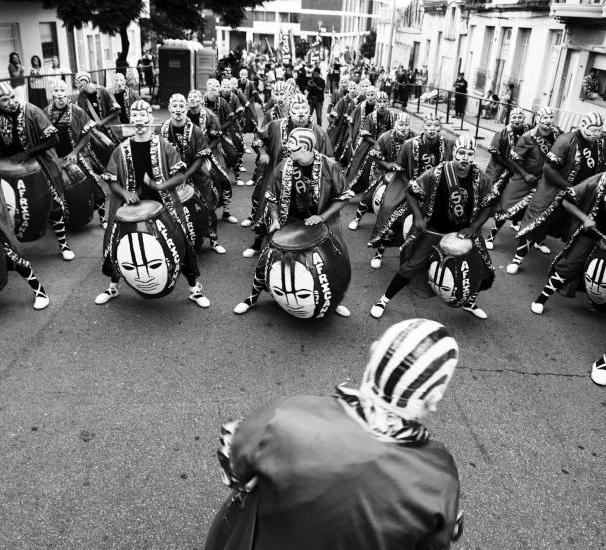
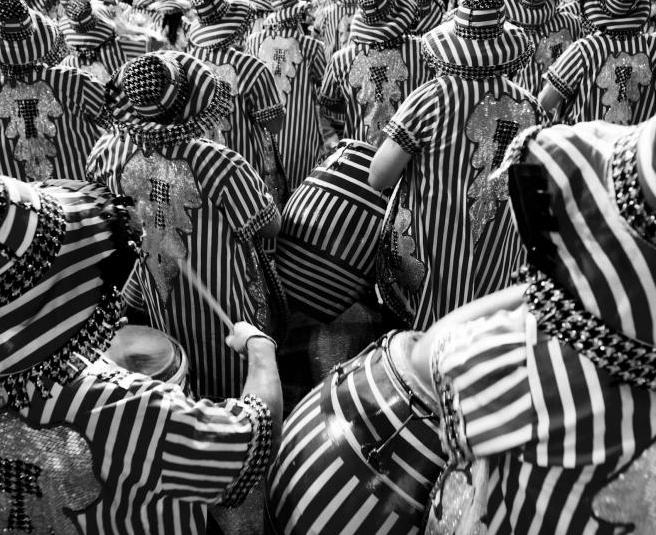
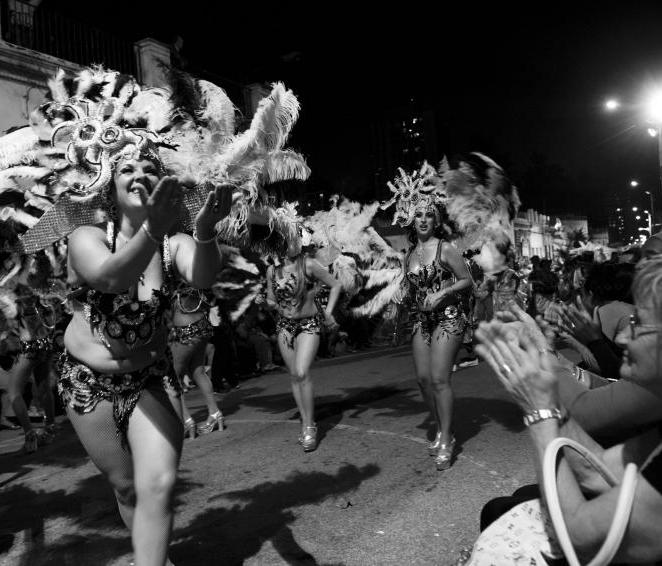
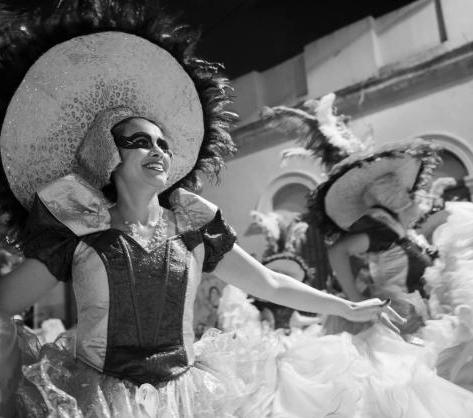
by Luis Minvielle
Uruguay’s most famous musical export might be tango — that forlorn, wistful music known for its elegant dancing.
Characterized by the accordion-like bandoneon, accompanied by a smattering of bowed instruments, tango songs are laden with stories about grappling with life and loss.
Tango developed by the shores of the Río de la Plata — a river that separates Uruguay and Argentina — and owes its stylistic virtues to the sounds immigrants brought from Europe. But South America’s cultural identity only partially stems from European immigration. The region
is a crucible of stories and cultures. Some are ancient and established, while newer settlers brought other influences to the continent with them. Some cultural movements from the last few centuries have slipped from the collective consciousness, but others remain so entrenched with current national identities that they’re impossible to ignore.
In Uruguay, one particular form of roots music, candombe, became so deeply instilled that it’s still performed, danced, explored, cherished, and well regarded today. The term “candombe” refers to both the music and style of dancing, and
is known as a vigorous, clamorous, and percussive sound. Candombe’s spirit is set ablaze during Carnival season — which ran this year from Jan. 20 through March 1 — but the music thrives year-round. Candombe is rhythmic and jolting, it’s bustling and shocking. It’s a percussive genre that relies on multiple drums to build its relentless thumping sound. It represents the clatter that protesters emit when they gather on the streets to appeal for change. It portrays the judder that sports fans bring when converging downtown to celebrate a new victory. Likewise, candombe’s dancing style is brisk and kinetic. It
preserves the energy and vigor that the Black Uruguayans who developed it brought when they forcibly arrived from Africa to the shorelines of the Río de la Plata.
In a sense, candombe and tango are musical siblings. Both genres developed around the 19th century along the Río de la Plata, although tango was also widespread in parts of Argentina, across the shore from Uruguay. In another parallel, both genres came forth as expressions from people who’d reached South America from other parts of the world.
But their origin stories drift apart after that. Tango developed from fragments brought by European colonizers, but candombe was shaped by enslaved peoples from Africa forced to a new continent. Whereas mournful melodies and grief-stricken spirits imbued tango’s reflective nature, the music that African peoples created was brisk
and dynamic.
Candombe quickly found its way into the collective consciousness, and by the 1830s it was already known by this name. The word “candombe” points to the form’s history, inspired by an expression from a Bantu language that roughly translates as “pertaining to Black people.” It’s not the creation of a single, specific community; rather, the genre came to be via the input of various cultures of the African continent, which even cast religious customs and ceremonies into the dancing style that go along with the music. The sound represents a many-hued prism through which different aspects of African cultures converge, tainted by the context of slavery and segregation.
“Candombe is an Afro-Uruguayan folkloric expression,” says Manuel Ojeda, guitarist for the candombe jam collective La del 30, which released its debut, self-titled album in
April 2021 with financial assistance from the National Music Fund of Uruguay. “In time, it permeated into the social fabric until becoming part of the Uruguayan identity.”
Candombe is so ingrained into the national sense of identity that most observers regard it as part of Uruguayan culture, a rich legacy of the Black communities in the country. In 2009, UNESCO even declared it an intangible cultural heritage.
Candombe is a repetitive, strenuous genre. Songs and performances can go on for hours. Explains Liber Galloso, a member of the candombe band La Calenda Beat, “The extended repetition allows people to dance, sing, and unite with the rhythm in harmony.”
To initiate its rhythmic thumping sound, candombe musicians use
“Candombe is an Afro-Uruguayan folkloric expression. In time, it permeated into the social fabric until becoming part of the Uruguayan identity.”
Manuel Ojeda
La del 30 guitarist
three kinds of elongated drums, known as chico, piano, and repique. When played together, these three instruments are collectively known as the cuerda, which means “string.” Each individual drum is made of wood and looks like a bloated barrel; the top is covered by leather, and its tone changes according to the day’s weather conditions. Percussionists use one of their palms on the top and a drumstick to hit the wooden sides and top. Aided with a strap, players carry their drums by their hips. Some cuerdas may gather 70 musicians, some even more than that.
The three drums are similar in size and shape, but distinct in their roles. The chico drum is the “rhythm’s pendulum,” says Galloso; it rattles like a rumba shaker. The piano drum is on the bottom end, and it plays in a call-and-response style with the other two. Lastly, the repique drum allows the tempo to
fluctuate, and individuals playing it often improvise.
Alejandro Prieto, considered the country’s premier drum maker, thinks that the essential understanding of the three drum types is that they must be played simultaneously. “If I had to explain what candombe is to someone who’s never listened to it,” he says, “I’d first say that it’s a combined rhythm: Each drum plays a different sequence and pattern, but they all coalesce into a single rhythm.”
The rhythmic nature of candombe makes it suitable for dancers wanting to join the drummers’ ranks. Dancing to candombe involves fluttering and shaking. Aligned with the music’s religious origins, it demands a ceremonial focus on one’s movement. There’s not a single dancing style, though.
Isabel Ramírez is a popular musician and outspoken leader in
Uruguay’s Afro-descendant community who, among other things, serves as the president of the Afro-Uruguayan Culture House, a nonprofit that heralds the heritage and contributions of AfroUruguayans. She explains the different ways in which candombe is performed, noting different scenarios in which the music and dancing take place. For example, what she calls “resistance candombe” occurs spontaneously in some neighborhoods all year round. This communal, improvised candombe is linked to the genre’s ritualistic origins: It’s a means of communicating with the “supernatural world” via the body’s movement and the instruments’ sounds and vibrations. Dancing doesn’t always represent a connection with the supernatural, though. What Ramírez describes as “commercial candombe” takes place during Uruguay’s celebration of
Carnival — a prolonged parade spread out over 40 days that summons around 30,000 dancers and 10,000 musicians.
Dancers in Carnival respond to structures, choreographies, and time limits. “Carnival candombe has nurtured from many aspects of Western music, from its harmony to its visuals and costumes,” says Galloso, whose band has played frequently at events that happen during Carnival season, “and it no longer sounds like traditional candombe.” The difference between ritual and spectacle, as well as Carnival candombe’s swagger and the bombastic setup, set it apart from the traditional form.
But candombe isn’t relegated to just neighborhoods, streets, or catwalks. Musicians have long merged other forms of music — mostly of Black origin — into candombe compositions. These mixtures have become known as
candombe fusion, an umbrella term for any music combining candombe with something else.
One of the earliest and most prominent fusions emerged in the 1940s, when the group Negrocan incorporated distinct elements of traditional Afro-Cuban music — such as the five-stroke clave pattern — into candombe and created candombe canción. During the ’60s, jazz musicians introduced avantgarde candombe — candombe with jazz — into Uruguay’s music scene. Around that time, Rubén Rada and Eduardo Mateo blended the genre with rock and roll, which resulted in the candombe beat. Some candombe fusion projects don’t stick to a single added genre, instead enhancing their rhythms with “synths, woodwind instruments, or rapping,” says Ojeda.
But even with candombe’s fairly recent blends and usage in celebratory events, some of its
practitioners offer a reminder that candombe is not necessarily a joyful sound. “We should never forget that candombe came to be thanks to the Black people suffering slavery. It’s the rich sound of a lament,” says drummaker Prieto.
“Candombe is the product of the fusion of rhythms of various nations suffering segregation and slavery,” adds Ojeda. “It’s not a joyful rhythm. It’s intense, loaded, heavy, complex. It’s not as dramatic as tango, but it’s not joyful as samba is.”
More than 200 years after its inception, listening and dancing to candombe provides an opportunity to hear Uruguay’s heart beating. It’s powerful and fierce, welcoming and multicultural, and contemporary bands like La del 30, La Calenda Beat, and other carry the sound of Uruguay’s history with honor and pride.
“Candombe,” says Prieto, is quite simply “an embracing sentiment.” ■
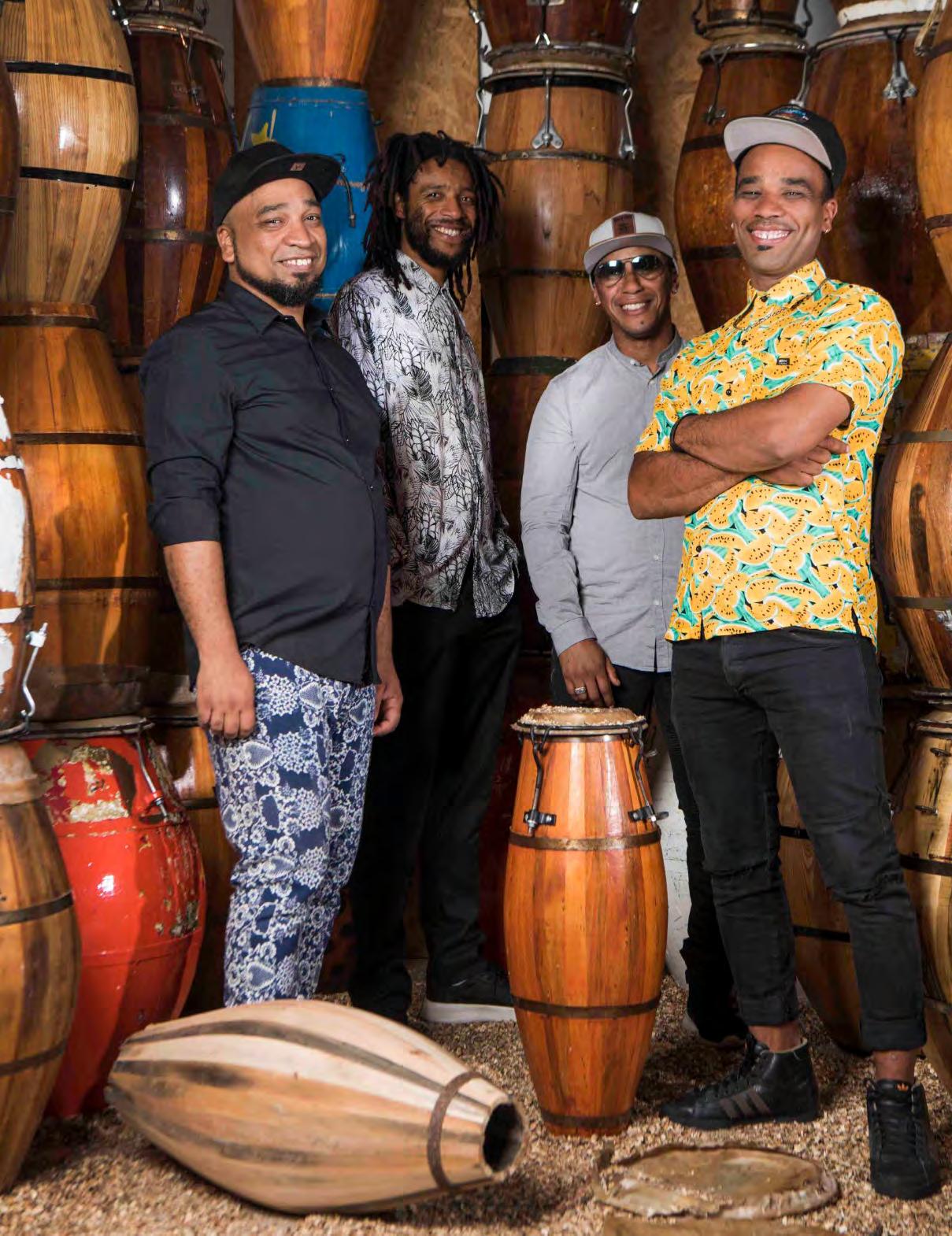
Lee Bains & The Glory Fires honor their region’s everyday movers and shakers
by Mia Hughes
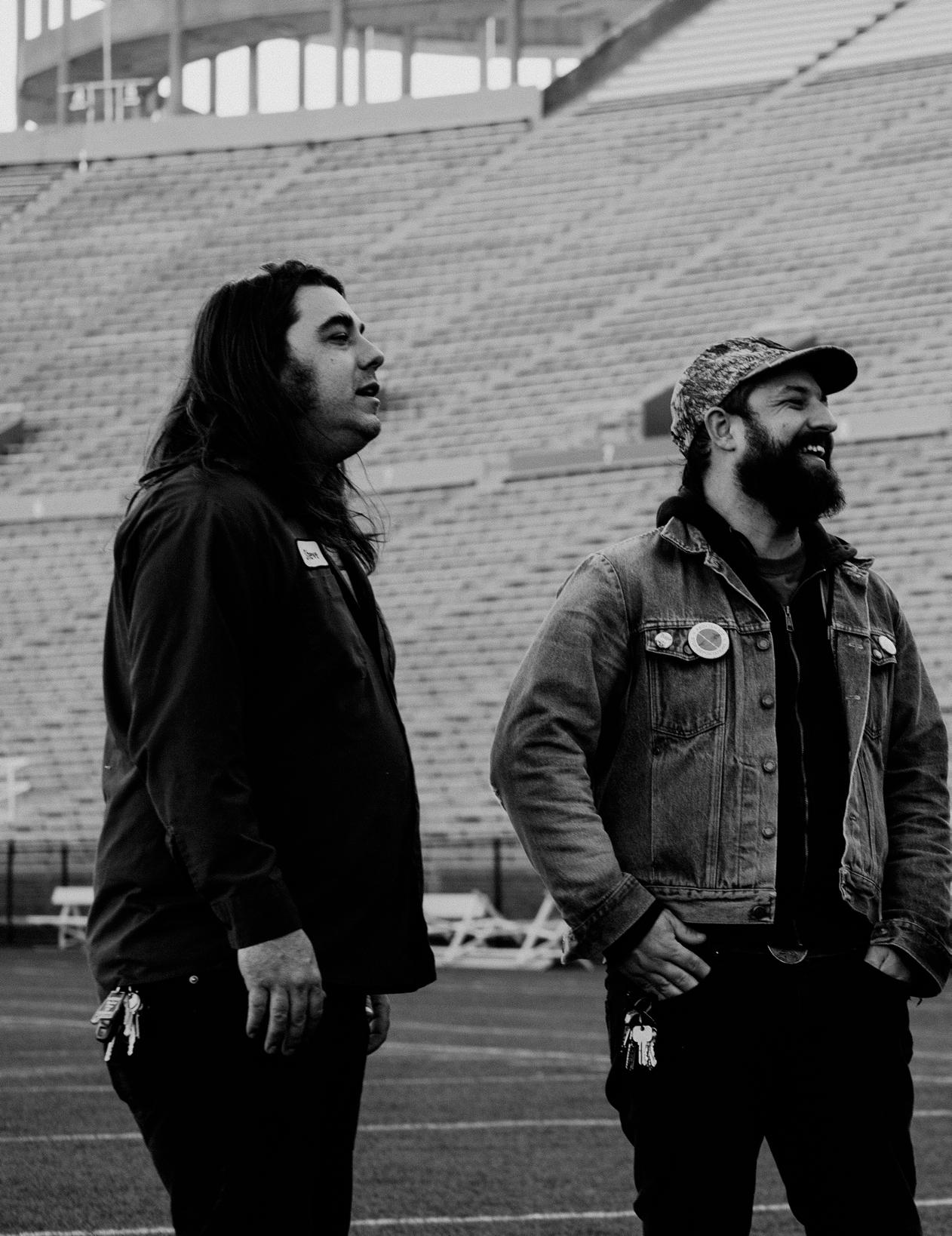
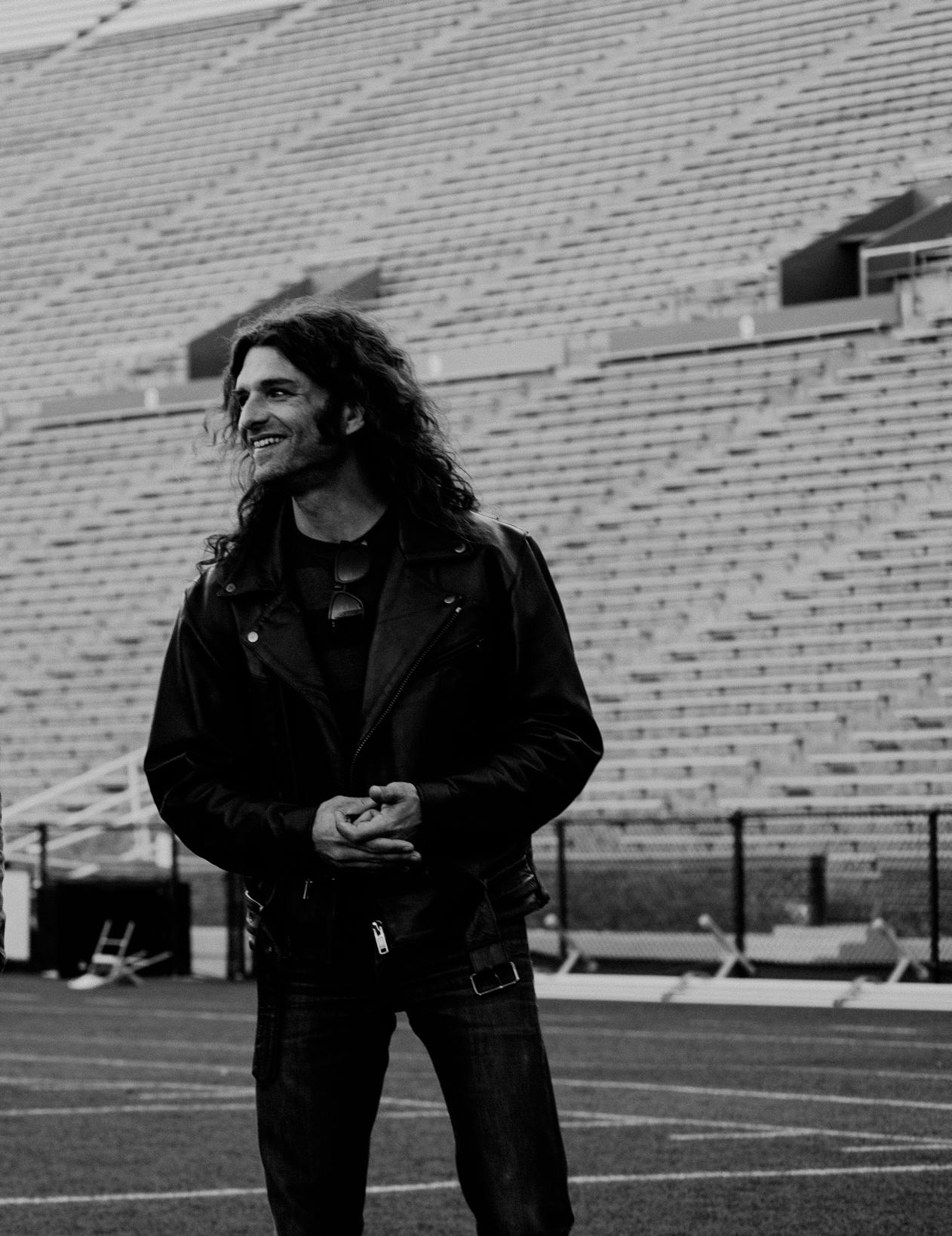
Lee bains was always taught to be a channel.
During his childhood in Birmingham, Alabama, his grandmother was a church choir director and his grandfather a soloist. “My grandaddy taught me it wasn’t about us,” Bains recalls. “I didn’t need to sing it perfect; the main thing was to make a joyful noise.”
Now, Bains fronts Lee Bains & The Glory Fires, a roots, rock, and punk three-piece with bassist Adam Williamson and drummer Blake Williamson that specializes in erudite, poetic protest songs. The
band’s fourth album, Old-Time Folks — due out in August via Don Giovanni Records — is its magnum opus, across which Bains’ sweeping, anthemic songs become a channel to the South’s past and present. He explores how the region has been misrepresented and sabotaged, and he pays tribute to those who have resisted oppression, from Indigenous tribes defending their land against settlers to union workers putting their lives on the line to strike.
Bains’ motivation was to illustrate how history’s true movers and shakers haven’t been individual
heroes, but rather ordinary people working collectively.
“People like Rosa Parks, Martin Luther King, Reverend [Fred] Shuttlesworth — when you read those people’s writings or hear them speak, they’re never talking about their own individual power or exceptionalism. They’re always talking about community,” he says. “I was fortunate to see Angela Davis speak in Birmingham not too long before COVID hit, and she laid out there that what’s really important to bear in mind is the civil rights movement was comprised of many, many, many ordinary people who
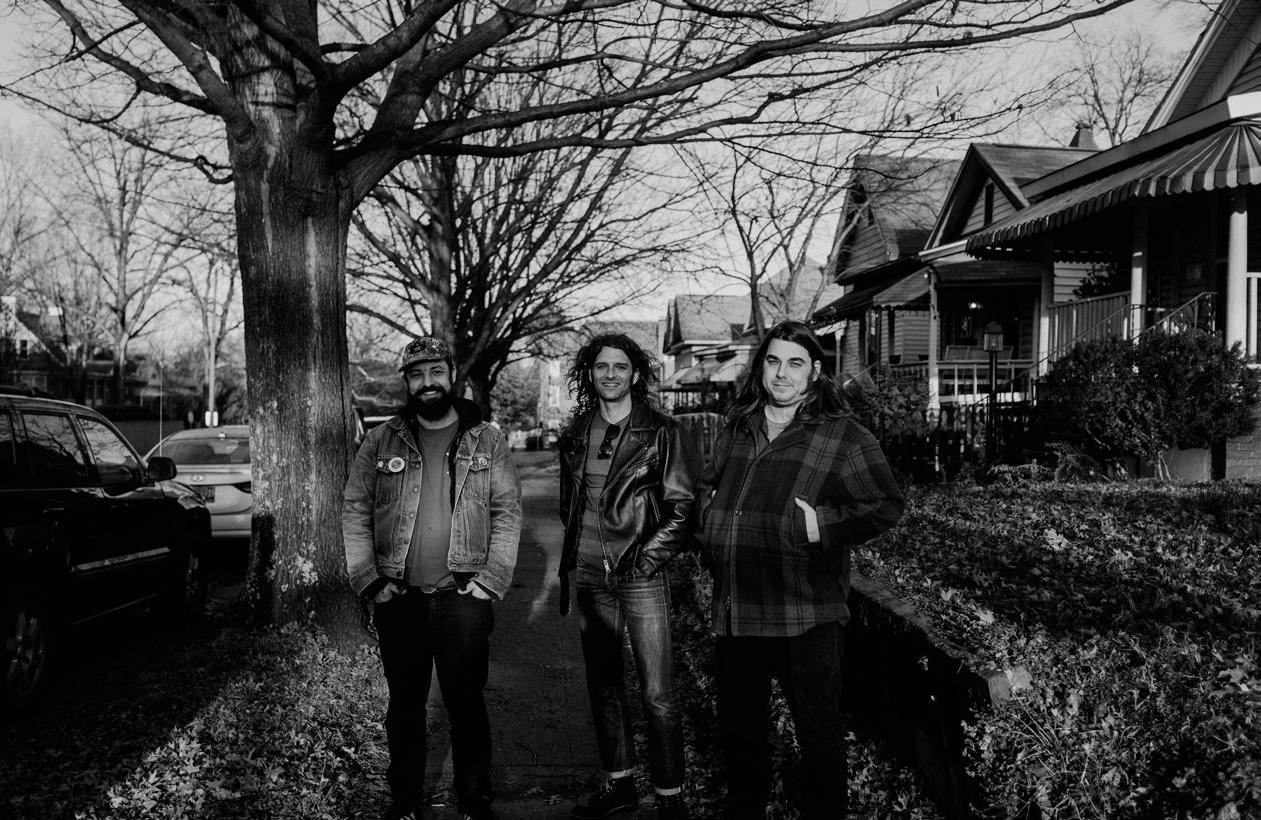
were organizing together. That was my interest in writing this album. [To show that] we’re not like Luke Skywalker taking down the Death Star. We all just have our own small roles to play in the South, to support each other and to support people acting collectively in the interest of the greater good.”
While Bains grew up in a relatively affluent suburb, he spent his childhood observing the effect of post-industrial economic devastation on Birmingham through the 1980s and ’90s.
“It was very apparent that things weren’t fair,” he says, “that Birmingham was so different depending on where you were born or who your parents were or what your race was.”
Bains witnessed Klan rallies and neo-Nazi skinheads before he was old enough to understand what he was seeing; his dad, a student of Southern history who wrote his thesis on the civil rights movement, guided his political consciousness. “I was observing the ramifications of all these centuries of exploitative systems on people’s lives. I had Black friends whose parents or grandparents were active in the marches, who had scars on their bodies from police dogs biting them. And it’s like, this is all still extremely present.”
It all gave Bains an inclination to rebel from a young age. He formed his first punk band at age 12, and stirred up trouble at his church school talent show with a performance of “Anarchy in the UK.” When the Iraq War began in his
teens, he stopped standing for the Pledge of Allegiance. It was around this time that he discovered the local DIY punk circuit. Previously he had loved his dad’s music, like The Allman Brothers and Lynyrd Skynyrd, and later he had discovered hip-hop through his friends. But Southern punk bands like Against Me! and Hot Water Music from Florida, as well as Avail from Virginia, spoke to him like no other artist had.
“ They were making some of the coolest and most moving music I’d ever heard, and they were just regular people. They weren’t rock stars, they just showed up in a shitty van and when they got home, they went back to their jobs,” says Bains. “And I was hearing in those bands something that felt Southern; what they were singing about just felt like what our lives were like.”
Bands like these introduced him to radical thinkers like Michael Parenti and Angela Davis, while also showing him firsthand the power of community. And they made him feel like he could do it too.
Bains played in a host of bands through the years, most notably with Tuscaloosa-based rockers The Dexateens. After they disbanded in 2010, Bains started kicking around the idea of forming a new band. Around the same time, though, he received an offer to sign to a major label as a songwriter. It was the first and to date the only time Bains, who still makes a living off-tour in construction, had an opportunity to make music professionally. “A lot of people were like, ‘Man, you’ve gotta do that, ’cause that doesn’t come along every day.’ But I felt very conflicted about it.”
He sought advice from Dexateens producer Tim Kerr, a Texan punk veteran. Kerr recalls the guidance he gave Bains: “To each his own, but for me, there is more freedom for you and your self-expression to carve your own path with like-minded extended family.”
Bains agreed. He turned down the contract and formed The Glory Fires.
In the past couple of decades, bands like The Drive-by Truckers, The Immortal Lee County Killers, and Alabama Shakes have all developed their own modern takes on rootsinflected Southern rock. Bains and The Glory Fires looked to them, as well as to their surroundings, for musical inspiration, while retaining their own cacophonous energy.
“I love seeing [Southern music] traditions evolve and grow and interrelate to other traditions,” says Bains. “I just love that sense of belonging and community that comes with that, and at a time where identity can become more and more commodified, I’m thankful to be from a place where a lot of people do have a sense of cultural rootedness. But at the same time, it’s not frozen in time, it’s in and of the world. I really like that.”
With Old-Time Folks, Bains offers his most profound work to date — an entire record that musically reflects the depth of emotion that he pours into his songs. He draws a line of solidarity that straddles Southern past and present, a reminder that no one is above those who came before. Such a grand vision transcended his previous, scrappier work, so he
approached producer David Barbe, a Georgia native and longtime Drive-by Truckers collaborator.
Barbe was immediately struck by the album. “The songs affected me in the same way that something like All Things Must Pass does, [in how] it was unafraid to emotionally connect on a very deep, human level,” he says. “ … I always felt I had a connection with this guy, that he’s someone who just thinks and feels on a deeper level. [And] I always felt like there was something bigger to be had with his songs.”
As such, the record is rooted in a deep Southern pride and identity, even as it dutifully probes at Southern complexities and contradictions. While Bains namechecks under-explored parts of local history on almost every
track, he simultaneously examines how it all reverberates today.
For “(In Remembrance of) The 40 Hour Week,” he researched Southern labor and union history dating back to the 19th century, while also following the news of the modernday strikers on the Amazon picket lines, to write a stirring worker’s protest song inspired as much by Dolly Parton as by Woody Guthrie.
“When I grew up unions were kind of a dirty word [in the South], and still are in a lot of ways,” Bains says. “But that movement that goes through us towards justice and liberation just can’t be put out. Even with all these calculated efforts to align people with certain ideologies, when it comes down to it, you can’t beat that out of people.”
Meanwhile, “The Battle of
Atlanta” looks at the fight to retain a cultural identity amid gentrification, and “Rednecks” rebuts middle-class condescension toward the Southern white working class. “I’ve worked construction in Alabama and Georgia for 15 years and I’ve heard a lot of stuff, but it’s always the boss that’s gonna pull you aside and say the most racist shit,” Bains notes. “It was kings and queens who invented white supremacy. It wasn’t peasants in the fields.”
Although it took a year and a half to make the record Old-Time Folks, Barbe’s belief in Bains and the power of these songs kept them going. “He’s the real deal,” Barbe says. “He views his art and his life as an opportunity for betterment, of himself and the world around him. As a friend, I thought very highly of him, but
“I love seeing [Southern music] traditions evolve and grow and interrelate to other traditions. I just love that sense of belonging and community that comes with that, and at a time where identity can become more and more commodified, I’m thankful to be from a place where a lot of people do have a sense of cultural rootedness. But at the same time, it’s not frozen in time, it’s in and of the world. I really like that.”
Lee Bains
working with him on such a close level just cemented my deep admiration of him and the art that he makes.”
Joe Steinhardt, founder and owner of Don Giovanni Records, expresses a similar thought: “[Bains] has put everything into this album and pushed himself to his own personal breaking point, and I can see it. It’s admirable to say the least.” Steinhardt’s label specializes in punk rock, but he never balked at Bains’ idiosyncratic sound. “Lee embodies everything about the ethos of the label. Punk rock has never been a sound to me but rather about using art as a vehicle for social and political change. Art inspires and art matters — it’s one of the first things a fascist regime censors. And it brings me so much
hope that there are still voices like Lee’s out there.”
For his part, Bains has just been trying to play his own small role in shaping the South for the better, just like all those alongside him and all those before him.
“Abraham Lincoln talked about the better angels of our nature, and I think what I was trying to do on this record was to illuminate the better angels of our nature here in this little corner of the world,” he says. “It’s a place that mystifies and confounds and fascinates me in all kinds of ways, [but] I love where we’re from more than anywhere, and that’s why I want to see us treat ourselves and each other better. Because we are lovable and beautiful, and we are worthy of justice and freedom.”
■
Michael League’s musical movement to a small town in Spain
by Judy Cantor-Navas
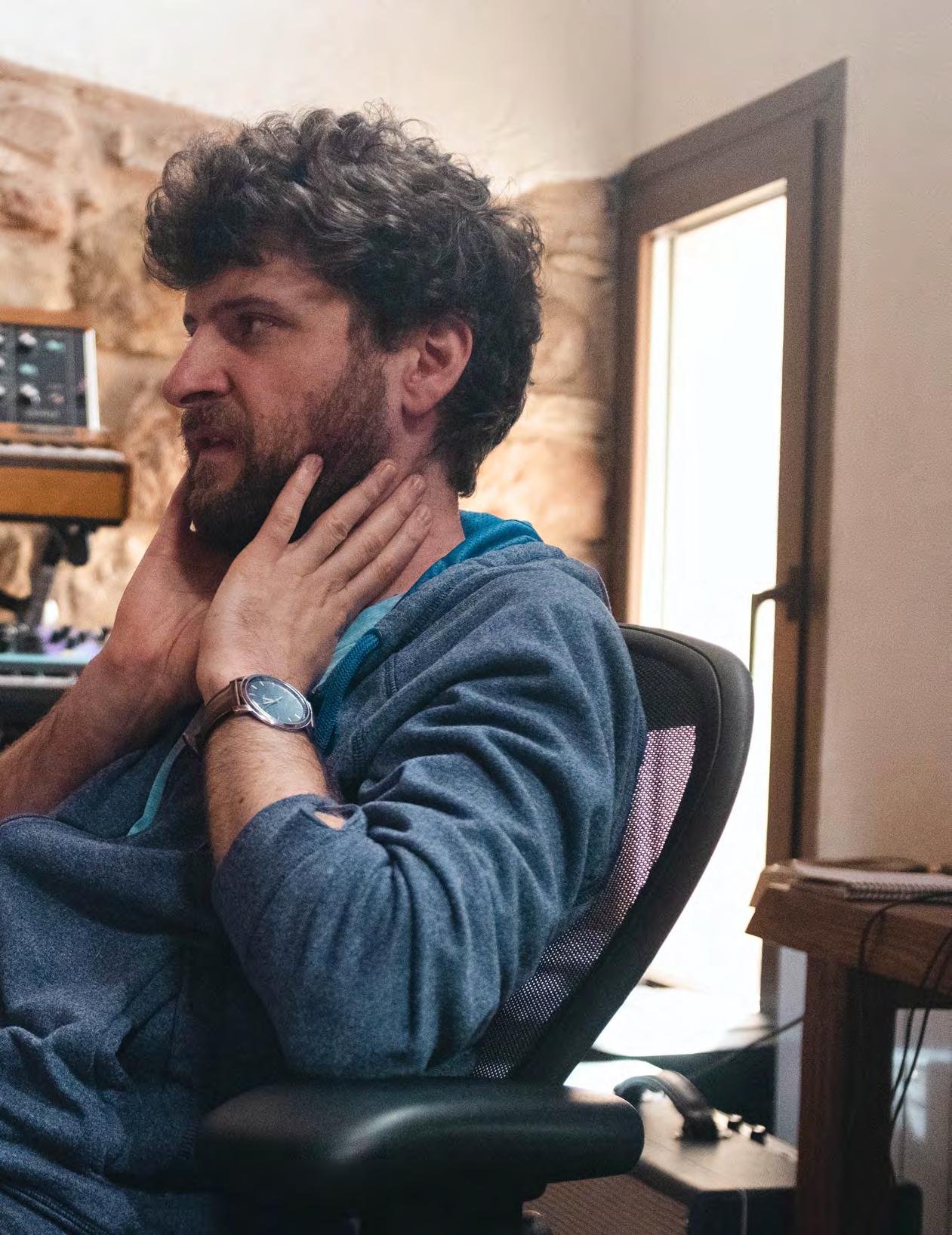
BY
“I do see my career moving upward. But I’m almost 40. I’m not going to move somewhere to make my career. I don’t need to chase the dragon. I think it makes a lot of sense to explore places to go.”
Michael League
Snarky Puppy bandleader
Snarky puppy’s groundup Festival on the north side of Miami Beach is a friendly gathering of barefoot virtuosos partaking in oceanside jams and supercharged drum circles. In 2021, the annual event, known for its freewheeling, welcoming atmosphere, was canceled due to COVID-19. While it was certainly a disappointment for fans of the four-time Grammy awardwinning musical collective when they most needed to share in such a communal vibe, it couldn’t have been much of a surprise. What many didn’t realize, though, was that the show actually did go on. Not in Miami, but in a Spanish village of 551 people called Els Prats de Rei about an hour northwest of Barcelona.
The name Els Prats de Rei translates as “The King’s Meadows,” and the town’s medieval stone skyline seems to pop up suddenly amid
rolling fields.
The festival’s lineup included some of the members of Snarky Puppy as well as artists from Portugal, Greece, and Spain. Performances took place in an 18th-century chapel (with aweinspiring, voice-carrying acoustics) as well as in the little town square on a stage set up under a banner supporting Catalan independence. Snarky Puppy bandleader Michael League could be found all over the place — one night in a corner of the village bar, another night performing with an impromptu big band in the plaza, and another night playing bass beside Jorge Pardo, the flamenco saxophone and flute player known for his time as a member of Paco de Lucía’s band.
“We had music from Galicia and flamenco,” notes League. “A 20-piece Iberian percussion ensemble did a set of modern music.”
Only Prats residents were allowed to attend the festival, which evolved into a showing of mutual support: A crew of volunteers mobilized at the village city hall to oversee concert logistics and cook meals for the musicians. League and the other artists performed for a livestream, but mostly for the villagers.
The festival returned to its original format in Miami this May. But on an early spring morning, League is in Prats greeting visitors in the doorway of his house on an empty, narrow street in the historic center of the town. Wearing felt slippers with his jeans and hoodie, he’s chatting with the mailman in rudimentary Catalan.
“He’s a great guy,” League says of the postal carrier, as he leads the way on wide hardwood stairs up several stories to his studio. Even on this cloudy day, a skylight set in the vaulted ceiling brightens the room,
highlighting an assortment of instruments and amps from around the world that line the centuries-old stone walls. Snarky Puppy’s engineer, Nic Hard, is mixing the band’s new album, recorded live a week before in Dallas.
League calculates he’s recorded about 15 full albums and a smattering of songs for and with different artists, including Becca Stevens, George Lamb, and Fatoumata Diawara, all in this space.
“Every day I’m working on something here when I’m home,” League says. The word home lingers, though. “I’ve actually moved here,” he emphasizes. “It’s not like a second home. My gear is here.”
‘This American Guy’
The California-born League, who famously formed Snarky Puppy with other renegade jazz students at the
University of North Texas in 2004, had been living in Brooklyn for almost a decade, settling there as much as a touring musician can.
A phone call ultimately altered his living situation and his lifestyle, setting a course to change Prats de Rei from just another very quiet village in Spain to one that is a destination for an increasing number of international musicians.
“Eight years ago, I had to write a piece of music for an album the Metropole orchestra and Snarky Puppy did called Sylva,” League says. “I’m good friends with one of the Metropole’s managers, Friederike Darius, and she recommended that I write the music here and stay here instead of in New York. She thought that it would be a more peaceful place to compose.
“She said, I have a house in this little tiny Catalan village near Barcelona. I’ll give you the key and
just go there and spend a couple of weeks there.”
Darius, the artistic producer of the Amsterdam-based jazz/pop Metropole Orkest, remembers that at the time League was about to lose his lease in Brooklyn. She offered him the house in Prats — “I told him, ‘You can have this address in Europe. It’s 50 minutes from the airport and there’s Wi-Fi and it’s quiet and you can do your thing.”
League took her up on it. “So that’s where I did the majority of the writing for that album. And I made some friends here during that time.”
Darius helped facilitate that as
well. She texted a few folks in the village and encouraged them to reach out to “this American guy.” As she recalls, “I told them, he loves to be alone because he’s always with a lot of people. But it’s Christmas, and perhaps it would be nice if you knock on his door and just ask if he wants to have a beer in the bar? And that’s what they did.”
The art nouveau facade of Darius’ house stands out from a corner of the Prats’ town square. She discovered rural Catalunya when she took a sabbatical year two decades ago, then bought the house to be sure she’d be coming back. Her three children
grew up spending summers at the swimming pool and playing soccer with their Prats friends, and they still do. Currently, Darius is spearheading a project to renovate the local theater, which has been used for various purposes, including a textile workshop and storage space, over the last three decades.
She’s become such an esteemed member of the community that last year she stood beside the mayor to give the opening address at the town’s Fiesta Mayor street festival. League is now as familiar as Darius to the locals, who know him as just Michael.
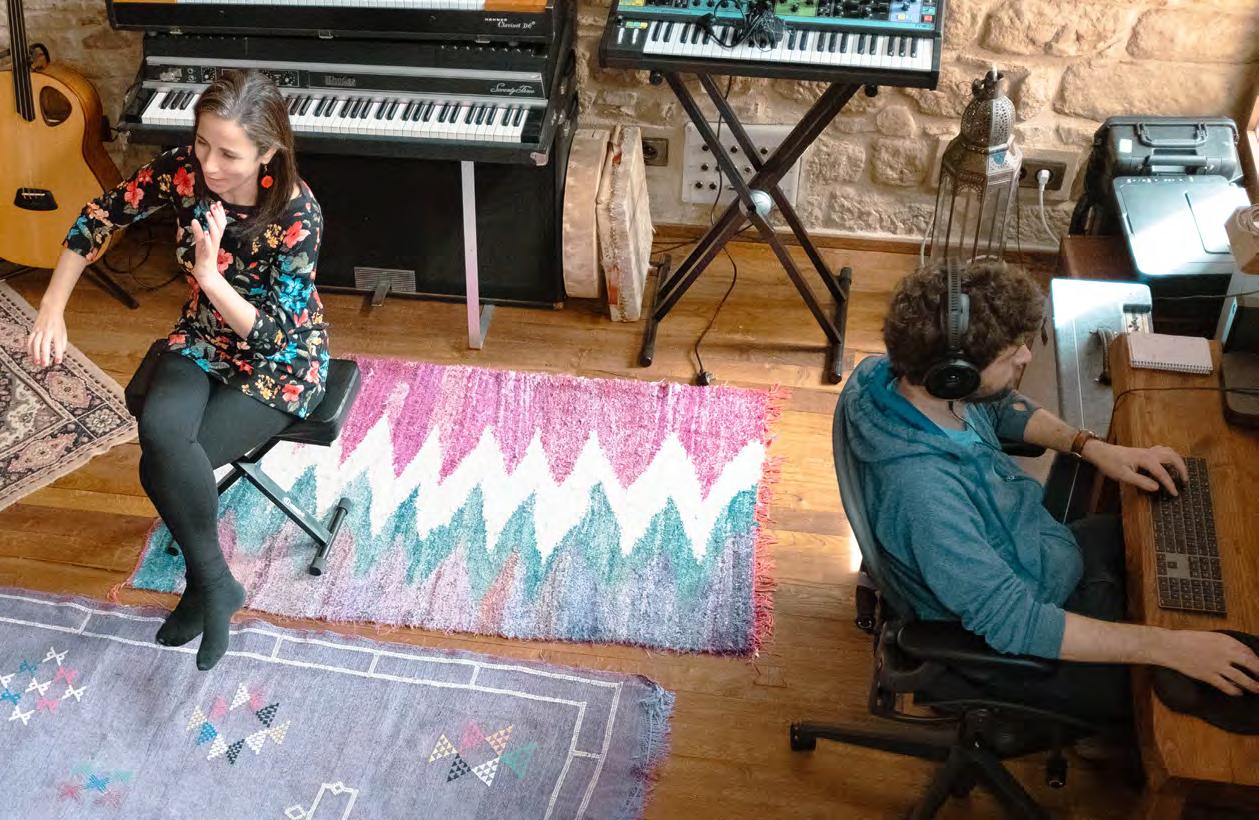
“I just kind of kept visiting because I tour in Europe a lot,” he says. “It was just like a little home away from home for me.
“And then about a year before COVID, a friend of mine in the village mentioned that there were some houses for sale that were going for pretty cheap. And so I checked it out and couldn’t believe the prices. … I thought, you know what? I spent 11 years in New York. I think changing my life up significantly could be cool. I was pretty impulsive, actually, but it made sense.”
Homes in Prats have recently sold in the 20,000-to-60,000-euro range
(about $22,000-$65,000), and they all have names. League’s had already been named for its last owner, a trumpet player; coincidentally, it’s the only one in the village named for a musician.
“ The house had been neglected for a very, very long time,” he says. “It kind of looked like a hobbit house. [There were] little tiny doors, everything was closed, and there was no light. There were a lot of things that were structurally unsafe. So all the floors had to be redone. All the ceilings had to be redone. Basically, the plan was to open the whole house, and knock down every wall that could
get knocked down, and make it feel more open and bright and simple.”
Renovations uncovered an ancient window shaped for arrowshooting and revealed that the top floor had the obvious makings of a studio.
“It’s a room that was already here with a very, very high ceiling that sounds beautiful,” League explains. “So I just thought, ‘Well, it’s a beautiful room. Let’s make it more beautiful and make it do one thing very well, which is basically record one or a small number of people at a time with great microphones and great preamps and a great-sounding
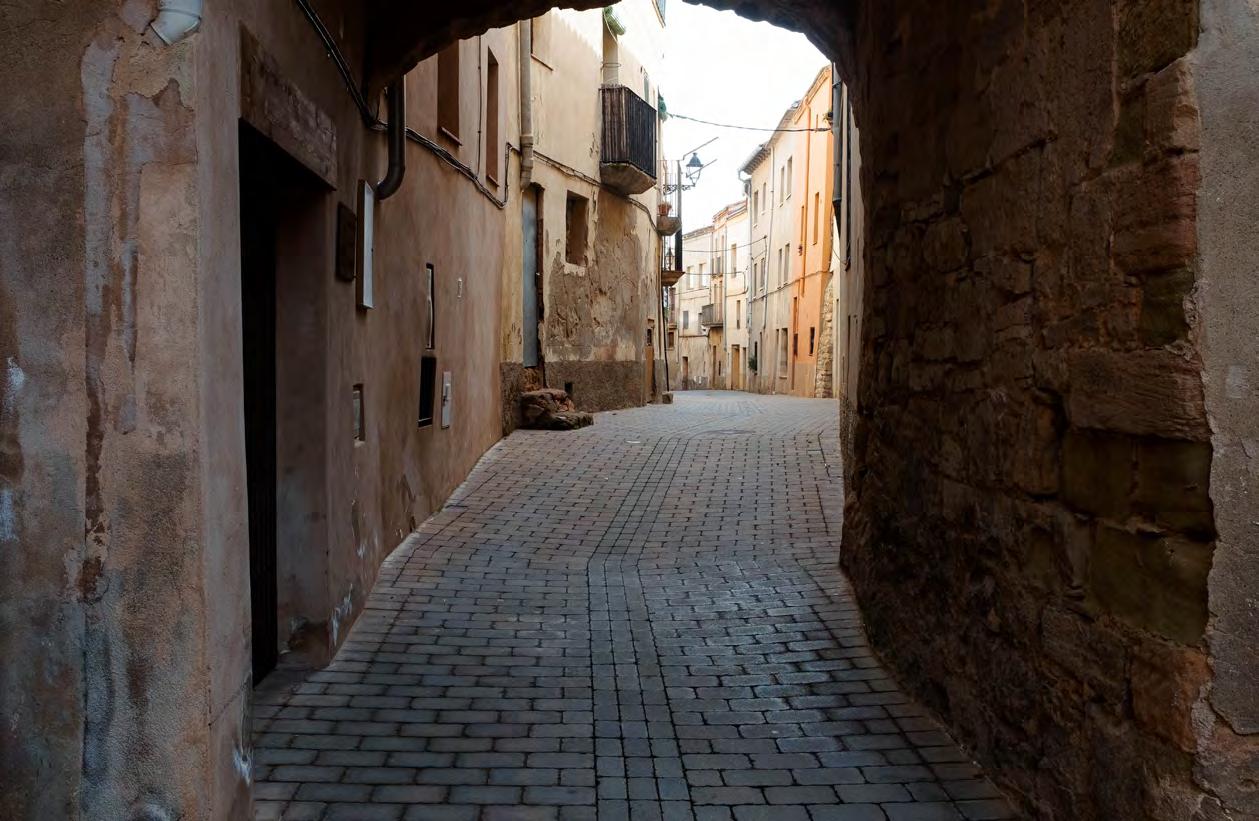
room.’”
League says the pros of his decision to move to Prats outweighed the cons. The only downside he thought of was the obvious lack of concerts and other nightlife in a place where there are no regular concert venues. But it’s had no adverse effect on his work with Snarky Puppy.
“ The band has been living in seven or eight different cities for 15 years. We have members in London, Toronto, Portugal, New York, Dallas, California. It’s always been like that really. So in that way it wasn’t any big change for me to come here.”
Snarky Puppy’s concept as a band — free from constraints of place, with a revolving cast of musicians, and flexible by design — is a model for these times. As League notes, more artists are abandoning urban centers traditionally considered to be music capitals as the cost of living in such places rises. The pandemic’s push

from the big city, often to people’s childhood hometowns, is likely to have lasting repercussions on artistic life.
“I’ve definitely noticed an exodus from New York among people my age, like people between 30 and 50,” League says. “I think when you’re in New York, unless you’re very, very, very wealthy, you’re always just kind of holding on. You’re never really thriving. Inspiration-wise, you are. But in terms of your quality of life, you’re always just kind of clinging on. Even the most successful musicians I know in New York feel that way. And so I think with the pandemic, it was
like a lot of people just thought, ‘Man, fuck this.’ … I left before the pandemic just out of sheer luck. But I think with the pandemic, a lot of people have left.
“I do see my career moving upward,” he adds. “But I’m almost 40. I’m not going to move somewhere to make my career. I don’t need to chase the dragon. I think it makes a lot of sense to explore places to go.”
League’s decampment to Prats was a personal decision, not a public statement. But it’s a bold enough move by an artist already known for his convocational power as a pied piper among his musical peers to
make others consider making a leap of faith to the middle of nowhere.
While League’s own escape from New York may set one example of what a sustainable future for artists could be, he’s also found himself at the crux of another rising phenomenon: the revitalization of rural areas by younger people whose parents or grandparents once left for the city.
The 21st century back-to-the-land or back-to-the-small-town movement has become particularly newsworthy in Spain, where an estimated 3,000 villages are just holding on with few inhabitants, or have been deserted all together. Some of these pueblos abandonados have been ghost towns for the last 70 years, since rural residents migrated en masse to cities looking for new opportunities after the scarcity that plagued families during and after the Spanish Civil War.
Spain’s economic crisis in the 2000s further drained the villages. But recently, a number of public and private initiatives have been
launched to bring people back to the country, with websites documenting available properties and programs offering resettling incentives. One roundup of such locations published by Forbes’ Spanish edition featured an entire town to be had for 349,000 euros (about $378,000).
Historically, Prats — whose history dates back to at least Roman times — has benefitted from its desirably central location in Catalunya. Although there is no industry to sustain its economy, the village was considered a cultural hub in the last century, and has maintained its level of civic life over the past decades as a “bedroom community” (where people live, but don’t work) for the larger surrounding towns; some residents even commute daily to Barcelona.
It’s far from a ghost town, but Prats’ population started falling at the turn of the last century. In 1900, it was home to 883 people, but from there the number started to drop. The population is now holding steady at 551, which includes a recent increase
of 12 people.
Two of those are Portuguese singer Sofia Ribeiro and her musical collaborator and partner Juan Andrés Ospina, who is from Colombia. Ribeiro, a native of Porto, blends jazz, fado, pop, and other styles of global music, which can be heard on her latest album, 2021’s Casa. She had some doubts about leaving New York, where, before COVID, she had been steadily building her career.
But standing on newly poured concrete in what will be the music room in their house in Prats, she seems at peace with their decision. The multistory house has been undergoing a spectacular renovation for more than a year, undertaken by the same local contractor who worked with League. But even with the costs that implies, Ribeiro stresses that buying a house anything like it would have been impossible for her in a major city in the United States or Europe.
Walking around the space, which is finally showing signs of completion,
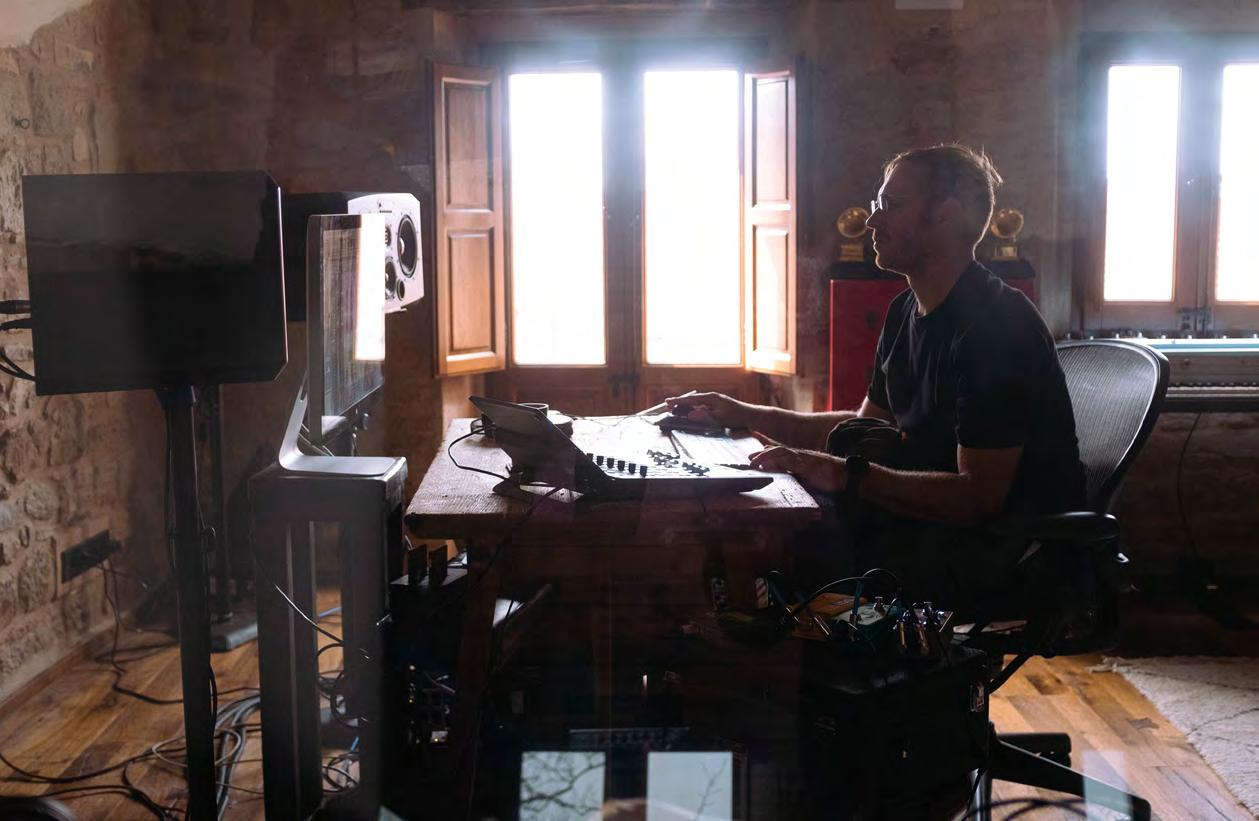
Ribeiro talks about her plans to organize vocal workshops and rehearse for her tours here, activities that would bring more artists to Prats.
“It doesn’t feel like it’s really isolated here,” Ribeiro says. “It’s isolated from noise and stress. You can hear the birds. But at the same time, there’s a lot of support from people in the village,” she adds, noting League and his studio in particular.
More artists, particularly those who have seen what relatively little money can buy here and heard Darius’ descriptions of her summers in the village, have become curious about Prats.
“ There have been other musicians who’ve come to the house that have started kind of looking or asking me about maybe buying,” says League. “I mean, it makes sense … I think the reason why people are coming here is just because of the obvious advantages that you’re less than an
hour from an airport, you’re less than an hour on the beach, less than an hour from the mountains. You’re less than an hour from a major beautiful European city, and you can live relatively cheaply and comfortably. So I think a lot of musicians feel attracted to that.”
On League’s street and those surrounding it, there are several houses for sale. Others are being renovated. One enterprising neighbor has started listing rooms on Airbnb to accommodate a new influx of visitors, which have increasingly been musicians coming to record at League’s studio.
“Being from the US, I definitely have a fear of being a gentrifier,” League says. “I understand what happens when people from abroad move in to another place, and I try to be very conscious of that. I was a little worried at first because do they want people from outside moving in?”
According to Prats mayor Cristina
Mas, the answer is a decisive yes. She commends League and his friends for literally “keeping the houses from falling down” in the oldest part of the town.
“I think that’s everybody’s fear — that the villages will die,” acknowledges League. “Now new blood is coming in and not just new blood, but people who are reviving the old houses that otherwise would just be ruins. And we’re also participating in the community. We’re not just sitting in our houses all day or just hanging out with each other. We involve ourselves in the things that are going on in the village. I think that the majority of people are happy about that.”
Ester Gomez, who works closely with the mayor as a volunteer member of the City Hall staff, confirms. “There’s been total acceptance on the part of the townspeople,” she says. “We Catalans we don’t tend to get involved in other
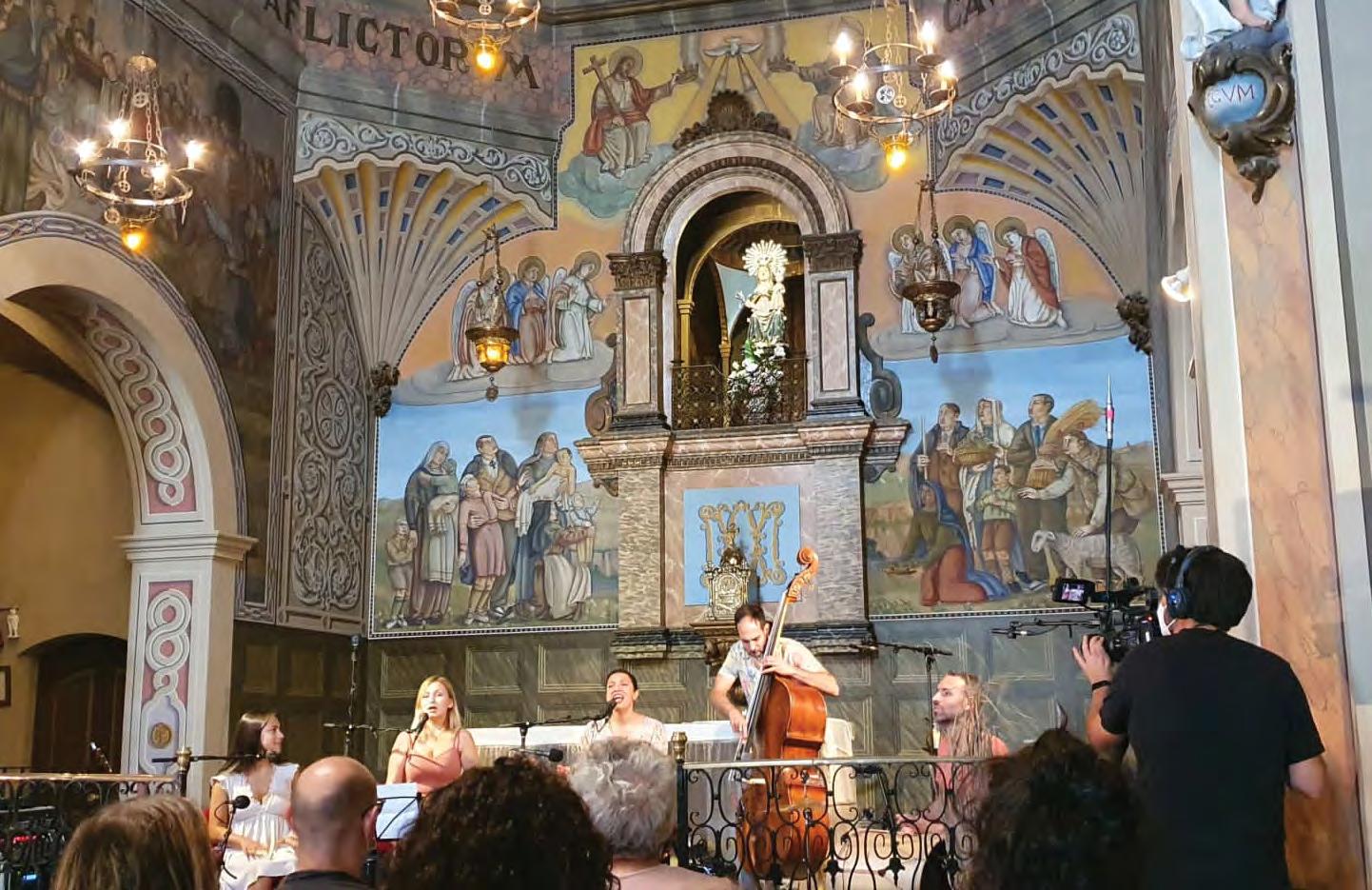
people’s business. But we’re happy they chose Prats to make their life and music here. Michael really wants to be just one more guy in town, and he is.”
Back in his studio, League swivels around in his chair to a screen where he’s been editing some of the new Snarky Puppy tracks. Reminiscing on his decision to move and base his career in this small village, he says, “I’ve created a space where I can record and compose and invite people from abroad to come and work and live a peaceful existence instead of the kind of hectic, but very fun one that I was living in New York.
“Obviously, it’s significantly more affordable to live well, and people are friendly. When you need something, people help you. It’s a very chill, very stress-free kind of existence here. At least outside of the confines of your work. … I totally knew what I was doing when I came here.”
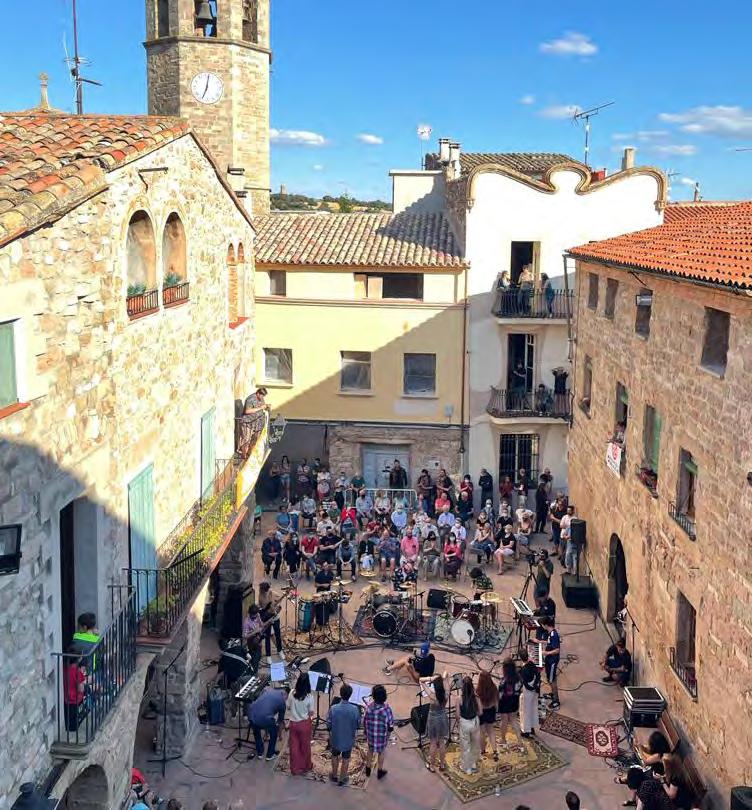

Fort Worth festival celebrates community and aims to decolonize roots music
by Hilary Saunders
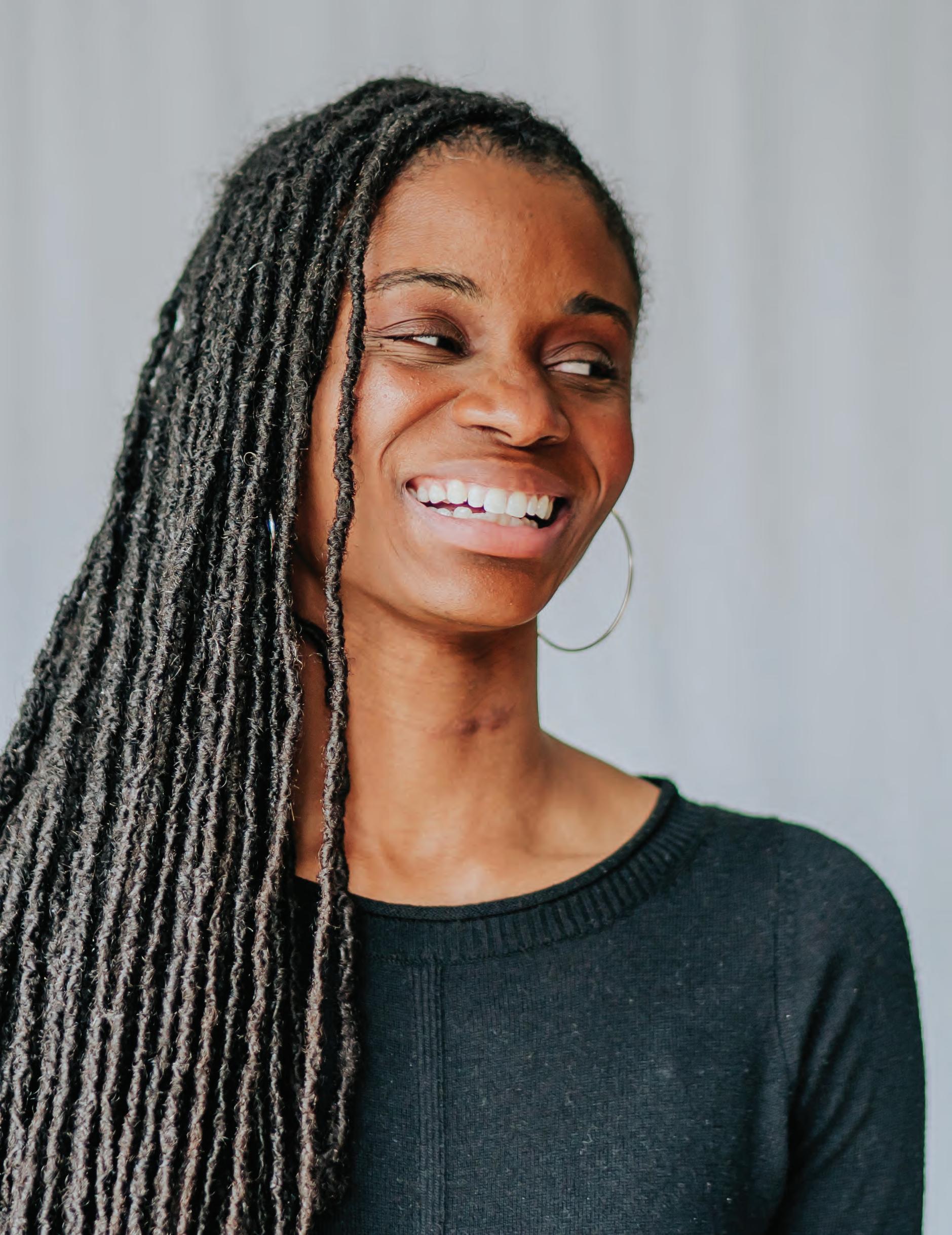
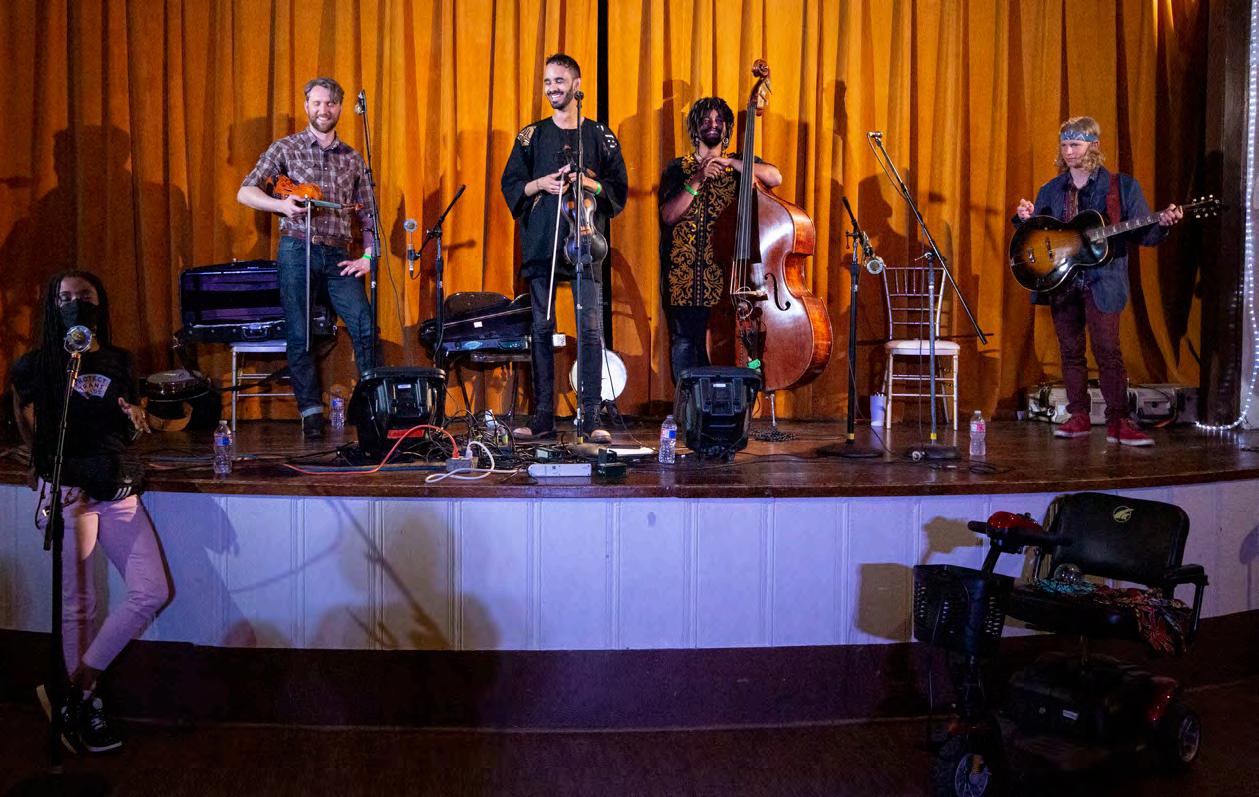
An aggressively mustard-colored velvet curtain hangs on the ballroom stage of Southside Preservation Hall in Fort Worth, Texas. The venue, which began as a Methodist church more than a century ago, is now a nonprofit that hosts concerts, weddings, and events and serves as multicultural and educational resource for its community.
On an early spring afternoon in March — the kind where the air still has a slight chill, despite the blazing sun — Southside Preservation Hall hosted the Fort Worth African American Roots Music Festival (FWAAMFest). During the penultimate set of the daylong event, double bass player Nelson Williams scooted up from his spot closest to the velvet curtain to a microphone close to center stage while Jake Blount and the rest of his band tuned up between songs.
“Everything here,” he began, “everything happening here is sacred.”
It wasn’t just the holy site that elicited such an earnest statement. It was sanctity of the safe interplay between history, community, music, audience, and education the festival presented throughout the day.
Though it debuted online in 2021, FWAAMFest celebrated its first in-person event with a goal “to broaden the local music scene and put the city on the map among traditional music circles, bringing awareness to Blackness in American roots music,” according to its website.
In the space of 10 hours, the festival featured three educational presentations, one instrumental workshop, a live recording of the Color Me Country podcast with Rissi Palmer, and seven different performances, culminating with a late-night dance jam.
FWAAMFest is part of the programming arm of a nonprofit founded by Brandi Waller-Pace called Decolonizing the Music Room. Waller-Pace started the organization
in summer 2019 with a mission to use “research, training and discourse to center BBIA (Black, Brown, Indigenous, and Asian) voices, knowledge, and experiences in music education and related fields.”
Though the themes of antiracism, anticolonialism, and antifascism — or, more positively, equity, autonomy, and humanitarianism — define FWAAMFest and Decolonizing the Music Room, that late March event in Texas centered joy and enjoyment. It celebrated Blackness (from the participants to the catering to the sponsors) and Black musical traditions in an effort to make sure that these sounds and styles are not just a curriculum footnote, but an understood part of American musical performance, education, and history.
Wearing a “Protect Trans Kids” shirt on the day of FWAAMFest, WallerPace seemed to be everywhere at
once. She’s an expert at multitasking, which becomes apparent as she explains the origins of Decolonizing the Music Room while simultaneously shopping for groceries 10 days after the event.
After studying jazz and vocal performance at Howard University, Waller-Pace taught music in schools for 11-and-a-half years, 10 of which were in elementary education in the Fort Worth Independent School District, she notes with pride. However, those experiences, in conjunction with raising her own three kids, exposed “very real systemic problems in the education that Black and Brown kids get,” she says.
“In my fury, I began to engage in district committee work, which led me to be placed on the Racial Equity Committee for the district,” WallerPace says. She completed a fellowship with the Dallas-based Leadership ISD and continued learning about the economic disparities in the local school system.
At the same time that she was becoming more and more involved with the district’s education policies, Waller-Pace also discovered old-time music. She began playing the banjo and soon saw a way to merge her interests and activism. Decolonizing the Music Room began as a Facebook group in June 2019, simply a place to share information and discuss how to improve music education outside of its central white narratives. By January 2020, it was a fully-fledged nonprofit, but the pandemic put all hopes of in-person programming on hold just a couple months later. Additionally in 2020, Waller-Pace began a doctoral program in music education at the University of North Texas in order to continue studying the relationships between musical pedagogy, racial equality, and community development.
The first edition of FWAAMFest took place online due to the pandemic. Waller-Pace hosted the event from Southside Preservation Hall, but all performers recorded in
their own quarantine rooms across the country. Although the video has been viewed almost 1,000 times on Facebook, Waller-Pace realized “that people perceived us as kind of just existing in the ether, not being rooted to anywhere in particular.” She continues, “So much of what formed the organization was my experience as a Black mama with Black kids and a Black teacher of Brown children, white children, Asian children, and Indigenous children … in the metro area of Dallas-Fort Worth. It was very important to me that we feed that work back into the community.”
Back in the Southside Preservation Hall ballroom and chapel, community development and music education were happening in real time. Waller-Pace worked to cultivate a network and curate a lineup that celebrated what she calls “the diversity of Blackness.” Headliners
“Brandi works super hard and I just have a ton of respect with her. I just thought it was a great idea to explicitly say, ‘Hey, this is music of the Black diaspora played by Black people.’ And there are so many different artistic visions of what that is.”
Kaïa Kater
included performers from across North America — GrenadianCanadian singer-songwriter Kaïa Kater, Rhode Island-based multiinstrumentalist and ethnomusicologist Jake Blount, and North Carolina-based Grammy Award-winner and former Carolina Chocolate Drops member Justin Robinson. The event also featured sets by Benjamin Hunter, M.S.G. Acoustic Blues Trio, and more.
Two of those musicians also delivered presentations on specialized topics: Robinson on “Moving Beyond Black Music: How to Connect to Indigenous African Musicality” and Blount on “The Legacy of Prison Labor in Black Folk Music.” Additionally, pianist, bones player, and beatmaker Kafari led a workshop on the history and musical practice of playing the bones and educator and choreographer Junious Brickhouse led a Q&A called “Black Dance Throughlines.”
Waller-Pace and Kater, who was the last performer at FWAAMFest
before the closing dance party, met years ago through a private Facebook group called Traditional Music Today. They became internet friends, and in July 2020 Kater wrote an essay for the Decolonizing the Music Room website titled “Fostering Space for Student Creativity During the COVID Pandemic.”
So when Waller-Pace invited her to headline the event, Kater was thrilled. “Something that I’ve been learning to cherish is being in Black-centered spaces. I want to make an effort to be present in those spaces because they’re very healing for me, and I’m sure for other folks too,” says Kater. “Brandi works super hard and I just have a ton of respect with her. I just thought it was a great idea to explicitly say, ‘Hey, this is music of the Black diaspora played by Black people.’ And there are so many different artistic visions of what that is.”
At FWAAMFest, Kater’s multidisciplinary performance
included stripped-down, acoustic duo versions of songs from her three albums that also included elements of original audio recordings and historical film footage based on her own diasporic roots.
Calling from her home in Montreal after the event, Kater explains that she’d been working on this style of blended performancepresentation since before the pandemic. Like her last studio album, 2018’s Grenades, her FWAAMFest set heavily featured the story of her father, who fled Grenada as a teenage refugee in the wake of the island country’s socialist New Jewel Movement revolution. He arrived in Canada in 1986, applied for refugee status, and ultimately became a citizen.
The effects of this diaspora, and those of other diasporic people, were omnipresent as Kater was writing and recording Grenades. “At the time, I was thinking a lot about archival recordings and archival footage and how so much of it comes
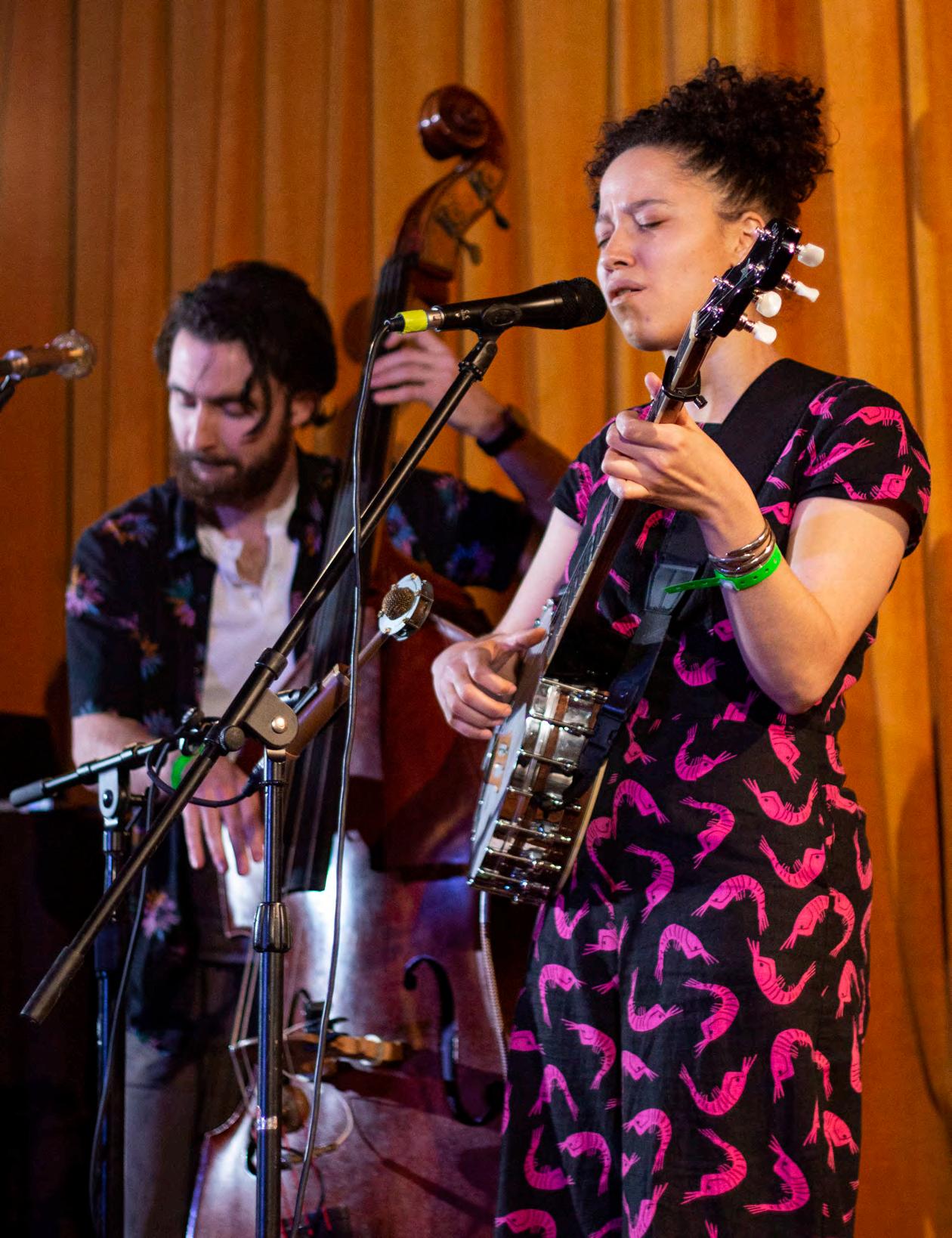
from this white lens. And so, if you’re if you’re an artist or if you’re trying to listen to something, you have to listen through that lens,” she says. “It had me thinking about how to create my own recordings and that my own footage would be a way of reclaiming that a little bit for myself. So that’s what I did.”
While conducting interviews with her dad and visiting Grenada for the first time as an adult, she wrote and recorded the 14-track record, which was ultimately released by Smithsonian Folkways. The album features audio samples of those interviews, like “Death of a Dream,” in which her father describes “the ferocity of the American military” when Ronald Raegan led an invasion of Grenada in 1983. His 48-second spoken word narrative introduces the somber title track, named in honor of Grenada and the weapons filling the country during the US military’s exploits. Kater similarly included multiple mediums in her
FWAAMFest performance. It was part entertainment and part education, part somber remembrance and part celebration of survival.
One of the most meaningful successes of the inaugural in-person FWAAMFest for Waller-Pace was the audience, which spanned spectrums of race, age, and gender.
“I was really concerned that the messaging that I wanted to build community with this history with other Black folks would not come across. So when I saw lots of Black faces in the audience, that made me incredibly happy,” Waller-Pace begins. “The other concern was, because whiteness is our default, oftentimes when we see things that are explicitly not white, people think, ‘Oh, that’s not for me.’ So [when] I saw plenty of people on that side come too, I felt really good about it.”
While everyone in attendance was respectful, Kater acknowledges that the circumstances of the event — produced by and for Black performers — created an environment that felt particularly safe and reassuring. She summarized one of Waller-Pace’s goals, that “white folks are welcome here, but this is not going to be an explainer. We’re not starting at a rudimentary level. We’re up here trying to create and innovative and remember and recall and hold each other, and I think that that energy benefits everybody.”
Kater continues, “As Black performers or as Black educators, you’re constantly in the minority and you’re in a space where you feel uncomfortable. White folks … may feel uncomfortable when you’re going to a festival that has a primarily Black audience or a commission that doesn’t really involve you. It’s about getting used to that and seeing how that adds to the
richness of folk music and old-time music.”
Waller-Pace has already begun discussions for booking FWAAMFest for 2023. But like any new nonprofit, Decolonizing the Music Room needs support — in terms of funding, community engagement, and awareness — to survive.
“What I don’t want to do is have this beautiful thing that centers Blackness and feeds everyone, but [artists] know that when they do it, they have to take a pay cut or they have to make all kinds of adjustments and accommodations that they don’t have to do at other major festivals, while still remembering that we are not ‘a major festival.’ We are a nonprofit organization,” says Waller-Pace.
But while Decolonizing the Music Room and FWAAMFest are looking to expand, Waller-Pace is adamant that the organization and its programming stay rooted in and
committed to benefitting Fort Worth.
“Now that people are able to see a finished product, it’s very clear that part of the mission of the festival is to build community, especially among Black folks, and that history in the area is something that seems to be stirring up,” says Waller-Pace.
As Decolonizing the Music Room’s programming continues to grow, Waller-Pace hopes that events like FWAAMFest will inspire more touring musicians to come to Fort Worth. And with more and more diverse performances, she believes that the local audience for roots and old-time music — as well as the roster of players — will expand.
‘ Then,” she says defiantly, “we help to cultivate a generation of musicians that eventually will collaborate with us. And when we’re gone, it won’t be gone. Because the community will be built and it will be built on the actual history of the music.” ■
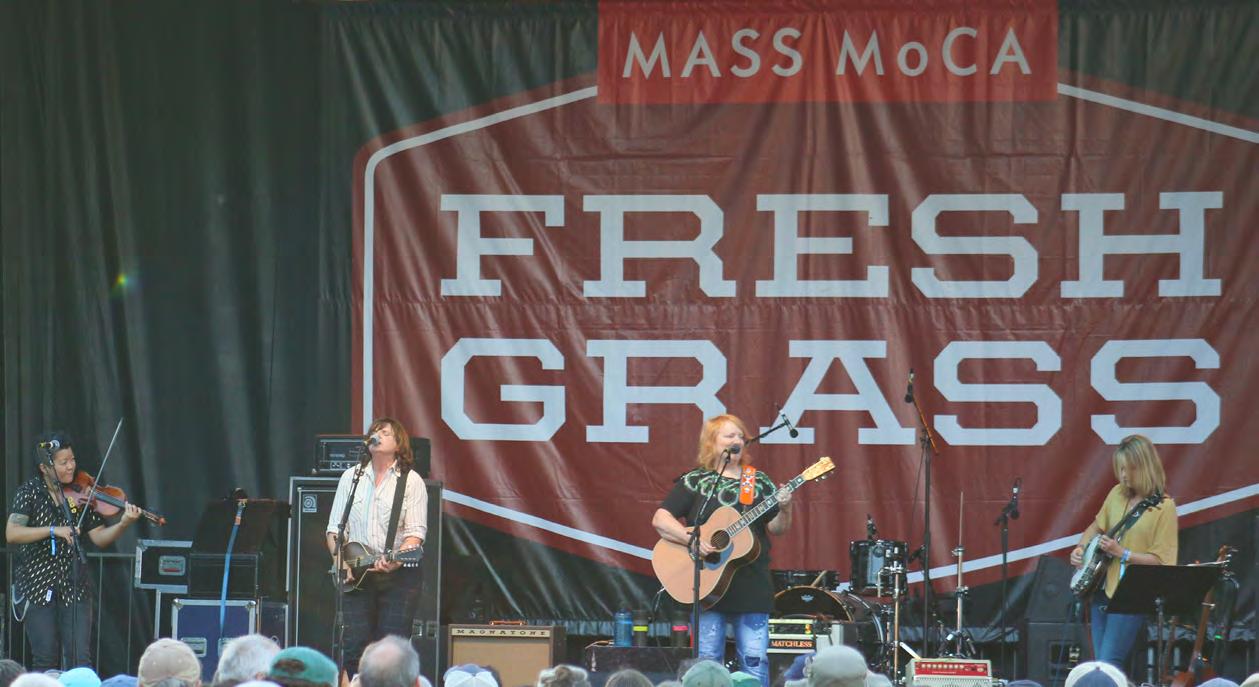
No Depression is brought to you by the FreshGrass Foundation, a 501(c)(3) nonprofit organization dedicated to preserving and promoting the past, present, and future of American roots music. In addition to publishing No Depression, producing FolkAlley.com, and presenting the FreshGrass Festival | Bentonville in Arkansas and FreshGrass Festival | North Adams at Mass MoCA in Western Massachusetts, the Foundation also funds cash awards for up-and-coming musicians. Visit freshgrassfoundation.org for more information.
No Depression is committed to producing the best roots music coverage, both in print and online at nodepression.com. With long-form, multisourced stories highlighting the music’s stars and up-and-comers, as well as its underreported issues, the quarterly editions of No Depression’s journal are essential reading for every roots music fan.
Between issues, stay current on roots music with news, reviews, and thought at nodepression.com. At right are just a few of the artists we’ve covered recently.
Mavis Staples & Levon Helm
Andrew Bird
Fantastic Negrito
S.G. Goodman
Brennen Leigh Drive-by Truckers
Adrian Quesada
American Aquarium

Michaela Anne
Nitty Gritty Dirt Band
Mama’s Broke
Tray Wellington
Delbert McClinton
Lyle Lovett
Mary Gauthier
The Black Keys



AVERY GREGURICH is a writer living and working in Marengo, Iowa. He was raised next to the Mississippi River and has never strayed too far from it.
COURTNEY E. SMITH is a writer based in Dallas, Texas, where she works as the editor for Eater Dallas. She’s the host of Songs in the Key of Death, a podcast about murder ballads, and the author of the book Record Collecting for Girls.
ERIN DONAGHUE is a freelance writer interested in the forces that bring people together. Her work has appeared in The Washington Post, USA Today, CBSNews.com, the Huffington Post, and Jezebel, among others. She lives with her chosen family in New York’s Hudson Valley.
GREG CAHILL is a San Francisco Bay Area writer. He is the former editor of Acoustic Guitar magazine and once listened for 10 minutes while Ramblin’ Jack Elliott described his favorite milkshake (it’s all about the viscosity).
HILARY SAUNDERS is the managing editor at No Depression and her previous work has appeared in Paste, ESPN, Next City, The Jewish Daily Forward, and more. She’s a proud member of the National Press Club and Society of Professional Journalists, an alumna of the University of Miami, and a unironic believer that rock and roll can save the world.
JON YOUNG has previously been a regular contributor to Crawdaddy, Creem, Harp, Musician, Blender, Spin, Paste, Mother Jones, and Trouser Press, among many others. His preferred listening includes Billy Fury, Wynonie Harris, Barbara Lynn, Doug Sahm, Connie Smith, Toots and The Maytals, and the criminally under-appreciated Norma Jean. Career highlights include interviewing Del Shannon, meeting Doug and Bob McKenzie, and shaking Aretha Franklin’s hand.
JUDY CANTOR-NAVAS lives in Barcelona and frequently travels Spain in search of great music and stories of musicians. A journalist, liner notes writer, music historian, and scriptwriter, her recent projects include the Audible original podcast Punk in Translation, about the little-known history of Latinos in punk, and the Disney animated feature Encanto, for which she served as cultural music consultant. In 2022, she’ll be hosting group tours to the Sevilla Flamenco Biennial and the Barcelona Jazz Festival, and invites you to join her! Learn more at musicalgetaways.com.
KIM RUEHL is the editor of FolkAlley.com. She has also written for Billboard, NPR Music, Yes Magazine, and numerous others. She was an editor of No Depression from 2008 to 2017 and was instrumental in bringing the magazine back into print. Her book, A Singing Army: Zilphia Horton and the Highlander Folk School, was released in 2021 via University of Texas Press. She lives in Portland, Maine.
LUIS MINVIELLE is a writer and editor from South America whose words have appeared in No Depression, Bandcamp Daily, Okayplayer, RANGE, and more. When he’s not brushing up on his sloppy guitar skills or translating Wilco lyrics into Spanish, he’s ferreting around for a compelling story on South American music. He lives in Buenos Aires, Argentina.
MARCUS AMAKER is Charleston, South Carolina’s first poet laureate, a 2021 Academy of American Poets fellow, an opera librettist, and an awardwinning graphic designer. His poetry has been recognized by The Kennedy Center, PBS Newshour, Washington National Opera, The Washington Post, The Guardian, NPR, and more. He’s released more than 35 albums as an electronic musician. His ninth book, Black Music Is, is out now.
MIA HUGHES is a freelance music writer from Manchester, UK. They specialize
in punk, indie, and folk rock, and they’re most interested in telling stories about human beings. They’ve contributed to Billboard, NME, MTV News, Stereogum, and more.
MICHAEL ELLIOTT is a native North Carolinian and a former radio veteran of more than 30 years. His work has appeared in PopMatters, Albumism, Americana UK, and The Bitter Southerner. His first book, Have A Little Faith: The John Hiatt Story, was published in 2021 by Chicago Review Press, and the paperback edition is due this September.
NI MA is a motion media designer, UX designer, and illustrator. She is a problem-solver and a highly curious designer. Ni believes that visual language is more powerful than any vocabulary in the world; she uses vibrant colors to create art and illustration, to spread positive energy to all audiences.
STACY CHANDLER is the assistant editor for No Depression. She also writes occasionally for the (Raleigh, North Carolina) News & Observer and various alumni magazines and has copy edited daily newspapers, accounting magazines, shopping guides, online college courses, and pretty much anything else that has words in it. She lives in Raleigh with her husband and their daughter.
Over the past three decades, composer/guitarist/vocalist TREY ANASTASIO has forged a multi-faceted career. He is a founding member of Phish and has collaborated with such artists as Herbie Hancock, Carlos Santana, Toots and the Maytals, B.B. King, The Roots, and, as part of the trio Oysterhead, Les Claypool (Primus) and Stewart Copeland (The Police). He co-wrote the music for the Broadway musical Hands on a Hardbody, which received a Tony nomination for “Best Original Score” in 2013. Anastasio just released his first-ever solo acoustic record, Mercy.