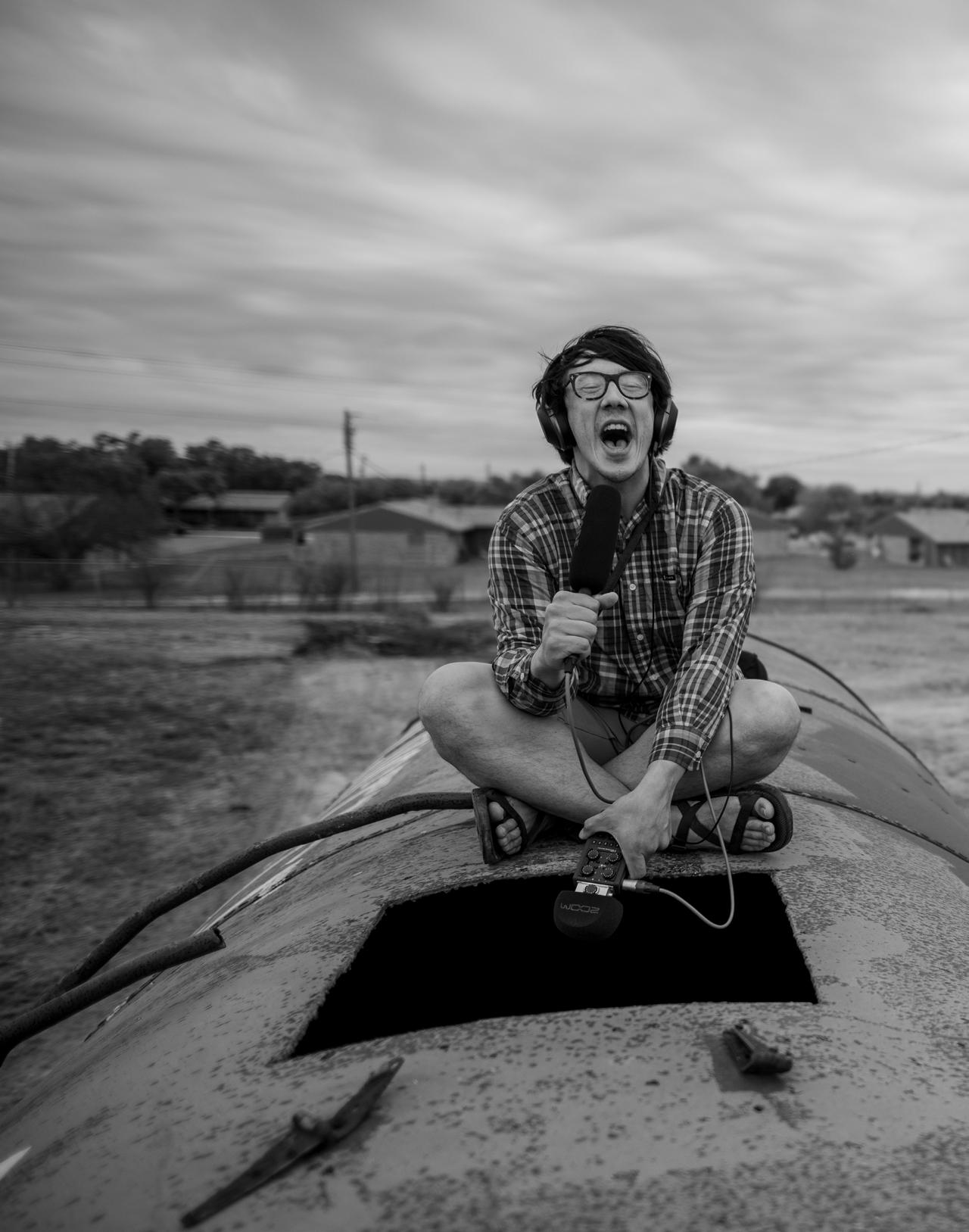
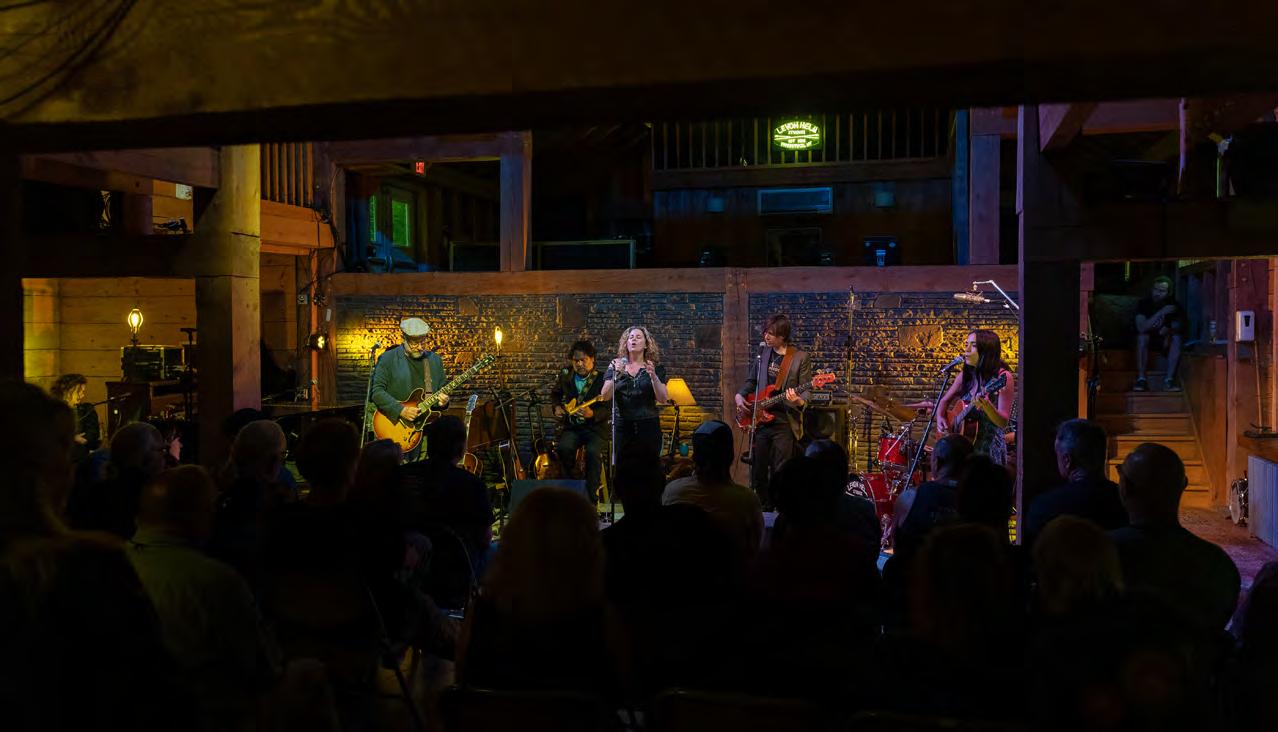
“I really do think the best songs are ghost-like. A good song exists on paper, on a recording, on a stage, in our head, in soundwaves in the air.”
Mark Lindquist, p.97
5 HELLO STRANGER by Hilary Saunders
6 GRACE LANDS
Elena Passarello by Katie Moulton
8 AT THE CROSSROADS
Setting the record straight on Robert Johnson’s myth and mystery by Erin Osmon
16
THE MUSICAL SPIRIT OF ST. LOUIS
Words and photos from the Missouri Historical Society
26 QUESTIONS OF THE HEART
Hiss Golden Messenger finds the timeless in what we experience together by Matt Williams
32 GRACE LANDS
Trapper Schoepp by Katie Moulton
34 ‘SPIRIT CHILDREN’
Celebrating the work of Native musicians while looking ahead by Chuck Armstrong
44 HISTORICAL MARKERS
No-No Boy creates an album steeped in Asian American history and sounds by Hilary Saunders
50 WITCH-HUNTING IN THE MODERN WORLD
Words by Ian Brennan and photos by Marilena Umuhoza Delli
58 THE REAL OMIE WISE
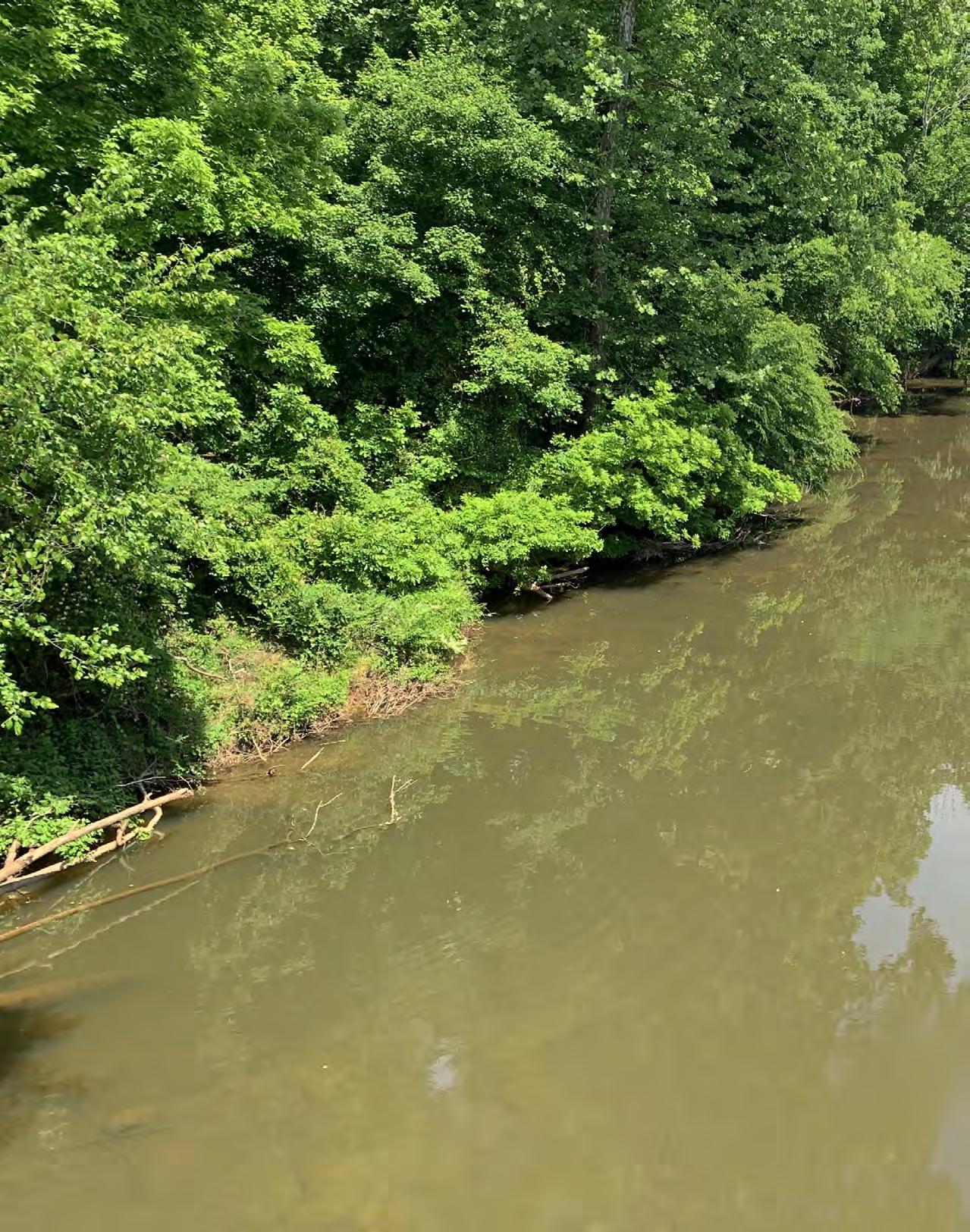
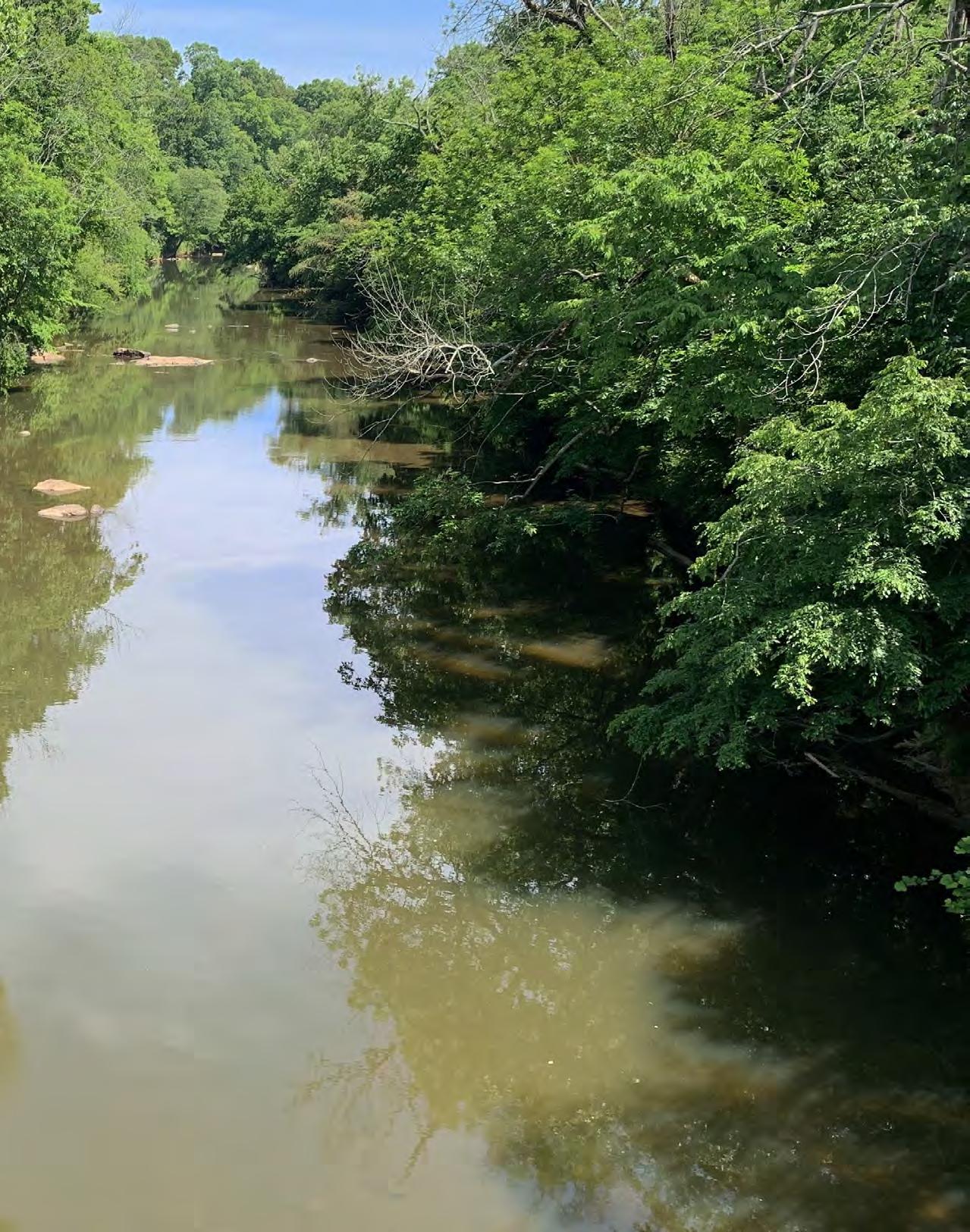
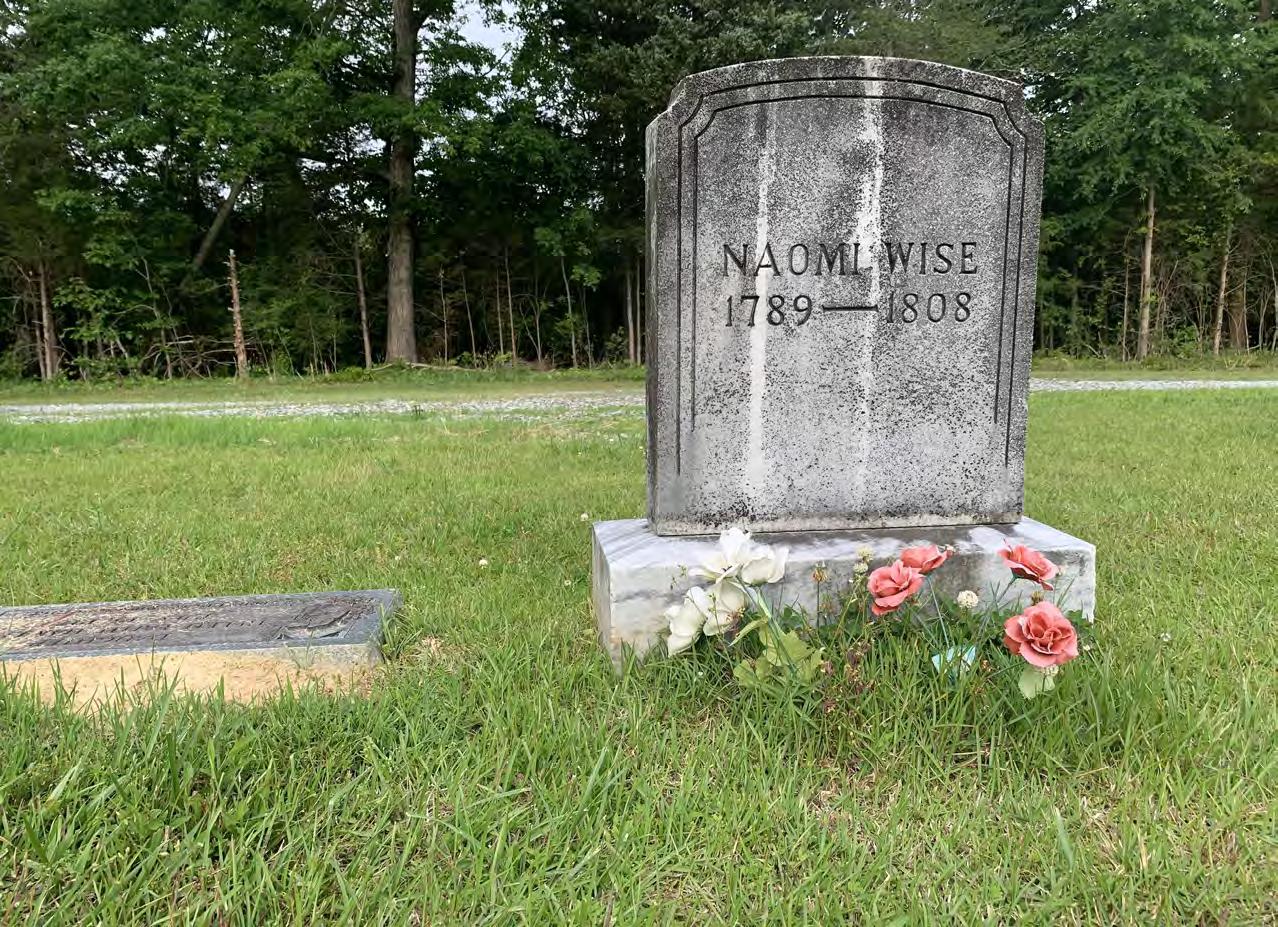
Tracing the story behind a song that has spooked folk music fans for 200 years by Mark Kemp
68 GRACE LANDS
Harry Kagan by Katie Moulton
70
VISITING OTHER SELVES
Lucy Dacus’ ‘Home Video’ reflects who she used to be by Caitlin Wolper
74 OUTRUNNING GHOSTS
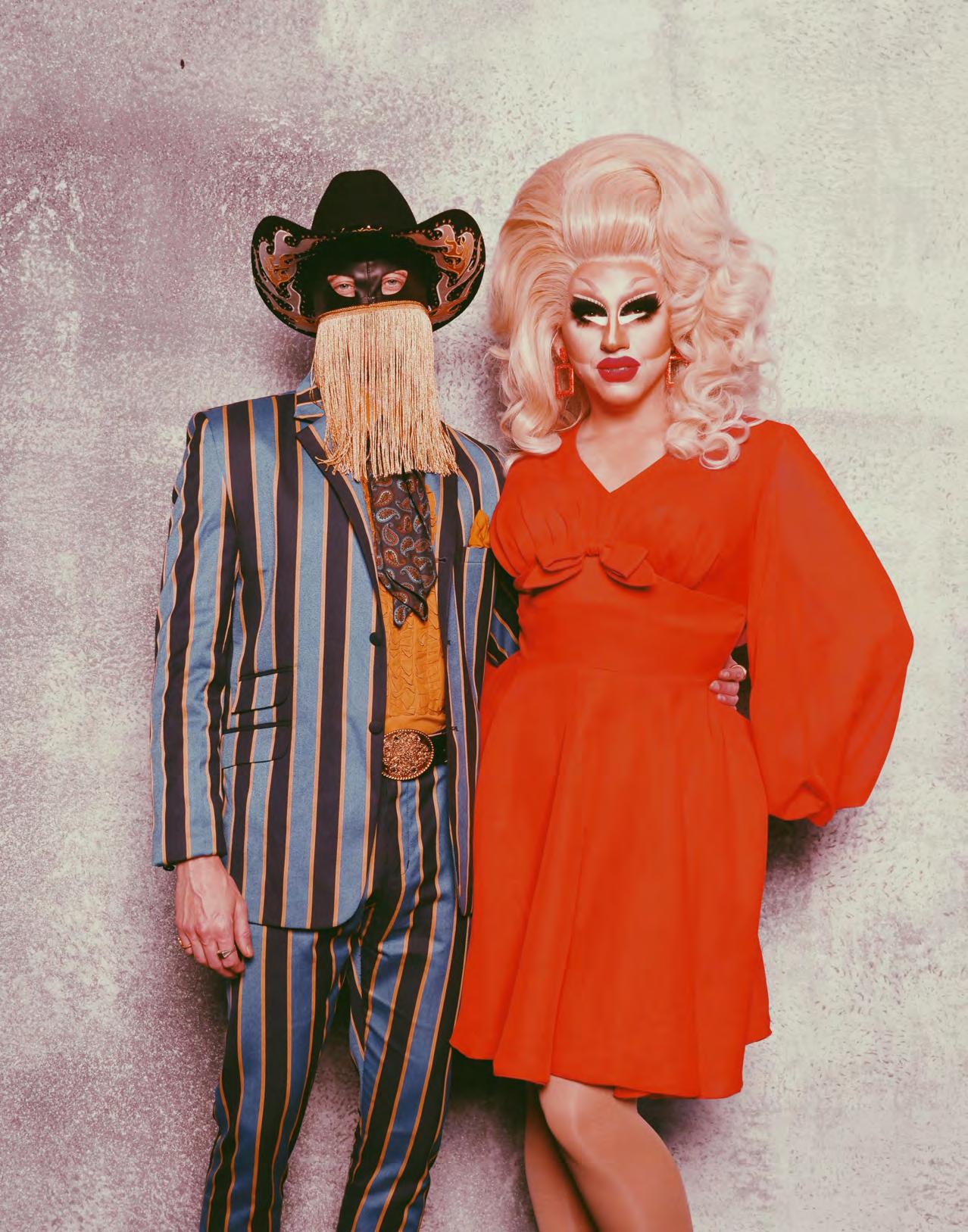
Country music and comedy help Trixie Mattel confront what matters by Claire Lobenfeld
82 A PLACE IN THE COUNTRY COSMOS
The queer reinvention of cosmic country and astrology by Shannon Nico Shreibak
90 GRACE LANDS
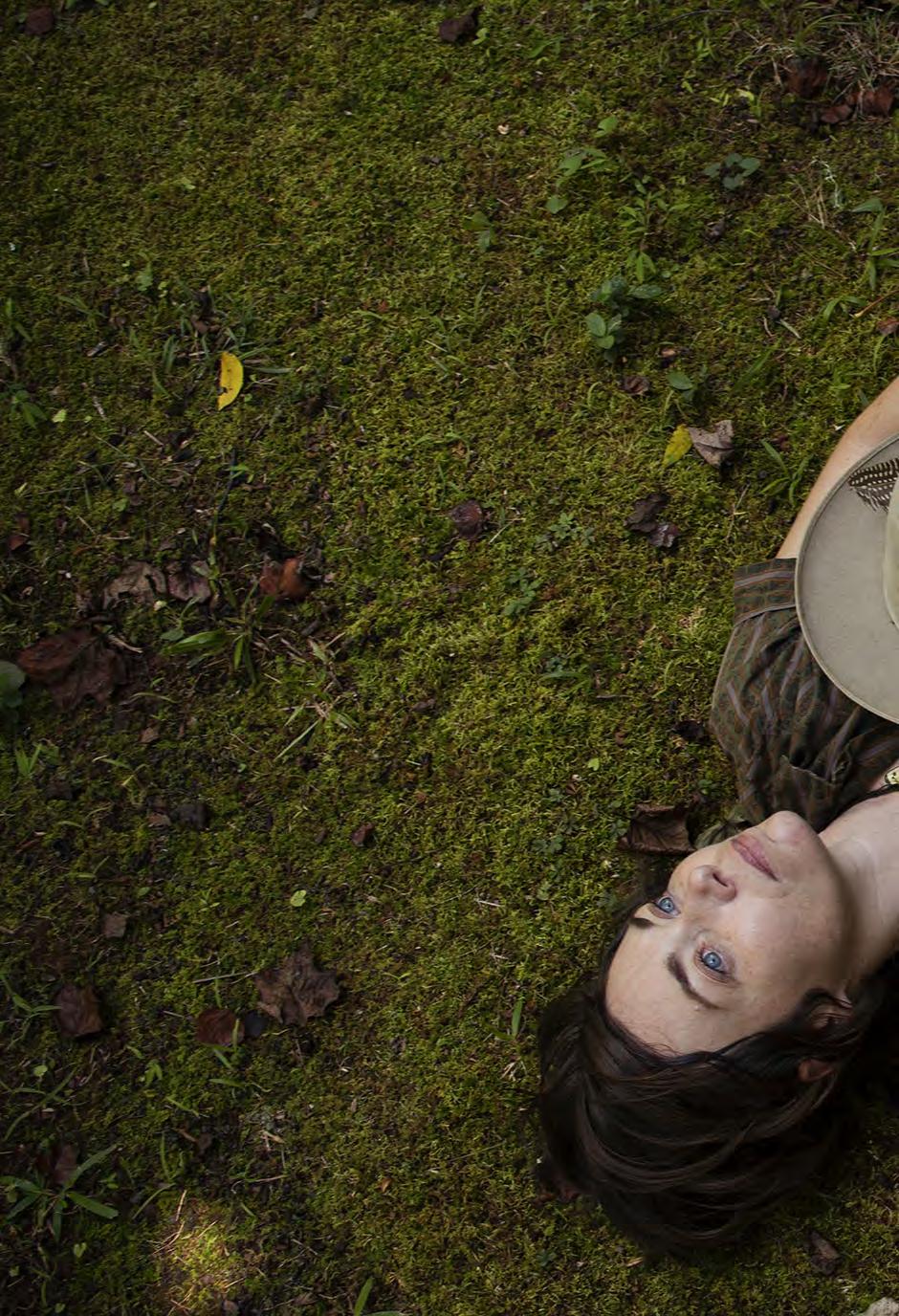
Emma Swift by Katie Moulton
92 SONGS IN THE AIR
Making music in a Northern Minnesota ghost town by Dennis Pernu
98 ANOTHER THOUGHT NOW
Inside the movement to keep Arthur Russell’s music echoing on by Avery Gregurich
106 THEY’RE ALL HERE
Family forms the foundation as Amy Helm stakes her own identity by Anne Margaret Daniel
111 CONTRIBUTORS
112 SCREEN DOOR
Collecting ghost stories by Jolie Holland
ON THE COVER
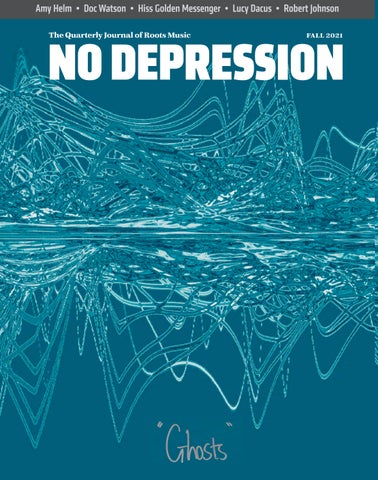
The cover of “Ghosts” features artwork made by digitally manipulating and coloring the sound waves of songs. The song behind this piece is the folk recording “No Depression (In Heaven)” by The Carter Family. Originally recorded in 1936, “No Depression” has become symbolic of alt-country and served as the inspiration for the name of No Depression magazine. Growing up in England, one of the first sounds that drew me to America was folk music. This song plays such an important role in the development of folk songs and it was an honor to be able to transform it into a one-of-a-kind artwork for such an impactful publication.
— Tim Wakefield, Soundwaves Art Foundation
INSIDE COVERS
Artist Pearl Rachinsky created a series of original drawings that pair with the ghosts from various songs performed by Canadian folk band The Deep Dark Woods. Their newest album, Changing Faces, is out now on Six Shooter Records and features lead singer Ryan Boldt’s ongoing exploration of centuries-old fables and songs.
See more of the artist’s work at instagram. com/pearljunior and listen to The Deep Dark Woods at thedeepdarkwoods.com
It’s a scorching Saturday in June and I’m making the Titanic pose with my arms spread wide on the back of a baby blue electric moped, whizzing around Brooklyn Heights in search of Adam Yauch Park. The streets are quiet in this fancy, tree-canopied neighborhood, even though it’s just a few blocks off the honking gridlock of Atlantic Avenue. Renovated, yet iconic brownstones line these streets, with cars neatly sitting curbside, puffed up with petticoats of bumper pads so as not to damage each other if parked too close together.
The late Beastie Boy didn’t craft what’s traditionally considered roots music, but the beloved trio blended styles of music ranging from hardcore to hip-hop to funk to grunge into a sound reflective of so many different types of people living so densely together in New York City. And sounds of the people are indeed at the core of the type of music we at No Depression love and cover.
It’s not the first time I’ve paid tribute to a musician whose art and work and messages have impacted my life. In grad school in the UK, my friend and I took a train down from Liverpool to Cheltenham to chase the ghost of The Rolling Stones’ Brian Jones. A few years later, when I drove across America, I rerouted my journey more than 100 miles out of the way just to drive the undulating two-lane roads of Mississippi’s green Hill Country — from Clarksdale to Chulahoma to Holly Springs — to honor blues ghosts like Junior Kimbrough and R.L. Burnside. In 2016, I wrote an essay for Brooklyn magazine about the time I got lost in an Iowa cornfield searching for the ghost of Buddy Holly.
I’ve listened to the walls of Electric Lady Studios in New York City, goading them to tell me their stories, brought my
copy of Sam Cooke’s Live at the Harlem Square Club to the empty block where the venue once stood in Miami, and held my own bed-in in the same room as John Lennon and Yoko Ono at the Queen Elizabeth Hotel in Montreal.
But like writer Katie Moulton muses in her “Grace Lands” series interspersed throughout this issue, the reasons why we — as members of the roots music community and as fans in general — go in search of these spirits are not uniform. And our journeys to get there are hardly direct.
I’d like to think there’s as much an element of joy as there is mourning in such pilgrimages. So many of us seek out these sites to honor what these songs have given us, learn more about the context in which they were made, and celebrate how this music has enriched
our lives.
So while this “Ghosts” issue of No Depression may come during “spooky season,” carrying negative or eerie conations, we approached the theme wide-eyed and with a sense of wonder. Stories, including Katie’s, explore journeys of the body and soul. Profiles on Hiss Golden Messenger, Amy Helm, and No-No Boy examine the concept of “Ghosts” through spirituality, legacy, and lineage.
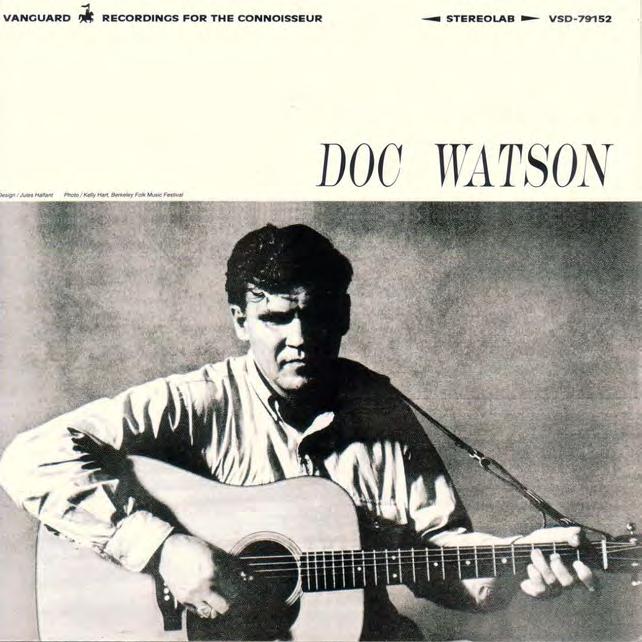
Of course, others dared tackle the theme more directly. Ian Brennan and Marilena Umuhoza Delli share an original essay and never-before-seen photographs from their time in the witch camps of Ghana, recording the songs that would become the evocative album of field recordings, I’ve Forgotten Now Who I Used to Be. Writer Mark Kemp examines the history and ghostly legacy of Naomi Wise, the real-life subject of the murder ballad made famous by Doc Watson. Singersongwriter Jolie Holland closes out the issue with a Screen Door essay on her new ghost stories podcast.
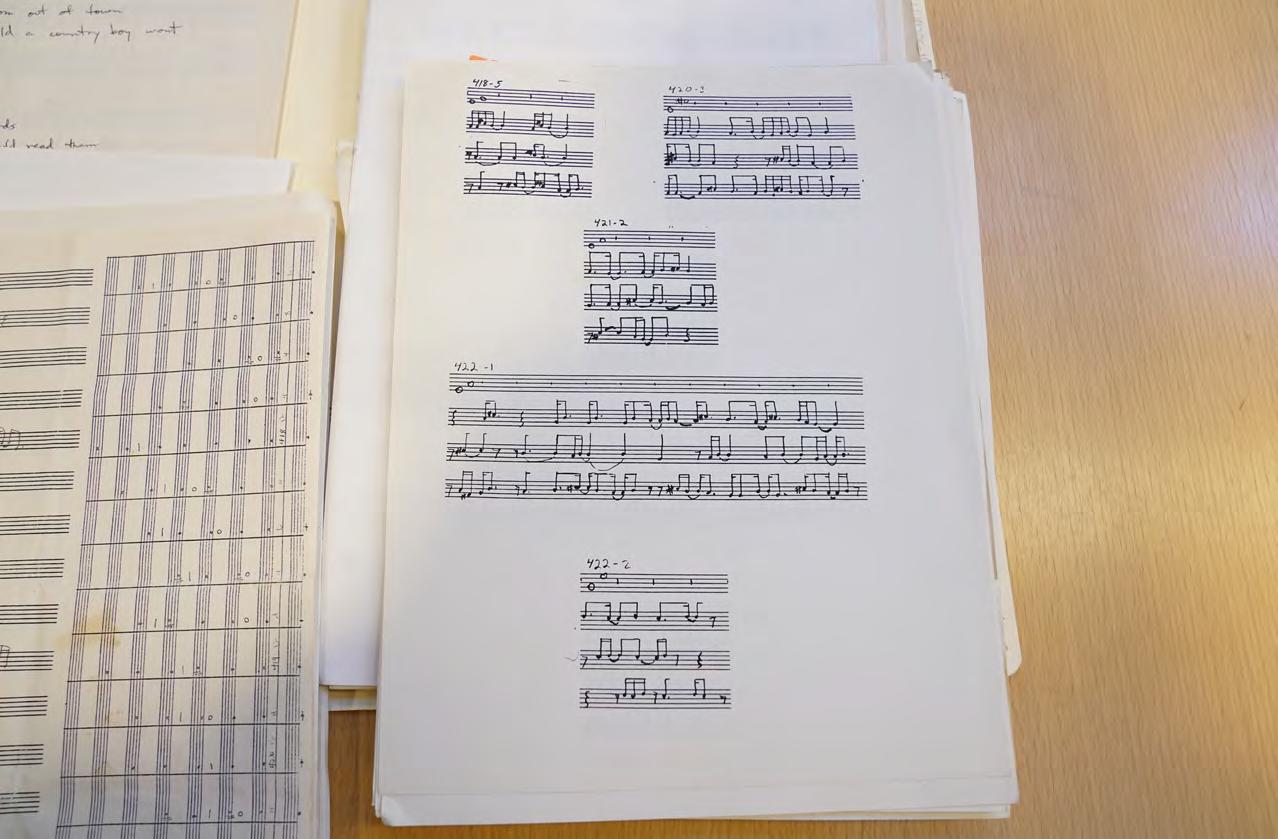
One of my favorite things about music is just how ethereal this artform really is. We can contain it in physical media like records and CDs and keep it meticulously organized in digital files and apps. We can even see music sometimes, in sheet music and scores, as well as in cover artist Tim Wakefield’s rendering of sound waves, which honors the spirit of this publication’s first iteration.
But music itself is rather ghost-like — at once haunting, comforting, mythical, and fleeting. It lives in our heads and we can experience it together until it’s gone. Here in the Fall 2021 issue of No Depression, we did our best to capture that ephemeral magic in a way you can savor and refer to for as long as possible.
GRACE LANDS
by Katie Moulton
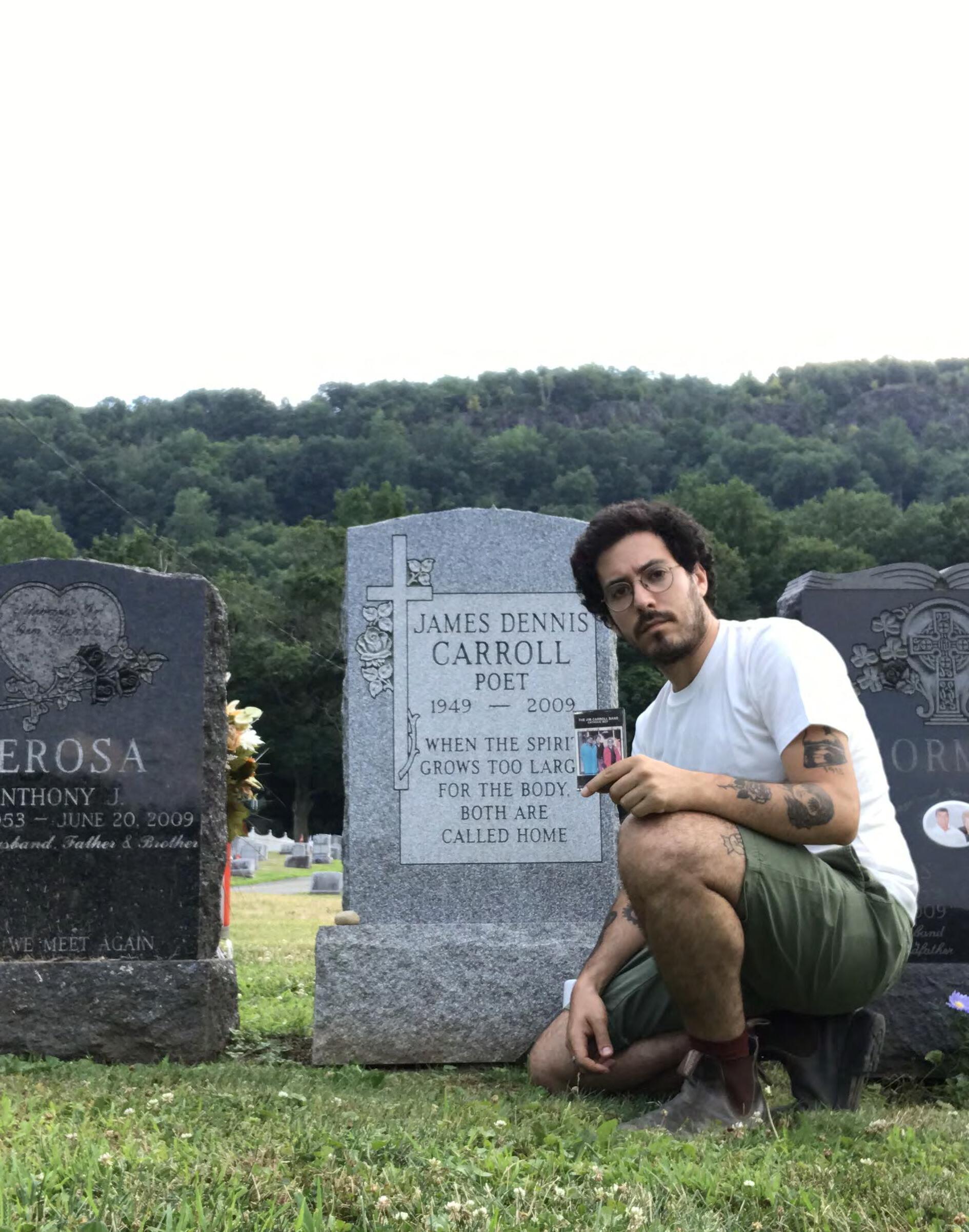
When our musical heroes die, we as fans can continue to live inside their music. We run into them by chance or by design, in the air around a jukebox, a friend’s record player, from our own headphones. But some fans — often musicians themselves — are drawn to a more physical connection, seeking out sites where their heroes lived, died, or are buried. When we track down these landmarks, what we’re looking for is often unclear, yet deeply personal.
This fall, musicians are poised to head back out onto the road, where they can connect with fans from the stage and seek out certain places of troubadours whose songs inspired them along the way. No Depression spoke with four folks in the roots music community who have visited the sacred sites of artists they admire to find out what drives them — what the pilgrimage evokes for the pilgrim.
Elena Passarello
Elena Passarello has been exploring the oddest grooves of Elvis Presley fandom for years. Passarello is an author, actor, and announcer for Live Wire on PRX, a radio variety show based in Portland, Oregon, that has recently featured The Lone Bellow, Shakey Graves, Waxahatchee, and Black Violin. She’s also a novice Presley obsessive working on a book about the musician and his long, weird legacy. She’s visited Tupelo and Memphis and stood at the candlelight vigil at Graceland.
But unlike many others, Passarello has also spent the night in Presley’s teenage bedroom, in the small Memphis apartment he shared with parents Gladys and Vernon between 1949 and 1953, the years when he started playing guitar. Lauderdale Courts was a housing development for middle-income families, and the Presley family had to move out when their annual household income exceeded $3,000, the level allowed for residents. In the shadow of the I-40 bridge over the Mississippi River, the complex fell into disrepair over the decades, but in 2018, the building was designated a Memphis Heritage Trail site. Today, diehard Presley fans can rent it out for short stays by sending a request through the complex’s Facebook page.
“It felt like a weird Airbnb, to be honest,” Passarello says. “Fake flowers,
metal fans, a hodgepodge of ’50s-style furniture. It felt very theater to me. There was a TV, but it only plays DVDs of Elvis movies.”
Elvis’s former bedroom is decorated for a young boy, including pennants on the wall and a photo of Robert Mitchum, the actor and director who befriended a young Presley and allegedly offered him a role in the film Thunder Road. The walls are covered in lipstick-stained kisses that mark where visitors have pressed their mouths. It’s an accepted tradition; a sign reads “KISSES ONLY, PLEASE NO WRITING.”
Passarello explored the space, sat on the bed, looked out the window, and tried to see what young Elvis saw from that same vantage. But since she’s working on a book about Presley, she also had a plan.
“I brought a guitar,” she says. “All the biographies talk about Elvis learning how to play guitar alone, him walking out into the courtyard and playing guitar for his mom and the neighbors. I wanted to start this Elvis book by having my first ‘Elvis’ performance be like Elvis’ first performance — sitting at the window and looking outside. I wanted to play ‘My Happiness,’ which he recorded at Sun Studio shortly after he left Lauderdale Courts.”
Passarello wasn’t the only Presley pilgrim to bring her own belongings and
idiosyncrasies into the space.
“People had left little things all around the apartment,” she says. “The dresser had this cheap Halloween Elvis costume — a white jumpsuit you could put on over your clothes and sideburns and sunglasses, so I put that on and a scarf and sort of danced around.”
She paged through the guestbook where other visitors had recorded their experiences. “Sleeping in Elvis’s bed, now I can dream,” one entry reads.
“I have never wavered in my love and devotion to you,” another declares. “You were always there when I needed you. You will still be with me today as you will be on my last breath.”
The notes range from the courteous to the devotional, sometimes in a single thought: “Y’all have a beautiful home. I hope I’ll meet y’all in heaven after I’m gone.”
This spiritual connection was the heart of Passarello’s sleepover at Presley’s place. Spending the night in this unglamorous, pre-legendary apartment didn’t make her feel closer to Elvis, but it made her feel closer to all the people who love Elvis.
“I was very moved by that part of it,” Passarello says. “All these other people were here. I sometimes feel like an outsider amongst Elvis fans, but the fact that so many of us were there, chilling for a while, was meaningful to me.”
JENNIE BAKER
AT THE CROSSROADS
Setting the record straight on Robert Johnson’s myth and mystery by Erin
Osmon
PHOTO COURTESY OF PRESTON LAUTERBACH
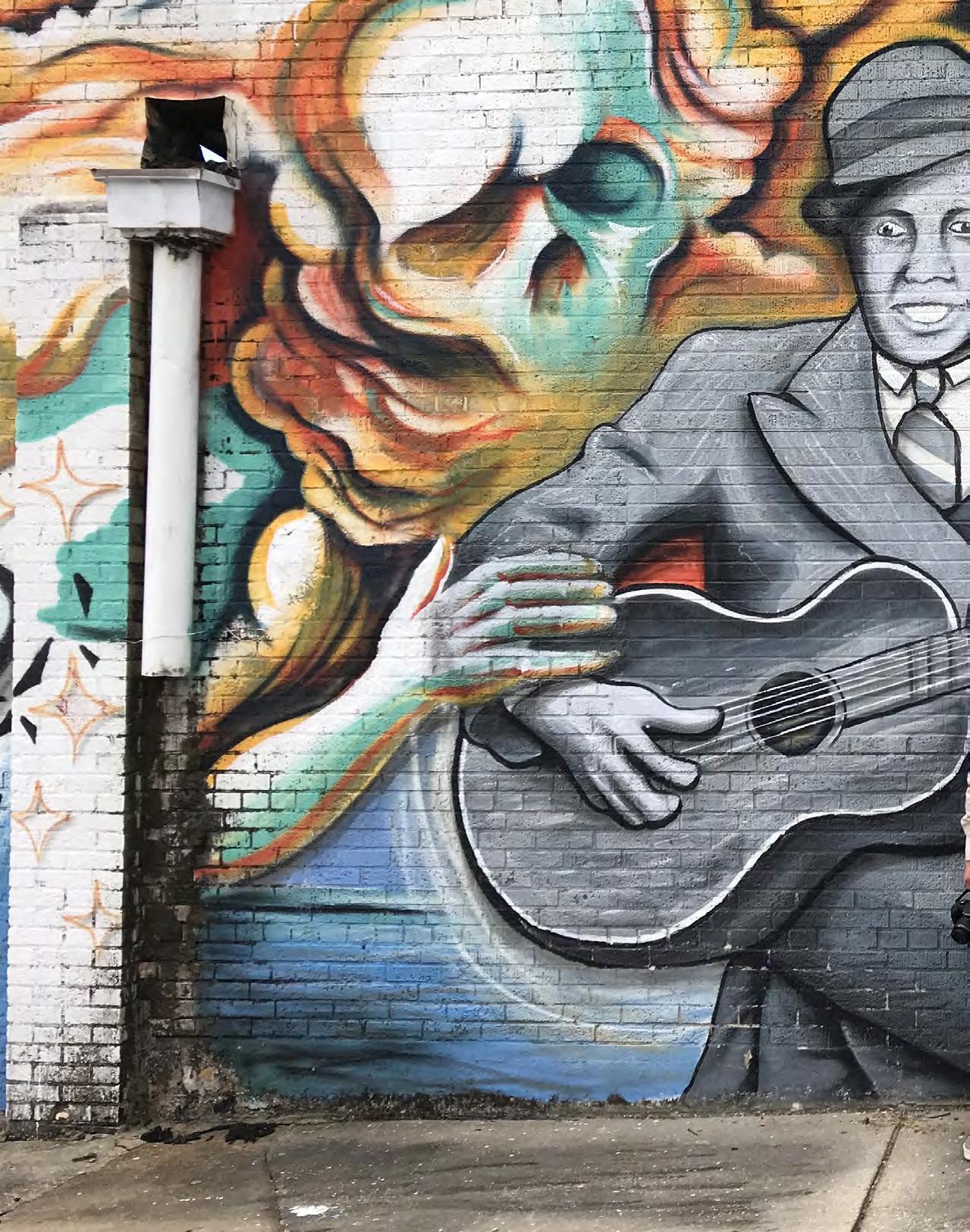
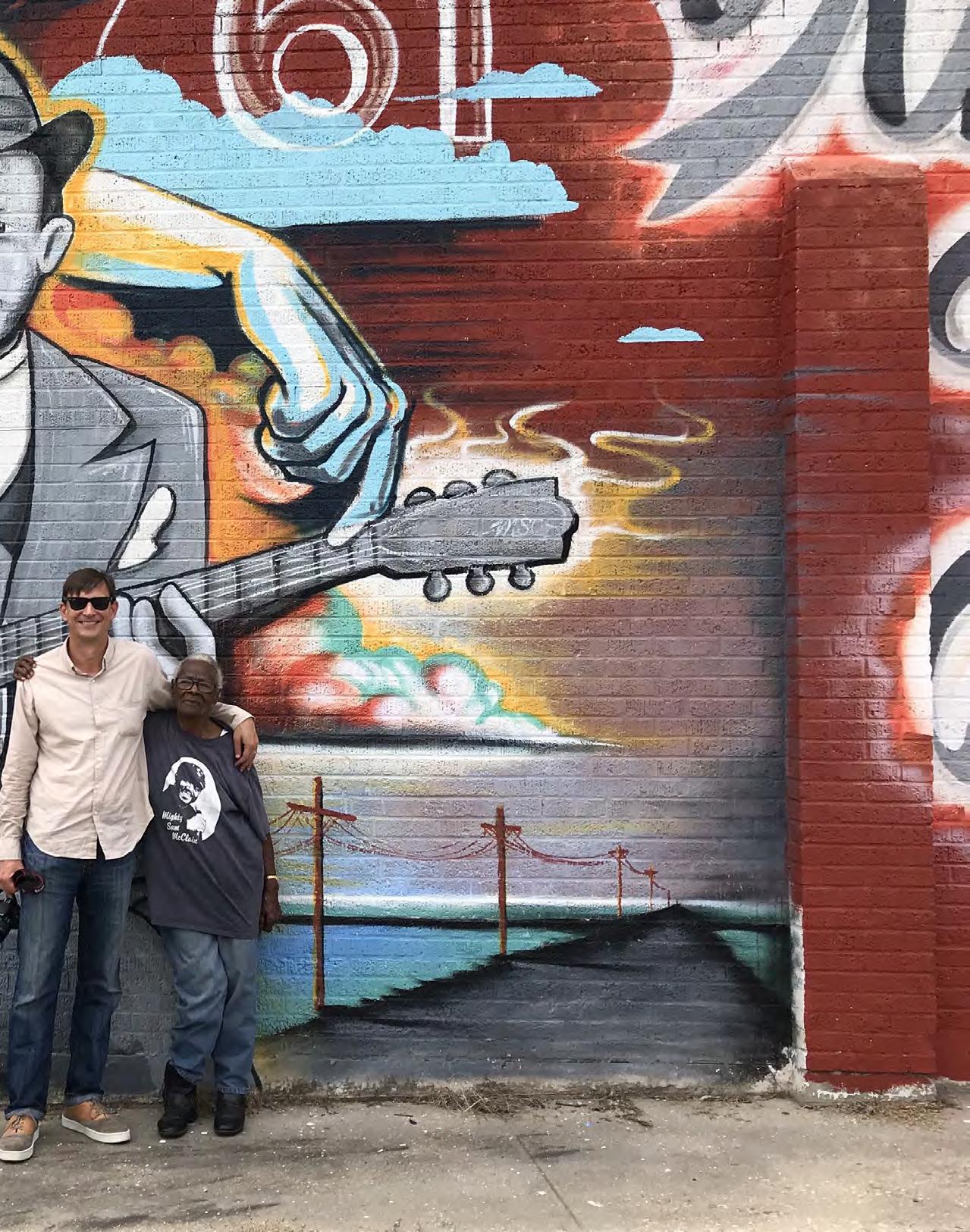
Preston Lauterbach and Annye C. Anderson at a mural near the Robert Johnson family home in Memphis.
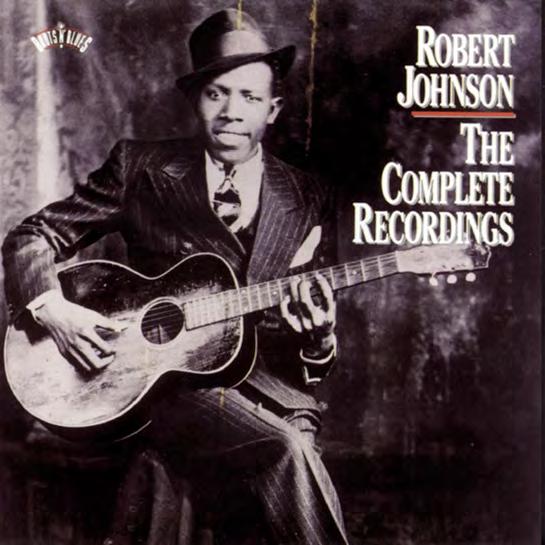
Thirty years ago, the music world was aflame over a longdead bluesman. Robert Johnson’s The Complete Recordings was named Best Historical Album at the 33rd annual Grammy Awards in 1991, edging out two Arturo Toscanini recordings, The Complete EmArcy Recordings of Clifford Brown, and a collection of Jack Kerouac reading his works aloud for the shiny miniature gramophone. It capped a remarkable run for a man with just two low-rent recording sessions, and a 27-year lifespan, to his name.
A slow, protracted build helped thrust The Complete Recordings into the Billboard 200 shortly after its release. Two volumes of Johnson’s music — originally cut for Vocalion Records’ so-called “race series” — had been previously released under the hyperbolic banner King of the Delta Blues Singers in 1961 and 1970. Volume 1 was adorned with the first of many romantic, factually dubious missives, this one largely sourced from Sam Charters’ 1959 book The Country Blues. Compiled by the late
producer John Hammond for Columbia Records’ Thesaurus of Classic Jazz series, it captured the attention of Bob Dylan, Eric Clapton, The Rolling Stones, and many more rock icons with a taste for American tradition. “Robert Johnson is little, very little more than a name on aging index cards and a few dusty master records in the files of a phonograph company that no longer exists,” Hammond’s co-producer Frank Driggs wrote on the back cover of Volume 1, painting a captivating if not dehumanizing portrait. “What you hold in your hands is a collection of 16 songs by the greatest down-home blues singer of all time, Robert Johnson,” Jon Waxman proclaimed in the text on Volume 2.
Johnson as the “king” of Delta blues can be interpreted in several ways, none of them actually true. Johnson’s catalog isn’t the largest, nor is it the best selling. Muddy Waters, Howlin’ Wolf, and John Lee Hooker all dwarf Johnson in that regard, as their electric adaptations spurred the blues-rock movement of the 1970s. And Johnson certainly isn’t the
progenitor of the Delta’s take on the country blues, with its penetrative acoustic glissandos. That distinction belongs to Charley Patton (or perhaps his tutor, Henry Sloan).
Amid Johnson’s coronation, many forget that he was about 20 years younger than Patton (and about the same age as Waters and Wolf), so there is no way he could have been the person who conceived of Delta blues. Nor is he the person from whom those electric bluesmen came. In reality, Johnson was a man who spent as much time in cities as he did in the Delta, trekking to San Antonio, Dallas, Memphis, Chicago, and New York and incorporating urban and pop touchstones into his blistering acoustic blues.
“We routinely read about how his stuff is so deep or so powerful,” says Elijah Wald, a musician and author of Escaping the Delta: Robert Johnson and the Invention of the Blues. “I mean, he’s not as powerful as Son House and he’s not as deep as Skip James. The brilliance of Robert Johnson is that he was able to tie all of these different things together.
There’s nothing primitive about what Robert Johnson was doing. And it’s not an accident that the first LP has all of the things that he got from Son House. Because that was the role he was playing with King of the Delta Blues Singers. For the people who put out that LP.”
After that record and throughout the 1960s, Johnson became the archetype for what white audiences wanted to believe of Delta bluesmen — mysterious, singular artists who received their powers as if by mystical transference. The sounds and image of Johnson soon swept through popular culture. Dylan featured Volume 1 on the cover of his 1965 top-10 breakthrough Bringing It All Back Home, evidence of its influence in the burgeoning songwriter’s craft. “If I hadn’t heard the Robert Johnson record when I did, there probably would have been hundreds of lines of mine that would have been shut down,” he wrote in his autobiography Chronicles: Volume One. Clapton and Cream began incorporating an energized, electric cover of Johnson’s “Cross Road Blues” into their sets in the late ’60s; it appeared
on the 1968 album Wheels of Fire and became a signature in the band’s oeuvre. David Fricke praised its “amphetamine dazzle” in a 1988 piece for Rolling Stone
The Rolling Stones included a less successful cover of Johnson’s “Love in Vain” on their 1969 album Let It Bleed. So in 1990, when The Complete Recordings promised to collect every single surviving take — 41 in all — by the long-lauded Johnson, the world was ready. And it sold 350,000 copies by the time of the Grammy Awards ceremony in 1991, a near-unprecedented surge in the world of country blues. Stories about Johnson’s life graced newspapers, magazines, and even the silver screen.
“Everybody should know about Robert Johnson,” Keith Richards wrote in an essay that accompanied The Complete Recordings. By all accounts, his wish had come true. Today, the compilation has achieved platinum status, with more than a million copies sold.
A Million Riffs
The late singer-guitarist’s music has
survived for its exceptional quality — a sophisticated version of slide-infused blues that employs elements of Depression-era country and pop with a deep and abiding sense of mystery, bolstered by Johnson’s often-haunting lyrics. But also key to his rise from littleknown regional curio to beloved cultural touchstone is the Johnson mythology, a web of speculative musings, fictionalized accounts, and record-industry massaging that hovers like a specter. “The music of Robert Johnson has inspired a million riffs. The myth of Robert Johnson has inspired a million dreams,” Led Zeppelin guitarist Jimmy Page famously said, elucidating white rockers’ fantasies about the Mississippi Delta and their chosen bluesman. Johnson the character, and his singular music, is all but an enigma — born of a lightning strike and lost just as quickly. It’s true that his life was short, and his career all but nonexistent, but our holistic understanding of Johnson’s life has also been shrouded in embellishment. Since the 1970s, the music world has projected on Johnson
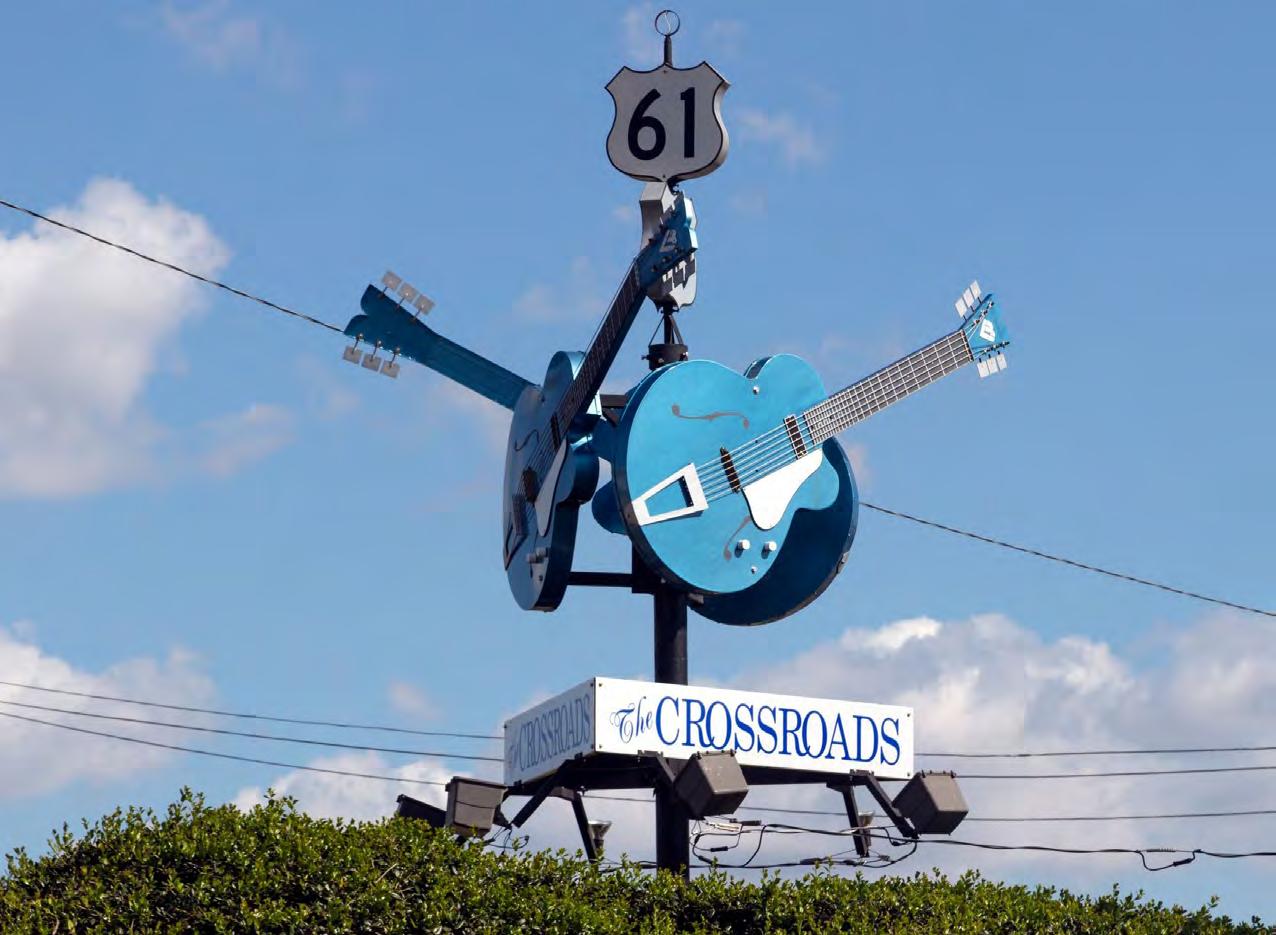
the image of an itinerant country loner whose taste for kitchen-sink wine, women, and the wandering lifestyle fueled him in his day and spurred his untimely death. As legend goes, Johnson couldn’t really even play guitar until he made a pact with the devil at a crossroads in Mississippi (either Clarksdale or Rosedale, depending on who you ask), selling his soul in exchange for his singular, uncanny ability with the instrument. And while there are always kernels of truth in every great story, a book released last year aims to debunk much of the mythical Johnson by conveying previously unknown and charmingly pedestrian aspects of the man — characteristics that don’t quite square with the music world’s romanticized speculations.
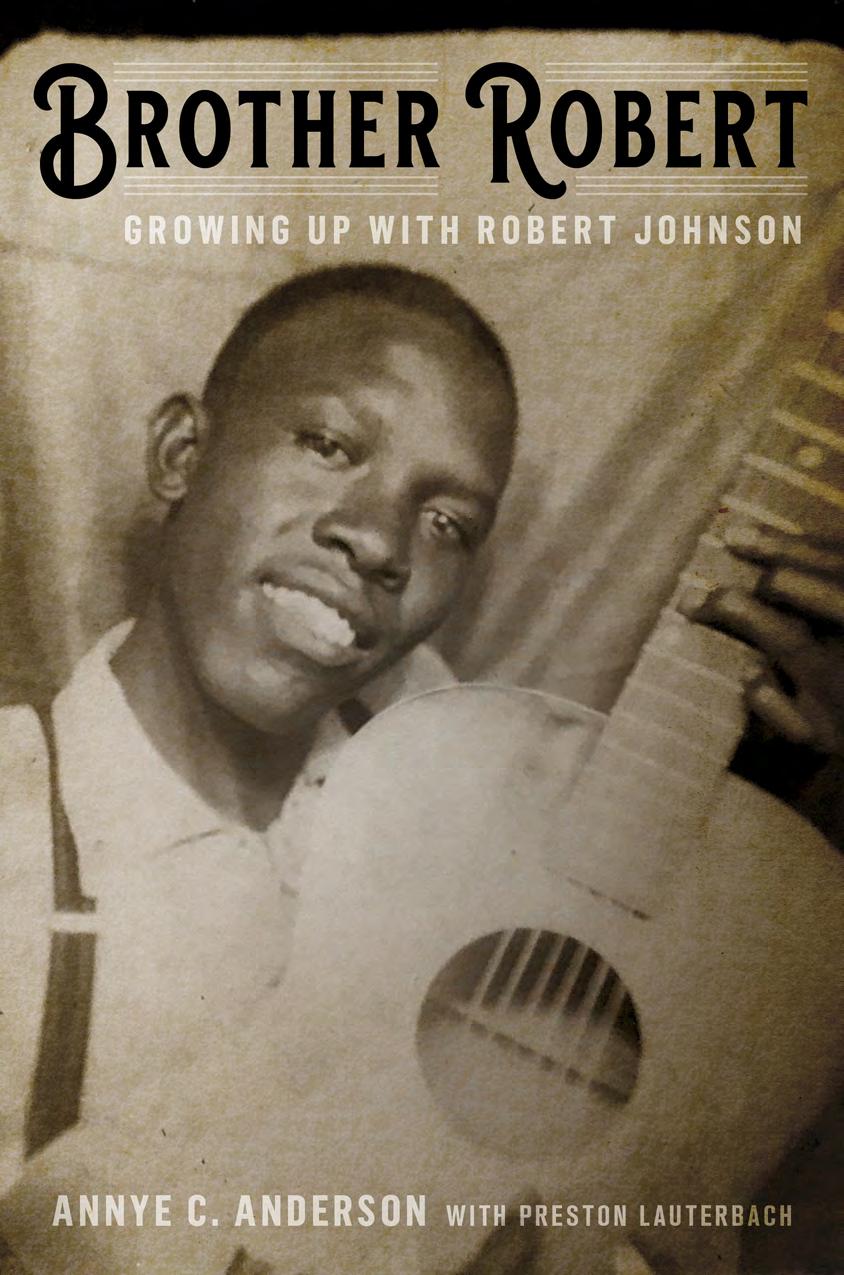
Brother Robert: Growing Up With Robert Johnson, co-written by Johnson’s stepsister Annye C. Anderson and the author Preston Lauterbach, is told
through Anderson’s perspective as a Black girl coming of age in the birthplace of rock and roll in the 1920s and ’30s. The book paints a portrait of Johnson as a young Black sophisticate who spent much of his short life in the urban embrace of a vibrant South Memphis neighborhood. According to Anderson, Johnson was not a loner but a nurturing brother who adored his sprawling family. She spent the first 12 years of her life growing up with him. “He was not a vagabond,” Anderson said in a video recorded by Lauterbach. “He did hobo, but he was not without a loving, caring family. The things I’ve read, what’s been said about him, I can’t recognize. I can’t determine the sands being true.”
A retired educator, former administrator of Boston Public Schools, and an avid organic gardener, Anderson is a remarkable figure in her own right, a successful and busy woman who waited until she was 92 years old to tell her side
of the story. She solicited Lauterbach’s help on the strength of his 2011 book The Chitlin’ Circuit and the Road to Rock ‘n’ Roll. The first time the pair spoke on the phone, Lauterbach was convinced she was true blue. “The sound of her voice instantly struck me,” he says. “I knew from practically the first syllable that came out of her mouth that she was the real thing, and that this would probably happen.”
Though the duo had a shared understanding and, thus, shared language of Black culture in pre-rockand-roll Memphis — Anderson lived it and Lauterbach studied it — that doesn’t mean Lauterbach didn’t do his due diligence. “Whatever could be checked against the historical record, she hit on,” Lauterbach says. And throughout Brother Robert, Anderson doesn’t pretend to know every aspect of Johnson. She admits he may have compartmentalized his life on the road when he was around
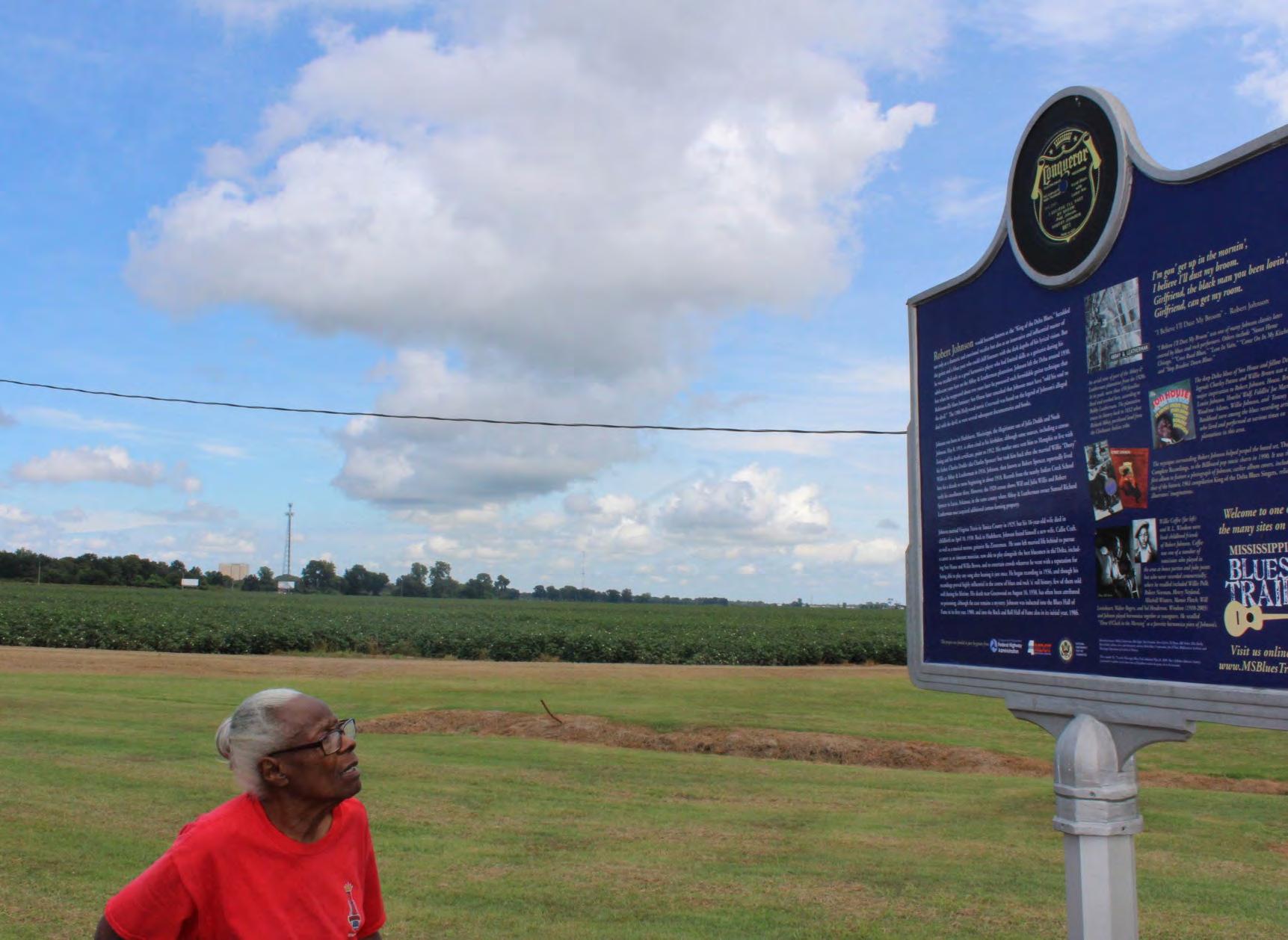
Annye C. Anderson at the Robert Johnson Mississippi Blues Trail marker at Abbay & Leatherman plantation in Robinsonville, Tunica County, Mississippi.
his younger family members. She wrote that Brother Robert — his nickname among the family — never smelled like alcohol when she was with him. But she also admitted, “I didn’t have him in my pocket.” Says Lauterbach, “She understood that her perspective was that of a younger sibling and child and that there were other layers to Robert Johnson. … But she knew certain things that illuminated the real man, things that hadn’t been out yet.”
For decades, Anderson had quietly read nearly everything written about her late stepbrother — all of the articles and album notes. She compared them to her own memories, as well as to interviews she conducted with some of the same sources quoted in other biographies as she worked to untangle the knots surrounding her late stepbrother’s estate. “She realized that, in many cases, the source material was flawed in some kind of way,” Lauterbach
says. “All of the guys who were the sources for many of the Robert Johnson stories, she met with those people too. She made her own kind of reads about whether or not they really knew him ... it created a suspicion in her as to whether or not Johnny Shines, for example, really knew what he was talking about. She was convinced that Honeyboy Edwards was completely full of shit.”
The Value of Mythology
Modern blues scholars now understand that an association with Johnson is a valuable commodity, and that blues musicians from Chicago to the Delta have previously told stories that are often as speculative and stretched as the mythology formed by their white interpreters. “Black people will tell white people anything to get a dollar,” Anderson wrote, placing her skepticism about these musicians’ memories into
sharp focus. She also details the Johnson family’s history with predatory early blues collectors and hopeful biographers who made claims on the Johnson estate via dubious contracts — a harrowing section of the book that illuminates an ugly power dynamic and a long-fought battle for control of the Johnson estate that’s still ongoing.
Outside the shadows of Johnson’s posthumous story exists a charming depiction of everyday life, including the many cousins, siblings, preachers, and others who formed Johnson’s Memphis community. In the book, Anderson shared her memories of Johnson’s fandom and cultural appetite. He sang along with Jimmie Rodgers records, for example, a favorite being “Waiting for a Train,” which depicts the very standard practice of men stowing away on freight trains during the Great Depression, searching for work. It’s an act Johnson could relate to, having hopped trains out
of Memphis in search of gigs. Johnson could even yodel like the country music pioneer. He also read the newspaper, wrote postcards from the road, and dressed his hair with Dixie Peach pomade. And he paid attention to the latest popular films and hit singles, admiring the work of Gene Autry, Clyde McCoy, and Count Basie.
What all of this amounts to is a very different portrait of Johnson than was previously known. He was likely not a country boy who seasoned his music with city flavor, but was instead a more cosmopolitan figure who wove threads in equal measure country and city. “It explains why he’s the first major figure we have in blues who learned as much from records as he did from human beings,” says Wald, who also wrote the introduction to Brother Robert. “But do understand, like everybody else, I’m making my own Robert Johnson,” he adds. “Basically, all of us are creating the myths that make us feel like we understand.” (This was glaringly true in 2000, when the New York Times’ film critic A.O. Scott declared that the itinerant musician Tommy Johnson depicted in the Coen Brothers’ film O
Brother, Where Art Thou? was modeled on the legend of Robert Johnson instead of the actual blues musician Tommy Johnson, who cultivated a sinister persona in his life and to whom many blues scholars trace the origin of the devil-at-the-crossroads myth.)
Given the mythology — particularly the devil and the crossroads myth — has been almost as important to Johnson’s rise as the music itself, listeners may never really know the complete, true story of the legendary bluesman. “I want people to not be ignorant,” Lauterbach says. “But there’s also nothing wrong with feeling like you need another explanation for where his sound came from and where his poetry came from, because it blows your mind to hear it.”
Brother Robert has humanized Johnson perhaps more so than any previous account, but there are other Johnson and blues scholars and archivists who aim to penetrate the myth.
“We treat him as a human being,” says Shelley Ritter, executive director of the Delta Blues Museum in Clarksdale, Mississippi, which aims to “preserve, interpret, and encourage a deep interest
in the story of the blues.” Seated in the museum at one of two famous crossroads in the state, at highways 61 and 49, Ritter says that Johnson belongs in a long line of native bluesmen who form a unique and essential history in the Delta, an enduring cultural phenomenon that continues to draw enthusiasts from all over the world. Though there aren’t many surviving Johnson relics, and some of the precious few are held by undeserving opportunists, the museum does house the sign from the Three Forks, the club where Johnson purportedly played his last gig, as well as modern tributes such as the postage stamp that bears Johnson’s image. But perhaps the most valuable Johnson artifact appears on the cover of Brother Johnson. For 92 years, Anderson held on to the third known photograph of the late musician, a tight shot in which he’s holding his acoustic guitar with a wide smile. She presented it to Lauterbach during one of the pair’s earliest meetings, shocking him to his core. “I didn’t even know that there was a close family member still around,” Lauterbach says. “And she proved to be really remarkable.” ■
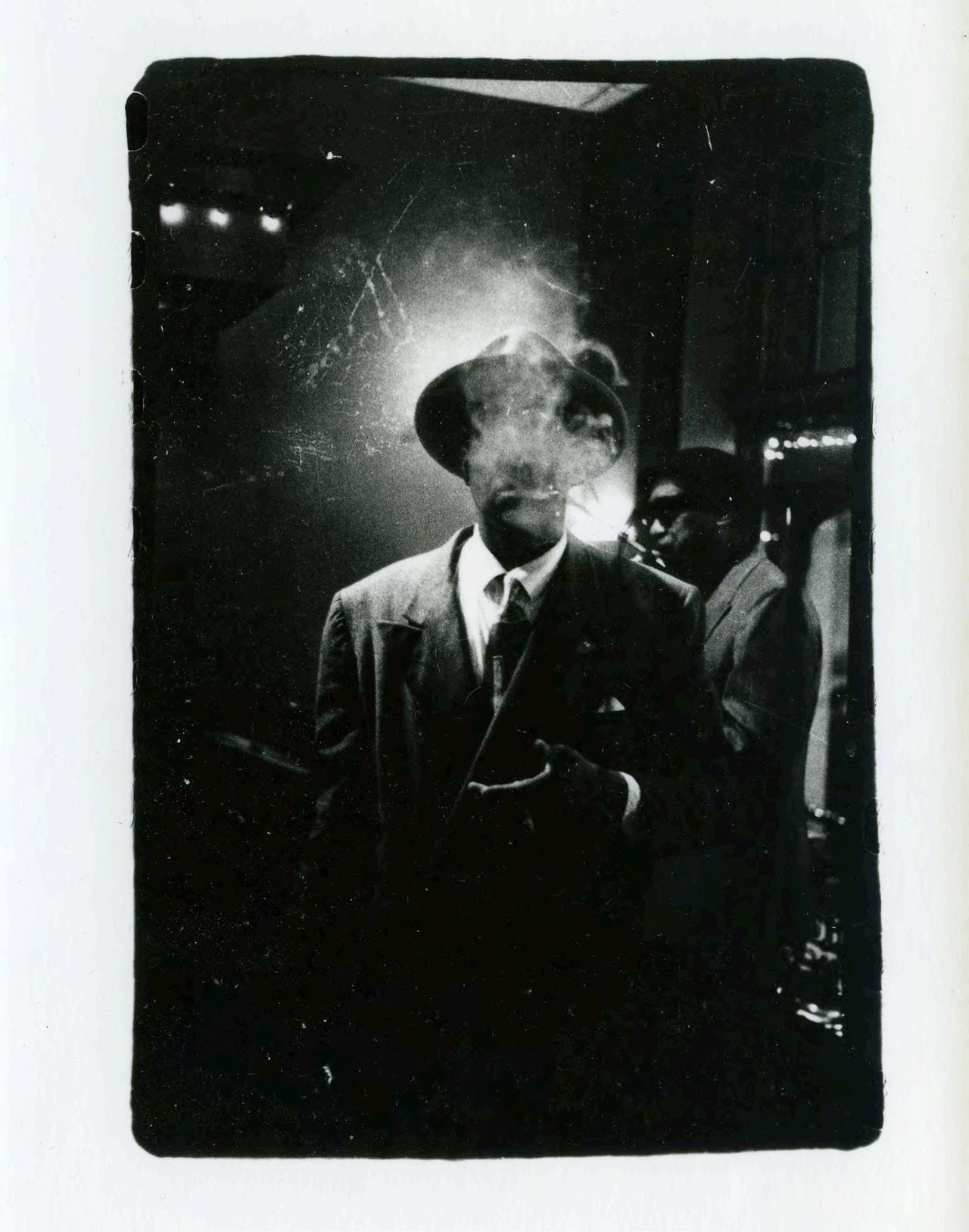
One of thousands of prints made by Bob Reuter — musician, disc jockey, photographer, author, and fixture of St. Louis nightlife for decades.
THE MUSICAL SPIRIT OF ST. LOUIS
Words and photos from the Missouri Historical Society
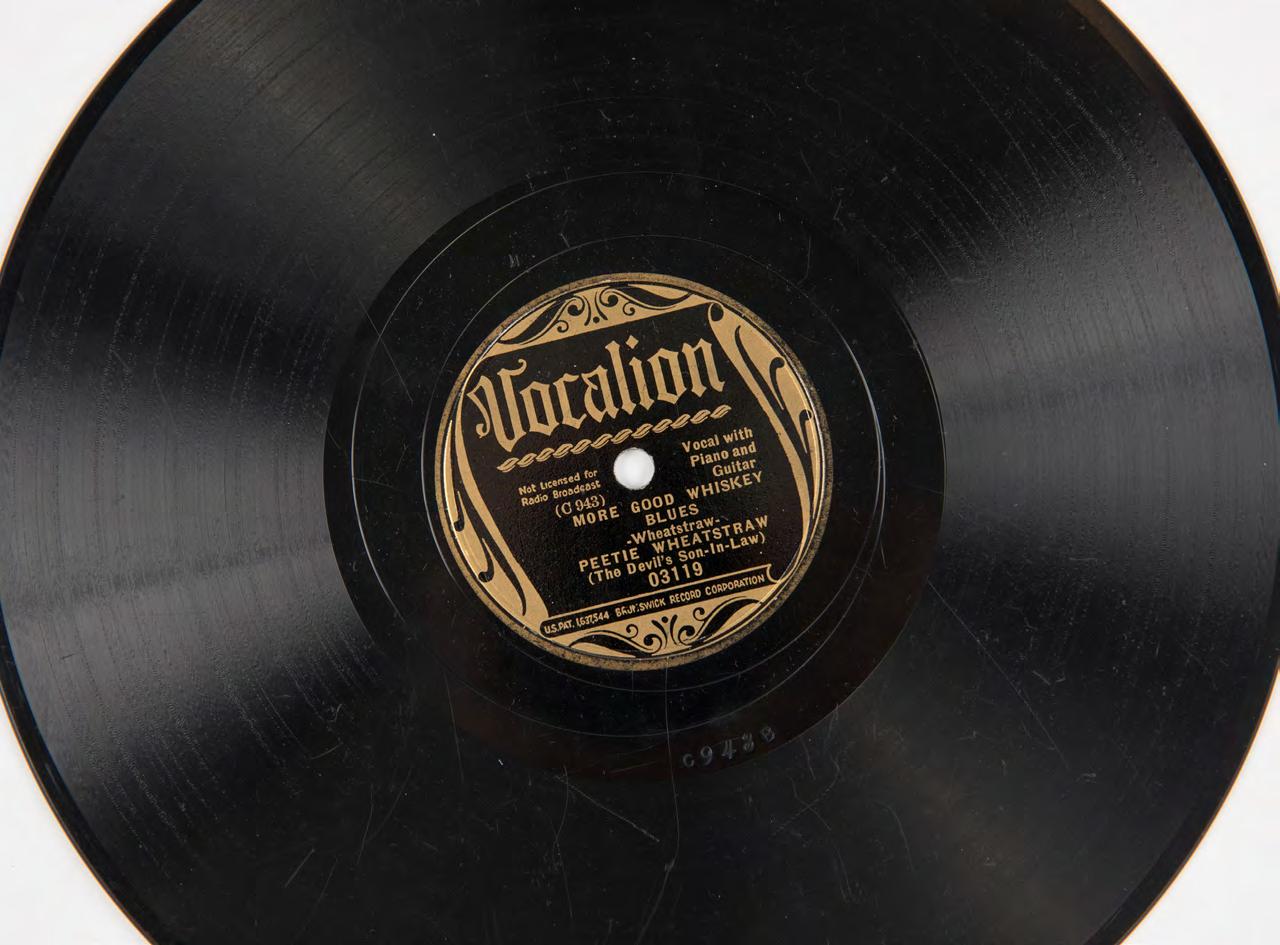
“More Good Whiskey Blues” (1935) by East St. Louis blues musician Peetie Wheatstraw, who called himself “the High Sheriff of Hell” or “the Devil’s Son-in-Law” on each of his 160 records.
When it comes to musical ghosts, St. Louis is as haunted as they come.
The city has produced genre-defining legends like Chuck Berry, Miles Davis, Tina Turner, and Nelly. It’s been home to “the Velvet Bulldozer” Albert King, “the Black Venus” Josephine Baker, and the original king of pop music, Scott Joplin. And don’t forget folk cornerstone John Hartford, gospel bedrock Willie Mae Ford Smith, and alt-country/indie royalty Jay Farrar and Jeff Tweedy, whose first album as Uncle Tupelo even helped provide No Depression with its name.
Few cities anywhere can claim so many leading lights in such a wide range of styles. But those are just some of the St. Louis greats you probably know already. What about the ones you haven’t heard of?
What about Henry Townsend, the
St. Louis blues musician whose recorded career spanned nine decades? What about St. Louis’ all-female ’70s punk band, The Welders? What about the “howling hillbillies” of 1930s radio leviathan KMOX? What about Bob Reuter, Dr. Jockenstein, Victoria Spivey, or “the High Sheriff of Hell” Peetie Wheatstraw?
Visitors to the Missouri History Museum in St. Louis will get a chance to hear all these voices and more in St. Louis Sound, which opens on Aug. 28. The 6,000-square-foot gallery takes a wideangle look at the popular music history of the city, from the dawn of recorded sound in the late 1800s through the early 21st century.
“We tried to treat the exhibit like a well-crafted album,” says Andrew Wanko, public historian at the Missouri History Museum, who spent years assembling the exhibit’s research and tracking down
artifacts. “It was obviously going to be impossible to include every single story or artist from St. Louis’s massive music history, but we’ve got the greatest hits, deeper cuts, and oddities all well-represented.”
St. Louis Sound has nearly 200 artifacts on display, beginning with recorded sound’s earliest moments. The first artifact visitors encounter in the gallery is the oldest American sound recording we can hear today. Known as the St. Louis Tinfoil, the fragile recording was made in St. Louis on June 22, 1878 — just months after Thomas Edison patented the phonograph, the first device to successfully record and play back sound. “This is a common ancestor to every piece of recorded music any of us have ever heard,” Wanko says.
Other pieces include a dress worn by Tina Turner for her New Year’s Eve 1982
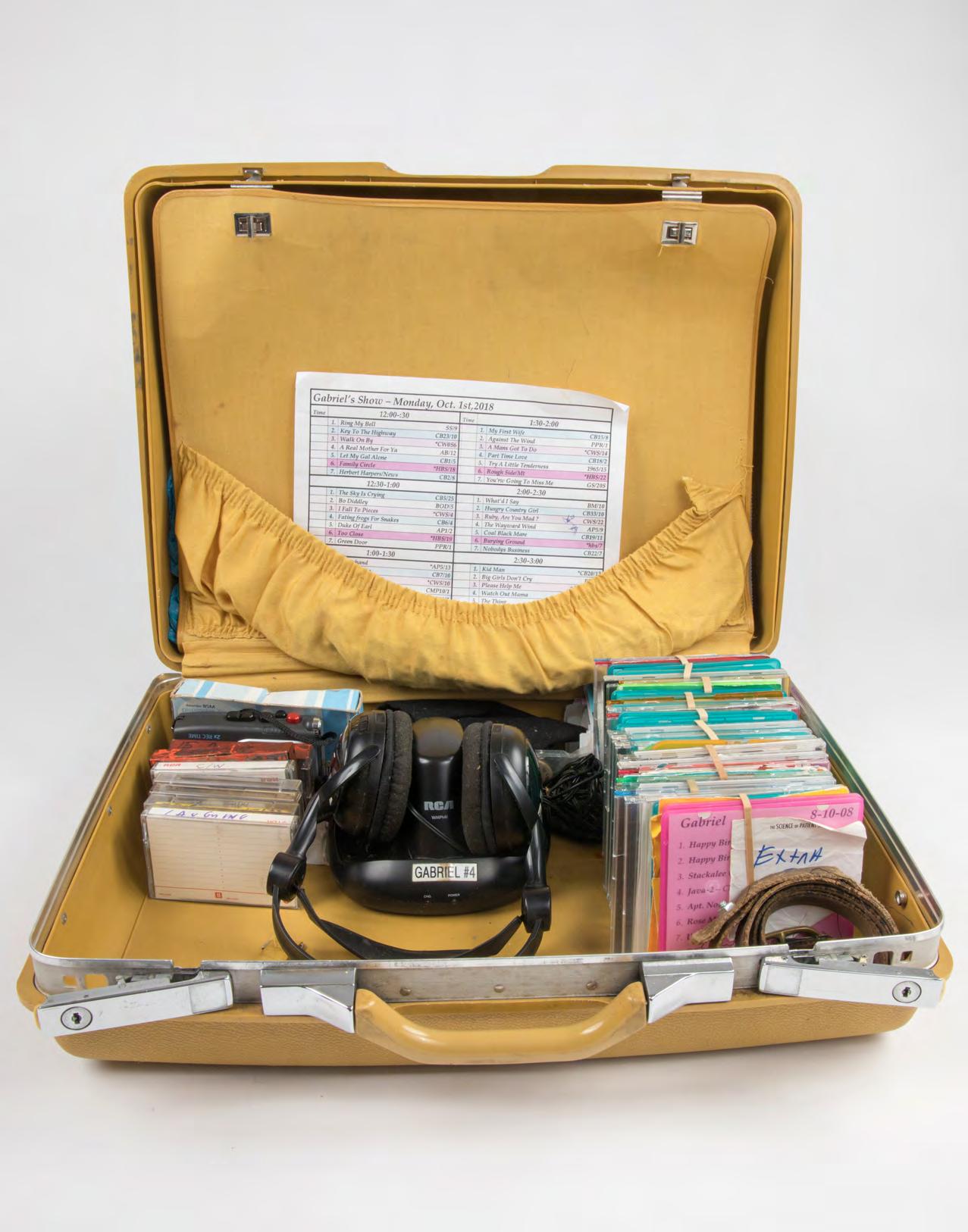
Disc
on the air in St. Louis for nearly seven decades, from 1952 until his death in 2018. This suitcase contains all the materials for his Oct. 1, 2018, KDHX radio show, which sadly never made it to the airwaves.
jockey Mitchell “Gabriel” Hearns was
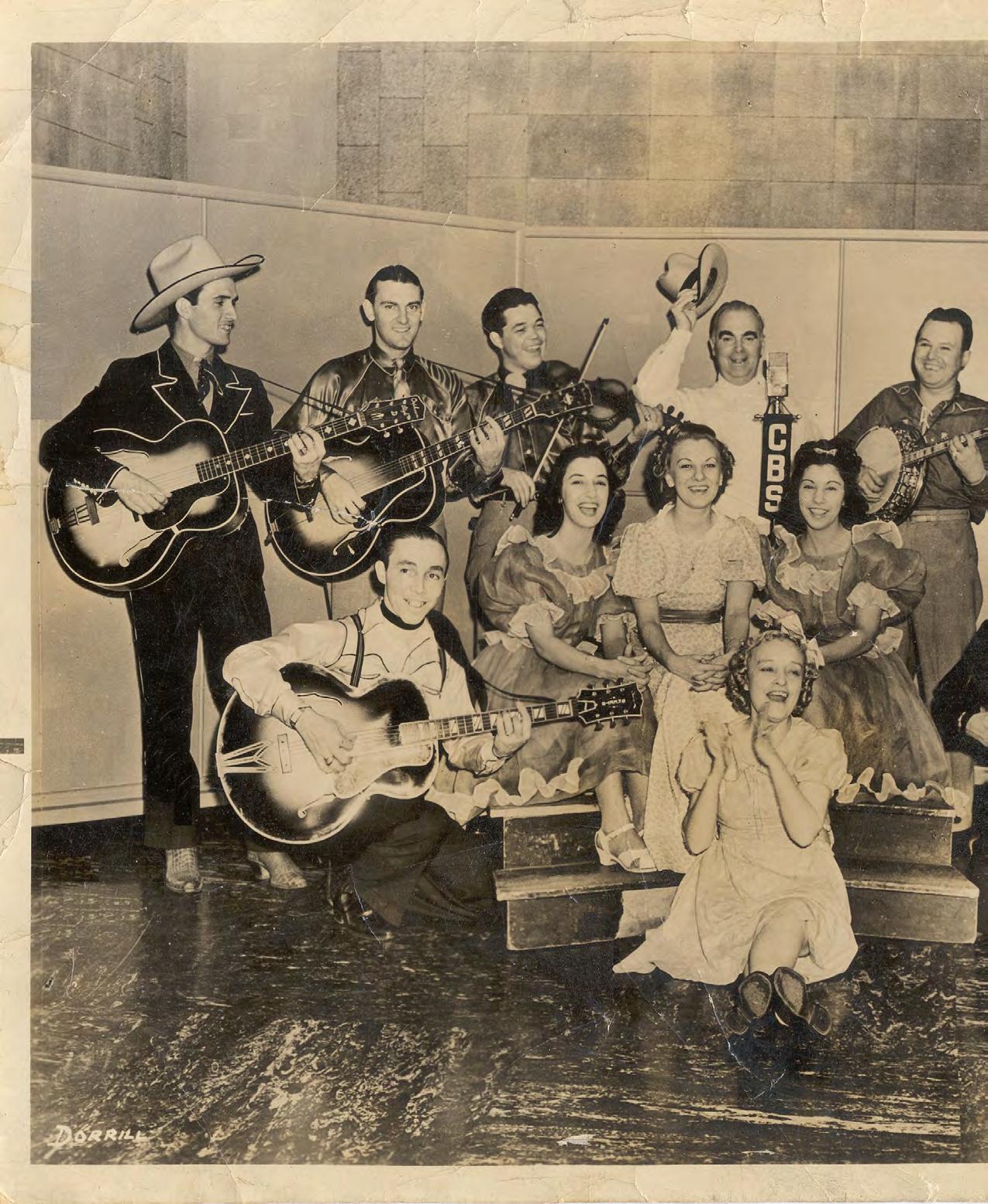
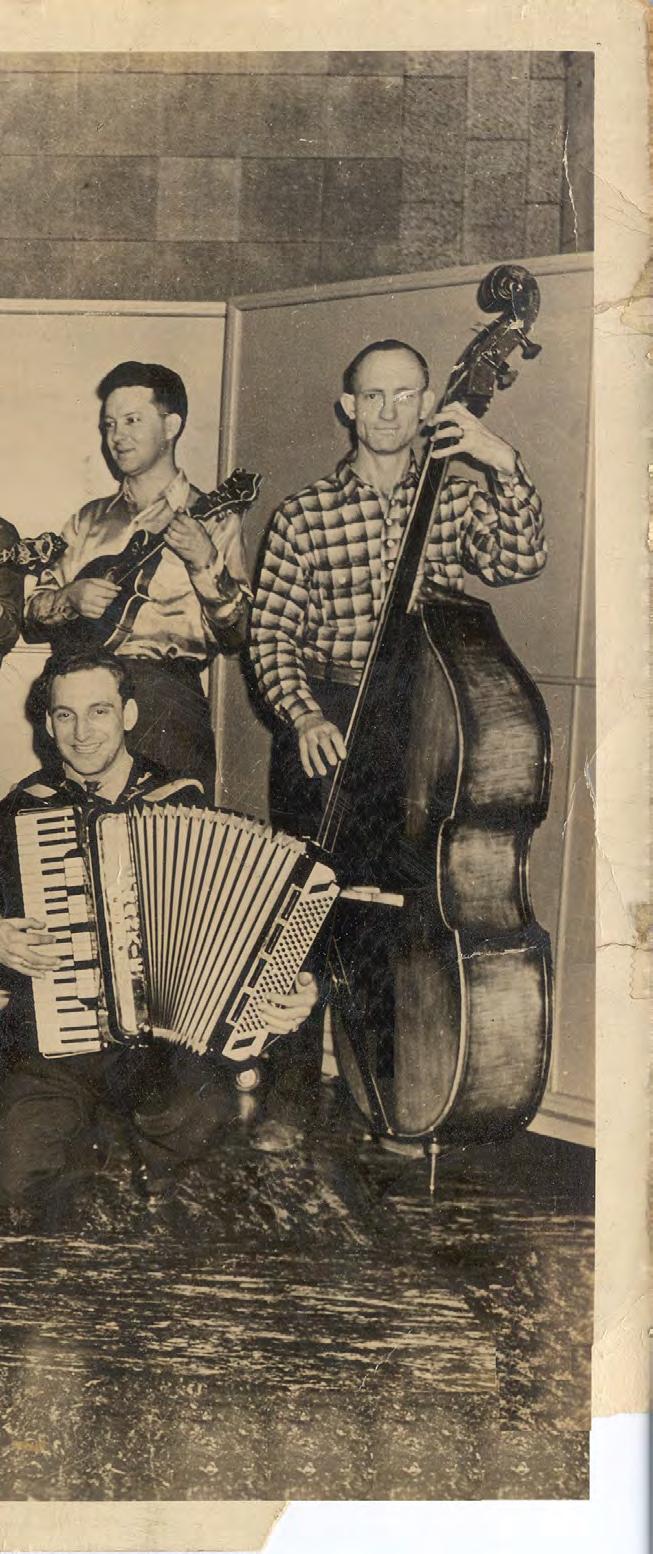
Pappy Cheshire’s Champion Hillbillies, one of St. Louis’ dozens of live radio “hillbilly” bands in the 1930s.
performance on The Tonight Show; the reunited guitar and piano of Chuck Berry and Johnnie Johnson; trumpets belonging to jazz legends Miles Davis and Clark Terry; and relics of legendary local venue Mississippi Nights, which saw shows ranging from pre-fame AC/DC to Nirvana’s only St. Louis appearance.
Wanko hopes that this exhibit ultimately strikes a deeper curiosity about St. Louis within both locals and visitors. “St. Louis is this cross-section of America unlike anyplace else — halfway north and halfway south, the ‘Gateway to the West’ and the last old Eastern city. We’ve seen the country’s highest highs and lowest lows. And it shows in our music. We’ve been a shaping force on every major genre in the country’s history and have always been this confluence where disparate parts are brought together into greater things.”
He also hopes that shining a light on the city’s storied musical past reflects attention on its future. “We have so much music going on here: We have all these exciting young artists mixing with masters who have been playing for decades, and one of the nation’s greatest independent radio stations, KDHX. This city still has a huge voice. If the past is any indicator, St. Louis will be the origin point of a lot of exciting American music yet to come.”
In the Missouri History Museum’s St. Louis Sound, more than a century of the city’s musical past comes together in one free exhibit, which runs through January 2023 and will be accompanied by a calendar full of educational programs, public concerts, and more. For additional information, visit mohistory.org.
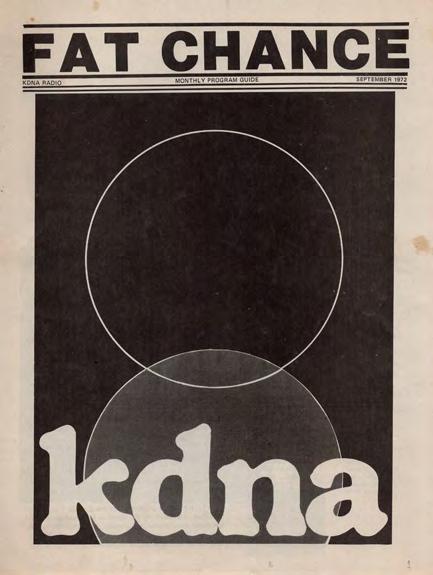
Fat Chance, the member newsletter of St. Louis experimental station KDNA, one of the earliest free-form noncommercial radio stations in the country.
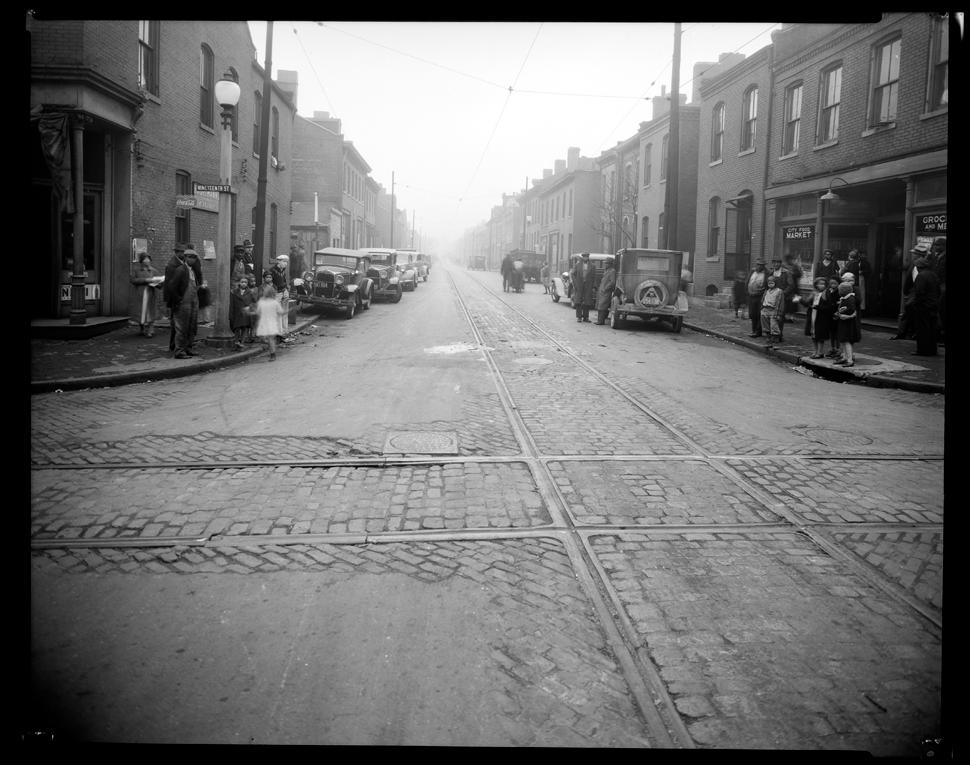
The area known as “Deep Morgan,” the heart of St. Louis’ vibrant pre-war blues world, taken April 1, 1935.
Clothing worn by St. Louis punk rock pioneers The Welders, ca. 1977.
Dress worn by Tina Turner on The Tonight Show on Dec. 31, 1982.
Miles Davis’ Versace jacket, worn in his second-to-last concert just months before his death in September 1991.
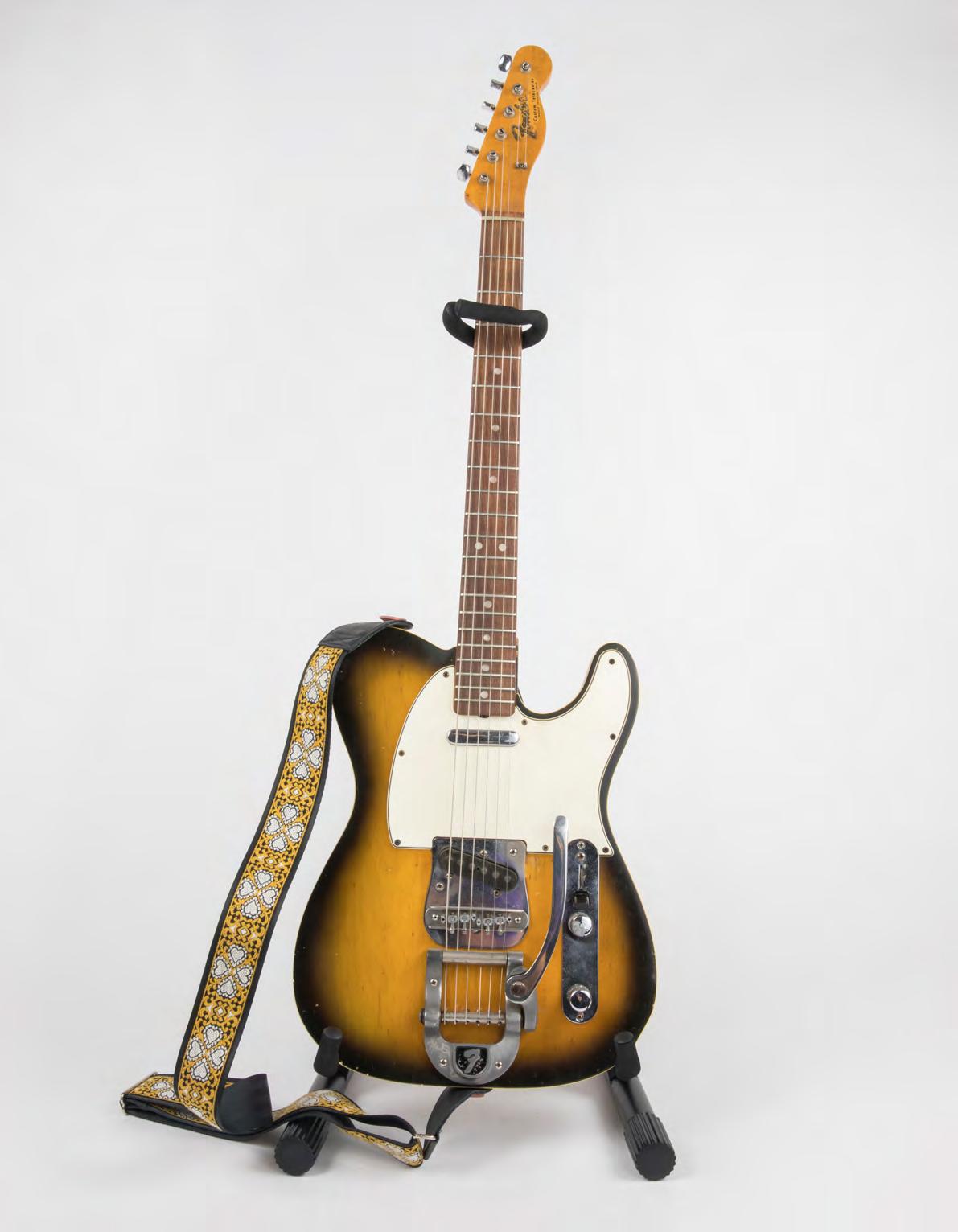
Jay Farrar’s Bonanzing Montgomery (c. 2000), left, and Jeff Tweedy’s 1967 Telecaster. Before respectively founding Son Volt and Wilco, these two legendary songwriters forged the sounds of roots music and punk rock as Belleville, Illinois’ Uncle Tupelo.
QUESTIONS OF THE HEART
Hiss Golden Messenger finds the timeless in what we experience together
by Matt Williams
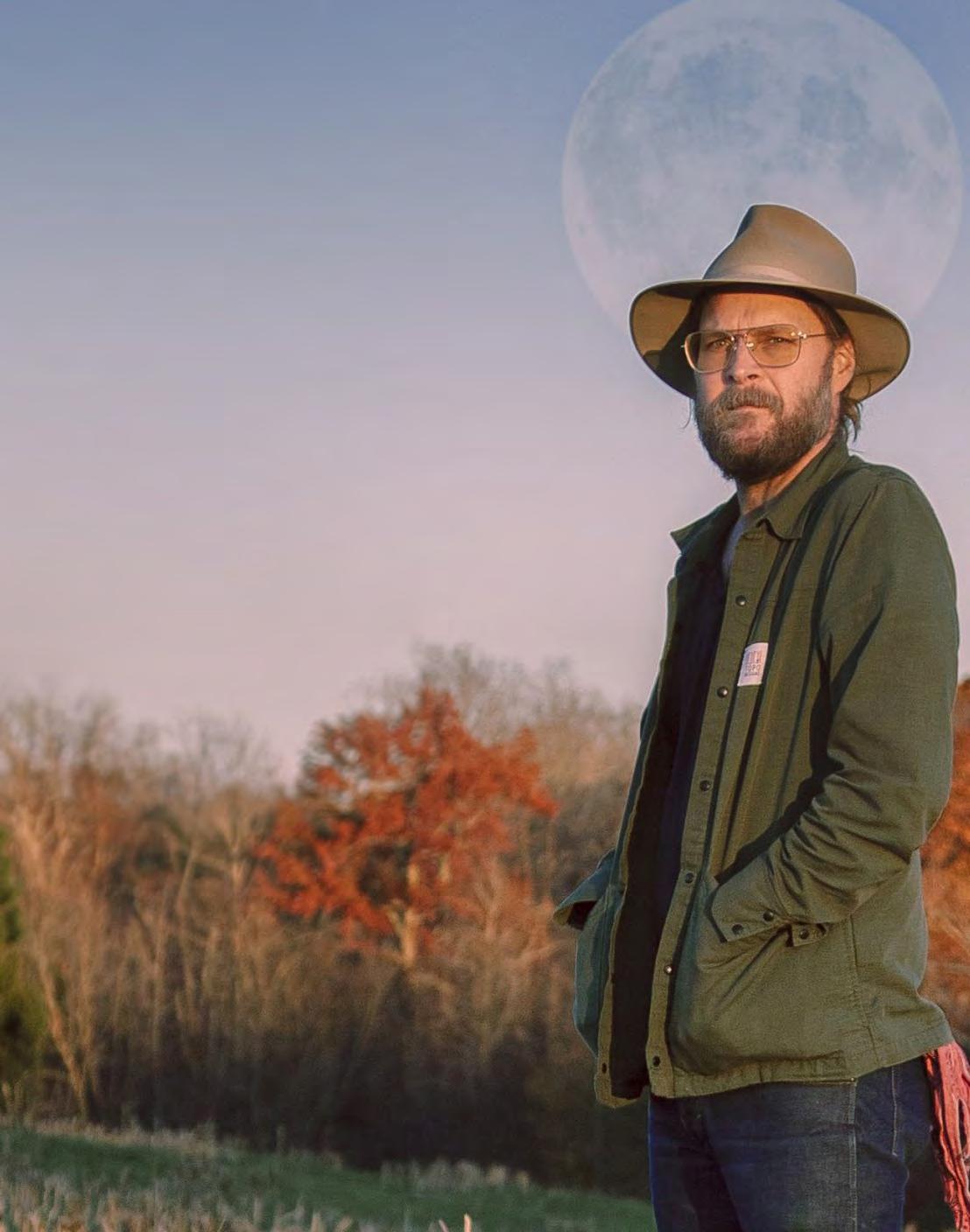
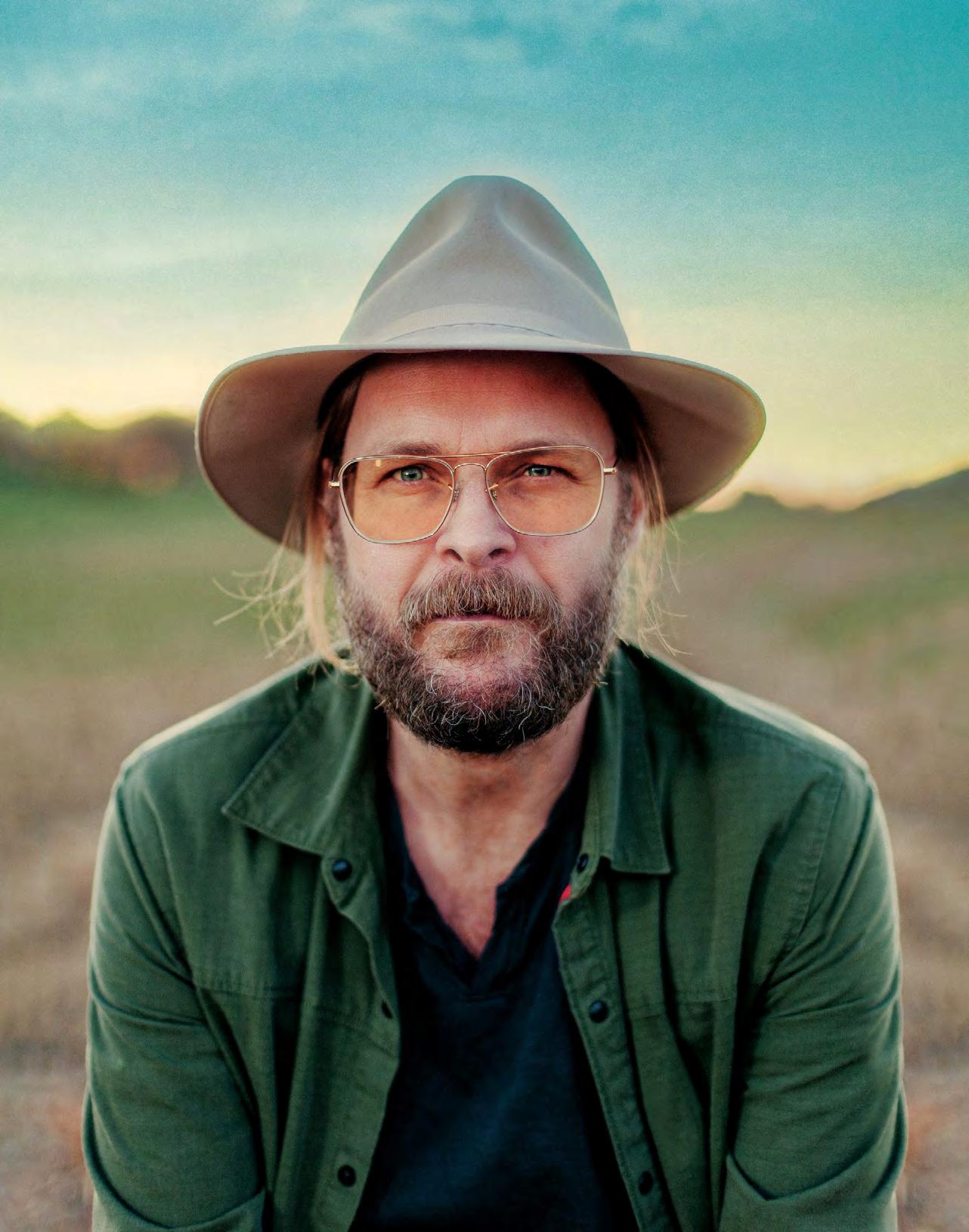
“When people talk about their experiences with God, when I read accounts of people encountering the Holy Spirit, the closest experience I have to that is what it feels like to make music with people. And I have to wonder if we’re not actually all talking about the same thing.”
M.C. Taylor
The curtain closes on hiss Golden Messenger’s earthy, unadorned 2010 record Bad Debt with “Drum,” a song that, in the years since, has become eternally stitched to the essence of the band. Like the rest of the album, it was recorded in the creekside house in Pittsboro, North Carolina, where songwriter M.C. Taylor and his family lived at the time, at the kitchen table as his newborn son Elijah slept nearby. Through the tape hiss, Taylor sings softly over a shuffling, steady strum. He addresses a father, a brother; takes heed of the plowman, the farmer, the hunter. “Take the good news, carry it away,” he sings, just barely above a whisper. “Take the good news, spirit it away.”
For 2014’s Lateness of Dancers, “Drum” was re-recorded, fleshed out by sweet and soulful fiddle, plucky banjo, softly swelling organ. It became a live tradition for Taylor to wade into the middle of a crowd, creating a circle around him, and lead a small but mighty chorus of voices in the refrain, magnifying its potency and spiriting away that good news. More importantly, the song took root during these acts of communion, in fleeting moments wherever it overflowed from its original, solitary confines. What
began as a lone, hushed voice into a tape recorder had blossomed into a collective exclamation of joy.
“When people talk about their experiences with God, when I read accounts of people encountering the Holy Spirit, the closest experience I have to that is what it feels like to make music with people,” Taylor says over the phone from his home in Durham. “And I have to wonder if we’re not actually all talking about the same thing.”
He continues, “This sense of exhilaration, the thrill, the idea that you are in the thrall of something that is not totally controllable … I have to think that if I’ve experienced God, that’s as close as I’ve been to that energy. It’s the same feeling that you get when you are really experiencing love, right?”
The pursuit of that feeling has made Taylor one of the more prolific songwriters working today. The latest Hiss Golden Messenger record, Quietly Blowing It, which came out in June via Merge Records, adds to a catalog that clocks in at around 10 studio albums (depending on who’s counting), a handful of EPs, and numerous live releases. Like the records that came before it, Quietly Blowing It finds Taylor asking profound spiritual questions —
about love, alienation, resilience, the ghosts that haunt America, and how to move through this world.
In an essay titled “Mourning in America” released when Quietly Blowing It was announced in March, he writes that he started the album while holed up in a small basement room a year prior, “looking for peace” at a globally tumultuous time. Later, when pandemic conditions allowed, the album was recorded properly, with the whole band.
“The vast majority of Quietly Blowing It is the sound of us together in a room making that music,” Taylor says. “And it’s somehow a metaphor for something that we’ve been dealing with this year.”
Better Together
Just what exactly the good news sung about on “Drum” might be is up to each individual life it touches, but the song demonstrably and undeniably seems concerned with the transformative power of togetherness. That sentiment — that we need each other — often seems to drive matters of human spirit in the Hiss Golden Messenger universe (which ostensibly began after Taylor finished a graduate program in folklore at the University of North Carolina). It’s beating
back darkness in the chain-breaking resistance of Hallelujah Anyhow’s “When the Wall Comes Down” from 2017, and it’s there when Taylor seeks guidance on Terms of Surrender’s “I Need a Teacher” from 2019: “Lord, make me thankful / though it ain’t easy / give it away freely / it’ll come back to you eventually.”
In the face of the past year and a half, Quietly Blowing It counters like a salve, emphasizing that strength of spirit comes from togetherness and confronting the ghosts seemingly disparate groups have in common — fights for safety, recognition, selfdetermination, and freedoms of choice and identity. As Taylor sings on “Way Back in the Way Back,” the opening track on Quietly Blowing It, “Up with the mountains / down with the system that keeps us in chains.” Taylor alludes to these systems that enable racism, police violence, unequal education subtly in song and more directly via his own actions. (For example, he directed all proceeds from his 2018 single “Passing Clouds” to the nonprofit Everytown for Gun Safety and $1 from each ticket sold for his 2019 Terms of Surrender tour to the Durham Public Schools Foundation.)
Throughout Quietly Blowing It, Taylor sings of these crises of the body
and the spirit and how they impact each other.
“I can’t think of another time in my life that I’ve had better examples, over and over again, of the power of or just the human necessity of being together,” Taylor says. “And the way that we accomplish things together. I know myself to be a pretty introverted person. And even at the beginning, when we were all needing to stay away from each other, I was kind of like, ‘I can do this. I can do this for as long as I need to.’ It’s really clear to me now that we all need people, even the most introverted or solitary among us. So part of Quietly Blowing It is actually a celebration of gathering. It was really important to me that if we were going to make a record, no matter how difficult it might be, that we all be doing it in the same room together. And that’s what the record sounds like, to me — a group of people in a room, together, making sound.”
Union, communion, and working together are the forces that drive both personal and social change, and on Quietly Blowing It, Taylor offers reminders — that money isn’t by itself a savior on the slinking, funky “Mighty Dollar”; that our issues won’t be overcome if we can’t talk about them on
the soft “It Will If We Let It”; and that in times of pain and despair, we need other people to survive, as on the melancholy title track.
“ There were very specific things that all of us bore witness to in the past year,” Taylor says. “And I was curious about whether I could separate the root themes that we witnessed from the actual specific event in order to make songs. Instead of feeling specific to 2020, instead of feeling like a record of protests of, for example, police murdering an unarmed Black man, I wanted to see if I could draw out some of those themes that felt like just a reiteration of themes that we’ve been witnessing — certainly I have — for my entire life. It’s these constantly recurring themes of injustice, the search for peace and joy, and this sense of imbalance or unfairness in the world and how we attempt to reorder things, at least in our heads.”
Untangling Knots
This adherence to theme instead of particular events accounts for the timelessness of Taylor’s songwriting. It’s also imbued with a spiritual quality, sometimes with outright biblical references, but more often through the
devotional attention paid to secular phenomena, as he finds a mystic, unifying energy in people, rivers, celestial bodies, or acts of service.
“His music articulates an untethered spiritual meaning, one which can make sense to those of us who have no coherent system of belief,” writes MOJO editor John Mulvey in the liner notes for the 2018 box set Devotion: Songs about Rivers and Spirits and Children, which comprised remastered reissues of the first three Hiss records and a compilation of rarities. “On these albums, you can hear a mission, a compassionate vision, being improvised and fleshed out exponentially, as Taylor’s sense of community and his place in it grows with every release. Also, they really fucking swing.”
The swinging part — the earthy grooves, the attention to rhythm — is important. For the same box set, The New Yorker writer Amanda Petrusich nails
down what keeps the feel of Hiss Golden Messenger grounded among sometimes heady lyrical motifs: “One of the things I like the most about Taylor, both personally and musically, is that he doesn’t have a great deal of patience for bullshit; he instinctively resists limp platitudes and dopey philosophizing.”
Rather, through grounding musicality and earnest questions about society, Hiss Golden Messenger offers a sense of balance even while musing on the complexities of human existence.
“I’ve always been drawn to those sort of knotty, tangled notions of what it means to be a human — what our obligations are towards one another,” Taylor says. “And how we try and take shortcuts, and how some people do more of the work than others. And the ways that people living on the margins are exploited or mistreated. This stuff is Bible stuff. There’s so much poetry in it,
and there’s so much emotion in it. If I were to say that, thematically, I like to deal with the types of questions we might find in the Bible, that feels like a pretty dusty thing to say. But in practice, it’s actually pretty emotional and pretty bloody in a lot of ways.”
Such is the Hiss Golden Messenger modus operandi: asking questions, listening, and trying to make peace with the ghosts that haunt him, and us, collectively. And implicit in the act of flinging such questions into the universe is the hope there might be a response. Or at least that there could be someone else out there, who might not have an answer either, but is asking too.
“I’m not asking complicated mathematical questions. I’m just asking questions of the heart,” says Taylor. “They might be complicated in a different way, but they are questions everybody can understand.” ■
GRACE LANDS
by Katie Moulton
Trapper Schoepp
In fitting fashion, Trapper Schoepp’s history with Gram Parsons begins in a brush with trouble.
“When I was a freshman in college, we had our first rowdy party in our flat, and were concerned that our older upstairs neighbor was going to be upset,” the Wisconsin-based singer-songwriter begins. “But the next morning there was a 30-pack of Pabst Blue Ribbon beer and a stack of Gram Parsons CDs left by our back door. That’s when we knew we’d found the right house to live in and the right person to live in it with.”
Schoepp describes this upstairs neighbor, Geo Valentine, as “a longbearded, mystical man of the wild” who “always had sage advice for me as I navigated my chaotic college days.”
One of the most important pieces of mentorship, however, was that first musical gift.
“ That stack of burned [Parsons] CDs served as my introduction to the ‘alternative’ side of country music, a genre I’d really only known through what I heard endlessly on the school bus growing up,” Schoepp says.
The sounds he was introduced to through that friendship made an
indelible mark. Now, Schoepp has released four solo studio albums of wideranging Americana rock (including his most recent, May Day, released last spring), and even scored a co-writing credit with Bob Dylan.
“Years later, that same housemate [Valentine] was battling cancer, and as he was making his way onto the great mystery, I found myself in New Orleans,” Schoepp recalls.
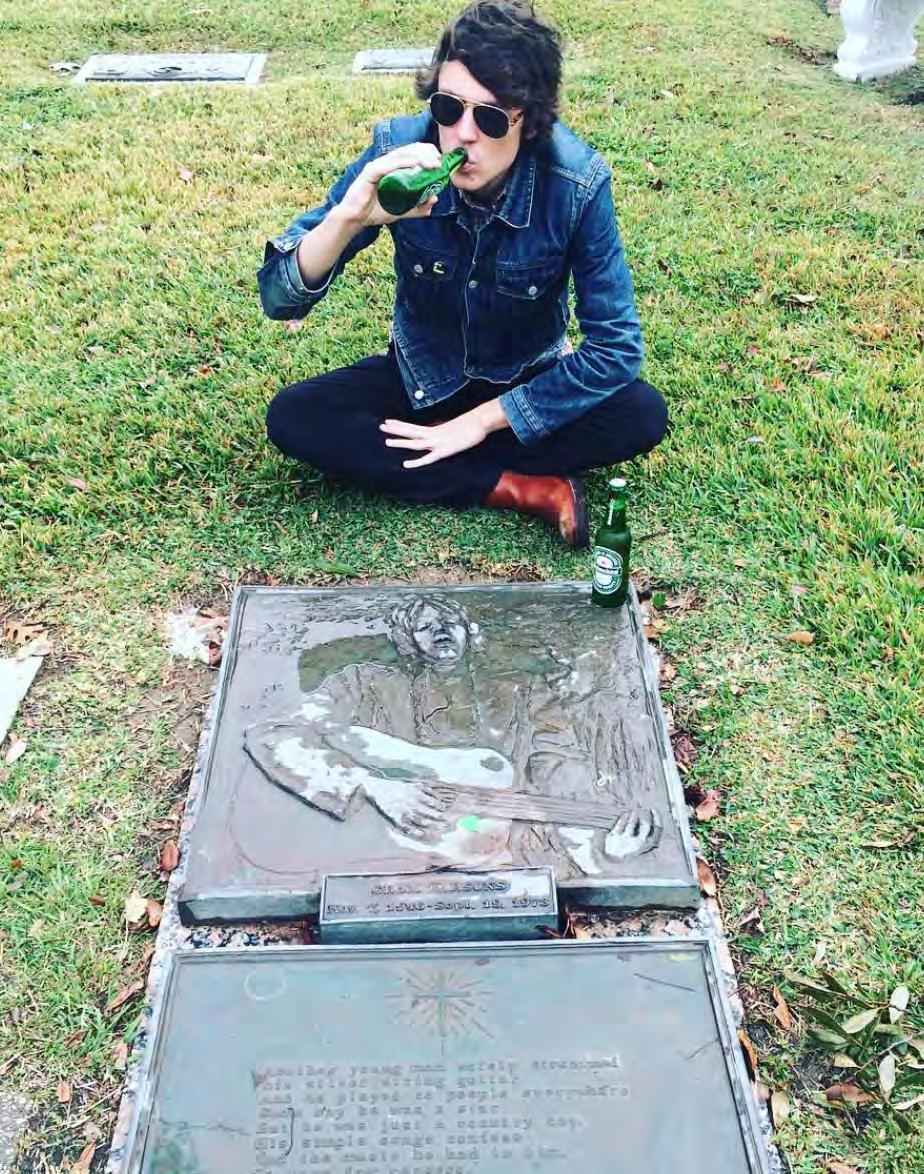
The young musician took what seemed to him the next natural step: He went to drink at Gram Parsons’ grave.
“I felt the weight of my friend’s passing, as well as the cosmic cowboy that we both loved,” Schoepp says. “I poured out a Heineken, played ‘Grievous Angel’ on my phone speaker, and examined the stone outline of Gram’s face surrounded by green Mardi Gras beads.”
After Valentine died, the two friends still passed messages and tokens of appreciation between them.
“He left me a 1964 Epiphone Texan in his will,” Schoepp says, “and my brother and I later played it on a clifftop in the Boundary Waters for his memorial service.”
Schoepp’s tribute to his friend continued, fittingly, in song. The recording of the 2016 track “Dream” got a helping hand from an unexpected source and a chance meeting: the comedian and actor Marc Maron, who was making his debut as a studio musician.
“My manager met Maron at a Jewish deli a few blocks away from where we were recording an album with Brendan Benson in Nashville,” Schoepp says. “Maron asked if we wanted any blues guitar on the album and we took him up on his offer. The next day he showed up and we spent the day tracking the song ‘Dream’ together from the bottom up with him on a Telecaster.”
The song’s lyrics are loaded with references to Valentine — including his love for The Kinks in the line, “Play that ‘Apeman’ 45.” Even the album title, Rangers & Valentines, serves as homage. Reflecting on lost heroes and that pit stop in Louisiana, Schoepp says, “While the theft and transfer of Gram’s body is clouded in controversy, it somehow feels right that the party boy is buried in New Orleans, and that I got to say farewell to two cosmic creatures that day.”
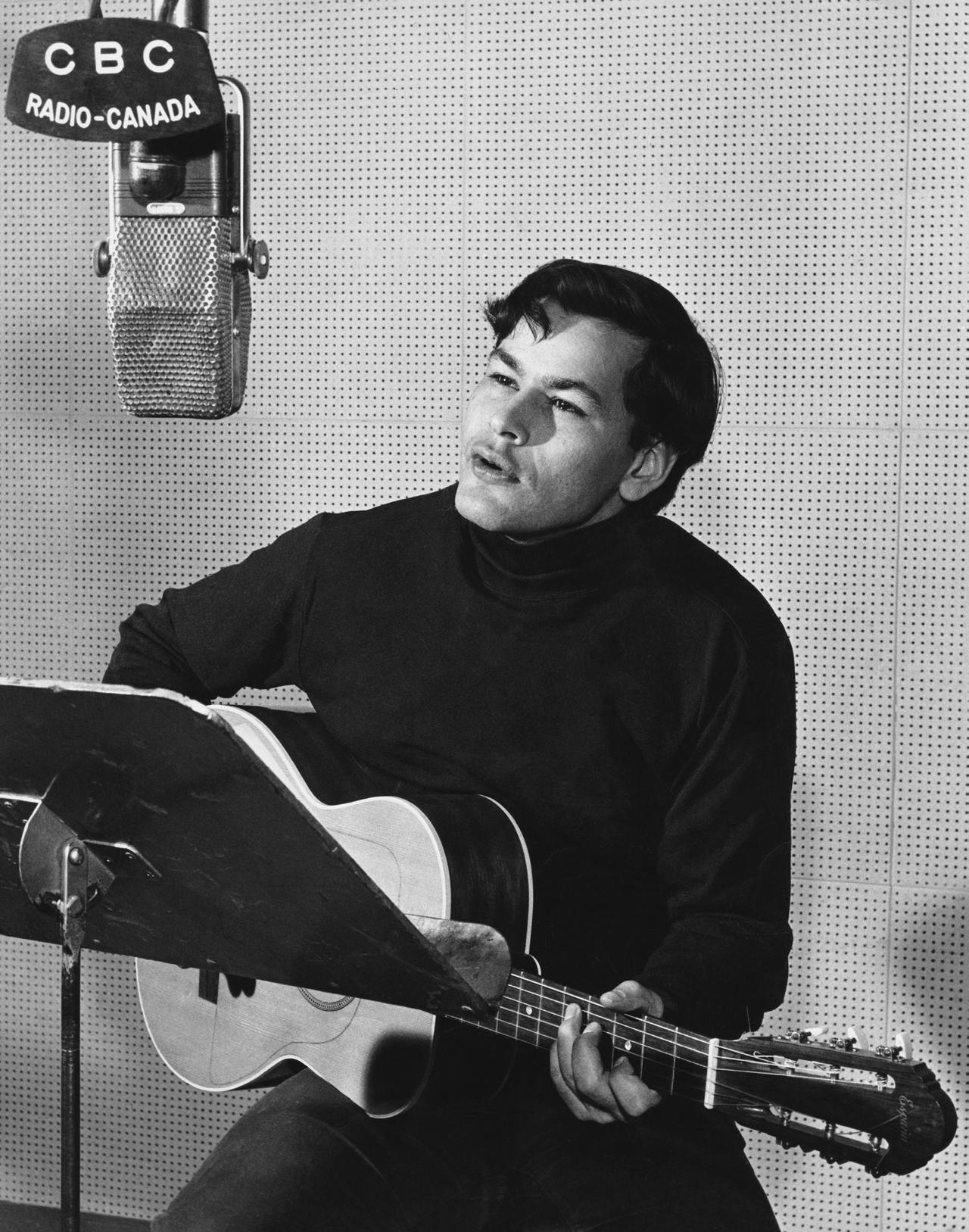
Willie Dunn recording at the CBC in the mid- to late 1960s.
‘SPIRIT CHILDREN’
Celebrating the work of Native musicians while looking ahead by Chuck
Armstrong
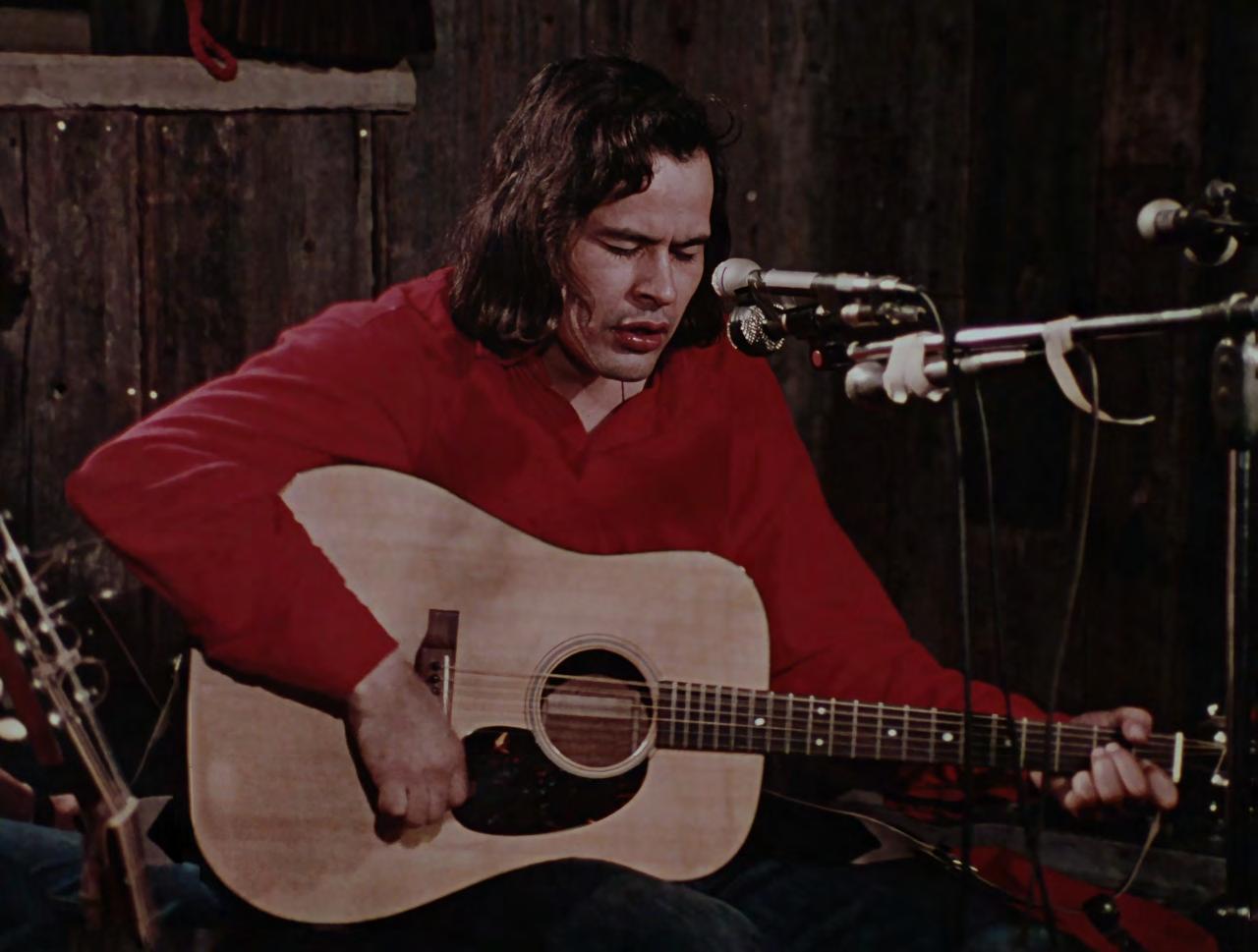
At the 58th annual Grammy Awards in 2016, Bob Dylan’s The Basement Tapes Complete: The Bootleg Series Vol. 11 picked up the award for Best Historical Album. While that may not have been a shock, there was something else happening in the often-overlooked category: Light in the Attic Records, an independent label based in Seattle, was celebrating the nomination of Native North America, Vol. 1: Aboriginal Folk, Rock, and Country 1966-1985. A cursory look at this compilation might lead one to believe it simply gathers the songs of Native musicians to shed a little light on their talents, but Native North America accomplishes so much more than that.
“For about 15 years, I was traveling Canada and around the world, looking for these old, dusty vinyl records,” explains Kevin Howes, the producer of
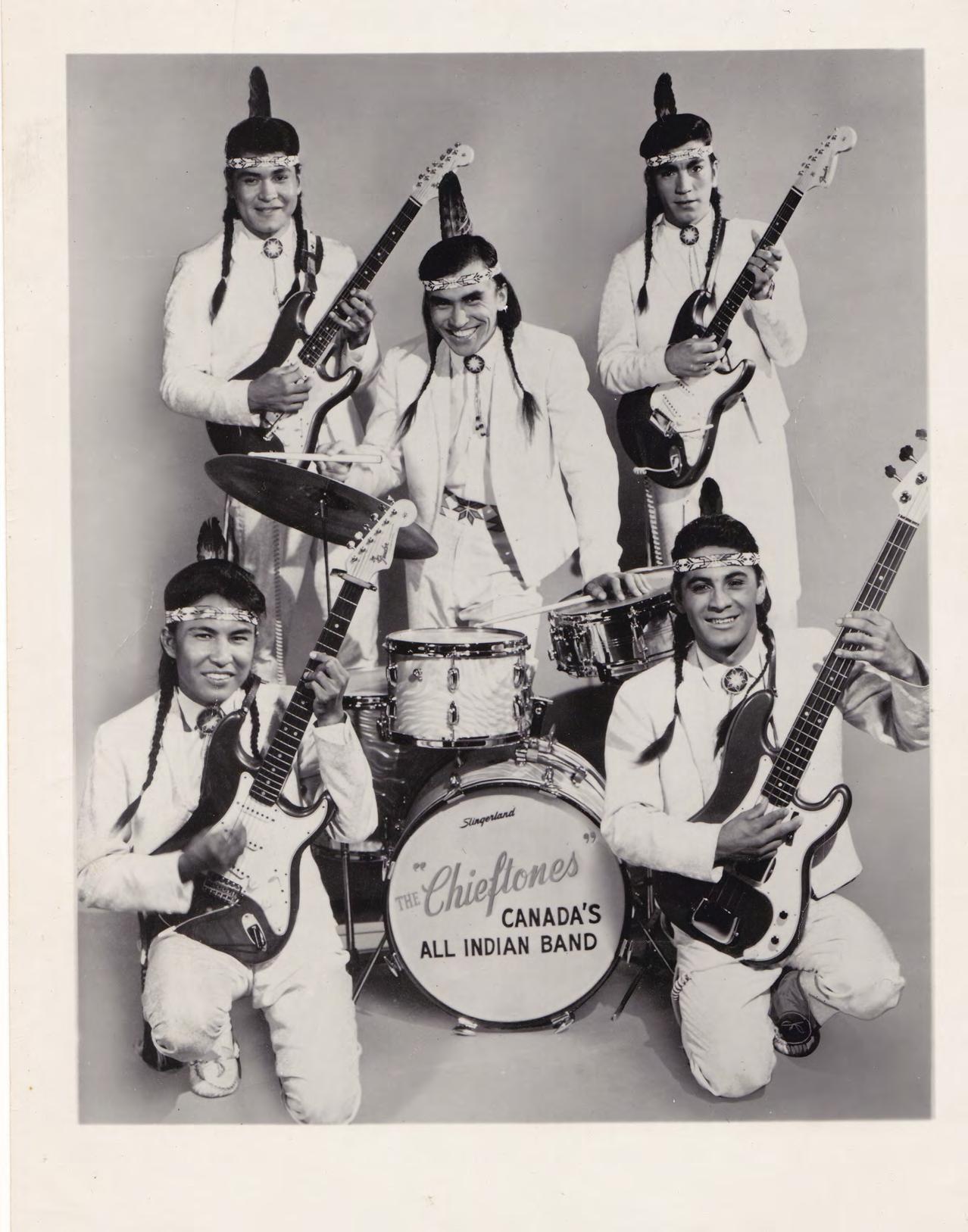
Native North America, from his home in Toronto. “I started finding these Indigenous records, first with Willie Dunn, and then Shingoose, then Lawrence Martin and Willie Thrasher and Willy Mitchell. Over those years of collecting records, I amassed a pretty large collection of Indigenous recordings.”
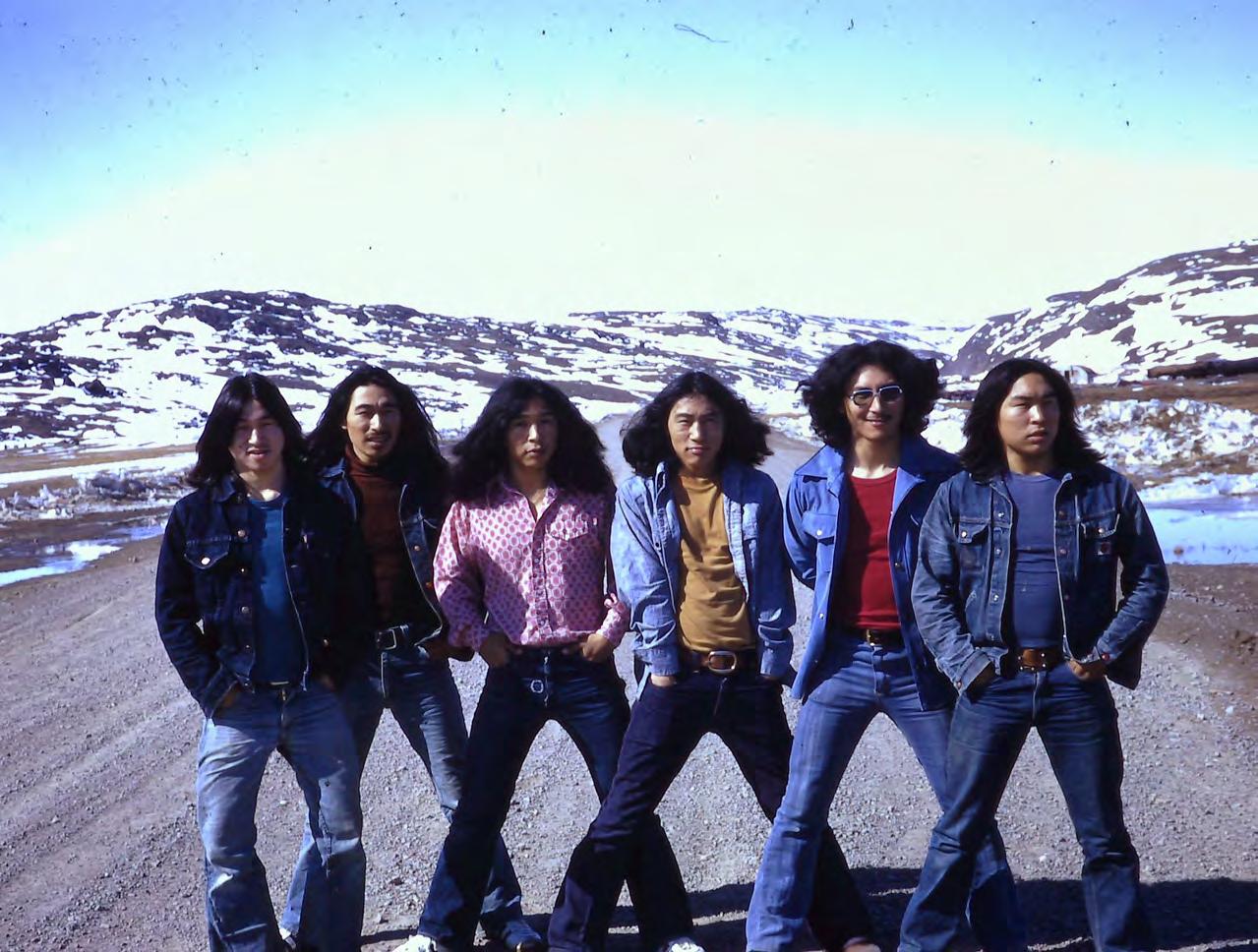
Howes recalls being surprised that his collection wasn’t centered around traditional music so much as it was folk, rock, and country. Just as Black Sabbath records were making waves in the mainstream, so, too, were they being passed around Native communities. “It was only my ignorance that I didn’t realize in the far north, in the Inuit lands, the Nunavik region [of what’s now part of Canada], they were getting these records, too,” Howes says. “All the music of the ’60s, ’70s, and ’80s, it reached
around the world and people were being influenced by it, and the Indigenous communities were no different. If your heart is open, you start finding Indigenous recordings and you find music made by Indigenous music makers, and you find artists like Willie Dunn.”
In particular, Dunn’s music helped Howes come up with the idea for the Native North America compilation. Howes was first exposed to Dunn’s work as a high schooler in 1990 when his English teacher screened a VHS tape of Dunn’s 1968 film, The Ballad of Crowfoot. Howes admits the film — which tells the devastating story of colonization from the Indigenous perspective — didn’t resonate with him in 1990, but when he came across Dunn’s music again six years later, it pierced his soul.
Willie Dunn in Alanis Obomsawin’s 1977 film Amisk.
“I was being mentored by an old hippie named Ty Scammell, and he turned me on to looking for regional Canadian music,” Howes recalls. Scammell encouraged him to search for music beyond the charts, which took him deeper into crate-digging than he had ever been. “That’s where I found Willie Dunn’s second album, Willie Dunn. It has a beautiful painting on the cover, done by John Fadden, a Mohawk artist, and because of that, I knew I had to listen to the record. I heard the song ‘Ballad of Crowfoot,’ and it brought me back to my high school days and I put it all together. That moment is really the birth of what becomes Native North America. I give Willie full credit. I honor Willie for helping me in my awareness of Indigenous reality, the past and present on Turtle Island [North America].”
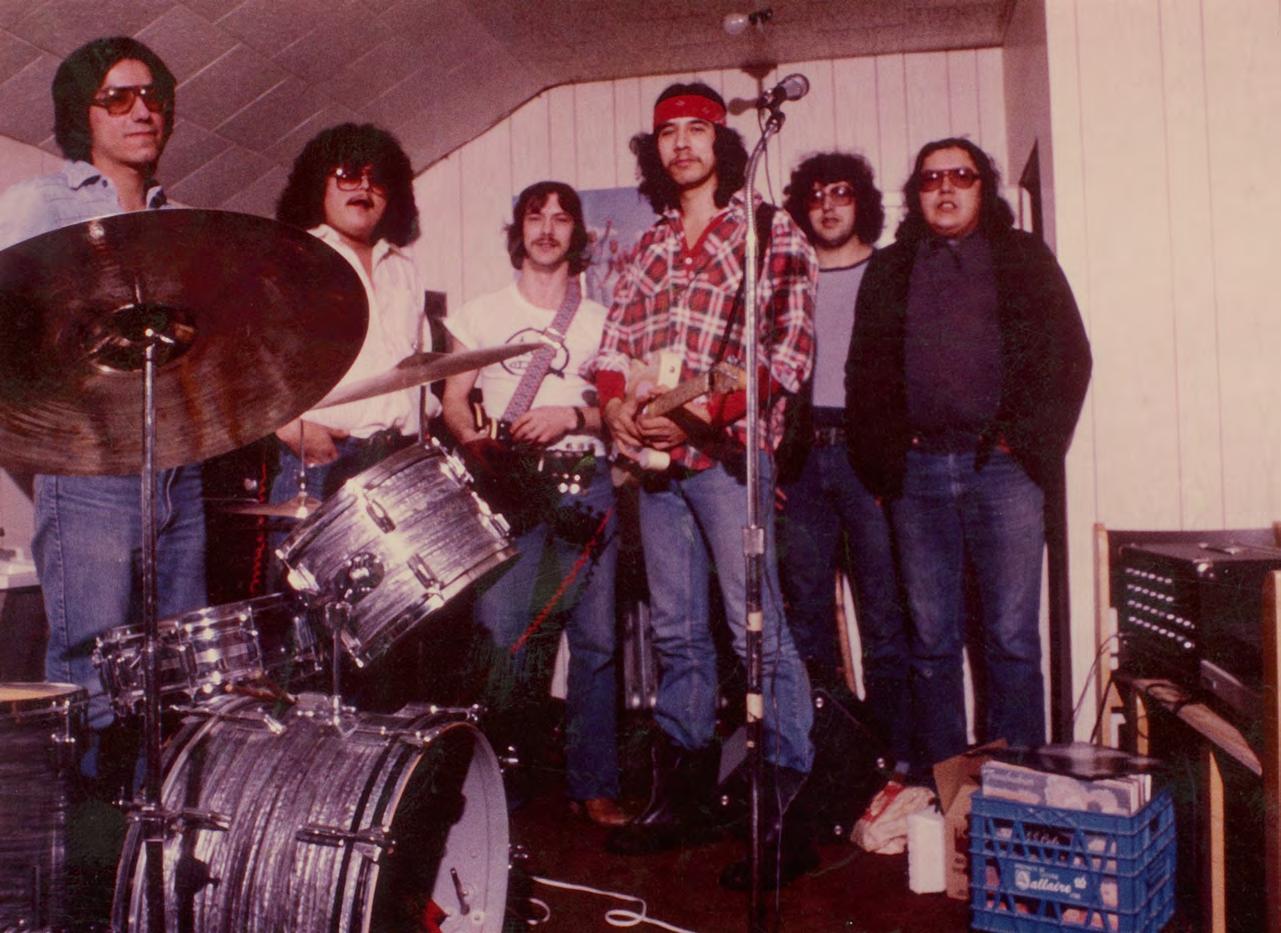
That connection and inspiration sparked a journey of musical discovery for Howes that would last more than a decade and eventually lead to Native North America in 2014. (Due to high demand from music fans, the three-LP box set received a long-awaited repressing in early 2021.) On the compilation, which includes 34 tracks from 24 artists, bands like Sugluk and Saddle Lake Drifting Cowboys bring their versions of rock and roll; David Campbell, Peter Frank, and others explore impeccable sounds of country; and Dunn, Thrasher, and many more craft songs that sound like they could have been coming from the streets of Greenwich Village during the folk revival. Howes describes the sounds of all these artists as consisting of “Native consciousness, stories, and poetry inspired by language, love, family,
history, ceremony, traditionalism, selfdetermination, activism, reserve life, the rural/urban divide, and environmental issues.”
But these artists are not only celebrated in the music of Native North America. Their stories are beautifully told — some for the very first time — by Howes in the compilation’s comprehensive liner notes. With a background in music journalism, Howes knew that he wanted to share these stories, but for many artists, he couldn’t find any information online or in books and newspapers. “I knew that if I wanted to learn more about these recordings, I had to reach out to the artists myself, to first and foremost thank them for their music that had really affected me in a positive way, and then to ask for much-needed context,” he says.
Sugluk
Around the time that Howes pitched Native North America to Light in the Attic in 2010, he also began the work of putting together the liner notes. But finding the artists for that much-needed context wasn’t always easy. Dunn, for instance, wasn’t on Facebook and didn’t have much of an online presence, so Howes reached out to CKCU, a college radio station in Ottawa that continues to broadcast a program dedicated to Indigenous music. Through that station, he was able to get connected.
In 2012, Howes met Dunn in person for the first time and interviewed him. “He had an incredible sense of humor and was such a great observationalist … someone with a lot of empathy and a lot of lived experience.”
“I was nervous to meet him,” Howes admits. “Dunn was a leader. In the colonial mindset, it’s hard to capture just how important he was. Willy Mitchell once told me that Willie Dunn was their Leonard Cohen. But he instantly put me at ease. It was Willie’s
belief in and support of my interest and work that was so critical to putting together the [Native North America] project, as well as a recent anthology of his work [Creation Never Sleeps, Creation Never Dies: The Willie Dunn Anthology, released earlier this year].”
That was the last time the two connected. As Howes says with an obvious sadness, “He passed on a year later from cancer and, I’d say, a hard life lived.”
The final page of Howes’ Native
Willy Mitchell and Desert River Band
North America liner notes includes a photo honoring the life and legacy of Dunn.
Connecting the Past and Present
Though some of the artists who are celebrated on Native North America have left this earth, there are still many who continue to create music today. Because of that, Howes sought not only to celebrate their music on record, but to organize concert experiences, too. Since the release of the compilation, there have been more than 15 Native North America Gatherings held from coast-tocoast and even as far north as the Arctic regions of Canada. One of the artists on the compilation who found himself performing at these gatherings was Willie Thrasher, an Inuit musician who experienced the deep pains of colonization, but whose life is not defined by those ghosts.
“I was brainwashed not to talk about anything outside of the Catholic ways,” says Thrasher about growing up in the residential school system, then run by the Canadian government and operated by churches. He was taken from his family when he was 5 years old, forced to cut his hair, and forbidden to talk about the traditions of his ancestors.
“We didn’t learn about living off the land, about building igloos, and we couldn’t speak our own language because we were told it was a sin. So I was a good Catholic boy serving Mass and going to church every Sunday, not even knowing I was an Inuit all that time.”
As he grew older, he found peace in the speakers of his radio and was inspired by The Beatles’ Ringo Starr to play the drums when he was 12 years old. Along with some friends, he formed a band in the mid-’60s called The Cordells and primarily covered artists like The Rolling Stones and The Kinks. But at a show one evening, a man walked up to Thrasher and his friends and
encouraged them to write original music and tell the traditional stories of the Inuit people.
“ That was the moment I started finding out about where I came from, who I was, and how our people lived,” Thrasher says. “That’s what made me so strong, even to this day. I don’t know who he was, but I thank that old man for encouraging us to learn more about who we were and to make our own music.”
It wasn’t an easy journey. Thrasher began to learn why his parents shut him down from speaking their language and why they never taught him their traditional ways. “When I started to learn about these things, my mom went
against me,” he admits. “The Catholic church called me a pagan, but I stood my ground because I began to understand that I lost something. Something was taken away from me.” As difficult as this was, what Thrasher calls “the real truth” began to emerge: His parents, when they were children, had a beautiful life and lived off the land with his grandfather and grandmother. The elders in his life knew the stories and legends from the past, but his parents struggled to keep those alive after the arrival of Catholic missionaries.
“Going through that hard time paid off,” he says, “because it pushed me to keep our traditional ways alive,” he says.
Willie Thrasher
Peter Frank
John Angaiak
William Tagoona
Saddle Lake Drifting Cowboys
“My grandfather and grandmother were the ones who knew the stories from the past, the legends from the past … I wouldn’t be a songwriter or a storyteller like I am today if it wasn’t for them, and I thank them very, very much for helping me through that.”
Thrasher has pushed himself not to hold grudges against anyone, even the Catholic church, and that incredible peace has long been personified in his music. On “Spirit Child,” which is included on Native North America and beautifully captures the sound of the phaser-soaked rock that was coming out in the early ’80s, Thrasher sings to the title character, someone he looks to for guidance, as well as for love and life.
“You’re part of Mother Nature,” he sings, “You’re part of our soul.” Though he has earned the right to sing heartbreaking, autobiographical songs of how colonization sought to destroy his life, Thrasher directs his energy elsewhere.
“I learned how to make those things part of my life by letting go,” he says. “I learned to understand that my life is important and I have to carry on through this incredible journey. I have a lot more to learn and a lot more traveling to do. Musicians from the past have opened a lot of doors for me, and so the journey
never ends. Music is the one thing that’s kept me going since I was a child. I learned how to fight back by telling the legends and stories of my past.”
But Thrasher isn’t just focused on the past. While Native North America celebrates the music of artists from the ’60s, ’70s, and ’80s, those who are still around, like Thrasher, continue to release new music today. He is confident that the new album he and his partner, Linda Saddleback, are working on will be one of the best he’s ever released. As he says that, it’s clear that he is carrying a joyful burden to keep creating because he knows that just as he stands on the shoulders of those who came before him, younger artists are looking to him for similar inspiration and influence.
“A lot of those younger artists look up to us. I know they’re playing my songs. These people, they keep me going.”
The Future of the Fight
As Howes seeks to honor and elevate the work of artists like Thrasher, and as Thrasher continues to create new music, younger Indigenous storytellers also fight for their voices to be heard. Mali Obomsawin, a citizen of the Abenaki First Nation at Odanak in Quebec, is one
such storyteller. (She’s also a cousin of musician Alanis Obomsawin, whose poetry is featured in the liner notes of Creation Never Sleeps, Creation Never Dies: The Willie Dunn Anthology.)
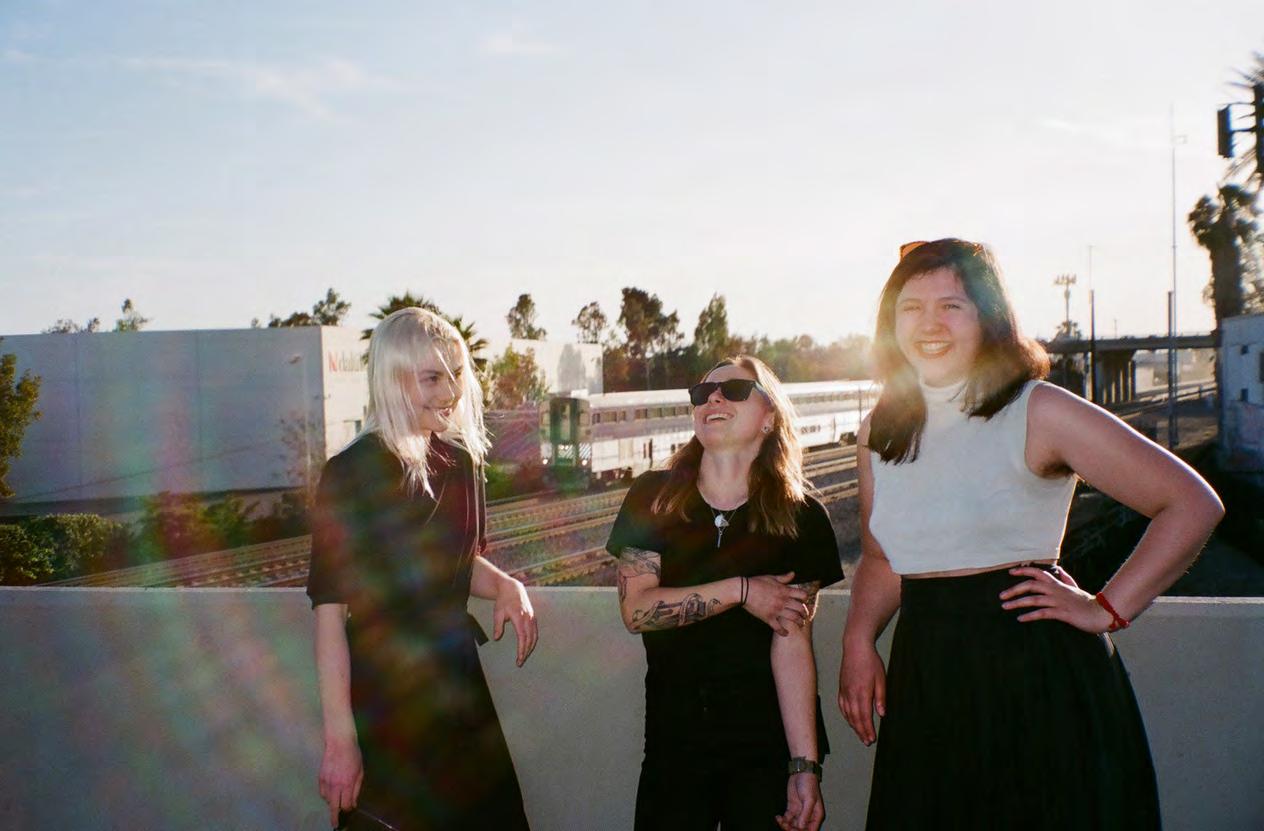
As a multi-instrumentalist, singer, songwriter, and member of the trio Lula Wiles, Obomsawin uses her voice on the band’s latest album, Shame and Sedition, to call attention to the marginalization of not just Native communities, but all communities of color. The new LP — released in May via Smithsonian Folkways — was written in June 2020 as the summer of Black Lives Matter began.
“Our first album, [Lula Wiles], was just teenager songs, we were practicing,” says Obomsawin with a laugh. “What Will We Do, our next album in 2019, that was really a stepping stone to Shame and Sedition. We’ve been on this journey, exploring these narratives and having these conversations a lot within the band, interpersonally, for years. This new album definitely feels like we’ve gotten somewhere. It’s not the first time we’ve spoken up, but it’s definitely the most.”
Much of that journey as a band has been centered around the reality that Obomsawin is the only Indigenous member. Her bandmates, Isa Burke and Eleanor Buckland, are both white. But
Lula Wiles
“As a young Indigenous person seeing that box set, it’s awesome. It’s great visibility, and anywhere that Native folks can be represented in an authentic way is good. But it’s also complicated because it’s hard to imagine ‘representation’ existing in a settler colony that exists to replace and minimize us. There’s only so much power and inclusion in something that is actually set up to destroy and usurp you.”
Mali Obomsawin
Lula Wiles
this isn’t only felt with her band. Often, Obomsawin finds herself in the minority with other musicians and bands that she plays with, as well as the audiences she plays for. “It’s a challenge,” she admits. “It’s something we’ve been working on, and that’s one reason we wanted to bring these themes and discussions into the music. It’s difficult to only be singing about love and heartbreak, but then talking about political things from the stage. I think with Shame and Sedition, it’s exciting because the music backs up what we’ve been saying, but now we don’t have to speak it as much. We can say it in the music.”
And Lula Wiles does just that throughout Shame and Sedition, a record that explores the sounds of indie rock as much as it continues to wade in the waters of folk music, all while speaking boldly into the issues of the world. On “Oh My God,” the band takes on Amazon founder and CEO Jeff Bezos, with Burke singing, “Yeah, your time is gonna run out soon, and you couldn’t swing a hammer if they paid you to.” On the subtle, yet profoundly powerful “Everybody (Connected),” Obomsawin holds in tension the new normal that was birthed out of a global pandemic: “Everybody wants to be alone in their
cubby, every digital individual, curating their surroundings, putting all things in their place. Divinity, the interface.”
Throughout the album, the band shares vocal and musical duties, showcasing their own journey toward unity with one another.
The reality is that it hasn’t been an easy journey, but Obomsawin seems at ease talking about the difficulty she and Lula Wiles have faced together. Part of that stems from the fact that she has always been very proud of her Native heritage, wanting to draw others closer to it rather than hide it. This desire became most ingrained with her music five years ago as she witnessed the Dakota Access Pipeline protests at the Standing Rock Indian Reservation in North Dakota.
“Standing Rock wasn’t a catalyst for me wanting to talk about this stuff as much as it was a catalyst for me realizing how little white people actually knew about it,” she explains. “I really started to see how ignorant people are about the struggles that Indigenous peoples face in this country, and that led me down this path of studying about miseducation, diseducation, all of these things that a lot of Indigenous artists before me took the initiative to start talking about through their music.”
While Obomsawin realizes change will not come easily or swiftly, she remains committed to the cause of addressing today’s oppression directly and confrontationally through her music, seeking to use what she and her bandmates have created for good. That pursuit is grounded not just in what she is doing, but in what those artists who came before her fought for, much of which is captured on compilations and efforts like Native North America. “As a young Indigenous person seeing that box set,” she says, “it’s awesome. It’s great visibility, and anywhere that Native folks can be represented in an authentic way is good. But it’s also complicated because it’s hard to imagine ‘representation’ existing in a settler colony that exists to replace and minimize us. There’s only so much power and inclusion in something that is actually set up to destroy and usurp you.”
Even with the complex nature of measuring the tide of actual change and justice for Indigenous peoples, Obomsawin is grounded in the beauty and strength of the past as she looks forward, fighting for change.
“ There are folks before me and there are folks that are going to be after me and it makes me feel like I’m part of that lineage.”
■
PHOTOS BY DIEGO LUIS
HISTORICAL MARKERS
No-No Boy creates an album steeped in Asian American history and sounds by Hilary
Saunders
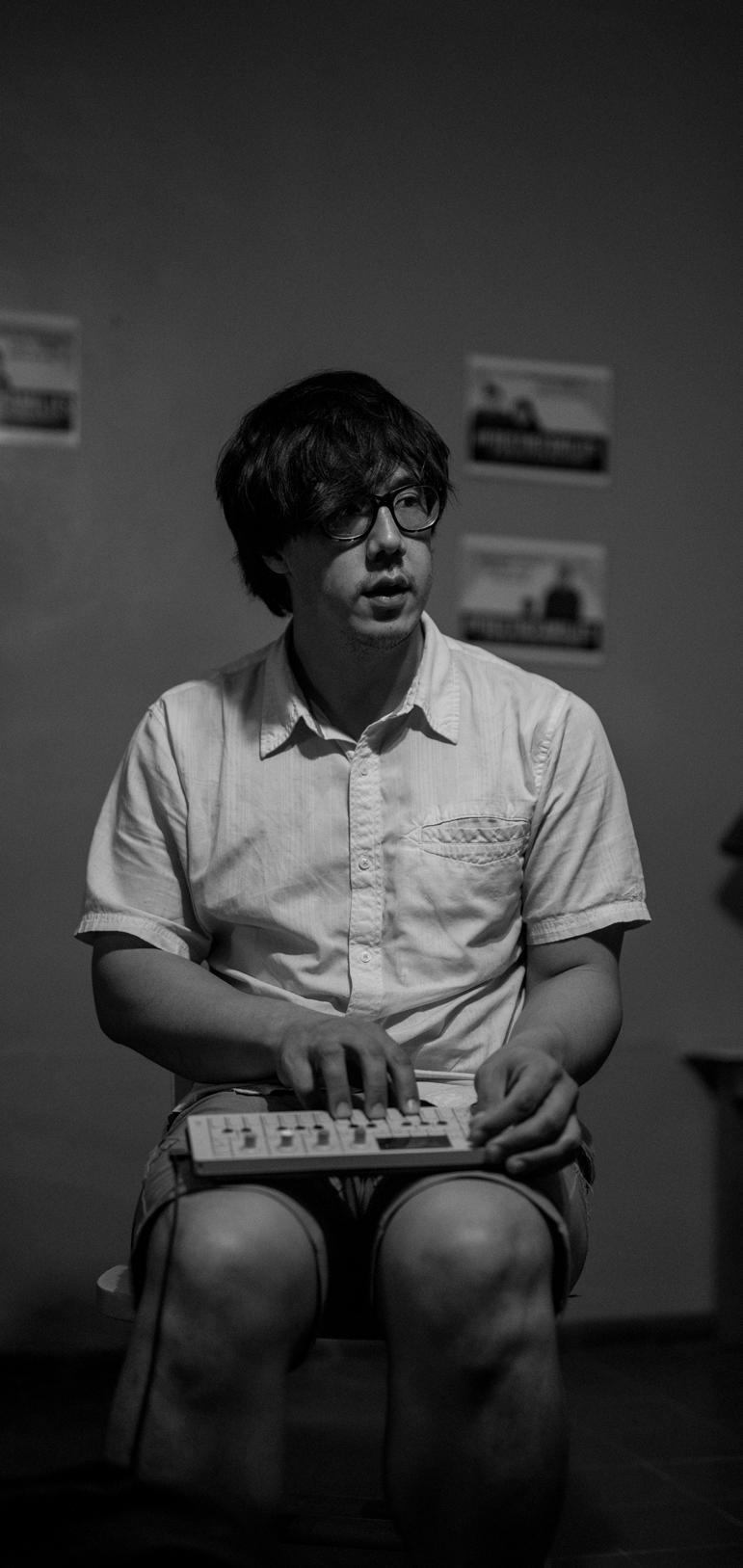
Julian saPoriti grew uP listening to Radiohead records on repeat, dissecting each track, poring over liner notes, and committing as many facts as possible about the music and members to memory. Of course, a casual listener can appreciate Radiohead’s discography — or any other band’s — just fine without such a deep dive, but it’s this kind of attention to detail that can turn a pleasant musical experience into a transcendent one.
It’s easy to enjoy 1975, Saporiti’s second LP as No-No Boy, simply on first listen. The 10 tracks sway with acoustic guitar picking and wisps of fiddle (“Where the Sand Creek Meets the Arkansas River” and “Gimme Chills”), cello (“Close Your Eyes and Dream of Flowers”), and mandolin (“The Best God Damn Band in Wyoming”) as Saporiti’s calming vocals, often twirling with sweet harmonies by Emilia Halvorsen, lull listeners into the smug satisfaction of having discovered another exceptional, if under the radar, roots music release of 2021.
But every few verses, a jarring number, unfamiliar name, or unexpected plot twist might punctuate such a sonic reverie, requiring deeper investigation:
“Some say 20,000 killed,” he sings in “Gimme Chills,” a song about the parallels between Philippine history and ISIS.
“M-A-T-S-U-D-A baby,” he spells out in “Where the Sand Creek Meets the Arkansas River,” a song about the overlap between the massacre of Arapahoe and Cheyenne Indians and a Japanese American man whose body was found in the burial camp 80 years later.
“At the moment the bomb went off, they were playing ‘Purple Haze,’” he sings in “Imperial Twist,” a song about a Saigon rock band caught in the war that fled to Houston.
Because for as beautiful a record as 1975 is, the album is also an Asian American place-making project, says Saporiti from his home in Portland,
Oregon. “This is a travelogue. This is a history lesson. This is a recovery of musical ancestors and stories that I was never privileged to learn about in any of my schooling or being in bands.
“If you’re one of the 12 people who actually listened to this record like 50 times … like the way that I did when I was a kid, you will have gone through the equivalent — between the liner notes, between the visuals, between the documentary, between the sounds and the lyrics — of a class that I would teach on Asian American studies or immigration studies,” he says. “If you look up every proper noun — which is a lot! — that’s in those lyrics, you will have become a better, more educated person.”
Running into History
Saporiti is currently finishing his doctorate in American studies at Brown University. 1975 serves as the third chapter of his dissertation exploring Asian American history, identity, and musical practices.
But his path to academia, and even
this specific project, was not linear. Born in Nashville, Saporiti grew up immersed in all kinds of artistic expression. His mother, who fled from South Vietnam in 1968, is an oil painter who would paint scenes from her homeland throughout his childhood. His father worked in the music industry in Nashville — as a radio promoter, in A&R, as a record label management, and in international marketing — and brought home all kinds of classic rock, country, and folk records.
Saporiti initially deferred going to college, instead working at the local Tower Records and spending his paycheck to special-order more records. After a few years, he was accepted to Berklee College of Music to study jazz before his chamber pop/indie rock band The Young Republic got signed in England. The group enjoyed modest success abroad, even playing the famed Glastonbury Festival, but never reached the same popularity stateside.
Burnt out on music, Saporiti moved to Wyoming in 2012 to retreat and, as he says, “go somewhere where no one had
heard of my band and … read books and climb rocks.” He ended up earning a master’s degree in American studies at the University of Wyoming and teaching classes in literature, the Western canon, songwriting, and more. It was only there, in the remoteness of the West, that the concept for No-No Boy — a moniker named after the Japanese Americans forced to live in World War II-era internment camps who voted “no” on the War Relocation Authority’s mandatory “Loyalty Questionnaire” — began to solidify.
Coming back from a rock-climbing trip, Saporiti stumbled upon a local history plaque for the Rock Springs Riot of 1855, in which a white mob massacred 28 (or more) Chinese immigrant miners and razed the entire Chinatown. “It’s the first time I get hit in the face with this history lesson of people who looked like me,” he says.
Soon thereafter, he visited the Heart Mountain War Relocation Center (a Japanese internment camp from World War II) and learned about The George
Igawa Orchestra, an all-Japanese jazz band comprised of people that the US government had evicted from their homes and imprisoned.
Throughout his travels, Saporiti kept finding markers — often of tragedy, but which led to a sense of pride in existence — of Asian American history. Offhandedly, he mentions a Chinese cemetery next to the Super 8 Motel where he and Halvorsen happened to stay in Baker City, Oregon, as well as a place called Chinese Massacre Cove in Wallowa County, Oregon.
But transcribing an interview he conducted with Michelle Zauner of the indie rock band Japanese Breakfast (who is Korean American and whose debut memoir Crying in H Mart and new LP Jubilee both came out this year) for his doctoral studies gave him new musical motivation. Though he had retired from playing music, Saporiti says that conversation — the recording of which was in a playlist interspersed with songs by Saigon rock bands and jazz from internment camps — inspired him
to begin writing songs seriously for the No-No Boy project. “As these voices were in my head,” he begins, “I just picked up a guitar and opened up a new Pages file on my Mac and started writing these songs. And now there’s like, 70 of these songs, [12 of which] appear on this 1975 record.”
1975 was named for the year that Saigon fell — an homage to Saporiti’s own matrilineal history — but the songs cover a wide range of Asian American stories. Throughout the record, he blends the intimately personal (the opening “St. Denis or Bangkok, From a Hotel Balcony” about wishing he got to spend more time with his Vietnamese grandmother) with larger historical narratives (“The Best God Damn Band in Wyoming” was inspired by his visit to Heart Mountain), sometimes even in the same track (“Tell Hanoi I Love Her” is about his mother’s first trip back to Vietnam). He’s connected these stories to others of immigration and marginalization, traveling to study, perform, and connect at a school for refugee children along the US-Mexico
border and in the Indigenous Alaskan Iñupiat community of Shishmaref.
Theodore S. Gonzalves, interim director of the Smithsonian Asian Pacific American Center, heard about the No-No Boy project through a colleague in academia, which helped get 1975 into the ears of listeners at the legendary US folk music label Smithsonian Folkways. The album is part of Folkways’ Asian Pacific America series, which, as Gonzalves describes it, “shines a spotlight on the musical traditions and creativity of Asian Americans and Pacific Islanders.” (The series also features the work of South Asian American percussionist and composer Sunny Jain and Japanese American multi-disciplinarian and activist Nobuko Miyamoto.)
“Julian’s work speaks to the best of our traditions. He transforms painful memories of colonization, segregation, wars, and family separations into opportunities [for] listeners to identify, connect, and empathize,” Gonzalves says via email. “Julian’s holding up high that banner for musicians who know that
music is more than just passively consumed entertainment. It’s not just the stuff of the background. It can be some of the best ways to make some kind of sense out of all of those ghost stories or those weird tales that get handed down about our ancestors.”
Stories in Sounds
With each close listen to 1975, more and more nuances emerge. Sonically, one of the most impressive elements is Saporiti’s ability to blend sounds and stories from disparate sources. He uses oral histories (like the recording of his mother’s voice at the beginning of “St. Denis or Bangkok, From a Hotel Balcony” that opens the record, as well as his mother’s friend talking about communism and rock and roll during the next track, “Imperial Twist”), field recordings, and other manipulated sounds to create a pastiche that is as haunted sonically as it is in its storytelling.
In fact, as Saporiti writes in the liner notes, “If I did it right, you won’t be able to tell that the majority of percussion
sounds on this album were made from museum objects, old barracks, detention centers, barbed wire, and ambient sounds recorded everywhere from Wyoming to Paris to Saigon.”
Straddling the identities of educator and historiographer, musician and performer, Saporiti made these sonic choices consciously to reflect contemporary times and traditions.
“What does folk music actually mean?” he asks earnestly. “What are the folk processes?”
He answers his own hypothetical in the same breath, exclaiming, “It’s kids with their goddamn laptops! It’s GarageBand! This is the folk process in the world that I live in.”
For listeners, knowing that many of the sounds themselves come from people and places of import helps give 1975 an even deeper meaning. Because at their core, “All these songs are ghost stories,” Saporiti says with a wry laugh. “It’s kind of how you deal with them — if you let them uplift or haunt you. And that’s kind of what I’m figuring out on this album.” ■
“All these songs are ghost stories. It’s kind of how you deal with them — if you let them uplift or haunt you. And that’s kind of what I’m figuring out on this album.”
Julian Saporiti
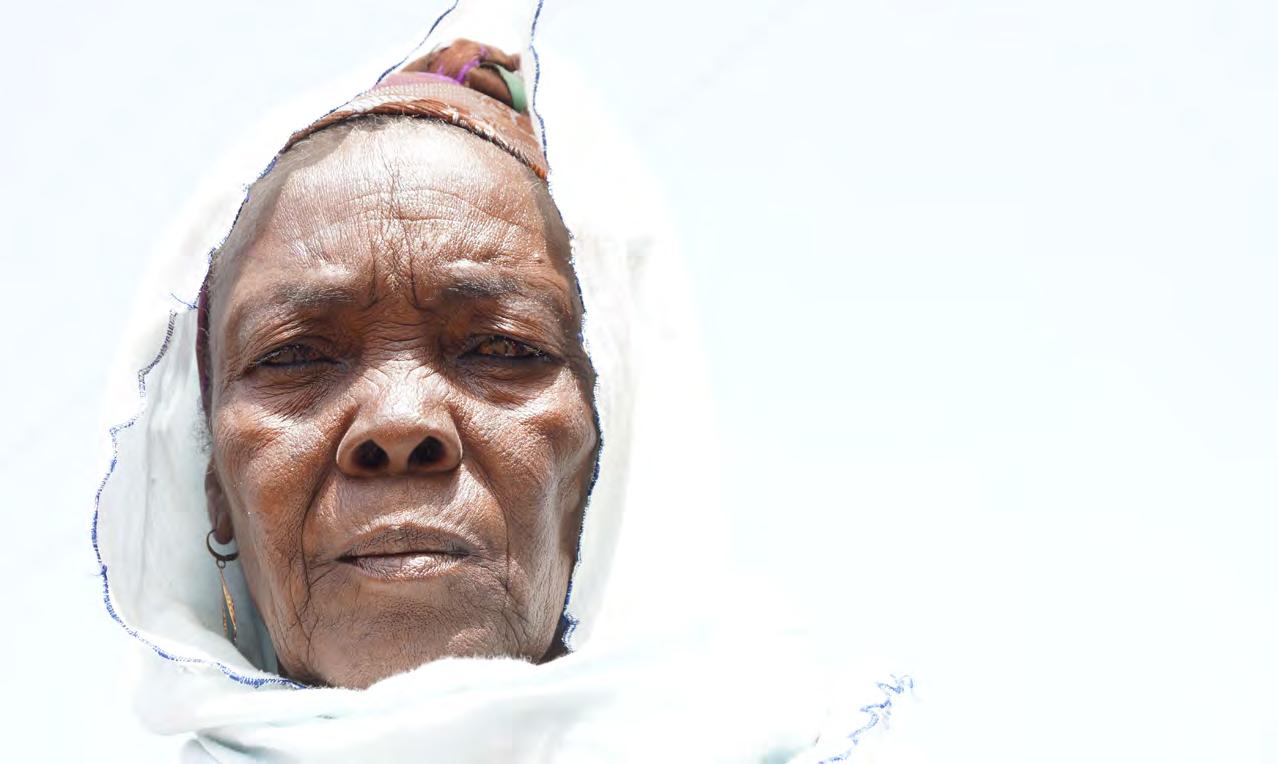
During the recording of I’ve Forgotten Now Who I Used to Be, a blind elder suddenly stood and took command of the group.
Witch-hunting in the Modern World
Words by Ian Brennan and photos by Marilena Umuhoza Delli
“Iam a ghost.”
Or so claimed an elderly woman confined at a witch camp in Ghana. Her words were not intended to frighten, but to communicate the terror she’d experienced after being accused of witchcraft.
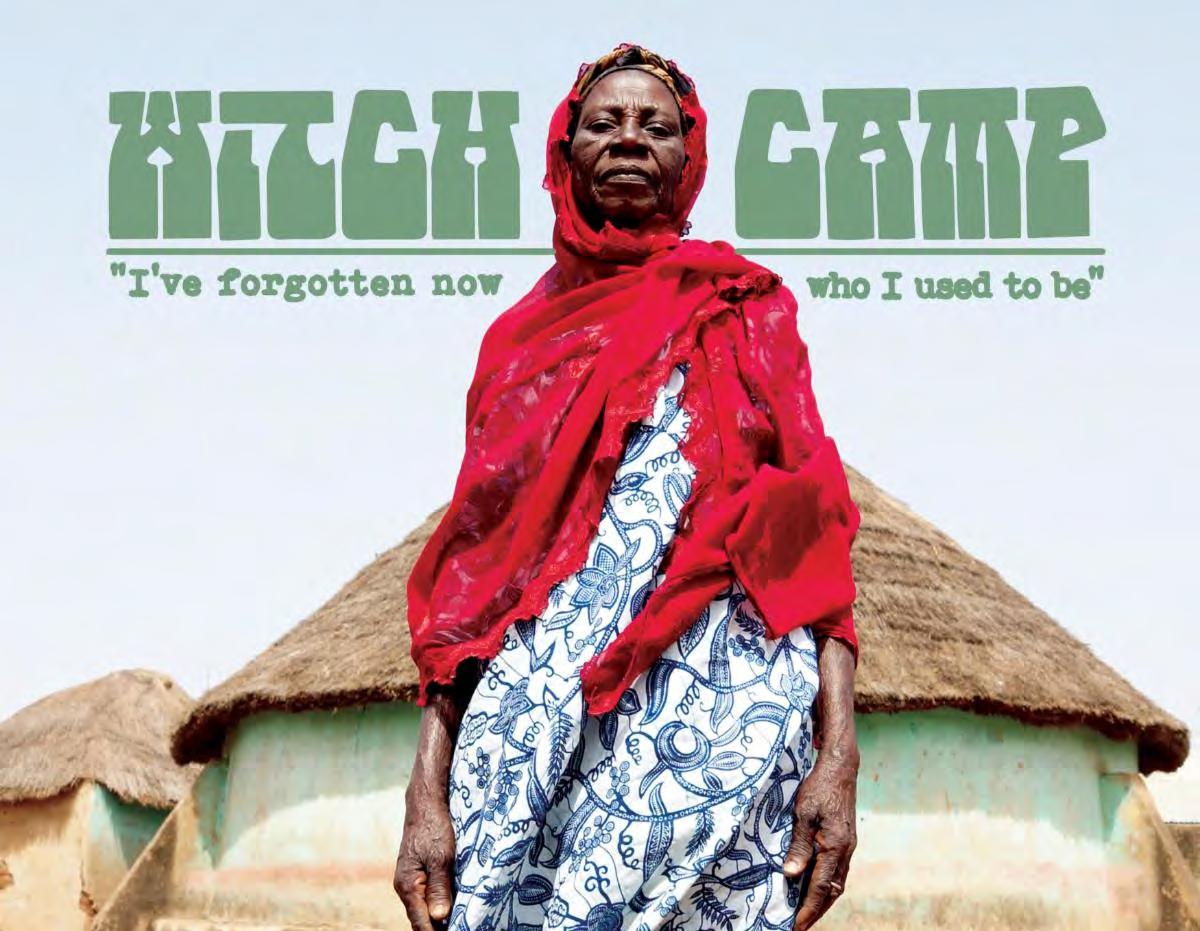
In December 2018, my wife, Marilena Umuhoza Delli, and I went to three villages in rural northern Ghana to record I’ve Forgotten Now Who I Used to
Be, an album documenting these witch camps, settlements where women accused of witchcraft find haven. For over a decade we have actively sought out underrepresented regions and languages in international media. We have particularly focused on persecuted populations such as the inmates at Malawi’s Zomba Prison; genocide survivors in Rwanda, Kosovo, and Cambodia; and those targeted for sexual
assault, murder, and mutilation in Tanzania due to their albinism.
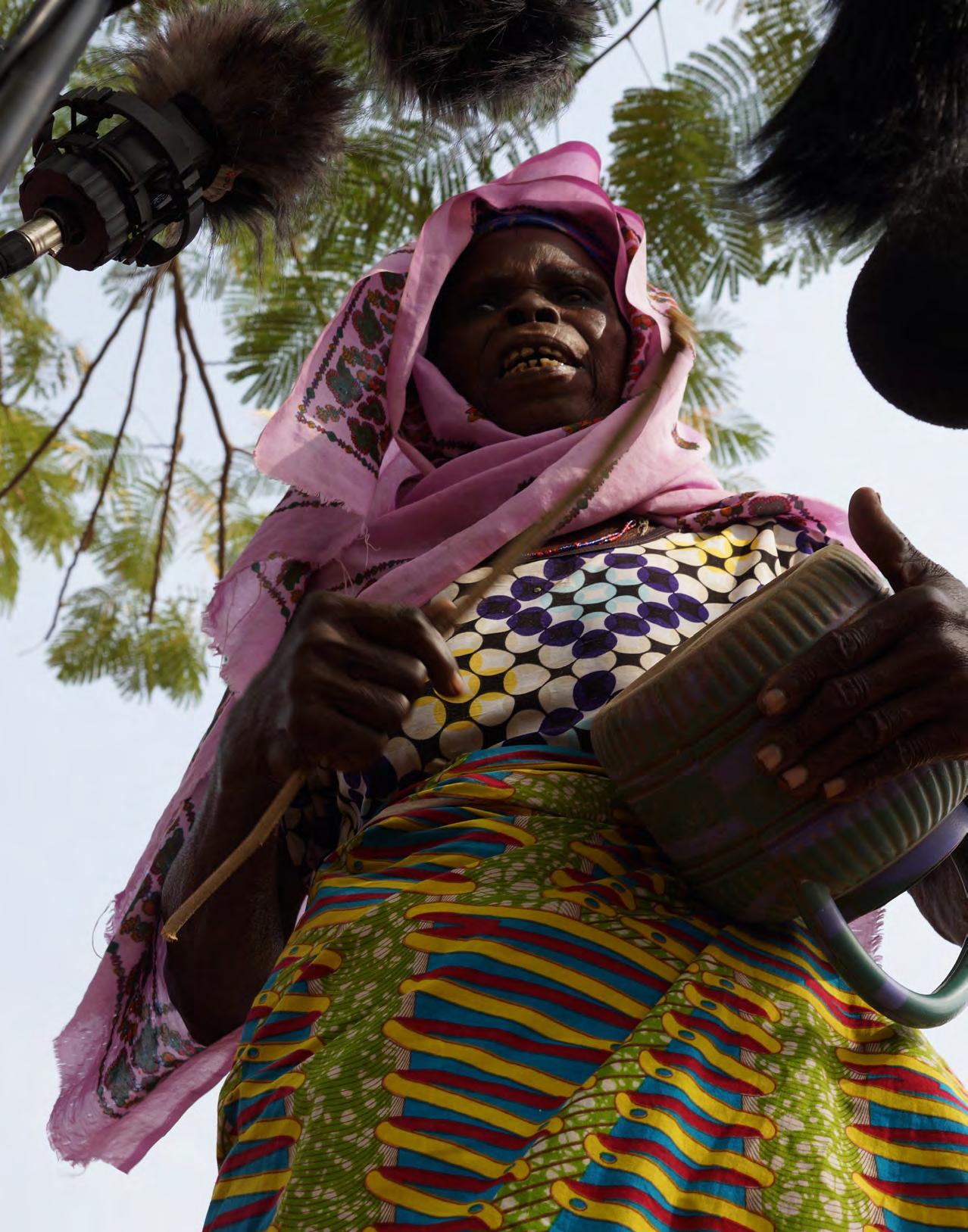
I’ve Forgotten Now Who I Used to Be is roots music at its most core. The women used materials at hand for instruments — dried corn husks, tea kettles, empty tin cans, a hoe, and firewood. Though the 20 recordings are sung in their regional dialects, translated song titles like “Hatred Drove Me From My Home,” “Abandoned (Forced Into a Life of
Prostitution),” and “Left to Live Like an Animal” speak quite viscerally to these women’s experiences.
The witch camps in Ghana brim with sadness. The only menace found is in the stories of how these women were abused — betrayed by neighbors or family members, evicted from their homes upon threat of murder should they ever return.
In northern Ghana, women who are declared witches survive by selling firewood, or they work the field for the chiefs. Some have even been forced into prostitution. Though rarer, there are also men that are accused; they are deemed “wizards.”
The only demons most of these women are in touch with are their own. Their mental health issues and/or physical ailments — blindness, senility, misshapen limbs — have been vilified, leading to accusations of sorcery. It is these most vulnerable individuals who have been routinely shunned and ostracized as a ruse to steal their land after their husband’s passing.
Perpetuated Persecution
Mistakenly, many assume that the persecution of witches is an ancient and “primitive” practice. But quite the opposite is true: Almost all witch-hunting
in Africa was imported, occurring only after colonialization. Modern-day persecutions, which include professional witch-hunters, trace a straight line back to the storied medieval witch hunts of Europe and later in puritanical America, in places like Salem.
Right here in the 21st century, belief in witchcraft can be found throughout the world. In 2011, a woman was beheaded in Saudi Arabia after she was deemed a witch. Last summer, a 90-year-old Ghanaian woman was set afire. And in early 2021, a 9-year-old Sri Lankan girl was beaten to death due to such beliefs.
However, Ghana is the only nation that officially houses elderly women because of it. They are corralled in designated camps for their own protection. Witch doctors often attempt to exorcize these women through forcefeedings of chicken blood, monkey skulls, and mud. They are believed cured and proved not witches if they survive being subjected to this concoction for seven days.
Some women accused of witchcraft falsely confess to spare themselves from death while being beaten. Others abandon their homes proactively to protect family members since a common attack is to set a hut afire, claiming all who are inside.
Now and throughout history, increases in accusations of witchcraft most often arise when capitalistic speculators invade and communal land becomes fenced and subdivided. It is customarily older women who prove the boldest — the most outspoken and resistant to capitalistic developments and ownership claims on previously shared property.
Many seize the only power they have left — to provoke fear. Yet few things could be more frightening than to become a receptacle for hate — fashioned into a target for others to project their deepest fears and violent impulses upon.
But our goal through music — including I’ve Forgotten Now Who I Used to Be — is to humanize these stories, using art to counterbalance the foundations of violence, dehumanization, othering, and objectification.
Together, Brennan and Delli have produced more than 30 albums from internationally under-represented regions and/or populations, including those targeted for albinism on Ukerewe Island, genocide survivors in Rwanda and Cambodia, and prisoners at Zomba Prison in Malawi. I’ve Forgotten Now Who I Used to Be was released on March 22 via Six Degrees Records.
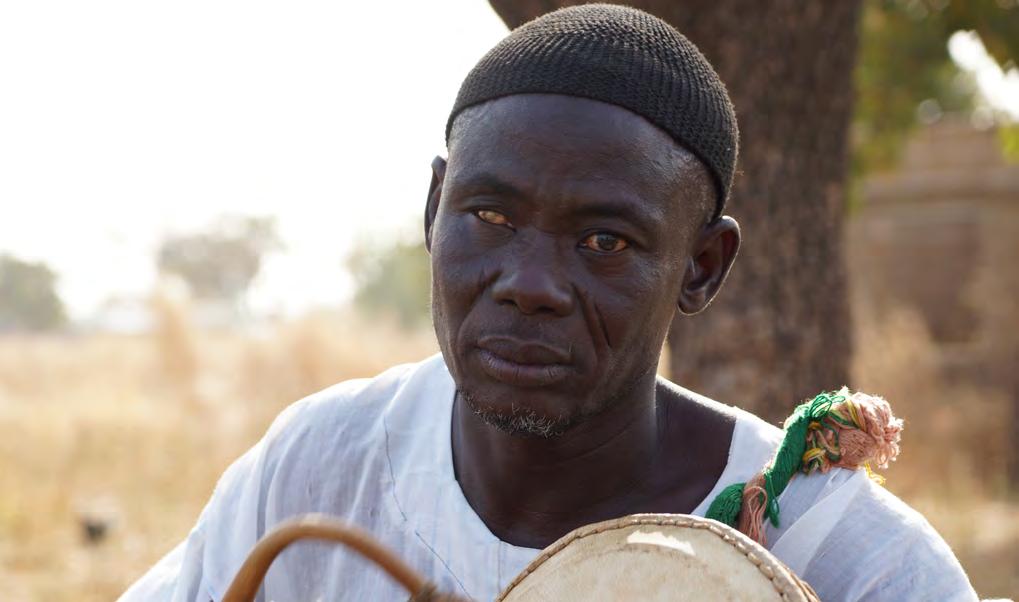
On occasion men are also accused of being possessed and are branded “wizards.”
One woman desired that her voice do all of the talking, veiling her head so that she was disembodied and faceless.
I’ve Forgotten Now Who I Used to Be was made using mostly found instruments in a witch camp in Ghana. Here a tea kettle takes the lead.
One woman’s words spoke for many: “They took everything and left me to live like a ghost. I work to forget the life I had before.”
Visual impairments are often mistaken for ghostliness.
THE REAL OMIE WISE
Tracing the story behind a song that has spooked folk music fans for 200 years
by Mark Kemp
“Oh, listen to my story, I’ll tell you no lies, How John Lewis did murder poor little Omie Wise. He told her to meet him at Adams’ Spring. He promised her money and other fine things.” — “Omie Wise,” Doc Watson
Something wicked was in the air. Something spooky. The humidity in the small, central North Carolina mill town of Randleman felt like cobwebs on that summer night back in 1976. The sidewalks were silent, save for muffled chatter coming from a huddle of longhaired music fans standing outside a little storefront theater on Main Street.
Doc Watson had come to perform at the Old Liberty Music Hall, and my friends and I were excited to finally get to see the great folk-singing flat-picker from Deep Gap, a little mountain village about two hours to the west near the Blue Ridge Parkway. We’d come to hear him play “Tennessee Stud,” the Jimmy Driftwood song that Watson had performed on the Nitty Gritty Dirt Band’s landmark 1972 album, Will the Circle Be Unbroken, as well as a few other tunes that we were just becoming familiar with: “Shady Grove,” “Black Mountain Rag,” and a local favorite, the murder ballad “Omie Wise.”
Growing up in this part of North Carolina in the ’60s and ’70s, the ghost
stories about poor Naomi Wise were common. Her evil lover, Jonathan Lewis, drowned the beautiful young damsel in Deep River in 1807, leaving her lifeless body for two boys to find while fishing a few days later. To this day, it’s said that folks walking down by the river at certain times of the night can still hear Naomi’s moans and sometimes spot her ghostly figure floating facedown in the water.
On this night, Watson sang his famous song about Naomi Wise — based on a traditional ballad that had traveled around the world, interpreted by musicians ranging from Bob Dylan to the British folk-rock group Pentangle — just half a mile away from the very spot next to Deep River where Lewis left little Omie’s restless soul to languish in darkness forever. Over gently fingerpicked minor chords, Watson told Naomi’s story in a soothing baritone that barely concealed the depth of his sorrow.
Ralph Rinzler, a folklorist with the Smithsonian Institution and member of The Greenbriar Boys, was the first person to record Watson, and he recalled the guitarist saying that he’d learned
“Omie Wise” from his mother and his Granny Lotte. “This ballad has been referred to as North Carolina’s principal contribution to American folk song on the basis of its wide currency,” Rinzler wrote in the liner notes to Watson’s 1964 self-titled debut album for Vanguard Records.
To be sure, there were plenty of other murder ballads and ghost stories based in this part North Carolina. For instance, there was the tale of Tom Dula (the “Tom Dooley” of the famous song recorded by The Kingston Trio and Watson), who allegedly murdered young Laura Foster in Wilkes County, near Watson’s birthplace. And then there was the story of the Phantom Hitchhiker, based on a more modern folk legend about a ghost who thumbs for rides by the side of a road at night. In the North Carolina version, the phantom is a girl named Lydia, who apparently died in a car crash near a bridge in Jamestown, about half an hour north of Randleman. Late at night, she wanders alongside East Main Street, and if you try to stop and pick her up, she disappears into thin air.
As my friends and I hopped back into my pine green Toyota Corolla after Watson’s concert that night, I assumed my best Vincent Price voice and told them that we might spot Naomi Wise hitchhiking by the bridge over Deep River. I’d conflated the legends of Lydia and Naomi, but looking back, it was well in keeping with how these folk tales tend to evolve. People add to them, take away certain details, change the tone — all to put their own perspectives, opinions, or senses of morality into the stories. The ballad of Naomi Wise is an old narrative that’s evolved dramatically in the more than 200 years since a man by the name of Levi Beeson and his mother — ancestors of mine — are said to have put her story to paper.
Fact, Fiction, and Folklore
Here are the facts about the historical Naomi Wise: She was born at some time in the 1780s, orphaned as a child, and later indentured as a servant by the family of William and Mary Adams. The Adamses owned a farm in what’s now
the unincorporated Randolph County community of New Salem, a couple of miles north of Randleman. At some point, Naomi began courting Jonathan Lewis, who lived farther north in Polecat Creek but worked as a clerk in a store owned by a man named Benjamin Elliott in the county seat of Asheboro, about eight miles south of Randleman. Lewis would pass the Adams homestead on horseback during his travels between Asheboro and Polecat Creek, and he’d see Naomi working around the farm or fetching water from a spring on the property. Eventually, Naomi became pregnant with Lewis’ child.
In the more moralistic versions of the Naomi Wise ballad, she’s portrayed as an innocent teenager, pure and beautiful, smitten by the dashing but despicable Lewis. He lies to her, tells her he loves her; she gets pregnant, and he promises to marry her, only to lure her to Deep River, where he drowns her. This version of the tale is likely based on Beeson’s poem, said to have been written just after the murder, but not published until years later, in 1851, when Trinity
College president Braxton Craven apparently used it (or a version of it) in his book Naomi Wise, or, The Wrongs of a Beautiful Girl. This mythologized narrative is consistent with the “murdered girl” archetype found in earlier English broadside ballads like “The Berkshire Tragedy.”
But the real story is a little more complicated. According to a more recently uncovered historical poem called “A True Account of Nayomy Wise” — published in 2003 by the late folklorist Eleanor Long-Wilgus in Naomi Wise: Creation, Re-Creation, and Continuity in an American Ballad Tradition — Naomi was older, bawdier, and had a reputation for promiscuity. She’d already birthed two illegitimate children and was so proud of her pregnancy with the high-ranking (but also licentious) Lewis that she would tell anyone who listened that he was the father. By then,
Lewis had set his sights on another woman and didn’t want people to know that he’d impregnated the wayward Naomi Wise. He promised Naomi money if she kept quiet about the pregnancy, but she persisted, perhaps even trying to extort money from him. So Lewis lured her to the river and drowned her.
The simpler story, typified by Watson’s version of the ballad, represents a very unambiguous sense of morality: A beautiful, kind-hearted young girl is murdered by a scoundrel. Indeed, this characterization was fairly typical in the ballads of that era: The true Naomi Wise, writes Long-Wilgus, “is transformed into a sentimental object of love and pity.” Some versions of the ballad go even further, characterizing John Lewis as somehow a tragic figure himself, worthy of listeners’ compassion, in lines suggesting that he embraced Naomi before killing her.
According to Long-Wilgus, “the appearance of ‘he hugged her and kissed her’ in a small group of western North Carolina variants is a fine example of the way in which individual singers do not hesitate to impose their own esthetic and moral values upon texts they learn from others.”
The historically accurate account of Naomi Wise comes with an ending that’s sometimes not included in the sung ballads: Days after the murder, Lewis was arrested and jailed in Asheboro, but he escaped and made his way to Ohio. (Some believe that Lewis, who also served as a constable, got help from friends inside the judicial system.)
Authorities eventually caught up with him, though, and Lewis was extradited back to North Carolina, where he stood trial in 1811. He was acquitted of the murder due to lack of evidence, convicted only of jailbreaking. It is
Hal Pugh and Eleanor Minnock-Pugh’s kiln house in Randolph County, North Carolina
believed that his connection to storeowner Elliott, a powerful figure in Randolph County who would establish the area’s first textile mill, may have helped Lewis avoid the murder conviction.
Some versions of the Naomi Wise ballad do include hints of the more complicated story (in lines such as Lewis’ promise of “money and other fine things”). And by all accounts, Lewis was a narcissist who just wanted to get rid of Naomi so he could move on with his life.
For his part, Doc Watson saw the story simply as a case of injustice. “She was a real person, an orphan who was drowned in Deep River,” he told Rinzler around the time of those early recording sessions. “John Lewis was a ne’er-dowell who broke out of jail and never did get punished.” Watson chose to abbreviate his version of the ballad — a version that has become the template for
almost all subsequent renditions. “In the song,” Watson said, “I leave him in jail.”
Keepers of the Legend
Half a mile down New Salem Road from where the Adams farm once stood, Hal Pugh sits on a straight-back chair in a little wooden kiln house that dates back to 1874. He’s flanked by his wife, Eleanor Minnock-Pugh, and Sarah Bryan, the executive director of the North Carolina Folklife Institute. Hal was born and raised on this plot of land, and today, the 71-year-old and his wife not only make beautiful pottery here, but they often think about Naomi Wise.
Hal is distantly related to a lot of the characters in the tale, from Jonathan Lewis’ boss, Benjamin Elliott, to original documenter and poet Levi Beeson, to, well, very likely, me. When I was growing up in nearby Asheboro, my Quaker
family on the Beeson side would hold reunions every summer in the northern Randolph County village of Sophia, just west of Randleman. Hal has done extensive genealogical research on the Beesons of this area, and he’s concluded that “all of us are related.” He laughs, adding, “That’s why we’re so crazy.”
The Pughs are fascinated with the area’s rich folk history. They’re known around Randolph County for being the keepers of Naomi’s legend. Over the past 20 years, they’ve been working on a book they’ve titled On the Banks of the Deep River: A True Account of Naomi Wise. Bryan is editing the manuscript.
Hal first became interested in the legend when he’d hear his father and other family members talk about the murder back in the 1950s and ’60s. He was 14 when he ordered a record from the Smithsonian Institution that included folksinger Paul Clayton’s
Deep River, North Carolina
version of the ballad. “I had to special order it, and I still got it,” Hal says. “It’s one of the more typical versions you hear — more like the one by the English singer Shirley Collins. When I got the record, I played it for my daddy and he says to me, ‘Nah, that’s not it.’” Hal lets out a big belly laugh. “He says, ‘The one I remember is more sing-song.’”
Eleanor elaborates. “The version his dad would have heard would have been a pre-recorded version handed down from earlier generations,” she says. “He would have heard it sung by people from around here.”
As it turns out, the melody of the earliest recorded versions of “Omie Wise” was based on “How Firm the Foundation,” an old Christian hymn. “So that sounds about right,” Hal says. “Because that would have been more sing-song.”
The various recorded versions of the ballad began when Texas country singer
Vernon Dalhart cut “Naomi Wise” in 1925 under the name Al Craver. Hal says that he’s not sure whether the recorded versions derived from the ballad published in Braxton Craven’s book or the more recently uncovered poem, “A True Account of Nayomy Wise.” He’s not even sure that the two poems are different. “When people say that the original ballad was written by Levi Beeson and his mother, could they be talking about ‘A True Account of Nayomy Wise’? Maybe,” Hal says. “Maybe the ballad in Craven’s book is derived from that. Or maybe they were two different things. We just don’t know where the ballad in Craven’s book came from, because a text attributed to Levi Beeson doesn’t exist. It’s just said to have been the one in Braxton Craven’s book. Maybe Craven made changes to ‘A True Account of Nayomy Wise’ and put that in his book. We just don’t know.”
What historians do know is that the
narrative in Craven’s book is the one that birthed the classic American ballad that’s been recorded countless times throughout the modern era. After Dalhart cut his version, North Carolina singer G.B. Grayson followed with “Ommie Wise” in 1928. Filmmaker Harry Smith included Grayson’s version on his influential Anthology of American Folk Music compilation, which inspired many of the musicians, including Dylan, who were part of the American folk music revival that peaked in the late 1950s and early ’60s. Several other versions of the ballad appeared early on, too, including a 1938 rendition by the all-female stringband Coon Creek Girls. By the mid-1960s, numerous renderings of the ballad made it on to popular albums: British singer Collins recorded it as “Omie Wise,” Scottish balladeer Alex Campbell released it as “Naomi Wise,” Virginia old-time banjo picker Dock Boggs cut his version as “Little Omie Wise,” and
American singer Judy Henske released hers as “The Ballad of Little Romy.”
The song has continued to fascinate artists into the post-punk era, with former hardcore punk singer Greg Graffin of Bad Religion and the indie folk-rock band Okkervil River releasing versions of it in the 2000s. In 2006, folk-rock duo Kate & Anna McGarrigle recorded a live tribute to the song with Elvis Costello. Costello even wrote a completely fictionalized sequel about Jonathan Lewis called “What Lewis Did Last,” which finds the killer tormented by his killing of Omie Wise throughout his life and eventually dying by firing squad — something that did not happen. The song appeared as a bonus track on Costello’s 2009 album, Secret, Profane & Sugarcane.
It took Hal a few years of research before he learned of Dylan’s unreleased 1961 performance of the Naomi Wise ballad. And being a member of the
baby boom generation, he was shocked by the revelation. “I was taken aback,” Hal says. “And it turns out that Dylan recorded it really early on and it wasn’t even on an album. I didn’t expect to read that Bob Dylan had started out his career doing this ballad, or that it had been bootlegged for years. It was one of those things that made me go, ‘Wait a minute — did I read that right?’”
In Trinity, just west of Randleman, singer-songwriter Donna Hughes grew up in the 1980s hearing about Naomi Wise. A history major in college, she went back and read the original account of the murder in Craven’s book. After college, she gravitated to writing and singing country-bluegrass music, self-releasing an album in 2001 that caught the ear of bluegrass-guitar legend Tony Rice. He produced Hughes’ 2007 debut album for Rounder Records, Gaining Wisdom, which featured guest appearances by Mary
Chapin Carpenter, Rhonda Vincent, and Alison Krauss. Just as Hal Pugh didn’t realize until years later that Bob Dylan had recorded the Naomi Wise ballad, Hughes was not aware of Doc Watson’s version. “I’m going to totally embarrass myself now,” Hughes says with a laugh, “but I had never heard it. I’d simply read the Craven story and thought, ‘Oh my gosh, this would make such a cool song!’”
Blissfully ignorant of the all the different folk variations on the Naomi Wise ballad, Hughes wrote a completely modern take with a more contemporary country melody, simply titled “Naomi Wise,” which the progressive bluegrass group Newtown recorded for its 2018 album Old World
This August, Hughes released her own recording of the song as a sprawling narrative video featuring herself singing it as the story unfolds visually all around her. It’s a reenactment of the
Naomi Road in Randleman, North Carolina
“What intrigues me about the story is that this girl’s life impacted our community enough to have a grist mill in the 19th century named for her, as well as dams, bridges, and a street in Randleman.”
Donna Hughes
original tale of a younger Naomi Wise spurned by the wealthy family of John Lewis, set to a cinematic bed of dramatic piano and violin. “What intrigues me about the story,” Hughes says, “is that this girl’s life impacted our community enough to have a grist mill in the 19th century named for her, as well as dams, bridges, and a street in Randleman. And then also to have Braxton Craven, the president of Trinity College — which of course, became Duke University — write about her, and then to have Bob Dylan and Doc Watson many years later record the ballad …” — she trails off and gasps — “well, that’s pretty spectacular.”
Continuing the Story
A few years after Doc Watson played “Omie Wise” at that memorable 1976 concert in Randleman, so close to the site of her untimely death, Cliff Miller helped
stage a Naomi Wise play on that very same riverbank. Miller, who’d booked the Watson show in Randleman and performed with the guitarist and his son, Merle, for several years in the ’70s, now owns the Grammy-winning audio engineering firm SE Systems in Greensboro. The company has provided the sound for MerleFest, the annual music gathering that Watson founded in western North Carolina, since its inception in 1988. SE Systems has gone on to work sound for many of the folk, bluegrass, and country artists that appear at MerleFest.
The Naomi Wise play was one of Miller’s earliest events. “We set up right there on the river,” he remembers. “It was all young people — a sort of community theater group. It was very basic.” When I ask if Watson mentioned the serendipity of singing his famous ballad so close to the site of Naomi Wise’s murder, Miller pauses. “You know, I don’t remember him
saying a thing about it,” he says with a laugh. “I don’t think I ever heard Doc mention that song at all.”
Jack Lawrence, Watson’s longtime guitar player, doesn’t recall the singer talking about the song much either. “I remember him saying something about hearing it from his older relatives, but that’s about all,” Lawrence says. Watson’s relative silence about this ancient American folk ballad and ghost story — one that he helped usher into a new millennium — somehow makes sense. As a folksinger, Watson knew his place in the history and enduring appeal of the Naomi Wise legend. He was just a messenger using his guitar and voice to pass along news of the wicked murder of this one young girl who died too soon — in a song that’s kept her spooky cries resonating across centuries and her ghostly image branded into musical memory forevermore. ■
Donna Hughes
Opener Hed Tk
Opener Dek and Bylines Tk
GRACE LANDS
by Katie Moulton
Harry Kagan
Singer, guitarist, and songwriter Harry Kagan had never heard of Jim Carroll before the day Carroll died. On Sept. 11, 2009, Kagan was in college in Ithaca, New York, when a professor opened her class by bringing in a stereo and blasting “People Who Died” by The Jim Carroll Band.
“We listened to the whole song, and when it ended, she told us Jim Carroll had just died,” Kagan recalls. “It had nothing to do with the class she was teaching; she simply wanted to memorialize him, to share his music. The semester before, one of my close friends at college had died suddenly and tragically, and the song spoke to me in a way that few things had been able to at that time.”
Kagan had missed the work and mythos of Carroll, the punk icon and writer perhaps best known for his 1978 memoir The Basketball Diaries, which detailed his adolescent heroin addiction and growing up in New York City. Kagan hadn’t even seen the 1995 movie adaptation starring Leonardo DiCaprio, but now he had to find out more. He tracked down Carroll’s first LP, Catholic
Boy from 1980, at a local record store called Angry Mom.
“I read somewhere that someone called that record ‘the last great punk album,’ and it really does sound like that — the attitude, the guitars, the way he sings,” Kagan says. “But the lyrics and imagery go light years beyond. I’m sure people can find parallels and similarities to his contemporaries — Patti Smith, Television, Lou Reed — but for me, all the ingredients fall into place with Catholic Boy from start to finish. To me, it’s holy music.”
Now Kagan is a Nashville-based musician whose trio, Music Band, released its latest LP, Celebration, in 2020. A few years back, Kagan learned where Carroll was buried, in Haverstraw, New York, on the west side of the Hudson River near the Tappan Zee Bridge. So he went.
“ The area seemed kind of crummy to me, but once I was in the cemetery facing his headstone — and away from the busy county road and body shop and whatever was across the street — it was actually really nice,” he says. “I’d brought a cassette tape version of Catholic Boy that I kept in my car, and I thought about
leaving it on his grave the way some people do.”
But Kagan hesitated in this moment of devotion and did not leave the cassette. “It would be like if someone were to put on one of my albums while they were hanging out with me,” he explains. “I would cringe.”
Carroll’s headstone is inscribed with the words, “When the spirit grows too large for the body, both are called home.”
“Whatever that means,” Kagan says. “I never spent a lot of time in cemeteries and haven’t visited a ton of graves in my life, but I guess I had a ‘moment’ there before this resting place of someone I’d never met.”
When asked to define that “moment,” Kagan contrasts it with another visit he made to the graves of Levon Helm and Rick Danko. “To me it was much different than seeing Levon [Helm]’s and Rick [Danko]’s [in Woodstock Cemetery], though arguably their music’s had just as much of an impact on me. Too much psychic noise over there in Woodstock, maybe,” he says. “At Jim’s grave it felt private, personal even, like he could have been watching me.”
VISITING OTHER SELVES
Lucy Dacus’ Home Video reflects who she used to be
by Caitlin Wolper
When she was younger, Lucy Dacus lived by a number of rules. No drinking, no drugs, no sex — all hallmarks of her religious upbringing.
Commenting on her past self, Dacus muses, “She [was] the type of person that would say the word ‘wedlock,’ just deeply inheriting vocabulary from church.” And that previous version of herself apparently wouldn’t approve of how the singer-songwriter lives now.
On her third album, Home Video, which came out in June, Dacus revisits her childhood in Richmond, Virginia,
through clandestine, episodic glimpses that include Vacation Bible School, old movies, and sneaking out of her parents’ house. Weighted with years of perspective, the album follows the ghost of who Dacus once was.
“ Through this album cycle, I’ve been feeling watched by a high school version of me. I feel like I kind of reawakened her by making these songs, and I feel this impulse to represent her in a way that she would be happy with, and yet she doesn’t exist,” Dacus says. “The closest thing is me now, but I do feel judged by and watched by her.”
That anxiety is pressing from the opening track. On “Hot and Heavy,” she sings, “Being back here makes me hot in the face / Hot blood in my pulsing veins / heavy memories weighing on my brain,” instantly immersed in the heat of recollection. What was most difficult when Dacus looked to the past, she says, was confronting both who she was and what she did. Even if nothing was objectively irresponsible or cruel, perspective caused revelations when she considered the formerly mundane. Such a revelation is clear on the Auto-Tuned “Partner in Crime,” the
“The delivery is paramount with a record like this. You can’t over-sing it. You can’t under-sing it. You can’t over-shrill it or over-stylize it or over-effect it, and you must feel it in every line.”
Yola
manipulated musicality of which echoes the exaggerated truth of its narrative — from “When I asked you to coffee / Could you tell I don’t drink it?” to “When you asked my age, I lied ... It’s not your fault, it’s mine.” Written about her relationship with an older person, Dacus reflects, “At the time I felt like I was prepared for it … [but] just because you know the risks doesn’t mean that you’re impervious to them.”
Now, she continues, “I feel like I’m constantly reassessing [the past] because I’ve realized how little insight I had in the moment. If anything, I’ve
learned to trust myself less through this [album-writing] process because I’ll read back through my journals and expect to see something that was really important to me … but I was editing in real time. And I can admit things now. I couldn’t admit them, and so I trust myself about who I was when I was 16 more now than I would have trusted my 16-year-old self.”
‘Endless Care’
Dacus hesitates to describe her younger self in specific terms; she speaks more
readily of the church doctrines that defined her early years. However, one trait has remained steady throughout her life: She places friendship as the “highest form of love” and prides herself on hosting, gathering, and connecting people with friends, housing, and other opportunities.
Home Video’s retellings make clear her endless benevolence: a determination to shelter, guard, and care for those she loves. It’s implicit on “Going Going Gone,” a warm track almost reminiscent of children’s nursery rhymes in its bouncy simplicity.
boygenius
After the group vocals, there’s laughter and conversation among her and the backup singers; Dacus thanks them, then says, “I owe y’all … whatever you ask for.”
Her collaborators on that song, Phoebe Bridgers and Julien Baker, who join her in side project boygenius, are deeply familiar with what Bridgers describes as Dacus’ “endless care.” She’s “all-knowing and very wise,” Bridgers continues. And more directly, “She sees through my bullshit.”
Baker agrees: “Lucy’s quite an open person, an inviting person, in a genuine way. She facilitates inclusion, and it brings her joy.”
Both agree Dacus is fiercely protective. As Dacus says, “I want everyone in my life to be experiencing the maximum amount of joy and security that they can, and I will crush any force that is trying to ruin that in whatever way that I can.”
childhood was essentially a form of enslavement to a white supremacist man, my adoptive father, who essentially believed that he owned me, and that I was less human than he — that was at the core of his treatment of me. He was the product of abuse himself, of course, as most abusers are. … I didn’t even understand, fully, what an intense block I had before finally delving into this material and excavating that history, and stepping forward as an artist in my own name.”
self-professed “bold move,” she included the names of everyone who inspired a song in her record packaging’s acknowledgements.
“I recognize in this album, more than myself, all the other people. This album feels less like auto-fiction [than] a catalog of characters from my life. I’m the consistent character, but every single song — apart from ‘Hot and Heavy,’ which is kind of about me — is about a specific person in my life,” Dacus says. “I had not really felt able, up until this point, to speak about other people’s lives: I felt like I could only touch on my own.”
Personal Lore
it’s a growing exercise, but I do think that I grew because of those things, or at least I have an awareness that follows me.”
It’s an awareness that the film-boy prototype in “Brando” only liked the idea of her (“All I need for you to admit / Is that you never knew me like you thought you did”). It’s an awareness on “First Time” that the past informs the future (“I can’t go back to who I was before I met you / I can’t undo what I’ve done, and I wouldn’t want to”). And above all, it’s an awareness of the importance that relationships have played in her life: Her love for and relationships with others have been integral in the development of her identity.
home on each stage of the folk festival circuit. In 2006, she met Giddens, her future Our Native Daughters bandmate, at the Vancouver Folk Festival.
Sometimes on Home Video, it’s almost painful for listeners to hear how readily Dacus gives away that love. In tender, lilting “Christine,” Dacus bursts with adoration, while also protesting her friend’s relationship: “But if you get married, I’d object / Throw my shoe at the altar and lose your respect / I’d rather lose my dignity / Than lose you to somebody who won’t make you happy.” Even writing and releasing the song meant Dacus ran the risk of losing “Christine,” but she was willing to sacrifice their relationship in favor of her friend’s future well-being. In “Thumbs,” too, Dacus comforts a friend who meets with her father after 10 years apart, singing that they’re “connected by a pure coincidence” and stressing, “I would kill him / If you let me.”
Home Video focuses on the bigger implications of what, at the time, appeared to be inconsequential events in Dacus’ early life. The record also shows the reverse — the moments that seemed important at the time, but were far less consequential in the long run.
The 11-track album begins with the languid and jazz-inflected “Montreal,” a melancholic ode to her hometown and a prologue for what follows: She weaves recollections of the abuse she weathered throughout the album, along with the perspective forged by her internal work to overcome it.
After fleeing Montreal as a teenager (an escape she details in “The Runner,” the hardest-rocking track on the record), Russell landed in Vancouver, where she became an active member of the city’s folk scene. She played banjo, guitar, and clarinet in Fear of Drinking and Po’ Girl, the folk outfit she founded, as she honed her chops as a songwriter, and found a
On an album that’s so intertwined with personal stories, there’s a risk of upsetting or offending people who are part of that past — it’s something Dacus was worried about, even though, in a
“I actually think about ghosts a lot in different capacities, I mean literally ghosts, like, I believe in ghosts,” Dacus says. “I didn’t for a long time, but then you have experiences, and then you can’t not believe in ghosts.” But for her, dredging up these memories meant confronting ghosts far more familiar, recent, and living.
Midwestern folk artist JT Nero came into her orbit when he toured through Vancouver, and their musical admiration grew into a creative and romantic partnership: They first collaborated on Nero’s 2011 solo effort mountains/forests, and eventually she joined Nero in Chicago, where the couple formed their roots-rock duo, Birds of Chicago. The duo released its self-titled, crowdfunded debut in 2012 and built an international following with 2016’s Real Midnight and 2018’s Love in Wartime. They started a family when Ida was born in 2013.
Although Outside Child didn’t coalesce until Ida reached grade school, the album really begins with her arrival.
“ There are some people that I’ve given power to by writing a song about them, even people who I don’t want to have power, so that feels complicated — to breathe new life into something that I had actually closed or thought I had closed,” Dacus says.
“When I became a mother, a lot of things shifted for me, and I started to have an urgency about telling my story, because I know how all these cycles of abuse work,” she says. “You get shamed into silence, and that aids and abets a continuance of the cycle. When I became a mother, I realized I couldn’t be part
“You’re shaped by everything that you’ve come into contact with, whether you like it or not — things that you had control over, but also things that you didn’t have control over. And I’ve been shaped by pain that people have put me through,” Dacus says. “And I’m not saying everyone should experience pain,
— even tacitly, or implicitly — of continuing that cycle. In order to break it, truly, not just for me but for hopefully future generations, would be to directly face it and deal with it and talk about it and sing about it and do whatever I could to shift it.”
Dacus has honored current relationships by including “people that I love and trust to be a part of my work so I can capture aspects of them forever,” including a friend’s art and tapping another to be a stylist. Then of course, there’s the inclusion of a number of singers beyond Baker and Bridgers on the record.
Voice as a Vessel
“ The most meaningful [inclusion] to me was making the ‘Hot and Heavy’ video and having my grandma be in it. She has dementia, and doesn’t actually remember recording, but whenever she watches the video, it’s like, ‘There I am!’” Dacus says. “Every time, it’s like the first time.”
Perhaps the most potent aspect of Home Video is how it captures Dacus’ personal lore, a diary entry revised, amended, and honest. Though the stories are bottled to the record, they live on as a package that will follow Dacus into the future, an inextricable part of her and her artistic trajectory.
Today, Russell and Nero are based in Nashville, and they share a home with soul singer Yola, who’s been their dear friend since the moment they met at the Calgary Folk Festival in 2017. When Russell set out to record Outside Child in 2020, she invited Yola and other close musician friends including Erin Rae and Ruth Moody to join her in the studio. Many conversations transpired at their kitchen table — about Outside Child and the abuse that informed it, but also the strength and vulnerability of Black women and the reductive portrayal of their stories across popular culture.
“ The thing that I found really inspiring about this record was that it was nothing but nuance,” says Yola, who contributes backing vocals to “The
“I had a friend who, we really liked this idea of future ghosts when we were younger, and how you build your ghost now,” Dacus says. “Recording in any sort of way is like binding the soul to something. All my journals contain me and all my records contain me.” ■
OUTRUNNING GHOSTS
Country music and comedy help
Trixie Mattel confront what matters
by Claire Lobenfeld
LAURA DUFFY
“People assume because I wear a big blonde wig that I’m trying to be Dolly Parton, but I’m really trying to be June Carter Cash. I always related to her because she’s so funny, and she’s not a fabulous singer, but she knows how to use her voice.”
Trixie Mattel
Folk and country music have always been essential to drag queen Trixie Mattel. As a contestant on Season 7 of RuPaul’s Drag Race, she was eliminated after failing a Dancing With the Starsstyle challenge where she and her partner were assigned “country-robot,” a routine of yeehaw stock moves mashed up with stilted “Planet Rock” gestures. Mattel made her exit in square-dance drag, an unknowing preview of how her childhood filled with country music would reshape her career and turn her into a globally renowned drag performer.
Two years later, Mattel returned to Drag Race for its third edition of AllStars dressed in fringe, armed with a pitch-perfect Dolly Parton pantomime and ready to play her own folk music on autoharp for the competition’s talent show. This time, she took home the crown.
Today, she’s a multi-hyphenate just
like her namesake, Barbie: a singersongwriter, standup comedian, and the founder of Trixie Cosmetics. The book she wrote with fellow Drag Race alum Katya Zamolodchikova in 2020, Trixie and Katya’s Guide to Modern Womanhood, is a New York Times bestseller; the pair also star in two popular YouTube series, a logorrheic comedy called UNHhhh, and a review show called I Like to Watch produced by Netflix, where there’s also a documentary about Mattel called Moving Parts.
The character of Trixie Mattel seemed designed to bury the past. “My family’s Native American. We grew up very, very poor. But Trixie? She has it all. The biggest problem in her life is what to wear the next day,” she once said on Drag Race. But it wasn’t until she embraced that past that Mattel — and the man behind the massive eye makeup, born Brian Firkus — could really have it all, outrunning the ghosts
in her homophobic history to create a positive force of drag, comedy, and country music.
Family Ties
One of Mattel’s first real memories of music was watching her grandfather — still dressed in his plumber’s gear after work — play guitar and drink shots of blackberry brandy at the dinner table.
“My grandfather was like Beyoncé to me, so anything he did I thought was magic,” Mattel says. She would sit on her grandfather’s lap and sing along while he played Conway Twitty and Johnny Cash and songs like The Everly Brothers’ “All I Have to Do Is Dream.” While talking over Zoom, Mattel plays the same song on her Gibson Hummingbird acoustic guitar for emphasis. She is out of drag; the only evidence of her persona is a Trixie Cosmetics T-shirt.
“With him,” Mattel says of her grandfather, “I learned the camaraderie
of music.”
Despite such a formative experience, guitar-playing felt inaccessible to an adolescent Mattel, who couldn’t identify it as something other than “aggro and male” until she started hearing pop-folk artists like Michelle Branch and Jewel on the radio.
“I was a pretty culturally sheltered kid. I lived in the deep, deep country [in Crivitz, Wisconsin], my experience was insular,” she says. “I rode two hours to school and two hours from school every day on a bus, and my bus driver played the Top 40. I thought it was just a magic
trick that these people could make hooks happen from nothing. My dream was to write music, but I also wanted to sing the music. I thought, ‘I’m not the most fabulous singer, and I’m not beautiful, it isn’t gonna happen,’ but I kept writing music anyway.”
Mattel says the music she was writing tended toward sad and dark — “I thought that was how I’d be taken seriously” — with lyrics about feeling misunderstood. “I was young and closeted,” she says. “One of my earliest songs was called ‘Sugar Water,’ and it was about feeling like the version you
present of yourself is watered down.” At 15, Mattel moved in with her grandparents because of abuse from her homophobic stepfather, who would mock Mattel or her demeanor using the word “trixie.” Living with the person who helped establish her love of music would take on a new quality. This time, Grandpa was the fan.
“We lived in an A-frame house. My room was in the attic, in the A,” she remembers. “I would play up in my room, and my grandparents would watch TV with the sound off and listen. They were my main audience.”
From left, Zach Fenske, Trixie Mattel, Cory James, and Price Smith
Mattel, of course, eventually claimed “Trixie” as her own.
From Comedy to Music
Since first being nominated in 2015, RuPaul’s Drag Race has won 19 Emmy awards, and in the taxonomy of Drag Race contestants — i.e., the Broadwayloving Theater Queens, the gownconstructing Pageant Queens — Mattel was considered a Comedy Queen when she arrived on Season 7. She excelled at challenges that used the skills derived from her degree in musical theater from
“Trixie is such a natural musician. As a singer, I think she’s one of the best as far as intonation goes, just being able to really nail a note. Her background is comedy, but she’s so capable at playing guitar and singing, both of which are already difficult, and she does them in drag.”
Cory James bassist and musical director
the University of Wisconsin-Madison, like writing parody lyrics to RuPaul’s “Dance With You” and performing in musical adaptations of John Waters’ cult films. These strong showings made her musical abilities evident, but it wasn’t until after losing the show that Trixie Mattel, the musician, came to light.
“I wrote a song called ‘I Know You All Over Again’ about trying to get over someone and the way their memory can rush back to you with a smell or a song on the radio, and I put it in my first standup show,” she says. “I’m telling jokes about the time I got crabs in my eyelashes, and then I do this section about getting broken up with and play it. I thought it was so scary the first night. But people would cry every night. Blacked-out drunk gay guys on vacation were locked in. It just didn’t make sense to me that this plastic doll would do this very organic, real art form. But then it was like a lightbulb: This is how we add dimension to the show. We make them laugh and cry in the same 60 minutes.”
Mattel recorded “I Know You All Over Again” for her debut album, Two Birds, which she self-released in 2017. The following year, she released One Stone, and both albums are indebted to the country and folk music she grew up with and embraced after her grandparents
passed away. Mattel learned to play the autoharp making these two records as well, which came with an unexpected reward: “I’m the photo under Notable Players on the Wikipedia entry for ‘autoharp,’ and I’m really proud of that.”
Following her third full-length album and record label debut, 2020’s Barbara, Mattel released a covers EP earlier this year called Full Coverage, Vol. 1. One of the highlights of the fourtrack collection is a rendition of Johnny and June Carter Cash’s “Jackson,” a duet between with fringe-mask enthusiast and dark country singer-songwriter Orville Peck. Their version gives a slight pop polish to the Cash couple’s original, with Peck’s Roy Orbison-like croon and Mattel’s unbridled joy giving the song a new bit of buoyancy.
“Orville lives in this fake character, and so do I, so we’re on the exact same page. We also both love country music, and we both like to poke the bear. Traditional Americana is not ‘for’ gay people, so we wanted to cover a song that’s not supposed to be sung by two gay people.”
In the video, the pair do their best Cash couple pantomime on stage to no one at The Theater at the Ace Hotel in downtown Los Angeles. Mattel’s red dress is even a recreation of a dress June wore for a television performance of the
song. “People assume because I wear a big blonde wig that I’m trying to be Dolly Parton, but I’m really trying to be June Carter Cash,” she says. “I always related to her because she’s so funny, and she’s not a fabulous singer, but she knows how to use her voice.”
This is a defining characteristic in the evolution of Mattel’s style and sound. The more she made music and just peppered her live show with comedy, the less she needed to look like Malibu Barbie. As a result, Mattel started wearing fringe and the-higher-the-hairthe-closer-to-God wigs. Then she moved on to headbands and pin-straight, Cherstyle hair. Most recently, she’s landed somewhere mod, invoking Nancy Sinatra in white leather boots with beehive hair.
“Drag queens are not normally known to be musicians. It’s been fun to change people’s ideas,” Mattel says. “When Spotify puts one of my acoustic B-sides on a coffeehouse playlist, I’m always like, someone’s going to hear this and think, ‘Wait, this is a drag queen?’”
But even though Mattel delights in these shifting perceptions, she still has what she describes as “leftover discomfort” around straight men, something that made her nervous when filling out a backing band. “I had to find fabulous musicians who didn’t mind playing behind a crossdresser. That was my main concern: How am I gonna find
serious, serious musicians who aren’t embarrassed by the type of work I do? Not necessarily crossdressing, but the jokes I’m telling are very crude,” she says. “But my band ended up being three heterosexual men, and they couldn’t be more supportive of every single joke.”
The band’s bassist and musical director Cory James says touring with Mattel has been the time of his life. “I didn’t know anything about drag culture, and I still don’t really, but when I heard the music for the first time, I knew it was going to be fun to play.”
Friend and fellow Berklee College of Music alum Price Smith, who plays drums in Mattel’s band, recruited James. Guitarist Zach Fenske, who plays with R&B singers Melanie Fiona and Masego, rounds out the group.
“ Trixie is such a natural musician,” James says. “As a singer, I think she’s one of the best as far as intonation goes, just being able to really nail a note. Her background is comedy, but she’s so capable at playing guitar and singing, both of which are already difficult, and she does them in drag.”
A Reluctant Role Model
Mattel has been around long enough to see the popular cultural opinion of drag become more positive — it wasn’t always that way. “Thirteen years ago, drag was the reason no one would talk to me. Drag
queens hung out together because no one liked us,” Mattel says.
Her confluence of identities — drag star, comedian, and musician — has made her an unlikely role model, and a reluctant one as well. “I don’t ask for it, and I don’t perpetuate it. I don’t want to be a role model,” Mattel says, specifically referring to her rabid teenage fanbase.
“Trixie is the kind of person who says, ‘I don’t need to lose weight! I just need fatter friends.’ It’s hard for me to handle teenagers when they say, ‘I’m so inspired by you!’ In what way? When I’m up there telling a joke about the third time I got gonorrhea or when I’m singing about how my mom and I haven’t been speaking?”
But the openness about her past hardships is part of the appeal. The things that haunt people in adulthood often take root at a young age. Mattel says Trixie’s jokes are about “things like sexual trauma, depression, hating yourself, hating the way you look in the mirror, not liking your family,” things that for many are foundational parts of their adolescence. The persona of Trixie Mattel was born from a place of discomfort, and remaining there is how she thrives — across all mediums.
“As Trixie, I’m always interested in saying what no one will say. Things that scare me. Things that make me uncomfortable,” she says. “I didn’t pick this career to make everyone comfortable.” ■
Orville Peck and Trixie Mattel
A PLACE IN THE COUNTRY COSMOS
The queer reinvention of cosmic country and astrology
by Shannon Nico Shreibak
Andrew Sa
“Cosmic country is boundless, boundary-less, like if you jumped over the fence and kept going. … I think that I am drawn to it because of the freedoms within it. Traditional country and honky-tonk music loves boundaries, it helps them to communicate their messages to their audience. Queer people are drawn to fringe and alternative as it is because they feel they don’t belong to the majority.”
Andrew Sa bandleader of Chicago’s Cosmic Country Showcase collective
Throughout its history, cosmic country — a sound seemingly heaven-sent and rootbound all the same — has sparked a vibrant reinvention of country music’s tenets, blending fingerpicking with synth patches and pedal steel with pop hooks. As the genre has become bolder in its bearings, the artists carrying it forward today have begun to look to astrology for inspiration, furthering the genre into celestial realms. When tracing the lineage of this specialized style back to the stars, it seems only natural that ruling planets and beaming stars have come to influence contemporary cosmic country artists.
Along with providing an opportunity to reclaim classic country tropes, cosmic country has also offered a safe haven for queer and allied voices. Looking to the stars, both musically and astrologically, has offered a reprieve for artists previously relegated to the fringe of music’s frontiers. Both astrology and cosmic country offer limitless possibilities. These two camps offer
freedom from the tyranny of definition and an escape from the footholds of tradition. The parallel queering of astrology and cosmic country is no coincidence: Both elements strive for a freedom in ambiguity, revel in the delight of the supernatural, and strive to challenge the limits of what is universally known.
A New Generation Rising
The 1970s were a time when the United States fixated on staking claims in outer space, to tread beyond what most people could see or imagine. Music even broke into the stratosphere in 1977 with the launch of the Voyager Golden Records, metallic plaques carried aboard the Pioneers 10 and 11 space probes. Etched with songs, sounds, and vestiges of terrestrial life, the creative care package was designed to illustrate the diverse lifeforms on earth for curious extraterrestrials. This fixation with pushing the boundaries of our universe was reflected by cosmic country. Gram Parsons was arguably the first
to trek into the fabulous yonder of “cosmic American music.” Parsons’ upper-class background and love for the hardboiled country archetypes dovetailed to create a genre that was not country enough to be canon, but not pop enough to chart. He inadvertently pioneered an entire genre that came to fruition in the mid-1960s and reached a zenith in the ’70s, boasting a mix of tough country, pop, R&B, and drum machines.
In 1972, queer country outfit Lavender Country defied the pious themes of country music with radical, unadulterated queer joy via its self-titled debut album, which is often noted as the first openly gay country album. In 1999, the Country Music Hall of Fame placed the album in its prestigious archive, and in 2011, a reissue from the Paradise of Bachelors label led to another wave of popularity. The band’s lead singer, Patrick Haggerty, is loud, proud, and has been out since his early years, thanks to his wildly supportive father, signaling changing views in the country universe.
“I feel like there are very clear
traditions — honky-tonk, classic country, western — but when it comes to cosmic country, I feel like it’s boundless. It’s expansive and accumulating,” says Andrew Sa, bandleader of Chicago’s Cosmic Country Showcase collective, which has hosted shows with Lavender Country, Spencer Tweedy, comedian Sarah Squirm, and more. “There’s this old Cole Porter tune from the ’30s called ‘Don’t Fence Me In.’ And the spirit of the song says just that — ‘don’t give me boundaries.’ That’s what I feel cosmic country is.”
Country music is often posited as the epitome of homegrown American masculinity: smoking guns, blazing stallions, and whiskey-whipped drawls. This didn’t stop queer artists from gender-bending and challenging these heteronormative standards, though. As early as 1939, The Sweet Violet Boys performed the cheeky ditty “I Love My Fruit,” and in the 1960s, lesbian trailblazer Wilma Burgess helped establish The Hitching Post, Nashville’s first lesbian bar. Cosmic country has continued to flare throughout the cultural canon, most notably in with The Numero Group label’s 2016 compilation Cosmic American Music, which was pitched on Parsons’ saucy statement: “I
[have] some sort of ‘rep’ for starting what has turned out to be pretty much of a ‘country-rock’ plastic dry-fuck.”
Just like its mother genre, cosmic country has undergone several stylistic permutations over the years, evolving like a celestial body unto itself. A constellation of rock, blues, and pop concepts flipping the country praxis on its head, cosmic country has offered an entry point into a genre once characterized by its oppressive machismo and ham-fisted nationalism.
“I think cosmic country is always pushing me to look beyond,” songwriter Cassandra Jenkins says. “I think about it as taking a form that’s very American, that has a lot of tradition, and pushing it into a more cosmic place. Allowing songs about very earthly things — emotions, daily strife, and joy — and zooming out.”
First and foremost, cosmic country is a genre by and for outsiders. A new generation of cosmic country musicians has taken that freedom and used it as an opportunity for self-exploration as much as creative expression. What’s more, cosmic country has offered the queer community and its allies an opportunity to rewrite the history of country music in their own image,
bashing down the fences of heteronormativity and launching into the stratosphere.
“I think there’s an appeal in terms of lifting the limitations of genre and sound,” singer and poet Kara Jackson says. “I think there’s something about taking tradition and flipping it on its head but also still having a lineage. As a queer person, having a lineage is important but deviating from that lineage and having your own tropes while honoring tradition is a big part of queerness.”
Glam-country trio Honey Harper is a band that carries the torch of Lavender Country through their glamorous, extraterrestrial take on the genre. While suited-up frontman Will Fussell croons and noodles on guitar, his bandmates shred on lap steel and tinker away on synths. “We’ve always been more interested in the fringe. Even just the idea of experimenting with mushrooms or marijuana while playing country music — that doesn’t fit into the traditional paradigm,” keyboardist Mick Mayer says. “The perspective [of cosmic country] is a lot more open morally.”
“Cosmic country is creating a safe space for people to get out and live in something that’s typically wasn’t
Kara Jackson
‘meant’ for them,” Fussell adds. “Of course it’s meant for you too. It’s for all of us.”
Songwriter-composer H.C. McEntire has adopted a more cerebral approach to cosmic country. This heady perspective is writ large on her 2020 album Eno Axis, which is full of queer poetics and pastoral imagery as she reckons with her closeted childhood in the South. “Although I appreciate ethereal and otherworldly art, I don’t stylistically feel governed by abstract tones or production,” she says. “I like the challenge of creating meaningful, yet accessible personal narratives inspired by vast philosophical and psychological ideologies all while maintaining traditional country songwriting techniques.”
Modern cosmic country offers the opportunity for the lineage of country music to be reinterpreted through the lens of aliens — anyone who does not feel beholden to the masses. It mixes gunpowder and brushfire with stardust and moonlight. The Wild West is no longer populated by straight Marlboro men; it now welcomes the gender benders, the backwoods shredders, and the synth sirens.
Containing Universes
In astrology, a stellium refers to an assemblage of planets under a single zodiac sign or house. It can be said that a piece of the queer country community is ruled by a stellium of all things celestial: cosmic country, astrology, new age spirituality.
Astrology’s influence has orbited around humanity across several centuries and cultures, with nearly every
ancient civilization documenting some heaven-bound quest for answers. As the rise of cosmic country mounted in the ’70s, astrology’s popularity continued to intensify. Coinciding with the gay liberation and civil rights crusades of the time, the sociopolitical landscape was fertile for the philosophical inquiry of astrology, according to Colin Bedell, the founder of QueerCosmos, an astrology and comparative spirituality resource for queer identities and allies.
“The rise of the Christian Right in the mid-’70s is because of the New Age boom in the late-’60s. It’s the Hegel principle of thesis-antithesis-synthesis,” Bedell says.
“Astrology can continually provide clarity, peace, and relational success. If we use it to lock people out, we are not learning from the errors of the past.”
According to a 2017 Pew Research Center survey, 29% of Americans 18 and older believe in astrology. The belief is even more fervent in the queer
community. The Co-Star app recently netted over $5 million in a seed funding round to migrate to Android, and viral meme accounts like @notallgeminis and @astromemequeen boast more than 1 million followers combined. Astrology has become so integral to the queer experience that online magazine them recently reported that many queer people who do not subscribe to the stars often feel alienated from their peers.
“We all contain multitudes, and in the
eyes of astrology, we contain elements of all the star stuff, all the planets,” Jenkins says. “I think it gives ourselves permission to take up the space of the entire universe in our own hearts. I think there’s something about the queer community that does allow for that space to be multidimensional, to contain all the universes in one person.”
The early iterations of astrology were grounded in heteronormative notions of gender — fire and air signs were male,
H.C. McEntire
while earth and water signs were female. The same goes for major organized religion, leading the queer community to carve out its own spaces in the stars. As astrology rose as an avenue of contemporary spirituality in the ’70s, queer astrologists and witches began to reclaim the stars, rewriting the prophecies to reflect the spectrum of gender and sexuality, in turn making an ancient art more inclusive to the full spectrum of human identity.
“As a queer person, I felt that I needed to understand important parts of myself at a young age,” Sa says. “And growing up Christian, I did have a sense of spirituality for most of my life. Astrology definitely allows you to be introspective and also part of a collective.”
Astrology boils down complex thoughts and problems into bite-sized pieces, truncated to a meme, a 200-word horoscope, or a three-minute song. Along with opening new creative passages, astrology offers a notion of community
and certainty powerful enough to transcend the ostracism inherent with queerness. Giving credence to this new doctrine, modern astrologers are now directly connecting the throughlines between the stars and queer issues. The annual Queer Astrology Conference has discussed topics including “The Saturn Return of AIDS,” “Lilith and Adam: The Origins of Gender, Sex and Deviance,” and “Ecosexuality: Liberating the Venus Within Pluto.”
Mayer posits that astrology serves as a safe spiritual space for queer people, salving the alienation from organized religion. “Astrology has answers for spiritual questions,” he says. “It makes you feel that there’s higher forces at work. It makes your queerness part of nature.”
The connection between the spirituality of astrology and the expansiveness of cosmic country is not lost on queer country musicians, who are using their music to channel identities and issues beyond the temporal realm.
Both forms — cosmic country and astrology — seek to push beyond the prescribed boundaries inherited by our forebearers.
“I find considerable resonance with cosmic country’s devotion to spiritual infiniteness and self-expansion,” McEntire says. “The alchemy of identities. At some point, queer folks — or any oppressed group — realize that in order to fully see themselves in country songs they’re going to have to write those songs.”
Answers in the Stars
Astrology offers infinite possibilities of exploration when it comes to selfmythologies, whether that’s as artists, as musicians, or as ordinary people. The craft remains nimble and responsive to each person seeking answers. In a world of painful conflict, astrology can serve as an escape from the casual cruelties of the world, a charmed escapism that is
Cassandra Jenkins
reflected in cosmic country music.
“I think astrology does stand on principle that there is underlying acceptance for all,” Bedell says. “That quality of total inclusion — not always equity, but total inclusion — is something that we sensed and sort of thought. Usually in a heteronormative patriarchy, you’re a man or a woman and you’re attracted to one another, so you have one of two options to fulfill — how boring! Astrology has almost 1,500 different variations of personality profiles, and I think that we as queers know where to look to see a wide range of personality assessment and character development, and astrology has that.”
Inspired by astrology’s rise in the Western lexicon, Salvador Dalí interpreted the 12 signs of the zodiac into his surrealist shorthand in 1967. The resulting lithograph prints are reckless and striking. Cancer’s crab is renewed as a defiant lobster; Pisces’ fish are seen dueling in turbulent waters. With these
dozen etchings, Dalí solidified the cosmos’ place in fine art, proving that the ceiling between earthly and astral planes no longer existed.
Likewise, says Sa, “Cosmic country is boundless, boundary-less, like if you jumped over the fence and kept going. … I think that I am drawn to it because of the freedoms within it. Traditional country and honky-tonk music loves boundaries, it helps them to communicate their messages to their audience. Queer people are drawn to fringe and alternative as it is because they feel they don’t belong to the majority.”
Along with being an instrument for belonging, astrology can be used as a tool for building. Jackson regularly consults the stars before embarking on new relationships, appreciating the challenges and virtues of each sign. She notes that the majority of the crew working on her forthcoming album are air signs (a sign branded the “communicators” of the zodiac), which
she interprets as a fated collaboration. Others find the inspiration emanating from outsider art’s divine predecessors. “When I think of cosmic country, I can’t help but think of artists like Sun Ra, who use space in their work as a way to transport their music beyond Earth, which is ultimately a very limiting place, especially in the face of a lot of human suffering and discrimination and the ways in which we hurt each other,” Jenkins says. “I think there’s a space beyond that that’s possible beyond Earth, but we need to look to space to find it.” Both cosmic country and astrology offer safe havens for marginalized groups. They serve as a reminder that community is necessarily to transcend the vicious circle of hurt and damage inflicted on queer individuals. “I’m trying to be a part of something rather than be the thing,” Fussell says. “I think that’s something that is really special about cosmic country. It’s creating space for something new to be a part of.” ■
Honey Harper
by Katie Moulton
GRACE LANDS Emma Swift
Emma Swift says she has always enjoyed spending time in cemeteries.
“Perhaps I listened to too many albums by The Smiths as a kid,” the Australian singer-songwriter says. “Or perhaps it was my early fascination with the Victorian era and their beautiful death rituals.”
Swift describes her cemetery sojourns as “communing with ghosts.” Now based in Nashville, Swift has plenty of opportunity to commune with the ghosts of country music history, but her visitations have run further afield.
“When I was a teenager, I was a total Oscar Wilde tragic, and for years and years I dreamed of visiting his grave at Père Lachaise Cemetery in Paris,” Swift says.
The Irish poet, novelist, playwright, and quipper is buried in the famous Parisian graveyard that also houses the remains of Jim Morrison, Édith Piaf, Richard Wright, Isadora Duncan, Gertrude Stein, and many other subversive luminaries. Wilde’s grave is inscribed with the epitaph, “For his mourners will be outcast men / And outcasts always mourn.” Visitors have long left lipstick kisses on the stone monument, but in recent years a glass
barrier was installed to prevent further damage. (Admirers still leave kisses and messages on the glass.)
When Swift visited, she took a different approach. “When I finally made the trip in 2017, I brought a single rose with me to leave behind in his honor,” she says. “It was a very art-student-in-Europe thing to do, but in many ways, I am still quite adolescent. I’d do it again.”
Rather than an adolescent impulse, Swift’s poetic pilgrimages speak to the serious emotion and creativity with which she approaches the art that moves her. This connection is on full display in Blonde on the Tracks, her debut fulllength album released in 2020, which features her soulful interpretations of Bob Dylan songs. The collection spans Dylan’s oeuvre, from Highway 61 Revisited to Rough and Rowdy Ways, the songs chosen by what resonated most with her, and that she could sing most effectively.
In this way, Swift lays claim to the art that claims her, opening a conduit between artists over time and space. It’s no coincidence that the artists who call to her are known for their sharp lyricism.
On tour in England in 2014, Swift found herself in the village of Hebden Bridge in West Yorkshire.
“I was just in town to play a show and
had no idea that Sylvia Plath was buried in a nearby churchyard,” she recalls. “But once I found out, I was quite determined to pay my respects, having read and loved The Bell Jar as well as her poems and diaries and letters for many years.”
Plath, the influential American poet who died by suicide at 30 years old, is buried in St. Thomas the Apostle churchyard in the hamlet of Heptonstall, near the parents of her estranged husband, the poet Ted Hughes. Inscribed on the tombstone are lines from the Hindu scripture Bhagavad Gita: “Even amidst fierce flames / The golden lotus can be planted.” Since Plath’s death in 1963, the headstone has been periodically vandalized to remove her married name, “Hughes.”
When Swift visited Plath’s grave, all was quiet.
“It was October, around the time of [Plath’s] birthday, and the churchyard was empty but for a few crows and the last leaves falling from the trees,” Swift says.
“Sitting by Plath’s headstone and giving thanks to her incandescent soul was an utterly heartbreaking and wholly transformative experience. I still cry thinking about it, it was truly one of the most spiritual moments of my life to date.”
SONGS IN THE AIR
Making music in a Northern Minnesota ghost town
by Dennis Pernu
Rich Mattson and Germaine Gemberling
Rich mattson & the northstars are winding up their set under a cool and breezy Minneapolis summer sky. The band is playing one of its first shows in support its fifth LP, Skylights, a blissful slice of Americana released last spring. The only competition for their tight, yet laidback Byrds-like jangle is the crowd’s applause and the rush of Minnehaha Falls, not 500 feet yonder. With the last notes from Mattson’s FireGlo Rickenbacker barely faded into the bandstand’s rafters, he and his bandmates, including partner Germaine Gemberling, load their gear and aim their van north toward a town three hours away.
That town, Sparta, Minnesota, happens to be a bona fide ghost town, but not in the popularized sense of swinging saloon doors, dusty streets, and an Ennio Morricone soundtrack. Rather, it’s one of several former mining towns in northern Minnesota slowly being reclaimed by the natural surroundings they once displaced.
The Grip of the Iron Range
Mattson and Gemberling are veterans of the 1990s Minneapolis indie rock scene
who gave up the Twin Cities’ bustle (save for semi-frequent gigs) for the solitude and slower pace of northeastern Minnesota’s Iron Range. Gemberling is a self-described “city kid” who initially settled in picturesque Ely, Minnesota, with a small group of friends in 1997 after her punk band, Smut, called it quits. Mattson moved back to the area in 2005 after 18 years fronting bands like the rowdy Crazy Horse, Replacementsinspired Glenrustles, and the more polished Ol’ Yeller. The two musicians knew each other in their Minneapolis days and reconnected “up north.” Gemberling relocated to Sparta in 2010. According to Mattson, moving back to the Iron Range wasn’t entirely planned. “I was on my way to the BWCA and stopped off to see my mom,” he explains, referring to the expansive Boundary Waters Canoe Area preserve. “It was such a beautiful day, and I got the idea to look at real estate ads. This church was at the top of the commercial listings. I called the realtor, had a look, and the place took a hold on me.”
Today that church, nestled among sumac and Norway pines not too far from Bob Dylan’s boyhood stomping grounds, is Mattson and Gemberling’s home. It’s also the home of Sparta Sound,
a recording studio where Mattson has engineered and produced hundreds of sessions over 16 years, including the likes of Charlie Parr, Trampled by Turtles, Keith Secola, and Hobo Nephews of Uncle Frank. “I was thinking about how a person like me could operate pretty much anywhere, with so much happening online,” Mattson recalls. “My only reservation was that I had no plan, but everything sort of fell into place.”
100-Year Leases
Best known for yielding the iron ore that has fed the US steel industry for more than a century, Minnesota’s Iron Range sprouted a constellation of small communities built atop veins of minerals stretching 175 miles. More than 40 immigrant groups would settle the north woods already inhabited by the Ojibwe. Finns, Slovenians, Italians, and other Europeans came halfway around the world to dig the red ore from the ground. To house this influx of immigrant labor, companies established settlements like Sparta, with workers building their homes on land leased from their employers. Those calculating mining interests figured that the miners’ homes would eventually stand in the way of
A familiar lyric on the former church letterboard welcomes visitors to Sparta Sound.
more iron ore beneath them.
“At first they were underground mines, like coalmines in Appalachia,” Mattson explains. “Then they realized they had fewer worker deaths if they just dug big holes in the ground. The miners worked right next to these mines. Towns were built, land was leased to the workers. If that vein of iron ore headed towards the town, then the town had to move, hence the leases.
Though its mine shut down many years ago, Sparta’s reckoning arrived as scheduled in 2015 when the 100-year leases expired and the residents who didn’t own the land under their houses — many of them in their 60s and 70s — were forced to leave. “The houses were left standing until last winter,” Mattson says, “when the county hired one man with an excavator to crush and dumpster all that remained.”
Sparta Sound was spared, along with a small handful of family homes and a business that has manufactured sauna stoves since 1953. Having grown up within spitting distance of a similar ghost town a few miles to the west, Mattson had the foresight before buying the old Apostolic Lutheran church to suss out that it was not on leased land.
Despite Sparta’s heavy history, both
distant and recent, Mattson and Gemberling find songwriting inspiration in their environs. “My surroundings and everyday life are my greatest influence,” says Gemberling. “Sparta is a unique location. It’s not even on a map. The nearest town is five-to-10 minutes away — just dirt roads and very few neighbors.”
“Winding up in another abandoned mining town at 40 years old was like a perfect 180,” Mattson adds. “Walking around in the woods and finding artifacts, spelunking in abandoned houses and buildings are some of my favorite pastimes. And living just up the road from a ghost town is super-inspiring.”
The couple’s love of Sparta and northeastern Minnesota seems contagious, reflected in the steady stream of musicians from the upper Midwest who make the trek to what Mattson and Gemberling refer to as their “rock and roll bed and breakfast.” When remodeling the church into a home and studio (financed in part by selling the pews on eBay), the irrepressibly DIYoriented Mattson built a guest loft above the control room. “I really like how I was able to make this into a real artist’s
retreat,” Mattson says. “The vibe the moment you step into this place, it’s warm and inviting. And it’s not all Germaine and me: Hospitality is a big thing on the Iron Range. We treat people we meet like family and enjoy their stories and their music.”
The couple’s cred as veteran Minnesota musicians and songwriters helps keep the studio humming, too.
Alan Sparhawk of Low, with whom Mattson co-fronts the Neil Young tribute band Tired Eyes, once referred to Mattson onstage as “the King of Minnesota” after they finished a set of covers.
“I’ve known Rich for quite a while, played shows with him and recorded at his studio in Sparta,” says Parr, whose Smithsonian Folkways debut, Last of the Better Days Ahead, came out in July. “He’s a good soul, a kind and thoughtful musician and engineer who puts his heart into every project he’s involved with.”
The “musician’s musician” vibe carries over when Mattson is behind the board. Terry Walsh is a Minneapolis music veteran of 40-some years, including a stint as the touring bassist for Slim Dunlap, a singer-songwriter who was also part of The Replacements in the
Charlie Parr
’80s and ’90s. He describes Mattson’s guitar-playing as “jaw-dropping” before offering an anecdote: “On our first trip up to Sparta I told the band I wanted to try and catch musical lightning in a bottle by rolling tape and seeing what happened. … We wound up improvising 30 or 40 song ideas over the weekend. From that came a handful of songs, most notably ‘Looking for the Northern Lights.’ When we were halfway through it, I peeked into the control room and saw Rich lying on his back, strumming along on an acoustic guitar. That was enough to earn him a co-writer’s credit.”
Christopher David Hanson, a Twin Cities transplant like Mattson and Gemberling, works as a DJ at WELY in Ely and has recorded four albums at Sparta. He confirms the relaxing atmosphere that Walsh described.
“While working with Rich, I took a lot of mental notes on his calm approach to mixing and producing, and that calmness really brought out the best performances in musicians,” Hanson says. “We never felt like we were under the gun or being judged. Just positive vibes and suggestions.”
But it’s the first musician to record at Sparta Sound back in 2005 who best distills the aura of the space. Today, Mark Lindquist is a music instructor and basketball coach at Central Lakes College in Brainerd, Minnesota, but in a prior life, he was an instrumental force in kickstarting the now-thriving Duluth indie-rock scene. “Rich called to ask if I could drive up from Duluth and record so he could see if everything was working right,” Lindquist recalls, adding, “You can get lost trying to find it because it’s in an abandoned mining community of a few dozen empty houses that you can’t even see from the road.”
He pauses, then adds, “Time simply stops when you record there. Time stops and all those great little recording mysteries happen. Maybe it is because it’s in an old church in a mining ghost town, but Rich has it set up so you feel like you’re working on something without the real-world clock hanging over you.”
‘Feeling
the Spirit’
Everything about Sparta Sound and the
ground upon which it’s built might seem conducive to bouts of paranormal happenings. It’s a former church where generations of parishioners made their final trip on this mortal coil, in a real ghost town, just a short walk from an abandoned mine site where at least 16 workers lost their lives (according to records compiled by the Colorado School of Mines). But according to Mattson, that’s not necessarily the case.
“ This church was of a faith where all souls go to heaven, so there is no haunting,” he says with a laugh. “There have been a few people recording here who claim to have felt a presence and I blow it off. Though, sometimes, if I’m really rocking out in the dead center of the room, I get a feeling that I’m going to levitate. Maybe that’s where they put the casket for visitation. That’s the closest thing to being spooked I’ve felt. More like ‘feeling the spirit.’”
Outside the church doors, under the pitch-black starry night free of light pollution, it’s another story. “I’ll say this, I never could walk around inside any of those abandoned houses after dark,” Mattson admits. “I won’t even walk
Rich Mattson & The Northstars
around Sparta at night. Not now, even with the houses all gone. Even driving through in a car at night, it feels dangerous and creepy in a rock and roll ‘let’s go make trouble’ kind of way.”
Reflecting on his own sessions at Sparta and the question of ghosts, Walsh begins with a disclaimer before at least allowing the possibility: “I try not to believe in anything, but I’m open. I thought about all the churchgoers who came and went from that building long before Rich arrived, and if it was special to them, it makes sense that they would want to hang around looking for a creative conduit.”
Lindquist looks at it more metaphorically, somewhat echoing Bill Monroe’s well-documented statements regarding “songs in the air.” “I really do think the best songs are ghost-like,” the former Duluthian says. “A good song exists on paper, on a recording, on a stage, in our head, in soundwaves in the air. Rich’s studio is that way. Something familiar, but mysterious at the same time. The best songwriters and the best recording spaces work in those shadows, I guess.” ■
Mattson in the former sanctuary of the Apostolic Lutheran church that he converted into Sparta Sound’s studio floor, control room, and guest sleeping loft
A vintage console turntable was among the family treasures abandoned when the 100-year Sparta leases expired in 2015.
ANOTHER THOUGHT
Avery Gregurich
“Is
he a queer folkie? Is he like a hippie folkie? Is he this disco mystic guy? Is he this Buddhist musician in a world of echo? Is he a pop composer like Brian Wilson? There’s so many different things you could put on him because there’s all this material to back it up, but none of it really reaches the totality of who he was as a musician and a writer.”
Steve Knutson
Audika Records’ founder
It’s easy to think of arthur Russell as a digital being: formless, communally shared, constructed mainly of hyperlinks, audio files, and a few scattered and tender photographs. The known chronology of his life was sometimes fluid, even when remembered by his closest friends and collaborators. Pursuing his music through any traditional historiography techniques or categorizing them in conventional genres or contemporary comparisons seems a futile gesture. His own most famous description of his music was attempting to compose “Buddhist bubblegum.” Others have described it as “non-obvious pop music,” but the most enduring and endearing part of his music rests in its innocence. Not to be confused with childishness or simplicity, the best of Russell’s music resonates so thoroughly because it so fearlessly sounds only like itself.
It seems only now — nearly 30 years after his passing due to complications from AIDS — that people are discovering the full scope of Russell’s singular style of music. Over the last 15 years, various
entities have attempted to do that work of pinning down Russell’s life and music through several biographies and essays, a documentary, a 271-page academic dissertation titled “Buddhist Bubblegum,” and several tribute albums and cover songs. His collected papers have been open to visitors at the New York Public Library for the Performing Arts, located at Lincoln Center, since 2016. Kanye West even integrated Russell’s song “Answers Me” on his 2016 double platinum-selling album The Life of Pablo. This year alone, the experimental label Unheard of Hope has issued a series titled “Small Wonder,” a group of 7-inch singles featuring artists like Peter Zummo and Lætitia Sadier covering their favorite Russell songs. The first posthumous release of his work, Another Thought, will be re-released in November by Be With Records. And Audika Records, the longtime home of Russell’s musical estate, is working on another compilation of unreleased material, set for release in 2022.
Behind this surge in Russell’s popularity has been an organic
movement of loosely connected musicians, musical archivists, and Russell’s longtime partner, Tom Lee, who each have tended to Russell’s ppersonhood and mythology, allowing, allowing his legacy and influence to echo on, even decades after his passing.
“Things have been mythologized to a pretty heavy degree with his legacy, and I probably haven’t helped it much because of the kind of records I’ve been putting out, even though that’s not the intention. But … if you want to, you can put whatever you want on Arthur to explain him for your own needs,” says Audika Records’ founder Steve Knutson. Since 2004, Audika has put out all of the critically adored compilations, EPs, and singles of Russell’s unreleased music.
“Is he a queer folkie? Is he like a hippie folkie? Is he this disco mystic guy? Is he this Buddhist musician in a world of echo? Is he a pop composer like Brian Wilson?” Knutson asks. “There’s so many different things you could put on him because there’s all this material to back it up, but none of it really reaches the totality of who he was as a musician and a writer.”
Russell’s story is particularly ripe for imagination because he has left such a trove of disparate and compelling music, much of which went unheard and unreleased during his lifetime. These days, there are myriad ways to discover Russell, but however it occurs, listeners are mostly engaging with material from his archive — a collection comprised of around 800 reels of 2-inch and ¼-inch tape, another few hundred cassettes, several dozen DAT tapes, and hundreds and hundreds of pages of song lyrics and poetry.
How that archive has survived, and how it has affected a generation of listeners, is best told by those who knew him, his collaborators, and contemporary musicians who have fallen deeply into the world of Arthur Russell.
Assembling Arthur Russell
Russell began playing his mother’s cello as a child in Oskaloosa, Iowa, where his father served as the mayor. Russell dropped out of high school and left home in 1967, moving to San Francisco to study
North Indian classical music at the Ali Akbar Khan School of Music. In 1973, he relocated to New York City’s East Village, where he remained for the rest of his life.
The story of Russell’s second life as a cultural lodestone begins with his partner, Lee, who first met Russell as a character of New York — a figure always on the periphery, drawing him in with some kind of power. Lee was working as a silk screen printer and living in the East Village and he kept seeing Russell appear across the city.
“You know, I’d see him one day after work and he’d be on the wall phone outside of the building, or another time I was at a bar with some college friends and Arthur was there. So the next few days, I went back to that bar just in the hopes of seeing him,” Lee says from his home in Maine. “And when I finally met him, it turns out he simply went to that bar to use the bathroom. He wasn’t somebody that went to bars anyway. He was just passing through, but I must have gone back there three or four times, in hopes that I would see him.”
Lee finally found him and approached
“Do What I Want: Selections from the Arthur Russell Papers,” a special exhibit at the Brooklyn Academy of Music from 2017.
him after a late night out dancing. Russell was standing at a shop counter, ordering an ice cream cone. In the liner notes to Love Is Overtaking Me, a 2008 compilation of Russell’s sublime folk and country songs, Lee remembered Russell’s apartment like this: “East Village, six floor walk-up, no buzzer, key thrown down in a sock, battered door, rice and carrots steaming on the stove, blender whirling with an orange juice and soy concoction, dripping faucet, roaches scattering … blue plastic cassette player, reel to reel tape machine, cello, keyboard, guitar; incense, meditation platform made from a shipping pallet … .” The apartment’s power supply came via an extension cord run through the window.
“It was an industrial-type outdoor extension cord that went through Russell’s window and down the fire safe and down two floors to Allen Ginsberg’s apartment,” Lee says.
At the time, Russell was already deeply involved in recording and mixing the garage disco and dance records that he would release under the monikers Loose Joints, Dinosaur L, and Indian Ocean, among others. Lee says tapes and cassettes, some of which have come out on
many of Audika’s releases, sat in boxes and in milk crates around the apartment. Some of the earliest ones were demos recorded by legendary Columbia Records producer John Hammond (who signed Billie Holiday, Bob Dylan, and Bruce Springsteen) and Paul Nelson (who worked for Mercury Records and later became the reviews editor for Rolling Stone). Russell would make Lee mixtapes that included these early songs. Some of the songs on the Audika compilations were formed from those same cassettes Russell had given Lee.
Lee and Russell were partners for the remaining 15 years of Russell’s life. Lee would leave Russell at home each day and return to find him working on music. “He was totally, solely driven about his music. I mean, there wasn’t anything else in his life that he did. Even his friends, I think for the most part, were people that were friends because of music,” Lee says. A typical evening would have the pair eating dinner together and watching The Muppet Show until Lee went to sleep and left Russell to record late into the night. When Russell passed away in 1992, Lee was left to grieve with a massive personal archive of his love’s music.
“The apartment is filled with boxes and boxes of tapes, and a lot of them are reel-to-reel tapes. But what I can access are all the boxes of cassette tapes, because those are the ones that I can put in my Walkman and listen to,” Lee says. “So that’s what I did: I just kept listening.”
Prior to his passing, Russell had been in the process of recording for Rough Trade Records, but it was Philip Glass’ label, Point Music, that approached Lee with the idea of releasing a compilation of his partner’s material. The resulting record, Another Thought, was compiled by Russell’s friend Mikel Rouse, who went through more than 800 cassette tapes in two weeks to gather the material. In a promotional video for the release, in a very New York scene, David Byrne, Philip Glass, and Allen Ginsberg are sitting on a couch, talking about the immutable genius of Russell’s music.
At the time of the release of Another Thought, Audika’s Knutson was working for the famed hip-hop label Tommy Boy Records. He’d heard Russell’s mutant disco record “Schoolbell/Treehouse” released under the name Indian Ocean in 1986, and he was “really blown away by it.”
“It changed my life and perspective
Arthur Russell’s archives, housed at the New York Public Library for the Performing Arts
about a lot of music, and I kind of left it at that. I didn’t really learn much about Arthur until after he died, and from there, I was able to go back and find other records and sort of just build a small collection of music,” Knutson says. “And when the Another Thought compilation first came out, which I love, I was able to get more information and I learned about this huge archive from the liner notes. I thought ‘Great. All this stuff is going to be reissued and come out,’ and then nothing happened.”
In the early 2000s, after nearly a decade of waiting, Knutson was able to get Lee’s phone number and cold-called him. “We met and we got on instantly, and he loved my enthusiasm and passion for Arthur’s music. We really saw eye to eye on a lot of things, and that’s kind of how it all started,” Knutson says.
2004 began the true revival of Russell’s music with Soul Jazz Records putting out a compilation of previously released music titled The World of Arthur Russell,
while the first release on Audika Records that same year was Calling Out of Context The 12-song set is composed of previously unreleased mystic pop channeled through an electronic cello. Though recorded largely between 1985 and 1990, even today it sounds as if it were recorded in some alternate future.
“The thing with Arthur is you can’t really attach a liner line to a lot of this stuff, you can’t say, ‘This was his Baroque period. This was his disco period. This was his compositional period.’ A lot of these things all happened at the same time,” Knutson says.
He points to the song “Don’t Forget About Me,” included on Love Is Overtaking Me, that was written and recorded around the same time that he was working on World of Echo, the only full-length studio album recorded and released during Russell’s lifetime. Knutson says that even while Russell was composing and recording his seminal avant-garde works, he was also writing and recording
straight-ahead country tunes.
“Arthur wanted to sell those songs to somebody like Randy Travis. That’s what he had in mind,” Knutson says. “So he would send songs to, or have people send songs to, different publishers for artists that he thought might be interested.”
Nothing came of it then, but seeing the resurgence in popularity of Russell’s music with younger generations means everything to Knutson. He says that Russell’s music “sustains” him.
“I’ve spent now, I don’t know, over 15 years of my life working on this stuff. This is my life’s work. I feel like my whole life has led to this point to be the shepherd to present this music to the world, and I’m very proud of it,” he says.
Pieces of a Life
In 2008, the documentary film Wild Combination: A Portrait of Arthur Russell was released, opening up Russell’s legacy to a new generation of musicians and
“Most visionaries who are creating stuff are just following their whims and their passions, and my guess is that for Arthur, it was just one big continuum of music. He would take one idea and just stick it through all these different filters that he was interested in, everything from avant-garde composition to what was making people shake their ass on the dance floor.”
Peter Broderick musician
listeners. The documentary was filmed by Matt Wolf, who was first introduced to Russell through a friend, the writer Jeremy Atherton Lin.
“He told me that there was this gay disco auteur [Russell] who would ride the Staten Island Ferry back and forth listening to cassette mixes of his tapes. And that image really intrigued me,” Wolf says. This was more than a decade after Russell’s passing, but Wolf was able to find Lee’s address and wrote him a letter. From there, Wolf interviewed many of Russell’s contemporaries and relatives. He interspersed those interviews with recreations from Russell’s life, creating a tender and poignant portrait of an artist who was gone before the world could recognize his genius.
“I think there’s a tendency for people to idealize or romanticize Arthur in a way, and to some extent I think the film contributes to that kind of mystique,” Wolf says. “But I try to always think back on him as a complicated, real person, not just as a kind of hero or to engage in hero worship. I think that’s what was intriguing to me, was the complexity of him as a real person who made extraordinary work.”
The whole of that work is now safely housed and routinely examined by musicians and scholars alike at the New York Public Library for the Performing Arts. Jonathan Hiam, who serves as curator for the Rodgers and Hammerstein Archives of Recorded Sound at the library, has been working on cataloging and organizing Russell’s collection since 2016.
“[Russell’s archive] is made of notebooks, sketches, music manuscripts, both business correspondence and personal correspondence, photographs, and programs,” Hiam says. “It has all of the things that you would keep as someone who’s tracking their own career.”
Hiam doesn’t believe in the idea of Russell as an artist unaware of his potential, perhaps even long after he was gone. “I sometimes get the sense that he really thought he could have been Springsteen or someone of that stature,” he says, calling the CV that Russell kept a “really interesting document.”
“It shows you what he prioritized at different points in his life. He lists his compositions, most of which are his classical things, he included things like the ensemble sizes ... but he puts it all together in a very important way that connects things that you don’t get from his biography in general,” Hiam says.
Russell worked in many formats (including one large composition pasted onto the back of a piece of wrapping paper), but the most compelling is a series of six-stave musical notebooks that include music notation, lyrics, and other marginalia from Russell’s wandering mind. Hiam says one of his favorite pages shows Russell working out a musical phrase, and above it is written “Cats are weird.” He also says that there are phone numbers written all over the pages, possible label contacts or collaborators with whom he wanted to connect someday.
Continued Inspiration
Peter Broderick is a solo musician and multi-instrumentalist who has recorded and collaborated across musical genres, including with the band Efterklang, Horse Feathers, Sharon Van Etten, and The Beacon Sound Choir. He’s released two tribute albums of Russell’s music and is one of the artists contributing to the “Small Wonder” series being released by Unheard of Hope. He found Russell through a friend, who was playing Another Thought one morning at breakfast. He took a “deep dive” into the world of Arthur Russell and eventually wound up being asked to perform a set of Russell’s songs at a festival in Denmark.
“After that, like the day after I did that first show, I got an email from Tom Lee. I saw Tom Lee’s name in my inbox, and I’ve seen the film Wild Combination many times and was very, very well aware of who Tom was,” Broderick says.
“He said, ‘Hey Peter, I hope you enjoyed your first performance of Arthur’s songs. It really means a lot to me and his family to see someone out there performing heartfelt renditions of Arthur’s music.’ ” They corresponded back and forth until Lee found out that Broderick was set to play a show in Maine in a few months. They met the day of the show, and Broderick devoted half of his set to Russell’s songs.
“The next day or a couple days later,
after I’m home, I get another email from Tom and he says, ‘Hey Peter, really nice to meet you. I’m sending you a few of Arthur’s unreleased recordings, just in case you might like to learn how to play them.’ And I open up these recordings, and I remember I was in a hotel somewhere and I was in tears at how beautiful these songs were. The first song I heard was a song called ‘You Are My Love.’ I was just blown away. It’s one of the most beautiful songs I’ve ever heard.”
He cleaned up the track a little and sent it back to Lee, who immediately asked Broderick to help Knutson and him with the completion of Iowa Dream. Over the last few years, Broderick has been asked to continue performing sets of Russell’s music, which he defines as “pure joy.”
“Most visionaries who are creating stuff are just following their whims and their passions, and my guess is that for Arthur, it was just one big continuum of music. He would take one idea and just stick it through all these different filters that he was interested in, everything from avant-garde composition to what was making people shake their ass on the dance floor,” Broderick says.
Jess Shoman, who records and performs with the indie folk band Tenci, was named one of NPR’s Best New Artists of 2020. The group released its debut album, My Heart Is An Open Field, in 2020, and Shoman says that she titled the record as an homage to the openness and honesty of Russell’s songs.
“I think I just really appreciated how he was able to capture that vulnerability in
one line. It’s the essence of all the songs, and it’s just like you can feel the love and the emotion radiating through it all,” Shoman says.
She says she only came to Russell’s world within the last few years, and that she went through a period of listening to Love Is Overtaking Me continuously, always lingering on the album’s final song, “Love Comes Back.”
“That’s all I was listening to while we were writing our record and I just kind of felt very comforted and hand-held by that song, especially as a new artist. I feel like it’s the simplicity and the really candid lyrics that always stuck with me the most,” Shoman says. “I think that’s what makes a perfect country song, similar to people like
John Prine, you know, where they’re able to talk about things that might be painful, but in a lighthearted way. I think it’s something that I really love personally.”
Shoman says she’s drawn to Russell’s life and music because of the enduring mystery of how one person was able to create such an array of music that all seems to connect with listeners countless genres and several decades later.
“You just want to keep getting closer and closer, you want to understand his life and you want to know what he’s talking about and I feel like that’s it, for me at least. Just the intimacy that he’s able to create, while still making you feel so comfortable, like a friend is singing a song to you in your living room.” ■
Peter Broderick
THEY’RE ALL HERE
Family forms the foundation as Amy Helm stakes her own identity by Anne Margaret Daniel
The cover of amy helm’s new record, What the Flood Leaves Behind, is like echo of artist John Everett Millais’ best-known work, Ophelia. In the 1852 painting, William Shakespeare’s doomed heroine has fallen into “the weeping brook,” surrounded by the bright flowers she had picked to hang in the trees overhead. Singing old songs, Ophelia soon sinks to her death.
But no one is sinking on What the Flood Leaves Behind. On the contrary, Helm is resurgent, in the image and in person, rising from the cold Catskill creek waters running next to her home into new power and glory. Her old friend and bandmate on the album, Daniel Littleton, says, simply, “This record feels like an emergence because it is.”
Helm’s baptism in the world of music — the world she has inhabited all her life — has not always been a benedictory one by water. Sometimes it’s been by fire. The daughter of The Band’s Levon Helm and singer-songwriter Libby Titus, Helm was born into something higher than music royalty, closer to Americana and folk-rock cosmology. She saw a lot and saw it young, having spoken in past interviews as well as on her own website about growing up within a “village of brilliant and talented people who were also wrestling with the grips of addiction.”
During these past three years since
her last studio album, This Too Shall Light, Helm has actively realized and shaped her life as a woman on her own. As a single mother and full-time musician in the midst of these trying
times, she has used the best of her heritage and her own immense abilities to make new art at the highest level. Helm’s legacy and lineage are powerful, and they have fueled and fed her growth
as a singer and, increasingly, as a songwriter.
Letting the Soul Shine
As a girl and young woman, Helm had powerful teachers, including her parents, her mother’s former partner Dr. John, her stepfather Donald Fagen of Steely Dan, and Rick Danko, also of The Band. Helm’s roots are deep and strong, grounding her as a singer and songwriter as she blossoms on her own and in collaborations with others. “I’ve had some incredible teachers, along with my father of course. I got to study with Dr. Aaron Bell. He was a profound jazz instrumentalist, Duke Ellington’s bass player. He taught me all the standards, how to phrase things. Rick Danko and all those guys I learned from. Rick was always really generous and sweet. My stepfather, too.”
When Helm was a teenager, she began to sing with Levon Helm & The Barnburners (active from 2000 to 2004, when the core band transmuted into the Midnight Ramble Band for shows at Levon’s house). At first, she was shy about assuming instrumentals. Allen Toussaint changed that for the better, Helm recalls. “Once Allen Toussaint came to a Ramble, and I wasn’t going to sit in on drums. And he said, ‘But if you don’t play, we cannot
see your soul shine.’ I walked out, and I sat my ass down at the drums, and played.”
From such a foundation, Helm looked next to her in school classes and as a young artist to her contemporaries. She says with a laugh, “Your peers aren’t projecting your past, your heritage, onto you. No one thinks you’re gonna sound like ‘Cripple Creek’ when you open your mouth. You really start learning with your tribe. It’s so cool to get older, and get to where you’ve known these people for 40 years.”
But for Helm, especially on this new album, the combination of old and new — the spirits, traditions, and lessons from the past, with the vitality supplied by new friends and musicians — is unbeatable. After years of recording across the county, she chose to return home to make the record at Levon Helm Studios in Woodstock, New York. Affectionately called “The Barn,” it’s the hallowed place of her father’s Midnight Rambles and many Grammy award-winning recordings, the place where the voices and instruments of his old friends like Mavis Staples, Ralph Stanley, Pinetop Perkins, Muddy Waters, and Phil Lesh have left their traces deep in the acoustically pristine oak beams and rafters.
“You know, it’s funny,” Helm begins, “the second I came home after recording I
knew I’d done something different — my intentions were different. I was in a closer knowing of myself, in a way. Touring hard, being a single mom, the responsibility and patience and love involved as a parent are all there. I was able to reside in the contrasts — like good gigs and terrible gigs. And I was more compelled, and prepared, to reveal myself.”
Lyrically, Helm reveals new thoughtful perspectives on family ties and motherhood. “There are such different seasons in parenthood. You grow and evolve, trying to stay patient, to do better,” she says. “That experience really helped me reflect on my own past, through the lens of being a parent, a mother.”
The depth of What the Flood Leaves Behind reveals itself slowly, and while many songs were inspired by sadness, they also celebrate the people who made her who she has become. “Renegade Heart,” for example, which Helm co-wrote with M.C. Taylor of Hiss Golden Messenger and Elizabeth Ziman of Elizabeth & The Catapult, stems from the loss of her big brother Ezra Titus, who died in 2009 at the age of 43. And the centerpiece of the record, “Cotton and the Cane,” which Helm co-wrote with Mary Gauthier in 2017, is a full-on tribute to her Arkansas side, with lyrics honoring “the sacred songs my family sang,” and her
father, the “sharecropper’s son.” Her grandfather, Diamond Helm, was also a musician, and the lilting track thanks him as well.
Joining her on the record are a mix of locally based musicians and those from farther afield, including producer and multi-instrumentalist Josh Kaufman. And as a result, the 10 tracks on What the Flood Leaves Behind sound unlike anything Helm has done before. “The creative honesty between Josh Kaufman and me was a real driving force. We had met twice before, at a Leonard Cohen tribute and a Richie Havens tribute,” Helm says. “We talked about an album, and were finishing each other’s musical sentences. He’s about the instruments, going along with my voice. Working on the record with him felt great.”
Indeed, the instruments on the record, in the hands of Daniel Littleton (guitar), Michael Libramento (bass, organ, percussion), Tony Mason (drums), Stuart Bogie (saxophone), Jordan McLean (trumpet), and Phil Cook (keys, harmonica), follow Helm’s voice, richer and more varied now, with lyric phrasing and all its shyness of showing emotion a thing of the past. Says Littleton, “She’s done what other people needed her to do, invested a lot in partnerships, and is now casting her net wider for what she needs.
Her new songs pull me in and make me wonder — I love to hear it.”
Coming Full Circle
There’s one more special guest that helps bring the record full circle — a young man named Lee Collins. Helm’s eldest son, now 13 and already an accomplished drummer, plays congas on What the Flood Leaves Behind. Once a member of her father’s band, Helm now has a son in her own ensemble, which delights her. “It’s wonderful. When you have a kid bit by the music bug it also brings you back to your own childhood. And there are so many great teachers in Woodstock. … He just loves it.”
Listening back, Helm’s father’s drumming can be heard on several tracks on her 2015 record Didn’t It Rain. Levon wasn’t here in the flesh for his daughter’s newest record, but according to Helm and Littleton, his presence was certainly felt while they tracked “Verse 23,” the album’s swooping opener based on the 23rd Psalm, which begins, “The Lord is my shepherd, I shall not want.”
The sonic quality of the Barn stunned Helm, as did something more. “I felt his presence so clearly. And I felt — [Daniel Littleton’s] mom had passed recently — all the people there with us. And we
finished the take, and we started to walk up the stairs, and Dan looked at me, and he said, ‘Your pops is here. They’re all here.’ And I said, ‘I know, I felt it too.’ As soon as he said it, the lights went out, man, the electricity went out, and stayed out for the rest of the day,” Helm recalls with a laugh. “There’s good ghosts on this album.”
Those “good ghosts” are benevolently watching the future unfold — not only in the hands of Helm and her contemporaries, but in the hands of their children. Lee Collins used to run across the Ramble stage as a white-blond toddler, pounding on a little red toy drum, much to Levon’s glee. And Littleton’s daughter with fellow musician Elizabeth Mitchell, Storey Littleton, began singing at the Barn when she was a little girl. For Helm’s album release shows at the Barn in late June, Storey Littleton played acoustic guitar stage left and opposite her father.
“The Barn community,” as Levon often called it, is now a part of Helm’s recording process and touring band. The community is helping her embrace her new sense of self — evident in the songs she’s writing and those she pulls into her musical orbit. It’s a powerful living embodiment of the Barn’s swirling spirits and her father’s last request: “Keep it goin’.” ■
What the Flood Leaves Behind release show at the Barn.
NO DEPRESSION
Part of the FreshGrass Foundation
No Depression is brought to you by the FreshGrass Foundation, a 501(c)(3) nonprofit organization dedicated to preserving and promoting the past, present, and future of American roots music. In addition to publishing No Depression, producing FolkAlley.com, and presenting the inaugural FreshGrass Festival | Bentonville in Arkansas and the annual FreshGrass Festival | North Adams at Mass MoCA in Western Massachusetts, the Foundation also funds cash awards for up-and-coming musicians. Visit freshgrassfoundation.org for more information.
Winter 2021: Good News
To help us all celebrate getting through another tough year, No Depression aims to close 2021 on a positive note. The “Good News” issue will focus on what never seems to be covered enough these days — stories of kindness, positivity, and success in roots music and the musicians who have overcome some daunting obstacles to get to where they are today.
Included in this issue: George Harrison, The Deslondes, Leyla McCalla, Sam Doores, Dualtone Records, and more.
Spring 2022: General Admission
Roots music has a special relationship with the venues in which it’s played — from the unassuming living rooms to the fancy recording studios to the largest outdoor festivals. As the world continues to navigate the future of performing, No Depression will dedicate an entire issue to the spaces and places that facilitate gathering and musical community.
George Harrison
Contributors
ANNE MARGARET DANIEL teaches literature at the New School University in New York City. Since 1989, she has written about books, music, history, and baseball, and, most recently, is the editor of F. Scott Fitzgerald’s I’d Die for You and Other Lost Stories (Scribner 2017). Daniel lives in Woodstock, New York, where she is working on books about Fitzgerald and about Bob Dylan.
AVERY GREGURICH is a writer living and working in Marengo, Iowa. He was raised next to the Mississippi River and has never strayed too far from it.
CAITLIN WOLPER is a writer whose work has appeared in The New York Times, Rolling Stone, Vulture, and more. Her first poetry chapbook, Ordering Coffee in Tel Aviv, was published in October 2019 by Finishing Line Press. She tweets (with a bevy of exclamation points) at @CaitlinWolper.
CHUCK ARMSTRONG is a pastor, writer, and record collector who lives in Hell’s Kitchen, which is the traditional land of the Lenape People. He is grateful to the Indigenous musicians who trusted him with their stories for “Spirit Children” and hopes his writing honors their elders, both past and present, as well as their future generations.
CLAIRE LOBENFELD is a writer, editor, and teacher from New York state. She lives in Los Angeles with her partner and their cat. Visit clairelobenfeld.com for more of her writing and her workshops.
DENNIS PERNU is the gear editor at Vintage Guitar magazine and a senior acquisitions editor at Quarto Publishing, where he has overseen books about Billy F Gibbons, The Replacements, and Fender guitars, among other music-related topics. He and his wife live in Minneapolis, five and 10 blocks, respectively, from Prince’s and Paul Westerberg’s middle schools, along with two elderly chickens, two teenage humans, and an Australian cattle dog.
ERIN OSMON, a Midwest native and veteran of Chicago newsrooms, is an instructor in the journalism program at the University of Southern California’s Annenberg School. Her work has appeared in Uncut, Rolling Stone, Spin, Pitchfork, Billboard, The Guardian, and numerous other publications. Osmon’s first book, Jason Molina: Riding with the Ghost, was released in paperback in 2019. Her second
book, about John Prine’s landmark debut album, is due from Bloomsbury’s 33 1/3 series this November.
HILARY SAUNDERS is the managing editor at No Depression and her previous work has appeared in Paste, ESPN, Next City, The Jewish Daily Forward, and more. She’s a proud member of the National Press Club, an alumna of the University of Miami, and a unironic believer that rock and roll can save the world.
IAN BRENNAN is a Grammy-winning producer (Tinariwen, Zomba Prison Project, Ramblin’ Jack Elliott) who has published six books while also teaching violence prevention around the world since 1993 for The New School, University of London, University of California-Berkeley, and the National Accademy of Science in Rome. His work has been featured on the front page of The New York Times, on PBS television, and in an Emmy-winning 60 Minutes segment with Anderson Cooper reporting. He has also worked with diverse artists including Fugazi, Merle Haggard, Sleater-Kinney, and John Waters.
JOLIE HOLLAND, an American multiinstrumentalist, bandleader, producer, and singer-songwriter, has been on the road since the early 2000s, releasing seven of her own albums and collaborating on countless others. Her work has been described as a “syncretization of American roots, with rock and experimental elements.” She’s been in the studio with Booker T., Boots Riley, Lucinda Williams, and TV on the Radio and shared stages with Mavis Staples, St. Vincent, Elbow, and Big Thief.
KATIE MOULTON is writer and music critic based in Baltimore. Her work appears in Sewanee Review, The Believer, Oxford American, Consequence, and elsewhere. Her music-obsessed audio memoir Dead Dad Club is forthcoming from Audible.
MARCUS AMAKER is Charleston, South Carolina’s first poet laureate, a 2021 Academy of American Poets fellow, and an award-winning graphic designer. His poetry has been recognized by The Kennedy Center, PBS Newshour, Washington National Opera, The Guardian, NPR, and more. His ninth book, Black Music Is, was published in August 2021.
MARILENA UMUHOZA DELLI is a Rwandan-Italian photographer, author, and filmmaker whose work has been published around the world by the BBC, CNN, NPR, Al Jazeera, VICE, Libération, Corriere della Sera, Le Monde, Rolling Stone, Smithsonian, and The New York Times. She has written two Italian-language books about racism and growing up with a Rwandan mother in the most racist region of northern Italy. She holds a master’s degree in language for international communication and wrote her thesis on African cinema, and she studied filmmaking at the University of California-Los Angeles.
MARK KEMP is the senior editor of Our State magazine in North Carolina and the author of Dixie Lullaby: A Story of Music, Race, and New Beginnings in a New South (Simon & Schuster/University of Georgia Press).
MATT WILLIAMS writes and makes photographs. His first book of photos, Two Rivers, was published in late 2020.
SHANNON NICO SHREIBAK (she/they) is a Hoosierborn writer, record label marketer, and graduate psychology student based in Chicago. She has written about experimental music, outsider art, and foodie culture for Bandcamp, Chicago Reader, and beyond.
STACY CHANDLER is the assistant editor for No Depression. She also writes occasionally for the (Raleigh, North Carolina) News & Observer and various alumni magazines, and has copy edited daily newspapers, accounting magazines, shopping guides, online college courses, and pretty much anything else that has words in it. She lives in Raleigh with her husband and their daughter.
TIM WAKEFIELD is a UK-born, Austin, Texasbased multimedia artist. He is the founder and artist behind the Soundwaves Art Foundation, a philanthropic foundation that makes original pieces of art by capturing the digital heartbeat of some of the world’s most iconic music. All of the profits go to charities focusing on social justice, the environment, disaster relief, music education, and mental health. For more information, visit soundwavesartfoundation.com.
Screen Door
COLLECTING GHOST STORIES
BY JOLIE HOLLAND
I’ve been collecting ghost stories since I was a teenager, and now I know hundreds of them by heart. As a 13-year-old, I attempted to ingratiate myself with a pack of 16-yearold goths. These older kids appeared impossibly glamorous to me. They were into witchy, paranormal shit. One girl claimed to have a ghost friend. And then, out of the blue, I happened to see something that I couldn’t understand.
My mother and half my family had extricated themselves from a cult by the time I was 10; it would be decades before I’d learn that it’s common for people who were raised like me to have visual hallucinations. I wasn’t a believer, but still, that kind of upbringing puts a mark on you. In the absence of this vital information, I’d begun my ghost story collection as an attempt to contextualize my first visionary experience.
Even now, as a skeptic, I still find ghost stories deeply captivating. A lot of them defy explanation, so there’s plenty that’s mystifying. Real ghost stories have this impressively mild character. They are almost never scary. They lack that nice, clear arc you find in literary or cinematic ghost stories. They tend to be as embarrassing, weird, convoluted, or as meaningless as dreams.
I like to be able to vouch for everyone whose story I collect, so I mostly interview friends, or friends of friends. As a musician, I’m in this very collaborative field where I know lots of people, so I almost never seek out a ghost story; people just bring them to me. Sometimes it’s as if I am playing the role of confessor. Members of my community will tell me bizarre narratives that even their closest friends haven’t heard.
In late 2011, I began typing these stories out on an especially easy tour across France. I was playing solo, opening up for my friends’ band, Herman Dune. I didn’t have to drive the van or lead a band, so I had time to focus on documenting my collection. It was a good use of those long hours on international flights, or in the back of the van, if the roads weren’t too twisty. The book became a side project that I continued to work on between tours
or whenever I had time off.
Over the next couple years, it sprawled into 90 chapters that I’m still working on editing and publishing. I’ve kept the writing as straightforward as possible since the stories are already unbelievable. But after I had generated all this material, it became clear that the few stories from my own life didn’t fit alongside other people’s. My own were exponentially richer in context, since I’m the one who lived them. And so the side project of my side project was born — a memoir I’ve been calling My Life in Ghost Stories.
In the meantime, I started the Ghost Story Salon podcast, which is like a farranging, esoteric talk show. The podcast is the aspect of this triple-headed ghost project that feels most familiar to me as a musician. Unlike the long, solo journey of writing a book, the podcast is something I get to do in collaboration, particularly with my excellent producer Robert Van Vranken. It’s a show. It’s public. Like Thelonious Monk admonished us, it’s a way to “be on the scene.”
During the pandemic, Ghost Story Salon was a rare kind of show that was accessible to me and my circle of friends on Zoom, when we couldn’t play for live audiences. I’ve been blessed to have some incredible musical guests on the show. One that really sticks with me is poet and musician Will Stenberg,
who told a story of waking to find inexplicable deer prints in thick, fresh snow. They began 20 feet from anywhere a deer could have emerged from, as though the deer had levitated from above. The hoof prints led to his front door and then disappeared, despite the fact that there was nowhere a deer could turn from that spot without leaving tracks. Multiple people witnessed this impossibility, all of whom are from the country, all of whom are presumably well aware of typical deer behavior.
A few days later, Will’s best friend died in a car accident.
At first, the deer incident was a stunning anomaly, but then it seemed like the harbinger of a terrible loss. Like Will and I talked about on the show, it’s not like disappearing deer are a thing. Neither of us had ever even imagined such a phenomenon. It’s just an absolutely stultifying synchronicity, which ultimately might only be of significance to Will.
Luckily, you can write off any weird story from my collection because you probably don’t know my friends. And I have the luxury of not having to wrestle with the stories of people I don’t know. But as long as I know my people are for the most part sane, and not lying or trying to impress me, I’ll continue to sit with these mysteries and share them with you.