“When we think about the music we love and inherit, I think we should consider the material, holistic conditions that made the music reach us, the perilous and deeply unequal journey it made, from person to person, decade to decade, mind to mind to throat and fingertip, to reach us.”
Willi Carlisle, p.16
5 HELLO STRANGER by
Hilary Saunders
6 WHEN VENUES THRIVE, COMMUNITIES GROW by Rev. Moose
10 THIS MUST BE THE PLACE by Hilary Saunders
20 MERLEFEST MOMENTS
Five festival veterans explain the magic by Stacy Chandler
30 FRONT AND CENTER
How Missouri’s Roots N Blues Festival is closing the gender gap by Laura Scholz
36 KEEP ROLLING
Brooklyn Bowl scores with music venuebowling alley hybrid model by Caitlin Wolper
44
LIVING HISTORY
Venues on the National Register of Historic Places keep the music going by Joshua M. Miller
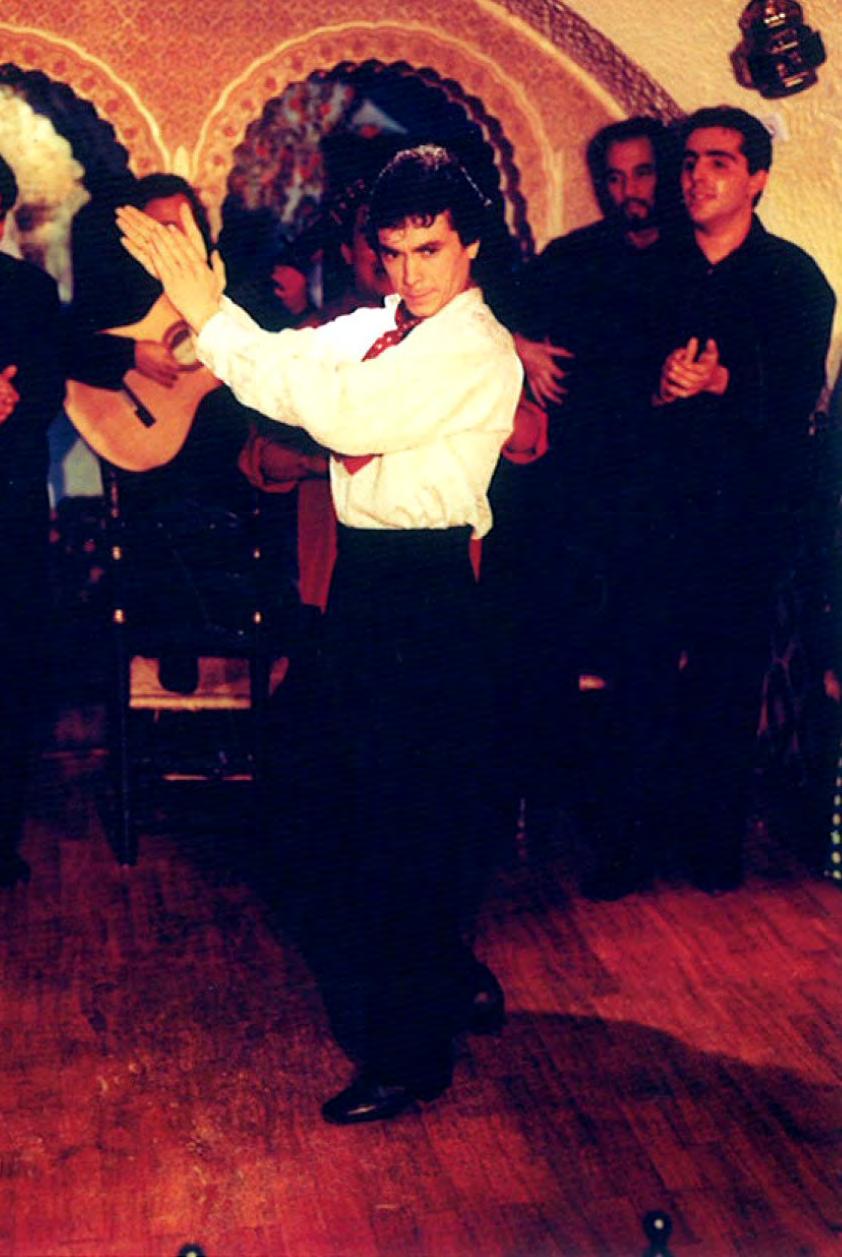
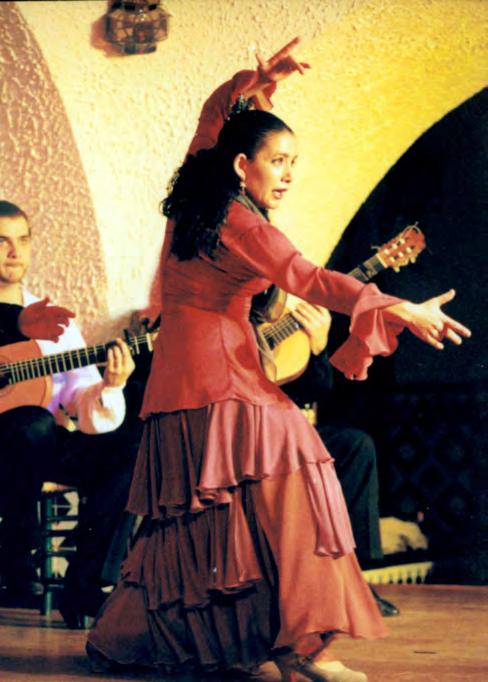
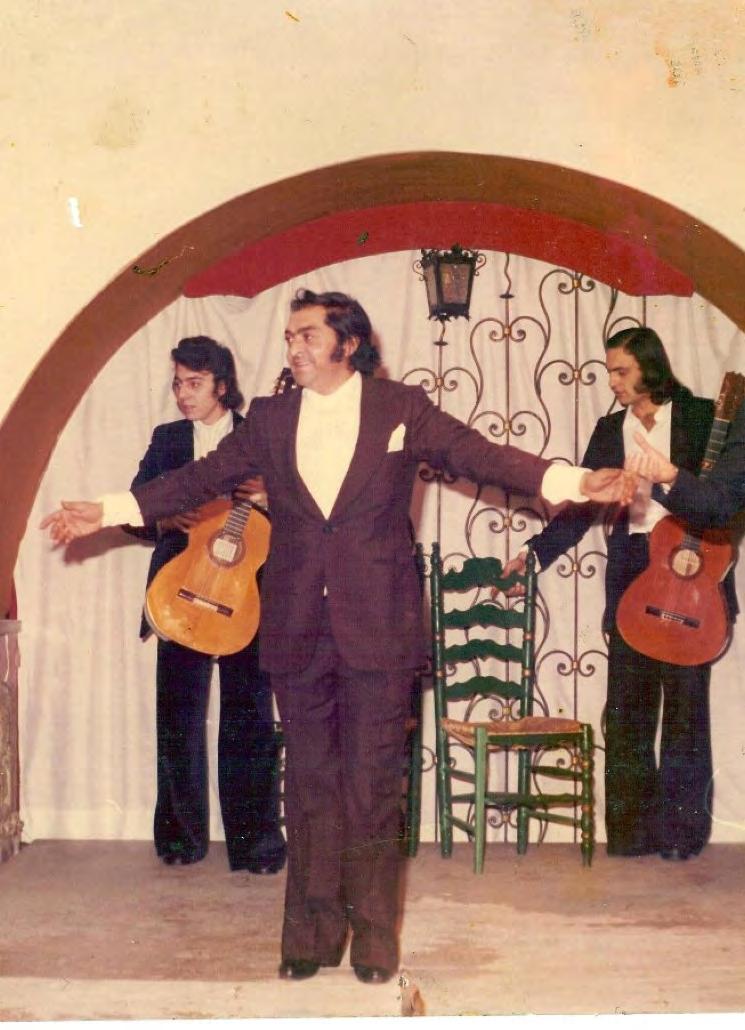
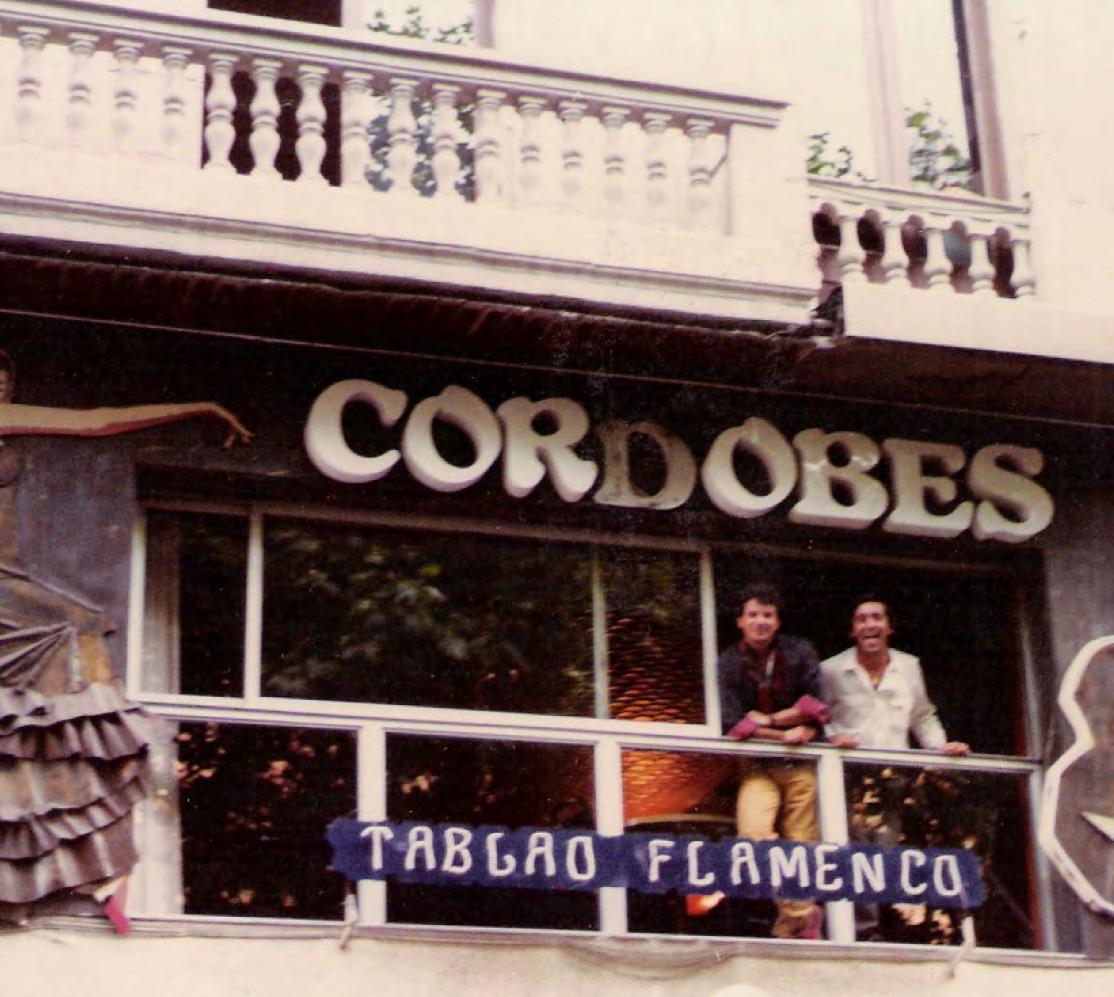
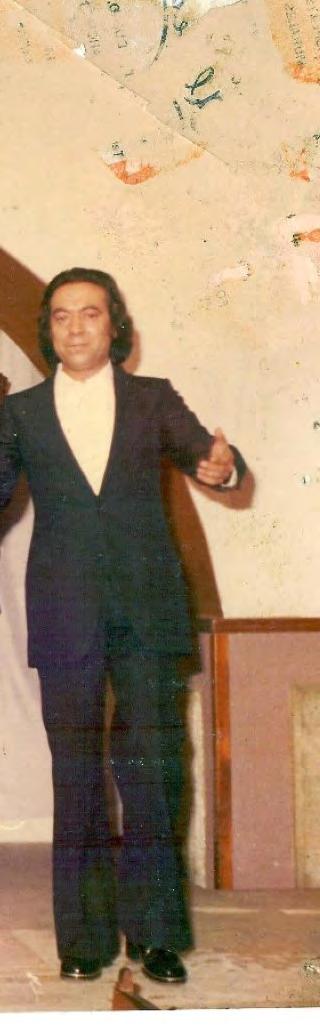
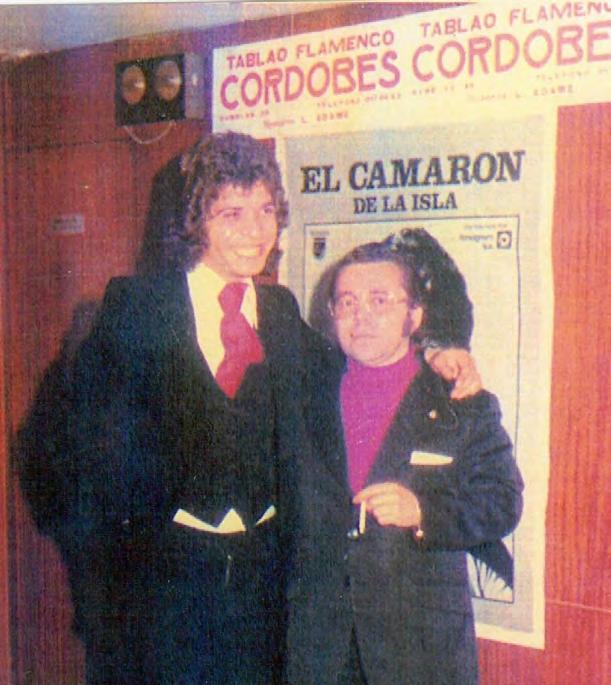
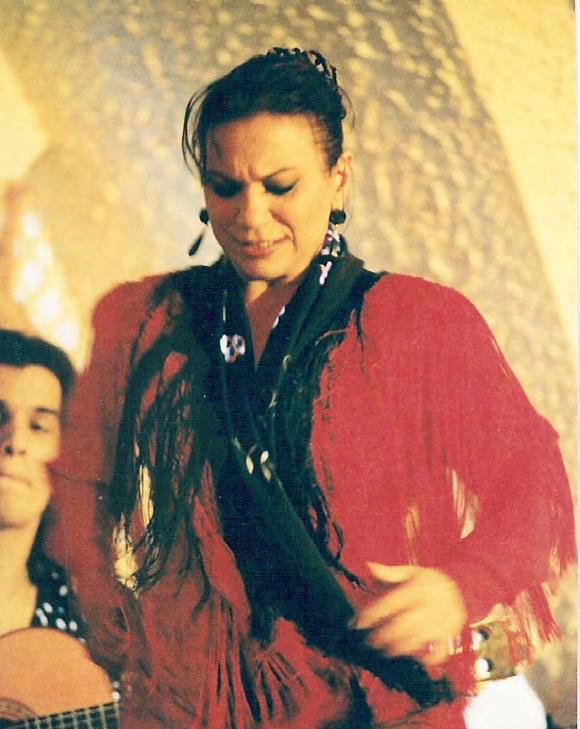
52 FLAMENCO RESISTANCE
Spain’s most famous dance fights for survival in the modern world by Judy Cantor-Navas
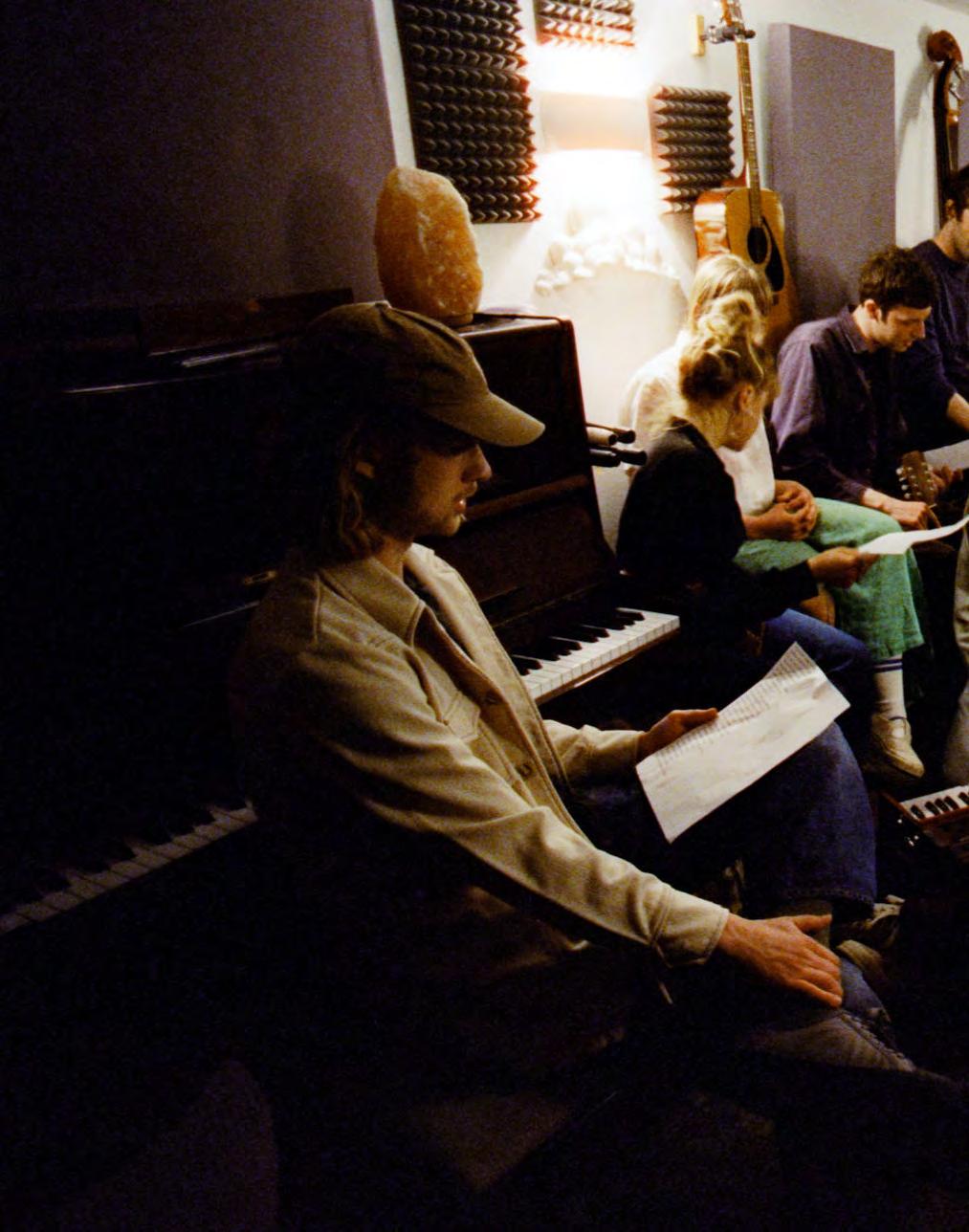
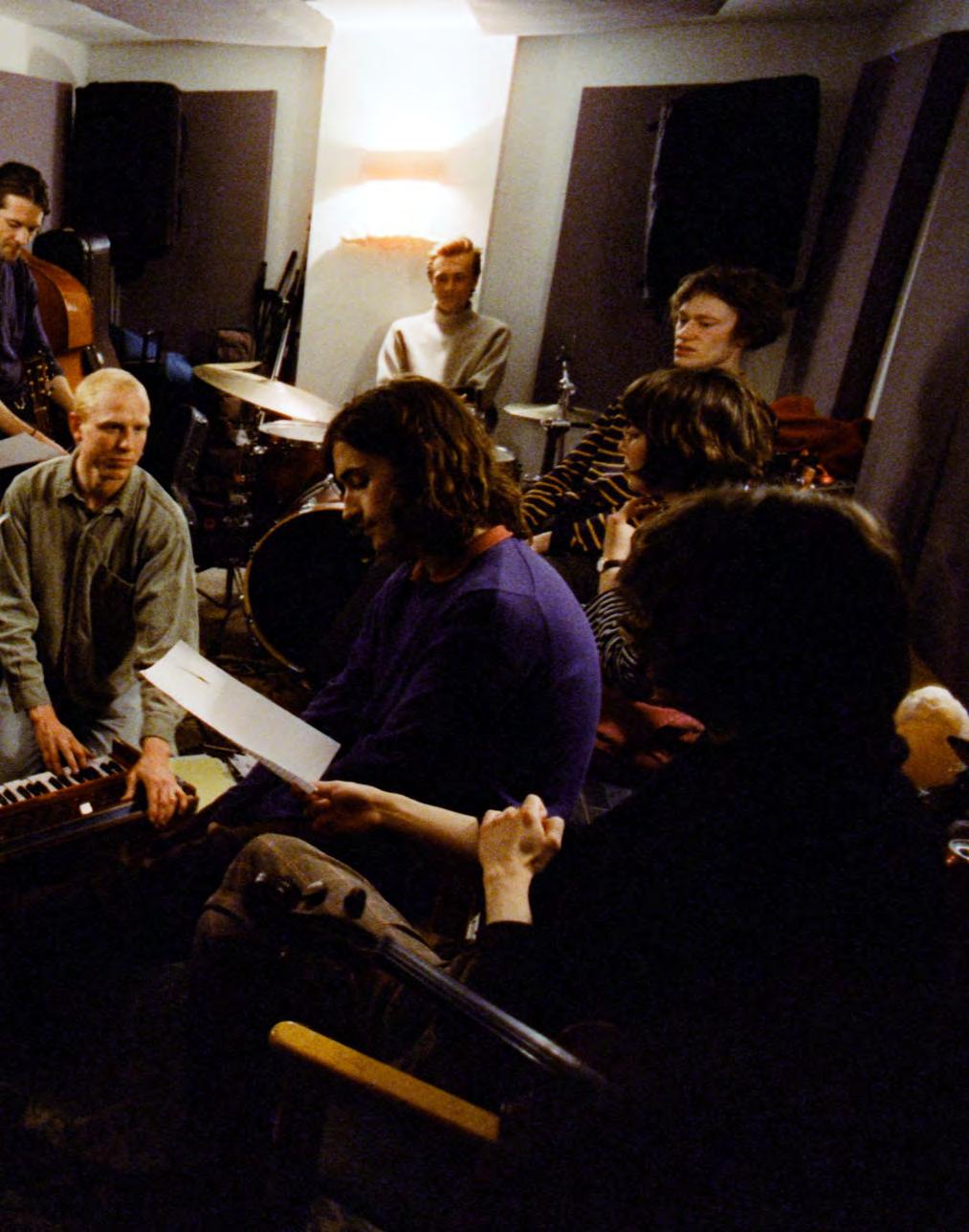
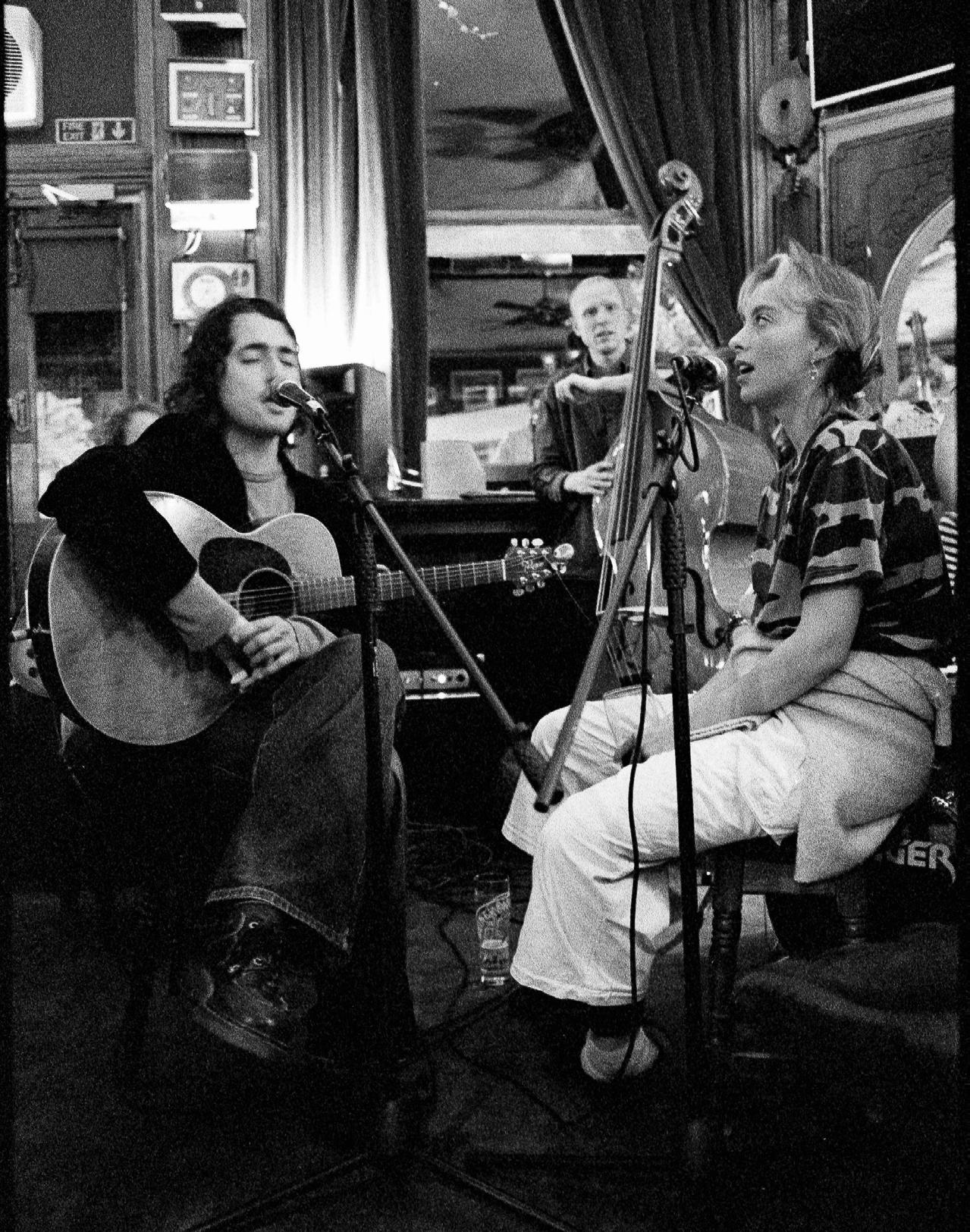
62 FOLK CLUB
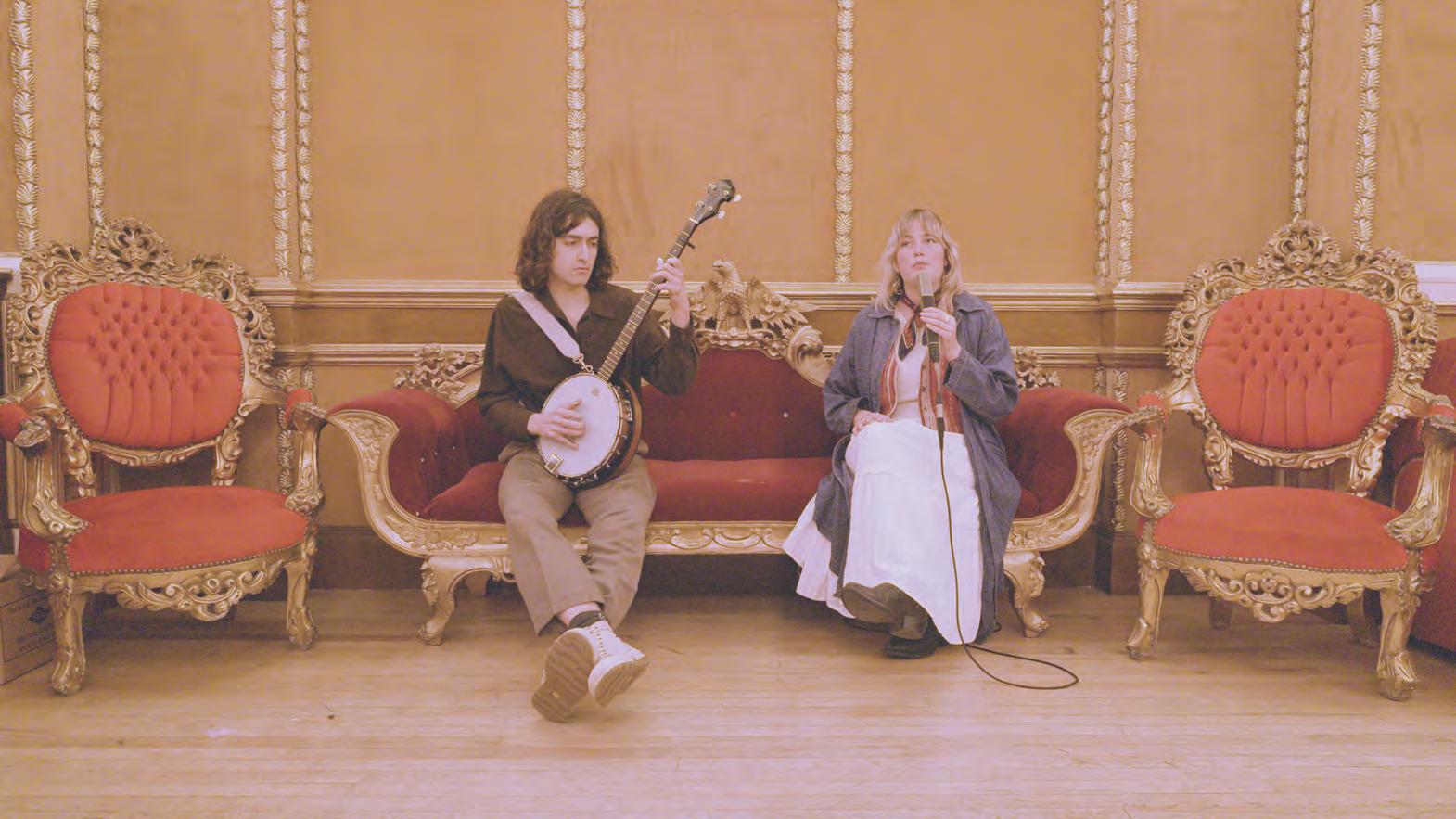
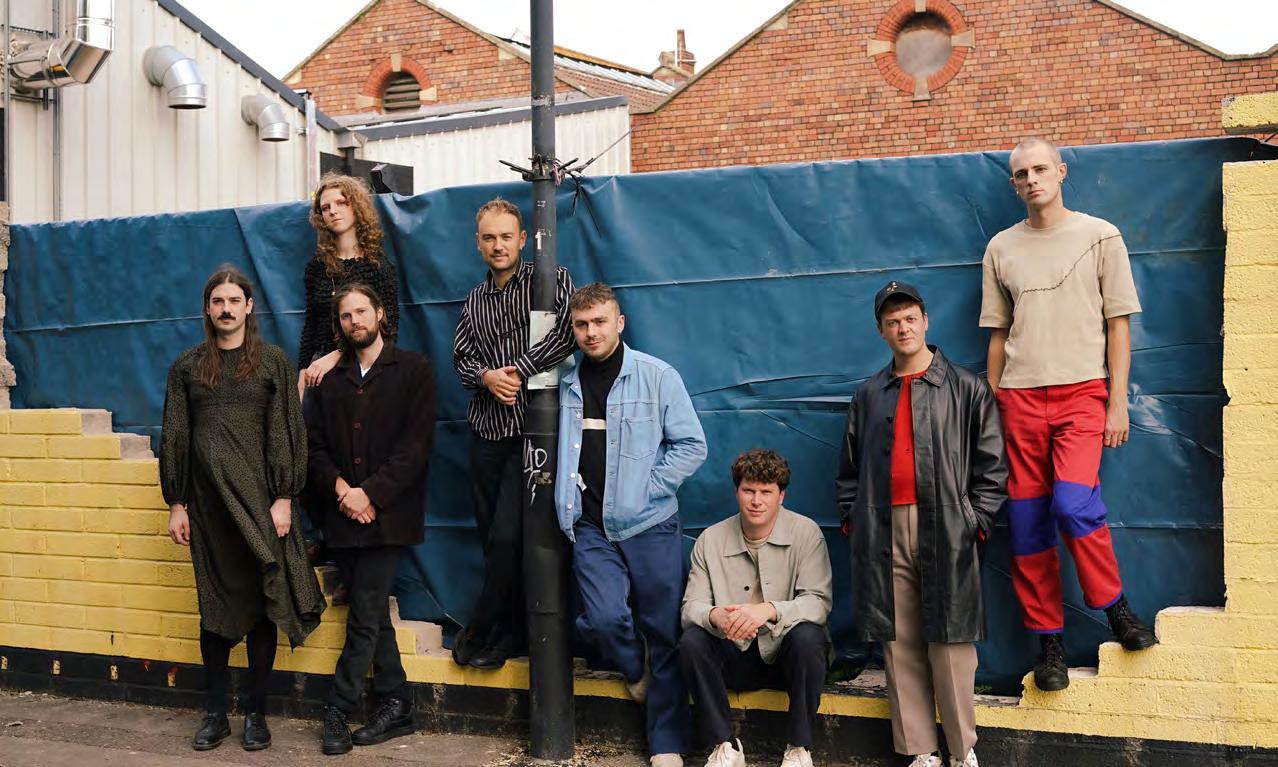
South London artists find connection as they blend musical traditions by Patrick Clarke
70
STREET STYLE
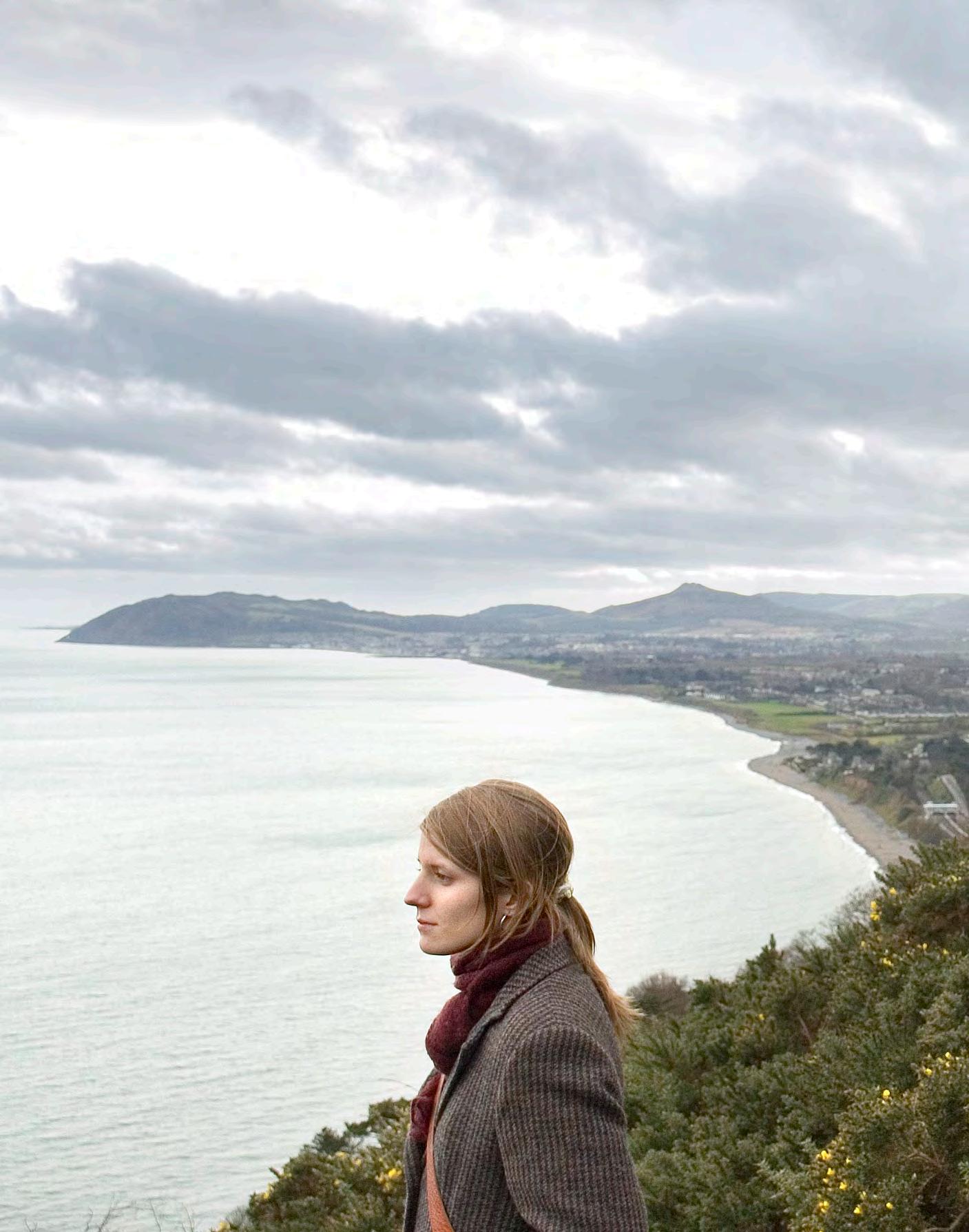
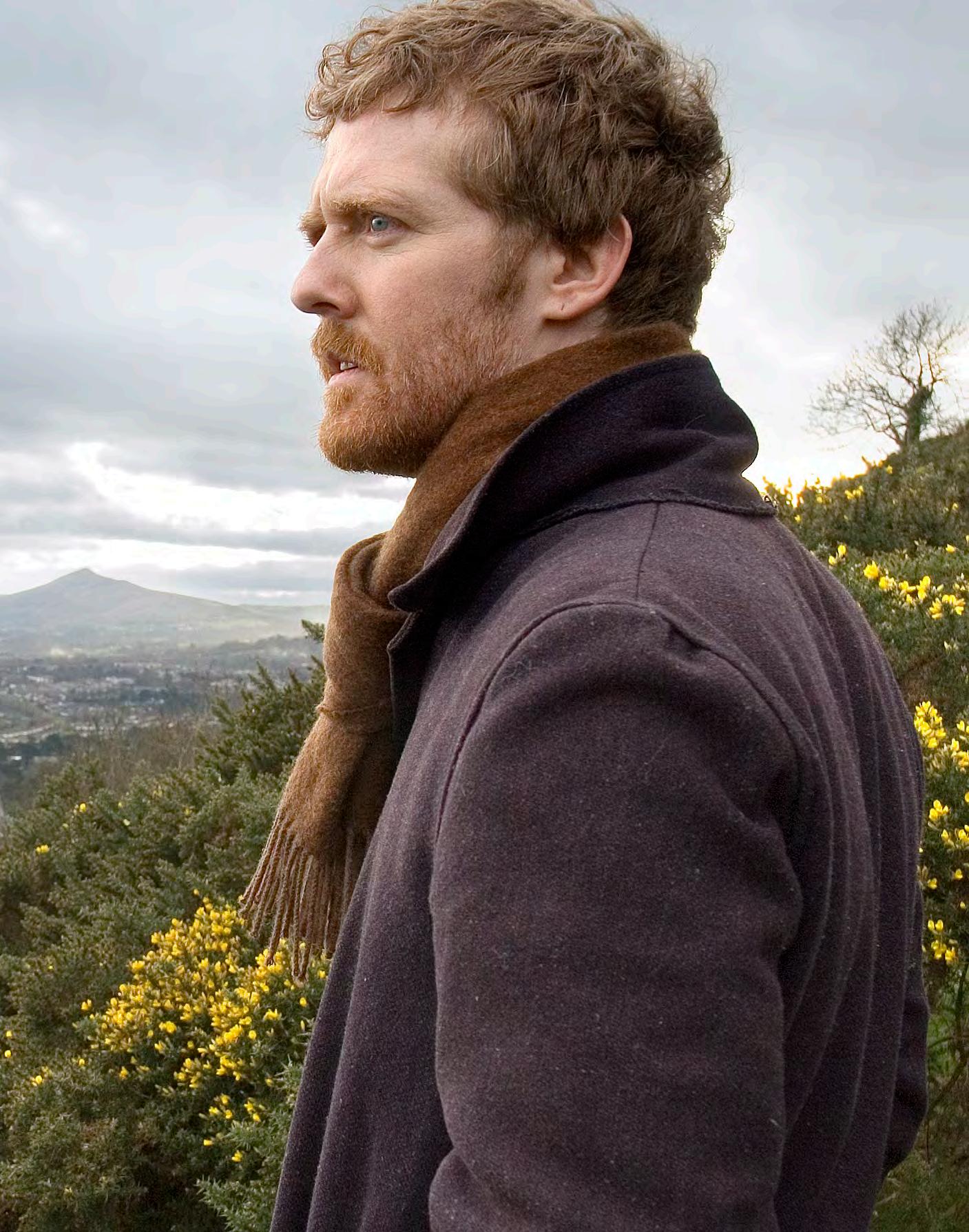
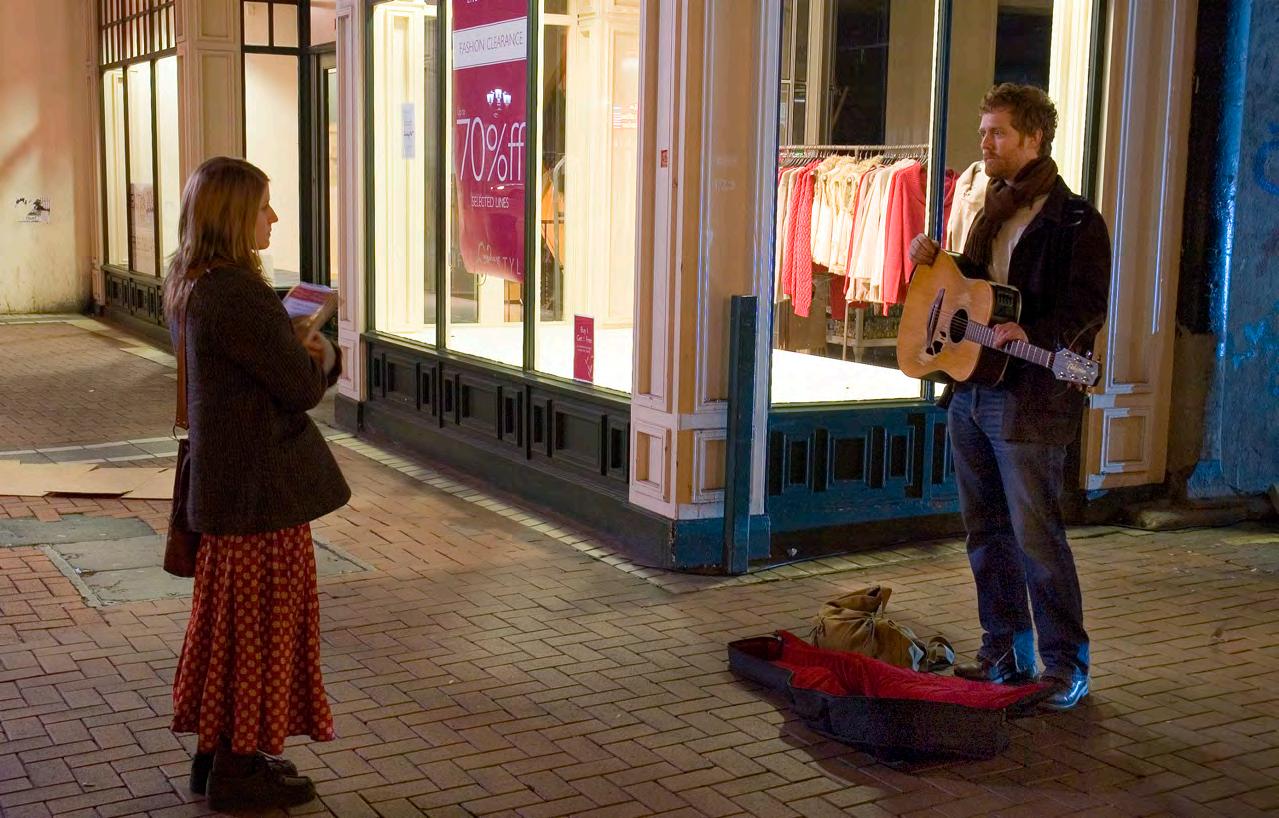
Glen Hansard and Marketa Irglova on the art of busking and the 15th anniversary of ‘Once’ by Will Hodge
76
RECORDING
ON THE RIVIERA
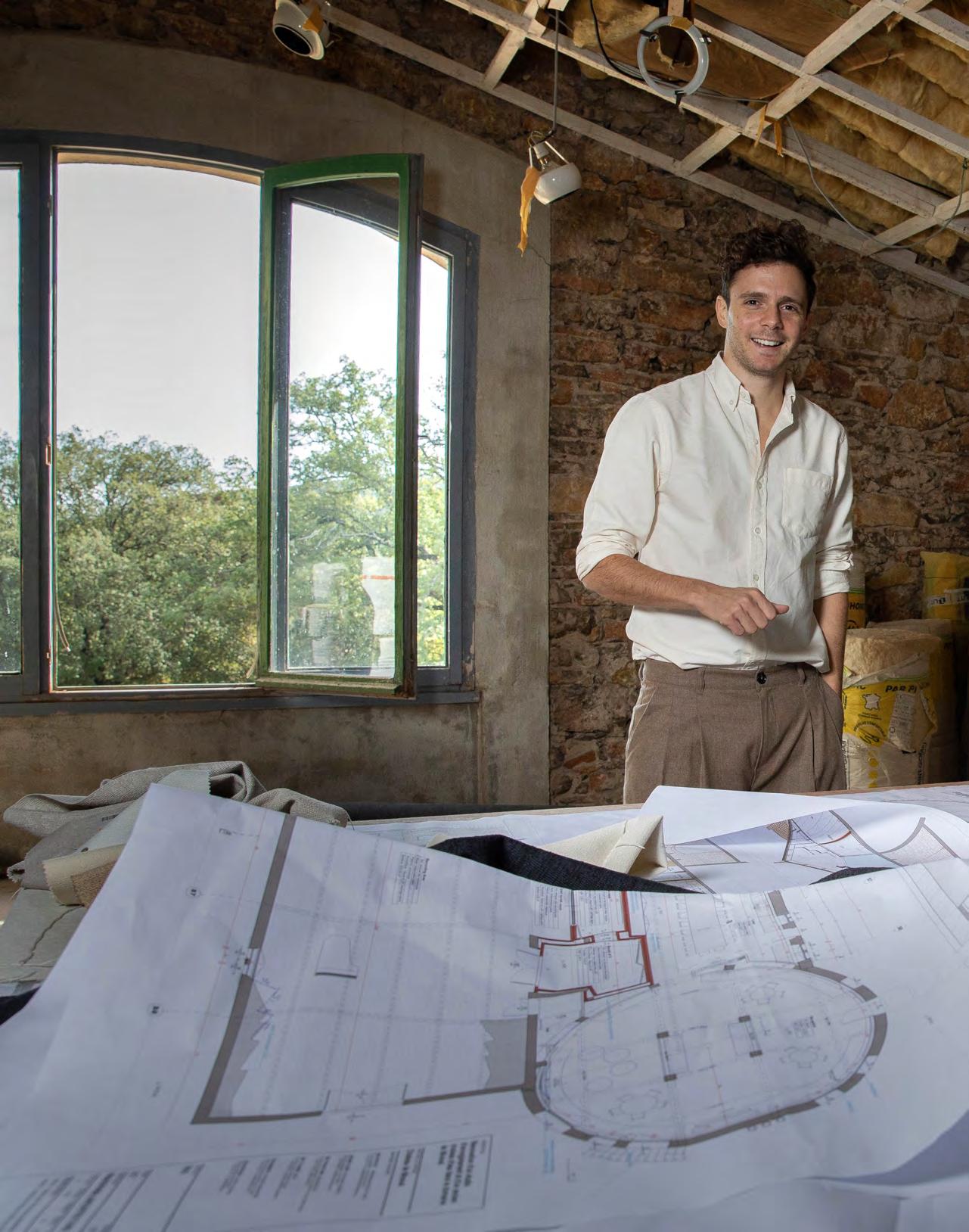
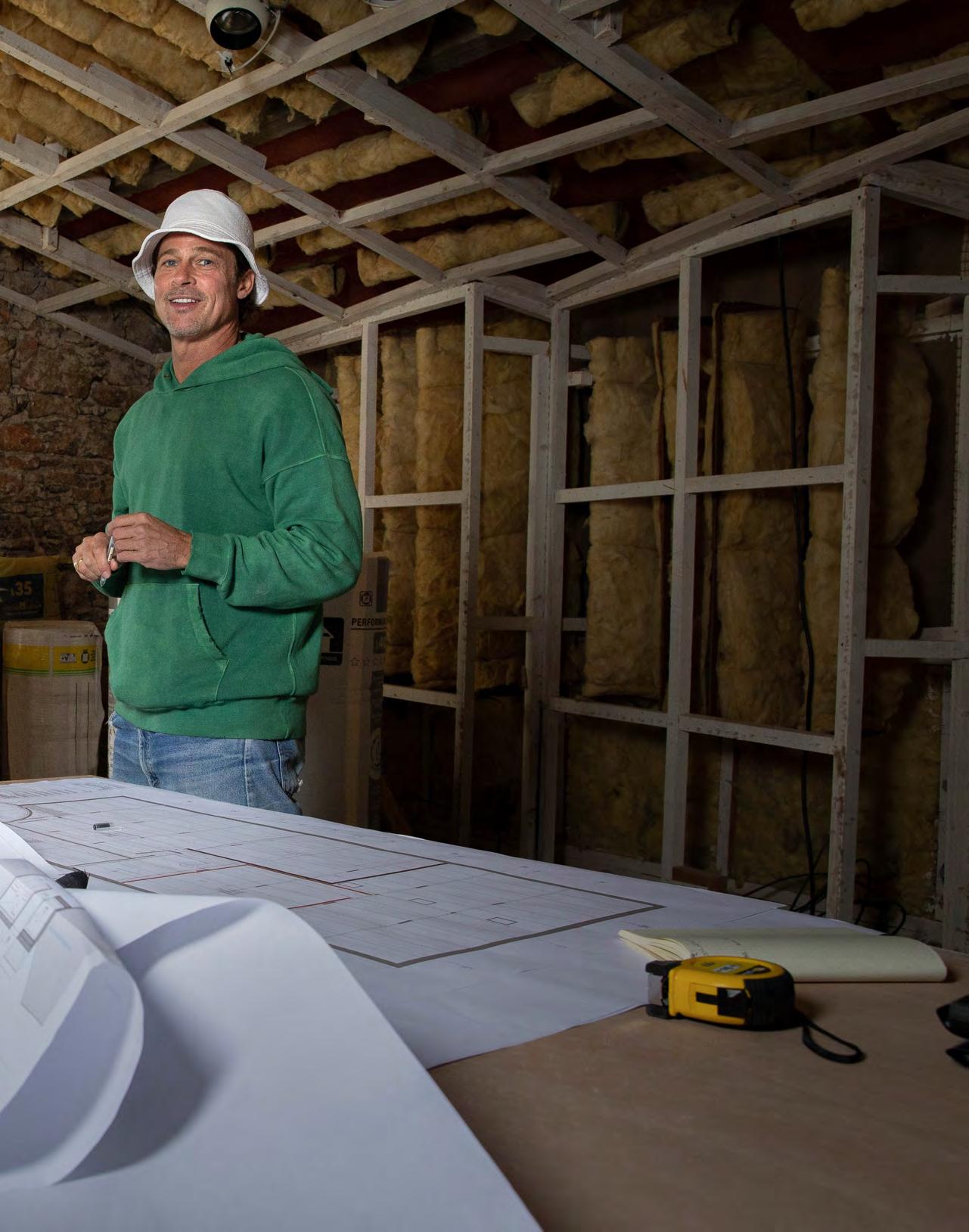
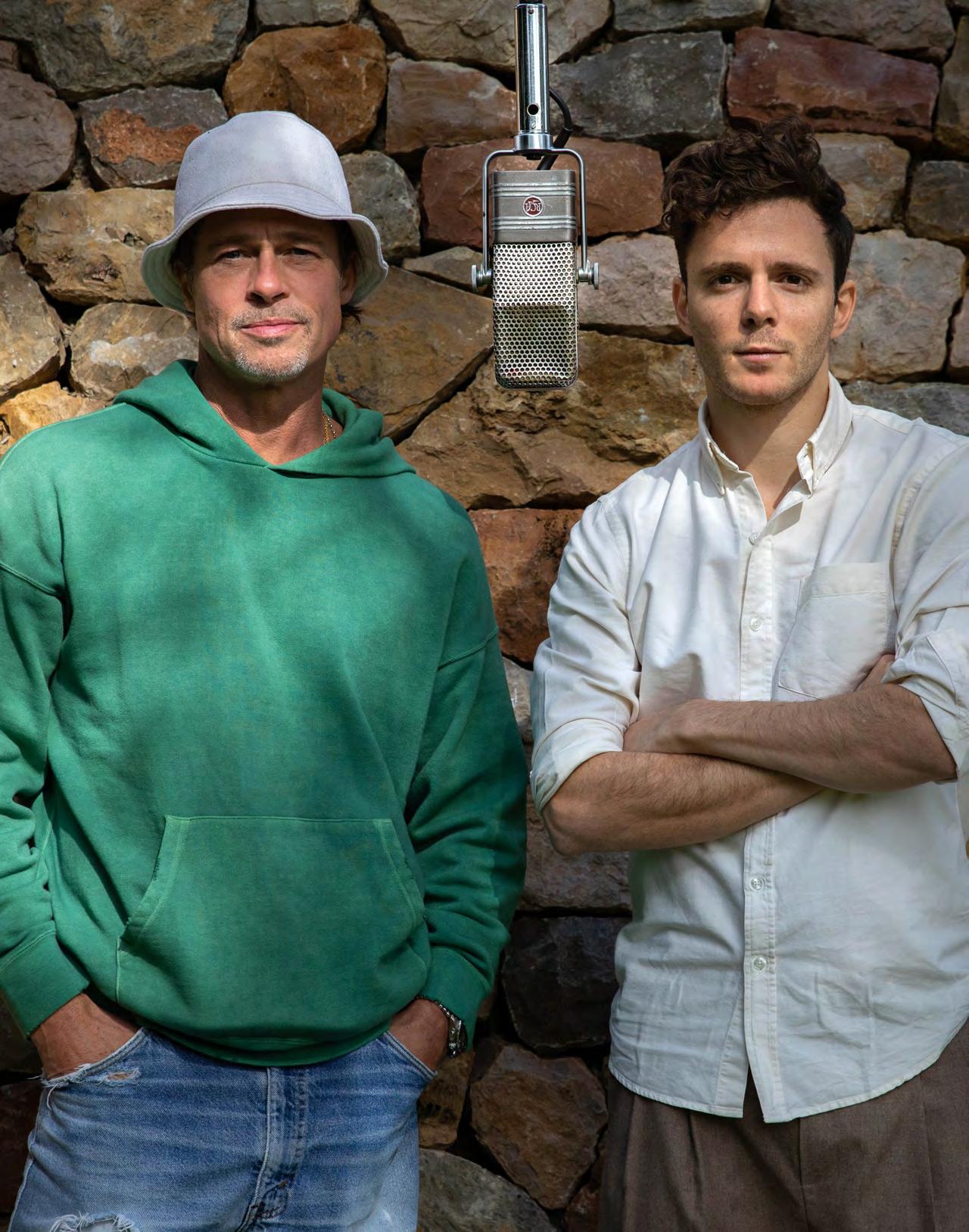
Actor Brad Pitt taps producer Damien Quintard to transform the studio at Château Miraval by Hilary Saunders
82
SAFE AT HOME
Artists find new freedom recording in familiar places by Andy Crump
88
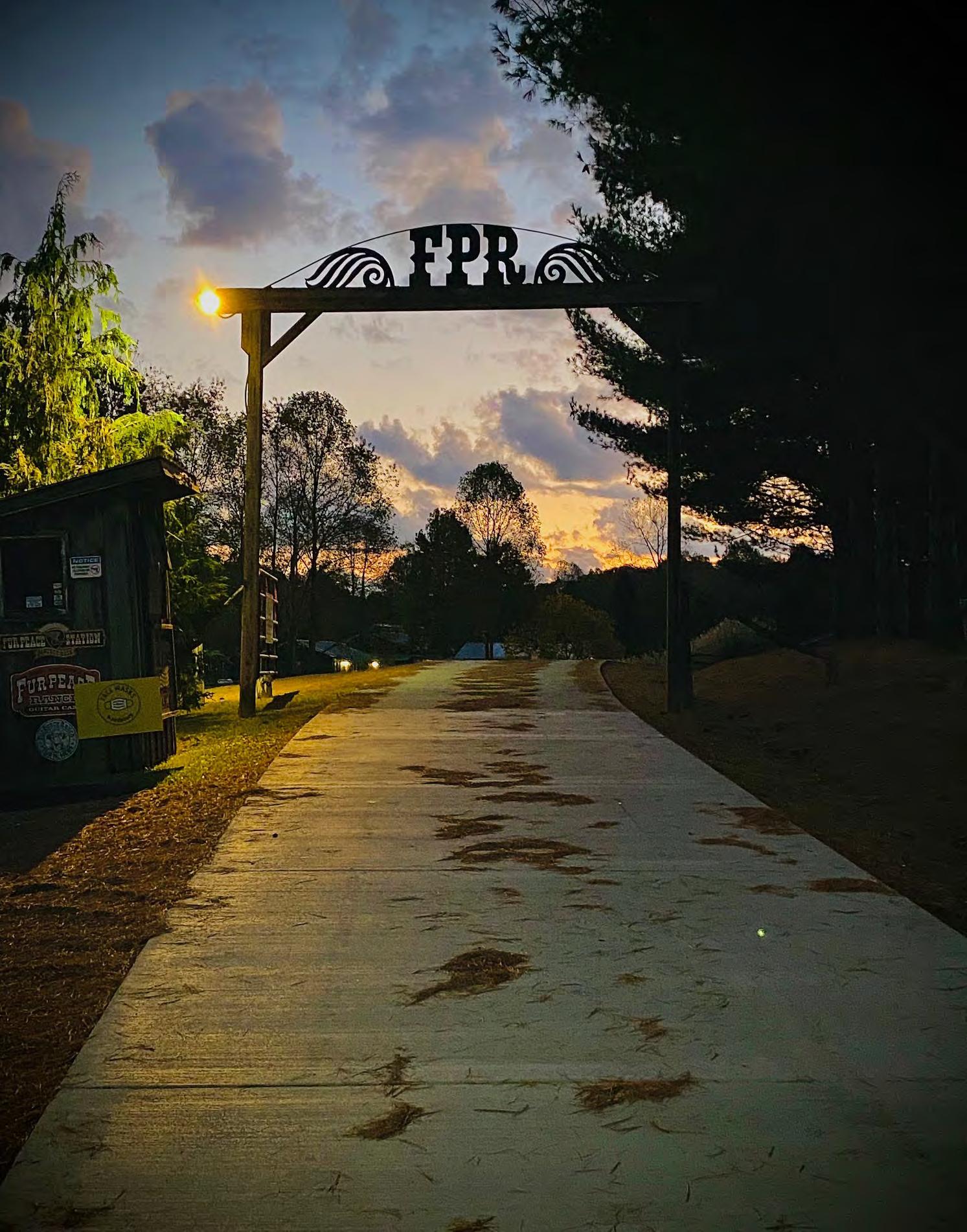
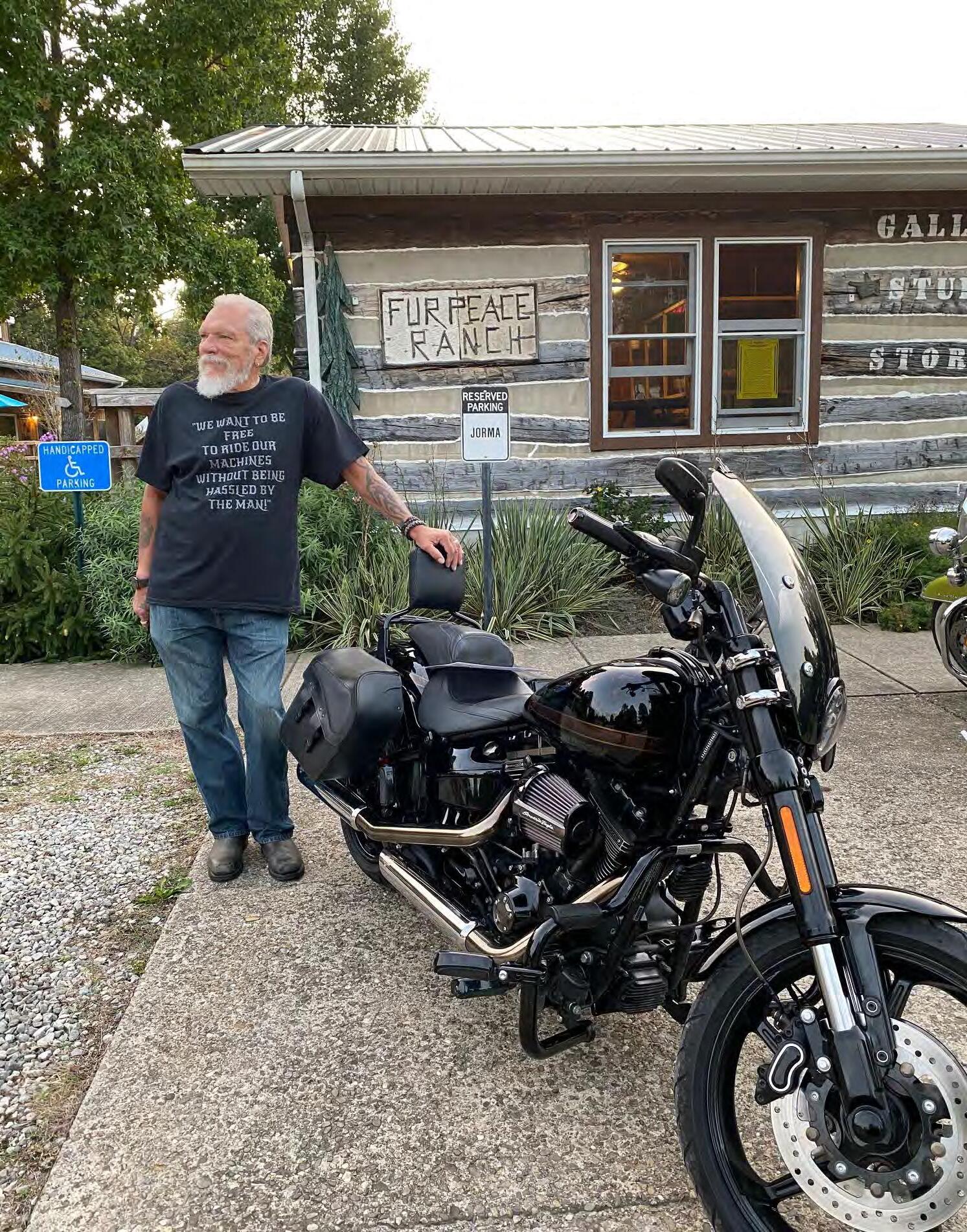
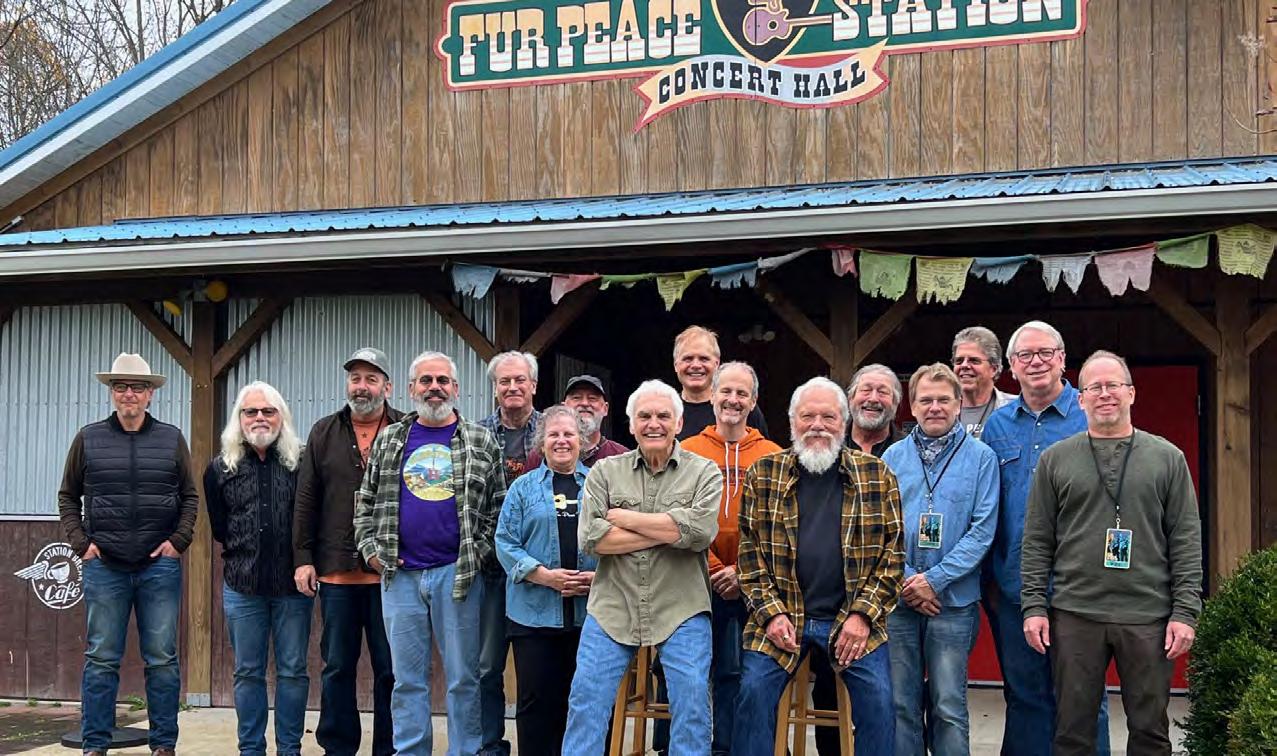
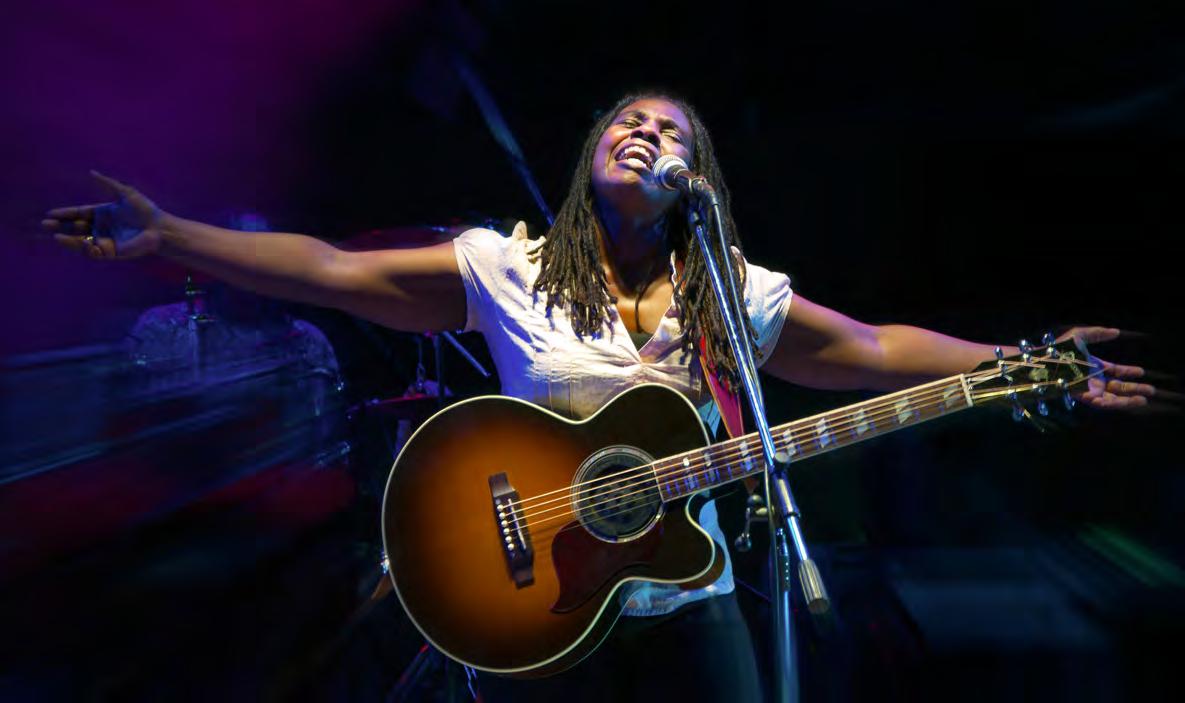
THE RANCH EXPANDS ITS REACH
Jorma Kaukonen’s Fur Peace Ranch continues to connect teachers and students by Annie Zaleski
94
WORD OF MOUTH
Northern Mississippi’s Dial Back Sound makes DIY work by Blake Ells
102
CREATIVE COMMUNITY
The Grahams’ 3Sirens project aims to create an artistic utopia by Margaret Littman
111 CONTRIBUTORS
112
SCREEN DOOR
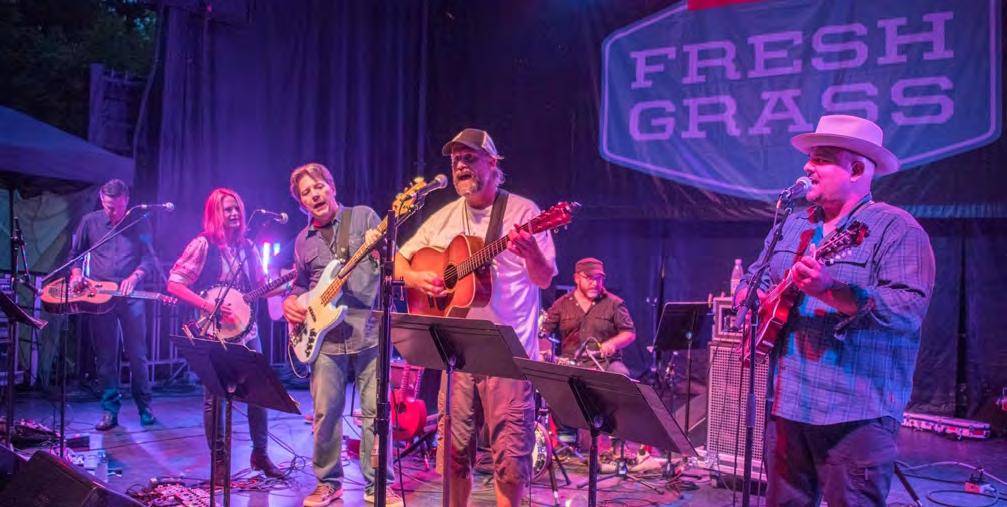
FreshGrass Festivals into the Future by Chris Wadsworth
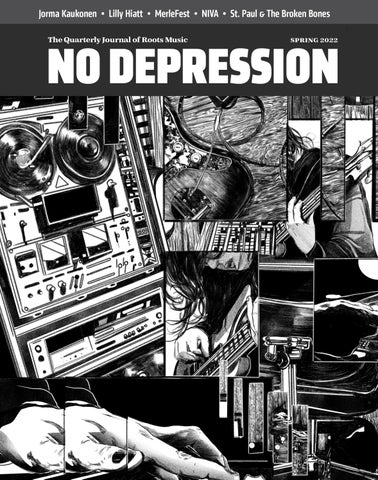
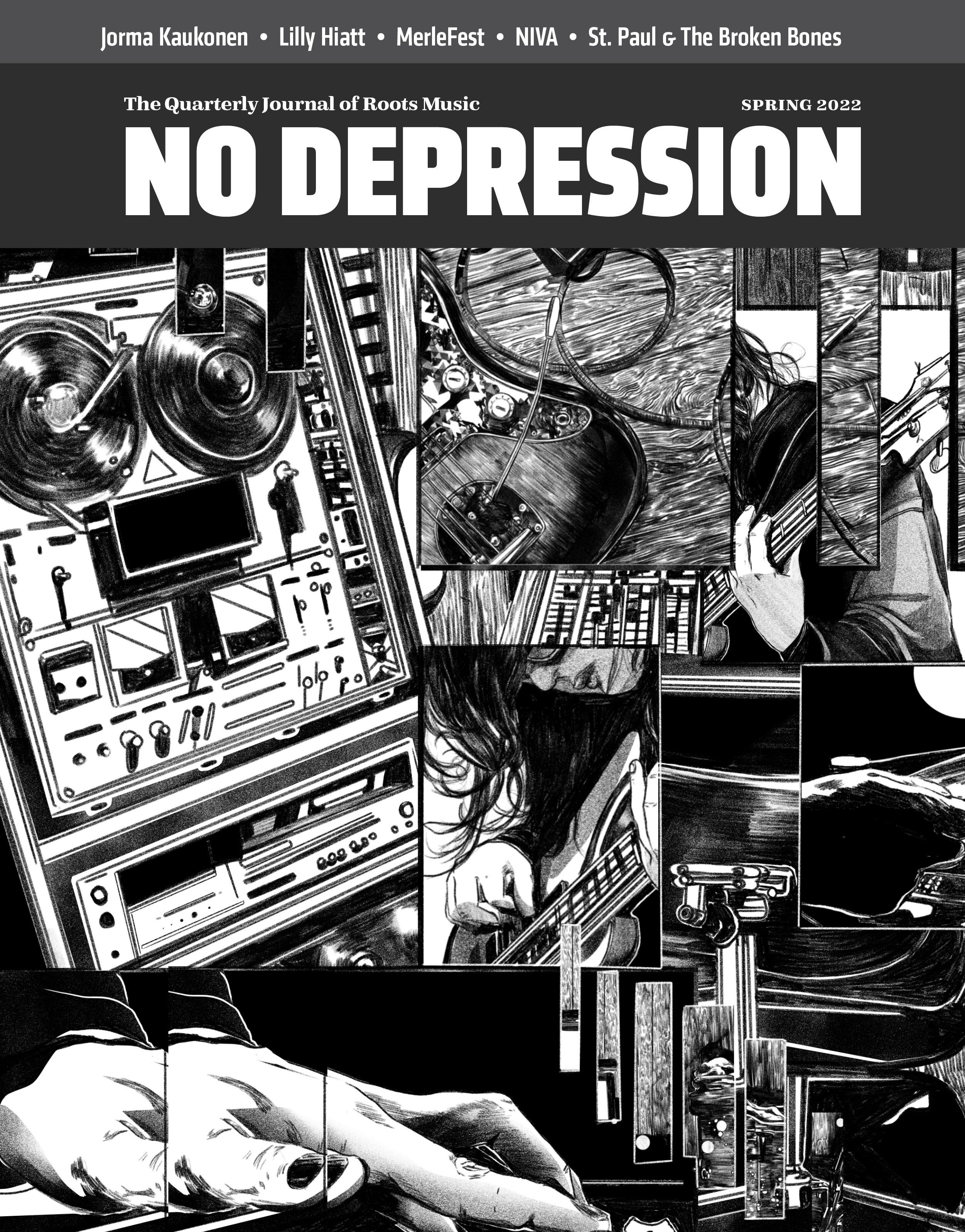
ON THE COVER
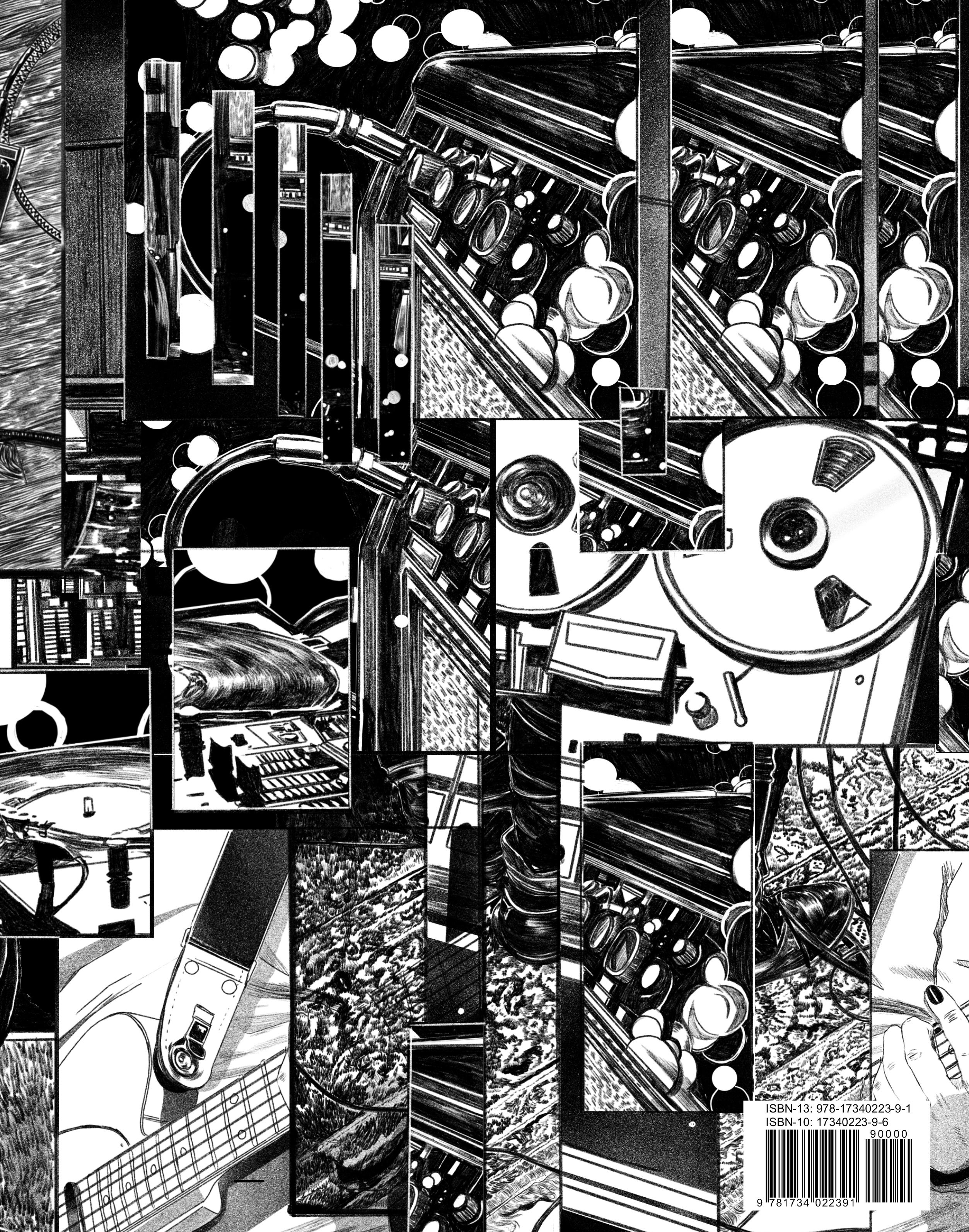
The cover of the “General Admission” issue features the comic book-inspired work of New York City visual artist and illustrator
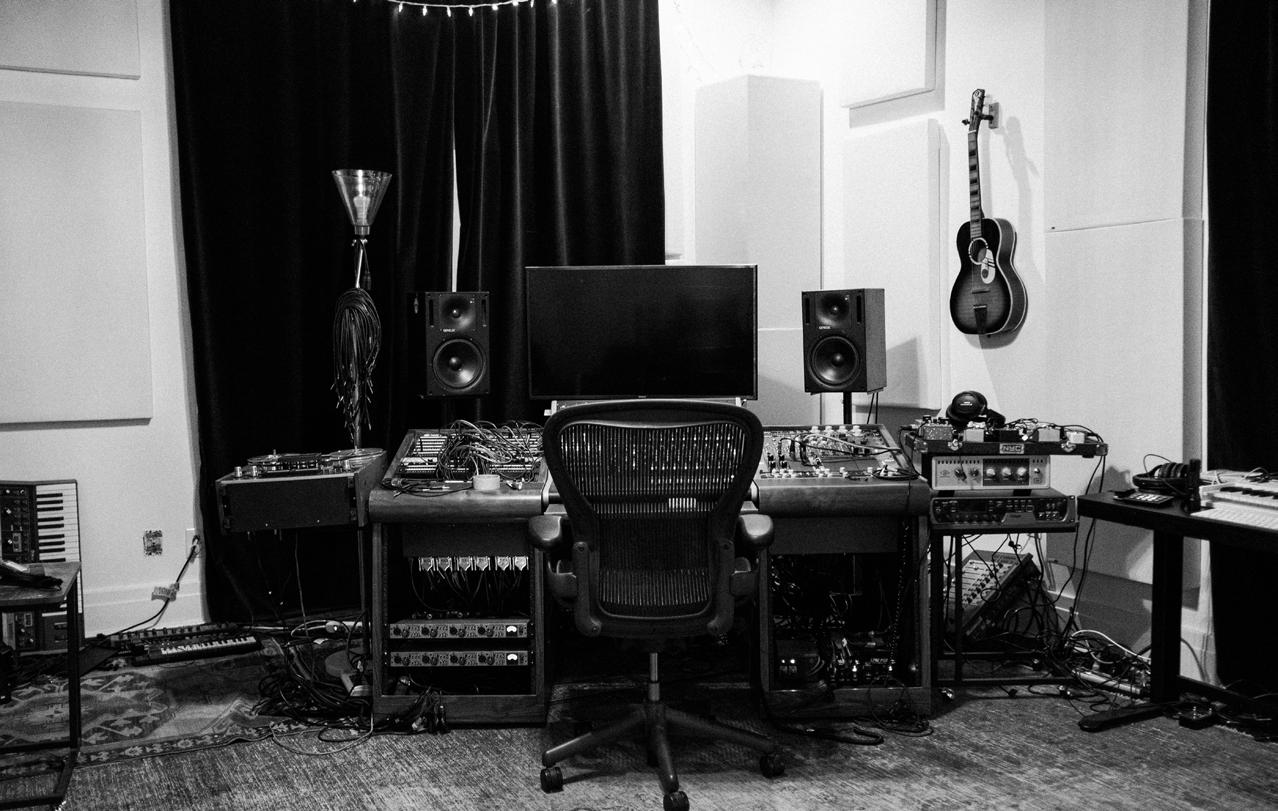
Nicole Rifkin. Each black and white panel features fine linework and helps create a larger picture of the types of tools and gear found in studios, venues, rehearsal rooms, and more — the places and spaces where roots music happens.
NO DEPRESSION TEAM
Chris Wadsworth Publisher and President, FreshGrass Foundation
I’ve been fascinated with the relationship between music and place for more than a decade. No matter where I am in the world, I’m always looking at the streets, the landscape, the concentric circles of concentrated humanity and how they all interact.
In particular, I’m endlessly fascinated by how people interact with the structures around them. I love learning about how people can revitalize a space, taking an outdated structure and transforming its usage while preserving its architecture. In graduate school, I took a course called “Music and the City,” which culminated in a term paper I wrote about music and urban renewal in Miami, Florida. In fact, one of my favorite stories I’ve written for No Depression was about similar issues and successes in Cincinnati, Ohio, for the Spring 2017 “Heartland” issue.
In music, of course, these spaces often come in the form of venues, theaters, or bars. They also encompass recording studios, radio stations, record stores, and festivals. But music also happens outside of such established settings all the time. It happens in basements, on rooftops (shoutout to all eight hours of The Beatles: Get Back), and in dirty houses without permits.
There’s a special kind of camaraderie and magic that happens inside these spaces. And when that energy, that music, drifts outside and brings more people to them, real change can happen in our communities: Bands play venues in underserved parts of town. Fans support local businesses in the area. Jobs are created. It’s a synergistic relationship, an endless feedback loop of inspiration and action with our favorite artform at
the root of it all.
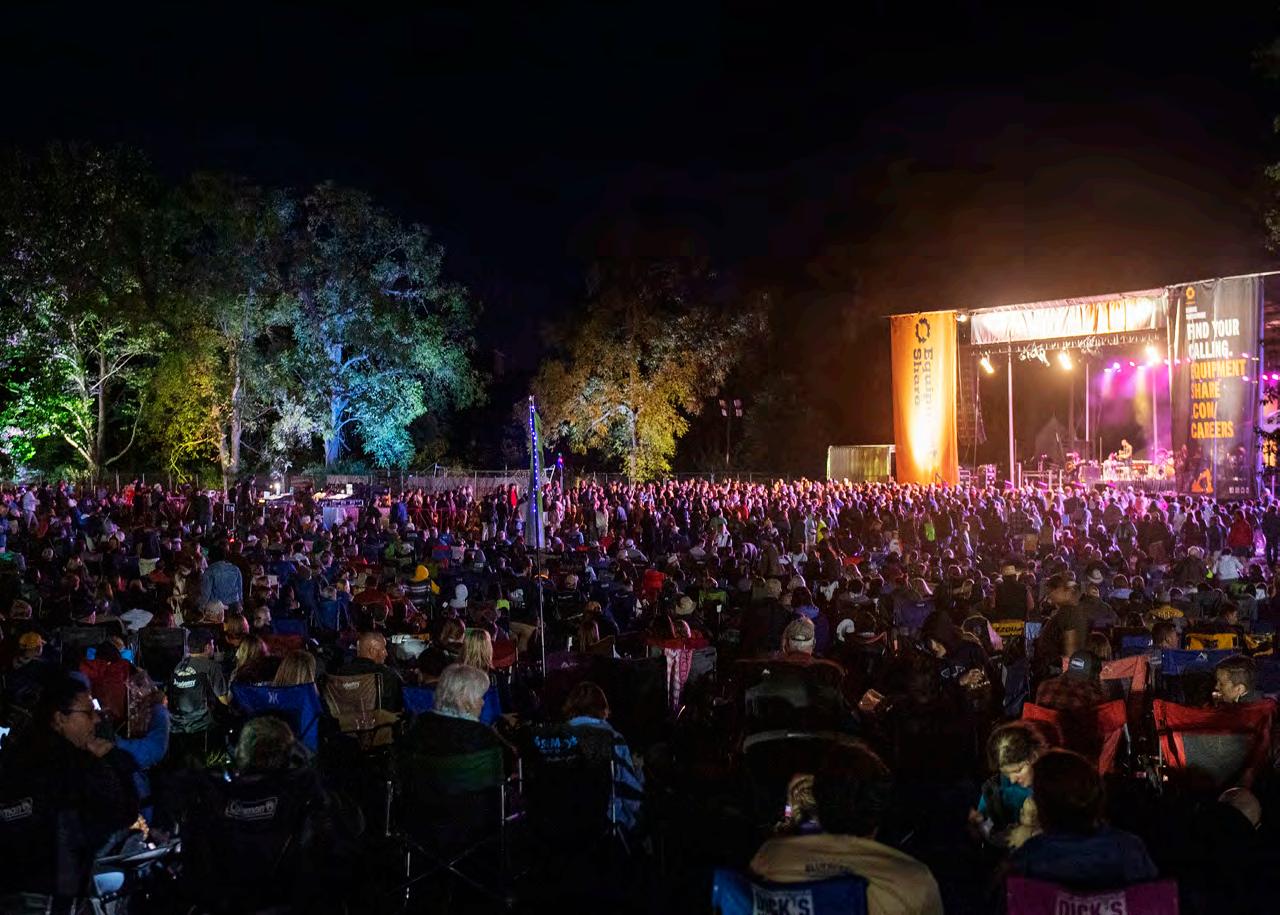
When we came up with the theme of “General Admission,” the No Depression team had just covered the return of the FreshGrass Festival at MASS MoCA, presented by our nonprofit publisher, the FreshGrass Foundation. For most of us, it was the first music festival we’d seen in two summers. Invigorated by the performances and reunions, we wanted to dedicate an entire issue to celebrating the range of places where roots music happens.
Assistant Editor Stacy Chandler came up with the idea of titling this theme “General Admission.” Of course, it’s a nod to concert seating assignments (or a lack thereof), but it’s also a bold statement: All people and all places are
welcome here.
Stories in this issue highlight locales across multiple states and countries. There are recording studios in Mexico City, burgeoning scenes in South London, and dispatches from rural parts of Kansas and Arkansas. We tried to include a mix of legacy events like MerleFest and established venues like the Brooklyn Bowl franchise, as well as little-known and local haunts — like Sarah Shook’s favorite bar, The Cave, in Chapel Hill, North Carolina, and the Dial Back Sound studio and record label in northern Mississippi.
We also tried to invert the theme and explore the untraditional places where roots music happens. Andy Crump wrote about how artists like Brandy Zdan, Lilly Hiatt, and Lowland Hum recorded their most recent albums at home because the pandemic thwarted the more traditional studio experience. And Will Hodge looked to the city streets, exploring how busking continues to influence Glen Hansard and Marketa Irglova 15 years after the release of their award-winning indie film, Once.
When we were putting this issue together, we realized that “General Admission” also ought to serve as tribute to all our favorite places that have survived the pandemic and explore what the future of musical spaces might look like. But at the time of this writing, the omicron variant is canceling gigs and rescheduling tours all over again. Even with the uncertainty of it all — the question marks of what might happen between now and when this issue arrives in your hands — it feels more important than ever to honor every place that enables roots music to happen.
When Venues Thrive, Communities Grow
by Rev. Moose
In late February 2020, my colleague Cecilie Nielsen and I were sitting in a New York City diner with the founder and general manager of Philadelphia’s World Café Live — Hal Real and Kerri Park, respectively — talking about starting an industry association for live music venues. Through my own company’s work running Independent Venue Week in the US and Hal’s vast experience in the nonprofit and live performance world, the conversation was animated and optimistic. We parted ways with an agreement to pick up the conversation later that summer when we’d all have more time.
March 12, mere weeks after that meeting and only a day or two before most of the country was shut down due to the COVID-19 pandemic, Cecilie and I
hosted the first of what would become weekly Independent Venue Week town hall Zoom calls, welcoming a national community of venues, promoters, and stakeholders to what would soon form the National Independent Venue Association (NIVA).
In NIVA’s first week alone, the organization added more than 450 members representing each of the 50 states and Washington, DC. NIVA only continues to grow, with small and large rooms, theaters and comedy clubs, festivals and amphitheaters; rooms that host legends and those that start them all make up the myriad of today’s members.
As the world’s stages systematically shut down in mid-March 2020, we all had the feeling this would be somewhat temporary. My concern, and the reason NIVA started so quickly, was that the very
root of our economic and cultural being was on the verge of disappearing right in front of us.
In those early days of being shut down, 90% of NIVA’s member venues said they would permanently close without meaningful financial support. The fear of losing countless rooms and spaces, which serve as the bedrock of both our collective fandom as well as our individual communities, was allconsuming. Locally owned and operated venues and festivals have been wellknown for their history of supporting creativity and development, but their economic relevance had often been overlooked.
The Chicago Loop Alliance published a study in 2019 that showed that for every one dollar spent on a ticket at an independent venue, $12 in economic
“Too often, the root of something is in reference to the past, including when we talk about roots music: Herearethesongsthatmadeuswhoweare,thatlaidthe foundationofwhatwehavetoday.”
Rev. Moose
activity was generated. When people buy a ticket, they travel to town, stay in hotels, and buy from local shops. They meet their friends before the show at the restaurant across the street. They walk to the pub down the block for a post-show drink. When the show happens, local businesses and employees benefit. This happens all across America.
NIVA’s Save Our Stages campaign staved off a catastrophic collapse of the industry as part of the second federal COVID-19 relief package in late 2020. This grassroots movement sent two million letters to Congress and ultimately became the namesake of what Bloomberg called “the biggest show of federal support for arts and culture in U.S. history.” By joining together as a community with peer support, and ultimately by working with state and federal legislatures, NIVA members were able to secure grant and funding programs that not only benefited this beloved sector of music, comedy, and
performing arts, but also helped save countless independent cinemas, theaters, zoos, aquariums, and more.
After all, places to see a band or a standup set or an orchestra will always exist. The driving fear was that the independent sector would have been decimated. These locally owned and operated rooms and festivals are where the superstars of tomorrow hone their craft. Our industry’s supply chain, an old phrase with a new relevance, is built on the consistent development of artists that rise from open mics, through local clubs, to touring, festivals, theaters, arenas, and a number of other stages along the way. It is quite rare, even in the world of digital discovery, that artists start at the top. And many artists have no aspirations of being megastars. Some of the best artists, by choice or design, play in front of hundreds or a few thousands of fans at a time, rather than in enormous arenas.
This ecosystem, which makes it possible for both performers and fans to
flourish, represents the very roots we must cultivate. We need the rooms that book a band’s first show because their guitarist swears they will be able to pack the place. We need the festival booker who puts a rising star on stage not just because of ticket sales or personal interest, but because they know something magical will happen.
Too often, the root of something is in reference to the past, including when we talk about roots music: Here are the songs that made us who we are, that laid the foundation of what we have today.
But nostalgia can be as much a handicap as it can be an homage. Trying to hold on to what once was is often in opposition of what could be. We see it in politics, we see it in language, and we see it in ourselves. What people often overlook is that we are living history right now. And these venues, these festivals, these stages that we all helped to save will now continue to be around to grow with us. We are the root of what is to come. ■
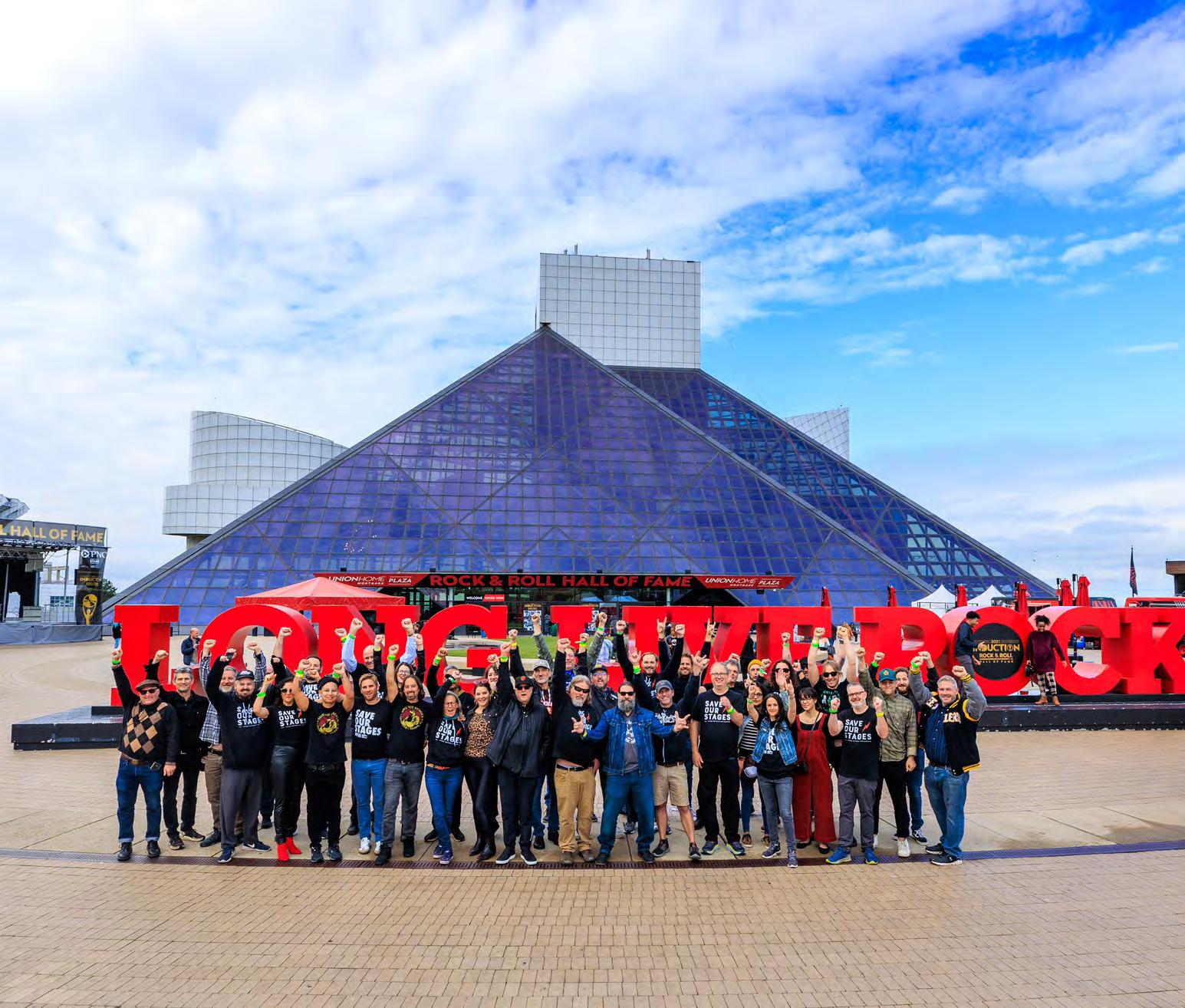
NIVA’s precinct captains at the Rock & Roll Hall of Fame and Museum, taken right before the November 2021 induction ceremony.
Sarah Shook
This Must Be the Place
When it comes to making and performing music, the ambiance can completely elevate
the experience.
The best gear, newest gadgets, and perfect sound system all contribute to the ideal musicmaking experience, but many players credit more ethereal, even spiritual qualities — the feeling of home, the ability to be vulnerable, or the relationships formed — that make a place special. No Depression checked in with nine roots musicians who were delighted to write about the studios, festivals, theaters, bars, and more that matter most to them.
— Hilary Saunders
Sarah Shook & The Disarmers
The Cave • Chapel Hill, North Carolina
The Disarmers have traveled the world playing sold-out shows in Los Angeles, New York City, Chicago, a historic theater in Stockholm, and a swanky gay nightclub in Madrid. We’ve been welcomed in ornate listening rooms in Norway and main stages at American festivals with lighting rigs that cost more than all my earthly possessions. Yet my favorite venue in the world is a 74-capacity room in a dingy old basement in Chapel Hill, North Carolina.
The Cave has been a safe haven for weirdos, outliers, artists, musicians, and LGBTQ+ people from all walks of life from the day it first opened its doors in 1968. The back room boasts a pool table
and a jukebox and joins to the front room by a horrifyingly narrow hallway. The front room contains a long wooden bar attended by ancient bar stools, a couple booths, and a “stage”: a large, dusty rug that has seen its fair share of spilled drinks and amps that have caught fire.
If you’re a non-native lucky enough to stumble on this gem in your travels, as long as you treat the bartender and fellow patrons with respect, you’ll be welcomed. And for many locals (myself included), The Cave serves as a second home, a place to reset and settle, and to catch up with your fellow locals who have also sought the comfort of the wooden bar, low,
plastered, cave-like ceiling, and luck-ofthe-draw band of the night.
As we inch toward normalcy, The Cave is often on my mind; the notion of being able to return to my home away from home on a whim for a Topo Chico and a few rounds of pool feels like a promise too good to keep to myself. Our small scrappy local venues that have toughed out the worst this pandemic has served up are more important to our communities than ever before, and I’m convinced if you haven’t yet found a home away from home in your own community, it’s there. Waiting for you to discover it and love it in all its dive-y glory. — Sarah Shook
, was released Feb. 18 via Thirty Tigers.
Joshua Henry
Speakeasy
Sound • Burbank, California
Some places have a little extra music magic in them. For me Speakeasy Sound in Burbank is one of those places. My friend and producer Theron Feemster owns the place, and when I record there, it feels like anything is possible. You know when you get in that flow with a musical idea for a track and time just flies? I find that happens a lot with me at Speakeasy Sound. I’m already working on album number two there after my debut album, Grow, was mostly made there. Can’t wait to make more music magic there!
— Joshua Henry
JULIA HARRIMAN
Pretend Friend
The Walnut Valley Festival • Winfield, Kansas
The Walnut Valley Festival’s official stages, Stages 1-4, host nationally recognized bluegrass artists. But down in the Pecan Grove, campground stages like Stage 5, Stage 7, and Fine Time host a variety of acoustic music. Bands of all levels of notoriety attend to play the campground stages, and each stage has a packed schedule and a built-in audience camped in close proximity.
My band, Pretend Friend, has played for hundreds of people on the campground stages since 2017. The Walnut Valley Festival has become the most important event of the year for us, and our very first set of acoustic music
was created to play on the campground stages of the Pecan Grove. It’s “home” to us. It would take a book to describe all the aspects of the Walnut Valley Festival. The official festival, held in the grandstands of the Cowley County Fairgrounds, is a hub of artists, food vendors, music workshops, and shows. The National Flatpicking Championship, along with many other competitions, is also held annually. All varieties of people attend and camp together, from songwriting hippies to bluegrass purists. Jamming occurs at all hours and in all settings. Some camps are focused on
music and others on partying, but all contribute to the vibe. Everything has a place in this Midwestern music mecca, and I have made amazing friends and connections.
In 2020, the Walnut Valley Festival hosted its first virtual band competition. Pretend Friend entered and won, which made for one of the most surreal experiences of my life. We played six official sets in the 2021 Walnut Valley Festival. Whatever happens in the years to come, I’ll be pickin’ in the road all night long with my friends every third weekend of September.
— Grant Boesen
Pretend Friend performing on Stage 1 at the Walnut Valley Festival in 2021. From left, Evan Ogborn, Brody Wellman, Grant Boesen, and Garrett Briggeman
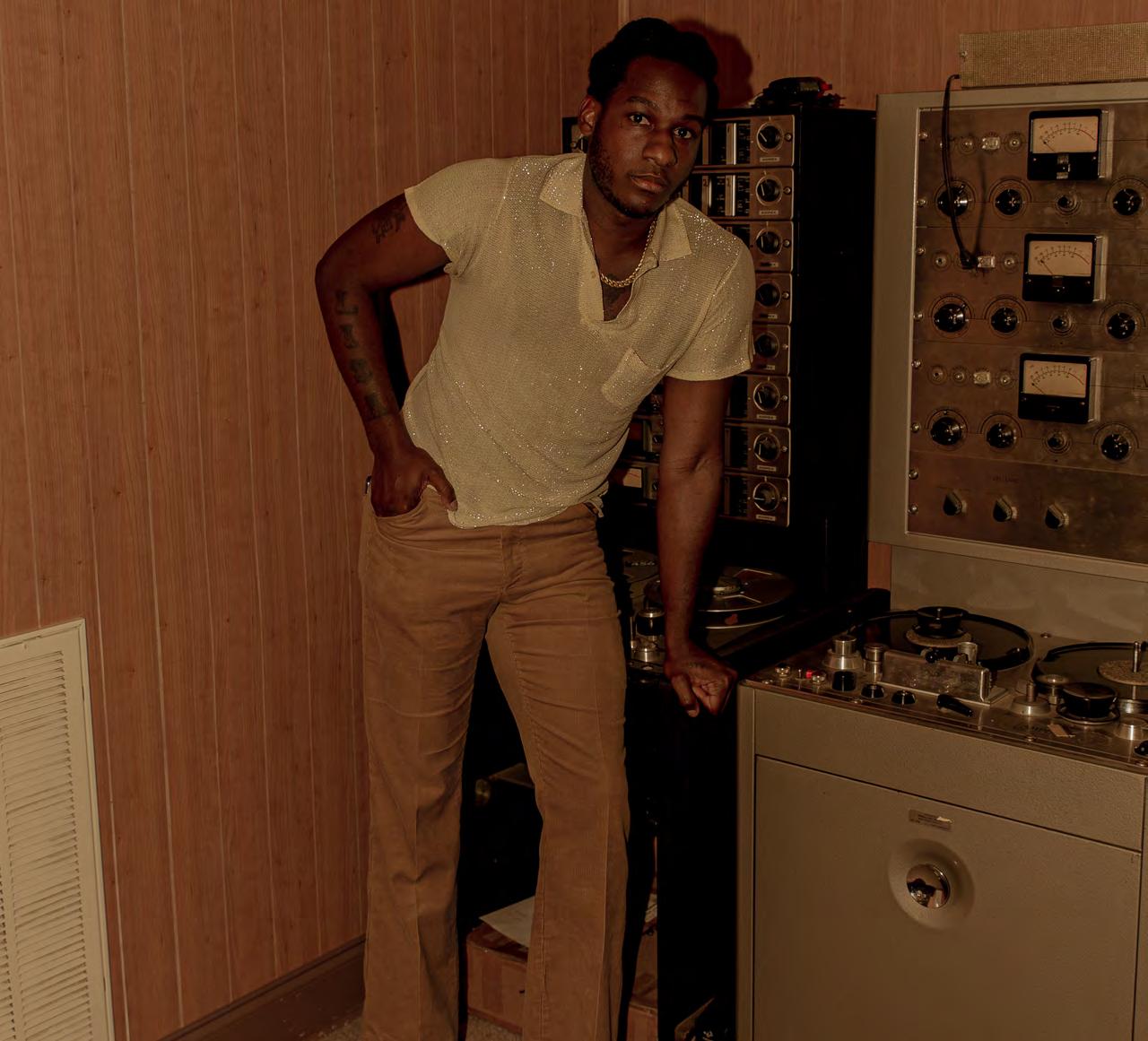
Leon Bridges
Niles City Sound • Fort Worth, Texas
This is the place that changed my trajectory completely. My colleagues Austin Jenkins, Chris Vivian, and Josh Block came up with the idea of transforming an old golf equipment warehouse into a recording studio that would ultimately become Niles City Sound. In 2014, we set up shop here and recorded a handful of songs I wrote to tape. For us, it was just about the camaraderie of creating good music together, but we were oblivious to how huge everything would become months later. Niles City will always be home to me, and it remains a place for heads in our community to bring their ideas to fruition.
— Leon Bridges
Khruangbin and Leon Bridges’ second EP together, Texas Moon, was released Feb. 18 via Dead Oceans / Columbia / Night Time Stories Ltd.
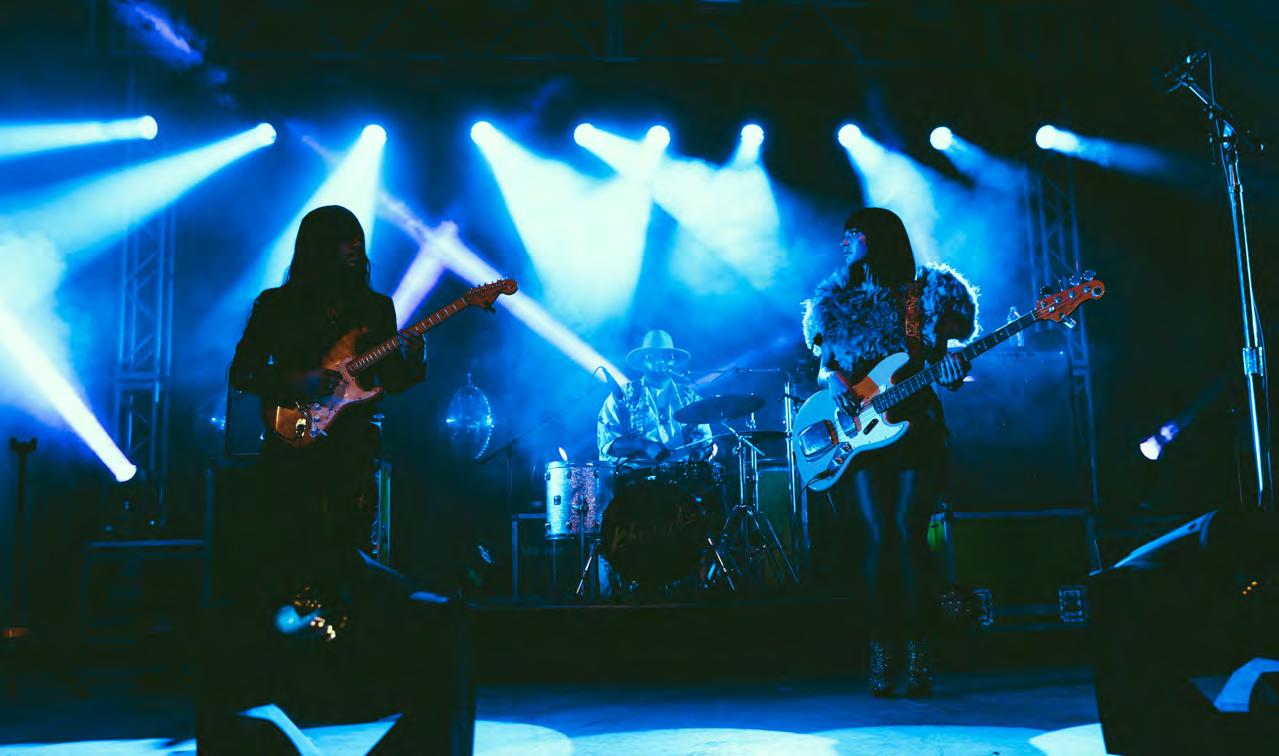
Khruangbin
Stubb’s Bar-B-Q • Austin, Texas
Stubb’s in Austin holds the same kind of regard, to us, as Fitzgerald’s did in Houston. A rite of passage. A legendary place to play. A goal to achieve. Nothing fancy. Just music. Real music. A real venue. Of the people and for the people. A barbecue front with a venue in the back. There’s not even an indoor restroom backstage, and the green room is an airstream trailer. And it’s HOT. Houston bands will drop everything to drive the 162 miles to play Austin, and if they’re lucky, Stubb’s. The first time we
were there together, we were at SXSW. The second time, we opened up for Tycho, which already felt huge. Recently we graduated to headlining and played four sold-out nights in a row. We brought our friends from Houston with us — a different group each night — so that we could all enjoy that feeling together. It felt like we’d made it. Those shows were rescheduled twice due to the pandemic, so the anticipation was at a fever pitch. Little did we know that what we had in store was a long, four-night embrace by
the good people of Austin. We love how dusty it is. We love that even if you didn’t get tickets, you could stand five blocks away and hear the music and love pouring out of it. It’s a party. We’ll never forget Jade, at front of house, draped with a solar blanket as we sound checked in the blazing Texas afternoon sun. Or seeing our name on the marquee. Or the slowly growing crowd just outside the gates. They had been waiting just as long as we had. — Khruangbin
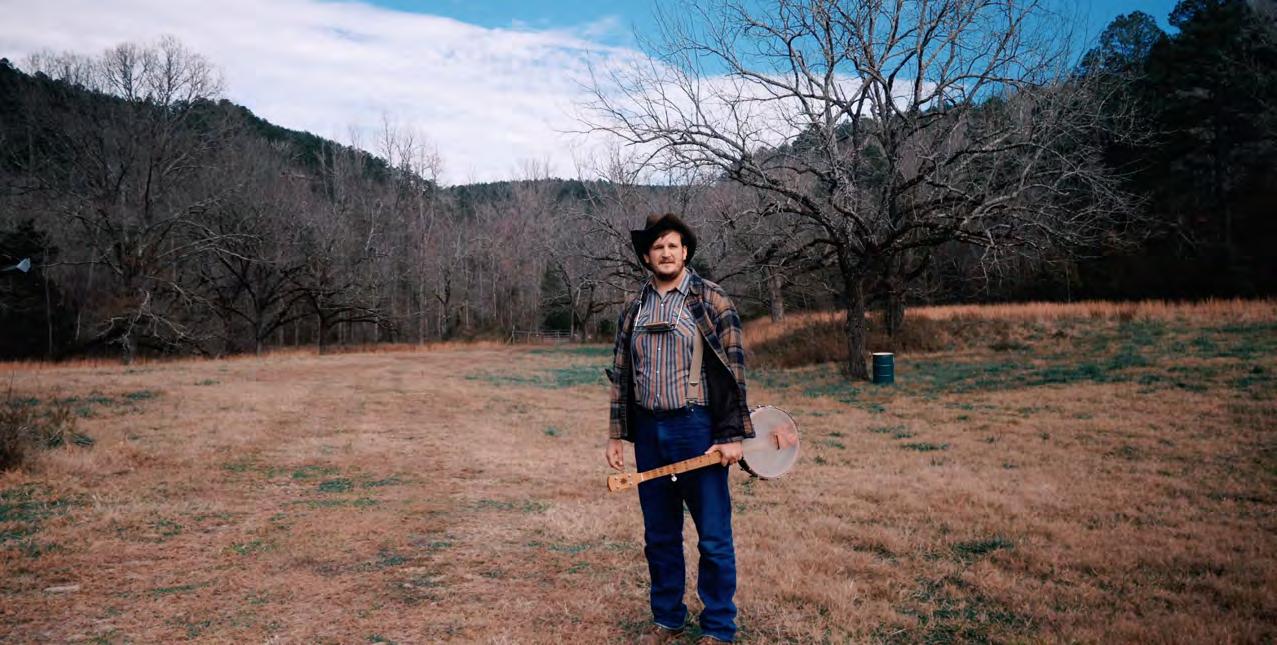
Willi Carlisle
Meadowcreek • Ozark Mountains, Arkansas
So much of what’s good about folk and country music is the community spirit it engenders. Where else but in ephemeral rave scenes, soon-to-bedemolished punk houses, and violent mosh pits can you consistently scoot a boot and meet a friend or a lover? In an age where almost every cityscape looks about the same, and where a lot of folks drive pickups they never use, it’s the ancestral roots that keep me going.
Meadowcreek is an intentional community in the heart of the Ozark Mountains of Arkansas. It’s been around since the ’70s, and has been home to a lot of misfits, oddballs, and idealists over the last 50 years. Currently, it’s the meeting spot for the Ozarks Old-Time Fiddlers Association’s yearly gathering, as well as a place for monthly concerts in the warmer months. Additionally, families living in Meadowcreek run a small community library, local radio station, and food bank that all serve the surrounding area. It’s hard to overstate: Social and civic services do not make their way out here much, and so people take care of their own.
It’s been a community for musicians for a long time, too. Jimmie Driftwood, one of Arkansas’ regional folk heroes
and public servants, wrote his hit song “The Tennessee Stud” about a horse (and the drama it caused) that was stabled here. That song has been covered by everyone from Johnny Cash to Billy Strings. Less known is the Morrison family, who still live nearby and played frontier fiddle music for generations. Originally from Tennessee, they settled in Arkansas in 1842, some 20 stinkin’ years before the Homestead Act. Morrison family lore says that their ancestors played fiddle for George Washington at Valley Forge, and whether that’s a true legacy or not, their music was some of the first Ozark material ever recorded, and it became a part of the national craze for hillbilly music in the 1930s, when America first learned to dress up in overalls for fun instead of work.
Lots of roots music repositories feel like a time capsule, but Meadowcreek is growing, shifting, changing all the time, like the protected forest that’s slowly taking several of the buildings there. Still, the monthly concerts bring people from miles around, and the retreat center frequently hosts working artists. It’s home to teachers, artisans, gardeners, mechanics, healers,
stoneworkers, and perhaps the greatest public servant folklorist I’ve ever known, Rachel Reynolds, who is currently the head honcho out there. Considering that Fox, the hamlet just above Meadowcreek, has around 900 inhabitants, Meadowcreek is abuzz with activity. While anyone driving through will find limited reception (and “94.3, God, Guns, and Country Music” on the radio), Meadowcreek remains a treasured and storied hub for roots music, oddballs, leftists, and Ozark culture.
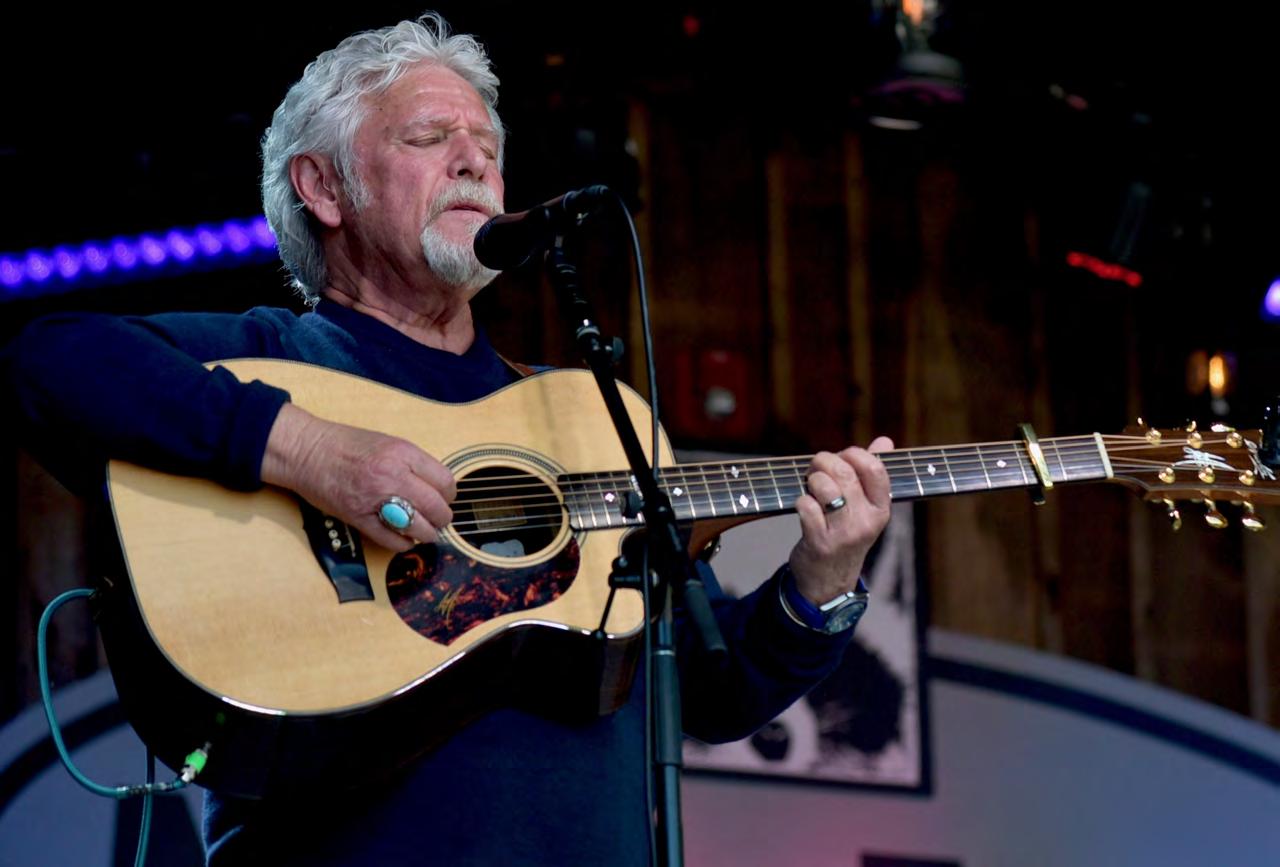
When we think about the music we love and inherit, I think we should consider the material, holistic conditions that made the music reach us, the perilous and deeply unequal journey it made, from person to person, decade to decade, mind to mind to throat and fingertip, to reach us. It’s not only a discipline, or a costume, or recording technique. It’s the precious life and afterlife of people who did their best, who changed, utterly, over and over, but kept singing. For every song we receive from that shared history, hundreds are unheard, waiting to be discovered. Lucky for me, they’re one trip to Meadowcreek away.
— Willi Carlisle
Willi Carlisle’s debut album with Free Dirt Records is due out in July.
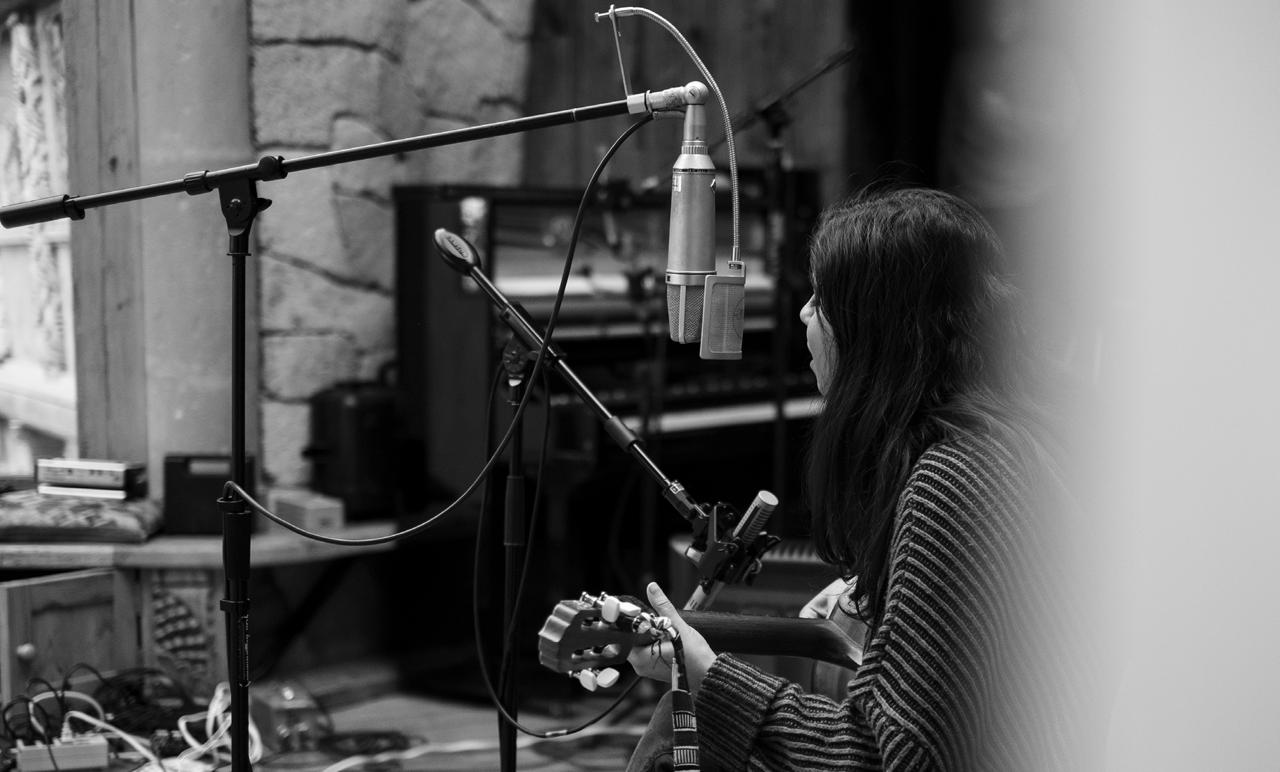
Silvana Estrada
El Desierto CasaEstudio • Mexico City, Mexico
The music will always be within us, but to have that, spaces and places are needed. When I think of my music, I always think of those places that take you in and nourish you. That invisible universe of energy that exists in some corners of the world. For example, the recording studio El Desierto CasaEstudio, where I recorded my album Marchita
All of the times that I have recorded there, I have felt at home. I feel like a kid playing when I make songs there. It reminds me a lot of the place where I grew
up — a wood house in the middle of the country and full of instruments.
The feeling of home during the creative process is very important to me because I am someone who writes the majority of my songs in my bed with a cup of tea and a notebook. It’s the same as when I was 12 years old and I would write what I dared to call “poetry.”
I suppose that this need comes from the act of writing and singing a song, which opens your chest and shows your soul. It implies, at least for me, an
Silvana Estrada’s debut album, Marchita, was released on Jan. 21 via Glassnote Records.
intimacy and a closeness that is very powerful and vulnerable. When I am in that studio — between friends, nature, and plants — I can bare my wounds and my doubts without fear of anything, without wanting to be someone that I am not. I can be honest. I am in my deepest intimacy that I always feel when I am at home. A place where if you fall or if you get lost, you will always have the confidence and love to access the peace of the internal universe.
— Silvana Estrada
St. Paul & The Broken Bones
Communicating Vessels • Birmingham, Alabama
Birmingham, Alabama, is home for me. I have never lived anywhere else. Birmingham birthed this band and still is home base for a lot of us.
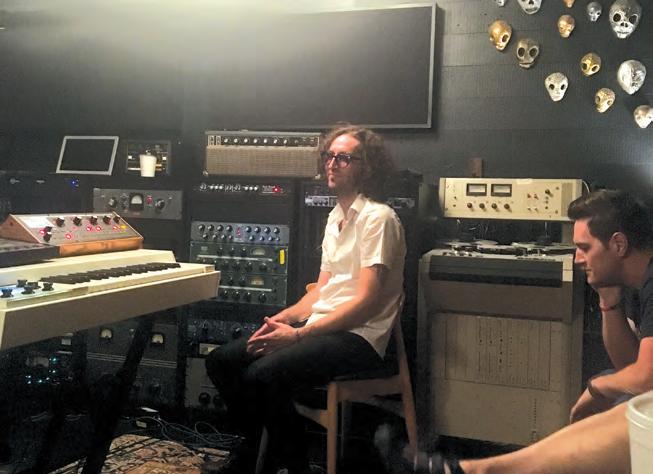
It still puzzles me why we didn’t record a full-length album there until The Alien Coast. Honestly, it was by accident we even recorded there. We were demoing songs for The Alien Coast at this studio called Communicating Vessels. The location is right across the line where gentrification
ceased to expand — gritty dark space where the band couldn’t even fit every member in to play at the same time.
As we were demoing, though, we realized this was the perfect place to experiment in and make the album. There were so many synths [and] interesting preamps. We got to explore sounds that we never really got to before.
The great Matt Ross-Spang agreed to produce the album in Communicating
Vessels. We weren’t sure if he would be down with the space, but once we started working, he morphed the space to fit exactly the sound that the album needed. We spent months on and off in that place. The laughter and moments of clarity are what I remember most. I am glad we finally recorded a full-length album in Birmingham. Hopefully we will get to do it again.
— Paul Janeway
Paul & The Broken Bones’ fourth album, The Alien Coast, was released Jan. 28 via ATO Records.
St.
BOBBI RICH
PHOTOS COURTESY OF ST. PAUL & THE BROKEN BONES
Lavender Country
Z Space • San Francisco, California
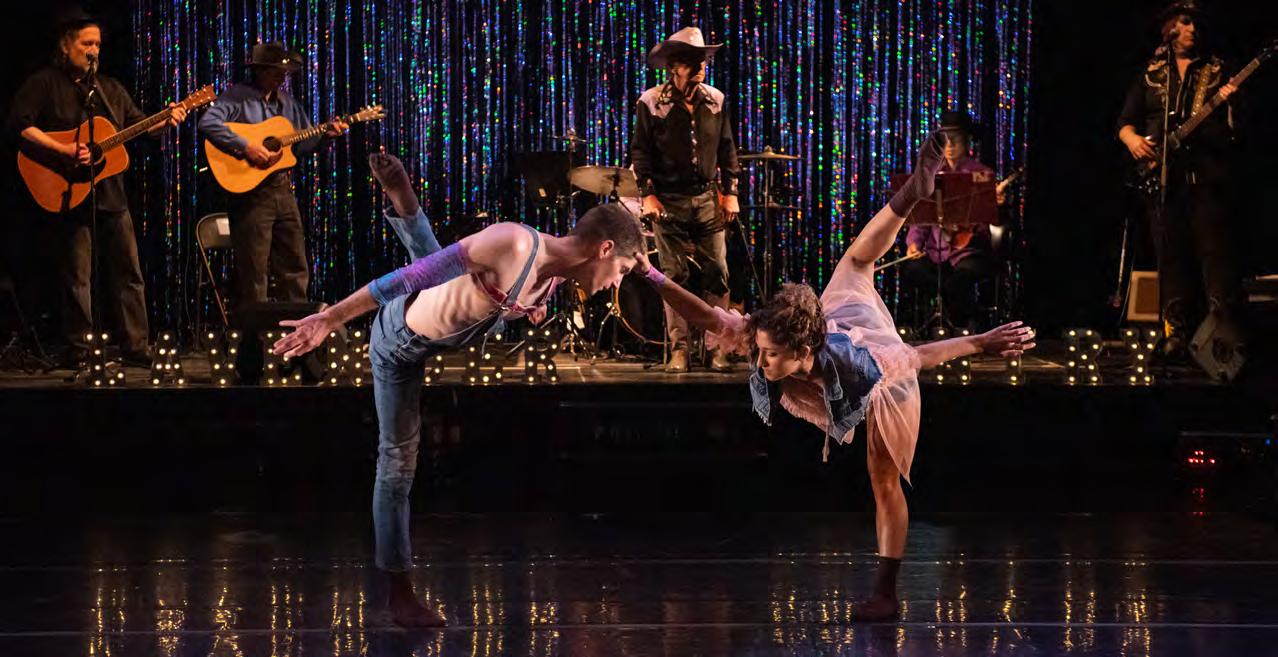
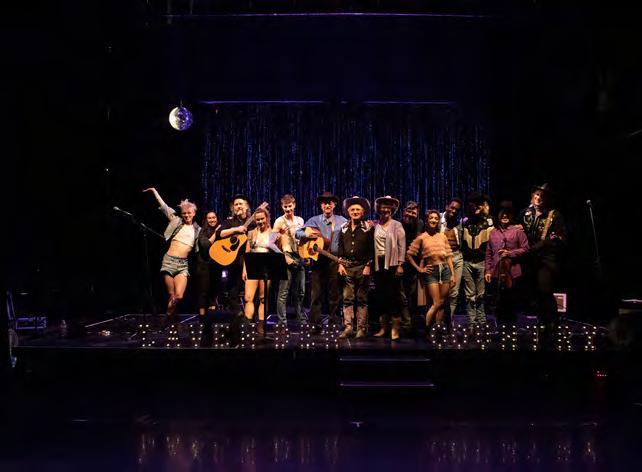
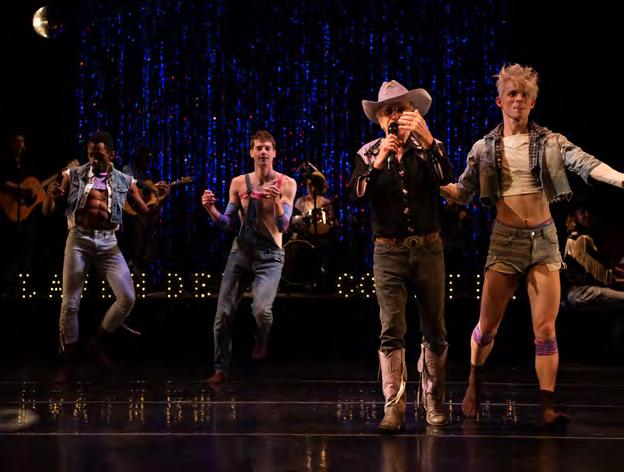
What country music singersongwriter has their music turned into a ballet? Never mind a 75-year-old queer Marxist loudmouth? But it happened to me — Patrick Haggerty, singer-songwriter of Lavender Country. We released the first openly gay country album in 1973. And in 2017 and 2019, Robert Dekkers, director of the Post:ballet company, and
choreographer Vanessa Theissen produced Lavender Country, the ballet.
The first (and only) ballet I’d ever been to in my life featured me, singing live to a troupe of professional dancers at Z Space in San Francisco. My learning curve was vertical!
Z Space is a masterfully refurbished warehouse with stadium seating, ultra-
modern lighting, and an artfully decorated foyer. It was perfect!
Now, Dekkers proposes yet another show this spring, with a film documentary of Lavender Country’s story to boot, with me front and center stage. Again! I’m now 78. Let’s rock out while I’m still upright.
— Patrick Haggerty
Lavender Country’s second album, Blackberry Rose, was released on Feb. 18 via Don Giovanni Records.
MERLEFEST MOMENTS
Five festival veterans explain the magic
by Stacy Chandler
PHOTOS
“The fiddle music, the shape-note singing, all of these things that went into Doc’s ears and came out through his guitar: Those things are all still alive and I think that will never go away. [MerleFest] is where you can go and see this art form that isn’t really around that much anymore, but it’s kept alive through the festival because of Doc’s love of it.”
Jerry Douglas
It’s hard to imagine now, with 13 stages and attendance that can top 80,000 fans across four days, but MerleFest has a very humble history.
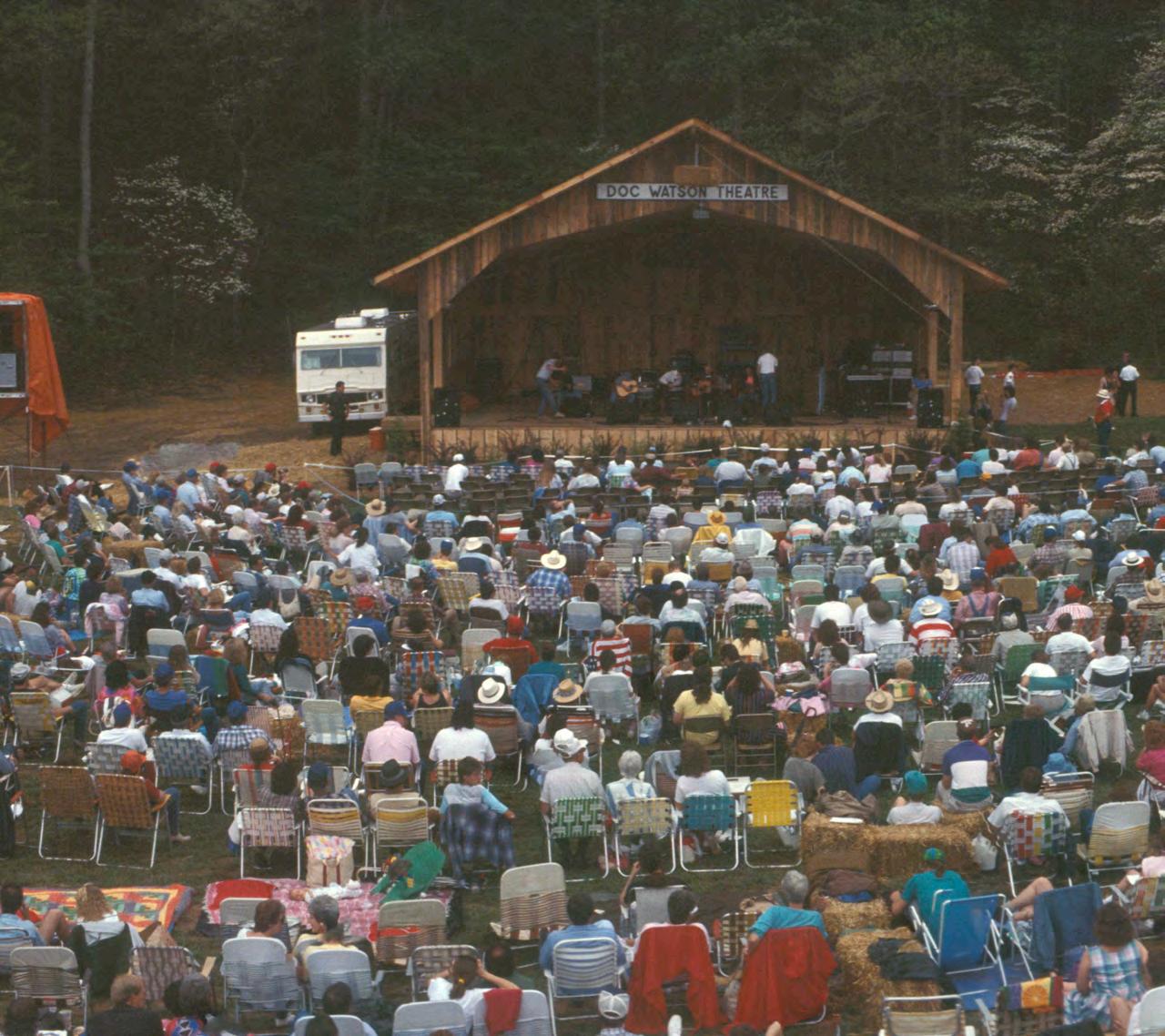
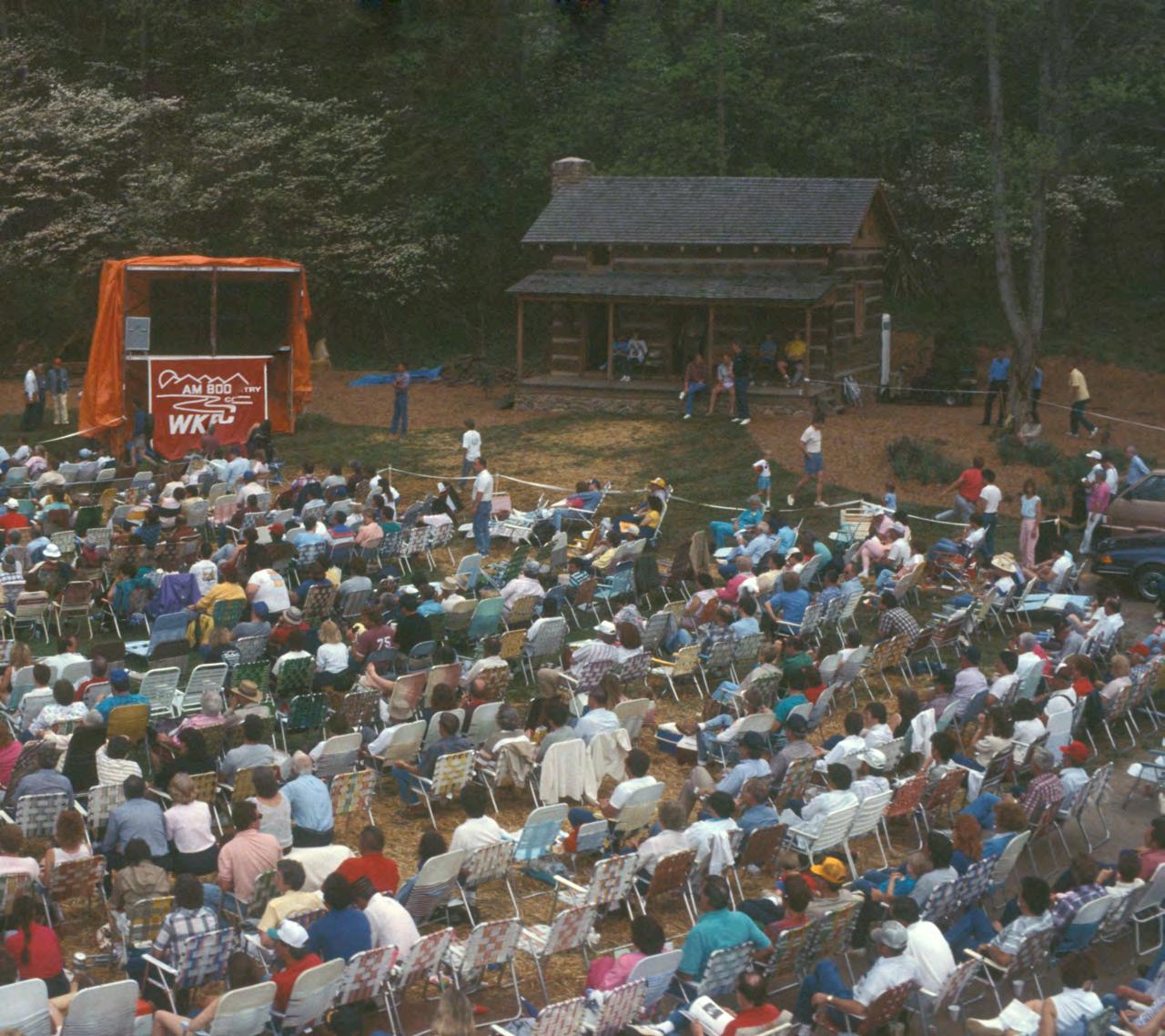
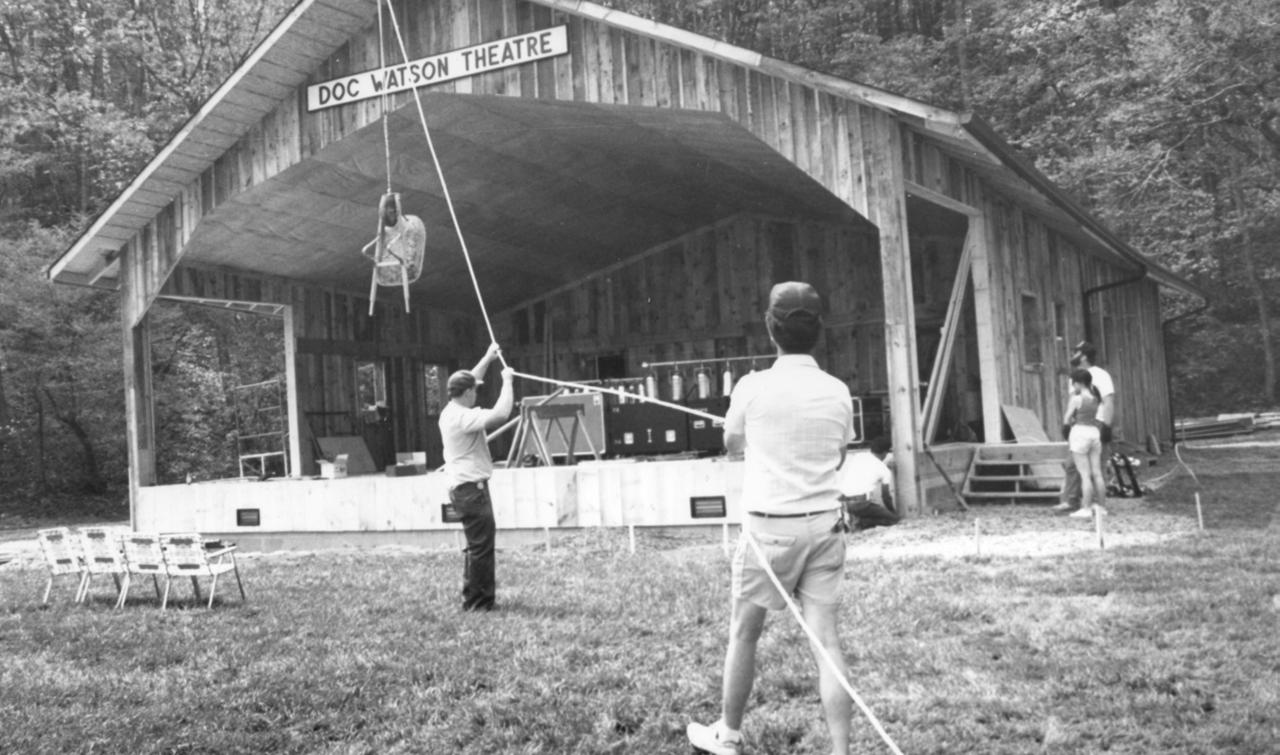
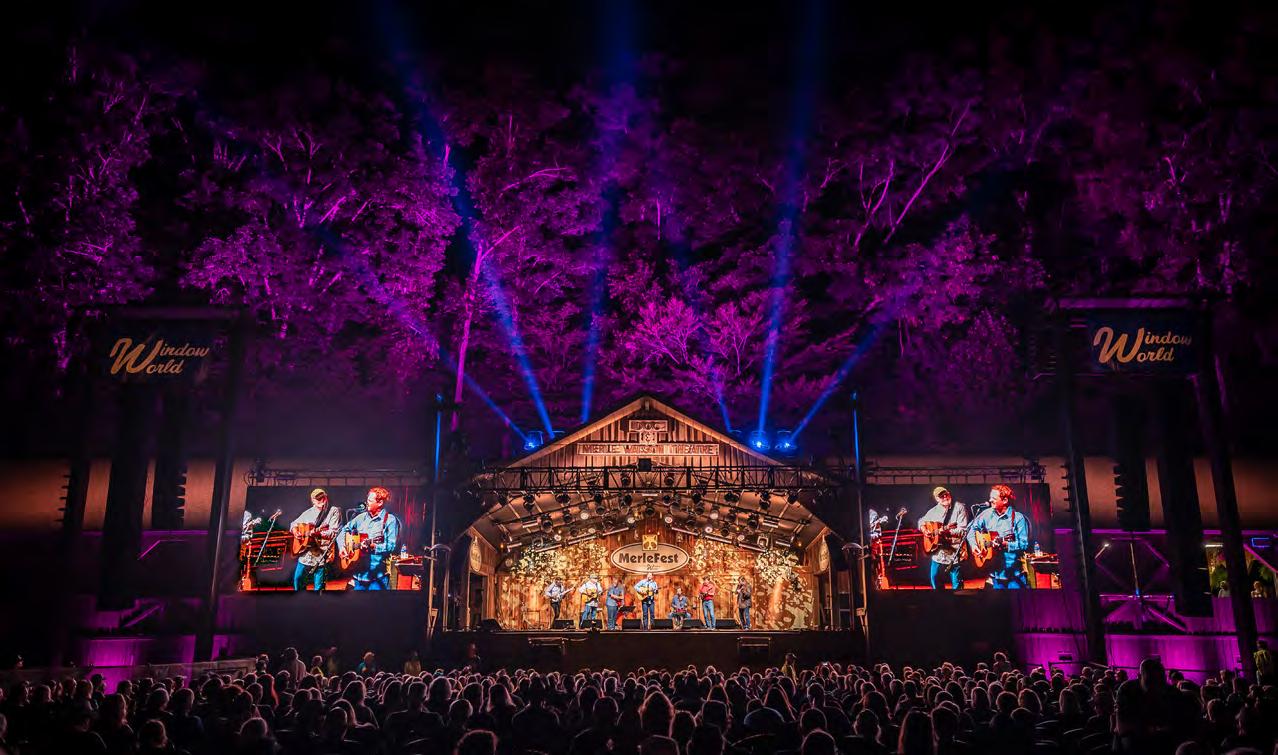
The main stage, now a large wooden building outfitted with lighting rigs and large video screens, was once a flatbed trailer, and hay bales provided some of the audience seating. What started as a one-time fundraiser for improvements to the campus of Wilkes Community College in the foothills of North Carolina’s Appalachian Mountains has evolved over 34 years into one of the premier roots music festivals in the country.
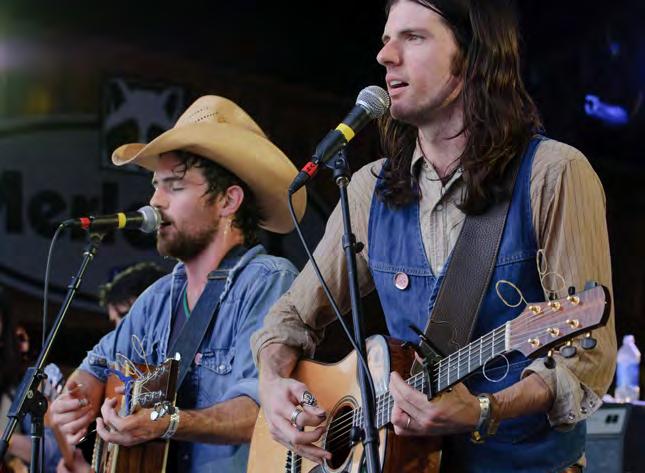
Bluegrass forefathers Earl Scruggs, Ralph Stanley, and even Bill Monroe played MerleFest in its early years, and country royalty including Dolly Parton, Marty Stuart, and Willie Nelson have drawn fans to Wilkesboro each spring since 1988. The Avett Brothers, Old Crow Medicine Show, and Rhiannon Giddens started out playing small stages in the middle of the day before returning a few
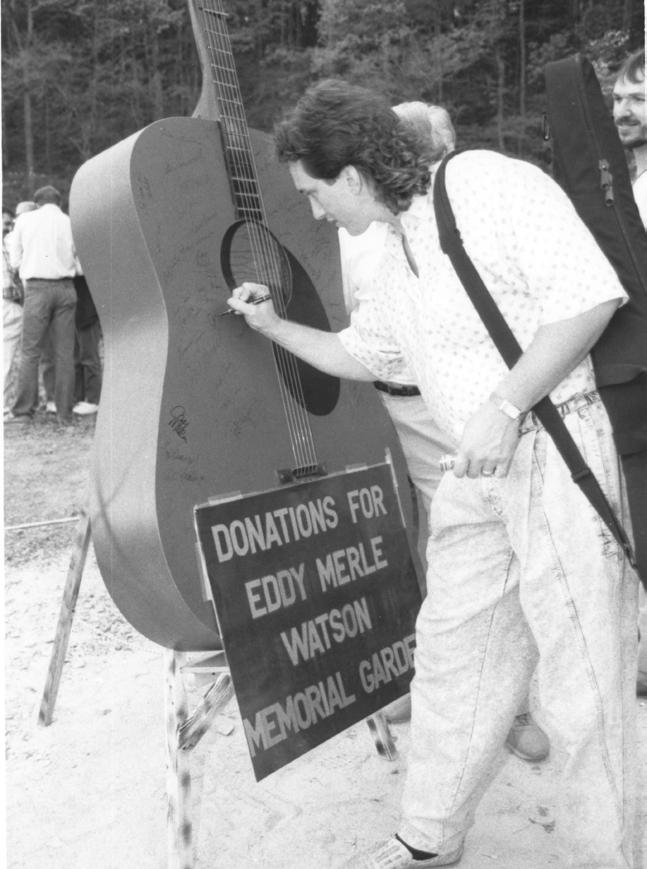
years later as headliners. Throughout the festival’s history, there’s been a family feel, and that comes down to the local community’s and the music community’s love for one family in particular: that of Doc Watson. In 1987, when horticulture instructor Frederick William Townes IV, known to everyone as “B,” wanted to raise money to create themed gardens around Wilkes Community College’s campus, he went to the board of trustees. One trustee had connections to Doc Watson, who lived in nearby Deep Gap, and offered to make an introduction. Watson, they hoped, might be willing to play a concert to raise money for the project, which included a garden for the blind. Watson agreed, asking only that the garden for the blind be named for his son, guitarist Eddy Merle Watson, who had died a couple years earlier in a tractor accident at the age of 36.
After a few false starts with scheduling, the idea expanded to a twoday festival involving Doc and Merle’s musical friends, and in April 1988, they gathered for the first MerleFest — then
called the Eddy Merle Watson Memorial Festival. The musicians who played on that flatbed trailer, or inside the college’s Walker Center theater, included Chet Atkins, Earl Scruggs, Tony Rice, Béla Fleck, Emmylou Harris, John Hartford, Grandpa Jones, Marty Stuart, New Grass Revival, and Doc himself.
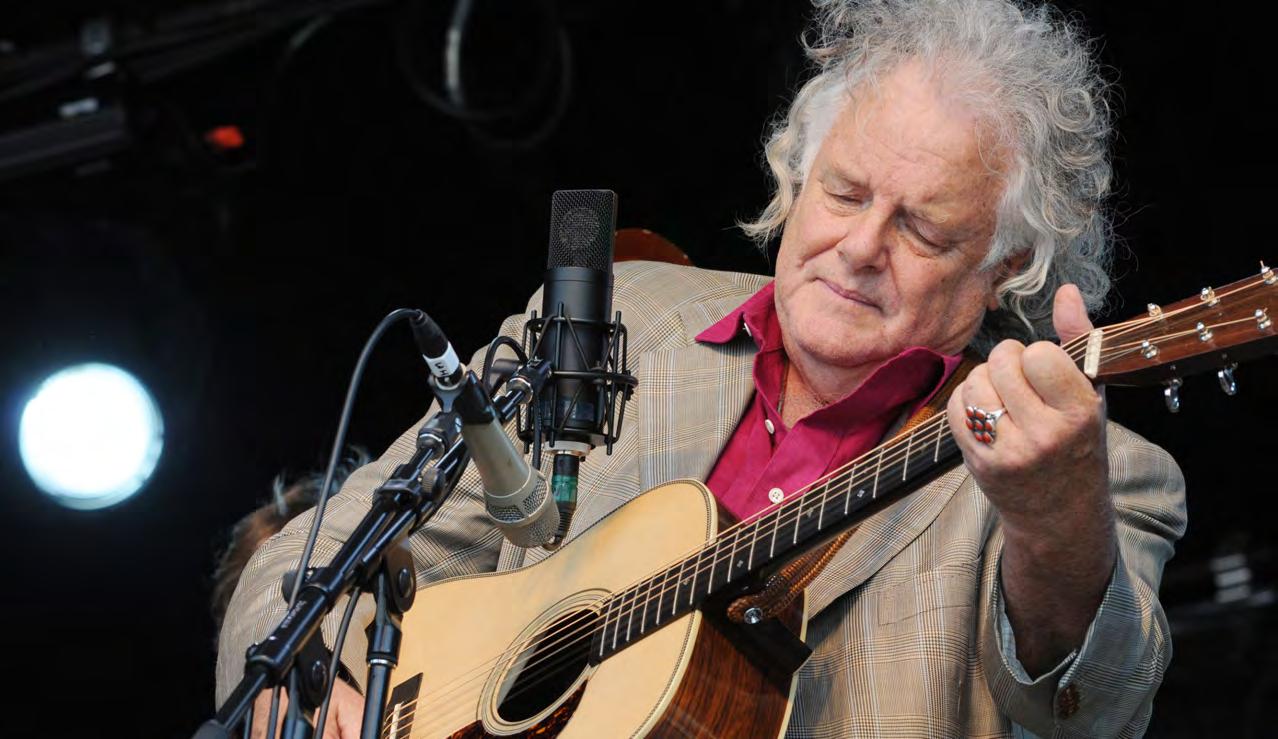
Also on the bill for that first MerleFest were Sam Bush, Jerry Douglas, Peter Rowan, Joe Smothers, and Jack Lawrence, who were invited back for the second MerleFest in 1989, and the one after that. In fact, they’ve come back to perform every single year, keeping the festival connected to its roots and preserving that family feeling well into the festival’s third decade.
No Depression checked in with these five regular performers to explain what makes MerleFest — a homecoming in the mountains for locals and travelers alike each spring — so special.
MerleFest will take place April 28May 1, 2022, in Wilkesboro, North Carolina.
JOE SMOTHERS
“Their ghosts are always there …”
Joe Smothers fondly remembers playing on that flatbed trailer at the first MerleFest, and on many of its stages since, but just as vivid are his memories of being in the audience for other musicians’ sets.
“ That’s half the fun of MerleFest,” he says. “When you’re not playing, you’re exposed to artists that I may have heard of or may not have heard of that have become favorites of mine.” Among his MerleFest discoveries are Paul Thorn, Blind Boy Paxton, and Harry Manx — who introduced him to the classical Indian instrument, the 20-stringed mohan veena, there in the shadow of the Appalachian Mountains.
“MerleFest, for me, is as much learning new people’s music and absolutely just being there.”
Being there, for Smothers, includes
serving as something of an ambassador for the spirit of Doc and Merle Watson, both their music and their generosity with it. He got to know the family well during his years playing in Doc and Merle’s band Frosty Morn, and he tries to continue their tradition of making connections through music.
“ The last thing I want to do is disappoint anybody or sully the memory of Doc or Merle, so I take it very seriously when I’m there,” Smothers says. When someone once invited him to jam at a campsite one night after he’d played five sets during the day, he recalls his response: “ ‘Man, I’d be happy to.’ … That’s what Doc would have done, that’s certainly what Merle would have done.”
On stage, Smothers plays the songs Doc and Merle would have played, and tells stories from his time with them to help keep their memory alive.
“People really enjoy seeing us old guys, and I’m sure there will come a time when it’s not a big deal,” he says. “But as we get older … people say, ‘Well, who was Merle? Was that Merle Travis?
Joe Smothers
Or was that Merle Haggard?’ No, it was Merle Watson. And then it’s really bad when they say, ‘Well, who is Doc Watson?’” (Doc played at the festival each year through 2012, performing a final time at MerleFest just a month before he died.)
Smothers, however, has no ill will toward people who might attend MerleFest without knowing its story. That’s because he knows that sooner or later, they’ll get curious about the stories of Doc and Merle that they hear from the stage throughout the four-day festival. They’ll look up a Doc Watson song when they get home, perhaps, and then a new connection will be made, a new appreciation for the Watson family’s lasting influence on roots music.
Merle Watson’s spirit — one that valued traditional music, but also the need to push it in new directions — is always present at the festival named for him. And there are others, too, whose music and personalities help make MerleFest what it is, even after they’re gone.
“ Their ghosts are always there,” Smothers says, remembering “old friends” he’s performed with at MerleFest, including John Prine, Earl Scruggs, Merle and Doc Watson, and guitarist Richard Watson, Merle’s son
who died in 2015. “It’s kind of bittersweet.”
But for 34 years, Smothers has kept coming back, watching as MerleFest has grown and expanded its musical community far beyond Doc Watson’s circle.
“I hope to do another 30 of them,” he says.
JACK LAWRENCE
“They haven’t forgotten where they came from … ”
MerleFest wasn’t always the welloiled machine fans and artists enjoy now.
Back in 1988, “B” Townes, the horticulture instructor, had never put together a festival before, and a lot of logistics for the inaugural event were worked out on the fly. The two stages — one indoor and one outdoor — were running significantly late, and there was a lot of hurry-up-and-wait, Jack Lawrence remembers. “It was a little
chaotic,” he allows.
But it was also a lot of fun.
“ That first festival, the band that I played in most of the weekend was with Doc and Mac Wiseman and Earl Scruggs,” says Lawrence, who played regularly with Doc Watson from the early 1980s until a couple years before Doc died in 2012. “Marty Stuart was part of most of those sets, [and] a fellow named Jim Shumate, who was a fiddle player who had played with Bill Monroe and then Flatt and Scruggs when they first started their band.”
Over the years, the festival has expanded in size and scope, and that spirit of bringing artists together on stage has remained. That’s why Lawrence launched the Veterans Jam a few years ago. In what has now become a Saturday morning staple at the festival, the five musicians who have never missed a MerleFest, along with some, like John Cowan and T. Michael Coleman, who have only missed a few, get together on stage to share traditional songs and bring fans into an annual reunion of friends who go way back. “The vet set,” as its participants call it, is usually scheduled right after a main stage set titled “Memories of the Watson Family,” where the vets and others who were close to Doc and Merle Watson play music and tell
From left, T. Michael Coleman, Jack Lawrence, and Doc Watson
stories about the Watsons, often evoking tears and laughs in close succession.
The reunion feeling of those sets gives the audience a glimpse into one reason artists love MerleFest so much.
“One of the things that makes it special is it’s the first big festival of the season,” Lawrence explains. “Besides the musicians being able to get together for the first time in months, the fans too — after all these years of doing it, I’ve made tons of friends and acquaintances that are there as spectators.”
As MerleFest has expanded, Lawrence says, he sees less emphasis on the traditional bluegrass that echoed across the campus during the first iteration. But, he adds, “they haven’t forgotten where they came from.”
“It’s had longevity because the core people that run the thing have realized where it came from, how it started,” he says. “When it first started, it was primarily bluegrass and roots-music oriented. Now we’ve got all these headline acts that are more mainstream, and that’s not an entirely bad thing, because it does get people on site. But I’m just glad that there’s still a huge presence of the Americana and
bluegrass and alt country acts that really kind of got this festival headed in a good direction.”
PETER ROWAN
“It
was kind of like Doc calling his kids in …”
The way Peter Rowan figures, MerleFest really began at Merle Watson’s memorial service. The friends who stood singing “Midnight Rider” and other favorites in honor of Merle — including Jerry Douglas, Marty Stuart, and “most of the Nashville Bluegrass Band,” Rowan recalls — were the friends Doc Watson called up for the garden fundraiser at Wilkes Community College a few years later.
“It was kind of like Doc calling his kids in, the players that he liked,” he says.
Although the setup was pretty standard for bluegrass festivals, the lineup, even from the start, wasn’t bluegrass as usual, Rowan says, “because it was Doc’s choice.”
Doc had “big ears,” as Rowan puts it, sparing very little concern for genre and just focusing on what was good, both in his own playing and in what he chose to present at MerleFest.
“It wasn’t that whole bluegrass thing of ‘Are you in, or are you out?’” Rowan says. Growing up in the Northeast, he sensed “a tremendous amount of intellectualism about music: Is it authentic? Is it not authentic?” But, once he moved South, “everybody wanted to play. It’s just like jamming with blues guys. They never had a problem. It was all music to them.”
That spirit of jamming across genres is still part of MerleFest today. Rowan has performed at every one, but the playlist and the players on stage with him have varied widely. Along with solo sets, he’s brought his Tex-Mex-inspired Free Mexican Airforce, Crucial Reggae, and the Peter Rowan Bluegrass Band to MerleFest, and he’s appeared onstage with the Tony Rice Quartet, Donna the Buffalo, and Tibetan singer Yungchen Lhamo, to name just a few of his collaborations over the years.
As festival organizers have expanded
Peter Rowan
Building the Watson Stage in 1989
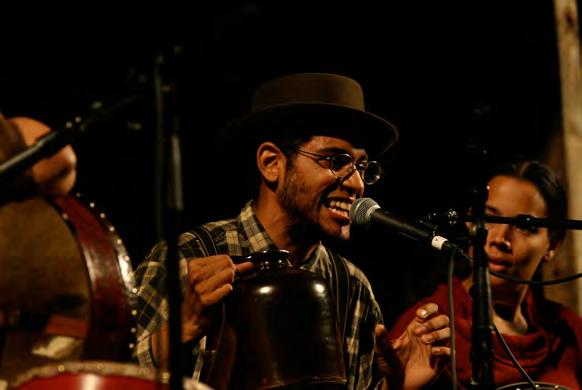
Carolina Chocolate Drops in 2007
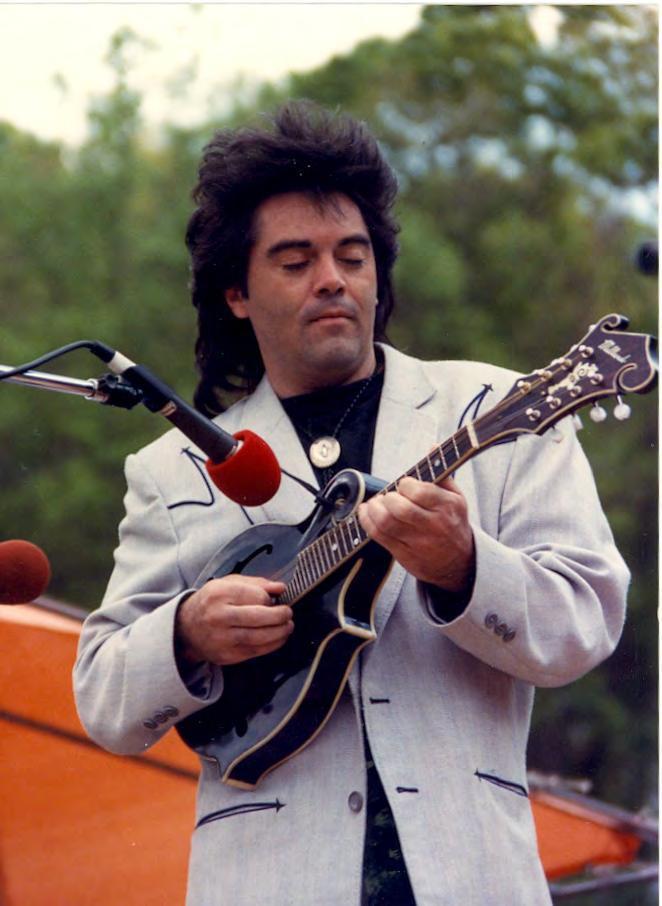
Marty Stuart at the first MerleFest in 1988
The Avett Brothers in 2010
Jerry Douglas signs a display guitar at the first MerleFest
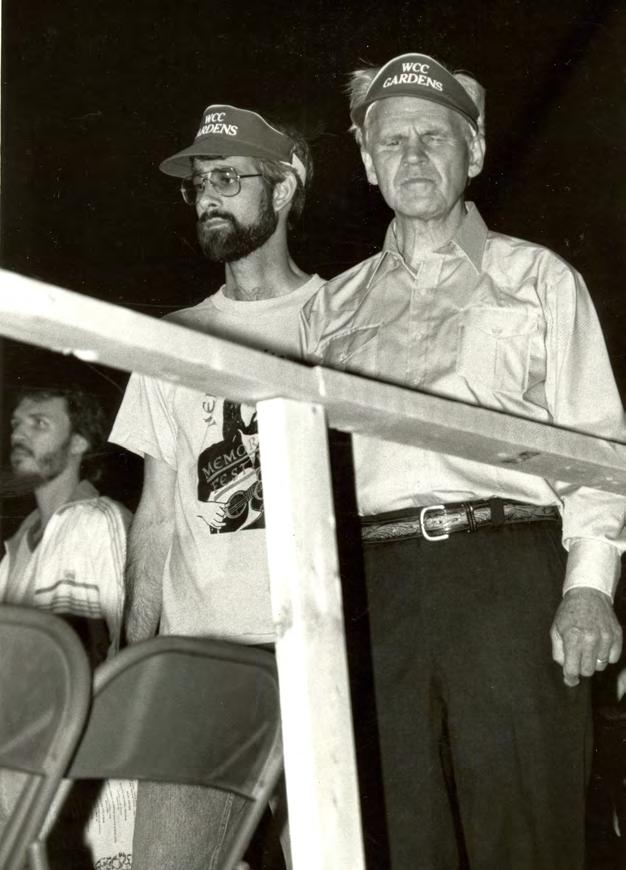
B Townes, left, and Doc Watson backstage at the first MerleFest
ROB LAUGHTER
Sturgill Simpson performs on the Watson Stage in 2021
their scope for MerleFest lineups, they’ve counted on the veteran performers to both uphold tradition and push the boundaries. “We’re all allowed — we are asked — to bring our own vision to the mix,” Rowan says.
In an age when content is king in the music industry and audiences connect with artists primarily through a screen, Rowan craves the personal interactions at MerleFest and the many other festivals he plays each year.
“ These festivals, these live performances now more than ever are so important for the interaction of humans and sharing emotion,” he says.
But MerleFest in particular carries a sense of home for Rowan, musically speaking. It’s an event he returns to with friends old and new, playing songs he’s known since the beginning of his career and discovering new artists and sounds every time. The festival is a long way from its flatbed trailer days, but he can still tap into its roots year after year.
“I have a sense of nostalgia about those types of humble beginnings, and MerleFest was a humble beginning.”
SAM BUSH
“Just good down-home picking … ”
People tend to call MerleFest a bluegrass festival, which Sam Bush (and other regulars) will point out is only some of the story.
“Of course bluegrass is part of it,” Bush says, “but it’s what Doc would say is some just good down-home picking.”
Officially, MerleFest calls the music it presents “traditional plus” — another term coined by Doc — and describes it as “a unique mix of music based on the traditional, roots-oriented sounds of the Appalachian region, including bluegrass and old-time music, and expanded to include Americana, country, blues, rock, and many other styles.”
Bush is a regular at the vet set and the “Memories of the Watson Family” hour Saturday morning, as well as at the annual onstage gathering of mandolin superstars dubbed “Mando Mania,” and at his own headlining set Saturday night. And he’s a
frequent guest with other musicians throughout the festival, some of them old friends, and some brand new.
Backstage, he says, “You’re gonna run into some of the other musicians that are playing there, and I know I’ve seen certain jam sessions pop up from people just running into each other — ‘Wanna come out and play on a number?’” That’s how he found himself on stage a few years ago with guitarist Tommy Emmanuel, who he’d never played with before. Bush’s friend and fellow MerleFest veteran Jerry Douglas was scheduled for a set with Emmanuel, and as the three chatted backstage, “Tommy says, ‘Hey, do you want to play a tune?’” Bush recalls. “So I just walked out and played a couple of numbers, and hadn’t planned on that.”
Even as MerleFest strives to be a homecoming for its veteran performers, there’s room for new voices, too, whether they’re onstage or in the audience. “One of the main reasons the festival endures is because they try so hard to involve youngsters — the tent for the little pickers, a dance tent,” Bush says. “It’s not just one
age group that’s being appealed to here. And I believe that’s where some of their greatest success lies.”
Making young people feel welcome makes for a fun festival experience for families, but it also plants seeds for the future. “I know of some kids that have come away from MerleFest that got an instrument, want to learn to play — they got enthused about it there first,” he says. “If young people don’t come to the show or continue to play music, then of course we don’t have any new music in the future. So it’s important.”
Excited as he is for the future, though, Bush keeps the history of the festival, and the reasons behind it, firmly in mind on any stage he plays at MerleFest.
“Every year that I’m there, there’s a spot in my set somewhere where I just feel [Doc] and Merle go through me,” he says, his voice turning somber. “I was close with Doc and Merle, riding around with them, and that’s why you will hear me say, ‘Don’t forget about ol’ Doc and Merle, friends. That’s why we’re here.’”
Sam Bush
JERRY DOUGLAS
“This whole wonderful feeling of love and adoration … ”
Dobro master Jerry Douglas has played some of the biggest sets MerleFest has ever seen: with Dolly Parton, with Alison Krauss, and with the collaborative live performance series Transatlantic Sessions.
“It’s amazing to stand on that stage and look out at that many people standing out there, looking at the undulating ocean,” he says. “It’s just moving, the whole thing is moving, it’s all in time. It’s like water, looking at all those people out there.”
Water was the last thing anyone wanted to see at MerleFest its first few years, when springtime mountain rains
often caused problems — most notably in 1992, when a creek that runs alongside Wilkes Community College’s campus flooded and put MerleFest’s main field and several buildings under several inches of water just days before the festival was set to start. A few years later, the main stage (now known as the Watson Stage) and the field in front of it were raised several feet, Douglas recalls.
MerleFest, he says, is a festival that “has defied the odds,” rising above weather, a location outside any major city center, and its own humble beginnings.
But of course, there’s a lot going for it too, Douglas notes, including its commitment to stellar sound. (The same company, Greensboro-based SE Systems, has provided audio and video services at MerleFest since the very first year.)
“It’s the best sounding festival that there is, and that’s from somebody that’s
Jerry Douglas
played all of them,” Douglas says. “Because that was Doc’s thing. A lot of Doc’s creative demands for a stage — that’s all happening onstage at every stage at MerleFest.”
Doc’s influence is felt, too, in the wide variety of music presented at the festival. It all relates to “what made Doc Watson Doc Watson,” Douglas says.
“ The fiddle music, the shape-note singing, all of these things that went into Doc’s ears and came out through his guitar: Those things are all still alive and I think that will never go away,” he explains. “[MerleFest] is where you can go and see this art form that isn’t really around that much anymore, but it’s kept alive through the festival because of Doc’s love of it.”
That “traditional plus” lineup has remained a constant at MerleFest, as has the energy that flows between artist and audience, no matter how big the headliners or how big the crowd.
“I keep coming back to this snapshot that I have of playing with Dolly Parton on that [Watson] Stage and feeling this whole wonderful feeling of love and adoration coming toward Dolly from so many people,” he recalls. “You could feel it onstage; it was charged, it was electric. And that’s what that particular audience can do to you. It’s not like you’re standing in a football field of 74,000 people.”
As he accompanied Parton on songs from her bluegrass albums at that 2001 set, Douglas knew he was experiencing what those in the know call a “MerleFest moment.”
“We were all up there playing music we loved, doing songs we all knew. And we’re doing it with Dolly Parton. How good can it get? You know, Stuart Duncan was standing right next to me and Sam Bush was up there, too. So it was my best friends in the whole world. They’re standing there with me and we’re up there and playing for 70,000 people with Dolly, what do you want? I could quit now. That’s it. But we go on, and it happens again and again at MerleFest.” ■
EDITOR’S NOTE: For 2021 only, because of COVID-19 concerns earlier in the year, MerleFest was shifted to fall, and Jerry Douglas was unable to perform. But everyone interviewed for this piece agrees he still counts as a true “veteran” of the festival, and he is scheduled to play at the festival in April.
FRONT AND CENTER
How Missouri’s Roots N Blues Festival is closing the gender gap
by Laura Scholz
LG PATTERSON
Flor de Toloache performs at Roots N Blues Festival in 2021
Scan through almost any music festival lineup, and it’s easy to spot what’s lacking: women.
According to a 2018 Pitchfork survey, majority women and nonbinary acts comprised only 19% of the lineups at the largest multi-genre festivals that year — and even fewer of those artists performed during prime slots in the schedule.
But Shay Jasper and Tracy Lane, co-owners of Columbia, Missouri’s Roots N Blues Festival, are on a mission to change that.
After purchasing the festival from founder Richard King in 2019 and postponing the 2020 event due to the pandemic, their vision came to fruition in September 2021: an all-women lineup featuring 19 artists ranging from gospel legend Mavis Staples and Grammy award-winning singer-songwriter Brandi Carlile to soul singer Shemekia Copeland and homegrown folk-rock
band Violet and The Undercurrents.
For Lane, a 30-year veteran of the music industry, the decision to book all women artists and women-fronted bands was a way for her new management team to “take a stand” on gender inequity and women’s representation on stage.
But her and Jasper’s commitment to equity and inclusion extended beyond the festival stage to behind the scenes, where they hired more women in security and production roles and implemented new accessibility protocols.
“We really wanted this to be a multigenerational live music event, where people could bring their grandparents or grandchildren and feel safe, supported, and have a good experience,” says Lane.
While it was a gamble taking over a beloved 13-year-old community event and pushing it in a more equitable direction, the changes resonated with
both artists and audiences for calling attention to the industry’s gender imbalance and setting an example for how women can create safe spaces and amplify each other’s voices at music festivals and beyond.
Power and Potential
In the male-dominated music industry, Roots N Blues’ all-woman leadership team is a rarity. In 2021, researchers at the University of Southern California’s Annenberg School for Communication and Journalism examined the ranks and titles of more than 4,000 executives across the music industry. They found that 86.1% of executives are men, while only 13.9% are women.
As Chloe Smith, one half of the sister folk duo Rising Appalachia, can attest, “The places of power and management and higher-earning jobs in the industry are still male dominated,” determining everything from which artists get record
and publishing deals, to the music played on radio stations and streaming services, to who gets booked for venues and festivals — or doesn’t. Even after touring for more than a decade, Smith says that Rising Appalachia is often still one of the only female-fronted bands on a festival lineup.
Book More Women has been highlighting this imbalance since 2018. After sharing an image of Firefly Music Festival’s lineup poster with the names of all-male acts removed — a visual representation of the industry’s lack of inclusion — that went viral, the grassroots movement amassed celebrity supporters like Kacey Musgraves and Roots N Blues alumnae Margo Price and Brandi Carlile. Since then, founder Abbey Carbonneau has continued to post similarly edited lineup posters from Lollapalooza, Austin City Limits, Bristol Rhythm & Roots Reunion, and other festivals to Book More Women’s social media in order to hold organizers
accountable and push for gender parity at these events.
According to Lane, the scarcity of women musicians at festivals “fuels the myth that music made by women and nonbinary artists doesn’t sell as well as music made by men, perpetuating economic inequities.”
Even when women do make it to the headlining stage, they often struggle to get paid equally. Take Los Angeles-based pop band Haim, who made headlines in 2017 when they fired their manager after discovering a male headliner made 10 times more than they did for a festival performance. While there is no specific data available for disparities in festival pay, there is plenty of data showing that women make considerably less money through sales of recorded music. The British copyright collective PRS for Music found that its highest earning female songwriters and composers reported making 70% less than their male counterparts in 2020, another
consequence of unbalanced gender dynamics in the music industry.
Even women working in other facets of the music industry face similar pay problems. In October 2021, Music Business Worldwide published the UK’s annual gender-based pay gap statistics, which found that the six largest music companies in the United Kingdom (Universal, Warner, Sony, Apple, Spotify, and Live Nation) reported a genderbased wage gap of more than 25% among employees.
But Lane says an appearance at a regionally prominent festival like theirs can help address this pay disparity, particularly by giving new and up-andcoming artists an opportunity to perform in front of thousands of fans, potentially fueling larger ticket sales — and more income — when they return to the market.
With accounting giant PwC forecasting music festivals to be a $31 billion global industry in 2022, “the
Tracy Lane, left, and Shay Jasper
“I truly believe that I am where I am in great part because other women have lifted me up.” Brittney Spencer
visibility of performing on those stages can really make a difference in an artist’s career,” says country musician and 2021 Roots N Blues performer Brittney Spencer.
When woman-backed bands and musicians aren’t invited to festivals or given prominent time slots or stages, they miss out not only on potential income, but on networking with other artists, exposure to new audiences, and media interviews that could boost their visibility and bookability. It creates and reinforces a loop that keeps the industry very white and male.
Changing the Culture
Lane, who was the director of Roots N Blues during its inaugural year in 2008 before taking a decade-long hiatus to run a local film festival, found that when she returned to the music industry almost three years ago, not much had changed.
“When we learned that women made up less than 20% of headliners in 2019, we just shook our heads and raged,” she says, which sparked the genesis of the festival’s all-woman lineup.
She and co-owner Jasper shared this vision before purchasing the event, and
once the pair took over, their first step was booking “wish list” headliners Mavis Staples, Brandi Carlile, and Missouri native and Missouri Roots Songbook inductee Sheryl Crow. From there, they filled in the lineup with artists that reflected a broad range of Americana music, from Grammy award-winning mariachi band Flor de Toloache to Memphis blues band Southern Avenue and Canadian pop singer Lennon Stella.
In addition to slotting all women artists and women-backed bands, Jasper says they organized the stages so “young people could experience the artists that laid the groundwork for the artists they admire, just as we wanted to create opportunities for seasoned fans to experience new artists,” says Jasper.
She cites their Sunday lineup, during which one stage featured three generations of female blues artists — from the bigger names like Staples and Copeland to emerging Missouri-based artist Samantha Fish and lesser-known Southern Avenue. The latter even emerged as a fan favorite for its highenergy show. Another intentional pairing was the sister folk-trio Joseph right before Crow, so “older fans would witness their brilliance, and younger folks would
see the impact Sheryl has made on Americana music,” says Lane.
Beyond ensuring women were front and center on stage, she and Jasper wanted to make the festival a safe and equitable space backstage as well, where inequities can turn into safety issues. In a survey titled “Women Making Music” conducted in early 2021, two-thirds of female musicians reported sexual harassment and objectification as major issues when touring.
Lane herself had experienced this during her years of touring, so for the 2021 festival, she ensured the festival hired women into production and event roles that had previously been male dominated, including a 50% womanowned security company that shared their commitment to safety of women artists.
While committed to prioritizing equity and comfort for artists, Lane and Jasper also wanted to increase accessibility options for guests.
The venue designed a front-gate parking lot specifically for patrons with limited mobility and offered a rotating fleet of 20 carts to give them easier access to stages, vendors, and facilities. To encourage multigenerational
attendance, children 14 and younger were admitted free with an accompanying adult, and breastfeeding mothers had access to private nursing stations. Capacity was reduced due to the pandemic, and all performers, guests, staff, and volunteers were required to show proof of vaccination or a negative COVID-19 test priority to entry.
Of the 7,000 festival attendees, 60% were women, which signaled both a change from a majority-male demographic in previous years and an appreciation for the event’s mission and lineup.
Beyond the Festival
Leah Smith of Rising Appalachia and other artists see Roots N Blues as part of a larger movement of women in roots music paying it forward and creating their own spaces and opportunities. She says artists can be an essential part of industry’s “rebalancing” by using their own influence and power to hire, mentor, and support other women. For example, Rising Appalachia’s agent is a woman, and the band plans to release a collaborative album this year with other women musicians they connected with
via weekly online songwriting classes over the past two years.
“One of the artists is an engineer and does our sound production work, and it really just has a different touch and style than some of the male engineers we’ve worked with,” Smith says of the upcoming project.
Spencer considers Roots N Blues the festival version of the country music supergroup The Highwomen, co-founded by festival performers Brandi Carlile and Natalie Hemby.
“In this industry, people often try to hang on to as much as they can, because they are worried someone can and will take their spot, but I have watched these women do the complete opposite,” she says.
Carlile herself runs an all-women festival in Mexico called Girls Just Wanna Weekend, and when her Highwomen bandmate Amanda Shires had a medical emergency last fall during BottleRock Napa Valley, Spencer filled in for her during the headlining set. At Roots N Blues, Spencer and Hemby also sang a few Highwomen songs with Carlile.
For Spencer, who embarked on her first headlining tour earlier this year,
sharing a stage with women she considers heroes was not only “a dream come true,” but motivation to mentor the next generation of women artists in the same way.
“I truly believe that I am where I am in great part because other women have lifted me up,” she continues.
Lifting up other women was exactly the mission Lane and Jasper set out to achieve.
“We had such heartwarming feedback from artists on site thanking us for this work,” says Lane.
But they also got the attention of other festival owners and promoters, many of whom called to ask for advice on how to organize and promote similar womencentric events in other communities.
And while Roots N Blues doesn’t plan to continue with an all-woman lineup in the future, they do intend to continue their work to champion equity and diversity on and off stage.
Says Lane, “while we are not a major festival, if we can get the attention of industry folks who are on the coast and running these large events, what we do here in the middle of Missouri could have a positive impact on the industry as a whole.”
Rising Appalachia
KEEP ROLLING
Brooklyn Bowl scores with music venuebowling alley hybrid model
by Caitlin Wolper
ADAM KANE MACCHIA
Peter shapiro and charley Ryan were working together at a live music venue called Wetlands Preserve when they took their staff bowling.
“ The place that we went, which will remain nameless, it was busy and people were having a good time. But when you really broke it down, the food was terrible. The place was dirty. The sound system was awful,” Ryan says. “But our staff, which in general was too cool for school — they were not hippies … they were sort of tough New York City kids in a way — they reverted to something pure. They just simply had fun, like maybe they’d forgotten how to do in their persona that they’d adopted in New York City.”
That bowling trip took place in 2000, when Shapiro owned the club and Ryan was in charge of the venue’s beverages. Wetlands closed in 2001, and after a few years, Ryan and Shapiro would take walks around Brooklyn, seeking the perfect venue for their new venture. In 2006, they found a building on Wythe
Avenue in Williamsburg, and in July 2009, the first iteration of Brooklyn Bowl opened, offering bowling, food, and live music.
“Most live music venues are a stage facing a bar, just an open space. And the idea was how can we do it differently, how do you add a little more multisensory to it,” Shapiro says.
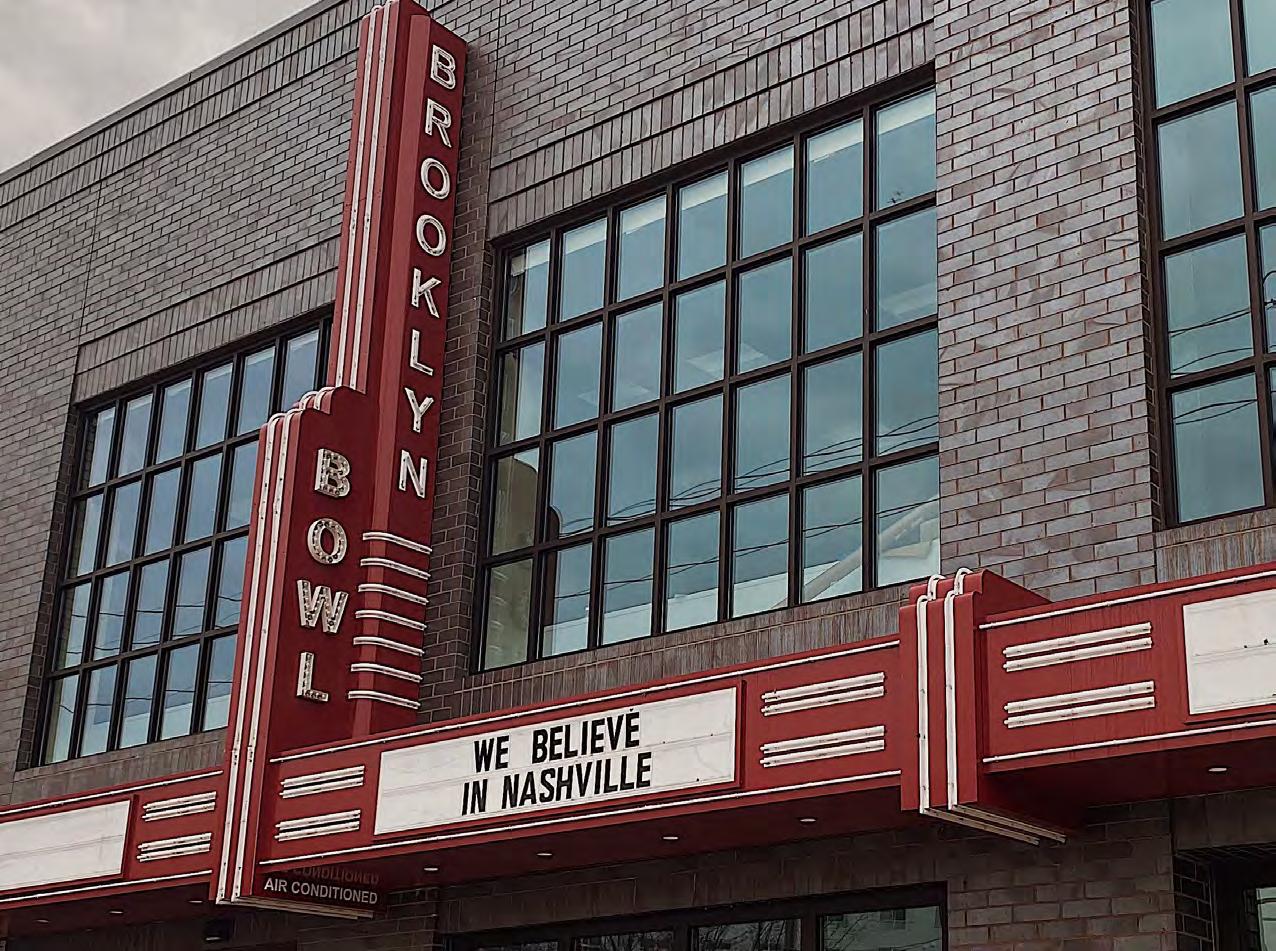
It started just as Brooklyn Bowl. With their continued success, Shapiro and Ryan expanded the brand to locations in Las Vegas and Nashville. And most recently, Philadelphia’s Bowl opened its doors in November 2021.
The Original Bowl
When Shapiro and Ryan found the first building on Wythe Avenue — long before the lavish trio of the Williamsburg Hotel, Wythe Hotel, and William Vale popped up around it — the space that would become Brooklyn Bowl had neither sufficient power nor the proper accommodations for food preparation. Plus, the roof needed work. The time
between choosing the location and opening it was mired by ironing out the contract and renovating the 2,000-person space to accommodate a brand-new concept.
Usually, Ryan says, potential owners seek to take over a venue that was previously used for a similar purpose; that way the bones of the structure are already in place. Choosing this space was a risk for them.
They also aimed for, and achieved, metrics of sustainability: It’s the first LEED-certified (Leadership in Energy and Environmental Design) bowling alley in the world, in part due to handdryer installation, wind-power electricity, LED stage lights, and fans to supplement an HVAC system. Plus, the bowlers lounge and stage are made of recycled materials — reclaimed cork and truck tires, respectively.
“It was one of those things where if we didn’t have a substantial success, we would have had a big failure,” Ryan says.
“But the flip side of that one is: If you follow that idea that you should just be
ERIC
RYAN ANDERSON
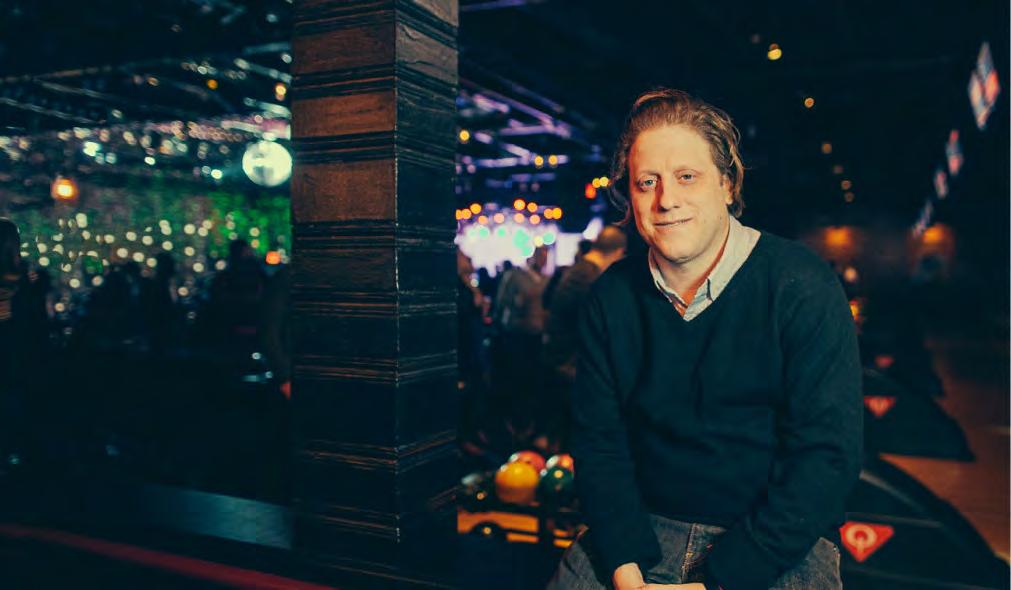
Peter Shapiro
“Some folks who kind of are used to [background noise], they like it. It’s almost like when you hear old jazz recordings, you can hear bartenders clinking glasses in the background and things like that, where it sort of gives an overall feel for the room.”
Kirk Peterson
Brooklyn Bowl’s director of talent
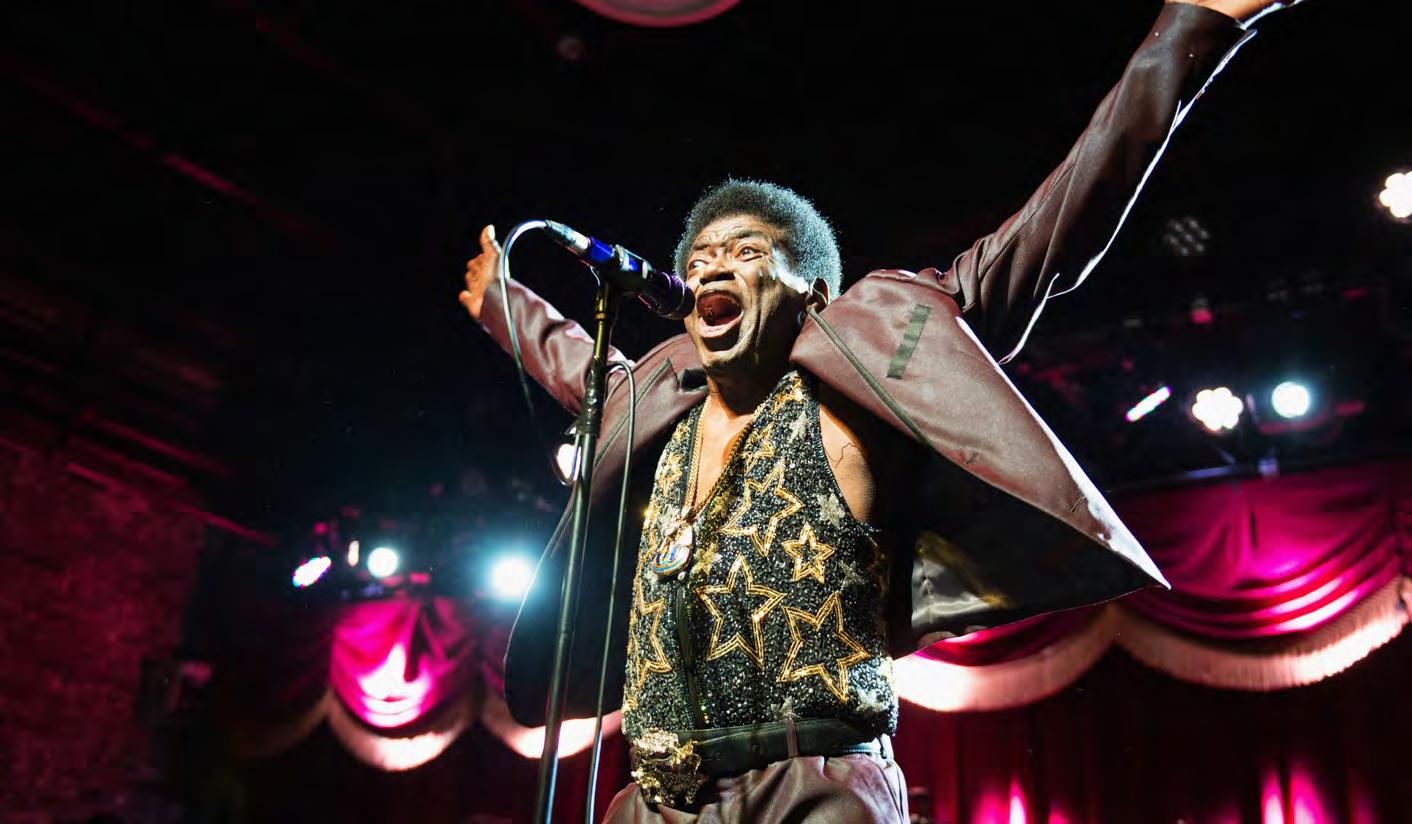
Charles Bradley performs at Brooklyn Bowl in 2014
taking over places that have already been built and that are fundamentally sound, you’ll never come up with anything as different as the idea that we have.”
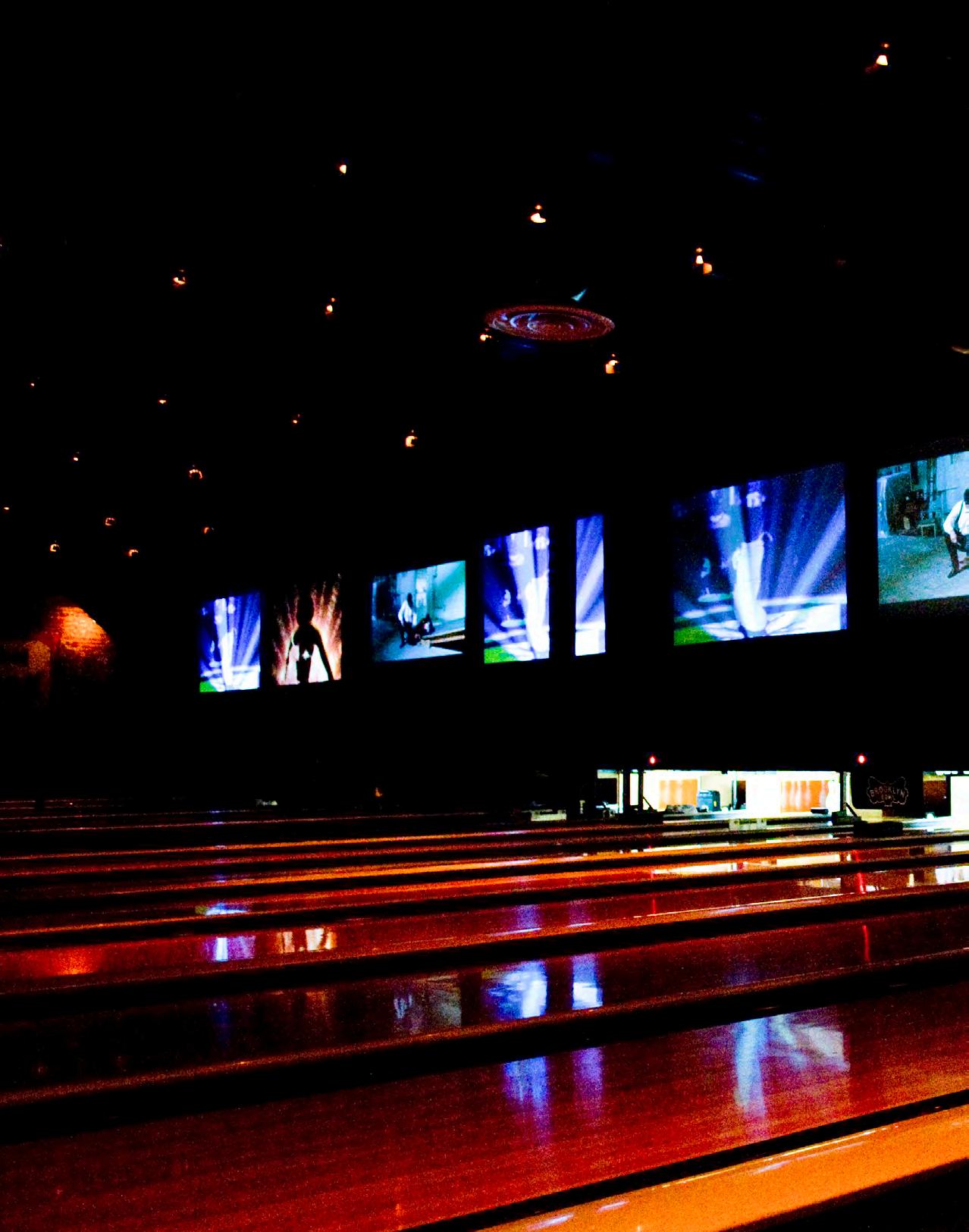
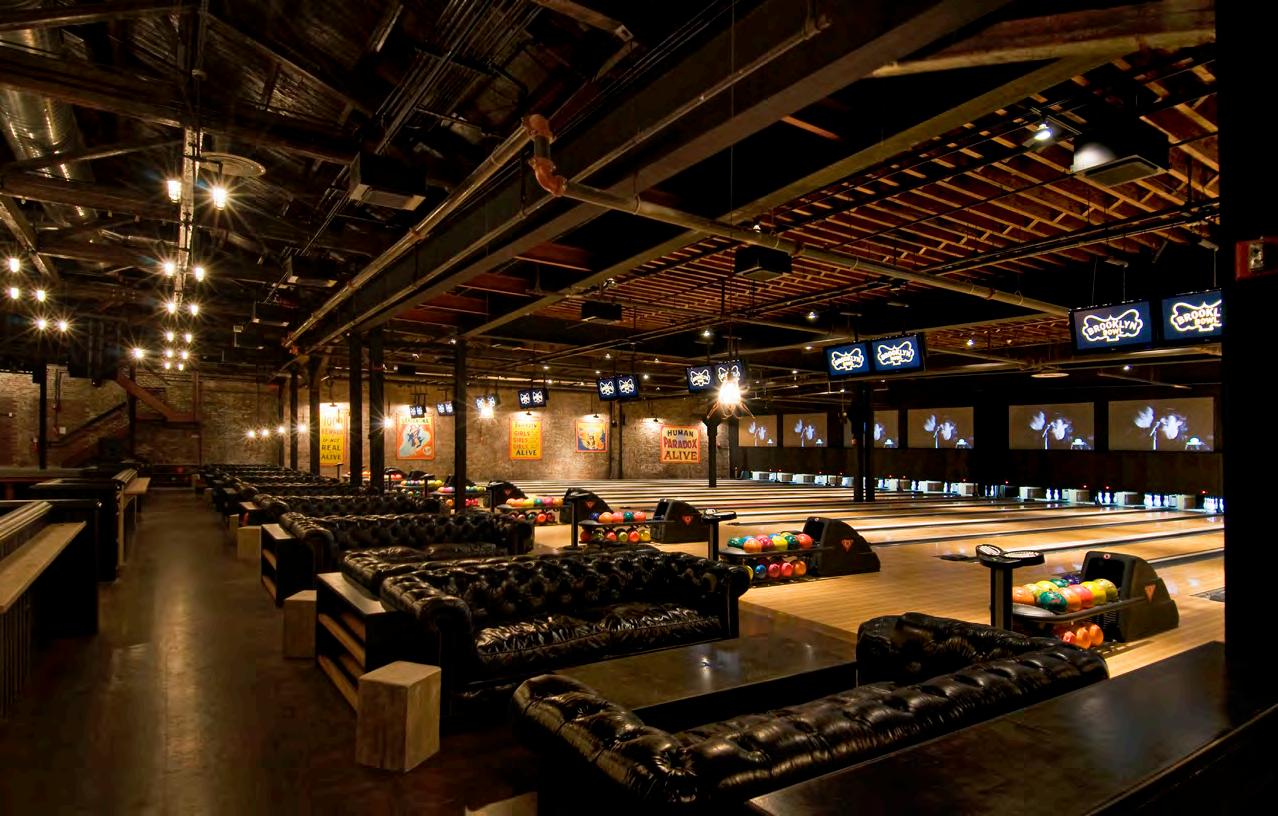
It’s important to find a balance so a performance venue and bowling alley can be harmonious as one space, despite their separate participants and sounds. In Brooklyn, Ryan cites the halfwall cordoning off the two areas as a visual divider. They credit the architectural team for assistance with the sound design, as well as a PA system that helps cover the sounds of bowling. (However, bands are booked with that ambiance in mind: Singer-songwriters take the stage far less than rock acts and jam bands.) Shapiro also points to screens throughout venues that give views of ongoing shows so bowlers can still see the action.
The Bowl locations comprise both existing and created spaces, but all are designed in a way that permits music and bowling to coexist. Generally, that makes the bowling ancillary to the music, which in itself is loud enough to cover the odd bowling din — they
specifically book bands that are a bit more raucous in service of not drowning out a musician.
“Our sweet spot is the relationship between the lanes and the stage, and that’s a spatial relationship that I think everybody in the world told us wouldn’t work before we got it, which is maybe one reason why nobody ever tried to do it,” Ryan says.
His ideal Bowl is a place visitors feel they can relax; Shapiro imagines musicians coming in early, getting a better-than-usual meal before the show, bringing friends or kids to bowl before or after their set. And that sense of community, of the local bowling alley hangout, is crucial.
“Our places now, they do kind of harken back to our traditions and our history, just the history of a bowling alley that’s well-worn,” Ryan says. He referenced the common hometown bowling alley (he grew up near one in Battle Creek, Michigan), where bands played somewhere set off from all of the bowling lanes, up by the bar. Two spaces, equally alive, and somewhat nostalgic to look back on.
With their earnest stories of youthful escapades, soaring choruses, and blasting heartland rock and roll, The Hold Steady is perfect musical fit for a place like Brooklyn Bowl. So it makes sense that the six-piece has a longstanding relationship with the venue: They’ve played multi-show events, dubbed Massive Nights, at Brooklyn Bowl every year since 2016. Most recently, the band performed a four-night run last December, on the heels of its eighth studio album, Open Door Policy.
“Our experience with the Bowl was astounding from year one, and with their help, the shows have grown into Massive Nights, an annual event that draws fans from around the world,” frontman Craig Finn says. “Brooklyn Bowl’s amazing staff and attention to both the artist and fan experience is incredible and has made the club into our home base.”
But neither the band nor the venue uses nostalgia as a crutch; both seem to borrow from the past to shape a more innovative future. For Brooklyn Bowl, their elevated food (from the nationally renowned Blue Ribbon Restaurant
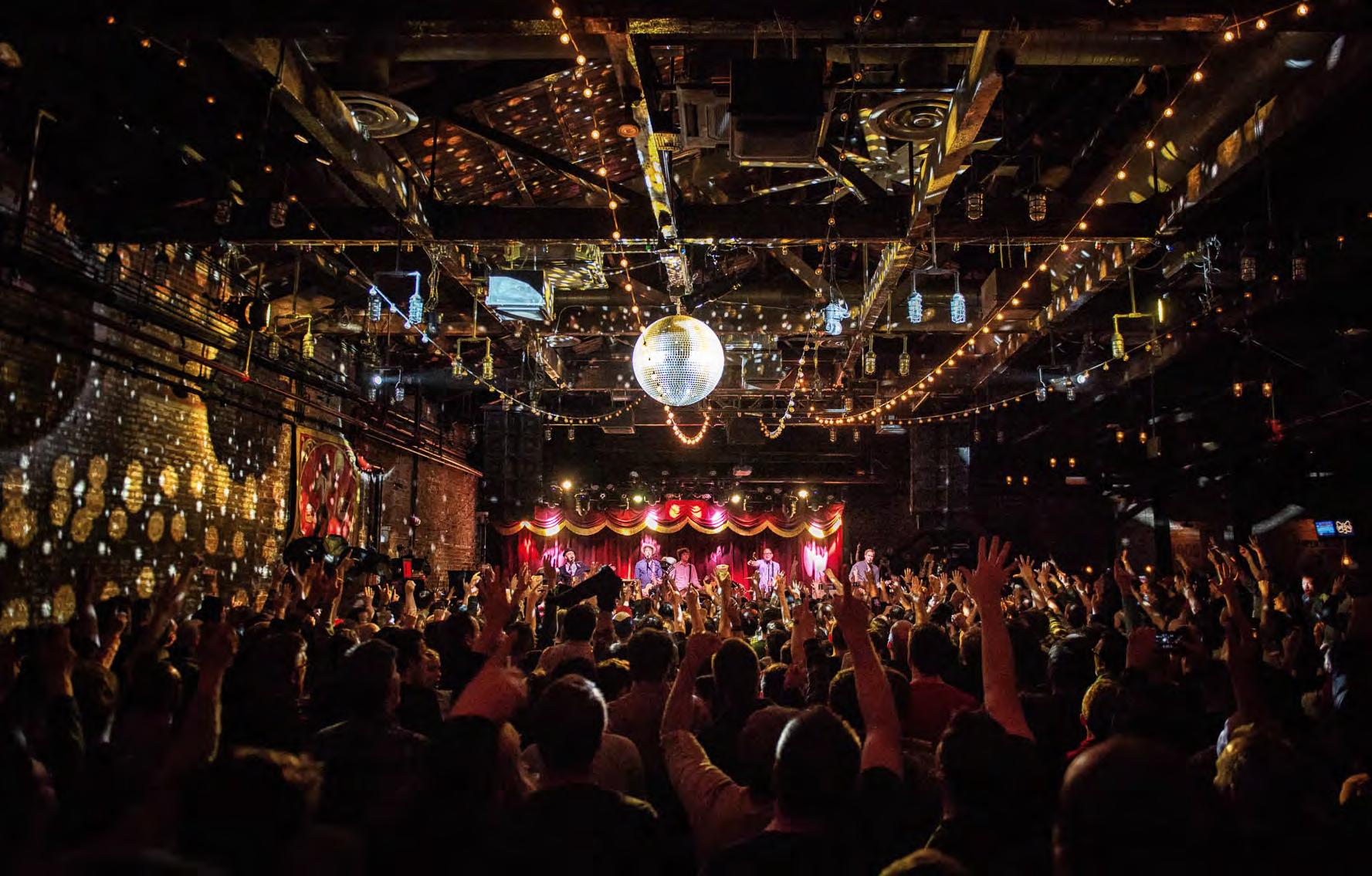
The Hold Steady performs at Brooklyn Bowl in 2016
Group), darkened atmosphere, and impressive slates of acts lend an air of sophistication to a seemingly retro setup.
“People who are in the business of hospitality, I know that they’re perceptive when they come to me and say, ‘Wow, we really looked at this and we think this is like the most complicated place to make work that we’ve ever looked at or thought about.’
And that’s true,” Ryan says. But what matters most is that to the general public, it looks easy.
‘An Adult Playground’
Kirk Peterson, who joined as the director of talent in 2013 as the venue began expanding, first in Las Vegas, then Nashville, and later Philadelphia, describes the Brooklyn Bowl concept as a “an adult playground.”
Music is still the central focus, though. While Peterson says that “there’s usually enough energy and volume in the shows that [the bowling] really is sort of just in the background,” acts often find it’s a nice addition. While
sometimes bands ask that the bowling be halted for the night, it’s backgrounded enough to be both distant and atmospheric thanks in large part to Ryan’s attention to layout.
“Some folks who kind of are used to [background noise], they like it. It’s almost like when you hear old jazz recordings, you can hear bartenders clinking glasses in the background and things like that, where it sort of gives an overall feel for the room,” Peterson says.
While he says there’s no single genre that defines a Bowl setting, they see the most success with “party and roots music,” Peterson says, including “funk and blues and soul and jam bands and DJs and hip-hop.” Recent performers have included G. Love and the Juice in Brooklyn, Jamestown Revival in Nashville, Melvin Seals in Las Vegas, and Ghost Light in Philadelphia.
“ There are certain things that we emphasize, obviously more than others, and … they’re kind of good-time bands,” Ryan says. “I like real music. You know, played by real musicians on analog instruments for the most part.”
The Bowls also tout a bit more
flexibility than other venues, for a number of reasons. Brooklyn Bowl often hosts kids’ shows — they open at 11 a.m. on weekends — that also introduce the parents to the space. (Its demographics are mainly people in their 30s and 40s, per Shapiro, but it draws some in their 20s as well.)
Plus, because of the bowling and food amenities, Bowls are able to offer lower-priced tickets for concerts that are normally more expensive at other venues.
“ That’s how New York really became so big — on the weekends, we would keep tickets down at 10 or 15 bucks,” Shapiro says. “If you keep the prices down, people just walk up in Brooklyn and see what’s going on … and then a lot of new people would get to see a band, which is the band’s first goal, they want to play to new people. We can do that because we have the food revenue, the bowling revenue — we don’t need to charge as much at the door.”
A Strike With Streams
Nashville’s Brooklyn Bowl was slated to
open on March 13, 2020, “within a day or two of the world shutting down,” as Peterson put it.
The effects of COVID-19 reverberated across all the Bowls, of course. They closed their doors to visitors, and after a time they turned to streaming to stay afloat.
“We had to go really lean and mean for a time there, and essentially 95% of our staff was either furloughed or let go,” Peterson says. “A big part of that was unfortunately having to take a lot of people off the payroll. We had to borrow some money [and] we had to get creative with our streaming capabilities.”
Using the livestreaming platform FANS, they were able to coordinate a slate of shows. The platform utilized Zoom to bring attendees into the venue and provided a multidirectional visual experience for users. Livestreamed shows ranged in cost from about $10 to
$25 for access; some shows also offered special merchandise for purchase.
Because many artists on the Bowls’ radar are based in Nashville, a lot of those shows were broadcast out of the then-unopened Nashville Bowl, including Billy Strings, Maren Morris, Jason Isbell and Amanda Shires, Margo Price, and more. St. Paul & The Broken Bones even played a virtual New Year’s Eve set from that stage to ring in 2022.
Peterson says that the Bowls relied heavily on the streams and platforms during the height of the pandemic and will continue to use this platform in the future. He also credits fans’ loyalty for the Bowls’ survival: “[Our streaming site] was really our only revenue stream during the pandemic, and it made a huge impact on our bottom line to kind of see through to the other side.
“For all the press there was about refunds and ticketing companies and
promoters, fans showed a lot of faith in the industry in general. We didn’t have to refund a lot of tickets to people. They basically said, ‘We’ll hold on to them and we’ll come when you guys are ready,’ ” Peterson continues. “So I think the music industry — the concert industry at large — owes a lot to the audience, the fans. If everybody decided … that was it and asked for their money back, probably you’re not having this conversation right now.”
The Nashville Bowl finally opened the last week of June 2021, more than a year after its planned debut, with headliner Old Crow Medicine Show. Already, according to Peterson, the space feels connected to the Nashville community.
“It’s really been fun with the Nashville Bowl because everyone’s just blown away by the room. It’s exactly what the market needed,” Peterson says. “The artists love
the way they sound on stage; the audience loves the sight lines and the sound.”
A Winning Recipe
In Brooklyn, Las Vegas, Nashville, and now Philadelphia, the acts and audiences at the Bowls may vary, but the aim remains the same — to create a relaxing, adult-geared atmosphere with bowling, food, and music at the ready.
“As we go and take this brand to other cities, we really pay a lot of attention to the market and the culture of those places,” Peterson says. “[We] really just try to fit in and create a place that people can go out and hear their favorite band and have a great night.”
When they’re looking for a new venue or location, the criteria remain fairly simple. Shapiro says, “It’s got to be in the city, and we’re looking for an amazing space.”
Of course, that space will need to be fixed or formed to the same specifications of existing Bowls, with great sight lines, quality food and drink, and a layout that lets bowling and music live in the same space.
“ These projects do start with me and then with our design architect in terms of assessing the space in question and whether it can work,” Ryan says. “The question really is not whether it can be become a Brooklyn Bowl, but whether the space has the capacity to really sing in the way that we want it to or need it to.”
Aside from streaming, he credits the venues’ individuality and the visitor experience they offer — and the dedicated visitors that creates — with helping the Bowls persevere through the pandemic.
“Cream rises, you know, and you’ve just got to fight to survive,” Shapiro says. “A great music venue stays strong.” ■
Brooklyn Bowl Philadelphia
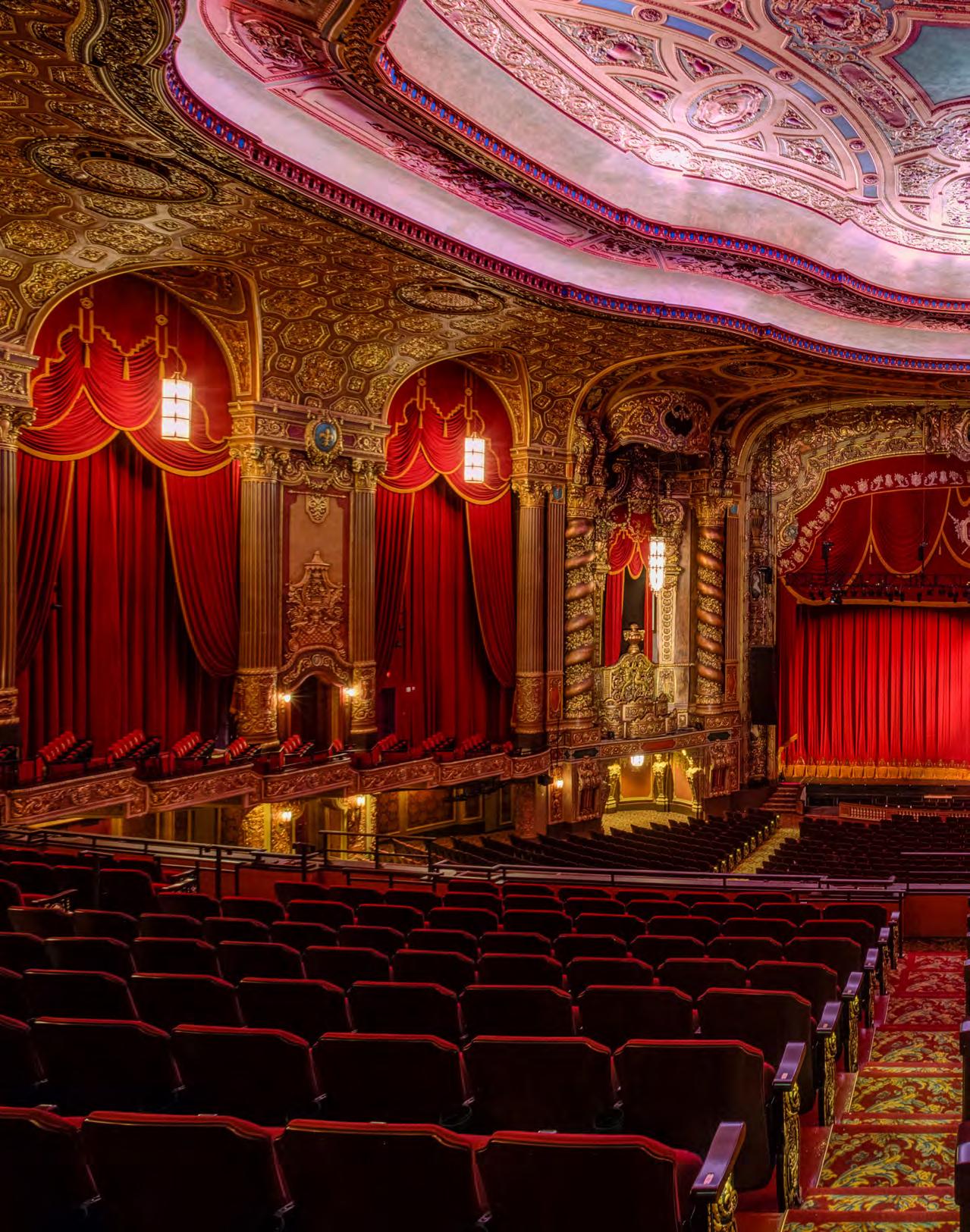
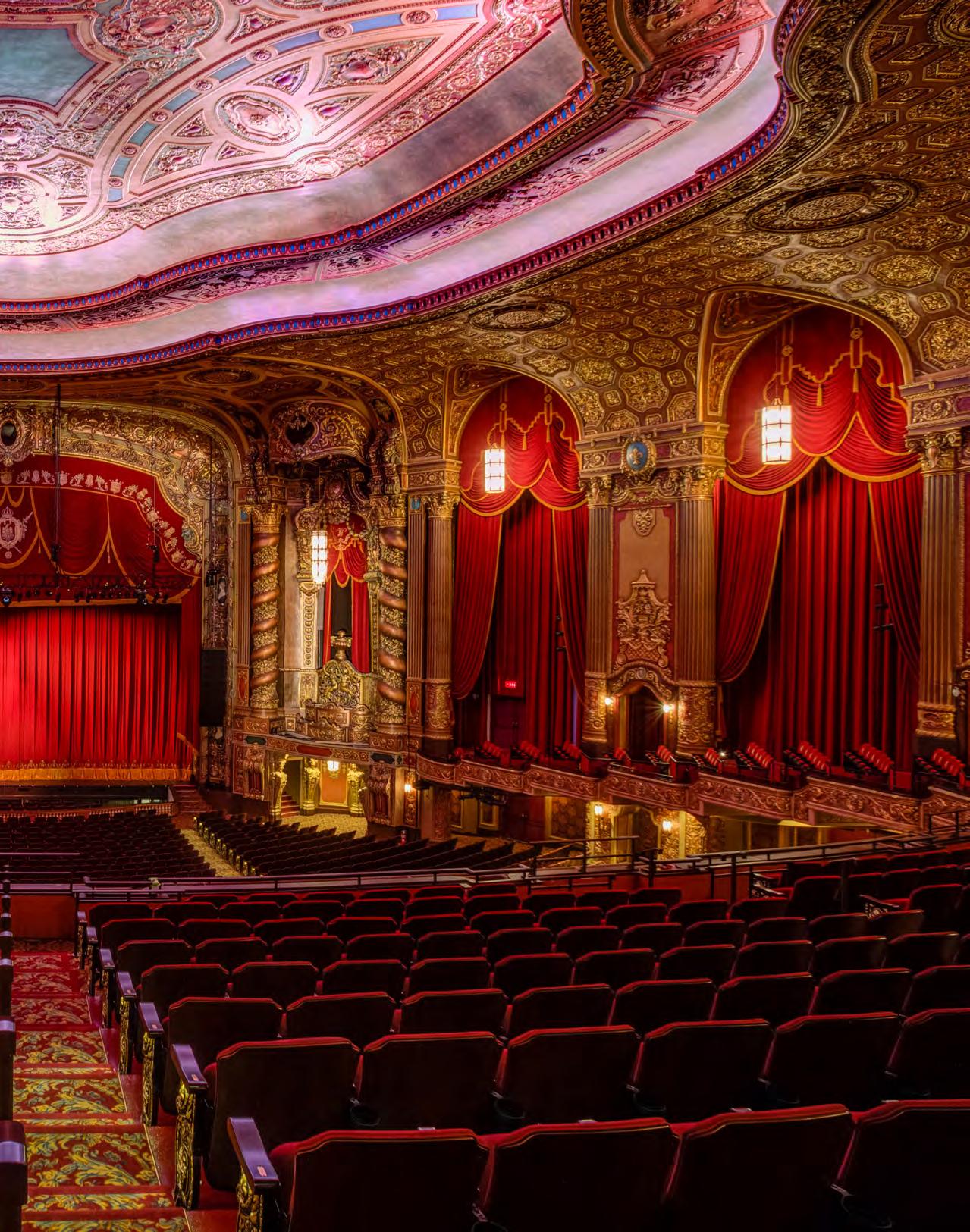
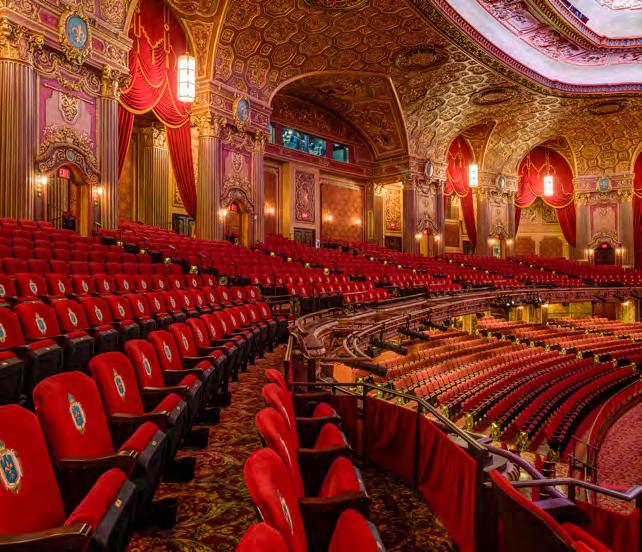
Kings Theatre in Brooklyn, New York
LIVING HISTORY
Venues on the National Register of Historic Places keep the music going
by Joshua M. Miller
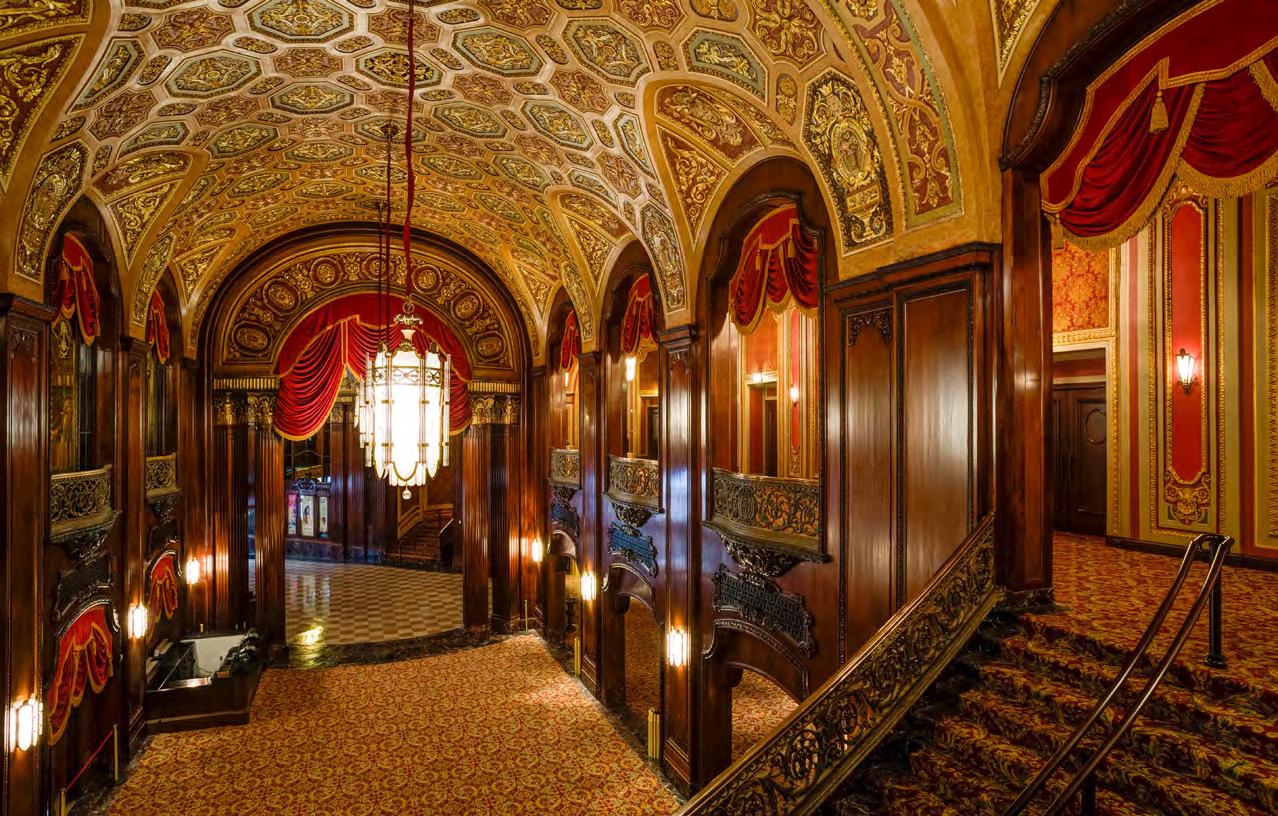
For many musicians, the opportunity to perform in front of an audience can feel like a sacred act. It’s an opportunity to honor traditions and those who came before them as well as to build onto those musical legacies. That drive for preservation and continuity also extends to historical venues that host touring roots musicians. Many of these music venues are housed in theaters and other buildings that have been around for decades, even centuries.
The United States’ National Park Service created the National Register of Historic Places to coordinate and support efforts to preserve historical buildings. Getting added to the Register can give venues a much-needed boost through additional funding and resources to help with restoration, organization, and presentations.
The application process is seemingly straightforward, yet acceptance is never
a given. If a venue operator believes their building is worthy of preservation, staff members can contact their state’s historic preservation office and start compiling a detailed application expressing why it should be added. The application must address three main criteria — age, integrity, and significance. To be considered old enough and historic, the building needs to be at least 50 years old. As for integrity, the building must look largely the same as it did in the past. Finally, to establish the historical significance of the building, applications need to address a range of questions about cultural and architectural significance.
If approved, the application is forwarded to the National Park Service in Washington for further assessment. If added to the Register, the venue is able to apply for federal and state tax credits and take advantage of other incentives and benefits such as access to grants and
assistance with preservation. The Register also establishes a set of protections, and must approve any subsequent updates or changes.
For Texas-based Kessler Presents owner Edwin Cabaniss, who has successfully applied for two theaters — including The Heights Theater in Houston — and is working on a third, the benefits go beyond money. “These buildings have been around long before I was ever on this earth,” he says. “And if I’ve done it right, they’ll be around a lot longer than I’ll be here.”
Here is a look at three venues that have been placed on the Register and what they mean to their communities and roots musicians.
The Heights Theater Houston, Texas
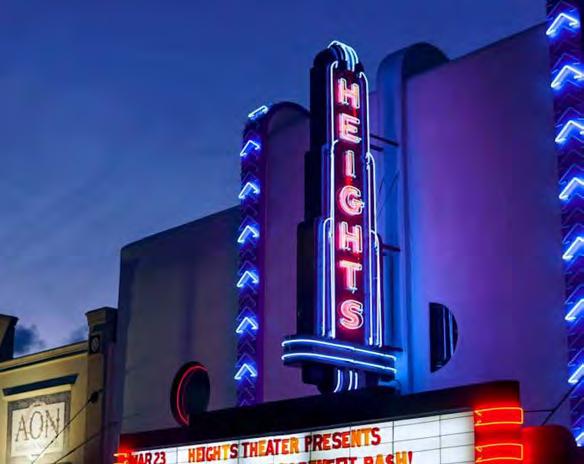
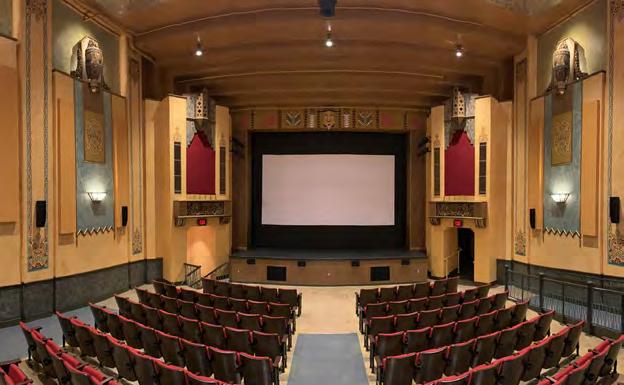
The Heights Theater, which first opened in 1929, features a mix of Spanish and
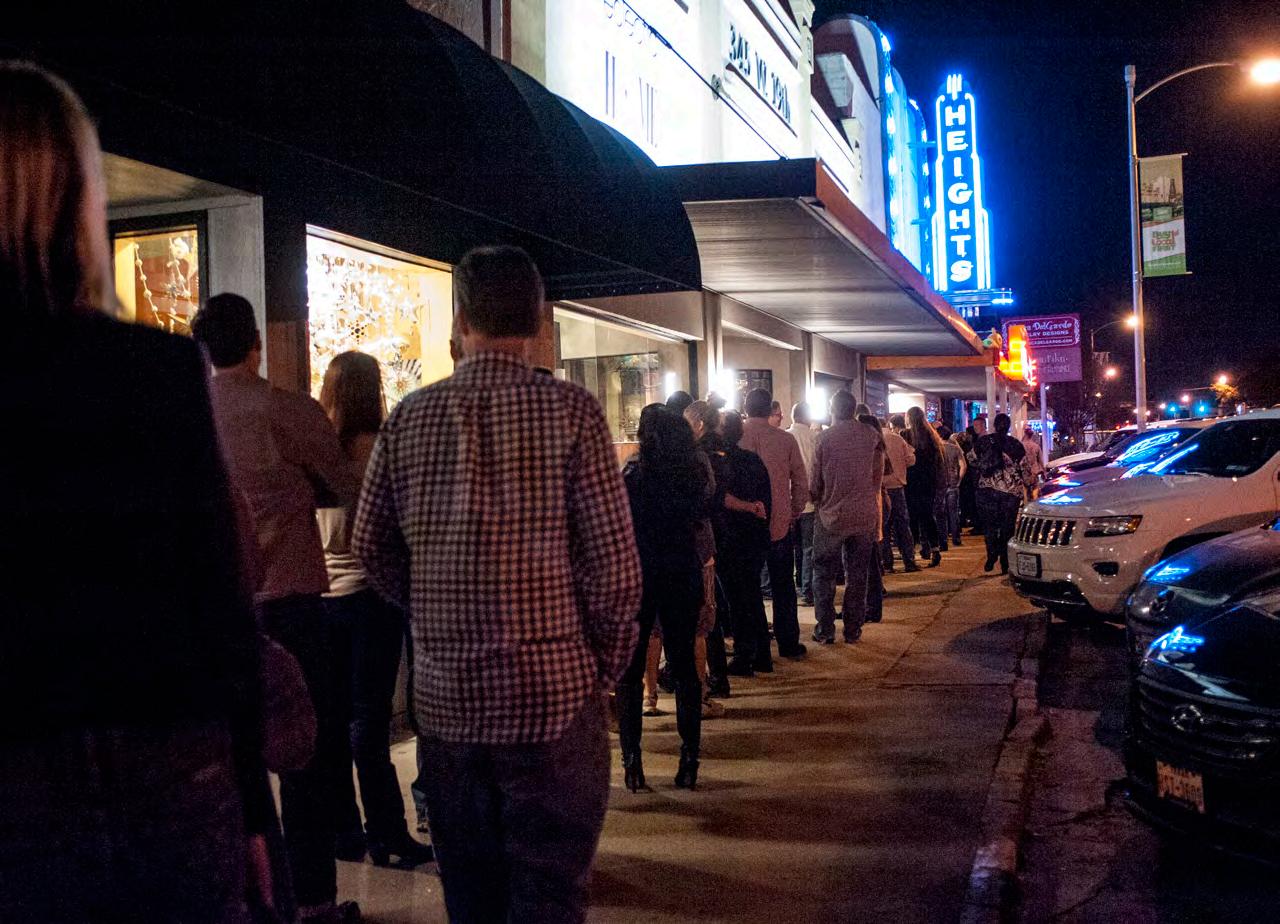
The Heights Theater in Houston, Texas
modern Art Deco architecture. In fact, it’s the oldest theater in Houston that remains in its original location.
“ They call them suburban theaters, because they were out in the suburbs, so they were named after the communities they’re in,” says Cabaniss, who oversees operations at the theater. “The Heights, for example, [refers to] a small community that was annexed by the city of Houston, called the Greater Heights area. This was the theater that was there on Main Street built in the 1920s.”
For many years, the theater served as a vaudeville movie theater with a single screen. “People get news from the front during war times,” says Cabaniss. “That’s how a lot of people got a lot of their information, was going to the movie theater. And of course, they’d watch a matinee, and they’d watch other singing cowboys and all that.”
In the years during and following wartime, The Heights showed adult
movies to survive. However, when the theater screened I Am Curious (Yellow) in 1969, an arsonist torched the building in protest of the film’s alleged obscenity. “The roof burned off and it was just sitting there with a sloped floor, right there along 19th Street,” says Cabaniss. It forced the theater to close at the time, and the crime remains unsolved.
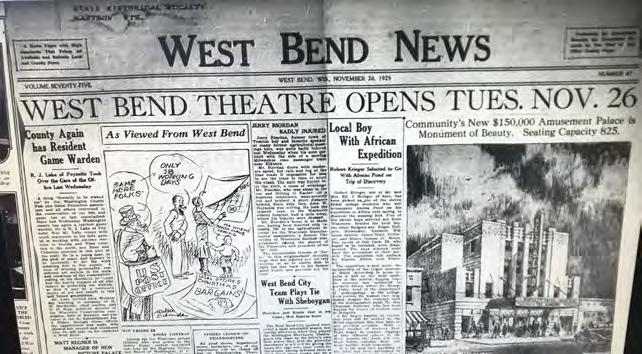
Decades later, between 1988 and 2015, the theater was used as a gallery space for paintings and sculptures, art openings, and cultural events. It became a performance venue in 2016 and was added to the Register in 2017. The theater’s recent renewal project aims to give visitors an idea of how the theater looked after a key renovation in 1935, though with a few modern updates.
Today, the space is quite malleable, capable of hosting up to 700 people without seating for dance-heavy ”honky tonk nights” or 500 seated for more intimate performances. Another change
involved making the floor compliant with the Americans with Disabilities Act of 1990 (ADA), as it was previously too sloped. To preserve the floor, Cabaniss says workers hand-chipped and put aside every little piece of tile out of the floor, opened up the floor itself, took out the concrete, and then poured a floor that was level. They then put the old tiles back in place.
The floor is so special that Houston native and country singer-songwriter Hayes Carll needed a moment with the history when he played The Heights Theater on his 2017 tour. As Cabaniss recalls, “[Carll] wanted to get down there early … we were still loading the stage in [and] he said, ‘Oh, my God, I just wanted to play on the floor.’”
Cabaniss is glad to keep the theater going, true to the theater’s origins as a place for community gathering. The theater has offered touring musicians coming to Houston a chance to play an
intimate venue and, sometimes, a chance to do something a bit different with their sets.
“It’s a tighter environment,” says Cabaniss. “Out of [a band’s] 120 days a year they’re on the road, maybe this is that one-time special that they decided to break it down and go acoustic. Or they may try to do something a little bit different than they would normally do.”
For example, My Morning Jacket’s Jim James performed a stripped-down solo set at the theater in 2018 in support of his soulful solo album Uniform Distortion. Robert Earl Keen played a pair of Super Bowl weekend shows in 2017 with some of his friends, including Gary Clark Jr., Leon Bridges, and Kam Franklin of The Suffers.
“ Those are the magical moments … maybe their paths wouldn’t have crossed [without the theater],” says Cabaniss.
One of the biggest lessons he’s learned is to never compromise. After reopening The Heights Theater as a music venue in 2016, Cabaniss says his goal was to provide a quality venue for a variety of musicians to play. The venue has been able to attract bigger acts
thanks to word of mouth from musicians who enjoyed performing there. “[Artists] want a listening environment,” he says. “They want that feedback. They want people to care about their lyrics. And that’s a magical place to be.”
For Cabaniss, that magic comes from history — of the music, architecture, and community.
“I think it’s important to delve into the history,” he says. “It’s part of the narrative. It’s part of the storytelling … [and] roots music is about storytelling. These performance venues can also have their own narratives.”
The Bend Theatre
West Bend, Wisconsin
While driving down Main Street in downtown West Bend, it’s hard to overlook a certain brightly colored sign blade connected to one of the buildings. It’s been a fixture in the area since 1929, and so has the theater within. After sitting empty for 15 years, and much debate about whether to keep part or all of the building, the theater reopened in 2020 — the same year it was added to the
Historic Register — as The Bend Theatre.
“Nobody was ever going to tear down this building as long as that sign was attached to it, and it was still lit,” says Jeff Potts, executive director for Historic West Bend Theatre Inc., the nonprofit that helped renovate and reopen the theater.
Upon entering, it’s immediately clear what a labor of love it took to renovate and restore the theater to its 1920s vaudevilleera look.
“It’s what’s considered a sympathetic restoration, meaning we took it back to what it would look like opening night 1929, with the exceptions of a couple structural improvements,” says Potts. “We flattened part of the floor where it was rigged so that we could add bathrooms and a bar. And at the front of the house, we expanded the stage, so we did lose some seating. But we’re much more functional now as a multipurpose facility.”
Touring vaudeville acts were the main attraction when the theater originally opened its doors, but that year’s stock market crash and Great Depression soon forced a change. The West Bend Theatre became a movie theater and continued to
The Bend Theatre in West Bend, Wisconsin
screen films for the next 80 years.
“ The first time we opened up, we instantly had to pivot and reinvent what happened inside these four walls,” says Potts. “While the original intent was that the stage would get used, it was the screen that really became the lifeblood of this building.”
In 2020, as the theater was preparing for its grand reopening, the COVID-19 pandemic hit. The date selected just happened to be the same weekend the world started shutting down.
“We reopened on March 14, 2020, with a gala event concert, and then closed the very next day,” Potts says. “When you think about some interesting tidbits about our history, it really is two very different eras, but boy, the unexpected hit both times we opened this theater, and we very quickly had to figure out, ‘Oh shoot, what are we going to do now?’”
The theater, which seats 340 and has a main floor and balcony, once again found a way to keep going. Since resuming operations around Memorial Day 2020, more than 250 events have been booked at The Bend Theatre, including musical performances, movie screenings, and
more. Music performers so far have included Wisconsin singer-songwriter Trapper Schoepp; Whey Jennings (grandson of Waylon); Ferguson, Carbone & Peck; and Chain Station.
Roots music has been especially welcome at The Bend, as the building’s natural acoustics seem to elevate the sound. Potts says the theater’s approach to putting music in the building is to keep things simple. Styles such as bluegrass fit perfectly, he says, “because that’s what this hall was designed to do.”
“ The theater was built at a time that amplification wasn’t necessarily at everybody’s disposal, so you had to look at acoustic instruments for performances here,” says Potts. “We’re pretty happy to carry on that tradition by highlighting original artists and artists that just resonate with a wide variety of audiences.”
He enjoys the sense of community on display whenever these artists perform and how readily they’ll point the theater staff to other talented musicians who would be a good fit for their stage.
“We’ve got a really great reputation among musicians, and it’s because it’s a
beautiful house to play in, but it’s also because we treat them like family when they’re here,” says Potts. “I think that’s the cool thing about that whole genre [of roots music], is there’s this unique relationship between the artist and the audience. You just boil it down to the basics and it feels like you’re family and you’ve known everybody for years.”
Potts also enjoys seeing artists pay homage to the past. One of his favorite memories is from summer 2021, when Milwaukee-based contemporary bluegrass band Chicken Wire Empire performed a full set tribute to Old & In The Way, the pioneering bluegrass band Jerry Garcia played with in the early ’70s.
“I think there’s this great nostalgia factor here,” says Potts. “People not only are coming back to what in their minds was exclusively a movie theater and now their minds are opened up to a performance venue, but the music itself reminds them of their youth and quite honestly simpler times. If you dig into some of those lyrics, they’re timeless. It holds true today the same as it did … when those songs were first written and first performed.”
Kings Theatre
Brooklyn, New York
Since opening in 1929 in the Flatbush neighborhood of Brooklyn, Kings Theatre has aimed to treat visitors and entertainers like royalty. There’s majesty at every turn, including gold-laden, elaborately crafted walls. The Loew’s company built the theater, which remains the largest in Brooklyn, as one of its five Wonder Theaters around New York City.
The theater initially hosted touring vaudeville shows as well as the occasional film. However, seven weeks after opening, the stock market crashed. Vaudeville waned and the theater shifted to screening films as its main function.
“When it opened, it was a special place in Flatbush. It wasn’t your neighborhood movie theater. It was a destination in those days,” says Steven Ehrenberg, the theater’s director of production. “To bring somebody to go to see something at the Kings was different than going around the corner and seeing it at a closer, more local theater, because the Kings was a grandiose movie palace.”
It remained that way until the late ’70s, when Loew’s closed the doors. Ehrenberg says a combination of changes in the neighborhood and in how movies were distributed led to the decision. It remained empty until 2010, when then-Brooklyn Borough President Marty Markowitz set in motion plans to renovate and restore the theater. With the help of the city, the theater was added to the National Register of Historic Places in 2012. The newly renovated theater
reopened in 2015 as a music and entertainment venue.
“Both the architects and the Loew’s people felt like everyone who walked in the door should feel like royalty,” says Ehrenberg.
The goal of the renovation project, he says, was to get Kings Theatre to look as much as possible as it did the day it originally opened. That included using the right colors in its decor. To recreate the original colors, the renovation team had to scrape away layers of paint on the walls until they found the original materials and then had to do an examination and chemical sampling to determine what the colors were when new.
Historical documents and photographs also helped them see the theater’s original look, filling in the gaps from missing pieces, such as light fixtures and the brass tops of stair railings. An added challenge to the renovators was repairing water damage caused by a leak in the theater’s original roof.
“ The plaster ceilings are very ornate, and a lot of those had quite a bit of damage from water because water and plaster do not play well together,” says Ehrenberg. “Some of the plaster ornamentation on one whole side of the theater was much worse than the other side, but much of the decorative layers had pretty much fallen down and melted away. The restoration of that is a painstaking process.”
The renovation added modern touches, including technology that controls video, audio, and lighting. The
technical ability to connect speakers to amps and a specially designed new sound system, among other additions, helps the theater put on a variety of concerts and shows today.
“We still do theater, though it seems that concerts are more of our bread and butter to a certain extent,” Ehrenberg says.
Many of the shows are family- and kid-friendly, he says, and flexible seating gives the venue the ability to book more energetic concerts for adults as well; seats in front of the stage can be removed “to give us a nice-size general admission pit area,” Ehrenberg says.
Kings Theatre sounds great, he says, because of its shape. Thanks to the theater’s design, which features a lower orchestra level and upper mezzanine, musicians don’t have to overamplify their music to reach everyone. And just as the design of the room aids in the sound quality, it also gives audience members great sight lines of the stage and performers.
Some of the more rootsy artists who have played the theater include Bob Weir, The Avett Brothers, and Father John Misty. But one of Ehrenberg’s favorite memories at the theater is when John Prine played in 2016.
“When John started sound check, I was out in the auditorium, and I called my brother up,” he recalls. “I [held up] my phone … and let him listen for a little while through a sound check song or two, and just put the phone back on my ear and said, ‘You should have come.’ And then the next time John Prine came, he came and had a great evening.” ■
MATT LAMBROS
MATT LAMBROS
Rafael De Carmen
Eva la Yerbabuena
Chocolate, Farruco Y Otros (Saludo)
FLAMENCO RESISTANCE
Spain’s most famous dance fights for survival in the
modern world
by Judy Cantor-Navas
Israel Galván
“Flamenco is very difficult. The rhythms are very complex. A tablao is a university that all flamenco artists have to pass through. You have to see it as a school, not just a place where the tourists go.”
Pepe Motos teacher at Taller de Músics
On a thursday night at the Flamenco Tablao Cordobés on Barcelona’s central Rambla boulevard, the scene is exactly what a visitor to Spain might expect.
In a low-lit, cave-like, whitewashed room, its low ceiling arched and its wide wooden stage framed by mosaic tile, two guitarists and two singers sit on highbacked cane chairs. Dancers take alternating solos: two women in long, tight-bodiced, flounced dresses and fringed shawls and a slim male counterpart in snug black slacks and ankle boots. Over the next hour, the quick-fire tapping of heels and handclaps contrast with the keen of a singer’s voice that’s been marinated for a lifetime in the deep corners of the soul. It’s the sound of what’s often called the Spanish blues.
This postcard scene has taken place here four times a night, seven days a week for 50 years, uninterrupted before COVID-19, which shut down the Tablao Cordobés for 14 months. After a yearand-a-half, tourists, who numbered
around 20 million in Barcelona the year before the pandemic, have trickled back to the city and to their requisite flamenco experience. Nightly sets at the Cordobés club last fall were down from four to two, and by law were no more than 70% full, performed for a masked audience. As of December, customers also were required to show proof of vaccination at the door. Located on an unassuming second floor on the most famous and frequented strip in Barcelona, Tablao Cordobés is named for the champion bullfighter Manuel Benitez Pérez, “El Cordobés.” A modern renegade who shook up the Spanish tradition, El Cordobés’ face was as familiar as those of The Beatles to Spain’s early television audiences. By the combined virtues of its name, performance space, and adjoining restaurant serving pre-show dinners, Flamenco Tablao Cordobés brings together the Holy Trinity of Spanish stereotypes — flamenco, paella, and bullfighting. These 20th-century tokens fueled a tourism industry that, by 2019, was responsible for more than 12% of
Spain’s gross domestic product.
Today, in an era of increased awareness of animals’ rights and outcries about the cruel nature of the bullring traditions, bullfighting has been all but canceled in many parts of the country, and a proposal to ban it altogether is moving through the Spanish Congress. In Barcelona, a bullring that once held 15,000 spectators was converted into a shopping mall years ago.
As for paella, it’s still considered by a majority of foreigners to be the national dish of Spain, albeit in a country whose culinary traditions are as rich and disparate as its autonomous regions and languages. It remains a star on the nightly menu at Tablao Cordobés, but in today’s era of foodie awareness, the allure of the ubiquitous Valencian yellow rice dish has faded for the culinary curious traveler.
To outsiders, the show at the tablao, or flamenco club, could similarly seem outdated, a kitschy relic of the poor, repressed country romanticized by
Ernest Hemingway and glamorized by Ava Gardner in the 1950s, when both were known for frequenting tablaos on their night crawls in Spanish cities.
“ Tourism is really what allows tablaos to exist,” Flamenco Tablao Cordobés managing director Maria Rosa Pérez acknowledges. She hurries to add a caveat: “But that doesn’t mean flamenco is for tourists.”
As she speaks, Pérez’s eyes are scanning the room, registering the customers arriving for a show-anddinner (79.50 euros; around $90) or show-and-cocktail (45 euros; $50) package. For the past 16 years, she’s run the family business, after taking over from her father, a guitar player, and her mother, a flamenco dancer.
“ There’s a prejudice about flamenco tablaos today that does not correspond with reality,” says Pérez. The tense set of her mouth suggests the constant battle she wages for the entertainment at the tablao to be more widely acknowledged as art.
“It’s like Picasso,” she reasons. “If you
go to the Picasso Museum [in Barcelona], 90% of the public are going to be tourists. But no one would dare to call into question the quality of Picasso’s work.”
Joining the Circle
Under his stage name Niño de Elche, Francisco Contreras Molina is at the vanguard of flamenco. An iconoclast who purposefully ignores traditional boundaries, he’s just as likely to perform a sound poem at an electronic music festival or create a museum installation as to dance. In a recent indie film, Canto Cósmico (Cosmic Song), he appears carried like a saint through the streets by a procession of naked followers.
Like many elements of flamenco, Niño de Elche has been subject to both dismissive criticism and reverent praise, though rarely indifference. As flamenco has evolved over two centuries, it’s been accompanied by constant debate, about its origins, its definition, and, always, its authenticity.
“Flamenco is a very controversial
expression that defies logic,” Niño de Elche says.
The paradoxical nature of flamenco finds its supreme manifestation in the tablao. It’s a place where a notoriously difficult-to-master musical form is presented as easy entertainment; a venue where flamenco, whose unadorned display of emotional release is definitely not for everyone, is presented for everyone. As Pérez puts it, a venerable tablao like the Cordobés is a tourist attraction where the music is not touristic.
The tablao showcases flamenco in its essence: dancers performing on a wooden stage (originally just a plank, or tabla, laid on the floor, from which the tablao got its name), interacting with guitarists and singers sitting or standing in a U-shaped formation.
The consistent format and purity of form has made the tablao a sacred artistic space within the often-factioned flamenco world. A crowded room that’s common ground for traditionalists and experimentalists, even forwardly
unconventional artists like Niño de Elche.
“Playing in a tablao was a very important process in my artistic career,” he says. Now 37, he has performed regularly in tablaos across Spain for almost a decade. “In the tablao, I was able to understand the logic behind classical flamenco and its composition, and ways of singing, playing, and dancing on the stage that I’ve been able to take with me and experiment with in my work.”
Dancer Karime Amaya is flamenco royalty. Her great-aunt was Carmen Amaya, who danced barefoot in the streets of Barcelona’s seaside ghetto as a child. Carmen Amaya’s fame grew from the 1930s until her retirement due to illness in the early ’60s; she died in 1963. She is considered one of the greatest flamenco dancers of all time.
Raised in Mexico, Karime Amaya has been dancing professionally since age nine; while still a teen, she was tagged as an artist to watch on the international flamenco scene. She has
since performed in theaters all over Spain and abroad. But most often she can be seen dancing at the Tablao Cordobés.
“For me, a tablao is as important as any theater,” she says. “The tablao is a space where you have the opportunity to keep your practice active and develop your art; it’s a place that inspires improvisation. We do so many shows, you’re working every day, so in order not to fall into a monotonous routine it’s important to improvise.”
Tablao Cordobés is where Pepe Motos, a singer-songwriter, guitarist, and cajón player, got his start both professionally and personally. Now 51 years old, Motos moved to Barcelona from Madrid when he was 8, after his father died. His mother, a flamenco dancer of Romani (gypsy) heritage, was offered a permanent place in the Cordobés lineup by her brother, Luis Adame (born Luis Pérez), owner of the tablao.
The tablao became a home to Motos, just as it was for María Rosa Pérez, his
Tablao Flamenco
first cousin, who would sit at the bar doing her homework after school. Motos remembers the long evenings he spent in the artists’ dressing room, playing with his toy cars on the floor accompanied by the beat of his mother’s feet on the stage.
But it wasn’t long before Motos put down his toys, took up the guitar, and began playing at the Cordobés himself.
“Little by little, the time comes for you to join the circle,” he says. “It’s just something that happens naturally.”
Against the Tide
Adame remembers the 1950s and ’60s as the golden age of the tablao — “the big flamenco boom.”
“I had the luck to be able to perform in all of the important tablaos of the time as a guitarist,” he says.
In the mid-20th century, the tablaos were benefiting from Spanish cities’ recovery from the country’s civil war and World War II. Flamenco had first gained its place in popular
entertainment for the Spanish audience as part of the variety shows at 19th-century Café Cantantes. By the end of the 1800s, there were 74 of those “singing cafés.” Then, with an attraction at the 1929 Expo in Barcelona, where a young Carmen Amaya danced, flamenco became an exotic calling card for Spanish culture around the world.
In 1971, Adame and his wife, Irene Alba, arrived in Catalunya on tour with their small dance troupe. They were subsequently booked to perform at Tablao Flamenco Cordobés, which had recently been opened by a young businessman who owned theaters on the Rambla, a promenade that in its best years was lined with theaters and music spots. As Adame’s daughter Maria Rosa points out, “Tablao Cordobés is part of the history of Barcelona.”
Adame accepted an offer to oversee the entertainment at the Cordobés, but as it turned out, the timing for running a flamenco tablao wasn’t great.
By the 1970s, at the end of dictator Francisco Franco’s 36-year reign (and
even more so after his death in 1975, which opened the door to democracy), the once-celebrated tablaos fell out of sync with the times in Barcelona. The Franco regime had outlawed the Catalan language in public spaces and severely repressed its culture, and Adame and Alba had arrived just in time for a backlash against all things Castilian.
“It was a very socially turbulent time,” Adame explains. “It wasn’t an easy time for something that had that Spanish tinge. We were going against the tide.” Along with freedom in downtown Barcelona came decadence, what Adame refers to as the attractions of a “sin city.”
“We were able to turn our negative situation into a positive one,” he says. Adame’s idea was, essentially, to preach to the converted. If he could book the most renowned flamenco artists to perform at the tablao, he could attract committed flamenco fans.
“We had three glorious years during which I borrowed from the bank in the winter to be able to contract [popular flamenco artists like] Chocolate,
Pepe Motos
Camarón, Farruco, Lole y Manuel … I remember such great parties, with the artists I had there, the parties would last all night long. We never went to bed before eight in the morning. I’d give the money back to the bank in the summer, when we made more money.”
Although the awakening in Spain had begun to attract intrepid travelers, there was not enough tourism then to support the tablao year-round.
“Our clientele was from the gypsy world,” Adame emphasizes.
Historians trace the Roma peoples’ presence in Barcelona to the 15th century, but it was in the 20th century that the city’s gypsies were acknowledged as a significant part of the population. They were marginalized by both Barcelona’s white residents and its government.
In the 1940s and ’50s, a new wave of immigrants from Andalusia arrived to the city. They made their homes in makeshift communities, like the rows of shacks on the city beach called Somorrostro, where families gathered for Sunday meals and impromptu flamenco on the sand.
In the 1960s, the city began relocating the residents to newly built
projects. But it was not until the years leading up to the Barcelona Olympics in 1992 that the city would undergo a mass “cleanup” in which the seaside community was razed to make room for a grand, foreigner-friendly boardwalk, and other struggling neighborhoods were gentrified.
“ The gypsies who live in Catalunya saved us,” says Adame. “Thanks to them and the artists we booked, the great flamenco artists of the day, the tablao survived.”
‘Learn by Living’
When Lluís Cabrera was a teenager working in a textile workshop in Barcelona, the radio would often be tuned to a morning flamenco show. Cabrera was captivated by the music of Enrique Morente, the poet and singer who’s been described as the Leonard Cohen of flamenco.
Cabrera had immigrated to Barcelona from a town in southern Spain with his family when he was 9 years old.
“My parents came because we had no future whatsoever,” says Cabrera.
“The same as the thousands of Andalusians who came here in the ’50s and ’60s. Like the majority of people in Andalusia, they were rural people, poor people. They came here because as the losers in the civil war, they couldn’t get work. They couldn’t continue to harvest wheat for three pesetas a day. It was almost slavery, like a feudal society. Almost a million people had to leave Andalusia. And we came here and we stayed here.”
Cabrera did not come from a gypsy family. And he was not a flamenco musician, but he was a fan. He founded a peña, one of the many neighborhood flamenco social clubs that existed in Spain at the time. The Peña Enrique Morente was also an activist group, advocating for social change, the rights of the working class. They offered free Catalan classes to immigrants and engaged neighbors in the art of protest. In 1978, with Franco dead and the urgent need for dissent removed, Cabrera and some of his cohorts opened a music school.
From the beginning, the Taller de Músics centered on jazz — for Cabrera and his friends, the sound of freedom —
Lluís Cabrera
but it also included flamenco in the curriculum. It was a radical notion at the time.
“Some artists gave dance and guitar classes in their homes [but] nobody dared to teach flamenco within an academic music environment,” Cabrera explains. “Flamenco was seen as a mystery, something that ran in your veins.
“But what if someone wants to learn flamenco guitar or voice or dance and they are born outside of a family within the flamenco tradition?”
The Taller de Músics is a short walk from the Tablao Cordobés, on a pedestrian street where young artists frequently walk by carrying guitar cases and the school’s professors congregate at the corner cafe.
“We want the students to learn by living,” explains guitarist David Leiva, a guitarist and the head of the flamenco department at Taller de Músics, where students have included current Latin music phenomenon Rosalía. A schoolrun music club is across the street.
“They have to get in front of the public as soon as possible.”
It might seem that a forward-
thinking music academy would turn away from the tablao, even deride it as an archaic institution. But it’s actually the opposite. Among its other classes, the Taller de Músics offers formation in tablao performance, even setting up classrooms to mimic the traditional tablao setting.
“We teach everything about the tablao,” confirms Leiva. “The singers and the guitarists can learn how to accompany a dancer. The tablao is necessary in order to put into practice what you learn at school.”
Pepe Motos, a longtime teacher at the Taller de Músics, says the students learn like he did in his early days at the Cordobés, by listening and playing. “I might have them practicing palmas [hand claps] for three hours.”
But while Leiva and Motos stress that there is a method for learning flamenco, they also emphasize that there is only so much to be taught in a classroom.
“When we’re talking about traditional guitar, dance, and singing, there are secrets that you have to go to a tablao to learn,” Leiva says.
“Flamenco is very difficult,” adds Motos. “The rhythms are very complex.
A tablao is a university that all flamenco artists have to pass through. You have to see it as a school, not just a place where the tourists go.”
Preserving and Persevering
During the summer of 2020, a series of dire headlines appeared in the Spanish media:
“Flamenco tablaos on the point of extinction.”
“The coronavirus mutes flamenco tablaos.”
“COVID-19 puts the future of flamenco at risk.”
In February 2021, the news came that Villa Rosa, Madrid’s oldest and best-known tablao, would close its doors for good. Earlier in the pandemic, the owner of Casa Patas, another legendary flamenco venue in the capital, announced it was shutting down. A third of Madrid’s 21 tablaos — which collectively took in one million euros in
David Leiva
“The tablao is a space where you have the opportunity to keep your practice active and develop your art; it’s a place that inspires improvisation. We do so many shows, you’re working every day, so in order not to fall into a monotonous routine it’s important to improvise.”
Karime Amaya professional dancer
2019 — did not survive the pandemic.
In Barcelona, El Palacio del Flamenco, the city’s largest tablao, where Karime Amaya and countless others jump-started their careers, is closed; its owners are attempting to sell the business that once supported a cast of 16 artists and 24 house employees.
In the global crisis for live music wrought by the pandemic, flamenco has been hit particularly hard. Spain imposed extensive restrictions on live music for many months that made it impossible for indoor venues to operate.
“Don’t forget that a tablao is a small closed room,” says Tablao Cordobés’ Pérez. “We will be among the last to really come out of the pandemic. In order to survive we’ve had to go into debt, and we’ve lost all of our savings. We’ll see what happens. We really don’t know how this is going to evolve.”
Even if the Cordobés and other tablaos had been able to open their doors, it’s unlikely there would have been any customers, at least until July 2021, when Spain reopened to foreigners.
Existing as a tourist attraction may not always be the best for the tablaos’ artistic reputation, but the fact is that flamenco tablaos as they are conceived today, and have been for decades, cannot exist without tourists.
“ Tourism, thank God, has put food in the mouths of flamenco artists,” says Motos. “Who’s going to go see a flamenco show on a Monday night? Manolo from the neighborhood isn’t, he has to work in the morning. But Johan, who’s on vacation from Germany, is going to pay his 70 euros, eat dinner at the tablao, see the show, and then go back to his hotel.”
“ The immense majority of flamenco artists make a living from tablaos,” says Pérez. “Ninety or 95%. Apart from a select few who have support from a record label or have made it to the international festival circuit, the tablaos give the artists the financial base that they need, that economic independence that allows them to put together their own shows, travel to a festival, or take artistic risks.”
It’s really not a stretch to say that if Spain’s tablaos were to close, many
flamenco artists would not be able to keep performing. “If we lose the tablaos we’ll lose the only way that exists today to live flamenco daily and totally,” says Luis Adame.
For now, the Adame family is doing what it’s always done: putting on a good show. Seven days a week, two shows a night, even if capacity is down to 70 spectators.
And they’re lucky to get that many. “There’s a lot of uncertainty,” says Karime Amaya, who for months was giving classes on Zoom to dance students to bring in some income. “But we’re working.”
“ This show is a way of energizing everyone,” says Pérez, as another night begins at the Cordobés. Waiters carry trays of red wine to a smattering of couples and groups of friends spread around the room at small tables in front of the stage for the 8:15 p.m. show, where Amaya will dance in a polka-dot dress with a ruffled train. “It’s saying, we are okay, we are hanging on, we are here.”
The show is called Flamenco Resistance. ■
Manuela
Flamenco singers Fernanda and Bernarda de Utrera accompanied by Tablao Cordobés owner Luis Adame (right) on guitar.
Manuela Carrasco
Fernando Terremoto
La Susi
FOLK CLUB
South London artists find connection as they blend musical traditions
by Patrick Clarke
Members of Folk Club jam at the Print Village complex in Peckham
Broadside Hacks perform at Skehan’s in October 2021
One Friday night at the beginning of 2021, in a small rehearsal room with dark yellow walls tucked away in the Print Village complex of studios and practice spaces in Peckham, South London, four young musicians met up to play some traditional folk songs. Campbell Baum, Naima Bock, Oscar Browne, and Frank Wright (players with acclaimed indie bands including Sorry, Goat Girl, and Organ Morgan) started with “Rain and Snow” — a stirring Appalachian murder ballad first published in 1917 — then took turns to suggest and learn others.
With live shows canceled indefinitely due to the pandemic, there was little else to do, so the following Friday they met up again, and then once more the Friday after that. Each week, friends would bring friends to what they informally called the Folk Club. Newcomers would be given a quick tutorial in the songs, but everything else was kept casual. Some people turned up just to get drunk at a
time when the country’s pubs were closed.
Folk music had long been of interest to Baum, a guitarist and bassist who also occasionally books live shows across London. When he was 18, he fell in love with Fairport Convention and Pentangle after watching the BBC documentary series Folk Britannia, but he never played that style himself. “I just didn’t feel like it was my world to step into,” he says.
In February 2018, he saw a latter-day incarnation of Fairport Convention in a London church but found the experience staid. “We were the youngest people there by 40 years,” he remembers. “That was as much as I thought live folk could be — a certain generation, sat down in a church.”
It wasn’t until the following year, when he saw a raucous show in Dublin by the musician Junior Brother, supported by a traditional Irish band, that he fully realized the genre’s potential to connect. “That was the first time I’d seen how affecting folk could be on an audience. It
was the experience I’d been starved of in London.” He was so moved that he booked Junior Brother to play at a London pub called The Good Mixer a few months later.
A Social Network
In March 2021, Baum had only recently landed in New York for an American tour with his indie rock band Sorry when they flew straight back to London, since the UK was preparing to enter lockdown. Making use of a suddenly empty calendar, he dove into folk music, jamming over Zoom with a friend he’d made at Junior Brother’s London show: Sam Grassie, a prodigious guitarist who in 2020 was named a Bert Jansch Foundation Young Artist. As lockdown dragged from weeks into months, their little project grew.
Baum started reaching out to friends of various musical stripes to ask them if they’d like to contribute to an album of covers called Songs Without Authors Vol. 1.
Campbell Baum and Katy J Pearson
The only rule was that the songs had to be traditional, not attributed to any one songwriter. Other than that, the artists were free to interpret them as they pleased. The group of musicians who participated gave themselves the name Broadside Hacks, and, according to their Bandcamp page, are “committed to the celebration and perpetuation of folk music.” Broadside Hacks also serves as the name of Baum’s DIY label, set up concurrently, which released the compilation last September.
There’s plenty of overlap in membership between Broadside Hacks and the Folk Club, which within a month of its inception had become “out of control,” as Baum recalls. “There wasn’t really a start time, people would kind of filter in throughout the night. The Print Village space was predominantly rehearsal rooms and art studios, but there was also Greek 2 Go — whose souvlakis were popular among the folk heads — and a Pick & Mix delivery service with whom we shared the courtyard on smoke breaks. There were newcomers every week, so often we’d start by teaching them the songs we already knew. It would get looser as the night went on and if we came away with one new arrangement of a song, we were relatively content.”
Cigarettes were also a good opportunity to bump into members of other bands based in Print Village. One
of them was the nine-piece caroline, who let the Folk Club use their larger room across the hallway. It was a necessity, given the increasingly difficult task of cramming more and more musicians and their unwieldy instruments into that small yellow room where they’d begun.
“I went along to Folk Club one night with my mandolin and just started playing folk songs again for the first time since I was 20 years old,” remembers caroline guitarist Mike O’Malley. “It was really fun!” While his bandmates Jasper Llewellyn and Casper Hughes just drank outside, that kind of behavior was as much a part of Folk Club as musicianship. Says Baum, “As the numbers grew it definitely became as much a social occasion as it was a rehearsal.”
Folk Foundations
Although caroline stresses that it is not a folk band — the group’s heavily layered songs also draw greatly from classical music and Midwestern emo, as well as from indie, noise, drone, and garage rock — members do have roots in traditional music. And its self-titled debut LP, which came out in February via Rough Trade, still bears that influence, particularly when it comes to instrumentation. Its most affecting tracks, like the yearning “IWR,” the hypnotic “Dark blue,” and the intensely emotive “Good morning (red),”
are all defined by a lattice of sweeping, earthy cello and driving chimes of acoustic guitar.
O’Malley, Llewellyn, and others in the group played in an Appalachian-inspired band as teenagers in the Sussex countryside. Llewellyn is from the small Southern English town of Lewes and O’Malley hails from nearby coastal Eastbourne, which has a particularly rich traditional folk scene. Because of this history, says O’Malley, “It wasn’t something we had to go out of our way to explore.” But by the time Llewellyn left for university in Manchester, he realized just how unusual his musical upbringing was: “Everyone else was listening to techno and taking pills while I just played Old Crow Medicine Show covers on guitar.”
Today, both O’Malley and caroline’s violinist, Oliver Hamilton, are Folk Club regulars. Hamilton also plays across almost half of Songs Without Authors, a record that showcases a number of other musicians active within this sprawling network, each of whom draws on folk music in a different way.
Aga Ujma, for example, is a singersongwriter who often performs live with Broadside Hacks. The classically trained multi-instrumentalist grew up in Poland, where her aunt leads a large traditional group in the country’s southern highlands. At Christmas, as is tradition, her aunt and other musicians go from
“Song gives people the chance to have agency they wouldn’t otherwise. Non-recorded oral histories can hint at things you otherwise might not have been able to talk about.”
Daniel Evans
The Shovel Dance Collective
house to house to perform in living rooms and kitchens. She remembers when they played to her family. “It was so beautiful, I remember the shivers all over my body and wanting to cry,” she says. “It was very physical; I still have this kind of reaction now whenever I hear something I really like.”
Ujma signed herself up for afterschool classical music education, initially without her parents’ knowledge, at the age of 8, but by her teens had grown disillusioned with its rigid traditions. “You get to 15 and you start thinking, ‘Why am I playing only these old German white men’s pieces? Why do I have to play every note exactly as it is written?’” She went on to study musicology instead.
It was only when Ujma embarked on a year’s research residency in Indonesia that she started revisiting the folk music of her youth. With others on the trip hailing from all over the world, “we all started playing music together, everyone sharing folk songs from their countries.” At the same time, she was immersing herself in gamelan (the primarily percussion-based traditional ensemble music of Indonesia’s Javanese, Sundanese, and Balinese people), finding its progressiveness and experimentality the antithesis of the restrictive Polish school system. “No one gets offended if you do something weird or nontraditional. I’d never experienced so much musical freedom as I did in
Indonesia; it definitely opened up something.”
Much of the music she plays today, highlighted on her debut EP Songs of Innocence and Experience, which came out in December via the small London indie label Slow Dance, offers an entrancing mix of those two strands. When performing live, part of her set is devoted to traditional folk from the Polish highlands, played on classical Indonesian instrumentation.
A New Look at History
Tradition of a different kind guides The Shovel Dance Collective, which more than any other group in this network delves into the depths of folk history. They evolved completely separately from Broadside Hacks, but in a similar manner. As cittern, cello, guitar, and accordion player Daniel Evans recalls, he and fellow multi-instrumentalist Alex McKenzie initially started “just meeting up to play card games and learn folk tunes.” The membership expanded gradually via Britain’s sprawling network of DIY musicians, and eventually reached vocalist and guitarist Mataio Austin Dean.
Dean’s first exposure to folk tradition was via the stories and sayings that had been passed down through his Guyanese family on his mother’s side, which intertwined with his interest in Guyana’s
history as a British colony. “On my dad’s side, they were all farm laborers in Devon. You can trace them back to the 1400s. Even though they’re some of the poorest people in Southern England, there’s still records,” he says. “Whereas on my mum’s side, you go back, then there’s slavery, and then nothing. Oral history is really important in Guyana, because it’s compensating for a lack of any other.”
Every person in the nine-piece collective occupies slightly different political positions across the left — Dean identifies as a Marxist — but they all place themselves squarely in folk music’s social tradition of playing both on picket lines and in more traditional venues. Additionally, their music often seeks out the queer, Black, and proto-feminist voices that are often left out of the historical canon, but were always present in music.
“Song gives people the chance to have agency they wouldn’t otherwise,” says Evans. “Non-recorded oral histories can hint at things you otherwise might not have been able to talk about.” The Shovel Dance Collective embraces folk’s rich history of gender-swapping — men singing songs from a woman’s perspective and vice versa. “There’s always been that gender fluidity in folk song,” Evans continues.
The same can be said for class transgression. “Wassailing traditions are
about working people saying ‘give us some money’ to rich people and being able to threaten them,” Dean points out. “There’s a moment when it becomes acceptable for people to actually, in quite a frontal way, address class inequality, or sexual inequality, in society.”
Meanwhile, Thyrsis, a project led by Baum’s brother Dominic, approaches folk music from a classical perspective. A chorister at New College, Oxford, Dominic Baum’s main exposure to music growing up was through classical music. However, while listening to 16th century composers like John Dowland and Thomas Campion, both of whom wrote primarily for the lute, he says, “I’d often thought that those, and the folk songs I’d heard my brother Campbell playing, were two sides of the same coin.”
Dominic explains that many secular folk songs and classical works came from the same family of instrumentation and were written during the same general timeframe. But while they often shared similar themes, he continues, “[they] were enjoyed by very different social classes. I only started listening to and singing folk songs last year, but it didn’t feel too unfamiliar to me.”
It was the social side of the
movement his brother was spearheading that resonated with Dominic the most. “Generally, I keep my own company when writing music,” he continues, “but with folk, doing so almost feels perverse.” He remembers filling in as a vocalist at a Broadside Hacks show. “I was moved by how warm a welcome I was given, and the respect that each member of that band seemed to have for every other.”
That contrast between classical and folk traditions highlights the latter’s progressive capabilities, he continues. “I don’t believe either process is superior to the other … but perhaps what distinguishes folk most of all in my mind is its malleability. To rearrange a great piece of classical music is often considered sacrilege; with folk, it’s standard practice.”
This was on his brother’s mind, too, when Campbell came up with a synopsis for the Songs Without Authors compilation. “I really didn’t want it to be just a bunch of people singing acoustic guitar songs,” Campbell says. “The last folk scene had zero traditional music, so I wanted to separate it.” As a result, Ujma offers an elegant version of the Polish ballad “Uwoz Mamo Roz” and Shovel
Dance performs an uncompromising, droning take on “My Husband’s Got No Courage in Him,” which brims with feminist rage; they both sound equally at home on the compilation. In many different forms, this is folk music at its most radical, but as Evans points out, that’s an edge that’s always been there in folk music. It doesn’t take much for these musicians to draw it out. “We don’t have to talk in our practices about ‘We want this to be political.’ All it requires is a little push in that direction.”
What’s in a Scene
All of these musicians are in one way or another connected personally, as well as musically: Ujma, Shovel Dance Collective, and Thyrsis contributed to Songs Without Authors, and caroline violinist Oliver Hamilton — a Folk Club regular along with O’Malley — played on almost half the compilation. McKenzie is a full-time member of both caroline and Shovel Dance Collective, and Shovel Dance’s Evans and caroline’s Llewellyn have a separate improvisational project called meander. All the acts regularly share live bills. Whether this constitutes a “scene,”
TOM WHITSON
however, is hard to say. Baum remembers the British music press’ eagerness to lump his band Sorry in as part of a much-touted “Brixton Scene” of South London indie bands that was, to the musicians themselves, “a bit of a stretch.” Llewellyn is the most reluctant to be identified as part of a wider movement with these other bands, in part due to the fact that caroline is not purely a folk band.
Dean is also quick to dismiss the idea of a scene due to what he sees as the poshness and blandness of London’s last so-called “folk revival,” which was dominated by the likes of upper-class and conservative artists like Mumford & Sons, Johnny Flynn, and Noah and The Whale. “The last folk revivals I had in my mind were in the ’80s and ’60s. They were very left wing. They had a hard edge,” he says.
Rather, these associations remain mostly social for many, including Evans: “There is crossover in terms of friendships. A lot of people in caroline are fans of ours as we are of them,” he says.
“I’m quite aware that few scenes are premeditated,” adds Campbell. “And as much as from within it may seem far-
fetched to call it that, I think it probably deserves the accolade in the sense that there are a good amount of artists and friends that all share a similar set of influences and values. It’s inevitable we all approach what we do from slightly different angles — or it would make for a very boring ‘scene’ — but I reckon it probably ticks enough of the boxes.”
The Folk Club’s initial iteration in the Print Village lasted a few months — its members drawn back to the tours, record deals, and rehearsals of their respective bands as the pandemic eased. It continues to thrive, however, in a new home, a semi-regular night in a South London pub called Skehan’s. Though it began as an opportunity for intimate live performances, as it’s grown it’s become more and more of a social event — a jam session open to all. As Broadside Hacks, Shovel Dance Collective, Aga Ujma, caroline, Thyrsis, and others continue to spread outward on their respective boundary-pushing careers, each to one extent or another incorporating traditional folk, this is a movement that remains at its heart a celebration of community, in all its history and all its radical, progressive possibility. ■
STREET STYLE
Glen Hansard and Marketa Irglova on the art of busking and the 15th anniversary of ‘Once’
by Will Hodge
The streets oF dublin were Glen Hansard’s first musical home, training ground, and performance stage. As a young teenager, the Irish singer-songwriter busked on the city’s busy thoroughfares, and almost 40 years later, he still performs with that same freewheeling spirit — both on the bricks of his beloved Grafton Street and in theaters around the world.
“When you’re a busker, it’s like you’re some kind of information point or light people move towards,” he says, speaking from an Italian airport on his way back home to Dublin after a weeks-long recording session. “It’s not necessarily because they like your music, they just
move to you because there’s some kind of energy around you and people just want to stand near that energy. It’s not necessarily good energy or bad energy, it’s just an energy that draws people in.”
Being a magnetic fixture on a bustling city street can also bring about some unexpected responsibilities. Over the years, parents have asked Hansard to watch their children and Hare Krishnas have temporarily stockpiled their extra books and treats at his feet. And there are always the people who are unimpressed with the public performance of an unsolicited sidewalk serenade.
Sometimes, this can be innocuous; people are simply preoccupied as they
move from Point A to Point B. For example, a 2007 Washington Post experiment followed Grammy-winning, internationally renowned violinist Joshua Bell as he busked incognito in a Washington, DC, Metro station. Of the reported 1,097 pedestrians that walked by his 45-minute impromptu rush-hour recital, fewer than 30 subway commuters tossed him any money and only seven individuals actually stopped to listen. He received exactly $32.17 in his violin case that day.
Other times, indifference can veer into something more sinister. In 2021 alone, a few prominent anti-busking stories and videos went viral. In Hong Kong, 22-year-old street musician Oliver
DAVID
Marketa Irglova and Glen Harsard in a scene from Once
Ma was arrested for “public disorder” after he performed the anti-extradition protest song “Glory to Hong Kong” outside of a Queen’s Road Central shopping area. In the UK, five Dorset police officers wrestled and bloodied an unnamed busker in Bournemouth Park after he was reported for performing illegally in public. In the US, many Las Vegas buskers spent 2021 modifying their setups with backpack amps and tip jar necklaces to try to subvert repeated police ticketing via the city’s “Obstructive Uses of Public Sidewalks” ordinance.
Luckily for Hansard, even after logging nearly four decades of busking experience, he has rarely experienced the darker side of street performance.
“There’s this beautiful magic to being a street musician,” he says. “As a busker, you really have the opportunity to meet the soul of a city.”
‘Once’ and Again
Fifteen years ago, Hansard and Marketa Irglova appeared in the Irish indie film Once, a charming musical drama about the growing relationship between a busker and a street vendor. Both musicians play creatively dramatized versions of their real-world selves, and their characters develop a deep bond over a shared love of songwriting, all centered around Hansard’s authentic portrayal of the life of a busker.
The movie premiered at the 2007 Sundance Film Festival, took home the World Cinema Audience Award, and ended up grossing more than $20 million worldwide. The soundtrack — which featured re-recorded tracks from the real-life duo’s 2006 eponymous debut album, The Swell Season, as well as new interpretations of songs from Hansard’s rock band, The Frames — earned multiple Grammy nominations.
“Falling Slowly,” the sweeping guitarand-piano ballad that anchors the film and album, won an Oscar for Best
Original Song in 2008. The duo’s celebrated songs continued to resonate, as the Broadway musical version of Once was nominated for 11 Tony Awards in 2012, taking home eight honors.
As the late Pulitzer Prize-winning film critic Roger Ebert summarized at the time in his four-star review, “Once was shot for next to nothing in 17 days, doesn’t even give names to its characters, is mostly music with not a lot of dialogue, and is magical from beginning to end.”
At heart, Hansard has always been a street performer, so he didn’t exactly have to escape reality to inhabit his character in Once. As a 13-year-old, one of his teachers was a part-time DJ and fellow music fan who would have spirited back-and-forth discussions about some of Hansard’s favorite artists: “Bob Dylan, Neil Young, Leonard Cohen, Joni Mitchell, no matter what, I was able to keep up the conversation with him and he could tell that I was passionate.”
Based on those conversations, Hansard’s headmaster presented him with an astounding offer: “He told me, ‘I’ll let you leave school if you start busking today. Like, go out right now, drop your school bag at home, and start busking immediately.’” While the initial trial run offer was for a half-year pass from school, the contingency plan to re-enroll him after six months proved unnecessary as the teenage Hansard took to busking at a deeply foundational level that informs his artistry to this day.
Even at such a young age, Hansard’s fervent observational skills helped inform his approach to busking: “I was out there to learn, but you had people who did it just for money; the professional buskers. They had their spot, they showed up every day, and they did their hours. Most of them seemed kind of miserable to me. My thing was very different. I learned very quickly that if I was in good form and enjoying
myself, I always seemed to make enough to buy dinner and get the bus home. However, if I was in bad form and having a shit day, I never made any money. I learned very quickly that the best way to approach busking was to just go out and enjoy it. So, I was out there making new friends and learning how to sing.”
Hansard has one of the most expressive voices and dynamic deliveries in modern roots music, best evidenced on such Once showstoppers as “When Your Mind’s Made Up” and “Say It to Me Now,” and he attributes this seismic vocal range to busking. “It all comes from the street,” he says. “With busking, when you’re singing into a public space, your voice kind of falls to the ground after about 10 feet or so. Whereas, if you can make it as far as 20 or 30 feet, you can get it to reflect off the building opposite you. That’s how I slowly built my vocal cords up, each day going out and getting a little bit stronger. I was often hurting myself, but I have to say the reward was incredible.”
When Hansard and Irglova first started making music together in the mid-2000s, the Czech singer-songwriter had no prior busking experience. However, she immediately began to appreciate the concept of performing their songs on the street: “I loved busking with Glen because it was something utterly new to me,” says Irglova, calling from her home in Iceland. “Musically, I had more of a classical background, like learning an instrument in a classroom and performing in a very formal way. The idea of going out onto the street and singing your songs with a guitar case in front of you felt like something I would have never had the guts to do on my own.”
After busking for only a short time, Irglova quickly formed her own opinions of the various approaches to the art of street performance. “I will say, I totally disapprove of people busking
“I always loved finding out where the locals hung out and getting to experience the city through their eyes. Busking was like someone showing you the magic door to really experiencing a city.” Marketa Irglova
with amplifiers,” she says with a chuckle. “Not in any judgmental way, it’s just playing on the street should be about the organic experience of working with what you have.”
During their touring years supporting Once and their own Swell Season records, no matter what city the duo performed in — Barcelona, New York City, Prague, Dublin, and beyond — they often took the opportunity to busk on its streets. “When people start gathering around, some would just listen and throw a coin in, while others would start talking and asking you questions,” Irglova says. “Often, we’d end up going to a bar or café with them. I always loved finding out where the locals hung out and getting to experience the city through their eyes. Busking was like someone showing you the magic door to really experiencing a city.”
European cities were especially kind to the duo, and also very meaningful for Irglova to play. She reminisces on the kindness of strangers and the magnificent acoustics of the reverberant old streets. While she and Hansard would often perform their own solo songs or Swell Season tracks, Irglova most affectionately envisions that time through some of her favorite folksy
covers that the duo threw into their repertoire, most notably Tim Hardin’s “Buzzin’ Fly” and Bob Dylan’s “You Ain’t Goin’ Nowhere.”
One particularly memorable experience for the duo was busking on the streets of Utah when Once premiered at the 2007 Sundance Film Festival. “I know this is going to sound like bullshit,” says Hansard, “but I really just wanted to busk at Sundance because there wasn’t anything else to do. We didn’t have any credentials or tickets to any of the films, so that whole week people just got to know us from busking every day. I think that’s one of the reasons the film did so well at the festival, because people would go see this movie and then the two people from the movie would be playing on the street outside.”
Enduring Skills
In her 1981 book Passing the Hat: Street Performers in America, author Patricia Campbell wrote, “The history of busking is the history of urban civilization. There have been street performers at least as long as there have been streets.” Both Hansard and Irglova would agree with this idea of buskers being an integral
element of a city’s cultural infrastructure. The skills they both learned from busking have followed them from the street to clubs and theaters around the world.
Hansard maintains an ethos of “working with what you have” and often picks a moment or two during each show where he unplugs his guitar, turns off the PAs, and serenades the room without any external amplification. “Singing a song on stage out in front of the microphones is a way of saying I came from the streets and I can still do this,” states Hansard. “I don’t ever want to lose that.”
“I really believe that with busking, it’s not about what you’re singing, it’s only about what you’re bringing,” he continues. “If you’re bringing something of yourself that is true, you can pull a person out of their own moment. If you can make time stop for anyone, then you’re doing something worthy. I challenge anybody that plays an instrument that’s portable to take it onto the street and watch the magic unfold, because it really will.”
For Irglova, that same idea of artistry without augmentation is one of her most cherished takeaways from her time as a street performer. “What busking gave to
me, more than anything else,” she says, “was that it taught me how to strengthen my voice and learn how to really project it. You don’t really learn how to do that when you have a microphone and a speaker.”
In an effort to celebrate their previous collaborative works, Hansard and Irglova are reuniting for the first time in more than a decade this spring to perform together and commemorate the 15th anniversary of Once. Their plan is to fashion a setlist that pulls from the soundtrack, the two Swell Season albums, and their own solo catalogs.
As Irglova says, there’s a good chance they’ll end up with some new material, too. “If I know us, it’s pretty certain that we’ll write some new songs as well because that seems to happen anytime we’re hanging out together in the same space,” she says with a laugh.
Both artists are also prepping new material for 2022 releases, with Irglova currently putting the finishing touches on her third solo album and Hansard continuing his insatiably productive creative output by writing, recording, and performing with Eddie Vedder’s Earthling project, working on his own new material, and more.
Revisiting the songs from the Once
soundtrack will be particularly meaningful for Hansard and Irglova, as well as for audiences.
“With the older songs, I think it’ll feel just like riding a bike,” states Irglova. “We’ve played those songs all over the world and in so many different settings that they’ve became part of my DNA. Those songs still resonate with me today, even though the way they resonate has changed over the years. Like, with ‘Falling Slowly,’ especially now when I sing it, I really feel the hopefulness in the lyrics. I often feel like we’re all heading towards some sort of iceberg but I really believe there’s still time to turn this ship around. That’s what I’ve made my life about, trying to send some light into the world.”
Hansard echoes Irglova’s sentiments, both past and present: “That whole chapter of Once and The Swell Season, with all the beautiful madness that came with it and where every door seemed open, was such a glorious period for us. It’ll be interesting to go back to those songs with Marketa and see where they are now because I know there will be different spirits and tensions in them. It’s quite rare, what we have with each other. It just works perfectly.” ■
RECORDING ON THE RIVIERA
Actor Brad Pitt taps producer Damien Quintard
to transform the studio at Château Miraval
by Hilary Saunders
Damien Quintard likes to be able to see outside. The 30-year-old producer, composer, engineer, and entrepreneur sits in his fourth-floor recording studio in the 17th arrondissement of Paris and positions his screen to show the enormous windows overlooking the City of Light. He likes to look at the city streets and hear signs of life — the sounds of chatting locals and songs from chirping birds.
Currently, Quintard is the founder and CEO of a production group called The Mono Company, which has worked with clients like Lady Gaga and Brian Eno. He also runs SoundX, an experimental music technology company with a focus on inclusivity. Its first project is called Numéro Un, which features a portable pack that helps members of the deaf community experience music.
Though Quintard grew up in Paris studying aeronautics, music was his first love. He began his musical career as the lead singer and bass player for Dot Legacy, an internationally touring rock band signed to an indie German label. But a lucky break in the classical world led to some of his most impressive opportunities: In 2016, he won an Emmy award for Outstanding Live and Direct to Tape Sound Mixing for his work at the
opening ceremony for the inaugural European Games in Baku, Azerbaijan (an event organized by the European Olympic Committees). That same year, he worked with Russian composer Teodor Currentzis and his MusicAeterna orchestra to record their performance of Tchaikovsky’s sixth symphony. That album earned Quintard awards for producing, engineering, mixing, and mastering in the UK, France, Netherlands, and Japan.
In 2019 Quintard contributed to a site-specific installation for the reopening of the Museum of Modern Art (MoMA) in New York City with Venezuelan musician Arca and Oscar award-winning sound designer Nicolas Becker. Echo, an AI-centric piece by French visual artist Philippe Parreno, combines motorized sculptures, light, video animation, and hyperspatial speakers that respond to sounds in the lobby of the MoMA.
This exhibit is likely where Oscar, Emmy, and Golden Globe awardwinning film icon Brad Pitt discovered Quintard’s sonic mastery. From there, the actor/producer moved quickly: “It all started in the beginning of 2021, when I got a call basically saying that Brad wanted to meet me,” says Quintard. “And obviously, you know, I thought it was a joke!”
But Pitt flew out to Paris for a full-day
meeting, during which Quintard recalls that they “immediately clicked.” By the end of their discussions, Pitt offered him the opportunity to be the co-founder, lead producer, and designer — the “sound wizard,” Quintard says with a sly grin — of the new Miraval Studios, set to reopen officially this summer.
A Storied Studio
Miraval Studio comprises around 3,000 square feet of recorded music history tucked within a sprawling 900-acre estate near the French Riviera. Settlement in the area can be traced back to pre-Roman times. In the 13th century, a space currently used as a chapel served as a barn for the Knights Templar, and French nobility occupied the grounds in the 15th century. But the focal point of the Miraval estate is the château, the 30-room manor house that was built in 1841. The property also comprises a wine cellar built by JosephLouis Lambot, the inventor of reinforced concrete, in 1850. Almost 150 years later, American engineer and wine connoisseur Tom Bove modernized the land and winemaking techniques, and today the Château Miraval vineyards produce a range of organic white, red, and rosé wines.
A previous owner of the estate,
“It’s kind of one of these iconic places that you want to go there. You want to feel the air. You want to touch the grass and you want to smell the microphones.”
Damien Quintard
Jacques Loussier, built the studio with sound engineer Patrice Quef in 1977. A jazz pianist and noted arranger of the works of Johann Sebastian Bach, Loussier initially used the space for his own film recordings. He installed the first solid-state mixing console used in France in his studio, which led the now out-of-print French trade publication HIFI Stereo to proclaim: “Miraval is now one of the most prestigious and modern recording studios in Europe.”
But when Pink Floyd recorded parts of their 1979 rock opera The Wall at Miraval, other musicians began to seek out the state-of-the-art space as a destination recording location. Hard rock legends like Judas Priest, AC/DC, and Rammstein recorded at Miraval, as did classic rock and pop acts like Yes, The Cure, and Wham!. Roots musicians recorded there as well, including pianist and music director Cliff Smalls (Eartha Kitt, Ella Fitzgerald, Smokey Robinson) and decorated pianist and bandleader Hank Jones (who also played piano during Marilyn Monroe’s birthday serenade for US President John F. Kennedy.)
By the time Pitt purchased the property and vineyards in 2012 with then-wife Angelina Jolie, the studio hadn’t been used in decades.
Though he’d never visited before this partnership arose, Quintard knew about
the space, property, and legacy of Miraval.
“In France and in Europe … it’s kind of one of these holy grails of recording studios, so I obviously knew everything about it already before Brad came along,” he says. “It’s kind of one of these iconic places that you want to go there. You want to feel the air. You want to touch the grass and you want to smell the microphones.”
Preserving and Innovating
Quintard likes to think of Miraval as an entire ecosystem. In terms of nature, the grounds include huge gardens, a forest of oak and pine trees, a recently planted olive grove, a moat and a pond, multiple fountains, and ancient aqueducts.
As the translated story from HIFI Studio in 1977 described, “Herein lie, as far as the eye can see, fields, vineyards and woodlands. The birdsong remains unhindered and harmoniously blends with this decorum, turning into a symphony of color and sound, a fertile soil for a musician touched by poems and gardens.”
When he first visited the estate to survey the landscape and architecture, Quintard realized he needed to approach the project in a holistic sense, to respect the land and “understand the philosophy and concepts” of the project.
“[There’s] history everywhere. When you walk within the space, you can just feel it and it oozes of inspiration,” he says. “I’ve been to lots of different places, and crazy expensive studios, and crazy rich people’s houses, and whatever. But this is so different. This is so simple. And it’s so effective in that way. It’s like pure humility.”
The studio itself, however, looked quite dated, Quintard recalls. The ceiling of the 650-square-foot control room was low and the color scheme clung to the browns, burnt oranges, and Bordeaux reds in vogue in the ’70s. It also felt secluded from the beauty of outside, almost claustrophobic.
Quintard has been working closely with Pitt to find a balance between restorations and complete reconstruction of the studio. In discussing his and Pitt’s vision, he asserts, “We can’t build a studio for the future if it’s going to be dark. I think within these periods of isolations, and quarantine, etc., we’ve all witnessed enough darkness and enough reduced space that what we wanted to create was a place where people could breathe. And whether you’re inside or outside, you don’t notice the difference.”
Pitt’s interest in architecture design stretches back for decades. He most recently narrated Unity Temple, a 2020 documentary about the restoration of a
Frank Lloyd Wright building in Illinois. And in 2012, he collaborated with Frank Pollaro (known for his works faithfully channeling Art Deco style) to launch a line of furniture. As Pitt explained to Architectural Digest around the furniture release, “I’ve been doodling ideas for buildings and furniture since the early 1990s, when I first discovered [Charles Rennie] Mackintosh and Frank Lloyd Wright. Actually, I found Wright in college. … It forever changed my life.”
Quintard confirms the actor’s interest and expertise in the renovation process is pure: “Brad’s … got an eye for the design.”
Pitt is also involved with certain elements parts of the sound design. He and Quintard plan to co-design a new recording console with both analog and digital capabilities and add a Dolby Atmos speaker system. They also want the studio to be equipped to house vintage synthesizers, record and mix for film and television, and edit both sound and video.
In terms of gear, many of the vintage
pieces remain in the studio — microphones, preamps, presets, cables, and more. Quintard and his team are still going through it all to see what works and what doesn’t, as well as what needs to be repaired or replaced. “Anything that touches to the sound, we tried to keep and preserve and maintain,” he says, “so that at the opening, we can say, ‘Hey, you want to record with George Michael’s microphone? Yep, it’s this one. Go ahead.’ ”
The structural plan is to keep Loussier’s original drum room and the 445-square-foot live room, but add a 1000-square-foot control room. Quintard speaks excitedly about knocking down walls in front of the control room and replacing them with glass so that everyone can see each other while working. This will also provide natural light and clear sight lines overlooking the greenery of the estate.
Quintard hopes that the renovated space will attract musicians of all genres, performers of all styles. “My role here is to make sure that the studio is capable of
catering to any type of production,” he says. “I think Miraval Studios can definitely record symphonic music, or pop music, or country music, or trap music … anything goes.”
Booking has already begun for bands to record at Miraval Studios later this year, but Quintard can’t yet share details. For now, he’s got too much to do to get the studio ready in terms of both sound and spirit.
“When you go into that space, you have to go in with so much respect. But it’s an interesting balance, because you have to find a good proportion between respect and the will to push forward and to invent new things,” he says. “Because I think this is what actually is Miraval: It’s not the old records. It’s not just one of the first reinforced concrete buildings in the world. It’s not just a château that is one of the most beautiful places you could go on Earth. It’s actually, I think, the will to innovate and move forward. And that’s, for me, the most important thing in this whole adventure.” ■
SAFE AT HOME
Artists find new freedom recording in familiar places
by Andy Crump
Home recording isn’t a new technique. Bob Dylan released one of the most famous roots music examples in 1975: The Basement Tapes, his second album with The Band, was lo-fi and scratched up, recorded at the legendary Woodstock house known as Big Pink. Bruce Springsteen’s sixth album, the primitive, acoustic Nebraska, was recorded at home, straight to four-track in 1982. In the 21st century, Iron & Wine got its start in 2002 with the muddy, yet cozy The Creek Drank the Cradle, also recorded solo to four-track in the comfort of Sam Beam’s home.
But the recording methods for those albums were matters of choice. Musicians like Brandy Zdan, Lilly Hiatt, and Daniel and Lauren Goans of Lowland Hum didn’t have that luxury when they recorded their newest albums over the course of 2020 and 2021. They had COVID-19 pandemic restrictions instead.
These aren’t the only recent roots records made in home environments due to the current health crisis. Minneapolis-based band The Cactus Blossoms, comprised of brothers Jack Torrey and Page Burkum, recorded its
third album, One Day, in Burkum’s basement. Octogenarian folk hero Michael Hurley also recorded the bones of his latest, The Time of Foxgloves, at home before booking brief stints in a couple of Portland, Oregon studios to add additional instrumentation. Emily Barker and Lukas Drinkwater even recorded an entire covers album called Room 822 during their hotel quarantine at The Westin in Perth, Australia, last October.
Fundamentally, environment affects music — how songs are written, how they’re recorded, how they sound, what they say about the present, and more. And each of these records captures a part of what it was — and is — like to face an extraordinary crisis within the confines of limited space.
New Routines
These days, many musicians don’t even go into the studio without a bunch of songs at least partially written. And the pandemic affected many musicians’ creative processes — how they even make songs at all. Nashville-based country musician Hiatt describes a songwriter’s work as a constant flow:
Write, put out a record, and write more as time and inspiration allow. The pandemic disrupted that flow for her, but also afforded her breathing room.
“I was just writing with no purpose. I didn’t say, ‘I’m gonna try to make a record,’” Hiatt explains. “I just said, ‘No, I’m just gonna write some songs.’” She tried to detach herself from her previous album, Walking Proof, a rollicking and self-possessed album that came out at precisely the wrong time — March 2020. The tour Hiatt had planned dissipated. The songs she longed to play for audiences never got their time in clubs and theaters. “Those were the [songs] I had my mind on, and I wasn’t gonna get to do what I wanted to do with them.”
New songs eventually started to come together for her thematically and sonically and grew into an exploration of Hiatt’s experiences in lockdown, which she released on the album Lately in October 2021. In fact, the first three tracks on Lately — “Simple,” “Been,” and the title track — seem to mirror the early stages of the pandemic, moving from anger to longing to relief.
Lowland Hum found that the absence of separation between an
“My tiny laundry room acted almost as a tiny isolation booth. It was fully carpeted, it was really small, and I could control it.” Brandy Zdan
outside studio and their personal space actually helped their writing process. The couple built their own Home Team Studio in an old barn on their property near Charlottesville, Virginia, prepandemic. Though it was badly damaged by a tornado, the studio was back in operation by the end of 2020.
When writing the songs that would comprise At Home — a 10-song collection spanning deep self-reflection and apocalyptic omens but buoyed by playful musicianship — Daniel would often run to the studio when inspiration struck, take a break, and then be able to work on the nuts and bolts of his song in his head from the comfort of his home.
“I noticed that the process seemed more like all one piece,” says Daniel. In contrast, producing records in a studio is, in his words, “segmented,” a backand-forth where he’d enter the studio — his creative space — and then exit it.
Daniel describes the process of recording At Home as “immersive.” Lauren clarifies that as a positive, but “not in a way that feels like I couldn’t leave my work and I had no boundaries,” she says. “It’s not so much like you can’t escape it, but more like you’re able to engage with it passively and then directly for longer.”
She continues, “You work on it a little while and then you have time to really let it unfold in the back of your mind while you’re doing other things and then go capture new ideas that come from that kind of head space.”
Taking Control
Making an album is rarely simple. But doing so within a space that’s unequipped to manage professional recording presents particular pragmatic challenges — how to record, with what
equipment, in which rooms, and at what time of day. Home recording did, however, allow some musicians to experiment with new tools, techniques, and processes that they’d never had a chance to try before.
Zdan, a Nashville singer-songwriter, recorded Falcon while sequestered in her laundry room among a washer, dryer, and cleaning supplies. She made this choice foremost for safety’s sake: With a newborn at home, quarantine was the most sensible decision for her at the time. “The circumstances that were dealt to me with being a brand new mom in March 2020, coming home from a C-section, and having to isolate for months and not have any help, I needed this,” Zdan says with a laugh. “This was all my doing.”
Recording at home during the pandemic also provided Zdan with an opportunity to try her hand at
Brandy Zdan
engineering, something she’s wanted to do for years. “The songs that I was writing … lent themselves to doing something at home, where I knew that I could be layering guitars and layering vocals,” Zdan points out. “I wasn’t necessarily going for this live band sound where you need a nice, big treated room. My tiny laundry room acted almost as a tiny isolation booth. It was fully carpeted, it was really small, and I could control it.”
That sense of control runs throughout Falcon — a heartfelt album of acoustic confrontations about motherhood that echoes with grungy distortion. Small as Zdan’s laundry room is, the record’s sound is unexpectedly big on tracks like “Falcon’s Wing,” where the up-tempo pace and ringing guitar riffs wring out Zdan’s grief over a miscarriage two years prior, and “Everyone Wants,” a soaring ballad about fears, vulnerabilities, and envy.
Hiatt didn’t record Lately at her own home, but she did record it at someone else’s: her friend, drummer and
producer Kate Haldrup. “When we recorded, it was just me and a guitar at Kate’s house,” Hiatt says.
The sound Hiatt found on Lately rings of that more intimate setting. Partly that’s just a product of following up Walking Proof, which is a loud, rocking record made to be enjoyed in smoky, crowded venues. But making music in someone else’s house and recording an album made up of songs written in the limbo also helped cultivate that hushed atmosphere. She explains, “The way I sing is quieter on the record. When I’m playing with a four-piece band, I have to project in a different way to be heard.”
Big Questions
With so much time to themselves and in the solitude of their own spaces, artists’ perceptions about recording and the role of musicians changed right alongside the music itself. Hiatt, for example, felt she had a stronger sense of a career path before the pandemic. Now, she says, that’s largely gone. And that’s not a bad thing.
“That’s liberating in a sense,” she muses. “I can look at it in a way where everything I know has changed and I can look at it in a way that’s scary, or I can look at it in a way that’s exciting, actually. Who knows what’s happening?”
Lowland Hum didn’t begin the process of recording At Home with that same sense of freedom, though. Rather, they felt a particular sense of heaviness, according to Daniel. “COVID was definitely one part of that. We had between 50 and 70 shows canceled, and that made us think, ‘Okay, how do we do this job? What is this job?’ There was some anxiety about how our job would work.”
This existential crisis (as well as the practical crises of how to produce and distribute the music they made together) took hold of the Goanses immediately. “There was the pandemic, plus [thoughts like] ‘What if we have a kid?’” says Daniel. “We were actually writing songs about how scared we were about the possibility
Lilly Hiatt
of having a kid, and then we didn’t even know we were writing those songs while Lauren was already pregnant.”
With the added responsibilities of a growing family, the Goanses began questioning everything they had learned to do as a duo — personally and musically — over the last 10 years. Daniel asks rhetorically, “Does this career that we do work in a pandemic world? What are the consequences of how we’ve all lived for the last couple hundred years, and the consequences of how we think?”
Lowland Hum hopes that At Home will serve as a reminder to listeners that these big questions are universally human struggles. “Some music just feels like it opens your eyes to new things, new beauty and new awareness,” Lauren says. “That’s the role that music and songs have played in our lives personally, other people’s music and songs, and I think art in general.” Using their own experience with COVID, she and Daniel attempted to create a space — and create in a space — where, as Daniel puts it, “vulnerability is welcome.” ■
THE RANCH EXPANDS ITS REACH
Jorma Kaukonen’s Fur Peace Ranch continues to connect teachers and students by Annie Zaleski
As a member oF both the psychedelic rock group Jefferson Airplane and beloved folk-blues band Hot Tuna, Jorma Kaukonen has been a major influence on the state of contemporary music. In addition to playing music, though, the Rock & Roll Hall of Fame inductee has led a parallel life: For decades now, he’s been the co-owner of Fur Peace Ranch, a multipurpose musical space in the heart of the Buckeye State.
Fur Peace Ranch is located in Pomeroy, Ohio, a town of about 23,000 people in the Appalachian Plateau. It’s in Meigs County — just south of Athens County, home of the long-running Nelsonville Music Festival — and is rural and bucolic, with plenty of open space and tranquil spots for contemplation and creativity.
Kaukonen and his wife, Vanessa, moved to the land on which they built and co-founded Fur Peace Ranch in 1989. At that point, the area was a 126acre blank slate, he recalls, calling from a hotel in Pennsylvania during his fall 2021 tour. “I lucked into this really beautiful piece of property. There was nothing on it. We had no idea what we were going to do.”
However, Kaukonen had enjoyed teaching other people for much of his musical life, and saw potential in the land to become a destination of sorts for
musical instruction. “[We said] ‘Maybe we could do something with this. … My vision of teaching at this piece of property with no buildings on it was maybe a campfire, and a couple bales of hay or something like that. But Vanessa is a little more proactive in the real world.”
Nearly a decade later, the couple finally decided to act on that kernel of an idea. They built 17 cozy cabins, a kitchen, a workshop space, and a library, and they started having classes in 1998. Through trial and error, they realized the initial weeklong instruction courses were too long (“We soon realized, ‘Who could spare that much time to go somewhere and fool around and play the guitar?’” Kaukonen recalls with a laugh) and pared down classes to a fourday weekend, highlighted by a student performance on Sunday.
Class sizes are limited to between 12 and 15 students, and the workshops tend to fill up quickly due to the caliber of instructors. Kaukonen typically teaches fingerstyle guitar classes for players of all skill levels, as well as more specialized courses, such as one on Bob Dylan song arrangements. Other workshops have featured Hot Tuna bassist Jack Casady giving a master class, for example, or Sierra Hull teaching mandolin techniques.
Over time, Fur Peace Ranch has expanded its footprint, adding a
conference center and converting a grain bin into what’s known as The Psylodelic Gallery. The Gallery is a museum that has permanent exhibits featuring memorabilia from Kaukonen’s days playing with Jefferson Airplane and Hot Tuna and Jerry Garcia artwork donated by The Jerry Garcia Foundation, as well as rotating temporary exhibits like a recent one highlighting the late yoga guru and spiritual teacher Ram Dass.
Folk-blues musician Chris Smither has been privy to this expansion, as he’s been a teacher at Fur Peace Ranch since the start. “It never stops growing,” he says with a laugh. “Every year, you’d go back, and the landscaping was much more established. It really does have a feeling [of] almost like an educational institution that’s been there for a long time, even though it’s got a rustic feel.”
To that end, Smither says Fur Peace Ranch fosters a challenging musical atmosphere for students. “It’s a chance for people to open up,” he says. “Most of them have been playing for a long time, but I think most of them have gotten to a point where they want a kick in the pants. They’re tired of what they’re playing, and they want an intense experience like that to open up new things.”
As a teacher, Smither also finds the experience to be rigorous. In fact, he likens the Fur Peace Ranch experience
to an intense residency. “I’m always a better player when I come away, and part of that is because I have to explain [to students] what it is that I’m doing,” he says. “Half the time, I don’t bother to think about what I’m doing — I just sort of do it.” He laughs, and later adds, “It’s not too many days that I play four and five hours a day. By the time you get home, you’re really on top of your chops. You kind of hope there’s a gig right around the corner to show off.”
Not that this intense experience is all stress, he adds. “It’s a delicious hang. It really is fun to go there. You hang out on all these porches that are strategically placed — and it’s out in the country, but you’re also in a community, and there’s all kinds of jamming going on all the time.”
Pandemic Pivot
Like many music-oriented endeavors, Fur Peace Ranch had incredible momentum heading into 2020. The concert schedule for its 200-capacity Fur Peace Station Concert Hall featured an impressive and eclectic lineup, including country legend Suzy Bogguss, bluegrass icons Sam Bush Band, Americana stalwart Radney Foster,
renowned blues guitarist John Hammond, pioneering all-woman rock band Ace of Cups, and jazz-blues act Davina and The Vagabonds.
“In 2019, we looked at 2020 and thought, ‘This is going to be the best year of our life,’” Kaukonen says. “And of course …” His voice trails off and he laughs, slightly ruefully. “We’re still alive, so I can’t complain. But it didn’t pan out that way.”
Luckily, Fur Peace Ranch is always willing to embrace experimentation. Thanks to the place’s long-running public radio show, Live from Jorma Kaukonen’s Fur Peace Ranch, there was already multimedia infrastructure in place for recording. And so, like so many places in 2020, Fur Peace Ranch pivoted. Lessons and workshops moved to a virtual setting and Kaukonen launched a weekly livestream series, dubbed Quarantine Concerts, with each show archived on the ranch’s YouTube channel.
Shifting operations online was a change, but Kaukonen sees some silver linings. “As much as I’d like to do the in-person things — there’s that community of actually sitting in a room with another living human being that you can’t replace — there’s certain
aspects of teaching virtually that work out,” Kaukonen says.
For example, having a whole week to prepare for each Quarantine Concert gave him the time and mental space to dip back into his extensive catalog of songs and re-learn things he hadn’t played in years. “I spent a lot of time rehearsing songs that I guarantee you I wouldn’t have done otherwise,”
Kaukonen notes, pointing out the Hot Tuna songs “Song for the Stainless Cymbal” and “Great Divide: Revisited” as two particular favorites that remained in his set lists last fall.
The virtual setting has also expanded Fur Peace Ranch’s reach.
“Now, it’s easier for more people to actually get classes,” Kaukonen says.
“Looking at it from that point of view, it’s opened things up to an audience we might not have been able to reach otherwise.”
It stands to reason that preserving Fur Peace Ranch’s spirit and atmosphere in a virtual setting might be difficult. However, amid the shift to virtual offerings Kaukonen felt the same passion for, and commitment to, the music from students and teachers alike.
“The musical/spiritual … community that springs to life in the Fur Peace
Ranch community really translated in spite of the distance,” he says. “It translated, in a way, to the same way we talk to each other online. It’s not a substitute for being in-person; we all know that. But it is a different thing. Me as a teacher, and all the people that stayed on board with us — our love of the music, and our love of being able to pass on what it is that we know about it to people that are interested in it, that’s what keeps that spirit alive.”
Preserving Positivity
Kaukonen pinpoints the “musical community” that springs up at Fur Peace Ranch, beyond the accommodations and classes and in spite of its virtual pivot, as a big reason for its continued appeal. Before the pandemic, Fur Peace Ranch was known for drawing students from the US and around the world.
Everybody that comes to the ranch finds a home in that weekend,” Kaukonen says. “Everybody gets to play if they want to, but they don’t have to. Everybody has respect for everybody’s capabilities and their aspirations. And that’s not the stuff that the real world tends to give us, you know?”
Students take this positivity home with them, Kaukonen adds. “A lot of friendships get formed that last way beyond the weekends at the ranch. To be able to talk to people’s lives in a positive way, no matter how small, is important. I think that’s what brings people back.”
Even touring musicians have fond associations with Fur Peace Ranch. Ruthie Foster performed there in 2013 and still recalls the home-cooked meal backstage. “You can’t find that everywhere while being a traveling musician,” she says. Another highlight for the blues and folk singer-songwriter was performing Crosby, Stills & Nash’s “Long Time Gone” onstage with Kaukonen. “The fans there are actually more than just fans,” she says. “They’re like family coming together to celebrate the music they love, and they were genuinely warm and accepting of my music.”
In 2021, Fur Peace Ranch was able to hold some in-person concerts, including an electric Hot Tuna show so loud that it hit 90 decibels. Not only did musicians respond to the in-person interactions, Kaukonen noticed the audience also exuded gratitude and excitement.
“One of the things that we noticed
when we were able to start opening up again is the people that came to our shows just wanted to hear live music,” he says. “The energy exchange between the stage and the audience — for all of us, to all of a sudden be playing and seeing live people and to get that feedback from an audience, you just can’t beat it.
“We always got that with our shows over the pandemic, even the most trying of times,” he continues. “We’re going to be doing a lot more shows in the coming years. That’s one of the things that we’re definitely going to be focusing on.”
Still, some uncertainty lingers. While Fur Peace Ranch has in-person 2022 concerts booked, Kaukonen says the new season for teaching is “mostly virtual,” with Steve Kimock, Bill Kirchen, G.E. Smith, and Happy Traum as instructors, along with a few in-person workshops. “It’s a work in progress. We’re going to see how things pan out.”
However, he stresses that Fur Peace Ranch isn’t going anywhere. “We’re a destination, not a waypoint, so commercially, it didn’t pan out quite the way we planned out,” Kaukonen says. “We’re in the middle of nowhere. But artistically, it’s worked out really well. We’ve been able to keep on going.” ■
Ruthie Foster
WORD OF MOUTH
Northern Mississippi’s Dial Back Sound makes DIY work
by Blake Ells
Jerry Joseph at Dial Back Studio
“They’ve got a vibe in that room. I don’t know how you do it. I know you can’t go out and buy it. There’s definitely a thing in the walls of that place.”
Jerry Joseph
Water Valley is just 24 miles southwest of Oxford in northern Mississippi. It’s a sleepy town of just more than 3,000 people. It’s the kind of rural Southern community that has more churches than gas stations, and antiquated blue laws that still keep the latter from selling beer on Sundays. In 2009, Bruce Watson of Fat Possum Records purchased property that had served as a parsonage for the North Main Street United Methodist Church and converted the home into his second studio. He dubbed it Dial Back Sound.
Sitting in the middle of a quiet community, Dial Back Sound is hidden by a tall fence. The neighbors keep to themselves, and they never complain about the noise. Inside, the former living room and den areas are now performance and recording spaces. Remnants of the home’s storied past can be found hidden in unsuspecting corners, like a folding chair that still has T-Model Ford’s name written on the
back in black Sharpie. Down a short flight of stairs, an adjoining area serves as an apartment and can house an entire band.
Watson’s connection to the area and earliest recordings began in 1999, when he turned an old schoolhouse into his first studio and recorded Hill Country blues greats like R.L. Burnside and T-Model Ford. After launching Dial Back Sound, Watson also recorded Leo “Bud” Welch’s 2015 album I Don’t Prefer No Blues and its 2014 predecessor, Sabougla Voices at the studio’s current home.
Drive-By Truckers bassist and Alabama native Matt Patton played on both of Welch’s sessions and was a regular session player for Watson since Dial Back Sound opened at the former parsonage. In 2011, Patton moved to town permanently, and the following year, he called his friend Bronson Tew — an engineer, producer, and fellow Southerner who was born in Laurel, Mississippi, and raised in Montgomery, Alabama — and invited him to join some sessions. Soon after, the duo began
PHOTO COURTESY OF JERRY JOSEPH
Jerry Joseph’s guitar at Dial Back Studio
bringing in their own artists and engineering records at Dial Back.
By 2015, Watson had built Memphis Record Pressing 90 minutes north of Water Valley, and plans for another studio near the record pressing plant, Delta Sonic Studios, were also in the works. Those projects kept Watson away from Water Valley, so he called Tew to discuss selling the space to him and Patton.
Watson never had any intention of selling the space to anyone else. Patton insists that had he and Tew not taken over, the property would have been razed and turned into duplexes.
“I’m not sure that’s exactly how that went down,” Watson replies with a laugh. “But anybody else buying the place never really occurred to me. If they hadn’t bought it, it would have just been a small satellite studio for my Memphis thing. Matt and Bronson were the perfect two guys to take it over.”
Adding a Label
Patton was playing clubs in Birmingham and Tuscaloosa with one of his earliest
rock bands, Model Citizen, when he first met Tew in the Southern music circuit nearly 25 years ago. In 2012, Tew was living in Athens, Georgia, when Patton came to town to audition to be the bassist for Drive-By Truckers and the two reunited at Caledonia Lounge. Later that year, Patton invited Tew to Water Valley to work on some sessions and Tew quickly became a permanent fixture at the studio. They worked in concert under Watson’s ownership until officially acquiring the space in 2016.
For two more years it remained just a studio space: Artists paid for recording time, the owners often doubled as the rhythm section, and then the music was released and distributed through other companies. But in 2018, Patton was shopping a new album by Young Valley, a sextet from Jackson, Mississippi, that recorded at the studio. Labels weren’t biting, and it was music that he believed in. He was certain that people needed to hear the record, so he decided to release it himself.
“I come from a DIY community where everything is kind of born out of frustration,” Patton says.
Despite skepticism from peers and mentors — Watson included — Dial Back Sound became a label under Patton’s leadership. Tew convinced him to name the label after the studio, maintaining one brand to eliminate confusion.
Patton admits, “I mean, I have a label at possibly the worst time in history to own a label. There’s that. But the way I do it is the old-school way that I understand. I still understand making the record, putting it out on the table, going to play shows, and selling the record. The rest of it, I don’t give a shit about.”
Before the pandemic hit in early 2020, guitarist and singer-songwriter Jerry Joseph came to town to make a record unlike anything he’d created in his nearly 35 years of making music. One of Joseph’s bands, The Jackmormons, was largely based in Athens, and through the local music community, he had been a longtime friend of Patton’s Drive-By Truckers bandmate, Patterson Hood. Joseph and Hood had discussed collaborating on a record for years, but when they both found themselves living in Portland, Oregon, the project gained more
Matt Patton and Bronson Tew at Dial Back Sound
urgency. Joseph was going to make a roots record, and he wanted to do it in Mississippi.
“I’ve always had a strange relationship with Mississippi,” Joseph says. “I used to always say that it’s my favorite state because of the dichotomy between good and evil. I’ve never really felt that anywhere else in America. I’ve felt it in Nicaragua or Afghanistan. Mississippi has that going for it — the dark and light.”
He’d need a band, though. With the rest of Hood’s Drive-By Truckers still based in the South, everyone quickly agreed that they should fill that role. The session lasted a week, and it began with Joseph playing the demos for the band and sharing stories of the songs’ creation. Collaboratively, they determined what could be added to the record’s benefit.
“When he showed everybody [the song] ‘Dead Confederate,’ I didn’t have a demo for it,” Patton said of Joseph’s haunting, acoustic ode to Birmingham. “He was just going to play it for everybody and we were going to figure it out. He played it for everybody, and I
wish we had been rolling tape on it. It was stunning. I thought there was no way he’d get it that good again. And it’s the only time I have ever seen someone go into the tracking room and cut it again and it was better the second time.”
The Beautiful Madness was released later in 2020. Unlike a project that Drive-By Truckers had recorded years earlier with Booker T. Jones, it wasn’t advertised as a collaboration. It was a Jerry Joseph record.
“ They’ve got a vibe in that room,” Joseph said of Dial Back Sound. “I don’t know how you do it. I know you can’t go out and buy it. There’s definitely a thing in the walls of that place.”
Filling the Vacuum
After Joseph’s sessions, everything shut down due to the pandemic. Tew and Patton were determined to navigate the turbulence, and they had more than enough contacts between them to continue working. “When the pandemic hit, I started making calls,” Tew said. “A vacuum had been created. Studios were folding left and right within three
months. We had to fill that vacuum. We had to hustle.”
Early in the pandemic, they aided the revival of Nashville-based Hans Condor, a rock band that had been mostly dormant for nearly a decade. They also encouraged the Birminghambased Williamson Brothers (of Lee Bains III & the Glory Fires) to record an album of their own.
“If you wanted to come down here during the pandemic, we had to know you and trust you to let you in the door,” Patton said of those masked sessions in 2020. “I don’t really know what else to do. It’s not like anything quite like that had ever happened to me. At the first sign of any trouble, my instinct is always to put my nose down and work on something, whether I’m getting paid or not. I have to stay occupied with something.”
In November 2020, Seratones frontwoman A.J. Haynes moved to the area from Shreveport, Louisiana. The rock and soul band formed in 2013 and signed with Watson to Fat Possum Records in 2015. Seratones recorded its 2016 debut, Get Gone, at Dial Back
Sound. That experience formed the basis for Haynes’ continued work with the studio.
While Haynes’ decision to relocate was largely personal, she was grateful for the built-in community provided by the studio and local friends. “I was in fight-or-flight mode,” she said of her reasons for moving during the pandemic. “We were dealing with such an insane thing that had taken away my livelihood. People can have agency in this space. I’ve been in some spaces where that’s not the case. They’re more concerned with listening to what the label wants than in listening to the artist.”
Since the move, Haynes has also recorded vocals on Dial Back sessions for other artists. The handshake agreement has afforded her the opportunity to challenge herself by exploring music that she wouldn’t have
otherwise made.
“With my band, there’s that pressure of it being deeply personal,” Haynes said. “The most important thing is doing what the artist needs and what the song needs. And it’s cool to get to do that with other people’s material with none of the added pressure.”
Haynes also pushed her own boundaries on a forthcoming rock release from Aaron Sikes and an Americana release from Mississippi native Daniel Splaingard. Another of those sessions can be heard on a new psychedelic blues release from New Orleans-based legend Ernie Vincent due out later this year.
Outside the Studio Walls
Although Watson established the first professional recording studio in Water Valley, Patton and Tew are working to
expand on that legacy. They strive to introduce their rural community to experiences that they never had in their own Southern hometowns, both through their work at Dial Back Sound and outside of it.
One way they’ve helped build the local music scene is by coordinating live performances as part of Water Valley’s Main Street Block Party — a semimonthly showcase of local merchants and restaurants — and the concurrent Summer Concert Series. (Though the 2020 and 2021 editions were canceled due to the pandemic, they plan to start booking the Summer Concert Series again in 2022.)
While the crowds have been humble, the bookings have been diverse. Patton’s careful selections, including Young Valley, Willie Farmer, Jimbo Mathus, and a group called And the Echo, are representative of a broad range of styles
that have flourished in the region.
“Matt is such an incredibly thoughtful and giving person,” says Joe York, former president of the Main Street Association Board. “He’s our neighbor. He lives across the street from us. Our kids play together. Matt has every reason in the world to be a part of this awesome rock band that so many people love and come back home to Water Valley and unplug and unwind. Most people in Water Valley don’t know what the Drive-By Truckers are.”
York is especially grateful for Patton and Tews’ dedication to making Water Valley nationally known.
“ These guys do it because they love it,” he continues. “They don’t give a shit if anybody knows or if they get the credit. They want the bands to succeed. They want the town to succeed. And they want people to hear this music. There’s a purity to what they’re doing that is
infectious. I don’t think they’re getting rich at it. I think they’re doing it because they can’t imagine not doing it.”
Dial Back Sound plans to release a number of records in 2022, including a new album by Minneapolis-based rock and roll band Eleganza!. Additionally, the studio has confirmed sessions with Drunken Prayer, Hans Condor, Thelma and The Sleaze, and Australia Jones “Honeybee” Neal (the older sister of Hill Country blues legend Paul “Wine” Jones). They’ll continue to honor the roots of Mississippi’s proud musical heritage while planting seeds for future generations.
“If you make art that people like, then they tell people about it,” says Patton. “Word of mouth is it. That’s the job. Make art that is meaningful to you and if you keep doing it over a period of time, like-minded people are going to find it and tell their friends about it.”■
Seratones
CREATIVE COMMUNITY
The Grahams’ 3Sirens project aims to create an artistic utopia
by Margaret Littman
You’ll be ForgiVen iF, while reading this, you ask, “What’s the catch?”
The Grahams get that a lot.
Doug and Alyssa Graham are the couple behind the eponymous rootspop group, and 3Sirens is their “utopian” project. It’s part artistic vision, part record lab, part creative community, and part recording studio.
And it’s all free for those invited to be a part of it — including use of the East Nashville recording studio.
Inspired in part by Gertrude Stein, the American novelist who created a salon of like-minded thinkers in Paris in the early 1900s, 3Sirens is designed to grant artists a degree of creative freedom that they don’t always have when working in a studio with an eye on the clock to make it all work before their session’s paid time is up.
Doug and Alyssa grew up together in New Jersey and were childhood sweethearts (they met when they were 7
years old and fell in love in high school). The couple, who now split their time between Nashville, Colorado, and on the road, finish each other’s sentences and quickly identify each other’s strengths and weaknesses. They know when to cede the floor to the other and when to come in as backup.
The Grahams have been making music together and supporting each other for decades, so, in some ways, the idea for 3Sirens has been with them all along.
“ This is something we have dreamed about doing. We figured out how to do this financially and how to do it for other artists,” Alyssa explains.
Having had successful careers both in a band together and as solo musicians for many years, the Grahams are in a position to make this kind of investment in a dream project. Both were raised by parents interested in music and remember their parents’ artist friends coming together to write and collaborate
in the Vietnam War era.
“ They exchanged ideas. That essence is what we have dreamt of for 20 years, bringing artists together and helping them flourish,” Alyssa says. “There’s no catch. It is our dream for our daughter to grow up in a community of artists who are always sharing and helping each other explore artistic ventures that make the world a better place.”
Coming Together
The dream of 3Sirens started to become a reality while Doug and Alyssa were hanging out with some friends at South by Southwest (SXSW) in 2016 and encouraged them to create something they wouldn’t normally do. For example, John Doe, the punk rocker best known for his work with X, recorded acoustic music. Both the Grahams and their musician buddies loved the freedom that came from this idea, and Doug and Alyssa looked for Nashville real estate
that could become a permanent studio. The idea was to have a free, invite-only recording space to continue the kind of collaboration that happened at SXSW and, eventually, to allow 3Sirens to grow into a profitable record label. (The hope is that the label will offset the costs of the Grahams’ initial investment and the studio’s current lack of income. The couple is altruistic, but not ascetic.)
With Nashville’s booming real estate market, it took a while to find the right place. But in 2018, while The Grahams were on tour in Europe, their friend Dex Green, a Nashville engineer, producer, and now the caretaker for the studio, told them he had found it — a Victorian house in East Nashville with a backyard that could welcome folks for a summertime barbecue.
While the house, without any external signage, may look unassuming from the outside, the interior is a blast of color and creativity.
The couple has recorded in countless
different studios throughout their careers, some funky, some sterile, and some, Doug laments, just gross. “A lot feel really dirty. I’ll sit on the dirty bench for five days recording a record.” Adds Alyssa, “We wanted to make a place that felt like a work of art.”
So, they did. Doug painted some of the murals, as did Scott Guion, known for many murals in Nashville’s Berry Hill neighborhood. Other artists the couple know contributed artwork as well. On walking through the door, visitors are greeted by a painting of one of the three sirens, the Greek mythology figures for whom the label is named, who beckons with a peacock resting on her head.
“3Sirens is one of the characters in the creative process,” Alyssa says. “We know from experience that all of it — the paintings on the walls, the people — contributes to what you are going to make.”
They also know what doesn’t help
foster creativity. The “cut three songs in five hours” model isn’t it, Doug says: “It never works out.” Neither does camping out on the aforementioned dirty bench overnight.
The house in East Nashville includes bedrooms where traveling musicians can stay while recording at 3Sirens. Invited artists help take care of the space. “Obviously, it’s rock and roll, so a little grime is good,” jokes Green, who now lives upstairs. “We all like the artists to feel like we take care of the space so they can feel comfortable and healthy while working.”
In addition to the décor, the Grahams transformed the interior space by getting a wide variety of gear (“toys,” Doug calls them) and presenting it in an aesthetically and technically pleasing manner. “We have a timpani drum,” Alyssa says. Green lists the Klemt Echolette analog delay, AKG BX10 spring reverb, and Stam Audio Fairchild compressor as other equipment that
“The space is a bit of a unicorn that allows independent artists like me who don’t have the wherewithal to just book a studio. You have to appreciate folks who can serve the community like that.”
Aaron Lee Tasjan
musicians might not expect to find. To transform the house into a studio, they ran cables from the basement. They installed acoustic panels. They hung chandeliers.
Everything was up and running in 2019, but the next year, like everything else amid the COVID-19 pandemic, it was put on pause. The 2021 AmericanaFest was what Alyssa calls 3Sirens’ “coming out party.” Margo Price, Hayes Carll, JD McPherson, and dozens of other artists recorded or performed in the studio during that week. And many others — folks who are connected to The Grahams or Green — have been invited to record at other times.
“A lot of times in life, you can move forward by solving someone’s problem, and that is where the Grahams are,” says singer-songwriter Aaron Lee Tasjan, of their generosity.
Tasjan was looking to record some videos to pitch his acclaimed 2021
album Tasjan! Tasjan! Tasjan! to latenight shows searching for remote guests to book in early 2021. He loved the heady freedom that the 3Sirens space gave him. “I ran up to the top of the staircase and had a guitar solo and it is probably as close to a Slash moment as I’ll ever have,” he says. “The space is a bit of a unicorn that allows independent artists like me who don’t have the wherewithal to just book a studio. You have to appreciate folks who can serve the community like that.”
Tasjan connected to The Grahams through Green and sees working with Green as one of the benefits of recording at 3Sirens. “Dex is so great at curating projects. He is not one of those producers or engineers who is all about ‘How do I put my stamp on this?’ He wants the song to be the best it can be.”
Lilly Hiatt, whose fifth LP, Lately, was released in 2021, also did some video work at 3Sirens recently.
“You pick up on the energy of a space.
Creative people pick up on that. Their energy is vibrant and colorful, and you can do whatever you want,” the singersongwriter says. “It is very liberating.”
Thinking in Threes
Although the 3Sirens name comes partially from Doug’s affinity for ancient literature, it also represents how the couple see their role in working with artists. They’ve been together so long, Alyssa says, that it is always the two of them, then it is the third artist who comes in on a project to complete the trifecta. “We think in threes now; as we welcome others in to paint or play music, they will be the third.”
Additionally, Alyssa continues, they don’t want to be known for cultivating any particular sound. “We will not be a genre-specific space or label,” she says. Instead, they’re more interested in highlighting everything their East Nashville community has to offer.
“We want to be open; we want to let anything come to us,” Doug adds. “We want to hear it all. When we decided we were going to be musicians, all those years ago, [we decided] that we wanted to love all music. We stuck to that.”
So for now, 3Sirens works as an invitation-only studio space for artists the team wants to work with and people who they think understand their utopian mission. These artists don’t necessarily need to be musical artists. Alyssa’s brother is an author and has worked with team to brainstorm ways narrative writers and songwriters could collaborate. In the future, they will consider hosting events: Perhaps a painter, musician, and sculptor all talk about shared inspirations in front of an audience, perhaps 3Sirens will start a podcast.
“3Sirens isn’t like any other studio. Sort of a living, breathing piece of art. It is fluid and always growing,” Alyssa says.
A recording studio free from the
mandates of labels or the burden of hourly fees is something many people idealize, the couple acknowledges. Their decades in the music business have allowed them some freedom in deciding what comes next.
“We have always clawed at our career, and it got to the point where we asked, ‘Okay, what is bigger than ourselves?’” Doug explains. “That is something a lot of people come to with age.”
He is quick to add that their vision isn’t the only way to create opportunities. “A lot of people do this kind of thing, some version of it, even just hosting an open-mic night. We want to do it on a big scale, and a bigger scale than we could ever do it in our career.”
That scale includes the art on the walls, the cleanliness of the kitchen. The comfortable furniture. The high-tech gear. The backyard patio. It includes everything, except one thing: There’s absolutely no catch. ■
Aaron Lee Tasjan
NO DEPRESSION
Part of the FreshGrass Foundation
No Depression is brought to you by the FreshGrass Foundation, a 501(c)(3) nonprofit organization dedicated to preserving and promoting the past, present, and future of American roots music. In addition to publishing No Depression, producing FolkAlley.com, and presenting the FreshGrass Festival | Bentonville in Arkansas and FreshGrass Festival | North Adams at Mass MoCA in Western Massachusetts, the Foundation also funds cash awards for up-and-coming musicians. Visit freshgrassfoundation.org for more information.
Summer 2022: Movers & Shakers
For a collection of genres based in traditions, roots music is always evolving. The “Movers & Shakers” issue will highlight leaders in the community — both in the spotlight and unsung — who continue to push the boundaries of what’s possible in roots music. Additionally, this theme will give special attention to the physical and bodily elements of music’s power to move us.
Included in this issue: Bonnie Raitt, Dan Auerbach, Son House, and more
Fall 2022
No Depression is committed to producing the best roots music coverage, both in print and online at nodepression.com. With long-form, multisourced stories highlighting the music’s stars and up-and-comers, as well as its underreported issues, the quarterly print editions of No Depression are essential reading for every roots music fan.
Bonnie Raitt
Spring 2022 Contributors
ANDY CRUMP is a Bostonian culture journalist who covers movies, beer, music, and being a dad for way too many outlets, perhaps even yours. He has contributed to No Depression since 2020. You can follow him on Twitter at @agracru and find his collected work at his personal blog, agcrump.wordpress.com.
ANNIE ZALESKI is a writer and critic based in Cleveland, Ohio. Her work has been published in The Guardian, NPR Music, Billboard, Bandcamp, and others. She published a 33 1/3 book on Duran Duran’s Rio in 2021 and is currently working on the book Why the B-52s Matter for University of Texas Press.
BLAKE ELLS has appeared in Rolling Stone, Taste of Country, The Boot, AL.com and more. He is the author of The Muscle Shoals Legacy of FAME and Magic City Rock: Spaces and Faces of Birmingham’s Scene, available via The History Press. He is a lifelong Alabamian who was raised in Rogersville (a one-and-a half stoplight town 29 miles east of Muscle Shoals), graduated from Auburn University, and now resides in Birmingham.
CAITLIN WOLPER is a writer whose work has appeared in The New York Times, Rolling Stone, Vulture, and more. Her first poetry chapbook, Ordering Coffee in Tel Aviv, was published in October 2019 by Finishing Line Press. She tweets (with a bevy of exclamation points) at @CaitlinWolper.
CHRIS WADSWORTH is a lifelong musician, founder of the FreshGrass Foundation, and publisher of No Depression
HILARY SAUNDERS is the managing editor at No Depression and her previous work has appeared in Paste, ESPN, Next City, The Jewish Daily Forward, and more. She’s a proud member of the National Press Club and Society of Professional Journalists, an alumna of the University of Miami, and a unironic believer that rock and roll can save the world.
JOSHUA M. MILLER is a freelance writer from Wisconsin. His work has been published in a variety of publications, including the Chicago Sun-Times, Rolling Stone
Country, Guitar World, Paste, Under the Radar, Spin, and Grammy.com.
JUDY CANTOR-NAVAS is a writer and producer devoted to preserving the legacy of Latin music. Judy is the translator of the new book Cha-Cha-Chá: A Dance and an Era, published by the Gladys Palmera Collection in Spanish and English editions. She was a cultural music consultant for the 2021 Walt Disney Animation movie Encanto. Judy was nominated for a Grammy award for her liner notes for the box set The Complete Cuban Jam Sessions (Craft Recordings), which she also co-produced. Her projects set for release in 2022 include a box set about the Cuban record label Panart and a podcast about Latinx punk, for which she served as story producer and lead writer. Judy lives with her husband and son in Barcelona.
LAURA SCHOLZ is the wellness editor of Atlanta magazine and has covered food and drink, fitness, and travel for Bon Appétit, Eater, Women’s Running, and more. When not running marathons or teaching Pilates, she enjoys road tripping and hiking with her husband and dog.
MARCUS AMAKER is Charleston, South Carolina’s first poet laureate, a 2021 Academy of American Poets fellow, an opera librettist, and an award-winning graphic designer. His poetry has been recognized by The Kennedy Center, PBS Newshour, Washington National Opera, The Washington Post, The Guardian, NPR, and more. He’s released more than 35 albums as an electronic musician. His ninth book, Black Music Is, is out now via Free Verse Press.
MARGARET LITTMAN is a Nashville-based writer, editor, and reporter. Her work has appeared in Rolling Stone Country, Nashville Scene, Preservation, and Condé Nast Traveler. She is the author of several guidebooks to the Southeast, where she directs people to the best music, hiking trails, and road food. Since moving to Nashville, she’s acquired a cowboy boot collection and a 1969 pickup truck, but not the ability to carry a tune.
NICOLE RIFKIN is an award-winning illustrator based in New York City. She graduated from Pratt Institute with a degree in communications design and from the School of Visual Arts with a master’s degree in illustration as a visual essay. Her interests include sleeping in the afternoon, coffee, and fuzz pedals.
PATRICK CLARKE is a music and arts journalist based in London. He began his writing career as a teenage blogger covering underground music in Liverpool and is now staff writer and acting features editor at The Quietus. As a freelancer he contributes to The Guardian, BBC, NME, Rolling Stone UK, N By Norwegian, and more.
REV. MOOSE is the managing partner of the New York City-based marketing firm Marauder. Through Marauder’s work running Independent Venue Week in the US, Moose co-founded the National Independent Venue Association (NIVA) and is concurrently executive director of both NIVA and the National Independent Venue Foundation. All of this has led to a handful of awards and honors, the most impressive of which is still in the box under his desk because he’s afraid he’ll drop it.
STACY CHANDLER is the assistant editor for No Depression. She also writes occasionally for the (Raleigh, North Carolina) News & Observer and various alumni magazines and has copy edited daily newspapers, accounting magazines, shopping guides, online college courses, and pretty much anything else that has words in it. She lives in Raleigh with her husband and their daughter.
WILL HODGE is an Atlanta-based journalist who has contributed to Rolling Stone, Paste, CMT Edge, NoiseTrade, and various other outlets. When he’s not writing about the folk music foundations of classic country and punk rock, he can be found daydreaming about the hip-hop/ new wave sonic wonderland of late ’70s/ early ’80s New York City.
Screen Door
FRESHGRASS FESTIVALS INTO THE FUTURE BY
CHRIS WADSWORTH
More than a decade ago, Joe Thompson, former director of MASS MoCA, and Rachel Chanoff, founder of THE OFFICE performing arts + film, and I huddled together to conjure up what became the FreshGrass Festival. The simple idea was to marry authentic roots music with the outrageous collection of contemporary art at MASS MoCA, stir vigorously, and see what we end up with.
We now joke that the first year had more musicians than audience members (though it might actually have been true!). But something meaningful and profoundly joyful took place all the same, and people said that we were really on to something. Over the course of the next few years, we doubled down and eventually grew to three full stages’ worth of musical performances. Slowly, a larger audience filled in, too.
2021 was a capstone year for us in several ways. First, we produced our 10th annual FreshGrass Festival at MASS MoCA for our largest crowd ever. We also added another FreshGrass Festival location in Bentonville, Arkansas at the new contemporary arts space, The Momentary. In some ways, it felt like
starting from scratch again, but we also had a formula to work from: Combine roots music with incredible art, this time in the Ozarks. Despite some heavy weather and a reorganized headliner set due to COVID-19, the formula repeated its success. So well, in fact, that we are exploring additional locations for FreshGrass Festivals in the future!
There have been so many memorable moments that have stuck with me over the years. In one of our early years, David Grisman played the final Sunday set. The sky over North Adams, Massachusetts, had been ominous all day, and as the producer of the event, I spent a good part of that day staring up at the clouds quietly asking for just a little more time. David played a haunting Bill Monroe tune to end the day, and as the final notes hung in the air, the sky unleashed. It was perfect.
On a beautiful Sunday a few years later, a bald eagle soared over the crowd during a set from Greensky Bluegrass, almost showing off and teasing the crowd as it swooped around. In 2018, I remember standing in the middle of our largest crowd up to that point listening to I’m With Her. We all hung on every note from Sarah Jarosz, Aoife
O’Donovan, and Sara Watkins, and no one moved a muscle. I never thought 4,000 people could be so quiet.
And just this past year in Bentonville, we asked the all-woman mariachi collective Flor de Toloache, who were schedule to play on a different stage, to take the headlining set when Old Crow Medicine Show had to cancel last-minute due to a virus exposure. They walked right up and immediately won the crowd, turning a seemingly disastrous evening into one of those magical moments you cannot predict or plan for.
I am so grateful for these moments and countless others like them. Every time a FreshGrass Festival ends, it feels to me like the universe expands just a little and that an extra dose of joy and love is in the air. It just feels right. We appreciate all you folks who choose to share the weekend with us, and it is our intention to keep spreading FreshGrass far and wide. Like a beautiful weed!
FreshGrass | Bentonville takes place May 20-21, 2022, and FreshGrass | North Adams takes place Sept. 23-25, 2022. Visit freshgrass.com for tickets and more information.