NO DEPRESSION


“The music is art, and art can be challenging. There can be enormous value in works of art that are not comfortable for us to engage on a regular basis.”
Paradise of Bachelors co-founder and co-owner Brendan Greaves, p. 23
5 HELLO STRANGER by
Hilary Saunders
6 BETTYE LAVETTE WILL KICK YOUR ASS
The singer steps o! the music biz roller coaster to steer her own ride By
Jim Shahen
14 A DEEPER TRUTH
Reissue shines new light on poet and musician Roxy Gordon by Meredith Lawrence
24 A GONG TIME COMING
Gong ensemble Pantayo takes a traditional art into new realms by Lily Goldberg
32 SING TO LIVE
Júlia Colom brings forgotten songs of Mallorca back through the people that sang them By
Judy Cantor-Navas
44 STORY SONGS
From a small town to the Broadway stage, Brandy Clark’s songs are an emotional landscape by Kim Ruehl
50 STRENGTH IN NUMBERS
Roots musicians are mobilizing with a new wave of unions and activist organizations by Laura Scholz
60 UNSUNG HEROINES by Charlene Baker, The Birthplace of Country Music Museum
70 A COMMON
LANGUAGE
Tribute sets create magical moments for festival artists and fans by Stacy Chandler
80 UNEXPECTED
CONNECTIONS
A conversation with City and Colour and Hiss Golden Messenger by Hilary Saunders
90 REVIEWS
92 CONTRIBUTORS
95 SCREEN DOOR
Art, Activism, and Americana by Allison Russell
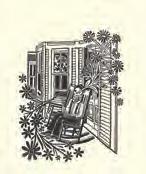
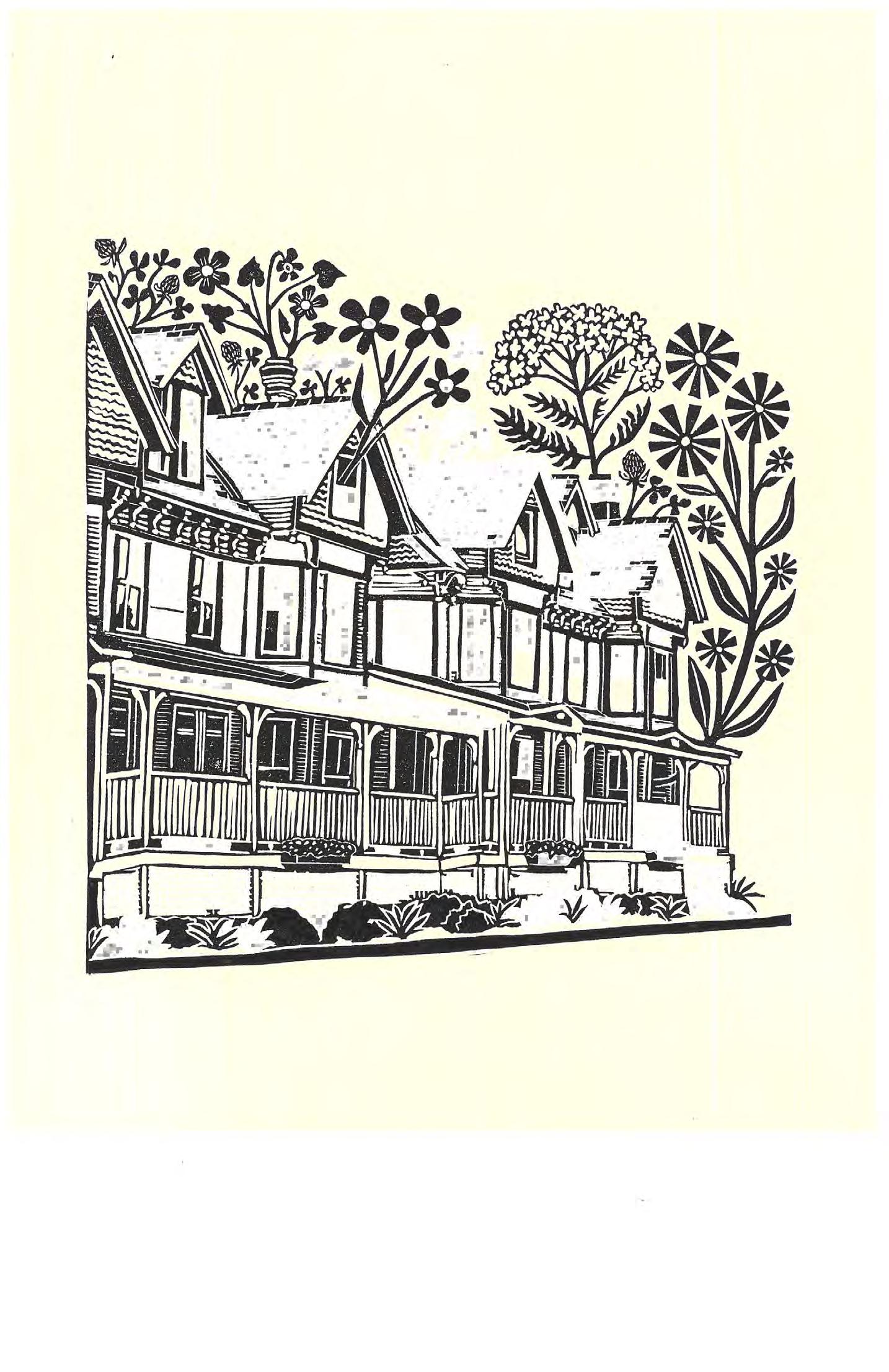
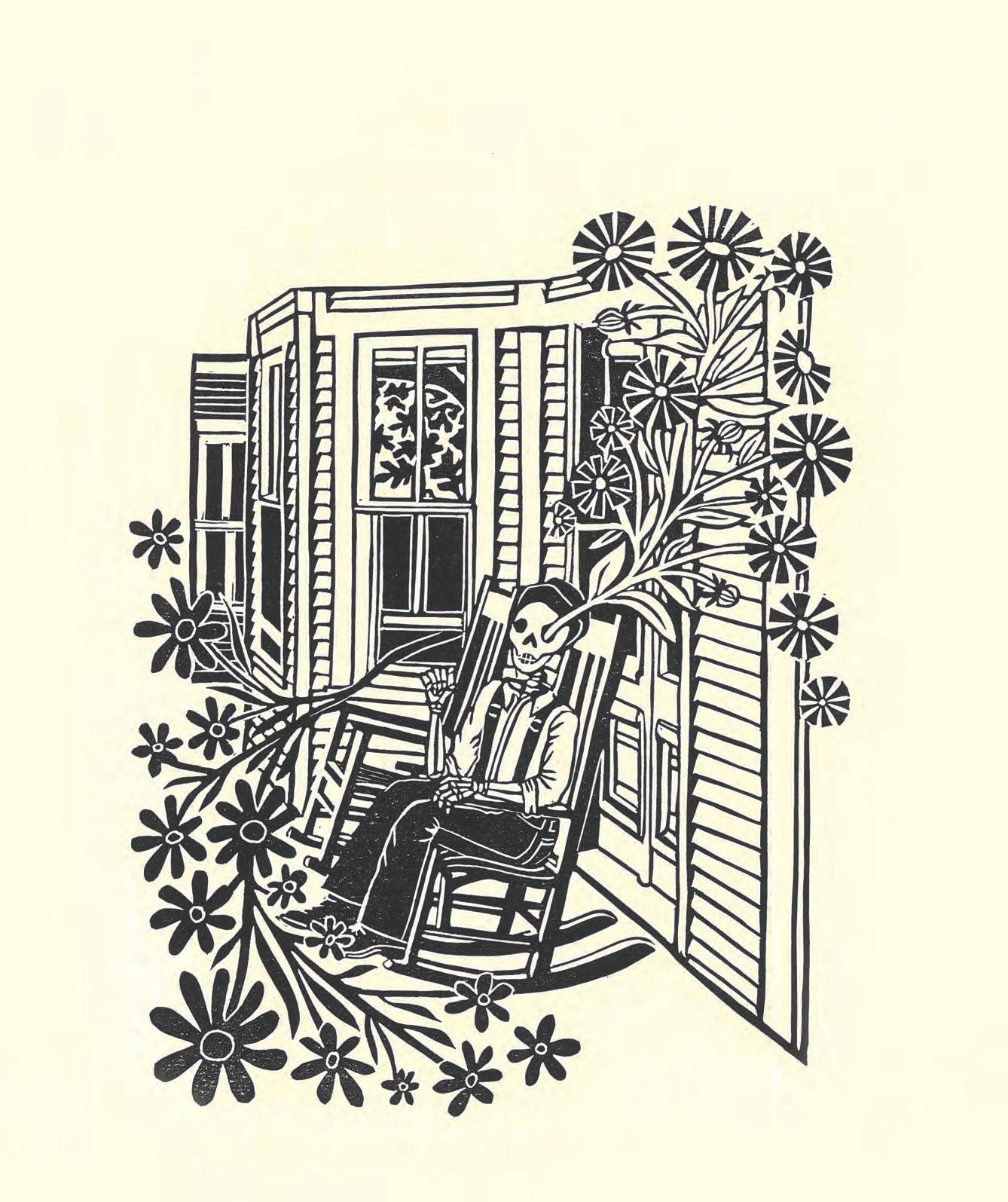
Frequent visitors to FreshGrass | North Adams might recognize the special setting — The Porches Inn — of this cover art, created by Adriana Alexatos. Her print shop, gloomnbloom, is based in the Berkshires and specializes in block print illustrations, stationery, and textiles. For the Fall 2023 issue, published in time for this year’s FreshGrass Festival in September, Adriana carved the scenes into wood, pressed and printed multiple versions, and then scanned them for digital transfer so that they can be returned to their rightful form in print.
The imagery itself bridges local geography and history with a story about unionization efforts in the music industry that’s included in this issue. The skeleton raising its fist represents solidarity with the musicians, actors, writers, and creative professionals currently on strike, and the Berkshires housing depicted was once home to unionized workers of the regional textile factories.
NO DEPRESSION TEAM
Chris Wadsworth Publisher and President, FreshGrass Foundation
Hilary Saunders Managing Editor
Stacy Chandler Assistant Editor
Sonja Nelson Advertising
Adam Kirr Director, Marketing and Retail
Maureen Cross Finance/Operations
WEB nodepression.com
TWITTER & INSTAGRAM @nodepression FACEBOOK facebook.com/nodepressionmag
GENERAL INQUIRIES info@nodepression.com
ONLINE ADVERTISING advertising@nodepression.com
SUBSCRIPTIONS store.nodepression.com
JOURNAL DESIGN & PRODUCTION
Marcus Amaker
Printed in Nashville, Tennessee, by Lithographics Inc.
No Depression is part of the FreshGrass Foundation. freshgrass.org
ISBN!1#: $%$!&!$&6(11%!)!2
©2(2#, FreshGrass, LLC
Hello Stranger
BY HILARY SAUNDERS
It’s really easy to feel down these days, especially in terms of the music industry, the media industry, and the space between them. So far in 2023, at least 17 media companies announced layo+s and four shuttered completely. The size and scope ranged from National Public Radio and billionaire-backed legacy newspaper The Washington Post to niche independent print outlets like The Nib. According to a report from the Medill School of Journalism at Northwestern University in 2022, more than 360 local newspapers had shuttered just since 2019.
And in the music industry, Spotify announced in July that its premium plan price was going up, without any additional compensation for artists. More and more musicians are canceling tours, citing their own deteriorating mental and physical health, minimal advance ticket sales, and in,ated costs. Overall, it feels pretty bleak.

pursuits, and necessary to sustain life. But poetry, beauty, romance, love — these are what we stay alive for.”
and speak with generations of musicians about folk songs and work songs they’re trying to preserve. The power of human collectivity also shines in Laura Scholz’s piece about the rise of unions and unionization e+orts within the music industry. Stories like these epitomize why I’m proud of the work we do here at No Depression; they’re stories you’re not going to -nd anywhere else and they show not just what we stay alive for, but why.
The thing is, though, when the state of these industries gets too overwhelming, I still turn to my music and my printed media. I shamelessly ,ip my phone to “do not disturb” and curl up in front of the air conditioning unit with a book. I still stick my face up in my speakers and blast records as loud as I can without bothering the neighbors.
It’s like that line delivered by the inimitable Robin Williams in the 1989 -lm Dead Poets Society: “Medicine, law, business, engineering — these are all noble
Music has always been one of those endeavors that, when divorced of its accompanying business, is still one of purest forms of humanity. I hear it in Bettye LaVette’s music, whose wild career journey and latest record are highlighted in this issue. I see it on stage, including on Broadway, where Brandy Clark’s music earned a Tony nomination — another exciting feature in this issue.
That human spirit is even more obvious in person. It’s why Judy Cantor-Navas’ story about Mallorcan song traditions is one of the most powerful in this issue. She was able to travel from Barcelona to Valldemossa to report on the ground
I got the chance to speak with Mike Taylor of Hiss Golden Messenger and Dallas Green of City and Colour for this issue, and it struck me how genuine both of them still are in their love of music. They met online by complimenting each other’s tunes, and in this conversation they ended up swapping stories about when they’ve gotten to tell other musicians when their work hits home.
It was so reassuring, energizing even, to hear this from two outstanding musicians whose work I respect deeply — that they still give a damn, not just about writing songs and performing, but about listening, enjoying, feeling, and sharing the music, too.
I keep telling myself that when it stops being fun, when the music stops hitting, that’s when it’s time to sell out. Go back to the half-cubicle wall. Make far more money and work “normal” hours. But until then, you’ll -nd me out in the world, seeking out the people, the songs, the stories, and clinging to these joys.
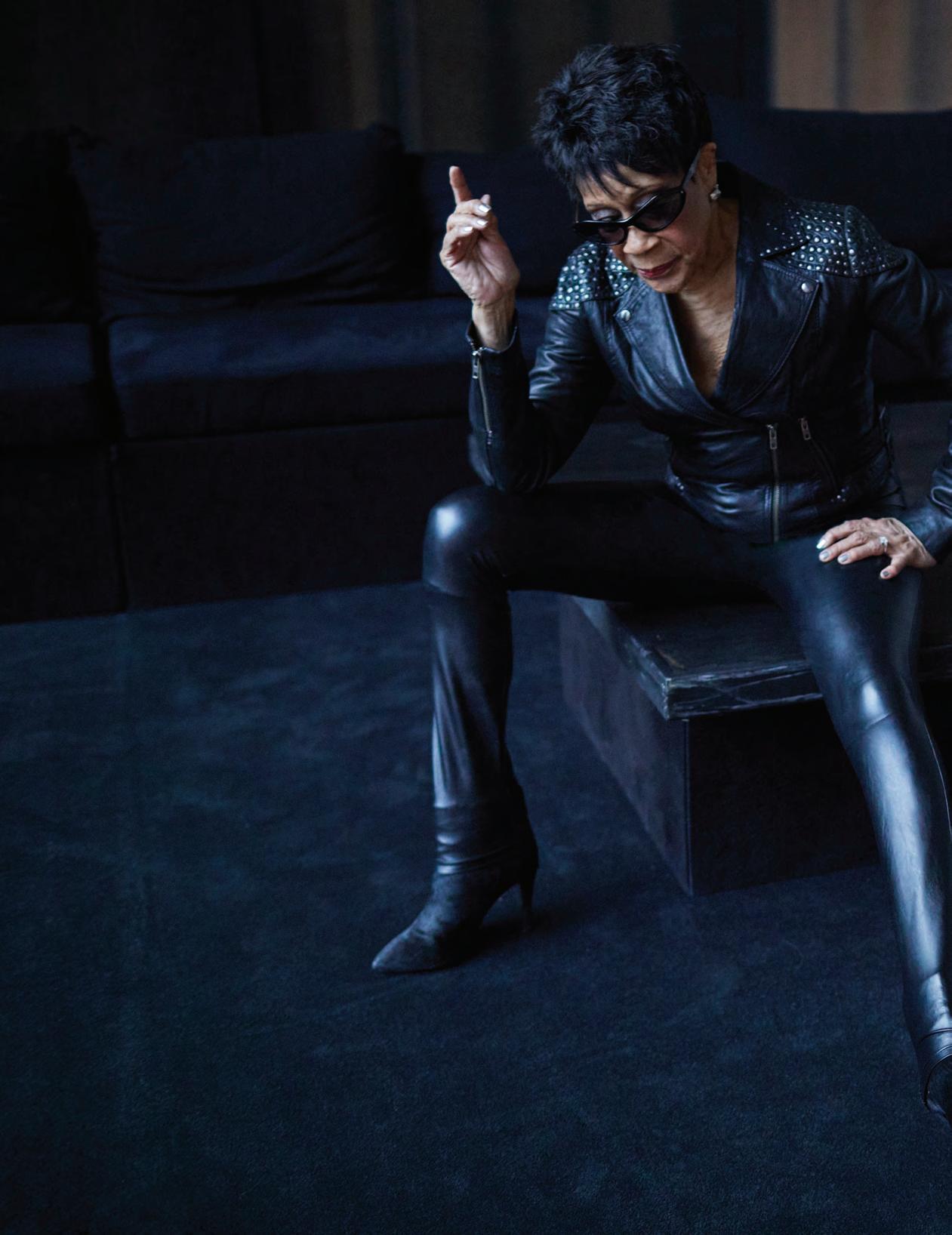
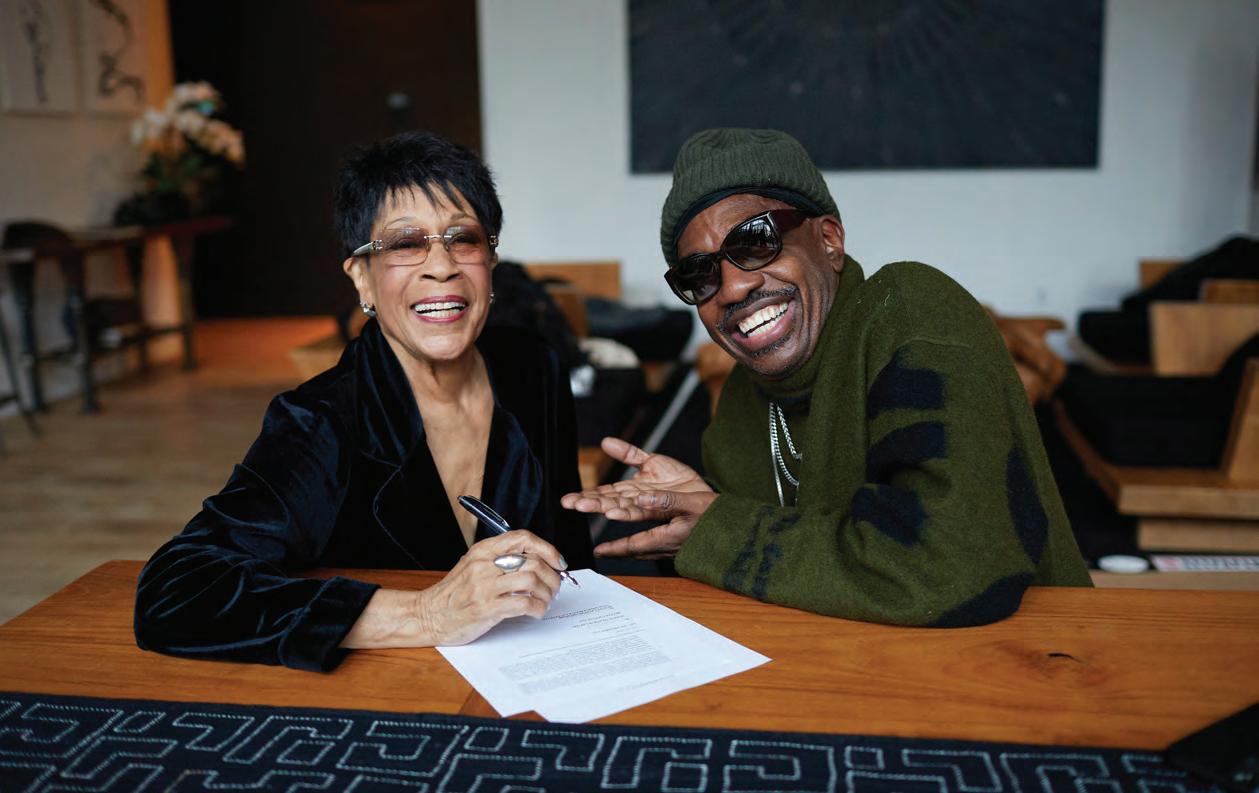
PHOTOS BY DANNY CLINCH
BETTYE LAVETTE WILL KICK YOUR ASS
The singer steps o! the music biz roller coaster to steer her own ride
By Jim Shahen
ettye lavette is a survivor
BShe’s had to be, in order to endure the ups and downs of her 61 years as a professional singer.
LaVette released her -rst single, “My Man — He’s a Lovin’ Man” in 1962, when she was just 16 years old. And this June she released LaVette!, her 12th LP, which is arguably the finest of her career. The mere existence of this album is a testament to LaVette’s enduring talents as a vocalist and her tenacity in the face of the adversity she’s faced throughout her career, especially in terms of the volatile music industry.
Calling after working in the garden of her New Jersey home, she laments, “These people break me down so bad. It’s like they’re just trying to get me excited so they can pull the rug out from under me. There’s low times when nothing happens, but then things like this
album happen and it’s getting such a good response and I try to be enthusiastic.
Through it all, LaVette’s confidence in herself has remained unflagging. “I have respect, stability in my career, and I don’t care if you’re the number-one female singer in the world, if we wander into a bar with an acoustic piano at 3 a.m., you can’t fuck with me. I will kick your ass,” LaVette says. “That certainly makes me feel an awful lot better.”
In the 1960s and 1970s, LaVette had deals with Atlantic Records, Motown, and various smaller labels that promised a lot, but delivered little. She ended up with only one official release, the underpromoted 1982 LP Tell Me a Lie. Most recently, LaVette was a victim of pandemic-related cutbacks, and Verve Records declined the option on her contract, despite releasing the well-received 2018 Bob Dylan
interpretations Things Have Changed and 2020’s Blackbirds, a tribute to influential female jazz and blues singers.
The struggle to find and maintain a working relationship in the industry has left LaVette with a healthy skepticism of record labels and their investment in her success. But this time around, she knew that the songs were good and so were the people trusted with producing and promoting the album.
LaVette! consists of 11 songs originally written and performed by critically acclaimed, but relatively unknown, folk singersongwriter Randall Bramblett. LaVette befriended Bramblett and felt a deep connection with his songwriting after hearing his songs for the first time nearly a decade ago. On LaVette!, she recontextualizes his material to fit her soul-blues wheelhouse. It marks the third consecutive
Bettye LaVette and Steve Jordan
“To me, she’s just getting better as a vocalist all the time, and the stu! we did for this record is better than the two previous. Personally, I think it’s the best she’s done. This record explores all of her, as opposed to just some of her.”
Steve Jordan drummer/producer
collaboration between LaVette and drummer/producer Steve Jordan, who recruited a roster of accomplished musicians to bring her renditions to life: Bassist Pino Paladino, guitarists Larry Campbell and Chris Bruce, and keyboardist Leon Pendarvis serve as the primary band. Additionally, special guests include John Mayer, Jon Batiste, Steve Winwood, Ray Parker Jr., the Rev. Charles Hodges, Pedrito Martinez, and James Carter.
The result is a project that reflects who LaVette is as an artist.
“We gave Bettye the freedom to do what she wanted,” says Jordan. “We wanted to give her the support she needed and give her an album done correctly, with the proper promotion.
“ To me, she’s just getting better as a vocalist all the time, and the stuff we did for this record is better than the two previous,” he adds. “Personally, I think it’s the best
she’s done. This record explores all of her, as opposed to just some of her.”
Combining Connections
The new album is a reflection of LaVette’s friendships with and deep respect for both Jordan and Bramblett. She and Jordan first met in 2012, when Jordan was the musical director of the Robert Johnson Centennial Celebration at the Apollo Theater in Harlem. Several years later, the two honed their chemistry when Verve asked Jordan to produce Things Have Changed. Jordan had been a fan of LaVette’s work for years, but felt that her recent output at the time was musically lacking. He saw his role as providing the sound and feel that would best showcase her vocal abilities. In the process, the two developed a fruitful creative
chemistry.
“ We were on the same page and developed a shorthand, a language, for working with one another,” Jordan says. “It was enjoyable, rewarding, and then she asked me to produce her second record for Verve.”
In Jordan, LaVette found a kindred spirit and a producer who heard songs the same way she did.
“He’s a browbeater. Oh, he just works me like a slave,” she jokingly groans. “No, Steven is absolutely magnificent. He’s played on Saturday Night Live, Letterman, [with] The Rolling Stones — he’s the only Black producer other than Quincy Jones to have done so much.”
She continues, “We both heard Bob Dylan songs as James Brown songs. He instinctively knows what I’m talking about and can anticipate what I’m doing. He puts his soul into what he produces.”
While LaVette and Jordan’s bond was established by working together, she and Bramblett came to know each other under a different set of circumstances. In 2012, they shared a bill at Rams Head On Stage in Annapolis, Maryland, and exchanged albums with each other after the show. Bramblett didn’t think much of it at the time, but that CD swap had a marked effect on LaVette.
“A few days later, Bettye got a hold of me and said, ‘I love your song ‘Where a Life Goes.’ It seems like it was written for me, and I want to record the song,’ ” he recalls.
A nd she did, for her 2015 album Worthy. That recording marked the start of LaVette’s deep connection with Bramblett not just as a lyricist, but as a person.
“Randall Bramblett is the best writer I’ve heard in forever,” she says. “His life mirrors mine. We’ve had a lot of the same life experiences; he’s had 17 albums and
none of them sold. It’s like when he writes, he’s writing for me.”
Recording more of Bramblett’s material was a passion project for LaVette. And as soon as her contract with Verve ended in 2021, the opportunity to bring these songs to life on LaVette! arose: Jordan had the record label to afford them all such freedom.
Focus and Freedom
Jordan and his wife, Meegan Voss, started Jay-Vee Records in 2004 as a place for musicians at a transitional point in their career. If an artist was in between labels, seeking a better record deal going forward, or even just artistically adrift and needing a place where they could renew their focus, Jay-Vee would be the place.
That’s the position LaVette was in after the release of Blackbirds She still wanted to work, and the offers from smaller, boutique labels weren’t enticing. So her husband
and longtime manager Kevin Kiley reached out to see if Jordan would be interested in releasing a project on Jay-Vee. It was an arrangement that made a lot of sense for all involved.
“ We wanted Bettye to have the full-on freedom to explore all kinds of musical avenues that she wouldn’t be able to do on another label,” Jordan says. “Very rarely is the producer on an album one of the label’s executives, so we’re all-in on the musical direction the artist wants.”
That was perfect for LaVette, who was ready to reinterpret a set of Bramblett-penned songs with her inimitable voice.
“I’m so thrilled to be working with Steven and the company he owns with his wife,” she enthuses.
“Randall Bramblett’s own label wouldn’t pay for this. They said, ‘He hasn’t sold any records, now this old broad wants to sing his songs?’
“Steven said, ‘Fuck it, I’ll pay for it.’ He’s not just another Black
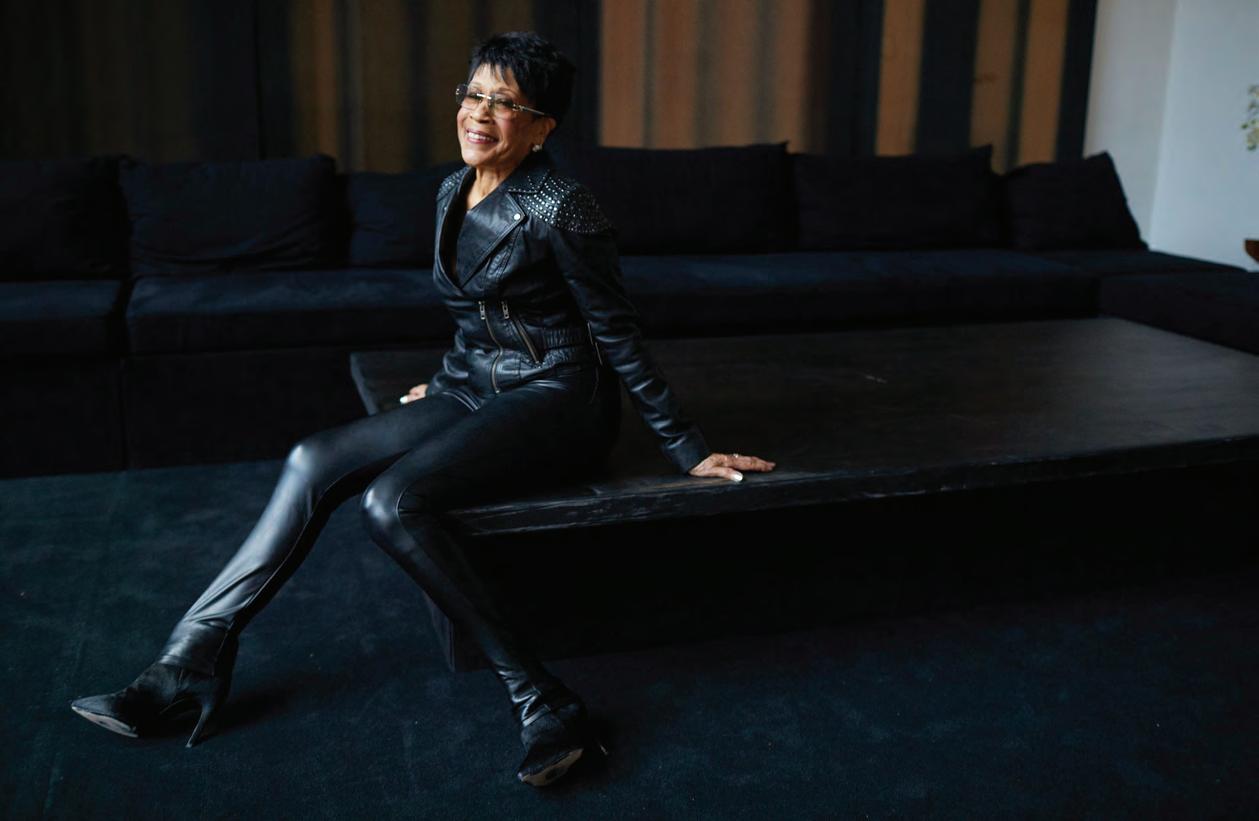
producer and knows I’m not just ‘that broad,’ ” LaVette adds. “There’s no other contemporary Black singer who’s sang for three presidents, sang on Broadway, in Nashville, for Motown. This was my opportunity, with Steven, to show my prowess.”
The record ultimately came to fruition thanks to Bramblett’s songs and LaVette’s belief in them, Jordan’s knack for making the songs sound the way she heard them, and his many connections to gifted musicians. And since Bramblett’s material is largely unknown to broader, mainstream audiences, LaVette could really cut loose to interpret the tracks without having to balance listener expectations and familiarity like she did on her albums of Dylan and jazz and blues standards.
“People won’t be comparing these versions to anything they’ve heard in the past. It offered complete freedom to do whatever Bettye wanted with the songs,”
notes Jordan.
Jordan and LaVette began work on the album in summer 2022. First, they selected 11 tracks and LaVette tweaked Bramblett’s lyrics to better reflect her phrasing or a first-person perspective. Then Jordan, Pendarvis, and Campbell worked with LaVette on the basic arrangement of each track.
However, days before her scheduled studio time with the full band at Jordan’s New York City studio, LaVette came down with COVID. Typically, she uses recording time with the musicians to ensure final arrangements align with her planned vocals and musical vision. But since working that out in person wasn’t possible, she linked with the band remotely and offered some basic vocal tracks via Zoom. With the band’s portions completed to her satisfaction, a healthy LaVette made the trek to the city a few weeks later and quickly recorded new vocals in the studio
that mirrored the style of the homedelivered ones.
The ability to work from home was actually a blessing, LaVette says, as she finds being in the studio and the back-and-forth with musicians and producers a tedious endeavor. “Oh my God, I hate recording, rehearsing, I have the attention span of a child!” she says. “When I’m prepared to sing, I don’t want to record more than two times.”
When it came to adding overdubs and guest collaborators, Jordan didn’t want the record to feel kitschy or like the guests were a PR stunt. He only reached out to people who could uniquely accentuate particular songs or had a personal connection to LaVette. Steve Winwood, for example, was a natural fit to play the organ on the gritty blues of “Don’t Get Me Started.” His connection with LaVette goes back to when he was an 18-year-old with the Spencer Davis
“She picked songs she could identify with in the first person and inhabit. She sings them from a personal standpoint. I write
about and sing about characters,
but she takes them literally, from her own viewpoint. It comes honestly from her and I can understand where she’s coming from.”
Randall Bramblett
singer-songwriter
Group, covering the then-19-yearold LaVette’s single “Let Me Down Easy.” Another vital pianist, the Rev. Charles Hodge (a former organ player for Al Green and a number of LaVette’s soul peers from the 1970s), adds some subtlety to the swampy “Sooner or Later.”
Elsewhere, Jon Batiste and Ray Parker Jr. bring the funk on the James Brown-esque “Mess About It.” Their contributions were particularly meaningful to LaVette, as Batiste’s father played bass in her band as a teenager and one of Parker’s earliest gigs was as her rhythm guitarist more than a halfcentury ago.
The highest-profile guest on LaVette! is guitar hero and pop superstar John Mayer. LaVette doesn’t know Mayer personally, but
he and Jordan have a personal and professional relationship that dates back to 2005 when the pair (and Palladino) played together in the bluesy John Mayer Trio. Jordan doesn’t typically put work requests to his famous friend, but he felt Mayer’s inclusion was necessary to one of the key tracks on the album.
“For ‘In the Meantime,’ I wanted a guitar solo and it had John Mayer written all over it. I’m very cognizant of our friendship and not asking for favors, and I sent him the song. He emailed me back, ‘My god, this has got me all over it,’” Jordan notes.
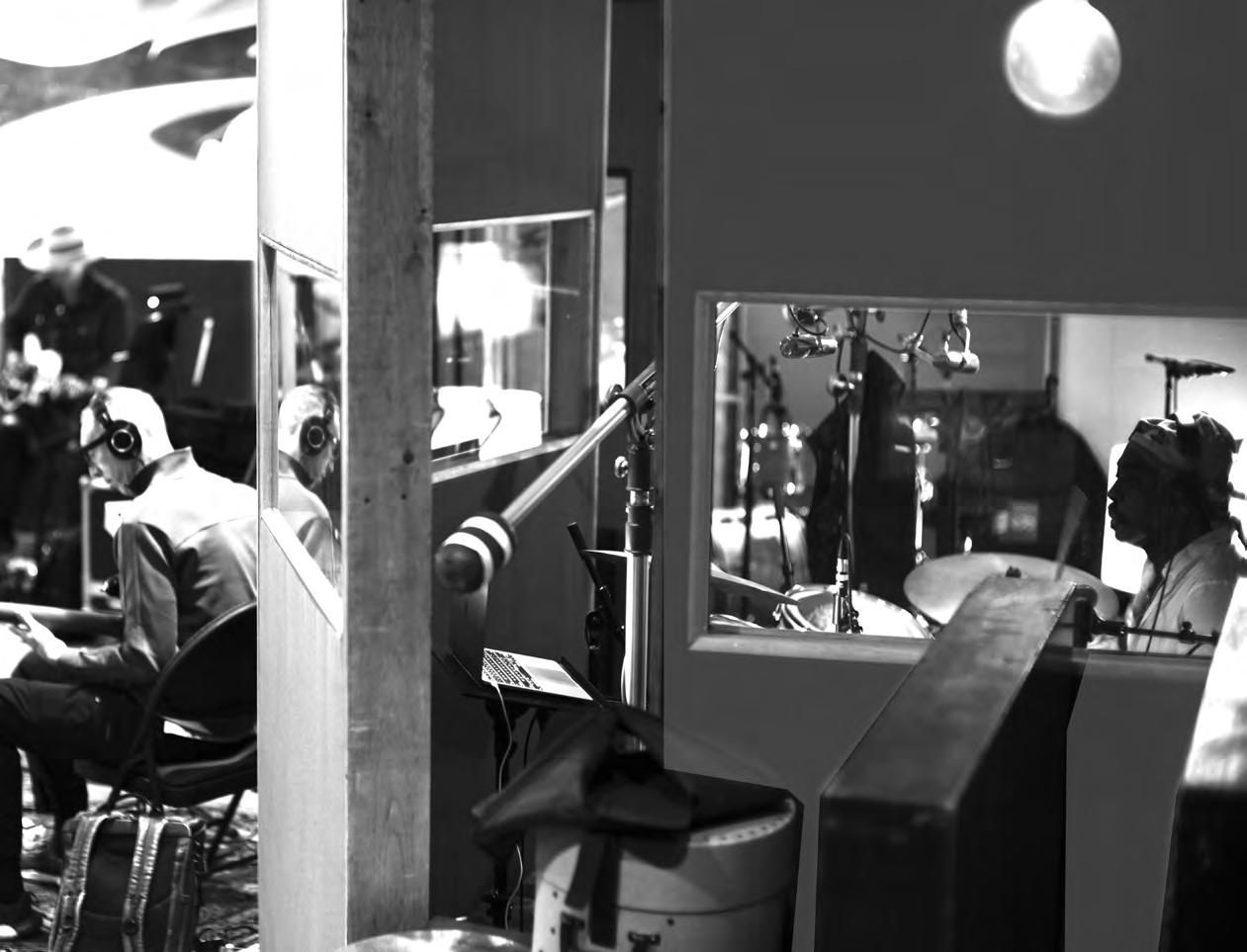
To meet the high standards LaVette and Jordan had for the record, multiple Grammy-winning engineer Dave O’Donnell, who worked with the pair on Things
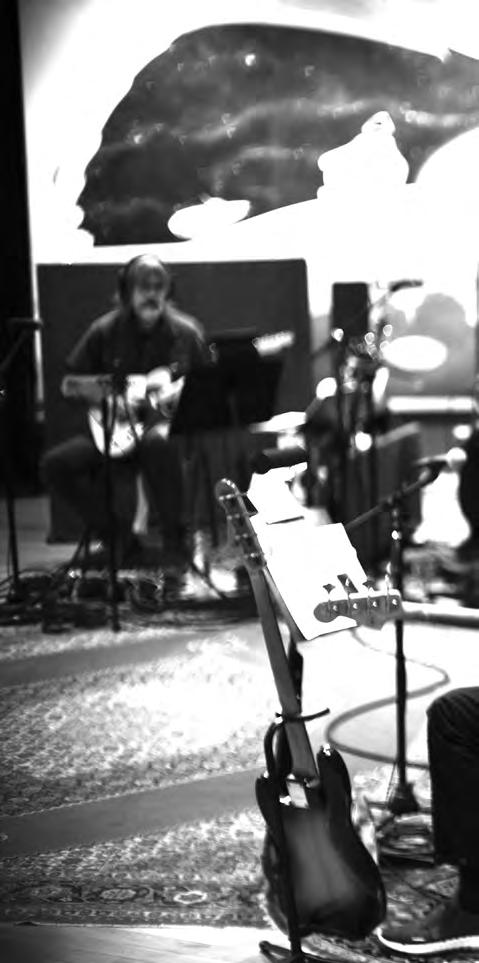
Have Changed and Blackbirds, returned to handle the final mixes. Says LaVette, “he gets the most incredible vocal sound out of my voice.”
The end result of these efforts is a transformation of Bramblett’s material, something that reflects LaVette’s passion for his songs. It was fascinating, he says, to hear the songs presented in an approach so radically different from his own.
“She picked songs she could identify with in the first person and inhabit. She sings them from a personal standpoint. I write about and sing about characters, but she takes them literally, from her own viewpoint. It comes honestly from her and I can understand where she’s coming from,” Bramblett says. “It made me think about the way I
record, the way I approach it differently with weird sounds and unusual arrangements. This is straight-ahead, old-school R&B; it’s really cool to hear these songs done like that.”
Not Shooting for Stardom
At this point in her career, LaVette is more than just an enduring talent; she’s one of the last of the Black female soul singers of her era and one of the few to still regularly perform and record. And she’s managed that for more than six decades without selling out her values or who she is.
“I like telling my audience that I’m the only 77-year-old in the music business that has another album coming out that somebody else paid
for. I’ve never spent a quarter of my own money. I may not have made any money on a record, but I didn’t spend it either,” she says. “These things cost hundreds of thousands of dollars, and I’ve never had to hustle up myself for that money.
“I’ve always wanted to be exactly who I am now: sitting outside and smoking, getting a little high and wearing all-black,” LaVette continues. “One of the most important things for me goes back to my -rst manager, Jim Lewis. He never wanted me to be a star; he wanted me to be a great singer for the rest of my life. He wanted to see me be able to sing anything. He’d be really thrilled with the career I’m having. I just wish it happened 20 years ago when I had the energy, but y’all wore me down.” .
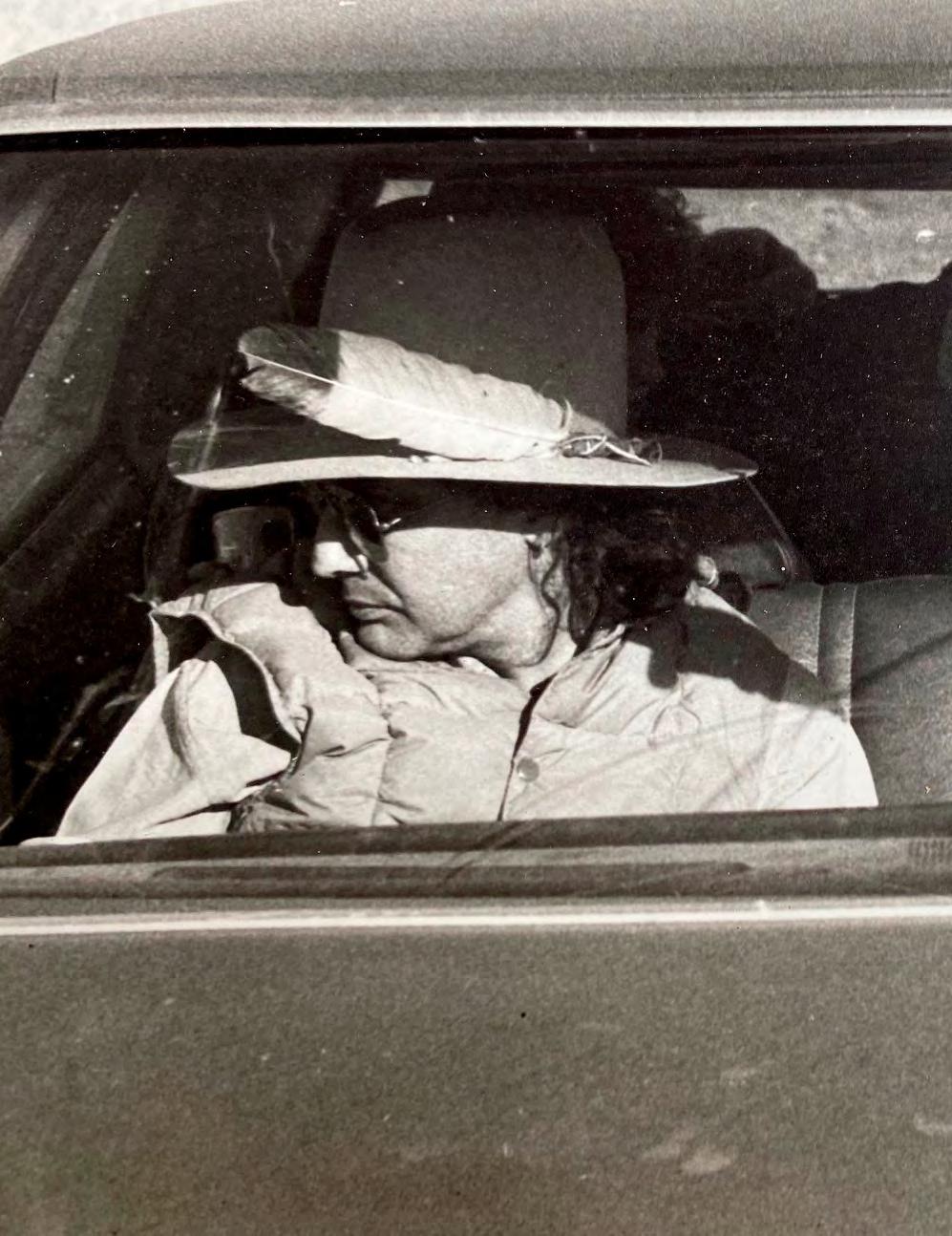
Recording LaVette!
A DEEPER TRUTH
Reissue shines new light on poet and musician Roxy Gordon
by Meredith Lawrence
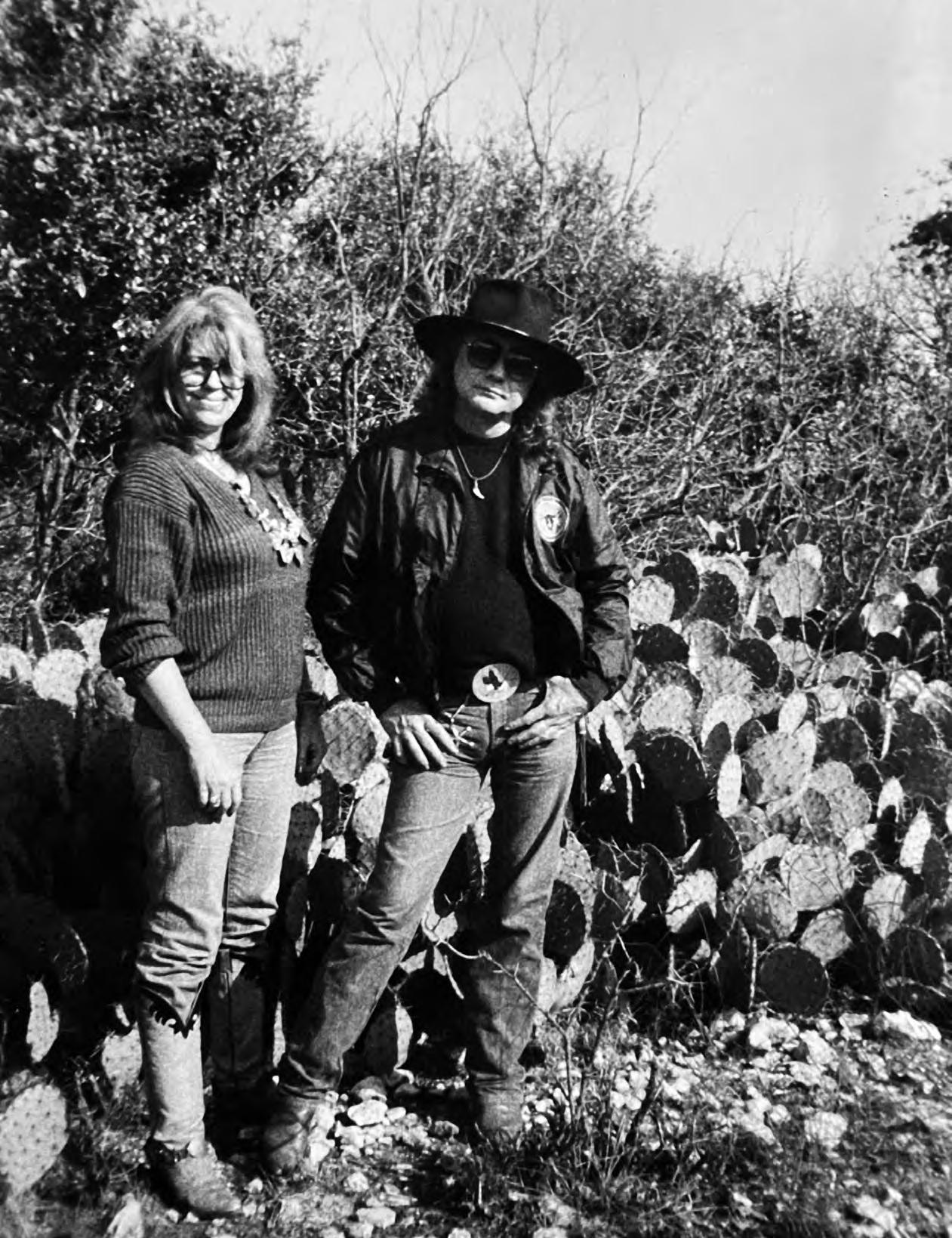
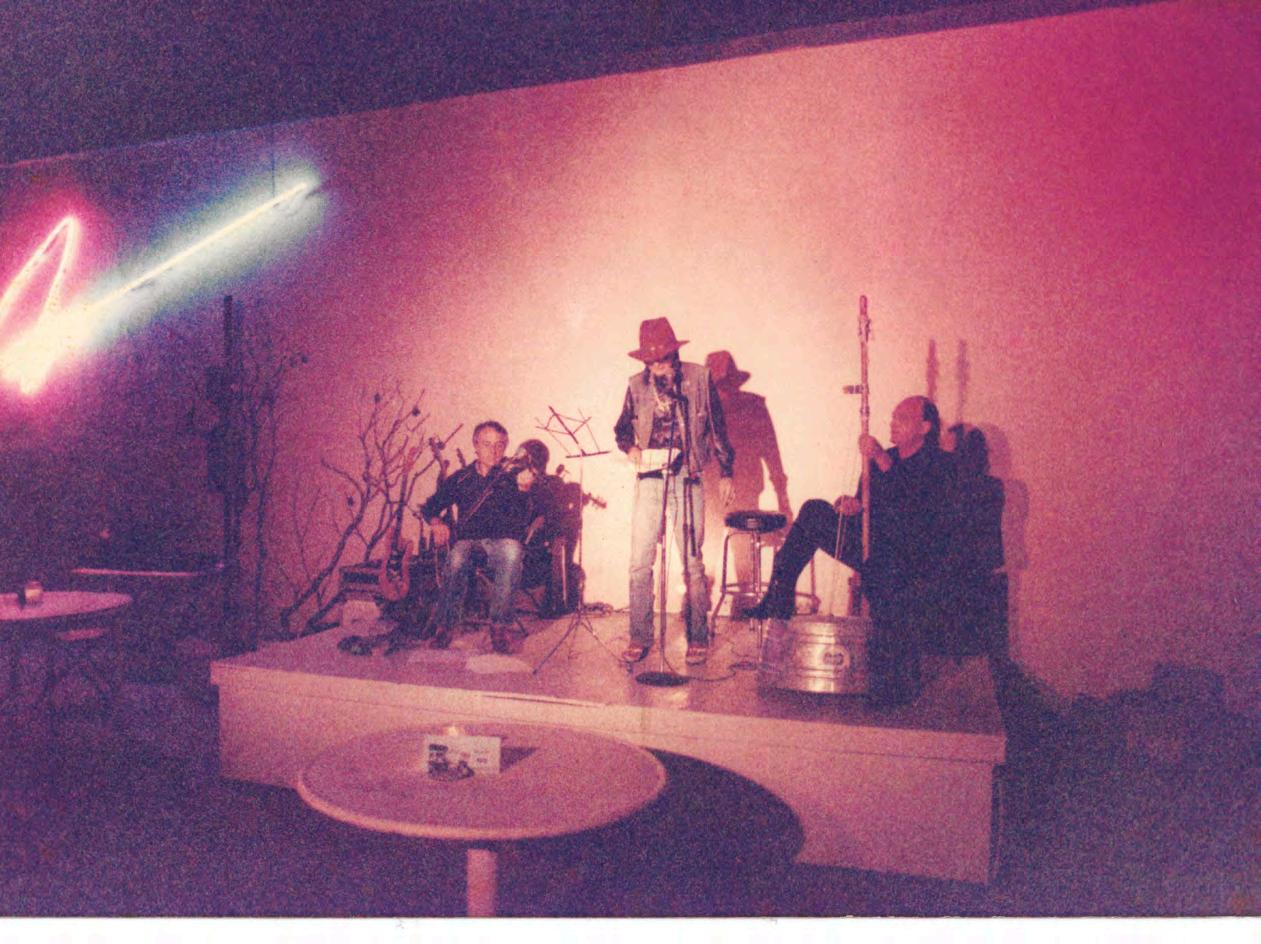
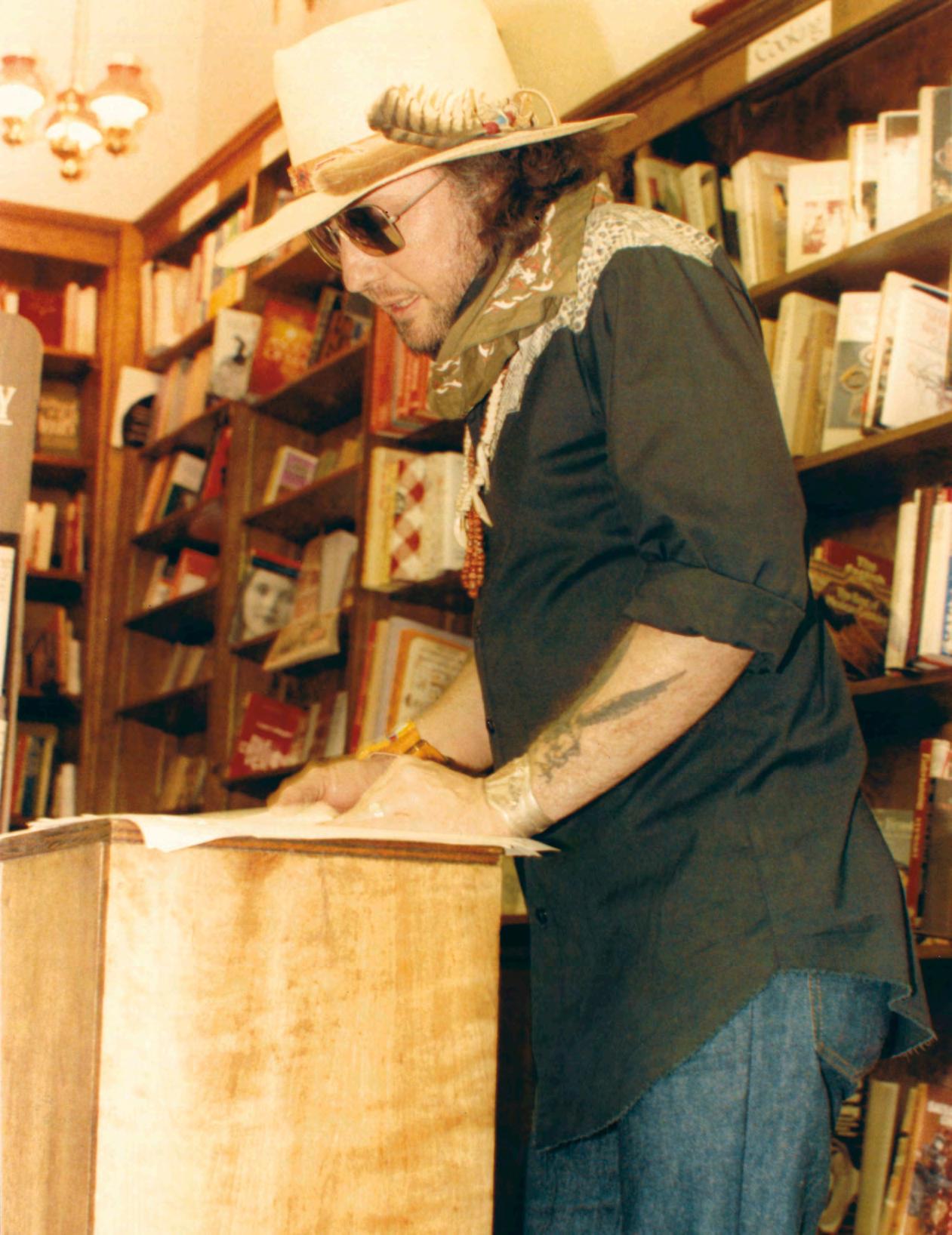
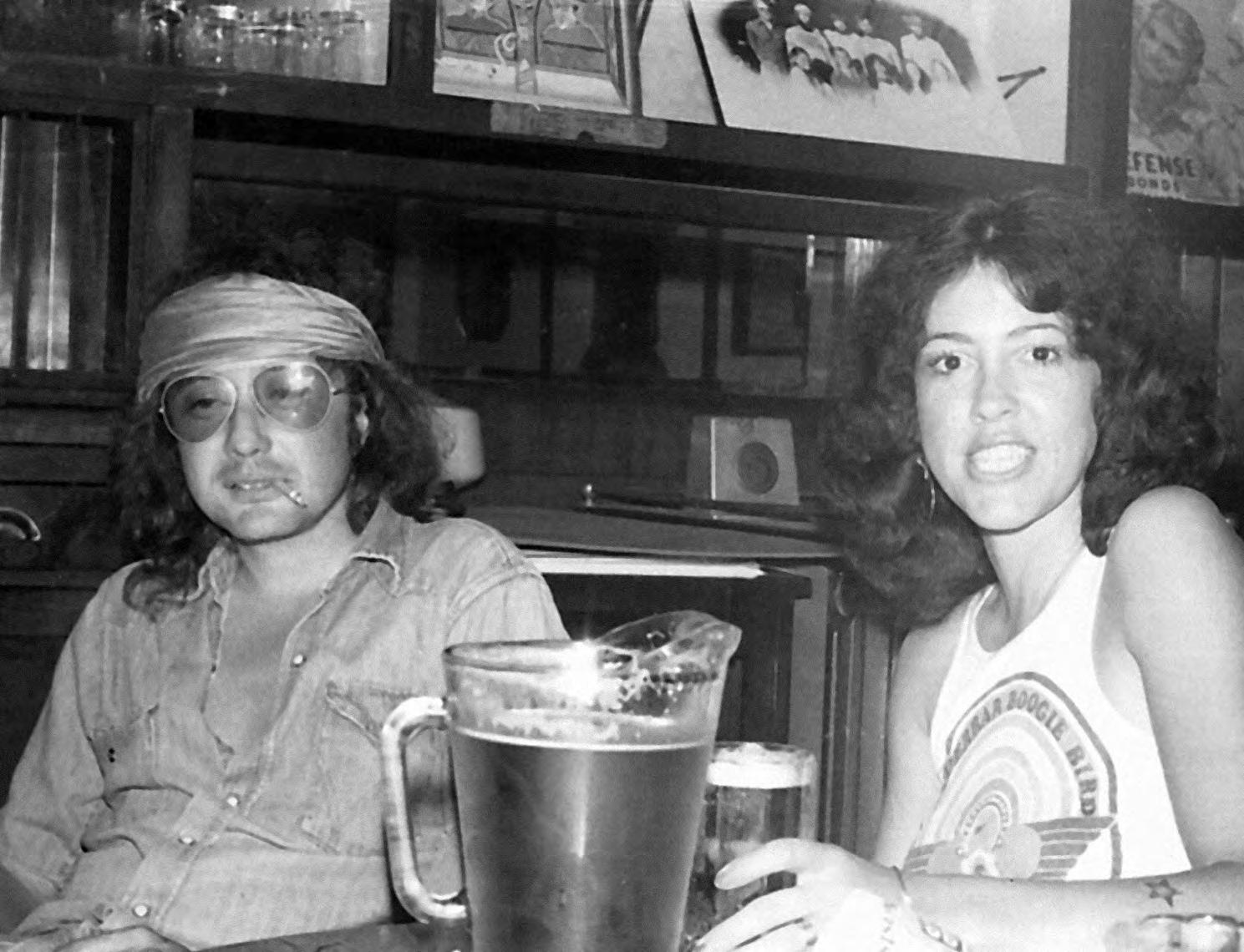
Ro,y gor.on0s thi23, nasal drawl makes Bob Dylan sound so/ spoken. Gnawing and raw, Gordon’s voice burrows into listeners’ brains, alluring and tough to dislodge. And he probably liked it that way. The little-known Choctaw poet, musician, and Native American Indian activist (who described himself in those terms) appeared to relish his enigmatic image, insofar as he concerned himself with what others thought of him.
Over the course of his career, Gordon recorded six albums, published six books, and penned
hundreds of essays and reported stories. For a time, he and his wife, Judy, ran the independent Wowapi Press; they also published Picking Up the Tempo, a music rag akin to an early-2000s zine. Writing in an irreverent, immersive style reminiscent of Hunter S. Thompson’s gonzo aesthetic, Gordon published his narrative takes on outlaw country’s heyday for a range of sources. These included a rambling -rst-person trip into the chaotic festival atmosphere of Willie Nelson’s second annual Fourth of July picnic and a pro-le of Kris Kristo+erson that was republished with permission in the 24th issue of No Depression, Nov-Dec 1999.
“Like a lot of people of our
generation, he [was] real heavily in,uenced by the beat generation,” says Terry Allen, Gordon’s friend and fellow artist. “It’s that real yearning to express something in a di+erent way to try to get deeper into the truth of whatever that idea is that you’re trying to present.” Allen, whose work includes large multimedia art installations, came up through Lubbock’s thriving outlaw music scene in the 1970s. As it did for Gordon, the omnipresence of beatnik poetry recited at local bars and cafes imbued his work with a disregard for the status quo: “It was an unraveling of all of the staid kind of language before that … it was a release.”
Liberated from genre restrictions,
Gordon’s style drew together threads of country and folk music, beat poetry, Native American music, and a smattering of other roots music styles. But while integrating these in,uences, his allegiance to his own artistic identity and activism remained ironclad.
Gordon enjoyed a devoted following of fellow artists and mis-ts, but little commercial success before his untimely death in 2000. Last May, however, independent record label Paradise of Bachelors remastered and released a special edition of his solo debut album, Crazy Horse Never Died, bringing it back into print for the -rst time since its original release in 1988.
Beneath Gordon’s spoken word
poems, a synth-tinged mixture of acoustic guitar and washboard bass serve primarily as background support. Both bluntly worded and esoteric, the album’s 10 tracks range from a scathing incitement of US immigration policy to a bleak, tragic outlaw ballad to haunting recollections of his childhood in rural Texas. Together they evoke a complex snapshot of Gordon’s outlook on life.
“ To get the most out of it,” Paradise of Bachelors co-founder and co-owner Brendan Greaves forewarns, “you need to spend some time and sit down and listen to the words and maybe read along and kind of share in his grief and righteous anger and outrage.”
Internal Conflict
Born in Ballinger, Texas, in 1945, Gordon grew up in nearby rural Coleman County, about an hour south of Abilene. He was of both Choctaw and Scottish ancestry and throughout his life struggled to rectify the two, appearing to feel some of the con,ict between Europeans and Native Americans in his own identity. Perhaps because of this, Gordon’s concept of “Indian” ,exed to include people he felt were aligned in spirit, an ever-expanding set of de-nitions that unfurled throughout his work.
Gordon started playing guitar as a teenager and attended the University of Texas, where he edited the student literary magazine,
“It’s protest music, broadly speaking. But it is as engaged with Roxy’s emotional life as it is with any kind of a liation with the American Indian Movement or any other organization. It’s intensely personal, and private, as well as being public-facing and furious.”
Brendan Greaves
Paradise of Bachelors co-founder and co-owner
Riata. With Judy, whom he married in 1964, Gordon traveled the west, settling for longer stints in Lodge Pole, Montana, and later Albuquerque, New Mexico.
For most of the next two decades, the Gordons lived in rental houses in Dallas. The Gordons weren’t poor so much as not particularly concerned with material wealth, their son, J.C. Gordon, recalls of his childhood. He and his brother, Quanah Parker, were given few rules during the school year and sent to live with their grandparents during the summer. “My dad -rmly believed in getting me out of the city as much as possible,” J.C. says.
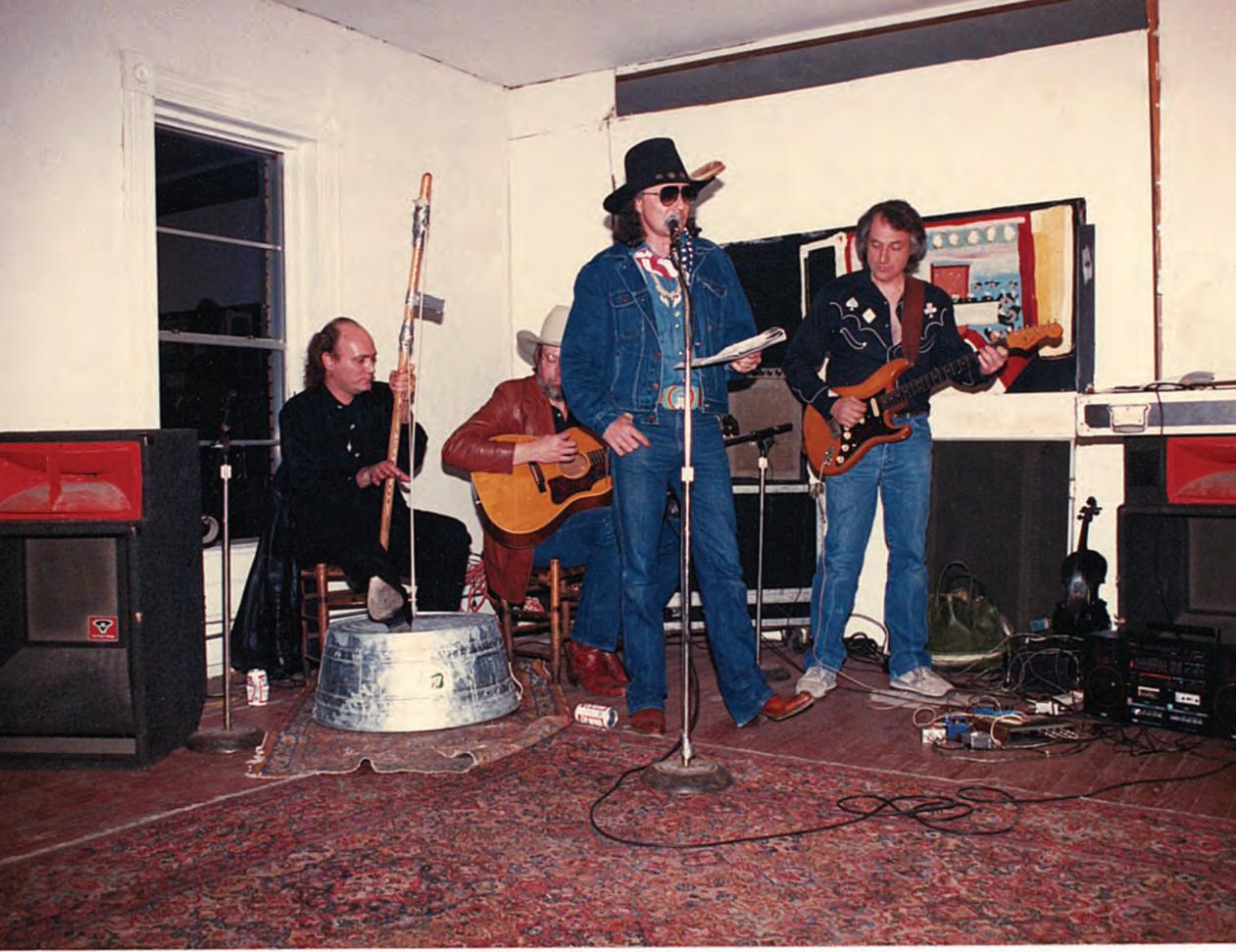
The most famous Gordon house, o/en referred to as the “Bone House,” was crammed with art,
books, tapestries, and animal bones and hides. Gordon cultivated an open home, hosting a revolving door of musicians, artists, and mis-ts, most notably including Townes Van Zandt, with whom Gordon was close.
“My parents were very, very generous with their time and with their space. And if anybody was interested in spending time with them, they were welcomed to stay at the house, sometimes for inde-nite periods of time,” says J.C., who lives in Dallas.
Writing a tribute on Gordon for the Dallas Observer, Dallas music scene -xture Je+ Liles recalled stopping by the Bone House on the way home one evening: “There were seven or eight people strewn all over
the living room, some holding vodka bottles, most smoking cigarettes. Roxy waved us in and Judy rose up to give us each a big hug.” In the corner, Van Zandt muddled his way through a two-hour, drunken house concert.
Gordon shared with Van Zandt a passion for intellectual conversation, stories, and an addiction to alcohol. He died a/er years of struggle with cirrhosis of the liver on Feb. 7, 2000, just shy of his 55th birthday. But for those who knew Gordon, his vice did not de-ne his art.
“I think it’s easy to make some kind of some macabre romance, some kind of a literary drama that I’m not interested in,” Allen says. “We’re all going to die. And
everybody deals with that reality in one way or another.”
A Wider Context
Greaves -rst discovered Gordon more than a decade a/er his death, when a friend burned him a CD of obscure songs by Native American songwriters. “I just found it heartbreaking and couldn’t place exactly what was going on sonically. It just sounded so di+erent,” Greaves says. His reaction sent him on a years-long quest to re-release Gordon’s work.
A/er discovering that Allen (whose music POB also puts out) was friends with Gordon, Greaves’ interest deepened as he began to place the music in a broader social context. Eventually, he reached out
to Gordon’s family, corresponding with them for years until they were comfortable re-releasing Gordon’s music.
The song that started it all for Greaves was “I Used to Know an Assiniboine Girl,” the -/h track on Crazy Horse Never Died. Based on the story of a Native American woman who beat up her abuser and was sentenced to 50 years in jail, the poem stuck with Greaves. “It wasn’t really within the country or folk tradition … and it wasn’t within traditional Native context in an obvious way, like some of the other stu+ was.”
Part revival and part anarchist statement, the album’s opening track, “Crazy Horse Is Alive” (from which the album derives its name), toys with the idea of the famous/
infamous Native American leader’s immortality, at least in spirit. Starting with a high lonesome wolf wail, Gordon makes his case succinctly:
T he whiteman came to Crazy Horse’s home and wanted buried resources there to run their whitemen’s world but Crazy Horse said no.
Gordon minces no words about the ensuing battle, reimagining it in a few sparsely worded, violent stanzas.
Gordon’s writing is deliberately unsettling and challenging, and o/en sharply critical of American culture. But he reserved much of his disdain for the government systems
and capitalist ideals that he felt robbed people of dignity and prosperity, regardless of race. Midway through Crazy Horse Never Died, Gordon lays out his case in “An Open Letter to Illegal Aliens,” a direct rebuke of what he saw as the hypocrisy of limiting immigration to a country composed of immigrants:
And even a er you’ve overrun them and taken their jobs and stolen everything you could steal, still, they’ll let you stay. It ain’t you, you see, illegal aliens, that the American continents don’t want.
It’s that baggage you slipped through customs — send it back; you can stay.
Elsewhere on the album, Gordon expands on his discontent with “Living Life as a Living Target,” an allegoric recitation of the ways prairie dogs might feel perpetually pursued, and a reimagining of the cowboy classic “Come All You Texas Rangers” from the side of the Native American as “The Texas Indian.”
“It’s protest music, broadly speaking,” Greaves says. “But it is as engaged with Roxy’s emotional life as it is with any kind of affiliation with the American Indian Movement or any other organization. It’s intensely
personal, and private, as well as being public-facing and furious.”
With the torpid “Junked Cars,” Gordon simultaneously reminisces about his childhood and critiques the way American culture uses and discards goods, a concept he fleshes out with sister condemnations of the excesses of wealth: “Flying Into Ann Arbor” and “The Western Edge.” The album concludes with “Why Do I Miss Someone,” which Gordon dubbed the most country song he ever wrote, and it’s the sole track where he really sings.
The Crazy Horse Never Died reissue includes a 44-page booklet full of lyrics, background information, essays by Greaves and Peter O’Brien (whose tiny British
record label, Sunstorm, originally released the record), and Gordon’s own stark drawings — heavily lined black-and-white sketches for the tracks and bright yellow and red for the cover.
As Greaves muses in the liner notes: “‘Songs’ is perhaps an imprecise taxonomy for what Roxy recorded on this album.” Rather, “American vernacular music,” which encompasses wide-ranging folk traditions and dually conveys the cultural weight and homegrown qualities of the album, may be a better description for his body of work.
In the end, Gordon was all of these things he’s remembered as: beatnik poet, gonzo journalist,
singer-songwriter, activist, a prolific and astute writer, and a deeply flawed human being. At times incongruous, painful, dissonant, and violent, his work is intensely and innately of the moment.
Thirty-five years after the initial release of Crazy Horse Never Died, Greaves hopes that American culture might be better equipped to understand its message, and to appreciate it simply as a work of historical, political, and artistic significance.
“ The music is art, and art can be challenging,” he says. “There can be enormous value in works of art that are not comfortable for us to engage on a regular basis.”
A GONG TIME COMING
Gong ensemble Pantayo takes a traditional art into new realms
by Lily Goldberg
The opening tra23 of Pantayo’s sophomore album, Ang Pagdaloy, is a sex jam with all the trappings: There’s a deep, resonant drumbeat that nestles in your hips, a playful kick snare picking up the pace, a purring voice that murmurs, “I want to love you / I want to hold you / Feel you and taste you / Let me take you.”
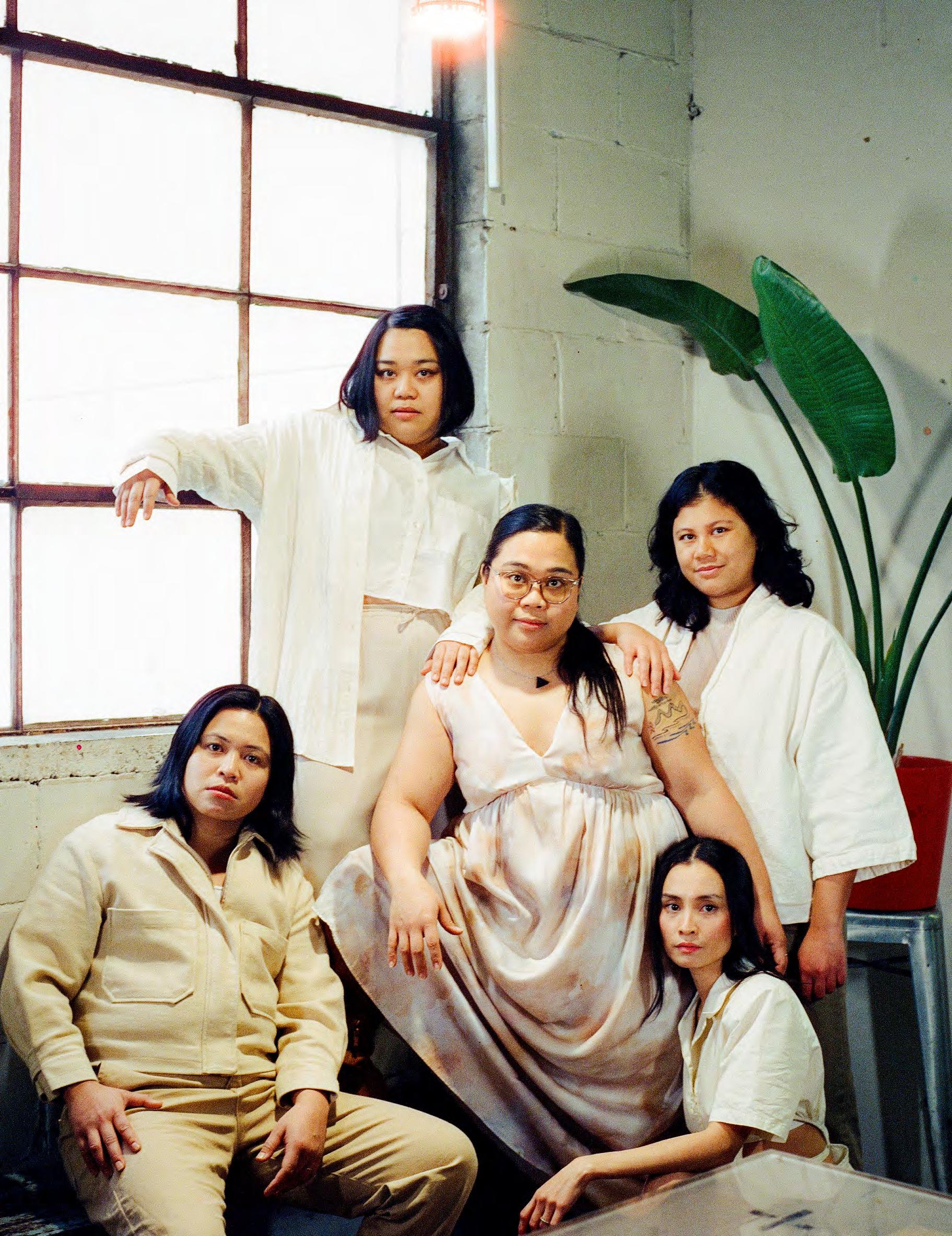
Then, the gongs kick in. Sex jams played on traditional gongs might seem unorthodox. But for Pantayo, a Toronto-based quintet of “queer Filipinx gong punks,” the centuries-old instruments are the perfect vehicle to express modernday, diasporic desires. The -ve-piece band — comprised of Eirene Cloma, Michelle Cruz, Joanna Delos Reyes, and siblings Kat Estacio and Katrina Estacio — joins a vanguard of contemporary North American
Filipinx musicians reimagining the ancient practice of kulintang for 21st century listeners. Providing both a rich musical experience for practitioners and a cultural connection point for members of the Filipino diaspora, kulintang is reaching new audiences through groups like Pantayo who amplify and syncretize the tradition’s striking sonics.
Instrument and Form
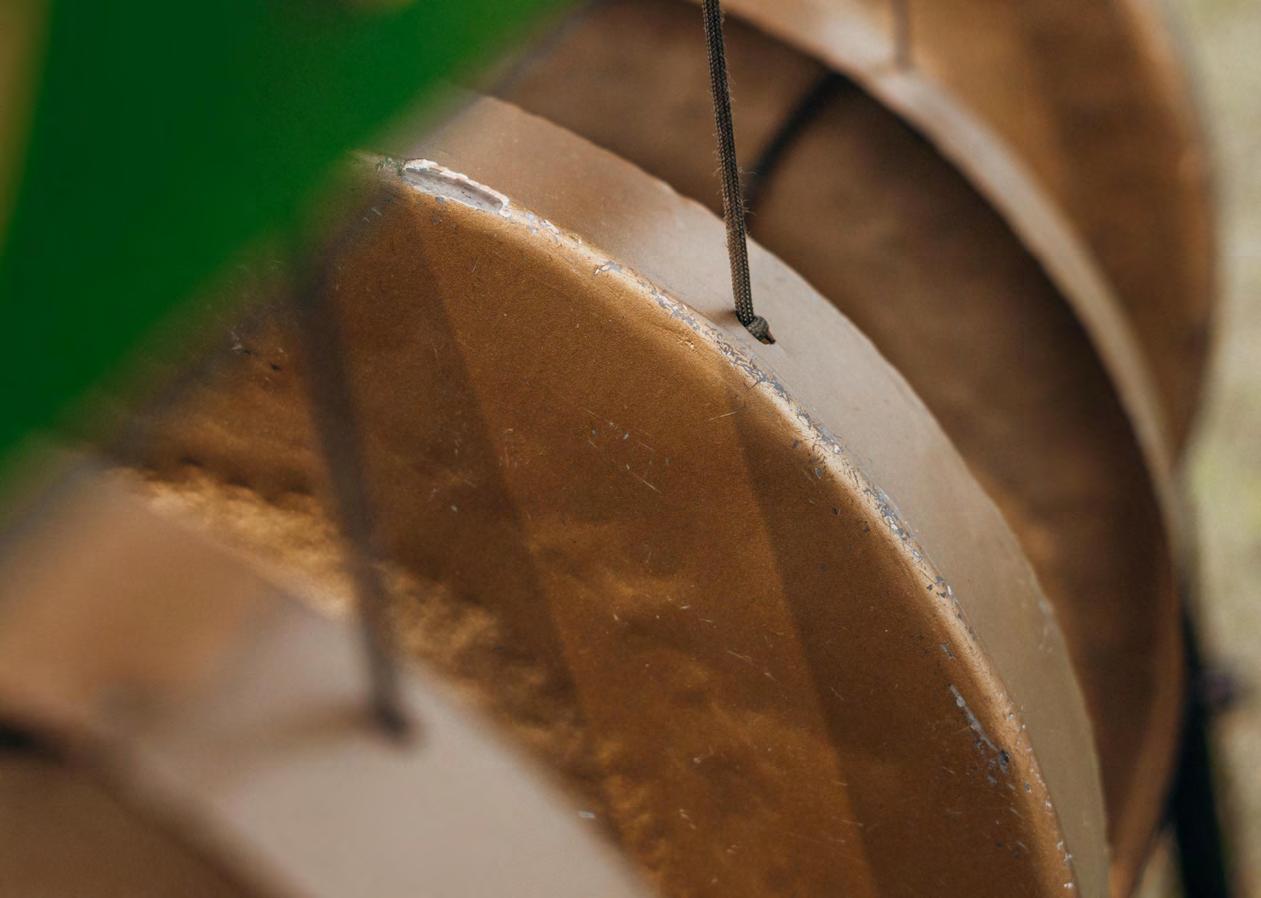
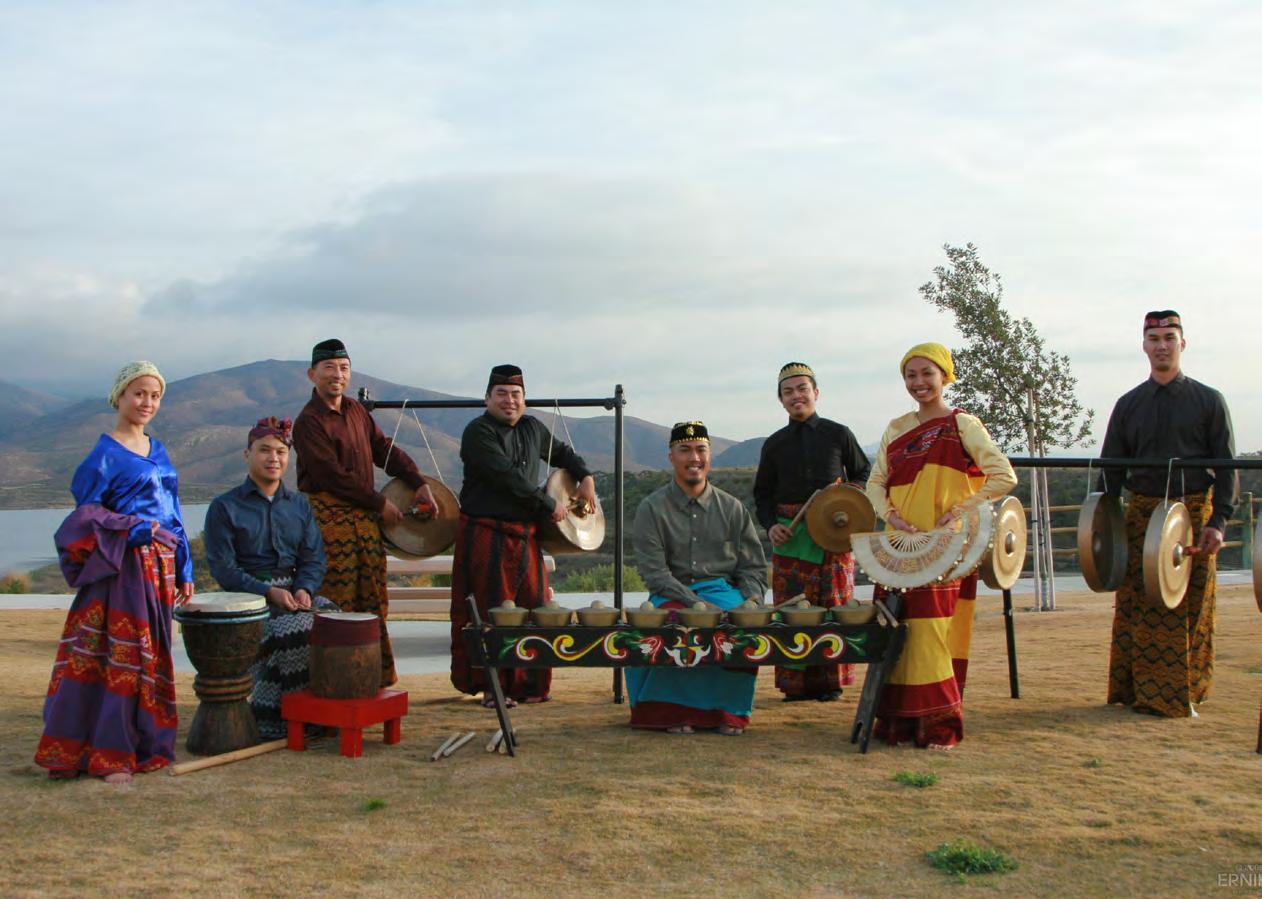
Kulintang (pronounced KOO-lintahng) is a form of instrumental gong music that -rst emerged in the Muslim communities of the Southern Philippines, a minority population today concentrated on Mindanao, the country’s secondlargest island. Kulintang refers both to the instrumental form and the instruments on which it is played — the set of eight melodic kettle gongs,
laid horizontally on a rack called antangan. A full kulintang ensemble can also include gandingan, large hanging gongs that function as pitched accompaniment; agung (also agong), a set of two low-pitched hanging gongs; babandil, a single, rhythmic timekeeping gong; and dabakan, a single-headed drum. Traditional melodies are performed by striking the gongs in a rhythmic, semi-improvisational fashion. In villages where kulintang is traditionally played, the music historically served both social and diplomatic purposes, o+ering recreation for community members and entertainment for visitors. But as ethnomusicologist Dr. Mary Talusan wrote in an article titled “Muslim Filipino Traditions in Filipino American Popular Culture” (published as a chapter in the 2014 book Muslims and American Popular Culture), kulintang adopted
a new purpose in the years following Philippine independence from the United States. The Indigenous style emerged as a symbolic representation of the island country’s pre-colonial culture, invoked by Filipino nationalists to construct a sense of national identity for the newly independent nation.
“By featuring traditions not in,uenced by Spain or the United States,” Talusan wrote, “nationalists sought to de-ne Filipino culture by projecting the origins of the Philippines into the pre-Christian past in order to advocate for its modern-day sovereignty.”
Beginning in 1957, kulintang performance appeared on international stages courtesy of the Bayanihan Philippine Dance Company, a national troupe established to showcase Filipino culture to international audiences. Bayanihan adapted folk traditions to
-t Western theater and dance formats. Romanticized and folkloric, Bayanihan renditions of kulintang standards were the versions most non-Indigenous Filipinos would have encountered in North America prior to the late 1970s, when two prominent native kulintang practitioners — Danongan Kalanduyan and Usopay Cadar — were invited to study and teach the music in the United States.
Kalanduyan and Cadar are the roots of a growing network of diasporic kulintang practitioners mapped by researchers like Talusan and Eleanor Lipat-Chesler, an artistscholar who studies contemporary transnational kulintang performance. Many contemporary musicians have learned kulintang directly from these two master teachers and have gone on to form around two dozen ensembles in multiple North American cities.
“It’s a rooted American tradition,”
says Talusan. “It’s really taken on a sort of genre here in the US.”
Cultural Connection
For 20th-century Filipino nationalists, kulintang was a symbol of pre-colonial pride. For 21st-century members of the diaspora, the musical practice can represent a connection with homeland heritage and a rejection of decades of cultural assimilation.
“What di+erentiates kulintang from other American roots music dabbling in gong traditions is that you see it being done by heritage musicians mostly,” explains LipatChesler. “Since the majority is done by heritage musicians who identify with having Philippine and Filipino American roots, it’s so tied up in issues of identity. Therefore, the creative expression is very much tied up with self-expression and how one
is making sense of their place in the diaspora.”
Lipat-Chesler’s description holds true for Pantayo, whose members began studying the instrument in 2012 as a way to deepen their engagement with their own roots. Much of the band immigrated to North America from Luzon, the most populous island in the Philippines, when they were kids. The ensemble -rst connected at Toronto’s Kapisanan Philippine Centre for Arts and Culture, a grassroots organization that uses arts and culture as a way of engaging Filipino youth in society and decolonial work. Bonded by a mutual interest in kulintang — which some members had encountered in elementary school music classrooms back in
Luzon — Pantayo united to make music as an ensemble in 2012.
“When we started playing together, it was born out of the need to connect with our culture,” says band member Katrina Estacio. “We think that music is the most accessible way to connect with culture that we feel we’re physically and geographically far from.”
As the band quickly discovered, however, kulintang is not terribly accessible for new practitioners. For starters, there were no kulintang teachers in Toronto. If Pantayo wanted to learn from a master practitioner like Kalanduyan, they had to ,y to San Francisco. If Pantayo needed to purchase instruments, they had to go to Manila, if not farther south to Mindanao. (And as
for cases, they had to cra/ their own.) Furthermore, the basics of kulintang performance were o/en locked away in ethnomusicological ivory towers. The band had to pore through academic articles o/en dating back to the 1970s just to -nd sheet music for traditional kulintang melodies.
Lipat-Chesler emphasizes that Pantayo’s experience is not atypical.
“For me, it has this Wild West feeling,” she says. “Those who are seeking it have to do it kind of by hook or by crook, you know, be really creative, inventive.”
Learning and Teaching
Pantayo leaned on the extended network of kulintang performers to -nd instructors, pooling resources
Gandigan, a large hanging gong
they found from a former student of Kalanduyan. In 2015, the ensemble decided to record their original gong compositions: They spent the following -ve years testing material in front of audiences, an experimental period that culminated in the 2020 self-titled debut Pantayo. Combining gong melodies with elements of R&B and electronic production, the album was a critical hit, shortlisted for Canada’s prestigious Polaris Music Prize.
“Pantayo” translates to “for us, by us, of us” in Tagalog; the name aptly describes the ensemble’s approach to music-making and community building. As their skills have improved over 11 years of playing as an ensemble, individual members
have become teachers themselves, o+ering educational workshops about the instrument and its history at festivals and community centers.
The group is working up new initiatives to pass on their knowledge to even more potential practitioners. “Right now, we’re working on digitizing our workshops … which we lovingly call ‘Kuliversity,’ for our website,” says Estacio. “We have these three song types that are going to be available for the basic lesson.”
She continues, “We have the technology. We have the resources. It’s open-source information. And this is cultural knowledge! There’s no need to be gatekeeping this information. We’re glad to just learn and share our learnings.”
While the members of Pantayo have become culture-bearers for kulintang performance, Estacio emphasizes that the band doesn’t assert ownership over the metallophonic music.
“We’re not claiming this to be our own. We’re not part of the culture in Mindanao where the instruments are coming from.” says Estacio. “But this is how we learned this, and we want to be able to increase access for folks to learn in the same way that we might have learned in the past.”
Scholars like Talusan and LipatChesler echo that the relationship between diasporic and native practitioners needs to be approached with awareness. While diasporic practitioners have evolved the ancient practice, kulintang
Pakaraguian Kulintang Ensemble with a range of gongs
performance is by no means obsolete or static within its communities of origin.
“When you’re talking about Indigenous forms, it’s so easy to slip into the wrong choice and end up inadvertently co-opting another culture,” says Lipat-Chesler. “We like to sit back and observe what’s happening, and luckily re,ecting — being wary of replicating those same colonial oppressive tactics that we’re trying to avoid — is part of the dialogue of gongsters.”
Remixing the Repertoire
Pantayo’s genre-bending sophomore e+ort Ang Pagdaloy was released in June through Toronto indie label Telephone Explosion Records; like Pantayo’s previous work, the album resists stereotypical categorization. Honoring the in,uences brought forth by each of the ensemble’s members, including country, pop, metal, emo, R&B, and reggaeton, eight eclectic and exploratory songs shi/ between instrumental and vocal, rock and roll and ambient, slow jams and slow burns. Gongs are the centerpiece of some tracks, like the instrumental “Masanguanan.”
Though Pantayo remixes
traditional kulintang repertoire in their experiments with the ancient instrument, the ensemble also observes certain customs in their approach.
“One kulintang song type will only be used for ceremonies, not for performance or entertainment,” says Estacio. “We will never perform a song type that is only for a ceremony because it’s sacred. In that sense, we are following that protocol from the tradition, and that translates into how we songwrite, and in the way that we come up with gong melodies and rhythmic patterns based on our learning.”
A/er kicking o+ the summer touring season with an appearance at North America’s only kulintang festival, called Gongster’s Paradise, Pantayo played a number of Canadian festivals like Yellowknife’s Folk on the Rocks Festival, the Calgary Folk Festival, and the Regina Folk Festival. The band’s inclusion in folk festivals is a recent development. In years past, Pantayo has mainly performed in experimental and new music settings, at festivals for queer and racialized performers, and in other venues that honor their intersectional artistry.
“We’re categorized as ‘world
music’ sometimes, which is so outdated, I think — it just others music that is not classical,” Estacio says. “The style of music that we create as a group is actually closer to pop music rather than whatever the preconceived notion of folk music is, or world music.”
As the community of North American kulintang musicians and audiences expands, so do the possibilities for the form — a future that excites ethnomusicologists and performers alike.
“Possibly in 10 to 20 years, we’ll actually have a style in which we speak a similar language and can share knowledge across kulintang communities, whether they’re in Southern California, Northern California, or Toronto,” says Talusan.
“We’re thinking beyond,” a0rms Pantayo member Michelle Cruz.
“Fi/een years from now, how will this music be perceived? We’re so excited that one day, we’re going to be the people that these young people are going to be learning about. The music is ours the moment we’re making it, but a/er we’ve made it, it’s up to someone else to interpret it, it’s up to someone else to be inspired by it and to use it to understand their own views.”
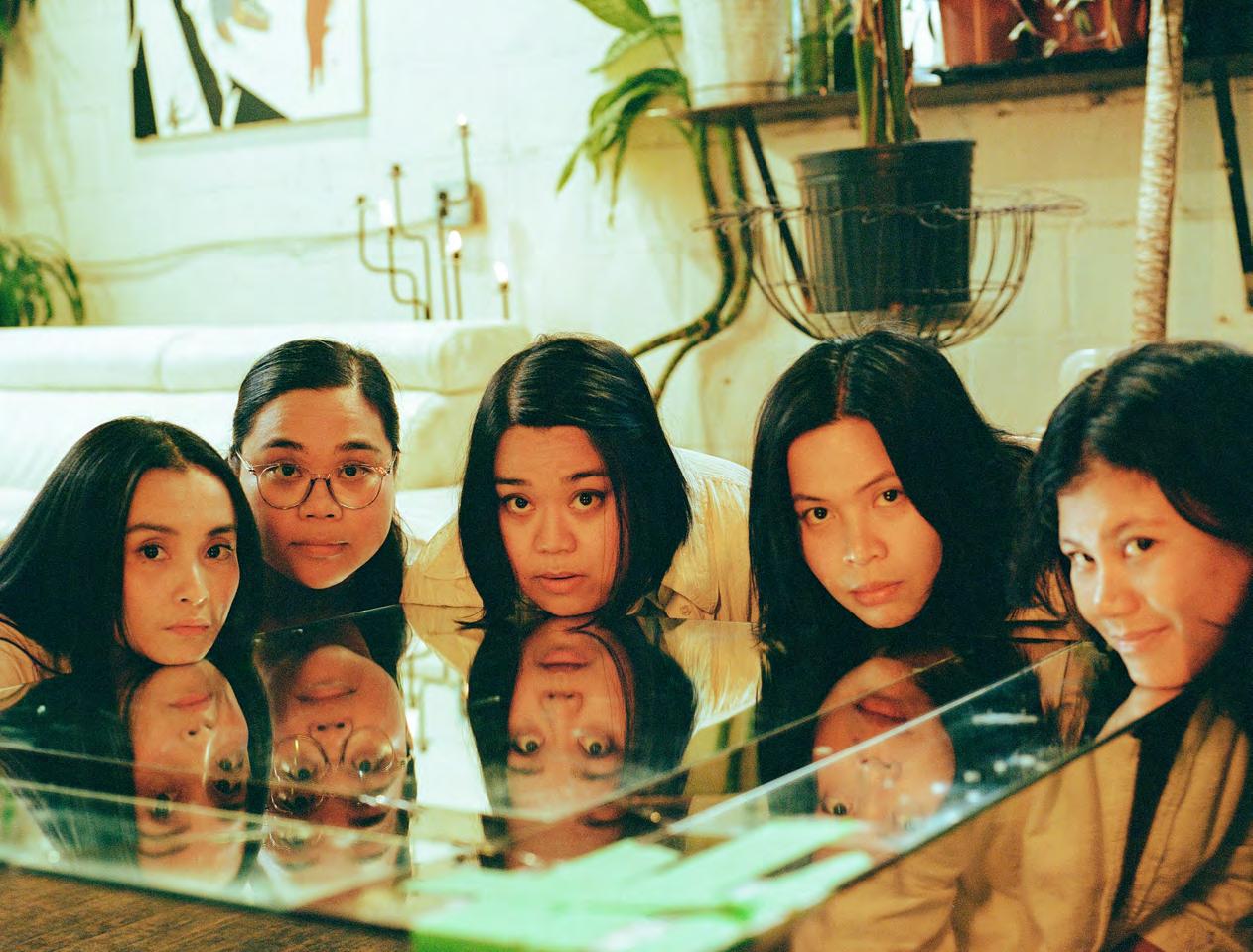
Pantayo
SING TO LIVE
Júlia Colom brings forgotten songs of Mallorca back through the people that sang them
By Judy Cantor-Navas
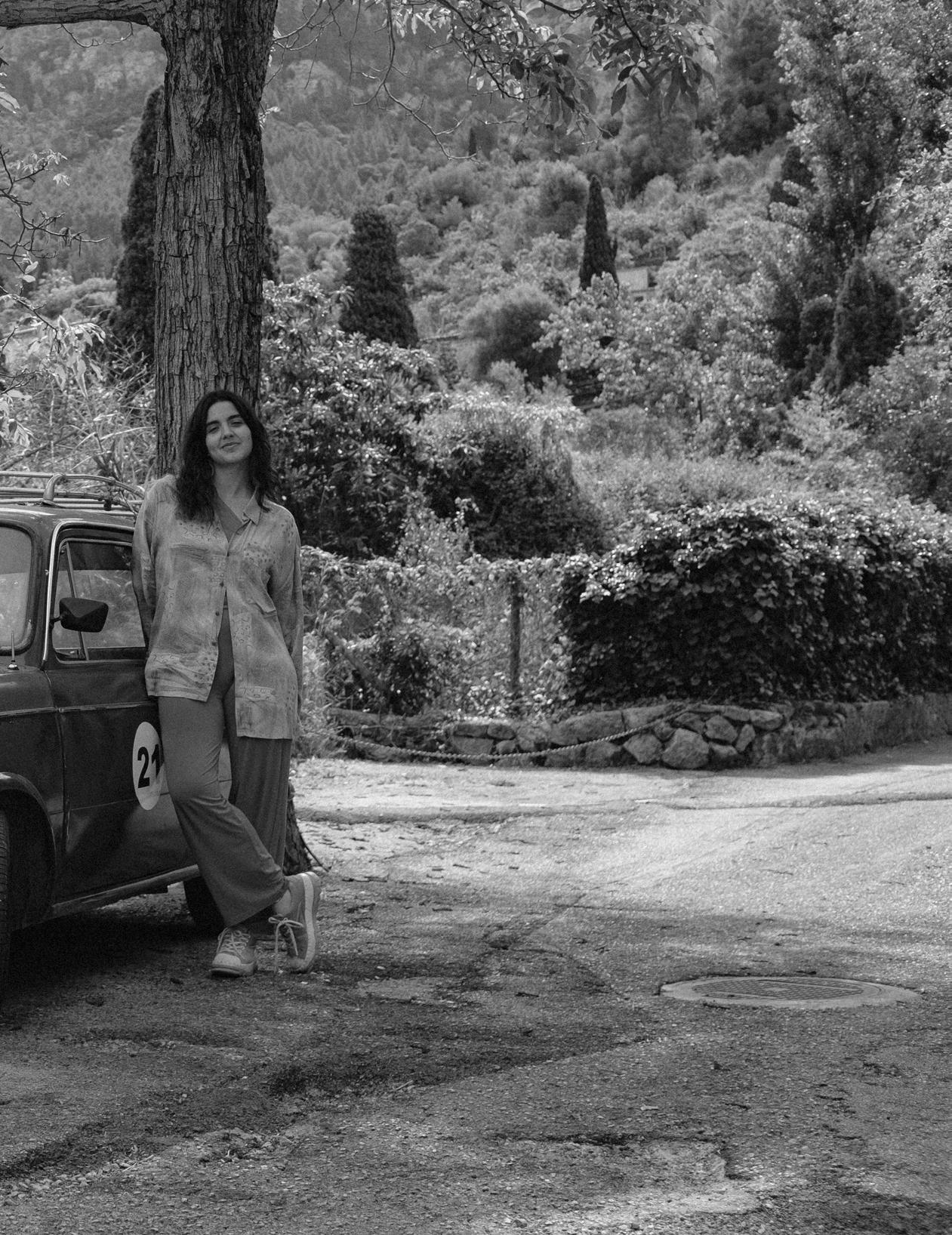
DAVID NAVAS
“I’ve been able to learn songs from the people who have actually lived them. Just think of the lives that those songs have!”
Júlia Colom
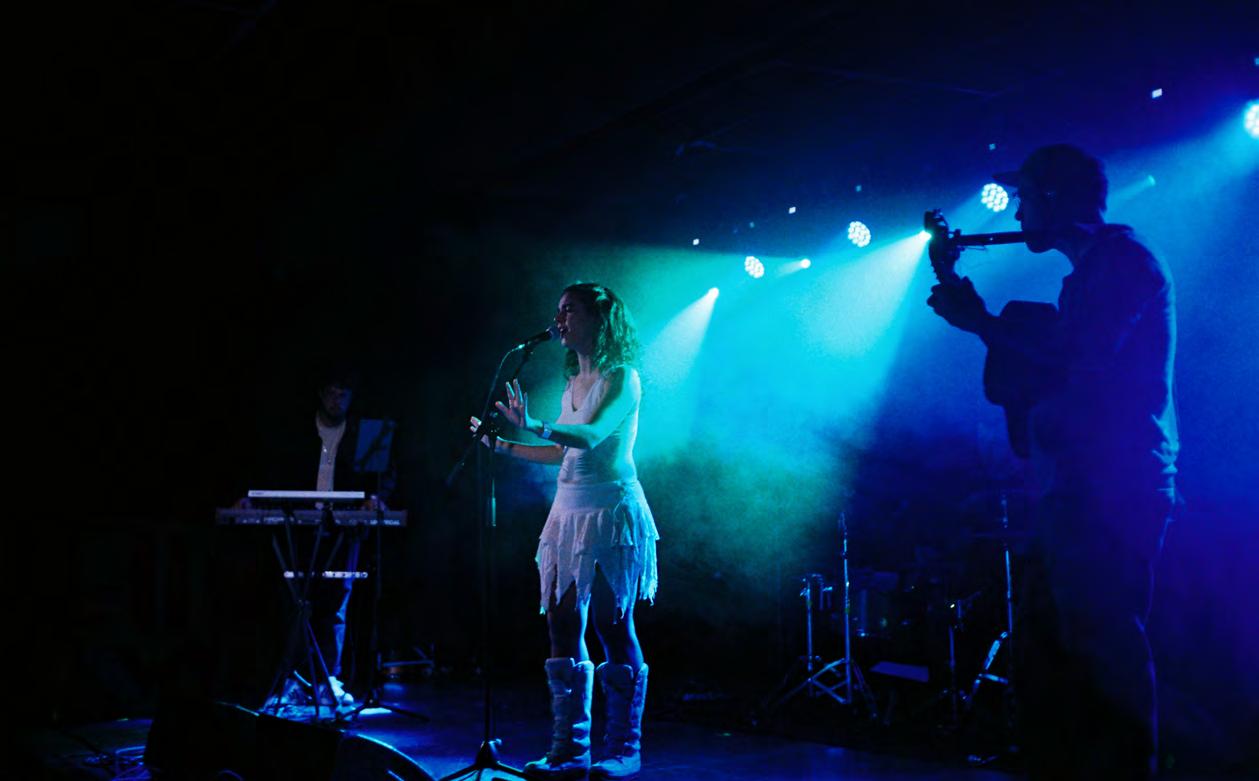
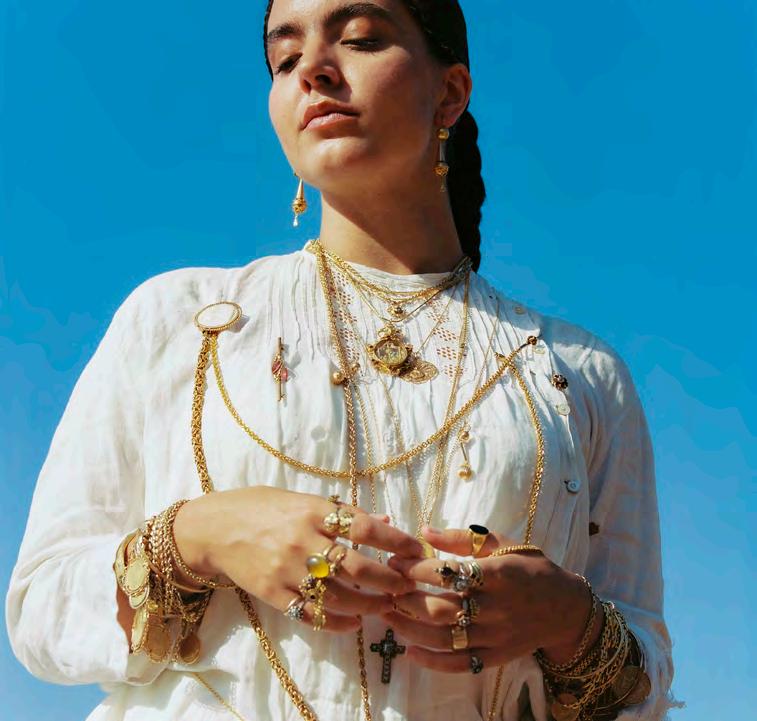
“This is a song about olive trees,” Júlia Colom announces into the microphone. She’s midway through her set at the Primavera Sound Festival, the massive showcase for international rock and rap stars and hometown discoveries that has come to signify the start of summer in Barcelona.
Colom starts to sing “Olivera,” a spare acoustic guitar ballad inspired by an ancient grove of twisted witnesses to history near her family house in Mallorca. The green and grey expanse of land is a testament to the olive’s economic and social role on the island since at least the 16th century, a time before tourism was its main industry. As she remembers in the lyrics of the song, Colom started going there as a little girl to sit in the quiet and sing to the trees.
At 25 years old, Colom has already been performing professionally for
about a decade. She is particularly in demand in Spain’s Balearic Islands and at European traditional music festivals for her mastery of “Canto de La Sibila” (“The Song of the Sybil,”) a dramatic medieval lyric poem prophesizing the end of the world that is sung in Mallorca and other Mediterranean locales on Christmas Eve. Colom says that “La Sibila” has become “kind of cool” since it was awarded UNESCO world patrimony status in 2013. She learned the challenging 14-minute vocal piece when she was still in kindergarten.
In April, Colom released of her -rst album, Miramar, which blends 20th-century rural Mallorcan work songs with cosmopolitan electro pop and elements of art rock.
As a new artist at Primavera Sound, Colom was slotted at the ungodly festival hour of 5 p.m., when only eager early birds milled around, browsing T-shirt stalls as they sipped
their -rst beers.
She stood at the center of one of the festival stages and began to sing an a cappella love song in her native Mallorquí (a regional dialect of Catalan that many locals consider their own language), her voice reverberating in rolling waves that felt like a call to prayer. People responded as if it was, suddenly streaming in to gather at the front of the stage.
Colom and the three musicians in her band, on guitar, drums, and keyboard, looked small on the spot where Bad Religion and Pusha T would perform later in the festival. But projected on the stories-tall screens that ,anked the stage, a giant Colom transformed from hesitant newcomer into mythic heroine. Wearing a pleated white mini-skirt and tight stretch lace top, her hair was plaited, her eyebrows thick and straight. She clapped her hands,
swished her hips, and circled her arms in some semaphoric language of her own. Colom was like a riot grrrl version of the typical Mediterranean folk dancer on a postcard, clad in ,ounced embroidered cotton, her skirt shortened for action, rocking sandals with heels.
Miramar includes three traditional songs — including one that talks about picking -gs and another about threshing wheat — as well as seven tracks written by Colom, including “Olivera.” Co-produced with her guitarist and partner Martin Leiton, the record tells a coming-ofage story — one about leaving home and returning to her roots.
Rediscovering Roots
Colom grew up in Valldemossa, a painstakingly preserved medieval village on a hill near the Balearic Sea that is famous as the place where
Frédéric Chopin, the writer George Sand, and her children stayed in Mallorca a/er the composer was diagnosed with tuberculosis. Today, hikers and buses full of visitors, some with Sand’s memoir A Winter in Mallorca in hand, arrive daily to experience the place’s beauty for themselves.
Not far away, on the stone patio of Colom’s family’s home, a refuge -lled with ,owers and fruit trees, her mother, Maria Antònia, lays out bowls of fresh olives and almonds, picked from nearby -elds.
“My family is very roots,” Colom observes. “My mother is an art historian and my father is a social worker. But when my father gets o+ work he goes to the mountain. He makes honey and sausage, he has a vegetable garden, he hunts with a dog.
“My parents came from families that all year long followed certain cycles, certain activities and ways of
Júlia Colom in concert
doing things,” she says. “They are things that I’ve lived my whole life, and they are things that the music is very tied to.”
Colom learned “La Sibila” from her grandfather. The church traditionally permitted the chant with Gregorian roots to be sung only by boys. Noting her obsession with the text and her talent for singing, Colom’s parents arranged for her to perform it the next Christmas Eve in a rustic chapel in the hills near their home.
“I guess it was my -rst gig,” she says with a smile. “It was a tiny chapel with maybe four benches. My brother set the tone for me with a plastic ,ute.”
Colom’s grandfather also taught her tonades, the work songs sung in the -elds that were once a part of
Mallorca’s everyday agricultural and popular culture. As a boy, he had learned them surreptitiously from a neighbor, putting his ear to a shared wall between their homes to listen to the man singing.
“I’m sure that my grandfather embellished them and made up his own lyrics,” Colom says. “And I sing them my way too.”
Eager to get out into the world, in the way that young adult islanders tend to be, Colom moved to Barcelona in 2015 to start her music school education, majoring in jazz and improvisation. But she kept thinking about those songs, and started to value them in a di+erent way.
“When I started my studies, I wasn’t conscious of the importance of the music I grew up with, the popular music of Mallorca, the oral tradition,”
Colom says over tea in a café near her apartment in Barcelona. “Singing runs deep in the culture of Mallorca. But I didn’t appreciate it.”
Then she had a realization: “I’m at school, and all around me people are learning songs from the internet, without even knowing where they came from. I’ve been able to learn songs from the people who have actually lived them. Just think of the lives that those songs have!
“I realized that I had to give them more importance,” she says. “And I started to go to villages to seek out people who knew those songs.”
Work Songs
Song for picking almonds
Song for planting rice
Song for bringing water in cans
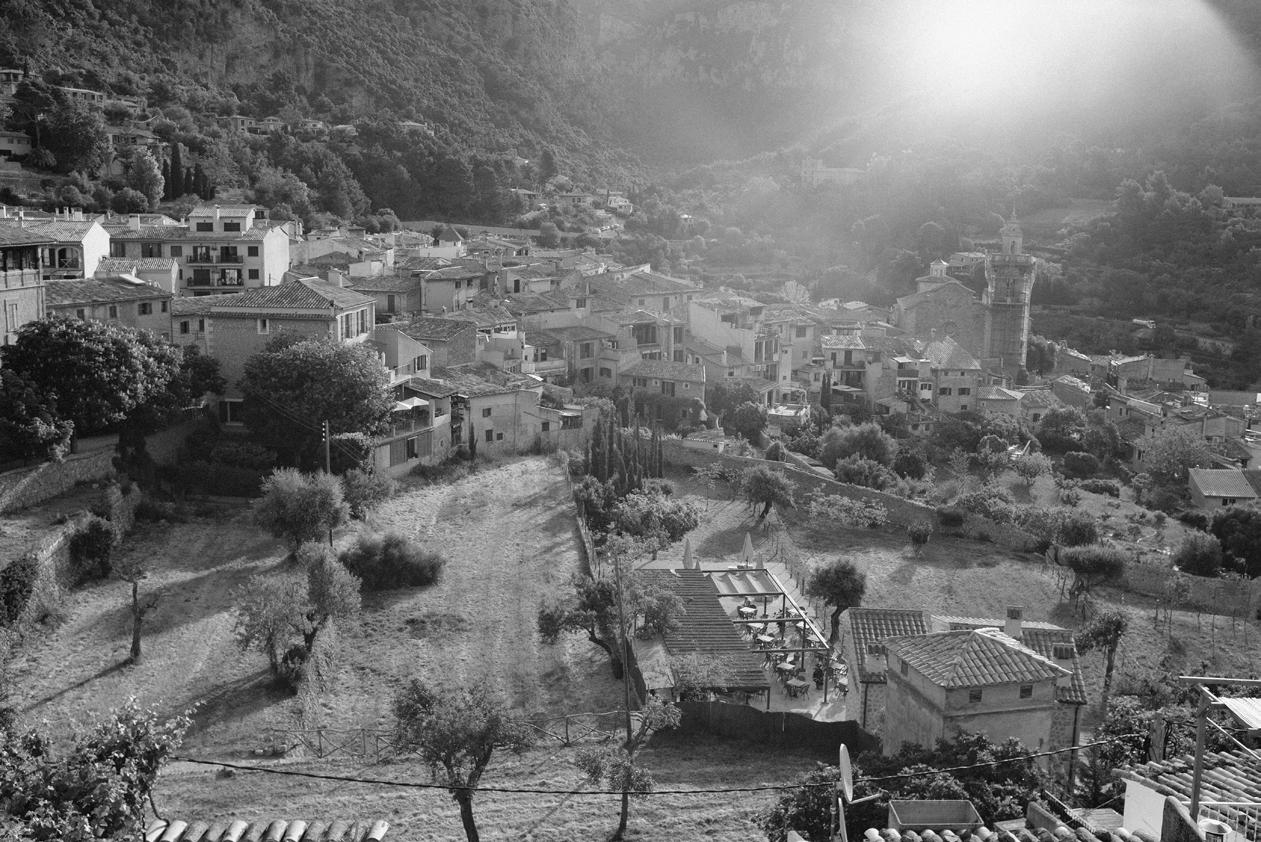
Valldemossa, Mallorca
Song for planting beans
Song for harvesting potatoes
Song for making olive oil …
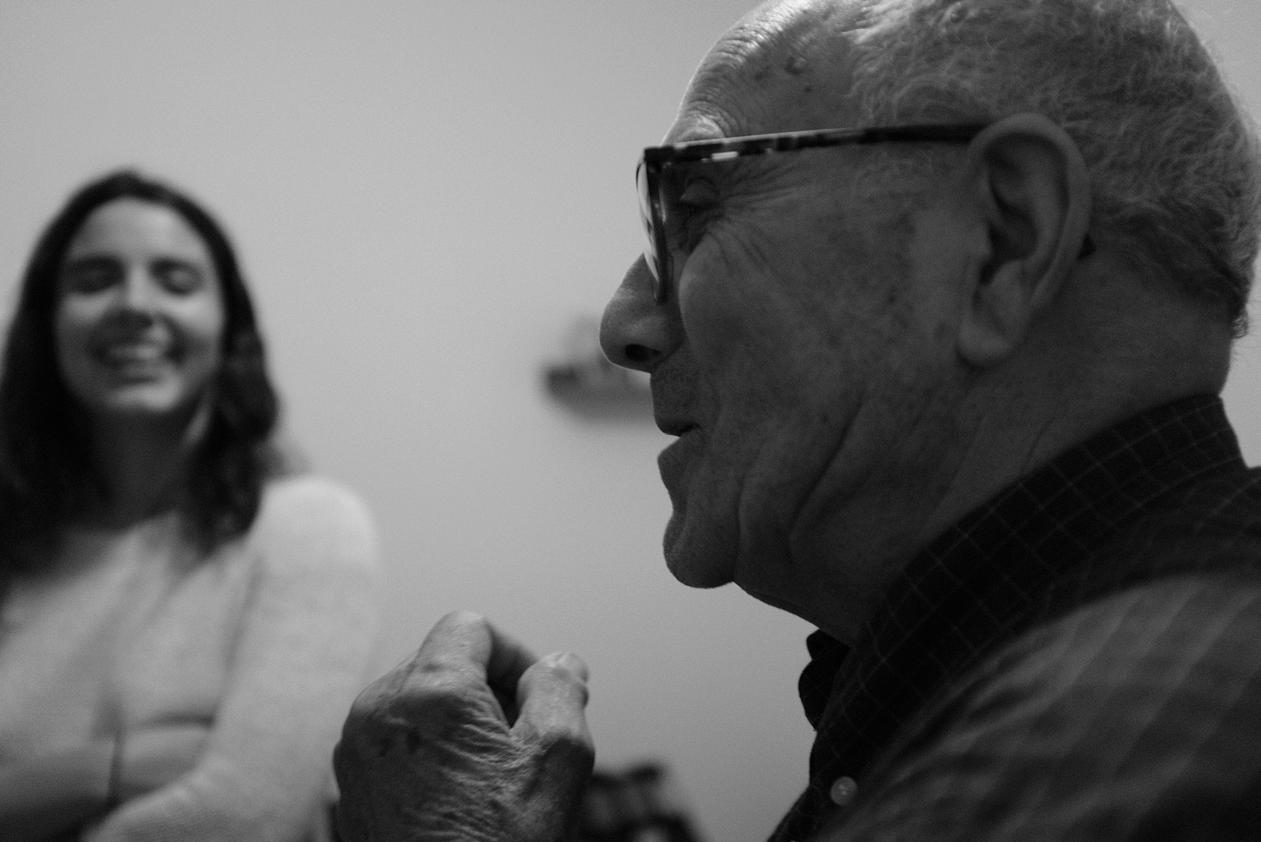
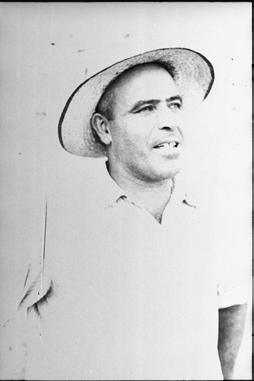
Biel Cladera, known by his nickname, Collut, is holding a typewritten list of the tonades he remembers. Starting at age 7, when his father became ill and could no longer work, he and his brothers and sisters would get up every morning and ride in a donkey-driven cart to -elds and orchards belonging to di+erent owners, to work wherever they were needed that day.
Collut is now 85 years old, and he still lives in the house in Sa Pobla where he was born, on a street where the children of a new generation of agricultural workers, who come from West Africa and Morocco, are playing ball. The street is empty; no tour buses
are parked in this tiny working-class town.
Colom has driven there for a late a/ernoon visit to Collut. He emerges from his doorway with a welcoming smile, his straight back and infectious vitality belying a life spent working in the -elds. In a small living room inside, a row of cane chairs sits waiting against one wall, near a small sofa covered by a colorful crocheted blanket that his sister made.
With a ,ourish, Collut gives Colom a CD on which he sings 21 di+erent tonades. He estimates he knows about 60 in all. “It’s important to teach the tonades so they’re not forgotten,” he says. He’s been sharing the songs he knows in an a/er-school program in the town designed to instill pride in the local families’ culture and agricultural roots through music.
Collut’s voice rings out, his hands gesturing, as he sings a song about beans as emotively as if he were reciting Shakespeare.
At one point, he jaunts excitedly to another room and comes back with several farm tools wrapped in cloth, iron hoes and picks with di+erent shaped heads. He starts to demonstrate the various tasks that they can be used for, passing the tools over the tiled ,oor as if he were tilling the soil or planting seeds.
“The songs were just another tool when they were working the land,” Colom observes.
She asks Collut about the origin of the tonades: “From the primitives I suppose,” he says a/er some seconds of silence. Then he clari-es his theory by pointing out that the songs’ Arabic tones are part of the imprint le/ by
BY DAVID NAVAS
Júlia Colom and Biel Cladera
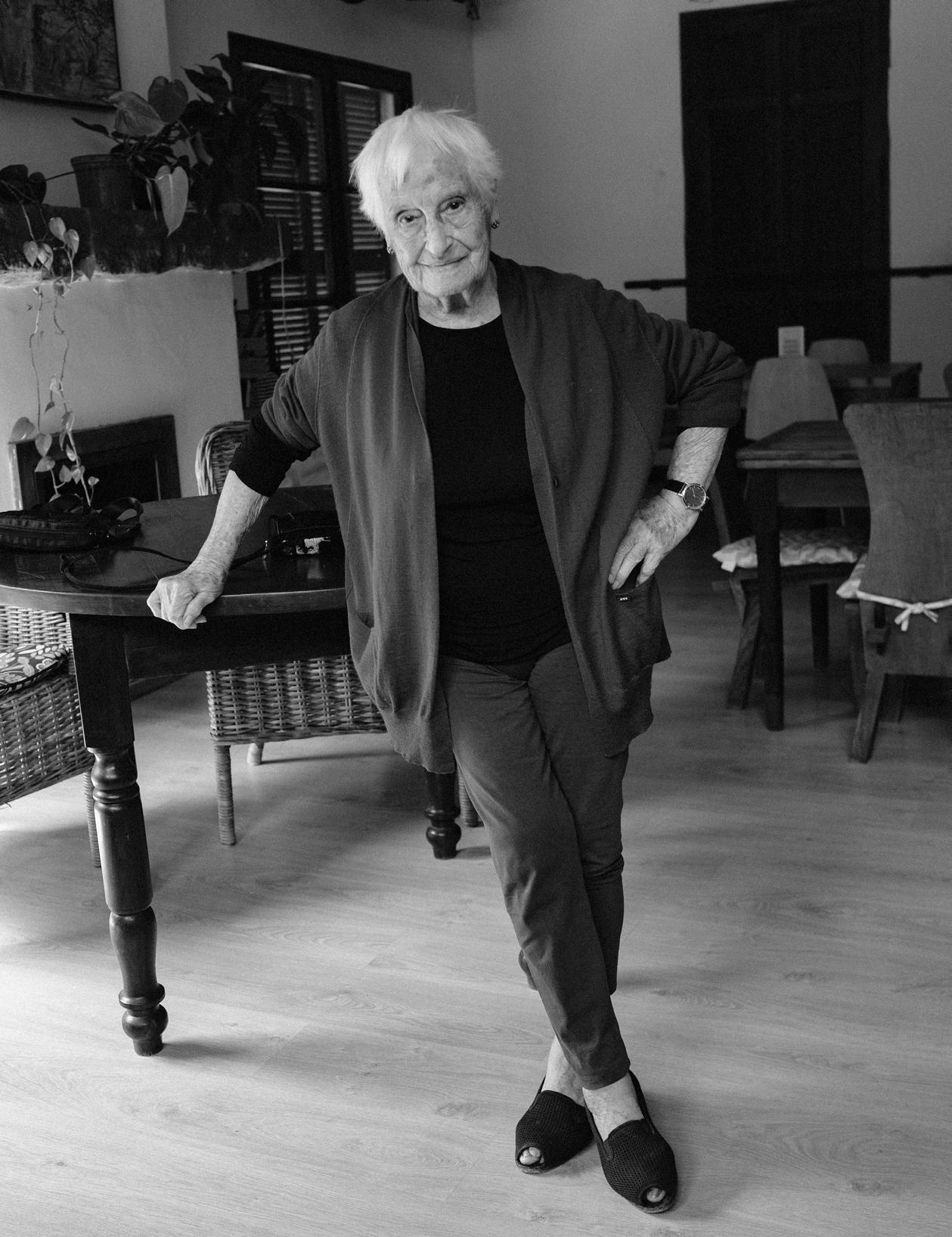
Maria Capó

the Muslim kings who ruled the island from the 9th century until 1129, when Jaime I of Aragon conquered Mallorca.
He doesn’t think a lot about the roots of the tonades. They had just always been there as Collut grew from child to young man.
“You didn’t have to sing well,” he says. “You just sang.”
Until they didn’t. The post-war agricultural mechanization process, which in Mallorca had its greatest impact from 1960 to 1970, changed not only the work in the -eld, but also the rural musical tradition.
“When the machines came in, they were noisy and competed with the sound of singing,” Colom explains. “They also created a situation in which people no longer worked in a group. I think it’s a shame that we became disconnected from that form of expression, both artistic and physical.
“Those songs are being forgotten,” she adds. “The people that know them are old now and the tradition is dying.”
A Visit From Alan Lomax
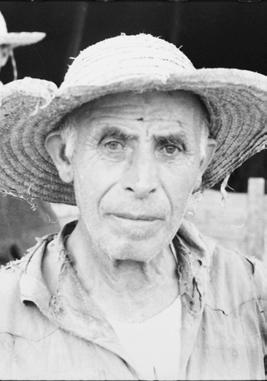
Maria Capó remembers the July day that Alan Lomax came to hear her sing. It was in 1952, so she must have been 19 years old.
The famed ethnomusicologist, who Capó o/en refers to as “the American,” had with him a tape recorder and a used Leica camera when he came to the family’s farm near a -shing village called Soller. The family had 20 cows and -elds where they grew wheat and oats.
Capó recalls that Lomax recorded and photographed her, as well as her father, Francesc Capó Torrens, and grandfather Miquel Capó Torrens. The Alan Lomax Digital Archive lists 15 audio entries for Maria Capó, including a song titled “I Like Picking Olives a Lot” and other work songs, traditional folk songs, and tracks with ambient chatter. The photos are there, too.
Lomax came to Mallorca on assignment from the BBC to make -eld recordings in European countries. His -rst contact with
Mallorca was in Palma, the island’s capital city.
“I was in a folkloric singing group for young people,” says Capó. “There was a concert at the Plaza de Toros with di+erent groups like mine.”
She remembers it as an exciting day. She took the train from Soller to Palma. Before the show, she and the other girls changed into their costumes, white cotton dresses.
Capó went to a Catholic girls school. She excelled at singing in the church, but it had been hard for her to convince her father to allow her to take music lessons or pursue singing much at all beyond the songs she sang while she picked -gs or olives.
“In the old days what was important was the -elds,” says Capó, who is now 90 years old. She’s sitting at a table with Colom, under a lemon tree at a stylish café owned by her granddaughter and her husband, housed in a former olive oil pressing facility in a pastoral enclave called Deiá.
For Lomax, that day at the bullring was less remarkable, maybe even a
Maria Capó in 1952
Miquel Capó Torrens in 1952
Francesc Capó Torrens in 1952
source of irritation. He would not have been much impressed by the choreographed spectacle, which was typical of entertainment in those days sponsored by the dictatorship of Gen. Francisco Franco.
A text on the Association for Cultural Equity website, where the Lomax digital archive can be found, notes that the -eld recordings and photos from Mallorca and other areas of Spain “bear witness to a time in Spanish cultural history which remains relatively obscure,” revealing “much about the ‘lost decades’ in Spanish history, obliterated in the fear and silence of the Franco regime during the 1940s and ’50s.”
At a time when the government prohibited the teaching of regional languages like Mallorquí in schools, Franco sought to present a cultural face to the world that was clean and unilaterally Castilian, despite the country’s regional diversity and the poverty and repression that plagued its darkest years. The dictator was keen to take advantage of a ,edging
tourism industry that began in Europe in the wake of World War II, and he used folklore — particularly romantic imagery of ,amenco and bull-ghting — to do so as part of a carefully calculated public relations campaign.
Lomax was not one to take whatever was handed to him and go home, however. In Spain, as he would write in re,ections later published in the book Saga of a Folk Song Hunter, he sparred with the head of the Spanish Musicological Institute, who, according to Lomax, was a Nazi given refuge by Franco a/er the war.
Lomax wrote that although he was never detained, he was tailed by the Civil Guard, “who it seems always knew where to -nd me.” According to Lomax, members of the state police would show up in the most remote and forgotten locations in Spain where he was collecting his work, casting a shadow that e+ectively scared o+ musicians he sought to record. An unsealed dossier on Lomax later revealed that the FBI
noti-ed the Spanish authorities that a renowned Le/ist was traveling in their country.
Over a six-month period in Mallorca in 1952, Lomax taped the tonades sung by farmers and workers in the -elds, as well as gloses — party songs improvised over a melody — and other traditional forms of popular song. He used the concert at the bullring to make contacts who could lead him to the most authentic musical expressions of Mallorca.
Con-rms Capó, “He was looking for people to record.” And a/er the show, he ventured to Soller. She may be the last survivor of the people who sang for Lomax in Mallorca.
While talking about the experience, Capó breaks into song several times. At one point, she joins Colom, improvising the words to a song about -gs.
She stresses that the loss of the music in daily life was not caused only by farm machinery. Tourism, which rose roughly alongside the agricultural technology on the island,
Júlia Colom
also pulled at Mallorca’s social fabric.
Capó points to olive harvest as an example of tourism’s repercussions:
“When they were doing the olive harvest, they would look for girls to pick them. So I always went. The boys would go to the olive -elds, because that was where the girls were. When tourism happened, a lot of the boys stopped coming. They went to the port to look for foreign girls.”
For Capó it was a clear sign of the changing times. But there were others. Her two brothers le/ Spain entirely. As she reasons, “Working in the -elds is hard. My father wanted them to have a better life than he had.”
Capó became a seamstress, specializing in creating elaborate embroidered sheets that brides bought for their wedding night. She started her own family.
“People started listening to the radio and they stopped singing,” she laments. The kind of traditional folkloric party music she had sung with her youth group “became
something for tourists.” The tonades pretty much disappeared.
“Singing used to be something very personal, not like now,” she sighs, revealing that the tonades were part of a past so unconnected that she didn’t sing them for her granddaughter. But recently, she has. “I want people to remember the music of Mallorca.”
The Past Is Present
Colom is adamant that she’s not trying to take over where Lomax le/ o+, recording the memories of the surviving singers who sang the tonades in the grain -elds and fruit groves of Mallorca. But she can sing them. She confesses that when she started working on her album, she wasn’t sure how to focus it — how to be modern and traditional at the same time.
Miramar, named for a seaside monastery and school looking out to the sea that is another of the singer’s favorite places, succeeds in invoking
the idea of a paradise lost, juxtaposing the forgotten traditional songs with the contemporary musical language of her generation.
That uniting of past and present is perhaps best summed up by “Canta Para Seguir,” the only Spanishlanguage song on the album, and performed by Colom together with singer-songwriter Pol Batlle:
Canta para seguir
Canta para vivir.
¿Qué hay después de este mar?
Hay otro Miramar.
La vidente valiente revela en su mente
Un futuro lugar para gente corriente.
Sing to go on
Sing to live
W hat is beyond this ocean?
There’s another Miramar.
The brave oracle reveals in her mind
A future place for common people. .













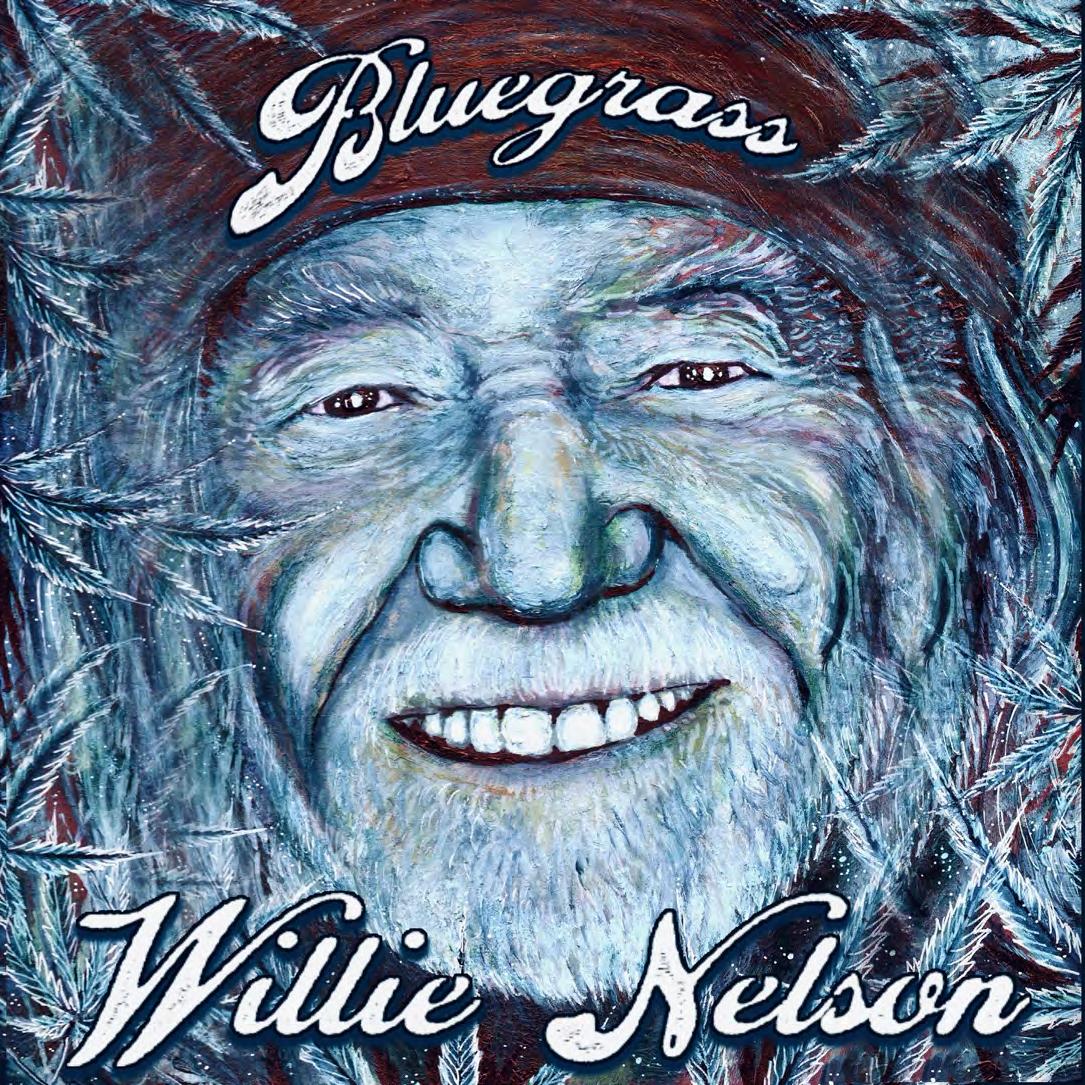
This new studio album revisits a dozen classic Willie songs bluegrass style. includes “OnThe Road Again” “Still Is Still Moving To Me” “Good Hearted Woman”
produced by Buddy Cannon
From a small town to the Broadway stage, Brandy Clark’s songs are an emotional landscape
by Kim Ruehl
STORY SONGS
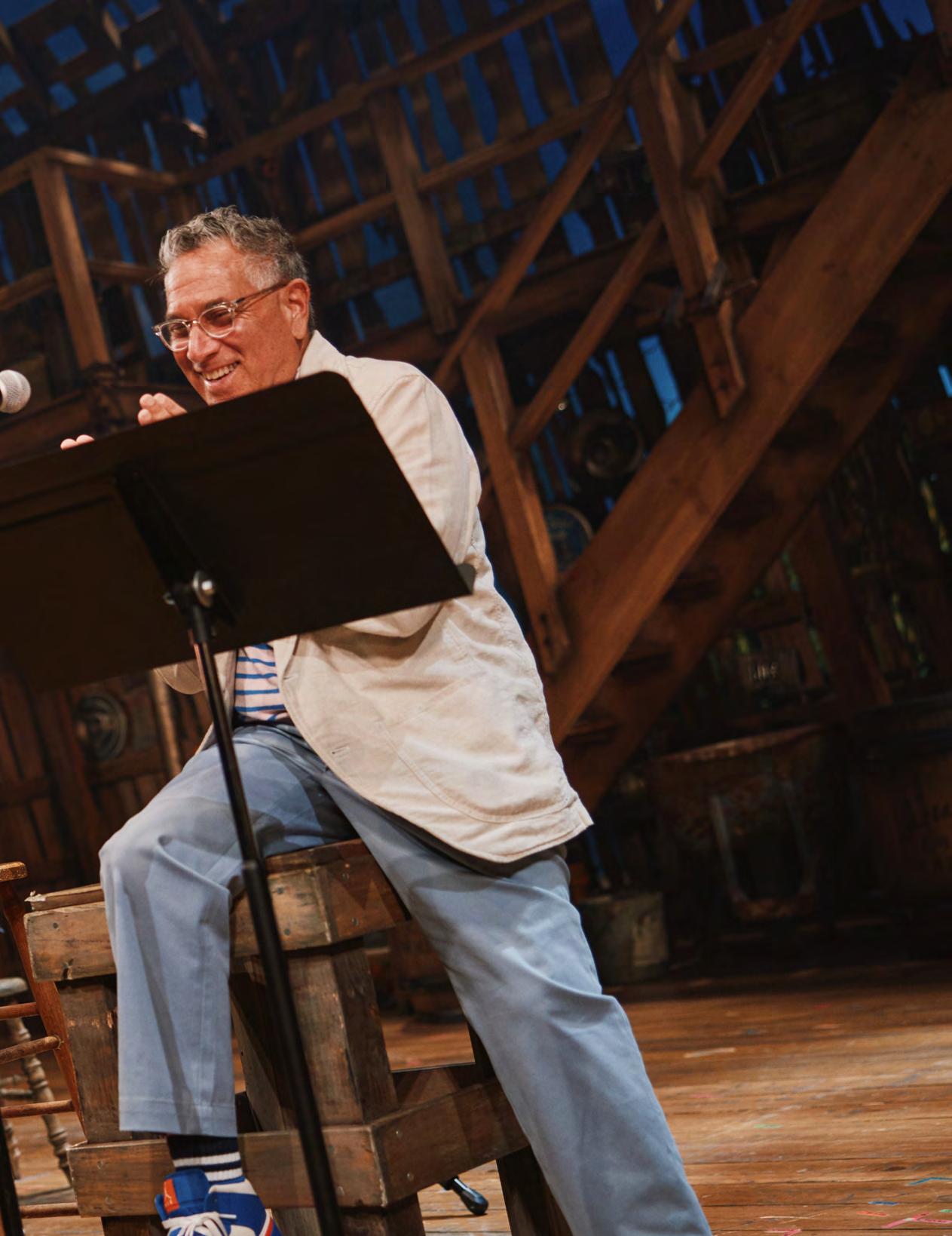
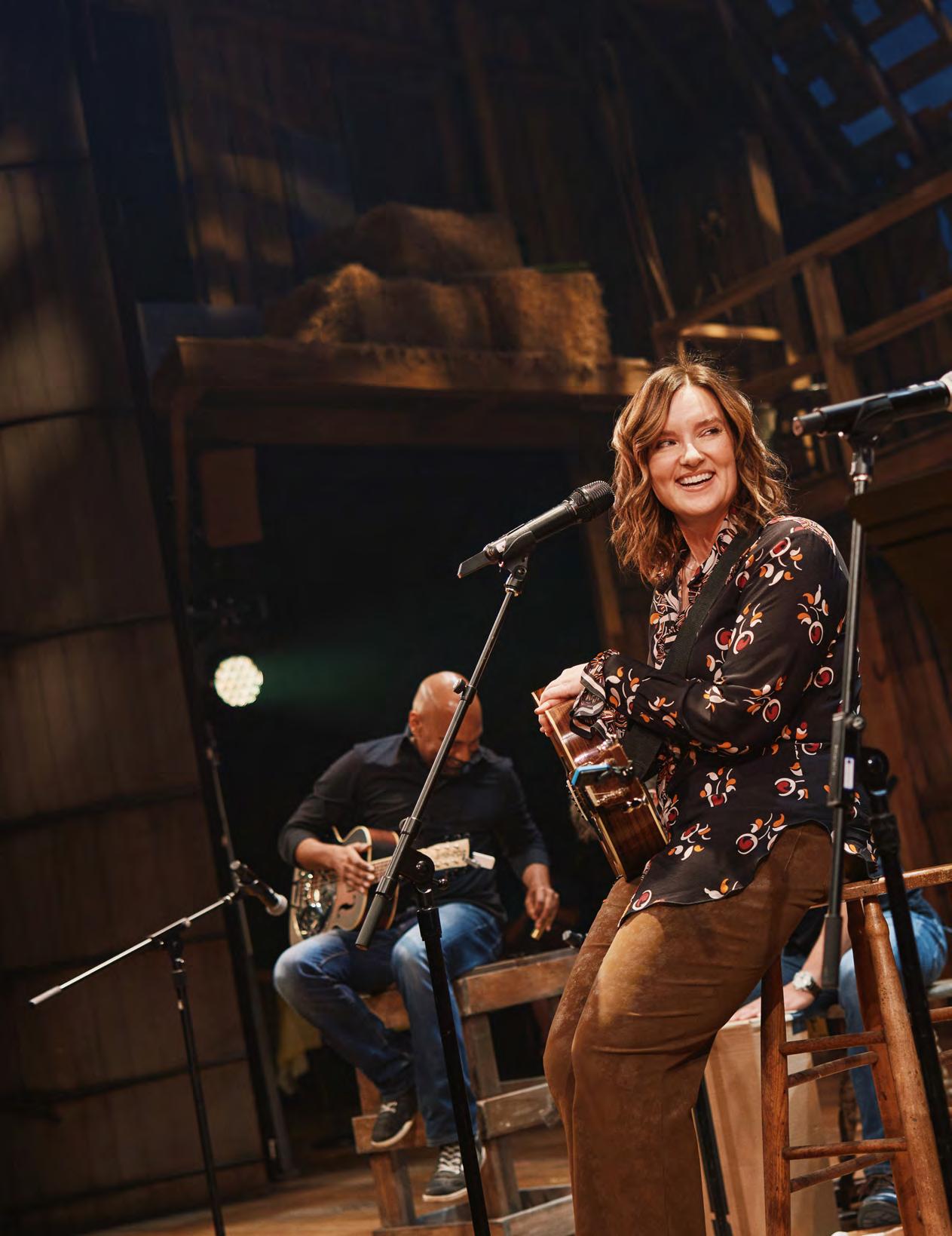
Brandy Clark and Robert Horn at the Shucked Block Party in 2023
Morton, washington, is a tiny town in the heart of Lewis County, about halfway between Portland and Seattle. It’s almost, but not quite, one whole square mile. An old logging town nestled in the mountains with beautiful vistas and tall evergreens, it’s full of all the things one might -nd in a country song — small-town characters, pickup trucks, places to -sh and drink a few beers. And it’s where Nashville-based songwriter Brandy Clark came of age.
“ The only station that came in really clearly in Morton [was] KMNT,” Clark said over the phone recently. “I had my grandparents, who were listening to Loretta and Merle and Buck Owens and George Jones and, you know, the real legends. And I think … [Morton is] what I feel like a lot of country songs are talking about, when they talk
about a rural area.”
As a teenager, Clark le/ Morton for college at Belmont University in Nashville and, soon therea/er, she started writing hits for Nashville giants like Kenny Rogers and Reba McEntire. The buzz about her skills spilled beyond Music Row when she co-wrote the monster hit “Follow Your Arrow” with Shane McAnally and Kacey Musgraves in March 2013. The song earned the co-writers more press than usual for its radiofriendliness, weed references, and queer allyship.
Clark’s solo debut, 12 Stories, was released on Slate Creek Records that August, with a string of critically acclaimed singles. Here were the songs mainstream country artists were unlikely to cut, like “Get High” and “Crazy Women” — songs about women coping with life in ways that were real and raw, unexpected on modern country radio. Solid in her
skills at 38 years old, Clark was frank about her queerness, unabashed about her characters.
Over the couple of albums that followed, she built a track record of vignette-style story-songs that capture universal truths in three minutes of tightly written zingers. Her fourth o+ering, 2023’s Brandy Clark, isn’t as much a departure as it is a dirt road o+ to the side of her career — one that perhaps points to a town the size of Morton.
Small towns have loomed large in many of Clark’s songs, which is perhaps what inspired her to team up again with McAnally. Between other projects in the years between 12 Stories and the onset of COVID, the pair stretched their skills to write a cycle of songs about a nameless small town in -ctional Cobb County for a musical theater project that became the 2023 Tony-nominated Broadway show Shucked
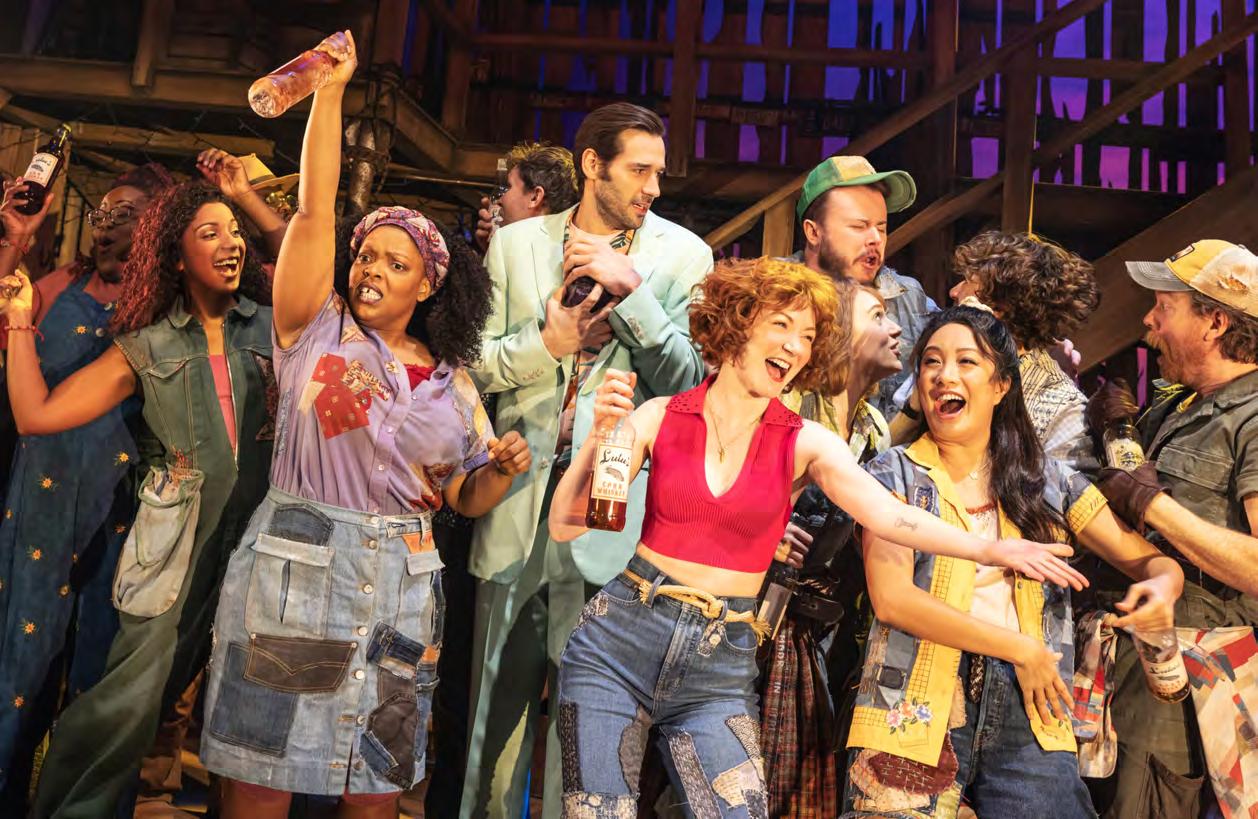
The cast of Shucked

Getting ‘Shucked’
Following previews last fall in Salt Lake City, Shucked opened on Broadway in March. It is a two-hour romp through Hee Haw jokes stacked atop one another. Together, they fashion a sort of narrative about a small town in which everything goes terribly wrong before it all goes right again. As the show’s narrators pinpoint, the story is set “somewhere north of south and south of north … where being from somewhere is who you are.”
The show’s protagonists are Maizy and Beau, a pair of young lovers who grew up together, and they open the show on the cusp of saying “I do.” Just before they can recite their vows, however, the whole town’s crop suddenly dies, and Maizy decides to go to the big city and -nd answers about how to save it. A/er a few whirlwind scenes in
Tampa (of all places), Maizy returns home with a con man “corn doctor” named Gordy, who can only save the corn by accident, if at all. The plot moves along through confusion and doubt: Will Maizy and Beau ever get married? Is it possible Gordy could fall for Maizy’s best friend and cousin Lulu?
If the plot seems a little cornfusing, don’t worry. It hops along at such a hilarious pace that it all makes sense for audiences in real time. To quote Beau, “It’s like my daddy always said: When one door closes another one opens. Other than that, it’s a pretty good truck.”
The songs, however, written with great earnestness and cra/ by Clark and McAnally, are the conduit that make Shucked land with emotional honesty. Which is not to say they are all serious. Show opener “Corn” includes a line about the way the
vegetable shows up in human excrement. “Holy Shit” is one gag a/er another. And then there’s the Act II opener, “We Love Jesus,” whose hook, “We love Jesus but we drink a little,” one might be surprised to discover, has never existed in a country song until this show. (Kylie Morgan came closest with a line from her 2020 song “Cuss a Little.”)
Clark admits writing the score, itself nominated for a Tony, was “a big leap” from the songwriting pair’s previous experience with packing a punch via recordings for radio. But, she adds, “I think we had geared ourselves up for thinking … that it was a bigger leap than it was. We would get ourselves into trouble by trying to write ‘musical theater songs.’ Those songs never worked. When we just wrote our songs, it worked. Throughout the process, we worked with two di+erent music
Shucked composers Shane McAnally and Brandy Clark
directors who would musical[ize] our simple songs into songs that would work for the stage. So, the more we just leaned into what we did and told stories, the better things were.”
Despite their story-songwriting chops and the success of sungthrough, stylistic musicals like Hamilton and Hadestown, Shucked is mostly dialogue. This makes the original Broadway cast recording of its songs feel somewhat disjointed an inside joke for folks who have found their way to New York’s Nederlander Theater in person. The numbers that resonate most on the recording, like “Independently Owned” and “Somebody Will,” do so mostly on the strength of their singers (Tonywinner Alex Newell and leading man Andrew Durand, respectively). But the full complexity of their composition isn’t detectable until they’re sitting in the middle of the show’s narrative. Couched between the expert one-liners of book writer
Robert Horn, the songs land with the kind of empathic gravity that has characterized shows like Wicked and Dear Evan Hansen, about people struggling to -gure out who they are, despite how they are.
In that way, the songs of Shucked are reminiscent of Clark’s more punch-packing album hits, like Gretchen Wilson’s “Get Outta My Yard” or Ashley McBride’s “If These Dogs Could Talk.” Clark’s strength, a/er all, is depicting small-town characters who want to do good, but keep bumping up against walls.
Something in Common
On Brandy Clark, the songwriter exposes some of the roots of her small-town obsession with album highlight “Northwest,” her tribute to the tiny town from which she came. Clark notes she sees it and the song that follows it, “She Smoked in the House,” as a pair. Together, they capture the small-town rural spirit that is central to Clark’s
songwriting.
Small-town rural Washington is something Clark has in common with the album’s producer, Brandi Carlile. O/en referred to as a Seattleite, Carlile grew up, and still lives, in Maple Valley, about an hour from the city. It’s another tiny town many pass through on their way to somewhere else, but it’s also a place of immeasurable beauty — the way the mountains stand in the distance, the way the trees hold hands with the fog, the way bald eagles silently swoop between branches to grab -sh from a hidden creek.
Carlile told the Los Angeles Times earlier this year that she was introduced to Clark and her music through a mutual friend and recognized “something in there that nobody had really heard yet.” She reached out to instigate a collaboration and Clark nervously agreed.
“I was surprised at what a great producer she is,” Clark admits,
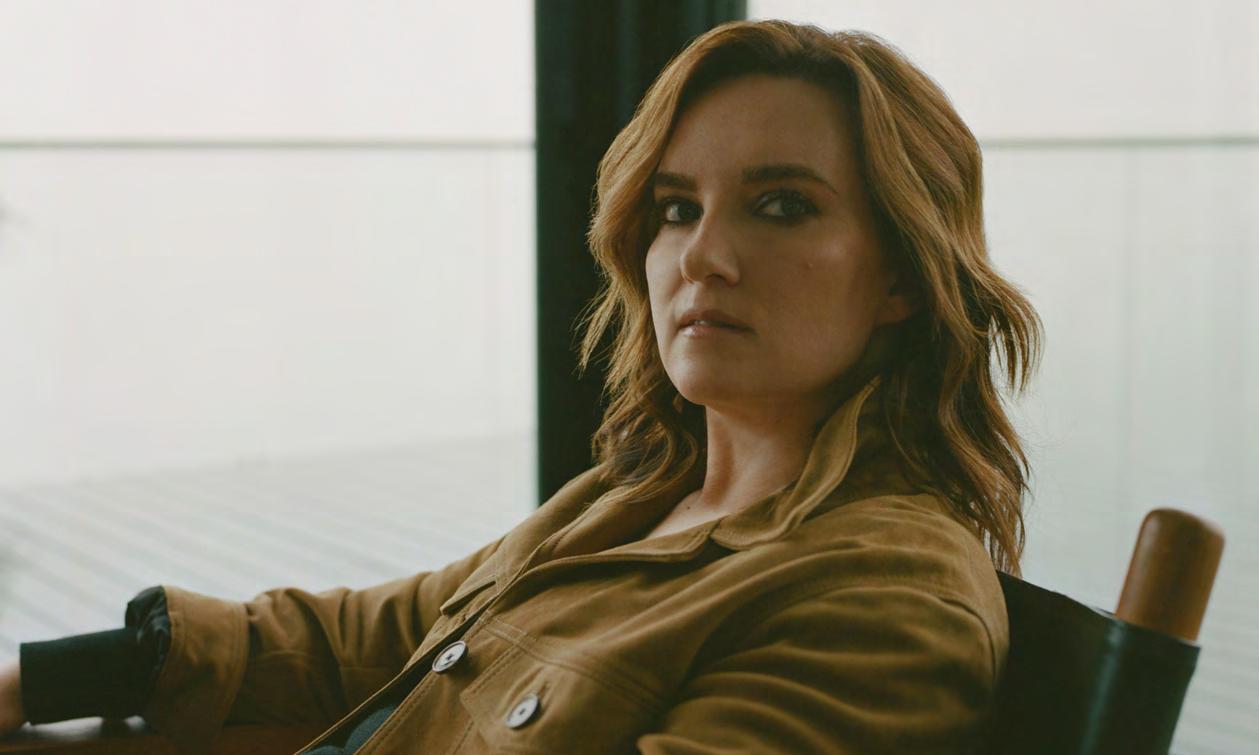
clarifying she doesn’t mean this in a negative way. “When she approached me, she played down her skills. … You know, you run out of inspiration, as a creative person. I felt out of inspiration about the time that she approached me. When I get to feeling that way, I try to do something that is foreign to me and that’s going to tip me on my ear, so to speak.”
Accustomed to working with Nashville pros, Clark found working with an artist-turned-producer from Washington state to be just the level of “foreign” she needed. The pair hopped on Zoom during the pandemic lockdown and tried recording a couple of songs together to see how the work might ,ow. Clark decided to take the leap and have Carlile guide her through a full album.
“What I loved about it was the ease of it,” Clark says. “ … I felt like she was a lot of why it was easy, because she just goes with her gut instinct so much.”
The pair set up at Rick Rubin’s
Shangri-La studio in Los Angeles and got to work on a full set of songs in 2022.
Clark came in with nearly two dozen songs and asked Carlile to help her whittle it down. She was surprised by how much Carlile’s choices rocked her personal creative compass. “I asked her, ‘Why did you choose those songs?’ And she said, ‘Well, you know, I thought all the songs were great, but I chose the ones that I felt like you wrote in your bedroom.’
“ That really struck me,” Clark says. “Because I think we forget, when we’re writing songs professionally, why we ever started writing songs in the -rst place, which was to get something out. We were some kid in a bedroom with a guitar, trying to express our feelings about the world or about somebody we were in love with.”
Carlile’s view didn’t just dictate the sequencing of the album. Clark says it shi/ed the way she looks at her cra/. “I mean, it’s a tiny change
for me, but it’ll change the things I dive into. You know, like, ‘Oh, do I really care about that idea or does it just seem like a really clever hook?’ Not that I won’t still write a clever hook. But I think I’ll pay more attention to the ideas that really resonate deep inside of me.”
If songs on Brandy Clark like “Dear Insecurity” and “Take Mine” are any indication, Clark has a treasure of deeply personal songs to mine. Songs that may yet carry the clever hooks for which she’s known. Once the listener is hooked, they’ll be dragged to deeper emotional territory than expected.
Clark sees more Broadway work in her future, too. She and McAnally are trying to decide what kind of show to write the score for next, she says. Whatever it is, it’s likely to be brutally honest and full of colorful characters, and Clark will work hard on it until it all rings true. To paraphrase one of Shucked’s biggest show-stopper numbers: “[That] corn ain’t gonna shuck itself.”
STRENGTH IN NUMBERS
Roots musicians are mobilizing with a new wave of unions and activist organizations
by Laura Scholz
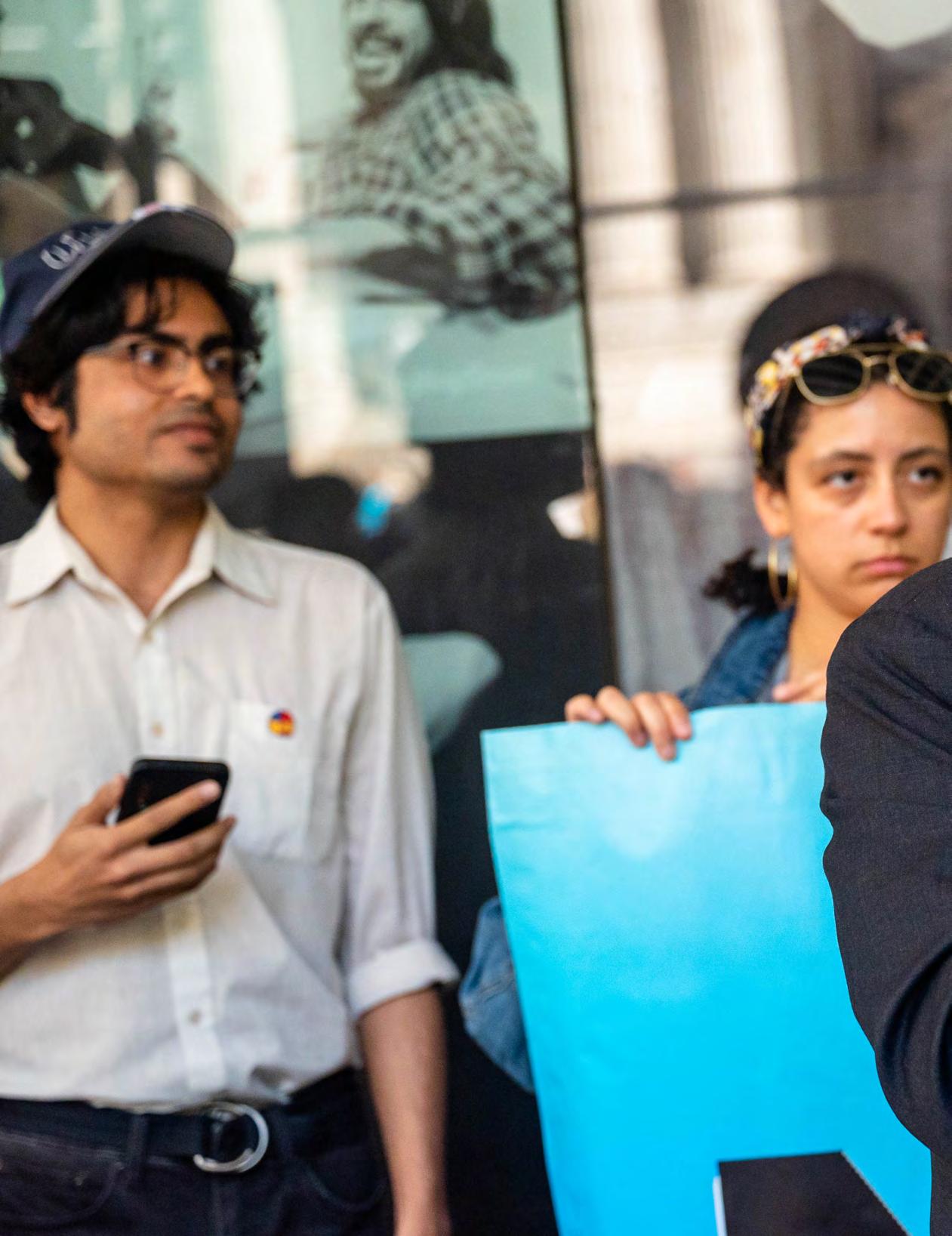
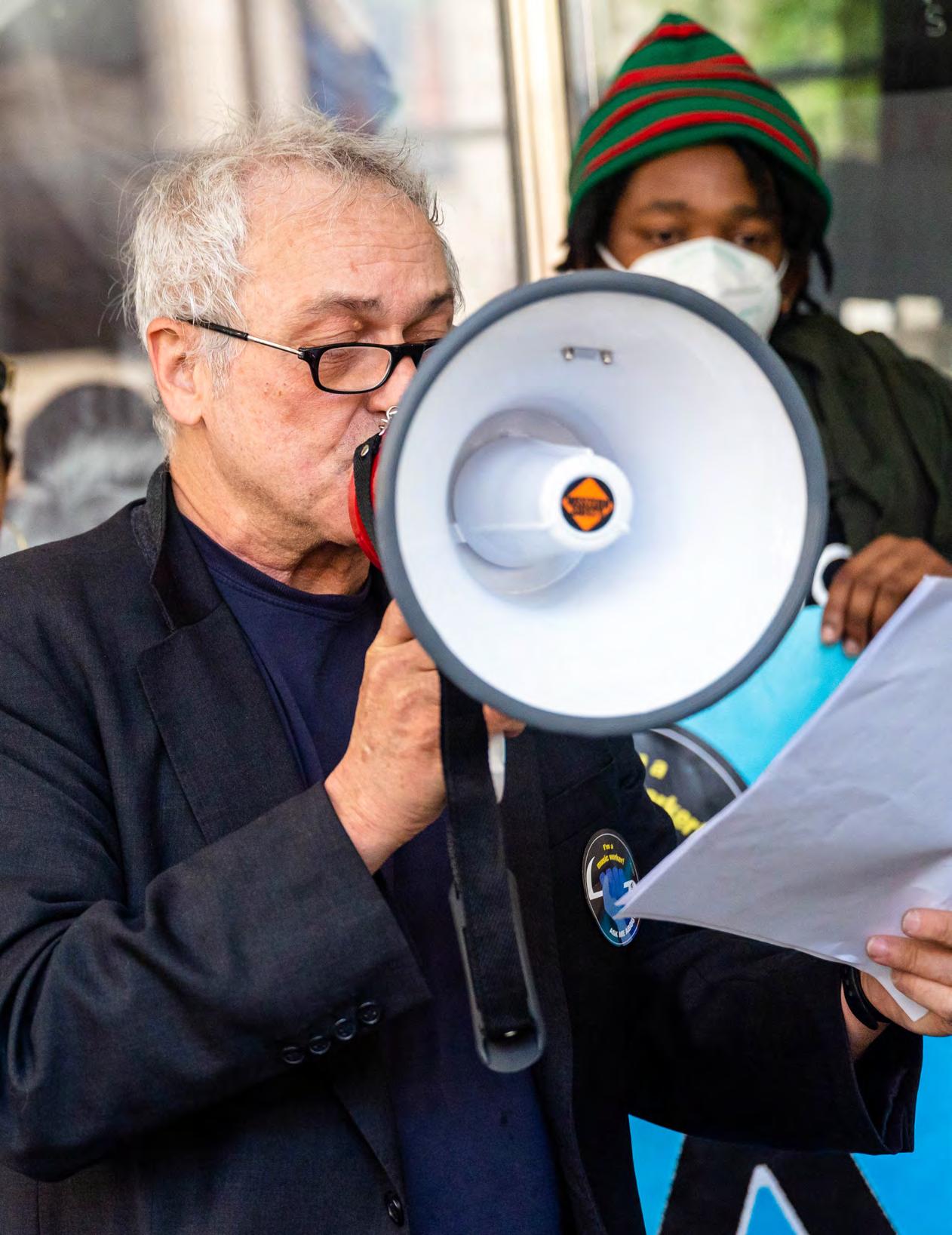
Marc Ribot speaking at the Fair Pay SXSW rally in New York City, May 2023
In the early .ays of 29290s quarantine, Sadie Dupuis wrote poetry, cooked a lot of vegan breakfast sandwiches, and helped found a union, United Musicians and Allied Workers (UMAW). A singersongwriter, guitarist, and founder of the indie rock band Speedy Ortiz, Dupuis was one of thousands of music workers who mobilized during the initial crisis, lobbying Congress for unemployment assistance for independent contractors, rent and mortgage relief, and other aid to help those struggling with lack of income from touring.
“We all were at home, we had time to get on Zoom calls, to get rightfully angry and share information, and there hadn’t previously been a good forum to get together with di+erent musicians from di+erent genres and discuss commonalities in music contracts, frustrations on tour, and other issues,” she explains of the surge in crisis-related activism.
The growing concerns of independent touring musicians — including inadequate residual compensation from streaming platforms, the potential impact of arti-cial intelligence on the creative process and future pay, and more — parallel those of their peers in the broader entertainment sector. At the time of publication, both the Screen Actors Guild-American Federation of Television and Radio
Artists (SAG-AFTRA) and the Writers Guild of America (WGA) were on strike — their -rst joint labor action since 1960.
Those groups represent more mainstream actors, writers, and recording artists in and outside of music, but several new grassroots music unions like UMAW have formed in recent years. Others include New York-based Music Workers Alliance (MWA) and Bandcamp United, which represents workers at the popular music distribution platform. While Bandcamp United requires dues like a more traditional workplace union, UMAW and MWA still operate on a donation basis. And although all of their locations, missions, and membership numbers vary, this next wave of grassroots organizations is united by a single cause: radically transforming pay and working conditions for music industry workers on stage and behind the scenes.
Unity and Independence
Music unions are not a new phenomenon. Founded in the late 19th century, the American Federation of Musicians (AFM) represents more than 80,000 American and Canadian professional musicians, including tuba player, high school brass instructor, and Atlanta Hawks instrumental director Kadeem
Chambers. While initially skeptical of unions, a/er a slew of highpro-le work — including two Apple commercials, touring with theatrical production DRUMLine Live, and playing with Beyoncé during her 2018 headlining Coachella set — he decided to join the Atlanta Federation of Musicians, the local branch of AFM. He was persuaded by an AFM board member and friend’s father, who “played on a track with TLC years ago and is still getting residual checks to this day,” says Chambers.
“He told me unions -ght for you to get the pay that you deserve,” he continues. And they did just that for Chambers, who secured residuals when that Beyoncé performance was optioned for a Net,ix special and a live album — all because of his new union contract.
While his orchestral background and personal connections helped to connect Chambers to AFM, many young people are unaware of existing music unions and their bene-ts, says Dr. Austin McCoy, a labor and music historian and assistant professor at the University of West Virginia.
“Every few years, I read in the news about artists wanting or starting new unions, because SAGAFTRA and these other older ones are basically focused on instrumentalists or orchestra members or musical theater performers,” he explains.
Historically, unions were
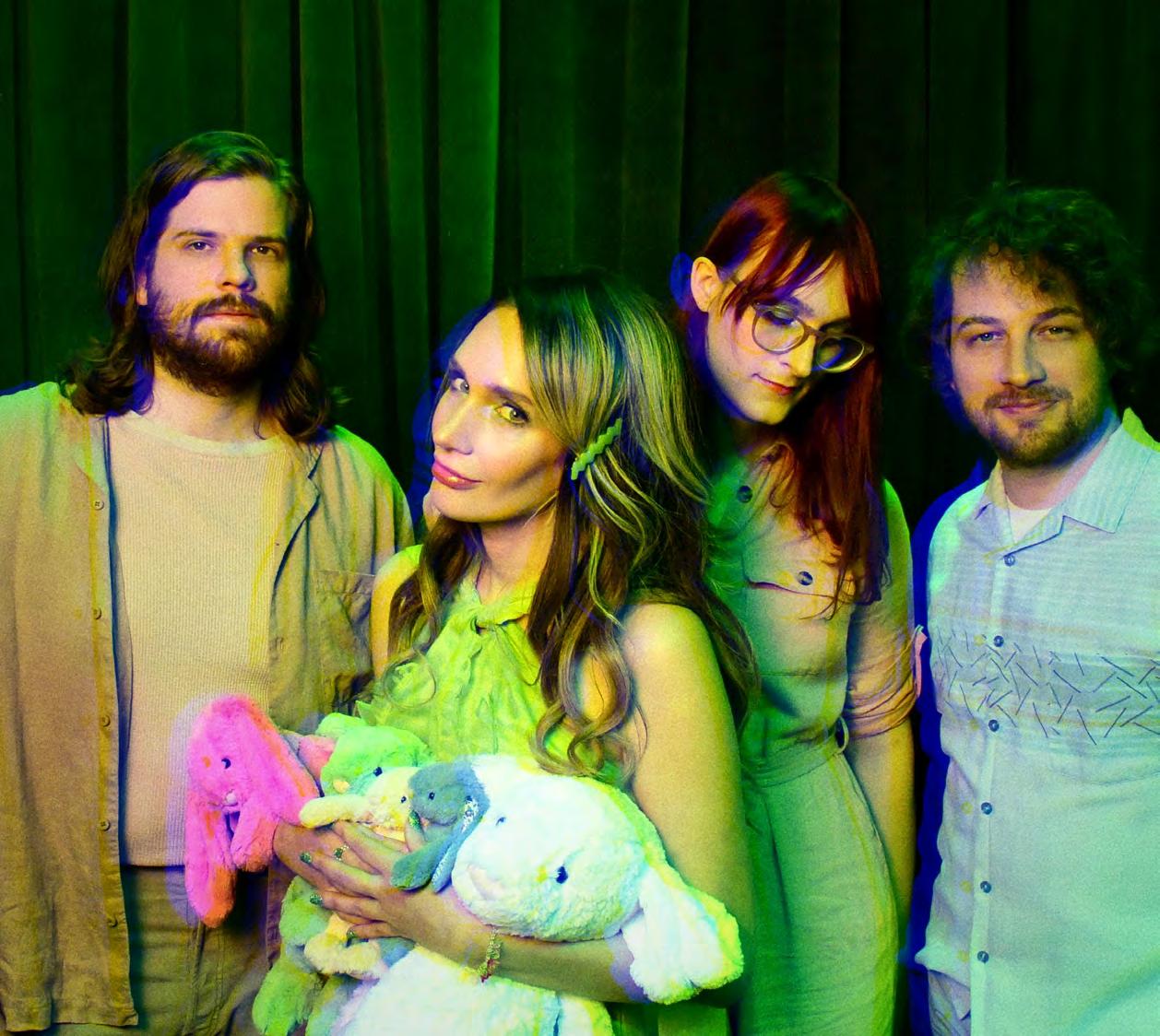
Speedy Ortiz
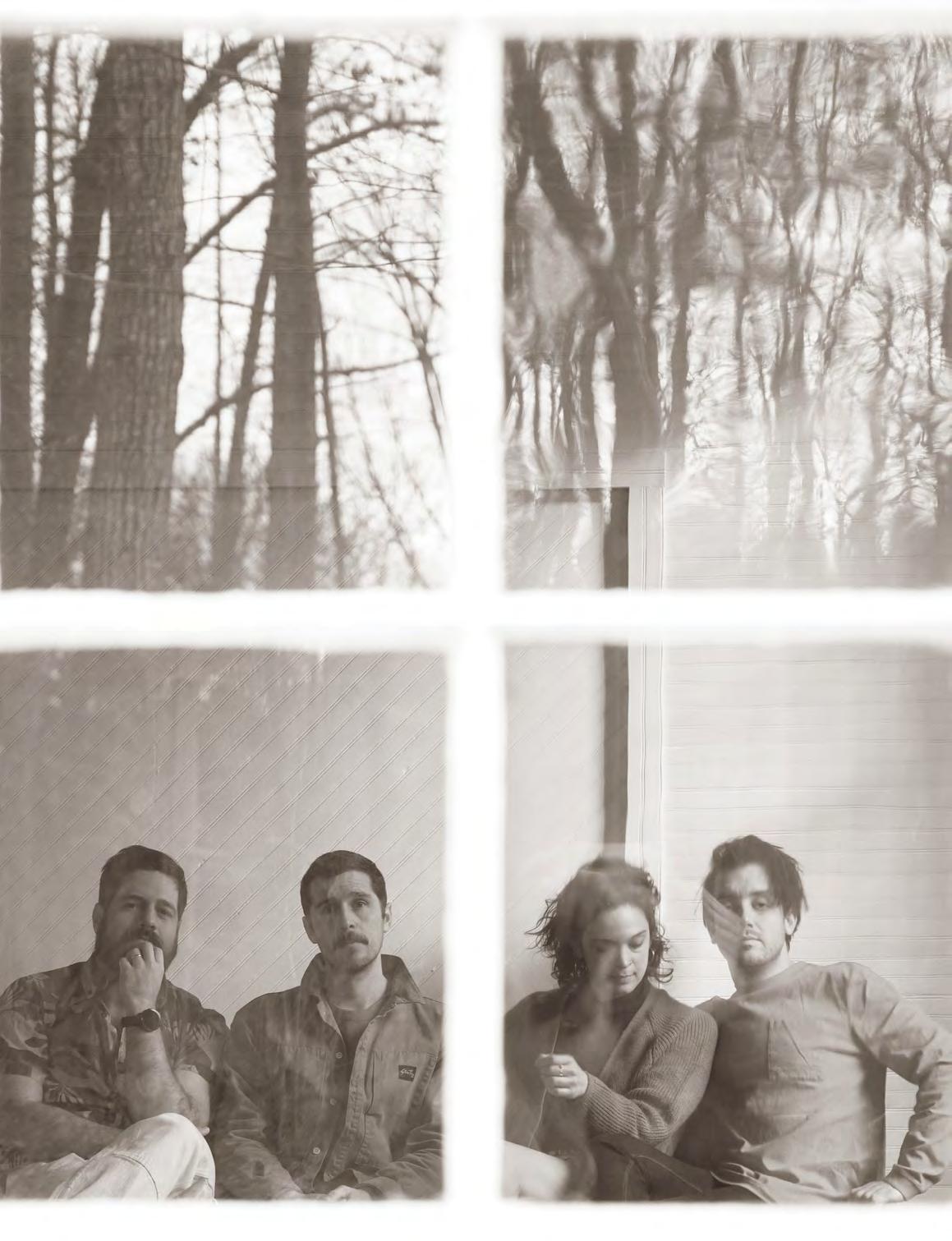
Mipso
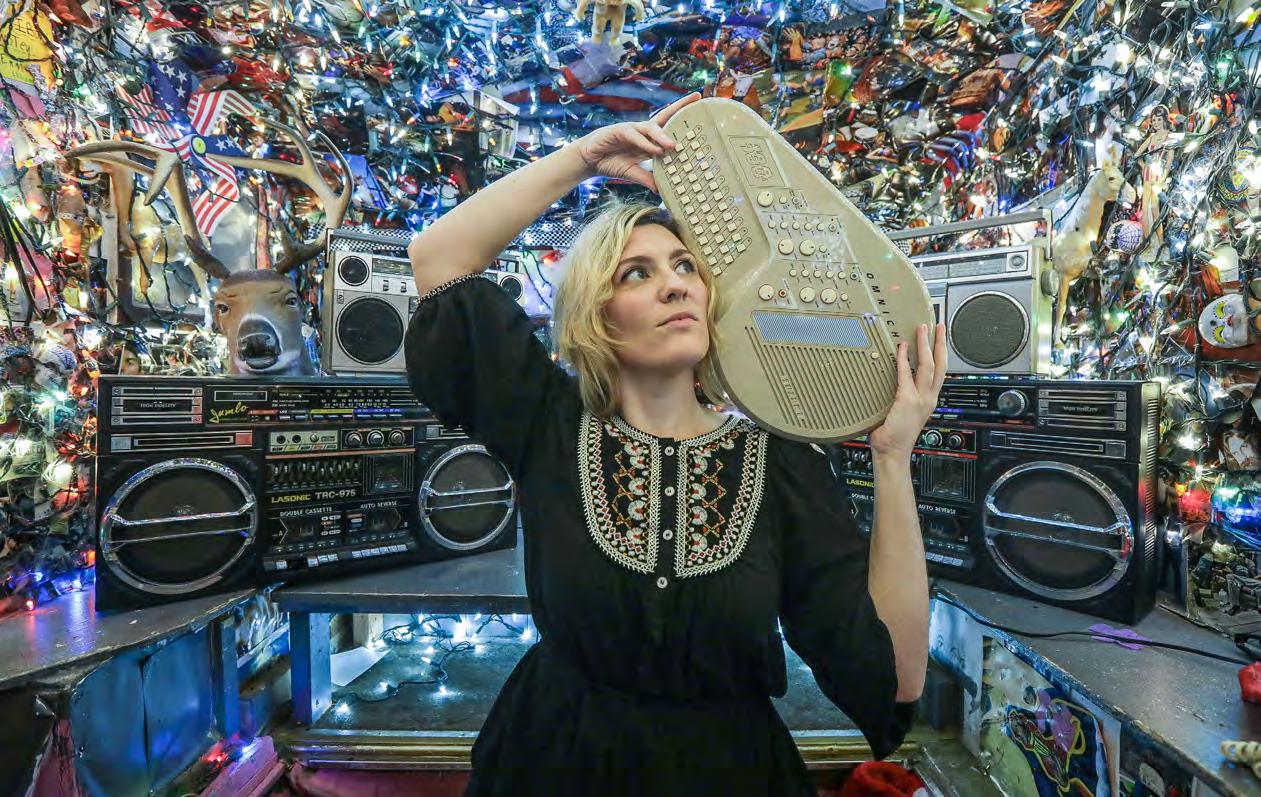
organized around a single institution or location, “but today’s musicians are placeless for the most part,” says McCoy. “They are touring and constantly on the move, so they are more di0cult to organize because they aren’t united by a central employer or workplace.”
Membership in legacy unions is open to those who play roots or other music genres. But according to jazz and rock guitarist Marc Ribot, one of the founders of the next-generation musiciansadvocacy group MWA, “while AFM has successfully represented sectors of the industry that have been under contract since the mid-20th century, it has not successfully represented an important sector of the industry that has come to being since then — independent musicians.”
Most of those musicians are independent contractors, cobbling together a living from multiple revenue streams including streaming and album sales, touring, and merchandise.
“In the United States, our
systems are not really built with those kinds of workers in mind,” says Kevin Erickson, director of the nonpro-t advocacy group Future of Music Coalition. Not only do independent contractors — or nonexempt workers — lack access to employee bene-ts and protections like health care and paid leave, but “under current antitrust law, you can’t collectively work to set prices or make demands of somebody else in the marketplace unless you have a labor exemption,” he continues. So, if a musician is not a direct employee of a streaming service, music venue, or record company, options for collective bargaining are limited.
According to Atlanta-based entertainment attorney Steven Sidman, the majority of the employment, copyright, licensing, and other laws that apply to modern musicians predate both the modern music industry and the current gig economy, creating confusion that prevents formal organization.
Organizing is also unpaid labor,
and “presumes a certain cohesiveness among constituents that is o/en lacking with independent and roots musicians,” he says.
Libby Rodenbough, a vocalist and -ddle player with the North Carolina folk quartet Mipso, says a scarcity mindset can also keep musicians from uniting to pursue common goals.
“ Throughout labor history, the powers that be have e+ectively pitted one type of worker against another, and that de-nitely plays [out] in the music industry,” she explains. “People think if they don’t take a gig or thank Spotify for putting them on a playlist, somebody else will get that spot.”
Action From Home
While issues like fair pay and streaming royalties predate the pandemic, the abrupt break in live music in March 2020 gave musicians like Dupuis and Dr. Lydia Warren, a folk performer and
Lydia Warren
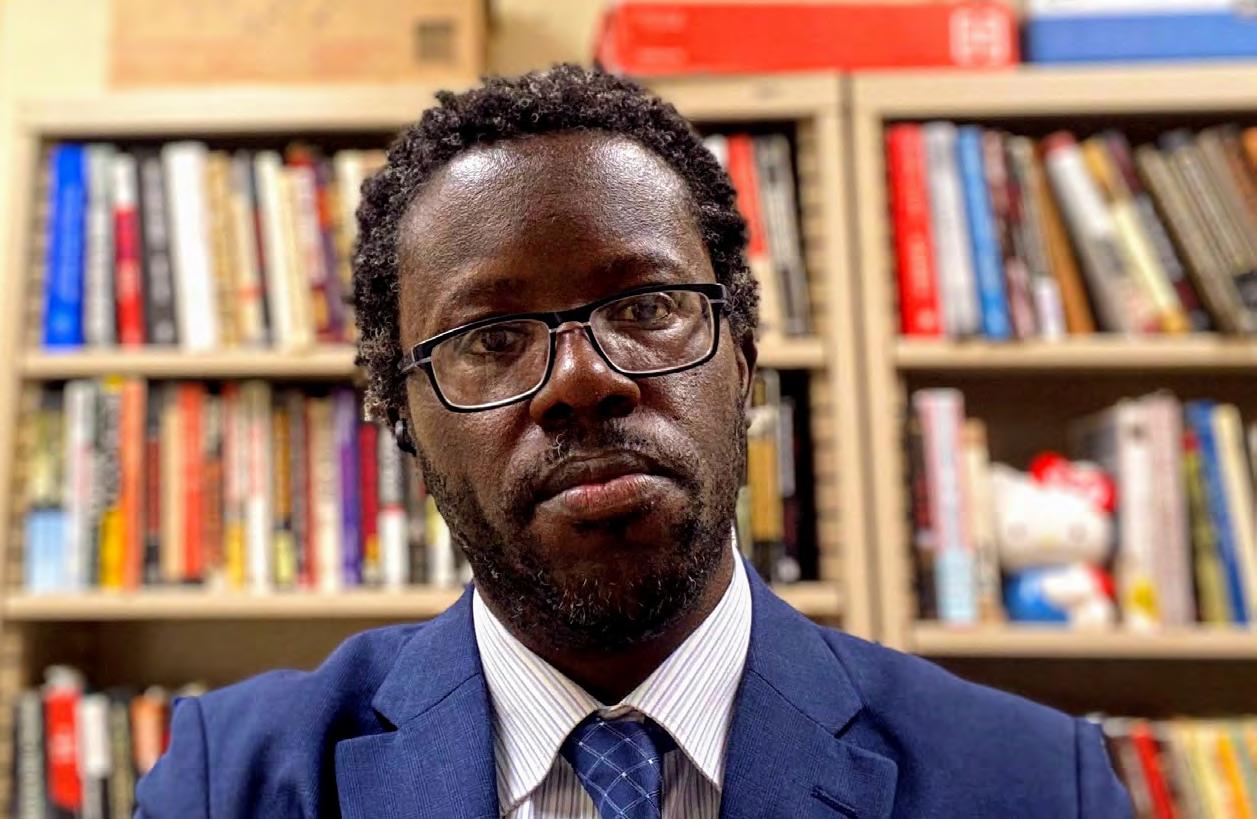
director of the Frank & Jane Gabor West Virginia Folklife Center at Fairmont State University, plenty of downtime to pursue activism.
“Like everyone else, I was stuck at home scrolling social media and came across UMAW and attended a virtual new members meeting,” says Warren. She found the group “nice and welcoming,” and immediately joined a subcommittee dedicated to fairness in streaming revenue called “Justice at Spotify.”
For Dupuis, the pandemic created a sense of urgency for suddenly out-of-work musicians and “a growing awareness of exploitation in labor across di+erent workplaces.”
As most musicians were sidelined from touring and performing, unions for hospitality and other essential workers were gaining traction and bringing attention to cross-sector causes like fair pay and safe working
conditions.
“Any time there are reports of successful organizing of large corporations like Amazon or Starbucks, it raises awareness to workers in other sectors, like music,” says McCoy.
According to Ribot, this new wave of unions — predominately independent, grassroots, and workerdriven — o+ered musicians an alternative blueprint for forming new solidarity groups, including MWA.
Originally founded in 2019 as a working committee of the NYC Artists Coalition dedicated to public policy improvements like labor protections and strengthening the social safety net for local freelance musicians and DJs, MWA and its work took on new urgency during the pandemic.
In 2020, Ribot, Dupuis, and other members of UMAW and MWA successfully lobbied Congress to pass legislation that allowed states
to extend unemployment bene-ts to independent contractors and other contingent workers as part of the Pandemic Unemployment Assistance Program.
“I feel lucky I have some other job training and was able to cobble together random kinds of work, but other musicians didn’t have those opportunities,” says Dupuis. “They o/en had to do essential work or food service, which also put them in harm’s way, and a lot of people who relied on music as their main source of income were in a rough Catch-22, so those unemployment payouts were critical.”
And in 2022, Ribot and MWA were instrumental in establishing a $200 million musicians relief fund for independent contractors in New York. The retroactive grants provided much-needed funds to performers like Ribot, who lost thousands of dollars due to pandemic-related concert and tour
Austin McCoy
“Today’s musicians are placeless for the most part. They are touring and constantly on the move, so they are more di cult to organize because they aren’t united by a central employer or workplace.”
Austin McCoy
labor and music historian and assistant professor at the University of West Virginia
cancellations in 2021.
As venues opened again and musicians started touring regularly, UMAW committee members collaborated with the National Independent Venue Association to develop guidelines for “best practices for returning to music without hurting health or -nances,” says Dupuis. The risk-mitigation procedures for house sta+, patrons, and musicians included face coverings, air circulation minimums, temperature checks, and contactless guest experiences. In addition, Dupuis’ UMAW chapter in Philadelphia partnered with the Working Families Party and local harm reduction groups to get Narcan (an over-the-counter medication for emergency overdose reversal) and fentanyl test strips into venues.
“A lot of musicians don’t realize you can add those provisions to your touring rider, but things don’t change unless you ask,” she says.
Building Coalitions
That sentiment infuses the work of this new wave of music advocacy groups, as the pandemic only compounded the systemic issues facing working musicians, like fair pay and streaming compensation.
“Over the past 25 years, things have demonstratively gotten worse in almost every area of musical work,” explains Ribot, who released a new album, Connection, with his indie rock trio, Ceramic Dog, in July.
“In live gigs, ticketing corporations and fat administrative expenses eat up bigger portions of the receipts, and in recorded music, there was a 60% collapse in income following the introduction of -le-sharing,” he says.
“In response to these conditions, dozens of people are getting together in their towns and on their scenes to try to change things.”
Even those behind-the-scenes in the music industry are taking action.
Workers at Secretly Group, a quartet of independent music labels that represent artists like Angel Olsen and Kevin Morby, won a contract with management last October, and employees at Bandcamp voted to unionize last March.
As Bandcamp United member and support specialist Ed Blair explains, “between streaming and COVID, it’s never been harder to be involved in the music industry.” He says unionizing is the “only rational response to the way both the tech and music industries are headed — every day there’s another layo+ ! Unions allow workers to have a say in their working conditions, and that’s never been more crucial.”
These new groups are changing the status quo with informationsharing, transparency, and collective action. UMAW recently launched a musician rate transparency initiative, inspired by the Freelance Solidarity Project, an
organization of contract writers dedicated to raising industry compensation that’s a division of the National Writers Union.
“The ability to share rates is so important for musicians,” says Dupuis. “So many bands who are new and excited don’t know that $100 isn’t an appropriate payment for a support slot on a tour and don’t know that they can and should negotiate.”
In addition, UMAW o+ers free attorney consultations in partnership with Harvard Law School’s Cyberlaw Clinic and encourages musicians to -ght back against standard anti-musician practices with campaigns like #MyMerch, which calls for music venues and festivals to stop taking a cut of merchandise sales.
“Until that campaign, that was not something I recognized as predatory,” says Warren. “But I would roll up to a festival and they
would take 20% of my merch sales, even when it was just my mom selling the CDs.”
UMAW is also pushing for transparency in streaming contracts and payments. While streaming accounts for more than 80% of the overall music economy and those platforms continue to bring in billions of dollars of revenue, the payout to working musicians remains negligible.
“A/er the label or publisher or manager takes their cut, you’re just splitting fractions of pennies of pennies of pennies among four to six people,” says Dupuis. She is one of nearly 30,000 musicians who signed UMAW’s Justice at Spotify petition demanding an artist-centric payment model, increased business practice transparency, and an end to lawsuits against artists. The group is also currently working with US Rep. Rashida Tlaib on national legislation
that would pay artists direct streaming royalties, similar to the current satellite radio payment model.
“This bill would rede-ne the landscape of streaming and maybe bring us closer to living wages for musicians,” says Warren.
While fair streaming practices are essential for working musicians, they still rely heavily on live performances for most of their income. Both Dupuis and Rodenbough are touring this fall — Dupuis and Speedy Ortiz to support their fourth studio album, Rabbit, Rabbit, and Rodenbough and Mipso for the release of the band’s sixth LP, Book of Fools — and they are getting loud about fair compensation.
“ The reality for touring artists is that you’re working 24 hours a day because you’re either traveling or loading in or performing or selling your things, and you make maybe $50, which is not sustainable,” says
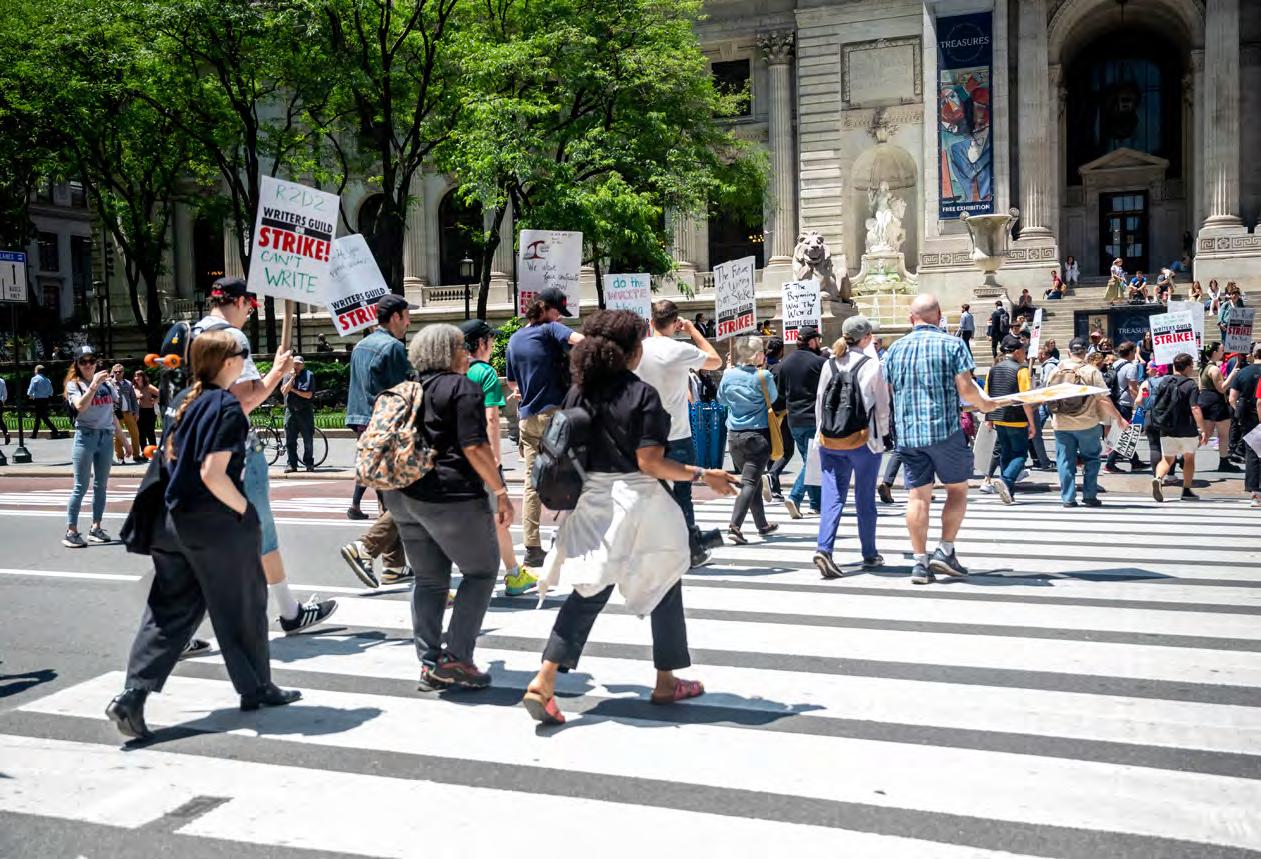
Dupuis.
She is one of the voices behind a UMAW campaign that is challenging compensation practices at one of the industry’s most high-pro-le festivals, South by Southwest (SXSW).
“Many artists have the dream or goal to play SXSW, but they pay artists who perform in a pretty draconian way,” says Dupuis.
According to UMAW, SXSW collected $270,000 in artist application fees in 2022, but only paid a total of $32,000 to musicians to perform at that year’s event. As application fees have risen from $40 to $55 per act over the last 10 years, US-based solo artists for 2023’s SXSW were paid either a $100 appearance fee (bands receive $250) or an event wristband, while international acts receive only a wristband and zero payment.
“ The pandemic made us stop and look at how outdated these
payment modalities are and will continue to be unless there are collective actions,” Dupuis says.
Since the pandemic began, Ribot has joined members of MWA, UMAW, Bandcamp United, Secretly Group, and other activist organizations to picket the New York o0ces of Penske Media — the majority owner of SXSW (which also publishes music and entertainment magazines like Rolling Stone, Billboard, and Variety). He spoke at a fair pay rally at SXSW and joined local advocacy groups AFM Local 433 and Austin Texas Musicians to lobby the Austin City Council for fair pay.
These e+orts seem to be working: In June, the council’s Parks and Recreation Board unanimously passed a recommendation requiring SXSW to change artist compensation before the city waives fees at cityowned spaces — a step forward for
the collective musicians’ movement. Shortly therea/er, the festival announced a new compensation structure for 2024: $350 for bands and $150 for solo artists, or about $100 more per performance.
And these coalitions have staying power. While Dupuis says the days of nonstop Zoom action meetings went away when people returned to work and life, “there’s certainly been great awareness of what organizing can accomplish, and it’s helping to change our ideas of what touring looks like and what compensation looks like.
“In the ideal world, we would be like other countries and have government funding for the arts, and that could -ll in some of the gaps, but the commonality across all UMAW projects is the knowledge and con-dence that you can ask for things that will make a di+erence in the live music space.”
Fair Pay SXSW rally moving to join the WGA picket in New York City, May 2023
HEROINES UNSUNG
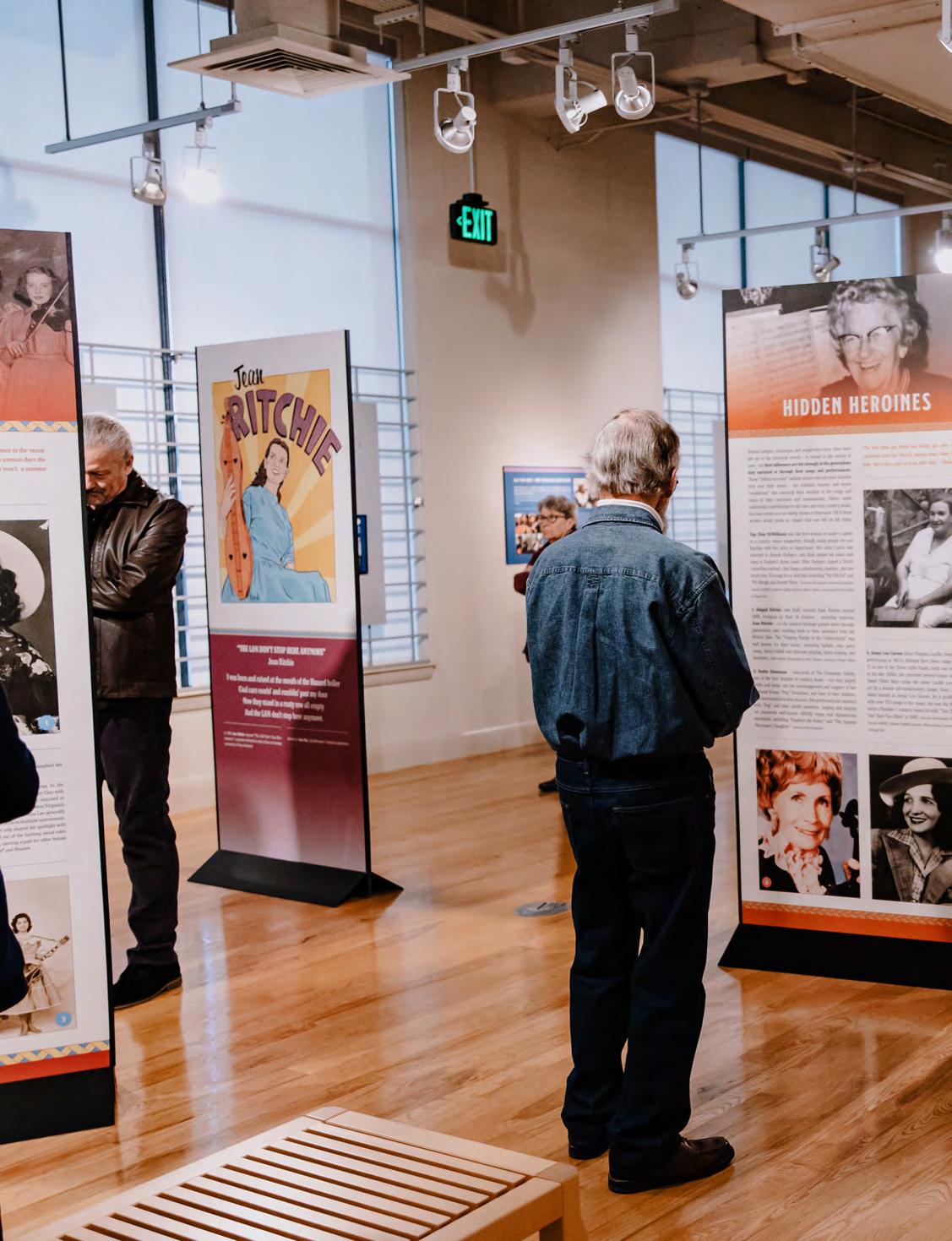
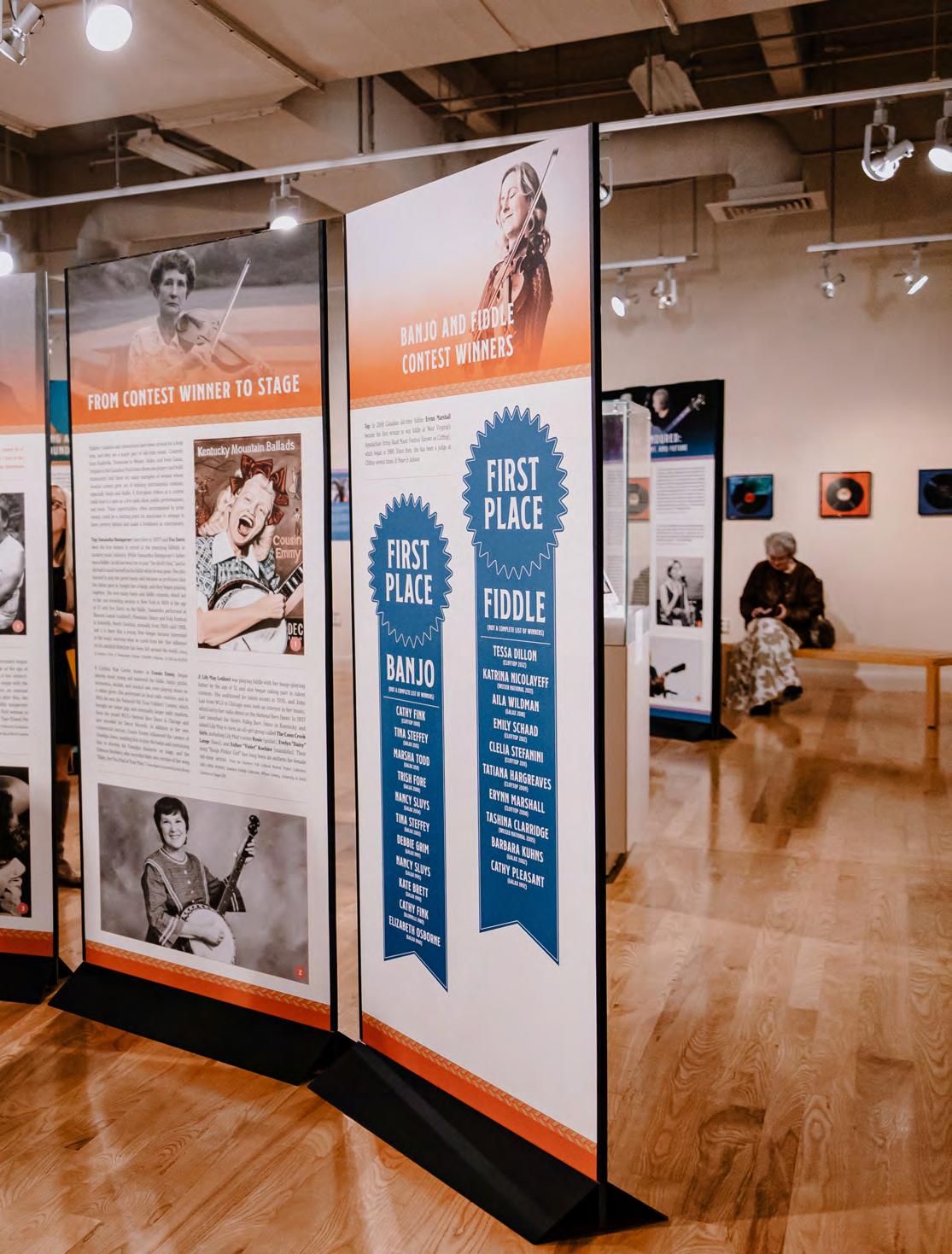
I’ve Endured: Women in Old-Time Music opening reception, March 2023.
Through a spe2ial exhibit titled I’ve Endured: Women in Old-Time Music, the Birthplace of Country Music Museum, located on the Tennessee-Virginia border in Bristol, is honoring a lesser-known, yet foundational journey in the development of country music. Between July 25 and Aug. 5, 1927, Ralph Peer conducted recording sessions using the new Western Electric electronic microphone. Nineteen acts recorded 76 songs in that time. Those now-famous “Bristol Sessions” are known as the “Big Bang” of modern country music, the event in history Johnny Cash referred to as “the single most
important event in the history of country music.”
The 1927 Bristol Sessions featured the -rst recordings of both Jimmie Rodgers and The Carter Family. They not only initiated the careers of these superstar performers, but also launched the broad commercialization of country music. By sharing this story, the museum traces how country music moved into the mainstream.
I’ve Endured: Women in Old-Time Music, which opened in March, beckons visitors to discover the heroines of this traditional subsect of country music whose contributions have been overshadowed by their male counterparts for far too long. It pays tribute to women like Ola Belle
Reed, whose song inspired the title of the exhibit, as well as Maybelle and Sara Carter of The Carter Family, Hazel Dickens and Alice Gerrard, Etta Baker, Elizabeth Cotten, Ramona Jones, Rose Maddox, and Lily May Ledford. All these women were pioneers in their own right who shaped the foundations of country music with their raw talent and unwavering determination.
It also celebrates women whose stories are less known — women like Jenny Lou Carson, Katherine Jackson French, Hattie Stoneman, Leola Manning, Roba Stanley, Jane Hicks Gentry, and The Bowman Sisters. Their stories are a testament to the strength and perseverance of those who de-ed societal expectations,
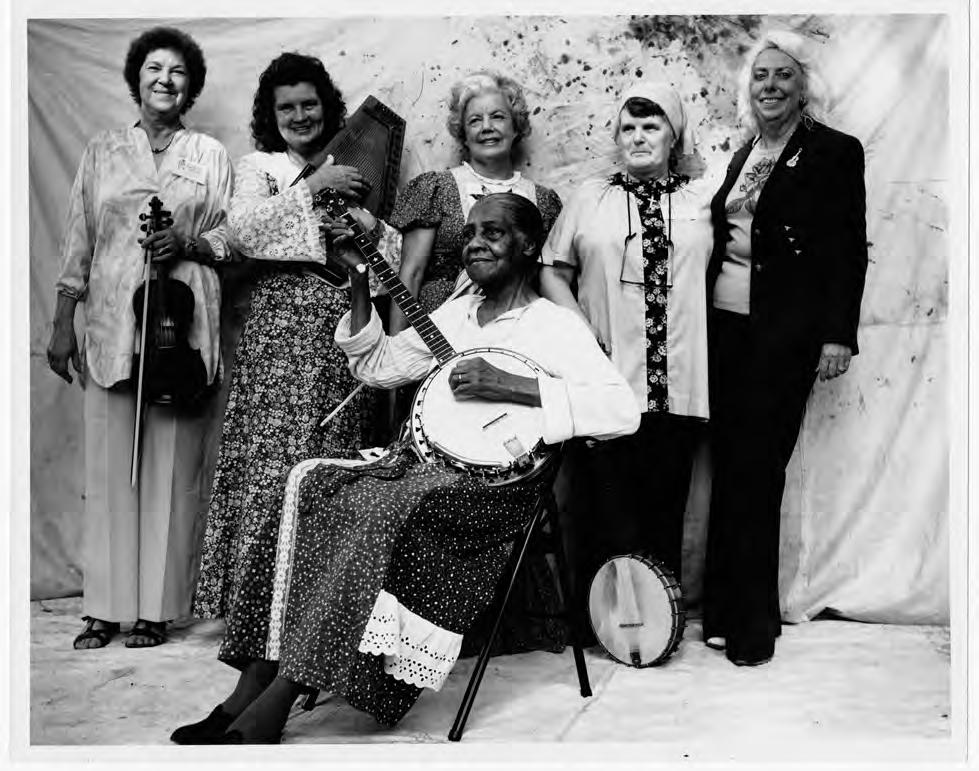
Several iconic women in old-time music – Lily May Ledford of the Coon Creek Girls, Janette Carter, Ramona Jones, Ola Belle Reed, Rose Maddox, and Elizabeth Cotten (sitting) – photographed in the 1980s
broke barriers, and fought for their rightful place in the spotlight.
Many of these women were bound by societal expectations of their time. O/en, for instance, husbands wouldn’t allow their wives to perform outside of the home or churches, deeming work for women in the entertainment business too risqué or unseemly. Financial inequity, gender bias and discrimination, and other challenges also a+ected women’s musical careers. And some of the stories of those who found success have been forgotten to time.
By shedding light on these women, the exhibit honors their indelible mark on country music history. It underscores the
importance of recognizing their achievements, not just for the sake of historical accuracy, but as a means of inspiring generations to come. Their struggles and triumphs serve as a beacon of hope, reminding us that dreams can be realized against all odds.
Contemporary female old-time musicians are also highlighted in I’ve Endured — women like Cathy Fink, Tatiana Hargreaves and Allison de Groot, Amythyst Kiah, Roni Stoneman, Trish Fore, Erynn Marshall, Lillian Werbin, and the members of The Reel World String Band. Their voices and careers carry the throughline of old-time music and show the ways that it is expanded and innovated upon today.
I’ve Endured: Women in Old-Time Music reminds visitors that every voice deserves to be heard, every talent deserves recognition, and every hidden heroine deserves her rightful place in the annals of country music history. The exhibit is on display now through Dec. 31 at the Birthplace of Country Music Museum and will travel to other institutions beyond its stay in Bristol.
— Charlene Baker, communications manager at the Birthplace of Country Music Museum
For more information on the exhibit, visit WomenInOldTimeMusic.com. To learn more about the museum, visit BirthplaceOfCountryMusic.org.
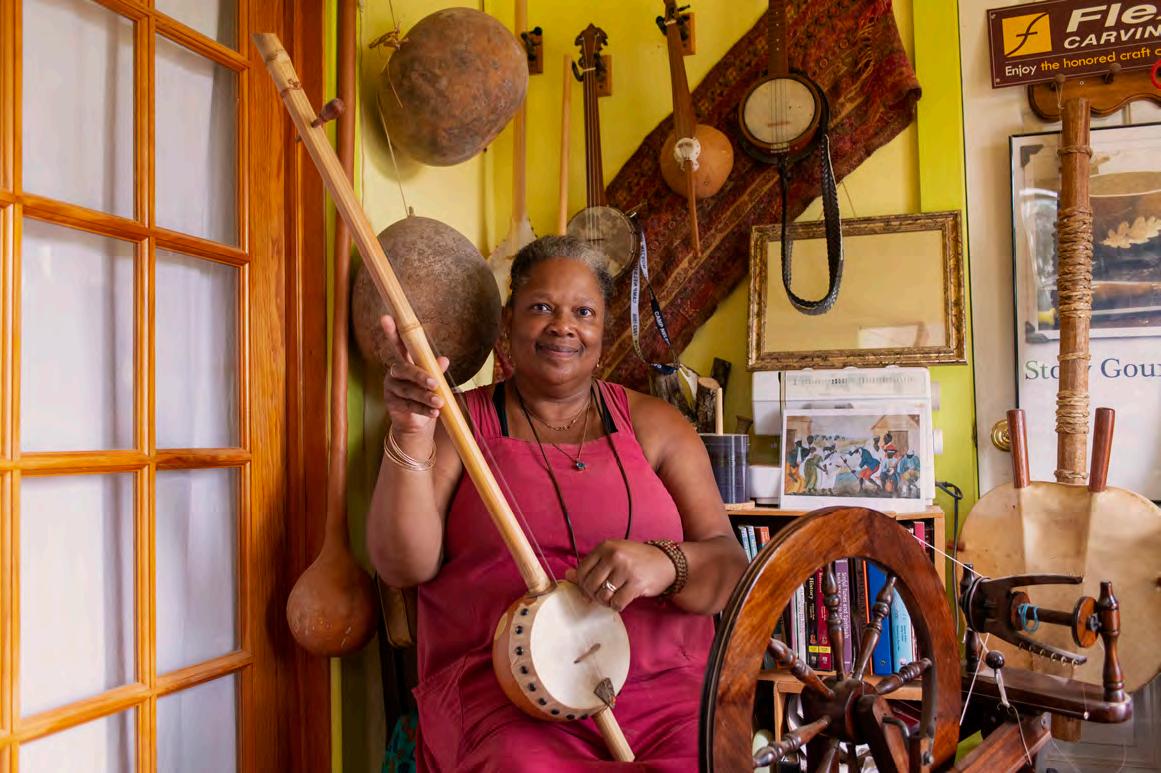
PAT JARRETT
Luthier Dena Jennings grows her own gourds for the banjos she makes, educates others about the instrument’s history, and hosts the Affrolachian On-Time Music Gathering.
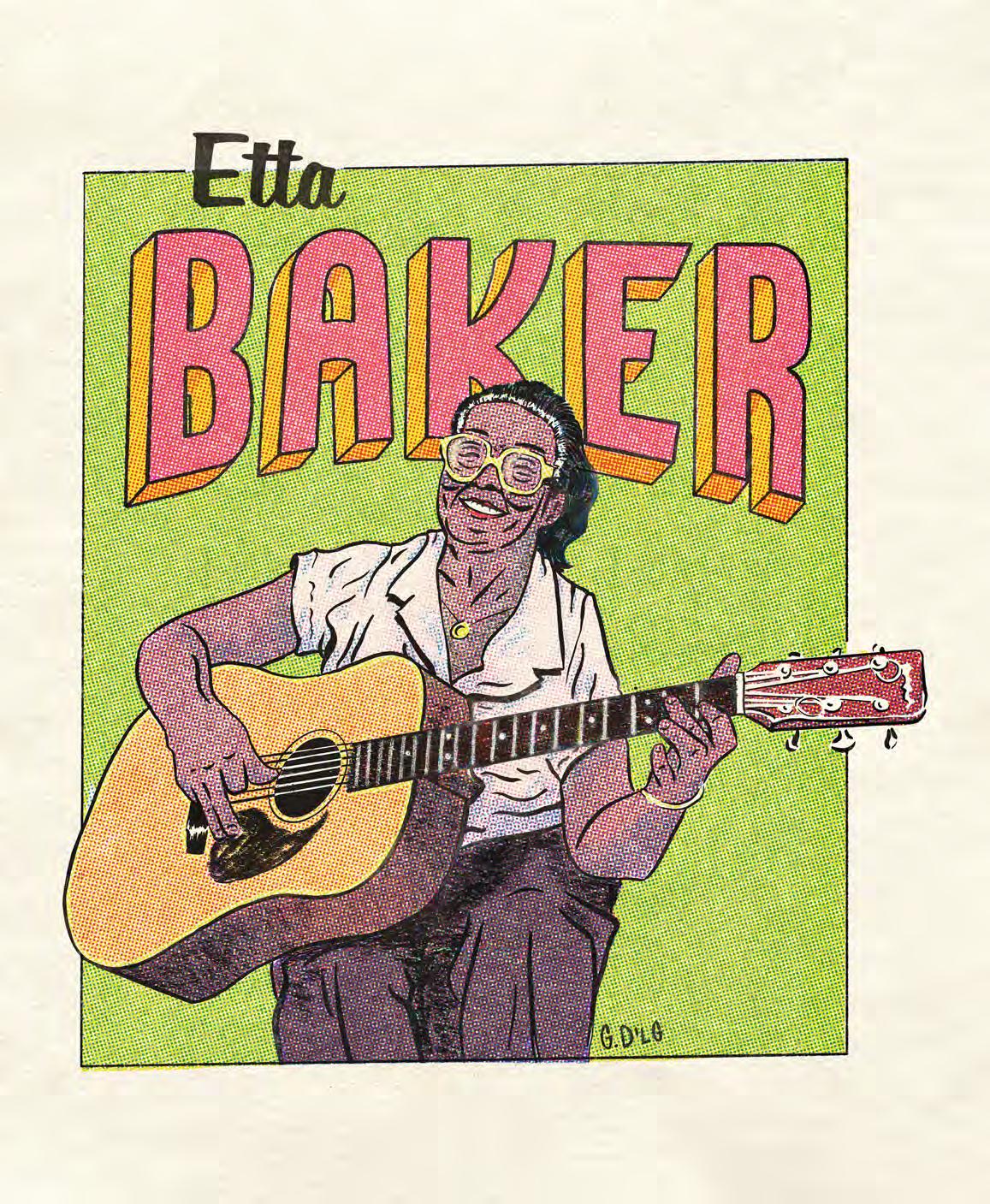
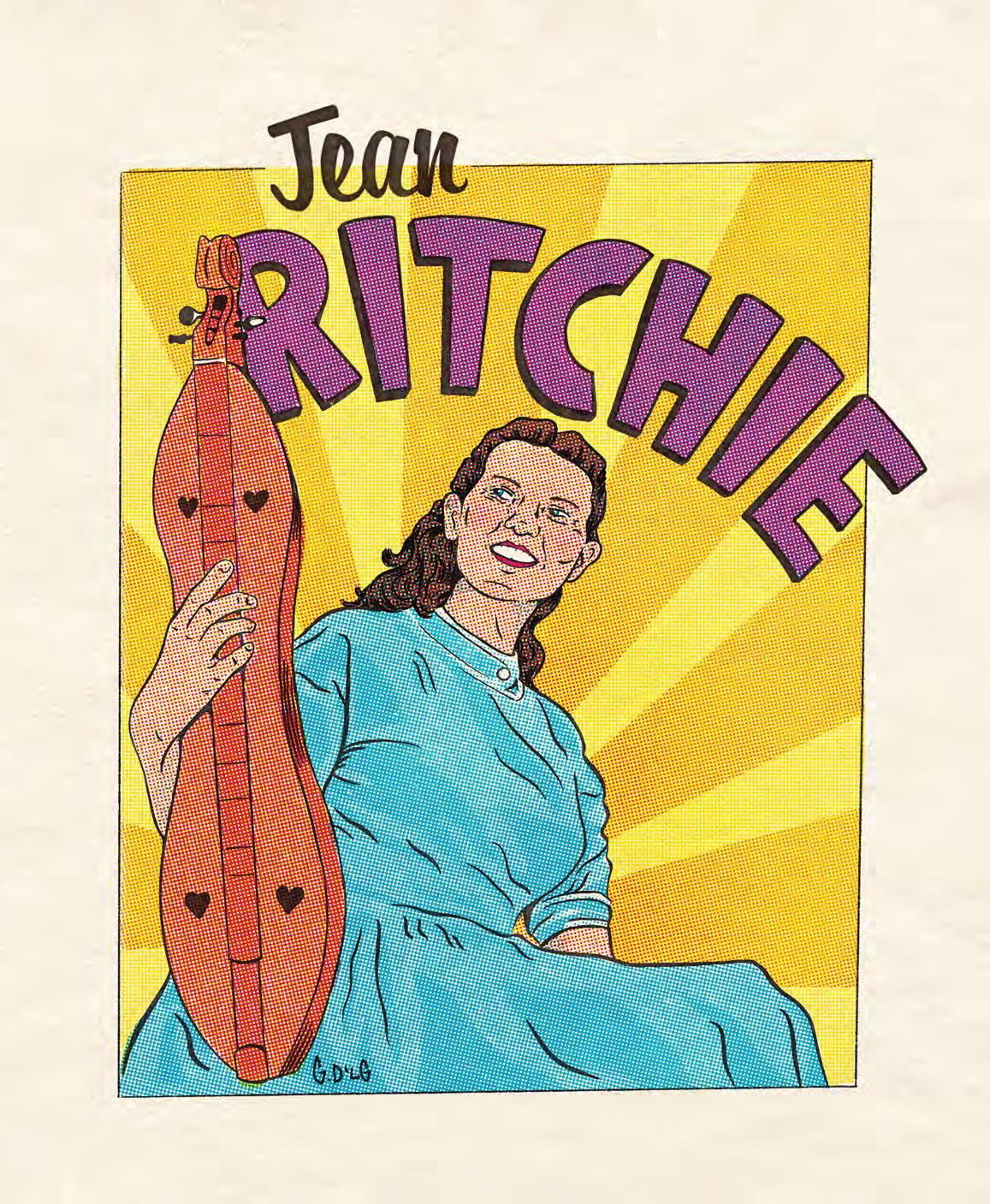
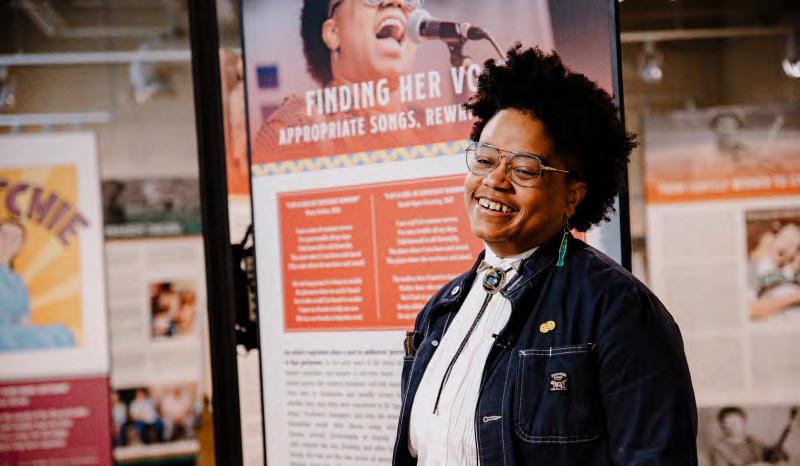
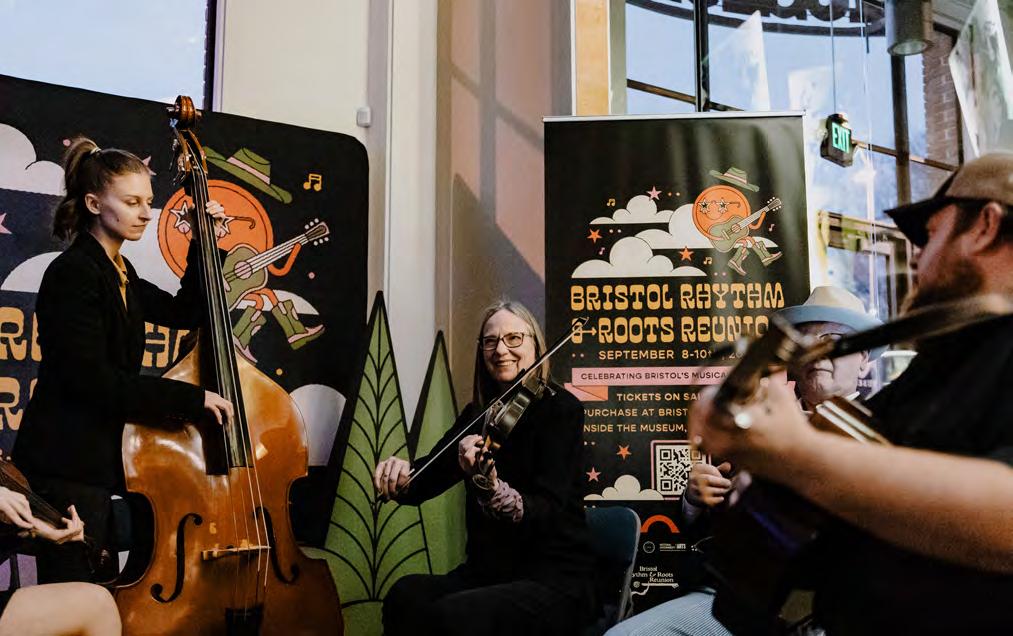
Reel World String Band member Karen Jones plays fiddle with the East Tennessee State University Old-Time Band at the exhibit’s opening reception in March 2023
Amythyst Kiah, whose music is rooted in old-time traditions, stands in front of one of the I’ve Endured panels at the exhibit’s opening reception in March 2023
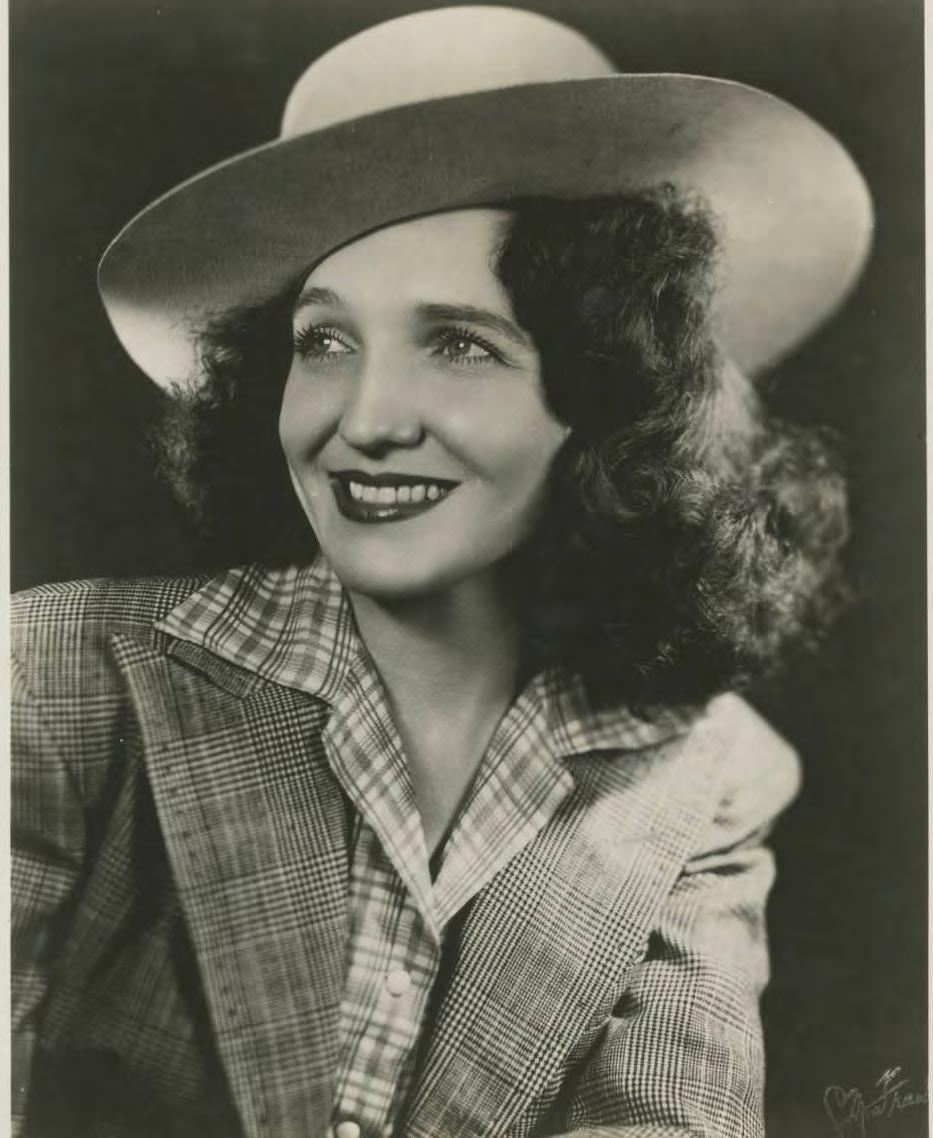
Jenny Lou Carson was a prolific songwriter with more than 170 songs to her name, and she was the first woman to write a No. 1 country music hit with “You Two-Timed Me One Time Too Often” in 1945.
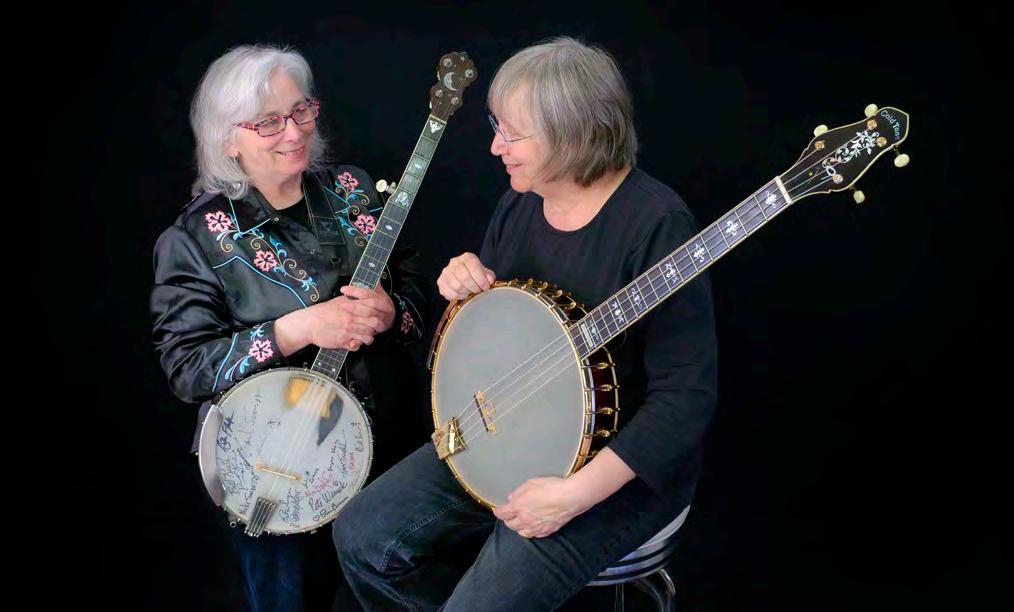
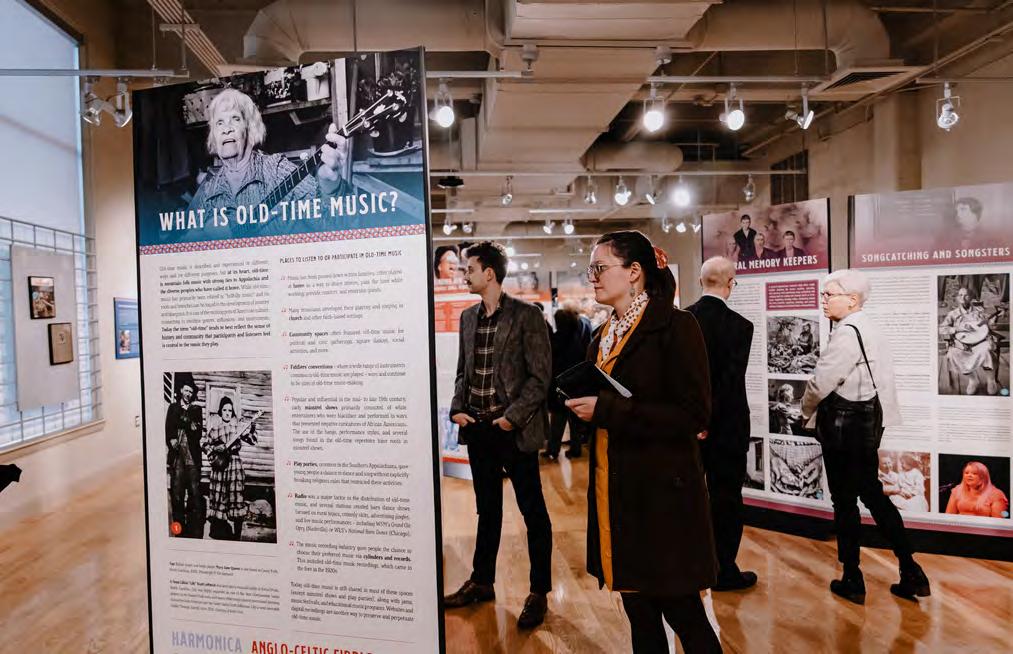
IRENE
YOUNG
Bluegrass and old-time musicians Cathy Fink, left, and Marcy Marxer
I’ve Endured: Women in Old-Time Music, opening reception, March 2023
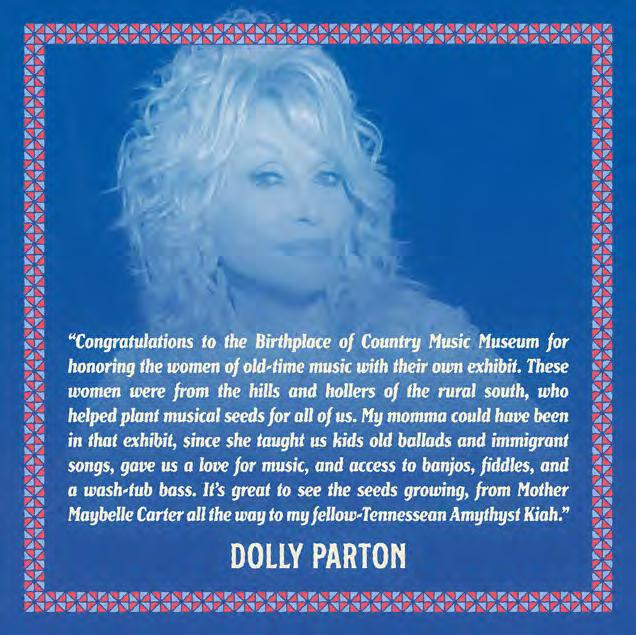
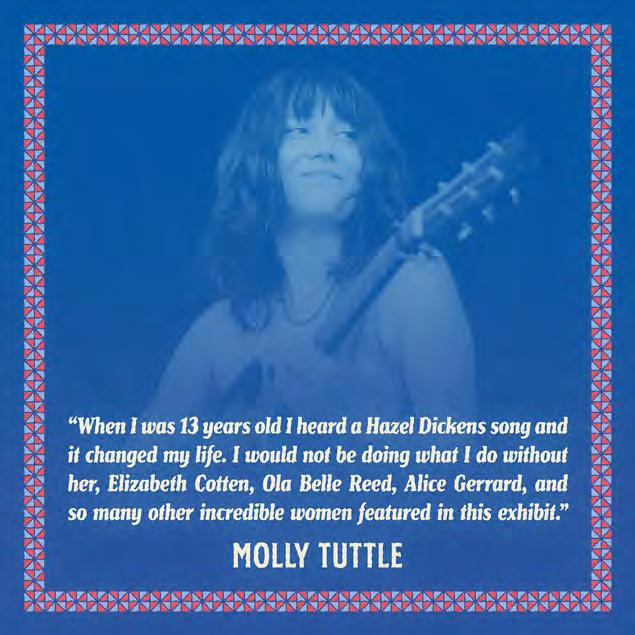
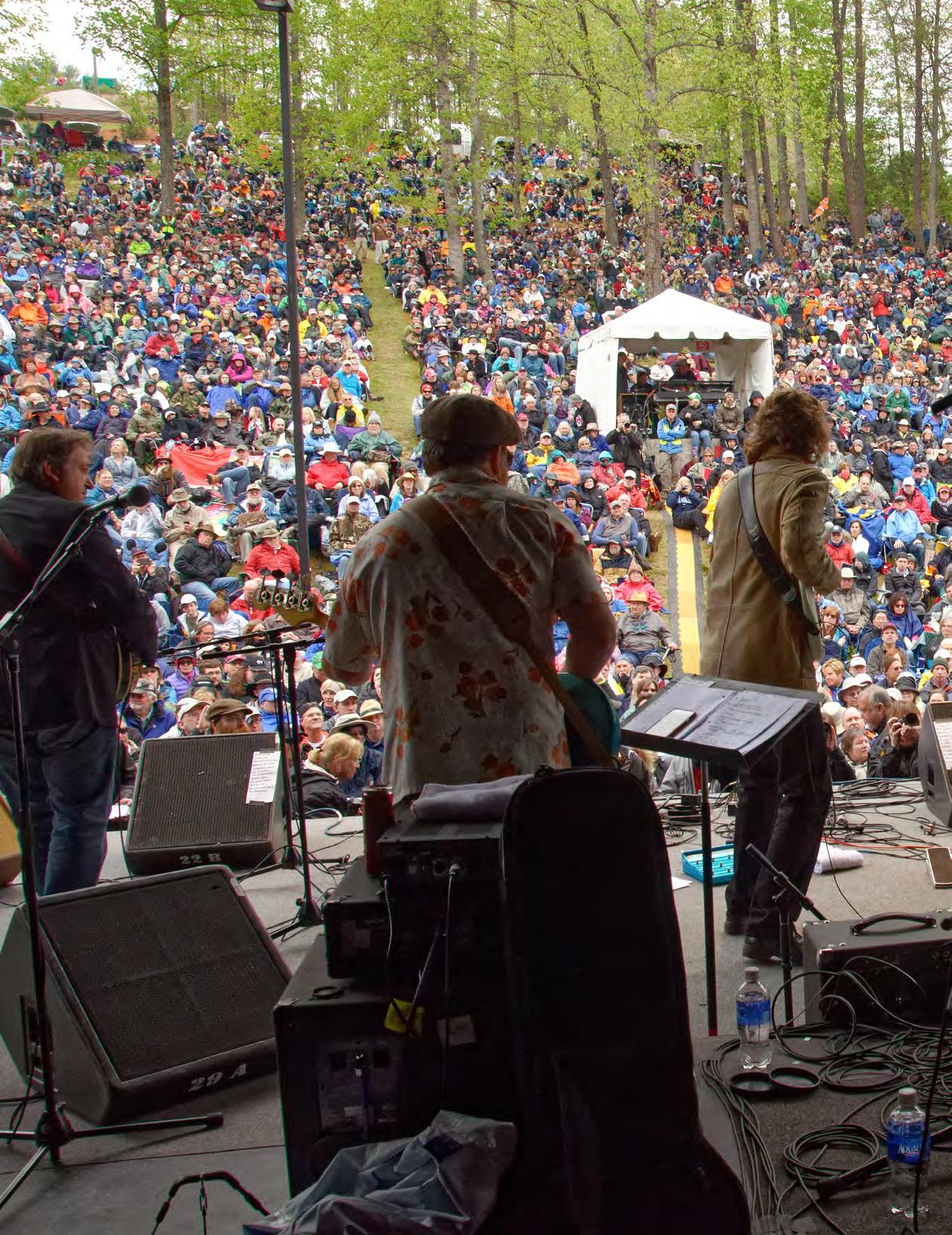
A COMMON LANGUAGE
Tribute sets create magical moments for festival artists and fans
by Stacy Chandler
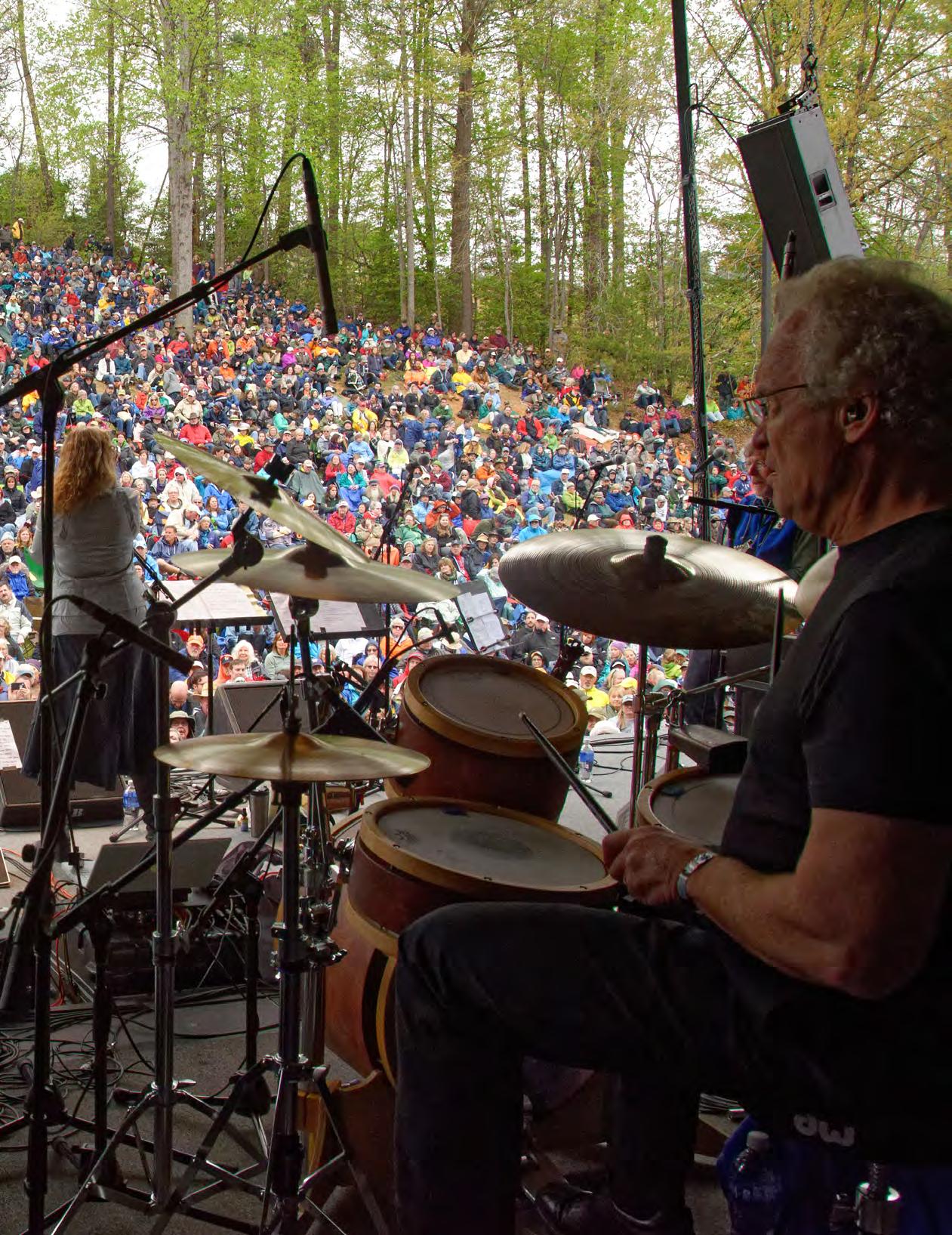
The Waybacks’ Album Hour at MerleFest 2015
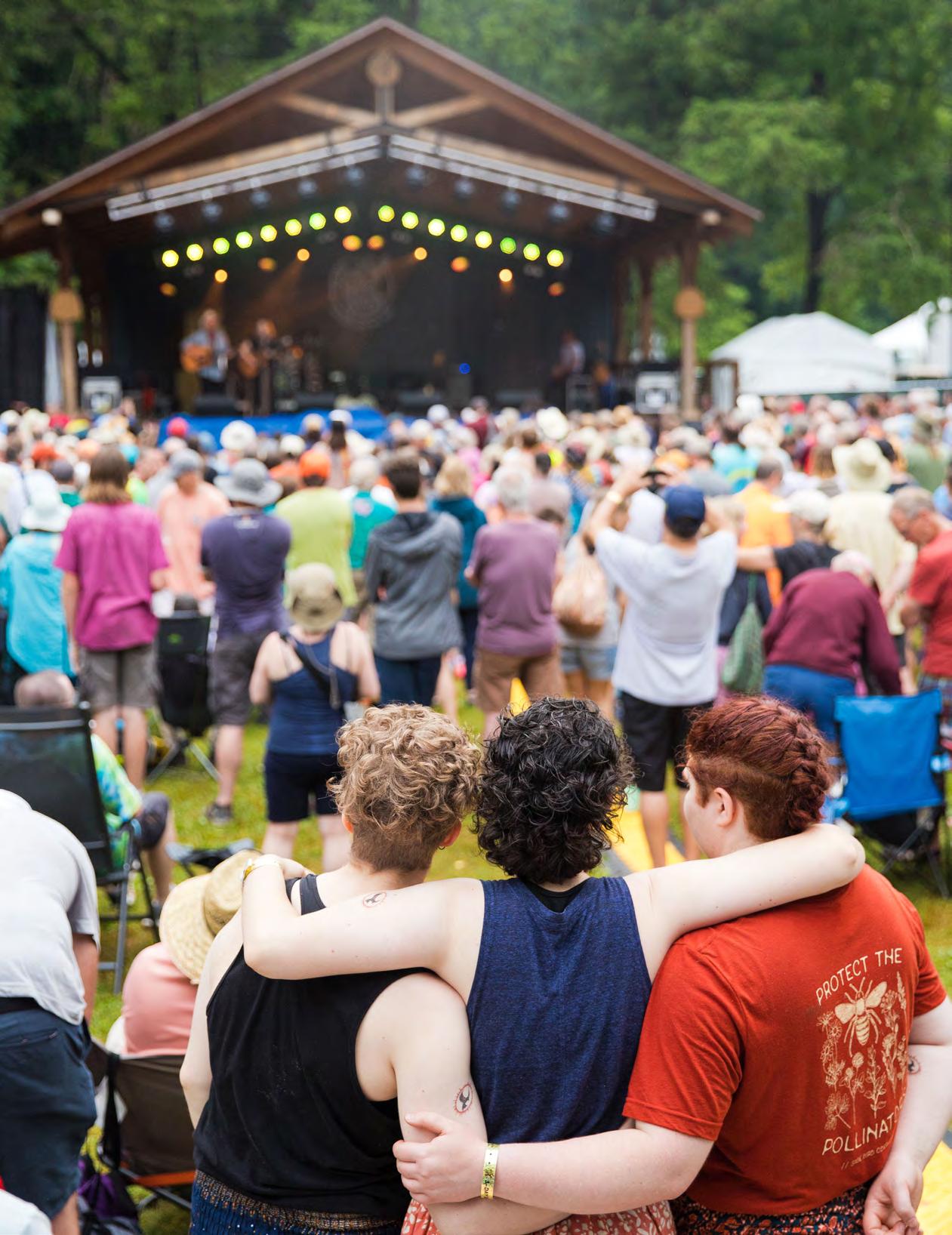
The Beatles tribute set at the 2022 Red Wing Roots Festival
The set .oesn0t start until 3 p.m. on Saturday, but by 10 a.m., rain or shine, the steep grassy slope in front of the Hillside Stage at MerleFest is already starting to -ll up with people.
They’re here for Album Hour, an annual set in which San Francisco roots-rock band The Waybacks and a slew of guests cover a classic album, and they don’t want to miss a second of it. Especially that very -rst second, when the opening note rings out and everyone holds their breath, the start of a collective game of Name That Tune to -gure out what album will be in the spotlight. Keeping the album a secret until showtime is part of the tradition’s magic, but even more so is the unexpected spin each tribute takes
in the hands of The Waybacks and their guests. Far from reproducing the album note for note, the set puts the songs in a fresh light, adding new instrumental and vocal harmony parts, interludes that sneak in well-loved pop tunes, and stories about the artist and their music.
As The Waybacks frontman James Nash explains, “When we do an Album Hour, we’re not paying tribute to the music that’s actually there. We’re paying tribute to what the music meant to us.”
In the decade and a half that it’s been a staple in the schedule, Album Hour has become a MerleFest must, buzzed about for all four days of the springtime festival in Western North Carolina. First, there are guesses and anticipation of what album might be covered,
and then, a/er the Saturday a/ernoon set concludes, raves about who popped up onstage to contribute to what song. For fans, a tribute set like Album Hour is a chance to hear well-worn music in a new light. For musicians, it’s an opportunity to stretch past their comfort zone and discover something new while collaborating with their peers and musical heroes. And for festivals, it brings a special jolt of energy, a cherished tradition, and the makings for a one-of-a-kind experience every time.
Same Time, Same Place
Tribute sets are fairly common at festivals, whether programmed by the event’s organizers or by a band they’ve booked that wants to do
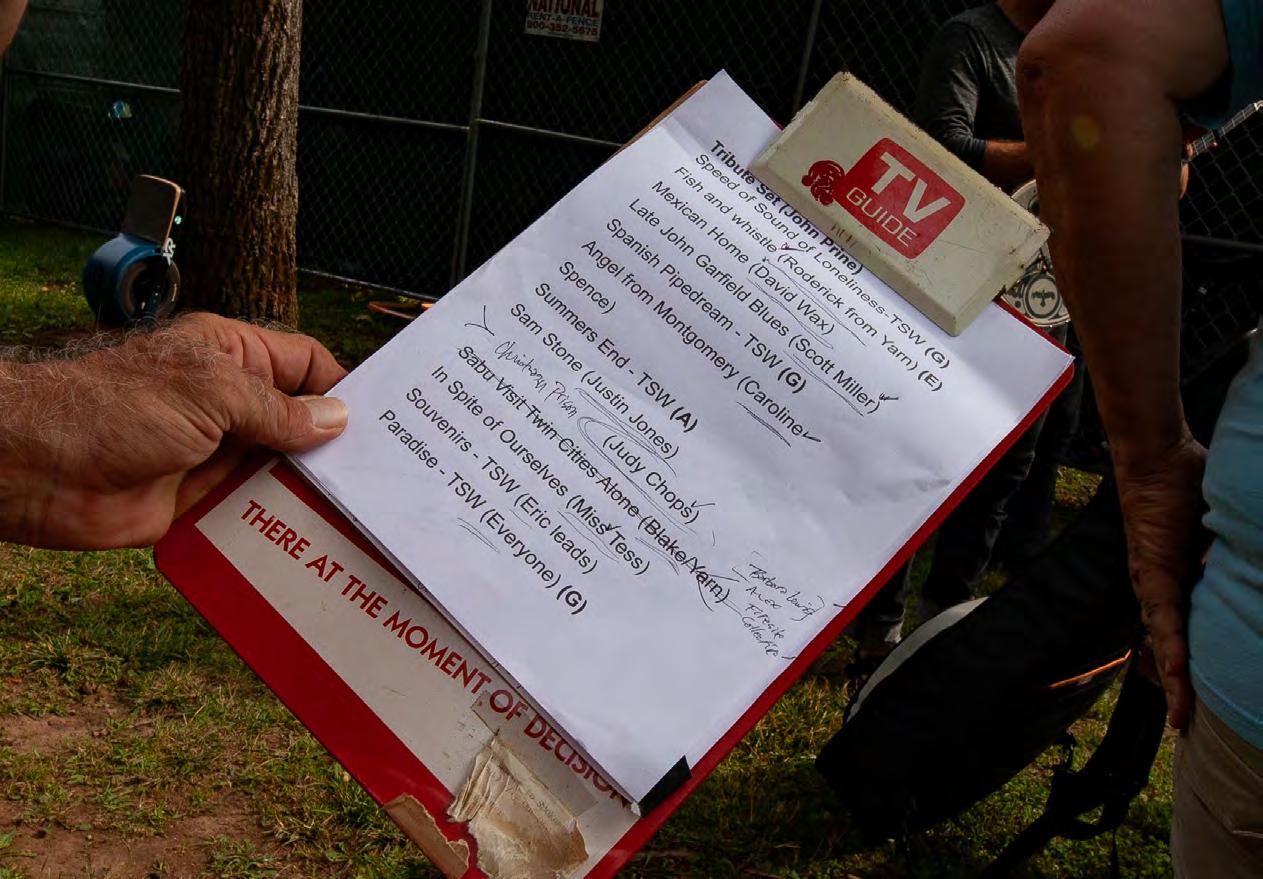
something creative with its time slot. O/en, they’re dictated by a coincidence of timing — the death of a beloved artist, the anniversary of a landmark album, or the event celebrating a milestone of its own.
While the Newport Folk Festival doesn’t have an annual tribute show set in stone, it gives artists a lot of freedom, and that o/en turns into epic moments like 2022’s Joni Jam, masterminded by Brandi Carlile, which saw the return of Joni Mitchell to the stage a/er 20 years. (That set was released as a live album, At Newport, by Rhino last July.) Paul Simon was also given the tribute treatment at Newport last year in a set led by Nathaniel Rateli+ and The Night Sweats, and the songs of John Prine were celebrated in a special set this year.
San Francisco’s Hardly Strictly Bluegrass festival put together a
virtual tribute to John Prine a/er he died in 2020, which included Emmylou Harris, Buddy Miller, and Bonnie Raitt contributing to a poignant performance of “Paradise.” And in 2022, the festival scheduled a set titled “Fare Thee Well” to honor beloved -gures recently lost, including Prine, Justin Townes Earle, and festival founding family member Nancy Bechtle.
MerleFest’s Album Hour is a rare type of tribute in that it happens every year — same time, same place — but it’s not the only one. Yarn’s tribute sets have become an annual highlight of the Rooster Walk festival in Martinsville, Virginia, with as much creativity applied to the set name as to its contents. There was Simon and Yarnfunkel in 2022, The Last Yaltz in 2018, and “Bruce Yarnsteen” in the spotlight for this year’s installment.
When The Steel Wheels started its Red Wing Roots Festival in Mount Solon, Virginia, in 2013, they’d been in the audience for a few MerleFest Album Hours, and they knew they wanted to incorporate that spirit into their own event. In fact, Doc Watson, who helped launch MerleFest in 1988 to honor his late son and picking partner, was the -rst artist the band chose to honor with a tribute set.
Like Album Hour, the Red Wing Roots tribute set is a tradition. Each year on the summer festival’s closing Sunday, under the towering rock faces that give festival home Natural Chimneys Park its name, The Steel Wheels present a setlist of songs by a favorite artist or band, unveiled as a surprise to the audience. Usually, those songs are pulled from many albums, though in 2019 they played selections from
Setlist from the 2021 John Prine tribute at Red Wing Roots Festival
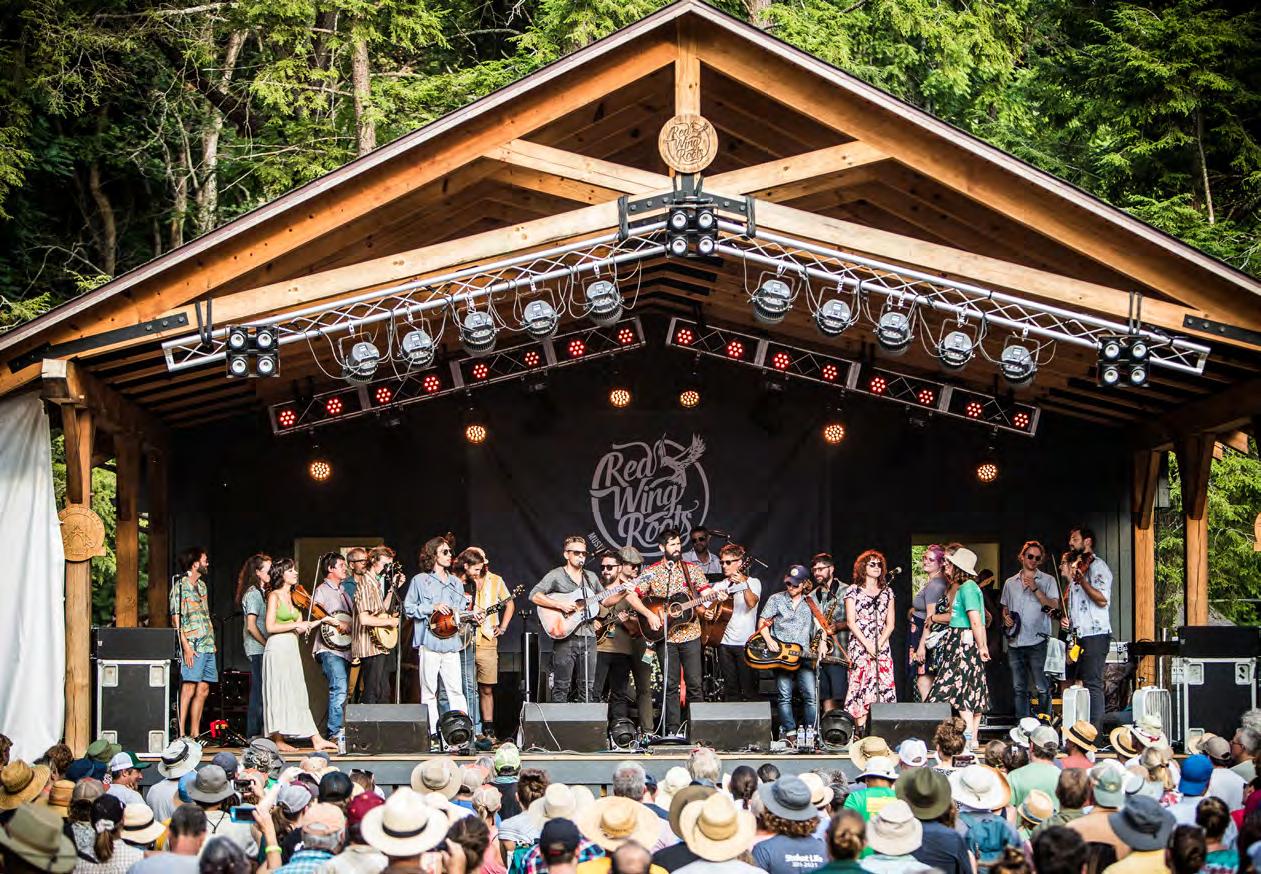
The Pizza Tapes album by Jerry Garcia, David Grisman, and Tony Rice; this year they honored a single album, Gillian Welch’s Soul Journey, to mark its 20th anniversary.
Their tributes to Watson, Guy Clark, Tom Petty, and John Prine came soon a/er each of those giants passed away, but other tribute subjects were simply artists the band admires, like Townes Van Zandt, Hank Williams, Dolly Parton, and The Beatles.
“A lot of it just comes down to what do we feel excited about,” says Steel Wheels frontman Trent Wagler.
Once there’s consensus within the -ve-member band — which doesn’t always come quickly or easily — they get to work shaping the set. For guest artists, they tap into the festival’s lineup as well as local musicians and friends. By
email and text, they start creating a “roadmap” of songs and matching them to artists, says Steel Wheels guitarist and mandolin player Jay Lapp.
By the day of the show, there’s a song list, but no one knows exactly how the set will unfold. There’s no time for formal rehearsals, so artists talk and play through their songs backstage just a few hours before the set starts, working out harmonies and slotting in solos.
“Having the collaboration we do, every year it’s like a masterclass,” Wagler says. “We’re getting to see and be a part of watching other musicians’ process and how they do or don’t collaborate.”
It’s also a rare chance for a band with several albums’ worth of original music to apply their creativity in a di+erent direction, with people they don’t o/en get to
play with, in front of an audience that’s thrilled to bear witness.
From the stage, The Steel Wheels love “seeing people’s faces sort of change from questioning and wonder to ‘Oh, this is what’s happening’…,” Lapp says. “It’s become this thing, and the festival as a whole has just become this thing, that’s bigger than us, but it’s just so fun to be part of it.”
‘Let’s Do Something Weird’
Nash traces the history of MerleFest’s Album Hour to the midaughts, a/er The Waybacks’ debut at MerleFest and subsequent sets when they invited some musical friends to play with them, including Bob Weir, Gillian Welch, and Dave Rawlings.
“I think we were -nding out that we could kind of do anything at this
John Prine tribute at the 2021 Red Wing Roots Festival
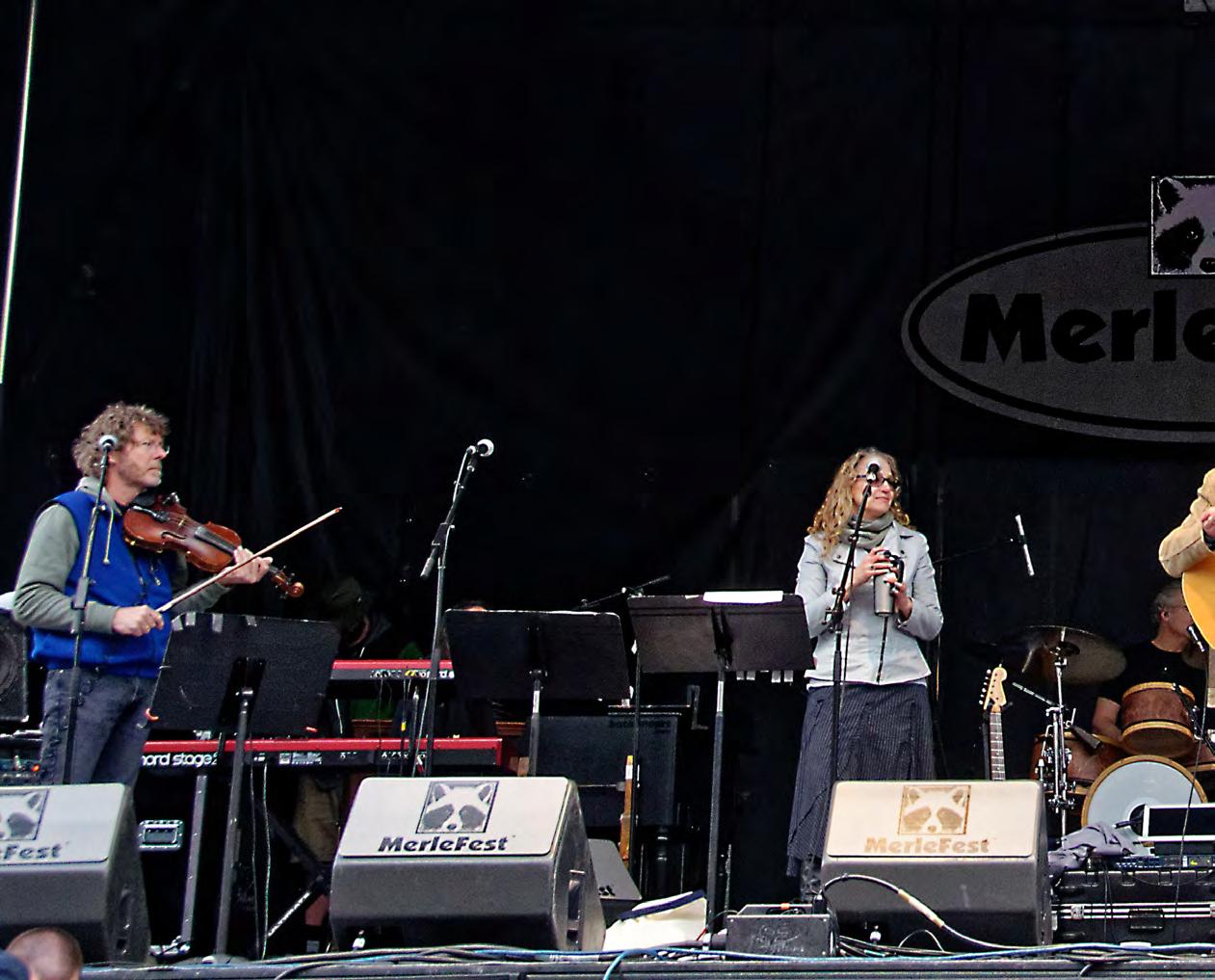
festival,” Nash says. That feeling came to mind when they were booked again in 2008: “I just thought, you know, let’s do something weird with this set,” he recalls. “What would be the most outrageous thing that I could imagine doing at MerleFest? And it was like, ‘Why don’t we cover a whole Led Zeppelin album?’” They covered Led Zeppelin II, and “just to really make it interesting,” Nash says, they did it with acoustic instruments only, turned up loud. It was a risk, and they didn’t know how it would go, but as it turns out, there was, well, a whole lotta love from the audience.
“It was truly something they had never heard before,” Nash says. “It might not be the best music they’d ever heard, but they had never heard anybody play all of Led Zeppelin II on acoustic guitar, mandolin, and dobro.”
MerleFest kept inviting The Waybacks to return and giving them free rein to -ll their time, and the Album Hour, as it came to be called, got bigger and bigger, now stretching to an hour and a half. Over the past 15 years, they’ve covered The Allman Brothers’ Eat a Peach, The Beatles (both Sgt. Pepper’s on its 50th anniversary as well as Abbey Road), Bob Dylan and The Band’s live album
Before the Flood, John Prine’s selftitled debut, and Tom Petty’s Full Moon Fever, to name a few. The Waybacks invite festival headliners as well as up-and-comers in the lineup to take part. MerleFest stalwarts like Sam Bush and Jim Lauderdale are regulars, and Emmylou Harris, Elvis Costello, Buddy Miller, Susan Tedeschi, and Joan Osborne have also joined in.
While the albums and guests have ranged widely, The Waybacks’ guiding principles for the Album Hour have stayed steady. For one thing, there’s not a speck of irony involved, even as the band has fun applying their own style to these
Sam Bush, Joan Osborne, Tony Williamson, and Jens Kruger join The Waybacks during MerleFest’s Album Hour in 2015.
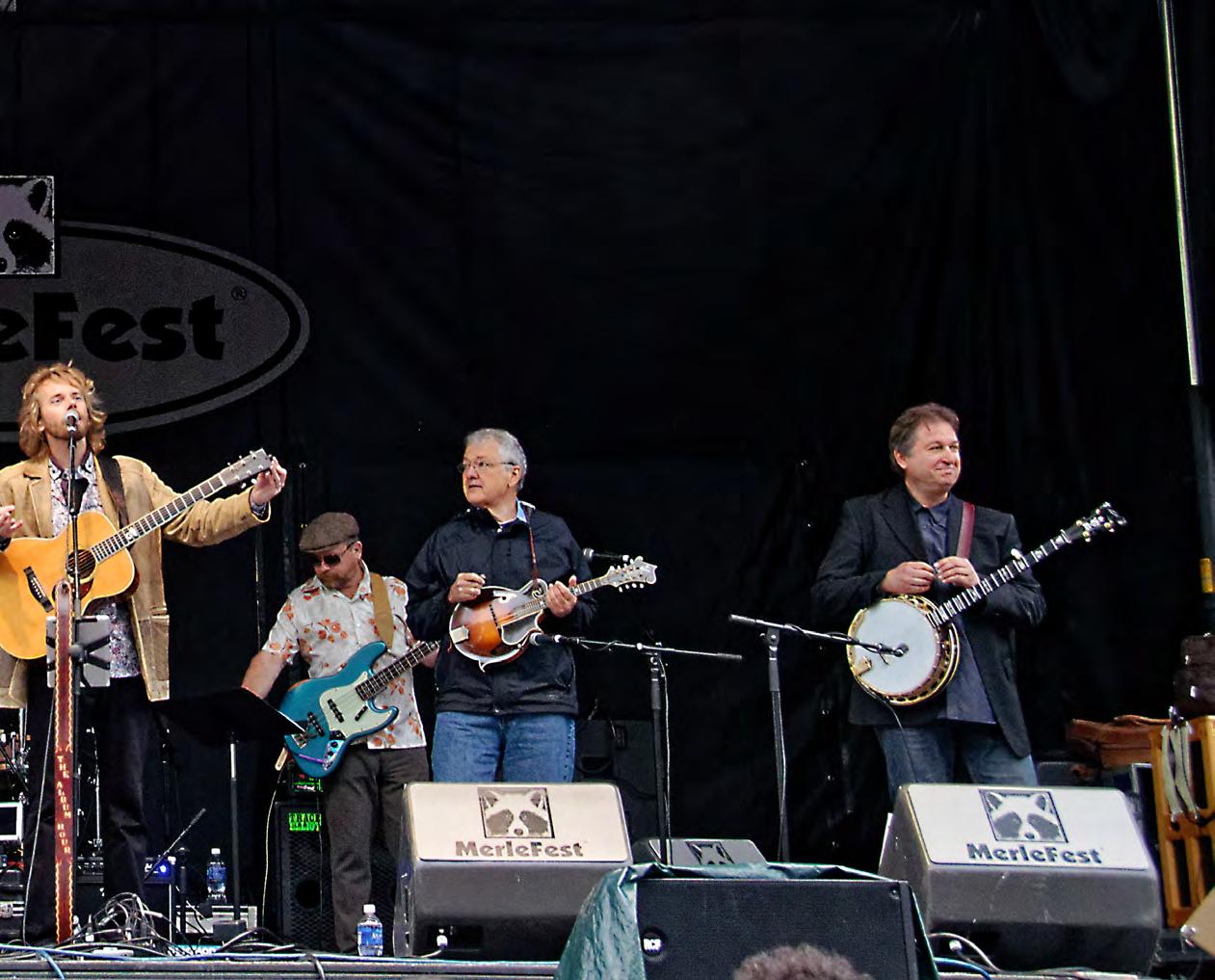
classic albums.
“We’re not playing Led Zeppelin because we think it would be funny for us to play Led Zeppelin,” Nash says. “We’re playing Led Zeppelin because we love Led Zeppelin. … I’ve always felt like that intention and that real commitment to the music is maybe the most important element of the performance.”
Another thing the band quickly learned to keep in mind, he adds: “This is too much work if you don’t really love it. And what that means is collectively we’ve got to love it as a group, which means that everybody in the band has to be fully on board with it.”
With MerleFest anchored in late April, The Waybacks try to choose the coming year’s album to cover in November or December. In early March, they get together to rehearse and work out the show. Technically, the set list is already decided — they perform each album in order. But there’s far more to it than that. Album Hour has come to be known for its tangents, brief interludes that mix in other artists or albums.
In 2012, for example, they played through Jimi Hendrix’s Are You Experienced. “The Wind Cries Mary” led into a singalong of Bob Dylan’s “I Shall Be Released,” and “Third Stone From the Sun” tucked in a little
Dylan, too, via “Rainy Day Women #12 & 35.” The 2016 tribute to The Eagles a/er the death of Glenn Frey honored other musical greats who had recently passed away, too, including David Bowie, Merle Haggard, and Prince, who died just a few days before that year’s Album Hour. All of this happens intentionally.
“We could just go out there and play this music and we could throw the show together in three days and just have it be what it is,” Nash says. “But it has turned into a real artistic statement that we try to make. ... We really try to get thematic with it and try to ask the big questions, like what
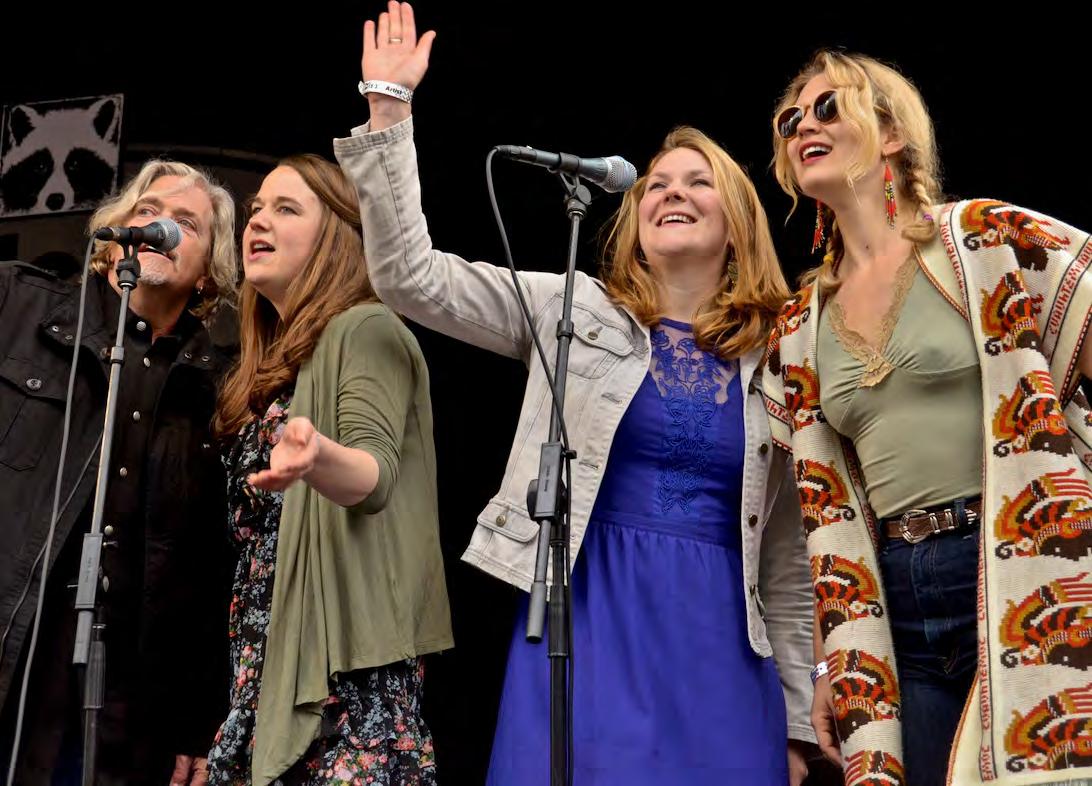
does this album mean to us? What is this album really about?”
Creating Community
When The Waybacks -nally assemble on the Hillside Stage on MerleFest Saturday, the months of labor behind the scenes bloom into a moment everyone present will treasure.
Nash leads everything via a detailed plan that, back when he printed it, o/en stretched to more than 30 pages. (Now he puts it all on an iPad.) The lyrics are there in front of him, but also arrangements, cues, who’s coming to stage when, how long each solo should be, and a million other moving pieces. It’s a lot like conducting an orchestra, but he’s not too buried to hear the roar of recognition that goes out across
the crowd as they -gure out the album being played, or to feel the love of fans who hang on every note, no matter where it goes.
“We feel very fortunate that year a/er year folks have been coming out to see what we’re going to do,” Nash says. “And I know that we do things that people don’t like, and in some ways that’s what’s so awesome about this set. We feel like we have the freedom to do that, and people will forgive us. If we play a song and we change it in a way that people weren’t expecting, some people are going to hate it, but they usually don’t leave. They go, ‘Okay, they did something weird. Let’s see what they do on the next song.’ We’re being adventurous, and the audience goes there with us. That’s what they’ve come to see.”
Besides just a good time, Wagler
sees tribute sets as a way to create community, to remind us of songs we all love as our musical experiences become more and more fragmented.
“We live in a time when culture is so broad and spread out and we have so many little microcommunities,” he says. “There are many reasons to celebrate that, but it’s harder and harder to have a song in common.”
On a hillside, in a -eld under towering rock formations, or anywhere live music occurs, original songs move us. But creative renditions of old favorites have power, too, as does remembering the artists who have helped make the music we love what it is today.
With tribute sets, Wagler says, “We’re trying to create a common language.”
From left, John Cowan, Courtney Hartman, Celia Woodsmith, and Shelby Means during The Waybacks’ MerleFest Album Hour in 2015
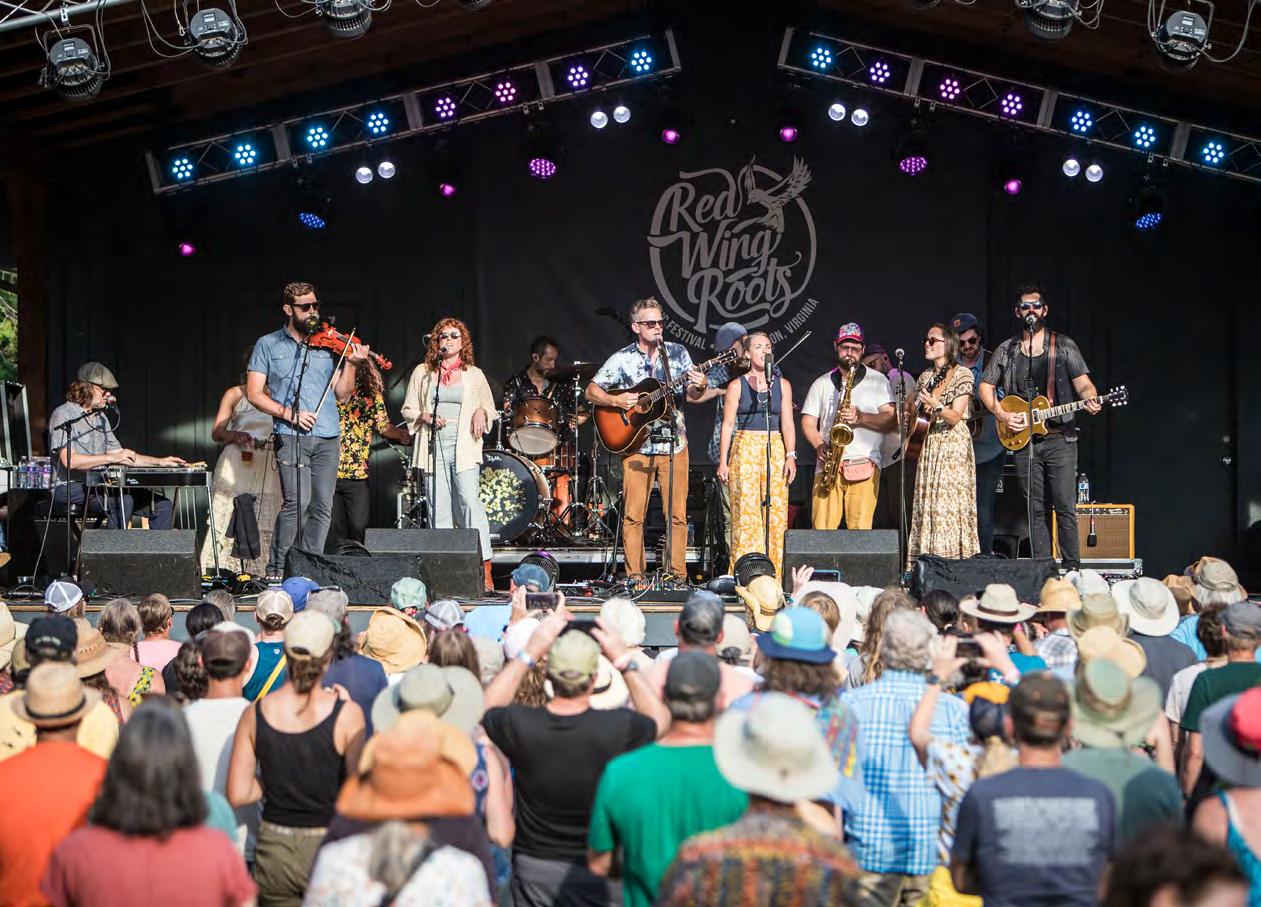
The Steel Wheels and guests dedicated the tribute set at the 2023 Red Wing Roots Festival to Gillian Welch’s Soul Journey
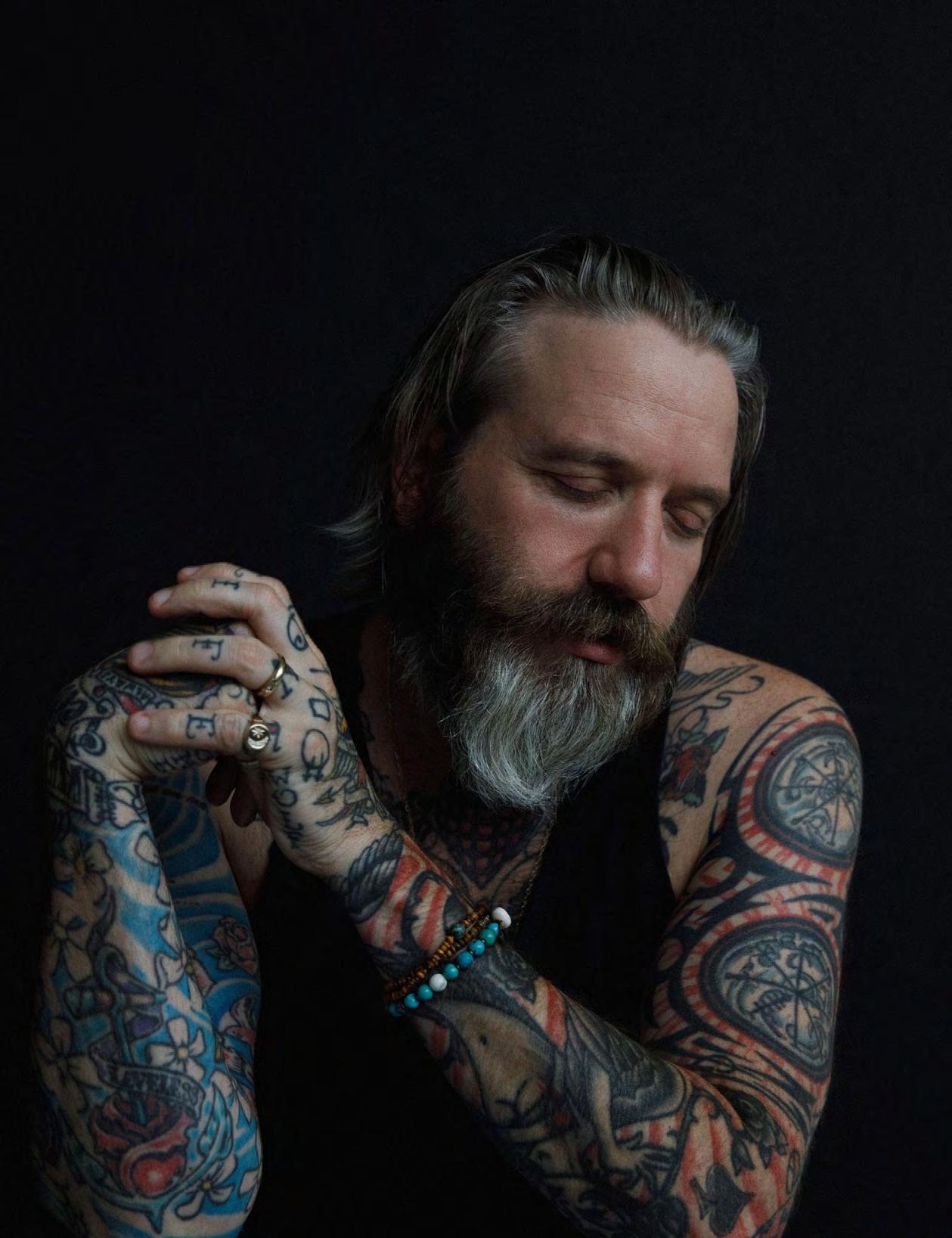
UNEXPECTED
A conversation with City and Colour and Hiss
Golden Messenger
by Hilary Saunders
VANESSA HEINS
Dallas Green of City and Colour
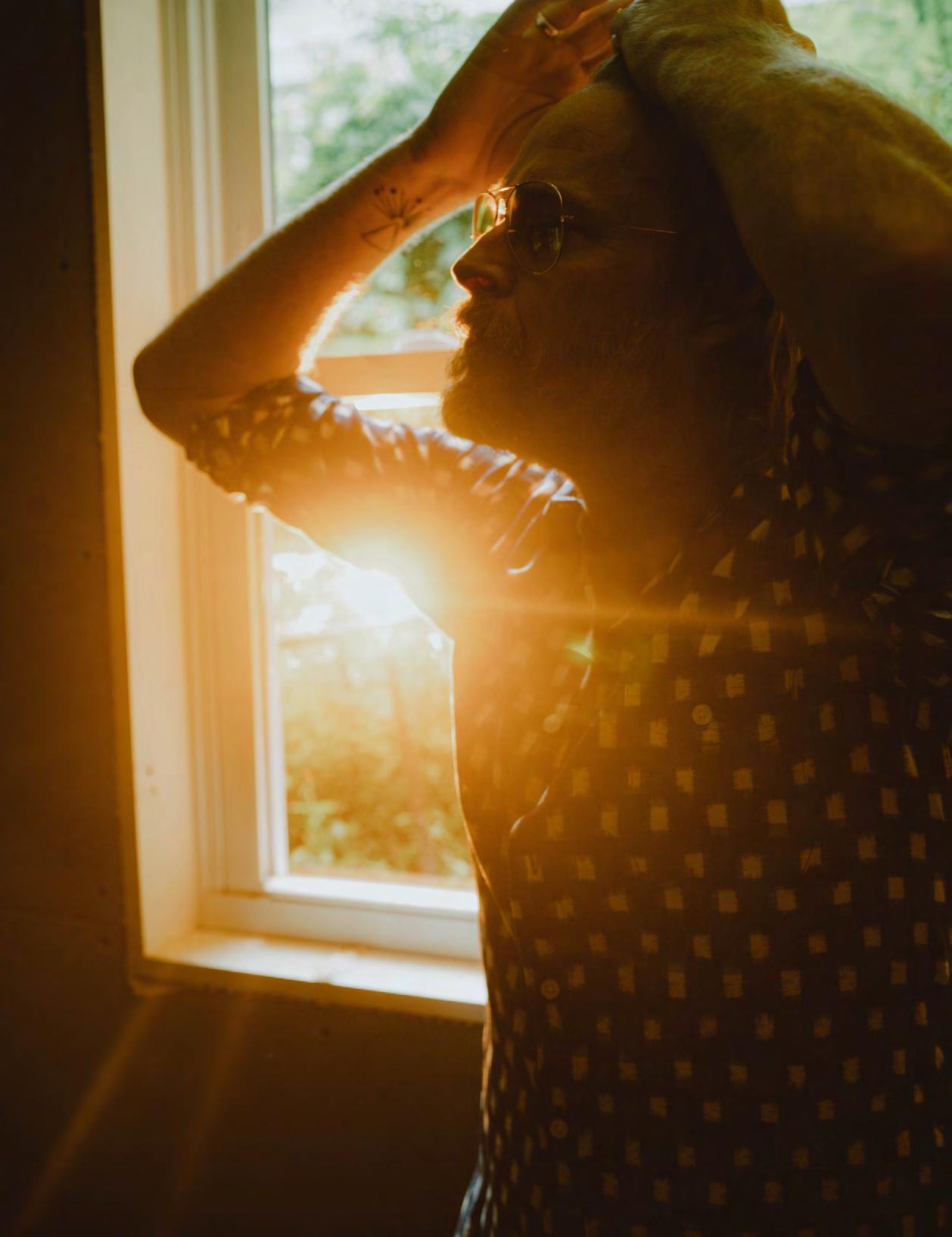
CONNECTIONS
Mike Taylor of Hiss Golden Messenger
Base. on their ban.s City and Colour and Hiss Golden Messenger, Dallas Green and Mike Taylor may not seem like they have much in common. Their two new records — City and Colour’s The Love Still Held Me Near came out in March and Hiss Golden Messenger’s Jump for Joy arrived in August — veer in di+erent directions too. The narrative surrounding The Love Still Held Me Near focuses on Green’s grief a/er the deaths of his friend and producer Karl Bareham as well as his cousin. Green’s raw tenor soars between slide guitar ri+s and distorted solos, all built upon each song’s acoustic framework. Jump for Joy, however, marks a new direction for the jammy yet folksy Hiss Golden Messenger. An
autobiographical concept record of sorts, Taylor’s latest is one of the grooviest and most overtly optimistic of his career.
What connects these two recent releases, and these two musicians, is not just the music itself, but also their processes of creation and their shared values in creating. No Depression was able to link up with the two musicians while they were on separate tours in July — Taylor was calling from a day o+ in Portland, Maine, and Green was in Montreal, on his way to the next tour stop in Ottawa with his hardcore band Alexison-re — to chat about their friendship, processes, and new records. This conversation has been edited for length and clarity.
You discovered each other and each other’s music in
interesting ways thanks to the internet. How did that come to be?
Mike Taylor: I have been aware of Dallas’ music for a really long time and had always been kind of a fan on the periphery. The type of themes that he seems to work with resonate with me and he’s an incredible singer. I suspect that Dallas and I have been on somewhat similar not identical, but similar — musical journeys coming up through a very speci-c type of hardcore. I can talk to him about the type of music that we grew up with, and it makes complete sense. It’s a little bit of an arcane language to speak. It’s just kind of a thrill to meet somebody that’s still around doing it! Anytime I meet a musician that came up in that particular
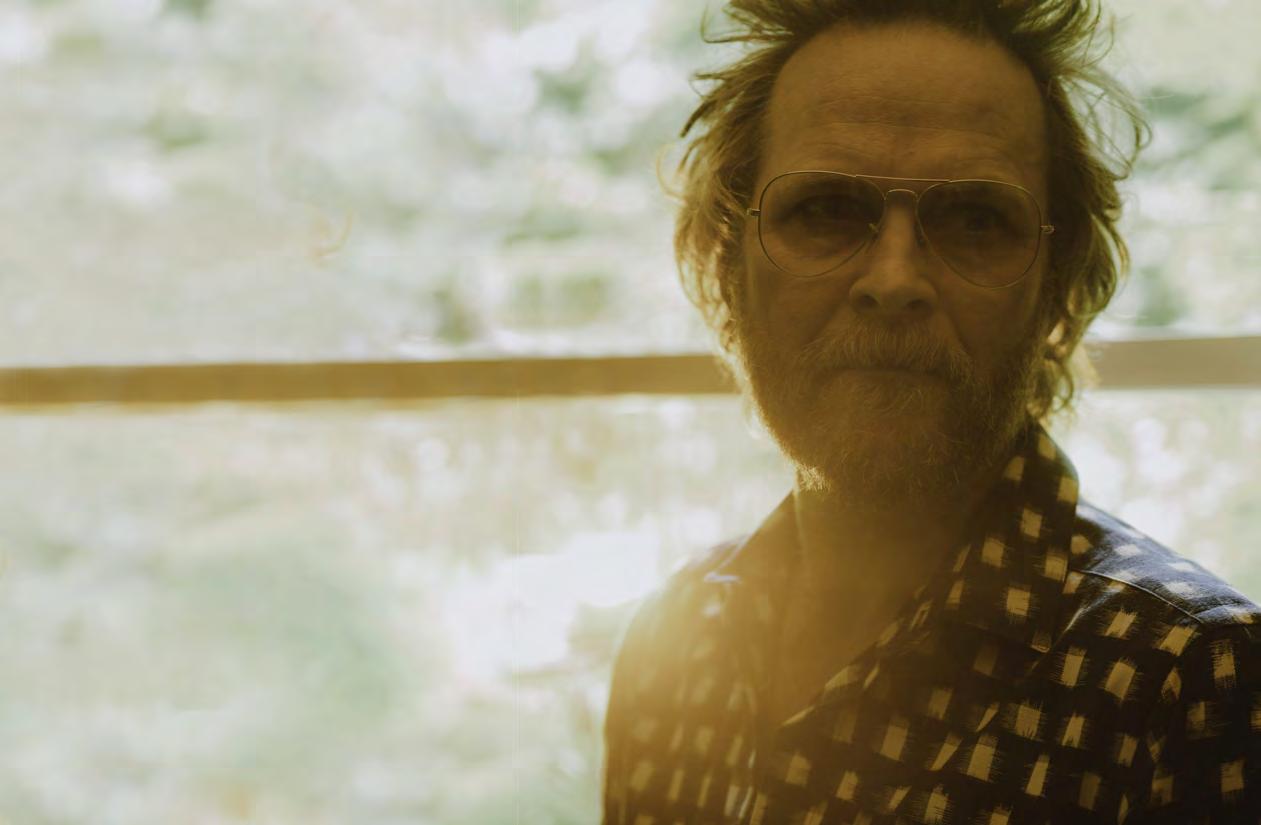
“That’s always been a way of getting through the uncomfortable parts of life — by writing a song about it, getting out of your own head, and using it as a place that I can go to help myself. And then you hope that it can grow wings and be something for somebody else.”
Dallas Green City and Colour
world of hardcore, it immediately answers all kinds of questions for me that I would have otherwise. It tells me that they’re a complete lifer.
Dallas Green: I’ve always been aware of Hiss. When you’re making music for your living, people either try to lump you into a group of people or a style of music. With the nature of the music I was making as City and Colour, I would always either read about Mike’s records and listen to them because I liked them, or we would be on the same folk festival poster. It would be one of those names I’d always see over the years.
But then when I found out that Mike grew up and was in the hardcore world … like what Mike said, we haven’t lived the same life, but we’ve lived similar enough lives that you don’t have to explain much to each other. For me, because I started in that world and I tried to enter another world, a lot of people are very confused by that. They don’t
understand how I could be in one band that sounds like this and then also have some other ideas musically. With Mike, I don’t have to explain that to him.
The moment where there was sort of a revelation that we could actually get along with one another was in the in the throes of the pandemic. I sent him a message on Instagram to be like, “Hey, we have a lot of mutual friends, I think, but we’ve never met.” Some of Mike’s songs were just really doing it for me when I needed them to, and he wrote me back and said, “Oh, hey, man, I’ve been aware of you.” But then he sent me Quietly Blowing It before it came out. When you sent me that, it was a real moment for me in a time where I was struggling to -gure out how to get what I needed to say out.
Mike, I don’t know if you remember me telling you this, but when I -nished my record, I sent you a video of me in the studio and I was like, “I think you helped me get here.”
MT: I do remember that!
DG: Sometimes you just need to be reminded of why you do it. Or you need somebody to remind you that this is why you do it or give you a little direction. That interaction and that kindness, and then obviously listening to those songs, really showed me where I needed to go.
MT: I feel like it was pretty mutually bene-cial at that moment in time. You and I started talking deep in the pandemic when we knew that we were going to be holed up for a while. And the ,ip side of what you just said, in terms of Quietly Blowing It being something that shined a little bit of light in your direction, is that I needed to hear from someone whose work I really respect that it actually was still making sense.
That these songs had not gotten so internal that they weren’t making sense anymore. I feel like some of those conversations that we had
kept me level.
The other important thing that I should mention is that because of my disparate musical tastes and all the stu+ that I am interested in musically, I’m always looking for examples of people like you that are making music that is crossing all kinds of genre boundaries. So when I get to see you playing shows with Alexison-re and then City and Colour, that really inspired me to chase down stu+ like Revelators Sound System [a collaborative instrumental project with Taylor and Cameron Ralston of the Spacebomb House Band, which released its debut LP, Revelators, in 2022]. To me, it shares a lot of DNA with Hiss, but I think for people that are not geeking out on music the way I do, those two records might not even sound like they’re made by the same person.
Even more than talking about Hiss Golden Messenger stu+, I remember having a conversation about that Revelators record. And I
was like, okay, this is making me feel good because this Revelators material is doing something really profound to me. The imprint of Revelators is all over Jump for Joy, so I’m very thankful to you! I was hardly talking to anybody about that Revelators record when I made it — you and a couple other people. But I’m thankful to you for being so enthusiastic and so open-hearted about it. It brought a lot of positivity when I really needed it.
DG: That fucked me up, that Revelators record! I was not only writing the songs for the City and Colour record but I was also writing the songs for the new Alexis record too. So I was in full split-brain mode, right? I’d go jam with the boys and we’d write some crazy song that had nothing to do with what I was trying to unfurl from the other side of my brain. And then, when you sent me that Revelators record, I texted you like, “I need to talk to you about how you made this record!”
Do you remember speci:c songs that helped pull you out of your respective headspaces?
DG: It wasn’t necessarily one song on Quietly Blowing It. … Mike, before you sent it, you’d said, “I didn’t think about the arrangements much. I didn’t think about the tempos.” You just made it, right? Listening to it and knowing that you just let it happen — it was the overall tone of the record mixed with knowing that you just let it go. That was what resonated with me deeply and allowed me to just go make the record I wanted to make.
I’ve spent my whole life sort of being confused by the idea that I got to do both — that I can express myself all these di+erent ways [through City and Colour and Alexison-re]. And I think what I learned was the confusion laid with everybody else and they were projecting it onto me. … I get something from being in this band that I’ve been in since I was 21 years
old with these dudes that I have been through the war with. I am on an Alexison-re tour right now, and when I walk out on stage with those dudes I feel something that I cannot recreate anywhere else. I feel so lucky to still have that in my life. With City and Colour, I can’t believe that I was able to make music as personal as I was writing about and that it would resonate with other people. I -nd a real deep connection to doing that.
MT: I don’t know if you feel this, but I feel like there’s been this kind of block that has made me slow in coming back to put my arms around the music that I grew up listening to — this subtext that the music you were making in your teens or early 20s is somehow immature and when you pick up an acoustic guitar, that’s when you really start to be an actual artist. That was something that I really fell for. It hasn’t been until the last 10 years that I was like, “You know what? That’s a lie perpetuated
by people that don’t know music the way that I do.”
DG: I agree. Absolutely, man.
MT: I can absolutely put an Unwound record or a Universal Order of Armageddon record on next to a Townes Van Zandt record and regardless of how di+erent they are, they’re also the same. There’s the same type of misery and joy and depression that is what keeps me coming back to the music in my life that I feel like is the most real. And again, the older I get, the more the genre boundaries fall away and it’s just all one thing: Does this give me the sustenance that I’m looking for with art or not? And it doesn’t even matter what it is.
You’ve both addressed all of these themes in your newest records, maybe more explicitly with the heaviness, Dallas, and with “joy” right in the album title for you, Mike. Tell me a little bit
about how you took these heavy themes and then brought them to life musically.
DG: I think they’re both joyful records. I think mine was just more truly rooted in sorrow and grief, and I didn’t realize how joyful it would end up until it was -nished. When I was writing all the songs, I was hoping that what I was doing was getting myself to the other side of it, not just sinking deeper into it. But when I was writing it, it was a bit blurry just because I knew I was trying to write about some uncomfortable things. Finishing it made me feel like it was not a program for the funeral; it was the party a/erwards.
As far as writing about things like that and feeling comfortable writing about the uncomfortable, I think life is just very uncomfortable. I like writing about that because to me, that’s always been a way of getting through the uncomfortable parts of life — by writing a song
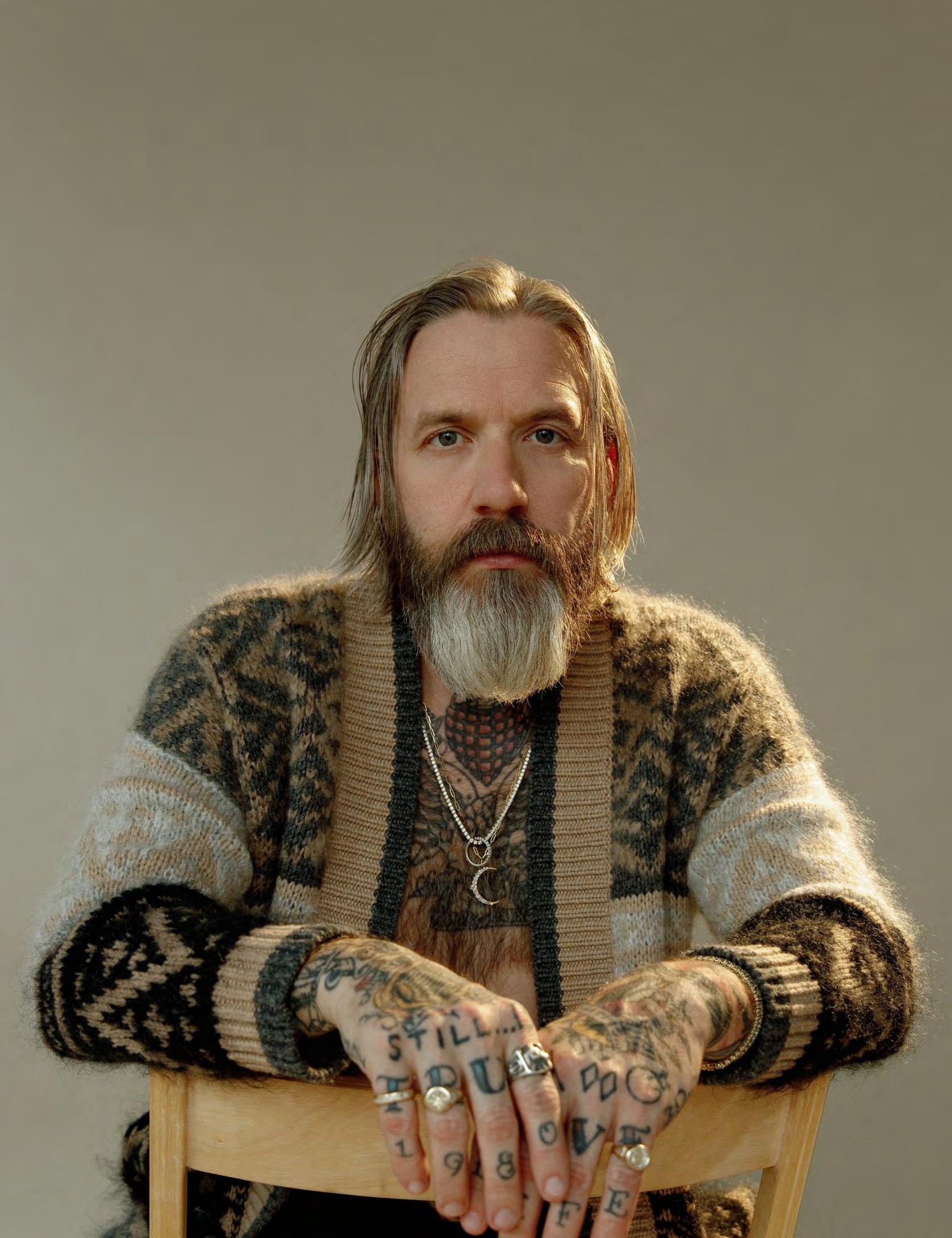
about it, getting out of your own head, and using it as a place that I can go to help myself. And then you hope that it can grow wings and be something for somebody else. That’s what I’ve always appreciated about the idea of getting to write a song, but also that’s something that’s always resonated with me with music. Music makes me feel better about myself, so I try to write that way too.
MT: Dal and I were talking about Quietly Blowing It, among other things, while he was writing or working on The Love Still Held Me Near. Long a/er that is when I made Jump for Joy. So it’s almost like, taken as a three-record arc, it could be traced like this kind of way out of the exile that we were all living in because of COVID. I’m not saying that the records are about that, but that’s kind of how I think about it, because I hear Quietly Blowing It as a pretty quiet, very internal, introspective record. And I made Jump for Joy as almost an antidote
to that sort of energy because I was like, “I’m not going to make another record like that. It needs to be more outward facing.”
I feel like one thing that maybe is a shared quality between the type of music that both Dallas and I make is that there’s an emotional ambiguity to it. It’s not always in this sort of -gurative, A-minor mode. It’s more confusing than that. But if you’re willing to put the time into listening to both Dallas’ music and mine, I think there are certain emotional layers that are not so easily parsed. I suspect that’s why o/entimes what people tell me when they’re listening to Hiss records is like, “I love that you make your music feel so hopeful,” which I think maybe is some people’s way of explaining the emotional layers that are happy and sad at the same time. You know what I mean?
DG: Yes, I do!
MT: I feel like that’s the kind of music you make. It’s just
emotionally complex music that describes the human condition, and that’s what I’m trying to do too. I’m never going to make a song that people are just going to say, like, “That’s a happy song.” I’m always going to be making music that’s like, “I can’t tell what chord quality that is.” When people tell me that, that makes me happy because that’s the intention.
DG: I like the idea of kind of just creating a mood. Is it a happy song? Is it a sad song? Is it a joyful song? Is it a sorrowful song? I don’t know. I think I’m just trying to write songs that sound like the mood I’m in for it. And that mood is not a straight line. Again, it’s life: Life is this constant ebb and flow. I could absolutely sit here with a guitar and I could write a song about the sun shining right now. I would rather dig into the ebb and flow of it all and try to see if I can make something worth listening to for four minutes while we all pass the time.
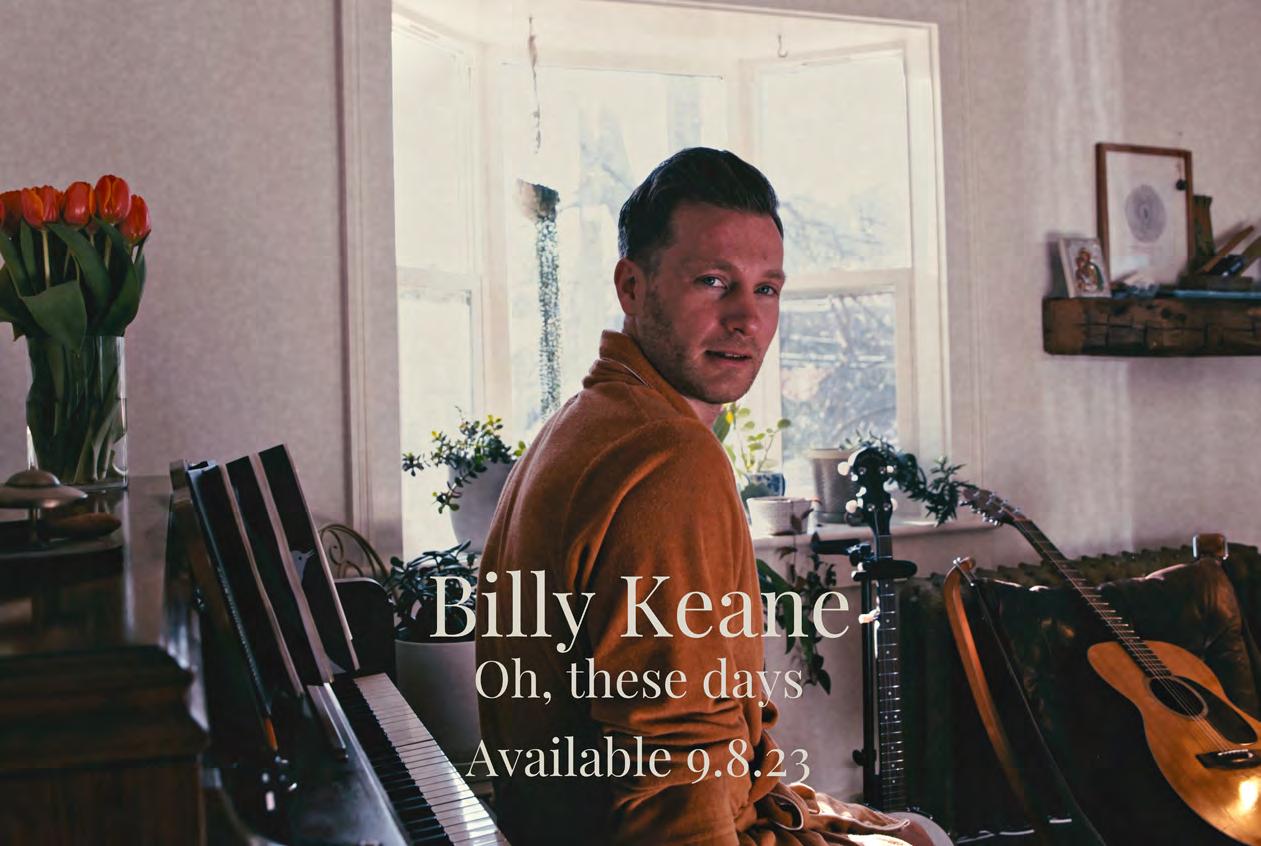
Before any of the logistical details had been fnalized — indeed, before I’d even fully conceptualized the scope of the album that would become Oh, these days — the creative current felt singularly unimpeded, swift, and generative. Like the swimming holes where my friends and I gather during summer months here in the Berkshire mountains, there seemed to be a palpable momentum, a fresh energetic fow, carrying the record’s creation all the way from the songwriting through to the album design to its tangible release.
After only a few phone calls and email exchanges, my friend and soon-tobe-producer James Wallace (Skyway Man) and I had conceived of the general outline and creation process of what was to become the culminating project. In early December 2022, drummer Brian Kantor, bassist Miles Lally, and guitarist David Tanklefsky joined me at the Ghost Hit Recording studio in West Springfeld,
Massachusetts — owned by the immensely talented and ever-jovial engineer Andrew Oedel — to record Oh, these days
As the record was being mixed and mastered, the next few months were a whirlwind of tour dates, co-writes, and writing residencies. Upon my return to the Berkshires from the FreshGrass Festival | Bentonville in May, I participated in a recording residency at Studio 9, in North Adams. Studio 9 is a bit of a paradox in that it is a wildly high-tech, contemporary performance and recording space, yet it maintains a warmth of character, a certain charmingly wood-grained authenticity that I fnd both overwhelmingly saturated with possibility and entirely welcoming in its aesthetic minimalism. In order to make full use of this humbling residency opportunity, the unique qualities of the studio, and the enormous potential contained within its
various systems, I whipped together a trio outft with Miles back on bass and Tim Morrison on drums to record a live version of Oh, these days
The Oh, these days process continues now, with its release, of course, as well as the eventual release of the live Studio 9 recordings and upcoming dates with my band, The Waking Dream. It also continues within the immense gratitude I feel for these opportunities; for the musicians, engineers and producers; for the cadre of incredible artists, friends, and creators who devote themselves to artistic expression; for those who encounter obstacles as opportunities and who recognize the act of stumbling as a falling forward, as a motion toward, as a process of growing and expanding. And what an unexpected, beautiful, challenging, evocative, humbling, inspiring, and wondrous process it is.
— Billy Keane
STUDIO 9 AT PORCHES A REVOLUTION

Studio 9 represents the future of sustainable design - constructed with mass timber it is both visually and environmentally inspiring. Spectacular acoustics and sophisticated engineering make this a truly one-of-a-kind event space, with capacity for 100+ people. This jaw-dropping architectural marvel will be a showpiece for your gathering. From granny-chic to eco-chic, Porches has it all.
• Meyer Constellation Audio with a Pro Tools recording system
• A custom 164” LED TV to put your visuals front and center
• Net-Zero carbon footprint thanks to geothermal and solar heating
Give your special event the venue it deserves, STUDIO 9 AT PORCHES
www.porches.com studio9porches.com

REVIEWS
These are excerpts of reviews and stories originally published at nodepression.com, and you can read many more reviews — plus news stories, interviews, and columns — there. For more of what’s on our radar, follow No Depression’s “Best of the Month” playlist on Spotify.
Joy
Oladokun Proof of Life
Amigo Records/ Verve Forecast/Republic Records
There’s a strong temptation to frame Proof of Life, Joy Oladokun’s follow-up to her self-released breakthrough 2021 album in defense of my own happiness, as a pop-oriented major label makeover.
On in defense, there was a certain level of homespun charm to the proceedings, with Oladokun’s vulnerable, clear-eyed songwriting o/en paired with her own spare production that gracefully encompassed folk-pop, adultcontemporary R&B, and touches of gospel without much fuss.
(50 Cent, Fiona Apple), Ian Fitchuk (Kacey Musgraves), Dan Wilson (Adele, The Chicks) and Alysa Vanderheym (Florida Georgia Line, Little Big Town), which suggests some dramatic evolutions.

That DIY approach has been boldly traded in here for a series of A-list producers, including Mike Elizondo
Bella White Among Other Things
Rounder Records
Canadian country crooner Bella White’s second album is full of various blooms. In one song, they wither on her bedside. In another, they’re a token of a+ection from her mother, comforting her through heartbreak. And in still another, they seem to taunt her from outside the window of a room where she’s holed up, contemplating what comes next in this life.
Flowers have also become a grounding presence for a restless existence, one that has taken White from her native Calgary, Alberta, to stints living in Boston and Nashville, then back to Canada, where she has, at least for the moment, put down some roots. Wherever she ends up, White -nds solace in little creature comforts like incense, exercise, journaling,
The end result, though, is not so much a reimagining as a full blossoming of Oladokun’s artistic vision. For all of the pretty production ornamentation on Proof of Life — the album is loaded with splashy bass lines and synth accents that -ll out these songs — it’s always in service of the simple guitar and piano parts that made her earlier work so intimate. Whether it’s the road trip-ready thump of “Taking Things for Granted,” the sultry saxophone accents on “Changes,” or the crunchy chaos and hyperactive strings on “We’re All Gonna Die,” nothing here sounds like it didn’t start with Oladokun tenderly cra/ing these tunes in her bedroom once again. — Kyle Petersen
and of course, fresh ,owers on the dashboard, in hotel rooms, or backstage at a gig.

But it’s that feeling of transience that drives Among Other Things, recorded and produced by Jonathan Wilson in yet another locale, Topanga Canyon, California. In true California fashion, the days recording Among Other Things were unhurried and laid back. As a result, the songs come to life in a space that capture her childhood training in traditional music, but grow from it. They’re more Wynonna Judd than Alison Krauss, more Joni Mitchell than Dolly Parton. White proves her de/ness, carving out shimmering country ballads as thoughtfully as any traditional bluegrass tune. These songs, and this con-dence White shows, are evidence that, in her early 20s, she is wise beyond her years, growing savvier about the industry with each record, each show.
Maeri Ferguson
Jason Isbell & The 400 Unit Weathervanes
Southeastern Records/ Thirty Tigers
Weathervanes is Jason Isbell’s -rst album of all-original material since 2020’s Reunions, released 10 years almost to the day a/er Southeastern, his landmark release that marked a dividing line not only between pre- and post-recovery, but also between trying to prove himself postDrive-by Truckers as a viable, literate rocker and his emergence as a focused, personal songwriter. Throughout his career, Isbell has possessed a gi/ for observing and detailing characters in struggle, against family members, partners, society’s expectations, their own demons. He also understands the power of speci-city as well as building drama through storytelling.
tension that built during the making of Reunions, as captured in the recent HBO documentary Running with Our Eyes Closed, is released here, through an arrangement that densely builds with layered backing vocals and strings by Morgan O’Shaughnessy. It’s unlike anything Isbell’s done before, yet it sounds like a natural progression.
“Save the World” swaps proselytizing for empathy. Much like Bruce Springsteen’s approach on The Rising, it reaches for the common denominator that binds us as parents, as humans, as a society; how tragic and horri-c events cause us to act and react in everyday life, even in such should-be-routine tasks as trips to the grocery store. The personal becomes universal.
The -rst lines of the opening track, “Death Wish,” for example, are delivered seemingly through catharsis. The
Ultimately, Weathervanes proves once again that Isbell is not only a much-heralded lyricist, but also a sharp arranger, a side o/en overshadowed by searing personal observations that make him one of the great songwriters of his generation. — Michael Elliott
The Baseball Project Grand Salami Time!
Omnivore Recordings
In our new Founders’ Keepers column online, No Depression founding editors Peter Blackstock and Grant Alden take turns highlighting some roots music releases they believe deserve attention. Here’s a selection from the debut column, written by Blackstock:
Batting cleanup in The Baseball Project catalog is this 15-song set that marks a welcome return for music’s greatest sportsthemed supergroup a/er a nine-year gap. Hard to believe it took them four albums to write about 1979’s infamous Disco Demolition Night in Chicago’s Comiskey Park, but Steve Wynn does it up right here, with drummer Linda Pitmon laying down a disco-apocalyptic groove. Other
memorable Wynn tracks address “The Yips” and a “Fantasy Baseball Widow,” while co-leader Scott McCaughey shines on the keep-baseball-weird anthem “Screwball” and the delightfully punkish “New Oh in Town,” which connects 1960s-’70s Japanese home run king Sadahuru Oh to present-day Angels pitcher-slugger Shohei Ohtani. Bassist Mike Mills digs into the dark underworld of sophisticated spitballers on the bluesy, spoken-sung “Stu+ ” (“just like Brylcreem, a little dab’ll do ya”). Mills’ R.E.M. mate Peter Buck teamed with McCaughey to write the standout bookends: “The Voice of Baseball,” a salute to legendary Dodgers announcer Vin Scully, caps the record, while the album-opening title track immortalizes Seattle announcer Dave Neihaus’ classic call: “Get out the rye bread and the mustard, Grandma, it’s grand salami time!”
Fall 2023 Contributors
ADRIANA ALEXATOS ELFAST is a printmaker specializing in small batch, handpulled block prints. Adriana’s imagery explores a playful relationship between life, death, and nature. Working with ideas of life cycles and time, Adriana is able to focus on the here and now. You can o/en -nd Adriana in a meditative loop of, “ink, press, and repeat” in her home studio in North Adams, Massachusetts, where she lives with her husband, daughter, and beagle.
Since the release of her -rst solo album two years ago, the self-taught singer, songwriter, poet, activist, and multi-instrumentalist ALLISON RUSSELL has rede-ned what artistry means in the 21st century. Outside Child, her o/en devastating, deeply moving, cathartic celebration of survivor’s joy, has become one of the most acclaimed albums of the past 10 years. The second chapter in herstory, The Returner, is a bodyshaking, mind-expanding, soulful expression of Black liberation, Black love, and Black self-respect, written and co-produced by Allison along with Dim Star (her partner JT Nero and his brother Drew Lindsay), that’s due out September 8 via Fantasy Records.
HILARY SAUNDERS is the managing editor at No Depression and her previous work has appeared in Paste, ESPN, Next City, The Jewish Daily Forward, and more. She’s a proud member of the National Press Club and Society of Professional Journalists, an alumna of the University of Miami, and a unironic believer that rock and roll can save the world.
JIM SHAHEN is a freelance writer from around Albany, New York. He’s the popular music writer for the Albany Times Union and has written for No Depression, Living Blues,
Consequence of Sound, and Vinyl Me, Please. He has an unhealthy obsession with Oasis.
JUDY CANTOR-NAVAS tells stories about music and with music, through journalism, liner notes, playlists, podcasts, classes, and conferences. Her projects have included the Grammy-nominated box set The Complete Cuban Jam Sessions, the Audible original podcast Punk in Translation about the little-known history of Latinos in punk, and the Disney animated feature Encanto, for which she served as cultural music consultant. She is currently an adviser to the Madrid-based Acción Cultural Española, a public organization supporting Spanish culture. Read and listen to Judy’s work and say hello at www.judycantor.com.
KIM RUEHL has written for Billboard, NPR Music, Yes Magazine, and numerous others. She was an editor of No Depression from 2008 to 2017 and was instrumental in bringing the magazine back into print. Her book, A Singing Army: Zilphia Horton and the Highlander Folk School, was published in 2021 via University of Texas Press. She lives in Midcoast, Maine.
LAURA SCHOLZ is an Atlanta-based writer and editor who has covered wellness, culture, and travel for Bon Appétit, Eater, InStyle, SELF, Travel + Leisure, Well + Good, Women’s Running, and more. When not running marathons or teaching Pilates, she enjoys roadtripping and hiking with her husband and two dogs.
LILY GOLDBERG is a writer and sometimes-musician from New York City. Her work has appeared in the New York Times, The Brooklyn Rail, PAPER, Dirt, The Berkshire Eagle,
and the Times Union. She recently moved back to NYC a/er several wonderful years in the North Berkshires. Give her a shout on Instagram at @lilgnyc if you enjoy sour beer and/or want to start a band.
MARCUS AMAKER takes daily naps and is Charleston, South Carolina’s -rst poet laureate. He’s also an opera librettist, an electronic musician, and an award-winning graphic designer. He’s an Academy of American Poets fellow, and his poetry has been recognized by NPR, The Washington Post, The Kennedy Center, and more. His tenth book is Hold What Makes You Whole. His original opera with composer Gillian Rae Perry, The Weight of Light, is a part of Chicago Opera Theater’s Vanguard Initiative.
MEREDITH LAWRENCE writes and photographs interview-driven stories about music, art, and culture. Her work has appeared in GRAMMY.com, Vox, American Theater Magazine, Wide Open Country, Alta Journal, and more, and she holds an M.A. in arts and culture writing from Columbia Journalism School. She grew up in Oregon and currently lives in Brooklyn, New York.
STACY CHANDLER is the assistant editor for No Depression and winner of the 2022 Rolling Stone Chet Flippo Award for Excellence in Country Music Journalism. She previously has written and edited for the (Raleigh, North Carolina) News & Observer, alumni magazines, accounting magazines, online college courses, and pretty much anything else that has words in it. She lives in Raleigh with her husband, their daughter, and a very pampered dog.
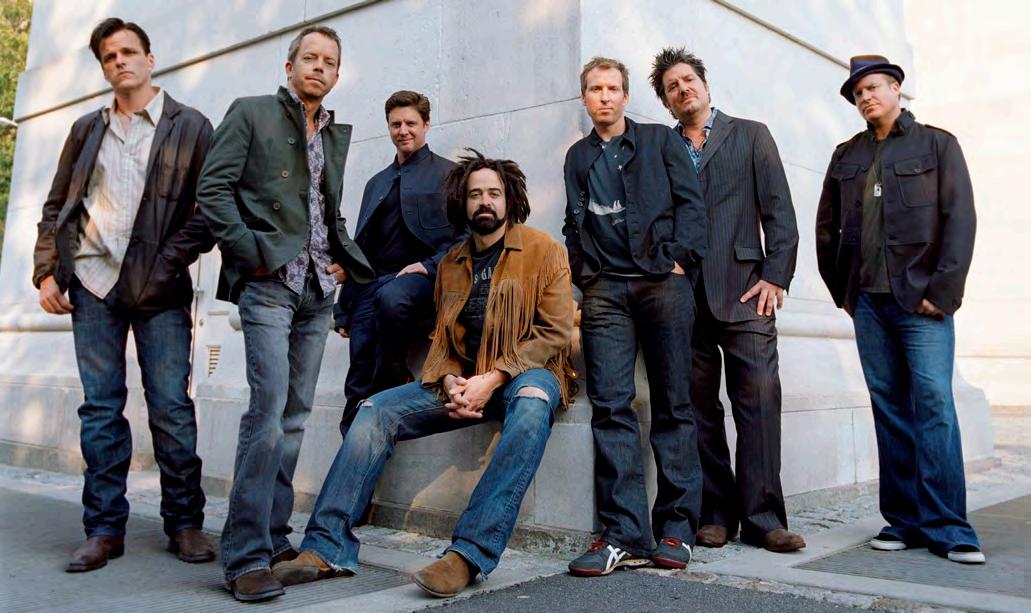
NO DEPRESSION
Part of the FreshGrass Foundation
No Depression is brought to you by the FreshGrass Foundation, a 501(c)(3) nonpro-t organization dedicated to preserving and promoting the past, present, and future of American roots music. In addition to publishing No Depression, producing FolkAlley.com, and presenting the FreshGrass Festival | Bentonville in Arkansas and FreshGrass Festival | North Adams at Mass MoCA in Western Massachusetts, the Foundation also funds cash awards for up-and-coming musicians. Visit freshgrassfoundation.org for more information.
Winter 2023
No Depression is committed to producing the best roots music coverage, both in print and online at nodepression. com. With long-form stories highlighting the music’s stars and up-and-comers as well as its underreported issues, the quarterly editions of No Depression’s journal are essential reading for every roots music fan.
Included in this issue: Leon Russell, Counting Crows, Bryndle, how Billy Strings ended up playing Tony Rice’s
guitar, inside Reykjavik’s burgeoning traditional and folk music scene, and more.
Between issues, stay current on roots music with news, reviews, and thought at nodepression.com. Here are just a few of the artists we’ve covered recently:
Old Crow Medicine Show
Gabe Lee
Buddy & Julie Miller
Bobby Osborne
Rufus Wainwright

Nat Myers
Raye Zaragoza
Brennen Leigh
Tommy Prine



Counting Crows
Screen Door
ART, ACTIVISM, AND AMERICANA
BY ALLISON RUSSELL
Idon’t believe in the American Dream but I believe in the dream of America, and I believe in the dream of All Americana.
All Colors
All Genders
All Abilities
All Ages
All Sizes
All Orientations
All Identities
All Americana
Good music and “good trouble” have always gone hand in hand. Too often Americana is framed in relation to, or even adjacent to, so-called “country music,” cast as mainstream country’s poor cousin. In my lexicon, Americana is so much more. It encompasses and fosters nigh on every genre of modern music and song including gospel, blues, jazz, country, folk (what we used to call rock and roll), R&B, hip-hop, pop, and beyond — because almost every genre of modern song has been influenced by or born out of the melting pot that is “America.”
When I speak of America, I don’t mean just the USA but all of America — which, as the historian Sam Haselby delineates, ranges from the Caribbean Sea to the Bering Strait, up to the Arctic Circle. It encompasses Haiti to Nunavut and includes South and Central America, as well as all of North America. It includes Mexico and, of course, my homeland of Canada. This vast and expansive America is not simply
continental, but the content and cultural sediment of every wave of human diaspora to these shores — beginning with Indigenous diasporas from upwards of 15,000 years ago, through to the European and African diasporas of the 1400s onwards, and right on up to the newest arrivals from anywhere and everywhere in the world this very moment. Culturally, America has always been a global story in a
continuous state of evolution, more than the sum of our parts or origins. So too, Americana is more than a genre. Rather we are an intentional, international “beloved community,” predicated on inclusion rather than exclusion. As Cheryl Boots and Julia Katzman wrote in a 2015 essay for Boston University, “The phrase ‘beloved community’ comes from the Civil Rights Movement of the 1950s. Influenced by the Social

Gospel Movement in America as well as the teachings of Gandhi, Martin Luther King Jr. brought the phrase into common parlance. As one of King’s protégés, Rep. [John] Lewis offered his definition in his memoir. Breaking it into parts he wrote, ‘Beloved’— not hateful, not violent, not uncaring, not unkind. ‘Community’— not separated, not polarized, not adversarial.”
We humans may falter and fumble, backslide and sidestep, but great music is always at its core intrinsically anti-bigotry. Music, by her nature, teaches us how to do “circle work.” This deep work is the antidote to the endless cycles of abuse, violence, oppression, and power and resource hoarding. A circle is sacred, always whole. None above and none below. Every part of the circle is equal under the listening
sky. Circle work is not easy, but it is the only sunny path forward.
We who stand in the margins have the clearest view of the page. Our vision is needed. We are poised on a precipice — our one human family. Will we fall into the abyss or learn to build a bridge? Will we learn to value every human on this planet equally? Our stories, told and sung in our own words, are medicine and healing. Our empathy is honed, high-level, and hard-won.
We must teach those whose empathy has been impaired through the false ideologies of bigotry and delusional superiority. We must teach them to see the world in our images. In our experiences. In our hopes and dreams and wishes. For our sake and theirs. For the sake of all our children.
Never underestimate the power of a song and a story to change the world. “Will the Circle be Unbroken” bolstered the courage of Rep. John Lewis and the other Freedom Riders. These are among the modern-day freedom songs that keep the global anti-bigotry movement joyfully resistant and singing.
Brandi Carlile – “The Joke”
Alicia Keys and Brandi Carlile – “Beautiful Noise”
Hozier – “Take Me to Church”
Shea Diamond – “I Am Her”
Mya Byrne – “Easy to Love”
Brittany Howard – “Stay High”
Jake Wesley Rogers – “Pluto”
Maren Morris – “America”
Wrabel – “The Village”
Joy Oladokun – “Jordan”
We shall not be overcome.









The Mechanical Licensing Collective is on a mission to ensure that independent creators are fairly compensated for their streaming music. If you’re a selfadministered songwriter, The MLC is the only place to collect your US digital mechanical royalties. With over $1 billion in digital mechanical royalties already distributed, The MLC is working hard to design an equitable 21st century royalty landscape. Visit themlc.com to become a Member today!