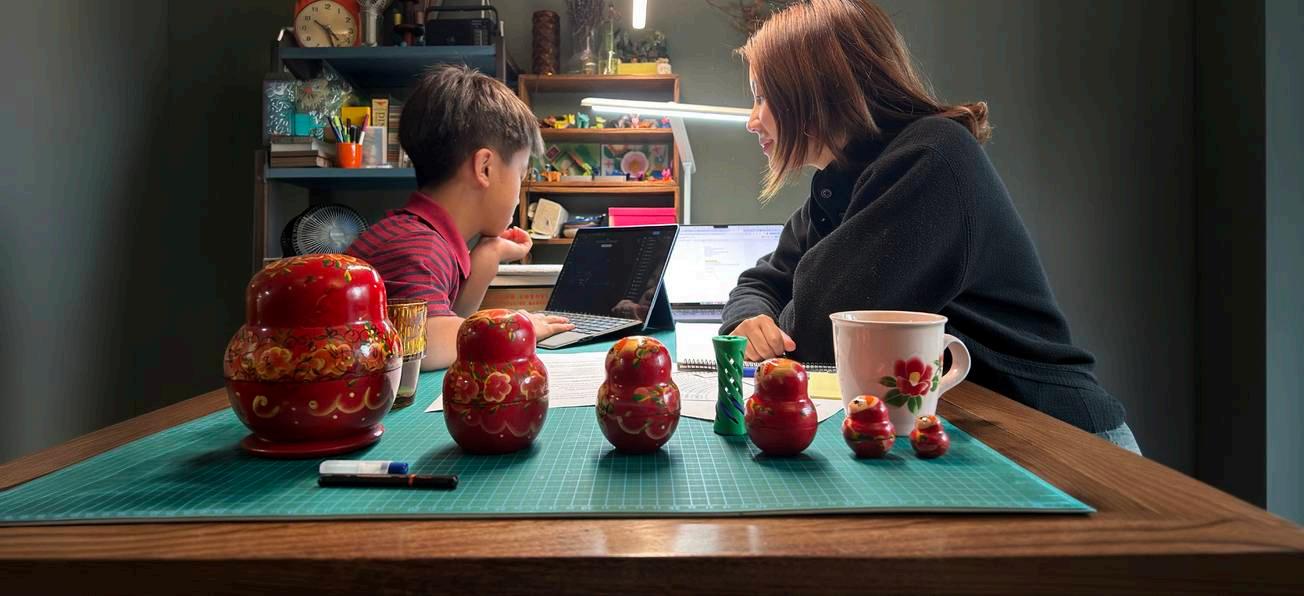
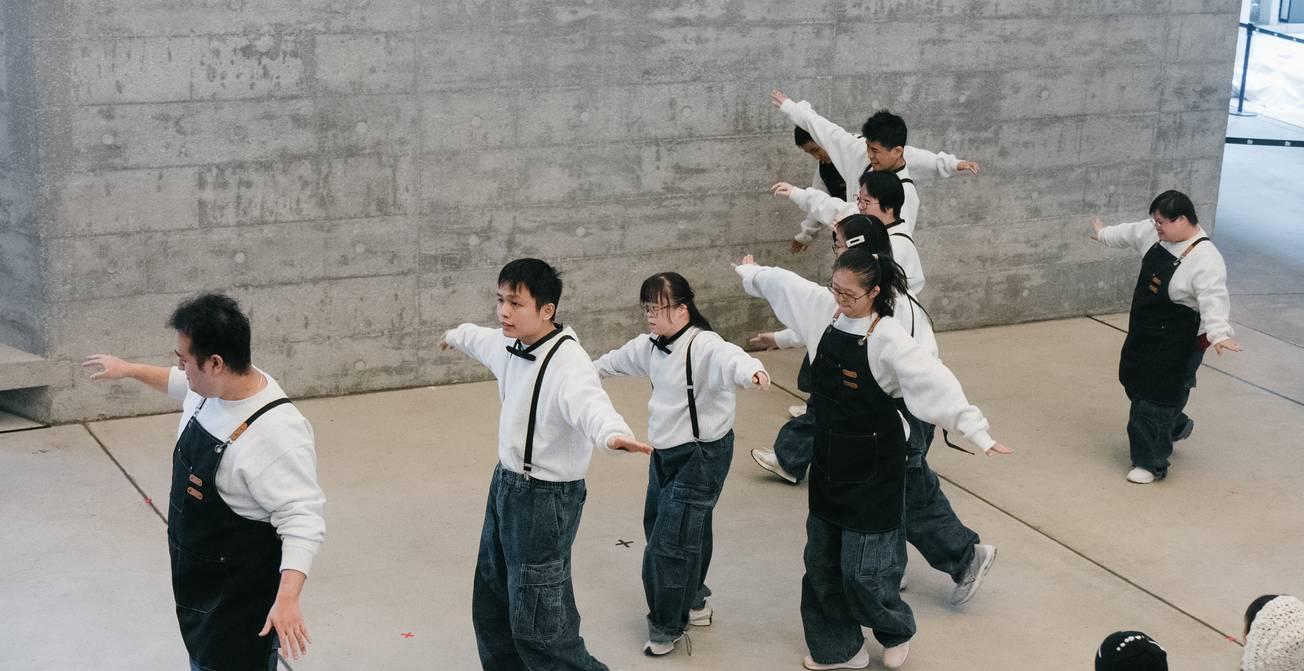
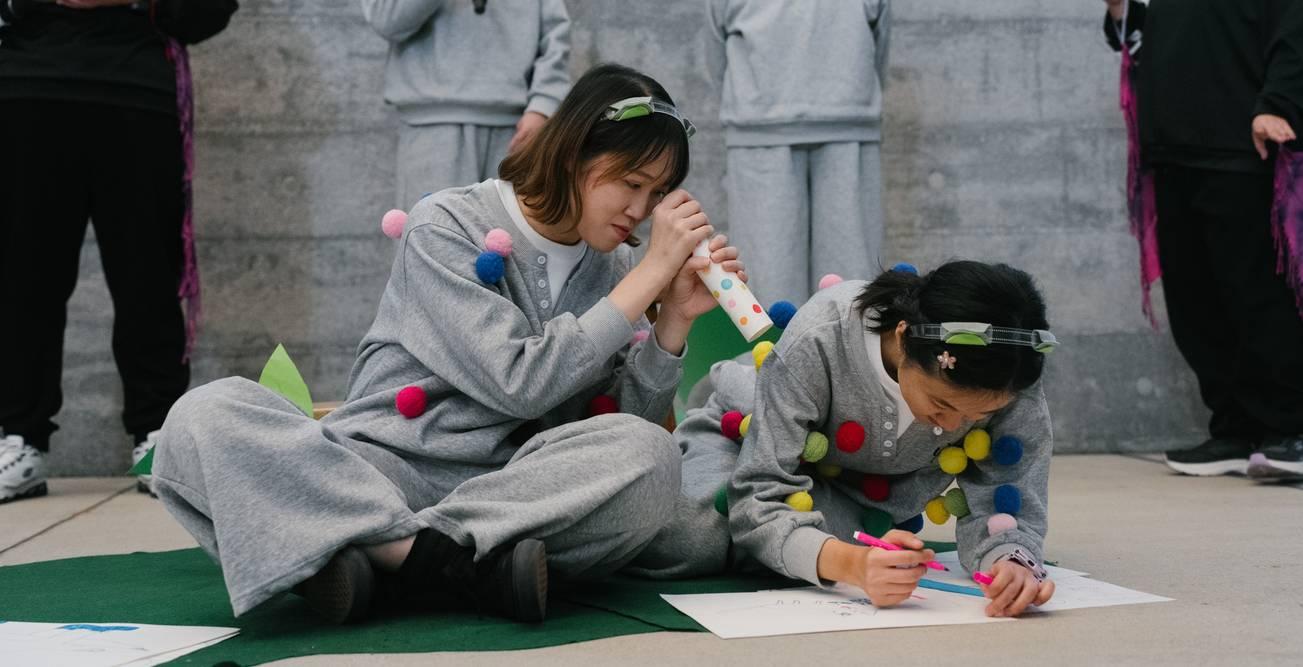
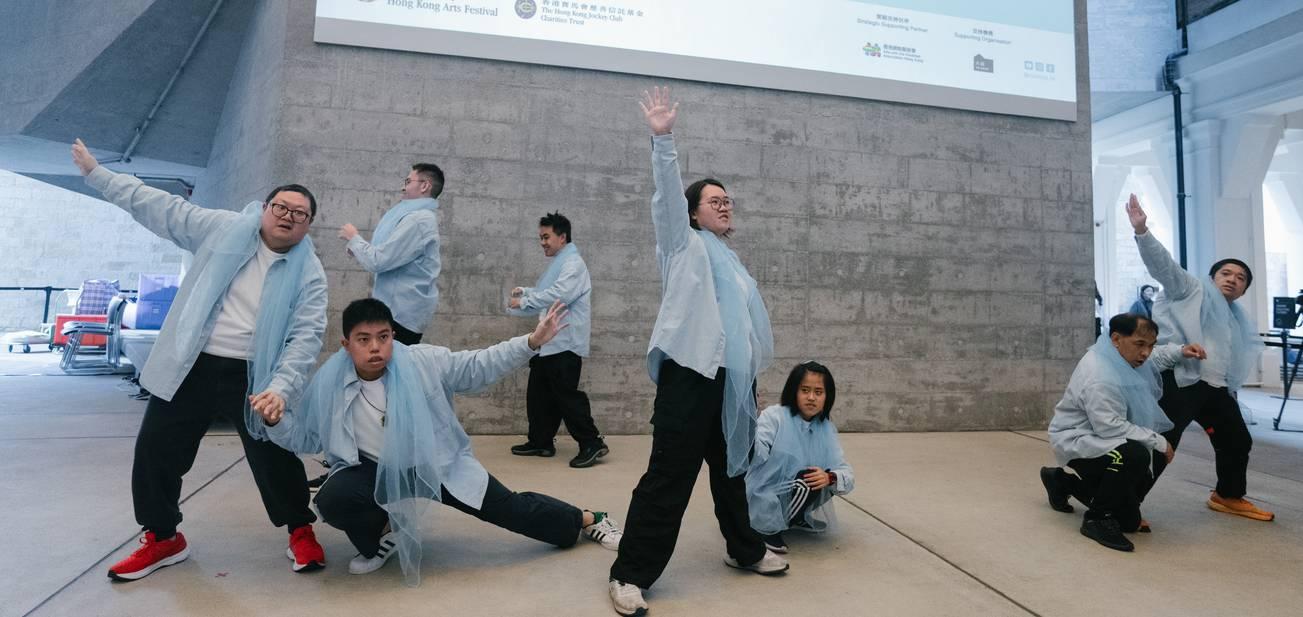
Launched in 2019 and co-presented by the Hong Kong Arts Festival and The Hong Kong Jockey Club Charities Trust,“No Limits ”offers barrier-free performances and events, and explores and promotes inclusiveness and understanding through the arts.
In 2026, the eighth edition of “No Limits” showcases a series of fascinating programmes of music, dance, theatre and film by international and Hong Kong artists of different abilities.
“ No Limits ”2026 presents accessible in-venue performances, free film screenings and a symposium, as well as education and community programmes for the public and people with different abilities, highlighting creativity and talent in a variety of forms.
Our accessible art services enable enjoyment for all audiences and help us share the importance of inclusion in all areas of life.
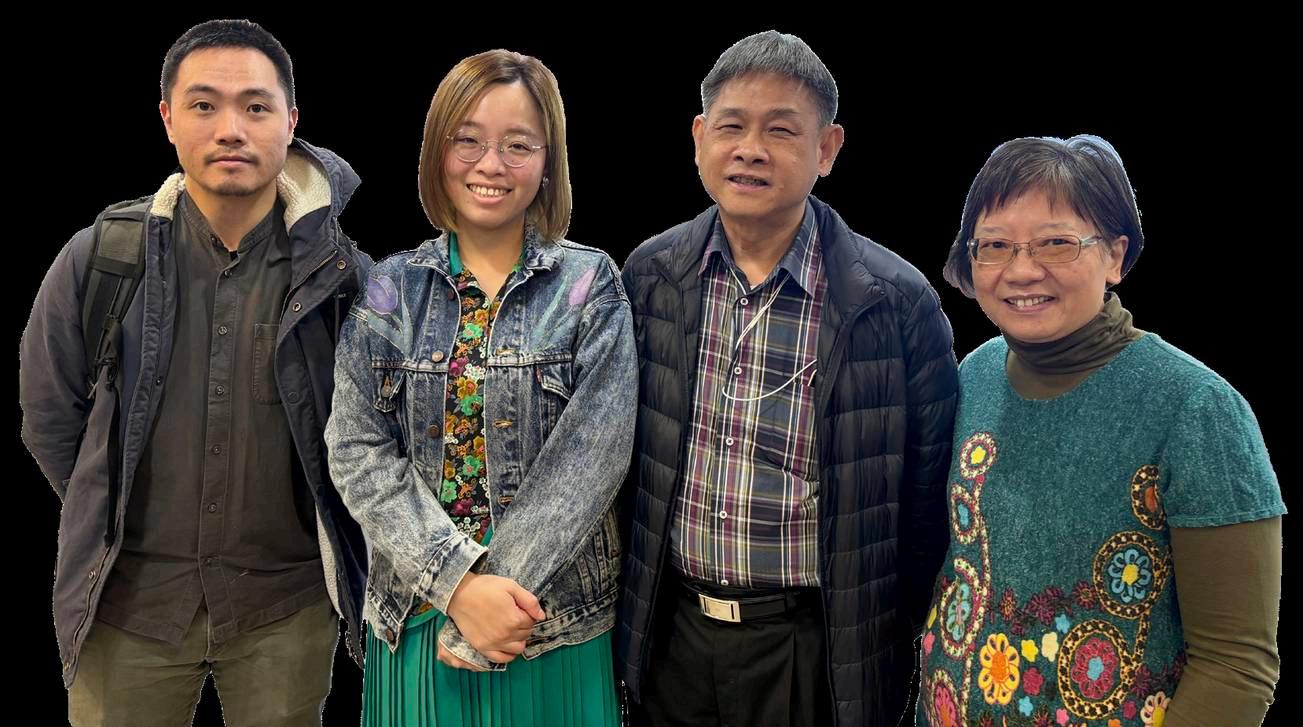
無限亮製作團隊 No Limits Production Team
項目總監 Project Director
錢佑 Eddy Zee
節目及外展經理 Programme and Outreach Managers
吳卓恩 Frieda Ng
鍾美琼 Becky Chung
高君 Tiffany Ko
市場經理 Marketing Manager
黃嘉欣 Carly Wong
副市場經理 Deputy Marketing Managers
陳佩鈴 Gina Chan
吳雪琼 King Ng
策略支持伙伴 Strategic Supporting Partner
助理節目及外展經理 Assistant Programme and Outreach Manager
The Hong Kong Arts Festival (HKAF), a nonprofit organisation launched in 1973, is a major international arts festival committed to enriching the cultural life of the city.
In February and March every year, HKAF presents over 1,200 leading local and international artists in around 150 performances of all genres, placing equal importance on great traditions and contemporary creations.
The Festival also commissions and produces Cantonese opera, theatre, music, chamber opera and contemporary dance productions by Hong Kong’s own creative talent and emerging artists, many of which have had successful subsequent runs in Hong Kong and overseas.
Each year, HKAF presents over 300 PLUS and educational activities that offer diverse arts experiences to the general public and students. The HKAF Young Friends scheme has reached around 850,000 students in the past 33 years.
Since its inception,“No Limits” co-presented by the Hong Kong Arts Festival and The Hong Kong Jockey Club Charities Trust has become an important platform for inclusive arts in Hong Kong. As we approach its eighth edition in 2026, I am heartened by how this partnership continues to promote inclusion through the arts, foster understanding, creativity, and connection across our community.
Over the past seven editions,“No Limits ” has attracted more than 145,000 in-venue and unique online participants through live and digital programmes by outstanding international and local artists of different abilities, as well as through a wide range of educational and community outreach activities. According to an independent social impact assessment carried out by a professional survey company,“No Limits 2025 effectively achieved the intended outcomes and impacts ... audience members exhibited
more positive attitudes towards persons with disabilities, demonstrated higher appreciation of inclusive arts. ” The report also confirmed that “No Limits successfully strengthened sector capacity in inclusive arts practices.”
These results further affirm my belief that “ No Limits ” is a key platform for promoting artistic creativity, equal opportunities, and social inclusion.
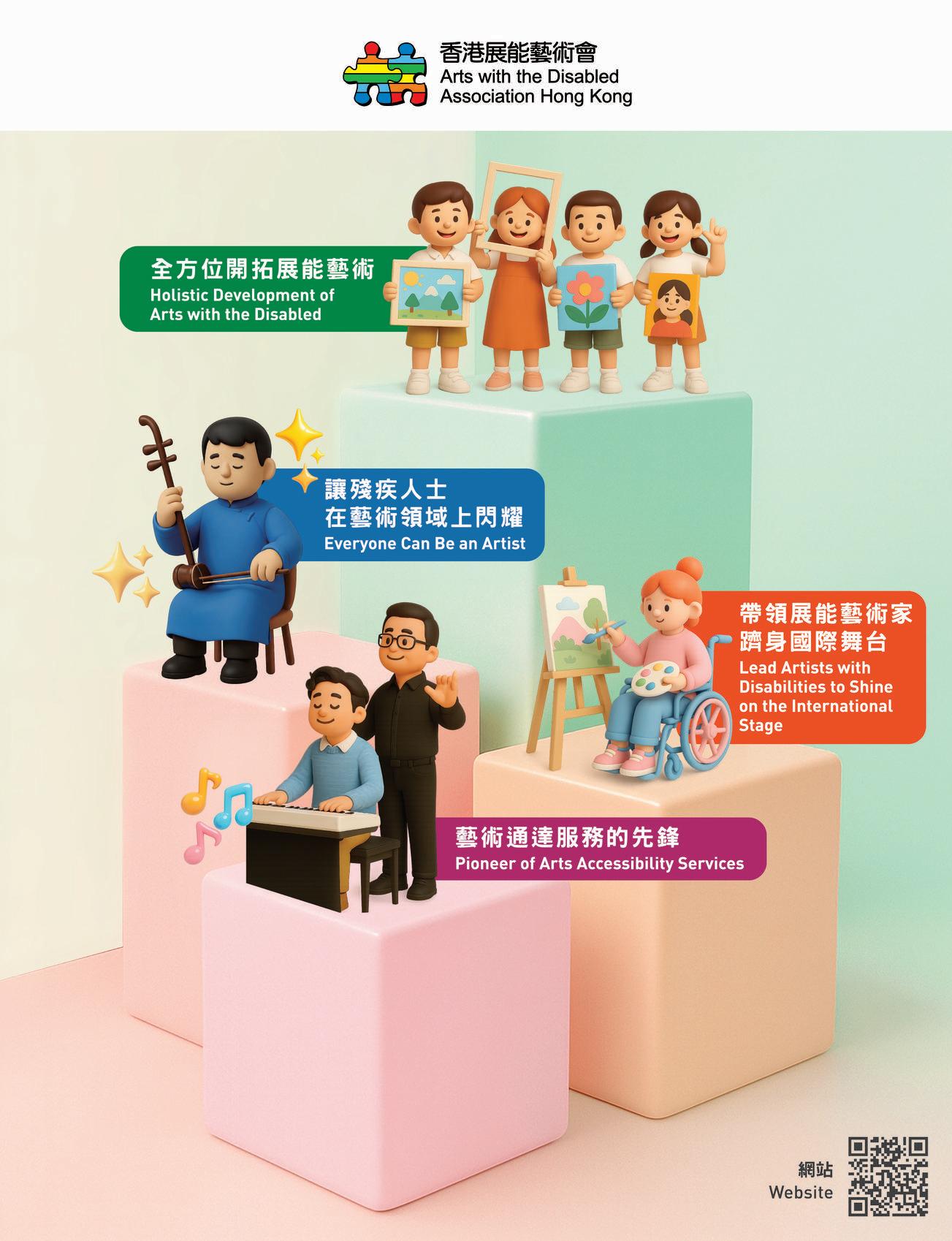
I would like to express my heartfelt thanks to The Hong Kong Jockey Club Charities Trust, our Co-Presenter, for its steadfast partnership; to Arts with the Disabled Association Hong Kong for their invaluable support in providing accessibility services; and to all artists, partners and the “No Limits” team for their dedication.
Let us continue to advance our vision for building an inclusive arts community that celebrates diversity and the limitless potential of human creativity.
Art in its many forms has the power to transcend boundaries, bridge differences and break down stereotypes. It is the connection that unites us all. The Hong Kong Jockey Club and its Trust believe that art can enrich lives and capture the imagination of many. The programmes we support help make art more accessible and spark creativity within our community. We are proud to have co-presented “No Limits” with the Hong Kong Arts Festival Society since 2019, celebrating the transformative power of artistic Expression. “No Limits ” provides a barrier-free environment empowering artists and audiences to cultivate inclusion.
With the theme – “ All of us, all ways ” –this year ’ s programme features performances by local and international artists showcasing the extraordinary capabilities of people of all levels of ability, alongside a series of education programmes to engage the wider community.
To attract more young people and families, “No Limits” will hold special performances and screenings at Tai Kwun, with a talent series to facilitate the professional growth of local artists and inclusive arts groups. “No Limits” will also establish a network to advance regional collaboration and
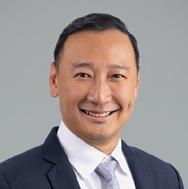
The Hon Martin Liao, GBM, GBS, JP Chairman, The Hong Kong Jockey Club Hong Kong Arts Festival
thought leadership. Accompanying the project once again will also be the Jockey Club “ No Limits” Education and Community Programme featuring school tours, talks and workshops.
The Club’s support for “No Limits” is just one of many ways in which it seeks to make the arts accessible to all – as evidenced by over 50 years’ support for the Hong Kong Arts Festival, as well the revitalisation of Tai Kwun and the construction of the Hong Kong Palace Museum.
Our support for “ No Limits ” , like all our charity and community contributions, is made possible by the Club’s unique integrated business model. Through this we provide racing and racecourse entertainment, partner the HKSAR Government in combatting illegal gambling, and channel responsible wagering demand into tax payments, charity donations and employment that benefit Hong Kong.
I offer sincere thanks to the Hong Kong Arts Festival for its enduring collaboration as well as all participating artists and performers. We hope this year ’ s “No Limits ” will resonate with audiences young and old, leaving them enriched and inspired.
Since 2019, “ No Limits ” – co-presented by the Hong Kong Arts Festival and The Hong Kong Jockey Club Charities Trust – has been an inclusive platform dedicated to showcasing the extraordinary imagination and craft of differentlyabled regional and international artists.
In this past year, our efforts have been recognised both locally and internationally:
• The 2025 “No Limits” – “The Human Touch” was awarded a Special Award for “Excellence in Social and Community Good” at The Hong Kong Management Association’s Award for Marketing Excellence 2025.
• The site-specific community programme In Touch We Trust has won the Good Design Award 2025, recognised for its inclusive collaboration across a mixed-ability team, balancing accessibility with artistic quality in a professional context.
Remaining true to its founding belief, the eighth edition of “ No Limits ” brings together outstanding artists from Hong Kong and different parts of the world. A total of 11 music, theatre, dance, and film works will be presented in 29 performances across the city which, together with months of free film screenings online, reflect the vibrancy and creativity of the international inclusive arts scene.
This year marks an important milestone for “No Limits” as it embarks on a new direction for local collaborations. For the first time, “No Limits” co-produces works with flagship Hong
Flora Yu Executive Director Hong Kong Arts Festival
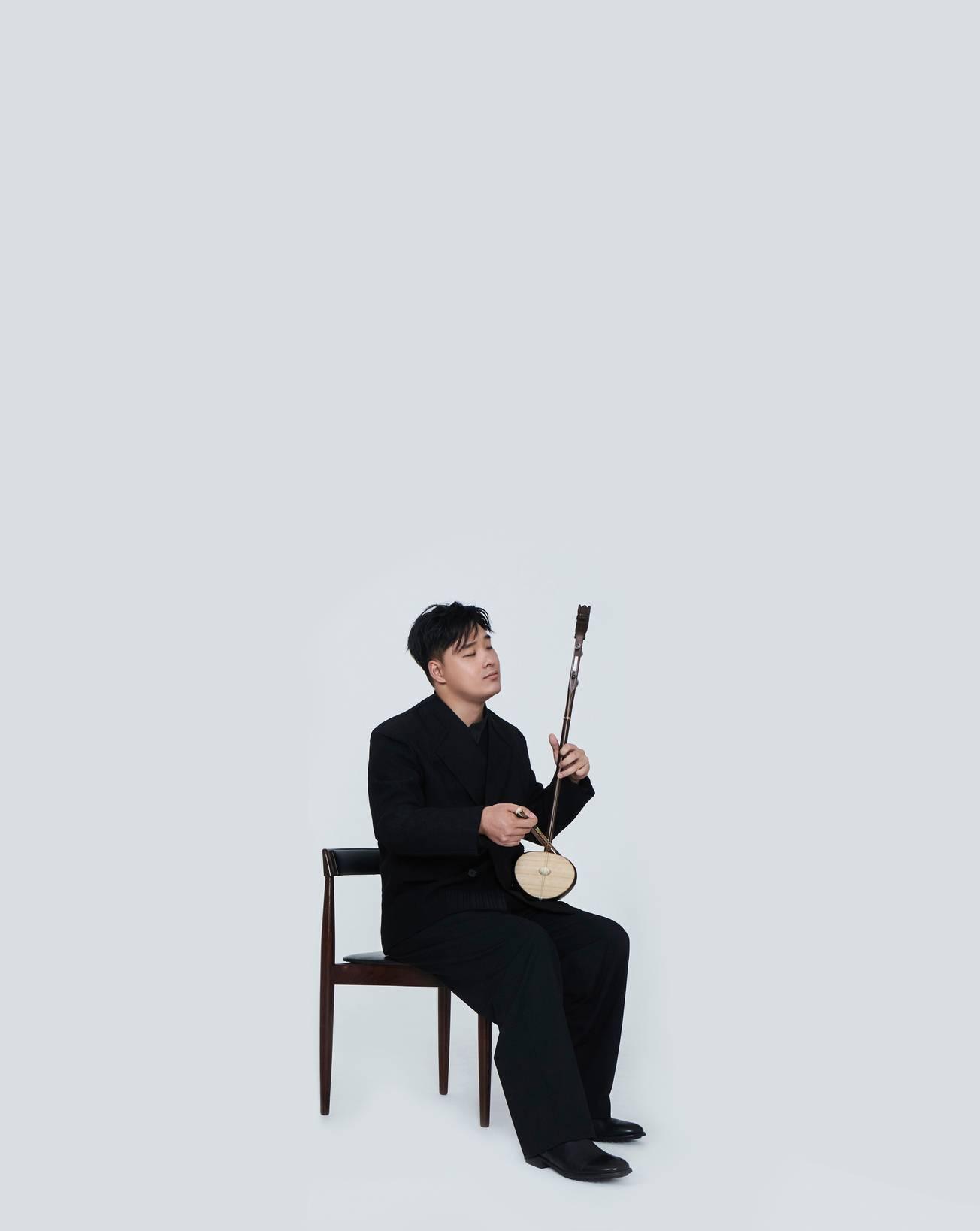
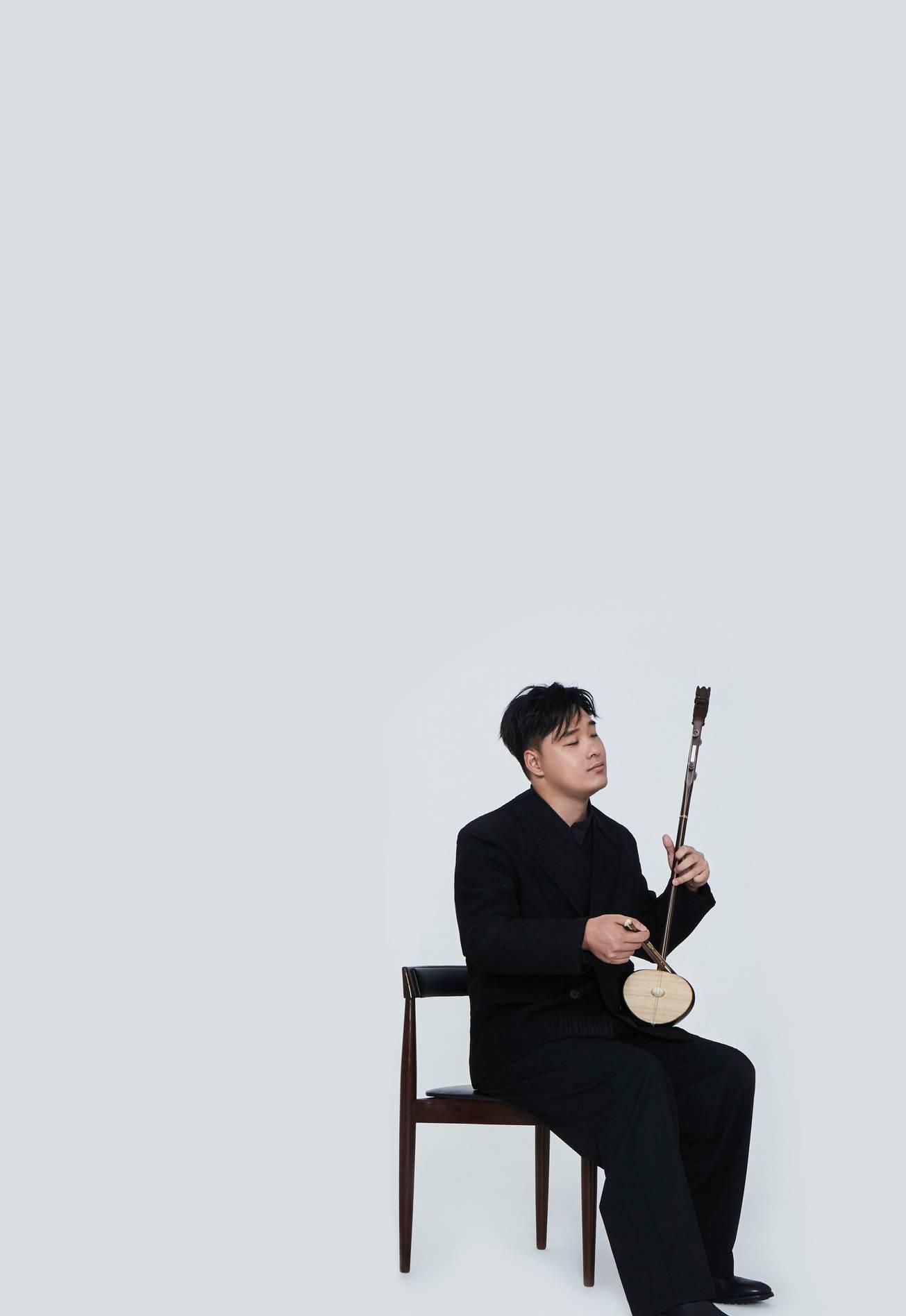
Kong arts companies partnering with the Hong Kong Dance Company, the China Hong Kong Para Dance Sport Association, the Hong Kong Chinese Orchestra, and local erhu soloist Yang Enhua to create two locally produced programmes that embody the spirit of diversity and inclusion.
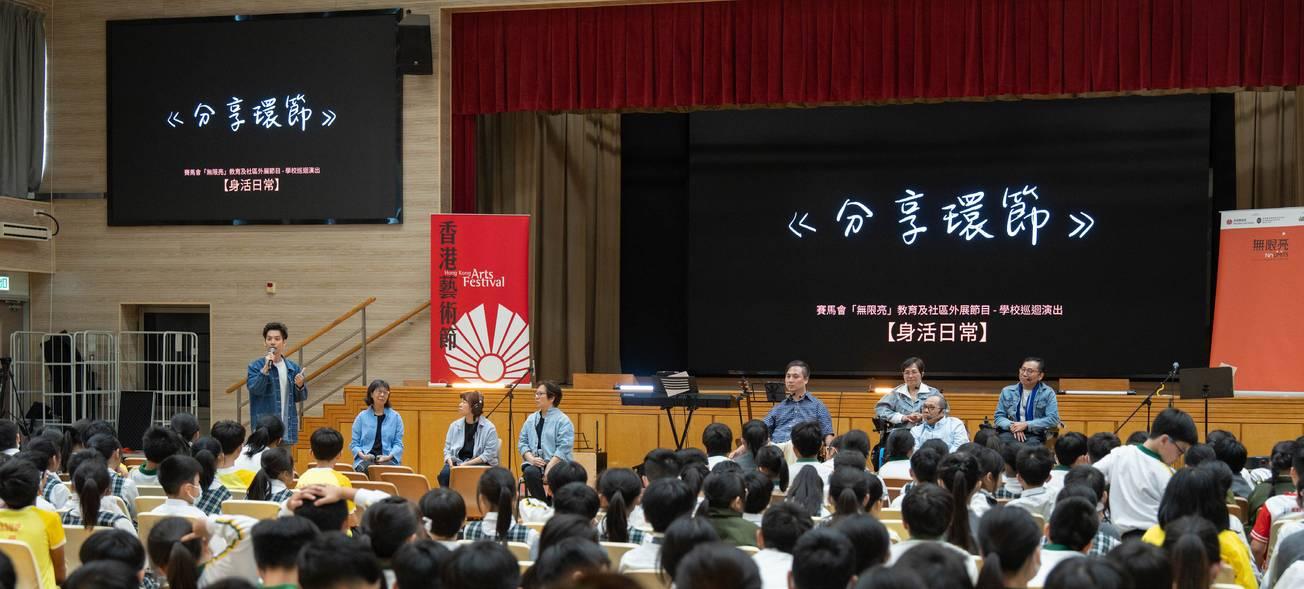
Beyond the stage, this year’ s Jockey Club “No Limits” Education and Community Programme continues to grow and deepen its impact through nurturing the next generation of inclusive artists. The acclaimed Pilot Creative Training Programme offers local teaching artists expanded training and opportunities for advanced study to further strengthen their teaching practice. In addition, over 20 school tour performances and 13 supplementary events – including workshops and talks – bring inclusive arts into local communities and broaden the educational impact of “No Limits” .
We are deeply grateful to The Hong Kong Jockey Club Charities Trust, the co-presenter of “No Limits” , for partnering with us long-term to promote inclusive arts in our city. We also thank our Strategic Supporting Partner, Arts with the Disabled Association Hong Kong, for their professional advice and generous assistance in ensuring accessibility so that people of all abilities can fully enjoy the arts. On behalf of Hong Kong Arts Festival, I warmly invite you to join us in cheerful for artist this year’s “No Limits” programme.
All of Us, All Ways — the theme of the eighth edition of“ No Limits ”— is a call to reimagine the value of diversity through inclusion. People with disabilities are not“ different ” , they are an integral and vital part of a diverse society. With a commitment to transforming difference and diversity into possibility and connection, inclusive arts can create space for understanding a space where the imaginative potential of diversity can be seen and shared.
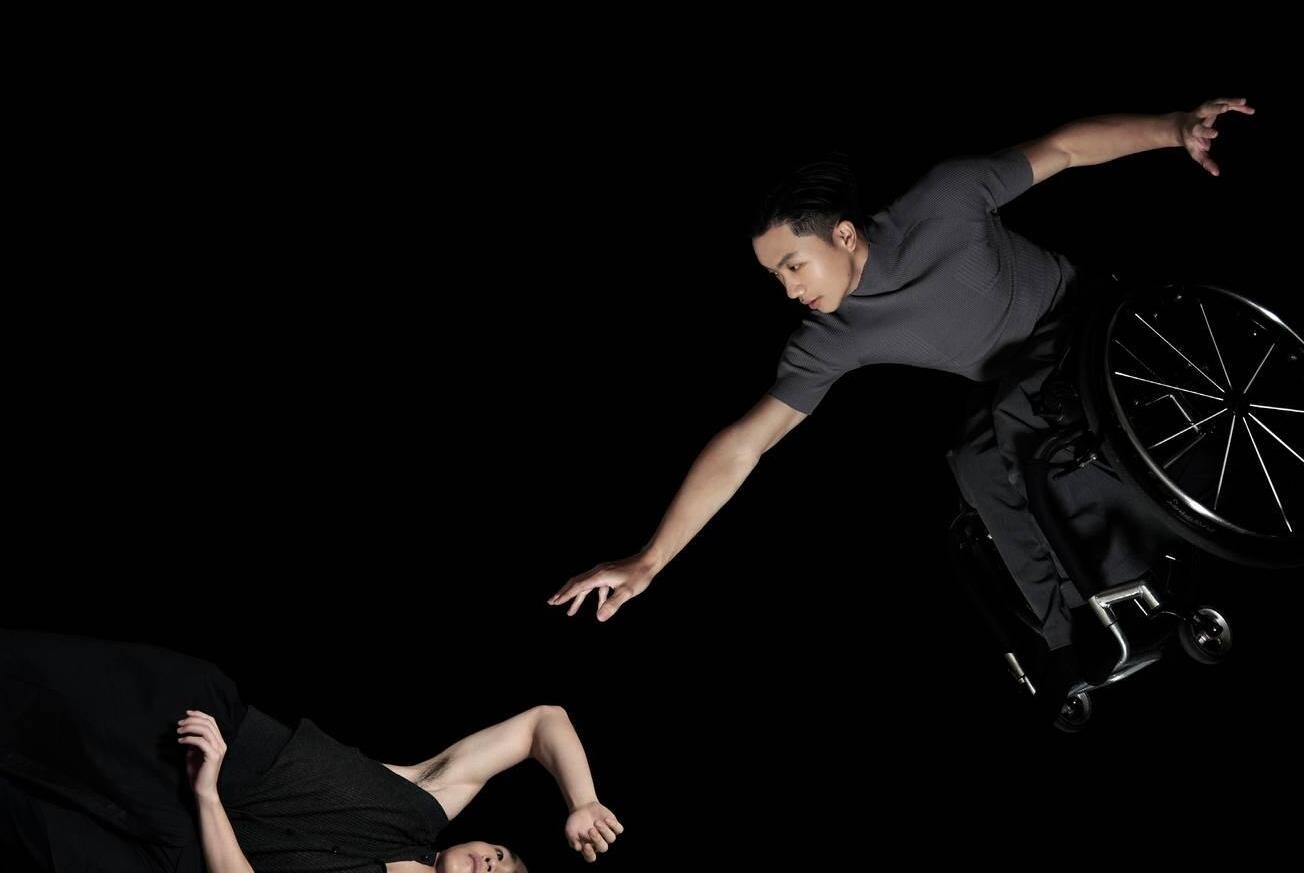
This year, for the first time,“ No Limits ” presents two significant works co-created and co-produced with two of Hong Kong’ s flagship performing arts companies. In the first, Hong Kong Dance Company and the China Hong Kong Para Dance Sport Association draw inspiration from Daoist philosophy, exploring the creative possibilities of diverse physical bodies through traditional Chinese dance and wheelchair dance. In the second, the Hong Kong Chinese Orchestra’ s ensemble perform a new, original chamber ensemble work in their collaboration with rising local erhu talent Yang Enhua. The artistry and rapport of this musical exchange demonstrates the confidence and commitment leading organisations have in the future of inclusive arts.
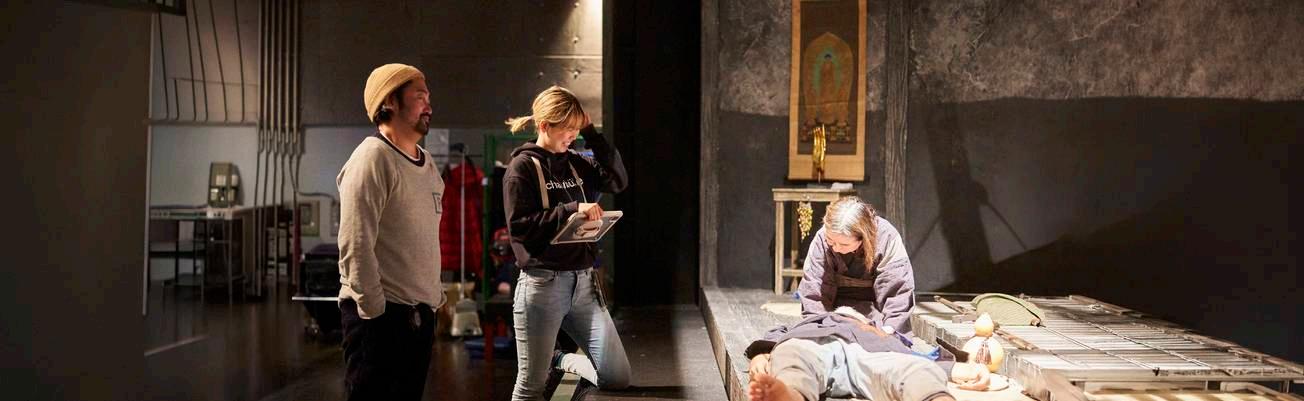
Our vision extends beyond Hong Kong. As in previous years, the 2026 edition of“No Limits” engages with the various cultural contexts of Asia through curated works and conversations, helping to foster the development of inclusive arts across the region. Following our first commission, Hide- and-Seek, created in 2024 in collaboration with artists in mainland China, we present a new Asia commission, Sleeping
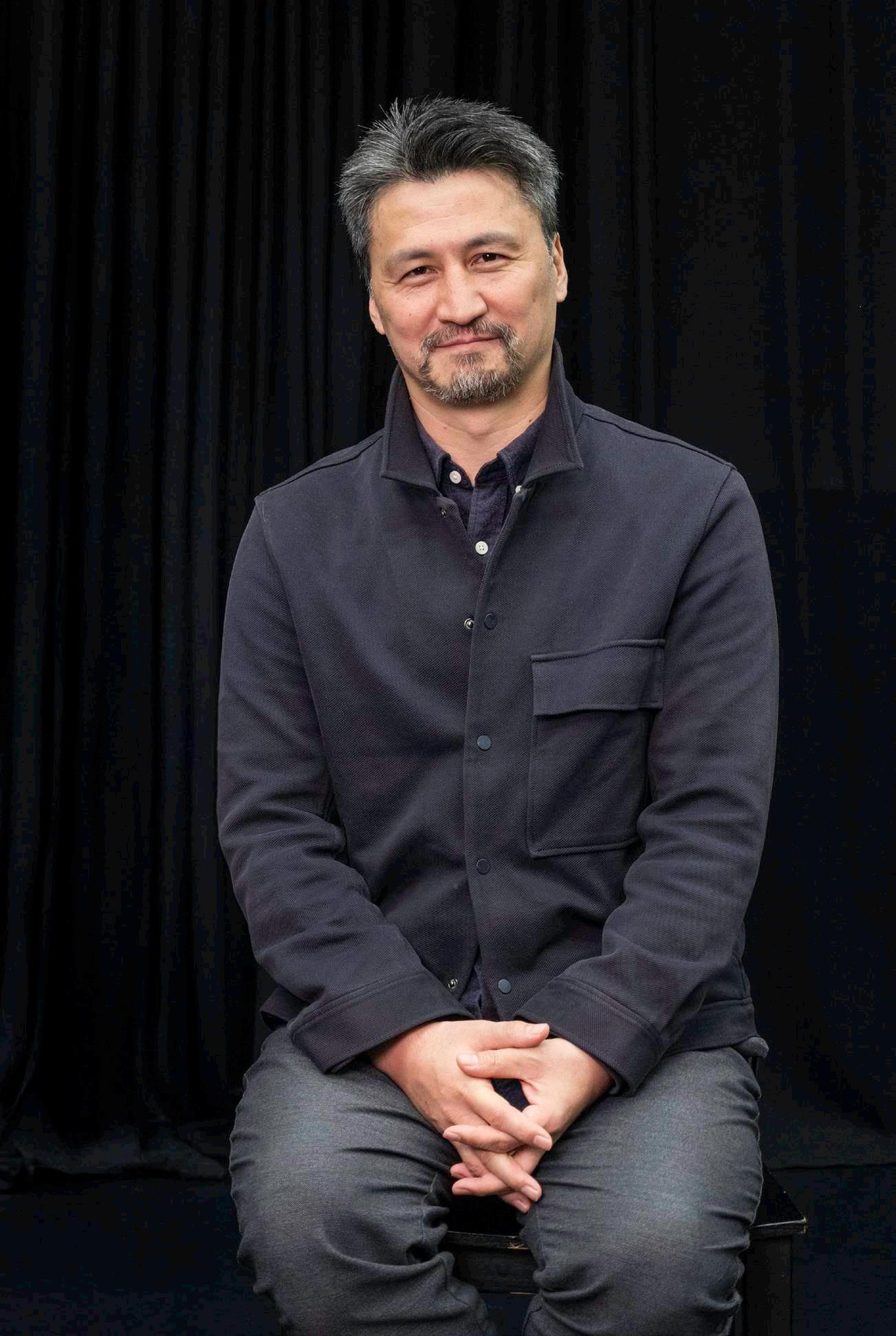
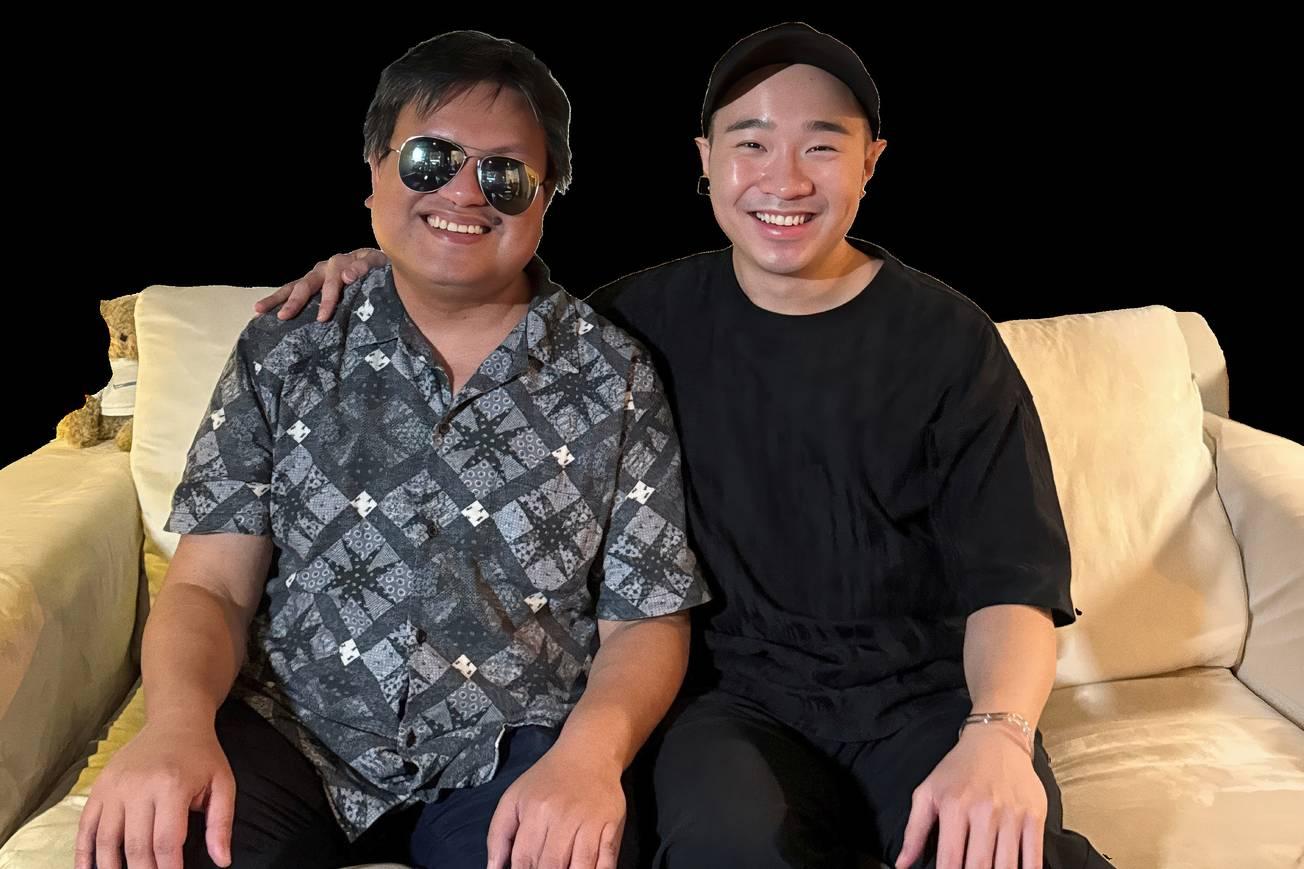
Eddy Zee
“No Limits "Project Director
Fires, a collaboration with acclaimed Japanese director and playwright Kuro Tanino. Exploring the traditional Asian practice of blind massage, the piece unfolds into an unexpected and striking new theatrical creation. In addition, after the ripple effect of last year ’ s “ No Limits” International Symposium on inclusive arts in Asia with regional partners now hosting their own events and deepening dialogue across Asia’ s inclusive arts landscape we are also inviting experts to another International Symposium, this year looking at how innovation can help craft an equal and dignified inclusive future society. Ultimately, for art to have creative power, it must be rooted within the community. To this end, “No Limits” continues to work with experts from different fields to advance artistic inclusion and talent development. This includes expanding the Pilot Creative Training Programme to help teaching artists develop inclusive techniques and nurture emerging artists of all abilities, as well as offering a wide range of education and community outreach activities that cultivate meaningful, lasting dialogue. Last but not least, we are excited to introduce the Local Creative Research and Development Scheme, a groundbreaking initiative that invites young Hong Kong artists to research and collaborate with the local disability community, generate performance works that bring fresh energy to the world of inclusive arts, and have the potential to be showcased at future “ No Limits ” events and help create a more inclusive, compassionate society. When we embrace difference, we open the door to a new world of creative imagination for all of us, in all ways.
The arts can be enjoyed in different ways and with all our senses. No Limits programmes* offer a variety of accessibility services and facilities:
Audio Description
Narration of key visual information to help people with visual impairments understand and access non-audio content.
Braille House Programmes
Programme information provided in braille format.
Accessible Captions (English)
Written description of speech and sounds to help people with hearing impairments understand and access the programmes.
Hong Kong Sign Language Interpretation
On-site interpretation of the spoken elements of a performance in Hong Kong Sign Language.
Relaxed Performance
Performances designed for people who may find regular events daunting, with supportive and relaxed ambience, low lighting and sound, chill-out zones and a welcoming attitude towards noise and movement from the audience.
Guide Dog Friendly Venues
People with visual impairments are welcome to bring their guide dogs into the venues.
Audio Booklets
Programme information provided in audio format.
Caption Reading
Narration of captions or surtitles that translate dialogue originally spoken in another language.
Theatrical Interpretation
On-site translation of spoken elements of a performance in Hong Kong Sign Language, with additional expressive gestures and facial expressions to convey tone and character.
Easy-to-Read Booklet
Programme information provided in simple language and pictures.
Extra Wheelchair Seats
Extra wheelchair seats are available in venues.
* Arts Accessibility Services differ from programme to programme. Please refer to individual programme pages for details.
Dance
Wayfaring Beyond
Hong Kong Dance Company and China Hong Kong Para Dance Sport Association
大館檢閱廣場
Parade Ground, Tai Kwun
由「無限亮」與香港舞蹈團聯合製作 與中國香港輪椅體育舞蹈運動協會 聯合創作
Co-produced by No Limits and Hong Kong Dance Company
In collaboration with China Hong Kong Para Dance Sport Association
節目長約 40 分鐘,不設中場休息
Approx. 40 minutes with no interval
2.28 2pm , 4pm ( 六 ) SAT 3.1 2pm , 4pm
(日) SUN 免費入場
Free admission
無限亮加料節目 No Limits PLUS P.146
• 不完美又如何: 解讀莊子智慧的逍遙之道
Imperfect yet Whole: Interpreting Zhuangzi ’ s Philosophy of Carefree
• 揭開《遊延》幕後:創作 × 哲學的自由密碼 Decoding the Birth of "Wayfaring Beyond": Creativity X Philosophy Discovering Your Code to Freedom
設粵語口述影像、語音場刊及香港手語傳譯
Audio description in Cantonese, Hong Kong Sign Language interpretation and house programme in audio format available
敬請關掉所有響鬧及發光裝置。
Please switch off all sound-making and light-emitting devices.
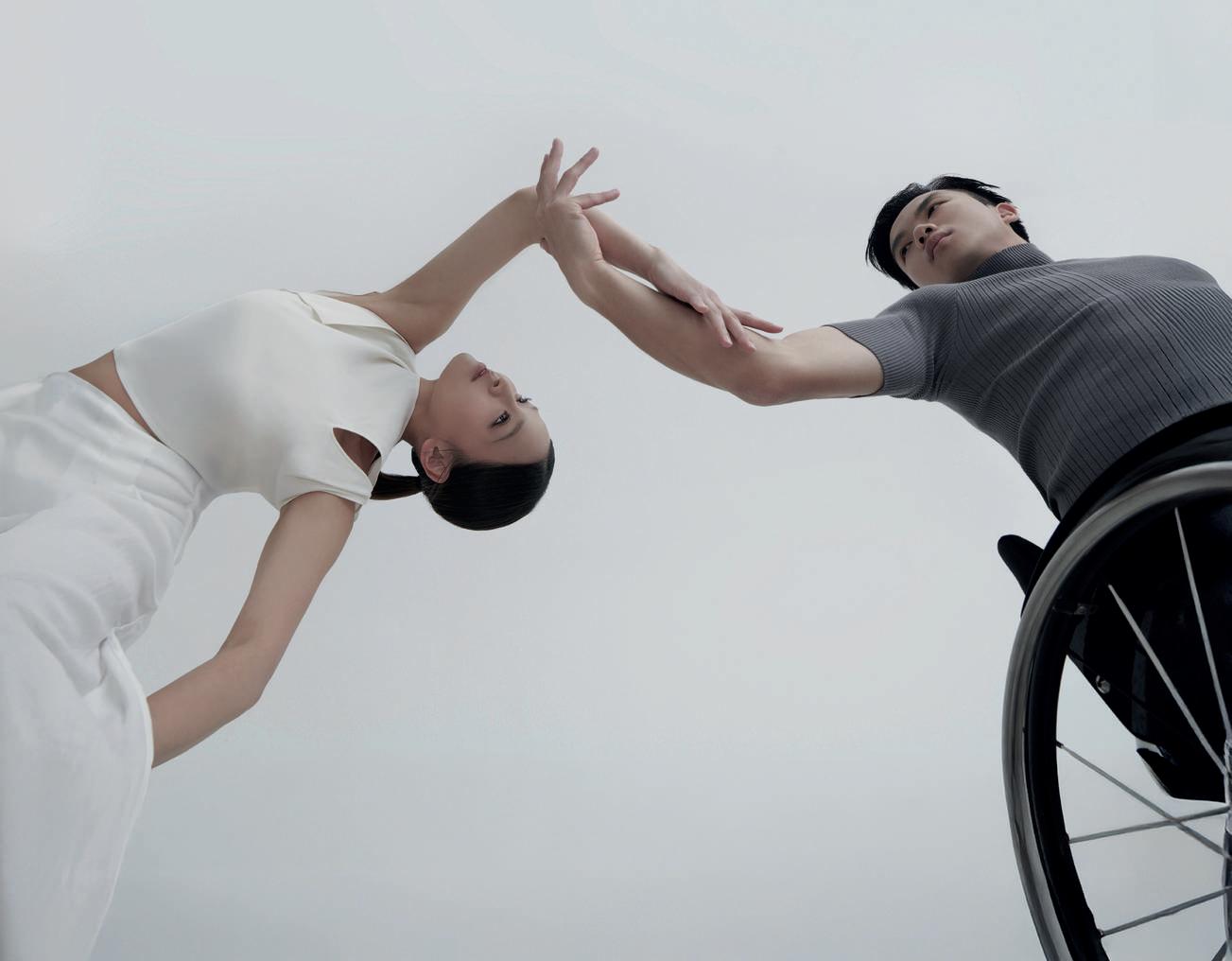
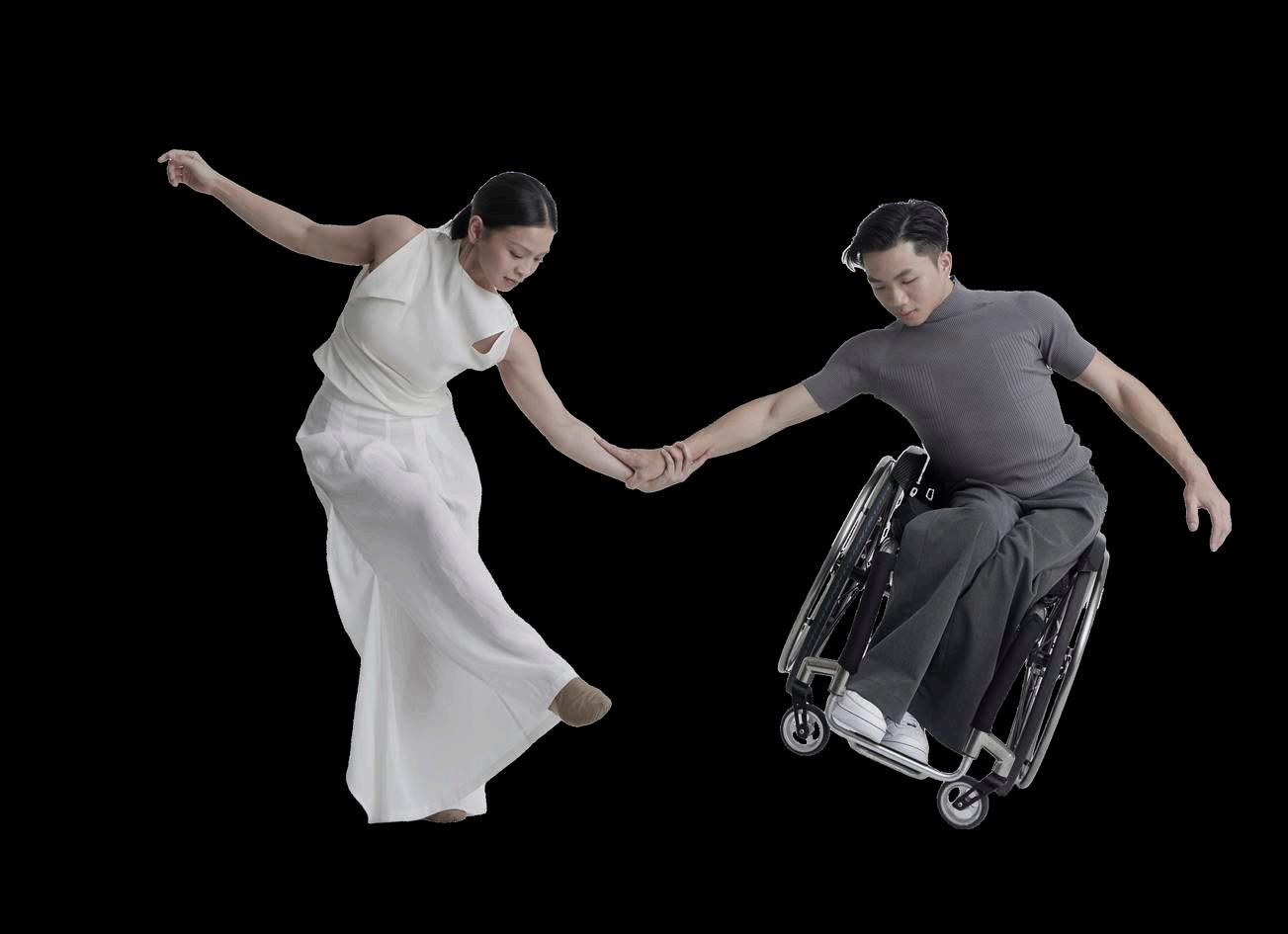
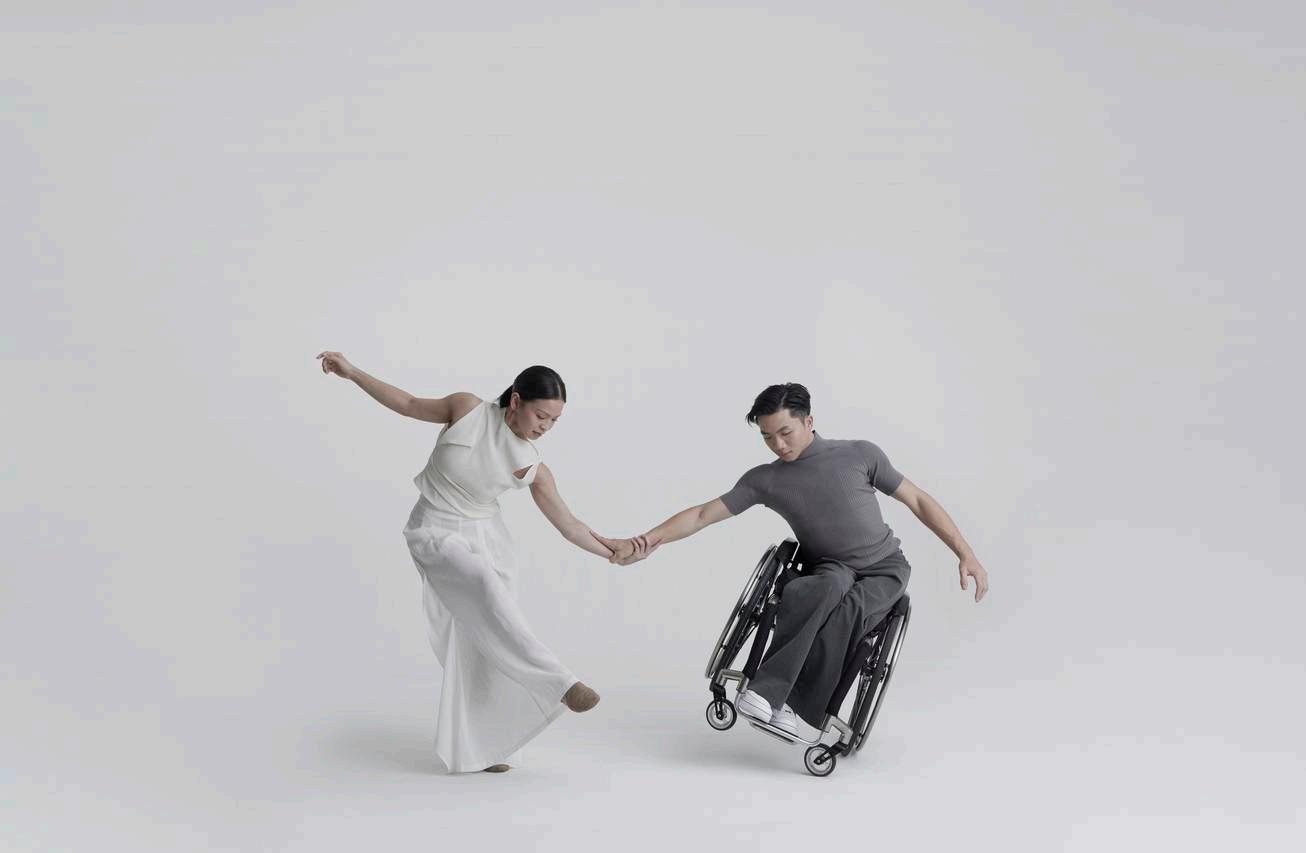
When the energetic dynamism of para dance meets the ethereal rhythm of Chinese dance, what new sparks of artistry will come to life? Co-produced by No Limits and Hong Kong Dance Company (HKDance), the original inclusive dance production Wayfaring Beyond
The Sign of Virtue Complete and The Free and Easy Wanderer: “Virtue is the establishment of perfect harmony. Though virtue takes no form, things cannot break away from it.” True virtue is not revealed in outward forms, yet all things are naturally drawn to it. Furthermore, “Men do not mirror themselves in running water—they mirror themselves in still water. Only what is still can still the stillness of other things.” Only when the human heart is as calm as still water, internally tranquil, can it reflect all things, observe itself and even inspire others.
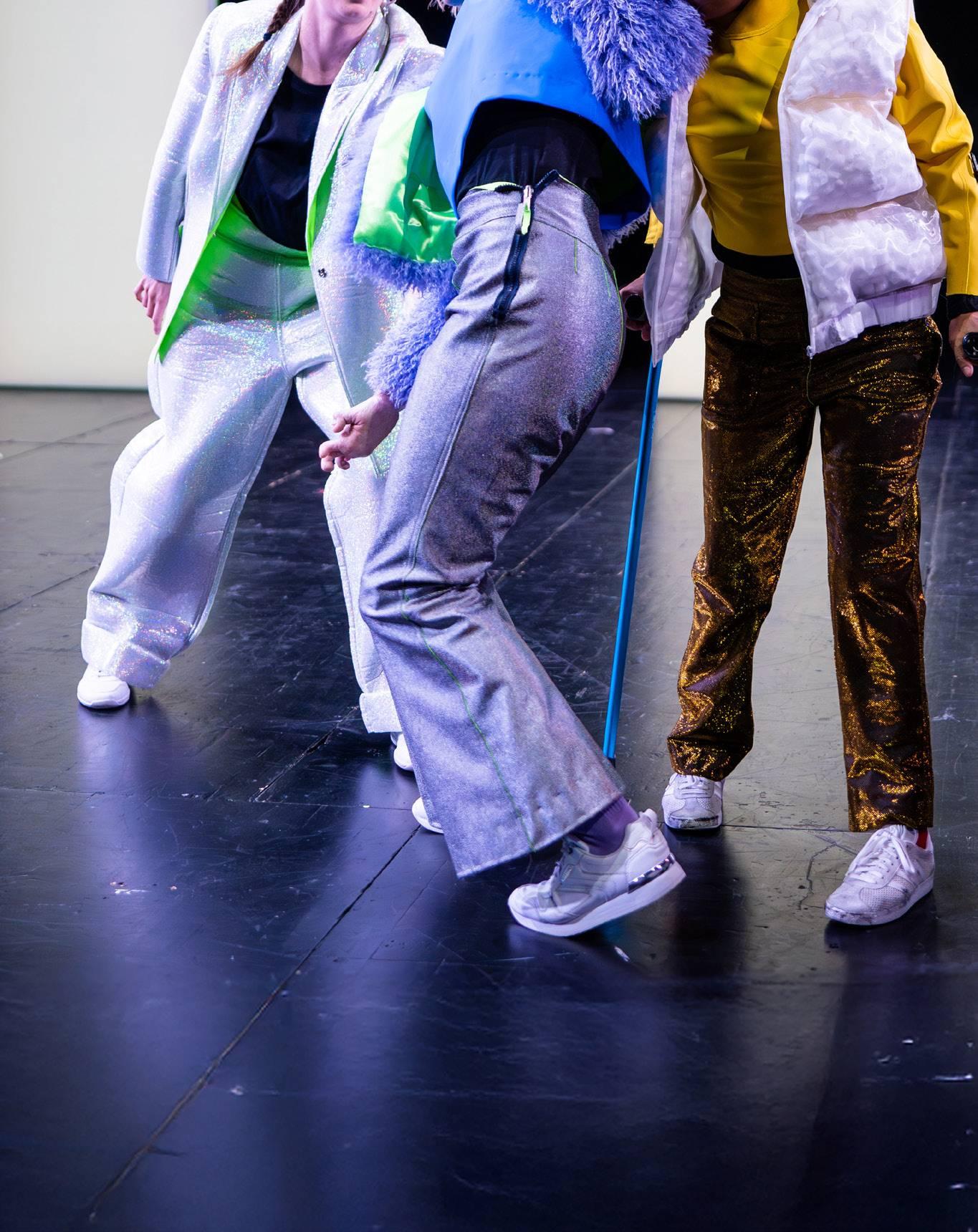
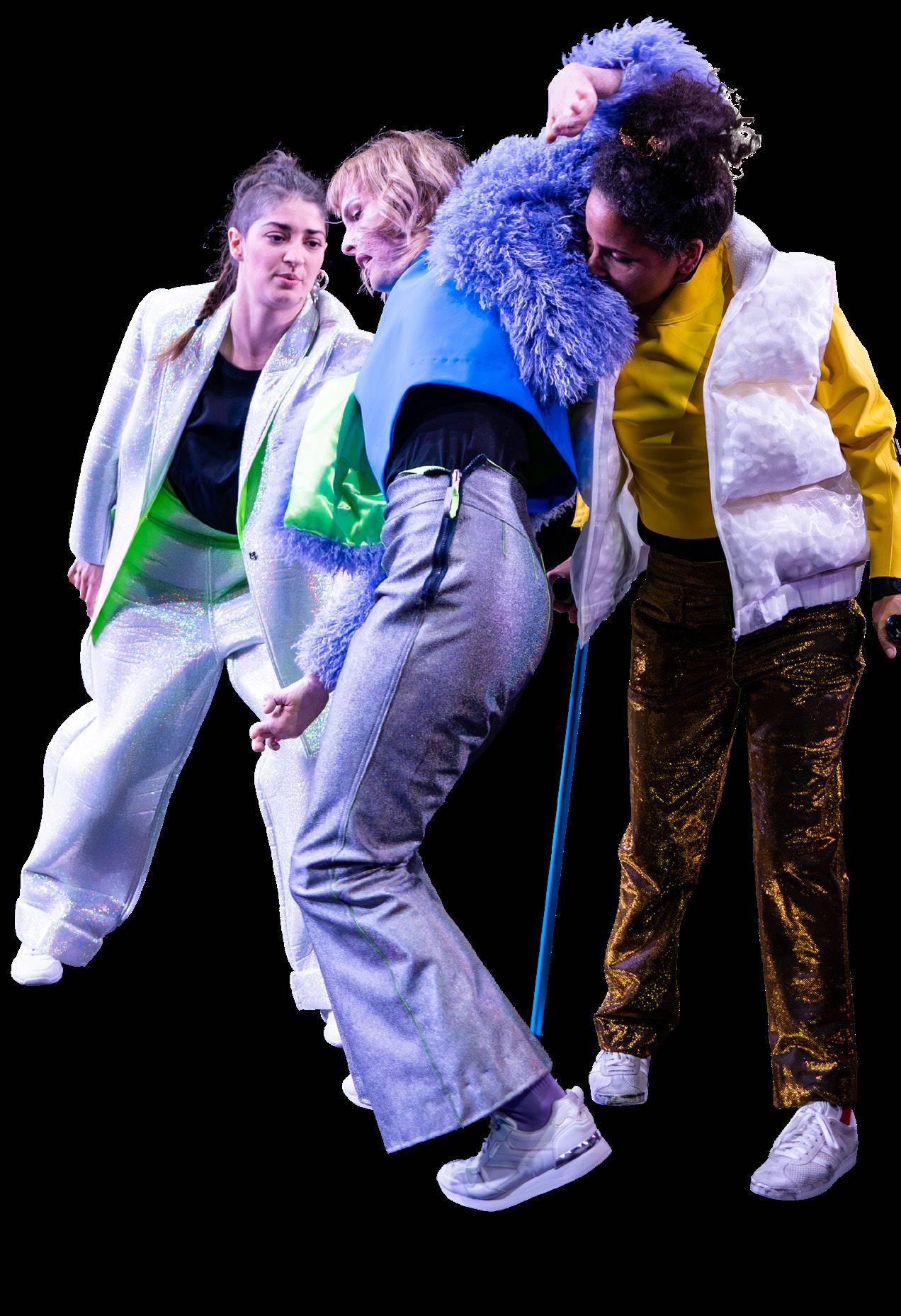
As the stage becomes a space where “there is nothing that heaven doesn’t cover, nothing that earth doesn’t bear up.” Six wheelchair dancers and six HKDance dancers appear and enter with heads held high, meeting one another. Society norms tend to judge people through binary perspectives such as “abled vs disabled”. This show resonates with Zhuangzi’s call to see beyond the physical form and glimpse the true essence of the inner self. As the dancers let movement become their dialogue, they dance their way out of strangers and finally see another for real—the two groups of six merge into a unified ensemble. Through movement exchange, they shatter their own and the audience’s preconceptions, contemplating each other until reaching the states of “forgetting form” and “forgetting the self”, dancing towards a state of being “free and easy”.
This is a dance of seeing oneself, transcending the self and breaking through internal and external constraints—towards selfless freedom. So dance freely—into an ideal realm where there are no boundaries between self and others.
Y: Yang Yuntao (Artistic Consultant of Wayfaring Beyond & Artistic Director of HKDance)
E: Wong Wai-king, Evina (Dancer of Wayfaring Beyond & Chairperson of CHKPDSA)
O: Ong Tze Shen (Choreographer of of Wayfaring Beyond & Principal Dancer of HKDance)
K: Lok Tin-ki, Kevin (Associate Choreographer of Wayfaring Beyond & Coach of the Hong Kong Para Dance Sports Team)
Q: What motivated you to draw inspiration from Zhuangzi’s The Sign of Virtue Complete and The Free and Easy Wanderer for Wayfaring Beyond?
O: When Yuntao invited me to choreograph this work, these two Zhuangzi chapters immediately came to mind. The six “imperfect” figures in The Sign of Virtue Complete became a metaphor rather than characters I wished to depict, offering ancient insights that remain relevant today. The collaboration also involves six wheelchair dancers and six HKDance dancers, which naturally echoed the text and inspired the creation.
K: When Tze Shen proposed these writings as creative inspiration, it struck me like a thunderbolt and prompted me to ask myself: why has para dance sport always been about meeting competition standards? Why do we have limitations? Dance as a medium should never be bound by constraints; it is capable of holding far more, just like what is conveyed in Wayfaring Beyond.
Q: How did you draw from the narratives of The Sign of Virtue Complete to convey the state of “free and easy” in your creation?
O: We began rehearsals with breathing techniques of Chinese martial arts and inner observation to help dancers focus and connect. They moved from meeting to knowing one another, and from seeing each other to seeing oneself. After several rehearsals, a rapport was built through physical contact. They moved past wondering how high to leap or how many turns to make to accommodating each other. Gone are the mental frameworks and preconceived notions, and they can now intuitively trust and explore each other’s unique physicality. We hope to create a new dance language together through this.
Y: We all agreed that the 12 dancers should neither be separated nor just showcase their own repertoire. Both sides must break certain limitations to develop new dimensions. Both HKDance and wheelchair dancers face physical
楊雲濤 《遊延》藝術顧問及香港舞蹈團藝術總監
Yang Yuntao
Artistic Consultant of Wayfaring Beyond & Artistic Director of HKDance
WAYFARING BEYOND
constraints, yet these limitations spark fresh perspectives. When wheelchair dancers said they wanted to learn from us, in fact we were learning from them too. Without this collaboration, we might never have found an answer to what freedom, limitation and even being free and easy mean.
E: This is about breaking down the boundaries between “how we see you?” and “how you see us?” As Yuntao said, overcoming limitations sparks fresh perspectives—when two dancers share similar heights and centres of gravity, dancing together comes naturally. But when a non-disabled dancer and a wheelchair dancer have different centres of gravity, dancing together becomes a challenge—one that prompts new ways of thinking.
Q: During rehearsals, what surprises or insights did the dancers bring you?
O: Initially, both groups of dancers were very careful with each other, worried they might hurt one another. Despite different physical conditions, dancers instinctively know how to protect themselves while performing, and they quickly found a balance. The bigger revelation was that
the six wheelchair dancers have different physical conditions and movements they could master— just like the non-disabled dancers each having their own unique qualities. Most importantly, the process of how these 12 dancers came to know and grow with one another mattered more than the final work. This also made me reflect on my own body, and even on how I dance.
K: Before creating the piece, I wondered whether Wayfaring Beyond would be Chinese dance, Latin dance, or contemporary dance. The more we rehearsed, the more I realised it needed no such category, and there is no need for definition. In the past, when I regarded para dance sport as a competitive sport, there was a focus on controlling dancers’ movements. This time, however, I learnt to observe the dancers’ postures afresh and think from their bodies outward. Once, when wheelchair dancer Yu Chun-yin crawled along the floor for a drink of water, I was struck by the elegance of his movement—just a simple, elemental action, yet so authentic and natural. In the performance arts, we can be too deliberate in pursuing a certain way of expression, and that becomes an obstacle.
Q: Para dance is often considered a sport. How has this work changed your perspective on para dance or sport?
E: This is the first collaboration between CHKPDSA and a professional dance company, and it inspired me to have more artistic reflections. Para dance sport has traditionally centred on Latin and standard dances, so contemporary and Chinese dance are new explorations for us. We began to see para dance sport not only as a sport but also as an art form, raising the question of how these two worlds might integrate in the future.
K: Having coached para dance sport for two years, Wai-king and I have long discussed the need for artistic change. In terms of artistic thinking and expression, we may need to break free from the limitations of Latin dance. Wheelchair dancers are often tense during competitions. The expressive language of the dance is limited, sometimes leaving the world confused about what we are doing. But creating Wayfaring Beyond had been a profound experience for me, prompting me to reflect on the essence of dance and choreography. Through the concept of “Men do not mirror themselves in running water— they mirror themselves in still water. Only what is still can still the stillness of other things.” from The Sign of Virtue Complete, it made me realise that dance is not about pursuing evergreater technique, but about understanding the message we wish to convey.
Q: In creating this dance for No Limits, how have you reinterpreted “inclusion”?
Y: Both parties explored and experimented from multiple angles to create this crossdisciplinary collaboration. Though rooted in traditional Chinese philosophy, The Sign of Virtue Complete and The Free and Easy Wanderer feel strikingly contemporary and align with the artistic ideals we pursue today. Inclusion remains foundational in the performing arts as it helps form human relationships—between performer and audience, or between performers. Through others, we see ourselves, or come to understand ourselves. True inclusion is not simply placing different groups together, nor is performance about entertainment or technical display; it is about raising questions and reflecting on meaning, a search with no final answer.
E: Building an inclusive society involves more than integrating the disabled and non-disabled; it also includes diverse ethnicities and communities. How should we communicate to achieve inclusivity? We have been reflecting on this with each other and with No Limits. There may be future collaborations with people of different abilities, bringing together diverse groups to create on a larger scale. There are so many possibilities, and so much more to explore.
Established in 1981, Hong Kong Dance Company (HKDance) is dedicated to promoting Chinese dance with contemporary artistic visions and Hong Kong character, staging over 200 productions to great acclaim. They include“ L ’Amour Immortel ” , “ Storm Clouds ” , “ Kung Fu Artistry ” , “ Nine Songs ” , “ A Tale of the Southern Sky ”and more. The Company has extensive international connections, making cultural rapport by touring to America, Europe, Korea, China and multiple others around the globe. With its mandate to create original interdisciplinary works, the Company delves into confluence of Chinese dance and Chinese martial arts traditions, creating the grand dance poem“Shan Shui: An Ode to Nature”and novel dance and martial arts theatre“Convergence” . In 2023, the excerpt “ Whispers of the Pines”from“Convergence”was recognised in the 13th China Dance Lotus Awards (for Contemporary Dance), the most prestigious national dance award in China.
The China Hong Kong Para Dance Sport Association promotes para dance sport and enables people with disabilities to enhance their physical fitness, self-confidence and quality of life through dance training. As well as nurturing the development of athletes, the association works to integrate wheelchair dance into cultural and artistic fields, and raise public awareness and recognition of the sport. Additionally, the association provides a platform for individuals with disabilities to showcase their talents and develop their potential, and works to build an inclusive society that embodies the sports and art belong to everyone” .
Ong is the Principal Dancer of Hong Kong Dance Company. He received full scholarships at The Hong Kong Academy for Performing Arts and graduated with First-class Honours in 2018. He joined Hong Kong Dance Company the same year, and was promoted to Principal Dancer in 2023. Recent performances include the lead role in“Nezha: Untold Solitude ” , “ Shan Shui: An Ode to Nature ” , “ Convergence ” , and“ The Legend of Lanling ” . In 2024, he also performed in“ Lady Macbeth”at Hong Kong International Shakespeare Festival. In 2020, Ong was awarded second prize at the 17th Seoul International Dance Competition (Contemporary Dance division) and the Outstanding Performance by a Male Dancer award at the 24th Hong Kong Dance Awards for“Nezha: Untold Solitude”in 2023. In 2025, he has received the Award for Young Artist (Dance), at the 19th Hong Kong Arts Development Awards.
聯合編舞 Associate Choreographer
駱天麒 Lok Tin-ki, Kevin
現任香港輪椅舞蹈代表隊教練,擁有超過二十年的拉丁舞及標準舞 學習與比賽經驗。2008 年加入香港青少年代表隊,2013 年成為香港輪 椅舞蹈體育隊成員。2010 年他參與韓國 KDSFD ASIA OPEN CUP,在 國際輪椅舞蹈比賽中榮膺三項舞冠軍。近年專注於編舞,為香港輪椅舞蹈代表隊設計高質素的舞蹈作 品,於國際舞台上贏得多項大獎,包括領導運動員於 2024 年輪椅體育舞蹈運動亞洲錦標賽中取得一 金三銀四銅。2025 年 9 月更代表香港出戰全運會大眾項目輪椅舞蹈並獲得三金三銀成績,當中編排 的集體舞獲全國第一名。
Kevin has over twenty years of experience in competitive Latin and Standard dances, and currently serves as the coach of the Hong Kong Para Dance Sports Team. After joining the Hong Kong Youth Team in 2008, he became a member of the Hong Kong Para Dance Sports Team in 2013, representing Hong Kong in international competitions.
In 2010, he was recognised as champion of the international wheelchair dance competition at the Korea KDSFD Asia Open Cup. In recent years, he has focused on choreography, designing dance routines for the Hong Kong Para Dance Sports Team. In 2025, he led athletes to second place in the class 1 and class 2 Freestyle Combination Events at the Hong Kong International Para Dance Sports Competition, and represented Hong Kong in the para dance event at the National Games, where he won three golds and three silvers, and first place in the country for his choreographed group dance.
藝術團隊 Artistic Team
策劃 Curator
錢佑 Eddy Zee+
藝術顧問 Artistic Consultant
楊雲濤 Yang Yuntao^
編舞 Choreographer
王志昇 Ong Tze Shen^
聯合編舞 Associate Choreographer
駱天麒 Lok Tin-ki, Kevin
作曲 Composer
劉曉江 Lawrence Lau*
南音說唱及撰詞
Naamyam (Cantonese Narrative Song and Lyricist)
陳志江 @ 一才鑼鼓
Kong Chan@The Gong Strikes One*
舞台設計 Stage Designer
王健偉 Jan Wong*
服裝設計 Costume Designer
何珮姍 Cindy Ho*
助理服裝設計 Assistant Costume Designer
黃樂瑤 Joslyn Wong*
音響設計 Sound Designer
夏恩蓓 Ha Yan-pui*
燈光設計 Lighting Designer
翁焯綸 Denzel Yung*
聯合執行監製 Co-Executive Producers
吳卓恩 Frieda Ng+、何嘉露 Carrol Ho^
項目統籌 Programme Coordinators
潘詠汶 Jasmine Poon+、陳賢雯 Cherie Chan^
項目助理 Programme Assistant
何嘉兒 Claire Ho^
演出 Performers
香港舞蹈團舞蹈員
Dancers of HKDance
藍彥怡、周若芸、賴泓甫、吳宛汶、蔡博鴻、翟正天 Lam Yin-yi 、 Chou Jo-yun 、 Lai Hung-fu 、 Ng Yuen-man 、 Tsai Po-hung 、 Zhai Zhengtian
中國香港輪椅體育舞蹈運動協會舞蹈員
Dancers of CHKPDSA
黃偉琼、鍾少琼 、余俊延、蘇芷恩、黃和洲 、馮瑞珍
Wong Wai-king Evina 、 Chung Siu-king Olivia 、 Yu Chun-yin Matthew 、 So Tze-yan Susanna 、 Wong Wo-chau Philip 、 Fung Shui-chun Jenny
製作團隊 Production Team
技術與製作經理 Technical and Production Manager
王永強 Alex Wong^
技術經理 Technical Manager
梁雅芝 Shirley Leung+
助理技術經理 Assistant Technical Managers
鄭家裕 Dick Cheng+、林慶麟 Lam Hing-lun^
舞台監督 Stage Manager
陳澤君 Chan Chak-kwan^
執行舞台監督 Deputy Stage Manager
吳紫靈 Ng Tsz-ling*
助理舞台監督 Assistant Stage Managers
謝子偉 Tse Tsz-wai^、黎智希 Ivy Lai^
服裝統籌 Wardrobe Coordinator
林曉燕 Gauze Lam*
技術主任 Technical Officer
羅德栭 Callie Law^
+ 無限亮職員 No Limits Staff
^ 香港舞蹈團職員 Hong Kong Dance Company Staff
* 成員為香港舞蹈團特約邀請聘用
Members are engaged by Hong Kong Dance Company
Light and Shadow on Strings
《弦上光影》中樂演奏會
香港中樂團(小組演奏)及
Hong Kong Chinese Orchestra (Chamber Ensemble) and 楊恩華(獨奏及重奏)
Yang Enhua (Solo and Ensemble)
由「無限亮」與香港中樂團聯合製作
Co-produced by No Limits and Hong Kong Chinese Orchestra
本節目含有煙霧效果
The performance contains smoke effects
本節目有接近全黑之場景
The performance contains scenes of near complete darkness
設中英文字幕、語音場刊
Subtitles in Chinese and English, house programme in audio format available
敬請關掉所有響鬧及發光裝置。
Please switch off all sound-making and light-emitting devices.
請勿擅自攝影、錄音或錄影。
Unauthorised photography or recording of any kind is strictly prohibited.
Music as “Light”, Seeing the World through the Ears
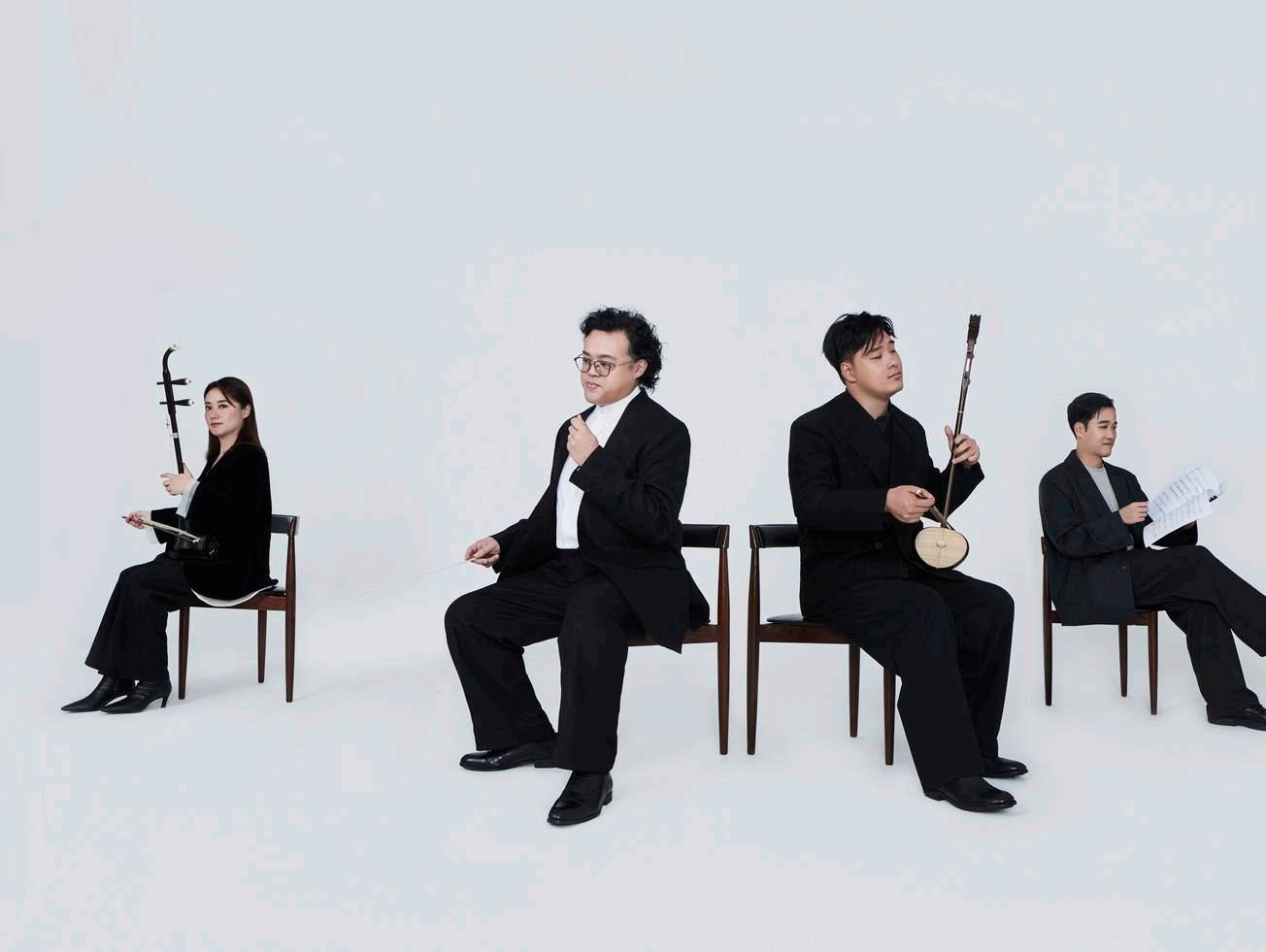
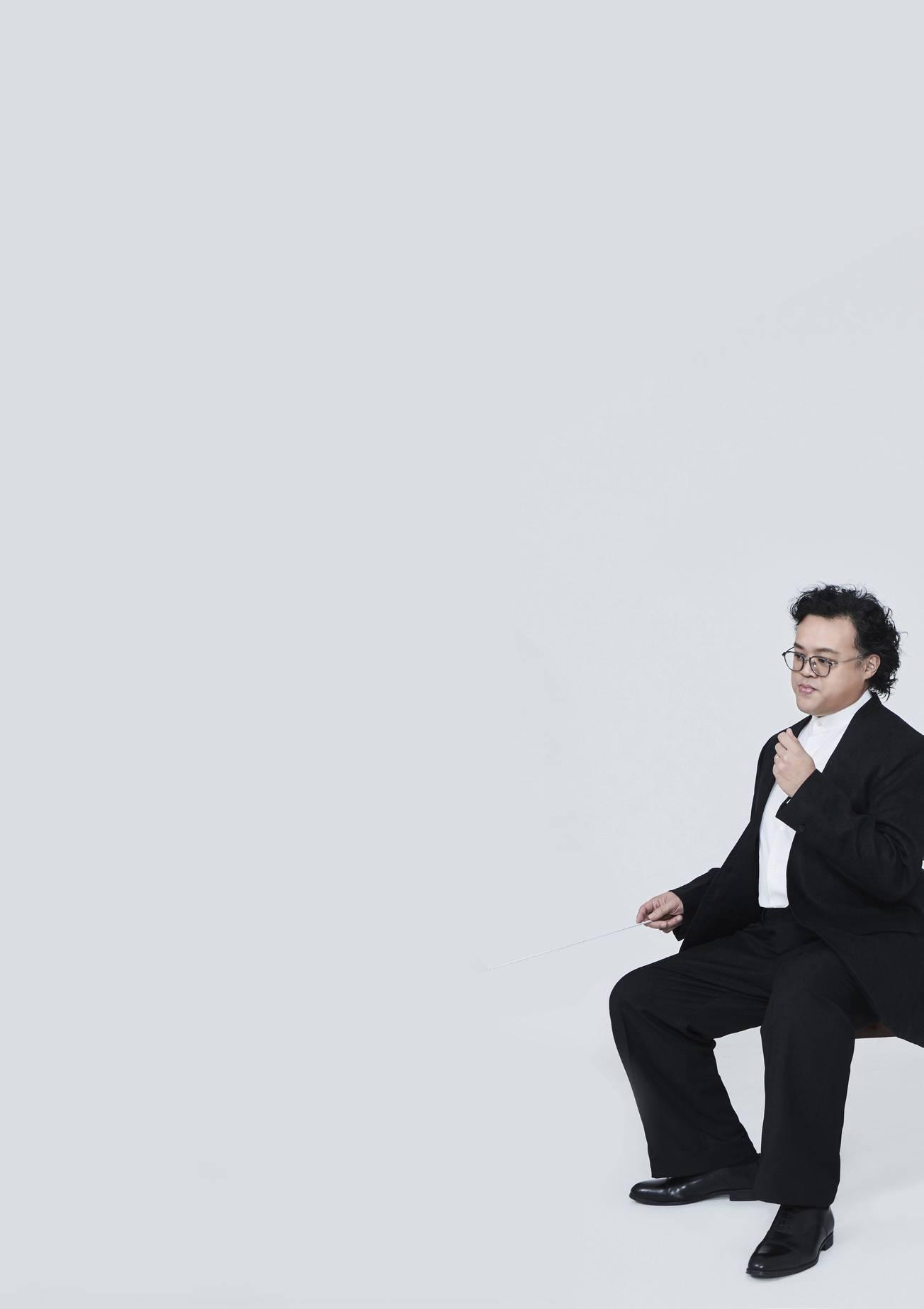
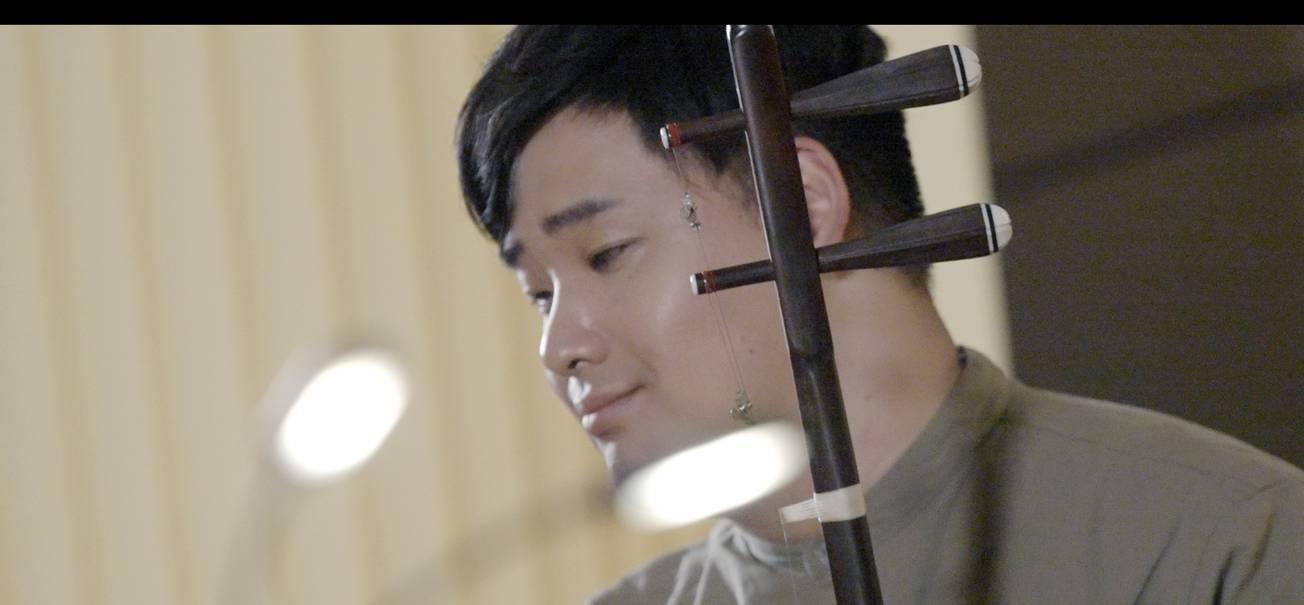
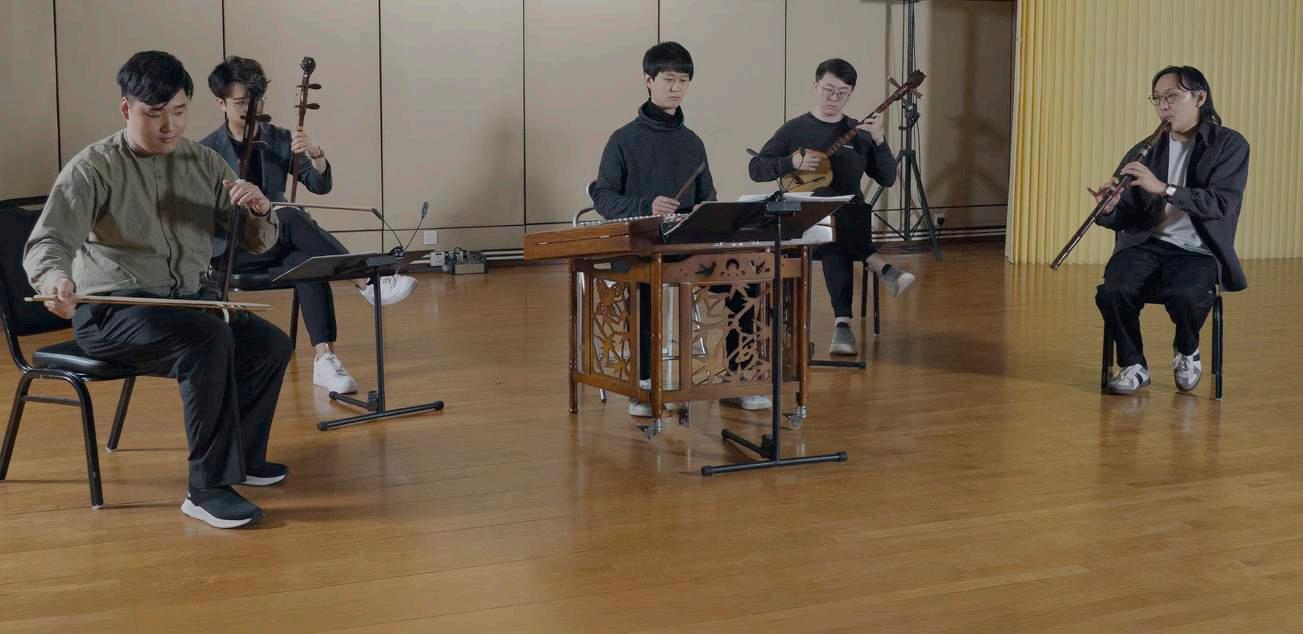
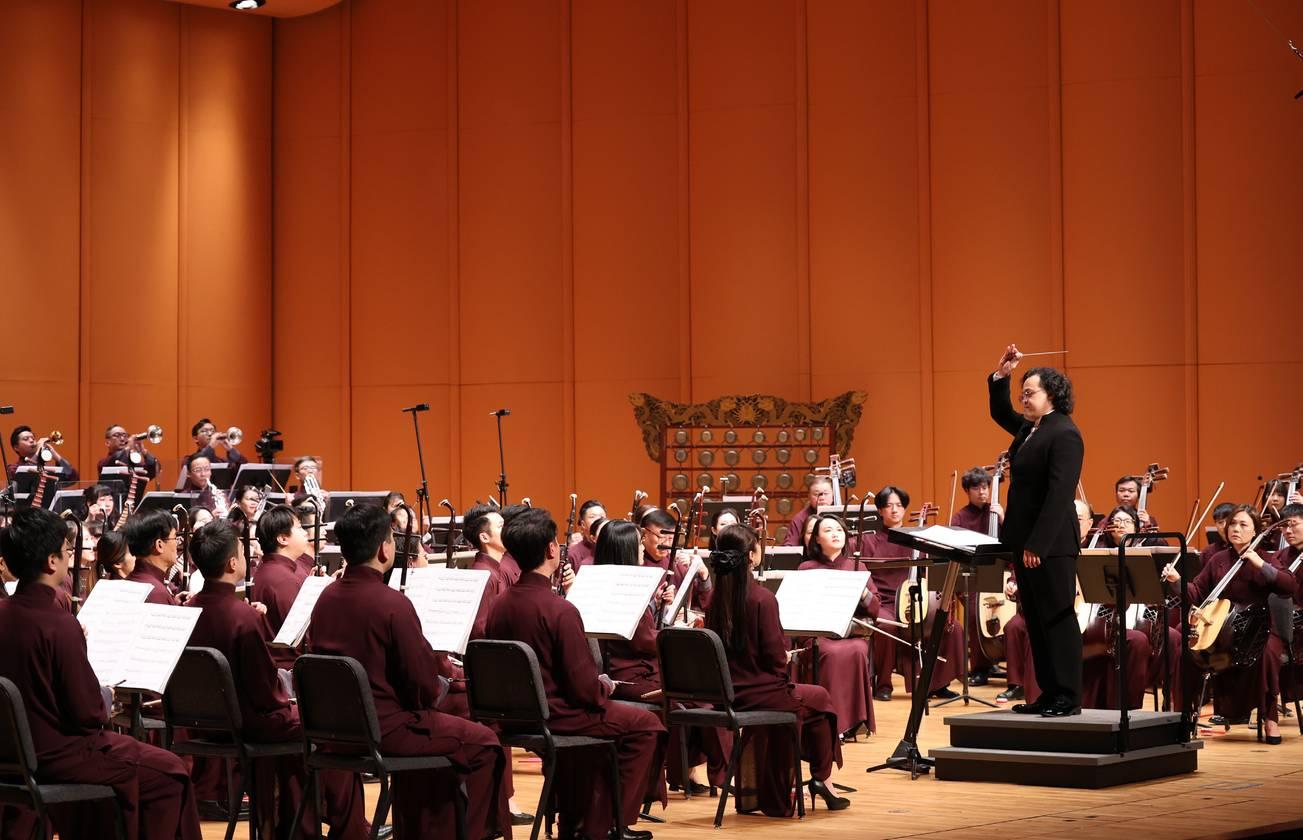
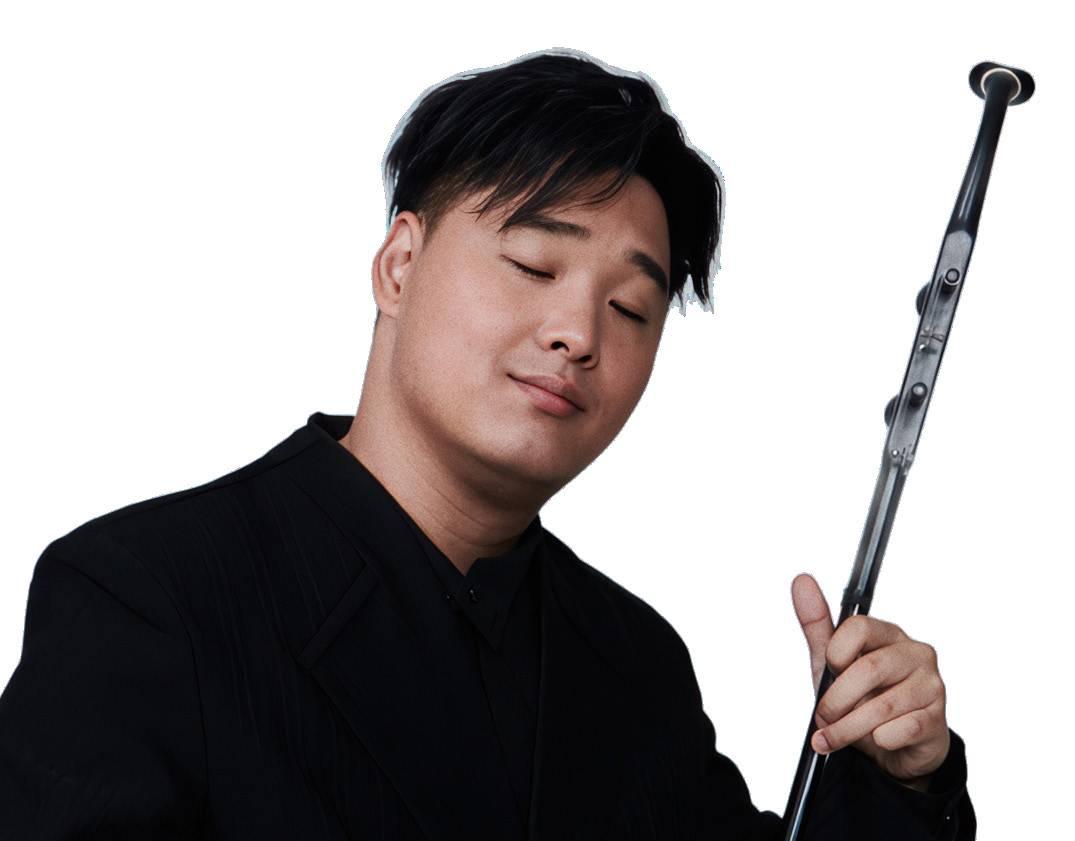
Co-produced by No Limits and Hong Kong Chinese Orchestra (HKCO), Light and Shadow on Strings features HKCO and visually impaired erhu prodigy Yang Enhua in a collaboration highlighting inclusion. Rupert Woo, Associate Conductor of HKCO and Resident Conductor of The Hong Kong Young Chinese Orchestra, states, “Enhua has mostly performed as a soloist in the past. As a flagship Chinese orchestra, HKCO is pleased to offer Enhua a professional platform to push his own boundaries through performing with professional musicians.” Under Woo’s programme planning, the concert begins with Yang’s solo performances, followed by chamber works including a huqin quartet and string quintets and culminating in a soul-stirring ethnic orchestral piece performed with the ensemble. This ground-breaking concert unfolds layer by layer, weaving serenity with intensity. It is not merely a showcase of talent with different abilities. Yang’s nuanced emotions and technical mastery are also highlighted, breaking the audience’s preconceived notions of the visually impaired while conveying the spirit of diversity and inclusion.
Dishui Nanyin Composed by Yang
Yang excels at expressing rich emotions through storytelling with his bow. The first three solo pieces presented are all deeply humane in spirit. One is his newly composed “Dishui Nanyin”, a narrative of his own life story that also demonstrates his commitment to both preserving and innovating traditional quyi culture. The next work is “Farewell”, the masterpiece by erhu master Sun Wenming who is also visually impaired. Composed in the spring of 1957, the piece showcases Sun’s ingenious use of the thicker inner string’s powerful volume to evoke the deep, rich tones of a smaller ensemble, while the thinner, softer outer string produces a more delicate sound reminiscent of the faint and ethereal timbre of the gaohu, creating a striking contrast. This is followed by an adaptation of “Reflection of the Moon on the Water” by folk artist Hua Yanjun (Abing), arguably the most beloved erhu piece, characterised by deeply moving and melancholic sentiments. Hua, who
lost his sight and became a street performer, remained steadfast in his belief in light and hope; despite enduring humiliation and hardship, and the piece stands as a powerful reflection of his inner world.
For the second part, Woo selected pieces Yang had never performed, including a quartet and several quintets performed with the HKCO Chamber Ensemble. It opens with Cantonese master Lui Man Shing’s “Autumn Moon on a Placid Lake”, a quintet that blends movement and stillness to create a serene and beautiful atmosphere; the image of an autumn moon over a calm lake, in particular, evokes a sense of transcendent contemplation. The erhu quartet “Ru-Meng-Ling” (Like a Dream) was composed based on the poetic imagery of the poem Like a Dream: Last Night, Sparse Rain and Fierce Wind by female Song Dynasty poet Li Qingzhao. Performed with a gaohu, a zhonghu and two erhu, the piece is composed in the traditional
Chinese pentatonic scale, with each part featuring its own interpretations of the theme, resulting in a richly textured, profound ensemble piece embodying the essence of traditional Chinese aesthetics. “Three Variations on Yangguan”, originally a guqin piece, was composed based on Wang Wei’s farewell poem Seeing Off Yuan Er to a Mission in Anxi, and was also known as “Song of Wei City”. The poem describes the deep, heartfelt emotions of parting with a friend. The
Transforming Sound into Light
In the final part, Woo leads the HKCO Chamber Ensemble in performing Tam Yat-sing’s “Eternal Night”, the “Audience Favourite” from the 2023 “Music from the Heart” concert. The piece evokes darkness and solitude, inviting the audience to imagine and empathise with visually impaired people. This is followed by “Seeking”, in which the music strikes a delicate balance between tranquillity and conflict, guiding listeners in search of an ideal realm.
The finale, “Luminous Sound Journey”, is a new work by the talented local composer Luk Waichun, co-commissioned by No Limits and HKCO. It draws inspiration from how visually impaired people experience sound and light. Luk was the arranger and conductor for pianist Connie Wong’s acclaimed 2023 concert A Wonderful Journey with No Limits. For this work, he visited people with visual impairments to better understand how they perceive the world. He learned that for them, sound is not just information—it’s their “light” and “map”. He was particularly struck by how they embrace the world through their ears when travelling, depicting exotic locales through soundscapes. Breaking from tradition, the composition draws
theme is played three times, thus the title “Three Variations”. This string quintet adaptation enriches the theme through the interplay of instruments, fully expressing the sorrow of parting. The mood then shifts to the high-spirited finale, “A Joyful Evening”. The erhu, yangqin and pipa showcase innovative techniques—striking soundboards, extended glissandos, harmonics and percussive taps on resonators—creating a lively and jubilant soundscape.
from the everyday sounds of streets in Hong Kong, inviting the audience to imagine musical notes as “light” and to embark on a wondrous journey of “seeing” the world through their ears. As light and shadow intertwine on stage, the world premiere of this piece tugs at the heartstrings and brings the
A selection of solo pieces, chamber ensemble and orchestral works are curated by Rupert Woo to realise one goal. As Associate Conductor of The Hong Kong Chinese Orchestra and Resident Conductor of The Hong Kong Young Chinese Orchestra, Woo hopes to lead the audience on a journey through the world of visually impaired erhu prodigy Yang Enhua. It moves from an experience of Yang’s inner life to his connection with the wider world, and ultimately to true inclusivity for all, including people who are visually impaired and people with different abilities. Through thematically diverse music and various performance approaches, Woo maps out this vision.
Building Three Bridges Between Self and Ensemble, Conductor and Audience
Woo has set exceptionally high standards for this Chinese music concert. In particular, he challenged Yang, accustomed to performing solo, to engage in ensemble work. “Enhua can perform solo or with orchestral accompaniment at any time with ease. However, ‘ensemble’ and ‘orchestral’ works are entirely different as both require ‘watching’ the conductor and ‘reading’ the score, plus extensive rehearsal time required as a group. In ensemble music, musicians need to ‘observe’ one another to build rapport. In Enhua’s case, he alternates between leading and accompanying, all these interactions and coordination are significant challenges for him. But being visually impaired actually gives Enhua an advantage—he has incredible focus and leverages his ‘hearing’ in a way that sets him apart.”
Yang reflects, “For me, a solo is an inward journey, using the instrument to build a bridge of empathy between the performer and audience. An ensemble strives for harmony; only through collaboration with rapport can musicians bring high-quality music to the audience. Orchestral playing requires coordination not only with fellow musicians but also synchronisation with the conductor. If a solo performance builds a bridge between self and the audience, an ensemble builds two: one with fellow musicians and another with the audience. Orchestral work, moreover, requires three bridges to connect with the other musicians, with the conductor and with the audience.” Participating in this ground-breaking concert of inclusivity has also helped Yang recognise his value as a visually impaired musician, “to help more people break
down barriers, shed labels, re-examine their perceptions of people with visual impairment and rediscover themselves.’ ”
In the subsequent quartets and quintets, Woo selected pieces rich in style and diversity, revealing multiple facets of Yang’s talent. “Take ‘Autumn Moon on a Placid Lake’ as an example. This Cantonese piece allows each musician to shine with elements of improvisation, gradually easing Enhua into the ensemble. ‘Three Variations on Yangguan’ has a slower tempo, allowing him to listen to fellow musicians and build rapport while conveying the piece’s wistful sentiment through erhu. ‘A Joyful Evening’ is a more lighthearted piece which reveals a rarely seen side of his personality and lifts the atmosphere for the audience.”
While Light and Shadow on Strings is an inclusive arts project, Woo refrains from defining the concert too rigidly. He simply hopes the music and its stories will invite the audience to step into the world of the visually impaired and to reflect on mutual inclusion. “For the orchestral segment, we selected ‘Eternal Night’ by Tam Yat-sing. The piece depicts a place without sun where darkness stretches, allowing the audience to feel the weight of solitude.” Is this the type of darkness perceived by the visually impaired? Yet, “This is followed by ‘Seeking’, a movement from a dance drama. It is less driven by the music but more by the story of searching for destiny, expressing the pursuit of an ideal realm. I hope the audience can sense how visually impaired people seek their own direction.”
Luminous Sound Journey: From Darkness to Radiance
Beyond the darkness lies brightness. The concert concludes with the newly commissioned work “Luminous Sound Journey” by local composer Luk Wai-chun. During the creative process, Luk met with several people with visually impaired, listened to them share their stories and immersed himself in their experiences to gain a deeper understanding, “My studio is near the Hong Kong Society for the Blind where I often see visually impaired people pass by. I deliberately stood on that familiar path, closed my eyes and listened carefully to the ambient sounds
around me, I tried to identify the distance, direction and pitch of each sound, sensing how sounds help them construct the contours of their world.” He translated these sensations into musical elements, using different instrument placements and tonal variations to “let the audience join their world through the ears.” This piece is like an audio-guided journey from the bustle of the city to the murmur of nature. Luk also uses “light” as a metaphor, “For them, sound is light—illuminating the path ahead and helping them find their direction.”
曲目 Programme
地水南音《瞽者說》
楊恩華曲詞
Dishui Nanyin Words of the Blind Yang Enhua
《送聽》
孫文明曲
Farewell Sun Wenming
《二泉映月》
華彥鈞曲
Reflection of the Moon on the Water Hua Yanjun
廣東音樂五架頭《平湖秋月》
呂文成曲
Five-piece Combo Autumn Moon on a Placid Lake Lui Man-shing
胡琴四重奏《如夢令》
楊春甲曲
Huqin Quartet Ru-Meng-Ling Yang Chunjia
絲弦五重奏《陽關三疊》古曲
古曲 胡登跳編曲
String Quintet Three Variations on Yangguan Ancient Melody Arr. by Hu Dengtiao
絲弦五重奏《歡樂的夜晚》
胡登跳曲
String Quintet A Joyful Evening Hu Dengtiao
《永夜》
譚逸昇曲
Eternal Night Tam Yat-sing
《覓》(選自《大漠孤煙直組曲》第三樂章)
趙季平曲
Seeking Zhao Jiping (The Third Movement of The Desert Smoke Suite)
《聲光之旅》(「無限亮」及香港中樂團共同委作 / 世界首演)
陸尉俊曲
Luminous Sound Journey Luk Wai-chun (Co-commissioned by“No Limits” and the HKCO/ World Premiere)
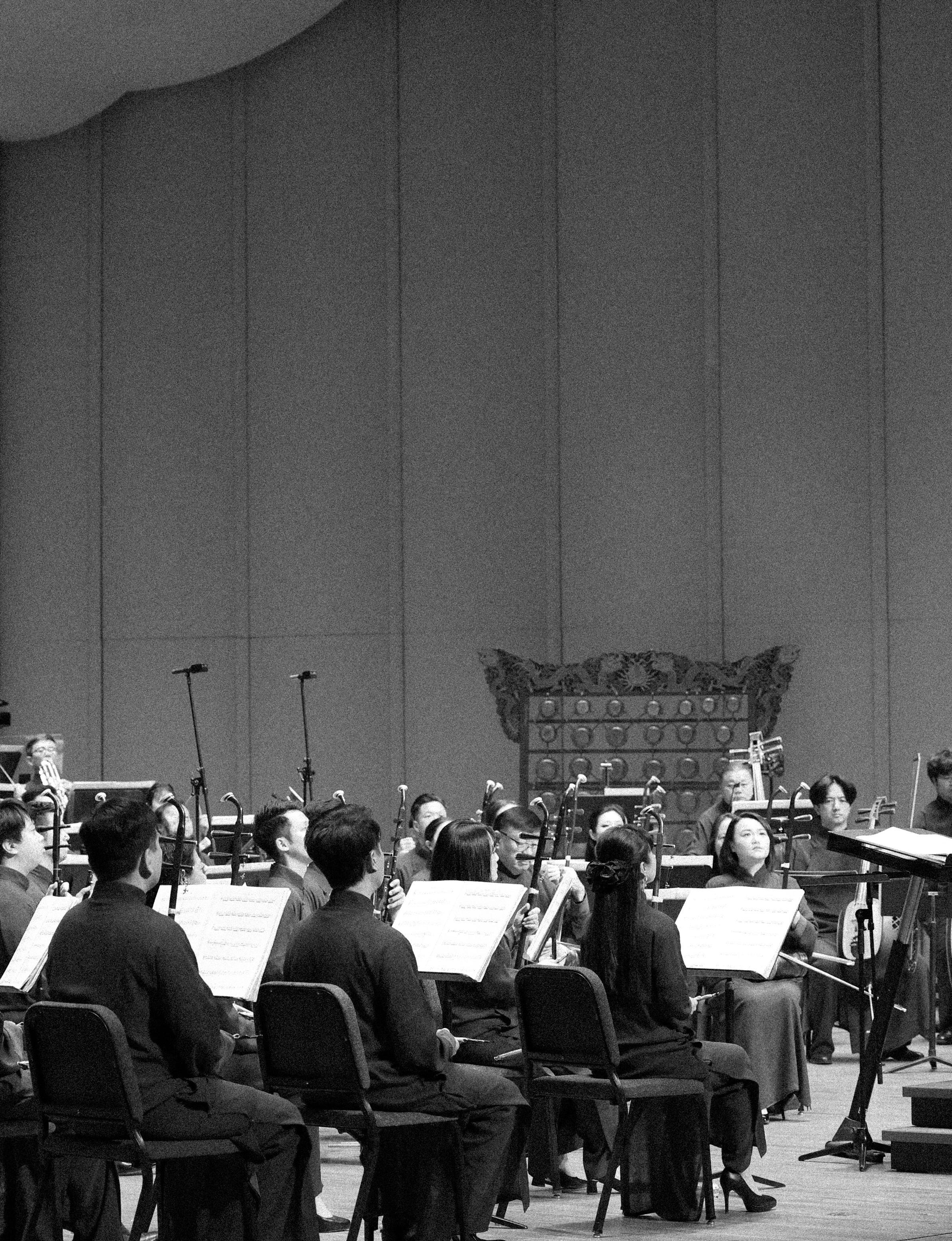
Founded in 1977, the Hong Kong Chinese Orchestra is often invited to perform at famous venues and festivals all over the world, having covered Europe, North America, Asia, Australia and the Arctic Circle to date. It is therefore acclaimed as a leader among full-sized Chinese music ensembles in the international arena today. The Orchestra is set up in four sections: bowedstrings, plucked-strings, wind and percussion. The instruments include both the traditional and the improved, new versions: the bowed-string section has been using the Eco-Huqin series developed by the Orchestra since 2009. The HKCO performs both traditional Chinese music and contemporary, full-length works in a variety of musical formats and contents. It also explores new frontiers in music through commissioning over 2,400 new works of various types and styles, whether as original compositions or arrangements.
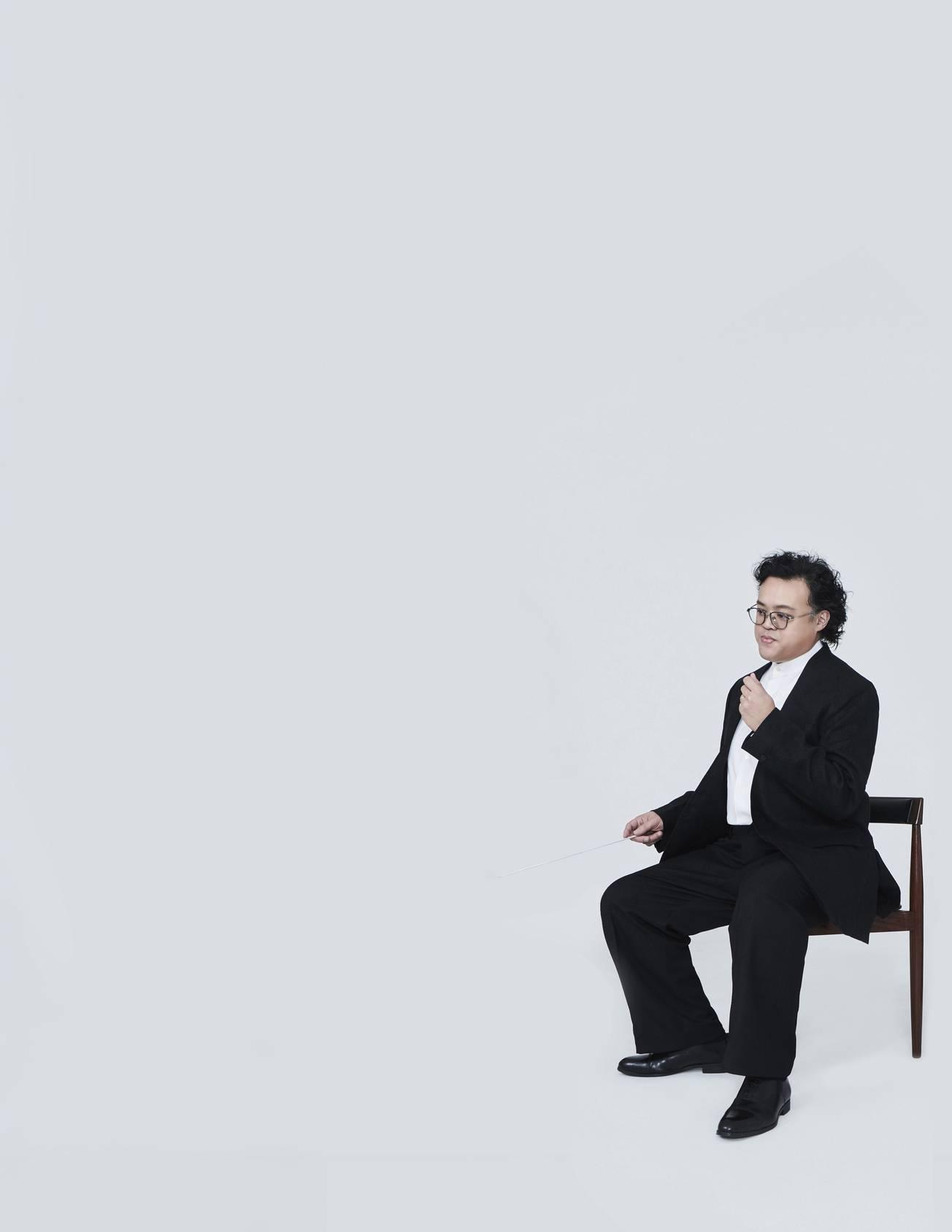
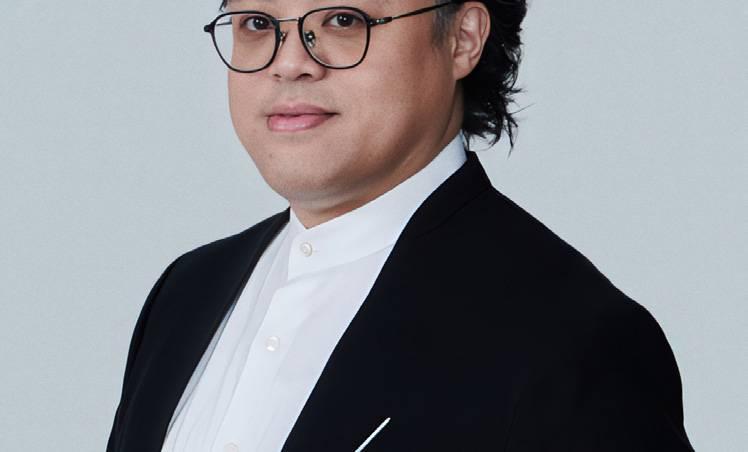
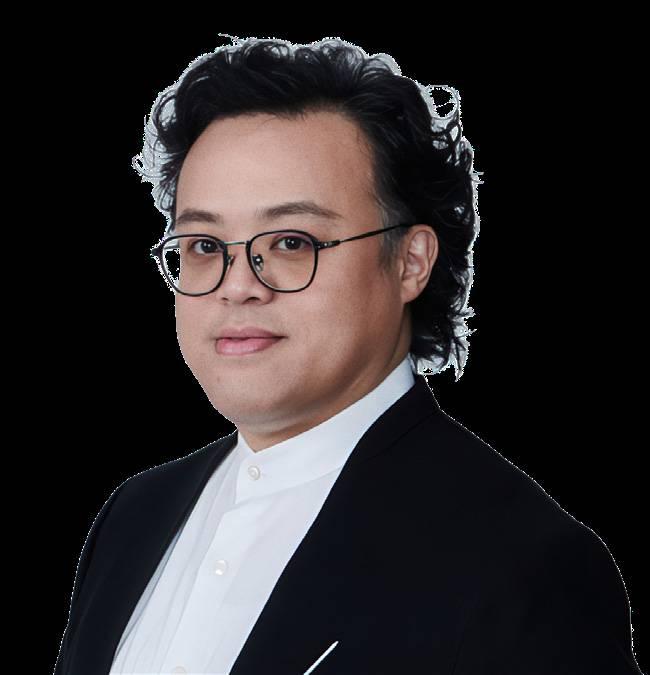
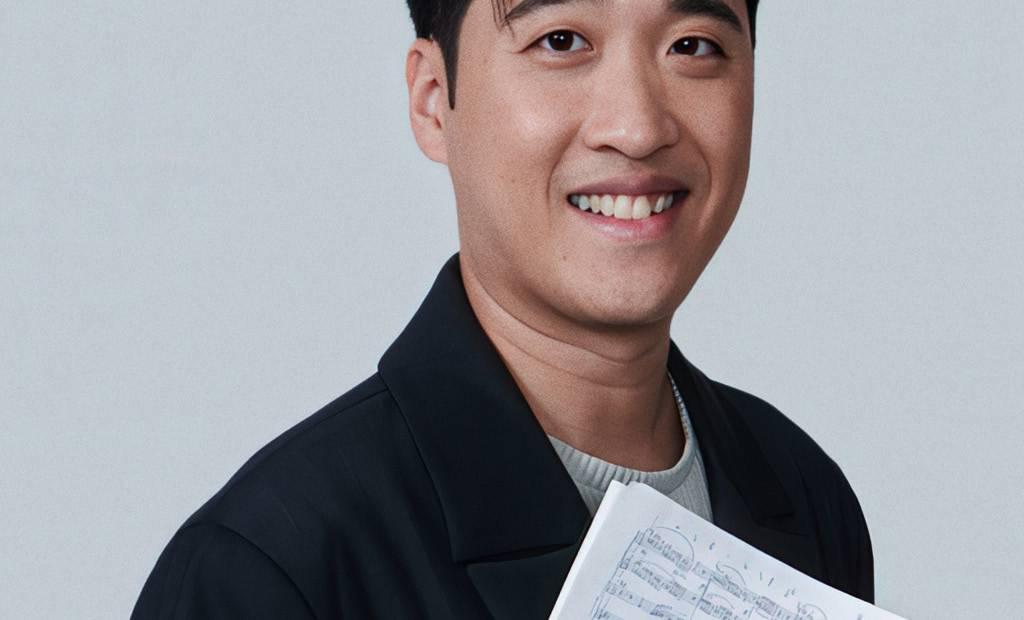
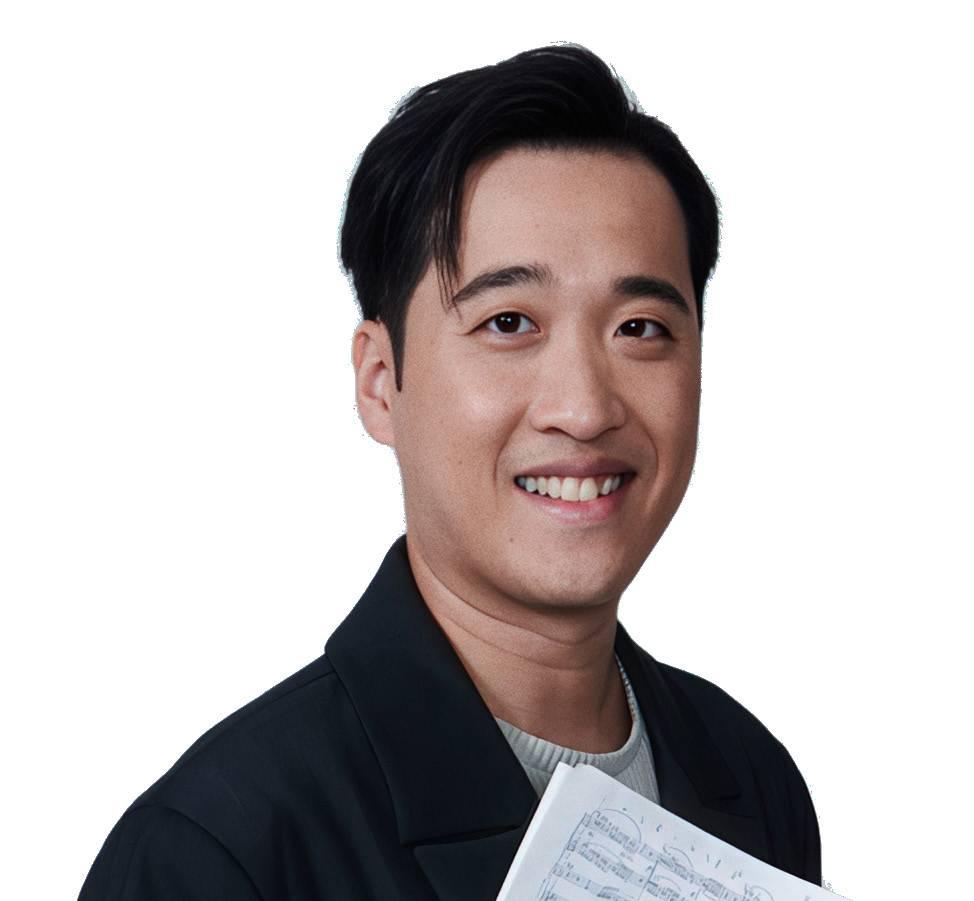
Rupert Woo currently serves as the Associate Conductor and Resident Conductor of The Hong Kong Young Chinese Orchestra (HKCO). He graduated in 2012 as the first Master in Conducting at the Hong Kong Academy for Performing Arts (HKAPA). In the Second International Conducting Competition for Chinese Music, Rupert won Second Prize, the Outstanding Young Conductor in Hong Kong Award, and the Audience Award for Most Popular Conductor. He has previously been a guest Instructor in Conducting at Tianjin Conservatory of Music’ s Department of Traditional Chinese Musical Instruments, Resident Conductor of its Chinese orchestra, and instructor for its postgraduate programme. Woo has guest-conducted numerous orchestras, including the HKCO, Singapore Chinese Orchestra, Macao Chinese Orchestra, Henan National Music Orchestra, HKAPA ’ s Chinese and Symphony Orchestras, Tianjin Conservatory ’ s Fanyin Chamber Orchestra, and Windpipe Chinese Music Ensemble. In 2018, Rupert joined the HKCO as Assistant Conductor (Education and Outreach), overseeing the Hong Kong Young Chinese Orchestra. He has planned and conducted various concerts, such as‘Preservation and Perpetuation of the Classics,’the Australia tour,‘School Culture Day,’‘Our Cantopop,’and the‘Trail of the Blue Dragon’Community Concert in 2022.
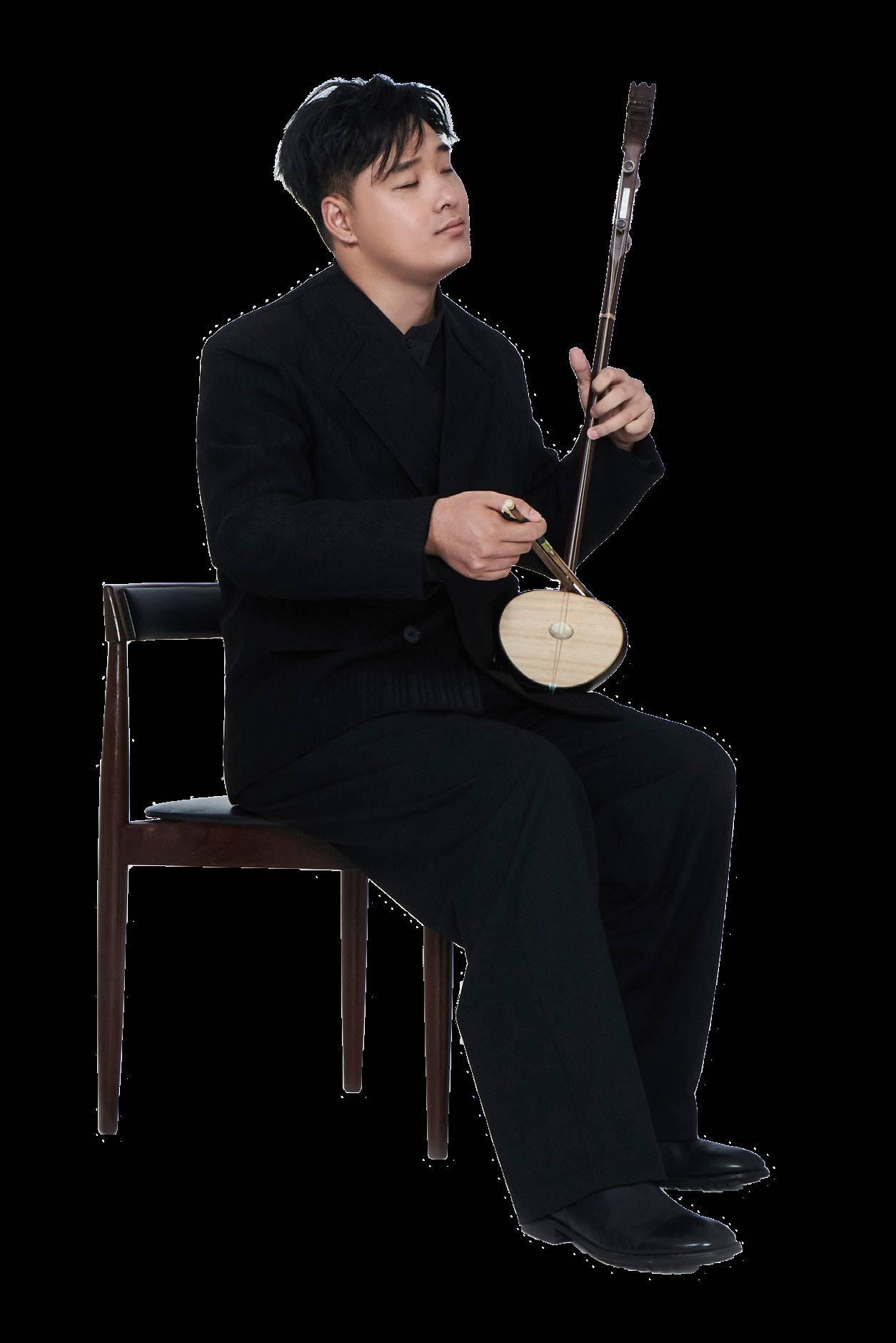
Yang Enhua began learning erhu at the age of 12, and has over fifteen years' experience studying under Zhao Yijun, Gan Bolin, Li Aping, Peng Cheng, Yang Xue, Cao Tianli, Yu Qiwei, Chen Jiebing, Ru Yi, To Wing, Chen Liying, the successor of Pingqiang Nanyin, and Mao Qinghua, the Co-Principal Huqin and Principal Zhonghu of the Hong Kong Chinese Orchestra. In 2022, Yang won the VSA International Young Soloists Competition and performed at the Kennedy Center, USA. In 2024, he performed in Seoul and ranked fourth in Korea's first International Visually Impaired Solo Competition. In 2025, he won the Silver Award at the Singapore International Solo and Chamber Music Competition (Chinese Music category), and received a top ten award at the Danny Awards and the Platinum Award at the World Chinese Music Competition. Yang is committed to promoting musical inclusion, supporting employment for people with disabilities, and connecting communities through music. He is currently pursuing an undergraduate degree at the Hong Kong Academy for Performing Arts, supported by the Lee Hysan Foundation Scholarship.
Luk Wai-chun, a council member of the Hong Kong Composers’Guild, holds a Doctor of Music degree in Composition from The Chinese University of Hong Kong. His passion for diverse musical styles led him to the University of South Florida as a visiting scholar, where he studied jazz and researched Latin American music. He has collaborated with prestigious ensembles, including the Hong Kong Chinese Orchestra, Kaohsiung Chinese Orchestra, Ensemble Mise-en (USA), Quarteto Larianna (Brazil) and Tacet(i) Ensemble (Thailand). His Chinese orchestra piece Eager to Fly won the Best Young Composer’ s Serious Composition Award at the 22nd CASH Golden Sail Music Awards. Additionally, his chamber works Autumn Yearning on the Steppe and Tan-Tiao Rock received the Gold prize at the 2024 and 2021 Dunhuang Awards.
創作及製作團隊 Creative and Production Team
策劃 Curator
錢佑 Eddy Zee ( 無限亮 No Limits)
指揮 Conductor
胡栢端 Rupert Woo Pak-tuen
委約作品作曲家 Composer for new commissioned work
陸尉俊 Luk Wai-chun
演出 Performers
獨奏及重奏 Solo and Ensemble
楊恩華 Yang Enhua
香港中樂團演出人員名單(小組)
Hong Kong Chinese Orchestra (Chamber Ensemble Musicians)
環保二胡 徐 慧 Xu Hui ◎
Eco-Erhu
環保高胡
Eco-Gaohu
石佩玉 Shih Pei-yu
匡樂君 Kuang Lejun
宋 慧 Song Hui
巫采蓉 Wu Tsai-jung
張宇慧 Zhang Yuhui
蕭秀嫻 Siu Sau Han
蘇純賢 So Shun Yin
黃心浩 Wong Sum Ho ○
(胡琴聯合首席兼高胡首席
Co-Principal Huqin and Principal Gaohu)
方子蔚 Fong Tsz Wai △
李曉丁 Li Xiaoding
劉一歌 Liu Yige
環保中胡 毛清華 Mao Qinghua ○
Eco-Zhonghu (胡琴聯合首席兼中胡首席
Co-Principal Huqin and Principal Zhonghu)
王家樂 Wong Ka Lok
黃正彥 Wong Ching Yin
黃偉俊 Wong Wei Juin
環保革胡 董曉露 Tung Hiu Lo ○
Eco-Gehu
安 悅 An Yue
李小夏 Lee Hsiao-hsia
柯雨萌 Ke Yumeng
環保低音革胡 齊洪瑋 Qi Hongwei ○
Eco-Bass Gehu
李庭灝 Li Ting Ho
中阮 Zhongruan
大阮 Daruan
吳棨熙 Ng Kai Hei ○
吳曼翎 Wu Man-lin
陳淑霞 Chan Shuk Har
劉若琳 Lau Yuek-lam ○
馮彥霖 Fung Yin Lam
三弦 Sanxian 趙太生 Zhao Taisheng ○
箏 Zheng
豎琴 Harp
李宜蒨 Lee Yi-chien □
譚懷理 Tam Wai Li □
梆笛 Bangdi 林育仙 Lin Yu-hsien
曲笛 Qudi
巫致廷 Wu Chih-ting
新/大笛 Xindi / Dadi 陳子旭 Chan Chi Yuk ◆
杜峰廉 To Fung Lim
高音笙 Soprano Sheng 魏慎甫 Wei Shen-fu ◆
戴宇承 Tai Yu-cheng
次中音笙 Tenor Sheng 阮建熹 Yuen Kin Hei
陸 儀 Lu Yi
低音笙 Bass Sheng 林進穎 Lam Chon Weng
高音嗩吶 Soprano Suona 馬瑋謙 Ma Wai Him ○
胡晉僖 Wu Chun Hei ◆
中音嗩吶 Alto Suona 羅行良 Law Hang Leung
次中音嗩吶 Tenor Suona 關樂天 Kwan Lok Tin
低音嗩吶 Bass Suona 劉 海 Liu Hai
管 Guan 任釗良 Ren Zhaoliang
敲擊 Percussion 陸健斌 Luk Kin Bun ○
陳律廷 Chan Lut Ting
廖倚苹 Liao Yi-ping
關凱儀 Kwan Hoi Yee
繆世哲 Miao Shih-jhe
○ 首席 Principal
◎ 署理首席 Acting Principal
◆ 助理首席 Assistant Principal
□ 特約樂師 Freelance Musician
△ 香港中樂人才菁英計劃
張家翔 Chang Chia-hsiang
揚琴 李孟學 Lee Meng-hsueh ○ Yangqin
小阮 葛 楊 Ge Yang ○
Xiaoruan
詹祥琳 Chan Siang-lin
琵琶 張 瑩 Zhang Ying ○
Pipa 王楷涵 Wang Kai-han
Hong Kong Chinese Music Talent Development Programme
The HKCO members are listed in Chinese stroke order. The string section utilises revolving seating on a systematic basis. Musicians (except principals and assistant principals) change seats systemically.
The Nature of Why by Paraorchestra
帕拉管弦樂團《無邊狂想曲》
葵青劇院演藝廳
Auditorium, Kwai Tsing Theatre
節目長約 60 分鐘,不設中場休息
Approx. 60 minutes with no interval
2.27 3pm※, 7:30pm ( 五 ) FRI 2.28 3pm ^ , 7:30pm^#
※學生專場 Student Matinee
演出前舉行「無限亮」 開幕儀式
The "No Limits" Opening Ceremony will take place prior to the performance
Audience are free to move around on the theatre stage
演出有光線較暗的場景
The performance includes scenes with lower light levels.
設中英文字幕、粵語口述影像、粵語報讀字幕、香港手語傳譯及 語音場刊
Subtitles in Chinese and English, audio description and caption reading in Cantonese, Hong Kong Sign Language interpretation and house programme in audio format available
敬請關掉所有響鬧及發光裝置。
Please switch off all sound-making and light-emitting devices.
無限亮加料節目 No Limits PLUS P.146, 149, 150
^ 演前觸感導賞團
Pre-Performance Touch Tour
* 無限亮 2026 對談系列:藝術家講座:
查爾斯.海澤伍德《樂團未來式》 (講座將於演出後開始)
No Limits 2026 Conversations: Artist Talk with Charles Hazlewood: Re-imagining the Orchestra ( The talk will begin after the performance )
• 走進《無邊狂想曲》: 共融沉浸式劇場的實踐工作坊
Workshop: Behind "The Nature of Why"Making inclusive and immersive theatre
“I can live with doubt and uncertainty and not knowing. I think it is much more interesting to live not knowing than to have answers that might be wrong...I am not absolutely sure of anything and there are many things I don’t know anything about, such as whether it means anything to ask why we’re here. I don’t have to know an answer.”
This is the philosophy of the late Nobel Prizewinning theoretical physicist Richard Feynman. In an interview, when questioned about why magnets repel each other, his response became a classic philosophical insight—the very nature of “why.” If we keep on asking “why,” we may gradually penetrate to the essence of things, though that may not be the “ultimate answer.” This philosophy captivated composer Will Gregory and Paraorchestra’s Artistic Director Charles Hazlewood, inspiring the creation of The Nature of Why. Hazlewood remarked, “Richard
Feynman fascinates me with his unerring and unceasing determination to ask the question ‘why’ and to delve ever deeper. It is like peeling an onion - the more you peel, the more you want to peel and so it goes on. It’s never ending.” The fascination lies in the process of unravelling.
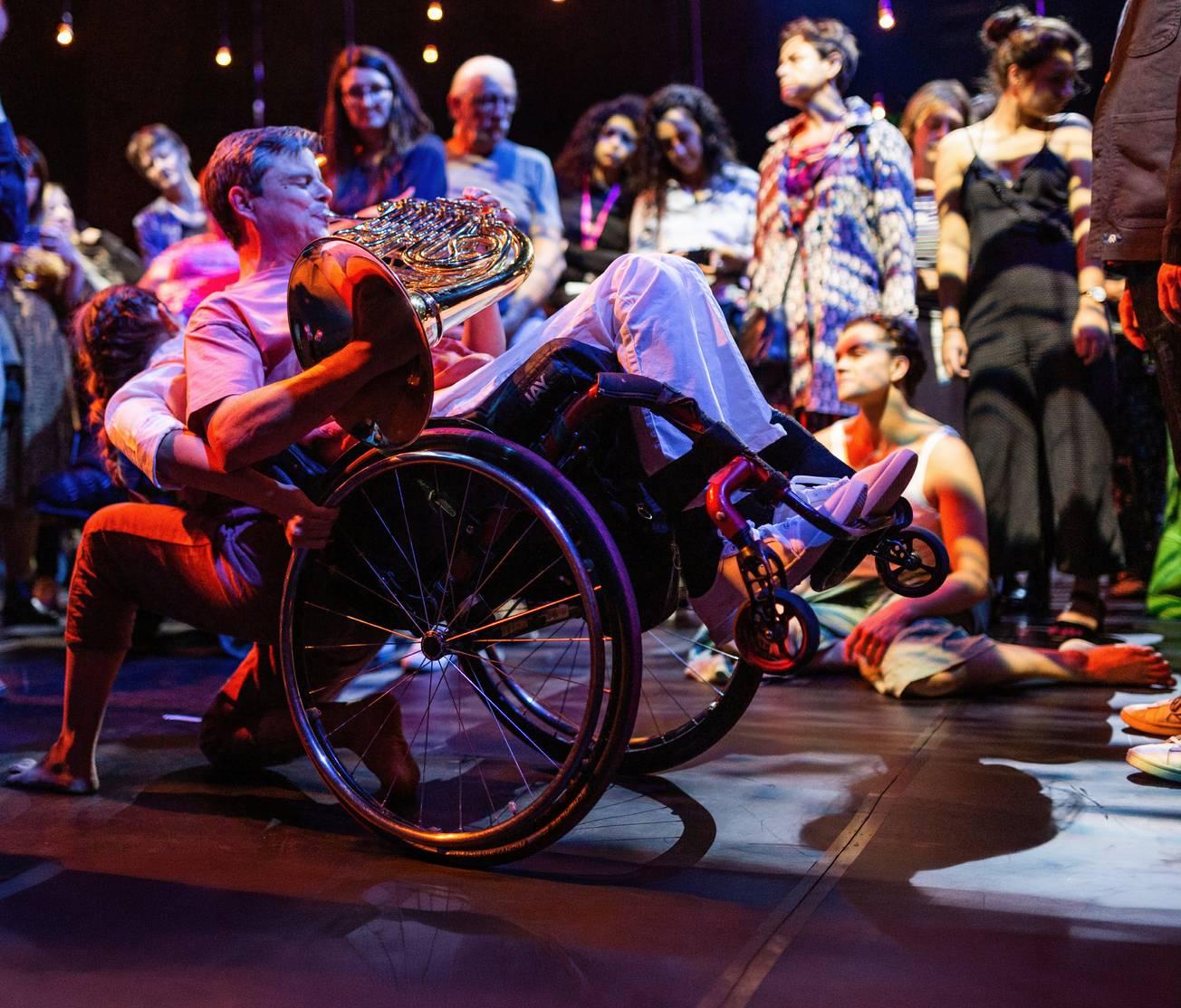
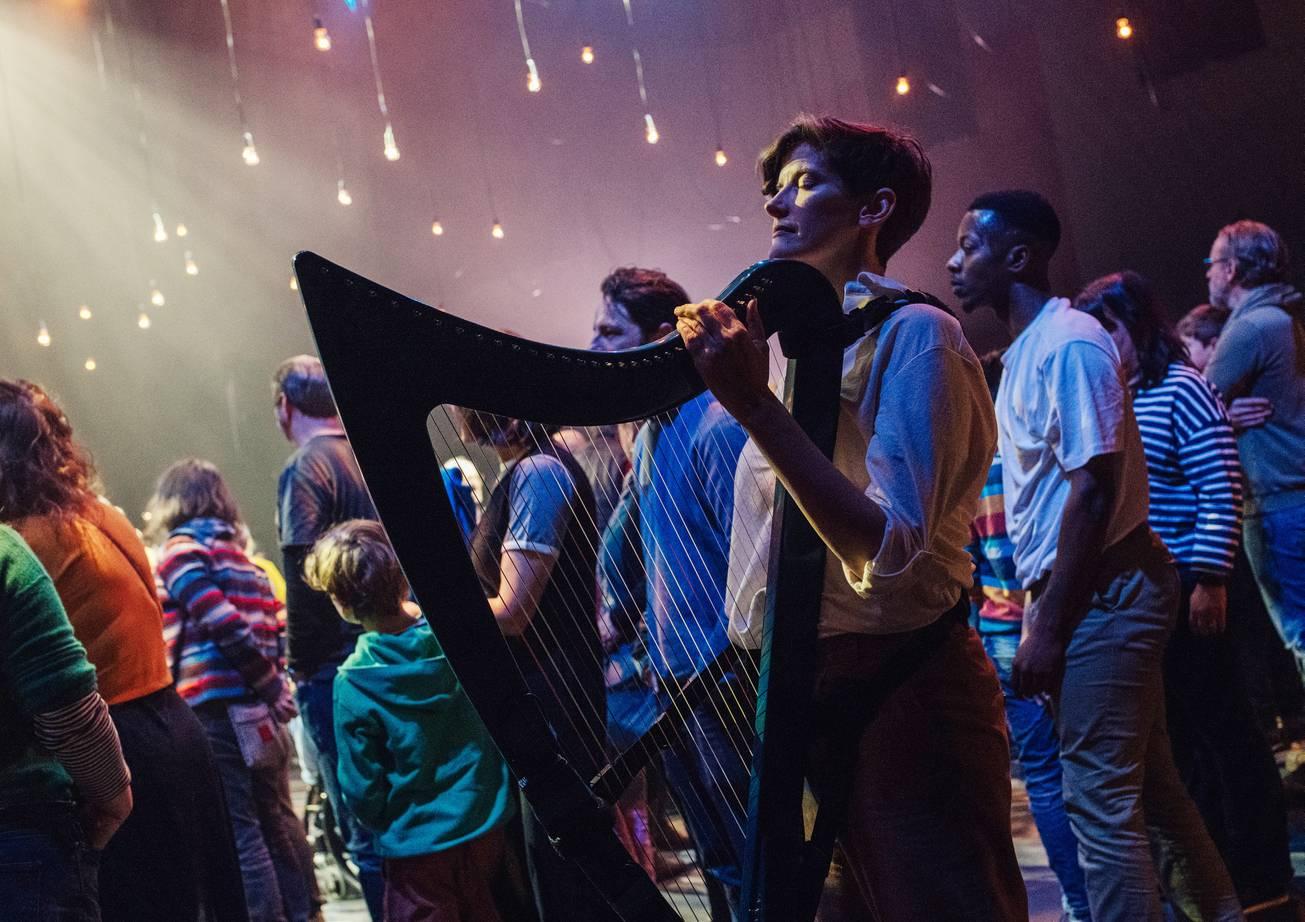
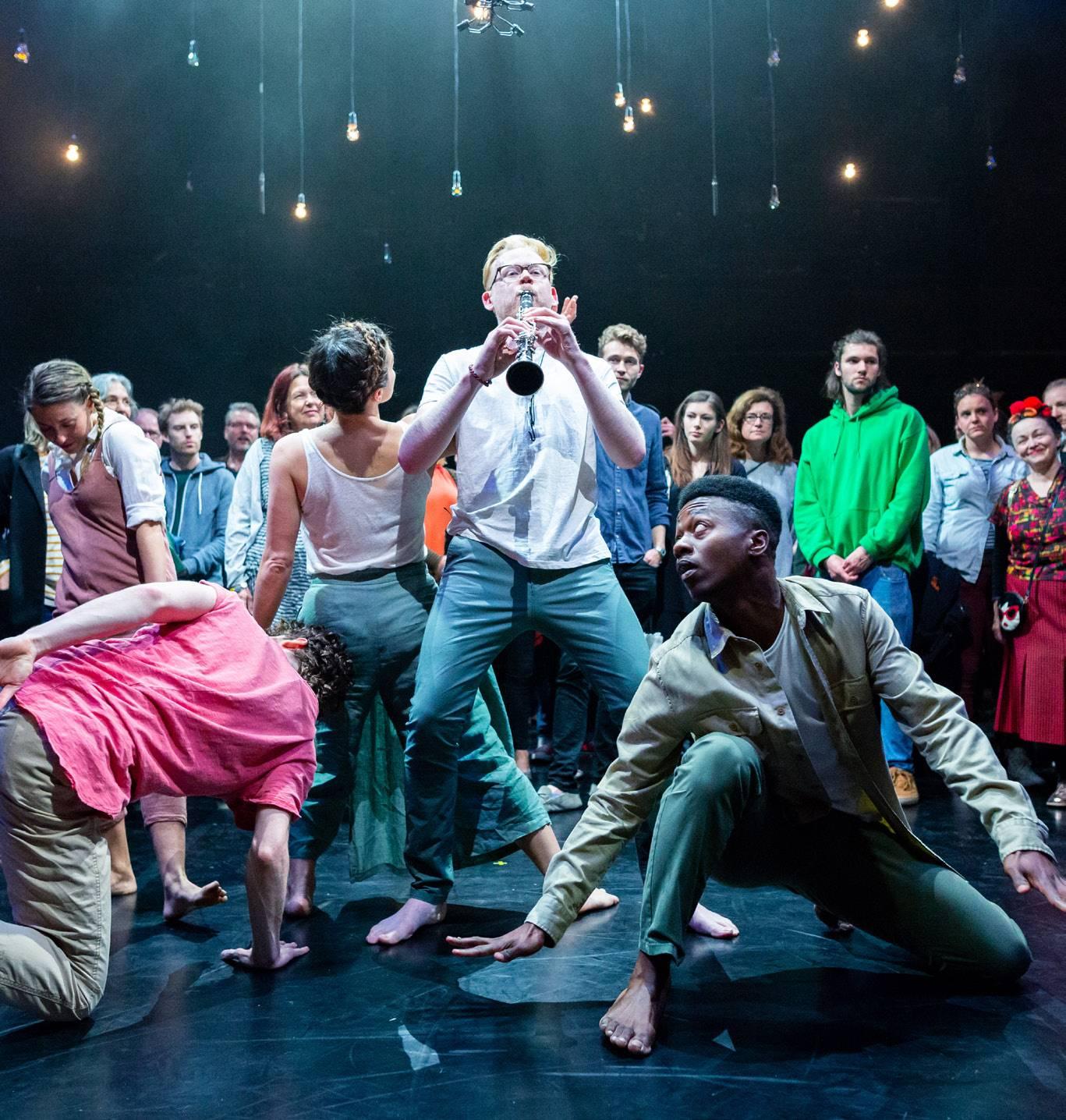
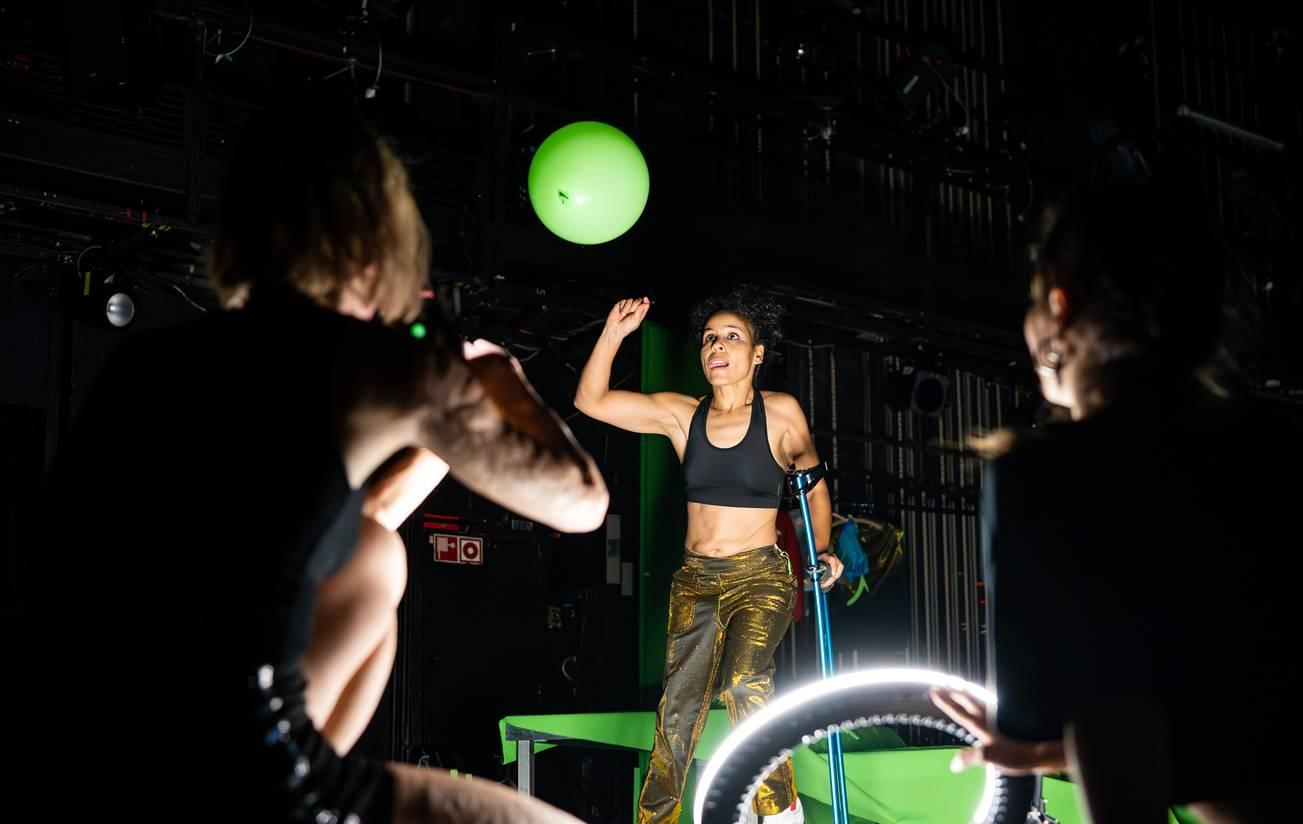
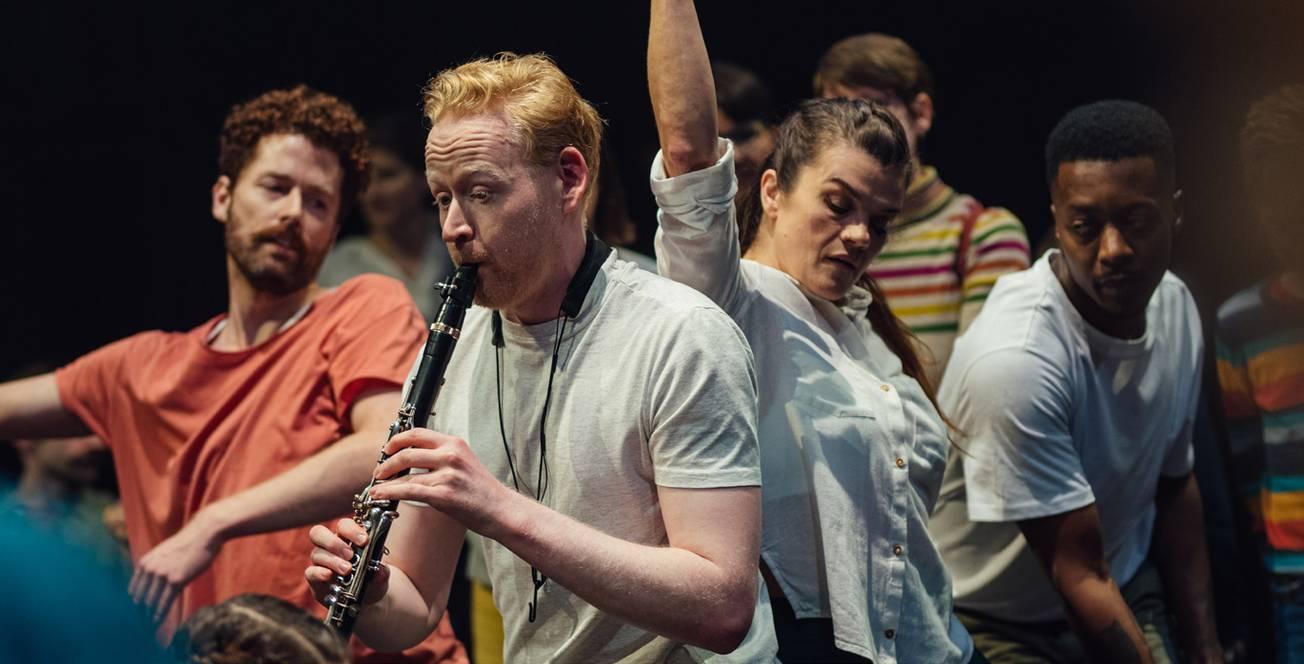
Composer Will Gregory’s work blends classical and pop styles, with the music shifting between sombre and joyful. It features rock energy of percussion and electric guitar alongside serene strings, seamlessly building towards a harmonious melody. The music envelops the audience through speakers positioned around the venue. Throughout the performance, monologues of Feynman weave between musical passages, serving as “commas” between each chapter. His voice and philosophical reflections add a touch of enigma to the performance, inviting the audience to reflect more deeply on themselves and to grow more curious about the world. Allowing oneself to “not know” paves the way to an enjoyable and endless journey of exploration. This cross-disciplinary, cross-genre creation is performed by Paraorchestra, the world’s first orchestra of musicians with and without disabilities. Through collaboration with choreographer Caroline Bowditch, musicians and dancers deliver an epic and immersive experience. During the performance, there is no division between stage and audience as the audience is placed within the stage while performers move around on the stage and perform next to the audience. The audience may move freely between musicians and dancers. “I want the audience to feel that they are driving the performance on stage. As the story unravels, the audience will discover that they are the focal point.” The dancers may improvise right before you, or other audience members may drift into your field of vision—prompting mutual observations of how each audience member experiences the performance. This boundary-less design delivers a unique and immersive visual experience, allowing us to viscerally feel our own state as spectators.
Interview with Charles Hazlewood, Artistic Director of Paraorchestra
Q: As a conductor, how do you approach conducting such an immersive, interactive experience compared to a traditional concert setting?
A: Conducting works if there is a spirit of trust in the room. Provided there is a spirit of trust in the room, it does not have to be end-on like the traditional form. People discern pulse and we move and pulse collectively. We do not need to be looking at each other, as is evidenced by people with visual impairments who play in the orchestra. It is a sensory and spiritual experience as we are all connected by a kind of strange set of “cosmic antennae”.
Q: Can you recall a memorable moment that captured the spirit of the show’s inquiry into curiosity and uncertainty?
A: When we premiered the piece at Southbank Centre in London, the string section (the seated contingent of the orchestra) got off their seats to do what we call the “infinity mirror” where they stand in a long line and mirror each other. While they were doing that, a very curious member of the audience decided to go and sit in one of the cellist’s chairs. She clearly wanted to feel what it was like to be a cellist. When the said cellist came back to take that chair, the woman would not move. And so, the cellist actually had to play the next piece of music standing up. I thought that was brilliant.
Q: How does The Nature of Why, from creative conception to rehearsal to production, fit into your broader vision for Paraorchestra and inclusive music-making?
A: The fact that it is not a typical performance, with the orchestra and their audience both on
stage, is a clue to how it represents my thoughts and plans for Paraorchestra. This is an inclusive space where the artist is no more important than the audience. In fact, audience members are just as important as artists, which is the case in any performance.
If you are sitting in serried ranks of stalls looking at a brightly lit stage at the far end, with the sumptuous and awe-inspiring sound of the orchestra emanating from it, you are impressed and quite possibly intimidated. That is not actually the case! They are fallible humans just like everyone else! Music is an act of love, an act of communication from one to another. You need both in order for it to work. The Nature of Why is about telling a story—telling a really important story and telling it with love. So, it continues the orchestra’s philosophy and direction of travel.
Q: What do you expect or hope the audience will take away regarding the central question and spirit behind The Nature of Why?
A: I hope they will say, “We had a really good time.” I also hope they will go away feeling emboldened to ask the question “why” about everything. Because isn’t curiosity a wonderful fact of humanity? Without curiosity, where would we be but dead inside? Just like Feynman who asked questions on the depth of “why” beyond what most of us can imagine. He is perhaps the physics version of Beethoven or Mozart. He just digs so deep and makes it discernible to your eye. So, he is a bit of a genius and my relationship with him remains as hot as ever.I hope they will go away with a pronounced sense that difference in humanity is a value and not a curse.
Interview with Choreographer & Director Caroline Bowditch
Q: What was the philosophy behind the choreography in terms of its flow, movement, and the interactions with the audience?
A: The dance and the music were being created simultaneously, but I was very much responding choreographically to the concepts of the work which come from a piece of text by Richard Feynman. We really wanted to play with that idea of bringing the audience onto the stage, to have that sensation of what it is to look at an empty auditorium. As an artist, I am not very good at having a passive audience. I do not respond well to the thought of “I am here to entertain you,” but actually “we are here to have a conversation or an interaction.” I want this to be a meaningful interaction, and I want it to leave you feeling something—which I think we achieved. I wanted everyone to access everything. I wanted every show to be relaxed. I wanted wheelchair users to have the freedom to go wherever they wanted, because what I never experienced at the theatre is having much choice about where I put myself. That choice is made for me based on the infrastructure of the building. So yes, it was pretty “selfish” to have the freedom of “I want to be able to go wherever I want to go.”
Q: How does the dance help express ideas about “uncertainty” and wonder? And how does it echo the physics of the attraction and repulsion of magnets as mentioned by Feynman?
A: Magnets, attraction and repulsion are brilliant things to work with in a dance context. I invited the dancers to “imagine that your right hand has to repel and your left hand has to attract,” and for them to work out how that might work
in making contact with another dancer or moving in a space. We also worked with the concept of magnets attracting and repelling different parts of your body to the floor.
I think this show is doing things that other shows are not doing. It is very rare for an audience to be invited on stage. It is also very rare for a marimba to be spun on a stage. The show is very reliant on all the performers using all of their senses in the show. Everyone will experience their own version of this show. No two people will have the same experience because some people will join in, or not. People will have musicians that are very close to them or not. So, people will see different things. I wanted to create a work that could be viscerally felt—not just a show that you watch or listen to but a show that you feel. In that sense it is very human.
Q: How do you engage the audiences and encourage participation through an immersive dance performance?
A: The dancers are ones that I have worked with for a long time, and they all had that incredible skill of being able to “read an audience member” and have a sense of whether someone wanted to come and interact with them or they were just happy to just be in amongst it and let it happen. And either way, it is perfectly fine. In our introduction, Charles and I make it really clear that this is an invitation, but it’s not an obligation. But I think that people get swept up in it and they become part of it without even realising.
I trust the dancers to really “read” the room and do the right thing by the audience.
Charles Hazlewood is the artistic director of Paraorchestra, which he founded in 2012. While his conducting career includes many of the world’ s most prestigious classical orchestras, he is also a trailblazer dedicated to creating ambitious, genre-busting works that upend orchestral orthodoxies. A recent highlight was conducting the orchestra’ s debut at the 2024 BBC Proms. Hazlewood’ s wideranging work includes landmark music films for the BBC, multiple radio awards, and over 200 world premieres. He also founded an award-winning South African opera company Dimpho Di Kopane, whose film won the Golden Bear at the Berlin Film Festival. A three-time TED speaker and a Sky Arts Ambassador for music, his outstanding contribution to the UK’ s musical life was recently honoured by leading charity Making Music. He was awarded an honorary doctorate in social inclusion by Bath Spa University in 2025.
Caroline Bowditch is a proudly disabled queer woman and a distinguished leader in the arts and culture sector. She is globally recognised for her groundbreaking contributions to inclusive arts practices and dance advocacy. With over 15 years of experience, Caroline has carved a unique niche in the industry by combining her artistic vision with a passionate commitment to accessibility and diversity. Her career highlights include her recent position as the CEO of Arts Access Victoria, where she significantly expanded the organisation’ s reach and impact. Caroline’ s artistic endeavors are equally impressive, her work has been showcased at renowned venues and festivals internationally, including the Edinburgh Fringe Festival and with renowned companies like Candoco Dance Company and Skåne Dansteater in Sweden.
Bowditch is also a sought-after consultant and advisor, including working with National Cultural Policy development in Australia and facilitating international arts initiatives. Her commitment to inclusivity is evident in her current board positions with Creative Australia, Arts Centre Melbourne, Theatre Network Australia and Theatre Works, where she continues to shape the future of the arts sector.
Will Gregory is an acclaimed multi-instrumentalist, composer and producer, and is one half of electro-pop duo Goldfrapp, who have released seven albums since forming in 1999. In 2011, Gregory's first opera, Piccard in Space, premiered at the Queen Elizabeth Hall, London. Gregory also writes and tours with his award-winning Moog Ensemble.
創作及製作團隊 Creative and Production Team
作曲 Composer
威爾‧格雷戈里 Will Gregory
編舞 Choreographer
嘉露蓮‧鮑迪 Caroline Bowditch
指揮 Conductor
查爾斯‧海澤伍德 Charles Hazlewood
聯合導演 Directors
嘉露蓮‧鮑迪、查爾斯‧海澤伍德
Caroline Bowditch and Charles Hazlewood
製作經理 Production Manager
迪恩‧蘇德倫 Dean Sudron
舞台經理 Stage Manager
保羅‧布朗 Paul Brown
音響工程師 Sound Engineer
西蒙‧霍尼威爾 Simon Honywill
燈光設計師 / 操作員 Lighting Designer/Operator
塞布‧布拉伯 Seb Blabber
節目總監 Programme Director
漢娜‧威廉斯‧沃爾頓 Hannah Williams Walton
製作人 Producer
艾莉‧德古德尼斯 Ailie deBonnaire
製作助理 Assistant Producer
凱特琳‧費爾韋瑟 Caitlin Fairweather
演出 Performers
演唱 Vocal
維多利亞 ‧ 奧魯瓦里 Victoria Oruwari、
喬安妮 勞頓 - 阿諾德 Joanne Roughton-Arnold
吉他 Guitar
多姆‧科約特 Dom Coyote
擊樂器 Percussion
艾迪‧塞耶 Eddy Sayer、哈里特‧萊利 Harriet Riley、
強尼‧雷奇 Jonny Leitch
法國號 French Horn
艾薩克‧希 Isaac Shieh
豎琴 Harp
史蒂芬‧韋斯特 Steph West
單簧管 Clarinet
勞埃德‧科爾曼 Lloyd Coleman
低音提琴 Double Bass
派崔克‧菲利普 Patrick Phillip
中提琴 Viola
西沃恩‧克拉夫 Siobhan Clough
弦樂 Strings
香港創樂團 Hong Kong New Music Ensemble:
第一小提琴 First Violist
陳詩韻 Amelia Chan、嚴天成 Patrick Yim、
Elizaveta Koshkina
第二小提琴 Second Violist
張文蕊 Kitty Cheung、楊健文 Sunny Yeung、
陳朗瑚 Vanessa Chan
中提琴 Viola
凌藝廉 William Lane、陳煒彬 Chan Wai Bun
大提琴 Cello
潘澤然 Pun Chak-yin
低音大提琴 Double Bass
許裕成 Simon Hui
舞蹈 Dance
KJ‧ 克拉克 ‧ 戴維斯 KJ Clarke Davis、
瑪爾塔 ‧ 馬塞羅 Marta Maseiro、
妮可 ‧ 瓜妮諾 Nicole Guarino、
菲利普 ‧ 麥唐納 Philip Alexander McDonald
MARTIN 音響系統支持 Audio system supported by Generation AV
《無邊狂想曲》由英國 Unlimited 委約及支持製作,並於 2018 年
英國布里斯托五月當代戲劇節首演。
"The Nature of Why" was commissioned and supported by Unlimited and premiered at Mayfest, Bristol 2018.
Two Blind Women in the Snowy Tokugawa Nights - Sleeping Fires by Kuro Tanino
谷野九郎《雪山深處德川 女盲人按摩師 ── 埋火》
香港文化中心劇場
Studio Theatre, Hong Kong Cultural Centre
節目長約 105 分鐘,不設中場休息
Approx. 105 minutes with no interval
3.27 7:45pm*
(六)SAT 12:00pm , 4:30pm 3.29
(五)FRI 3.28 2:45pm* , 7:45pm
(日)SUN
節目適合 12 歲或以上觀眾
Recommended for ages 12 and above
本節目含有煙霧效果
The performance contains smoke effects
本節目有接近全黑之場景
The performance contains scenes of near complete darkness
本節目含吸煙、裸露及暴力場面
The performance contains smoking, nudity and violence scenes
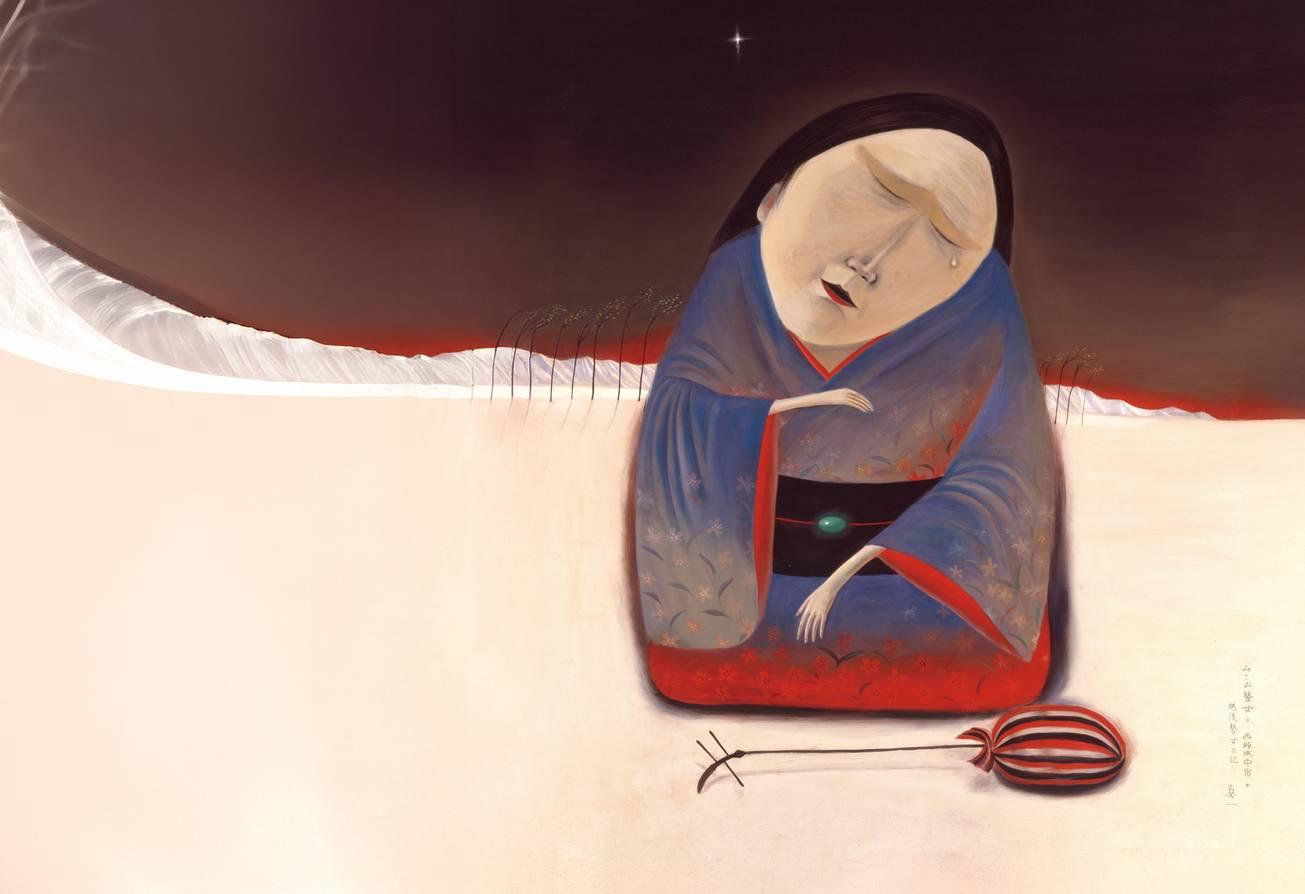
“The Blind Female Musician Who Became a Star (The Sorrow of Misao Goze)” , 1971, Shinichi Saito, Collection of the Kurashiki City Art Museum
設中英文通達字幕、粵語口述影像、粵語報讀字幕及語音場刊
Subtitles and accessible captions in Chinese and English, audio description and caption reading in Cantonese and house programme in audio format available
敬請關掉所有響鬧及發光裝置。
Please switch off all sound-making and light-emitting devices.
請勿擅自攝影、錄音或錄影。
Unauthorised photography or recording of any kind is strictly prohibited.
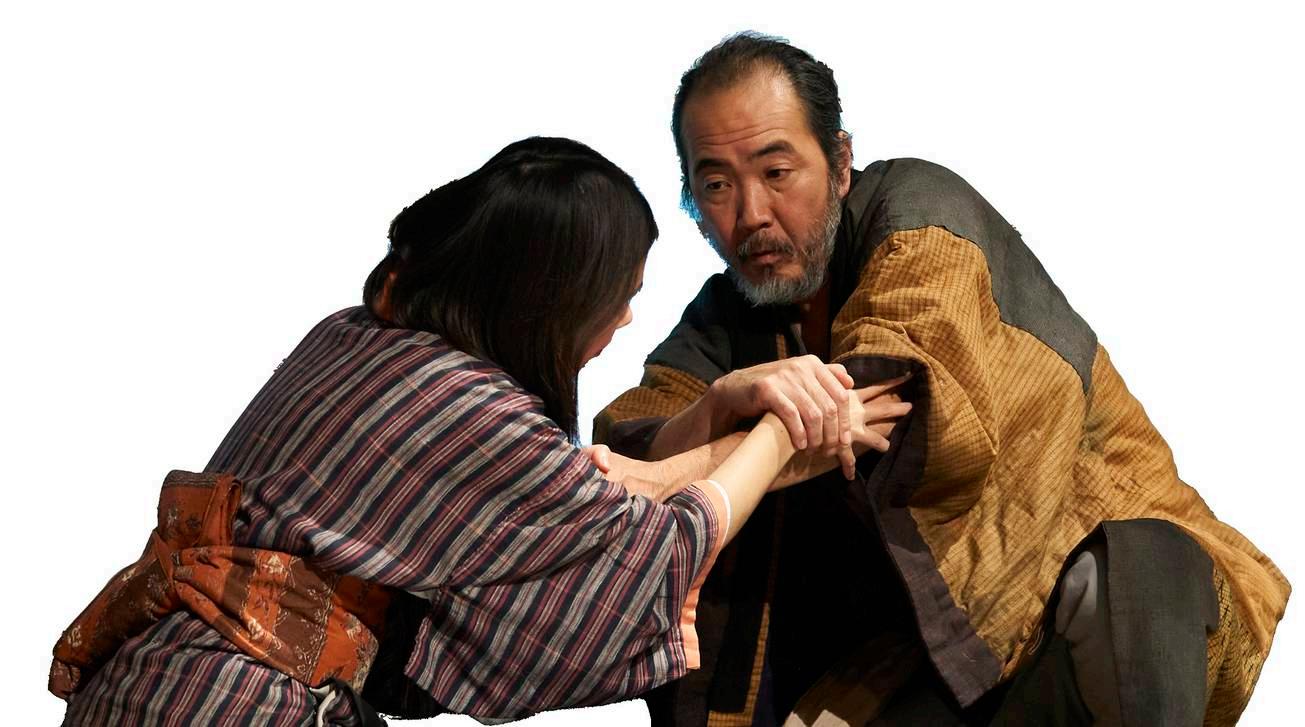
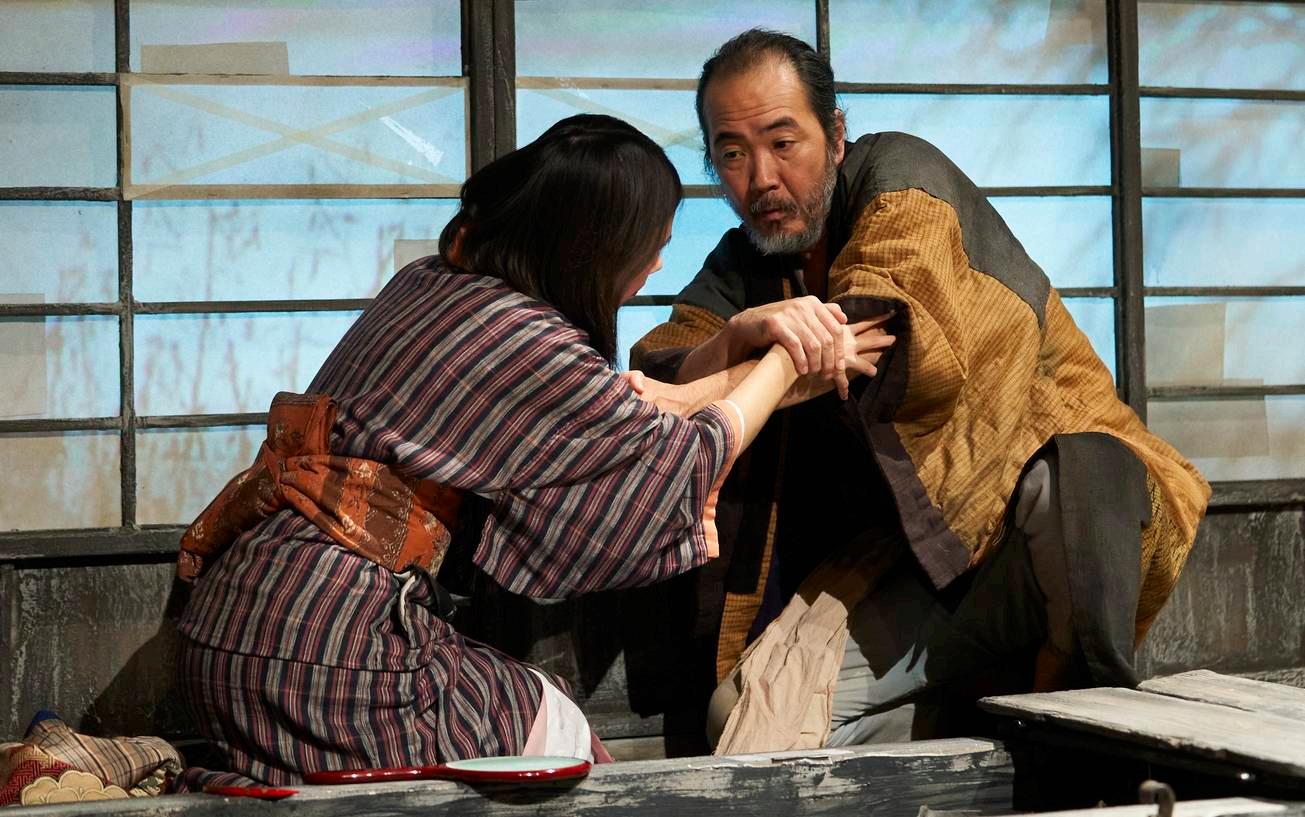
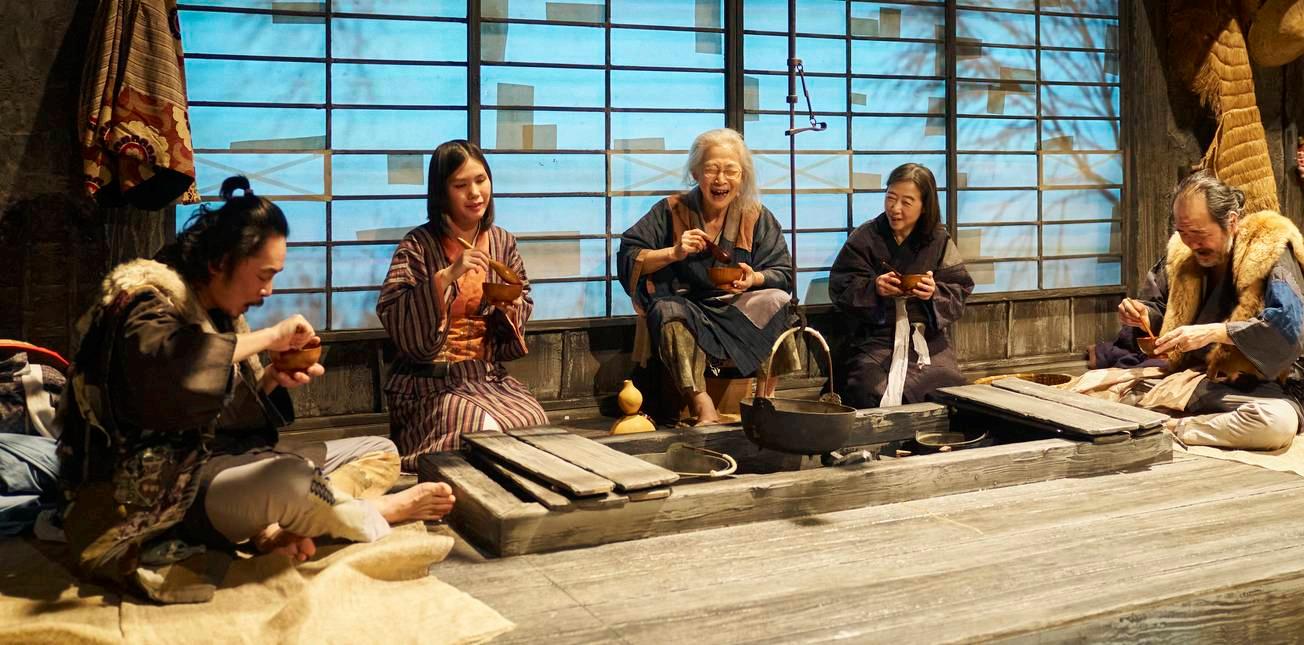
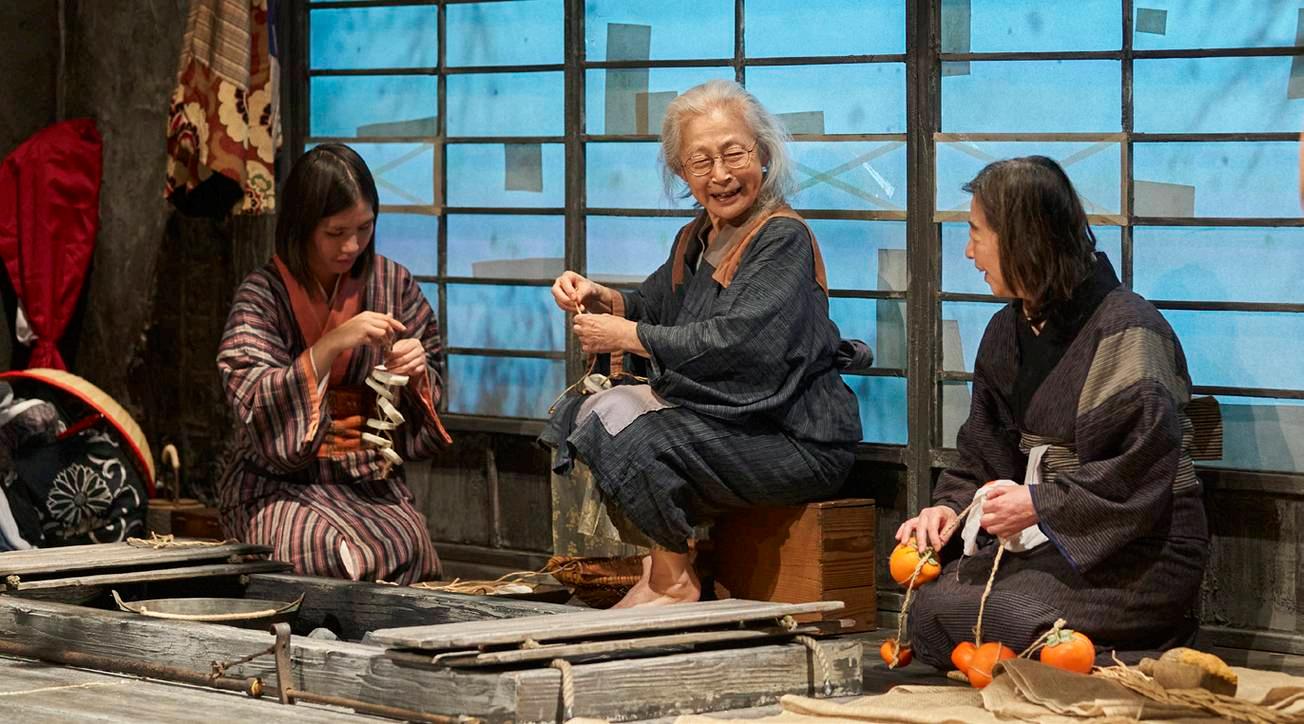
Two Blind Women in the Snowy Tokugawa Nights—Sleeping Fires is the third production for No Limits by renowned theatre director Kuro Tanino. Conceived by No Limits together with the director, it traces women’s pursuit of independence and emancipation amid the culture of blind massage therapy in Japan.
The story is set in the Tempō era of the Tokugawa period. During the era, massage therapy was a common occupation for people with visual disabilities.
They entered the so-called T ō dō za system, an effort by the government to group blind people together and grant them the rights to perform designated jobs which, however, were made available for men only. This prompted Tanino to feature as the leads two female blind massage therapists who were excluded from the system.
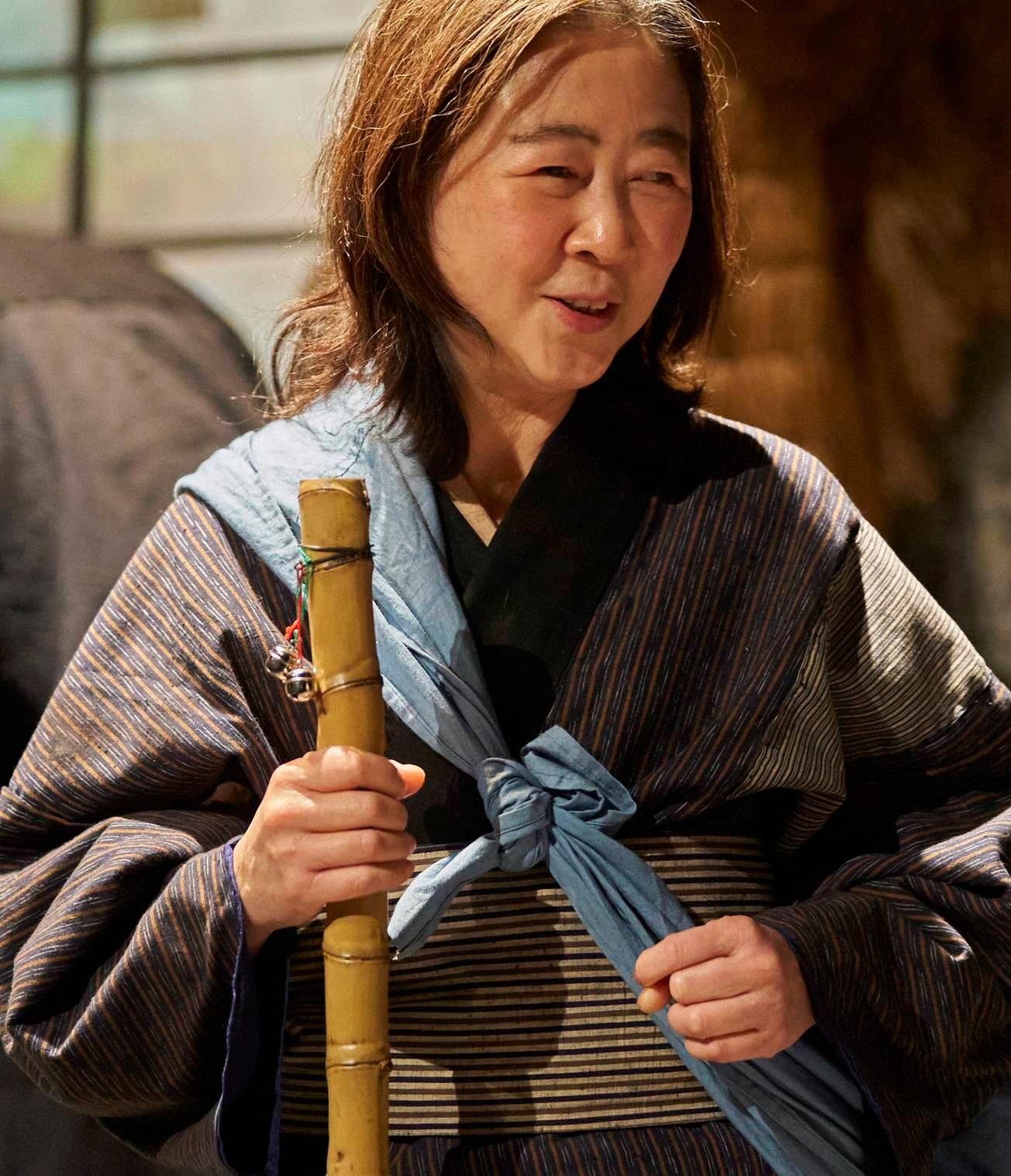
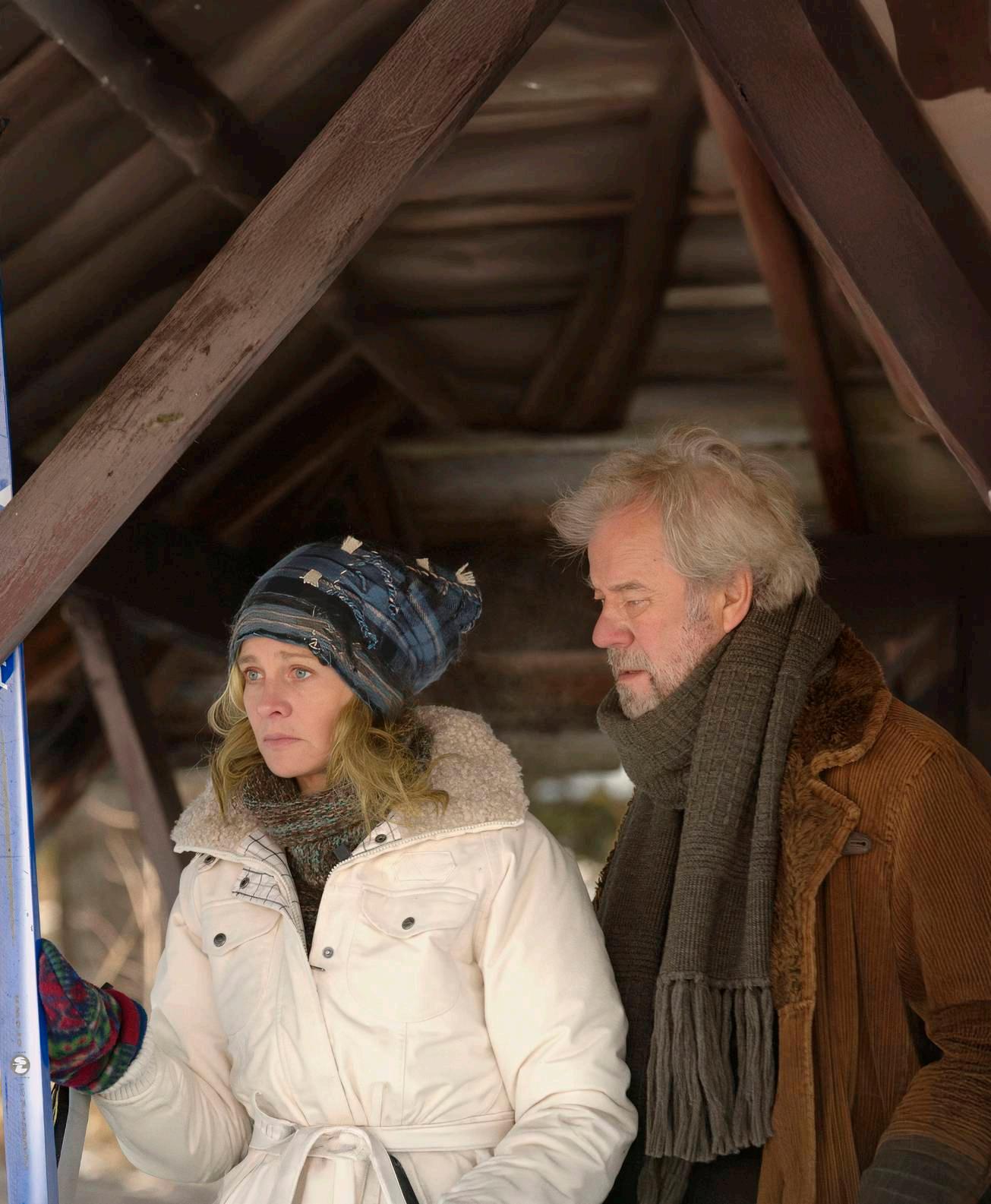
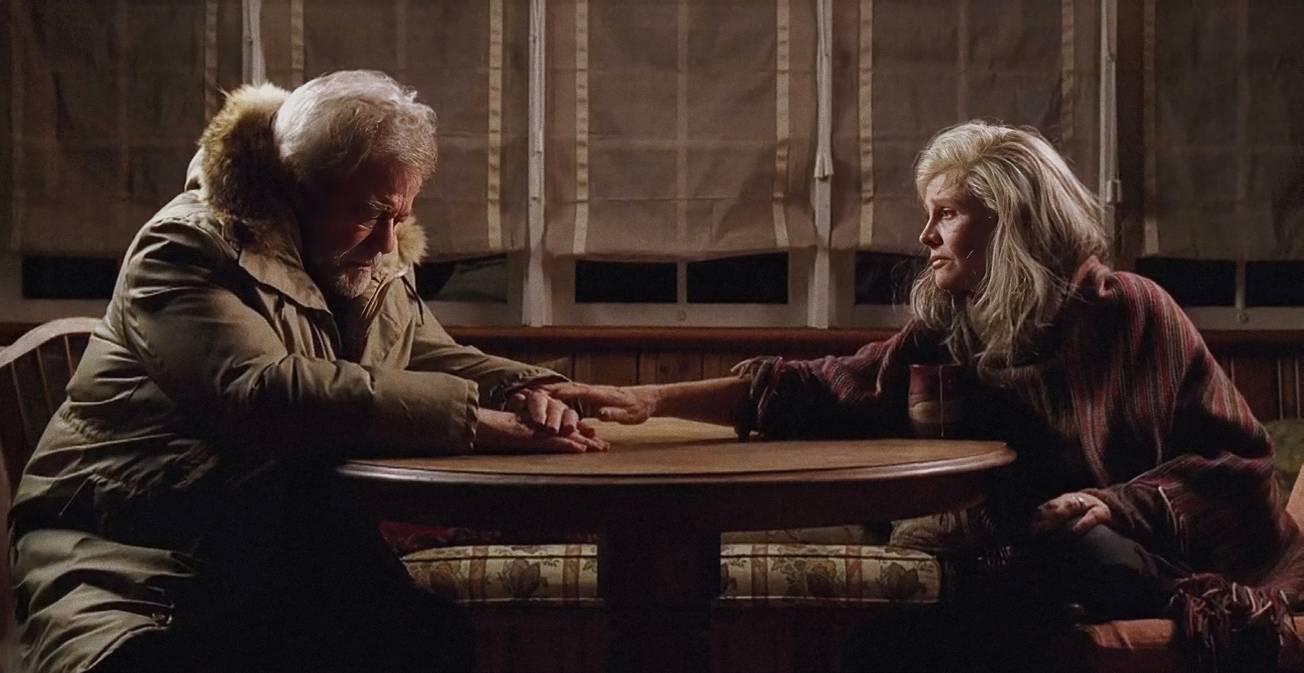
Despite the frigid weather, blind masseuse Iku and her man Mankichi enjoy a life of quietude in the mountains. With her hands, fingertips and an acute sense of touch, Iku reads people’s bodies and relieves not only their physical pains, but also wounds buried inside their hearts. One day, a young blind female performing artist named Saya shows up on her doorstep, asking to be taken on as an apprentice.
While her hands glide across the skin, Saya begins to feel what her clients feel. She can even touch what lies deeper than the body—one’s hidden motives and true disposition. Beneath the chest are voices long suppressed; the flank is a muddle of confusion. As it happens, one’s bare hands can both heal and destroy. Meanwhile, Iku’s hands are reaching down into Saya’s dark past... When the sighted are actually blinded, only Iku can see all the love and hate inside Saya.
In Sleeping Fires, Kuro Tanino draws his cues from firsthand experiences of the visually impaired, shining a light on the lives of today’s blind people with a tale from the feudal age. Through the unspoken understanding between two blind women, the theatre piece brings to the fore the unbearable loneliness behind rage. After all, is it anger that blinds people to the truth? Or is it that humans can never tell illusions from reality? Cutting off from worldly affairs, leaving past hurts behind, living in the moment and being gentle to each other—could that be the path to peace and bliss?
In Japan during the Edo period, men with visual disabilities had their rights protected under the privileged system of Tōdōza, earning their livelihood as shamisen players, acupuncturists or massage therapists. Women, on the contrary, were always left out. “Set in that era, Sleeping Fires is not just a period drama but a deliberation on how the world evolves thereafter, given such a context, and especially on what the future holds for women like the two protagonists,” says Kuro Tanino. Even though the modern way of living is different, what remains to be explored is how people coexist with each other. The director draws upon the past to contemplate the present: “How do visually impaired people navigate this world? From bygone eras to the present day, the nature of loneliness and hardships of survival have not changed much, have they?”
Breaking Free from a Self-Made Prison
Before writing the script, Tanino observed how people with visual impairments “see” the world by spending time with them. “During our interactions, I keep wondering: what exactly in this world are they ‘seeing’? What are they sensing? This is not a matter of just ‘seeing’ but where they place their attention, because the approach and nature of how they relate to the world are different from ours.” Tanino also indicates that these direct experiences soon gave him a direction, driving the narrative toward the theme of self-liberation.
The story begins with the encounter between two female masseuses. One is a recluse living in the mountains, sensing others and the outer world with her hands; the other has her soul consumed by hatred—both struggling through love and
hate in search of a way out. “Society imposes constraints everywhere. The protagonists, and we, nonetheless, all long for freedom. Such freedom, however, is not an outward display but a very personal journey of inner reflections. It has nothing to do with age or gender, nor is it merely about visual impairments; rather, it is about all forms of shackles in society.” The two blind women try hard to regain themselves, their quest for freedom mirroring the inner journey we all go through. In Tanino’s eyes, the seemingly dark ending of the revenge story is also a form of freedom—“for both the female and male characters in the story,” he adds, as long as one can escape from the societal framework and selfimposed prison.
A Shared Experience for the Audience and the Visually Impaired through Sound and Warmth
In the script, Tanino depicts meticulously our physical sensations such as touch and sound. He begins with how a masseuse feels and soothes other bodies with her hands. “Massage is a form of communication—not through words, but through the temperature of the skin, the strength of a push and its direction, and even the rhythm of breath.” He also describes natural scenery in fascinating detail, such as the sounds of raindrops in the deep mountains.
“It is difficult for the audience and visually impaired people to share certain details in the narrative, so I deliberately created elements other than visual, such as birdsongs and the smell of hotpot. Such non-visual information gives the audience a better idea of the spatial setting and thus a deeper understanding.”
The director works tirelessly to fine-tune the raining scenes on stage. The sound of water leaks in the house—whether rapid or slow, clear or vague, loud or small, or confined to one single spot. Such minute differences can impart a vast range of meanings and moods to a dramatic scene.
Comprehending Time through Touch
As the script reads: “All people are blind. We never manage to touch the truth.” These beings who cannot see entrust their hearts frivolously to the present moment. Tanino questions: “We only see what we want to see. We only hear what we want to hear. However, is what’s lying in front of you the reality or not?” The attempt to put vision aside and perceive through touch ultimately has something to do with the flow of time. “We look at the watch, we see our wrinkles
To achieve what he is after, Tanino rehearsed with visually impaired actors. The experience, as he recalls, was an ongoing process of deconstruction and reconstruction. “The physical attributes and performance styles of visually impaired actors are markedly different. Sighted people move their eyes when they are thinking, but blind people do not. During rehearsals, when the two actresses were targeting someone or something, it felt like while having to stay clear-headed, they were using their bodies to imagine and comprehend their surroundings. The aura they exuded had an agility to it. Their body language was so fascinating that it lent their performance a unique texture.” Tanino also maintains that they can easily sense the true nature of what is around them; and compared with their sighted counterparts, they are more attentive when “seeing”, whereas those whose eyes can see turn out to be “blind”. “This is something I wish to get across in my piece,” Tanino adds.
in the mirror, and we see changes in people or the streets; thereby we ‘see’ time—all are in fact visual perceptions. Visually impaired people cannot see these; they cannot see time, and their understanding of time is worlds apart from ours. Theatre is essentially an art of time. It is my wish to present a piece not meant to be viewed with our eyes but to be felt with our body.” After all, he adds, “I have a feeling that Sleeping Fires will be a journey of self-discovery for me.”
Kuro Tanino is the founder and director of Niwa Gekidan Penino, a playwright and former psychiatrist. In 2000, while still a medical student, he established Niwa Gekidan Penino, and has since written and directed all of the company’ s works. His productions have been invited to numerous major theatre festivals both in Japan and internationally, particularly in Europe. With Frustrating Picture Book for Adults (2008), Tanino and Niwa Gekidan Penino participated in the renowned 2009 HAU (Hebbel am Ufer) in Germany, Zürcher Theatre Spektakel in 2010. Tanino and Niwa Gekidan Penino were then invited to various festivals including the Helsinki Festival, the Theatre der Welt and Vienna Festival, Paris Autumn Festival and more. In 2016, Tanino won the 60th Kishida Kunio Drama Award for Avidya: No Lights Inn. The same year, he was awarded the Kita Nippon Shimbun Arts Prize and the Grand Prize of the 71st ACA National Arts Festival. He received the 36th Toyama Award for Culture and Arts Category in 2019. In 2022, he was appointed Policy Advisor for the City of Toyama. In 2024, he served as a jury member for the Kishida Kunio Drama Award.
Niwa Gekidan Penino is a theatre ensemble and the brainchild of Kuro Tanino during his student days at Showa University in 2000. Niwa Gekidan Penino has shared its intricate artistry and distinct vision of the world through its works. The theatre company is known for its keen attention to the performance space. From 2009 onwards, the group has been invited to numerous performing arts festivals at home and abroad, and has ventured into virtual reality in recent years through the works.
Between Constraints and Liberation, A Dance for Freedom
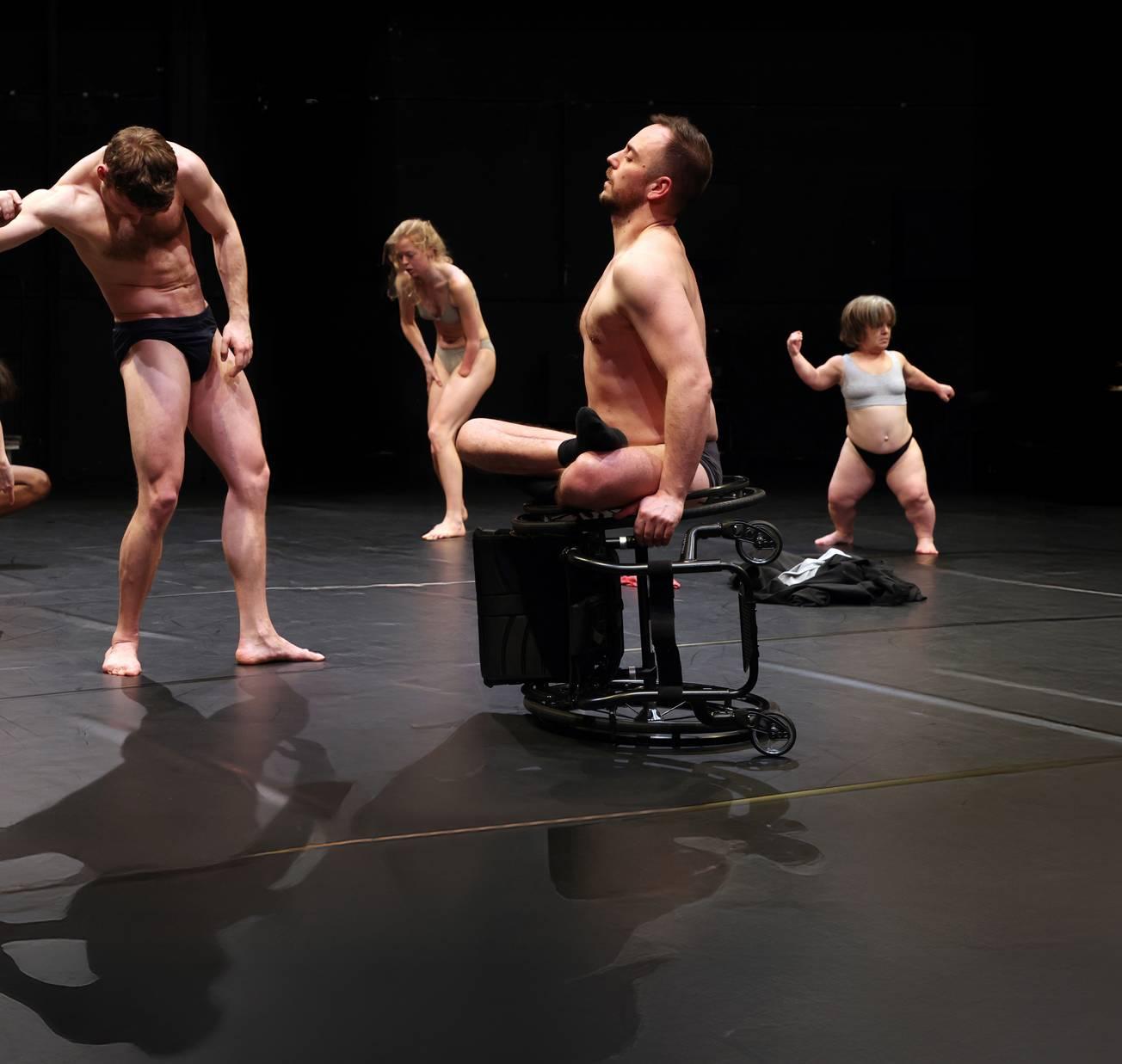
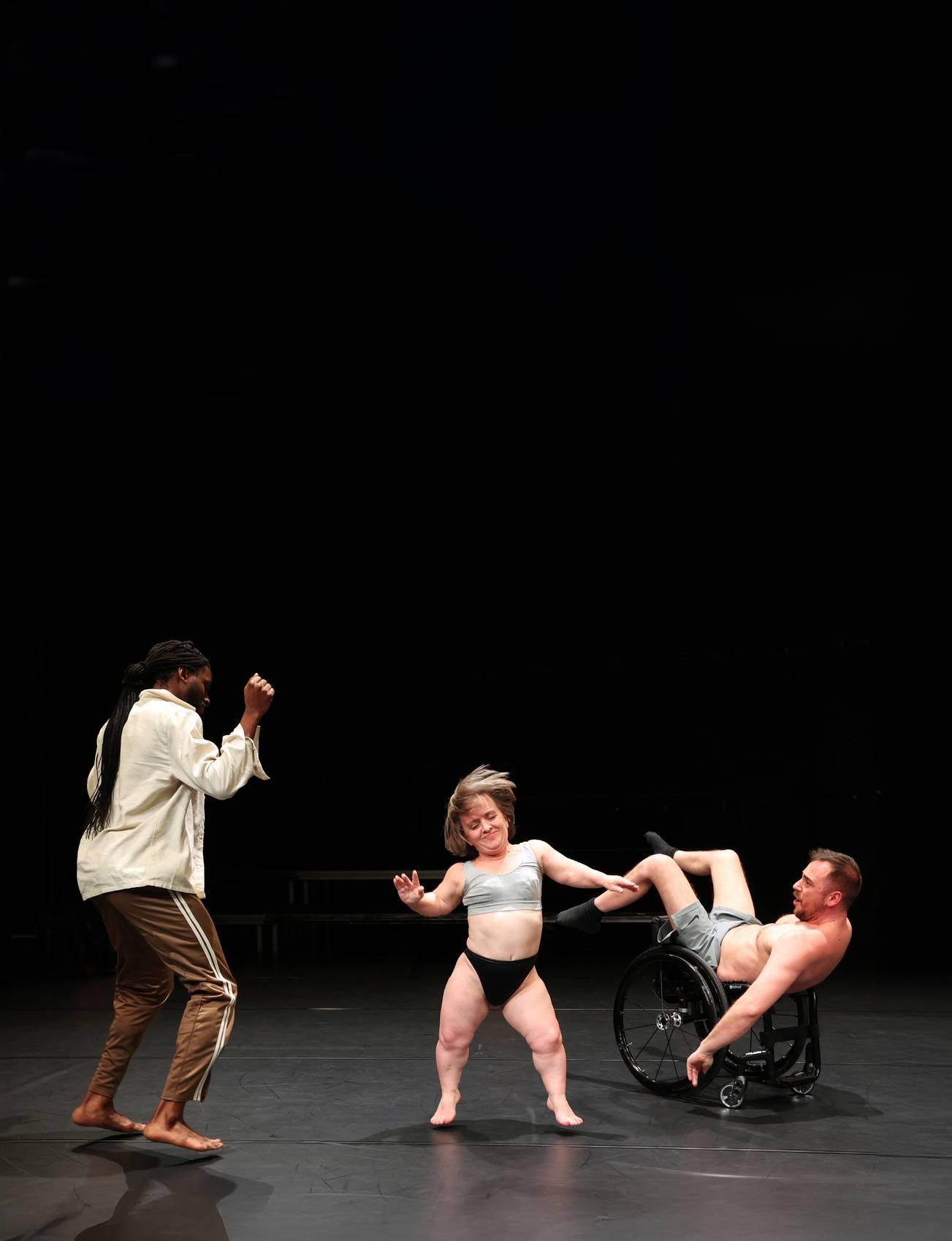
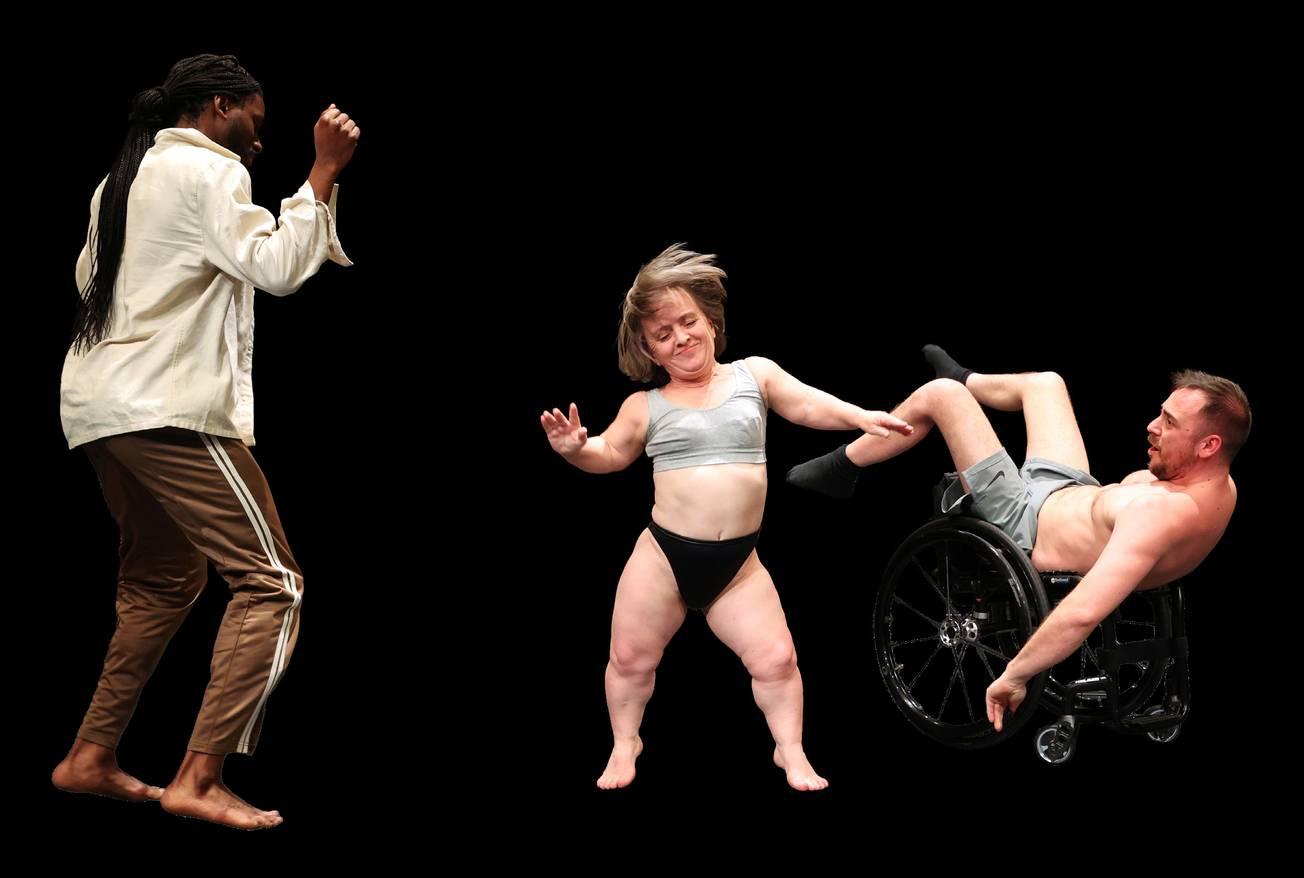
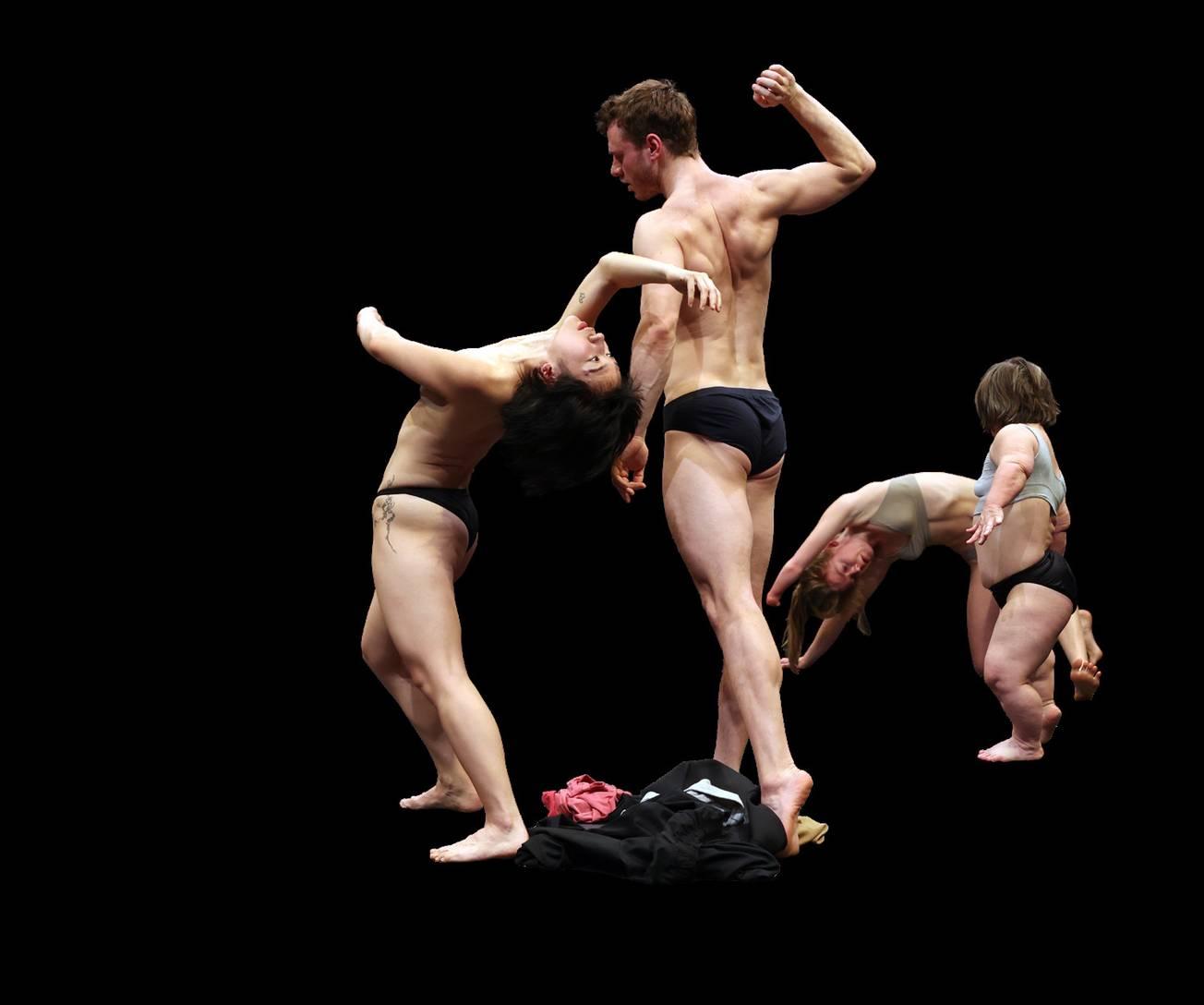
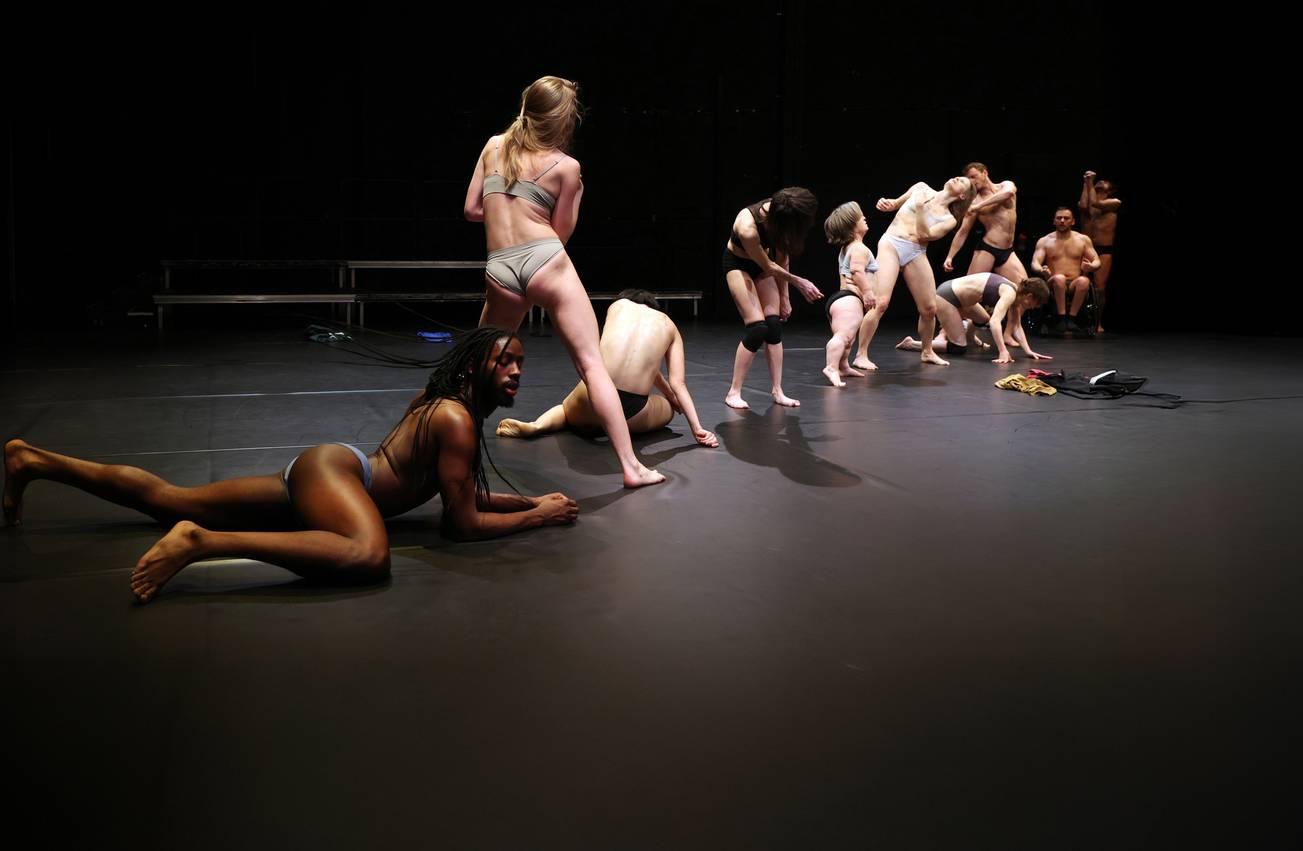
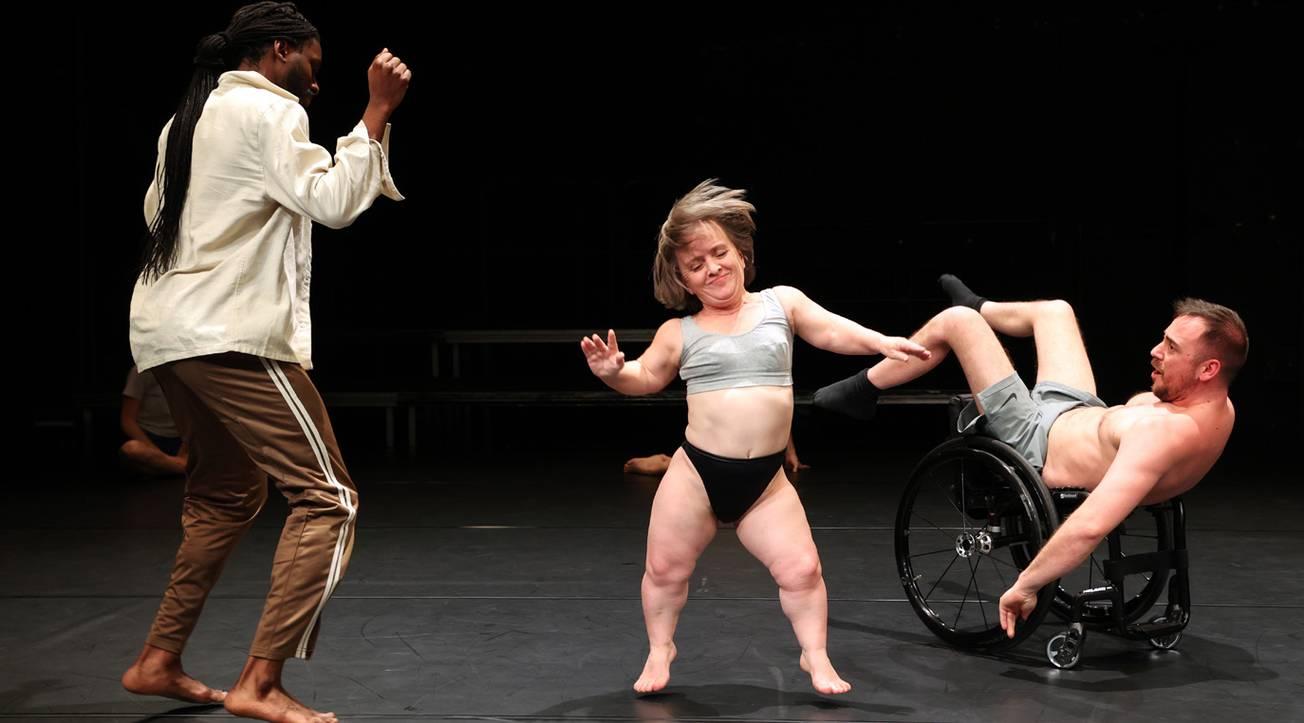
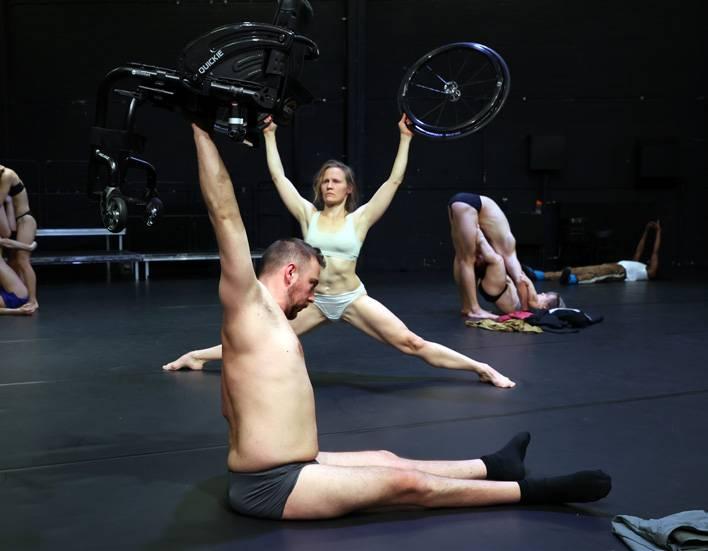
Harmonia is the first creation by Hungarian choreographer Adrienn Hód for dancers with and without disabilities in 2022. It was honoured as Best Work at the 2023 Rudolf Laban Award in Hungary, and selected for Tanzplattform Deutschland 2024 as one of the ten most representative dance works in Germany for that year. In this dance production that defies definition, mere pulsation and rhythm slowly culminate in a high-powered, free-spirited celebration.
It all begins with some gentle and light stretching.
A parade of bodies, so distinct and yet alike, is seen stretching on the floor. With their bodies, ten dancers send silent invitations to the audience, asking for their gaze. The audience cannot possibly resist, as what unfolds before them is even more exposed than nudity. Hód explains the need for warm-up: “This is the purest state which offers so much to see.” The silence is long, testing the audience’s patience. But as long as you keep your mind open, you will start seeing the dancers lean upon and entangle
with one another, helping and challenging each other in turn.
Soon after, a rhythm is heard. Is that a heartbeat or just a beat? Willingly or passively, the bodies take turns moving to the beat as if they were driven by a leading melody. From individuals to a community, from uniqueness to oneness, something seems ready to erupt… for a wild celebration in store. One by one, the dancers take centre stage as their most relaxed selves, free from any prearranged steps or emotions. They just let themselves flow with the music as if a new order had arrived.
Compared with classical dance, contemporary dance is considered to be more open. However, as the choreographer contends, the latter still has its own conformity such as requirements or preferences for specific body traits. Harmonia brings together a group of professional dancers of varying physical capacities, showing differences and similarities in their most stripped-back forms. In the gap between suppression and freedom, constraints and liberation, they dance fearlessly for freedom. “What is dance? Who can dance? We
Harmonia is the second collaboration between contemporary dance group Unusual Symptoms and choreographer Adrienn Hód: “We both want to pursue our take on contemporary dance further.” Dramaturg of Harmonia and Co-Artistic Director of Unusual Symptoms Gregor Runge traces the production back to two aspects of consideration: as a professional contemporary dance company in the establishment with a share of the resources, “how could we initiate change in the existing structure to allow more representations of disabled dancers on stage?” Harmonia is also the first inclusive dance work by their creative partner, Theatre Bremen in Germany. How to make the theatre “fully accessible” is another aspect to consider. Runge’s wish to make changes from within the establishment is, however, a lifelong undertaking: “Maybe let’s start from the artistic side. Let’s create a big piece of dance that involves dancers with and without disabilities, and make the production
Experience Time to Challenge Hidden Taboos
While “encounter” is the starting point, Hód and Runge do not stop at the dancers but extend their reach to the audience. The performance opens with a warm-up that lasts for almost an hour, an attempt to give the audience a sense of “time” and subvert the popular perception of contemporary dance. “The longer the time, the more the audience will imagine and interpret. Such ambiguity is important,” Hód elaborates. This is accentuated as all the lights are on, and audience members can see each other in addition to the performers. Such “freedom” could be scary for some. “Watching dancers of all ages and body types reveal—without holding back—their physical and mental states is like confronting certain taboos. The audience cannot help but doubt: ‘Am I supposed to watch?’” Taboo might be an exaggeration; no one is a voyeur here, but watching seems like overstepping the boundary, making one blush. “I wish to invite the audience to experience a different sense of time,” Hód remarks.
Communication Builds Trust Beyond Barriers
While preparing for Harmonia, Hód started from improvisation and physicality, asking dancers to
The Unbearable Weight of Life and Its Subsequent Release
As stretching ends, the second part breaks open. A heavy and strong pulse is heard, spurring the dancers on to move—their skin, muscles and bones in a whirlwind of motions. Runge says: “Against the pumping beat, the audience sees both the dancers’ uniformity and individuality. As the beat accelerates, their moves become more repetitive and vigorous as if there were a system unifying them. It feels like getting everyone ready—the dancers receiving new information and discarding the old, and the audience staying
glued.” It all becomes so intense, to the point where no one can stand it any longer... until everything falls apart. Prowd says: “Once again, we are asking the audience to endure for a while longer. The moment we have gone all out on the floor, liberation finally dawns. I do not fancy the word ‘equality’—it is more like a celebration.”
This final celebration is a parade of solos by all the dancers. Their personalities and joy are there for all to see. Hód says: “By then, all eyes and gazes have become equal. Everyone celebrates for each other’s body—abled or disabled.” One dancer’s strength ignites the other, but no one has to copy or follow on this platform of interaction and exchange, where one
soaks up what belongs to someone else before turning it into something entirely theirs, showing what they own in the most carefree moment that is here and now. “I feel sad about those among the audience who could not stay till the end. They will be missing out on the best moments of the show,” notes Prowd.
Harmonia is a creative endeavour by Hód to challenge notions of the body, contemporary dance, societal framework and the establishment. To this end, time is the very means of defying the norms. “Contemporary performances go for efficiency and speed, but what is worth pondering is that we must afford time for the ‘process’ itself,” she concludes.
Unusual Symptoms has been the dance company of Theatre Bremen, Germany since 2012. Originally founded by the French-Algerian choreographer Samir Akika, the ensemble has worked under the artistic direction of Alexandra Morales and Gregor Runge since 2018, and with renowned and up-and-coming international choreographers such as Faye Driscoll, Renan Martins, Michikazu Matsune and Adrienn Hód. Unusual Symptoms also develops projects with young performers, and have performed multiple times at the renowned Tanzplattform Deutschland.
Theatre Bremen serves as a public space for aesthetic and political reflection on the challenges, risks and moments of freedom of the modern urban experience. The Theatre comprises four departments: music theatre, drama, dance, and children's and youth theatre. Each season, it stages over 30 premieres and 600 performances, alongside a rich programme of concerts and events as part of its commitment to direct dialogue with the audience. Theatre Bremen also develops residence companies, including Unusual Symptoms, and collaborates with internationally acclaimed artists, companies and festivals.
Adrienn Hód is an internationally acclaimed choreographer specialising in contemporary dance and experimental movement. Her permanent company is HODWORKS, of which she has been artistic and production director since 2007. In addition to her work with the company, she also choreographs for other Hungarian and international collaborations. She is also an applied choreographer for theatre productions, films and commercials. She regularly teaches on both Hungarian and international platforms, where she works with improvisational tools. Her work is focused on the human physique in motion, stripped of taboos and prejudices, removed from its cultural context.
Subtitles and accessible captions in Chinese and English, audio description in Cantonese, caption reading in Cantonese and house programme in audio format available
敬請關掉所有響鬧及發光裝置。
Please switch off all sound-making and light-emitting devices.
請勿擅自攝影、錄音或錄影。
Unauthorised photography or recording of any kind is strictly prohibited.
Water glasses, balloons and light bulbs are objects of the most fragile nature. They are shattered on stage by three performers—Alice, Mai (Laila) and Victoria—making heart-stopping sounds of breaking. What is shattered, however, is not just fragile objects but the very definition of fragility itself.
Swiss-based Italian choreographer Alessandro Schiattarella has been practising inclusive creations for about a decade. To him, “fragility” is no longer something to be hidden but a quality to be shared with honesty. Based on the concept of “fragility”, he collaborated with three female performers to create this relaxed
The Sound Before the Glass Hits the Floor
performance blending movements, dance, sound, music and visual projections. On stage, they appear both fragile and indestructible: Alice hears only in one ear, Mai (Laila)’s crutches are her close companions, Victoria’s hands are uneven and her body is “tattooed” with scars. Yet within these fragile bodies dwell the most uncompromising souls. Each narrates her story through monologues and lyrics laced with humour and satire. The sounds of breaking pale when compared to the power of genuine voices.
“Why aren’t we made of brick and stone?” “What am I not willing to break? My bones?” Humour shatters taboos and barriers.
From solo performances to supporting each other physically, moving and dancing, the trio transforms from individuals into one. Schiattarella states, “The creative process began with each person’s ‘imperfections’ and gradually evolved towards ‘mutual reliance’ and ‘unity’. The truth is, when one’s own limitations are being embraced, they become a source of strength.” Finally, the white panels on stage combine into a green screen capable of infinite projections, displaying clownfish, astronauts, mermaids, or indescribable visions. As the screen eventually disintegrates, it reveals to the audience how fragile illusions can be. It is also the moment the three women liberate themselves, imagining who they are with boundless creativity. What matters most is writing your own truth.
The sound of glass shattering is familiar to all of us. But if the glass were gently saved just before it hits the ground, what sound would it make?
“Our society is often built upon power and hierarchy, yet I believe fragility is the more powerful force that connects us.” For choreographer and director Alessandro Schiattarella, who is affected by Hirayama disease, a neuromuscular disability, his past works have rarely veered away from the portrayal of “fragility”. “Fragility fosters a more stable and lasting connection than strength, because every one of us harbours fragility to varying degrees.”
“How Come You Assume Your Opinion Counts?”
The creative process explores and manifests “fragility” on multiple fronts. From stage design to props, sound, music and costumes, everything revolves around the notion of “fragility” —such as the plastic-filled jacket, sponge-material clothing and goalkeeper shorts they wear. During the creation, each performer imbued objects with distinct meanings and imagery— such as “invisible material” and “silent balloons”. For the seen and unseen, or the heard and unheard, these perceptions may stem from
be barriers, or perhaps symbolise our most rigid notions.” Yet as the performers shift, assemble and transform the panels—as if in an amusement park—even repurposing them as projection screens to display the most exquisite images, it becomes apparent that thoughts may merely be illusions or prejudices imposed by society. “I want to show how illusions are created by humans, and that we can also create or shatter them.” He adds, “Every billboard in the city tells us we are not good enough, not
When Fragility Transforms into Connection with Self and Others
Given the highly coordinated integration of multimedia, music, sound effects and visuals, occasional “glitches” are unavoidable: “We have experienced technical issues with music or video clips, but we gradually came to understand that these ‘mistakes’ are exactly what fragility is. Now, all three performers have learnt how to adapt.” Improvisation has even become their forte: “Laila once forgot her monologue, so the audience now hear her say, ‘My words might not match the subtitles.’ Alice’s keyboard once malfunctioned, so she hummed along; Victoria misdirected a balloon toss and said, ‘Never mind, I’ll probably do better next time.’ The more they perform, the more they find a connection to the work and discover personal meaning within it.”
What moves Schiattarella the most is witnessing their mutual support on stage. He illustrates this through Victoria’s monologue: “The moment that I remember was sliding on the floor towards Alice. I would feel the floor scratching my back. Then, Laila from the other
side. And I could see her legs on top of my body... I could feel their bodies ready to support mine; we were moving like one organism, changing shapes, collapsing, reinventing ourselves together.” Compared to glass, perhaps humans are the most fragile of entities. When the performers exchange tenderness, care for one another, and form an alliance through “fragility”, merging into unity, they become the most resilient of beings. Humanity completes the human.
In this relaxed performance, the audience can enjoy it in their most comfortable and relaxed state, moving about freely, entering and exiting at will, or making soft sounds. “I believe this work is not created for a specific audience type but rather invites audiences from different life circumstances to engage with our piece. It embodies an embrace of fragility, giving the audience autonomy, allowing them to watch the performance within their own space in a manner that feels nurtured.”
"How come you assume your opinion counts? How come you don't imagine that I have already doubted myself? Every cell involved within me and my body, I do not know conformity to you. How come you assume your opinion counts? "
最觸動我的歌詞與話語⋯⋯
The Lyrics and Words that Touched Me the Most...
愛麗絲 Alice
「成長的壓力終將從我身體褪去。
它會在我選擇的時刻粉碎——拒絕向你的方式低頭。」
"The pressure to grow can finally slip away from my body. It will shatter at a moment I choose — refusing to bow to your ways."
Alessandro Schiattarella is a dancer, choreographer and videographer based in Switzerland. Since the age of fifteen, he has been affected by Hirayama disease, a neuromuscular disability, which slowly reduced the strength in his hands. This didn’t stop him from dancing in international and renowned dance companies such as the Bejart Ballet Lausanne, the Ballet Du Grand Theatre de Geneve, the Scapino Ballet Rotterdam, the Konzerttheater Bern, and the Ballett Basel. From 2015 up to now, Schiattarella has ”and was performed in international festivals. Schiattarella has been awarded the Cinema Prize of the Choreographic Captures Competition for the video-
創作及製作團隊 Creative and Production Team
導演及編舞 Director & Choreographer
亞歷山德羅 ‧ 夏塔雷拉 Alessandro Schiattarella
演出及編舞 Performers & Choreographers
維多利亞 ‧ 安東諾娃 Victoria Antonova
愛麗絲 ‧ 朱利安尼 Alice Giuliani
萊拉 ‧ 懷特 Laila White
戲劇構作 Dramaturgy
馬丁 ‧ 穆特施勒 Martin Mutschler
歌曲創作 Songwriting
吉娜 ‧ 埃特 Gina ÉTÉ
音樂總監 Musical Director
理查 ‧ 施文尼克 Richard Schwennicke
製作及副導演 Production and Assistant Director
特里 ‧ 布呂多恩 Terry Blühdorn
副導演 Production and Assistant Director
葛林 Ge Lin
製作經理 Production Manager
保拉 ‧ 阿隆索 ‧ 戈麥斯 Paula Alonso Gómez
舞台設計師 Set Designer
瑪格麗特 ‧ 阿爾賓格 Margarete Albinger
燈光設計師 Lighting Designer
烏韋 ‧ 韋格納 Uwe Wegner
聲音及影像設計師 Sound & Video Designer
萊昂 ‧ 梅爾、馬庫斯 ‧ 施維格 Leon Meier, Markus Schwieger
服裝設計師 Costume Designer
朱莉婭 ‧ 馬科圖利奧 Giulia Marcotullio
燈光操作員 Lighting Operator
亞歷山德羅 ‧ 夏塔雷拉 Alessandro Schiattarella
聲音操作員 Sound Operator
歐亨尼奧 ‧ 法比亞尼 Eugenio Fabiani
影像及字幕操作員 Video and Subtitles Operator
曼努埃爾 ‧ 胡斯托 Manuel Justo
服裝助理 Costume Assistant
柯呂 KE Leu
服裝實習 Costume Intern
麗貝卡 ‧ 史坦 Rebecca Stein
道具 Props
史黛拉 ‧ 庫普拉特、英格瑪 ‧
Stella Kuprat, Ingmar Mühlich
外展教育及公眾參與 Xchange Mediation
馬蒂亞斯 ‧ 勃蘭特、丹尼爾 ‧
Matthias Brandt, Daniel Riedel
特別鳴謝:瑞士文化基金會
Special thanks to: Pro Helvetia – Swiss Arts Council
Precarious Moves
by Michael Turinsky
西九文化區自由空間大盒
節目長約 75 分鐘,不設中場休息
Approx. 75 minutes with no interval
英語演出 Performed in English
設中英文通達字幕、粵語口述影像、中文報讀字幕及語音場刊 Subtitles and accessible captions in Chinese and English, audio description and caption reading in Cantonese and house programme in audio format
敬請關掉所有響鬧及發光裝置。 Please switch off all sound-making and light-emitting devices.
請勿擅自攝影、錄音或錄影。 Unauthorised photography or recording of any kind is strictly prohibited.
無限亮加料節目 No Limits PLUS P.145
* 演後藝人談
Post-performance Meet-the-Artist Session
• 米高.圖林斯基《破障主意》公眾工作坊 Public Workshop by Michael Turinsky
Precarious Moves is a dance theatre production combining physical movement with philosophical reflections. Austrian artist and theoretician Michael Turinsky, as an artist with disabilities, utilises his body to perform solitary, “precarious” movements on a “barrier-free” stage. In between movements, he articulates a philosophy on the relationship between the body and its environment. “Crip means resistance against specific forms of mobilisation.”
Seated in his wheelchair, Turinsky first pushes a trolley laden with bottles, a potted plant and tonic water. Sipping his gin without the tonic, he speaks eloquently, articulating his insights on disability and choreography. His tone is serious yet witty, his words satirical yet without bitterness. The balance between seriousness and humour is
important to dispel any “tragic” image surrounding people with disabilities.
Is this a dance? Turinsky transforms slow motion into movement, shifting between measured movements on the wheelchair and joyfully singing while circling the stage in a little sports car. Throughout this “dance”, he makes use of various toys to subtly satirise societal norms, subverting the dominant culture of speed and efficiency. Through his own mesmerising motions and resistance to prevailing daily rhythms, he rewrites the audience’s imagination of the body.
He poses the question on behalf of the audience: But how does all that relate to choreography? “Modern dance pioneer Doris Humphrey defined choreography as ‘the art of creating dance’. For me personally, when I think of choreography, I tend to think about organisation. Choreography as a toolbox for organising mobility, mobilisation.” But wait a minute. If crip is all about resistance against mobilisation and if choreography is all about organising mobilisation, how do these go together? “Isn’t that a little bit like the gin without the tonic, the breakfast without the coffee?” Turinsky remarks, then speaks in earnest, “Perhaps it all hinges on how we can de-organise and re-organise our movements in such a way so that my movement can join your movement and so that we move on with joint forces.” This is the essence of breaking down barriers.
So, this is ultimately more than a dance. Through slow, seemingly laborious movements, Turinsky physically embodies the state of precarious yet steadfast resistance. He rotates, rolls over, rises to his feet and returns to his wheelchair. In this sequence of “dance steps”, he lays bare the essential meaning of bodily movement with the ultimate inquiry: how can a crip body act with autonomy and flow with freedom? Since its premiere in 2021, Precarious Moves has toured extensively and was awarded Austria’s Nestroy Prize for Best Off-Production in the same year.
This is far more than a “Crip” dance. “On the surface, Precarious Moves is an autobiographical work, but its deeper meaning extends far beyond my personal experience, addressing some of the most pressing ideological and ecological issues of our time,” states the choreographer and dancer Michael Turinsky emphatically. The work originated from how Turinsky is very much invested in exploring the intersection between disability choreography and ecology: “In which ways could I, as a disabled choreographer, respond to the climate crisis that we all need to face? Soon, it became quite clear that the most obvious area of intersection between disability, choreography and ecology is actually ‘mobility’, or more precisely, the urgency of transforming the ways in which we move through this world.”
A Dance Manifesto on Mobility Justice
A graduate of the University of Vienna’s Philosophy Department, Turinsky coined the term “Crip Choreography”. His works are consistently infused with philosophical thought, touching upon contemporary dance, inclusivity, and even the political and aesthetic realms. In his creative process, he typically appropriates several ideas to construct a conceptual framework, and incorporates Gramscian perspective on art— viewing it as a critical force challenging popular culture and mainstream pursuits, such as the pursuit of speed.”
In a performance that intertwines “dance” with monologues, Turinsky subtly satirises human mobility and migration, the established and systematic organisations, and the relationship between the human body and the ecological
environment. This elevates Precarious Moves beyond conventional dance theatre to be more akin to a manifesto. Within the text, the various concepts he references interplay with one another, prompting the audience to contemplate further through absurd comparisons: personal and collective, mobility and mobilisation, randomness and organization, body and environment, speed and slowness, and so on. “The piece attempts to open a space where audience members themselves can develop their own ‘creative process’ of making sense of the ideas presented in the performance.” Thus, he offers no definitive answers or definitions, leaving the audience to imagine through his poignant words and ambiguous physical movements.
Turinsky’s movements are boldly precarious. The word “precarious”, denoting both instability and danger, not only alludes to his own physical state but also points to human movements at large, specifically the impact and potential harm humans cause to the natural ecosystem. “When humans move, they risk harming not only themselves but also the environment. The ‘we’ implies not merely ‘people with disabilities’ but all humankind. Ecologically speaking, humans may be the only species whose movements affect not just their immediate domain but the entire ecosystem. Human movements are inherently precarious.”
Anyway, I’m back in a second!
Slowness undeniably defines Turinsky’s rhythm. It is precisely within his body movements, suspended between motion and stillness, that visible and invisible barriers create an irresistible force of resistance. He describes these exploratory movements as a reinterpreting choreography through postures that deviate from convention. “For me, this basically means engaging the specific qualities of my own body in processes of de-organising and re-organising dominant forms of movement organisation, proposing how we could move differently, how we could relate differently to space as well as to time.” He is not sure if he could ever believe in something like organic movement, but what he does believe in is movement that is in tune with the needs of himself and others as organisms. One thing very clear is the movement attuned to the needs of himself and others as organisms—this is precisely what must be organised and it does not happen naturally.
During the performance, Turinsky repeated the phrase “I’m back in a second!” regularly. Was it a coded message or just a playful remark? Perhaps he was artfully constructing a sense of time and anticipation, hinting at the contradiction between bodily constraints and sustained movement. He leaves this open for interpretation, allowing the audience to speculate. Ultimately, he cast aside all tools, his body in states of flow, movement, and action. On a final note, he poses the question: “What do we actually long for when we long for freedom of movement?”
Michael Turinsky is a Vienna-based, physically disabled artist and theoretician, working at the intersection of contemporary dance and performance, disability, and political and aesthetic theory. Turinsky has worked in the world of inclusive dance since 2006, coining the term“ crip choreography ”for his unique practice of engaging the specific, resistant materiality of the body in processes of subverting and re-organising dominant forms and qualities of movement. He is also interested in the“aesthetics of access”and exploring the intricate relationship between dance and ecology. Turinsky’s main choreographic works include“Heteronomous Male” , “My Body, Your Plea sure ” , “Reverberations” , “Precarious Moves” (Awarded the Nestroy Prize for Best Off-Production) and “ SOILED ”. His commitment to teaching, education and theoretical practice has resulted in numerous workshops, lectures, interventions and publications within various contexts, and in 2024 Turinsky was named Outstanding Artist by the Austrian Ministry of Arts and Culture.
Subtitles and accessible captions in Chinese and English, dubbing in Cantonese, audio description in Cantonese and English; house programme in audio format available
請勿使用任何相機、智能手機及任何錄音儀器對 節目內容進行拍攝、錄音及螢幕截圖。
Any type of screen recording or filming with a camera, smartphone or other recording device is strictly prohibited.
Does ice cream make the muscles get better, daddy?
“Does ice cream make the muscles get better, daddy?”—“It maybe could do.”
“Don’t you think it’s getting better?”—“Son, I don’t think it is getting better. I’m not being negative about it.”
“Daddy, I wanna play football with my friends.” —“You know what? There are games you can play in wheelchairs.”
These are typical conversations between Nick and his two sons, Theo and Oscar, both born with Duchenne muscular dystrophy. The disorder causes muscle weakness and wasting, lowered respiratory and cardiac function, and even shorter life expectancy or eventual death. Marked by an intimacy found in home videos, the documentary film A Space in Time makes use of family dialogue and candid interviews in its tender portrayal of the daily life of Nick, his wife Clara and their children—a family living with the hereditary disease.
“We talk about death openly to our boys.” Nick never hides the hardships life has in store for his kids, all the while trying to build a brighter future for them. Thanks to assistance from a building company, the family is blessed with a barrier-free
home tailored to their needs, with the space for two wheelchairs, which will become a necessity. From the challenges in marriage, division of family roles, to struggles about the arrival of a new member, the film shows with ordinary footage how the family lives and thrives with a chronic condition, turning the mundane into something special. The directors neither evade the pains brought by the disease nor wallow in sentimentality. Gently, their handiwork unravels how love, bonds and resilience blossom in a seemingly hopeless battle against illness.
The film also features reflections from other families, acknowledging the fact that the disease currently has no cure. “How to live fully”, however, has become centrally important to what they confront, discuss and practise every day. “If you know they’re not gonna be with you for so long, you suddenly realise that basically you were kind of living rather blindly through life and you suddenly wake up,” says Nick. As the brothers try moving around in wheelchairs and playing with their mates, the delicate tension between “difference” and “inclusion” becomes evident. “Disability” is only a human condition; it is, contrary to common perception, not inferiority.
An Intimate Journey with a Family Living with Duchenne
From the very beginning, we did not want A Space in Time to become a conventional “illness documentary”, or to be reduced to medical facts or a narrative of tragedy. By the time we came on board, Nick and his wife Clara had already taken a massive amount of footage with mobile phones. We spent considerable time reviewing the footage, trying to know more about the extraordinary circumstances they are facing. With that done, it took months before we gathered ourselves and began to explore with Nick how to best present this story. We did not want the film to just feel like home videos; we wanted to ask big questions, so we resolved to elevate the film and to start shooting more cinematic vignettes that we could use to help it breathe. The measured pace allows our audience to process the big questions, the candid interviews and intimate footage.
Telling the story of the two boys was both the greatest responsibility and challenge. Our aim was to honour the boys’ inner worlds and the rhythms of
their daily lives. And then when we were talking to older people with the condition, we started framing the kids’ story within a much broader social context to explore accessibility, the architecture of care, society’s response to differences and the social model of disability.
Jon is one of the oldest people in the UK living with Duchenne. The way he spoke about the Social Model of Disability and how he lives his life gave us the confidence to explore bigger themes. “The hurdle comes from the environment and society you are in rather than your actual condition,” he said. I believe if we all contemplate his remark seriously, we will be able to change the way the entire society perceives and approaches disability.
Even though the film raises many complicated questions and themes, in today’s world, where empathy is gradually fading, I think it is important to strip things back to the power of love.
Director, producer and editor Riccardo Servini works in documentary and fiction. A full BAFTA member, he has a keen interest in supporting underrepresented stories and talent. Servini has worked across all sectors of the industry for over 15 years, working with companies such as Netflix, BBC, Apple, ITV, BFI, Channel 4 and many more. He has directed two feature documentaries, Griersonnominated “A Space in Time”and the LVFF award-winning“Dwarf Story” .
Nick Taussig is a producer, director and writer. As a producer he has worked on a number of awardwinning documentaries and feature films, including the BAFTA-winning Killing Escobar and the BAFTAnominated Charlie Mackesy:The Boy, the Mole, the Fox, the Horse and Me. With Riccardo Servini, he directed the feature documentary A Space in Time. The author of four novels, Taussig has also written for a number of publications, including The Guardian, The Independent and Huffington Post.
創作及製作團隊 Creative and Production Team
導演 Directed by 里卡多.塞爾維尼及尼克.陶西格 Riccardo Servini and Nick Taussig
監製 Produced by 尼克.陶西格、保羅.范.卡特 、安娜貝爾.維戈德
Nick Taussig, Paul Van Carter, Annabel Wigoder
剪接 Edited by 里卡多.塞爾維尼 Riccardo Servini
攝影指導 Director of Photography
羅麗.斯基奧奇 Rory Skeoch
原創配樂 Original Score by 羅賓.施洛赫特梅耶 Robin Schlochtermeier
製片統籌 Line Producer
蘇菲.哈默 Sophie Harmer
助理製片 Associate Producer
艾米麗雅.蘿絲.阿諾 Emilia Rose Arno
攝影 Camera Operator
佐治‧尼科爾斯 George Nicholls
副攝影 Additional Cameras
尼克‧陶西格、里卡多‧塞爾維尼、拉蒙‧沙加度‧圖宗 Nick Taussig, Riccardo Servini, Ramon Salgado Touzon
無人機攝影 Drone Operator
湯姆‧芒福德 Tom Mumford
錄音 Sound Recordist
查利‧赫斯特 Charlie Hurst
線上編輯及調色 Online Editor & Colourist
梅甘‧李(The Mill) Megan Lee @The Mill
對白編輯 Dialogue Editor
多米尼克‧威弗 Dominic Weaver
最終混音 Final Mix
馬特‧斯諾登 Matt Snowden
聲音設計 Sound Designer
多米尼克‧威弗 Dominic Weaver
後期製作 Post Producers
查理斯‧摩理斯、The Mill
Charlie Morris, The Mill
by Taku Aoyagi
青柳拓《富士山棉花田》
大館洗衣場石階
Laundry Steps, Tai Kwun
語言 Language : 日語 Japanese
長度 Duration : 95 分鐘 minutes
免費網上放映
Free Online Programme
In-venue Free Screening
Screening on No Limits Website
設中英文通達字幕、粵語配音、粵語及英語口述影像、語音場刊
Subtitles and accessible captions in Chinese and English, dubbing in Cantonese, audio description in Cantonese and English; house programme in audio format available 3.30(一)Mon 5.25 ( 一)Mon 「無限亮」網站播放
請勿使用任何相機、智能手機及任何錄音儀器對 節目內容進行拍攝、錄音及螢幕截圖。
Any type of screen recording or filming with a camera, smartphone or other recording device is strictly prohibited.
In the Kofu Basin below Mount Fuji, balmy soft wind wafts through cotton fields bathed in sunshine. It is home to Mirai (Future) Farm, a welfare facility for people with disabilities. Yet they do not just receive care—they work hard to provide for themselves by planting cotton, weaving fabrics and tending to flowers. In the documentary film Fujiyama Cottonton, director Taku Aoyagi’s unadorned lens captures scenes of everyday life in a community with diverse abilities, conveying the most sincere and heartfelt emotions in their ordinary existence. Every morning, everyone at Mirai goes to work with joy. They first do some light exercises to perk themselves up for a full day of labour. They take their tasks seriously. From tilling soil, sowing seeds, watering to fertilising, every step is performed with great care, and every cotton boll is the fruit of hard work. Some turn cotton into yarn, approaching the repetitive grind with dedication and joy. Meanwhile,
seasoned weavers operate looms with great precision, working diligently to fulfil the long queue of customer orders. Mirai Farm not only shows the day-to-day operation of a welfare institution but also a microcosm of society, where people divide work and cooperate with each other to give meaning to their lives. The only difference is that efficiency is not the goal here. Rather, profound respect is paid to every individual’s distinct talents, traditional craftsmanship and unique pace of life. What also makes the film touching is the emotions so readily and generously reveal. Whether romance or friendship, excitement or heartbreak, these are human experiences we all share. Oomori is a listless, sad man always sitting forlornly by the cotton field. As it turns out, he has been grieving over the loss of a close friend. Fortunately, as the cotton continues to grow, he soon regains a sense of purpose and starts enjoying life again. Tatsunari
works as a farmer but is actually a photographer at heart, unbeknownst to everyone else. By pure instinct, he captures the facility members and their talents on the farm, allowing the audience to transform from watching “the other” to viewing “with the other”. Also inside the establishment is a painter whose work echoes Yayoi Kusama’s worldview of “infinity”—boundless, no limits. Fujiyama Cottonton unfolds in near silence. Aoyagi’s gentle and unadorned lens crafts the narrative of every person patiently and meticulously.
Through all the intimate details, the audience perceives the reality of life for those who have long been neglected by society. People in the film speak little, and yet from their non-verbal cues, the audience can feel their sincere and emotional exchanges. This is what their lives are—so authentic and ordinary. Consequently, Fujiyama Cottonton is hailed by Japanese critics as “one of the gentlest social documentaries”, weaving a tapestry of humanity with light and shadow.
The purpose of making the documentary Fujiyama Cottonton, as its director Taku Aoyagi said, is simply to convey this idea: “A different world truly exists here.” Mirai (Future) Farm was the workplace of the director’s mother, as well as his playground growing up. “After school, I would come to draw paintings and make bead crafts with the facility users. Back then, I did not have the faintest idea about ‘people with disabilities’—they were just ‘elder brothers and sisters’ who played with me.”
When it comes to a welfare facility, many view it as a “place of protection”. In reality, it is more like a “mini society” where everyone works and banters at their own pace, occasionally having worries. Shot with tenderness and subtlety, Aoyagi’s documentary features his subjects with minimal dialogue and no narration at all, letting the visuals tell the story. He observes quietly, capturing the residents’ snippets of life with a light touch that resonates with the audience nonetheless: “I make it a point not to ‘overexplain’. My belief is that by looking closely at the minute details of people’s lives, their character will naturally emerge. Also, non-verbal communication can be incredibly rich. A hearty laugh with a gentle rub on the belly, or just an exchange of glances—all these convey inner thoughts.”
Beyond work, Aoyagi also documented their personal interests. “Creative activities like photo-taking, drawing and weaving are not separated from work. Growing and harvesting cotton, which later becomes weaving material, is part of the residents’ labour which, at the same time, highlights the sentimental side to their character. For instance, the work by Tatsunari, a camera buff, comes across as ‘the way he has chosen to relate to the world’. Toward the film’s end, Tatsunari suddenly asked me while I was wielding my camera: ‘What is work?’ In that moment, I replied out of reflex: ‘Making money’. He offered a response rooted in an entirely different perspective: ‘It is about showing others that everyone at Mirai Farm is happy.’” This provoked in Aoyagi a deep reflection—not only on filmmaking but also on his own way of life.
Documentary director and cinematographer Taku Aoyagi was born in 1993 in Yamanashi, Japan and studied at the Japan Institute of the Moving Image. He is known for the films The Road He Walks: A Story of He-kun (2017) and Tokyo Uber Blues (2021).
by Sarah Polley
莎拉.波莉《當愛留在遺忘時》
大館洗衣場石階
Laundry Steps, Tai Kwun
1.17
語言 Language : 英語 English
長度 Duration : 110 分鐘 minutes
免費網上放映 Free Online Programme
設中英文通達字幕、粵語配音、粵語及英語口述影像、語音場刊
Subtitles and accessible captions in Chinese and English, dubbing in Cantonese, audio description in Cantonese and English; house programme in audio format available 3.30(一)Mon 5.25 ( 一)Mon 「無限亮」網站播放 Screening on No Limits Website
請勿使用任何相機、智能手機及任何錄音儀器對 節目內容進行拍攝、錄音及螢幕截圖。
Any type of screen recording or filming with a camera, smartphone or other recording device is strictly prohibited.
When “I” am Disappearing, Who is that in Front of You?
Partings come—upon death, and before.
“I think I may be beginning to disappear.” Fiona, a dementia patient, stops mid-sentence, unsure about what she wanted to say. Distant memories may flash into her mind, but what happened yesterday eludes her. Memories make us who we are; but when all memories are gone, who could “I” be?
Fiona has been married to Grant for 40 years. Her sweet memories of him have become an integral part of herself. When it dawns on her that her illness is causing memory decline, Fiona decides to move into a nursing home before the situation spirals out of control.
There is a rule at the nursing home: no visitors are allowed in the first 30 days for the new resident to adjust. What harm could it do for a close couple who have been together for decades? Dementia’s disease, nonetheless, is the most difficult riddle. On the 31st day, Grant can finally be reunited with his wife. When their eyes meet, she greets him—only in a way as if they were complete strangers.
Memory cannot triumph over illness. The tale built on four decades of affection can indeed crumble like a snowslip. Now Fiona is happy with her new life. Aubrey, another nursing home resident, is whom her heart belongs to. As his wife becomes inseparable from someone else, Grant, reduced to a stranger, cannot help but ask why. “He doesn’t confuse me at all,” says Fiona. Holding onto something lost only hurts more, memory is Grant’s worst enemy. Then one day, Aubrey is taken back home by his own family. Fiona sinks into despondence, as much as Grant, who first found himself losing his loved one. To bring a smile back to his wife, Grant bears all the pain and begs for Aubrey’s return… Memory, winding as a railroad, eventually leads to happiness.
Away From Her is an adaptation of awardwinning Canadian author Alice Munro’s short story, The Bear Came Over the Mountain. The first feature film directed and scripted by Sarah Polley at age 27, it won multiple directing awards in Canada and received an Academy Award nomination for Best Adapted Screenplay.
Winter Sun Radiates in the Face of Incurable Disease
According to recent statistics from the Department of Health, one in ten senior citizens aged 60 or above in Hong Kong suffers from dementia. Other studies estimate that by 2036, the number of dementia patients aged over 60 will rise to 280,000. A primary cause identified by the medical profession is the abnormal accumulation of amyloid plaques and tau tangles in the brain, which leads to gradual degeneration and eventual death of brain cells. However, many mysteries remain unsolved, making dementia a common and hard-to-prevent disease among older adults.
At the centre of the Canadian film Away From Her is an elderly couple devoted to each other. When Fiona finds herself slipping into dementia, she asks to be sent to a nursing home, hoping to ease the burden on her husband, Grant.
The film does not dwell on the misfortune or desperation associated with illnesses, nor does it seek the audience’s sympathy yet traces Fiona’s memory loss with a restrained, unsentimental gaze. Its objective portrayal of the patient–caregiver
relationship, and the pressure and hurdles they face, offers much food for thought. “Elderly on elderly care” is common among families with dementia patients. Even though some aged caregivers are still in good health, the financial and mental stress can still be daunting. In the film, Grant has no major health issues but feels perplexed and helpless. For example, he strongly resists sending Fiona to the “critical care unit” of the nursing home, which he sees as reserved only for the incurably ill. Given how subtle psychological and mental health shifts can be, do we actually notice and pay attention to them in our daily lives?
For no apparent reason, dementia can arrive randomly as we age. Grant once asked, “Why her?” and even wondered whether his wife’s newfound affection was an act of “revenge” against him. Yet his doubts go unanswered. All he can do is accept what has happened, fully appreciating the joy and beauty of the present moment in this transient life, much like the winter sunshine that quietly bathes the nursing home in the film.
Sarah Polley is an award-winning Canadian actor, writer, director and producer. She has directed the dramatic features Away from Her (2006), Take This Waltz (2011) and Women Talking (2022, Academy Award for Best Adapted Screenplay). Her autobiographical Stories We Tell (2012) was awarded Best Documentary by the Toronto Film Critics Association, the New York Film Critics Circle, the National Board of Review and the Los Angeles Film Critics Association, and was shortlisted for the Academy Award for Best Documentary Feature.
攝影 Cinematography
盧克‧蒙特佩利耶 Luc Montpellier
導演、編劇 Directed & Screenplay by 莎拉‧波莉 Sarah Polley
監製 Produced by 丹尼爾‧艾朗、西蒙娜‧烏德爾、珍妮花‧韋斯
Daniel Iron, Simone Urdl, Jennifer Weiss
演出 Performers
茱莉‧基絲蒂、戈登‧平森特、奧林比亞‧杜卡奇斯、 米高‧梅菲、克莉絲汀‧湯臣、溫蒂‧克露森
Julie Christie, Gordon Pinsent, Olympia Dukakis, Michael Murphy, Kristen Thomson, Wendy Crewson
剪接 Edited by 大衛‧華恩斯比 David Wharnsby
配樂 Music by 喬納森‧戈德史密斯 Jonathan Goldsmith
製作 Productions
卡布里發行、回聲湖製作公司、鑄造電影、漢韋影業、 電影農場
Capri Releasing、Echo Lake Productions、Foundry Films、Hanway Films、The Film Farm
by Caroline Cavalcanti
嘉露蓮.卡瓦爾坎蒂《青春的裂縫》
設中英文字幕、粵語配音、粵語口述影像及語音場刊
Subtitles in Chinese and English, dubbing in Cantonese, audio description in Cantonese, house programme in audio format available
大館洗衣場石階
Laundry Steps, Tai Kwun
語言 Language : 葡萄牙語 Portuguese
長度 Duration : 25 分鐘 minutes
免費現場放映 In-venue Free Screening
2.28 5:45pm
SAT 3.7 3:10pm
免費網上放映 Free Online Programme
3.30
Mon 5.25 ( 一)Mon
Screening on No Limits Website
設中英文通達字幕、粵語配音、粵語及英語口述影像、語音場刊
Subtitles and accessible captions in Chinese and English, dubbing in Cantonese and English, audio description in Cantonese and English; house programme in audio format available
聽見彼此的邊緣青年
請勿使用任何相機、智能手機及任何錄音儀器對 節目內容進行拍攝、錄音及螢幕截圖。
Any type of screen recording or filming with a camera, smartphone or other recording device is strictly prohibited.
In the suburbs of Belo Horizonte, Brazil, teenagers Bel and Juliano cross paths with each other while rendering social service at a library for the acts of vandalism they committed. Bel, with hearing impairment, is a skateboarder and artist, whereas Juliano has a passion for rap and makes audio recordings of his daily life. Differences are no obstacle to the growing resonance they share. As they spend time together flipping through books, exchanging sign language, and savouring grandma’s pastry under the librarian’s surveillance, love begins to blossom. Lapse deftly captures the bewilderment of adolescence, discontent toward the government, the hope the teenagers bring each other, and their courage in trying to make themselves heard. The short film is not only a portrait of young people in Brazil, but also a universal reflection on the younger generation in search of self-identity and connection with others.
Director Caroline Cavalcanti trains her lens on the lives of people away from the big cities. Location shooting took place in Santa Luzia and Lagoa Santa, as well as Kasa Invisível, an anticapitalist occupied social centre. Since becoming hard of hearing as an adult, she has developed unique and varied experiences with sound. In Lapse, she makes skilful use of the contrast between stillness and motion, sound and silence. By juxtaposing the abundance of motion in rap music, audio recording and skateboarding with the quietude of the library and sign language, she conveys emotions and intertwines language with the body, making it clear that communication can happen in a myriad of forms. Lapse received a Special Mention at the 74th Berlin International Film Festival in 2024, in recognition of its nuanced portrayal of marginalised youth in their quest to rise above constraints.
本文節錄自導演提供的訪問〈Sieben Fragen an Caroline Cavalcanti〉(Testkammer),並經編改及翻譯。
Love is not salvation
My short film revolves around the budding romance between two teenagers. I meant to talk about affection and resistance, and how time becomes distorted for those living on the margins. Adolescence, especially for the underprivileged, always feels like being on the verge of ending or crumbling. The love story emerges to offer room for suspension and possibility. I wasn’t interested in an idealised narrative, but in one that embraces flaws, impulses, and the desire to live fully in those fragments of time. Despite the criminal elements in the film, love is still possible in contexts marked by violence or exclusion. These two characters are seen as deviants, but it is precisely in their encounter that something blossoms. It’s about recognising that affection can also be a form of resistance. Love here is not salvation; it’s a crack, and a path.
Weaving actors’ personal experiences into the story
The cast is one of the film’s main pillars. They are amazing. Before shooting, we rehearsed with the actors intensively but gave them much freedom at the same time. I believe that filmmaking is a collaborative effort, where the cast also takes part in its creation. The lead actress, for example, brought a lot of first-hand experience to the character, which gave her performance an authenticity that comes about only when fiction melds with lived experience. Additionally, seven members of our cast and crew live with hearing impairment. Having actors with diverse life experiences, and developing a cinematic language that accommodates these differences, is an integral part of the film, both in terms of technical and sensory value. As I also have hearing loss myself, I have long aspired to develop narrative techniques that can accommodate different ways of thinking.
Abridged, translated and edited from an interview titled “Sieben Fragen an Caroline Cavalcanti” in Testkammer, provided by the director.
Brazilian director and screenwriter Caroline Cavalcanti is inspired by the country ’ s independent cinema scene. After becoming a hard of hearing person as an adult, she has experienced different relationships with sound. In 2020, she received the Cardume Cabíria award for her screenplay Zero Decibel. She is the creator of the web series Absurdas, which was nominated for the Best Original Idea at the 2022 Rio Webfest. In 2023 she received the Best Director award at the Kinoarte Film Festival, Brazil for her short film Lapse.
No Limits Local Creative Research and Development Scheme, an original nine-month programme that invites local arts practitioners to collaborate directly with communities of different abilities and use their shared life experiences to forge fresh perspectives on inclusive creative practices.
Frieda Ng, the curator of the project and programme and outreach manager of No Limits, explains, “Designed to nurture reciprocal partnerships, the scheme encourages artists and their collaborators to uncover new inclusive themes, interrogate the essential nature of inclusion, and broaden the artistic imagination of everyone involved.” This year, we are thrilled to engage four group of local artists with mixedabilities. Each collaborative team will share the findings and creative results of their work with audiences in March 2026 after the nine-month research and development period.
Imitation Through Listening, yet Never Mere Repetition
Jezrael Lucero×Daniel Chu
Jazz pianist and ethnomusicologist Daniel Chu engages in a candid conversation with Jezrael Lucero, a blind Filipino jazz musician based in Hong Kong. Their dialogue explores Lucero’s learning process, ways of thinking, and techniques in jazz improvisation from a musical perspective. Through an anthropological lens, the dialogue delves into various facets of Lucero’s life in Hong Kong as a blind Filipino jazz musician—how does he navigate the city? How do his intersecting identities—blindness, being non-local and being a jazz musician—shape his choices and possibilities?
From understanding how Lucero “sees” the world to the goodness and injustice he has encountered in life, Chu unpacks various preconceptions and even misconceptions about blind musicians. For Lucero, true music has no boundaries, allowing him, despite his blindness, to have no limits.
What are the goals of this research and creative project?
What new discoveries have you made from your conversations? How has Lucero inspired your thinking?
C: I have always admired Jezrael’s music. More importantly, his experience has real research value. Coming from the Philippines, he has lived and established himself in Hong Kong while maintaining an active international presence, performing in the United States, releasing albums, and carving out a global reputation as a professional jazz musician. As a fellow jazz pianist, I want to understand how he learns structured repertoire, builds understanding of harmony and develops his tactile sensitivity and “certainty” on the keys despite his blindness. These are experiences I can’t get from other pianists.
L: In Hong Kong, I earn my living as a musician. Frankly, my lack of familiarity with Cantopop sometimes leaves me marginalised. But for me, this research and creative project is not about searching for an identity. Rather, by sharing my story and musical philosophy with Daniel, we become companions on the musical journey. I also want to tell people that if you have a dream, you can achieve it if you are willing to put in the work. Blindness is not a constraint.
C: For the first time, I witnessed up close how technology supports the daily life and creative work of blind musicians. In fact, by mastering technology, their capabilities not only can match those of sighted people but may even surpass them. Jezrael is very skilled at composing music on the computer. He showed me his creative process, deepening my understanding of how he constructs his musical workflow. What inspired me most was how he learns the jazz language primarily through listening. He never copies jazz phrases from masters verbatim. Instead, he listens, internalises and transforms them into his own sounds—constantly imitating, yet never merely repeating. This pure and steadfast way of learning reveals his incredible perseverance and sensitivity. It has also made me rediscover the importance of “listening” in the jazz language. I gradually developed some new thoughts. For example, jazz music originated in an oral and aural tradition. In a sense, blindness granted Jezrael direct access to this tradition—could this have made his learning more direct? I have also become curious about what it feels like to play long-term without “cannot see the keys”, relying solely on touch: is it more relaxing, or are there moments of tension?
What do you hope the audience will see and feel Lucero’s solo concert (as the research presentation)
L: Through this project, I hope to spread the message that being blind does not inherently make us learn faster; Rather, sighted people may be distracted by other sensory stimuli. With music, our learning methods are equal— we must all work hard to develop our own
musical philosophy and values. To me, all music genres are a way of life. My father taught me: you are not learning a particular “type of music”—you must simply learn wholeheartedly, then understand how to express yourself through music.
Jezrael Lucero is a Hong Kong-based Filipino jazz musician, singer, pianist, drummer, bass-player, guitarist, arranger and producer. Born utterly blind with perfect pitch, he played his first classical concerto on the piano at the age of two, and has been performing publicly since the age of four. Lucero is a confident master of diverse genres including jazz, pop, soul, R&B, Latin, Cuban and classical, and has collaborated with a number of pop stars including Sandy Lam and Khalil Fong.
Daniel Chu is a pianist, composer, producer and scholar. His performances, blending a jazz sensibility with avant-garde prowess, have been showcased on local and international stages, from intimate jazz venues to major music festivals and coliseum shows. Chu graduated from Berklee College of Music with highest honours at age 20 and holds a Master of Philosophy in Music (Ethnomusicology) from The Chinese University of Hong Kong.
Cartography is humanity’s attempt to record and understand the “invisible” world, visualising what would otherwise remain unseen. As a primarily visual tool projecting the observable world onto a scroll, maps inevitably exclude people with vision loss. Yet remarkably, the way visually impaired people live encapsulates the essence of cartography—the courage to explore and accurately document the unknown. Through sound, touch and smell, they build rich and exact understandings of space, that compensate for what vision cannot provide. Using the body as a measuring device and sound as a boundary-setter, visually impaired people create memory maps of their own.
Drawing upon the lived experiences of visually impaired people, theatre-maker Miu Law and sound artist Sham Chung-tat worked together on redefining the possibilities of mapmaking and what constitutes a “comprehensive” spatial experience.
Could you describe the research and creative process?
A: We observed and recorded how visually impaired people create memory maps, such as using echoes to grasp spatial dimensions, or wind direction and smells to orient themselves. They have their own ways of navigating space. We tried to recreate these memory maps from different perspectives, exploring how the same spatial memory can be understood through different cognitive tools. Eventually, these representations of spatial memory will be reworked into an art installation that centres on faith and explores the world’s edge. Another strand of our research involves an interactive game that relies on audience participation. Audience voices become measuring tools, ultimately combined and distilled into a voicecontrolled compass—a new kind of white cane for visually impaired people.
How does sound become the core medium for this mapmaking project?
A: In this work, sound plays two entirely different roles:
First, the interviewees’ memory maps will be transformed further into a sound installation that can be “touched” and “heard”. The resulting soundscape signifies a transformation of not only their worldview but also of how their geographical concepts become various soundscape designs within the exhibition. Second, sound becomes the very medium to reinterpret the mapmaking process. Through engaging audio exercises, the audience will be turned into measuring devices that can
communicate with visually impaired individuals. Since inanimate objects cannot be heard, can we develop a special ability to make “them” voice themselves, allowing us to measure the world?
Has the project changed your understanding of “not seeing” as well as your perception of space?
A: A key interviewee in this phase of the research was Miu Law’s uncle, a pastor with retinitis pigmentosa which caused gradual vision loss until he became blind. A key point of the study is whether certain shared family memories— details of festive celebrations, how relatives dressed and the ancestral home—remain vivid in his mind, or have faded over time. Is visual disability a sensory impairment affecting only the present, or does it also reshape memories and the past?
At the same time, we revisit, through the lens of religious faith, the worldview built primarily on “seeing”: does seeing the world truly mean grasping it more fully?
In what form will the research findings be presented?
A: We will put together our experience in theatre and expertise in sound art to share our findings through sound installations and collective sound games. The presentation will take the form of a film screening followed by a launch. Through engaging games and myth-inspired installations, we hope to extend non-disabled individuals’ imagination of what life is like for their visually impaired counterparts and to cultivate a more inclusive and enriched shared experience.
Miu Law is a Hong Kong-based independent arts curator, theatre-maker and writer. Her practice focuses on documentary theatre, often utilising interview-based research and involving non-professional performers. Law is a creative partner at On & On Theatre Workshop and a founding member of the arts collectives HerStory Polygon and Paperback Sketch.
畢業於德國柏林藝術大學碩士課程及香港 演藝學院,專研聲音藝術,長年為本地劇團擔任 音響設計,近期亦兼任聯合導演,作品包括《給美狄 亞的男孩們》。其個人聲音裝置作品,曾展出於 布拉格設計四年展香港館及美國 Burning Man 藝術節。2022 年與羅妙妍創作組合「紙背寫生」。
Sound artist Sham Chung-tat graduated from the Hong Kong Academy for Performing Arts and gained an MA at the Berlin University of the Arts. A long-term sound designer for local theatre companies, Sham has served as co-director since 2023. His sound installations have been exhibited at the Prague Quadrennial HK Pavilion and Burning Man festival. Sham is also a founding member of the art collective Paperback Sketch.
When people think of robots, visions of technology and the future often come to mind. Puppetry, on the contrary, represents traditional craftsmanship. What stories will unfold when the two seemingly disparate art forms are brought together? Multidisciplinary artist Tsz-wai Pun and STEM (Science, Technology, Engineering, and Mathematics) talents Nathan Fong will bring together new technology with old-world craft to create a performance beyond imagination.
You and Nathan are passionate about different disciplines. What drove you to collaborate with him?
A: Nathan and I are friends, and I have witnessed his growth over the years. Although I have no experience in robotics or STEM, I admire Nathan’s talent in robotics and his unique perspective on the world. I find him deeply inspiring, especially his curiosity about the world and his ability to contemplate complex theories. He not only understands but can clearly articulate spatial concepts, especially those concerning four-dimensional space and theoretical foundations about the universe. In my artistic practice, I tend to draw inspiration from a variety of disciplines and experiment with different storytelling approaches. I hope to bring this spirit into our collaboration.
Why use robots to reimagine puppetry? How did the idea of combining the two come about, and how was the collaboration?
A: I believe there is no massive distinction between traditional puppetry and puppetry utilising robotics. What I mean is the essence of puppetry: the “manipulation of inanimate objects to tell stories”. In this project, we experiment with different approaches to make objects the vessels of narratives, employing robotics as the means to manipulate, move, and automate these objects. Puppetry craft, as a tradition, is known for being highly intricate, complex, and diverse. The application of robotics is simply another way to experiment with this established form, further adding to its versatility. I hope this research challenges preconceived notions about robotics, puppetry, and new media performance. In the early stages of our collaboration, we brainstormed “how to tell a story” and “what might the story contain”. I asked Nathan about his interests and what inspires his
creation of robots, subsequently reflecting together on four-dimensional space and geometry—explorations that sparked numerous philosophical discussions about truth and the nature of reality. These have become important pillars within our narrative framework.
What do you hope to learn from this research project? And what do you hope the audience will see and feel in the work?
A: We hope to use this opportunity to understand knowledge domains we have yet to master, explore and challenge conventional narrative approaches, and expand the boundaries of interdisciplinary collaboration. I hope that this open attitude—the spirit of trying new things and viewing the world from diverse perspectives—will ultimately be conveyed to the audience.
Tsz-wai Pun is an interdisciplinary artist and lmmaker based in Hong Kong. She holds an MFA from the School of Creative Media, and is a part-time lecturer at the Hong Kong Arts School. Her award-winning works explore themes of memory and time. Pun is the recipient of the 2025/26 WMA Commission Grant alongside ecologist collaborator Coskun Guclu.
Cross-disciplinary light artist Amy Chan, who has two copies of chromosome 21, and artist Chu Bo-wo, who has three, are no strangers to collaboration as they have worked together on ceramic art. “Bo-wo is my little master, having taught me so many techniques,” Chan remarks. In this research project, she continues her contemplation on the nature of humans, embarking on a journey of artistic co-creation with Chu Bo-wo. By combining contemporary performance light art with ceramic work, they explore and break down the boundaries and connections that Down syndrome has with medicine, art, and society.
What is the collaborative direction and creative concept for this research?
A: In our previous collaborations, I discovered that beyond his talent in ceramics, Bo-wo is also gifted in painting, visual arts, and performance art. It occurred to me that his ceramic works alone may not fully reflect his artistic abilities. We often understand an artist solely through their finished pieces, but this time I want to document Bo-wo’s thoughts and ideas—as he doesn’t always find it easy to put them into words, I want to show, through the creative process itself, how he realises artistic ideas through daily life and pursues beauty, thereby reflecting on the nature of artistic creation. As someone with Down syndrome, Bo-wo has characteristic facial features and is often labelled because of them. People tend to understand him—and others like him—through specific perspectives and frameworks. I hope this work can break down these everyday frameworks—whether medical, historical, anthropological, or political—helping us rediscover a space for the individual and the lived experience in his unique daily life.
As both a pathologist and a light artist, how do these dual roles influence your creative philosophy?
A: I work in histopathology, which involves daily microscopic observation of cells. In a way, it is also an experience in light art. Examining tissues through light is, in many ways, identical to practising light art. I feel fortunate to navigate between these two fields. Artistic creation allows me to understand humanity beyond the realm of medicine, while my medical experience enriches my imagination in art. The two have long been inseparable, allowing me to explore humanity from different perspectives.
The two of you initially conceived a collaborative installation using incandescent bulbs and ceramics. How do these media reflect the research concept?
A: We began with media we were familiar with, but we both love cross-media creations. During the process, we kept exploring various media, such as painting together. The sense of time and space has, in fact, evolved into a theatrical performance. In the past, we focused solely on the completed artwork, but the “act” of creation is equally significant. I believe the “act” of creation itself can redefine our imagination of an individual and transcend societal frameworks. I hope this creative process can “be seen”.
陳一云被英國劇場及表演設計期刊形容為「令人興奮的創作人」,主力探索光之音樂性、表演性、 物質性及關係性,重要作品包括《 Seen Unseen 》、《與物俱增》等。陳氏活躍於跨界光影藝術,與 多位國際藝術家合作,亦曾參與 M+ 與巴塞爾藝術展之共同製作,並為聖雅各福群會復康服務單位 「藝想」的長期藝術合作夥伴。
Amy Chan is recognised as“an exciting practitioner”and“an emerging critical voice on light as a performance material”by the UK journal Theatre and Performance Design. She works in the intersections of light, music, theatre, installation, and arts-medicine. Her cross-disciplinary practice includes collaborations with international artists, and showcases at M+ and Art Basel. Chan is also a long-term artistic collaborator with St. James' Creation.
陳一云
Amy Chan
賽馬會「無限亮」教育及 社區外展節目
Jockey Club“No Limits”
Education and Community Programme
由香港藝術節及香港賽馬會慈善信託基金聯合主辦的賽馬會「無限亮」教 育 及社區外展節目,銳意把
共融藝術理念拓展到社區,豐富各界的藝術體驗,讓不同能力人士均可以一同欣賞、參與及擁抱藝術。
Co-presented by the Hong Kong Arts Festival and The Hong Kong Jockey Club Charities Trust, the Jockey Club“No Limits ”Education and Community Programme is designed to enrich experiences with, and awareness of, inclusive arts in the community. The programme aims to provide opportunities for people with different abilities to appreciate, embrace and participate in the arts.
國際研討會 International Symposium
人文與科技──引領共融革新,重塑人類未來
The Way Forward: A Humanistic-Tech Framework for Inclusive Innovation
As technology reshapes our world, how do we build an inclusive future that is both technologically advanced and deeply equitable, sustainable and humane?
The 2026 No Limits International Symposium “The Way Forward: A Humanistic–Tech Framework for Inclusive Innovation” brings together leading regional and international experts and practitioners from the arts, technology, urban planning, healthcare and community advocacy to address this central question and define a new framework for inclusive innovation – an ecosystem where creative, functional low-tech solutions can flourish alongside high-end technology.
During the symposium, speakers will examine tools and systems across three interconnected landscapes: the creative context, where innovation democratises expression and breaks down barriers in the art-making industry; the urban context, where sensory design reimagines our cities as truly welcoming spaces for all; and the social context, where collaborative co-creation with disabled individuals leads to technology that amplifies community empowerment.
Our collective mission is to forge practical, tangible and sustainable paths toward a shared future that is inclusive for all.
現場節目設廣東話、普通話及英語即時傳譯、 香港手語傳譯;歡迎導盲犬 In-venue programme with Simultaneous interpretation in Cantonese, Putonghua and English, and Hong Kong Sign Language Interpretation; guide dogs welcome
研討會重點主題 Symposium Highlights
城市重塑:共融空間的創新設計
Urban Reimagination: Innovation in Designing Spaces for All 由殘疾主導的創新:以非常態方法轉化公共空間
Disability-led Innovation: The DisOrdinary Method in Transforming Public Space
Dr Jos Boys, Co-director, The DisOrdinary Architecture Project, UK 祖絲 博伊斯博士,非常態建築計劃聯合總監,英國
感知城市設計:以科技建構共融建築
Designing the Sensory City: Technology for an Architecture of Inclusion ▲
Chris Downey, Founder and President, Architecture for the Blind, US ▲ 基斯‧唐尼,盲人建築創辦人兼主席,美國 ▲
家城之間:將共融科技融入香港都市紋理
The Home and The City: Implementing Inclusive Technology in Hong Kong Urban Fabric
Jones Wong, Co-Founder, Elderly Home Designs, Hong Kong 黃盈忠,宜居設計聯合創辦人,香港
研討會延伸工作坊
Symposium Extended Workshop
非常態設計工作室:同創共融設計工作坊
DisOrdinary Design Studio: A Workshop on Co-Designing for Inclusion
大館創意工作室 Ideas Studio, Tai Kwun
Dr Jos Boys, Co-director, The DisOrdinary Architecture Project, UK
祖絲 ‧ 博伊斯博士,非常態建築計劃聯合總監,英國
無障礙樂器實驗室:以 AirSticks 開拓演奏新境界
The Accessible Instruments Lab: Creating New Ways to Play with Airsticks
大館賽馬會立方 JC Cube, Tai Kwun
Dr Alon Ilsar, Researcher, AirSticks Project, SensiLab, Monash University, Australia
艾朗‧伊爾沙博士,蒙納士大學感知實驗室 AirSticks 項目研究員,澳洲
Dr Ciaran Frame, Researcher, AirSticks Project, SensiLab, Monash University, Australia
基蘭‧費姆博士,蒙納士大學感知實驗室 AirSticks 項目研究員,澳洲
研討會重點主題 Symposium Highlights
未來創作界面:為共融未來重新定義創作工具
The New Instruments: Redefining Creative Tools for an Inclusive Future
無界音樂:無障礙科技如何改寫創作法則
Making Music Without Barriers: How Accessible Tech is Rewriting the Rules
Tim Yates, Research and Innovation Executive, Drake Music, UK 添 ‧ 葉斯,Drake Music 研究及創新行政主管,英國
無形樂動:利用 AirSticks 與身體作為創作媒介
Conducting the Air: The Body as a Universal Creative Interface
Dr Alon Ilsar, Researcher, AirSticks Project, SensiLab, Monash University, Australia
艾朗‧伊爾沙博士,蒙納士大學感知實驗室 AirSticks 項目研究員,澳洲
Dr Ciaran Frame, Researcher, AirSticks Project, SensiLab, Monash University, Australia
基蘭‧費姆博士,蒙納士大學感知實驗室 AirSticks 項目研究員,澳洲
建構感官新維度:非視覺媒體的創造
Composing New Sensory Languages with Non-Visual Media
Yeseul Song, Assistant Arts Professor, New York University Tisch's Interactive Telecommunications Program & Interactive Media Arts (NYU ITP/IMA), South Korea/US ▲ 宋藝瑟,紐約大學提施藝術學院互動 科技 及互動媒體藝術助理藝術教授,南韓 / 美國 ▲
創新共融生態:環境、文化與產品的無縫融合
The Innovative Ecosystem for Inclusion: Weaving Environment, Culture, and Product into a Seamless Whole
賦能未來:建構創新共融新生態
Building an Ecosystem for Inclusive Innovation
Edward Chew, Senior Director, SG Enable, Singapore ▲ 周振興,新加坡協助身障者自立局高級總監,新加坡 ▲ 科技共融:借助 OriHime 分身機械人,促進校園與職場的社會連結 New Ways of Connecting with Society at School and in the Workforce; Enabled by the OriHime Bunshin Robot
Anna Maria Juul, Project Leader of Global division OryLab Inc., Japan 安娜.瑪麗亞.尤爾,Ory 研究所全球部門項目主管,日本
個人化餐桌:3D 食物打印如何推動香港的共融新生態
The Personalised Plate: How 3D Food Printing Weaves Together an Innovative & Inclusive Ecosystem in Hong Kong
Dr Connie Lee, CEO & Co-founder, Elevatefoods Technology, Hong Kong 李港慧博士,Elevatefoods Technology 行政總裁兼聯合創辦人,香港
Kenxes Tang, Speech Therapist & Founder, JIN4 JY5 LIMITED, Hong Kong 鄧浩樺,JIN4 JY5 LIMITED 言語治療師兼創辦人,香港
研討會延伸工作坊
Symposium Extended Workshop
非常態設計工作室: 同創共融設計工作坊
香港時間 HKT 1:30 PM - 2:15 PM
大館創意工作室
Ideas Studio, Tai Kwun
DisOrdinary Design Studio: A Workshop on Co-Designing for Inclusion Innovation
How do we design with, rather than for, disabled people? How do people without disabilities develop innovative ways to take notice of, value and respond creatively to the lived experiences of diverse bodies and minds, rather than relying on stereotypes or access codes? In this experiential workshop we will take a first step by deliberately changing the character of our own bodies in unexpected ways, and then creatively designing for that alternative way of being. And we will explore how disability can be a creative and innovative generator for design rather than treated as a problem.
祖絲 ‧ 博伊斯博士
非常態建築計劃聯合總監,英國 Dr Jos Boys, Co-director, The DisOrdinary Architecture Project, UK
祖絲‧博伊斯博士與蘇兒‧巴丁頓共同創立「非常態建築計劃」,並出任聯合總監。這個駐英國的 平台致力於將殘疾藝術家納入建造環境教育與實踐,以批判及創新視角重新思考通達與共融。祖絲具 建築專業背景,她於 1980 年代在倫敦共同創立 Matrix 女性主義建築協作社,現負責 Matrix Open 線上典藏庫的建設工作。
Dr Jos Boys is co-founder and co-director, with Zoe Partington, of The DisOrdinary Architecture Project, a UK-based platform that brings disabled artists into built-environment education and practice to critically and creatively rethink access and inclusion. Trained originally as an architect, she was a co-founder of the Matrix Feminist Design Co-operative in London in the 1980s, and currently leads the development of the Matrix Open online archive.
The AirSticks project evolving from a drummer’s wearable gestural hat into an accessible digital musical instrument used in hundreds of workshops and performances. The AirSticks project now grounds itself with a clear purpose: to democratise art-making. In this workshop, Australian researchers and composers Dr Ciaran Frame and Dr Alon Ilsar invite participants to explore AirSticks hands-on and help shape the next chapter of inclusive creativity. Participants will explore AirSticks, experiment with “moulding” it into new instruments, body-worn attachments and new physical-digital affordances. They will collaborate on ensemble performances and refine mapping techniques through the hackathon. The workshop concludes with a group debrief session on “mapping for accessibility”.
艾朗 ‧ 伊爾沙博士 蒙納士大學感知實驗室 AirSticks 項目研究員,澳洲
Dr Alon Ilsar, Researcher, AirSticks Project, SensiLab, Monash University, Australia
Dr Alon Ilsar is a drummer, improviser, instrument designer, and researcher. As an Artistic Associate at Speak Percussion and an Australian Research Council Industry Fellow at Monash University ’ s SensiLab.
基蘭 ‧ 費姆博士 蒙納士大學感知實驗室 AirSticks 項目研究員,澳洲
Dr Ciaran Frame, Researcher, AirSticks Project, SensiLab, Monash University, Australia
Dr Ciaran Frame is a composer and researcher based in Melbourne. His work is characterised by an innovative approach to music-making, an interest in collaboration, and a commitment to creating music that is both accessible and meaningful to a broad range of people.
The No Limits Pilot Creative Training Programme provides local teaching artists with hands-on experience in integrating inclusive practices into the classroom. It aims to support teachers at various stages of their careers, nurture a new generation of inclusive arts talent and promote the long-term development of inclusive practices in Hong Kong. The programme was held in September and October 2025 in collaboration with Candoco Dance Company, a world-leading, professional inclusive dance organisations based in the UK. It introduced two distinct training pathways: a Fundamental course tailored for teaching artists with up to 2 years of experience teaching dance or theatre, and an Advanced course for more experienced teaching artists. In the Fundamental course, participants delved into the “how to teach” of inclusive teaching –developing practical tools for lesson planning and responding to diverse classroom needs. After the training, teachers are offered opportunities for hands-on experience working with people with disabilities at a local community centre, and will work with their students to co-create community showcases* about their experience. The Advanced course invites participants to reflect deeply on their teaching journeys and reflect on the question of “why we teach”. Through expanded methodologies, the course supports the creation of inclusive classrooms that are imaginative, reflective and artistically grounded.
The community showcases will be presented to the public as part of the Jockey Club “No Limits”Education and Community Programme in January and March 2026. Trainers and participants will also share their experience in the sharing sessions.
社區夥伴機構
活動時間表 Programme Timeline
第一階段 Phase I
導師培訓工作坊 Train-the-Trainer workshops 2025.9-10
第二階段 Phase II
社區實踐 Practicum at local communities 2025.10-2026.3
第三階段 Phase III
社區公眾展演 Community Showcase 2026.1.17-18 | 2pm-7pm 2026.3.7-8 | 2pm-7pm
Partnering Community Organisations
・ 樂智協會藍田青年中心
Lok Chi Association - Lok Chi Youth Centre (Lam Tin)
・ 樂智協會大窩口青年中心
Lok Chi Association - Lok Chi Youth Centre (Tai Wo Hau)
・ 聖雅各福群會賽馬會啟藝學苑
St James' Settlement Jockey Club Artspiration Academy
・ 香港失明人協進會
Hong Kong Blind Union
・ 匡智松嶺綜合職業訓練中心
Hong Chi Pinehill Integrated Vocational Training Centre
・ 香港傷健協會新界傷健中心
Hong Kong PHAB Association New Territories PHAB Centre
Showcase: audio description in Cantonese and extra wheelchair seats available
Devised by renowned French choreographer and visual artist Éric Minh Cuong Castaing, Aloun Marchal and Marine Relinger, VISION brings together local participants with visual impairments for a shared workshop and performance experience. Taking inspiration from the notion that the world is not just what we see but also what we sense, the project explores the experiences of visually impaired individuals, and the ways in which space can be mapped by sound, and human connection can be felt through touch.
In April 2026, participants take part in a series of workshops to discover a shared language of movement guided by tactility and sound, and form an ensemble built on trust and interaction. The project culminates in a public performance that blurs the line between stage and audience — inviting audiences into the shared space to move alongside the dancers, and explore new ways of seeing and forms of human connection rooted in senses beyond the visual.
The project is part of the core mission of No Limits to support and provide opportunities for individuals of different abilities to participate in professional inclusive arts programmes, and to foster communication and interaction with international professional artists.
如有興趣報名參加,請電郵 outreach@nolimits.hk 與我們聯絡。
If you are interested in participating, please contact us at outreach@nolimits.hk.
French company Shōnen is known for merging dance with technologies. Guided by a core practice described as “in socius” — an engagement with communities outside the art world through partnerships with institutions like research labs, schools and hospitals — Shonen explores how the body is represented in the digital era, and questions boundaries between art and society, reality and fiction, nature and culture, the organic and the artificial.
Éric Minh Cuong Castaing graduated from Gobelins Paris before founding Shōnen in 2007. His choreography is deeply influenced by hip hop, japanse Butoh and contemporary dance. He has been an associate artist for prestigious institutions and art festivals including the National Ballet of Marseille and the Montpellier Danse Festival.
Our Community Showcases and Live Screenings at Tai Kwun feature a range of free-ofcharge events designed to highlight the creative diversity of inclusive arts and the versatility and talents of performers of all abilities.
It provides exciting live performances, postshow sharings and film screenings exploring a range of artistic experiences, highlighting the creative potential of people of varying abilities, and widening access to inclusive arts.
Part of the community showcases are the collaborative work of participants from the No Limits Pilot Creative Training Programme, held in collaboration with local community organisations and Candoco Dance Company (UK). This programme provides inclusive-teaching training for local instructors with drama and dance backgrounds. Following the training, participants take part in placements, leading creative workshops with participants of different abilities, and presenting their collaborative work in January and March 2026.
Part of the community showcase is the performance of the 2026 No Limits School Touring Concert. This concert, which takes place in March 2026, features a cappella arrangements performed by choirs comprised of people of varying abilities. Inspired by real-life stories, the performance features fresh interpretations of original and popular melodies, and highlights empathy and resilience.
The Community Showcases and Live Screenings will screen specially selected international films and documentaries exploring inclusion-related issues.
Simple functions that most of us take for granted – like breathing and walking – can be a profoundly different experience for those with diverse bodies and abilities. This concert for schools, performed by the a cappella ensemble and artists of different abilities, presents a mix of familiar tunes and original compositions inspired by real life stories. Exploring how our experiences are shaped by the ways in which we inhabit our bodies, the songs take the audience through moments of solitude, struggle and courage, inspiring connection and the commitment to pursue what we love, and reminding us that joy and creativity are within our reach. The performance opens up a shared space for listening and reflection, inviting students to see others with greater empathy and to imagine a more inclusive way of being together.
原創歌曲十分動聽,能從歌詞感受到殘疾人士的處境和內心世界。 The original songs were very beautiful and successfully expressed the feelings of people with disabilities.
我很欣賞這次音樂表演及活動的意義,欣賞殘疾人士的音樂才華。
I appreciated the musical performance, this meaningful event, and the musical talent of individuals with disabilities.
我十分佩服聽障及輪椅人士在演出時能掌握即時拍子的變化, 整個表演也很精彩。
I greatly admire how the people with hearing impairments and wheelchair users were able to maintain the changes in rhythm during the performance. The entire show was also very wonderful.
學習手語的過程新鮮有趣,我非常享受;希望表演者可再來表演。 The experience of learning sign language was fun and interesting, and I enjoyed it very much. I hope the performers can return and perform another show.
如學校對來年度巡迴演出活動有興趣,歡迎電郵 outreach@nolimits.hk 與我們聯絡。
Schools interested in having a production performed on site next year, please email outreach@nolimits.hk.perform another show.
No Limits PLUS offers a series of meet-the-artist sessions, tours, artist-led workshops, sharings, talks and self-curated, No Limits-led activities offering insight into issues of inclusivity. These sessions explore creative concepts, performance techniques, production and technical aspects, and the importance of diversity and inclusion in society.
詳情請瀏覽「無限亮」網站,或與我們聯絡。
For more information, please contact us or visit the No Limits website.
Everyone is a unique living book. The“ Human Library ”aims at promoting equal education and reducing misunderstanding and prejudice in society. To encourage dialogue between individuals with disabilities and the public, No Limits has inviting people from diverse backgrounds to share their life stories and personal experiences in face-to-face communication, creating a platform for mutual exchange.
The No Limits Human Library collection features Evina Wong, Chairperson of the China Hong Kong Para Dance Sport Association; Kevin Lok, the Association’ s Coach; and Marco Ng, a movie actor.
2.28 ( 六)SAT 12:30-1:30pm
3.1 ( 日)SUN 12:30-1:30pm 4:45-5:45pm
大館洗衣場石階 Laundry Steps, Tai Kwun
粵語主講,設香港手語傳譯。
Conducted in Cantonese, interpretation in Hong Kong Sign Language
This year’ s “Barrier-Free Lab”explores ideas around accessible community and housing through interactive community tours that offer a deeper understanding of design within the community. Participants gain insight into the importance of community facilities and the considerations behind accessible design in residential areas, as well as a deeper appreciation of the historical characteristics of different eras.
Physically disabled choreographer and performer Michael Turinsky shares his artistic practice in its various conceptual, physical, theatrical and performative dimensions, and leads a conversation on the ethics of inclusion in dance, as well as what“cripping choreography”might mean for each of us. Through a variety of movement scores and guided improvisations, participants explore ways to engage our emotions, pleasures, desires and fantasies, and transforming these into meaningful and inspiring work.
無障礙拍檔—導盲犬:服務解密與互動體驗 Barrier-Free partners: Unlocking the Secrets of Guide Dogs
No Limits invites you to an engaging interactive session with the Hong Kong Guide Dog Association. Discover their professional journey, from foster care to life-saving service missions. We'll teach you the crucial“Three Don’ t and One Do”etiquette for proper interaction. Don't miss the unique “Meet the Guide Dog”session.
1.24(六)SAT 2pm-4:30pm
3.7(六)SAT 10:30am-1pm
粵語主講,通達服務將按要求提供。
Conducted in Cantonese. Accessibility services are available upon request.
集合地點將於確認報名名額電郵內注明。
The meeting point will be indicated in the confirmation email.
3.15(日)SUN 1:30pm-5pm
香港演藝學院舞蹈排練室 Dance Studio, HKAPA
英語主講,設粵語傳譯。通達服務將按要求提供。 Conducted in English, interpretation in Cantonese. Accessibility services are available upon request.
適合藝術工作者。殘疾藝術工作者優先。 Suitable for arts practitioners. Prioritised for disabled arts practitioners.
2.28(六)SAT 4:45pm - 5:45pm
大館洗衣場石階 Laundry Steps, Tai Kwun
粵語主講,設香港手語傳譯。
Conducted in Cantonese, interpretation in Hong Kong Sign Language
無須登記 No registration required
走進《無邊狂想曲》:共融沉浸式劇場的實踐工作坊
Workshop: Behind "The Nature of Why"Making inclusive and immersive theatre
Led by choreographer Caroline Bowditch alongside Paraorchestra members Lloyd Coleman and Siobhan Clough, this session will look at how The Nature of Why was first conceived, developed, and brought to the stage. You'll pick up some practical tips on how to create an inclusive rehearsal space for disabled dancers and musicians and meet other like-minded practitioners.
不完美又如何: 解讀莊子智慧的逍遙之道 Imperfect yet Whole: Interpreting Zhuangzi ’ s Philosophy of Carefree
If the body is no longer perfect, can life still be whole? This introduction to Zhuangzi, presented as a prelude to Wayfaring Beyond, explores how he transforms physical“imperfection”into a path toward inner cultivation and spiritual freedom. The session guides audiences beyond bodily limits toward a state of true liberation, deepening your understanding of the Wayfaring Beyond’ s central idea:“a finite body, an infinite spirit” .
揭開《遊延》幕後:創作 × 哲學的自由密碼
Decoding the Birth of "Wayfaring Beyond":
Creativity X Philosophy —Discovering Your Code to Freedom
Curious how an inclusive, cross-disciplinary dance work comes to life? This session brings together the creative team of Wayfaring Beyond to share how dancers of different abilities shaped its unique movement language. The choreographers will discuss how Nanyin, costume design, and stage aesthetics intertwine in the creation, while a guest philosopher offers Zhuangzi-inspired reflections on freedom in art.
3.1(日)SUN 5:30pm-8:30pm
香港演藝學院舞蹈排練室 Dance Studio, HKAPA
英語主講,設粵語傳譯。通達服務將按要求提供。
Conducted in English, interpretation in Cantonese. Accessibility services are available upon request.
適合不同能力人士參與
Suitable for individuals of all abilities
音樂或舞蹈工作者、創作人及有意發展音樂或舞 蹈為專業的學生優先。
Prioritised for music and dance professionals, creators, and students of music or dance
2.28(六)SAT 3:00pm - 3:45pm
大館洗衣場石階 Laundry Steps, Tai Kwun
粵語主講,設香港手語傳譯。
Conducted in Cantonese, interpretation in Hong Kong Sign Language
無須登記 No registration required
3.1(日)3:00pm - 3:45pm
大館洗衣場石階 Laundry Steps, Tai Kwun
粵語主講,設香港手語傳譯。
Conducted in Cantonese, interpretation in Hong Kong Sign Language
無須登記 No registration required
演後藝人談 Post-performance Meet-the-Artist
Sessions
米高.圖林斯基《破障主意》
Precarious Moves by Michael Turinsky
破形舞所 / 不萊梅劇院 / 阿德里安.學德
《脈律趴 !》
Harmonia by Unusual Symptoms / Theatre Bremen / Adrienn Hód
以下場次後進行
The session will be held on
3.17(二)TUE 8pm
3.18(三)WED 8pm
西九文化區自由空間大盒
The Box, Freespace, WestK
英語主講,設粵語及香港手語傳譯。
Conducted in English, interpretation in Cantonese and Hong Kong Sign Language.
以下場次後進行
The session will be held on
3.21(六)SAT 8pm
3.22(日)SUN 3pm
西九文化區自由空間大盒
The Box, Freespace, WestK
英語主講,設粵語及香港手語傳譯。
Conducted in English, interpretation in Cantonese and Hong Kong Sign Language.
Zer-Brech-Lich by Alessandro Schiattarella and Ensemble
谷野九郎
《雪山深處德川女盲人按摩師 埋火》
Sleeping Fires – Two Blind Women in the Snowy Tokugawa Nights by Kuro Tanino
以下場次後進行
The session will be held on
Studio Theatre, Hong Kong Cultural Centre 亞歷山德羅.夏塔雷拉及團隊《脆絲 z 》
3.13(五)FRI 8pm
3.14(六)SAT 8pm
葵青劇院黑盒劇場
Black Box Theatre, Kwai Tsing Theatre
英語主講,設粵語及香港手語傳譯。
Conducted in English, interpretation in Cantonese and Hong Kong Sign Language.
以下場次後進行
The session will be held on
3.27(五)FRI 7:45pm
3.28(六)SAT 2:45pm
香港文化中心劇場
日語主講,設粵語及香港手語傳譯。
Conducted in Japanese, interpretation in Cantonese and Hong Kong Sign Language.
帕拉管弦樂團《無邊狂想曲》
The Nature of Why by Paraorchestra
藝術家講座:查爾斯.海澤伍德《樂團未來式》
Artist Talk with Charles Hazlewood: Re-imagining the Orchestra
Visionary conductor Charles Hazlewood, Artist Director of the internationally acclaimed Paraorchestra, invites us to rethink what orchestras can be in the 21st century. In this exclusive talk, Hazlewood shares his groundbreaking journey of working with disabled artists, building the world ’ s first fully inclusive professional orchestra, and creating immersive orchestral theatre experiences that defy convention.
The creative team of“Harmonia”will join to discuss dance training, choreography, dramaturgy and performance-making with performers of mixed-abilities, and share the working process and creative choices made among disabled and nondisabled dance-makers. This talk is suitable for those interested in developing artistic and creative practices with people of different abilities.
3.23 ( 一)MON 7pm - 8:30pm
香港演藝學院舞蹈排練室 Dance Studio, HKAPA
英語主講,設粵語傳譯。通達服務 將按要求提供。
Conducted in English, interpretation in Cantonese. Accessibility services are available upon request.
Participants will explore the stage setup, and the performers will demonstrate the movements and music from the performance, elaborating on how the audience and performers connect in an immersive setting.
亞歷山德羅.夏塔雷拉及團隊《脆絲 z 》
Zer-Brech-Lich by Alessandro Schiattarella and Ensemble
In this tour, participants explore the performance spaces and backstage areas of the theatre, and have the opportunity to investigate the set, props and costumes through touch and gain insight into how these elements add layers and emotion to the performance.
2.28 ( 六)SAT 1:45pm; 6:15pm
葵青劇院演藝廳 Auditorium, Kwai Tsing Theatre
英語主講,設粵語傳譯。通達服務將按要求提供。 Conducted in English, interpretation in Cantonese. Accessibility services are available upon request.
視障人士優先
Prioritised for individuals with visual impairment
3.14(六)SAT 2pm 3.15(日)SUN 2pm
葵青劇院黑盒劇場 Black Box Theatre, Kwai Tsing Theatre
英語主講,設粵語傳譯。通達服務將按要求提供。
Conducted in English, interpretation in Cantonese. Accessibility services are available upon request.
視障人士優先
Prioritised for individuals with visual impairment
贊助人 李家超先生 , PATRON
永遠名譽會長
電話 TEL
(852) 2824 3555
傳真 FAX (852) 2824 3798、(852) 2824 3722
電子郵箱 Email afgen@hkaf.org
節目查詢熱線 (852) 2824 2430
Programme Enquiry Hotline
地址 ADDRESS
香港灣仔港灣道二號十二字樓 1205 室 Room 1205, 12/F,2 Harbour Road, Wan Chai, Hong Kong
The Hon. John KC Lee, GBM SBS PDSM PMSM GBM SBS PDSM PMSM
邵逸夫爵士(1907-2014) HONORARY LIFE PRESIDENT
執行委員會 EXECUTIVE COMMITTEE
主席 盧景文教授 Chairman
副主席 文肇偉先生 Vice-Chairman
義務司庫 范高廉先生 Honorary Treasurer
委員 何苗春暉女士 Members
紀文鳳女士
林健忠博士
李敬恩女士
劉鎮漢先生
馬清正先生
薛文熹先生
譚榮邦先生
閻 蘭博士
楊 光先生
節目委員會 PROGRAMME COMMITTEE
主席 譚榮邦先生 Chairman
委員 白諾信教授 Members
黃 翔先生
羅志力先生
毛俊輝教授
約瑟.施力先生 +
The Hon. Sir Run Run Shaw, GBM CBE (1907-2014)
Prof. Lo Kingman, SBS MBE JP
Mr Sebastian Shiu-wai Man
Mr Colin Farrell
Ms Joanna Hotung
Ms Leonie Ki, GBS SBS JP
Sir Lam Kin Chung, KCR
Ms Kristine Li
Mr Anthony Lau
Mr Ma, Ching Cheng
Mr Hugh Simon
Mr Tam Wingpong, SBS
Dr Yan Lan
Mr Sunny Yeung
Mr Tam Wingpong, SBS
Prof. Giorgio Biancorosso
Mr Edmond Huang
Mr Peter C L Lo
Prof. Fredric Mao, BBS
Mr Joseph Seelig, OBE + 姚 珏女士
財務委員會 FINANCE COMMITTEE
主席
委員
發展委員會
范高廉先生 Chairman
鄭惠貞女士 Members
Ms Jue Yao, SBS JP
Mr Colin Farrell
Ms Margaret Cheng, JP 梁國輝先生
DEVELOPMENT COMMITTEE
主席 閻 蘭博士 Chairman
副主席 梁嘉彰女士 Vice-Chairperson
委員 張詩樂先生 Members
馮穎詩女士
龐心怡女士
孫林宣雅女士
文 藝女士
Ms Samanta Sum-yee Pong
顧問 夏佳理先生 ADVISORS
鮑 磊先生
查懋成先生
陳祖澤博士
陳達文博士
霍 璽先生
李業廣先生
梁紹榮夫人
李國寶博士
名譽法律顧問
甘乃迪女士 HONORARY SOLICITOR
美博香港律師事務所
核數師 羅兵咸永道會計師事務所 AUDITOR
+ 榮譽節目顧問 Honorary Programme Advisor
Mr Nelson Leong
Dr Yan Lan
Ms Catherine Leung
Mr Carey Cheung
Ms Ophelia Fung
Ms Samanta Sum-yee Pong
Mrs Helen Lin Sun
Ms Yi Wen
The Hon. Ronald Arculli, GBM CVO GBS OBE JP
Mr Martin Barrow, GBS CBE
Mr Victor Cha
Dr John CC Chan, GBS JP
Dr Darwin Chen, SBS ISO
Mr Angus H Forsyth
The Hon. Charles YK Lee, GBM GBS OBE JP
Mrs Mona Leong, SBS BBS MBE JP
Dr The Hon. Sir David KP Li, GBM GBS OBE JP
Ms Gabriela Kennedy
Mayer Brown Hong Kong LLP
PricewaterhouseCoopers
職員 STAFF
行政總監 余潔儀
行政總監助理 何丹蓉
Executive Director Flora Yu
Assistant to Executive Director Connie Ho
節目 PROGRAMME
節目總監
梁掌瑋、蘇國雲
副節目總監 李冠輝
高級節目經理
節目經理
項目經理
節目統籌
蘇雪凌、游慧姿 *
鄭佩群 *、廖國穎 *、馬筠婷 * 、
Programme Directors
Grace Lang, So Kwok-wan
Associate Programme Director Kenneth Lee
Senior Programme Managers Shirley So, Janet Yau*
Programme Managers
Cathy Cheng*, Sophie Liao*,
黃 嵐 * Katie Ma*, Neva Wong*
李朗軒 *
陳娟瑜 *、周 翹 *、鍾曉晴 * 、
Project Manager
Programme Coordinators
Li Long-hin*
Alice Chan*, Nicole Chow*, 容諾行 * Dorothy Chung*, Ryan Yung*
節目主任 黃明儀 # Programme Officer Melissa Wong#
物流 LOGISTICS
物流及接待經理 金學忠 * Logistics Manager Elvis King*
技術 TECHNICAL
高級製作經理 梁雅芝 *
Senior Production Manager Shirley Leung*
製作經理 陳梓衡 * Production Manager Jacob Chan*
出版 PUBLICATIONS
編輯經理 陳詠恩 * Editorial Manager Eugene Chan*
英文編輯 Adam Wright* English Editor Adam Wright*
副編輯 陳劭儀 * Associate Editor Shao yi Chan*
助理編輯 干 霖 * Assistant Editor Lindsey Gan*
外展 OUTREACH
外展經理 林嘉敏 * Outreach Manager Prof. Fredric Mao, BBS
Any type of screen recording or lming with camera, smartphone or other recording device is strictly prohibited for online programmes. You may be legally liable for any kind of unrecognised reproduction or sharing on social media or other kinds of media sharing sites.
You are strongly advised to arrive punctually. The management reserves the right to refuse admission of latecomers and re-admission of audience members who leave the auditorium. “No Limits” also reserves the right to determine the admission and re-admission of such person.
The remarks made by the guest speakers and the audience in the programme are merely personal opinions and should not be taken as the views of "No Limits", Hong Kong Arts Festival and other related organisations. "No Limits" reserves the right to delete content and comments that are irrelevant to the topic, rude, abusive, aggressive, offensive or obscene.
・ 所有節目安排以「無限亮」網頁、Facebook 專頁及 Instagram 內最新公布為準。
All programme arrangements are subject to the latest announcement on the "No Limits" website, its Facebook page and Instagram.
In no event shall the Funder have any liability of any kind to any person or entity arising from or related to any actions taken or not taken as a result of any of the contents herein.
None of The Hong Kong Jockey Club Charities Trust, The Hong Kong Jockey Club, their respective a liates or any other person involved in or related to the compilation of the contents herein (collectively, “the HKJC Parties”) makes any express or implied warranties or representations with respect to the accuracy, timeliness or completeness of the contents or as to the results that may be obtained by the use thereof. In no event shall any HKJC Party have any liability of any kind to any person or entity arising from or related to any actions taken or not taken as a result of any of the contents herein.
「無限亮」查詢熱線 "No Limits" Enquiry Hotline and WhatsApp 2828 4949
電郵 Email
星期一至星期五 Monday–Friday 9:30 AM 1 PM 2 PM 6 PM ;
To receive news about the 2027 "No Limits", please subscribe to "No Limits" E-newsletter.
訪問、場刊編輯及設計 Interview, Editing and Design of House Programme: Weak Chickens Limited
Programme Calendar 節目時間表
現場節目 In-venue Programmes
1.17(六)SAT
社區公眾展演及現場放映會
Community Showcases and Live Screenings
帕拉管弦樂團《無邊狂想曲》
The Nature of Why Paraorchestra
3.14
4.12
國際研討會「共融科技革新:重塑人類未來」
International Symposium: The Way ForwardThe Framework of Inclusive Innovation