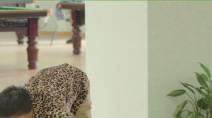
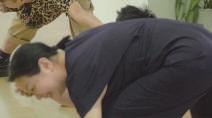
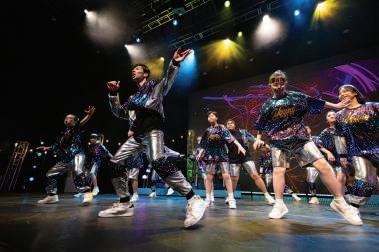
Launched in 2019 and co-presented by the Hong Kong Arts Festival and The Hong Kong Jockey Club Charities Trust, “No Limits” offers barrier-free performances and events, and explores and promotes inclusiveness and understanding through the arts.
In 2025, the seventh edition of “No Limits” showcases a series of fascinating programmes of music, dance, theatre and film by international and Hong Kong artists of different abilities.
“No Limits” 2025 presents accessible in-venue performances, free film screenings and a symposium, as well as education and community programmes for the public, highlighting creativity and talent in a variety of forms.
In 2025, the seventh edition of “No Limits” showcases a different abilities. and creativity and talent in a variety of forms. and in all
Our accessible art services enable enjoyment for all audiences and help us share the importance of inclusion in all areas of life.
The Hong Kong Arts Festival (HKAF), a non-profit organisation launched in 1973, is a major international arts festival committed to enriching the cultural life of the city.
In February and March every year, HKAF presents over 1,300 leading local and international artists in more than 125 performances of all genres, placing equal importance on great traditions and contemporary creations.
The festival also commissions and produces Cantonese opera, theatre, music, chamber opera and contemporary dance productions by Hong Kong’s own creative talents and emerging artists, many of which have had successful subsequent runs in Hong Kong and overseas.
Each year, HKAF presents over 300 PLUS and educational activities that offer diverse arts experiences to the general public and students. The HKAF Young Friends scheme has reached around 835,000 students in the past 33 years.
Diversity is about creating an inclusive and friendly environment for everyone, and ensuring that nobody feels excluded. Since its inauguration in 2019, “No Limits” has worked to create a diverse and inclusive space for artists of all abilities to showcase their talents. This year, for the seventh edition of “No Limits”, we welcome over 30 local and international talents whose creativity and skills are sure to delight and inspire. The lineup consists of a total of 30 performances of 11 programmes spanning music, theatre and dance, as well as film screenings offering audiences a variety of perspectives on the specific issues faced by artists and individuals with disabilities.
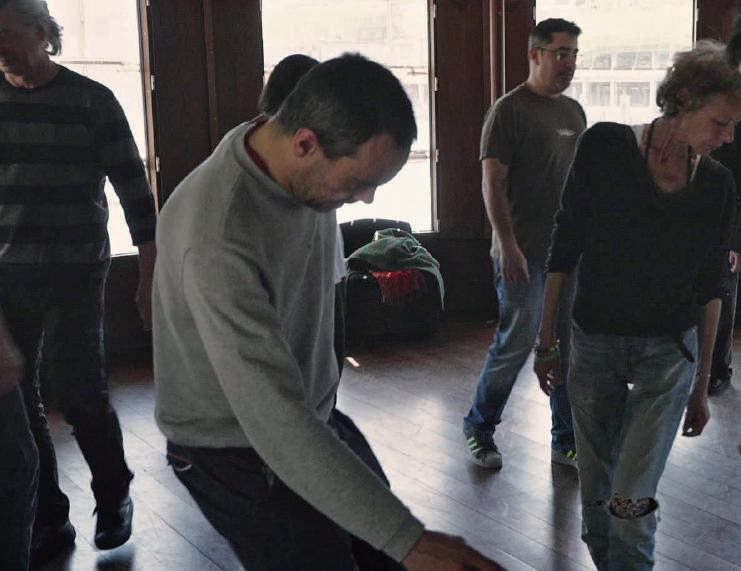
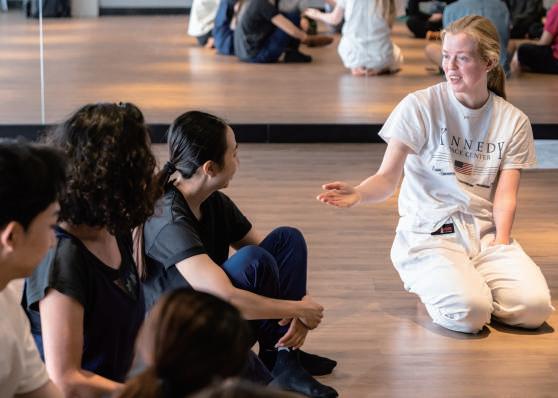
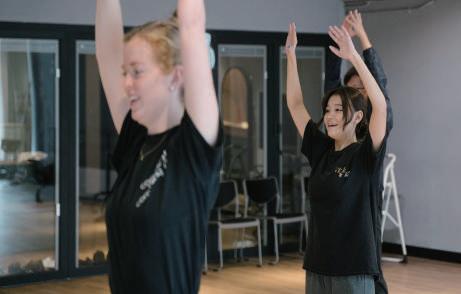
acclaimed UK-based Candoco Dance Company on a Pilot Creative Programme providing local teachers of theatre and dance with training in inclusive teaching methodologies. And, also at Tai Kwun, participants of our education and community programmes present In Touch We Trust and Community Showcases, demonstrating the diversity of inclusive performing arts.
In addition, there are more than 20 touring performances for primary and secondary schools, as well as 15 PLUS activities, workshops and talks designed to deepen understanding of inclusive performing arts and build creative bridges between different communities.
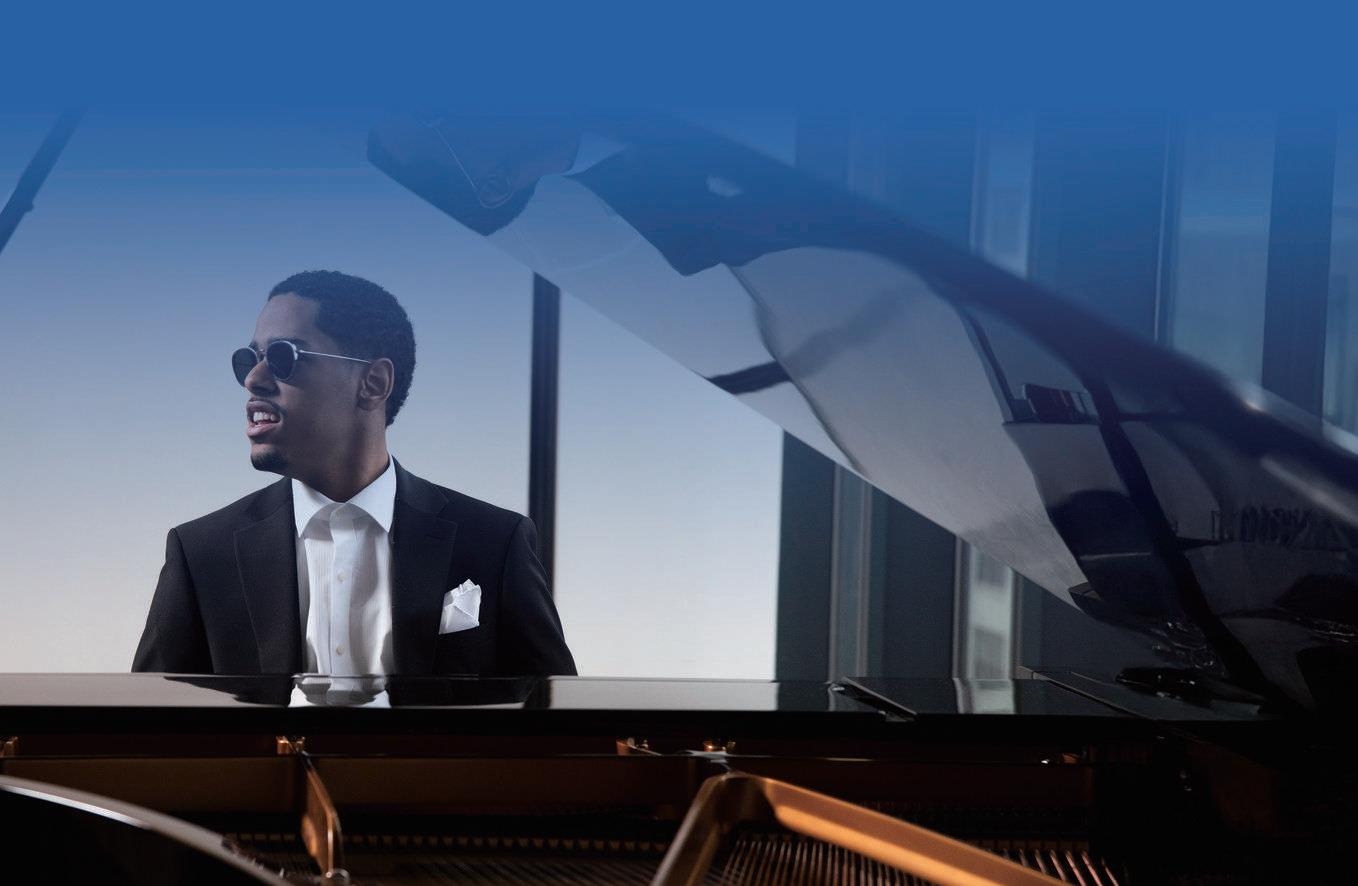
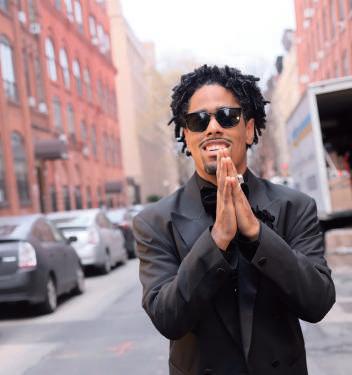
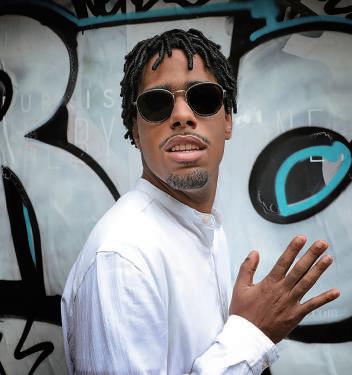
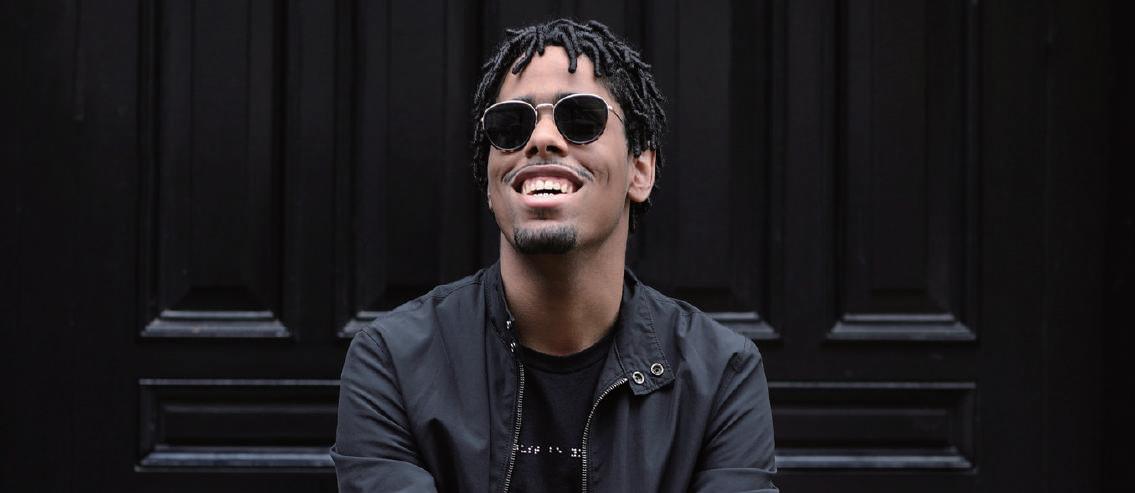
To open “No Limits”, we have invited Emmy Award nominee and 2024 Paralympic Games Closing Ceremony performer Matthew Whitaker from the US for two evenings of Jazz Excellence. From mainland China we have the specially commissioned work Hide-and-Seek by Guangzhou-based choreographer Er Gao, and the Hong Kong premiere of Be Seen by Shanghai internet celebrity Zhao Hongcheng.
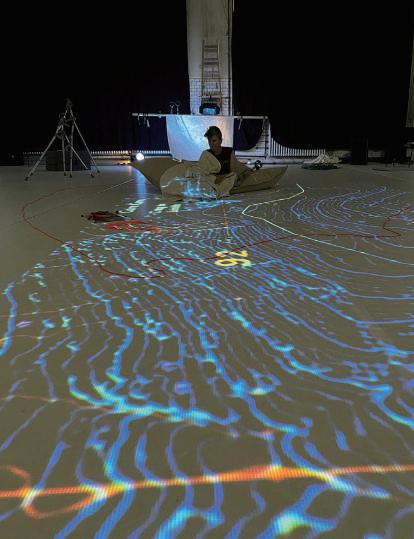
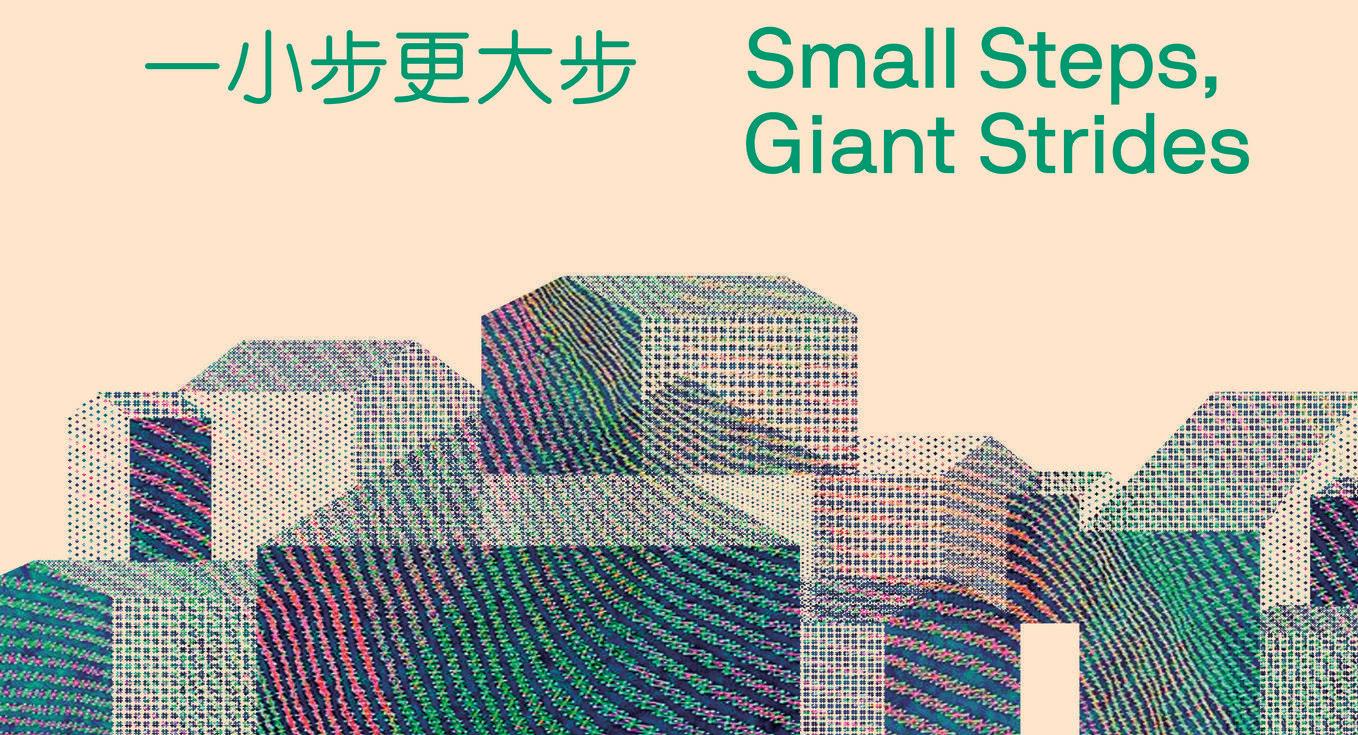
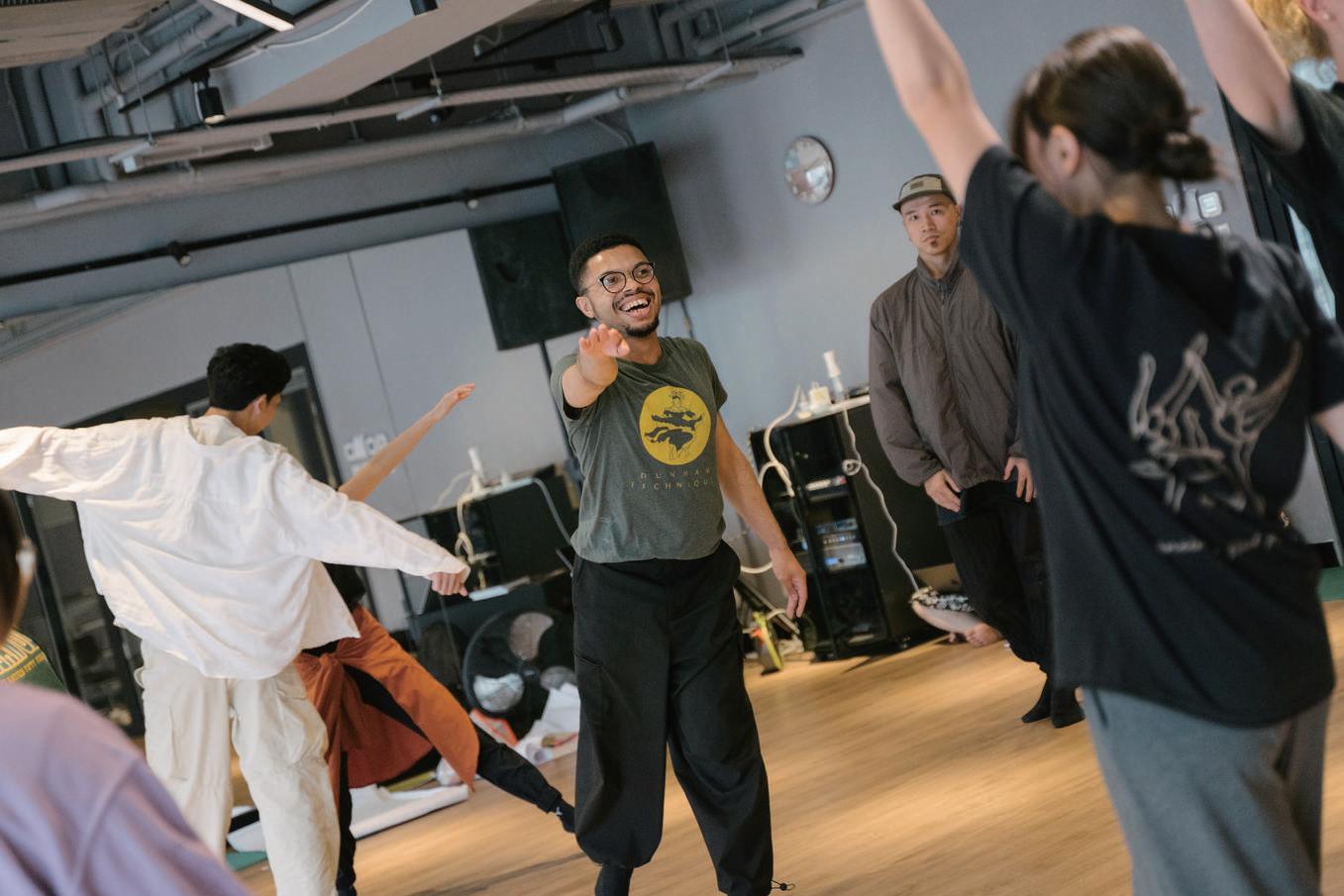
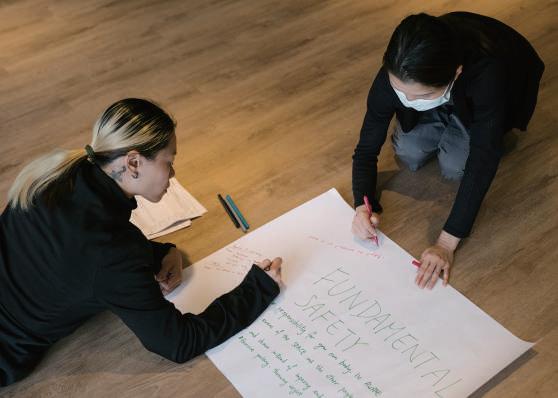
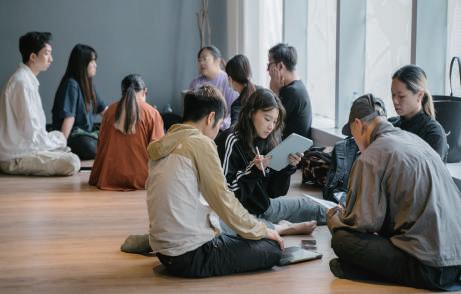
To promote diversity and inclusion within our communities, “No Limits” present the new education and community programme, Small Steps, Giant Strides. The programme takes place at Tai Kwun and includes our first ever International Symposium – looking at how issues of inclusivity and creativity are changing urban design in Asia – as well as workshops, public showcases and sharing sessions. We are also delighted to collaborate with internationally
I would like to thank The Hong Kong Jockey Club Charities Trust for co-presenting this important annual project with us, and for their continued support in promoting inclusion through the arts. We also extend our thanks to the Arts with the Disabled Association Hong Kong for its invaluable support, and provision of accessibility services enabling differently abled people to experience the arts together.
On behalf of the Hong Kong Arts Festival Society, I welcome you to “No Limits”, and hope that you will enjoy the bold and moving programmes and performances in this edition of our project.
Flora Yu Executive Director, Hong Kong Arts Festival
Art transcends boundaries, offering infinite possibilities and equal opportunities for people to practise and appreciate it. Take the “No Limits” festival, which empowers differently-abled local and overseas artists to showcase their talent.
Co-presented by The Hong Kong Jockey Club Charities Trust and the Hong Kong Arts Festival Society since 2019, “No Limits” has delivered performances that have captivated more than 95,000 spectators to date in person and online.
This year’s “No Limits” encompasses programmes that span music, dance, theatre and film under an overarching theme of “The Human Touch”. It has been curated to lead audiences to a better understanding of the daily lives of inclusive art performers and the expectations that society places on them in an effort to inspire greater respect and appreciation.
This year’s “No Limits” will further promote inclusive arts by presenting two works from mainland artists to launch an inclusive Asian arts network. The programme will include an international symposium to explore the power of inclusivity and creativity to transform Asian cities. These initiatives help to enhance the international profile of “No Limits” and provide opportunities for creative expression and social development within Hong Kong and across Asia.
At the same time, we continue to support the Jockey Club “No Limits” Education and Community Programme comprising lectures, workshops and school tours, together with Small Steps, Giant Strides – the Artists-inResidence Programme and a series of public showcases at Tai Kwun. These facilitate
engagement between community stakeholders and differently-abled artists to encourage collaboration – elevating industry standards and nurturing local talent.
Over the years, the Club’s Charities Trust has remained committed to advancing art, culture and conservation, while building a culturally vibrant Hong Kong – enriching lives and promoting creativity and inclusion. Examples include its support for the Hong Kong Arts Festival over the past half-century as well as its funding for the establishment of the Hong Kong Palace Museum.
Our support for various arts, cultural and conservation projects aligns with the Club’s purpose of acting continuously for the betterment of society. Our contributions are made possible by a unique integrated business model. Through this we provide world-class racing and entertainment and channel resultant wagering demand into tax contributions, charity donations and employment opportunities.
We extend our heartfelt appreciation to the Hong Kong Arts Festival Society, to the Arts with the Disabled Association Hong Kong and to all participating artists. We hope this year’s “No Limits” will be another resounding success that leaves its audiences thoroughly enriched and inspired.
Dr Gabriel Leung Executive Director, Charities and Community The Hong Kong Jockey Club
The theme of the seventh edition of “No Limits” is “The Human Touch”. With it we invite audiences to experience the power of individual and collaborative imagination.
Jazz Excellence
by Matthew Whitaker
香港大會堂音樂廳
Concert Hall, Hong Kong City Hall
節目長約 90 分鐘 ,不設中場休息
7:30 PM 1 / 3 SAT 六 *
Approx. 90 minutes with no interval 3:00 PM 2 / 3 SUN 日
* 演出前將舉行「無限亮」開幕儀式(設香港手語傳譯)
The "No Limits" Opening Ceremony will be held prior to the performance (Hong Kong Sign Language available)
無限亮加料節目 No Limits PLUS P.128
爵士��力:馬修·惠�克�享 �即興演奏�
The Magic of Jazz – Artist Sharing & Jam Session with Matthew Whitaker
設點字場刊及語音場刊
House programme in braille and audio format available
敬請關掉所有響鬧及發光裝置。 Please switch off all sound-making and light-emitting devices.
請勿擅自攝影、錄音或錄影。
Unauthorised photography or recording of any kind is strictly prohibited.
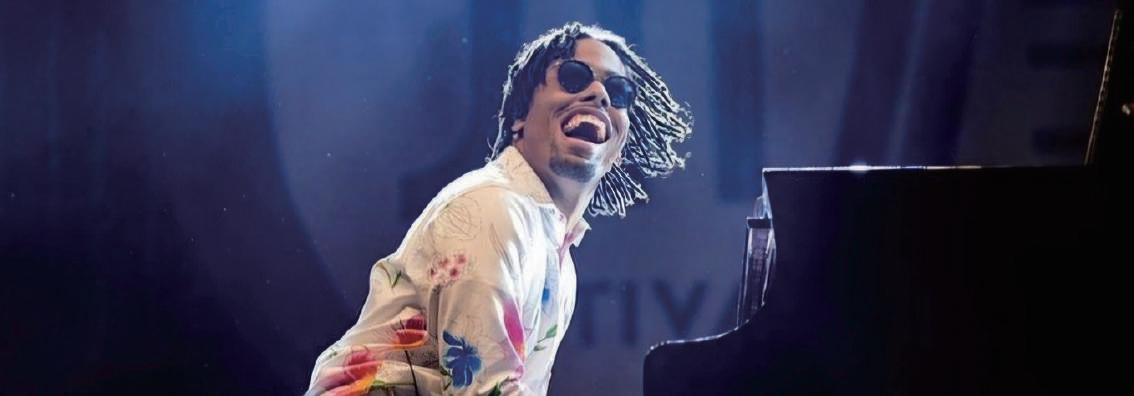
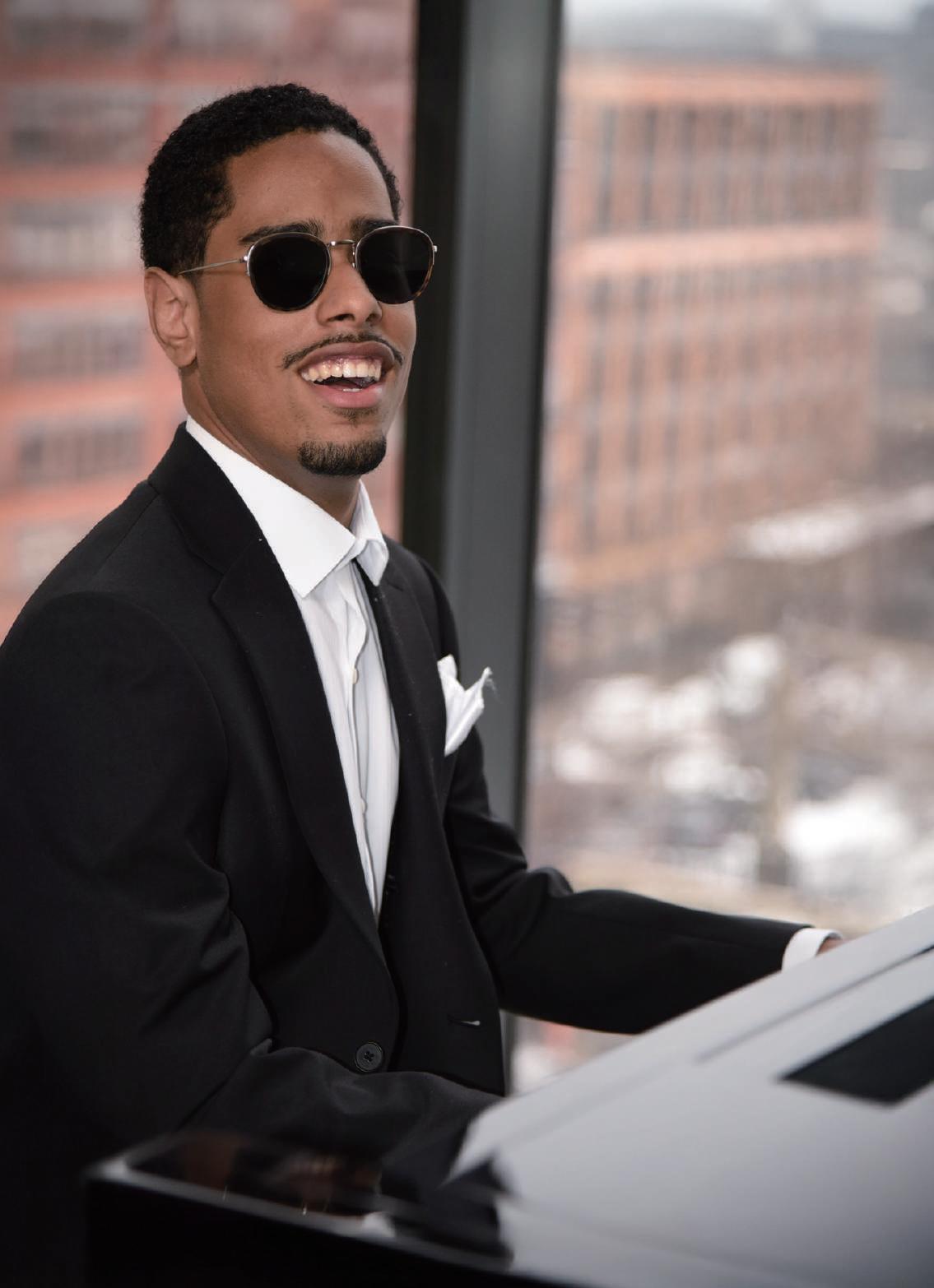
Matthew Whitaker is indeed a vibrant performer, bringing joy and energy to countless audiences. “While the musicians are enjoying themselves on stage,” he says, “I want the audience to be immersed in the joy of music.” For Whitaker, jazz is about spontaneous interactions and collaboration between band members. More importantly, it is about being able to participate as equals. The inclusivity, accessibility and diversity of jazz give each musician a chance to demonstrate their charms and for the audience to respond enthusiastically, achieving equity between performers and the audience.
Since childhood, Whitaker has been immersed in various musical styles, excelling at piano, percussion and organ performances, seamlessly integrating jazz elements into his interpretations. This also reflects his unrestrained character, beyond conventional constraints and enjoying life in his most natural way. “Jazz reflects my attitude towards life—improvisation and freedom.” What makes jazz so
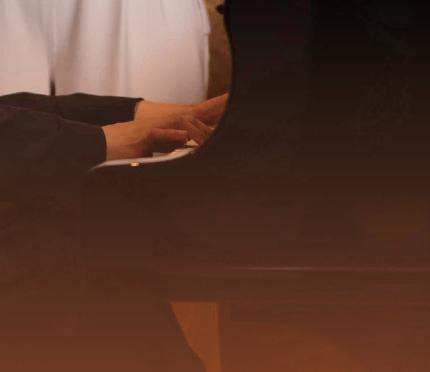
captivating is the musician’s ability to showcase their unique style. Because of this, Whitaker’s performances are often described not just as a performance but also as a game with music ranging from melodic variations to complex harmonies, coming alive through the two hands leaping between 88 keys. Music is his life, and he is the embodiment of a free spirit.
It is easy to see why Whitaker is called a genius when his musical talent piqued the interest of neuroscientist Dr Charles Limb. Using an MRI brain scan, Dr Limb attempted to understand Whitaker’s creativity by monitoring his brain activities while he played music. The findings were astounding. When Whitaker hears a familiar piece of music, the entire brain, including the visual cortex, is stimulated. Although he does not rely on vision to process information, he uses the visual areas of his brain to “perceive” music. Whitaker was shocked by this discovery and realised how a person’s potential is greater than one’s own imagination. “I can sense light and shadow, but I don’t usually think about music visually. When I understand a piece of music, I might unconsciously develop certain visual concepts.”
He is grateful for technological advancements, making everything easier and more achievable. “Some people might think that blindness is a negative thing. But I think it is our unique quality. Even if it’s a disability, it shouldn’t be defined as a negative thing. We can even use this quality to benefit and inspire other people.” Every person can work hard to make their dream a reality.
1 / 3
場次 Performance on 曲目 Programme
馬修 · 惠特克
卡爾德拉
戴夫 · 布魯貝克
威爾 · 哈德森、歐文 · 米爾斯、米歇爾 · 帕里什
羅伯特 · 蘭姆
查爾斯 · 特納
2 / 3
是的
天空群島
土耳其藍迴旋曲
風琴手的��
因為回家而快�
哈林 哈林 哈林
科里 · 亨利 明白了 醫生
馬修 · 惠特克
鮑 · 勃蒂勒、喬治 · 大衛韋斯
停戰
多�美好的世界
溫基 · 克拉克 期�奇蹟
馬修 · 惠特克 �息
路德 · 范德羅斯 / 查卡 · 卡恩
永遠不�太多 / 不是沒�
Matthew Whitaker Yessaah
Caldera SkyIslands
Dave Brubeck BlueRondoalaTurk
Will Hudson, Irving Mills, Michell Parish TheOrganGrinder’sSwing
Robert Lamm HappyCauseI’mGoin’Home
Charles Turner HarlemHarlemHarlem
Cory Henry GotchaNowDoc
Matthew Whitaker StopFighting
Bob Thiele, George David Weiss WhatAWonderfulWorld
At just 23 years old, Matthew Whitaker has established himself as one of the most captivating young talents in jazz today. His magnetic music draws listeners into a lush, emotional world where tradition meets innovation. Hearing him perform, whether live or through his recordings, is always a journey. His artistry transcends notes, weaving rhythm and soulinto somethingprofoundly moving.
To me, Whitaker’s music particularly speaks
Its calming beauty invites reflection on life’s challenges and trust in the promise of better days.
To me, Whitaker’s music particularly speaks to the strength of both shared and individual experiences. Anyone who has seen him perform live from New York’s Carnegie Hall to Germany’s Aalener Jazzfest can attest to his commanding presence on stage. His sound is universal: vibrant, alive, and deeply emotional. Gospel music played a pivotal role in shaping his sound. Growing up playing in church, he found the warmth and sincerity that now define his performances. You can hear it in every note -- uplifting energy paired with deep feeling. As he honed his skills at the Manhattan School of Music, his talent evolved into something extraordinary. That evolution can be tracked from his 2017 debut, “Outta the Box”, which immediately marked him as an artist to watch, to his latest album, “On Their Shoulders: An Organ Tribute”.
Its calming beauty invites reflection on life’s challenges the tracks that reveal Whitaker’s improvisational with featured at the core of his latest album, and extravaganza, radiating vintage organ blues vibes that practically demand movement. Whitaker their influences into his own sound. His tributes
alive, and deeply emotional. Gospel music played You can hear it in every note -- uplifting energy
On the opposite side of the spectrum are tracks that reveal Whitaker’s improvisational prowess and his ability to connect with audiences on a visceral level. Among them, “Yessaah,” featured at the core of his latest album, and the perfect opener of his two-night No Limits extravaganza, radiating vintage organ blues vibes that practically demand movement. Throughout his performances, Whitaker pays homage to musical legends, seamlessly weaving their influences into his own sound. His tributes span cool jazz pioneer Dave Brubeck, jazz fusion innovator Chick Corea, the soulful genius of Marvin Gaye, and the rhythmic brilliance of Brazilian icon Jorge Ben Jor.
This newest album finds him paying a heartfelt tribute to jazz organ greats of the past like Jimmy Smith and Joey DeFrancesco. In his performance at “No Limits” 2025, he dazzles audiences with a mix of originals and tributes to musicians and peers who have inspired him. The setlist spans his four albums, showcasing both his compositional prowess and interpretive brilliance. Among the highlights is “It Will Be Okay” from Connections, which always deeply resonates with me. This piece blends serenity with strength, offering a message of hope and resilience.
This newest album finds him paying a audiences with a mix of originals and tributes to
One of the most ambitious pieces of his repertoire is a rendition of “Blue Rondo à la Turk,” famously introduced on the Brubeck Quartet’s groundbreaking 1959 album “Time Out”. Whitaker’s version reimagines this iconic piece, expanding its fusion of jazz and Middle Eastern influences and bold use of odd time signatures, infusing it with a 21st-century flair, integrating funk and hip-hop to create something ambitiously distinct.
fusion innovator Chick Corea, the soulful genius of Marvin Gaye, and the rhythmic brilliance of Turk,” famously introduced on the Brubeck Quartet’s groundbreaking 1959 album “Time Out”. Whitaker’s version reimagines this iconic piece, fusion time infusing it with a 21st-century flair, integrating funk and hip-hop to create something ambitiously distinct.
Whitaker’s ability to blend tradition with staying of jazz musicians. When I think of his music, I
Whitaker’s ability to blend tradition with innovation while staying true to his unique voice places him at the forefront of a new generation of jazz musicians. When I think of his music, I think of music that speaks directly to the soul, communicating universal messages of strength and resilience, and the joys of exploration. It reminds us that life’s challenges are merely stepping stones on the path to growth. And it’s a powerful message that reverberates long after the final note of his performances fades.
American pianist and multi-instrumentalist Matthew Whitaker is a versatile young artist who captivates audiences around the world with international tours, TV appearances, the production of film scores, and guest soloist appearances with orchestras and symphonies. Born blind, he is also an advocate for people with disabilities, consulting with companies to improve accessibility features.
A three-time ASCAP Foundation Herb Alpert Young Jazz Composers Award winner, Whitaker has released four albums – “Outta The Box”, “Now Hear This”, “Connections” and “On Their Shoulders: An Organ Tribute”.
演出 Performers
利亞尼.馬特奧 LianyMateo
低音大提琴 /低音電結他 BassandElectricBass
馬科斯.羅賓遜 MarcosRobinson
結他
Guitar
伊凡利.亞內斯 IvanLlanes
敲擊樂 Percussion
約翰.斯蒂爾 JohnSteele
鼓 Drums
of Wind and Keys —
A Piano and Flute Concert by Anson Tang and Ruth Montgomery Whispers
鄧卓謙及露芙 ・ 蒙哥馬利
《風與鍵之旅》鋼琴 長笛音樂會
荃灣大會堂演奏廳
Auditorium, Tsuen Wan Town Hall
節目長約60分鐘 ,不設中場休息
Approx. 60 minutes with no interval
「音�探索家」兒童音�工作坊 Children’s Workshop with Ruth Montgomery: Music Adventures
3:00 PM 29 / 3 SAT 六
「看�見的音�──從音�到視覺表達」音�工作坊 Workshop with Ruth Montgomery: Sound to Sight - From Sound to Visual Expression
設語音場刊 House programme in audio format 無限亮加料節目 No Limits PLUS P.130
敬請關掉所有響鬧及發光裝置。 Please switch off all sound-making and light-emitting devices.
請勿擅自攝影、錄音或錄影。
Unauthorised photography or recording of any kind is strictly prohibited.
Listen to the song of the wind, revel in the dance of the keys
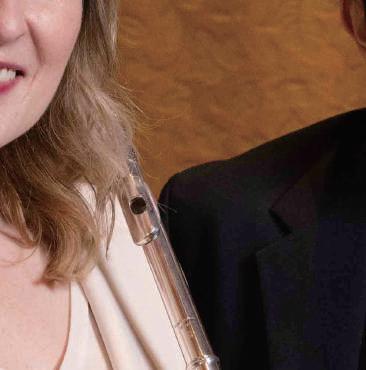
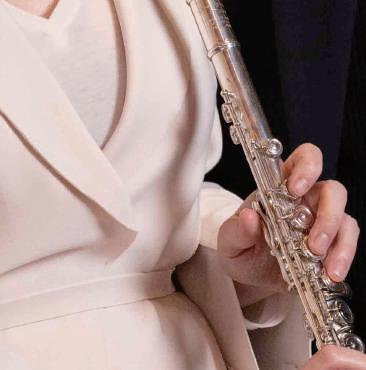
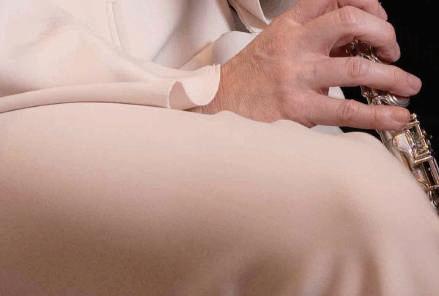
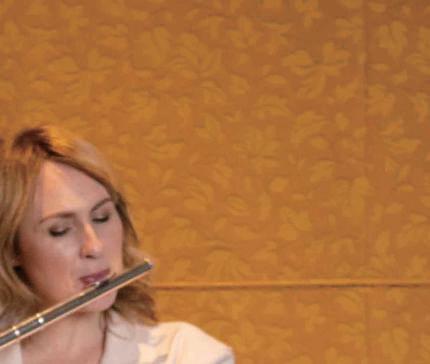
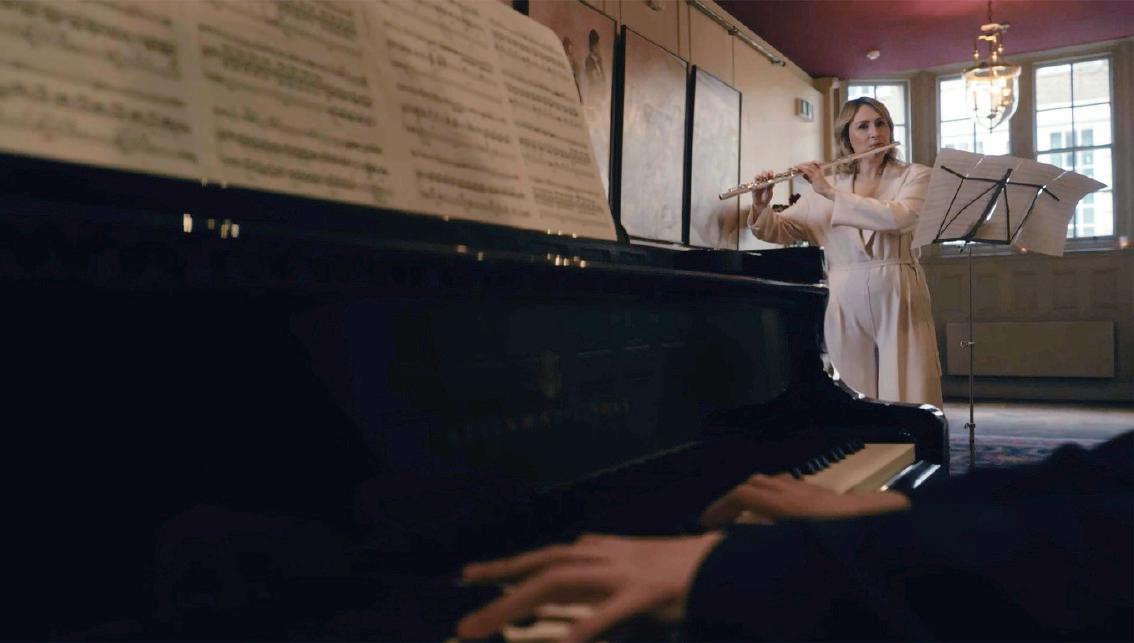
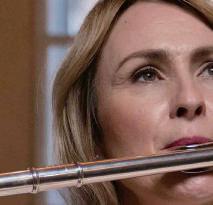
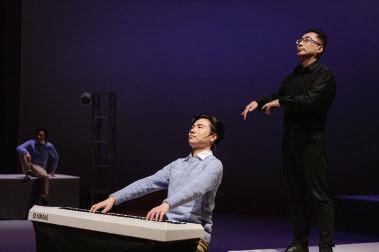
The closing performance of “No Limits” features Hong Kong’s emerging pianist Anson Tang and British flautist Ruth Montgomery. Although Tang studied both the violin and piano, he found that the piano’s keyboard allows him to express rich and emotive tones, empowering him to convey emotions through music. On the other hand, Montgomery excels in storytelling through the soft and pleasant sounds of her flute. Combining the piano and the flute, Tang and Montgomery will guide the audience on a magical journey through Whispers of Wind and Keys. Exploring the theme of travelling, this concert is inspired by both musicians’ numerous setbacks and confusion during their musical growth until they discovered their unique sounds and clarity. Tang and Montgomery believe that music should be joyful, and as such, this concert will feature music from different periods, celebrating the change of tones within the compositions. By selecting pieces with brisk and lively melodies, the duo hopes the audience will enjoy and immerse themselves in the fluidity of the sounds, feel the vitality and freshness of each journey and continue to explore with curiosity.
The journey begins with Mozart’s Andante in C Major, K315, one of the composer’s most significant works for the flute. The simple and melodic piece sounds pure and bright, as if the flute is singing sweetly, conveying a joyful mood. Next is British composer Sir John Rutter’s Suite Antique. Although a modern piece, it pays homage to Bach’s Baroque style
and form, using the same instrumentation as Bach’s Brandenburg Concerto No 5. Originally composed for the flute, harpsichord and string orchestra, Rutter adapted it into a suite for the flute and piano, resembling a “pas de deux”. Tang and Montgomery’s seamless interplay also showcases not only the Baroque style but also a touch of jazz swing in this piece.
Furthermore, Tang and Montgomery will each perform solo pieces. Montgomery has chosen Swiss composer Arthur Honegger’s haunting Danse de la chèvre, a piece full of poetic imagination. Some interpret it as a goat dancing as it wakes up, while others see it as people dancing around a goat in a ritual. Through her performance, Montgomery will highlight the diverse charm of the flute, evoking the lingering sounds of neck bells. Meanwhile, Tang will perform Amy Beach’s Ballade, Op 6. The concert will conclude with Chopin’s Valse, Op 69-2. This piece begins with a simple melody but gradually builds through both musicians’ exchange, merging and elevating emotions to create an immersive musical experience.
The concert’s repertoire ranges from Baroque classics to modern compositions, allowing musicians and audiences alike to discover various emotional resonances from different eras of music. With emotions passed down through generations, music never goes out of style. This concert will leave the audience feeling as though they are enjoying the song of the wind and experiencing a romantic dance of the keys.
"The beauty of music lies in diversity and inclusiveness"
AnsonTang
Anson Tang once wondered if he should really dedicate his career to the piano. “I often compare myself to my outstanding classmates unintentionally,” he says. “It makes me doubt my abilities.” As a wheelchair user, Tang faces physical limitations that result in reduced strength in his waist and lower body, making the use of the pedals a significant challenge. As he struggles to coordinate his movements by relying on the strength of his lower limbs, special attention is paid to the timing of his pedal use and maintaining left-right balance. Nevertheless, music gives Tang strength and confidence: “Physical differences can affect playing methods and ways of exerting force. But that doesn’t imply superiority or inferiority. Every musician brings their own stories and experiences into the world of music. These stories make our interpretation of music richer and more diverse. I believe the beauty of music lies in diversity and inclusiveness. Even physical challenges and differences can become sources of inspiration for creativity and performance. This is also what makes music so moving.”
Tang revels in every moment on stage as he can witness the audience’s reactions in person and feel the connection between them and the music. He also believes that everyone can enjoy music. “Many people think music is imposing and unreachable. But the nature of music is very ordinary.” As an artist of different abilities, Tang believes the power of music does not come only from physical abilities but also from inner passion and perseverance. “This inner drive empowers me to overcome my physical limitations. Every performance is a challenge and a breakthrough.”
"I can’t hear, but I can see colours in music score like a vivid painting"
RuthMontgomery
Ruth Montgomery has had severe hearing impairment since childhood and has been trained to use hearing aids to listen to sounds. Although she cannot hear, she can see colours in the music scores like a vivid painting. “I see art, emotions, stories and everything on the score. Perhaps my hearing impairment is a superpower. It gives me something others don’t have.” At 12 years old, Montgomery thought the flute was a beautiful instrument when she first saw it and fell in love with it at first sight. “Performing is a kind of physical art. The flute can best convey my ideas and feelings.” In her selection of music for this performance, she says the most challenging work is John Rutter’s Suite Antique, which contains six movements: Prelude, Ostinato, Aria, Waltz, Chanson (popular song) and Rondeau. Yet, her choice is deliberate. “The challenging and complex nature of the programme will lead the audience to stop and think about the expectations they have of a deaf musician, which is exactly our intention.”
For Montgomery, collaborating with Tang has indeed been a challenge and not without pressure. The process involves many practices together, but she enjoys this kind of collaborative exchange. Montgomery believes in the certain energy in ensemble performance as a form of visual communication. “I am always looking for nonverbal clues, such as the positioning of a body and the breath someone takes.” and she believes, “How we learn may be a little different from others, but how we perform shouldn’t.” Not comparing oneself to others but still striving for perfection is what the two performers aim for as professionals.
Anson Tang
�港展��術�展��術家鄧卓謙出生��港。獲利希�基金�全額�學金� Talent Unlimited 支�, ���英國皇家音�學院,為鍵盤系首位輪椅使用者,師承 Nigel Clayton 。他���多個�項,包括 VSA 國�⻘年獨奏家��沃�福國�鋼琴比賽第三名。 2024 年,在華盛頓甘迺迪中心舉行首�演出; 2016 年擔 任獨奏,與�港管弦�團合作,翌年在港舉辦首�個人獨奏�。�與多位著名音�家合作和學習,包括宓多里、 Piers Lane 、 Artur Pizzaron 、羅乃��李嘉齡�。
Hong Kong-born pianist Anson Tang graduated from the Royal College of Music, London, with support from the Lee Hysan Foundation and Talent Unlimited. At RCM he studied under Nigel Clayton, and was the first wheelchair user enrolled in the keyboard department.
In 2016, Tang appeared as a soloist with the Hong Kong Philharmonic Orchestra and gave his first solo recital in Hong Kong the following year. In 2024, he made his debut at the Kennedy Center, Washington DC. Tang has collaborated and studied with renowned musicians such as Midori Got ō , Piers Lane, Artur Pizzaro, Nancy Loo and Colleen Lee. He is also the recipient of many awards, including the VSA International Young Soloists Award and third prize at the Watford International Piano Competition.
British flautist and music educator Ruth Montgomery graduated from the Royal Welsh College of Music and is a Clore Leadership Fellow and Francesca Hanley Inspiration Award winner.
Born deaf in a musical family, Montgomery also explores art, sign language and visual media within the Deaf Community and with her charity Audiovisability. She is currently working with more than 100 Deaf children across many schools, and developing a new curriculum aimed at visual music education that she hopes to see adopted nationally. Through her work, and as the parent of a Deaf child, Montgomery understands the benefits of music on children’s emotional intelligence, mental health and well-being.
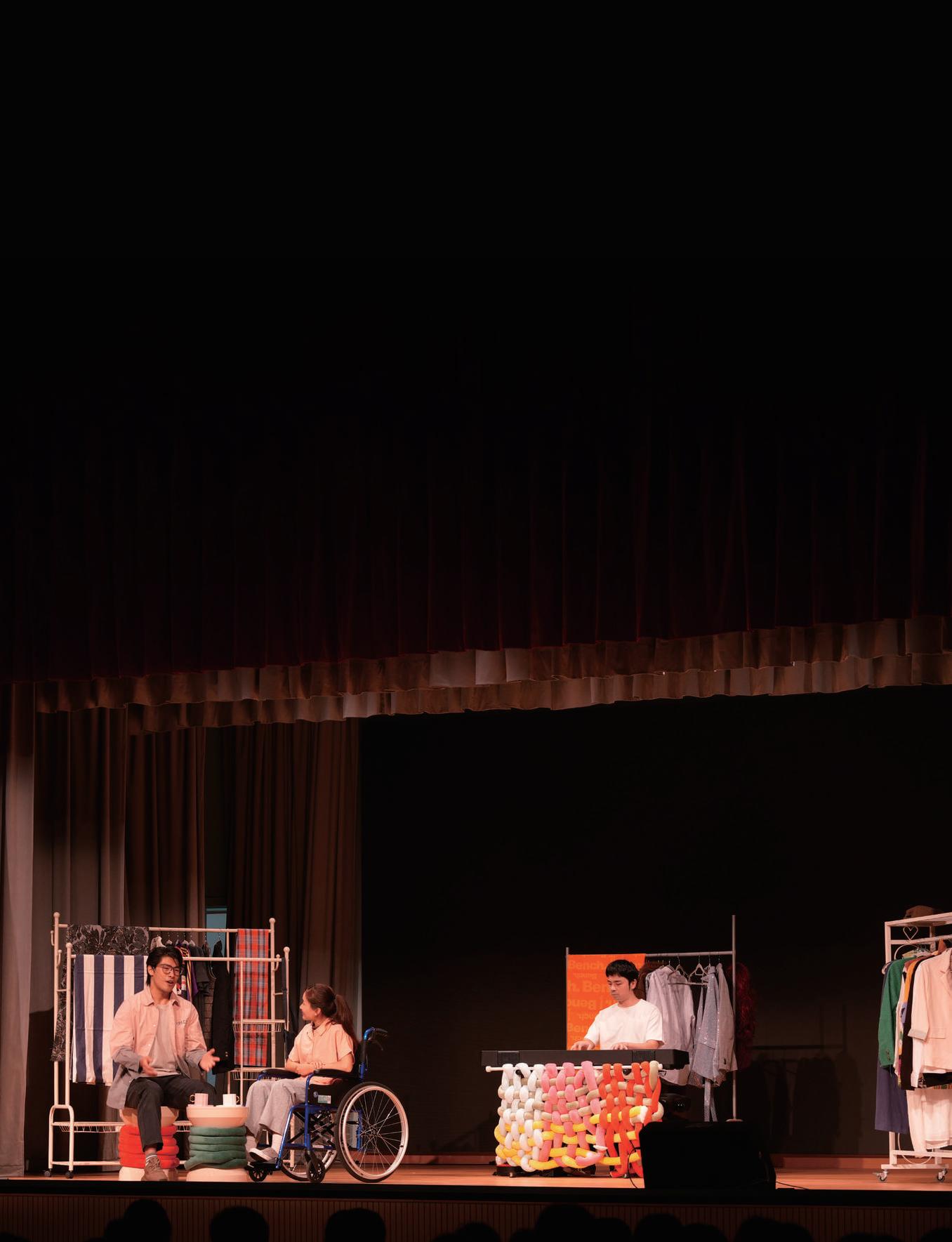
In Touch We Trust
大型社區節目《衫著一生》
免費入場
Free Admission
大館檢閱廣場
Parade Ground, Tai Kwun
節目長約 30 分鐘, 不設中場休息
Approx. 30 minutes with no interval
3:00 PM 21 / 2
FRI 五 3:00 PM 22 / 2
SAT 六 3:00 PM 23 / 2 SUN 日
無限亮加料節目 No Limits PLUS P.131
《衫著一生》服裝設計分享會
In Touch We Trust Costume Design Sharing
#OOTD 藝術創作工作坊
#OOTD Art Making Workshop
合作機構 Partner Organisation : 五旬節聖潔會靈光白普理失明人中心
Pentecostal Holiness Church Ling Kwong
Bradbury Centre for The Blind
設粵語口述影像、語音場刊
Audio description in Cantonese, house programme in audio format available 敬請關掉所有響鬧及發光裝置。
Please switch off all sound-making and light-emitting devices.
讓 身
體 幻 化 衣 裳 隨 風 起 舞
尋找一種共同語言、默契和平等的狀態。尋找本身就是美。
"The act of seeking a common language, a sense of understanding, and a state of equality is beautiful in itself."
創作�,我們嘗試閉上眼�去感同身受,設身處地理解失明人士走路�的感覺,學習他們的生活方式 和動作。我們在尋找一種共同語言、默契和平�的狀�。舞台上�展露個人獨�性的表演,也�互動 演出。表演者在空間裏自由游走,互相幫忙穿衣,當中展現出�動美。我們希�觀眾不��辨出誰是 視障或健視表演者;我們是獨立的個�又是一�,�重要的是透過觸碰尋找信任――正如演出的英文 名稱「 In Touch We Trust 」。
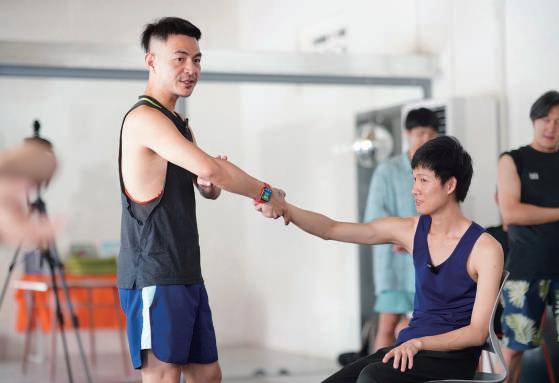
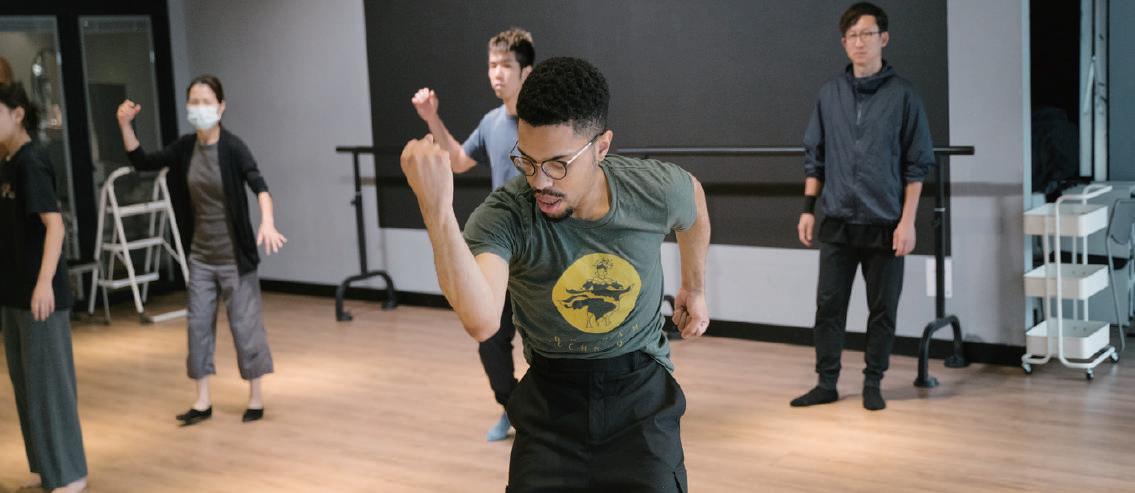
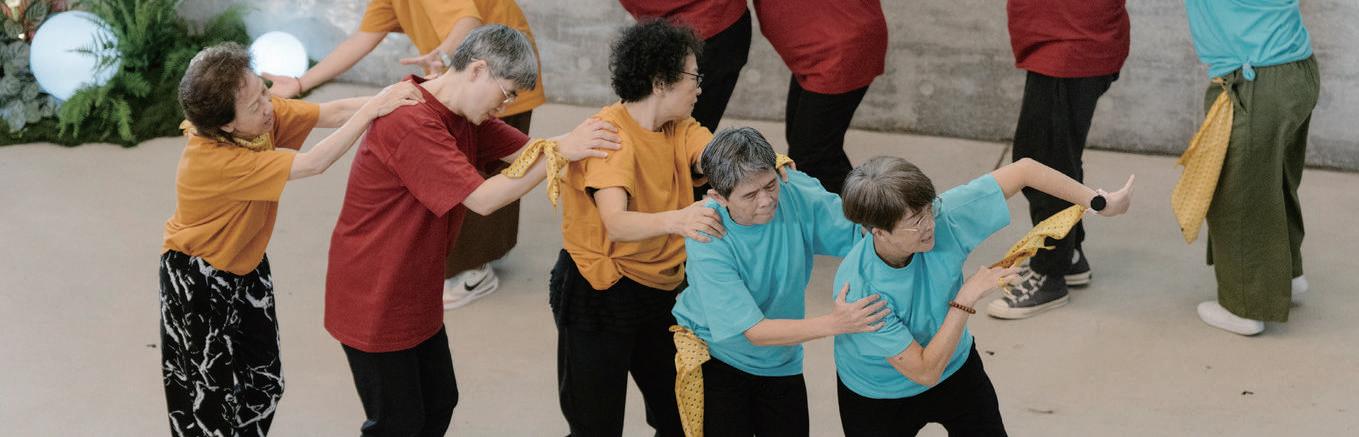
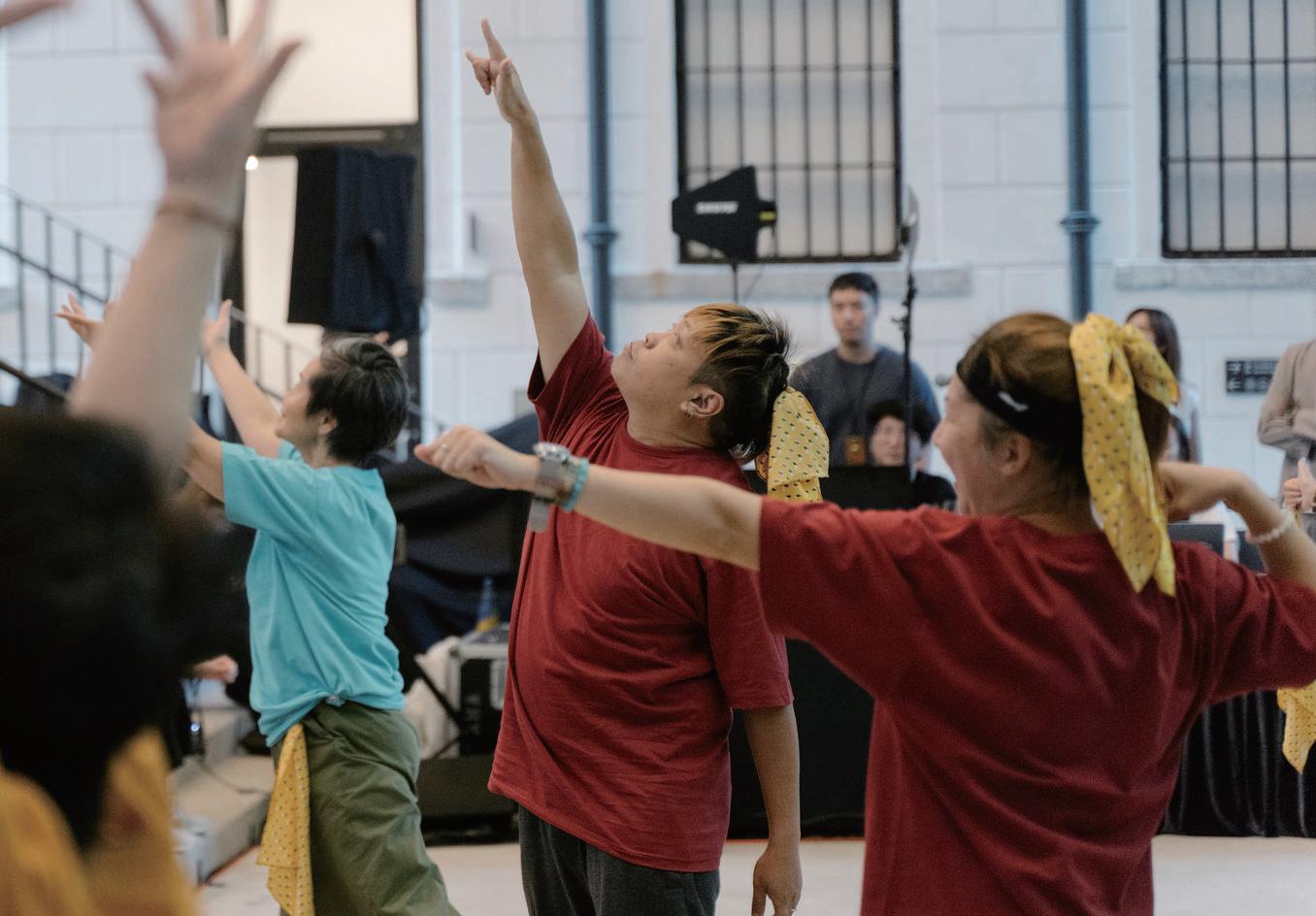
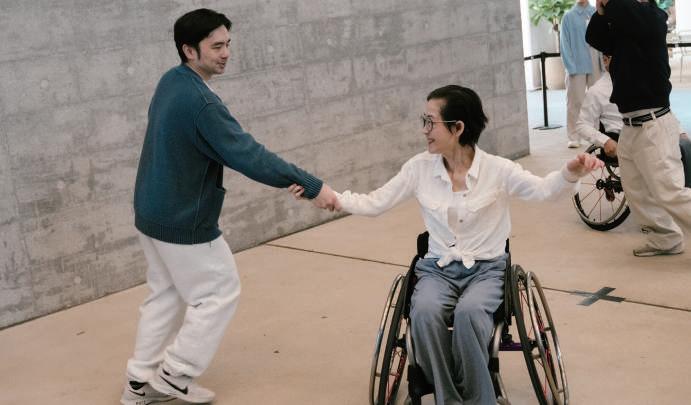
Last year, “The Story of Motion” movement and dance project—held as part of the Jockey Club “No Limits” Education and Community Programme 2024, enabled visually impaired individuals to explore improvisation through inclusive dance practice. The workshop enabled participants to develop body and spatial awareness and use touch to sense the body, challenging the conventional perception of dance. This year, a group of visually impaired participants, caregivers and professional dancers will perform together and communicate through movements. By shifting their centre of gravity or providing mutual support and guidance through their movements, this performance breaks the stereotypical roles of “caregiver” and “carereceiver”, creating a new balance and equality through dance. As the team states, “Even ordinary people have blind spots and certain ‘disabilities’. They also need to be cared for. The relationship between the two isn’t binary.”
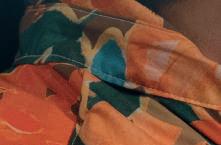
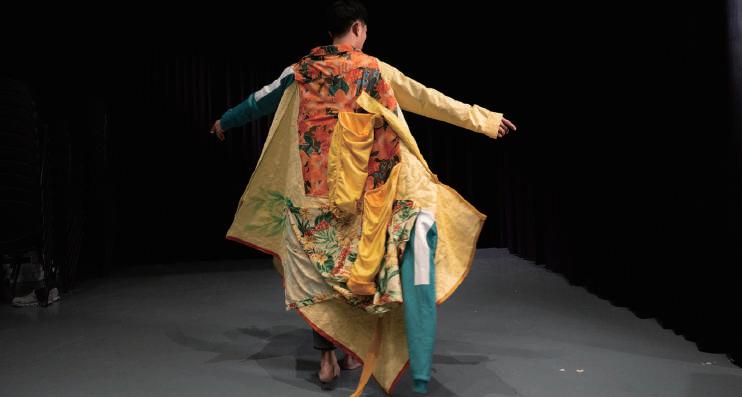
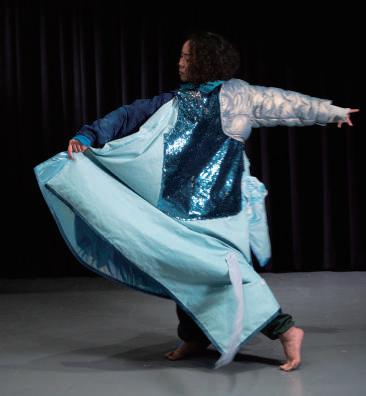
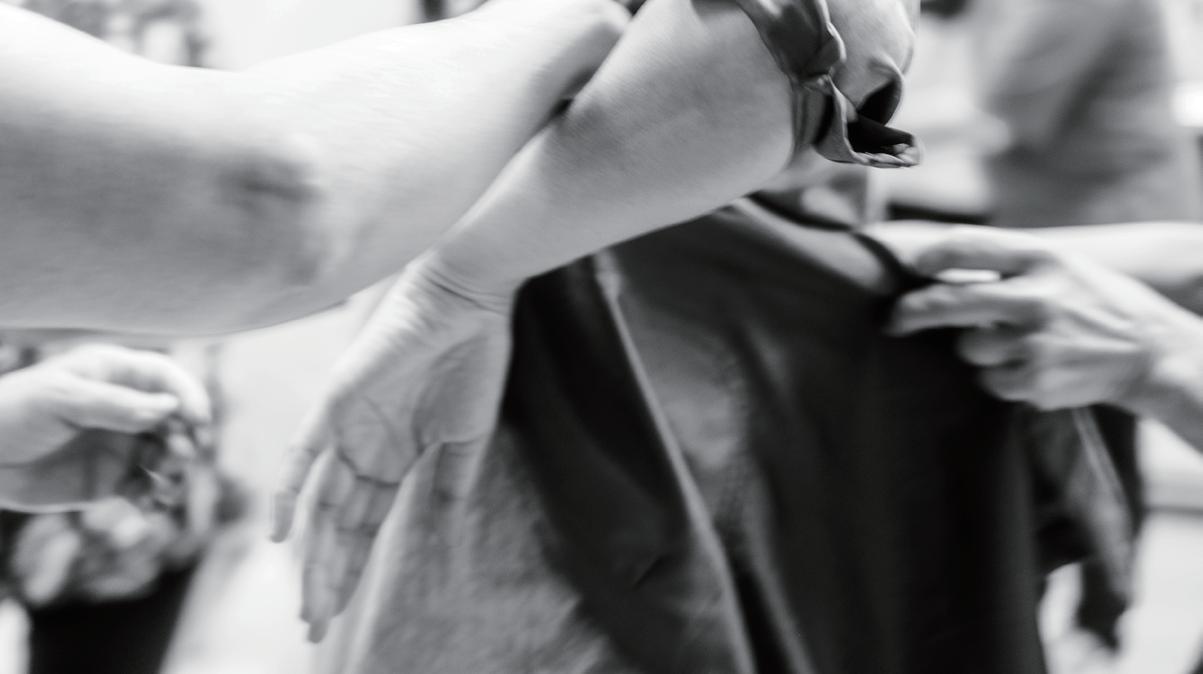
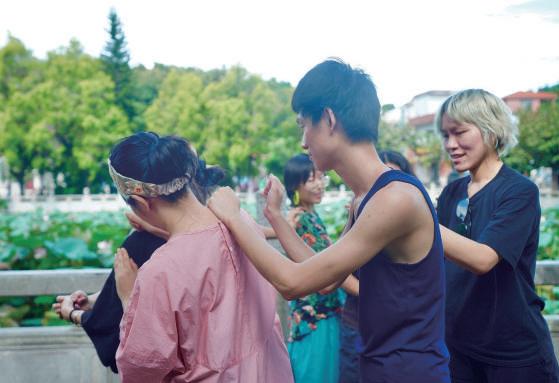
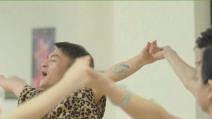
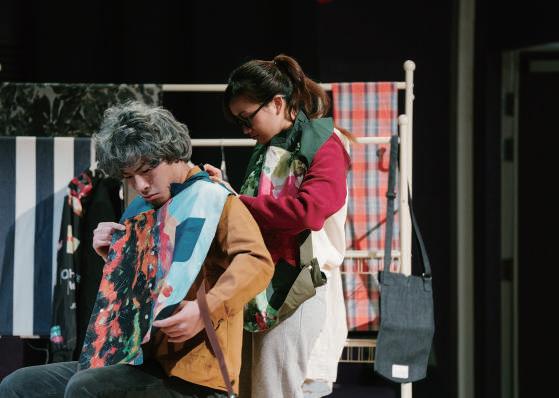
In Touch We Trust combines fashion and dance in an outdoor performance, opening a new realm of aesthetic experience for the audience. Unlike the traditional runway-style showcase, performers will become one with the costumes, dancing gracefully as a moving landscape. The creative team, consisting of dance teachers, rehearsal directors, professional dancers and costume and stage designers, will tell us more about the performance.
We Are One and Yet Independent
Q: During the workshops and rehearsals, do visually impaired participants have any special perception of their bodies or the space?
Team: The difference between the dance workshops of In Touch We Trust and other ordinary workshops is that we focus on communication through physical contact. This process focuses on improvisation, with no pre-set movements, allowing the body to feel and respond in real time. We used to think visually impaired individuals might not have spatial awareness or awareness of other bodies because they can’t see. But it’s quite the opposite, because their sense of touch is extremely sensitive, particularly in transferring force.
Using the “sharing the centre of gravity” exercise as an experiment, we divided participants into groups of twos and threes as they learnt to transfer the centre of gravity from one person to another. We found out that sighted and visually impaired individuals have different ways to apply force. For example, sighted participants usually move in a straight up-and-down manner when performing lifting movements with their palms, whereas visually impaired participants use curved movements to support their partners. What’s more, they pay a lot of attention to feeling the weight and movement of their partners. They are also sensitive to sounds, even the slightest breath beside them.
Q: In the workshop, teachers, caregivers, professional performers and visually impaired participants dance together. Can you describe how they experience switching roles in the process? When they’re performing, how do you present this fluid relationship and status between caregivers and care-receivers?
Team: During the workshops, participants with low vision or complete blindness consistently supported each other. They were aware of their own capabilities and would step in to take the lead when needed. On the other hand, those with sight would come across certain barriers. We’re just not aware of them and help from the visually impaired participant is required. That’s why we designed the “sharing responsibility” practice to break away from the perception that caregivers must always take the lead. Whether they are a caregiver or care-receiver, everyone can take on responsibilities. In the creative process, we tried to understand what it feels like to walk as a visually impaired person by having our eyes closed. This allowed us to learn more about their way of life and movements. We’re seeking a common language, a sense of understanding and a state of equality. The performance demonstrates everyone’s uniqueness as well as interactive elements. The performers create flowing aesthetics, moving freely in the space, helping each other get dressed. We hope the audience won’t be able to distinguish between visually impaired and sighted performers. We are individuals, but we are also a unity. The most important thing is to find trust through touch, as the title of the performance suggests, “In Touch We Trust”.
Undefined Clothes, Undefined Bodies
Q: The clothing is one of the performance highlights, featuring both “basic wear” and “wow wear”, each designed by two different costume designers. Can you introduce the concept behind both design directions?
Team: “Basic wear” refers to costumes worn by each performer. The design focus for “basic wear” emphasises the needs and requirements of visually impaired individuals. They care the most about comfort and whether the clothes can enable them to perform daily activities with confidence. That’s why the texture and colour of the costumes must meet their needs. For example, brightly coloured clothing would be easier to see for individuals with low vision. So, the basic wear design for In Touch We Trust also reflects the performers’ preferences, personal characteristics and experiences
As for the “wow wear”, these are costumes that visually impaired performers will dress the professional performers in during the performance. The “wow” factor of these pieces lies in designs inspired by dance movements, enabling the performers to play and interact throughout their dancing. We also designed some clothes that deviate from ordinary perceptions, such as a “jacket” with holes and sleeves of various sizes that can be worn in many ways. Another design element includes incorporating different materials, such as buttons, sequins, zips in various shapes as well as both smooth and rough fabrics. Visually impaired performers will use their sense of touch to choose how to dress and interpret these outfits for the professional performers.
When There is Confidence, There is Beauty
Q: Whether in dance or fashion shows, aesthetics remain a crucial element. How do you explore aesthetics with visually impaired individuals?
Team: Everyone’s standards of beauty are influenced by their personalities and life experiences. On stage, we demonstrate a kind of flowing aesthetic. The stage is multifaceted, surrounded by the audience. The performers have to imagine being viewed from different angles, so their bodies must remain in constant motion. We hope the audience sees the performers showcasing different ways of wearing clothes. This is beautiful because every “seeking” moment is valuable.
Lastly, it’s worth sharing that one performer mentioned how she used to love wearing skirts. But after losing her sight, she stopped wearing them because she was afraid others would consider her vain. One day during the workshop, however, she wore a skirt as well as accessories and a lovely handbag. Out of curiosity, we asked, “Why are you dressed up today?” She replied that dancing helped her regain her confidence. “I don’t care whether others think it’s beautiful or not. It’s beautiful as long as I feel happy and confident.”
Thus Spoke the Dancer
你甚麼時候是最美?
When do you feel most beautiful?
「當我用上溫�和慈�的目光凝視,或以身�接觸和撫摸自己喜歡的人或物便是�美。」
“I feel most beautiful when I gaze gently and lovingly, or touch and caress the people or things I love.”
「當我自信地舞動出一個動作。」
“When I can confidently execute a dance move.”
「在音�伴奏下跳舞就是美,我喜歡跳舞,希�繼�跳舞。」
“Dancing to music is the most beautiful. I love dancing and hope to keep dancing.”
對你來說,跳舞是……
What does dance mean to you?
「��自在,令人忘�,�滿喜�和��。」
“Being carefree, making me forget about my worries, being filled with joy and hope.”
「圓了我兒�的夢,讓我�光倒�六十年,享受無�無慮的舞動。」
“It fulfilled my childhood dream, allowing me to turn back time 60 years and enjoy dancing in a carefree way.”
「一種鍛練和減�,讓身心放�。」
“It’s a form of exercise and stress relief that relaxes my body and mind.”
整個工作坊及排練過程,哪一刻最觸動?
Which moment in the workshop and rehearsals touched you the most?
「�深刻是一起用身�感受身�的人去跳舞。」
“The most memorable moment was dancing with others and feeling the presence of my body.”
“As someone in my 60s, I created and completed a 360-degree spin. Although I can’t see if I’m dancing gracefully or not, I can feel it from others’ compliments.”
「深刻一幕是手��衫來觸碰旁人,令我聯想到手�手杖出街�人與人之間的接觸,既剛��。」
“A profound moment was when I touched someone with a shirt in my hand, it reminded me of the contact between people when I held my cane while walking outside, both firm and gentle.”
“During a group contact practice, I suddenly lost my grip and felt lost. Then, a hand grabbed me, giving me strength and support, leading me back to the group.”
「跟他人一起做『�塑』練習,支�彼�的身�,很��術感,使我很滿足。」
“Practicing the ‘sculptural’ exercise with others and supporting each other’s bodies was very artistic. It made me feel very satisfied.”
項目參加者 ProgrammeParticipants
歐坤恩 AuKwanYan
陳嘉儀 KarenChan
陳麗屏 ChanLaiPingRita
趙小紅 ChioSioHong
蔡桃芳 ChoyTaoFong
秦百里 ChunPakLi
杜惠琴 DuHuiqin
鄺好 KwongHo
梁蔓莉 LeungManLei
李寶運 LiPoWan
吳桂芬 NgNwaiFan
吳淑霞 NgSukHa
施恩傑 JackySze
曾浩鋒 RonaldTsang
余淑君 YuShukKun
姚蔚 YaoWei
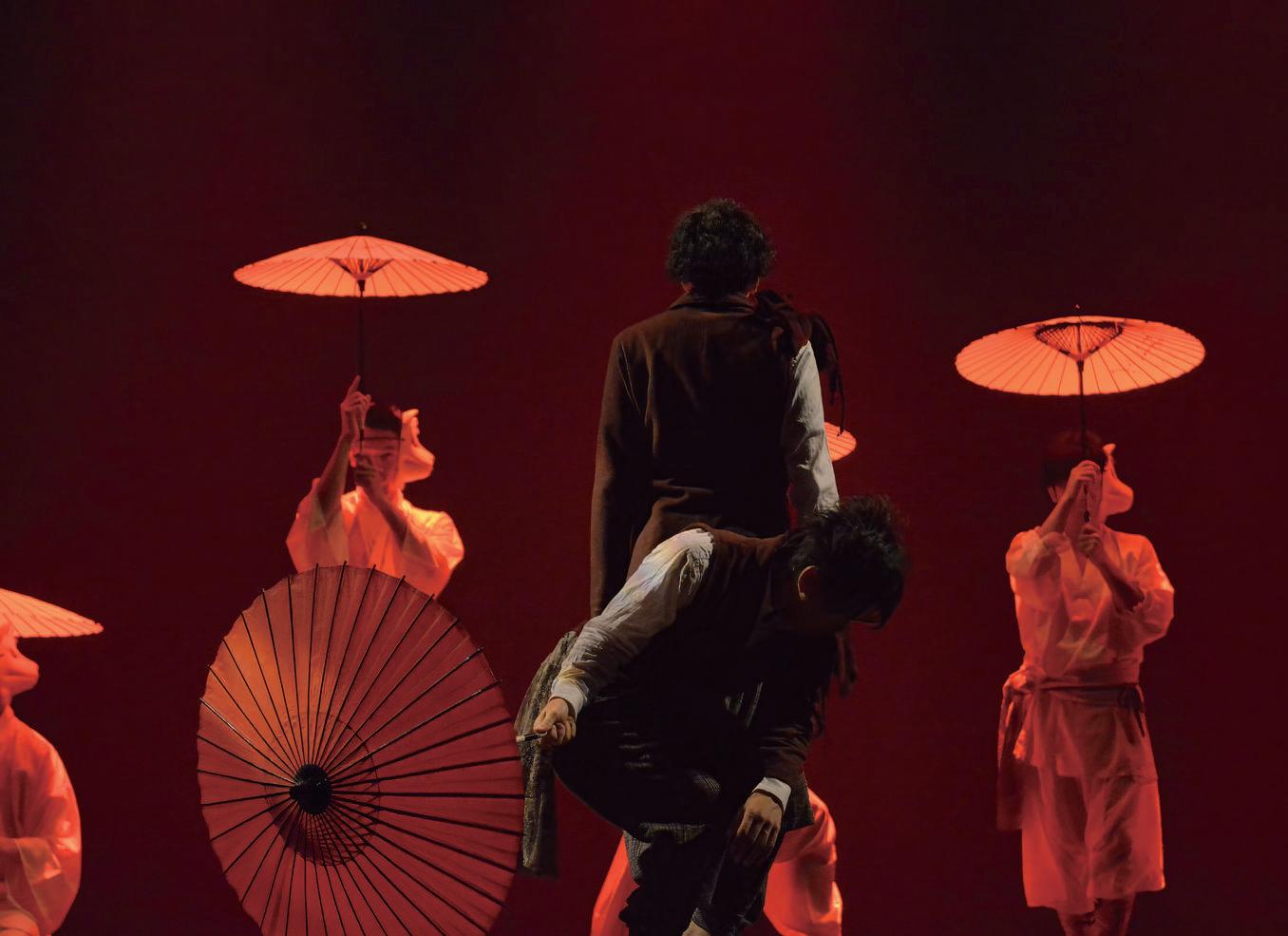
Hide-and-Seek by ErGao Dance Production Group
二高表演《躲貓貓》
大館 F 倉展室 F Hall Studio, Tai Kwun
節目長約 60 分鐘 ,不設中場休息
Accessible captions in Chinese and English, audio description in Cantonese, and house programme in audio format available 3:00 PM 15 / 3 SAT 六 8:00 PM 11:00 AM 16 / 3 SUN 日 3:00 PM 14 / 3 FRI 五 8:00 PM#
敬請關掉所有響鬧及發光裝置。
Please switch off all sound-making and light-emitting devices.
Approx. 60 minutes with no interval
設中英文通達字幕、粵語口述影像及語音場刊
請勿擅自攝影、錄音或錄影。
Unauthorised photography or recording of any kind is strictly prohibited.
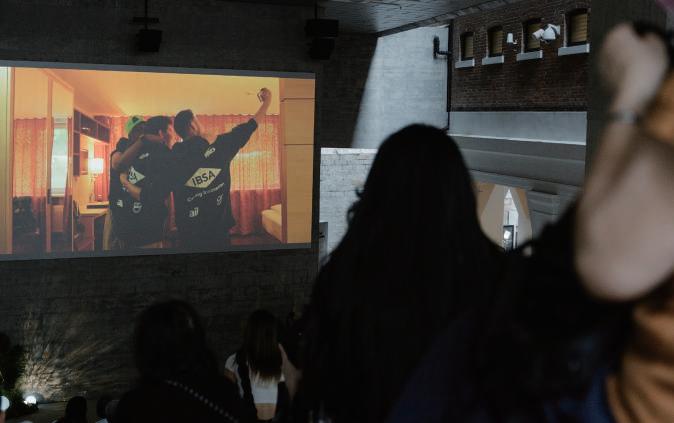
Documentary
紀錄片放映
大館洗衣場石階
Laundry Steps, Tai Kwun 3:30 PM 8 / 3 SAT 六 1:45 PM 9 / 3 SUN 日
設中英文通達字幕、粵語配音、粵語口述影像及語音場刊
Subtitles and accessible captions in Chinese and English, dubbing in Cantonese, audio description in Cantonese; house programme in audio format
免費網上放映 Free Online Screening
無限亮加料節目
No Limits PLUS P.127, 130
演��人談
Post-performance
請勿擅自攝影、錄音或錄影。 Unauthorised photography or recording of any kind is strictly prohibited.
「無限亮」網站播放 screening on No Limits website
Meet-the-Artist Session # 24 / 3
「每日動作」按�與舞蹈工作坊 Movement Workshop with ErGao and Wang ZeYu: Massage Meets Dance
19 / 5
設中英文通達字幕、粵語及英語配音、粵語及英語 口述影像、語音場刊
Subtitles and accessible captions in Chinese and English, dubbing in Cantonese and English, audio description in Cantonese and English; house programme in audio format
請勿使用任何相機、智能手機及 任何錄音儀器對節目內容進行 拍攝、錄音及螢幕截圖。 Any type of screen recording or �ilming with a camera, smartphone or other recording device is strictly prohibited.
“We rarely notice people with different abilities in public spaces. Visually impaired individuals are usually only seen in blind massage parlours.” After spending some time with his visually impaired friends, artist ErGao gradually discovered that, if we pay close attention, they are actually around us. We may choose to turn a blind eye. What kind of a “hide-and-seek” game is this?
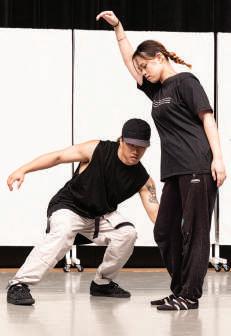
This performance is inspired by the concept of the game “hide-and-seek” —you hide, and I seek. For six months, ErGao collaborated and interacted with his visually impaired friend Wang Zeyu, a former massage therapist. Together, they explored and developed tension and movement, starting from massage and physical touch, allowing Zeyu to rediscover his “hidden” physical potential. The two artists pull and push, one high and the other low like a seesaw in which interaction and balance are indispensable. Zeyu represents the visually impaired individuals who are “hidden” from society, showing that their future can extend beyond just blind massage. Although the dance starts with Zeyu’s journey of pursuing his dream of becoming a dancer, it does not end with “dance”. “The creative process, is greater than the final dance.” says ErGao.
Zeyu: From Massage to Dance
ErGao: From Dance to Body Awareness
Zeyu once thought his capabilities were limited to providing blind massages. As he gradually explored the arts, he began advocating for the visually impaired community, fighting for their rights. ErGao, as a choreographer, guides and accompanies Zeyu on a journey to explore dance as another possibility for his body. However, ErGao does not choreograph for the sake of choreography. Rather, he wants to let go of his obsession with dance. “Zeyu aspires to become an artistic performer and hopes for a breakthrough,” ErGgao explains. “But he had preconceived notions about ‘what dance is’.” ErGao’s original intention starts from Zeyu’s own experience and the real visually impaired community to create this work together with them.
During the creative process, ErGao and Zeyu explored the light yet weighty, gentle yet powerful tension in massage techniques. Starting with Zeyu’s familiar massage techniques, such
as patting, striking, pushing and kneading, they felt how muscles stretch, even in the slightest movements. Step by step, through pulling and resisting, they sought a sense of beauty. “Throughout the process, I would describe the dance scene to him to establish a common understanding of aesthetics. Together with the music and rhythm, the dance naturally came to life,” ErGao reveals. Furthermore, ErGao continuously observed and challenged Zeyu’s body, while, at the same time, he was inspired by Zeyu to return to his own intuitive bodily awareness.
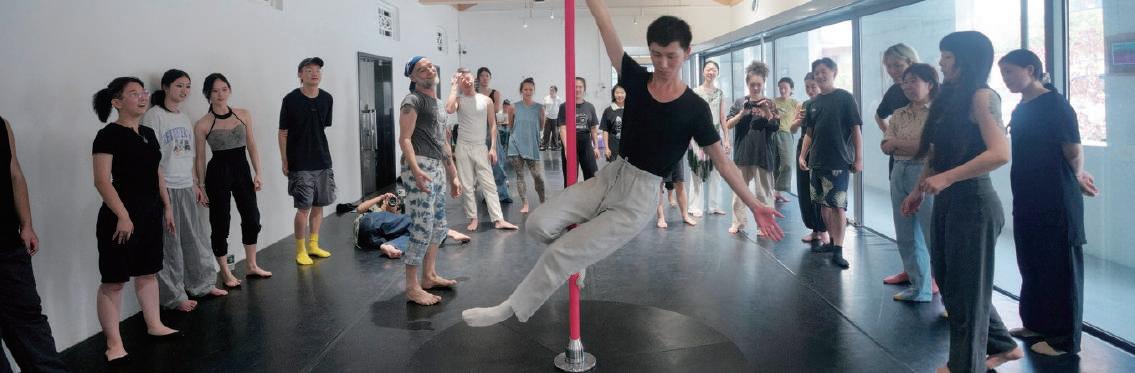
“We once invited two Swiss artists to conduct a pole dancing workshop with us. Because there was only one pole, when one participant was dancing, the other 20 could only watch. We always thought we had to learn certain techniques and were worried about the pain and embarrassment. But Zeyu climbed up with ease, just like climbing a tree, and I was amazed. Most people are used to learning techniques step by step and forget to rely on their intuition. It’s purely a relationship between a person’s body and the object. That’s when I realised that the way Zeyu and I respond with our bodies is very different.”
The Physical Sensation of Hide-and-Seek
ErGao focuses on the creative process without any preconceived perceptions, basing the performance solely on the concept of the game hide-and-seek. Throughout the process, he conducted one-on-one workshops with Zeyu and visited visually impaired institutions. This allowed him to gather information and understand the lives of visually impaired individuals working in blind massage parlours, as well as their memories of their hometowns and migration experiences. Together with Zeyu, ErGao also held public workshops to explore the interaction between visually impaired and sighted individuals through such games as blind massage and hide-and-seek. The dynamics between “seeking” and “hiding”, “the seeker” and the “hidden”, “in the light” or “in the dark”, are revealed through the improvised exchanges and the subtle relationships between them, as well as the relationship between the body and space.
In the game, the roles in hide-and-seek are constantly changing, similar to the state of creation between ErGao and Zeyu. “During the seeking process, both the seeker and the hidden heighten their sensitivity to their physical sensations. Both sides are filled with anxiety. The hidden fears being found yet hopes to be found, while the seeker is afraid that the hidden might suddenly scare them. Both players sense each other as well as the surrounding space.” Regardless of which role they play, there is no absolute hiding nor a desire to be completely hidden. And the most pressing question ErGao wants to raise is whether we deliberately turn a blind eye to the existence and stories of visually impaired individuals, or if we allow ourselves not to see them for some reason.
It is a Massage Parlour and a Hide-and-Seek Paradise
ErGao has always enjoyed challenging environmental spaces. Yet, this performance has no stage; it is a space for the audience to wander around, both as a massage parlour and a hide-and-seek paradise. In this fluid scenario, the audience will continuously hear live descriptions designed for visually impaired individuals. They can also close their eyes and be guided by the “images” they hear. ErGao also used a camera to document his interactions and experiences with visually impaired individuals in massage parlours and institutions. These images, sounds, texts and recordings will be scattered throughout the performance space. “These recorded segments come from the community, which exudes an inclusiveness that moved me deeply.” This community, usually hidden from the public, is presented to the audience in its most candid state. Through Hide-and-Seek, ErGao believes that creation is not an individual conception, but rather, it should be a collective participation.
“One day, when we were shooting for the poster, Zeyu held a white cane, and I took one as well. Suddenly, I had a realisation that as we age, everyone will experience varying degrees of disability and might lose certain abilities,” ErGao says. Although the performance starts from the perspective of visually impaired individuals, it ultimately includes everyone, he says. How much do we understand our bodies? Can we see ourselves when we open our eyes to see others?”
The dynamics between “seeking” and “hiding”, “the seeker” and the “hidden”, “in the light” or “in the dark”, are revealed through the improvised exchanges and the subtle relationships between them, as well as the relationship between the body and space.
ErGao is a dancer, choreographer, director and curator from Yangjiang, Guangdong. A graduate of the Hong Kong Academy for Performing Arts, ErGao later studied Contemporary Performing Art Criticism [CP]3 in Singapore. Since founding ErGao Dance Production Group in 2007, his work has focused on the body as his primary medium and site of artistic inquiry. ErGao employs diverse strategies to illuminate topics relevant to contemporary society, including socio-cultural identity, sex and gender issues. He emphasizes the importance of involving community dance practices and drawing inspiration from daily life for his artistic pursuits, aiming to foster dynamic interactions between performers and audiences.
Guangzhou-based performer Wang Zeyu (aka Zeyu) began his career working as a blind massager. He later joined Zhanrong Space, a non-profit organisation that explores the potential of visually impaired individuals and advocates for an accessible and inclusive society. In 2020, with the Tactileye art group, Zeyu began experimenting with tactile and body-centred creations, employing sound, physical movement, installation, writing and film to address social issues such as physical limitations, gender, multisensory experiences without vision and professional predicaments. In 2023, Zeyu initiated the Alternative Vision project, documenting his life, and the lives of visually impaired friends, through multisensory experiences and personal perspectives.
創作團隊 CreativeTeam
導演及演出 Director&Performer
二高(何其沃) ErGao(HeQiwo)
演出 Performer
王澤宇 WangZeyu
燈光設計師 LightingDesigner
李駿龍 LiJunlong
空間設計師 SetDesigner
沈軍 ShenJun
聲音設計師 SoundDesigner Fractal
服裝設計師 CostumeDesigner
高翔 GaoXiang
影像設計師 VideoVisualDesigner
趙夢 ZhaoMeng
觀察員及學術支持 Observers&AcademicConsultants
毛毳 MaoCui
王黔 WangQian
曾不容 ZengBurong
紀錄片製作 DocumentaryProduction
馮舜旭 FengShunxu
王曉月 WangXiaoyue
合作藝術家 CollaboratingArtists
王超 WangChao
禤志穎 XuanZhiying
許揚佳 XuYangjia
劉汝逵 LiuRukui
陳佳彤 ChenJiatong
阿進 AJin
實習生 Trainees
韓金峰 HanJinfeng
李潤堅 LiRunjian
泳嵐 Yonglan
張煒 ZhangWei
製作經理 ProductionManager
徐卓敏 NicholeChui
製作人 Producer
潘雄 PanXiong
Songs of the Wayfarer
by Claire Cunningham
克萊兒 ・ 康寧漢《夬兒行》
西九文化區自由空間大盒
The Box, Freespace, WestK
節目長約 90 分鐘 ,不設中場休息
Approx. 90 minutes with no interval
8:00 PM 7 / 3 FRI 五 #
8:00 PM 8 / 3 SAT 六 ^
5:00 PM 9 / 3 SUN 日
無限亮加料節目 No Limits PLUS P.126, 128, 129, 132
演��人談
Post-performance Meet-the-Artist Session
演�觸感導賞團
Pre-performance Touch Tour
「行行夬兒行」工作坊
Workshop with Claire Cunningham: We Run Like Rivers
「教學、�舞與無障礙創作」專�工作坊
Professional Workshop with Claire Cunningham: Methodologies for Teaching, Choreography and Access
自在劇場演出 Relaxed Performance
設中英文通達字幕、粵語及英語口述影像、粵語報讀字幕、香港手語傳譯
及語音場刊
Accessible captions in Chinese and English, audio description in Cantonese and English, caption reading in Cantonese, Hong Kong Sign Language interpretation and house programme in audio format available
敬請關掉所有響鬧及發光裝置。
Please switch off all sound-making and light-emitting devices.
請勿擅自攝影、錄音或錄影。
Unauthorised photography or recording of any kind is strictly prohibited.
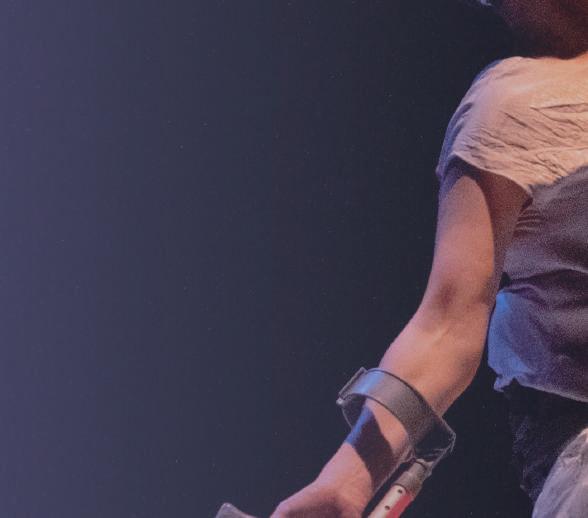
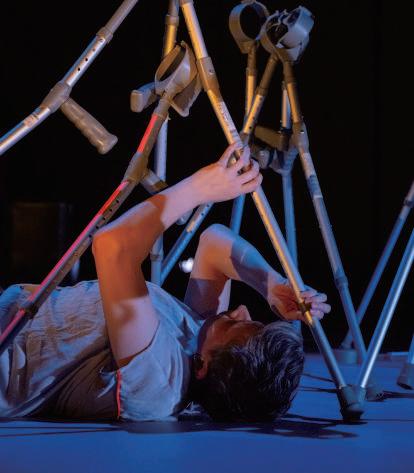
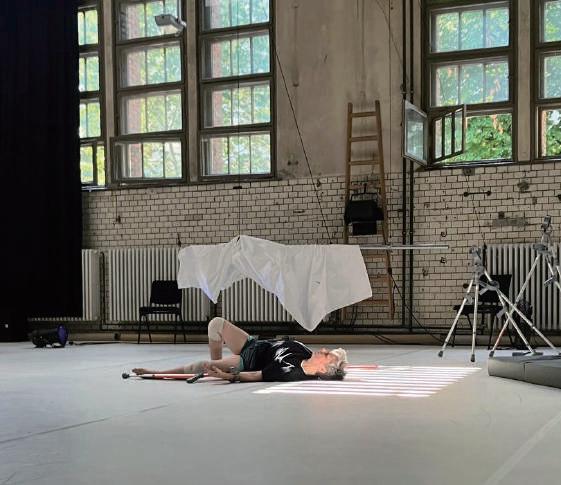
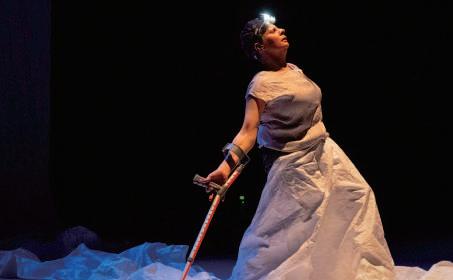
Claire Cunningham has been using crutches since she was 14 years old. She used to view them as the enemy, as ugly tools. It was not until she became a dancer that she gradually realises the significance of her crutches, that they are crucial companions in her dance and extensions of her body. Assisted by her crutches, Cunningham found a path towards liberation, travelling around the world and dancing freely. Since then, she has showcased the life experiences and perspectives of Crip* through her artistic creations, challenging societal definitions of a “normal” body.
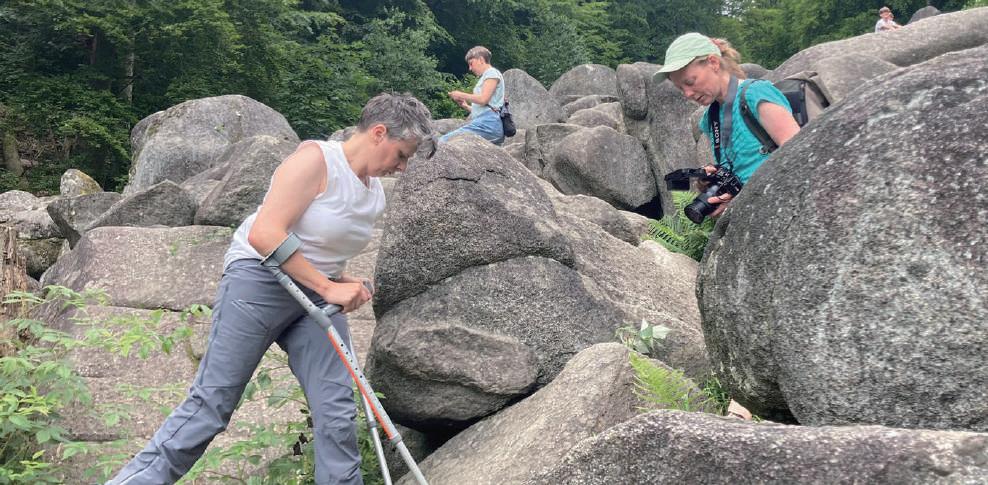
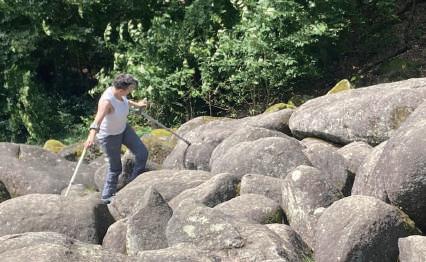
This time, Cunningham takes on another challenge, “risking her body” to confront the “dangers” of natural landscapes that were excluded from her life. Climbing the mountains of Scotland, her birthplace, she uses both hands, feet and crutches to explore the relationship between Crip and nature, transforming her experiences into this dance performance. This echoes American writer Alison Kafer’s writing from her book “Feminist, Queer and Crip”. In the chapter “Bodies of Nature, The Environmental Politics of Disability, she writes, “We tend to think of the definitions of terms such as ‘nature’, ‘wilderness’ and ‘environment’ as self-evident, assuming their meanings to be universal and stable. However, ‘nature’ is not so natural as it seems. On the contrary, our encounters with wilderness are historically and culturally grounded . . . bound up in our own specific histories and cultural assumptions”.
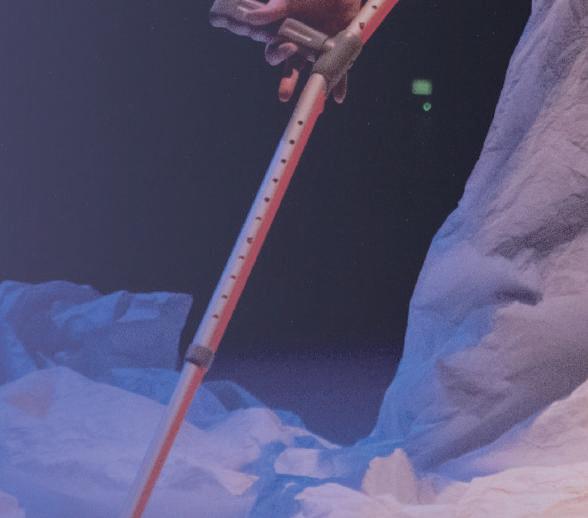
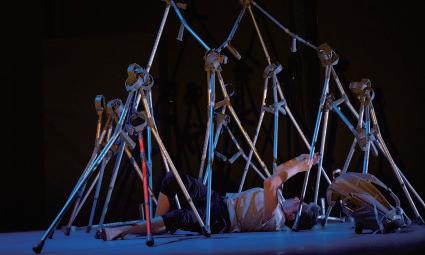
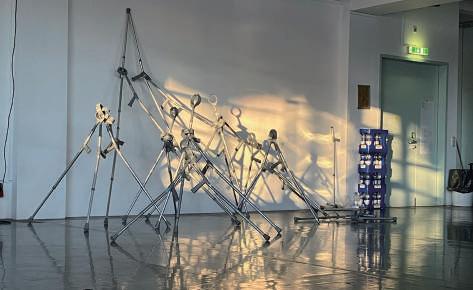
Furthermore, Cunningham wants to explore her relationships with the mountains and valleys and rewire the connection between Crip and the natural environment. In this solo performance, the stage is transformed into a merciless wilderness. Cunningham, armed with her crutches as her dance partner, invites the audience on a journey through day and night, wind and sun. Her crutches also take on various roles: sometimes they serve as her tools, other times they become part of the landscape, and even act as her shelter, moving in harmony with her body. For a moment, Cunningham also explores the ground with her body, crawling, curling, swaying, leaning back, like a baby being curious with wonder. In fact, when we break away from the norm, the body can perceive more than we can ever imagine.
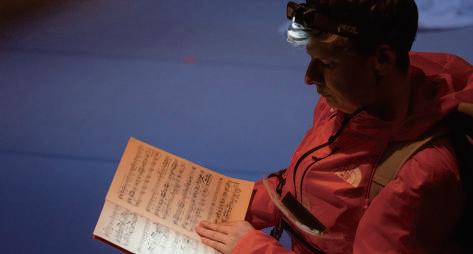
Cunningham, who has received classical vocal training, will also sing Austrian composer Mahler’s renowned work “Songs of a Wayfarer” during this “mountaineering” adventure. The first time she performed this aria was 25 years ago, during her music graduation exam. The song depicts the sorrow and loneliness of unrequited love. But as Cunningham revisits it with a new perspective, it also reflects the struggle with loss and change, giving rise to new emotions. The song also adds to the performance a deeper expression of how Cunningham copes with the world in challenging times. Singing, nature, walking—this performance is another transcendental creation by Cunningham that liberates the mind and body.
每當遇上�讓拐杖鑽進去的地方,�寧漢�是�外驚喜。在她的家鄉 蘇格蘭,�個詞叫「 nooks and crannies 」(角落與縫�)。她正正以拐杖� �大地每個角落或縫�,陶醉遊玩,讓大自�成為她的玩伴。「我�形容自己 在尋找身�四�的角落與縫�,但超越我一貫只專注�拐杖�雙腳的方式―― 我�與拐杖作伴,去探索這�肉之軀如何活動,並找到�的星宿和節奏。」
Explorinring Natures’ Crevices to Discover ver New Constellations and Rhythmhms
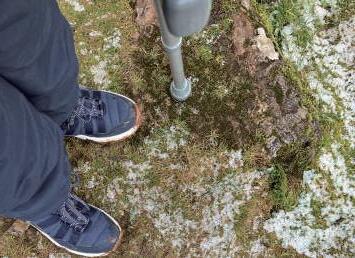
Using crutches to explore the land, Cunningham is delighted whenever she finds a crevice that her crutch can wedge into. Immersed in play, the land becomes her true companion. In her Scottish homeland, “nooks and crannies” is a common phrase that refers to corners and crevices. By looking for every nook and cranny with her crutches, Cunningham can reach unexplored territories. “I am looking for nooks and crannies out in space around my body, but in a way that goes beyond focusing on my crutches or feet as I have for a long time,” she explains. “I’m exploring how my physical body—along with my crutches—can move and find new constellations and rhythms.”
Several keywords and phrases prompted us to rethink this nature-inspired adventure performance.
This term usually refers to reconsider a system, exploring how these systems are designed for certain groups in society. It’s usually about how they are expected to function in specific ways or at certain speeds, or move in particular ways, such as climbing stairs or reaching for items at a certain height. For me, adaptation or improvisation means bringing creativity to individuals with different abilities—finding alternative ways or shortcuts to accomplish tasks. As a performer, adaption means changing traditional concepts of performance and performance spaces, including changing audience arrangements, breaking the norms, dismantling hierarchies and building trust.
# Crutches
Crutches are designed for a specific function—to be used on the arms, extending to the ground to bear weight. They serve as a person’s “additional leg.” That’s how I use crutches. But I also started using them as seats, resting on the handles with specific techniques. I also use them to hold doors open, turn on light switches and hang coats.
As a dancer, I began exploring them in very different ways. I still use them for support, but not in the conventional vertical way. Sometimes, I use them at extreme angles or rely on various body parts, including my neck, elbow, armpits or hips, to create unique body shapes and movements while dancing. In this performance, I’ll also use crutches to construct scenery, as if I’m creating sculptures, building a large mountain range and forming traversable spaces and a shelter.
Most of the time, I would venture into natural environments accompanied by someone. To some extent, societal views make me feel that I don’t belong in nature, making me feel extra cautious and fearful of going out alone as a person with different abilities and as a woman. It wasn’t until recent years, when I found places where I felt safe, that I started walking alone. I realised there was no reason to fear natural landscapes and that this fear originates from others.
I often wear headphones when I walk alone on the mountain. Many times, passersby would say offensive things to me like “You’re doing great!” or “This must be very hard . . . ” But these are incorrect judgements of my physical abilities. If you meet other walkers in your journey, just talk about the weather! Please don’t make any judgements or comments about their bodies or situations they’re in.
#Fear
#Nature
Exploring the land is extremely important. I used to think I didn’t belong there and spent most of my life without connecting with the land or nature. In addition, being in these natural places is often depicted as energetic and physically dynamic, like they only belong to those who travel far and fast. They are also often portrayed as environments for men, especially for conquering and dominating solo men.
I’m trying to understand why people love venturing into nature, especially through hiking, trekking and climbing as a connection to the natural world. I want to know what people gained from it and how my own experience and my relationship with nature would be. For me, walking isn’t an entirely pleasant experience. It’s more of a functional activity. But I still want to explore my relationship with nature, to understand what I would notice or choose during the process. I also want to examine the commonalities with non-disabled individuals and whether I might discover something I overlooked.
#Liberation
I’m finding my way towards liberation. Whether it’s through singing or exploring the land, I’m learning to forget everything, break free from past thinking patterns, habitual ways of processing and common techniques to feel and express my emotions freely through my body. I’m someone who relies on my brain and acts carefully. Now, I‘m trying to understand how to let go and feel more.
One of the UK’s most acclaimed disabled artists, Claire Cunningham is an internationally renowned disabled leader and choreographer of multi-disciplinary performance based in Glasgow, Scotland. A recent factory artist with Tanzhaus NRW Düsseldorf, Germany, she is also an affiliate artist with The Place, London. Cunningham’s work is rooted in the study and use/misuse of her crutches, and the potential of her own specific physicality, and guided by a conscious rejection of traditional dance techniques (developed for non-disabled bodies). She has a deep interest in the lived experience of disability, and its implications not only as a choreographer but in terms of societal notions of knowledge, value, connection and interdependence. In 2021, Cunningham was honoured for her Outstanding Artistic Development in Dance at the German Dance Awards. In 2023, she joined the Inter-University Centre for Dance (HZT) in Berlin as the Einstein Professor of Choreography, Dance and Disability Arts.
聯合委約及聯合製作 Co-commissioned and co-produced by 克萊兒 康寧漢作品 AClaireCunninghamProduction
Hong Kong Arts Festival’s No Limits, Mousonturm Frankfurt, Next Festival Kotrijk, HAU Hebbel am Ufer & No Limits Festival Berlin, Kammerspiele Munich, Sadler’s Wells London and Dampfzentrale Bern.
作品為�寧漢�柏林舞蹈與�舞中心( HZT Berlin )�因斯坦教授基金「�舞、 舞蹈與殘障�術」的創作項目之一。
Created as part of the Einstein Strategic Professorship “Choreography, Dance and Disability Arts” at the HZT Berlin.
Be Seen by Zhao Hongcheng 趙紅程
香港大會堂劇院 Theatre, Hong Kong City Hall
節目長約 80 分鐘, 不設中場休息
Approx. 80 minutes with no interval
14 / 3
無限亮加料節目 No Limits PLUS P.127, 132
演��人談
Pre-performance Touch Tour # ^ *
Post-performance Meet-the-Artist Session
演�導賞團
Pre-performance Guided Tour
演�觸感導賞團
設中英文通達字幕、粵語口述影像、香港手語傳譯、粵語報讀字幕及 語音場刊
Accessible captions in Chinese and English, audio description in Cantonese, Hong Kong Sign Language interpretation, caption reading in Cantonese, house programme in audio format available
敬請關掉所有響鬧及發光裝置。
Please switch off all sound-making and light-emitting devices.
請勿擅自攝影、錄音或錄影。
Unauthorised photography or recording of any kind is strictly prohibited.
The closest strangers are those who “cannot see” us
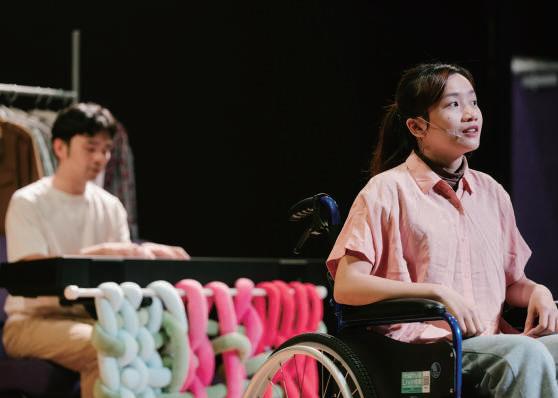
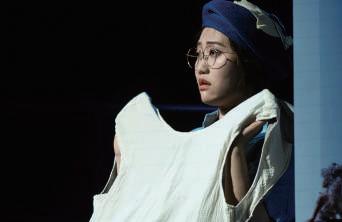
Barriers caused by urban design quietly hamper the lives of individuals with different abilities. A stone step as high as five centimetres can already cause significant trouble for wheelchair users. Be Seen is a solo performance performed by and based on the true story of Chinese influencer Zhao Hongcheng (aka Chengzi). The story begins with Chengzi preparing to speak at an event. The elevator, ramp and other accessibility facilities on stage appear “manageable”, just like in real life. She moves around effortlessly and arrives at the venue on her own. But she struggles to find an ideal accessible toilet...
The toilet is just a pretext. As the performance unfolds, Chengzi vividly reveals the deepest struggles and emotional conflicts of individuals with different abilities—the desire to wear a skirt, the reluctance to have others push her wheelchair, the tension she feels when others avoid her or treat her with excessive caution, and clashes with her spouse and mother. Do these misunderstandings and prejudices stem from society’s indifference or over-interpretation? Even her closest loved ones can’t seem to truly “see” her as an ordinary person. Yet Chengzhi’s words are neither bitter nor resentful. Instead, her storytelling is witty, effortless and upbeat.
Her self-deprecating humour often elicits laughter or wry smiles from the audience. “After all, I’m a rational, rather than emotional, Aquarius.” Yet, the audience is left shaken by the sobering reality presented in the performance.
On stage, Chengzi has prepared two scripts—one that is easily told and one that is difficult to articulate. She questions why individuals with different abilities are pigeonholed by the public as either living a life of hardship due to their defects or living a life of inspiration because of their hard work. Regardless of which story she tells, Chengzi does not lie as both are based on her real-life experiences. But she will be dishonest by telling one story only. In fact, individuals with different abilities, like you and me, are multidimensional, multifaceted and complex.
Blending reality and fiction, this solo performance written by Chengzi is based on her own life. What is purely authentic, however, is her desire to demonstrate her “right to speak”, and her hope that the audience will offer their patience and openness. In this way, they can see and hear her (and others like her); despite having different bodily conditions, they are recognised for their complete, multifaceted personalities and lives
In as early as 2019, Chengzi established a self-media channel where she documents her life through videos. Her content covers topics such as personal growth, evaluations of the city’s accessible facilities and her travel
“Everyone desires to be accepted, and then loved, completely by those closest to them. This is beyond any disability.”
-ZhaoHongcheng(Chengzi)
experiences as a wheelchair user, hoping to break down public preconceptions about individuals with different abilities. She has always soldiered on in her own self-determined way until she participates in this performance, where the playwright asks her “some profound questions”: What’s troubling you the most right now? What are some things in your life that you can never forget or forgive?
Suddenly, Chengzi realised that her biggest trouble is that “I don’t know how to show my true self. I have always had to cater to society’s expectations of me.” This thought became her monologue on stage: “I don’t understand why sometimes I need to pretend to be weaker than other people in order to appear normal; or why, at other times, I need to appear stronger to be considered normal. What exactly is normal?” she questions. “The playwright offered me the space to express my vulnerabilities, even discontent that I hadn’t acknowledged before. In the past, I did not have the room to pursue these emotions.”
The meaning of going mainstream
In the performance, Chengzi shares her “real” experience of growing up, covering various aspects of her childhood, family, education, work and life, including intimate exchanges and sexual life with her partner. These issues are not
only about the identity and social perception of individuals with different abilities but, more importantly, about the topic of “being seen.” She wants to be seen not only by the public but also be seen by her loved ones.
Chengzi openly admits to a stronger motivation: to appear in front of more people and stand in front of the public. “These people may not be interested in social justice or individuals with different abilities. But I want to enter mainstream platforms and appear before them with vigour.” On stage, Chengzi asks with a conflicted expression if her story holds any significance for the audience. But in reality, she intends to make them reflect, and the “significance” belongs to her and her own experience. Whether she chooses to verbalise it or not, Chengzi insists on her right to speak, to have an honest sharing that is not about fulfilling the audience’s expectations but her own truth. “I just want people to see individuals with different abilities regardless of whether they want to see it or get something out of seeing it. The act of ‘being seen’ is crucial for everyone.” Chengzi may appear soft-spoken on stage. She is, however, gentle yet resolute in real life, knowing that an equal and harmonious communication is necessary for better audience reception.
Discerning her own voice from others
In addition to being seen by the public, the playwright also provides Chengzi with another perspective: to be seen by her “mother,” a beloved family member. In the performance, many parts of the story about her mother are fictional. However, the issues of how parents perceive their children’s disability, and whether they can accept the children as they are, become themes that Chengzi wishes to explore.
“In real life, many parents of individuals with different abilities don’t know how to be good parents. They might be acclimated to social norms and pass on negative external voices to their children.” She cites an example of a mother who discourages her daughter from wearing skirts because her legs look too thin. As a matter of fact, Chengzi had a similar experience. “Maybe it’s because my mother thought I shouldn’t always display my disability.” Until she grew up and was able to establish her own thoughts and awareness of her own identity as an individual with different abilities. “Those words aren’t mine. I should accept myself. Regardless of our abilities, everyone desires to be accepted and then loved completely by those closest to them. This is beyond any disability and resonates with most audiences, which fosters understanding and empathy.”
As someone who shares in front of the public, Chengzi has always lived with a sense of insecurity. But she has persisted over the years. “I’m learning to accept this feeling. I can achieve more with this internal fear.” She deeply believes that expressing her most genuine emotions and conflicts through the arts goes beyond creation or public expression. “It’s also a great way for me to express and heal myself.”
Chengzi’s performance condenses her ongoing physical and emotional struggles and growth, including letting go of shame. “I don’t think I have this shame anymore. So, I can focus more on my personal state and feelings, instead of living to meet others’ expectations.” As it goes in the performance, “Disability is a fact that I cannot change. But no longer seeing myself as a patient—that is something I can change.”
Influencer and wheelchair user Zhao Hongcheng is a mainland Chinese vlogger and content creator. Since 2019, Zhao has shared videos about her personal experiences as a wheelchair user on her social media channel, promoting accessibility at work and on public transport, and helping disabled individuals integrate into society. In 2023, she made her debut in theatre, starring in Be Seen. This performance earned her a nomination for Best New Artist at the Seventh Chinese Theatre Awards.
羅茜 Luo Xi
導演 Director
美國耶�大學戲劇學院導演系 SRF ��;上海戲劇學院導演系本科。導演�副導演作品包括《羽毛》、 《玻璃實驗室》、《心�宮》、音�劇《 Alice 》�。��參演不同短��戲劇表演作品。
Graduate of Yale School of Drama, Department of Directing, SRF and Shanghai Theatre Academy, Department of Directing. Directorial and assistant directorial works include Feathers, Glass Laboratory, Maze of the Heart, and musical Alice. She has also appeared in various short films and theatrical productions as an actor.
Writer, playwright, director, and literary translator. Founder and Artistic Director of the Sound and Fury Play Reading Festival. Her plays were performed at the Royal Court Theatre, Edinburgh International Festival and National Theatre Company of China.
A producing brand under M Theatrical, established in 2021, focuses on creating high-quality theatrical content with contemporary significance. They emphasize minority groups and women’s issues, with their debut original work Be Seen
創作團隊 CreativeTeam
編劇 Playwright
陳思安 ChenSi’an
導演 Director
羅茜 LuoXi
演出 Performer
趙紅程 ZhaoHongcheng
復排導演 RestagingDirector
應照宜 YingZhaoyi
製作人 Producer
沈璐珺 MiaShen
瘋閣樓作品 AMadAtticproduction
directed by Matthew
Love Beyond by Ramesh Meyyappan
Lenton
拉米許 ・ 梅亞潘《愛難忘》
導演:馬修·蘭頓
上環文娛中心劇院 Theatre, Sheung Wan Civic Centre
節目長約 75 分鐘 ,不設中場休息
Approx. 75 minutes with no interval 3:00 PM, 7:30 PM 22 / 3 SAT 六 7:30 PM 20 / 3 THU 四 7:30 PM 21 / 3 FRI 五 #
設粵語口述影像、語音場刊
Audio description in Cantonese, house programme in audio format
戲劇 Theatre
無限亮加料節目 No Limits PLUS P.126, 129
演��人談
「視覺敘事與角色形�」工作坊 Workshop with Ramesh Meyyappan: Characters and Their Physicality #
Post-performance Meet-the-Artist Session
敬請關掉所有響鬧及發光裝置。
Please switch off all sound-making and light-emitting devices.
請勿擅自攝影、錄音或錄影。 Unauthorised photography or recording of any kind is strictly prohibited.
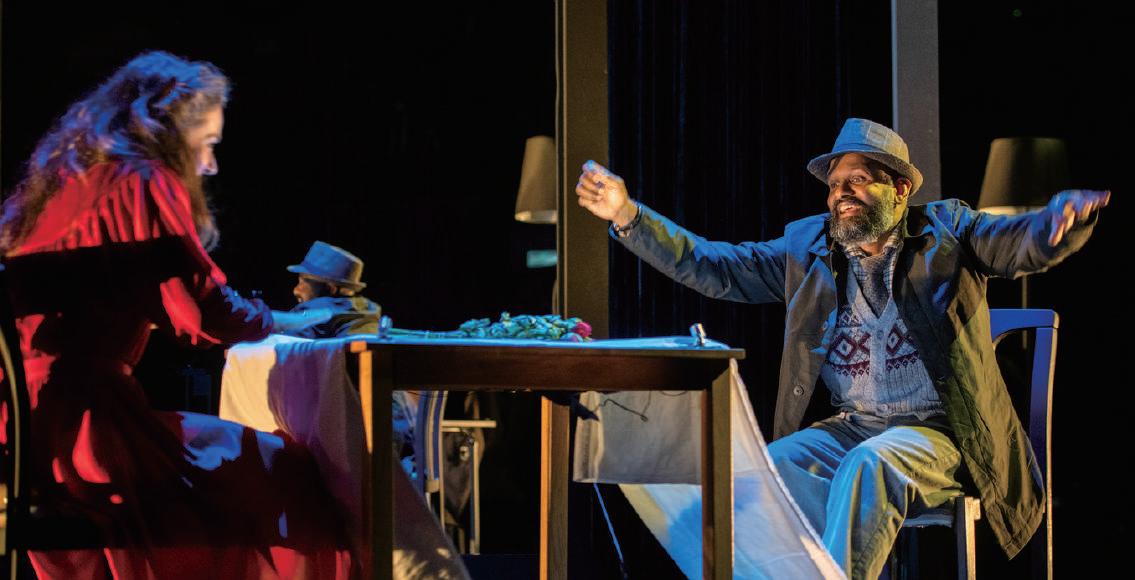
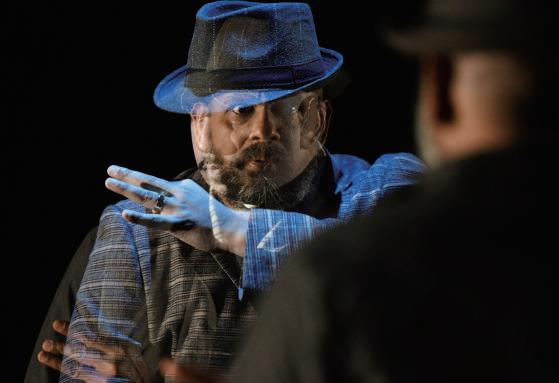
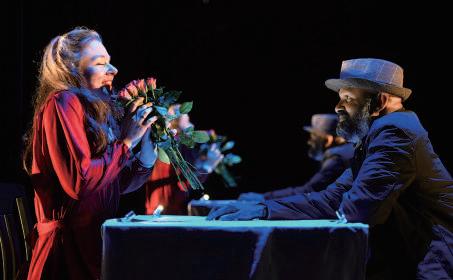
Memories are like ghosts, untouchable and elusive, coming and going as they please. But there may lie the most beautiful moments in life. Love Beyond is a “mime performance” about memory, love, the intersection of the past, the present and the future, and forgotten moments.
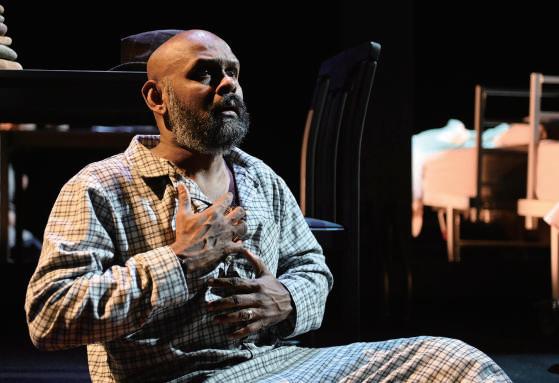
The elderly Harry, a sign language user, has dementia. He has to move into a new home—a care centre. His carer, May, does not understand sign language, leading to gaps and misunderstandings in communication and making Harry incredibly lonely. In his plain room, the mirror becomes Harry’s only companion. Through the mirror, he sees himself in the present, in the past, and what seems like an illusion of his wife. Sometimes, they dine or even dance together, somewhere in the past or present, their hearts connected without words. Is this ambiguity of reality versus hallucination a sign of Harry’s confusion, or the observer’s lack of romantic spirit?
Just as May gradually grasps sign language, the only way to communicate with Harry, he begins to forget the signs, his speech and his connection with the world. In his solitude, Harry is accompanied by his memories and hallucinations. The days get muddled up. Looking back on life, none of us can trace our memories linearly. Instead, it is the leaps in time that make life mysterious andromantic.
Love Beyond combines sign language, sound and lighting to create an interwoven tapestry within and beyond the mirror. The absence of subtitles is an artistic choice intended to present an equal experience for deaf and hearing audiences. From text to performance, the play strives to accurately depict the world of deaf individuals and those with dementia. Although some dialogues may not be fully understood, the actors’ physicality and expressive performance allow the audience to comprehend the meaning, fostering empathy and connection.
Interview with Ramesh Meyyappan (Playwright & Performer) and Matthew Lenton (Director) of Love Beyond
Keep them connected with the world, even if they “lose their speech”
Playwright
RameshMeyyappan R M Director
& Performer
MatthewLenton
Q: What inspired you to explore both dementia and deafness in one performance? How do you perceive their similar effects on individuals, particularly regarding disconnection, distortion and the experience of hallucinations or imagination?
M: I think it comes from a genuine problem that exists in the British care system for deaf people with dementia. It is already hard for someone to lose their grasp on reality, even when they can still communicate on a linguistic level with the people around them. Imagine being plunged
into a world where that is taken away, and the most basic means of communication are lost. Imagine how lonely that must make someone feel. Because so much of dementia care is about “feeling” rather than “rationality”, it’s essential for someone to have a compassionate and understanding carer, someone who can help maintain a level of composure, calm and comfort for the patient. Yet even that possibility is being lost in a depleted care system.
R: As we get older, it is important to understand the reality of living with dementia, especially from the perspective of someone who is deaf. My research helped me better understand this experience. However, I was surprised and saddened by what many deaf individuals have had to face. For some of them, sign language—their language, their signs—begins to disappear. For a deaf person, sign language isn’t just a communication tool, it is also how they identify themselves. That’s why it’s important to touch on this in the performance. Also, having an older character that receives palliative care allows the performance to explore the experience of deafness at this final stage in life and how the lack of signed support adds to his frustration and confusion.
Q: The mirror is a significant element on stage. How does it function beyond a mere prop in conveying your ideas for this show?
M: The mirror is a metaphor for the reality Harry finds himself in. His old, confused self is confronted with its own reflection. The mirror “traps” him in his room and makes his reality seem inescapable. But it is also a portal into Harry’s world of memories as fragments emerge and disappear. This world contains visual beauty, sweetness and light, but it also reveals darker moments of his life. In a way, the show is a detective story, and the mirror prompts Harry’s detective work as he searches for a truth from his past. This truth is what finally sets him free.
Q: The character in the performance has fragmented memories of his wife and certain stories, yet these images can vanish in an instant. What does memory signify for you, and how can one reinterpret or reevaluate the concept of “time” in life?
M: Who knows why we remember “certain things”? Do we remember because of our “minds”, or because of the “feelings that were experienced at the time”? I’ve done lots of things in my life, but I don’t remember many of them. So, does that mean we should live in the present?
But what happens when our “present” life is restricted and contained like Harry’s? Of course, we need people around us to enrich the “present life”. But we also have our “inner” worlds, our memories and our deteriorating brain, changing our perception of reality. And in this inner world, time is lateral, rather than linear. In fact, time, like the brain, remains a great mystery.
Q: When characters communicate using sign language, hearing audiences may struggle to fully understand the content, which can lead to a sense of loss and disconnection. How do you intend to evoke this unsettling experience for the audience? From your previous performances, have you received any feedback from audiences reflecting on this approach?
M: Even when people speak in verbal language, deaf audiences may struggle to understand the content and feel a sense of loss or disconnect. This is why I have tried to direct the show in a way that allows an audience to understand the story in a visual, “musical” way. This means the “content” of what the characters are saying is less important than the musicality of “how” they are saying it, and their progression towards each other during the performance. The characters’ situations are clear. And the “musical” tone is very important in caring for people with dementia because they don’t understand rationality. The key is to make them “feel” calm, active and safe.
R: There are many beautiful and memorable moments that I hope will stick in the audience’s mind. I hope they can find something within Love Beyond that resonates with them. Although there is a deaf perspective in the show, the story itself is very human, and the themes of love, loss and grief are universal. I hope the audience can genuinely empathise with Harry and his story, whether they are deaf or not. They should understand his journey, his emotions, his grief, his frustrations, and his needs.
導演 Director
馬修 · 蘭頓
Matthew Lenton
從蘇格蘭到當今國�劇壇,馬修.蘭頓都是聲名顯�、�受追捧的導演,他創辦的劇團 Vanishing Point �意��傳�、從平�中提煉非�,�力為觀眾帶來貼地的原創劇作,��跨歐洲、�美、日本�共 25 多個國家演出,�近期的作品《品川猿的告白》便改�自日本作家村上春樹的短�小�。��無�的他, ��獲蘇格蘭戲劇評論家��佳導演�、�丁�國��穗節�劇場�、�丁��穗節大��。
Matthew Lenton, a distinguished director from Scotland, has made a significant impact on the international theater scene. He is the founder of Vanishing Point, a theatre company based in Glasgow which aims to subvert reality and make the ordinary extraordinary, creating theatre that is beautiful, accessible and original. As a recipient of numerous awards, including the CATS Best Director, Total Theatre Award, Scotsman Fringe First Awards, his works have been presented in over 25 countries worldwide. His latest work is based on the short story “Confessions of a Shinagawa Monkey” by the acclaimed Japan author Haruki Murakami.
編劇及演出 Playwrightandperformer
拉米許 · 梅亞潘
Ramesh Meyyappan
拉�許·梅亞潘為�加坡劇場工作者,現居蘇格蘭,作品風格融匯視覺與肢�劇場,�力拓展更多範疇, 包括馬戲、小丑、偶戲與幻像。他��接受挑戰,製作具�强烈敘事性的視覺作品。多年來,他�在二十多個 國家巡演,好評如潮。�獲��提名並兩���「�加坡生命!戲劇大�」�佳男主角殊�,《�難忘》獲� 蘇格蘭戲劇評論家「�佳音�和音效」�「�佳技術效果」大�。現任蘇格蘭享負盛名的獨立製作�團 Raw Material 合作�術家。
Glasgow-based Singaporean theatre-maker Ramesh Meyyappan develops performances using an eclectic mix of visual and physical theatre styles. He enjoys the challenge of creating strong narrative visual work, and continually seeks to develop and extend his theatrical visual vocabulary, for example incorporating circus techniques, bouffon, puppetry and illusion. Over the years, his solo performances and collaborations have toured nationally and internationally to over 20 countries, and to much critical acclaim. He has been nominated five times for Best Actor at the Life! Theatre Awards (Singapore) and been awarded the accolade twice, as well as winning the prestigious CATS award for best technical production and best music and sound for his production Love Beyond.
Meyyappan is an associate artist of Scotland’s award-winning, independent producing company, Raw Material.
Founded by Margaret-Anne O’Donnell and Gillian Garrity, Raw Material is an award-winning, independent producing house based in Scotland. With over 20 years’ experience making & touring celebrated Scottish theatre around the world, they believe theatre plays a crucial role in championing socio-political change. Their shared ambition to develop, create and tour bold accessible theatre that inspires, entertains and captivates audiences across borders formed the foundations of the company.
Vanishing Point is a world-renowned artist-led theatre company based in Scotland. Their aim is to create theatre that is beautiful, accessible and original. They have an international and multicultural perspective, collaborating with artists and producers from across the world, to create genre-defying theatre for venues of varying scales – from international stages to local village halls. As well as creating and producing their own work, they also produce the work of other artists and offer a range of development opportunities for individuals and companies, enabling them to create and perform their work for audiences everywhere.
製作團隊 ProductionTeam
編劇及演出 Playwright&Performer
拉米許 · 梅亞潘 RameshMeyyappan
導演 Director
馬修 · 蘭頓 MatthewLenton
佈景與服裝設計師 SetandCostumeDesigner
貝琪 · 明托 BeckyMinto
燈光設計師 LightingDesigner
西蒙 · 威爾金森 SimonWilkinson
作曲 Composer
大衛 · 保羅 · 瓊斯 DavidPaulJones
特別嗚謝 Special Thanks to
「蘇格蘭製作」國際巡演基金,基金屬於「蘇格蘭製作展演」項目之一
The Made in Scotland Onward International Touring Fund, part of the Made in Scotland Showcase
Subtitles in Chinese and English, dubbing in Cantonese, audio description in Cantonese, house programme in audio format
語言 Language 英語 English
長度 Duration 23 分鐘 minutes
請勿擅自攝影、錄音或錄影。
Unauthorised photography or recording of any kind is strictly prohibited.
電影 Film
「無限亮」網站播放
請勿使用任何相機、智能手機及任何錄音儀器對節目內容 進行拍攝、錄音及螢幕截圖。
Any type of screen recording or �ilming with a camera, smartphone or other recording device is strictly prohibited.
設中英文通達字幕、粵語配音、粵語及英語口述影像、語音場刊
Subtitles and accessible captions in Chinese and English, dubbing in Cantonese, audio description in Cantonese and English; house programme in audio format available
On a farm in Northern Ireland, two estranged brothers reunite following their mother’s death. Lorcan, who has Down syndrome, was inseparable from Mum. Meanwhile, his older brother, Turlough, lives in England. Turlough is set on selling the farm and sending Lorcan to live with their aunt so that he can return to his “normal” life in the city. At the simple funeral, however, Lorcan discovers Mum’s unfinished bucket list, charting the brothers’ painful reunion towards a different direction.
Lorcan is eager to complete Mum’s bucket list—the perfect farewell to her and the farm. Turlough reluctantly agrees. First on the list is to learn Tai Chi; second, to read a classic novel; eighth, to pose as a model for an oil painting... and fly in the sky. Checking off each bucket list
item leads them on an unimaginable journey, where a secret is revealed when they reach the final and 100th item. Will this journey change their fate or lead to their separation?
An Irish Goodbye explores themes of tradition, land, loss and mourning through a poignant family story. It also captures moments of joy and despair while caring for individuals with different abilities. The short film is melancholic yet full of warmth, balancing grief and humour, especially in Lorcan’s performance, the brothers’ playful banter and their quiet ways of coping with grief. The emotions and reflections featured in An Irish Goodbye transcend the boundaries of the short film genre, garnering an Academy Award for Best Live Action Short Film.
“Irish goodbye” is an English slang that refers to the act of leaving a party quietly without saying goodbye. When our lives reach their final moments, we don’t usually get the chance to say “Gotta go, see you later!” to our loved ones. Inevitably, death is like an “Irish goodbye”. The short film An Irish Goodbye begins with the sudden passing of Turlough’s mother, leaving him and his younger brother Lorcan. Aside from arranging her final affairs, the brothers must learn to cope with their grief and change their attitudes and lives.
Lorcan has Down syndrome. Turlough wants to sell his mother’s Northern Irish farm and arrange for Lorcan to live with their aunt, assuming this is the best way for his brother. But this sparks considerable conflict between the brothers. Although Lorcan isn’t as sharp, he is determined and opinionated. He is adamant about keeping the farm and protecting the place that their mother left behind. As Turlough and Lorcan’s disagreement comes to a deadlock, their mother’s spirit returns in the form of a bucket list she left behind, allowing the brothers more time to reconcile their differences.
Being the older brother, Turlough often maintains an authoritative air and tells Lorcan off, as if to discipline him. But Turlough isn’t someone who is driven by profit to sell the farm
and cash out. His primary concern is securing Lorcan’s life going forward. Having moved to London with a demanding job, Turlough can’t take care of Lorcan by himself. It is the bond between the brothers and their sense of independence and stubborn determination that make An Irish Goodbye most touching. In fact, Lorcan isn’t that vulnerable after all. His fiery and impulsive temperament often surpasses Turlough’s. Despite Turlough’s practical and reasonable plans, it is hard not to be moved by Lorcan’s resolute resolve to fulfil their mother’s bucket list. And although Lorcan may seem incapable of taking care of himself in addition to his shortcomings, he is, after all, a person with his own thoughts, feelings and autonomy. Like you and me, his voice deserves to be heard and respected.
James Martin, who plays Lorcan in the film, is also a person with Down syndrome. But for directors, Tom Berkeley and Ross White, this film was never intended to focus on this character’s condition. “Once we got to know James, we saw how he is a multidimensional actor. Out of the many things that make him an interesting person, ‘Down syndrome’ is a long way down the list. He’s a funny and charming actor,” says Ross. An Irish Goodbye is full of tender love and respect for people, family and land, both on and off screen.
Award-winning filmmaking duo Tom Berkeley and Ross White rose to prominence in 2023 with their breakout black comedy An Irish Goodbye – the first short film in history to win an Oscar, BAFTA and IFTA award. Hailing from England and Northern Ireland respectively, the pair began working together in 2019, founding Belfast-based Floodlight Pictures as a vehicle through which to produce their work. Their debut short film ROY (2021), starring BAFTA winner David Bradley, played at over 50 international film festivals and was one of ten films shortlisted for Best British Short Film at the 75th BAFTA Awards. The duo’s most recent short film, The Golden West, played festivals internationally following Grand Jury Awards at Raindance, Aesthetica and Norwich Film Festivals in 2023.
編劇及導演 ScreenplaysandDirectors
湯姆 · 伯克利及羅斯 · 懷特 TomBerkeley&RossWhite
攝影 Cinematographer
那拉揚 · 范 · 麥勒 NarayanVanMaele
音樂 Music
安東尼 · 伊芙 AnthonyEve
剪接 Editing
史蒂芬 · 鄧恩 StephenDunne
演出 Performers
西穆斯 · 奧哈拉 SeamusO ´ Hara
詹姆斯 · 馬丁 JamesMartin
帕迪 · 詹金斯 PaddyJenkins
米歇爾 · 費爾利 MichelleFairley
製作 Production
聚光燈影業 FloodlightPictures
The Blind Man Who Did Not Want to See Titanic by Teemu Nikki
免費現場放映 In-venue Free Screening
大館洗衣場石階 Laundry Steps, Tai Kwun 3:00 PM 11 / 1 SAT 六 3:00 PM 12 / 1 SUN 日
設中英文字幕、粵語配音、粵語口述影像及語音場刊
Subtitles in Chinese and English, dubbing in Cantonese, audio description in Cantonese, house programme in audio format
Unauthorised photography or recording of any kind is strictly prohibited.
「無限亮」網站播放 screening on No Limits website
請勿使用任何相機、智能手機及任何錄音儀器對節目內容 進行拍攝、錄音及螢幕截圖。
Any type of screen recording or �ilming with a camera, smartphone or other recording device is strictly prohibited.
設中英文通達字幕、粵語及英語配音、粵語及英語口述 影像、語音場刊
Subtitles and accessible captions in Chinese and English, dubbing in Cantonese and English, audio description in Cantonese and English; house programme in audio format
Who hasn’t seen the classic film “Titanic”? Jaako is a film fanatic, especially fond of John Carpenter’s works. But his DVD collection remains on the bookshelf, gathering dust... After losing his sight to illness, watching movies is reduced to glimmers of light and shadow. The addition of multiple sclerosis has also caused paralysis in his lower body, confining him to a wheelchair and limiting his ability to go out. In his dreams, he often reminisces about his love for running using his legs.
“Were you runing?” Waking up from his dreams, the happiest moments of Jaako’s days come from the voice on the other end of the phone—his online girlfriend Sirpa. Jaako and Sirpa live in different places and have never met in real life. But their love is as deep as in the film “Her” as they confide in and heal each other through their voices. On the other hand, Sirpa is also battling her own illness. As it turns out, Jaako has never seen “Titanic.” He doesn’t believe in conventional romance conjured by commercial films, yet he remains steadfast in true love in the real world.
“Are you Jack or Rose?” Jaako asks Sirpa. “I am the Titanic,” she replies.
As Sirpa’s condition deteriorates, Jaako
realises that time is running out. He must seize the moment and cherish the one he loves the most. All he can do is gather his courage and venture out of his home to meet Sirpa. After all, it’s only two taxis and one train ride away! But the outside world is full of unexpected dangers. Those with bad intentions take advantage of his lack of sight and mobility. However, Jaako chooses to confront these threats with humour and self-deprecation, hoping that the villains might have a heart and spare those in love.
This film unfolds from Jaako’s perspective, with the camera solely focusing on him, leaving the background, passers-by and surroundings out of focus. It is as if the film is being edited in real time, and the audience can experience Jaako’s encounters, relying on the sounds of his surroundings to imagine the dangers around him. This immersive viewing experience also enables the audience to feel every moment of a person with visual impairment.
Do we move forward or retreat in the face of fear? The sunken Titanic witnesses the blossoming of love amid disaster. Will the “Titanic” DVD in Jaako’s backpack make it to Sirpa? This film seems to transform into a love story akin to “Titanic”.
If you can’t see people’s faces, can you still trust them?
One day, my old army buddy Petri contacted me out of the blue. I had not heard from him in over two decades. But back in the day, we acted in the same theatre play at the closing party of our officer class. In his message, Petri told me that he had followed my career. He laughed, recalling how even back then, I barked about becoming a film director and that his dream job was acting. 24 years later, Petri has graduated from Theatre Academy and made his living as a professional actor until he was diagnosed with multiple sclerosis. His condition is unusually aggressive, and he is now blind and tied to a wheelchair.
As a storyteller, I am obsessed with finding new angles. With Petri’s help, I discover the perspectives of the blind and disabled person. I have not seen a single shot from a blind person’s perspective. I want to give the audience a cinematic experience about how it feels to have visual impairment. The whole film is shot with close-ups. The world surrounding our main character is blurry and soft, his face and hands act as the stage of this film. When you watch it, you must trust your ears. Can you rely on people if you cannot see their faces?
Why didn’t the blind man want to watch “Titanic”? I haven’t seen it either. That becomes clear when you watch our movie.
I was shocked at first, but I soon asked Petri if he still wanted to act. He admitted that it was still his dream, and I promised to write a role for him in a film. I wanted to work with Petri, an actor who happens to have visual impairment and is bound to a wheelchair. Our main character has the same disease as Petri, but the script is fictional.
他與監製亞�·珀瑟一起經營活�製作�司( It ’ s Alive Films ),是�蘭�活躍的�影�司之一。他的�影 風格�善近人,同�毫無�留地諷刺政治與人性。
Award-winning Finnish filmmaker Teemu Nikki is a self-taught director, screenwriter and producer. His first feature film, Euthanizer (2017), won recognition at festivals around the world, and was selected as the official Finnish entry for the 2019 Academy Awards. His third feature film, The Blind Man Who Did Not Want to See Titanic (2021), won the Orizzonti Extra Audience Award at the 2021 Venice Film Festival. Nikki has also written and directed numerous short films and TV series. Together with producer Jani Pösö, he runs It’s Alive Films, one of the most active production companies in Finland. Nikki’s style is best described as a good-willed yet unapologetic political satire of humanity.
導演及編劇 Director&Screenplay
泰穆 · 尼基 TeemuNikki
監製 Producedby
亞尼 · 珀瑟 JaniPösö
泰穆 · 尼基 TeemuNikki
彼得里 · 波伊科萊寧 PetriPoikolainen
瑪爾亞娜 · 邁亞拉 MarjaanaMaijala
薩穆利 · 賈斯基奧 SamuliJaskio
拉米 · 魯西寧 RamiRusinen
漢娜邁亞尼康得 HannamaijaNikander
馬蒂 · 翁尼斯馬 MattiOnnismaa
攝影指導 DirectorofPhotography
薩麗 · 阿爾托寧 SariAaltonenF.S.C.
剪接 Editing
尤西 · 桑杜 JussiSandhu
聲音設計 Sounddesign
薩米 · 基斯基 SamiKiiski
海基 · 科斯 HeikkiKossi
前期錄音混音師 Pre-recordingmixer
彼得 · 艾巴治臣 PeterAlbrechtsen
聯合製作人 Co-producers
帕西 · 哈基奧 PasiHakkio
妮娜 · 維爾塔寧 NiinaVirtanen
The Chameleons by Patrick
Botticchio
帕特里克 ・ 波提喬《足球大將》
免費現場放映 In-venue Free Screening
語言 Language 意大利語 Italian
長度 Duration 60 分鐘 minutes
設中英文字幕、粵語配音、粵語口述影像及語音場刊
Subtitles in Chinese and English, dubbing in Cantonese, audio description in Cantonese, house programme in audio format
Unauthorised photography or recording of any kind is strictly prohibited.
「無限亮」網站播放 screening on No Limits website
請勿使用任何相機、智能手機及任何錄音儀器對節目內容 進行拍攝、錄音及螢幕截圖。
Any type of screen recording or �ilming with a camera, smartphone or other recording device is strictly prohibited.
設中英文通達字幕、粵語及英語配音、粵語及英語口述 影像、語音場刊
Subtitles and accessible captions in Chinese and English, dubbing in Cantonese and English, audio description in Cantonese and English; house programme in audio format
On the football pitch, passion and inspiration reign. “One, two, three, go Chameleons!”
I Camaleonti (“Chameleons”) is a unique football team from Switzerland. Formed in 2019, it is an inclusive team made up of individuals with different abilities. Under the dedicated guidance of coach Boris Angelucci, the team learns to support one another through every goal and foul, honing their football skills and embracing the spirit of sportsmanship.
This documentary follows I Camaleonti as they compete in an international tournament in Bonn, Germany, against elite teams like Chelsea and Paris Saint-Germain. But trouble strikes before the match begins. One player feels homesick and longs for his mother, while another experiences a panic attack. Yet, like true chameleons, the team remains resilient and adapts to unpredictable circumstances. Coach Boris, the team’s pillar, leads with gentleness. He
calms the players during critical moments and emphasises the essence of football: learn from each other and enjoy the game.
On the pitch, the team bursts with energy— heading, kicking, scoring backheel goals and bicycle kicks, attacking and defending with precision and skill. They first beat Chelsea, then defeat Paris Saint-Germain, blasing a miraculous trail toward the championship title! The audience erupts in cheers, not just for their performance but also for the spirit and love they radiate on the pitch. “One, two, three, go Chameleons!”
This heartfelt documentary captures I Camaleonti’s best moments in action, sharing the team’s joys and pains. It highlights the camaraderie between the players and their coach, conveying a sense of warmth to every viewer.
So, how does it end in Bonn? Watch the documentary to find out.
Football is one of the most popular sports in the world. On the football pitch, elite athletes strive to win. However, not all matches are only about winning. The meaning and values of some matches far exceed the final score.
According to a survey by the Union of European Football Associations (UEFA), nearly 87 million individuals in Europe have varying degrees of disabilities. Half of them have never participated in any recreational or sports activities. In recent years, the UEFA and major European football organisations have been actively advocating for inclusive football projects, allowing individuals of different abilities to discover fulfilment in team sports. “Adapted football” is tailored to the needs of individuals with different abilities and offers several categories. This include powerchair football, which allows wheelchair users to play using electric wheelchairs. In other football matches for visually impaired individuals, sighted goalkeepers are allowed while all other players wear blindfolds. The football is equipped with metal pieces that produce sound when it rolls, helping players locate the ball. “I Camaleonti” participates in matches specifically for individuals with special educational needs. The eligibility criteria for these matches are generally more relaxed, typically requiring athletes to meet the following three conditions: 1. an IQ of 75 or below; 2. difficulty adapting to daily activities; and 3. the presence of learning disabilities before the age of 18.
“I Camaleonti” is most valuable for capturing the players and coach Boris’ genuine emotions. They experienced distress and frustration on and off the pitch. Yet, they also felt joy and touching moments when they achieved their goals as a team. These emotions and thoughts are no different than those of the general public. In the end, everyone holds a passion and pure desire to surpass themselves on the football pitch. At that moment, disability becomes irrelevant.
Swiss documentary director Patrick Botticchio trained in Switzerland as a professional photographer, and studied cinematography at the prestigious ESCAC film school in Spain. After working as director of photography on a number of short films and videos, he returned to Switzerland to work as camera operator with Swiss public TV network RSI. Botticchio’s career as a director was launched with his first feature documentary “Blenio, Utah” (2019), which was recognised with several international awards. In 2009, he co-founded the production company Primitive Films with editor Alberto Bernad. Together they currently produce national productions and international co-productions of documentaries and fiction.
導演及攝影 Director&Cinematographer
帕特里克 · 波提喬 PatrickBotticchio
製作團隊 Crew
博里斯 · 安傑盧奇 BorisAngelucc
莎賓娜 · 安傑盧奇 SabrinaAngelucci
史提芬奴 · 貝爾納斯科尼 StefanoBernasconi
艾倫 · 貝西奇 AlenBesic
吉安 盧卡 · 肯塔雷利 GianLucaCantarelli
安德烈亞 · 弗里傑里奧 AndreaFrigerio
丹尼爾 · 加爾迪 DanieleGaldi
米高 · 謝爾曼 MichaelGelmann
薩雲 · 基亞尼納齊 SavanGianinazzi
馬林 · 喬治奧 MarinGiorgio
施德力 · 珍明尼 CedricJelmini
卡門 · 蘭天尼 CarmenLentini
古斯塔禾 · 馬爾克斯 GustavoMarques
艾倫 · 柏迪仙尼 AlainPedersini
羅倫素 · 施奈德 LorenzoSchnyder
冼利莎 · 塔納索維奇 SinisaTanackovic
剪接 Editing
阿爾伯特 · 貝納德 AlbertoBernad
收音師 BoomOperator
法蘭斯高 · 塞爾達 · 特蘭 FranciscoCerdaTeran
監製 Producer
米高 · 貝爾特拉米 MichaelBeltrami
製作助理 ProductionAssistant
路易西拉 · 福文蒂 LuisellaFormentI
聲音及色彩調配 Sound&ColorGrading
帕特里克 · 波提喬 PatrickBotticchio
後期製作 PostProduction
原始電影製作公司 PrimitiveFilmsStudios
製作 Production
瑞士義大利語電視臺 及 原始電影
RSI(RadiotelevisioneSvizzera)andPrimitiveFilms
On the Adamant
by Nicolas Philibert
尼古拉斯 ・ 菲利伯特 《塞納河上的心靈之舟》
免費現場放映 In-venue Free Screening
語言 Language 法語 French 長度 Duration 104 分鐘 minutes
大館洗衣場石階
Laundry Steps, Tai Kwun 4:30 PM 8 / 3 SAT 六 3:45 PM 9 / 3 SUN 日
設中英文字幕、粵語配音、粵語口述影像及語音場刊
Subtitles in Chinese and English, dubbing in Cantonese, audio description in Cantonese, house programme in audio format
免費網上放映 Free Online Screening
電影 Film 24 / 3 MON 一 21 / 4 MON 一
請勿擅自攝影、錄音或錄影。
Unauthorised photography or recording of any kind is strictly prohibited.
「無限亮」網站播放 screening on No Limits website
請勿使用任何相機、智能手機及任何錄音儀器對節目內容 進行拍攝、錄音及螢幕截圖。
Any type of screen recording or �ilming with a camera, smartphone or other recording device is strictly prohibited.
設中英文通達字幕、粵語及英語配音、粵語及英語口述 影像、語音場刊
Subtitles and accessible captions in Chinese and English, dubbing in Cantonese and English, audio description in Cantonese and English; house programme in audio format
Along the picturesque banks of the River Seine in Paris lies the floating structure “The Adamant”. Sunlight floods the interior through wooden Venetian blinds that automatically open and close. It also has a café and a bar, creating a relaxing atmosphere. This structure is, in fact, a daytime psychiatric rehabilitation centre. Film director Nicolas Philibert was once invited to “The Adamant” to share his art with the patients. Yet, in return, he was moved by them and decided to make a documentary about their lives onboard.
The documentary opens with François, a patient, playing and singing “La bombe humaine” by Téléphone on his guitar. The lyric “I shouldn’t let myself go” is poignant through his talent and expressive, captivating voice. Who could believe he once jumped into the Seine thinking he was Jesus Christ? Aboard “The Adamant”, the clinical diagnoses and symptoms are not the focus. Rather, the emphasis is on providing patients with a quality lifestyle and space to showcase who they are. This is the significance of “The Adamant”: allowing
patients to express their inner worlds and caring for them in the most humane way posing through the arts and creative workshops, including music, drawing, photography, film appreciation and more, as well as psychological support provided by the professional team onboard. This approach allows them to lead normal lives and restore their dignity in life and survival. The professional team onboard is comprised of psychiatrists, psychologists, nurses, occupational therapists and art therapists. They interact with the patients not as authoritative figures but as friends, sitting at the same table, sharing, accepting and recognising each other. After all, these are the essential rights of being human. Nicolas’ cinematography is filled with compassion as he guides the audience aboard with delicate, gentle attention. Nuanced details in the documentary also reveal patients’ freedom and joy. Despite their mental health challenges, they are not “ill.” On the Adamant won the prestigious Golden Bear at the Berlin Film Festival 2023.
以紀錄片還給精神病患者一份尊嚴 導演訪談
Reinstating dignity for mental health patients through documentary filmmaking
Q: Years after filming at the La Borde clinic, why did you want to make another film about the world of psychiatry?
A: I have always been attentive to and interested in psychiatry. It is a world that is both disturbing and stimulating. It constantly forces us to think about ourselves, our limits, our flaws, and the way the world works. Psychiatry is a magnifying glass, an enlarging mirror that says a lot about our humanity. Moreover, in the last 25 years, the public psychiatry space has deteriorated considerably. We hear from all sides that psychiatry is now at the end of its tether, completely abandoned by the authorities. It is as if we no longer want to see “lunatics” . In this extremely devastating context, a place like “The Adamant” seems like a miracle. We have to wonder how long it will last.
Q: What you say about the degradation of psychiatry is not perceptible in the film. Does this mean that “The Adamant” has escaped the devastation that has struck the sector?
A: “The Adamant” has managed to remain a lively and attractive place, both for patients and carers, because it does not rest on its laurels. It is constantly in touch with the outside world, open to everything that is happening and welcomes all kinds of contributors. Our filming is an enlightening example of that approach.
To care for people and to keep their desires alive, it must fight relentlessly against everything that inevitably threatens it: repetition, hierarchy, excessive verticality, withdrawal, inertia,
bureaucracy etc. The place itself is very beautiful, which counts for a lot— the spaces, the materials, its location and the proximity of the water all contribute to its charm. In contrast, most similar units, although not necessarily sinister and cold, only focus on being functional. “The Adamant” is a place that strives to improve itself.
Q: Why did you choose a place that is not representative of the situation you describe? Wasn’t there a risk of giving a partial image of psychiatry?
A: There isn’t “one” form of psychiatry. It is plural, multiple, and always in need of revision. The kind of space I want to show is this humane approach to psychiatry that still resists and is under threat. It opposes everything that is destroying society everywhere and tries to remain dignified. The film doesn’t explicitly denounce certain things. But by taking the opposite direction, it implicitly states them.
Q: In the film, the carers seem to be in the background. We can’t always tell them apart from the patients. . .
A: Indeed, there is nothing to identify them as such at first sight, as they do not wear white coats or wield syringes in their hands In short, they do not conform to the clichés. This is, first and foremost, what contributes to the caring atmosphere. It is not confrontational. It is subtle, often imperceptible. The film allows the viewer to get rid of certain clichés. It makes things more complex in a world that pushes us towards simplification.
Award-winning French documentary director Nicolas Philibert co-directed his first featurelength documentary, “La voix de son maître” (His Master’s Voice) in 1978 with Gérard Mordillat. The film features leaders of large industrial groups discussing themes related to power. His main feature-length documentary work began in the 1990s, where his films created from this period received theatrical releases in France. In 2001, Philibert achieved major domestic and international success with “Être et avoir” (To Be and To Have), a documentary about the daily life of a one-room school in a small village in Auvergne. The film won the Prix Louis Delluc 2002. In recent decades, Philibert’s work has garnered more than 120 tributes and retrospectives around the world.
Co-presented by the Hong Kong Arts Festival and The Hong Kong Jockey Club Charities Trust, the Jockey Club “No Limits” Education and Community Programme is designed to enrich experiences with, and awareness of, inclusive arts in the community. The programme aims to provide opportunities for people with different abilities to appreciate, embrace and participate in the arts.
The seventh edition of “No Limits” will be presenting a new series of education and community programmes “Small Steps, Giant Strides” to highlight the transformative power of art through diverse perspectives and unique everyday experiences, helping to cultivate a deeper understanding and appreciation of the power that inclusivity brings to our communities, and to nurture the future generations of disabled artists.
Programmes include an International Symposium, Pilot Creative Programme, Community Showcases and film screenings. To encourage the public to understand, appreciate and experience the creativity of artists with different abilities, “No Limits” will stage these programmes at Tai Kwun, a cultural landmark featuring history and contemporary life. For details, please refer to page 110-125.
No Limits International Symposium
「無限亮」 國際研討會
創新與共融在亞洲城市的轉型力量
How Creative Considerations of Inclusivity are Transforming Asian Cities
部份環節將於網上免費轉播,須預先登記 Part of the programme will also be streamed online.
設粵語、普通話及英語即時傳譯、香港手語傳譯 Simultaneous interpretation in Cantonese, Mandarin and English, and Hong Kong Sign Language Interpretation available
9 / 3
SUN 日
10:00 AM - 6:00 PM
香港時間 HKT
大館賽馬會立方
JC Cube, Tai Kwun
免費活動,須於「無限亮」網站登記
Free admission, registration on "No Limits" website is required.
No Limits 2025 is set to host an international symposium on 9 March 2025, focusing on the transformative impact of the power of creativity and inclusivity within Asian cities. More than ten speakers from Asia will explore the dual impact of innovation and inclusivity from the aspects of economic development, cultural architecture, urban culture, and creative arts, demonstrating how these elements reshape the Asian landscape to be more diverse, resilient, and sustainable.
Moreover, distinguished speakers outside of Asia will join the discussion to examine how different practices can collaborate with Asian initiatives to foster global transformation. The symposium will integrate diverse viewpoints and invite professionals from various sectors to collectively envision the future of Asia and advocate for innovative ways to enhance the impact of inclusivity on the international community.
Speakers from Japan and South Korea will share insights on the positioning of the inclusive economy within Asia’s creative industries. Additionally, social entrepreneurs from Cambodia, Malaysia, and Singapore will discuss the challenges and opportunities in promoting an inclusive society, while representatives from Japan and South Korea will also share the cultural value of accessible architecture. Lastly, a number of arts practitioners from Hong Kong, mainland China, Australia, and Scotland will explore the social impact of inclusive arts
賦能多元:以創意打造共融社會
Empowering Diversity: Unleashing the Social Impact of Inclusive Creativity
主持人 Moderator
何嘉坤博士
Dr Tisa Ho
葛慧超
Dew Ge
克萊兒 . 康寧漢
Claire Cunningham
嘉露蓮.鮑迪
Caroline Bowditch
�德�博士 BBS, JP
Dr Alice Yuk, BBS, JP
共融就業:亞洲創意產業的定位
�深�術行政人員,�港
Veteran Arts Administrator, Hong Kong
�京身身不息文�交�中心�星空�術節創辦人, 內地
Founder of Beijing Body On and On Cultural Exchange Center and Luminous Festival, Mainland China
�舞家�舞者,蘇格蘭
Choreographer and Dancer, Scotland
墨爾本�穗節文�平��問,�洲 Cultural Equity Consultant, Melbourne Fringe Festival, Australia
心光盲人院暨學校院長,�港
CEO of Ebenezer School & Home for the Visually Impaired, Hong Kong
Inclusive Employment: Positioning within Asia’s Creative Industries
主持人 Moderator 張達昌 Cooke Cheung
大倉伸三 Shinzo Okura
高高多元娛�株式�社社長,日本 CEO, CoCo Diversity Entertainment Inc., Japan
午間演出 Lunch Performance
聖雅各福群�副�幹事,�港 Deputy Chief Executive Officer, St James' Settlement, Hong Kong
車海利 Haley Cha
泛星娛�行政�裁,�韓
CEO of Parastar Entertainment, South Korea
朴炫珍 Park Hyunjin
李�� Lee Chanyeon
金志碩 Kim Jiseok
Big Ocean ,�韓
Big Ocean, South Korea
降雨の舞 The Falling
由 BiG-i 國�障�者交�中心表演者提供 by BiG-i International Communication Center for Persons with Disabilities
協作帶來影響
Collaborating for Impact: Driving Advocacy and Social Change
主持人
Moderator
李瑩教授
Professor Lena Lee
陳安琪
Angela Tan
ART:DIS 行政�監,�加坡
Executive Director, ART:DIS, Singapore
�港展��術��術�問,�港 Arts Specialist, Arts with the Disabled Association Hong Kong, Hong Kong
索�.安
Sokny Onn
非��術國家�監,柬埔�
Country Director, Epic Arts, Cambodia
都市韌性:從文化視角看通達建築
�常�我的共融城市創辦人,馬來西亞 Founder of NakSeni & Inclucity.my, Malaysia 亞曼�.��林 Armani Shahrin
Urban Resilience: A Cultural Lens on Universal Design Architecture
主持人 Moderator 關國樂博士建築師, MH
Ar Dr Joseph Kwan, MH
吳世亨 Sehyung Oh
全民�團劇團經理,�韓
Theatre General Manager, Modu Art Theatre, South Korea
創新與共融在亞洲城市的轉型力量
��國�亞太區副主席、 UDA Consultants Ltd
創辦人�董事�經理,�港
Vice President (Asia Pacific), Rehabilitation International; Founder and Director, UDA Consultants Ltd, Hong Kong
鈴木京子 Kyoko Suzuki
BiG-i 國�障�者交�中心副館長� �術�監,日本
Arts Executive Producer & Vice Director, BiG-i International Communication Center for Persons with Disabilities, Japan
How Creative Considerations of Inclusivity are Transforming Asian Cities
主持人 Moderator 吳達明博士
Dr Simon Ng
�德�博士 BBS, JP Dr Alice Yuk, BBS, JP
�港演�學院首席主任(通識教��研究),�港
Principal Head (General Education and Research), The Hong Kong Academy for Performing Arts, Hong Kong
心光盲人院暨學校院長,�港 CEO of Ebenezer School & Home for the Visually Impaired, Hong Kong
During an “amagoi” rain-making ritual, a fox appears before a group of ritual participants. As a messenger of a deity, it chooses a woman in the group as his bride “in return for making it rain”. As the woman laments her fate, a man takes pity on her and tries to elope with her to help her escape. But when the fox and his group come to collect the woman, the pair is foiled and torn apart. In despair, the man obtains a magical fox mask and disguises himself as the fox to save the woman, but how will it end?
“The Falling” is a captivating performance that blends modern dance with traditional cultural elements from ancient Japanese folklore, including the “bangasa” (traditional paper umbrellas), fox masks and costumes.
This collaboration between the professional dancing company DAZZLE and the disability inclusive dance unit BOTAN will unveil new potential for diversity in art. They presented their first collaboration in 2018, at the True Colors Festival.
Established in 2001 by the Ministry of Health, Labour and Welfare in commemoration of the “United Nations Decade of Disabled Persons” (1983–1992). The Center symbolizes the achievement of full participation and equality for people with disabilities.
BiG-i is dedicated to supporting, publicising, and promoting international exchange activities for art and cultural activities involving individuals of varying abilities. In addition to creating opportunities for participation in culture and art, it also serves as a place for international interaction among diverse individuals.
In this year’s Pilot Creative Programme, participants and are encouraged to customise the taugh to their own teaching needs, while they are also encouraged to build skills, communication, and confidence when working with both disabled and non-disabled students.
Following the two-week intensive training, teachers are offered practicum at various local community centres. During the practicum, members from Candoco Dance Company continue to offer virtual guidance and mentorship, while teachers learn to implement and demonstrate theories of inclusive teaching practices to people with disabilities.
Together, they have create a series of public showcases at Tai Kwun, sharing their journey of the Programme and the transformative experience of both the teachers and the participants.
第一階段 Phase I
導師培訓工作坊 Train the Trainer workshops 9 - 10 / 2024
活動時間表 Programme Timeline
第二階段 Phase II
社區實踐 Practicum at local communities 10 / 2024 - 3 / 2025
“There aren’t any theories that can replace the experience of continuous exploration and teaching.”
PCandoco Dance Company
Teaching Artist
PaulinaPorwollik
DCandoco Dance Company Co-Artistic Director
DominicMitchell
Q: What are the core teaching principles and content in the professional training on inclusive education for Hong Kong’s art practitioners?
D: The principles of this training are grounded in Candoco’s years of beliefs and values. First, we help practitioners understand the importance of creating a barrier-free and inclusive learning space for participants of all abilities. Second, we emphasise the intentional functionality of practice, ensuring teaching artists are honest about explaining the purpose of the selected exercises. Additionally, using circular or other specific formations in class can foster a sense of belonging and community among participants. Another principle is to help participants develop their artistry and the ability to make independent choices. That’s why improvisation serves as a cornerstone,
allowing participants of different abilities to unleash their creativity through their own phenomenology, thought processes, experiences and rhythms. Lastly, we focus on person-centred teaching by recognizing the present moment and who is present. Even if the class content or structure remains the same, participants’ individual experiences will differ. And although individuals with similar disabilities may share comparable experiences, their needs for accessibility and their perspectives on disability and inclusion are different. This diversity can shape the class, and as facilitators, we must maintain an openmindedmindset.
Q: Inclusive dance training often uses improvisation as the foundation for creation and choreography. What is your philosophy or approach to improvisation as an inclusive teaching facilitator?
P: Our approach combines both structure movement techniques and improvisation. This type of improvisation is based on the game “follow and lead”. The gamified experience transforms the creative experience into a democratic one, allowing everyone to be aleader or a follower. When we talk about improvisation, we are referring to the context of contact improvisation or contemporary dance. But improvisation also exists in other cultures and art forms. As facilitators, we constantly reflect on how to integrate the present situation and continue to promote improvisation in inclusive dance. Improvisation is important because it allows participants to set free their potential and uniqueness. This also challenges their bodies to develop their artistry and dance techniques. So, inclusive dance isn’t just about improvisation. It’s about enabling participants to learn through improvisation, which gives them the power to make their own artistic choices.
Q: What observations have you made about local instructors during the training? Do you have any suggestions for them?
P: The facilitators in Hong Kong demonstrate tremendous critical thinking skills and autonomy. They participate at their own pace and effectively apply their knowledge in practice. I think the most crucial aspect is their ability to think critically, ask questions and further explore their own values and conventions.
D: The situation in Hong Kong is similar to
the UK. Sometimes, we live in a culture of shame, which can interfere with our learning and critical thinking. Shame makes us less tolerant, and it stops us from trying new things. That’s why genuine dedication is vital for inclusive education facilitators. There aren’t any theories that can replace the experience of continuous exploration and teaching. Nothing can substitute the initial mistakes and discoveries we make along the way.
Q: The idea of inclusivity has been around for many years. How can we reinterpret it in today’s context?
D: In the past, “inclusivity” was used to describe a specific practice or community. But the term has evolved and expanded over time. This is a hope for the future— to create a space, community or social framework without barriers, where there is no need to label something as “inclusive”.
In a recent creative project, we integrated non-disabled dancers with a group of individuals of various abilities. Historically, people with different abilities were expected to adapt to mainstream environments. However, our current approach requires non-disabled dancers to adapt and experience communities and spaces created by those with different abilities. We hope these artists will continue to grow, to question, to explore, and reflect on whether people really want to be “included”, or if they prefer to create their own experiences.
英國坎多克舞蹈團
Candoco Dance Company
塞萊斯�.丹德克.阿諾德 OBE 和亞當 · 本�明� 1991 年創辦的英國坎多克舞蹈團,是���闊人們對 舞蹈可�性認知的專�舞團。舞團結合主�與實驗創作,探索不同視角、�術�創作形式,在舞蹈與殘疾的交� 展現�瞻性。
Founded in 1991 by Celeste Dandeker-Arnold OBE and Adam Benjamin, Candoco is a leading professional dance company that continues to expand the perceptions of what dance can be. Bridging the mainstream and the experimental, they celebrate different ways of seeing, of being and of making art, putting them at the forefront of dance and disability conversation. Candoco collaborates with some of the industry’s most renowned choreographers and artists. Their performances are presented at prestigious venues and festivals in the UK and internationally. In 2018, Candoco created a sensation when it became the first contemporary dance company to appear on the BBC’s TV programme Strictly Come Dancing, performing for over 10 million people. In 2022, they toured a programme of works to Tate Modern in London, the Brooklyn Academy of Music (BAM) in New York and other international venues, including Set and Reset/Reset, a Bessie award-winning reconstruction of Trisha Brown’s seminal work. In 2022/2023, the company toured Last Shelter, a work created by Jeanine Durning during the pandemic lockdown in 2021, and Jamaal Burkmar’s duet I think we should start over in 2023.
Between October 2024 and March 2025, No Limits 2025 presents a series of performancebased community showcases created collaboratively with differently-abled participants of No Limits programmes and local organisations working with disabled communities in Hong Kong. These showcases cultivate a deeper understanding and appreciation of the richness that inclusivity brings to our communities. In October 2024, the showcase featured performances created as part of The Story of Motion 2.0 – an inclusive dance project for people with visual impairments. In 2025 the performances were created as part of the No Limits Pilot Creative Programme with practice-based teacher training offered in collaboration with world-leading inclusive dance organisation Candoco Dance Company from the UK. The course offered local teachers of dance, drama or performance hands-on experience of working with disabled and non-disabled students and incorporating inclusive practice into their classes. The showcase performances were created collaboratively by the teachers and their students.
The 2025 performance presents three stories about inclusive fashion and adaptive or barrierfree clothing through the perspectives of disabled individuals, their carers and family members, and clothing designers. In the first story, after an older relative is disabled by a stroke, his family come together to help him regain confidence by providing him with specially tailored items of clothing. In the second story, an artist befriends a wheelchair user who struggles with prejudices when trying to buy clothes in regular stores, and puts her in contact with a designer sensitive to the type of adaptive clothing she needs. In the last story, a designer of inclusive fashion explains how and why she started her business, who she wants to help, and what she hopes to achieve.
The production is inspired by the experience of Rhys Workshop, a Hong Kong based company that produces barrier-free clothing for people with special needs, and provides employment support and training programmes for people with disabilities.
After watching, I gained a deeper understanding of the needs of people with disabilities. I felt that the designer is truly remarkable, the designs deeply touched me and can help many people in need.
我特別喜歡第三幕中介紹不同時裝設計師的設計和布料等內容。
I especially enjoyed the third act, which introduced the designs and fabrics of different fashion designers.
我很喜歡演員們有趣搞笑的造型和精彩的演繹。
I loved the actors' amusing and hilarious costumes and their brilliant performances.
李昇在話劇中即時彈奏音樂,真的非常厲害!
Lee Shing's ability to play music live during the play was truly impressive!
No Limits PLUS offers a series of meet-the-artist sessions, artist-led workshops and a roundtable discussion providing insight into issues of inclusivity, as well as the creative concepts, performance techniques and production and technical aspects of performances in No Limits.
演後藝人談 Post-performance Meet-the-Artist Session
克萊兒 · 康寧漢《夬兒行》
Songs of the Wayfarer by Claire Cunningham
以下場次後進行 The session will be held on 7 / 3 (Fri 五 ) 8:00 PM
西九文化區自由空間大盒
The Box, Freespace, WestK
拉米許 · 梅亞潘《愛難忘》
Love Beyond by Ramesh Meyyappan
以下場次後進行 The session will be held on 21 / 3 (Fri 五 ) 7:30 PM
上環文娛中心五樓劇院 Theatre, Sheung Wan Civic Centre
英語主講,設粵語及香港手語傳譯。
Conducted in English, interpretation in Cantonese and Hong Kong Sign Language.
英語主講,設粵語及香港手語傳譯。
Conducted in English, interpretation in Cantonese and Hong Kong Sign Language.
詳��瀏覽「無限亮」網站,或與我們聯絡。
For more information, please contact us or visit the No Limits website.
趙紅程
《請問最近的無障礙廁所在哪裏 ? 》
Be
Seen by Zhao Hongcheng
以下場次後進行 The session will be held on 14 / 3 (Fri 五 ) 7:45pm 15 / 3 (Sat 六 ) 7:45pm
香港大會堂劇院
Theatre, Hong Kong City Hall
二高表演《躲貓貓》
Hide-and-Seek
by ErGao Dance Production Group
以下場次後進行 The session will be held on 14 / 3 (Fri 五 ) 8:00pm
大館 F 倉展室
F Hall Studio, Tai Kwun
普通話主講,設粵語及香港手語傳譯。
Conducted in Putonghua, interpretation in Cantonese and Hong Kong Sign Language.
普通話主講,設粵語及香港手語傳譯。
Conducted in Putonghua, interpretation in Cantonese and Hong Kong Sign Language.
爵士樂魔力:馬修
工作坊及分享會 Workshop & Sharing
· 惠特克分享會及即興演奏
The Magic of Jazz – Artist Sharing & Jam Session with Matthew Whitaker
Spend an evening with acclaimed jazz pianist Matthew Whitaker and discover his inspiring music journey and the magic that fuels his artistry. Through stories and live performances, Whitaker reveals the inspiration behind his compositions and creative process, and offers a unique exploration of the transformative power of jazz.
「行行夬兒行」工作坊
We Run Like Rivers – Workshop with Claire Cunningham
Claire Cunningham will lead participants to explore the ways in which different bodies and physicalities encounter the world, and what can be learned from Crip and disabled expertise.
7:30 - 9:00 PM
Lost Stars Livehouse 27 / 2 (Thu 四 )
工作坊以夬兒藝文工作者優先
Crip arts and cultural practitioners prioritised
英語主講,設粵語傳譯。通達服務將按 要求提供。
Conducted in English, interpretation in Cantonese. Accessibility services are available upon request.
Conducted in English, interpretation in Cantonese. Accessibility services are available upon request.
「教學、編舞與無障礙創作」專業工作坊
Methodologies for Teaching, Choreography and Access – Workshop with Claire Cunningham
�寧漢��享她在表演與�舞實踐中的方法和理念,歡迎不同�力和 身��件的專�舞蹈與戲劇�術家參與。
Claire Cunningham shares the methods and concepts underpinning her performative and choreographic practices. The workshop is open to professional dance and theatre artists of diverse physicalities and sensory modalities.
Join Ramesh Meyyappan to explore visual theatrical language and the idea of the physicality of characters and how nuances of thoughts and feelings are shown visually and physically.
In this workshop, participants will collaboratively design and test a travel route, learning how to identify and address obstacles in the urban environment while exploring creative solutions to improve accessibility.
香港傷健協會九龍東傷健中心 Kowloon East PHAB Centre, Hong Kong PHAB Association 25 / 1 (Sat 六 ) 2:00 - 5:00 PM
粵語主講,通達服務將按要求提供 Conducted in Cantonese, accessibility services are available upon request
Choreographer and performer ErGao and visually impaired artist Wang Ze Yu collaborate to guide participants to gain hands-on insight into the daily lives of visually impaired individuals through the gestures of massage and dance.
「音樂探索家」兒童音樂工作坊
Music Adventures – Children's Workshop with Ruth Montgomery
UK flautist Ruth Montgomery takes young participants on an engaging and playful musical journey, exploring music through drawing, movement and tactile experiences. Participants will dive into the energy and pace of various works, discussing how music makes them feel and move, and connecting sounds and sensations through natural themes.
Conducted in British Sign Language and English, interpretation in Cantonese and Hong Kong Sign Language. Accessibility services are available upon request.
30 / 3 (Sun 日 )
2:00 - 4:00 PM
東蒲活動室 1B
Activity Room 1B, TungPo
Conducted in British Sign Language and English, interpretation in Cantonese. Accessibility services are available upon request. 「每日動作」按摩與舞蹈工作坊
In this workshop, Ruth Montgomery encourages participants to connect emotionally and intellectually with music. Exploring how visual information translates into movement and feeling, participants examine the structure of musical pieces, and how rhythm, melody and harmony create a cohesive whole.
The costume designers of “In Touch We Trust” will present a costume tour and sharing session for the audience, introducing their meticulously designed outfits along with the stories and inspirations behind their creations. Audience will also have the opportunity to get up close to the costumes and engage in discussions with the artists.
Conducted in Cantonese, interpretation in Hong Kong Sign Language.
#OOTD 藝術創作工作坊
#OOTD Art Making Workshop
在欣賞《衫著一生》演出�,觀眾可以參與工作坊,創作獨一無二的 衣著「 Outfit Of The Day (OOTD) 」。在�術家的帶領下,參加者 �獲�不同物料,在「�仔紙」上進行創作,以觸感出發,撇除視覺� 美的束縛,不受限制地創作屬�自己的「 OOTD 」。
After the performances of “In Touch We Trust”, the audience can join the public workshops to create their “OOTD” (Outfit Of The Day). Each participant will be given a costume kit with “character cardboard” and various materials. We invite participants to focus on their touch senses to create their unique “OOTD”.
21 - 23 / 2 (Fri-Sun 五 - 日 ) 4:30 - 6:00 PM
大館洗衣場石階
Laundry Steps, Tai Kwun
粵語主講,通達服務將按要求提供。 Conducted in Cantonese. Accessibility services are available upon request.
導賞 Guided Tour
克萊兒 · 康寧漢《夬兒行》演前觸感導賞團
Songs of the Wayfarer by Claire
Cunningham Pre-performance Touch Tour
8 / 3 (Sat 六 ) 6:30 PM
西九文化區自由空間大盒大堂
Foyer, The Box, Freespace, WestK
趙紅程《請問最近的無障礙廁所在哪裏 ? 》
演前導賞團
Be Seen by Zhao Hongcheng
Pre-performance Guided Tour
15 / 3 (Sat 六 ) 6:45 PM
香港大會堂地下大堂
Foyer, G/F, Hong Kong City Hall
趙紅程《請問最近的無障礙廁所在哪裏 ? 》
演前觸感導賞團
Be Seen by Zhao Hongcheng
Pre-performance Touch Tour
英語主講,設粵語傳譯。通達服務將按 要求提供。
Conducted in English, interpretation in Cantonese. Accessibility services are available upon request.
普通話主講,設粵語傳譯。通達服務將按 要求提供。
Conducted in Putonghua, interpretation in Cantonese. Accessibility services are available upon request.
16 / 3 (Sun 日 ) 2:00 PM
香港大會堂地下大堂
Foyer, G/F, Hong Kong City Hall
普通話主講,設粵語傳譯。通達服務將按 要求提供。
Conducted in Putonghua, interpretation in Cantonese. Accessibility services are available upon request.
贊助人 PATRON
李家超先生 ,
The Hon. John KC Lee, GBM SBS PDSM PMSM GBM SBS PDSM PMSM
永遠名譽會長 HONORARY LIFE PRESIDENT
邵逸夫爵士( 1907-2014 )
The Hon. Sir Run Run Shaw, GBM CBE ( 1907-2014 )
執行委員會 EXECUTIVE COMMITTEE
主席 盧景文教授 Chairman Prof. Lo Kingman, SBS MBE JP
副主席 文�偉先生 Vice-Chairman
義務司庫
范高廉先生 Honorary Treasurer
委員 鄭惠貞女士 Members
馮�敏先生
何苗春暉女士
薛文熹先生
譚�邦先生
姚潔莉女士
楊 光先生
Mr Sebastian Shiu-wai Man
Mr Colin Farrell
Ms Margaret Cheng, JP
Mr Michael Fung
Ms Joanna Hotung
Mr Hugh Simon
Mr Tam Wingpong, SBS
Ms Miriam Yao
Mr Sunny Yeung
節目委員會 PROGRAMME COMMITTEE
主席 譚�邦先生 Chairman
委員 白諾信教授 Members
羅志力先生
毛�輝教授
約瑟·施力先生 +
Mr Tam Wingpong, SBS
Prof. Giorgio Biancorosso
Mr Peter C L Lo
Prof. Fredric Mao, BBS
Mr Joseph Seelig, OBE + 姚 珏女士
Ms Jue Yao, SBS JP
財務委員會 FINANCE COMMITTEE
主席
委員
范高廉先生 Chairman
鄭惠貞女士 Members
�國輝先生
Mr Colin Farrell
Ms Margaret Cheng, JP
Mr Nelson Leong
發展委員會 DEVELOPMENT COMMITTEE
委員 張��先生 Members Mr Carey Cheung
馮�敏先生
馮穎�女士
�嘉彰女士
�心怡女士
孫林宣雅女士
文 �女士
顧問 ADVISORS
�佳理先生
鮑 磊先生
查懋成先生
陳祖澤博士
陳達文博士
霍 璽先生
李��先生
�紹�夫人
李國寶博士
Mr Michael Fung
Ms Ophelia Fung
Ms Catherine Leung
Ms Samanta Sum-yee Pong
Mrs Helen Lin Sun
Ms Yi Wen
The Hon. Ronald Arculli, GBM CVO GBS OBE JP
Mr Martin Barrow, GBS CBE
Mr Victor Cha
Dr John CC Chan, GBS JP
Dr Darwin Chen, SBS ISO
Mr Angus H Forsyth
The Hon. Charles YK Lee, GBM GBS OBE JP
Mrs Mona Leong, SBS BBS MBE JP
Dr The Hon. Sir David KP Li, GBM GBS OBE JP
名譽法律顧問 HONORARY SOLICITOR
甘乃迪女士
Ms Gabriela Kennedy (美博�港律師事務所) (Mayer Brown Hong Kong LLP)
核數師 AUDITOR
羅兵咸永道�計師事務所 PricewaterhouseCoopers
+ �譽節目�問 HonoraryProgrammeAdvisor
地址:�港灣仔港灣道 2 號 12 � 1205 室
�話: 2824 3555 | 傳�: 2824 3798/3722
�子郵箱: afgen@hkaf.org
節目查詢�線: 2824 2430
Address: Room 1205, 12th Floor, 2 Harbour Road, Wanchai, Hong Kong
Any type of screen recording or filming with camera, smartphone or other recording device is strictly prohibited for online programmes. You may be legally liable for any kind of unrecognised reproduction or sharing on social media or other kinds of media sharing sites.
You are strongly advised to arrive punctually. The management reserves the right to refuse admission of latecomers and re-admission of audience members who leave the auditorium. “ No Limits ” also reserves the right to determine the admission and re-admission of such person.
The remarks made by the guest speakers and the audience in the programme are merely personal opinions and should not be taken as the views of "No Limits", Hong Kong Arts Festival and other related organisations. "No Limits" reserves the right to delete content and comments that are irrelevant to the topic, rude, abusive, aggressive, offensive or obscene.
· 所�節目安排以「無限亮」網頁、 Facebook 專頁� Instagram 內���布為準。
All programme arrangements are subject to the latest announcement on the "No Limits" website, its Facebook page and Instagram.
In no event shall the Funder have any liability of any kind to any person or entity arising from or related to any actions taken or not taken as a result of any of the contents herein.
None of The Hong Kong Jockey Club Charities Trust, The Hong Kong Jockey Club, their respective affiliates or any other person involved in or related to the compilation of the contents herein (collectively, “the HKJC Parties”) makes any express or implied warranties or representations with respect to the accuracy, timeliness or completeness of the contents or as to the results that may be obtained by the use thereof. In no event shall any HKJC Party have any liability of any kind to any person or entity arising from or related to any actions taken or not taken as a result of any of the contents herein.
「無限亮」查詢�線 "No Limits" Enquiry Hotline and WhatsApp 2828 4949 �郵 Email
星期一至星期五 Monday–Friday 9:30 AM 1PM 2PM 6PM ;
�「無限亮」網站訂閲�子通訊,以獲取 2026 年「無限亮」���息。
To receive news about the 2026 "No Limits", please subscribe to "No Limits" E-newsletter.
訪問、場刊�輯�設計 Interview, Editing and Design of House Programme: Weak Chickens Limited