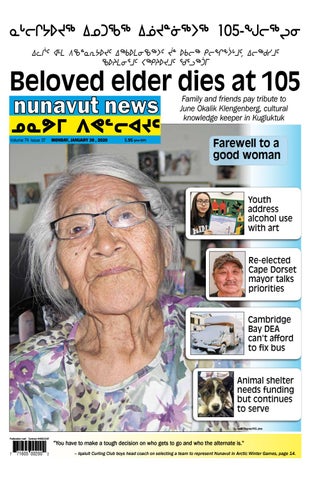
ᓇᒡᓕᒋᔭᐅᔪᖅ ᐃᓄᑐᖃᖅ ᐃᓅᔪᓐᓃᖅᐳᖅ 105-ᖑᓕᖅᖢᓂ ᐃᓚᒌᑦ ᐊᒻᒪ ᐱᖃᓐᓇᕆᔭᐅᔪᑦ ᐃᖅᑲᐅᒪᓂᖃᖅᐳᑦ ᔫᓐ ᐅᑲᓕᖅ ᑭᓕᖏᖕᐴᒡᒧᑦ, ᐃᓕᖅᑯᓯᒧᑦ ᖃᐅᔨᒪᓂᕐᒧᑦ ᐸᖅᑭᔨᐅᔪᒧᑦ ᖁᕐᓗᖅᑑᒥ
Beloved elder dies at 105 Family and friends pay tribute to June Okalik Klengenberg, cultural knowledge keeper in Kugluktuk
Volume 74 Issue 37 MONDAY, January 20 , 2020
$.95 (plus GST)
Farewell to a good woman
Youth address alcohol use with art
Re-elected Cape Dorset mayor talks priorities Cambridge Bay DEA can't afford to fix bus
Animal shelter needs funding but continues to serve Navalik Tologonak/NNSL photo Publication mail Contract #40012157
7
71605 00200
2
"You have to make a tough decision on who gets to go and who the alternate is." – Iqaluit Curling Club boys head coach on selecting a team to represent Nunavut in Arctic Winter Games, page 14.
2 nunavutnews.com, Monday, January 20, 2020
kNKu W?9oxJ5, N[Z/su, /8kxE 20, 2020
nunavutnews.com, Monday, January 20, 2020 3
kNKu W?9oxJ5, N[Z/su, /8kxE 20, 2020
Did we get it wrong?
amazing on-the-land stories
On the land
Nunavut News is committed to getting facts and names right. With that goes a commitment to acknowledge mistakes and run corrections. If you spot an error in Nunavut News/North, call (867) 979Do you have an amazing story from your adventures on 5990 and ask to speak to an editor, or email editor- the land? Tell us your story and show us your photos for a ial@nnsl.com. We'll get a correction or clarification chance to win $100. in as soon as we can. Submit your story and photo to our Nunavut News Facebook page, editor@nunavutnews.com, or by mail to Nunavut News, PO Box 28, Iqaluit, NU, X0A 0H0. Entries will be placed on our Facebook page. They may also appear in this newspaper and other Northern News Services publications. The story and photo with the most combined likes and shares at the end of the week wins. This week's winner is Sharon Milortok. ᐃᓄᑐᖃᖅ ᐃᓕᓴᕆᔭᐅᔪᖅ Congratulations!
ᑲᔾᔮᕐᓇᖅᑐᓂᒃ ᓄᓇᒥ ᐅᓂᒃᑳᑦ
ᐊᑭᓯᔪᖅ: ᓯᐊᕆᓐ ᒥᓗᖅᑐᖅ ᓇᓄᖅ ᐊᒻᒪ ᐊᑎᖅᑕᓕᖏᓪᓗ ᓇᐅᔮᑉ ᖃᓂᒋᔭᖓᓂ, ᐊᐅᔭᖅ 2019.
ᓇᐅᔮᑦ
News Briefs
ᐸᖅᑭᔨᐅᓂᖓᓂ ᐃᓄᐃᑦ ᐃᓕᖅᑯᓯᖓᓐᓂ
ᖁᕐᓗᖅᑐᖅ ᐃᓄᑐᖃᖅ ᔫᓯᐱ ᓂᑉᐸᑕᓐᑎᐊᖅ ᖁᕐᓗᖅᑑᕐᒥᐅᑕᖅ ᖃᐃᖁᔭᐅᓚᐅᖅᐳᖅ ᖁᕐᓗᖅᑑᒥ ᕼᐋᒻᓚᒃᑯᑦ ᑎᑎᕋᕐᕕᖓᓄᑦ ᔭᓄᐊᕆ 7–ᒥ ᑲᑎᒪᔨᓄᑦ ᑲᑎᒪᓂᖓᓄᑦ ᑐᓂᔭᐅᓂᐊᕐᓂᖓᓄᑦ ᐃᓄᑐᖃᕐᒧᑦ ᐃᓕᓴᕆᔭᐅᓂᖓᓂ ᓵᓚᖃᐅᓯᐊᒥ ᐃᓄᐃᑦ ᐱᖁᑎᖏᓐᓂᒃ ᓇᐅᑦᑎᖅᓱᖅᑎᓂᑦ (IHT). "ᖁᕕᐊᓱᒍᑎᒋᕐᔪᐊᓚᐅᖅᑕᖓ," ᐅᖃᓚᐅᖅᐳᖅ ᔫᓯᐱᐅᑉ ᐃᕐᓂᖓ ᑳᓕᓐ, ᐃᓚᐅᖃᑕᐅᔪᓐᓇᓚᐅᖅᑐᒥ ᐃᓚᖃᖅᖢᓂ ᔫᓯᐱᐅᑉ ᐸᓂᖓᓂ ᐊᓃᑕᒥ. "ᖁᕕᐊᓇᓚᐅᖅᐳᖅ." ᓵᓚᖃᐅᓯᐊᑦ ᑐᓂᔭᐅᓲᖑᕗᑦ ᐊᕐᕌᒍᑦ ᒪᕐᕉᕐ ᐊᓂᒍᕌᖓᑕ ᓇᓗᓇᐃᖅᓯᓂᕐᒧᑦ ᐃᓄᑐᖃᕐᓂ ᐃᑲᔪᓲᖑᔪᓂ ᐊᓯᖏᓐᓂ ᓄᓇᕗᒻᒥᐅᓂ ᑐᑭᓯᐅᒪᑦᑎᐊᒃᑲᓐᓂᕐᓂᖏᓐᓂ ᐃᓄᐃᑦ ᐃᓕᖅᑯᓯᖓᓐᓂ, ᐱᐅᓯᑐᖃᖏᓐᓂ ᐊᒻᒪ ᐃᑦᑕᕐᓂᓴᓕᕆᓂᕐᒥ, ᐅᖃᐅᓯᐅᓪᓗᓂ ᐃᓄᐃᑦ ᐱᖁᑎᖏᓐᓂᒃ ᓇᐅᑦᑎᖅᓱᖅᑎᒃᑯᓐᓂ. ᑖᓐᓇ ᐅᓂᒃᑳᕆᓂᐅᔪᖅ ᐊᒃᓱᐊᓗᒃ ᐊᑐᑦᑎᐊᖅᐳᖅ ᔫᓯᐱᒧᑦ, ᐅᖃᐅᓯᐅᓪᓗᓂ ᑳᓕᓐᒧᑦ. "ᐃᓚᐅᖃᑕᐅᓯᒪᕗᖅ ᑕᐃᒪᐃᑦᑐᒐᓚᖕᓂ ᐱᓕᕆᓂᐅᔪᓂ ᐃᓅᓯᓕᒫᐸᓗᐊᓂ, ᐃᖅᑲᐅᒪᓂᕆᔭᓕᒫᓐᓂᑦ. ᐃᓚᒋᔭᐅᖏᓐᓇᐅᔭᖅᐳᖅ ᑲᑎᒪᔨᐅᔪᓂ ᑲᑎᙵᓂᐅᔪᓂᓪᓘᓐᓃᑦ, ᑕᐃᒪᐃᑦᑐᒐᓚᖕᓂ," ᐅᖃᓚᐅᖅᐳᖅ. "ᑕᐃᒪᓐᓇ ᐃᑲᔪᕐᓂᖃᐃᓐᓇᐅᔭᖅᐳᖅ, ᖃᐅᔨᒪᓂᖓᓂ ᑐᓂᓯᔪᒪᕙᖕᓂᖓᓂ ᐊᓯᖏᓐᓄᑦ." please see Elder, page 11
ᓄᑕᕋᓛᓄᑦ ᓇᓴᐃᑦ ᖃᓪᓗᓈᑦ ᓄᓇᖓᓐᓄᐊᖅᐸᓪᓕᐊᔪᑦ
ᐃᒡᓗᓕᒃ ᖁᔭᓕᓂᕆᔭᖏᓐᓄᑦ ᐊᕕᒃᓯᒪᓂᐅᔪᒥ ᐲᔪᓪᒧᑦ ᐋᓐᑎᐊᕆᐅᒥ, ᒪᕐᕉᖕᓂ ᓄᕕᖅᓴᖅᑎᒻᒪᕆᐊᓗᖕᓂ ᐃᒡᓗᓕᖕᒥ – ᒫᒋ ᑯᑉᓗ ᐊᒻᒪ ᑯᓄᒃ ᐊᑕᒍᑦᓯᐊᖅ – ᓴᓇᓯᒪᕗᑦ 40–ᓂ ᓄᑕᕋᓛᓄᑦ ᓇᓴᕐᓂᑦ ᐊᐅᓪᓚᖅᑎᑕᐅᓂᐊᖅᑐᓄᑦ ᖃᓪᓗᓈᑦ ᓄᓇᖓᓐᓄᑦ. ᖁᕕᐊᓲᑎᒋᔭᐅᔪᑦ ᐅᑎᖅᑎᕆᓂᕐᒧᑦ ᑐᓐᓂᖅᑯᓯᐊᖑᓚᐅᖅᑐᒥ ᑐᐊᕕᕐᓇᖅᑐᒧᑦ ᓄᓇᓯᐅᒻᒧᑦ ᐃᒡᓗᓕᖕᒧᑦ ᐋᒍᔅᑎᐅᓚᐅᖅᑐᒥ. ᐲᔪᓪᒧᑦ ᐊᕕᒃᓯᒪᓂᐅᔪᒥ ᒐᕙᒪᒃᑯᑦ ᓇᒃᓯᐅᔾᔨᓚᐅᕆᕗᑦ ᑐᐊᕕᕐᓇᖅᑐᒥ ᓄᓇᓯᐅᒻᒥ ᐊᑐᖅᑕᐅᔪᓐᓃᖅᑐᓂ ᓄᓇᓯᐅᑎᖏᓐᓂ ᑭᙵᕐᓄᑦ, ᑕᓗᕐᔪᐊᖅ ᐊᒻᒪ ᑲᖏᖅᖢᒑᐱᖕᒧᑦ ᐊᕐᕌᓂ. "ᐅᖃᓚᐅᖅᐳᑦ ᓄᑕᕋᓛᑦ ᐃᓅᒑᖓᒥᒃ ᑐᐊᕕᕐᓇᖅᑐᒥ ᓄᓇᓯᐅᒻᒥ, ᓇᓴᕋᓛᖃᕆᐊᖃᖅᐳᑦ ᓂᐊᖁᖓᓐᓂ ᐅᖅᑰᑎᑦᑎᔪᓐᓇᖅᑐᒥ ᑕᐃᒫᒃ 40–ᓂ ᓴᓇᓚᐅᖅᐳᒍᑦ NU–ᓚᓯᒪᔪᒥ ᓄᓇᕗᒻᒧᑦ," ᓄᓇᓕᖕᓂ ᐊᐅᓚᑦᑎᔨᐅᔪᖅ ᒍᕋᒡ ᒧᐊᕋᔅ ᐅᖃᓚᐅᖅᐳᖅ. "ᐱᓕᕆᓂᑦᑎᐊᕙᐅᕗᖅ." ᒧᐊᕋᔅ ᐃᓚᒋᐊᖅᓯᓚᐅᖅᐳᖅ ᖃᔅᓯᒐᓚᖕᓂ ᐅᓪᓗᓂ ᐱᓕᒻᒪᒃᓴᕐᓂᐅᔪᒥ ᑐᐊᕕᕐᓇᖅᑐᒥ ᓄᓇᓯᐅᒻᒥ ᐱᓕᕆᔨᐅᔪᓄᑦ ᓱᓕ ᐋᖅᑭᒃᓱᖅᑕᐅᕙᓪᓕᐊᕗᖅ – ᐃᒻᒪᖄ ᐊᐃᑉᕆᓕᒥ ᐃᖃᓗᖕᓂ – ᑲᒪᔨᐅᔪᑦ ᐅᓯᑲᑦᑕᑦᑎᐊᕈᓐᓇᕐᓂᐊᕐᒪᑕ ᐅᓯᔭᐅᔪᓄᑦ ᐋᓐᓂᐊᕕᓕᐊᖅᑐᓄᑦ. please see Tuques, page 11
ᓂᕿᓪᓚᑦᑖᓄᑦ ᐱᓕᕆᐊᖑᔪᖅ ᐊᖏᖅᑕᐅᕗᖅ
ᐃᖃᓗᒃᑑᑦᑎᐊᖅ/Cambridge Bay ᐱᕙᓪᓕᐊᔪᓕᕆᔨᒃᑯᑦ ᐃᖏᕐᕋᔪᓕᕆᔨᒃᑯᓪᓗ ᐊᖏᖅᓯᒪᕗᑦ $30,000–ᓂ ᓄᓇᓕᖕᓂ ᐊᖑᓇᓱᖕᓂᐅᔪᒥ ᐃᓕᓯᓂᐊᖅᑐᒥ ᐃᖃᓗᖕᓂ, ᓇᑦᑎᕐᓂ, ᐅᒥᖕᒪᖕᓂ ᐊᒻᒪ ᑐᒃᑐᓂ ᑭᐳᓄᑦ ᓄᓇᓕᖕᓂ ᐃᒡᓗᒋᔭᐅᔪᓄᑦ. ᐃᖃᓗᒃᑑᑦᑎᐊᖅ ᐊᖑᓇᓱᒃᑏᑦ ᒥᑭᒋᐊᖅᓂᐊᖅᑏᓪᓗ ᑲᑐᔾᔨᖃᑎᒌᖏᓐᓂ (EHTO), ᑲᒪᒋᔭᖃᓲᒥᒃ ᐱᓕᕆᐊᖑᔪᒥ, ᑎᑎᕋᖅᓯᒪᓂᖃᖅᐳᑦ ᐃᓄᑐᖃᕐᓂ ᑐᓂᔭᐅᔪᓂ ᐃᖃᓗᒃᑑᑦᑎᐊᑉ ᖃᓄᐃᙱᑦᑎᐊᕐᓂᕐᒧᑦ ᐱᓕᕆᕝᕕᖓᓂ, ᐊᒻᒪ ᑕᐃᒃᑯᐊ ᐃᓄᐃᑦ ᖁᑦᑎᓛᖑᓪᓗᑎᒃ ᓯᕗᓪᓕᐅᔾᔭᐅᕗᑦ ᑐᓐᓂᖅᓴᖅᑕᐅᓂᐊᕐᓂᖏᓐᓂ ᓂᕿᓪᓚᑦᑖᓂ, ᐅᖃᐅᓯᐅᓪᓗᓂ ᐸᕗᓕ ᒪᒃᓴᒐᖅ, ᐊᐅᓚᑦᑎᔨᐅᔪᖅ ᐃᖃᓗᒃᑑᑦᑎᐊᖅ ᐊᖑᓇᓱᒃᑏᑦ ᒥᑭᒋᐊᖅᓂᐊᖅᑏᓪᓗ ᑲᑐᔾᔨᖃᑎᒌᖏᓐᓂ. ᑐᕌᒐᕆᔭᐅᖕᒥᔪᓂ ᐃᑲᔪᖅᓯᖅᑕᐅᓂᖏᓐᓂ ᓄᓇᕗᒻᒥ ᐅᑭᐅᖅᑕᖅᑐᒥ ᓯᓚᑦᑐᖅᓴᕐᕕᖕᒥ ᐃᓕᓐᓂᐊᖅᑎᐅᔪᓄᑦ, ᐊᐃᑉᐸᖃᙱᑦᑐᓄᑦ ᐊᖓᔪᖅᑳᖑᔪᓄᑦ ᐊᒻᒪ ᐃᓄᖕᓄᑦ ᐊᖑᓇᓱᒍᓐᓇᙱᑦᑐᓂ ᐃᒻᒥᖕᓄᑦ ᐱᓕᕆᔾᔪᑎᖃᙱᓗᐊᕐᓂᖏᓐᓄᑦ. "ᐊᑐᓂ ᐃᒡᓗᖃᖅᑎᐅᔪᓕᒫᑦ ᓄᓇᓕᖕᓂ ᓂᕿᓪᓚᑦᑖᖅᑳᒐᔪᒃᐳᑦ," ᐅᖃᓚᐅᖅᐳᖅ ᒪᒃᓴᒐᖅ. ᑮᓇᐅᔭᖃᖅᑎᑕᐅᓂᖓ ᐃᓱᓕᓲᖑᕗᖅ ᒫᔾᔨ 31–ᒥ. please see Country, page 11
ᒫᑕ ᐊᖑᑎᑦᑕᐅᕈᖅ
ᑕᓗᕐᔪᐊᖅ
ᐋᓐᑐᕉ ᓄᑲᖅᖠᖅ ᑭᖕᒥᐊᖅᑐᖅ ᑕᓗᕐᔪᐊᕐᒥᐅᑕᖅ ᑎᒍᒥᐊᖅᑐᖅ ᑎᖕᒥᐊᕋᓛᓂᑦ.
Martha Anguttitauruq
WINNER: Sharon Milortok
Taloyoak Polar bear with two cubs near Naujaat, summer 2019.
Andrew Jr. Kingmiaqtuq from Taloyoak holding some little birds.
ᑕᐃᕕᑦ ᐊᓇᕕᓗᒃ ᖃᕝᕕᒑᕐᔪᒃ ᑕᑯᔭᐅᔪᖅ ᑎᓯᐱᕆ 26, ᑕᓗᕐᔪᐊᖅ, ᓄᓇᕗᑦ ᖃᓂᒋᔭᖓᓂ.
ᑕᓗᕐᔪᐊᖅ
2019–ᒥ
ᓰᓚ ᑐᓗᕆᐊᓕᒃ
ᑕᓗᕐᔪᐊᖅ
ᔭᓄᐊᕆ 1, 2020, ᐅᒥᖕᒪᓚᐅᖅᐳᒍᑦ, ᑕᓗᕐᔪᐊᖅ, ᓄᓇᕗᒻᒥ.
Sheila Tulurialik Taloyoak
David Anavilok Taloyoak
Wolverine spotted Dec. 26, 2019 near Taloyoak.
ᐊᓕᑲᒥᖅ ᔪᐊᑕᓐ ᐃᑉᐱᐊᒃ
ᐃᒡᓗᓕᒑᕐᔪᒃ
ᐊᔾᔨᓕᐅᖅᑕᐅᔪᖅ ᐊᕐᕌᒎᑉ ᓄᑖᒥ ᐅᓐᓄᖓᓂ ᐊᑕᐅᑦᑎᒃᑰᖅᑕᖅᑐᓚᐅᖅᑎᓪᓗᒋᑦ ᖁᙱᐊᖅᑕᐅᔪᓂ ᐊᒻᒪ ᖁᒻᒧᐊᖅᑎᑕᐅᓲᑦ ᑭᖑᓂᐊᒍᑦ.
Alikamiq Jordin Ippiak Chesterfield Inlet
Taken New Year's Eve after the parade and fireworks.
Jan. 1, 2020, caught some muskox, Taloyoak, NU.
Naujaat
4 nunavutnews.com, Monday, January 20, 2020
kNKu W?9oxJ5, N[Z/su, /8kxE 20, 2020
news
ᓄĪØflî
'She was totally amazing' Family and friends pay tribute to June Okalik Klengenberg, who lived 105 years
ᓚᔅᓕ ᑭᓕᖏᖕᐴᒡ, ᔫᓐ ᐃᕐᙳᑕᖓ, ᑯᓂᒃᐸᖓ ᐅᓗᐊᖓᒍᑦ ᐳᓚᕋᖅᑎᓪᓗᒍ ᐅᖅᓱᖅᑑᒥ ᐸᖅᑭᔭᐅᖏᓐᓇᖅᑐᒥ ᐱᓕᕆᕝᕕᖕᒥ ᖃᔅᓯᐊᕐᔪᖕᓂ ᐊᕐᕌᒍᓂ ᖄᖏᖅᓯᒪᓕᖅᑐᓂ. ᐃᖅᑲᐅᒪᓂᐅᔪᒧᑦ ᑐᒃᓯᐊᕐᓂᐅᔪᒥ ᔫᓐᒧᑦ, ᐆᒪᓚᐅᖅᑐᒥ ᐅᑭᐅᓄᑦ 105–ᓄᑦ, ᐋᖅᑭᒃᑕᐅᓯᒪᓚᐅᖅᐳᖅ ᔭᓄᐊᕆ 16–ᒧᑦ.
skinning seals and caribou legs. "She entertained crowds over the many years demonstrating her skills," said Elias. When passing through Gjoa Haven, Elias would stop by to see Klengenberg at the continuing care centre, where she spent the past several years. "She was continually singing her drum dance songs. One day she told me, 'I really could dance in my mind,'" Elias recalled, adding that Klengenberg was fluent in Inuinnaqtun, a language with only an estimated several hundred speakers remaining. "We just lost a real treasure of a language keeper, a knowledge holder." Leslie had a houseful of visiting relatives last week as well as a phone that was constantly ringing as June's Jan. 16 funeral approached. "People are sending their condolences from around Nunavut and the NWT. She had many friends all over and family," Leslie said. "I'm very proud to be her granddaughter." Her only surviving brother, Jimmy, who's in his early 90s, made the trip from Cambridge Bay to be part of the memorial. June was born on Read Island, off the coast of Victoria Island, on June 1, 1914. She recounted living part of her early childhood in a small tent
Leslie Klengenberg, June's granddaughter, gives her a kiss on the cheek while visiting her at the Gjoa Haven Continuing Care Centre a couple of years ago. A memorial service for June, who lived to be 105 years of age, was scheduled for Jan. 16.
by Derek Neary
Northern News Services
Kugluktuk
June Okalik Klengenberg kept hearts warm with her gentle songs and kept bodies warm with her exceptional handmade parkas. Those are among the memories shared as Klengenberg's life, which spanned more than a century, was honoured following her death on Jan. 8. "So amazing, she was totally amazing," said Leslie Klengenberg, June's granddaughter. "She sewed. She sewed parkas. She made everything for her children. She was really well known for her squirrel parkas." Edna Elias, who spent much of her life in Kugluktuk, also remembers June's knack for fashioning outerwear. "She was really one of the leaders in intricate design," Elias said. "It takes an awful lot of work to collect and skin that many siksiks (Arctic ground squirrels, also known as hikhiks in the Kitikmeot) to make a parka." Elias also remembered Klengenberg as a regular participant in the "good woman" competitions at the Northern Games held in the Western Arctic. June would exhibit her proficiency in events such as tea boiling, duck plucking, dry-fish making and
until she and her family moved into a cabin, Leslie said. Most of her life was spent in Kugluktuk. She married Andy Klengenberg, who descended from Danish trapper, whaler and trader Christian Klengenberg. June raised five adopted children and adored her grandchildren. "She loved her grandchildren a thousand times to the moon and back," Elias said. "She always made sure her grandchildren were very well looked after." Although Leslie was highly complimentary of the job the staff did at the continuing care centre in Gjoa Haven, she acknowledged that the distance and high cost of travel left June relatively isolated from family. It's a reason why Leslie is an advocate for a long-term care centre in Kugluktuk, something the hamlet has been trying to arrange for several years. "I tried for my grandmother to be transferred to Cambridge when the old-folks home opened there but it was kind of tough," Leslie recalled of the unsuccessful request. Relatives made the best of it by visiting when they could and by talking to June though tele-health a couple of times a week. "She still sang for us and everything ... so that's totally amazing" Leslie said.
photo courtesy of Leslie Klengenberg
nunavutnews.com, Monday, January 20, 2020 5
kNKu W?9oxJ5, N[Z/su, /8kxE 20, 2020
'ᑲᒪᓇᕐᔪᐊᓚᐅᖅᑐᖅ' news
ᓄĪØflî
ᐃᓚᒌᑦ ᐊᒻᒪ ᐱᖃᓐᓇᕆᔭᐅᔪᑦ ᐃᖅᑲᐅᒪᓂᖃᖅᐳᑦ ᔫᓐ ᐅᑲᓕᖅ ᑭᓕᖏᖕᐴᒡᒧᑦ, ᐆᒪᓚᐅᖅᑐᒥ 105–ᓄᑦ ᐊᕐᕌᒍᓄᑦ
ᔫᓐ ᐅᑲᓕᖅ ᑭᓕᖏᖕᐴᒡ ᐆᒻᒪᑎᓂᑦ ᐆᓇᖅᑎᑦᑏᓐᓇᓚᐅᖅᐳᑦ ᐱᓯᑦᑎᐊᕙᖏᓐᓄᑦ ᐊᒻᒪ ᑎᒥᓂᑦ ᐅᖅᑰᑎᑦᑎᓪᓗᓂ ᐱᐅᕐᔪᐊᖅᑐᓂ ᐊᒡᒐᒧᑦ ᓴᓇᓯᒪᔪᓂ ᖁᓕᑦᑕᐅᔭᓄᑦ. ᐅᑯᐊ ᐃᓚᒋᔭᐅᖃᑕᐅᓚᐅᖅᐳᑦ ᐃᖅᑲᐅᒪᓂᐅᔪᓂ ᐅᖃᐅᓯᐅᓚᐅᖅᑐᓂ ᑭᓕᖏᖕᐴᒡ ᐃᓅᓯᖓᓐᓂ, ᐊᑯᓂᐅᓂᖃᓚᐅᖅᑐᒥ ᐊᕐᕌᒍᑦ 100 ᐅᖓᑖᓄᑦ, ᐅᐱᒋᔭᐅᓚᐅᖅᐳᖅ ᒪᓕᒃᑐᒥ ᐃᓅᔪᓐᓃᕐᓂᖓᓂ ᔭᓄᐊᕆ 8–ᒥ. "ᑲᒪᓇᕐᔪᐊᖅᑐᖅ, ᑲᒪᓇᕐᔪᐊᓚᐅᖅᐳᖅ," ᐅᖃᓚᐅᖅᐳᖅ ᓚᔅᓕ ᑭᓕᖏᖕᐴᒡ, ᔫᓐ ᐃᕐᙳᑕᖓ. "ᒥᖅᓱᖅᐸᓚᐅᖅᐳᖅ. ᖁᓕᑦᑕᐅᔭᓂ ᒥᖅᓱᖅᐸᓚᐅᖅᐳᖅ. ᑭᓱᓕᒫᑦᑎᐊᓂ ᓴᓇᕙᓚᐅᖅᐳᖅ ᕿᑐᕐᙵᒥᓄᑦ. ᖃᐅᔨᒪᔭᐅᕐᔪᐊᓚᐅᖅᐳᖅ ᓯᒃᓯᐅᑉ ᐊᒥᖏᓐᓂ ᖁᓕᑦᑕᐅᔭᓕᐊᖏᓐᓄᑦ." ᐃᐊᑦᓇ ᐃᓚᐃᔭᔅ, ᐱᕈᖅᓴᓚᐅᖅᑐᒥ ᖁᕐᓗᖅᑑᒥ, ᐃᖅᑲᐅᒪᒋᕗᖅ ᔫᓐ ᐱᔪᓐᓇᑦᑎᐊᕐᓂᖓᓂ ᓴᓇᓂᕐᒧᑦ ᓯᓚᓯᐅᑎᓄᑦ ᐊᓐᓄᕌᓂᒃ. "ᐊᑕᐅᓯᐅᓪᓗᓂ ᓯᕗᓕᐅᖅᑎᐅᖃᑕᐅᓚᐅᖅᐳᖅ ᑕᖅᓯᖅᓱᖅᓯᒪᑦᑎᐊᖅᑐᓂ ᓴᓇᔨᐅᓂᖓᓂ," ᐃᓚᐃᔭᔅ ᐅᖃᓚᐅᖅᐳᖅ. "ᐱᓕᕆᓂᖃᕐᔪᐊᖅᐳᖅ ᑲᑎᖅᓱᐃᓂᕐᒧᑦ ᐊᒻᒪ ᐋᒃᑐᐃᓂᕐᒧᑦ ᑕᐃᒪᓐᓇᑎᒋ ᐅᓄᖅᑎᒋᔪᓄᑦ ᓯᒃᓯᓂᑦ (ᐅᑭᐅᖅᑕᖅᑐᒥ ᓄᓇᒥᐅᑕᓂ ᓯᒃᓯᓂᑦ, ᖃᐅᔨᒪᔭᐅᖕᒥᔪᑦ ᕼᐃᒃᕼᐃᒃᓂ ᕿᑎᕐᒥᐅᒥᑦ) ᖁᓕᑦᑕᐅᔭᓕᐅᕐᓂᕐᒧᑦ." ᐃᓚᐃᔭᔅ ᐃᖅᑲᐅᒪᓚᐅᕆᕗᖅ ᑭᓕᖏᖕᐴᒡᒥ ᐃᓚᒋᔭᐅᖃᑕᐅᒐᔪᖕᓂᖓᓂ "ᐊᕐᓇᑦᑎᐊᕙᖕᒧᑦ" ᓵᓚᖃᕋᓱᐊᕐᓂᐅᔪᓂ ᐅᑭᐅᖅᑕᖅᑐᒥ ᐱᙳᐊᕐᓂᐅᔪᓄᑦ ᐱᓕᕆᐊᖑᕙᒃᑐᓂ ᐅᐊᓕᓂᕐᒥ. ᔫᓐ ᑕᑯᒃᓴᐅᑎᑦᑎᕙᓚᐅᖅᐳᖅ ᐱᓕᕆᒃᑲᐅᓂᖓᓂ ᖃᓄᐃᓐᓂᐅᔪᓄᑦ ᓲᕐᓗ ᑏᓚᐅᕐᓂᕐᒧᑦ, ᒥᑎᕐᓂ ᒥᖅᑯᐃᔭᐃᓂᖓᓂ, ᐱᔅᓯᓕᐅᕐᓂᕐᒧᑦ ᐊᒻᒪ ᐱᓚᒃᑐᐃᓂᕐᒧᑦ ᓇᑦᑎᕐᓂ ᐊᒻᒪ ᑐᒃᑑᑉ ᓂᐅᖏᓐᓂ" "ᑭᐱᙳᐃᔭᐃᕙᓚᐅᖅᐳᖅ ᐃᓄᒋᐊᓂᑦ ᐊᒥᓱᓄᑦ ᐊᕐᕌᒍᒐᓴᓄᑦ ᑕᑯᒃᓴᐅᑎᑦᑎᓪᓗᓂ ᐊᔪᙱᓐᓂᖓᓐᓂ," ᐅᖃᓚᐅᖅᐳᖅ ᐃᓚᐃᔭᔅ. ᐊᖅᑯᓵᓕᕌᖓᒥ ᐅᖅᓱᖅᑑᒥ, ᐃᓚᐃᔭᔅ ᐳᓛᕆᐊᖅᐸᓚᐅᖅᐳᖅ ᑭᓕᖏᖕᐴᒡᒥ ᐸᖅᑭᔭᐅᖏᓐᓇᖅᑐᒥ ᐱᓕᕆᕝᕕᖓᓂ, ᐊᖏᕐᕋᕆᓚᐅᖅᑕᖓᓂ ᖃᔅᓯᐊᕐᔪᖕᓄᑦ ᑭᖑᓪᓕᖅᐹᖑᔪᓄᑦ ᐊᕐᕌᒍᖏᓐᓂ. "ᐃᙱᒐᔪᓚᐅᖅᐳᖅ ᕿᓚᐅᔾᔭᐅᒻᒧᑦ ᐱᓯᖏᓐᓂ. ᐅᓪᓗᕐᒥ ᐊᑕᐅᓯᕐᒥ ᐅᖃᐅᑎᓚᐅᖅᐹᖓ, ᐃᓱᒪᓐᓂ ᒧᒥᕈᓐᓇᑦᑎᐊᖅᐳᖓ,'" ᐃᓚᐃᔭᔅ ᐃᖅᑲᐃᓚᐅᖅᐳᖅ, ᐃᓚᒋᐊᖅᓯᓪᓗᓂ ᑭᓕᖏᖕᐴᒡ ᐅᖃᕈᓐᓇᑦᑎᐊᓚᐅᖅᐳᖅ ᐃᓄᐃᓐᓇᖅᑐᓐ, ᐅᖃᐅᓯᐅᔪᒥ ᓇᓚᐅᑦᑖᕆᔭᐅᓯᒪᔪᒥ ᖃᔅᓯᐊᕐᔪᖕᓂ ᕼᐊᓐᓇᓚᓂ ᐅᖃᖅᑎᐅᔪᓂ ᐊᒥᐊᒃᑯᔪᓂᑦ. "ᐊᓯᐅᔨᓵᖅᐳᒍᑦ ᐱᕐᔪᐊᖑᔪᒥ ᐅᖃᐅᓯᕐᒧᑦ ᐸᖅᑭᔨᐅᔪᒧᑦ, ᖃᐅᔨᒪᓂᕐᒧᑦ ᑎᒍᒥᐊᖅᑎᐅᔪᒥ." ᓚᔅᓕ ᐃᒡᓗᖓ ᑕᑖᓚᐅᖅᐳᖅ ᐳᓚᕋᖅᑐᓂ ᐃᓚᖏᓐᓂ ᐱᓇᓱᐊᕈᓯᐅᓚᐅᖅᑐᒥ ᐊᒻᒪᓗᑦᑕᐅᖅ ᐅᖃᓘᒻᒥ ᓯᕙᓃᓐᓇᐅᔭᖅᑐᒥ ᔫᓐ
ᔭᓄᐊᕆ 16–ᒥ ᐃᓗᕕᖅᑕᐅᓂᐊᕐᓂᖓ ᑎᑭᑉᐸᓪᓕᐊᑎᓪᓗᒍ. "ᐃᓄᐃᑦ ᓇᒃᓯᐅᔾᔨᕗᑦ ᒪᒥᐊᓐᓂᖏᓐᓂ ᓇᒥᑐᐃᓐᓇᖅ ᓄᓇᕗᒻᒥ ᐊᒻᒪ ᓄᓇᑦᓯᐊᕐᒥ. ᐊᒥᓱᐊᓗᖕᓂ ᐱᖃᓐᓇᕆᔭᖃᓚᐅᖅᐳᖅ ᓇᒥᑐᐃᓐᓇᑦᑎᐊᖅ, ᐊᒻᒪ ᐃᓚᖃᖅᖢᓂ," ᓚᔅᓕ ᐅᖃᓚᐅᖅᐳᖅ. "ᐅᐱᕐᔪᐊᖅᐳᖓ ᐃᕐᙳᑕᕆᔭᐅᓂᓐᓂ." ᐆᒪᔪᑐᐊᖑᓕᖅᑐᒥ ᐊᓂᖓ, ᔨᒥ, 90–ᖏᓐᓃᒐᓚᒃᑐᒥ, ᐊᐅᓪᓛᕐᓂᖃᓚᐅᖅᐳᖅ ᐃᖃᓗᒃᑑᑦᑎᐊᕐᒥ ᐃᓚᒋᔭᐅᖃᑕᐅᔭᖅᑐᖅᖢᓂ ᐃᖅᑲᐅᒪᓂᐅᔪᒧᑦ. ᔫᓐ ᐃᓅᓚᐅᖅᓯᒪᕗᖅ ᕿᑭᖅᑕᓇᔪᖕᒥ, ᓯᒡᔭᖅᐸᓯᖓᓂ ᐃᖃᓗᒃᑑᑦᑎᐊᑉ ᕿᑭᖅᑖᓗᐊᓂ, ᔫᓂ 1, 1914–ᒥ. ᐃᖅᑲᐅᒪᓚᐅᖅᐳᖅ ᐃᓅᓂᖓᓂ ᐃᓚᖓᓐᓂ ᓯᕈᓯᐅᓂᕆᓚᐅᖅᑕᖓᓂ ᑐᐱᕋᓛᒥᑦ ᑭᓯᐊᓂ ᐃᒻᒥᓂᒃ ᐊᒻᒪ ᐃᓚᖏᑦ ᓅᑎᓪᓗᒋᑦ ᐃᒡᓗᕋᓛᒧᑦ, ᓚᔅᓕ ᐅᖃᓚᐅᖅᐳᖅ. ᑕᒪᕐᒥᒐᓚᒃ ᐃᓅᓯᖓᓐᓂ ᖁᕐᓗᖅᑑᕐᒥᐅᑕᐅᓚᐅᖅᐳᖅ. ᑲᑎᑎᑕᐅᓚᐳᖅᐳᖅ ᐋᓐᑎ ᑭᓕᖏᖕᐴᒡᒧᑦ, ᑕᐃᓂᔅ–ᖑᔪᒥ ᒥᑭᒋᐊᕐᓂᐊᖅᑎᐅᓚᐅᖅᑐᒥ, ᕿᓚᓗᒐᕋᓱᒃᑎ ᐊᒻᒪ ᑕᐅᖅᓰᔨᐅᓚᐅᖅᑐᒥ ᑯᕆᔅᑎᐊᓐ ᑭᓕᖏᖕᐴᒡᒥ. ᔫᓐ ᐱᕈᖅᓴᐃᓚᐅᖅᐳᖅ ᑕᓪᓕᒪᓂ ᑎᒍᐊᕆᔭᒥᓂᑦ ᓱᕈᓯᖏᓐᓂ ᐊᒻᒪ ᓇᒡᓕᒋᑦᑎᐊᓚᐅᖅᐸᖏᑦ ᐃᕐᙳᑕᖏᑦ. "ᓇᒡᓕᒋᓚᐅᖅᐸᖏᑦ ᑕᐅᓯᓐ–ᖏᖅᓱᖅᑐᒥ ᑕᖅᑭᒧᑦ ᐊᒻᒪ ᐅᑎᒧᑦ," ᐃᓚᐃᔭᔅ ᐅᖃᓚᐅᖅᐳᖅ. "ᓇᓗᓇᐃᖅᓰᓐᓇᓚᐅᖅᐳᖅ ᐃᕐᙳᑕᖏᑦ ᑲᒪᒋᔭᐅᑦᑎᐊᖏᓐᓇᐅᔭᕐᓂᖏᓐᓂ." ᓚᔅᓕ ᐱᐅᒋᔭᖃᑦᑎᐊᕋᓗᐊᖅᑎᓪᓗᒍ ᐱᓕᕆᐊᒃᓴᐅᔪᒥ ᐃᖅᑲᓇᐃᔭᖅᑏᑦ ᐱᓕᕆᓂᕆᓚᐅᖅᑕᖓᓂ ᐸᖅᑭᔭᐅᖏᓐᓇᖅᑐᒥ ᐱᓕᕆᕝᕕᖓᓂ ᐅᖅᓱᖅᑑᒥ, ᓇᓗᓇᐃᖅᓯᓚᐅᖅᐳᖅ ᐅᖓᓯᖕᓂᖓ ᐊᒻᒪ ᐊᑭᑐᔪᐊᓘᓂᖓᓂ ᐊᐅᓪᓛᕐᓂᕐᒧᑦ ᕿᒪᐃᓚᐅᖅᐳᖅ ᔫᓐᒥ ᐅᖓᓯᒃᑑᔮᕐᓂᖓᓂ ᐃᓚᖏᓐᓂᑦ. ᐱᔾᔪᑕᐅᕗᖅ ᓚᔅᓕ ᐱᓇᓱᐊᕐᓂᖓᓂ ᐊᑯᓂᐅᔪᒥ ᐸᖅᑭᔭᐅᕝᕕᒃᓴᒧᑦ ᖁᕐᓗᖅᑑᒥ, ᕼᐋᒻᓚᒃᑯᑦ ᖃᔅᓯᒐᓚᖕᓄᑦ ᐊᕐᕌᒍᓄᑦ ᐱᓇᓱᐊᖅᓯᒪᔭᖓᓐᓂ "ᐊᓈᓇᑦᑎᐊᕋ ᓅᑕᐅᑎᓐᓇᓱᐊᓚᐅᖅᐸᖓ ᐃᖃᓗᒃᑑᑦᑎᐊᒧᑦ ᐃᓄᑐᖃᒃᑯᕕᒃ ᐊᖏᕐᕋᕆᔭᐅᔪᖅ ᒪᑐᐃᖅᑎᓪᓗᒍ ᑕᐃᑲᓂ ᑭᓯᐊᓂ ᐊᔪᕐᓇᒐᓚᓚᐅᖅᐳᖅ," ᓚᔅᓕ ᐃᖅᑲᐅᒪᕗᖅ ᐱᓕᕆᑦᑎᐊᕈᓐᓇᓚᐅᙱᑦᑐᒥ ᑐᒃᓯᕋᕐᓂᐅᔪᒥ. ᐃᓚᒋᔭᖏᑦ ᐱᓕᕆᔪᓐᓇᕐᓂᓕᒫᖏᓐᓂ ᐱᓕᕆᓚᐅᖅᐳᑦ ᐳᓚᕋᖅᐸᒃᖢᑎᒃ ᐱᔪᓐᓇᕌᖓᑕ ᐊᒻᒪ ᐅᖃᓪᓚᒃᐸᒃᖢᑎᒃ ᔫᓐᒧᑦ ᑕᓚᕖᓴᒃᑯᑦ–ᐋᓐᓂᐊᖃᕐᓇᙱᑦᑐᓕᕆᔨᒃᑯᑎᒍᑦ ᖃᔅᓯᐊᖅᓱᒐᓚᒃᖢᑎᒃ ᐱᓇᓱᐊᕈᓯᕐᒥ. "ᓱᓕ ᐅᕙᑦᑎᓐᓄᑦ ᐃᙱᖅᐸᓚᐅᖅᐳᖅ ᐊᒻᒪ ᖃᓄᓕᒫᖅ ... ᑕᐃᒪᓐᓇ ᑲᒪᓇᕐᔪᐊᓚᐅᖅᐳᖅ" ᓚᔅᓕ ᐅᖃᓚᐅᖅᐳᖅ.
ᔫᓐ ᐅᑲᓕᖅ ᑭᓕᖏᖕᐴᒡ ᖁᕐᓗᖅᑑᕐᒥᐅᑕᖅ, ᖁᕕᐊᓱᒍᑎᖃᓚᐅᖅᐳᖅ 103–ᖓᓂ ᓇᓪᓕᐅᓐᓂᖅᓯᐅᕐᓂᖓᓂ ᐅᖅᓱᖅᑑᒥ ᐸᖅᑭᔭᐅᖏᓐᓇᖅᑐᒥ ᐱᓕᕆᕝᕕᖕᒥ ᔫᓂ 1, 2017–ᒥ. ᑭᓕᖏᖕᐴᒡ ᐃᓅᔪᓐᓃᓚᐅᖅᐳᖅ ᔭᓄᐊᕆ 8–ᒥ ᐅᑭᐅᖃᓕᖅᖢᓂ 105–ᓂ.
photo courtesy of Rhonda Marshall/Gjoa Haven Continuing Care Centre
June Okalik Klengenberg of Kugluktuk celebrated her 103rd birthday at the Gjoa Haven Continuing Care Centre on June 1, 2017. Klengenberg died on Jan. 8 on at age 105.
6 nunavutnews.com, Monday, January 20, 2020
kNKu W?9oxJ5, N[Z/su, /8kxE 20, 2020
news
ᓄĪØflî
ᐃᖃᓗᒃᑑᑦᑎᐊᑉ ᐃᓕᓐᓂᐊᕐᕕᖓᓄᑦ ᐸᓯᖓ ᐊᐃᒃᓯᖃᑦᑕᖅᓯᒪᙱᓚᖅ ᑕᒪᑐᒪᓂ ᐃᓕᓐᓂᐊᕐᓂᕐᒧᑦ ᐊᕐᕌᒎᔪᒥ. ᓄᓇᓕᐅᑉ ᐊᕕᒃᓯᒪᓂᐅᔪᒥ ᐃᓕᓐᓂᐊᖅᑐᓕᕆᔨᒃᑯᑦ ᑲᑎᒪᔨᖏᑦ ᑮᓇᐅᔭᖃᙱᓗᐊᖅᐳᑦ ᐋᖅᑭᒃᓱᕐᓂᕐᒧᑦ, ᑕᐃᒫᒃ ᓴᖑᕗᑦ ᓄᓇᕗᒻᒥ ᒐᕙᒪᒃᑯᓐᓄᑦ ᑲᒪᒋᔭᖃᕐᓂᖏᓐᓂ ᐸᓯᒃᑰᖅᑎᑦᑎᓂᕐᒧᑦ ᓱᕈᓯᕐᓂᑦ ᑕᐃᑯᖓ ᐊᒻᒪ ᐅᑎᒧᑦ ᐃᓕᓐᓂᐊᕐᕕᖕᒥ. Cambridge Bay's school bus hasn't been making the rounds during this school year. The community's district education authority cannot afford to repair it, so they're turning to the GN to look after bussing children to and from school. photo courtesy of Alan Sim
Education authority can't afford to fix school bus DEA wants GN to take over school bus service by Derek Neary
Northern News Services
Ikaluktutiak/Cambridge Bay
The Cambridge Bay District Education Authority doesn't have the funds to fix the community's untrustworthy school bus so it wants the Government of Nunavut to take responsibility for the service. The vehicle hasn't been in use this school year. "The bus still runs but is not safe to use," stated Alan Sim, chair of the Cambridge Bay DEA. "We are going to go back to the (GN) and ask that they take over bussing services in Cambridge Bay. We understand that they operate bussing in some other communities." There are multiple issues with the vehicle and the engine could need to be replaced at any time, Sim explained. "The repairs would eat most of the budget given to the DEA. The problem there is that we could repair it and we would have very little left to pay a driver and supervisors," Sim stated. "On top of that, after making the repairs, the engine may fail and all the money would have been wasted." In addition, the existing bus – a 2007 model – is too small for the community's needs and a heated location to park a bus is needed to help preserve it, Sim added. Education Minister David Joanasie informed Nunavut News that the department is already considering an October request from the Cambridge Bay DEA for a replacement bus and a heated storage space. The department has a $280,000 annual budget for new school buses,
but the Education Act puts the onus on DEAs to manage school buses. Among the criteria that the department considers when granting new school buses is the number of students who use it, the distance from school, seasonal temperatures and safety. Sim wasn't certain how many students use the bus in Cambridge Bay but he estimated that the greatest distance any of them would have to walk to school is approximately one kilometre. Joanasie said only elementary school students take the bus in Cambridge Bay and the service normally runs from mid-November until March 31. Despite not having access to a school bus this year, there's no indication that school absences in Cambridge Bay or even students showing up late for class has been trending upwards, according to Joanasie. Sim said, in general, parents have been supportive while the bus has been inactive, although some have expressed concern. He added that up until a recent cold snap, the community enjoyed mild weather, making it more conducive for children to walk. Joanasie noted that his department has taken a number of measures to assist various communities address bussing issues. Among them are providing training for bus drivers – in partnership with local organizations – and providing taxi vouchers for students when a bus isn't available. The Education Act doesn't make school bus service mandatory, however.
nunavutnews.com, Monday, January 20, 2020 7
kNKu W?9oxJ5, N[Z/su, /8kxE 20, 2020
Shelter needs funding, space Nunavut's only animal shelter faces myriad challenges to provide 'overlooked' services just trying to help," said Kennedy. Iqaluit/Nunavut She emphasized that her Nunavut's only animal team puts forth a lot of effort shelter continues to provide to find dog owners before services for all Nunavut com- resorting to adoption. There munities despite its challenges. is limited space and usually The Nunavut Animal Shelter three to seven new animals (NAS), also known as Iqaluit that are brought to the shelter Humane Society, has been in weekly. "There is only so long we operation since 2007. Janelle can hold an Grace Kenbefore nedy began "Not having any animal we have to the volunteer run organ- core funding means do something else with ization to help that we never it. We try to rescue and sure rehabi l it at e really know what's make animals. going to happen people understand if we "We try month to month." didn't exist, to help those the alternative who cannot – Janelle Grace Kennedy is much more help themgrim." selves," said The alternative is dogs Kennedy referring to all aniwill be shot within 72 hours, mals in the territory. To maintain this shelter in according to Kennedy. Loose dogs is a growing Iqaluit and its services has issue in the North and "the been a challenging ordeal. "Just keeping the doors need (to help the dogs) is just open takes up so much our tremendous," she stated. In communities like Cape time," stated Kennedy. She is referring to the con- Dorset, Kimmirut, Hall Beach stant need to fundraise since and Iglulik presently there is the neither the territorial or a dog "population explosion," municipal governments city according to Kennedy. Recently, NAS got a provide any funding. "Not having any core fund- request from Hall Beach to ing means that we never really pick up 20 dogs. If possible NAS will send know what's going to happen month to month," she said add- kennels to the communities in ing there is feeling of instabil- order to transport the animals to Iqaluit. This service is proity. Funds are also needed to vided for free. The problem is it may take hire staff as the organization three to seven days to reach becomes larger. The size of the shelter is a community depending on yet another challenge for NAS. weather conditions and airline Although the city provides a schedules. Since many combachelor size apartment space, munities do not have holding pens, it is difficult for them to it is too small said Kennedy. "It's a very small space. It take advantage of the services, needs a lot of renovations, it's explained Kennedy. Despite all these challengnot set up for a proper animal es however, NAS has managed care facility." With a larger space more provide help to the animals. In communities like Panand better services could be provided, explained Kennedy gnirtung where neuter clinics referring to the rehabilitation have been introduced by NAS, the number of dogs being sent and quarantine of dogs. NAS is also "absolute- to Iqaluit has "dramatically ly dependent on Canadian dropped." "We used to get calls every North" to transport animals from Northern communities to week, now it's like maybe once a month," said Kennedy referIqaluit and then south. The present contract with ring to Pangnirtung. NAS is trying to get more the airlines expires next month and Kennedy is uncertain how funds to have neuter clinics in more communities. the negotiation will proceed. In 2019, NAS rescued and Due to a lack of understanding, the organization's rehabilitated about 600 dogs actions have been viewed from the territory. "We've been able to mainnegatively by some according tain our no kill animal shelter to Kennedy. There are situations where status," stated Kennedy. "I think we have a respondog owners come looking for their loose dogs only to find sibility as humans to look out they have been sent away after our companions (dogs) who look to us for their well for adoption. "We have challenges with being," she said adding that the public sometimes, too. NAS provides "an essential, Sometimes they see us is a often overlooked service, to negative way. We really are the territory." by Rajnesh Sharma
Northern News Services
news
ᐊᕙᓐ ᑎᑭᓚᐅᖅᐳᖅ ᐃᖃᓗᖕᓄᑦ ᐃᒡᓗᓕᖕᒥ ᑎᓯᐱᕆ 31, 2019–ᒥ. ᖕᒥᓯᕗᓪᓕᖅᐸᐅᓪᓗᓂ ᐃᒡᓗᖃᖅᑎᐅᓚᐅᖅᐳᖅ 2020–ᒥ.
Evan arrived to Iqaluit from Iglulik on Dec. 31, 2019. He was the shelter's first resident of 2020. Photo courtesy of Janelle Grace Kennedy
ᓄĪØflî
8 nunavutnews.com, Monday, January 20, 2020
Published Mondays Office: 626 Tumiit Plaza, Iqaluit, NU Box 28, X0A 0H0 Reporters: Rajnesh Sharma, Derek Neary Advertising: Phone: (867) 979-5990 Fax: (867) 979-6010 Toll free: (855) 447-2584 Email: editor@nunavutnews.com Website: www.nnsl.com/nunavutnews Kivalliq office: Box 657, Rankin Inlet, NU, X0C 0GO Darrell Greer – Bureau Chief Phone: (867) 645-3223 Fax: (867) 645-3225 Email: kivalliqnews@nnsl.com Website: www.nnsl.com/kivalliqnews Production facilities: Box 2820, Yellowknife, NT, X1A 2R1 Phone: (867) 873-4031 Fax: (867) 873-8507 Email: editorial@nnsl.com advertising@nunavutnews.com circulation@nnsl.com Website: www.nnsl.com
Founder (1934-2018):
J.W. (Sig) Sigvaldason PUBLISHER, CEO: Bruce Valpy – valpy@nnsl.com Chief Financial Officer: Judy Triffo MANAGING EDITOR: Mike W. Bryant – bryant@nnsl.com ACCOUNTING: nnsladmin@nnsl.com Florie Mariano • Cindy Minor • Amy Yang Editorial board: Bruce Valpy • Mike W. Bryant • Brett McGarry NEWS EDITORS Brett McGarry Editorial Production: editorial@nnsl.com Sports: James McCarthy – sports@nnsl.com Arts: entertainment@nnsl.com Business: business@nnsl.com Advertising production Production co-ordinator: Jennifer Reyes Diana Mathisen • Zdena Kunderlik Randy Hiebert • Joshua Uson ADVERTISING Baffin – Laura Whittle advertising@nunavutnews.com Kivalliq/Kitikmeot advertising@nnsl.com All departments: advertising@nnsl.com National: James Boylan Classified Advertising: classifieds@nnsl.com CIRCULATION – circulation@nnsl.com Circulation Director: Emma Thomas Jewala Jhankur Subscriptions: One year mail $70 Online (entire content) $50/year, $35/6 months
NORTHERN NEWS SERVICES LIMITED 100% Northern owned and operated Publishers of: Inuvik Drum • Kivalliq News Yellowknifer • Hay River Hub NWT News/North • Nunavut News/North Member of: Canadian Community Newspapers Association Ontario Community Newspapers Association Manitoba Community Newspapers Association Saskatchewan Weekly Newspapers Association Alberta Weekly Newspapers Association Ontario, Manitoba and Alberta Press Councils Yellowknife Chamber of Commerce Contents copyright – printed in the North by Canarctic Graphics Limited We acknowledge the financial support of the Government of Canada.
Nous reconnaissons l'appui financier du gouvernement du Canada.
Member of the Ontario Press Council. The Ontario Press Council was created to defend freedom of the press on behalf of the public and press alike and to consider specific, unsatisfied complaints from readers about the conduct of the press in gathering and publishing news, opinion and advertising. Complaints should go to: The Ontario Press Council, 2 Carlton St., Suite 1706 Toronto, Ont., M5B 1J3 Email: Info@ontpress.com Fax: 1-416-340-8724 www.ontpress.com
Send us your comments
Email us at: editorial@nnsl.com; mail to Box 28, Iqaluit, NU, X0A 0H0; or drop your letter off at our office at 102 Tumiit Plaza. All letters submitted must be signed with a return address and daytime telephone number so that we can confirm it came from you. Not all letters will necessarily be published. Preference is given to short letters of broad interest or concern. Letters of more than 200 words, open letters and those published elsewhere are seldom used. We reserve the right to edit for length or taste and to eliminate inaccurate or libelous statements.
kNKu W?9oxJ5, N[Z/su, /8kxE 20, 2020
Editorial & Opinions wh mK5
Comments and views from NUNAVUT NEWS/north and letters to the editor
ᐱᕈᖅᐸᓪᓕᐊᔪᒥ ᐊᔾᔨᒌᙱᓐᓂᐅᔪᒥ ᐃᓕᑦᑎᓂᕐᒧᑦ ᐱᕕᒃᓴᖃᕐᓂᐅᔪᒥ ᐅᑭᐅᖅᑕᖅᑐᒥ ᑐᓴᒐᒃᓴᓕᕆᔨᒃᑯᑦ ᑲᓇᑕ ᐊᓯᔾᔨᖅᐸᓪᓕᐊᓯᒪᕗᖅ ᐊᕐᕌᒍᒐᓴᓂ ᐃᖏᕐᕋᕙᓪᓕᐊᑎᓪᓗᒋᑦ ᐊᒻᒪ ᐱᕈᖅᐸᓪᓕᐊᔪᒥ ᓈᒻᒪᒃᓴᕐᓂᐅᔪᒥ ᐊᔾᔨᒌᙱᓐᓂᖅᓴᐅᔪᒥ ᐃᓄᒋᐊᖕᓂᐅᔪᒥ ᐃᒃᐱᒋᔭᐅᔪᓐᓇᖅᑐᒥ ᓇᒥᑐᐃᓐᓇᖅ ᑎᕆᖅᑰᔪᒥ ᑲᓇᑕᓕᒫᒥ, ᓯᒡᔭᖅᐸᓯᖕᒥ ᓯᒡᔭᖅᐸᓯᖕᒥ ᓯᒡᔭᖅᐸᓯᖕᒧᑦ. ᓄᓇᕗᑦ ᐊᔾᔨᐅᙱᑦᑑᙱᓚᖅ ᐊᖏᒡᓕᕙᓪᓕᐊᖏᓐᓇᖅᑐᒥ ᑲᑎᙵᓂᖃᖅᐸᓪᓕᐊᑎᓪᓗᒍ ᐊᒥᐊᒃᑯᖓᓂ ᑲᓇᑕᒥ ᐊᒻᒪ ᓄᓇᕐᔪᐊᓕᒫᒧᑦ. ᐊᖏᔪᒻᒪᕆᐊᓗᖕᓂ ᐊᓯᔾᔨᖅᐸᓪᓕᐊᓂᖃᖅᐳᖅ ᐱᔾᔪᑎᖃᖅᑐᒥ ᐅᖃᐅᓯᕐᒥ, ᐃᓕᖅᑯᓯᒥ ᐊᒻᒪ ᐃᓄᒋᐊᖕᓂᐅᔪᓄᑦ. ᒫᓐᓇ ᐱᓂᖅᓴᒻᒪᕆᐅᔪᒥ ᖃᓪᓗᓈᓂ ᓄᓇᖃᖅᑎᐅᔪᓄᑦ ᐃᓄᖏᑦ ᓇᓂᓯᕙᓪᓕᐊᕗᑦ ᐊᖏᕐᕋᖃᕐᓂᕐᒥ ᐅᑭᐅᖅᑕᖅᑐᒥ ᐊᒻᒪᓗ ᓴᖅᑭᔮᕐᕕᐅᓯᒪᕗᑦ ᐃᓄᐃᑦ ᐃᓕᖅᑯᓯᖓᓐᓄᑦ ᐊᒻᒪ ᐃᓅᓯᕆᔭᒥᓄᑦ. ᖁᑦᑎᖕᓂᖅᓴᓂ ᐃᓕᓐᓂᐊᖅᑎᐅᔪᓂ ᐃᓄᒃᓱᒃ ᖁᑦᑎᒃᑐᒥ ᐃᓕᓐᓂᐊᕐᕕᖓᓂ ᑕᒪᐃᑎᒍᑦ ᐅᖃᐅᓯᖃᓚᐅᖅᐳᑦ ᐱᐅᔪᒥ ᐊᑐᕐᓂᖃᕐᓂᐅᔪᒥ ᐱᓇᓱᐊᕈᓯᐅᓚᐅᖅᑑᑉ ᑎᑎᕋᖅᑕᐅᓯᒪᓂᖓᓂ, ("ᖁᑦᑎᒃᑐᒥ ᐃᓕᓐᓂᐊᕐᕕᖕᒥ ᖁᑦᑎᖕᓂᖅᓴᓂ ᐃᓕᓐᓂᐊᖅᑏᑦ ᐃᓕᓐᓂᐊᕐᕕᐊᕈᓯᕐᒥ ᐊᔾᔨᒌᙱᓐᓂᐅᔪᓂ," ᔭᓄᐊᕆ 13) ᐃᓕᓐᓂᐊᖅᑎ ᑭᐅᕐᔅᑎᓐ ᐅᐃᓕᐊᒻᔅ ᐅᖃᐅᓯᖃᓚᐅᖅᐳᖅ ᐊᑲᐅᒃᓴᑦᑎᐊᙱᓐᓂᒐᓚᐅᔪᒥ ᐃᓕᖅᑯᓯᕆᔭᐅᔪᓄᑦ ᐊᑐᖅᑕᐅᓂᐅᕙᒃᑐᓄᑦ. "ᑭᓇᑐᐃᓐᓇᖅ ᐊᖏᖃᑎᖃᙱᑦᑐᒥ ᐅᕝᕙᓘᓐᓃᑦ
ᑐᑭᓯᐅᒪᙱᓐᓂᖓᓂ ᖃᓄᐃᒻᒪᑦ ᐊᒻᒪ ᖃᓄᖅ ᐱᓕᕆᕙᖕᓂᑦᑎᓐᓂ ᑐᙵᕕᖃᖅᑐᒥ ᐃᓕᖅᑯᓯᒧᑦ," ᐅᖃᓚᐅᖅᐳᖅ ᐅᐃᓕᐊᒻᔅ. "ᐊᒻᒪᓗ ᑕᒪᓐᓇ ᐊᒃᓱᕈᕈᑎᒌᓐᓇᐅᔭᖅᓯᒪᕙᕋ ᐱᕈᖅᓴᑎᓪᓗᖓ ᐅᓂᒃᑳᕆᐊᖃᕐᓂᓐᓂ ᐃᓕᖅᑯᓯᓐᓂ ᐊᒻᒪ ᖃᓄᐃᒻᒪᑦ ᐱᓕᕆᕙᖕᓂᓐᓂ ᖃᓄᖅ ᐱᓕᕆᕙᖕᓂᓐᓂ." ᓇᓗᓇᙱᓚᖅ ᐅᓇ ᐃᒃᐱᒋᔭᐅᓂᐅᔪᖅ ᐃᓱᒪᒋᔭᐅᒋᕗᖅ ᐊᒥᓱᓄᑦ ᓄᓇᕗᒻᒥᐅᓄᑦ ᐊᒻᒪ ᖃᓄᐃᓐᓂᐅᓪᓗᓂ ᐃᓕᖅᑯᓯᓂᑦ ᑲᑎᖃᑎᒌᖕᓂᐅᔪᓄᑦ. ᑭᓱᑐᐃᓐᓇᐃᑦ ᓲᕐᓗ ᓇᑦᑎᕐᓂ, ᐊᐃᕕᕐᓂ ᐅᕝᕙᓘᓐᓃᑦ ᕿᓚᖢᒐᕋᓱᐊᕐᓂᑦ ᐊᔾᔨᐅᙱᑦᑐᐊᓗᖕᒥ ᐃᓱᒪᓂᐅᕗᖅ ᑕᐃᒃᑯᓄᖓ ᑲᓇᑕᒥᐅᑕᐅᒐᔪᒃᑐᓂ ᖃᓪᓗᓈᑦ ᓄᓇᖓᓐᓂ ᑭᓯᐊᓂ ᐅᕙᓂ ᑕᐃᒪᐃᒐᔪᒃᑐᒥ ᐃᓱᓕᑦᑎᓂᐅᕗᖅ ᐃᓕᖅᑯᓯᓂ ᑲᑎᖃᑎᒌᒃᑐᓄᑦ ᐃᓗᓕᖃᖅᐳᖅ ᐃᓕᑦᑎᓂᕐᒧᑦ ᐱᕕᒃᓴᖃᕐᓂᐅᔪᒥ. ᓄᓇᕗᑦ ᐊᖏᕐᕋᕆᔭᐅᖏᓐᓇᖅᓯᒪᕗᖅ ᐊᒻᒪ ᐊᖏᕐᕋᕆᔭᐅᖏᓐᓇᕐᓂᐊᖅᖢᓂ ᐃᓄᖕᓄᑦ: ᓄᓇᒋᔭᖓᑦ, ᐃᓕᖅᑯᓯᖓᑦ, ᐅᖃᐅᓯᖓᑦ ᐊᒻᒪ ᐃᓕᓐᓂᐊᕐᕕᖏᑦ. ᑐᙵᓵᕆᑎᓪᓗᒋᑦ ᖃᓪᓗᓈᓂ ᓄᓇᖃᖅᑎᐅᔪᓂ ᓄᓇᓕᖏᓐᓄᑦ, ᐅᑯᐊ ᑎᑭᓕᓵᖅᑐᑦ ᐱᕕᒃᓴᖃᖅᐳᑦ ᓴᖅᑭᔮᕐᕕᐅᓂᖏᓐᓂ ᐅᑯᓄᖓ ᐊᒻᒪ ᐃᓕᑦᑎᓂᕐᒧᑦ ᐱᓕᕆᔾᔪᓯᐅᔪᓂ ᐃᓄᖕᓄᑦ ᐊᒻᒪ ᐃᓱᒪᒋᓯᒪᔭᖏᓐᓂᑦ ᐃᓅᓯᕐᒥ ᑲᓇᑕᒥ. ᐅᑯᐊ ᖃᓪᓗᓈᓂ ᓄᓇᖃᖅᑎᐅᔪᑦ ᓄᓇᕗᒻᒦᖏᓐᓇᕋᓗᐊᕈᑎᒃ ᐊᒻᒪ ᖃᖓᑭᐊᖅ ᓅᓪᓗᑎᒃ ᐊᓯᐊᓄᖔᖅ, ᐃᓅᓯᓕᒫᖓᓐᓂ ᐃᖅᑲᐅᒪᓂᖃᕐᓂᐊᖅᐳᑦ ᐃᓄᐃᑦ ᐱᔾᔪᓯᖏᓐᓂ ᐃᓅᓯᕐᒥ ᐊᒻᒪ ᑐᑭᓯᐅᒪᓂᖅᓴᐅᓂᕐᒥ ᑕᒪᕐᒥᒐᓚᖕᓂ ᑲᓇᑕᒥᐅᑕᓂᑦ. ᐅᕙᓂ ᐱᑕᖃᖅᐳᖅ ᐊᖏᔪᕐᔪᐊᒥ ᐱᕕᒃᓴᖃᕐᓂᐅᔪᒥ
ᓄᓇᕗᒻᒥᐅᓄᑦ ᐃᒻᒥᖕᓄᑦ. ᖄᒃᑲᓐᓂᐊᒍᑦ ᓴᖅᑭᔮᖅᑎᑦᑎᓂᕐᒥ ᖃᓪᓗᓈᑦ ᓄᓇᖓᓐᓂ ᐃᓄᖕᓄᑦ ᐊᔾᔨᒋᙱᑕᖓᓂ ᐃᓱᒪᒋᔭᖃᕐᓂᐅᔪᒥ, ᓄᓇᕗᒻᒥᐅᑦ ᓵᖅᑭᔮᕐᕕᐅᓲᖑᒋᕗᑦ ᐊᔾᔨᒋᙱᑕᖏᓐᓂ ᐃᓱᒪᒋᔭᐅᓂᐅᔪᓂ ᐊᒻᒪᓗᑦᑕᐅᖅ ᐊᓯᖏᓐᓂ ᑎᕆᖅᑰᔪᓄᑦ ᑲᓇᑕᒥ ᐊᒻᒪ ᐅᖓᑖᓄᑦ. ᐃᓚᖏᑦ ᓄᓇᖃᖅᑎᐅᔪᑦ ᐱᕕᒃᓴᖃᙱᑐᐃᓐᓇᕆᐊᖃᖅᐳᑦ ᐊᐅᓪᓛᕐᓂᕐᒧᑦ ᐅᖓᓯᒃᑐᒧᑦ ᐊᒻᒪ ᓇᒧᕈᓘᔭᖅ ᑭᓯᐊᓂ ᖃᖓᒃᑲᓐᓂᐅᔭᖅ ᐃᓅᓯᖓᓐᓂ ᑭᓯᐊᓂ ᐅᕘᓇ ᓇᖕᒥᓂᖅ ᑲᑎᖃᑎᖃᕐᓂᐅᔪᓂ ᖃᓄᖅ ᐃᓄᐃᑦ ᐆᒪᓂᕆᕙᒃᑕᖏᓐᓂ ᐊᓯᐊᓂ ᐊᔾᔨᒋᙱᑕᖓᓂ ᓯᓚᖃᖅᑐᓂ, ᐃᓕᖅᑯᓯᐅᔪᓂ ᐊᒻᒪ ᐱᓕᕆᔾᔪᓯᖃᖅᑐᓂ ᐃᓅᓯᖏᓐᓂᑦ. ᑲᑎᙵᓂᖃᕐᓂᐅᔪᒥ ᐃᓱᒪᒋᔭᐅᓂᐅᔪᓂ ᐊᒻᒪ ᐃᓕᖅᑯᓯᐅᔪᓂ ᐱᓕᕆᕙᓪᓕᐊᕗᖅ ᑲᓇᑕᓕᒫᒥ, ᖃᓪᓗᓈᑎᑑᒐᓗᐊᖅᐸᑦ, ᐅᐃᕖᑎᑐᑦ ᐃᓄᒃᑎᑐᓪᓘᓐᓃᑦ– ᐅᖃᓪᓚᖕᓂᐅᔪᓂ ᐃᓕᓐᓂᐊᕐᕕᐊᕈᓯᕐᓂ ᐊᒻᒪ ᐱᕈᖅᐸᓪᓕᐊᓂᕐᒧᑦ ᐋᓐᓂᐊᕈᑕᐅᔪᑦ ᐊᓯᔾᔨᖅᐸᓪᓕᐊᓂᐅᔪᒥ ᐃᓄᒋᐊᖕᓂᐅᔪᒥ ᐃᒃᐱᒋᔭᐅᕗᖅ ᐊᒥᓱᓂ, ᑭᓯᐊᓂ ᐱᓂᖅᓴᐅᔪᒥ ᑲᓇᑕᒥ ᐃᓄᐃᑦ ᐃᒻᒥᖕᓂᒃ ᐅᐱᒋᓂᖃᕈᓐᓇᖅᐳᑦ. ᐱᔾᔪᑎᒃᓴᖃᒃᑲᓐᓂᐅᔭᖅᐳᑦ ᒫᓐᓇᐅᔪᒥ ᐊᒻᒪ ᑐᑭᖃᖅᐳᖅ ᓇᖏᖅᓯᓂᕐᒧᑦ ᐊᒻᒪ ᐅᓂᒃᑳᕐᓗᓂ ᓇᖕᒥᓂᖅ ᐅᓂᒃᑳᖅᑐᐊᒥᓂᑦ ᐊᒻᒪ ᑐᓂᓯᓗᑎᒃ ᓯᕗᓪᓕᖅᐹᖓᓂ ᐊᑐᖅᑕᐅᓂᑯᓂ ᐃᓕᖅᑯᓯᖓᓐᓂ ᑲᓇᑕ ᑲᑐᔾᔨᓪᓗᑎᒃ ᐱᕙᓪᓕᐊᑎᑦᑎᓂᖏᓐᓂ 21st ᐊᕐᕌᒍᖓᓐᓂ ᑲᓇᑕᒥ ᑭᓇᐅᓂᖓᓐᓂ – ᐊᑕᐅᓯᖅ ᐃᓚᒋᔭᐅᔪᖅ ᓇᓗᓇᙱᑦᑎᐊᖅᑐᒥ ᐃᓄᖕᓂᐅᕗᖅ.
Growing diversity a learning opportunity Northern News Services
Canada has been changing as the decades roll on and the growing acceptance of a more diverse population can be felt in every corner of the nation, from coast to coast to coast. Nunavut is no exception as it becomes increasingly connected to the rest of the country and the globe. Monumental changes have taken place in terms of language, culture and demographics. Now, more than ever, southern peoples are finding their home in the North and are in turn becoming exposed to Inuit culture and lifestyles. As seniors at Inuksuk High School generally expressed a positive experience in last week's article, ("High school seniors talk classroom diversity," Jan. 13) student Kiersten Williams expressed a bit of frustration at differences between cultural norms. "There's someone that doesn't agree or understand why and how we do the things we do based on culture," said Williams. "And that's always been one of my challenges growing up is having to explain my culture and why I do the things how
The issue:
A changing Nunavut population
We say:
Chance to learn for all I do it." Undoubtedly this sentiment is shared by many Nunavummiut and is a natural result of cultures coming together. Something like seal, walrus or whale hunting may seem like an alien concept to your average Canadian from down south but in this natural conclusion of cultures mixing lies a learning opportunity. Nunavut has been and always will be the home of the Inuit: it's their land, their culture, their language and their institutions. When they welcome southerners into their community, these newcomers have a chance to be exposed to and learn about the ways of the Inuit and their perspectives on life in Canada. Whether those southerners stay in the territory and eventually move elsewhere, they will forever have their memories of the Inuit way of
life and a better understanding than most Canadians. Here lies a large opportunity for Nunavummiut themselves. In addition to exposing southerners to different perspectives, Nunavummiut also become exposed to different ideas as well from other corners of Canada and beyond. Some residents may not have the opportunity to travel far and wide until later in life but through these personal connections with community members, they can get perspectives on how people live elsewhere with different climates, cultures and ways of life. The mixing of ideas and cultures is happening across Canada, whether in English, French or Inuktitutspeaking classrooms and the growing pains of a changing population is felt by many, but now more than ever Inuit can take pride in themselves. They have more reason now than ever and the means to stand up and tell their own stories and give people first-hand experiences of their culture as the nation collectively develops a 21st century Canadian identity – one part of which is positively Inuit.
nunavutnews.com, Monday, January 20, 2020 9
kNKu W?9oxJ5, N[Z/su, /8kxE 20, 2020
editorial – opinions
Time of reflection As I am now privileged in heading into my 69th year I find myself reflecting more on what was and hopes for continued positive improvements for my children, grandchildren and great-grandchildren. I will need many more pages to cover my life-span but time and space will not permit this. My late father John Maksagak came out of residential school and was told he was old enough to fend for himself and to begin working and planning his future. He joined a group of other young men and learned how to care for and monitor a herd of reindeer brought in by the federal government of the day as our people the Inuvialuit were starving and dying off because our main staple the caribou were no longer in the immediate area. He later met my late mother Helen Momayaok Wingek and they married on February 23, 1950. As the saying goes the rest is history. I was born on June 10, 1951 and from my earliest memories we lived in tents and log cabins as we traversed the MacKenzie River, the Beaufort Sea, Imakyok (Husky Lakes) and the Sandy Hills on the East Arm of the 'big river' looking after these reindeer. From October to early April we travelled by dog-team or sled pulled by the deer. My dad lassoed a couple reindeer and tamed them into harnesses to pull a fair-sized sled and would use them for hauling fire wood from the interior for our main camp called
In my View Harry Maksagak is a Cambridge Bay resident and former underground miner at the Lupin gold mine. He has been married for 43 years and has five children, 28 grandchildren and four great-grandchildren.
ᐃᖃᓗᐃᑦ street talk with Derek Neary
ĪØùÕúò∆¿ ᕼᐊᐅᓕ ᒪᒃᓴᒐᖅ ᐃᖃᓗᒃᑑᑦᑎᐊᕐᒥᐅᑕᖅ ᐊᒻᒪᓗ ᐅᔭᕋᖕᓂᐊᕐᕕᖕᒥ ᓄᓇᐅᑦ ᐃᓗᐊᓂ ᐅᔭᕋᖕᓂᐊᖅᑎᐅᕙᓚᐅᖅᑐᖅ ᑕᐃᑲᓂ ᓗᐱᓐᑯᑦ ᒍᓗᓯᐅᕐᕕᕕᓂᖓᓂ. ᑖᓐᓇ ᑲᑎᑎᑕᐅᓯᒪᓕᖅᑐᖅ 43-ᓂᒃ ᐊᕐᕋᒍᓂᒃ, ᐊᒻᒪᓗ ᑕᓪᓕᒪᓂᒃ 5 ᕿᑐᖓᖃᖅᓱᓂ, 28-ᓂᒃ ᐃᕐᖑᑕᖃᖅᓱᓂ ᐊᒻᒪᓗ
ᓯᑕᒪᓂᒃ ᐊᒪᐅᖃᐅᓕᖅᓱᓂ.
ᒪᑲᓐᓯ ᕆᕗᒥ, ᑐᒃᑐᔭᖅᑐᑉ ᑕᕆᐅᖓᓂᓗ, ᐃᒪᕐᔪᖕᒥᓗ (Husky Lakes) ᐊᒻᒪᓗ Sandy Hills ᑲᓇᖕᓇᖅᐸᓯᖓᓂ 'ᑰᒡᔪᐊᕌᓘᑉ' ᕿᖓᐅᓂᒃ ᑲᒪᒋᔭᖃᖅᖢᑕ. ᐊᒃᑐᐱᕆᒥᑦ ᐄᐳᕈ ᐱᒋᐊᓕᕐᓂᖓᓄᑦ ᐃᖏᕐᕋᔭᒃᐸᓚᐅᖅᐳᒍᑦ ᕿᒧᒃᓯᒃᑯᑦ ᐊᒻᒪ ᕿᖓᐅᓄᑦ ᐅᓂᐊᖅᑕᐅᓪᓗᑕ. ᐊᑖᑕᒐ ᐱᓪᓗᓂ ᕿᖓᐅᓂᒃ ᐊᓄᓕᖅᑐᕈᓐᓇᖅᓯᓪᓗᒋᓪᓗ ᖃᒧᑎᓂᒃ ᐅᓂᐊᖅᑎᑉᐸᒃᓗᒋᑦ ᐅᖁᒪᐃᑦᑐᓂᒃ ᑕᒪᒃᑯᓂᖓᓗ ᕿᔪᒃᑕᖅᐸᒃᖢᓂ ᑕᐃᑲᓂ ᐊᑎᖃᖅᑐᒥ ᕿᖓᐅᓕᕆᕕᖕᒥ Reindeer Station– ᖑᓂᕋᖅᑕᐅᔪᒥ. ᐃᓅᓯᖃᑦᓯᐊᓚᐅᖅᓯᒪᕗᒍᑦ ᓱᓇᖃᓗᐊᖏᒃᑲᓗᐊᖅᖢᑕ ᐃᑲᔪᖅᑎᒌᖃᑦᑕᐅᑎᓪᓗᑕ. ᖃᓄᐃᓕᔪᖃᖅᐸᑦ ᕿᖓᐅᓕᕆᔨᐅᖃᑕᐅᔪᓂᒃ ᑲᒪᖃᑦᑕᐅᑎᕙᓚᐅᖅᐳᒍᑦ ᐃᖢᕐᕆᔮᖅᑎᑦᓯᓪᓗᑕᓗ
ᖃᓄᐃᑦᑐᓂ ᖃᓄᐃᓕᐅᕐᓂᕐᓂ ᐱᔪᒪᓇᔭᑦᑎᐊᖅᑕᕐᓂ ᐱᓇᓱᐊᕈᓯᐅᑉ ᓄᙳᐊᓂ ᐃᓚᖃᕋᔭᖅᐸ?
Which activities would your ideal weekend consist of? ᐳᕆᑎᓂ ᐊᒡᒐᖅ, ᑲᖏᖅᖠᓂᖅ: "ᐅᐸᒃᓯᓯᒪᓗᖓ ᖃᔅᓯᐊᕐᔪᖕᓂ ᐃᓄᖕᓂ, ᓇᒧᑐᐃᓐᓇᖅ ᐊᖁᕈᓘᔭᑲᑕᒡᓗᓂ."
Brittany Aggark, Rankin Inlet: "Hang out with a couple people, drive around."
ᐱᓕᕆᐊᖑᔪᖅ ᐊᑦᑎᖅᓱᐃᓂᖅ: ᖃᐅᔨᒪᕕᓯᐅᒃ ᐃᓐᓇᑐᖃᖅᓯ? ᐃᑲᔪᕈᓐᓇᖅᐲᑦ ᓇᓗᓇᐃᖅᑕᐅᓇᓱᒃᑎᓪᓗᒋᑦ ᑕᒡᕙᓃᑐᑦ ᐊᔾᔨᖑᐊᕐᒦᑦᑐᑦ? ᐃᓚᒋᔭᐅᔪᖅ ᐱᓕᕆᐊᖑᔪᓄᑦ ᐊᑦᑎᖅᓱᐃᓂᕐᒧᑦ, ᑕᐃᓐᓇ ᐱᖓᓱᓂᒃ ᐅᖃᐅᓯᕐᓂᒃ ᐊᑐᖅᓱᓂ ᖃᕆᑕᐅᔭᒃᑯᑦ ᑕᑯᓂᐊᖅᑕᐅᕕᖓᑦ ᓴᓇᔭᐅᓯᒪᔪᖅ ᐃᓄᒃᑎᑐᑦ, ᖃᓪᓗᓇᑎᑐᑦ, ᐅᐃᕖᖅᑎᑐᓪᓗ ᑎᑎᕋᖅᓯᒪᓗᓂ, ᑐᕋᒐᖃᖅᐳᑦ ᐱᓕᕆᐊᖑᔪᑦ ᓇᓗᓇᐃᔭᐃᕐᓂᕐᒥᒃ ᐃᓄᖕᓂᒃ ᐊᔾᔨᖑᐊᕐᓃᑐᓂᒃ ᑲᑎᖅᓱᖅᑕᐅᓯᒪᔪᓂᒃ ᐅᖃᓕᒫᒐᖃᕐᕕᖓᓐᓂ ᐊᒻᒪᓗ ᑐᖁᖅᓯᓯᒪᕕᖓᓐᓂ ᑎᑎᖃᑐᖃᕐᓂᒃ ᐊᔾᔨᕕᓂᕐᓂᒡᓗ
ᑲᓇᑕᒥ, ᐋᑐᕚᒥ. ᓄᑕᑦ ᖃᐅᔨᒪᑎᑦᑎᔾᔪᑎᒃᓴᐃᑦ ᐃᓚᔭᐅᖃᑦᑕᖅᐳᑦ ᐊᔾᔨᖁᑎᕕᓂᖏᓐᓄᑦ ᐸᐸᑦᑎᕕᖕᒥ (ᖃᕆᑕᐅᔭᒃᑯᑦ ᑐᕌᕈᑎᓕᒃ www.collectionscanada.ca/inuit-ᒥᒃ). ᑕᑯᒋᐊᕐᓂᐊᖅᐸᐃᑦ. ᐊᑏᑐᖅ ᑐᔪᐃᓂᐊᖅᐳᑎᑦ ᑐᓴᖅᑎᑕᑦᑎᓗᑎᒃ ᐅᑯᓄᖓ ᐅᕙᓂ ᑐᕌᕈᑎᓕᖕᒥ photo@nnsl.com ᐅᕝᕙᓗᓐᓃᑦ ᑎᑎᖃᕐᓂᐊᕐᕕᖕᒧᑦ ᑐᔪᖅᑕᐅᓗᑎᒃ ᐅᕗᖓ Box 2820, Yellowknife, NT X1A 2R1
Reindeer Station. It was a simple life with everyone looking out for each other. If something happened with one of the herders we all pitched in to care for and comfort his family. If one of our mothers or grandmothers injured themselves while going about normal duties the younger women jumped in to fill-in while the injured were healing. We young boys were taught early in drawing water from the river and cutting and splitting wood while our fathers were in the hills with the reindeer. When these duties were done we children would grab a free toboggan and pull it up the path about two miles where the slaughter house was and we would slide down this path and right into the East Arm and do it all over again. Then we would hear our mothers calling that soup and bannock were ready and we would come in for a hot meal finished off with a good cup of tea.
ᐃᓱᒪᒃᓴᖅᓯᐅᕆᐊᖃᓕᖅᐳᒍᑦ ᓇᓪᓕᐅᕐᒃᓂᖅᓯᐅᕐᓂᐊᓕᕆᕗᖓ ᐅᑭᐅᖃᓕᕐᓗᖓ 69–ᓂᒃ ᐃᓱᒪᒃᓴᖅᓯᐅᕈᑎᖃᖅᖢᖓᓗ ᖃᓄᐃᓕᐅᕈᑎᒋᓯᒪᔭᓐᓂᒃ ᓂᕆᐅᓂᖃᖅᖢᖓᓗ ᐊᑲᐅᓯᕚᓪᓕᕈᑎᒃᓴᖏᓐᓂᒃ ᓱᕈᓯᕐᒪ, ᐃᕐᙳᑕᕐᒪ ᐊᒻᒪ ᐊᔭᐅᑉᐱᐊᕐᒪ. ᒪᒃᐱᒐᒃᑲᓐᓂᕐᓂᒃ ᐱᑕᖃᕆᐊᖃᕐᓂᐊᖅᐳᖅ ᖃᓄᐃᓕᐅᖅᓯᒪᓂᓐᓂᒃ ᐅᓂᒃᑳᖃᑎᖃᕈᑎᖃᕈᒪᒍᒪ ᐃᓂᒃᓴᖃᖏᑐᐃᓐᓇᖅᐳᑦ ᐊᒥᓲᓗᐊᕐᓂᖏᓐᓄᑦ ᐅᖃᐅᓯᕆᒍᒪᔭᒃᑲ. ᐊᑖᑕᒋᓚᐅᖅᑕᕋ ᔮᓐ ᒪᒃᓴᒐᒃ ᐃᓕᓐᓂᐊᕆᐊᖅᐸᓚᐅᖅᖢᓂ ᓄᓇᒋᙱᑕᒥᓂ ᐅᖃᐅᑎᔭᐅᓪᓗᓂᓗ ᐅᑭᐅᖏᑦ ᓈᒻᒪᖕᓂᖏᓐᓄᑦ ᓇᖕᒥᓂᖅᓱᕆᐊᒃᓴᖅ ᐃᖅᑲᓇᐃᔭᕈᓐᓇᖅᓯᓂᕋᖅᑕᐅᓪᓗᓂᓗ ᐸᕐᓇᒡᓗᓂᓗ ᓯᕗᓂᒃᓴᕆᓂᐊᖅᑕᒥᓄᑦ. ᐱᖃᑎᖃᖅᖢᓂᓗ ᒪᒃᑯᒃᑑᖃᑎᒥᓂᒃ ᐊᖑᑎᓂᒃ ᓇᖕᒥᓂᖅᓱᕈᓐᓇᖅᓯᓪᓗᓂᓗ ᖃᐅᔨᓴᕈᓐᓇᖅᓯᓪᓗᓂᓗ ᕿᖓᐅᓂᒃ ᒐᕙᒪᑐᖃᓄᑦ ᑲᒪᒋᔭᐅᖁᔭᐅᔪᓂᒃ ᑕᐃᑦᓱᒪᓂ ᐃᓄᕕᐊᓗᐃᑦ ᐱᕐᓕᓕᓚᐅᕐᒪᑕ ᑐᖁᖃᑦᑕᖅᖢᑎᒡᓗ ᑐᒃᑐᖃᕈᓐᓃᖅᓯᒪᓂᖏᓐᓄᑦ ᓄᓇᖓᓐᓂ. ᐊᓈᓇᓐᓂᒃ ᑲᑎᑦᓯᓕᖅᖢᓂᓗ ᕼᐊᓚᓐ ᒪᒃᓴᒐᕐᒥᒃ ᕕᓐᒋᒃ ᑲᑎᑎᑕᐅᓚᐅᖅᓯᒪᓪᓗᑎᒡᓗ ᕕᕗᐊᕆ 23, 1950-ᒥ. ᐃᓅᖃᑎᒌᓕᖅᖢᑎᒡᓗ. ᐃᓅᓚᐅᖅᓯᒪᒐᒪ ᔫᓐ 19, 1951-ᒥ ᐃᖅᑲᐅᒪᓪᓗᖓᓗ ᑐᐱᕐᒥᐅᑕᐅᕙᓚᐅᕋᑦᑕ ᐊᒻᒪ ᐃᒡᓗᕋᓛᓂ ᐃᖏᕐᕋᔭᖃᑦᑕᖅᖢᑕᓗ ᑰᖕᒥ
whmK5
ᓗᐊᕆᓐᔅ ᑰᑑᒃ, ᑕᓗᕐᔪᐊᖅ: "ᐊᖏᕐᕋᖅᓯᒪᓗᖓ ᖁᙱᐊᖃᑎᖃᕐᓗᖓ ᐸᓂᓐᓂ ᑳᑑᓐᓂ."
Lawrence Kootook, Taloyoak: "Staying home watching cartoons with my daughter."
ᐃᓄᐃᑦ ᐊᕐᓇᐃᑦ ᐃᖃᓗᒐᓱᒃᑐᑦ ᓯᓂᖓᓂ ᓯᓈᓂ ᐱᖓᓱᓂᒃ-ᓄᕗᓕᖕᓂ ᑲᑭᕙᖕᓂ. ᓄᓇᕗᑦ (ᐃᓂᖓ ᖃᐅᔨᒪᔭᐅᙱᑦᑐᖅ) 1932.
Library and Archives Canada photo
Inuit women fishing at the edge of the ice flow with three-prong fishing spears, Nunavut (location unknown) 1932. MIKAN no. 3334122.
Project naming: Do you know your elders? Can you help identify the people in this old photograph? Project Naming is a trilingual Web exhibition and searchable photographic database available in Inuktitut, English and French. The goal of this project is to identify Inuit in the photographic collections of
ᐃᓚᒌᓂᒃ. ᐊᓈᓇᒋᔭᐅᔪᑦ, ᐊᓈᓇᑦᓯᐊᒋᔭᐅᔪᓪᓗ ᐋᓐᓂᕐᓂᖅᐸᑕ ᐱᓕᕆᓪᓗᑎᒃ ᒪᒃᑯᖕᓂᖅᓴᐃᑦ ᐱᓕᕆᓂᖅᓴᐅᓕᖅᐸᒃᖢᑎᒃ ᒪᒥᓴᕐᓂᖏᓐᓂ. ᒪᒃᑯᒃᑐᑦ ᐃᓅᓱᒃᑐᑦ ᐃᒥᖅᑕᕆᐊᖅᑎᑕᐅᕙᒃᖢᑎᒃ ᕿᔪᒃᓯᐅᖅᑎᑕᐅᕙᒃᖢᑎᒡᓗ ᐊᒡᒍᐃᑎᑕᐅᕙᒃᖢᑎᒡᓗ ᓇᐹᖅᑐᓕᕆᑎᑕᐅᓪᓗᑎᒃ ᕿᔪᒃᓴᓂᒃ ᐊᑖᑕᖏᑦ
ᐋᓐᑐᕆᐊ ᓂᑉᑕᓇᑦᑎᐊᖅ, ᖁᕐᓗᖅᑐᖅ: "ᐃᓚᒌᑎᒍᑦ ᑲᑎᙵᓲᖑᕗᒍᑦ, ᑭᐳᒥ ᐱᙳᐊᕈᑎᓄᑦ ᐱᙳᐊᖅᖢᑕ ᐅᕝᕙᓘᓐᓃᑦ ᑕᕐᕆᔭᖅᖢᑕ."
Andrea Niptanatiak, Kugluktuk "We spend time with out family, playing board games or watching movies." ᐱᓕᓐ ᒪᑉᓴᓚᒃ, ᓇᐅᔮᑦ: "ᐱᔪᒪᓇᔭᑦᑎᐊᖅᑕᓐᓂ ᐱᓇᓱᐊᕈᓯᐅᑉ ᓄᙳᐊᓂ ᐅᓇᐅᕗᖅ, ᓴᓗᒻᒪᖅᓴᐃᓗᖓ, ᒥᖅᓱᕐᓗᖓ ᐊᒻᒪ ᐃᒐᓗᖓ ᐱᓗᐊᖅᑐᒥ ᐱᖅᓯᖅᑎᓪᓗᒍ."
Belin Mapsalak, Naujaat: "My ideal weekend is, Cleaning, sewing and baking especially during blizzard days."
Library and Archives Canada in Ottawa. The new information is added to these historical photographs at (www.collectionscanada.ca/inuit). Come visit. Please send submissions to photo@nnsl. com or mail to Box 2820, Yellowknife, NT, X1A 2R1.
ᕿᖓᐅᓕᕆᑎᓪᓗᒋᑦ. ᒪᒃᑯᒃᑐᓪᓗ ᓄᑕᖃᑦ ᖃᒧᑎᒃᑯᑦ ᐊᑐᖅᑕᐅᖏᑦᑐᓂᒃ ᐊᑐᖅᖢᑕ ᒪᔪᕋᖅᐸᓚᐅᖅᐳᒍᑦ ᓯᑐᕋᖃᑦᑕᖅᖢᑕᓗ. ᐊᓈᓇᕗᑦ ᑐᓴᕌᖓᑦᑎᒍ ᓂᕆᔭᖅᑐᖁᔭᐅᓕᖅᐸᒃᖢᑕ ᑕᐃᒪᓐᓇ ᐆᓇᖅᑐᖅᑐᖅᑎᑕᐅᓪᓗᑕ ᐆᔪᕐᓂᒃ ᖃᔪᕐᓂᒡᓗ ᐸᓚᐅᒑᓂᒡᓗ ᑏᑐᖅᑎᑕᐅᓪᓗᑕᓗ.
ᑐᕇᓴ ᕼᐊᐃᓐᓄ, ᑲᖏᖅᖢᒑᐱᒃ: "ᑭᐳᒥ ᐱᙳᐊᕈᑎᓄᑦ ᐱᙳᐊᖃᑎᖅᖢᖓ ᕿᑐᕐᙵᓐᓂ, ᑕᕐᕆᔭᖅᖢᑕ ᐊᒻᒪ ᐊᓃᕋᔭᖕᓂᖅ."
Teresa Hainnu, Clyde River "Board games with my children, watching movies and outdoors." ᓈᓚ ᑯᓄᒃ, ᐃᖃᓗᐃᑦ: "ᐱᙳᐊᕈᒪᓲᖑᕗᖓ ᕚᓕᐹᓪᒥ, ᐊᒻᒪ ᐊᒥᐊᕆᓂᖅ ᐱᓕᕆᐊᕆᓲᕆᕙᕋ ᐊᓕᐊᓇᐃᒋᓪᓗᒍ."
Nala Kunuk, Iqaluit: "I like to play volleyball and also acrylic painting is one of my hobbies."
10 nunavutnews.com, Monday, January 20, 2020
kNKu W?9oxJ5, N[Z/su, /8kxE 20, 2020
news
ᓄĪØflî
Youth draw to address alcohol Calendar drawings illustrate responsible approaches to drinking ᖁᑦᑎᖕᓂᓕᖕᒥ 9–ᒥ ᐃᓕᓐᓂᐊᖅᑎ ᕼᐊᐃᓕ ᕼᐋᑦᓯ ᖃᒪᓂᑦᑎᐊᕐᒥᐅᑕᖅ ᓵᓚᒃᓴᕐᔪᐊᖅᑎᐅᕗᖅ ᐅᔾᔨᕈᓱᓚᐅᖅᑕ 2020–ᒥ ᐅᓪᓗᖅᓯᐅᒻᒥ ᓵᓚᖃᕋᓱᐊᕐᓂᐅᔪᒥ. Grade 9 student Haley Hachey from Baker Lake is the grand winner of the Let's Be Aware 2020 calendar challenge. photos courtesy Principal Christopher Snow
by Rajnesh Sharma
Northern News Services
Nunavut
Over 300 students across the territory recently participated in the Let's Be Aware 2020 calendar challenge. The Nunavut Liquor and Cannabis Commission (NULC) encouraged Nunavut youth to submit drawings illustrating responsible approaches to alcohol. Haley Hachey, the grand
prize winner, received a $250 gift card. Her drawing was featured on the cover of the 2020 calendar in addition to the month of December. "I wanted to create this poster to show that you can have fun without alcohol while not losing touch with your culture," wrote Hachey. According to Hachey, in Nunavut alcohol abuse is a "big problem" for a lot of people and it affects teenagers. "People our age only do it because they see older people do it and think it can help with their problems or that it will make them have more fun. What they don't realize is how much damage it can do," wrote the teenager referring to alcohol. The other 11 winners received a $100 gift card and had their artwork showcased as one of the months. Winner Esther Tarraq also created a drawing to show how alcohol is not needed to have fun. "It ruins so many peoples' lives. I wanted to make a piece of artwork that shows how good life can be without alcohol," explained Tarraq. With their artwork, other students tired to illustrate the
negative impacts of alcoholism on one's health, family and community. "You should stop drinking alcohol, not just for your own health but for other people you are close to," wrote Grade 9 student Kassidy Klinger. "I've seen people that I care about negatively affected by alcohol. A lot of the time they weren't around to watch their children grow up, so it had a big effect on their family," explained Klinger. According to Dan Young, Director of NULC, the calendar challenge is a way of trying to educate youth about the responsible use of alcohol. "The campaign encourages those who choose to drink do so responsibly following Canada's low-risk use guidelines," said Young. Hard copies of the calendars were sent to all schools and distributed to every community as well as 250 copies distributed at the NULC store in Iqaluit. A digital copy of the calendar is available at https:// www.responsiblenunavut.ca/ sites/default/files/public/lba_ calendar_2020.pdf.
ᖁᑦᑎᖕᓂᓕᖕᒥ 8–ᒥ ᐃᓕᓐᓂᐊᖅᑎᐅᑉ ᐃᔅᑎᕆ ᑕᕐᕋᐅᑉ ᑎᑎᕋᐅᔭᒐᖓ ᑕᑯᒃᓴᐅᑎᑕᐅᓚᐅᖅᐳᖅ ᔪᓚᐃᒧᑦ ᐅᓪᓗᖅᓯᐅᒻᒥ.
Grade 8 student Esther Tarraq's drawing was featured for July in the calendar.
ᖁᑦᑎᖕᓂᓕᒃ 9-ᒥ ᐃᓕᓐᓂᐊᖅᑎ ᑳᓯᑎ ᑭᓕᖑᕐ ᑎᑎᕋᐅᔭᓚᐅᖅᑕᖓ ᑕᑯᒃᓴᐅᑎᑕᐅᓚᐅᖅᐳᖅ ᔭᓄᐊᕆᒧᑦ ᐅᓪᓗᖅᓯᐅᒻᒥ.
Grade 9 student Kassidy Klinger's drawing was featured for January in the calendar.
kNKu W?9oxJ5, N[Z/su, /8kxE 20, 2020
Around Nunavut
nunavutnews.com, Monday, January 20, 2020 11
∂´êÄ∏∂Ò ¥∂fl±´
Phone: (867) 979-5990 Email: editor@nunavutnews.com Fax: (867) 979-6010
Inuit artists needed for murals
Nunavut Tungasuvvingat Inuit (TI) is seeking Inuit artists to create wall murals for their headquarters in Ottawa. This is an opportunity for Nunavut artists to express and showcase Inuit culture and traditions in Ontario. TI, which serves the growing Inuit population down south, hopes the murals will inspire and educate children about Inuit traditional life and societal values within an urban setting. "It's our wish to enhance the space and create a vibrant welcoming family friendly facility where children and youth can see their culture reflected on the walls," said TI's Communications Manager Joël Lamoureux. TI, which delivers family programming, ideally hopes to commission murals with family based themes. Inuit artists of all ages are encouraged to submit their artwork by Jan. 25. Artists are not limited in the number of artworks they submit. Applicants can contact Thea at cdesignate@tungasuvvingatinuit.ca. If selected, the artists will be compensated for their work. Arrangements for accommodations and travel to Ottawa will be discussed. The murals are to be completed by the end of March 2020. – Rajnesh Sharma
ᔫᓯᐱ ᓂᑉᐸᑕᓐᑎᐊᖅ ᐱᓚᐅᖅᐳᖅ ᐃᓄᑐᖃᕐᒧᑦ ᐃᓕᓴᕆᔭᐅᓂᖓᓂ ᓵᓚᖃᐅᓯᐊᒥᓂᒃ ᖁᕐᓗᖅᑑᒥ ᒪᐃᔭᐅᑉ ᑐᖓᓕᖓᓂ ᓴᐃᒪᓐ ᑯᓕᒃᑖᓇᒥ, ᑕᓕᖅᐱᖕᒥ, ᕼᐋᒻᓚᒃᑯᑦ ᑲᑎᒪᔨᖏᓐᓂ ᑲᑎᒪᓂᐅᔪᒥ ᔭᓄᐊᕆ 7–ᖑᑎᓪᓗᒍ. ᓵᓚᖃᐅᓯᐊᖅ ᑐᓂᔭᐅᓚᐅᖅᐳᖅ ᐃᓄᐃᑦ ᐱᖁᑎᖏᓐᓂᒃ ᓇᐅᑦᑎᖅᓱᖅᑎᓂᑦ. ᐃᓚᐅᖃᑕᐅᔪᑦ ᔫᓯᐱᐅᑉ ᕿᑐᕐᙵᖏᑦ ᐊᓃᑕ ᓂᑉᐸᑕᓐᑎᐊᖅ ᐊᒻᒪ ᑳᓕᓐ ᓂᑉᐸᑕᓐᑎᐊᖅ.
Elders recognized
Kugluktuk Elder Joseph Niptanatiak of Kugluktuk was invited to the Kugluktuk Hamlet office during the Jan. 7 council meeting to be presented with an Elders Recognition Award from Inuit Heritage Trust (IHT). "He was very happy about it," said Joseph's son Colin, who was able to be in attendance along with Joseph's daughter Anita. "It was nice." Other 2019 Elders Recognition Award winners were Aksakjuk Ningiuk of Grise Fiord, Simon Oleekatalik and Bernadette Uttaq of Gjoa Haven, Bartholemy Nirlungayuk of Kugaaruk, Monica Aqittuq Ugjuk of Rankin Inlet, Rosalie Sammurtok of Chesterfield Inlet and Lizzie Ittinuar of Chesterfield Inlet and Rankin Inlet. The awards, which come with a $1,000 prize, are handed out every second year to acknowledge elders who help other Nunavummiut better understand Inuit culture, heritage and archaeology, according to the IHT. That description very much fits Joseph Niptanatiak, according to Colin. "He's been involved with that kind of stuff pretty much all of his life, as far as I can remember. He's always been part of a board or a group, that sort of thing," he said. "He's always been helpful that way, the knowledge he likes to pass on." According to the IHT website, "many of the elders have worked within the schools teaching skills to younger children and generally sharing their knowledge. They have also played an invaluable role to the work of IHT in sharing traditional knowledge about place names, archeology, oral history and how to appropriately deal with Inuit cultural materials." – Derek Neary
Tuques for newborns go south
Iglulik As a gesture of gratitude to the Region of Peel in Ontario, a couple of prolific knitters in Iglulik – Maggie Kublu and Kunnuk Attagutsiak – have fashioned 40 tuques for newborns that will be sent south. The gifts are in return for the donation of an ambulance to Iglulik last August. The Peel regional government also shipped retired ambulances from their fleet to Cape Dorset, Taloyoak and Clyde River last year. "They say when babies are born in ambulances, they have to get a little tuque to keep their head warm so we made 40 with NU on (them) for Nunavut," senior administrative officer Greg Morash said. "It's good will." Morash added that several days of training for ambulance attendants is still being arranged – possibly in April in Iqaluit – so the attendants will be qualified to properly transport medical patients. – Derek Neary
Country foods program approved
Ikaluktutiak/Cambridge Bay The Department of Economic Development and Transportation has approved $30,000 for a community harvest that will put fish, seal, muskoxen and caribou on tables in local households. The Ekaluktutiak Hunters and Trappers Organization (EHTO), which oversees the program, has a list of elders provided by Cambridge Bay's Community Wellness Centre and those individuals are top priority for distribution of the country foods, according to Beverly Maksagak, manager of the EHTO. Also targeted for assistance are Nunavut Arctic College students, single parents and people who are unable to hunt for themselves due to a lack of equipment. The funding expires as of March 31, Maksagak noted. – Derek Neary
Recognizing elders
photo courtesy of Ron Ladd/Hamlet of Kugluktuk
Joseph Niptanatiak received his Elders Recognition Award from Kugluktuk deputy mayor Simon Kuliktana, right, at the hamlet council meeting on Jan 7. The award was issued by Inuit Heritage Trust. Joining Joseph are his children Anita Niptanatiak and Colin Niptanatiak.
12 nunavutnews.com, Monday, January 20, 2020
kNKu W?9oxJ5, N[Z/su, /8kxE 20, 2020
editorial – opinions
whmK5
Remembering elder June Okalik Klengenberg Cambridge Bay Tea Talk with Navalik Tologanak email: helent@qiniq.com
AIK. HILA QAUMALIQTUQ QUANA. HIQINIQ QULVALIQTUQ. NUNAKPUT PINNIHIJUQ ILLAA. INUIN NAAMAINNAQTUT IKALUKTUTIAMI. OKALIK ITQAUMANIAQTAVUT. PUIGUKTAILUGU ILLAA. MIQHUJUQTUQ PINNIQTUNIK. AKOANNOAK ANILGAKMIJUQ AIPAMINNUN QUANA. UKIUQ NUTAAQ TIKINMIJUQ. NAAMAKLUHI. QINIQPAKLUGIT ILANNUATIT. Well we all survived 2019 and now it is 2020! I would like to dedicate this column to one Nunavut's most respected beautiful Elder June Okalik Klengenberg of Kugluktuk, Nunavut. Okalik passed on at the beautiful age of 105. Okalik had many accomplishments in her
life. She sew and taught how to make traditional clothing, mainly the qulitak made of squirrel and trimmed with caribou designs. She showed her family and Inuit that sewing was an important role as an Inuk lady. She also had a talent of singing and drum dancing making it so beautiful to learn and dance and sing in Inuinnaqtut. She was so gentle and soft spoken. She raised her grandchildren even though she was Elderly, with unconditional love. She made Inuit proud to be Inuit, no matter if life was hard and even when life got easier moving to villages where houses were built. Okalik lived a good life because of who she was and her outlook on life was something we all should follow and remember. May she rest in peace now that she is joined by her husband up in beautiful heaven where she will watch over all her family from above. We were all so lucky to have had her with us. Memories of Okalik will be on forever and ever. Our sincerest condolences to her beautiful family and especially her grandchildren. Till we meet again Okalik. Rest in Paradise. God Be With You Son.
Still dancing at the age of 95 and 96. Here is June Okalik Klengenberg, left, and Nellie Kanovak Hikok of Kugluktuk all decked out in their Kulitak from drum dancing during the 2006 Omingmak Frolics in Cambridge Bay. Navalik Tologanak/NNSL photo
ᓱᓕ ᒧᒥᖅᑐᖅ 95-ᒥ ᐊᒻᒪ 96-ᒥ. ᐅᓇ ᔫᓐ ᐅᑲᓕᖅ ᑭᓕᖏᖕᐴᒡ ᐊᒻᒪ ᓇᓕ ᑲᓄᔭᒃ ᕼᐃᑯᒃ ᖁᕐᓗᖅᑑᕐᒥᐅᑕᑦ ᐊᓐᓄᕌᖅᑐᖅᓯᒪᑦᑎᐊᖅᖢᑎᒃ ᖁᓕᑦᑕᖏᓐᓂ ᕿᓚᐅᔾᔭᕐᓂᕐᒧᑦ ᑕᐃᑲᓂ 2006-ᒥ ᐅᒥᖕᒪᒃ ᐱᙳᐊᕐᓂᐅᔪᓄᑦ ᐃᖃᓗᒃᑑᑦᑎᐊᕐᒥ.
nunavutnews.com, Monday, January 20, 2020 13
kNKu W?9oxJ5, N[Z/su, /8kxE 20, 2020
photo story ᓄphoto stories
Ukulele Feature ᐃᒃᐱᐊᕐᔪᖕᒥᑦ ᒪᒃᑯᒃᑐᑦ 'Uke'Cray'– ᑕᑯᔭᒃᓴᐃᑦ ᒨᖅᐳᑦ' ᐃᓕᓐᓂᐊᕐᓂᐅᔪᓂ
by Colleen Aasiva Nakashuk Ikpiarjuk/Arctic Bay
ᐃᓚᐅᖃᑕᐅᔪᑦ ᐊᔾᔨᓕᐅᖅᑕᐅᖃᑕᐅᕗᑦ ᑭᖑᓪᓕᖅᐹᖓᓂ ᐅᓪᓗᖓᓂ Uke'Cray–ᒥ ᐃᒃᐱᐊᕐᔪᖕᒥ. ᖁᓛᓂ ᓴᐅᒥᖕᒥ ᑕᓕᖅᐱᖕᒧᑦ: ᑎᑕᒃᑎ ᑳᓖᓐ ᐋᓯᕙ ᓇᑲᓱᒃ ᓴᖅᑭᑎᑦᑎᓚᐅᖅᐳᖅ ᔫᑲᓚᓕ ᓕᓯᑦ ᒫᑯᐃ–ᕼᐋᑎᖕ, ᓯᐊᕈᓪ ᑎᓕ, ᐃᓚᐃᓐ ᑑᕐᙵᖅ, ᐋᓯᕙ, ᑲᐃᓐ ᑕᖅᑐ, ᑕᒡᓚᔅ ᐊᐅᓚ, ᑯᐊᕆ ᓇᕿᑕᕐᕕᒃ. ᐊᑖᓂ ᓴᐅᒥᖕᒥ ᐃᓕᓐᓂᐊᕐᓂᐊᔪᒥ ᐃᒃᐱᐊᕐᔪᖕᒥ ᔭᓄᐊᕆ 12–ᒥ. ᑕᐃᒪᙵᓂ ᑕᓕᖅᐱᖕᒧᑦ: ᓗᐊᕆᐋᓐ ᔫᓕ–ᓇᐅᑦ, ᒪᑲᐃᓚ ᓈᑕᓇᐃᓐ, ᐊᐃᑐᕆᐊᓐ ᑎᓕ, ᓕᕙᐃ ᓈᑕᓇᐃᓐ, ᑕᐃᕕᑦ ᐊᐅᓪᓚᕿᐊᖅ, ᒫᑲᔅ ᑭᒍᑦᑕᖅ.
ᓄᕕᐱᕆᒥ, ᐳᓚᕋᖅᓯᒪᕗᖅ ᑲᖏᖅᖢᒑᐱᖕᒧᑦ, ᒥᑦᑎᒪᑕᓕᒃ ᐊᒻᒪ ᐃᒃᐱᐊᕐᔪᖕᒧᑦ ᑕᑯᒃᓴᐅᑎᑦᑎᓪᓗᓂ Uke'Cray ᐃᓕᓐᓂᐊᕐᓂᐅᔪᒥ. ᐱᓇᓱᐊᕈᓯᐅᑉ ᓄᙳᐊᓂ ᐃᓕᓐᓂᐊᕐᓂᖃᓚᐅᖅᐳᖅ ᐊᑐᓂ ᐱᖓᓱᓂ ᓄᓇᓕᐅᔪᓂ. ᐱᕕᒃᓴᖃᕐᓂᐅᓚᐅᖅᐳᖅ ᓄᓇᓕᖕᒥᐅᑕᓂ ᐃᓕᑦᑎᓂᕐᒧᑦ ᐊᒻᒪ ᖁᕕᐊᒋᔭᖃᕐᓂᕐᒥ ᑎᑕᒍᑕᐅᔪᒥ. ᓇᑲᓱᒃ ᐅᖃᓚᐅᖅᐳᖅ ᑐᙵᓱᒃᑎᑕᐅᑦᑎᐊᓚᐅᕐᓂᖓᓂ ᐊᑐᓂ ᓄᓇᓕᐅᔪᒥ ᐊᒻᒪ ᓂᕆᐅᒃᐳᖅ ᓯᕗᓂᒃᓴᒧᑦ ᐃᓕᓐᓂᐊᕐᓂᖅᑕᖃᓛᕐᓂᖓᓂ. "ᓂᔾᔮᑎᑦᑎᓂᖅ ᐱᓕᕆᓂᖃᑦᑎᐊᖅᐳᖅ ᐃᓄᖕᓂ ᑲᑎᖃᑎᒌᖕᓂᐅᔪᒥ, ᐊᒻᒪ ᐱᔪᓐᓇᖅᑎᑦᑎᓪᓗᓂ ᐱᕕᒃᓴᖃᕐᓂᐅᔪᒥ ᖃᐅᔨᒪᖃᑦᑕᐅᑎᓕᕐᓂᕐᒥᑦ, ᐊᒻᒪ ᐅᕙᑦᑎᓐᓂ. ᐊᒻᒪᓗ ᑕᒪᒃᑭᑦ ᓄᓇᓕᐅᔪᑦ ᑐᙵᓇᑦᑎᐊᓚᐅᕆᕗᑦ. ᐊᓕᐊᓇᐃᒋᑦᑎᐊᓚᐅᖅᑕᕋ ᑕᒪᒃᑭᑦᑎᐊᖅ," ᓇᑲᓱᒃ ᐅᖃᓚᐅᖅᐳᖅ.
ᐃᓚᐅᖃᑕᐅᔪᑦ ᐊᔾᔨᓕᐅᖅᑕᐅᖃᑕᐅᕗᑦ ᐋᓯᕙᒥ ᒥᑦᑎᒪᑕᓕᖕᒥ. ᓴᐅᒥᖕᒥ ᔪᐊᓇᓯ ᑰᓂᓘᓯ ᐊᒻᒪ ᑕᓕᖅᐱᖕᒥ ᐋᓐᑐᓂ ᒪᒃᑖᖅ.
Participants pose for a photo on the last day of Uke'Cray in Arctic Bay. Top row from left to right: Lisette Marquis-Harding, Cheryl Tilley, Elaine Turngaq, Aasiva, Kane Taqtu, Douglas Aola, Cory Naqitarvik. Bottom row from left to right: Laurianne Joly-Naud, Makayla Natanine, Adrian Tilley, Levi Natanine, David Audlakiak, Marcus Kigutaq.
"ᔫᑲᓚᐃᓕᒧᑦ ᓵᓚᖃᕋᓱᐊᕐᓂᐅᔪᒥ" ᐅᑯᓇᓂ ᕌᒃᓵᓐ ᑭᒍᑦᑕᕐᒥ ᓴᐅᒥᖕᒥ ᐊᒻᒪ ᓕᓯᑦ ᒫᑯᐃ–ᕼᐋᑎᖕᒧᑦ ᐃᒃᐱᐊᕐᔪᖕᒥ.
Arctic Bay youth go 'Uke'Cray' for workshops Northern News Services
A "Ukulele Face-Off" between Roxanne Kigutaq on left, and Lisette Marquis-Harding in Arctic Bay.
Uke'Cray ᐃᓚᐅᖃᑕᐅᔪᑦ ᐆᒃᑐᖅᐳᑦ loop pedal–ᒥ ᓯᕗᓪᓕᖅᐹᒥ, ᐃᙱᖅᖢᑎᒃ "ᐊᓂᑯᓗᕋᓛᕐᒥ". ᑕᐃᕋ ᔪᐊᓇᔅ ᓴᐅᒥᖕᒥ, ᒍᓘᕆᐊ ᑎᒍᓪᓚᒐᖅ ᐊᒻᒪ ᐊᓖᓴ ᐋᕆᐊᖅ ᐱᙳᐊᕐᕕᖕᒥ ᑲᖏᖅᖢᒑᐱᖕᒥ.
Juanasie Kuniluusie, left, and Anthony Maktar, right, strike a pose with Aasiva.
Musician Colleen Aasiva Nakashuk presented her last ukulele workshop in Arctic Bay on Jan. 12. Since last November, she has toured Clyde River, Pond Inlet and Arctic Bay presenting her Uke'Cray workshops. A weekend workshop was held in each of the three community. It was an opportunity for community members to learn, practice and appreci-
ate the instrument. Nakashuk said she felt very welcomed by each community and hopes to have future workshops. "Music has a great way of bringing people together and allowing us the opportunity to get to know each other and ourselves. Also all the communities were so welcoming! I loved every moment," Nakashuk said. – with files from Rajnesh Sharma
ᐋᓐᑐᓂ ᒪᒃᑖᖅ ᐊᑐᖅᐳᖅ 5 channel looper–ᒥ.
Uke'Cray participants trying out a loop pedal for the first time, singing "Anikuluralaaq" Tyra Joanas on the left, Gloria Tigullaraq and Alicia Arreak at the C-Hall in Clyde River.
Anthony Maktar of Pond Inlet uses a 5 channel looper.
14 nunavutnews.com, Monday, January 20, 2020
kNKu W?9oxJ5, N[Z/su, /8kxE 20, 2020
Sports & Recreation Sports hotline • James McCarthy Phone: (867) 873-4031 • Email: sports@nnsl.com • Fax: (867) 873-8507
Curlers set for Whitehorse Boys and girls Arctic Winter Games rinks picked following selection camp by James McCarthy
Northern News Services
Iqaluit
So the teams have been picked and Team Nunavut's boys and girls rinks are all ready to go for the 2020 Arctic Winter Games in Whitehorse this coming March. What's not known is who will be playing in what position. Nunavut Curling hosted a selection camp at the Iqaluit Curling Club earlier this month to figure out who would make the teams. A total of 12 young curlers – six boys and six girls – and all from Iqaluit hit the ice for the week-long camp designed to help with development. The boys group was reduced by one to five by the final day of the camp. Jeff Chown is the boys head coach and he said those who were picked for the team were chosen based on a series of criteria. "We had them do drills, we assessed how much they had improved over the course of the week and how their attendance was," he said. Chown and Megan Ingram, the girls head coach, were on the ice and were helped out by Donalda Mattie, who's a familiar face to curlers in the territory. Mattie, who's from Nova Scotia, has done plenty of work with Nunavut's curlers over the years both in development and as a coach for several of the territory's teams at the Scotties Tournament of Hearts and Canadian Juniors over the years. "Donalda spent a week working with Megan and myself as part of a clinic and then worked with the kids for the week after," said Chown. With such a small field to choose from, Chown said picking
the team was tough. "You have to make a tough decision on who gets to go and who the alternate is," he said. "Having just five to pick from makes it harder because everyone is so close." The positions for each team haven't been chosen yet, said Chown and those decisions will be made as the Games draw nearer. "These players haven't been together for years like some teams have," he said. "We're still trying to find out who plays best where and there's still plenty of practices to go so we'll have a better idea in the near future." As for those practices, Chown is planning on having the boys on the ice at least twice a week leading up to the Games. "That's what we have scheduled but if there's a chance to get some more time, we'll take it," he said. Any talk of hopes and dreams or expectations are on the back burner for now, he added, as there's plenty of time to
work toward that. "We haven't sat down to discuss how we think we'll do yet," he said. "That time will come, probably on team selection day and we're planning on having a dedicated day for that."
fact file Boys (all from Iqaluit): Calvin Robertson Robert Vardy Hudson Lippert Basil McAtansey Austin Follet-Barrieau*
Arctic Winter Games rinks Girls (all from Iqaluit): Lena Chown Sylvia Ottokie Chantal Ceza Zan Tao Ariana Atenzia* * - denotes alternate
Source: Nunavut Curling
ᑲᑎᖦᖢᒋᑦ 12–ᖑᔪᓂ ᑰᓕᖅᑎᙳᖅᐸᓪᓕᐊᔪᓂ ᐱᓇᓱᐊᓚᐅᖅᐳᑦ ᐃᓚᒋᔭᐅᖃᑕᐅᓂᕐᒧᑦ 2020–ᒥ ᐅᑭᐅᖅᑕᖅᑐᒥ ᐅᑭᐅᒃᑯᑦ ᐱᙳᐊᕐᓂᐅᔪᓂ ᓄᑲᑉᐱᐊᕐᓄᑦ ᓂᕕᐊᖅᓵᓄᓪᓗ ᐱᙳᐊᖅᑎᐅᔪᓄᑦ ᑕᖅᑭᐅᑉ ᐱᒋᐊᕐᓂᖓᓂ. ᐃᓚᐅᖃᑕᐅᔪᑦ ᐅᑯᐊᖑᕗᑦ (ᑕᒪᕐᒥᒃ ᐃᖃᓗᖕᓂᕐᒥᐅᑕᐃᑦ), ᓯᕗᓂᐊᓂ ᓴᐅᒥᖕᒥ, ᒪᑲᐃᓚ ᑯᓱᒐᖅ, ᕼᐊᑦᓴᓐ ᓕᐳᑦ, ᓵᓐᑎᐅᓪ ᓰᓴ, ᓵᓐ ᑕᐅ, ᓯᐅᓪᕕᐊ ᐅᑦᑐᕿ, ᓖᓇ ᓴᐅᓐ ᐊᒻᒪ ᐋᕆᐋᓇ ᐊᑎᓐᓯᐊ; ᑐᓄᐊᓂ ᓴᐅᒥᖕᒥ, ᓄᑲᑉᐱᐊᓄᑦ ᐊᔪᕆᖅᓱᐃᕙᒃᑐᖅ ᔭᕝ ᓴᐅᓐ, ᓂᕕᐊᖅᓵᓄᑦ ᐊᔪᕆᖅᓱᐃᕙᒃᑐᖅ ᒪᐃᒋᓐ ᐃᖕᕆᒻ, ᖃᐃᖁᔭᐅᓯᒪᔪᖅ ᐃᓕᓴᐃᔨ ᑕᓈᓪᑕ ᒫᑎ ᓅᕙ ᔅᑰᓯᐊᒥᐅᑕᖅ, ᑭᐊᓪᕕᓐ ᕌᐳᑦᓴᓐ, ᐋᔅᑎᓐ ᕚᓕᑦ–ᐱᐊᕆᐅ, ᕌᐳᑦ ᕚᕐᑎ ᐊᒻᒪ ᐸᐃᓱᓪ ᒪᒃᐊᑕᔅᓂ.
sports Check
with James McCarthy
email: sports@nnsl.com
Curling for the ladies Iqaluit The Iqaluit Curling Club is gearing up for a bonspiel to get women into the game. It's the Women's Super League event and it's happening at the club on Jan. 25 beginning at noon. It's a one-day event and is open to any woman who wants to play. Every team will get three games of four ends each with games at 12 p.m., 2 p.m. and 4 p.m. with breaks in between games being at the Frobisher Racquet Club. Everything will wrap up with prize presentations following the final games.
Get your tickets now Nunavut The 2020 Arctic Winter Games is always a big time but it's the parents who are always looking to be there to provide support. Air North is helping get parents to the big show by putting together a Family and Fans Flight for those looking to be in Whitehorse in March. The flight is scheduled to leave Yellowknife on March 14 and will return on March 22. You'll have to find your way to Yellowknife to get on the plane. Bookings for the flight can be made as of now.
Tournament time on the ice Kangiqliniq/Rankin Inlet The first tournament of 2020 in Rankin Inlet is in the books The Bantam Rock Cup happened from Jan. 17 to 19 and featured teams from the Kivalliq region, said David Clark, the hamlet's recreation co-ordinator. There were teams in from Naujaat, Baker Lake, Coral Harbour and Arviat along with Team Kivalliq and the host Rankin Rock. The round-robin kicked things off and continuing through the following day with the playoffs and championship game on Jan. 19. See a future edition of Nunavut News for the recap.
photo courtesy of Alison Griffin
A total of 12 budding curlers tried their luck at making the 2020 Arctic Winter Games boys and girls teams in Iqaluit earlier this month. Taking part were (all from Iqaluit), front row from left, Makayla Kusugak, Hudson Lippert, Chantal Ceza, Zan Tao, Sylvia Ottokie, Lena Chown and Ariana Atenzia; back row from left, boys coach Jeff Chown, girls coach Megan Ingram, guest instructor Donalda Mattie from Nova Scotia, Calvin Robertson, Austin Follet-Barrieau, Robert Vardy and Basil McAtasney.
nunavutnews.com, Monday, January 20, 2020 15
kNKu W?9oxJ5, N[Z/su, /8kxE 20, 2020
sports & recreation
Îé¯≤ú & ÄÎÖ∏ÙÄÕÍ≤Ò
Twice is nice for Rankin Rock Bantam squad successfully defends Winnipeg Jets Challenge Cup Bantam A1 championship by Darrell Greer
Northern News Services
Winnipeg
It's often said the hardest thing to do in sports is defend a title. The Rankin Rock bantam squad did just that late last month in the Manitoba capital and did so in some style. The Rankin Rock hockey team defied the odds and successfully defended its Winnipeg Jets Challenge Cup Bantam A1 championship last month in Winnipeg. The Rock went undefeated (6-0) in the tournament which ran from Dec. 24 to 31, 2019. Successfully defending the A1 Division title – the top level of A Division hockey – is even more impressive considering the Rock only have three second-year bantams on its roster this season. Head coach David Clark said this year's team has a group of kids who have played together for a long time and know how to win. He said, overall, the Rock bantam team is a little on the small side, but the players are very quick on the ice and they are all hard workers who rarely take a shift off. "It was our hard work that really separated us from the other teams in the tournament," said Clark. "Many of the players on our team have been together since atoms and ever earlier, so it's a tight-knit bunch." The Rock focused its attention on the Kivalliq regional bantam tournament from Jan. 17 to 19 in Rankin Inlet, but Clark said they're all still enjoying their win in Winnipeg. He said defending the A1 banner is no easy task and he's proud of the effort his players put-in at the event. "Successfully defending our title in Winnipeg with a lot younger team – and a different kind of team than the previous year to be honest about
2019-2020 ᐅᐃᓂᐱᐊᒡ ᔨᐊᑦᔅ ᓵᓚᖃᕋᓱᐊᕐᓂᐅᔪᒥ ᐃᕐᙳᓯᖓᓄᑦ ᐹᓐᑕᒻ A1 ᐊᕕᒃᑐᖅᓯᒪᓂᐅᔪᒥ ᐅᑎᖅᑐᓄᑦ ᓵᓚᖃᖅᑎᐅᔪᓄᑦ ᑲᖏᖅᖠᓂᖅ ᐅᔭᖅᑲᓄᑦ ᐅᑯᐊᖑᕗᑦ, ᑐᓄᐊᓂ ᓴᐅᒥᖕᒥ, ᑕᐃᕕᑦ ᑲᓛᒃ (ᐊᔪᕆᖅᓱᐃᕙᒃᑐᖅ), ᐆᐃᓐ ᑳᓇᓕ-ᑲᓛᒃ, ᒍᕋᒍᕆ ᐅᐊᔅᒪᓐ, ᓵᓐᑎ ᑕᑦᑐᐃᓂ, ᓖᐊᒻ ᑕᑦᑐᐃᓂ, ᒦᐊ ᐊᐅᑐᑦ, ᐃᓄᒃ (ᑲᐅᒧᒃ) ᐳᕋᐅᓐ, ᑳᑕ ᐴᑎᓐ, ᓯᐊᑦ ᕼᐋᒧᓪᑎᓐ, ᐊᐃᓴᒃ ᐃᐊᒃ ᐊᒻᒪ ᒍᕋᐃᔭᒻ (ᐸᑉᓯ) ᑯᓱᒐᖅ (ᐊᔪᕆᖅᓱᐃᕙᒃᑐᒧᑦ ᐃᑲᔪᖅᑎᖓ). ᐊᒻᒪ, ᓯᕗᓂᐊᓂ ᓴᐅᒥᖕᒥ, ᐱᐊᓐ ᑯᓱᒐᖅ, ᐳᕋᔅᑎᓐ ᖃᓗᔾᔭᖅ, ᑲᐃᑎᓐ ᐃᑦᑐᖅ, ᑎᐊᕆᓐᔅ ᐱᓚᑲᑉᓯ, ᑲᐃᑎᓐ ᒨᕐᓱᕐ, ᐱᐊᓐ ᑐᓗᒐᖅ ᐊᒻᒪ ᓘᒐᓐ ᐳᐊᑕ ᐅᐃᓂᐱᐊᒡ, ᒫᓂᑑᐸᒥ ᑎᓯᐱᕆ 31, 2019–ᒥ.
photo courtesy of Rankin Rock
The 2019-2020 Winnipeg Jets Challenge Cup Bantam A1 Division repeat champion Rankin Rock are, back row from left, David Clark (coach), Owen Connelly-Clark, Gregory Wiseman, Sandy Tattuinee, Liam Tattuinee, Mia Autut, Inuk (Kowmuk) Brown, Carter Burton, Seth Hamilton, Issak Iark and Graham (Bubsy) Kusugak (assistant coach). and, front from left, Ben Kusugak, Preston Kaludjak, Kadin Eetuk, Terence Pilakapsi, Kayden Mercer, Ben Tulugak and Logan Porter in Winnipeg, Man., on Dec. 31, 2019. it – was pretty rewarding." Clark didn't have much time to catch his breath before heading back to Winnipeg for the Winnipeg Jets AA Showdown from Jan. 2 to 5 with Nunavut's bantam team in preparation for the upcoming Arctic Winter Games (AWG). The results were nowhere near
the same in the won-loss column, but Clark said the team was in every game but one while trying to find their identity for the AWG. "We didn't win a game the whole tournament, but three of the five were one-goal games so we were in the majority of them," said Clark. "It was a chance for us, as coach-
es, to try a few different things and it was a learning experience for some of our players before the AWG, as well. "You might be fast, able to light it up a bit and take advantage of some of the weaker players in your local league, but this is a whole different level and it doesn't work like that
here. Some players hear that being said and stuff but, until you play at this level and experience it, you really don't grasp how much of a step up it really is. "We have some really good players on this team and we'll be ready to compete from the first time they drop the puck to the last at the AWG."
16 nunavutnews.com, Monday, January 20, 2020
kNKu W?9oxJ5, N[Z/su, /8kxE 20, 2020
sports & recreation
Îé¯≤ú & ÄÎÖ∏ÙÄÕÍ≤Ò
What if you held a World pro Darts Championship and no one got paid? Sports Talk with James McCarthy
The second of darts' world championships is over – yes, there are two – and that means Wayne Warren of Wales is atop the darts world when it comes to the British Darts Organization's (BDO) version. He beat his fellow Welshman, Jim Williams, in a decent game and, in all honesty, Warren shot well. You could also see how much winning it meant to Warren as he hugged the trophy and was genuinely emotional. No matter what you think about darts – and judging by a lot of people, not as much as us people who watch and play the sport – it was a great moment. He had been waiting to win it for a long time and he enjoyed every second of it. The question now is this: how much will Warren get for winning what's been advertised as the World Professional Darts Championship? That's become the big issue on that side of the fence. As I've written about in past darts articles, there are two main "professional" organizations: the BDO and the Professional Darts Corporation (PDC). Each claims to be the standard-bearer when it comes to professional darts although the PDC has far and away become the more popular and richer of the two sides. For example, the PDC World Championship winner, Peter Wright of Scotland, received £500,000 for his win on Jan. 1 over Michael van Gerwen of the Netherlands. That's a tidy sum of cash and pays a bill or six. Until this year, the winner of the BDO World Professional Darts Championship received £100,000, not as much as the PDC winner but still a handsome reward. I wouldn't turn it down if I was offered it. Glen Durrant, who now plays on the PDC circuit, was the last recipient of that amount of money and he may be the final recipient of said amount. Because the BDO is apparently flat broke and questions are arising about whether those who played in the tournament will see a penny of prize money at all. The questions began before the tournament began when Des Jacklin, the BDO's self-described chief executive officer (the official title is chairman), sent out a letter to the players telling them that the prize money would be "reduce(d) somewhat" because of the lack of a title sponsor and ticket sales not being what they expected. The BDO moved its flagship event from the Lakeside Country Club in Surrey, England, the home of the tournament from 1986 to 2019, to the Indigo at the O2 Theatre in London. The idea was that putting the event on in London would generate huge interest and people would flock to the venue. Jacklin was also banking on sellouts for every session – 1,600-plus people – to help fill the coffers that would pay out the prize money. That didn't happen and that was mistake No. 1. What fool
would budget on sellouts for what many darts people consider the secondary world championship? Only 15 per cent of all available tickets were bought and Jacklin said because of that, revenue was down 85 per cent. At least he can do basic math. Anyone who does business in sports will tell you sponsorship is absolutely vital because without that, you don't pay any bills. Ticket revenue is what takes care of the non-playing side of business. It also didn't help that the BDO priced almost every average person out, charging nearly 50 per cent more per session that what the PDC did for its world championship. Hardly anyone in their right mind was going to pay to watch players no one knew at a venue no one could afford to go to. Because of that, the BDO was forced to cut ticket prices almost in half during the tournament and give out freebies. Because free tickets will pay the bills. There were comments about how nice the venue was and how good the darts were and no one is arguing those points. The venue looked spiffy and the quality of the games were decent compared to recent years. None of that translated into revenue, though, as the place looked empty on most nights and no amount of dark lighting could fix it. The women's tournament was a sad example of how bad it's become as their prize money was cut so much that one of the players' husbands, Tony Martin, started a crowdfunding initiative to shore up the resources. Martin managed to cobble together roughly £2,000 in extra cash to divvy up between the ladies. Mikuru Suzuki of Japan won for the second year in a row and her reward was supposedly £8,000, a far cry from the £20,000 the women's champ was promised. Because of all this, many of the players who played in the BDO version – male and female – have entered the PDC qualification tournament – Q-School – in the hopes of winning a tour card for 2020 and a piece of the close to £15 million up for grabs on that circuit. What do they have to lose by doing so? The other option is a farce. Here's what has to happen now: Jacklin needs to step aside. He claimed he would resign following the debacle of the BDO World Masters last November, which included fake players being put into the draw and some players not knowing they had to register before playing. Jacklin needs to go now. Yesterday. The players don't trust him anymore and they're becoming more vocal by the hour. Jacklin blames social media for creating a "toxic" environment surrounding the BDO but he himself is to blame. The captain is responsible for the ship and all he's done is whine about how some people are saying mean things. The BDO will most likely cease to exist in the coming weeks and whatever rises from the ashes of that needs to realize one thing: the PDC is where it's at in professional darts. The World Darts Federation understood this well before the BDO did and has been in talks with the PDC for the last few months. What comes from that is anyone's guess but it can't be any worse than what the BDO finds itself in. I guess this is farewell to the BDO and it can rest in peace. Just make sure the players get their money first.
ᐳᕆᑎᔅ ᓇᐅᒃᑲᖅᑕᐅᑎᓄᑦ ᑲᑐᔾᔨᖃᑎᒌᖑᔪᑦ (BDO) ᓇᓗᓇᙱᓚᖅ ᑭᖑᓪᓕᖅᐹᖏᓐᓂ ᓂᐅᖓᓃᑉᐳᑦ ᒪᓕᒃᑐᒥ 2020–ᒥ ᐳᕆᑎᔅ ᓇᐅᒃᑲᖅᑕᐅᑎᓄᑦ ᑲᑐᔾᔨᖃᑎᒌᖑᔪᑦ ᓄᓇᕐᔪᐊᒥ ᓇᐅᒃᑲᖅᑕᐅᑎᔨᕐᔪᐊᖑᔪᓄᑦ ᓵᓚᖃᕋᓱᐊᕐᓂᐅᔪᒥ ᑕᖅᑭᐅᑉ ᐱᒋᐊᕐᓂᐸᓗᐊᓂᐅᓚᐅᖅᑐᒥ. ᐱᙳᐊᖅᑏᑦ ᓱᓕ ᖃᐅᔨᒪᙱᓚᑦ ᖃᔅᓯᓂ ᐊᑭᓕᖅᑕᐅᓂᐊᕐᒪᖔᑕ ᐊᒻᒪ ᐅᖃᕈᓘᔭᕐᓂᖃᖅᐳᖅ ᑮᓇᐅᔭᖃᙱᓐᓂᖓᓂ ᑮᓇᐅᔭᒃᑯᕕᖕᒥ ᐊᑭᓕᖅᑕᐅᓂᖏᓐᓄᑦ.
Wikimedia Commons photo
The British Darts Organization (BDO) is apparently on its last legs following the 2020 BDO World Professional Darts Championships earlier this month. Players are still wondering how much they'll be paid for actually playing and there are rumours there's no money in the bank to do it.
kNKu W?9oxJ5, N[Z/su, /8kxE 20, 2020
nunavutnews.com, Monday, January 20, 2020 17
18 nunavutnews.com, Monday, January 20, 2020
kNKu W?9oxJ5, N[Z/su, /8kxE 20, 2020
kNKu W?9oxJ5, N[Z/su, /8kxE 20, 2020
nunavutnews.com, Monday, January 20, 2020 19
20 nunavutnews.com, Monday, January 20, 2020
kNKu W?9oxJ5, N[Z/su, /8kxE 20, 2020
news
ᓄĪØflî
Cape Dorset mayor reviews agenda Back in office for a second term, Timoon Toonoo plans to oversee community name change and improve infrastructure by Derek Neary
Northern News Services
ᑕᐃᒨᓐ ᑐᓐᓄ ᐱᓚᐅᖅᐳᖅ ᓴᙱᔪᒥ ᐊᖏᖅᑕᐅᓂᖃᓚᐅᖅᐳᖅ ᑭᙵᕐᒥᐅᑕᓄᑦ ᑎᓯᐱᕆᒥ ᐱᒋᐊᕐᓂᖓᓂ ᒪᕐᕈᖓᓂ ᓄᓇᓕᖕᓂ ᒪᐃᔭᐅᓂᖓᓄᑦ. ᐱᓂᕐᒥ ᐊᐅᓚᐅᑎᓕᖕᒥ ᑯᕕᖅᑕᖅᑕᐅᕕᖕᒥᑦ ᐊᒻᒪ ᒪᓪᓕᓗᐊᖅᑕᐃᓕᒍᒻᒥ ᓇᑉᐸᖅᑎᕆᓂᕐᒥ ᐊᒻᒪ ᐋᖅᑭᒃᓯᓂᕐᒥ ᓄᓇᓕᖕᓂ ᐊᖅᑯᑎᖏᓐᓂ ᐃᓚᖏᓐᓂ ᑐᕌᒐᒃᓴᕆᕙᖏᑦ ᐱᓕᕆᐊᕆᖁᓪᓗᓂᒋᑦ.
Timoon Toonoo received a strong endorsement from residents of Cape Dorset in December to embark on a second term as the community's mayor. Getting a mechanical sewage plant and a breakwater constructed and fixing local roads are among his objectives. photo courtesy of Timoon Toonoo
Kinngait/Cape Dorset
Timoon Toonoo was reelected mayor of Cape Dorset on Dec. 16 but he plans to be the municipal leaders of a community of a different name in the near future. The greatest number of voters in a plebiscite that accompanied the mayoral byelection chose Kinngait as the preferred name, in replace of Cape Dorset. There were 80 ballots in favour of Kinngait, 61 for Cape Dorset and 51 wanted the name Sikusiilaq. Toonoo wants to honour that choice, although he noted that the territorial minister of Community and Government Services has to formally sign off on the name change first. "I'm going to go along with the people's choice," the mayor said. "Once we get the approval of the minister we'll let the public know." The last council, which Toonoo headed during his first term, initiated the plebiscite. Land claims organization Nunavut Tunngavik Incorporated has been promoting the idea of communities reverting to traditional Inuit names, the mayor noted. Kinngait means "hills" in Inuktitut, said Toonoo. "We've got pretty high hills here," he said. The name change is just one of the items on Toonoo's agenda in his second term. Another challenge is fixing roads damaged by substan-
tial water runoff – some of it coming from those nearby hills. The volume of water can no longer be contained by existing culverts, Toonoo said, attributing the problem to global warming. "We're going to be doing work this summer," he said. "A consultant is going to help us proceed with the work." Something else in the 10-year capital plan is to acquire a mechanical sewage plant because finding a location for a new sewage lagoon is difficult, according to Toonoo. "They'll be doing planning on it, hopefully soon," he said. He said he and council also want a barrier constructed to protect local boats. "We don't have a good breakwater here," he said. They're also aiming to host a Canadian Coast Guard auxiliary vessel in the harbour. Local water delivery, which has been a source of complaints over the past few years, particularly due to tanker trucks breaking down, has been going smoothly as of late, according to Toonoo. "Hamlet operations, we're doing that pretty good, so we don't have to change the hamlet stuff that's being carried out," he said. But things are rarely quiet for long. "We're always busy, myself the SAO (senior administrative officer) and the council," Toonoo said. "We always have something on the agenda."
photo courtesy of Debbie Baker
Budding Seamstress
Malaija Kabluitok, 2, proudly shows the ornament she made for her mom, Panikuluk, while spending an afternoon sewing with her grandmom, Margaret Kusugak, in Rankin Inlet earlier this month.