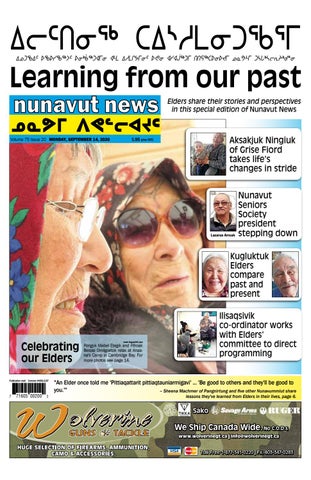
ᐃᓕᑦᑎᓂᖅ ᑕᐃᔅᓱᒪᓂᑐᖃᕐᒥ ᐃᓄᑐᖃᐃᑦ ᐅᖃᐅᓯᖃᖅᐳᑦ ᐅᓂᒃᑳᖅᑐᐊᒥᓂ ᐊᒻᒪ ᐃᓱᒪᒋᔭᒥᓂᑦ ᐅᕙᓂ ᐊᓯᐊᒎᖅᑐᒥ ᑎᑎᕋᖅᑕᐅᓂᐅᔪᒥ ᓄᓇᕗᒻᒥ ᑐᓴᒐᒃᓴᓕᕆᔨᒃᑯᓐᓂ
Learning from our past Elders share their stories and perspectives in this special edition of Nunavut News
Volume 75 Issue 20 MONDAY, September 14, 2020
$.95 (plus GST)
Aksakjuk Ningiuk of Grise Fiord takes life's changes in stride
Lazarus Arreak
Nunavut Seniors Society president stepping down
Kugluktuk Elders compare past and present
Celebrating our Elders Publication mail Contract #40012157
7
71605 00200
2
Navalik Tologanak/NNSL photo
Pongok Mabel Etegik and Pihoak Bessie Omilgoetok relax at Anaana's Camp in Cambridge Bay. For more photos see page 14.
Ilisaqsivik co-ordinator works with Elders' committee to direct programming
"An Elder once told me 'Pittiaqattarit pittiaqtauniarmigavi' ... 'Be good to others and they'll be good to you.'" – Sheena Machmer of Pangnirtung and five other Nunavummiut share lessons they've learned from Elders in their lives, page 6.
2 nunavutnews.com, Monday, September 14, 2020
kNKu W?9oxJ5, N[Z/su, y2bWE 14, 2020
nunavutnews.com, Monday, September 14, 2020 3
kNKu W?9oxJ5, N[Z/su, y2bWE 14, 2020
Did we get it wrong?
feature news
ᓄêêêΩËîΩÇéíÇÀî á·∆¿ÖÀî
Ilisaqsivik providing programming by request News
Nunavut News is committed to getting facts and names right. With that goes a commitment to acknowledge mistakes and run corrections. If you spot an error in Nunavut News/North, call (867) 9795990 and ask to speak to an editor, or email editorial@nnsl.com. We'll get a correction or clarification in as soon as we can.
Briefs Program co-ordinator
ᑕᕐᕆᔭᐅᑎᓕᐅᕐᓂᐊᖅᑐᖅ ᐃᓕᑉᐹᓪᓕᒍᑎᒃᓴᒥᒃ ᕿᓂᖅᐳᑦ ᓄᓇᕗᒻᒥᐅᓂᒃ
ᓄᓇᕗᑦ ᐊᑯᓂ ᑕᕐᕆᔭᐅᑎᓕᐅᕆᔨᐅᓯᒪᓕᖅᑐᖅ Ivor Barr ᕿᓂᖅᐳᖅ ᐃᓄᖕᓂᒃ ᐃᓕᖅᑯᓯᑐᖃᕐᒥᖕᓂᒃ ᐱᖅᑯᓯᑐᖃᕐᒥᓂᒡᓗ ᖃᐅᔨᒪᑐᖃᕐᒥᓂᒡᓗ ᐅᓂᒃᑳᕋᔭᖅᑐᓂᒃ ᑕᕐᕆᔭᐅᑎᓕᐅᖅᑕᐅᓂᐊᖅᖢᑎᒃ ᐃᒪᓐᓇ ᐊᑎᖃᖅᑐᒥᒃ, "Sacred Secrets of the North." "ᐊᔾᔨᐅᖏᑦᑑᕗᖅ" ᐅᖃᓚᐅᖅᐳᖅ ᐹᕐ, ᑐᑭᒧᐊᒃᑎᑦᑎᔨ ᑖᒃᑯᓄᖓ IDNR-TV–ᑯᓐᓄᑦ. ᑕᕐᕆᔭᐅᑎᓕᐅᕐᓂᐊᖅᐳᖅ ᑐᑭᓯᑦᓯᐊᓕᕈᓐᓇᖁᓪᓗᒋᑦ, ᖃᐅᔨᖁᓪᓗᒋᑦ ᐃᓕᓐᓂᐊᖁᓪᓗᒋᓪᓗ ᐱᖅᑯᓯᑐᖃᖏᓐᓂᒃ ᐃᓕᖅᑯᓯᖏᓐᓂᒡᓗ ᐃᓄᐃᑦ ᐊᒻᒪ ᐊᓪᓚᐃᑦ, ᑕᐃᒪᓐᓇ ᐅᖃᓚᐅᖅᐳᖅ. ᐅᓂᒃᑳᑐᖃᓂᒃ ᐱᖅᑯᓯᑐᖃᖏᓐᓂᒡᓗ ᐊᑐᕈᒪᕗᖅ ᐃᓕᓐᓂᐊᖅᑎᑦᑎᓗᓂ ᐃᓅᓯᖏᓐᓂᒃ, ᐊᓐᓇᐅᒪᒍᑎᖏᓐᓂᒃ ᐊᒻᒪ ᐊᖑᓇᓱᐊᕈᓯᖏᓐᓂᒃ ᒪᒥᓴᕈᑎᖏᓐᓂᒡᓗ "ᐊᒃᓱᕈᕐᓇᖅᑐᒥ ᐃᓄᖃᖏᑦᑐᒥᓗ ᐅᑭᐅᖅᑕᖅᑐᒥ ᖃᓄᐃᓕᐅᕈᓯᖏᑦ." ᒫᓐᓇ, ᑖᒃᑯᐊ IDNR-TV–ᑯᑦ ᕿᓂᖅᐳᑦ ᐃᓄᖕᓂᒃ ᓄᓇᕗᒻᒥ ᐅᓂᒃᑳᖃᑕᐅᔪᓐᓇᖅᑐᓂᒃ ᖃᓄᑐᐃᓐᓇᖅ. ᑕᕐᕆᔭᐅᑎᓕᐅᖅᑕᐅᔪᒥ ᐃᓚᐅᓂᐊᖅᑐᑦ ᓂᕈᐊᖅᑕᐅᓂᐊᖅᖢᑎᒃ ᐊᒃᑐᐱᕆᐅᓕᖅᐸᑦ ᑕᕐᕆᔭᐅᑎᓕᐅᕌᓂᖕᓂᐊᖅᖢᑎᒡᓗ ᐊᕐᕌᒎᑉ ᓄᙳᐊᓂ. ᖃᓄᖅ ᐊᑭᓕᖅᑐᖅᑕᐅᓂᐊᕐᓂᖏᑦ ᐅᖃᐅᓯᕆᔭᐅᓂᐊᖅᐳᖅ ᑖᓐᓇ ᑕᕐᕆᔭᐅᑎᓕᐅᖅᑎ ᐃᓚᐅᓗᓂ. ᑭᒃᑯᑐᐃᓐᓇᐃᑦ ᐃᓚᐅᒍᒪᔪᑦ ᑕᒪᑐᒧᖓ ᖃᐅᔨᒋᐊᕈᓐᓇᖅᐳᑦ ᑕᒡᕗᖓ ᑕᕐᕆᔭᐅᑎᓕᐅᕐᓂᐊᖅᑐᒧᑦ ᖃᕆᑕᐅᔭᒃᑯᒃ ᐃᑭᐊᖅᑭᕕᒃᑯᑦ Barr at info@ idnrtv.com. please see Filmmaker, page 12
ᑐᐊᕕᕐᓇᖅᑐᒃᑯᑦ ᐋᓐᓂᐊᖅᑐᓕᕆᓂᖅ ᐊᑐᖅᑕᐅᒃᑲᓐᓂᕐᓂᐊᖅᑐᖅ
ᓄᓇᕗᑦ ᐋᓐᓂᐊᖃᕐᓇᖏᑦᑐᓕᕆᔨᒃᑯᑦ ᒥᓂᔅᑕᖓᑦ ᔪᐊᔾ ᕼᐃᒃᔅ ᑐᓴᖅᑎᑦᑎᓚᐅᖅᐳᖅ ᐃᖃᓗᖕᓂ ᓯᑎᐱᕆ 2-ᒥ ᓄᓇᕗᑦ ᐋᓐᓂᐊᖃᕐᓇᖏᑦᑐᓕᕆᓂᕐᒧᑦ ᑐᐊᕕᕐᓇᖅᑐᒃᑯᑦ ᐊᑐᖅᑕᐅᔪᖅ ᐊᑐᖅᑕᐅᒃᑲᓐᓂᕐᓂᐊᕐᓂᖓᓄᑦ ᓯᑎᐱᕆ 17–ᒧᑦ ᑎᑭᓪᓗᒍ. ᕼᐃᒃᔅ ᐅᖃᓚᐅᖅᐳᖅ ᑐᓴᒐᒃᓴᑎᒍᑦ ᐱᒻᒪᕆᐅᓂᖓᓄᑦ ᓄᓇᕗᑦ ᑕᐃᒪᓐᓇ ᐋᓐᓂᐊᕐᓇᒧᑦ ᑐᐊᕕᕐᓇᖅᑐᒃᑯᑦ ᐅᑭᐊᒃᓵᒧᐊᕈᔾᔭᐅᓂᐊᓕᕐᒪᑕ ᐸᕐᓇᐅᑎᖃᐃᓐᓇᖅᓯᒪᒋᐊᖃᕐᒪᑕ ᓄᕙᒡᔪᐊᕐᓇᖅ –19-ᒧᑦ. ᓄᓇᕗᒻᒥᐅᑦ ᖃᐅᔨᒪᖁᔭᐅᕗᑦ ᐅᖓᓯᒌᖃᑦᑕᐅᑎᖃᑦᑕᕆᐊᖃᕐᓂᖏᓐᓄᑦ, ᐅᐊᓴᐃᓐᓇᖃᑦᑕᕐᓗᑎᒡᓗ ᐊᒡᒐᒥᖕᓂᒃ, ᐊᖏᕐᕋᖅᓯᒪᖃᑦᑕᕐᓗᑎᒡᓗ ᐊᑲᐅᑦᓯᐊᙱᒃᑯᑎᒃ. ᑭᒃᑯᑐᐃᓐᓇᐃᑦ ᑕᐃᒪᓐᓇᐃᑦᑐᒥᒃ ᐊᐃᑦᑐᖅᑕᐅᓪᓗᒃᓯᒪᓇᓱᒋᔪᑦ ᓄᕙᒡᔪᐊᕐᓇᖅ-19ᒥᒃ ᐅᖄᓚᖁᔭᐅᕗᑦ ᐊᑭᖃᖏᑦᑐᒧᑦ 1-888975-8601 ᐊᑯᓐᓂᖓᓂ ᓯᕿᖑᔭᐃᑦ 10 ᐅᓪᓛᒃᑯᑦ ᐊᒻᒪ 6 ᐅᓐᓄᒃᑯᑦ ᑲᓇᖕᓇᒥ ᓯᕿᖑᔭᖅ ᒪᓕᒡᓗᒍ – ᐅᕝᕙᓘᓐᓃᑦ ᐋᓐᓂᐊᖅᑐᓕᕆᔨᒃᑯᓐᓄᑦ ᐅᑕᖅᑭᑯᑖᙱᓪᓗᑎᒃ – ᐊᓯᒥᖕᓂᒃ ᐱᖃᑎᖃᖅᑕᐃᓕᓕᒡᓗᑎᒡᓗ ᐅᓪᓗᓄᑦ 14-ᓄᑦ. please see Health, page 12
ᐊᓯᐅᖅᑲᔪᖅ 13-ᓂ-ᐅᑭᐅᓕᒃ ᐃᒡᓗᓕᖕᒥ ᐊᖑᓇᓱᒃᑎ ᓇᓂᔭᐅᔪᖅ ᖃᓄᐃᙱᖦᖢᓂ
ᐃᒡᓗᓕᒃ 13-ᓂ-ᐅᑭᐅᓕᒃ ᐊᖑᓇᓱᒃᑎ ᐃᒡᓗᓕᖕᒥᐅᑕᖅ ᐊᓯᐅᖅᑲᓚᐅᖅᑐᒥ ᐊᐃᑉᐹᓂ ᐅᓐᓄᖓᓂ ᓇᓂᔭᐅᓚᐅᖅᐳᖅ ᐅᖓᓇᓱᒋᐊᖃᑎᒋᓚᐅᖅᑕᖏᓐᓂ 6– ᒥᐸᓗᒃ ᐅᓐᓄᒃᑯᑦ ᐅᓪᓗᑐᐃᓐᓇᒥ ᐅᓐᓄᖓᓂ, ᑲᓇᑕᒥ ᐸᓖᓯᒃᑯᑦ ᐅᖃᓚᐅᖅᐳᑦ. ᐃᓅᓱᒃᑐᖅ ᐊᑦᑕᓇᖅᑐᒦᓚᐅᙱᓚᖅ ᐊᒻᒪᓗ ᖃᓄᐃᙱᑦᑎᐊᖅᖢᓂ, ᐅᖃᐅᓯᐅᓪᓗᓂ ᐸᓖᓯᒃᑯᓐᓂ. ᑲᑎᙵᓂᐅᔪᑦ 9-ᓂ ᐊᖑᓇᓱᒃᑎᓂᑦ ᐊᐅᓪᓛᓚᐅᖅᐳᑦ ᐃᒡᓗᓕᖕᒥ ᐃᑎᓕᖕᒧᑦ ᕿᓂᖅᖢᑎᒃ ᑐᒃᑐᓂᑦ. Hercules–ᒥ ᖃᖓᑕᓲᒥ CFB ᑐᕋᓐᑕᓐ, ᐋᓐᑎᐊᕆᐅᒥ, ᑐᐊᕕᓗᓚᐅᖅᐳᑦ ᐃᓚᐅᖃᑕᐅᓂᕐᒥ ᕿᓂᕐᓂᐅᔪᒥ ᐱᖓᔪᐊᓐᓂ ᐅᓐᓄᖓᓐᓂ. ᖁᓕᒥᒎᓕᖕᒥ ᖃᐃᖁᔨᓚᐅᕆᕗᑦ ᐃᑲᔪᖅᓱᐃᓂᕐᒧᑦ. ᐸᓖᓯᒃᑯᑦ ᖁᔭᓕᓂᖃᓚᐅᖅᐳᑦ ᓄᓇᕗᒻᒥ ᑐᐊᕕᕐᓇᖅᑐᓄᑦ ᐊᐅᓚᑦᑎᔨᐅᔪᓄᑦ ᑲᑐᔾᔨᖃᑎᒌᖑᔪᓄᑦ ᐊᒻᒪ ᕿᓂᕐᓂᕐᒧᑦ ᐊᒻᒪ ᐸᖅᓴᐃᓂᕐᒧᑦ ᐊᑭᓕᖅᓱᖅᑕᐅᓇᑎᒃ ᐃᑲᔪᖅᑐᓄᑦ ᓇᐅᔮᓂ ᐊᒻᒪ ᓴᓂᕋᔭᖕᒥ. please see Lost, page 12
ᒦᑲ ᐋᐸᒃ, ᓴᐅᒥᖕᒥ, ᐊᒻᒪᓗ ᐊᐃᒡᒐ ᐸᓪᓗᖅ ᑐᐱᓕᐅᖅᐳᑦ ᐃᓕᓴᖅᓯᕕᖕᒥ ᐃᓕᓐᓂᐊᕐᓂᐅᔪᒥ.
Mimie Natanine works closely with Elders' committee
by Rajnesh Sharma
Northern News Services
Kangiqtugaapik/Clyde River
For the past five years, as the Elders' programming co-ordinator, Mimie Natanine has been developing programs for Elders that have been requested by the Elders' committee in her community. Natanine plays an "extremely important" role in making all the Elders' programming "come to life" in Clyde River, said Malcolm Ranta, Ilisaqsivik's executive director. "We're super lucky that Mimie's position is super unique," said Ranta. "There's not an Elders' co-ordinator position in a lot of other communities that truly works for an Elders' committee," he explained. Natanine's position allows her to work to support the Elders and make their programming ideas become a reality. This year alone, Natanine has been running a variety of Elders' programs for making traditional tools, qamutiiks, kamiks, hunting clothes and tents. Besides these one-off programs, throughout the year the programming co-ordinator runs the Elders' Qammaq from Monday to Friday. Between 1 p.m. and 5 p.m. Elders can get together to work on sewing projects and socialize. Since the qammaq is open to everyone, youth can also drop-in to get advice from Elders, said Natanine.
photo courtesy of Mimie Natanine
Meeka Apak, left, and Igah Palluq make tents at an Ilisaqsivik workshop. Earlier this spring the qammaq had to be closed due to Covid-19. It reopened in summer with social distancing protocols in place. Although the qammaq can hold up to 10 people, these days less than five Elders may be found at the facility. "It's important to acknowledge a lot of the Elders remember the previous infectious disease outbreaks that have happened in their lifetime," said Ranta. "So there is this extra level of hesitation on their part on how they're going to come together and do things." Throughout the year on Fridays, Natanine also arranges for Elders to play games, drink tea and eat country food together at Ilisaqsivik. However, due to Covid-19 restrictions,
this social event had been cancelled since spring. Next week, however, this Elders' event is expected to resume, said Ranta on Sept 9. Natanine also plans to start a seal skinning course for the Elders in about two weeks. Besides bringing programs to fruition for Elders, Natanine said she feels enjoyment from playing games, having snacks and learning about traditional ways from the Elders. The Elders' programs are of "vital" importance to the community. They provide a space for sharing traditional knowledge, socializing and games, said Ranta. However, he said, all these programs do not happen without Mimie.
ᑐᓂᓯᓂᕐᒥ ᐱᓕᕆᐊᖑᓂᐊᖅᑐᓂ ᑐᒃᓯᕋᕐᓂᒃᑯᑦ ᒦᒥ ᓈᑕᓇᐃᓐ ᐱᓕᕆᖃᑎᖃᖅᐳᖅ ᐃᓄᑐᖃᕐᓄᑦ ᑲᑎᒪᔨᕋᓛᓂᑦ ᑐᓂᓯᓂᕐᒥ ᑐᑭᖃᑦᑎᐊᖅᑐᓂ ᖃᓄᐃᓕᐅᕐᓂᐅᔪᓂ ᓄᓇᓕᐅᔪᒧᑦ
ᖄᖏᖅᓯᒪᓕᖅᑐᓄᑦ ᐊᕐᕌᒍᓄᑦ ᑕᓪᓕᒪᓄᑦ, ᐃᓄᑐᖃᕐᓄᑦ ᐱᓕᕆᐊᖑᕙᓪᓕᐊᔪᓄᑦ ᐱᓕᕆᔨᐅᓪᓗᓂ, ᒦᒥ ᓈᑕᓇᐃᓐ ᐱᕙᓪᓕᐊᑎᑦᑎᓯᒪᕗᖅ ᐱᓕᕆᐊᖑᔪᓂ ᐃᓄᑐᖃᕐᓄᑦ ᑐᒃᓯᕌᖑᓯᒪᔪᓄᑦ ᐃᓄᑐᖃᕐᓄᑦ' ᑲᑎᒪᔨᕋᓛᓂᑦ ᓄᓇᓕᖓᓐᓂ. ᓈᑕᓇᐃᓐ ᐱᓕᕆᓲᖑᕗᖅ "ᐱᒻᒪᕆᕐᔪᐊᖑᔪᒥ" ᐊᑐᕐᓂᖃᐅᑎᐅᔪᒥ ᓴᓇᓂᕐᒧᑦ ᑕᒪᒃᑭᓂ ᐃᓄᑐᖃᕐᓄᑦ ᐱᓕᕆᐊᒃᓴᓕᐊᖑᔪᓄᑦ "ᐆᒻᒪᖅᑎᑕᐅᓂᖏᓐᓄᑦ" ᑲᖏᖅᖢᒑᐱᖕᒥ, ᐅᖃᖅᐳᖅ ᒥᐊᓪᑭᒻ ᕌᓐᑕ, ᐃᓕᓴᖅᓯᕕᐅᑉ ᐃᓱᒻᒥᖅᑐᐃᔨᖓ. "ᐱᕕᒃᓴᖃᑦᑎᐊᖅᐳᒍᑦ ᒦᒥᐅᑉ ᐃᓂᖓ ᐊᔾᔨᐅᙱᕐᔪᐊᕐᓂᖓᓂ," ᐅᖃᓚᐅᖅᐳᖅ ᕌᓐᑕ. "ᐃᓄᑐᖃᕐᓄᑦ' ᐱᓕᕆᔨᖓᓄᑦ ᐃᓂᑕᖃᙱᓚᖅ ᐊᒥᓱᓂ ᓄᓇᓕᐅᔪᓂ ᐱᓕᕆᓪᓚᕆᓲᓄᑦ ᐃᓄᑐᖃᕐᓄᑦ' ᑲᑎᒪᔨᕋᓛᓄᑦ," ᐅᓂᒃᑳᓚᐅᖅᐳᖅ. ᓈᑕᓇᐃᓐ ᐃᓂᒋᔭᖓ ᐱᓕᕆᔪᓐᓇᖅᑎᑦᑎᕗᖅ ᐃᑲᔪᖅᓱᐃᓂᕐᒥ ᐃᓄᑐᖃᕐᓄᑦ ᐊᒻᒪᓗ ᐱᓕᕆᐊᕆᔭᐅᖁᔭᐅᔪᓂ ᐃᓱᒪᒋᔭᐅᔪᓂ ᐱᓪᓚᕆᙳᖅᑎᑕᐅᓂᖏᓐᓂ. ᑕᒪᑐᒪᓂ ᐊᕐᕌᒍᑐᐊᒥ, ᓈᑕᓇᐃᓐ ᐊᐅᓚᑦᑎᓯᒪᕗᖅ ᐊᔾᔨᒌᙱᕈᓘᔭᖅᑐᓂ ᐃᓄᑐᖃᕐᓄᑦ ᐱᓕᕆᐊᖑᔪᓂ ᓴᓇᓂᕐᒧᑦ ᐱᖅᑯᓯᑐᖃᖅᑎᒍᑦ ᓴᓇᕐᕈᑎᓂᑦ, ᖃᒧᑎᓂᑦ, ᑲᒥᖕᓂᑦ, ᐊᖑᓇᓱᒃᑐᖅᓯᐅᑎᓂᒃ ᐊᓐᓄᕌᓂᒃ ᐊᒻᒪ ᑐᐱᕐᓂᑦ. ᓴᓂᐊᓂ ᐅᑯᓂᖓ ᐊᑕᐅᓯᐊᖅᑐᓂ ᐱᓕᕆᐊᖑᔪᓂ, ᐊᕐᕌᒍᒥ ᐱᓕᕆᐊᖑᕙᓪᓕᐊᔪᓄᑦ ᐱᓕᕆᔨᖓ ᐊᐅᓚᑦᑎᓲᖑᕗᖅ ᐃᓄᑐᖃᕐᓄᑦ ᖃᕐᒪᖓᓂ ᓇᒡᒐᔾᔭᐅᒥ ᐅᓪᓗᑐᐃᓐᓇᕐᒧᑦ. ᕿᑎᐊᓂ 1 ᐅᓐᓄᓴᒃᑯᑦ 5 –ᒧᑦ ᐅᓐᓄᒃᑯᑦ ᐃᓄᑐᖃᑦ ᑲᑎᖃᑎᒌᒍᓐᓇᖅᐳᑦ ᐱᓕᕆᓂᕐᒧᑦ ᒥᖅᓱᒐᒃᓴᖏᓐᓂ ᐊᒻᒪ ᐃᓅᖃᑎᒌᖕᓂᕐᒧᑦ. ᖃᕐᒪᒃ ᒪᑐᐃᖓᕙᖕᓂᖓᓂ ᑭᒃᑯᓕᒫᓄᑦ, ᒪᒃᑯᒃᑐᑦ ᐃᓯᕈᓐᓇᕆᕗᑦ ᐅᖃᐅᔾᔨᓂᖅᑖᕆᐊᖅᑐᕐᓗᑎᒃ ᐃᓄᑐᖃᕐᓂ, ᐅᖃᓚᐅᖅᐳᖅ ᓈᑕᓇᐃᓐ. ᐅᐱᕐᙶᑉ ᐱᒋᐊᕐᓂᖓᓂ ᖃᕐᒪᒃ ᒪᑐᔭᐅᔭᕆᐊᖃᓚᐅᖅᐳᖅ ᐱᔾᔪᑎᖃᖅᑐᒥ ᓄᕙᒡᔪᐊᕐᓇᖅ-19–ᒧᑦ. ᒪᑐᐃᒃᑲᓐᓂᓚᐅᖅᐳᖅ ᐊᐅᔭᒥ ᐃᓅᖃᑎᒌᖑᔪᓄᑦ ᐅᖓᓯᒌᒋᐊᖃᕐᓂᐅᔪᓂ ᒪᓕᒋᐊᓕᖕᓂ ᐃᓕᓯᒪᔪᓂᑦ. ᖃᕐᒪᒃ ᐃᓄᖃᕈᓐᓇᖅᐳᖅ ᑎᑭᐅᒪᔪᓄᑦ ᖁᓕᓂᑦ
ᐃᓄᑐᖃᕐᓄᑦ ᐱᓕᕆᐊᖑᕙᓪᓕᐊᔪᓄᑦ ᐱᓕᕆᔨᖓ, ᒦᒥ ᓈᑕᓇᐃᓐ ᐃᑲᔪᓲᖑᕗᖅ ᑐᓂᓯᓂᕐᒥ ᐱᓕᕆᐊᖑᓂᐊᖅᑐᓄᑦ ᐃᓱᒪᒋᔭᐅᓂᐅᔪᓄᑦ ᐊᑐᖁᔭᐅᓯᒪᔪᓂ ᐃᓄᑐᖃᕐᓄᑦ ᑲᑎᒪᔨᕋᓛᓄᑦ ᐱᓪᓚᕆᙳᖅᑎᑦᑎᓂᕐᒧᑦ.
photo courtesy of Mimie Natanine
As Elders' Programming Co-ordinator, Mimie Natanine helps bring programming ideas suggested by Elders' committee into fruition. ᐃᓄᖕᓂ, ᒫᓐᓇᐅᔪᒥ ᐅᓄᙱᓐᓂᖅᓴᐅᔪᓂ ᑕᓪᓕᒪᓂᒃ ᐃᓄᑐᖃᕐᓂ ᓇᓂᔭᐅᔪᓐᓇᖅᐳᑦ ᖃᕐᒪᕐᒥ. "ᐱᒻᒪᕆᐅᕗᖅ ᓇᓗᓇᐃᖅᓯᓂᕐᒥ ᐊᒥᓱᓂ ᐃᓄᑐᖃᕐᓂ ᐃᖅᑲᐅᒪᓂᖏᓐᓂ ᓯᕗᓂᐊᓂ ᐊᐃᑦᑐᐃᓐᓇᖅᑐᓂ ᐋᓐᓂᐊᓂᒃ ᐊᐃᑦᑐᐃᓂᐅᓚᐅᖅᑐᒥ ᐊᑐᖅᑕᐅᓂᐅᓚᐅᖅᑐᒥ ᐃᓅᓯᕆᔭᖏᓐᓂ," ᐅᖃᓚᐅᖅᐳᖅ ᕌᓐᑕ. "ᑕᐃᒫᒃ ᑭᒡᓕᖃᒃᑲᓐᓂᐅᔭᖅᐳᖅ ᐅᐸᒍᒪᙱᓐᓂᖃᕐᓂᖓᓂ ᐃᓚᖓᒍᑦ ᖃᓄᖅ ᑲᑎᖃᑎᒌᖕᓂᐊᕐᓂᖏᓐᓄᑦ ᐊᒻᒪᓗ ᐱᓕᕆᖃᑎᒌᒡᓗᑎᒃ." ᐊᕐᕌᒍᓕᒫᒥ ᐅᓪᓗᑐᐃᓐᓇᒃᑯᑦ, ᓈᑕᓇᐃᓐ ᐋᖅᑭᒃᓱᐃᓲᖑᒋᕗᖅ ᐃᓄᑐᖃᕐᓂ ᐱᙳᐊᕐᓂᕐᒧᑦ, ᑏᑐᕐᓂᕐᒧᑦ ᐊᒻᒪ ᓂᕆᓗᑎᒃ ᓂᕿᓪᓚᑦᑖᓂ ᐃᓕᓴᖅᓯᕕᖕᒥ. ᑭᓯᐊᓂ ᐱᔾᔪᑎᖃᖅᑐᒧᑦ ᓄᕙᒡᔪᐊᕐᓇᖅ-19–ᒧᑦ ᑭᒡᓕᖃᖅᑎᑕᐅᓂᐅᔪᒧᑦ,
ᐅᓇ ᐃᓅᖃᑎᒌᖕᓂᐅᔪᒥ ᖃᓄᐃᓐᓂᐅᔪᒥ ᓄᖅᑲᖅᑎᑕᐅᓯᒪᕗᖅ ᑕᐃᒪᙵᓂ ᐅᐱᕐᙶᒥ. ᐱᓇᓱᐊᕈᓯᐅᓛᖅᑐᒥ, ᑭᓯᐊᓂ, ᐅᓇ ᐃᓄᑐᖃᕐᓄᑦ ᖃᓄᐃᓐᓂᐅᔪᖅ ᓂᕆᐅᒋᔭᐅᕗᖅ ᐱᒋᐊᒃᑲᓐᓂᕐᓂᐊᕐᓂᖓᓂ, ᐅᖃᓚᐅᖅᐳᖅ ᕌᓐᑕ ᓯᑎᐱᕆ 9–ᒥ. ᓈᑕᓇᐃᓐ ᐸᕐᓇᒃᑭᕗᖅ ᐱᒋᐊᖅᑎᑦᑎᓂᐊᕐᓂᖓᓂ ᕿᓯᓕᕆᓂᕐᒥ ᐃᓕᓐᓂᐊᕐᓂᐅᔪᒥ ᐃᓄᑐᖃᕐᓄᑦ ᒪᕐᕉᖕᓂ ᐱᓇᓱᐊᕈᓯᐸᓗᖕᓂ. ᓴᓂᐊᓂ ᑐᓂᓯᓂᕐᒥ ᐱᓕᕆᐊᖑᓂᐊᖅᑐᓄᑦ ᐱᓪᓚᕆᙳᖅᑎᑕᐅᓂᖏᓐᓂ ᐃᓄᑐᖃᕐᓄᑦ, ᓈᑕᓇᐃᓐ ᐅᖃᓚᐅᖅᐳᖅ ᐃᒃᐱᒍᓱᒃᐸᒃᐳᖅ ᐊᓕᐊᓇᐃᒋᔭᐅᓂᖓᓂ ᐱᙳᐊᕐᓂᐅᔪᓄᑦ, ᑕᒧᓗᖕᓂᕐᒧᑦ ᐊᒻᒪ ᐃᓕᑦᑎᓂᕐᒥ ᐱᖅᑯᓯᑐᖃᖅᑎᒍᑦ ᐱᓕᕆᓂᐅᔪᓄᑦ ᐃᓄᑐᖃᕐᓂᑦ. ᕌᓐᑕ ᐅᓂᒃᑳᓚᐅᖅᐳᖅ ᓈᑕᓇᐃᓐ ᑐᒃᓯᕋᖅᓯᒪᕙᒌᖅᐳᖅ ᐊᔾᔨᒌᙱᑦᑐᓂ ᐱᓕᕆᐊᖑᔪᓄᑦ ᐃᓄᑐᖃᕐᓄᑦ, ᑭᓯᐊᓂ ᒪᓕᖕᓂᖃᖅᐳᖅ ᑮᓇᐅᔭᖃᖅᑎᑕᐅᓂᐅᔪᒥ. "ᑕᒪᒃᑭᒐᓚᑦ ᐃᓕᖅᑯᓯᓕᕆᓂᕐᒥ ᐊᒻᒪ ᐃᑦᑕᕐᓂᓴᓕᕆᔨᒃᑯᓐᓂᙶᓲᖑᕗᑦ," ᐅᖃᓚᐅᖅᐳᖅ ᕌᓐᑕ, ᐅᖃᐅᓯᖃᖅᑎᓪᓗᒍ ᑮᓇᐅᔭᓂ ᐱᔭᕆᐊᖃᖅᑐᓂ ᐊᐅᓚᑦᑎᓂᕐᒧᑦ ᐱᓕᕆᐊᖑᔪᓄᑦ. ᐊᕐᕌᒍᑕᒫᒥ, ᑲᑐᔾᔨᖃᑎᒌᖑᔪᖅ ᑐᓂᓯᓲᖑᕗᑦ ᐃᓕᓴᖅᓯᕕᖕᒥ ᐃᓄᑐᖃᕐᓄᑦ ᑲᑎᒪᔨᕋᓛᓂᑦ ᑐᓂᕐᕈᑎᓂᑦ ᐊᐅᓚᑦᑎᓂᕐᒧᑦ ᑲᑎᙵᓂᐅᔪᒧᑦ. ᑐᓂᓯᓲᖑᒋᕗᖅ ᐃᓚᖓᓐᓂ ᑮᓇᐅᔭᓂᒃ ᓈᑕᓇᐃᓐ ᐃᓂᖓᓄᑦ ᐃᓄᑐᖃᕐᓄᑦ ᐱᓕᕆᐊᖑᔪᒧᑦ ᐱᓕᕆᔨᐅᓂᖓᓄᑦ ᐅᖃᓚᐅᖅᐳᖅ. "ᑲᒪᓇᖅᓯᒪᕗᖅ ᐃᑲᔪᖅᓱᐃᓯᒪᓂᖏᓐᓂ ᐱᒻᒪᕆᐅᒋᔭᑦᑎᓐᓂ ᐱᓕᕆᐊᖑᔪᓂ ᖄᖏᖅᓯᒪᓕᖅᑐᓄᑦ ᐊᕐᕌᒍᓄᑦ 20–ᓄᑦ," ᐅᖃᓚᐅᖅᐳᖅ ᐃᓕᓴᖅᓯᕕᐅᑉ ᐃᓱᒻᒥᖅᑐᐃᔨᖓ. ᐃᓄᑐᖃᕐᓄᑦ ᐱᓕᕆᐊᖑᔪᑦ "ᐱᓪᓚᕆᐅᔪᒥ" ᐱᒻᒪᕆᐅᓂᖃᖅᐳᑦ ᓄᓇᓕᐅᔪᓄᑦ. ᑐᓂᓯᓲᖑᕗᑦ ᐃᓂᐅᔪᒥ ᐅᖃᐅᓯᖃᕐᓂᕐᒧᑦ ᐱᖅᑯᓯᑐᖃᖅᑎᒍᑦ ᖃᐅᔨᒪᓂᐅᔪᒥ, ᐃᓅᖃᑎᒌᖕᓂᕐᒧᑦ ᐊᒻᒪ ᐱᙳᐊᕐᓂᐅᔪᓄᑦ ᐅᖃᓚᐅᖅᐳᖅ ᕌᓐᑕ. ᑭᓯᐊᓂ, ᐅᖃᓚᐅᖅᐳᖅ, ᐅᑯᐊᓕᒫᑦ ᐱᓕᕆᐊᖑᔪᑦ ᐱᓕᕆᕙᙱᓚᑦ ᒦᒥᑕᖃᙱᑎᓪᓗᒍ.
4 nunavutnews.com, Monday, September 14, 2020
kNKu W?9oxJ5, N[Z/su, y2bWE 14, 2020
news
ᓄĪØflî
ᐃᓄᑐᖃᖅ ᑕᒪᒃᑭᓄᑦ ᖃᓄᐃᓐᓂᐅᔪᓄᑦ ᐊᒃᓴᒃᔪᒃ ᓂᖏᐅᖅ ᐊᒥᓱᓂ ᐊᑐᕐᓂᖃᐅᑎᖃᖅᓯᒪᕗᖅ ᐊᐅᓱᐃᑦᑐᕐᒥ ᐊᒻᒪᓗ ᐃᓅᓯᐅᑉ ᐊᓯᔾᔨᖅᐸᓪᓕᐊᓂᖏᑦ ᐃᓱᒫᓗᓗᐊᕐᓇᓂ
ᐊᒃᓴᒃᔪᒃ ᓂᖏᐅᖅ ᐃᓗᐊᖅᓴᑦᑎᐊᖅᐳᖅ ᕿᒥᕐᕈᓇᖕᓂᕐᒥ ᕙᐃᔅᐳᒃᒥ ᐊᒻᒪᓗ ᕿᒧᒃᓯᒥᓂᑦ ᑲᒪᒋᔭᖃᕐᓂᖓᓂ. ᓱᖏᐅᑎᓴᕋᐃᑦᑐᖅ ᐊᐅᓱᐃᑦᑐᕐᒥ ᐃᓄᑐᖃᖅ ᓅᖃᑦᑕᓚᐅᖅᐳᖅ ᐊᑕᐅᓯᕐᒥ ᐃᓂᒥᑦ ᐊᓯᐊᓄᑦ ᐊᒥᓱᐊᖅᓱᖅᖢᓂ. ᑕᓪᓗᕈᑎᑦ, ᐃᓂᖃᖅᑐᒥ ᓂᒋᕐᒥ ᑲᓇᖕᓇᒥ ᐃᓱᐊᓂ ᑕᓪᓗᕈᒻᒥ 1950–ᖏᓐᓂ, ᐃᓂᑦᑎᐊᕙᐅᒋᓯᒪᕙᖓ ᐃᖅᑲᐅᒪᓂᖓᓂ. "ᐃᓄᖃᓗᐊᓚᐅᙱᑦᑐᖅ. ᑭᒃᑯᓕᒫᑦ ᖁᕕᐊᓱᒃᑑᔮᓚᐅᖅᐳᑦ. ᓴᐃᓕᓇᑦᑎᐊᖅᖢᓂ ᐃᓂᐅᓚᐅᖅᐳᖅ ᐊᒻᒪ ᓄᓇᖓ ᑲᔾᔮᕐᓇᕐᔪᐊᖅᖢᓂ," ᓂᖏᐅᖅ ᐅᖃᖅᐳᖅ ᐃᓄᒃᑎᑐᑦ ᔭᕗᕆ ᖃᐅᓐᓇᖅ ᑐᓵᔨᐅᓪᓗᓂ. ᐃᓚᒋᔭᐅᖃᑕᐅᔪᓂ ᐃᓚᖏᓐᓂ ᓄᖅᑲᕐᓂᐅᔪᓂ ᐅᑯᐊᖑᓚᐅᖅᐳᑦ ᒥᑦᑎᒪᑕᓕᒃ, Craig Harbour, Alexander Fiord. ᐊᑖᑕᖓᑕ ᑭᖑᓪᓕᖅᐹᖓᓂ ᑲᓇᑕᒥ ᐸᓖᓯᒃᑯᓐᓄᑦ ᐃᓂᖃᖅᑎᑕᐅᓚᐅᕐᓂᖓᓂ ᐊᐅᓱᐃᑦᑐᕐᒥ ᓄᓇᓕᐅᔪᒥ ᐊᖏᕐᕋᕆᓕᓚᐅᖅᐸᖓ ᓂᖏᐅᕐᒧᑦ ᐊᒻᒪᓗ 7– ᖑᔪᓂ ᓄᑲᖏᓐᓂ ᐊᒻᒪ ᓇᔭᖏᓐᓂ. ᓂᖏᐅᖅᑉ ᐊᑖᑕᖓ ᐃᕐᓂᓂᑦ ᒪᓕᒍᓐᓇᖅᑎᓚᐅᖅᐸᖏᑦ, ᖁᙱᐊᕐᓗᑎᒃ ᐊᒻᒪ ᐃᓕᓐᓂᐊᖅᑎᑦᑎᕙᓚᐅᖅᐳᖅ ᐊᖑᓇᓱᖕᓂᕐᒥ ᐊᒻᒪ ᑭᓱᑐᐃᓐᓇᓂ ᐋᖅᑭᒃᓯᓂᕐᒧᑦ. ᐅᑯᐊ ᑐᙵᕕᖃᕐᓂᐅᔪᓄᑦ ᐊᔪᙱᓐᓂᐅᔪᑦ ᐊᒻᒪ ᐱᔪᒪᓂᖓᓂ ᐃᓕᑦᑎᓂᕐᒧᑦ ᐱᔨᑦᑎᕋᑦᑎᐊᖅᓯᒪᕗᖅ ᓂᖏᐅᕐᒥ ᐊᔪᙱᑦᑐᒻᒪᕆᐅᓪᓗᓂ ᐱᔨᑦᑎᕋᕐᓂᕐᒧᑦ ᐊᒥᓱᓂ ᐃᓂᐅᔪᓂ ᐊᐅᓱᐃᑦᑐᕐᒥ ᐃᓕᓐᓂᐊᕐᓂᕐᒧᑦ ᐃᓕᓐᓂᐊᕐᓂᖃᙱᒃᑲᓗᐊᖅᑎᓪᓗᒍ ᐅᖁᒪᐃᑦᑐᓄᑦ ᓄᓇᓯᐅᑎᓄᑦ ᐊᖁᑎᐅᓪᓗᓂ, ᐊᖅᑯᒻᒥ ᐋᖅᑭᐅᒪᑎᑦᑎᔨᐅᓪᓗᓂ, ᐊᒡᔭᖅᑐᐃᔨᐅᓪᓗᓂ, ᐊᐅᓚᐅᓯᕆᔨᐅᓪᓗᓂ, ᑯᐊᐸᒃᑯᓐᓂ ᐱᔨᑲᑕᒃᑎᐅᓪᓗᓂ, ᐅᐊᔭᓕᕆᔨ, ᓱᓪᓗᓕᕆᔨ, ᐊᒃᑕᖅᑎ, ᐊᒻᒪ ᐊᕝᕗᖅᐸᓚᐅᖅᐳᖅ ᖁᕐᕕᓂᑦ. "ᑕᒪᕐᒥᒐᓚᑦ ᐃᒻᒥᓂᒃ ᐃᓕᑦᑎᓂᑰᕗᑦ ᐱᓕᕆᕙᒃᖢᓂ ᐊᐅᓱᐃᑦᑐᕐᒥ," ᖃᐅᓐᓇᖅ ᐅᖃᖅᐳᖅ. ᐱᓕᕆᙱᑎᓪᓗᒍ ᑐᓂᓯᓂᕐᒥ ᐱᔨᑦᑎᕋᕐᓂᐅᔪᒥ ᐊᓯᖏᓐᓄᑦ ᓄᓇᓕᖕᓂ, ᐊᓕᐊᓇᐃᒋᔭᖃᓚᐅᖅᐳᖅ ᐊᖑᓇᓱᖕᓂᕐᒥ ᐃᓚᖏᓐᓄᑦ ᓂᕆᔭᒃᓴᖏᓐᓄᑦ. "ᑭᓱᑐᐃᓐᓇᓂ ᐊᖑᓇᓱᖕᓂᕐᒧᑦ, ᐊᓕᐊᓇᐃᒋᓚᐅᖅᐸᖓ. ᐱᒋᐊᓚᐅᖅᓯᒪᕗᖅ ᕿᒧᒃᓯᒃᑯᑦ, ᐊᓱᐃᓛᒃ ᓯᑭᑑᑦ ᐃᓇᖏᖅᓯᓚᐅᖅᐳᑦ," ᐅᖃᖅᐳᖅ ᖃᐅᓐᓇᖅ. ᐊᐅᓱᐃᑦᑐᕐᒥ ᐱᕈᖅᐸᓪᓕᐊᖏᓐᓇᖅᑎᓪᓗᒍ, ᐃᓄᑭᑦᑐᓂ ᓄᓇᓕᐅᔪᒥ 130–ᓂ ᐃᓄᓕᖕᓂ, ᓂᖏᐅᖅ ᐅᖃᓚᐅᖅᐳᖅ
ᖃᓄᐃᓕᐅᕐᓂᖃᑦᑎᐊᖅᐳᖅ ᐆᒪᔪᓂᑦ ᕿᒪᒃᓯᒪᑎᑦᑎᓂᕐᒧᑦ ᓄᓇᓕᖕᓂ. ᒪᒃᑯᒃᑎᓪᓗᒍ, ᓱᖏᐅᑎᓚᐅᖅᓯᒪᕗᖅ ᑕᑯᓂᕐᒥ ᑲᖏᕙᓯᒃᑐᒥ ᐆᒪᔪᓂᑦ ᐸᖓᓕᑲᑕᒃᑐᓂ. ᐊᐃᑉᕆᓕᐅᓕᕌᖓᑦ, ᒪᐃ ᐊᒻᒪ ᔫᓂᒥ, ᐊᓃᕈᒪᑐᐃᓐᓇᖅᐳᖅ, ᓯᓚᑦᑎᐊᕙᐅᓂᖓᓃᖦᖢᓂ ᐅᐱᕐᙶᒃᑯᑦ ᐊᒻᒪ ᑲᔾᔭᐅᓴᒃᖢᓂ ᐃᓂᒋᔭᖓᓂ ᑲᓇᑕᐅᑉ ᐅᐊᖕᓇᖓᓃᓛᖓᓂ ᓄᓇᓕᐅᔪᒥ. "ᑲᔾᔮᕐᓇᖅᑐᐊᓘᕗᖅ, ᐃᓄᑦᑎᐊᕚᓗᐃᑦ," ᓂᖏᐅᖅ ᐅᖃᐅᔾᔨᕗᖅ ᖃᐅᓐᓇᕐᒥ. ᐅᐱᕐᙶᖅ ᑭᓯᐊᓂ ᐊᓯᔾᔨᖅᓯᒪᓕᖅᐳᖅ. "ᓯᑯᖓ ᐅᓗᕆᐊᓇᖅᑐᐊᓘᓕᖅᐳᖅ ᒫᓐᓇ. ᑕᐃᔅᓱᒪᓂ, ᐅᐱᕐᙶᖅ ᐅᓗᕆᐊᓇᓗᐊᓚᐅᙱᓚᖅ," ᖃᐅᓐᓇᖅ ᑐᓵᔨᐅᓪᓗᓂ ᐅᖃᖅᐳᖅ. "ᑕᐃᔅᓱᒪᓂ, ᐱᐅᓂᖅᓴᒻᒪᕆᐅᓚᐅᖅᐳᖅ ᓇᓚᐅᑦᑖᕆᓂᕐᒥ ᓯᓚᒥᒃ ᓯᓚᐅᑉ ᐊᓯᔾᔨᖅᐸᓪᓕᐊᓂᖃᓚᐅᙱᒻᒪᑦ, ᐅᔾᔨᕐᓇᖅᑐᒥ. ᒪᒃᑯᒃᑲᓐᓂᖅᑎᓪᓗᒋᑦ, ᒪᓕᒐᖃᙱᓐᓂᖅᓴᐅᓚᐅᖅᐳᖅ, ᒪᓕᒐᕋᓛᖃᙱᓐᓂᖅᓴᐅᓪᓗᓂ ᐊᖑᓇᓱᖕᓂᕐᒧᑦ. ᐊᔾᔨᒌᒃᑎᑦᑎᔪᓐᓇᙱᑉᐳᒍᑦ ᒫᓐᓇᐅᓕᖅᑐᒥ ᐊᒻᒪᓗ ᒪᒃᑯᒃᑲᓐᓂᖅᑎᓪᓗᒍ, ᑭᓯᐊᓂ ᓈᒻᒪᒃᓴᖅᐳᖅ ᑕᒪᒃᑭᓂ (ᐃᓅᓯᐅᔪᓄᑦ)." ᐊᖏᔪᐊᓗᖕᒥ ᓴᖑᓯᒪᓂᖃᕋᓗᐊᖅᑎᓪᓗᒍ ᐊᕐᕌᒍᒐᓴᓂᑦ, ᓂᖏᐅᖅ ᐅᖃᐅᓯᖃᖅᐳᖅ ᐃᓱᒫᓘᑎᖃᙱᓐᓂᖓᓂ ᓯᕗᓂᒃᓴᒧᑦ ᐃᓄᒃᑎᑐᑦ ᐅᖃᐅᓯᖓᓐᓂ ᐊᒻᒪᓗ ᐃᓄᐃᑦ ᐃᓕᖅᑯᓯᖓᓐᓄᑦ. "ᐃᓱᒪᕗᖅ ... ᐊᓯᔾᔨᓗᐊᔾᔮᙱᓚᖅ ᑕᐃᒪᓐᓇ ᐃᓅᓲᖑᒐᑦᑕ," ᖃᐅᓐᓇᖅ ᐅᖃᖅᐳᖅ. "ᓴᙲᓐᓇᐅᔭᕐᓂᐊᖅᑐᖅ." ᑎᓯᐱᕆᐅᓚᐅᖅᑐᒥ, ᓄᓇᕗᒻᒥ ᑐᙵᕕᒃᑯᑦ (NTI) ᐃᓕᓴᖅᓯᓚᐅᖅᐳᑦ ᓂᖏᐅᕐᒥ ᐃᓄᑐᖃᕐᒧᑦ ᓵᓚᖃᐅᓯᐊᖑᔪᒧᑦ. ᖁᔭᓕᒐᓗᐊᖅᖢᓂ ᓵᓚᖃᐅᓯᐊᖑᔪᒥ, ᓂᖏᐅᖅ ᐅᖃᖅᐳᖅ ᐃᒻᒥᓂᒃ ᐃᓱᒪᒋᙱᓚᖅ ᐃᓄᑐᖃᐅᓂᖓᓂ. "ᐅᓪᓗᒥ ᐅᓪᓗᒧᑦ ᐊᐅᓚᓂᖃᑐᐃᓐᓇᖅᐳᖅ," ᐅᖃᖅᐳᖅ ᖃᐅᓐᓇᖅ, ᑕᐃᑲᓂ ᐅᖃᖅᖢᓂ ᓇᖕᒥᓂᖅ ᐃᓱᒪᒋᔭᒥᓂᑦ: "ᑭᓯᐊᓂ ᐅᐱᒋᕐᔪᐊᖅᐸᕗᑦ." bf l A An Elder m4WZz 7
ᐊᐅᓱᐃᑦᑐᕐᒥ ᐃᓄᑐᖃᖅ ᐊᒃᓴᒃᔪᒃ ᓂᖏᐅᖅ ᑎᒍᒥᐊᖅᑎᓪᓗᒍ ᐃᓗᓕᒥᓂᑦ ᔪᓴᐃᔭᒥ. ᐊᒥᓱᓂ ᐃᕐᙳᑕᖃᖅᐳᖅ ᐊᒻᒪ ᐃᓗᓕᓂᑦ ᐃᓅᓯᖓᓂ ᐱᐅᓯᒋᐊᖅᑎᑦᑎᒃᑲᓐᓂᖅᑐᒥ.
photo courtesy of the Ningiuk family
Grise Fiord Elder Aksakjuk Ningiuk holds his great-grandson Josiah. He has numerous grandchildren and great-grandchildren who enrich his life.
nunavutnews.com, Monday, September 14, 2020 5
kNKu W?9oxJ5, N[Z/su, y2bWE 14, 2020
Nunavut Seniors Society in need of new leadership news
ᓄĪØflî
President Lazarus Arreak preparing to step down
ᓛᓴᒡᓗᓯ ᐋᕆᐊᖅ, ᐊᖓᔪᖅᑳᖑᔪᖅ ᓄᓇᕗᒻᒥ ᐃᓐᓇᕐᓄᑦ ᑲᑐᔾᔨᖃᑎᒌᖑᔪᓄᑦ, ᐸᕐᓇᒃᐸᓪᓕᐊᕗᖅ ᑐᓂᓯᓂᕐᒥ ᓯᕗᓕᐅᖅᑎᐅᓂᖓᓂ ᑲᑐᔾᔨᖃᑎᒌᖑᔪᒧᑦ ᐊᓯᖔᖓᓄᑦ. "ᐊᔪᕐᓇᖅᑐᒥ ᐊᕐᕌᒍᒃᑰᖅᓯᒪᓂᖃᖅᐳᖓ ᑕᐃᒫᒃ ᓄᖅᑲᕐᓂᐊᓕᖅᐳᖓ," ᐅᖃᓚᐅᖅᐳᖅ, ᐅᖃᐅᓯᖃᖅᖢᓂ ᐊᔾᔨᒌᙱᑦᑐᓄᑦ ᐋᓐᓂᐊᖃᕐᓇᙱᑦᑐᓕᕆᓂᕐᒧᑦ–ᐱᔾᔪᑕᐅᔪᓄᑦ ᐊᑲᐅᙱᓕᐅᕈᑕᐅᔪᓂ.
fied by helping to "care for the less fortunate among us" and he credited the federal, territorial and municipal governments, as well as regional Inuit organizations, for coming to the aid of seniors during the Covid-19 crisis. "We have to keep in mind to keep supporting the Elders. I like the way this pandemic has mobilized our (governments) to support the Elders: certificates and food, even deliveries," he said. Arreak said he anticipates the Nunavut Seniors Society's annual general meeting (AGM) will be held in the next six months. The organization had posted on its Facebook page in January that its AGM was scheduled for Feb. 1. Society vice-president Andre Tautu, of Chesterfield Inlet, said the seniors advocacy association hasn't held a formal meeting in a couple of years. "I don't even know where we stand anymore," he said
Lazarus Arreak, president of the Nunavut Seniors Society, is preparing to hand over the leadership of the organization to someone else. "I've had a tough year so I'm going to step aside," he said, citing various health-related issues.
by Derek Neary
Northern News Services
Nunavut
The dormant Nunavut Seniors Society will soon be in need of a new president. Lazarus Arreak, the only leader the non-profit organization has known since its inception in January 2018, said he's ready to relinquish his title as he's been trying to stay healthy. "I'm too old," said Arreak, who resides in Iqaluit. "My energy levels are out, my hearing, my vision. I'm on the injured list ... I've had a tough year so I'm going to step aside. "I'm happy with what little I've done (as president)." Although he's leaving, Arreak said he's hopeful that the campaign against Elder abuse – whether mental, physical or financial – will remain a focus for the society. "It's just an unending battle," he said. "We've got to keep plugging away." He said he's been grati-
before hanging up the phone during a very brief interview. The society's local and toll-free phone numbers are no longer in service. Some other board members declined to comment and the executive director couldn't be reached. Asked about the moving target for the AGM, Arreak replied, "I just want to give prospective presidents time to think about it," he said. The Government of Nunavut contributed $75,000 to the Nunavut Seniors Society in 2019-20 for salaries, professional fees, office expenses and travel. The funding agreement requires the society to provide financial reports to the GN. However, the territorial government is still awaiting the 2019-20 report from the organization, according to Angela Petru, director of communications with the Department of Executive and Intergovernmental Affairs.
photo courtesy of the Nunavut Seniors Society
Kugluktuk's Jane Hinanik reflects on changes in her lifetime 'Our children are becoming angry children' by Rita Pigalak
ᖁᕐᓗᖅᑐᕐᒥᐅᑕᖅ ᐃᓄᑐᖃᖅ ᔭᐃᓐ ᕼᐃᓇᓂᒃ ᑕᑐᓯᒪᕗᖅ ᐊᒥᓱᓂ ᐊᓯᔾᔨᕐᓂᐅᔪᓂ ᐃᓅᓯᓕᒫᖓᓐᓂ, ᑭᓯᐊᓂ ᓂᕆᐅᒃᐳᖅ ᐃᓄᐃᑦ ᑎᒍᒥᐊᕈᓐᓇᕐᓂᐊᕐᓂᖏᓐᓂ ᐱᖅᑯᓯᑐᖃᕐᓂᑦ, ᐱᓐᓇᕆᔭᐅᔪᓄᑦ ᐊᒻᒪ ᐱᐅᓯᐅᔪᓂᑦ "ᐅᕘᓈᖅᑎᓪᓗᑕ ᒫᓐᓇᐅᓕᖅᑐᒥ ᓄᓇᕐᔪᐊᖑᔪᒥ".
Kugluktuk Elder Jane Hinanik has seen many changes during her lifetime, but hopes that Inuit can hold on to traditions, values and customs "as we go though this modern world". Rita Pigalak/NNSL photo
Northern News Services/ Local Journalism Initiative
Kugluktuk
Jane Hinanik, now in her late 70s, was born at Tahiapik near Tree River east of Kugluktuk. Her parents followed the animals but would always spend the winter at Tahiapik. Her family lived in a tent frame with the tent made out of caribou hides and was big enough to house four families. "My mother and the other ladies sewed the tent together, I did not help as I did not know how to sew then. Of course we also stayed in iglus out on the sea ice when harvesting seals," said Hinanik. Many things were new, the radio, dishes, cutlery and of course the television, "Everything was quite interesting to learn to use, especially to watch the television, I would rush to watch it. Not so much anymore – it has become just another thing everyone has in the house – but it's enjoyable," said Hinanik. She met her husband Charlie in Coppermine (now known as Kugluktuk). After being together they both spent a number of years at Cam 4, a Dewline Site, then returned to Copper-
mine for a year before being recruited by Peter Kamingoak. "We went to Hay River for three years as my husband began work on the railroad that was being built," said Hinanik. "It was a big job and we'd never seen a train before." There have been some good and bad changes, Hinanik said, "We can only hope for the best for our families and our people as so much has changed. "Our kids are too much into electronics. School is good and is needed, but there is too much alcohol and drugs and therefore our children are becoming angry children." Traditions, values and customs of the Inuit is what helped our people survive for many, many years, "I hope that our people can hold on to these practices as we go though this modern world," she said. "Respect, family values, traditions and neighbourly love need to be practiced and implemented on our children as it once was, the sharing of country food as it should be in our culture has now come to selling of country food among our people. "Neighbours seem like strangers and it is not the way it should be."
6 nunavutnews.com, Monday, September 14, 2020
kNKu W?9oxJ5, N[Z/su, y2bWE 14, 2020
opinions
whmK5
What lesson have you learned from an Elder and how do you apply it in your life?
Rajnesh Sharma/NNSL photo
photo courtesy of Peter Autut
Joanasie Akumalik Iqaluit "That's a loaded question. However, for me it is to respect all. My mother, my father, my parents relatives and other elders taught me to respect others. My mother's motto about respect was: 'Respect others, so that they will respect you back.' Respecting others allowed me ... to be with (people) whom I got to know, regardless (of) who and what race they are; either poor or rich. And to be patient. I try to apply being respectful to everyone and anyone, regardless. Especially, it works within my work, as part of the community and a city councillor. It's important to have and apply it. It becomes easier to work with others and to get to know them." Peter Autut Iqaluit "My pop, an Elder, taught me more about patience and understanding. That people have different views and that's OK. He asks me to use my energy everyday and not get weighed down by so many negatives in life – don't avoid the problem, fix them and move on. Knock on wood. He would say, if it is hard to forgive, try a little at a time, not the whole thing but try a little bit and work from there everyday. See, if you can feel better about it. Also listen, don't just wait (to) answer. I'm nowhere near who he is but I like to believe (he) gave me that foundation to work with. Thanks Pops!"
photo courtesy of Everett Igobwa
photo courtesy of Hype Tauyak
Sheena Machmer Panniqtuuq/Pangnirtung "An Elder once told me 'Pittiaqattarit pittiaqtauniarmigavi' which translates to something along the lines of 'Be good to others and they'll be good to you'. Everyday I try my best to follow it. And I tell my children too. Although there have been times I have not followed it and some days or events are hard not to, but that is when we should learn and grow, even from bad moments."
photo courtesy of Sheena Machmer
photo courtesy of Noah Papatsie
Everett Igobwa Arviat "Elder Qapik Attagutsiak taught me the eight Inuit Qaujimajatuqangit principles. During my role as a principal in Kinngait and Arctic Bay, one of my responsibilities was modelling the positive behaviour of students. To this end, I have drawn heavily on the IQ Principles; particularly the concepts of skills and knowledge acquisition as well as respecting others. She assisted me to distill these two IQ Principles into the 3Rs: reason, respect and responsibility. These three lenses have assisted me as an educational leader to navigate meaningful discussions with students. The 3Rs additionally serve as a moral compass when faced with demystifying behaviour challenges." Hype Tanuyak Igluligaarjuk/Chesterfield Inlet "Advice that always sticks with me is from my Grandma who told me that crying is the best medicine for the heart and to embrace it so that I can feel better from the pain I am feeling. To think that she told me when I was a kid and with so much going on with mental health in our territory related to suicide, I am thankful for her wisdom and this is something I always share when I am helping others during a tough time. Sometimes, staying strong for too long ends in either hitting rock bottom or the pain erupting at the wrong time when you think you are okay." Noah Papatsie Iqaluit "We have observed for many years while growing up, the way we live in our world. Knowledge and learning traditions is important today as it was before. There are different ways to learn. Keeping up with your surroundings is important to surviving in the world. Survival is number one. Respecting the Elders and using their knowledge of the world is important. Preservation has been a big part of Inuit life and today it is as important to teach and keep traditions and include it on a daily basis. Traditional tools to modern day tools are a great way to understand education and survival for the next generation." – responses compiled by Rajnesh Sharma
nunavutnews.com, Monday, September 14, 2020 7
kNKu W?9oxJ5, N[Z/su, y2bWE 14, 2020
An Elder for all occasions news
ᓄĪØflî
Aksakjuk Ningiuk has played many roles in Grise Fiord and he takes life's changes in stride by Derek Neary
Northern News Services
Ausuittuq/Grise Fiord
Aksakjuk Ningiuk is as comfortable surfing Facebook as he is handling a dog team. The versatile Grise Fiord Elder moved from one place to another frequently while growing up as his father was an RCMP special constable. Dundas Harbour, located on the southeastern tip of Devon Island in the 1950s, occupies a special place in his memory. "There were not too many people. Everybody seemed to be happy. It was a peaceful place and the landscape was beautiful," Ningiuk says in Inuktitut while Jeffrey Qaunaq provides interpretation. Among the family's stops were Pond Inlet, Craig Harbour, Alexander Fiord. His father's final RCMP posting to Grise Fiord made that community home for Ningiuk and his seven brothers and sisters. Ningiuk's dad would allow his sons to follow him, observe and he would teach them to hunt and fix things. Those fundamental skills and desire to learn served Ningiuk exceedingly well as he went on to serve many roles in Grise Fiord even though he lacked a scholarly education. He was, at various times, a heavy equipment operator, road maintainer, delivery person, mechanic, Co-op handyman, electrician, plumber, garbage man and he round-
ed up honey buckets. "Most everything is all hands-on learning by himself," Qaunaq says. When he wasn't busy providing services to others in the community, he savoured his time pursing game to feed his family. "Anything to do with hunting, he enjoyed it. He started off with dog team, then Ski-Doos took over," says Qaunaq. While Grise Fiord continued to develop around him, even in the small community of 130 people, Ningiuk said there's enough activity to keep most wildlife away from town. When he was young, he was accustomed to spotting inland animals darting around. Yet he's admittedly quite content to be in more of an urban setting. Now 74, he still likes to get out and watch events and activities in town. When he's at home with his wife Liza, whom he married in the mid1970s, he sometimes turns on his computer and surfs the internet to check the weather and wind forecast and to look at his Facebook account. "Now he's not afraid of it," Qaunaq says of the computer. Although when it gets to be April, May and June, he longs to be outdoors, soaking up the spring weather and admiring his surroundings in Canada's northernmost community. "It's a beautiful place. Good people," Ningiuk tells Qaunaq. Spring has changed, though. "The ice becomes dangerous now.
"Back then, the spring wasn't so dangerous," Qaunaq interprets. "Back then, it was way better to predict the weather because there was no climate change happening, noticeably. When they were younger, there were less rules, less regulations for hunting. You can't really compare today and when he was young, but he's satisfied with both (lifestyles)." Although much has evolved over decades, Ningiuk expresses no concerns over the future of Inuktitut language and Inuit culture. "He thinks ... it won't change much because that's the way we live," Qaunaq says. "It's going to continue to stay strong." Last December, Nunavut Tunngavik Incorporated (NTI) recognized Ningiuk with an Elder Award, "He is always willing to help others. (He) has served for the local hunters and trappers organization and for the district education council," NTI wrote, in part. "Aksakjuk has vast knowledge of the Grise Fiord area and people of all ages constantly seek his advice when one needs to better understand anything about hunting and problem solving. Aksakjuk's contribution to the development of Grise Fiord is invaluable." While appreciative of the award, Ningiuk says he doesn't think of himself as an Elder. "He's just going day by day," says Qaunaq, who then interjects his own opinion: "but we do look up to him a lot."
ᐊᒃᓴᒃᔪᒃ ᓂᖏᐅᖅ ᐊᒻᒪ ᐃᕐᙳᑕᖓ ᔭᓯ ᓇᖏᖅᐳᑦ ᐊᓪᓚᙳᐊᑉ ᕿᓚᓗᒐᐅᑉ ᑑᒑᖓᓂ. ᐊᒃᓴᒃᔪᒃ ᐊᖑᓇᓱᒃᑎᐅᓯᒪᕗᖅ, ᐃᓕᑦᑎᓚᐅᖅᓯᒪᓪᓗᓂ ᐊᑖᑕᖓᓂ ᒪᒃᑯᒃᑑᑎᓪᓗᒍ. ᓄᓇᒥ ᐊᐅᓪᓛᖅᓯᒪᓂᕆᔭᖏᑦ ᖁᕕᐊᒋᓂᖅᐹᕆᓯᒪᕙᖏᑦ, ᐅᖃᖅᐳᖅ.
photo courtesy of the Ningiuk family
Aksakjuk Ningiuk and his grandson Jesse stand with a narwhal tusk. Aksakjuk has been a hunter most of his life, having learned from his father as young man. His time spent on the land is among his happiest, he says.
8 nunavutnews.com, Monday, September 14, 2020
kNKu W?9oxJ5, N[Z/su, y2bWE 14, 2020
Editorial & Opinions wh mK5
Published Mondays Office: 626 Tumiit Plaza, Iqaluit, NU Box 28, X0A 0H0 Reporters: Rajnesh Sharma, Derek Neary, Rita Pigalak Advertising: Phone: (867) 979-5990 Fax: (867) 979-6010 Toll free: (855) 447-2584 Email: editor@nunavutnews.com Website: www.nnsl.com/nunavutnews Kivalliq office: Box 657, Rankin Inlet, NU, X0C 0GO Darrell Greer – Bureau Chief Phone: (867) 645-3223 Fax: (867) 645-3225 Email: kivalliqnews@nnsl.com Website: www.nnsl.com/kivalliqnews Production facilities: Box 2820, Yellowknife, NT, X1A 2R1 Phone: (867) 873-4031 Fax: (867) 873-8507 Email: editorial@nnsl.com advertising@nunavutnews.com circulation@nnsl.com Website: www.nnsl.com
Founder (1934-2018):
J.W. (Sig) Sigvaldason PUBLISHER, CEO: Bruce Valpy – valpy@nnsl.com Chief Financial Officer: Judy Triffo COORDINATING EDITOR: Craig Gilbert – craig@nnsl.com ACCOUNTING: nnsladmin@nnsl.com Florie Mariano • Cindy Minor • Salleah Wagas Editorial board: Bruce Valpy • Craig Gilbert• Emily McInnis NEWS EDITOR Emily McInnis Editorial Production: editorial@nnsl.com Sports: James McCarthy – sports@nnsl.com Arts: entertainment@nnsl.com Business: business@nnsl.com Advertising production Production co-ordinator: Jennifer Reyes Randy Hiebert • Joshua Uson ADVERTISING Baffin – Laura Whittle advertising@nunavutnews.com Kivalliq/Kitikmeot advertising@nnsl.com All departments: advertising@nnsl.com National: James Boylan Classified Advertising: classifieds@nnsl.com CIRCULATION – circulation@nnsl.com Circulation Director: Amy Yang Jewala Jhankur Subscriptions: One year mail $70 Online (entire content) $50/year, $35/6 months
NORTHERN NEWS SERVICES LIMITED 100% Northern owned and operated Publishers of: Inuvik Drum • Kivalliq News Yellowknifer • Hay River Hub NWT News/North • Nunavut News/North Member of: Canadian Community Newspapers Association Ontario Community Newspapers Association Manitoba Community Newspapers Association Saskatchewan Weekly Newspapers Association Alberta Weekly Newspapers Association Ontario, Manitoba and Alberta Press Councils Yellowknife Chamber of Commerce Contents copyright – printed in the North by Canarctic Graphics Limited We acknowledge the financial support of the Government of Canada.
Nous reconnaissons l'appui financier du gouvernement du Canada.
Member of the Ontario Press Council. The Ontario Press Council was created to defend freedom of the press on behalf of the public and press alike and to consider specific, unsatisfied complaints from readers about the conduct of the press in gathering and publishing news, opinion and advertising. Complaints should go to: The Ontario Press Council, 2 Carlton St., Suite 1706 Toronto, Ont., M5B 1J3 Email: Info@ontpress.com Fax: 1-416-340-8724 www.ontpress.com
Send us your comments
Email us at: editorial@nnsl.com; mail to Box 28, Iqaluit, NU, X0A 0H0; or drop your letter off at our office at 102 Tumiit Plaza. All letters submitted must be signed with a return address and daytime telephone number so that we can confirm it came from you. Not all letters will necessarily be published. Preference is given to short letters of broad interest or concern. Letters of more than 200 words, open letters and those published elsewhere are seldom used. We reserve the right to edit for length or taste and to eliminate inaccurate or libelous statements.
Comments and views from NUNAVUT NEWS/north and letters to the editor
ᐃᓄᑐᖃᓄᑦ-ᐸᖅᑭᓂᕐᒧᑦ ᐃᒡᓗᕐᔪᐊᑦ ᖃᑦᑕᕐᒥ ᑲᑕᖕᓂᑐᐃᓐᓇᐅᕗᖅ ᐃᓄᒋᐊᖕᓂᐅᔪᑦ ᓄᓇᕗᒻᒥ ᒪᒃᑯᒃᑑᕗᑦ. 90 ᐳᓴᓐᑎᑲᓴᐅᔪᒥ ᓄᓇᕗᒻᒥᐅᑕᓄᑦ –2016–ᒥ ᑲᓇᑕᒥ ᑭᓪᓕᓯᓂᐊᖅᑎᒃᑯᓐᓂ ᓇᐃᓴᐃᓂᐅᔪᒥ ᖃᐅᔨᓴᖅᑕᐅᓂᑯᓂ ᑎᑎᕋᖅᓯᒪᓂᐅᔪᓂ –55–ᒥ ᐅᑭᐅᓕᖕᓂ ᑐᖔᓃᑉᐳᑦ. ᐅᖃᐅᓯᐅᓪᓗᓂ ᑕᐃᔅᓱᒥᖓᑦᑕᐃᓐᓇᖅ ᖃᐅᔨᓴᖅᑕᐅᓂᑯᓂ ᑎᑎᕋᖅᓯᒪᓂᐅᔪᓂ ᐋᖅᑭᒃᓯᒪᔪᓂ, ᕿᒪᐃᕗᖅ 4,000–ᐸᓗᖕᓂ ᐃᓐᓇᕐᓄᑦ ᐊᔾᔨᒌᙱᕈᓘᔭᖅᑐᓂ ᐱᔭᕆᐊᖃᕐᓂᖃᖅᑐᓂ ᐱᔾᔪᑎᓕᖕᒥ ᑭᒡᓕᐅᔪᓂ ᐸᖅᑭᔭᕆᐊᖃᕐᓂᐅᔪᓄᑦ ᐊᒻᒪ ᐃᒻᒥᒃᑰᕐᓂᖏᓐᓂ ᐃᓱᒪᒋᔭᐅᓂᖓᓂ. ᓄᓇᕗᒻᒥ ᑭᓪᓕᓯᓂᐊᖅᑎᒃᑯᑦ ᐅᖃᓚᐅᖅᐳᖅ ᔪᓚᐃ 1, 2014–ᒥ, ᐅᓄᕐᓂᐅᔪᑦ ᓄᓇᕗᒻᒥᐅᓂ ᐅᑭᐅᓕᖕᓂ 80–ᓂ ᐊᒻᒪ ᐅᖓᑖᓄᑦ ᓇᓚᐅᑦᑖᕆᔭᐅᓚᐅᖅᐳᖅ ᐅᓄᙱᓐᓂᖅᓴᐅᓂᖏᓐᓂ 150–ᓂ, "ᑭᓯᐊᓂ ᒪᕐᕈᐃᓪᓗᐊᖅᑐᒥ ᐅᓄᖅᓯᒋᐊᕐᓂᐊᖅᐳᖅ ᒪᓕᒃᑐᓂ ᐊᕐᕌᒍᓄᑦ 10–ᓄᑦ ᐊᒻᒪ ᒪᕐᕈᐃᓪᓗᐊᒃᑲᓐᓂᕐᓗᓂ ᐊᕐᕌᒍᓂ 10–ᓂ ᑭᖑᓂᐊᒍᑦ." ᐊᔪᕐᓇᙱᑐᐃᓐᓇᕆᐊᖃᖅᐳᖅ, ᐱᒋᐊᓕᓵᕐᓂᑰᔪᒥ ᓄᓇᕘᓪᓗᓂ ᑕᑖᖅᑐᒥ ᒪᒃᑯᒃᑐᓂ, ᑲᒪᒋᔭᖃᕐᓂᕐᒥ ᐊᒃᓱᕈᕈᑕᐅᔪᓄᑦ ᓴᙱᓂᕐᒥ ᐃᓐᓇᕈᖅᐸᓪᓕᐊᔪᓄᑦ ᑭᓪᓕᓯᓂᐊᖅᑕᐅᓯᒪᔪᓄᑦ ᖃᐅᔨᓴᖅᑕᐅᓂᑯᓂ ᑎᑎᕋᖅᓯᒪᓂᐅᔪᓂ, ᑭᓯᐊᓂ ᐃᓄᑐᖃᕗᑦ, ᑐᙵᕕᒋᓪᓗᑎᒍᑦ ᐱᒻᒪᕆᐅᓪᓗᑎᒃ ᐃᓅᖃᑎᒌᖕᓂᐅᔪᓄᑦ, ᐱᓪᓗᐊᖅᐳᑦ ᑕᒪᒃᑭᐅᒪᔪᒥ ᐃᑲᔪᖅᓯᕐᓂᑦᑎᓐᓂ. ᐃᓚᖓᑦ ᐆᒪᙵᑦ ᓇᓗᓇᐃᖅᓯᓂᕐᒥ ᐃᓄᑑᓗᑎᒃ ᐃᓅᔪᓐᓇᐃᓪᓕᒍᑎᒃ, ᐊᖓᔪᖅᑳᕗᑦ ᐊᒻᒪ ᐊᑖᑕᑦᑎᐊᕗᑦ ᐊᓈᓇᑦᑎᐊᕗᑦ ᐃᓂᖃᕐᓂᐊᕐᓗᑎᒃ ᑐᔪᕐᒥᕕᒋᓂᐊᖅᑕᖏᓐᓂ ᓈᒻᒪᒃᑐᒥ ᐊᔾᔨᒌᙱᑦᑐᓂ ᐱᔭᕆᐊᓕᖏᓐᓂ ᐱᔪᓐᓇᕐᓂᐊᖅᑕᒥᓂᑦ. ᓄᓇᕗᑦ 44–ᓂ ᐊᑯᓂᐅᔪᒃᑯᑦ ᐸᖅᑭᔭᐅᓂᕐᒥ ᐃᒡᓕᖅᑕᖃᖅᐳᖅ ᐅᑯᓇᓂ ᐸᖅᑭᔭᐅᖏᓐᓇᕐᓂᕐᒧᑦ ᐃᒡᓗᖁᑎᖃᖅᐳᑦ ᐊᒻᒪ ᐃᓄᑐᖃᓄᑦ ᐊᖏᕐᕋᐅᔪᓂ
ᐃᖃᓗᖕᓂ, ᐃᖃᓗᒃᑑᑦᑎᐊᖅ, ᐃᒡᓗᓕᒃ ᐊᒻᒪ ᐅᖅᓱᖅᑑᒥ. ᑕᒪᒃᑭᑦ ᐃᒡᓕᐅᔪᑦ ᑕᑖᖅᐳᑦ, ᐅᖃᐅᓯᐅᓪᓗᓂ ᐋᓐᓂᐊᖃᕐᓇᙱᑦᑐᓕᕆᔨᒃᑯᓐᓂ. ᐊᐃᑉᕆᓕ 2015–ᒥ ᓄᓇᕗᒻᒥ ᒐᕙᒪᒃᑯᑦ ᐅᓂᒃᑳᓕᐊᖓᓂ 'ᐃᖏᕐᕋᐃᓐᓇᖅᑐᒥ ᐸᖅᑭᓂᐅᔪᒥ ᓄᓇᕗᒻᒥ 2015–ᒥ 2035–ᒧᑦ' ᐅᖃᖅᓯᒪᕗᖅ "ᓄᓇᕗᒻᒥᐅᑦ ᐸᖅᑭᓂᐅᔪᒥ ᐊᔪᓕᖅᐸᓪᓕᐊᔪᓄᑦ ᐃᓄᑐᖃᕐᓄᑦ, ᒪᒥᔪᐃᑦᑐᓄᑦ ᖃᓂᒪᔪᓄᑦ, ᐅᕝᕙᓘᓐᓃᑦ ᐊᔪᕈᑎᓕᖕᓂ ᐃᓚᒋᔭᐅᔪᓄᑦ ᐱᔪᓐᓇᕐᓂᓕᒫᖏᓐᓂᑦ ᐸᖕᒥᐅᒐᔪᒃᑐᓂ ᐊᖏᕐᕋᐅᔪᓂ. ᐊᖏᑦᕋᒥ ᐸᖅᑭᔭᐅᓂᖏᓐᓂ ᐃᑲᔪᖅᓯᖅᑕᐅᓂᖅ ᑐᓂᔭᐅᓲᖑᕗᖅ ᐊᑐᐃᓐᓇᐅᒑᖓᑕ. ᑭᓯᐊᓂ, ᐸᖅᑭᓂᖃᕐᓂᐅᔪᒥ ᐃᖏᕐᕋᓂᖓ ᐊᑯᓂᐅᔪᓐᓇᖅᐳᖅ ᐊᒻᒪ ᐱᔭᕆᑐᓗᓂ, ᐱᓗᐊᖅᑐᒥ ᐃᖅᑲᐃᙱᑦᑕᐅᑎᓕᖕᒥ, ᓄᓄᔪᓐᓇᖏᓐᓂᖅ, ᐅᕝᕙᓘᓐᓃᑦ ᐱᓱᑦᑎᐊᕈᓐᓇᐃᓪᓕᓂᕐᒥ. ᖃᖓᒃᑯᒃᑭᐊᖅ, ᐊᔪᕐᓇᖅᓯᓇᔭᖅᐳᖅ ᑐᓂᓯᓂᕐᒥ ᐸᖅᑭᓂᐅᔪᒥ ᐊᖏᕐᕋᒥ. ᑕᐃᒪᐃᓕᕈᓂ, ᐃᓄᒃ ᐃᓕᔭᐅᕗᖅ ᐅᑕᖅᑭᓂᕐᒧᑦ ᑎᑎᕋᖅᓯᒪᓂᐅᔪᒥ ᐃᒡᓗᖃᖅᑎᑕᐅᔪᓄᑦ ᐊᑯᓂᐅᔪᒥ ᐸᖅᑭᔭᐅᓂᕐᒧᑦ. ᑕᐃᒪᐃᒐᔪᒃᐸᓪᓕᐊᔪᒥ, ᐃᓄᒃ ᐊᐅᓪᓚᖅᑎᑕᐅᕗᖅ ᕿᑭᖅᑕᓂ ᐋᓐᓂᐊᕕᖓᓄᑦ ᐅᕝᕙᓘᓐᓃᑦ ᓄᓇᕘᑉ ᓯᓚᑖᓄᑦ." ᓄᑖᖑᔪᖅ ᐊᑯᓂᐅᔪᒥ ᐸᖅᑭᔭᐅᓂᕐᒧᑦ ᐊᖏᕐᕋᐅᔪᑦ ᓴᓇᔭᐅᕙᓪᓕᐊᔪᓂ ᐃᖃᓗᖕᓂ, ᖃᖏᖅᖠᓂᖅ, ᐊᒻᒪᓗ ᓱᓕ ᐅᖃᐅᓯᐅᓂᐊᖅᑐᒥ 24-ᓂ ᐃᒡᓕᓕᖕᓂ ᐃᒡᓗᕐᔪᐊᒥ ᕿᑎᕐᒥᐊᓂ ᐊᕕᒃᑐᖅᓯᒪᓂᐅᔪᒥ ᐊᖏᔪᒻᒪᕆᐊᓘᓪᓗᓂ ᐱᒋᐊᕈᑕᐅᕗᖅ ᑭᓯᐊᓂ ᑎᑭᑦᑐᓐᓇᙱᑐᐃᓐᓇᖅᐳᖅ ᕿᓚᒻᒥᐅᓂᖅᓴᒥ. ᓵᓐᑎ ᖃᐅᓐᓇᖅ, ᑕᐃᔅᓱᒪᓂ ᐃᓱᒻᒥᖅᑐᐃᔨᐅᓚᐅᑲᓚᐅᖅᑐᒥ ᓄᓇᕗᒻᒥ ᐃᓐᓇᕐᓄᑦ ᑲᑐᔾᔨᖃᑎᒌᖑᔪᓄᑦ, ᐅᖃᓚᐅᖅᐳᖅ ᕕᕈᐊᕆ 2019–ᒥ ᐊᐱᖅᓱᖅᑕᐅᓂᐅᔪᒥ ᑕᑯᔪᒪᓇᔭᖅᐳᖅ ᓄᓇᕗᒻᒥ ᒐᕙᒪᒃᑯᓐᓂ ᐊᑐᓕᖅᑎᑦᑎᓂᖏᓐᓂ ᐅᑎᕐᕕᐅᔭᕆᐊᖃᕐᓂᕐᒥ ᐃᓚᒋᔭᐅᔪᓄᑦ ᐃᒻᒥᖕᓂ
ᐸᖅᑭᓂᖏᓐᓂ ᐃᓄᑐᖃᖏᓐᓄᑦ. "ᐃᓄᐃᑦ ᐃᖅᑲᓇᐃᔮᒥᓂᒃ ᓄᖅᑲᓲᖑᕗᑦ ᐸᖅᑭᓂᕐᒧᑦ ᐃᓄᑐᖃᕐᓂᑦ ᐊᖏᕐᕋᖏᓐᓂ. ᑕᒪᓐᓇ ᐃᑲᔪᖅᓱᐃᓇᔭᖅᐳᖅ ᐃᓚᑰᓂᐅᔪᒥ," ᐅᖃᓚᐅᖅᐳᖅ ᖃᐅᓐᓇᖅ, ᐅᖃᖅᑑᔮᖅᖢᓂ ᓄᓇᕗᒻᒥ ᒐᕙᒪᒃᑯᑦ "ᐊᑐᓕᖅᑎᑦᑎᓗᑎᒃ ᐸᖅᑭᓂᐅᔪᒥ ᐱᓕᕆᐊᖑᔪᒥ – ᓄᓇᑦᓯᐊᖅ ᑕᐃᒪᐃᓕᐅᖅᐳᑦ ᐅᖃᓪᓚᒃᑎᓪᓗᑕ. ᐊᑐᖅᐸᖓᑦ ᐃᓐᓄᒃᑎᑦᑎᓂᕐᒧᑦ ᐃᓗᐊᓂ ᓄᓇᓕᐅᔪᒥ." ᐃᖃᓗᖕᓂ-ᒪᓂᕋᔭᖕᒥ ᒪᓕᒐᓕᐅᖅᑎᐅᔪᖅ ᐋᑎᒻ ᓚᐃᑦᔅᑑᓐ ᐊᑕᐅᓯᐅᓪᓗᓂ ᐊᒥᓱᓂ ᐃᓚᒋᔭᐅᔪᓂ ᒪᓕᒐᓕᐅᖅᑎᒃᑯᓐᓂ ᖁᕕᐊᓚᐅᖅᑐᒥ ᑕᑯᓂᕐᒧᑦ ᐊᑯᓂᐅᔪᒥ ᐸᖅᑭᓂᐅᔪᒧᑦ ᐃᒡᓗᕐᔪᐊᓂ ᓯᕗᒻᒧᒋᐊᖅᑐᓄᑦ, ᑭᓯᐊᓂ ᐅᔾᔨᖅᓱᑦᑎᐊᖁᔨᕗᖅ ᒪᓕᖕᓂᐊᖅᑐᖅ ᒐᕙᒪᐅᔪᓄᑦ "ᐊᒻᒪ ᐱᓗᐊᖅᑐᒧᑦ ᐅᑭᐅᖅᑕᖅᑐᒥ ᓯᓚᑦᑐᖅᓴᕐᕕᖓᓄᑦ, ᓇᖏᖅᓯᓗᑎᒃ ᐊᒻᒪ ᐱᒋᐊᖅᑎᑦᑎᓗᑎᒃ ᐱᓕᒻᒪᒃᓴᐃᕙᓪᓕᐊᓕᕐᓗᑎᒃ, ᐃᑲᔪᖅᓱᐃᔨᐅᔪᓄᑦ ᓴᓇᔨᓂᑦ ᐱᔭᕆᐊᖃᖅᑐᓄᑦ ᐊᐅᓚᑦᑎᓂᕐᒥ ᑕᐃᔅᓱᒥᖓ ᐃᒡᓗᕐᔪᐊᖑᔪᒧᑦ." ᒫᓐᓇ ᐊᔪᕐᓇᖅᐸᒌᖅᐳᖅ ᐃᖅᑲᓇᐃᔭᖅᑎᑦᑎᖃᕐᓂᕐᒧᑦ ᓄᓇᕘᑉ ᐋᓐᓂᐊᖃᕐᓇᙱᑦᑐᓕᕆᓂᕐᒧᑦ ᐸᖅᑭᔭᐅᓂᕐᒧᑦ ᐃᒡᓗᕐᔪᐊᖏᓐᓂ, ᐊᒻᒪᓗ ᐱᑕᖃᙱᓗᐊᕐᓂᖓᓂ ᐃᑲᔪᖅᓱᐃᔨᐅᔪᓄᑦ ᓴᓇᔨᓂᑦ ᐱᓕᒻᒪᒃᓴᐃᓂᕐᒧᑦ ᐱᓕᕆᐊᖑᔪᓂ ᓄᓇᕗᒻᒥ, ᓄᓇᓖᑦ ᐊᑐᖅᐸᒃᑕᖏᑦ ᐊᐅᓚᔪᓐᓇᖁᓪᓗᒋᑦ ᒥᑭᓛᖑᓂᐊᖅᐳᖅ ᒐᕙᒪᒃᑯᓐᓄᑦ ᐃᓱᒫᓘᑕᐅᔪᓄᑦ. ᐃᓚᒌᖑᔪᓄᑦ ᐊᒻᒪ ᐱᓕᕆᔨᐅᔪᓄᑦ ᒐᕙᒪᒃᑯᓐᓂ, ᐊᖏᔪᓂ ᐃᖏᕐᕋᕙᓪᓕᐊᓂᖃᖅᐳᑦ ᓇᓗᓇᐃᖅᓯᓂᕐᒥ ᐃᓄᑐᖃᕗᑦ ᐃᓅᓯᕐᒥ ᐱᐅᓂᐅᔪᒥ ᐱᓪᓗᐊᖅᑕᒥᓂᑦ ᑭᖑᓪᓕᐹᖑᓂᐅᔪᓄᑦ ᐊᕐᕌᒍᖏᓐᓂ, ᑭᓯᐊᓂ ᒥᒃᖠᒋᐊᖅᑎᑦᑎᔭᕆᐊᖃᙱᑉᐳᒍᑦ ᐊᔭᐅᕆᓂᕐᒥ ᓂᕈᐊᖅᓯᒪᔭᑦᑎᓐᓂ ᑲᑎᒪᔨᐅᔪᓄᑦ ᑕᒪᒃᑭᓄᑦ ᑭᒡᓕᐅᔪᓄᑦ ᐊᒻᒪᓗ ᐊᔭᐅᕆᓂᕐᒥ ᐃᖏᕐᕋᕙᓕᐊᓂᐅᔪᒧᑦ ᖃᓄᐃᑦᑑᓂᖏᓐᓂ ᐸᖅᑭᓂᐅᔪᒥ ᐊᑐᐃᓐᓇᐅᑎᑕᐅᔪᓄᑦ.
Elder-care facilities only a drop in the bucket
Staffing concerns, ways for Elders to age at home must be addressed Northern News Services
The population of Nunavut is a young one. Nearly 90 per cent of residents – as of 2016 Statistics Canada census data – are under age 55. According to the same dataset, that leaves us with roughly 4,000 seniors who have varying needs as far as levels of care and independence are concerned. Nunavut Bureau of Statistics states that as of July 1, 2014, the number of Nunavummiut aged 80 and over was estimated to be fewer than 150, "however this will double over the next 10 years and double again in the 10 years after that." It might be easy, as a fledgling territory full of young people, to overlook the trials and tribulations facing an aging demographic, but our Elders, as fundamentally important members of society, deserve our full support. Part of this is ensuring that, when they can no longer live independently, our parents and grandparents have a place to reside that can adequately accommodate their various needs. Nunavut has 44 long-term care beds spread among continuing care facilities and Elders homes in Iqaluit, Arviat, Cambridge Bay, Iglulik and Gjoa Haven. All those beds are full, according to the Department of Health.
institute compensation for family members who voluntarily look after Elders and seniors their Elders. "People end up leaving their jobs We say: to care for Elders at home. This Deserve our support would supplement that gap," said Kownak, suggesting the GN "impleAn April 2015 GN report 'Continument a caregiving program – the ing Care in Nunavut 2015 to 2035' NWT is doing that as we speak. states "Nunavummiut care for their They're using that as capacity within frail elderly, chronically ill, or disabled the community." family members as best they can in Iqaluit-Manirajak MLA Adam often crowded homes. Home care Arreak Lightstone was one of many support is provided where available. members of the legislative assembly However, the caregiving journey can pleased to see the long-term care be lengthy and demanding, particufacilities going forward, but cautioned larly in cases of dementia, incontinthat the next step for government ence, or reduced mobility. At some "and specifically Arctic College, (is) to point, it may no longer be feasible to step up and start training the support provide care at home. When this hap- workers required to run that facility." pens, the individual is placed on the It's already hard enough to staff waiting list for residential long-term the territory's health care facilities care. Increasingly, the person is sent and with a lack of support worker to the Qikiqtani General Hospital or training programs in the territory, the out of territory." infrastructure will be the least of the The new long-term care homes government's worries. being built in Iqaluit, Rankin Inlet and Between family members and a yet-to-be-disclosed 24-bed facility branches of government, great in the Kitikmeot region are a tremen- strides are being made in ensuring dous initiative but they can't come our Elders have the quality of life they soon enough. deserve in their later years, but we Sandy Kownak, then acting execu- must not lessen the pressure on our tive director for the Nunavut Seniors elected officials at all levels to also Society, said in a February 2019 push for progress in the types of care interview she'd like to see the GN offered.
The issue:
nunavutnews.com, Monday, September 14, 2020 9
kNKu W?9oxJ5, N[Z/su, y2bWE 14, 2020
editorial – opinions
whmK5
For the love of our dear grandmothers ᐃᑭᑦᑎᔪᖅ ᖁᓪᓕᕐᒥ ᐊᑐᖅᖢᓂ ᓇᑦᑎᐅᑉ ᐅᖅᓱᖓᓂ ᐱᓕᕆᓂᐅᓚᐅᖅᐳᖅ ᐅᖅᑰᓇᓱᐊᕐᓂᕐᒧᑦ ᐊᒻᒪ ᓂᕿᓕᐅᕐᓂᕐᒥ ᐃᒡᓗᕕᒐᕐᒥᑦ, ᐅᓪᓗᒥ ᐊᑐᖅᑕᐅᕙᒃᐳᖅ ᖁᕕᐊᓱᒍᑕᐅᔪᓄᑦ ᐊᑐᖅᑕᐅᕙᓚᐅᖅᑐᓂ ᐃᓄᐃᑦ ᐆᒪᕙᓚᐅᕐᓂᖏᓐᓂ ᑕᐃᔅᓱᒪᓂᐅᓚᐅᖅᑐᒥ. ᐅᓇ ᐱᕼᐅᐊᒃ ᖁᓪᓕᓕᕆᔪᖅ, ᑐᓄᐊᓂ ᐅᑯᐊᖑᕗᑦ ᓴᐅᒥᖕᒥ ᑕᓕᖅᐱᖕᒧᑦ ᐋᓐ ᐅᐃᖕᓂᒃ, ᑐᓄᐊᓂ ᐱᕼᐅᐊᒃ ᐸᓂᖓ ᐄᕙ ᐊᔭᓕᒃ, ᒪᐃᐳᓪ ᐃᑦᑐᖅ, ᐋᓂ ᐊᑎᒡᕼᐃᐅᔭᒃᒪ ᑲᑯᓚᒃ ᐊᕙᓪᓗᒃ, ᒫᕐᓚ ᓕᒧᓰᓐ ᐊᒻᒪ ᒍᐃᓐ ᐅᑐᑭᐊᒃ–ᑎᒃᕼᐊᒃ.
ᐃᖃᓗᐃᑦ/ Kitikmeot street talk with Rita Pigalak Local Journalixm Initiative
ᑭᓱ ᐊᓕᐊᓇᐃᒋᓛᕆᓚᐅᖅᐱᐅᒃ ᐊᐅᔭᐅᔪᒥ? What was the highlight of your summer? ᕕᒃᑐᐊᕆᐊ ᑲᒨᑲᒃ ᐅᖅᓱᖅᑑᖅ "ᐃᓚᐅᖃᑕᐅᓂᕐᒥ ᐊᐅᔭᒃᑯᑦ ᑕᖕᒫᕐᕕᖕᒥ ᐊᒻᒪ ᓵᓚᒃᓴᕐᓂᕐᒥ ᐃᓚᐅᖃᑕᐅᓂᕐᒧᑦ ᓵᓚᖃᐅᓯᐊᒥᒃ."
Victoria Kamookak, Gjoa Haven "Attending summer camp and winning the participation award." ᓵᓇᓐ ᒪᑲᓚᒻ, ᐃᖃᓗᒃᑑᑦᑎᐊᖅ "ᐱᓇᓱᐊᕈᓯᕐᓂ ᐱᖓᓱᓄᑦ ᐊᖏᕐᕋᖅᓯᒪᓪᓗᖓ ᕿᑲᕐᓂᖅ ᐃᒡᓗᕋᓛᓐᓂ. ᓴᐃᓕᓂᕐᓂᖅᐹᖑᖃᑕᐅᓚᐅᖅᐳᖅ ᐱᓚᐅᖅᑕᓐᓂ ᐊᕐᕌᒍᓕᒫᒥ."
Navalik Tologanak/NNSL photos
Lighting the qulliq using seal fat was the way to keep warm and cook in the iglu, today used in ceremonies to keep the history of the way Inuit lived in the past. Here is Pihoak tending to the qulliq, behind her is, from left, Ann Wingnek, in the back is Pihoak's daughter Eva Ayalik, Mabel Etetok, Annie Atighioyak, Kakolak Avadluk, Marla Limousin and Gwen Otokiak-Tikhak.
Cambridge Bay Tea Talk with Navalik Tologanak email: helent@qiniq.com
HALLU INUIT. INUIN NAAMMAINNAQTUT IQALUKTUUTIAMI. UMIAT TIKIQATTAQTUT AKJAHUTIK NIQIHANIKLU TAMAJANIKLU IKLULIUHANIKLU AKHALUTITLU. QUANA TIKINMATA NAKUJUMIK. HIKUIGAGNAT INUIN QAJAQTUJUKTUT. HILA NIGLALIKMAT QANIRALINNIAQMIJUK NUNAKPUT. IQALUKHIUKTUT QUANAA TAHIKJUAMI. TINGMIAK AUDLAQQATTAJUKTUK TAVUNGNA AKJAQHUTIK IQALUKNIK TUNIJUHAK NIQIQAKVIKMUN. TINGMIAK TUHAKNAQQIVAKTUK UPLANNUAMI. ALIANAQ. ILLAA INUIN NAAMMAINNAQTUT. NUTAQQAT ILIHAKTUT NAAMMAINNAQTUTLU. QUVIAHUINNAQTUT ILLAA. QUANA. KINGNEKTAKLU NAVALINNUAQLU NAAMMAINNAQTUTLU EDMINTINMI. TAPKUAT AANIAQTUT NAGUHITTAVUT. Welcome to fall time weather, don't know what happened to spring and summer and now snow will return a little early this year. Every fall our fishermen head out to do their last commercial fishing of Arctic char from our great lakes and rivers around Cambridge Bay, Nunavut. Arctic char is one of our famous food right fresh from the land and very healthy. Cambridge Bay will always be known as our little fishing village. I was born and raised at the old town, it was quiet, no snowmobiles and vehicles, only dog teams outside tents and igluit. I remember hearing dogs bark when we saw Inuit walking from other camps on the
island and mainland. This is how our ancestors survived. As time went on more and more outsiders were coming to Ikaluktutiak to set up the U.S. air force base, RCMP, Hudson's Bay Company post, Anglican and Roman Catholic missionaries; when the federal government began sending in radio operators along came nurses and doctors and then teachers. This was the beginning of learning English and earning a small wage. Soon children began going to school in the new town site and small public houses were being built. Cost of living was no struggle back then, prices of food was introduced when HBC began fur trading so that our ancestors could get food and supplies to live on. Shortly after all this was coming fast to our people, children began being sent away to attend residential school far away to Aklavik and Inuvik over 800 miles away. There were no questions asked why our children were being sent away, no exclamations back then. Our parents and grandparents did not say much watching their children being taken away for months at a time. Today, when I write or think about it, it hurts. It was the past and many of us survived it all, even our dear parents and grandparents. Today there are no more residential schools and hostels in the North. Many survivors are parents and grandparents now with loving children who are able to just walk to school without being sent away. Many public schools are now built in each community. We even have college campuses in the North, heritage societies, a cultural school in Clyde River and more to come as our homeland is growing bigger and busier. Some say this is good and some say not good. Too many influences such as alcohol and drugs came North. This is why we must take back our communities and take good care of our youth.
Today we in the Kitikmeot (Qitiqmiut) are trying to keep our Inuinnaqtut language alive before we lose it. The Canadian government must continue to provide funding for this important part of our Inuinnaq heritage. We have many courses put on by Nunavut Arctic College, more and more dictionaries being made and today we have computers and internet. It is our dream and vision that our language of Inuinnaqtut be stronger and stronger and never die. I will continue to write more about life back then and now. As fall weather sets in I am reminded of us students who were sent to Inuvik to attend residential school. I remember we were all settled into our dormitories and assigned locker numbers, new clothes and of course many of use had to get our haircuts. I always remember the rubber boots we were given as it was fall time weather when we arrived into Inuvik. I remember all of us would go out in groups to begin our new school year with outdoor wiener roasts and I think we had roasted marshmallows too and juice. For many of us it was the first time seeing trees and bushes. It was strange. We would pick berries too while out at the wiener roasts. This was where we first met first nations kids, the Loucheaux now known as the Gwitchin. We all would go to a big, big dining room and this is where we got to see our brothers, cousins and fellow community kids from our hometowns. We were not allowed to talk or go to our brothers and sisters. We were fed nonInuit food, this was where we were introduced toast, mashed potatoes and more. I remember wishing for tea and bannock but that was not allowed at all either. So today we survivors always treasure and enjoy that good cup of tea and bannock with our Elders and families. This is all for now until next time. Hello and hugs to our fellow hostel mates and schoolmates. God Be With You Son.
Shannon MacCallum, Cambridge Bay "My 3-week staycation at my cabin. It was on of the most peaceful moments I've had all year." ᔪᐊᕆᐅᓪ ᐃᒍᑦᑕᖅ, ᖁᕐᓗᖅᑑᖅ "ᐃᖏᕐᕋᔭᖕᓂᖅ Can Am 90–ᒥ."
Jorell Egotak, Kugluktuk "Bombing around with my Can Am 90."
ᑳᓖᓐ ᓂᕕᖓᓗᒃ, ᐃᖃᓗᒃᑑᑦᑎᐊᖅ "ᐃᓚᒌᑎᒍᑦ ᓅᓐᓂᑦᑎᓐᓂ ᐃᖃᓗᒃᑑᑦᑎᐊᕐᒧᑦ ... ᓄᑖᓂ ᐱᒋᐊᕐᓂᐅᔪᒥ, ᓄᑖᓂ ᐃᖅᑲᐅᒪᔭᒃᓴᓕᐅᕐᓂᖅ ᐊᒻᒪ ᑕᑯᔭᕆᐅᕐᓂᕐᒥ ᓄᑖᓂ ᐃᓚᒋᔭᑦᑎᓐᓂ ᑲᑎᖃᑎᒋᓂᐊᖅᑕᑦᑎᓐᓄᑦ."
Colleen Nivingalok, Cambridge Bay "Our family moving to Cambridge Bay ... new beginnings, new memories and meeting new family members!" ᔫᓯ ᑭᒧᒃᑐᓐ, ᐃᖃᓗᒃᑑᑦᑎᐊᖅ "ᐊᓕᐊᓇᐃᒋᔭᖃᕐᓂᕐᒥ ᐊᓂᓪᓗᓂ ᐳᓚᕋᕐᓂᕐᒧᑦ ᐃᓄᐃᑦ ᐃᒡᓗᕋᓛᖏᓐᓄᑦ ᐊᒻᒪ ᐃᓄᐃᑦ ᐃᖃᓗᑲᑕᒃᖢᑎᒃ ᐊᒻᒪ ᑐᒃᑐᓂ."
Susie Kemukton, Cambridge Bay "Enjoyed going out to visit at people's cabins and people catching fish and tuktu."
10 nunavutnews.com, Monday, September 14, 2020
kNKu W?9oxJ5, N[Z/su, y2bWE 14, 2020
kNKu W?9oxJ5, N[Z/su, y2bWE 14, 2020
nunavutnews.com, Monday, September 14, 2020 11
12 nunavutnews.com, Monday, September 14, 2020
kNKu W?9oxJ5, N[Z/su, y2bWE 14, 2020
Around Nunavut ∂´êÄ∏∂Ò ¥∂fl±´
Phone: (867) 979-5990
Filmmaker seeks Inuit stories Nunavut Long-time filmmaker Ivor Barr is seeking Inuit to share their traditional and cultural knowledge for his upcoming documentary series, Sacred Secrets of the North. It is a "unique" project, said Barr, the CEO of IDNR-TV. The aim of the documentary is to better understand, discover and learn the values and traditions of Inuit and First Nations, he explained. He plans to use legends and customs to paint a picture of living, surviving, hunting and healing in the "roughness and isolation of the North." Barr also hopes the project will break down existing barriers and combat prejudices faced by First Nations people. "So many (people) are making judgments on the First Nations with no interest to know and learn from them," said the filmmaker, who produced The Golden People of Baker Lake in 2012. Currently, IDNR-TV is searching for any Inuit in Nunavut to participate in the project by sharing their stories. Casting is scheduled to take place in October and filmmaking will be completed by the end of the year. Compensation for participants will be discussed with the director. Anyone interested in participating in the project can contact Barr at info@idnrtv.com. – Rajnesh Sharma
Health emergency extended Nunavut Nunavut's public health emergency has been extended until Sept. 17 by Health Minister George Hickes. The announcement was made in Iqaluit on Sept. 2. Hickes said in a statement that it's important for Nunavut to continue with its measured response to the pandemic as it heads into the fall and continues with its long-term planning for Covid-19. "I ask that Nunavummiut remain vigilant and committed to practicing the public health measures in place and that everyone does their part to keep our communities safe," said Hickes. Symptoms of Covid-19 include a fever, cough or difficulty breathing. Nunavummiut are reminded to practice physical distancing, wash their hands frequently and to stay home if they feel unwell. Anyone who believes they have been exposed to Covid-19 should call the Covid hotline at 1-888-975-8601 between 10 a.m. and 6 p.m. EDT – or notify their community health centre right away – and immediately isolate at home for 14 days. – Darrell Greer
Federal grants of up to $25,000 available for seniors projects Nunavut Nunavut proposal writers should be aware that the 2020-21 New Horizons for Seniors Program funding will soon be available. Organizations that haven't received funding from the federal program in the past five years could be eligible for a grant of up to $5,000. Community-based projects could reel in a grant of up to $25,000. This year's priorities for funding under the seniors program are projects that:
Email: editor@nunavutnews.com Fax: (867) 979-6010
• Support healthy aging • Prevent Elder abuse and fraud • Combat ageism, celebrate diversity and promote inclusion • Improve seniors' access to government services and benefits • Adapt community-based organizations to a more virtual environment "We are investing in community support projects across the country to help seniors stay connected and engaged. Seniors have experienced significant negative impacts as a result of the Covid-19 pandemic. We want to help local organizations – big and small – provide relevant support to seniors of all backgrounds," said Deb Schulte, federal minister responsible for seniors. Proposals will be accepted until Oct. 20. Details on how to submit applications can be found at: https://www.canada. ca/en/employment-social-development/programs/new-horizonsseniors.html – Derek Neary
ᐊᑭᓯᔪᖅ: ᐳᕋᓐᑕ ᐊᑉᓴᒃᑕᐅᓐ
ᑰᒑᕐᔪᒃ
10-ᓂ-ᐅᑭᐅᓕᒃ ᐃᕐᓂᕋ ᐅᐃᓕ ᒫᑲᐱ ᐊᖑᑎᙳᕐᓂᐅᑉ 6–ᒋᔭᖓᓂ ᕿᓚᓗᒐᖅᑕᖓᓂ ᑕᐃᒪᙵᓂ 8–ᓂ ᐅᑭᐅᖃᓕᖅᑎᓪᓗᒍ ᑰᒑᕐᔪᒃ, ᓄᓇᕗᒻᒥ. ᑑᒑᑯᑖᓕᒃ 8 ᐃᓯᒍᓪᓗᐊᑲᓴᖕᒥ – 7 ᐃᓯᒐᓪᓗᐊᑦ 9 ᐊᒻᒪ 3/4 ᐃᓐᓯᔅ.
Lost 13-year-old Iglulik hunter found safe Iglulik A 13-year-old hunter from Iglulik who went missing on Tuesday night was found by his hunting party around 6 p.m. on Friday evening, the RCMP stated. The teen was safe and in good health, according to the police. The group of nine hunters had travelled from Iglulik to Itiliq Cove in pursuit of caribou. A Hercules aircraft from CFB Trenton, Ont., scrambled to partake in the search on Wednesday evening. A helicopter was also called upon to assist. The Mounties offered thanks to Nunavut's Emergency Management Organization and search and rescue volunteers from Naujaat and Sanirajak. – Derek Neary
Utilidor contract deadline passes Kangiqliniq/Rankin Inlet The Aug. 27 closing date has passed on the request for proposals put out by the Government of Nunavut's (GN) Department of Community and Government Services to find a qualified professional architectural/engineering firm to provide a design – and construction administration services – for parts of the Rankin Inlet utilidor infrastructure. The project is to include the replacement of some sections of the buried water mains and wastewater piping systems and to access vaults and new installations inside the existing building of the Johnston Cove lift station in Rankin Inlet. As of press time there had been no GN announcement on whether a firm was awarded the contract for the Rankin work. – Darrell Greer
Premier makes senior management changes Nunavut Senior management changes at Nunavut Arctic College, the devolution file and at Qulliq Energy Corporation were revealed on Friday afternoon. Pauloosie Suvega moves from president of Nunavut Arctic College (NAC) to become the chief negotiator of devolution.
On-the-Land Contest Weekly Winner: Brenda Apsaktaun Kugaaruk
My 10-year-old son Willy Makabe Angutingunirk's 6th whale since he was 8 years old in Kugaaruk, Nunavut. Long tusk just under 8 foot – 7 feet 9 and 3/4 inches. Rebecca Mearns has been installed as acting president of Nunavut Arctic College. Jamie Flaherty replaces Bruno Pereira as acting president of Qulliq Energy Corporation. "As we balance fighting the global Covid-19 pandemic with the long-term goals of the Turaaqtavut mandate, we have decided to re-focus efforts in some of our agencies," said Premier Joe Savikataaq. Savikataaq thanked Pereira and Simon Awa for their service. – Derek Neary
nunavutnews.com, Monday, September 14, 2020 13
kNKu W?9oxJ5, N[Z/su, y2bWE 14, 2020
On the land
around Nunavut
Do you have an amazing story from your adventures on the land? Tell us your story and show us your photos for a chance to win $100. Submit your story and photo to our Nunavut News Facebook page, editor@nunavutnews.com, or by mail to Nunavut News, PO Box 28, Iqaluit, NU, X0A 0H0.
Entries will be placed on our Facebook page. They may also appear in this newspaper and other Northern News Services publications. The story and photo with the most combined likes and shares at the end of the week wins. This week's winner is Brenda Apsaktaun (page 12). Congratulations!
ᔫᑕᐃ ᒥᑭᒐᒃ
Kinngait
My God son, grandson Johnny Jutai James picked berries for his Godmother and grandmother near the airport in Kinngait, NU.
A Look Back with Joseph Niptanatiak 'There were no planes, trucks or snowmobiles, but now there are too many and it's noisy' by Rita Pigalak
ᑭᙵᐃᑦ
ᐊᖏᕈᑎᒋᓯᒪᔭᕋ, ᐃᕐᙳᑕᕋ ᔮᓂ ᔫᑕᐃ ᔭᐃᒥᓯ ᐊᕝᕗᓚᐅᖅᐳᖅ ᐸᐅᕐᙵᓂᑦ ᐊᒃᑐᐊᔾᔨᔨᖓᓂ ᐊᒻᒪ ᐊᓈᓇᑦᑎᐊᖓᓄᑦ ᒥᑦᑕᕐᕕᐅᑉ ᖃᓂᒋᔭᖓᓂ ᑭᙵᐃᑦ, ᓄᓇᕗᒻᒥ.
Jutai Mikkigak
ᓄkᓴNKusi
Northern News Services/ Local Journalism Initiative
Kugluktuk
Joseph Niptanatiak of Kugluktuk is 83 years of age, born at Kingaok near Cambridge Bay and Bay Chimo. Niptak, as he is known, settled in Coppermine as a pre-teen and had never attended school. He looks back at his life and has seen the many changes that has happened with our people, our land and our way of life as Inuit. "We lived in tents and igloos, we travelled by dog teams, kayaks and on foot, snowmobiles were OK to drive, but they cost money ... I still preferred to use my dogs. There were no planes, trucks or snowmobiles, but now there are too many and its noisy," said Niptak. "We waited months for mail delivery and now people can just go to the post office to check for mail or to send out mail." Niptak has worked in various jobs but his passion was teaching the young people the art of making traditional tools, carving and singing the traditional drum dance songs at Brighter Futures. "We got together as well in peoples homes to drum and dance but that rarely happens anymore," said Niptak. He also sat on various committees and boards in the community, such as the Housing Board, District Education Authority and the Youth Justice Committee. "Our land and our people are changing. Our young people are too much into cell phones and are not going out enough to see the changes that are happening to our land. "The young people have become lazy, they don't listen to parents like we did and rely on social assistance rather than finding jobs and rely on parents and grandparents for money," said Niptak. "The drugs and alcohol have taken over our children that is why our people are losing
ᔫᓯᐱ ᓂᑉᑕᓇᑦᑎᐊᖅ ᐅᕝᕙᓘᓐᓃᑦ ᓂᑉᑕᒃ ᖃᐅᔨᒪᔭᐅᒐᔪᖕᓂᖓᓂ, ᐃᖅᑲᓇᐃᔭᖅᓯᒪᕗᖅ ᐊᔾᔨᒌᙱᕈᓘᔭᖅᑐᓂ ᐃᖅᑲᓇᐃᔮᓂ ᓄᓇᓕᖓᓐᓂ, ᑭᓯᐊᓂ ᐊᓕᐊᓇᐃᒋᓪᓚᕆᒃᑕᖓᓂ ᑐᓂᓯᓂᕐᒥ ᐱᖅᑯᓯᑐᖃᕐᓂ ᖃᐅᔨᒪᓂᐅᔪᒥ ᒪᒃᑯᒃᑐᓄᑦ.
Rita Pigalak/NNSL photo
Joseph Niptanatiak, or Niptak as he is commonly known, has worked various jobs in his community, but says his passion lay in passing traditional knowledge on to youth.
the Inuit values and families have become strangers to one another." As he sits in his chair looking out the window, Niptak says, "There is nothing I can do but to sit and look out my window thinking about how it was and how happy we were."
14 nunavutnews.com, Monday, September 14, 2020
kNKu W?9oxJ5, N[Z/su, y2bWE 14, 2020
news
ᓄĪØflî
GN imposes tight limit on caribou herd harvest Due to a population crash, only 42 Dolphin and Union caribou will be available to hunters; HTO chair skeptical of government's figures by Derek Neary
Northern News Services
Kitikmeot
The Nunavut Department of Environment is limiting the total allowable harvest of Dolphin and Union caribou to 42 animals as an interim measure after the latest analysis shows the herd is in sharp decline. A recently released report based on a fall 2018 population estimate indicates that only about 4,000 of the caribou remain. That's down from 18,000 in 2015 and an estimated 34,000 in 1997. Bobby Greenley, chair of the Ekaluktutiak Hunters and Trappers Organization in Cambridge Bay, said he and other harvesters have noticed that the herd is smaller, but they have long considered the GN's figures dubious because of the way biologists conduct population estimates. "They only count along the shoreline in the fall when (the caribou) are getting ready to migrate south across the ice," Greenley said. "Sometimes they don't hit all the gridlines, they jump a bunch of gridlines." He said cost might limit the scope of the GN's population count but the HTO has been encouraging the government to survey all of Victoria
Island and to combine resources with the Government of the Northwest Territories. There are portions of the Dolphin and Union herd that have moved west toward Ulukhakotok, NT and those caribou don't migrate back into the Kitikmeot anymore, according to Greenley. "We let them (the GN) know that their numbers aren't real," he said. "When it comes to wildlife, it's always a touchy area, especially on caribou ... but we have to work together." While the Department of Environment understands the HTO's concerns and appreciates their input, "previous survey work has used collared caribou locations and community input to design a survey area that would capture as much of the herd as possible to estimate the overall population," Huggins stated. "To help design the upcoming herd survey, the department will engage local knowledge experts to review previous survey areas and identify additional areas that should be surveyed based on known areas of caribou use during the proposed time of the survey ... There will also be HTO and/or community participation in the survey work once it begins."
ᐊᖑᓇᓱᒃᑏᑦ ᐱᓇᖕᓇᕐᒥ ᕿᑎᕐᒥᐅᓂ ᑭᒡᓕᖃᖅᑎᑕᐅᓂᐊᖅᐳᑦ 42–ᑐᐃᓐᓇᓄᑦ ᑐᒃᑐᓄᑦ ᑭᓪᓕᓂᒃᒥᐅᑦ ᑐᒃᑐᖏᓐᓂ ᐱᔾᔪᑎᖃᖅᑐᒥ ᑲᑕᕐᔪᐊᕐᓂᐅᔪᓄᑦ ᐅᓄᕐᓂᐅᔪᓂ ᐆᒪᔪᓂᑦ.
photo courtesy of North Arrow Minerals
Hunters in the western Kitikmeot will be limited to just 42 caribou from the Dolphin and Union herd due to a major decline in the number of animals. The Kitikmeot Regional Wildlife Board will decide how the 42 tags are distributed among the Ekaluktutiak Hunters and Trappers Organization in Cambridge Bay, the Kugluktuk Angoniatit Association, the Omingmaktok HTO and Burnside HTO. The Department of Environment
has consulted with those organizations in the past, but this interim total allowable harvest decision was made in the "urgent and unusual circumstances of the herd's decline," said Patrick Huggins, policy analyst with the Department of Environment. The hunting limit will be
reassessed following formal consultations with the Kitikmeot wildlife and hunting organizations and affected communities in October. Recommendations from those consultations will be forwarded to the Nunavut Wildlife Management Board. Prior to the announcement of the limitation of Sept. 4, there was no cap on the total allowable harvest for Dolphin and Union caribou, according to Huggins. Greenley said Cambridge Bay hunters killed approximately 150 to 200 of the caribou last year. Sport hunts targeting the animals were stopped a few years ago. "We're trying to manage the herd ourselves too," he said. Some harvesters insist that wolves have become a much bigger problem as they prey on caribou, but the GN's wolf-hunting incentives introduced in the latter half of 2019 – paying $300 for wolf carcass samples submitted to territorial government wildlife offices – has made a difference, Greenley acknowledged. "It's helping out ... but you don't want to wipe (wolves) out completely because they get rid of the sick animals too," he said, adding that grizzly bears also take a number of caribou.
nunavutnews.com, Monday, September 14, 2020 15
kNKu W?9oxJ5, N[Z/su, y2bWE 14, 2020
photo story ᓄphoto stories
ᖁᕕᐊᓱᒍᑎᖃᖅᑐᑦ ᐃᓄᑐᖃᐅᓂᖅᐹᑦᑎᓐᓂ ᐃᓄᑐᖃᕐᓂᑦ
ᓂᕆᓐᓇᖅᕼᐃᔪᖅ. ᐅᑯᐊ ᐱᐅᔪᒻᒪᕆᐊᓗᐃᑦ ᐃᓄᑐᖃᑦ ᒥᐊᕆ ᐊᓇᑲᓂᒃ ᐊᒻᒪᓗ ᐊᐃᒥ ᑲᒧᐊᔪᒃ ᐅᓪᓗᕈᒻᒥᑕᓕᐊᖅᑐᑦ ᐊᓈᓇᐅᑉ ᑕᖕᒫᕐᕕᖓᓄᑦ ᐃᖃᓗᒃᑑᑦᑎᐊᖅ, ᓄᓇᕗᒻᒥ.
ᑏᒥᒃ ᒪᒪᑕᒃᑐᑦ ᐊᓈᓇᐅᑉ ᑕᖕᒫᕐᕕᖓᓂ ᐃᖃᓗᒃᑑᑦᑎᐊᖅ, ᓄᓇᕗᒻᒥ. ᐅᓇ 90-ᓂ-ᐅᑭᐅᓕᒃ ᐊᖕᓇᐅᔪᒃ ᒥᐊᕆ ᑲᓂᐊᒃ ᐅᒥᖕᒪᒃᑐᕐᒥᐅᑕᖅ ᒫᓐᓇ ᓄᓇᖃᓕᖅᑐᖅ ᐃᖃᓗᒃᑑᑦᑎᐊᕐᒥ. ᐅᒥᖕᒪᒃᑐᕐᒥᐅᑕᑦ ᓅᓚᐅᖅᓯᒪᕗᑦ ᓄᓇᓕᕋᓛᖓᓐᓂ ᐅᒥᖕᒪᖅᑑᒥ ᓂᐅᕕᕐᕕᖃᕈᓐᓃᓚᐅᕐᒪᑦ ᐊᒻᒪ ᓂᐅᕕᐊᒃᓴᖃᖅᐸᒍᓐᓃᖅᖢᑎᒃ ᐅᖅᓱᐊᓗᖕᓂ ᐊᒻᒪ ᐅᖅᓱᓂ ᑕᐃᑲᓂ.
ᐊᓈᓇᐅᑉ ᑕᖕᒫᕐᕕᖓ, ᑲᒪᒋᔭᐅᓪᓗᓂ ᐊᒻᒪ ᑮᓇᐅᔭᖃᖅᑎᑕᐅᓪᓗᓂ ᐅᕘᓇ ᖃᓄᐃᙱᑦᑎᐊᕐᓂᕐᒧᑦ ᐱᓕᕆᐊᖑᔪᓄᑦ ᐅᕘᓇ ᕼᐋᒻᓚᒃᑯᓐᓂ ᐃᖃᓗᒃᑑᑦᑎᐊᕐᒥ, ᒪᑐᓚᐅᖅᐳᖅ ᐊᒥᐊᒃᑯᖓᓄᑦ ᐊᕐᕌᒎᔪᒧᑦ ᓯᓚ ᓂᒡᓚᖅᐸᓪᓕᐊᓕᕐᒪᑦ ᐊᓈᓇᑦᑎᐊᖁᑎᐊᓐᓄᑦᑎᓐᓄᑦ ᓂᖅᖠᐅᕐᓂᕐᒧᑦ, ᒥᖅᓱᕐᓂᕐᒧᑦ, ᐃᓕᓐᓂᐊᖅᑎᑦᑎᓂᕐᒧᑦ ᐊᒻᒪ ᒪᒥᓴᕐᓂᕐᒧᑦ. ᓂᒡᓚᓱᖕᓂᐅᔪᖅ ᓯᓚᖓ ᕿᓚᒻᒥᐅᓂᖅᓴᒥ ᑎᑭᑦᑑᔮᖅᐳᖅ ᑕᒪᑐᒪᓂ ᐊᕐᕌᒎᔪᒥ. ᐊᓈᓇᑦᑎᐊᑦ ᑕᖕᒫᕐᕕᖕᒦᖃᑦᑕᓚᐅᖅᐳᑦ ᓂᕿᓕᐅᖅᖢᑎᒃ ᐱᖅᑯᓯᑐᖃᖅᑎᒍᑦ ᓂᕿᓂᑦ – ᑐᒃᑐ, ᐃᖃᓗᒃ, ᐅᒥᖕᒪᒃ, ᒪᒃᑖᖅ ᐊᒻᒪ ᐊᒥᓱᒃᑲᓐᓂᐊᓗᖕᓂ – ᐊᒻᒪᓗ ᐳᐃᒍᕆᐊᖃᙱᑉᐳᒍᑦ ᒪᒪᖅᑐᒻᒪᕆᐊᓗᒃ ᐸᓚᐅᒑᑦ ᐊᒻᒪ ᐃᒪᑦᑎᐊᕙᖕᒥ ᑏᒥᑦ. ᒥᖅᓱᖃᑦᑕᓚᐅᖅᐳᑦ, ᐊᒻᒪᓗᑦᑕᐅᖅ ᓴᓇᙳᐊᖅᑐᖃᖅᖢᓂ ᐊᒻᒪ ᓴᓇᕐᕈᑎᒃᓴᓕᐅᕐᓂᕐᒥ ᒪᒃᑯᒃᑐᓂ. ᑕᖕᒫᕐᕕᖕᒥᓕᒫᖅ ᐊᓈᓇᑦᑎᐊᕗᑦ ᐅᖃᓪᓚᖃᑦᑕᓚᐅᖅᐳᑦ ᐃᓄᐃᓐᓇᖅᑐᑦ, ᐱᒻᒪᕆᐅᕐᔪᐊᖅᑐᒥ ᐊᑐᓂ ᐊᒻᒪ ᑕᒪᒃᑭᓄᑦ ᒪᒃᑯᒃᑐᓄᑦ, ᐃᓚᒌᓄᑦ, ᐊᒻᒪ ᐃᓄᑐᖃᕐᒧᑦ ᐳᓚᕋᕆᐊᓚᐅᖅᑐᓄᑦ. ᓯᓚᑦᑎᐊᕙᐅᙱᒃᑳᖓᑦ ᒪᑐᓯᒪᕙᓚᐅᖅᐳᖅ, ᐊᓯᐊᒍᑦ ᐃᓄᑐᖃᑦ ᐊᒻᒪ ᐳᓚᕋᖅᑏᑦ ᐃᒃᓯᕚᖅᐸᓚᐅᖅᐳᑦ ᐅᖅᑰᔪᒥ ᑐᐱᕐᒥ ᐊᕙᓗᓯᒪᔪᒥ ᐊᒻᒪ ᒥᖅᓱᖅᖢᑎᒃ ᐊᒻᒪ ᐅᓂᒃᑳᖅᑐᐊᖅᖢᑎᒃ, ᑕᐃᔅᓱᒪᓂᑐᖃᖅ ᐱᔾᔪᓯᐅᕙᓚᐅᖅᑐᓂ ᓄᓇᐃᓐᓇᒥᒃ ᐆᒪᕙᒃᑎᓪᓗᒋᑦ ᐊᒻᒪᓗ ᓴᐃᓕᓇᕐᔪᐊᓚᐅᕐᓂᖓᓂ. ᐅᐱᐅᖅᑲᕐᔪᐊᖅᐳᖓ ᐃᓄᐃᓐᓇᐅᓪᓗᖓ ᖁᙱᐊᕈᓐᓇᕐᓂᕐᒧᑦ ᐊᒃᓱᕈᕐᓂᐅᔪᓂ ᐸᐸᑦᑏᓐᓇᕋᓱᐊᕐᓂᕐᒧᑦ ᐅᖃᐅᓯᑦᑎᓐᓂ ᐊᒻᒪ ᐃᓕᖅᑯᓯᑦᑎᓐᓂ ᐊᒻᒪ ᐱᖅᑯᓯᑦᑎᓐᓂ, ᑕᐃᒪᑐᖅ ᐃᖏᕐᕋᐃᓐᓇᕐᓂᐊᖅᐳᖅ ᐊᕐᕌᒍᒐᓵᓗᖕᓄᑦ ᒪᒃᑯᒃᑐᖁᑎᑦᑎᓐᓄᑦ, ᐃᕐᙳᑕᑦᑎᓐᓄᑦ, ᐊᒥᓱᓄᑦ ᐱᐅᓯᖃᑎᒌᖑᔪᓄᑦ ᑎᑭᓐᓂᐊᖅᑐᓄᑦ. ᐅᐱᑉᐳᒍᑦ ᐃᓄᐃᓐᓇᐅᓂᕐᒧᑦ ᐊᒻᒪ ᐳᐃᒍᓚᐅᖅᓯᒪᑦᑕᐃᓕᒋᑦ ᑭᓇᐅᓂᕐᓂ. ᓴᙱᓚᐅᖅᑕ, ᖃᓄᐃᙱᑦᑎᐊᕐᓗᑕ ᐊᒻᒪ ᖁᕕᐊᓱᒡᓗᑕ.. ᖁᐊᓇ ᐊᓈᓇᑦᑎᐊᕗᑦ ᐃᑲᔪᖅᐱᐊᕋᒥᖅ ᐃᓪᓛ ᐱᒃᐸᒋᔭᕝᕕ.
ᑕᖃᐃᖅᓯᖅᑐᑦ, ᒪᒪᖅᑐᒥ ᐅᓪᓗᕈᒻᒥᑕᓚᐅᖅᑎᓪᓗᒋᑦ, ᐅᑯᐊ ᐊᖕᓇᐅᔪᒃ ᒥᐊᕆ ᑲᓂᐊᒃ, ᓴᐅᒥᖕᒥ, ᐊᒻᒪᓗ ᑭᓚᒃ ᒫᒡᒍᓕᑦ ᐅᒃᕼᐄᓇ ᐊᓈᓇᐅᑉ ᑕᖕᒫᕐᕕᖓᓂ.
Navalik Tologanak/NNSL photos
Nirinnaqhijuq. Here are beautiful Elders Mary Anakanek and Amy Kamoayok heading to lunch at Anaana's Camp in Cambridge Bay, Nunavut.
Enjoying a cup of tea at Anaana's Camp in Cambridge Bay, Nunavut. Here is 90-year-old Angnaoyok Mary Kaniak of Umingmaktok now living in Cambridge Bay. Residents of Umingmaktok moved out of their outpost camp of Bay Chimo as their was no more store and no more selling of fuel and gas there.
Relaxing after a delicious luncheon, here is Angnaoyok Mary Kaniak, left, and Kelak Margaret Okhina at Anaana's Camp.
Celebrating our eldest Elders anaana's Camp Feature
ᑕᑯᔭᒃᓴᐃᑦ
by Navalik Tologanak Ikaluktutiak/ Cambridge Bay
ᕿᓯᓕᕆᓂᖅ ᐊᑕᐅᓯᐅᕗᖅ ᐊᒥᓱᓂ ᐱᓕᕆᐊᒃᓴᐅᕙᒃᑐᓂ ᐊᕐᓇᐃᑦ ᐱᓕᕆᕙᒃᑕᖏᓐᓂᒃ. ᐅᓇ ᐳᖑᒃ ᒪᐃᐳᓪ ᐃᑎᒋᒃ, ᓴᐅᒥᖕᒥ, ᐊᒻᒪᓗ ᐱᕼᐅᐊᒃ ᐸᓯ ᐅᒥᐅᓪᒍᐃᑦᑐᖅ ᐅᖅᓱᐃᔭᐃᔪᑦ ᕿᓯᖕᒥ ᐸᕐᓇᐃᓂᕐᒧᑦ ᕿᓯᖓᓐᓂ ᐸᓂᖅᓯᕐᓂᐊᕐᓂᖓᓄᑦ ᐊᒻᒪᓗ ᐊᑐᖅᑕᐅᓗᓂ ᒥᖅᓱᕐᓂᕐᒧᑦ.
Northern News Services
Anaana's Camp, sponsored and funded through wellness programs from the Municipality of Cambridge Bay, has shut down for rest of the season as the weather is getting colder for our Dear Grandmothers to cook, sew, teach and heal. It seems that the cooler weather came a little sooner this year. The Grandmothers spent time at camp cooking traditional foods – caribou, arctic char, muskox, maktaaq and much more – and we cannot forget the delicious bannock and fresh water tea. There was some sewing of crafts done, as well as carving and making tools with youth. All during the camp our Grandmothers spoke Inuinnaqtut, which is very important to each and every youth, family and Elder who came to visit. If there was inclement
weather it was closed, otherwise Elders and visitors sat in their warm tent frames and did some sewing and told stories of the way the olden days were living off the land and how peaceful it was. Much has changed since moving into villages and communities in the North for Inuit. But what our Grandmothers do is work hard to continue the traditions and cultures of our Ancestors whom guide us and will be with us forever. I am a very proud Inuinnaq to witness the efforts in preserving our language and culture and traditions, which hopefully will continue for decades and decades to our youth, grandchildren, for many generations to come. We are proud to be Inuinnaq and never forget who you are. Let us be strong, healthy and happy. Quana Ananatiavut ikajuqpiaramiq illaa. Pikpagijaffi.
ᖁᕕᐊᓇᕐᔪᐊᖅᐸᒃᐳᖅ ᐊᒻᒪ ᐱᐅᓕᔭᐅᓐᓇᖅᖢᓂ ᐃᓄᑐᖃᑦ,ᑎᓐᓃᖦᖢᓂ, ᐅᓇ 92-ᓂ-ᐅᑭᐅᓕᒃ ᔨᒥ ᒪᓂᔪᔩᓇ ᐊᓕᐊᓇᐃᒍᓱᒃᑐᖅ ᐳᓚᕋᕐᓂᕐᒥ ᐊᒻᒪ ᐅᓪᓗᕈᒻᒥᑕᖅᖢᓂ.
Fleshing seal skins is one of many tasks women do. Here is Pongok Mabel Etegik, left, and Pihoak Bessie Omilgoetok removing the fat off the seal skin to prepare the seal skin to dry and use for sewing.
It is always a joy and blessing to be with our Elders, here is 92-year-old Jimmy Maniyogina enjoying a visit and lunch. Traditional food from the land was served every week.
ᐅᓪᓗᑦᑎᐊᕙᒻᒪᕆᖃᓚᐅᖅᐳᑦ ᐅᑯᐊ ᐊᕐᓇᐃᑦ ᐊᑐᓚᐅᖅᑕᖓᓐᓂ, ᐅᓪᓗᕈᒻᒥᑕᖅᖢᑎᒃ, ᐅᓂᒃᑳᖅᑐᐊᖅᖢᑎᒃ ᐊᒻᒪ ᐃᒡᓚᒪᔪᕐᔪᐊᖅᖢᑎᒃ ᐊᓈᓇᐅᑉ ᑕᖕᒫᕐᕕᖓᓂ ᐃᖃᓗᒃᑑᑦᑎᐊᖅ, ᓄᓇᕗᒻᒥ. ᐅᑯᐊᖑᕗᑦ ᓴᐅᒥᖕᒥ ᑕᓕᖅᐱᖕᒧᑦ: ᐱᕼᐅᐊᒃ ᐸᓯ ᐅᒥᐅᓪᒍᐃᑦᑐᖅ, ᐳᖑᒃ ᒪᐃᐳᓪ ᐃᑎᒋᒃ, ᑲᑯᓚᒃ ᐄᕙ ᐊᕙᓪᓗᒃ ᐊᒻᒪᓗ ᓇᕙᓛᓗᒃ ᕼᐊᓚᓐ ᑐᓗᒐᓐᓇᖅ.
What an awesome day these ladies had, lunch, telling stories and lots of laughs at Anaana's Camp in Cambridge Bay, Nunavut. They are, left to right: Pihoak Bessie Omilgoetok, Pongok Mabel Etegik, Kakolak Eva Avadluk and Navalaalok Helen Tologanak.
ᓇᒡᓕᒋᔭᐅᓂᖅᐹᖅ ᐊᓈᓇᐅᔪᖅ ᐊᒻᒪ ᐊᓈᓇᑦᑎᐊᖅ ᐅᒥᖕᒪᖅᑑᒥ, ᒫᓐᓇ ᓄᓇᖃᖅᑐᖅ ᐃᖃᓗᒃᑑᑦᑎᐊᕐᒥ, ᐅᓇ 91-ᓂ-ᐅᑭᐅᓕᒃ ᑐᓄᑲᕼᐊᒃ ᐃᓚ ᐸᓂᒡᔪᒃ ᐳᓚᕋᖅᑐᖅ ᐊᓈᓇᐅᑉ ᑕᖕᒫᕐᕕᖓᓂ ᐅᓪᓗᕈᒻᒥᑕᒧᑦ ᐊᒻᒪ ᑏᑐᕆᐊᖅᑐᕐᓂᕐᒧᑦ. Most loved Mother and Grandmother of Umingmaktok, 91-yearold Tonokahak Ella Panegyuk, who is now living in Cambridge Bay.
16 nunavutnews.com, Monday, September 14, 2020
kNKu W?9oxJ5, N[Z/su, y2bWE 14, 2020
Sports & Recreation Sports hotline • James McCarthy Phone: (867) 873-4031 • Email: sports@nnsl.com • Fax: (867) 873-8507
Freaky time at Calm Air Cup Rankin club downs Salliq to claim mixed-softball title by Darrell Greer
Northern News Services
Kangiqliniq/Rankin Inlet
The Rankin Freaks defeated the Coral Harbour (Salliq) Invaders 20-7 to capture the Calm Air Cup mixed softball title in Rankin Inlet this past month. The Freaks defeated AC Traders in one semifinal to set-up the championship tilt,
while the Invaders defeated the Blue Sox in their semifinal. There were 10 teams in the tourney, with two teams from Coral Harbour, Baker Lake and Iqaluit joining the six Rankin squads. Players from Arviat, Baker and Iqaluit also joined a number of Rankin teams for the tourney. The championship game
saw the Freaks redeem themselves against the Invaders, after Salliq had defeated them 20-7 in round-robin action. Freaks player Kandace Graham said the tone was set for the day when the Freaks squeaked past the New Era in a true nail-biter of a quarterfinal game early Sunday morning. She said her squad pulled
out the win at their last at bat. "We were down by four runs in the bottom of the seventh inning and pulled off a walk-off win," said Graham. "That had to be one of the best games of the tournament. "The quality of ball at this year's tournament was through the roof; one of the best years we've had. "It was anyone's Cup to
2020 ᑳᒻ ᐃᐊᒃᑯᑦ ᐊᓇᐅᓕᒑᒡᒎᑎᑎᓪᓗᒋᑦ ᓵᓚᒃᓴᖅᑐᑦ ᑲᖏᖅᖠᓂᕐᒥ Freaks-ᑯᑦ ᐅᑯᐊᖑᔪᑦ, ᑐᓄᐊᓂ ᓴᐅᒥᖅᖠᕐᒥ, ᓖ ᕿᓚᒃ, ᑕᓂᕙᓐ ᐊᔭᕈᐊᖅ, ᓵᑦ ᑕᐃᐸᓈᖅ, ᓵᑦ ᒍᕆᐊᒻ, ᔭᐃᒪᓯ ᒥᐅᕆᑦ, ᐃᐅᕈ ᑭᖕ, ᓯᒪᔅ ᐊᔭᕈᐊᖅ, ᐊᒻᒪᓗ ᓄᐊᒪᓐ ᐅᑲᓕᖅ, ᐊᒻᒪᓗ ᓯᕗᓂᐊᓂ ᓴᐅᒥᖅᖠᕐᒥ, ᓱᕐᓕ ᓇᑯᓛᖅ, ᑐᕆᓯ ᕈᑦᔅ, ᑲᑦᑐᓕᒃ ᐊᔭᕈᐊᖅ, ᑳᓐᑎᔅ ᒍᕆᐊᒻ ᐊᒻᒪᓗ ᐅᓕᕕᐊ ᑕᕐᕋᓕᒃ ᑲᖏᖅᖠᓂᕐᒥ ᐊᒐᓯ 30-ᒥ.
take." Graham said Covid-19 did have an effect on the tournament. She said organizers couldn't fly in umpires from outside of the territory for this year's Cup event. "We had asked a number of individuals from the region if they would be interested in getting certified and then coming to Rankin Inlet to ump, but they all declined. "So we had two individuals from Rankin ump the tournament; one who recertified and one who got certified. "Covid also meant Churchill could not attend as there were no direct flights. That meant the players would have to be placed in quarantine on the way up and back." The Rankin Freaks and Salliq Invaders now qualify for the 2021 national championship. They will be joined by the Rankin New Era and Rankin Royals, who qualified for the 2020 nationals which were cancelled due to the pandemic. Graham said the 2020 Cup
championship was a special one for her and her husband, Chad. She said the two of them have played on teams together for about 17 years now. "We've played together since juniors and our first Calm Air Cup was 10 years ago. We were married in 2017, so this was our first Calm Air Cup championship as husband and wife. That felt good." Graham has now turned her focus to organizing a biggest loser weight loss challenge in Rankin. She said the entrance fee is $100 per participant for the winner-take-all challenge, which will run for 12 weeks. "I entered a similar challenge in 2018 and it helped keep me motivated to get healthy, so I wanted to challenge myself again. "I asked a few friends if they were interested and then I asked my Facebook friends about it and there was enough interest and support for me to open it up to our community. "The deadline for anyone to enter is Sept. 18."
ᓯᒪᔅ ᐊᔭᕈᐊᖅ, ᓴᐅᒥᖅᖠᕐᒥ, ᐃᓕᑕᕆᔭᐅᔾᔪᑎᑖᖅᑐᖅ ᑲᓄᕐ ᕚᒃᓄ ᑐᓂᓯᑉᓗᓂ 2020-ᒥ ᑳᒻ ᐃᐊᒃᑯᑦ ᐊᓇᐅᓕᒑᒡᒎᑎᑎᓪᓗᒋᑦ ᑲᖏᖅᖠᓂᕐᒥ ᐊᒐᓯ 20–ᒥ.
photos courtesy of Kandace Graham
The 2020 Calm Air Cup mixed-softball champion Rankin Freaks are, back row from left, Lee Kreelak, Donovan Ayaruak, Chad Taipana, Chad Graham, James Merritt, Airo King, Seamas Ayaruak and Norman Okalik and, front row from left, Shirley Nakoolak, Tracey Roach, Catherine Ayaruak, Kandace Graham and Olivia Tagalik in Rankin Inlet on Aug. 30.
Seamas Ayaruak, left, accepts the Best Outfielder award from Connor Faulkner at the 2020 Calm Air Cup mixed-softball championship in Rankin Inlet on Aug. 20.
nunavutnews.com, Monday, September 14, 2020 17
kNKu W?9oxJ5, N[Z/su, y2bWE 14, 2020
sports & recreation
Îé¯≤ú & ÄÎÖ∏ÙÄÕÍ≤Ò
No one is talking about school sports … allow me to start the discussion Northern News Services
Welcome to the new school sports season. You don't know about it? That's OK – no one else does, either. The one thing that keeps a lot of kids in school may not even happen this year and while that would be a huge hit to my sports section, it would be a much bigger hit to those young student athletes who look for that outlet each year. For the record, if there isn't any school sports this year to fill these pages, that's all right. I just spent the last few months figuring out what to write in lieu of no Arctic Winter Games, no Super Soccer, no NWT Track and Field Championships, no North American Indigenous Games etc. But, hey, wasn't it nice to reminisce? But it's the athletes I'm worwith James McCarthy ried about and while you can say safety is the most important thing (yes, it is), the summer has shown that events, both indoor and outdoor, can take place safely. Every sport either has or is working on a return-to-play document of some sort, whether it be their own or based off of what the respective national sport organization has come up with. More often than not, the territorial sport organizations have taken the national body's plan and incorporated it into their plans, which are then sent off to the Office of the Chief Public Health Officer for approval. When it comes to all scholastic-based tournaments, the NWT School Athletics Federation is the body in the territory which looks after all of that and yes, it is an official territorial sport organization. In past conversations, Tobi Taylor-Dusome, the association's president, has stressed the "student" aspect of student athlete and I agree. You go to school to learn, not to play sports. I learned that lesson during my Grade 10 year the hard way because not being able to play in a playoff football game because you skipped out on a test isn't fun. But every student athlete wants to play their sport(s) and that's one of the reasons they put in the work. They know if they do the work and get the right grades and attend class and be good citizens within the walls of their institution of educational repute, they get the rewards of being able to play. You take a look at the community teams that make the trip into Yellowknife every year to play and a lot of those players have good grades and attend class. They're told that before the year begins: come to class and work hard or no sports. The difference this time is if they do the work and get the right grades and attend class and be good citizens within the walls of their institution of educational repute, they might not get the rewards of being able to play. We've all been through enough with Covid-19 already and the last thing people need to be told is no, you can't do that. Students need that outlet, even if it's only for a weekend. School pride is on the line and you want to win. There's only so much schoolwork students can do before they explode. The big issue I see this year, outside of Covid-19, is the amount of coaches that will have the time. If there is to be a school sports season, that problem needs to be solved. Community volunteers always step forward to help but they can't do anything unless there's someone from the school they're working with is involved. Yes, I can hear you saying there's the insurance issue and background checks need to be done and that's what needs to be looked at. Here's one possible solution, though and it comes in discussion with one of the senior editors on the floor here in the newsroom: bubble schools. We see professional sports leagues all playing inside bubbles with rather big success so why not incorporate this strategy for school sports? For an example, let's use the Junior and Senior Cager basketball tournaments: There are several gymnasiums in Yellowknife, where most of the major school sports tournaments are held. Almost all of them are regulation size and have basketball hoops at either end. Each age category gets a venue to play in and plays exclusively at that venue – no hopping back and forth between gymnasiums. Each game is set in 90-minute time blocks divided up as such: 15 minutes for warm-up, 60 minutes to play the game and 15 minutes to clean and sanitize whatever needs to be cleaned and sanitized. Teams don't arrive until the game is done and are not allowed inside the gymnasium until the cleaning is done. Once it's good to do so, they enter the gymnasium – masks on, if necessary – and begin their warm-up. For accommodation purposes, teams coming in from out-oftown usually stay at schools and that's what they will do for the duration of the tournament. They get their classroom, they stay inside that classroom – leaving only for bathroom or medical reasons – and leave once it's all over. Food gets delivered every day to them, just like it is in the other bubbles. For other sports – volleyball, soccer et al – simply take what's been done here and mould it to fit the specifications of a tournament. There are regional tournaments as well in both territories
ᖁᕐᓗᖅᑑᑉ ᔅᑲᐃᓗᕐ ᑎᒃᑕᓕᒃ ᓴᐳᔾᔨᓯᒪᕗᖅ ᖄᖏᖅᓯᓇᓱᐊᕐᓂᐅᔪᒥ ᐃᓅᕕᖕᒥ ᐊᒧᕈᓄᑦ ᐱᙳᐊᖅᑎᐅᔪᒥ ᖁᑦᑎᖕᓂᓕᖕᓂ 6–ᓂ ᐊᖑᑎᓄᑦ ᐊᕕᒃᑐᖅᓯᒪᓂᐅᔪᓂ ᓵᓚᖃᕋᓱᐊᕐᓂᐅᔪᒥ ᖃᓄᐃᓕᐅᕐᓂᐅᔪᒥ 2019–ᒥ ᓄᑲᖅᖠᓄᑦ ᐊᕿᔭᕐᔪᐊᕐᓂᐅᔪᒥ ᓵᓚᖃᕋᓱᐊᕐᓂᐅᔪᒥ ᔭᓗᓇᐃᕝᒥ. ᓄᕙᒡᔪᐊᕐᓇᖅ-19 ᐱᓂᕐᓗᒡᔪᐊᖅᑎᑦᑎᓯᒪᕗᖅ ᐃᓕᓐᓂᐊᕐᕕᖕᓂ ᐱᙳᐊᕐᓂᐅᔪᓄᑦ ᐊᒻᒪᓗ ᑕᐃᒪᐃᒃᑲᓐᓂᕈᓐᓇᖅᐳᖅ ᑕᒪᑐᒪᓂ ᓄᑖᖑᔪᒥ ᐃᓕᓐᓂᐊᕐᓂᕐᒧᑦ ᐊᕐᕌᒍᖓᓂ.
Sports Talk
NNSL file photo
Kugluktuk's Skylor Tiktalek blocks a pass attempt from an Inuvik Wolves player during Grade 6 boys division playoff action at the 2019 Junior Super Soccer tournament in Yellowknife. Covid-19 has already played havoc with school sports and could continue to do so again this new school year. and I think something along these lines could fit. Yes? No? Give me your ideas because no one else is talking about it. Someone has to. I don't have all the answers on this because I'm not involved in the discussions but consider me that community voice. The
person who wants to see student athletes get the chance to play. The person who doesn't want to see more opportunities ripped away because of this damned virus. It's been a long six months of doing much of nothing and they need to be able to do something. If they can play, let them play.
18 nunavutnews.com, Monday, September 14, 2020
kNKu kNKu W?9oxJ5, W?9oxJ5,N[Z/su, N[Z/su, y2bWE y2bWE 14, 2020
nunavutnews.com, Monday, September 14, 2020 19
kNKu W?9oxJ5, W?9oxJ5, N[Z/su, N[Z/su, y2bWE y2bWE 14, 2020 kNKu
Nunavut's Covid pilot project aims to reduce testing times Project seeks to improve flexibility with public health measures, response in case of an outbreak by Rajnesh Sharma
Northern News Services
Nunavut
This week the Department of Health is launching a pilot project using chartered aircraft to transport Covid-19 testing samples from all Baffin communities to Iqaluit. "Aside from the need to have increased testing capacity in-territory, we also need to improve the turnaround time for test results," said Dr. Michael Patterson, Nunavut's chief public health officer. The department is aiming to have a system in place that will reduce the test result turnaround time to five days or less. A group of different companies and contractors will be working together to run the pilot project. A logistics company will help track, expedite and route testing samples through either scheduled flights or a chartered
ᐃᓄᒃᑎᑐᑦ ᑐᓵᔨᐅᔪᖅ, ᓇᐃᐆᒥ ᑕᑎ, ᑕᓕᖅᐱᖕᒥ, ᐃᒃᓯᕚᖃᑎᖃᖅᐳᖅ ᐃᓄᓕᒫᓄᑦ ᐋᓐᓂᐊᖃᕐᓇᙱᑦᑐᓕᕆᓂᕐᒧᑦ ᐊᖓᔪᖅᑳᖓᓂ ᓘᒃᑖᑦ ᒪᐃᑯᓪ ᐹᑐᓴᓐᒥ 60–ᖓᓂ ᓄᕙᒡᔪᐊᕐᓇᖅ-19–ᒧᑦ ᑐᓴᒐᒃᓴᓕᐊᖑᔪᒥ ᐃᖃᓗᖕᓂ.
Rajnesh Sharma/NNSL photo
Inuktitut translator, Naomi Tatty, right, sits with Chief Public Health Officer Dr. Michael Patterson during the 60th Covid-19 press conference in Iqaluit. plane. Another company will arrange a plane on standby to pick up results and fly them to Iqaluit. The pilot project will run for two weeks. Once the system is in place and working,
the department will begin the same process in Rankin Inlet. There are GeneXpert machines in both Iqaluit and Rankin Inlet. Additionally, a Biofire testing machine is operating in the capital. The
Biofire machine in Rankin Inlet is expected to be operational sometime next week, said Patterson on Sept. 8. Patterson told reporters he prefers the Biofire device over the GeneXpert machine. Besides there being a "better supply" of Biofire machines, the device is able to test for 14 other viruses and bacteria while testing for Covid-19, said the doctor. "Increased in-territory testing capacity combined with shorter turnaround time for results will give us more flexibility with public health measures and improve our response in case of an outbreak. "However, testing is not enough," he said, adding minimizing the spread of Covid-19 relies on several measures. He emphasized the importance of social distancing, hand-washing, staying home if you are sick and the need for isolation hubs.
Patterson also stated that even after the requirement of in-territory testing is met there will still be some kind of need for isolation – whether it is the south or in the territory itself. "That's not going away anytime in the near future," said Patterson, referring to isolation hubs. However, in-territory testing will allow to further ease the restrictions outlined in Nunavut's Path. This would be mean increasing the limits of inside gatherings and the lifting of physical activity measures that are limited in size and capacity, said Patterson. There are now 12 ventilators in Nunavut. Chris Puglia, communications officer for the Department of Health stated ventilators are available in Rankin and Iqaluit and can be transported to communities on a need-basis. Patients that may
need ventilator intervention will also be transferred early to a centre that has ventilators available. The standard of care for Nunavut is if somebody needs a ventilator, they need to be in an intensive care unit. There are no intensive care units in Nunavut so those patients will be started on a ventilator and then transported south. Once transport is complete ventilators are returned to Nunavut for use. Presently, there are no plans to develop more travel bubbles or open new isolation hubs. This weekend marked the end of the 14-day waiting period for the 23 contacts connected with the positive case at Ottawa Residence Inn. None of the contacts have contracted the virus. Nunavut remains Covid19 free. Presently 400 people are being followed for Covid19.
20 nunavutnews.com, Monday, September 14, 2020
kNKu W?9oxJ5, N[Z/su, y2bWE 14, 2020