Saying things that need to be said.
Unfinished Business
BY LEE PITTS
For many longtime readers of the Digest the first time they probably ever heard of something called “beta agonists” was when we wrote about them over 12 years ago. In case you forgot, they are a controversial feed additive that is fed to pigs, cattle, and turkeys to accelerate weight gain, increase muscle mass, limit fat deposition, reduce feed consumption, and promote lean muscle growth. While feedlot operators were certainly familiar with beta agonists it was my experience that most cow-calf producers had not only never heard of them, they also never knew they were fed to 80% of the beef cattle in this country!
suffered a heart attack but the emergency room doctor told Ray that this potentially deathly incident could have been caused by the steak he had for dinner! The doc said the beef may have had levels of beta agonists that were way too high. As a result of Ray’s contacting the Digest and telling of his person-

Don’t wrestle with a pig — they will love it and you will just get dirty.
al medical calamity we started investigating beta agonists and found at the time that they were banned in over 160 countries— including the EU, China, and Russia—due to human health and animal welfare concerns.
Junior livestock exhibitors at the time knew about beta agonists because they used them to make their animals appear more muscular and they probably were more aware of their use even more than ranchers.
We were first introduced to beta agonists when a longtime friend of the Digest and this author, Dr. Ray Rodriguez, told of a near death experience he had that landed him in an emergency ward. Ray thought he had
Our Food and Drug Administration approved beta agonists (Ractopamine hydrochloride) in 1999 for finishing pigs, in 2003 for beef cattle in confinement for slaughter and in 2008 for finishing turkeys. Eventually they were approved
for use in 24 countries including the U.S., Canada, and Australia. The FDA said at the time of their approval that beta agonist residues in meat are safe for human consumption when label directions are followed. Later the FDA would admit that by their own calculations, more pigs have been adversely affected by ractopamine, the generic name for beta agonists, than by any other animal drug in history. It was later found that beta agonist residues in meat could cause elevated heart rates and respiratory issues in sensitive humans. Yet the FDA still gave them their seal of approval. After a brief study of our own, we came to the conclusion that beta agonists were something the beef industry could easily live without. When we told cow-calf operators who were producing natural beef without any hormones about the dangers of ractopamine, they were furious that all the work they’d done to produce a healthy and clean product was being tainted by the use of beta agonists in the feedlot. Thus be-
USDA Issues Directive to Restore Grazing on National Forest Lands and Strengthen Support for America’s Ranchers
U.S.Secretary of Agriculture Brooke L. Rollins has announced the distribution of a comprehensive directive to all U.S. Forest Service (USFS) employees from the Office of the Under Secretary for Natural Resources and Environment (NRE). These actions advance implementation of the Advancing Grazing on Forest Service and Bureau of Land Management (BLM) Lands Memorandum of Understanding (MOU) and the USDA–Department of the Interior Grazing Action Plan, delivering on the Trump Administration’s commitment to strengthen American ranching, restore multiple-use management on federal lands, and combat regulatory lawfare against producers.
“America’s ranchers are
an integral component of our rural economies, our food security, and our national strength,” said Secretary Rollins. “For too long, bureaucratic overreach and activist-driven lawfare have undermined the multiple-use mandate of our National Forests and Grasslands. Today, we are empowering line officers with clear direction and reaffirming grazing as an essential tool for healthy landscapes and vibrant rural communities.”
The letter to USFS employees, addressed from Secretary Rollins and referencing the detailed implementation directives from Under Secretary Michael Boren, emphasizes the historic role of grazing on National Forest System lands. These actions build directly
Riding Herd
by LEE PITTS
Keep It To Yourself
gan our journey to try and get them banned.
Staring Down A Lion
Beta-agonists work by imitating hormones that redirect nutrients away from fat storage toward muscle development. At the time we wrote our first story about them Merck® sold the leading beta agonist used in beef cattle and it was called Zilmax®. Elanco’s brand names for their beta agonists were Topmax® for turkeys, Paylean® in swine and Optaflexx® for cattle. We were primarily concerned about Merck’s Zilmax® because it had been linked to increased aggression in cattle, cardiovascular stress, and “downer” syndrome. After our first story ran I expected to hear from angry feedlot operators who insisted they needed the beta agonists in order to compete. So, when I heard from my friends Gerald Timmerman and Harvey Dietrich, two of the biggest names in modern cattle industry history, I thought I might be in for a good scolding but much to my delight they hated beta agonists even more than I did. And they were willing to bet their life’s work on the idea that we’d better clean up our act before someone else
continued on page 2
on the October 2025 USDA Plan to Fortify the American Beef Industry and the March 31, 2026, MOU signed with Secretary of the Interior Doug Burgum.
Key Elements of the Directives:
■ Expanding access to prioritize permitting vacant and closed allotments
■ Maximizing grazing flexibilities to keep working lands working
■ Eliminating delays by streamlining permitting and allotment authorizations
■ Elevating rural Americans by giving ranchers a better voice
■ Improving service by setting expectations for positive engagement with ranchers.
By elevating grazing as an Administration priority, USDA is protecting the roughly 23,000 permittees and lessees who rely on public rangelands while delivering more affordable, American-raised protein to consumers.
BY LEE PITTS
Ikeep hearing how we in the beef industry need to use social media to be totally transparent about the way we produce beef. I couldn’t DISAGREE more. Does a gastroenterologist tell you everything they’ll do before giving you a colonoscopy? Do lab technicians write tell-all books about how they process urine or fecal samples? Do coroners have websites showing them performing an autopsy? Do politicians tell their constituents about all their dirty little secrets? Of course not, and I can tell you from experience that there are things we should keep to ourselves if we want to keep consumers eating beef.
For example, in the April issue of one of my favorite magazines, Gulf Coast Cattleman, there was a story titled ‘A Closer Look’ that was a very graphic story about the chip business, and I’m not talking about computer chips. The story explained how ranchers should score their cow’s manure from one to five, with three being the optimal fecal material. The perfect cow pie, if you will. Number five is like hard balls stacked on top of each other while number one manure is jet propulsion feces coming out of a cow’s butt with “the consistency of cream soup.” The story included full color pictures of each type of manure. Although the story was informative I gotta tell you, after reading it I lost my appetite and couldn’t finish my lunch of Campbell’s Creamy Mushroom Soup.
While this story was very apropos in a cattleman’s magazine I’m not sure it’s something we should share in the New York Times or on You Tube. Should we use checkoff dollars to show examples of each kind of fecal matter in Good Housekeeping? Of course not.
Here’s another example that did not go over very well after I was asked by a female friend how I’d go about artificially inseminating a cow. I explained about restraining the female bovine in a chute and how one’s arm is shoved into the rectum of a cow first to remove any manure and then reinserted to grab the cervix. It was about this time that my traumatized friend fainted. The last I heard she’d become a vegan, joined
did it for us.
We three agreed that we should do everything we could to rid the cattle business of Zilmax”. Harvey and Gerald coughed up the cash to pay for an advertisement on Reuters/ PR Newswire electronic bulletin board in New York’s Time Square that was critical of beta agonists. They said the ad was paid for by a group called Beef Additive Alert™, which sounded like a big and powerful consumer group. It was powerful all right but it certainly wasn’t big, consisting of only two men with a conscience, the money to back it up and the courage to stare down a lion.
Then the dominoes began to fall. Professor Temple Grandin told the Wall Street Journal, CNN, MSNBC and Fox that she had observed heat stress, lameness, hoof problems and aggressiveness in feedlot cattle fed beta agonists. “In hot weather, I have seen open mouth panting and a few animals were non-ambulatory after fed beta agonists,” she said.
Reuters publicized a Texas Tech and Kansas State University study titled “U.S. Cattle Deaths Linked to Zilmax Far Exceeded Company Reports.”
Then JBS USA showed a video at a cattle industry conference that showed cattle at a JBS plant having difficulty walking as a result of beta-agonists.
Even though Merck stated publicly that their product was safe when used as directed they took it off the market but said they weren’t going to give up that easily on Zilmax® which was worth $159 million a year to them. They said they’d reintroduce a new and better version of Zilmax® at a later time but they never did.
Harvey, Gerald and I were elated at the news and felt that our hard work was rewarded but our euphoria was short lived because after Merck stopped the sale of Zilmax®, most cattle feeders simply switched to a competing beta agonist from
Elanco called Optaflexx®, also known as ractopamine.
Don’t Mess With Texas
In my last phone call from Harvey he asked if I was up for another fight and that we should finish the job and go after Optaflexx® but Harvey died one month later and Gerald had health issues of his own to deal with. Besides, we didn’t have quite the ammunition to go after Optaflexx® like we had with Zilmax®. Oh sure, we heard reports that farm workers handling the feed can also experience adverse reactions if exposed to the raw product and that widespread international trade bans as a result of our feeding beta agonists were hurting international sales of our beef. And health and animal rights organizations were continually petitioning our regulatory bodies to ban the drug completely. But we didn’t have that one smoking gun that would resonate with consumers and ranchers alike.
Perhaps we do now.
You can kill a rancher’s cattle but you’d better not kill his dog!
On May 5, 2026, a press release from Texas A & M University College of Veterinary Medicine stated that for the first time that ractopamine, “May pose a serious risk to dogs.”
This wasn’t just some cowboy reporter talking now, it was Texas A & M. You may get away with blackballing a reporter for dissing your drug but you’d better not mess with Texas A & M.
The Texas A & M report, published in Veterinary Record Case Reports, describes two cases of dogs treated at the Texas A & M Small Animal Teaching Hospital that had consumed ractopamine, “This had not previously been described in the veterinary literature as a natural exposure in dogs,” said Dr. Sonya Wesselowski, associate professor of cardiology in VMBS’ Department of Small Animal Clinical Sciences. “Be-
Livestock Market Digest (1SSN 0024-5208) (USPS NO. 712320) is published monthly except semi-monthly in September in Albuquerque, N.M. 87104 by Livestock Market Digest, Inc. Periodicals Postage Paid at Albuquerque, N.M.
POSTMASTER-Send change of address to: Livestock Market Digest, P.O. Box 7458, Albuquerque, N.M. 87194
For advertising, subscription and editorial inquiries write or call:
Livestock Market Digest P.O. Box 7458 Albuquerque, N.M. 87194
Telephone: 505-243-9515 www.aaalivestock.com
EDITORIAL and ADVERTISING STAFF
CAREN COWAN Publisher
LEE PITTS Executive Editor
CHUCK STOCKS Publisher Emeritus
RANDY SUMMERS Sales
ing able to document these cases helps raise awareness of what can happen and how serious it can be.”
When the dogs were brought to Texas A & M, both were experiencing significant cardiovascular effects, including abnormal heart rhythms and elevated cardiac troponin levels, a blood marker that indicates damage to the heart muscle. “These cases show us that this particular drug overstimulates the body’s fightor-flight system, essentially putting the heart into overdrive,” Wesselowski said. “When that happens excessively, it can cause direct damage to the heart muscle cells and trigger dangerous arrhythmias.”
“Many owners don’t realize that these types of feed additives can be harmful to their companion animals,” read the report. Wesselowski added, “Wherever these products are stored, they need to be kept inaccessible to dogs. If there’s any concern about exposure, seeking veterinary care quickly can make a critical difference.”
The Tale of Two Dogs
Being a dog lover myself and wanting to learn more about what happened to the two dogs we read a report called, “Myocardial toxicity in two dogs with natural exposure to ractopamine,” written by Tippit, Wesselowski, Yankin, and Wart. According to their report, “Two dogs that lived in a farm setting were presented to the Texas A & M University Veterinary Medical Teaching Hospital’s Emergency Service exhibiting muscle tremors and ventricular arrhythmias following ingestion of ractopamine. The dogs had similar initial clinical signs and treatment, but markedly different disease progression and outcomes, likely due to early decontamination in one of the dogs but not the other.”
The authors of the report stated, “Ractopamine’s potential adverse effects IN PEOPLE AND ANIMALS (emphasis ours) who intentionally or unintentionally consume the feed additive or meat product, and aquatic life exposed to contaminated water from run-off of the feed additive, have made its use controversial.”
“In one case, the dog’s owners quickly realized their dog had consumed the feed additive and induced vomiting shortly after ingestion. The dog later required hospitalization for cardiac monitoring and supportive care but ultimately recovered and returned to a normal life.”
UNFINISHED BUSINESS
continued from page 1
second veterinarian, the patient was lethargic, tachycardic (190 beats per minute) and estimated to be 6% dehydrated. it was discharged around 12 hours after presentation. Around 18 hours after discharge from the second veterinarian, the dog presented to the Texas A & M University Veterinary Medical Teaching Hospital again for recurrence of tachycardia, lethargy and weakness.”
“Approximately 32 hours after presentation, the patient was eating and drinking normally.”
“In Case 1, a recheck ECG strip at the dog’s primary veterinarian 17 days later showed a normal sinus rhythm. The owner was recently contacted and stated that the dog had no further cardiovascular clinical signs following the exposure to ractopamine.”
“In contrast,” read the report, “the second dog was found in critical condition after an unknown period of exposure on a rural property. Case 2, an approximately 8-year-old, female, spayed, mixed-breed dog, weighing 20.2 kgs, was presented to the Texas A & M University Veterinary Medical Teaching Hospital for vomiting and muscle tremors. About 90 minutes before presentation, it was found laterally recumbent under a gate on the owner’s property and was unresponsive to the owner’s car horn. The amount of time since the dog had last been seen before its discovery under the gate was unknown. When the owners reached the dog, it was reportedly able to stand up and walk unsteadily to the house. After placing it in the car, the owners stated that it vomited and began to have muscle tremors. At the time of presentation, the owners did not initially report exposure to any known toxins on the property.”
In Case 2, the dog died while in the hospital. “The exact time from ractopamine exposure to death is unknown, but is likely greater than 24 hours, as the dog was found by the owners 90 minutes before presentation and died 22 hours after presentation.”
FDA. Even prior to these events there was some question whether there had been enough study into the safety of beta agonists in humans prior to FDA’s approval. If beta agonists can kill your dog what might they be doing to you?
A Fitting Tribute
Certainly, when it comes to cancer, federal agencies are far tougher than they are with beta agonists. Just look at the labeling requirements for products that must carry warning labels that they might cause cancer in people because they killed some mice in a lab. No one wants to see beef that was produced using beta agonists have to carry a label warning of possible dangers. Such a circumstance would harm the sale of all beef. It would be so much easier and better for our industry to just eliminate their use entirely.
Harvey Dietrich summed up the matter perfectly prior to his death: “The consumers here and abroad do not want their food produced with lab-produced chemicals, coupled with no food labeling and lack of transparency. Beta agonists tend to reduce marbling. Steaks taste tougher, are less juicy and tender. We don’t need them!”
What a fitting tribute it would be to the lives and careers of two courageous and highly intelligent cattlemen, Gerald Timmerman and Harvey Dietrich, if all beta agonists used in feed rations today were banned forever.
Trump Appointments John Rich as Special Envoy for American Landowners
CFALL MARKETING EDITION AD SALES
RANDY SUMMERS, 505-850-8544 email: rjsauctioneer@aol.com
ADMINISTRATIVE and PRODUCTION STAFF
KRISTY HINDS Graphic Designer
All subscriptions non-refundable.
“Case 1, an 11-year-old, male, neutered Labrador Retriever, weighing 52.4 kgs, was presented to its primary veterinarian for muscle tremors approximately 7 hours after ingestion of ractopamine. The ingestion was not witnessed, but the ractopamine source was found disturbed, and the owner estimated that 0.25–0.5 pounds was missing. In the 2 hours after ingestion, the owner administered around 59 mL of hydrogen peroxide of unknown concentration, and the dog was said to have vomited a large amount of uncharacterized material. At the time of initial presentation to the primary veterinarian, the dog was reportedly tachycardic, had intermittent ventricular premature contractions and was experiencing muscle tremors. The dog was then transferred to a specialty hospital for further care. At presentation to the
In summing up the tale of two dogs the authors concluded, “The duration of clinical abnormalities could reasonably be expected to last for up to 3 days after ingestion, until the majority of the drug has been excreted from the body. Prognosis after ractopamine exposure can vary from good to grave, pending the speed of early decontamination and the dose ingested.”
Although there is no published literature on ractopamine exposure in dogs, there were warning signs that something like this might happen. In 2012 there was a study with racing greyhounds that, “Attempted to validate ractopamine in the urine, given the potential for illegal use to improve performance in canine racing.” That study administered a single oral 1 mg/kg dose of ractopamine to nine different greyhounds. “All dogs were tachycardic and lethargic 2 hours post-dosing, with seven of nine dogs developing arrhythmias. Two dogs were euthanized at 4 days and 17 days post-dosing due to cardiovascular instability.”
If nothing else this news from Texas A & M should cause warning bells to go off at the
ountry music star and well-known conservative has joined the US Department of Agriculture according to Secretary Brook Rollins.
As Special Envoy, Rich will serve as a leading advocate for America’s farmers, ranchers, and private landowners, helping ensure their concerns are heard and their rights are protected. He will engage directly with landowners across the country and work to address challenges posed by government overreach, activist pressure campaigns, and outside interests that threaten private property rights and the long-term viability of rural communities.
A key focus of Rich’s work will be advocating for landowners facing pressure related to large-scale solar and wind development that may impact productive farmland, ranchland, and rural livelihoods. He will work closely with USDA leadership and stakeholders to ensure landowners have a strong voice in decisions affecting their property and communities.
“America’s farmers, ranchers, and landowners are among the greatest stewards of our nation’s resources and the backbone of our rural communities,” said Secretary Rollins. “President Trump understands that private property rights are fundamental
a commune and was living in a yurt. I’ll never forget the incident that occurred on a United flight years ago. As a writer, when I’m short on ideas there are two things I can do that are guaranteed to give me inspiration: take a steamy hot shower or fly on a commercial airliner. Baxter Black told me that some of his best stuff was written on an airplane. Looking out at the clouds from a window seat always made me as calm as a cadaver in a casket and my creativity flowed freely, so I always used this time to write. Naturally, I never encouraged conversation on an airplane but there was one guy years ago in the middle seat who insisted on trying to converse with me.
He asked, “What do you do for a living?”
I explained that I was a rancher and he said he’d never met one before so he had several questions he was confused about, specifically the difference between a bull and a steer. In an effort to curtail the con-
to the American way of life. John Rich has long been a champion for rural America, and I look forward to working alongside him as we continue fighting for the people who feed, fuel, and clothe our nation.”
“President Trump has afforded me the great honor of serving as Special Envoy for American Landowners,” said Special Envoy Rich. “I look forward to representing and advocating for landowners’ rights and standing up for the farmers, ranchers, and rural families who work every day to provide for our country. Protecting private property rights and ensuring that landowners are not harassed, intimidated, or pressured by outside interests will be at the heart of this mission.”
“Country music wasn’t founded and is not popular because it was founded on the backs of wishy-washy people,” he continued. “I mean, it was Johnny Cash and Loretta Lynn and [Merle] Haggard and Willie [Nelson] and Waylon [Jennings] and I mean artists that did not care what you thought about what they had to say.”
“They’re like, ‘This is what I think. I’m going to put it into a song. You decide if you like it or not.’ They became the pillars of country music,” he continued. “So yes, I do see artists starting to turn back in that direction. And I think the music industry doesn’t have a choice but to go along with it, because the audience is so hardcore against a lot of the bad things that have happened to them. If you go the other direction, the phrase I use is they will ‘Dixie Chicks’ you.” Rich is not one to stay silent, especially amid the era of cancel culture.
The appointment reflects President Trump’s ongoing commitment to ensuring that America’s farmers, ranchers, foresters, and landowners have a strong voice in Washington and a federal government that supports, rather than hinders, their success. ▫
versation I went into graphic detail about a couple ways to turn a bull into a steer. “First you throw the bull calf to the ground and either use a Callicrate Bander® to apply a very tight band at the base of the bull’s scrotum that would over time atrophy the bull’s testicles and they’d fall off. Or you can cut off the bottom one third of the bull’s scrotum and pull on both spermatic cords then use a tool that crushes the cords and cuts off the testicles that we’d later eat for lunch.”
By this time you could hear a pin drop in the 737 as those within ear shot were hanging on my every word. The women were nodding their heads up and down and cheering on the male’s emasculation while the men were squirming in their seats and turning green in the gills.
I learned from this experience that if you’re gonna be totally transparent about everything we do in this business, always have the barf bag out of the seat pocket and available for use. ▫
JBS to Close Beef Plant, ValueAdded Facility
BY CHRIS MOOREB / MEATINGPLACE.COM
JBS USA plans to close a beef production facility in Souderton, Pennsylvania and a value-added processing facility in Memphis, Tennessee as part of an effort to strengthen operations and focus on longterm growth.
The company said the closures are part of a broader strategy centered on modernization, efficiency and expanding value-added production capabilities.
“These decisions are never easy because they directly affect our team members and the communities where we operate,” CEO Wesley Batista Filho said in a statement.
“We are deeply grateful to the team members at these facilities for their efforts and contributions over many years.”
JBS said affected employees will have opportunities to apply for open positions at other company facilities across the United States and will receive on-site support and transition resources.
The company also said it will continue working with local workforce partners and community stakeholders during the transition.
Production from the two facilities will be absorbed by other operations within the company’s network, and JBS said customers should not experience supply disruptions.
The announcement follows a series of investments
by JBS USA in facilities across Texas, Georgia and Iowa. The company said those projects are aimed at expanding prepared foods and value-added production, modernizing operations and improving efficiency.
Earlier this year, JBS combined its beef and case-ready businesses into a more integrated operating platform designed to improve productivity and expand value-added capabilities.
“JBS USA is investing heavily in the United States and in the future of food production,” Batista Filho said. “At the same time, we must ensure our operations are efficient, modern and positioned to compete.”
The company said demand for protein products remains strong and that the operational changes will help position JBS for future growth. ▫

JOHN RICH cont. from page 2
U.S. Meat Production and Consumption Patterns
BY JOSH MAPLES, MISSISSIPPI STATE UNIVERSITY
EXTENSION / SOUTHERN AG TODAY
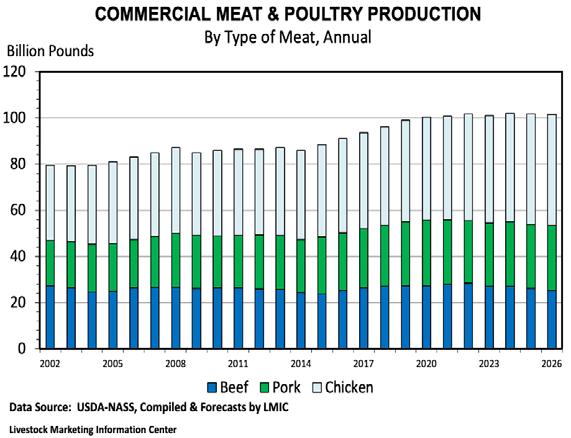
Heading into grilling season, it is interesting to look at the shares of meat production and consumption in the U.S. One fact that may surprise, the United States now produces more pork than beef, yet Americans still eat more beef per person.
The USDA ERS May 2026 Livestock, Dairy, and Poultry Outlook projects 2026 pork production near 28 billion pounds against 25.5 billion pounds of beef. The gap reflects a shrinking cattle herd while hog supplies remain ample. ERS projects the gap to widen further in 2027. Broiler chicken production is projected at 49 billion pounds.
Production is not the same as consumption. ERS projects 2026 per capita availability at 60 pounds of beef and 49.6 pounds of pork, with chicken far ahead at 105.6 pounds. Total red meat and poultry disappearance per capita (the amount used in domestic markets, including
fresh and processed meat sold through grocery stores and used in restaurants) is projected to top 230 pounds in 2026 which would be the highest on record.
So why does beef lead pork at the dinner table when we raise more hogs? Trade. The U.S. is expected to export roughly a quarter of its pork production but only about nine percent of beef production. Additionally, beef imports outweigh exports and will add more beef to consumers’ plates.
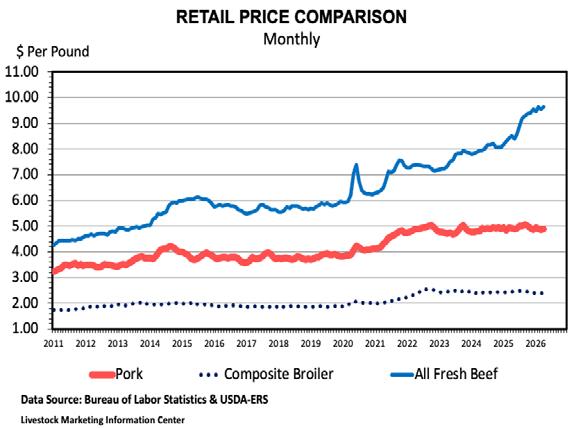
Looking at price changes adds important context. The all-fresh retail beef value hit a record high $9.64 per pound in April, up 13 percent from a year earlier. Retail pork prices were essentially flat at $4.89 per pound and retail broiler prices declined slightly to $2.39 per pound. Despite the highest price tag, beef demand has stayed firm as consumers are paying more and still reaching for it.
Production volume and consumer demand are different signals, and it will be important to track both over the next few years. Across proteins, it appears there will be lots of meat on grills this summer. ▫

They’re Turning Wyoming into a Wind Factory –and Killing Eagles to Do It.
BY CRAIG RUCKER / CFACT
In early June, I stood at the Wyoming State Capitol with about 150 ranchers, farmers, conservation advocates, and plain fed-up citizens – and it was one of the best crowds I’ve been in front of in a long time.
Our “Save the Eagles, Stop Wind” rally exposed the socalled Wyoming Wind Wall – a 200-mile industrial corridor of wind turbines being rubber-stamped, across the heart of some of the most iconic landscape in America.
Nobody in Cheyenne or
Washington, D.C. is looking at the cumulative picture. Project after project sails through permitting while the combined footprint – on migration routes, breeding grounds, golden eagle populations – goes completely unexamined. Environmentalism? Please. Its recklessness dressed up in green rhetoric.
Wyoming is home to the largest breeding population of golden eagles in the lower 48 states. A full quarter of the western U.S. breeding population lives and nests there. But Golden eagle numbers in Wyoming have already dropped nearly a third over the past 20 years – and wind development is a major reason why.
Kim Monson, Host of The Kim Monson Show, put it perfectly from the podium: these turbines have become “a Cuisinart for golden eagles, birds, and bats.”
These are the same people who weaponized the Endangered Species Act (ESA) for decades – shutting down farms, blocking pipelines, strangling timber harvests – all in the name of “protecting wildlife.”
They turned the spotted owl into a four-decade cudgel against the logging industry. They’ve used the ESA to litigate practically every infrastructure project in the western United States.
But golden eagles? Suddenly the greens can’t be bothered.
And why would they? When there’s no pipeline to kill, no farm to shut down, no development they actually oppose on
FDA Issues Emergency Use Author-
Dogs & Cats
Most dogs and cats in the U.S. are at low risk of NWS; risk is elevated for pets recently in areas with confirmed cases of NWS
The U.S. Food and Drug Administration today issued an Emergency Use Authorization (EUA) for generic Nitenpyram Tablets (nitenpyram) for the treatment of New World screwworm (NWS) infestations (myiasis) in dogs, puppies, cats, and kittens that weigh at least two pounds and are at least four weeks old. This is the first generic animal drug authorized for use against NWS. ▫
the other end of the complaint?
The Endangered Species Act was never really about the animals. It was about controlling land, blocking projects, and handing lawyers and activists a veto over anything they didn’t like.
When wind turbines started shredding raptors by the thousands, the silence was deafening – because this time, the developers writing the checks are their developers. The subsidies flow to their allies. The sweetheart permitting deals line their pockets.
The eagles were always expendable. They just didn’t advertise that part.
CFACT was there because this is exactly what we do. We don’t just write white papers about it. We show up – at the Wyoming Capitol, at the UN climate conferences, at the EPA, at the shareholder meetings of the banks funding this mess – and we make noise until someone must answer for it.
We’re demanding a full Programmatic Environmental Impact Statement before another blade starts turning in Wyoming.
A real review. An honest one.
The kind the subsidy-chasing wind developers have been hoping nobody would ever ask for.
The fight isn’t just in Wyoming. The green lobby is pushing this same playbook in states across the country – quietly, project by project, hoping nobody adds it all up.
We are. And we’re not done.
Forst to be Honored with National Golden Spur Award
Terry Stuart Forst, Waurika, Oklahoma, has been selected as the recipient of the National Golden Spur Award for her contributions to the ranching and livestock industries. Forst will be celebrated during the annual National Golden Spur Award Honors on Saturday, Oct. 10, 2026, in Lubbock, Texas.
“Truly, I am humbled and honored to receive this award,” Forst said.
“On behalf of my family and the Almighty God, who has blessed us exceedingly and allowed us to sustain, build and grow the legacy left to us by our forefathers, I thank you.”
Presentation of the National Golden Spur Award is a joint annual recognition given by six of the leading state and national ranching and livestock organizations: the American Quarter Horse Association, National Cattlemen’s Foundation, Ranching Heritage Association, Texas Cattle Feeders Association, Texas Farm Bureau and the Texas and Southwestern Cattle Raisers Association.
strengthened the ranch through decades of growth and change while maintaining the traditions that have defined the ranch for generations. Today the Stuart Ranch includes Bar S Corriente Cattle, an American Quarter Horse program and a hunting operation.
Forst was the first woman elected president of the Oklahoma Cattlemen’s Association and the first woman named Oklahoma Cattleman of the Year. She is also an inductee of the Oklahoma Hall of Fame, Oklahoma Agriculture Hall of Fame and the National Cowgirl Hall of Fame.
“Terry represents everything the Golden Spur Award stands for,” Pam Minick, rancher, television host and longtime advocate of the ranching industry, who nominated Forst for the award, said. “She has honored her family’s legacy, strengthened one of America’s historic ranches and dedicated her life to serving the cattle and horse industries.”
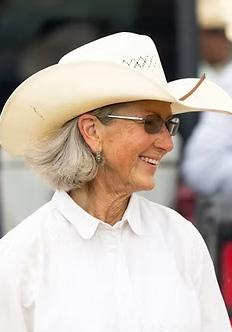
“Few people have had a greater impact on the cattle industry, and I can’t think of anyone more deserving than Terry,” Minick said.
Joe Goggins Elected President of Livestock Marketing Association
Joe Goggins, a lifelong livestock marketer and rancher, will soon take the helm as president of the Livestock Marketing Association. He will assume the role during the association’s annual convention in June.
Goggins serves as chief executive officer of the Vermilion Ranch Corp. in Billings, Mont. In this role, he oversees Public Auction Yards, Billings Livestock Commission, Western Livestock Auction, Northern Livestock Video Auction, the Vermilion Ranch Registered Angus Herd, Diamond Ring Ranch and other diversified business ventures. Prior to becoming CEO, he worked alongside his late father, Pat Goggins, and grew up immersed in the family’s operations. Along with his wife, Linda, Goggins also operates J&L Livestock, a commercial cattle operation focused on breeding and raising Angus females.
He graduated from Montana State University with a degree in animal science before pursuing his passion for auctioneer-

ing. A longtime LMA supporter whose family has deep roots in the organization — his father also served as president — Goggins has been involved in the association for approximately 20 years, previously serving on the board of directors and executive committee.
And while he’s been engaged in many organizations over the years, LMA has a special place in his heart.
“This board is made up of people that have skin in the game,” Goggins said. “Every day they’re out doing the work, worrying about their producers, their consignors and the whole industry.”
Goggins emphasized the value the association provides to its more than 800 members, which include auction markets, order buyers and dealers. He highlighted the association’s industry-leading insurance products — particularly critical for
livestock facilities — prompt pay reform advocacy, buyer verification services and payment protection insurance.
Beyond operational support, Goggins is passionate about LMA’s broader role in the industry.
He stressed the importance of initiatives like Common Ground Coalition that aim to unify the industry, keep producers on the land and sustain rural economies.
“We need producers,” he said. “We need folks on the land and we’ve got to come up with some ways all across this industry to help these people.”
He described LMA as a “welloiled machine” with exceptional staff and plans to maintain its strong momentum while focusing on key priorities: protecting and enhancing payment protection, supporting policy efforts such as allowing auction market owners to own or invest in harvest facilities, making sure animal disease traceability rules work for producers and markets, and continuing industry unification efforts to support cow-calf producers.
“I’ve never been prouder to be part of an organization,” he concluded. “Because they see the big picture: this country needs food security and that only happens if we keep cow/calf producers on the land.” ▫
Forst manages Stuart Ranch, Oklahoma’s oldest ranch under continuous family ownership. Since its founding in 1868, the ranch has grown into one of the nation’s leading cattle and horse operations. A fifth-generation Oklahoman, Forst has
The National Golden Spur Award was established in 1978 to honor individuals who have demonstrated exceptional accomplishments in ranching and have earned the respect and admiration of their peers through their service to the industry. ▫
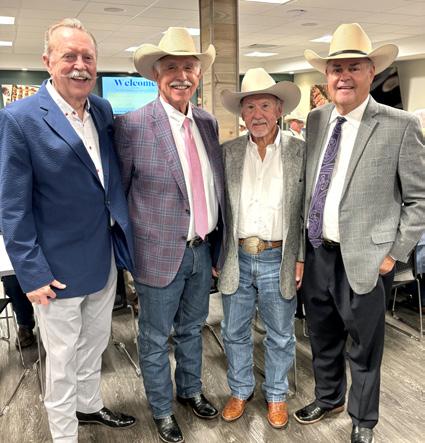
Former Digest Field Editor honored by Livestock Marketeers

Delvin Heldermon (right) who served as the Texas/ Oklahoma territory Field Editor for Livestock Market Digest, was honored by the Livestock Marketeers at their annual banquet in May as this year’s inductee into the Marketeers Hall of Fame in St. Joseph, MO. Shown with Heldermon are (from left: Chuck Stocks, Digest Publisher Emeritus, Jay Purchase, former Digest Field Editor for Kansas, Nebraska and Iowa and Jerry York, former Digest Field Editor for the Rocky Mountain territory.
Role Reversal: Mexico Suspends US Livestock Imports
Following Screwworm Cases
BY CHRIS MOORE / MEATINGPLACE.COM
Mexico has suspended most imports of live animals from the United States after New World screwworm (NWS) cases were confirmed in Texas and New Mexico, adding another layer of uncertainty to cattle markets already grappling with tight sup-
plies and negative beef processing margins. Mexico’s agriculture ministry announced June 9 that imports of cattle, horses, sheep, goats, swine and several other livestock species would be halted in coordination with USDA. Mexican officials said the action was intended to protect cattle herds in the northern states where no screwworm cases have been de-

tected.
The move comes as USDA has confirmed five NWS cases in the United States since June 3. The agency has emphasized that NWS is not a food safety concern and that meat and poultry products remain safe for consumption under existing inspection protocols.
Market analysts said the latest restriction could further tighten cattle supplies. Mexican feeder cattle imports into the United States were already largely restricted because of earlier NWS-related controls, and any additional disruptions to livestock movement could continue supporting cattle prices while pressuring beef packer margins.
Canada recently imposed its own restrictions on livestock imports from Texas, including animals that originated in or had been present in the state within 21 days before entering Canada. Texas officials criticized the measure as overly broad and noted that inspected beef products are unaffected.
USDA continues to respond to the outbreak through quarantines, surveillance efforts and sterile fly releases. The department also plans to build a sterile fly production facility in Texas, though it is not expected to be operational until at least 2027.

A complete list of recipients is available at https://www. fs.usda.gov/working-with-us/ secure-rural-schools/bankhead-jones-payments.
The U.S. Forest Service (USFS) has announced it is distributing over $52 million to support local emergency services, schools and roads. In total, 65 counties will benefit from these funds under the Bankhead-Jones Farm Tenant Act.
“These funds represent 25 percent of the revenue generated from management of federally administered grasslands in these communities. The payments help ensure local communities share in the economic benefits from the land,” said USFS Chief Tom Schultz. “The funds are used to support local schools and infrastructure like
roads, while reinforcing the value these lands provide to the American people.”
FUNDING BREAKDOWN:
New World Screwworm Confirmation
— The Bad & the Good News
BY DERRELL S. PEEL / OKLAHOMA STATE UNIVERSITY EXTENSION LIVESTOCK MARKETING SPECIALIST
The shoe has finally dropped.
For many months producers and markets have operated under the threat of New World Screwworm (NWS) coming into the U.S. Now that it’s here, we can get on with the reality of dealing with it.
The bad news is that NWS will be costly and a management headache for affected producers and those nearby, along with industry and agency folks tasked with controlling and eradicating the pest. Time spent planning and anticipating an outbreak now shifts to actions.
The psychological impact has been mostly one of relief, especially in futures markets. The arrival of NWS has been one of many sources of uncertainty hanging over cattle markets for months. Confirmation of NWS in the country removes one source of uncertainty and allows the market to focus on the reality, which has largely been priced into the market.
The “good” news in all this is that it is not a broader market issue. NWS will affect relatively few animals and is not something that will affect the cattle supply or beef production. It also is not a food safety issue and there are no impacts on meat.
Beef market supply and demand fundamentals are not affected, and no significant market impacts are anticipated.
Additionally, no major trade impacts are warranted or expected relative to NWS. However, the reaction of trade partners is unpredictable.
Canada has announced a temporary ban on livestock from Texas. This is seen as a largely symbolic political move as it will affect a very small volume of trade. Although there is significant bilateral cattle trade between Canada and the U.S., very few Texas cattle are typically involved. Canada is well north of the climate boundary for NWS and the threat is minimal.
Another part of the uncertainty about NWS is the continued closure of the Mexican border. It is uncertain if the fact of NWS in the U.S. will change political decisions regarding the status of the border.
The market will continue to wait for news about when the border might open. Once again, the impacts are more related to uncertainty than reality.
When it happens, opening the border will likely be a deliberate and relatively slow process. Over time, Mexican cattle flow into the U.S. may rebuild with marginal impacts on feeder cattle supplies in the country, but no immediate disruptive shocks to cattle markets are anticipated.
Like most disasters, the impacts of NWS will be primarily local. It will take significant efforts and dollars to ensure a perimeter around the outbreak and effective animal movement controls to contain the pest along with diligent monitoring and treatment of any affected animals.
It is uncertain at this point how large a region might be involved in this outbreak, but no major cattle or beef market impacts are anticipated.
Interior Cuts 43 Partnerships
The Department of the Interior has terminated 43 cooperative agreements with outside groups it says were “operating in direct opposition” to the agency’s mission — cutting more than $4,000,000 in planned funding for programs the department tied to diversity initiatives, environmental-justice work, and support services for illegal immigrants. The list of severed partners reads like a who’s-who of mainstream conservation and cultural philanthropy: the National Wildlife Federation, the National Geographic Society, the Hispanic Access Foundation, Conservation International, and the American Alliance of Museums among them.
Revenue was generated from receipts primarily consisting of mineral development collected by the Department of the Interior’s Office of Natural Resources Revenue and grazing revenues collected by the Forest Service during the 2025 calendar year.
The Forest Service manages 20 national grasslands for multiple uses, including grazing, energy development and natural resource conservation.
To learn more about these payments to counties, visit:
fs.usda.gov/working-withus/secure-rural-schools/ bankhead-jonespayments
The cuts grew out of a department-wide review that Secretary Doug Burgum ordered in March, which surfaced nearly 3,000 active agreements with roughly 2,000 outside organizations. Interior framed Wednesday’s terminations as housecleaning: agreements that “did not appear to provide a clear benefit” or “did not align with the department’s mission.” Critics call it ideological pruning — the federal government deciding which nonprofits hold the right politics to keep a seat at the table. Either way, it is not happening in isolation. It lands amid a months-long administration push — an OMB proposal to filter grants for more than 100,000 nonprofits through a “national interest” test, a pending lawsuit over a separate $14 million round of Interior grant cancellations, and a department that
asked its own employees to flag colleagues for “DEI discrimination.” The 43 partnerships are one visible edge of a much larger redrawing of who gets to work with the federal government.
A separate September round of Interior grant cancellations now under challenge in Montana Wildlife Federation v. Burgum according to E&E News, Justia docket.
The action was disclosed first to Fox News Digital, which obtained the department’s materials. Interior said it is “ending relationships with organizations whose advocacy for phasing out baseload energy, defunding law enforcement services, and promoting racially preferential programs directly conflicts with this administration’s priorities.”
The line came from Matthew Middleton, the department’s principal deputy communications director and director of research — the same official who described the move as “decisive action.” The terminated agreements, the department said, had supported internship programs, conservation initiatives, research projects, and cooperative partnerships across Interior’s bureaus, including the National Park Service.

OF OUR OFFERINGS
• Custom Home on 36+ acre estate in Dragoon Mountain Ranch
• 36+ acre homesites in St David, AZ
• 80 Acre Farm land with 16” Irrigation Well in Willcox, AZ
• Custom Home on 4+ acres in Cochise, AZ
• 40 acre off grid land in Portal, AZ


O’NEILL LAND, llc

P.O. Box 145, Cimarron, NM 87714 • 575-376-2341 • Fax: 575-376-2347 land@swranches.com • www.swranches.com
VERMEJO RIVER VIEW, 87.43 +/- Deeded Acres. Small cabin, Conex Box, great views, just 3 miles east of Cold Beer, NM, in Colfax County. 913 SHY 505 Maxwell, NM 87728. $325,000
MIAMI 80+/- ACRES, 3 bedroom, 2 bathroom home with water shares, roping arena, steel barn with shop. Other historic barns, Pipe corrals. Far enough off road to be private. Includes 80 shares of irrigation 2350 SHW 21, Miami, NM 87729. $569,999
MIAMI PRIVATE 80, Located ¼ mile off blacktop with dedicated easement, 80 +/- deeded acres, large barn, small sleep out, buried utilities, domestic water meter, 80 shares of irrigation and septic able to handle a 3 bedroom home. Some of the best views in Miami. 2050 HWY 21, Miami, NM 87729. $559,000
BAR LAZY 7 RANCH, Colfax County, Moreno Valley 594.38 +/- deeded acres, accessed off blacktop between Eagle Nest and Angel Fire. Historic headquarters. Currently used as summer grazing, pond and trees accessed off county road on rear of property as well. Presented “AS IS” New Survey, $3,564,500 $3,500,000
REAL ESTATE GUIDE