







We are living in stressful, uncertain times that make it challenging to maintain a healthy balance between doing what’s best for ourselves and our families and advocating for the issues we care about in the world. As military spouses, we know all too well what it means to go full steam ahead, "embracing the suck" and showing up for everyone around us. We pride ourselves on our resilience, our ability to pivot and our relentless commitment to our communities.
What we’re less familiar with, however, is retreating.
The word itself often carries negative connotations—of defeat, of ceding ground or of giving up. But as we transition into this spring season, I want to challenge us to reframe that context. In a military sense, a retreat isn't always a sign of failure; often, it is a strategic regrouping. It is a deliberate move to protect the force, preserve resources and prepare for the next objective.
What if we understood that retreating in our personal and professional lives is less about giving up and more about protecting sanity and wellness?
In our world, the "always-on" culture is amplified by the unique demands of the military lifestyle. We feel the pressure to be the perfect spouse, the high-achieving professional and the tireless advocate all at once. But true leadership—and true advocacy— requires a sustainable pace.
Being more deliberate in what we say "yes" to is a radical act of selfpreservation. Understanding that saying "no" doesn’t necessarily mean ceding the field, but rather being more selective in how, where, and when we show up, allows us to bring our best selves to the table when it matters most.
This issue of the NMSN Digital Magazine is dedicated to the idea of intentionality. As you flip through these pages, you’ll find stories of fellow spouses who are navigating these same crossroads—finding the courage to step back so they can eventually leap forward.
Whether you are running a business, climbing the corporate ladder or leading a volunteer organization, remember that you are your own most valuable resource. Taking the time to retreat, to breathe and to recalibrate isn't a luxury; it’s a tactical necessity.
Let’s give ourselves the permission to be selective. Let’s protect our peace with the same ferocity we use to protect our families and our community. By doing so, we don’t just embrace the "suck"—we actually begin to thrive in spite of it.
Forward together (after a welldeserved break),
Sue Hoppin Founder & President
National Military Spouse Network
BY JENNIFER BARNHILL, EDITOR IN CHIEF
In the military spouse community, there is work that happens front and center, and there is work that happens behind the scenes. We show up to morale-boosting activities and bring food to our neighbors. And we stand over our kitchen sinks cleaning up, by ourselves, for months on end. We do both the public and quiet work that needs doing. And sometimes we get the two confused.
What do I mean by that? For those who work in advocacy, it is easy to look at the public-facing work and think that is all that matters.
I have to be active on social media, standing up for my cause.
I have to comment on this important event because my silence also speaks.
In many cases, these “have tos” are worthy causes, but I would guess that the majority of the time we don’t “have to” do anything.
I “have to” feed my kids and take them to school. I don’t “have to” comment on the latest military operation.
This is made especially confusing when we operate in spaces that feel both personal and professional. Teachers may love to teach, but don’t know how to show up when ICE comes to their school or kids only eat when they have access to school-provided free lunches. Medical professionals have signed up to care for others, but are also forced to see people stress over medical debt because insurance policies and health care costs make being sick in America a financial liability.
As a freelance journalist and military spouse, I want to write about every single incident I see come across my social media and news feeds. But I can’t possibly.
I have to care for my family. I don’t have to save the world.
But we sometimes think we do. We married service members, individuals who have signed up to serve their country, knowing it could cost them everything. While we don’t usually “know what we signed up for,” we do know that.
While we didn’t sign up for what they signed up for, we know that our lives will be one of sacrifice,

to varying extents. And it is tempting to mirror the ideals of service we see in our partners.
So, when do we draw the line? When do we say, “This isn’t solely on me?”
The answer is quieter than we expect. It doesn’t come in a moment of clarity or a single decision. It comes in the small, repeated choices to prioritize what is actually ours to carry. It comes when we recognize that just because something matters to us does not mean it is ours to hold, respond to, or fix.
There is a difference between being informed and being responsible. Between caring deeply and being consumed. Between using your voice and feeling like you must use it at all times.
We know that the behind-the-scenes work matters the most. We are there for the caregiving, the Home front management. We know it is devalued, but that it makes everything else possible.
The problem is that it is invisible. It doesn’t get likes or shares. It doesn’t come with public validation. So we look for ways to prove, to ourselves and to others, that we are still contributing. That we are still doing enough.
We kill ourselves to regain our purpose and value, to serve alongside our service members. But “enough” was never meant to be measured by how much of yourself you can give away.
Sometimes, the most responsible thing we can do for our families, our communities, and even the causes we care about, is to step back. To make space for others to step up. To recharge behind the scenes so we can pick up our public work down the road and avoid burnout.
If you are wondering when it might be time to “call it” and step back from public work, here are a few things to pay attention to:
• You feel a constant pressure to respond, rather than a clear intention to contribute.
• You are reacting to everything, but not engaging meaningfully with anything.
• You go into fight or flight when you scroll.
• Your work at home is suffering, or you are resenting the people who need you most.
• You feel guilty when you are not “doing something,” even when rest is what you actually need.
• You are speaking out of obligation, not purpose.
Calling it doesn’t mean you stop caring. It doesn’t mean you disengage permanently or that your voice no longer matters. It means you are choosing to engage in a way that preserves your mental health.
It may look like logging off.
It may look like not posting the comment you drafted.
It may look like focusing on one issue instead of ten.
It may look like not responding to direct messages calling you out for inaction.
It may look like taking care of your household and trusting that, right now, that is enough.
Because it is enough.
The military spouse community has never lacked people willing to step up. What we need more of is permission to step back without shame. To recognize that behind-the-scenes work is still service. That caring for our families is not separate from contributing to our communities, it is part of it.

We don’t have to prove that our contributions matter every day for the rest of our lives. We are allowed to be thoughtful about where we place our energy. We are allowed to say, “This matters, but it is not mine to carry today.” Jennifer Barnhill is the author of The Military Stories You've Been Told and the Ones You Need Hear, freelance journalist and the host of Military Dinner Table Conversations , a monthly reverse town hall with military families. She is the 2025 Armed Forces Insurance Navy Spouse of the Year, a 2023 Bush Institute StandTo Veteran Leadership Program Scholar, the editor-in-chief of the National Military Spouse Network ’s Career Connections Magazine and the military spouse liaison on The League of Wives Memorial Project.
BY RONA JOBE
Like many military spouses, I have faced constant uncertainty throughout my adult life.
Military spouses reinvent our careers across duty stations and time zones. We adopt new professional identities while navigating teleworking, visibility gaps and the required recalibration that comes with each PCS. When I started my own business, I assumed entrepreneurship would provide the stability I craved.
It did not. Global crises continued, political conversations grew louder and economic forecasts changed. For military spouses who are balancing mobility and mission, this noise feels constant.
I was now running a business and viewed these issues through a new lens. I managed fluctuating business cycles, growing client demands and building a remote team.
The unpredictability in my day-to-day life multiplied. How do you show up as your best self when the world feels overwhelming?
After six years in business, I’ve learned strategy is about focus, not prediction.
Initially, I consumed everything I could get my hands on: economic predictions, legislative debates and industry speculation. I thought that being overly informed would keep me prepared and lessen any impact. What it actually created was decision fatigue.
Leaders who try to react to every headline or potential policy shift often become paralyzed. I learned to filter intentionally by asking myself:
Does this directly affect my clients, my compliance requirements or this quarter’s revenue?
If not, I allowed it to remain background context versus an immediate trigger for action.
You, too, can restore agency by reducing the noise and focusing on what you can control.
In uncertain times, we often zoom out and try to solve macro issues. I do the opposite. I think smaller. Instead of worrying about “the economy,” I focus on specific issues impacting my business and shorten my planning horizon.
How do you think smaller while still building resilience? Ask:
• What are this quarter’s priorities?
• Are our revenue targets accurate?
• Where can we cut costs?
Thinking smaller is about more than operational control. It prioritizes quarterly goals in an uncertain environment where annual goals remain hypothetical and are likely to change.
Personally, I focus on strengthening my pipeline, securing my relationships and making data-driven decisions.
It’s critical to understand the environment in which you operate. This is where policy matters.
Many small business owners, especially those connected to the military community, qualify for regulatory protections, contracting opportunities and certifications. Unfortunately, these are rarely fully leveraged. Taking time to understand which policies apply to your industry, business structure or eligibility status will give you a strategic advantage if leveraged.
For me, that has meant understanding how operating a fully remote, asynchronous company employing military and foreign service spouses across multiple countries affects compliance, tax issues and contracting. It has meant staying up to date on employment classifications and any regulatory requirements that change when employees relocate.
Rather than stressing over every policy change, ensure you understand the rules that govern your business model. Policy awareness also ensures you don’t miss an opportunity or expose yourself to unnecessary risk.
As policy debates intensify and global crises dominate the news, it’s easy to shift into reactive mode. However, it’s critical to manage this tension and remember that spiraling only negatively impacts your business.
Look for opportunities to engage in issues by taking actions that ensure your voice becomes part of the discussion. For me, it has meant writing to elected officials when policies affect military families or remote work policies. You can also:
• Take time to participate in industry associations and small business forums.
• Ensure that the perspectives of military spouse employers and employees are accurately represented in relevant conversations.
While these actions may not result in immediate changes,
the point is to remain involved and ensure your voice is heard in environments that shape your business.
Habits provide stability, even as external factors change. In uncertain environments, consistent practices create the structure that keeps your business grounded:
• Establish regular policy check-ins to ensure you remain informed without being reactive.
• Maintain quarterly planning reviews to create a structured setting for reassessing your goals.
• Commit to monthly financial reviews to ensure your projections remain grounded in accurate data.
Operational discipline prevents macro distractions from derailing progress. These practices may not feel dramatic, but they create stability and reduce impulsive or emotional decision-making.
As military spouses, we are exceptionally skilled at adapting. But adaptability without structure can become overwhelming. Routines provide continuity when geography, markets and policies shift.
Uncertainty is not going away. For military spouses, it never truly does.
The difference is how we meet it. We can try to anticipate every possibility and exhaust ourselves
in the process. Or we can narrow our focus to what directly affects our work, understand the systems we operate within, engage constructively and build habits that keep us steady.
By reducing the noise and focusing on what directly affects our businesses, we create clarity where it matters most. In environments beyond our control, maintaining a disciplined focus helps us move forward. And sometimes, that steady progress is exactly what creates the stability we were looking for in the first place.

Rona Jobe is the Founder and CEO of LVL-Up Strategies. Established in 2020, LVL-Up works with small businesses, startups, nonprofits and government agencies to get them to their next level through strategic planning, operations design, people development/ recruitment and marketing/ communications.
At LVL-Up Strategies, Rona and her team address the critical challenge of small businesses and U.S. military and foreign service spouses’ upward mobility headon. By uniting these communities, she forges sustainable pathways, empowering women to conquer career obstacles. Her visionary leadership established a seamless, asynchronous, remote team across time zones and borders, setting a pioneering standard well before remote work went mainstream.
BY ERIN HODGKINSON, STYLE ADVISOR

There's a certain kind of fashion moment that doesn't just show up for one season and disappear—it slowly settles in, evolves and becomes part of the past and future. This spring and summer, three trends are doing exactly that. From the effortless polish of matching sets to the natural feel of beaded and stone-adorned accessories and the breezy layering sensibility of coastal dressing, these are the looks that have been building across multiple seasons and show no signs of slowing down.
Over the past several seasons we have seen coordated pieces, from linen workwear suits to a more casual knit sweater or a sweatshirt with a midi skirt. The beauty of a set is that the decision is already made for you. You step into it and you're done, looking intentional and put together, especially when you are out and about. This spring, sets are also leaning into sportier territory with court-inspired silhouettes. Not only do these pieces travel beautifully and wrinkle less than you'd expect, they also take you seamlessly from a morning flight to an afternoon lunch without missing a beat. If you invest in one thing this spring, let it be a set that moves with you.
Coastal grandmother may have had its viral moment, but it unlocked a broader sense of sensibility of relaxed layers, natural textures, a palette drawn from the sand and sea. It has proven it has staying power far beyond a trend cycle. Coastal layering is exactly what it sounds like: the art of dressing in soft, breathable pieces that work together in an easy, unstructured way. A gauzy linen shirt worn open over a swimsuit; a lightweight knit cardigan thrown over a slip dress as the sun goes down; striped trousers with a loose cotton top and a woven tote that doubles as a beach bag. The key is that nothing is too precious, too fitted or too formal. Everything feels like it could be worn to the market, on a boat or on a walk along the shore without a second thought. This approach to dressing has resonated so deeply because it mirrors the way many of us want to feel: unhurried, comfortable and just put-together enough.


There has been an unmistakable shift in how we think about accessories—away from the understated and more toward something with a little more to say. Beaded bags, stonestudded sandals, pearl-wrapped bracelets and earrings dripping with semi-precious details have been showing up for a few seasons. A hand-beaded crossbody turns a neutral linen set into something entirely more elevated. A stack of stone-set bangles gives a white tank and tailored shorts that natural outdoorsy summer feeling we all want.

Erin Hodgkinson is a globally certified stylist with experience working on live TV and content shoots. She is currently a Styling Specialist for an Incubator Team.



We’d like to talk with you about career opportunities at Wells Fargo!
Scan the QR code to learn more and join the Military Spouse Talent Community.

BY BETH AUSTIN, PH.D. AND TAHEESHA QUARELLS, PH.D.
For years, military spouses operated under a clear formula for building a stable career amid an unstable lifestyle: earn a portable degree, enter a licensed profession and carry that credential from one duty station to the next. It was a reliable strategy promising continuity in the face of constant change. However, a new federal policy is quietly reshaping a piece of that equation, leaving some to navigate a different financial roadmap for funding advanced education.
Recent changes to federal student loan policy, enacted under Public Law 119-21, adjusted the definition of a “professional degree.” This adjustment has financial implications, particularly for graduate programs in fields like counseling, social work, education and some areas of healthcare. These are the very professions many military spouses have pursued for their portability and structured career paths.
The core of the change is financial. For new borrowers, the Graduate PLUS loan program, which previously allowed students to borrow up to the full cost of attendance for graduate degree programs, is eliminated for the reclassified degrees. The Graduate PLUS program was replaced with a new annual cap of $20,500 and a lifetime limit of around $100,000 for most programs considered in the general category. As of 2023, the average annual cost to obtain an undergraduate degree was $27,673. As of 2021, graduate degrees cost $20,513 annually.
For federal student loan purposes, a “professional degree” is now exclusively defined as one in a specific set of high-cost, doctoral-level fields like medicine, law and pharmacy.
This means that master’s programs essential for licensure in the portable careers many military spouses pursue–counseling, social work and teaching no longer carry this designation and are subject to lower borrowing caps.
For the military community, this policy lands at a critical intersection. Many military spouses depend on federal student loans to finance the education required for portable, licensed careers. By lowering borrowing limits for certain graduate programs, the policy may create a significant financial barrier that could restrict access to advanced credentials, slow career mobility, and push some spouses towards riskier private lending.


The impact of this policy is not abstract; it is felt by spouses who have meticulously planned their careers around the demands of military life.
“Being a military spouse means that I chose to embrace unconventional challenges,” said Erika Marroquin, a military spouse and graduate student who is working to complete her doctorate degree in education.
“With every PCS move, prolonged deployments and having to accept that my marriage will consist of many lonely nights... I have had to posture myself to lean forward and anticipate unavoidable uproots, expecting to reestablish a career with every new move, reaffirm my ambitions in every new location, and be flexible with my dreams.”
For spouses like Marroquin, the path to a professional degree was already fraught with obstacles. This policy change may add another layer of financial strain, creating what may be considered an “uneven playing field” that penalizes the very portable professions the military community has been encouraged to pursue.
Sharon, a military spouse and student currently stationed overseas, finds herself taking on more student loan debt to pursue her master’s in clinical social work, a requirement for licensure.
She is also choosing “to delay repayment of my existing student loans I used to cover my bachelor’s degree in social work”. If she delays getting her master’s, then she will only qualify for lower-paying entry-level roles while being required to repay her student loans.
If she continues to complete her program to qualify for higher-paying positions, she may not have enough money to cover her expenses. Sharon’s situation highlights the difficult financial decisions many spouses face to maintain career progression while supporting their service member’s career.
While the new landscape may seem daunting, understanding these changes is the first step toward making informed decisions. Change can be unsettling, but opportunity is still within reach. As the beloved Mr. Rogers would say, “Look for the helpers.”
In this spirit, here are actionable steps and resources available to military spouses:
• Institutional Financial Aid Offices: Your first stop should be the financial aid office at your chosen institution. They are experts on federal, state, private and non-profit funding sources and can provide personalized guidance.
• Professional SECO Coaches: The military’s Spouse Education and Career Opportunities (SECO) program offers free education and career coaching. These coaches can help you explore funding options and develop a personalized career plan.

• GI Bill Transfer: If your service member is eligible, they may be able to transfer their Post-9/11 GI Bill benefits to you, which can be a significant source of funding for your education.
• Scholarships and Grants: Numerous organizations offer scholarships specifically for military spouses. Resources like the National Military Family Association, the Pat Tillman Foundation and branch-specific aid societies (e.g., Army Emergency Relief, Air Force Aid Society) are excellent places to start.
• Public Service Loan Forgiveness: If you work for a qualifying non-profit or government organization, you may be eligible for loan forgiveness after 10 years of payments. This remains a viable option for many of the affected professions.
• Private Student Loans: Banks and credit unions offer a variety of student loan options. However, be very cautious of private loans with high-interest rates or unfavorable terms. A predatory loan can be identified by its aggressive marketing, high-pressure sales tactics and lack of transparency about fees and interest rates. Always compare offers and read the fine print.
This policy change, while challenging, does not close the door on professional advancement. By seeking out the “helpers” and leveraging the robust network of support available to the military community, spouses can continue to build meaningful, portable careers. The path may have changed, but the resilience and adaptability that define military spouses remain their greatest assets in navigating this new terrain.
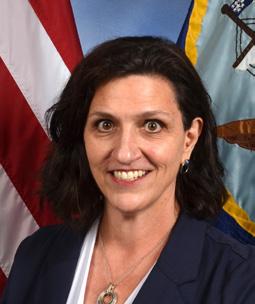

Dr. Taheesha Quarells is an Army veteran with 20 years of federal experience in expanding higher education and employment opportunities within the military-connected community.
BY DR. JERMAINE KING, ED.D.
The hiring process often feels like a decision point. Candidates prepare, respond and hope to be selected. For military spouses, however, the decision carries more weight. Roles are often accepted quickly, timelines are compressed and opportunities are weighed against relocation, stability and timing.
Yet one of the most important decisions often comes after the offer is signed.
Is your new work environment working for you? Coming to an answer is not always immediate. It is a discovery that unfolds over
time, shaped by early signals and reinforced by patterns that either confirm or challenge what was first perceived.
Workplace culture is often thought of as something experienced after onboarding. In reality, it begins to reveal itself much earlier, often during the hiring process itself.
Tanya Brooks, a military spouse and Human Resources Generalist based near Fort Cavazos, Texas,
has built her career across multiple relocations in support of her spouse’s military service. Each move required her to reenter the workforce, often with limited time to assess whether an organization would truly support her growth.
“I used to think interviews were about saying the right things,” she says. “Now I listen more than I talk. How they respond tells you everything.”
Her perspective shifted after accepting a role that, on paper, seemed like the right fit. The hiring process moved quickly, but something felt off. Communication was delayed, expectations were unclear and conversations felt rushed.
At the time, those moments seemed small. Later, they felt familiar.
“I ignored the signs because I needed the job,” she explains. “But the way they treated the process was the way they treated people.”
Research supports this observation. Findings from CareerPlug indicate that candidates often form accurate impressions of workplace culture during the hiring process, particularly through communication patterns
and responsiveness. For military spouses operating on compressed timelines, those early impressions are not just helpful. They are often predictive.
Not all difficult environments are unhealthy, and not all challenges signal a problem. Some reflect growth, structure and the natural demands of high-performing teams.
Marcus Lee, a Senior Operations Manager for a regional distribution company in Atlanta, Georgia, is also a military spouse who has navigated relocations while maintaining a leadership role in the private sector. His experience balancing operational demands with the realities of military life has shaped how he evaluates workplace culture.
“There’s a difference between a fast-paced environment and a chaotic one,” he says. “One pushes you to grow. The other leaves you guessing.”
He experienced both firsthand. In one role, expectations were high but consistent, feedback was direct and leadership remained present. The pace required effort, but it also provided clarity and direction. In another, expectations shifted without explanation, communication was reactive and support was inconsistent.
The workload felt similar, but the experience did not.
“It wasn’t about how hard the work was,” Marcus explains.

“It was about whether you understood what success looked like.”
Over time, certain patterns begin to stand out more clearly: consistently delayed communication, shifting expectations without explanation and limited access to leadership or feedback. On their own, these moments may have seemed minor. Together, they can signal something more structural.
That distinction often goes unnoticed, especially for those quickly navigating new environments.
Some of the most important indicators of workplace culture are never formally stated. They are observed through behavior, tone and consistency over time.
Elena Ramirez, a Registered Nurse working within a military treatment facility on a U.S. installation in Germany, has built her career while navigating overseas assignments, credentialing timelines and limited local employment options. Her environment has required her to rely more heavily on observation than assumption.
“I listen for how people talk about others,” she says. “That usually tells you more than anything else.”
Working overseas has sharpened her awareness. Despite the long process required to secure an overseas assignment, the onboarding once in-country is often inconsistent, and teams can change frequently. She has learned to identify culture through everyday interactions rather than formal messaging. She pays close attention to whether expectations are clearly

defined or constantly shifting, whether leaders speak with respect about past employees and how questions about development are addressed.
“One of the biggest things I learned is to ask how people are developed,” Elena said. “Not just how they are hired.”
That distinction matters. According to Gallup, employees who feel supported in their development are significantly more likely to remain engaged and stay with their organization. For military spouses, whose time in any one role may already be limited, development should not be optional: it should be foundational. Spouses must look for time-bound development opportunities they can use as stepping stones in their next role.
Not every misalignment is visible immediately. Sometimes it takes time for patterns to emerge and for individuals to recognize what is consistent rather than occasional.
Tanya reflects on how her perspective has evolved. “I used to think leaving meant I failed,” she said. “Now I see it as choosing the right environment for where I am.”
Marcus frames it through performance and sustainability. “Sometimes the question isn’t whether you can do the job,” he said. “It’s whether the environment allows you to do it well.”
Elena adds a practical lens shaped by both clinical work and overseas experience. “Everyone has a bad day,” she said. “But when the same issues keep showing up, that’s when you have to pay attention.”
These decisions are rarely made in a single moment. They are formed through observation, reinforced through repetition and clarified by recognizing patterns over time.
Military spouses navigate careers differently. They assess quickly, adapt continuously and make
decisions with both urgency and long-term impact in mind.
Reading workplace culture is not about expecting perfection. It is about understanding alignment between expectations, support and the ability to grow. While it can be hard to walk away from a job offer, some roles/companies don’t set employees up for success.
Not every challenge is a reason to leave, and not every opportunity is a reason to stay. But when individuals learn to recognize the difference, their decisions become less reactive and more intentional.
Once military spouse professionals recognize this distinction, the questions they ask themselves begin to shift:
It’s no longer, “Can I do this job?” But “Is this a place where I can grow?”
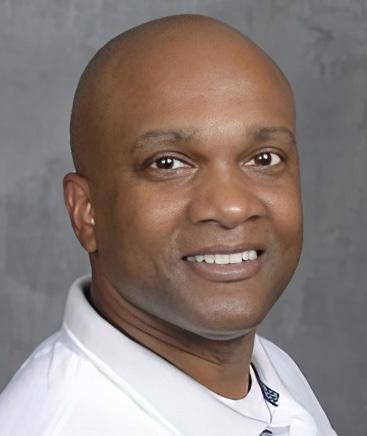
Jermaine King is a senior United States Air Force leader with over 21 years of experience leading and innovating within large organizations with over 52 leadership and project management certifications. He is a 2023 Presidential Leadership Scholar and received his doctorate in organizational leadership. He is a LinkedIn influencer, a keynote speaker, an executive leadership coach and a lecturer for four universities covering topics like adult learning, ethics and strategic leadership.

BY KRISTA WELLS, PHD., THE MILITARY SPOUSE COACH ®
My son plays college baseball, and before he landed on a team, he worked really hard with several coaches to get extra help. Getting that outside support and accountability can make a good athlete a great one. The same is true for military spouses trying to navigate how to best join corporate America. So often, military spouses’ careers take the back burner because they’re simultaneously serving those who serve and often are trying to juggle a million other hats.
When I was first starting in my career, I tried using the free services the military offered and also tapped into my college alumni career center, a great idea for everyone. I still wasn’t sure how to balance dealing with a deployment and the emotional toll it took. Later in our marriage, I had the desire to work, but part of me also wanted to stay home and raise our four children.
That is when I decided to start a part-time business, and although I had a degree in psychology, I didn’t have the entrepreneurial skills and wasn’t sure about my business niche. So I sought help. I hired a private corporate coach named Jill Berquist, a life coach certified with the International Coaching Federation. I’m so glad I did.
After several months of working with her, taking career and personality assessments, reading some career-discovery books and doing some fieldwork, I got to know my professional self. Jill helped me choose a niche and grow my private practice, seeing 15 paying clients in six months. This more than paid for the initial investment in hiring a career coach.
Now, looking back over my career, I’m so glad I kept one foot in my career while raising my family.

When you are a military spouse with young kids, it may not seem like it’s worthwhile to grow your influencer page, write articles part-time or try to pull off doing a podcast while the kids are napping. But it was those little jobs, writing for military spouse magazines and getting a babysitter to see two evening clients that ended up paying off over time. I believe sticking with work is what helped me finally become a published fiction author.
I’m fortunate that the careers I chose (therapist/ life coach and fiction writer) are somewhat portable professions. Now, I help other military spouses in the same way Jill helped me. She worked with me to identify my values, look at the skills I was motivated to use and blend those with my areas of interest to design the perfect career for me.
Military spouse life is hard enough, so getting a little support when it comes to finding a career can be the difference between settling for underemployment and having a solid plan.
Before you hire a coach, you should: work on your resume, do a LinkedIn overhaul and take some free career assessments with your university or online. Many books that can help you when trying to figure out a new career direction, such as Do What You Are by Paul Tiger and Now Discover Your Strengths by Marcus Buckingham and Donald Clifton. But even after the reading, it’s the “putting it all together” part that can be hard.
Be sure to:
• Capitalize on any free career counseling you can get your hands on.
• Read books on career transition and leadership.
• Ask other military spouses who are happy in their careers what resources they used.
• Get out there and network.
• Get involved so that if you do hire a coach as a last step, you know exactly how to best use the time.
When looking for free career-coaching resources around your military installation, be sure to ask around. You can also look online. The DoD Spouse Education and Career Opportunities (SECO) offers a program that provides some free, personalized career coaching to eligible military spouses. The program looks at career exploration, education planning and job searches.
Hiring Our Heroes also offers career coaching and has some hiring events. You can look online for additional military spouse hiring events and see which one is closest to you. Once you have exhausted these free resources and have somewhat of a plan as to where you are headed, it might be wise to invest in some clubs and networking organizations that will help you to take your career to the next level.
You might want to join Toastmasters International, look into various Women’s Networking groups and tap into the resources at the National Military Spouse Network (NMSN). Maybe another member is doing exactly what you could see yourself doing, and you just need to reach out to do an informational interview and pick their brain on how they got started. To boot, joining professional organizations like NMSN can look great on your resume, helping you connect with business leaders, meet career coaches and discover job opportunities you probably didn’t even know existed. Once you zero in on what you want to do, you might even be ready to join professional associations in your field of study. I have been career coaching for 20 years, and I’m still surprised at all the different associations that are out there.
Once you have talked to your alma mater, your military base and exhausted online resources, you might still feel as if you need some professional
coaching. If you are going to hire a career coach, I’d look at the International Coaching Federation and use the Credentialed Coach Finder (CCF), seeking a credentialed coach in your area. There are three levels of credentials: the Associate Certified Coach (ACC), the Professional Certified Coach (PCC) and the Master Certified Coach (MCC). The MCC is the highest level, and these coaches have received the most extensive training and experience. If you can’t find someone who has experience working with spouses, consider looking at people who work over the phone or see clients on Zoom. When you are hiring a career coach, I’d definitely ask them if they offer a 30-minute complimentary coaching session to make sure you’re a good fit. Ask them if they have some client testimonials before purchasing a coaching program, so you aren’t investing your money in something that isn’t going to offer you a return on your investment.
Just like my son fine-tuned his swing to give himself an edge, military spouses deserve the same support. Why not give yourself every advantage you can? That added support, accountability, resources and someone to help you navigate becoming all you can be.
You don’t have to do everything alone; bring all of your ideas to a coach who will help you sort things out and come up with a game plan.

Krista Wells, Ph.D., The Military Spouse Coach® , is a certified life coach that loves working with motivated military spouses. She writes and speaks to military spouse groups, teaching them how to set goals and make their side hustles happen! She recently co-authored a fiction book titled An Imperfect Plan , under the pen name Addison McKnight.
At the foot of the Frederick Douglass Bridge, Bridge District offers unmatched access to major military bases—making it an ideal housing choice for service members and their families. As a thank-you to those who serve, we offer special incentives for military members and their families. Reach out to schedule a tour to learn more.
This sustainable community features a collection of modern apartments, a robust amenity package, waterfront access and green space for convenient, connected living. On-site dining experiences include Atlas Brew Works, Melange (coming soon), DaBo Burger, and Cafe Cino.





gets to speak, who stays quiet & how military spouses can use their voice in politically charged times
BY REBEKAH GLEAVES SANDERLIN
The military runs on courage…and coffee, but mostly courage. The literal, physical, trained-into-the-body kind of courage that makes a service member run toward gunfire when every survival instinct should be screaming otherwise. Military families also run on courage. They display courage through waiting, saying perpetual goodbyes, raising children through uncertainty, while reinventing themselves and then reinventing themselves again.
But, when a military spouse opens their mouth to advocate or express frustration about a policy, a fear, a thing they have watched happen to their family or community, the same culture that reveres courage looks at them in shock.
The unspoken message is clear: military spouses are supposed to be seen but not heard.
Let’s start with the facts. What are military spouses allowed to speak out about?
According to retired Marine Corps Colonel David Lapan, there are no Department of Defense
regulations or policies restricting the speech of military spouses: None. Nada. Zilch.
Lapan should know; he spent a career as a spokesman for three Secretaries of Defense and knows institutional communication from the inside.
Unlike service members, spouses retain their full First Amendment rights.
“The perception that a service member could be held accountable for their spouse’s public speech does have a chilling effect,” Lapan said. “But in my opinion and decades of experience, that effect is greater than actual instances where a service member was negatively affected.”
Sarah Streyder, executive director of Secure Families Initiative and a military spouse who has spent years helping others navigate this terrain, encourages an approach she calls managing courage responsibly. Part of the problem, she said, is that the unofficial rules have changed.
“In 2020, I would encounter a vague perception of career retribution: ‘I heard that so-and-so knew so-and-so who once upon a time’...But we are operating in a fundamentally different environment now,” Streyder said. She noted that there’s a very real fear of retaliation, social isolation and of individuals getting called out publicly, through doxxing and vigilante justice. “When I encounter folks talking about fears now, it is a much different conversation.”


Brandi Jones stands with the SFI PCS Safety Team in January as they advocate for the inclusion of the Military Family Bill of Rights in the 2026 National Defense Authorization Act.
Corie Weathers , a licensed counselor, executive coach and author of Military Culture Shift, who works extensively with military families, watched this play out recently when a young military spouse spoke to the press, expressing her and her service member’s frustration and unhappiness with the escalating global conflict in Iran. The response from within the service member and veteran community was public shaming and bullying. “Many spouses watched that,” Weathers said, “and were reminded of the consequences of choosing that route.”
Weathers knows that there is a cost to speaking out. She shares
she spends hours contemplating every public statement. She has taken down social media posts out of caution, but has also had an opinion piece written during the Afghanistan withdrawl that she could not retract.
“I continue to ask for my husband’s blessing before writing anything too opinionated,” she said, not with apology, but with the matter-of-fact clarity of someone who has learned to respect the weight of her words.
“The risk is absolutely uneven, and we have to be honest about that,” said Brandi Jones, organizing director of Secure Families Initiative and a military spouse who has navigated both enlisted and officer life. Jones said that findings from the U.S. Government Accountability Office show Black service members are disciplined and investigated at higher rates than their peers, meaning they and their families carry a disproportionate share of the consequences. Jones’ work at SFI centers around highlighting and mitigating these and other challenges faced by service members and families.
Krystel Spell knows that data from the inside. The founder of ArmyWife101 , Spell, built her platform without fully understanding she was doing anything unconventional.
“I didn’t even realize early on that I probably wasn’t ‘supposed’ to be doing some of that publicly,” Spell said. Her entry into public advocacy was almost accidental, sparked by a video she posted
in 2012 to the Facebook page of ArmyWife101 discussing how military families were reacting to the government shutdown. Media outlets started reaching out to her after seeing the video and she was on MSNBC the next morning.
But being Black in a space that, as Spell puts it, “leans more traditional,” has meant navigating a layer of risk that doesn’t apply equally to everyone. “There’s often this expectation to show a certain kind of patriotism,” she said, “and if you don’t show up that way, people notice. Sometimes that looks like being labeled angry or divisive for saying something that others might be able to say without that same reaction.”
Spell continued, saying, “I’m not really a ‘when they go low, you go high’ person. If someone comes at me disrespectfully, especially online, I’ll respond. I think some people need to be checked, especially in this climate. In the past, I was probably a little more passive, but that’s changed. So, for me, it’s been a mix. There’s pushback, but there’s also an opportunity to reach people. Sometimes that means saying things in a way that gets their attention, even if it makes people uncomfortable.”
The officer/enlisted divide further complicates the calculus. For junior enlisted families, or where the service member is the sole earner, repercussions can mean no income, Streyder said. But she’s quick to add that a senior officer spouse’s political comments are far more likely to be noticed, and a single misstep can mean a missed promotion and the end of a decades-long career.
So, what does a military spouse do with all of this: The fog, the uneven risk, the cultural weight and the genuine courage it takes just to consider speaking out?
Think of advocacy as a twelvelane highway, Streyder said. All lanes need to be occupied, but you them.
“The real heroes,” Weathers said, “are those who leverage the courage, energy and commitment to provide a safe place for vulnerable, nonjudgmental conversation and a warm smile. That is much harder than writing a social media post.”



Military spouses already know how to do hard things. We do them constantly and without recognition. We do them loudly and quietly, publicly and privately, on stages and in living rooms. We choose how we will manage our courage and, whatever we choose, we should rest easy that it is enough.

Rebekah Gleaves
Sanderlin
is a journalist, the spouse of a nowretired soldier, and a longtime advocate for military families. Learn more about her at www. rebekahsanderlin.com



BY JANET FARLEY
Each year, approximately 200,000 service members transition out of the military, according to the Department of Veterans Affairs. Some retire, others complete their contracts and some leave due to unexpected life changes. Every transition story is unique. The why behind it can vary, and each transition story is unique. My own family’s post-military life resembles a cosmic game of ping-pong. Keep up, if you can:
My spouse retired from the Army in Germany, and we immediately moved back to Northern Virginia
for employment with a defense contractor. Homesick for Europe, we returned to Germany within a year, where he worked for a different contractor. Later, he transitioned back into federal service while still abroad, and we moved to Colorado, thinking we had found our forever home. During those years, he switched jobs again, returning to contracting, before we eventually relocated to Europe once more for another federal role. Meanwhile, I worked in multiple roles across DoD, private industry, higher education and nonprofit organizations.

Twenty-two years and four global relocations later, my point is that transition isn’t a singular event in time. It just keeps happening and we all do our best to get through it.
Expect that mistakes will be made. They can, however, be minimized.
Whether you have three months or three years to go, the sooner you begin planning for your post-military life, the better. Start making lists like there is no tomorrow and capture important questions that will need to be discussed.
Use a spreadsheet, journal, a spiral notebook (my personal favorite) or whatever helps you keep your thoughts organized. Here are some initial questions to get you started:
• Where do we want to live after leaving the military?
• Should we buy or rent a home?
• What school/child care/elder care options do we need to consider?
• What do we ideally want our daily life to look like?
• How much do we make and spend now?
• How do those numbers change after the transition without BAS/BAH?
• Do we have an emergency fund that covers 6-12 months of living expenses?
• Will we receive retirement pay from the military?
• Are we debt-free? If not, how are we going to get there?
• How much will we be able to continue saving towards our real (non-military) retirement?
• What salary do we need to earn to maintain or enhance our lifestyle?
• What happens to our Thrift Savings Plan (TSP) after we leave the military?
• Will we need to adjust our tax withholding the first year out so we don’t wind up with an unexpected and painful tax bill? (It can happen, and it is no fun!)
• Who needs/wants to work and where are they going to do that?
• Are we prepared for what could be a long job search?
• Do we have updated resumes, skills and knowledge about the existing job market?
• How do we fill any skill gaps?
• How do we best leverage veteran networks, mentorships and job fairs?

• Is the service member eligible for disability (taxfree) compensation? What does that process entail?
• What, if any, Tricare healthcare benefits are available to us postseparation?
• Will we have access to civilian health insurance? How does that work with Tricare?
• Are all family members covered, and if so, for how long?
• What will the process of using those benefits look like as civilians?
• How do we get copies of our medical records?
• Are we eligible for GI Bill benefits?
• Will we still be able to use on-installation privileges?
You have an amazing array of transition resources available to you. Use them. Depending on your individual circumstances of separation, some resources may only be available to you for a
limited amount of time, typically a year for separating families. These programs are gateways to other programs and resources that offer employment assistance, family support, financial and relocation assistance, as well as counseling and wellness programs.
The big ones include:
• Transition Assistance Program (TAP)
• Department of Labor (DoL) Employment Workshops
• SkillBridge
• Military OneSource (MOS)
› Military Spouse Education and Career Opportunities (MySECO)
› Military Spouse Employment Partnership (MSEP)
› My Career Advancement Account Scholarship Program (MyCAA)
• Soldier for Life (SFL)
• Yellow Ribbon Reintegration Program (YRRP)
• Military Family Readiness Centers
› Army: Army Community Service (ACS)
› Navy: Fleet and Family Support Center (FFSC)
› Marine Corps: Marine Corps Community Services (MCCS)
› Air Force & Space Force: Military & Family Readiness Center (MFRC)
› Coast Guard: Work-Life Program
Find your tribe and connect with them for support. Whether you are seeking a new professional certification, on-the-job training, networking opportunities or need financial assistance to pay the rent and keep the lights on at home, there are resources out there that can help you.
You are already taking advantage of the National Military Spouse Network (NMSN). Here are some others that may be available to you as well:
• Department of Veterans Affairs (VA)
• Hiring Our Heroes (HOH)
• Wounded Warrior Project (WWP)
• Onward to Opportunity (O2O)
• Team Rubicon
• HUD-VASH Program (VA support + housing vouchers)
• Disabled American Veterans (DAV)
• American Legion
• Veterans of Foreign Wars (VFW)
Expect mixed emotions when leaving the military lifestyle. For better or worse, it has defined much of your life. Adjusting to new routines and building civilian social connections takes time, but your perspective will make all the difference. Personally, I love embracing new adventures!

Janet Farley is a highly experienced career transition expert and author of several career advice guides targeted to military spouses and transitioning service members. As a Certified Professional Resume Writer (CPRW) and a Certified Workforce Development Profession (CWDP), she has assisted countless jobseekers, at every level, in advancing their careers. Farley is also a longtime employment expert for the NMSN, an advocate for the greater military community and a volunteer mentor for the American Corporate Partners. Contact Farley via LinkedIn (http://www.linkedin. com/in/janetfarley) Powered by: 15 to 20 minute interviews

BY KATE HORRELL
Paying for your military kid’s college starts with an understanding of the various programs, benefits and resources you have available. The best outcomes come when you create a coordinated financial plan as part of the college application and selection process.
First, you will want to have a clear understanding of the different Department of Veterans Affairs education benefits your child might have access to and how they work. The Post-9/11 GI Bill may pay up to 36 months of tuition and fees, plus a housing allowance and book stipend. The service member or veteran may transfer Post-9/11 GI Bill benefits to a dependent spouse or child, but there are specific rules about transferability and usage. If you intend to use the Post-9/11 GI Bill for a child’s college, you should verify in MilConnect that the transfer is complete and properly assigned. You also want to be sure that you've completed the required six years of service and will complete the four-year service obligation that you agree to when you transfer benefits.

Then consider who else might be using these benefits, and how it makes sense to divide them. For instance, would a parent benefit from additional education? Does one of the kids plan to go to med school?
Some families may also have access to Survivors’ and Dependents’ Education Assistance if the service member has died or is rated 100% disabled by the VA. This program provides a single monthly payment and can be used separately from the Post-9/11 GI Bill.
Next, you’ll want to see where your child is eligible for in-state tuition. Under federal law, dependents of active-duty service members qualify for in-state tuition where the service member is stationed. Under state policies, most military kids can also get in-state tuition in their parents’ state(s) of legal residence. In addition, certain states have more generous rules regarding residence for militaryrelated students. And if you’re separating from the military shortly before your child starts school, instate benefits might be a consideration.
In addition, federal law requires schools to ease in-state requirements for any student using VA education benefits. In practice, this means that your student will likely get in-state tuition whenever they’re using Post-9/11 GI Bill or DEA benefits. As a bonus, many schools will allow students to keep that in-state classification even after they stop using VA education benefits.
Scholarships are a third major component of most college financial plans. Military families have access to both general scholarships and those restricted to various military-related groups. There are programs from non-profits, spouses’ clubs, relief societies, veterans’ service organizations and others. These awards range from a few hundred dollars to significant, multi-year packages. A realistic college funding plan includes a structured scholarship search and application process over junior and senior years of high school, and then throughout college.
Military kids are also eligible for the standard federal and school aid systems. Every family with a college-bound student should plan to complete the Free Application for Federal Student Aid (FAFSA). Your income, assets and other financial aid information will be gathered and used to measure your ability to pay for school. Even if you don’t meet the qualifications for federal grant programs, you’ll open up eligibility for subsidized and unsubsidized student loans. Additionally, some state and school aid programs are determined by the information provided on the FAFSA. There’s also an alternate form called the CSS Profile, used by about 300 schools and scholarship programs.
In most cases, the family and student will also contribute through work, savings and borrowing. It’s important to be realistic about how much a student can actually earn while working a parttime job and focusing on school, and how much of those earnings will need to be used for day-to-day incidentals. Outlining a budget that determines how much the family can reasonably contribute from their monthly cash flow is essential. Also, in an ideal world, the family will have money set aside specifically for college expenses. Whether this is in a tax-advantaged 529 or Coverdell plan, or simply in a savings account,
Federal student loans taken out in the student’s name have annual limits and fixed interest rates, and they do not require a cosigner. Larger borrowing comes through private channels and may include loans taken out by the student, with a cosigner or the parent directly. It is vitally important that you thoroughly understand the impact of student loan debt on the family’s financial future. What seems reasonable when you’re figuring out how to pay for school can be unmanageable when the payments actually happen. One good rule of thumb is that you can probably afford to repay a loan with a payment similar to what you’ve been saving each month for college.
Once you know all the resources available to you, you can map out how you would pay for each year of a four-year degree. Do this for each school you are considering. A plan may show that at school A, the Post-9/11 GI Bill will pay for all of tuition, most of the room and board, but that school’s location means that the student will absolutely need a car, adding insurance, maintenance and fuel costs. At
school B, there may be tuition remaining after the Post-9/11 GI Bill, but they offer generous merit aid that will cover room and board, allowing the family to use the monthly housing allowance to offset tuition.
Armed with this information, you may choose to pay out-of-pocket for two years at community college before transferring to a four-year school, where the student’s share of Post-9/11 GI Bill benefits will cover most of the program. Alternatively, you may choose to target schools with strong institutional aid packages or generous benefits from the Post-9/11 GI Bill add-on program called Yellow Ribbon Or you may choose a state school that will allow the student to keep in-state tuition after using a few months of VA education benefits, preserving the bulk of the benefit for more expensive graduate school later.
Laying it all out forces you to see whether the numbers actually work. Initial school selection is an important part of a college financial plan, but when combined with the subsequent order and amount of benefits usage, you can save tens or even hundreds of thousands of dollars on college. This can change your family’s financial trajectory for decades into the future.
Take the time to learn about your college benefits, think outside the box and build a strategy that works for you.

As a person who struggled with money in her younger years, Kate Horrell brings confidence to military and veteran families trying to navigate their pay and benefits. She writes and produces award-winning articles, webinars, videos, classes, plus shares her wisdom at KateHorrell.com and in her book, College Finances for Military Families . Kate is an Accredited Financial Counselor®, Chartered Financial Consultant®, Military Qualified Financial Planner,®, and the wife of a retired sailor.

BY JULIE PROVOST
Content is the backbone of any brand. Whether you are selling a product, sharing your writing with others or running an online community of some kind. Content is what gets people to notice you and to decide to follow you. Because content is so important, having a good content strategy is a must. When it comes to figuring out your content strategy, you need to define your goals, choose what platforms to focus on and learn how to avoid burnout. Trust me, you will feel it sometimes. I know I do.
First of all, what are your goals for your content? Do you want people to visit a website, listen to your
podcast or sign up for something? You need to figure out what it is you want people to do.
Once you figure that out, you’ll know which direction your content needs to go. If you want to drive people to your website, you will need to create content that does just that. This would be different from if you are looking to grow your social media presence or want people to simply interact with your content on your favorite platforms.
Think about your target audience and what they might be looking for. Do they want to be inspired? Do they want to buy a product? Figure out the balance between what they are searching for and what you want to offer them as a content creator.
For example, I know that my military spouse blog audience is looking for inspiration and things to help them get through a long deployment or a stressful PCS. When I am creating content, I always keep this in mind: would this help someone going through those situations?
Figuring out where to spend your time and what platforms are worth it is also an important part of your content strategy. Being everywhere is simply impossible, especially if you are working by yourself or with a small team. You need to decide what to focus on and what to leave behind for now.
Most businesses have a presence on Facebook and Instagram, but some are also finding success on platforms such as Threads and TikTok. You need to ask yourself whether your audience is there and whether it would be worth spending time creating content on those additional platforms.
You can also re-share content on different platforms. You can create a reel for Facebook and also use it on Instagram and TikTok. However, it is important that you understand the difference between them. For example, the music you might pick for a TikTok video could get you dinged on Facebook.
Most importantly, how do you avoid burnout? The two most important things you need to ask yourself are:
• What can you realistically create on a daily or weekly basis?
• What tools do you use to help you along the way?
While you might want to create 20 graphics every day, can you realistically keep it up? Most likely not. Of course, you can always hire an assistant to help you, but even so, ask yourself if that aligns with your budget and if it even makes sense to do so.
Make sure you use tools when creating content. Anything from creating in Canva, Grammarly to check your work or a good scheduler for scheduling on social media. Good tools will save you time and reduce burnout.
You also need to remember to take breaks, even if your content is a side gig. Making sure to take time for yourself, when you can walk away from creating content and can get that break you need to be able to come back fresh the next week.
It’s so important that, as military spouses, we figure out the right balance among the work we do, the things we have to take care of, and the time we need for ourselves. Coming up with a good content strategy is a
part of that and a great way to keep things organized as you work on your business or other endeavors.
• What do I want my audience to do after engaging with my content?
• Who am I creating for and what do they actually need right now?
• Which platforms truly make sense for my goals and capacity?
• What can I realistically create and sustain each week?
• Am I building a strategy that supports my life or burning out trying to keep up?


Julie Provost is a Content Specialist, Writer, Blogger, and owner of Soldier's Wife, Crazy Life, a support blog for military spouses. She lives in Tennessee with her veteran husband, three boys, and one puppy dog. She loves to read, watch a fun TV show or movie, and hang out with family.