
Territory: Tribes at War is an expandable card game where we encourage players to try new ideas and concepts for gameplay to provide them the most enjoyable experience based on their personal playing style and preferences. We encourage players to use the rules specified in the rulebook but to experiment with additional rules to tailor gameplay to their liking. The formats listed in this booklet are examples of this mantra.

AmultiplayerTerritorygamewherethewinner retainspowerthelongest
King of the Hill is a multiplayer game of Territory (3-6 players) where each player combats one another to determine a winner. The same rules mentioned earlier in this Rulebook apply with the following exceptions:
Points and Deck size: The first player to 20 points wins. Main Decks need only be 40 cards.
Territory Restrictions: Players may only have one Territory active at a time in their starting Territory zone. Therefore, Champions cannot move, making movement-based Relics, Territories, and Spells less effective.
Relic Restrictions: Players that do not possess the King Card may only play one Relic on Relic Space 1.
1
2
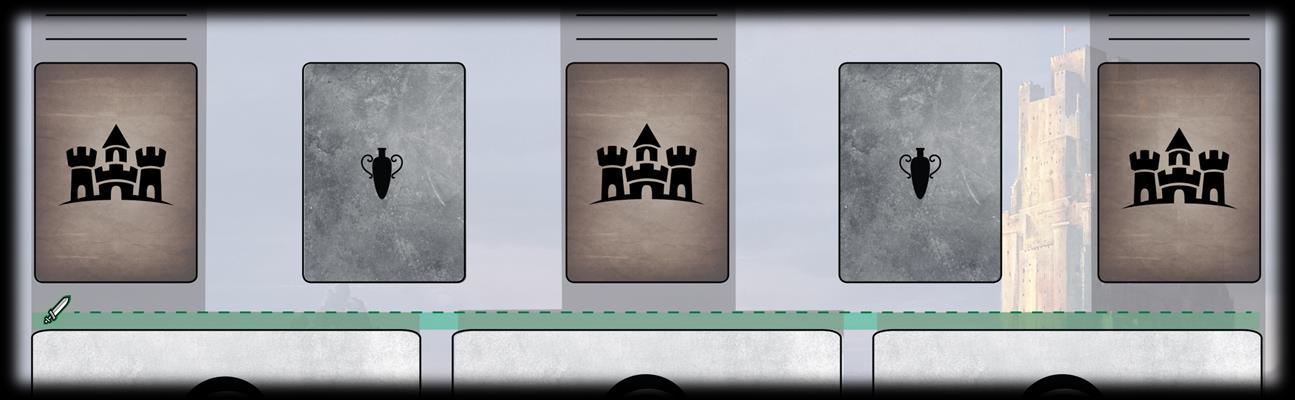
Close Quarters: Each Territory is adjacent to each other Territory, allowing players to attack any opponent's Territory or Relic(s) during their Combat Phase.
Beginning of the Game: At the start of the game, players roll a die to determine who goes first. The highest roll becomes the King, and their starting Territory is the ‘Hill.’
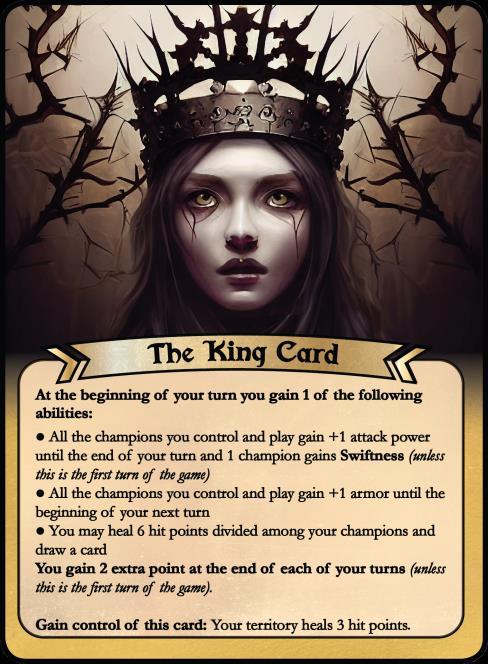
The King receives the following card
Place the King Card above or next to your Territory to signify you are the King.
(Continued)
Taking Turns: In King of the Hill, players take turns sequentially, starting with the 'King' and proceeding clockwise.
To the Victor Go the Spoils: In addition to receiving the King Card, the player who is King can play an additional Relic in Relic Space 2 (See King of the Hill Game Layout).
Transition of Power: When the ‘Hill’ takes damage exceeding half its current hit points, the ‘King’ is toppled. The player who inflicted the damage becomes the new ‘King’ , and their Territory becomes the new ‘Hill’ . They immediately receive the ‘King Card’ . If the toppled ‘King’ has two Relics, they must sacrifice the Relic in Relic Space 2. All opponents gain points for the sacrificed Relic.
Sacrifice Benefits All: Whenever a player sacrifices a Relic or Champion, all their opponents gain points from the sacrificed card.
Endgame: If two or more players reach 20 or more points simultaneously, the player with the highest points wins. If tied, the game ends in a draw.
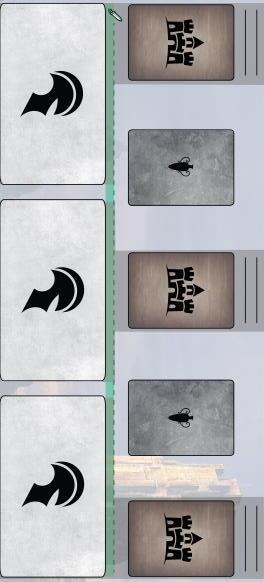
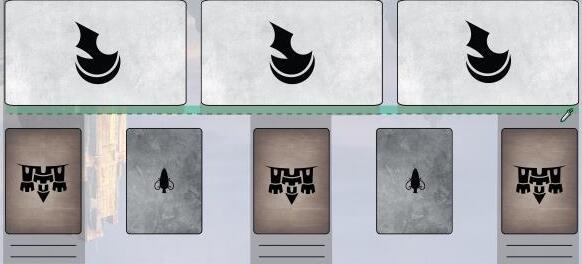
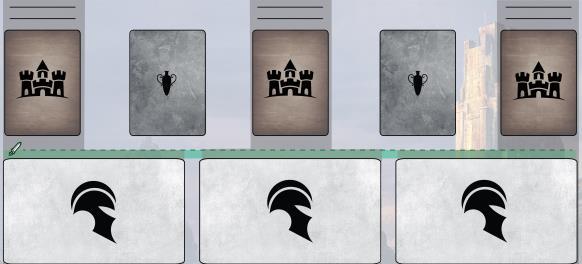
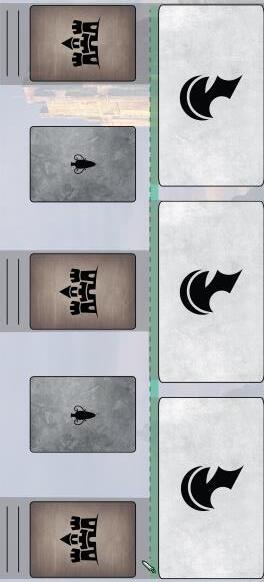
Example of possible battleground layout for four players with 2 full mats. The King of the Hill Mats are designed for this format specifically.
King of the Land is a multiplayer game of Territory (3-4 players) where each player combats one another to determine a winner. The same rules mentioned in ‘King of the Hill’ apply with the following exceptions:
Points : The first player to 24 points wins.
Territory Restrictions: Players may have up to two Territories in play at a given time. Players play their second Territory at the beginning of their 3rd turn.
Relic Restrictions: There are no Relic Restrictions
Close Quarters: Each Territory is Still adjacent to each other Territory, allowing players to attack any opponent's Territory or Relic(s) during their Combat Phase.
The Hill: Upon becoming the ‘King’, a player must designate one of their two Territories to become the ‘Hill’.
Transition of Power: Whenever the ‘Hill’ has received more than six points of damage or is destroyed, the ‘King’ has been considered ‘toppled’ and the player who inflicted the damage on the ‘Hill’ becomes the new ‘King’, and subsequently the Territory of their choice becomes the new ‘Hill’. This player immediately receives the ‘King Card’. .
What is Open Play? Open Play is a faster version of a game of one verse one where players start the game with all their Territories at their maximum Food Supply. The same rules in the ‘Territory Rulebook’ apply to this format with the following exceptions:
Starting the Game: The player playing first puts their chosen Territories into play; whereas, the player playing second does no put their Territories into play until their Beginning Phase (this means the player playing first cannot attack or gain points during their first turn).
Fast Paced: Each player gains 3 Spell Power and draws 2 cards during their Beginning Phase. The player playing first does not gain Spell Power or draw cards on their first turn.