

If you’ve spent enough time in Hawai‘i, you know there’s something magical about these floating islands in the vast Pacific— the way tradewind breezes wash over the land with a sense of calm, how ocean mist blesses all whom it touches, and how welcoming smiles filled with aloha put souls at ease.
This charming spirit of the islands is embodied in the estate-like homes in the sky developed by The MacNaughton Group and Kobayashi Group, two local families who understand the special place that Hawai‘i holds in all our hearts. With the completion of Park Lane Ala Moana in December 2017, we want to welcome the newest members to our community of homeowners in Hokua, Capitol Place, ONE Ala Moana, and Park Lane. May you especially enjoy this fifth edition of PALM, as we explore areas of our island home both sacred and serene.
Within these pages, you will discover the rare gems that make O‘ahu one of the most blessed locales in the world. Journey through two of Hawai‘i’s most significant art collections; discover some of the world’s most sought-after food grown right here on O‘ahu; and see how light can warm a space. From a look inside the business behind the blessing of spaces—including an interview with Hawai‘i’s preeminent kahu, Kordell C.L. Kekoa, during his blessing of Park Lane’s final completion—to a Zen dojo located atop one of Hawai‘i’s four spiritual mountains, we hope these stories will continue to hold sway in your hearts, as you delight in the charm of the islands we call home.
穏やかに吹きわたる貿易風。触れるものすべてを祝福していく 波しぶき。アロハスピリットに満ちた、心安らぐ歓迎の笑顔。ハ ワイで少しでも時間を過ごしたことがある方なら、広い太平洋 に浮かぶこの島々に魔法のようななにかがあることをご存じで しょう。
私たちの心を捉えて離さないハワイの魅力を知り尽くし た二つの地元企業、ザ・マクノートン・グループとコバヤシ・グル ープが創る、空にそびえる邸宅のような住まいには、この島々の 魅力的なスピリットが形となって現れています。2017年12月、 パークレーン・アラモアナが完成しました。ホクア、キャピトル・プ レイス、ワン・アラモアナ、そしてパークレーンからなるホームオ ーナーのコミュニティに新しく加わる皆様を心より歓迎いたし ます。私たちのホームグラウンドであり神聖さと穏やかさをあわ せ持つハワイのさまざまな表情をご紹介するマガジン『PALM』 の第5号を、どうぞお楽しみください。
本号では、オアフ島を世界でももっとも恵まれた土地のひ とつにしている、たくさんの貴重な存在についてご紹介していま す。この島でもっとも目をみはるべきアートコレクションのうち の2つを探訪し、ここオアフで生産されている世界でも貴重な食 品や、光が空間に温もりを与える方法についてもご覧ください。 さらに、パークレーンのために祝福の儀式を執り行ってくださっ たハワイの著名なカフ、コーデル・C・L・ケコアさんの言葉を通し て、さまざまな場所を祝福するという仕事を垣間見るほか、オア フ島の4つのスピリチュアルな山々のうちのひとつに位置すると いう禅道場にもご案内いたします。これらのストーリーが皆様の 心を捉え、私たちが「ホーム」と呼ぶハワイの多彩な魅力をます ます深く楽しんでいただけるよう、願ってやみません
16 LETTER From the Developer
CEO & PUBLISHER
Jason Cutinella
CHIEF CREATIVE OFFICER & EDITOR
Lisa Yamada-Son lisa@nellamediagroup.com
CREATIVE DIRECTOR
Ara Feducia
MANAGING EDITOR
Matthew Dekneef
ASSOCIATE EDITOR
Anna Harmon
PHOTOGRAPHY DIRECTOR
John Hook
TRANSLATIONS Japanese Yuzuwords Korean AT Marketing
COPY EDITOR
Andy Beth Miller
ADVERTISING
Mike Wiley Group Publisher mike@nellamediagroup.com
Chelsea Tsuchida Marketing & Advertising Executive
CHIEF REVENUE OFFICER
Joe V. Bock
VP ACCOUNTING
Gary Payne
OPERATIONS ADMINISTRATOR
Courtney Miyashiro
PUBLISHED BY: Nella Media Group
36 N. Hotel St. Ste. A Honolulu, HI 96817
PALM is published exclusively for:
The MacNaughton Group & Kobayashi Group © 2018 by Nella Media Group, LLC. All rights reserved. No part of this publication may be reprinted without the written consent of the publisher. Opinions are solely those of the contributors and are not necessarily endorsed by Nella Media Group.
18

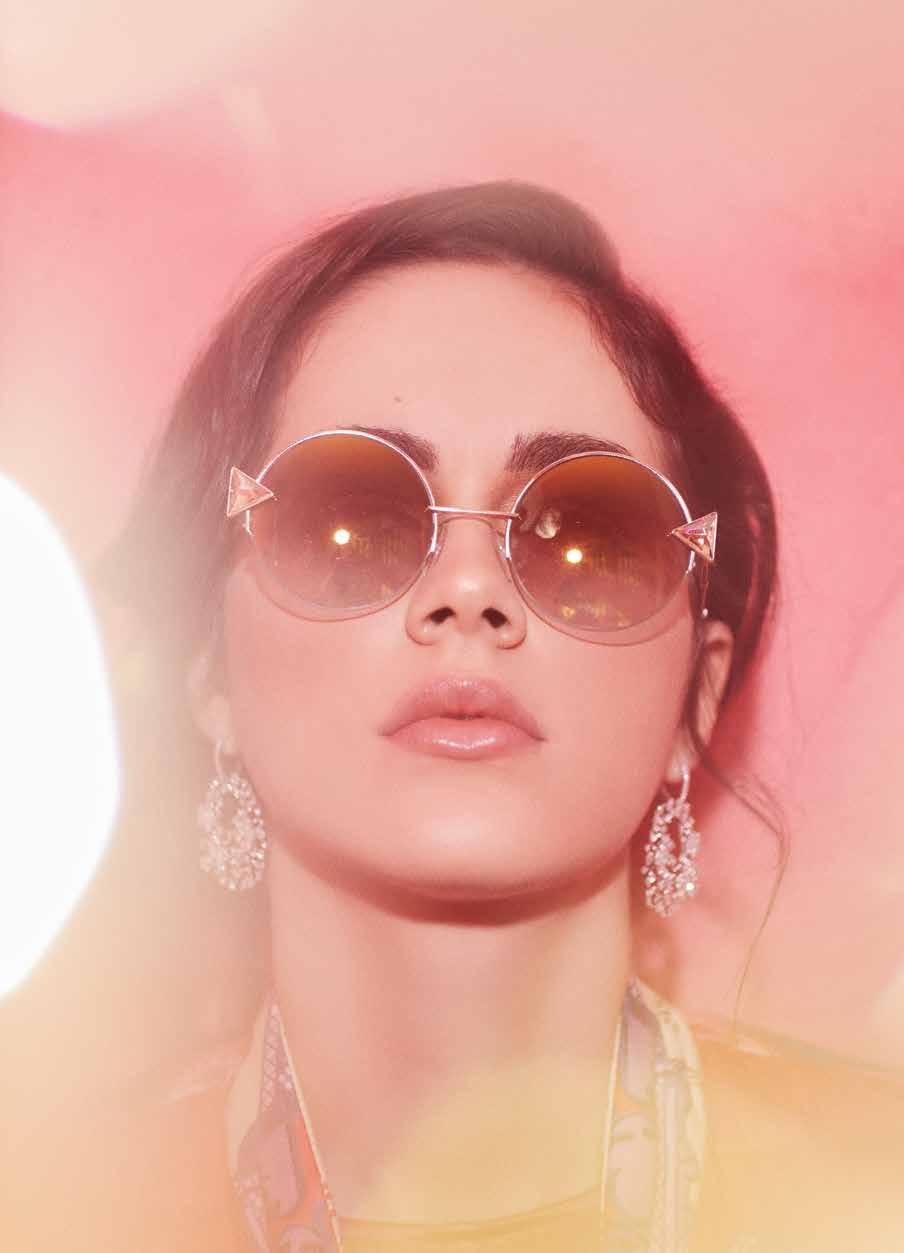
The cover image by photographer Daeja Fallas features model Eva Blacker wearing Nirav Modi jasmine earrings, Fendi rainbow round sunglasses from Neiman Marcus, and an Etro circus puffer jacket from Saks Fifth Avenue.
20 TABLE OF CONTENTS ARTS 26 Upholding the Arts BUSINESS 44 Fueling Creativity 52 Opening Ceremony CULTURE 66 Radical Zen 82 How Sweet It Is DESIGN 100 Light Shapers ESCAPES 114 Life in Contrast: Morocco 126 This One’s For the Girls: Maui FASHION 138 Lady of the House 100 26 ON
COVER
THE
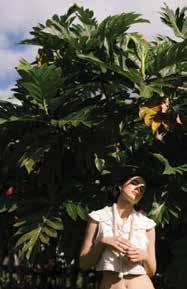
表紙: フォトグラファー:ディエイジャ・ ファラス、モデル:エヴァ・ブラッ カー。アクセサリー:ニラヴ・モデ ィの「ジャスミン」イヤリング、フェ ンディの「レインボウ・ラウンド」サ ングラス(ニーマン・マーカス)。ジ ャケット:エトロの「サーカス・パ ファー」(サックス・フィフス・アヴ ェニュー)
創造性を支援する
始まりの儀式
光を形作る人 エスケープ
対照の町
女子旅の楽しみ ファッション
ファッション:物語のある家で
22 目次 138 52 アート 26
44
アートを支える ビジネス
52
文化 66
82
100
ラディカルな禅
スイート・ストーリー 食
114
126
138
Visual that amplify
notions
AR TS
A PALM アート
the soul
of the city
PALM A 25
Upholding the Arts
Text by Lisa Yamada-Son 文 = リサ・ヤマダ=サン
Images by John Hook 写真 = ジョン・フック
26 A ARTS Private Collections PALM
アートを支える
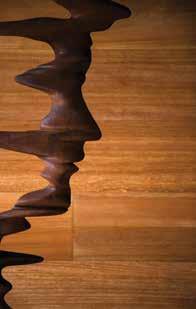
A sculpture by Tony Cragg, part of the Park Lane art collection.
Private collections help to prop up society’s most imaginative individuals.
プライベートコレクションは、社会で最も想像力豊かな 人々を支える一助となっています。
개인 소장품들은 사회의 가장 상상력이 풍부한 개인들의 작
업을 지원하기 때문에 중요하다. "예술가들은 변화를 만드
는 사람들입니다,"라고 이 섬에서 가장 상당한 규모의 개인
미술 소장품 중 하나를 소유하고 있는 허브 콘리는 말한다. "
저와 같은 회계사들이 세상을 지배한다면, 모든 것은 회색과
청색으로 변할 것이고 아무것도 변하지 않을 것입니다."
Out of the half-dozen pieces on loan to the Honolulu Museum of Art for its groundbreaking Abstract Expressionism: Looking East from the Far West exhibition, Nancy Conley misses “Winter Mist” most. The soft-hued oil-on-canvas, painted by Ralph Iwamoto in 1958, serves as the nexus of the art collection she owns with her husband, Herb. It is also an exemplary representation of the group of a dozen or so Hawai‘i-born, Asian-American artists who traveled to New York in the 1950s and pioneered the abstract expressionist movement in the islands. “‘Winter Mist’ incorporates so many elements of the group,” Nancy says. The spiky branches
ホノルル美術館で開催された画期的な展覧会、「抽象表現主義展」に貸出した いくつかの作品のうち、ナンシー・コンリーさんが最も愛着を感じている作品は 「ウィンター・ミスト」です。キャンバスに柔らかな色合いを重ねたその油絵は、 ラルフ・イワモトさんが1958年に描いた作品で、ナンシーさんが夫のハーブさ んと共に所有しているアートコレクションの中心的存在です。また、1950年代 にニューヨークへ渡りハワイの抽象表現主義運動を先導した、ハワイ出身のア ジア系アメリカ人アーティストたち十数人の芸術を代表するような作品でもあ ります。「『ウィンター・ミスト』には、このグループの要素が実に多く内包されて います」とナンシーさんは語ります。サトル・アベさんの彫刻作品を思わせる、と
28 A ARTS Private Collections
PALM
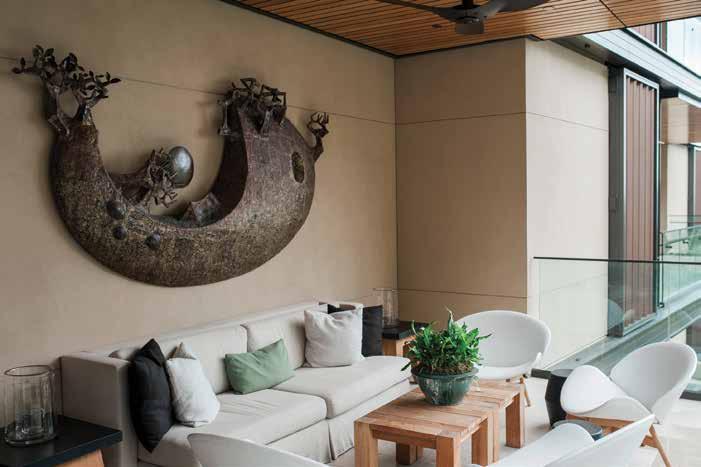
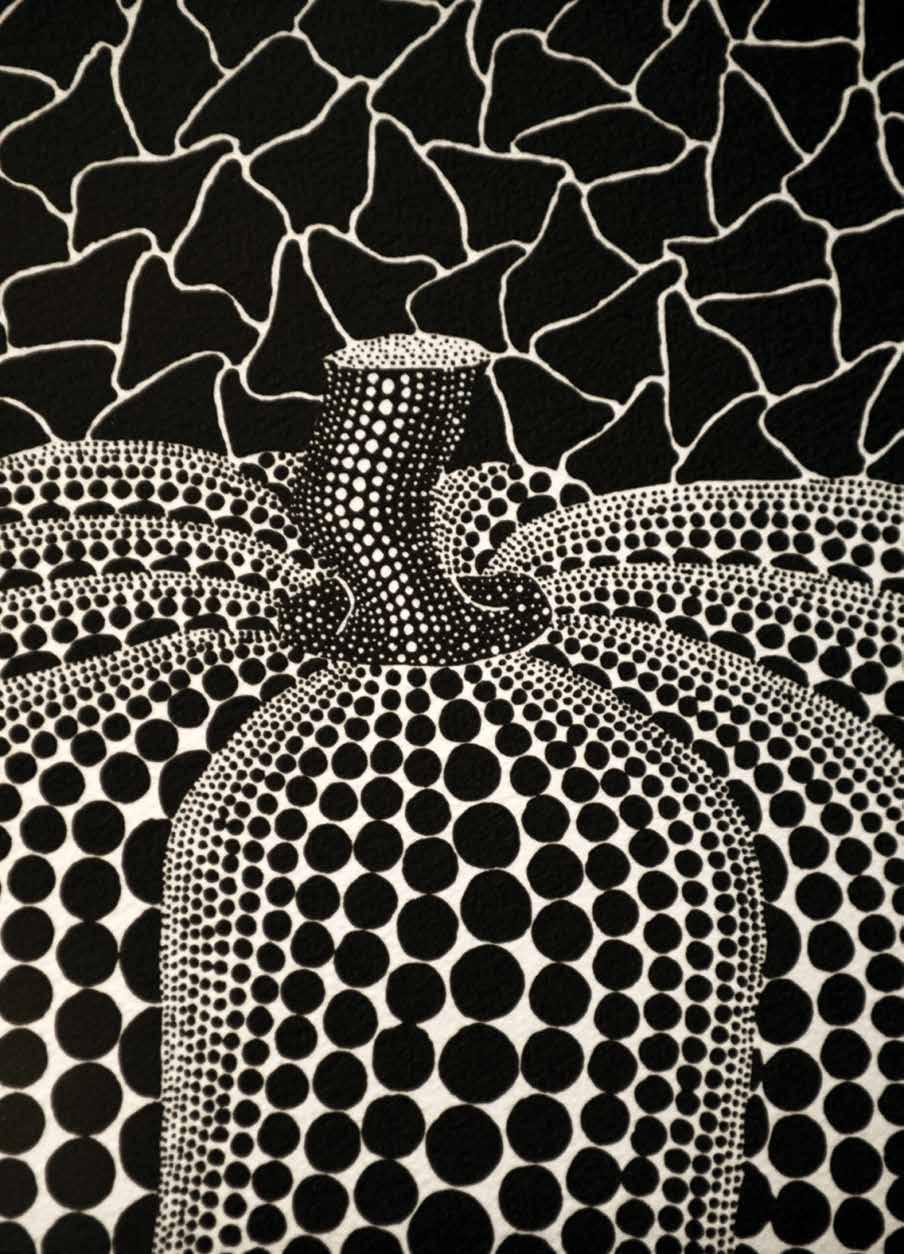
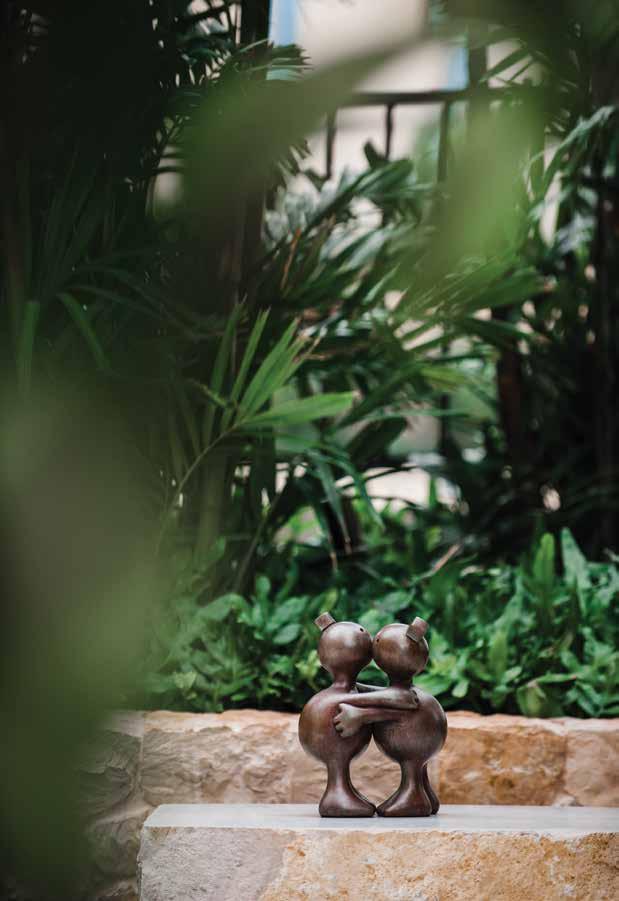
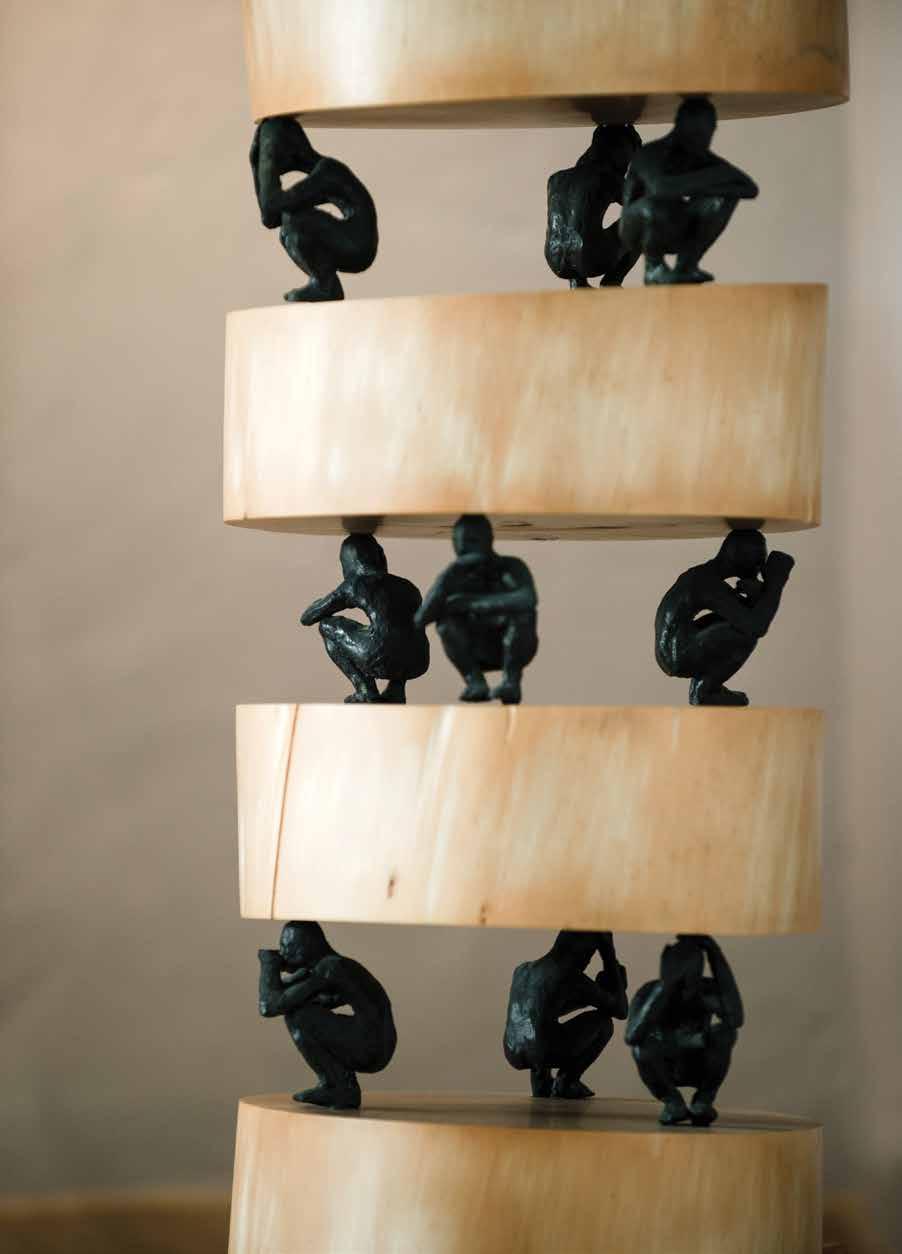
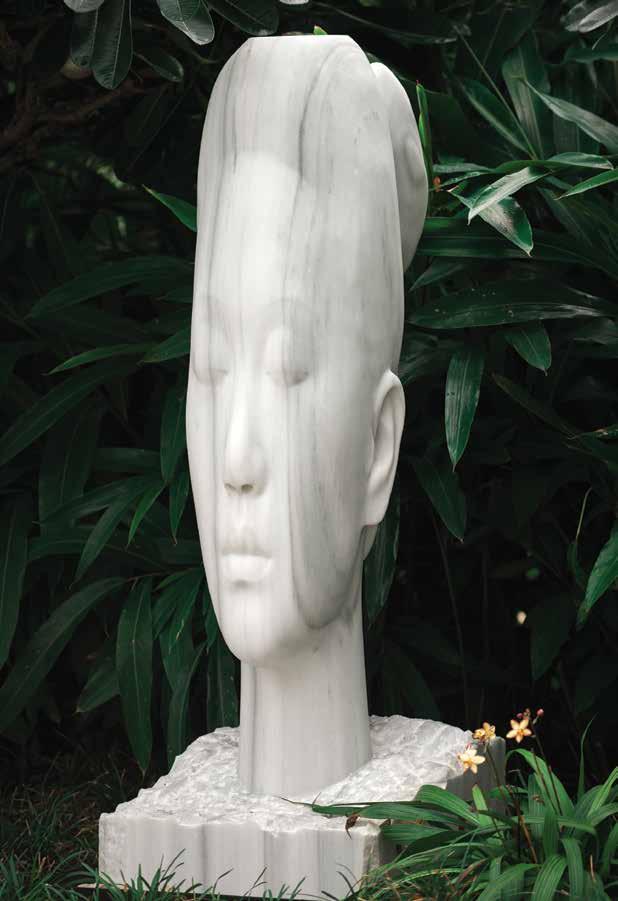 Marble sculpture by Jaume Plensa at Park Lane. Shown on previous page: left, detail of Yayoi Kusama’s famous pumpkin in the background and Tom Otterness’ sculpture on the “kissing bench” in the foreground, both in the Park Lane art collection; right, sculpture by John Koga in the private collection of Herb and Nancy Conley.
allude to sculptures by Satoru Abe. The paint drippings are reminiscent of creations by Tetsuo Ochikubo. The feathered blue strokes mimicking lapping water are a constant feature in Tadashi Sato’s paintings.
All of these artists are featured in the art collection of the Conleys. Comprised of more than 300 works by 59 artists who were either born in Hawai‘i or completed their works here, it is one of the islands’ most substantial. Private collections like this are important because they support the work of society’s most imaginative individuals.
“Artists are the change-makers,” Herb says. “If accountants like me ruled the world, everything would be grey and blue, and nothing would change. … Collectors have, in a sense, replaced the benefactors of the old days, because if an artist knows that they have people who will buy their work every year, that gives them a base, and a freedom.”
The Conley’s collection documents Hawai‘i’s rich history in contemporary art, starting with a piece by Isami Doi, who studied art at Columbia University in the 1920s and served as a mentor both artistically and philosophically to the likes of Abe and Sato. It was at a retrospective of Sato’s work in 2002 at the Honolulu Museum of Art’s Spalding House, known then as The Contemporary Museum, where Nancy worked as a librarian, that the Conleys were charmed by Sato himself. Afterward, the Conleys decided to acquire one painting by each of the handful of locally born Asian-American abstract expressionist artists working in New York in the 1950s. “You’d meet one guy, and he’d say, ‘Well, have you seen these three people’s works?’” Nancy recalls. “Then we’d go off in that direction.” Pretty soon, their collection grew to include the work of Hawai‘i-based contemporary artists like John Koga (a mentee of Satoru Abe), Deborah Nehmad, Sanit Khewhok, and a number of up-andcoming artists of the following generation.
“I love passion in any form,” says Herb, who notes that his desire to collect art was jumpstarted after discovering the fervent perseverance with which the Hawai‘i-born artists approached their work. “If you think about what their parents did to come here so their kids could have a better life, I would bet that ‘artist’ was not
がった枝。テツオ・オチクボさんの作品を彷彿とさせる絵具のドリッピング。そし て、波打つ水面を模した軽やかな青いストロークは、タダシ・サトウさんの絵画 によく見られる特徴です。
上記のアーティストたちはすべて、コンリー夫妻のアートコレクションに 名を連ねています。夫妻のコレクションは、ハワイで生まれた、もしくはハワイ で作品を仕上げた59人のアーティストたちによる300点以上の作品で構成 され、オアフ島内でも有数の充実度を誇ります。このようなプライベートコレク ションは、社会で最も想像力豊かな人々の作品を支援する重要なものですが、 アーティストとコレクターの関係は持ちつ持たれつだとハーブさんは語ります。 「アーティストは変革者です」とハーブさん。「もし私のような会計士が世界を 支配したら、すべてが味気なく陰鬱としたものになり、何の変化も起こらないで しょう。コレクターは、ある意味で昔のパトロンに代わる存在になったといえま す。アーティストは、毎年自分の作品を買ってくれる人がいると知れば、活動の 基盤と自由を得られますからね」 コンリー夫妻のコレクションは、イサミ・ドイさんの作品に始まるハワイ の現代アートの豊かな歴史を記録するものでもあります。1920年代にコロン ビア大学でアートを研究したドイさんは、アベさんやサトウさんのような人たち にとって、芸術面でも哲学的な面でも良き指導者でした。2002年、当時はコン テンポラリー・ギャラリーと呼ばれていたホノルル美術館別館のスポルディン グハウスでサトウさんの回顧展が開催された時、そこでナンシーさんは司書を 務めており、コンリー夫妻はサトウさんの人柄に魅了されたのです。これをきっ かけに、夫妻は1950年代にニューヨークで活動したハワイ生まれのアジア系 アメリカ人抽象表現主義派アーティストたちの絵画を1点ずつ購入していきま した。「1人のアーティストに出会うと、その人に『この3人の作品を見たことが ある?』と聞かれるのです」とナンシーさんは振り返ります。「そして、そちらも観 に行くことになるのですよ」。そして間もなく、彼らのコレクションにはジョン・コ ガさん(サトル・アベさんの弟子)、デボラ・ネーマッドさん、サニト・ケーウォック さん、そしてたくさんの次世代の新進アーティストたちも含む、ハワイを拠点に 活動する現代アーティストの作品が増えていきました。 「どんな形態であれ、情熱を表現した作品が好きです」とハーブさんは 語ります。彼のアート収集熱が始まったのは、1950年代にハワイ出身アーティ
32 A ARTS Private Collections
PALM
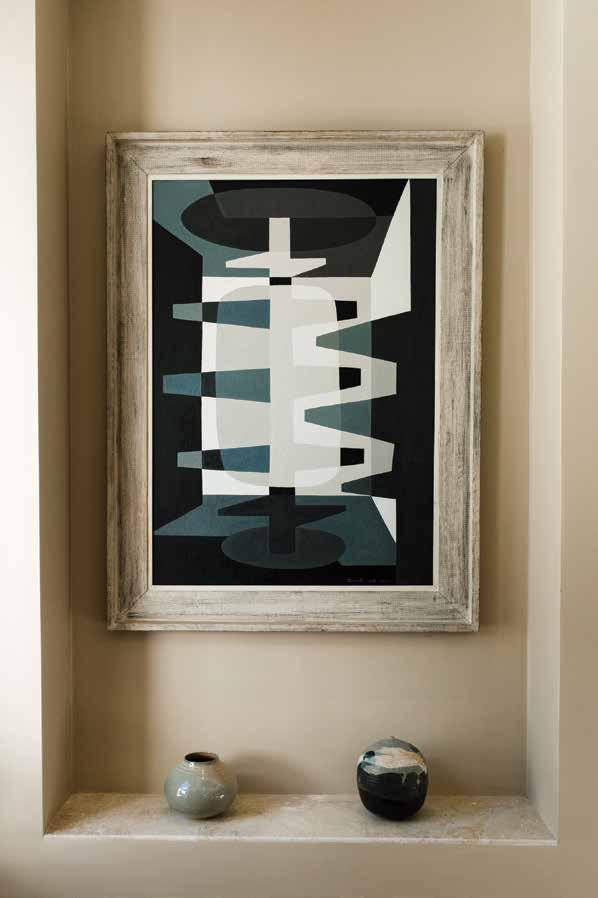 A representation of a New York City subway turnstile by Tadashi Sato in the private collection of Herb and Nancy Conley. Opposite: sculpture by Satoru Abe at Park Lane.
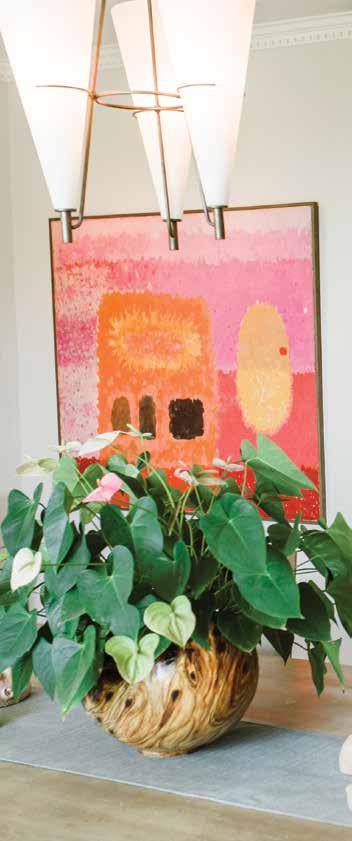
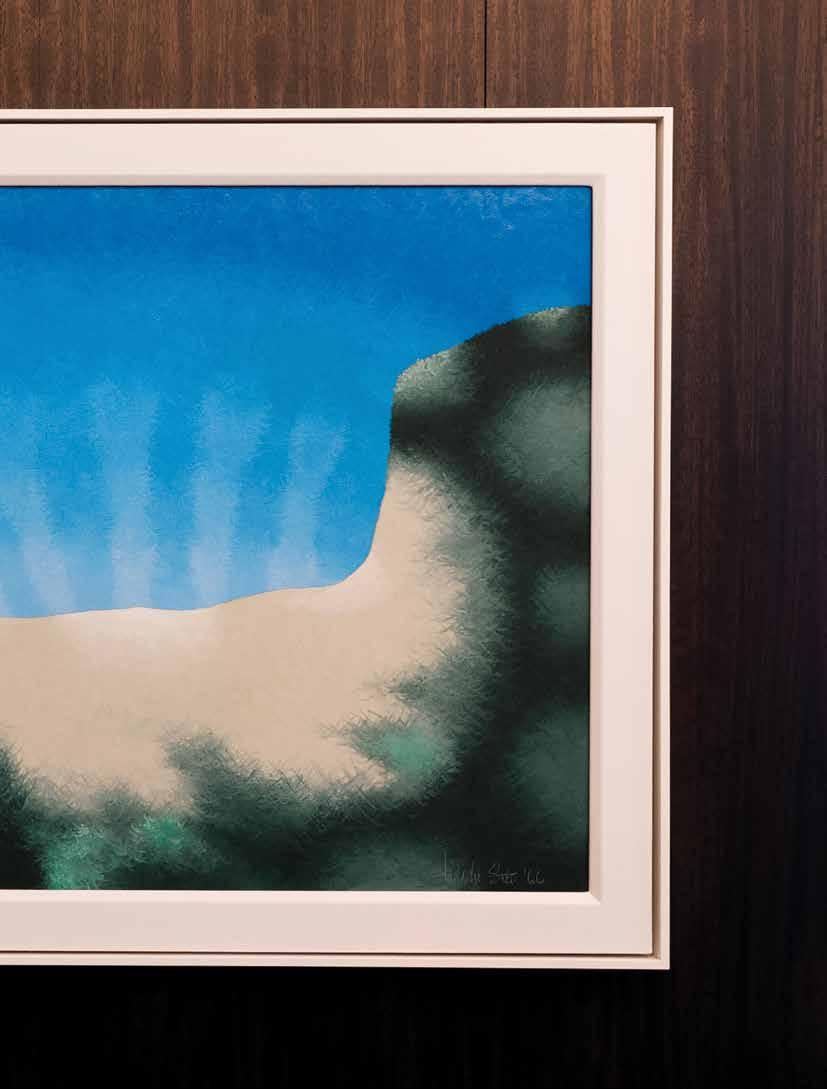
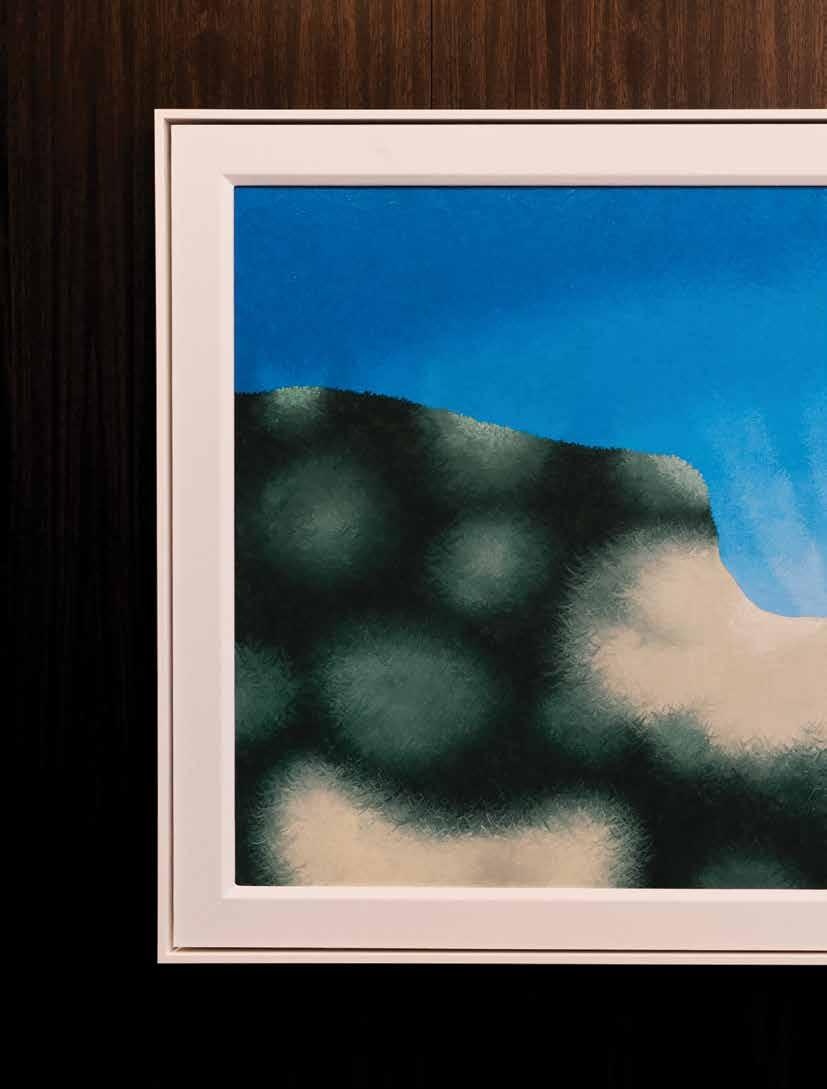 “This 1966 painting by Tadashi Sato has all the makings of a great Tadashi Sato work, especially with the blues,” says Kelly Sueda, who curated the Park Lane art collection. “His blues were so incredible.”
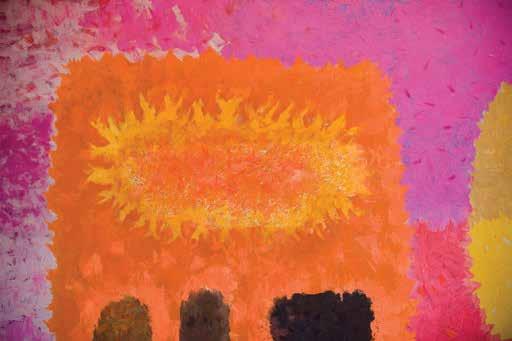
Detail of a painting by Isami Doi in the collection of Herb and Nancy Conley. Opposite: sculpture made from copper refrigeration tubing by Koi Ozu in the foreground and painting by Jerry Okimoto in the background, both in the collection of Herb and Nancy Conley.
in the top hundred professions of what they would want their children to do,” he says. “Here they are, firstborn, mostly sons of Asian parents in Hawai‘i, willing to be disowned to follow their passion. So now they go to New York and learn to paint, and son of a gun, there’s this little movement called �Ab Ex’ that’s catching everyone’s attention. So then when they come home and talk to their parents, not only are they not painting palm trees and beach scenes, they’re artists painting lines and squiggles. Now you get disowned twice!”
The artists that make up the foundation of the Conley’s collection—including Harry Tsuchidana, Jerry Okimoto, Robert Kobayashi, and Toshiko Takaezu—were caught up in the abstract expressionist movement that was made famous by the New York School of artists including such notable painters as Willem de Kooning, Jackson Pollack, and Mark Rothko. “And yet they wanted to do their own version with what was going on at the time,” Herb says. “They were not followers, they were leaders, and that may have been why they have not got the national recognition.”
Despite this lack of recognition, their art has earned its place in the backdrop of the abstract expressionist movement. Hanging alongside creations by blue-chip contemporaries like Robert Motherwell and de Kooning at the Abstract Expressionism exhibition at the Honolulu Museum of Art, work by
ストたちが不屈の熱意で創作活動に取り組んだことを知ってからでした。「彼 らの両親がわが子に良い人生を送らせるために苦労して移住したことを考え ると、『アーティスト』は、わが子に選んでほしい職業トップ100には入っていな かったと思いますね」とハーブさん。「彼らは長男で、大半がハワイに住むアジ ア系両親のもとに生まれた息子たちですが、自らの情熱のために勘当されるこ ともいといませんでした。そしてニューヨークへ渡り絵画を学びますが、そこで はなんと、この抽象表現主義と呼ばれる運動が皆の注目を集めていました。帰 郷した彼らは両親に、自分はヤシの木やビーチではなくて直線や曲線ばかり描 いているアーティストだと説明する。そこで再び勘当されるわけです!」 コンリー夫妻のコレクションのベースは、ハリー・ツチダナさん、ジェリ ー・オキモトさん、ロバート・コバヤシさん、トシコ・タカエズさんといった、抽象 表現主義運動に傾倒したアーティストたちです。この運動は、ウィレム・デ・クー ニング、ジャクソン・ポロック、マーク・ロスコなどの著名な画家たちを含むニュ ーヨーク派のアーティストたちによって広まりました。「しかし彼らは、当時の流 行を汲み取りながら独自のものを作ろうとしていました」とハーブさんは語りま す。「彼らは追随者ではなく先導者でした。だからこそ、全国的に認知されなか ったのかもしれません」
広く知られてこそいませんが、彼らのアートは抽象表現主義運動の背景 に形を残しています。ホノルル美術館の「抽象表現主義展」では、ロバート・マ ザウェルやデ・クーニングといった同時代の一流アーティストたちの作品とこ れらのアジア系アメリカ人アーティストたちの作品が隣り合わせに展示され、
PALM 36 A ARTS Private Collections
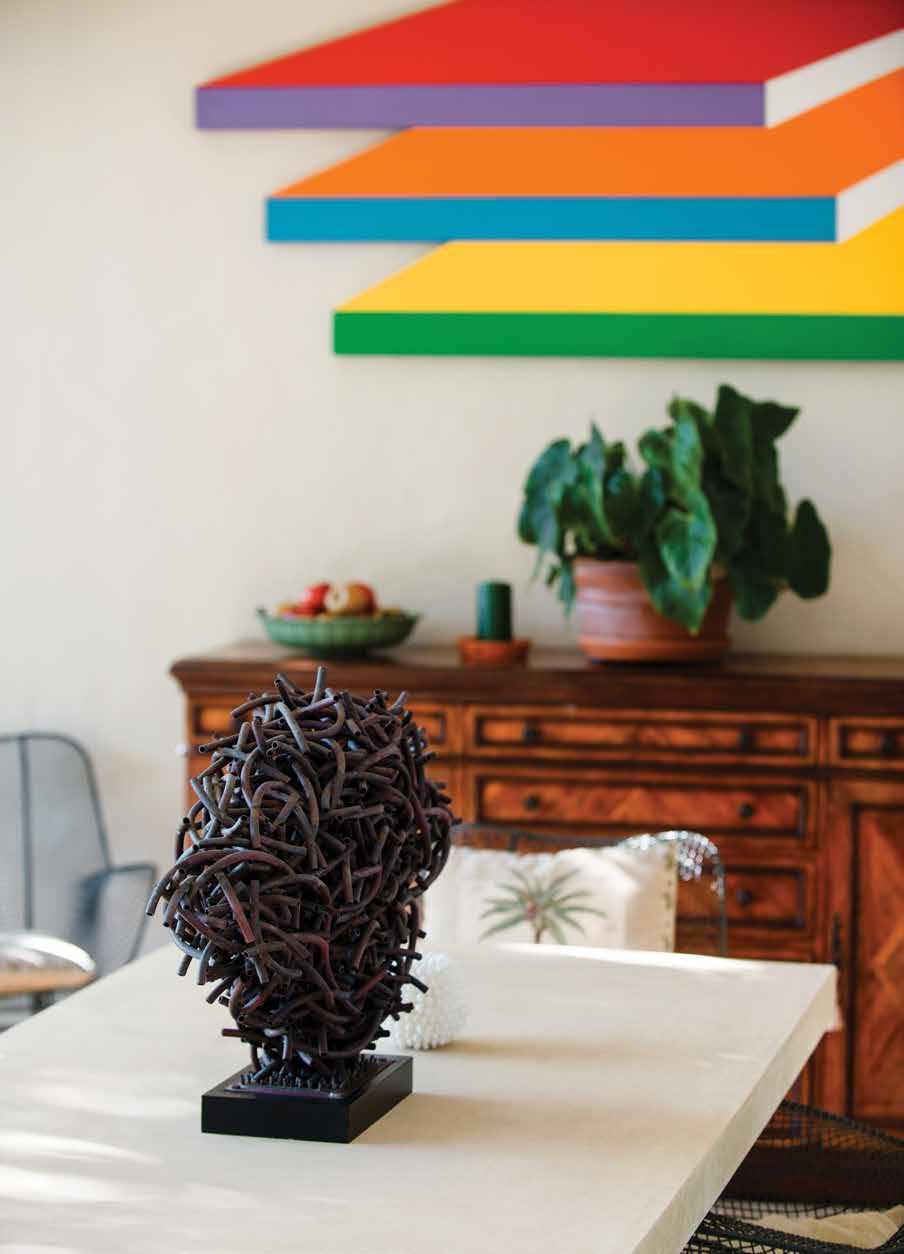
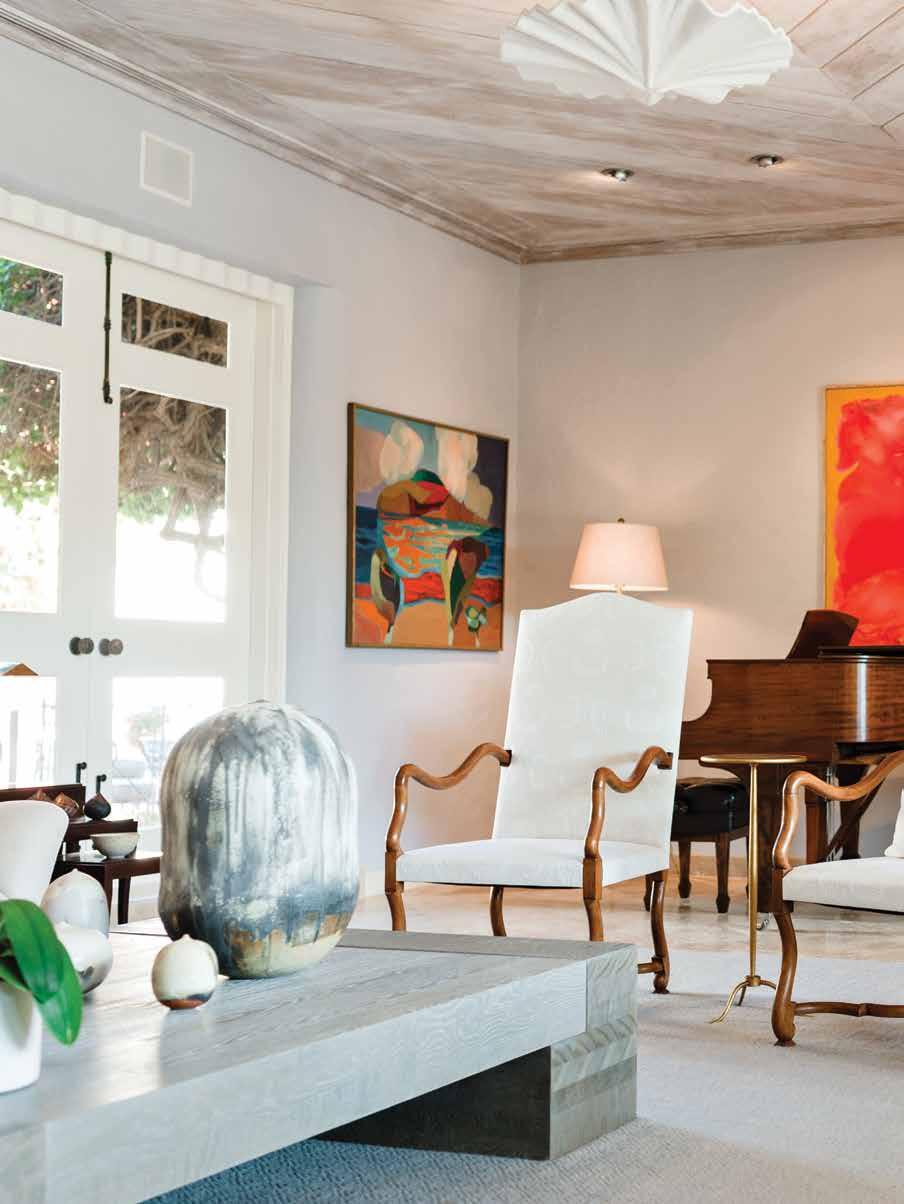
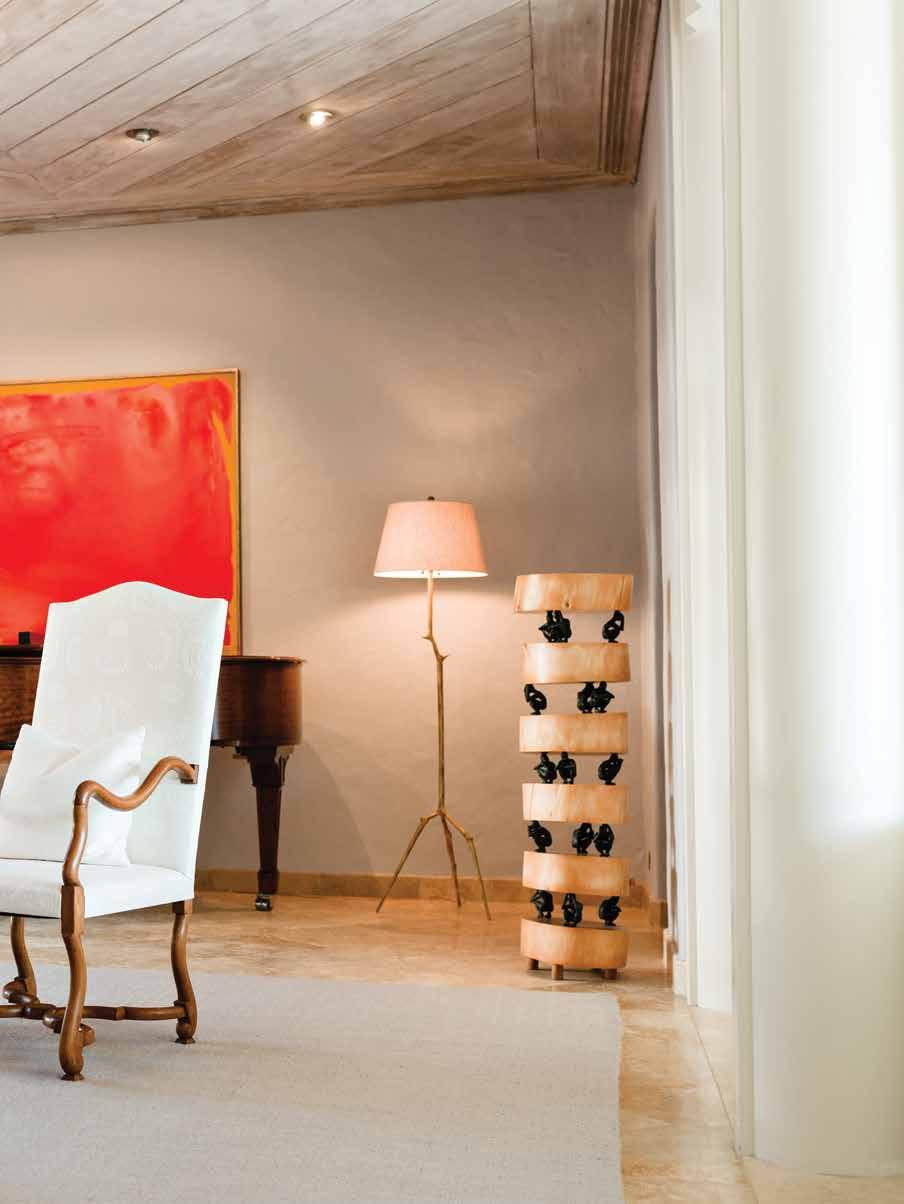
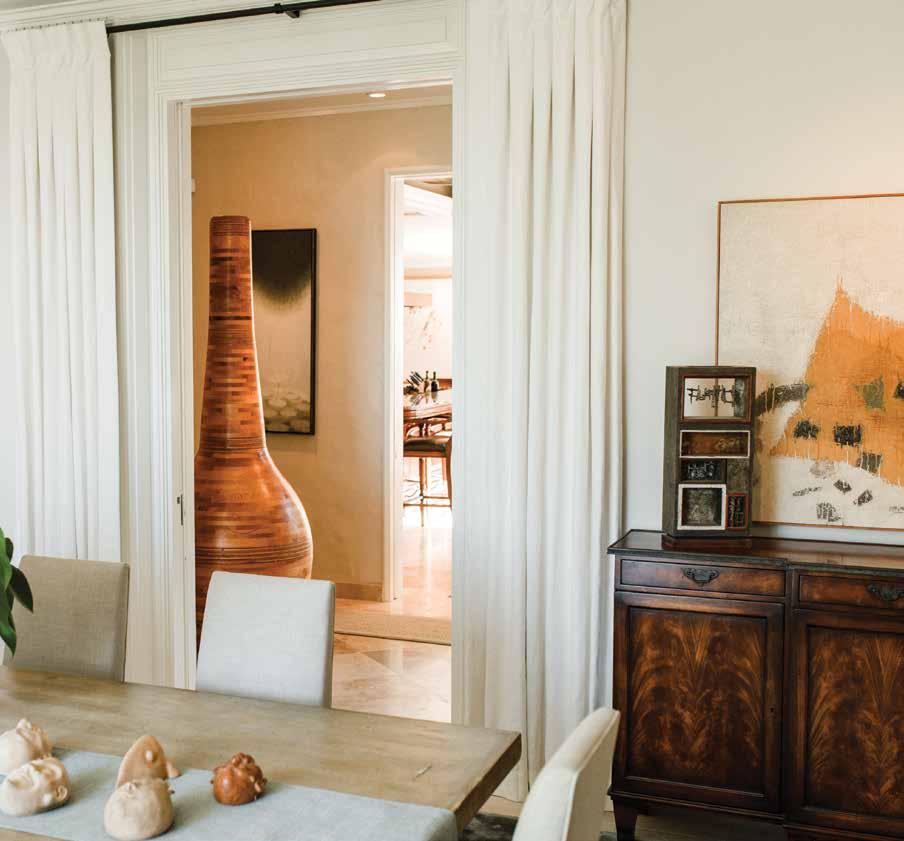
“Abstract art can be intimidating to people because most people think that you’re supposed to know what the artist was saying, and if you can’t talk about the art in a cerebral way, you’re probably not really smart,” says Herb Conley, whose sitting room features work by Toshiko Takaezu, Winnifred Hudson, John Kjargaard, and John Koga. “The beauty with abstract art is that it’s whatever you see in it.”
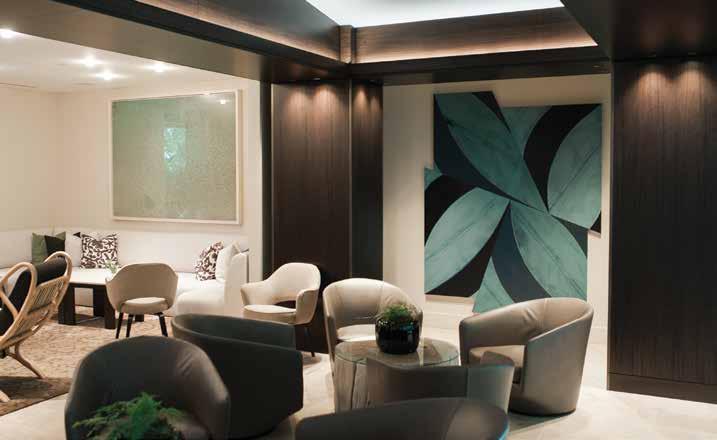
Photograph by Richard Misrach, left, and painting by Charles Arnoldi, right, both in the Park Lane collection. Opposite: detail of work by Tseng Yuho, also known as Betty Ecke, in the collection of Herb and Nancy Conley.
these Asian-American artists showed how they impacted that of their famed counterparts. Clearly apparent, says Herb, was how the New York School was influenced by the abstract nature of the Asian artists, most notably through Japanese calligraphy. (Note the fluid strokes of work by Robert Motherwell.)
As it has since then, the work of artists in Hawai‘i remains on par with that of the global art elite. “Good art is good art,” says Kelly Sueda, who curated the more than 500 original creations that comprise the Park Lane collection. “Whenever I put together a collection, I always try to mix blue-chip, internationally famous artists with the best regional art that I can get.”
The collection at Park Lane is one of the largest, if not the largest, assemblages of art in the state outside of a museum. It includes work by local artists like painter Peter Cole, glass artist Jonathan Swanz, and photographer Wayne Levin, intermingled with sculptures by Tony Cragg, Jaume Plensa, and Tom Otterness, and prints by Andy Warhol, Jasper Johns, and Yayoi Kusama. “It shows the caliber of artwork that is coming out locally can stand up next to a world-class piece of art,” Sueda says.
Support of the local art market is important to Herb as well. “Art is the creative juice of society,” he says. “It gets us thinking, and it keeps us focused on always evolving.”
彼らの作品が高名なライバルたちにどれほど影響を与えたかを示していまし た。ハーブさんいわく、ニューヨーク派がアジア系アーティストの抽象的センス に影響を受けたことは明白で、特に日本の書道による影響は絶大なものでし た(ロバート・マザウェルの流れるようなストロークもその一例です)。 それ以来ずっと、ハワイのアーティストたちの作品は世界のエリートアー ティストたちと肩を並べ続けています。「優れたアートは誰が見ても優れていま す」とケリー・スエダさんは語ります。スエダさんは、パークレーンのコレクショ ンを構成する500点以上のオリジナル作品を選定しました。「コレクションをま とめる時は必ず、世界的に名高い一流アーティストたちと、地元で生まれた最 高のアート作品をミックスするようにしています」 パークレーンのコレクションは、美術館以外で収集されたアートとして、 州内でも最大級のスケールです。画家のピーター・コールさん、ガラスアーティ ストのジョナサン・スワンツさん、フォトグラファーのウェイン・レヴィンさんなど 地元のアーティストたちの作品に混じって、トニー・クラッグさん、ジャウメ・プレ ンサさん、トム・オッターネスさんの彫刻作品や、アンディ・ウォーホルさん、ジャ スパー・ジョーンズさん、草間彌生さんの絵画も含まれています。「地元で生ま れるアート作品が世界クラスの作品に引けを取らないことの証明です」とスエ ダさんは語ります。
地元のアートマーケットを支援することも、ハーブさんにとって重要な意 味を持ちます。「アートは社会の創造力の源です」と彼は語ります。「私たちを考 えさせ、常に進化し続けることに意識を向けさせてくれるのです」
40 A ARTS Private Collections
PALM
Trends that drive
BU SIN ESS
B PALM ビジネス
the economy
PALM B 43
Fueling Creativity
創造性を支援する
Text by Eunica Escalante
文 = ユーニカ・エスカランテ
Created in partnership with the Creative Industries Division, DBEDT
本文はハワイ州の産業経済開発観光局と共同で執筆されました。

The ballroom at the Hapuna Beach Prince Hotel had been turned into a makeshift recording studio.
Local artist Tim Rose riffed an improvised melody on his guitar as singer Kimberly June’s vocals filled the room’s otherwise cavernous silence. They were tasked with writing, composing, and recording a completely original song in under 24 hours. But they were not alone. In other ballrooms throughout the hotel and at studios across the island, burgeoning musicians huddled together, striving to compose magic from scratch.
Collaboration like this—in music, as well as in media and fashion—happens across the state on O‘ahu, Maui, Kaua‘i, and Hawai‘i Island as part of Creative Lab Hawai‘i. Launched in 2012 by the Department of Business, Economic Development and Tourism’s Creative Industries Division, Creative Lab Hawai‘i is a media, music, and fashion design accelerator providing a conduit for creative entrepreneurs to expand export markets globally of creative intellectual property, attract investment, and strengthen the state’s creative entrepreneurial ecosystem.
Creative Lab Hawai‘i presents an innovative solution to support creative entrepreneurs in Hawai‘i.
革新的なソリューションを提供し、ハワイのクリエイティブな起業家を支援する 「クリエイティブ・ラボ・ハワイ」をご紹介します。
ハプナビーチ・プリンスホテルのボールルームはその日、即席の録音スタジオに 変身していました。いつもは静かな広々とした空間をキンバリー・ジューンさん の歌声が満たし、ローカルアーティストのティム・ローズさんがギターで即興の メロディーをつまびいています。2人には、24時間以内にオリジナルの楽曲を 作詞作曲し録音するという課題が与えられていました。彼らだけではなく、この ホテルのほかのボールルームや島のあちこちのスタジオで、新進ミュージシャ ンたちが集まり、何もないところから魔法を生み出そうと取り組んでいました。 こうしたコラボレーション、音楽だけでなくメディアやファッションの世 界も巻き込んだコラボレーションは、「クリエイティブ・ラボ・ハワイ(CLH)」 の活動の一環としてオアフ、マウイ、カウアイ、ハワイ島で行われています。ハ ワイ州産業経済開発観光局のクリエイティブ・インダストリーズ・ディビジョン (DBEDT/CID)によって2012年にはじまったCLHは、メディア、音楽、ファ ッションデザインの分野を推進させ、クリエイティブな知的財産の輸出先をグ ローバル規模で広げていくための道筋をクリエイティブ分野の起業家たちに 提供し、投資を招き、ハワイ州でのクリエイティブ分野の起業エコシステムを強 化することを目的としています。
44 B BUSINESS DBEDT PALM
비즈니스 부서, 경제 개발 및 관광부 창의성
산업부(DBEDT.CID)에서 2012년에 설립
한 '크리에이티브 랩 하와이'는 창의적인 기
업가를 위한 세계적인 경로를 제공하는 미디
어, 음악 및 패션 디자인 가속기입니다.
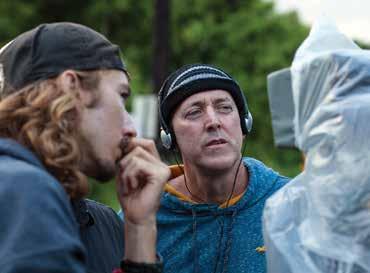

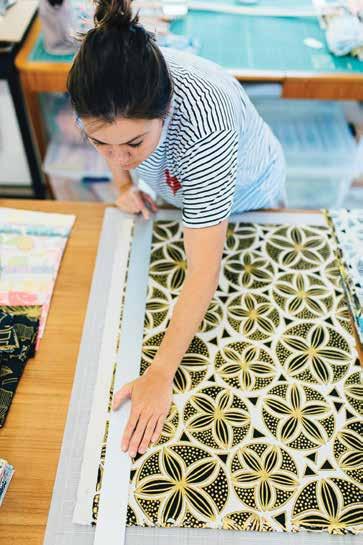
This page, clockwise from left: Music Immersive participant Olivia Cargile recently licensed a song for the Fox series The Resident ; Screenwriting Immersive alumnus Brian Kohne’s film, Kuleana , screened at the 2017 Hawai‘i International Film Festival; Fashion Immersive participant Jana Lam’s line of handprinted goods is now sold at Nordstrom.
“As automation increases and starts to displace more workers, one of the biggest components that individuals are going to be able to monetize is their intellectual property,” says Michael Andres Palmieri, who is contracted by Creative Industries and was instrumental in developing the methodology and mentoring for the Creative Lab Hawai‘i Media Program with DBEDT chief officer Georja Skinner in 2012. “Robots can’t come up with original ideas the same way that human beings can, at least not yet. Over the next 20 years, creative entrepreneurship is going to increase about 30 percent across the board. It’s going to be one of the major drivers of economies around the world.” Proof can be found in the rise of California’s Silicon Valley, where an industry driven by intellectual property has given birth to one of the United States’ newest economic drivers.
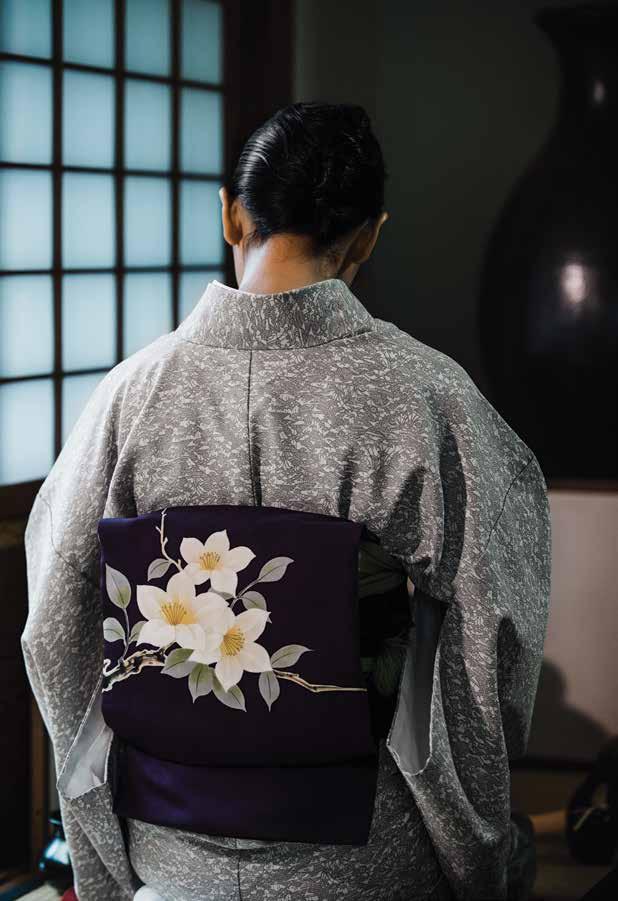
Through yearlong mentorship immersives, weekend ideation programs followed by three months of mentoring, and public programs like panel discussions at events such as the Hawaii Songwriting Festival, the Creative Industries team has focused its resources toward those sectors in Hawai‘i’s creative clusters to cultivate young artists, songwriters, filmmakers, and designers into more self-sufficient creative entrepreneurs. What truly makes the program succesful is its emphasis on pairing young creatives with seasoned mentors from the music, entertainment, and fashion industries. Each of the three Creative Lab Hawai‘i programs offer access to industry experts and decision makers. Palmieri, a Los Angeles-based writer and producer with more than 25 years of experience in the media industry, oversees the media program’s four tracks, which focus on screenwriting, producing, web series, and interactive media. Modeled after the media program, the Creative Lab Hawai‘i Music Program was launched in partnership with Charles Brotman, a Nā Hōkū Hanohano and Grammy award-winning producer who also serves as the president of the Hawai‘i Songwriting Festival. This was preceded by the introduction of the Creative Lab Hawai‘i Fashion Immersive, led by local designers Allison Izu and Summer Shiigi of The Cut Collective.
“Creative Lab Hawai‘i is designed to create a continuum of opportunity between post-education and workforce, allowing our entrepreneurs to access decision-makers who can open doors to new markets for their intellectual property in media, music, and design,” Skinner says. “The program effectuates real world experiences in today’s global marketplace under the guidance of our seasoned pros helming the programs, preparing them for prime-time business opportunities now, and in the future.”
「オートメーション化が拡大し、ますます多くの仕事が機械に置き換え られていくなか、個人がこれから先に収益を得ていくことができる要素のうち でもっとも大きなもののひとつが、知的財産だと考えています」そう語ってくれ たのは、クリエイティブ・インダストリーズと契約を結ぶマイケル・アンドレス・パ ルミエリさん。彼は2012年にDBEDTの主任、ジョージャ・スキナーさんととも にCLHのメディアプログラムのためにノウハウを開発し、メンターを務めるとい う重要な役割を果たした人物です。「ロボットが人間と同じように独自のアイデ アを生み出すことはできません。少なくとも現時点ではまだ無理です。今後20 年の間にクリエイティブ分野の起業家による活動は全体でおよそ30パーセン ト増加し、世界中で経済を動かす大きな原動力のひとつになるはずです」。そ れを証明する一例が、カリフォルニア州のシリコンバレーの発展。そこでは、知 的財産を原動力とする業界がアメリカにおけるもっとも新しい経済推進力のひ とつを生み出しています。
1年間にわたるメンターシッププログラムや、週末に行われる発想プログ ラムと3か月間のメンター指導のほか、ハワイ国際映画祭(HIFF)やハワイ・ソ ングライティング・フェスティバルといったイベントでのパネルディスカッション を含む一般公開プログラムを通じ、CIDのチームはハワイのクリエイティブセク ターにそのリソースを集中させ、若いアーティスト、作曲家、映像作家、デザイナ ーたちをより自己充足的なクリエイティブ起業家に育成しようと活動していま す。このプログラムが成功している理由は、音楽、エンターテインメント、ファッシ ョン業界で、若い才能と経験を積んだメンターたちをペアリングしている点で す。CLHプログラムを構成する3つの部門のいずれをとっても、若者たちが各業 界の専門家や意思決定者と交流することができるのです。ロサンゼルスを拠点 とし、25年以上メディア業界で活躍するライター兼プロデューサーのパルミエ リさんは、CLHメディア・プログラム内のスクリーンライティング、プロデューシ ング、ウェブシリーズ、インタラクティブメディアの4分野を監督しています。さら に、このメディア・プログラムをモデルとして、ナ・ホク・ハノハノ賞およびグラミ ー賞受賞経験を持つプロデューサーであり、ハワイ・ソングライターズ・フェステ ィバルのプレジデントも務めるチャールズ・ブロットマンさんとのパートナーシッ プのもとに、「CLHミュージック・プログラム」がスタートしました。またこれに先 立ち、「ザ・カット・コレクティブ」を運営する地元デザイナーのアリソン・イズさ んとサマー・シイギさんによる「CLHファッション・イマーシブプログラム」も始ま っています。「CLHは、起業家たちが学校を卒業してから実際に仕事を始めるま での間、途切れることなくチャンスを得られるように設計されています。起業家 たちは、メディア、音楽、デザインの分野で彼らの知的財産を新しい市場へ売り 込むための道を切り開いてくれる意思決定者と交流することができるのです」と スキナーさんは語ります。「このプログラムのメリットは、プログラムを監督する 経験豊富なプロの指導を受けながら、今日のグローバルな市場を実体験でき
46 B BUSINESS DBEDT
PALM
a
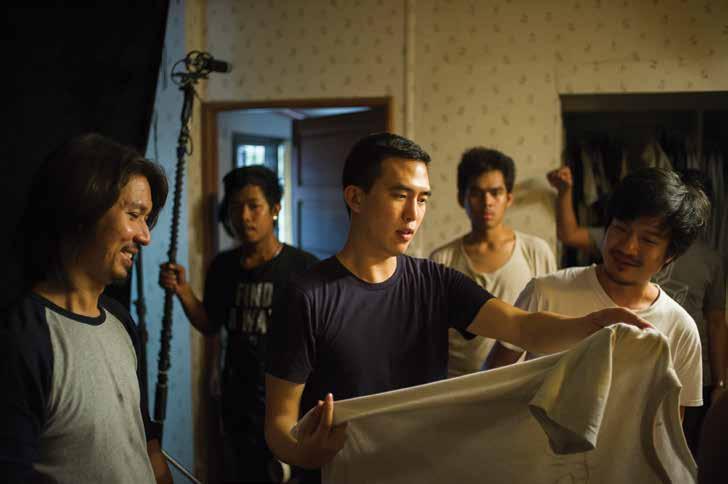
Filmmaker and Creative Lab Hawai‘i participant Josh Kim’s film, How to Win at Checkers [Everytime] , was the Thai entry for consideration as
nominee for Best Foreign Film at the 88th Academy Awards and the Golden Globes.
Creative Lab Hawai‘i participants work alongside seasoned executives who are brought in for each immersive to provide coaching, as well as global networks of support. Coaching by mentors like these provides entrepreneurs with business and creative skill sets necessary to monetize their intellectual property and expand distribution channels, positioning Hawai‘i as a nexus of creativity in the Pacific region and the world. Before Creative Lab Hawai‘i, there was a lack of training and development for creatives on the business side of the arts in Hawai‘i, Palmieri says. “One of the things that the team at DBEDT has done is provided them the tools with which to create and succeed,” he says.
Within each immersive program, a group of established creative professionals are invited to collaborate and share their experiences with the participants. Through these mentors, local artists are able to bridge the gap that exists because of Hawai‘i’s geographic distance from industry hubs like Los Angeles or New York City. “Creative Lab Hawai‘i fills that vacuum not only through our mentorship with Palmieri, but also our relationship with our peers and other mentors,” says Brian Kohne, a Media Screenwriting Immersive alumnus whose film, Kuleana, recently screened at the 2017 Hawaii International Film Festival, as well as numerous mainland festivals.
Ultimately, says Palmieri, the program is about delivering results and building community. And the program has shown to have a successful track record. Since 2013, the program has produced three motion pictures, optioned six pilots, five web series, published a travel and leisure app, and has licensed seven songs for national and international film, television, and advertising campaigns. Creative Lab Hawai‘i counts within its notable alumni writer Amy Bircher, who recently completed a mini-movie for Lifetime; filmmaker Josh Kim, whose film How to Win at Checkers (Every Time) was Thailand’s entry as a nominee for Best Foreign Film at the 88th Academy Awards and the Golden Globes; Olivia Cargile (who goes by LIIV), from the Creative Lab Hawai‘i 2017 Music Immersive, who had a song licensed for the online trailer for the Fox series The Resident; and Jana Lam, who has continued on to develop a textile line now sold at Nordstrom through the mentoring and support of Creative Lab Hawai‘i Fashion Immersive, Honolulu Fashion Week Pitch Competition, and The Cut Collective.
As industries rise and fall in today’s shifting world of technology and globalization, Creative Lab Hawai‘i is paving the future for Hawai‘i by letting its creatives take center stage. “For creative entrepreneurs, it’s hard to make the connection between their hobby and a viable career,” says Nāpali Souza, co-founder of Hawai‘i-based menswear
ることでしょう。そうして若いクリエーターたちは、彼らを待っている現在と未 来の大きなビジネスチャンスに備えることができるのです」
CLHの参加者は、各イマーシブプログラムのたびに招聘される本土 からのエグゼクティブたちに学びます。エグゼクティブたちはコーチングとと もに世界規模のネットワークによるサポートを提供します。起業家たちはこ うしたメンターからのコーチングを受けることで、自分が持つ知的財産を収 益化し、流通チャンネルを拡大するために必要となる一連のビジネススキ ルとクリエイティブスキルを学ぶことができ、結果としてハワイが太平洋地 域、そして世界の創造性の中枢としてはたらくための一助となります。CLH が発足する以前は、ハワイにはクリエーターがアートのビジネス面について 学ぶトレーニングや開発の機会がなかったとパルミエリさんは振り返ります。
「DBEDTのチームがこれまでに実現したことのひとつは、彼らに創造と成 功のためのツールを与えたことだと思います」 それぞれのイマーシブプログラムには実績のあるプロのクリエーター たちが招かれ、参加者とのコラボレーションを介して自らの経験を共有して くれます。地元のアーティストたちはこのメンターを通して、ロサンゼルスやニ ューヨークといった業界の中心地との間にある地理的なギャップを埋めるこ とができるのです。「CLHでは、パルミエリさんからのメンターシップ以外に も、参加者同士やそのほかのメンターがその地理的なギャップを埋める役割 を果たしています」と言うのは、メディアスクリーンライティング・イマーシブ プログラム修了生のブライアン・コーンさん。彼の映画『クレアナ』は2017年 のハワイ国際映画祭で上映されました。
CLHプログラムの究極の目的は、結果を出すこととコミュニティを構 築することだとパルミエリさんは言います。そしてその言葉のとおり、これま でに同プログラムが挙げた実績は華々しいものだといえるでしょう。2013 年以降、このプログラムからは映画作品3本、パイロット作品6本、ウェブシ リーズ5作品、そして旅行とレジャーに関するアプリケーションが生まれ、さ らに国内外で制作された映画やテレビ番組、広告キャンペーンに7曲の楽曲 版権を供与しています。CLHの卒業生のなかには、現在注目株の作家で、先 日ライフタイムチャンネルでショートフィルムが放送されたばかりのエイミ ー・バーチャーさん、『How to Win at Checkers [Everytime]』が第88 回アカデミー賞とゴールデングローブ賞の最優秀外国語映画賞に向けたタ イ語の最終選考作品に残った映画監督のジョッシュ・キムさんがいます。さ らに2017年のCLHミュージック・イマーシブプログラムを修了したオリビ ア・カージャイルさん(通称「リイブ」)は、FOXチャンネルで放送された『The Resident』のオンライントレーラー向けに楽曲版権を供与しました。テキス タイルデザイナーのジャナ・ラムさんは、CLHファッション・イマーシブプログ ラム、ホノルル・ファッションウィーク・ピッチ・コンペティション、カット・コレ クティブからのメンタリングとサポートを得て、大手デパートのノードストロ ムでの販路開拓に成功しました。
48 B BUSINESS DBEDT
PALM
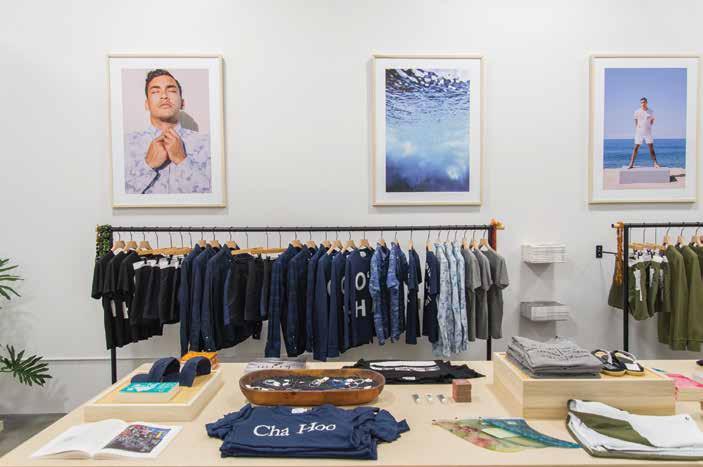
Creative Lab Hawai‘i Fashion Immersive participant Salvage Public has found success as a brand in Hawai‘i, as well as Tokyo and Europe.
brand Salvage Public and a Fashion Immersive alumnus. “Creative Lab Hawai‘i develops those entrepreneurs who are going to create companies that build out the industry to make space for more creatives. They have given entrepreneurs like me a sense of possibility.”
For more information on how you can participate, visit creativelab.hawaii.gov.
テクノロジーの進化とグローバル化が進み、 目まぐるしく変わる今日の世界でさまざまな業界 が浮き沈みするなか、CLHはクリエーターたちを 主役に据えることでハワイの未来につながる道を 切りひらいています。「クリエイティブ起業家にとっ て、自分の趣味を存続可能なキャリアに結びつける ことは容易ではないのです」と言うのは、ハワイを 拠点とするメンズウェアブランド「サルベージ・パブ リック」の共同設立者であり、ファッション・イマー シブプログラムの修了生であるナパリ・ソーザさん です。「CLHが育成する起業家たちが会社を作り、 その会社がさらにより多くのクリエーターたちが活 躍できる業界を構築していきます。CLHのメンター たちは、私のような起業家に、実現していくことが 可能なのだという感覚を教えてくれました」
CLHに関する詳細や参画の方法は、creativelab. hawaii.gov(英語)にアクセスしてください。
50 B BUSINESS DBEDT PALM
Opening Ceremony
始まりの儀式
Text by Matthew Dekneef
文 =マシュー・デクニーフ
Images by Marie Eriel Hobro and Josiah Patterson
写真 =マリー・エリエル・ホブロ&ジョシア・パターソン
52 B BUSINESS Blessings PALM
Li‘uli‘u wale i ka uka o Koholālele
Ma uka ma kai o ka Papala ē
E komo, e komo aku ho‘i au ma loko
Inā ka pu‘u nui o waho nei lā ē
He anu ē, he anu ē
He ko‘eko‘e wale nō ‘Ae
A look at the best practices of the blessing, a commonplace tradition in Hawai‘i’s commercial sector, with some of the island’s most well-known kahu.
カフによる伝統的な祝福の儀式はハワイのビジネスに欠かせません。
祝福のベストプラクティスについて、著名なカフに伺いました。
The tarnished doorknob of a barber shop. A restored outrigger canoe made of koa wood.
The sparkling new wing of a luxury low-rise condominium. Objects big and small, spaces expensive and economical—all are humbled in the presence of a kahu, or priest, hired to bestow good graces on the new ventures at hand. There are no absolutes that define what requires protection or who can be favored with future success. Nearly nothing in the Hawaiian Islands is left unblessed.
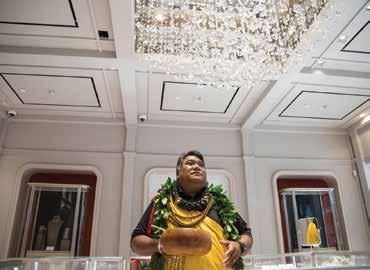
When a new business enters Hawai‘i’s marketplace, a kahu is often present. At the recent opening of Nirav Modi, a luxury jeweler at Ala Moana Center, the kahu
何世代も受け継がれてきた店の、変色したドアノブ。新しく磨きあげられたコア 材のアウトリガーカヌー。低層高級コンドミニアムの、眩くきらめく新しいウィ ング。大きなものも小さなものも、高価なものも安価なものも、新しい門出を前 に、祝福を授けるために呼ばれたカフ(聖職者)の前につつましく佇みます。幸 先の良いスタートを切り、良き恩寵を得られるように。悪いものから守られ、将 来の成功に恵まれるには何が必要なのか。絶対的な答えがないなか、ハワイで はほとんどあらゆるものが祝福を授けられています。
新しい事業がハワイの市場にデビューする場にはよくカフの姿が見られ ます。アラモアナショッピングセンターに登場した高級宝飾ブランド「ニラヴ・ モディ」のオープニングでも、正装であるローブを身にまとい、新鮮なマイレの
54 B BUSINESS Blessings
PALM
오하후의 가장 소리를 잘 내는 카후는 종종
입으로 전해집니다. 하와이의 종교적인 모임
에서 훈련 받은 잘 알려 진 몇 안 되는 사람들
중 하나이기 때문에 오늘날 그들의 이름은 종
종 전통적인 하와이인과 기독교인의 가치와
실천으로 구성된다.
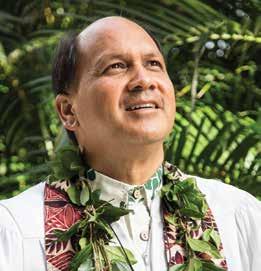
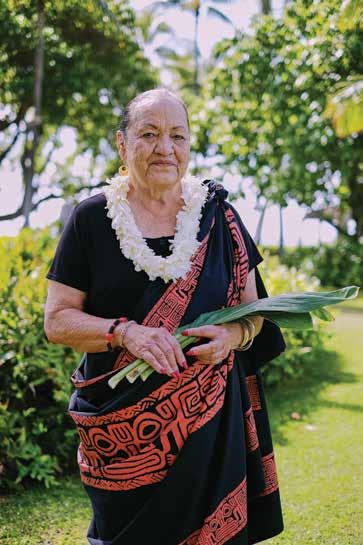
Kahu, like the ones shown here, are often present when a new business enters Hawai‘i’s marketplace. Shown clockwise from left: Kordell Kekoa, a former kahu at Kamehameha Schools’ Bernice Pauahi Bishop Memorial Chapel; La‘akea Arista, who was trained in Hawaiian protocol by Darrell ‘Ihi‘ihilauākea Lupenui, the late kumu of the hālau hula Waimāpuna; and Nettie Tiffany, spiritual advisor for Ko Olina Resort Group, who succeeded her mother as the kahu of Lanikūhonua.
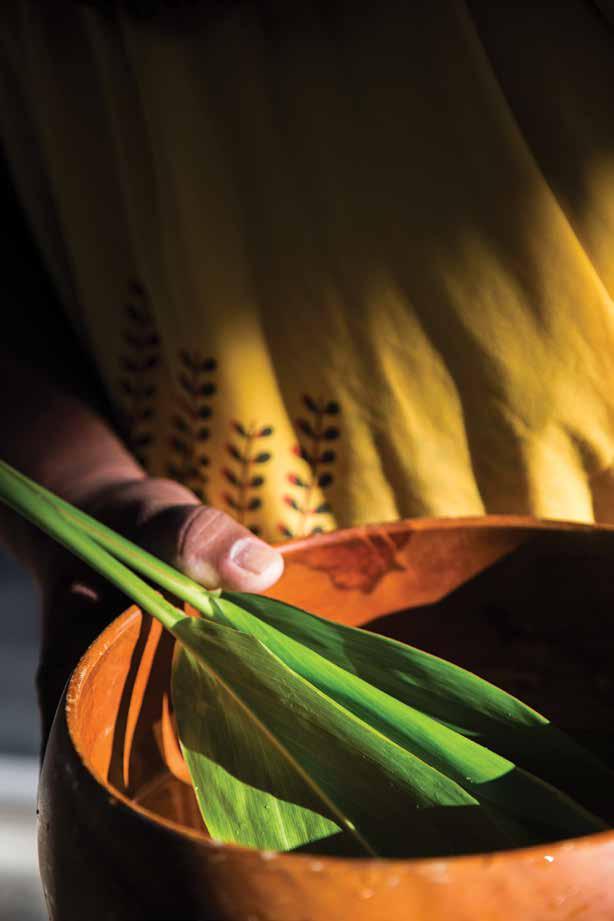
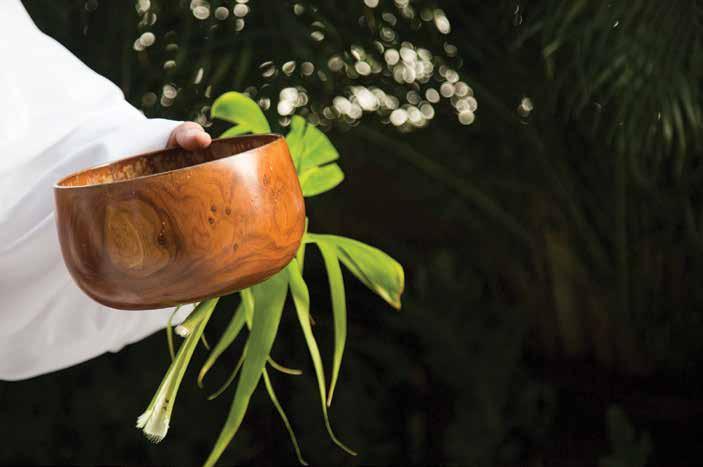
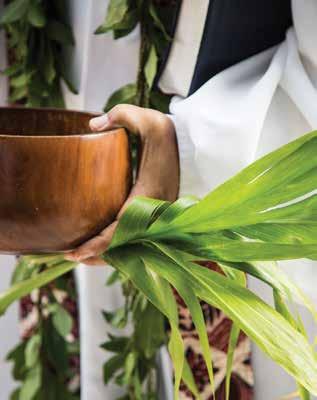
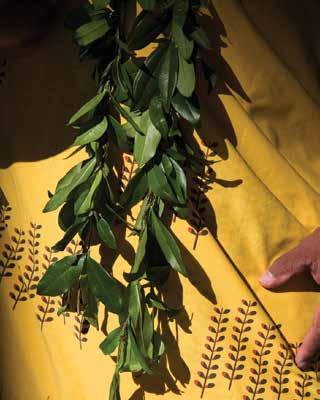
seems to materialize out of thin air before the boutique’s glass doors. Dressed in his regalia—a minister’s robe, a fresh maile lei, a reverential expression on his face—the kahu, La‘akea Arista, stands facing a small gathering of the store’s employees. Leading this particular ceremony, Arista carries out a familiar scene: He greets the crowd warmly, bellows an oli (chant), cleanses each individual present with water from a hardwood bowl, and then walks the designated space in venerate solitude, lifting up quiet prayers in Hawaiian.
The ritual will be over within 15 minutes, but on this first day of business, the kahu’s aura is comforting, crucial, and symbolic. “People are looking for belief and hope, that it’s either going to get better, or that something [bad] is going to be removed, or to signify a new beginning,” says Arista, who has been conducting blessings like these since the early 1990s. This sense of wonder and divinity is business as usual for anyone accustomed to working in the 50th State.
O‘ahu’s most sought after kahu are often discovered through word of mouth. They don’t have high-tech websites or fancy business cards. You won’t find them promoting themselves on social media apps (yes, kahu do own smartphones) or monitoring designated pages for their services on Yelp. Instead, because they’re among the known few trained in Hawaiian religious protocol—today often a composite of traditional Hawaiian and Christian values and practices—their names are recalled in boardrooms or during chance encounters when occasions like openings, groundbreakings, anniversaries, and new ownerships arise. For the majority of these kahu, officiating blessings isn’t even a full-time job. However, since they’re spiritual to their cores, they oblige.
“We’re chosen at birth,” says Nettie Tiffany, a second-generation kahu, and the second female kahu in her family line, who lives on O‘ahu’s leeward coast
葉で作ったレイを身に着けたカフが現れ、聖職者らしい厳粛な表情でブティッ クのガラスのドアの前に立つスタッフたちに向かいました。この儀式を執り行っ たカフは、ラアケア・アリスタさん。ハワイではお馴染みの光景が始まります。カ フはスタッフたちに温かく挨拶すると、朗々とした声でオリ(チャント)を唱え、 その場にいた全員を木のボウルに入った水で清めました。そして、特別に設け られた場所を一人で恭しく歩きながら、ハワイ語で静かな祈りを捧げます。
儀式は15分ほどで終わりましたが、開店の日を通して、カフの存在が放 つオーラは心にやすらぎを与え、きわめて大切な、象徴的なものとなりました。
「人々は、信じられるものと希望を求めています。より良い状況を求める人も、 何か悪いものを取り除きたいと思っている人も、新しい門出を良いものにした いと思っている人もです」と語るアリスタさんは、1990年代初めから、こうした 祝福の儀式を執り行ってきました。ハワイで仕事をする人は、この神秘と神聖 な空気には慣れ親しんでいます。
オアフ島のもっとも有名なカフは、たいていの場合、人づてに見つかる ものです。カフたちはハイテク技術を駆使したウェブサイトも、デザインを凝ら した名刺も持っていません。ソーシャルメディアのアプリでプロモーションもし ないし(とはいえ、カフも携帯電話は持っています)、ビジネスのレビューサイト 「Yelp」に専用ページも持っていません。ハワイの宗教的儀式(今日では多く の場合、ハワイアンの伝統とキリスト教を合わせたものです)を知る数少ない 存在であるカフたちの名前は、ホノルルのビジネスマンたちの間で知られてい ます。事業のオープニング、起工式、何周年かの記念行事、オーナーが変わった 時などに、役員会議でカフの名前が呼び起こされるのです。多くのカフは、そう した祝福を与える仕事をなりわいにしているわけではありませんが、芯からス ピリチュアルな彼らは、求めに応じるのです。 3世代目のカフで、オアフ島のリーワードにあるラニクホヌアに住むネッ ティ・ティファニーさんはこう語ります。「私たちは、生まれた時から選ばれてい るのです。誰かに祝福をして欲しいと頼まれることには必ず意味がありますし、
56 B BUSINESS Blessings
PALM
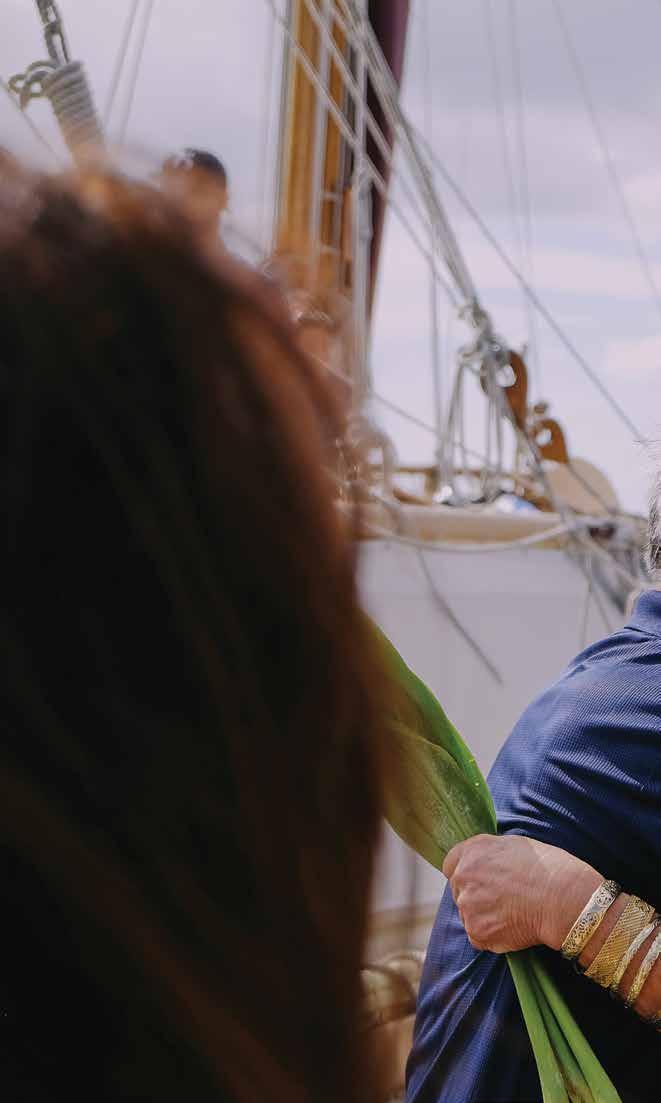
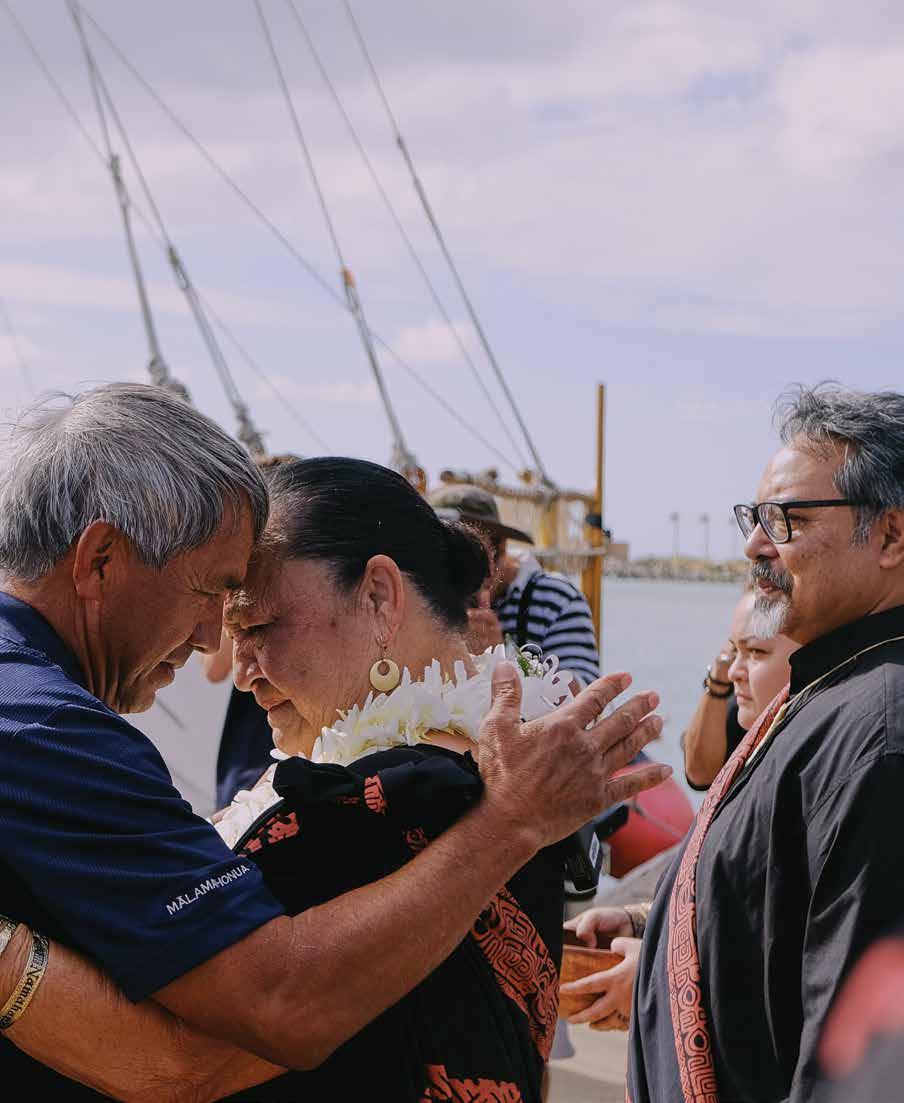
Nettie Tiffany blesses the Hōkūle‘a , the famed voyaging canoe, with a welcome prayer. Master navigator Nainoa Thompson and Tiffany’s mother conversed many times before the ship was built; he even gifted her a paddle after Hōkūle‘a ’s first trip to Tahiti. When she offered the blessing upon the vessel’s return to Ko Olina after its worldwide voyage, “It was like my mother was here,” Tiffany says.
at Lanikūhonua. But from her lānai, which overlooks a resort area popular with visitors, Tiffany has witnessed questionable episodes—weddings, most often, at which supposed kahu are carrying out rituals with no bearing in traditional Hawaiian practices, despite wearing kīhei (capes) and blowing conch shells. “There are a lot of wannabes,” she says, admitting that it pains her to see unqualified people make a mockery of her culture and exploit unsuspecting individuals. “It’s all theatrics, and I do not do theatrics.”
Tiffany cautions businesses to verify a kahu’s authority before enlisting them, to politely vet and ask questions. “The best way is to listen to the background of that person,” Tiffany advises, because legitimate kahu will be able to tell you exactly how their lineage has led them to this role, or the lineage of the kahuna, or priest, who trained them.
Like her contemporaries, blessings are considered serious work to Tiffany, and no request fazes her. In her nearly 40 years as a kahu, she has been asked to bless historic Hawai‘i homes, newborn babies, a teenager’s first car, even the iconic Hōkūle‘a. As a best practice, she suggests all parties approach a kahu in the same way: with an openness to be educated. If someone comes to her (in the commercial realm, this is typically a public relations or marketing coordinator) because they were recommended to have a blessing performed, the first thing she asks is if they know why they should do so.
“Because the foundation of your business is the earth,” Tiffany answers, “and we, the Hawaiian people, respect the earth. When we take something, we give back, and what you’re doing is using the land of old Hawai‘i. We have to say thank you. Part of the blessing is to thank the natural elements for allowing you to build there or have your business there.”
At the morning blessing of Park Lane’s recently completed third wing, Kordell Kekoa, a former kahu at Kamehameha Schools’ Bernice Pauahi Bishop Memorial Chapel and one of O‘ahu’s most recognized religious figures, begins the ceremony by establishing the residence’s sense of place for the developer’s partners, marketing team, and salespersons, who are in attendance. “As that sun rises over Moloka‘i telling us it’s a new day,” Kekoa says, raising a tī leaf to the sky and pointing it south, “it reminds us that it’s a new day just like for Park Lane.” Then he bows his head and begins a prayer. Later, he cleanses everyone by sprinkling water from a koa bowl on each individual’s palm. Then he
何かの必要があるということなのです」とはいえ、頼む相手のことはきちんと調 べたほうが良い、なぜなら「格好だけの人もたくさんいますからね」とティファニ ーさんは注意します。彼女の自宅のラナイからは観光客に人気のリゾートエリ アが眺められ、そこではときに怪しげな光景を目にするといいます。カフが執り 行っているはずの結婚式が、ハワイアンの伝統儀式とはまったく似ても似つか ないこともあるというのです。
カフの仕事は「派手な見かけではないんです。私はお芝居じみたことはし ません」とティファニーさんは釘をさします。祝福を頼む時にはそのカフがきち んとした権威を持っているかどうか、いくつか質問をした方が良いそうです。「 一番良いのは、その人の出自を聞くことですね」とティファニーさん。正当なカ フならば、どの家系の出でカフの役割を果たすようになったのか、またはその人 を教えたカフナの家系を言えるはずだからだそうです。 他のカフたちと同じように、彼女は祝福を与えることを真剣な仕事と考 え、どんなリクエストにもひるむことはありません。カフとして40年近くにわた り活動してきた間に祝福を依頼されてきたものはさまざま。ハワイの歴史ある 家々、生まれたばかりの赤ちゃん、ティーンエイジャーが初めて持つ車、そして あの伝説的なカヌー、ホクレアもあります。ティファニーさんは、ベストプラクテ ィスとして、誰もがカフに対して同じ態度で接することを薦めています。つまり、 カフからの学びに対して心を開くこと。推薦を受けて誰かがティファニーさんに 祝福を頼みに来た時には(ビジネス界では、たいていが広報担当者かマーケテ ィングのコーディネーターです)、彼女が最初にその人に尋ねるのは、どうして 祝福が必要なのか、彼らが知っているかということ。
「だって、この仕事は大地に根ざしたものですからね。私たちハワイアン は、土地を尊敬しているのです。何かを取ったら、お返しをしなければなりませ ん。今ここで行っていることは、昔からあるハワイの土地を使っていることなん ですよ。それに対して感謝を述べる必要があるんです。祝福は、あなたがたがこ こに事業を起こしたり持ち続けることを可能にしてくれている、自然の要素に 対する感謝でもあるのです」とティファニーさん。
パークレーンに最近完成した3番目のウィングの祝福は、以前はカメハ メハ・スクールのカフを務め、オアフ島でも最もよく知られた聖職者の一人で あるコーデル・ケコアさんが執り行いました。このセレモニーは朝行われ、デベ ロッパーのパートナーたち、マーケティングチーム、営業担当者たちのために、 このレジデンスの持つ、この場所ならではの感覚を確かなものにすることから 始まりました。「太陽がモロカイ島の上に上り、私たちに新しい1日を告げてい ます」とケコアさんは語り、1枚のティーリーフを空に向かって差し上げると、南 をさしました。「そしてこのことは、私たちに、パークレーンにとっても新しい1日
60 B BUSINESS Blessings
PALM
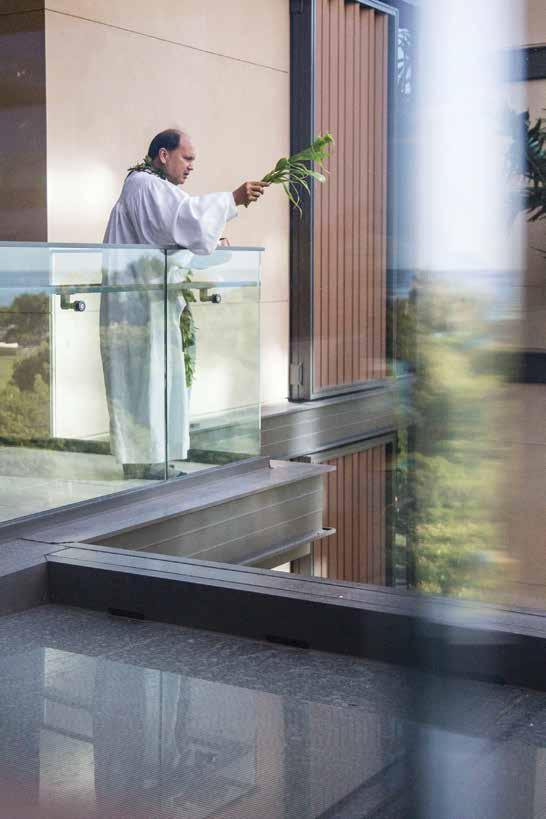
Kordell Kekoa, shown at the blessing of Park Lane, is considered the premier kahu for groundbreakings because of his genealogy’s relationship to much of O‘ahu’s native lands.
instructs the group of about 25 attendees to put these palms on any part of the building, think successful thoughts, and transfer that energy into what will be their place of work for years to come. This soulful ability to orient and align individuals with their location is perhaps the kahu’s most important function. It is also the tenet with the most interfaith appeal. For five minutes, the group disperses and quietly does as he instructs. It’s quite a sight to see: Smartly dressed men and women who negotiate multi-million-dollar deals pause for a few minutes, close their eyes, shut out the noise, and lift their hands to press flesh against stone.
How to Mahalo a Kahu
In their piousness, kahu tend to shy away from conversations about compensation. If a business wants to thank a kahu with a monetary gesture, it’s a subject best initiated by the business. “Be open to a conversation before the blessing,” Kekoa says. “The key is everyone wants to do everything pono, the right way.”
であることを思い出させてくれます」。そう言うと、ケコアさんは頭を低く下げて 祈りを唱え始めました。その後、居並ぶ人々はコア材のボウルに張った水で清 められ、一人ひとりが手のひらにつけた水で、建物の好きな部分に手形をつけ るように指示されました。成功を心に思い浮かべ、そのエネルギーを、これから 何年も働くことになるこの場所に移すのです。それぞれが心を傾け、自分の居 る場所と軸を合わせること。恐らくそれこそが、カフの持つ最も大切な使命であ り、宗教を超えて心に届く教えなのでしょう。25名ほどの出席者は、5分ほどの 間、静かにカフの指示に従って思い思いの場所に向かっていました。それは、 心動かされる眺めでした。隙のない服装に身を包み、何百万ドルもの商談に責 任を持つ男女が、数分の間目を閉じて世界の騒音から離れ、両手を挙げて、石 材に触れていたのです。
カフへのお礼
敬虔なカフは、報酬について語るのを好みません。企業からカフにお礼をした い時には、企業の方から切り出さねばなりません。「祝福の儀式の前に、オープ ンに話すのが一番です。誰もがすべてをポノ(あるべき形)に、正しい方法でや りたいと思っているということが肝心です」と、ケコアさんは語りました。
62 B BUSINESS Blessings
PALM
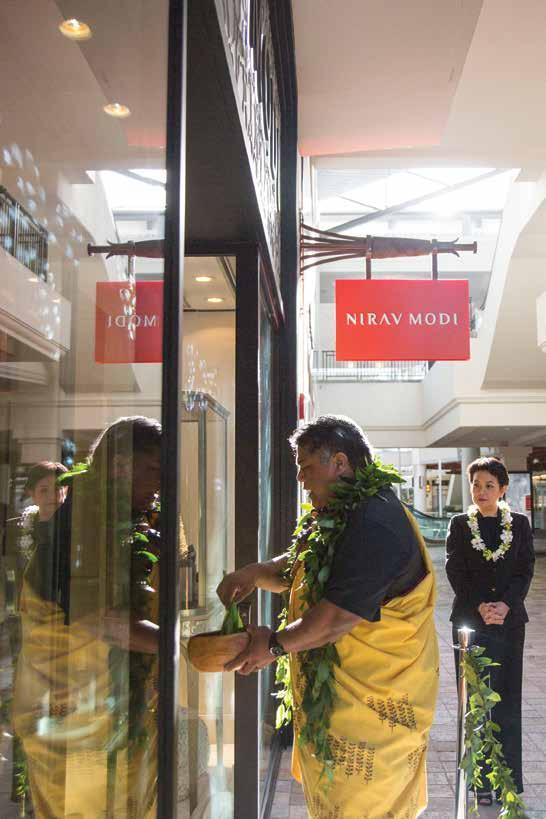
“People are looking for belief and hope, that it’s either going to get better, or that something [bad] is going to be removed, or to signify a new beginning,” says La‘akea Arista, who is shown at the opening of luxury jewelry boutique Nirav Modi.

E mālama, ho‘omaika‘i haku iā ‘oe
Kau kona maka, ma luna iho ‘oe
He malu mau, he malu mau ‘Āmene
Pule Ho‘oku‘u
of place that
CUL TU RE
A sense fosters the human spirit
文化 PALM C
65
Radical Zen
Text by Timothy A. Schuler
文 = ティモシー・A・シュラー
Images by Josiah Patterson and John Hook 写真 = ジョシア・パターソン&ジョン・フック
66 C CULTURE Chozen-ji PALM
ラディカルな禅
In the back of Kalihi Valley, a unique Zen dojo melds the mind and the body.
カリヒヴァレーのユニークな禅道場で、心と身体を融合させる。
1979년 오모리 소겐은 초젠지를 다이혼 혹은 주요 사찰로
지정했다. 불교도든 아니든 간에, 개인들이 존재의 가장 심
오한 문제들과 씨름하는 것을 돕기 위해서 초젠지는 가톨
릭, 무신론자, 무신론자, 실존 주의자들을 환영했다.
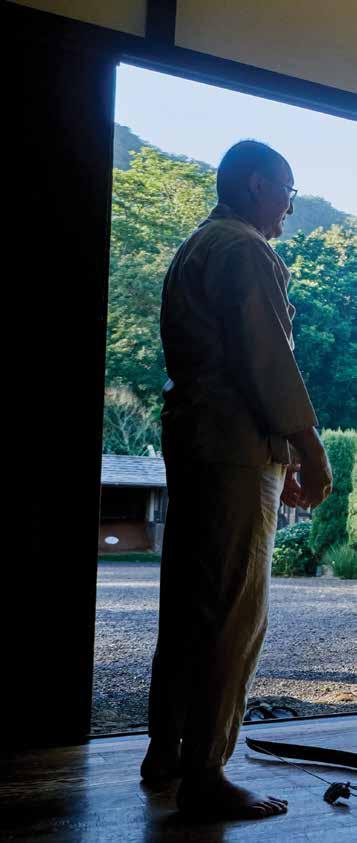
The wind is loud as it whips a veil of rain off the mountains and tosses it onto Kalihi Valley.
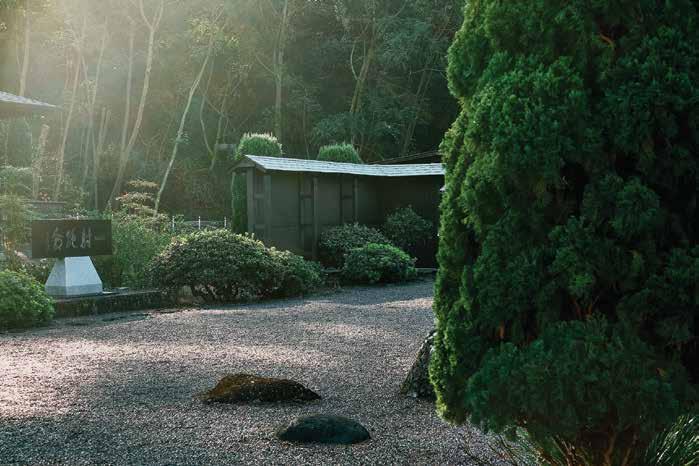
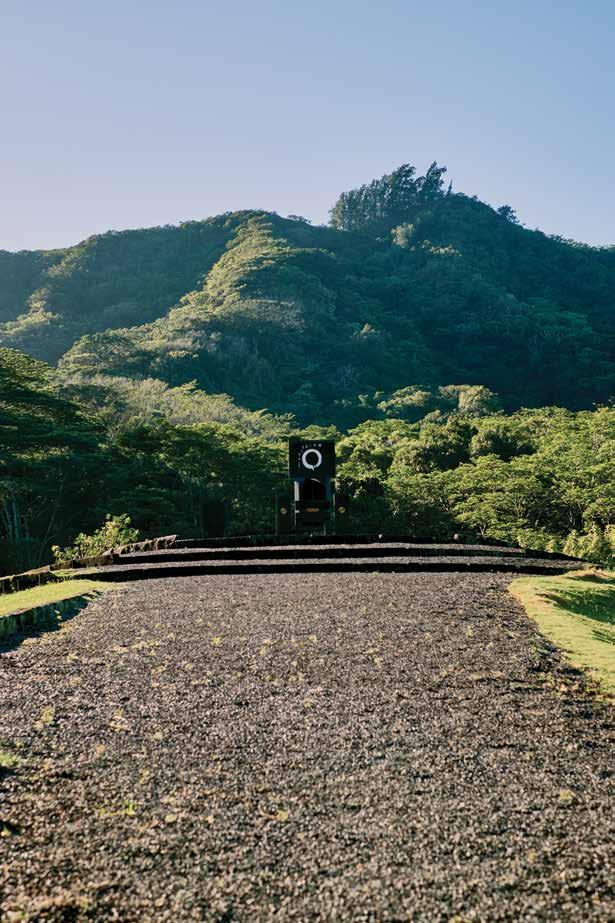
Michael Hodge and I are standing on a small hillock near the center of Chozen-ji temple. We’re exposed. The rain is light but hardened by velocity, and each tiny drop feels as solid as the stone in front of us, which is inscribed with a large white circle, an enso, which in Japanese Buddhism represents both emptiness and enlightenment.
Hodge, who is tall and bearded and definitely not Japanese but who nonetheless became Chozen-ji’s resident priest this past summer, is recounting the temple’s unlikely history. Chozen-ji was established
ごうごうと鳴る強風が山肌から雨のべールをはぎとり、カリヒヴァレーに降り 注がせていました。マイケル・ホッジさんと私は、超禅寺(ちょうぜんじ)の境内 の中央付近にある小高い丘の上に、雨に打たれて立っています。小雨ですが、 落ちてくる間に速度が加わってつぶてのようになり、小さな雨粒の一つひとつ が、私たちの前にある岩と同じぐらいの固さに感じられます。この岩には大きな 白い円が刻まれていますが、これは日本の仏教で「円相」と呼ばれ、虚無と悟り を表しているといいます。
背が高く顎髭をたくわえたホッジさんはどこから見ても日本人ではありま せんが、昨年の夏から超禅寺の住職を務め、今日はこの寺の興味深い歴史を 私に語ってくれています。超禅寺は臨済宗の禅道場として1972年に建立され
68 C CULTURE Chozen-ji
PALM
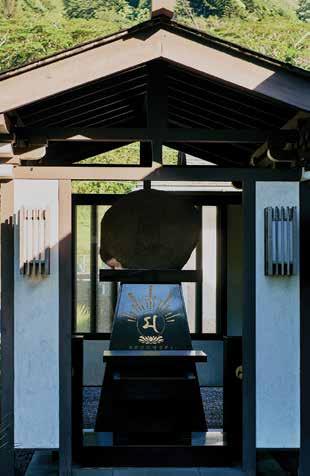
In 1979, Omori Sogen designated Chozen-ji as a daihonzan, or a main temple, to help individuals, regardless of religious orientation, grapple with the deepest questions of existence.
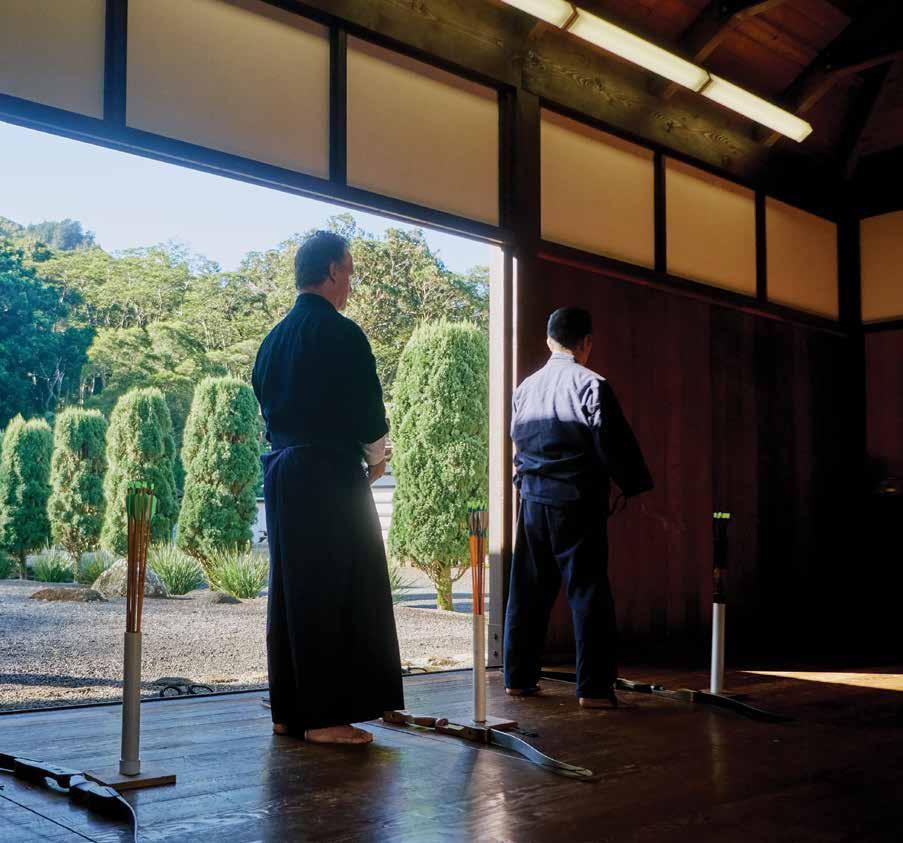
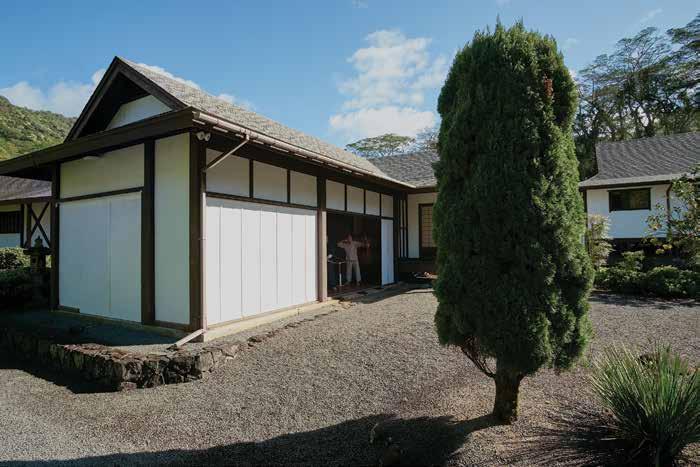
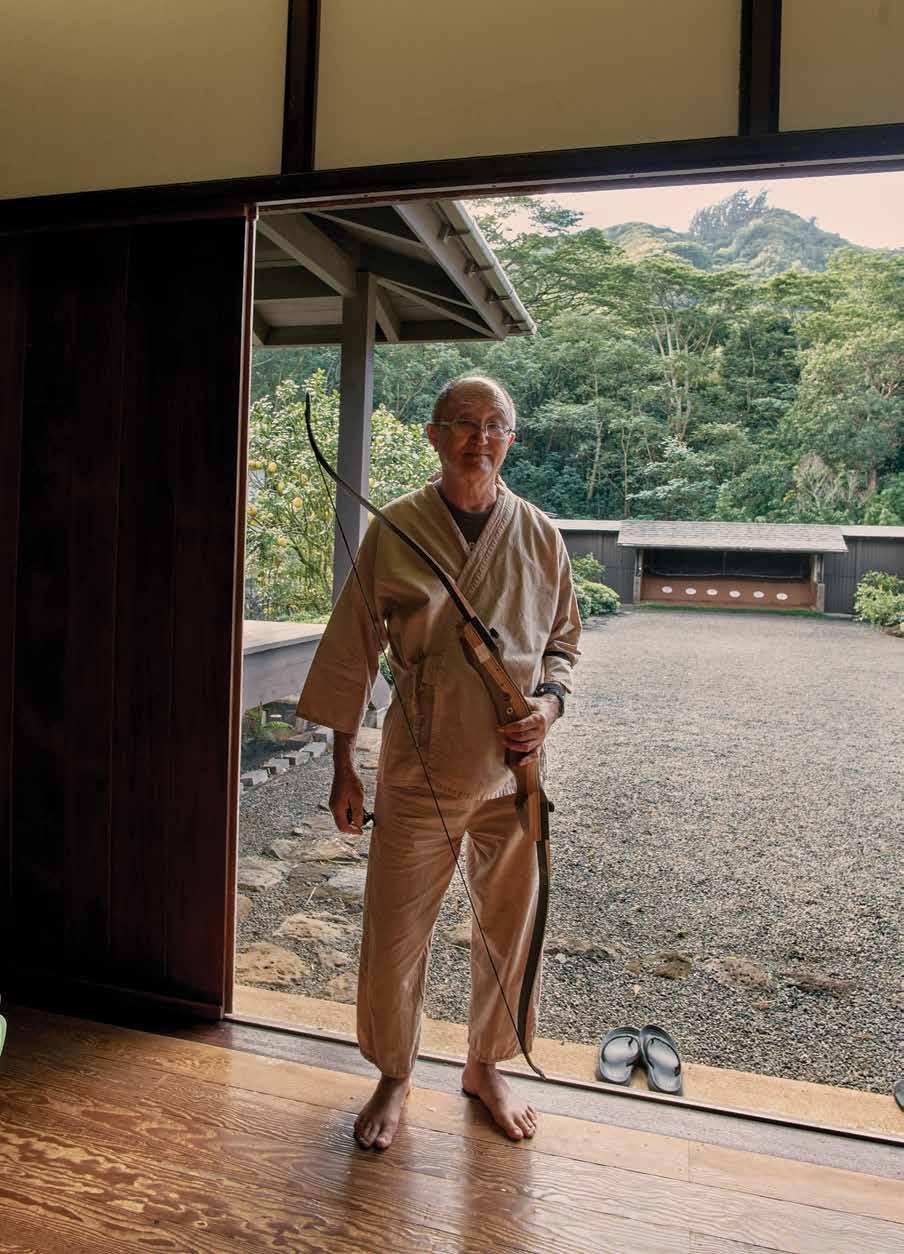
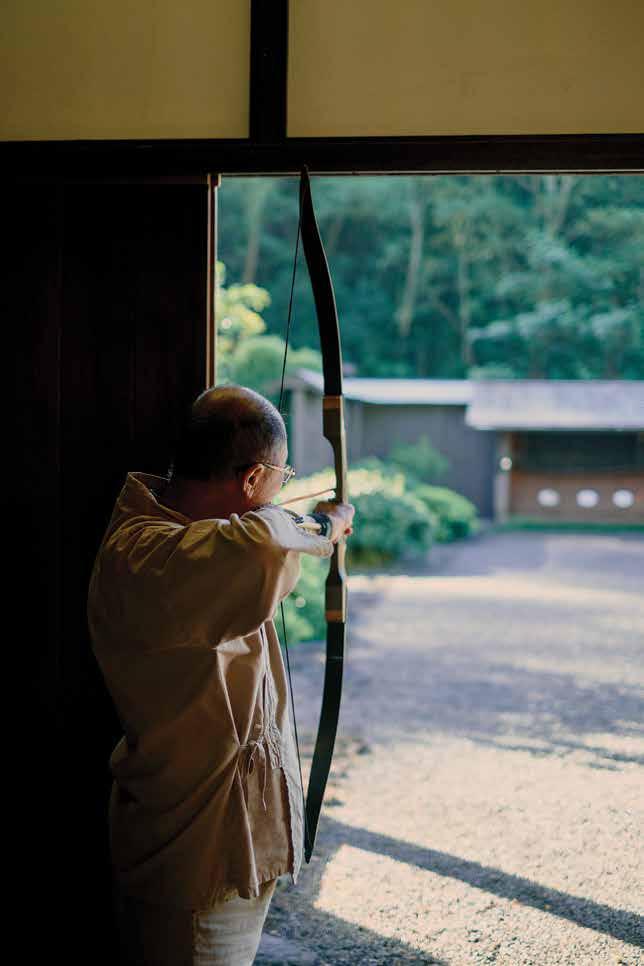
in 1972 as a Zen dojo in the Rinzai tradition, a sect of Japanese Buddhism that emphasizes kōans, riddle-like statements used in meditation. From the beginning, it was a temple of iconoclasts. Its founders—Omori Sogen, an internationally known Zen master from Japan, and Stanley Tanouye, known to most as Tanouye Roshi, a martial arts prodigy who for his day job taught band at Farrington High School—had come to Zen by way of martial arts. As a result, Chozen-ji places an unusual emphasis on physical training. In addition to practicing zazen, a form of seated meditation that is done for an extended period of time, students also learn a martial art, such as kendo (the way of the sword) or kyudo (the way of the bow).
By entering Zen through both the body and the mind, Sogen and Tanouye believed a person could transcend even Zen. (The name Chozen-ji literally means, “The Temple of Zen Transcending Zen.”) In 1979, Sogen designated Chozen-ji as a daihonzan, or a main temple, of a new line of Zen Buddhism. This gave it the power to self-govern, and produce its own Zen masters. In a handwritten document that formalized the decision— which also made Chozen-ji the first and only daihonzan in the United States—Sogen addressed the Rinzai elders in Japan: “Open your eyes to this, and together let us send it out to the world.”
ました。臨済宗は日本の仏教の宗派の一つで、謎かけのような公案について考 える瞑想に重点を置いています。この寺はそもそもの初めから、因習を打破し ようとする人たちの寺でした。開祖は、国際的に有名な日本の禅老師であった 大森曹玄師と、地元で「タノウエ老師」として知られる武道の達人であり、本職 はファーリントン・ハイスクールの楽団指導者であったスタンリー・タノウエ師 で、両人とも武道から禅の道に入りました。その結果、超禅寺は身体の鍛錬に 重点を置く珍しい禅寺となったのです。この寺の信徒は、座禅に加えて剣道や 弓道などの武道も学びます。
タノウエ老師と曹玄老師は、人は心身両面から禅の道に入ることによって 禅の領域さえも超越できると信じていました。(「超禅寺」とは文字通り「禅を超 える禅の寺」を意味します)。曹玄老師は1979年に超禅寺を禅宗の新しい宗 派の大本山と定めました。大本山となったことで超禅寺は自治権を獲得し、独 自の禅老師を輩出できるようになりました。その決定を正式な形にし、超禅寺 を米国内で最初にして唯一の大本山とならしめた手書きの書面の中で、曹玄 老師は臨済宗の本山当局各位にあててこのように書いています。「茲(ここ)に 開眼して吾等と倶(とも)に世界に翼(はば)たけ!」 それ以来、それまでの禅とは違い、仏教とも呼べないかもしれない超禅寺 のラディカルな禅に、数百人に上る人々が意義を見出してきました。ホッジ住 職は呼び名にはこだわりたくないと言います。この寺が何であっても、ホノルル 屈指の有力者はじめ、あらゆる職業や地位の人たちを惹きつけてきたのは確か
70 C CULTURE Chozen-ji
PALM
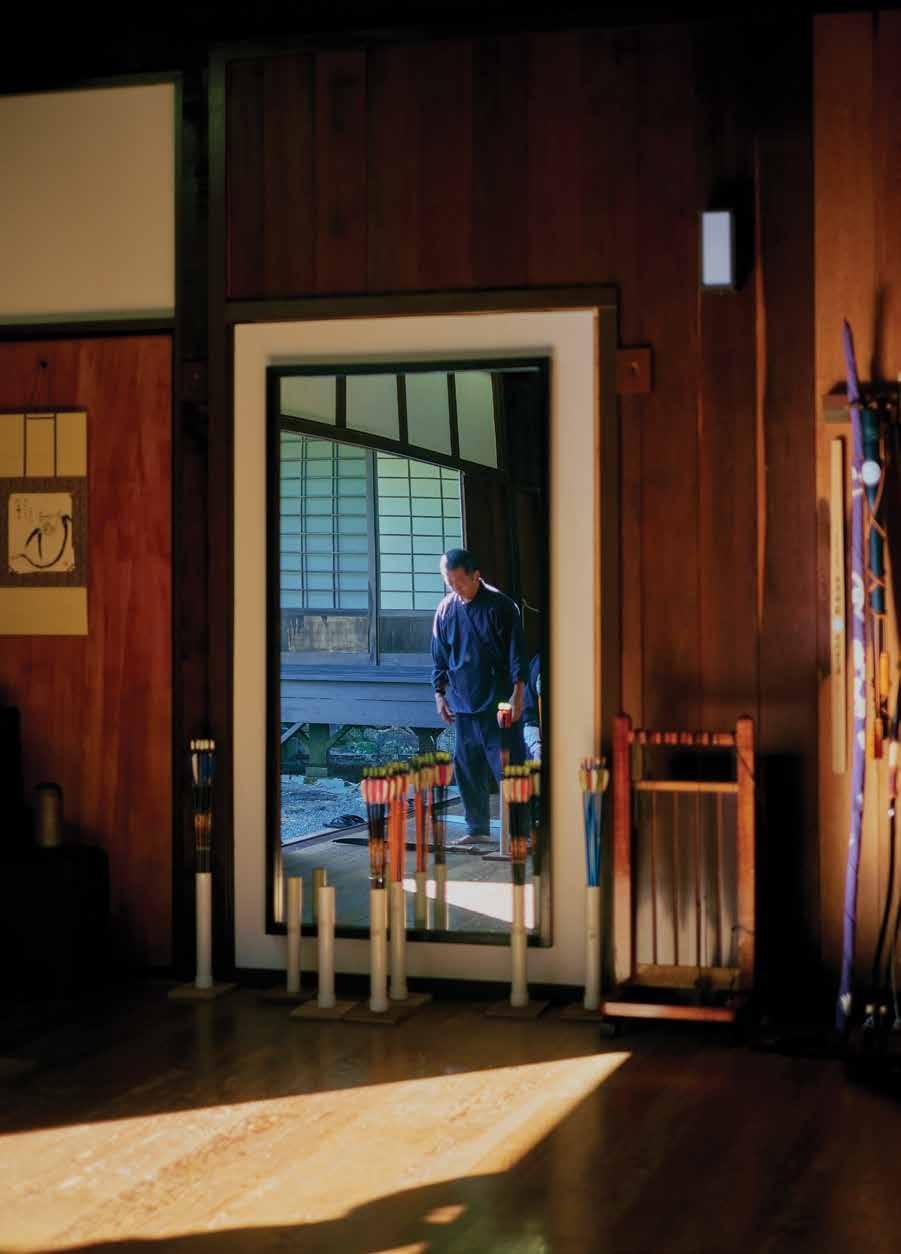
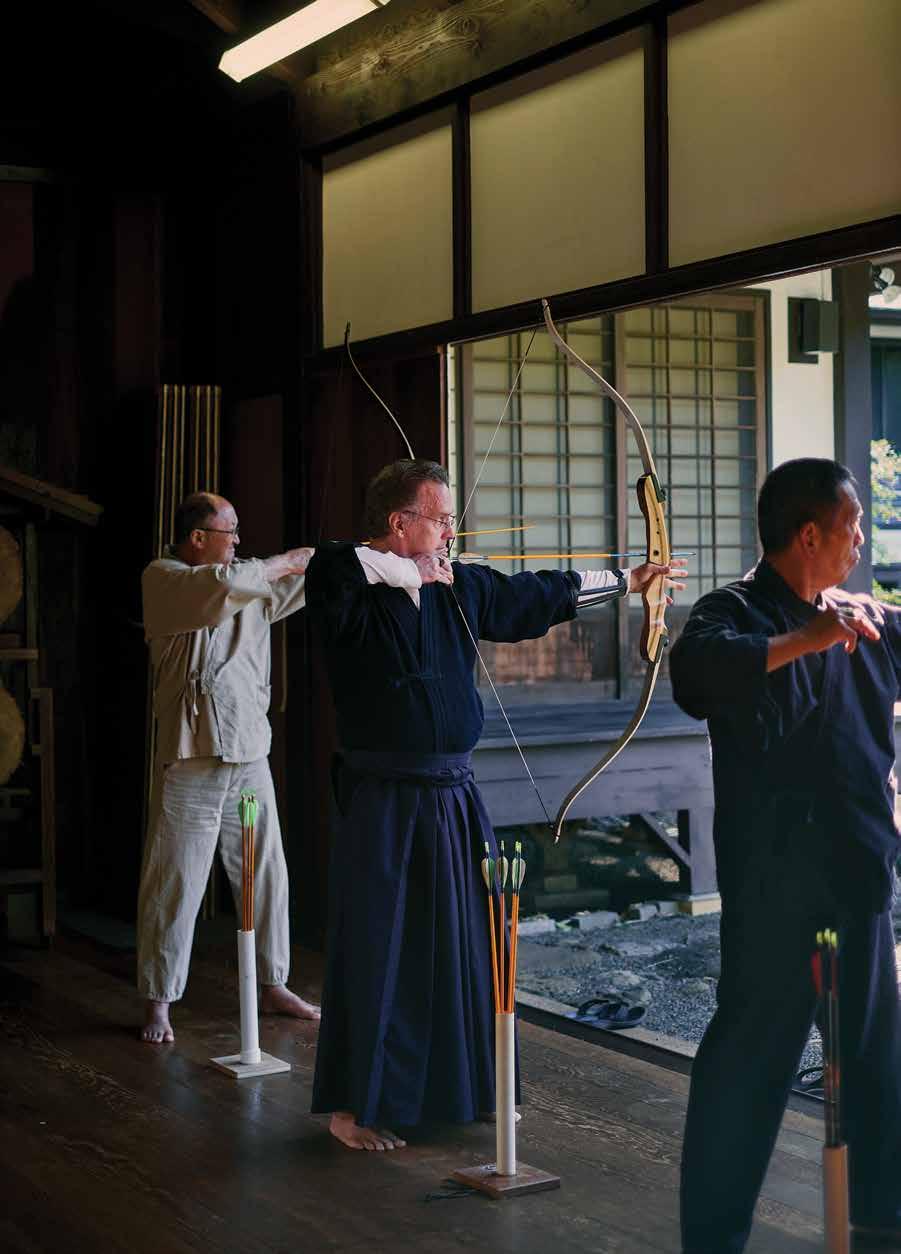
Chozen-ji places an unusual emphasis on physical training. In addition to practicing zazen , a form of seated meditation, students also learn a martial art, such as kendo (the way of the sword) or kyudo (the way of the bow).
By entering Zen through both the body and the mind, the founders of Chozen-ji believed a person could transcend even Zen. The name Chozen-ji literally means, “The Temple of Zen Transcending Zen.”
Since then, hundreds of individuals have found meaning in Chozen-ji’s radical Zen Buddhism, which is quite possibly not Buddhist, nor, for that matter, Zen. Hodge prefers not to use labels. Whatever it is, the temple has attracted peoples from all walks of life, from some of Honolulu’s most powerful individuals, including Colbert Matsumoto, the executive chairman of Island Insurance and the vice chairman of the Japanese Cultural Center, to its most nefarious, like Royale Kamahoahoa, a “self-admitted hitman,” Hodge says.
Its aim is to help individuals, Buddhist or not, grapple with the deepest questions of existence. Chozen-ji has welcomed です。その中にはアイランド・インシュランスの会長 でありハワイ日本文化センターの副会長でもある コルバート・マツモト氏から、自らを殺し屋と呼んだ ロイヤル・カマホアホアまで様々な人たちがいる、 とホッジ住職は語ります。
この寺の目的は、仏教徒であろうとなかろう と、その人が自らの存在についての深遠な問いに 取り組むのを助けることなのです。超禅寺は、カト リック教徒、無神論者、不可知論者、実存主義者な どありとあらゆる思想の人々を受け入れてきまし た。ホッジ住職は、Googleのエンジニアが使った という比喩「仏教はソフトウェアの一種である。ハ ードウェアは身体である」を引用して説明します。 超禅寺で座禅やその他の活動を通して鍛錬するの はハードウェアです。ホッジ住職は「私たちはより
74 C CULTURE Chozen-ji PALM

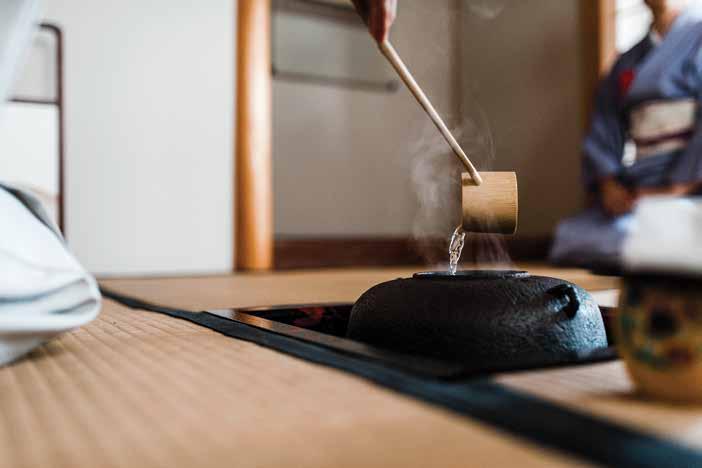
At Chozen-ji, Yumiko Sayama teaches chado , or the way of tea. “Tea is always about taking care of others,” she says.
Catholics, atheists, agnostics, and existentialists. Hodge borrows the analogy a Google engineer once used: Buddhism is a type of software. The hardware is the body. At Chozen-ji, what’s being refined, through zazen and other practices, is the hardware. “We’re working at that deeper level,” Hodge says. “You can run the software of Christianity. You can run the software of a chef. You can run the software of a band teacher.”
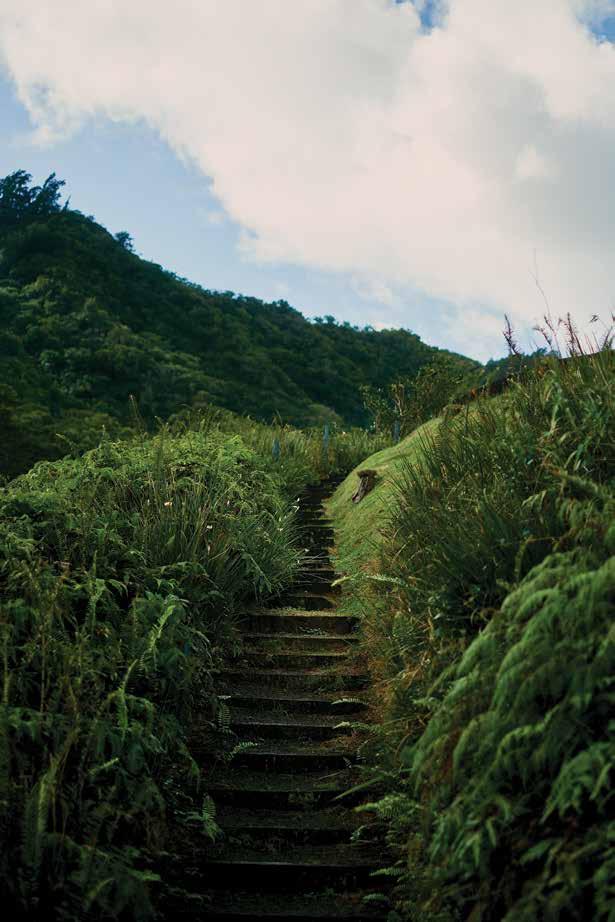
Indeed, a number of Hawaiian spiritual teachers have spent time at Chozen-ji, including Pilahi Paki, who, according to Hodge, once said the temple was one of four “spiritual mountains” on O‘ahu. He tells me
深いレベルでその鍛錬に取り組んでいるのです」と 言います。「キリスト教のソフトウェアを実行してい てもいい。シェフのソフトウェアを実行していても いい。楽団指導者のソフトウェアを実行していたっ ていいのです」
実際、ピラヒ・パキさんをはじめ何人ものハ ワイアンのスピリチュアル指導者たちも超禅寺に 逗留したことがあり、ホッジ住職によれば、パキさ んはこの寺がオアフ島に4つある「スピリチュアル な山」の1つだと言ったそうです。丘の上から寺の 境内を見渡しながら、ホッジ住職は私にこう言いま した。「ここに立てば、自分が何かの中心にいるよう な気がします」。そして一呼吸おいて、「けれども同 時に、向こうには闘鶏用の鶏を飼育している人もい
78 C CULTURE Chozen-ji PALM
this as we survey the temple grounds from the hill. “You stand up here, and there’s this feeling that you’re in the center of something,” Hodge says. After a beat, he adds, “At the same time, there’s a guy who raises chickens to fight over there.” The moment is illustrative of the tone at Chozen-ji. It may be rigorous, but it’s not humorless.
The question is whether it is still valuable. Even as mindfulness has become a buzzword and its concept a billion-dollar industry, Zen temples like Chozen-ji have shed members in recent years, in part due to high barriers to entry. New students to the Hawai‘i daihonzan were long required to attend a separate meditation class for six weeks before joining the rest of the community.
“The idea was, if you want to be here, you’re gonna have to go through some gates. That doesn’t work very well, especially with millennials,” Hodge says, chuckling.
In the past year, Chozen-ji has become more open, offering public meditation classes every Tuesday, Wednesday, Friday, and Saturday. In summer 2017, the temple retooled its website and created an Instagram account, hoping to expand its digital presence. It may be working. Hodge says he’s seen more new faces lately. Of course, about half of the people who show up for a weekend meditation class never come back, Hodge says. “What we’re doing is hard. It’s not fun.”
But it is meaningful, at least for some. “Chozen-ji, to me, exists as one of the last places people can go that takes on the whole person,” Hodge says. “We’ve got kōans for your mind, we’ve got athletics for your body, we’ve got religion for your spirit.”
るのです」。それは、超禅寺に流れる精神を物語る瞬間でした。厳しさと同時に ユーモアを含む精神です。
問題は、そうした考え方が、今の時代にも価値あるものとして受け取られ ているかどうかです。「マインドフルネス」が時の言葉となり、十億ドル規模の 産業に成長してもいますが、近年、超禅寺のような禅寺は敷居が高いこともあ って信徒が減っています。このハワイの大本山の信徒として受け入れられるに は、入門者のための座禅講習に6週間出席することが長年義務づけられてきま した。「この寺で学びたいならいくつかの関門をくぐってもらう必要がある、とい う考えでした。でもそういうのは、特にミレニアル世代の若者には合わないので すよね」とホッジさんは笑いながら言います。
超禅寺は昨年から火・水・金・土曜日に一般人向けの瞑想教室を開講し、 前よりもオープンになりました。ネット上でのプレゼンスを拡大しようと、2017 年夏にはウェブサイトも一新し、Instagramのアカウントも作りました。そうし た策が功を奏し始めているのかもしれず、超然寺では最近、新しい顔を見かけ ることが多くなったそうです。もちろん、週末の瞑想教室に出席した人の半数 は二度と戻って来ないそうですが。「私たちがやっていることは困難で、楽しい ことじゃないですからね」とホッジ住職は言います。
でも、そこに意義を見出す人もいることは確かです。「私にとって超禅寺と いう存在は、全人的な成長のために赴くことができる、最後に残された数少な い場所の一つです。公案で精神を鍛え、武道で身体を鍛え、宗教で魂を鍛える のですから」とホッジ住職は自らの思い入れを語ってくれました。
80 C CULTURE Chozen-ji
PALM
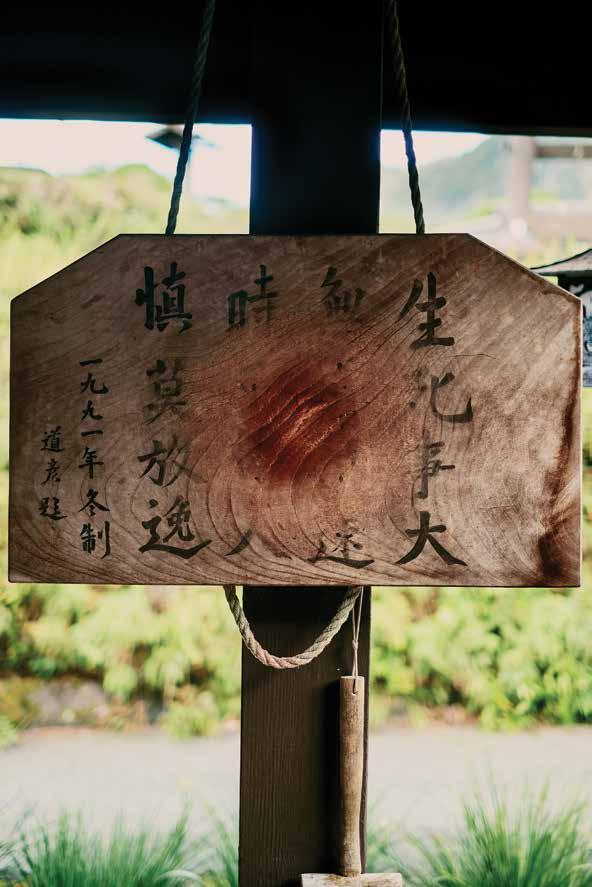
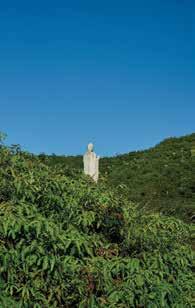
“You stand up here, and there’s this feeling that you’re in the center of something,” says Chozen-ji’s resident priest, Michael Hodge, who notes that Chozen-ji is atop one of four “spiritual mountains” on O‘ahu.
Y O L O
How Sweet It Is
スイート・ストーリー
Text by Rae Sojot
文 = レイ・ソジョット
Images by Meagan Suzuki
写真 =メーガン・スズキ
From the sandalwood trade and whale oil industries of the 1800s to the sugar and pineapple empires of the 20th century, Hawai‘i has long been a source of prized goods. Today, the state continues its tradition of providing products both exotic and enviable, such as coffee, cacao, and honey derived from the nectar of endemic flowers. Below, three Hawai‘i luxury food producers—a chocolatier, a beekeeper, and a peaberry coffee grower—share the special stories behind their premium products. Though it’s difficult to pinpoint the source of magic and merit from which these products are grown, harvested, or crafted—some say it’s the tropical surroundings, others point to something more ethereal— all can agree on this: Whether in substance or in spirit, Hawai‘i’s offerings are a celebration of the islands, and therefore unlike anything else in the world.
Long a source for prized industries like sandalwood and whale oil, Hawai‘i continues to offer up delectable bounties in cacao, coffee, and honey.
古くから白檀や鯨油など貴重な特産物を誇ってきたハワイは、今日もなお、カ カオ、コーヒー、はちみつといった美味なる恵みを世に送り出しています。
19世紀には白檀や鯨油の貿易で知られ、20世紀には砂糖やパイナップルの産 業が一大帝国を築いたハワイは、昔から人々が競って求める特産物を生んで きました。コーヒー、カカオ、ハワイ固有の花々の蜜から採れたはちみつなど、 人々の憧れをかき立てるエキゾチックな名産品を生み出す伝統は、今日にも受 け継がれています。ショコラティエ、養蜂家、ピーベリーコーヒー農家。ハワイ ならではの高級食材の生産者たち3人が、それぞれにまつわる特別な物語を 教えてくれました。作物を育て、収穫し、または加工する過程のなかで、何が功 を奏し、魔法が生まれるのか。その理由を絞るのはたやすくありません。熱帯の 風土だという人もいれば、風土を超えたものだという人もいますが、誰もが口 をそろえる点がひとつあります。それは、形あるものであろうと目に見えないス ピリットであろうと、ハワイの特産物は、ハワイという島々への讃歌そのものだ ということ。だからこそ、世界中探してもほかでは見つからないのです。
82 C CULTURE Sweets
PALM
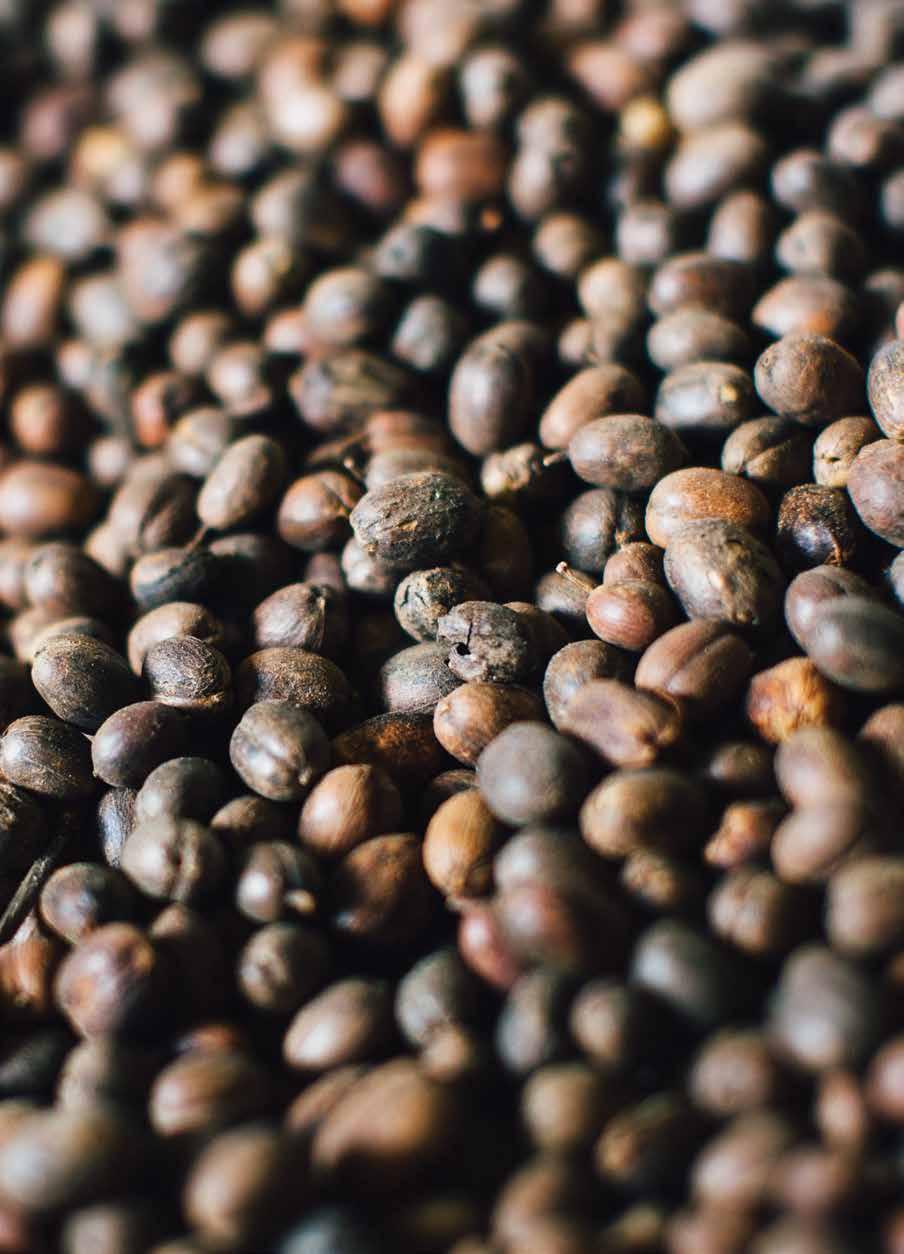
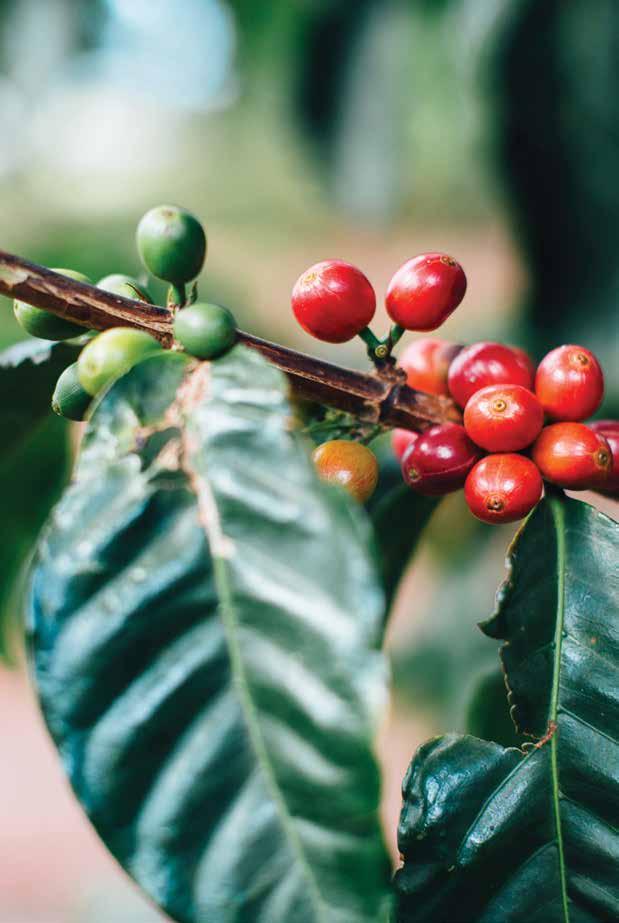

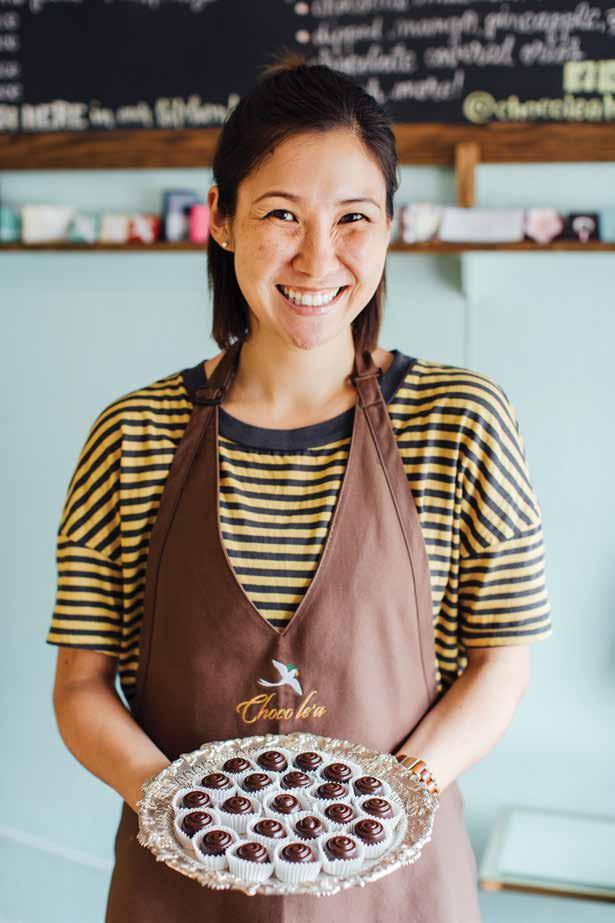
 The confections created by Erin Uehara for her company Choco le‘a feature blends of European chocolate and Hawaiian-grown cacao from single-origin farms like Waialua Estate. Opposite: Waialua Estate coffee beans.
A Rare Brew
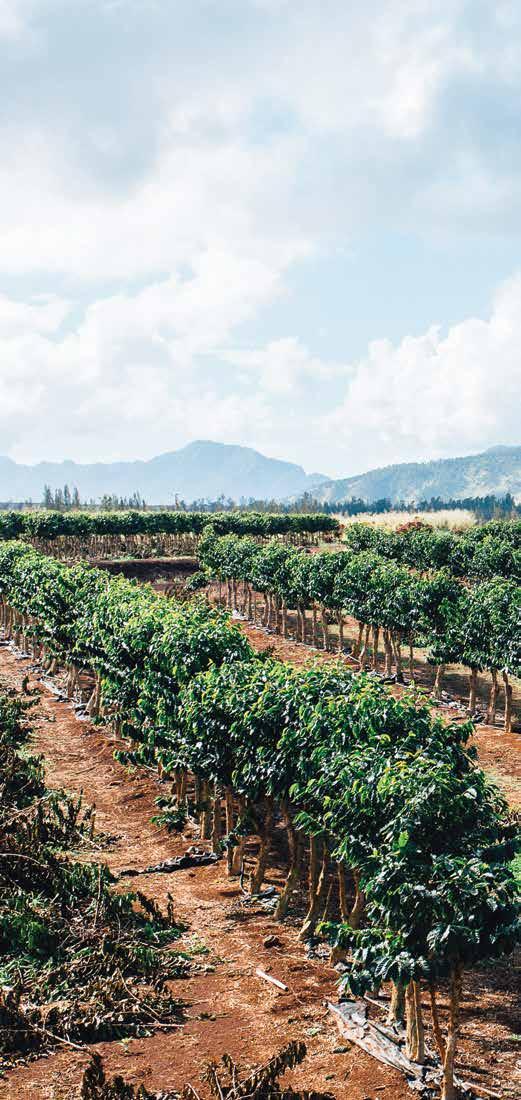
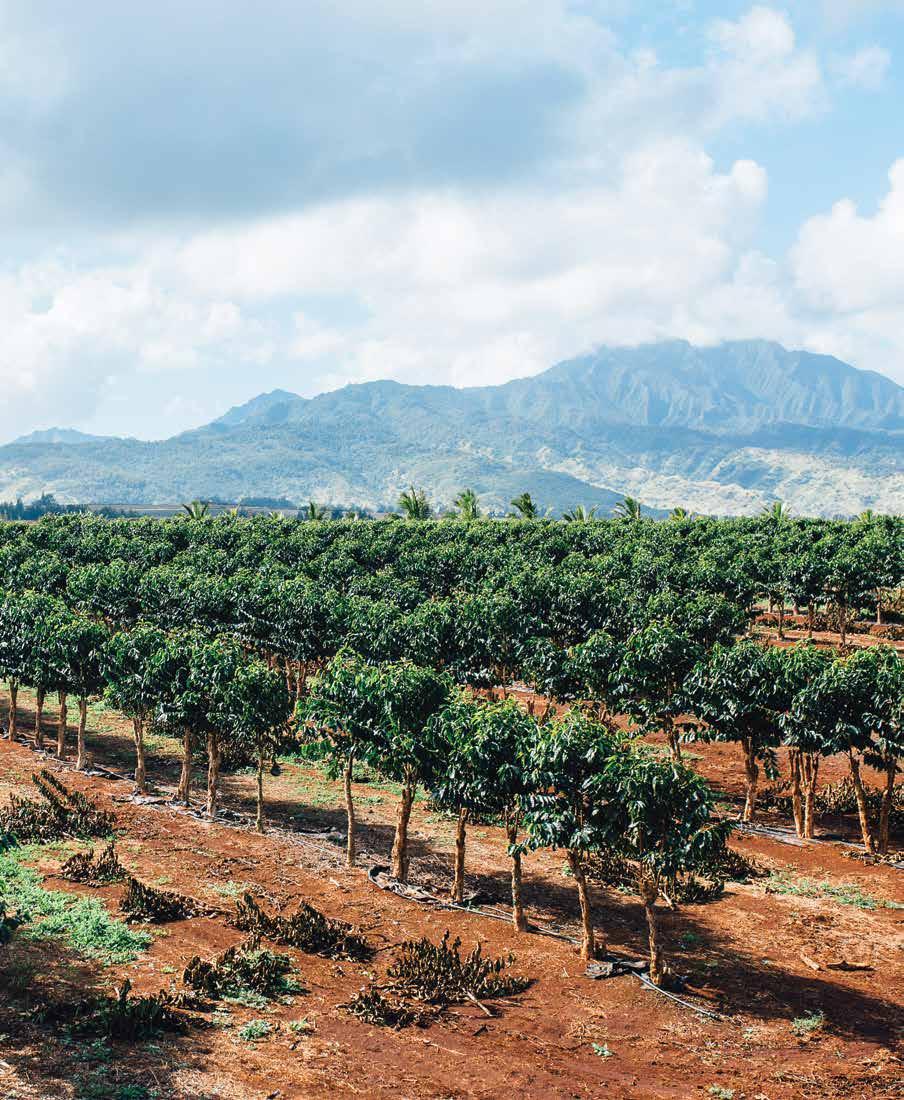
Nestled along the verdant lower slopes of the Wai‘anae Mountain Range, some 155 acres of coffee trees unfold in tidy rows under a wide Hawaiian sky. The Waialua Estate orchards, planted during the late 1990s above O‘ahu’s fabled North Shore, are a delight to behold. Amid branches thick with glossy, deep emerald leaves, jasminescented blossoms have since ripened into clusters of bright crimson cherries. A coffee-picking machine, sizable and steely, awaits its operator. It’s harvest season. Nearby in the processing warehouse, agricultural operations manager Michael Conway is surveying the collection of machinery responsible for the milling, drying, and sorting of coffee cherries that are delivered from the field. Clad in jeans and sturdy work boots, he points to a large pile of burlap sacks, all marked with Waialua Estate’s logo and pleasantly plump with peaberries.
Hawai‘i is one of only two states in the nation (California is the other) where coffee is grown commercially. Though coffee has had a storied history in the islands—especially in the lauded region of Kona on Hawai‘i Island—single source farms like Waialua Estate are quietly emerging as bonafide players in both the local coffee scene and on the worldwide stage. The same tropical sunshine, tradewind showers, and volcanic soils that crowned the sugarcane industry as king during the last century now informs and influences the distinctive flavor profiles found in Waialua Estate coffee. As coffee aficionados champion climatic conditions or a region’s terroir, Conway offers another measure of excellence: rarity.
In most cases, explains Conway, a coffee cherry will possess two seeds—the familiar flat, oblong-shaped beans that coffee enthusiasts love and recognize. A peaberry, however, results when the cherry produces only one seed, a single petite and spheroidal bean about the size of an eraser tip. “In a harvest cycle, a tree typically produces a pound of roasted coffee,” Conway says. “Only a handful of peaberries might come from that tree, representing only 1 to 2 percent of that pound.” In other words, peaberries are a scarce commodity.
Peaberry coffee fans believe that the smaller, rounded bean allows for more uniform roasting and spreading of flavor. For Conway, one can indeed taste the difference: For those who enjoy full-bodied coffee, peaberry brews rich and with a trace of chocolate.
Conway allows himself to reconcile both his agronomist side and his romantic side when considering the bean. From a scientific perspective, peaberries are anomalies, biological aberrations. From that of a coffee romanticist, the peaberries’ rare reputation elicits a flash of delight upon discovery. Says Conway of the elusive
稀有な一杯
ワイアナエ山脈の緑濃いふもとに抱かれ、果てしないハワイの空の下、およそ 63ヘクタールにわたってコーヒーの木が整然と並んでいます。オアフ島のノー スショアに1990年代末から植栽をはじめたワイアルア農場のコーヒー畑。美 しい光景が目の前に広がります。つやつやと生い茂る深いエメラルド色の葉の 合間にジャスミンに似た香りを放つ花が咲き、そのあとに鮮やかな真紅の実が 鈴なりに熟しています。ブルーベリー収穫機によく似た大きな金属製のコーヒ ー収穫機が、出番を待っています。収穫の季節です。近くの作業所では、農作業 管理部長のマイケル・コンウェイさんが、畑から届くコーヒーチェリーの脱穀、 乾燥、選別を担う機械をひとつひとつ点検していました。ジーンズと頑丈な作 業靴に身を包んだコンウェイさんが指さすのは、山と積まれた麻袋。「ワイアル ア・エステート」のロゴが入った麻袋はどれも、ぎっしり詰まったピーベリーで ぱんぱんです。
コーヒーが商業用に栽培されているのは全米で2ヶ所のみで、ハワイは そのうちのひとつです(もう1ヶ所はカリフォルニア)。ハワイのコーヒーには長 い歴史があり、とくにハワイ島コナ産のコーヒーは有名ですが、ワイアルア・エ ステートのような専門農家が今、ハワイのみならず世界のコーヒー産業の舞 台で静かに頭角をあらわしています。前世紀にハワイのサトウキビ産業を繁栄 させた熱帯の太陽、貿易風がもたらす雨の恵み、そして火山性の地質が、ワイ アルア・エステートのコーヒーに独特の風味をもたらします。優れたコーヒーが 生まれる要因としてコーヒー愛好家たちはハワイの気候条件や土壌を讃えま すが、コンウェイさんが挙げたのは「希少性」でした。
普通のコーヒーチェリーには豆が2つある、とコンウェイさんは説明して くれました。コーヒー愛好家が愛してやまない、楕円形の平たい豆です。ところ が、ピーベリーの場合はコーヒーチェリーの中に豆がひとつしかありません。
普通の豆よりも小さくて、形はほぼ球体に近く、鉛筆についている消しゴムほど のサイズです。「1回の収穫で、1本のコーヒーの木から採れる豆の量は焙煎後 で約1ポンド(453グラム)。ピーベリーはそのなかのわずか一握りで、1パーセ ントか2パーセントに過ぎないんですよ」とコンウェイさん。つまりは、たいへん 貴重な豆ということです。
ピーベリー愛好家のあいだでは、より小さく、球形に近いピーベリーは、 むらなく焙煎でき、風味もまんべんなく広がるといわれています。コンウェイさ んに言わせると、その違いは味に出るのだそうです。こくのあるコーヒーを好む 人のために、ピーベリーはかすかにチョコレートを思わせる豊かな風味を醸し 出します。
コンウェイさんは、農地管理者とコーヒー愛好家という2つの立場から ピーベリーをとらえているそうです。科学的な見地からすればピーベリーは単 なる例外であり、生物学上の異形でしかありません。しかし、コーヒーをこよな
86 C CULTURE Sweets PALM


Waialua Estate peaberry: “It’s like coming across a four leaf clover.”
A Family Tradition
Choco le‘a owner Erin Uehara has a delicious confession: Growing up, when given chocolate gift boxes by friends and family, the young Uehara was notorious for taking a small, deft bite from each individual piece. But not because she didn’t want to share, she quickly explains, laughing at the recollection. “I just wanted to make sure I got to try them all!”
く愛する一ファンとしては、ピーベリーの貴重さに胸 が躍るそうです。「四つ葉のクローバーを見つけたと きの気分ですよ」コンウェイさんはそう語ってくれま した。
miniature work of art.
1800년대 백단재 무역과 고래 기름 산업에서
부터 20세기의 설탕과 파인애플 제국에 이르 기까지, 하와이는 오랫동안 값 비싼 물건들의 원천이었다. 오늘날 하와이 사람들은 이국적이
면서도 부러운 마음으로 제품을 제공하는 전통
을 계속하고 있다. 아래에서 하와이의 사치품 생산 업체 세곳은 초콜릿 제조업자, 양봉가, 커 피 재배자 그리고 페이버리 커피 재배자 들은
그들의 특별한 뒤에 숨겨진 프리미엄 이야기를 공유하고 있습니다.
Uehara didn’t set out to become a chocolatier. A passion for dance and an innate desire to help others led her to twin careers as a dance instructor and an elementary school teacher. In 2010, a serendipitous encounter at a bridal show prompted a new life direction. While sampling truffles at a vendor booth, Uehara began chatting with the confections’ creator, Colins Kawai. Their casual conversation yielded a sweet surprise: Kawai was Uehara’s uncle.
Over the next few months, uncle and niece reconnected through family stories and bonded over a shared love of chocolate. Kawai, who had been creating his specialty truffles for nearly 12 years, had been hoping for someone to continue the family’s confectionary company. Taking Uehara, a self-proclaimed chocoholic, under his wing made wonderful if not obvious sense.
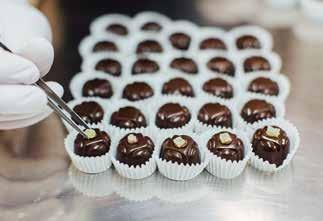
Today, Choco le‘a occupies a quaint corner in Mānoa Valley, complete with a tidy white fence and a sunny outdoor seating area. Inside the shop’s glass display case, rows of artisanal chocolates shine like jewels, each piece a marvelous, miniature work of art. The confections are crafted daily from a blend of European
ファミリーの伝統 「ショコレア」のオーナー、エリン・ウエハラさんは、こ っそり告白してくれました。幼いとき、家族や友人か ら贈られた箱入りのチョコレートを見つけると、ウエ ハラさんはひとつひとつ器用に一口ずつ齧ってしまう ので有名だったそうです。当時を振り返って笑いなが ら、ウエハラさんは慌てて言い添えました。「独り占め するつもりはなかったんですよ。ただ全部、味見をし たかっただけ!」
ショコラティエには、なろうと思ってなったわけ ではないそうです。ダンスへの情熱と、もともと人の 役に立つのが好きだったことから、ダンスのインスト ラクターと小学校の先生というふたつのキャリアを 両立させていたウエハラさんは、2010年、ブライダ ルエキスポでの思いがけない偶然の出会いのおかげ で、美味なる世界へと人生の方向転換をすることに なりました。あるブースでチョコレートトリュフを試食 したウエハラさんは、そのトリュフの作り手、コリン・ カワイさんと言葉を交わします。なにげない会話が驚 きにつながりました。なんと、カワイさんはウエハラさ んの伯父さんにあたる人だったのです。
それから数ヶ月、伯父と姪である2人は一族に まつわるエピソードとチョコレートへの情熱を分か ち合い、きずなを深めていきました。12年近く特製ト リュフを作ってきたカワイさんは、家業を託す人を探 していました。自称チョコレート中毒のウエハラさん は、申し分のない後継者だったのです。
現在の「ショコレア」は、マノアバレーの趣ある 街角にあります。こぎれいな白いフェンスの前に屋外 の陽あたりのいいテーブルが並び、店内のガラスの
88 C CULTURE Sweets PALM
At Choco le‘a, artisanal chocolates shine like jewels, each piece a marvelous
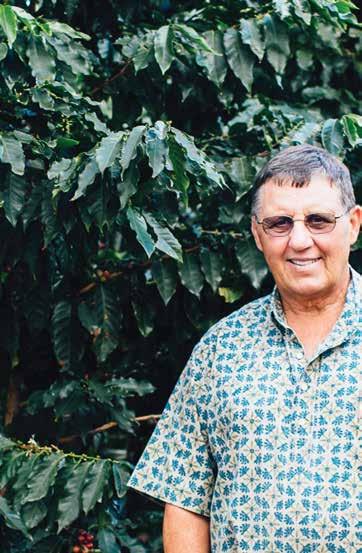
The same tropical sunshine, tradewind showers, and volcanic soils that made the sugarcane industry reign king last century now informs and influences the distinctive flavor profiles found in the offerings of Waialua Estate, where Michael Conway manages 155 acres of coffee trees.
chocolate and Hawai‘i-grown cacao from single-origin farms like Waialua Estate (the same North Shore farm that harvests the exquisite peaberry). “Hawai‘i is not usually thought of as a place that has chocolate,” Uehara says. “But we’re actually the only state in the U.S. that grows it.” Uehara and Kawai’s pride for Hawai‘i extends beyond Hawaiian cacao usage, too. Seasonal truffles highlight the bounty of the islands: macadamia nuts from Hawai‘i Island, Kula black raspberries from Maui, liliko‘i from Kaua‘i.
Uehara believes in chocolate’s universal appeal. “Anyone from any country or any background has probably had some experience with chocolate, and it’s usually good,” she says. “It brings up happy memories.” Such sentiment is reflected in the company’s name: choco is an abbreviated reference to the french word chocolat and le‘a is a Hawaiian term for gladness or joy. “We like to say that we are bringing peace to our world, one chocolate at a time,” Uehara says.
Choco le‘a chocolates are solely made and available in Hawai‘i. For those lucky enough to be on island to try one, the sumptuous treats serve as testimony to Uehara and Kawai’s love for people, Hawai‘i, and of course, chocolate itself. Says Uehara, “We try to show that the aloha spirit really is in what we do … and that you can bring it home with you to share, too.”
The Sweetest Art
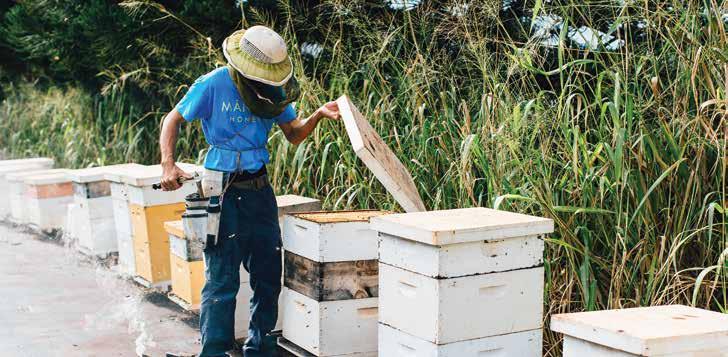
For many artists, defining moments in life are what shape artistic expression. For Manoa Honey Company owner Yuki Uzuhashi, those defining moments arrived on the wings of bees. Uzuhashi is first a beekeeper but foremost an artist. Though the sculptor and performance artist had eaten honey throughout his childhood, he considers one particular afternoon especially profound: During his travels in Jamaica as a young man, he accompanied a Rastafari on a wild honey harvest. The details of that day remain vibrant—the dreadlocked Rastafari draping a loose mesh screen over himself as a makeshift cover, the acrid smoke of burning cow dung, a used plastic shopping bag transformed into a glove, the thrumming frenzy of swarming bees. And then there was the honey itself: deeply hued amber treacle, drawn warm and direct from golden comb into the two men’s eager, sticky mouths. For Uzuhashi, that singular, visceral moment instantly supplanted all previous experiences with honey—the ubiquitous pasteurized and processed jar offerings found on grocery store shelves. Harvesting raw honey struck a
ショーケースには職人技が生み出すチョコレートの粒が宝石のように輝いて います。ひとつひとつが息をのむような小さな芸術そのもの。チョコレートは毎 日、ヨーロッパのチョコレートとワイアルア・エステート(上等のピーベリーを 生産しているのと同じノースショアの農園)などの専門農家から届くハワイ産 のカカオを使って作られます。「ハワイ産のチョコレートなんてぴんと来ないと いう人も多いでしょう」とウエハラさん。「でも、カカオを生産している州は、じつ は全米でハワイだけなんですよ」。ウエハラさんとカワイさんのハワイ産材料へ のこだわりは、カカオだけにとどまりません。ハワイ島のマカデミアナッツ、マウ イ島クラ産のブラックラズベリー、カウアイ島のリリコイ。季節ごとの特製トリュ フにはハワイの特産品がちりばめられています。 ウエハラさんは、チョコレートの魅力は万国共通だと確信しています。「ど の国で生まれようと、どんな暮らしをしていようと、誰もがチョコレートを食べ たことがあるはずですし、それはきっと良い経験だったはず。チョコレートは幸 せな思い出をよみがえらせてくれるんです」フランス語の「chocolat」を省略し た「choco(ショコ)」と、嬉しさや喜びを意味するハワイ語の「Le’a (レア)」。ウエハラさんの思い入れは、店の名前にもこめられています。「わたし たちはチョコレートで世界に平和を作り出している、という考えが気に入って います。チョコレート一粒ごとに、少しずつですが」 ショコレアのチョコレートは現在、ハワイでのみ製造、販売されています。
幸運にもハワイを訪れ、この贅沢なチョコレートを口にする機会を得た人に は、人々、ハワイ、そしてもちろんチョコレートに対するウエハラさんとカワイさ んの情熱の深さが伝わるでしょう。「本当のアロハ・スピリットをこめてチョコレ ートを作っていることを感じてもらいたい、そして、それを持ち帰って、誰かと分 かち合ってほしいと思います」
甘い芸術
芸術家にとって、人生の決定的な瞬間が表現の手段を決めることは少なくあ りません。「マノアハニー・カンパニー」のオーナー、埋橋幸広(ウズハシユキヒ ロ)さんにとっての決定的瞬間は、ミツバチの羽根に乗って訪れました。埋橋さ んは養蜂家ですが、それ以前に芸術家なのです。彫刻家、そしてパフォーマン スアーティストの埋橋さんは、子どもの頃からはちみつを口にしてきましたが、 ある午後の出来事は衝撃的だったといいます。ジャマイカを旅していた若き埋 橋さんは、ある午後、ラスタファリアンに連れられて野生のはちみつを採りに行 きました。そのときの光景は今も鮮やかによみがえるそうです。ドレッドヘアの ラスタファリアンが防御服がわりに頭からかぶったメッシュのスクリーン。牛の 糞を燃やす、鼻につんとくる臭い。手袋がわりの使い古したビニール袋。狂った
92 C CULTURE Sweets PALM
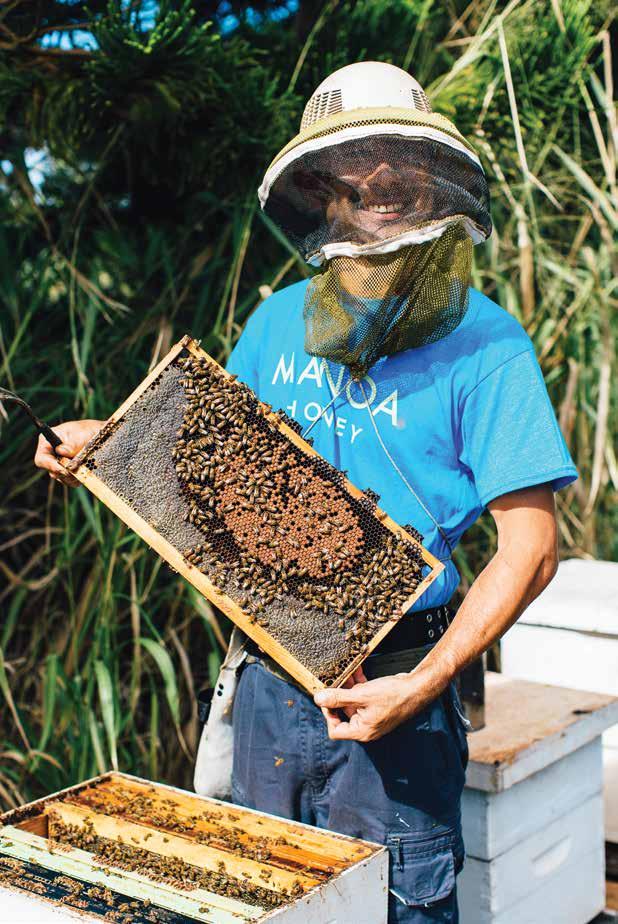
chord within. “It was like I was tasting honey for the first time,” he says.
During his final year in college, Uzuhashi was seeking a fresh creative medium when the chord struck anew. He had learned of a small tribe of people who traveled each spring from the southern islands of Japan to Northern Hokkaido, following the blooming path of flowers, and in turn, the bees. These were the honey harvesters. Uzuhashi saw the migratory movement of the blossoms, bees, and beekeepers as poetry, a wonderful integrated performance set in nature. He decided then that beekeeping would become his life’s expression of art.
In the past 15 years as a beekeeper, Uzuhashi’s respect for bees as a creative muse continues to deepen. Beekeeping, explains Uzuhashi, is an endeavor that requires one tune in to where you are. He marvels at the creatures’ roles as living barometers of the environment—their honey is a reflection of where they roam. Hawaiian honey is truly special. “We tend to forget that Hawai‘i is in the middle of nowhere,” Uzuhashi says, noting how the islands’ geographic isolation has enabled the development of unique flora for the bees to gather nectar and produce honey. Flowers from the kiawe, a sturdy mesquite tree that flourishes in the islands’ arid leeward lowland, result in a fine, slightly smoky, white creamed honey. ‘Ōhi‘a lehua, a native forest tree with red and pink blossoms, gives way to a honey golden and buttery, creamy and floral. These fascinating and complex flavors, along with others, are created nowhere else in the world.
“Hawai‘i is so beautiful with its sunshine and showers and flowers,” says Uzuhashi of how surroundings play a pivotal role in honey production. These elements are then collectively concentrated into liquid Hawaiian gold. Says Uzuhashi of the artful process: “Honey becomes precious.”
ように飛びまわるはちの群の羽音。そして、はちみつ。金色の蜂の巣から手づか みで取り出した、深い琥珀色のまだ温かいそのはちみつを、二人は口のまわり をべたべたにしながら夢中でほおばったそうです。埋橋さんがそれまで抱いて いた、食料品店の棚に並ぶ、殺菌処理を施した容器入りのはちみつという概念 は、その瞬間、みごとに根底から覆されました。野生のはちみつの収穫は、彼の 心を揺さぶりました。「生まれて初めてはちみつを口にした気がしました」と埋 橋さんは語ります。
さらに、大学生活最後の年、創造の新たなる媒体を探していた埋橋さん は、またしても心を揺さぶられる体験をします。毎年春になると日本の南の島々 から北海道まで、花の開花を追い、ミツバチと共に全国を縦断する人々の存在 を知ったのです。はちみつを採る人々。花とミツバチ、そして養蜂家の旅はまる で詩のように、自然のなかで美しく調和していました。そのとき埋橋さんは、生 涯、養蜂を通じて芸術を表現していこうと決めたのです。
過去15年、蜂と向き合ってきた埋橋さんにとって、創造の女神であるミ ツバチへの畏怖の念は深まるばかりです。埋橋さん曰く、養蜂では今いる場所 と一体となる力が求められます。ミツバチが環境のバロメーターであることに、 埋橋さんは目をみはり続けています。彼らがつくりだすはちみつは、彼らが飛び まわる環境をそのまま映し出すのです。ハワイのはちみつは、ことさら特別です。 「ついつい忘れがちですが、ハワイは海のど真ん中にあるんです」。地理的に孤 立するハワイでは、独特な植物相が発達していると埋橋さんは指摘します。島 々の風下(リーワード)側にあたる乾燥した低地でよく見かけるどっしりとした マメ科の低木キアヴェの花からは、繊細でどことなくスモーキーな淡い色のは ちみつが生まれます。赤やピンクの花が咲くハワイ固有の木、オヒア・レフアか らは、バターのようにクリーミーでフローラルな味わいを持つ黄金色のはちみ つが生まれるのです。こうした魅惑的なはちみつの複雑な風味は、世界中ほか のどこにもありません。
「太陽と雨、そして花々に恵まれたハワイは、本当に美しい場所です」と、 埋橋さんは、はちみつ作りにハワイの風土がどれだけ重要な役割を果たしてい るかを強調します。こうした自然のすべての要素が、ハワイの黄金色のはちみつ に凝縮されています。この芸術的なプロセスを埋橋さんはこう表現しました。「 はちみつは、素晴らしく貴重で美しいものになるんです」
94 C CULTURE Sweets PALM
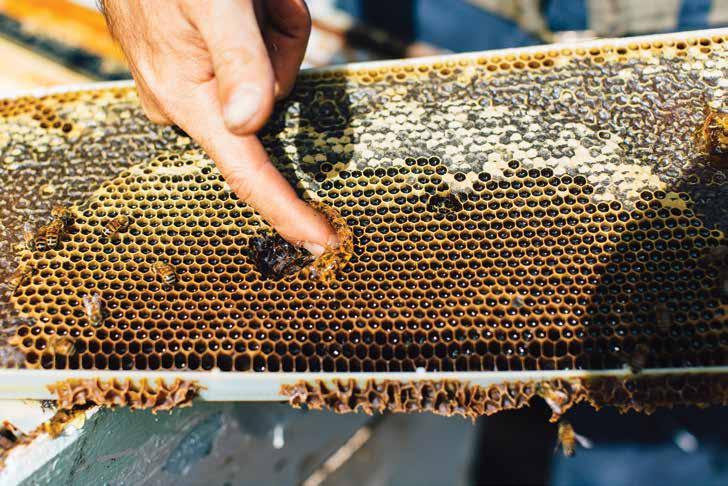
“Hawai‘i is so beautiful with its sunshine and showers and flowers,” says Uzuhashi of how surroundings play a pivotal role in honey production. He says these elements are collectively concentrated into liquid Hawaiian gold.
DE SI GN
The flourishing of
that
D PALM
デザイン
facilities creative
PALM D 97
Light Shapers
Text by Timothy A. Schuler
文 = ティモシー・A・シューラー
Images by John Hook and AJ Feducia
Opening image courtesy of Salvage Public
98 D DESIGN Lighting PALM
光を形作る人
写真 = ジョン・フック、AJ・フェドゥシア
Two industrial designers find inspiration in unlikely places.
工業デザイナーのマーク・チャイさんとクリス・ ヤマネさんは、意外な場所で創造力を刺激さ れています。
For Christopher Yamane and Mark Chai—two designers who live in different time zones but remain inspired by their home of Hawai‘i—light is a powerful force, no matter the scale or application. And yet, in many instances in home and elsewhere, illumination is often overlooked. “The lighting in a space should be given a lot more consideration than people often give it,” Yamane says. “It probably affects your brain the most out of any element in the space.”
For the 28-year-old Yamane, light is an object, as malleable as molten glass. As a design principal at the Berkeley-based Super Duper Studio, Yamane works with both light and glass, crafting distinctive, often tongue-in-cheek light fixtures and other home furnishings from the material he first learned to work with as a student at Punahou School in Honolulu. He left Hawai‘i to study art at Brown University and Rhode Island School of Design, then in 2014, founded Super Duper Studio with fellow industrial designer Matt Johnson. The duo works with all manner of materials, drawing consistently from the wells of deep space and deep geometry, but glass remains Yamane’s “first and best material.”
Recently, Yamane’s love of glass and light found a harmonious marriage in Umi, an island-inspired light fixture Super Duper Studio designed for Park Lane Ala Moana. Like air bubbles rising in the sea (umi means “ocean”
クリス・ヤマネさんとチャイ・マークさんは、住む場 所は遠く離れていますが、どちらも故郷のハワイに 創造力を刺激され続けているデザイナー。彼らにと って光は、そのスケールや用途にかかわらず、強力 なパワーを持つ存在です。しかし、家庭でも公共の 場所でも、多くの場合、照明は見過ごされがちなも のです。「空間の明かりにもっと注意を払うべきで す」とヤマネさんは語ります。「明かりは、おそらく空 間にある中で最も脳に作用する要素でしょう」。 28歳のヤマネさんにとって、光は溶融ガラス のように柔軟に形を変えられる素材です。バークレ ーに拠点を置く「スーパー・デューパー・スタジオ」 の首席デザイナーを務める彼は、光とガラスの両 方を素材として個性的で遊び心の多い照明器具や 家具などを制作しています。ガラス製作を初めて学 んだのは、ホノルルのプナホウ・スクールに通って いた時でした。その後ハワイを離れ、ブラウン大学 とロードアイランド・スクール・オブ・デザインで芸 術を学んだあと、2014年に仲間の工業デザイナー のマット・ジョンソンさんと共同でスーパー・デュー パー・スタジオを立ち上げました。2人はありとあら ゆる素材を扱い、空間と幾何学の深遠な泉から次 々とアイデアを汲み出していますが、ガラスは今で もヤマネさんにとって「最初で最高の素材」です。 最近、ヤマネさんのガラスと光への情熱は、 「ウミ」で心地よい融合を遂げました。これはスー パー・デューパー・スタジオがパークレーン・アラモ アナのためにデザインした作品で、ハワイにインス ピレーションを得た照明器具です。まさに海に生ま れる気泡のような(「ウミ」は日本語の「海」を意味 します)、緑と青のガラスで作られた15個のペンダ
있어 시간대가 다르지만 하와이의 섬에서 영감 을 받아 사는 디자이너들은 규모나 용도에 상관 없이 강력한 힘을 가지고 있습니다. 100 D DESIGN Lighting
ChrisYamane과 MarkChai, 2디자이너들에게
in Japanese), the fixture is composed of more than a dozen green and blue glass pendant lights, each suspended from the ceiling with thin metal rods and white rope. The piece, which is more than four feet long and centered above a long wooden table, serves as a dramatic centerpiece to Park Lane’s newest model unit. “Chris’ piece really brings together what we were trying to do throughout the space,” says Jerry Guzmán, a designer at Henderson Design Group, the interior designer for the project.
Yamane was tasked with creating a glass light fixture that was upscale and modern, but also specific to Hawai‘i. He drew inspiration from the ocean—subtly referencing fishing floats and traditional Hawaiian lashing—as well as the current culture of Honolulu, which has continued to embrace contemporary art and fashion. The swirled pattern in the glass is created from an optic mold and is a nod to Japanese paper lanterns. Its many colors, ranging from iridescent blue to rose gold, draw on the color palette of the main living area, helping unite the space. To counteract the tint of the glass, Yamane selected extra-warm bulbs so that the light wouldn’t feel cold. “A normal-temperature light bulb in there comes out looking too blue, and blue light messes with your sleep,” he says.
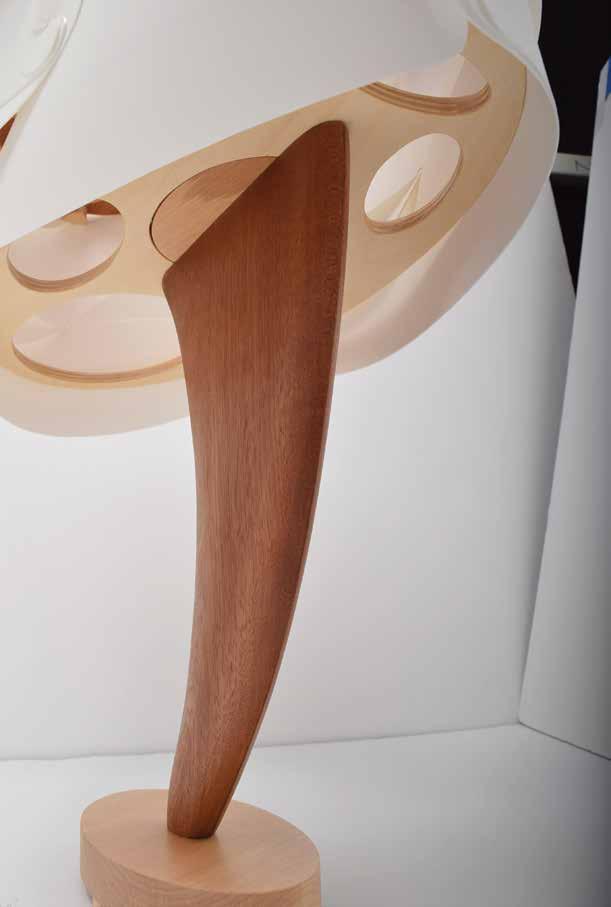
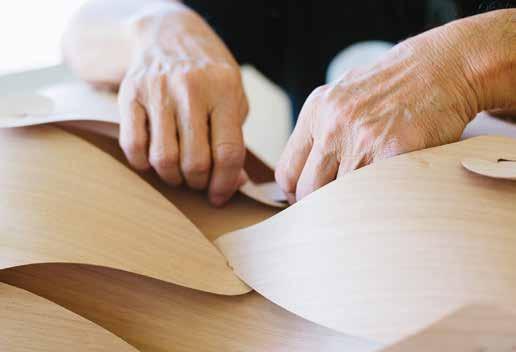
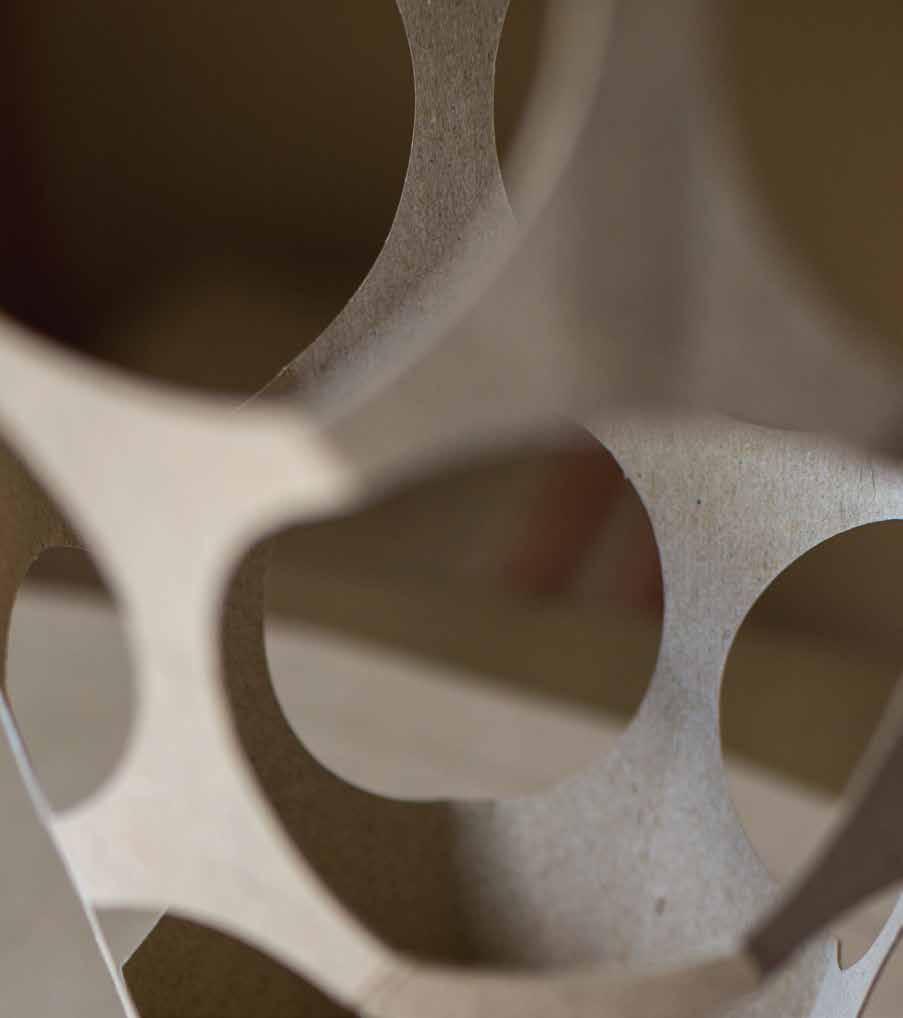
Like Umi, Mark Chai’s latest project was born out of a deep connection with Hawai‘i. The Fin Lamp, created for local apparel company Salvage Public, was inspired by the 64-year-old artist’s love of recycled materials, as well as images of surfing—specifically, one of Laird Hamilton riding a foil board. Though Chai often works with thin wood veneer, the Fin Lamp features a lampshade made of stiff, white plastic that Chai salvaged from Queen’s Medical Center, where he has a day job as a patient transporter, wheeling patients in and out of surgery and other procedures. At his house in ‘Aiea, Chai shapes the lamp’s elegant hardwood fins and hand-cuts the plastic into the oval-shaped pieces that eventually hook onto one another, like the clasps of a Chinese takeout container. Each lamp balances delicately on its base, cantilevered off a wooden surfboard fin, a luminous white shade bent into the rough shape of a surfboard.
For Chai, light is a way to give his art a function. He made his first lamp in college, in response to an assignment to create a functional piece of sculpture. Now, Chai’s pendant lamps can be found at hotels and restaurants throughout Honolulu, and were recently included in the Honolulu Museum of Art’s Hawai‘i in Design exhibition.
ントライトで構成され、その一つひとつが細い金属棒と白いひもで天井から吊 るされています。ライトはそれぞれ1.2メートル以上の高さがあり、パークレー ンの最新モデルルームで長い木製テーブルの上に輝いて、ドラマチックな華や ぎを加えています。
ヘンダーソン・デザイン・グループのデザイナーで、同プロジェクトのイン テリアデザイナーを務めるジェリー・グスマンさんは、ヤマネさんの照明器具が 空間に一体感をもたらしていると語ります。ヤマネさんは、アップスケールでモ ダンでありながらハワイらしさを感じさせるガラス製の照明器具を依頼されま した。そこで、海からインスピレーションを得て、釣り用の浮き具やハワイの伝 統的な結び目などを控えめにデザイン要素に取り入れるだけでなく、現代アー トとファッションを歓迎してきた今のホノルルの文化もヒントにしました。ガラ スの渦巻き模様はガラスモールドで作られ、日本のちょうちんへのオマージュ を表しています。また、玉虫色に輝く青からローズゴールドまでのさまざまな色 が、メインリビングの色彩を活かし、空間を一つにまとめ上げています。ガラス の色味を打ち消すため、ヤマネさんは特に暖かみのある電球を選んで明かりを 冷たく感じさせないようにしました。「標準的な温度の電球では青が強く出て しまいますし、青い光は睡眠を妨げます」とヤマネさんは語ります。 ウミと同じように、マーク・チャイさんの最新のプロジェクトもハワイとの 深いつながりから生まれました。ハワイのアパレル会社「サルベージ・パブリッ ク」のために制作した「フィン・ランプ」は、64歳になるチャイさんのリサイクル 素材への愛着と、サーフィン画像(特に、フォイルボードに乗るレイアード・ハミ ルトンさんの写真)にインスピレーションを受けた作品です。チャイさんは木製 の薄い化粧板を使うことが多いのですが、フィン・ランプは白い硬質プラスチッ クで作られたランプシェードを特徴としています。このプラスチックはクイーン ズ・メディカル・センターから回収したリサイクル素材。チャイさんはこの病院 で、手術などの処置の前後に患者を搬送する仕事をしているのです。そして、ア イエアの自宅をアトリエとして、硬質な木製のエレガントなフィンを削り、プラス チックを手作業で楕円形に切って、中華料理のテイクアウトボックスのふたの ように互い違いにはめこんだシェードを作っています。一つひとつの照明は土 台で微妙なバランスを保ち、片側に突き出た木製のサーフボードフィンの上で、 白く輝くシェードがサーフボードのような輪郭に沿って折り曲げられています。 チャイさんにとって、光はアートに機能を持たせる手段です。彼は大学時 代、機能的な彫刻品を制作するという課題で初めて照明を作りました。「あれ が始まりでした」とチャイさんは語ります。現在、彼のペンダントランプはホノル ル中のホテルやレストランに飾られ、最近ではホノルル美術館の「ハワイ・イン・ デザイン」展でも展示されました。
102 D DESIGN Lighting
PALM
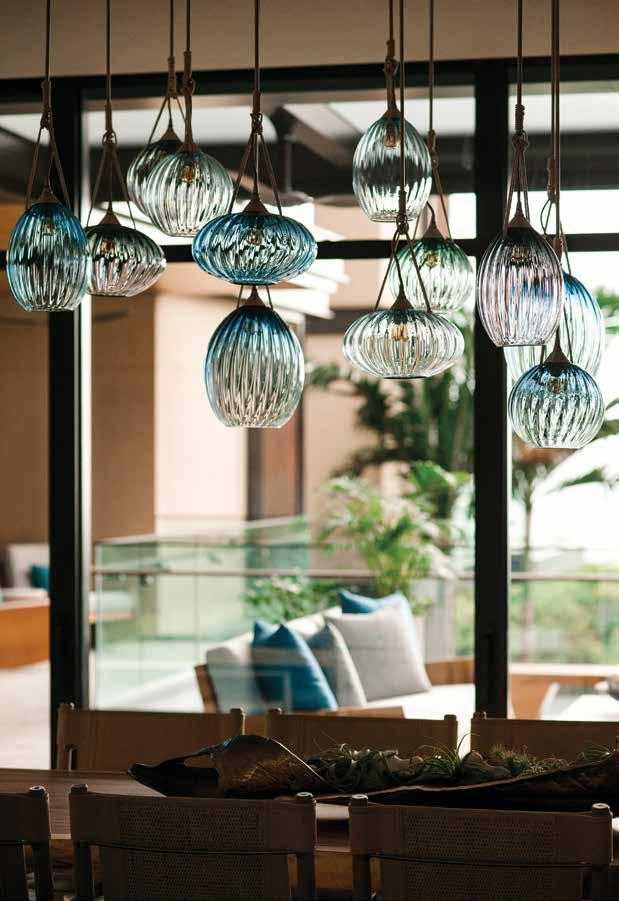
“The lighting in a space should be given a lot more consideration than people often give it,” says Christopher Yamane, who created a light fixture that serves as a dramatic centerpiece to Park Lane’s newest model unit. “It probably affects your brain the most out of any element in the space.”
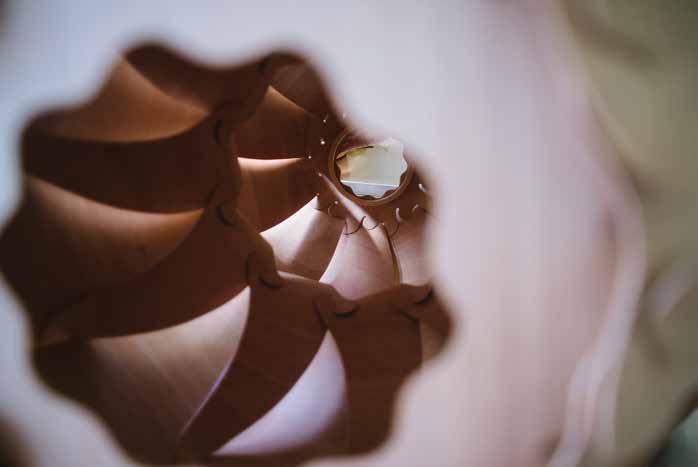
For Mark Chai, light is a way to give his art a function. He made his first lamp in college, in response to an assignment to create a functional piece of sculpture.
In the spring, Chai will take his work outside of the islands for the first time to the New York Botanical Garden for the retrospective Georgia
O’Keeffe: Visions of Hawai‘i. Near a pavilion inspired by a traditional Hawaiian hale, Chai will install a roughly 12-foot-tall sculpture inspired by O’Keeffe’s 1939 painting of a heliconia flower, whose thick red bracts curl like lobster claws (the flower’s common name). The work will replace one of Dale Chihuly’s multivalent glass sculptures. Like much of Chai’s work, the installation will be the product of intense care and craftsmanship, every element inspired by O’Keeffe’s time in Hawai‘i but also tailored to its setting in New York. It’s his largest work to date.
“It’s daunting,” he says, smiling. “Daunting and exciting.”
この春、チャイさんは初めてハワイの外で作 品を展示します。ニューヨーク植物園で開催される ジョージア・オキーフの回顧展「ビジョン・オブ・ハ ワイ」に出展するのです。ハワイの伝統的な「ハレ( 家)」をイメージした展示館のそばに、1939年にオ キーフが描いたヘリコニア(赤い包葉を持つ外見か ら「ロブスターの爪」とも呼ばれる花)の絵画にイン スピレーションを得た、高さ約3.5メートルの彫刻 を設置する予定です。この作品は、デイル・チフリー さんが制作した多義的なガラス彫刻の一つに取っ て代わります。チャイさんのほかの多くの作品と同 様、細部まで熟練の技を凝らし、あらゆる要素にお いてオキーフのハワイ時代の作品にヒントを得な がら、ニューヨークの会場にもふさわしい作品にな るでしょう。これまでで最大の作品制作を前に、「 気が遠くなりそうです」とチャイさんは微笑みなが ら語ります。「気が遠くなりますが、胸が躍ります」
104 D DESIGN Lighting PALM
How to Keep It Light
By Henderson Design Group
Flexibility, adjustability, and accessibility are key elements for great lighting. Here are a few tips for ensuring your living space has a warm and atmospheric glow.
1. Set the mood
Ambient lighting is best when controlled by degrees or amounts of light required for varying functions. Turn on all the lights as bright as possible for cleaning or preparation; use medium to low light for entertaining or dining; and feature the lowest light for a quiet or romantic evening.
2. Accessibility is essential
Set up lighting for game tables, kitchen counters, work surfaces, and any space designed for reading. Make sure the lights are at hand and adjustable whenever possible.
3. Find your accent
Use accent lighting for artwork, millwork, and bookshelves. This helps to brighten dark corners and make things more interesting. We love lighting under floating cabinets.
4. Always “switch” it up
Generously employ dimmer switches, especially in bathrooms. No one wants bright lights in the middle of the night or while soaking in a tub.
In the spring, Chai will take his work outside of Hawai‘i for the first time, to the New York Botanical Garden, for the retrospective Georgia O’Keeffe: Visions of Hawai‘i. Near a pavilion inspired by a traditional Hawaiian hale, Chai will install a roughly 12-foot-tall sculpture inspired by O’Keeffe’s 1939 painting of a heliconia flower.
108 D DESIGN Lighting
PALM
Travel
ES CA PES
experiences
both
E PALM エスケープ
faraway and familiar
PALM E 111 111
Life in Contrast
対照の街
Text and images by Martha Cheng 文と写真 = マーサ・チェン
112 E ESCAPES Morocco PALM
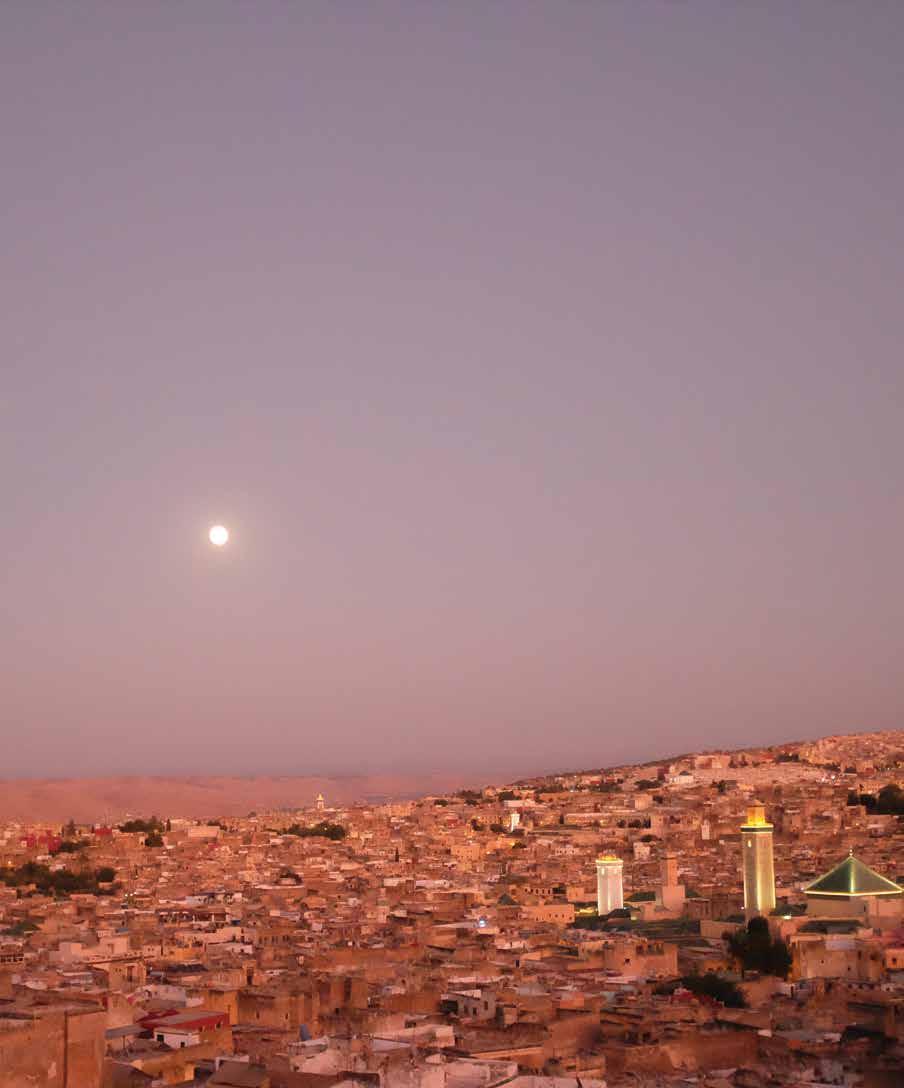
A writer explores the appeal of Morocco’s exquisite opposites.
正反対の要素が織りなすモロッコの街の魅力を探訪
모로코는 모래 언덕이 많은 사막이며, 벌거벗은 벌거벗 은 풍경이다. 모로코는 나뭇가지에 떨어진 빗방울처럼
손바닥이 다 자라 가는 대추로 꽉 차서 갑자기 생겨나는
별이 빛나는 오아시스예요. 한 작가가 이 대조적인 도시
에 여전히 끌리고 있다.
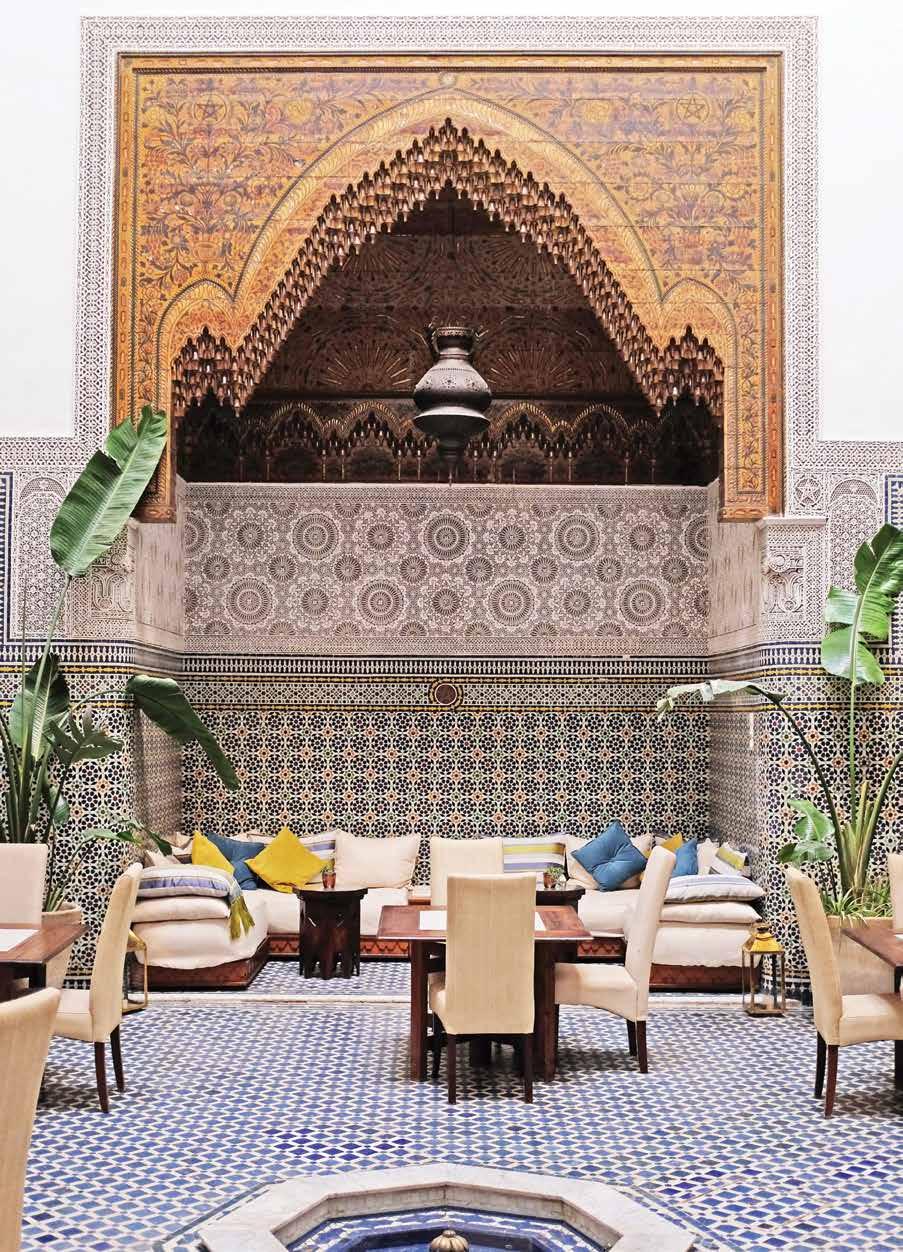
The medinas of Morocco smell of roses, orangeblossom water, and donkey manure. My two friends and I arrive in Fez past midnight. A taxi takes us through the wide, paved streets of the new town and then leaves us just outside the medina, the old walled city. Within, cars are not allowed, nor would they even be able to fit if they were. Following our guide on foot, we slip past the walls and into a maze of darkness and silence. A left here, a right, a left … wait, was it a left? The narrow streets all look the same; the tightly packed, duncolored buildings hem us in. We pass through a wooden door in a dead-end alley, and suddenly, we are in a haven stretching three stories above us. Tiles saturated with
モロッコのメディナ(旧市街)には、薔薇の花とオレンジブロッサムウォーター の香り、そしてロバの落としものの匂いが漂っています。私が2人の友人ととも にフェズに到着したのはもう真夜中過ぎでした。タクシーは新市街の舗装され た広い道を通り、私たちを古い城壁に囲まれたメディナのすぐ外で降ろしてく れました。メディナには自動車の乗り入れは許されておらず、たとえ許されてい たとしても道が狭すぎて通れません。私たちはガイドの後について徒歩で門を くぐり抜け、闇と静寂が支配する迷路の中へと入っていきました。左に曲がり、 右に曲がり、また左へ…あれ?左だったっけ? 狭い街路はどれも同じに見え、 ぎっしり並んだ褐色の建物が私たちをとり囲んでいます。路地の突き当りにあ る木の扉を入ると、隠れ家のような3階分の空間があらわれました。床とアルコ
114 E ESCAPES Morocco
PALM
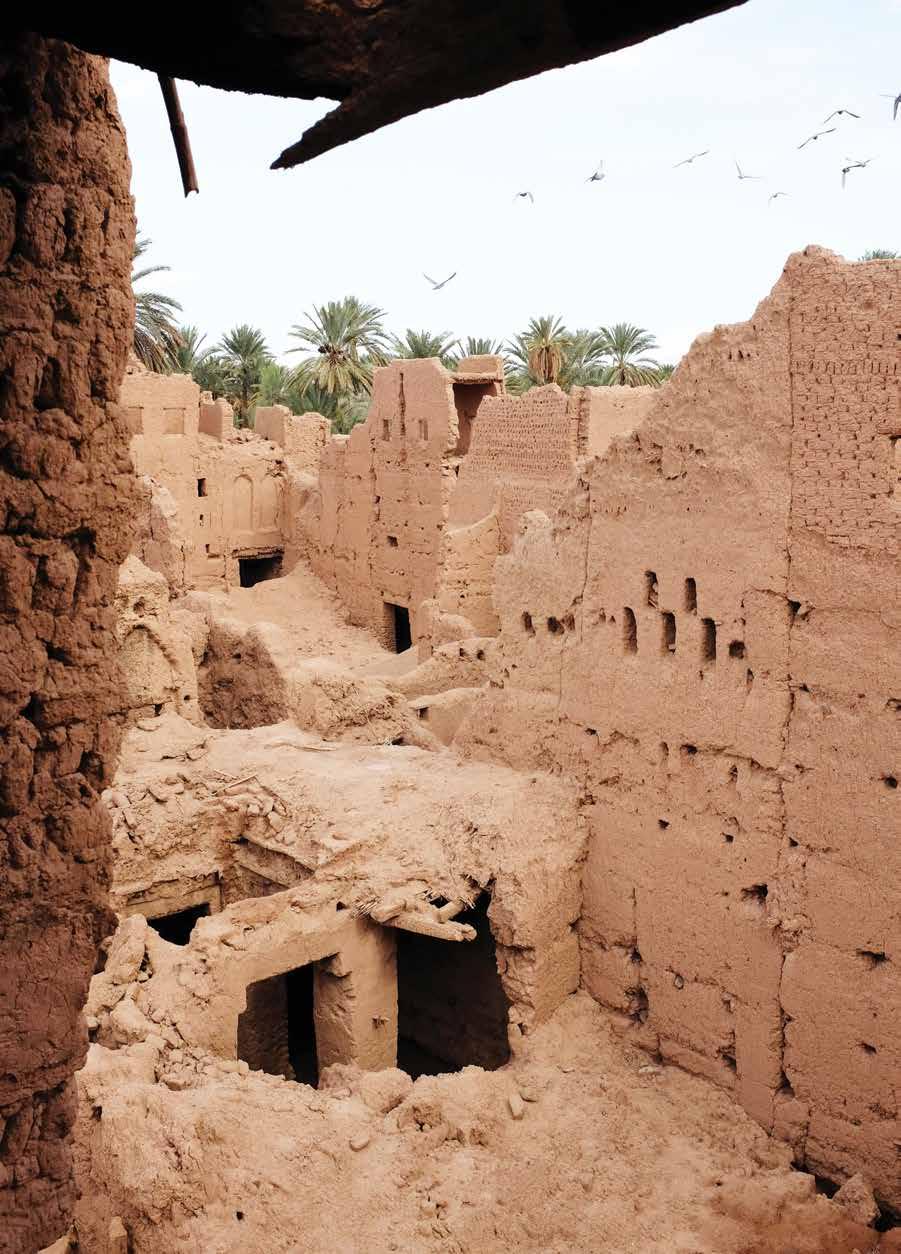
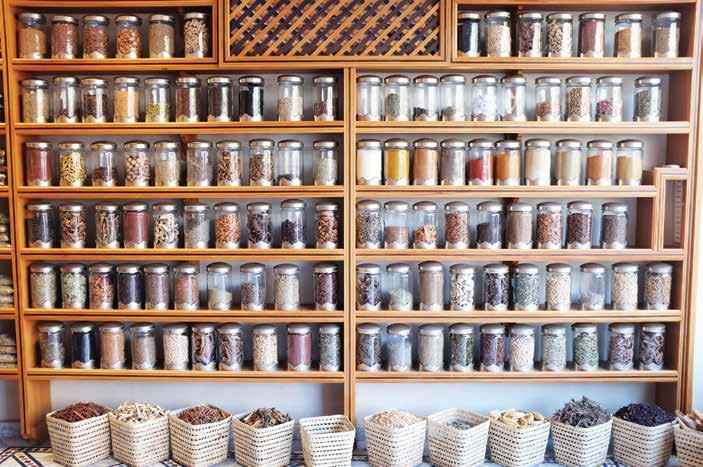
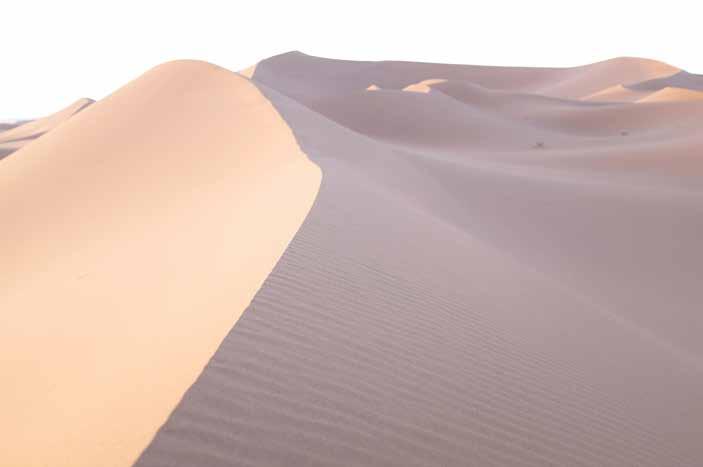
Morocco is the desert, an ocean of sand dunes, a landscape stripped bare, an oasis that arises abruptly from starkness, where palms are heavy with ripening dates clustered like raindrops on branches after a storm.
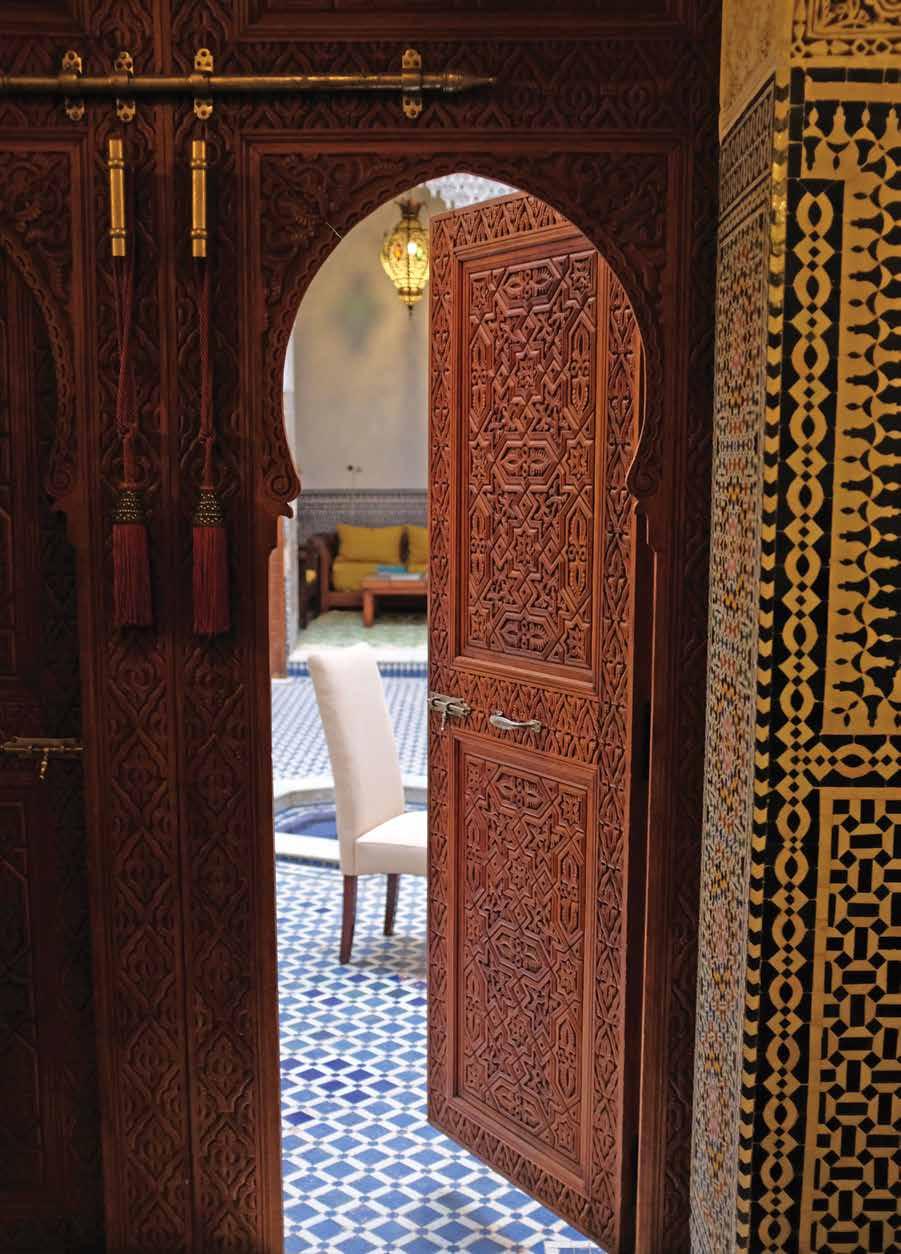
blues and greens pattern the floor and alcove walls, and the archways made of wood and stucco are carved as fine as lace. Coming from an absence of color and order, we have stepped into a burst of both.
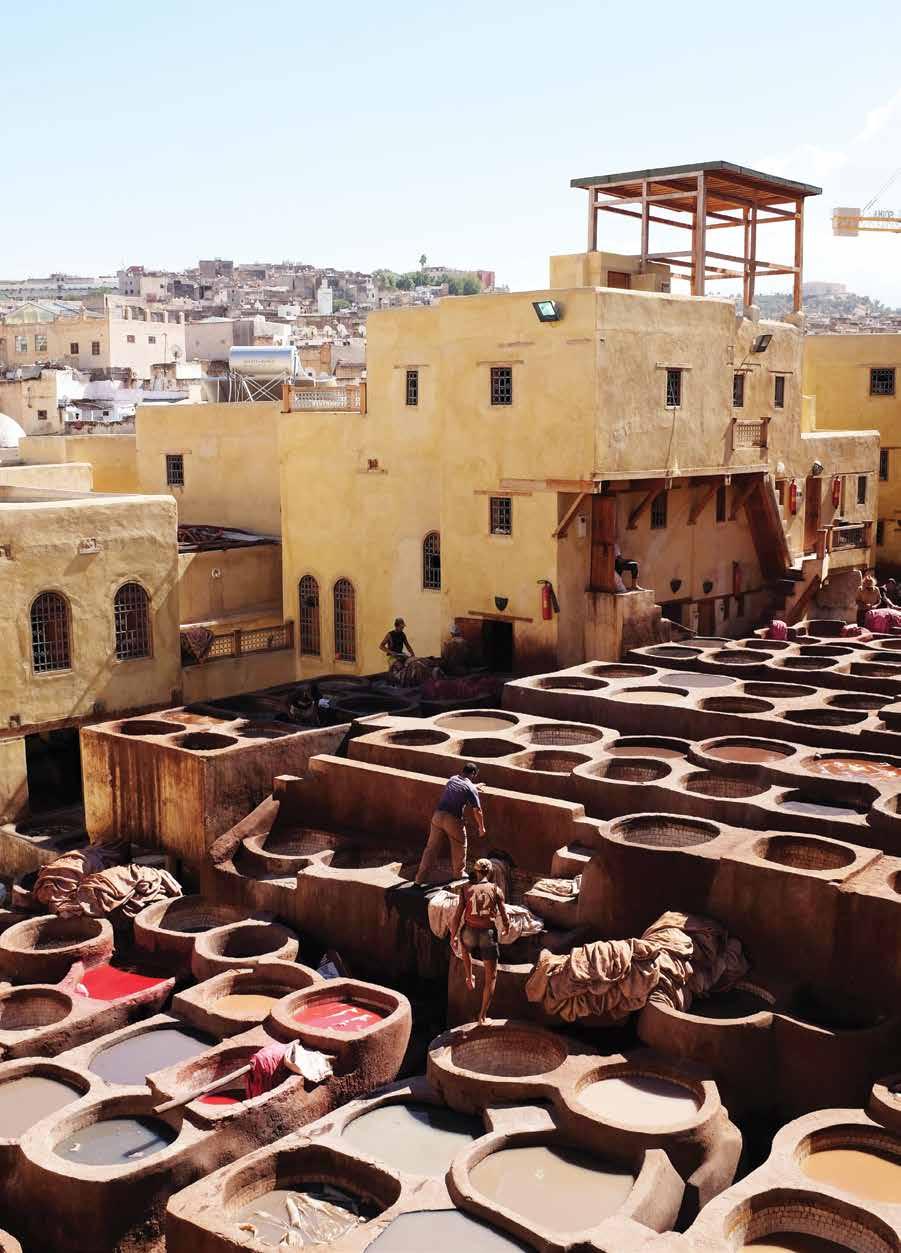
To Morocco, apply Newton’s law of motion—for every action, there is an equal and opposite reaction— and the country’s contrasts begin to make sense. The unpaved streets and alleyways of Fez’s medina zigzag as they please through rough, uneven buildings made of mud bricks. But the arts, from the textiles to architecture, showcase patterns and tessellations of stunning intricacy and symmetry. When I step into a rug shop, I cannot stop pawing through the woven tapestries, until the shopkeeper has pulled so many there might be more heaped on the floor than are left on
ーブの壁には鮮やかな青と緑のタイルが規則的な 模様を描き、木と漆喰でできたアーチにはレースの ように繊細な透かし彫りが施されています。色彩の 少ない無秩序な世界から一歩足を踏み入れると、 鮮やかな色と秩序で埋めつくされた世界が広がっ ているのです。
「どの作用にも等しい反作用がある」という ニュートンの運動法則をモロッコに当てはめてみる と、この国の至る所で目にする対照性が腑に落ち てきます。フェスのメディナでは、日干し煉瓦ででき た不揃いな建物の間を、舗装のない街路や路地が 気ままな趣きでジグザグに縫っています。これに対 して、織物や建築などのモロッコ美術には、目をみ はるような精緻さと左右対称性をもつパターンや モザイクが特徴的です。絨毯の店に入った私は、店 主が棚にあった絨毯を次々に広げ、ついに床の上 に山を作るまで、見事に織られた品々を触りまくら
118 E ESCAPES Morocco PALM
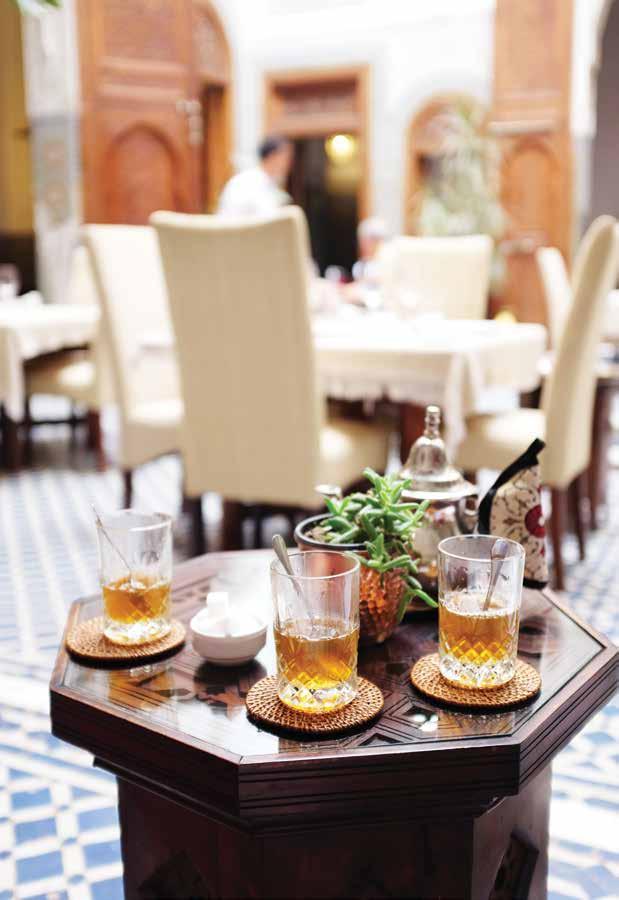
the shelves. I feel greediness and sorrow that I cannot have them all, like Daisy sobbing into a pile of Gatsby’s beautiful shirts. During rush hour, I flatten myself along the walls to let donkeys pass. One is carrying animal hides, and the next, propane tanks. I dart between people to chase a vendor wheeling a cart of dates, and another who is selling savory baked rice cakes dusted with cinnamon and sugar. In the souks , or markets, the people and sounds press up against me, the call to prayer over the loudspeakers adding to the din. Then I enter our riad , a traditional house, and am enveloped in the quiet of its open courtyard, where a small fountain cools Morocco’s hot, dry air. Only a place so riotous could create such serenity.
Like its tea, brewed so strong that its bitterness must be offset with blocks of sugar, this is a country of juxtapositions. I walk with women who cover themselves from head to toe, but in the public hammam, a bath house, we are all naked, save underpants. A fleshy woman, full of softness, washes my hair and scrubs my body with soap made of eucalyptus and olive oil, pulls down my underwear, throws buckets of warm water at me. I have not been bathed by another since I was a baby. This intimacy with a stranger astonishes me at first, but by the time she swaddles me in a towel, I am clean and comforted.
Morocco is the desert, an ocean of sand dunes, a landscape stripped bare. Morocco is the oasis that arises abruptly from starkness, where palms are heavy with ripening dates clustered like raindrops on branches after a storm. One morning, we tiptoe into the Royal Mansour, a lavish palace hotel in Marrakech that was commissioned by King Mohammed VI. The next day, we awake next to crumbling kasbahs in Agdz, on the road to the Sahara Desert. As we drive its bare embrace, we bring with us a box of sweets from Marrakech. They are variations on figs and almonds and dates, some shaped into tiny roses of sheer and brittle pastry, sticky with honey, while others are crescents of soft and crumbling dough stuffed with almonds and cinnamon and perfumed with orange-blossom water. By night, we are among the dunes, eating mutton tagine that our guide has cooked over the fire and bread he baked by burying it directly in the hot coals and sand.
I’m drawn to Morocco because of these contrasts, but perhaps the greatest contrast is between the life I know in Hawai‘i and the lives I see here. Morocco possesses an entirely different culture, religion, and landscape than the place I live. It even seems to occupy a different time, a time when objects are still made by hand, the rugs woven on the loom, the ceramics formed from and fired in the earth, the leather produced in an 11th century tannery
ずにはいられませんでした。ギャッツビーの上等な美しいシャツの山を見て泣 くデイジーのように、私は欲望と、全部を手に入れることの出来ない悲しみを 感じるのでした。ラッシュアワーには、道を往来するロバを壁にはりついてやり 過ごします。動物の皮を運んでいるロバもいれば、プロパンタンクを背負ってい るロバもいます。私は道行く人々を素早くよけながら、荷車を引くナツメヤシ売 りや、シナモンと砂糖をふりかけたおいしい米の焼き菓子の売り子を追いかけ ます。スーク(市場)では人の多さと音に圧倒され、ラウドスピーカーから響き
渡る祈りの呼びかけが喧噪にさらに拍車をかけます。そして滞在するリヤド(モ ロッコの伝統的な邸宅を改装した宿)に戻ると、開けた中庭の静けさに包まれ ます。庭では小さな噴水がモロッコの暑く乾燥した空気を冷やしています。これ ほど騒々しい町だからこそ、これほど静謐な空間を作り出せるのでしょう。
とても濃く淹れるので角砂糖で苦味を和らげなくてはならないモロッコ のお茶のように、この国では相反するものが隣り合っています。道往く女性たち は頭からつまさきまで覆っていますが、ハンマーム(公衆浴場)ではショーツを 除けばみな裸です。どこまでも柔らかな雰囲気をたたえた肉づきの良い女性が 私の髪を洗い、ユーカリオイルとオリーブオイルの石鹸で身体をこすってくれ、 ショーツを引っ張りおろしてバケツでぬるま湯をザバッとかけてくれます。誰か にお風呂に入れてもらうなんて、赤ちゃんの時以来です。赤の他人との裸のつ き合いに初めはびっくりしましたが、終わってタオルで身体を包んでもらう頃に は、さっぱりして安らかな気持ちになっていました。
モロッコの国土の多くは砂漠で、砂丘がどこまでも海のように連なり、木 も草もないむき出しの地形が延々と広がっています。モロッコにはまた、荒涼と した砂漠に突如現れる蜃気楼のようなオアシスもあり、熟したナツメが嵐の後 の雨粒のように鈴なりになったヤシの木が風にそよいでいます。私たちは、ある 朝はマラケシュで、モロッコの現国王であるモハメド6世が建てさせたという豪 華な宮殿のようなホテル「ロイヤル・マンスール」を探検し、次の日にはサハラ砂 漠に向かう途上の町アグツにある崩れそうなカスバの脇で目覚めました。砂漠 を車で行く旅には、マラケシュで買ったお菓子を一箱持参しました。イチジク、 アーモンド、ナツメを使ったさまざまなお菓子で、透けるように薄くパリパリし たペストリーを小さな薔薇の花の形にして蜂蜜をかけたものもあれば、さくっ とした柔らかい生地にアーモンドとシナモンを詰めてオレンジブロッサムウォ ーターで香りをつけたものもあります。夜は砂丘の間に仮の宿を定め、ガイド が焚き火の上で料理してくれた羊肉のタジンと、熱した石炭と砂に直接埋めて 焼いたパンで夕食にしました。
私はモロッコのこうした対照に惹きつけられます。中でも最も際立って 対照的なのは、私が知っているハワイでの生活とここで見る地元の人たちの生 活でしょう。モロッコには、私が住み慣れた土地とはまったく違う文化、宗教、 風土があります。この国は異なる時代に存在しているようにさえ見えます。それ
120 E ESCAPES Morocco PALM
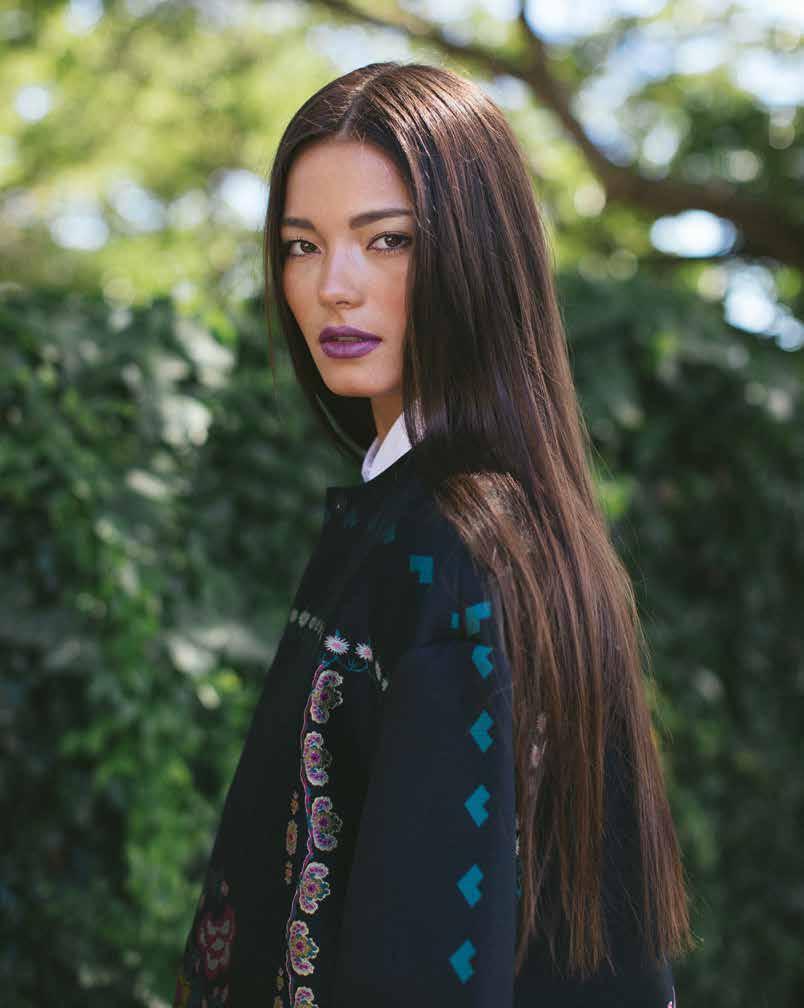
Lifestyle Salon & On-location Hair & Makeup Open for bookings & Private Consulations 1127 11th Avenue, Suite 202 Honolulu, HI 96816 +1 (808) 732-2569 HMBHNL.COM | @hmbhnl Hair Makeup Beauty Welcoming everyone to feel beautiful & confident.
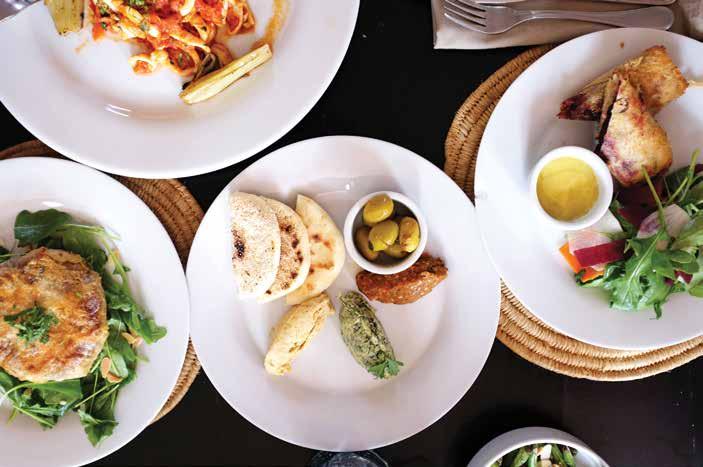
using the same techniques as when it was founded. The medinas confuse our GPS, rendering it useless; a lodge owner draws us a map with pencil and paper, a meandering line that sends us along an old caravan route to the desert, passing Tamegroute and other tiny towns that look as if they’re hewn from the cliffs, the mud-brick buildings the same ochre color as the dirt they stand on. Many of these places are mostly abandoned, the people having left for more modern dwellings and towns. But the old cities still stand, a reminder of where they once lived.
は、機織り機で織られる絨毯から、土で作られ土の 窯で焼かれる陶器、11世紀から変わっていない方 法でなめした皮製品など、ものがまだ人の手で作 られている時代です。メディナでは私たちが使って いたGPSが混乱して使いものになりませんでした。 宿のオーナーが紙に鉛筆で描いてくれた地図のく ねくねとした線をたよりに、古くから隊商が使って いたルートを進んだ私たちは、タムグルートと崖に 刻み込まれているように見える他の小さな町や、地 面と同じ黄土色をした日干し煉瓦の建物をいくつ も通り過ぎました。こうした場所の多くは、住んで いた人たちがもっと現代的な住居や町へと去った ためほとんど見捨てられた状態でした。でも、古い 町はまだそこにあり、かつて人がそこで暮らしてい た証として残っているのです。
122 E ESCAPES Morocco PALM
Writer Martha Cheng remains drawn to Morocco, a country full of contrasts and colors.
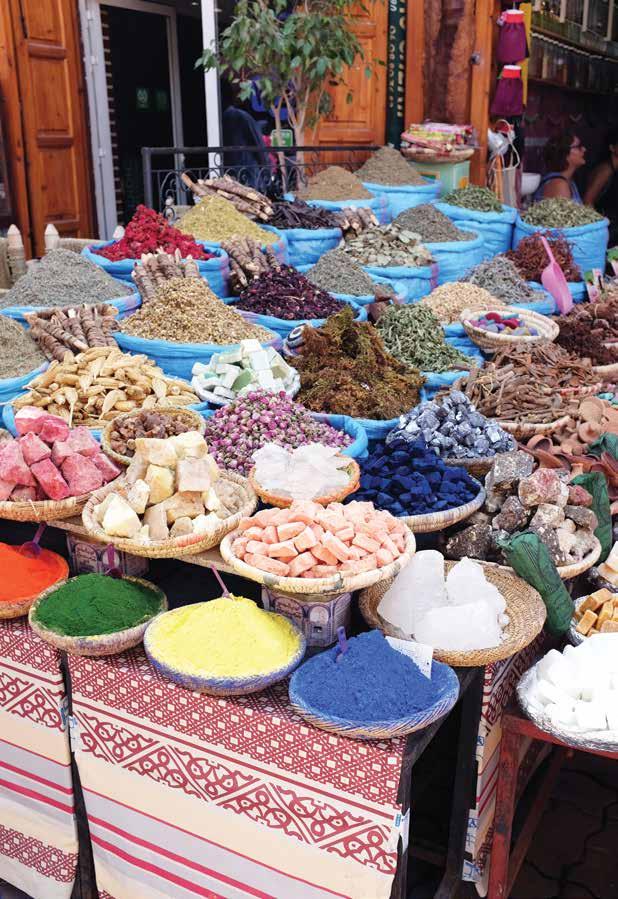
This One’s for the Girls
女子旅の楽しみ
A mother and daughter soak up the sights and satisfy their senses in Wailea, Maui.
マウイ島ワイレアの美しい景色の中、五感をはたらかせて満喫する母と娘の旅。
Text by Diane Ako
文 = ダイアン・アコ
Images by Lila Lee
写真 = ライラ・リー
한 엄마와 딸 섬이 주말에 마우이 섬에 가서
휴식의 세계를 경험합니다.
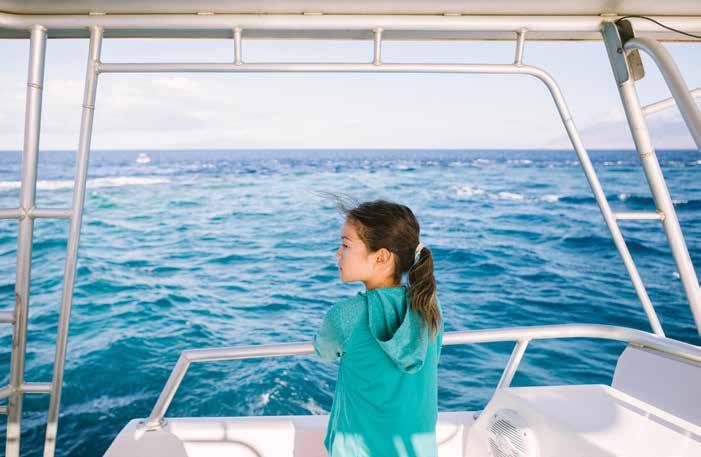
Every year, my daughter and I take a girls’ trip, either to a neighbor island or an O‘ahu staycation destination. On these outings, we get time to bond and feel a little more like two friends, rather than parent and child. This year, Olivia, who is 10 years old, requests an island-hop to Maui.
娘と私は毎年、女子旅をします。ネイバーアイランドに行くこともあれば、オ アフ島でステイケーションを楽しむ年もあります。旅先では娘との間の絆を 強める時間を持つことができ、親子というよりはまるで友だち同士のような 気分になれるのです。10歳になった娘のオリヴィアは、今年はマウイ島への 旅をリクエストしました。
ESCAPES Maui 124 E
PALM

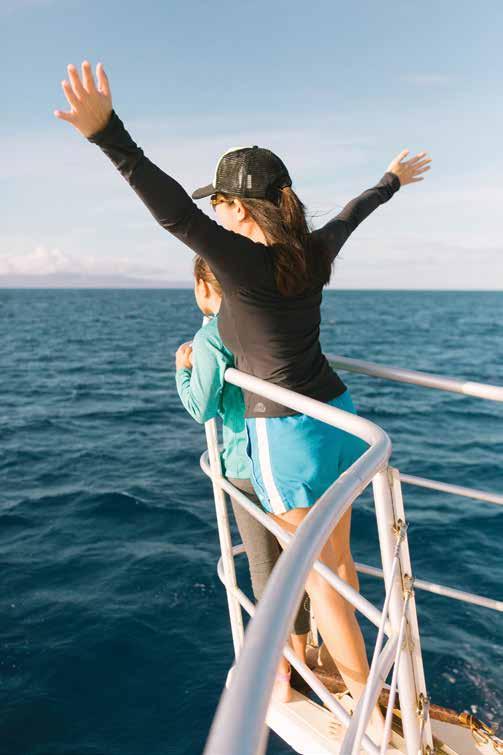
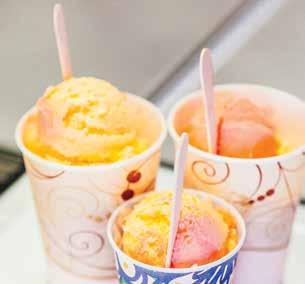
First Things First
As soon as we land at Kahului Airport in the early afternoon, we head directly to Tasaka Guri Guri at Maui Mall to get Olivia’s favorite treat. The famous store sells the frozen dessert, a combination of ice cream and sherbet, in two flavors: guava and pineapple. What makes it taste so good? “Love,” the owners tell me, keeping the decades-old family secret under wraps. They serve us the signature soft-serve swirls of blue and red, which we devour on the bench outside the small shop.
最優先のデザート 午後早くカフルイ空港に到着すると、私たち がまず目指すのは、オリヴィアが大好きなデ ザートがあるマウイ・モールの「タサカ・グリ・ グリ」。この店はアイスクリームとシャーベッ トの中間のような食感の冷菓で有名です。フ レーバーはグアヴァとパイナップルの2種類。 どうしてこんなにおいしいのでしょう?と尋ね ると、「愛ですよ」とオーナーさんは言います。 何十年も守ってきた秘伝のレシピは教えてく れません。赤と青の2色がうねる特製ソフトク リームを、私たちは小さな店の外に置かれた ベンチに座ってあっという間にたいらげてし まいました。
So Fun
On the drive to Wailea, the sun-soaked town on Maui’s south shore, we turn up the radio and dance in our seats. Thirty minutes later, we arrive at the Grand Wailea, a sparkling beachside resort set across 40 lush acres. The green of the impeccably manicured gardens is juxtaposed with the blue of the ocean, the swimming pools, and the expansive water features. Nature cossets us. The pools are magical. We spend the day splashing at the resort’s multiple pools, slipping down water slides, and rolling around the Fishpipe—where a rotating barrel ride is like going down a mile-long water slide.
リゾートで楽しむ ラジオを大音量にしてシートに座ったまま踊りながら、太陽がさん さんと降り注ぐマウイ島南岸の町、ワイレアを目指して車を走らせ ます。30分後には、16ヘクタールの緑豊かな敷地に広がる華やか なビーチサイドのリゾート、グランド・ワイレアに到着しました。手入 れの行き届いた庭のつややかな緑が、海、スイミングプール、そこか しこに作られた大きな池や噴水などの青色によく映えています。自 然が微笑みかけてくれ、どのプールも魅惑的です。その日はリゾート 内にいくつもあるプールを泳ぎ回り、ウォータースライドをすべり降 り、話題の「フィッシュパイプ」で転げ回って過ごしました。これは球 体の中に入ると回転するようになっていて、まるで長い長いウォー タースライドを滑っていくような気分になるライドです。
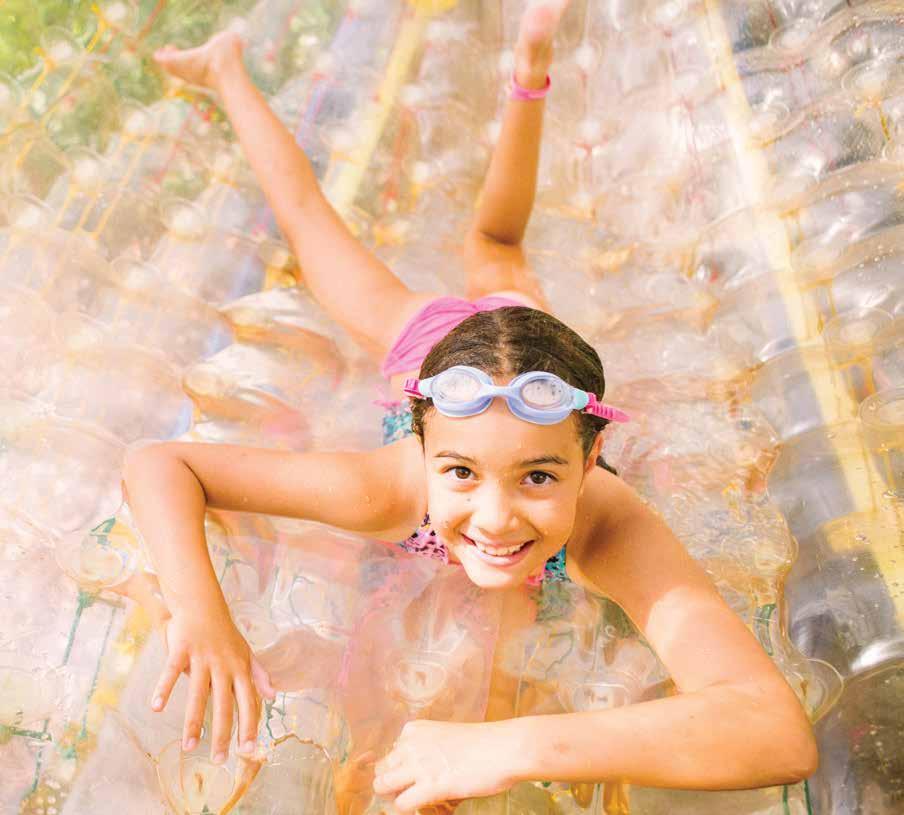

A Snorkel Adventure
The next morning, we awake at 5 a.m. for a snorkel excursion to Molokini, a crescentshaped islet a few miles offshore. The ride out to Molokini with Aqua Adventures is brisk. When we arrive at our snorkel site, we see schools of colorful fish darting around turtles, as well as several dolphins. The black triggerfish that regard us from their curious schools are my favorites. Olivia likes the white spotted puffers. “I wish they would puff up!” she tells me excitedly. Halfway through the five-hour tour, we swap snorkels for SNUBA regulators, a cross between snorkeling and scuba diving, so we can breathe 20 feet underwater, and drift above the turtles.
スノーケリング・アドベンチャー 翌朝は5時に起床し、モロキニ島でのスノーケリング・ツアーへ。マ ウイ島沖数キロのところにある三日月形の小島です。「アクア・アド ベンチャーズ」のボートで、あっという間にモロキニ島のスノーケリ ングサイトに着くと、色とりどりの魚の群れがウミガメやイルカたち の周りをきびきびと泳ぎ回っています。群れになってこちらをじっと 眺める好奇心旺盛なソロイモンガラは、私が一番大好きな魚です。 オリヴィアのお気に入りはサザナミフグ。「膨れてくれたらいいのに! 」と大興奮です。5時間のツアーの半分が過ぎたところで、水面下6 メートルで呼吸しながらウミガメたちを眺められるよう、スノーケル をスヌーバのレギュレータに替えました。
Spirited Away As we ascend the slopes of Haleakalā, toward the Maui Healing Retreat, the scenery changes from sunny blue to misty green. This serene property in Kula offers nearly 50 wellness services. Olivia signs up for a outdoor painting lesson. I enjoy facial acupuncture, along with an astrology reading and sports massage program called, “Releasing Issues in Your Tissues,” which helps to release emotions pent up in the body. “You know how you keep it from coming back?” practitioner Donza Doss says. Don’t hold on to things,” she says. “Be gentle on yourself.”
心をほぐして身軽に ハレアカラの山腹に向かって車を走らせると、風景は 明るいブルーからしっとりとしたグリーンへと変わっ ていきます。クラにある静かな「マウイ・ヒーリング・リ トリート」は、50種類近くのウェルネスサービスを提 供する、癒やしとくつろぎの場所。オリヴィアは屋外で の絵画レッスンに申し込みました。私は美容鍼を堪 能し、さらにホロスコープ・リーディングとスポーツマ ッサージを組み合わせたプログラムを試してみまし た。このプログラムは身体の中に閉じ込められていた 感情を解き放ってくれるそうです。セラピストのドン ザ・ドスさんは、「痛みが戻って来ないようにする方法 をご存じですか?物ごとに執着しないで、自分に優し くすることですよ」と言ってくれました。
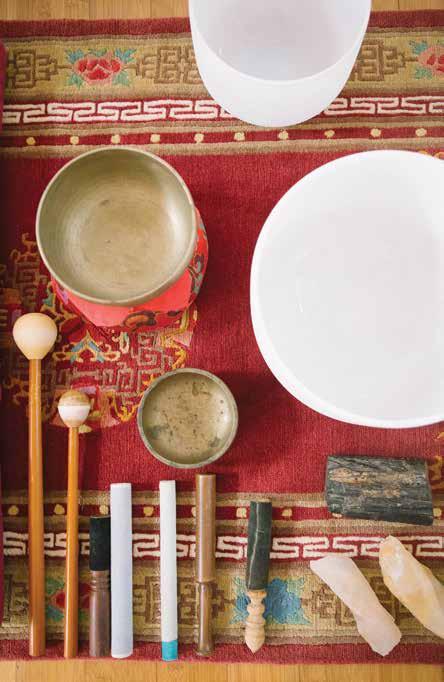
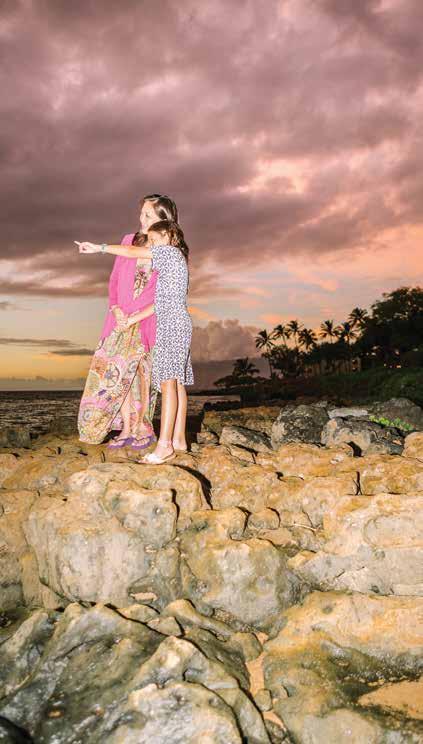
The Pampered Life
In the afternoon, we return to Wailea and enjoy massages at Olavine Spa and Salon, which seems to be the only day spa here to offer massages to children under the age of 12. (I know this because I called around a lot.) Olivia really wanted a professional massage, and I wanted to make the trip special. It lived up to her expectations, not only for its quality, but also because it is a treat normally reserved for adults.
甘い生活
午後にはワイレアに戻り、「オラヴィン・スパ&サロン」でマッサージ を堪能しました。12歳未満の子どもにマッサージを提供している デイスパはワイレアでここだけのようです(電話でさんざん探し回っ たので、これは確かです)。オリヴィアはプロのマッサージを体験し たがっていましたし、私も思い出に残る特別な旅行にしたかったの で、機会を作ってやることにしました。マッサージの質が高かったこ とだけでなく、普通なら大人だけの楽しみということもあり、期待に 違わず満足したようです。
Unveiling
FA SH ION
the world's
F PALM 流儀
infinite beauty.
PALM F 133
133
Lady of the House
Photographed in a historic home on Nu‘uanu
Images by Daeja Fallas
Styled by Ara Feducia
Hair and makeup by Bailee Naka‘ahiki, Holly Tomita, Jarrod Shinn, & Jonah Dela Cruz, HMB Studios
Modeled by Eva Blacker
Harry Winston cluster earrings and Harry Winston sapphire secret cluster dome ring (set in platinum); Etro silk wrap dress, Saks Fifth Avenue.
This home, owned by Larry Heim and Amerjit Ghag, was built in 1925 by Robert Gaylor Miller in the storybook style, which blends whimsy and practicality to transcend traditional notions of design.
134 F FASHION Lady of the House PALM
ファッション:物語のある家で
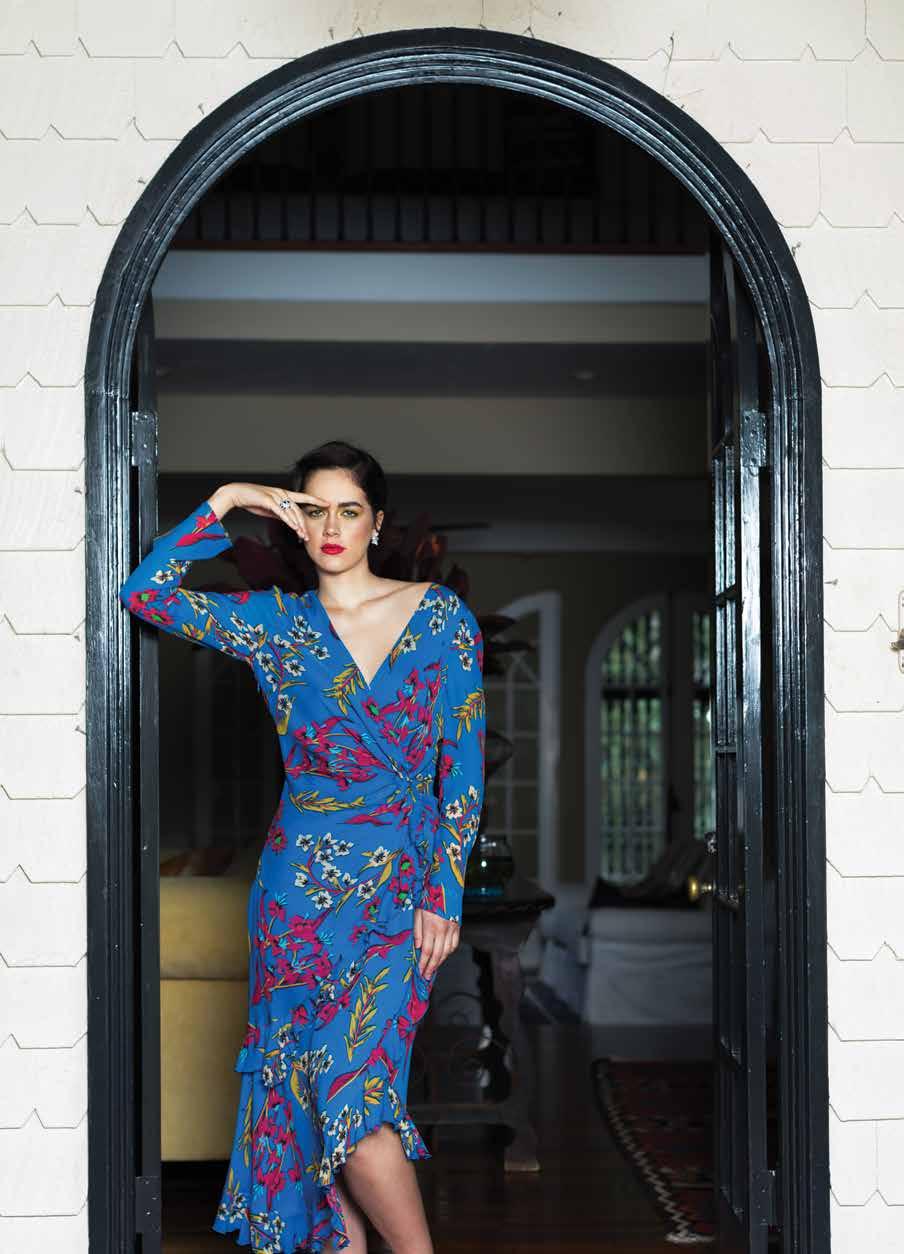
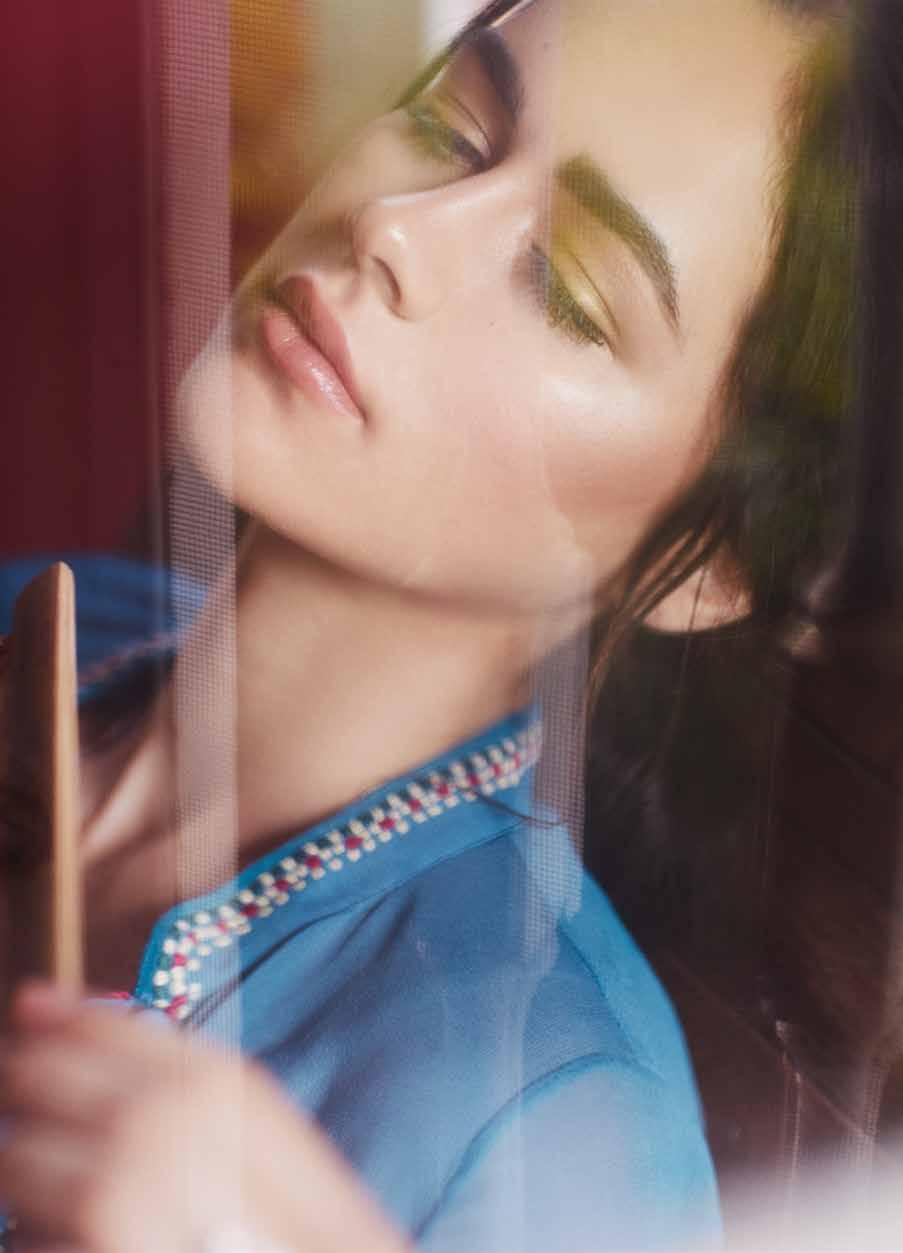
Collection
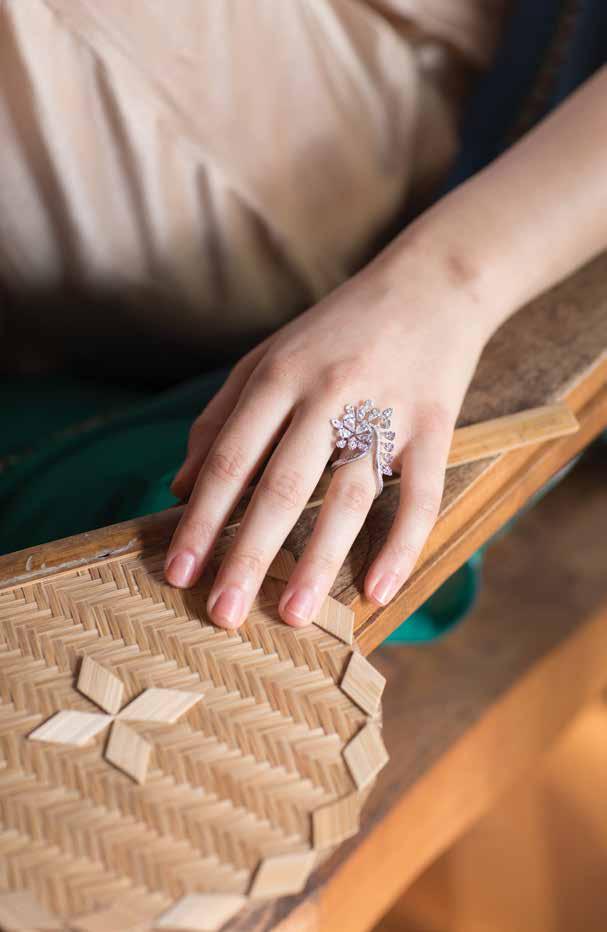 This page: Nirav Modi luminence fern ring. Opposite: Talitha
fatima long-sleeve ombre caftan, Neiman Marcus.
This page: Nirav Modi luminence fern ring. Opposite: Talitha
fatima long-sleeve ombre caftan, Neiman Marcus.
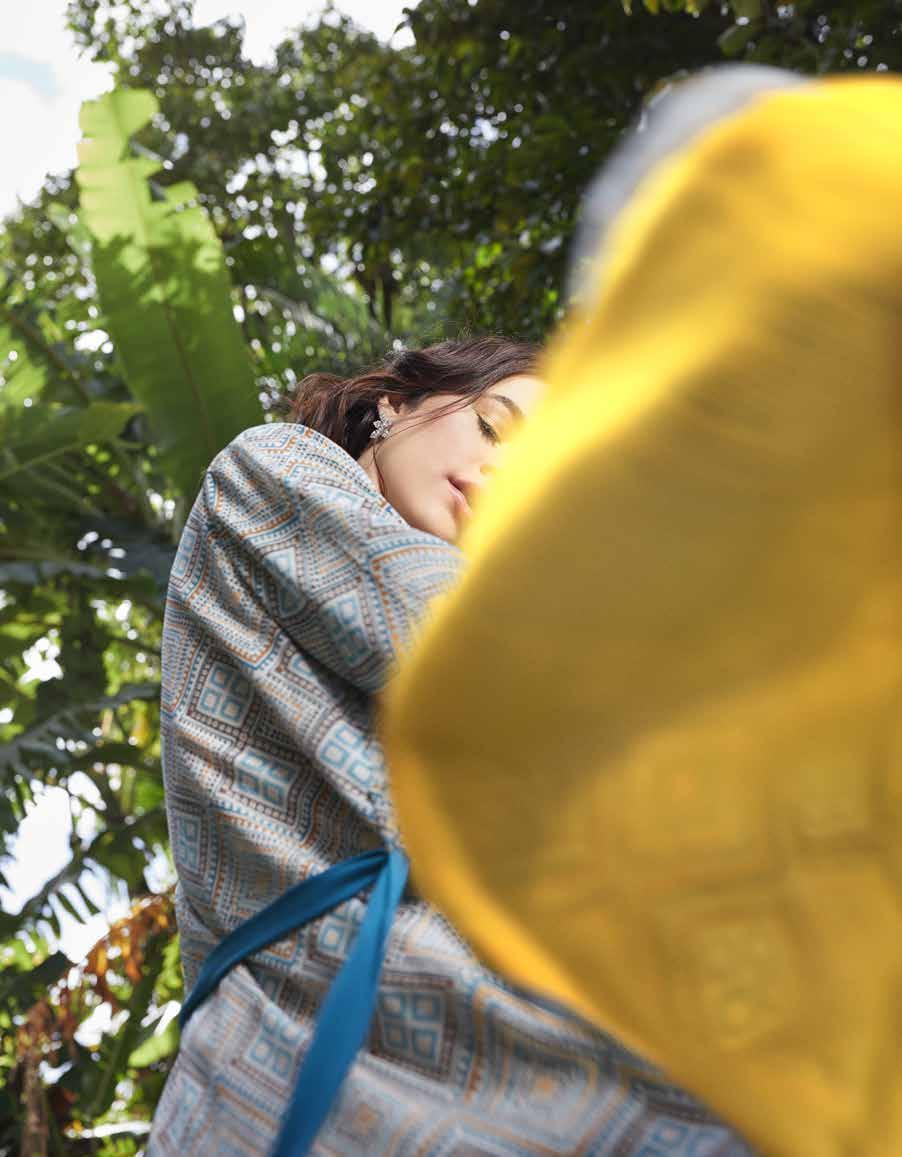 Harry Winston cluster earrings; Saks Fifth Avenue; Talitha Collection printed robe coat, Neiman Marcus.
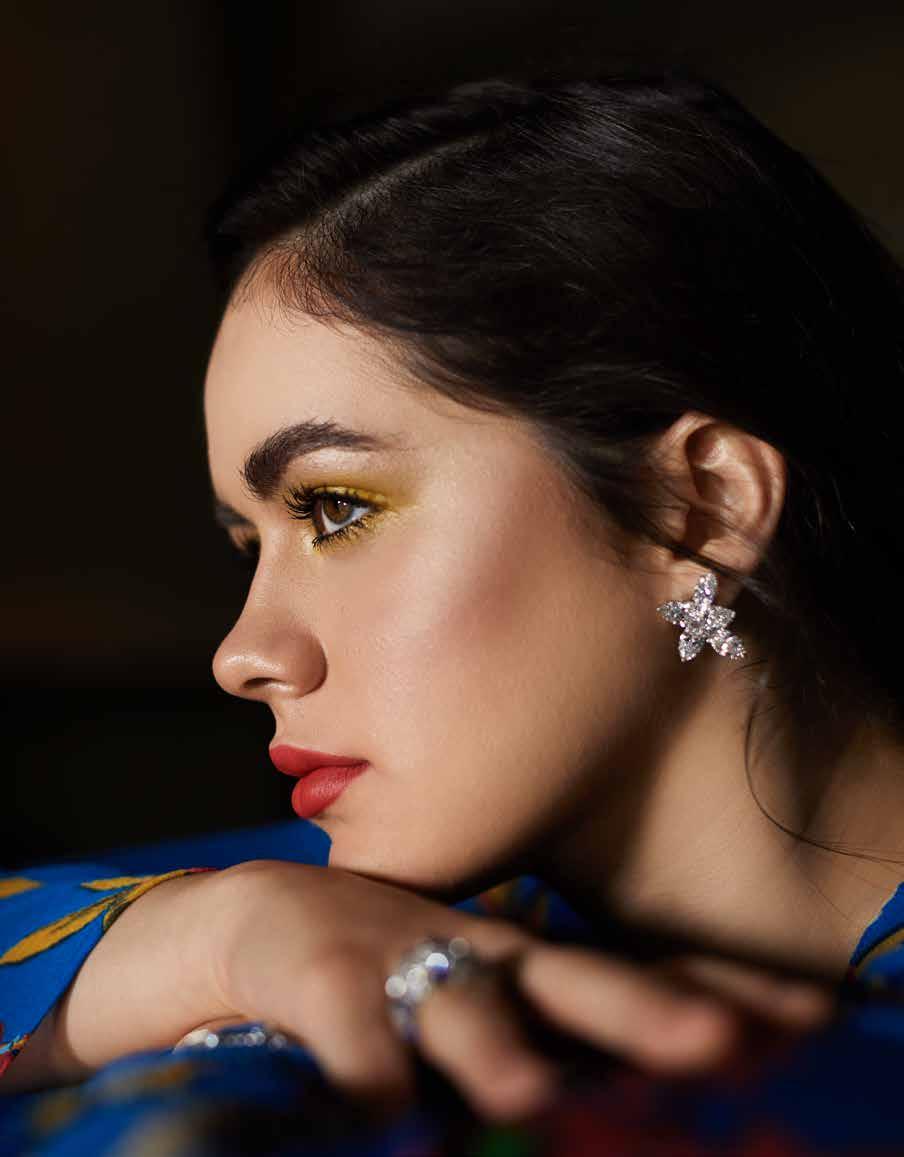 Harry Winston cluster earrings and Harry Winston sapphire secret cluster dome ring; Etro floral print silk wrap midi dress, Saks Fifth Avenue.
 This page: Nirav Modi lotus ring; Pascal Millet sequin wrap evening gown, Neiman Marcus. Opposite: Nirav Modi lotus ring and brocade diamond earrings; Missoni plisse lamé reversible maxi dress, Neiman Marcus.
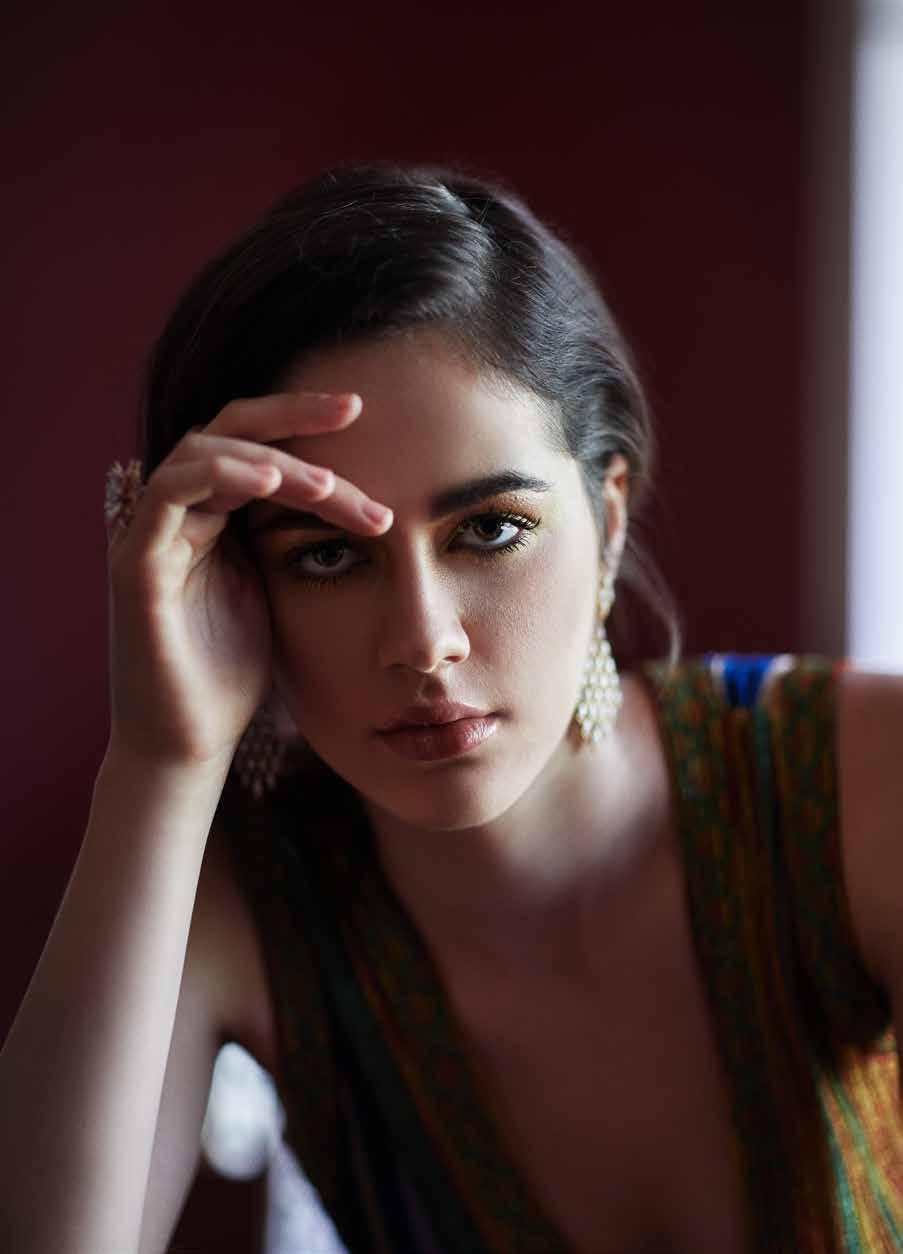
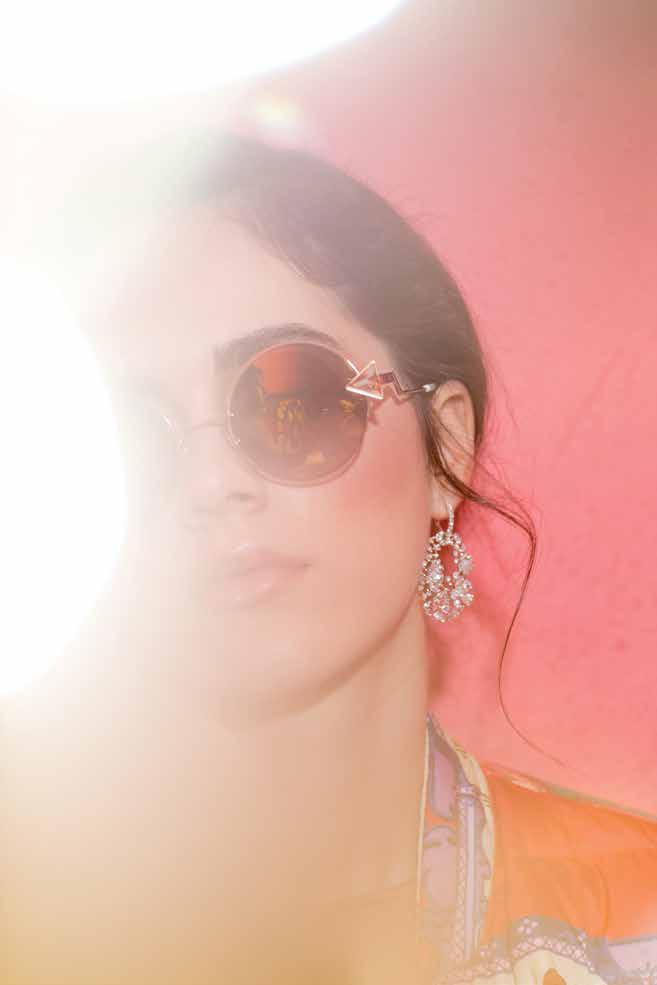 Nirav Modi jasmine earrings, Fendi rainbow round sunglasses, Neiman Marcus, and an Etro circus puffer jacket, Saks Fifth Avenue.
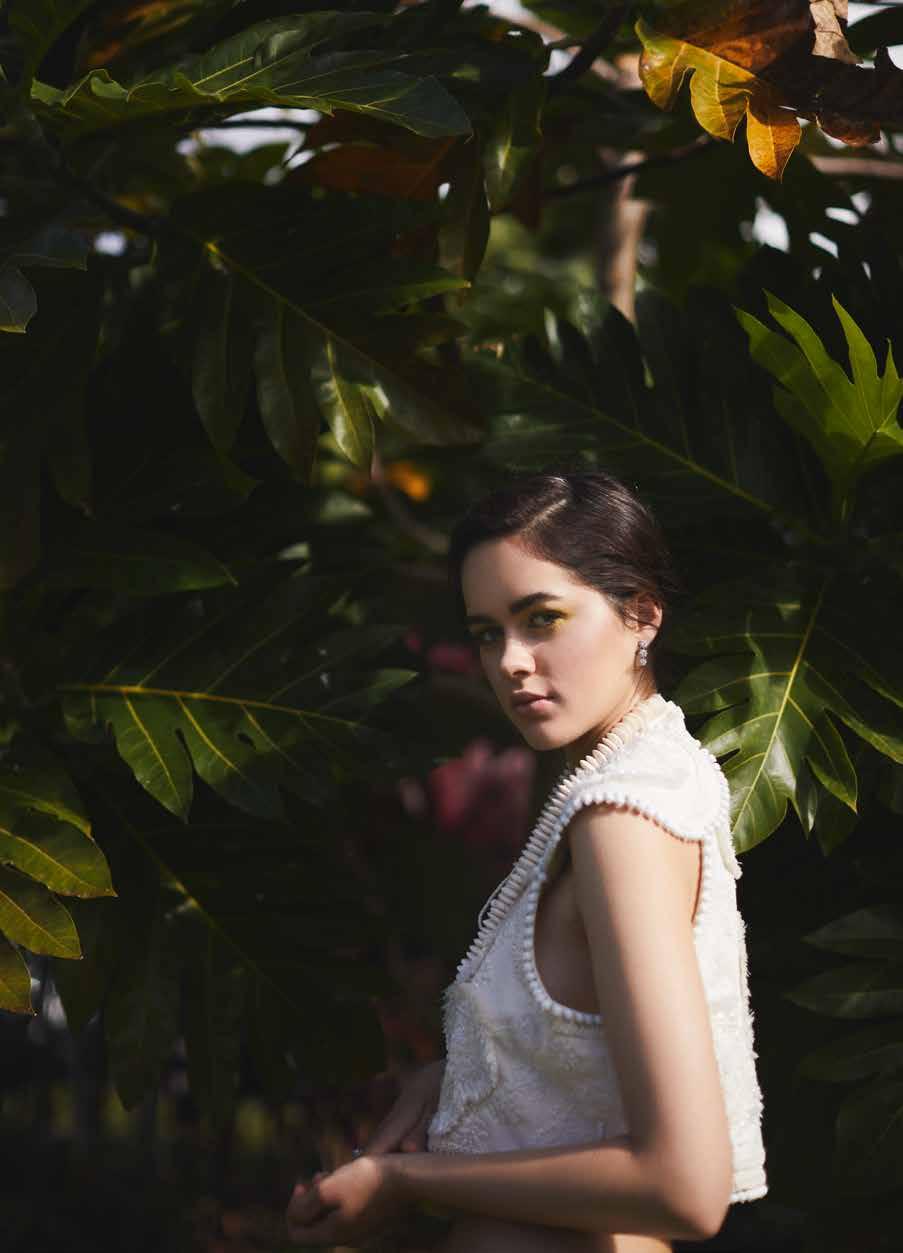
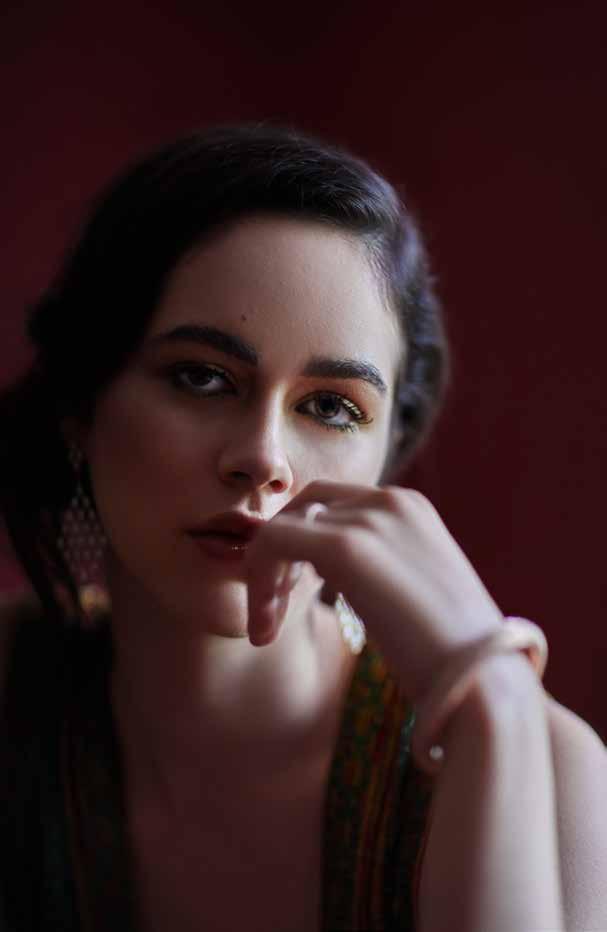 This page: Nirav Modi classic embrace ring, brocade diamond earrings, and classic embrace bangle; Missoni plisse lamé reversible maxi dress, Neiman Marcus.
Opposite: Harry Winston sunflower tripledrop earrings; Figue beaded embroidered crop vest, Neiman Marcus.
This page: Nirav Modi classic embrace ring, brocade diamond earrings, and classic embrace bangle; Missoni plisse lamé reversible maxi dress, Neiman Marcus.
Opposite: Harry Winston sunflower tripledrop earrings; Figue beaded embroidered crop vest, Neiman Marcus.
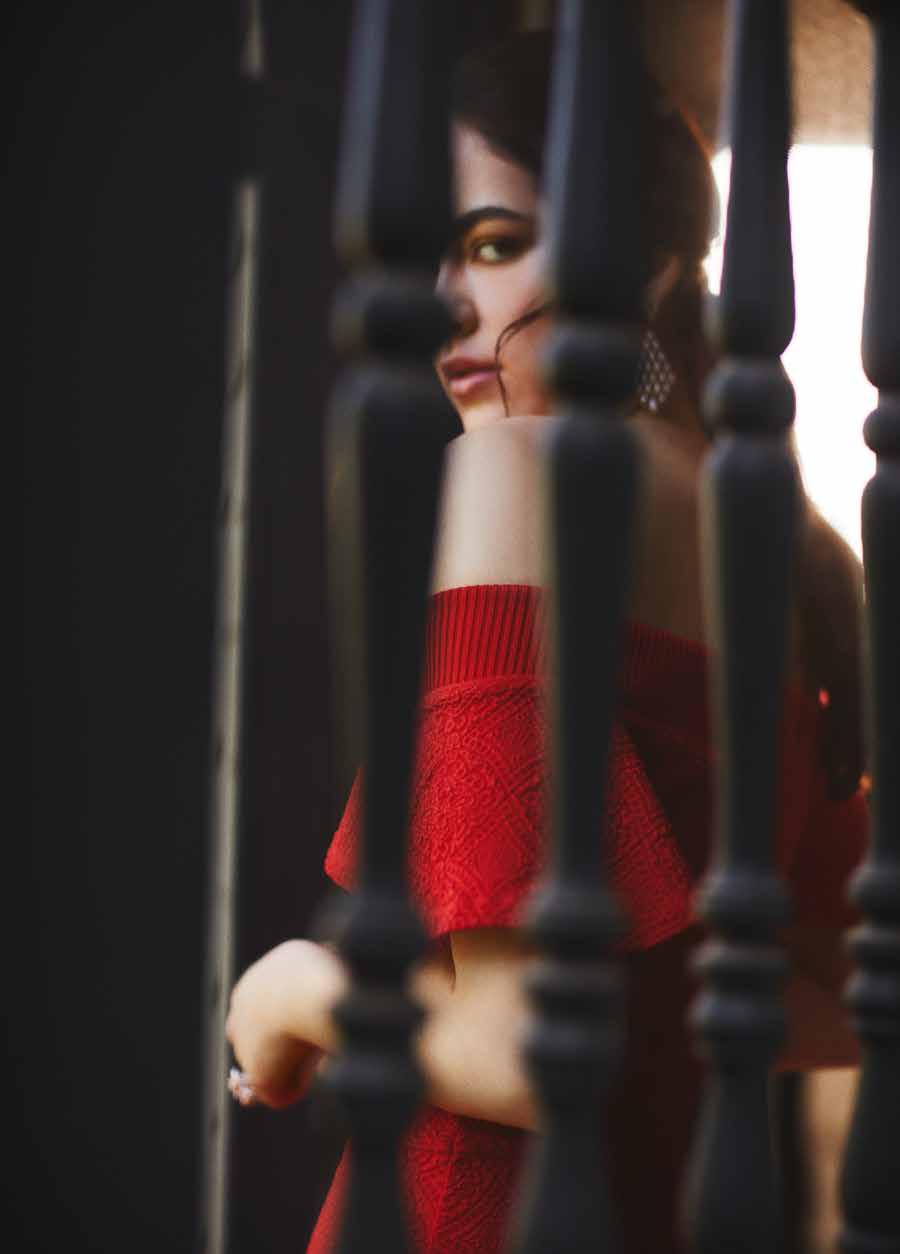
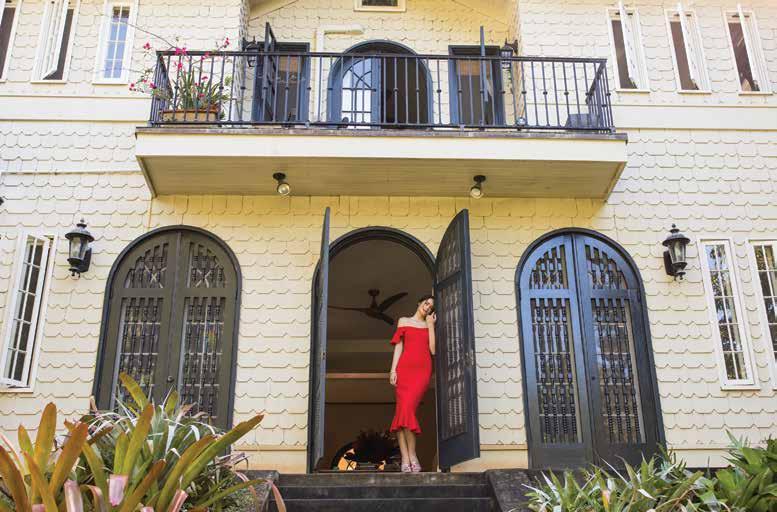
Nirav Modi lotus ring, brocade diamond earrings, and classic embrace bangle; Opening Ceremony jacquard midi dress, Neiman Marcus; Stuart Weitzman floral-embroidered mule sandal, Neiman Marcus.
Harry Winston
Ala Moana Center, Mall Level 2
Royal Hawaiian Center, Building B harrywinston.com
Neiman Marcus Ala Moana Center neimanmarcus.com
Nirav Modi
Ala Moana Center, Mall Level 2 us.niravmodi.com
Saks Fifth Avenue
International Market Place, Kuhio Avenue Entrance saksfifthavenue.com