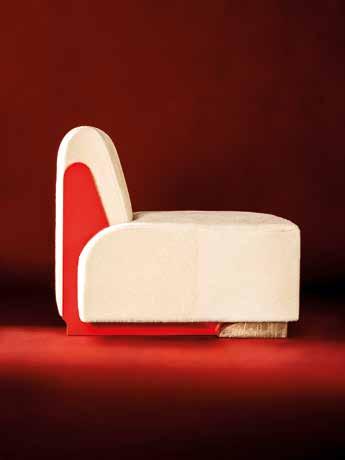
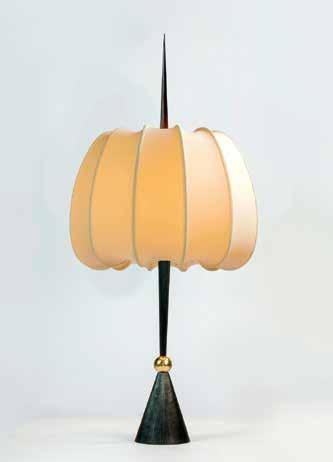
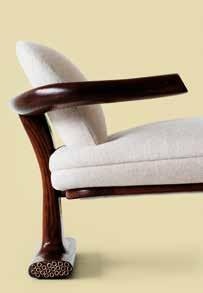
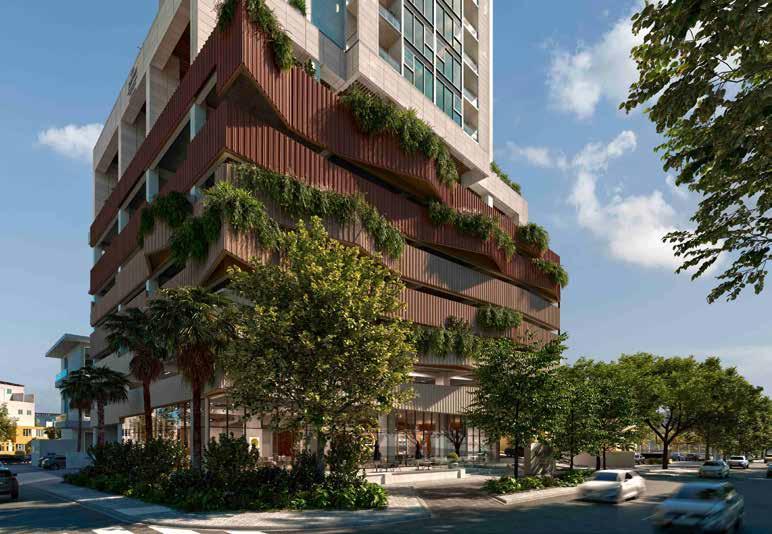
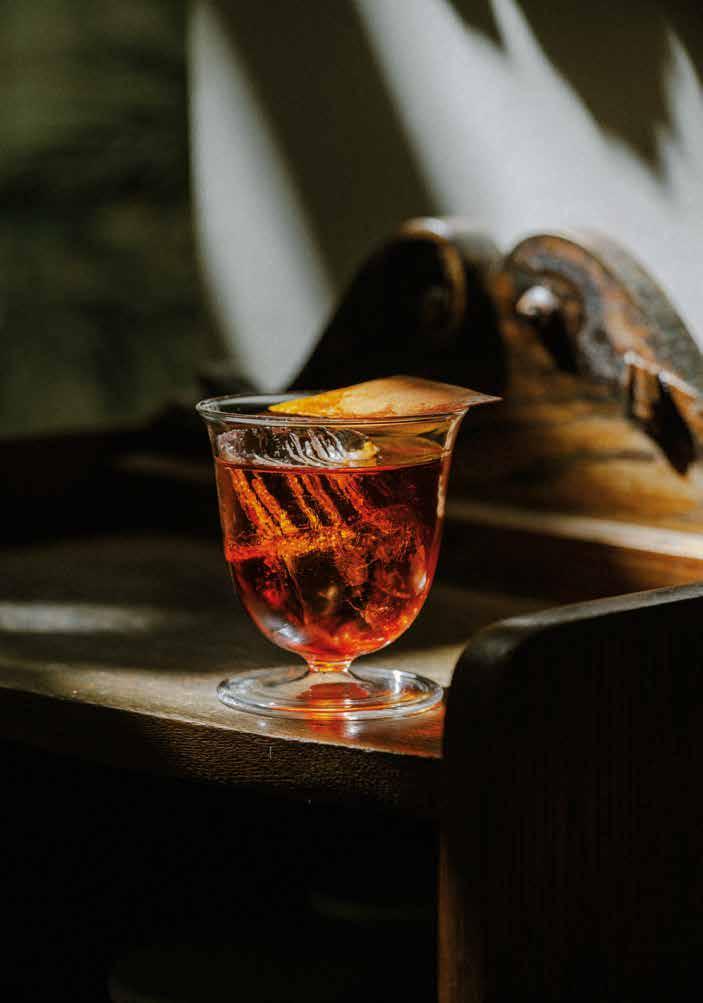
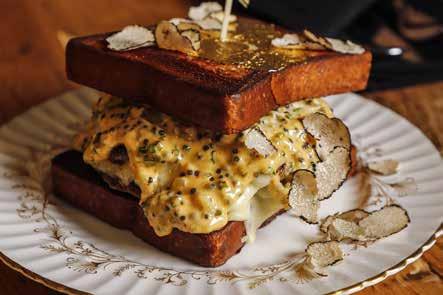
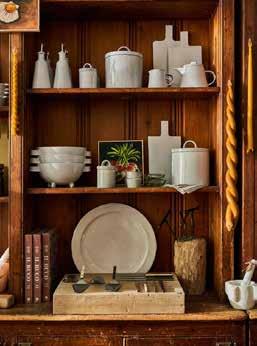
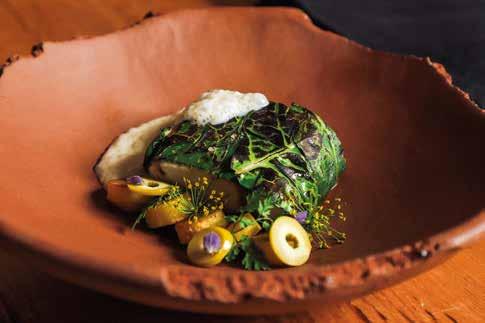
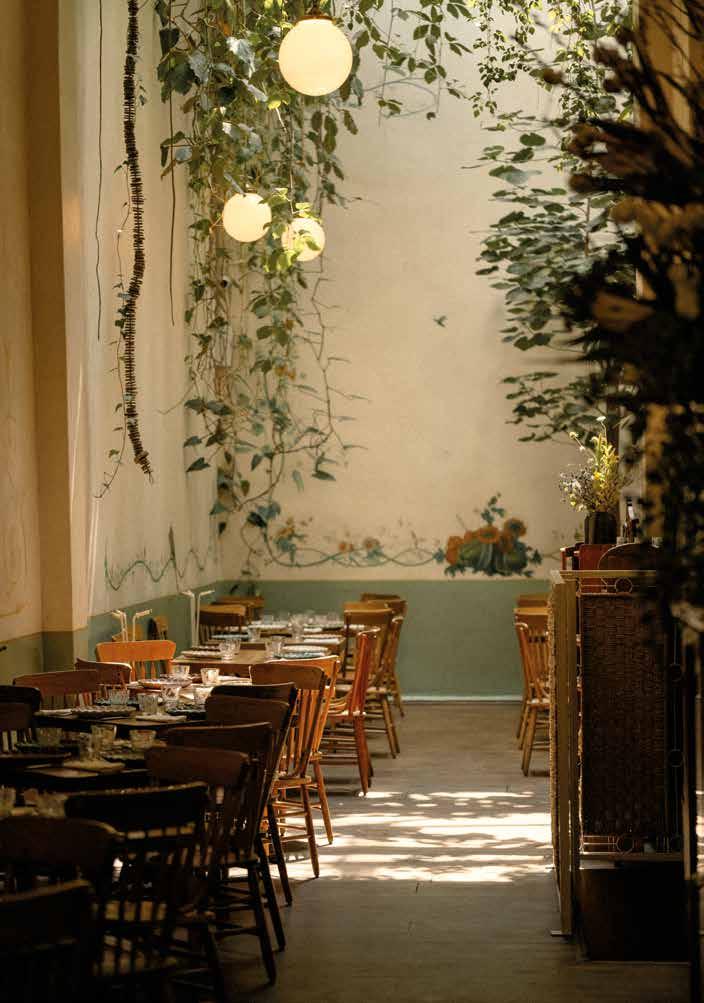
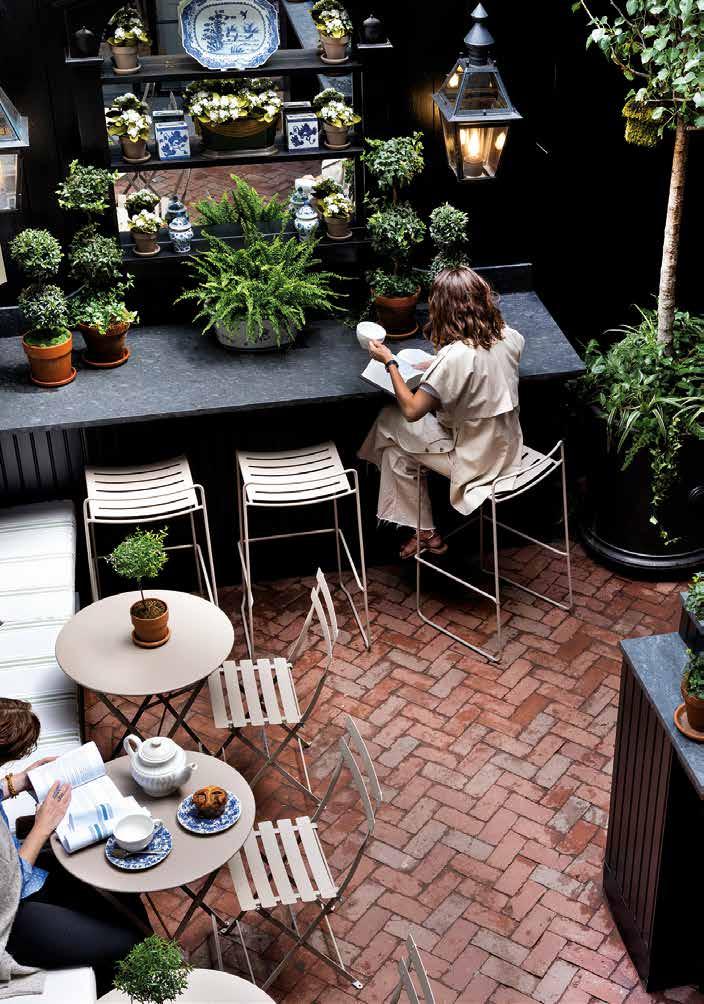
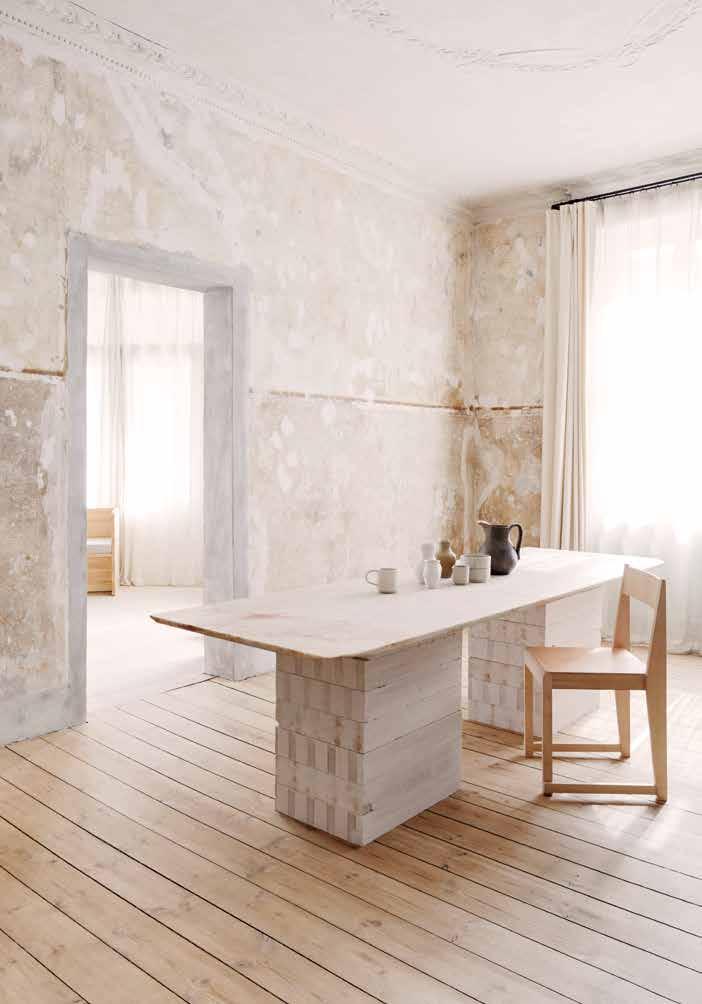
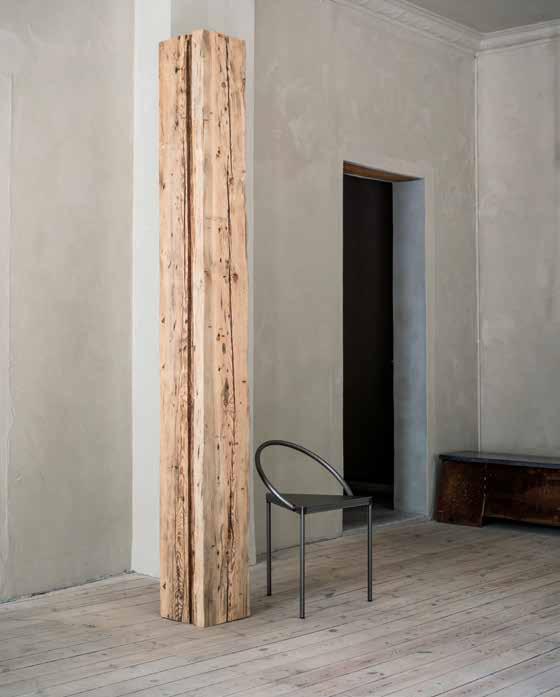
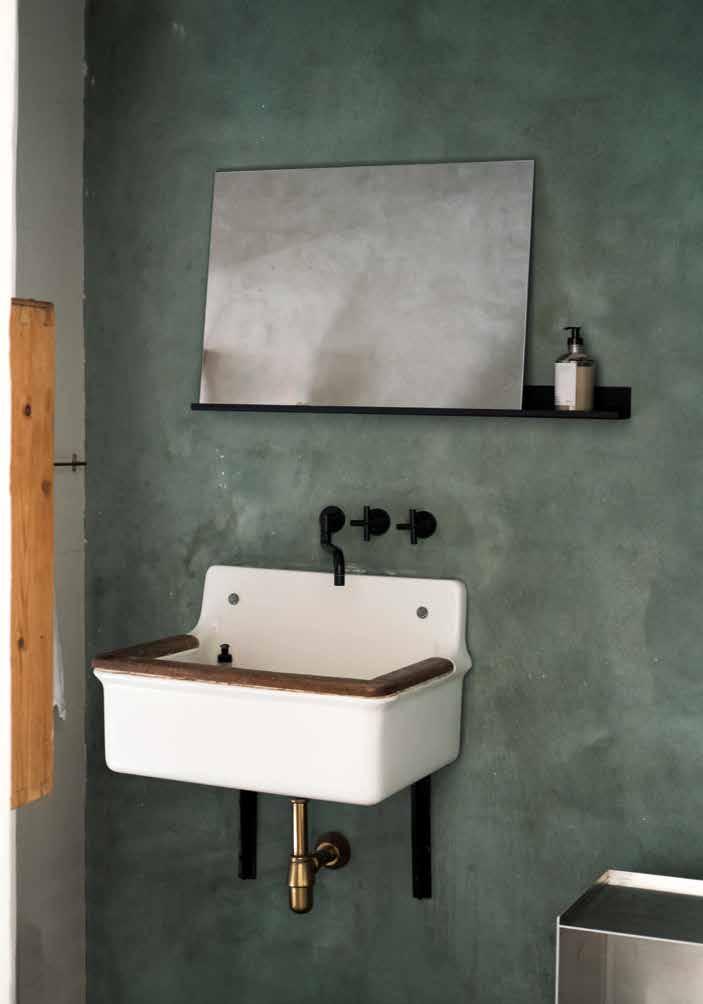
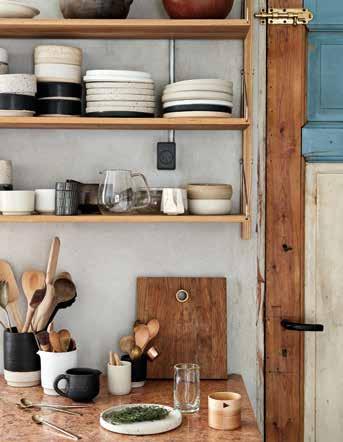
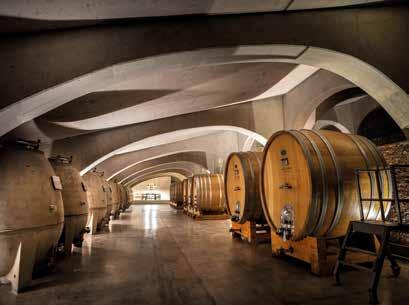
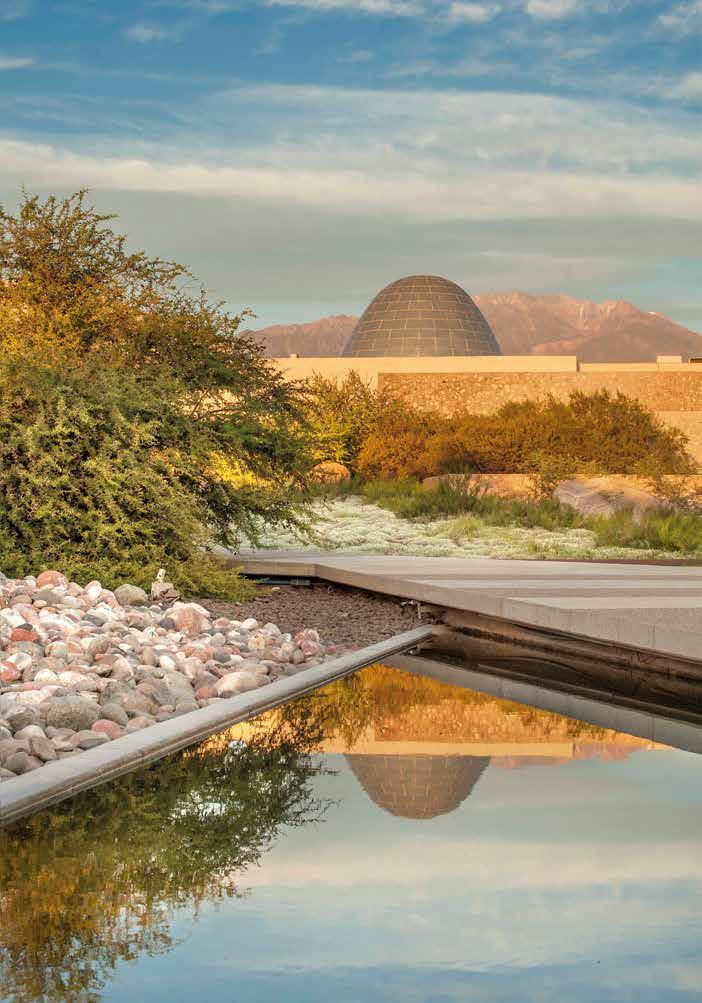
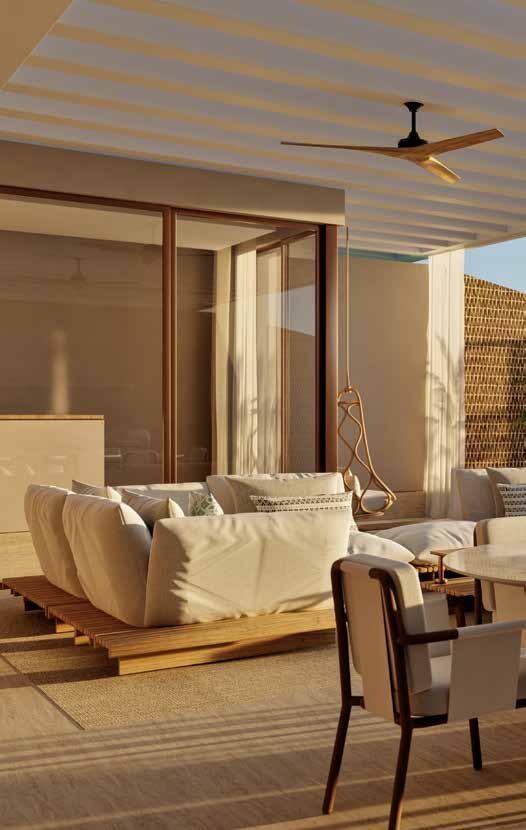
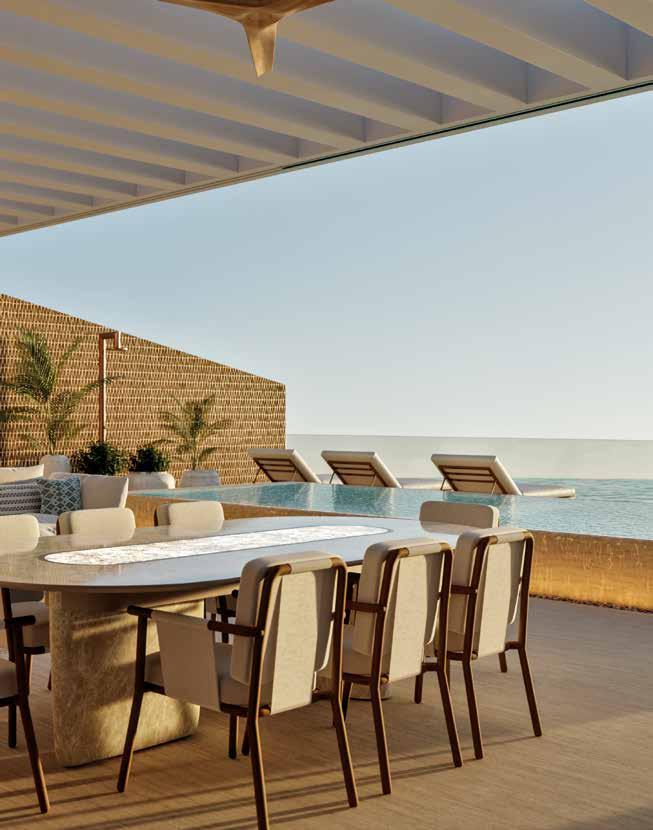
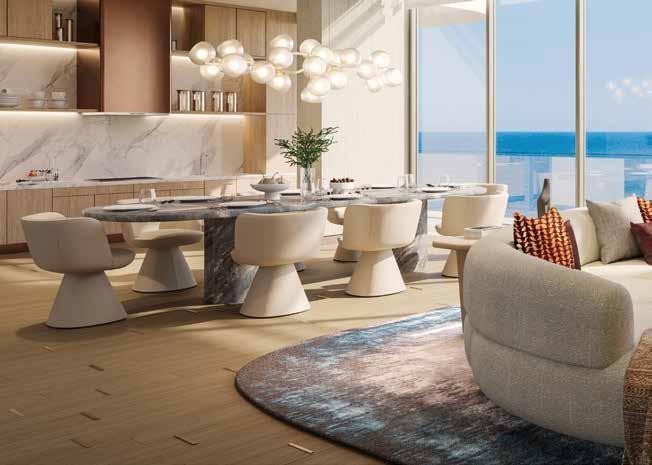
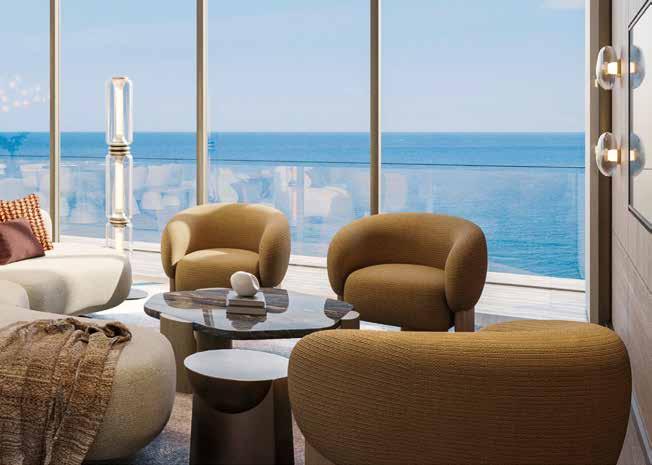
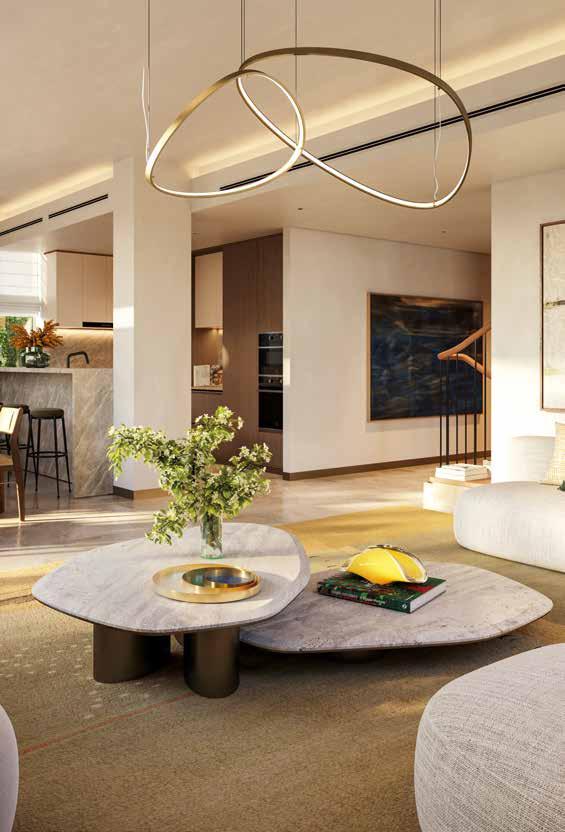
The freshest design covetables, from botanyinspired lighting to legacy ceramics.
14
A PLACE IN THE SUN
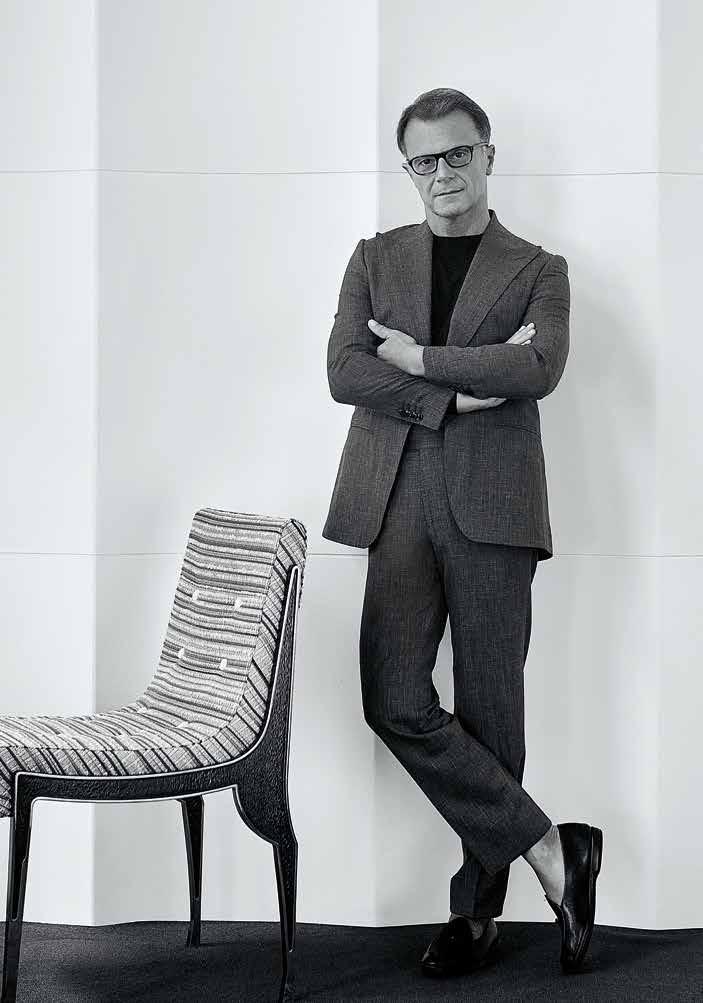
Master designer Achille Salvagni arrives in Palm Beach—adapting his recognized Italian modernism for a Florida clientele.
20 NATURAL BEAUTY
Celebrated textile designer Rebecca Atwood shares her process of bringing the outdoors into the home.
28
LOW-TECH, HIGH-TOUCH
Ice, steam, clay, and breath are becoming the new status symbols in a wellness world tired of numbers.
34 PUSHING THE LIMITS
From Sydney to South Africa, artists around the globe are shaping their work through lenses of identity and climate.
46 KITCHEN EXTRACURRICULAR
Chefs are channeling their creativity into off-menu projects that allow for freedom beyond the pass— from glassware to storefronts and pantry goods.
54 LOCAL KNOWLEDGE
Three Boston creatives map the neighborhood spots they return to again and again.
64 OMAN
On a journey through Oman, a writer and photographer traces the country’s line between past and present— and discovers a rich culture that embraces both.
78 ROOM TO THINK Frama founder Niels Strøyer Christopherson’s Copenhagen home is a testament to the power of less.
88 SEOUL SEARCHING
Asia’s most dynamic fashion city is teeming with some of the best-curated vintage in the world—if you know where to look.
96 ON HIGHER GROUND Mendoza is more than malbec country—it’s Argentina’s most exciting culinary frontier.
110 LES NOUVEAUX
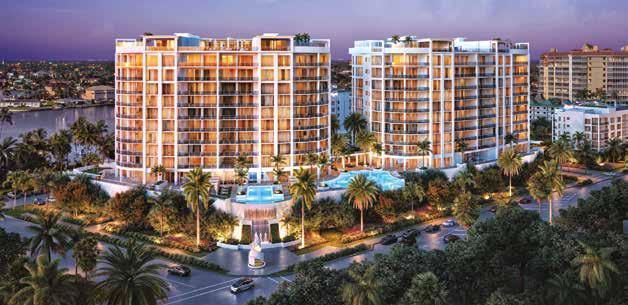
Marriott International’s upcoming collection of Residences.
112 LIST OF RESIDENCES
116 WELL AND GOOD
Discover Residences that are not just a home, but an experience.
118 JOY OF OWNERSHIP
ONVIA offers curated access to today’s most compelling new voices in contemporary art.
Photo: Michael Biondo
Contributors
Local Knowledge, Page 54
The illustrator, who specializes in book covers and maps for magazines, is based in the New York area. “I’ve been to Boston many times, but illustrating these maps made me discover new corners of the city,” she says. “I’ve already added several of the featured spots to my must-visit list.” In her free time, Ruzha loves traveling with her husband and two daughters, and is also a paramotor pilot.
TIM FRANCO
Seoul Searching, Page 88
Through long-term documentary projects across Asia, the French Polish photographer focuses on intimate human stories shaped by societal change. He is author of Metamorpolis, on the rapid urbanization of Chongqing, and Unperson, a portrait series on North Korean defectors, which received the 2022 Albert-Kahn Museum prize. Franco brought his documentary style to Herein: “Hongdae is youthful and raw—I wanted to show that in some of the photos,” he says.
34
“Although the artists I interviewed are scattered across the globe and engaged in very different practices and mediums, it was fascinating to uncover the common threads in their work; that feels especially apropos in 2026,” says the South African writer, who is based in New York. She has written for the Financial Times, Condé Nast Traveler, WSJ, and more, and is the New York correspondent for Monocle magazine
Room To Think, Page 78
“Profiling a man who has no screens, no sofa, and very little clutter in his apartment acutely reminds you how full of those things your own home is,” says the Brooklynite and executive editor of Business of Home. “Before my Zoom interview with Niels, I spent about 15 minutes tidying up my background out of embarrassment. But I shouldn’t have worried: For someone who lives in such an austere environment, he’s a remarkably easygoing guy.”
DINA RUZHA
MARY HOLLAND
Pushing The Limits, Page
FRED NICHOLAS
CEO & PUBLISHER
Jason Cutinella
GLOBAL EDITORIAL DIRECTOR
Jackie Caradonio
Editorial & Creative
DESIGNER
Alice Morgan
MANAGING EDITOR
Erin Agostinelli
COPY & RESEARCH EDITOR
Dora Dalton
CONTRIBUTING WRITERS
EDITOR Scott Bay
Esme Benjamin, Ashley Ogawa Clarke, Adam Erace, Mary Holland, Elyse Moody, Fred Nicolaus, Siobhan Reid, Andrew Sessa, Chris Wallace
CONTRIBUTING PHOTOGRAPHERS
Tim Franco, Mikkel Tielle, Chris Wallace
CONTRIBUTING ILLUSTRATOR
Dina Ruzha
Operations
Merri Gruesser
CHIEF OPERATING OFFICER
Sabrine Rivera OPERATIONS DIRECTOR
Joe V. Bock
CORPORATE AFFAIRS
Advertising
Amanda Gillentine
HEAD OF INTEGRATED MARKETING & PARTNERSHIPS amanda@nmgnetwork.com
Mike Wiley VP SALES mike@nmgnetwork.com
Marly Graubard
GLOBAL BRAND PARTNERSHIPS marly@nmgnetwork.com
Marriott International Residences
VICE PRESIDENT, GLOBAL DEVELOPMENT SUPPORT
Jennifer Cronin
SENIOR DIRECTOR, GLOBAL RESIDENTIAL MARKETING
Kathryn Falconi
SENIOR MANAGER, DIGITAL MARKETING AND COMMUNICATIONS, DEVELOPMENT + RESIDENTIAL MARKETING
Daniella Brauman
SENIOR MANAGER, RESIDENTIAL MARKETING
Jesse Crane Simon, US & Canada
Melyna Cruz, CALA
Hanisha Lalwani, EMEA
Gloria Lee, APEC
ABOUT THE COVER
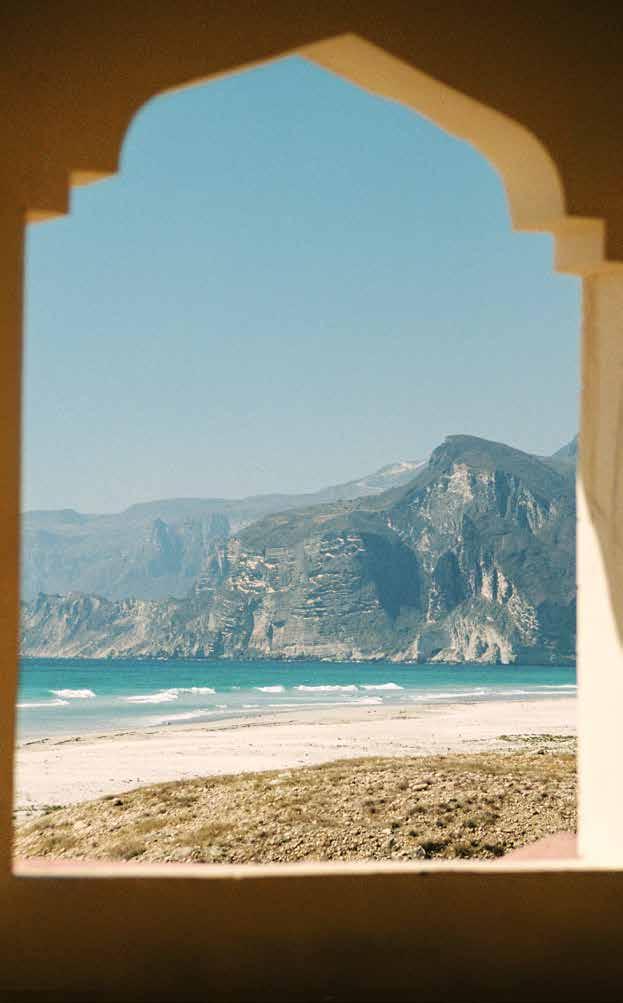
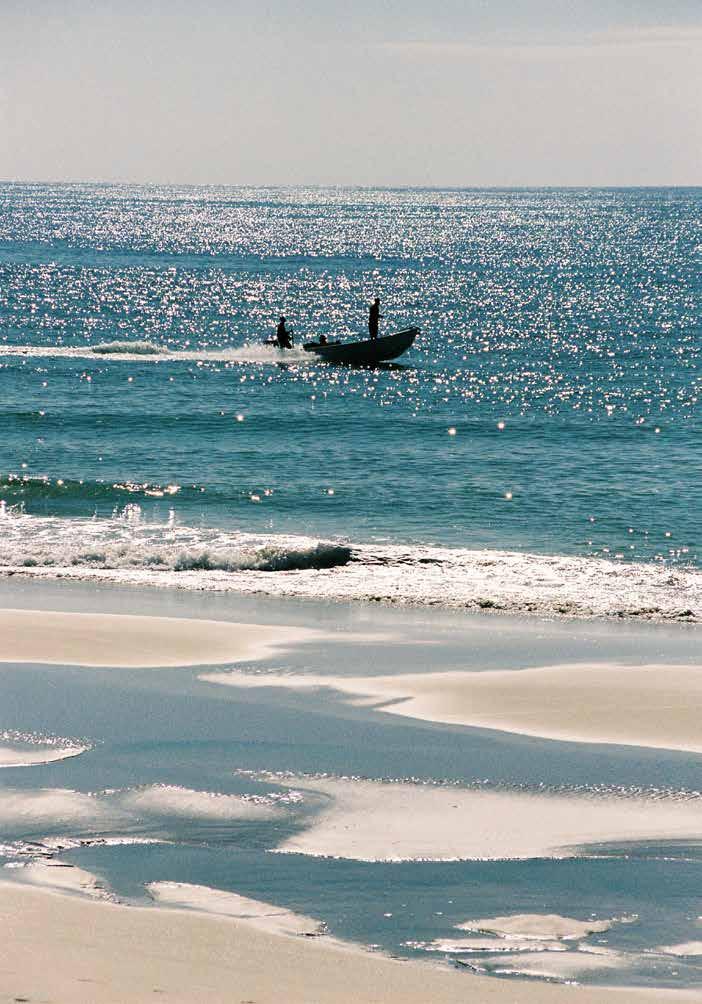
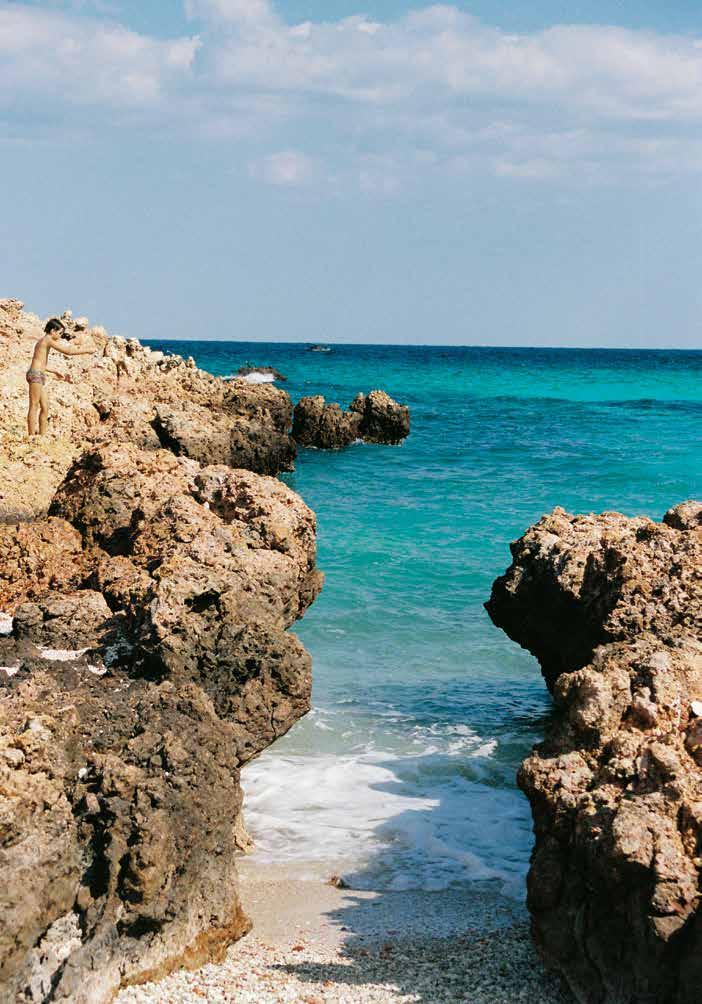
View from a rest stop near Fazayah Beach in Oman. Photography by Chris Wallace.
READ ON
Visit herein. marriottresidences. com for more travel, food, and design.
Published by: NMG Network 41 N. Hotel St. Honolulu, HI 96817
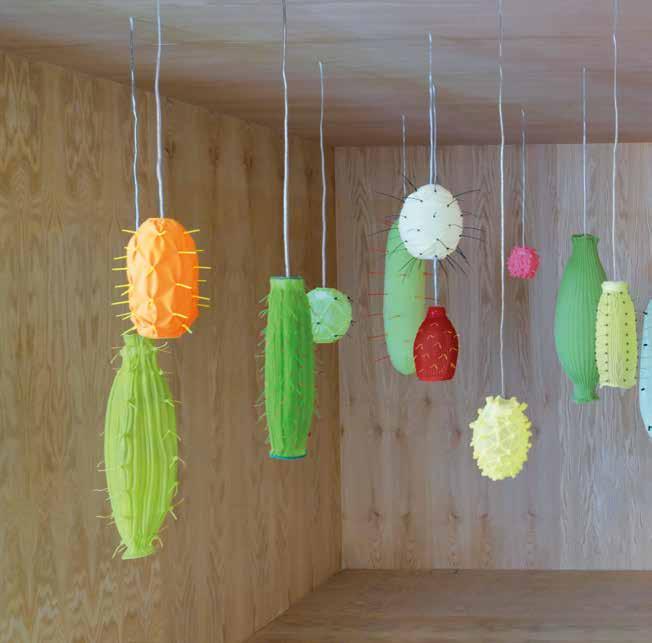
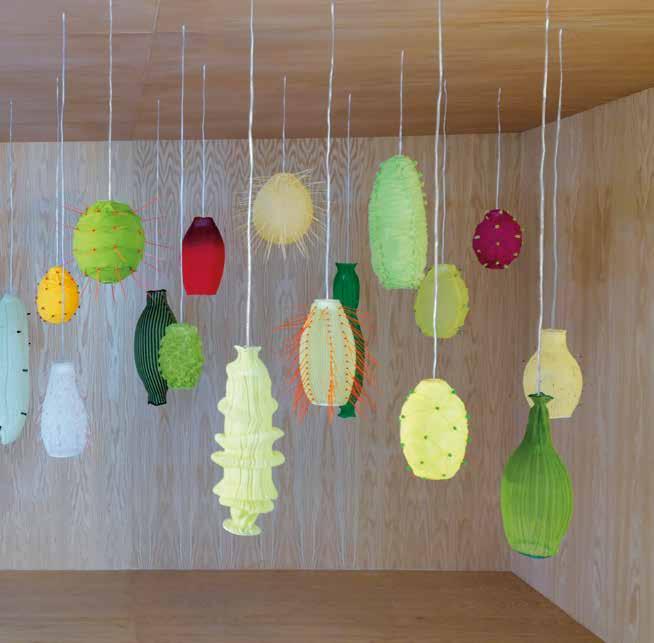
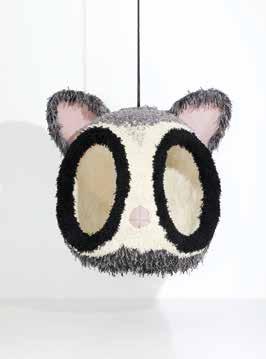
Mexico City textile designer Inés Quezada and Madrid-based product designer Inés Llasera founded Kauani (kauani.studio) as a dialogue between land and light. Rooted in desert ecologies and botanical form, their latest collection, Noches Áridas, draws on the resilience of xerophytic plants. Sculptural pendants and lamps are akin to nocturnal blooms—casting a glow that feels at once elemental and enduring.
Partition as Performance
Based in Philadelphia’s Old City, Dudd Haus (duddhaus.com) opened in 2025 as a platform for experimental American design. Among the whimsical and bold objects displayed and sold on its e-commerce site is the Portal Screen by Carl Durkow. Not unlike a sculpture, it suspends wired glass within a rippling stainless-steel frame, creating a functional, but theatrically so, room divider that behaves like a kinetic drawing in space.
Three Generations of Brilliance
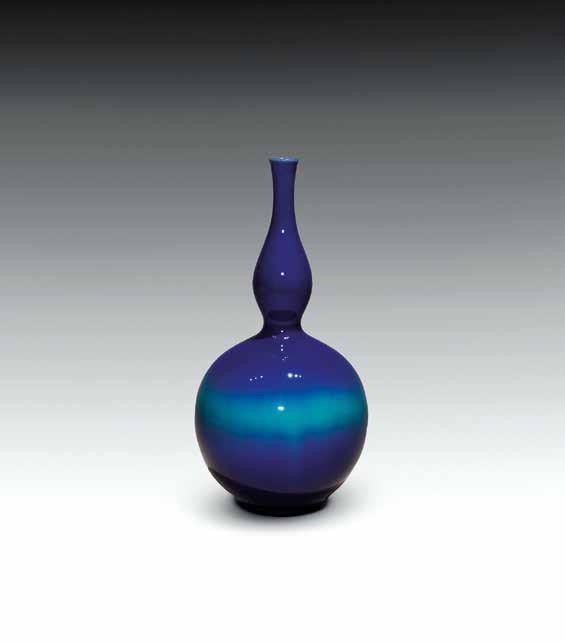
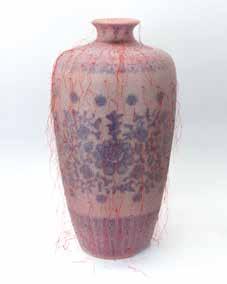
A master of the luminous saiyu glazing technique, the late Tokuda Yasokichi III created radiant ceramics with subtle gradations and nuanced contrasts of color, surfaces alive with depth and brilliance. Honored in Japan as a Living National Treasure in 1997, he inherited the craft from his grandfather and father, refining it into a legacy that endures beyond his lifetime. Now, the last of his works are on display at New York’s Onishi Gallery (onishigallery.com).
Design Enlightenment
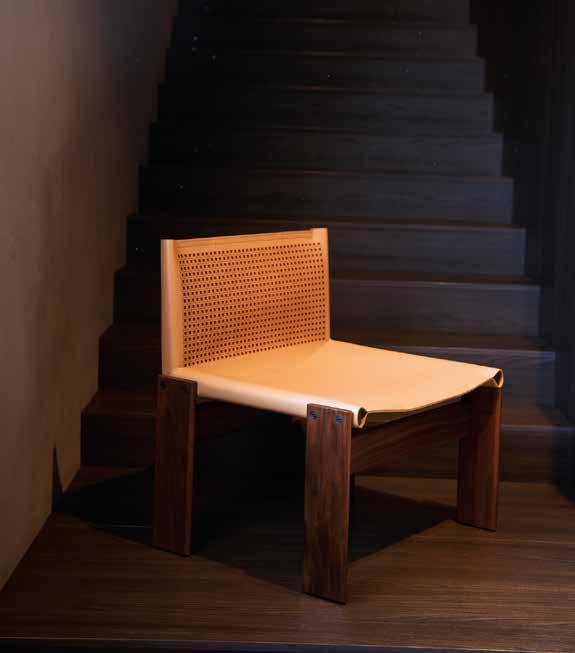
Last year, when Molteni&C (molteni.it) reissued Monk—the beloved circa 1973 armchair from legendary Italian postmodernists Afra and Tobia Scarpa—style obsessives nearly tripped over their Prada loafers in a rush to bring it home. Almost monastic in its minimalism (hence the name), the piece has held a special place in the annals of design. Now, making it all the more covetable is a limited-edition collaboration with Cabana magazine, featuring a laser-engraved leather backrest.
OWN YOUR DESERT SANCTUARY
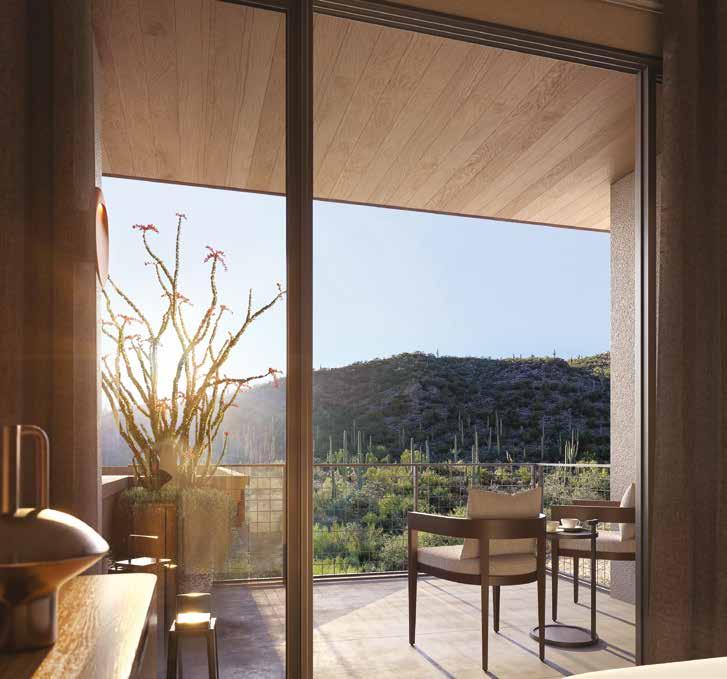
A life in harmony with the desert - introducing The Ritz-Carlton Residences, Dove Mountain, Cielo Sonora. An intimate enclave of 62 residences at the base of the Tortolita Mountains, mere steps from the legendary service of The Ritz-Carlton, Dove Mountain Hotel.
Now selling from $1,785,000.
residencescielosonora.com
Developed by One Dove Mountain LLC
The Ritz-Carlton Residences, Dove Mountain, Cielo Sonora (the “Project”) and the residential villas within the Residential Project (the “Villas”) are not owned, developed, or sold by Marriott International, Inc. or its affiliate. One Dove Mountain LLC (“Developer”) uses The Ritz-Carlton trademarks and trade names under a license from Marriott, which has not confirmed the accuracy of any of the statements or representations made herein. If this license is terminated or expires without renewal, the residential project will no longer be associated with or have any right to use, The Ritz-Carlton brand, trade names or trademarks. All renderings contained herein are merely intended for illustration purposes and not as a representation, warranty or guaranty of size, layout, finishes, views, or any other characteristics of the improvements or natural features depicted. This is not an offer of real estate for sale or solicitation of an offer to buy, to residents of any state, province or other jurisdiction where the Project is not registered in accordance with applicable law or where such offering or solicitation would otherwise be prohibited by law. Offered by Polaris Pacific — a licensed AZ broker (AZ DRE # CO662390000).
A Place in the Sun
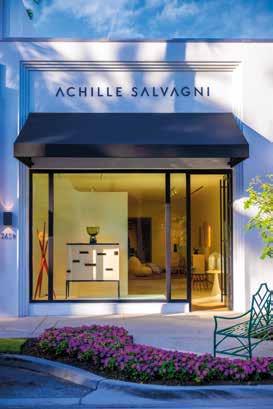
Achille Salvagni, a master designer known for everything from mod furniture to Manhattan high rises and mega-yachts, arrives in Palm Beach—adapting his recognized Italian modernism for a beach-forward clientele.
YOUR NEW PALM BEACH ATELIER FEELS LIKE A SMART LEAP ACROSS THE ATLANTIC. WHEN DID YOU KNOW FLORIDA NEEDED A TOUCH OF SALVAGNI?
After thoughtful research and site visits across the country, we landed on Palm Beach because of how closely both the city and its people align with the ethos of the atelier. For me, Palm Beach represents a unique balance between heritage and modern sophistication. It’s a place where tradition and a sense of timeless elegance naturally coexist—both values that have always guided my work.
HOW DOES PALM BEACH’S SOCIAL RHYTHM RESHAPE YOUR DESIGN LANGUAGE?
Palm Beach has a fascinating duality. It is a place deeply rooted in its own history, yet it wears that history lightly, with grace, humor, and freedom. The gallery blends this sense of refinement and irony with a beauty lived with ease, creating a new cultural home. It is airy and filled with light, and its location on Worth Avenue sits among fashion boutiques and brands that uphold the same guiding values of craftsmanship and elegance.
FOR THOSE STEPPING INSIDE THE ATELIER FOR THE FIRST TIME, WHAT DO YOU WANT THEM TO FEEL IN JUXTAPOSITION TO YOUR LONDON AND NEW YORK SHOWROOMS?
After London’s classical rigor and New York’s architectural intensity, Palm Beach introduces a new register. One emotion I hope they feel is a sense of levity. I hope they find joy in my designs.
YOU’VE OFTEN BLURRED THE LINE BETWEEN COLLECTIBLE ART AND LIVABLE DESIGN. WHEN DOES AN OBJECT STOP SIMPLY BEING A CHAIR OR A CHANDELIER AND START BECOMING A FUNCTIONAL SCULPTURE?
When it evokes emotion before it performs a function. Design gives an authentic aesthetic to a practical need. When it exceeds this, it blurs into art. A chair must be comfortable. A chandelier must give light. But if the first reactions are emotional—curiosity, desire, even slight uneasiness—then the object has crossed into another dimension. I don’t see art and design as separate territories. We live surrounded by objects; they shape our daily rituals.
ITALY IS ENDLESSLY ROMANTICIZED, BUT WHAT HAS PALM BEACH TAUGHT YOU ABOUT GLAMOUR THAT ROME NEVER COULD?
There’s an old-world elegance and heritage to Palm Beach that is unique yet mirrors the romance of Italy. The city gently balances opulence with restraint, legacy with the future. These characteristics have inspired me to create pieces in new colors, finishes, and motifs.
WHEN YOU NEED INSPIRATION, WHERE DO YOU DISAPPEAR TO IN PALM BEACH?
I love walking along the Lake Trail at sunset. The light over the Intracoastal Waterway has something almost Mediterranean about it—soft, diffused, generous. It allows the mind to slow down. For coffee, I occasionally retreat to Sant Ambroeus or our neighbor Le Bilboquet. There is a composure and quiet elegance in both places that remind me of a mix between Milan and Paris.
WHERE IN PALM BEACH DO YOU INSIST ON TAKING GUESTS TO DINNER WHEN YOU WANT TO SEDUCE THEM?
Seduction is always about the atmosphere. If I want energy with refinement, I might choose Tutto Mare, designed by my friend Enrico Bonetti from Bonetti/Kozerski Architecture DPC. For something more informal and transportive, I love Carriage House. The courtyard, the candlelight, the intimacy—it all feels like stepping into a more elegant decade. Ultimately, whether in design or in dining, the principle is the same: Light must flatter, materials must feel honest, and the setting must allow conversation to unfold naturally.
IF YOUR FUTURE SELF WALKED INTO THE PALM BEACH ATELIER, WHAT WOULD YOU HOPE TO SEE?
I dream that the Palm Beach gallery becomes a cultural home for locals and visitors alike. To help achieve this, we plan to activate the space with aligned brands, neighbors, and community leaders for celebratory moments as well as cycle new pieces into the environment often.
BY SCOTT BAY
Salvagni’s Palm Beach atelier opened on Worth Avenue in February 2026.
N A T U R A L B E A U T Y
A celebrated textile designer’s process of bringing nature into the home.
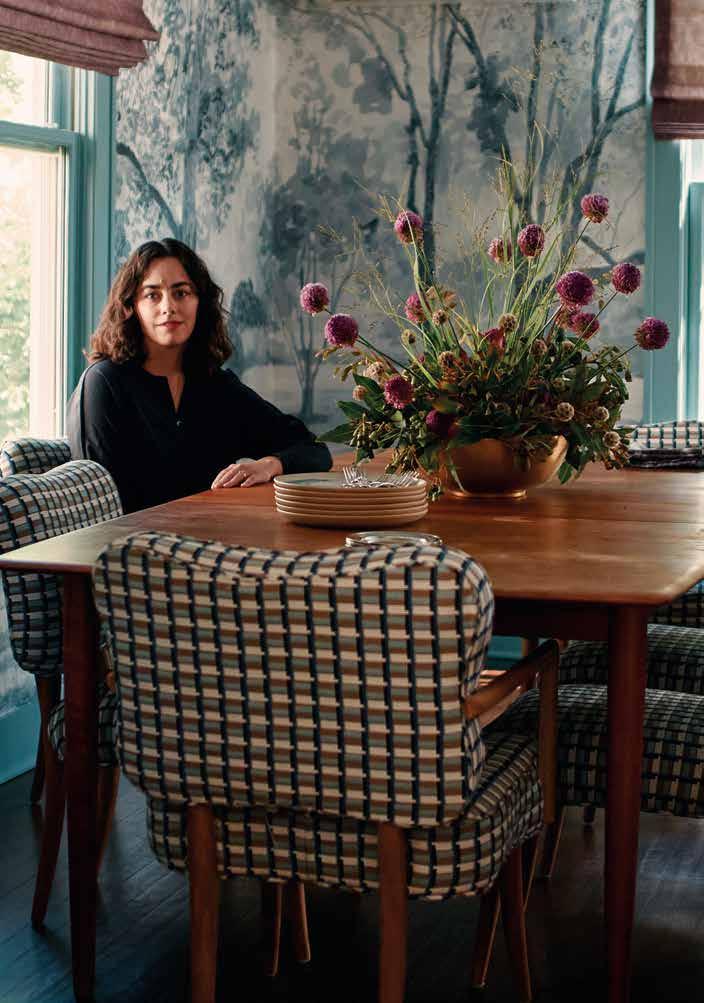
Place has always been both a compass and catalyst for Rebecca Atwood. Her painterly wallpapers and textiles first took shape in response to her time in Cape Cod: The tonal palette, mercurial light, and weathered textures of her childhood home quietly permeated her patterns, even after she left the East Coast behind. In 2021, following a move with her family to Charleston, she once again discovered inspiration through landscapes, this time in the South Carolina marshes and saturated skies.
An avid walker, Atwood acclimated to her new home by exploring Hampton Park, created in 1903, with big, open expanses of green and tree-lined paths. It looked exotic to her, compared with northeastern landscapes. Here, the foliage was more varied: palmettos, ferns, century-old live oaks with Spanish moss dangling from knobby branches. Compared with the Massachusetts coast, Charleston looked practically Jurassic.
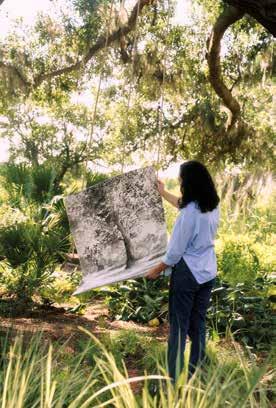
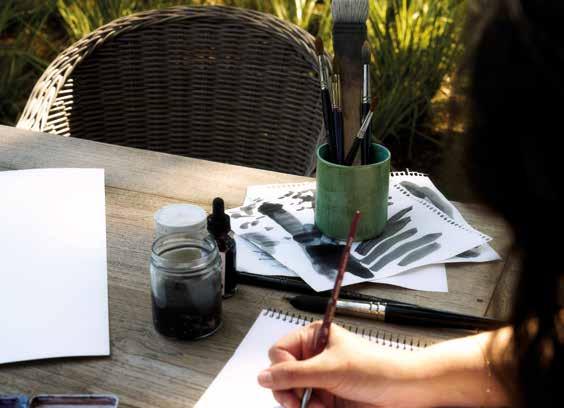
For an artist who studies the shapes of the leaves, it was a lot to take in—in a good way. The dense tree canopy in particular captured Atwood’s imagination, and she soon began bringing her india ink and brushes out with
1 2 3 4
A twood at H ampton P ark . “I t has been one of the places I’ ve loved the most living here ,” she says “I t ’ s so beautiful to walk through .”
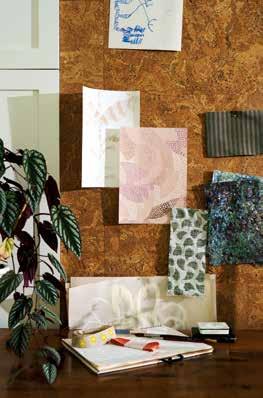
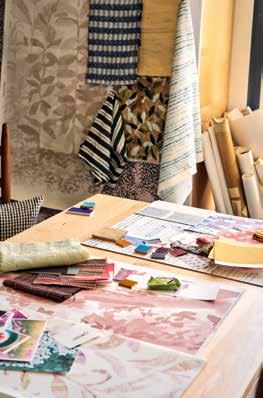
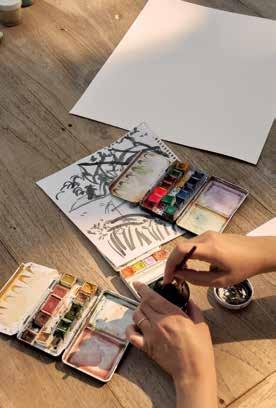
P aintings often begin in her sketchbook as a wash of color , then A twood builds the details layer by layer
“I tried to capture the marks that I was seeing out in the world , but I also added in some of my own gestures of thoughts and patches ,” she says 4
A twood sketches using a brush and india ink diluted with water “W orking with ink , I can feel the looseness I want,” she says
her to paint the scenery from life. She typically works from memory or inspiration images she has taken; she develops most of her hand-painted patterns in her sketchbook in the studio, not on-site in nature. But Hampton Park inspired her to try something new. “I wanted to have this park in our house,” she says. She had never created a large-scale mural for her line before, but that felt to her like the right approach.
“I just taped these big 30-by-40-inch sheets of paper to the cardboard that came with them and started painting. When I ran out of room, I’d switch to a new sheet as I was going, so that everything linked up,” Atwood says. “It felt so good to paint outside. It’s so expansive. I feel like you get the sense of space from the artwork because it was actually painted looking at the trees.”
The resulting mural fills the dining room of her new home in Charleston, and is also available for purchase under her namesake brand. It’s a perfect example of her sought-after, laid-back approach to design—it’s rooted in landscapes and how they make us feel. In fact, that’s the topic of her latest book, The Harmonious Home: Designing Peaceful, Personal Spaces Inspired by Nature, which was released last year.
Atwood’s mural went on to grace the entryway of the Southern Living Idea House by designer Allison Elebash, who compared its calming effect to the Japanese practice of shinrin-yoku, or forest bathing. The washy landscape echoed the marshy Kiowah Island.
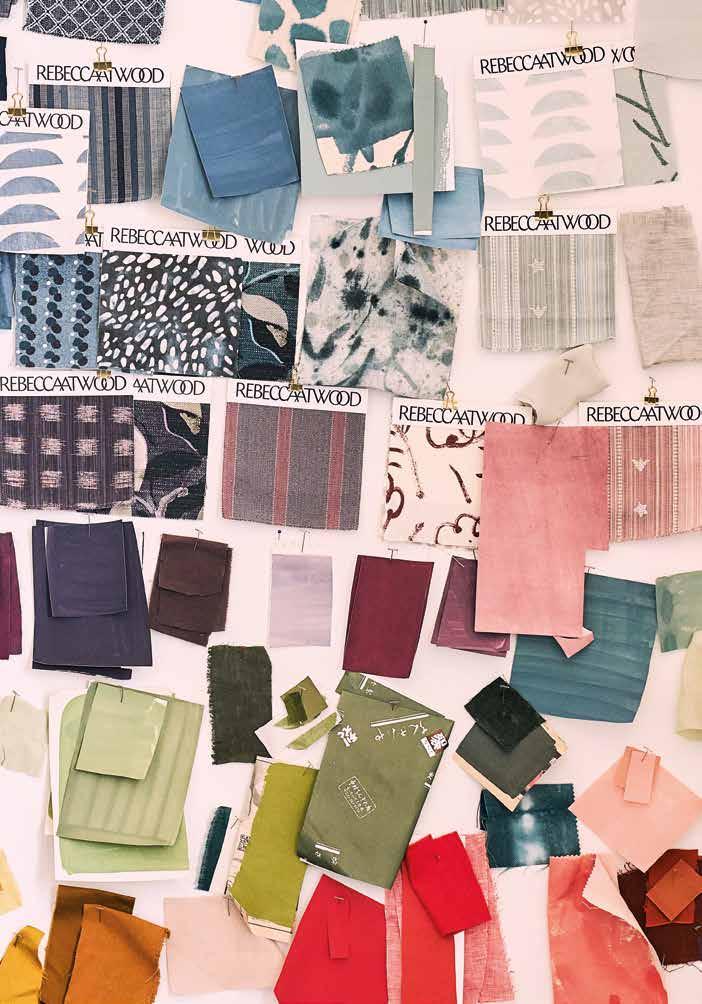
In the Lowcountry, you can’t help but be immersed in nature. The beauty of Atwood’s fabrics and wallpapers brings the outdoors in, wherever you are.
BY EYLSE MOODY
Atwood in her Charleston studio.
Low-Tech, High-Touch
Ice, steam, clay, and breath are becoming the new status symbols in a wellness world tired of numbers.
In an era when health is increasingly measured in metrics—heart-rate variability, glucose spikes, sleep scores— the pressure to optimize and biohack can start to feel like the opposite of well-being. In response, some of the world’s most luxurious spas are shunning numbers and charts in favor of treatments inspired by ancient rituals, nature, and simplicity.
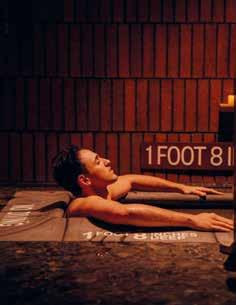
It doesn’t get simpler than breathing—the focus of a workshop at Ireland’s Cliffs of Moher Based on a technique developed by Dutch extreme athlete Wim Hof, this one-day retreat teaches guests how to utilize breathwork (a specific routine of controlled hyperventivlation followed by breath holds) to withstand ice bath immersion. The combined benefits, for those
who master the technique, include increased resilience, improved mental health, and reduced stress and inflammation.
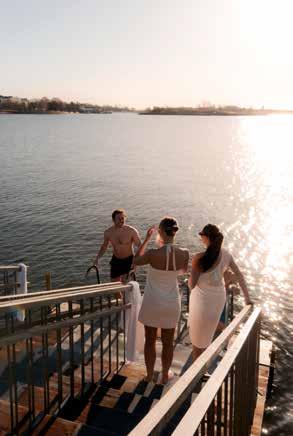
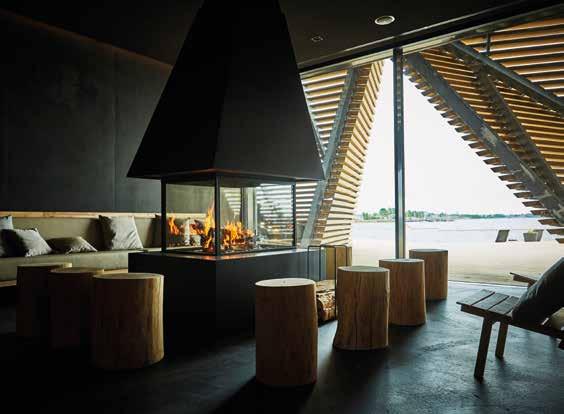
Although Hof deserves credit for the recent global popularity of ice bathing, the practice of submerging in frigid water has been part of wellness culture in the far north for centuries. Now, Nordic spas are offering a luxe twist on the method. Contrast therapy, which involves alternating between the freezing temperatures of a cold plunge and the intense heat of a sauna, is a centerpiece of Iceland’s iconic geothermal spa, the Blue Lagoon, as well as Finland’s Löyly Helsinki, where guests leap from the intricate sauna complex into the Baltic Sea and emerge revitalized. As the rest of the world has caught on to the benefits of this routine, contrast therapy now has footholds in many major cities. In
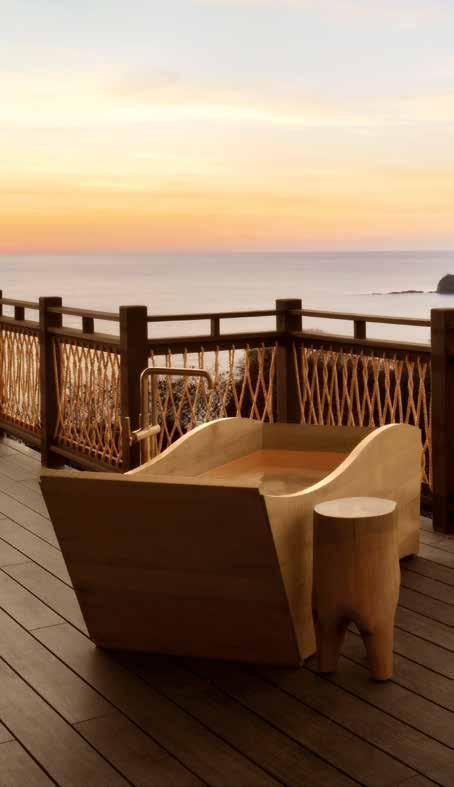
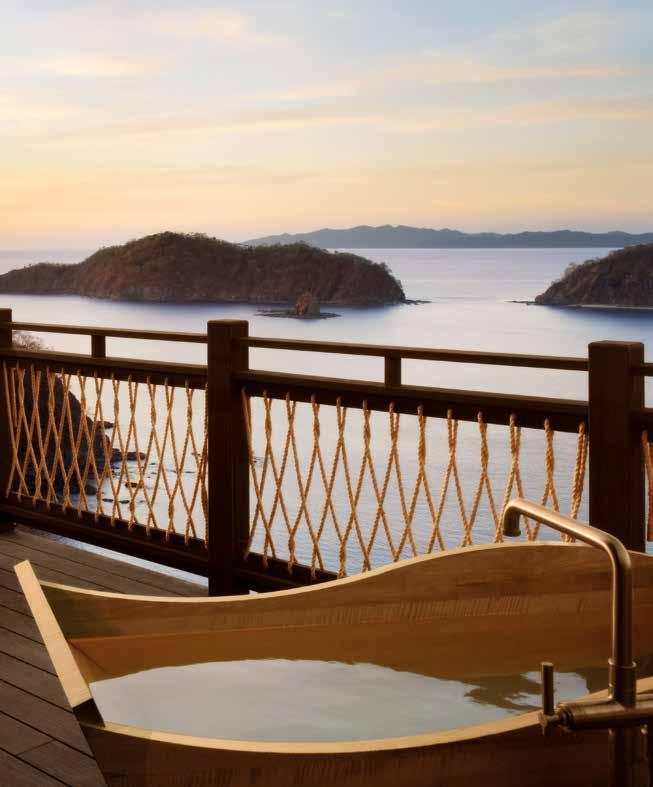
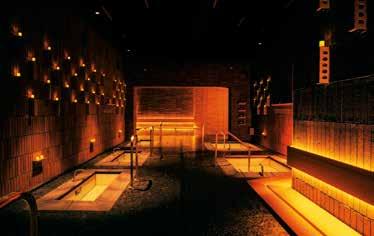
Clockwise from left: the hotcold circuts at Othership; dipping directly into the Baltic Sea from Löyly Helsinki’s sauna; and the spa at Nujuma, a Ritz-Carlton Reserve. Previous page: Costa Rica views from the outdoor soaking tubs at Nekajui Peninsula Papagayo, a Ritz-Carlton Reserve.
New York, for example, an influx of spas, including Othership and brand-new cool-kid hotspot The Alter, has guided hot-cold circuits with an emphasis on community.
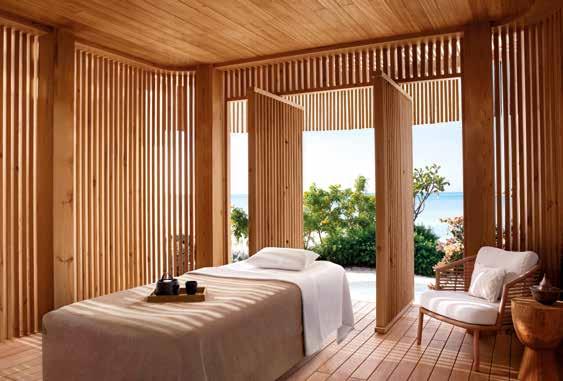
While Nordic traditions emphasize dry heat and ice, other cultures have long favored enveloping steam as a path to renewal. At the Red Sea’s Nujuma, a Ritz-Carlton Reserve, signature “spa journeys” combine offerings such as a soothing salt or spiced mud bath with a hammam—a practice that dates back to ancient Rome. After a steam to open the pores, the skin is cleansed, exfoliated, and moisturized by a therapist in an experience that’s equal parts relaxing and invigorating. Farther east, on Thailand’s largest island, residents of Peylaa Phuket take a similar approach, cleansing the body with herbal steam treatments in a tropical, sea-facing setting.
Long before wellness became so tech-saturated, cultures around the world turned to what was available in the immediate environment: heat, plants, and earth. The spa at Nekajui Peninsula Papagayo, a Ritz-Carlton Reserve, utilizes environmental materials from the coastal jungles of Costa Rica for its earth therapy treatment. Massage tools created from clay and carved wood, with their various textures and edges, help target pressure points and unwind knots with muscle-melting results.
There are no charts to take home from these ancient rituals and simple, nature-based therapies. No scores to improve. Instead, the luxury lies in something harder to measure: a softened nervous system, a sharpened awareness of the body, and the subtle reminder that well-being, at its most enduring, doesn’t need to be optimized—only felt.
BY ESME BENJAMIN
Othership in New York City offers a community-forward environment. Opposite, clockwise from top: Löyly Helsinki; the thermal waters at The Retreat at Blue Lagoon; northern lights above Iceland’s Blue Lagoon.
FROM SYDNEY TO SOUTH AFRICA, ARTISTS AROUND THE GLOBE ARE SHAPING THEIR WORK THROUGH LENSES OF IDENTITY AND CLIMATE.
AS CULTURAL CONVERSATIONS SHIFT AND OUR PLANET EXPERIENCES MOUNTING PRESSURE, WE CHAT WITH FIVE CREATIVES WHOSE WORKS ARE TACKLING THESE ISSUES IN COMPELLING WAYS.
BY MARY HOLLAND
NATASHA “PRINCESS PEA” PREENJA
GURUGRAM, INDIA
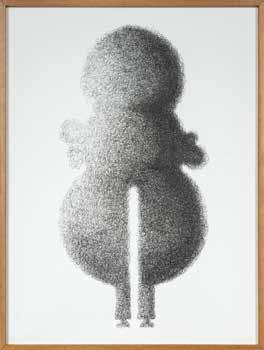
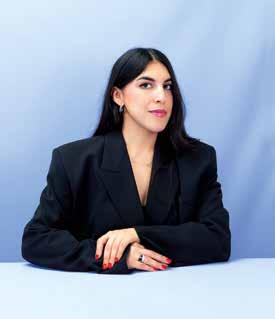
It was only in the past few years that Natasha Preenja, who also creates her art under the pseudonym Princess Pea, revealed her identity. The artist was widely known for wearing large headpieces with bulbous orbs and smaller spheres clustered as faux ears on either side. The physical obfuscation was an act of self-expression—and self-preservation. “To avoid the male gaze made me more comfortable,” she says. “I didn’t have to bother about how I looked. I could escape.”
Revealing her identity had advantages though— namely, in allowing her to draw attention to India’s artisan communities. “It was important for me to step out. Somebody has to represent the community of people I am working with,” she says. Having grown up visiting different parts of the country, Preenja was exposed to craftspeople from a young age. “I saw all these techniques when I traveled with my parents.” These influences are now translated into her meditative pieces featuring woodblock printing. She also works with women who shape wooden toys, transforming the toys into polished figurines.
One of the highlights of her work with artisans is the act of learning long-held techniques while also discovering new ones. Recently, she has started working with marble and stone, as well as embroidery. “We have so much craft to work with in this country,” she says. While she is determined to keep these crafts alive, she is not alone. Institutions such as the Chanakya School of Craft launched the Swali Craft Prize last year. “The younger generation is taking it forward.”
VANESSA BARRAGÃO
ALGARVE, PORTUGAL
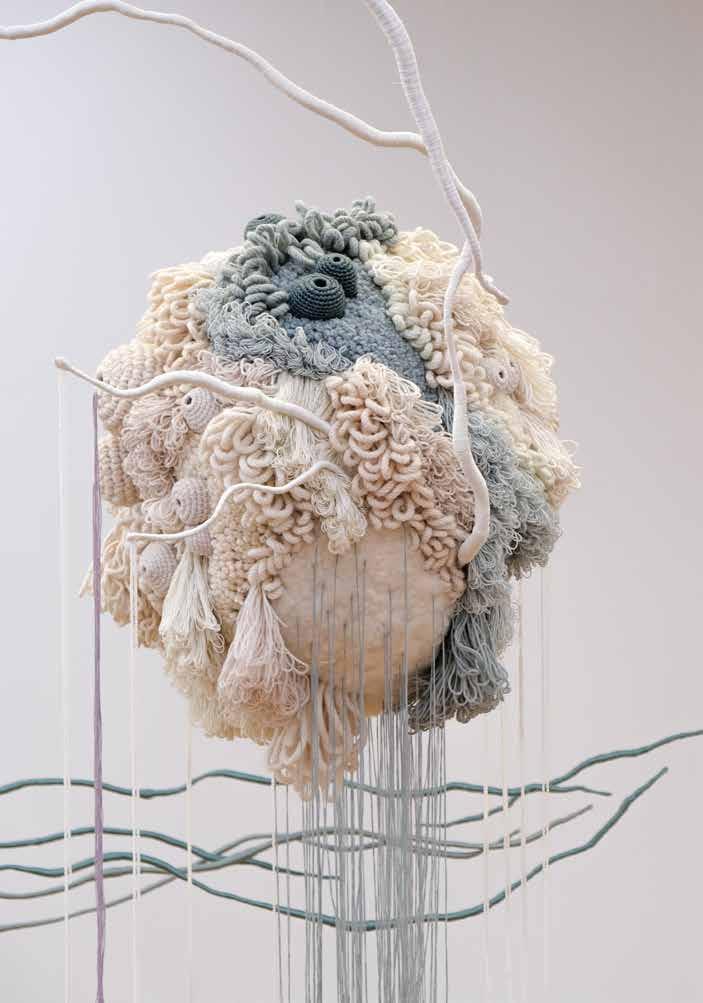
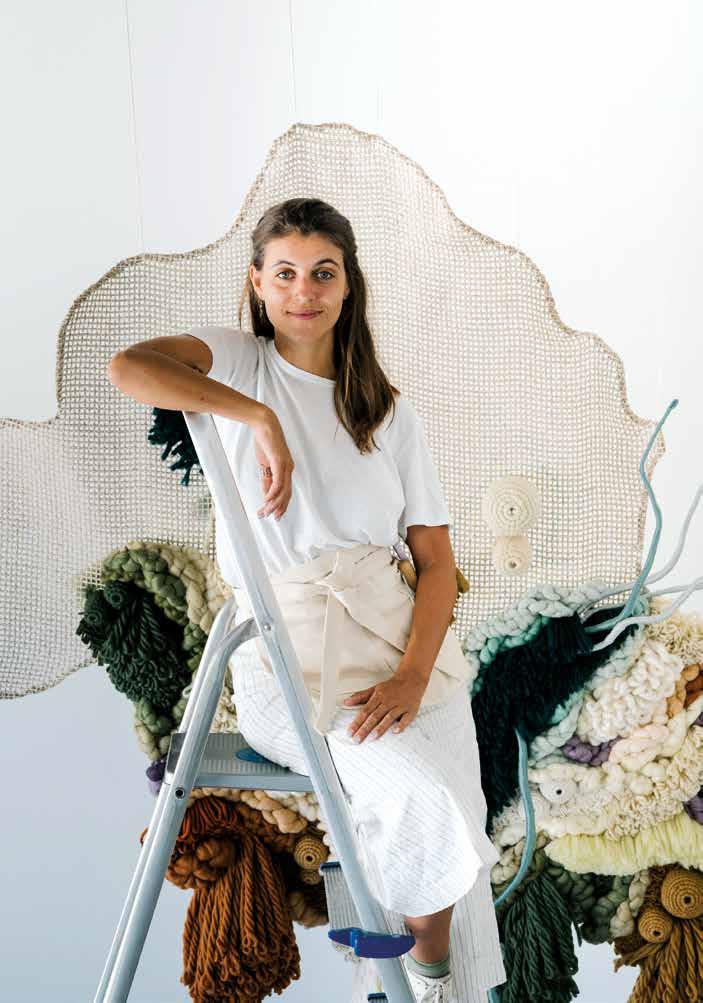
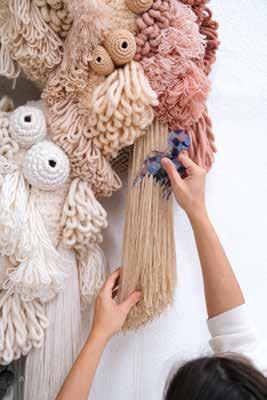
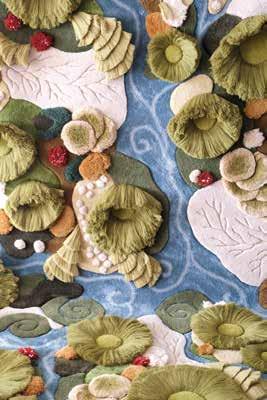
Before launching her textile studio in 2014, Vanessa Barragão studied fashion design and found an appreciation for fabrics—if not a true calling. “Fashion was not connected with my values,” the artist says. “I always loved creating things with fabrics and yarns—I like the handmade process.”
Barragão, who moved from Porto back to her home of Algarve in 2020, works with leftover fabrics sourced from factories around Europe. Her most celebrated pieces are tapestries, which draw inspiration from her surroundings: the ocean and the countryside. “I always need natural light to see the proper colors,” she says. They also carry powerful messages. “We have a bleached coral collection [with] artworks all in white that shows what’s happening with the coral reefs.”
Next, Barragão is exploring materials such as plastic to rethink how the studio “can manipulate it and use our techniques.” Working with this medium also allows her to push her studio’s mission even further: “We have so much waste in the world,” she says. To work with it, “we just need to use our creativity.”
REMY FAINT SYDNEY, AUSTRALIA
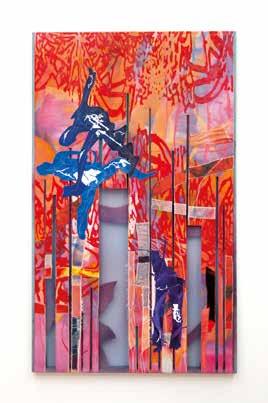
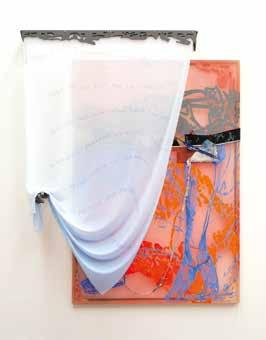
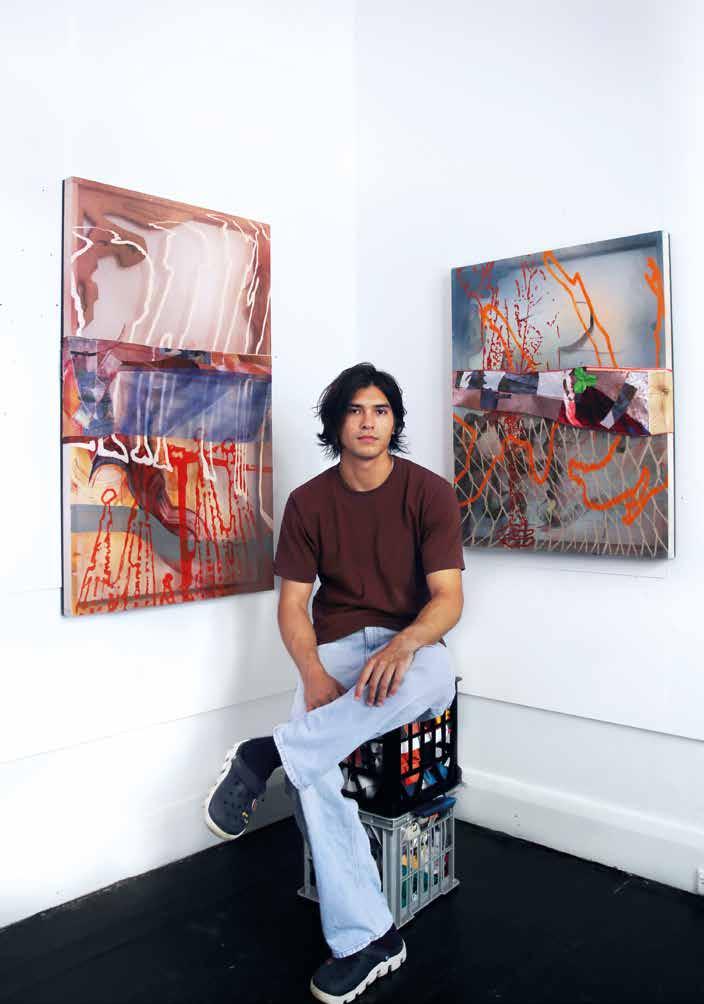
Born in Sydney and of fourth-generation Chinese heritage, Remy Faint has developed a deep fascination with Australia’s diverse cultural influences. “Most people don’t really associate early settlers as being from China,” he says. Through an expansive range of mediums—including photography, painting, collage, sculpture, and assemblage—the artist integrates family heirlooms and museum collections to explore and connect with his heritage. “A lot of these objects were handmade by [my greatgreat-grandmother],” says Faint, whose family came from a long line of silkworm farmers.
While his pieces are deeply personal, their collaged and layered references also speak to how Australia has evolved as a country. “[It] exemplifies a multicultural kind of progressive society,” he says. Now, with his first exhibition outside of Australia, in Paris, more people will be able to experience his work. It’s further proof that Faint is turning personal history into a bold cultural conversation beyond borders.
PORKY HEFER
SOUTH AFRICA AND FRANCE
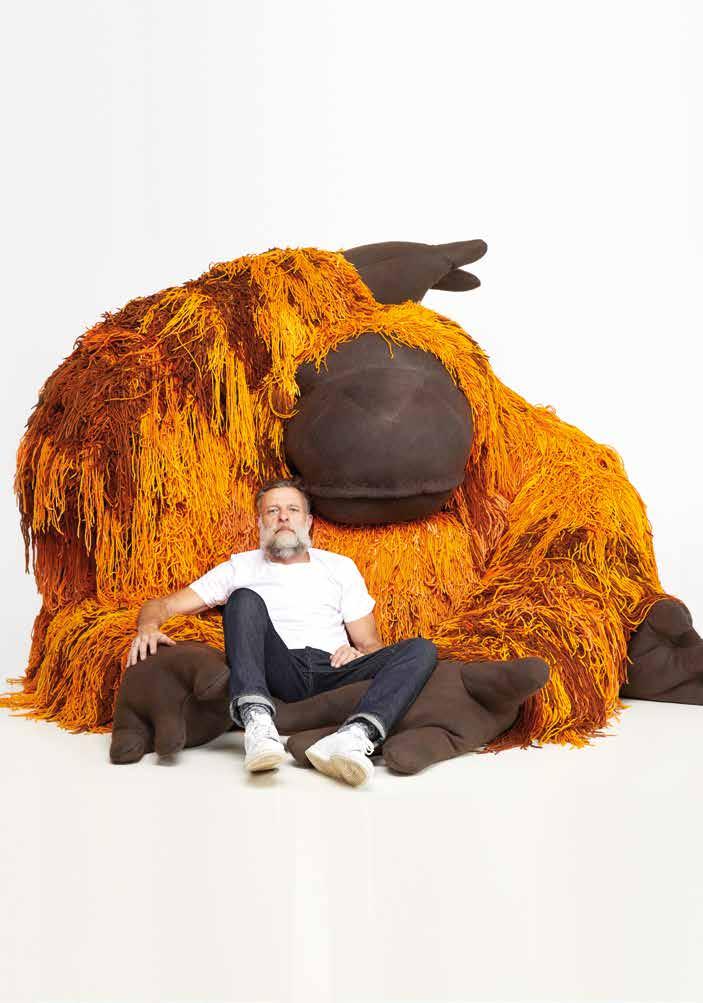
Porky Hefer has been drawn to animals since he was a child. “I think I prefer animals to humans,” jokes the artist, who spent much of his youth on farms and in the African bush. As an artist, he has become known for his oversized nest structures—so large a person can fit inside—and giant, curious creatures that dwarf a grown adult, made from materials such as leather and wood. “People look at big things more—you get that giggly kind of feeling,” Hefer says, adding that his pieces awaken a childlike sense of wonder. “When something is big, you don’t feel like you are superior.”
The animals also carry messages about our relationship with the natural world. For his exhibition, No Bats No Chocolate, he aimed to explain the impact of species loss through relatable facts that would resonate with all ages. The idea was straightforward: Without bats, there will be no cacao, and without cacao, there will be no candy bars; therefore, let’s protect bats.
Though he continues to produce work in his native South Africa, Hefer is currently living in the south of France, exploring new processes—and new animals. Europe might not have crocodiles and great white sharks, but there are plenty of big creatures to explore, such as bears, which were the subject of a recent commission in Gstaad, Switzerland.
KAREN NAVARRO TEXAS, UNITED STATES
“When I moved to the United States, I was always trying to understand my own identity,” says Karen Navarro, a Houston-based, Argentine-born artist. “One of the first things they ask you [when arriving] is to fill out what race you are. That brought up a lot of questions.” Navarro has since explored themes of migration, identity, and race through portraiture and fragmentation. By blending photography and sculptural elements, she discusses personal and historic narratives. “I was interested in portraiture because I am [curious about] the history of photography—how different identities have been represented.”
Navarro’s recent projects include an interactive public art installation at Discovery Green and a residency at PAC Art in 2025 and early 2026, where she showcased work in her new home city. “A lot of how we see and judge others is based on what we have learned,” she says. “Everything is about perspective.”
Marriott Executive Apartments in the Caribbean
Situated in the vibrant heart of Santo Domingo, along the iconic Winston Churchill Avenue, a prime address at the center of the city’s most dynamic business, hospitality, and culinary scene.
This landmark development introduces one of the country’s most forward-thinking and exclusive residential concepts, where contemporary design meets unparalleled operations and world class property management.
Expansive floor-to-ceiling windows frame sweeping city views, inviting the Caribbean’s natural light into every residence. Curated world-class amenities—including in-residence dining, a fully equipped fitness center, running track, and multifunctional spaces—are designed to elevate everyday living and enhance every stay for residence owners and guests alike.
Marriott Executive Apartments and Residences, Santo Domingo are not owned, developed or sold by Marriott International, Inc. or its affiliates (“Marriott”). Fideicomiso Torre Vistana Churchill uses the Marriott marks under a license from Marriott, which has not confirmed the accuracy of any of the statements or representations made herein.
EXTRA CURRICULAR
Chefs are channeling their creativity into off-menu projects that allow for freedom beyond the pass—from glassware to storefronts and pantry goods.
When you order the Martini Petit Pois at Salón Rosetta, the elegant pewter-blue bar above the lauded Mexico City restaurant of the same name, the glass has been just as carefully considered as what’s inside of it. The bowl of the coupe is a sort of Goldilocks: not perilously shallow nor a triangular menace from the ’90s, but just right in its depth and curvaceous proportions. The stem feels natural yet important between your fingers, like a fine fountain pen or a conspiratorial cigarette. The rim, flared out ever so slightly, keeps the mixture of gin, dry vermouth, aquavit, and sweet-pea essence inside the glass when it’s meant to be there, and sends it down a gentle little slide when it’s meant to be in your mouth.
“Design has always been part of how I understand cooking—and life itself,” says Rosetta’s chef-owner Elena Reygadas, who designed the martini glass as part of a bespoke collection with Milan-based studio R+D.LAB. “The weight of a plate, the curve of a glass, the way light hits a surface—these details affect how we taste and how we remember a meal.”
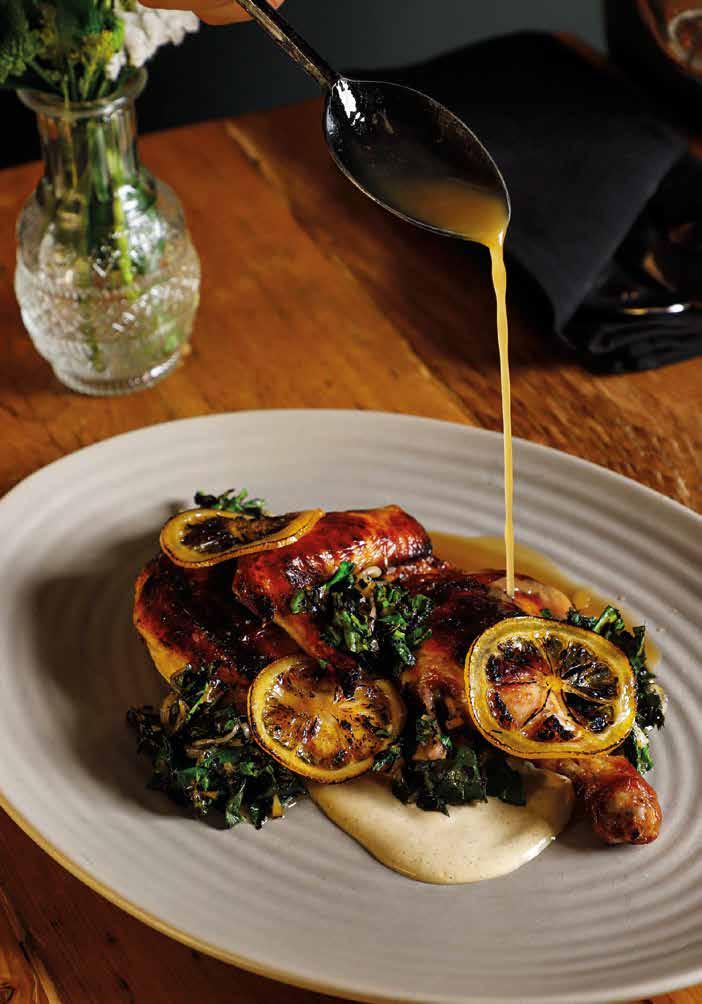
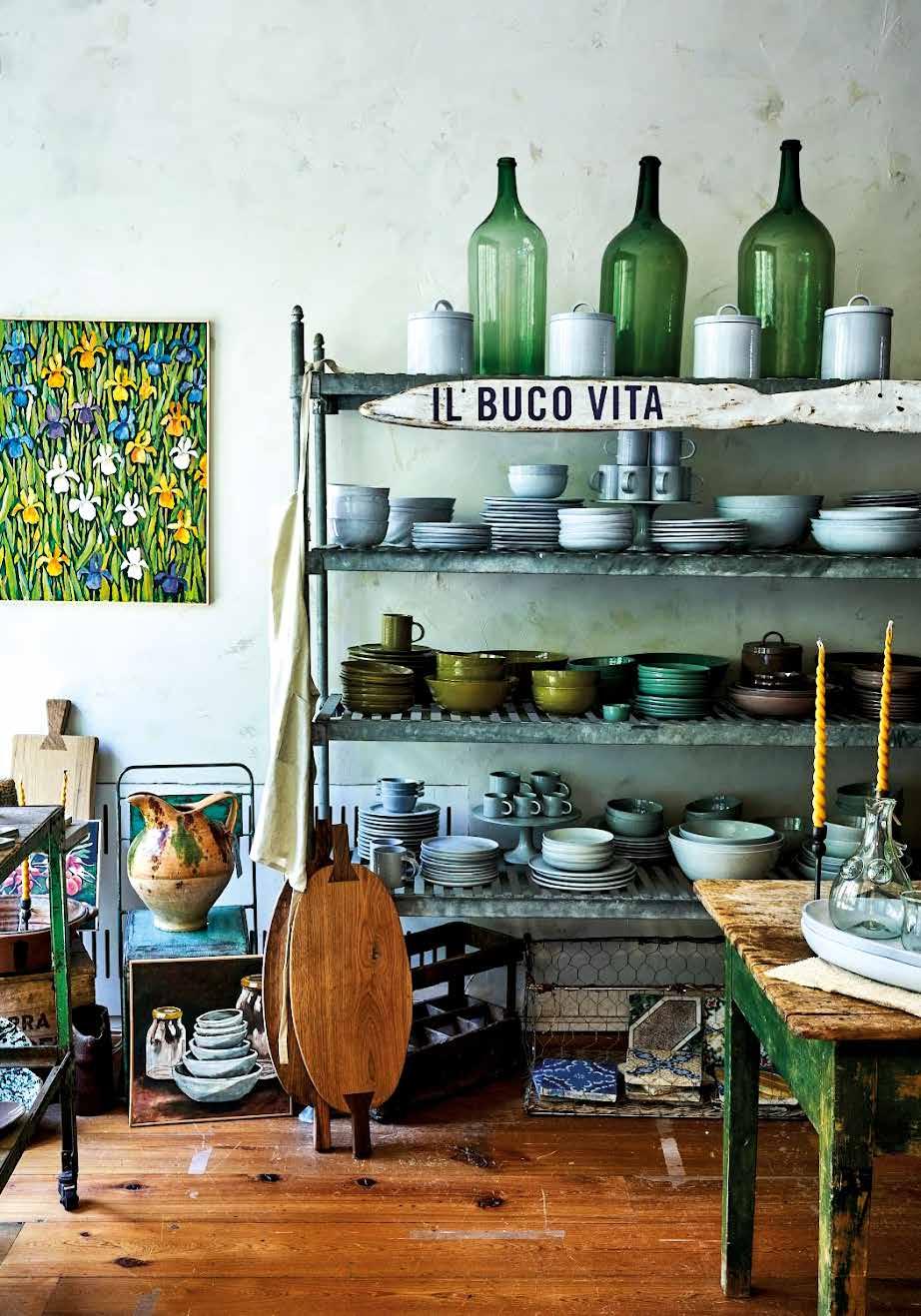
Il Buco Vita’s storefront. Opposite: The Epis roasted chicken at Honeysuckle.
Increasingly, talented chefs and culinary professionals like Reygadas are exploring creative pursuits outside—through spiritually tethered to—their restaurants. Table settings are a popular medium, with lines launched by former Le Bernardin sommelier Aldo Sohm (the lightweight and lovely Zalto series) and Shingo Gokan, one of Tokyo’s most acclaimed bartenders. The latter collaborated with Yutaro Kimura, fourth-generation designer of Kimura Glass, on the Sip and Guzzle collection, which includes a Van Dyke cocktail suite that’s become a new industry standard. At Honeysuckle restaurant in Philadelphia, where every detail connects to Black culture and foodways, chef-artist Omar Tate and entrepreneur Cybille St. Aude-Tate created their Colonoware series with designer Gregg Moore. Drawing inspiration from pottery unearthed at former plantations, the collection functions as both servingware and, in the case of the 79 vases displayed on a long wooden table in the center of the dining room, art to admire.
Chefs and restaurateurs, it turns out, are natural curators of physical space and intangible vibes,
Left: Gourmet food hall and market, UnderStudy. Right: A R+D.LAB martini coupe. Opposite: Il Buco Vita is a boutique stocked with la dolce vita-inspired ceramics.
so it makes sense that their talents would extend to retail. In New York, Donna Lennard’s perennially popular Il Buco grew out of her Italian antique shop on Bond Street. Now that the buzzy, cozy restaurants have become their own ecosystem, she’s returned to her retail roots with Il Buco Vita, a boutique stocked with la dolce vita-inspired ceramics and tableware, including fetching green and amber glasses designed by David Netto.
Meanwhile, across Houston Street, Flynn McGarry sells a monthly CSA-style box at GEM Home. McGarry stocks his cafe and boutique with fresh sunflowers, marinated olives, and striped tea towels inspired by an Edo-era pattern he fell for on a recent trip to Japan.
In Napa Valley, Philip Tessier, chef of the legendary Press restaurant, recently opened Under-Study, a gourmet food hall and market where locals pick up spelt-and-sesame loaves from the bakery, Snake River rib caps from the whole-animal butchery, and a bottle of Calistoga rosé from the bottle shop. There’s also a
culinary lab for content production, education, and pop-ups. “It’s been a huge lift,” Tessier says. “Sometimes I’m like, Why did I create so many different things? But it’s really exciting to see the team. They’re all like kids in a candy shop.”
Back in Mexico City, Renaissance woman Reygadas was also in on brick and mortar. After a dinner of soursop scallops and sweet potato
mezzaluna spiced with salsa macha, diners could head next door to Mesa to recreate the Rosetta experience at home with Oaxacan clayware, hand-embroidered linens, and, of course, the signature martini glass. When the shop made way for more dining space, the pieces moved exclusively online. “Design,” Reygadas says, “creates the conditions for hospitality.”
BY ADAM ERACE
Chef Elena Reygadas’ Mexico City hotspot, Rosetta.Opposite: Chef-artist Omar Tate and entrepreneur Cybille St. Aude-Tate’s Colonoware.
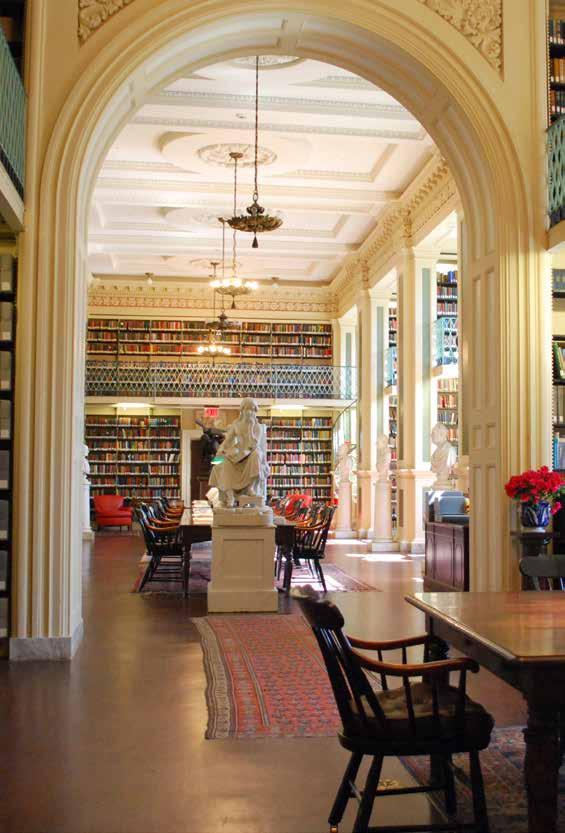
Beacon Hill Books & Cafe. Opposite: Boston Athenaeum.
LOCAL KNOWLEDGE
Boston is often defined by its past—but the city’s creative present is just as compelling.
Compact in size yet rich in cultural currency, the city pairs historic architecture and storied institutions with a growing community of creatives that are shaping its next chapter. Across neighborhoods, three Boston creatives map the beloved places they return to again and again.
BY ANDREW SESSA
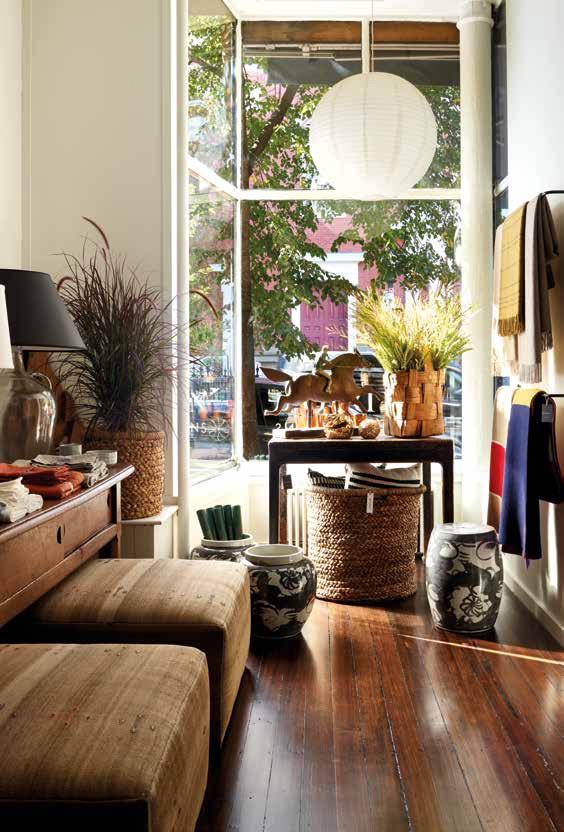
Find custom furniture and a well-curated selection of goods at Hudson
Interior Designs.
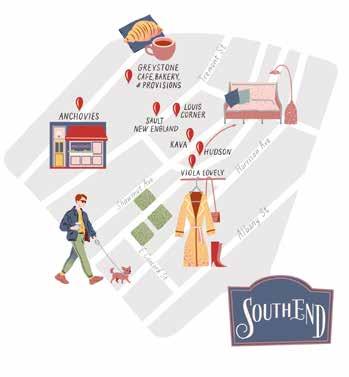
SEAN DONOVAN SOUTH END
“The South End is one of those perfect neighborhoods,” says Donovan, a sought-after interiors stylist who collaborates with top photographers and designers in Boston and beyond. “It’s so centrally located but it also offers a quiet, neighborhood feel, thanks to its picturesque rows of Victorian townhouses clustered around parks and squares.” The area is especially a must-visit for art and design lovers thanks to its many galleries, studios, and home-decor shops in former warehouses.
ANCHOVIES
“Possibly one of the town’s best dive bars, Anchovies is a neighborhood haunt that never gets old. An added bonus: They serve their martinis in the shaker!”
HUDSON INTERIOR DESIGNS
“Among the more unique home stores in town, Hudson offers everything from a well-curated collection of host(ess) gifts to custom furniture. They have
an ever-changing array of candles, pillows, and throw blankets, too.”
KAVA NEOTAVERNA
“Need an escape? Look no further than this small, buzzy restaurant, which serves up authentic Greek cuisine. The zucchini chips are not to be missed.”
LOUIS CORNER
“A new addition to the neighborhood, it has already become my go-to. Surrounded
by windows, it’s the best spot for people watching over a few drinks.”
SAULT NEW ENGLAND
“This spot might be one of my favorite Boston shops, carrying a wide range of quintessential coastal New England casual wear for both men and women, and plenty of small gift items.”
VIOLA LOVELY
“Home to some of the coolest up-andcoming fashion
designers, this simple storefront has everything from elevated basics, seemingly classic statement pieces, and, my personal favorite, unique ceramics and a sprinkling of home decor.”
GREYSTONE CAFE, BAKERY, AND PROVISIONS
“Nothing beats ordering your morning coffee and pastry from a window on scenic Appleton Street.”
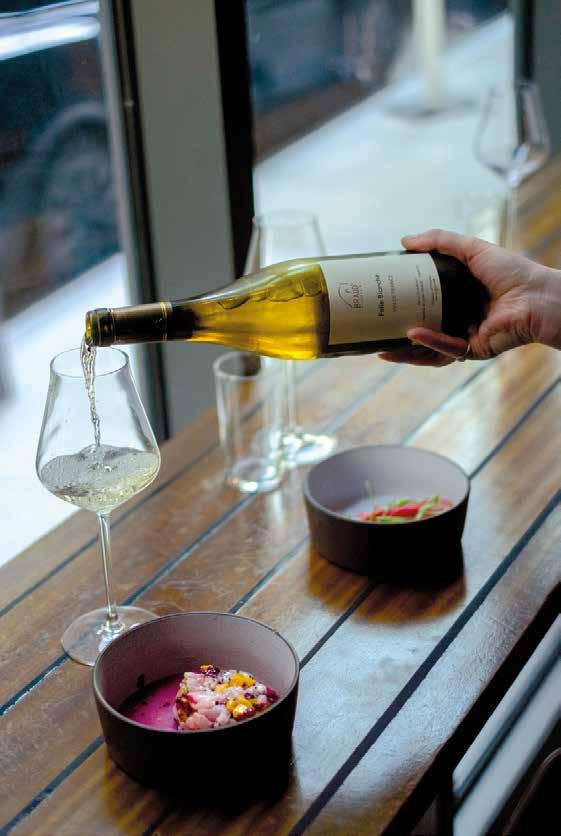
Haley.Henry in Downtown Crossing has an extensive wine list and small plates.
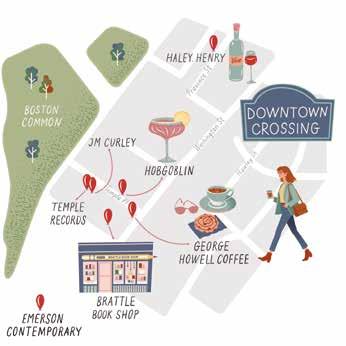
CARMEN HERMO DOWNTOWN CROSSING
Art historian Hermo moved from Brooklyn to Boston’s Downtown Crossing in 2024, to become a contemporary art curator at the Museum of Fine Arts, and, since then, she’s fallen hard for her ‘hood. “The centrality cannot be beat. You can access everything,” she says, noting in particular the proximity to Boston Common. “There’s just something great about everyone coming together here,” she says.
BRATTLE BOOK SHOP
“Founded in 1825, this bookseller is both a must-visit stop on any Boston history tour and a most plentiful source for used books. Browse away, warm up on a drizzly afternoon, and support a very longstanding local business.”
EMERSON CONTEMPORARY
“Theaters abound in Downtown Crossing, but don’t
miss this venue, which showcases experimental media art.”
GEORGE HOWELL COFFEE
“The drip is lovely enough to skip the long lines for espresso—a great way to add caffeine to a nearby Boston Common stroll.”
HALEY.HENRY
“If you love wine, the list here is extensive and thoughtful, as
is the range of small plates (the crudi are heavenly). I keep coming back for the delightfully briny vermouth concoctions and fizzy spritzes.”
HOBGOBLIN
“For something unexpected, this spot has a piano bar downstairs, and their cocktail offerings include potion-like elixirs that go down easy. The menu is Thai fusion—the Burmese Duck Khao
Suey is a flavor explosion.”
JM CURLEY
“This gastropub has a warm and welcoming vibe, serving respectful twists on decadent bar food, not least a succulent and savory burger.”
TEMPLE RECORDS
“For an impressive round of drinks, the cocktails here are impeccably crafted, with vinyl spinning behind the bar.”
The charming Boston Athenaeum.
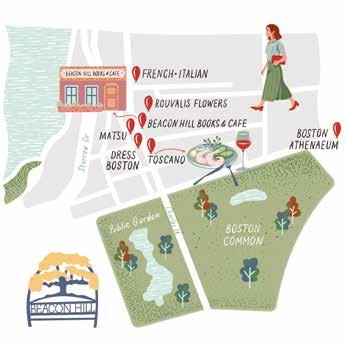
NINA FARMER BEACON HILL
An award-winning interior designer whose work has frequently been featured in Architectural Digest and Elle Decor, among other publications, Farmer has established herself as the Boston decorator for clients who want to bring an artful, curated, and collected look to historic houses. She loves living in Beacon Hill because it is “full of visual inspiration—from historic architecture to curated boutiques, cobblestoned streets to cozy cafes tucked away. There’s a sense of discovery and everyday magic.”
BEACON HILL BOOKS & CAFE
“This charming multilevel bookstore has a curated selection of fiction, nonfiction, and design books. The shop also boasts a cozy garden-level cafe perfect for breakfast, lunch, or a leisurely coffee.”
BOSTON ATHENAEUM
“A quiet haven for book and art lovers, this spot is steeped in history. From its stunning architecture
to its thoughtfully curated collections, it’s a place that inspires reflection and creativity.”
DRESS BOSTON
“Dress Boston offers timeless, curated clothing, accessories, and jewelry from sought-after designers—it feels personal, stylish, and effortlessly elegant.”
FRENCH + ITALIAN
“This chic shop with carefully
selected, Europeaninspired clothing and accessories provides the perfect opportunity to find elegant pieces that feel effortlessly modern.”
MATSU
“This shop sells Japanese home goods, stationery, and design pieces. It’s a tiny boutique with a big eye for detail, perfect for anyone who loves clean, thoughtful design and unique finds.”
ROUVALIS FLOWERS & GARDENS
“Beacon Hill’s charming florist, ideal for gifts or a little local indulgence.”
TOSCANO
“This inviting restaurant serves seasonal, Italian cuisine with a refined yet approachable style. It’s the kind of place that feels like a neighborhood secret, and it is always reliably delicious.”
Journal
OM AN
On a journey through Oman, writer and photographer Chris Wallace traces the country’s line between past and present— and discovers a rich culture that embraces both.
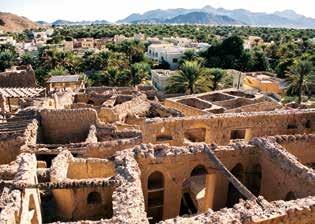
aybe it is the crystal-cut quality of the desert air and the powdery light of the Arabian Peninsula where it meets the Indian Ocean. Or is it, in fact, because of the immaculate, low-slung architecture of the towns? Perhaps it is the surrealist landscapes— from the Empty Quarter sand dunes in the south to the wavelike Hajar Mountains that appear to crash down onto the coast. Whatever the reason, the intense vividness of Oman cannot be denied. The effect is almost stereoscopic. The tactility and sense of place feel both dramatic and novel, as if you have stepped into a simulation where the minarets gather energy around them in a way that seems to defy physics. And this is before we even begin to talk about the food, the smells, the sounds, and the people.
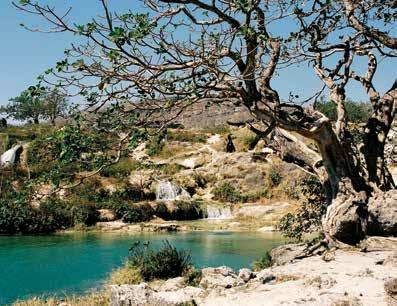
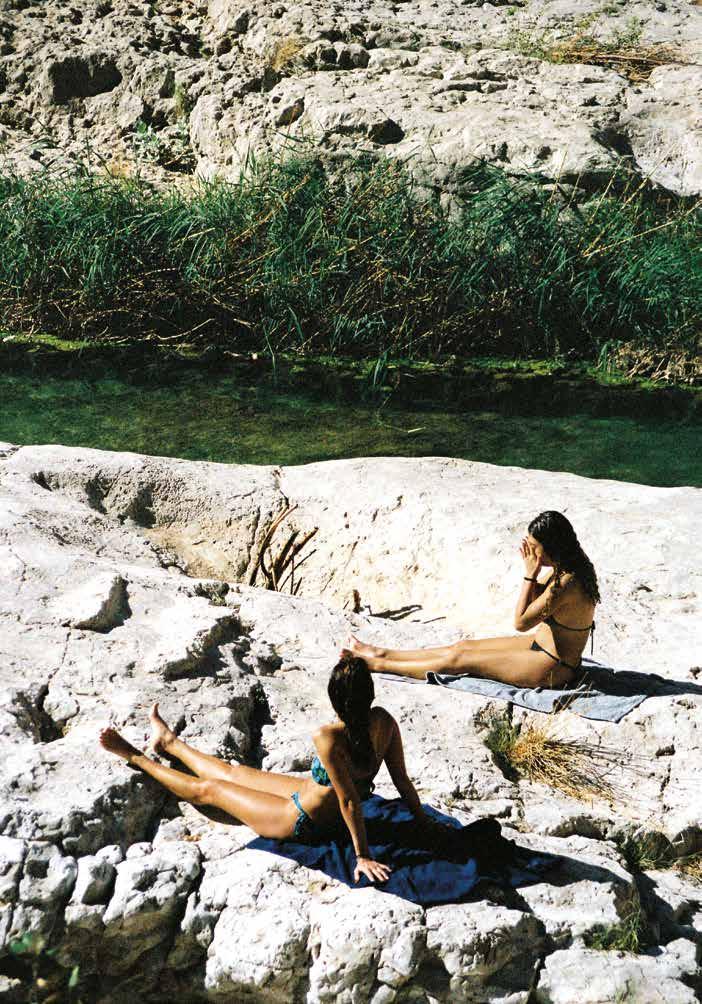
Clockwise from left: A wadi near Salaleh; the Omani flag, showcasing traditional khanjars, or curved daggers; Wadi Shab, a beloved spot for sunbathing, swimming, and hiking.
“The intense vividness of Oman cannot be denied. The tactility and sense of place feel both dramatic and novel.”
I began my visit in the capital city of Muscat’s old town, nestled on a protected cove. The former harbor stronghold there, dating back some two millennia and bookended by a pair of 16th-century Portuguese citadels, appeared to me as a tapestry of Omani architectural styles and eras. Al Alam Palace, built in the early 1800s, looked like a pavilion on Asgard—or an improbably futuristic United Nations building. The now mostly ceremonial palace, at the center of the old town, sitting beside the brilliant, stained-glass-walled Al Khor Mosque and beneath the old Portuguese fort on the cliff above, made me feel as though I had wandered into a kind of waking fantasy, a fairy-tale kingdom overseen by a benevolent monarch.
presided over the country from before the discovery of oil in the mid-1960s—when Oman had only a few miles of paved roads, one school, and no hospitals—through the early 2000s, is credited with much of the nation’s transformation, as well as preserving traditional Omani architecture and ways of life.
To listen to many of the Omanis with whom I spoke during my visit, the country’s leap forward in the era of oil has been largely driven by one such leader: Sultan Qaboos, who
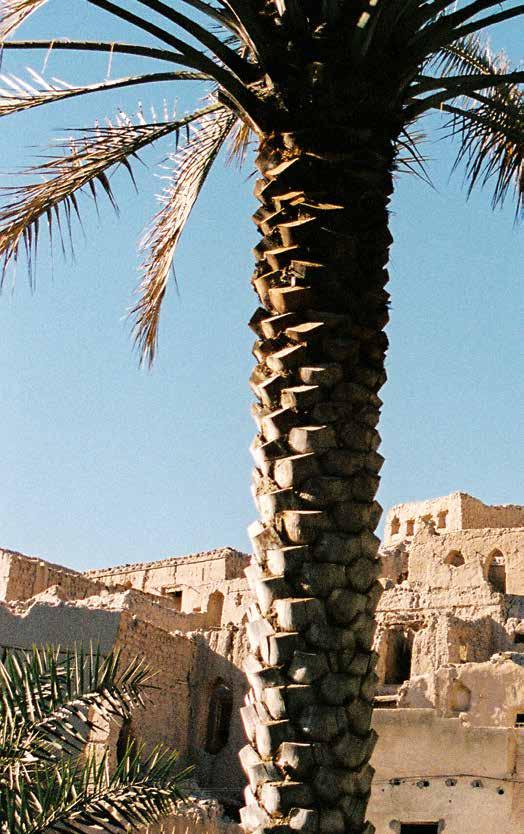
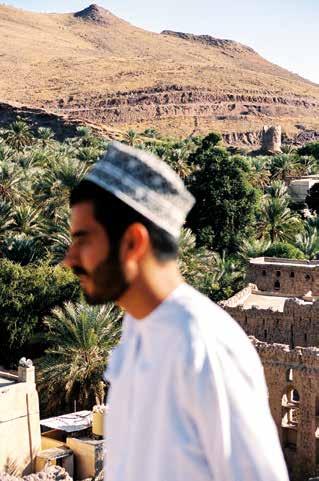
That pairing of old and new often plays out in a curiously fascinating dichotomy, as I discovered during my visit to Nizwa, the former capital of the interior province, high in the Hajar Mountains. There, I noticed many men had forgone the customary dishdasha—a pristine, ankle-length caftan—and the curved khanjar dagger worn at the belt, in favor of T-shirts and jeans. The atmosphere itself, however, couldn’t have felt more historically authentic: Shops sold antique khanjars in gold and silver, inlaid with precious stones. More utilitarian crafts were on offer elsewhere, including handmade papyrus baskets around the goat market, where I sampled traditional
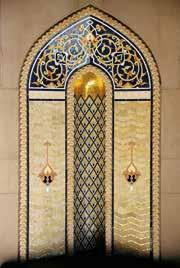
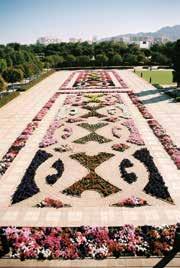
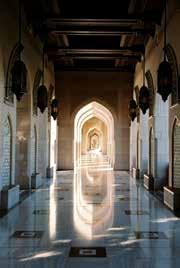
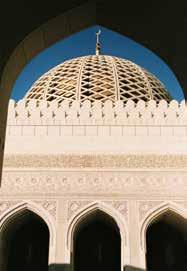
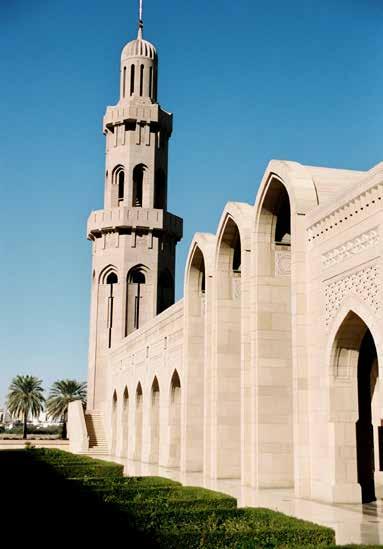
The Sultan Qaboos Grand Mosque in Muscat, the capital city of Oman.
The al Dimaniyyat Islands Nature Reserve is an archipelago of nine islands along the coast of Wilayat al Seeb.
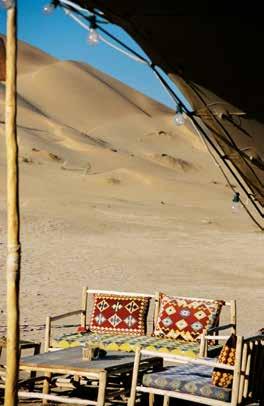
Clockwise from top: Black camels in the Empty Quarter; a sign warning of camel crossing; a traditional Bedouin tent; a view from inside the tent; the dunes at sunset.
Omani halwa (a cardamom-heavy confection of cornstarch and ghee) alongside a cup of karak, the Omani version of chai and a living reminder of the centuries-long spice trade with India.
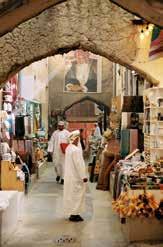
Oman’s frankincense trees are another bastion of the past, having once made the country one of the wealthiest lands in history. The trees were used for incense that was, in large part, bound for the cathedrals of Christendom, and an example of a good once sold at the Nizwa Fort. The famous stronghold has now been converted into a modest museum, but the grounds still play host to the vital weekly market, which includes live animals like cattle and goats. Not dissimilar to the Muttrah Fish Market in Muscat, these enduring gathering points for commerce and community remain quite a spectacle to experience. The salesmen in Muttrah, all uniformly dressed in immaculate dishdashas, range in temperament from carnival barker to neighborhood gossip, devious comic to hardnosed negotiator, many of them keeping their cash tucked into their kumas, the round, brimless caps worn throughout the country.
From the Hajar Mountains, I headed south, following in the footsteps of writer and explorer Wilfred Thesiger. I made my way into the endless sea of sand dunes known as the Rub’ al Khali, or Empty Quarter, passing the source of the incense I saw at the markets of the north— the frankincense plantations tended with the same reverence that grapevines receive in Bordeaux.
Here, in the desert, I was expecting to find the crushing isolation Thesiger described in Arabian Sands. Instead, I felt incredibly alive.
I spent a night in a traditional Bedouin tent, its black canvas interior piled with Arabian rugs, and woke to a sunrise over the dunes, marveling that the desert ran unbroken to Damascus, some 1,400 miles away—a greater distance than from the southern tip of India to the Himalayas.
The following day, returning to the coast, passing through ancient villages and along beaches trafficked only by camels, I reached Dhofar feeling subtly altered—cleansed, even,
by what Paul Bowles called “the baptism of solitude” found only in the desert. It was there, confronted again by the crystalline reality of Muscat, that I understood the hyperreality of Oman: the clarity and intactness of its culture in an age of dissolution, its resistance to homogenization, and the specificity of its architecture and visual identity. The country possesses a coherent sense of place, bridged between ancient and new, trade and tradition. That cultural confidence is what ultimately lingers.
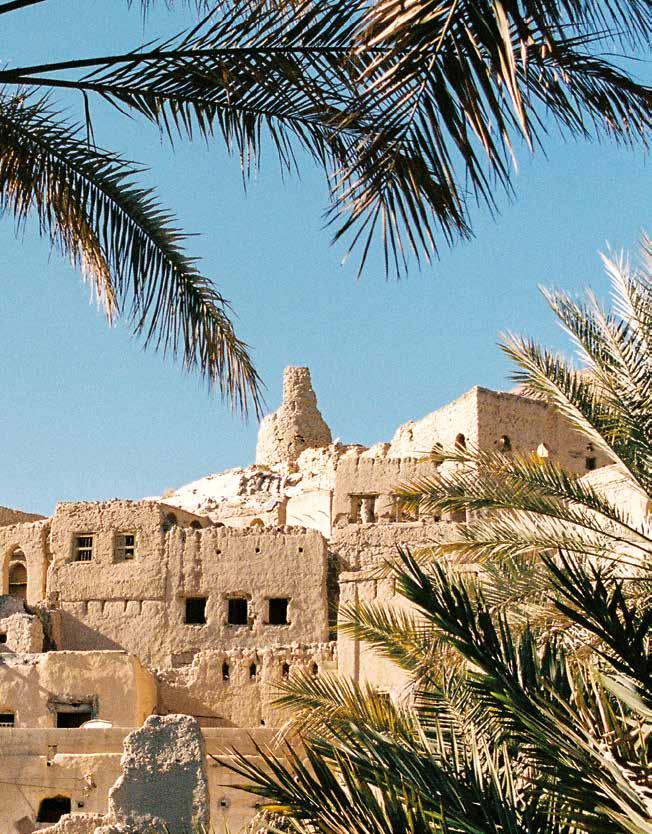
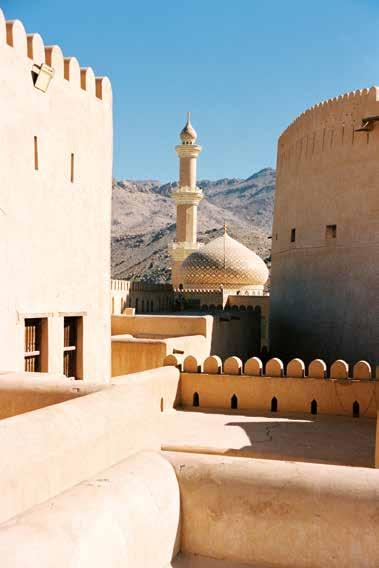
The UNESCO Wold Heritage site Falaj Al Khatmain Birkat al Mouz, an ancient village and irrigation system. Opposite: Fort Nizwa.
to
Room
Think
BY FRED NICOLAUS
Frama founder Niels Strøyer Christopherson’s Copenhagen home is a testament to the power of less.
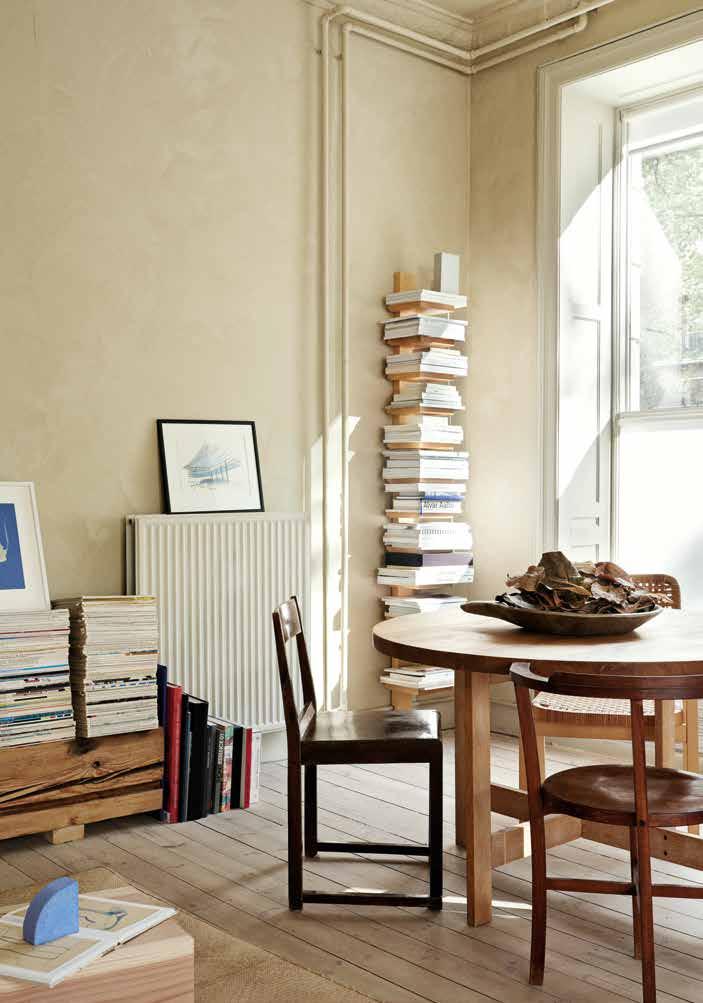
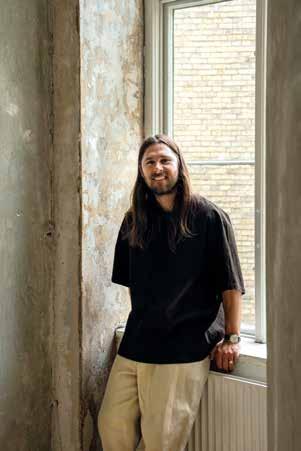
When writing a profile of someone’s home, it is customary to catalog the things that are in that home. In the case of Niels Strøyer Christopherson, that would miss the point. To be sure, his apartment—a street-level space in Copenhagen’s Østerbro neighborhood—has “stuff” in it. There’s a bed, a table, and a handful of chairs, including some made by his design company, Frama, which he founded in 2011. But Christopherson’s home isn’t about what’s there so much as what isn’t: Its evocative presence emanates instead from a distinct lack of things.
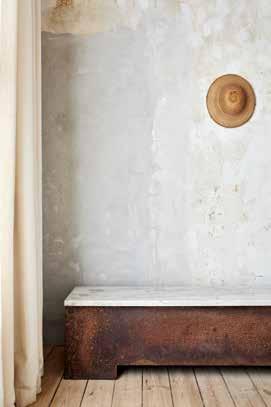
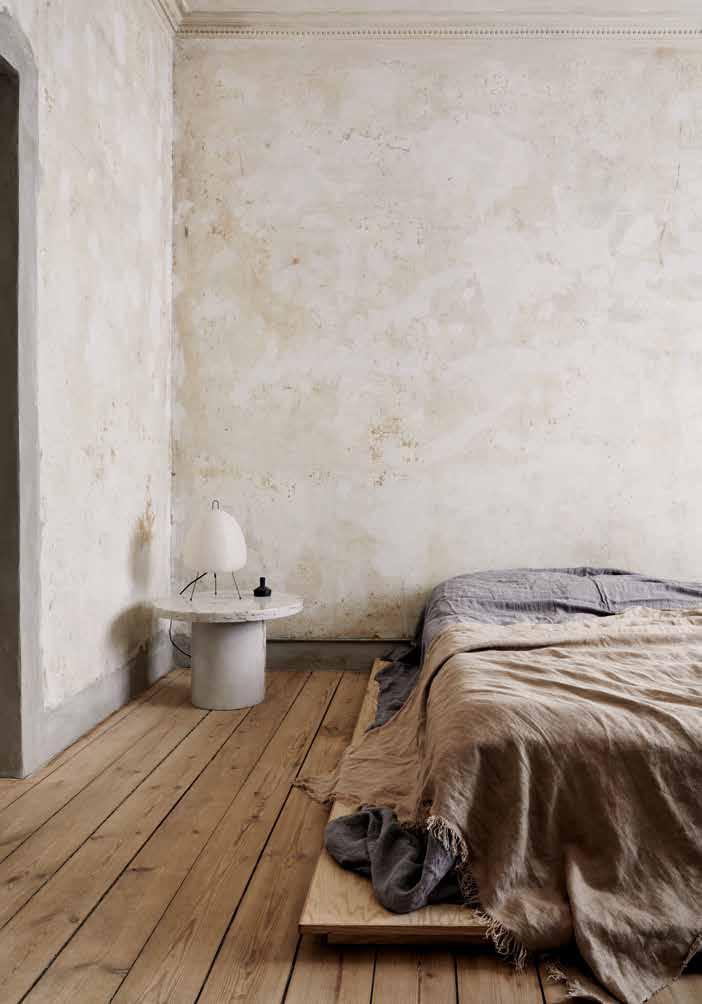
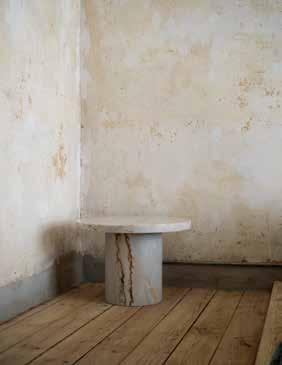
The walls are bare, mottled only by the ghostly remnants of ripped-down wallpaper. The floors are raw wooden planks. The doorways are absent any adornment—including, notably, doors. Give or take a Noguchi bedside lamp, it has the vibe of a monastery: austere, poetic, and a little bit dramatic.
Like many dramatic things, Christopherson’s home began with a breakup. In the aughts, while working for other home brands and learning the ropes of design, he lived with his then-wife under very different circumstances: an all-white, hypermodern apartment filled with furniture by recognizable names.
When the couple started looking for a new space together, they chanced upon the Østerbro apartment, a former watchmaker’s shop built in 1905. He loved it. She hated it. Soon Christopherson was living there alone. “I saw it as an opportunity for resetting,” he says. “Everything became reversed, like a film negative.” He sold every last stick of the collectible furniture and started over.
Up until that point, Christopherson had dedicated himself to an outward-looking exploration of the world of design. From then on, he went in the other direction. “I started this journey of looking inward, of figuring out what’s inside me,” he says. “What expressions, what emotions, what’s my design language?”
Frama founder Niels Strøyer Christopherson in his Copenhagen apartment.
The process started with a seemingly counterintuitive idea: subtraction. The watchmaker’s shop hadn’t been touched since the 1970s, its walls clad in thick brown wallpaper and its floors sealed in glossy varnish and linoleum—so Christopherson stripped it all away.
“I was like, why do I have these doors? I don’t really open and close them, they’re always open,” he says. “When you have a door, it invites you to mentally open and close it. I really believe in this, how it affects our mentality, when something is there or not.”
After taking away the extraneous, Christopherson found himself content with adding very little. He lived with a makeshift kitchen for years—an upright ladder was used to store dishes—and found he enjoyed the simplicity of it. He never dragged a sofa and flatscreen into the apartment, preferring to shut out the insidious creep of digital media. Little inconveniences of the apartment became opportunities to focus and stay present.
While minimalism often involves meticulous planning and precision, Christopherson was guided by emotion and intuition. When he ripped down the wallpaper, he simply liked the way the plaster markings looked on the wall, so he let them be. On a trip to the countryside, he stumbled across a rusted hulk of metal and, with the addition of a stone slab, it became a bench.
Though the resulting look is austere, it is hardly a void. “I wanted to take all of the stuff out and keep it basic, essential, and simple,” says Christopherson. The ironic result—he describes it as a “comic outcome”—is an extremely potent aesthetic. “That’s why I don’t have any pictures on the walls. It’s expressive enough already.”
While Christopherson was stripping his apartment down, he was also building something up: In 2011, he launched Frama with a handful of pieces at a trade show staged in Berlin’s decommissioned Tempelhof Airport. From the beginning, the brand had a distinct approach: Like Christopherson’s apartment, the products
“By removing the distractions of decoration, Christopherson has gained the true luxuries of our time: calm, quiet, and undivided attention.”
are raw and deliberately simple, executed with as little “design” as possible.
Frama slowly found success, though it didn’t come via a traditional path. Christopherson started with furniture but, for a time, the company was focused on modular kitchen systems. More recently it has added fragrances, lotions, and soaps to the mix; a hybrid shop/cafe in Copenhagen has also opened. Christopherson jokes that the business plan is “like parkour”—jumping from one thing to the next with equal parts grace and peril.
Frama’s rise has coincided with a flowering of the Danish design scene. In recent years, the country’s 3 Days of Design festival has become the buzziest fair on the international circuit, drawing tens of thousands to Copenhagen when the city is joyfully slipping into summer. Heritage brands like Fritz Hansen and House of Finn
Juhl show off their tweaked midcentury classics, while relative newcomers like Hay and Muuto host packed parties.
Christopherson’s company is part of that—but a little apart from it too. While many of his contemporaries work in a cheerfully Scandinavian color palette, Frama is all plain wood, untreated metal, and basic shapes. The brand’s premise is a kind of artful retreat from hype, noise, and novelty. It sells simple things for a complicated world.
So it is with Christopherson’s Østerbro home. Though the word “glamorous” is an off fit for the apartment, for the overstimulated and screenaddicted among us, it has a kind of fantasy appeal. By removing the distractions of decoration and even comfort, he has gained the true luxuries of our time: calm, quiet, and undivided attention.
MIKKEL TJELLESEN
Your E xtraordinary Awaits
At The Ritz-Carlton Residences, Naples, the Gulf is yours like never before with a prestigious marina-front location just steps from one of the most beautiful beaches on Florida’s west coast. Stunning residences o er captivating seaside and sunset views, enriched by a one-of-a-kind lifestyle with an owners-only club, full-service marina, extraordinary dining experiences, and legendary service.
Now available, The Park Residences represent the final residential o ering at The Ritz-Carlton Residences, Naples. Adjacent to the idyllic Park and limited to just 20 exclusive residences, they present the last opportunity to be part of this extraordinary Gulf-front way of life.
The Bay and Tower Residences are welcoming residents this year, bringing this iconic waterfront destination fully to life.
SEOUL
Asia’s most dynamic fashion city is teeming with some of the best-curated vintage in the world—if you know where to look.
SEARCHING
PHOTOGRAPHY TIM FRANCO
BY ASHLEY OGAWA CLARKE
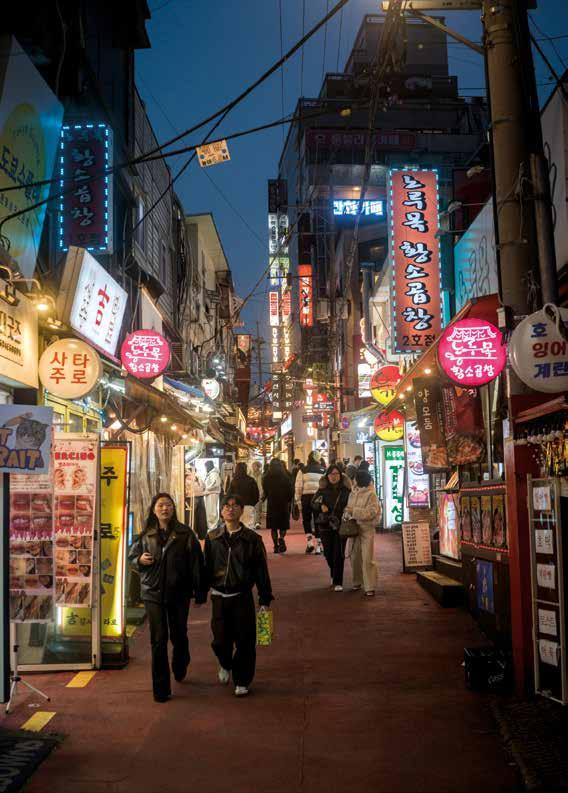
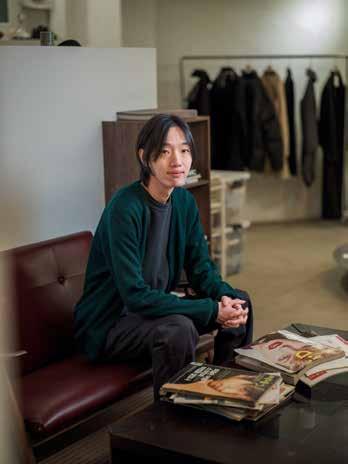
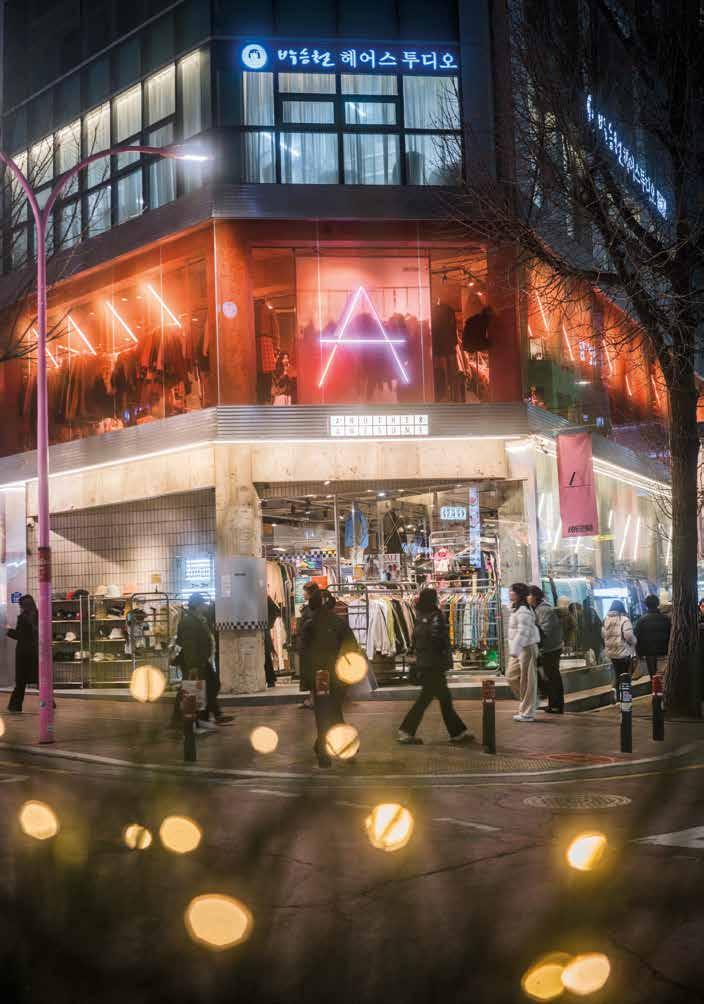
Amid the tension of gleaming skyscrapers and hanok-lined streets, fashion culture in Seoul is famously electric. Here, trends move faster than the Wi-Fi. And while the megalithic department stores and tourist-thronged shopping streets play their part, the city’s real fluency in style is informed by a booming, hyperlocal vintage scene.
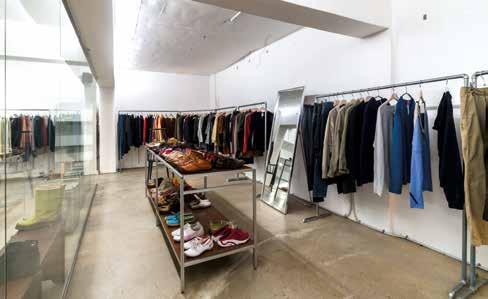
Scattered around neighborhoods like Hongdae, Seongsu, and Itaewon is a treasure trove of worthy finds, from vintage sportswear and Americana to Japanese archival pieces and one-of-a-kind accessories sourced by hardcore collectors. What sets Seoul apart isn’t just the inventory; it’s the intent. Often untapped by tourists, these stores exist on if-you-know-youknow streets hidden down narrow stairways that lead to tightly curated boutiques and retro archives—simply too well-hidden to stumble upon without a nudge in the right direction.
At the center of the scene is a new generation of collectors that treats fashion less like resale and more like preservation. Hyun-seok Jang, founder of Noboundariez in Itaewon, says Seoul’s vintage and archival fashion scene is special because it’s still developing. “The city is highly sensitive to trends and moves quickly, but the appreciation for vintage culture is relatively recent,” he says.
Jang founded Noboundariez in 2020 as a space to present a diverse selection of archival pieces that range from the iconic Japanese designers Comme des Garçons, Yohji Yamamoto, and Issey Miyake, to European names including Helmut Lang, Maison Margiela, and Raf Simons—all of whom have been the subject of exhibitions hosted by Noboundariez. “Rather than positioning archival pieces as just standard products, we see them as collectible objects,” Jang says.
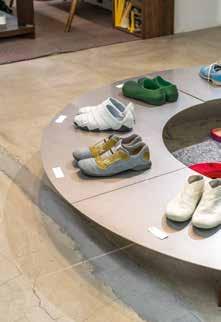
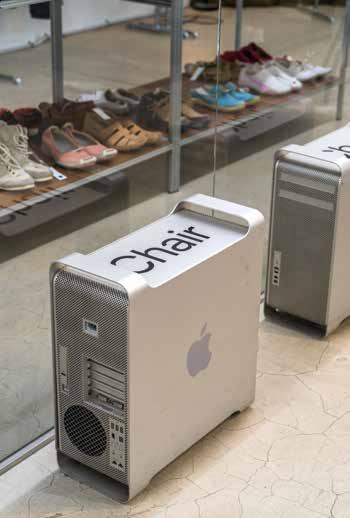
Athoce, meanwhile, feels like a secret passed between friends. Hidden in an underground, industrial-style bunker that specializes in archival pieces at reasonable prices, it’s the brainchild of a trio of fashion collectors. “Because there are three of us, our scope of acquisition is naturally broader,” says Munkyu Lee, one of the store’s founders. Home to a bounty of well-curated brands that span Prada Sport, Nike ACG, and
Issey Miyake’s APOC (A Piece of Cloth) line, the store is tucked away from the main Hongdae shopping district, in quiet Mangwon. “Since shops here heavily reflect their owner’s taste, I’d advise against wandering aimlessly,” Lee says. Arrive well-prepared by pinning a few favorites to Naver, the local mapping app.
Even farther off the beaten path is Cemetery Park, an unassuming showroom located just north of Gyeonghuigung Palace. Offering a smaller but equally well-curated edit of fashion, don’t miss the small cabinet of curiosities and rotating art exhibitions.
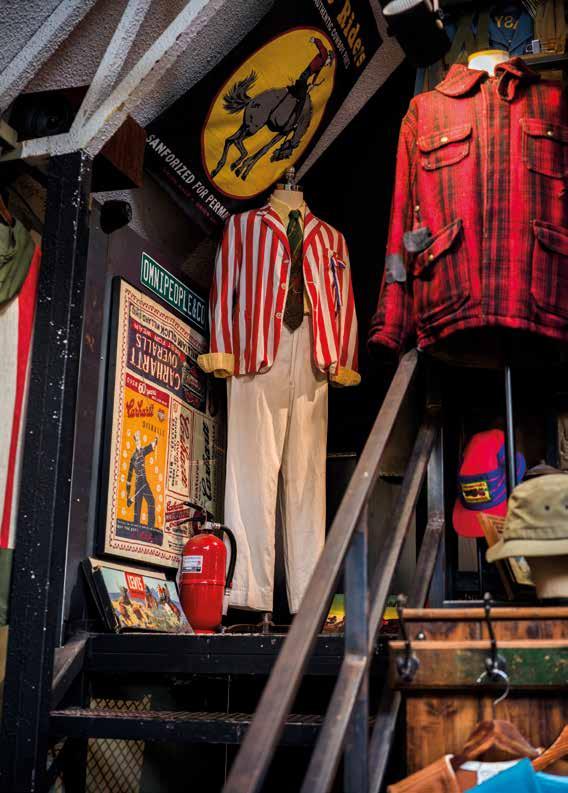
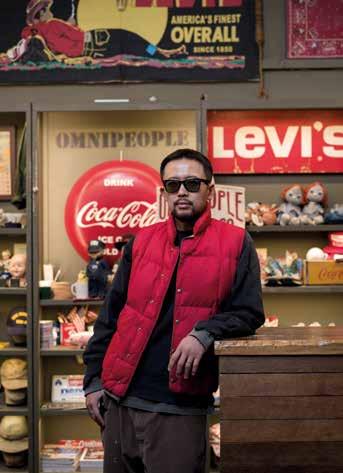
Opposite: Atoche manager Munkyu Lee. This page: Atoche specializes in archival pieces at reasonable prices. Previous: Seunghoon Yoo curates Americana, workwear, and military vintage at his store, Omnipeople.
Next: Sights among Hongdae, one of South Korea’s best neighborhoods for vintage shopping.
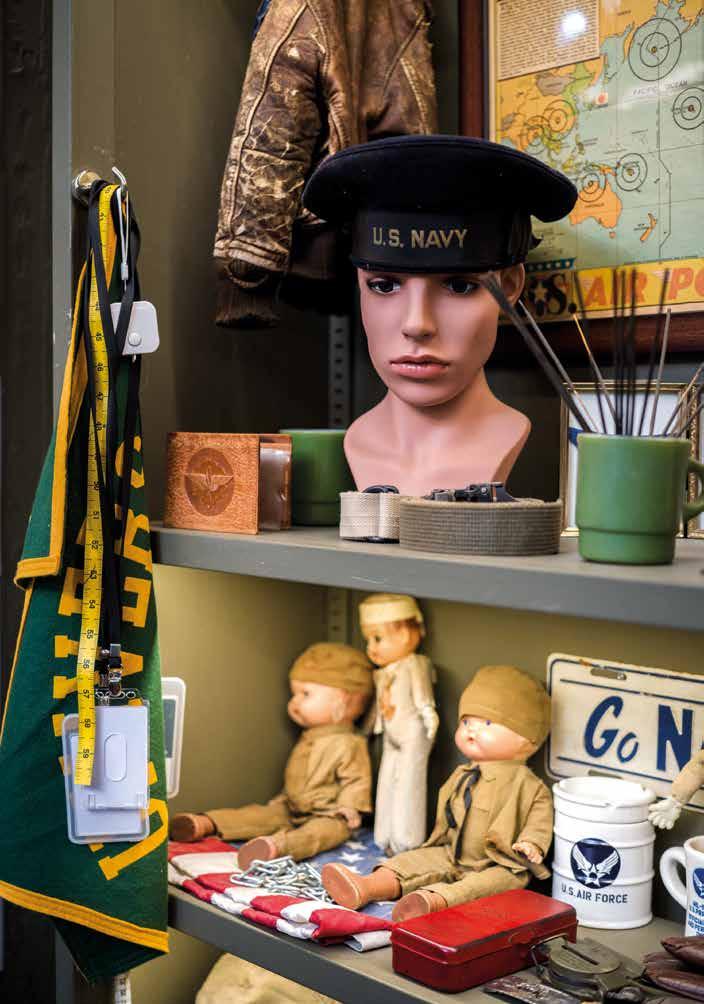
Of course, Seoul’s vintage fluency isn’t confined to high fashion. Fans of Americana, workwear, and military vintage will find plenty to delight in at Omnipeople. Charming Cowichan sweaters from the 1950s sit alongside original MA-1 bomber jackets from the U.S. Air Force, nostalgic fisherman knits, Pendleton flannel shirts, and shelves upon shelves of well-faded denim. Through the doors at Balbal, you’ll find a similarly approachable selection of vintage that spans everything from Polo Ralph Lauren to more modern pieces from Engineered Garments and Auralee. Stretching deep underground, the store is organized by designer to create a shopping experience that’s more akin to a multibrand boutique than a vintage shop.
An even more eclectic mix exists at the imaginatively named Government Seoul, with cool-kid brands and streetwear in its basement. To find the entrance, look out for the blue sign outside that depicts a pictogram woman holding a briefcase. It doesn’t look like it belongs to one of the city’s coolest vintage stores—but that’s exactly the point.
ON HIGHER GROUND
Mendoza is more than malbec country—it’s Argentina’s most exciting culinary frontier.
BY SIOBHAN REID
hen the Michelin Guide announced it would mark its second-ever round of selections in Argentina with a chef-studded awards gala in Mendoza, more than a few industry insiders did a double-take. Yes, the province is revered for its famed malbec wine, but had its dining scene truly earned a seat at the world’s most rarefied culinary table?
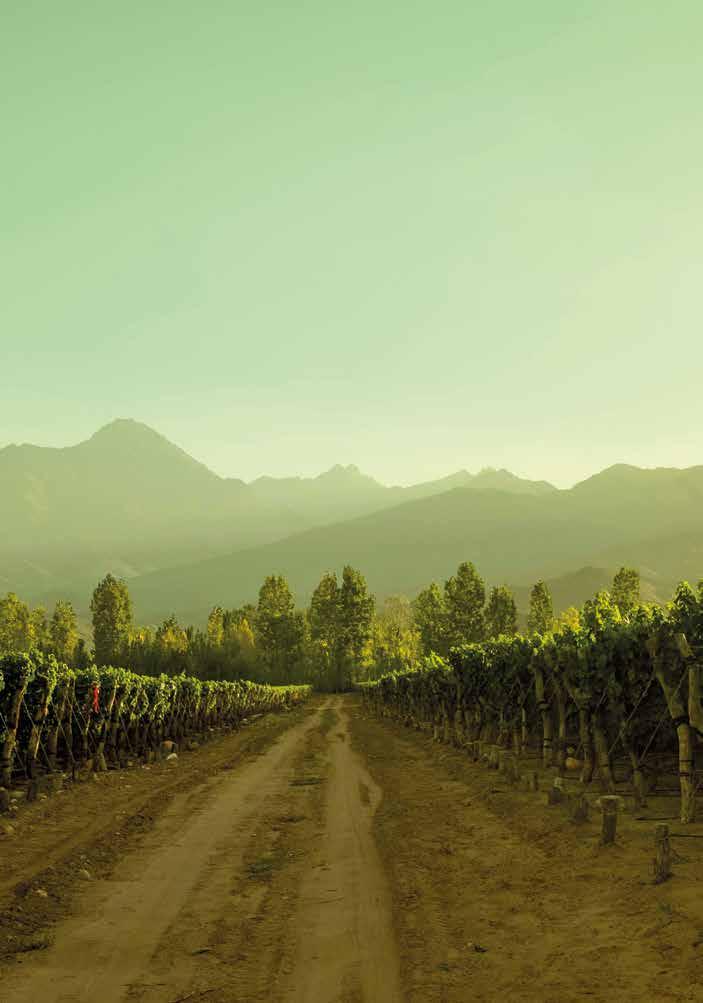
For Argentines, however, the moment marked a long-overdue coronation. Over the past decade, Mendoza has evolved into one of South America’s most sophisticated and well-rounded destinations, where wine is just one part of
a wider gastronomic offering. The same high-altitude terroir that produces full-bodied malbecs, complex cabernet sauvignons, and aromatic torrontés is now fueling a culinary emergence, driven by a cadre of young chefs, many of whom have traded the high-intensity kitchens of Buenos Aires for the experimental kitchens of wine country. In fact, the region now has more Michelin-starred restaurants than Buenos Aires, and the bodegas (cellar, warehouse, or winery) are upping their collective gastronomic game, luring visitors with elaborate farm-fresh tasting menus and unexpected pairings.
Still, even as sleek new restaurants and tasting rooms crop up, Mendoza’s gaucho (cowboy)
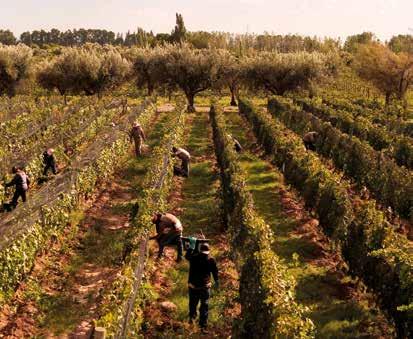
Scenes from Bodega Familia Zuccardi, the third-largest wine exporter in Argentina.
Zonda Cocina de Paisaje at Bodega Lagarde earned a Michelin Green Star for its sustainability-focused menu.
culture reigns supreme. Across the province, family-owned ranches and roadside parrillas (Argentine steakhouses) line the foothills of the Andes, serving rustic asados (barbeque) and humble table wines. Rather than sidestep these rich traditions, the region’s most exciting restaurants are committed to telling stories about Mendoza’s mythical landscapes and the generations of hard-working people who have farmed them.
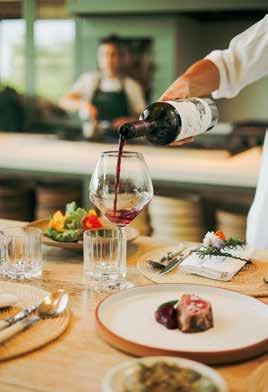
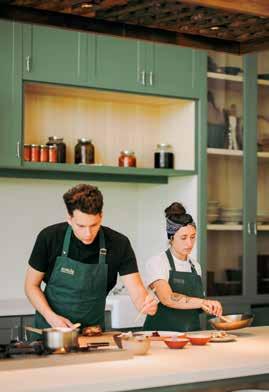
Consider Azafrán, the once-modest gourmet shop reborn as a Michelin-starred dining room, where chef Sebastián Weigandt is on a mission to preserve—and reimagine—the epicurean heritage of the wider Cuyo region. His tasting menus spotlight ancestral ingredients like algarroba (carob) alongside trout and goat, reframing age-old traditions through a contemporary lens. One of the restaurant’s signatures, tomaticán— an everyday dish of tomatoes, onions, day-old bread, and farm eggs, once eaten by vineyard workers—is elevated into a seven-layer starter filled with spicy tomato jam and cumin-and-paprika-laced meringue. Sommelier Camila Torta invites guests to think beyond malbec. The varietal often dominates visitors’ perception of the area, causing them to overlook other grapes, so she seeks out surprising pairings and bottles that are the purest expression of place.
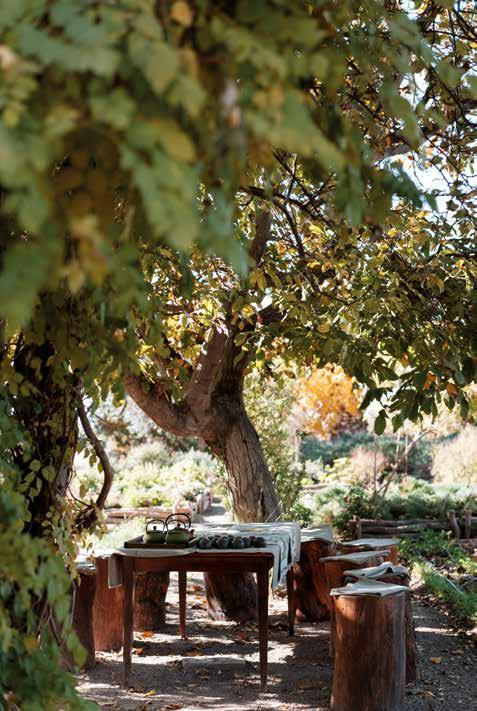
Wineries, naturally, have played a strong role in Mendoza’s gastronomic ascent. Some of its most sought-after tables are now found on working estates, including Casa Vigil, located in the home of winemaker Alejandro Vigil, and Zonda Cocina de Paisaje at Bodega Lagarde, a winery run by the third-generation women of the Pescarmona family. Both have received Michelin Green Stars for their sustainabilityfocused menus. At Bodega Lagarde, visitors can also tour the organic gardens, olive groves, and historic vineyards, or participate in cooking classes centered on regional recipes.
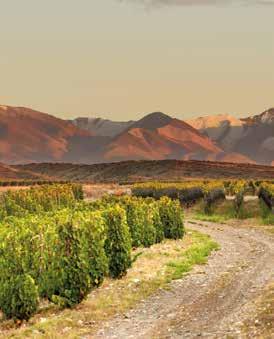
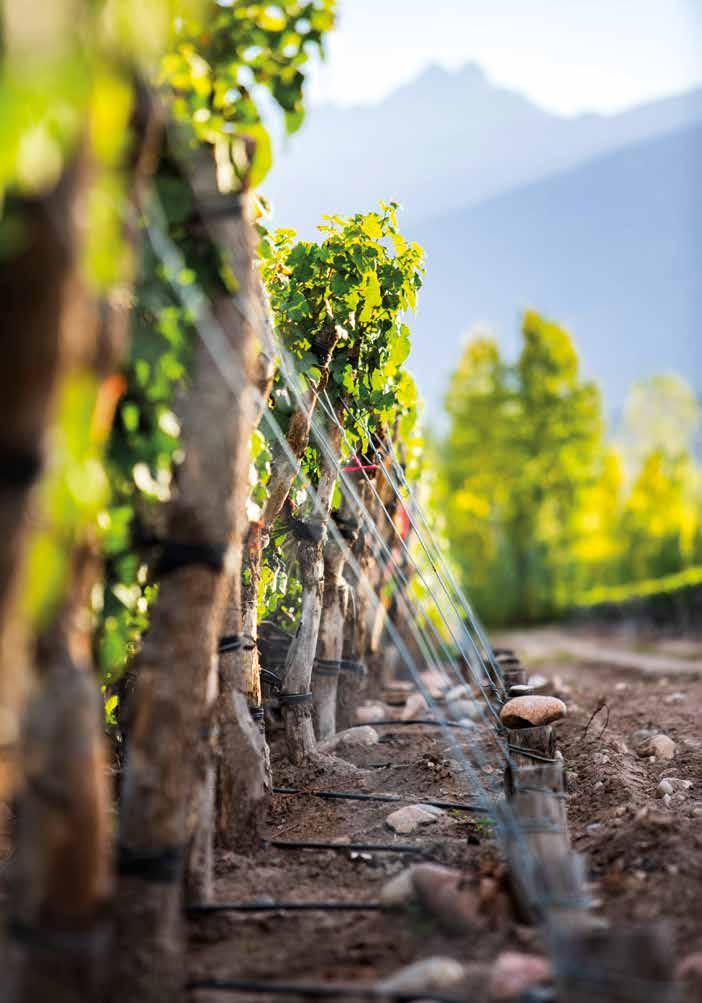
As the third-largest exporter in Argentina, the Bodega Familia Zuccardi isn’t just betting on Mendoza’s world-renowned red grapes; it’s also investing in white varieties like chardonnay, semillon, riesling, verdejo, and albariño, all of which are grown at more than 4,500 feet above sea level in the province’s cool, northwest enclave of San Pablo. The area’s proximity to the Portillo mountain range, calcium carbonate-rich soils, and distinct microclimate make San Pablo one of the most unique terroirs in the Uco Valley, producing aromatic whites with fresh austerity—the ideal pairing for lighter regional fare such as Andean potato gnocchi or trout cured in mountain herbs with citrus and olive oil.
Left: Azafrán is aiming to preserve the culinary heritage of the wider Cuyo region. Right: chef Sebastián Weigandt and sommelier Camila Torta.
These high-altitude whites point to Mendoza’s future as a region no longer defined by a single grape, but a patchwork of different sites, styles, and climates.
But just as Bodega Familia Zuccardi innovates for the newest generation, it is also telling stories about its past. At the winery’s Piedra
Infinita restaurant, dishes are crafted using the family’s legendary olive oil, which is cultivated on-site from the local arauco—an olive that has been present in the Americas for almost 500 years. Paired with a glass of albariño from the high-altitude slopes of San Pablo, it’s a reminder that Mendoza isn’t reinventing itself so much as widening its lens.
Home
LES NOUVEAUX
Residences by Marriott International combines excellence in luxury living and exceptional hospitality services as a baseline—it’s the details that stand above.
Boasting a jaw-dropping 40,000 square feet of private resort amenities, The St. Regis Residences, Houston brings an unprecedented level of luxury to the residential experience. The ground level offers elegant gaming spaces and exclusive access to Buffalo Bayou trails, while the ninth floor is entirely dedicated to holistic wellness, with a double-height, glass-encased athletic center and a spa with windowed saunas overlooking the horizon. The 90 residences are tranquil spaces bathed in natural light, all set on 3.8 acres of secluded land adjacent to the historic Bayou Bend Collection and Gardens in the esteemed River Oaks neighborhood.
An opportunity to invest in a highly sought-after address awaits at the W Residences Al Marjan Island. Situated on a manmade archipelago stretching just under three miles into the sea, the Arabian Gulf location near the port city of Ras Al Khaimah allows easy access to three international airports, ancient cultural sites, and a vibrant promenade, as well as a private stretch of white sand lapped by turquoise waters. Available units, for which sales have just launched, range from one- to four-bedroom duplexes, all designed by BLINK Design Group of Singapore.
In a landmark moment for the brand, the Westin Residences Gurugram is set to become the largest Westin Residences in the world and one of the most significant developments of its kind in India. The project features 1,700 premium units and endless amenities designed around the concept of biophilia, which integrates or mimics nature for a greater sense of well-being.
This focus manifests in units crafted in warm, organic textures, as well as a pedestrian-friendly ground level with ribbons of walking trails and cycling loops.
Find your own pace at PEYLAA Phuket, Autograph Collection Residences. Set along a pristine stretch of powder sand in the heart of Phuket’s world-famous Bang Tao beach, the property presents 408 units ranging from one to three bedrooms, with balconies welcoming in the Andaman Sea breezes. Steps (or a swim) away are peaceful morning glimpses of fishermen on longtail boats and cosmopolitan evenings toasting sunset cocktails at upscale beach clubs.
Positioned on an immaculate stretch of sand hidden away on a peninsula north of Cancún is the newest escape for those in the know: The Residences at The St. Regis Costa Mujeres
With units of two to five bedrooms, plus a two-story penthouse, homes are bathed in sandy neutrals, with fluted wood and stunning marble textures alongside floor-to-ceiling windows through which the floors seem to melt directly into the Caribbean Sea. Resident spaces include a hydrotherapy pool, juice bar, steam rooms and hammam, spinning studio, and outdoor exercise terrace.
In Puerto Rico, a new icon of tropical modernist architecture soars above San Juan’s Golden Mile—the heart of the city’s financial district— and along its top four floors sit the 32 units of Oro, Autograph Collection Residences. With access to a vibrant steakhouse off the lobby and a rooftop cocktail bar, and amenities such as a 93-foot infinity pool, residents can escape to grandly proportioned units from one to three bedrooms with private balconies offering a peek at the buzz far below.
United States & Canada
arizona
The Ritz-Carlton Residences, Dove Mountain
The Ritz-Carlton Residences, Paradise Valley, The Palmeraie
british columbia
The Residences at the Westin Bear Mountain Victoria Golf Resort
The Residences at the Westin Resort & Spa, Whistler california *
The Residences at The St. Regis San Francisco
The Residences at The West Hollywood EDITION
The Residences at The Westin Monarche, Mammoth Lakes
The Residences at The Westin Verasa Napa
The Ritz-Carlton Residences, Lake Tahoe
The Ritz-Carlton Residences, LA Live
The Ritz-Carlton Residences, San Francisco
W Residences Hollywood colorado
Beaver Creek Lodge, Autograph Collection Residences
The Residences at The Westin Riverfront Resort & Spa, Avon
The Ritz-Carlton Residences, Bachelor Gulch
The Ritz-Carlton Residences, Vail
The Sky Residences at W Aspen district of columbia
The Ritz-Carlton Residences, Georgetown
The Ritz-Carlton Residences, Washington, D.C.
florida *
JW Marriott Residences Clearwater Beach
The Residences at The Miami Beach EDITION
The Residences at The St. Regis Bal Harbour
The Residences at The St. Regis Longboat Key
The Residences at The Tampa EDITION
The Ritz-Carlton Residences, Bal Harbour
The Ritz-Carlton Residences, Coconut Grove
The Ritz-Carlton Residences, Fort Lauderdale
The Ritz-Carlton Residences, Key Biscayne
The Ritz-Carlton Residences, Miami Beach
The Ritz-Carlton Residences, Orlando, Grande Lakes
The Ritz-Carlton Residences, Sarasota
The Ritz-Carlton Residences, Singer Island
The Ritz-Carlton Residences, Sunny Isles Beach
The Ritz-Carlton Residences, Tampa
Waterline Marina, Autograph Collection Residences
W Residences Fort Lauderdale
W Residences South Beach
georgia
The Residences at The St. Regis Atlanta
The Ritz-Carlton Residences, Atlanta
W Residences Atlanta—Downtown
hawai ‘ i
Renaissance Residences Honolulu
The Ritz-Carlton Residences, Kapalua
The Ritz-Carlton Residences, Waik ī k ī illinois
The Residences at The St. Regis Chicago
The Ritz-Carlton Residences, Chicago
maryland
The Ritz-Carlton Residences, Baltimore
The Ritz-Carlton Residences, Chevy Chase
massachusetts
The Ritz-Carlton Residences, Boston Commons
The Ritz-Carlton Residences, Boston South Station Tower
The St. Regis Residences, Boston
W Residences Boston
michigan
The Residences at The Westin Book Cadillac, Detroit minnesota
The Residences at Ivy, a Luxury Collection Hotel, Minneapolis
The Residences at The Westin Edina Galleria
new jersey
W Residences Hoboken
a story in herein shares a location with one or more of these residences .
new york *
The Residences at The St. Regis New York
The Ritz-Carlton Residences, Battery Park
The Ritz-Carlton Residences, New York, Central Park
The Ritz-Carlton Residences, New York, NoMad
The Ritz-Carlton Residences, North Hills
The Ritz-Carlton Residences, Westchester
The St. Regis Residences, Rye
W Residences New York—Downtown
ontario
The Residences at The St. Regis Toronto Downtown
The Residences at The Westin Trillium House, Blue Mountain
The Ritz-Carlton Residences, Toronto oregon
The Ritz-Carlton Residences, Portland pennsylvania
The Ritz-Carlton Residences, Philadelphia
puerto rico
Dorado Beach, a Ritz-Carlton Reserve Residence quebec
The Residences at Delta Hotels by Marriott, Beaupré
The Residences at the Westin, Mont-Tremblant
The Ritz-Carlton Residences, Montreal
texas *
The Ritz-Carlton Residences, Dallas
W Residences Austin
W Residences Dallas—Victory utah
The Residences at The St. Regis Deer Valley
virginia
The Residences at The Westin Virginia Beach
JW Marriott Residences, Reston Station
coming soon
New locations opening between 2026 and 2028. montana
british
virginia
Learn more at marriottresidences.com
International
azerbaijan
The Ritz-Carlton Residences, Baku
belize
Alaia Belize, Autograph Collection Residences
bermuda
The Residences at The St. Regis Bermuda
brazil
W Residences São Paulo
cayman islands
The Ritz-Carlton Residences, Grand Cayman
china
Bulgari Residences Beijing
Bulgari Residences Shanghai
The Ritz-Carlton Residences, Guangzhou
W Residences Guangzhou
costa rica *
W Residences Costa Rica—Reserva Conchal
El Mangroove, Autograph Collection Residences
Nekajui, a Ritz-Carlton Reserve Residence
cyprus
The Ritz-Carlton Residences, Limassol, Cyprus
dominican republic
The Residences at The Ocean Club, a Luxury Collection Resort, Costa Norte
The Residences at The St. Regis Cap Cana
egypt
The Residences at The St. Regis Cairo
JW Marriott Residences New Cairo, Al Jazi First
greece
The Residences at The Westin Resort, Costa Navarino
indonesia
Bulgari Residences Bali
The Residences at The St. Regis Bali
The Residences at The St. Regis Jakarta
W Residences Bali—Seminyak
israel
The Ritz-Carlton Residences, Herzliya
japan
The Residences at the Tokyo EDITION, Toranomon
jordan
The Residences at The St. Regis Amman
The Ritz-Carlton Residences, Amman
W Residences Amman
kazakhstan
The Ritz-Carlton Residences, Almaty
The Ritz-Carlton Residences, Astana
malaysia
The Residences at The St. Regis Kuala Lumpur
The Ritz-Carlton Residences, Kuala Lumpur
Marriott Residences Penang
mexico *
Siari, a Ritz-Carlton Reserve Residence
The Residences at The St. Regis Mexico City
The Residences at Solaz, a Luxury Collection Resort, Los Cabos
The Ritz-Carlton Residences, Mexico City
Zadun, a Ritz-Carlton Reserve Residence
Bloom Tulum, Apartments by Marriott Bonvoy
oman *
The Residences at The St. Regis Al Mouj Resort, Muscat
philippines
The Residences at Sheraton Cebu Mactan Resort
The Residences at The Westin Manila
portugal *
The Residences at the Pine Cliffs OceanSuites, A Luxury Collection Resort
The Residences at Sheraton Cascais Resort
W Residences Algarve
Marriott Residences Salgados Resort, Algarve
The Residences at The Westin Salgados Beach Resort, Algarve
qatar
The Residences at The St. Regis Marsa
Arabia Island, The Pearl Qatar
saudi arabia *
Nujuma, a Ritz-Carlton Reserve Residence
Marriott-branded residences are not owned, developed, or sold by marriott international inc. or its affiliates (“marriott”).
a story in herein shares a location with one or more of these residences .
singapore
The Residences at The St. Regis Singapore
The Ritz-Carlton Residences, Singapore Cairnhill
W Residences Singapore—Sentosa Cove
south korea *
JW Marriott Residences Jeju
Marriott Residences Daegu
thailand
The Residences at The St. Regis Bangkok
The Ritz-Carlton Residences, Bangkok
turks & caicos
The Ritz-Carlton Residences, Turks & Caicos
türkiye
Le Méridien Residences, Bodrum
The Residences at Caresse, a Luxury Collection Resort & Spa, Bodrum
The Residences at the Sheraton Istanbul Esenyurt
The Ritz-Carlton Residences, Bodrum
The Ritz-Carlton Residences, Istanbul
united arab emirates
Affini, A Tribute Portfolio Residence
Bulgari Residences and Mansions Dubai
Marriott Residences Al Barsha South, Dubai
Marriott Residences Dubai, Business Bay
The Residences at The St. Regis Dubai, The Palm
W Residences Dubai - The Palm
united kingdom
Bvlgari Residences Knightsbridge, London
The Lucan, Autograph Collection Residences, Chelsea, London
The Residences at The Westin London City
W Residences London - Leicester Square
vietnam
JW Marriott Residences Grand Marina Saigon
The Ritz-Carlton Residences, Hanoi
Marriott Residences Grand Marina Saigon
coming soon
New locations opening between 2026 and 2028.
albania
Vlora
azerbaijan
Baku
belize Ambergris Caye
costa rica
Golfito
Manuel Antonio Papagayo Sarchi
curaçao
Sint Michiel
dominica Portsmouth
cyprus Limassol
dominican republic
Cap Cana
Santo Domingo
egypt Cairo
hungary
Budapest
kazakhstan
Astana
mexico
Cancun
Isla Mujeres
La Paz
Los Cabos
Riviera Maya
San Miguel de Allende
morocco Marrakech
oman *
Muscat
portugal *
Algarve
Lagos
puerto rico Hato Rey
saint lucia
Viggie
saudi arabia * Al Khobar
Jeddah
Red Sea Riyadh
serbia Belgrade
singapore Singapore
spain *
Costa del Sol
Madrid
Sitges
thailand
Phuket
türkiye
Bodrum
Istanbul
turks & caicos
Providenciales
South Caicos
united arab emirates
Abu Dhabi
Dubai Ras Al Khaimah
united kingdom
London
WELL & GOOD
Among the benefits of owning a Residence by Marriott International in an urban center are the manifold pleasures of living near a city’s greatest cultural sites, innovative dining, luxury shopping, business pursuits, and, quite often, beautiful views. The following Residences by Marriott International showcase projects in some of the most desirable addresses in the world, as well as the neighborhoods well on their way to thrilling transformations.
Positioned to become Cairo’s lifestyle epicenter is the mixed-use development One Ninety, found at the meeting point of 90 Street and Ring Road on the western side of New Cairo. At the heart of this planned hub for fashion, art, design, and food is W Residences Cairo, the brand’s first residential property to open in Africa. Aside from the neighborhood’s myriad offerings— including a business park, retail area, and sprawling green space—the Cairo Design District will provide studio space, workshops, and education to the city’s most promising talents.
Located in the heart of one of the most fascinating metropolises on the planet, Résidences Du Port, Autograph Collection Residences is steps from Dubai’s eye-popping landmarks, including the one-of-a-kind archipelago Palm Jumeirah and the buzzing lifestyle options around the powder-white shores of Jumeirah Beach and the Walk. Reimagining the elegance and ease of the French Riviera within the City of Gold, the Residences offer panoramic views of the gentle waters of the Dubai Marina, as well as private access to the Marina Boardwalk, inviting tranquility via a private terrace, during a morning stroll, or as skyscraper lights dapple the water.
Singapore’s instantly recognizable skyline is the front yard for the W Residences Marina View—Singapore, allowing owners waterway
glimpses from two directions in addition to all of the city’s most glittering sites, from the vibrant Marina Bay Promenade, curving ArtScience Museum, and neon Gardens by the Bay. Among the first developments of its kind in Singapore, the property offers proximity to more than lifestyle hotspots, but also the beating heart of the city’s financial and business center—and thus all of Asia’s.
Carefully situated between Downtown and Music Row is the serene retreat of The Residences at The Nashville EDITION. Dubbed the Gulch, this chic slice of the city is minutes from Nashville’s iconic sites and newest thrills; adjacent to the Frist Art Museum and The Pinnacle music venue, it is just blocks from Ryman Auditorium, the Country Music Hall of Fame and Museum, the Johnny Cash Museum, and the Music City Center. Owners and their guests alike may struggle to choose how to spend an evening, from listening to American hallmark tunes to trying the city’s finest sushi omakase or upscale barbecue.
A key element of the grand revitalization of Gurney Bay, the newly opened seafront public recreational area in George Town in the Malaysian state of Penang, is Westin Residences Penang. Set to be the tallest residential building in northern Malaysia when it opens in 2030, the property will provide both breathtaking water views of the Penang Strait and access to the revitalized green space, with walking and cycling paths, a skate park, a massive children’s playground, and a seaside promenade. Steps away is Gurney Drive, with its famous hawker center and the dazzling nightlife surrounding it, long considered one of Southeast Asia’s most incredible food scenes. The city’s old town, an UNESCO World Heritage site renowned for its centuries-old blend of Chinese, Indian, British, and Malay cultures, is just 10 minutes away by car.
JOY OF OWNERSHIP
Earlier this year, a new dimension of the residence owner experience was introduced through the “art & design” element of ONVIA, Marriott International’s owner recognition platform. The initiative’s inaugural expression—the Emerging Artist Program—provides a curated window into the work of some of today’s most compelling new voices in contemporary art, delivered straight to an audience of sophisticated tastemakers and collectors.
“The Emerging Artist Program is rooted in the belief that true luxury is found in discovery, in encountering work before it is widely known, and in forming a personal connection to the story behind it,” wrote John Hearns, senior vice president of global residential operations at Marriott International, in a note to residence owners. “By spotlighting emerging artists, ONVIA invites owners to engage with creativity at its most formative stage, where collecting becomes an expression of identity and participation in an artist’s journey becomes part of one’s own.”
The program was spearheaded by acclaimed British multimedia artist and curator Emma Elliott, and developed in partnership with creative agency Brave New World. “I found giving other artists visibility very compelling,” says Elliott, whose own practice spans sculpture, painting, and video. In her research, she spoke with art advisors, journalists, residents, and her own connections within the international artist community to explore their recommendations.
Her criteria included artists who might not yet be represented by a gallery and whose work could function in a residential space—not to mention art that could translate beautifully on the ONVIA platform. “Ultimately, the top consideration was finding works that I thought were really strong,” Elliott says. “They needed to be elevated beyond just being purely decorative, with a story and a background that made you feel something.”
The artists carefully selected by Elliott for the launch of the program are Rio de Janeiro-based painter Carolina Martinez, whose background in architecture informs her colorful explorations of urban space through shape and texture; Ayobola Kekere-Ekun, a Nigerian artist now based in South Africa who excels in quilling, a painstaking technique of shaping thin strips of paper into dense sculptural compositions; and Courtney Heather, an American painter whose crowded canvases investigate the details of everyday ritual. Owners can hear Elliott discuss the pieces in videos on ONVIA for immediate input from her discerning curatorial eye, as well as glimpse some of Elliott’s own works in sculpture and paint.
While the Emerging Artist Program is still emerging itself, Elliott is enthusiastic about the ways the initiative could expand in the future, from artist events and lobby shows to direct conversations (and potential investments) between residence owners and artists. “It’s all about connections and collaboration,” she says.