Subscription rates for the USA and Canada Members: $27/four issues, Non- Members: $36/ four issues. Back issues are available by calling the NMEDA office.
The articles published in NMEDA NEWS reflect the opinions of their authors, not NMEDA. As such, NMEDA neither takes a position on nor assumes responsibility for the accuracy of the information or statements contained therein.
BOARD OF DIRECTORS
Eric Mansfield, President MobilityWorks 810 Moe Drive Akron, OH 44310 (800) 638-8267 eric.mansfield@mobilityworks.com
Jud DeMott, Vice President Access2Mobility 12406 SH 155 South Tyler, TX 75703 (903) 592-6760 jud.demott@gmail.com
Ron Mohr, Secretary Clock Mobility 603 N Waverly Rd Lansing, Michigan 48917 (517) 272-4488 ronm@clockmobility.com
Gerhard Schmidt, Treasurer Bridge to Mobility 24410 Emmons Rd College Station, OH 44028 (216) 623-2326 gerhard@bridgetomobility.org
Steve Dawson, Component Manufacturer Rep. Harmar Mobility
Randy Schiller, Manufacturer Rep. Vantage Mobility 5202 S. 28th Place Phoenix, AZ 85040 (800) 348-8267 randys@vantagemobility.com
Christian Quandt, Past President Advanced Wheels 33 Bradley Park Road East Granby, CT 06026 (860) 653-8064 christian@advancedwheels.com
Pierre Côté, Canadian President Driverge Canada 14050 128 Ave Edmonton, AB T5L 4M8, Canada (800) 668-8705 pierre.cote@driverge.ca
Susie Touchinsky, Allied Health Professional Rep. Adaptive Mobility Services 1120 Centre Turnpike Orwigsburg, PA 17961 (484) 650-2280 susie@adaptivemobility.com
Michelle Szumski, Edu/Gov/NonProfit Rep. Texas Workforce Commission 101 East 15th Street Austin, TX 78778 (512) 936-3462 phone michelle.szumski@twc.texas.gov
Trevorr Jurgensen, Rep. at Large 1 MobilityWorks 810 Moe Drive Akron, OH 44310 (800) 638-8267 trevorr.jurgensen@mobilityworks.com
Alex Cook, Rep. at Large 2
Superior Van & Mobility 1506 Lakeshore Court Louisville, KY 40223 (502) 447-8267 scook@superiorvan.com
Christina Duggan, Rep. at Large 3
Creative Mobility Group 32217 Stephenson Hwy Madison Heights, MI 48071 (248) 577-5430 cduggan@creativemobilitygroup.com
Gary Colle, Rep. at Large 4
Gary E. Colle, Inc./dba Goldenboy of Sandiego 12130 Dearborn Place Poway, CA 92064 (858) 748-9414 gary@goldenboymobility.com
www.mgaresearch.com
@mgaresearchcorp
STAFF DIRECTORY
Toby Cummings, CAE CEO toby.cummings@nmeda.org
Chuck Hardy
Director of Quality & Compliance chuck.hardy@nmeda.org
Kristen Clevidence Quality Program Manager kristen.clevidence@nmeda.org
Shawn Richmond Government Relations & Policy Manager shawn.richmond@nmeda.org
CEO’s Message
NMEDA Conference 2026:
Reflections on the Successful 2026
Standalone NMEDA Conference
Toby Cummings, CAE
NMEDA -
CEO
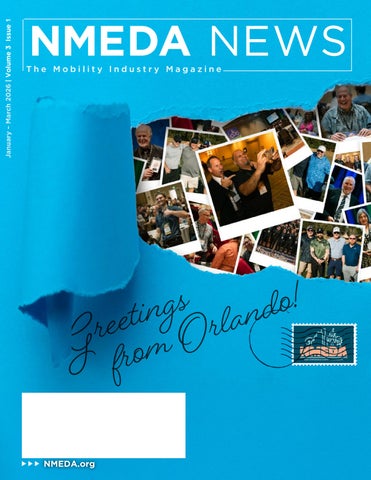
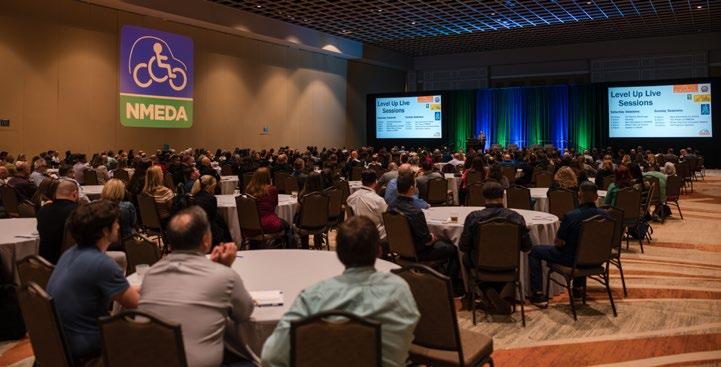
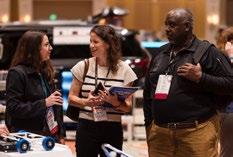
The 2026 NMEDA Conference and Expo in Orlando, FL, was everything I hoped it would be and then some. More than 500 industry professionals came together at the Rosen Shingle Creek Resort, and from the very first handshake to the final session, the atmosphere was electric. The numbers confirmed what I already knew in my gut: this was a conference our industry needed and one none of us will forget.
The post-conference survey confirmed what I felt walking those halls: an overall experience rating of 4.7 out of 5, with nearly 72% of attendees describing it as “Excellent” and another 25% as “Very Good.” Not a single respondent rated the conference lower than “Good.” That is a testament to the hard work of our team, our volunteers and everyone who showed up ready to engage.
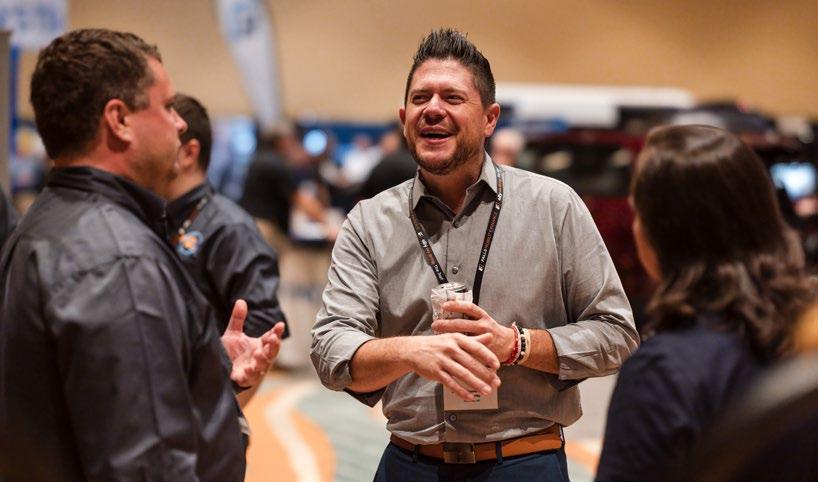
What struck me most was the quality of connection happening throughout the event. Networking earned a 4.7 effectiveness rating, with 68% of attendees calling it “Extremely effective.” Time and again, survey comments reflected what I heard in person: that this was one of the best NMEDA conferences ever for forging meaningful relationships across dealers, manufacturers, allied health professionals and mobility service providers.
The Expo Hall was a highlight in its own right. Nearly 79% of attendees rated the experience “Excellent,” praising direct access to manufacturers and handson product demonstrations. The venue itself drew considerable praise for its organization, exceptional food and all-inclusive amenities, and its easy proximity to the airport made logistics seamless for our attendees.
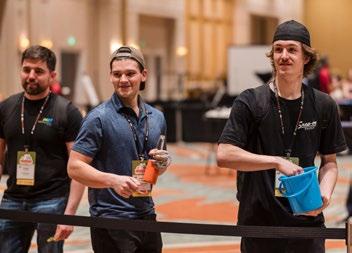
I was particularly proud to see the inaugural Top Technician Summit come to life at this year’s conference. This competition was created to pay tribute to the skill and dedication of our technician community, the backbone of what we do, and it delivered in every way.
Nicholas Stroud of Cummings Mobility took first-place honors, and his win was a celebration not just of his individual achievement but of the critical role technicians play in ensuring our mobility solutions succeed for the people who depend on them.
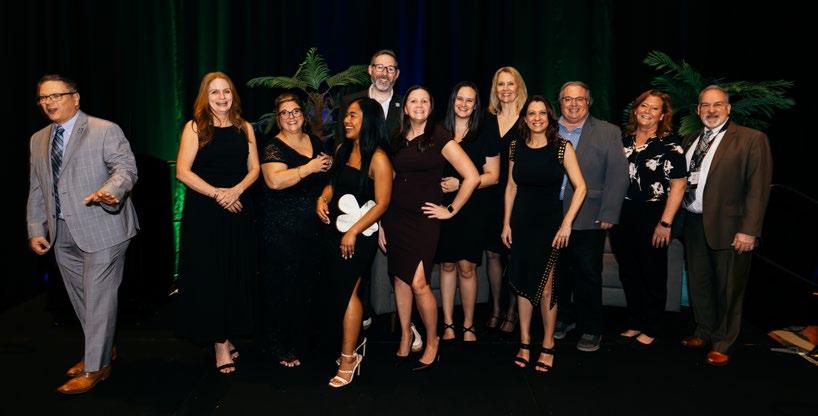
The Hall of Fame banquet delivered a welcomed twist on tradition.
Reimagined this year as “Between the Palms,” a playful nod to the talk show “Between Two Ferns” complete with tropical palm tree décor, the ceremony struck a perfect balance between celebration and heart. It was lively, it was fun and most importantly, it honored our industry’s luminaries in a way that felt fresh, genuine and worthy of the lasting impact they have made on this industry.
that moment, but I am grateful to the board and to this incredible community for the trust and support they have shown me. I will carry this honor with me as motivation to continue serving this industry with everything I have got.
This was a conference our industry needed and one none of us will forget.” “
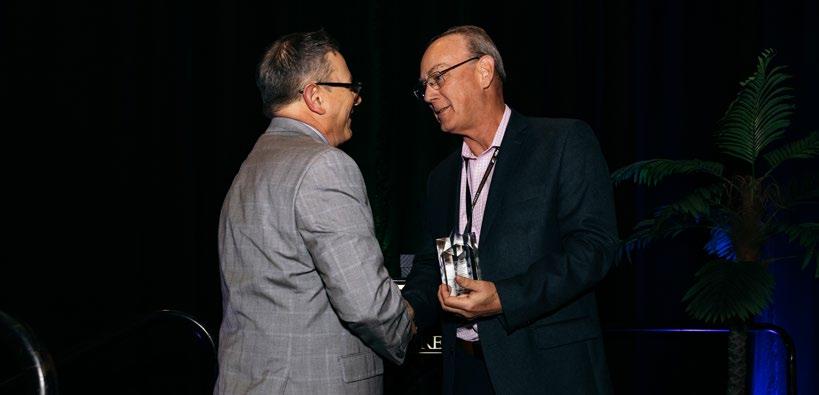
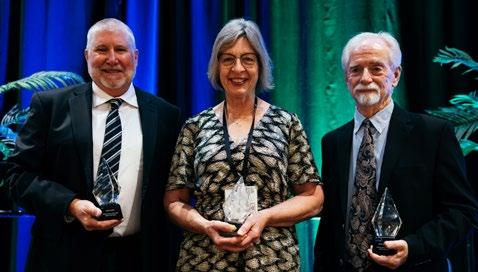
Among the most meaningful moments of the entire conference for me personally was the presentation of the NMEDA CEO Award. I had the distinct honor of presenting this recognition to Russ Newton of Sure Grip Hand Controls, former president of NMEDA Canada and a great friend of mine. Russ has given so much of himself to advancing this industry with integrity, vision and a deep dedication to the people we serve. He is the kind of leader who makes everyone around him better, and standing on that stage to celebrate a man of his caliber was a moment I will always treasure.
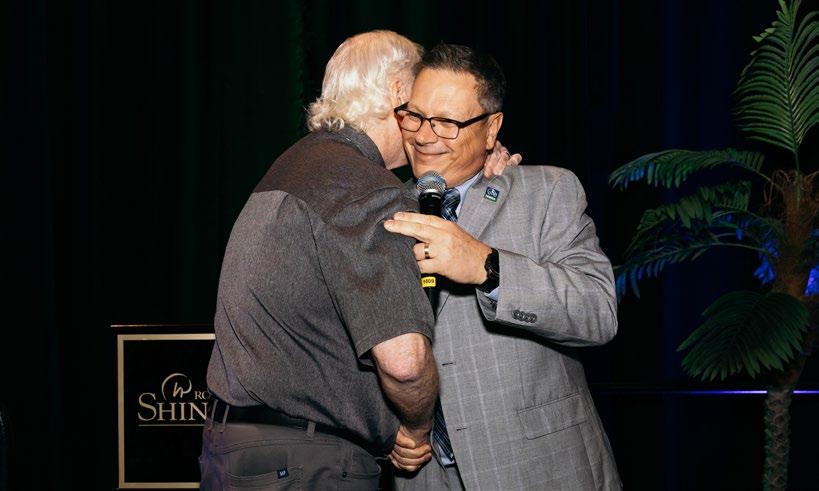
I will admit, I did not expect to be on the receiving end of an award at this year’s conference. I was completely surprised and deeply humbled when NMEDA Board President Eric Mansfield presented me with the NMEDA President’s Award. I am not sure I had the right words in
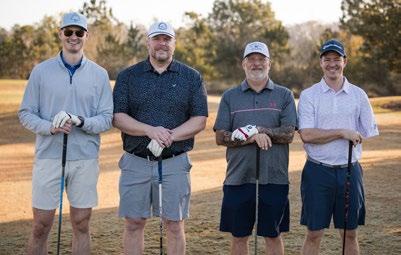
It is worth noting that the energy of this conference began well before the first session. The NMEDA Golf Scramble Tournament kicked things off on the right foot, offering attendees a chance to connect in a relaxed, social setting amid sunny Florida greens. Some of the most valuable conversations happen before the programming even begins, and this year’s scramble was a perfect reminder of that.
This year we also introduced a compressed weekend schedule, and the response spoke for itself. Attendees valued the streamlined pace, and we heard loud and clear that it struck the right balance between rich programming and respecting everyone’s time.
It was a vibrant gathering that deepened connections, celebrated achievements and strengthened the collective momentum of this industry we all believe in.” “
Our education sessions resonated strongly with attendees, with the Closing General Session and “Game Changer” sessions earning “Excellent” ratings from 57% to 72% of participants. We also heard a clear call for more advanced-level programming, particularly from our technician community, and that feedback is already shaping how we approach future conferences.
No event is without its opportunities for growth, and we are grateful for the candid feedback our attendees provided. The Expo Hall’s traffic flow and aisle layout came up as areas to refine, and roundtable sessions saw mixed engagement across topics. We welcome that honesty wholeheartedly. It is exactly the kind of input that
CEO’S MESSAGE
pushes us to build a better experience year after year, and we are already taking note.
I also want to take a moment to recognize the Mediation Committee, recipients of this year’s Star Award. Month after month, this group works quietly and tirelessly to resolve disputes between customers, dealers and manufacturers, reducing Better Business Bureau complaints and the potential for legal action. They do not do it for recognition, but they deserve it. Their work reflects the very best of what NMEDA stands for.
Looking ahead, I am energized by what our attendees have told us. Nearly 64% said they are “Very Likely” to attend again if we continue on an annual basis, with more than 21% “Likely” to return as well. The preference for Florida and warm-weather locations came through loud and clear, reaffirming the choice of Orlando as an ideal host city.
For those who could not attend, this recap comes with a healthy dose of FOMO. The 2026 NMEDA Conference and Expo was more than a successful event. It was a vibrant gathering that deepened connections, celebrated achievements and strengthened the collective momentum of this industry we all believe in. I am grateful to every attendee, exhibitor, sponsor, volunteer and staff member who made it what it was. We look forward to welcoming even more members to our next conference and cannot wait to see what we build together. Do not miss your chance to be part of something truly special.
NMEDA DEALER MEMBERS
UNITED STATES
ALABAMA
Griffin Mobility 213 Chestnut Street NW Hartselle, AL 35640 (256) 751-1365
1
High Tech Mobility LLC
3351 Warrior River Rd Hueytown, AL 35023-1304 (205) 491-2109
1, 3
MobilityWorksBirmingham 80 Commerce Dr. Pelham, AL 35124 (205) 426-8261
1, 3
MobilityWorks - Huntsville 2150 Meridian Street North Huntsville, AL 35811 (234) 542-3022
1, 3
Superior Van & MobilityMontgomery 1647 Coosa River Pkwy Wetumpka, AL 36092 (334) 244-1011
1, 3
Sylacauga Handicapped Inc 40811 US Hwy 280 Sylacauga, AL 35150 (256) 249-3717
1, 2, 3
Team Adaptive Medical Inc - Mobile 1251 Boltons Branch Drive Mobile, AL 36606 (251) 471-1088
1, 3
ARIZONA
A.D.E. Industries, Inc. 3621 S Palo Verde Tucson, AZ 85713 (520) 571-7156
1
United Access - Chandler 1825 E Germann Road Suite 24 Chandler, AZ 85286 (480) 999-5939 1, 2, 3
United Access - Goodyear 13765 W Auto Drive Suite 125 Goodyear, AZ 85338 (623) 242-0552 1, 3
United Access - Phoenix 23606 N 19th Ave Phoenix, AZ 85085 (623) 879-0800 1, 3
United Access - Scottsdale 14885 N 83rd Pl., Ste 105 Scottsdale, AZ 85260 (480) 941-4800
1
United Access - Tucson 4720 N La Cholla Blvd Suite 150 Tucson, AZ 85705 (520) 293-3596 1, 3
ARKANSAS
MobilityWorks - Bryant 3418 Main St Suite 400 Bryant, AR 72022 (501) 794-3100 1, 3
Superior Van & Mobility 1110 Mathias Dr Ste F Springdale, AR 72762-0710 (479) 521-8433 1, 3
Superior Van & MobilityJonesboro 2421 Sunny Meadow Drive, Ste D Jonesboro, AR 72401 (870) 933-7270 1, 3
Superior Van & MobilityNorth Little Rock 7323 Cock of the Walk St Suite B North Little Rock, AR 72113 (501) 725-9070 1, 3
CALIFORNIA
AERO Mobility 1001 N Weir Canyon Road Anaheim, CA 92807 (714) 973-8600 1, 2, 3
Economy MedicalLifestyle Mobility 2355 Whitman Rd Ste F Concord, CA 94518-2542 (925) 671-4800
1
Gary E. Colle, Inc./dba Goldenboy of San Diego 12130 Dearborn Place Poway, CA 92064 (858) 748-9414 1, 3
MobilityWorks - Chico 7 Three Sevens Lane Chico, CA 95973 (800) 225-7361 1, 3
MobilityWorks - Fresno 120 North Diamond Street Fresno, CA 93701 (559) 268-9394 1, 3
Adaptation Mobilité Plus 414 Blvd St Germain Ouest Rimouski, QC G5L 3N4 (418) 723-9225 1, 3
TVR Technologies Inc. 20 Rue des Metiers Lavaltrie, QC J5T 0H4 (888) 919-2555 1, 3
Foundations and Futures
Building on the Legacy of the Mobility Industry
Alex Cook
Representative at Large 2
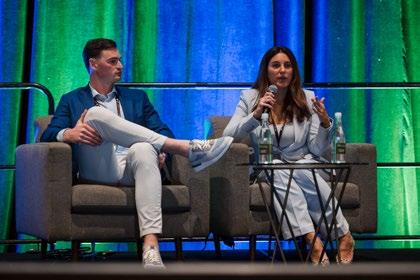
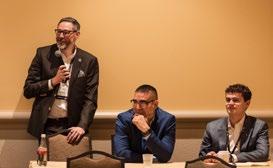
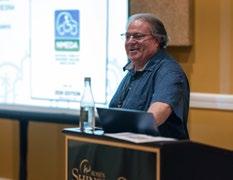
The National Mobility Equipment Dealers Association (NMEDA) Conference is always an opportunity for our industry to come together, reflect on our shared mission, and look ahead to what comes next. This year’s Opening General Session, Foundations and Futures, was especially meaningful. Sitting alongside pioneers who helped shape the mobility industry, while also hearing the perspectives of emerging leaders, reinforced how much progress has been made and how much opportunity still lies ahead.
The mobility industry exists because people believe that independence and transportation should be accessible to everyone. Many of the companies represented within NMEDA today were founded by individuals who recognized that people with disabilities needed safe and reliable transportation solutions. Those early leaders built businesses focused on mobility, accessibility, and service to their communities. Their work created the foundation that our industry continues to build upon today.
When we reflect on the history of mobility equipment and accessible vehicles, we see a story of persistence and innovation. Early mobility providers operated in an environment where accessible vehicle options were limited and public awareness was low. Dealers, manufacturers, and service technicians had to be creative problem solvers, often designing solutions that had never been attempted before. Over time, those efforts led to the development of wheelchair accessible vehicles, adaptive driving equipment, securement systems, and mobility technologies that have improved safety and independence for thousands of individuals. Today, the mobility industry is stronger because of the pioneers who built it.
At the same time, the conversations during this year’s conference made it clear that the future of mobility will require continued innovation and partnership. Vehicle technology is evolving with new safety systems, electrification, and increasingly complex vehicle platforms. These changes create new challenges for mobility manufacturers and dealers who must ensure that accessible vehicles and adaptive driving equipment continue to integrate safely and effectively with modern vehicle designs.
Our industry must remain adaptable. Collaboration between mobility equipment manufacturers, vehicle converters, dealers and automotive manufacturers will be essential to ensure that accessibility keeps pace with the broader automotive industry.
“
Every wheelchair accessible vehicle, every adaptive driving control and every mobility solution delivered by a NMEDA member represents a life changed through increased access and opportunity.”
BOARD MEMBER’S MESSAGE
Ultimately, everything our industry does centers around one core purpose. Mobility provides freedom. It allows individuals to work, connect with their communities, care for their families and live with independence. Every wheelchair accessible vehicle, every adaptive driving control, and every mobility solution delivered by a NMEDA member represents a life changed through increased access and opportunity.
Another theme that stood out during the panel discussion was the importance of the next generation of leadership within the mobility field. Many companies in the mobility industry are family-owned or closely held businesses. As founders and long-time leaders begin to step back, a new generation of professionals is stepping forward to carry the mission forward. These emerging leaders bring new ideas, technical knowledge, and a fresh perspective on how to serve customers in a changing marketplace. At the same time, they carry a deep respect for the values that built this industry. Those values include service, craftsmanship, safety, and a genuine commitment to improving people’s lives through mobility. This generational transition represents an exciting moment for the industry. It allows us to honor the legacy of those who came before us while embracing innovation and new approaches to solving mobility challenges.
The conversations at the conference reminded us that the mobility industry is defined by collaboration. Dealers, manufacturers, and advocates work together because we share a common mission: helping people move through the world safely and independently. If we continue to build on the strong foundation created by our industry’s pioneers while embracing innovation and new leadership, the future of mobility is incredibly bright.
“
If we continue to build on the strong foundation created by our industry’s pioneers while embracing innovation and new leadership, the future of mobility is incredibly bright.”
“The Only Constant in Life Is Change.” — Heraclitus
Russ Newton President of the NMEDA Canada Board of Directors
As I write this, much in the NMEDA realm has changed. The truth is much has changed from just a few weeks ago. Both the U.S. and Canadian boards are new. Many committees have new leadership and committee members. A few short months ago we were speaking about the sunsetting of the current strategic plan. Today we are focused on the dawning of a new NMEDA strategic plan, one that is bolder, more comprehensive and, in my opinion, offers more opportunity and growth for all of the NMEDA membership.
New is the renewed realization that NMEDA can offer a standalone conference that is bigger and better than any conference before it, all accomplished with five or possibly more new NMEDA staff members and a CEO who was new to the standalone conference model. We have three new members to the NMEDA Hall of Fame and a wonderful new format that was featured at the induction ceremony. NMEDA rolled out a brand-new technician training program at this year’s conference that was engaging and, by all accounts, beneficial.
New was the first-ever non-colo VR/VIP pre-conference and Driving Rehab Educational events. How wonderful it was to have all of those therapists attending an NMEDA-specific branded event. And while not entirely new, the updated CAMS course deserves recognition. It is interactive, extremely well thought out and better than ever.
There are so many reasons to be so optimistic about the direction of our association. And while optimism itself is not new, the newness of countless parts should cause you to stop and take notice. Heck, even the accounting process is new. New revenue streams, new partnership opportunities, new government initiatives, new and expanded CRP regulatory initiatives.
OK, you get it. Much has changed, and recently.
On another note, I want to speak to the quality and commitment that I have
been privileged to witness from both the U.S. and Canadian NMEDA boards. I have been blessed to spend eight of the last 10 years as a member of both boards. To that end I have seen change, there are so many people who have contributed in such a big way, and we all know that when you start naming names you always leave someone out. So to all of you, my heartfelt thank you for all of your unselfish time and effort. I can tell you that the U.S. board is in incredibly good hands with Eric Mansfield at the helm, and Canada will be equally well off with Pierre Cote taking the reins.
There are so many reasons to be optimistic about where this association is headed.” “
All of that said, little or nothing happens without staff, its leadership, and committees and their leadership. To a few long-time staffers, Kristen, Chuck, Amy, and Toby, thank you for your service. To all the rest of the NMEDA staffers, welcome aboard.
To the amazing NMEDA Canada board of directors, it was fun, and it was more than worthwhile. Stay the course.
Let’s make some wins for our members.
Last but not least, to the leadership and all of my team members at Sure Grip, many thanks for standing in the gaps all of those times that provided me with the latitude to be involved with everything NMEDA. What we often forget is that so many of these positions are filled by volunteers. There is a real cost to employers who allow their people the time to participate and engage for the benefit of their association. So, to all of the employers who allow and encourage their people to get involved, you are the true unsung heroes.
Russ, out!
The Recipe
Building on the Legacy of the
Mobility Industry
Amy Lane
NMEDA Director of Education, Training, and Conference
I enjoy cooking and entertaining, though I wouldn’t consider myself a “foodie” in the traditional sense. If you think about time with friends and family, holidays, or even dining out, some of the best moments happen around a table. After all, good food, good company and good conversation have a way of bringing people together. It creates a connection and memories.
Of course, a great meal rarely happens by accident. It usually starts with a detailed plan and some level of preparation. You think about who will be coming to dinner, what they like, setting the table and the timing of how everything will come together. Sometimes you follow a trusted recipe, other times you try something new, maybe adding a new spice or insert a new ingredient here and there. The goal is to create something that your guests will enjoy and remember.
In many ways, preparing for a conference isn’t all that different. Should you keep the same blueprint plan as used in previous years, or change it up? This year, we chose the latter. I’ll be the first to admit that starting with a blank slate was both exciting and a little intimidating. But it also gave us the freedom to reimagine the conference experience and focus on creating something valuable and memorable for our association.
Long before the first attendee badge was handed out at the Rosen Shingle Creek, our conference began with a simple question: “What do our members want and need most right now?”
A small task force that included Katie Harkness, Catherine Martin, Emily Sander and Chris Woods helped to gather the first “ingredients” by reviewing member feedback from surveys, industry conversations and conference committee advice. From those discussions, three key themes quickly emerged as pillars for a successful event: networking, education, and professional development.
With those priorities in mind, the planning process unfolded step by step. A revised conference schedule began to take shape, requests for proposals were issued, site visits conducted and debated, and months of planning and coordination followed. Volunteer members generously shared their time and expertise, and staff worked collaboratively, many navigating their very first NMEDA conference. And, like any busy kitchen in preparation for service, there were last-minute adjustments along the way to make sure everything came together.
With the foundation in place, we were ready to try out a few new things. Rather than repeating the previous recipe, we looked carefully at meaningful changes to improve the attendee experience. That meant experimenting with a more condensed program structure, adjusting session formats, and making it easier for attendees to connect and spend time together (who doesn’t like to have a cocktail to kick off a welcome reception). The changes were guided
by the input we received from members and by careful consideration of how to address the many different roles and personas that make up our association.
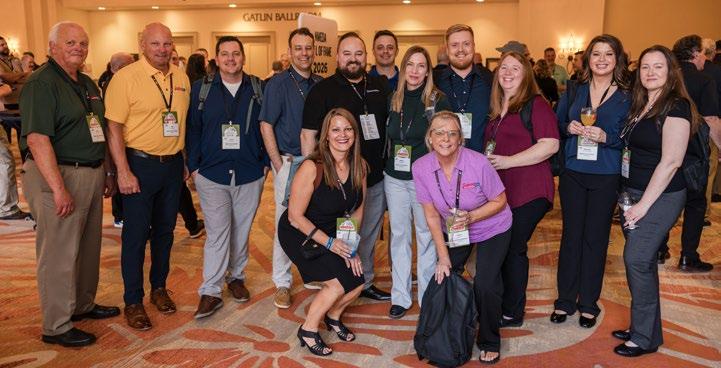
When the conference doors officially opened in Orlando, it was time to see how the recipe came together. While it’s impossible to capture every memorable moment here, the post-conference attendee feedback made one thing clear: the most valuable ingredient, as always, is the people.
Networking was by far the most frequently cited highlight of the conference. Attendees shared how much they appreciated the opportunity to connect
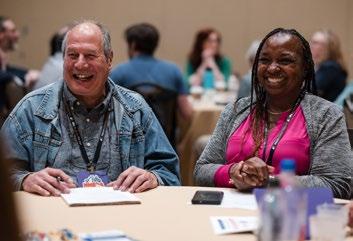
with manufacturers, dealers, technicians, vocational rehabilitation professionals and allied health professionals. During scheduled networking events, through spontaneous conversations in the hallways, or even hanging out by the poolside, these interactions were consistently described as one of the most meaningful aspects of this year’s conference.
The expo hall proved to be another standout element of this year’s conference. In fact, it received the highest overall ratings from attendees, with an impressive average score of 4.8 out of 5. The strong engagement from our
Education & Training (Continued)
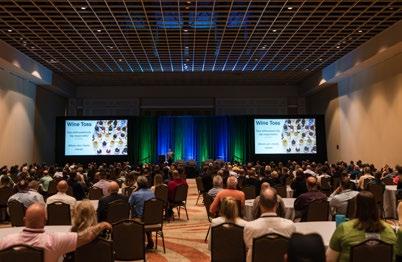
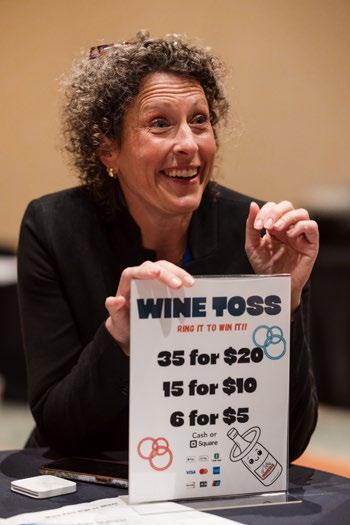
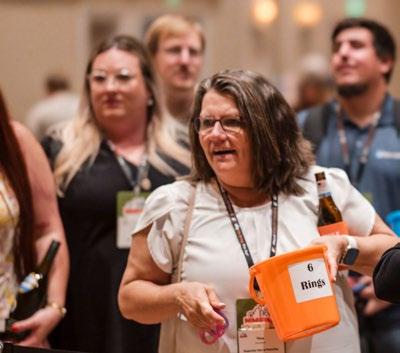
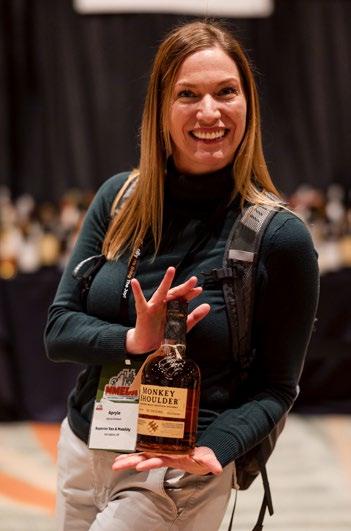
exhibitors and the opportunity to see and experience equipment firsthand through demonstrations were clear highlights. But some of the loudest cheers in the hall were likely coming from the enthusiastic crowd gathered around the wine toss (even carefully planned menus are coordinated with a little splash of fun). The expo hall has long served as a natural hub for conversation and discovery, and this year was no exception. With new products on display, interactive learning opportunities, including a small stage set for short informative educational topics, and thoughtfully placed food and beverage services encouraging attendees to linger a little longer, the expo hall was the gathering table of the conference.
A particularly valued component was the expanded pre-conference and specialty-focused programming, designed to provide education and training experiences for the diverse professionals who make up our association. Dedicated sessions for vocational rehabilitation and allied health professionals were extremely well received, offering focused learning, professional connections and continuing
Just like a well-prepared meal, the thoughtful planning, quality ingredients and “
education units, or CEUs, for eligible participants. We also introduced a new Manufacturers Advanced Technician Summit program that brought technicians together with several manufacturers for hands-on learning, tackling real challenges they face every day, culminating in a timed Technician Challenge.
Education sessions also drew strong interest and participation throughout the event. Two sessions in particular, one focused on the Department of Veterans Affairs opportunities, obstacles and industry insights, and another exploring the rapidly evolving world of artificial intelligence use in business, were especially well attended and sparked thoughtful discussion among participants. Attendees appreciated the timely nature of these topics and encouraged us to continue building on them in the future with deeper and more extended content.
All of these focused tracks created space for professionals to connect with others who share similar roles and challenges, while still encouraging the cross-functional networking that makes our conference so valuable. Whether attendees came for education, hands-on technical insight or professional collaboration, there was truly something for everyone.
And if you’re wondering what you may have missed, or if you found yourself in one room hearing that another session down the hall was just as good, don’t worry. No
Education & Training
the success of a conference depends on and the people gathered around the table.”
FOMO here! We’ve got you covered with Snapsight, an AI audio-recording tool used during many of the education sessions. Capturing the sessions in real time, Snapsight then transforms presentations into concise summaries, key takeaways, and actionable ideas that attendees and NMEDA members can read, review, and even apply in their work. To learn more, visit Snapsight online or scan the QR code located in this article.
The conference venue itself also played an important role in the overall experience. The Rosen Shingle Creek Resort in Orlando received high praise from attendees for its facilities, convenience, and welcoming environment. The all-in-one setup made it easy for participants to move between sessions, networking events and the expo hall without missing opportunities to connect. Speaking of recipes for success, the culinary offerings throughout the event certainly added to the experience. From the expo lunches to the banquet dinner, the food and beverages received rave reviews from attendees and quickly became another highlight of the gathering. After all, good food has a way of bringing people together, a perfect complement to the conversations and networking happening around it. The warm Florida weather certainly didn’t hurt either, reinforcing the preference many attendees expressed for gathering in warmer destinations during the winter months. Like any good recipe, there are always small adjustments
“
The most valuable ingredient, as always, is the people.”
to consider for next time. Some new elements worked exceptionally well, while others may benefit from a bit of refinement as we continue to listen to member feedback and evolve. That process of learning, adjusting, and improving is part of what keeps the conference experience fresh and relevant year after year. In the end, though, the core ingredients remain the same: networking, education and professional development. These pillars will continue to guide our planning efforts and shape your conference experience.
Just like a well-prepared meal, the success of a conference depends on thoughtful planning, quality ingredients and the people gathered around the table. Judging by the conversations, the connections and the enthusiasm, it seems this year’s recipe came together almost perfectly and it’s one we look forward to building on in the years ahead. For now, we’ll savor the success of this year’s conference. And, like any good host, even as we’re still cleaning up the kitchen from this one, we’re already thinking about the next gathering. Stay tuned, because the next masterfully planned meal is already in the works, and I’ve got a feeling it’s going to be a good one!
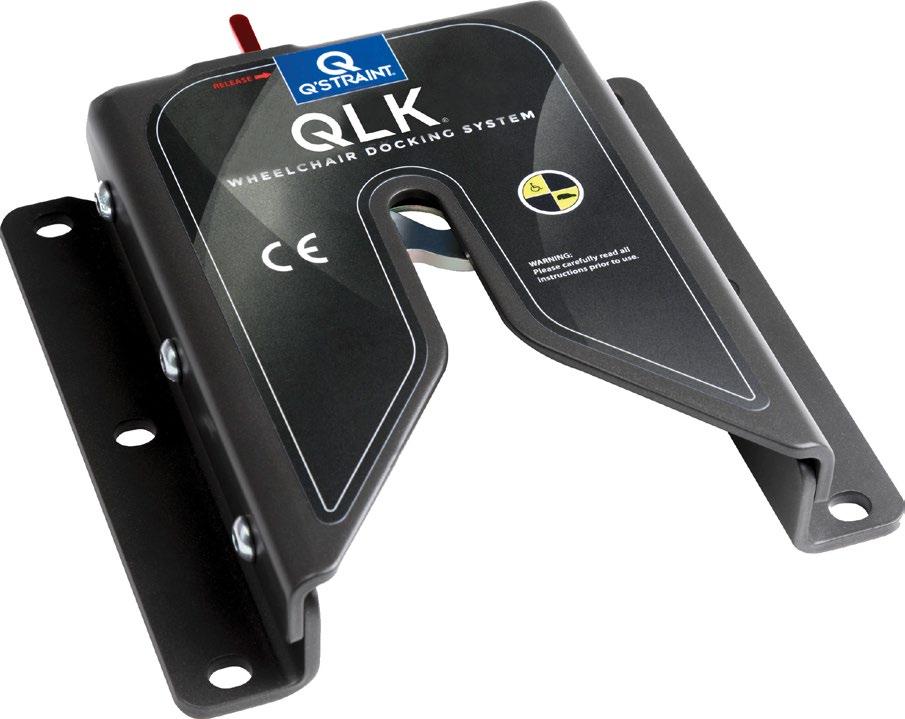
DOCK. DRIVE. DISCOVER.
W heelchair drivers and passengers deserve a docking system that prioritizes their protection above all else. While others meet the minimum, the QLK system is crash-tested to higher, more rigorous standards than any competitor on the market.
It doesn’t just look like a part of your vehicle. It is engineered to protect like one, offering the ultimate combination of intelligent function and industry-leading securement.
Year One:
What the 2026 NMEDA Conference and Expo Taught Me
Ariel Ifill
NMEDA - Marketing & Communications Manager
When I joined NMEDA as Marketing and Communications Manager in January 2025, I came with a strong background in corporate marketing and a whole lot of eagerness to learn. What I did not have was any real understanding of the mobility equipment industry. Hand controls? Transfer seats? Adaptive driving solutions? Driver rehabilitation specialists? I had no idea any of that existed. That knowledge came with time, with curiosity and with the generosity of a community that was kind enough to bring me up to speed.
I could not have anticipated then how much this industry would come to mean to me. The 2026 NMEDA Conference and Expo in Orlando made that abundantly clear.
From Screens to Handshakes (and Hugs!)
Going into conference, I genuinely did not know what to expect. Outside of our strategic planning sessions and a few site visits, nearly every relationship I had built in my first year existed entirely through email, phone calls, video calls and Teams meetings. Members, committee volunteers, exhibitors, industry partners, people I had been communicating with since my very first week at NMEDA, were still largely faces on a screen.
That changed the moment I walked into our conference.
Putting faces to names, recognizing someone from a badge and realizing I had been emailing them for months, having a real conversation with someone I had only ever known through a subject line, it just felt unreal. There is truly nothing like it. The energy in that room was something I was completely unprepared for.
“
The passion this industry has for its work does not translate over email. You truly have to be there.”
Every member, every partner, every conversation had this vibrant, magnetic energy that you just cannot get through a screen. Even in the weeks leading up to the event, you could feel the excitement brewing, particularly among our staff at the NMEDA office. The anticipation carried over to our committee members and attendees as well. Everyone wanted to be there, and it showed.
What struck me most was something no post-event survey can fully capture. The spirits in that room, the liveliness, the confidence people carried throughout the event and took home with them afterward, myself included. That is the kind of thing you can only feel when you are in the room for it. The passion this industry has for its work does not translate over email. You truly have to be there.
Big Shoes, New Territory
This was also a significant conference for another reason. It was our first year producing the event without our previous co-location partner, and on top of that, five of us on staff, myself included, had never seen an NMEDA conference before. There was no existing playbook to pull from, no side-by-side comparison to lean on. From designing all the marketing collateral, graphics, signage and presentations to building out the conference app and managing all of the logistics that fall under the marketing
umbrella, there was a lot riding on this. But seeing it all come to fruition and watching our members be so receptive to everything we put together made every late night worth it.
From Day 1, any uncertainty I had melted away. The momentum in that room from the welcome reception to the expo hall opening that first night made it immediately clear that NMEDA did not need a template. This community shows up, and it shows up ready.
A Night to Remember
One of the most meaningful parts of this year, and one I do not take lightly, was serving as staff liaison for the Hall of Fame Committee. When our previous CEO Dave Hubbard passed away, Toby asked me to step into the role Dave had held. Dave was legendary in this industry, deeply respected and beloved by everyone who worked with him. I had the biggest wave of anxiety when Toby told me. Who was I, someone just over a year into this organization, to follow in those footsteps?
The committee answered that question before I ever had to ask it. They were welcoming, collaborative and generous from day one, and honestly they made the whole process feel like a team effort rather than something I was figuring out on my own. I am so grateful for every single one of them.
The Hall of Fame banquet itself was something I will not forget. First of all, the food was amazing. But beyond that, sitting in that room and watching this industry come together to honor the people who helped build it was
Conference Recap (Continued)
genuinely moving. As someone who had spent months coordinating the logistics behind the scenes, to finally be present in that moment and feel the weight of it was something else entirely.
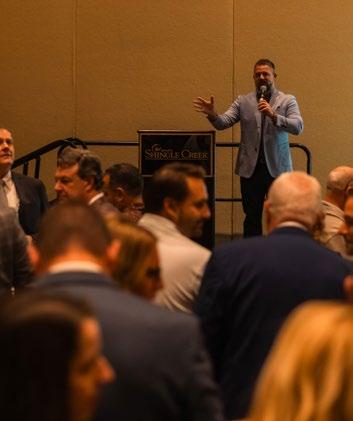
And then Between the Palms happened. If you were there, you know. Randy Schiller had the whole room laughing while still celebrating our inductees in the most genuine and heartfelt way. It was the perfect close to an incredible evening.
A huge thank you to our host Randy and to Sam Cook of Superior Van and Mobility for his tribute to the late Paul Erway. It was a beautiful and fitting send-off for someone who meant so much to this industry. And congratulations again to Brendan Healy of Q’Straint and Greg Kiser of BraunAbility on their inductions. The years of dedication both of them have poured into advancing mobility and independence for people with disabilities speak for themselves. Their legacy in this industry is well deserved of this recognition, and we are so proud to welcome them into the 2026 NMEDA Hall of Fame.
The Expo Floor and Beyond
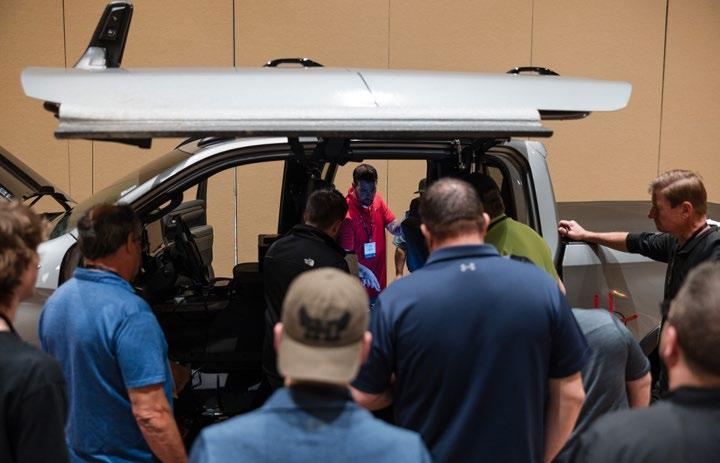
Walking the expo hall was something else entirely. I had seen our exhibitors’ mobility solutions through photos, videos and social media content, but nothing prepares you for seeing it all in person. The vans, the equipment, the technology, it all comes to life in a way a screen simply cannot replicate.
And the floor itself was buzzing. Dealers connecting with manufacturers, allied health professionals discovering new solutions, conversations flowing everywhere you turned. You could feel how much everyone genuinely wanted to be there, and that kind of energy is contagious. And let’s not forget the wine toss, which was absolutely packed and so much fun. That is what this industry does at its best. It gets the right people in the right room and lets the magic happen from there.
“
NMEDA and its members left that conference redefining mobility, especially with our new strategic plan leading the way.”
The energy carried right into the education sessions as well. I had the opportunity to moderate the Content that Clicks session presented by Nicole Bryson of FTMobility and Jack Borgmeyer and Brooke Westcott of Borgmeyer Marketing Group. Their presentation was so informative that I walked away with ideas I could immediately bring back and apply to NMEDA’s own social media channels. It
was a great reminder that there is always something new to learn no matter what seat you are sitting in.
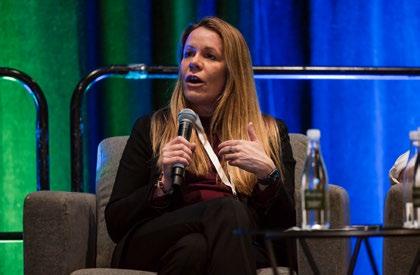
The Bridging the Gap panel moderated by Russ Newton of Sure Grip Hand Controls was another standout. With panelists Adam Lane of United Access, Shawn Carver of Mobility Works, Ryan McClasky of Superior Van and Mobility and Trista Windows of DRCE, the conversation was lively, interactive and sparked exactly the kind of active dialogue you hope for at a conference. The room was engaged from start to finish.
The Part That Stays With You
If I had to sum up this conference in one word it would be passion. Every person I talked to, whether they had been in this industry for two years or 30, genuinely cares about what they do and more importantly about who they do it for. Trust me, it did not go unnoticed.
Millions of people across the United States and Canada live with mobility challenges, and yet so many people outside of this industry, myself included before I joined NMEDA, had no idea that the solutions our members provide even exist. That awareness gap is something I think about constantly. The more I learn about this industry, the more motivated I am to help close it and to make sure the people who need these solutions know where to find them. That is a big part of why I love what I do at NMEDA.
“
This community shows up, and it shows up ready.”
The theme of the 2026 conference was Reconnect. Recharge. Redefine Mobility. and honestly it could not have been more fitting. Every session, every conversation, every moment on that expo floor reflected exactly that. This community reconnected, recharged and reminded itself why this work matters. And I can say with confidence that NMEDA and its members left that conference redefining mobility, especially with our new strategic plan leading the way.
Being at the 2026 NMEDA Conference and Expo, seeing this community come together in person and feeling the weight of what this work really means, only made that clearer. I walked away from Orlando more motivated and more inspired than I was when I walked in. I am looking forward to what is ahead, from planning National Mobility Awareness Month to upping our video and social media presence and working toward our strategic plan objectives. The conference left me fired up, and I cannot wait to channel that energy into everything we have coming.
Mobility Way
By Mike Savicki — Afterburner Communications Afterburner Communications
Owning The Streets of San Francisco
Two Bay Area wheelchair users, Sun Chan and Nils Jorgensen, reflect on living, driving and riding in one of America’s most challenging cities.
If you want to get a complete understanding of what it’s like to get around San Francisco as a wheelchair user, the two people you should connect with are Nils Jorgensen and Sun Chan. Nils drives and Sun does not. But both have lived and worked full-time in the Bay Area for most of their lives, and the experiences that they have had and the advice they share should make us all think about
mobility in ways we might never have imagined.
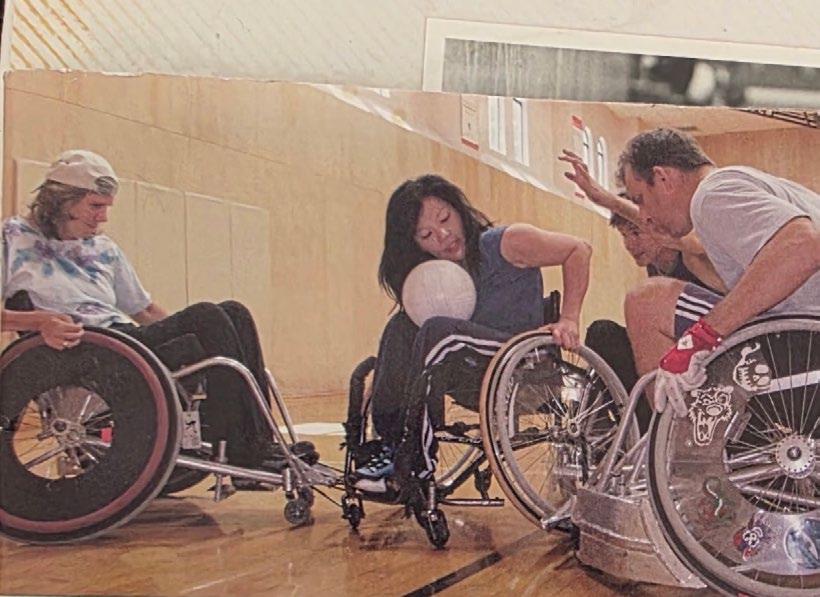
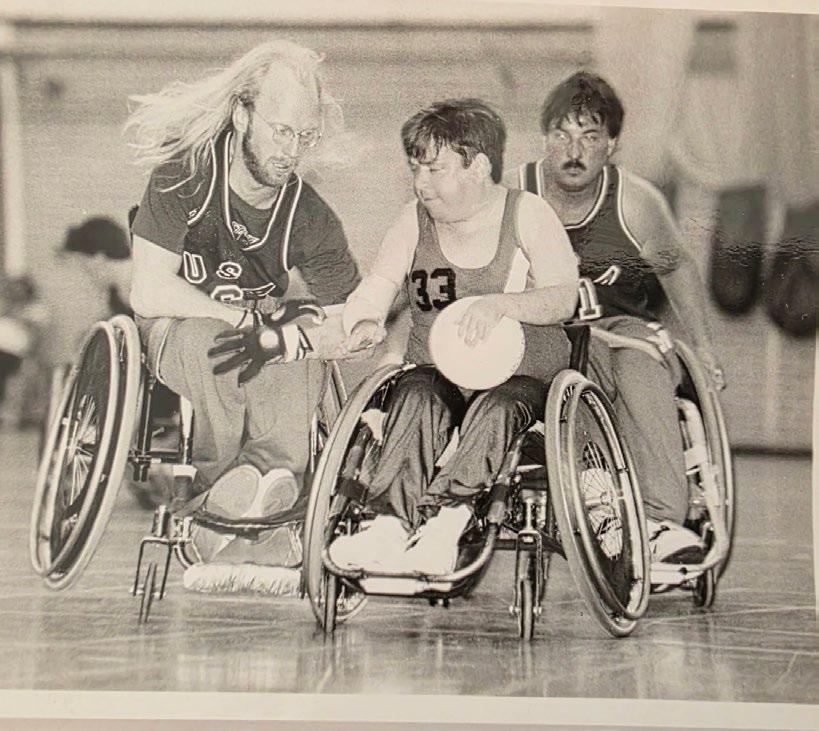
Let’s start with Sun. Born in Hong Kong with polio, her family came to Los Angeles when she was very young. After attending the city’s only high school for disabled students, where she was first introduced to adaptive sports and picked up track and field, sharing the school’s only racing chair with other teammates,
then quad rugby, once featured on the cover of America’s premiere adaptive sports publication, her family set down roots in 1979 in San Francisco’s Sunset District where she still lives today.
Mobility presented an immediate and major roadblock for her. She didn’t have a vehicle, and even keeping a vehicle in her neighborhood was next to impossible for anyone, so she often relied on family and friends to take her everywhere, from simple trips out of the house to her full-time job as a college financial aid counselor.
There was no para-transit and the closest Bay Area Rapid Transit, or BART, station still required a ride. And in those days before the Americans with Disabilities Act, or ADA, became law, accessibility anywhere was nearly non-existent.
“Back in the 80’s and 90’s I would have an able-bodied friend trick taxis into stopping then I’d get in. I did the same later for Ubers, too. And I learned which buses and trains worked and didn’t work,” Sun Chan, now 66, said. “It all worked but that isn’t the right way to do it.
“Knowing that you had to control your day was what made the difference for me. That was the important part,” she said. “And you had to be patient, too. Sure, the hills were one thing, and I learned to push them no matter what, but it was more than that. Much more than that. I gave myself three hours to get to and from work. And I always had a Plan B.”
Plan B brings us to Nils Jorgensen. A Boston native who was born with a cervical spinal cord injury,
Jorgensen, also 66, grew up in Boston long before the days of the ADA, too. He attended the University of Massachusetts Boston and Northeastern before beginning a career as a recreational therapist. Like Chan, he excelled in wheelchair sports and was one of the fiercest and most competitive quad rugby players in the world when the sport first began. When one of the nation’s top teams, Quadzilla, came calling, Jorgensen accepted their offer and relocated to the West Coast.
It was there that he began living
disability differently, adjusting to not only the hilly geography but also the urban density, flow and behaviors of the city and people putting themselves first, often at the cost of disabled parking, access and inclusion. He learned to anticipate curve balls, like recognizing high curbs, angles and even road crown. And he learned that having a vehicle didn’t always mean immediate access and ease in livability. Living near the base of the Bay Bridge in Oakland and spending the vast majority of his 30-year career as a recreational therapist
and program coordinator in the city, Jorgensen began living what he calls his Plan B mentality, too.
“San Francisco is not like a Disney World. It can almost be like a different country access-wise every day,” Jorgensen said. “I’ve always had to think about what neighborhood I’m going to, where I’m going to park and how the area is laid out. I think about curb height, hill angle and street camber and decide if it’s worth it. I have a Plan A and a Plan B. I need it all the time.”
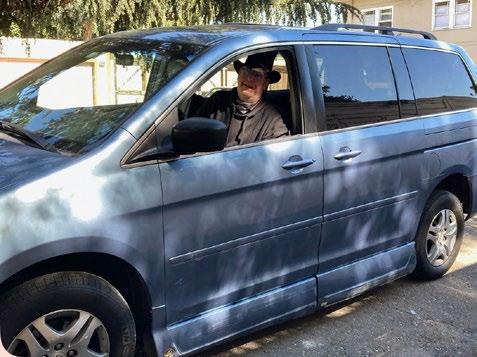
When the pandemic hit, and drivers went away, even with BART and improvements in public transportation, both Chan and Jorgensen had to change their lifestyles. Chan began working more from home and Jorgensen bought a used Honda Odyssey van which he drives from his power chair with an EZ-Lock system.
“The van service I used became more difficult to access, and California still required me to get recertified for use even though my disability has been lifelong,” Chan explained. “Especially for those on fixed incomes, those services should be free, easy to access and reliable because not everyone drives, and in cities like San Francisco, it’s not always best to drive.”
Chan’s longtime Quadzilla teammate and friend, Jorgensen, echoed her sentiment.
“Whenever you live in or near a city, it’s just different. In a suburb, when you figure out a system, it usually stays,” Jorgensen said. “Urban, city living is different, there is always a curve ball coming your way. With the density of humans, it means you have to be mindful of changing and different behaviors, people looking out for themselves and trying to follow a survival type strategy. They don’t think about handicap spots, leaving them open and recognizing differences.”
With more than 120 combined
years as wheelchair users, Chan and Jorgensen have more experiences and mishaps, and have learned more lessons than the Bay Area has fog banks. They have rolled, driven, pushed and ridden every mile, hill and twisty road and trail of their city. Their suggestions for the mobility industry and those living with a disability are hard earned and genuinely shared.
“If I could make changes to vehicles, I’d like to see the end of ramps painted a bright color to let other drivers and pedestrians see that space is needed. And maybe a flip-up flag to keep other drivers from driving across the end of the ramp,” Jorgensen said. “In cities like San Francisco and
Seattle, where every inch matters, space to navigate is a premium.”
Chan added that success is also about attitude and drive.
“Living with a disability is not last minute. If you want it to work, and if your goal is to get out of the house, you have to have an attitude, you have to make it work. Make phone calls and be strong about your disability,” Chan said. “That’s what was and is still needed.”
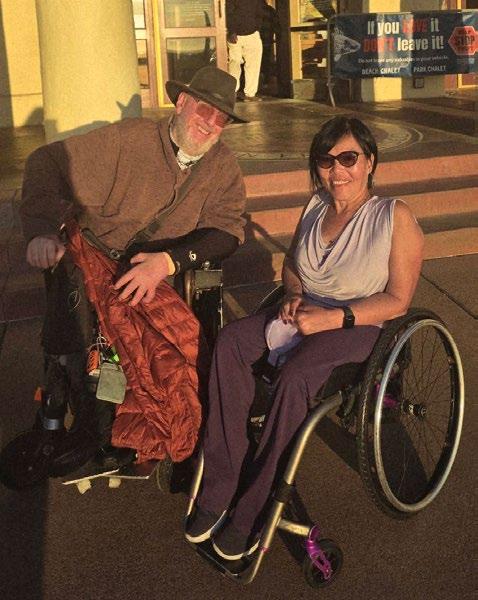
(Photos courtesy of Nils Jorgensen. Archived rugby photos shared from Jorgensen collection and current photograph of Nils Jorgensen and Sun Chan taken in front of the Beach Chalet restaurant, March 14, 2026, San Francisco, CA.)
Voice of the Veteran
The Greatest Loss Is Identity
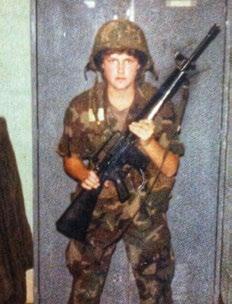
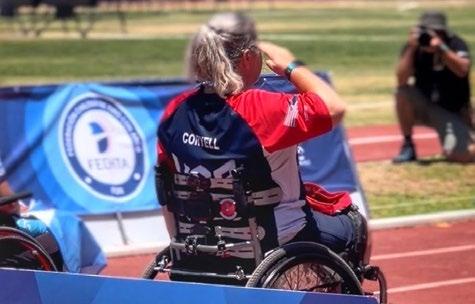
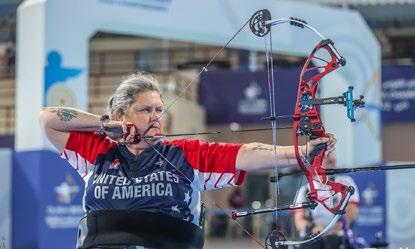
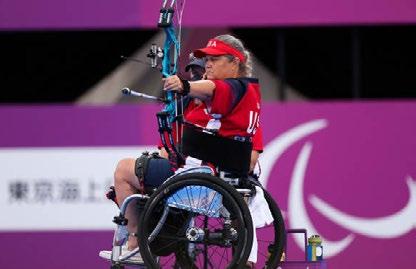
Lia Coryell is a U.S. Army veteran, two-time Paralympian and World champion Paralympic archer from La Crosse, Wis. After serving as a military truck driver at Fort Dix, Coryell medically retired from the Army in 1984 following a leg injury and subsequent multiple sclerosis diagnosis. She discovered archery through a Wounded Warrior adaptive sports camp and went on to make her Team USA debut in 2015. She has since competed at the 2016 Rio and 2020 Tokyo Paralympic Games, earning a fourth-place finish in both. Off the range, she is a Level 4 certified archery coach, published author and dedicated advocate for disabled veterans navigating the VA system.
Thankfully, most of you will never have to experience a devastating injury or illness in your lifetime. You will never have to question your sense of self, of purpose, of place, of value because your body has failed. Everything you have worked for, planned for and envisioned for your future is ... gone. This is especially true for military members who experience these devastating losses due to their service to this country. Leaving your military career because of injury or illness is not a choice. Your career and identity are gone as a direct result of choosing to put your life on the line for others.
Military members pride themselves in being physical protectors, defenders, warriors, and lifesavers. That training and mindset begins the very first day you arrive in boot camp no matter what branch you serve. It remains for the rest of your military career. It is not only a way of life; it is an identity written into every military creed.
When you are catastrophically injured or ill due to your service, everything you thought you represented in the present and in the future is destroyed. It’s not just your physical body. It affects your relationships with family, friends and even God on every level. Every single day. You begin to question everything you ever thought you were. If you can no longer be a provider, a protector or a defender, what are you? What is your worth when you are broken and discarded because your body has failed? Many of us question if life is even worth living. If you are not ‘value-added’, then you must be the weakest link.
Lia Coryell
“
The greatest loss is not body parts or body functions.
The greatest loss is identity.”
I have been a disabled veteran for over 40 years. My father, brother, son and the vast majority of my friends and teammates are all disabled veterans. I have lived with them. I have taught them. I have competed with them and I have coached them as adaptive athletes. I have also attended their funerals after they have taken their own lives. I know a thing or two about losing your identity because you chose to protect and defend this great nation and the American people through your military service. The only way to build a new, healthy identity is to find ways to be ‘value-added’ to people and communities. You need to prove to yourself that you can be independent and capable as an adult. You need to find ways to feel worthy, included and validated. To prove to yourself that you are NOT the weakest link. The most significant challenge for us in developing a new identity is to learn to live in our new bodies while finding our worth within our families and in our communities.
It is critical to our healing and identity development that we have the ability to drive and transport in our own adapted or modified vehicle. We need to have opportunities to prove that we are fully functioning adults. That we are not children whose needs must be met by other adults. WE are the adults and are capable of meeting our own needs and the needs of our families and communities. Because independence allows you and others to see and acknowledge your worth. Feeling worthy allows you seek inclusion. Finding ways to be included and involved with our families and communities creates a sense of purpose. A sense of purpose is an integral part of the process of reshaping who we are now and in the future. This whole healing cycle starts with independence in getting where we need to go so that we can rebuild our lives.
Currently, the VA Adaptive Auto Equipment Program (AAE), is broken. It is not just one state or hospital or VA Regional Office. The problems go all the way up to Executive Director of Compensation Services in Washington, D.C. I know this personally because I’ve been stuck in this bureaucratic nightmare for almost 18 months. Apparently, there are no humans willing to communicate or take responsibility for addressing individual veteran concerns and issues with the AAE program in the entire VA organizational system. There is no way for a veteran to directly communicate with the people responsible for approving, denying or changing the parameters of this
benefit or claim. The only answer I have ever received from any VA employee regarding my AAE issue is to “hire an attorney.”
The identity, job title and departments of people who are responsible for the oversight, administration and patient communication of the AAE benefit is a closely guarded secret. No intel out and no inquiries are addressed. There is this invisible cloak of secrecy, power and control about which veteran gets which accommodations and approvals. There is zero transparency, consistency, accountability or standardization of system processes. Every VA regional office and VA Prosthetics department has different ways of interpreting the parameters of this benefit. This lack of accountability and oversight is unethical, unprofessional and shameful.
Life is hard enough for those of us requiring modified vehicles.
“
We didn’t choose this life but here we are and we deserve better. Please fix this problem.”
On the Move: Member Edition
Our members are always on the move, and this section is dedicated to celebrating that. From community impact to industry firsts, On the Move: Member Edition shines a spotlight on the achievements, milestones and moments that make the NMEDA community something to be proud of.
Ilderton Conversions
Charlotte, N.C. | February 2026
Ilderton Conversions Changes a Life in Charlotte
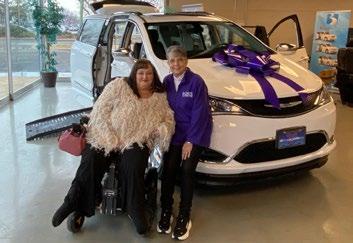
Some moments go far beyond the dealership floor, and Ilderton Conversions in Charlotte, N.C., delivered one of those moments in February.
When nonprofit All Things Possible Medical Fundraising needed a community partner to help change a life, they turned to Ilderton. Together, they surprised Rita Connolly, a 56-year-old wife and mother living with spina bifida, with a wheelchair accessible van that restored her independence. Before receiving the vehicle, getting anywhere meant her children lifting her into a vehicle she could not safely ride in, sitting on the floor without a seatbelt, her 400-pound wheelchair crammed beside her.
Ilderton made sure that would never be her reality again.
“It’s not just a vehicle, it’s helping somebody’s dreams come true,” Connolly said.
This is exactly the kind of work this industry does every day. Congratulations to the entire Ilderton Conversions team on an incredible act of community impact.
FR Conversions
February 2026
FR Conversions Earns NMEDA MQAP Accreditation
FR Conversions officially earned accreditation under NMEDA’s Manufacturer Quality Assurance Program, or MQAP, across its retail mobility product lines in February.
This milestone reflects FR Conversions’ commitment to quality, safety and the highest standards in the mobility equipment industry. Congratulations to the entire FR Conversions team on this well-deserved achievement.
United Access
Houston, Texas | March 2026
United Access Partners with Houston Children’s Charity for Chariots for Children
United Access made a lasting impact on the Houston community in March. In partnership with Houston Children’s Charity, the team helped distribute 98 BraunAbility wheelchair accessible vans to children and families in need through the 2026 Chariots for Children delivery event.
Led by Houston General Manager Mike Murphy and the United Access Houston and Pasadena teams, the day was filled with gratitude and powerful moments that reinforced why this industry matters. Restoring mobility and independence to deserving families is exactly what this work is all about. Congratulations to the entire United Access team on an unforgettable day of community impact.
BraunAbility
New York, NY | April 2026
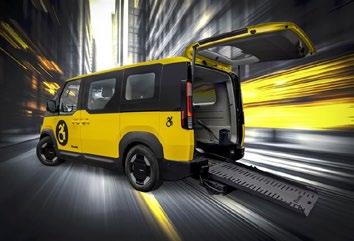
BraunAbility and Kia Unveil First-of-Its-Kind Accessible EV Concept at New York International Auto Show
BraunAbility is making waves. In collaboration with Kia, the team unveiled the PV5 WAV New York Taxi and Rideshare concept at the New York International Auto Show, a first-of-its-kind, all-electric, ADA-compliant wheelchair accessible vehicle designed with real-world production in mind.
Built on Kia’s dedicated EV platform and powered by BraunAbility’s accessibility expertise, the concept features integrated tiedowns, occupant restraints and a low step height optimized for everyday taxi and rideshare use.
The companies are now moving into real-world validation in New York, working alongside fleet operators, disability advocacy organizations and government agencies to gather feedback and refine the vehicle for production. We are proud to see this kind of innovation leading the way toward accessible, electric transportation in everyday ride-hailing.
Post Conference F/CMVSS 206 update
Harry Baergen, CET
NMEDA CRP Coordinator
Harry Baergen was previously the Regulation Enforcement Officer for Transport Canada. Currently, he acts as the Compliance Review Program (CRP) Coordinator for NMEDA.
If you have any questions about the contents of this article, or about the NMEDA CRP, contact Harry Baergen at 778.888.2210.
From a Compliance Review Program (CRP) perspective, one of the most important events at the NMEDA annual conference is the expo. The expo provides an opportunity for CRP committee members to actually see some of the conversions and components that have been the topic of issues during the year, and, of course, to meet face to face with the people behind these products. There appeared to be fewer vehicle exhibitors this year, possibly due to corporate takeovers, and the obvious vacuum was the absence of exhibitors in adaptive equipment, such as companies manufacturing driving controls. However, there were enough vehicles on display at the exhibit for CRP to take a close look at some of the rear-entry folding ramp designs that had been the focus of discussion over the last couple of years, especially regarding Federal Motor Vehicle Safety Standard (F/CMVSS) 206, “Door Locks and Door Retention Components.”
In July 2014 and October 2022, the CRP published an Industry Advisor in the Circuit Breaker (NMEDA News) on alterers’ obligation under F/CMVSS 206, specifically for rear-entry folding ramps. The purpose of the previous articles was to provide information on the test requirements in F/CMVSS 206 and to assist alterers in complying with federal requirements in preparation for the day when NMEDA adds rear door testing to the list of compliance tests required to post altered vehicles on the Safety Reviewed Vehicles website. That day finally arrived on January 01, 2025. The posting aspect particularly affects alterers of rear door systems in small vans that incorporate a fold-out ramp for wheelchair access, but it also affects modifiers (dealers).
The National Highway Traffic Safety Administration (NHTSA) did not exempt rear folding ramps under the 49 CFR Part 595 “make inoperative” provisions for modifiers. Rather, in response to a modifier’s petition for exemption from FMVSS 206, NHTSA defined the rear folding ramp as part of the “hinged door system” or as a “hinged back door.” This means the modified rear folding ramp, with hinges and latches, is included in the FMVSS 206 requirements for modifiers as well as alterers, because it could affect modifiers installing rearentry kits in titled vehicles.
Since NMEDA mandated rear door F/CMVSS 206 testing on January 01, 2025, some alterers have already completed the testing for the rear-entry folding
ramp on new models. Also, like many NMEDA requirements, F/CMVSS 206 is an NHTSA requirement, so some of the larger alterers had conducted testing even prior to the NMEDA mandate. Below is the letter NMEDA sent to members who convert rear-entry vans or otherwise alter/modify door systems.
NMEDA’s Compliance Review Program (CRP) provides its dealer members with vehicle and component compliance information via the NMEDA website under “Safety Reviewed Vehicles/Components.” The CRP obtains this information by conducting an engineering review of a manufacturer’s data established when testing to federal and/or Canadian Motor Vehicle Safety Standards (F/CMVSS). Since there are many different F/CMVSS requirements and various mobility equipment safety concerns, the CRP has focused its reviews on the most relevant standards to provide a minimum level of information regarding a manufacturer’s ability to certify its products.
As part of the evolution of the Compliance Review Program, the CRP committee determines what safety concerns remain to be addressed. In this process, the committee identified F/CMVSS 206 “door locks and door retention components,” particularly door latches, as crucial for compliance with F/CMVSS. The committee decided the CRP would necessitate a phased-in compliance review.
Recognizing the financial burden this standard could impose on some manufacturers, the committee has decided that compliance with the new NMEDA mandate would be required for all vehicle conversions submitted for website posting after January 1, 2025, or at the next major vehicle model change. A major model change requires an alterer to recertify; therefore, moving the deadline to an OEM model change minimizes the financial and development burden. Early compliance is permissible.
The F/CMVSS 206 standard will benefit the membership and consumers by providing a means of verifying a critical safety aspect of altered or modified latches and hinges. OEM door systems that are unaltered and unmodified as part of the conversion process do not require additional testing or compliance data to be submitted to CRP.
If you have any questions about this new NMEDA requirement or the CRP program in general, please contact the NMEDA office.
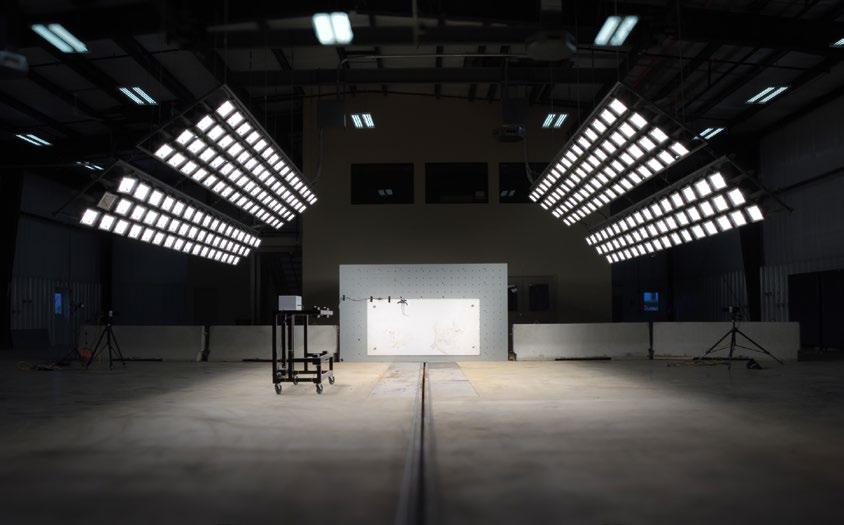
In a rear-folding ramp conversion, F/CMVSS section 206 S4.1.1.3 requires the rear door latches to withstand a load of 9,000 N in the specified directions. This is an out-of-vehicle component test, so the center rear OEM latch on its own and other OEM latches and hinges in the system are assumed to be already certified by the OEM. It is also assumed that the OEM has tested the rear door to the 30g inertia test required by F/CMVSS 206 S5.1.1.4 (b). The OEM rear door when closed is latched to the rigid part of the vehicle. However, in a rear-entry conversion, the rear OEM door is now latched to the moveable folding ramp adaptation, which becomes part of the rear door system. This renders the OEM 30g acceleration (sled) test invalid. Therefore, a retest by the rear-entry vehicle modifier, alterer, or kit manufacturer will be necessary, either by mock-up or by full vehicle. If the folding ramp when closed is latched to the vehicle, e.g., to ‘C’ or ‘D’ pillars, or otherwise, those latches will have to be included in the acceleration test. The folding ramp hinges or piano hinge must also be bench-tested unless generic OEM parts are used.
Two major rear-entry designs were exhibited at this year’s conference expo. One was the folding ramp attached to the vehicle with a piano hinge at the bottom and latched to the vehicle on each side with OEM latches at the top of the ramp when closed. The other was the folding ramp attached to the vehicle with a piano hinge at the bottom and latched to the vehicle on each side with a manual latch at the top of the ramp when closed. Each system has an OEM latch at the bottom center of the OEM door that latches the OEM door to the folding-ramp conversion rather than to the original OEM rigid body. Therefore, a 30g retest of the rear door system is required.
The F/CMVSS 206 S5.1.1.4 (b) sled test is not a highly destructive test. However, 30g is a relatively high force test. Although CRP usually receives only pass results, it has also received unofficial information, some of it at the conferences, about failures in F/CMVSS 206 rear folding ramp testing. Therefore, CRP strongly recommends a thorough analysis of the rear latch system design, preferably with input from the test lab and the OEM, before testing to ensure the rear door system will pass the 30g test on the first run.
Government Relations Update
Shawn Richmond
NMEDA - Government Relations and Policy Manager
First Quarter of 2026
The first quarter of 2026 marked a significant start to the year for the National Mobility Equipment Dealers Association, with meaningful legislative engagement, congressional testimony and continued monitoring of emerging transportation technologies. NMEDA’s government relations efforts focused on improving outcomes for mobility dealers and the veterans they serve, while also preparing the industry for future mobility trends.
Introduction of the CRUISE Act
The first major legislative development of the year was the introduction of the Centralized Reimbursement for Upgraded Innovative Service Equipment Act, known as the CRUISE Act. The legislation is designed to improve the process by which the Department of Veterans Affairs reimburses mobility dealers for vehicles purchased through the VA Automobile and Adaptive Equipment program.
The bill proposes two key improvements. First, it requires the VA to process payments to automobile sellers in accordance with federal prompt payment standards and to publicly report the number of days required to process any payment that exceeds a 30-day timeframe. Second, it directs the VA to centralize the payment process within the department’s Central Office, creating a more consistent and accountable system.
In addition, the legislation requires the VA to develop a method to accurately track and resolve payments outstanding for more than 90 days. By increasing transparency and accountability, the CRUISE Act aims to ensure that mobility dealers are paid promptly for the vehicles they provide to disabled veterans.
Congressional Advocacy and Testimony
During the week of Jan. 19, NMEDA’s government relations team traveled to Washington, DC, to advocate for the CRUISE Act and highlight the importance of timely VA reimbursements.
The team met with several members of Congress and congressional staff, including Reps. James Comer, Tom Barrett and Morgan McGarvey, as well as staff from the office of Sen. Jim Banks. These meetings focused on explaining how reimbursement delays affect mobility dealers and, ultimately, the veterans who rely on accessible transportation.
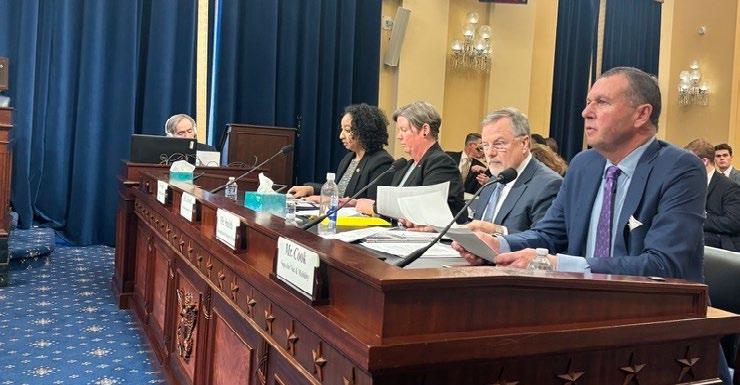
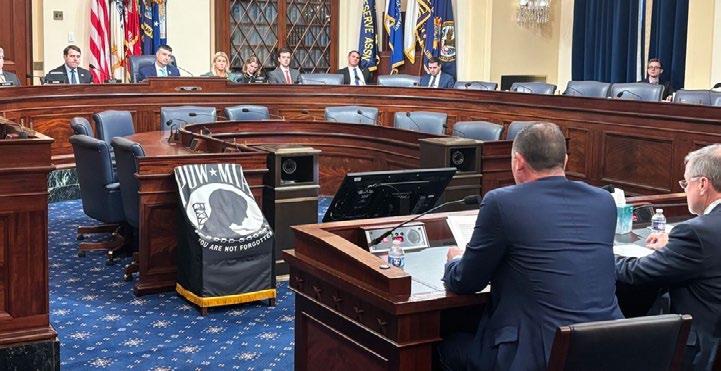
A key moment during the visit was a congressional hearing before the House Veterans Affairs Subcommittee on Economic Opportunity. Sam Cook, president of Superior Van and Mobility, testified on behalf of the mobility industry. In his testimony, Cook emphasized how payment delays create operational challenges for dealers and can slow the delivery of accessible vehicles to veterans who depend on them for independence and daily mobility. His testimony helped demonstrate the realworld impact of the legislation and reinforced the need for reform within the VA payment system.
ASSIST Act Update
Another important development during the first quarter involved progress on the Automotive Support Services to Improve Safe Transportation Act, known as the ASSIST Act.
The ASSIST Act passed the U.S. House of Representatives unanimously, reflecting strong bipartisan support for improving mobility and independence for disabled veterans.” “
The legislation is intended to expand access to medically necessary vehicle modifications for disabled veterans by allowing the Department of Veterans Affairs to cover a broader range of adaptive equipment and mobility related services. These changes would help ensure that veterans receive the modifications they need to safely operate or travel in accessible vehicles.
The ASSIST Act passed the United States House of Representatives unanimously, reflecting strong bipartisan support for improving mobility and independence for disabled veterans. The bill is now under consideration in the Senate. NMEDA remains optimistic that the legislation will move forward and could be passed and signed into law by the end of the first quarter or early in the second quarter.
Monitoring Developments in Autonomous Vehicles
NMEDA also continued to monitor developments in emerging transportation technologies that may shape the future of accessible mobility.
Shawn Richmond, NMEDA’s Government Relations and Public Policy Manager, participated in the AV
GOVERNMENT RELATIONS UPDATE
NMEDA will continue working with lawmakers, federal agencies and industry partners to improve programs serving disabled veterans and to ensure that future transportation innovations remain accessible to all.” “
American Conference on Autonomous Vehicles and Public Transportation. The conference focused on advancements in autonomous vehicle systems, robotaxi services and mobility-on-demand platforms.
As these technologies continue to evolve, NMEDA is actively engaging in discussions to ensure that accessibility considerations remain part of the conversation. The goal is to help ensure that future transportation innovations include solutions for individuals who rely on wheelchair accessible vehicles.
To further this discussion within the industry, Richmond hosted an autonomous vehicle roundtable during the NMEDA Conference & Expo on Feb. 21. The session provided an opportunity for industry leaders to discuss how automation and new mobility services may affect the future design, production and use of wheelchair accessible vehicles.
Looking Ahead
The first quarter of 2026 demonstrated strong momentum for NMEDA’s advocacy efforts. With the introduction of the CRUISE Act, continued progress on the ASSIST Act, and active participation in policy discussions surrounding emerging transportation technologies, NMEDA remains focused on advancing policies that support mobility dealers and the individuals who depend on accessible transportation.
As the year progresses, NMEDA will continue working with lawmakers, federal agencies, and industry partners to improve programs serving disabled veterans and to ensure that future transportation innovations remain accessible to all.
RECOVERED MORE THAN $27 MILLION IN VA PAYMENTS FOR DEALER MEMBERS IN 2025! EMAIL:
If you have VA invoices 30+ days past due, submit them through our Past Due Invoice Program. 2025 $27,869,732
LOOKING AT THE ROAD AHEAD
Chuck Hardy
NMEDA Director of Quality & Compliance
As we head into spring, I am gazing at the open road we all have ahead of us. While we may encounter some hills to get over, on the other side is a horizon of opportunity, fresh for the picking. Do you see it? The staff is working closely with the board to finalize the tactics for the new strategic plan, and the road leads us to two new destinations. First stop is the commercial landscape, and further down the road is home access. It’s going to be an exciting three years as we approach these new destinations. You just wait and see.
But before we step on the gas, I would like to share a few thoughts.
everyone had a camera on their phones, so I am told. So, I cannot judge it against that. But from what I experienced, it was wonderful. Not only is this one of the only times us ‘staffers’ get out of the office and get to see YOU all in person and not on the phone, but we get to see all the conversions and products our members manufacture and install that we only ever talk about.
The Conference
This last conference may have been one of the best conferences we have ever had. And no, I was not around for all the crazy times Marilyn tells me about that live in NMEDA folklore of how the conferences ‘used to be’, and maybe it’s a good thing they were all before
The expo hall was laid out well. It didn’t feel cramped, there were wide aisles and interesting exhibitor spaces. Our NMEDA booth sat right next to the wine toss, and if you made it over there, you know it was a little crazy and a lot of fun. And what did you think about the silent auction items? On top of the technician training, education
sessions and speakers, this conference even had a golf event. I mean, there was something for everyone. If you didn’t make it to Orlando this year, my friend, you missed a good one.
QAPx Improvements
Now that we have the conference behind us, let’s talk about QAP, our favorite subject. While our developer wishes I was working faster on getting new features for QAPx out to you, I promise they are coming. I know I have talked about it in past articles, but we have some nice improvements that will be live in QAPx soon.
First, a final inspection checklist and make-inoperative form that is custom built for only the equipment you are installing. This is going to speed up the QAPx job entry process and make it a whole lot easier to enter jobs.
Second, a dealer dashboard featuring a visual month-overmonth trend chart showing how many jobs were completed versus how many are open for a given month. This is one of my favorite upgrades because I am a ‘visual’ person. It will give you a quick snapshot of job flow over a six-month period so you can see whether you are doing more jobs or fewer and whether your open jobs are shrinking or growing. I know it’s hard to see by reading this text, so I will wait until it’s in your hands and hear from you. I think you will love it!
Third, we are adding a field to enter who pays for the job, whether the client or a third-party payer. It is a simple dropdown selection and will provide useful data on payment sources.
Fourth, and this is a big one, NMEDA label assignment is changing. In the past, dealers would order a batch of labels from the NMEDA office and enter them as jobs were entered. Moving forward, when a dealer orders labels, those label numbers will be assigned by NMEDA before you ever receive them into your QAPx label inventory. The QAPx label inventory is a new feature where all your assigned and available labels will reside electronically. Once a dealer enters a new job, they will simply select the label number from inventory. The system will not allow a duplicate label to be assigned to a different VIN, and dealers will always be able to see how many labels they have in inventory, making it easier to know when to reorder. This is going to be a great feature for the dealer.
Fifth, we are adding an actual job delivery date field. A popup will appear for every job being submitted asking you to confirm the actual date the vehicle was delivered. This will eliminate confusion when the date a delivery form was signed differs from the actual vehicle delivery date and will also help dealers with preventive maintenance scheduling.
QAP STRAIGHT
Sixth, and finally, QAPx and the member portal will have a single sign-in. This has been one of our most requested features and it is finally here. Today there are separate logins for the NMEDA member portal and QAPx . With this change, both logins will be identical, resolving some frustration when there is uncertainty about what log in to use or reset.
I hope you find that these upgrades will make completing QAPx jobs quicker and more efficient, saving our dealers time in completing necessary QAP records. We are planning the rollout of these new features in two batches. A QAP bulletin will go out ahead of each new release, giving dealers a few weeks’ notice before the new features go live. Be on the lookout for the first bulletin soon!
Strategic Plan Execution: Commercial, NEMT & Home Access
Here we are, back at the red light, looking at the road in front of us. In sight is the commercial and non-emergency medical transportation (NEMT) landscape. Beyond that is home access. As we wait for the light to turn green, we think about what lies ahead, the opportunity and the questions that come with it. Is this good for our business? Is this good for NMEDA? No one expects us to become major players overnight. It’s going to take research, analysis and careful planning. What processes and standards exist? What do we tackle first and what is the scope? Those who know me know I am terrible with analogies, but I’ll say it, to eat an elephant (and who really wants to do that) you must do it in little bites. That’s our plan, little bites. We will focus on low hanging fruit, what’s achievable and take incremental steps. Are you going to wake up tomorrow and see that all dealers are certified NEMT vehicle inspection centers? Or that the Department of Veterans Affairs, or VA, and Medicare require that all home access equipment be installed by QAP accredited installers? Probably not, but we are taking the small steps that lead us down that road, one little bite at a time.
Hey look, the light just turned green. Let’s go, moving life and NMEDA forward!
QAP Contact Training Incomplete/Expired
Tool Calibration Missing/Not Uploaded
Product & Tool Listing Missing/Outdated
TOP 5 AUDIT FINDINGS
TOTAL QAP DEALERS IN GOOD STANDING
NEW QAP APPLICATIONS & ACCREDITATIONS
-
Dealers with No Audit Findings Newly Accredited Dealers
Clock Mobility - Grand Rapids, MI
Gator Custom Mobility - Gainesville, FL
Ilderton Conversion - Asheville, NC
Lifestyle Mobility - Concord, CA
Mike's Parts & Service, Inc - Richland, IA
MobilityWorks - Largo, FL
MobilityWorks - Wichita, KS
National Transportation Solutions - Irving, TX
Silver Cross Automotive Inc. - London, ON
Silver Cross Automotive Inc. - Toronto, ON
United Access - Springfield OR
Rooted in Family Built on Generations of Care
• Automatic and Self-Tensioning
• Interchangeable – no left or right hand
• Durable cover
• Foot release
• Available for L-track or Smart Fitting
• RED Dot Award (Design Award)
• Cutting edge design
• ISO 9001 Registered
• Family-Owned and operated since 1958
NMEDA ALLIED HEALTH PROFESSIONAL MEMBERS
ALLIED HEALTH PROFESSIONALS
ARIZONA
Jennifer Nordine Driving to Independence LLC
1414 W. Broadway Rd #218 Tempe, AZ 85282 (480) 449-3331
CALIFORNIA
Sam Abboushi Dynamic Repair Solutions 23615 El Toro Rd X287 Lake Forest, CA 92630 (714) 988-6600
Vincent Alarcon Vincent Alarcon Physical Therapist PC 2230 W Sunnyside Ave Ste 1 Visalia, CA 93277 (559) 713-6461
Lula Capuchino Capuchino Therapy Group 3601 Marconi Ave. Sacramento, CA 95821 (916) 481-1300
Melanie Henry Driver Cognitive Assessment Center, LLC 4450 Black Ave Suite D Pleasanton, CA 94566 (925) 249-5947
Henning Mortensen Bond Driving School 3333 Balmoral Dr Sacramento, CA 95821 (916) 485-5779
COLORADO
Sarah Davidson
Craig Hospital
3425 S. Clarkson St. Englewood, CO 80113 (303) 789-8117
Barry Doyle
Craig Hospital
3425 S. Clarkson St. Englewood, CO 80113 (303) 789-8218
Kaitlin Finch
Family Health West Hospital 624 Eisenhauer St. Grand Junction, CO 81505 (614) 738-2139
Tamatha Gallegos
Craig Hospital
3425 S. Clarkson St. Englewood, CO 80113 (303) 789-8116
Natalie Uyeno
Craig Hospital 3425 S. Clarkson St. Englewood, CO 80113-2811 (303) 789-8218
CONNECTICUT
Joan Cramer
Therapeutic Driving with Occupational Therapy, LLC. 888 Silver Ln East Hartford, CT 06118 (860) 631-4286
FLORIDA
Shannan Atkin
Adapt 2 Drive, Inc 1128 Fox Chapel Dr Lutz Florida 33549 (813) 736-4770
IDAHO
Renae Scott Kootenai Health 3662 W Evergreen Dr. Coeur D Alene, ID 83815 (208) 964-9369
ILLINOIS
Danielle Czajkowski
STRIVE for Independence
1919 S. Highland Avenue Bldg. C, Suite 119 Lombard, IL 60148 (630) 984-1919
Anne Hegberg
STRIVE for Independence 1919 S. Highland Avenue Bldg. C, Suite 119 Lombard, IL 60148 (630) 984-1919
Monica Scalise Marianjoy Rehabilitation Hospital now part of Northwestern Medicine Driver’s Department 645 N. Kingsbury St Unit 1501 Chicago, IL 60654 (630) 909-6087
Nicole Thonn STRIVE for Independence 1919 S Highland Ave Bldg. C Suite 119 Lombard, IL 60148 (630) 984-1919
INDIANA
Carin Mitchell
Mitchell Driving Solutions PO Box 705
New Carlisle, IN 46552 (574) 988-0253
Eva Richardville Therapeutic Mobility Services, Inc. 311 Airport North Office Park Ft. Wayne, IN 46285 (260) 417-8399
KENTUCKY
Brian Iadarola Drivabilities 224 N. Hite Ave Louisille, KY 40206 (502) 893-0050
Christi Mckim Drivabilities 224 N. Hite Ave Louisille, KY 40206 (502) 888-6670
LOUISIANA
Michael K Shipp MKS Consultants, LLC 1340 Mitcham Orchard Rd Ruston, LA 71270 (318) 245-7361
MASSACHUSETS
Eugene Blumkin Mass Ability 600 Washington Street Boston, MA 02211 (617) 204-3721
Youssef Jichi YJ Automotive D.B.A Westside Service 351 Belmont St Brockton, MA 02301 (508) 583-9375
MICHIGAN
C Kerry Jones The Space Between 26875 Church St. Edwardsburg, MI 49112 (269) 663-0226
Mike Luyckx InsightFuel 639 Alta Dale Ave SE Ada, MI 49301 (616) 301-5763
Q’Straint/Sure-Lok 4031 NE 12th Terrace Oakland Park, FL 33334 (954) 986-6665
Royale Mobility LLC 100 Newark Street Haverhill, MA 01832 (978) 374-4530
Stellantis c/o EWI Worldwide 1000 Chrysler Drive Auburn Hills, MI 48326 (800) 255-9877
Sure Grip Hand Controls
4850 Route 102 Upper Kingsclear, NB E3E 1P8 (506) 363-5289
Tempe Mobility
7975 S. Autoplex Loop Tempe, AZ 85284 (480) 598-2383
TMN
58 Hachermesh St. Haifa, Israel 31000 073-2229222-200
Toyota Motor Sales, USA, Inc 6565 Headquarters Drive Plano, TX 75024 (469) 292-4649
TruPath Specialty Vehicles 2503 W Mishawaka Rd Elkhart, IN 46517 574-359-5321
Twining Consulting, Inc. 18071 Mount Washington St. Unit A Fountain Valley, CA 927086118 (562) 272-7231
Vantage Mobility
5202 S. 28th Place Phoenix, AZ 85040 (800) 348-8267
DATES TO REMEMBER
This calendar of upcoming events is provided as a service to NMEDA members. NMEDA NEWS cannot guarantee the accuracy of the information provided. Please verify dates and locations with the organizations listed.
NMEDA Board of Directors Meetings
Next Meeting: May 21, 2026 at 11 a.m. Eastern
Monthly, on the 3rd Thursday of Each Month
NMEDA Virtual Town Hall
Check your email in the upcoming weeks for 2026 Virtual Town Hall Schedule