2022AnnualImpactReport
American Cancer Society
National Lung Cancer Roundtable

• Impacting Systems and Policy Change
• Guiding Research and Publications
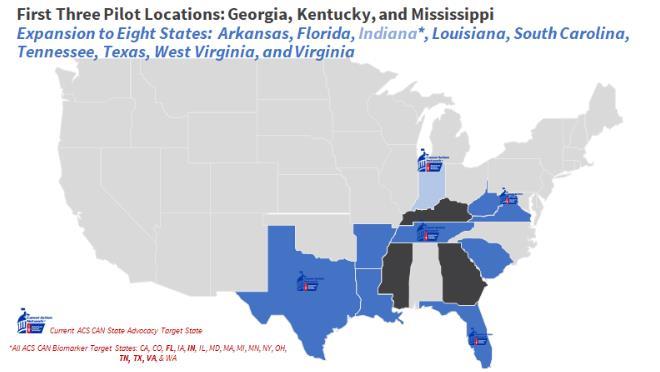
In February 2021, ACS NLCRT launched a threestate pilot, Addressing Lung Cancer Biomarker Testing Through Project ECHO, to increase comprehensive biomarker testing for NSCLC Three states, Georgia, Kentucky, and Mississippi, participated in the pilot project In September 2022, the ACS NLCRT expanded the project to include eight states: Arkansas, Florida, Louisiana, South Carolina, Tennessee, Texas, West Virginia, and Virginia The firstphase expansion will conclude in May 2023, and plans are underway to include the remaining thirty-nine states and Puerto Rico by 2025
The goals of the ECHO clinic are to impact systems change by increasing provider knowledge and confidence to address common barriers to implementing comprehensive biomarker testing for NSCLC within their respective cancer teams and institutions. We also aim to foster collaboration among participants to continue to overcome barriers to biomarker testing within each state or region, reflective of their unique cultural, geographic, and payer landscape More detailed information is available in the ThreeState Pilot Executive Summary
The ACS NLCRT will reduce lung cancer mortality through its contributions to the scientific literature in the areas of early detection and biomarker testing for NSCLC Recently, we published scholarly articles focused on early detection and biomarker testing, “Characteristics of Persons Screened for Lung Cancer in the United States” in the Annals of Internal Medicine, and “Acquiring Tissue for Advanced Lung Cancer Diagnosis and Comprehensive Biomarker Testing: A National Lung Cancer Roundtable Best-Practice Guide” in CA: A Cancer Journal for Clinicians. Our goals are to expand the literature base and steer research through our multidisciplinary approach.
Thisdocumenthighlightsaselectionofourprograms,
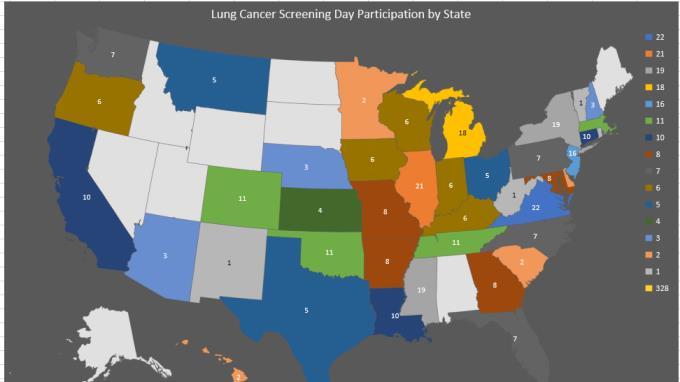
As part of our Lung Cancer Awareness Month efforts, the ACS NLCRT partnered with the American College of Radiology and GO2 For Lung Cancer to launch “National Lung Cancer Screening Day ” Promotional materials were created for health provider, patient, and advocate communities. We asked screening centers nationwide to open their doors on Saturday, November 12, 2022, and allow people individuals who had previously been referred for screening to schedule their low-dose CT (LDCT) exam without needing to take a day off work, thereby increasing the accessibility of lung cancer screening overall.
With LungPLAN™ (Projecting Lung Assessment Needs), the ACS NLCRT aims to build and strengthen screening and nodule detection and management programs across the U.S. LungPLAN is a free and userfriendly business tool that allows healthcare systems to explore the financial impact of adopting customized screening and nodule management programs
The American Cancer Society National Lung Cancer Roundtable (ACS NLCRT) serves as a vehicle to sustain long-lasting strategic partnerships that influence policies and programs that will improve the lives of people with lung cancer and their families Together, ACS NLCRT members share information, identify needs and opportunities, and address gaps in research, programs, activities, and services relating to lung cancer The collective contributions of Roundtable members generate direct action and positive outcomes.
Since 2017, the ACS NLCRT has galvanized more than 210 member organizations and over 225 leading experts, as well as patient and caregiver advocate representatives, at the national, state, and local levels to collectively partner to problem-solve and achieve enduring systematic change to reduce deaths from lung cancer Our goal is to collaborate to improve patient and provider education, evidence generation, and partnership among the clinical, research, public health, industry, and advocacy communities to ultimately transform outcomes for people with lung cancer and their families
2022 was an incredibly productive year for the ACS NLCRT. While the challenges of the last three years have certainly affected the pace of work for the Roundtable and so many other organizations, we emerged from this difficult time with a stronger-than-ever commitment to our mission. We launched several significant initiatives and convened critical summits focused on accelerating uptake of lung cancer screening and optimizing biomarker testing for non-small cell lung cancer (NSCLC)
The ACS NLCRT continues to grow, enabling it to make a larger impact on the lives of those with lung cancer and their families. In 2022, the ACS NLCRT:
1889 Individuals through our activitiies
Our scope of work falls under 3 strategic priorities and 1 cross-cutting priority. These priorities allow us to advance lung cancer-related best practices and health equity by identifying and working to overcome barriers to quality care and equitable access to care.
Strategic Priority 1: Accelerate implementation, uptake, and adherence of early detection of lung cancer. Reduce lung cancer mortality through promotion of awareness, risk reduction, and screening and follow-up nodule detection and management.
Strategic Priority 2: Improve guideline-concordant lung cancer staging and optimize the use of lung cancer biomarkers in practice. Reduce lung cancer mortality through the assurance and delivery of optimal diagnosis and staging to position patients for appropriate and timely therapy and care.
Strategic Priority 3: Promote initiatives to eliminate lung cancer-related stigma and nihilism. Reduce the harmful health and quality of life outcomes of lung cancer-related stigma and nihilism through public and professional education.
Cross-Cutting Priority: Support and strengthen state and local initiatives. Individual states or regions know their population, and therefore are best positioned to tailor broad guidelines and best practices to fit the cultures and needs of the communities represented in their area
In 2022, the ACS NLCRT was back in action leveraging the ACS’ unique ability to convene meetings with multidisciplinary organizations and national and international experts and decision-makers to create thoughtful, action-oriented solutions for the challenges facing the lung cancer community. This is a signature strategy of the Roundtable – regularly bringing experts and advocates to the table to explore barriers to a specific problem, then establish
problem-solving collaborations to create innovative solutions Conducting this work in person allows relationships to develop and strengthen, creating the trust necessary to partner and share outof-the-box ideas Participants find this approach invaluable to the work. These relationships, both national and local, provide an immediate partnership and dissemination outlet for the tools and resources developed by the ACS NLCRT.
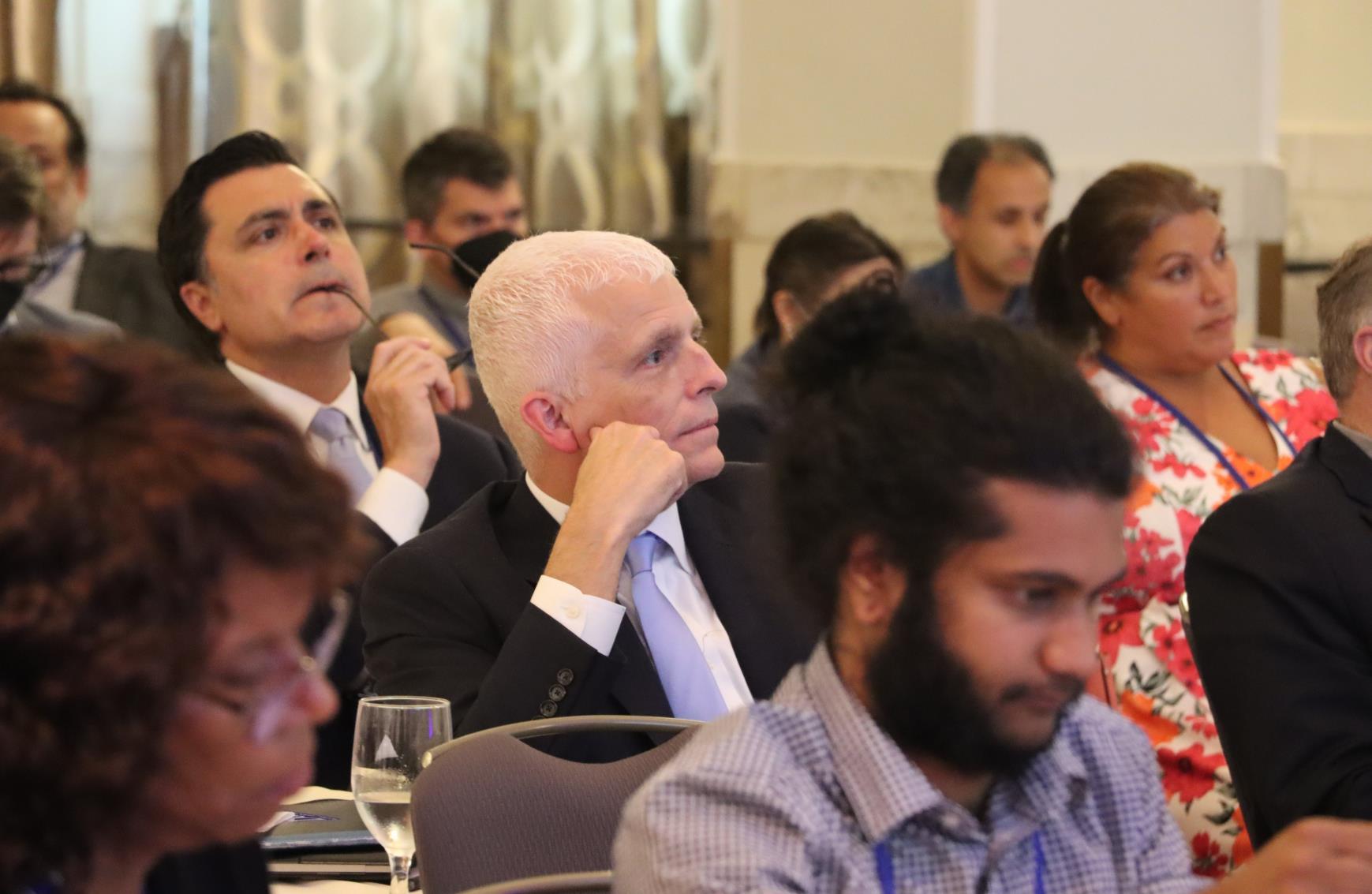
The ACS NLCRT returned to Washington, DC, for the December 5-6, 2022 Annual Meeting, after two years of virtual conferences The theme, Building Equitable Partnerships and Collaborations to Create Lung Cancer Survivors, described the work of the NLCRT, member organizations, partners, and collaborations forged at the state, regional, and national levels, especially in 2022, as health equity issues were explicitly called out as being central to the Roundtable’s goals
Hear about the value of the NLCRT Annual Meeting
Take a look at the Annual Meeting Program
Read the Executive Summary with presentation recordings
The agenda included presentations on several ACS NLCRT initiatives, as well as the work of member organizations, and success stories from state-based coalitions across the country Scientific updates were presented through a multidisciplinary tumor board discussion and the patient perspective was highlighted through a session on patient centered care across the lung cancer
continuum Meeting Attendees visited posters, engaged in live demonstrations and tutorials of LungPLAN™ , the ACS NLCRT Lung Cancer Atlas and Story Maps, learned more about the outreach and partnership efforts of several sponsors and took advantage of the meeting to build vital relationships.
• Over 300 Attendees during the 2 day conference
• 31 Poster Presenters
• 73 Speakers
• 10 Task Group meetings with 2023 work plans created
Given the history of ACS Roundtable achievements in cancer screening, the February 2022 President’s Cancer Panel Report’s Recommendation 1 2 specifically called on the nation to “Expand and strengthen National Cancer Roundtables that include a focus on cancer screening,” adding that “The Panel believes that the National Roundtable model provides an ideal framework for bringing stakeholders together and addressing gaps in cancer screening and follow-up care, including inequities experienced by various sociodemographic groups ” In calling for new roundtables, the Panel’s Report also called on increased support for two existing ACS roundtables, the ACS NCCRT and ACS NLCRT “to allow important work on colorectal and lung cancer screening to continue and expand their reach to communities with low rates of screening and follow-up care ”
In July 2022, the ACS NLCRT convened the inaugural Summit: Accelerating Uptake of Lung Cancer Screening – A National Initiative Over 100 individuals representing 80 organizations came to Washington, DC for two-days Through action-oriented working breakout groups, participants explored barriers, and developed and prioritized strategies to address the barriers to lung cancer screening They focused on six domains: Public Awareness & Community Outreach, Health Equity & Population Gaps, Primary Care Practice, Health Policy, Information Technology & Electronic Medical Records (IT&EMR), and Strengthening Systems to Support
Team-Based Care As 2023 deliverables, the ACS NLCRT will host two follow-up workshops focused on accelerating uptake of lung cancer screening through harnessing IT&EMR and leveraging professional and public outreach and engagement.

Summit Program Executive Summary from Summit
Released in April, 2022, LungPLAN™ is a free financial planning tool that helps healthcare professionals, financial experts, and administrators model implementation costs and outcomes to demonstrate downstream value of a lung cancer early detection program (screening and nodule detection and management), thereby ensuring these programs are successful and tailored to their patient population It can be used to build new lung cancer early detection programs, as well as strengthen and expand existing programs for different types of facilities
Years ago, our organization began the drive to systematically implement early detection programs for lung cancer. In order to justify the business case for this work, a team of Baptist leaders spent months developing a proforma to justify this initiative When comparing the final LungPLAN model to the tool that Baptist built years before, it was amazing how similar the results were The best part of the similarity between the tools is that Baptist has proven over the last few years that the model is very accurate
ParkerHarris,MHA CEO,BaptistMemorialHospital –TiptonLungPLAN was created by a team of ACS NLCRT clinical, navigation, health systems, and financial experts, and was fieldtested by health systems It provides a framework for predicting lung cancer screening and nodule management program costs, resources, staffing, volume, and revenue Thanks to a datasharing partnership between the ACS NLCRT and the ACR, LungPLAN is based on current evidence and data from the ACR Lung CT Screening Reporting Data System (LUNG-RADS) and the ACR Lung Cancer Screening Registry.
The LungPLAN Tool (134 downloads in 2022)
Announcement of Launch (open rate 42.6%, benchmark is 36.97%)
Launch Webinar (318 registrants, 212 attendees – benchmark attendance is only 35-45% of registrants)
The State Based Initiative (SBI) Planning Tool was launched during Lung Cancer Awareness Month with a webinar in November, 2022. Building and strengthening local initiatives led by a multidisciplinary team of partners is a critical strategy for reducing lung cancer mortality. The goals were to create a formula to build initiatives and coalitions that could be tailored to the unique needs of each state and encourage common goals with the understanding that approaches will depend on existing initiatives, resources, and partner engagement
The SBI Planning Tool is an easy-to-follow roadmap for building these efforts tailored to each user regardless of their experience with coalitions or lung cancer expertise It provides for flexible navigation, allowing users to explore approaches to identify partners, priorities, goals, and strategies that ensure alignment in focus and direction. It shares field-tested strategies to overcome common obstacles and provides worksheets and useful references. Its intended audience includes clinicians, health systems, public health partners, and advocacy organizations who want to work together to leverage collective action to improve lung cancer risk reduction, early detection, and care services.
November 7, 2022 Webinar (112 of 166 registrants attended, 67% vs benchmark of 35-45%).
In partnership with the ACR, the ACS NLCRT hosted an annual webinar and podcast series addressing the challenges and opportunities around lung cancer screening.
The theme, “Lung Cancer Screening 201: Accelerating Screening Uptake,” is the third year of the series It highlights established screening programs and showcases methods and metrics health centers and hospital systems can use to accelerate lung cancer screening uptake and adherence. The nationally-promoted webinar series features perspectives from key partner groups – primary care physicians, pulmonologists, radiologists, thoracic surgeons, medical oncologists, epidemiologists, behavioral scientists, and the advocacy community This annual series ran from July –November and episodes are available to download here.
Pleural Space | Conversations in Lung Cancer is the ACS NLCRT’s podcast channel that features conversations about every aspect of lung cancer and hope for the future With 2500+ downloads currently, we launched the third series, “Lung Cancer Screening 201: Expanding Horizons,” which launched in November during Lung Cancer Awareness Month
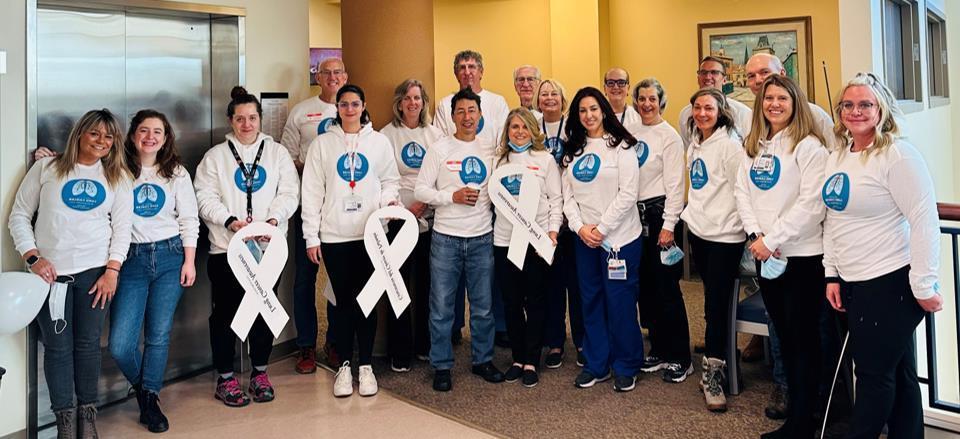
In 2022, the ACS NLCRT partnered with the American College of Radiology (ACR), GO2 Foundation for Lung Cancer and the Radiology Health Equity Coalition to sponsor “National Lung Cancer Screening Day,” asking screening centers nationwide to open their doors on Saturday, November 12, 2022, and allow individuals to be screened without needing to take a day off work.
Dr. John Williams, Chair of the President’s Cancer Panel, promoted National Lung Cancer Screening Day with two versions of a video, one for patients and one for providers. In these videos, Dr Williams emphasizes the importance of lung cancer screening
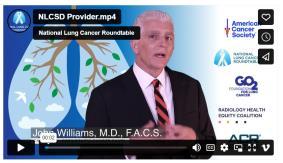
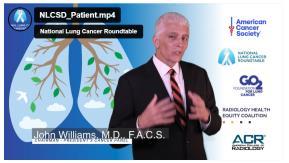
Patients are directed on how to find an open facility for November 12, 2022; this video has been downloaded 137 times.
Dr Williams asks providers to consider opening on November 12 and participating in National Lung Cancer Screening Day. This version has been downloaded 117 times.
With this initial effort, over 300 facilities in 41 states responded to the opportunity, and welcomed approximately 560 patients to screening. A growing number of health systems are incorporating Saturday lung screening in their schedules.
The ACS NLCRT held its second summit on Optimizing Lung Cancer Biomarkers in Practice on Friday, October 28, 2022, in Chicago, Illinois. Ninety-five attendees representing 55 organizations from across the country participated in this catalyzing summit, including people experiencing lung cancer and their families, lung cancer advocates, clinicians, researchers, public health professionals, policy experts, and health plan and industry partners. The goals of the 2022 summit were to update attendees on the progress of activities that were initiated in response to the recommendations of the inaugural 2020 summit and to develop a new set of collaborative initiatives to equitably reduce the NSCLC burden. The summit's objectives were to ensure a common understanding of the current state of biomarker testing, identify the most common barriers, develop strategies to overcome these barriers and increase biomarker testing, and engage key partners to participate in the developed strategies. The Executive Summary and Summit Program provide more detail.
Some of the projects launched and concluded in 2022 include:
Defining Comprehensive Biomarkerrelated Testing and Treatment Practices for Advanced Non-Small-Cell Lung Cancer: Results of a Survey of U.S. Oncologists. The Cancer Medicine (2022) manuscript characterized lung cancer biomarker testing by both general and thoracic oncologists in cases of NSCLC. Preferences were apparent for specific tests among academic clinicians and thoracic oncologists versus general oncologists. The authors highlighted current treatment decisions and how they were influenced by test turnaround time, level of clinician specialization, practice setting, and experience.
The Biomarker Guidelines Consensus Statement project aims to identify common and dissimilar elements of the leading comprehensive biomarker testing clinical practice guidelines and explore the potential to harmonize and modernize the guidelines established by professional societies to create a multi-society professionally-engaged and -endorsed best practice consensus recommendation on comprehensive biomarker testing for all eligible patients with NSCLC.
State Legislative Trends Related to Biomarker Testing. This manuscript, published in Cancer in May 2022, outlines the current state of biomarker testing for lung cancer treatment decisions, including the newer next-generation sequencing panel methods. Financial barriers for insured and uninsured patients and insurance reimbursement for comprehensive biomarker testing are described.
The authors highlighted current legislation regarding insurance coverage for biomarker testing in Illinois, Louisiana, and California and recommend ways to improve and expand access to comprehensive biomarker testing by building upon current legislation
In total 178 Spokes ( i e Learners) participated in this ECHO series. Twenty-five institutions participated as Spoke sites for this initiative across three states
46
In February 2021, the ACS NLCRT launched a 3-state pilot to increase comprehensive biomarker testing for non-small cell lung cancer (NSCLC) using Project ECHO (Extension for Community Healthcare Outcomes), a hub-and-spoke knowledge sharing network led by expert teams who use videoconferencing to conduct virtual telementoring sessions with community medical teams. Three statesGeorgia, Kentucky, and Mississippi, participated in the pilot project.
Post-ECHO: 88% of respondent's institutions were working to increase biomarker testing rates
Additional information is available in the Three-State Pilot Evaluation Report here In September 2022, the ACS NLCRT expanded the project to include eight states: Arkansas, Florida, Louisiana, South Carolina, Tennessee, Texas, West Virginia, and Virginia. The firstphase expansion will conclude in May 2023, and plans are underway to include the remaining thirty-nine states and Puerto Rico by 2025 Updates will be posted as the project progresses.



Learn more about the ACS NLCRT ECHO program here.
Post-ECHO: 78% of participants would consider participating in another ACS NLCRT-led ECHO about lung biomarker testing
The primary goal of this ECHO clinic was to increase provider knowledge and confidence to address common barriers to implementing comprehensive biomarker testing for NSCLC within their respective cancer teams and institutions. A secondary project aim was to foster collaboration among participants to continue to overcome barriers to biomarker testing within each state or region, reflective of their unique cultural, geographic, and payer landscape.
An evaluation was conducted 6 months after the ECHO series to better understand how knowledge gained during the ECHOs had been integrated into the practice. This study I informed the current ECHOs.
Learn more about the ACS NLCRT’s 3-state pilot and 8-state expansion here.
Post-ECHO: 100% of respondents had used at least 1 ECHO resource
Learn more about the ACS NLCRT ECHO program.
Georgia Kentucky Mississippi