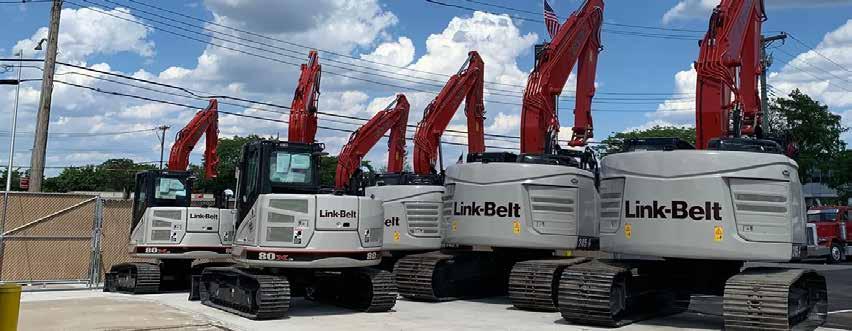
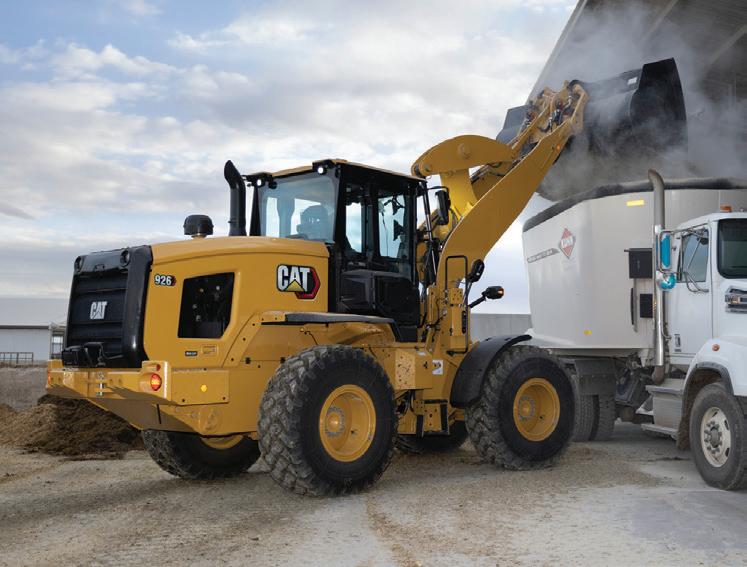
When I first thought about what I wanted to convey in this message, the phrase “tip of the iceberg” came to mind. We had just been informed by the national LICA office that a new LICA member benefit had been agreed upon with Caterpillar (please see page 46-47). Knowing Dennis Mikula, Jr., the newly appointed CEO of national LICA, as I do, I thought to myself, “This is just the tip of the iceberg.” So, I Googled and AI-ed “tip of the iceberg” for ideas for this message and discovered that this phrase is usually defined in negative terms. It is commonly used to mean that initial, smaller problems are merely indicators of a much bigger, hidden threat. That certainly held true for Rose and Jack when the Titanic struck an iceberg and sank to the bottom of the Atlantic Ocean. Most certainly, that is not the message I want to convey here.
Perseverance is defined as a steady, continuous effort to achieve a goal despite difficulties, setback, or discouragement. It involves a conscious decision to push through challenges.
There have been and there will continue to be challenges. But a continued effort to provide maximum benefits to its members by national LICA and the state chapters will be the underlying force to push forward. “This is just the beginning” encourages perseverance!
What I want to convey is that I believe strongly that this is just the beginning. To understand the phrase “this is just the beginning,” consider these points:
• It signifies that an initial phase or event has occurred.
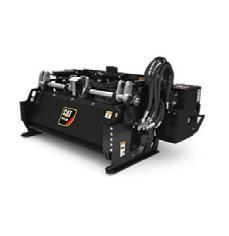
That event was LICA striking gold in this initial phase. LICA has formed a partnership with Caterpillar. Up to $2750 off your purchase, 0% financing. Now that benefit has significant value to the members of LICA throughout the country.
• It suggests that the current situation is foundational for what’s to come.
• It implies that more developments are expected to follow and will lead to greater achievements. The groundwork has been laid for similar relationships with other equipment manufacturers, suppliers, and countless vendors.
• The phrase encourages perseverance and continued effort.
• It often conveys optimism about future possibilities or growth. The possibilities are endless — strong relationships with manufacturers and equipment dealers, parts dealers, truck manufacturers and dealers, technology vendors, utilities and other service vendors, human resources, legal counsel, financial institutions, on and on and on. Folks, as sure as I am that Rose and Jack wished they had not made that maiden voyage, that’s how sure I am that these things are going to happen.
I strongly believe that this is just the beginning, that LICA will become the voice of the land moving industry and viewed as one of the strongest trade associations in the nation; that membership will grow, that those who joined LICA for the insurance program or the apprenticeship program will see their membership dues as a tiny investment (less than the cost of a half cup of coffee a day) that will come back to them 100 times over; that LICA, both nationally and on a state chapter level, will have a different look, a different feel, and a different value in terms of benefits in the not-too-distant future.
Stay on board, get on board! This is just the beginning.
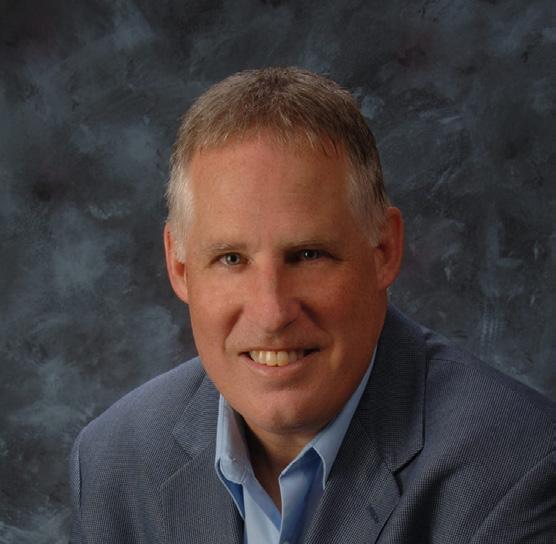
Buddy Freund Executive Director, NJLICA
NJLICA BOARD OF DIRECTORS
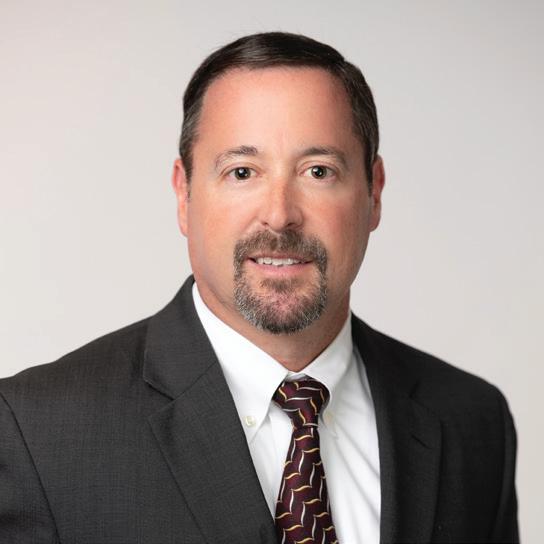
Dennis Mikula, Jr., President Mikula Contracting, Inc.
Mark Krutis, Vice President Tom Krutis Excavating, Inc.
William J. Esposito, Historian Espo's Tree and Crane Service
Frank C. Del Guercio Tilcon NY
Ron Garofalo
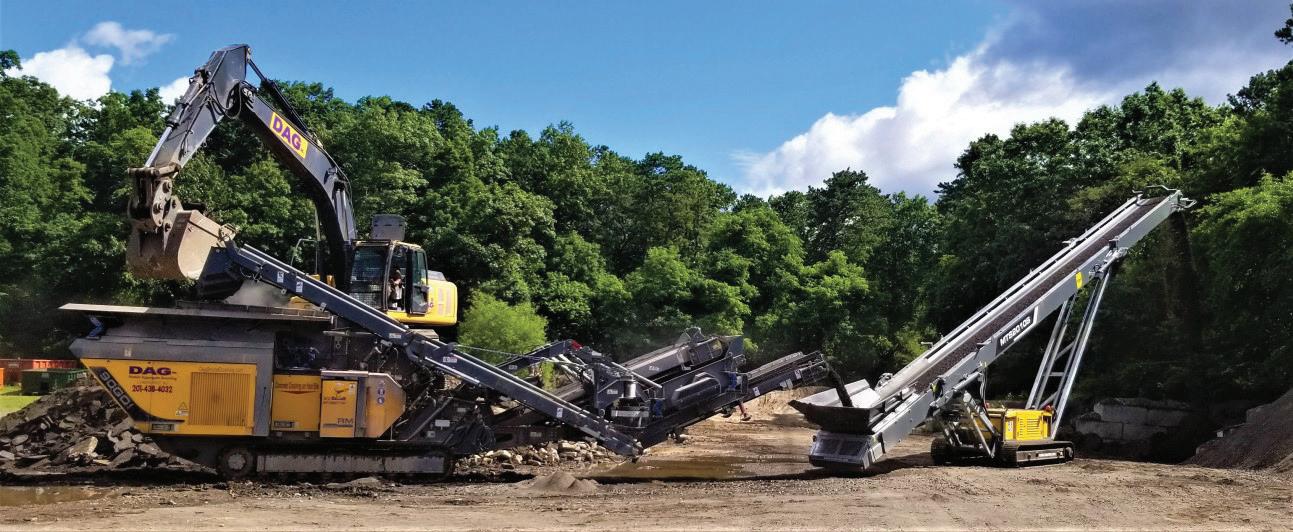
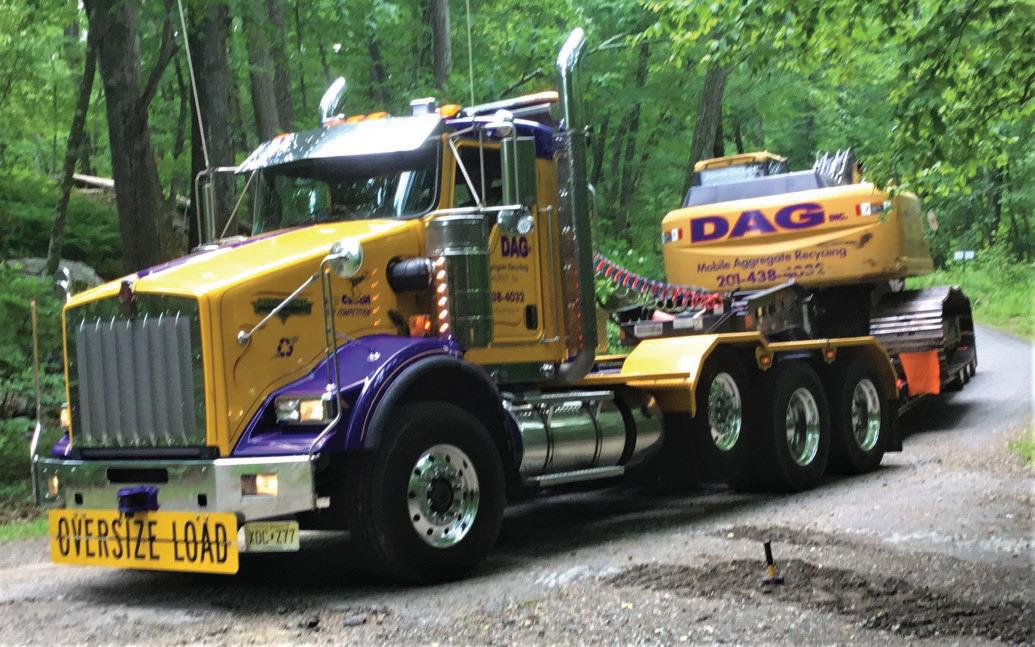
DAG Mobile Aggregate Recycling, Inc.
Warren Gonzalez Foley, Inc.
Shelly Hewson Hewson Landscape, Inc.
Frank Horan Groff Tractor Mid Atlantic, LLC
Bob Manis North American Aggregates
Joe Mayers Septic Experts, LLC
John Rothberg L.N. Rothberg & Son
Dave Vander Groef Wantage Excavating Co., Inc.
Buddy Freund, Executive Director
COVER PHOTO BY FINDEN MARKETING, UNSPLASH; PHOTO PAGE 5 BY ARUN KUCHIBHOTLA, UNSPLASH
WHEN "EQUAL" ISN'T FAIR AND WHEN IT BECOMES A LAWSUIT: ESTATE-PLANNNG RED FLAGS FOR BUSINESS OWNERS
Business owners spend years building something tangible: crews, equipment fleets, supplier relationships, customer goodwill, and a reputation that can’t be bought overnight. Yet when an owner becomes incapacitated or dies, the most expensive fight is often not with a competitor, it’s inside the family.
Trust and estate litigators see the same pattern repeatedly: the owner’s plan technically exists, but it contains “red flags” that practically invite a courtroom brawl. When those red flags aren’t addressed during life, they’re often resolved in a courtroom where the process is lengthy, emotional, and expensive.
For owners whose business is hands-on, asset-heavy, seasonal, and often family-involved, the risk is amplified. Below are the most common litigation triggers I have seen in my practice, along with planning moves that can keep your family, your crews, and your company out of chaos.
Red Flag #1: “I’m leaving it unequally…They’ll understand.” Unequal inheritance is one of the clearest predictors of a postdeath dispute. I warn clients who choose to distribute property to children unequally that they are almost always asking for a fight, particularly when the decision surprises the “slighted child” and the parent is no longer alive to explain or mediate.
“Unequal” often grows out of real-life business and family dynamics:
• One child worked summers on the crew, then became operations manager.
• Another child pursued a different career and never joined the company.
• One child provided caregiving for aging parents, sacrificing income.
• Parents funded a down payment, equipment purchase, or tuition for one child but not others.
Those are legitimate reasons to treat heirs differently. The problem is how it’s done — and whether the logic is documented and communicated.
What to do instead
1. Consider “equal ownership, unequal benefit” or vice versa
Sometimes the right plan is equal inheritance overall with a structured way to recognize sweat equity (bonuses, nonvoting interests, employment agreements, life insurance, or specific bequests).
2. Document “early inheritance” and loans
Equalization of past gifts is common, and parents can reduce resentment by documenting those outlays in their estate plan. If the support was a loan, memorialize it with a promissory note and reflect it in the plan so repayment status is clear and can be
BY ELIZABETH PETITE
deducted from a share if appropriate.
3. Have the uncomfortable conversation while you can still mediate
One of the most practical takeaways from estate-planning litigation experience is that family members often fight less about dollars and more about feelings. Discussing unequal treatment during life forces the family to confront the plan while the parent can still explain reasoning and, frequently, results in revisions toward a plan that better preserves relationships.
Red Flag #2: Naming co-executors (or co-trustees) who can’t work together
If you’ve ever put two foremen on a job with overlapping authority, you already understand the risk. Who will serve as executor, power of attorney, trustee, etc. is a frequent source of conflict especially when:
• multiple children are named as co-fiduciaries but do not get along, or
• the fiduciary does not get along with a beneficiary.
Courts are reluctant to remove a chosen executor/trustee absent extreme misconduct and hostility alone often isn’t enough. That means a bad choice can trap your family in years of an expensive stalemate.
Better
options
• Name one decision-maker and require transparency. Consider a single executor/trustee with built-in reporting duties to beneficiaries.
• Use a professional fiduciary when the family dynamic is fragile. Depending on circumstances, it can be appropriate to name a close friend, bank, or trust company over immediate family.
• Separate “estate administration” from “business leadership.” The best operator of the business is not always the best person to handle estate tasks, such as collecting bank accounts and selling the family residence.
Red Flag #3: No clear plan for the business or a plan that only “sort of” answers the questions
Disposition of a family business is a key area requiring direct, concrete planning. When working with closely held business owners, I recommend they address core succession questions, including:
• Will the business continue or be sold?
• What roles will involved children/relatives have?
• Who runs day-to-day operations?
• How will ownership be divided?
• How will the rest of the property be divided?
Why this can make-or-break a business Companies don’t pause nicely for probate. Bids are out. Projects are in progress. Supplier credit terms matter. Equipment payments are due. A leadership vacuum can:
• trigger key employee departures
• cause customers to move on
• create safety and liability problems on job sites
• destroy the very value the family is fighting over
Estate planning moves that work in the real world
• Written succession roadmap: “If I’m gone tomorrow, here’s who can sign checks, who can manage crews, who calls the CPA, who speaks to bonding/insurance.”
• Buy-sell agreement funded with insurance: A clean mechanism for a working child/partner to buy out non-working heirs.
• Entity and operating agreement alignment: Your LLC/Corp documents should match your estate plan. Misalignment is a silent litigation engine.
• Valuation method you can live with: If you don’t define how the business is valued, your heirs will pay professionals to argue about it later.
Red Flag #4: “Equal” on paper, unequal in reality
Even when owners intend equal shares, leaving different kinds of assets can create unintended inequality. Example: leaving a $500,000 IRA to one child and a $500,000 taxable brokerage ac count to another isn’t truly equal because IRA withdrawals can be taxed as ordinary income (up to the highest federal brackets), while brokerage gains may be taxed at lower long-term capital gains rates.
refusing to leave critical outcomes to chance. Estate planning deserves the same mindset.
You can’t guarantee your heirs won’t feel hurt. But you can dramatically reduce the odds that grief turns into litigation by spotting the red flags early, building a business-aware succession plan, and communicating clearly while you can still act as the family’s mediator and the leader of the company.
Elizabeth Petite is the chairperson of Lindabury’s Wills, Trusts & Estates practice. She can be reached at 908.233.6800 or EPetite@Lindabury.com
Not to mention that “equal at signing” can become unequal over time. An example I have seen on several occasions looks something like this: a parent leaves a house to a son and a brokerage account to a daughter; the house increases in value while the brokerage account was essentially drained to cover the cost of the parent’s end of life care, turning “equal” into “very unequal.”
When appropriate, plan for major assets (including real estate and business interests) to be sold and proceeds divided, or create a buyout mechanism if one heir wants to keep a specific asset.
Red Flag #5: Caregiving and “sweat equity” that isn’t clearly accounted for
In many families, one child “did more:” handled mom and dad’s appointments, managed books, or stepped in as de facto GM during health issues. Caregiving compensation can be a flashpoint, and while some siblings accept “she should get the house,” others can suspect manipulation.
Best practice: Put the arrangement in writing before resentment sets in. Outline the scope of help, compensation structure, and sibling buy-in by involving all siblings in the process.
Closing Thought: The goal isn’t just to transfer assets — it’s to transfer a story
The most successful business owners built their companies by
Your business deserves the same careful planning as your job sites. The right estate plan secures ownership and keeps control where it belongs.
Elizabeth Petite, Esq. Chair-Wills, Trusts & Estates Practice epetite@lindabury.com 908.233.6800 | lindabury.com
NLRB REINSTATES 2020 JOINT EMPLOYER STANDARD: A RETURN TO DIRECT CONTROL
On Feb. 26, 2026, the National Labor Relations Board formally reinstated its 2020 joint-employer standard. This action officially withdraws a Biden-era 2023 rule and restores a narrower framework for determining when two businesses share legal responsibility for the same group of workers. By returning to the 2020 standard, the board is aiming to settle a period of legal uncertainty that has loomed over the business community for years.
Closing the Regulatory Gap
The board’s action traces back to a legal defeat. In 2020, the board adopted a rule setting out its joint-employment standard. Among other things, that standard found joint employment only when two businesses exercised direct and substantial control over the same worker. The board retreated from that position in 2023, adopting a new rule that allowed joint employment based only on “indirect” or “reserved” control. But in March 2024, the U.S. District Court for the Eastern District of Texas struck down the 2023 rule. The court ruled that the 2023 rule was “arbitrary and capricious” because the word “employee” under the National Labor Relations Act is defined by the common law, and the 2023 rule’s expansive standard contradicted long-standing common-law standards.
That ruling created a technical “regulatory gap.” The Bidenera rule was vacated, but the official Code of Federal Regulations had not yet been updated to reflect the return of the previous standard. This left the board without a formal, codified rule on the books. By formally codifying the 2020 standard, the NLRB has now officially closed that gap.
The Return of “Direct and Immediate Control”
The rule’s most immediate effect is to restore the “direct and immediate control” standard. Under this standard, a company is deemed a joint employer only if it exercises “substantial direct and immediate control” over the essential terms and conditions of another company’s employees. To meet this threshold, an entity must actually possess and exercise such control over one or more essential employment terms to a degree that it meaningfully affects the employment relationship.
This standard is a higher bar than the 2023 rule’s “reserved control” test. The standard focuses on concrete, actual control over functions such as hiring, firing, discipline, supervision, and wages. Critically, merely retaining the ability to influence these decisions, without actually doing so, generally does not create a joint-employer relationship. Similarly, indirect influence, brand standards, or general operational expectations are no longer enough to trigger shared bargaining obligations. For employers, the change allows them to rely more comfortably on the terms of their service contracts. They are less likely to be considered the employer of another company’s workers simply because they set basic standards for the project.
A Mirror of the Broader Political Shift
This move comes at a time of shifting employment standards. On the same day, the U.S. Department of Labor proposed a rule that adopts a more focused test for classifying workers under the FLSA. For the business community, both rules signal a shift from
BY ALEX MACDONALD & DINORA OROZCO
open standards to bright-line rules. They may also signal a period of greater stability.
Strategic Risk Management for the Business Community
The board’s action may also help companies utilizing staffing agencies, subcontractors, or franchise models, allowing them to enforce brand standards and safety requirements. These companies will operate under a brighter-line standard, and so may find it easier to navigate joint-employment risks.
That said, some risks remain. Joint-employer liability remains a fact-intensive inquiry. Businesses must ensure onsite managers do not cross the line from setting project goals to “directing the work” of third-party providers through direct supervision or task assignment. Under this results-oriented framework, the focus must remain on what needs to be done rather than how the vendor’s employees perform it. Furthermore, because the direct control rule makes it harder to pull parent companies into bargaining, businesses should anticipate a tactical pivot by unions toward aggressive, site-specific organizing or alternative pressure tactics, such as legislative lobbying and corporate campaigns, that bypass the NLRB’s doctrine entirely.
Looking Ahead: Growth and Flexibility
If nothing else, the board’s action provides more certainty. That certainty could, in the long term, encourage growth in affected industries, such as the franchise and outsourced-services sectors. Businesses that paused expansion in response to the expected impact of the 2023 rule may now be more comfortable pursuing long-term partnerships.
However, prudent employers will not view this as a permanent resolution. To protect their business, employers should audit service agreements and train onsite managers on the “direct control” boundary. While the NLRB has provided much-needed breathing room, maintaining operational flexibility remains essential in this unpredictable legal environment.
Information contained in this publication is intended for informational purposes only and does not constitute legal advice or opinion, nor is it a substitute for the professional judgment of an attorney.
Littler Mendelson is part of the international legal practice, Littler Global, which operates worldwide through a number of separate legal entities.
PHOTO PAGE
BY JOSHUA SUKOFF, UNSPLASH
FY 2026 FUNDING AGREEMENT PROVIDES NEW JERSEY ADDITIONAL WATER PROJECT FUNDING
The recently approved FY 2026 federal funding package includes $335 million in water funding for New Jersey’s state revolving fund (SRF) program. The funding is split between the Clean Water SRF, which receives $144 million, and the Drinking Water SRF, which receives $191 million. Much of the Drinking Water SRF funding is targeted at identifying and replacing lead service pipes. In addition, approximately $9 million combined for CWSRF and DWSRF is targeted at emerging contaminants (targeting PFAS and other pollutants).
Federal funding for these water programs is expected to be a significant budgetary fight in FY 2027 and future years. There was already a contentious legislative debate regarding these funds in FY 2026 budget consideration. The administration’s budget proposed cuts of up to 90% for the SRF programs. However, Congress rejected this and instead approved funding levels for the DWSRF and CWSRF that are identical to FY 2025 levels.
In addition, a significant portion of these funds was provided by the 2021 Infrastructure Investment and Jobs Act (IIJA) as well as the Bipartisan Infrastructure Act (BIA). This legislation has
BY BRIAN DEERY
provided significant increases in water and other infrastructure program funding over the past six years. New Jersey received approximately $2.65 billion in supplemental funding through the IIJA for its State Revolving Funds (SRF) over a five-year period (2022-26). In addition, states are required to provide a 20% match of the federal dollars adding to significantly increased investment funding. However, FY 2026 was the final year of authorization for these supplemental dollars. It remains to be seen whether there will be an effort in the coming year to authorize additional funds. These federal funds are administered through the New Jersey Water Bank, a partnership between the N.J. Department of Environmental Protection (DEP) and the N.J. Infrastructure Bank (NJIB). For FY2026, the state has authorized the NJIB to expend up to $2.4 billion in total (blending federal, state, and recycled loan funds) to support 151 clean water and 59 drinking water projects.
Brian Deery serves as the director of government relations for LICA.
ADVANCE TIRE INC.
THE HIDDEN RISK IN A STRONG YEAR: WHY GROWTH CAN QUIETLY CREATE INSTABILITY FOR CONTRACTORS
Last spring I sat across from a contractor who had just finished his best year ever. Revenue was up nearly 30 percent. Backlog was strong. He had added two new machines and expanded his crew. From the outside, it looked like a breakout year.
Then he slid his tax estimate across the table. He owed far more than he expected. Cash reserves were thin because most of the profit had already been reinvested or distributed. Equipment payments had increased fixed overhead. Personally, he had upgraded his home and taken on higher recurring expenses.
“Mike,” he said, “I thought this was supposed to feel better than this.”
That conversation isn’t unusual. In fact, the greatest financial risk often shows up during the best years. Not because business is weak. Because discipline fades. When cash flow improves, urgency disappears. And when urgency disappears, structure can quietly erode.
Let’s talk about the risks that hide inside strong numbers.
Revenue Growth Is Not Wealth Growth
Here’s a question I often ask: “If your revenue doubled this year, would your personal net worth double, too?” Almost never. Revenue is activity. Wealth is what remains after discipline, tax strategy, reinvestment, and intentional allocation.
Strong years often bring:
• Higher personal spending
• Larger distributions without planning
• Equipment purchases driven by emotion
• Delayed retirement contributions
• Bigger tax bills than expected Momentum feels powerful. But unmanaged momentum creates fragility. If profit is not being captured and redirected intentionally, growth simply funds a bigger lifestyle.
The Tax Bill That Punches Back
When revenue jumps, tax planning must jump with it. Without proactive coordination between your CPA and financial strategy, contractors can face:
• Underpayment penalties
• Cash crunches in April
• Forced year end spending just to create deductions
• Borrowing to cover taxes
A strong year without tax strategies can create more stress than a slow one. Estimated payments, income timing, depreciation coordination, and retirement funding should be intentional decisions, not reactions in March.
BY MICHAEL J. GUARINO III
A Real Example
One sitework contractor I worked with had a record year and cleared an additional $600,000 in profit. Instead of slowing down to allocate strategically, he:
• Purchased two additional pieces of equipment
• Increased owner distributions significantly
• Deferred retirement contributions
• Made no change to estimated tax payments
Twelve months later, backlog softened, fixed equipment payments remained, taxes came due, and cash tightened. The business was still profitable. But it was no longer comfortable.
After restructuring his compensation, building a defined cash reserve target, and committing to automatic retirement funding, his next strong year actually increased personal net worth instead of stress. That is the difference between growth and structure.
Expansion or Ego?
Growth naturally leads to expansion: new trucks, new iron, bigger yard, and more overhead. Some of those investments improve efficiency and margins. Others simply feel good. Before signing on the dotted line, ask:
• Will this improve profitability or just increase capacity?
• What happens if revenue softens next year?
• Does this strengthen our foundation or stretch it?
A disciplined contractor expands strategically, not emotionally.
Lifestyle Creep Is Quiet but Powerful
When income rises, personal lifestyle often rises immediately with it: upgraded homes, higher recurring expenses, and larger financial commitments. There is nothing wrong with enjoying success. But when fixed personal expenses rise to match peak
BY
PHOTO
income, flexibility disappears. Construction is cyclical: weather shifts, municipal budgets are tightening, and projects stall. The contractors who last decades separate business profit, owner compensation, and long-term wealth building. They pay themselves deliberately, invest consistently, and avoid tying permanent lifestyle costs to temporary peaks.
The Stability Test
Here is the question every contractor should ask during a strong year: “If next year drops 25 percent, are we still stable?” If that question creates discomfort, this is the time to fortify. Strong years are the best time to:
• Build serious cash reserves
• Fully fund retirement plans
• Reduce unnecessary debt
• Review insurance and risk coverage
• Update succession plans
• Strengthen internal systems
You do not build resilience in a downturn; you build it in an upswing.
Strong Is Good. Durable Is Better.
A good year should increase long term stability, not just shortterm comfort. The contractors who build real wealth treat strong years as opportunities to harden their foundation, not stretch it. Growth is exciting. Durability is powerful. In this industry, the businesses that last are not the ones that grow the fastest. They are the ones built to withstand both the busy seasons and the quiet ones.
If this year is strong for you, congratulations. Now is the time to make it rock solid.
Mike Guarino, Founder of Granite Wealth Partners, specializes in helping contractors turn profitable years into lasting financial security. By coordinating financial planning, tax strategy, and investment management, he helps business owners build stability that holds up in both busy seasons and slow ones.
Investment Advice offered through Private Advisor Group, a Registered Investment Advisor. Private Advisor Group and Granite Wealth Partners are separate entities from LPL Financial. Securities offered through LPL Financial Member FINRA/SIPC.
MOVING TO FLORIDA? MAKE SURE YOU'VE REALLY
LEFT NEW JERSEY BEHIND
For many New Jersey residents, moving to Florida is an appealing idea. The sunshine, lifestyle, and most notably Florida’s lack of a state income tax make it an attractive destination. But from a tax perspective, relocating is not as simple as packing boxes and forwarding mail.
The reality is this: documentation helps, but domicile matters more. And if New Jersey believes you never truly left, the tax consequences may be significant.
The basics are important, but not enough
When clients tell us they’ve “moved to Florida,” they usually point to a checklist of actions they’ve taken, and these are all important:
• changing your driver’s license
• registering to vote in Florida
• updating your mailing address
• filing a Florida Declaration of Domicile
• identifying a new primary residence
• spending more than 183 days per year in Florida
These actions support a Florida move, but on their own they may not be sufficient, particularly if you maintain ties to New Jersey.
Why domicile is the key issue
You can have multiple residences, but you can only have one domicile. Domicile is your permanent legal home, the place you intend to return to and remain, even when you travel elsewhere. If you have only one residence and it’s in Florida, the analysis is typically straightforward. There is very little for another state to challenge.
However, many individuals keep a home in New Jersey while
BY DIANE MCNULTY
acquiring one in Florida. That’s where scrutiny increases. In those cases, states look beyond paperwork and day counts and focus on intent, lifestyle, and behavior.
Demonstrating Florida as home
Tax authorities examine where your life is centered. Actions that help demonstrate Florida as your true home include:
• joining Florida-based religious congregations
• becoming a member of golf clubs or social organizations in Florida
• establishing relationships with Florida doctors and healthcare providers
• keeping family pets in Florida and using a Florida veterinarian
• registering vehicles in Florida
• retaining moving invoices for meaningful personal belongings, the “near and dear” items that signal a real move
• looking at travel patterns: where do you leave from and return to when you go on vacation?
Taken together, these facts tell a story. The stronger and more consistent that story is, the easier it is to support your Florida domicile.
Important red flags to avoid
Some actions can seriously weaken a Florida residency claim. One of the most common involves children. Do not claim Florida residency if minor children attend New Jersey public schools or if college-age dependents apply for or receive New Jersey in-state tuition. These facts strongly suggest continued New Jersey domicile and often trigger scrutiny.
Ongoing ties still matter
Even if you believe you’ve met the domicile burden, certain ongoing connections can keep you tied to New Jersey or other states:
• employment or active business operations in another state
• ownership of real estate outside Florida
• significant time spent managing out-of-state investments or businesses
These ties do not automatically disqualify Florida residency, but they can complicate the analysis and require careful planning and documentation.
Don’t overlook estate planning
Changing domicile is not just an income tax issue. Estate documents should be reviewed and updated to reflect Florida domicile,
including wills, trusts, powers of attorney, and healthcare directives.
The bottom line
If your move to Florida is a clean break, the transition is often smooth. If it is partial or gradual, proper tax and estate planning can make a meaningful difference. Before declaring victory on residency, it’s worth stepping back and asking: Does my life clearly point to Florida as home? How well that question is answered often determines the outcome.
If you have any questions or need assistance, Smolin is here to help. Please do not hesitate to contact a Smolin professional at 973-439-7200.
COMMERCIAL DRIVER LICENSE SELF-
CERTIFICATION AND MEDICAL EXAMINER CERTIFICATE: STILL REQUIRED
Federal Motor Carrier Safety Administration (FMCSA) regulations 49 C.F.R. 383.73 and New Jersey regulations N.J.A.C. 13:21-23.28(l) require all commercial driver license (CDL) holders to submit a CDL holder self-certification form and a valid (non-expired) medical examiner certificate (MEC), if required. If a federal medical variance has been issued, a CDL holder will need to submit a copy of the variance along with a MEC to the Motor Vehicle Commission (MVC). The CDSC-1 CDL holder self-certification form is available for download or at a motor vehicle agency.
From the N.J. MVC Website: CDL/CLP HOLDERS, EFFECTIVE FEB. 23, 2026
Medical examiner’s certificate information will be electronically transmitted from the National Registry (NR) to the State Driver Licensing Agency (SDLA). Medical examiners must submit examination results to the NR. We will no longer accept a paper certificate (Form MCSA-5876).
BY ANTHONY MORREALE
The link to NJ MVC https://www.nj.gov/mvc/. Please remember all drivers operating a commercial vehicle over 10,001 pounds must have a valid medical card. Operators without a valid medical card will be put out of service (OOS). Out-of-service violations issued to your drivers will affect your company’s SAFER and CAB reports. This could affect your insurance rating and result in an audit by the N.J. State Police Commercial Vehicle Division or the FMCSA.
Now, when a CDL driver gets a new medical card, you must run the CDLIS driver’s MVR specifically to verify a driver’s new medical certification. While a paper med card is no longer the required proof of certification, a 60-day waiver allows it as backup; after that, the MVR is the only official, accepted proof.
For assistance with your OSDOT and OSHA compliance, don’t hesitate to get in touch with Anthony Morreale, co-owner of TriState Safety Solutions, at 732-551-3833, amorreale@tsss-nj.com, or visit our website, www.tsss-nj.com.
RISK MANAGEMENT
CRAFTING EFFECTIVE INSURANCE PROVISIONS IN CONSTRUCTION CONTRACTS
The construction industry is built on a network of contracts between property owners, general contractors, and trade contractors. Each party seeks insurance protection from the others involved in the project. One of the most critical sections in these contracts is often labeled “insurance.” Over the years, we’ve encountered numerous provisions — some drafted by attorneys, others by well-meaning do-it-yourselfers — that fall short of their intended purpose. This article aims to help you craft more effective insurance provisions that truly secure the protection you or your client needs.
Use the correct terminology: Commercial General Liability vs. Public Liability
The term public liability has its roots in British insurance and legal language, dating back to the formalization of commercial insurance in the U.K. during the late 19th and early 20th centu-
BY DAVID CONCODORA & SCOTT T. HARRIGAN
ries. If you’re reading this from the United Kingdom, Australia, or other Commonwealth countries, feel free to use this term — it’s widely recognized and sold in those markets.
However, in the United States, no insurance carrier offers a product called public liability insurance. Instead, the correct term is commercial general liability (CGL). CGL is a foundational business insurance policy that protects companies from financial losses due to third-party claims involving bodily injury, property damage, personal injury, or advertising injury arising from normal business operations. Therefore, in the United States, use commercial general liability in your contract requirements.
Additional Insurance Coverages to Consider
Beyond CGL, your contract’s insurance section should address several other coverages:
•
Business Auto Liability: Covers bodily injury and prop-
erty damage resulting from the use of commercial vehicles.
• Workers’ Compensation and Employers Liability: Provides statutory coverage for medical expenses and lost wages for employees injured on the job. Employers liability protects against other employee-related liability claims. (Note: In Ohio, Washington, Wyoming, and North Dakota, workers’ compensation must be purchased through the state. These states are referred to as monopolistic states. These state policies do not include employers’ liability. In such cases, stop gap coverage should be obtained through the CGL carrier or an endorsement to a non-monopolistic Workers Compensation policy.
• Umbrella or Excess Liability: Offers additional limits of liability that sit above CGL, business auto, and employers liability coverages.
These four — CGL, business auto liability, workers’ compensation/employers liability, and umbrella/excess liability — form the core insurance protections you should include in your contracts.
Depending on the nature of your project, you may also need to consider:
• Environmental Liability: Essential for projects involving environmental risks, such as asbestos abatement.
• Professional Liability: Necessary when contractors provide professional services, such as engineering. For example, an HVAC contractor offering design services should carry this coverage.
• Privacy/Network Security Liability: Increasingly important when confidential corporate or personal data is at risk. A notable example is the Target Corporation data breach, which originated from a contractor’s compromised access to Target’s vendor payment portal. Depending on your situation, this coverage may be worth requiring from subcontractors.
Determining Appropriate Coverage Limits
There’s an old story in the insurance world: A group of travelers was told to gather stones from the forest floor. The next morning, they awoke to find the stones had turned into precious gems. They were thrilled with what they had — but regretted not collecting more. The moral? When it comes to insurance limits, gather as much as you reasonably can.
While determining the exact amount of coverage needed de-
pends on various factors, here are some recommended starting points for the coverages mentioned:
Commercial General Liability
•
$1,000,000 each occurrence (bodily injury and property damage)
• $2,000,000 general aggregate
• $2,000,000 products and completed operations aggregate
• $1,000,000 personal and advertising injury
Business Auto Liability
•
$1,000,000 per accident for bodily injury and property damage on a combined single limit
Employers Liability
• $500,000 each accident
• $500,000 each employee (injury by disease)
• $500,000 aggregate (injury by disease)
The above limits could also be $1,000,000 each. Most umbrella/excess liability insurance underwriters are willing to offer excess limits if the $500,000 limits are used. If the project is in a monopolist state (Ohio, Washington, Wyoming, or North Dakota) then a $1,000,000 limit of stop gap coverage may be required by the umbrella/excess liability insurer.
Umbrella/Excess Liability
• Minimum of $1,000,000, extending over CGL, business auto, and employers liability
• Higher limits can be considered based on project scope and risk exposure
Professional, Environmental, and Privacy/Network Security Liability
• $1,000,000 is a practical starting point for each
These limits are readily available in the insurance marketplace; however, adequacy should be evaluated based on specific project needs.
Final Thoughts
By understanding the appropriate terminology and selecting the right types and limits of coverage, you can significantly strengthen the insurance provisions in your construction contracts. These protections not only safeguard your interests but also ensure smoother project execution and risk management.
In future parts of this series, we will delve deeper into additional insurance requirements you may want to include, such
as waiver of subrogation, additional insured status, and primary/ non-contributory language.
Scott T. Harrigan (CIC, CRM, CCIC), currently at Rue Insurance, has over 30+ years of experience in the insurance industry. He creates comprehensive insurance and risk management portfolios for clients. In addition to creating portfolios, he enjoys writing and teaching about various insurance coverages and risk management topics.
David Concodora (CIC, CRIS, AAI), a Risk Management Consultant, joined Rue Insurance in 2011. David specializes within the construction industry. He holds several designations, including Certified Insurance Counselor (CIC), Construction Risk and Insurance Specialist (CRIS), and Accredited Advisor in Insurance (AAI). David takes great pride in partnering with his clients to provide effective insurance and risk management solutions.
Workers Compensation coverage was designed to take care of employees who are injured or sick due to a work related incident. This is a “no-fault” coverage that pays employee medical care, lost wages, and rehabilitation with no limitation of time or money. Workers compensation coverage pays these benefits even if the employee caused their own injury, as long as it was work related. Occasionally we have seen employees take advantage of this no-fault benefit, which can financially harm the employer with skyrocketing premiums and/or difficulty getting coverage with standard insurance companies.
Employers need to guard themselves from such possible abuse by identifying precisely if, where, when, and how all alleged injuries occurred, immediately after injury occurs and document the details. Without a clear and consistent procedure for documenting and monitoring workers compensation injuries, employers can be forced to pay excessive workers compensation premiums for up to three years.
According to the Bureau of Labor Statistics, 3 million workers’ compensation claims were reported in private industry workplaces in 2014. Employer costs per hour worked for employees for Worker Compensation benefits average $1.08/hour. Even the most safety conscious and proactive companies will experience a workers’ compensation claim at some point in their existence. How a company proactively handles the claim — from reporting and immediately documenting information, to bringing the employee back to work on a modified role — can result in a tremendous reduction in the overall claim payment and impact on a company’s bottom line.
Reporting and documenting a work-related injury
Reporting and documenting a workplace injury as quickly and accurately as possible are very important procedures to control
BY RICHARD GAYNOR
claim costs, which in turn reduce company’s workers’ compensation premium. When an injured employee immediately completes a report which asks all the questions, there is less opportunity to change the details later if an employee wanted to ‘milk’ the benefits. Details are fresh and witness statements are clear and accurate if reported immediately.
We suggest utilizing a comprehensive accident report to be completed by the injured employee and their immediate supervisor and/or witness to the incident. A copy of our sample incident report is available free by emailing David@middletonins.com.
In addition to completing the above report, you must also report the claim details to the insurance carrier (and OSHA Log) immediately or as soon as possible, giving them all the details so they can contact the injured employee, start mitigating the expenses, and getting the employee back to work as fast as possible. The sooner a claim is reported to an insurance carrier, the faster medical attention is approved, the less time the employee has between medical provider appointments, the sooner the appropriate medical care and therapy is administered, the quicker the employee is back to work, reducing the opportunity to milk the benefits.
The more expeditious this process the less expense paid out on workers compensation claims, the better for the employer’s insurance premium.
Getting employees back to work: Modified Work Policy
The longer an employee is out of work, the more expensive the claim will be. The longer the time the greater the opportunity to milk the benefits. On average, one-third of all employee injuries include extended lost time from work as a result of a workplace injury or illness. In a concerted effort to reduce the cost of workers compensation claims and thus workers compensation premiums, employers are offering employees a modified work policy, allow-
ing employees to return to work sooner, with doctor’s permission, to perform light duty work.
The longer an employee is out of work, the greater the opportunity they may feel bitter, angry, or just entitled to additional benefits, including paid time off. They may also seek legal counsel seeking additional compensation.
Some businesses find it difficult to offer light duty work, however others have come up with ways to make light duty work available to employees, greatly reducing the expense of these claims and proactively reducing their workers compensation experience modification, thus their premiums. Some of the opportunities for light duty work include cleanup work, organizing work areas, clerical type assignments, doing reports, organizing and planning functions, telephone work, supervisory responsibilities, etc. Get creative! Maybe there are opportunities to take inventory, update and expand your safety program, and train new employees.
A modified work policy properly conveyed to your employees has many indirect benefits. Getting employees back to work in any capacity demonstrates to your employee and your entire staff that they are important to you and your organization. Some very valued employees take pride in their work and contribution to your company and truly want to get back to work as quickly as possible. These employees are to be applauded and rewarded for
their commitment and loyalty. Get them back to work! Getting employees back to work also puts milking employees on notice that stretching out a workers compensation claim will not result in a paid vacation.
A modified work policy/light duty work can be designed and implemented with the assistance of your workers compensation insurance company and your insurance agent. An outline of light duty work should be documented and updated. Don’t wait for an injury to occur; ask for help.
Conclusion
Workers compensation benefits in most states are available to all employees for any work-related injury or sickness, unlimited coverage, payable forever, and without necessity to prove any fault or negligence. While this benefit is absolutely the most valued benefit an employer gives their employees, so must the employer be prepared to protect themselves from the detrimental abuses with risk management procedures.
Richard Gaynor is the president of Middleton & Company Insurance, the insurance advisor for many trade and business associations. The company provides informative, relevant, and cost-effective business insurance protection.
BRIGETTE EAGAN, ESQ.
PATRICK W. MCGOVERN, ESQ.
INTRODUCTION
Workersʼ compensation insurance remains one of the most significant expenses for excavation and site work contractors. With rising labor costs and tighter margins, New Jersey contractors are looking for every advantage they can get. One powerful yet often overlooked — cost saving tool is the New Jersey Construction Classification Premium Adjustment Program NJCCPAP.
For companies employing skilled operators, pipelayers, and experienced laborers, the NJCCPAP can deliver annual premium credits that directly reduce workersʼ compensation costs. Many LICA members already qualify without knowing it.
WHAT IS NJCCPAP?
NJCCPAP is a state program designed to adjust workersʼ compensation premiums based on the average hourly wage paid in certain construction classifications.
Excavation and site work contractors, who consistently pay competitive wages to attract skilled operators, are often prime candidates for substantial credits.
WHO QUALIFIES?
Most LICA members do.
The program applies to workersʼ compensation policies that include specific construction class codes — many of which are common in our industry:
● Excavation & trenching
● Site development & grading
● Utility installation
● Heavy equipment operation
● Roadwork & drainage
If your crews run dozers, excavators, loaders, or install pipe, you likely meet the classification requirement.
WAGE THRESHOLDS YOU NEED TO KNOW
To receive a credit, your average hourly wage must meet the minimum wage threshold for your policy year:
2024 Policies:
$34.00 per hour
2026 Policies:
$38.00 per hour
Most experienced operators and pipelayers exceed these thresholds already making excavation contractors especially well positioned.
HOW THE CREDIT IS CALCULATED
The credit is based on actual wages and hours from your last four complete quarters, using the same numbers reported on the WR 30.
The state reviews:
1. Total payroll (minus overtime premium)
2. Total hours worked
3. Average hourly wage by class code
4. Credit percentage from the stateʼs wage table
Your carrier then applies this credit directly to your workersʼ comp premium.
MAGAZINE CALLOUT BOX
★ DID YOU KNOW?
Many excavation contractors qualify for NJCCPAP credits every year because they pay higher wages to attract skilled operators. If you arenʼt applying, you may be leaving money on the table.
WHY EXCAVATION CONTRACTORS BENEFIT MOST
Unlike some trades, excavation relies heavily on skill, equipment proficiency, and safety discipline. With experienced labor comes higher wages but also fewer injuries and fewer claims.
This combination often results in:
● Stronger experience mods
● Lower claim frequency
● Safer job sites
● Higher NJCCPAP credit tiers
Itʼs no coincidence that some of the largest credits we see come from excavation, grading, and site work firms.
COMMON MISTAKES TO AVOID
To ensure you receive the full credit you deserve:
● Match payroll and hours to WR 30
● Exclude overtime premiums
● Verify correct class codes
● Keep clean and consistent records
● Apply early to avoid processing delays
Even simple data entry errors can reduce or eliminate your credit so a quick review goes a long way.
BEYOND NJCCPAP: MORE WAYS TO LOWER WC COSTS
NJCCPAP is one piece of the puzzle. Contractors can unlock even more savings through:
● Schedule rating credits for safety programs
● Optional deductible or retro plans
● Claims management and safety training
● Experience mod improvements over time
NJCCPAP works best when paired with a proactive risk management strategy.
THE OUTLOOK: RISING WAGES, RISING OPPORTUNITIES
New Jersey continues to face labor shortages across construction trades. As wages rise, more contractors will surpass NJCCPAP thresholds increasing their potential credits.
In other words: while higher wages raise payroll, they also strengthen your ability to reduce workersʼ comp costs through this program. For many LICA contractors, this creates a positive cycle of better labor, better safety, better pricing.
THE LICA TEAM
For New Jersey land improvement and construction contractors, workersʼ compensation WC is a major cost driver. The New Jersey Construction Classification Premium Adjustment Program
NJCCPAP provides an annual premium credit for WC policies that include eligible construction classifications and pay at or above wage thresholds set by the state The program is administered by the New Jersey Compensation Rating & Inspection Bureau NJCRIB via an online application portal.
WHAT THE NJCCPAP DOES
The NJCCPAP adjusts premium based on an employerʼs average hourly wage in qualifying construction classifications If at least one eligible classification meets or exceeds the minimum wage threshold for the applicable policy term, a credit percentage (which scales higher with higher wages) is calculated and applied to the policy.
WHO QUALIFIES & ELIGIBLE CLASSIFICATIONS
Employers qualify when their policy contains one or more eligible construction class codes listed in the NJCRIB manual (e g , 3365, 3719, 3724, 3726, 5000,50 22,5038,5040,5057,5059,5069,5103, 5146,5160,5183,5 184,5188,5190,5200,5213, 5215,5222,5223,5348,5402, 5403,5409,5437, 5443,5445,5458,5459,5462,5466,54 73,5474, 5475,5479,5480,5491,5500,5538,5551,5606, 5610,5645,5701,5703,6003,6005,6039,6042, 6204,621 7,6229,6233,6235,6251,6252,6306, 6319,6325,6400, 7536, 7538, 7601, 7855,8227, 9529
MINIMUM WAGE THRESHOLD (KNOW YOUR EFFECTIVE DATE)
Wage floors are periodically updated by NJCRIB. The minimum eligible hourly wage increased to $34 00/hour effective January 1, 2024, and subsequently to $38.00/ hour effective January 1, 2026 for new and renewal
policies. Always use the threshold applicable to the policy effective date when projecting eligibility and credits
DATA BASIS & TIMEFRAME
Credits are calculated from the employerʼs payroll (excluding overtime premium) and total hours worked, exactly as reported to the State on Form WR30 for any of the latest four complete quarters immediately preceding the application due date. The quarter(s) selected must be consistent with WR30 filings
HOW TO APPLY (ANNUAL)
Applications are submitted each year via the NJCRIB CCPAP portal (ccpap.njcrib.com). You will provide payroll and hours for each eligible construction classification, drawn from WR30 reports.
NJCRIB calculates the average hourly wage by class and
assigns a credit percentage from the published wage/ credit table; it then derives the overall policy credit and transmits it to the carrier
HOW THE CREDIT IS CALCULATED (SIMPLIFIED)
• For each eligible construction class, divide total payroll (excluding overtime premium) by total hours to find the average hourly wage.
• Look up the corresponding credit percentage in the NJCCPAP wage table.
• Apply that percentage to the manual premium for that construction class to get a credit dollar amount.
• Sum the credit amounts for all eligible classes.
• Divide by the total manual premium for all classes on the policy to determine the overall policy credit percentage.
ILLUSTRATIVE EXAMPLE
Suppose Class 6217 Excavation) averages $40.00/hour for the measured period. Using NJCRIBʼs wage table, the associated credit percentage would be higher than the minimum tier and applied to the classʼs manual premium; aggregated across all qualifying classes, this yields the overall policy credit. Consult the current NJCRIB table for the exact percentage for your policyʼs effective date.
RECORDKEEPING ESSENTIALS
• Maintain precise payroll and hours by classification.
• Exclude overtime premium from payroll in the calculation.
• Reconcile totals to WRll30 filings and keep documentation for audit.
• If specific records for salaried employees are absent, presume 40 hours/week.
WHY IT EXISTS & STRATEGIC VALUE
New Jerseyʼs program recognizes that higher wages correlate with skilled labor, stronger safety culture, and reduced claims By aligning premium with wage/skill level, the NJCCPAP offsets the effect of larger payroll bases and encourages investment in experienced workers-outcomes that carriers and the state view favorably.
IMPACT ON LAND IMPROVEMENT CONTRACTORS
Land improvement trades-excavation, site work, grading, drainage, utilities, and heavy equipment operations-often pay above market wages to recruit and retain competent operators These firms are well positioned to qualify for meaningful NJCCPAP credits, improving bid competitiveness and margins while supporting a stable, safety-conscious workforce.
APPLICATION TIPS & PITFALLS TO AVOID
• Use the same quarter(s) that appear on WR30.
• Verify class codes and include all eligible ones.
• Ensure payroll excludes overtime premium.
• File early to avoid delays in carrier application of the credit.
OTHER WC COST REDUCTION LEVERS TO PAIR WITH NJCCPAP
Beyond CCPAP credits, contractors can reduce WC costs through schedule rating (recognizing safety practices and risk controls) and optional rating programs (e g , retrospective rating, large deductibles) where appropriate risk tolerance exists. Managed care credits and premium discounts may also be available outside the Assigned Risk Plan.
INDUSTRY INSIGHT #1: HOW WAGE STRUCTURES INFLUENCE WC PREMIUMS
Higher wages can correlate with fewer injuries and lower claim severity because they attract experienced tradespeople who adhere to safety protocols and handle equipment correctly Over time, that often improves experience rating and may support schedule credits, compounding savings alongside NJCCPAP credits.
INDUSTRY INSIGHT #2: THE FUTURE OF LABOR COSTS IN NJ CONSTRUCTION
Skilled labor shortages and inflationary pressure continue to elevate wages across excavation, heavy equipment, and site development roles. Contractors that combine competitive pay with proactive safety, training, and claims management-and that leverage NJCCPAP-are more resilient to rising costs and maintain bid competitiveness.
Sources: NJCRIB CCPAP portal and program pages (application and instructions).• Manual Amendment Bulletins reflecting wage threshold updates (e.g., 2024 $34/hr and 2026 $38/hr}. • NJCRIB information package describing wage/credit tables and policy credit derivation.
How Can Apprenticeship Training Help Your Company?
• Instill your company’s culture and retain workers
• Recruit and develop a diverse and highly skilled workforce
• Improve productivity, profitability, and your bottom line
• Reduce tur nover, improve loyalty, and retain top talent
• Demonstrate investment in your community
New hires and/or existing employees or Hire an apprentice from the NJLICA Apprenticeship Program
SPOTLIGHT MEMBER
MATTHEW GREGORIO
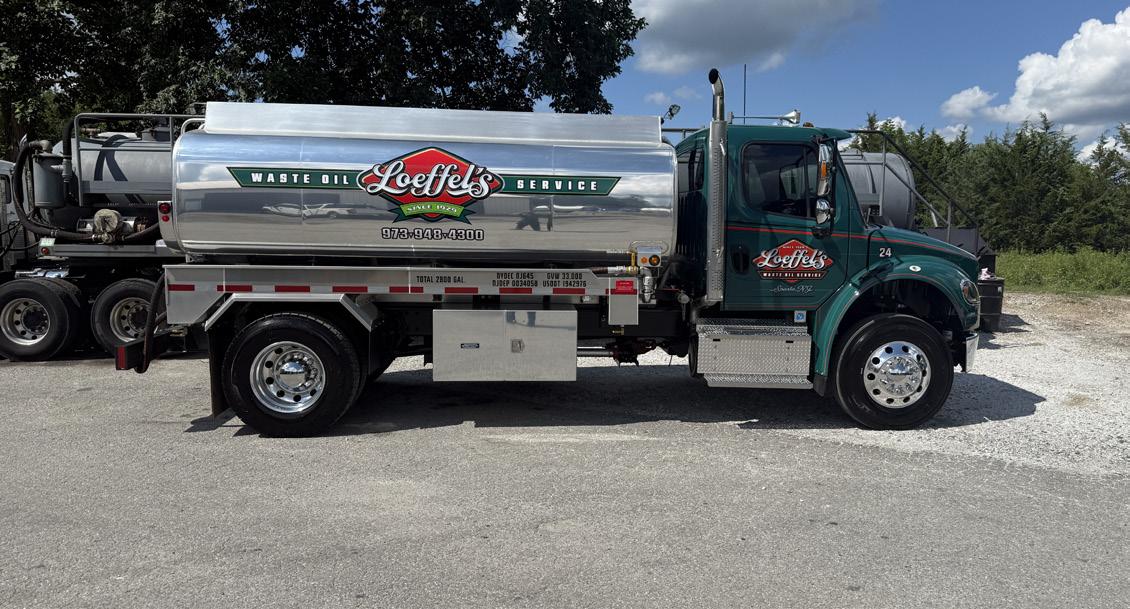
LOEFFELS WASTE OIL SERVICES
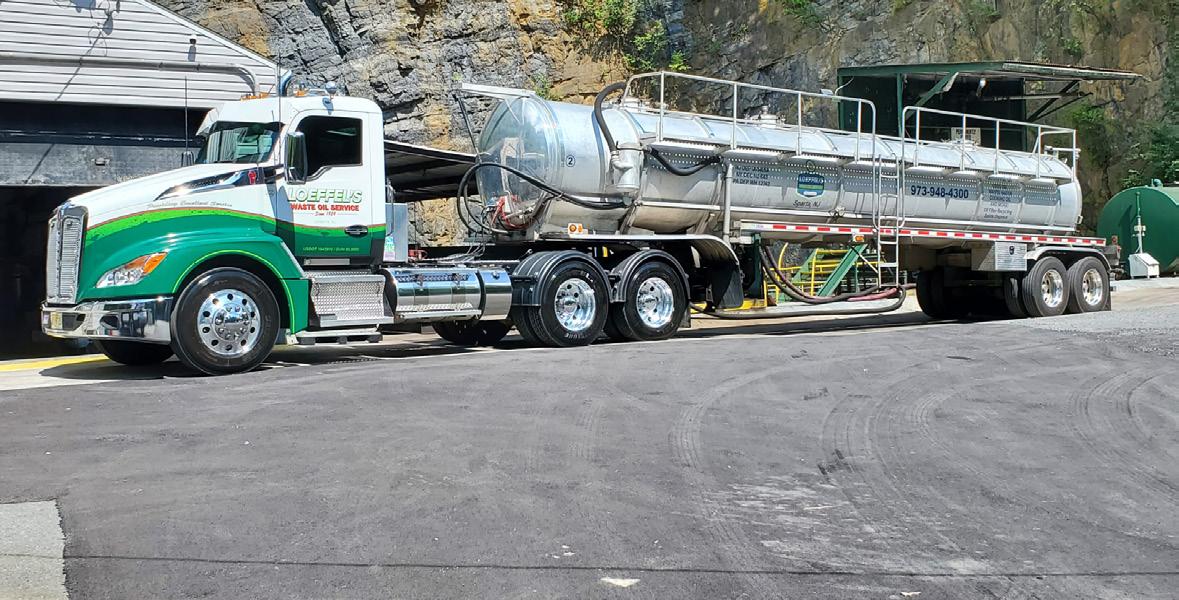
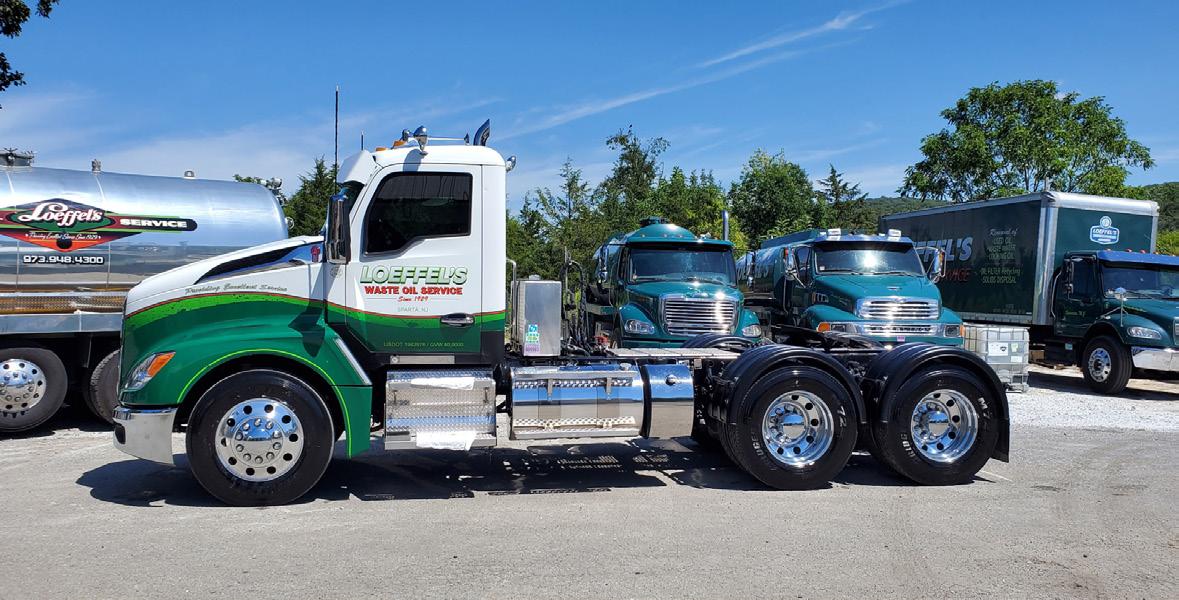
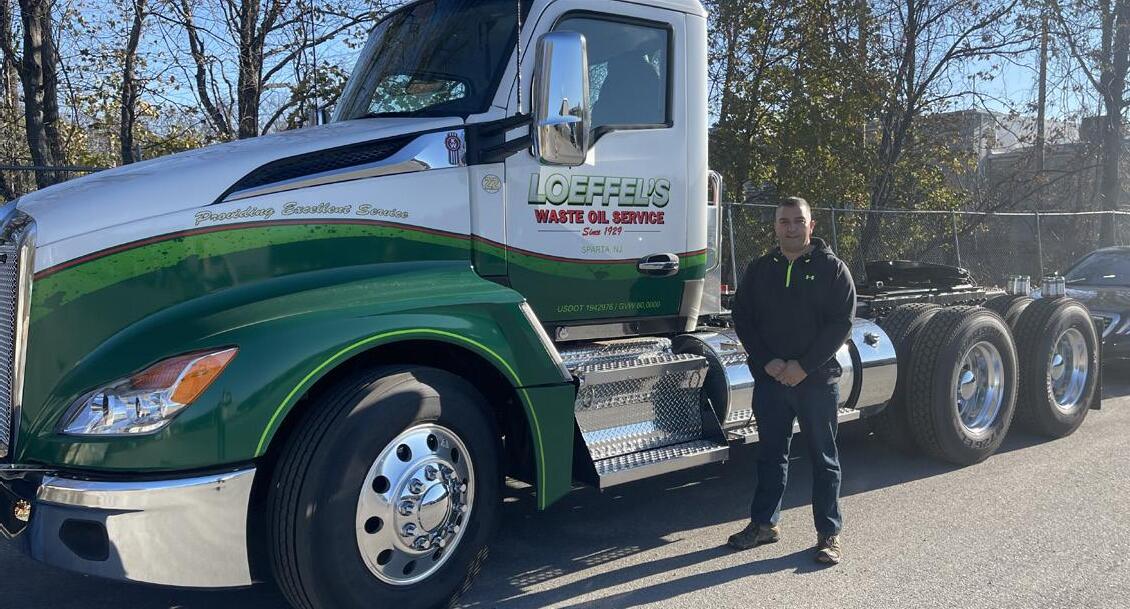
Today, Matthew Gregorio is the owner of Loeffels Waste Oil Services, a company that provides waste oil removal, recycling, and grease trap cleaning for commercial and residential customers. But he had an interesting start in the family business. In late 2003, Gregorio’s grandfather asked him if he wanted to take over the company. Gregorio was excited, but six months later, his grandfather changed his mind — he wasn’t quite ready to retire. So Gregorio took matters into his own hands. He bought a used truck and tank, spent a weekend putting them together, and got his own gigs.
A few years later, when Gregorio’s grandfather finally retired, Gregorio took over four of his accounts. Loeffels was handling mostly engine oil for repair shops before Gregorio began getting jobs removing water from underground storage tanks. And the more of those jobs he took on, he realized that his original truck wasn’t designed for it. He found a vacuum truck in South Jersey, bought it and cleaned it up, and started taking on even more opportunities pumping out tanks.
Gregorio parked his two trucks in his driveway — until he needed a third. Around 2015, the company started getting more calls about collecting cooking oil from restaurants. Gregorio said he knew nothing about handling those jobs at first. But he did his research and bought another truck that could handle those gigs, filling it up about once a month. Eventually the company also progressed to cleaning restaurant grease traps.
Today, Loeffels has clients from as far south as Atlantic
City, as far north as Kingston, N.Y., and as far west as Reading, Pa. Those four accounts that were given to Gregorio by his grandfather have grown into a few thousand. When he first started out, Gregorio was handling 500-600 gallons of engine oil a week; now it’s more than 20,000. And Loeffels fills two trucks every day with cooking oil. The company currently employs 12 people, and they try to add a couple each year. They’ve also progressed to the environmental side of the industry with more tank removal jobs and removing contaminated groundwater from demolition sites.
The services offered by Loeffels are incredibly important for the environment. Everything collected by the company is properly disposed of according to the U.S. Environmental Protection Agency guidelines. And a lot of it is recycled. Used oil can be re-refined and turned into a base stock for new oil, and fryer oil can be cleaned up and used as biofuel.
“We all want the generation behind us to be better,” says Gregorio. “I see things that happened years ago and wonder what people were thinking. Let’s do this the right way.”
When asked what his role is with the company, Gregorio jokes, “Too much.” In addition to being the owner, he’s also involved in much of the day-to-day operations, including answering phones and scheduling. Occasionally, he’ll jump in a truck. He says it’s a high-energy job where he has the opportunity to meet new people, which he loves.
“I’ve made some awesome, long-term friendships with
I'VE MADE SOME AWESOME, LONG-TERM FRIENDSHIPS WITH THOSE WE'VE WORKED WITH OVER THE YEARS. AND I'VE HAD THE CHANCE TO GET TO LEARN A LOT ABOUT DIFFERENT PEOPLE.
”
those we’ve worked with over the years,” he says. “And I’ve had the chance to get to learn a lot about different people. We have customers who range from Wall Street guys to custodians and everyone in between, and every nationality you can think of.”
And there have been some fun and interesting jobs, as well. The Loeffels team has pumped out locomotives so that they can be cut up and scrapped. They’ve worked with tanks on the roofs of buildings and gone into abandoned houses. And one time during a job in a quarry, they came across a family of rattlesnakes.
In the future, Gregorio hopes Loeffels will double the amount of business they’re currently doing. But he wants to grow the right way.
“I’m big on natural growth,” he says. “A large part of our business is built off of referrals, and I want that to continue. I also hope to build up our network of vendors. I’ve learned over the years that vendors are just as important as customers. Some of our customers are also our vendors, and we’ve built some awesome relationships with them that have helped all of us grow.”
Gregorio believes NJLICA will play a role in the company’s
growth. He actually first heard about the organization years ago when his friend’s father mentioned that he was going to an NJLICA meeting. Gregorio didn’t think much of it at the time, but later, when Loeffels was required to join an apprenticeship program in order to complete a job for the state, he remembered why NJLICA sounded familiar. And after joining the organization, the company found benefits beyond a public works certificate. Apprenticeship Coordinator Hugo Castillo pointed out all the other resources NJLICA has to offer, and Gregorio says Loeffels’ goal for 2026 is to be more involved with the organization, from attending networking events, to joining the CDL program and taking advantage of safety resources.
It’s these extra steps that set Loeffels apart from other companies offering similar services. And customers notice that. Ninety-five percent of Loeffels’ business is repeat customers or referrals.
“We go above and beyond,” Gregorio says. “We pride ourselves on killing with service. We also take pride in our trucks, our work, and our guys. We have the right insurance and licensing, more than is ever needed, and we have the knowledge. This puts us a step above everyone else.”
Kelley Freund is a freelance writer based in Virginia.
AWARD WINNERS
NJLICA
CONTRACTOR OF THE YEAR
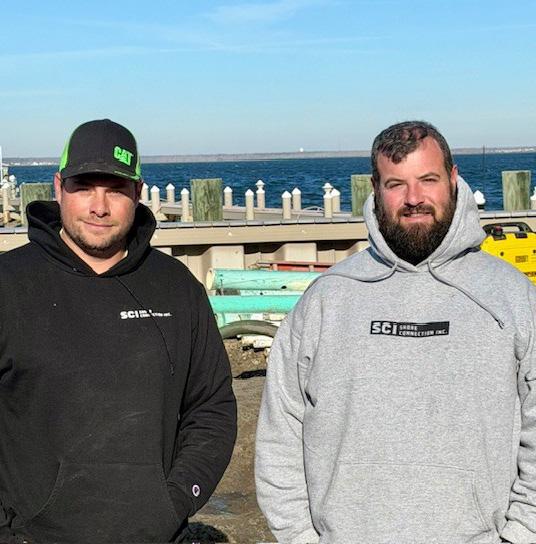
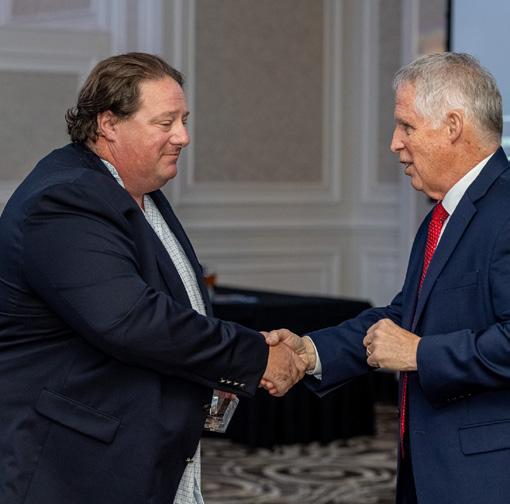
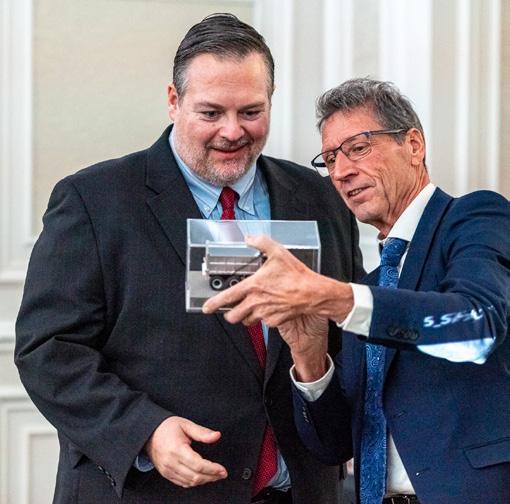
GREGG LALLY
SHORE CONNECTION, INC.
Shore Connection, Inc. (SCI) is a family-owned heavy civil construction company proudly serving Southern Ocean County for more than 25 years. Based in West Creek, SCI specializes in publicly bid infrastructure and road construction projects throughout Long Beach Island and the surrounding coastal communities. Bonded and certified for public, prevailing wage, NJSDA, and NJDPMC projects, SCI has built a strong reputation by meeting the demanding and often unpredictable conditions of underground coastal construction.
Founded by Jim and his siblings, SCI’s beginning was rooted in hard work and determination. As the business evolved, Jim influenced Gregg and Gerald, helping them to develop into highly skilled and knowledgeable leaders. Guided by the values ingrained from the beginning, family has remained central to SCI’s identity in both ownership and daily operations. Employees are considered family, with the company valuing character, loyalty, and dedication as much as experience. Their small but capable workforce takes great pride in their craft, consistently delivering quality results and adapting when challenges arise. Following the example set for them, Gregg and Gerald strive to instill the same principles of hard work and integrity in their own children, who can often be found eagerly watching and waiting for their turn at job sites. Together with Caitlin, the leadership team brings more than a century of combined experience in estimating, management, field operations, and the administrative requirements of public work. Under their guidance, SCI has continued to grow while maintaining the values that define the company.
Shore Connection Inc. integrates those values into each project and is often recognized by clients and collaborating organizations as trustworthy, efficient and reliable, and committed to delivering quality work. Local governments and municipalities, SCI’s primary clients, often convey that they consider the company not just as a contractor but a trusted partner. With deep roots in the community, SCI approach reflects a genuine commitment to serving the public and improving the places where its team lives and works.
Adaptability has been fundamental to their success, both in the field and behind the scenes. Just as they navigate the challenges of construction on a barrier island, Shore Connection consistently meets the ever-changing administrative and compliance requirements, ensuring a high standard at all levels. SCI proudly recognizes NJ LICA for its role in this success. The resources, advocacy, and industry knowledge provided through NJ LICA have supported SCI in staying compliant while helping the company stay current, informed, and prepared for the future.
For Shore Connection Inc., success is measured not only in completed projects, but by trust earned from its partners and the positive impact made within the community. SCI has flourished by leveraging its experience, knowledge, and resources to solve unique challenges. The company is honored to be considered for the NJ LICA Contractor of the Year Award and remains dedicated to upholding the values and the highest standards in everything it does.
ASSOCIATE OF THE YEAR
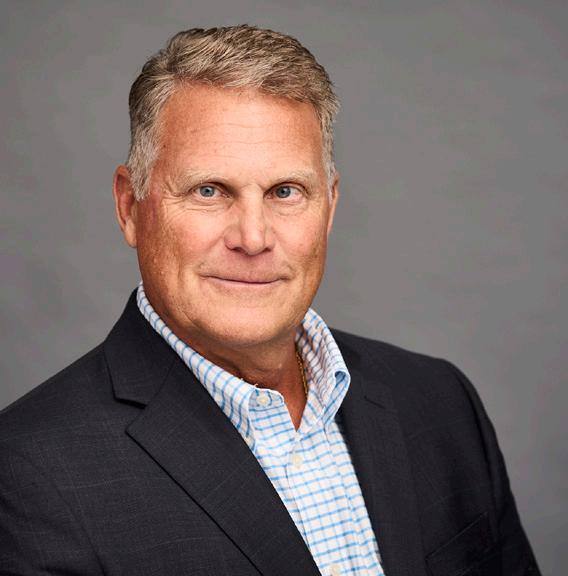
EDWARD LUBOWICKI
WORLD INSURANCE ASSOCIATES
World Insurance Associates LLC is proud to be recognized with the Associate of the Year award by the New Jersey Land Improvement Contractors Association (NJLICA), a testament to the company’s commitment to serving contractors, excavators, and land improvement professionals with excellence and integrity.
Leading the charge is Edward M. Lubowicki, client advisor and leader of the LIA Unit, whose deep roots in the industry and long-standing relationship with LICA have helped shape the firm’s specialized approach. Edward’s journey began in the family-run Lubowicki Insurance Agency, which became part of World Insurance and expanded its reach to serve commercial clients across the country.
World Insurance’s partnership with LICA is built on trust, responsiveness, and a deep understanding of the unique needs of contractors. The team — led by Edward and supported by colleagues like Joe Amato, Mike Coughlin, Vince Basciano, Thomas True, and Frank Perdue — has developed tailored resources, including a dedicated landing page for LICA members to access insurance benefits and business tools.
Edward’s connection to LICA is personal as well as professional. His father, Edward “Poppie” Lubowicki, was awarded Associate of the Year in the late 1980s and helped introduce Edward to the organization. Over the years, Edward has met countless contractors whom he describes as “salt of the earth” individuals — hardworking, genuine, and deeply committed to their craft.
This award reflects not just individual achievement, but the collective effort of a team that values relationships, service, and the legacy of those who came before. World Insurance remains committed to supporting LICA members and helping them thrive in an ever-changing industry.
MOST ENTHUSIASTIC MEMBER OF THE YEAR
TRACY
CARVER
TLC4 PREVAILING
WAGE
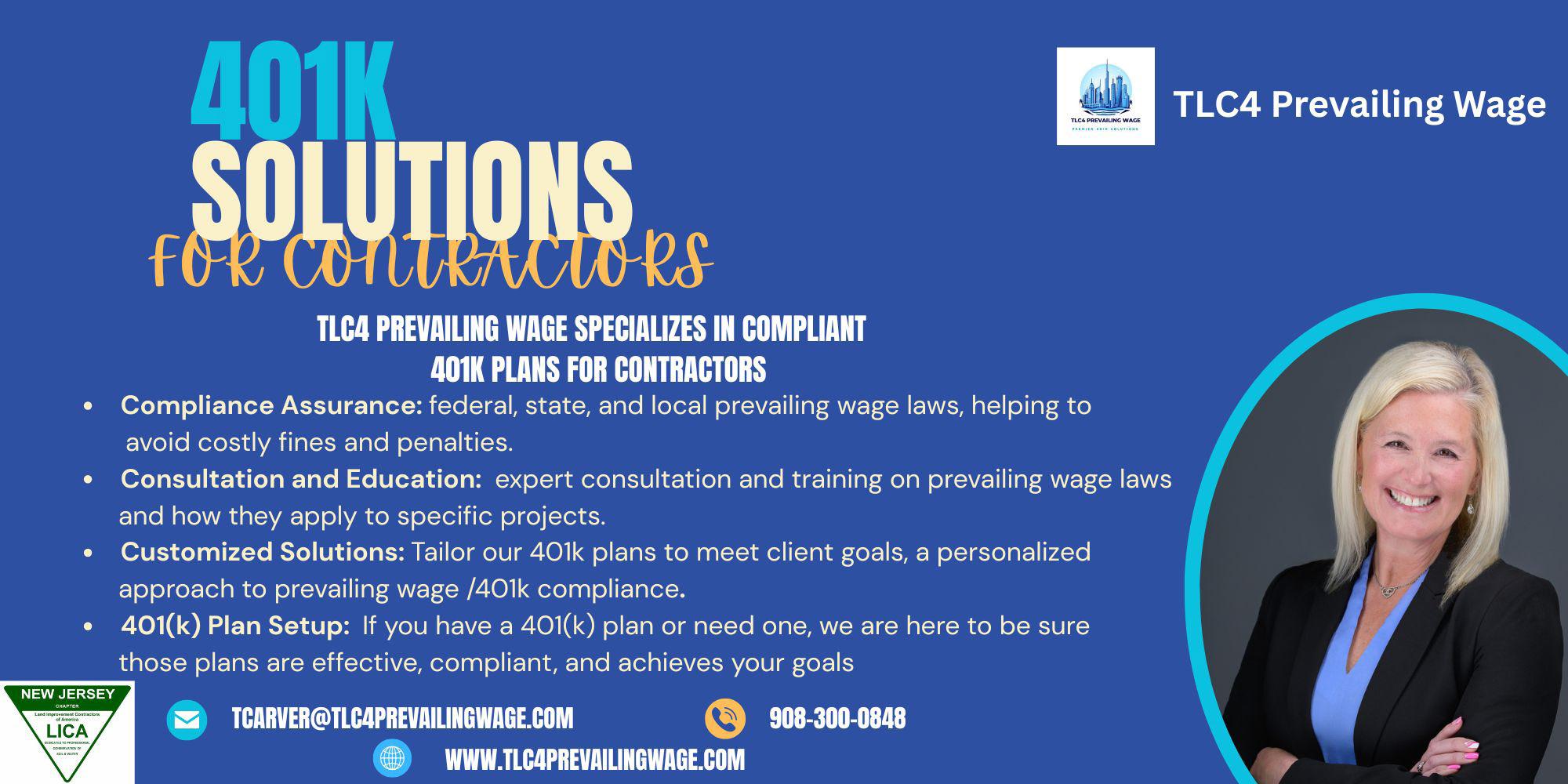
Tracy Carver is the president of TLC4 Prevailing Wage, a firm dedicated to helping contractors maximize savings, streamline compliance, and strengthen their employee benefits through strategic fringe management and optimized 401(k) plan design. With more than 17 years of hands-on experience in the prevailing wage arena, Tracy has become a trusted resource for contractors across state and federal projects throughout the country. Her expertise spans fringe allocation strategies utilizing her 401k plan, certified payroll guidance, retirement plan optimization, and cost-saving solutions that allow contractors to stay competitive while remaining fully compliant.
Throughout her career, Tracy has built a reputation for combining deep technical knowledge with a personable, practical approach. She has supported hundreds of contractors in understanding and navigating the complexities of prevailing wage law, helping them save significant money through custom 401k plans, improve internal processes, and implement smarter benefit structures for their teams. Contractors value her ability to translate complicated regulations into clear, actionable strategies that directly impact their bottom line.
Beyond her professional accomplishments, Tracy is grounded by a full and vibrant family life. She is married to her wonderful husband, Art Carver, the owner of ALC Electric, a successful electrical contracting company based in Scotch Plains, N.J. Together, they share a blended family of six children, making their home a lively, energetic hub of activity, laughter, and support. Tracy credits her family with giving her the drive, perspective, and balance that fuel both her personal and professional success.
Whether she’s guiding contractors through fringe benefit strategies or cheering on her kids, Tracy brings dedication, warmth, and unwavering commitment to everything she does. Through TLC4 Prevailing Wage, she continues to empower contractors with the knowledge, tools, and confidence they need to build stronger businesses and brighter futures for their employees.
YOUNG PROFESSIONAL OF THE YEAR
DAN GNAGEY
TILCON
Dan started at Tilcon in 2011 as a sales intern while attending William Paterson University. His dedication and hard work led to a full-time role as an outside sales representative. He was later promoted to market development manager, where he helped expand market reach and build client relationships. From there, Dan then became asphalt and inside sales manager from 2018 to 2024. Currently, he is the director of sales at Tilcon responsible for leading strategic sales initiatives, mentoring the sales team, and driving continued growth across all lines of business in both New York and New Jersey.
PROJECT OF THE YEAR, WALGREENS, NORTH BERGEN
COLIN MACHLEDER
FILCO INDUSTRIES
Colin Machleder is the president of Filco Industries, a construction company headquartered in Washington, N.J. With over 30 years of experience in the excavation, demolition, and garbage industry, Colin saw a need for limited access capabilities that did not exist in the northeast region. He established Filco Industries in 2005 as a specialized limited access company that would take on challenging projects that required designing and engineering customized solutions.
Filco is a family-owned business, and Colin credits his employees for the company’s many accomplishments. Most of Filco’s employees have been with the company since it was launched and are highly specialized, trained and dedicated to maintaining Filco’s reputation as the Special Forces of the construction industry. Every day generally brings something new and different that keeps the team engaged. Thinking outside the box is a job requirement.
The company’s focus on customer service, innovative solutions, and high safety standards have allowed Filco to be part of private, public, and federal projects across the country
NEWS NJLICA
NJLICA'S EFFORTS TO PROMOTE THE TRADES CONTINUES TO BROADEN
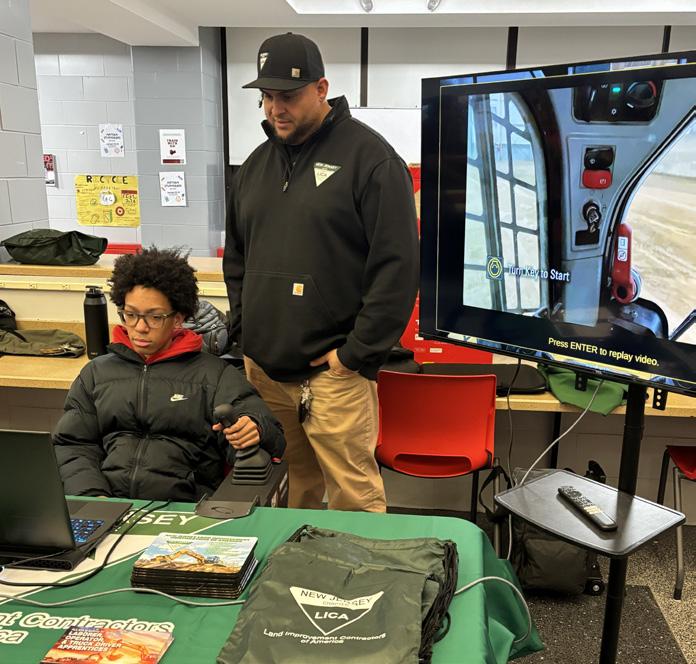
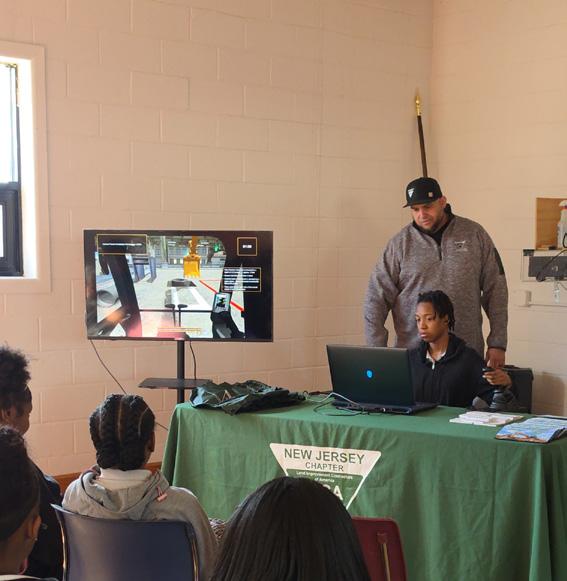
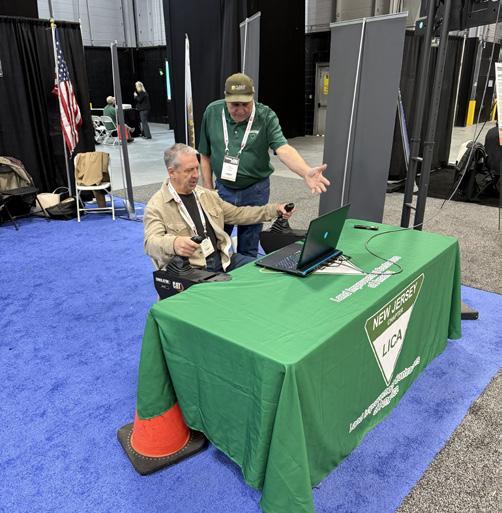
What started out as a two-minute video and a short talk with kids about the trades has evolved into a full-scale production and continues to expand across the state. NJLICA has taken this “Trades Experience” to middle schools and high schools, career days, college fairs, showcases, and other opportunities all over New Jersey. Now armed with three remote control pieces of construction equipment, a video showcasing the trades, two portable construction simulators, and one to two individuals devoted to this cause, NJLICA is living the mission it set out to do seven years ago when the apprenticeship program in New Jersey came to be.
In addition, NJLICA will soon be equipped with an enclosed trailer fitted out with two heavy equipment simulators capable of putting students behind the wheel of 12 separate pieces of construction equipment.
NJLICA’s Apprenticeship Coordinator Hugo Castillo believes, “Potentially, we can be in 90% of the schools in New Jersey in the next year.”
CAREER DAYS AND COLLEGE FAIRS
Every guidance counselor in New Jersey who has heard of NJLICA’s road show into schools wants us to attend their career day and/or college fair. We are always the most popular booth, with lines to get on the simulator or work with the remote-control construction vehicles. Since the last publication, we’ve visited the following schools:
• Piscataway High School
• Ridgewood High School
• East Orange High School
• Lodi High School
• Fair Lawn High School
• Passaic High School
• Union County Vocational High School
• Carteret High School
• Rutherford High School
• Dover High School
• Montclair High School
• Hoboken High School
• Lyndhurst High School
THINK BIG FOR KIDS
Two years ago, NJLICA was approached by Think Big for Kids, an organization whose focus is educating under-privileged middle school and high school students about the career opportunities available to them. NJLICA is spreading the word about the trades across the state of New Jersey. And the kids? They absolutely love it! So far, we’ve worked with:
• Boys and Girls Club of Clifton
• Boys and Girls Club of Passaic
• Boys and Girls Club of Trenton
• Boys and Girls Club of East Orange
Also in the works: NJLICA and Boys and Girls Club are working on a partnership where NJLICA would work directly with every club in the state.
COMING TO A SCHOOL NEAR YOU
If you would like to join us at your local middle and/or high school and tell your personal story of you getting into the trades, or have us visit your local school system, reach out to Hugo Castillo, NJLICA apprenticeship coordinator, at 201443-5964 or hugo@njlica.org. Schools we are visiting later this year include Morris Hills High School, Keyport High School, Spotswood High School, Weehawkin High School, and many more!
NJLICA PARTNERS WITH WOMEN & MINORITIES IN CONSTRUCTION
NJLICA Partners with Women & Minorities in Construction To further its mission of promoting the trades, NJLICA has partnered with the East Orange School District and their Woman & Minorities in Construction program. The program is designed to provide various hands-on trade experience for the students. Once students graduate from the program, their resumes will be distributed to the NJLICA membership as potential candidates for employment. In addition to the skills training they receive through the program at school, Ron Garofalo, Hugo Castillo, and Buddy Freund will enhance that training by providing interviewing techniques and other job preparation skills to students in the program. NJLICA has already received more than 20 resumes from interested students.
THERE SEEMS TO BE SOME CONFUSION ABOUT
NJLICA DUES AND ERISA TRUST PAYMENTS
NJLICA Membership Dues
• required to be paid each year
• due September 1 of each year
• invoices are emailed on September 1
• payment may be made via the payment link, providing credit card information, or via check
• If you join prior to June 1, you will receive a dues invoice on September 1.
• If you join between June 1 and August 31, you will not receive an invoice in September. You are good until the following September.
ERISA Trust Payment
(Public works contractors as part of the Apprenticeship Program)
• required to be paid each year
• due on the anniversary date of you joining the Apprenticeship Program
• invoices are hard copy mailed the month prior to being due
• payment may be made via check or by proving credit card information or via check
If you are a public works contractor with your public works certificate, both of these payments are required to remain compliant with the Department of Labor and maintain your public works certificate.
GROWING BIGGER AND STRONGER EVERY DAY
Contractor Members
A. Debenedetto Construction LLC
Antonio Debenedetto Wayne, N.J.
Budd’s Grading & Excavating LLC
Joanne Budd Rio Grande, N.J.
Brick Industries, Inc.
Eric Plackis Brick, N.J.
Cascon Services, Inc.
Chris Castiglia Oakland, N.J.
CF & Bros. Transportation, Inc.
Carlos Martinez Bound Brook, N.J.
Chosen Restoration LLC
Jamietra Wright Glassboro, N.J.
Delgado Brothers General Contracting Corp.
Bonifacio Delgado Passaic, N.J.
EPC Technologies, Inc.
Steve Schenker New Egypt, N.J.
FHA Transportation Corp.
Guadalupe Nieto Hamilton Township, N.J.
Garden Fence LLC
Kevin Leguizamo Elizabeth, N.J.
Giannella Mechanical LLC DBA Lucas
Sewer Services
Massimo Giannella Hawthorne, N.J.
Gold Coast Management
John Kim Glen Ridge, N.J.
Green Turf Irrigation
Richard Savage Landing, N.J.
JBJ Massive LLC
Natasha Spencer Sicklerville, N.J.
KCS Recycling LLC
Kyle Shover Malaga, N.J.
Lou’s Landscaping & Design, Inc. Lou Avolio Wayne, N.J.
39 NEW MEMBERS IN THE FOURTH QUARTER OF 2025 AND JANUARY AND FEBUARY 2026 GET
THE NJLICA BOARD HAS POSITIONS AVAILABLE FOR THE FOLLOWING COMMITTEES:
Stewart & Stevenson Power Products LLC
Christopher Smith
Lodi, N.J.
TMS Technical Services LLC
Kristin Hansen
Long Beach Township, N.J.
Yellinz Concrete & Excavation LLC
Chana Greenwald Jackson, N.J.
Associate Members
Advance Tire, Inc.
Jerry Bruner Millstone, N.J.
Elizabeth Truck Center
Steven Pesce
Elizabeth, N.J.
Green Way Products LLC
Melissa Sutley
Mahwah, N.J.
Johnson Controls
Glenn Rodriquez
Totowa, N.J.
Kinum, Inc.
Vito Mazza
Leonia, N.J.
Prestige Plumbing & Heating
Robert Bruno
Staten Island, N.Y.
Roman Wrench Corp.
Kyle Galante
Kearny, N.J.
Traffic Plan
Jan Humphreys
Tinton Falls, N.J.
USI Insurance Services
Arin West Florham Park, N.J.
THE NJLICA DUES YEAR RUNS FROM SEPTEMBER 1-AUGUST 31. DUES INVOICES WERE SENT IN SEPTEMBER AND NOVEMBER. IF YOU HAVE NOT PAID YOUR MEMBERSHIP DUES FOR 2025-26, PLEASE FORWARD TO THE ASSOCIATION OFFICE. YOUR CONTINUED SUPPORT IS APPRECIATED.
Apprenticeship has been shown to help employers attract and retain employees, as well as cultivate a highly skilled and productive workforce. As a bene t to its members, NJLICA maintains a USDOL approved apprenticeship program for Truck Drivers (1 year), Laborers (2 years), and Heavy Equipment Operators (3 years). To encourage active participation in its program, NJLICA o ers incentives to members who sponsor an apprenticeship, as well as signi cant nancial incentives to apprentices who are enrolled and actively participate in the program.
Employers who sponsor an apprenticeship in 2026 receive a 66% reduction in their annual contribution requirement to NJLICA's Apprenticeship Trust fund. In addition, employers who sponsor apprentices gain skilled workers, reduce employee turnover, an improve productivity. Apprenticeship can also help an employer address skilled labor shortages at a time when many employers are reporting that they simply cannot nd skilled workers to ll jobs.
NJLICA recognizes that in ation is at a high, food and gas are expensive, just about every aspect of our everyday lives has a hefty price tag. erefore, to incentivize individuals to invest in themselves by pursuing apprenticeship, NJLICA currently provides individuals who are registered and actively participating in its program with an annual stipend.
Apprentice Truck Drivers eligible to receive
• $3000 upon completion of the program, OR CDL class paid for by NJLICA
• Available to the rst 12 apprentices who enroll in the program
Apprentice Laborers eligible to receive***
• $7500 or the rst year completed
• $7500 for the second year completed
• Available to the rst 10 apprentices who enroll in the program
Apprentice Heavy Equipment Operators eligible to receive***
• $7500 for the rst year completed
• $7500 for the second year completed
• $7500 for the third year completed
• Available for the rst 14 apprentices who enroll in the program
Contact:
Tracy Carver: tcarver@tlc4prevailingwage.com
Buddy Freund: buddy@govisionstrong.com
NJLICA: 973.630.7600
CAT ® ATTACHMENTS
Attachment Offer Available January 1, 2026–December 31, 2026
$250 off select new Cat® attachments. Limit of one credit per new attachment purchased before December 31, 2026. Offer available on new quotes only. Offer can only be combined with one additional attachment program. Offer available on select attachments. Contact your local dealer for details.
FOR DEALER USE ONLY
MACHINE AND ATTACHMENT ASSOCIATION DISCOUNT PROGRAM
Limit of 20% off dealer net total discount per each part number, including the additional program if combined. Buckets and forks are NOT eligible. Farm Bureau NOT eligible for buckets, forks, thumbs and couplers. Programs are in Product Support Commercial System (PSCS)
NAT-NEC-3500 2026 Caterpillar Association Member Discount BCP Canada
NAT-NEC-3486 2026 Caterpillar Association Member Discount BCP US NAT-NEC-3485 2026 Farm Bureau Discount Applicable Cat attachments found in the following price pages:
WT-BHL–Backhoe Loader Attachments
WT-CWL–Compact Wheel Loader Attachments
WT-MHE–Mini Excavator Attachments
WT-SSL–Skid Steer Loader Attachments
WT-SWL–Small Wheel Loader Attachments
At Caterpillar, we know you put in hard work day in and day out. It’s not just a job—it’s a lifestyle. That’s why we reward your membership in the associations that support your career and passion. Take a look to see if any of your association memberships qualify you for a discount on Cat® machines and attachments. FOR
For further explanation of programs, including redemption rules and instructions, please view the resources found in GCSS.
ASSOCIATION DISCOUNT PROGRAM
At Caterpillar, we know you put in hard work day in and day out. It’s not just a job—it’s a lifestyle. That’s why we reward your membership in the associations that support your career and passion. Take a look to see if any of your association memberships qualify you for a discount on Cat® machines and attachments.
MEMBER
2026 TOTAL PRO EXPO
With a winter storm that dropped nearly two feet of snow on parts of New Jersey, Total Pro Expo, NJLICA’s Winter Conference, was postponed until February this year. Although reduced to just one day, it was again a huge success, attracting over 1500 attendees and 150 exhibitors to what is normally a two-day event. NJLICA offered OSHA 10 training as well as CPR/emergency first aid certification for its members. The business track was packed with presentations regarding several current and relevant topics. Many thanks to our presenters:
• Terrance Hendricks, New Jersey State Police: Roadside Inspection
• Anthony Morreale, Tri-State Safety Solutions: Workplace Safety Essentials
• Vernon Grisham, Hoffman Equipment: Equipment Utilization & Fleet Management
Scheideler Excavating Co.
NJLICA LAUNCHES CONSTRUCTION, COCKTAILS, &
CONNECTION
EVENTS
Thursday, March 19 marked the inaugural Construction, Cocktails, & Connections gathering. Over 45 attendees, most of whom were contractors, enjoyed an evening of good food and beverage, and great conversation at the Homestead Bar & Kitchen in Morristown, N.J. NJLICA Executive Director Buddy Freund said the goal of this type of event is two-fold. “First, and most importantly, we need to attract the younger generation; we need to get younger as an organization. Secondly, we hope to identify future leaders, young men and women who are interested in leading NJLICA into its next phase.”
Equipped with screens the size of Montana, attendees also enjoyed watching the opening night of the NCAA Men’s Basketball Tournament.
Here are future dates and locations for Construction, Cocktails, & Connections:
Vision Strong Management Group provides full-service association management services for associations, foundations, societies, and trade organizations.
Add your company name to our Patron Directory. Contact NJLICA Executive Director Buddy Freund at 973-630-7600 or buddy@govisionstrong.com.
2025 NJLICA HOLIDAY AWARDS DINNER
Dec. 4, 2025 marked the 47th Annual NJLICA Holiday Awards Dinner. This Mingle & Jingle had more food than you can possibly imagine. Nearly 150 attendees enjoyed a night of celebration and great food at The Meadow Wood in Randolph, N.J. Honorees were Gregg Lally, Shore Connection as Contractor of the Year; Ed Lubowicki, World Insurance Associates as Associate of the Year; and Tracy Carver, TLC4 Prevailing Wage as the Most Enthusiastic Member.
Two new categories were identified this year: Young Professional of the Year and Project of the Year. Those recipients were Dan Gnagey, Tilcon, Young Professional of the Year; and Colin Machleder, Filco Industries, Walgreens North Bergen, as the Project of the Year.
Congratulations to all of this year’s honorees.
3rd Annual Golf Classic - South
THURSDAY, MAY 14TH, 2026
Forsgate Country Club Monroe Twp, NJ 38th Annual Golf Classic - North
MONDAY, AUGUST 24TH, 2026
New Jersey National Golf Club
Basking Ridge, NJ
Large Resources. Local Relationships.
We help our clients manage and protect their most valuable assets—their people and their business.
As part of the World Insurance Associates family, we offer our clients top products and services from the best providers that span all of your personal and commercial needs. You will continue to get the white-glove service and personal touch of your local agent. Call or email us today to learn more about our offerings. 908-738-8493 | lica@worldinsurance.com