4 minute read
Political tools to improve wages

Description of the lesson
Please read through the outline of this lesson carefully and follow the parts step by step. The lesson will introduce you to the topic, make you dive into it, reflect on it and provide information for further reading and understanding.
Advertisement
Objective
Understand the difference between minimum wages and living wages of workers in the fashion value chain.
After this lesson you will be able to
- understand that the voluntary actions of individuals are important and have the power to create change, for example by helping to put pressure on the political system or on policy-makers, and create change
- understand and explain how there are certain steps that the economy needs to make towards transparency, which are essential for change; e.g. through code of conducts, unfolding supplier list and implementing due diligence
- understand that we still need binding political regulations for a system change on a european level
Tools and materials laptop, internet, printer
TEXTILE SUPPLY CHAIN:
What is a clothing supply chain exactly? The fashion supply chain refers to the process of tracing each step of the clothes manufacturing process, from sourcing of the raw materials, to the factories where those materials are made into garments; and the distribution network by which the clothes are delivered to consumers. It’s a lengthy process, and it’s extremely rare for raw materials to be grown, processed, sewn, and sold all in one location.
LIVING WAGE:
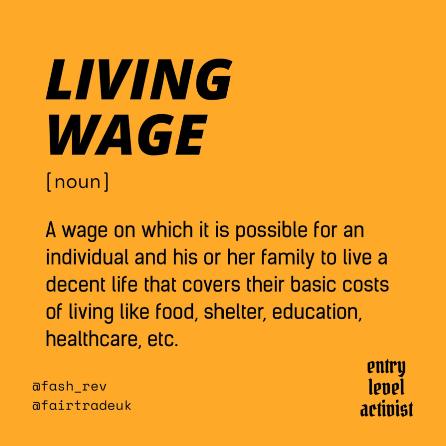
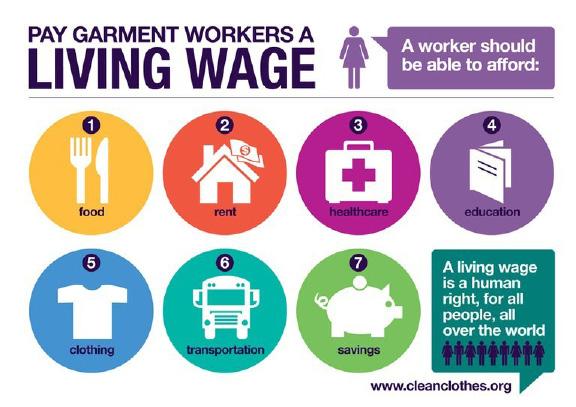
The remuneration received for a standard workweek by a worker in a particular place sufficient to afford a decent standard of living for the worker and her or his family. Elements of a decent standard of living include food, water, housing, education, health care, transportation, clothing, and other essential needs including provision for unexpected events.
MINIMUM WAGE:
Minimum wages have been defined as “the minimum amount of remuneration that an employer is required to pay wage earners for the work performed during a given period, which cannot be reduced by collective agreement or an individual contract”.
This definition refers to the binding nature of minimum wages, regardless of the method of fixing them. Minimum wages can be set by statute, decision of a competent authority, a wage board, a wage council, or by industrial or labour courts or tribunals. Minimum wages can also be set by giving the force of law to provisions of collective agreements.
The purpose of minimum wages is to protect workers against unduly low pay. They help ensure a just and equitable share of the fruits of progress to all, and a minimum living wage to all who are employed and in need of such protection. Minimum wages can also be one element of a policy to overcome poverty and reduce inequality, including those between men and women, by promoting the right to equal remuneration for work of equal value.
POVERTY:
Poverty is a state or condition in which a person or community lacks the financial resources and essentials for a minimum standard of living. Poverty means that the income level from employment is so low that basic human needs can't be met. Poverty-stricken people and families might go without proper housing, clean water, healthy food, and medical attention. Each nation may have its own criteria for determining how many of its people are living in poverty.
What do you need for a dignified living? What are the basic needs?
Make a list of needs and wishes a wage should pay for! Think also of the earnings of your parents. What are the wages covering?
Really try to write down a complete list. What are things that are essential for a living? What are things that are important but could be spared?

Compare your list with someone else or discuss it with your parents, siblings, friends. How would they assess their needs?
Maybe you already had a summer job. Or you worked part-time at your school and university.
If not, talk to your parents about their experience with wages and working hours.
How would you feel about it, when the payment you and your parents receive doesn’t cover the basic needs?
After you have done your list, look at the list / definition by Fair Trade Germany:
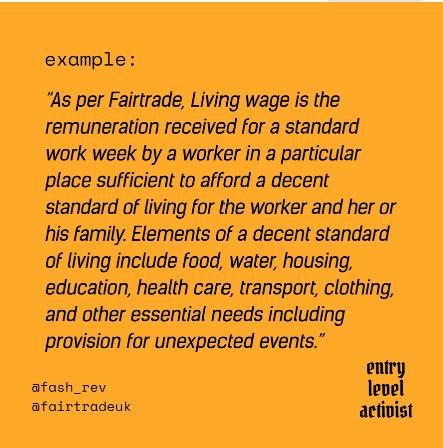
“Elements of a decent standard of living include food, water, housing, education, health care, transport, clothing, and other essential needs, including provision for unexpected events. The living wage methodology has two main components, each of which is described in more detail below.”
Please note, this issue isn’t only a problem of the Global South and the countries included, but also many others, including countries in Europe. Here you can find a calculation on European wages: Clean Clothes Campaign, Europe Floor Wage, 2023.
An average garment worker along the supply chain, especially on cotton fields, in the spinning mills for cotton yarns and in manufacturing, earn only minimum wages. The wages are defined by state (minimum wage) and should be paid to everyone in the country.
The truth is, in many countries there are few controls and audits on this and workers are often paid below the minimum wage and even if they are, this is not sufficient to cover their expenses.This is dramatic and risks proportions of the country living in poverty.
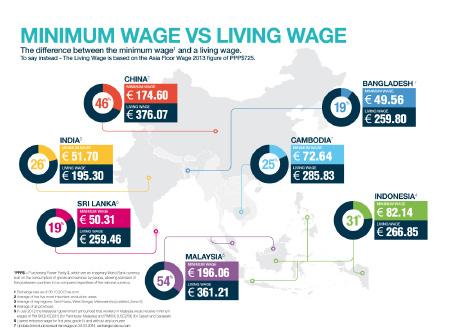
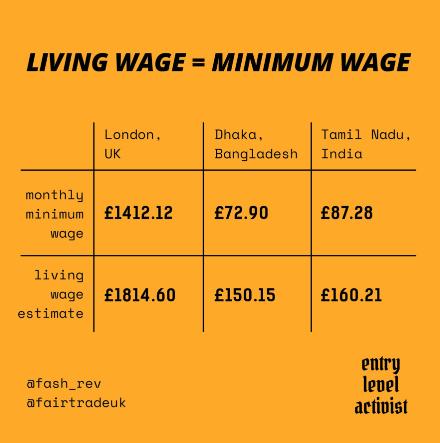
Researches by independent organisations, above all the Asia Floor wage alliance, have collected data from many countries proving that the minimum wages are not enough to pay for decent human life. Have a look at this infographic of the Clean Clothes Campaign that shows the gap between minimum wage and living wages:
Now try to transform the knowledge and information you have just learned in your life.
Would you like to apply for a job after school / universities with similar conditions? Probably not.