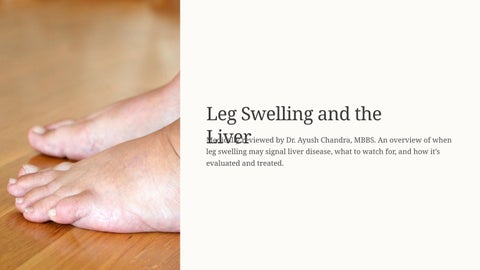
Leg Swelling and the Liver
Medically reviewed by Dr. Ayush Chandra, MBBS. An overview of when leg swelling may signal liver disease, what to watch for, and how it’s evaluated and treated.
Why the Liver Can Cause Leg Swelling Progressive liver scarring (cirrhosis) reduces albumin production. Lower albumin allows fluid to leak from blood vessels into tissues, often first visible in ankles and legs. Portal hypertension from scar tissue further pushes fluid outward.
Leg swelling alone rarely proves liver disease — pattern and associated signs matter.
Other Liver Conditions That Lead to Swelling Cirrhosis Most common
Chronic Hepatitis
Advanced Fatty Liver
Bile Duct Disorders
cause — long-term
Long-standing
Progression can
Chronic obstruction
scarring -> low
inflammation that
reduce liver
or damage can
albumin + portal
can progress to
function; often
impair liver
hypertension.
scarring and
linked with
function and lead
impaired function.
diabetes and excess
to similar effects.
weight.
How Liver-Related Swelling Differs from Other Causes Heart, kidney, or vein problems can produce nearly identical leg swelling. Clinicians use the overall pattern, associated symptoms, imaging and blood tests to determine the cause.
One-sided swelling more likely indicates clot or local vein issue — seek urgent care.
Common Associated Symptoms Jaundice
Ascites
Persistent Fatigue
Itchy Skin
Yellowing of skin or eyes
Fluid buildup in the
Tiredness that doesn't
Bile products in the
— signals falling liver
abdomen often
improve with rest.
bloodstream can cause
function.
accompanies leg
intense itching.
swelling.
Easy Bruising
Darker Urine
Reduced clotting-protein production leads to more
Colour changes that may accompany liver dysfunction.
bruises.
When to Seek Medical Attention Discuss gradual swelling plus other liver signs with your doctor soon. Seek immediate care for sudden or worsening swelling, one-sided leg swelling, sudden abdominal swelling, confusion or drowsiness, vomiting blood, dark stools, breathing difficulty, fever with abdominal pain.
One-sided swelling, severe confusion, or vomiting blood require urgent evaluation.
Treatment Principles Treatment targets the liver condition, not just the swelling: stop alcohol when relevant, treat viral hepatitis, manage fatty liver via weight and blood sugar control. Symptom measures include sodium restriction, prescribed diuretics, leg elevation, and compression stockings under medical advice.
Diuretics must be prescribed and monitored — selfdosing is dangerous.
Practical Self-Care (Short-Term Measures) Reduce Salt
Leg Elevation
Compression Stockings
Lower dietary sodium to limit fluid
Raise legs when resting to ease mild
May help for mild swelling — use
retention.
swelling.
on a doctor’s advice.
These measures help symptoms but don’t replace treating the underlying liver disease.
FAQs — Quick Answers One-sided swelling?
Only in liver failure?
Reduce swelling without meds?
Unlikely from liver
No — swelling can
Salt restriction and leg
How to tell from heart/kidney causes?
disease — think clot or
appear before end-
elevation help, but
Diagnosis uses
vein problem; seek
stage failure as liver
medical management
symptom pattern,
urgent care.
function declines.
is often needed if the
imaging and blood
liver is the cause.
tests — the swelling alone isn’t enough.
Next Steps & References
Noticing leg swelling with fatigue, jaundice, or abdominal bloating? Book a consultation for a proper liver evaluation.