1 minute read
CLARKSVILLE’S MOST ICONIC From Parcels…to Power…to Enlightenment

from testing
by Nikola Mojic
United States Post Office & Customs House 1898–1939
A movement began in the early 1890s to construct a post office and public building in Clarksville to accommodate the city’s booming tobacco trade. Throughout the summer of 1896, a team of architects in the Department of Treasury drafted a set of preliminary plans.

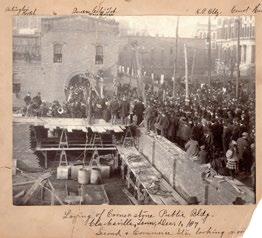
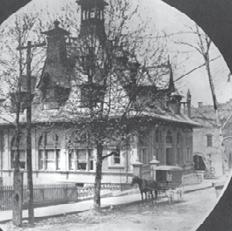
The architectural design of this building caused a stir. The Department of Treasury immediately rejected the preliminary plans. William Aiken, supervising architect of the Treasury, subsequently approved a second set of plans, and a ceremonial groundbreaking took place on September 1, 1897. When Aiken released the approved designs to the people of Clarksville, they abhorred the blend of Italianate, Romanesque, Flemish and Gothic styles. They called the building an “architectural absurdity and a public laughing stock.” Aiken designed new plans, but once again, the community rejected them. Finally, construction based on the original plans resumed, and the new Federal Post Office opened to the public in November 1898.
Clarksville Department of Electricity 1940–1983
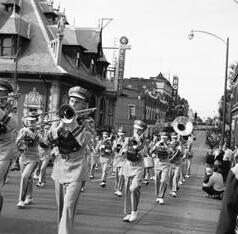
By the early 1930s, the Clarksville Department of Electricity was making strides with technological advancements. Demand for electricity grew as more of the community gained access to low-cost electricity, and new innovations such as streetlights made their way to town. Commercial enterprises were attracted by the newly-formed Tennessee Valley Authority’s low energy rates.
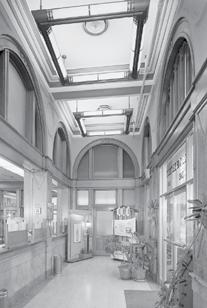
In 1939, the Federal Government sold the post office building to the City of Clarksville for $50,000. The young Clarksville Department of Electricity found a new home and occupied the building until 1983. Further electrical enhancements included the installation of the city’s first fluorescent light fixtures. Now converted to energy-efficient LED light bulbs, these fixtures continue to illuminate the front lobby of the 1898 building. In 1972, the National Register of Historic Places added the building to its list of sites.
BY MAEGAN COLLINS, MEDIA & COMMUNICATIONS COORDINATOR
