Nihalani Group LLC
Understanding Robotic Hernia Surgery for Safer and Precise Treatment
nihalanimd.com
Hernias are a common medical condition that occur when an internal organ or tissue pushes through a weak spot in the surrounding muscle or connective tissue. While traditional open and laparoscopic techniques have been used for many years, surgical care has continued to advance. One of the most important developments in this field is robotic hernia surgery, which focuses on improving precision, safety, and patient comfort. This guide explains how robotic hernia surgery works, who may benefit from it, and why it has become an important option in modern hernia treatment.
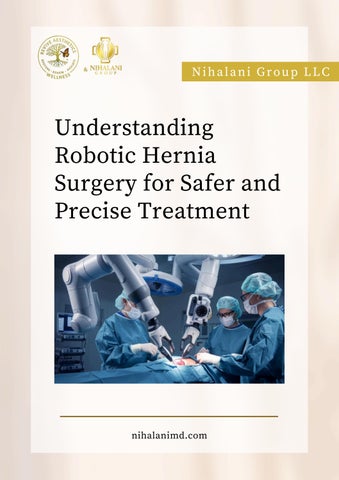
What is Robotic Hernia Surgery Robotic hernia surgery is a minimally invasive procedure performed using a robotic-assisted surgical system. The surgeon controls robotic arms from a console, guiding tiny instruments through small incisions. A highdefinition 3D camera provides a magnified view of the surgical area, allowing the surgeon to see details that may be difficult to observe with the naked eye. Although the system is called “robotic,” the surgery is fully controlled by a trained surgeon. The technology enhances the surgeon’s movements by offering greater flexibility, stability, and precision during the repair.
How the Procedure is Performed During robotic hernia surgery, small incisions are made in the abdomen near the hernia site. Through these openings, the robotic instruments and camera are inserted. The surgeon then carefully moves the tissue back into place and repairs the weakened area, often using a surgical mesh for additional support. Because the instruments can rotate and bend more freely than the human hand, the surgeon can work with improved accuracy. This is especially helpful for complex or recurrent hernias that require careful handling of surrounding tissue.
Types of Hernias Treated with Robotic Assistance
Robotic hernia surgery can be used to treat several types of hernias, including: Inguinal hernias in the groin area Umbilical hernias near the belly button Ventral or incisional hernias from previous surgeries Recurrent hernias that have returned after earlier repair The choice of technique depends on the size, location, and complexity of the hernia, as well as the patient’s overall health.
Benefits of Robotic Hernia Surgery One of the main reasons robotic hernia surgery is gaining popularity is its wide range of patient benefits. Greater Precision The robotic system allows surgeons to perform very fine movements with excellent control. This level of precision helps reduce the risk of injury to nearby tissues and nerves. Smaller Incisions Since the procedure is minimally invasive, it typically requires only small incisions. This can lead to less scarring and a lower chance of wound-related complications. Reduced Pain and Discomfort Many patients experience less post-operative pain compared to traditional open surgery. Smaller incisions and careful tissue handling contribute to improved comfort during recovery.
Faster Recovery Time Patients often return to normal daily activities sooner after robotic hernia surgery. Shorter hospital stays and quicker healing are common advantages. Improved Outcomes for Complex Cases For patients with large or recurrent hernias, robotic assistance can make the repair more effective by providing better access and visualization.
Recovery and PostSurgery Care Recovery after robotic hernia surgery is usually smoother than with open surgery. Most patients are able to walk on the same day of the procedure and resume light activities within a short period. Common recovery guidelines include: Avoiding heavy lifting for a few weeks Following wound care instructions Gradually increasing activity as advised by the surgeon Attending follow-up appointments to monitor healing Pain is typically manageable with prescribed or over-the-counter medication, and many patients report noticeable improvement within days.
Conclusion Robotic hernia surgery represents a significant advancement in the treatment of hernias, combining modern technology with surgical expertise to deliver safer and more precise care. With benefits such as reduced pain, faster recovery, and improved accuracy, it has become a trusted option for many patients seeking effective hernia repair. By focusing on patientcentered outcomes and advanced surgical methods, Nihalani Group LLC remains committed to providing high-quality care and helping patients make informed decisions about their treatment options. nihalanimd.com