Your recovery goal menu and planner
For people recovering after an intensive care unit (ICU) stay.



Welcome to your ICU recovery journey
This goal menu and goal planner can help you select your recovery goals after an intensive care unit (ICU) stay. Recovery looks different for everyone. You will have your own goals, experience your own challenges, and recovery can occur at different paces.
This document provides a menu of recovery goals for you to consider. It has been developed through talking to a range of people who have experienced critical illness, as well as people who provide care and support (both healthcare professionals and family members or friends). The menu is designed to help you think about what matters to you and what you would like to work towards over time.
Recovery is a process, and it can take time. You will have different recovery goals when you first come home from hospital compared to recovery goals when you have been home for a few weeks. This goal planner and menu will help you track your goals and their achievement. Other patients have told us that being able to track goal achievement helps with their wellbeing.
Who is this planner for?
This menu and planner are for people recovering after an ICU stay. You can use it:
• On your own
• With a family member or friend
• Together with your healthcare team
You can choose which goals to set and when. There is no right or wrong way to use the goal menu and planner.
Why use the goal menu and planner?
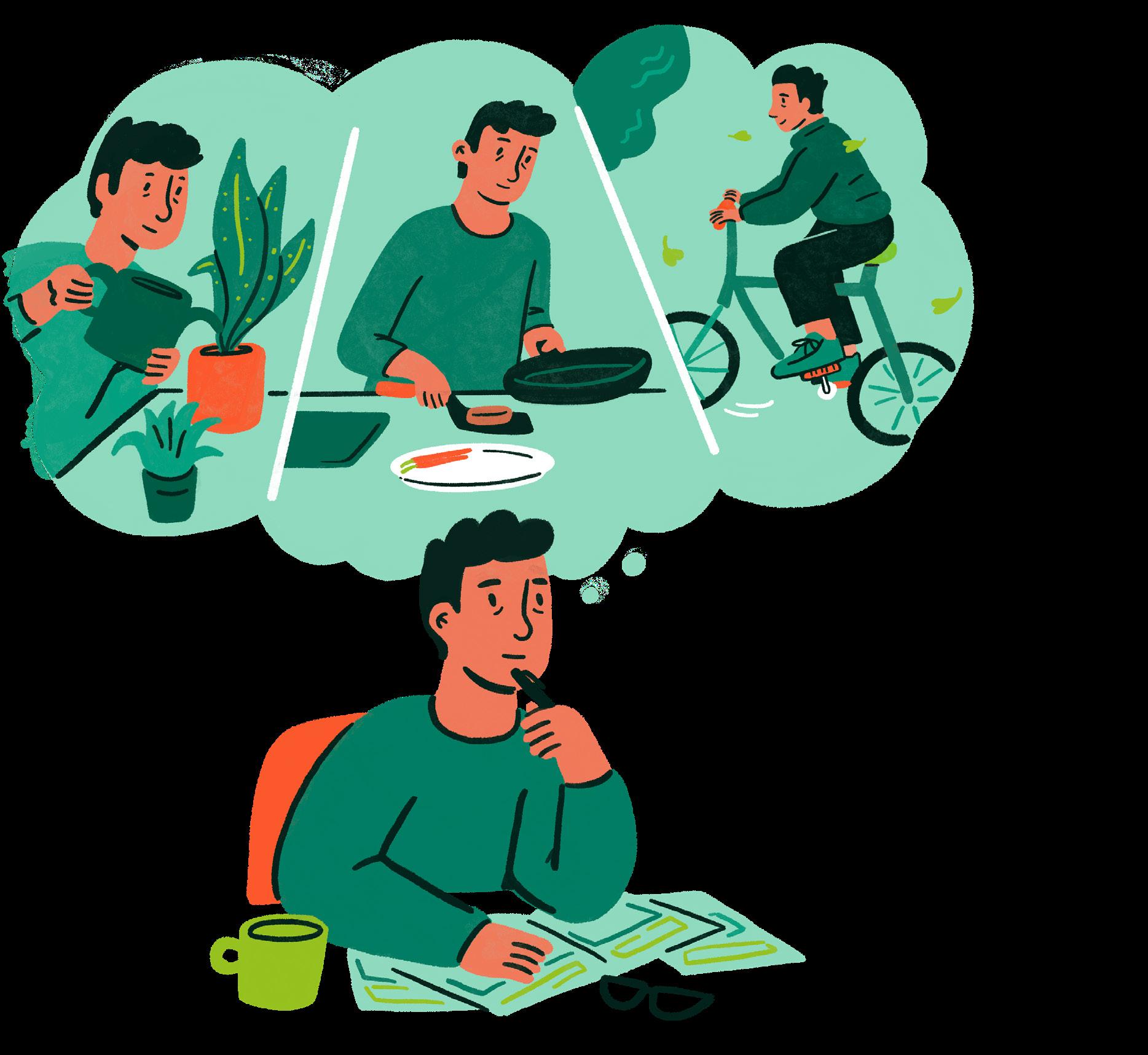
Setting recovery goals can help you:
Focus on what is important to you. Break recovery into small, manageable steps. Recognise progress over time (all progress counts). Identify hurdles that might be slowing your recovery. Feel more involved and in control of your recovery.

The menu of recovery goals addresses different areas of life. Some goals relate to selfcare such as washing and dressing. Other goals relate to productivity (such as being able to return to work) or leisure (such as hobbies, sports or other activities you enjoy doing).
The menu will give you ideas and help you to identify the goals you would like to work towards. As well as using the goal menu, you can also create your own goals in the goal planner.
When choosing your recovery goals
Either from the menu or goals you have created, try to make sure your goals are realistic and achievable for you using the SMART model:
Specific – so it’s clear what you want to do.
Measurable – so you know if you are making progress or not.
Achievable – so the goal is realistic to reach.
Relevant – so the goal links to what you want for your future.
Time Bound – so you keep focused and on track.
In your goal planner section, you’ll see that we recommend planning 2 weekly goals, 1 monthly goal and an aspirational goal - something you would like to achieve in the longer term.
A gentle reminder
You may not achieve all of your goals - or in the time frame you expect, and that’s okay. Recovery is a journey and your goals will change over time. Some days will feel easier than others. Using this planner and goal menu is about supporting you to set and monitor your recovery goals that are important to you, not putting pressure on yourself.
Goals can focus on everyday activities, for example being able to hold a toothbrush to brush your teeth by yourself. As adults we take this for granted but people recovering from critical illness often lack the strength and ability to complete tasks.
• Goals will and should change over time as you get better.

• You don’t have to work on everything at once.
• Trying is progress.
The goal menu
To make recovery goals easier to think about, we grouped them into themes. These themes cover different areas of everyday life that can be affected after an ICU stay.
The goal themes are:
Self-care
Goals related to day-to-day self-care, such as washing and dressing, walking outside, sleeping, and eating well.
Productivity
Goals related to domestic tasks and returning to previous activities, such as housework, work, volunteering, or education.
Leisure

Goals related to hobbies, exercise, and social activities, such as swimming, going on holiday, or spending time with friends and family.
Personal
Goals related to your physical and mental well-being, including managing symptoms such as breathlessness, fatigue, pain, mood, or memory.
How to set a Recovery Goal


Each goal theme is broken down into subthemes that relate to specific goals, and then specific activities to achieve that goal.
‘Self Care’ is the Theme.
‘Moving around inside’ is the Sub-theme.
‘To walk indoors’ is the Goal.

Self-Care

Moving around inside
To get in/out of ... the bed, or the chair, or the wheelchair, or etc.
on my own, or with the help of one or two people
To get on/off ... the toilet, or the floor on my own, with the help of one or two people
To walk indoors ... on my own, or with the help of one or two people with a walking frame, or with crutches, or with a stick
To climb stairs/steps ... on my own, or with the help of one or two people
using two rails, or using one rail, or without using a rail
Moving around outside
To walk outdoors ... on my own, or with the help of one or two people with a wheeled walker, or with crutches, or with a stick
To climb stairs/steps ... on my own, or with the help of one or two people,
using two rails, or using one rail, or without using a rail
Arm/hand function
To hold and use ... cutlery, or cup/glass, or phone, or pen, or tablet, or money, or keys
To reach ... into the top cupboard, or into a low cupboard
To open/fasten ...
zips, or buttons, or jars, or bottles
To carry ... a handbag, or a rucksack, or the shopping
Personal care
To brush ... my hair, or my teeth
To shave ... my face, or my legs, or my underarms
To wash ... my hair, or my back, or my upper body, or my lower body, or my feet on my own, or with the help of one person
To get dressed ... on my own, or with the help of one person
To use the toilet ... on my own, or with the help of one person
To get enough sleep
To fall asleep easily
Community access
To drive/ride ... a car, or a motorbike, or a bike
To use public transport ... on my own, or with the help of one person Sleep
Bladder and bowel care
To be able to put on/take off incontinence pads
To manage my stoma ... on my own, or with the help of one person
To manage my catheter ... on my own, or with the help of one person
Nutrition
To enjoy meals more
To eat more healthily
To eat a normal size meal
To eat more regular meals
To gain weight
To lose weight
To maintain weight
To go to the salon
Sexual health
To return to sexual activity or intimacy
Women’s health
To manage my period
Medication/supplies management
To manage my medication... on my own, or with the help of one person
Productivity
Domestic Tasks
To prepare a meal ... on my own or with help
To prepare a drink ... on my own or with help
To do housework related activities ... on my own or with help
To complete DIY tasks ... on my own or with help
To maintain the car/motorbike/bike ... on my own or with help
To do garden related activities ... on my own or with help
To do the shopping ... on my own or with help
Swallow
To be able to swallow
Medical appointments
To manage my medical appointments ... on my own or with the help of one person
Communication
To improve my voice
To be able to read
To be able to write
To use technology for work/ education/life admininstration Technology
Work
To return to work ...
full time, part time, on reduced hours, or completing alternative duties
To find alternative employment
Education
To be able to participate in education related activities
Leisure

Hobbies
To be able to do my chosen hobby
To attend support groups
To go on holiday
To do something I have never done before
To use technology for leisure purposes
Personal

Personal
Exercise/sport
To be able to do my chosen exercise/sport
Socialising
To meet up with friends/family
To go out to ... a restaurant, or a bar/pub, or the cinema/show/play, or a sporting event, or an exhibition
To host family/friends
wellbeing Spirituality
To be able to speak to someone about my feelings
To be less stressed
To be less anxious
To feel less frustrated
To feel less guilty
To be happier
To laugh/see the funny side of things again
To feel more positive
To feel more confident
To find peace/acceptance with what has happened
To reflect on how far I’ve come
To participate in spirituality/ faith activities
Family/friends wellbeing
To be able to provide support to my family/friends
Symptom management
To feel less tired/fatigued
To have more energy
To be in less pain
To feel less breathless
How to use the recovery goal planner
1. Choose the goals that feel relevant to you. Start by selecting a main goal theme.
2. Using the menu, select a goal subtheme and a goal stem: “Moving around inside”
3. Then select the goal descriptor from the menu that suits your needs, or write your own: “To walk indoors...”
4
Goal example: “My goal is to walk indoors with a walking stick and the help of one person”
5. Write your own goal: “To stand up from the bed or chair with help.”
6. Now describe what you can do right now: “I can stand with help but not walk...”
7. Now think about what achieving the goal would look like: “I will walk from the living room to my kitchen...”
You do not need to choose a goal exactly as written. You can adapt it, break it down into more easily achieved goals, or write your own.
8. Tick your current ability
No ability Some ability
Tick how important the goal is to you
Not important
Extremely important
Tick how difficult you think achieving this goal will be
Not difficult
Extremely difficult
9. Think about how you will know you are making progress and note this down. Here is an example: “I managed 4 steps with my walking stick and my husband’s help”
10. Tick when you think you will have achieved this goal:
Within a week
Within a month
Within a few months
11. Note down anything else you would like to remember
“I feel nervous about falling.” “It helps when things aren’t rushed.” “Mornings are harder than afternoons.”

12. After the week (or month) has passed, please rate how you achieved your goal. Did you achieve your goal?
Yes No
If yes, did you achieve it?
As expected
If no, was it?
Somewhat worse Much worse ✓ ✓
Somewhat better Much better
We recommend starting by setting
2 short term goals (that you can achieve within a week)
1 medium term goal (that you can achieve within a month)
1 aspirational goal (that you can achieve in 2 months – 6 months)
Use this planner to keep a record of the goals you set and your goal achievement.
1. Main goal theme (Circle one)



4. Example action - optional
2. Goal sub-theme
(such as moving around inside, personal care, symptom management, listed in goal menu)
(You can use one from the planner or skip this)
5. My own goal
(Write this in a way that feels right for you)
3. Goal
(The starting point provided in the planner)

What I can do right now 7. What achieving this goal would look like (What would be different in my day?)
8. How I feel about this goal today (Tick one for each) My
How will I know I’m making progress?
Anything else I want to remember


4. Example action - optional
Goal sub-theme
1. Main goal theme (Circle one) 3. Goal
(such as moving around inside, personal care, symptom management, listed in goal menu)
(You can use one from the planner or skip this)
5. My own goal
(Write this in a way that feels right for you)
What I can do right now
8. How I feel about this goal today (Tick one for each) My current ability:
How difficult I think it will be Not difficult
(The starting point provided in the planner)
What achieving this goal would look like (What would be different in my day?)
Within a week Within a month Within a few months
A Note as You Continue Your Recovery

Recovery after an intensive care stay doesn’t follow a straight line. For a while you might make progress more quickly than anticipated, whereas other days may feel slower or harder than expected.
This planner is not a test, and it’s not something you can fail. It’s simply a tool you can use when it feels helpful.
You might use it often, sometimes, or not at all for a while.
You might come back to goals you’ve already written or start new ones.
You might find that what matters to you changes over time.
That’s okay.
Remember
• Small steps count
• Trying is progress
• Rest is part of recovery
• You don’t have to do this on your own
If you’d like support, consider sharing your goals with:
• Your healthcare team
• A family member or friend
They can help you think through goals, adjust them, or simply listen.
Evaluation / Follow Up:

The goal menu themes are based on the Canadian Model of Occupational Performance and Engagement. The recovery goal structure is based on Goal Attainment Scaling.