





This project is funded by the National Institute for Health and Care Research (NIHR) Public Health Intervention Responsive Studies Teams (PHIRST) [PHIRST Fusion NIHR131566, Project NIHR162880]. The views expressed are those of the author(s) and not necessarily those of the NIHR or the Department of Health and Social Care.
In the UK, around one in three suicides happens in a public space, making prevention in these settings a public health priority.
We know that the right interventions can save lives. Evidence suggests that well-designed measures to restrict access to means and provide timely intervention are highly effective strategies for reducing suicide rates.
Having trained volunteers who can help identify and intervene when people might be contemplating suicide may be an effective way of preventing suicide.
Right now, evidence is scarce regarding volunteer-based approaches in public spaces.
That’s where the PHIRST Fusion Bridge Watch evaluation comes in. By examining whether the Bridge Watch project works, we hope to provide decision-makers with evidence to support future commissioning decisions.

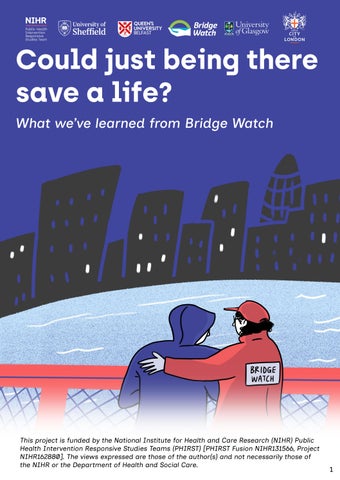
In this visual summary report, we explore what we’ve learned from a suicide prevention programme called Bridge Watch, to help inform local authority decision-making around suicide prevention.
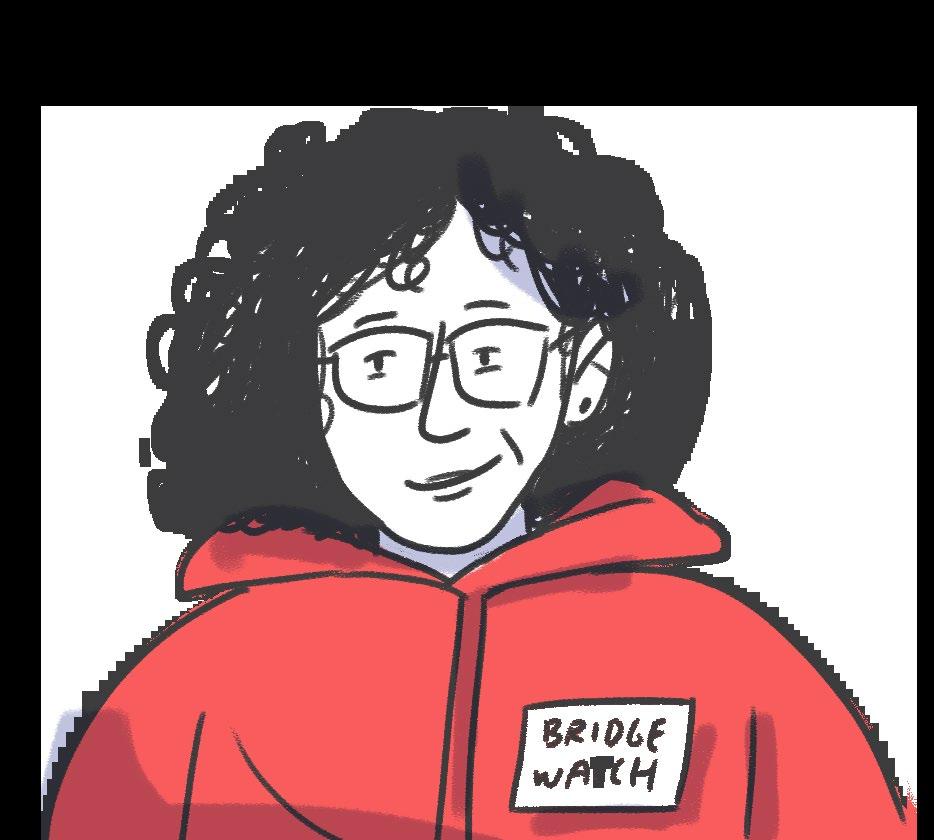
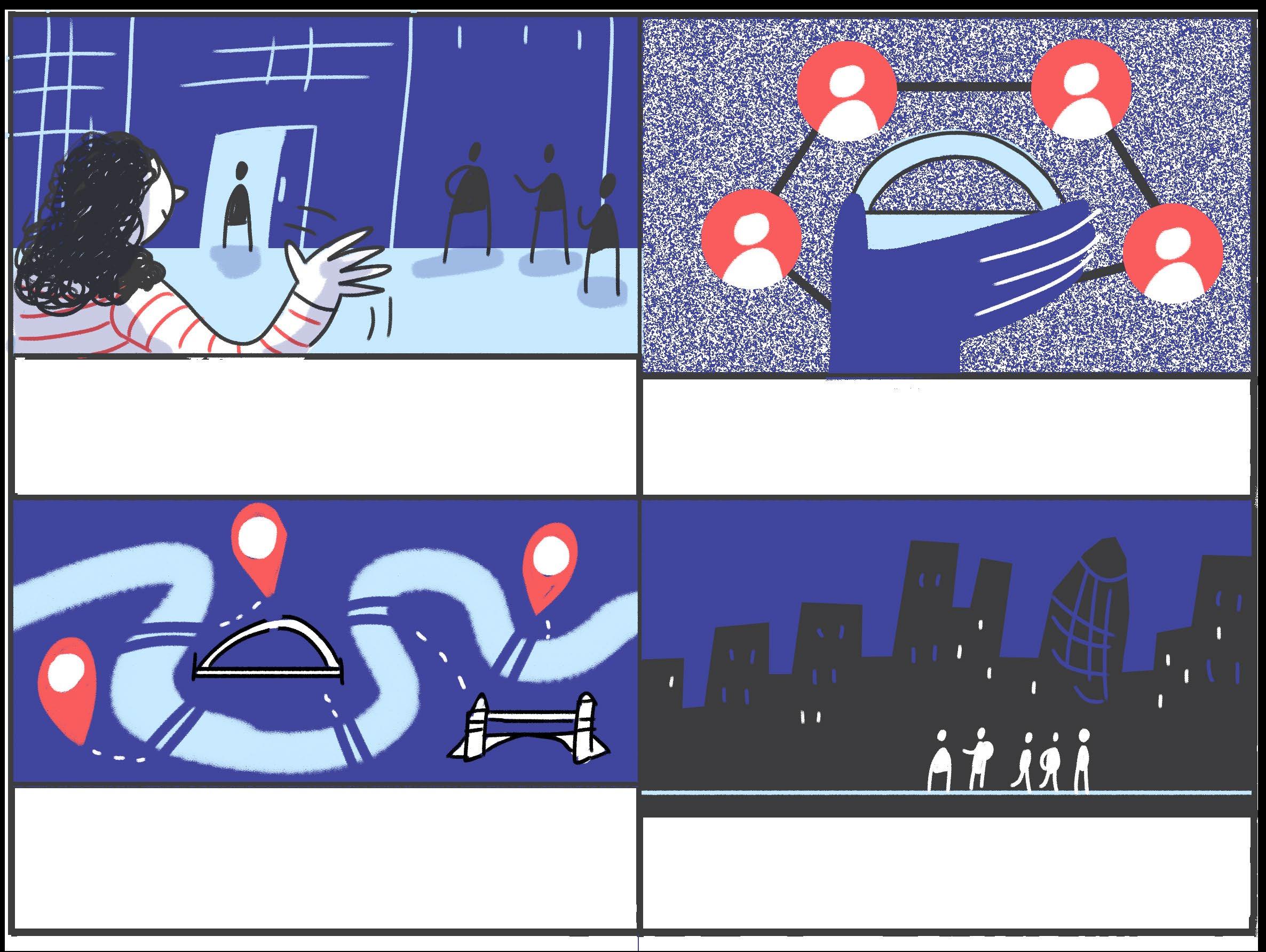
Nina* loves to help others and cares about her local community. She’s lost loved ones to mental health crises before, and wanted to find a way to support others who might be in crisis too.
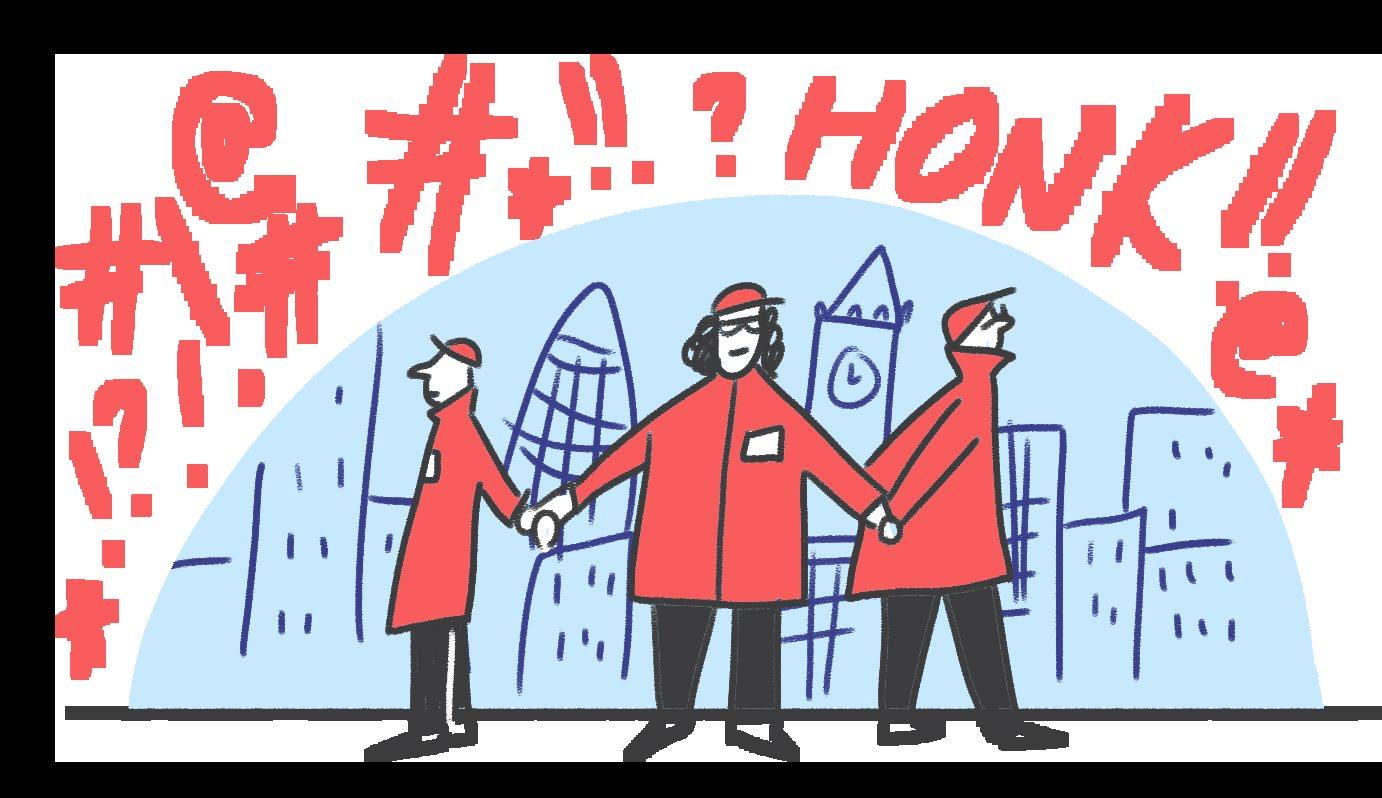
So, she joins Bridge Watch. Bridge Watch is a suicide prevention initiative delivered by small teams of specially trained volunteers like Nina.
They patrol the areas around and on the bridges operated by the City of London Corporation and try to talk to or stop anybody planning to enter the water in distress.
Let’s join Nina on patrol to see what Bridge Watch does and what we found from the study.
*Nina is a fictional character
The PHIRST Fusion evaluation explored the impact of Bridge Watch in two ways:


Interviews with volunteers and key professional stakeholders (including the police, mental health street triage nurses and public health practitioners)
Analysing suicide data sets from police and health services on suicide-related incidents to see if the number of people entering or contemplating entering the water for the purpose of harm reduced since the Bridge Watch service started.
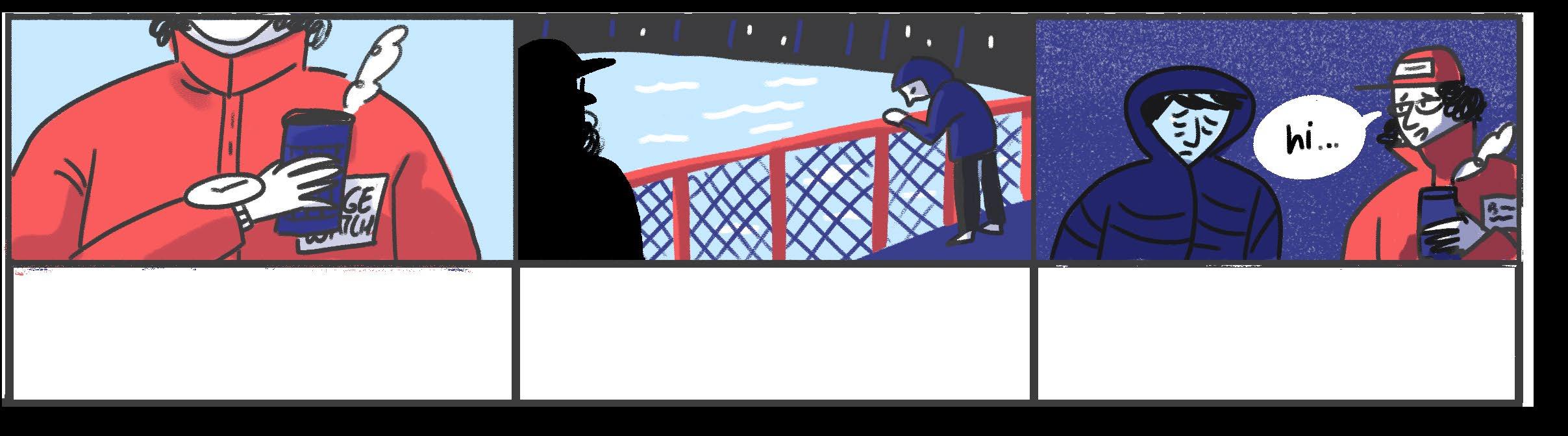
Nina starts her patrol at 7pm. She checks in with the programme manager, grabs a cuppa to go, and heads out with two other volunteers.
A few hours into their patrol, they spot a young man who appeared visibly upset and standing near the edge of the bridge. These were among the specific behavioural indicators they had been trained to recognise as concerning.
Nina remembers back to her first induction at Bridge Watch - she’s so shocked that men so young are most at risk of suicide.
Data collected by the police and the NHS around the bridges recorded 249 suicide contemplations and 599 attempts between January 2019 and April 2025. Most events involved younger people aged 25-34, and just over half were men.

Bridge Watch volunteers carried out 366 patrols between 1st April 2024 and 30th April 2025that’s 736 hours of patrolling.
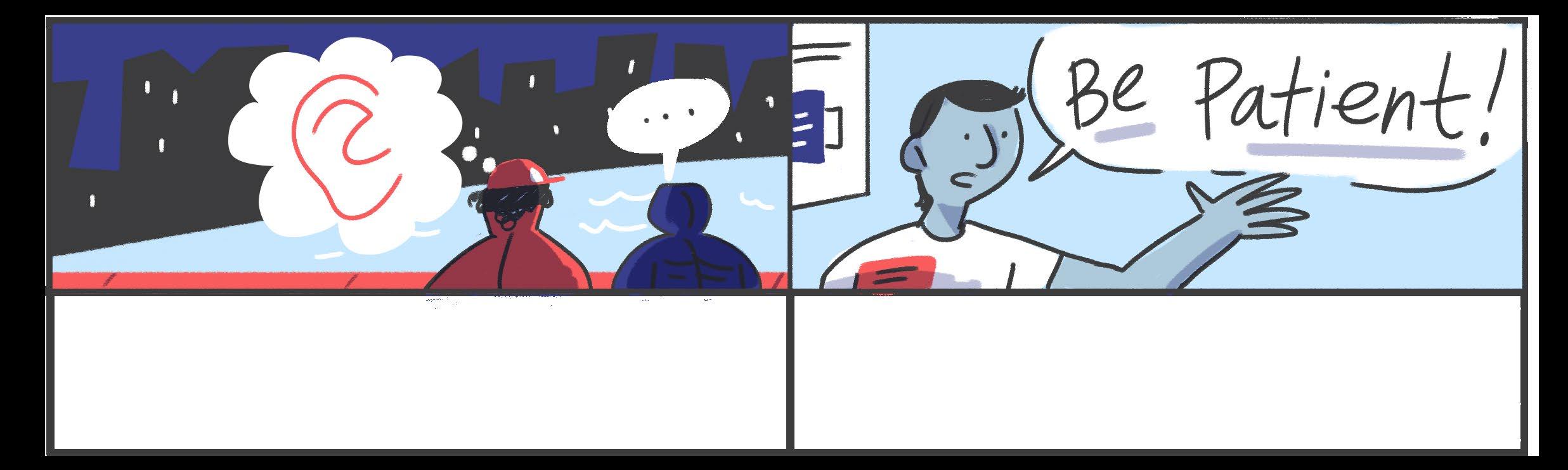
He looks upset, smells of alcohol and is clearly distressed - Nina’s training kicks in. She remembers that her role is to create a safe environment and actively listen.
She remembers her training roleplays on de-escalation and what volunteer Ahmed told her worked well on their last patrol together. ‘Be patient, get them talking.’
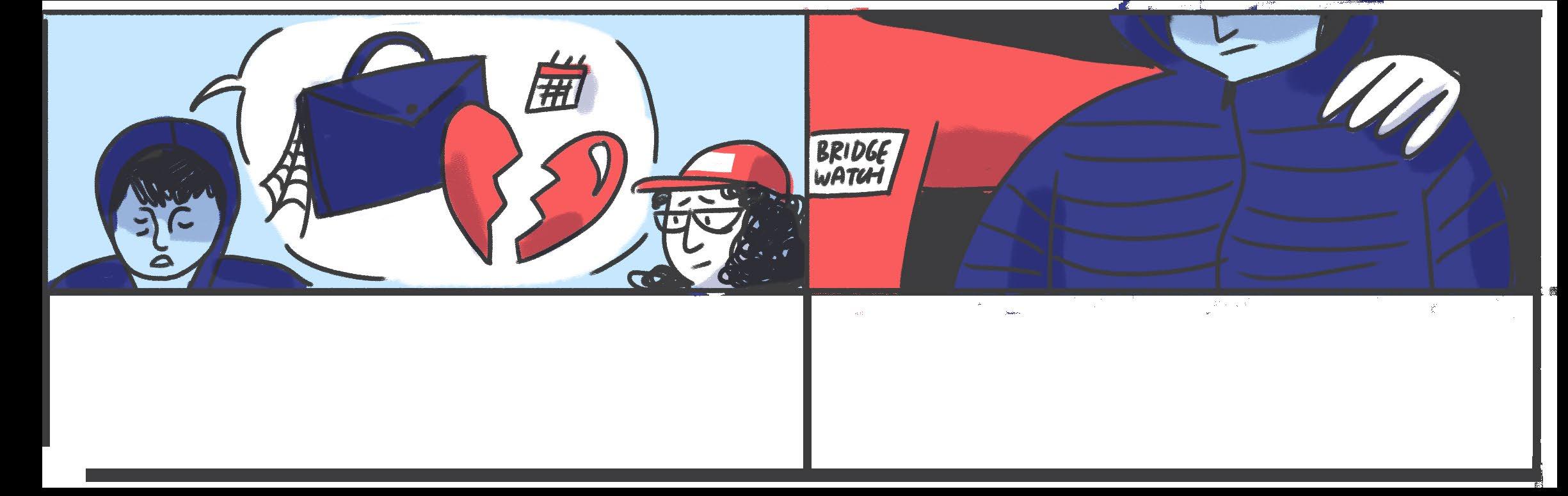
She talks to the young man - Nick. She finds out he lost his job and his partner in the same month, he just didn’t know what to do next. Nina helps to deescalate the situation. When Nick felt ready to move, they walked together to find a better place to sit, sharing a drink and continuing the conversation.
By providing immediate de-escalation, Nina ensured that Nick did not require emergency service intervention. However, no longer being in immediate danger did not mean he was ready to be left without further care.
Interviews with volunteers showed that they valued training on suicide statistics, skills for listening and role-playing scenarios on the bridges. Learning from fellow volunteers was invaluable for handling real incidents on patrol.
That said, volunteers also felt that training did not fully prepare them for the reality of noisy, busy environments on the bridges.
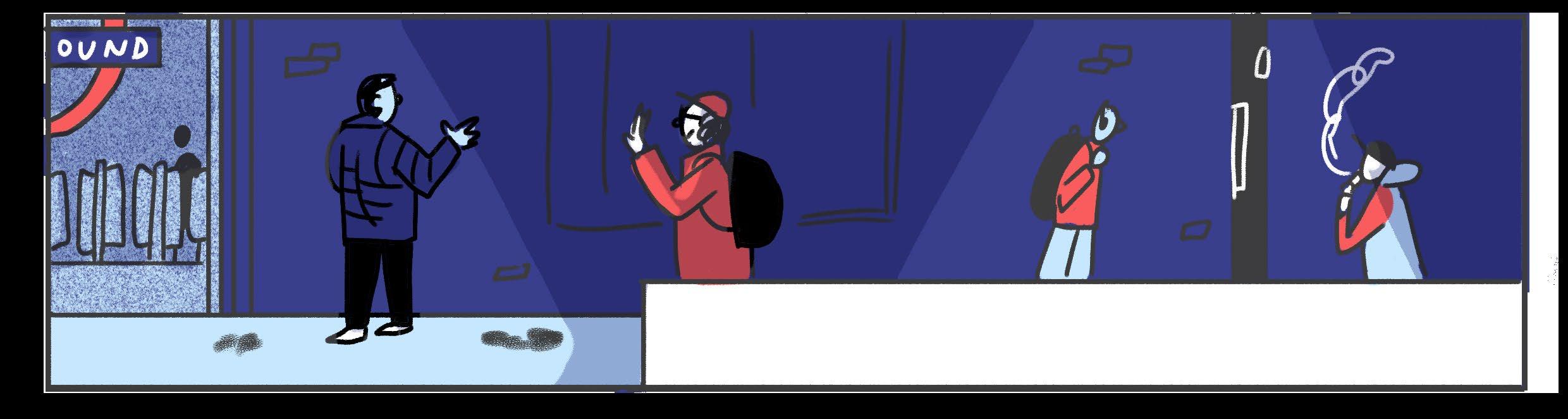
Volunteers felt confident calling police or an ambulance in a clear emergency. But situations like Nick’s — helped in the moment but still uncertain — left many unsure what to do next. There was a clear protocol for signposting and for communicating with the Bridge Watch team, but the ambiguity about doing this in practice was challenging, and led to anxiety among some volunteers.
Further along the patrol, the volunteers’ attention was drawn to a teenage girl on the bridge. She wasn’t moving for a while and appeared withdrawn. Nina instinctively knew she needed to check on her.
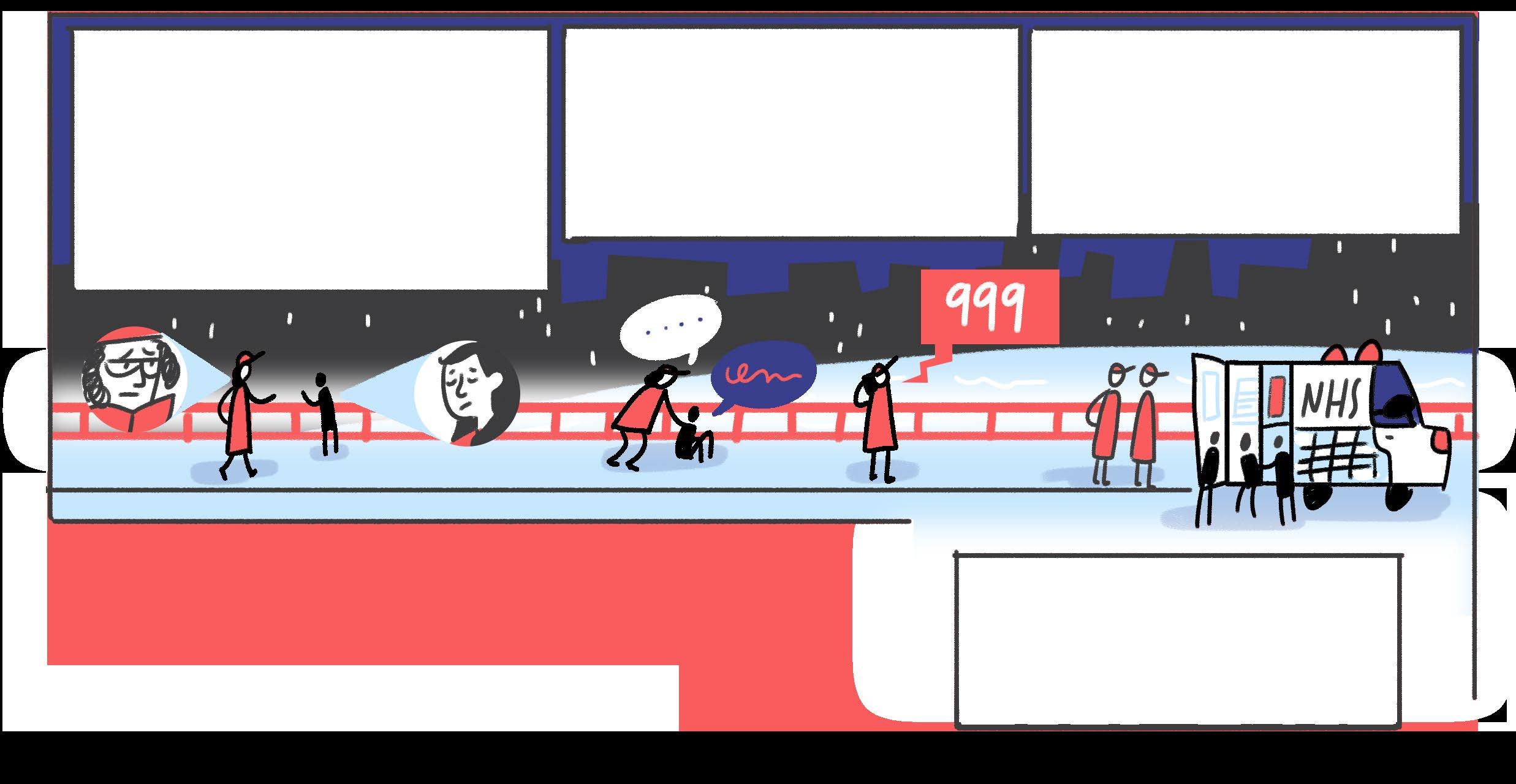
Nina approaches the girl carefully and starts chatting to her - it’s clear she needs immediate support. Whilst Nina talks to the girl, she signals the other volunteers to call an ambulance.
When the ambulance crew arrives, Nina can provide them with useful information that helps them build a relationship with the girl, enabling them to respond more quickly.
Bridge Watch helps identify people in distress and add to the emergency services response.
Within 10 minutes of the initial call and ambulance arriving, the girl is already with the paramedics and on her way to get the help she needs.

Bridge Watch was perceived by volunteers and emergency services as having a positive impact on suicide prevention. Emergency staff cited specific examples of volunteers preventing people from entering the water, as well as supporting them to do their jobs quickly and efficiently. Volunteers also noted how they often identified individuals who might have otherwise gone unnoticed. is less conclusive.
Before Bridge Watch was introduced in April 2024, suicide contemplations were increasing by 12% per month on average, peaking in the first semester of 2022. After Bridge Watch’s patrols started, it looks like there is an increase in suicide contemplations by 10% - but one possibility could be that the volunteers are spotting and reporting more incidents to the City of London Police.
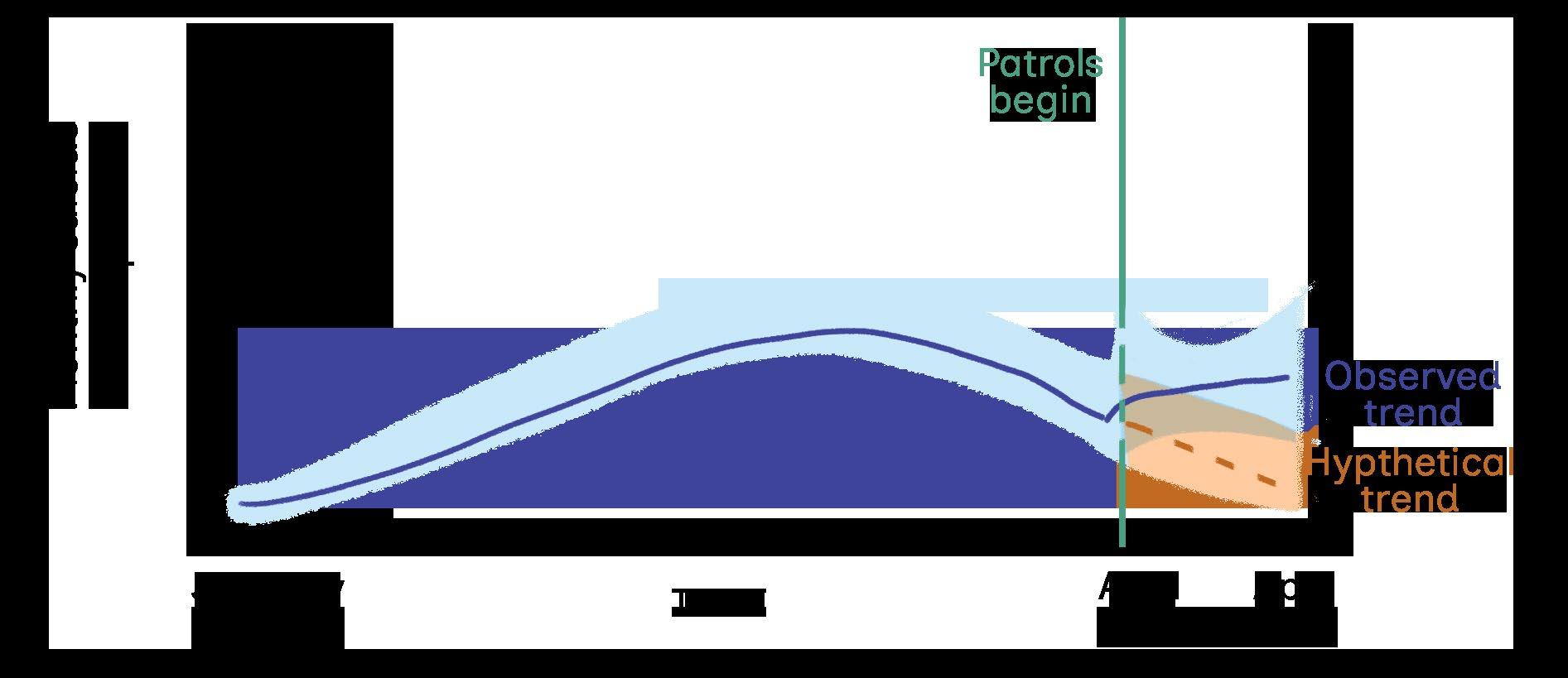
Immediately after Bridge Watch patrols began, suicide attempts fell by 51%. However, over the following months, attempts rose again, and by the end of the 12-month period, they exceeded the levels we would have expected without the programme. We only have 12 months of data to compare, so we cannot say for certain what impact that Bridge Watch may have had on suicide attempts or deaths.
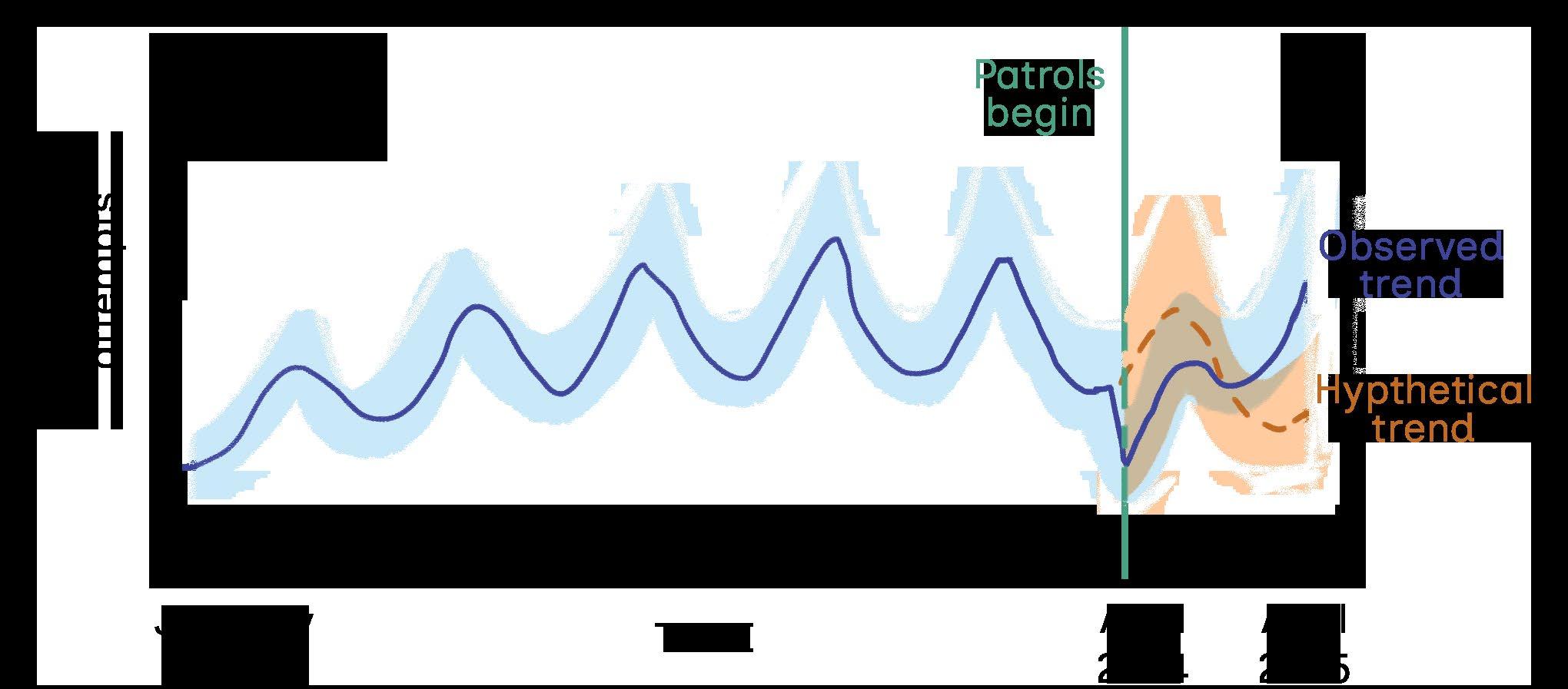
However, we hope to repeat the analyses again in 2027 with a longer series of data for more conclusive results.
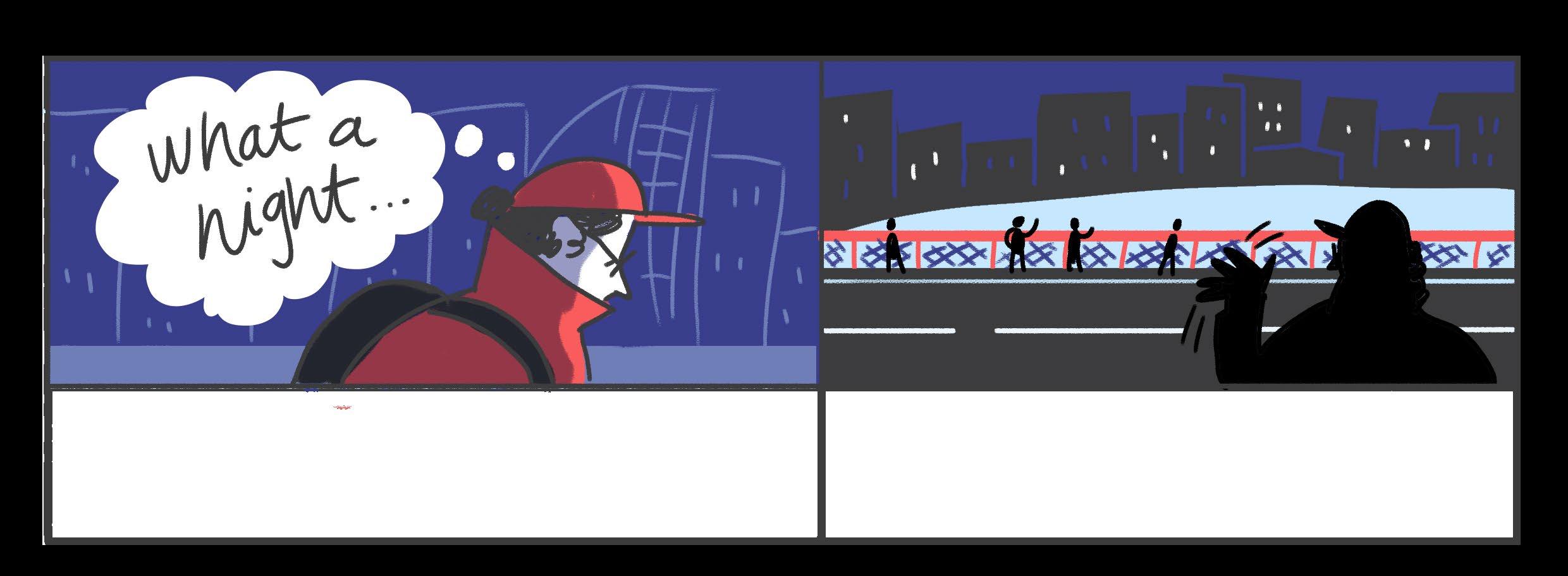
‘What a night’, thinks Nina - sometimes the patrols can be so quiet. Still, whether it’s quiet or not, she always feels like she’s making a difference and is more confident in herself when she’s out here helping people.
As she walks back after her patrol, passers-by on the bridge give her a wave and a nod, as they often do when they see a patrol out, when they see the patrol out in their uniform.
Bridge Watch provides a range of secondary benefits and positive public health impacts. This includes:

risk management around the bridges signposting for vulnerable individuals
raising public awareness of suicide and suicide prevention assisting partner agencies like the police in managing incidents.
By de-escalating situations and providing initial support, professionals felt that Bridge Watch volunteers helped to prevent unnecessary callouts and reduced the workload on police and other emergency services.
Although we don’t yet know for sure what effect Bridge Watch is having, the research suggests there are three areas to address to help more volunteers like Nina support people contemplating suicide:

Repeat analyses of the programme impact annually to assess the longer term trends of suicide contemplations, attempts and deaths.
Maintain consistency of real-time suicide data between police and NHS.
Robust record management of Bridge Watch team interventions for future monitoring and evaluation.

Align patrol timings with periods of higher risk.
Secure administrative support for programme activities like fundraising, recruitment, and coordinating volunteer shifts.
Build sustainable volunteer recruitment processes - this includes mapping current volunteer sources, developing a communications strategy, creating a volunteer training roadmap for standardised training, and highlighting the realities, benefits, and impact of volunteering.
Collaborate and communicate with other services working on the bridges to align approaches, and explore sustainable funding sources with partner agencies to expand programme coverage.
• Ensure training addresses the reality of ‘on patrol’ situations with in situ roleplays, case studies, mentoring, and first aid for non-crisis situations.
• Develop and disseminate clear signposting for situations that do not need emergency intervention, including useful phone numbers and awareness of external support agencies.
• Share learning from patrols to co-create effective responses to bridge incidents.

To find out more about Bridge Watch and support decision-making, visit: https://phirst.nihr.ac.uk/evaluations/london-bridge-watch