PEARLS Workbook
Improving physical and mental health



NAME:
PEARLS Workbook
Improving physical health through early action for people living with severe mental illness

Written by the DIAMONDS research team.
Copyright University of York.
Weblink: www.diamondscollaboration.org.uk
Acknowledgements: DIAMONDS Voice, the PRIMROSE research programme (Primary care management of cardiovascular risk for people with severe mental illnesses), Leicester Diabetes Centre, Bradford District Care NHS Foundation Trust, NHS West Yorkshire Integrated Care Board and Nifty Fox Creative.
Designed by Nifty Fox Creative, 2026.
What’s in my workbook?
Beginning my journey
Change One Thing - My PEARLS programme
My health resources
Information about physical health conditions
Diabetes
Heart disease
Chronic Obstructive Pulmonary Disease (COPD)
Additional information
Beginning my journey
In this section
Why am I here?
My journey plan
Looking after my physical and mental health together
Looking after myself to prevent physical health problems
What is self-management?
Involving family, friends or carers to support me
Getting help from support services when I need it

Why am I here?
Living with both mental illness and physical health problems can be difficult to cope with. This support programme has been developed with this in mind. It is designed to help people with mental illness meet some of the challenges of looking after their physical health.
This includes both preventing new physical health problems and helping people to manage physical health problems that they are already living with.
This programme will allow you to explore how physical health problems can affect your life. You will learn more about what you can do to make it less likely that you will develop physical health problems. There are small changes that you can make in your day to day life which can make a big difference in protecting your health. If you are already living with a physical health problem, you will learn how to look after yourself better and what practical steps you can take to reduce its impact on your health and wellbeing.
During this programme we will focus on what you can do to prevent and manage long term physical health conditions. These are health problems which people live with over a long period of time.
While there are many physical health conditions, three of the most common that affect people with severe mental illness are type 2 diabetes, heart disease, and chronic obstructive pulmonary disease (COPD). If you would like specific information about these health conditions and how they might affect you, that information can be included at the back of this workbook.
PEARLS Coach
Throughout the programme you will work with a coach. This is someone who has been trained to help you understand, prevent and manage health problems.
One-to-one sessions
You will meet with your coach regularly and work through the programme together. These meetings will focus on things you can do in your day to day life to help your health and to support you to be more physically active. These sessions are designed to support you, so you choose what goals you want to work towards.
During these sessions, your coach will give you helpful information on physical health, but the main focus will be on what you feel you need to learn to help you look after your health. You will be supported to set goals that you would like to work towards. You can also get tips on things like improving sleep or finding ways to remember your medication.
You will have these one-to-one sessions regularly over six months. In your first meeting, you and your coach can agree on how often you would like to meet. You can choose to have these sessions in person, online, or over the phone.
Your first session may take a little longer than others, as it is a chance to get to know your coach and go through the workbook together.
PEARLS Coach
Sessions over 6 months You decide session length
My Journey Plan
You will work through this workbook alongside your coach over the course of the programme, and it might be a useful starting point for your sessions. Your coach will explain to you how to use the workbook in between sessions. It includes lots of useful tools to help you meet your goals. This will work best if you use the workbook every day.
The workbook has three main parts:
Information about your health
You can work through this information with your coach, who will be able to help you find ways to improve your health and let you know who you can talk to for advice.
Goal setting and tracking sheets
You can set personal goals with support from your coach and keep track of how you are doing each week. The tracking sheets will let you keep an eye on how you are doing over time.
Sections where you can fill in details about your health
As well as information about your health, you can record details of your healthcare team and support system so that all the information about managing your health is in one place. This can help you work out where you can get support and advice if you experience any problems with your health.
Looking after your physical and mental health together
Having a mental illness can take up a lot of your time and energy, so your physical health can feel less important. This can make it feel harder to do things to keep healthy and prevent new physical health problems. For example, you may feel you don’t have the energy to be physically active.
If you have a physical health condition, having a mental illness can make it more difficult for you to manage. For example, it can be difficult to think about your physical health when your mental health is poor. Another common difficulty can be trying to figure out if what you are experiencing is a symptom of your physical health condition or a symptom of mental illness.
Many people experience these problems, so you are not alone.
What is your experience of looking after your physical and mental health together?
What do you find most difficult about looking after both your physical and mental health?
What do you find helpful when trying to look after both your physical and mental health?
This support programme will help you to do things in your daily life to look after both your physical and mental health and to get the support that you need to do this. This includes things that help to prevent you from having physical health problems in the future. It also includes ways to look after yourself if you have physical health problems.
Looking after yourself to prevent physical health problems
Keeping healthy is important to stop you from getting physical health problems in the future.
If you are living with a physical health condition, it is important to look after your health to stay well and to make it less likely that you will get other physical health problems.
There are things you can do in your daily life to help keep you healthy. These include:
Eating healthily Being active Managing stress Not smoking
These activities can improve your mood, the quality of your sleep and help you do the things that you want or need to do in your daily life.
What is self-management?
Self-management is everything you do for yourself to stay healthy, manage your symptoms and look after your wellbeing. Self-management can help you feel more confident and in control of your health, making your day-today life easier.
The things that you can do to prevent physical health problems, like eating healthily, being active and not smoking, are also important to look after your health when you have a physical health condition. More things that you can do to manage your health include:
Access and attend health and support services
Manage your medication
It is also good to learn about your physical health condition, how to treat it and how to reduce your risk of further problems. The more you know about your physical health condition, the easier it will be to manage it. You are an ‘expert’ in your physical health condition from your experience of living with it. As you are living with your physical health condition every day, the things that you do to look after your health can make a big difference.
Can you think of some things you do to look after your health and wellbeing?
Involving family, friends or carers to support me
Involving family, friends or carers can make it easier or more enjoyable to do activities that keep you healthy. They may also be able to help you get the care you need.
Are there other people who could help to support you with your physical and mental health? For example, family, friends, carers or support workers?
Some ways they may be able to support you could include:
• Doing activities together that could help you achieve your goals. For example, going for a walk or shopping for healthy food together.
• Supporting you to take your medication.
• Supporting you to understand the care process and make decisions.
• Reminding you of your appointments or coming with you to them.
• Supporting you to ask questions and make sure your views are heard.
If you don’t have family or friends who can help but would like more support, your coach can help you find out about voluntary support or befriending services in your area.
Who I could ask for support
I would like them to help me to
You can add people, services and other resources that can support you to the worksheets in the ‘Additional Information’ section of this workbook. You can ask your coach to complete these with you.
Getting help from support services when I need it
There are different services which can provide support for your physical and mental health needs at different times. These include your GP surgery, specialist services for your physical and mental health and voluntary services.
Your GP surgery (Primary Care)
Your general practice is the ‘front door’ of the NHS and the main way of accessing other NHS services. Your general practice should support you to manage physical health problems like type 2 diabetes, heart disease, COPD and your mental health. You might see the practice nurse or your GP to get advice and support about how best to manage your health and stay well. If you have questions about your medication, you can ask your GP. You can ask for a longer appointment with your GP if you need more time. If you need more specialist support, they can send you to another professional who can help.
Some GP surgeries offer ‘social prescribing’ to connect you with activities, groups and services to support your health and wellbeing.
Your local pharmacist can also give advice about medicines and some illnesses such as coughs, colds, ear infections and aches and pains. Some local pharmacies also offer other services such as checking blood pressure, cholesterol and blood sugar and advice on stopping smoking.
Specialist care
You might need to see another team to get specialist care and support for your physical health problem(s). This may include inpatient or outpatient hospital care. It could include specialist doctors, nurses or other healthcare professionals. For example, a dietitian, who is trained to help people eat better or a pharmacist who will be able to give advice about medicine.
Mental health services
You may receive support for your mental health through specialist mental health services, in the community or in a hospital. This could include psychiatrists, nurses, psychologists, social workers or occupational therapists. They may also provide some support with your physical health. For example, blood tests to monitor certain medications.
If you need help for a mental health crisis, you could contact your mental health worker if you have one. Or you can ask for an urgent GP appointment. Or get help from 111 online https://111.nhs.uk/triage/check-your-mentalhealth-symptoms or call 111 and select the mental health option.
Samaritans offer confidential support from trained volunteers. If you want to talk to them, call: 116 123.
In an emergency, call 999 or go to A&E. For example, if you do not feel you can keep yourself or someone else safe.
Your mental health worker or PEARLS coach may have more information about local crisis support services.
Other support for your mental and physical health needs
There may be other services available in your area which can support your mental and physical health needs. For example, social care services, community and voluntary services, support to stop smoking, healthy eating programmes or physical activity groups.
Your coach can help you find up-to-date information about these services. They can also support you to get in touch and access these services. For example, by helping you to complete referral forms.
If you feel anxious about attending a service or joining a group, or if you have physical health needs that make it difficult, talk to your coach so that they can support you with this.
Who can support you with your physical and mental health?
In the ’Additional Information’ section of this workbook, there are worksheets to record who can support you. You can ask your coach to help you complete them.
You can record the people and services that support you in the ‘My Contacts and Support’ worksheet. This may include family, friends or health services.
You can use the ‘Resources for further support’ worksheet to add information about other resources that could help you. For example, other support services, a walking group or a website with helpful information.
You can use the ‘My upcoming appointments’ worksheet to remind you of your appointments and what they are about.
A list of useful websites with information on looking after your health to prevent and manage a range of long-term physical health problems is provided in the ’Additional Information’ section of the workbook.
Communicating with healthcare professionals
It can sometimes be difficult to find out what you want to know or remember the questions you want to ask when you meet with a healthcare professional.
Here are some tips to help you get the most out of your appointments:
Think about the main concerns and questions that you have before you meet with your healthcare worker. It may help you to write them down beforehand. You could ask a family member or carer to help you with this.
Ask these questions or concerns at the beginning of the visit. For example, ‘I would like to talk about my medication and some side effects I am having.’
If you don’t understand something that the healthcare worker says, ask them to explain it to you. If there are things that make it difficult for you to follow their advice, let them know.
If you have several mental and physical health conditions, you may have questions or concerns about how your different treatments affect each other. You can ask your doctor about this. It may be helpful to take a list of your health conditions and medications to show them.
You may find it helpful to make a note of key points from the meeting or ask your healthcare worker to make a note to give to you. This can help you remember what was agreed later and talk about it with other people who support you.
Ask a family member, carer or friend to come with you to the appointment if that would be helpful.
If you find it difficult to understand your care or find it hard to speak up, you may find it helpful to have an advocate. This is someone who can act as a spokesperson for you. If you would like to find out more, you can ask your coach about local advocacy services.
My PEARLS Programme
In this section
What do I want to focus on?
Setting goals
Ideas for ‘Change One Thing’ goals
Action planning
Physical activity
Good days and bad days
Weekly progress reports for me to fill in
What do I want to focus on?
Here we will look at aspects of self-management you want to focus on to improve your health for the next 6 months. Work through this with your coach, noting down the statements that apply to you.
Medication
I sometimes forget to take my medication
I don’t always remember to take my medication with me when I go out
I have taken too much medication in the past
Taking multiple medications with different doses can be difficult
Sometimes I have no motivation to take my medication
Sometimes I don’t think I need to take my medication
When I’m not well I don’t always take my medication
I don’t know how to take my medication properly
Sleep
Sometimes I stay up too late
Negative or worrying thoughts can prevent me from getting to sleep
I find it hard getting to sleep but I’m not sure why
Sometimes I can’t fall asleep because I’m not tired
I’m napping in the day but then can’t sleep at night
I sometimes wake up during the night and can’t get back to sleep
Sometimes I just sleep all the time
?
Other
I’d like to focus on something else
Talk to your coach about the statements you have ticked and decide together whether to focus on sleep, medication taking, or something else.
I would like to focus on:
Setting goals
On this page we have listed some goals for sleep and medication taking. If you have selected another aspect of self-management, work with your coach to decide on a goal. Tick ONE GOAL that you would like to try.
To improve my medication taking, I will:
Take my medication at set times each day
Pack my medication before I go out
Organise my medications at the beginning of each day
Read a comic about the importance of taking my medication
I will ask my healthcare worker how to take my medication properly
To improve my sleep, I will:
Go to bed and get up at the same time every day
Do something relaxing an hour before I go to bed
Avoid caffeine, alcohol and tobacco for at least two hours before bed
Switch off all screens an hour before bed and do something relaxing
Do something active when I usually feel tired during the day
Or, you could come up with your own health-related goal with your coach:
Now we know what you would like to commit to doing, let’s get specific about when you will do them. This helps us stick to our new behaviours and create the habit.
Work with your coach to create an action plan for you.
Ideas for ’Change One Thing’ goals
Here are some other activities that can help with your health. You can use these to help decide on a ‘Change One Thing’ goal that you can work towards with your coach.
Action planning
Now we know what we want to focus on and have identified goals that you would like to achieve. So how do we achieve them!? This is where action planning comes in. Action plans work best when we use the things that happen in our daily life as triggers
By using ‘IF’ and ‘THEN’ statements, it is clear what we need to do and when to meet our goals. For example:
IF it is 9am or morning coffee time...
... THEN I will organise my medication for the day.
IF it is 10pm or bedtime....
THEN I will switch off all screens ready for bed.
Write your own IF/THEN statements below, based on your focus and the actions you ticked in the previous sections:
IF... THEN...
Physical activity
As part of the programme we will ask you to be more active. Being active can help you feel better both mentally and physically.
Think about activities that you enjoy doing. This could include things like going for walks, yoga, cycling, or swimming.
What activity would you like to do?
When you have done physical activity in the past, how did you feel?
Happy Calm Good Relaxed Energised Healthy Better Other
If you have a physical health condition, please check what physical activity is suitable for you with your healthcare team. We will start off slowly and build up over the course of the programme.
How often would you like to do the activity? For how long? For example, you might want to go for a twenty-minute walk three times a week.
HOW OFTEN? HOW LONG?
Good days and bad days
We recognise that some days you will be able to do more than others. Talk to your coach about these and other activities that you enjoy or would like to try, and how they might work for you on a good day or a bad day. Here are some suggestions as to what you could do on a good day or a bad day:
On a good day I could:
Go for a brisk walk or hike
Go cycling
Jogging or running
Housework
Other - what else could you do on a good day?
On a bad day I could:
Go for a gentle walk
Read a health information sheet from this workbook
Remind myself of how physical activity has made me feel in the past, and see if I want to try some
Other - what else could you do on a bad day? What helps you to relax?
One t hing I did w ell
One t hing I f ound hard


One t hing I d li ke t o ask my coach:
Use this extra space to jot down any more reflections from this week.
Action planning
Now we know what we want to focus on and have identified goals that you would like to achieve. So how do we achieve them!? This is where action planning comes in. Action plans work best when we use the things that happen in our daily life as triggers
Write your own IF/THEN statements below, based on your focus and the actions you ticked in the previous sections.
Physical activity
Think about activities that you enjoy doing. This could include things like going for walks, yoga, cycling, or swimming.
What activity would you like to do?
When you have done physical activity in the past, how did you feel?
We will start of slowly and build up over the course of the programme. How often would you like to do the activity? For how long? For example, you might want to go for a twenty-minute walk three times a week.
My Health Resources
In this section
How might my physical and mental health affect each other?
Why eat and drink more healthily?
Why be more physically active?
Why manage my weight?
Why reduce alcohol?
Why stop smoking?
Managing breathlessness
Managing sleep and fatigue
Physical health checks
Managing my medication
Using technology to support my health
How might my sexual health be affected by my physical and mental health?
How might my physical and mental health affect each other?
Living with mental illness can make everyday tasks, such as going to the shops or keeping active, feel harder. It can also make it more difficult to prepare healthy meals or stick to routines that support your wellbeing.
Long-term physical health problems can also affect your mood, leading to feelings of anxiety, sadness or frustration. Managing medications and appointments can feel overwhelming at times.
When mental and physical health problems happen together, coping can feel even more challenging. Many people in this situation experience low mood, guilt, or worry, and may cope by avoiding thinking about their health. For example, missing appointments, skipping medication, or not eating well.
Living with both physical and mental illness can make your symptoms worse or make you more likely to develop problems. What do you do when you feel this way?
There are other ways that you can help your mood. You can:
Be kind to yourself, don’t set goals you are unlikely to reach
Try to do something to help you relax, like taking a bath or watching your favourite film
If you have a friend or a family member you can talk to, you can tell them how you are feeling
Talk to your nurse or doctor about how you are feeling
What other things could you do to help you feel better about your health?
Your coach can help you to do things in your daily life to look after both your physical and mental health, and to get the support that you need to do this.
Why eat and drink more healthily?
Eating and drinking more healthily can help to prevent physical health problems developing, including heart and circulatory diseases and type 2 diabetes. If you already have physical health problems, eating and drinking healthily can help you to stay as well as possible.
Eating a variety of different foods helps to keep your body healthy. This includes plenty of fruit and vegetables and starchy foods like bread, rice or pasta, as well as some foods like beans, fish, meat or dairy. Eating fewer foods and drinks that are high in fat, salt and sugar can really help.
You could try swapping food or drinks that are high in fat, salt or sugar for healthier alternatives. For example, eating fruit instead of biscuits and drinking water instead of fizzy pop.
If you would like more information about how eating healthily can help with diabetes, COPD and heart and circulatory disease, this can be included at the back of your workbook.
What other swaps could you make?
Do you like eating healthy foods, or do you find it difficult? Why?
What helps you eat healthily?
Why be more physically active?
How often do you move each day?
When you are physically active, it can help to keep your body healthy, give you more energy, lift your mood and help you sleep.
Improve mood Improve your heart health
Physical activity includes everyday activities, like gardening, housework or walking.
You could increase the activity that you do a little bit to begin with and build up slowly.
Being physically active can help prevent physical health problems like heart and circulatory diseases and type 2 diabetes. It can help to reduce your blood pressure and cholesterol and to manage your weight.
If you have physical health problems, being physically active can help you to stay well and to do the things you want or need to do in your daily life. If you have a physical health condition, please speak with your healthcare team about what activity is suitable for you.
If you would like more information about being physically active safely with COPD and heart or circulatory disease this can be included in the back of your workbook.
What things do you enjoy doing that involve movement? Can you do more?
Is there any way you can add movement into activities that you already enjoy?
Why manage my weight?
Keeping to a healthy weight is an important part of staying well. Carrying extra weight, especially around your waist, increases the risk of health problems such as type 2 diabetes and heart disease. If you already have a physical health condition, managing your weight can help you feel better and stay as healthy as possible.
Weight management means different things for different people. Losing weight can improve health if you are overweight, while gaining weight may be needed if you are underweight. If you are already at a healthy weight, the goal is to maintain it.
Eating well and staying active are very important. It can help to keep an eye on what you eat and find physical activities you enjoy. If you find it hard to eat healthily or manage your weight, a dietitian can offer support.
Some mental health medications can increase appetite and make weight control more difficult. Regular activity and healthy eating can help, and it’s worth speaking with your GP or psychiatrist for advice and support.
How do you feel about your weight?
How does your weight affect your health?
What can you do to help you manage your weight?
Why reduce alcohol?
Cutting down or stopping drinking alcohol is good for your health. It can help you lose weight, boost your energy, improve your sleep and lift your mood.
Drinking less also lowers your risk of health problems such as heart disease. If you already have a condition like type 2 diabetes or heart disease, reducing alcohol can make it easier to manage your symptoms and stay well.
It’s recommended to drink no more than 14 units of alcohol a week, spread over at least three days. That’s roughly six glasses of wine or six pints of beer over a week.
How can I reduce the alcohol I drink?
If you want to cut down on alcohol, you could swap some alcoholic drinks for soft drinks, choose smaller servings, or try alcohol-free options.
If you drink most days, try adding some alcohol-free days each week. When socialising, suggest other activities like going for a meal, to the cinema or for a walk instead of meeting at the pub.
Let your friends and family know you’re cutting down so they can support you. If you usually drink to relax, try other ways to unwind, such as having a bath or watching a favourite TV programme.
You can also speak with your GP or practice nurse for advice. They can help you find extra support if you need it.
Why would you like to drink less?
What could you do to reduce the alcohol that you drink?
Why stop smoking?
Stopping smoking is great for your health.
Smoking causes lung problems, including Chronic Obstructive Pulmonary Disease (COPD) and lung cancer. Stopping smoking reduces your risk of getting these conditions as well as heart disease. If you already have one of these conditions, stopping smoking can help to reduce how much they affect you day-to-day.
It can help you to breathe more easily and make you feel like you have more energy.
You don’t have to do it alone; the first step can be speaking to your GP or pharmacist to see what help they can give you. They may suggest getting support from your local Stop Smoking Service.
You may want to use stop-smoking products which can help you to quit.
It can help to think about the triggers that make you feel like smoking so that you can plan how to deal with them. For example, if you always smoke after a meal you could try chewing minty gum instead. If you usually have a cigarette when you are with other smokers, you could try to spend more time with non-smokers while you are giving up. You could practise what you will say if someone offers you a cigarette. For example, “No thanks, I don’t smoke anymore.”
Do you want to give up smoking?
Yes No
When do you feel like smoking?
What could you do to help you stop smoking?
Managing breathlessness
People with physical health problems, like COPD and other lung or heart conditions, can often feel breathless. This can make it harder to do the everyday activities that you want or need to do.
Getting out of breath can be frightening. If you feel anxious, you may breathe more quickly, and this can make you feel more breathless. But there are things that you can do to help.
You can use techniques to help control your breathing, such as taking slow, relaxed breaths from your tummy. It helps to practice these techniques when you are relaxed and not out of breath. Then you can use them when you are short of breath or anxious.
You can find a comfortable position that helps you recover from breathlessness, such as sitting on a chair, leaning forward, or lying on your side with your head propped up on cushions.
To learn more about the breathing techniques and positions that can help with breathlessness, see https://www.asthmaandlung.org.uk/symptomstests-treatments/symptoms/breathlessness/how-can-i-manage-mybreathlessness
Try to keep active. If you avoid activity because you get out of breath, this will make your breathlessness worse. Your muscles will get weaker and need more oxygen to work.
You can make doing day-to-day activities easier by breaking them down into smaller tasks that are easier to manage. You can take breaks and pace yourself, making sure you have plenty of time to rest.
You can make things that you need to do easier. For example, wearing clothes that are easy to take on and off. You could keep the things you use often in easy reach.
Do you sometimes get breathless? How does it make you feel?
What could you do to help you feel less breathless?
Managing sleep and fatigue
Getting a good night’s sleep is important for your health and wellbeing. It allows your body and brain to rest and recover. It can help to improve your mood and make you feel less stressed.
Mental and physical health problems can sometimes make it harder to get a good night’s sleep. For example, if you feel anxious, breathless or in pain.
Things that can help to improve your sleep include going to bed and getting up at the same time every day. If you sleep late in the morning or nap during the day, it makes it less likely that you will sleep well at night.
If you find it hard to go to sleep, avoid drinks with caffeine, like coffee or cola, before bed. Trying not to look at screens before you go to bed, like your mobile phone or laptop, can also help. You could try doing something relaxing before bed like reading or listening to gentle music.
What could you do to try to get a good night’s sleep?
Many people with health problems experience tiredness or fatigue. Fatigue can make you feel exhausted and lacking in energy. This can feel overwhelming and make it hard to do the everyday activities that you want or need to do.
Things that can help with this include pacing yourself. If you feel low in energy, you can break up activities into smaller tasks and spread them out
during the day or week. For example, you could plan to buy food in the morning and cook it later, at teatime.
Make sure you take plenty of rests by doing something relaxing like watching TV or listening to music.
It can help to think about what you really need or want to do, and what is less important.
Try asking yourself:
What do I need to do today?
What do I want to do?
You may also be able to ask family or friends to help.
What could help when you feel tired or fatigued?
What could be done another day?
Physical health checks
Each year, everyone living with severe mental illness should receive a check-up for their physical health. You can ask your GP about this.
This check-up helps to pick up on signs that you are at risk of physical health problems, like diabetes and heart disease. If you have physical health conditions, these check-ups allow your GP to see how they are being managed and if any changes or more support are needed.
For everyone with severe mental illness, this should include:
Your height and weight
Blood pressure, which is important for heart health
Blood tests to check your blood sugar, the amount of fat in your blood and how well your kidneys are working
Checking whether you smoke and drink and if so, how much
During your annual check-up, you can talk with your health worker about the support that you need for your physical health. For example, help to give up smoking or healthy eating advice.
If you have a physical health condition, such as diabetes or COPD, you should also receive other health checks. Please see the information on your specific health condition at the back of the workbook for further details.
When was your last physical health check?
Do you know when your next physical health check is due?
Do you find it difficult to arrange your physical health check? What could support you to do this?
Managing my medication
If you have been prescribed medication for your physical or mental health, it is important to take it as prescribed.
If you sometimes forget to take your medication, it can help to use things to remind you. This could be a note on your fridge or setting a reminder on your phone.
If you have several tablets to take at different times of day, a dosette box (a plastic box with labelled compartments) can help you to organise them and keep track.
A family member or carer may be able to support you with your medication.
If you have questions or concerns about your medication, you can discuss these with your doctor or pharmacist. For example, if you are concerned about side effects. If you have several mental and physical health conditions, you may have questions about how different medications that you take affect each other.
It may be helpful to take a list of your health conditions and medications to show to your doctor or pharmacist or to take your medicines and prescriptions with you.
For more help with this, please see the information sheet, ‘How to get help from support services when I need it.’
If you have diabetes, COPD or heart disease, there is more information about medication in the section at the back of your workbook.
Is there anything you find difficult about taking your medication?
Is there anything you think might help you take it?
Do you have any questions or concerns about your medication?
You can discuss these with your doctor.
Using technology to support my health
Technology can be used to support people’s health in lots of ways. For example,
Booking health appointments online.
Having meetings about your health online or on the phone.
Using digital monitors for your health, e.g. to monitor your blood pressure or blood sugar.
Looking up health information on websites.
Using apps to support your health goals, e.g. healthy eating or physical activity apps.
But using technology isn’t always easy. This could be because you don’t have a computer or mobile phone, or they cost too much to use. Or you may need to build your confidence and skills in using technology to support your health.
If you need or would like to use technology to support your health, you can talk with your coach about ways to get help to do this.
For example, if you don’t have access to the internet:
You can use a computer with internet access at most libraries for free.
Local organisations offer free mobile SIM cards for people who can’t access the internet through the ‘National Databank.’ https://www. goodthingsfoundation.org/our-services/national-databank
If you would like to build your skills or confidence in using technology to support your health,
• Many libraries and other local organisations provide free digital training.
• ‘Learn my Way’ offers free bite-size courses in online skills, including for health. https://www.learnmyway.com/
• You could use ‘how-to’ guides and videos to learn about using health apps.
• Support with technology for people with disabilities may be available from voluntary services.
If your healthcare provider has asked you to use a digital monitor or other technology for your health, ask them to show you how to use it and where you can get more support.
Family, friends or carers may also be able to help you.
Do you need or want to use technology to support your health? In what ways?
What would help you to use technology to support your health?
How might my sexual health be affected by my physical and mental health?
If you have a physical health condition, you might experience problems having sex. Your mental illness and the medicine you take can also cause some of these problems. Remember that almost everyone will experience sexual problems at some point in their life, whether they have a health condition or not.
Erectile dysfunction
Erectile dysfunction (having trouble getting or keeping an erection) is the most common sexual problem that men experience. Although all men can experience this, it is more likely if you have physical health problems like diabetes or some heart and circulatory problems. Some types of medicine for your mental and physical health can also cause erectile dysfunction. There are many ways to help this, including medicine or counselling. If you have a medical condition, you should check with your doctor before taking any medicines for erectile dysfunction.
Vaginal dryness
Women can sometimes experience vaginal dryness, which can make having sex painful or uncomfortable. This can be caused by some medicines, as well as how you feel emotionally, and can become worse during menopause. You can get lubricants from your local chemist that can help.
Anxiety can impact sex drive
Anxiety can also have a big impact on your sex drive. Many people with physical health conditions, like heart problems or COPD, experience anxiety about how it may affect them having sex.
Breathlessness
If you experience breathlessness, having sex can make you feel breathless, just like other physical activities. To help with this, you could try taking things slowly, taking breaks, changing to a more comfortable position or showing affection in other ways which use less energy.
If you are experiencing any difficulties, it could help to talk to your partner openly about them and what could help. You can talk to your doctor or healthcare worker to see what they can do to support you.
What about family planning and pregnancy?
It’s important to get advice about contraception and safe sex, how to plan for pregnancy and how to avoid unwanted pregnancies. Some physical health conditions and medicines can affect which type of contraception is best for you. You can talk about this with your GP or local sexual health services.
If you are planning to have a baby, it is a good idea to do things to improve your health before you get pregnant. For example, by being physically active and stopping smoking.
If you have physical health problems, it is important to talk to your doctor if you are planning to have a baby. Having physical health conditions like diabetes or heart or circulatory disease can make it more likely that you will experience problems during pregnancy, but getting support from your GP and specialist healthcare team reduces that risk.
Your doctor can talk with you about how your physical and mental health conditions and pregnancy may affect each other. They can also talk with you about what medicines you should take during your pregnancy.
During your pregnancy, make sure you attend regular check-ups with your midwife or specialist team so that you receive the care and support that you need.
How might menopause affect my physical and mental health?
Menopause is a term used to describe when a woman stops having periods as a normal part of aging. It usually happens when you are between 45 and 55 years old.
Before your periods stop altogether, it is normal to experience a range of symptoms for several months or years. This is called perimenopause. These symptoms often include hot flushes (sudden feelings of hot or cold on your face, neck or chest), difficulty sleeping, headaches, weight gain and aching muscles or joints.
Experiencing the (peri)menopause can also affect your mood and make it harder to think clearly.
When women are going through (peri)menopause, they often experience symptoms including feeling as if your heartbeat is fluttering or racing and aches or pains in the chest. These symptoms can make you feel anxious, but they are commonly caused by your changing hormone levels. If you are worried they could be a sign of something else, you can speak to your doctor. If you have diabetes, your blood sugar levels may fluctuate more when you are going through (peri)menopause. The good news is that you can still manage your blood sugar in the usual ways, such as eating healthily, taking medication and being physically active.
If you are finding the symptoms of (peri)menopause difficult to cope with, you can talk to your GP or practice nurse about what could help.
Do you have concerns about sexual health?
Who would you get support from if you had concerns about your sexual health?
Information about physical health conditions

My Diabetes Resources
In this section
What I need to know about diabetes
What is diabetes?
What does it mean for me?
Why might diabetes affect my mood?
How is diabetes treated?
How to look after your health with diabetes
How can eating and drinking healthily help with my diabetes?
How can being physically active help with my diabetes?
How can managing my weight help my diabetes?
How can reducing the alcohol I drink help with my diabetes?
How can stopping smoking help with my diabetes?
Managing your diabetes
Do you need to check your blood sugar?
Managing medication for diabetes

Hypos
Diabetes health checks
What problems can diabetes cause?
How can I avoid them?
Why take care of my feet?
Preventing diabetes
What I need to know about diabetes
What is Diabetes?
Diabetes is a condition where sugar builds up in your blood.
Foods contain three main types of nutrients: fat, protein and carbohydrates. All are important to keep your body healthy but in the context of diabetes, you need to pay special attention to carbohydrates. Carbohydrates are found in foods like bread and pasta, and when you eat them, your body breaks them down into a sugar called ‘glucose’.
Carbohydrates
The cells in your body use glucose as a source of fuel. Cells are the building-blocks of your body and they carry out many important functions, meaning they need lots of energy.
In order for the sugar to get from your blood into your cells, your body has to use a chemical called ‘insulin’. Insulin acts like a key to unlock your cells, allowing the sugars to move inside and provide energy.
Glucose
Glucose Cells
It’s important to remember that sugars and carbohydrates aren’t just found in sweets, but in a variety of foods, including potatoes and pasta, fruit and some dairy products. When you eat these your blood sugar level rises and your body makes insulin to help move the sugar from your blood into your cells.
However, in diabetes the cells in your body are less able to recognise insulin and you don’t make enough extra insulin to make up for this. So, the sugar remains in your blood and can cause problems.
What does it mean for me?
Diabetes is different for everyone.
Some people can be quite poorly with diabetes, others hardly notice it. Even if you don’t feel poorly with diabetes, it can still cause problems throughout your body. The amount of sugar in the blood changes over time and can be linked to stress, your mood, how well you are sleeping, what you’ve had to eat and how active you are.
Other people won’t be able to tell if you have diabetes just from looking at you. However, you or a family member, or your doctor or nurse might notice certain changes that could be related to diabetes.
In the long-term, having too much sugar in your blood can hurt some parts of your body, like your feet, your eyes, your kidneys and your heart. We’ll talk about these in more detail in a later session if you choose to.
When you have high blood sugar you might feel unwell, but you can have high blood sugar and not feel any different. Sometimes a routine blood test can unexpectedly find the highlevels of glucose. Even if your blood sugar is only a little higher than usual it can still hurt parts of your body, so it’s important to keep an eye on your health to make sure this doesn’t happen.
Different things can affect the amount of sugar in your blood, such as being stressed, eating too much sugar or other carbohydrates, forgetting to take diabetes medicine, or being sick with an infection like the flu.
Why might diabetes affect my mood?
Having high or low blood sugar can affect your mood. Having high blood sugar can make you feel lethargic and sad, or even stressed and angry. Low blood sugar can make you feel nervous and annoyed. Making sure that your blood sugar isn’t too high or too low can help you feel happier and less irritable.
Have you noticed if your mood changes when your blood sugar is too high or low?
How is diabetes treated?
Diabetes is a long-term condition and can get worse over time. There are ways you can treat your diabetes that will help you feel better for longer. The two main ways to treat diabetes are through healthy changes and through medication.
The main changes to look after your health with diabetes are to eat healthily and to be more physically active. Reducing the alcohol you drink and stopping smoking are also helpful.
Some people may also need to monitor their blood sugar at home every day or a few times a week. Others may only have their blood tested once a year by their GP.
For some people, making these changes to improve their health is all they need to do to help their diabetes, but other people need to take medicine as well. There is no ‘one size fits all,’ as everyone is different, so you might be asked to do some of these things and not others.
Think back to a time when you had high blood sugar, do you know what caused it?
Small things can help lower your blood sugar when it is too high, such as going for a walk. What do you do when you have high blood sugar?
How to look after your health with diabetes
The main workbook education sheets contain information about things everyone can do to look after their health. Here is some extra information about how these changes are helpful for people with diabetes.
How can eating and drinking healthily help with my diabetes?
Eating and drinking healthier is a great way to manage your diabetes. You don’t need to stick to a special diet, making small changes to your food and drink choices can help manage your blood sugar. Eating less salt and sugar and getting plenty of fruits and vegetables in your diet can really help. You could try to swap out a food that has more salt or sugar for a healthier alternative, for example, swapping biscuits for unsalted nuts as a snack, drinking water instead of fizzy pop, or reducing the amount of sugar you take in your tea or coffee.
How can being physically active help with my diabetes?
Your body uses energy that it gets from the things you eat and drink. Being active can help you manage your blood sugar levels by helping your body use the sugar that is in your blood. It can also help reduce your risk of problems caused by diabetes.
How can managing my weight help my diabetes?
If you have too much weight, particularly if you carry a lot of weight around your waist, you can help your diabetes by losing weight. This can help the cells in your body react to insulin so sugar doesn’t build up as much in your blood.
Being a healthy weight makes it less likely that you will get problems from your diabetes and can make it easier to manage the amount of sugar in your blood.
How can reducing the alcohol I drink help with my diabetes?
Alcohol has a lot of calories so drinking less can help you to lose weight, which is good for your diabetes. Drinking alcohol also affects your blood sugar levels and can make it more likely for you to have a hypo (low blood sugar). So, reducing the alcohol you drink can help with your diabetes. Please see the worksheet, ‘Why reduce alcohol?’ for tips and advice about cutting down on the alcohol you drink.
How can stopping smoking help with my diabetes?
Smoking can make it much more difficult for you to manage your blood sugar levels.
Cigarettes contain many chemicals, including nicotine that you take into your body whenever you smoke. Nicotine makes it harder for the insulin in your body to move the glucose from your blood into your cells. This means that more glucose stays in your blood, and your blood sugar goes up.
Smoking also makes you more likely to have problems with your diabetes.
Stopping smoking can help you manage your diabetes and stay well.
Please see the worksheet, ‘Why stop smoking’ for tips and advice about stopping smoking.
Managing your diabetes
Do you need to check your blood sugar?
Not everyone with diabetes has to check their blood sugar every day. If you haven’t been asked to keep track of your blood sugar each day, the information here may not be helpful to you.
If you have been asked to check your blood sugar, it is important that you do this regularly in the way that you have been shown. Checking your blood sugar can help you decide whether you need to take more medication, when you need to eat more, or when you need to be more active. It’s best to make sure your blood sugar is ‘just right’ – when it’s too low or too high, it can damage your body. You might not feel any different when your blood sugar first starts to go up or down. By checking your blood sugar regularly throughout the day, you can keep track of changes over time.
Some people with diabetes use a device called a Continuous Glucose Monitor (CGM). This lets you check your blood glucose levels at any time. If you want more advice about using a Continuous Glucose Monitor, you can discuss it with your doctor or diabetes team.
How often do you check your blood sugar? How do you check your blood sugar? Do you feel confident using your testing device?
If you have been asked to check your blood sugar, you may have been given some ‘targets’ to aim for. These ‘targets’ are about the amount of sugar in your blood each time you check. Your target will change throughout the day. It is normal for your blood sugar to go up after you have eaten.
Do you know your blood sugar targets? If so, you might like to write them down here
Managing medication for diabetes
Some people with diabetes don’t need to take medication. If you do take medication for your diabetes, don’t worry, this is common. Medication for diabetes works by either helping your body make more insulin, reducing the amount of sugar that goes into your blood, or giving you insulin directly.
Taking your medication helps to make sure the amount of sugar in your blood doesn’t get too high. It reduces the chances of you experiencing problems with your feet, your eyes, your kidneys and your heart.
Hypos
‘Hypoglycaemia’ (or hypos) is the word used to describe when you don’t have enough sugar in your blood. ‘Hypo’ means ‘low’, and ‘glycaemia’ means sugar in the blood. Not everyone with diabetes has problems with low blood sugar. People taking certain medicine for their diabetes, such as insulin or a particular type of diabetes tablet, will be more likely to have low blood sugar, and if you are on one of these medicines your doctor will tell you.
Low blood sugar can happen in people with diabetes because the balance of medicine and the amount of carbohydrates being eaten isn’t right. Having low blood sugar can make you feel unwell very quickly.
During a hype you might feel:
Shaky and sweaty
Like your heart is beating really fast
When you have low blood sugar it is important that you do something to bring up your blood sugar as soon as you notice. This might involve drinking fruit juice or a sugary (non-diet) drink, taking glucose tablets or gel, or eating jelly sweets. These act very quickly to bring up your blood sugar. Once you feel better it is important to eat more food that have carbohydrates that will last longer, such as a sandwiches. This will stop your blood sugar from getting low again.
Tingling lips
If you have had low blood sugar, how did you treat it?
If your doctor told you your medicine might cause low blood sugar, they may have asked you to track your blood sugar during the day. This will help you notice when your blood sugar is getting too low or too high before you start to feel unwell.
Diabetes health checks
High blood sugar can cause problems with other parts of your body. If you have diabetes, as well as the physical health check which everyone with severe mental illness receives each year (see information sheet on Physical Health Checks), you should also receive additional checks on your feet (to check for cuts, blisters and numbness) and eyes.
If you have diabetes, it is important that you get the flu vaccination every year. Having the flu can make it difficult to manage your blood sugar. If you catch the flu, it can make it harder to recover.
What problems can diabetes cause? How can I avoid them?
Diabetes makes your blood sugar go up.
High blood sugar can cause problems in other parts of your body, for example your feet, your heart, your eyes, or your kidneys. These problems are called ‘complications’. Sometimes, complications can be serious, especially if they go unnoticed for some time.
The main complications to look out for are:
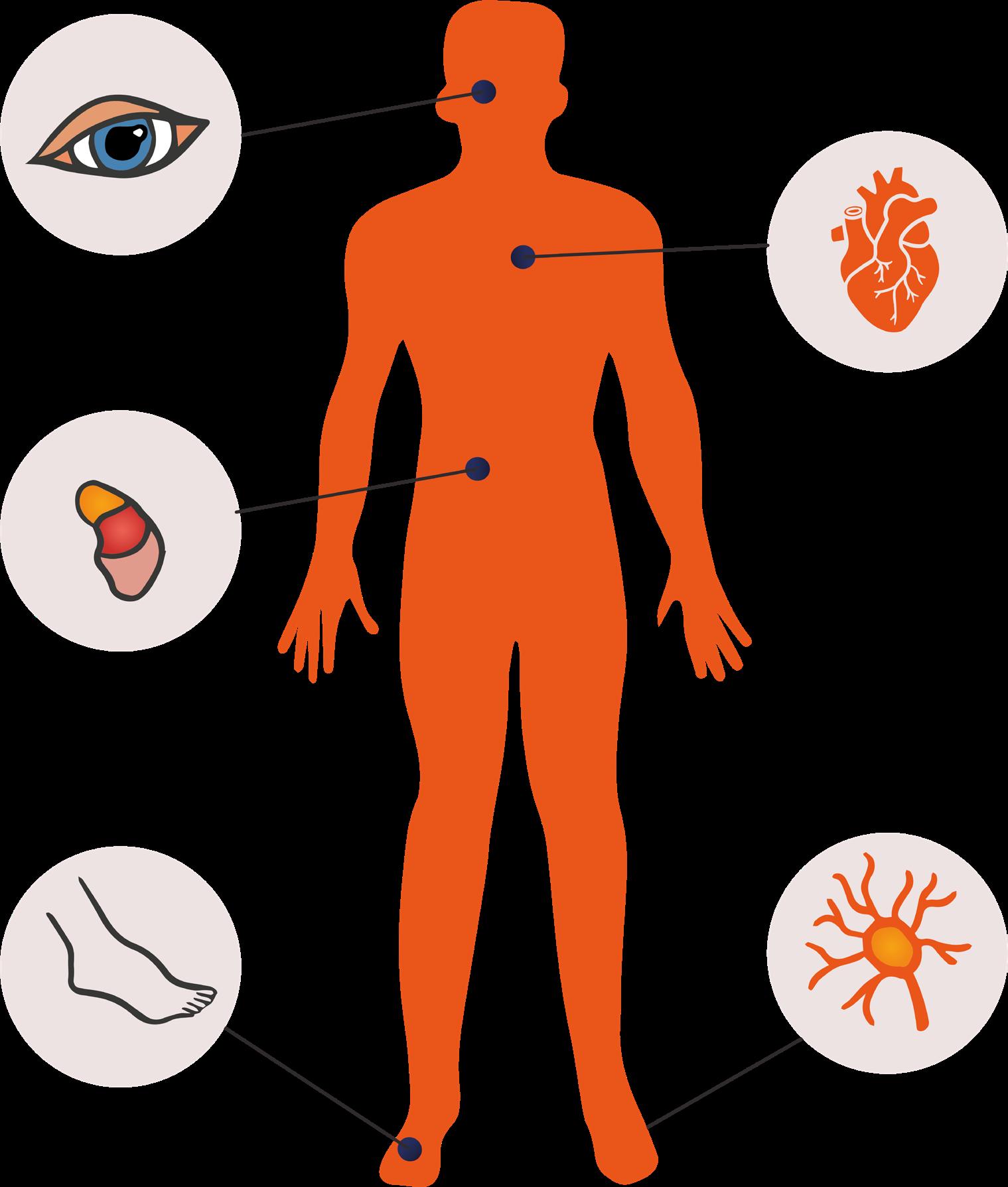
Problems with cuts and blisters healing on your feet
Losing feeling in your feet
Problems with your eyes
Kidney disease
Heart disease
There are a number of things you can do to help avoid complications or spot them early if they do happen. It’s not just about blood sugar, the best way to avoid complications is to look after your overall health. That could mean taking medicine, eating healthily and being more active. Smoking makes it much more likely that you might have some of these complications, so giving up will help you avoid them. It also helps to drink less alcohol and manage your stress.
Keeping an eye on your health is the best way to spot these problems before they become serious, as usually these problems don’t have any signs until they’re more serious. It is important to have an annual diabetes check where your eyes, feet, heart health and kidney health are checked to see if you have any problems.
Have you experienced any complications from your diabetes?
What do you do to avoid these problems?
Why take care of my feet?
A symptom of diabetes that you might have noticed is that it takes longer for cuts to heal. This happens because a good supply of blood is needed to help cuts heal, and diabetes can make it difficult for blood to reach some parts of your body, especially your feet. Another symptom some people get is numbness, a lack of feeling, in their feet. This means that if you get a cut or a blister on your foot, you might not be able to feel it, and it won’t be able to heal quickly. This can lead to infections that need more serious treatment. Taking care of your feet can help reduce the chance of these problems happening.
Below are a list of things you can do to help take care of your feet, tick the ones that you do:
Checking feet every day for cuts or blisters
Being careful when you cut your toe nails
Wearing shoes that fit well
Not using blades or corn plasters
Using cream on your feet every day
If you don’t do some things in the list above, what stops you from doing them? What would you like to try?
Preventing diabetes
Did you know you can reduce your risk of developing diabetes by eating healthily, being a healthy weight and being physically active? Stopping smoking and not drinking too much alcohol can also reduce your risk.
My Heart Disease Resources
What I need to know about heart disease
In this section
What is heart disease?
What does it mean for me?
How is heart disease treated?
How to look after your health with heart disease
How can eating and drinking healthily help with my heart health?
How can being physically active help with my heart health?
How can stopping smoking help with my heart health?
How can managing my weight help my heart health?
How can reducing the alcohol I drink help with my heart health?
Managing your heart health
Managing medication for heart disease and related conditions
Do you need to check your blood pressure?
What is heart disease?
Heart disease is the general name for conditions that affect your heart. There are related conditions affecting your blood vessels (arteries and veins), such as high blood pressure, or narrowed blood vessels, that are called circulatory diseases. Together this group of conditions are also called cardiovascular disease (CVD). We will use ‘heart disease’ or ‘heart health’ to refer to any of these conditions.
Your heart does a very important job, pumping blood around your body to keep you healthy. Your blood travels around your body in arteries and veins.
If you have high blood pressure, this means the pressure in your arteries is higher than it should be. Your heart has to work harder to pump your blood around your body, making events like strokes and heart attacks more likely. High blood pressure can also increase your risk of developing dementia later in life.
Cholesterol is a type of fat that moves around in your blood. Too much cholesterol can narrow your arteries and make it harder for your blood to flow through them.
If fatty deposits, called plaques, build up in your arteries they can become narrowed. This makes it harder for your heart to pump your blood around your body. If one of these plaques bursts, it can cause a blockage in your blood supply which can lead to problems like heart attacks or strokes.
People can also sometimes develop a blood clot in a vein, usually in the leg. This is called deep vein thrombosis. This can be serious if the blood clot travels and blocks a blood vessel in your lungs.
Normal artery
Cholesterol blocked artery
What does it mean for me?
People experience heart disease differently depending on the condition. If you have high cholesterol or high blood pressure, you may not experience any symptoms. You may look and feel well.
But it is important to look after your health to prevent, or reduce, high blood pressure and high cholesterol. This is because they make it more likely to develop health problems like heart disease, heart attacks
or strokes. The good news is, there are lots of things that you can do to help with this.
For more information, please see ‘How is heart disease treated?’ below.
You may experience symptoms from heart disease that can affect your everyday activities in different ways. For example, you may experience chest or arm pain, breathlessness, or feel very tired and low in energy. You may feel dizzy or feel like your heart is beating fast, fluttering or pounding (palpitations). People with heart disease also often feel anxious about their condition.
How is heart disease treated?
The treatment you receive depends on your condition. It may include advice on making healthy changes as well as medication.
There are lots of things that you can do to help prevent your blood pressure and cholesterol from getting too high, or to make it lower. Eating healthily and being physically active can really help with this. Your doctor may also ask you to take medicines to lower your cholesterol or blood pressure. Other things that can help include stopping smoking and reducing the alcohol you drink.
If you have heart disease, you may be given medicines to treat your condition or manage your symptoms. For example, some medicines work by thinning your blood so it can move through your blood vessels more easily. Other treatments help your heart to pump more strongly. For many people with heart diseases, healthy changes like eating well and stopping smoking, can also improve your health and wellbeing.
Less commonly some people also need to have surgery or other procedures to treat their heart problems.
How to look after your health with heart disease
In the main workbook education sheets there is information about things everyone can do to look after their health. Here is some extra information about how these changes are helpful for people with heart and circulatory diseases.
How can eating and drinking healthily help with my heart health?
Eating foods that are lower in (saturated) fat can really help to keep your heart healthy by lowering your cholesterol. You could try swapping red meat for chicken, fish or beans and choosing lower fat dairy options, like milk and yoghurt.
Eating less salty foods and drinking less high caffeine drinks, like coffee and cola, can help to lower your blood pressure.
How can being physically active help with my heart health?
Being physically active can help to reduce your blood pressure and cholesterol which is good for your heart health. It can also improve symptoms of some conditions like angina, making everyday life easier and letting you do more.
It’s normal to worry about how physically active you should be if you have a heart or circulatory condition. Most people will still be able to be active and will feel the benefits of it.
You should speak to your doctor about which physical activities are suitable for you and whether there are any limits to what you should do. If you have some heart conditions, it is best to stick to gentle or moderate activity like walking or gardening.
You should only be physically active if you feel well enough to do so. If you start feeling symptoms like chest pain, your heart pounding or unusual shortness of breath, stop your activity and have a rest. Speak to your doctor if you experience this.
If you have a condition like heart failure or have had a heart attack or operation, your doctor might suggest you have Cardiac Rehabilitation. This is a course which supports you to be physically active and to look after your heart health. For more information see: https://www.bhf.org.uk/ informationsupport/support/cardiac-rehabilitation/what-is-cardiac-rehab
How can stopping smoking help with my heart health?
If you have heart problems, smoking can make your health worse.
Smoking can increase your heart rate and blood pressure. The chemicals in cigarettes make the walls of your arteries sticky. This makes it more likely that they will become clogged, which can lead to heart attacks or strokes.
Stopping smoking can help manage your heart health and reduce your risk of more problems.
Please see the worksheet, ‘Why stop smoking?’ for tips and advice on stopping smoking.
How can managing my weight help my heart health?
If you have heart or circulatory problems, being a healthy weight can help you to stay as well as possible. If you have too much weight, particularly around your waist, this can lead to fatty material building up in your arteries. If you have too much weight, then losing weight can help to reduce your cholesterol and your blood pressure.
Being a healthy weight is good for your heart health.
How can reducing the alcohol I drink help my heart health?
If you have heart or circulatory problems, drinking less alcohol can help to manage your health. If you have several alcoholic drinks at one time, it increases your heart rate and narrows your blood vessels, causing a temporary rise in your blood pressure.
If you do this regularly, it can affect how well your body can control your blood pressure, which can lead to long-term high blood pressure.
Drinking alcohol also raises the cholesterol in your blood and, because alcoholic drinks are often high in calories, it can also lead to weight gain. So cutting down on the amount of alcohol you drink is good for your heart health.
Please see the worksheet, ‘Why reduce alcohol?’ for tips and advice about cutting down on the alcohol you drink.
Managing your heart health
Managing medication for heart and circulatory conditions
Your doctor may suggest that you take medications to help prevent you from developing heart conditions. ‘Statin’ medications can help to lower your cholesterol. ‘Antihypertensive’ medications can help lower your blood pressure. This can reduce your risk of serious heart and circulatory problems like heart attacks.
The medicine you are prescribed if you have a heart condition, will vary depending on the problem. It may be to treat the condition, or to keep the symptoms under control. Depending on the problem, some people only need medicines for a short time, but others may need them for longer.
If you have questions or concerns about your medication, you can discuss these with your doctor or pharmacist. For more information about this, as well as tips on organising and remembering to take your medication, please see the worksheet on ‘Managing my medication’.
For more information on medicines and treatment for heart and circulatory disease, please see:
https://www.bhf.org.uk/informationsupport/conditions/cardiovasculardisease#Cardiovascular_disease_treatment
https://www.bhf.org.uk/informationsupport/conditions/cardiovasculardisease
Do you need to check your blood pressure?
Has your doctor or nurse said you have raised blood pressure, or prescribed medication to lower your blood pressure? Have they asked you to check your blood pressure regularly?
High blood pressure (hypertension) can damage your blood vessels and increase your risk of heart attacks or stroke. Blood pressure can be reduced by:
Eating healthily Regular physical activity
Stopping smoking Taking ‘anti-hypertensive’ medication
Drinking less alcohol
If you have high blood pressure, it is helpful to check it regularly. You may be able to do this yourself, using a blood pressure monitor. You could ask a relative to help you with this. Or you can ask the GP or practice nurse to check it for you. This will help to see if your blood pressure is getting lower, or if more needs to be done to help reduce it.
Your general practice may provide you with a blood pressure monitor and they can show you how to use it. Or you may choose to buy one yourself.
How often do you check your blood pressure?
Do you feel confident understanding your blood pressure? Who could you ask for help?
My COPD Resources
What I need to know about Chronic Obstructive Pulmonary Disease (COPD)
In this section
What is COPD?
What does it mean for me?
Why might COPD affect my mood?
How is COPD treated?
How to look after your health with COPD
How can stopping smoking help with my COPD?
How can managing my weight help with my COPD?
How can being physically active help with my COPD?
How can eating and drinking healthily help with my COPD?
Managing your COPD
Managing medications for COPD
Managing flare-ups
COPD health checks
What is COPD?
COPD stands for chronic obstructive pulmonary disease. This is a lung problem in which your airways are narrowed. This makes it harder to move air in and out of your lungs, so you can get breathless. You may cough and bring up phlegm. People with COPD often have chronic bronchitis (a regular cough with phlegm) and emphysema (enlargement of the air sacs in the lungs).
What does it mean for me?
People experience COPD differently. Some symptoms you may have include:
Having a cough that lasts a long time
Getting short of breath when doing everyday activities like housework or going for a walk
Coughing up more sputum or phlegm than usual (mucus from your lungs or airways)
Wheezing when the weather is cold
You may have symptoms all the time. Or they might be triggered, or get worse, because of certain things like:
• Having an infection.
• Smoking, or being in a smoky place.
• Very hot or cold temperatures.
• Exhaust fumes or dust.
• Sprays like deodorants, air fresheners or hair spray.
• Strong smells, like perfumes or bleach.
• Anxiety.
Symptoms of COPD, such as breathlessness, can make it harder to do everyday activities, like getting dressed or walking to the shops. But there are things that you can do to help manage your symptoms and their effect on your life.
For more information, please see the worksheet on ‘Managing Breathlessness’.
Why might COPD affect my mood?
Living with COPD can make you feel anxious. For example, feeling afraid of not being able to breathe, or worrying about having a flare-up of your symptoms. When you feel anxious, it can change the way you breathe, making your symptoms feel worse. For advice on managing breathlessness, please see the ‘Managing Breathlessness’ worksheet.
You may feel low in mood because it is hard to do everyday activities when you feel breathless or unwell. Your mood could also be affected by side effects from some medicines for COPD. If you are concerned about this, speak to your doctor about it.
How is COPD treated?
COPD is a long-term condition which can get worse over time. Although there are ways you can treat your symptoms so that you feel better for longer, there is not yet a cure for COPD.
The main ways to treat your COPD are through medication and making healthy changes to look after your health.
If you smoke, stopping is the best thing you can do to help your COPD. When you’re living with COPD, being active and being at a healthy weight can help with your symptoms.
If you know what makes your symptoms worse, you can try to avoid the triggers. Small changes could help you feel better. For example, using rollon deodorant rather than a spray or cleaning the place where you live so it isn’t dusty.
How to look after your health with COPD
In the main workbook education sheets, there is information about things everyone can do to look after their health. Here is some extra information about how these changes are helpful for people with COPD.
How can stopping smoking help with my COPD?
If you have COPD, stopping smoking is the best thing you can do to improve your health and wellbeing. Stopping smoking will help you to feel less short of breath and to cough less.
If you smoke, you are more likely to get chest infections, like the flu or pneumonia, which make your COPD symptoms worse.
Stopping smoking will help you to manage your symptoms and stay as well as possible.
Please see the worksheet, ‘Why stop smoking?’ for tips and advice on stopping smoking.
How can managing my weight help my COPD?
When you are living with COPD, being a healthy weight can help to control your symptoms.
Some people with COPD gain weight. This may be because you are less physically active if you are worried about getting breathless. Some medicines for COPD can also cause weight gain.
Having more weight on your tummy, chest and neck can make it harder to breathe in deeply. It can make you more breathless when you are doing everyday activities like getting dressed.
Some people with COPD may lose too much weight. This could be because shopping, preparing meals, or eating makes you feel tired or out of breath. If you are underweight, your breathing muscles will be weaker, and you may find it harder to do everyday activities.
Being a healthy weight will help you breathe more easily and do the things you want or need to do in your daily life.
How can being physically active help with my COPD?
If you have COPD, being physically active can help improve your breathing and quality of life. It can help you do the activities you want and need to do in your everyday life. Physical activity includes everyday activities like housework or walking to the shops.
Being physically active helps strengthen your muscles, so they need less oxygen to work. So you can breathe more easily when you are active. People with COPD can be anxious about doing activities that make them breathless. But if you avoid these activities, you will get less fit and out of breath more easily.
For tips and advice on what can help if you feel breathless, please see the worksheet on ‘Managing Breathlessness’.
You can talk to your GP or practice nurse about being physically active at a level that’s right for you.
They may suggest joining a Pulmonary Rehabilitation (PR) course. This includes advice about being physically active safely, managing breathlessness and looking after yourself.
How can eating and drinking healthily help with my COPD?
Eating a healthy balance of different foods will help you stay strong and fit. It will give your body the vitamins it needs to help protect you from colds, flu and other chest infections. Make sure you are drinking enough fluid every day to stay hydrated.
This will help keep your phlegm and mucus moving, which can help prevent infections.
Managing medications for COPD
Your doctor may give you medicines or treatment for your COPD. They may give you inhalers to help with your breathing. Some inhalers help to open your airways. Some work by reducing inflammation in your airways.
To help get medication into your airways, you may be given a device called a spacer to use with certain types of inhaler.
It is important to use your inhaler correctly to get the most benefit from it. If you would like some help with this, you could ask your GP or practice nurse. There are videos to help you at: https:// www.asthmaandlung.org.uk/living-with/inhalervideos
You may be given other medicines or treatment for your COPD. For example, you may be given medicine to make your sputum thinner, so it is easier to cough up.
Some people with COPD need to have oxygen therapy to treat low oxygen levels in their blood.
Your doctor may also prescribe you a ‘rescue pack’ of medicines to use if you have a flare-up of your COPD symptoms. Not everyone with COPD is given a ‘rescue pack’, but if you have, it is important to let your doctor know if you use it.
You can find more information about medications and treatment for COPD here: blf.org.uk/copd/treatment
Managing flare-ups
Your COPD symptoms, such as coughing or breathlessness, will vary a bit from day to day. But if they are worse for two days or more, this could be a flare-up (also called an exacerbation).
This might be triggered by something like an infection or colder weather, or you may not know what has caused it.
You can talk with your doctor to agree on a flare-up plan, so that you know what to do if your symptoms get worse. If you have a severe flare-up, you may need to be treated in a hospital. It may take a week or longer for you to recover fully after a flare-up.
COPD health checks
If you have COPD, as well as the physical health check which everyone with severe mental illness receives, your COPD should be reviewed regularly. This should be at least once a year but may be more often depending on your symptoms.
This should include:
Talking about your symptoms and how they affect your life
A spirometry test to assess your breathing
Checking your medication and how you use your inhaler
Managing flare-ups of your symptoms
The opportunity to attend a course to support you to be physically active and to learn more about living with COPD (Pulmonary Rehabilitation)
People with COPD have a higher risk of getting infections, which can make their symptoms worse. If you have COPD, it is important that you get the flu vaccination each year. You should also have the one-off pneumonia jab.
Additional information
In this section
My contacts and support
Resources for further support
My upcoming appointments
Websites for further information
My Contacts and Support:
Please fill in the following information with your coach. This will help you get to know each other and ensure you have all the contacts you might need in one place.
This could include:
• A friend or family member who can support you.
• Your GP and other health or support services.
• Emergency contacts.
• A transport provider or taxi firm you use to get to your appointments.
• Any other useful contacts for support.
My Contacts and Support:
Resources for further support
You can add information here about other resources that could help you. This could include:
• Other health or support services you would like to use.
• Groups or facilities that could help you to work towards your goals. For example, a walking group or leisure centre.
• Websites with useful information.
• Any other useful resources.
Service
Resources for further support
Service
How it will help me? Contact information
My upcoming appointments
What is it about?
Time & date Where
Websites for further information
National Health Service
https://www.nhs.uk/
British Heart Foundation
https://www.bhf.org.uk/
Asthma and Lung UK
https://www.asthmaandlung.org.uk/
Diabetes UK
https://www.diabetes.org.uk/
MIND
https://www.mind.org.uk/
Rethink
https://www.rethink.org/