This work was conducted by Queen’s University Belfast.
This work is supported by the UK Prevention Research Partnership GroundsWell consortium (MR/V049704/1), which is funded by the British Heart Foundation, Cancer Research UK, Chief Scientist Office of the Scottish Government Health and Social Care Directorates, Engineering and Physical Sciences Research Council, Economic and Social Research Council, Health and Social Care Research and Development Division (Welsh Government), Medical Research Council, National Institute for Health Research, Natural Environment Research Council, Public Health Agency (Northern Ireland), The Health Foundation and Wellcome. The work is also supported by the HSC Research and Development Office Northern Ireland (COM/5634/20).
Special thanks to the Eastside Greenways (www.eastsidegreenways.com) charity, founded by EastSide Partnership, the vehicle for the delivery of the Connswater Community Greenway.
Ruth Hunter, Wendy Langham, Michele Bryans, Jacqueline O’Hagan. Community in Action: Co-producing the Connswater Community Greenway, 2026. ISBN: 978-1-913643-42-3
Copyright Statement
This report was created by Ruth Hunter (Queen’s University Belfast) and Nifty Fox Creative (www.niftyfoxcreative.com) in 2026, as part of a project which was funded by UK Prevention Research Partnership (MR/V049704/1). The copyright in this report belongs to Queen’s University Belfast and it can be used under the Creative Commons CC BY-NC-ND license. If you wish to modify this report or use this report for commercial purposes, please get in touch with ruth.hunter@qub.ac.uk to discuss the terms of a license.
Executive Summary: Co-Producing a Greenway, Reconnecting a City
@EastSide Greenways
Overview
The Connswater Community Greenway (CCG) in east Belfast is one of the UK’s leading examples of co-produced urban regeneration (www.eastsidegreenways.com).
The project integrates community empowerment, public health improvement and climate resilience demonstrating how sustained partnership between local residents and community members, the community and voluntary sector, local authorities, government departments and researchers can fundamentally reshape the physical environment, social environment and the processes through which places are planned, delivered, and stewarded.
The 9 km Greenway connects over 40,000 residents through restored rivers, green spaces, and active travel routes. However, its real achievement lies not only in physical transformation, but in the creation of a civic culture of collaboration, ownership, and evidence-led stewardship.
1.1 Co-Production from Design to Delivery
From its inception, the Greenway was developed with and for the community:
॰ Early Visioning and Engagement: Thousands of residents participated in workshops, design sessions, and local forums. Their insights directly influenced the Greenway’s routes, facilities, and identity.
॰ Anchor Partnership: The EastSide Partnership, a social enterprise, provided trusted leadership, acting as a bridge between the local authority, government departments, designers, and local residents.
॰ Inclusive Design: Co-production ensured accessibility for all users; from families and older adults to people with disabilities.
॰ Youth and Education: Schools, youth groups, and NEET (Not in Education, Employment or Training) programmes engaged young people as future stewards of the Greenway.
॰ Evidence through Partnership: Co-production extended into the research and evaluation phase, ensuring that community voices shaped the design and impact metrics. Residents, practitioners, and researchers collaborated to define outcomes, interpret findings, and embed learning into future practice.
Lesson: Engage early, listen deeply, and sustain involvement. Co-production must be treated as a core infrastructure investment.
1.2 Long-Term Stewardship and Governance
A 40-year management and maintenance agreement between EastSide Partnership and Belfast City Council safeguards the Greenway’s future, supported by a growing network of volunteers and community leaders.
Key stewardship innovations include:
॰ Greenway Leaders Programme: Training local residents to promote, protect, and animate the space.
॰ Community Volunteering: Citizen involvement in planting, maintenance, and events.
॰ Legacy Programmes: Continued youth engagement through education, employment, and environmental skills.
॰ Inclusive Access and Lighting: Community consultation led to the Greenway becoming the only publicly accessible green space in Belfast open and lit 24/7, symbolising safety, inclusion, and trust.
Lesson: Stewardship must be designed alongside delivery. A shared management and maintenance culture is essential to sustaining public investment.
1.3 Addressing Ongoing Challenges and Opportunities Together
Community engagement remains at the heart of managing day-to-day challenges:
॰ Dog Fouling and Litter: Volunteer patrols and co-designed campaigns.
॰ Climate and Nature Action: Tree planting, wildflower meadows, and citizen-led biodiversity projects.
॰ Inclusion and Accessibility: Continuous dialogue to improve facilities and representation.
॰ Anti-Social Behaviour: Active presence, community events, and collaborative responses.
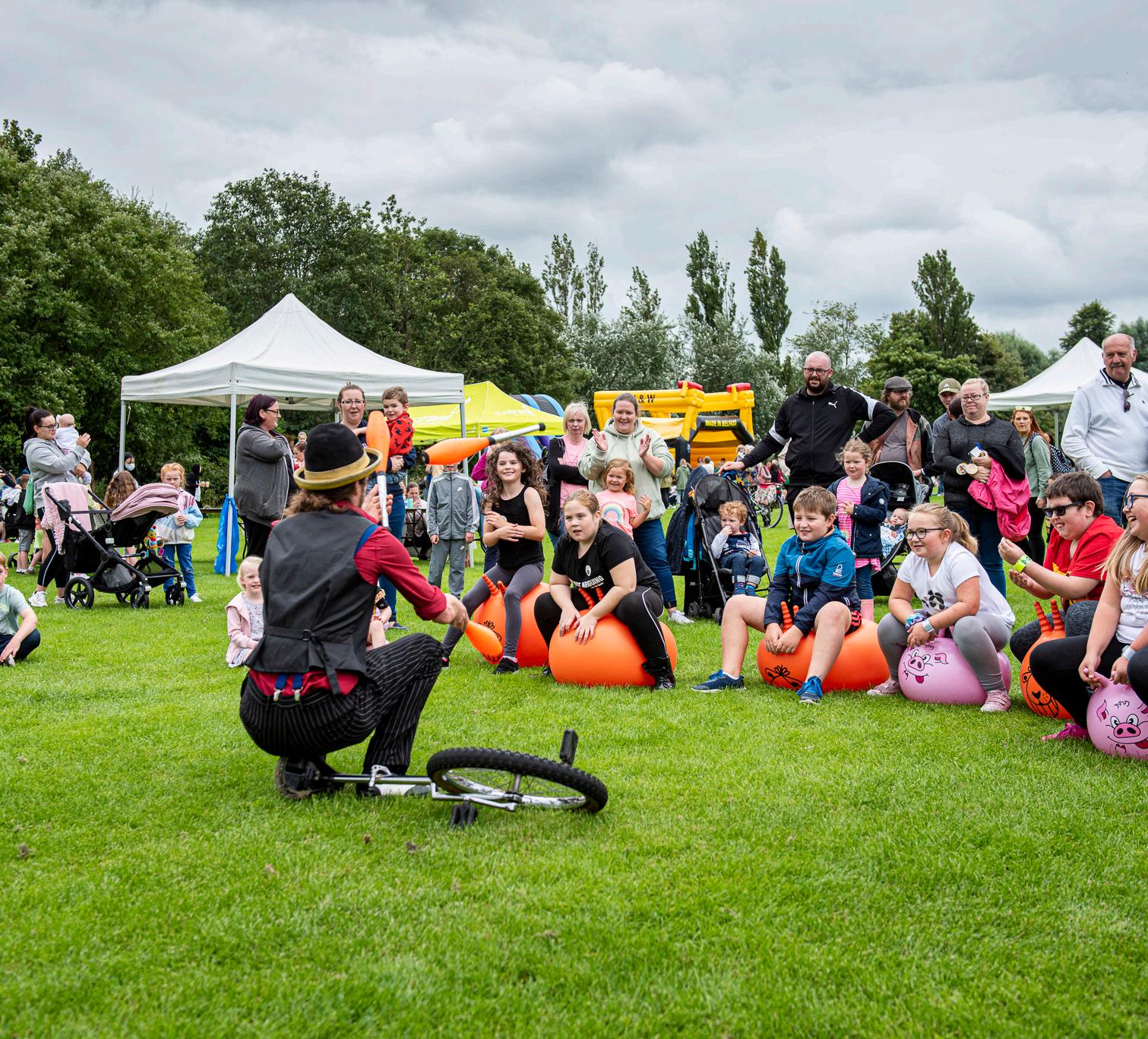
॰ Opportunities: Animation of the Greenway and social programmes such as Arts Festival, urban markets, tourism and heritage trails.
Lesson: Adaptive engagement turns challenges into opportunities for collective problem-solving.
1.4 Co-Producing Research and Evidence
The Greenway has also pioneered a co-produced research model linking community insight, academic rigour, and policy relevance.
॰ Participatory Systems Mapping: Residents identified pathways linking environment, health, mental wellbeing, and social cohesion informing the project’s research design.
- User counts using SOPARC (Systems for Observing Play and Recreation in Communities) observation methods.
- Dog fouling audits to support awareness campaigns.
॰ Community Wealth Building Research: Residents engaged in asset transfer visioning and governance sign.
॰ Evidence for Access and Planning Decisions: Co-produced SOPARC user data and Geographic Information System (GIS) accessibility modelling were used to inform the Public Path Creation Order at Dixon Playing Fields, demonstrating how community-led evidence can shape statutory decisions on access, connectivity, and green infrastructure design.
Lesson: Co-produced evidence is richer, more legitimate, and more sustainable because communities help define what success means.
1.5 Transferable Lessons for Policy and Practice
॰ Engage Early and Continuously: Build participation into every stage from visioning to maintenance.
॰ Design for Stewardship: Secure long-term maintenance agreements and community leadership structures.
॰ Design Governance Structures for Change: Good governance structures transcend the people within particular roles and responsibilities.
॰ Co-produce Evidence: Involve residents in defining, collecting, and interpreting data.
॰ Fund Engagement as Infrastructure.
॰ Measure What Matters: Include community pride, inclusion, and nature connection in your evaluation frameworks.
॰ Integrate Across Sectors: Align health, environment, economy and infrastructure policy through shared outcomes.
Conclusion
The Connswater Community Greenway is a living demonstration of civic co-production where engagement, stewardship, and research converge to produce stronger and healthier communities, and more resilient places. This model shows what is possible when communities are trusted as equal partners in design, delivery, and research. For policymakers and practitioners, it sets a precedent: from infrastructure to relationship, from consultation to co-creation, from green space to shared social value.
Setting the Scene: Context and Origins
@EastSide Greenways
The Connswater Community Greenway (CCG) emerged in response to a set of interlinked urban challenges (health, social, economic, environmental and cultural). By the early 2000s, east Belfast was a place marked by fragmented neighbourhoods, persistent deprivation, and ageing infrastructure (www.eastsidegreenways.com). Its rivers, the Connswater, Knock, and Loop, had been heavily engineered, polluted, and largely hidden from public use. Once natural assets, they had become barriers: conduits for floodwater rather than connectors of communities.
2.1 Urban and Social Context
The eastern corridor of Belfast experienced decades of industrial decline following the contraction of the city’s shipbuilding and manufacturing base. The loss of employment and the legacy of conflict created physical and psychological divisions between communities. Public spaces were scarce, often contested, and poorly maintained. Health inequalities were stark, with residents experiencing some of the highest rates of chronic disease in Northern Ireland.
Against this backdrop, the notion of a linear park linking the Castlereagh Hills to Belfast Lough offered more than an environmental improvement: it promised reconnection between people, across neighbourhoods, and with nature.
2.2 Community Vision
Through the leadership of EastSide Partnership, a local regeneration social enterprise with deep roots in community development, the project evolved from a technical engineering response into an integrated regeneration initiative.
The Big Lottery Fund’s Living Landmarks Programme provided a once-in-a-generation investment, but crucially it required a clear demonstration of community engagement and benefit. This condition catalysed a new way of working: residents and stakeholders were not simply consulted on pre-determined plans; they became partners in shaping the vision.
Community leaders, local organisations, and statutory partners recognised the opportunity to deliver wider social and economic benefits. They also recognised the need to integrate a flood alleviation scheme following repeated flood events in east Belfast.
2.3 Early Community Mobilisation
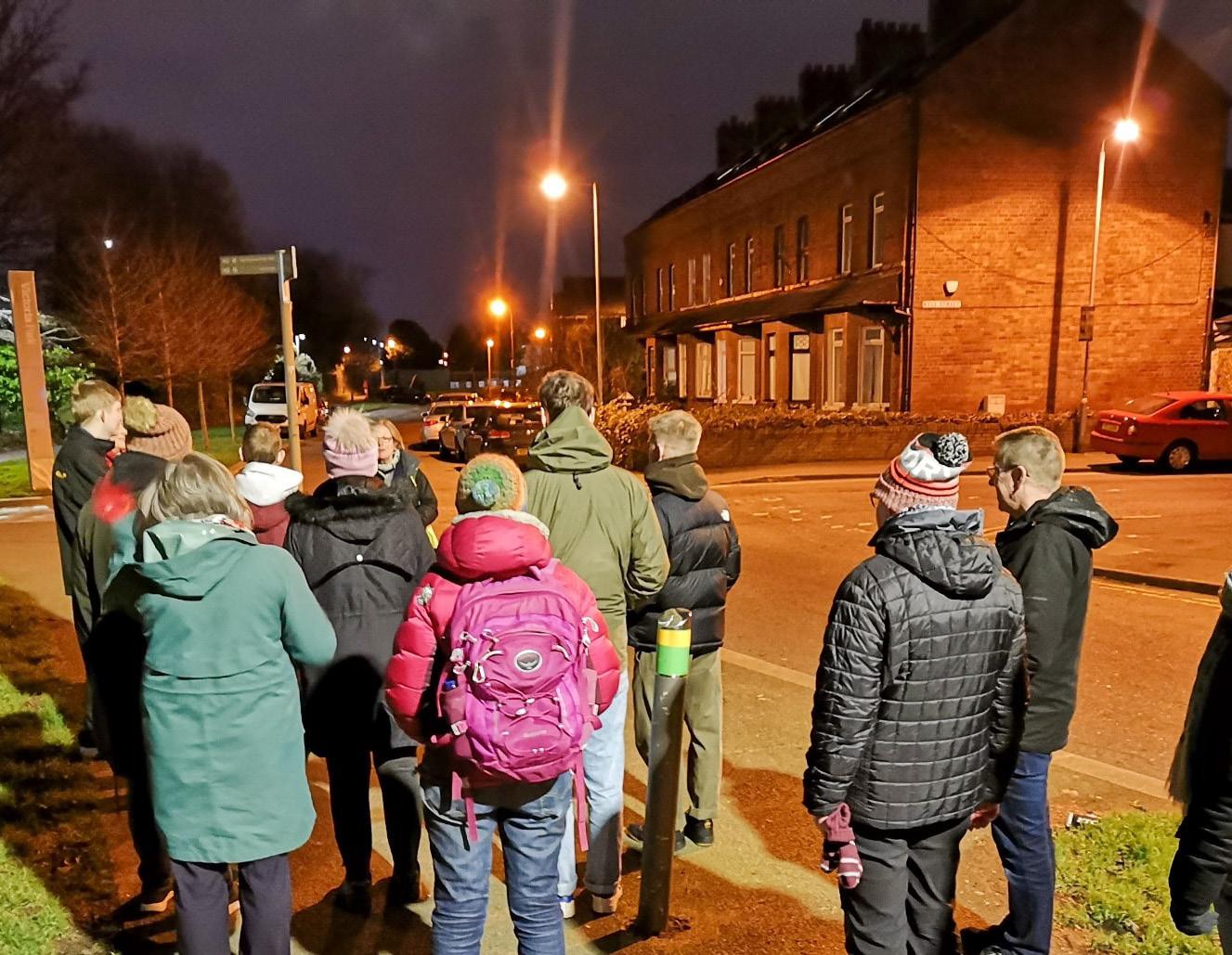
The early engagement process built on EastSide Partnership’s existing relationships with community groups, churches, schools, and local businesses. Public meetings, walking audits, and participatory design sessions were used to map local priorities and concerns, from fears about safety and maintenance to aspirations for play spaces, cycling routes, and heritage recognition.
The resulting vision was as much social as spatial: a “Greenway for Everyone”, capable of bridging divides, enhancing health and wellbeing, and creating a shared sense of community ownership.
2.4 A Collaborative Governance Model
From the outset, the governance structure reflected this ambition. The project was jointly developed by:
॰ EastSide Partnership: Providing the vision, project sponsor, leading community. engagement and strategic integration with local development plans.
॰ Belfast City Council: Providing planning, implementation, and long-term management and maintenance capacity, land assembly and fund holder.
॰ Department for Infrastructure, Rivers Agency and Other Statutory Agencies: Ensuring alignment with flood and environmental objectives.
॰ Local Residents and Civic Groups: Shaping priorities and design through continuous dialogue.
॰ Queen’s University Belfast: Leading the monitoring and evaluation of the CCG impact.
This multi-level governance approach, bridging community, municipal, and regional actors, laid the foundation for the Greenway’s enduring legitimacy and long-term sustainability.
2.5 Policy Relevance
For policymakers and practitioners, the CCG experience illustrates how environmental infrastructure projects can function as policy integrators, connecting agendas on:
॰ Health and Wellbeing: By providing equitable access to quality green and blue space.
॰ Urban Resilience: Through natural flood management and climate adaptation.
॰ Social Cohesion: By creating shared, inclusive spaces.
॰ Economic Renewal: Through local enterprise, skills development, and asset transfer.
In doing so, the project prefigured the integrated place-based approaches now central to UK Shared Prosperity, Levelling Up, Neighbourhood Model of Care and Net Zero strategies.
The CCG became a model of how co-production and community stewardship can convert technical infrastructure into civic transformation, a process that subsequent sections of this report will explore in detail.
Co-Production in the Design and Development Phase
@EastSide Greenways
From the outset, the CCG was conceived not solely as an engineering project but as a social infrastructure initiative, a space to be designed with communities rather than for them. The design and development phase therefore established the foundations for long-term ownership, trust, and legitimacy.
3.1 Establishing the Principles of Co-Production
Early in the project’s evolution, EastSide Partnership recognised that traditional consultation would not be sufficient to address the deep-rooted mistrust many residents felt toward top-down regeneration. The partnership adopted a coproduction model guided by four core principles:
॰ Early Involvement: Communities would be engaged before major design decisions were made.
॰ Shared Decision-making: Local knowledge and lived experience would inform both priorities and practical solutions.
॰ Capacity Building: Engagement would create lasting skills and networks beyond the life of the project.
॰ Good Design: Proposals would be inclusive, high-quality, and context-sensitive, translating community aspirations into clear, deliverable designs that improved everyday use, long-term sustainability, and a sense of local pride.
These principles aligned with emerging best practice in participatory urban design and were formalised through a dedicated Community Engagement Strategy and resource allocation within the project’s governance structure.
3.2 Engagement Structures and Methods
The co-production process operated through a combination of structured governance and creative engagement techniques.
Resourced Community Engagement and Co -production: Dedicated funding was allocated specifically for long-term community engagement and co -production, including the appointment of a full-time, experienced Community Engagement Officer. This role provided continuity, built trust over time, coordinated participation across diverse groups, and ensured that community input was meaningfully embedded throughout design development and delivery.
Community Forums and Design Workshops: Local residents were invited to participate in a series of neighbourhood-based forums to identify opportunities, constraints, and desired outcomes. These sessions informed the location of entrances, lighting, bridges, and play areas. Multi-disciplinary design teams worked alongside community members to translate ideas into technical drawings and visualisations that were then reviewed and refined through iteration.
Participatory Mapping and Storytelling: Residents, schools, and heritage groups contributed to “mapping memories” exercises, identifying historical landmarks, informal paths, and overlooked spaces. This process revealed layers of meaning, industrial heritage, and community landmarks, which were integrated into the design through interpretation panels, public art, and naming of bridges and public art.
Youth and School Engagement: Pupils’ drawings and ideas influenced the design of play spaces and biodiversity areas, embedding education within the Greenway’s identity from the outset.
Engagement with Underrepresented Groups: Tailored outreach was undertaken with older residents, minority communities, and individuals with mobility challenges to ensure accessibility and inclusivity in design. Local voluntary organisations played a crucial intermediary role in reaching these groups.
3.3 Influence on Design Outcomes
The design decisions that emerged from this process reflected the community’s expressed priorities:
॰ Continuous and safe walking and cycling routes connecting schools, parks, and retail centres.
॰ Well-lit paths and sightlines to improve perceived safety, particularly for women and older users.
॰ New play and recreation areas positioned near housing and schools.
॰ Retention and celebration of industrial and cultural heritage through interpretive trails.
॰ Restoration of river corridors to enhance biodiversity and reduce flood risk.
These design outcomes were co-produced solutions balancing engineering, aesthetics, and community preference.
3.4 Building Capacity and Ownership
Beyond shaping physical form, the process built local capacity and confidence. Residents who had initially participated in design workshops later became Greenway ambassadors, advocating for the project within their communities. Training and volunteering opportunities developed during this phase laid the groundwork for the later Greenway Leaders Programme, demonstrating the cumulative effect of sustained engagement.
EastSide Partnership’s embedded presence in east Belfast was essential. Its staff had long-standing relationships with local organisations, providing continuity and trust that statutory agencies alone could not replicate. The Partnership’s ability to translate between technical, political, and community languages ensured that engagement remained both meaningful and manageable.
3.5 Lessons for Policy and Practice
The design and development phase of the CCG demonstrates several transferable lessons for policymakers and practitioners seeking to embed co-production in urban infrastructure projects:
॰ Integrate Community Engagement into Project Governance and Budgets: Treat it as a core component of delivery, not an optional add-on.
॰ Use Creative and Accessible Methods to Elicit Local Knowledge: Technical plans alone rarely inspire participation.
॰ Value Continuity and Trusted Intermediaries: Long-term local organisations are critical conduits for effective engagement.
॰ Invest in Skills and Leadership Development: Early capacity-building is important for later stewardship phases.
॰ Acknowledge Local History and Identity: design that reflects shared heritage fosters civic pride and long-term commitment.
Through these approaches, the CCG turned early engagement into long-term ownership. The process created not just a physical space, but a shared civic project, a visible example of how co-produced design can transform perceptions of place and reshape relationships between citizens and institutions.
Co-Production in Implementation
@EastSide Greenways
Translating co-produced designs into built form is often the most difficult stage of any regeneration project. The CCG succeeded in maintaining community confidence and involvement throughout implementation by embedding communication, transparency, and participation at the heart of delivery. The project expanded its social infrastructure, treating community relationships as assets requiring active management and investment.
4.1 Maintaining Trust Through Construction
Major Works Inevitably Bring Disruption: Construction meant temporary closures, heavy machinery, and changes to familiar landscapes. Anticipating this, EastSide Partnership developed a Community Engagement and Communications Plan designed to ensure residents felt informed, respected, and part of the process rather than subject to it. The contractor also had a community engagement team that worked to minimise disruption and resolve residents’ issues and concerns.
Dedicated Engagement Team: A small but highly visible team within EastSide Partnership served as a constant point of contact for residents, businesses, and community groups. They hosted information events, door-to-door briefings, and stakeholder forums where residents could meet contractors and planners in informal settings.
Transparent Communication Channels: Regular newsletters, social media updates, and on-site signage provided real-time information about works, timelines, and alternative routes. These channels were written in accessible, non-technical language and tailored to local neighbourhoods.
Responsive Problem-Solving: Concerns from noise or access issues to safety fears, were logged, tracked, and resolved through a structured feedback process. This demonstrated accountability and reinforced the message that community perspectives continued to shape delivery.
4.2 Embedding Community Participation in Delivery
Community Participation During Implementation Extended Beyond Communication: Residents were actively involved in shaping how the Greenway took physical form.
Volunteer and Resident-led Activities: Community clean-ups, bulb planting days, and habitat restoration events were organised in parallel with formal construction. Establishing a Community Garden was key to early engagement and activity. These activities fostered a sense of shared progress and enabled residents to contribute visibly to the Greenway’s creation.
Bridge-naming and Art Projects: Schools, community groups and local residents participated in naming new bridges and creating public art installations, reinforcing local identity and ownership.
Youth Engagement and Training: Partnerships with NEET (Not in Education, Employment, or Training) programmes enabled young people to gain skills in environmental maintenance, horticulture, and digital media documentation of the Greenway’s progress.
These participatory mechanisms provided continuity between the design and stewardship phases, ensuring that local enthusiasm was channelled into meaningful contributions.
4.3 Governance During Delivery
The project’s governance structure ensured that co-production remained an operational priority.
EastSide Partnership’s Role: Acting as the community anchor organisation, EastSide Partnership coordinated communication between contractors, statutory partners, and local groups. Their embedded local presence enabled them to mediate potential conflicts and translate technical requirements into accessible messages.
Belfast City Council and Statutory Partners: The Council’s capital delivery team and Department for Infrastructure Rivers Agency retained responsibility for engineering and environmental compliance but worked in alignment with community priorities set through earlier design phases.
A joint project board provided oversight, balancing the imperatives of cost, safety, and schedule with the commitment to sustained engagement.
This hybrid governance model, combining municipal authority with community legitimacy, proved central to maintaining momentum and coherence during complex delivery stages.
4.4 Demonstrating Visible Progress
Maintaining community motivation depended on visible, tangible progress. Milestones such as bridge installations, river clean-ups, and new path openings were marked by community events and media coverage. These “celebration points” served both as communication tools and confidence boosters, helping residents see their contributions materialising on the ground.
The project team also leveraged these events to recruit volunteers for future maintenance and educational initiatives, transitioning engagement from consultation to stewardship.
4.5 Lessons for Policy and Practice
For policymakers and practitioners, the CCG’s implementation phase offers important insights into sustaining co-production beyond the design table:
॰ Plan for engagement through construction.
॰ Dedicated staffing and communication resources are essential to manage expectations and prevent disengagement.
॰ Keep engagement visible and practical.
॰ Involving residents in planting, naming, and site-based activities builds emotional connection and ownership.
॰ Use anchor organisations to mediate complexity.
॰ Locally trusted intermediaries like EastSide Partnership can bridge the cultural and administrative gap between contractors and communities.
॰ Align governance with community values.
॰ Co-production principles should be embedded in project governance and contractual requirements, not left to goodwill.
॰ Celebrate progress publicly.
॰ Milestones and visible achievements reinforce confidence, particularly in multi-year projects where community patience can wear thin.
4.6 A Foundation for Stewardship
By treating implementation as a continuation of co-production, the CCG built a resilient foundation for community stewardship. The relationships and structures formed during construction directly enabled the later success of the Greenway Leaders Programme, volunteer networks, and youth legacy initiatives. The delivery phase, as well as physical delivery of the infrastructure, also built the capacity and confidence of the community to look after it.
@EastSide Greenways
Stewardship and Legacy
@EastSide Greenways
5.1 From Participation to Leadership
Long-term sustainability has always been central to the CCG vision. Beyond building paths, bridges, and flood defences, the Greenway invested in the infrastructure of relationships embedding co-production, stewardship, and adaptive management into its everyday life. The result is a living civic asset maintained and animated through partnership between communities, local authorities, and voluntary organisations.
5.2 Community Stewardship and Leadership
The Greenway Leaders Programme has been pivotal in cultivating community stewardship by providing highly visible, approachable points of contact and clear pathways for participation. Staff and Greenway Leaders were consistently present in project branding and communications, meaning residents had direct access to people they could contact by phone, email, or social media to share concerns, ideas, or seek support. As the public face of the initiative, EastSide Partnership staff were perceived as more accessible than statutory bodies, helping to build trust and ensuring the Greenway did not feel out of reach to local communities. Greenway Leaders also played an active coordinating role, supporting volunteers by leading litter picks, habitat restoration, citizen science projects, and community events, creating well-organised opportunities for involvement that reinforced civic pride and environmental responsibility. Youth engagement has been sustained through the Legacy Programme, which was explicitly designed to help young people see a progression pathway, from initial participation, to volunteering, and ultimately to becoming Greenway Leaders themselves. Young people were offered skills development, accredited training, and exposure to employment pathways in environmental management and outdoor leadership. Evidence from the first year of delivery demonstrated that these pathways were already taking shape, with young participants stepping into volunteer and leadership roles. This continuity supports the development of future custodians of the Greenway and embeds long-term civic capacity within the community.
Community wealth building has been advanced through asset transfer and local enterprise support (www.qub.ac.uk/sites/groundswell/Projects/ EastSideGreenways), ensuring that social, environmental, and economic value generated by the Greenway is reinvested locally.
5.3 Formal Governance and Maintenance:
The 40-Year
Commitment
To ensure the Greenway’s durability and quality, Belfast City Council entered into a 40 -year contractual agreement to manage and maintain the site. This provides a stable foundation for the professional upkeep of paths, lighting, biodiversity areas, and public amenities, complementing community-led stewardship and activity. The long-term nature of the agreement signals institutional commitment while creating the conditions for sustained local involvement.
The resulting co -management model balances statutory accountability with community empowerment but has not been without challenge. Belfast City Council and EastSide Partnership are very different organisations, with distinct roles, working cultures, and priorities. The Council operates within formal, often bureaucratic systems and manages the Greenway as one of many city assets, while for EastSide Partnership the Greenway is the organisation’s primary focus, enabling a more agile, responsive approach. Establishing an effective power balance therefore required significant time, effort, and relationship -building in the early stages, with trust negotiated rather than assumed.
Governance arrangements have been crucial in this context. The partnership is structured as an equal one, with shared authority and clearly defined roles and responsibilities. This clarity allows EastSide Partnership to both work collaboratively with Belfast City Council and, where necessary, hold it to account on commitments to quality, access, and community priorities, an inherently challenging but essential aspect of co -management. In practice, EastSide Partnership and local networks continue to shape activities, volunteer programmes, and events, while the Council ensures infrastructure quality, safety, and regulatory compliance.
Importantly, the contract incorporates flexibility for adaptive management, enabling the Greenway to evolve in response to changing environmental conditions, community needs, and policy priorities, from biodiversity enhancement and flood resilience to inclusive access. Together, these arrangements demonstrate how formal governance and participatory practice can coexist, provided power is intentionally shared, roles are clear, and long-term relationships are actively maintained.
5.4 Access and Safety: Open and Lit 24/7
One of the Greenway’s defining features, and a direct outcome of co -production, is its status as the only fully open and lit green corridor in Belfast operating 24 hours a day. Crucially, this approach extended beyond the Greenway itself to include the opening of existing Belfast City Council parks, most notably Victoria Park and Orangefield Park, which had historically closed at set times in line with traditional park management practices. This distinction is important: while the Greenway is often described as a linear park, the project demonstrated that 24/7 access and lighting could also be successfully applied to conventional park settings.
Early in the design and governance process, residents and community groups consistently raised concerns about the lack of safe, accessible outdoor spaces outside standard hours, particularly affecting shift workers, women, and young people. These concerns were explored through a structured engagement programme, including public workshops, surveys, and focus groups with a wide range of demographic groups. The outcome was a clear and robust community mandate for spaces that were open and well-lit at all hours, reframing safety as an issue of inclusion and fairness rather than restriction.
The success of 24/7 access has been underpinned not only by physical design, such as lighting, sightlines, and access points, but also by the presence of strong social and community infrastructure. Keeping the Greenway and associated parks open and lit has enabled youth workers and neighbourhood policing teams to engage proactively with young people on site, rather than displacing activity elsewhere. This has supported informal supervision, relationship -building, and early intervention, reinforcing safety through presence and partnership rather than exclusionary measures.
Together, these factors demonstrate how access and safety on the Greenway are achieved through the combination of co -produced design, adaptive park management, and ongoing community and statutory collaboration, challenging conventional assumptions about how urban parks can and should operate. The design and management approach that followed made accessibility and visibility central design principles, resulting in demonstrable changes in how the space is used and perceived. Monitoring using the Systems for Observing Play and Recreation in Communities (SOPARC) method shows a marked increase in evening use following the introduction of 24/7 access and lighting, with observed user numbers rising significantly during evening hours. Crucially, SOPARC data also indicates a substantial increase in women using the Greenway and adjacent parks in the evening period, suggesting improved feelings of comfort and inclusion in spaces that were previously under-used after dark (groundswelluk.org/Projects/ TheConnswaterCommunityGreenway15YearsofResearchPartnershipandImpact/ Publications/proceval).
These observational findings are reinforced by Intercept Survey data (groundswelluk.org/Projects/TheConnswaterCommunityGreenway 15YearsofResearchPartnershipandImpact/Publications/proceval), which demonstrates improvement in perceptions of safety among users, particularly among women, older people, and those travelling alone. Together, this evidence demonstrates that the co -produced emphasis on openness, lighting, and visibility has increased overall activity levels and also reshaped who feels able to use the space and when. The resulting growth in evening activity has contributed directly to stronger social cohesion, more informal social interaction, and increased levels of active travel across east Belfast.
5.5 Community Engagement in Responding to Ongoing Challenges
The Greenway’s co-production model extends into its ongoing management and problem-solving capability. Community members, volunteers, and partner organisations continue to play an active role in addressing practical, environmental, and social challenges.
॰ Dog Fouling and Litter: Resident-led initiatives, co-designed signage, and regular clean-up events have promoted shared responsibility and civic pride.
॰ Climate and Nature Action: Citizen science projects monitor water quality and biodiversity, while seasonal planting and habitat restoration build ecological literacy and climate resilience (www.qub.ac.uk/sites/groundswell/Filestore/ ClimateNatureAction_VisionforCCG_231023.pdf).
॰ Inclusion and Accessibility: Continuous consultation ensures that pathways, seating, signage, and lighting remain accessible and welcoming to all users, including older adults and those with mobility impairments (www.qub.ac.uk/ sites/groundswell/Filestore/CCG%20Accessibility%20and%20Inclusion%20 Report.pdf).
॰ Anti-Social Behaviour: The presence of volunteers, community events, and visible stewardship help create a cared-for and safer environment, while collaboration with local authorities enables rapid response to issues.
Lesson: These activities embody co-production as an ongoing process rather than a project phase. A living system of shared problem-solving and adaptation that sustains both the physical and social fabric of the Greenway.
5.6 Key Learning for Policy and Practice
॰ Institutionalise Stewardship: Long-term contractual maintenance can coexist with community leadership.
॰ Design for Access and Equity: Lighting and 24/7 openness change perceptions of safety and inclusion.
॰ Support Adaptive Engagement: Empower communities to respond to evolving challenges through co-production.
॰ Invest in Relationships: Enduring partnerships are as critical as capital infrastructure in sustaining impact.
Co-Production in Research and Evaluation
@EastSide Greenways
The CCG stands out for how it has been understood, monitored, and evolved through community-embedded research led by Queen’s University Belfast. From the outset, the research and evaluation programme was constructed as a partnership between academic institutions, practitioners, and the people who live alongside the Greenway. This approach embedded local and community knowledge along with lived experience into the evidence base, ensuring that what was measured truly reflected what mattered to users and residents.
6.1 Embedded Researcher: A Bridge Between Academia and Community
A defining feature of the Greenway evaluation was the role of an embedded researcher who spent one day per week based within the EastSide Partnership office throughout the Greenway’s design, delivery and early stewardship phases. This presence provided a vital bridge between research and practice.
By being physically situated in the heart of the community, the researcher:
॰ Participated in regular co-production meetings, volunteer training, and Greenway events, ensuring evaluation was informed by lived experience.
॰ Built trusted relationships with residents, staff, and partners, creating two-way communication between the community and the research team.
॰ Supported community capacity building helping local volunteers and young people engage in citizen science, survey activities, and systems mapping workshops.
॰ Translated emerging research insights into accessible feedback for project teams, helping to inform adaptive management and policy engagement.
This embedded model of “research in residence” blurred the boundaries between evaluation and practice, transforming the researcher from observer to participant, and helping ensure that the Greenway’s evidence base was co-produced, locally relevant, and trusted.
6.2 Participatory Systems Mapping and Survey Design
Community participants were actively involved in a series of participatory workshops that developed a shared systems map of how the Greenway generates change across physical, social, environmental, and economic domains. Residents identified key pathways such as the link between access to green space, nature contact, social cohesion, and wellbeing, and highlighted ‘softer’ metrics like community pride, connectedness with nature, and biodiversity awareness (www.bmjopen.bmj.com/content/15/7/e097530).
This systems map informed the design of the household survey (including new questions around nature connectedness and neighbourhood identity) and the Social Return on Investment (SROI) model, anchoring evaluation in community- defined outcomes (www.tandfonline.com/doi/full/10.1080/23748834.2023.2211226).
6.3 Citizen Science and Community Data Collection
The Greenway has conducted multiple citizen science initiatives, enabling residents and volunteers to contribute to environmental monitoring and evaluation:
॰ Biodiversity Monitoring and Habitat Surveys: Volunteers have recorded birds, pollinators, wildflowers, and vegetation types along the Greenway corridor.
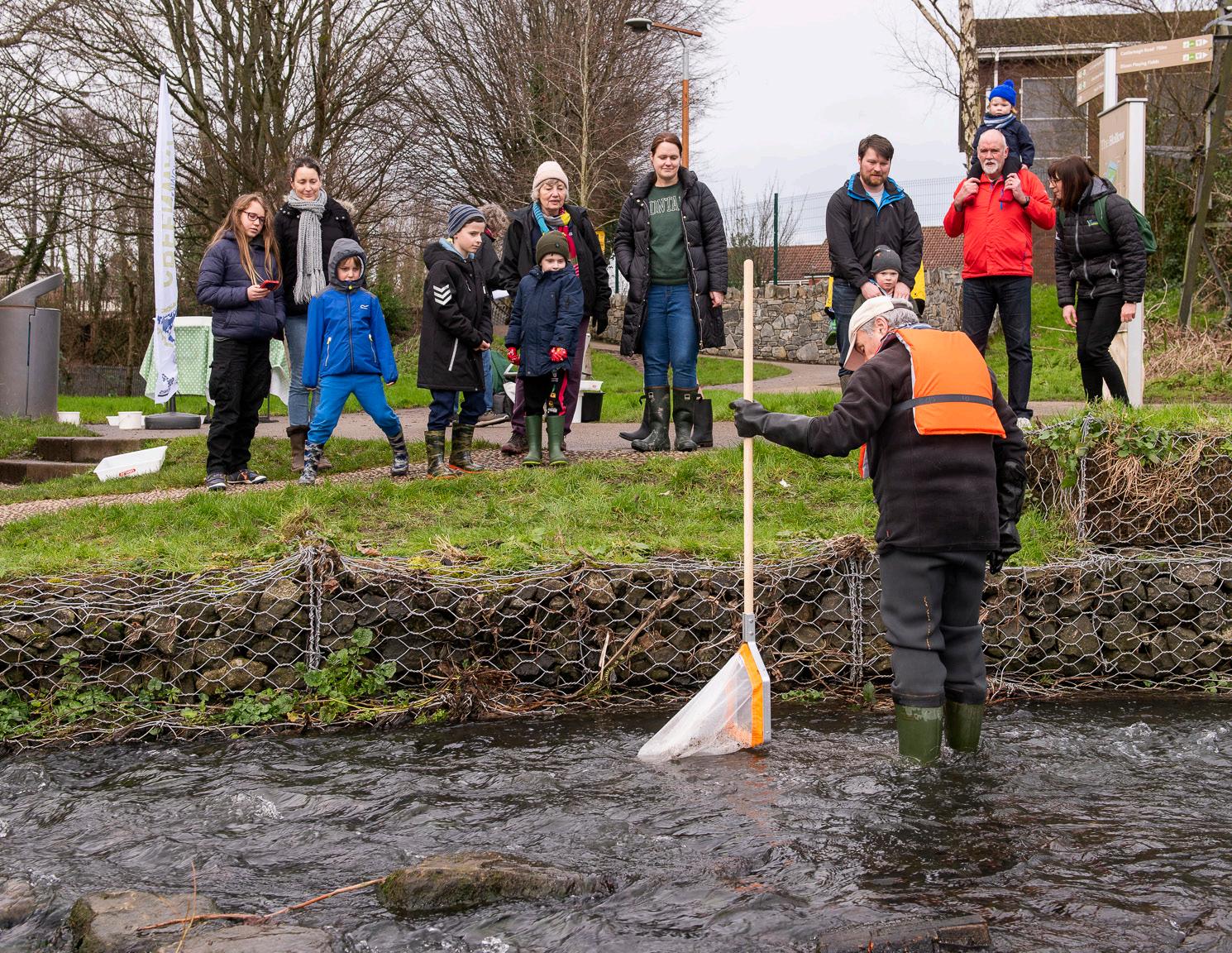
॰ Kick Sampling: Local groups have undertaken aquatic invertebrate surveys to monitor river health.
॰ Dog Fouling and Cleanliness Audits: Citizen scientists mapped fouling hotspots to inform awareness campaigns ( GroundsWellBlog/CitizenScienceandDogFouling.htmlwww.qub.ac.uk/sites/groundswell/ ).
॰ SOPARC User Counts: Volunteers collected observational data on usage patterns, demographics, and activity types to support health and inclusion metrics (groundswelluk.org/Projects/ TheConnswaterCommunityGreenway15YearsofResearchPartnershipandImpact/ Publications/proceval).
These activities enhanced environmental literacy, strengthened local stewardship, and turned the Greenway into a living laboratory for public health and sustainability.
6.4 Community Asset Transfer
As the Greenway matured, community partners and researchers increasingly explored opportunities for community asset transfer and longer-term co -management arrangements (www.qub.ac.uk/sites/groundswell/Projects/ EastSideGreenways). This phase of work built on earlier co -production practices, recognising that decisions about ownership and governance would ultimately shape the Greenway’s sustainability, inclusivity, and local economic impact. Rather than treating asset transfer as a purely legal or financial process, EastSide Partnership, community organisations, and academic partners framed it as a collective inquiry into how civic assets could best serve local people over the long term.
Through a combination of resident surveys, stakeholder interviews, and facilitated visioning workshops, communities were invited to reflect on different models of governance, levels of responsibility, and potential risks and benefits. These engagement activities surfaced strong aspirations for local influence and accountability, alongside realistic concerns about capacity, resourcing, and long-term viability. Local organisations expressed interest in hybrid models that combined professional oversight with community leadership, rather than full transfer or solely statutory control.
The process also opened discussion about the Greenway’s role in supporting social enterprise and inclusive local economies. Workshops explored how spaces along the route could support community-led enterprises, volunteering pathways, training opportunities, and revenue -generating activities that reinvested locally. These conversations were grounded in lived experience of the Greenway as a shared civic asset, rather than an abstract policy concept, and were shaped by evidence gathered through earlier co -produced research and evaluation.
Importantly, the outcomes of this work were not limited to the Greenway itself. The co -produced insights have begun to inform wider policy conversations about sustainable models of local asset management, the distribution of power and responsibility between statutory bodies and communities, and the potential of green infrastructure to support social value creation. In this way, EastSide Greenways has functioned not only as a physical project, but as a living testbed for collaborative governance and inclusive economic thinking.
6.5 Co-producing Evidence for the Public Path Creation Order: SOPARC and
GIS Accessibility Analysis
A key example of research directly informing decision-making was the co -produced evidence developed to support the Public Path Creation Order at Dixon Playing Fields. Community observation (SOPARC), GIS accessibility modelling, and local knowledge were brought together to demonstrate how the proposed Greenway access points would increase usage, equity, and connectivity for surrounding neighbourhoods. This approach reflected the Greenway’s commitment to co -produced evidence, ensuring that planning decisions were shaped by both technical analysis and community priorities for safe, convenient access.
Using ArcGIS Network Analyst, researchers modelled changes in walking accessibility if the proposed Greenway path and gates were approved. Network Service Area analysis mapped all streets reachable within 5, 10, 15, and 20 minutes from existing and proposed access points, based on average walking speeds. Interpreted collaboratively with EastSide Partnership and residents, the analysis showed clear accessibility gains. Across all time bands, the number of dwellings within walking distance of the green space increased, with particularly strong gains in the 5- and 10 -minute walk zones. The modelling also showed shorter, more direct walking routes for residents already near the green space, improving perceived safety and accessibility for families, older residents, and less confident users. Overall, the green space’s walkable catchment expanded substantially, improving equity of access and future -proofing the site for surrounding development.
This technical analysis was complemented by community-supported SOPARC data collection. Volunteers and staff recorded user numbers, activity levels, demographics, peak times, and movement patterns at existing access points. The observations demonstrated strong latent demand, capturing informal desire lines and revealing how people were already attempting to access the green space despite physical barriers (groundswelluk.org/Projects/ TheConnswaterCommunityGreenway15YearsofResearchPartnershipandImpact/ Publications/proceval).
Together, GIS modelling and SOPARC data provided a robust, community-grounded evidence base for the Path Creation Order. The work demonstrated that opening the Greenway connection would substantially improve equitable access to green space, reduce travel distances, enhance safety, and strengthen connections between neighbourhoods, illustrating how co -produced evaluation can directly support formal planning processes.
6.6 Lessons for Policy and Practice
॰ Evaluate with Communities: Co-production ensures that evaluation reflects lived experience and local priorities.
॰ Embed Researchers Locally: Physical presence builds trust, accelerates knowledge exchange, and grounds research in community realities.
॰ Integrate Systems Thinking: Participatory systems mapping reveals complex pathways of change across health, environment, and social outcomes.
॰ Build Citizen Capacity: Training residents in biodiversity and usage monitoring creates civic literacy and long-term stewardship.
॰ Connect Evidence to Governance: Linking evaluation to community asset transfer and wealth building ensures that learning informs future decision-making.
॰ Use Co-produced Evidence to Inform Statutory and Spatial Decision-making: Combining community-led data (such as SOPARC) with technical GIS analysis strengthens the case for inclusive infrastructure, improves accessibility planning, and supports formal processes such as Public Path Creation Orders.
6.7 Insight
By embedding both researchers and residents in the work of evaluation, the CCG evidence deepened understanding of place, and shaped practical decisions on access, design, and connectivity, such as the evidence submitted for the Public Path Creation Order.
Impacts and Outcomes
@EastSide Greenways
Independent research and ongoing monitoring demonstrate that co-production has improved the quality and use of green space and generated measurable benefits across public health, environmental management, social cohesion, and economic development.
The Greenway’s success lies in its integration of outcomes: by embedding community engagement throughout, it produced results that reinforce one another, healthier people in a healthier environment, supported by stronger civic institutions and local economies (www.qub.ac.uk/sites/groundswell/Projects/ TheConnswaterCommunityGreenway15YearsofResearchPartnershipandImpact).
7.1 Health and Wellbeing
The Greenway has produced clear public health dividends through increased physical activity, contact with nature, and enhanced social connectedness.
Increased Physical Activity: Evaluations led by Queen’s University Belfast found significant increases in walking and cycling levels among residents. Usage data show that the route usage increase by 114%.
Mental Health and Social Wellbeing: Surveys and qualitative interviews identify reduced stress, improved mood, and a stronger sense of belonging among regular users.
Health Inequality Reduction: Data showed a 203% increase in women and girls using the CCG from baseline, demonstrating the Greenway’s role as a spatially targeted intervention for health equity.
Policy Relevance: These outcomes support public health strategies such as Making Life Better and NI’s Active Travel Framework, offering evidence that community-designed green infrastructure can deliver scalable, population-level benefits.
7.2 Social Capital and Community Cohesion
The Greenway has strengthened the social fabric of east Belfast by creating shared spaces where interaction is routine, informal, and positive.
Bridging Divides: Previously separated communities, divided by geography and historical tensions, now share common access routes, events, and amenities. Observational studies indicate diverse patterns of use across age, gender, and community backgrounds.
Volunteerism and Collective Efficacy: Through the Greenway Leaders and volunteer networks. These experiences build confidence, skills, and trust, reinforcing the sense that collective action can improve shared environments.
Cultural Identity and Pride of Place: Heritage interpretation and public art celebrate local stories, reinforcing place identity and civic pride. The Greenway has become a new symbolic asset for East Belfast, reorienting perceptions of the area internally and externally.
Policy Relevance: The Greenway demonstrates that investment in shared environmental assets can also deliver peacebuilding and cohesion dividends, complementing initiatives under PeacePlus and community relations strategies.
7.3 Environmental Restoration and Climate Resilience
At its core, the CCG was an environmental restoration project, one that has measurably improved ecosystem health and climate resilience.
Water Quality and Flood Risk: The re-naturalisation of the Connswater, Knock, and Loop Rivers, combined with new flood storage basins, has reduced flood risk for over 1,700 homes. Water quality monitoring shows improved ecological status, and riverbanks have been stabilised through naturalised planting.
Biodiversity and Ecosystem Services: Habitat restoration has increased species richness in flora and fauna, including pollinators and birdlife. Tree planting and riparian vegetation have improved carbon sequestration and air quality benefits.
Climate Adaptation and Education: The Greenway provides living examples of climate resilience in practice, used by schools and community groups as outdoor classrooms for environmental education.
Policy Relevance: These achievements align with the UK Climate Change Risk Assessment, Belfast Resilience Strategy, and Green and Blue Infrastructure Plan, demonstrating how community-led design can advance statutory environmental and climate objectives.
7.4 Economic Regeneration and Community Wealth
The Greenway has stimulated local economic renewal through enterprise development, tourism, and social value creation.
Local Enterprise and Employment: The project catalysed investment in adjacent housing, retail, and hospitality. Social enterprises, cafés, bike hire, and event services, employ local residents, keeping economic benefits within the community.
Visitor Economy: The Greenway has become a recognised destination within the Belfast Greenways Network and a key component of active travel tourism. Key elements include the development of the EastSide Visitors Centre, tourism and heritage trails and CS Lewis Square. Visitor spending supports small businesses and local amenities.
Property and Investment Confidence: The area has experienced a measurable uplift in property values and investor confidence, with the Greenway cited as a catalyst for wider regeneration in east Belfast.
Policy Relevance: The project exemplifies community wealth-building in action, showing how environmental infrastructure can underpin inclusive economic development.
7.5 Integrating the Impacts
Perhaps the most important insight from the CCG is that the whole is greater than the sum of its parts. By physically connecting neighbourhoods that were previously fragmented or separated, the Greenway reduces everyday barriers to movement and interaction, supporting social cohesion, shared use of space, and informal encounters across communities. Health gains reinforce social connection; environmental improvements strengthen civic pride; and economic regeneration supports long-term stewardship. These outcomes are interdependent, each sustained by the co -production model that made them possible. From a systems perspective, the Greenway demonstrates how long-term, community-embedded infrastructure can simultaneously function as a public health intervention, an environmental adaptation measure, and a mechanism for social equity and reconciliation, embedding peace -building into the ordinary routines of daily life.
7.6 Lessons for Policy and Practice
For policymakers and urban practitioners, the evidence from the CCG offers a number of strategic insights:
॰ Embed Evaluation from the Outset: Long-term monitoring of social, health, and environmental outcomes strengthens the business case for investment.
॰ Design for Equity: Targeting access and benefit to disadvantaged areas maximises health and cohesion outcomes.
॰ Invest in Partnerships: Collaboration between community organisations, local authorities, and academia builds resilience and innovation capacity.
॰ View Green Infrastructure as Multi-functional: The CCG demonstrates that health, environmental, social, and economic outcomes can be delivered through one integrated asset.
॰ Sustain Funding for Stewardship: Capital investment must be matched by ongoing resources for maintenance, volunteering, and community programming.
7.7 A Replicable Model
The CCG provides a replicable, evidence-based model for co-produced green infrastructure that delivers against multiple policy agendas, from health inequalities and climate resilience to economic inclusion and social cohesion. Its success lies in the alignment of people, place, and policy. When communities are engaged as co-designers and co-stewards, green infrastructure ceases to be a one-off project and becomes a living, evolving civic institution.
Lessons for Policy and Practice: Embedding Co-Production and Community Engagement
@EastSide Greenways
The CCG demonstrates that co-production is the infrastructure that makes all other infrastructure work. The most durable outcomes arose not from capital expenditure or design innovation alone, but from the relational architecture that connected institutions, residents, and place over more than a decade.
This section distils those lessons for policymakers, practitioners, and funders seeking to embed authentic community engagement and co-production into future programmes.
8.1 The Four Pillars of Embedded Co-Production
Across the Greenway’s lifespan, four interlocking principles underpinned success. They provide a transferable framework for other projects:
1. Continuity: Engagement as a Long-term Relationship
॰ Community engagement must extend across every phase - from visioning and design to delivery and long-term stewardship.
॰ The CCG invested in continuity of personnel and purpose through EastSide Partnership, ensuring that residents interacted with familiar faces over many years.
॰ This consistency built trust and reduced “consultation fatigue,” a common pitfall in regeneration projects.
॰ Long-term presence also allowed feedback loops - learning from implementation to inform future management.
Lesson: Funders and agencies should resource engagement as a core project function over the full lifecycle.
2. Capacity: Investing in People, Not Just Projects
॰ The Greenway’s co-production model was only possible because residents, volunteers, and youth participants were supported to build the skills and confidence required for meaningful involvement.
॰ Programmes such as Greenway Leaders and Legacy Project provided structured training and progression pathways.
॰ Community groups received practical support for event organisation, environmental volunteering, and governance participation.
Lesson: Effective co-production depends on capacity-building infrastructure, training, stipends, coordination, and mentoring, embedded within project budgets.
3. Connectivity: Linking Engagement Across Systems
॰ The CCG’s success stemmed from its ability to integrate across systems; physical, social, and institutional.
॰ Engagement activities connected flood engineers with community artists, health researchers with youth mentors, planners with residents.
॰ These interactions generated shared ownership across professional and community boundaries, reducing siloed delivery.
Lesson: Policymakers should design governance and funding structures that reward cross-sectoral collaboration and encourage joint accountability for health, social, environmental, and economic outcomes.
4. Control: Sharing Power and Decision-Making
॰ True co-production requires more than listening; it demands that communities exercise real influence and, where appropriate, ownership.
॰ EastSide Partnership and Belfast City Council embedded shared governance, with residents contributing to decisions on design, event programming, and asset management.
॰ Community asset transfer and social enterprise models ensured that local groups retained economic and operational stake in the project’s future.
Lesson: Engagement without decision-making power breeds cynicism. Sustainable models institutionalise community control through representation in governance, participatory budgeting, and ownership of local assets.
8.2 Practical Design for Co-Production
The Greenway offers practical design features that make engagement functional:
Embed local staff within community anchor organisations
Combine formal and informal approaches
Use key events to mark achievement and recruit new participants
Integrate training, recognition, and employment links
Include community representation in decision-making bodies
Lesson: Engagement must be designed like any other system, with structure, feedback, and adaptation built in.
8.3 Institutional Lessons
Governance and Structure
The CCG’s partnership model demonstrates the value of hybrid governance, balancing statutory accountability with community legitimacy.
For policymakers, this means:
॰ Recognising the vital role of anchor organisations with local credibility.
॰ Allowing flexibility in procurement and governance to accommodate co-production approaches.
॰ Ensuring that evaluation and reporting frameworks capture qualitative impacts such as trust and inclusion, not just quantitative outputs.
Funding and Sustainability:
॰ Community engagement cannot survive on short-term grants.
॰ The Greenway integrated community programming within core operational budgets, avoiding the stop-start pattern common in regeneration funding.
॰ Social enterprises and asset transfers generated (or could generate) revenue streams that supported long-term community participation.
Lesson: Funding models must move from project cycles to place-based investment strategies that recognise community capacity as critical infrastructure.
8.4 Evaluating the Value of Engagement
Traditional evaluation methods often understate the impact of co-production. The range of research methods used provided a richer understanding of how engagement shaped outcomes.
Lesson: Policymakers should support mixed-method evaluation frameworks that capture lived experience, social capital, and trust alongside traditional metrics. This creates stronger evidence for investing in co-production as a driver of public value.
8.5 The Cultural Dimension of Co-Production
॰ Perhaps the most enduring lesson from the CCG experience is cultural. Co-production is not only a methodology, it is a mindset that reframes the role of institutions from providers to partners.
॰ It requires humility from professionals, openness to lived expertise, and time to build authentic relationships.
॰ It rewards transparency, responsiveness, and empathy as much as technical proficiency.
Lesson: Embedding co-production demands organisational culture change, supported by leadership commitment, staff training, and performance incentives that value collaboration and community partnership.
8.6 Key Takeaways for Policymakers and Practitioners
॰ Start with relationships, not plans. Build trust before design.
॰ Fund engagement as infrastructure. People and processes require resourcing just as paths and bridges do.
॰ Use anchor organisations as connectors. Their presence ensures continuity and cultural translation.
॰ Create clear progression pathways. Move participants from consultation to leadership to stewardship.
॰ Design for inclusion. Tailor engagement to reach those least likely to participate.
॰ Share power visibly. Institutionalise community representation and decision-making.
॰ Evaluate what matters. Capture stories, trust, and behaviour change, not only visitor numbers.
॰ Plan for legacy. Stewardship begins at project inception, not handover.
8.7 A Blueprint for Collaborative City-Making
The CCG shows that co-production is a practical framework for delivering integrated outcomes across health, environment, economic and social policy. It demonstrates that when local people are recognised as co-authors of their environment, urban regeneration becomes both more equitable and more resilient.
For policymakers, community engagement works best when it is continuous, capacitated, connected, and empowered.
The Greenway’s story is about civic transformation. It provides a working blueprint for cities seeking to design with communities, where public spaces are co-owned, co-managed, and co-evolve as part of a living social contract between citizens and the state.
Reflections and Future Direction
@EastSide Greenways
The CCG is an evolving social infrastructure, a living demonstration of how places can be remade through trust, collaboration, and shared stewardship. For policymakers and practitioners, it offers not just lessons from the past but also a compass for future urban and environmental transformation.
9.1 The Greenway as a Living Legacy
Fifteen years after its conception, the Greenway continues to yield dividends, health, wellbeing, ecological, economic, and social, precisely because it was designed as a living system, rather than a static intervention. Its success lies in the intertwining of three enduring legacies:
॰ Physical Legacy: a resilient, accessible green-blue corridor that mitigates flood risk, enhances biodiversity, and connects neighbourhoods.
॰ Social Legacy: a community network that maintains, animates, and continually reinvents the space through volunteering, youth engagement, and local enterprise.
॰ Institutional Legacy: an embedded partnership model that continues to shape how Belfast designs, delivers, and governs place-based interventions.
These legacies reinforce one another, demonstrating that co-produced infrastructure can sustain long-term public value far beyond its initial capital investment.
9.2 Relevance to Current Policy Agendas
The Greenway experience resonates with a range of contemporary policy priorities across the UK and Ireland:
Health Inequalities and Prevention
The CCG evidences how accessible green infrastructure can function as a place-based health intervention, particularly in areas of deprivation. Its integration with active travel and social prescribing initiatives offers a scalable model for preventative health investment under NI’s Making Life Better strategy/Neighbourhood Model of Care.
Climate Action, Adaptation and Resilience
As climate risks intensify, the Greenway demonstrates how flood alleviation, water quality improvement, and ecological restoration can be delivered through community-led, nature-based solutions.
It aligns directly with the UK Climate Change Risk Assessment, NI Climate Change Adaptation Programme, Belfast Resilience Strategy, providing practical evidence of how adaptation can strengthen social equity and civic participation.
Community Wealth Building
Through social enterprise, volunteering pathways, and local procurement, the Greenway exemplifies how environmental investment can drive inclusive economic development. This approach supports the Community Wealth Building Framework for NI and the broader Levelling Up and Shared Prosperity agendas.
Peacebuilding and Cohesion
The Greenway bridges historic divides in east Belfast, through shared experience and use. It provides a tangible, physical framework for everyday peacebuilding, aligning with PeacePlus priorities and models of everyday reconciliation relevant across post-conflict societies.
9.3 The Future Role of Co-Produced Infrastructure
Looking ahead, the CCG experience points to a broader transformation in how we think about public infrastructure.
Where investment once focused on hard assets, paths, pipes, and pavilions, the emerging challenge is to invest equally in the social architecture that animates those assets.
Greenways, parks, and flood defences are no longer just environmental projects; they are civic ecosystems through which public trust, health equity, and climate resilience are co-created.
This demands a new model of governance and finance that:
॰ Treats engagement and co-production as fundamental design parameters.
॰ Recognises community capacity as infrastructure.
॰ Rewards multi-outcome delivery across departments and funding streams.
॰ Embeds evaluation and learning as continuous processes rather than post-project exercises.
Future Policy Opportunity: Northern Ireland’s evolving policy landscape, including the new Green and Blue Infrastructure Plan, Neighbourhood Model for Care, and the Belfast Region City Deal, provides fertile ground for replicating the CCG model. Each initiative can build on its demonstration of how community partnerships turn environmental assets into public health and social equity engines.
9.4 Scaling and Replication: Principles for Future Projects
To translate the CCG model into future practice, policymakers and practitioners can draw on five guiding principles:
॰ Start with Place: Every community holds distinct health, wellbeing, economic, ecological, cultural, and social assets. Effective co-production begins with listening to those narratives.
॰ Design for Stewardship: Plan from day one for how the community will use, maintain, and govern the space in the long term.
॰ Bridge Systems: Integrate health, environment, planning, and economic development agendas through joint funding and governance.
॰ Value Process as Outcome: The act of co-production itself creates wellbeing, cohesion, and learning, benefits that must be recognised and measured.
॰ Sustain Momentum: Legacy funding, social enterprise, and policy alignment keep community engagement alive after capital works conclude.
Policy Implication: Adopting these principles would help shift regeneration from short-term delivery cycles to adaptive, participatory city-making, where communities remain active co-authors of their environments.
9.5 Reflections for Practitioners
For practitioners, planners, designers, engineers, and evaluators, the CCG story reinforces that the technical and the social must be designed together.
The Greenway’s interdisciplinary practice, merging landscape architecture, hydrology, public health, and community development, offers a template for “whole-place” professionalism.
Practitioners who adopt co-production not as a procedural requirement but as a creative discipline unlock more resilient, adaptive, and equitable outcomes.
9.6 Closing Reflection
The Greenway became a catalyst for civic renewal. Its lesson: when people are trusted to co-create the places they live, the results endure longer, reach deeper, and cost less in the long run.
In an age of climate stress, health inequalities, and social fragmentation, the CCG experience is not just a success story from east Belfast, it is a working theory of change for 21st-century urban policy: build with, not for; investing in people as much as place; and measuring success by the strength of the relationships left behind.
From Engagement to Ownership
The CCG journey began with deep engagement. Thousands of conversations, workshops, and collaborative design exercises that translated local insight into tangible design and governance decisions. Over time, this engagement matured into shared ownership and stewardship, supported by a 40-year management commitment and a growing ecosystem of community leadership, volunteering, and local enterprise. The Greenway has proven that civic pride and participation are not soft outcomes; they are the social infrastructure that keeps public investment alive.
From Stewardship to Sustainability
Through its volunteer programmes, Greenway Leaders, and partnerships with schools, youth groups, and local organisations, the project has cultivated a sense of collective custodianship. Stewardship is not just about maintaining paths or planting trees. It is about maintaining relationships, trust, and relevance. The Greenway’s approach to tackling everyday challenges (dog fouling, anti-social behaviour, inclusion, climate resilience) shows that social sustainability is inseparable from environmental and economic sustainability.
From Research to Reflection
By co-producing research such as systems mapping, citizen science, and community asset transfer studies, local people have become co-authors of the Greenway’s evidence base. This democratisation of data has enriched understanding and strengthened legitimacy and accountability. The community now helps shape how success is defined and measured.
A Model for Policy and Practice
For policymakers and urban practitioners, the CCG offers a replicable model grounded in the following lessons:
॰ Engagement is an investment, not a cost. Early and continuous participation yields long-term dividends in trust, ownership, and sustainability.
॰ Design for governance, not just delivery. Building in stewardship and management structures from the outset safeguards both assets and relationships.
॰ Co-produce the evidence. Community-led research strengthens local capacity and policy credibility alike.
॰ Nurture civic infrastructure. Programmes such as Greenway Leaders and citizen science are the connection between policy ambition and lived experience.
॰ Embed equity and inclusion. A co-produced public space must be accessible, representative, and adaptive to the needs of all.
Summary
The experience of the CCG illustrates that when collective action among residents, policymakers, and researchers is guided by a common vision, regeneration evolves beyond the restoration of place to constitute a reintegration of the civic fabric.