
Welcome to Niagara
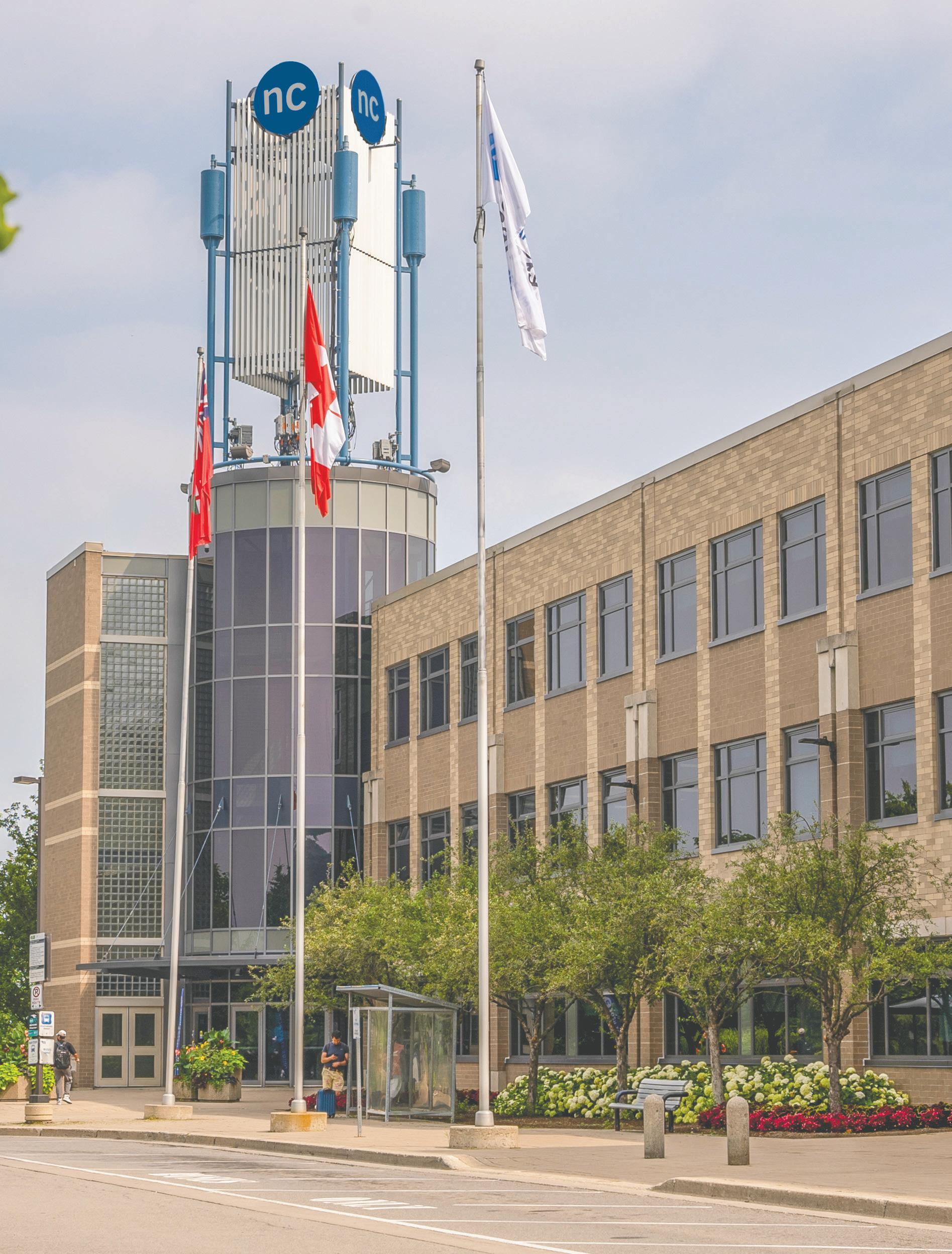
Nestled in the vibrant Niagara Region, minutes from a renowned tourism hub brimming with daily events, Niagara College (NC) boasts over 120 innovative programs across its Welland and Niagara-on-the-Lake campuses. These locations offer unique living labs, advanced facilities for hands-on learning, numerous on-campus jobs, world-class applied research, and small, supportive classes.
Benefitting from proximity to diverse cultural attractions, entertainment, and the Canada-US border, both campuses foster a warm, supportive culture and deliver relevant programs with real-world experience. Passionate faculty prioritize student success, creating a distinctive educational journey.
Conveniently located and easily accessible via major highways and the Niagara Transit Commission, NC’s campuses are approximately a 20-minute drive apart, connecting students to major urban centers and the US border.
Niagara College acknowledges that we are gathered on the shared traditional lands of the Anishinaabe (pronounced: ahnish-naw-bay) and Haudenosaunee (pronounced: ho-dehneh-show-nee). We offer our sincere gratitude to them as the stewards of this land, which is protected by the Dish With One Spoon Wampum agreement’s three principles: to take only what you need, leave enough for others, and always keep the dish clean. Today, many First Nations, Métis, and Inuit communities from across Turtle Island continue to live and work in this territory. Acknowledging the peoples whose territory we are on, and the agreements that guide their stewardship of the land, reminds us to reflect on and respect their unique relationship to this land. It also is an invitation for all of us to identify and engage in actions that respect and reinforce our commitments to Truth and Reconciliation and Indigenous Rights.
Getting here
No matter which direction you are travelling from, both the Welland Campus (WC) and Daniel J. Patterson Campus in Niagara-on-theLake (NOTL) are easy to get to thanks to the transportation corridor and vast network of highways which connect Niagara College to both Canada’s largest city, and the most populous regions of the USA. It takes approximately 20 minutes to drive between the campuses. Transit options are available.
Driving Times (in minutes)
Hamilton: 45
Oakville: 55
Milton: 60
Brantford: 60
Mississauga: 60
Transit
Local transit in the Niagara Region makes it easy to get where you need to go with the UPass covering bus fares as part of student fees.
WELLAND
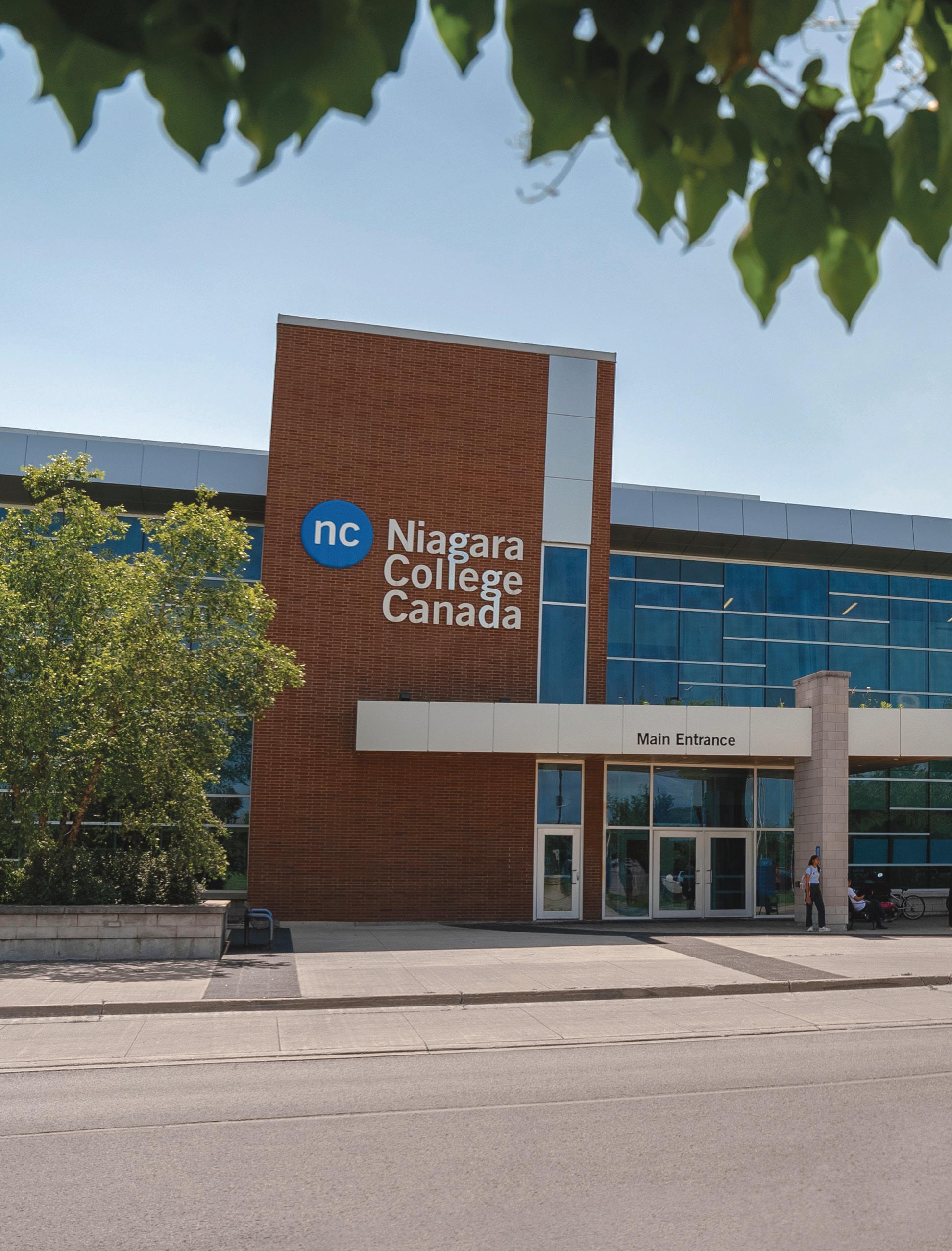
Recognized for its commitment to sustainability and naturalization, the Welland Campus is located in a welcoming community in the heart of the Niagara Region.
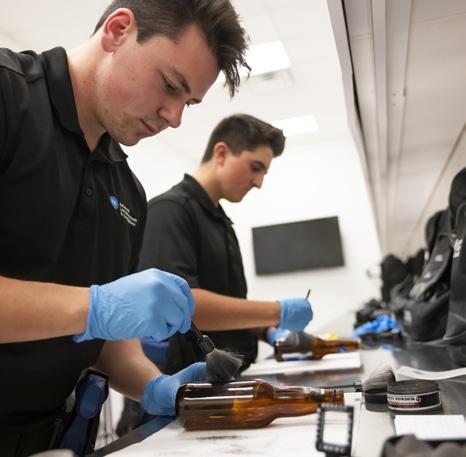
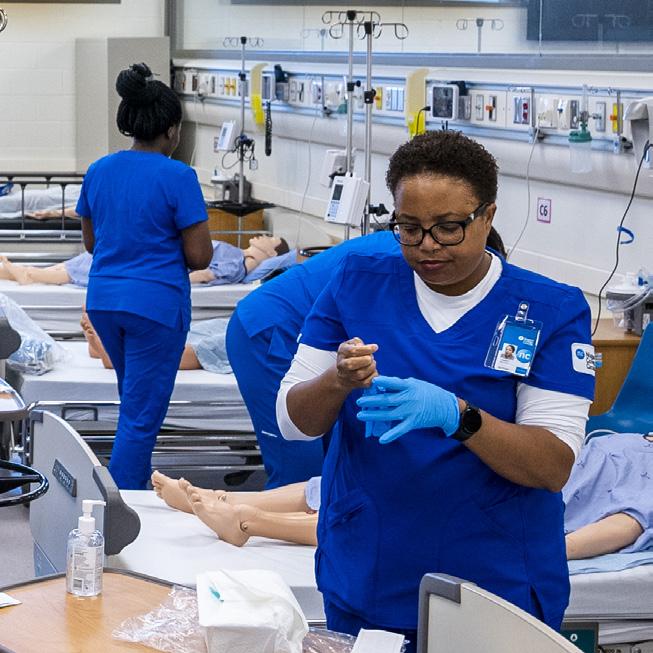
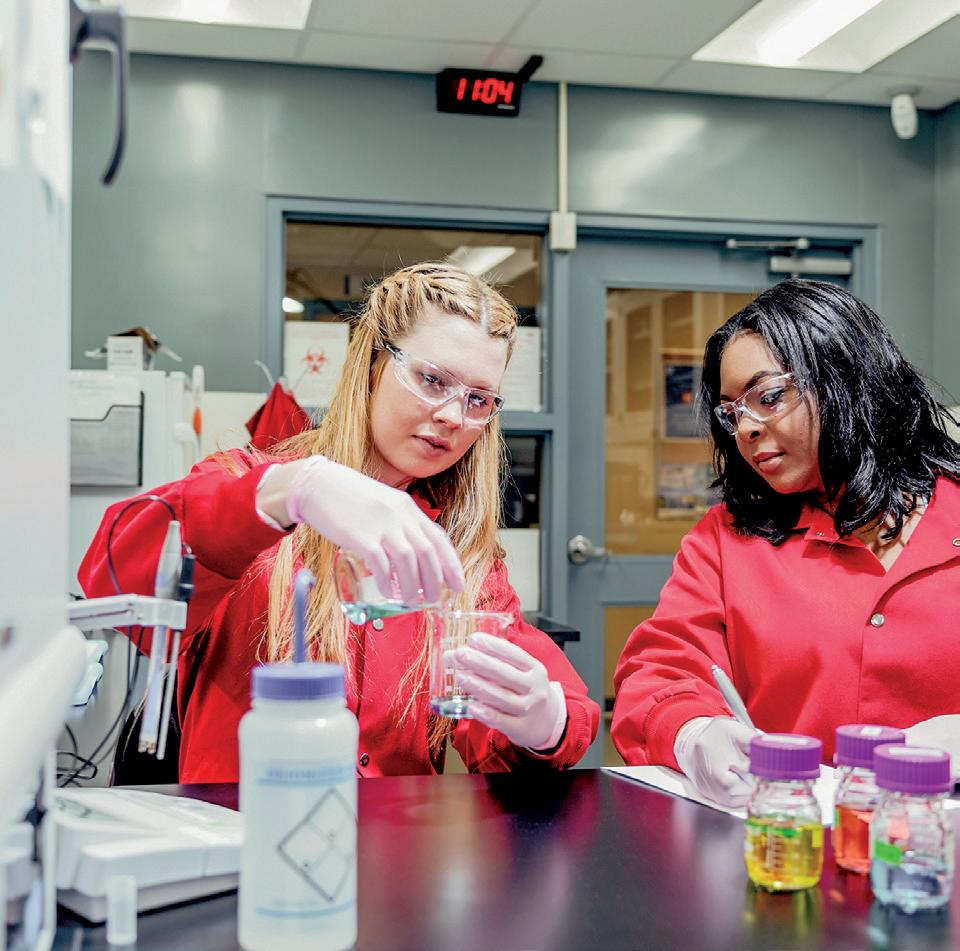
There’s plenty to experience at the Campus, which has seen expansions, additions, and renovations to every section of the facility. The original home of Niagara College, this campus is a leader in sustainable technology and operates state-of-the-art, modern learning environments designed to help students succeed in their education and career training.
This campus houses the schools of: Academic and Liberal Studies, Allied Health, English Language Studies, Justice and Fitness, Media, Myhal School of Nursing, Part-Time Studies, Technology, and Trades (including apprenticeships).
Campus Highlights
Applied Health Institute
Dental Clinic
Eva M. Lewis Library and Learning Commons
Green Automotive Technology Lab Justice and Fitness Training Centre
Marilyn I. Walker Centre of Excellence in Visual Arts and Technology
Massage Therapy Clinic
Rankin Technology Centre Research and Innovation
Residence
Simplii Financial Athletic Centre
Teaching Hair Salon
Walker Advanced Manufacturing and Innovation Centre







NIAGARA -ON-THE-LAKE
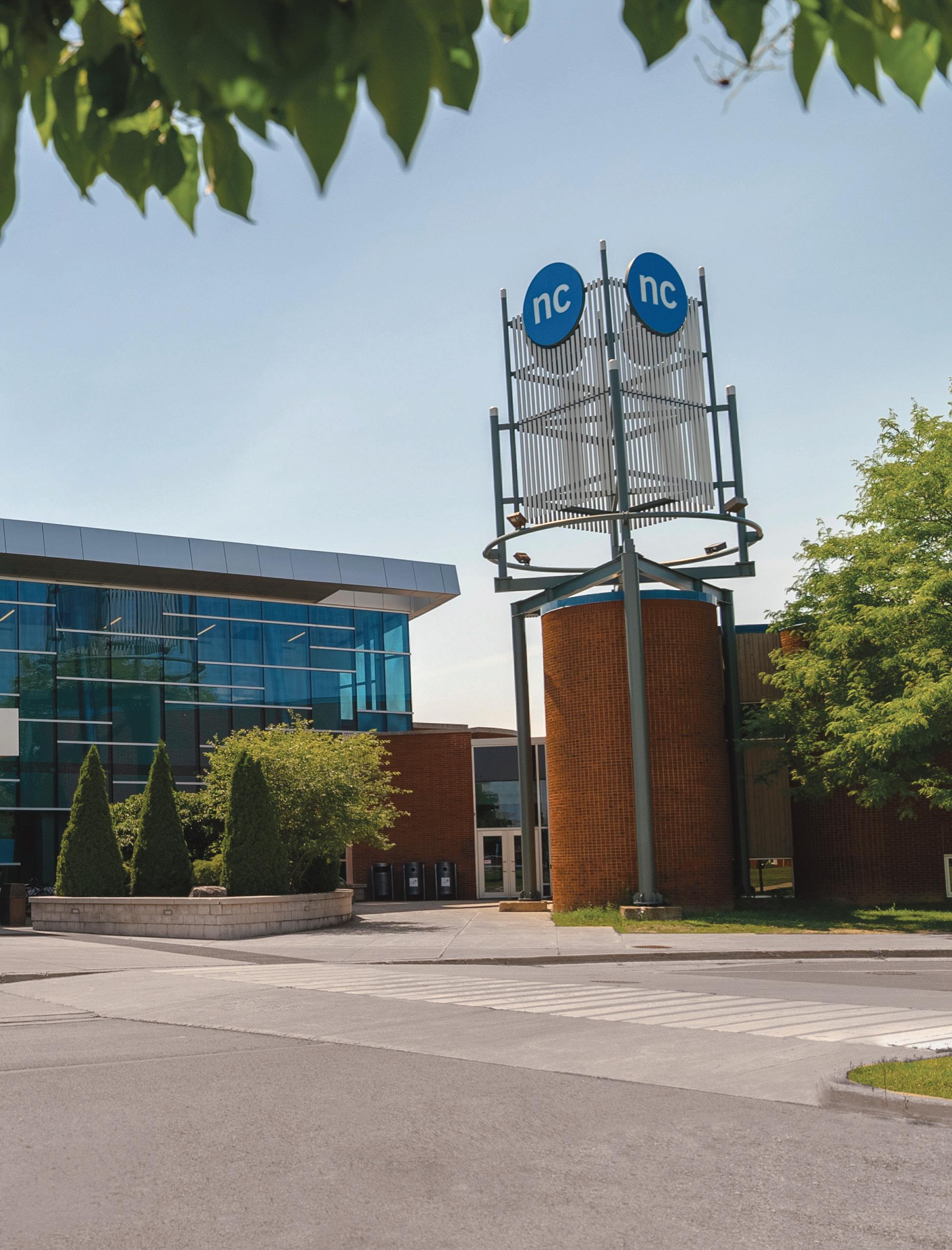
The Daniel J. Patterson Campus in Niagara-on-the-Lake is located between Glendale Avenue and the Queen Elizabeth Way, a transportation corridor between Toronto and the United States.
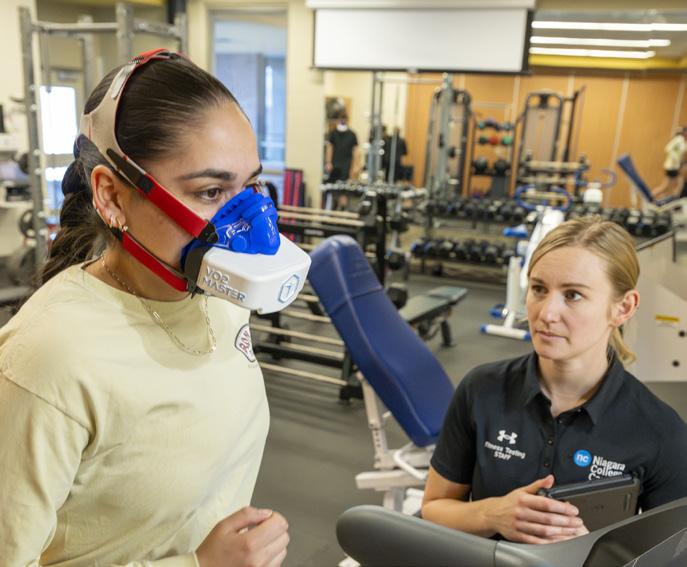
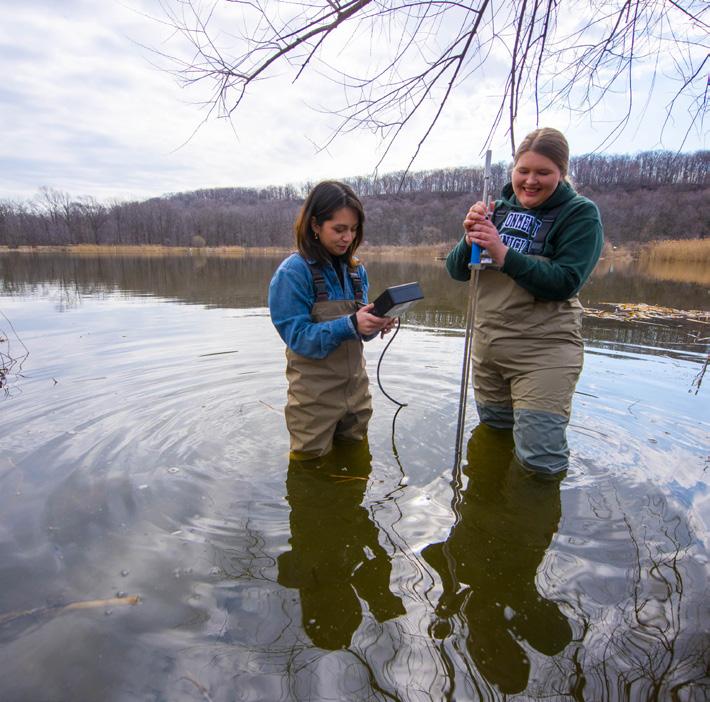
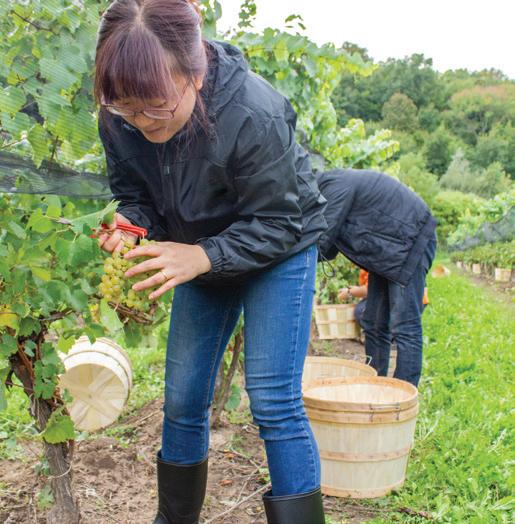
The Campus is the centre for NC’s business, community services, hospitality, environmental, culinary and wine programs. It has blossomed into a masterpiece of hands-on learning through the innovative development of several on-campus teaching enterprises. It has most recently seen the addition of a state-of-the-art fitness and research centre in the Marotta Family Innovation Complex.
This campus houses the schools of: Academic and Liberal Studies, Business and Management, Community Services, Culinary Arts, Environment and Horticulture, Hospitality and Tourism, and Wine, Beer and Spirits.
Campus Highlights
40-Acre Vineyard
Benchmark Restaurant
Cannabis Research and Teaching Facility
Ecological Lagoons and Wetlands
Marotta Family Innovation Complex
Pop-Up Culinary, Wine, Beer and Spirits Events

Research & Innovation
Residence
Teaching Brewery
Teaching Distillery
Teaching Greenhouse
Teaching Spa
Teaching Winery





ncLIFE

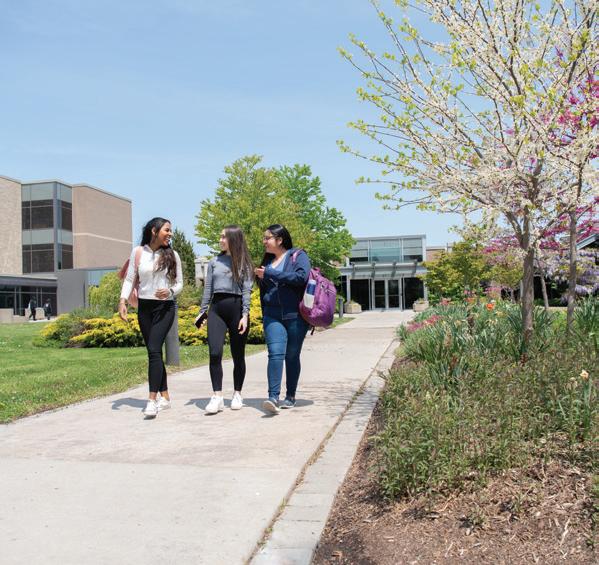
NC Life is our commitment to providing a rich, engaging, and supportive experience that goes beyond academic instruction, aiming to foster personal growth, community connection, and career readiness for all its students. It’s about the energy, community, and possibilities that define being a student at Niagara College.
Student Experience
We are committed to nurturing the whole person. We understand the value of being welcoming and caring.
Academic Excellence
Academic excellence and student success are the focus in everything we do.
Environmental Sustainability
A sustainable future for our planet and our communities is important to us. It’s about working together to create a better future for generations to come.
Partner Engagement
Our success is built on strong partnerships. We work with others to create opportunities for our students and to actively support our communities.
Global Reach
As Canada’s leading global college, we are focused on driving positive change through global education and training. We embrace diversity in all its forms and bring together cultures and experiences to prepare world-ready graduates.
Programs
Niagara College offers distinct areas of study that are perfectly suited to your success. More than 120 degree, diploma, graduate certificate and advanced-level programs have graduated more than 120,000 students since 1967 and we welcome thousands of new students each year to our culturally diverse and vibrant campuses.
NOTE: please review complete program admission requirements at niagaracollege.ca/admissions
Legend
The following pages outline the programs being offered for 2026-2027 and are categorized by area of study. Reference the colour and symbol codes below to help determine start dates, credential type, and delivery modes.
START TERM: • September • January • May
CREDENTIAL TYPE:
4-Year Bachelor’s Degree
1-Year Certificate
1-Year Graduate Certificate
2-Year Diploma
3-Year Advanced Diploma Certificate of Apprenticeship
CAMPUS:
NL: Niagara-on-the-Lake Campus
WE: Welland Campus
OL: Online
DELIVERY MODE:
IP: In-Person
HYB: Hybrid
OL: Online
WIL.: Work-Integrated Learning opportunity
Program delivery modes at NC.
In-person: In-person programs delivered in a face-to-face, on-campus format. Students and instructors will meet in person the majority of the time. However, this delivery may also include some online components, such as:
› Access to and completion of online resources, videos, or other course materials hosted in the learning management system (LMS) or on thirdparty sites
› Asynchronous learning components, such as self-paced modules or simulations
› Synchronous learning components, such as online class meetings or office hours
Online: Online programs do not meet in person. Although all delivery is online, how and when students are expected to engage with their courses can vary.
Synchronous: Focus on students attending lectures, meet with their peers, and connect with their instructors at the same time using online lecture tools. Some online asynchronous work such as:
› Modules, simulations, or other course materials
› Completion of assignments
› Tests and quizzes
Asynchronous: Students will work independently without simultaneous meetings with peers or the instructor. Primarily independent with some synchronous online work such as:
› Scheduled tests or quizzes
› Group projects
› Presentations
Hybrid: Delivery will be split between in-person and online. Students will be expected to attend regular in-person sessions of the course on campus. Online components may be delivered synchronously or asynchronously.

School of Culinary Arts



Program code: 0458
Campus location: Niagara-on-the-Lake
Start term: Sep
niagaracollege.ca/0458
Baking and Pastry Arts
LEARNING ENTERPRISE
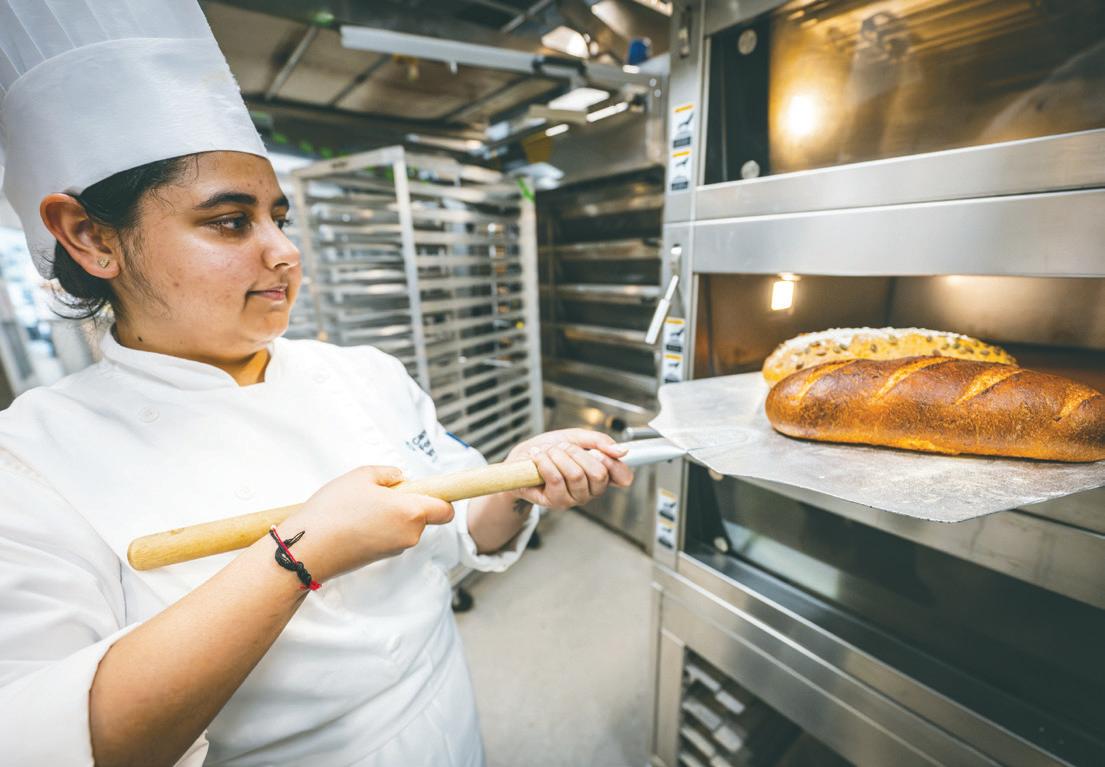
Do you have a fl air for baking and pastry arts and want to turn your talent into a successful career? As a Baking and Pastry Chef, you are a patient and detail-oriented visionary who creates breads, cakes, cookies and pastries and is ready to meet the demand for qualified bakers in Canada’s thriving hospitality industry.
Program Highlights:
› The 125-acre Daniel J. Patterson Campus in Niagara-on-the-Lake is located in the heart of Ontario’s thriving hospitality industry and serves as a living lab for students including leading-edge baking facilities, a 40-acre on-site vineyard, Teaching Brewery, Teaching Winery, Teaching Distillery, Teaching Spa, Teaching Greenhouse and hop yard.
› Learning environment includes state-of-the-art equipment.
› Environmentally controlled chocolate and sugar lab.
› Program is taught by world-class chef faculty.
› Community engagement through not-for-profit and catered events.
Career Opportunities:
› Baker
› Bakery manager
› Cake decorator
› Pastry chef
› Pastry cook
Admission Requirements:
OSSD or equivalent, ENG 12 (C) or (U), Math 11 (C), (U) or (M). Recommended Courses: Hospitality and/or Tourism 11 or 12, Information Technology Applications in Business 11 (O).
PROGRAM OUTLINE
Term Course
ONE Introduction to Baking Principles Baking and Pastry Techniques I Baking Essentials I Baking and Pastry Techniques II Mathematics Nutrition
TWO Confection Production Bakery Management Advanced Baking and Pastry Techniques Baking Essentials II Language and Communications Equity, Diversity and Inclusion in Canada
Program code: 0467
Campus location: Niagara-on-the-Lake
Start term: Sep
niagaracollege.ca/0467
Want to take your Baking and Pastry talents to the next level?
LEARNING ENTERPRISE
The two-year diploma in Baking and Pastry Arts Management offers a unique blend of theoretical instruction and practical training to enable graduates to go beyond the recipe and standard formulations to create new products, produce more complex and tailored confections and generate higher volumes in fastpaced environments.
Program Highlights:
› Program utilizes state-of-the-art baking labs and industrial-grade equipment to recreate the pace and demands of high-volume production bakeries. After a common first year curriculum with the certificate program that establishes the fundamentals, students in the diploma program spend the second year exploring the creative design, food science and product innovation theories and practices needed to make their own mark on the world of baking and pastry.
› Deeper study of baking science, creative design and product development.
› Skill development in chocolate work, artisan breadmaking and sculpted showpieces.
› World-class chef professors expert in creative artistry and product innovation.
› Greater skill development in high-volume, precision production as part of the program.
Career Opportunities:
› Bakery manager/supervisor
› Bread baker
› Cake designer/decorator
› Catering or production baker
› Entrepreneur
› Pastry chef
› Research and development baker
Admission Requirements:
OSSD or equivalent, ENG 12 (C) or (U), Math 12 (C), (U) or (M).
Recommended Courses : Hospitality and/or Tourism 11 or 12, Information Technology Applications in Business 11 (O)
Baking and Pastry Arts Management

PROGRAM OUTLINE
Term Course
ONE Introduction to Baking Principles Baking and Pastry Techniques I Baking Essentials I Baking and Pastry Techniques II Nutrition Mathematics
TWO Confection Production
Bakery Management
Advanced Baking and Pastry Techniques Baking Essentials II Language and Communications Equity, Diversity and Inclusion in Canada
THREE Product Design and Innovation Science
Baking Sculpture and Creative Design Baking Adaptations and Alternatives
General Education Elective*
FOUR Sustainable Bakery Management
High Volume Commercial Production Techniques Precision Artistry
General Education Elective*
*1 course required
Program code: 415A
Campus location: Niagara-on-the-Lake
Start term: Jan
niagaracollege.ca/415A
Cook
Do you have excellent organizational skills, keen attention to detail and a desire to prepare and artistically plate food? As a Cook in Canada’s rapidly growing hospitality industry, you have the cooking knowledge and skills required for career advancement at restaurants, hotels, hospitals, clubs and more.
Program Highlights:
› The Daniel J. Patterson Campus in Niagara-onthe-Lake is located in the heart of Ontario’s thriving hospitality industry and serves as a living lab for students including leading-edge facilities, 40-acre on-site vineyard, NC Teaching Brewery, hop yard, and world-class chef faculty.
› Gain additional experience and exposure working at special functions held on- and off-campus and on-site training opportunities at Benchmark and Bench-to-Go, NC’s student-led restaurant.
› Students pursuing the Assistant Cook (415B) apprenticeship study Level 1 Cook Fundamentals for 15 weeks of instruction plus paid on-the-job training. Students seeking to do the full Cook apprenticeship (415A) also complete a second 15-week term in school for Level 2 - Cook Advanced.
› Graduates are eligible to apply for provincial certification following program completion.
Career Opportunities:
› Baker
› Banquet manager
› Caterer
› Chef de cuisine
› Chef de partie
› Cook
› Food service administrator and coordinator
› Kitchen manager
› Research and development cook
› Sous chef
Admission Requirements:
OSSD or equivalent AND Employment in the trade.

PROGRAM OUTLINE
Term Course
ONE Workplace and Food Safety Practices
Basic Nutrition
Culinary Business Practices
Food Theory - Basic
Culinary Techniques - Basic
Bake Theory
Baking Techniques - Basic
TWO Menu Planning
Culinary Business Management Food Theory - Advanced
Culinary Techniques - Advanced
Baking Techniques - Advanced
ADVANCED DIPLOMA
Program code: 0464
Campus location: Niagara-on-the-Lake
Start term: Sep niagaracollege.ca/0464
Are you interested in a career that combines food science with culinary skills to ensure the development of safe and delicious food from farm to table? As a Culinary Innovation and Food Technology graduate, you are a culinary innovator with the unique ability to develop and improve foods, products and operations; reduce food safety risks and ensure regulations are met; and provide nutritional labelling and analysis.
Program Highlights:
› State-of-the-art facilities and equipment.
› The School of Culinary Arts at Niagara College is renowned for its outstanding reputation with graduates, employers and industry partners.
› Co-op work term offers work-integrated learning experience in food science and product development.
› Collaboration with Research and Innovation Centre provides applied research opportunities to many students.
Career Opportunities:
› Food production manager
› Food research and development manager
› Food technologist
› Product developer
› Quality assurance manager
› Research chef
Admission Requirements:
OSSD or equivalent, ENG 12 (C) or (U), Math 12 (C) or (U).
Recommended Courses: Bio 11 (C) or (U) or 12 (U), Chem 11 (U) or 12 (C) or (U).
Culinary Innovation and Food Technology Co-op

PROGRAM OUTLINE
Term Course
ONE Introduction to Food Chemistry
Introduction to Product and Process Engineering
Introduction to Food Principles
Nutrition
Garde Manger I
Culinary Techniques I - Intro to A La Carte Cooking
Culinary Essentials
TWO Language and Communications
Nutrition for Food Technology
Understanding Quality Ingredients
Garde Manger II - Advanced Garde Manger and Food Service Styles
Culinary Techniques II - Advanced A La Carte
Baking Essentials
THREE Integrated Baking Production for the Processing Engineer
Introduction to Microbiology
Food Chemistry I
I-Think: The Science of Thinking and Problem Solving
Food Law and Regulations
Food and Wine Dynamics
Algebra and Trigonometry
FOUR Food Microbiology I
Technical Communications
Functional Ingredients and Additives
International Cuisine in Food Development
Packaging and Shelf Life Analysis
Product and Process Engineering I
Statistical Concepts
FIVE Co-op Work Term
SIX Food Chemistry II
Modern Culinary Applications
Preserving and Curing
Product and Process Engineering II
Quality Control
Culinary Innovation
General Education Elective*
SEVEN
Financial and Managerial Accounting
Food Sensory Analysis
Food Microbiology II
Recipe Development
Food Research and Capstone Project
General Education Elective*
*1 course required
CO-OP
Program code: 0435
Campus location: Niagara-on-the-Lake
Start term: Sep / Jan / May niagaracollege.ca/0435
CO-OP
Interested in learning how to showcase your creative fl air for culinary arts while gaining the skills needed to manage a food preparation team? As a Culinary Management graduate, you are skilled in the art of food preparation and presentation and apply advanced food theories and kitchen management techniques to ensure a safe and healthy kitchen environment.
Program Highlights:
› The School of Culinary Arts at Niagara College is renowned for its outstanding reputation with graduates, employers and industry partners.
› Unmatched hands-on learning environment with leading-edge facilities and world-class chef faculty.
› Industry and community engagement through not-for-profit and catered events, recipe competitions, and industry research and innovation.
› Work-integrated learning opportunities through unique signature culinary events and volunteer initiatives.
Career Opportunities:
› Banquet manager
› Caterer
› Chef
› Chef de Partie
› Cook
› Executive chef
› Food product developer
› Kitchen manager
› Line cook
› Sous chef
Admission Requirements:
OSSD or equivalent, ENG 12 (C) or (U).
Recommended Courses: Hospitality and/or Tourism 11 or 12, Information Technology Applications in Business 11 (O).
Culinary Management Co-op

PROGRAM OUTLINE
Term Course
ONE Introduction to Food Principles
Mathematics
Nutrition
Garde Manger I
Culinary Techniques I - Intro to A La Carte Cooking
Culinary Essentials
TWO Language and Communications
Understanding Quality Ingredients
Culinary Cost Control
Garde Manger II - Advanced Garde Manger and Food Service Styles
Culinary Techniques II - Advanced A La Carte
Baking Essentials
THREE Co-op Work Term
FOUR Kitchen Operations
Food and Beverage Marketing
The Theory of Food Combination
Global Gastronomy
Curing and Preserving Techniques
General Education Elective*
FIVE Food and Wine Dynamics
Regional Canadian Cuisine
Culinary Management Concepts
Integrated Contemporary Food Production
General Education Elective*
*1 course required
Program code: 0454
Campus location: Niagara-on-the-Lake
Start term: Sep / Jan / May niagaracollege.ca/0454
Are you looking to give your culinary skills and creativity a boost to pursue a rewarding career in culinary arts? As a Culinary Skills graduate, you have the culinary confidence and competence needed to work side by side with Cooks and Chefs in professional kitchens and food service environments.
Program Highlights:
› The School of Culinary Arts at Niagara College is renowned for its outstanding reputation with graduates, employers and industry partners.
› Unmatched hands-on learning environment with leading-edge facilities and world-class chef faculty.
› Industry and community engagement through not-for-profit and catered events, recipe competitions, and industry research and innovation.
› Upon successful completion, enhance your baking skills by applying to NC’s Baking and Pastry Arts program.
Career Opportunities:
› Chef
› Cook
› Line cook
› Sous chef
Admission Requirements:
OSSD or equivalent, ENG 12 (C), (U) or (E).
Recommended Courses: Hospitality and/or Tourism 11 or 12, Information Technology Applications in Business 11 (O).
Culinary Skills

PROGRAM
OUTLINE
Term Course
ONE Introduction to Food Principles
Mathematics
Nutrition
Garde Manger I
Culinary Techniques I - Intro to A La Carte Cooking
Culinary Essentials
TWO Language and Communications
Understanding Quality Ingredients
Culinary Cost Control
Garde Manger II - Advanced Garde Manger and Food Service Styles
Culinary Techniques II - Advanced A La Carte
Baking Essentials
Program code: 0419
Campus location: Niagara-on-the-Lake
Start term: Sep niagaracollege.ca/0419
Do you want to extend your Chef expertise or explore a trending artisanal craft for the first time? Butchers apply both art and science to ensure the meat supply is fresh, sustainable and inventive. The Professional Butchery Techniques program is a deeply hands-on learning experience where students gain the practical skills and technical knowledge needed to thrive in the evolving meat industry. Through extensive labbased instruction, students learn traditional and contemporary butchery techniques, meat science, and food safety. Students will practice their new skills as an integral part of the meat supply chain supporting the academic Culinary programming, restaurant, catering and retail operations of Niagara College’s culinary learning enterprises. Graduates will gain proficiency in whole-animal breakdown, retail and wholesale meat processing, value-added product development, and regulatory compliance, ensuring they meet the demands of a dynamic industry
Program Highlights:
› Hands-on training with whole-animal breakdown and meat fabrication using state-of-the-art industrial equipment and facilities
› Contribute to the farm-to-table movement using sustainable and ethical practices for meat production
› Learn barbecue and charcuterie techniques while producing value-added goods such as spice rubs, marinades, and stuffed meats using applied meat science concepts
› Develop skills in an authentic retail context producing goods to order for supply chains and consumers
› Build knowledge of safety requirements for meat processing and packaging to ensure worker and public safety
Career Opportunities:
› Independent retail butcher
› Meat cutter
› Retail Butcher – Shop or Grocery Setting
› Wholesale butcher
› Industrial butcher
› Culinary specialist – meat product development
› Culinary Butcher – Restaurants or Culinary Operations
Admission Requirements:
OSSD or equivalent, ENG 12 (C), (U), or (E)
Professional Butchery Techniques

PROGRAM
OUTLINE
Term Course
ONE Farm to Table - Ethical and Sustainable Meat Production
Safety and Security in Meat Production
Butchery Techniques 1 - Fundamentals
Value-Added Production - Sausage and Stuff ed Meats
Retail Operations I Culinary Essentials for Butchers Mathematics
TWO Meat Science and Product Development
Butchery Techniques II - Advanced Meat Processing Technology and Automation
Industrial Smokehouse and Barbecue Techniques
Retail Operations II - Sustainable Retailing and Business Development Language and Communications
Welcome Future Students.
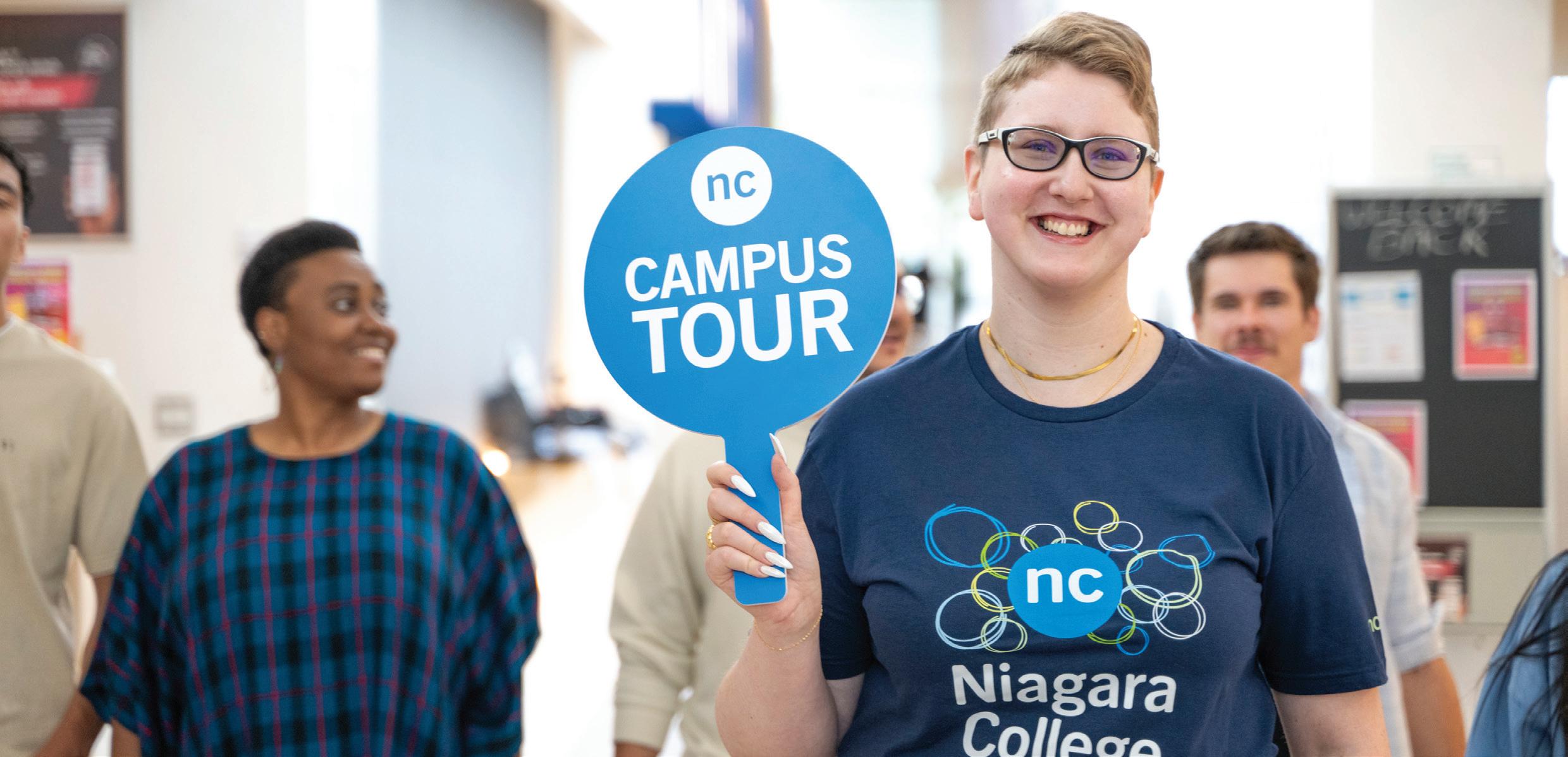
We’re proud of our leading role in Ontario’s thriving college system, and our commitment to preparing students to not only succeed, but drive innovation in today’s job market – locally and globally. From our supportive student culture to our state-of-the-art learning facilities, the best way to discover Niagara College is to visit us in person and see for yourself what sets us apart.
If you can’t visit us in person, check out photos and videos of our campuses and interact with our always-on-duty virtual tour guide as we demonstrate the many reasons to choose NC.
Looking for more information on programs or possible career options before making your final application decision? Join one of our recruitment officers for a College Exploration Information Session and discover our programs and the many career options with which they align. With our commitment to student success top of mind, NC recruiters also provide guidance on the application process.
Open Houses:
This is your day to tour, ask questions, gather information and explore. Our faculty, staff, and current students are here to support you so please make yourselves at home and dream big. Get the full experience by taking a tour of our campuses and visiting the residences. Residence will be offering an inside look at living on campus, as well as offering giveaways and information about their social programming.
FALL
Open House Nov 8, 2025
SPRING
Open House Mar 28, 2026
Attendees may enter to win up to $5,000* towards fees for Sep 2026, Jan or May 2027.
*OPEN HOUSE TUITION AWARD contest rules and information: The tuition award amount is credited towards tuition for September 2026, January 2027 or May 2027 towards entry into a new program intake. A winner will be selected at random from all official entries collected and will be notified by phone and/or email. Awards cannot be deferred to another intake and hold no cash value. Some restrictions apply. See niagaracollege.ca/openhouse.
†Financial assistance including endowed awards, declining awards, and entrance scholarships via TSA are subject to certain restrictions and regulations. Award application deadlines and application instructions can vary depending on the award. To find awards you may be eligible for, begin searching at niagaracollege.ca/finaid.
Applying to Niagara College.
Choosing your program is an important step on your path to your future. We are always ready to answer your questions and provide guidance to ensure you are ready to apply. Take a look at the following pages that contain answers to some of the most common questions we get asked. There is information about paying for and financing your education, what you need to meet admission requirements, how to apply for residence or housing, and lots of information about the special service areas that we offer to all students.
You can always start by visiting the Niagara College website where you can find convenient tabs to all of the information you need to know.
Minimum admission requirements
Each program listing in this guide provides information on the minimum requirements for admission. This information is also available on the Niagara College website.
niagaracollege.ca/admissions
Many NC programs begin in September of each year while some are also available in January or May. Program availability and the current status may change and are updated daily on the Niagara College website.
niagaracollege.ca/status
International applicants
Niagara College welcomes applicants from around the globe. To apply, individuals need to complete and submit the international student application found on the NC International website.
international.niagaracollege.ca/how-to-apply


Ready to apply? Visit the Ontario Colleges website to begin your application today.
Note that applications are subject to a non-refundable fee.
NOTE: The minimum academic requirements pertain to most programs. Some programs may also require: specific pre-requisite courses, preadmission testing, attendance at an information session, participation in an audition session, submission of a portfolio, completion of an essay or questionnaire or additional assessment of equivalency to required courses. It is important to note that meeting admission requirements does not guarantee admission to Niagara College programs.
Tuition and Fees:
All fees shown are based on the 2025-26 academic year. Tuition and fees for 2026-27 in all funded postsecondary programs may change without notice. Co-op programs have an additional fee of $575.00 per co-op term. Costs for materials are also added to some programs.
The basic annual fees listed here are tuition and essential fees.
Fees include: Academic Advising, Peer Services, Technology, Athletics and Recreation, Campus Safety, Career Services, Financial Aid Offices, Counselling and Mental Health, Health Services, Student Buildings, Student ID Cards, Transit Pass, Achievement and Records, Student Health Plan, SAC Advocacy, SAC Resources, SAC Membership, SAC Social Engagement, SAC Clubs, SAC Services, Student Engagement, Sustainability, and Alumni. For the most up-to-date fee information, please visit the NC website.
niagaracollege.ca/fees
international.niagaracollege.ca/fees

Important Dates and FAQs.
Beginning your postsecondary student journey comes with a lot of questions. Thankfully we have compiled a list of some of the most common things individuals want to know before making such an important decision.
Application dates and deadlines
Non-Competitive Programs
Applications to OPEN programs are processed on a first-come, firstserved basis starting in November each year. NC Admissions will continue to issue acceptances to open programs until the capacity is met up to the start of the term.
Competitive Programs
Note that key dates can be subject to change with the most up-to-date information found on the NC website. niagaracollege.ca/dates
Last date to apply for equal consideration to a competitive program: Feb 1, 2026
Last date to submit portfolio, test scores, and/or final grades in required courses for consideration to competitive programs: Feb 27, 2026
Earliest admission offer date for competitive programs: Mid March
Last date to apply for equal consideration to a competitive program: Jun 5, 2026
JAN 2027
Last date to submit portfolio, test scores, and/or final grades in required courses for consideration to competitive programs: Jul 10, 2026
Earliest admission offer date for competitive programs: Late July
Last date to apply for equal consideration to a competitive program: Oct 30, 2026
Last date to submit portfolio, test scores, and/or final grades in required courses for consideration to competitive programs: Nov 20, 2026
Earliest admission offer date for competitive programs: Late November
How do I apply and is there an application fee? The application for Canadian citizens, permanent residents, and convention refugees is available online at ontariocolleges.ca for a non-refundable application fee. You can apply to a total of five programs, with no more than three choices at any one Ontario college. For more information, please visit ontariocolleges.ca. International applicants see below:
I am an international (visa) applicant: Niagara College welcomes students from over 100 different countries. To apply as an international student, you must complete and submit the web application form for international students, along with your official transcripts, graduation documents from high school and/or university, and provide proof of English proficiency (if applicable). Upon receiving the information provided, we will assess your application. If you meet the eligibility criteria and the program remains available, you will receive an Offer of Admission, accompanied by a request to submit a deposit by a specified deadline. Upon timely submission of the deposit by the deadline, along with meeting the academic requirements, you will receive a Letter of Acceptance, and we will initiate the process of obtaining a Provincial Attestation Letter on your behalf. These documents are essential for your study permit application and cannot be transferred.
International applicants may apply online at: international.niagaracollege.ca/apply
For more information contact: Niagara College International 100 Niagara College Boulevard, Welland, Ontario, Canada, L3C 7L3
Phone: 905-988-2910, ext. 7151 Fax: 905-735-2413
Email: international@niagaracollege.ca
How will I know if the College has received my application? The Admissions Office will send an email and mail an acknowledgement brochure to you after your application has been received from ontariocolleges.ca. The mailing will indicate if there are specific pre-admission requirements for the programs for which you have applied and due dates for test scores, portfolio and transcript submissions. You can also find this information at: niagaracollege.ca/par
Are accommodations provided in the admissions process for students with disabilities?
If you wish to request accommodation for pre-admission testing, please contact the Accessibility Services office prior to the test date.
Phone: 905-735-2211, ext. 7778 or visit: niagaracollege.ca/hwas/services/accessibility/tests/
Do I need to provide my transcript(s)?
Please ensure that proof of all admission requirements is received by the Admissions Office within 3 weeks of submitting your application, or no later than the date noted in the chart under Important Dates.
If you are currently enrolled as a full-time high school student in Ontario, your school should forward transcript information directly to ontariocolleges.ca. If you are not currently enrolled in Ontario as a full-time high school student, you must request an official high school transcript be sent directly to ontariocolleges.ca For information on how to request Ontario high school and postsecondary transcripts, please visit niagaracollege.ca/transcriptrequirements
Does the College consider transcripts from outside of Ontario?
Applicants whose Canadian secondary school studies have been completed outside the province of Ontario must submit evidence of equivalent standing. Recognized equivalents to the Ontario Secondary School Diploma (OSSD) are: Alberta–grade 12, British Columbia–grade 12, Manitoba–grade 12, New Brunswick–grade 12, Newfoundland–grade 12, Nova Scotia–grade 12, Prince Edward Island–grade 12, Quebec–high school leaving certificate (secondary V), Saskatchewan–grade 12, Yukon, the Northwest Territories and Nunavut–grade 12. Applicants who have been educated outside of Canada are considered on an individual basis. International credential assessment services are available at icascanada.ca or wes.org/ca
Does the College consider alternatives to an Ontario secondary school diploma?
Applicants who provide documentation for Ontario Secondary School Diploma (OSSD) equivalency from any of the following sources will be considered on an individual basis.
› Academic and career entrance (ACE)
› Canadian adult education credential (CAEC)
› Home schooling (individual assessment is required)
For further information, please contact the Admissions Office at Phone: 905-735-2211, ext. 7619 or Email: admissions@niagaracollege.ca.
Does the College consider transcripts from private career colleges?
Most private College courses and/or credentials are not acceptable as admission requirements for Niagara College programs. Please contact the Admissions Office at admissions@niagaracollege.ca for assistance with your particular program of interest.
Can I apply as a mature student?
If you are age 19 or older as of the first day of classes, and do not have an Ontario secondary school diploma (OSSD) or equivalent, you may be considered for admission as a mature student. You must meet all specific admission requirements (courses, portfolio, written statement, audition, pre-admission testing, etc.) For the program to which you are applying. Equivalency testing is available in mathematics and English for applicants age 19 or older. Testing is not available for biology, chemistry or physics. Test fees are payable at the time the test is written.
To review eligibility for admission, please contact the Admissions Office at Phone: 905-735-2211, ext. 7619 or Email: admissions@niagaracollege.ca.
What are English language proficiency requirements?
If you have earned the equivalent of the Ontario Secondary School Diploma (OSSD) from outside of Canada, you will be required to provide proof of one or more of the following:
› Grade 12 English at the (C)or(U) level (Ontario high school curriculum)
› Niagara College Mature Student Test for English
› ACE English (Academic Upgrading)
› International credential assessment for studies outside of Canada
If English is your subsequent language, the College (for the purposes of admission to standard non competitive programs) will also accept the following as proof of English proficiency:
English Language Score Requirements
TOEFL
TOEFL
IELTS
All postsecondary (undergraduate) programs*
All degree & post-graduate programs
Paper Based: 500, Computer Based: 173, iBT: 80 Minimum: 20 Writing, 20 Speaking
Paper Based: 550, (TESL: 600)
Computer Based: 213 (TESL: 250) iBT: 85 Minimum: 22 Writing, 22 Speaking, (TESL: 101, 27 Speaking, 23 Listening, 27 Writing, 24 Reading)
All postsecondary (undergraduate) programs* 6.0–No individual band under 5.5 IELTS All degree & post-graduate programs
CAEL
EAP
EAP
PTE
PTE
Duolingo
Duolingo
All postsecondary (undergraduate), degree & post-graduate programs* 60–No individual band under 50
All undergraduate programs
All degree & post-graduate programs
Completion of Level 5 English for Academic Preparation program with 70% and no individual grade under 50%
Completion of Level 5 English for Academic Preparation program with 75% and no individual grade under 60%
All postsecondary (undergraduate) programs* 58+, with no individual skill under 53
All degree & post-graduate programs 60+, with no individual skill under 57
All postsecondary (undergraduate) programs* 105+, with no individual subscore below 95
All degree & post-graduate programs 120+, with no individual subscore below 100
*Excluding Pharmacy Technician. For details visit niagaracollege.ca/pt
The College provides both short and long-term intensive English as a subsequent language programs for foreign trained students who plan to attend Niagara College, or a university, and need to improve their English language proficiency before starting their academic studies.
NOTE: Niagara College strives to ensure the accuracy of the information in this publication. Academic curriculum is continually reviewed and revised to ensure programs and courses remain relevant and meet all Ministry regulations. The College reserves the right to cancel or make changes to any course or program, fee, procedure, or campus location at any time.
Schedules: The college makes every attempt to maintain consistent schedules however, please note that timetables are subject to change. The scheduling of classes generally occurs from 8:30 a.m. to 10:30 p.m. Monday to Thursday, and from 8:30 a.m. to 6:30 p.m. on Friday.
Please refer to our website at niagaracollege.ca for the most accurate and up-todate information.
On-Campus Residence
Looking to extend your educational experience beyond the classroom while meeting new people, forming life-long friendships, and getting involved in everything NC offers?
From student leadership opportunities to experiencing a global community that connects you to students from all over the world, living in residence enables you to explore self-growth and development in a social and supportive community. You will be surrounded by residence advisors committed to helping you transition into your new accommodations.
Residence Highlights
› Flexible payment options and only pay for the academic year instead of a typical 12-month lease
› Just steps from campus
› Furnished two bedroom suites featuring a kitchen (containing a fridge and microwave), three-piece bathroom, and Wi-Fi Internet (may vary).
› Students supply linens, cutlery and small, CSA-approved appliances (e.g. a toaster or a kettle).
› Controlled access and on-site management.
› 24 hour monitoring and visitors sign in.
› 24/7 access to a self-serve canteen or marketplace.
Contact Residence:
Welland T: 905-732-9700 ext 3800 email: info.welland@niagararesidence.ca

Apply to Residence
› Online applications Fall/Winter Academic Term open on February 1st (or next business day).
› Applications received on or before April 15th will be included in the acceptance lottery. After April 15th applicants are considered first-come, first-served if rooms available.
› Applicants will be notified by email within 3 business days of April 15th.
› Please see the Residence website for full details and dates for alternate terms.

niagararesidence.ca
Niagara-on-the-Lake T: 905-641-4435 ext 3900 email: info.notl@niagararesidence.ca