A time for action.

Message from Vince
Malvaso Vice-President, College Operations
Calling our Sustainability Plan A time for action set a bold expectation.

A year later, we’re proving that commitment in spades, through measurable impact and a stronger vision for the future of Niagara College.
Some parts of the Sustainability Plan have been quick to progress, and others are taking shape more slowly, but all of it is essential. We will continue moving forward, building positive momentum for our campus community and the environment.
Collective action, one of the Plan’s guiding principles, is integral to our success. That means active participation from everyone on campus to make progress towards our goals and targets.
Every effort, big or small, helps drive change. I encourage you to get involved in whatever way feels right; by giving your items new life through the Free Store, by sorting waste responsibly, or by seeking new ways to embed sustainability into your work or classroom.
The impact? Taking the College beyond regulatory compliance, towards leadership in sustainability that inspires future changemakers – our students –as they enter a wide range of industries. Together, we can move NC’s mission forward. Thanks to all those who have supported our collective success to date.
At a high level, our first year of this Sustainability Plan marked a series of remarkable achievements.
Named one of only seven Canadian Institutions to achieve the new Living Planet at Campus Certification from WWF-Canada.
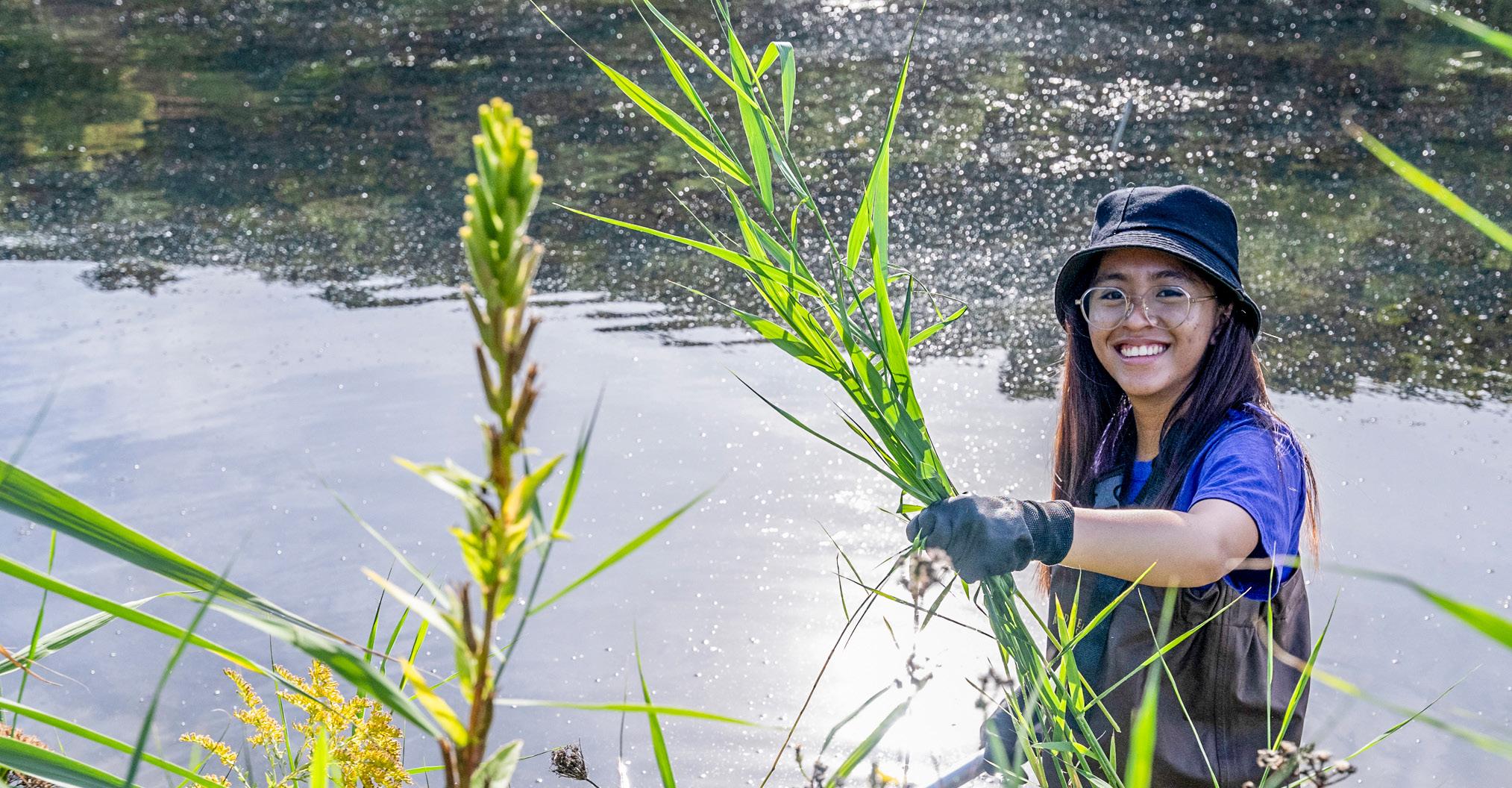
65 per cent reduction in total acreage of invasive phragmites at both campuses.
Launched new general elective: Sustainability in Action: Solutions for Change
19 per cent reduction in intensity-based energy consumption since 2011.
Opened the new HESIC Research Greenhouse to support horticulture innovation.
Installed AI-powered Oscar sort bins to improve waste diversion and food waste capture targets.
About This Report
The Niagara College Sustainability Plan is a clear and actionable roadmap to advance the sustainability priorities in our Strategic Plan, and strengthen our leadership in environmental stewardship, education for sustainable development, and climate action.
The plan outlines priority areas, goals, measurable targets, and key actions to guide our path to building a culture of sustainability and collaboration across the NC community. The Plan models future-focused leadership, enhances transparency, and reaffirms our commitment to embedding a collective, sustainable mindset into decision-making at all levels of the organization.
Since its launch in fall 2024, individuals and groups across the college have been working collaboratively to make progress on the goals and actions in the Plan. As we see 2025 come to an end, we have many milestones to celebrate. We have made progress on 36 of 46 actions identified in the plan. We also want to acknowledge and celebrate those that have participated in sustainability-related events and learning opportunities. We could not have made such significant progress without your participation.
At a glance.
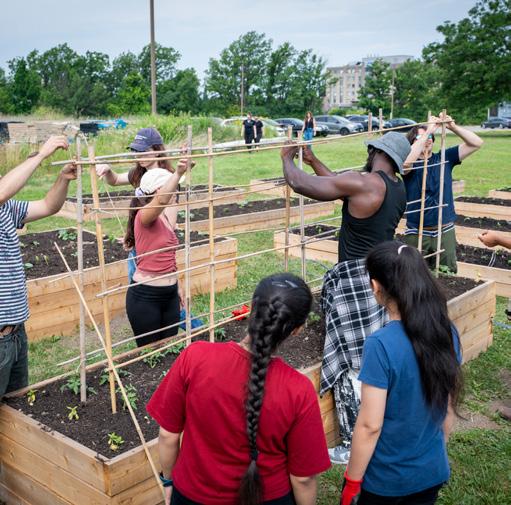
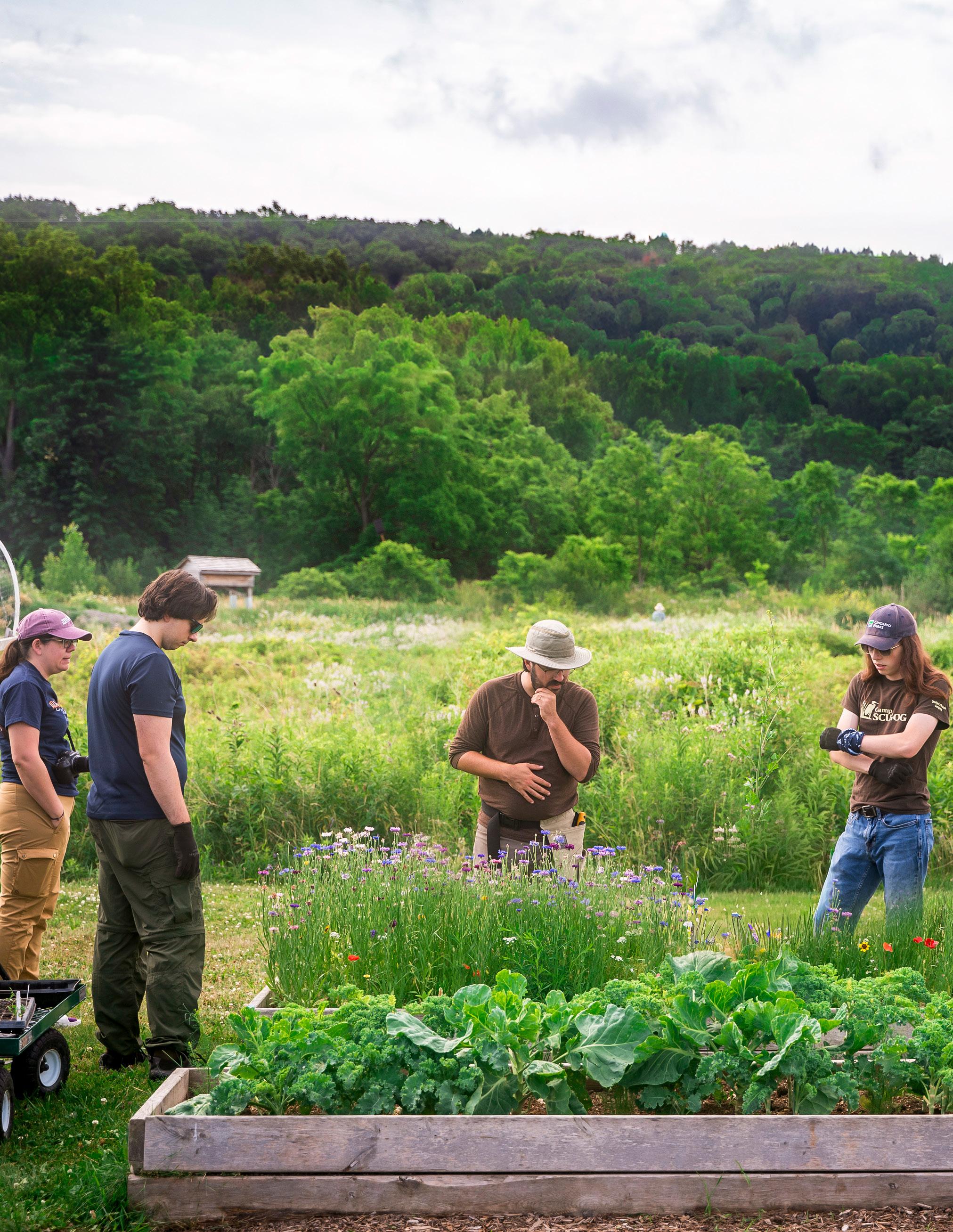
Students and employees working at the United Way Garden
78% 1/7 50 50 69%
78% of students agree that their academic program develops their sustainability skills and competencies
Niagara College is one of seven Canadian Institutions to achieve the new Living Planet at Campus Certification
Fifty students took the new Sustainability in Action: Solutions for Change general elective in its first semester being offered
Reduction in total acreage of invasive phragmites at Niagara College campuses in Niagara-on-the-Lake and Welland
United Way garden expanded to over 50 raised garden beds to grow food to be distributed for free on campus and in the community
1,048 19% 10.5%
1,048 unique Species identified at the Daniel J. Patterson Campus in Niagara-on-the Lake and 134 unique species at the Welland Campus in 2025
19% reduction in intensity-based energy consumption since 2011
10.5% increase in waste diversion rate from 2011 baseline
2025 Certifications, Awards and Signatories.







Living Planet at Campus Certification, since 2024
Audubon Cooperative Sanctuary Program, since 2017
Bee City Campus, since 2020
Sustainable Winegrowing Ontario Certification, since 2022
Green Circle Salon Certification, achieved in 2024
International Green Gown Awards Finalist
SDG Accord
Nature Positive Pledge and 2025
● Complete inventory of academic courses and programs that align with the Sustainable Development Goals (SDGs)
● Create pathways for more sustainability-related opportunities and activities to show case BIPOC voices and stories through internal and external partnerships and collaboration
● Academic and Liberal Studies to develop and deliver general education elective on sustainability
● Increase support for student, departmental or community-based projects, initiatives and activities to incorporate sustainability and provide students opportunities to volunteer
Academics.
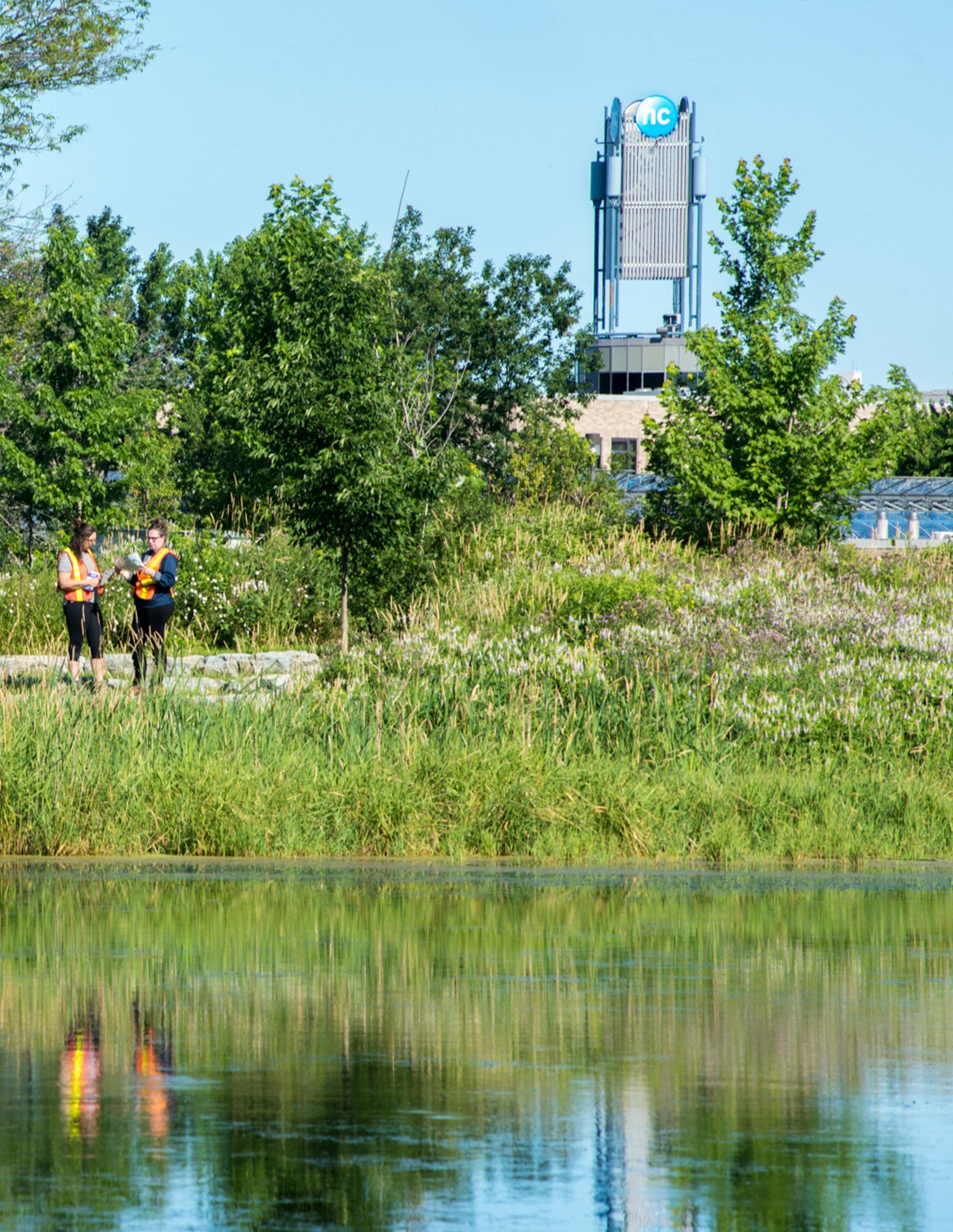
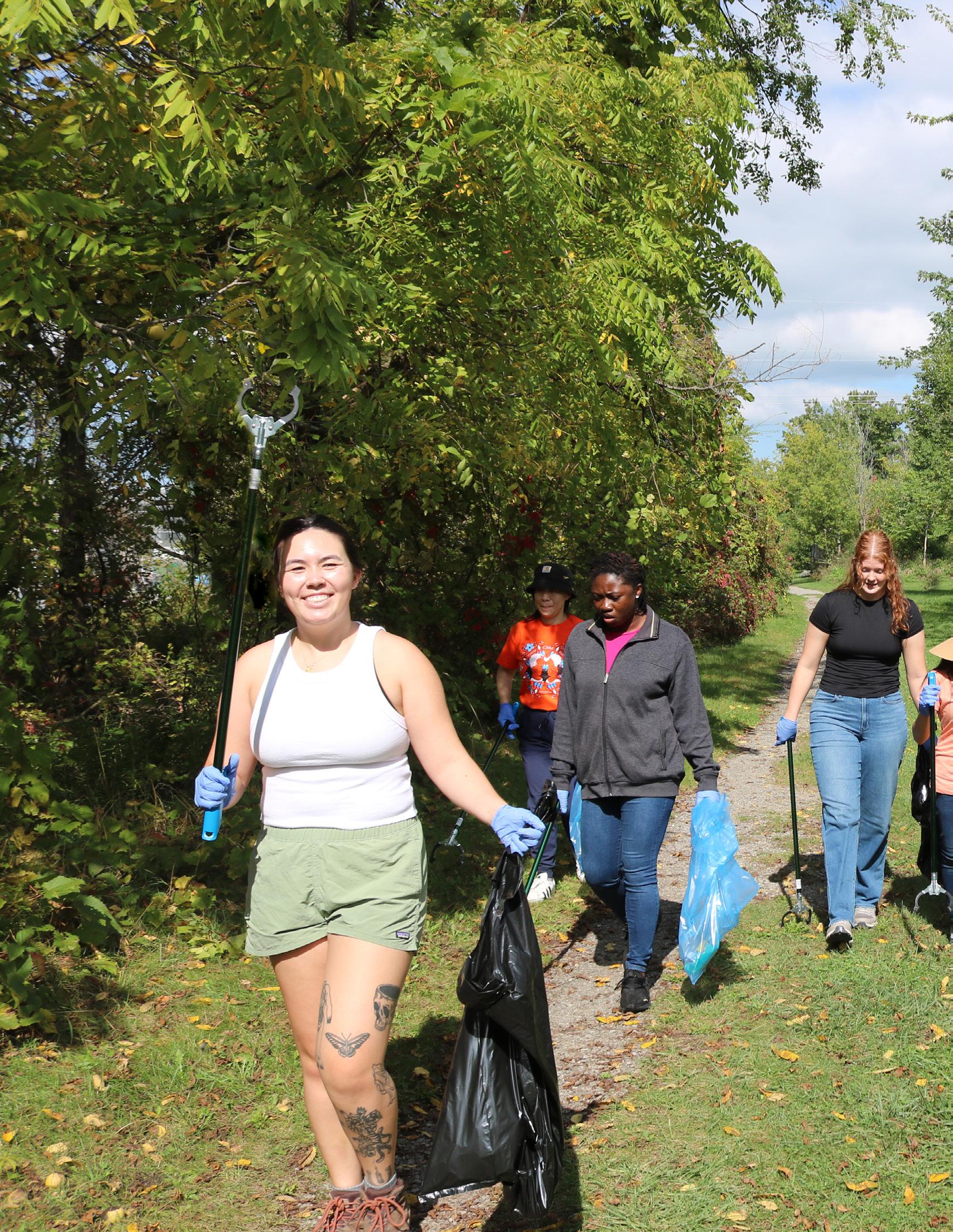
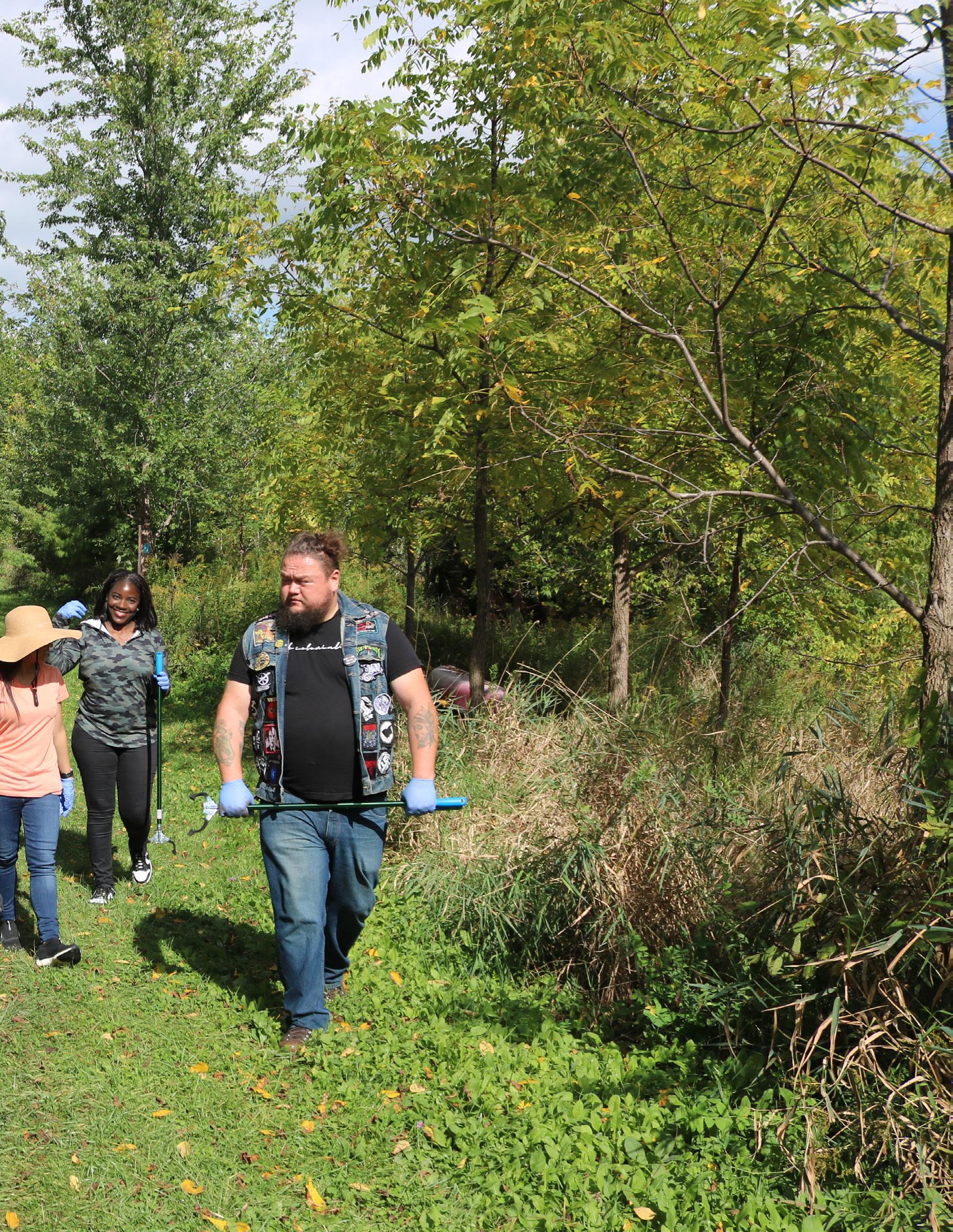
Students take pride in cleaning up their surroundings at
the Daniel J. Patterson Campus in Niagara-on-the-Lake.
Current performance. On-track continued progress made.
16.5% 50 78%
Increase in students completing the Sustainability Skills and Competency survey question
• Baseline: 949 students in 2021
• Current: 1,136 students in 2024
• Desired Trend: Increase
Students agree or strongly agree that their academic program develops their sustainability skills and competencies (ability to recognize and advance the broader principles of sustainability)
• Baseline: 76% in 2021
• Current: 78% in 2024
• Desired Trend: Increase
Students took the new Sustainability in Action: Solutions for Change general elective in its first semester
• Baseline: 50 students in 2024
• Desired Trend: Increase
Case Studies
General Motors EcoSTEM
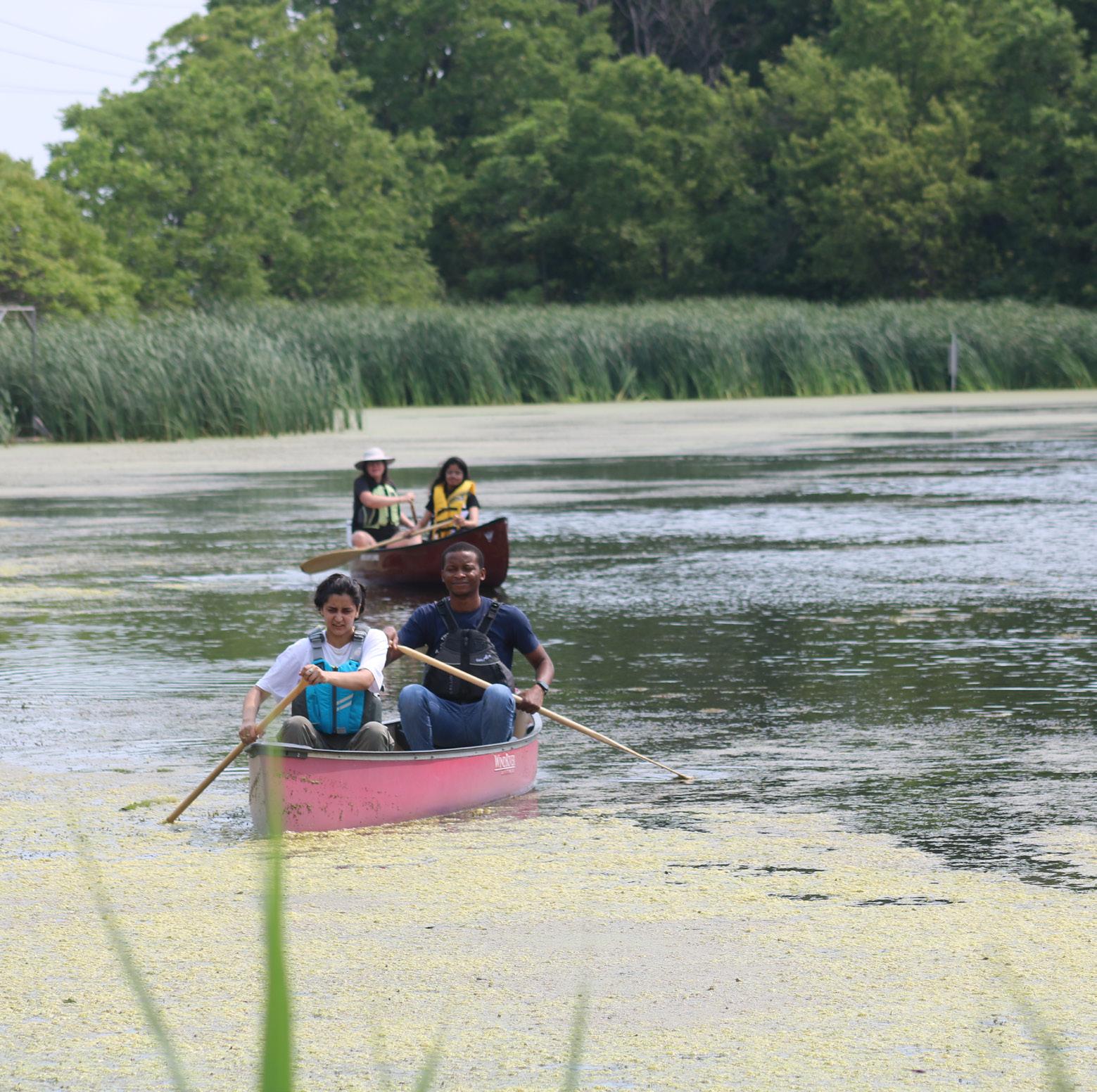
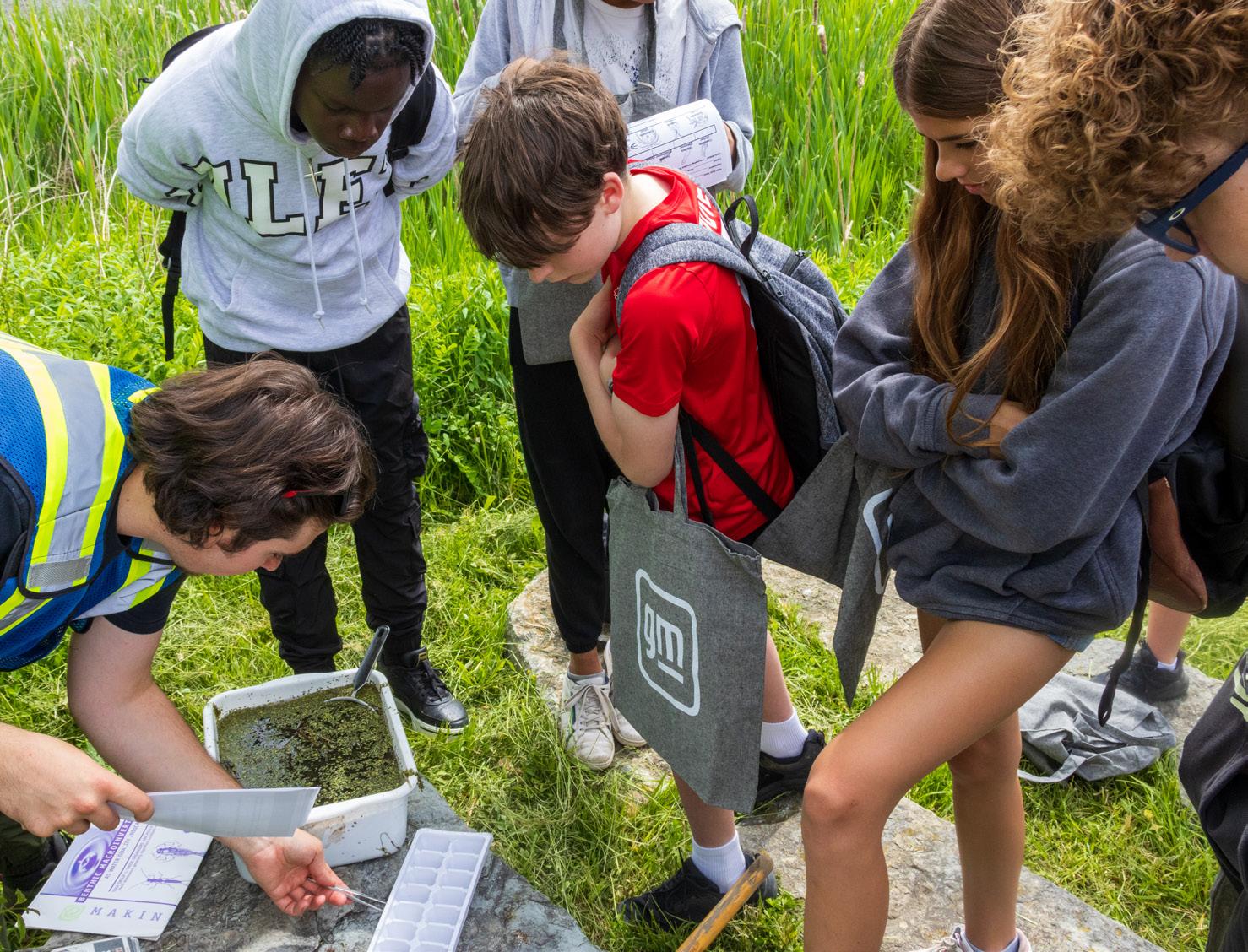
The Office of Sustainability along with students from the Environmental Management and Assessment program, collaborated with General Motors and the DSBN to deliver the EcoSTEM program. This initiative gives elementary school students a chance to engage directly with college students in exploring watershed health across the Niagara Region through handson learning experiences. This year we saw a total of 43 participants in the program including employees and students from all organizations involved.


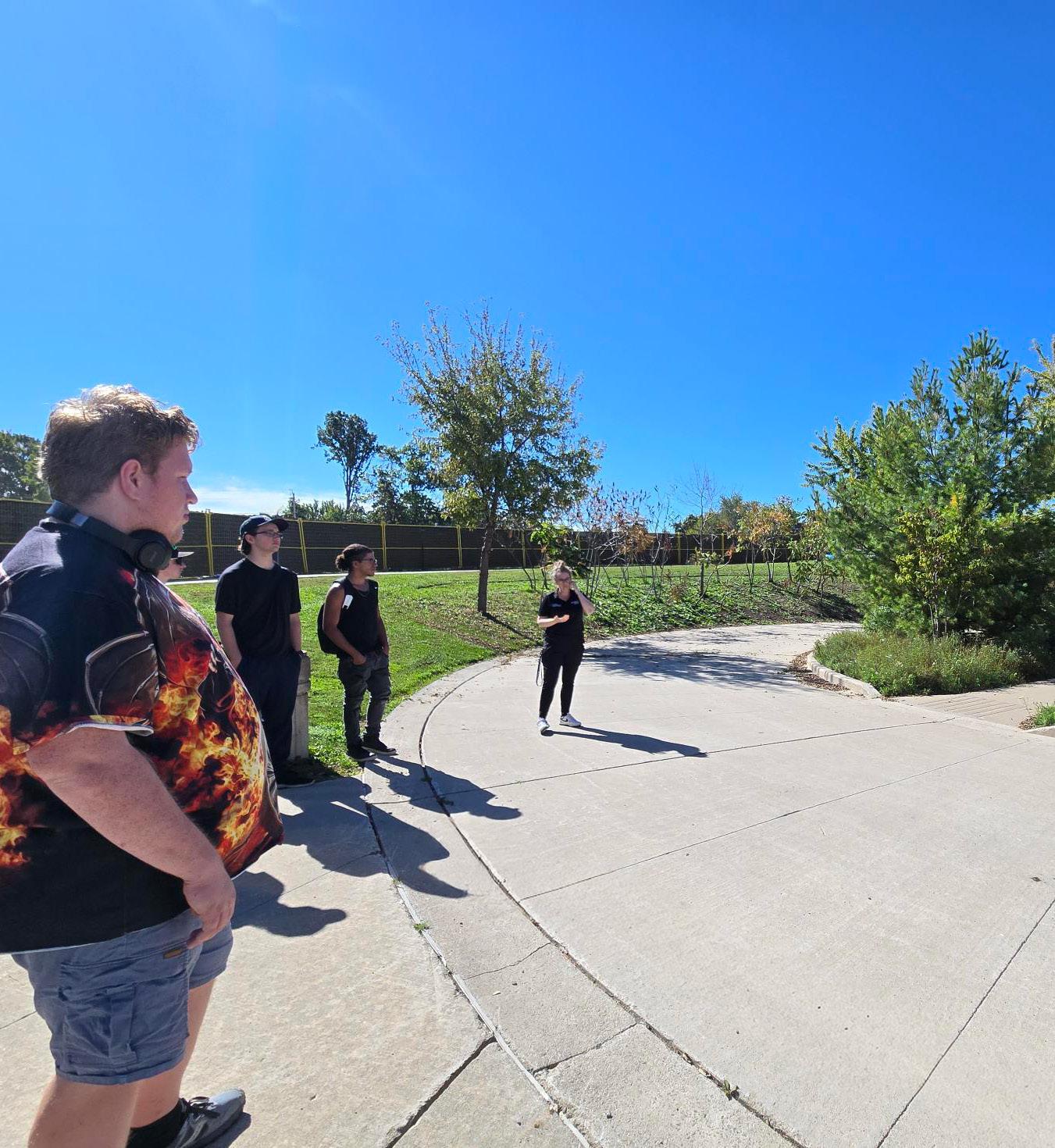
Story Highlights Sustainability General Elective Students in the SustainabilityinAction: Solutions for Change general elective course attending a sustainability tour at the Welland Campus.
RBC Foundation helps power Electric Vehicle First Responders Training program at Niagara College with $450,000 pledged donation
Niagara College
Co-Curricular.
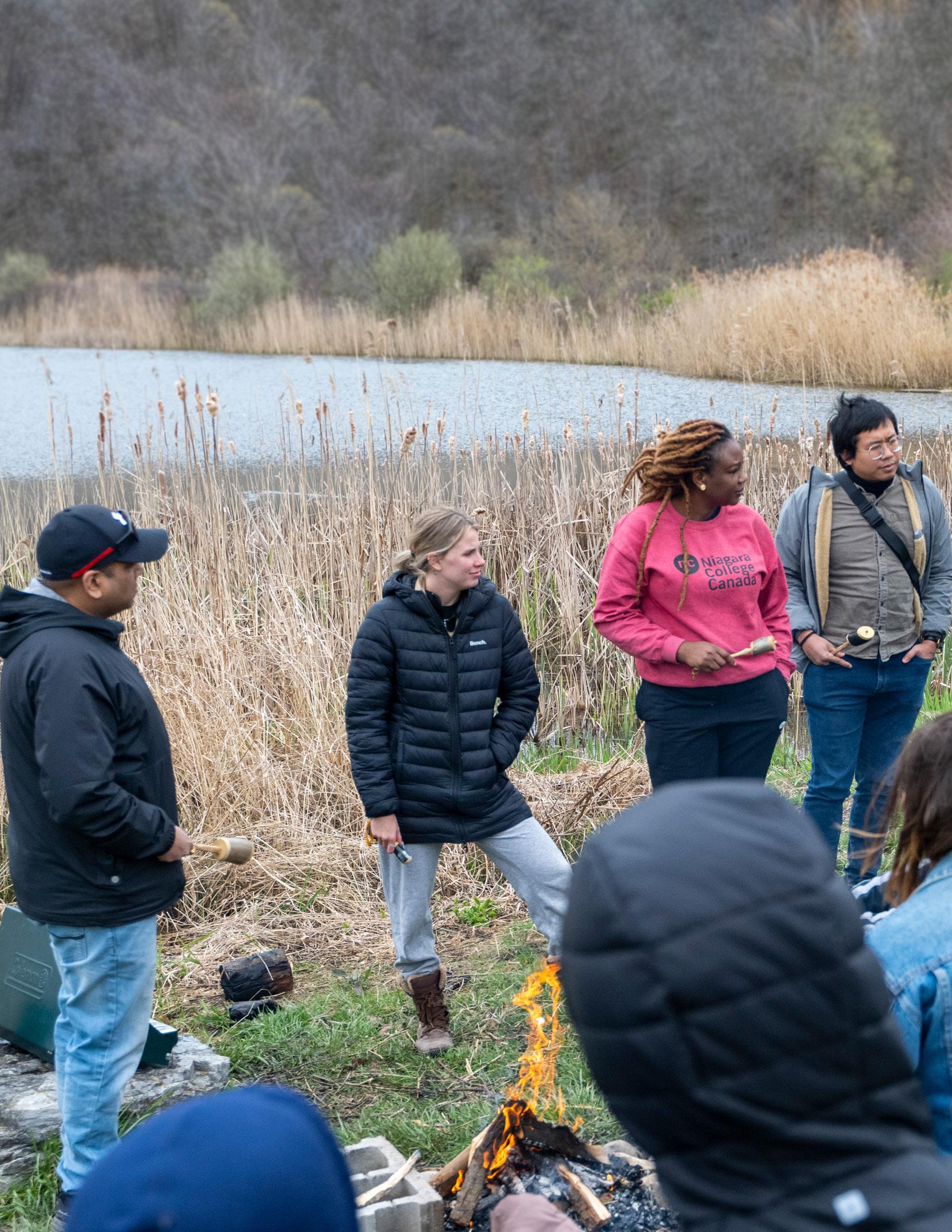
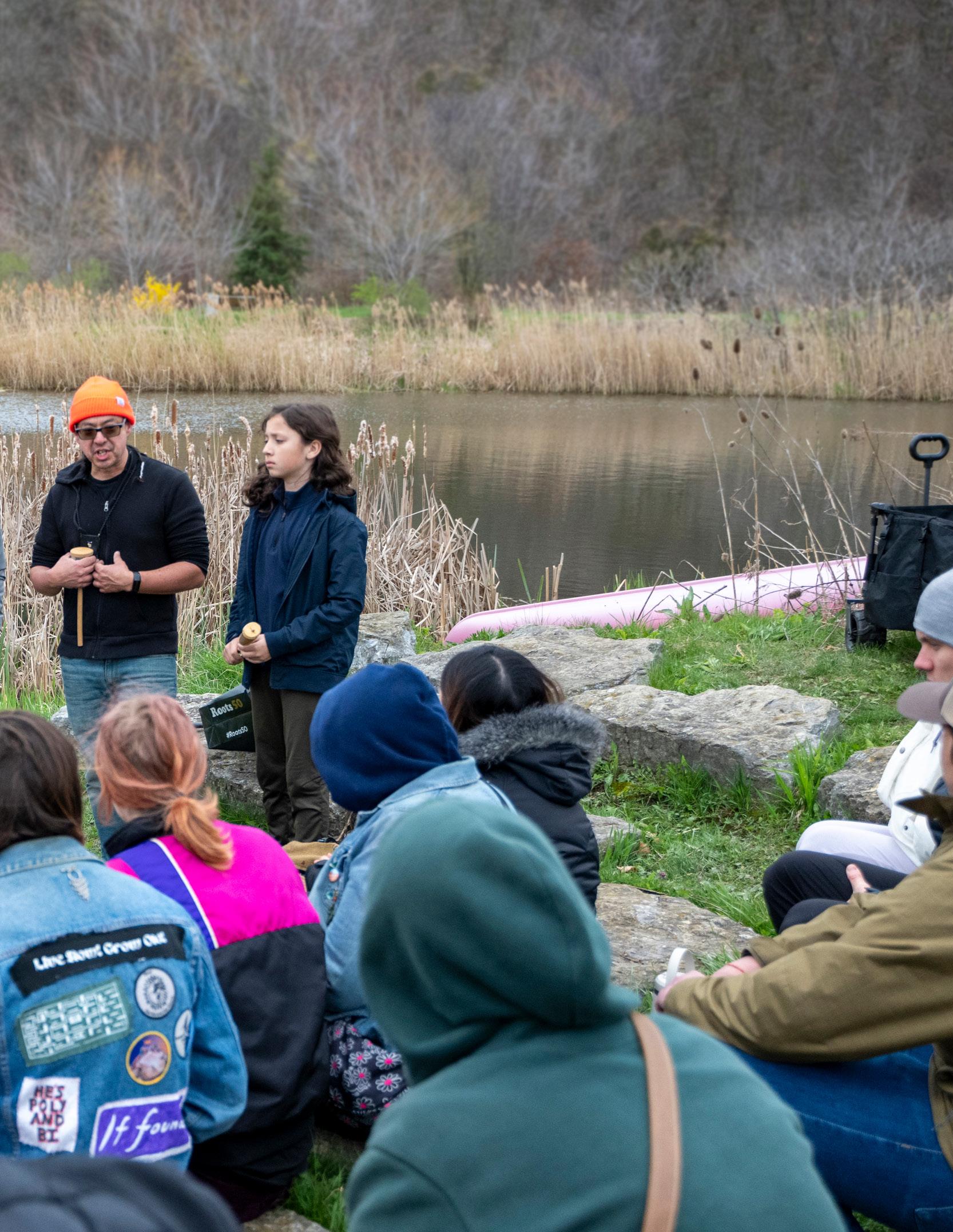
Bioblitz participants attend a cultural teachings talk at the outdoor classroom, led by Karl Dockstader (Cultural Advisor, Indigenous Education).
Current performance. On-Track continued progress made.
1,154
49
Total number of sustainability-focused volunteer hours
• Baseline: 474 student volunteers from September 2024 – September 2025
• Current: N/A
• Desired Trend: Increase
Total number of events and experiential learning opportunities to explicitly incorporate sustainability
• Baseline: 48 events from September 2024 –September 2025
• Current: N/A
• Desired Trend: Increase
46
Projects in the Sustainability Projects Database
• Baseline: 40 projects in 2024
• Current: 46 projects in 2025
• Desired Trend: Increase
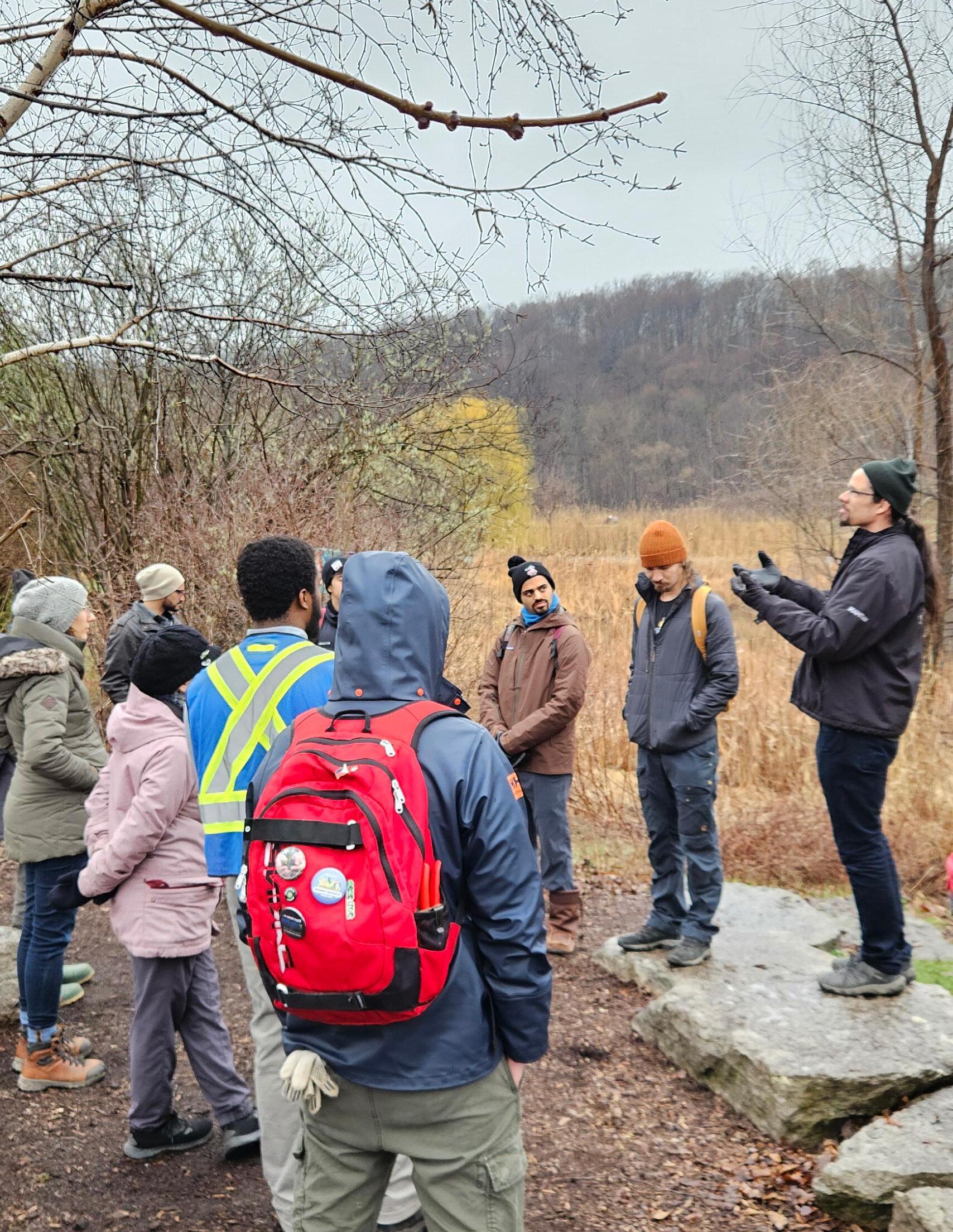
Bioblitz participants attending a walk led by Creators Garden.
Case Studies
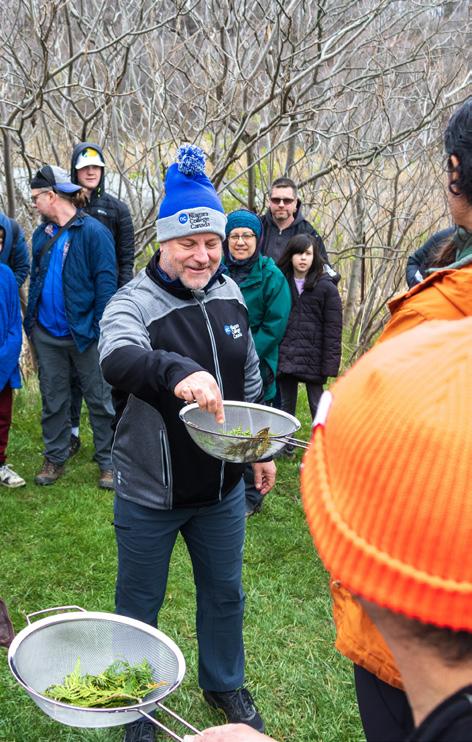
This year Niagara College’s 10th Annual Bioblitz welcomed a record-breaking 170+ participants, celebrating biodiversity and sustainability through a full day of immersive, land-based learning. Attendees took part in guided species identification hikes, birding walks, Indigenous-led workshops, including traditional teachings, cultural storytelling, and beading activities, and hands-on learning stations hosted by local community groups and nature clubs. The event promotes environmental stewardship among students, staff, and community members.


Story Highlights
Black Student Voices Panel was hosted by Sustainability, Equity, Diversity and Inclusion, and Black Students Association.
READ MORE: panel-showcases experiences
READ MORE: Record-breaking attendance at NC’s 10th Annual Bioblitz BioBlitz
Research.
Case Studies
Research Greenhouse
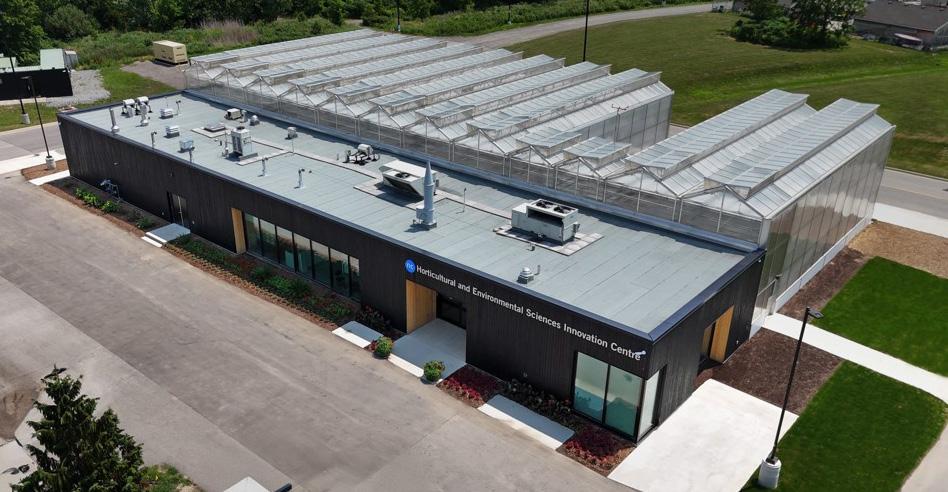
The new Horticulture and Environmental Sciences Innovation Centre Greenhouse located at the Daniel J. Patterson Campus offers advanced infrastructure for controlled plant trials and technology testing and will provide an expanded learning environment and new opportunities for students in NC’s School of Environment and Horticulture. The new research greenhouse facility fosters collaboration between the college and industry partners, aiming to develop practical, scalable solutions that enhance productivity and sustainability in Canada’s horticulture sector.
READ MORE: NC cultivates the future


Story Highlights
One company’s growth trial to improve product quality has produced the unexpected yield of addressing food insecurity, thanks to the networking efforts of a research team at Niagara College.
READ MORE: Pepper trial gains benefits
Third Technology Access Centre
READ MORE: Niagara College earns third technology access centre with federal funding investment.
Built and Natural Environment.
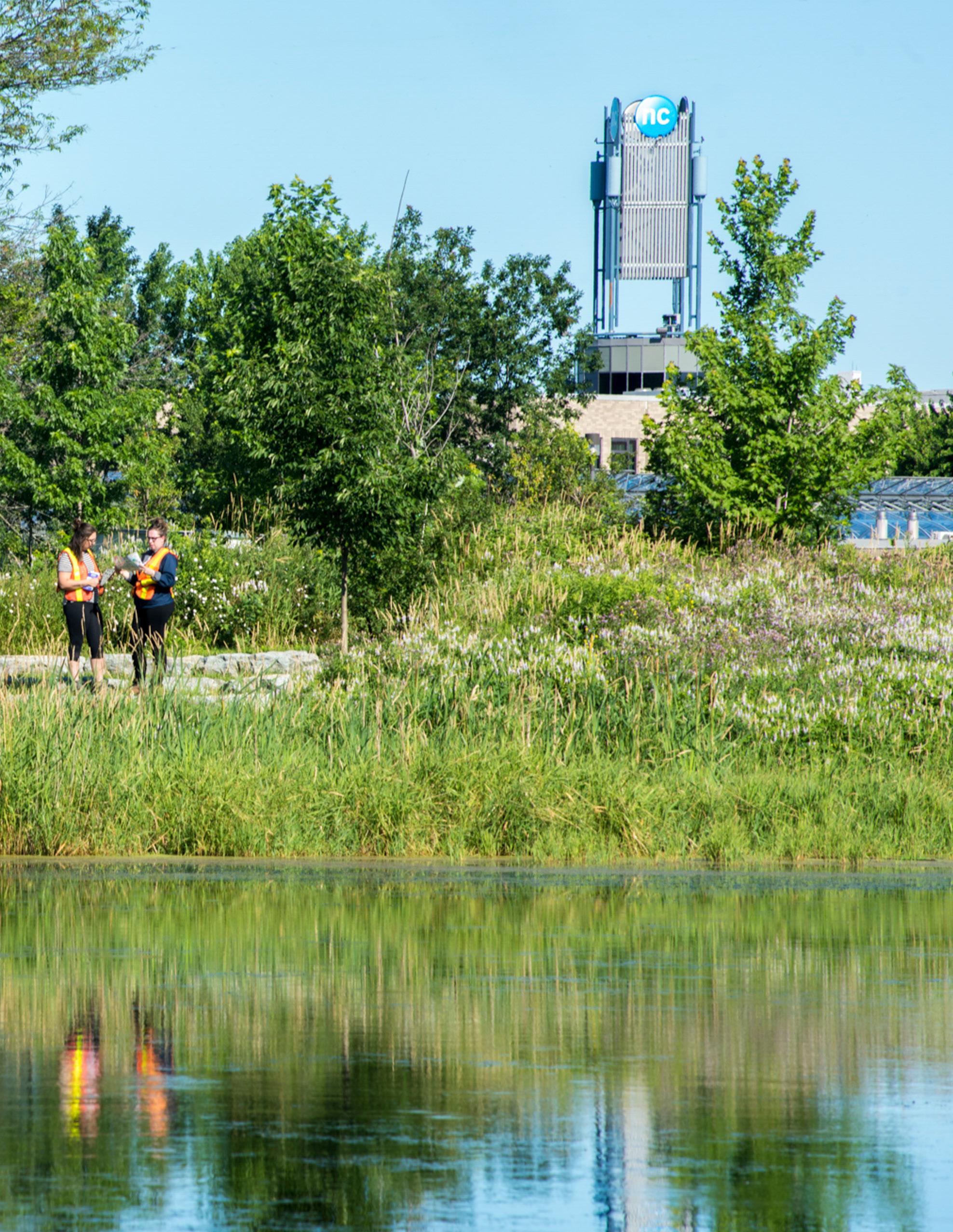
● Establish additional green space dedicated to reconciliation between Indigenous and non-Indigenous people and connecting with nature
● Expand the pollinator gardens and seed harvesting opportunities on campus and with the community
● Implement a comprehensive management plan for invasive species, including phragmites
● Increase the indoor green spaces and outdoor accessible green gathering spaces
● Update the campus tree inventories to quantify the attributed carbon sequestration
11 Additional Actions
Biodiversity.
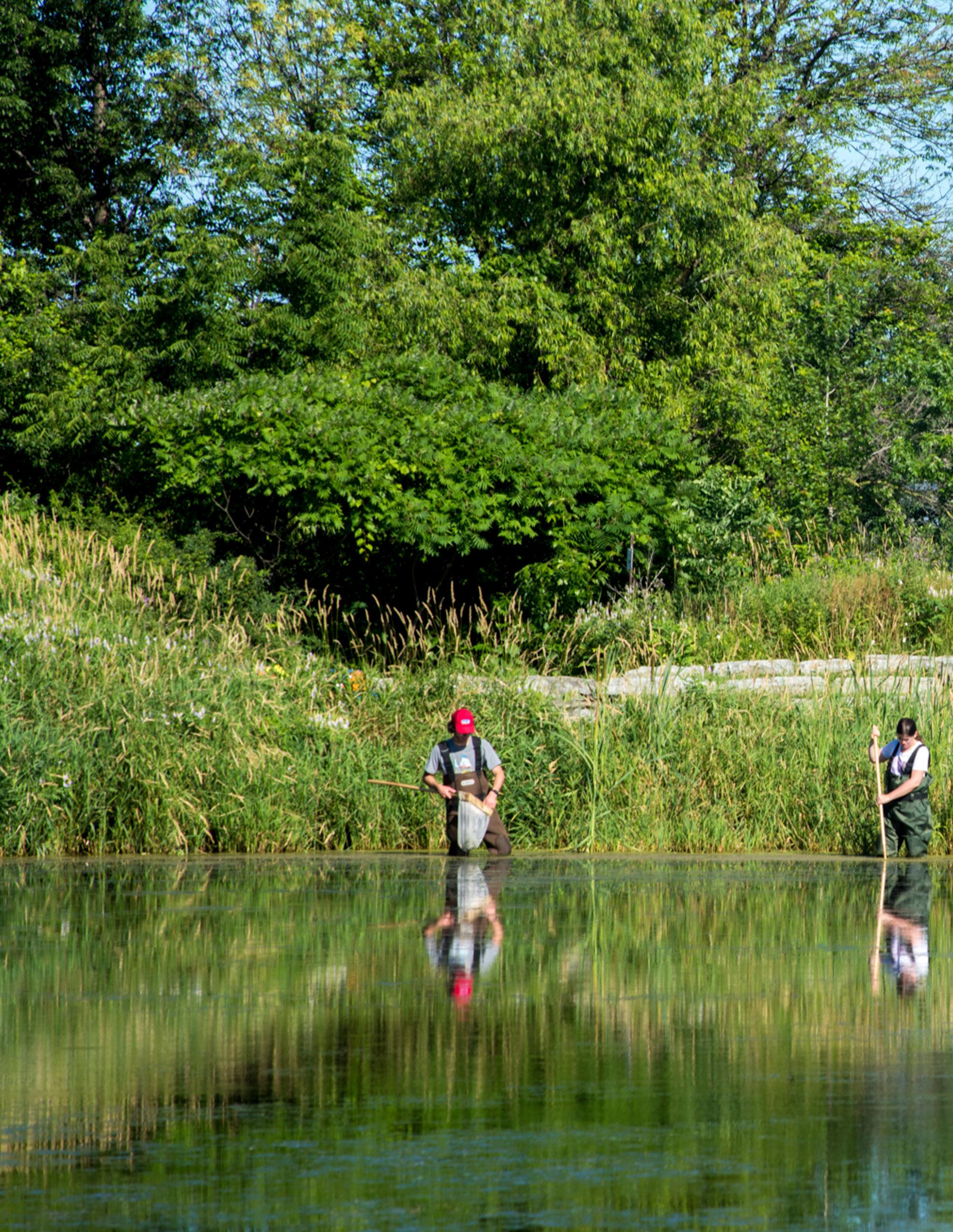
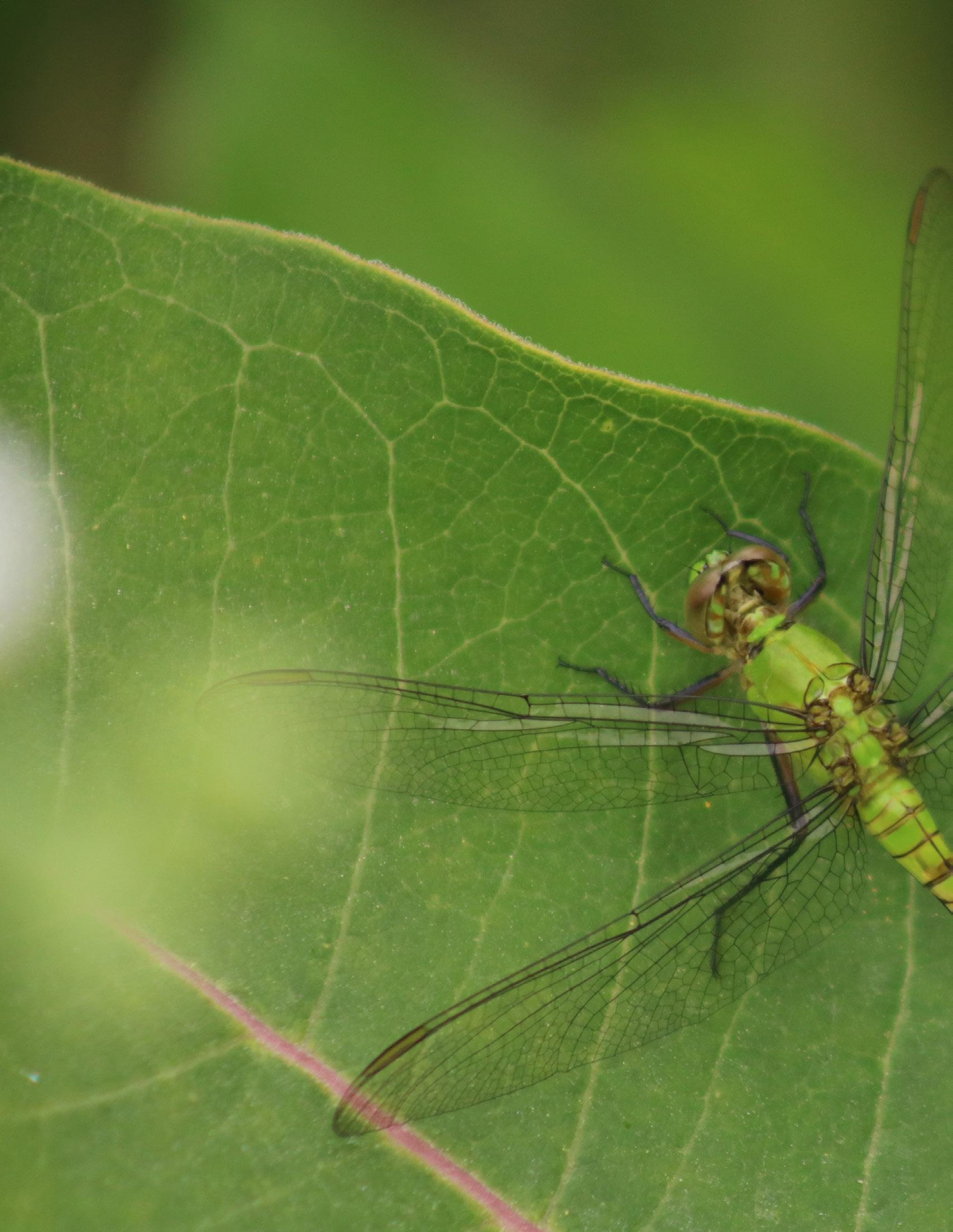
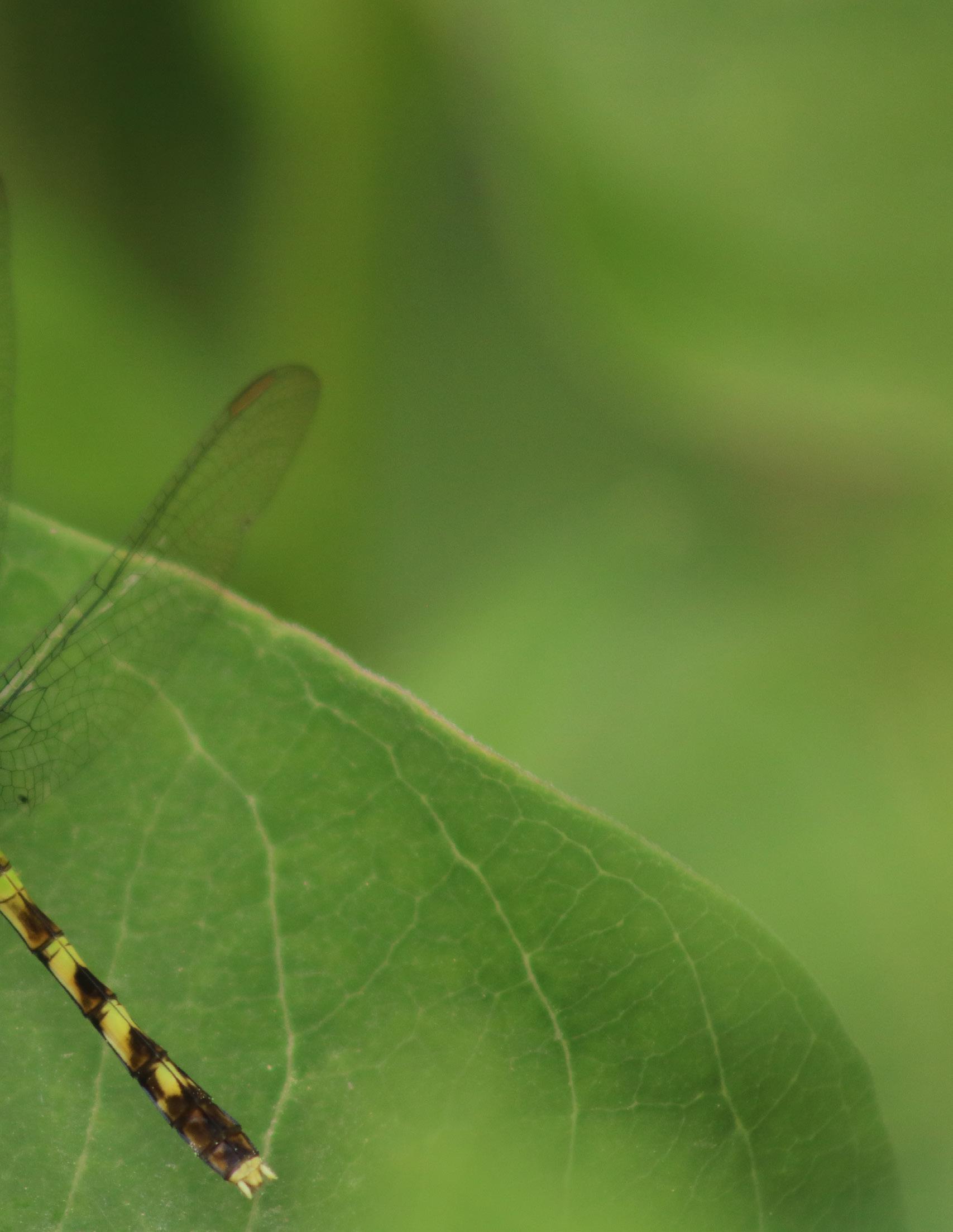
The Daniel. J Patterson Campus in Niagara-on-the-Lake is home to a diverse collection of animal and plant species.
Current performance. On-track continued progress made.
11
Support the genetic diversity of wild and domesticated species populations
• Baseline: 11 species collected (53.3 g of seeds) in 2025
• Current: N/A
• Desired Trend: Increase
1,245
726 16
Increase species monitoring to identify and maintain a detailed biodiversity inventory on-campus
• Baseline: 1,005 species in 2024
• Current: 1,245 species in 2025
• Desired Trend: Increase
Increase native species monitoring to identify and maintain a detailed biodiversity inventory of native species on-campus
• Baseline: 578 species in 2024
• Current: 726 species in 2025
• Desired Trend: Increase
Establish a comprehensive list of invasive species identified on campus
• Baseline: 15 species in 2024
• Current: 16 species in 2025
• Desired Trend: Increase
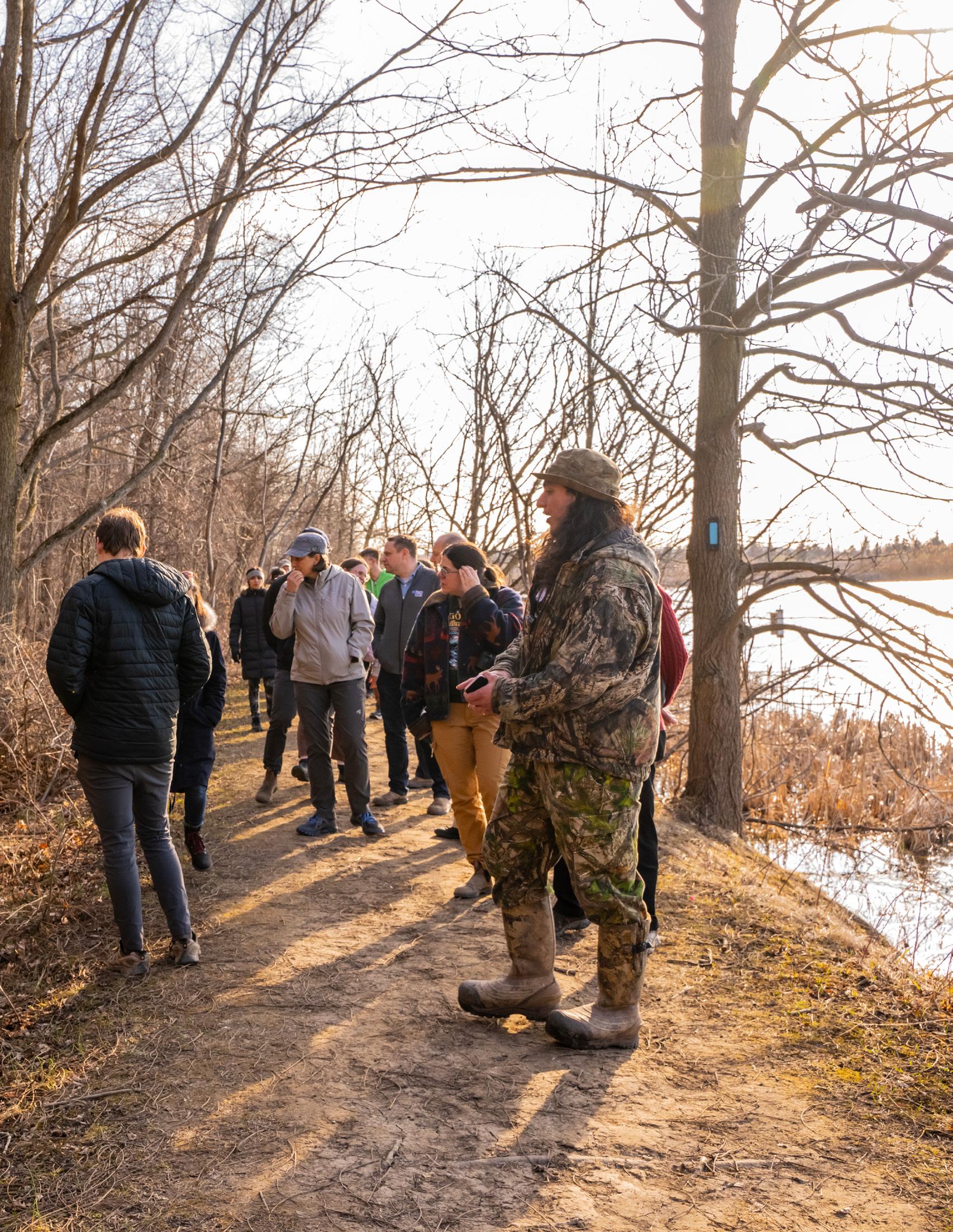
Students, staff and guests take a student-led tour to view the vernal pools.
Case Studies
Vernal Pool Expansion
Ecosystem Restoration students celebrated the installation of new vernal pools at the Daniel J. Patterson Campus. Since 2019, six cohorts of students have worked towards creating the vernal pools on campus. The temporary ponds are designed to support the endangered Escarpment Mole salamander and provide safe spawning grounds free of fish and other predators. Students gained valuable experience dealing with regulatory agencies and hands-on learning opportunities through the installation and monitoring of the vernal pools.
The first salamander eggs were spotted just before the March celebration, marking a milestone in the six-year initiative.
MORE: Vernal Pools make a splash
Story Highlights
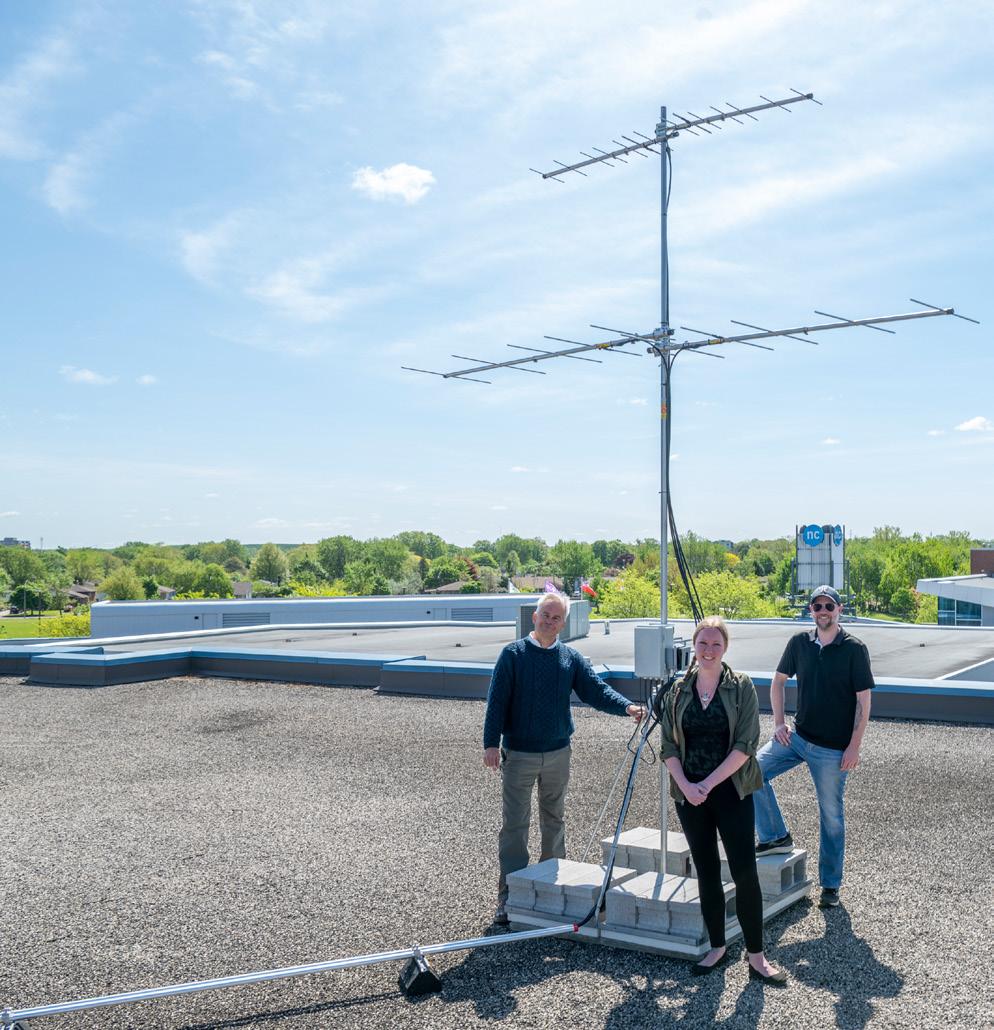
Bird monitoring Motus Tower installed at the Welland Campus.
READ MORE: Bird-tracking initiative takes flight at Welland Campus

Seedy Saturday hosted at Teaching Greenhouse.
READ MORE: Community brings seedy Saturday to Teaching Greenhouse
READ
LAND.
Case Studies
Phragmites on campus
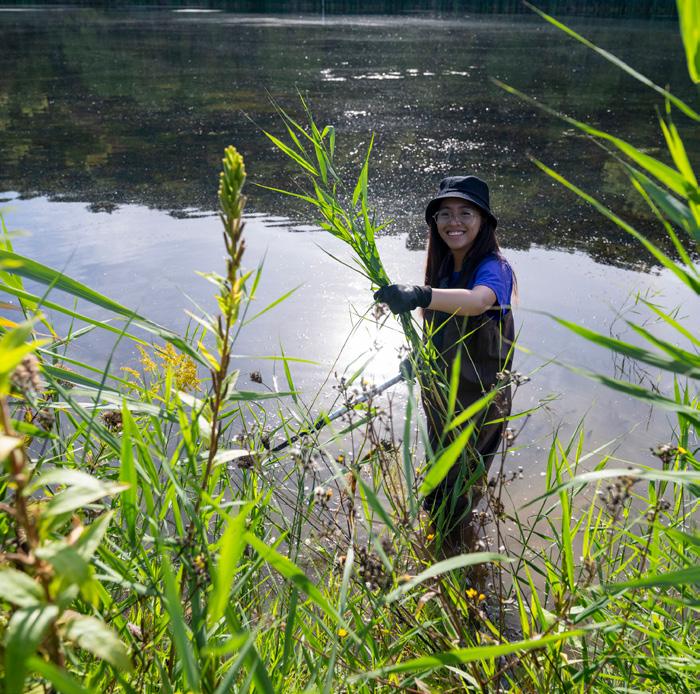
NC began a three-year initiative to remove Phragmites australis, Ontario’s most invasive plant species, from its campuses. The aggressive reed threatens biodiversity and infrastructure by crowding out native species and disrupting drainage systems. The college has partnered with the Invasive Phragmites Control Centre (IPCC), a non-profit who will safely implement an eradication plan at both NC campuses this summer. At the start, approximately eight acres of phragmites covered both campuses and just one year in, we’ve seen this reduced to 2.51 acres through this targeted management plan.
READ MORE: College to manage phragmites on campus, Ontario’s worst invasive plant species
Story Highlights
Goats remove overgrown vegetation along walking trails at Welland Campus
READ MORE: Goats to graze-away
NC community comes together to “Wake up the Garden” with Indigenous Education


Current performance. On-track continued progress made.
5.49 19.5%

Acres of degraded ecosystem from invasive phragmites underway to be restored
• Baseline: 8 acres of phragmites on campus in 2024
• Current: 2.51 acres of phragmites on campus in 2025
• Desired Trend: Decrease Tree canopy cover at the Daniel J. Patterson campus
• Baseline: 19.5% tree canopy cover on campus in 2024
• Current: N/A
• Desired Trend: Increase
Buildings.
Current performance. Monitor/explore opportunities for improvement.
84%
All renovations and upgrade projects evaluate sustainability impacts
• Baseline: 84% of projects for the 2024-2025 fiscal year
• Current: N/A
• Desired Trend: Increase
Case Studies
Project Refresh
The Planning, Sustainability and Capital Projects team spearheaded several transformative campus upgrades in 2024 through Project Refresh, all aimed at enhancing the student experience and advancing sustainability. Renovations included revitalized student lounges, upgraded laboratories, and enhanced accessibility features across both campuses. At the Daniel J. Patterson Campus, inviting student gathering spaces were outfitted with modern furniture to foster social connection, alongside the installation of a vibrant living wall in the cafeteria. At the Welland Campus, a purpose-built outdoor training area was developed for renewable energy labs, featuring new equipment, solar panels, and workbenches, complemented by upgrades to the paramedic labs in the Allied Health building. These improvements underscore Niagara College’s ongoing commitment to innovation, inclusivity, and environmental stewardship.
READ MORE: Campus glow-up: A recap of 2024 renovation projects and a look ahead

Current performance. Transportation. On-Track continued progress made.
Case Studies
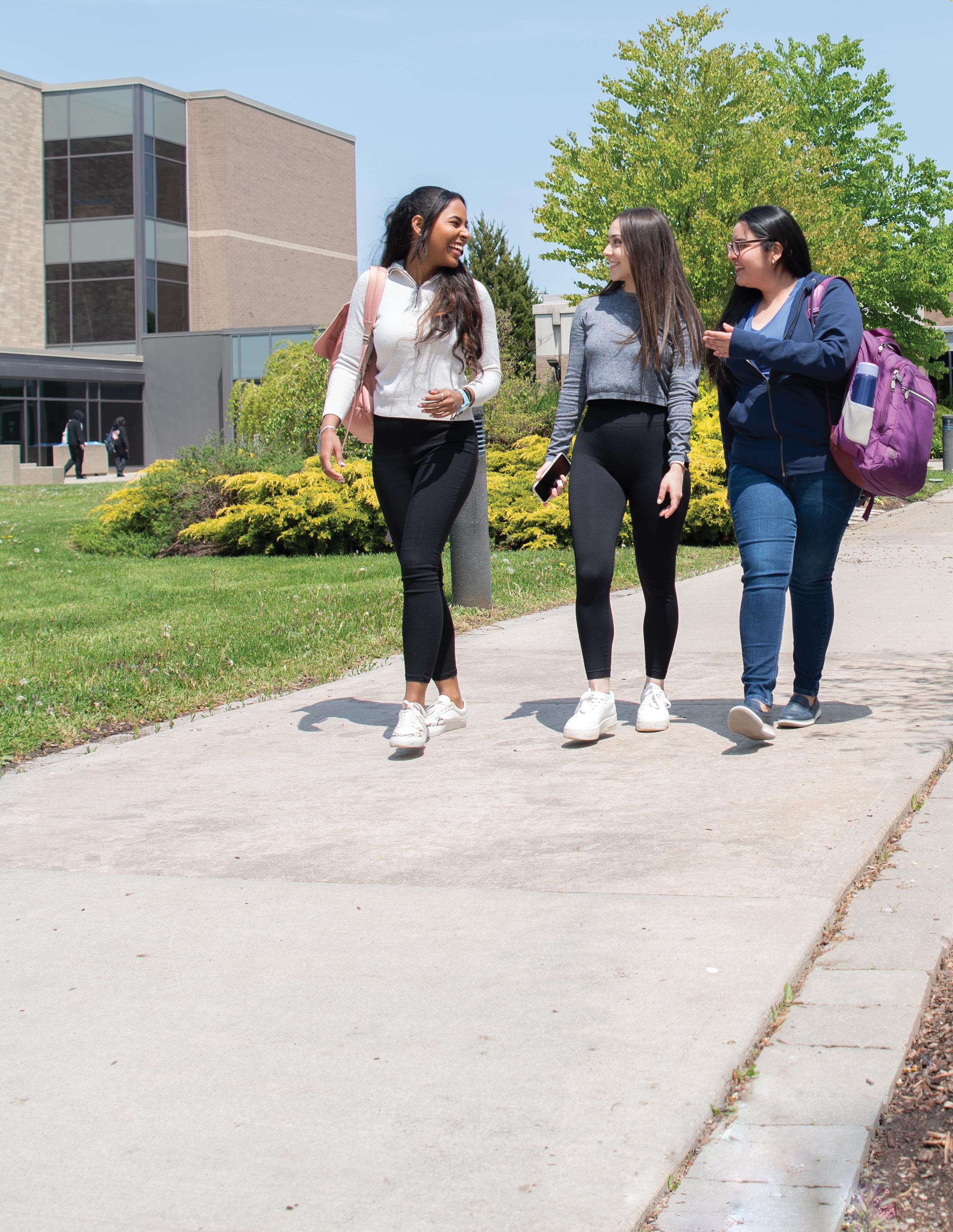
Accessible Pathway
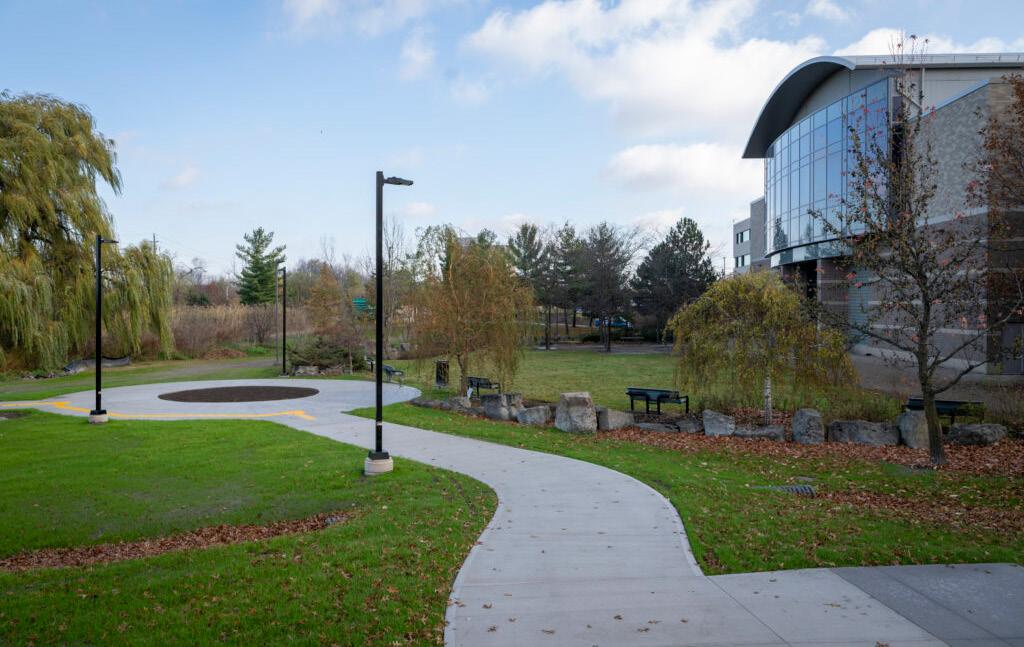
A new accessible pathway was unveiled at the Daniel J. Patterson Campus. The pathway was constructed with low-carbon ECOPact concrete and provides ample space to ensure those with mobility devices can maneuver with ease, showcasing the college’s commitment to equitable and sustainable campuses. Rest areas are available along the way for anyone who might need to take a break, including those using mobility devices, experiencing pain, feeling tired, or just wanting to stop and enjoy the view. The new pathway supports efforts made to create more welcoming and barrier-free outdoor spaces where members of our community can spend time.
READ MORE: Accessible Pathway installed
U-Pass Referendum

In April 2025, the Student Administrative Council (SAC) hosted a referendum vote to keep the Universal Bus Pass (U-Pass), which had a 27% turnout rate and passed by 81%. This mandate supports accessible public transit for students by maintaining unlimited access to Niagara Regional Transit during enrolled semesters for students.
READ MORE: yourncsac.ca
● Conduct annual hydration station and conditions assessment at both main campuses
● Create guidelines for energy conservation and efficiency, best practices for different departments across Niagara College
● Develop a strategy to reduce food waste on campus and increase the food waste capture rate
● Develop a surface water report card for the Daniel J. Patterson Campus in Niagara-on-the-Lake as part of the water quality monitoring program
13 Additional Actions
50% 50% 75% 25%
Waste.
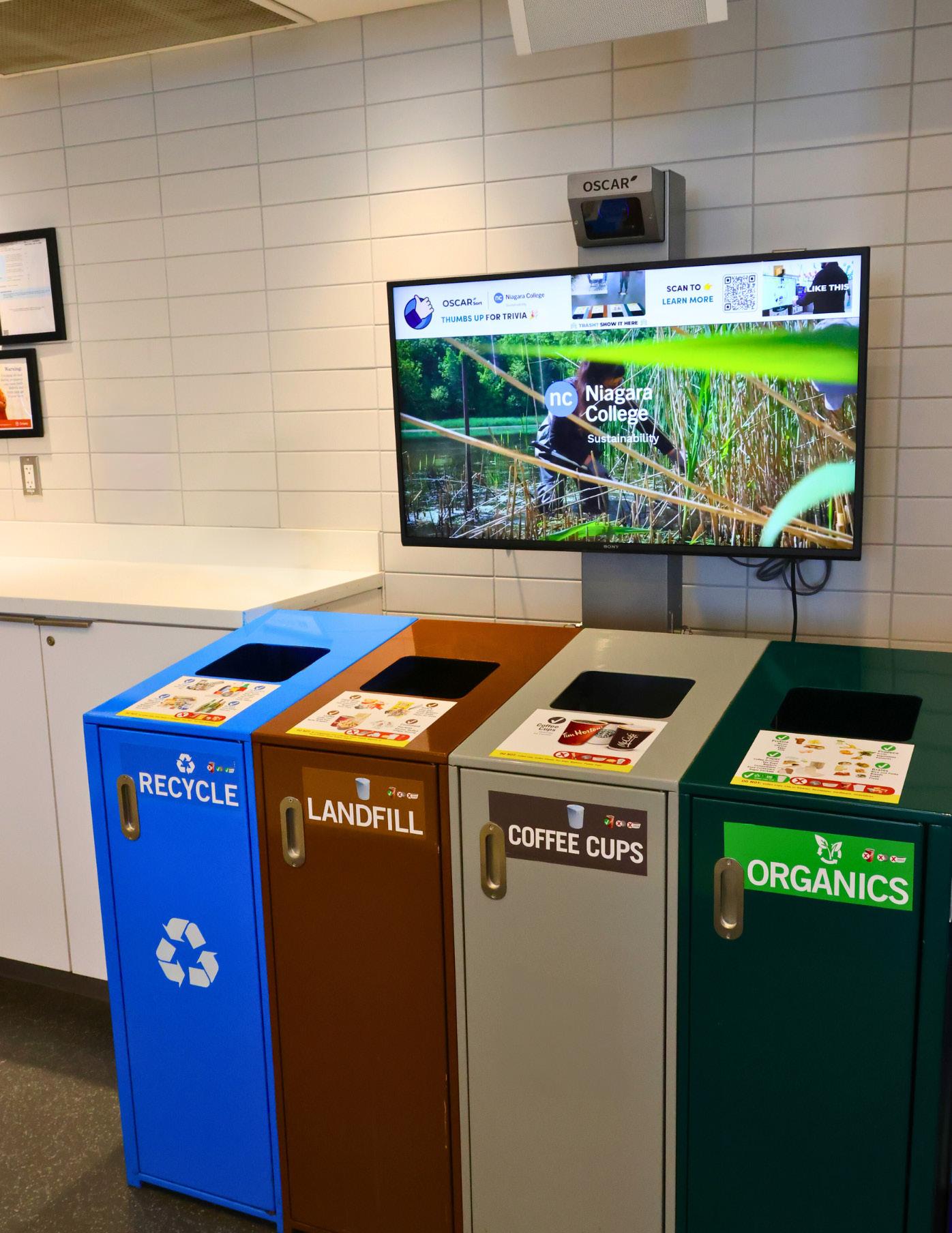
Oscar Sort, an AI-powered recycling assistant.
Niagara College
Current performance.
Attention required advance process.
17%
45%
Increase in diversion rate
• Baseline: 26.5% in 2011
• Current: 37% in 2025
• Desired Trend: Increase
• Increase in waste material generated sent offsite
• Baseline: 25,491kg in 2023
• Current: 36,985kg in 2024
• Desired Trend: Decrease
Annual Waste Diversion
Case Studies
Free Store & International Green Gown Finalist
NC’s Free Store initiative received recognition as a finalist in the Diversity, Equity & Inclusion in Sustainability category for the 2025 International Green Gown Awards which recognizes the efforts of higher education institutions in implementing sustainable practices. Free Store Pop-Ups, hosted each semester at NC, have provided students with a chance to ‘shop’ (at no cost) for essential items donated by the NC community. So far, over 470 kgs of materials have been diverted from landfill and given a second chance through this program.
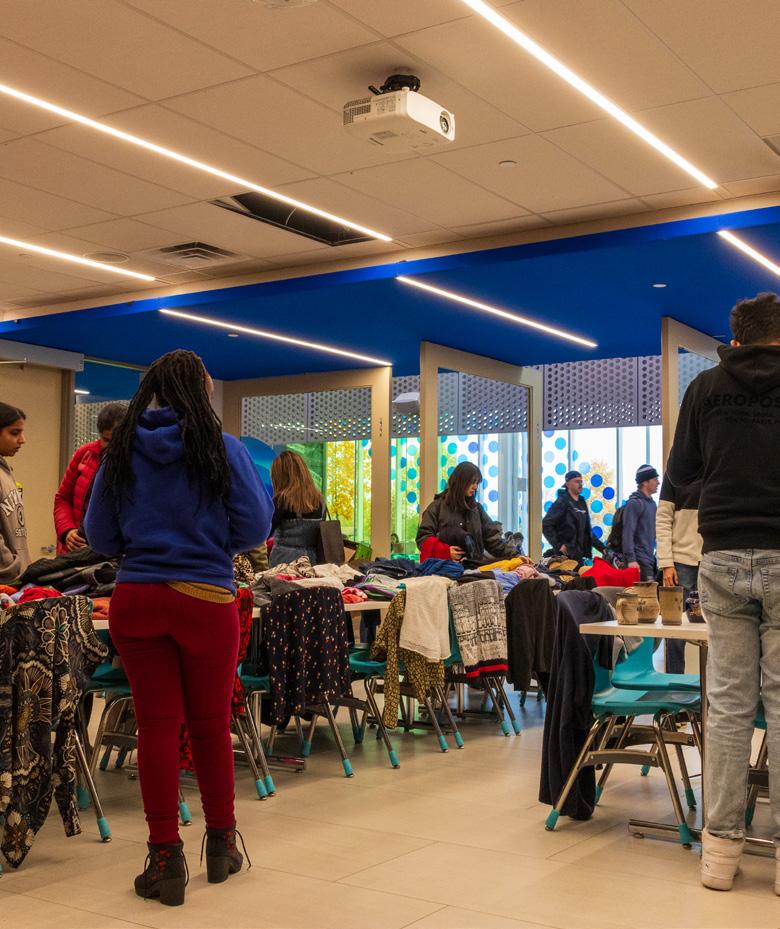
Oscar
READ MORE: NC “bleeds blue, thinks green”.
Classroom Waste Bins Removed
In April 2025, individual waste bins from all classrooms, offices, and meeting rooms on both campuses were removed. In an effort to increase waste diversion, this change encourages employees and students to take their waste to the centralized waste bins located in common spaces. A centralized waste management program supports improved sorting and reduced contamination, which is more cost effective and better for the environment.
READ MORE: Waste bins removed
In March 2025, Niagara College introduced Oscar Sort, an AI-powered recycling assistant, to improve waste sorting accuracy, reduce contamination, and support the College’s waste diversion goals. Using real-time scanning, Oscar identifies waste items and guides users to the correct bin, providing instant feedback to improve recycling habits. This initiative is a fun and educational engagement tool for staff and students, increasing sustainability awareness and the importance of proper waste management.
READ MORE: AI recycling assistant
Water.
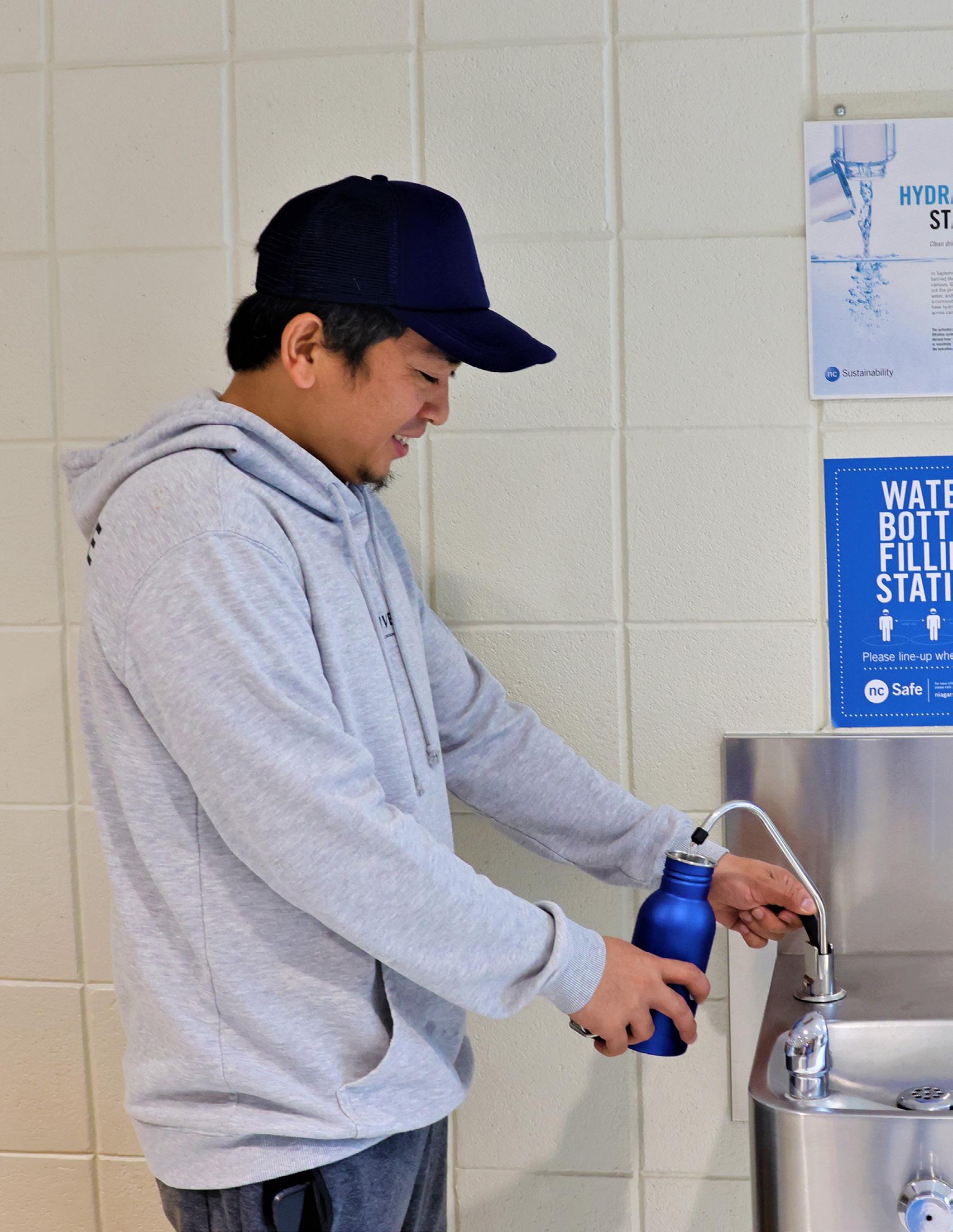
Increase number of Hydration Stations
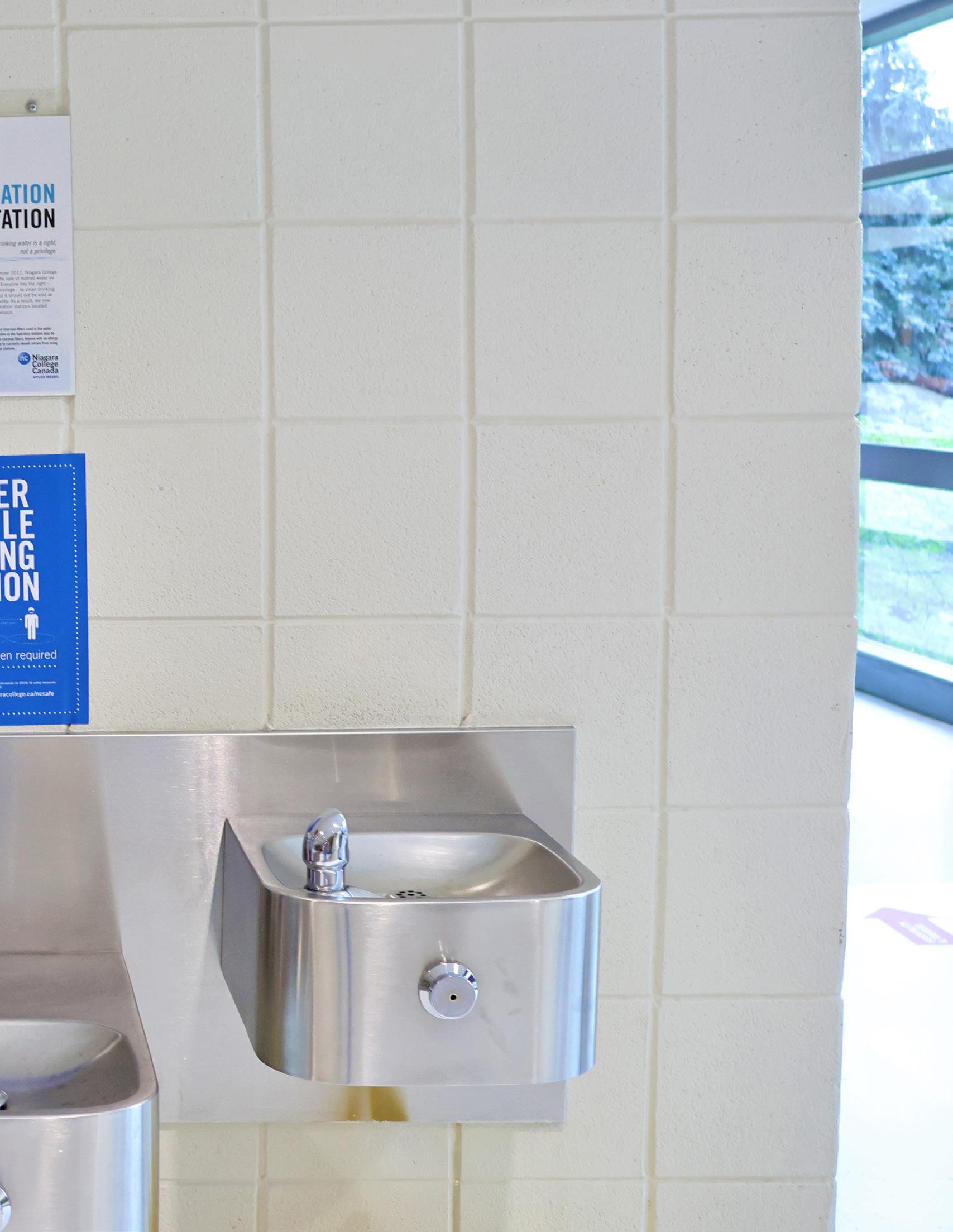
Recognizing water as a fundamental human right and reinforcing the campus-wide ban on bottled water sales introduced in 2012, several new hydration stations have been installed at the Daniel J. Patterson Campus. These stations, located in the Cafeteria, Research Greenhouse, and Teaching Greenhouse, ensure free and convenient access to clean drinking water for all students, staff, and visitors.
Current performance. On-Track continued progress made.
3,100
0.59m3/sm
Increase rainwater capture on-site
• Baseline: 3,000 Gallons in 2018
• Current: 3,100 Gallons in 2025
• Desired Trend: Increase
Water Consumption Intensity
• Baseline: 0.92 m3/sm in 2011
• Current: 0.59 m3/sm in 2025
• Desired Trend: Decrease
Case Studies
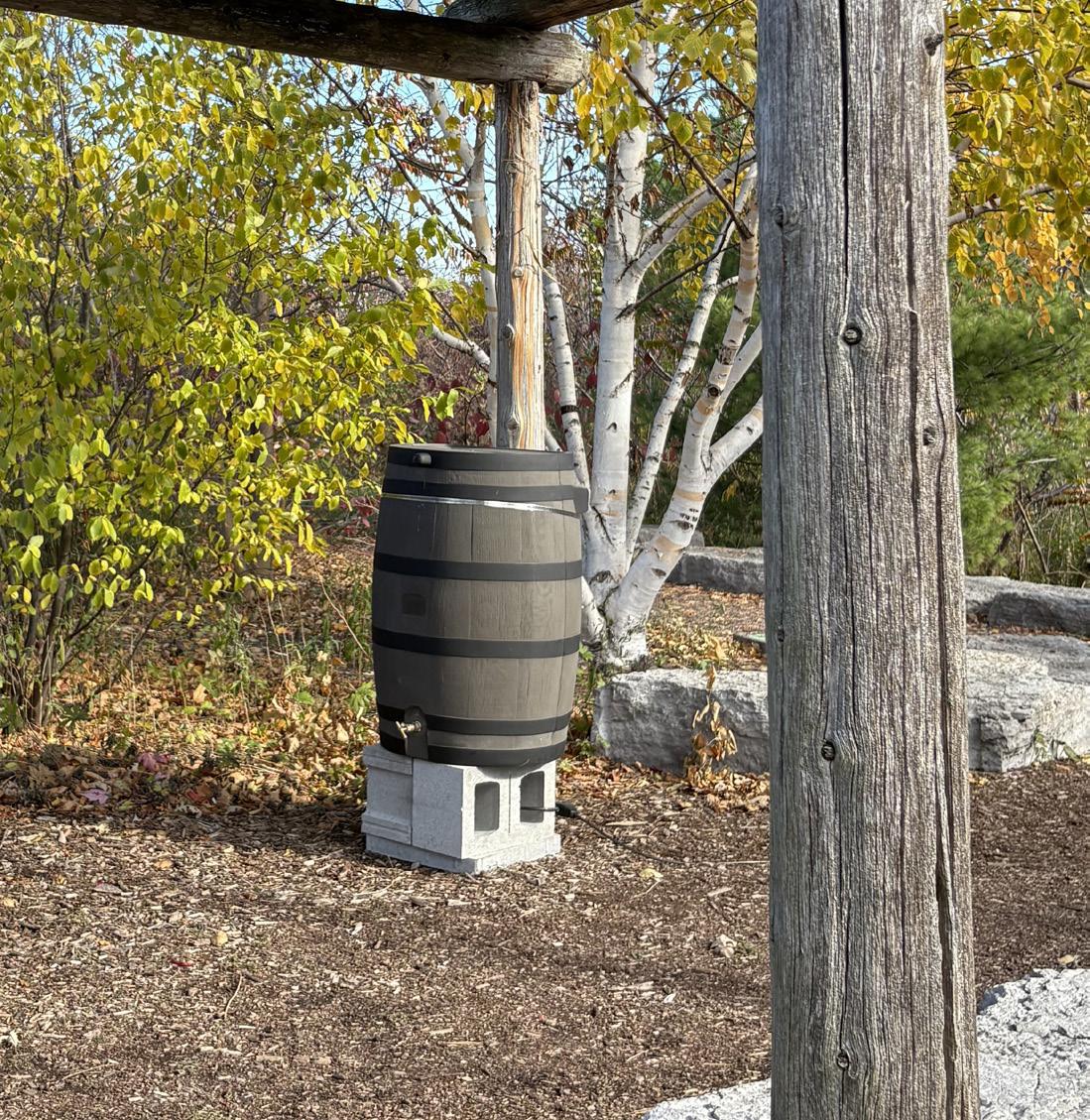
Rain barrels installed at Indigenous Garden
Over the summer, the Office of Sustainability partnered with Indigenous Education to install two 50-gallon rain barrels at the Indigenous Garden. This initiative supports the cultivation of a diverse mix of vegetables and traditional medicinal herbs by improving access to water for garden maintenance and growth. It also contributes to the college’s broader sustainability goals by increasing rainwater capture and reuse on campus.
New Watershed Report Card
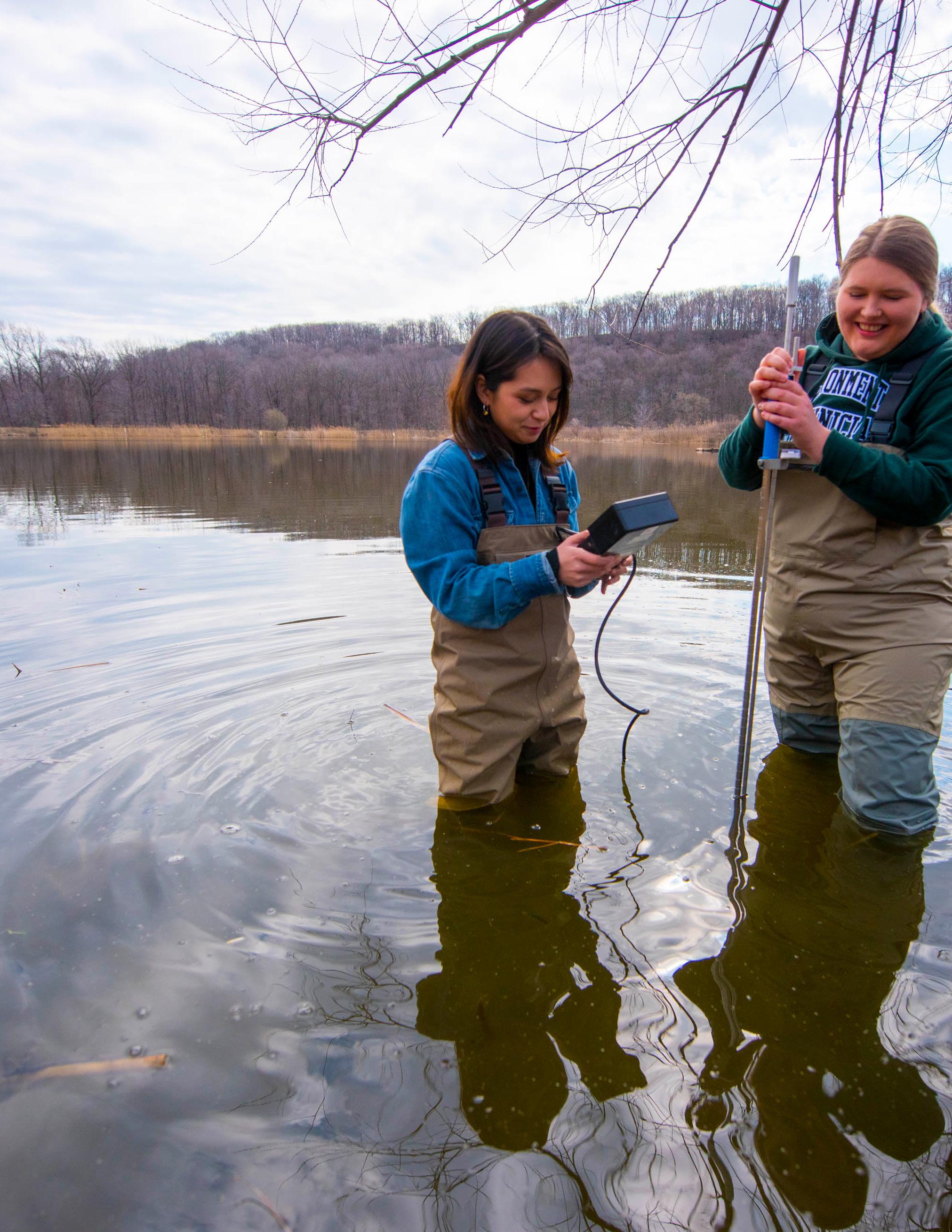
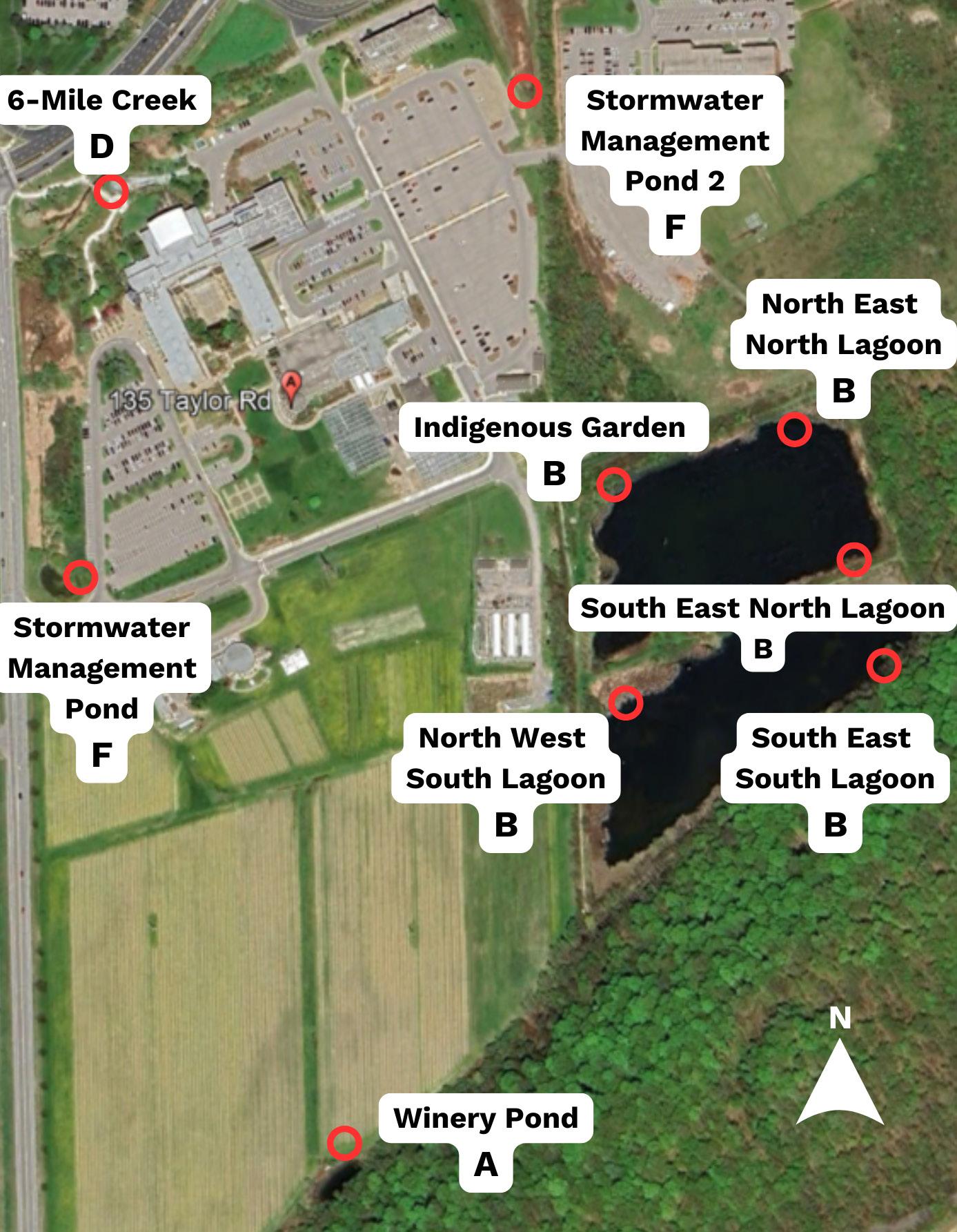
To better understand the watershed on campus, a watershed report card was completed to provide a clear snapshot of the status of the watershed and a baseline against which we can measure all future efforts. An average grade of C was obtained based on the four indicators part of the watershed report card (Impervious Land Cover, Forest Cover, Benthic Indicators, and Surface Water Quality).
Current performance. Monitor/explore opportunities for improvement.
19%
Reduction in intensity-based energy consumption
• Baseline: 336.2 ekWh/m2/year in 2011
• Current: 272.4 ekWh/m2/year in 2024
• Desired Trend: Decrease
Case Studies
Strategic Energy Management program in action
To deepen their understanding of food safety inspections through the lens of sustainability, students conducted energy audits of teaching kitchens at the Daniel J. Patterson Campus in Niagara-on-the-Lake. While food safety inspections and audits are a standard part of the program, professor Amy Proulx aimed to broaden their experience and prepare them to become industry leaders. Students took inspiration from the “energy hunts” conducted on campus as part of the college’s Strategic Energy Management program and the ‘Gemba walks’ used for kitchen premise inspections, students identified opportunities to improve energy efficiency such as installing timers or motion sensors on lights and repairing equipment to reduce energy consumption.
READ MORE: Energy Plan



Story Highlights
Teaching Greenhouse, Cannabis
Production facilities outfitted with energy-efficient lighting
READ MORE: Energy efficient Lighting
Current performance. Food. On-track continued progress made.
Case Studies
Free Produce Pop ups

In partnership with United Way Niagara, the NC Sustainability team hosted a series of produce pop-ups where students were invited to ‘shop’ at no cost for fresh vegetables grown in the United Way Niagara Garden plots on campus. Approximately 40 Kg of fresh produce was distributed on campus and in the community, including beets, kohlrabi, kale, zucchini, eggplants, peppers, tomatoes, and carrots. In Spring 2025, this initiative was incorporated into the College’s broader Free Store events which offers gently used clothing and home goods to students at no cost, providing access to healthy food and necessities all in one place.
READ MORE: Partnership for free produce
United Way Garden Expansion
Established in 2021 at the Daniel J. Patterson Campus, the United Way Niagara Garden Hub was created to combat food insecurity while fostering education and sustainability. Following a recent expansion, the garden now boasts more than 50 raised beds, a greenhouse, a tool shed, and a produce washing station. It is actively maintained by Greenhouse Technician students as part of their hands-on coursework. This collaborative initiative not only supports the broader college community facing food insecurity but also serves as a vibrant gathering space where residents can connect, learn, and cultivate together.
READ MORE: United Way garden hub
VIDEO:

Climate action and leadership.
● Complete a comprehensive Scope 3 carbon emissions inventory, including on-site carbon sequestration
● Develop and distribute sustainable event guidelines
● Develop sustainable procurement guidelines for different purchasing categories including promotional materials, furniture, capital construction and renovations, and more
● Publish a comprehensive decarbonization plan, to support Niagara College’s transition to a low carbon economy
Carbon emissions.
Current performance. Monitor/explore opportunities for improvement.
2.6%
reduction in absolute carbon emissions
• Baseline: 5,545.48 tCO2e in 2011
• Current: 5,404.30 tCO2e in 2024
• Desired Trend: Decrease
Case Studies
Earth Hour Challenge hosted by NC Energy
In celebration of Earth Hour 2025, Niagara College encouraged employees and students to participate in a friendly energysaving competition between the Daniel J. Patterson campus and Welland campus. The goal to see which campus could reduce its electricity usage the most over the weekend, using predictive models that factor in baseline, schedule, and weather data. Leveraging electricity models to measure usage at each campus, it was determined that the Daniel J. Patterson campus consumed five per cent less electricity than predicted.
Procurement.
Current performance. Monitor/explore opportunities for improvement. 22%
Score on the OCPMA Sustainable Procurement Program Assessment
• Baseline: 22% in 2023
• Current: N/A
• Desired Trend: Increase
Case Studies
Sustainable Procurement Working Group

Niagara College has established a new Sustainable Procurement Working Group to explore risks and opportunities related to sustainable purchasing across the institution. The group includes representatives from all college departments, selected by each Vice President, and consists of individuals with practical knowledge of procurement processes and needs. Together, they will collaborate to integrate sustainability considerations into procurement decisions, including environmental impact, financial efficiency, regulatory compliance, social inclusion, and brand reputation. The group’s goal is to develop a Niagara College-specific approach to responsible sourcing and provide informed recommendations to the Vice President of College Operations.
SAC Water Bottles & Reuseable Containers
Each year, the Office of Sustainability and NCSAC work together to provide reusable water bottles to all new students during orientation, to ensure all students have access to water in a sustainable way. This year this initiative grew to include reusable containers. Recognizing that many students already have water bottles and campus food initiatives have made the switch to requiring students to bring their own container, students were given the choice between a reusable water bottle or a reusable food container.
Current performance. Monitor/explore opportunities for improvement. 7 Governance.
Institutional commitments and pledges to sustainability and climate action
• Baseline: 7 in 2025
• Current: N/A
• Desired Trend: Maintain
Case Studies
Niagara College supports Niagara Region Community Energy
Plan
Niagara College provided the Niagara Region with a letter of support for the Community Energy Plan funding application to the Ontario Government, which was successful, and work has already begun.
Board of Governors Retreat 2024
The Board of Governors’ annual strategic retreat centered on advancing sustainability at NC. Anchored by the newly developed Sustainability Plan, the retreat offered a platform for board members to contribute feedback on implementation strategies, establish priorities, and offer guidance and recommendations to help realize NC’s ambitious goals and targets.
Story Highlights
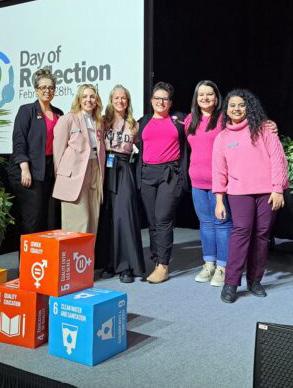
Prioritizing Social Inclusion and Environmental Sustainability emphasized at Day of Reflection
READ MORE: Day of Reflection