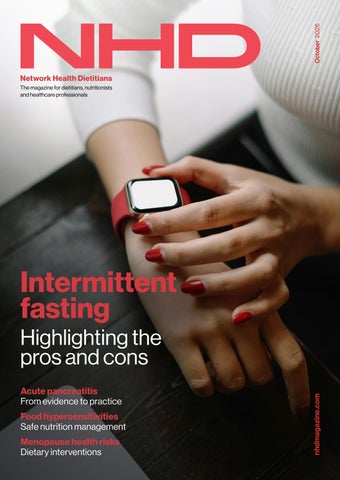
October 2026
Network Health Dietitians The magazine for dietitians, nutritionists and healthcare professionals
Intermittent fasting Acute pancreatitis From evidence to practice Food hypersensitivities Safe nutrition management Menopause health risks Dietary interventions
nhdmagazine.com
Highlighting the pros and cons
INFORMATION FOR HEALTHCARE PROFESSIONAL USE ONLY
The COMPLEAT Choice for Enteral Nutrition ®
Compleat® 1.1 (1 Litre)
START YOUR FREE TRIAL
FOR PROFESSIONAL EVALUATION ONLY
Compleat® 1.5 HP (500 ml)
EXPLORE MORE
Expanding patient options with enteral feeds containing food-derived ingredients*. *Compleat® 1.1 contains 16% food-derived ingredients; 6.9% rehydrated chicken meat, 5.95% rehydrated vegetables (peas 5.2%, green beans 0.75%), 1.8% orange juice from concentrate, 1.5% peach puree. Compleat® 1.5 HP contains 19% food-derived ingredients. 13% rehydrated chicken meat, 2.2% peach puree, 1.8% orange juice from concentrate, 2%rehydrated green beans, 0.1% rehydrated peas. Information as per data card Jan 2026 Compleat® 1.1 and Compleat® 1.5 HP are Foods for Special Medical Purposes for use under medical supervision, for the dietary management of malnourished patients or those at risk of malnutrition. ®Reg. Trademark of Société des Produits Nestlé S.A. Nestlé Health Science UK. NHSc 043 March 2026
CONTRIBUTORS
Emma Coates RD & NHD Editor 5 Up Front
Giuliana Rocca ANutr 9 Diet & Lifestyle
Zoe Reape ANutr 12 Women’s Health
Barira Saad RD 15 Conditions & Disorders
Holly Monday-Jones RD 19 Clinical
Priya Tew RD 24 Food for Thought
Emma has been a Registered Dietitian for 18 years, with experience in adult and paediatric dietetics.
Giuliana is a Programme Manager at University College Dublin. She delivers nutrition workshops and mentors for cooking programmes, providing advice on sustainable diets and healthy food choices to individuals, families and communities.
Zoe is interested in women’s health, from pregnancy, postpartum through to menopause and helping women fuel correctly for physical activity. She works with women in the Tokyo expat community, supporting them to navigate big life changes away from their home country.
Barira is a Paediatric Dietitian with a strong interest in technology, specialising in the integration of clinical nutrition with digital innovation. Her hobbies include coding and AI.
Holly is an Acute, Critical Care and Nutrition Support Team Lead Dietitian and Student Lead for Betsi Cadwaladr University Health Board Central area (Glan Clwyd Hospital). She is the Founder of HMJ Nutrition Services and HMJ Wellbeing Solutions.
Priya is a Specialist Eating Disorders and IBS Dietitian. She runs Dietitian UK, works with the media and is the author of The DASH Diet and The Complete Low FODMAP Diet Plan.
zoe_brown_nutrition
in/barira-saad
HMJ Nutrition Services
zoebrownnnutrition.com
@beasaadrd
HMJWellbeing
coatesyRD
giulianarocca
linkedin.co/
priya_tew priyatew priyatew www.dietitianuk.co.uk
Aqsa Mahmood ANutr 27 Nutrition Support
Zuzanna Gradek 29 Debut Dietitian
Madi Myers RNutr 30 Myth Busting
Hazel Long RNutr 32 Skills & Development
Mia Cotton 34 Student Hub
Shumaila Sharif 35 Skills & Development
Aqsa is a Registered Associate Nutritionist with the Association for Nutrition (AfN). She graduated from the University of Westminster with a BSc in Human Nutrition and received an MSc in Dietetics from the University of Lancashire.
Zuzanna is studying Nutrition and Dietetics at the University of Nottingham. Now in her 4th year, she is interested in promoting evidencebased diet and health advice and debunking diet myths. Her clinical practice placement was held in both community and acute settings.
Madi is a freelance nutritionist working with individuals, hosting workshops and writing. She works across the food industry and private sector, promoting the non-diet approach to nutrition.
Hazel specialises in public health and works as a freelancer. She is currently completing a Master’s degree in Psychology at the University of Glasgow and is interested in eating behaviours.
Mia is a recently qualified dietitian, with a BSc in Nutrition and MSc in Clinical Nutrition. She is passionate about health and making a difference to patients’ lives.
Shumaila is a clinical dietitian and diabetes educator with a Master’s degree in Human Nutrition and Dietetics. She provides evidencebased nutrition care and individualised dietary counselling for patients with a wide range of health conditions.
non_diet_nutrition nondietnutrition nondietnutrition.co.uk
aqsamahmood
hazel long
Fareeha Jay RD 37 The Last Word Fareeha is a freelance dietitian providing specialist advice to South Asians across the globe and has developed the South Asian Eatwell Guide. dietitian_fareehajay
fareehaJay
www.fareehajay.com
3
shumaila_sharif
CONTENTS OCTOBER 2026 07
09
15
24
UP FRONT 5 Focus on intermittent fasting
NUTRITION SUPPORT 27 Blended diet in enteral nutrition
IN THE NEWS 7 Latest industry updates to know about
DEBUT DIETITIAN 29 Seed oils: are they friend or foe?
DIET & LIFESTYLE 9 The pros and cons of intermittent fasting
MYTH BUSTING 30 Meet your matcha
WOMEN’S HEALTH 12 Menopause health risks and dietary
SKILLS & DEVELOPMENT 32 CBT: A boon in the weight-loss toolkit 35 The dietitian’s role in improving
interventions
patient outcomes
CONDITIONS & DISORDERS 15 Food hypersensitivities CLINICAL 19 Acute pancreatitis and nasojejunal feeding FOOD FOR THOUGHT 24 The number we should have seen coming
STUDENT HUB 34 Placement progression THE LAST WORD 37 The thrifty genotype hypothesis and its relevance to South Asians
REFERENCES All references can be accessed here: www.nhdmagazine.com/tag/october-2026-issue/
Copyright 2026. All rights reserved. NH Publishing Ltd. Errors and omissions are not the responsibility of the publishers or the editorial staff. Opinions expressed are not necessarily those of the publisher or the editorial staff. Unless specifically stated, goods and/or services are not formally endorsed by NH Publishing Ltd which does not guarantee or endorse or accept any liability for any goods, services and/or job roles featured in this publication. Contributions and letters are welcome. Please email only to publisher@networkhealthgroup.co.uk and include daytime contact phone number for verification purposes. Unless previously agreed all unsolicited contributions will not receive payment if published. All paid and unpaid submissions may be edited for space, taste and style reasons.
Editor Emma Coates RD Publishing Director Julieanne Murray Production Editor Rachel Roberts Subeditor Lisa Pritchard Copy Assistant Sue Vane Website Content Coordinator Erin Dearlove Marketing Coordinator Ava Blackwood Design Douglas Advertising Manager Richard Mair Tel 01342 824073 richard@networkhealthgroup.co.uk
@networkhealthdietitians Phone 01342 824073 Email publisher@networkhealthgroup.co.uk www.nhdmagazine.com Address Suite 1, Forest Row Village Hall, The Square, Lewes Road, Forest Row, East Sussex RH18 5ES
4
@nhd _health_dietitians @NHDmagazine linkedin.com/company/nh-publishing ISSN 2398-8754
UP FRONT
Up front Weight management
Emma Coates
Focusing on intermittent fasting
RD & NHD Editor
H
ello and welcome to the October issue of NHD Magazine. This month we’re talking about weight management, a topic that continues to evolve rapidly and remains high on the public health agenda. With significant rates of overweight and obesity, healthcare professionals are increasingly at the forefront of supporting individuals to achieve sustainable improvements in their weight and overall health. Overweight and obesity are complex and chronic health conditions that are influenced by many factors, impacting individuals in different ways. Consequently, treatment approaches can vary and may take years to achieve results, often utilising a combination of lifestyle, behavioural, medical and surgical interventions tailored to the individual’s needs. For many people, the management of their weight is ‘work in progress’ and can ebb and flow throughout life. Quick-fix weight-loss interventions have been around for decades with all kinds of diet plans, products and aids marketed as ‘magic bullets’. However, research tells us that certain interventions achieve results and that there’s more to learn about how best to manage this significant public health concern. Current NICE recommendations for weight management support longterm approaches and recognise that meaningful results can be achieved through a range of treatment options. INTERVENTION OPTIONS In recent years, weight-loss medications have become an increasingly prevalent element of weight management. NICE recommends that pharmacological treatments may be offered to eligible patients alongside dietary and behavioural interventions and physical activity. Newer medications, including GLP-1s, such as semaglutide and
tirzepatide, have demonstrated significant effectiveness in promoting clinically significant weight loss and improving obesity-related health outcomes. However, these medications are intended to support, rather than replace, healthy lifestyle changes. For individuals living with severe obesity or obesity-related comorbidities, bariatric surgery may be considered when non-surgical interventions have not achieved satisfactory results. Bariatric surgical intervention has been shown to produce substantial and sustained weight loss while improving metabolic health. Despite the recent boom in weight-loss medications, bariatric intervention remains a viable option. According to the National Obesity Audit, the number of NHS bariatric procedures, such as gastric bypass and sleeve gastrectomy, continues to rise each year, with approximately 6600 being completed in 2024-25 – an increase of around 1600 procedures on the previous year. Whilst the medical and surgical treatments available can bring about
5
significant change and results for individuals, lifestyle modification remains the cornerstone of weight management. NICE recommends a balanced, caloriecontrolled diet, increased physical activity and structured behavioural support to help individuals achieve and maintain weight loss. IN THIS ISSUE This month, our cover story revisits a dietary strategy that was recognised for its health benefits by the Ancient Greeks but gained mainstream popularity in the 2010s as a weight management regimen. Giuliana Rocca ANutr reviews the pros and cons of intermittent fasting and discusses the current evidence for this approach. We also look at cognitive behavioural therapy (CBT) and its role in weight management, with Hazel Long RD, capturing the essence of this established and evidence-based psychological treatment. Thanks for joining us again this month and enjoy the read.
Emma
M:100 J:0 N:0
C:75 M:90 J:0 N:0
KEEP ON FUELLING THEIR STRENGTH
C:60 M:75 J:0 N:0
C:40 M:60 J:0 N:0
C:35 M:55 J:0 N:0
C:10 M:25 J:0 N:0
C:2 M:4 J:0
YOU’VE BEEN THERE FROM THE START
PROTEIN REQUIREMENTS
CAN DOUBLE IN CANCER PATIENTS1,2 Up to 66% of patients do not meet minimum ESPEN protein requirements3-5
Scan here to ORDER SAMPLES†
Twice daily Fortisip Compact Protein enables up to 88% of patients to meet their ESPEN protein requirements6 Fortisip Compact Protein has the best taste, by people surveyed, compared to other low volume, high protein ONS7 This is intended for Healthcare Professionals Only Fortisip Compact Protein is a Food for Special Medical Purposes for the dietary management of disease related malnutrition and must be used under medical supervision. 1.Arends et al. Clin Nutr. 2017;36(1):11-48. 2.Muscaritoli et al. Clin Nutr. 2021;40(5):2898-2913. 3.Prado et al.Can J Diet Pract Res. 2012;73(4):e298-303. 4.McCurdy et al.Nutrients. 2019;11(11):2743. 5.Stobaus et al.Nutr Cancer. 2015;67(5):818-24. 6.Dingemans et al.Nutrients. 2023;15(24):5013. 7.2025 data on file - Independent taste research in n=109 healthy adults aged 30-80 years old. 63% (p=0.014) stated a preference for Fortisip Compact Protein peach-mango vs Fresubin Pro Compact apricot-peach; 56% stated a non-significant preference for Fortisip Compact Protein mocha vs Fresubin Pro Compact cappuccino; 65% (p=0.003) stated a preference for Fortisip Compact Protein vanilla vs Fresubin Pro Compact vanilla. European Society for Clinical Nutrition & Metabolism (ESPEN) † Product can be provided to patients upon request of a Healthcare Professional. They are intended for the purpose of professional evaluation only. Accurate at time of publication: March 2026
NEWS
Nutrition in the news C:87
NHD's digest of nutrition news with clinical relevance Bite-sized Children's food rules tightening, but compliance lagging A year on from the UK's 2025 voluntary infant food guidelines,4 new analysis of 224 baby foods showed that 58% still breach at least one of the nine recommendations.5 Separately, following a BMJ investigation that revealed more than a third of suppliers at the UK's biggest school food trade show sell HFSS products, a Bite Back analysis found more than three-quarters of secondary school menus breach current food standards.6 The industry is under more scrutiny than ever – but without stronger accountability, clear standards and effective enforcement, guidance alone may not be enough to change what children are eating. The popularity of the dietitian reaction video Dietitians reacting to viral content on camera remains one of social media's most useful nutrition formats. Registered Dietitian, Abbey Sharp, one of the best-known creators of this category, recently posted a direct response to a video glamorising a BMI of 15, gaining 217,000 likes: "It's considered clinically underweight, with many health problems associated." She also pulled no punches, listing the serious health risks, including death.7 Creators like Sharp and Kylie Sakaida, also an RD, have built large followings this way, providing an important, expert opinion on social media platforms where one would previously have been absent. M&S pushes for plainer fibre labelling M&S has written to government urging regulators to swap clinical fibre-claim phrases, including ‘faecal bulk’ and ‘intestinal transit’, with plainer language, such as ‘improves gut health’.8 The letter, backed by a nutritionist and a bowel cancer UK ambassador, points to NDNS data showing that 96% of UK adults still fall short of the 30g daily fibre target8 – arguing that current labelling restrictions are making it difficult for brands to communicate clearly with consumers.
MAXXING OUT! The cost of protein-maxxing Protein-maxxing grew throughout 2025, reshaping ice cream and dairy aisles with high-protein options. More recently, focus has turned to the impact this demand has had on prices. Whey protein concentrate has more than doubled in price since July 2025, suspected to be driven by protein-maxxing and GLP-1 users prioritising the macronutrient to preserve muscle mass while eating less overall.1 One group potentially facing the consequence of these price hikes is parents. ONS data show a 750g box of formula is up 4.8% this year, now costing £12.11 from £11.55 a year ago.1 Industry insiders say manufacturers are struggling to absorb the rise, meaning shoppers may feel more impacts yet. For dietitians, the trend highlights the importance of considering whether increased protein intake is necessary for the individual, while also ensuring that advice remains affordable, nutritionally balanced and appropriate. Fibre-maxxing drives a wave of new product launches High-fibre claims are appearing on UK packaging more than ever, as brands rush to respond to fibre-maxxing.2 Cereals and snack bars came first, but the trend has spread into yoghurts, functional drinks and bakery, with Warburtons among those to have launched a dedicated fibre range.3 Brands say it reflects a genuine shift in consumer understanding of the benefits of fibre, with the public actively seeking higher-fibre options.
7
Network Health Dietitians
Practical insight Clinical confidence Print Issues Receive NHD delivered direct to you
CPD Articles Answer questions and save for your files
Digital Edition Access current and past issues online
Events & Courses Training dates and professional development
News Hub Up-to-date industry news and research
Topical Blogs Insights from NHD’s Editor and guest bloggers
Stay informed www.nhdmagazine.com
DIET & LIFESTYLE
The
pros cons intermittent fasting I and
of
Giuliana Rocca ANutr
ntermittent fasting (IF) is an eating pattern that alternates periods of eating and fasting and has attracted significant attention in recent years to help people live longer and improve their overall health.1 The main types of IF include: • Time-restricted eating (TRE)2 • Alternate-day fasting (ADF)3 • Modified alternate-day fasting (MADF)4 • Time-restricted fasting (TRF) – early or late (16:8 protocol)5 • Fast-mimicking diet (FMD)6 • 5:2 meal replacement plan (5:2 MR)7 See Table 1 for more information on these eating patterns. THE BACKGROUND OF IF Throughout human history, our early ancestors naturally experienced times of feast and famine depending on when food was available.8 Fasting is also an ancient practice with deep roots in many religions and spiritual traditions. However, it can be dangerous Type of fasting
Feeding pattern
Description
TRE
6–11-hour daily eating window
Daily food intake is within a consistent 6–11 hours without changing quality or quantity of diet
ADF
24-hour fast (water-only) 24-hour eating period
Alternation between normal eating days and days of water only or very low caloric intake (0–25% of daily energy needs) every second day
MADF
24-hour restriction (25% of needs) 24-hour eating period
Same as ADF, but with 20–25% of daily energy needs every second day
Early TRF (eTRF)/ late TRF (lTRF) or 16:8 protocol
12–18-hour fast 6–12-hour eating period
Food intake is limited to a specific daily window of 6–12 hours per day (fasting for 16 hours, eating within an 8-hour window)
FMD
5 consecutive days of restricted caloric intake 10–25 days normal eating period
30– 50% of normal caloric intake for 5 days a month, followed by 10–25 days of normal caloric intake
5:2 meal replacement diet (5:2 MR)
2 consecutive or separate days fasting 5 days normal eating period
Alternation of 2 days of 500–700kcal with a 5-day unrestricted eating period in a week Food intake is restricted to 6–12 hours per day
Table 1: IF methods explained 9
DIET & LIFESTYLE
if done incorrectly. For example, in 1908, a book called Fasting for the Cure of Disease by Linda B Hazzard gave harmful fasting advice that unfortunately led to several deaths, including her own.9 Over time, IF has evolved from a simple health trend into a wellresearched clinical strategy, becoming a way of manipulating metabolism to achieve benefits such as weight loss, increased stress resistance, suppression of inflammation and numerous physiological changes at the cellular level. Recently, research has shown that IF can especially benefit adults who are overweight or obese.10 IF and normal feeding cycles have been recognised as potential methods to induce cellular autophagy, which has been recognised as a crucial mechanism for maintaining cellular homeostasis and longevity.11 The main forms of IF, TRE and ADF impact body weight in adults with obesity by targeting key circulating inflammatory markers (C-reactive protein, tumour necrosis factor-alpha and interleukin-6).12 In some trials, TRE and ADF have shown superior weight loss results compared with continuous calorie restriction in overweight and obese individuals. ADF ADF is more effective for weight reduction as it contributes to metabolic and lipid health, leading to better outcomes in BMI, body weight and other metabolism-related indicators, such as reduced total cholesterol, triglycerides and LDL cholesterol.13
TRE TRE can improve memory, learning and problem-solving tests independent of weight loss, as shown by a recent pilot study, where older women living with overweight or obesity who ate within a relatively narrow window (10am–6pm) had improvements in cognitive abilities compared with those who spread their meals over a longer time (about 12 hours).14 MADF The MADF approach has the benefit of being more tolerable and easier to maintain for long-term adherence, as it typically allows for a small meal (500–600 calories) during fasting days rather than complete abstinence from food. Similarly to standard ADF, MADF is recognised as a valid dietary strategy for weight loss and cardiovascular protection in obese adults, also showing significant improvements in subjective sleep quality.4 TRF (EARLY AND LATE) Ending the eating window early (by 4–6pm), known as early TRF (eTRF), may be particularly effective in improving visceral and subcutaneous adipose tissue function in people with overweight or obesity. Beyond reducing body weight, total fat mass and intrahepatic fat, eTRF decreases adipocyte size, macrophage infiltration and downregulates inflammatory genes. This promotes fat redistribution and can substantially reduce waist circumference.15 Simply eating within an eight-hour window each day may also help adults with obesity naturally reduce calorie intake and lose
weight without counting calories.16 eTRF appears to improve insulin resistance (lower HOMA-IR) more effectively than late TRF (lTRF), increasing glucose uptake and reducing fasting insulin. However, longer-term studies (≥8 weeks) with clearly defined feeding windows are needed to confirm these benefits. Future interventions should also consider chronotype – an individual's genetically influenced preference for sleep, waking and activity.17 Extending the overnight fasting period may also align food intake with the body's circadian rhythm, potentially protecting against chronic metabolic disease.18 TRF can also reduce systolic blood pressure and body weight, which may help mitigate the structural and functional cardiac damage associated with hypertension.19 FMD FMD is a specific dietary protocol designed to provide the benefits of fasting while still allowing for the consumption of specific nutrients. FMD cycles can reverse insulin resistance by promoting the regeneration of pancreatic beta-cells in prediabetes and, hence, they are beneficial for diabetes regression.20 FMD is also being studied to see how it can protect healthy cells and support cancer patients to better deal with their treatment. FMD activates the protective pathways of normal cells by lowering the levels of blood glucose, insulin and insulinlike growth factor-1, while enhancing the sensitivity of cancer cells to tumour therapy and providing new targets for individualised therapy.21 In addition, FMD activates starvation escape pathways in triple-negative breast cancer (TNBC) cells, which can be more easily identified and more effectively targeted by drugs. Since metastatic TNBC patients with lower glycaemia survive longer than those with higher baseline glycaemia, FMD cycles have been shown to prevent hyperglycaemia and other toxicities caused by these drugs.22 5:2 MR The 5:2 MR approach, which consists of eating very few calories (500 to 700) for two days a week and eating normally for the other five, is a great starting point for managing type 2 diabetes and weight loss in the short term in adults with overweight or obesity.23 This plan is highly effective
10
DIET & LIFESTYLE
for visceral belly fat reduction and has positive effects on blood lipids and blood pressure, which can mitigate the risk factors for cardiovascular disease. However, the patient's physical condition during the fasting period should be monitored and timely adjustments should be made accordingly.24 HOW DOES IF WORK? At the biological level, IF induces a long-term ‘metabolic adaptation’, reprogramming how the body processes energy.25 When stored glucose levels are depleted, cells switch to adaptive metabolic processes such as reducing the basal metabolic rate, breaking down stored fat into free fatty acids (through lipolysis) and converting the oxidised fatty acids in the liver into ketone bodies (through ketogenesis). When blood glucose levels are depleted, ketone bodies become the main fuel, contributing to around 60% of the brain’s energy.26 Ketone bodies are believed to be important regulatory factors in chronic inflammation during ageing. They can improve brain function and mental clarity in as little as two hours, suggesting they provide a quick, efficient energy boost for individuals at risk of neurodegenerative disease.27 However, more research is needed to know the long-term effects of staying in a ‘fatburning’ state. Overall, understanding the intricate relationships between ageing, autophagy and dietary restriction can certainly open the way for innovative therapeutic strategies to increase longevity and mitigate age-related health issues.28 WHAT ARE THE SIDE EFFECTS OF IF? Despite the potential benefits of IF, it is not a cure-all or suitable for everyone. Fasting plans should be tailored to individual health needs.29 IF is not advised for certain groups because of the risk of adverse effects. Temporary symptoms such as dizziness, fatigue and headaches are common, particularly during the first 1–2 weeks as the body adapts to using free fatty acids and ketones for energy.30 Prolonged fasting in lean individuals may also increase the risk of nutrient deficiencies.31 Also, while IF can improve glycaemia, high
blood insulin can also inhibit lipolysis, stopping fat burning and leading to a loss of muscle mass in people with obesity and diabetes.32 Muscle maintenance is another concern, particularly in older or sedentary people with obesity, who may already have impaired muscle protein turnover.33 Restrictive eating windows could increase the risk of sarcopenia and frailty in these groups.34 IF is not recommended for children who are overweight or obese, as it may interfere with growth, or for adolescents, where restrictive eating could contribute to binge-restrict cycles and exacerbate disordered eating behaviours.35 IF may also affect food absorption and medication effectiveness, while people with pre-existing heart disease may face an increased risk of cardiovascular death.36 Responses to IF vary considerably, and the optimal fasting duration remains uncertain.27 Individuals should therefore
11
understand the potential benefits and risks and avoid adopting IF without appropriate medical and nutritional advice. CONCLUSION IF offers a versatile clinical approach that can enhance metabolic health, cognitive function and weight management by triggering beneficial processes like ‘cellular cleaning’ through autophagy and metabolic switching to ‘fat-burning mode’. While different fasting styles have unique benefits for lipid health and insulin sensitivity, their success depends on tailoring the specific dietary plan to the individual’s health condition and its alignment to the body’s natural circadian rhythms. Ultimately, IF is not a one-size-fitsall diet and requires professional medical guidance to mitigate risks such as nutrient deficiencies, muscle loss and severe side effects in vulnerable populations.
W O M E N ’ S H E A LT H
Menopause health Risks & dietary interventions
Zoe Reape RD
M
enopause is framed as a hormonal transition, but alongside the decline in oestrogen comes measurable changes to heart, muscle, bone and neurological health, many of which are modifiable through nutrition independent of hormonal therapy.1 The transition to menopause, often referred to as the perimenopause, provides a critical window of opportunity for healthcare professionals, as modification of dietary patterns and nutrient intake can influence disease trajectory independent of hormonal therapy. This article will explore the current nutritional guidance for four major health risks in menopause: metabolic, cardiovascular, bone and cognitive health. It will also consider how robust the current evidence base is and how dietitians and nutritionists can integrate current research into practice. METABOLIC HEALTH The menopause transition drives a distinct shift in metabolic health that goes beyond weight gain. Declining oestrogen reduces insulin sensitivity, alongside a redistribution of fat towards visceral depots, changes in lipid
processing and rising blood pressure, leaving women vulnerable to the onset of metabolic syndrome.2 In fact, risk rises from 13–18% in premenopausal women to 32–60% in postmenopausal women.3 Population data show that women with earlier natural or surgical menopause have a significantly higher metabolic syndrome prevalence than those with later onset (13.5% vs 10.8%), and risk appears to increase with time from the final menstrual period.4 A 2024 meta-analysis of 17 RCTs (>29,000 participants) found that hormone therapy significantly improved insulin resistance in healthy postmenopausal women, reinforcing the idea that insulin-sensitivity decline is driven by oestrogen rather than purely being age-specific.5 For healthcare professionals, this has direct implications. As lean mass declines, energy requirements typically fall (at a rate of 2% a year in >50-year-old women), while protein requirements may increase to preserve and grow muscle and support glycaemic control. Protein intake should be at least 0.8g/kg body weight, rising to 1g/kg body weight or more, depending on activity levels.
12
In terms of dietary patterns, the Mediterranean diet has the most beneficial effects, improving insulin sensitivity, lipid profiles and blood pressure.6 Its benefits are thought to be driven by its high content of monounsaturated fats, fibre and polyphenols. One meta-analysis of 12 studies found reductions in waist circumference, triglycerides and fasting glucose compared with control groups.7 When adhered to, participants with metabolic syndrome showed a 49% increase in the chance of remission.7 Other dietary approaches include the DASH diet, which improves insulin resistance and blood pressure but does not show a significant improvement in lipid profiles,8 intermittent fasting and low-glycaemic-index diets.9 CARDIOVASCULAR HEALTH Metabolic syndrome in menopausal women increases the risk of cardiovascular disease by 2–2.8-fold.10 However, metabolic syndrome is not the only factor associated with increased risk; women who are postmenopausal, overweight and metabolically unhealthy are also at increased risk. The largest UK-specific dataset from UK Biobank found that for each five-year increment postmenopause, there was a 14% higher composite CVD risk.11 Diet remains one of the best interventions to reduce CVD risk. Unsurprisingly, the Mediterranean diet has the broadest and most reliable evidence base regarding CVD. A long-term prospective cohort study found that strict adherence to the diet reduced CVD risk by 4.38-fold.12 The core components of the Mediterranean diet are unsaturated fats, fibre and polyphenols from sources such as olive oil, nuts, seeds, wholegrains, fish, lentils, beans, fruits and vegetables. Other dietary approaches with moderate to good evidence bases
W O M E N ' S H E A LT H
include the DASH diet and plantforward, calorie-controlled diets. One 12-week study found that both pre- and postmenopausal women who received medical nutrition therapy consumed fewer calories and less cholesterol, resulting in reductions of waist circumference and lipid profiles.13 The DASH diet focuses on reducing sodium intake, alongside consuming whole foods such as vegetables, fruits, lean meats, wholegrains and nuts and seeds. Despite diet being an excellent tool to reduce CVD risk, evidence remains mixed at the RCT level, largely because of heterogeneity in study design.14 Practitioners may therefore want to lead with Mediterranean-pattern eating as first-line advice, prioritise protein (0.8– 1g/kg+) over energy restriction to offset age-related muscle loss, and use DASH where blood pressure is the predominant risk factor. Women with early or surgical menopause should also be prioritised for risk management and intervention. BONE HEALTH Bone mass and strength decline rapidly in the first few years following the final menstrual period. This is driven by declining oestrogen levels, which accelerate bone reabsorption rates beyond the body’s ability to replenish it.15 Alongside reductions in bone density, structural and quality changes further increase the long-term risk of fractures. Osteoporosis is a leading cause of fracture, with a 30% higher risk in postmenopausal women.
Dietary quality and nutrient intake have a significant impact on osteoporosis risk and may slow the decline in bone mineral density (BMD). The strongest evidence points to calcium with vitamin D co-supplementation, with guidelines specifying 1000–1200mg of calcium/ day and 800IU of vitamin D/day.15 Calcium from food sources is preferred, unless it is unlikely that requirements will be met. Dairy products, fortified plant milks, calciumset tofu, bony fish and leafy greens are great options. Furthermore, adequate protein intake of at least 0.8g/kg body weight/day is associated with improved BMD and musculoskeletal support, especially when combined with resistance training.16 Research suggests that phytoestrogens may help reduce bone reabsorption rates, although claims that they are almost as effective as HRT should be interpreted cautiously. A meta-analysis of 63 RCTs found that isoflavones significantly increased BMD in the femoral neck, spine and distal radius.17 However, effectiveness is dependent on dose, duration and quality, with long-term consumption (>12 months) of genistein (a phyto - estrogen found in soy products) at a dose of 50mg/day showing the greatest benefit. It is also worth noting that variations across ethnic groups may be observed, with Asian women showing superior BMD gains compared with other populations.18
13
BRAIN HEALTH AND COGNITIVE DECLINE Falling oestrogen levels during menopause drive several structural and metabolic changes in the brain, including alterations in grey and white matter and increased amyloid plaque accumulation, potentially leaving the brain more vulnerable to neuroinflammation and neurodegeneration.19 Nutrition’s role here is still emerging and the evidence base remains weak or limited. Omega-3 fatty acid intake from DHA and EPA may be associated with improved brain function and reduced depressive symptoms,20 while the MIND diet, which combines Mediterranean and DASH principles, may improve cognition, although this is currently supported by only a single RCT. Conversely, high-fat diets may accelerate neurodegeneration. HRT, meanwhile, has shown no strong evidence of cognitive benefit, suggesting that lifestyle and dietary factors may represent important modifiable factors in the onset and severity of cognitive changes during and after the menopause transition. Further research is needed. TRANSLATING EVIDENCE INTO PRACTICE: GAPS AND PRIORITIES Across metabolic, cardiovascular, bone and brain health, the Mediterranean diet offers the most consistent, transferable evidence, providing several beneficial nutrients, including fibre, polyphenols and unsaturated fats. At the same time, calcium/vitamin D and protein intake have the strongest support for bone and muscle preservation. Evidence is weaker and more heterogeneous for cardiovascular RCTs, phytoestrogen dosing (population-dependent), and especially cognitive outcomes, where trial data remain sparse and largely mechanistic. Priority areas for practice include earlier intervention in women with early or surgical menopause, foodfirst approaches to calcium intake and protein-forward counselling to offset declines in lean mass. Given the limited number of high-quality cognitive trials and mixed cardiovascular RCT findings, dietitians and nutritionists should communicate that diet is a meaningful, evidence-based risk-reduction strategy, rather than a guaranteed prevention.
INFORMATION FOR HEALTHCARE PROFESSIONAL USE ONLY
Introducing our next generation of hypoallergenic formulas... e Pr am ic
e
S
Upgraded formulation, at no extra cost.
ze •
• Sam
Si
e P ck a
PIP Code: 4386454
PIP Code: 4386462
Designed for the dietary management of Cow’s Milk Protein Allergy (CMPA), with a clinically proven blend of two Human Milk Oligosaccharides (HMOs*): 2’FL and LNnT*1-5
Our HMO blend is proven to support: Fast and effective symptom management1-3,6,7
Healthy growth and development1-3,6,7
Reductions in infection rates and medication use1 as well as promoting a positive gut microbiota3
Scan the QR code to order FREE samples for your patients REFERENCES 1. Vandenplas Y, et al. Nutrients. 2022;14(3):530. 2. Gold MS, et al. Nutrients. 2022;14(11):2297. 3. Boulangé CL, et al. Int J Mol Sci. 2023;24(14):11422. 4. Puccio G, et al. J Pediatr Gastroenterol Nutr. 2017;64(4):624–631. 5. Berger B, et al. mBio. 2020;11(2):e0319619. 6. Nowak-Węgrzyn A, et al. Clin Pediatr (Phila). 2015;54(3):264–272. 7. Niggemann B, et al. Pediatr Allergy Immunol. 2008;19(4):348–354. IMPORTANT NOTICE: We believe that breastfeeding is the ideal nutritional start for babies as breast milk provides a balanced diet and protection against illness for a baby. We fully support the World Health Organisation’s recommendation of exclusive breastfeeding for the first six months of life followed by the introduction of adequate nutritious complementary foods along with sustained breastfeeding up to two years of age. We also recognise that breastfeeding may not be an option due to certain medical conditions. Parents should only feed Infant formula for special medical purposes under supervision of a healthcare professional after full consideration of all feeding options, including breastfeeding. Continued use has to be assessed by the healthcare professional in relation to the baby’s progress bearing in mind any social and financial implications for the family. Infant formula should always be prepared, used and stored as instructed on the label in order to avoid risks to a baby’s health. The following products must be used under medical supervision. SMA® Althéra® Advance is a food for special medical purposes intended for the dietary management of infants with cows’ milk allergy. Suitable as a sole source of nutrition from birth or supplementary feeding from 6 months and up to 3 years of age. SMA® Alfamino® Advance is a food for special medical purposes, for the dietary management of infants with severe cows’ milk allergy, multiple food allergies and other conditions where an amino acid formula is recommended. Suitable as a sole source of nutrition from birth up to 12 months or supplementary feeding from 6 months onwards. *Not sourced from breast milk ®Reg. Trademark of Société des Produits Nestlé S.A. Nestlé Health Science UK. NHSc 195a August 2026
14
CONDITIONS & DISORDERS
FOOD
hypersensitivities
Navigating guidance on safe nutrition management
M
anaging suspected food hypersensitivities is a substantial part of modern dietetic practice, amid conflicting patient perceptions, commercial pseudoscientific testing and diverse clinical guidelines. Dietitians must navigate differences between national and international guidance, use molecular and cellular diagnostics appropriately, and deliver safe, evidencebased interventions across the food hypersensitivity spectrum. When patients present with severe gastrointestinal or systemic symptoms, distinguishing a true Type I immunoglobulin E- (IgE) mediated food allergy from food intolerance is the critical first step. This distinction determines whether a patient requires strict long-term allergen avoidance with emergency rescue medication, or a structured, short-term elimination diet followed by reintroduction. For dietitians in the UK, this intervention pathway reveals an expanding gap between national regulatory frameworks and international clinical consensus. NICE continues to rely on its foundational Clinical Guideline 116.1,2 By contrast, the European Academy of Allergy and Clinical Immunology (EAACI) has completed a rolling portfolio of guidelines spanning both diagnosis and active management.3,4 This dynamic framework integrates molecular diagnostics and immunomodulatory therapies into routine clinical pathways. Both organisations agree that a positive screening test alone shows immunological sensitisation, not a confirmed clinical allergy. However, their approaches to intervention differ.
Understanding this distinction helps dietitians interpret results accurately, avoid unnecessary food restrictions and guide patients safely through treatment. DISTINGUISHING SENSITISATION FROM ALLERGY The cornerstone of both frameworks is an allergy-focused clinical history to determine the underlying physiological mechanism.1,3 • IgE-mediated reactions. These are typically immediate, arising within minutes and up to two hours after ingestion. Symptoms commonly present as objective clinical signs, including acute urticaria, angioedema, vomiting or respiratory distress. • Non-allergic food intolerances. These, including lactose intolerance or fermentable carbohydrate (FODMAP) sensitivity, present with delayed, localised gastrointestinal distress without systemic or immune involvement.5 When the clinical history suggests IgE-mediated allergy, first-line testing involves a hospital-based skin prick test (SPT) or a serumspecific IgE (sIgE) test against whole-food extracts. The EAACI guidelines are definitive that positive results indicate only immunological sensitisation.3 Sensitisation means the immune system has produced IgE antibodies against a food protein; it does not guarantee clinical reactivity. Mistaking sensitisation for a definitive allergy frequently leads to overdiagnosis and unnecessary elimination of core nutrients.
15
Barira Saad RD
WHEN TO DEPLOY COMPONENTRESOLVED DIAGNOSTICS (CRD) To bridge the gap between sensitisation screening and a physical food challenge, EAACI guidelines outline specific indications for hospitaladministered component-resolved diagnostics (CRD). Traditional sIgE tests use whole-food extracts containing multiple proteins, which can produce positive results due to harmless, cross-reactive environmental proteins rather than primary food allergy. CRD isolates individual allergen proteins to identify the specific molecular target of IgE antibodies. The EAACI expert panel recommends testing sIgE to individual allergen components alongside whole-extract testing, rather than sequentially, to minimise false negatives and optimise clinical utility.3 Although ordered and interpreted by the hospital medical team, dietitians should understand CRD’s role in distinguishing cross-reactivity. For example, it can differentiate potentially life-threatening peanut or hazelnut allergy from benign, pollenassociated oral allergy syndrome.6 CRD can also support risk stratification. Sensitisation to highrisk storage proteins, such as Ara h 2 in peanut or Cor a 9 and Cor a 14 in hazelnut, is associated with a higher risk of systemic reactions. Conversely, sensitisation to heat-labile proteins that are readily degraded by cooking or digestion generally indicates a lower risk. However, EAACI advises against using CRD to predict baked milk or egg tolerance, as component testing has not reliably identified candidates for bakedfood challenges.3
CONDITIONS & DISORDERS
TRANSLATING HOSPITAL COMPONENT RESULTS INTO PRACTICE Once the medical team completes a CRD panel, the specialist dietitian translates these results into practical dietary boundaries. A careful reading of the molecular profile allows the dietitian to tailor advice, avoid complete food-group restrictions and devise targeted education: • Identifying high-risk sensitisation. High-risk markers, such as Ara h 2, indicate that the food must be avoided completely; the dietitian should review the patient’s personalised emergency plan and reinforce safety steps.4 • Contextualising lower-risk markers. Sensitisation to heat-labile proteins such as Ara h 8 supports reassurance, as the risk of a severe reaction is low, helping to reduce disproportionate anxiety.3 • Informing decisions on cooked foods. Understanding a protein’s heat stability helps determine whether baked forms may be tolerated or the food avoided entirely, always within the medical team’s oral food challenge (OFC) decision. • Maintaining dietary variety. Component results allow dietitians to identify related foods a patient can safely continue, rather than excluding entire food families.
OPEN VERSUS DOUBLE-BLIND CHALLENGES Despite advances in molecular and cellular diagnostics, a supervised OFC in a medical setting remains the standard for confirming food allergy. In its 2024 update, the AAAAI–EAACI PRACTALL guidance ranks open food challenges against double-blind, placebocontrolled food challenges (DBPCFC), balancing methodological rigour with practical, real-world constraints.7 Open OFCs are suitable and recommended for most clinical cases.7 In an open challenge, both the team and the patient know which food is being given. They are efficient, costeffective and less resource-intensive, and their diagnostic accuracy for objective physical signs is not inferior to blinded formats. DBPCFCs are reserved for complex scenarios and research.7 Here, an allergen and a matched placebo are administered on separate days in a randomised, masked sequence. A DBPCFC is indicated when a prior open challenge is indeterminate or disputed; when the reaction history involves subjective symptoms prone to reporting bias, such as isolated abdominal pain, nausea or headache; or when patient or caregiver anxiety threatens to mimic an allergic response, allowing the team to isolate a physical IgE-mediated reaction from symptom over-attribution.
THE BASOPHIL ACTIVATION TEST (BAT) For the first time, international guidance formally incorporates the BAT test.3 This specialised laboratory assay exposes a patient’s live basophils to a food allergen and measures their activation, effectively modelling an allergic response safely outside the body, which gives it high accuracy. Because it is resourceintensive and not widely available, its use is reserved for specific indications. Hospital teams use BAT chiefly as a discriminating test when SPT and sIgE results are inconclusive and do not align with the clinical history.3 Evidence indicates BAT is highly specific for suspected peanut and sesame allergy. Where standard tests are inconclusive, BAT can help confirm or exclude allergy and may allow a patient to avoid a physical oral food challenge.
MODERN MANAGEMENT: FROM AVOIDANCE TO MODIFICATION Historically, the primary intervention for IgE-mediated allergy was strict, indefinite elimination. While avoidance remains a foundational safety measure, modern practice increasingly embraces disease-modifying, immunomodulatory interventions to induce desensitisation and protect patients from accidental exposure. OIT For paediatric populations, oral allergen-specific immunotherapy (OIT) is now prioritised.4 The EAACI management guideline recommends OIT for children and adolescents with confirmed peanut allergy, with good evidence for raising the clinical reaction threshold. Early, structured introduction frameworks are
16
increasingly emphasised internationally as a means of preventing allergy and preserving tolerance.8 Dietitians play a crucial role during OIT – calculating safe maintenance doses, educating families to distinguish transient side effects from systemic reactions and monitoring nutritional adequacy. Omalizumab A significant development in the updated framework is the inclusion of biologic therapy. Omalizumab, an anti-IgE monoclonal antibody, is conditionally suggested as an option for IgE-mediated food allergy in children from the age of one and in adults. It binds circulating IgE, preventing it from docking onto mast cells and basophils and thereby reduces the risk of severe reactions on accidental exposure. It is important to note that this is a conditional suggestion rather than a strong recommendation: specific food avoidance and adrenaline remain foundational.4 Food labels To reduce accidental exposure, dietitians should educate patients to check food labels. Under Natasha’s Law (October 2021), prepacked food for direct sale must now list all ingredients and emphasise allergens, which is a change that particularly affects items bought from cafés, bakeries and takeaways.9 Auto-injectors To protect patients at high risk of anaphylaxis, the dietitian should verify, as part of the MDT, that patients always carry two prescribed adrenaline auto-injectors (AAIs), in line with British Society for Allergy and Clinical Immunology guidance.10 Nasal spray A significant recent addition to emergency management is a needlefree adrenaline option. In July 2025, MHRA approved EURneffy, an adrenaline (epinephrine) nasal spray, as the first needle-free emergency treatment for anaphylaxis in the UK.11 Licensed for adults and children weighing 30kg or more, it is a ready-to-use, single-dose device delivering 2mg of adrenaline into one nostril, even when the nasal passages are congested. For dietitians counselling families, it is important to emphasise that the nasal spray is an
CONDITIONS & DISORDERS
additional option, not a replacement for adrenaline auto-injectors, which remain a vital, potentially life-saving treatment. Patients should carry two devices at all times in case a second dose is needed, and the plunger should not be primed before insertion, as this wastes the single dose. For needle-phobic children and adolescents, a needle-free option may encourage prompt treatment. However, the core advice remains unchanged: strict allergen avoidance, an up-to-date personalised action plan and early adrenaline administration at the first sign of a systemic reaction. GUARDRAILS AGAINST UNSCIENTIFIC SENSITIVITY TESTING Both NICE and EAACI maintain an uncompromising stance against serum-specific IgG or IgG4 testing to diagnose food allergy or intolerance.1,3 Commercial kits frequently market IgG panels directly to consumers, claiming to identify hidden culprits behind chronic gastrointestinal or dermatological complaints. Dietitians play a critical role in debunking these kits and redirecting patients to evidence-based assessment. From an immunological perspective, food-specific IgG is a normal physiological response representing exposure and tolerance, not an immunopathological intolerance.12 True non-allergic intolerances must be managed through the following valid, systematic protocols:
1. A meticulous clinical history 2. Exclusion of organic gastrointestinal pathology 3. Structured, dietitian-led elimination and reintroduction For irritable bowel syndrome and other functional complaints, dietitians should apply evidencebased frameworks such as the multistage low-FODMAP approach, which identifies individual tolerance thresholds without compromising long-term nutritional status or the patient’s relationship with food.13
• Step 3: dose escalation. The patient consumes a small portion on day one, a medium portion on day two and a larger portion on day three, recording all changes in a food and symptom diary. • Step 4: washout periods. A three-day washout on core elimination foods is enforced between triggers to avoid cumulative or overlapping reactions.14 • Step 5: defining the threshold. Calculate the maximum tolerated portion allowing the return of vital nutrients to the long-term meal plan.
A GUIDE TO FOOD REINTRODUCTION IN INTOLERANCE When managing non-allergic intolerances, the primary goal is to establish a clear physiological boundary without triggering symptoms. Structured reintroduction is the accepted standard for defining these boundaries.13,14 A systematic, multistage protocol helps dietitians identify triggers safely and avoid long-term nutritional deficiencies:14 • Step 1: symptom stabilisation. Achieve a clear baseline of minimal or no gastrointestinal or skin symptoms through a strict, short-term elimination phase.5 • Step 2: single-stream testing. Reintroduce only one unmixed food at a time over three days to establish tolerance.
CONCLUSION The dietetic management of food hypersensitivity has shifted decisively from static ‘forbidden lists’ towards precision-driven, individualised care. Within the MDT, the specialist dietitian interprets molecular and cellular diagnostics into practical advice, supports families through immunotherapy and newer pharmacological options, safeguards nutrition across long exclusions and offers a voice of evidence against unvalidated testing. By maintaining a clear distinction between IgEmediated allergy, non-IgE-mediated allergy and food intolerance, clinicians can keep interventions safe, current and focused on the goal that matters most: a diet that is as broad, nutritious and enjoyable as possible.
17
INFORMATION FOR HEALTHCARE PROFESSIONAL USE ONLY
Are your patients getting enough fibre?
One ingredient – 100% soluble Partially Hydrolysed Guar Gum (PHGG). PHGG has been shown to increase bifidobacteria and butyrate-producing bacteria in human studies1,2* and helps to normalise stool consistency.3,4
Find out more
Order a sample†
OptiFibre® is a Food for Special Medical Purposes and must be used under medical supervision. REFERENCES: 1. Takahashi et al. J. Nutr. Sci. Vitaminol. 1994; 40 (3):251-9. 2. Ohashi et al. Consumption of partially hydrolysed guar gum stimulates Bifidobacteria and butyrate producing bacteria in the human large intestine. Beneficial Microbes 2015; 6:451-455. 3. Rao, et al. Role of guar fiber in improving digestive health and function. Nutrition 2019, 158 – 169 4. Slavin J, Greenberg N. Partially Hydrolyzed Guar Gum: Clinical Nutrition Uses. Nutrition 2003, 19: 549-552. *Statistically significant increases observed (p<0.05) †For professional evaluation only. ®
Reg. Trademark of Société des Produits Nestlé S.A. NHSc 142 June 2026
CLINICAL
Acute pancreatitis: from evidence to practice
Holly Monday-Jones RD
Why nasojejunal feeding remains difficult to implement
W
hile there has been increasing research over the years to demonstrate what should be done from a nutritional management perspective for those with acute pancreatitis, there continue to be gaps between the evidence base and practice, particularly regarding enteral nutrition. Why is this the case when the evidence base is so clear? ACUTE PANCREATITIS Acute pancreatitis is an inflammatory condition that ranges in severity. It can result in severe pancreatic disease with pancreatic necrotisation and multi-organ failure. This means that for some individuals, acute pancreatitis can be fatal. Critical care management is therefore common. There are multiple causes of acute pancreatitis, although the most common are gallstone migration, chronic alcohol use and/or hypertriglyceridemia.1 Trauma, endoscopy, effects from medication and metabolic and genetic abnormalities may also result in its development. In around 10–20% of cases, the cause of acute pancreatitis is unclear; this is known as idiopathic acute pancreatitis.1 NUTRITIONAL MANAGEMENT Historically, minimising pancreatic stimulation was a common practice in the acute pancreatitis patient group.2 This essentially resulted in patients being kept nil by mouth frequently and for long periods of time. In view of this, parenteral nutrition (PN) has likely been overutilised. The evidence base today consistently goes against this practice. Meta-analyses and randomised controlled trials demonstrate that enteral nutrition (EN), when oral nutrition is not possible or
19
New
Convenience food?
Scan the QR code to discover more
Made easier with award-winning Nutrison Bolus Energy HP Nutrison Nutrison Bolus Bolus Energy EnergyHP HPisis aa high high protein, protein, nutritionally nutritionallycomplete* complete* tube tube feed feed designed designed for forpatients patientswishing wishing to to bolus bolus feed. feed. Without Without the the need need for foraa pump pump or orsyringe, syringe, itit isis also also more more portable. portable.
Less Lesstime timeto toprepare prepare& &deliver deliver11 Easier Easier& &cleaner cleaneradministration administration11 Greater Greaterportability portability& &convenience convenience11
VOTED VOTED FOR FOR BY BY HEALTHCARE HEALTHCARE PROFESSIONALS PROFESSIONALS AS AS THE THE 2026 2026
AWARDS AWARDS NEW NEW PRODUCT PRODUCT OF OF THE THE YEAR YEAR
This Thisinformation informationisisintended intendedfor forhealthcare healthcareprofessionals professionalsonly only Nutrison NutrisonBolus BolusEnergy EnergyHP HPisisaaFood Foodfor forSpecial SpecialMedical MedicalPurposes Purposesfor forthe thedietary dietarymanagement managementof ofdisease diseaserelated relatedmalnutrition malnutritionand and must mustbe beused usedunder undermedical medicalsupervision. supervision. The TheFlocare FlocareBolus BolusPouch PouchConnector Connectorshould shouldonly onlybe beused usedwith withNutrison NutrisonBolus BolusEnergy EnergyHP. HP. The Theannual annualCN CNAwards Awardswere werelaunched launchedinin2010 2010by byComplete CompleteMedia Media&&Marketing MarketingLtd. Ltd.(CM2) (CM2)––publishers publishersof ofComplete CompleteNutrition Nutrition(CN) (CN) Magazine. Magazine.CM2 CM2do donot notendorse endorseany anyparticular particularindividual’s, individual’s,group’s, group’s,organisations organisationsor orcompany’s company’sproducts, products,services, services,resources, resources, views viewsor oropinions. opinions.For Forfurther furtherdetails detailson onthe theCN CNAwards, Awards,visit: visit:http:/ http:/ /www.nutrition2me.com/cn-awards /www.nutrition2me.com/cn-awards High Highprotein: protein:20% 20%energy energyfrom fromprotein. protein.Always Alwaysensure ensurepatients patientsfollow followpack packstorage storageand andusage usageinstructions. instructions. *Nutritionally *Nutritionallycomplete completeinin44pouches, pouches,using usingaa19-49 19-49year yearold oldmale maleRNI RNIfor foraacomparator comparator(excl. (excl.Na, Na,K,K,Cl Cl&&Mg). Mg).AAtypical typicalintake intake would wouldbe be4-6 4-6pouches pouches(1600-2400 (1600-2400kcal kcalper perday) day)ififused usedas asaasole solesource sourceof ofnutrition. nutrition. 1.1.Nutricia NutriciaUK UKACBS ACBStrial, trial,data dataon onfile file2022. 2022.RNI: RNI:Reference ReferenceNutrient NutrientIntake. Intake. Accurate Accurateat attime timeof ofpublication: publication:October October2026 2026
CLINICAL
...guidance promotes early EN within 24–72 hours when oral intake cannot be initiated or tolerated sufficient, benefits patients with acute pancreatitis from a mortality perspective, and reduces the risk of disease complications, surgical intervention and multi-organ failure.2 EN within this patient group has been shown to reduce bacterial translocation, maintain gut integrity and modulate the inflammatory response.3 Therefore, today, guidance promotes early EN within 24–72 hours when oral intake cannot be initiated or tolerated.2 Previously, nasojejunal (NJ) feeding was considered the gold standard approach, as it was thought that feeding below the ligament of Treitz would potentially reduce pancreatic stimulation.3 In recent years, however, nasogastric (NG) feeding has been utilised as a more first-line approach. Evidence suggests there are no significant differences in mortality or length of hospital stay between NJ and NG feeding initiation in this patient group.1 With NG feeding tubes being easier to place and manage, it makes sense to try this approach first from an enteral feeding perspective if it is safe to do so. DOES NJ FEEDING STILL MATTER IN ACUTE PANCREATITIS? As NG feeding is now considered appropriate for many patients with acute pancreatitis, is NJ feeding still required? It does remain very useful, particularly for patients with moderateto-severe disease who are unable to tolerate gastric feeding. It should also be utilised first in specific situations, such as if the patient is at high risk of developing gastric outlet obstruction
(eg, if pancreatic oedema or collections are evident and potentially problematic), develops gastroparesis, has evident delayed gastric emptying or is at significant risk of aspiration or vomiting.4 These situations require the stomach to be bypassed and NJ feeding is the most suitable step in this circumstance. Nevertheless, there continue to be issues implementing NJ feeding in this patient group. Understanding the reasons for this is essential. WHY IS NJ IMPLEMENTATION DIFFICULT? NJ feeding may be considered demanding. Within increasingly pressurised healthcare systems such as the NHS, demanding interventions are often considered difficult to initiate. Practicality issues often lead to national inconsistencies. Recognising when an NJ feeding tube is clinically indicated requires specialist knowledge and skills, together with an understanding of its benefits and clinical value. This expertise is essential for advocating its timely use in practice. However, access to this level of specialist knowledge and experience remains inconsistent across the UK. Many surgical, gastroenterology and critical care HCPs typically have excellent training and experience in conditions such as acute pancreatitis; however, in some fields like dietetics, we know there aren’t enough speciality roles nationally.5 We also know that HCPs are often incredibly stretched in their demanding roles and increasingly overwhelmed services. Significant time constraints undoubtedly affect work quality. Shortage of HCPs with the specialist skill set to understand the need for NJ feeding could result in significant delays in NJ feeding commencement.4,6 We also know that access to NJ feeding varies between healthcare organisations and hospitals. The idea that a patient’s access to optimal nutritional care should depend on where they are admitted feels outdated. Unfortunately, however, this remains a reality in many settings. Access to NJ feeding is likely easier in tertiary centres where specialism is more evident (for example, where there are more specialist dietitians or nutrition
22
support teams, etc). Tertiary centres are also more likely to have access to specialist equipment, potentially improving NJ feeding tube insertion and timely management. UK district general hospitals may need to rely on additional services to facilitate NJ feeding, for example, interventional radiology or endoscopy. These services are in high demand, which may impact decision-making. Where the patient is located will likely affect coordination of care. For NJ feeding to be successful, collaboration is essential at all stages. Identifying appropriate patients, timely tube placement, confirmation of tube position and tube and feed management, along with monitoring outcomes to determine tolerance and manage complications, all require significant team effort. In challenging times, HCPs may focus more on their own priorities. For example, gastroenterologists may prioritise the medical management of acute pancreatitis by focusing on organ support, and surgeons may focus on any surgical intervention needed. However, working together as a multidisciplinary team (MDT) is essential in streamlining processes and is particularly important from a nutritional view. If the MDT approach is missing or collaboration is difficult, NJ feeding delays, fasting and reliance on other feeding strategies are likely.4 NJ feeding facilitation is also influenced by human behaviour and beliefs.6,7 Many HCPs still advocate for PN if NG feeding is not tolerated. Some HCPs may be quite focused on a step-up approach; essentially wanting to start with NG feeding trials, with the possibility of then building up to NJ feeds or PN. This may be due to a variety of factors: location, lack of knowledge around the evidence base, length of practice and/or awareness of constraints within clinical environments. It’s also worth noting that NJ feeding management may be considered more time intensive than other nutrition support strategies. Interruptions to NJ feed delivery can be common due
CLINICAL
to perceived concerns or fears around feeding tube migration, tube position and/or dislodgement.4 RETHINKING THE SOLUTION: DESIGNING A BETTER NUTRITION SYSTEM HCPs have to adapt to the realities of local service provision. If the barriers are mainly organisational, we need to move away from relying on individuals to overcome them. The NJ feeding process in acute pancreatitis needs to be redesigned. Moving away from reactive nutrition support models is essential. Moving towards proactivity is beneficial. The development of an automatic nutrition pathway or an acute pancreatitis nutrition bundle could be extremely useful.8 Implementation at the point of hospital admission could trigger timely referral to dietetics, agree referral criteria for NJ feeding need and highlight escalation time frames. This could ensure timely, appropriate and effective nutritional management for every single acute pancreatitis patient.
It is also important to question whether we should still be reliant and dependent on supportive services such as endoscopy and interventional radiology. If we could improve access to NJ feeding and importantly maintain safety, that would be ideal. Considering bedside electromagnetic guided feeding tube insertion on a wider scale could be the answer.9 Appropriately trained nutrition nurses, advanced clinical practitioners and dietitians could all be involved in this process. Technology is a really important solution. Moving towards fully electronic and integrated patient records could highlight acute pancreatitis patients much earlier. Pathways and bundles would also be easier to implement. AI could play a role in predicting nutritional risk, highlighting and initiating the correct nutritional processes and extracting data for audit/ quality improvement processes.10 We know that nutritional deficits in this patient group can affect mortality, recovery, length of hospital stay and hospital readmission.7 Therefore, isn’t it time to make nutrition a key
23
outcome or performance indicator in acute pancreatitis? Doing this would encourage organisational change and prioritise nutritional care.
CONCLUSION NJ feeding remains a vital consideration in those with acute pancreatitis. In situations where the stomach needs to be bypassed, NG trials can risk poor tolerance and delays in effective nutritional implementation and absorption. Timely NJ feeding in those who require it can improve patient outcomes. Nutrition is unfortunately still not considered a core treatment in acute pancreatitis but rather a supportive therapy. This needs to change. Future research needs to consider the practical implementation of EN further to really identify what works in practice. This would likely have positive impacts at an organisational level.
FOOD FOR THOUGHT
The
number seen coming we should have
I
met with a client last month, and something she said has stayed with me since. She’d been turned away from an eating disorder service four years ago because her BMI put her in the healthy weight range. It made her feel like she was making it all up, like she didn’t really need help. She just wasn’t sick enough. So, she spent the next four years struggling on her own, getting sicker and more stuck in her eating disorder habits. She’s in treatment now. She shouldn’t have had to wait, and this isn’t a one-off story. It’s something I hear on repeat, day after day. I thought about her and the similar clients I’ve worked with when Beat published its new research. It found that an estimated 3.5 million people in the UK are now living with an eating disorder, up from 1.25 million in 2017. That’s one in 20 people – a figure much larger than most would expect, and almost a threefold increase. It shows we’ve been underestimating the scope of the problem for years. But I don’t think that’s a surprise to anyone who has actually been working in this field. This research feels like the moment the numbers have
finally caught up with what we’ve been seeing on the ground for the past five years post-COVID. Eating disorders are not rare, and they are not only happening in the type of body people have been trained to expect. WHY THE OLD NUMBER WAS ALWAYS WRONG The 1.25 million figure came from research using quite narrow diagnostic criteria, focused on a population skewed towards young, white, underweight women. Anyone outside that picture – older adults, men, people in larger bodies, those with binge eating disorder, OSFED including atypical anorexia, ARFID – was likely to be missed, because the methodology simply wasn’t built to pick them up. So, this new figure doesn’t necessarily mean eating disorders have become three times more common in nine years (although I do think there has been a genuine increase). What it shows is how badly we’ve been failing to diagnose, notice and pick up on the majority of people who have been suffering. It’s a sign of how easily eating disorders can fly under the radar and go unnoticed, and it’s exactly why there needs to be a conversation in every MDT meeting, not just during awareness week. It’s also why all frontline staff, not just the specialists, need proper training in eating disorders. Many of our diagnosis and referral pathways still use BMI as the main criterion, which really doesn’t help and leads to so many people not getting the treatment they need. Take those with binge eating disorder; they never get asked the right questions because nothing about their weight or appearance triggers concern. Or those with OSFED, who don’t fit the traditional anorexia or bulimia criteria. What we know is that OSFED is the most common eating disorder in the country.
24
Priya Tew RD
THE CONNECTION NOBODY WANTS TO NAME OUT LOUD Alongside these new figures, reports have found that most eating disorder services in the UK are now treating patients with anorexia and bulimia who have been using weight loss injections. One clinic reported that 6 in 10 of its recent patients had been using them. We are seeing a drug that is marketed and prescribed for weight loss being misused by eating disorder patients, who are getting hold of these medications through online pharmacies and private prescribing services. This
FOOD FOR THOUGHT
Eating disorders are not rare, and they are not only happening in the type of body people have been trained to expect
shows just how minimal the screening is and how easy the access has become. The charity Beat has already flagged the lack of regulation around access, but I’d take this a step further. It shouldn’t be possible for a person to get a GLP-1 prescription without a single question about their eating history or their relationship with food. That isn’t a gap in the system. It’s a dangerous system that isn’t safeguarding vulnerable people. I’ve had more than one client this year ask me my thoughts on starting GLP-1s. For those clients, the reasons have been very much the same. They want the food noise to stop. They want the relief of finally not having to think about food constantly. They want the security of knowing their weight is being
managed, and they want the binges gone. While I understand all of that, for the clients I’ve worked with in my clinic who have actually gone on these medications, it really hasn’t worked. It’s left them with an even more damaged relationship with food. RISING DEMAND, FALLING INVESTMENT Meanwhile, the Royal College of Psychiatrists has published analysis showing that 16 integrated care boards in England are planning a combined £2.1 million in real terms cut in children's and young people’s eating disorder services. That’s 16! Yet, the population needing that care has nearly trebled. I don’t think most people working outside eating disorder services will appreciate how thin these services already are. Waiting lists are often months, sometimes years, and this is for conditions with the highest mortality rate of any mental illness. Right now, I’m fighting for more support for a couple of my own clients. However, services simply don’t have the capacity, and people are losing hope. This isn’t right. Knowing that eating disorder rates are this high yet services are being cut makes no sense. WHAT THIS ACTUALLY ASKS OF US We cannot keep treating eating disorder screening as something that happens only when someone presents with visible weight loss. We cannot keep leaving GLP-1 prescribing entirely in the hands of services with no dietetic or eating disorder oversight. As nutrition professionals, this means a few things for all of us. It shows how important it is to ask about weight loss medication, and how important it is to screen for eating disorders, building this into weight management and online prescribing pathways so that it’s picked up before prescribing starts, not after somebody has already experienced harm. We also need to stop assuming that a person’s weight tells us anything reliable about their risk. The underestimation of eating disorders shown by that 1.25 million figure has taught us what happens when we assume this, and we don’t want to keep making the same mistake.
25
INFORMATION FOR HEALTHCARE PROFESSIONAL USE ONLY
The first and only adult peptide enteral tube feed in the UK to contain added fibre.1
NEW!
Scan to Learn More Today
Peptamen® HN PHGG is a nutritionally complete*, 1.3 kcal/ml peptide-based enteral feed, with: 100% whey protein
Sample Service
70% MCT
To request your FREE sample† please scan the QR code. www.nhscsampleservice.co.uk
Peptamen® HN PHGG is a Food for Special Medical Purposes for use under medical supervision, for the dietary management of malnourished patients or those at risk of malnutrition, for patients with malabsorption and/or maldigestion. * Nutritionally complete in 1500-2000ml, except sodium, potassium and chloride. † Samples can be provided to patients at the request of a healthcare professional. They are intended for the purpose of professional evaluation only. ACRONYMS: PHGG – Partially Hydrolysed Guar Gum. MCT – Medium Chain Triglycerides. ®Reg. Trademark of Société des Produits Nestlé S.A. Nestlé Health Science UK. NHSc 016a January 2026
Added PHGG Fibre
NUTRITION SUPPORT
Blended diet in enteral nutrition
B
lended diet (BD), also known as blended food for enteral feeding, has become increasingly accepted as an alternative to commercial enteral formula for patients requiring long-term tube feeding.1 BD consists of ordinary foods that are cooked, blended with fluids to an appropriate consistency and administered through a feeding tube.2 These may be homemade, commercial real food blended formulas or a combination of regimens using both homemade and commercial formulas and blended.2 Traditionally discouraged due to concerns about microbial contamination, tube blockage and nutritional adequacy, recent evidence suggests that when carefully planned and supervised by dietitians, BD can improve gastrointestinal symptoms, enhance quality of life and increase patient and caregiver satisfaction.1 Home enteral nutrition has traditionally relied on commercially prepared enteral formulas because they provide standardised nutrition composition, sterility and convenience.1 However, an increasing number of patients and caregivers are requesting BD prepared from everyday foods.1 This shift reflects a growing emphasis on natural foods, family participation in feeding and improved quality of life.2 Modern high-powered blenders, large-bore gastrostomy tubes and emerging clinical evidence have contributed to renewed interest in BD.3 Professional organisations increasingly recognise BD as a viable option for selected patients when implemented under dietetic supervision.3 CLINICAL BENEFITS OF BD It has been shown that BD improves gastrointestinal symptoms.4 Across paediatric and adult studies, patients transitioning from commercial
Aqsa Mahmood RD ANutr
formula to BD reported reductions in gastro-oesophageal reflux, vomiting, diarrhoea, constipation and abdominal discomfort.4 The benefits also included an increase in dietary fibre, greater food diversity, improved gut microbiota, slower gastric emptying and better physiological digestion.4 Improvements in stool consistency and reduced dependence on laxatives have also been described.4 Whole food ingredients provide dietary fibre, resistant starches and diverse plant
Dietitians are required to balance patient preferences with evidencebased practice compounds that are largely absent from many standard enteral formulas.4 Increased fibre intake may improve bowel function through enhanced stool bulk and fermentation by colonic bacteria.4 These mechanisms highlight the importance of the intestinal microbiome in gastrointestinal health.4 NUTRITIONAL ADEQUACY Maintaining nutritional adequacy remains one of the principal responsibilities of the dietitian when supporting patients on BD.5 Commercial formulas are designed to provide complete nutrition with consistent energy, macronutrient distribution and micronutrient
27
content.5 However, homemade blends increase variation depending on recipe composition, food preparation methods and caregiver expertise.5 Well-designed BD prepared using standardised recipes and reviewed by experienced dietitians can meet recommended nutrient intakes while incorporating a wide variety of whole foods.5 For example, patients with increased metabolic demands, pressure injuries, neurological conditions or chronic disease often require higher protein intakes than can easily be achieved using unfortified household recipes.6 Dietitians may therefore recommend inclusion of high-protein ingredients or modular supplements where appropriate.6 Commercial real-food blended formulas have emerged as an intermediate option, combining whole food ingredients with standardised nutrition composition and manufacturing quality assurance.6 These formulas offer flexibility whilst ensuring nutritional adequacy. THE DIETITIAN’S ROLE Dietitians play a key role in the assessment, implementation and ongoing monitoring of patients using BD.7 Dietitians are required to balance patient preferences with evidence-based practice, ensuring that nutritional adequacy and safety remain at a good standard.7 Before commencing on BD, a comprehensive nutritional assessment is conducted.8 This includes anthropometry, nutritional status, medical history, gastrointestinal function, biochemistry factors where appropriate, medication and the patient’s feeding tube type and size.8 Dietitians also assess the practical ability of the parent or carer to prepare, store and administer blended feeds safely, recognising that
NUTRITION SUPPORT
successful implementation requires adequate time, food preparation and understanding of food hygiene principles.8 Recipe development is a key competency in dietetic practice. BD is designed to meet individual energy, protein, fluid and micronutrient requirements while maintaining appropriate viscosity for enteral administration.9 Weighed ingredients and standardised recipes can help minimise nutritional variability and improve consistency.9 For patients unable to prepare homemade feeds safely or consistently, commercial real-food enteral formulas or hybrid feeding regimens may provide a practical alternative.9 Consistent monitoring is required for those following a BD.9 Regular review should include weight, hydration status, gastrointestinal tolerance, feeding tube function and assessment of nutritional adequacy.9 Dietitians also have an important educational role, providing training on safe food preparation, storage, administration techniques and tube flushing to minimise microbial contamination and tube occlusion.9
FUTURE RESEARCH Although evidence supporting BD has expanded over the years, further research is still required.10 Most of the published studies are observational, with small sample sizes and have been conducted primarily in paediatric populations.10 Further research should prioritise well-designed randomised controlled trials comparing BD with standard commercial formulas across both paediatric and adult populations.10 Comparison of gastrointestinal symptoms, nutritional adequacy, healthcare utilisation and patientreported outcomes can strengthen future research and evidence.10 Longitudinal studies are also required to evaluate the long-term nutritional adequacy, food safety, microbiome effects and tube-related complications associated with both homemade and commercially prepared BD.10 Furthermore, research should explore which patient groups are most likely to benefit from BD, including differences between paediatric and adult populations, feeding tube location, underlying diagnoses and levels of
We need you!
clinical complexity.10 Developing consensus on outcome measures and reporting standards would improve evidence synthesis and facilitate the translation of research into clinical practice guidelines.4 Recent systematic reviews and recommendations consistently highlight these priorities and emphasise the need for robust evidence to inform patient-centred, evidence-based dietetic practice.7 END NOTE Despite increasing clinical acceptance, uncertainty remains regarding the strength of evidence supporting BD.11 Much of the published literature consists of observational studies, service evaluations and caregiver surveys.11 Nevertheless, several systematic reviews published during the past couple of years have strengthened the understanding of clinical outcomes and highlighted areas where further research is required.11 Dietitians therefore require an up-to-date understanding of the available evidence to support safe and effective implementation.7
To update your password
If you haven’t already, head over to our brand new website and click ‘forgot your password’, to re-claim your account and enjoy what we have to offer. Or, simply scan the QR code below and follow the steps.
28
DEBUT DIETITIAN
Seed oils: are they friend or foe? Seed oils have become a hot topic in the media recently, with adherence to seed-oil-free diets increasing in popularity. What does the evidence say? And should we avoid seed oils altogether?
S
eed oils are vegetable oils produced from the seeds of plants, such as canola, sunflower and grape seed. These oils are widely used in home cooking, restaurants and processed food products. They predominantly contain omega-6 polyunsaturated fatty acids (PUFAs) and varying amounts of monounsaturated fatty acids (MUFAs) depending on the oil. Linoleic acid (LA) is an essential omega-6 fatty acid and the most abundant PUFA in most seed oils. It is also central to the controversy surrounding seed oils.1 Replacing saturated fat (SFA) with unsaturated fat sources is strongly supported in the medical literature and across various dietary guidelines.2–5 Of these substitutions, replacing SFA with PUFAs has the strongest evidence for reducing LDL cholesterol (LDL-C) and the risk of cardiovascular disease (CVD) events.1,2,4 However, these recommendations have increasingly been challenged in the media recently, leading some to argue that seed oils should be avoided. Over recent decades, global consumption of seed oils has increased, alongside intake of LA.6,7 Some argue that the current intake is unnatural and have correlated this to the rise in obesity and noncommunicable disease, including CVD.6,8 Yet, this argument relies largely on epidemiological evidence, which has produced inconsistent findings, is subject to many confounding factors and cannot, on its own, establish causation. Importantly, one major confounder is that seed oils are commonly found in fried foods and highly processed confectionery products, which can contribute to excess energy intake and adverse health outcomes. ARE SEED OILS PRO-INFLAMMATORY? Mechanistic evidence suggested that the metabolite of LA, arachidonic
acid (AA), is pro-inflammatory and competitively inhibits the metabolism of anti-inflammatory omega-3 PUFAs.9 This raised concerns about seed oils contributing to chronic low-grade inflammation, a common contributor to noncommunicable diseases.9 Despite this, human RCT evidence consistently shows that seed oils do not increase pro-inflammatory biomarkers and, in some studies, decrease them.1,10–13 An inverse relationship was also found between circulating LA levels (a marker of omega-6 intake) and pro-inflammatory markers.14,15 This may be explained by mechanistic evidence suggesting that increasing LA is also involved in anti-inflammatory processes and that intake does not substantially increase AA levels because conversion becomes saturated.9,16,17 The susceptibility of PUFAs to oxidation has also raised concerns about heating and processing. In cell cultures, omega-6 PUFAs have been shown to contribute to oxidative stress and increased atherogenic oxidised LDL particles.1 However, human RCTs have not shown that consuming heated seed oils increases markers of oxidative stress or inflammation.11 Heating oils can also increase their trans fatty acid (TFA) content. TFA increases are most pronounced during prolonged or repeated hightemperature heating, such as fast-food deep-fat frying, so reheating seed oils is generally not recommended.11,18 CARDIOVASCULAR BENEFITS? The landmark Minnesota Coronary Experiment (MCE) of 1989 followed two institutionalised groups for 4.5 years. The intervention group replaced 50% of saturated fat with omega-6 PUFAs from corn oil and margarine, while controls remained on a high-SFA diet.7 Cholesterol levels decreased in the PUFA group, but no cardiovascular benefit was observed.
29
Zuzanna Gradek RD
In fact, each 30mg/dl reduction in LDL-C was associated with a 22% increase in all-cause mortality.7 These findings challenged the hypothesis that replacing SFA with PUFAs provides cardiovascular benefit and are still cited to dispute these recommendations. However, the MCE had important methodological limitations, including high attrition and publication bias.19,20 Potential confounders such as age, frailty, general health, smoking and increased TFA intake from margarines were not considered or adjusted for, and could independently have increased CVD or mortality risk. Current evidence suggests seed oils have neutral-to-positive effects on blood lipids and CVD risk.1,4,5,21–24 They reduce LDL-C compared with saturated fats and MUFAs,1 while circulating LA levels are independently associated with lower CVD event and mortality risk.16, 17 Canola oil, one of the most studied seed oils, improves cardiometabolic risk factors in RCTs, particularly compared with SFA, and in some studies compared with olive and sunflower oils.5,13,22, 25 CONCLUSION Current evidence supports replacing SFA with PUFAs, with neutral-topositive effects on LDL-C, CVD risk and inflammatory markers. UK dietary guidelines recommend limiting total fat to below 30% of energy intake and SFA to no more than 10%.26 Seed oils can form part of a healthy, balanced diet within these recommendations, but this should be distinguished from high intakes within highly processed, energy-dense Western diets. Seed oils alone are also unlikely to provide adequate essential omega-3 PUFAs, so other sources, such as oily fish, should be included. Overall, there is little evidence to support avoiding seed oils. Rather than focusing on which oil is used, attention to the overall dietary pattern is likely to have a greater impact on health.
MYTH BUSTING
Myth busting with Madi Meet your matcha
Madi Myers
Is this popular tea a cure-all or a fad?
O
nce largely confined to specialist cafés, bright green matcha now appears in everything from supermarket desserts to protein powders, flavoured chocolates and ready-to-drink lattes. Earlier this year, even McDonald’s launched a Vanilla Matcha Frappé, cementing matcha's status as one of the year's biggest food trends. Yet its popularity isn’t simply about flavour. It’s frequently marketed as a drink that boosts concentration, reduces stress, speeds up metabolism and even helps prevent chronic disease. These claims are often reinforced by references to its long history in Japanese tea ceremonies and its traditional use by Buddhist monks to promote calm alertness during meditation. Unlike many wellness trends, matcha does have a biologically plausible story behind it. It contains a significant source of polyphenols, caffeine and the amino acid L-theanine, all of which have been investigated for potential health effects. The question is whether drinking matcha delivers meaningful benefits beyond those seen with other teas, or whether the marketing has outpaced the evidence.
WHAT IS MATCHA? Matcha is a powdered form of green tea made from the leaves of Camellia sinensis. Unlike conventional green tea, where the leaves are infused in hot water before being discarded, matcha involves consuming the entire powdered leaf. Its production is also distinctive. Tea plants are shaded for several weeks before harvest, increasing chlorophyll and amino acid concentrations while reducing bitterness. After harvesting, the leaves are briefly steamed, dried and ground into a fine powder, which is whisked with water at around 70–80°C to produce the characteristic bright green, frothy drink. Although commonly associated with Japan, the origins of powdered tea are thought to date back more than 1000 years to China, where it was first developed, before becoming embedded in Japanese culture through the traditional tea ceremony. This long history is worth recognising, particularly as matcha is increasingly marketed primarily as a wellness product rather than a culturally significant food.
30
RNutr
WHAT MAKES MATCHA NUTRITIONALLY INTERESTING? Unlike other drinks, matcha’s appeal lies less in its vitamin and mineral content and more in its bioactive compounds. It is particularly rich in catechins, a class of polyphenols that includes epigallocatechin gallate (EGCG), one of the most extensively researched plant compounds.1 Because the whole leaf is consumed, matcha can provide substantially higher concentrations of catechins than brewed green tea. One study estimated that powdered green tea preparation increased EGCG extraction approximately threefold compared with conventional infusion.2 Matcha also contains relatively large amounts of L-theanine, an amino acid thought to contribute to its distinctive umami flavour and proposed calming effects. Finally, it is naturally high in caffeine. Depending on the grade of matcha used, caffeine concentrations may vastly exceed those found in many green teas. Although gram-forgram matcha contains more caffeine than coffee, a typical prepared cup of matcha provides less caffeine than a
MYTH BUSTING
cup of coffee.3 Like many plant foods, however, nutrient composition varies considerably according to cultivation methods, harvest timing, processing and preparation temperature. WHAT DOES THE EVIDENCE SUGGEST? Despite impressive mechanistic data, the clinical evidence supporting matcha itself remains relatively modest. Brain health Perhaps the most well-known marketing claim surrounding matcha relates to cognition. The combination of caffeine and L-theanine is thought to enhance attention while reducing the jitteriness associated with caffeine alone. Several randomised controlled trials (RCTs) have explored this possibility, although most are small and use different preparations and doses. One of the largest studies, involving 99 older adults with cognitive decline, reported small improvements in social cognition after 12 months of daily matcha consumption, alongside nonsignificant improvements in sleep quality.4 While encouraging, these findings are unlikely to justify the widespread claims that matcha ‘boosts brain power’ in healthy individuals. Weight management Weight loss is another popular marketing angle. Most evidence, however, comes from studies of green tea in general rather than matcha specifically. A 2020 systematic review and meta-analysis found statistically significant reductions in body weight and BMI following green tea supplementation, but the effects were small and of doubtful clinical significance.5 More recent trials using matcha have produced similarly modest findings. A 2026 study suggested that acute matcha intake increased brown adipose tissue activity in a subgroup of young women with lower baseline thermogenesis, although no overall increase in energy expenditure was observed.6 Taken together, current evidence does not support matcha as a meaningful weightloss intervention. Cancer and chronic disease The antioxidant activity of catechins has generated considerable interest in cancer prevention. Laboratory studies consistently demonstrate
anti-inflammatory and anti-tumour mechanisms, including reduced proliferation of cancer cells.7 Unfortunately, translating these findings into clinical recommendations is another matter. Human evidence remains largely observational, making it nearly impossible to distinguish between the effects of matcha and broader dietary and lifestyle patterns.8 Similarly, while some observational studies associate green tea intake with reduced risk of liver disease, intervention studies have produced mixed findings.9 A meta-analysis of RCTs even reported increases in liver enzymes among healthy participants consuming green tea preparations, while improvements were seen in people with existing liver disease.10 Overall, there is currently insufficient evidence to recommend matcha specifically for cancer prevention or liver health. WHAT’S THE HARM? For most healthy adults, moderate matcha consumption is unlikely to be harmful. Nevertheless, several practical considerations are worth discussing: • Caffeine intake – Matcha is considerably higher in caffeine than most people realise. Excessive intake may contribute to anxiety, sleep disturbance and palpitations, particularly in caffeine-sensitive individuals, children and during pregnancy. • Iron absorption – Like other teas, matcha contains polyphenols that inhibit the absorption of non-haem iron when consumed alongside meals. This is particularly relevant for individuals following predominantly plant-based diets or those with iron deficiency. • Health halo – The popularity of matcha has created a powerful health halo, allowing manufacturers to market products as wholesome despite containing substantial amounts of ingredients like added sugar. Examples include: • McDonald’s Vanilla Matcha Frappé: 29g of free sugars • Costa Strawberry Coconut Matcha Iced Latte: 23g of free sugars • Starbucks Matcha Green Tea Cream Frappuccino: 33.9g of free sugars
31
• Caffè Nero Iced Tropical Matcha Latte: 22.8g of free sugars In these cases, the presence of matcha is unlikely to offset the nutritional impact of large quantities of free sugars. CONCLUSION Unlike many foods that suddenly become wellness trends, matcha has genuine cultural heritage and a biologically plausible rationale for some of its proposed health effects. It is rich in polyphenols and provides L-theanine and caffeine, making it an interesting food from a nutritional perspective. However, enthusiasm should be tempered by the current evidence base. Most clinical trials are small and report relatively modest benefits that are often overstated in marketing. There is little convincing evidence that matcha is a necessary addition to an otherwise healthy dietary pattern or that it offers significant advantages over other polyphenolrich foods. For nutrition professionals, the take-home message is straightforward: if someone enjoys matcha, there’s little reason not to include it as part of a balanced diet. But it should be viewed as a delicious drink with interesting nutritional content – not a shortcut to better health.
SKILLS & DEVELOPMENT
A boon in the weight-loss toolkit Hazel Long RNutr
C
ognitive behavioural therapy (CBT) is a form of psychological treatment that can be effective for a wide range of mental health problems, including depression, anxiety, eating disorders, substance misuse problems and severe mental illness.1 It was developed by Aaron Beck in the 1970s,2 with the first clinical trial published in 1977, which compared CBT to antidepressants.3 The findings were replicated in 1981, and since then, CBT has been widely used in the treatment of mental health disorders.1,4 CBT is a practical, goal-focused approach that helps patients understand the links between their thoughts, feelings and behaviours.5 It aims to improve a patient’s quality of life by changing
the thinking patterns that relate to the problems they are facing and so supports them to change their behaviour. To date, CBT has more evidence supporting its efficacy than any other psychological therapy.6 ADAPTING CBT FOR THE TREATMENT OF OBESITY CBT has been adapted specifically for obesity and is known as CBT for obesity (CBT-OB).7 The approach focuses on changing eating behaviours and consists of six modules:8 1. Self-monitoring 2. Modifying eating behaviours 3. Developing an active lifestyle 4. Addressing obstacles to weight loss
32
5. Managing dissatisfaction with weight loss 6. Addressing barriers to weight-loss maintenance Treatment is delivered in three phases (see Figure 1):9 1. Preparatory phase assesses the severity of obesity, identifies comorbidities and engages patients with the treatment. 2. Phase 1 focuses on achieving a healthy rate of weight loss and satisfaction with the resulting body weight. 3. Phase 2 supports lifestyle changes and the development of a new mindset to facilitate long-term maintenance and sustainable behaviour change.
SKILLS & DEVELOPMENT
SUPPORTING RESEARCH Since the early 2000s, Zafra Cooper, a researcher and clinical psychologist at Oxford University, has been investigating CBT-OB as a treatment for obesity.7 This approach is effective across different outcome measures, including increasing cognitive restraint and reducing emotional eating.8 There is consistent evidence that CBT-OB can improve both initial weight loss and short-term maintenance outcomes.9,10 However, given the high prevalence of weight regain, the randomised controlled trial (RCT) from Cooper et al (2010) investigated whether CBT-OB improved long-term weight loss and maintenance outcomes. Their study of 153 female participants living with obesity included a one-year and three-year follow-up.11 Participants received either CBT-OB, standard behavioural therapy (BT) or guided self-help (GSH). CBT-OB comprised 24 x 50-minute one-to-one sessions over the course of 44 weeks, while those in the GSH group were provided with a self-directed programme that included lifestyle, exercise, attitudes, relationships and nutrition. The short-term weightloss results showed significant benefit of the two therapies, with approximately 10% weight loss at 24 weeks, compared with 6.7% in the GSH group. At the one-year follow-up, those who had lost weight at the end of treatment had regained almost half of their initial weight loss, and at the three-year follow-up, they had regained almost all the weight lost. There was no significant difference between the groups at the three-year follow-up. While the treatments did not improve long-term weight loss, significant improvement in body shape acceptance was seen in the CBT-OB group, which may have enhanced quality of life.
CBT has more evidence supporting its efficacy than any other psychological therapy
Preparatory Phase
Outpatient CBT-OB Phase 2 (weight maintenance)
Outpatient CT-OB Phase 1 (weight loss)
Module 1 Monitoring food intake, physical activity and body weight Module 2 Changing eating
Module 3 Developing an active lifestyle * Day-hospital CBT-OB Residential CBT-OB
Module 4 Addressing obstacles to weight loss Module 5 Addressing weight-loss dissatisfaction Module 6 Addressing obstacles to weight maintenance
Figure 1: Map of CBT-OB8 These findings support the wider literature, which demonstrates that maintaining weight loss is difficult. Consequently, current guidelines encourage multidisciplinary approaches that include nutrition, behavioural interventions, physical activity and, in some circumstances, pharmacological interventions.12 COMBINING PHARMACOLOGICAL APPROACHES WITH CBT Pharmacological approaches to obesity have evolved rapidly over the past two decades and are now widely used to address appetite dysregulation, supporting patients with weight loss.13 As with other approaches, weight regain is common if treatment stops,14 and consequently earlier researchers called for combined approaches using pharmacological and behavioural interventions.15 Egoshi et al (2024) investigated whether a modified form of CBT – specifically the FIRE method (CBT-F) – improved weight-loss outcomes in patients living with obesity.16 CBT-F combines CBT with medication and includes acceptance of changes in appetite and eating behaviours because of the medication. The study included 62 females who received CBT-F or medication alone (the type of medication was decided by the doctor prescribing the drug). After an average follow-up of 68.5 days, the CBT-F group lost, on average, 5.3kg vs 2.9kg in
33
the control group. This suggests that a combination of CBT and medication may have synergistic effects. However, the follow-up data have not as yet been published. Nevertheless, similar findings have been reported elsewhere, including 12- and 24-month follow-up data.17
CONCLUSION CBT has evolved significantly since its development in the 1970s, establishing itself as an adaptable and evidence-based psychological treatment. When adapted specifically for obesity, CBT-OB offers a structured, goal-focused framework that addresses not only eating behaviours but also the cognitive and emotional factors that contribute to weight management. Research shows that while CBTOB can support short-term weight loss and improve quality of life, maintaining weight loss over the long term remains challenging. Emerging approaches that combine CBT with pharmacological treatments show promise in enhancing outcomes, suggesting that a multifaceted strategy may be the most effective way to support sustainable weight management. Overall, CBT represents a valuable tool in supporting patients living with obesity.
STUDENT HUB
Easy as A, B, C? Student Mia Cotton shares her MSC Dietetics placement experience
A
s I write this, I’m in week nine of my final placement as an MSc Dietetics student, with just two weeks left until the end of my placement journey. Looking back across Placements A, B and C, it is clear how much progression happens between each stage. Each placement brings different challenges, learning opportunities and moments of growth, all contributing to my development as a soon-to-be dietitian. PLACEMENT A: A BUSY ACUTE HOSPITAL ENVIRONMENT This placement lasted four weeks and was based at a large acute hospital, with additional exposure to community settings and a smaller hospital. It focused on nine learning outcomes and was designed to introduce me to dietetic practice, with a large shadowing element. It was very exciting and gave me a first real insight into the wide variety of roles dietitians can have across different specialities and settings. Although Placement A was primarily observational, I was encouraged to get involved wherever possible. I had opportunities to practise a variety of assessments, including: • Calculating nutritional requirements • Estimating average dietary intake • Identifying nutritional deficits • Formulating PASS statements • Attempting dietary recalls These experiences helped me begin connecting university theory with real patients. The team were incredibly supportive, which gave me confidence going into Placement B. PLACEMENT B: AN ACUTE DISTRICT HOSPITAL ENVIRONMENT Three months later, I began Placement B in a smaller district general hospital. This was another acute setting, lasting 10 weeks and covering nine learning
outcomes. Placement B felt very different and was where real learning, growth and development happened. I would describe it as a rocky road, but one that was essential for my progression. During Placement B, there was a clear expectation that I would improve each week, become more independent and work consistently towards my learning outcomes. My independence came quickly, which was both exciting and challenging. One of my biggest hurdles was learning to be concise when reading medical notes. Patients with multiple admissions often have extensive documentation, and I had to identify what was relevant in a timely way. Despite the challenges, Placement B allowed me to build meaningful patient relationships. I saw some patients three to four times during their admission, enabling me to develop a rapport and understand the importance of continuity of care. I also got to know the dietetic team well and felt increasingly comfortable within the department. The final three to four weeks were the hardest because I knew I needed to demonstrate that I could work safely and independently, and consistently meet the required standard, especially before moving into a non-clinical final placement. PLACEMENT C: A PHARMACEUTICAL ALLERGY-FOCUSSED INDUSTRY COMPANY Initially, I felt nervous about Placement C. Most students on my course were returning to acute or community patientfacing placements, while I was going into a non-clinical industry placement with an allergy-focused pharmaceutical company. Now, in week nine of eleven, I can confidently say that Placement C has been an amazing experience. It has seven learning outcomes and has shown me a completely different side of dietetics. While it has been less clinically intense than my acute placements, it has still allowed me
34
Mia Cotton ANutr RD
to develop valuable skills and apply dietetic knowledge in new ways. Throughout the placement, we have been involved in a wide range of activities, including creating educational and awareness content for LinkedIn around food allergies, preparing presentations on the National Allergy Strategy, and contributing to World Allergy Week and Nutrition and Hydration Week. Another valuable part of the placement has been offering one-to-one dietetic consultations for non-complex conditions to staff. This allowed us to maintain patient-facing skills, follow the model and process and adapt our communication style to a different environment. It reminded me that dietetic skills are transferable and can be applied beyond the traditional hospital ward. FINAL REFLECTIONS Overall, my placement journey has shown me how each stage builds on the last. Placement A gave me the foundations and confidence to begin applying my knowledge. Placement B challenged me, pushed me outside my comfort zone and helped me develop independence, resilience and clinical judgement. Placement C has helped to expand my understanding of what dietetics can look like and has given me insight into the role dietitians can play in industry, education, awareness and innovation. The transition between placements is not always easy. Each one brings a host of different expectations, environments and challenges. But I can see how much I have grown both personally and professionally. From nervously attempting my first dietary recalls in Placement A, to managing my own patients in Placement B, to creating allergy-focused education and engaging with industry work in Placement C, every experience has contributed to the dietitian I am becoming.
SKILLS & DEVELOPMENT
The
dietitian’s patient outcomes role in improving
N
utrition plays a vital role throughout life, from infancy to old age. The food we consume affects every aspect of our overall health. A well-balanced diet provides the essential nutrients necessary for growth, repair, immune system support and energy production. Although the saying “You are what you eat” is often used casually, it reflects an important reality: our dietary choices have a significant effect on our overall well-being and quality of life. When nutrition is inadequate or inappropriate, the risk of ailments and adverse health outcomes increases significantly. Adequate nutrient intake is particularly important for hospitalised patients, as illness can raise the body’s nutritional requirements. Inadequate nutrient intake can slow wound healing, increase the risk of infection, accelerate muscle loss, prolong recovery time, increase complications and raise healthcare costs.1 Dietitians are essential in making a detailed nutritional evaluation of an individual’s eating patterns, nutrient intake and medical conditions. They create personalised dietary plans that take into account nutrient needs, food preferences and any specific dietary restrictions.2
DISEASE-RELATED MALNUTRITION (DRM): A CLINICAL CHALLENGE Disease-related malnutrition (DRM) in hospitalised patients is associated with significantly increased risk of illness, disability and both short- and long-term mortality. When patients are admitted to hospital, screening for malnutrition should form a standard part of clinical care, followed by nutritional assessment and personalised intervention where necessary. Research into the effectiveness of dietary care for DRM has focused on anthropometric measurements, comparisons between dietary and nutrient intake and recommended nutritional requirements, and clinical outcomes such as hospital stay duration, complications and readmissions. MEDICAL NUTRITION THERAPY: A TARGETED APPROACH Nutritional care should be viewed as a therapeutic intervention rather than merely supportive care. Dietitians provide medical nutrition therapy (MNT) to individuals with diet-related disorders. MNT is an evidence-based approach within the nutritional care process. It involves dietary assessment, diagnosis, intervention and ongoing monitoring to enhance the management of diet-related
35
Shumaila Sharif Clinical Dietitian
diseases, including diabetes mellitus, chronic kidney disease, cardiovascular disease, cancer and obesity: • Dietary assessment – Collect information on the patient’s anthropometric dimensions (body mass, height, BMI), biological tests and diet history. • Nutrition diagnosis – Diagnosis is made through PES: problem related to aetiology as evidenced by signs and symptoms. • Nutrition intervention – Develop goals and plans to achieve those goals. • Nutrition monitoring and evaluation – Monitor progress and evaluate outcomes. Nutrition support is essential for preventing and treating malnutrition. It includes dietary counselling, healthyeating education and the provision of energy-dense and nutrientrich supplements. Dietitians are responsible for ensuring that patients who cannot meet their nutritional needs orally receive adequate nutrient intake. When necessary, tube feeding may be used to provide micro- or macronutrients directly into the bloodstream, with parenteral nutrition into the stomach or enteral nutrition into the jejunum.3
SKILLS & DEVELOPMENT
Dietary intake is a key modifiable factor in reducing the risk of and managing hypertension. More than 20 years of evidence supports the Dietary Approaches to Stop Hypertension (DASH) diet, which emphasises fruit, green leafy vegetables, whole foods and reduced-fat dairy products, alongside reducing daily sodium intake to below 2300mg. Alongside significant decreases in blood pressure, MNT has been shown to enhance quality of life and reduce healthcare costs by reducing medication use among individuals at risk of cardiovascular disease (CVD).4 Obesity is characterised by abnormal or excessive accumulation of body fat that poses health risks. Numerous nutrition interventions are effective in managing obesity and its associated comorbidities. Calorierestricted diets can support weight loss, while vegetarian diets, the DASH diet and other low-calorie dietary approaches have been associated with improvements in metabolic health and body weight. MNT is also essential in managing T2DM, with research showing it helps improve blood sugar levels, enhance insulin sensitivity and reduce diabetes-related complications, regardless of obesity status. Leading medical and professional organisations have long endorsed dietitian-led MNT to improve patient outcomes.5 SUPPORTING HOSPITAL RECOVERY AND OUTCOMES During hospital stays, patients may experience reduced appetite. Dietitians can recommend energydense foods and smaller, more frequent meals to improve nutrient intake. For those with swallowing difficulties, dietitians can provide texture-modified diets to support safe consumption while reducing aspiration risk. This individualised approach helps maintain adequate nutrition throughout rehabilitation. Dietitians also support the management of chronic conditions, such as diabetes and cardiovascular disease, which can affect recovery. Adjusting carbohydrate intake and monitoring blood glucose can support wound healing and muscle repair in people with diabetes, while managing fat and sodium intake can help maintain cardiovascular health and reduce complications.
By tailoring nutrition interventions to individual needs and clinical conditions, dietitians help optimise recovery following surgery, illness or injury. Addressing nutritional challenges can support functional recovery, quality of life and sustained rehabilitation. As awareness of the role of nutrition in healing grows, clinical dietetics is likely to become increasingly important in rehabilitative medicine.6 PROVIDING EDUCATION FOR LONG-TERM HEALTH Many health conditions require ongoing dietary adjustments, and understanding these changes enables patients to make well-informed choices. Dietitians provide practical guidance on: • Interpreting food labels • Controlling portion sizes • Planning meals effectively • Making healthy grocery choices • Preparing balanced meals • Managing specific dietary requirements This education can boost patients’ confidence, encourage healthier habits and support sustainable disease management. CONTINUITY OF NUTRITIONAL CARE A patient’s journey throughout critical care, surgery, cancer and other hospital stays is supported by dietitians. Patients’ nutritional needs, preferences and religious beliefs should be considered when hospital meals are provided. After discharge, however, nutrition therapies are often neglected, creating a gap during a crucial stage of recovery. Dietitians can identify barriers to dietary adequacy, assess the effects of poor
36
nutrition and develop appropriate interventions for patients with serious illness following hospital discharge.7 DIETITIANS AS MEMBERS OF THE MDT Modern healthcare depends on collaborative teamwork among a range of professionals. Dietitians work closely with physicians, nurses, pharmacists, speech therapists and physiotherapists to provide well-rounded patient care. Following a stroke, for example, a patient may require support from several specialists. While physicians oversee medical treatment and speech therapists evaluate swallowing difficulties, dietitians ensure the patient receives safe and appropriate nutrition tailored to their swallowing capabilities and nutritional requirements. This multidisciplinary approach promotes coordinated care and improves patient outcomes. CONCLUSION Dietitians play a vital role in improving patient health outcomes by addressing malnutrition, managing chronic diseases, supporting surgical recovery and promoting healthy ageing. As healthcare continues to evolve, recognising and strengthening the role of dietitians will be crucial to delivering comprehensive, evidence-based and patientcentred care. Ultimately, improved nutrition contributes to better health, with dietitians playing a central role in achieving this goal for individuals, families and communities.
THE LAST WORD
The last word The thrifty genotype hypothesis and its relevance to South Asians
Fareeha Jay RD
T
he thrifty genotype hypothesis, proposed by James Neel in 1962, suggests that some individuals may be genetically predisposed to store and conserve energy more efficiently. Throughout human history, periods of food scarcity and famine may have created a survival advantage for individuals able to store energy effectively when food was available. These so-called ‘thrifty genes’ may have been passed down through generations. However, in the modern environment, where food is readily available and often energy-dense and levels of physical activity are lower, these energy-conserving characteristics may contribute to an increased risk of weight gain, insulin resistance and type 2 diabetes. The hypothesis has therefore been used to help explain why certain populations, including South Asians, have a higher risk of developing type 2 diabetes and other metabolic conditions at lower BMI levels.1 The thrifty genotype hypothesis may be an oversimplification, however, as there is limited evidence that a single gene is responsible for obesity or type 2 diabetes.2 Rather than being determined by one specific genetic factor, metabolic risk is likely to result from a complex interaction between genetic susceptibility and environmental, developmental and lifestyle influences. These may include diet, physical activity, maternal health, early-life nutrition, socioeconomic circumstances and the wider food environment.3 THE THRIFTY PHENOTYPE HYPOTHESIS One explanation that complements the thrifty genotype hypothesis is the thrifty phenotype hypothesis, which focuses on the influence of the foetal and early childhood environment. It proposes that poor maternal nutrition or inadequate
nutrition during early development may cause the developing body to adapt to an environment where nutrients are limited. These adaptations may help the individual survive under conditions of food scarcity but could become disadvantageous if they later encounter an environment characterised by plentiful energy-dense food and lower physical activity. This may increase susceptibility to obesity, insulin resistance and type 2 diabetes.4 THE ‘THIN-FAT INDIAN’ PHENOTYPE The ‘thin-fat Indian’ phenotype5 provides further insight into how these
37
developmental factors may contribute to the high burden of metabolic disease among South Asians. Research has shown that Indian babies may have a relatively low birth weight while carrying proportionally more body fat, particularly around the abdomen, compared with babies of a similar weight from some other populations. This suggests that body size alone may not reflect underlying metabolic risk. Exposure to maternal undernutrition, restricted foetal growth and low birth weight may influence body composition and metabolism in ways that increase the likelihood of insulin resistance later in life.
THE LAST WORD
These developmental adaptations may become particularly important when followed by rapid childhood or adult weight gain. An individual whose early development occurred in conditions of nutritional restriction may subsequently be exposed to an environment with abundant food, energy-dense diets and reduced physical activity. The contrast between the early and later environments may therefore contribute to the development of metabolic
Research has shown that Indian babies may have a relatively low birth weight while carrying proportionally more body fat
disease. This helps connect the evolutionary concept underlying the thrifty genotype hypothesis with the developmental mechanisms proposed by the thrifty phenotype hypothesis. For South Asian populations, this provides a possible explanation for why type 2 diabetes and cardiovascular disease can occur at lower BMI levels than might be expected.6 A relatively low body weight does not necessarily indicate low metabolic risk, particularly when there is a greater tendency towards central fat accumulation and differences in body composition. The ‘thin-fat’ phenotype therefore highlights the importance of looking beyond BMI when considering metabolic health. TAKING A LIFE-COURSE PERSPECTIVE Taken together, these hypotheses suggest that the increased risk of metabolic disease among South Asians is unlikely to be explained by genetics alone. Instead, it may reflect the interaction between inherited susceptibility, the prenatal environment,
maternal nutrition, foetal development, early-life growth and the environment experienced later in life. This provides a more comprehensive, life-course perspective on the development of type 2 diabetes, recognising that factors influencing metabolic health may begin before birth and continue throughout childhood and adulthood. The thrifty genotype hypothesis, therefore, remains a useful evolutionary framework,7 but it should not be interpreted as meaning that South Asians are genetically destined to develop diabetes. The evidence increasingly points towards a more complex relationship between genes, development and environment, which may help explain why South Asians can develop metabolic disease at younger ages and at lower BMI levels. This also suggests that prevention should extend beyond adult lifestyle modification to include maternal health, nutrition during pregnancy, healthy foetal and infant growth, childhood nutrition and the prevention of excessive weight gain across the life course.
Stay with us! Don’t lose access to our content New website. Same details. Just click the ‘forgot your password’ link and update your details. Alternatively, scan the QR code below and follow the steps. Nothing could be simpler.
38
For children with cerebral palsy (CP), progress is fuelled by care and the right nutritional support. The best ONS range is one that offers choice1 Fortini has the widest ONS range of flavours, textures and formats to support complex feeding needs.2
Unlock NUTRITION
SUPPORT for CP
Sip IT.
SPOON IT. CONTAINS REAL FOOD*
finish it.
CP: cerebral palsy; ONS: oral nutritional supplement *Fortini Smoothie contains 15% real food and Fortini Creamy Fruit contains 5% real food. This information is intended for Healthcare Professionals only. IMPORTANT NOTICE: The Fortini Range are Foods for Special Medical Purposes for the dietary management of disease related malnutrition and growth failure in children from one year onwards, and must be used under medical supervision. Refer to label for details. References: 1. Cawood, et al. J Child Health Care. 2025;29(1):222-44. 2. Market comparison of formats, flavours and textures of UK paediatric ONS. MIMS. Accessed April 2026. Accurate at time of publication: April 2026 © Nutricia 2026
P L AT I N U M S P O N S O R