The Magazine for Dietitians, Nutritionists and Healthcare Professionals
THE ROLE OF NUTRITION IN SUPPORTING BREASTFEEDING MOTHERS AND INFANTS
Alcohol consumption and men’s health
CHRONIC KIDNEY DISEASE
DIETETIC CARE IN HEPATOLOGY
REHABILITATION AFTER BARIATRIC SURGERY
METABOLIC DISORDERS
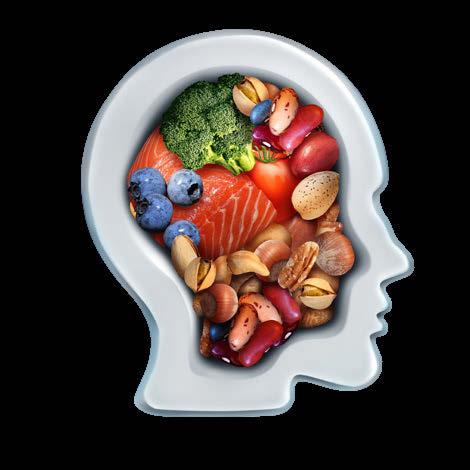
NUT NUTRITION CANCER DIET MISINFORMATION
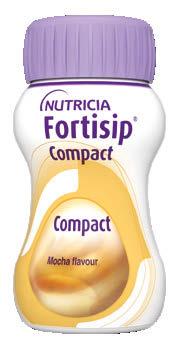
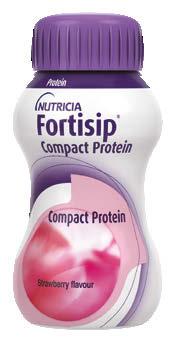
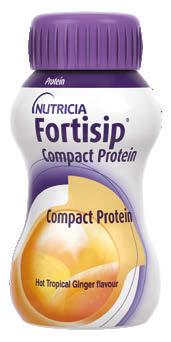
Tell us Joan,* what does Fortisip taste like?
*Not an actual patient, but the words reflect real feedback we’ve received from healthy older adults1
Turns out, 96% of people surveyed agree the taste delivers, finding at least one flavour they like amongst the Fortisip range 1
Finding a flavour people can enjoy,1 a volume they can manage,2 and a brand you can trust3 - it’s our recipe for being the most recommended ONS range3
†IQVIA market data on file on Fortisip range (Accurate as of June 2025)
Lush
Local word in Wales meaning good
range of adult oral nutritional supplements†
References: 1. 2025 Data on File - independent sensory research on Fortisip Compact Protein (9 flavours), Fortijuce (4 flavours), Fortisip Compact (6 flavours) and Fortisip PlantBased 1.5kcal (2 flavours), n=115 healthy older adults aged 50-85 years old. 96% of healthy people surveyed agreed that at least 1 flavour out of 21 flavours, across Fortisip Compact, Fortisip Compact Protein, Fortijuce and Fortisip PlantBased 1.5kcal, tasted nice. 2. Hubbard et al. Clin Nutr. 2012 ;31(3) :293-312. 3. 2025 Data on File – Adult ONS Brand Health Tracking. Prepared by Sermo, using an HCP panel of 200 HCPs.
The Fortisip range are Foods for Special Medical Purposes for the dietary management of disease related malnutrition and must be used under medical supervision. Please refer to labels for details.
ONS = Oral Nutritional Supplements
Accurate at time of publication: June 2025
Welcome to the July issue of NHD. With every issue, I’m always delighted to see the great range of content and writers flourishing across the pages of our magazine.
This month is no exception and brings you some diverse reading, which takes us from PKU, CKD or rehab after surgery to ultra-processed foods and tackling online misinformation and the impact of social media on body image/ eating disorders. And there’s plenty more to fuel your knowledge appetite!
Our Cover Story this month by Zoe Brown, ANutr, delves into breastfeeding, an important area of nutrition that can offer health benefits to mother and baby. However, the UK has one of the lowest breastfeeding rates in the world. Data on UK breastfeeding is old, with the last UK-wide Infant Feeding Survey being conducted in 2010.1 There are calls from organisations such as UNICEF UK to reinstate this survey and reassess current rates.
The initiation of breastfeeding in the UK back in 2010 was 81%, which was an increase from 76% in 2005. However, exclusive breastfeeding at six weeks was between 13 and 24% across England, Wales and Northern Ireland. This decreased to 1% at six months. The survey also highlighted that 8 in 10 women stopped breastfeeding before they wanted to. In 2018, the Scotland Maternal and Infant Nutrition Survey highlighted
In support of breastfeeding…
that there had been improvements in breastfeeding rates, with 43% of babies being breastfed at six months in 2017, compared with 32% in 2010.
The increase was attributed to the impact of a national infant feeding strategy, which included supporting all maternity and community services in Scotland to achieve Baby Friendly accreditation. Baby Friendly accreditation is part of the UNICEF Baby Friendly Initiative and is based on ‘a set of interlinking evidencebased standards for maternity, health visiting, community and hospital-based children’s services’. A key goal of the initiative is to support parents with the best possible care to feed their baby in ways to support optimum health and development.
Initiating and maintaining breastfeeding can be challenging; however, skilled support can help overcome barriers to breastfeeding. Research has shown that it is possible to significantly improve breastfeeding rates with interventions to support women at home, in the community and via health services.2 Knowing and understanding the nutritional considerations for breastfeeding are part of this support network for parents who want to breastfeed. Zoe’s article provides an overview of the nutritional needs of breastfeeding mothers, looking at the common deficiencies, nutrient inadequacies and the current dietary advice. Enjoy the read and thanks for joining us again! Emma
has been a Registered Dietitian for 18 years, with experience of adult and paediatric dietetics.
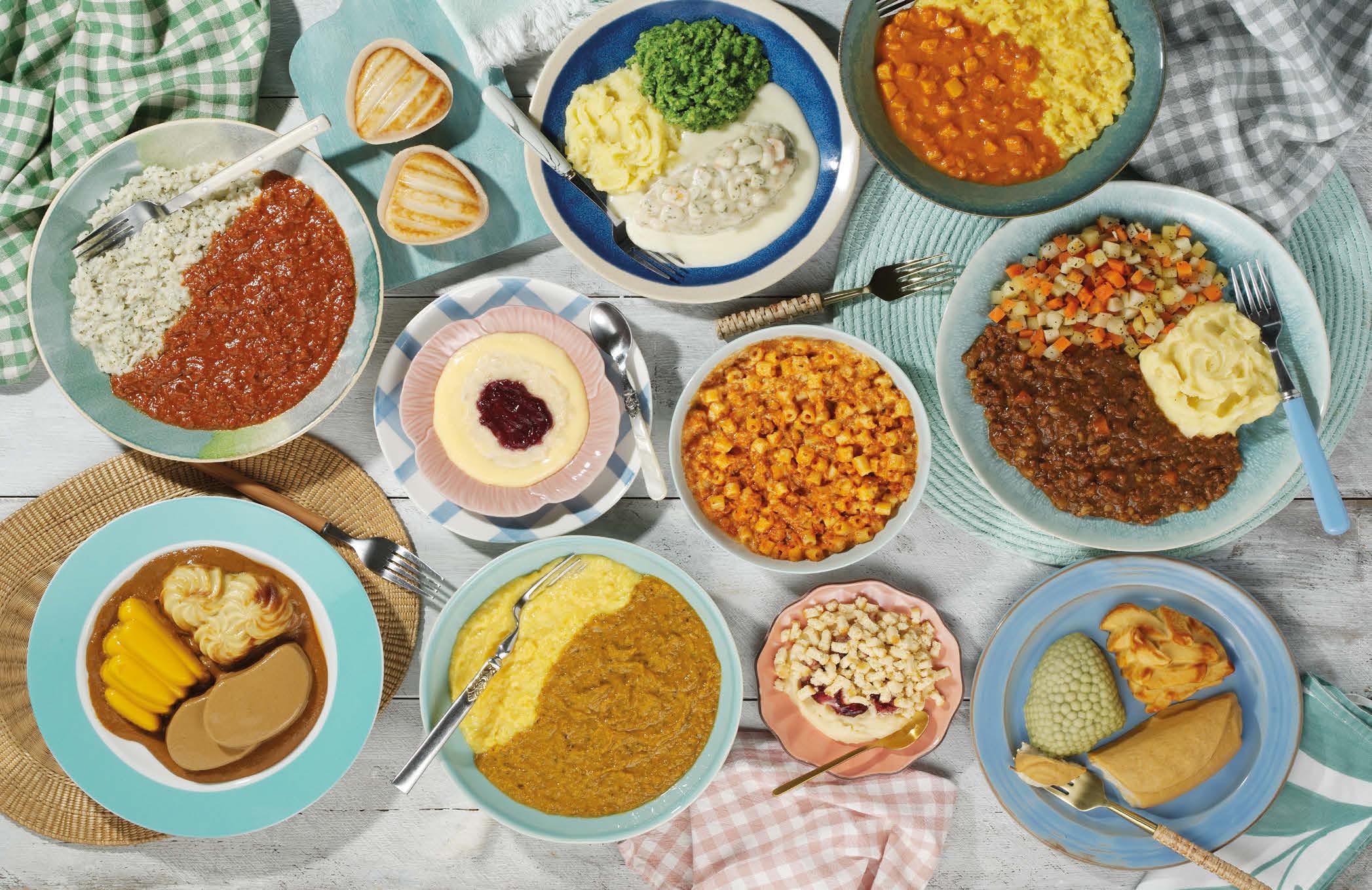
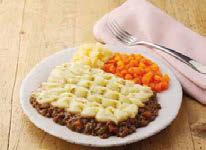
Award winning Softer Foods, delivered to your door
At Wiltshire Farm Foods, we believe everyone should look forward to mealtimes, regardless of their dietary requirements or swallowing difficulty.
That’s why we’re dedicated to carefully creating safe meals that can be cooked straight from frozen. Simply pop in the microwave or oven and enjoy – no need for any preparation, chopping or blending.
Order by phone, online or direct with your driver.
Over 80 dishes in three safe textures.
Cook straight from frozen in the oven or microwave.
Delivery is FREE* and there’s no subscription to worry about.
If you don’t like a meal we’ll send you a new one for free.
See website for terms and conditions.
*No minimum order in most places.
Nutrition in the news
Karen Voas-Wootton RD
Karen is a Community Prescribing Support Dietitian and Team Lead at Betsi Cadwaladr. She has a keen interest in appropriate prescribing and nutritional support and actively tries to perform quality improvement strategies within her role.
SCHOOL DINNERS CAN ENCOURAGE PICKY TEENAGERS
A recent study by the University of Bristol has found that school dinners can help the worst picky teenagers have a more varied and balanced diet.1 This comes as a surprise to me, as the quality of school dinners in recent years seems to have lacked overall variety.
To gather a picture of how picky eating behaviours change over time with further food exposure, 5300 preschool-aged children were observed and then again at 13 years old. The research showed that when picky eaters were allowed to choose their food via school dinners compared with packed lunches, the food was more accepted. The children were less likely to eat meat and fish sandwich fillings in packed lunches than their peers, but would have other fillings, such as Marmite, peanut butter or cheese spread. The children were also less likely to eat fruit and salad items within a packed lunch. However, when picky children ate school dinners, they did not avoid meat, fish or fruit. They ate a wider variety of foods and made more similar choices to those of their peers.
This research is the first to examine the issue outside the context of family dynamics, independent of family influence.
1 Kemp A, Emmett PM, Taylor CM (2025). Do Children who were Preschool Picky Eaters Eat Different Foods at School Lunch when Aged 13 Years than their Non-Picky Peers? Wiley Online Library. First published: 14 May 2025. https://doi.org/10.1111/jhn.70063
FAST FOOD, FAST IMPACT: DO FATTY MEALS RAPIDLY WEAKEN OUR GUT DEFENCES?
New research from Australia has unveiled the effects of a highfat diet, predominantly from fast foods, and how it impacts our gut health and our immunity, whilst weakening our defences.
A pre-clinical study conducted by researchers at the Walter and Eliza Hall Institute in Melbourne has studied the effects that these high-fat foods have on the gut, at least in mice. study found that just two days of consuming meals high in saturated fats significantly reduced levels of IL-22, a key gutprotective protein, leading to early signs of inflammation.
Although conducted in mice, the findings suggest that dietary fat quality may have more immediate effects on gut immune function than previously understood. This research could have future implications for dietary guidance, particularly in supporting gut health and managing chronic inflammatory conditions such as IBD. These results reinforce the importance of education around daily food choices and dietary habits.
1 Le Xiong et al (2025). Acute exposure to a high-fat diet impairs ILC3 functions and gut homeostasis. https://www.cell.com/immunity/fulltext/S1074-7613(25)00136-0
New research & reviews NEWS
EXERCISE IS THE KEY TO MAINTAINING VITAMIN D LEVELS IN WINTER
Hot new research from an article published in Advanced Science reveals that regular moderate intensity exercise can really help stabilise crucial vitamin D levels during winter.1 This is interesting as it is in the absence of taking a regular vitamin D supplement.
During a 10-week intensive programme focused on indoor exercise, participants’ vitamin D levels were monitored and compared with a non-exercising control group. Findings indicated that those who engaged in the exercise regimen had significantly higher vitamin D levels than those who did not.
1 Perkin OJ et al (2025). Exercise without Weight Loss Prevents Seasonal Decline in Vitamin D Metabolites: The VitaDEx Randomised Controlled Trial, Advanced Science (2025). DOI: 10.1002/ advs.20241631
CAN THE BRAIN BE TARGETED TO TREAT TYPE 2 DIABETES?
A new useful study published by the University of Washington has revealed further information around the management of type 2 diabetes.1 It suggests that the underlying cause and potential treatment pathways for this condition don’t just come from insulin resistance and obesity but from a deep issue with the neurons found in the hypothalamus within the brain.
The study results show that our knowledge should be shifted to the neuron functions involved (agouti-related peptide neurons), which can impact diabetes therapy. Blood glucose levels were measured in diabetic mice and remission was found in hyperglycaemia levels without affecting the animals’ overall body weight, correlating diabetes management with obesity.
1 Yang Gou et al, AgRP neuron hyperactivity drives hyperglycaemia in a mouse model of type 2 diabetes, Journal of Clinical Investigation (2025). DOI: 10.1172/JCI189842
ANNOUNCING THE IDDSI ACADEMY UK OFFICIAL TRAINING PILOT
IDDSI Global is pleased to announce the first IDDSI Academy Pilot course in the United Kingdom, being held on Tuesday 16th September. This multidisciplinary pilot course consists of two parts: a mandatory online learning component (to be completed prior to in-person training) and a full day of in-person training on the IDDSI framework, testing methods, practical application and hands-on practice with faculty feedback.
This official training has been specifically designed by the IDDSI Academy to elevate the knowledge and skills of participants with global experts. The learner will receive coordinated learning and assessment on IDDSI testing for drinks and foods as well as gaining excellent network and peer learning experiences.
The event is taking place in Bristol. For full details, email ukevents@iddsi.net. Register your place here: https://www.iddsi.org/events/uk-iddsi-academy-pilot-2025.
MYTH BUSTING WITH MADI
Madi Myers explores some of the claims, myths and current evidence around fads and fashionable crazes.
ULTRA-PROCESSED FOODS: ARE WE MISSING THE BIGGER PICTURE?
Madi is a freelance nutritionist working with individuals, hosting workshops for groups and writing. She works across the food industry and the private sector, promoting the nondiet approach to nutrition.
It seems that hardly a day goes by without another scaremongering headline about ultra-processed foods (UPFs).
Podcasts have debated it, TV shows have explored it and books have been written about it –all reinforcing the message that UPFs are harming us. But is there more nuance to the conversation?
This month’s Myth Busting takes a closer look at whether UPFs are truly the root of all dietary harm, or if focusing solely on processing means we’re missing the bigger picture.
ALL ULTRA-PROCESSED FOODS ARE NUTRIENT POOR
The NOVA classification, which has been widely adopted in scientific literature for classifying UPFs, was developed by a group of Brazilian academics at the University of São Paulo.1 The theory is that instead of thinking about the nutrients a food contains, or the overall pattern of foods in the diet, NOVA claims that the degree to which food is processed explains how food contributes to disease. However, this classification gives us a hugely broad category of foods (UPFs), which we are advised not to consume. This includes everything from wholegrain breads and fruit drinks to pasta sauces and protein bars. Although many UPFs are considered high in fat, salt or sugar (HFSS), or all three, some provide essential nutrients even though they may have undergone significant processing or contain multiple ingredients. The British Nutrition Foundation points out several foods that would be classed as UPFs, but which are not HFSS and can contribute to a well-balanced and varied diet, such as plant-based milk drinks, baked beans, wholegrain breakfast cereals, some fruit yoghurts and nut butters.2 These can contribute crucial nutrients like fibre, for example, which is significantly lacking in the British diet.
DEFINING FOODS IN THIS WAY MAKES
As stated above, the NOVA classification boils everything about a food down to its level of food processing and doesn’t consider nutritional quality or dietary patterns at all. But even looking at food purely through a processing lens, it’s not easy to differentiate UPFs from other foods. One standout moment in the now infamous book Ultra-Processed People is a description of the author’s brother, calling him to read out a list of ingredients on a shop-bought sausage roll because he wasn’t sure if it was ultra-processed or not. And this is a medical doctor struggling to make sense of it all. This confusion has been shown more broadly too. An observational study in a subset of the Brazilian population found that although most people had heard of the term UPF, a significant proportion of participants were confused about how to use processing to categorise different foods, like bread, crisps and baby food.3
Observational studies do show associations between high UPF intake and poorer health. A recent meta-analysis of prospective studies found a consistent positive association between high UPF intake and risk of type 2 diabetes, hypertension, hypertriglyceridemia, low HDL levels and obesity.4 Although this association is well established even at this level of evidence, the conclusions are not concrete. The authors in the aforementioned study point out that the risk from UPFs varied by up to 50% depending on how UPF consumption was assessed. Additionally, confounding factors and the possibility of reverse
Madi Myers ANutr
causation remain. In terms of working out causative effects and mechanisms, we are a long way off. Randomised controlled trials are scarce, all with small participant numbers and some are pilot studies or open label, meaning they are not blinded, which can introduce bias.
Even though reporting around UPFs continues to claim that there are ‘conclusive links’ and ‘indisputable’ evidence that they cause harm, we just don’t have the supporting evidence for this. SACN’s independent report on processed foods and health updated in April 2025 concludes that there ‘continues to be significant limitations in the evidence base’, mostly related to the lack of evidence around a causal relationship between UPFs and health.5
AVOIDING UPFS IS A REALISTIC GOAL FOR EVERYONE
Many people rely on UPFs due to a wide range of factors. Having the facilities, space, equipment, knowledge, ability, time and money to cook food is not something which should be assumed for all. Nevertheless, it’s what we expect when we tell people to avoid UPFs or minimise their intake.
The possibility of reverse causation in observational studies is not often acknowledged but should be considered. For example, one recent meta-analysis concluded that ‘greater exposure to UPFs was
associated with... common mental disorder’.6 But we cannot say for sure the direction of this association. Do the highest consumers of UPFs rely on them because they have a mental health disorder? And is it these factors which have an impact on health rather than the foods themselves? Other examples that could mean an individual is more reliant on UPFs include chronic health conditions and low income, etc. It is well established that food insecurity and socioeconomic status play a major role in dietary choices and health outcomes.
INDUSTRIAL FOOD INGREDIENTS IN UPFS ARE INHERENTLY HARMFUL
Many UPFs contain food additives and other industrial food ingredients, leading to fears about their long-term health effects and their use to make foods ‘hyperpalatable’.
Some studies suggest potential negative effects of certain additives; however, findings are not conclusive and are often based on animal or in vitro studies.7 Certain exceptions do exist, such as nitrates, which can increase the risk of cancer and already have separate nutrition recommendations to reduce intake of foods that contain them, eg, processed meats.8 The European Food Safety Authority (EFSA) is currently reassessing all food additives approved before 2009 to ensure safety in our current food system in line with the latest scientific knowledge.
The first clinical trial (n=154) to test the link between them and Crohn’s disease presented nonpeer-reviewed data showing that removing emulsifiers from the diet of sufferers meant they were three times more likely to see an improvement in symptoms.9 However, this is just one study, which needs to be replicated and is only relevant for a specific group of people, not otherwise healthy individuals. Also, all food was supplied to participants in the study, leaving the question of how an individual at home would remove emulsifiers from their diet, when estimates are that in the UK, they’re found in more than 6000 foods.10
Not all food additives are harmful, used in high enough concentrations to cause harmful effects, or serve to increase the palatability of foods. Many serve important functions like improving food safety, texture and in a world where a third of all food goes to waste, shelf life.
CONCLUSION
Lumping all UPFs into a single category – i.e. treating a high-fibre, low-sugar breakfast cereal the same as confectionery – oversimplifies a complex issue and can lead to confusion. While it’s important to acknowledge the associations between UPF consumption and adverse health outcomes, current evidence does not justify blanket demonisation, especially when the nutritional profiles of these foods vary so widely.
Instead of fear-based messaging that places the burden solely on individuals, public health strategies should prioritise reformulation, nutrition education and improving access to healthier options. Industrial food ingredients should be assessed individually and in context, rather than presumed harmful simply because they are processed or artificial. Some UPFs can support public health goals, so a more helpful approach is to focus on improving overall dietary patterns, recognising that the degree of processing is only one part of a much larger picture.
DESSERTSID I N F ANTS…OVERWHELMEDPARENTS…REP E A T DE STISIVPG
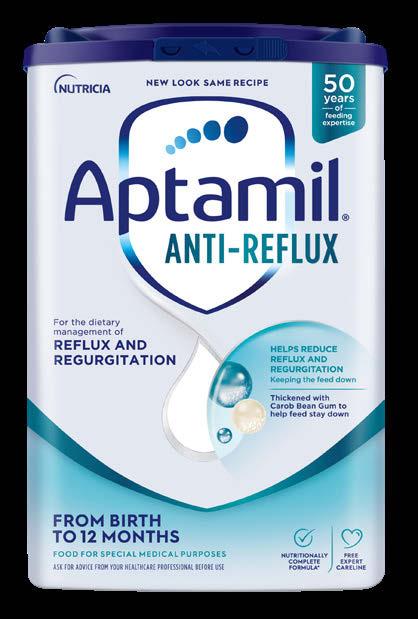
Relief all round with Aptamil
Significant reduction in episodes and severity of regurgitation in 83% of formula-fed infants1
A stepped care approach is recommended by NICE for the management of reflux and regurgitation in formula-fed infants2
Your guidance can help break the cycle 1 2
Recommend for the dietary management of reflux and regurgitation
ANTI-REFLUX
Within the first month of switching to Aptamil Anti-Reflux formula:
Infant well-being improved within the first month of switching according to 94% of parents1
Review feeding history, assess for overfeeding, and trial smaller, more frequent feeds2
If the stepped-care approach is unsuccessful, stop the thickened formula and offer alginate therapy for a trial period of 1-2 weeks2
Offer a trial of thickened formula2
IMPORTANT NOTICE: Breastfeeding is best. Aptamil Anti-Reflux is a Food for Special Medical Purposes for the dietary management of frequent reflux and regurgitation. It should only be used under medical supervision, after full consideration of the feeding options available including breastfeeding. Suitable for use as the sole source of nutrition for infants from birth and as part of a weaning diet from 6-12 months. This product should not be used in combination with antacids or other thickeners and is not suitable for premature infants. Refer to label for details.
References: 1. Bellaiche, et al. Pediatr Gastroenterol Hepatol Nutr. 2023;26(5):249-265. 2. NICE. Gastro-oesophageal reflux disease: recognition, diagnosis and management in children and young people. 2015. Available at: www.nice.org.uk/guidance Accessed: June 2025.
Accurate as of June 2025
THE ROLE OF NUTRITION IN SUPPORTING BREASTFEEDING MOTHERS AND INFANTS
This article explores the nutritional needs of breastfeeding mothers, common deficiencies and nutrient inadequacies and the best sources of food to support breast milk, including what to limit and avoid.
It is well documented that breastfeeding can provide significant health and neurological benefits for the baby, including increased protection against type 2 diabetes, lower risk of overweight and obesity, lower risk of infections and increased intelligence. For mothers, there is a lower risk of ovarian and breast cancer and type 2 diabetes.1 Improved bonding and psychological well-being for mother and baby is also widely reported.1 The World Health Organisation recommends exclusive breastfeeding for the first six months, and continued breast milk alongside solids for the first two years.2
The nutritional demands on the breastfeeding mother are high. They need to maintain adequate energy intake, as well as protein, vitamins and minerals, in order to produce nutritionally adequate breast milk. Vitamins A and D and watersoluble vitamins in breast milk are most impacted by maternal nutrient intake. Furthermore, mothers need to ensure they are eating enough nutrients to support their own health. As such, a varied and balanced diet is recommended for the duration of breastfeeding.3
CALORIE AND MACRONUTRIENT REQUIREMENTS
The energy cost of breastfeeding is said to be between 300 and 500 calories per day. As such, maternal energy intake must include a surplus of calories within this range in order to ensure an adequate milk supply and to support their own body’s needs and recovery from birth.
According to the British Nutrition Foundation,4 lactating mothers need to consume an additional 11g of protein per day, in comparison to the recommended intake of 45g for non-lactating, nonpregnant women, taking the daily total to approximately 56g/day. Examples of 11g of protein include: 50g of salmon, 30g of chicken breast, 1.5 eggs and 150g of tofu. Other sources include almonds, hazelnuts, dairy products, beans, pulses and lentils. Furthermore, protein intake above the recommended amount may be associated with better maternal recovery from birth and body composition.
Breast milk fatty acids are directly impacted by maternal intake. In particular, adherence to a healthy diet high in mono- and polyunsaturated fat, protein and vegetables increases the amount of omega-3 fatty acids and ALA in breast milk (alpha-linoleic acid).5 Omega-3 fatty acid intake is directly associated with optimal neural and visual development in the child. Therefore, it’s important that lactating mothers adhere to current dietary recommendations.5
Women are encouraged to consume a variety of wholegrain carbohydrates and starchy vegetables during lactation in order to support energy balance for the mother and milk supply for the infant. Research also suggests that high concentrations of human milk carbohydrates positively affect body composition of the infant in the first 12 months and may reduce the risk of obesity later in life.6
a one-to-one basis in her private practice. Zoe also runs free webinars and information sessions for women online.
zoebrownnutrition.com
zoe_brown_ nutrition and menopause. nutritionist.zoe
Zoe Brown ANutr Zoe is a Women’s Health Nuritionist, focusin on pregnancy and postnatal nutrition, as well as peri/ menopause. She works with women on
IMPORTANT MICRONUTRIENTS AND COMMON DEFICIENCIES
Iodine
Iodine plays a vital role in supporting maternal thyroid function and promoting optimal brain development in infants. In the UK, the recommended intake during breastfeeding is 200mcg per day. Primary dietary sources include milk and dairy products, which are especially important for breastfeeding women. Fish and seafood also contribute significantly, while some milks and breads are fortified. However, iodine content in foods can vary widely depending on soil iodine levels, farming practices and seasonal availability of produce. Because maternal iodine intake directly influences breast milk concentrations, ensuring adequate intake is crucial. Current research suggests that iodine status among UK women of childbearing age is often insufficient,7 reinforcing the need to prioritise awareness during the postpartum period.8
Vitamin D
Breastfeeding women require 10mcg of vitamin D daily. Although small amounts are transferred through breast milk, exclusively breastfed infants should receive a separate supplement of 8.5-10mcg/day. Infants consuming 500ml or more of formula daily do not require additional supplementation. Vitamin D is essential for bone development and immune function. Deficiency can lead to symptoms such as muscle weakness, irritability and poor growth, and in severe cases, it can result in rickets, hypocalcaemia and increased susceptibility to respiratory infections.9
Calcium
During lactation, physiological adaptations enable sufficient calcium transfer into breast milk through increased intestinal absorption and mobilisation from maternal bone stores. While maternal bone density typically recovers post-weaning, increasing dietary calcium intake to 1250mg/day may support long-term bone health.10,11 Adequate vitamin D status is also important, as it enhances calcium absorption.
Other key nutrients
Deficiencies in vitamin B12, vitamin A, iron and omega-3 fatty acids are also common during
lactation and can have widespread impacts on infant development. While iron concentrations in breast milk may be maintained, maternal stores often decline and should be monitored. Nutritional support should focus not only on maintaining adequate breast milk composition but also on preserving the mother’s nutrient reserves.
SUPPLEMENTATION
Vitamin D supplementation of 10mcg per day is recommended for lactating women during the months of October to March.12 Infants up to one year of age are advised to receive 8.5 to 10mcg daily. Vitamin B12 supplementation is also essential for mothers following a vegan diet. However, the question remains as to whether routine postnatal multivitamin use is necessary for breastfeeding women.
While supplementation is commonly recommended for women from low-income settings, developing countries, or those with suboptimal dietary habits, emerging evidence suggests that nutritional gaps may be widespread. A recent study found that micronutrient inadequacies were prevalent among lactating women across all socioeconomic backgrounds.13 Furthermore, supplementation was associated with improvements in breast milk nutritional quality, highlighting the need for further investigation into the role of targeted supplementation and the importance of robust, individualised nutrition counselling during the postpartum period.
FOODS AND SUBSTANCES TO LIMIT DURING BREASTFEEDING
While there is no need for breastfeeding women to avoid specific foods unless there is a known allergy in either the mother or infant, certain substances should be limited to support infant health.
Caffeine
Caffeine can pass into breast milk and may cause irritability, fussiness or sleep disturbances in some infants, particularly those under six months of age. Coffee is the most significant dietary source of caffeine, but it is also found in tea, chocolate, energy drinks and some medications. Although there is no universally
defined upper limit, current guidance suggests keeping caffeine intake between 200 and 300mg per day while breastfeeding.14 Monitoring caffeine intake and observing a baby’s behaviour can help determine individual tolerance. If signs of sensitivity appear, the mother should consider reducing her intake further or spacing out consumption throughout the day.
Alcohol
Alcohol is present in breast milk in the same concentrations as in the blood. Occasional alcohol consumption is not harmful; however, there are several factors to consider, including the amount of alcohol intake, whether food has been eaten, the mother’s body weight and the baby’s age. With regard to the latter, newborns and babies under three months metabolise alcohol at half the rate of an adult due to their immature liver development.15 Abstaining or drinking in very small amounts during this period reduces the risk of adverse health consequences for the infant. Furthermore, it is recommended to wait two to three hours after consuming alcohol before breastfeeding.
THE IMPORTANCE OF HYDRATION
Ensuring adequate fluid intake during breastfeeding is important in order to maintain maternal hydration and water balance. It is estimated that approximately 700 to 750ml of breast milk is consumed per day in an exclusively breastfed infant, of which 87% is water.16 Water intake recommendations for breastfeeding women in Europe is 2700ml/day, an increase
of 700ml to compensate for approximate breast milk production. Maternal dehydration can have negative impacts on the mother, such as fatigue, muscle stiffness, nausea and headaches.17 Breast milk production may also be impacted by hydration status. Therefore, it is important to maintain regular intake of fluid and have a glass of water within reach during breastfeeding. Fluid intake includes plain water, fruit juice, tea and coffee.
GENERAL DIETARY GUIDANCE FOR BREASTFEEDING WOMEN
A well-balanced varied diet is essential during breastfeeding to meet the increased nutritional demands and support both maternal and infant health. Here are some points to consider:
• Aim to include a wide range of food groups daily, such as wholegrains, fruits, vegetables, lean proteins and healthy fats.14
• Include no more than two portions of oily fish per week, as recommended, to avoid excessive exposure to environmental pollutants. Additionally, limit intake of fish high in mercury, such as marlin, swordfish and shark.
• While processed foods can be part of an overall healthy diet, highly processed options should be limited due to their lower nutritional value.
• Caffeine and alcohol may be consumed in moderation, but intake should be kept low, particularly in the early months of breastfeeding, to reduce the risk of infant sensitivity.
CONCLUSION
Breastfeeding offers well documented health benefits for both mother and infant, but also places significant nutritional demands on the mother A well-balanced varied diet rich in essential macronutrients and micronutrients is critical to support milk production, maternal recovery and infant development. Key nutrients, such as iodine, vitamin D, calcium, omega-3 fatty acids and protein, should be prioritised, including supplementation where appropriate. Attention must also be given to limiting substances such as caffeine and alcohol and maintaining adequate hydration.
While inadequacies and deficiencies are still common, it is important that nutritional advice be readily available to new mothers, especially those from a low socioeconomic background or those with restrictive dietary patterns. Healthcare professionals have a vital role in supporting breastfeeding mothers by providing practical evidence-based strategies to meet their nutritional needs and sustain breastfeeding for as long as desired. By doing so, we can help optimise health outcomes for both mothers and their babies.
Priya Tew RD
Priya is a Specialist Eating Disorders and IBS Dietitian. She runs Dietitian UK, working one to one and in group support. Priya also works with the media and is the author of The DASH Diet and The Complete Low FODMAP Diet Plan
SOCIAL MEDIA, BODY IMAGE AND EATING DISORDERS: WHAT YOU NEED TO KNOW
Social media is here to stay. I must admit I’m a huge fan; if you have seen my Instagram account you’ll know I’m there most days. Now, while it definitely has its plus points, like connecting us, inspiring us and giving everyone a voice, it has also become a breeding ground for diet culture and unrealistic beauty standards. Let’s face it: the rise of ‘fitspo’ (fitness and inspiration), detox teas, cleanses and ‘What I eat in a day’ videos may seem harmless at first glance, but scratch the surface and you’ll find a lot of misinformation and pressure to conform to look a certain way.
But don’t just take my word for it. There’s growing research that shows how social media directly impacts body image, mental health and disordered eating patterns.
IDEAL BODY TYPES AND BODY DISSATISFACTION
We’ve been exposed to narrow, idealised body types for decades, from Barbie and Ken to fashion magazines promising ‘How to lose a stone in a week’. People on diets are all over the TV shows we watch, and adverts through the years have glorified the thin ideal. Even shop mannequins have clothes pinned and tucked around them, as they are not realistic bodies. Research from 2017 concluded that the ‘body size of mannequins used to advertise female fashion is unrealistic and would be considered medically unhealthy in humans’.1 These messages seep into our subconscious and whisper that thin is better, or muscular is worthy. And that’s not just damaging, it’s dangerous. This pressure has only intensified with social media. Currently, we’re not just seeing altered bodies in adverts, we’re seeing them 24/7 in our feeds, thanks to filters, editing apps, lighting tricks and now even AI-generated ‘perfect’ bodies. People are now comparing themselves with images that aren’t even real.
WHAT THE RESEARCH TELLS US
There’s strong evidence linking social media use with negative body image and disordered eating. One study found a clear relationship between frequent Instagram use and greater body dissatisfaction, lower self-esteem and a stronger drive for thinness.2 This relationship seems to work like a dose-response: the more time you spend on these platforms, the more negative the effect.
Image-based platforms like Instagram and TikTok seem to be especially impactful due to the appearancebased content they show, with photos and videos rather than just text. For example, a review of 30 studies showed a strong association between time spent on social media and negative body image, especially when the content was appearance focused. Interestingly, textbased content (like Twitter or Facebook posts) had a much smaller effect.3
Another study found that Instagram users who spent more than two hours a day on the app were more likely to pursue thinness and feel unhappy with their appearance. The effects were even stronger among Gen Z users and those who followed appearance-focused accounts.4
And then there’s TikTok, a platform increasingly used as a source of health and nutrition information. Here’s where things get really concerning.
TIKTOK AND THE RISE OF MISINFORMATION
Around 87% of Gen Z and millennials reportedly turn to TikTok for nutrition and health advice. That might sound harmless until you hear that only about 2.1% of the nutrition content on TikTok aligns with actual evidence-based guidelines.5 Even more worrying is that TikTok’s algorithm appears to be reinforcing harmful patterns for those struggling with eating disorders. One study showed that users with EDs were shown:5
• 4343% more toxic content
• 335% more diet videos
• 142% more exercise videos
Let that sink in because I think it’s shocking.
This isn’t about liking or sharing the content, it’s just about how long someone hovers over a video. The algorithm interprets that as interest and shows them more of the same. That creates a dangerous echo chamber, where someone already struggling with food or body image gets bombarded with content that worsens those struggles.
In one month, a single user was shown:5
• 802 appearance-focused videos
• 90 diet videos
• 141 exercise videos
• 81 toxic or harmful videos
When these numbers reflect reality for millions of young people, it’s no surprise we’re seeing higher rates of disordered eating and body image issues.
WHY THIS MATTERS
Many people don’t realise the subtle impact these platforms have. You might scroll past a fitspo video without even thinking, but over time, all
those images add up. They feed your inner critic, create unrealistic standards and whisper that your worth is tied to how you look. And this affects everyone, not just young girls, but boys, nonbinary folks, adults, and people of all shapes and sizes. Bigorexia, or muscle dysmorphia, is rising among young men. The pressure is universal.
SO WHAT CAN YOU DO?
Here are some practical ways to take control of your feed and your mental health, then pass these tips on to patients and clients you work with.
1 Curate your feed. Unfollow or mute any accounts that make you feel less-than. Instead, follow body-positive, inclusive and evidence-based creators.
2 Use the ‘Not interested’ button. This tells the algorithm what you don’t want to see. The more you click on it for unhelpful content, the more your feed will shift.
3 Check the source. If someone is giving nutrition or body advice, check their qualifications. Are they a dietitian, therapist or healthcare professional – or just someone who looks a certain way?
4 Take social media breaks. Even short breaks can reduce anxiety and body dissatisfaction. Try a ‘scroll-free Sunday’ or log off an hour before bed. I personally love a week off social media.
5 Diversify your feed. Watch or engage with content unrelated to appearance, like cooking, pets, travel or comedy. The algorithm picks up on what you linger on, even if you don’t interact with it.
6 Don’t be afraid to cull. It’s okay to unfollow, even people you know in real life, if their content triggers you. Your well-being matters more than being polite online.
THE BIGGER PICTURE
Social media isn’t evil, but it’s powerful. And when that power is used to promote unattainable ideals, it can genuinely harm people. For those already vulnerable, this can fuel disordered thoughts, body image distress and delay recovery. That’s why we need to talk about it, share the evidence and support each other in creating safer, healthier online spaces. Here are some phrases that can be helpful to share with those you work with:
1 “You don’t need to look like a filtered image to be valid.”
2 “What you see online isn’t the whole story.”
3 “Your worth is not defined by your weight, shape or how many likes you get.”
4 “A peaceful relationship with food and body starts with awareness, not perfection.”
Peach Apple Cola
Wild Berry
Pineapple & Coconut
CHRONIC KIDNEY DISEASE (CKD) STAGE 5 EXAMINED
Chronic kidney disease (CKD) can significantly affect an individual’s quality of life, particularly for those who require lifelong renal replacement therapy (RRT). However, with specialist management, tailored dietary interventions and regular monitoring, it is often possible to slow the progression of kidney function decline and improve patient outcomes.
Chronic kidney disease is classified into stages depending on the level of kidney function that the individual has.1 Estimated glomerular filtration rate (eGFR) is calculated using a formula that incorporates serum creatinine levels, age and gender.2 However, it does have its limitations, as it can overestimate or underestimate kidney function in individuals with large muscle mass, those on high-protein diets, or those with muscle breakdown.3 Stage 5 CKD is classified as eGFR <15ml/minute.1,4 Urine albumin and creatinine ratio (uACR) is calculated from the level of proteinuria (protein in urine). This measurement then helps to identify those who are at greater risk of cardiovascular disease as a result of the CKD.5 uACR >300 shows the individual with CKD has a higher risk of end-stage renal disease (ESRD) and cardiovascular disease.6 Although CKD is a frightening diagnosis, many do live with CKD stages 3-5 for a long time without necessarily needing renal replacement therapy (RRT). Medical treatment and changes in diet and lifestyle can help reduce symptoms, reduce complications and prolong kidney function.7
WHAT ARE THE CAUSES OF CKD?
There are many different causes of CKD, often as a result of other health conditions, such as high blood pressure, diabetes, kidney infections, cancer and cardiovascular disease. Other rarer conditions include lupus, vasculitis,
myeloma and inherited conditions that can affect the kidneys, such as polycystic kidney disease, IgA nephropathy, Fabry’s disease, sickle cell disease and amyloidosis.1,5,8 Black and South Asian people are at higher risk of kidney disease.5 Certain medications can impact kidney function, such as lithium, omeprazole, antibiotics and nonsteroidal anti-inflammatories (NSAIDs).5
Types of kidney damage causing impairment can be classified as either prerenal, infrarenal or postrenal.8 Prerenal causes include dehydration and hypovolaemia, which reduce blood supply to the kidneys. This can be reversible if euvolaemia (normal fluid status) can be restored before longterm damage is done.8 Infrarenal or intrinsic disease is the most common, such as chronic renal vascular disease and diabetes, which cause damage to blood vessels, glomeruli and tubules within the kidney structure. Postrenal is usually from an obstructive cause such as stones, a tumour or congenital abnormalities, which cause urinary reflux and interstitial damage.8
SYMPTOMS AND DIAGNOSIS
The symptoms of kidney disease are varied and can often be mistaken for other conditions and will overlap with other comorbidities. Normally, in the early stages of CKD, no symptoms are present and the individual will only find out from a routine blood test. In later stages of CKD, symptoms include
Katy has 20 years of dietetic experience in the NHS, working mainly in critical care, renal and complex nutrition support. She currently works as a Kidney Dietitian. Katy is also a supplementary prescriber.
nausea, vomiting, swollen limbs (oedema), weight loss, joint pain, fatigue, itching and an increase or decrease in urinary frequency.1,4,5,8 As the kidneys have many important functions in the body, CKD can result in many pathological processes:1,4,5,8
• Anaemia due to a reduction in erythropoietin
• Metabolic acidosis and a chronic inflammatory state
• Bone disease (as a result of hyperphosphatemia, low calcium and reduction in active vitamin D3)
• Hyperkalemia
• Fluid imbalance
As well as blood tests (checking urea, creatinine, electrolytes and full blood count), urine tests are done to check for the presence of protein and to assess the uACR.1,5 To examine the cause of the kidney disease, other investigations may include:1,4,5
• Ultrasound scan
• CT scan
• MRI scan
• Kidney biopsy
The Kidney Failure Risk Equation (KFRE) is a validated risk tool to help determine the likelihood that an individual with CKD stages 3-5 will require RRT in the next two or five years.6 Age, gender, eGFR and uACR are used to estimate risk.6 The KFRE has recently been recommended by NICE to help plan the care for people with CKD stages
In later stages of CKD, symptoms include nausea, vomiting, swollen limbs (oedema), weight loss, joint pain, fatigue, itching and an increase or decrease in urinary frequency.
3-5 and referral into secondary care.4,6 Those with a KFRE score >5% in the next five years should be referred to a specialist renal clinic to assess and plan their treatment.3 The new scoring system has replaced the previous recommendations of considering secondary care referral when eGFR <30ml/min, as the KFRE score is more sensitive and helps reduce the risk of people being referred unnecessarily.3,9
TREATMENT FOR CKD
There are robust evidence-based guidelines for managing chronic kidney disease, such as the Kidney Disease Outcomes Quality Initiative (KDOQI) and those from the National Institute for Health and Care Excellence (NICE), which detail lifestyle modifications, medication adjustments and monitoring of disease progression.8
Medical treatment for CKD depends on the symptoms and biochemical parameters. Blood pressure control is important to help reduce further damage to the kidneys, and the optimum is below 140mmHg.10 Medications, including angiotensin-converting enzyme (ACE) inhibitors and angiotensin receptor blockers (ARBs), are often required. However, reducing dietary sodium intake will help reduce blood pressure and may reduce the need for anti-hypertensives.11 Sodium bicarbonate will be prescribed if metabolic acidosis is present.12 Other treatments include diuretics for fluid management, iron and erythropoietin for anaemia and vitamin D and calcium for the prevention of renal bone disease.12
Discussions about the need to start RRT should begin at least a year before it is required, and patients should be given all their options and the risks versus benefits of each.
Dialysis is indicated when the symptoms of CKD significantly impact quality of life and activities of daily living. This is usually when eGFR reaches 5-7ml/min (although sometimes patients have few symptoms at this level).12
RENAL REPLACEMENT THERAPY
Discussions about the need to start RRT should begin at least a year before it is required, and patients should be given all their options and the risks versus benefits of each.13 With the collaboration of the interprofessional renal team, including nephrologists, dietitians, renal nurses and pharmacists, patients should be given all the guidance needed to help manage their renal disease and what to expect for the future.4
Treatment plans need to incorporate the patient’s individual needs and wishes and be the least burdensome to them.8 CKD patients should be reviewed at least every three to four months, with regular blood tests and blood pressure monitoring.4 Haemodialysis (unit- or hospitalbased) is the most common treatment that many patients opt for.13 This usually involves attending the renal unit three times a week for three to four hours of dialysis treatment, which replaces the lack of renal function and reduces biochemical complications of uraemia, acidosis, hyperkalaemia and hyperphosphataemia.8
There is some disagreement among nephrology specialists about the optimum time to start dialysis. Sometimes patients start dialysis ‘late’, i.e. when eGFR <5-7ml/min, while
some may start ‘early’, i.e. eGFR 7-15ml/min.14 However, studies do not reveal a significant benefit from early versus late dialysis initiation, so more research is required in this area to guide nephrologists.14
Peritoneal dialysis may be a better option for some, as it offers patients more freedom to have their treatments at home (either manually or via a machine overnight), which fits in with their lifestyle, eg, work, family, etc. It also gives them more opportunity for spontaneity and going away on holiday, for example.15
A kidney transplant (either living related or cadaveric kidney) offers the best outcome for CKD 5 and, if possible, patients will be worked up for a pre-emptive kidney transplant before reaching end-stage.14
DIETARY INTERVENTION
Dietary treatment of kidney disease is important to help control the side effects of reduced kidney function.7,8 Potassium and phosphate control is primarily by diet (and with the use of medications such as phosphate binders and potassium binders).12 Kidney specialist dietitians will discuss the dietary changes required based on the patient’s biochemistry, symptoms and lifestyle.6
Foods high in potassium and phosphate will need to be limited if hyperkalaemia and/ or hyperphosphataemia are present. Reducing sodium chloride (salt) intake will help manage blood pressure and fluid status, so patients will
be encouraged to reduce intake of processed foods and avoid adding salt to meals.16 Reducing overall dietary protein intake can help slow the progression of CKD, but strict low-protein diets (<0.6g/kg body weight) are not recommended due to the impact on muscle mass and body weight, which can worsen CKD.12,17
STAGE 5 PROTEIN REQUIREMENTS
UK Kidney Association guidelines on protein requirements in renal stage 5 patients recommend 0.8-1g/kg IBW (ideal body weight).18 Dialysis and acute kidney injury patient requirements are higher at 1.1-1.5g/kg IBW, depending on treatment and clinical status.18-20 Kidney Disease Quality Outcomes Guidance Initiative (KDQOI) guidelines published in 2020 did suggest consideration of a moderate protein intake of 0.6g-0.8g/kg IBW per day in metabolically stable non-catabolic CKD patients, but due to the lack of clinically robust evidence, risks versus benefits and clinical significance of dietary protein restriction, the threshold was increased to 0.8g per kilo IBW per day for the majority of patients.21,22
Dietetic review and assessment of nutritional status and other clinical parameters should always be undertaken for kidney disease patients before any initiation of a protein restriction, and then only alongside regular monitoring to ensure there are no detrimental outcomes, such as muscle mass loss.18,21 An individualised approach to dietary recommendations is key to managing renal disease safely and avoiding over-restrictions, which can impact nutritional status and quality of life.21-23
PLANT-BASED DIETS
Dietary guidance for CKD and dialysis patients now encourages a plant-based diet. Research from the University of Wollongong in Australia, led by Dr Jordan Stanford and Professor Kelly Lambert, has shown that a diet rich in plant foods can have significant benefits for people with CKD.24 Plant-based eating involves having
more fruit and vegetables, legumes, pulses, wholegrains and non-meat protein such as Quorn and tofu. This has been shown to reduce toxins in the blood and urine and increase gut bacteria diversity.24,25 Other benefits include reduced cholesterol, better weight management and improved diabetes management.26,27
Although some plant-based foods may be higher in potassium, such as nut milks and some fruit and vegetables, guidance from a kidney specialist dietitian with tailored advice will allow patients to have a plant-based diet without impacting potassium levels.24 In fact, evidence suggests plant-based eating can actually help lower potassium levels.28
ULTRA-PROCESSED FOODS
Ultra-processed foods (also known as UPFs) are foods that have undergone industrial processing and have many chemical additives, as well as sugar, salt and fats. They also lack essential nutrients.29,30 UPFs include foods such as chocolate, sweets, crisps, biscuits, cakes, instant meals and snack products.
Healthy eating guidance for the general population is to reduce our intake of these products, as they provide little nutritional benefit and high intakes of UPFs can lead to unhealthy weight gain, overeating and increased risk of chronic diseases, such as type 2 diabetes, hypertension and cardiovascular disease.31
For CKD and dialysis patients, UPFs can increase blood potassium and phosphate levels via additives such as potassium sorbate, phosphoric acid, potassium chloride and diphosphate.9,31 This increases the risk of hyperkalaemia and hyperphosphataemia, which can cause severe health problems for people with CKD and those on dialysis.31 Plant-based eating will help reduce intakes of UPFs, and kidney specialist dietitians encourage patients to adopt a diet that contains less processed foods and includes healthier, freshly prepared foods/meals.32
CONCLUSION
CKD is a chronic condition that can result in lifelong dependence on RRT and has a significant impact on the lives of those who are affected by it. However, with specialist treatment, monitoring, education and support from a multiprofessional team of kidney specialists, those with CKD can prolong their kidney function and have a good quality of life, even if they require RRT at a later stage.
ENHANCING DIETETIC CARE IN HEPATOLOGY: SERVICE IMPROVEMENT
This article outlines a dietetic service improvement initiative in hepatology at Ashford and St Peter’s Hospitals NHS Foundation Trust, aimed at optimising nutritional care for patients with liver cirrhosis and alcoholic hepatitis. The project focused on enhancing clinical efficiency, standardising interventions and strengthening data collection to demonstrate the impact of dietetic input.
Dietetic input is a key element of treatment for patients with liver cirrhosis or alcoholic hepatitis. 50-90% of patients with liver cirrhosis will experience protein energy malnutrition (PEM), which is associated with an increased risk of morbidity and mortality.1 National guidance for the management of patients with liver cirrhosis or alcoholic hepatitis recommends daily micronutrient supplementation in the first two weeks of admission, in addition to managing refeeding syndrome and thiamine deficiency, due to high prevalence of malnutrition and delay/costs associated with laboratory diagnosis of deficiency.2
Approximately 50% of patients with cirrhosis will develop ascites within a 10 year period.3 Nutritional requirements should be calculated using an estimated dry weight to adjust for fluid overload, such as ascites and peripheral oedema.4
Patients with liver cirrhosis experience increased rates of ketogenesis and gluconeogenesis. Patients, therefore, transition from a fed to fasted state more rapidly and thus a modified eating pattern of four to seven smaller meals throughout the day is advised.4 Patients should also consume a late evening snack (LES) containing at least 50g of carbohydrates,5 which results in significantly lower incidence of hepatic encephalopathy and reduced occurrence of ascites compared with the control groups.6
As a team of dedicated dietitians, we identified gaps in our service
SPOTLIGHT ON
delivery and sought to enhance patient care through structured service improvements. We aimed to optimise nutritional interventions, improve efficiencies and establish robust data collection methods to objectively demonstrate the value of dietetic input within the gastroenterology and hepatology services.
STRUCTURE
OF THE DIETETIC HEPATOLOGY SERVICE
Our team consists of six dietitians (4.0 whole-time equivalents [WTE]) and a 0.6 WTE dietetic assistant practitioner (DAP). The key components of our service include the following:
• Inpatient care: We provide dietetic care to a 22-bed inpatient gastroenterology ward, with data indicating that 25-50% of our monthly caseload comprises liver patients. A 1.0-1.5 WTE dietitian is allocated daily to the gastroenterology ward. In addition, the DAP plays a critical role in supporting assessments, collecting hand dynamometry measurements and providing nutrition education to ward staff.
• Outpatient liver clinics: Weekly liver-specific dietetic clinics offer seven appointments per week. These are conducted face-toface to facilitate anthropometric measurements, including hand dynamometry and visual assessments of muscle and fluid status. Subjective Global Assessment (SGA) will be incorporated to improve
L-R: Katie Westwood, Katherine Meek, Emily Gimson, Sophie Vila and Kadar Nur
Ashford and St Peter’s Hospitals NHS Foundation Trust
malnutrition diagnosis.
• Inclusion criteria: All patients with liver cirrhosis (both compensated and decompensated) and alcoholic hepatitis are included in our referral criteria, regardless of their nutritional status.
• Multidisciplinary team (MDT) integration: We attend weekly hepatology MDT meetings with consultants, specialist nurses and administrative staff. This ensures appropriate patient identification and enhances interdisciplinary communication to optimise patient care.
• Role of the dietetic assistant practitioner: Following structured training and supervision, our DAP is competent in conducting inpatient assessments, reviewing patients and collecting hand dynamometry data. Additionally, she delivers regular nutrition training for ward staff.
SERVICE IMPROVEMENT PROJECTS
1 50g Carbohydrate (CHO) snack audit
Objective: To improve the provision of a 50g CHO bedtime snack for liver inpatients, prioritising a food-first approach and reducing reliance on oral nutritional supplements (ONS).
Interventions:
• Collaboration with pharmacy to list a 50g CHO snack as a prescribable item on drug charts.
• Development of a ward-based snack trolley to improve access to food-based options.
• Staff education sessions and provision of educational resources.
Outcomes:
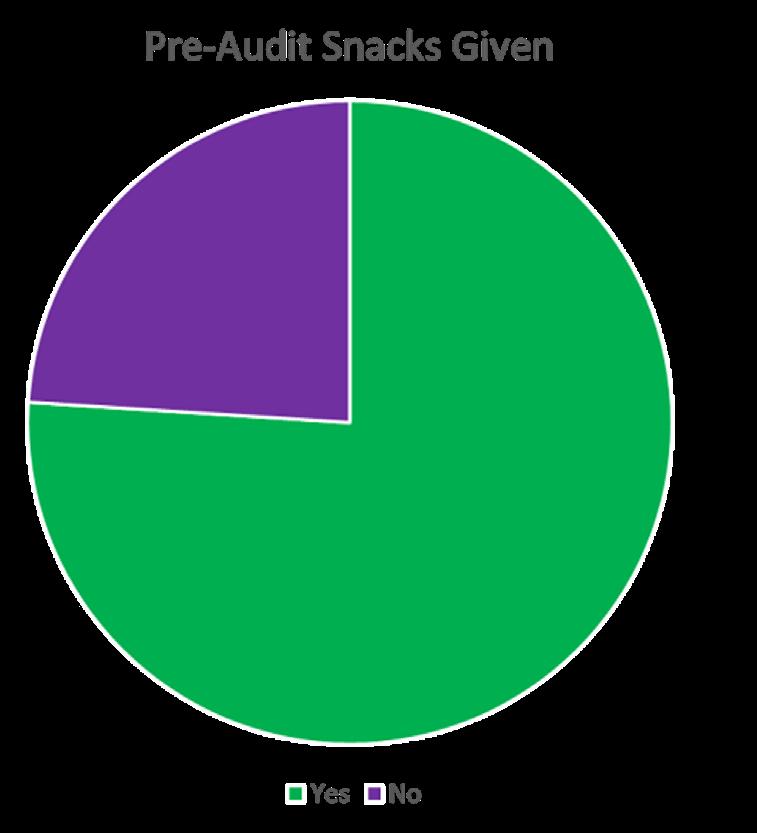
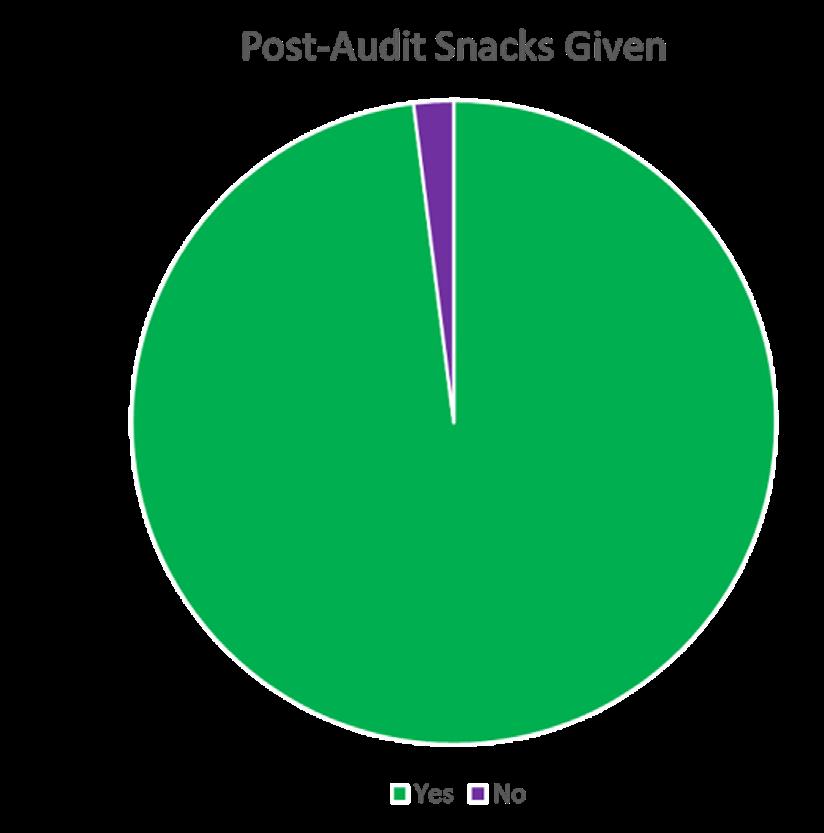
• Increased provision of 50g CHO snacks from 76% to 98% among patients requiring them (see Figure 1).
• Shift from exclusive reliance on juice-based ONS to 8% food-based snack provision, with ongoing efforts to further increase this proportion.
• Continued education to improve nursing documentation regarding snack provision.
2 Liver documentation audit
Objective: To assess the quality of dietetic documentation across gastroenterology, general medical and surgical wards, ensuring alignment with national guidelines.
Interventions:
• Targeted dietetic training and development of additional resources.
Outcomes:
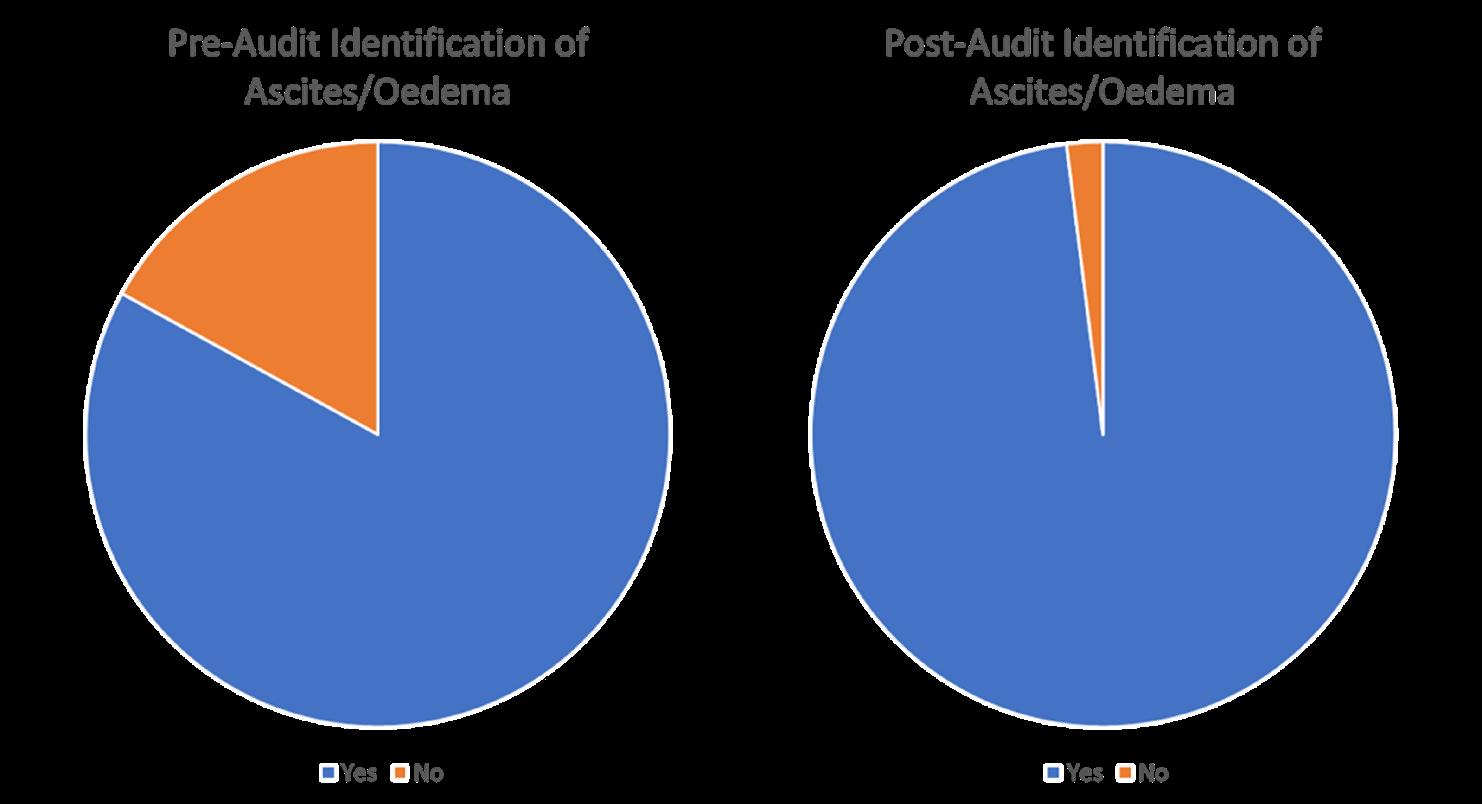
• Identification and documentation of oedema and ascites and calculation of an estimated dry weight increased from 67% to 83%.
• Documentation requesting micronutrient supplementation as per ESPEN guidelines (2020) increased from 0% to 79%.
Figure
3 Hand dynamometry integration
Objective: To implement routine hand dynamometry assessments for liver inpatients and track changes in muscle strength over time. Interventions:
• DAP-led hand dynamometry measurements for all liver inpatients, with follow-up assessments in outpatient clinics. Outcomes:
• While formal data analysis is pending, preliminary observations indicate improvements in handgrip strength following dietetic interventions.
KEY LEARNINGS AND FUTURE DIRECTIONS
Lessons learned
• Team support and accountability: Regular check-ins and structured deadlines are crucial for maintaining momentum in service improvement projects.
• Dedicated time for innovation: Allocating specific working group meetings fosters discussion, idea generation and project completion.
• Education as a key driver: Staff education, both within and beyond the dietetic team, plays a fundamental role in improving patient care.
• Small changes, big impact: Simple interventions, such as patient bed-space posters, can significantly enhance care quality.
• Continuous quality improvement: Regular audits and education cycles are necessary to sustain and build upon improvements.
• Multidisciplinary collaboration: Engaging medical and nursing colleagues is essential for achieving meaningful and lasting change.
Future goals
• Further integration of dietitians within hepatology pathways to enhance patient outcomes.
• Development of a structured referral pathway for metabolic dysfunction-associated steatotic liver disease (MASLD) patients, incorporating group education sessions and longitudinal data collection (eg, Fibroscan results, weight and abdominal girth).
CONCLUSION
Our service improvement initiatives have demonstrated the vital role of dietitians in hepatology care. Through targeted education, structured data collection and collaborative working, we have enhanced the efficiency and effectiveness of our service. Continued investment in dietetic integration within hepatology pathways will be essential for optimising patient outcomes in the future.
Figure
Hazel Long RNutr
Hazel specialises in public health and has a particular interest in prevention and evidencebased education. She works with universities, schools and corporate organisations to deliver topicspecific nutrition education sessions. She also works one-to-one with clients.
Alcohol use is one of the leading risk factors for death and disability-adjusted life years globally, affecting both men and women. However, when we examine data on alcohol consumption, we see stark differences between men and women. This article explores this key area of men’s health, where reducing alcohol intake could have a profound impact.
In the UK, men are significantly more likely to be exceeding governmentrecommended limits for alcohol intake in comparison with women. The most recent Health Survey for England (2022) showed that 32% of men drank more than 14 units of alcohol per week compared with 15% of women.1 Consequently, almost double the rate of men die from alcohol-specific causes compared with women.2
ALCOHOL AND CANCER
Drinking alcohol of any type increases the risk of developing seven different types of cancer, including breast, bowel, liver, mouth, throat, oesophagus and stomach.3 In the UK, approximately 13,000 more cases of cancer are diagnosed each year in men in comparison with women, with bowel cancer being the second most common type of cancer in men, with 25,300 new cases each year.4 Cancer Research UK estimates that alcohol consumption causes around 6% of bowel cancer cases, accounting for over 1500 cases per year.5 Additionally, 7% of liver cancer cases are attributed to alcohol consumption. Interestingly, data shows that between 2017 and 2019, there were nearly twice the number of men diagnosed with liver cancer compared with women (4300 cases for men vs 2200 for women).6 Although the reasons behind this will be multifaceted, alcohol consumption could contribute to this difference.
Whilst it is well documented that alcohol is a classified carcinogen, research shows that the public’s understanding of guidelines and harm requires attention. Data collected between 2016 and 2022 found that knowledge of low-risk drinking guidelines in the UK was poor, with only one in four adults being able to identify the recommended weekly limit as 14 units per week.7 Interestingly, recent data from the US has found that only 45% of American adults are aware of the cancer risks associated with alcohol consumption, in comparison with 89% who are aware of the risks of tobacco.8 Whilst this may not be representative of the UK, it is certainly a thought-provoking statistic to encourage healthcare professionals to be having conversations with the public about the relationship between alcohol and cancer risk.
ALCOHOL AND CARDIOVASCULAR DISEASE (CVD)
Alcohol consumption can increase blood pressure and body weight, which increases the risk of both heart attack and stroke. A 2012 meta-analysis by Briasoulis and colleagues found that drinking more than 20g of ethanol a day (one to two drinks) significantly increased the risk of developing hypertension, a leading risk factor for CVD.9 A recent metaanalysis found that previous high alcohol consumers who reduced their intake to below 14 units per week reduced their risk of major adverse cardiac events by 23%.10
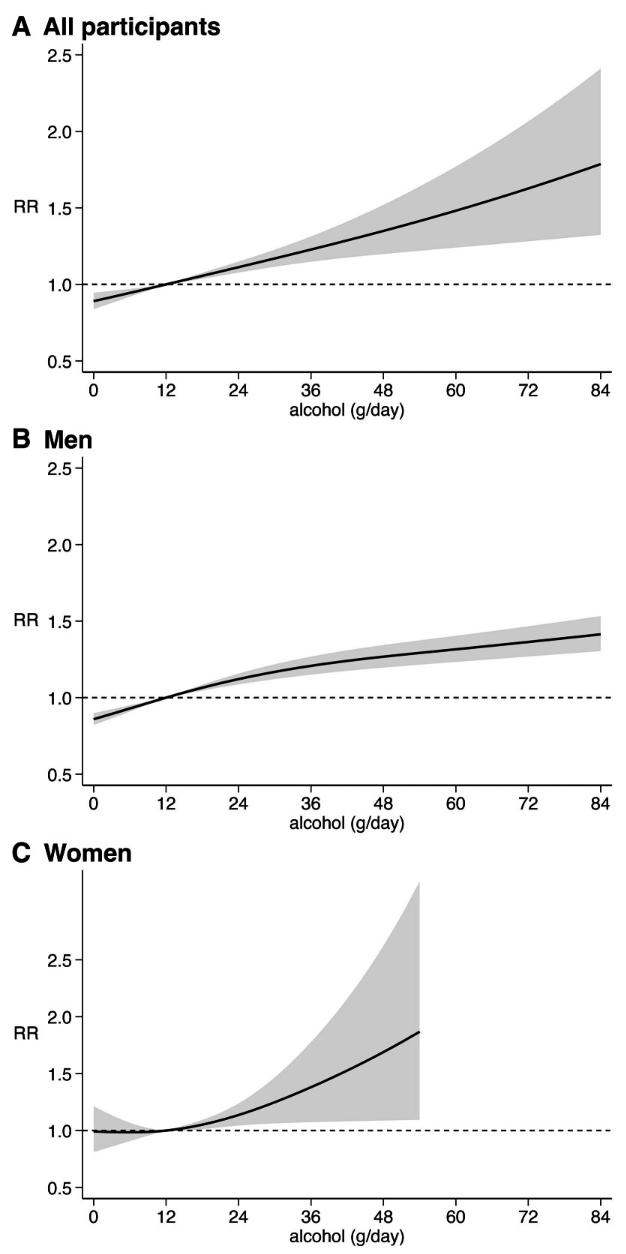
When comparing sex-specific effects of alcohol on hypertension, there is a linear association in men. In contrast, the effects are observed above 12g/d in women, with a steeper increase in risk at higher intakes (see Figure 1).11
Hypertension affects a higher percentage of men than women in the UK (34% vs 27%,
respectively).1 Healthcare professionals should ensure that their patients are aware that even low intakes of alcohol can affect blood pressure, and provide advice for reducing intake where appropriate. Whilst mortality rates related to heart disease have dropped significantly as a result of advances in medicine, heart disease is still a considerable issue in the UK, affecting around four million men.12 Emphasising the importance of reducing excessive alcohol consumption is an important consideration for prevention.
MENTAL HEALTH
Men’s mental health has been a topic of increasing interest over recent years, and whilst mental health issues can affect anyone, the outcomes for men and women are not equal. Men are three times more likely to die from suicide in comparison with women and are less likely to seek support.13 Alcohol and mental health are closely linked, and there are several possible explanations for this. Alcohol can have an impact on brain structure and can act as a depressant by impacting neurotransmitter pathways.14,15 Additionally, alcohol can have an impact on relationships, financial circumstances, employment status and a variety of health behaviours, such as sleep, nutrition and physical activity. All of these factors can contribute towards poor mental health.
Those who experience depression or anxiety are twice as likely to report excessive alcohol consumption in comparison with those who do not.16 Whilst mental health is complex and requires attention from appropriately qualified professionals, lifestyle factors, such as reducing alcohol intake, are critical and should be supported.
TARGETED APPROACHES
Several strategies can be used to reduce excessive drinking, such as substituting with non-alcoholic drinks, abstaining from alcohol on specific days of the week and reducing the number of drinks consumed per day.
Figure 1: Dose-response meta-analysis of the risk ratio (RR) of hypertension according to alcohol consumption (g/day)11
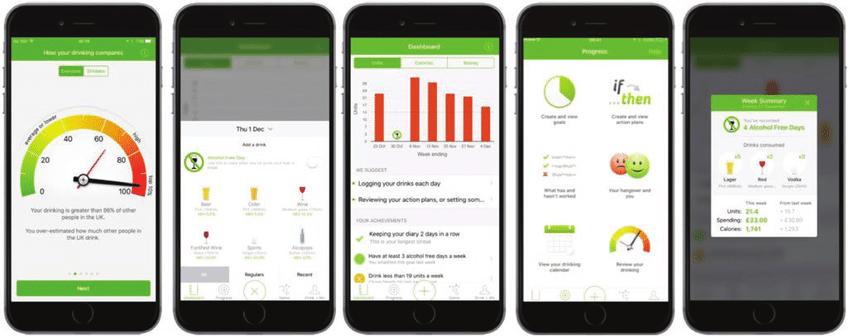
Research shows that technology can support this behaviour change.17 A large randomised controlled study conducted by University College London found that using an app called ‘Drink Less’ helped participants reduce alcohol intake by 39 units over six months (an average of two units per week) compared with advice alone.18 Further research conducted by the University of Sheffield estimated that the large-
scale promotion of this app could reduce alcoholrelated deaths by 4600 and hospital admissions by 188,400 in England over the next 20 years.19 Whilst this is interesting data and highlights the need to explore the use of technology further, it is also important to acknowledge that for those who are dependent on alcohol, other approaches, such as group support, counselling or medication, may be required.
CONCLUSION
Although negative consequences of alcohol consumption can impact both men and women, the available evidence tells us that men are more likely to be affected. We know that alcohol has an impact on the risk of many key areas of men’s health, including certain types of cancer, heart disease and mental health. Based on the evidence provided in this article, it is reasonable to suggest that healthcare professionals should not assume that the public fully understands safe limits of alcohol intake and the impact of alcohol consumption on health.
Credit: Amsterdam Beverage Picture Set (ABPS); https://creativecommons.org/licenses/by/4.0
UNDERSTANDING THE IMPORTANCE OF NUTRITION AFTER SURGERY
Holly Monday-Jones RD
Holly is a Critical Care and Nutrition Support Team
This article discusses the essential role of nutritional rehabilitation in optimising surgical outcomes and explores why early and targeted nutrition support matters and why it should be a routine and fundamental part of operative care.
Nutrition plays a vital role in rehabilitation after surgery. Guidelines, including those from the Enhanced Recovery After Surgery (ERAS) Society, show that nutrition plays a pivotal role in wound healing and muscle mass and strength preservation. It can also minimise postoperative complications, such as infection, and reduce hospital stays.¹ Despite this, it is still a misunderstood area and is often sidelined.
Surgery is a medical procedure that involves cutting into the body to treat injuries, diseases or deformities. This process is physically and mentally demanding and requires a recovery period, even for healthy individuals. However, for those facing complex surgeries or who have weakened immune systems or pre-existing conditions, and the elderly or malnourished, recovery can be more complicated and may take longer.
THE IMPLICATIONS OF SURGERY
When surgery occurs, two stress responses are triggered. Firstly, the sympathetic nervous system (SNS) is activated, typically due to pain, tissue injury, blood loss and anaesthesia.² This creates a survival response and catecholamines, such as adrenaline and noradrenaline, are released.³ Catecholamine release
results in increased heart rate and blood pressure to ensure blood perfusion to vital organs, increased cardiac output to support oxygen delivery under stress and increased blood glucose to provide quick energy.²
Secondly, the hypothalamic-pituitaryadrenal (HPA) axis is activated, which stimulates the production of cortisol. Cortisol is considered the main stress hormone and increases blood glucose levels and protein breakdown, which provides amino acids for healing and glucose production and increases fat breakdown to release fatty acids for energy.³ Basal metabolic rate, therefore, increases.⁵
Inflammation processes are also triggered, which is a big part of the healing process. Special signalling molecules called cytokines are released. Cytokines make blood vessels more permeable, allowing nutrients and immune cells to reach the wound site more easily.⁴ Immune cells clean up the wound site area by getting rid of bacteria and damaged tissue. The liver is also key in the inflammation process, as it makes proteins that help with clotting and further cleaning of the wound. This initial inflammation process is local and beneficial, typically lasting up to 24 hours post-surgery.³
Dietitian at Betsi Cadwaladr University Health Board in Wales. She advocates for evidencebased strategies that enhance recovery, reduce complications and support better outcomes.
@hmjnutrition and @hmjwellbeing
HMJ Nutrition Services and HMJ Wellbeing Solutions
Symptoms, such as fever, a significantly elevated heart rate, extreme fatigue and increased white cell count, indicate a process called systemic inflammation.⁴ Systemic inflammation is when your body’s immune system responds to a threat, like an infection, by triggering an inflammatory response that spreads throughout the entire body, rather than just staying in one local area. The inflammatory process is crucial for healing but must be balanced. Excess inflammation (such as systemic inflammation) can lead to complications such as systemic inflammatory response syndrome (SIRS) or even sepsis in the case of infection.²
Between 24 and 72 hours after surgery, the body enters an anti-inflammatory phase.⁴ This is supposed to restore balance and prevent excessive inflammation, but it often results in a temporary suppression of the immune system.³ This makes the body more vulnerable to infections, such as pneumonia, wound infections and sepsis. Further suppressed immunity may be evident after 72 hours and usually up to seven days.²
The clinical impact of this immunosuppression varies depending on the severity of the surgical stress, individual-specific factors, such as age, pre-existing conditions and malnutrition risk, for example, and the balance between inflammation and anti-inflammatory processes. Everyone undergoing surgery experiences some element of immunosuppression, but usually it’s mild and temporary. Those at risk of prolonged immunosuppression, eg, the elderly and those who are malnourished or immunocompromised before surgery, are more likely to experience wound healing delays, wound dehiscence (essentially wound breakdown) and further postoperative complications.
These metabolic, inflammatory and antiinflammatory processes make the body go into what we call a hypermetabolic and catabolic state. Hypermetabolism is essentially burning more energy than usual, which, as a result, requires more energy (kcals), protein and other essential nutrients to keep up. Catabolism is where the body breaks down its own muscle and tissue to get energy. Muscle mass is lost and immunity and wound healing ability are poorer if adequate nutrition isn’t received. This evidences the need for early nutrition.⁵
Alongside the physiological processes that happen after surgery, additional factors that compromise nutritional intake and absorption ability further, such as reduced appetite,
gastrointestinal dysfunction (diarrhoea, constipation, nausea, vomiting, etc) and limited mobility, can often be observed, which can be particularly difficult to manage from a nutrition professional perspective. It also needs to be mentioned that, alongside the physical toll, surgery can significantly affect a person’s psychological well-being. Limited independence, pain and postoperative fatigue contribute to anxiety, depression and helplessness. Psychological well-being can be affected even further if wound healing is delayed or if there are postoperative complications. These mental health challenges can reduce engagement in rehabilitation and motivation to recover, highlighting the importance of multidimensional care when it comes to surgical rehabilitation.
THE DEVELOPMENT OF ERAS
Historically, surgical practices included prolonged bed rest, long fasting periods before and after surgery and slow progression of diet and physical activity in the recovery phase. Over time, these practices have been linked to slower or delayed surgical and wound recovery, increased postoperative complications and often prolonged hospital stays as a result.¹
Professor Henrik Kehlet pioneered the idea that surgery-induced stress can be minimised by a combination of approaches; this was formalised into ERAS in the 2000s. ERAS focuses on preoperative optimisation, minimising fasting prior to surgery, using minimally invasive surgical techniques where possible, using varying analgesia practices to reduce opioid use and early feeding and mobilisation post-surgery.¹
ERAS has expanded over the years and is now validated across many surgical specialities including colorectal, orthopaedic, gynaecological, urological, cardiac and thoracic surgery, with evidence showing that ERAS practices can help reduce postoperative complications, reduce hospital stays and healthcare costs and improve patient surgical experience.¹ Today, ERAS is the typical standard of surgical care in hospitals throughout the UK. It involves a multidisciplinary approach including anaesthetists and pain specialists, physiotherapists, surgeons, nurses and dietitians. ERAS puts the patient at the centre of their own care.
ERAS: THE ROLE OF NUTRITIONAL REHABILITATION
Preoperative
Traditionally, surgical patients were often told to be nil by mouth from midnight prior to their surgery. However, this approach has become outdated due to the time of surgery often being difficult to predict, which often left patients fasting for more than eight hours, resulting in increased rates of dehydration, catabolism and insulin resistance.¹ Today, the typical ERAS approach preoperatively from a nutritional perspective is to encourage shortened fasting times where possible, typically fluids up to two hours before surgery and solids up to six hours before.⁶ Carbohydrate loading is also encouraged in the form of carbohydrate-rich drinks (eg, PreOp) two to three hours before surgery. This has been found to improve insulin resistance, maintain glycogen stores and improve comfort for the patient.⁷
It is also recommended that all surgical patients be nutritionally screened before surgery and throughout their hospital admission (typically weekly or if their clinical state changes). This is in line with most nutritional screening processes and is encouraged in UK hospital settings.⁸ If malnutrition is evident, it is recommended to treat it before surgery. Where this is not possible, maximising nutritional status before surgery is suggested. Dietitians are usually at the heart of nutritional assessment, and timely nutritional screening and dietetic referral are vital to ensure optimal care.
Intraoperative
Traditionally, providing fluids intraoperatively has been a routine practice. However, ERAS now suggests that inappropriate or excessive IV fluids can cause fluid overload and oedema post-
surgery, which may reduce surgical outcomes.¹ ERAS advises to avoid inappropriate IV fluid provision intraoperatively where possible. Glucose monitoring and insulin provision are also recommended during surgery, when issues have been identified either pre- or intraoperatively.⁶
Postoperative
Traditionally, patients were delayed in returning to nutritional normality until bowel sounds were present or until a patient had provided satisfactory amounts of flatus or stool. Today, evidence suggests that delays in feeding worsen catabolism, leading to potentially significant muscle mass loss.⁹ It is now recommended that post-surgery, nutrition is restarted early, ideally within 24 hours via the oral route if possible. ¹⁰ It is also recommended that nutrition support is implemented, eg, oral supplements (usually low volume such as Fortisip Compact), or enteral nutrition, where nutritional needs can’t be met through the oral route alone. Prolonging the progression of oral diet back to solids is also archaic advice, with the literature supporting a return to oral nutritional normality at the soonest opportunity. ¹⁰
Surgical complications, such as ileus, which is a temporary loss of normal bowel movement (peristalsis), are still often not managed correctly, with surgeons often deciding to stop or delay feeding in case of ileus development. In reality, though, an ileus may be caused by delays in feeding and can be successfully managed with oral or enteral nutrition, particularly nasojejunal feeding in most severe cases.¹¹ Dietitians and nutrition support teams should always be aware of patients with predicted ileus so they can be managed appropriately and timely.
END NOTE
Unfortunately, ERAS practices often fall short due to funding constraints in many UK hospitals limiting the ability to implement effective nutritional strategies throughout the surgical process. Without adequate staffing, such as surgical and acute dietitians, nutrition support teams and well-resourced surgical and ward teams, nutritional rehabilitation may often be overlooked, which can ultimately harm patient recovery. To turn this around, it’s crucial to prioritise staffing and nutritional screening, assessment and care to ensure that timely and evidence-based nutritional decisions can be made consistently.
REHABILITATION AFTER BARIATRIC SURGERY: REBUILDING FROM WITHIN
Bariatric surgery isn’t just about weight loss; it’s about reclaiming health, mobility and quality of life. From the moment a patient wakes up post-op, the rehabilitation process begins. This journey is unlike recovery from most surgeries; it requires long-term changes in eating habits, mental health support and gradual physical reconditioning.
Bariatric surgery, also known as weightloss surgery, is a medical intervention designed for individuals with severe obesity who have not achieved sustainable weight loss through diet and exercise.1 These surgeries alter the digestive system to help reduce food intake, nutrient absorption or both, leading to weight loss and improvement in obesity-related conditions like type 2 diabetes,2 hypertension, cardiovascular diseases3 and sleep apnoea.
There are several types of bariatric procedures, each with unique mechanisms, benefits and risks. The choice of surgery depends on factors such as body mass index (BMI), existing medical conditions and patient preferences.
1. Gastric bypass (Roux-en-Y)
This is one of the most common and effective surgeries. It involves creating a small stomach pouch and rerouting the small intestine to it, bypassing a large part of the stomach and duodenum. This restricts food intake and reduces calorie absorption.4
2. Sleeve gastrectomy
Also called vertical sleeve gastrectomy, this procedure removes about 80% of the stomach, leaving a tube-shaped stomach. It limits how much food can be eaten and reduces hunger by affecting gut hormones.5
3. Adjustable gastric banding
This involves placing a band around the upper part of the stomach to create a small pouch. It restricts food intake and is adjustable over time, but has become less common due to lower weight loss outcomes and more complications.6
4. Biliopancreatic diversion with duodenal switch (BPD/DS)
A more complex surgery combining a sleeve gastrectomy with a significant bypass of the small intestine. It leads to substantial weight loss but carries a higher risk of nutritional deficiencies.
The NHS follows a structured, multidisciplinary approach to postbariatric surgery rehabilitation, ensuring patients receive medical, nutritional, psychological and physical guidance every step of the way. Here’s a comprehensive look at the rehabilitation stages following bariatric surgery:
STAGE 1: IMMEDIATE POST-OP RECOVERY (DAYS 0-3)
The first 72 hours after surgery are spent in the hospital under close supervision. The focus is on stabilisation and early mobilisation.
Physical recovery
• Pain control: Typically managed with IV painkillers, then transitioned to oral medication.
• Hydration: Patients begin sipping water very slowly, one to two tablespoons at a time.
• Movement: Walking is encouraged within 24 hours to promote circulation and reduce the risk of clots or pneumonia.
Salma Khattak ANutr
Salma is a Clinical Nutritionist and a freelance writer for nutrition and dietetics. Her special areas of interest are the management of emotional eating and weight management for women.
In the first few days, a patient only consumes clear liquids, such as water, broth and sugar-free gelatin. Sips must be small and slow without any straws or gulping.7
STAGE 2: EARLY HOME RECOVERY
(WEEKS 1-4)
Once discharged, the patient continues their recovery at home, focusing on healing the body and adapting to the new dietary regimen.
Physical recovery
At this stage, rest is very important, but gentle walking several times a day is essential. Lifting and strenuous activities are avoided for at least four to six weeks.
Diet and nutritional phase
Table 1 summarises the stage 2 post-op diet, moving from liquids to soft foods.8
STAGE 3: ESTABLISHING A NEW LIFESTYLE
(WEEKS 4-12)
By the second or third month, patients begin eating small solid meals. This stage is key to forming lifelong habits.
Nutritional rehabilitation
After bariatric surgery, it is essential to adopt healthy, long-term eating habits to support recovery and weight management. Patients are advised to eat three to six small meals per day, focusing on consuming 6080 grams of protein daily to preserve muscle mass and promote healing. Food should be chewed thoroughly and eaten slowly to aid digestion and prevent discomfort. Supplementation becomes crucial, such as vitamins B12 and D3, iron and calcium, as the body’s ability to absorb these nutrients may be reduced after surgery. Hydration must be maintained by drinking 1.5 to 2.0 litres of fluids daily.9
Key Notes
Hydration is the focus. Sip slowly. No solids or cloudy fluids.
Tiny meals (2-4 tbsp). Protein-first. Avoid lumps or chunks.
Avoid pasta, bread, rice and tough meats. Chew thoroughly.
Emotional recovery: the hidden rehab
Bariatric surgery is not only a physical transformation; it also triggers a profound emotional journey. Many patients experience emotional highs and lows as they adapt to their new lifestyle. For some, the sudden absence of food, which once served as a primary coping mechanism, can lead to feelings of sadness, anxiety or even grief.
In addition to emotional shifts, rapid weight loss can result in loose skin and a dramatically changing body image. Some individuals may feel disconnected from their new appearance. This can challenge self-esteem and create a sense of emotional disorientation.10 To support this vital aspect of recovery, peer support groups and access to bariatric psychologists or therapists play a crucial role. The NHS and other healthcare providers offer counselling and structured group sessions designed to help patients process these changes, build resilience and maintain mental well-being. This emotional ‘rehab’ is just as important as the physical healing and should not be overlooked.
STAGE 4: PHYSICAL REHABILITATION AND FITNESS (3-6 MONTHS)
As weight begins to drop and energy levels improve after bariatric surgery, patients are encouraged to gradually adopt low-impact activities, such as walking, cycling or swimming, which are gentle on the joints and help ease the body into regular movement. Gentle exercises support ongoing weight loss, boost mood and mental well-being, and reduce the risk of common post-operative complications, such as gallstones and hernias.
Over time, resistance training can be introduced to help preserve muscle mass, which is essential during rapid weight loss. Exercises that heavily engage the abdominal area must be avoided until a clinician provides clearance.
To support this transition, NHS bariatric teams may refer patients to local or communitybased exercise programmes that are tailored for post-op recovery.
STAGE 5: LONG-TERM ADAPTATION (6 MONTHS TO 2 YEARS)
This phase marks the beginning of true lifestyle transformation. Most individuals lose around 30% of their excess weight within the first 12 to 18 months, after which weight tends to stabilise.11 A minor regain of 5-10% is common and manageable through continued focus on healthy habits and is not a sign of failure. Throughout this stage, ongoing medical monitoring is essential. Patients are usually scheduled for follow-ups with their bariatric team at three, six, 12 and 24 months post-op. These visits typically include blood tests to
monitor vitamin and mineral levels, ensuring deficiencies are caught and treated early. Dietitians and mental health professionals remain vital supports, helping patients adjust to their nutrition, emotional health and physical activity over time. See Figure 1 for advice to patients.
Weight loss and fertility
An important but often overlooked aspect of this phase is the impact of weight loss on fertility and hormones. For many women, particularly those with polycystic ovary syndrome (PCOS), bariatric surgery can significantly improve fertility.12 However, pregnancy is generally not recommended for at least 12 to 18 months after surgery, as the body requires time to stabilise. Hormonal fluctuations during this period may also affect mood, energy levels and overall emotional balance.
CONCLUSION
Bariatric surgery represents a pivotal intervention in the management of obesity and its associated comorbidities. However, its long-term success relies heavily on a structured, multidisciplinary postoperative rehabilitation approach. Recovery is not only a physical process but also a behavioural and psychological transition that demands sustained patient education, nutritional monitoring and psychosocial support. Adherence to dietary guidelines, commitment to physical activity, compliance with supplementation and regular follow-up visits are essential to prevent nutritional deficiencies and optimise metabolic outcomes. Ultimately, postsurgical rehabilitation is about empowering patients to build lasting habits that enhance their quality of life and secure long-term wellbeing through collaborative, patient-centred care.
Their Way
is the
Best Way!
Fits perfectly into your patients’ lifestyle
Ready-to-drink low-volume* (125ml per serving) protein substitute
Low calorie: 102kcal per serving (20g PE).
Contains vitamins, minerals****, trace elements and docosahexaenoic acid (DHA)
Unique Peach Tea flavour** in an elegant and discreet packaging
For more information please scan the QR code or visit nutricia.co.uk
This information is intended for Healthcare Professionals only.
PKU Lophlex® Select 20 is a Food for Special Medical Purposes for the dietary management of proven phenylketonuria (PKU), from 4 years and adults, including pregnant women (in conjunction with standard folic acid supplementation), and must be used under medical supervision.
*PKU Lophlex® Select 20 is a low volume ready to drink protein substitute, containing 20g PE (protein equivalent) in 125ml only. **Accurate in MIMS UK (Oct 2023). ***PKU Lophlex Select 20 Product information. ****Contains only traces of sodium, potassium and chloride. Accurate at time of publication - October 2023.
Suitable for
Years
PEACH TEA PEACH TEA FLAVOUR
METABOLIC DISORDERS, STIGMA AND BEHAVIOUR CHANGE
This article explores how stigma and rare inherited metabolic disorders (IMDs) interact, with particular focus on phenylketonuria (PKU).
Stigma = a set of negative and unfair beliefs that a society or group of people have about something, a mark of shame or discredit.
In our profession, there is much discussion around weight stigma and how it affects those who are overweight or living with obesity. What about those with particular diet-treated chronic conditions, such as IMDs? Newborn screening identifies six IMDs,1 and all are diet-treated, so that newborns will start treatment from about day 10 onwards for life. Dietitians working in IMDs need to consider that their patients might be affected by stigma through various life stages, eg, at nursery, school, college and even in the workplace.
IMD diets, including PKU dietary treatment, can be ultra-strict.2 Those affected with a PKU diagnosis may need to follow a very low-protein diet (less than 10g protein a day3), and this could apply to individuals diagnosed with other newborn screened IMDs, such as MSUD, HCU, IVA and glutaric aciduria type 1. As well as replacing staple foods such as pasta, bread, milk and crackers with low-protein alternatives, patients usually need to take a protein substitute (amino acids or glycomacropeptides) in divided doses throughout the day.2 These products are noticeably different to standard products bought in a supermarket.
THE HIERARCHY OF NEEDS
In 1943, Abraham Maslow proposed a hierarchy of needs (see Figure 1),4 as he believed that people have an inborn desire to be ‘self-actualised’, i.e. to be all they can be and to reach this goal. In order to achieve fulfilment, our
Merriam-Webster Dictionary – online basic needs must first be met. These include the need for food, safety, love and self-esteem. A person with PKU on dietary treatment for life has a lowprotein diet to meet their ‘lowest’ need, but this may impact meeting other needs, such as the need to belong. The middle of the hierarchy shows us that belonging to a group is important. To avoid loneliness, depression and anxiety, it is important for people to feel loved and accepted by others. Personal relationships with friends, family, lovers or life partners play an important role, as does involvement in groups, such as religious groups, sports teams, book clubs and other group or team activities.
REFERENCES
Please visit:
www.NHDmag. co.uk/articlereferences.html
confidence, respect
Suzanne Ford RD
Suzanne is a Metabolic Dietitian working with adults at North Bristol NHS Trust. She is Dietary Advisor to the National Society of Phenylketonuria (NSPKU).
Figure 1: Maslow’s hierarchy of needs: the stages of human motivation
Regis ter t od ay
VIA hea lthcar e profes sion al ed uc a tion portal is free to sign u p
100+ NEW res ources availa ble :
Practical Guide s
Case Stu d ie s
Video s
Webina rs
Events
Blog s
Scan t he QR to reg ister
So, What CAN You Eat? A Film about PKU directed by Jack Everitt, who has PKU11
Living with PKU – a low protein life with Phenylketonuria by Pauline O’Connor12
Testimony from two PKU ambassadors
A feature-length documentary film that sheds light on living with PKU. Jack’s film picked up an international award for ‘Unforgettable Film’ at the Spotlight Documentary Film Festival. The film was inspired by Jack’s own experiences of navigating his career and PKU self-treatment with diet at the same time. The film’s title shows us in a nutshell the conversations that make people with PKU feel different.
A PKU expert by experience, Pauline (known as Polly) devotes a chapter of her book to Social Isolation and PKU and another titled Abnormal Food Behaviours and PKU. Polly says, “To break bread with someone has social and religious connotations. Throughout human history, food has helped to encourage a sense of belonging, a shared commonality between people. What happens when you can’t share the bread? This is one of the most common shared experiences, yet it is not possible, or it is awkward and difficult, for someone on the restricted diet therapy. And, through no fault of their own, someone with PKU is automatically disadvantaged when a social occasion involves food, as most do.”
In NSPKU’s 2018 survey (with 632 respondents),3 social isolation was the third most important of the key themes reported by the PKU community, with 51% of caregivers and 44% of adults reporting exclusion because of their dietary treatment. Respondents identified this as a source of upset, frustration, embarrassment and a major barrier to adherence of their diet, and how it made them feel different from their friends and colleagues. Inability to access suitable food in restaurants, at work and related social activities was also common. One respondent had to leave a restaurant because of a refusal to cook lowprotein food, which she had brought with her, and other respondents with PKU were bullied because of eating their ACBS prescription food in social settings.
Norwegian researchers had already identified that the rareness and the invisibility of PKU (people with the disorder visibly appear healthy) can contribute to people with PKU feeling stigma.5 The findings of their study showed that after reaching adulthood, time spent with close relatives and childhood friends became less frequent. PKU became an isolating or stigmatising issue for the study subjects, with semi-close relationships being built, such as with new friends, friends of friends, working colleagues, fellow students, in-law family and elderly family.
Children with PKU have their food choices made public as soon as they attend nursery or school, so they have to deal with stigma from an early age – it is not an adult-only issue.
THE EFFECTS OF STIGMA
Stigma is correlated with low self-esteem, decreased overall health and poorer patient outcomes.6 Stigma dehumanises people, placing them outside of the social fabric. Chronically ill people may be questioned by acquaintances and strangers: “You’ve become very thin; do you have an eating disorder?” or “Why are your hands trembling?” In the case of someone with PKU, it might be “What is that in your lunchbox?” or “What is that strong-smelling liquid you drink at work every day?” The underlying judgement common to these questions is: “What is wrong with you? You are different from the norm.” Experiencing these intrusions leads both to an internalisation of the judgement behind the remarks and an anticipation of more judgement. A person with chronic illness may think, “Perhaps I’d better try to hide what is different about me to avoid further judgement.”7,8
In a study of college students with chronic illness, the illness or treatment intrusiveness was significantly related to stigma and also significantly related to poor mental health outcomes.9 Having an extremely strict and complex dietary treatment, such as in PKU, and having to explain that this is due to a rare (but invisible) disorder, is surely intrusive for the individual concerned.
FROM WHERE ELSE DOES STIGMA ARISE? Stigma can come from anywhere and even within the health service itself, which can put patients off trying to access treatment. PKU patients get their low-protein food and protein substitute prescriptions within primary care, where
awareness of patient needs may be low. In 2014, Barbara Cochrane published survey evidence from 82 PKU patients in Scotland. Half of them had received comments in primary care about their prescriptions of low-protein food, and twothirds of these comments were negative.10
WHAT IS THE IMPACT OF STIGMA?
Stigma that reduces self-esteem also reduces selfefficacy and, we can conjecture, the effectiveness of self-management in a treatment, i.e. dietary adherence.
Withdrawal from social interactions is a common response to stigma, leading to isolation, depression and anxiety.9 Anecdotally, during the COVID lockdowns, some members of the PKU community felt less exposed to stigma due to fewer social interactions; some were able to follow their diet more easily when working from home, and this was not just for practical reasons. However, withdrawal can cause a worsening in mental health and thus can adversely impact self-esteem and self-belief.
Researchers in Montreal, Canada, have studied self-efficacy related to the stigma of type 1 diabetes (T1D).13 This is a condition similar to IMDs. They found that in 128 adolescents with T1D, a strong link was shown between stigma, diabetes distress and a lower quality of life (QoL), whereas, in the same group studied, self-efficacy was associated with a higher QoL in adolescents with T1D preparing to transfer to adult care. This Canadian study was published two years ago and would be very interesting to replicate with a PKU cohort.. The context of the study was group education for adolescents with T1D, so, the group context itself might help to mitigate stigma in these patients.
WHAT CAN DIETITIANS DO TO HELP?
Addressing stigma, specifically the worries around peer differences, is not a small or quick fix.14 Stigma often impacts across multiple levels of an individual’s lived experience. Working as healthcare professionals, we do need to ensure we are practising in a non-stigmatising way. Unfortunately, as experience of stigma is broad, complex and often reinforced in everyday life, the things we can do in practice may well be limited. The most important things we can do include:15
• Validating and normalising our patients’ experiences of difference
• Being sensitive to stigma in its different forms8
- External/enacted – eg, others questioning and pointing out the differences; exclusion
- Internal – the belief that people may hold negative thoughts and attitudes about themselves
- Anticipated – perception or belief that discrimination/prejudice/stereotyping will occur; this often means that individuals don’t adhere to treatment/ management because of the worry of being stigmatised
• Building trust
• Listening without pressure
• Encouraging self-compassion
• Education of others about the condition that the individual experiences
Facilitating peer support (creating more ‘safe, accepting spaces’) can be a key factor in mitigating stigma and supporting patient selfefficacy and thus adherence. Participating in regular patient events whereby people with rare disorders can network and feel understood and have a sense of belonging may be an integral part of the dietary treatment.
IMD dietitians might be lucky enough to work with an IMD-specific psychology colleague; however, many services do not have this resource. Dietitians could draw attention to the unmet psychological needs that our patients may have and contribute towards business cases for psychologists in IMDs. (The patients’ unmet needs for psychologists do not just relate to stigma.) Without professional psychology support within metabolic teams, dietitians may find that our patients are limited in their behaviour change capacity, and thus our interventions may be less successful.
END NOTE
It is the role of IMD healthcare professionals to be advocates and ambassadors for our patients. Raising awareness of metabolic disorders and ensuring that the NHS and non-specialist healthcare professionals don’t stigmatise IMDs and PKU patients when they attempt to access treatment is also important.
NUT NUTRITION: AN UPDATE ON THE EVIDENCE
BASE This article brings together a nutrition and global consumption profile of lesser-known nuts and takes a glance at new and future research that is contributing to the evidence base.
Farihah Choudhury ANutr
In recent years, I have written on the topic of nut nutrition for NHD, and these articles covered the myriad health benefits of nuts, their nutritional composition, their status in the UK population’s dietary habits and barriers to consumption. Before exploring new literature about nuts, below are some takeaways from my previous articles:
• Planet saving: Nuts have been dubbed the food to save the planet. According to the 2019 EAT-Lancet Commission on Food, Planet, Health, we should source most of our protein from nuts, pulses and legumes to sustain a healthy and planet-friendly diet.1
• Nutritional powerhouses: Nuts are an excellent source of protein, unsaturated fats, fibre, vitamins and minerals.
• A health boost: Nuts have been found to have positive outcomes regarding the risk of cardiovascular disease, type 2 diabetes, weight control, reduction of obesity/ overweight and satiety, and allcause mortality.2-9
• A handful a day… There is no fixed UK dietary recommendation, but the sweet spot is said to be a handful of mixed nuts per day, or the equivalent in pure nut butter, ideally plain and unsalted.8
• Allergy scares: Tree nut and peanut allergies are the most common causes of food-induced anaphylaxis in the UK.10
• Cheap macadamia nuts? The price point of nuts is a barrier for many when it comes to incorporating them into British diets. However, post-Brexit trade deals with Australia have meant a free trade agreement for many foodstuffs, including the native Aussie macadamia nut, which could mean lower prices for UK consumers.11
LESSER-KNOWN NUTS
In my previous articles on nuts, I recounted the nutritional benefits of the most popular nuts we eat in the UK and more broadly in the Western world, but some, which pack an array of health benefits, are less well reported on. Some nuts are not even found or imported here and are certainly not talked about. Such nuts are eaten in the Global South, where the conditions exist for them to be propagated and enjoyed. Not all of these are ‘true’ nuts, but they have similar nutritional profiles and methods of preparation and consumption as other nuts.
ACORNS
Unsurprisingly, not readily available on McCance and Widdowson’s Composition of Foods Integrated Dataset, acorns are not habitually plucked from the base of a tree and eaten after a cautionary rinse under the tap. Acorns need to be prepared in a specific way, and they can be eaten in
Farihah is a Public Health Nutritionist within local government. She is particularly interested in food policy, noncommunicable diseases as a result of changing food environments, sustainable diets and food culture and anthropology. farihahchoudhury.com easypeasy sustainability farihahchdhry
Table 1: Nutritional value of acorns per 100 grams12
Protein 6.0g
Unsaturated fat
Vitamin B6
Folate
Copper
Manganese
three ways: whole, as flour and as oil. The need for extensive processing of acorns is due to the high concentration of tannins, which makes them bitter. Some species of oak tree, such as the Emory oak, bear sweeter acorns, which can be eaten both roasted and raw. However, most acorns are of the more bitter variety, so are not particularly palatable and, therefore, require processing to remove the tannins.
Acorns have historically been used as a foodstuff by many communities around the world, notably Spaniards, Italians, Native Americans and Koreans. Berbers from the Maghreb region in North Africa used to make couscous from acorn flour. Today, Italians make pasta with it and Koreans make noodles called dotori guksu and an edible jelly named dotorimuk. Acorn flour can often be found at Korean supermarkets. In the northern Iberian Peninsula, traditional acorn bread was eaten in villages until the 1950s, and pigs are fed acorns in the current day to create the unique flavour of Iberian pork. Roasted acorn flour is also a main ingredient in sweet cakes special to Kurdish areas of Iran and Iraq.
CHESTNUTS
Chestnuts are less macronutrient-rich than their counterparts in the nut world, with most of their calories coming from carbohydrates; they are also 60% water by weight. They are, however, the only nut containing significant vitamin C, with a 100g serving providing about 20% of the DRV, and vitamin E.13
Chestnuts are enjoyed in a variety of ways in the culinary world, including steamed, pureed, roasted, candied, milled and grilled. While chestnuts can be eaten raw, in the UK they are usually eaten roasted in their whole form, as roasting gives chestnuts a sweet, aromatic
19.6g
31% of the daily recommended value
22% of the DRV
69% of the DRV
58% of the DRV
flavour and a texture akin to a baked potato.
In many regions, chestnuts are dried and milled into flour and then used in cakes, pancakes and pasta. They are also used as a thickener in stews and soups. In Corsica, the flour is fried into doughnut-like fritters called frittelli
HICKORY NUTS
Pecans are the most well-known nut belonging to the hickory nut family, but there are also other edible varieties, such as mockernut, shagbark and shellbark, mostly indigenous to the Americas.
KOLA NUTS
The kola nut is the seed of a species of plant indigenous to Africa, called the cola plant. Kola nuts contain caffeine, as well as tannins and flavonoids. They are most commonly known in the Western world due to their use as a flavouring agent and as a source of caffeine in cola-flavoured drinks, though it is no longer commonly listed as an ingredient in most commercial cola drinks. Kola nuts are also nervous system stimulants and are chewed in many West African countries for that purpose.
OTHER NUTS
Other edible nuts in the diet of many cultures around the world include breadnuts, beech nuts, candlenuts and palm nuts. Another is the betel nut, which is a nervous system stimulant and is chewed predominantly in Southeast and South Asian countries, the use of which has constituted a significant public health problem in both these regions and in their respective diasporic communities around the world.14-17 Chewing betel nut causes adverse health effects, including oral and oesophageal cancers and cardiovascular disease.
Eating walnuts for breakfast may boost your brain function
RECENT PUBLISHED RESEARCH ON NUT NUTRITION
Eating walnuts for breakfast may boost your brain function
New research from the University of Reading (February 2025) has found that eating 50g of walnuts mixed into muesli and yoghurt leads to faster reactions and better memory performance during the day, when compared with a calorieequivalent breakfast without nuts.18 This was the first research study to look at the immediate effects of walnuts on brain function in young adults throughout a single day, and added to the research base around the effects of nut consumption.
For over 70s with suboptimal diets, daily consumption of nuts is associated with a healthier lifespan
A prospective cohort study published in Age and Ageing in November 2024 found that over 70s who consumed nuts every day were more likely to live disability free longer than those who consumed nuts infrequently or not at all.19 A significant association was found between the nut-consuming cohort and a healthy lifespan.
IN PRAISE OF ALMONDS AND NUTS
In October 2023, independent news channel, The Conversation, helpfully summarised the
consensus about the health benefits of nuts in an article singing their praises.20 The article cited a strong evidence base for the following:
• A reduction in LDL (‘bad’ cholesterol), the sweet spot being a ‘handful’ – Lowering LDL is linked to a reduction in total mortality and deaths from cardiovascular disease.
• A lowered risk of cardiovascular disease – A Canadian Cochrane study showed that a 28g daily intake of shelled fruits reduced cardiovascular disease by 13% and heart disease by 29%. A large randomised controlled trial followed participants between the ages of 55 and 80 for five years and showed that those who followed a Mediterranean diet had fewer heart problems.
• A positive effect on weight – A meta-analysis of studies showed regular consumption of nuts showed a modest decrease in weight and waist circumference.
The article also cited associations between the consumption of nuts and a reduced risk of cancer and neurodegenerative diseases. However, the evidence base for these arguments is still growing, so no concrete conclusions can be made about the protective quality of nut consumption on these outcomes.
CONCLUSION
It is abundantly clear that nuts have myriad benefits for health, confirmed by an extensive evidence base, with more research in the works to evidence some of the assumed effects, such as the NUTPOOL Study.21 This is a worldwide nutritional epidemiological study and meta-analysis which aims to evaluate the association between total and specific types of nut consumption and the prevention of non-communicable diseases, namely type 2 diabetes, cardiovascular disease, cancer, neurodegenerative diseases (dementia and Alzheimer’s disease) and mortality. Watch this space…
is the most extensively hydrolysed eHF in the UK 1
Is the only whey-based eHF that is both Halal and Kosher certified
For formula fed babies we appreciate that choosing the right specialist infant formula is an important decision. If you are looking for an extensively hydrolysed formula (eHF); SMA® Althéra® is safe and effective2 for the dietary management of cows’ milk allergy (CMA).
BEYOND THE CLINIC: THE DIETITIAN’S ROLE IN ADDRESSING ONLINE
NUTRITION MISINFORMATION
The internet has transformed how people access nutrition information, making it easier than ever for the public to learn about food, health and wellness. This article critically explores online misinformation, with a mention of cancer diet myths, and will provide practical guidance for nutrition professionals navigating these conversations in clinical practice.
Nutrition and wellness are arguably the most widely discussed topics online, which has led to the widespread dissemination of nutrition misinformation. A good starting point is to understand the definition of misinformation, which is ‘a claim that contradicts or distorts common understanding of verifiable facts’.1 The online world is a perfect arena for nutrition misinformation, as personal stories and persuasive posts often become ‘viral’ very quickly, fuelling the algorithm and spreading the inaccurate messages further, unfortunately leaving behind the evidence-based information.
A study analysing the quality and accuracy of the nutritional content of Australian Instagram accounts with more than 100,000 followers, revealed that 34.8% were of poor quality and almost half contained inaccuracies (44.7%).2
TikTok is another social media platform that has become a source of health and nutrition information, particularly for adolescents and young adults.3 With over one billion monthly active users, it has the potential to be highly influential. A study published this year demonstrated that the nutritional information available on TikTok was riddled with misinformation: 82% of posts lacked transparent advertising claims, 55% did not provide evidence-based information and 90% did not present the risks and benefits of the advice given.3 Unfortunately, platforms like TikTok prioritise short engaging videos, which means this type
of content can be shared further and the public can be exposed to these messages repeatedly and persuasively. This can lead to information overload, with consumers not being able to process all the information systematically, making them more likely to accept it as truth.4
AN EXAMPLE OF NUTRITIONAL MISINFORMATION IN CANCER NUTRITION
Unfortunately, cancer nutrition is an area subject to a lot of nutritional misinformation. A cancer diagnosis can leave patients and carers vulnerable to looking for alternative diets or quick fixes to minimise treatment. They may also see nutrition as a method of controlling their situation when they need to rely on medical professionals, or present a sense of hope when conventional medical treatments feel daunting.
There are a few common cancer nutrition myths regularly on rotation on social media, such as ‘sugar feeds cancer’, ‘alkaline diets cure cancer’ or ‘juicing diets cure cancer’, etc. These diets are often presented as credible by so-called ‘experts’ quoting studies (often of poor quality or misinterpreted), or using highly scientific language that may misguide the public into thinking they are facts. One study reported 32.5% of the 200 most popular social media articles on cancer nutrition contained misinformation, and 76.9% of these contained harmful information.5 This is the real danger of nutrition misinformation.
Joanna Injore RD
Joanna is a Registered Dietitian with over 20 years’ experience in the NHS, charity and private sectors. She currently works at Macmillan Cancer Support and is the owner of JI Nutrition providing private one-toone nutritional consultations and bespoke services for brands.
Nutritional misinformation, particularly in cancer, has the potential to cause harm by leading patients to delay or refuse standard treatments or limit their diets, increasing their already higher risk of malnutrition. In clinical practice, dietitians may encounter patients following restrictive diets, or they may be scared to eat as they are so fearful of ‘making their cancer worse’. This requires sensitive and empathic dietetic counselling to improve their diets. Nutritional misinformation may also present the wider issue of undermining evidence-based practice and health professionals overall.
WHY DOES NUTRITIONAL MISINFORMATION PERSIST?
Despite the availability of accurate, evidencebased nutritional information, misinformation continues. It’s, therefore, useful to explore the underlying psychological and social drivers. One possible psychosocial driver is ‘confirmation bias’,6 as people are more likely to trust information that aligns with their beliefs. Another is the ‘illusory truth effect’, where repeated exposure to the same claim, even if it’s inaccurate, can increase the perception that it’s true.7
There is also a growing scepticism of conventional medicine by some of the population, specifically mistrust of pharmaceutical companies (‘big pharma’), which may influence individuals to be more trusting of ‘natural’ or ‘alternative’ treatments promoted online. It has also been
identified that consumers generally have a low level of media literacy and critical evaluation skills. This has led to a situation where timepoor consumers are inundated with online information that they are unable to adequately evaluate.2
We also need to consider the financial drivers of misinformation, as online wellness continues to be a multibillion-dollar industry. Influencers are not bound by the same ethical or professional standards as registered healthcare professionals. This potentially gives them a free rein on the messages they can share, which may overshadow the voices of credible professionals.
PRACTICAL STRATEGIES FOR DIETITIANS IN CLINICAL PRACTICE
Due to the digital world we live in, online nutrition misinformation is unlikely to disappear; however, as registered nutrition professionals, we can help to mitigate its influence by confidently and empathetically sharing evidence-based advice.
In one-to-one settings during patient consultations, the first stage of developing a therapeutic relationship is building rapport and trust, which will help the patient to talk openly about any concerns they have or confusion about nutrition messages. Proving empathy and trying to understand the individual’s beliefs before providing information can help to move through the confusion. Diekman et al’s client and clinician
engagement pathway (Figure 1) may be a useful tool to use during a patient/client interaction and emphases the importance of using empathy statements throughout.8
Another useful chart by Diekman is the relationship between client and clinician (see Figure 2).8 This can help nutritional professionals to educate clients depending on their specific needs. For example, during consultations, dietitians can use this method to support clients in developing critical thinking skills, by talking about how to identify nutrition misinformation and encourage scepticism of posts that sell ‘cureall’ products and promises. Reliable websites can be recommended instead.
RESPONSIBILITIES AS A REGISTERED NUTRITION PROFESSIONAL
More dietitians are getting involved in conversations online and taking advantage of the opportunity to create evidence-based content for the public. Recognising this last
year, the Health and Care Professions Council (HCPC) produced guidance on the use of social media in a professional and/or personal capacity.9 This is an opportunity for dietitians to dispel nutrition misinformation, amplify evidence-based messages and build trust with the public.
The British Dietetic Association (BDA) also encourages its members to be aware of and report misleading adverts when someone is promoting a product or service. The CAP Code is written by the Committee of Advertising Practice (CAP) and administered by the Advertising Standards Authority (ASA). The BDA recommends that we report anything that doesn’t follow the code.10 If you see anything else in the media you are unhappy with, eg, in a newspaper or magazine article, it’s also worth writing a letter to the editor to raise any concerns. While there is no guarantee this will prompt a correction, we should try to dispel any myths whenever possible.
CONCLUSION
Nutrition misinformation appears to be just ‘one swipe away’, so dietitians now need to take on the role of the nutrition expert and online myth buster. Dietitians are working against a fast-moving online world where the voices of misinformation are often favoured by the various social media algorithms, which can drown out evidence-based messages. As registered professionals and nutrition experts, dietitians can engage with empathy, evidence and consistency to cut through the misinformation. We are best placed to understand our patients’ beliefs and cut through the online messages they are exposed to, to offer safer, factually correct, science-based advice.
Farihah Choudhury ANutr
Farihah is a Public Health Nutritionist within local government. She is particularly interested in food policy, noncommunicable diseases as a result of changing food environments, sustainable diets and food culture and anthropology. farihahchoudhury.com
THE ROLE OF PUBLIC HEALTH IN NUTRITION AND DIETETICS
This article focuses on the broad public health strategy through a systems-focused lens on food, nutrition and poverty, including updates to England’s obesity policy and plans of the Labour government.
The Association for Nutrition (AfN) defines the role of a public health nutritionist as this: ‘Public Health Nutritionists develop, implement and evaluate nutrition policies and programmes, generating the evidence base and applying scientific knowledge to ensure understanding of the impact of food and diet on the health and wellbeing of people and communities, and improving the diet, nutrition and health of people and communities.’1
The pivotal Marmot Review Fair Society, Healthy Lives, published in 2010,2 was a review into the role of social inequalities in determining a population’s health outcomes. It drew particular attention to the evidence that most people in England are not living as long as the best-off in society and spend longer in ill health. It argued that action is needed to reduce inequalities across the social gradient to improve health for all.
Social inequalities were defined as: ‘The range of interacting factors that shape health and well-being, which include: material circumstances, the social environment, psychosocial factors, behaviours and biological factors. In turn, these factors are influenced by social position, itself shaped by education, occupation, income, gender, ethnicity and race. All these influences are affected by the socio-political, cultural and social context in which they sit.’
There has been a palpable rise in the marketing of personalised ‘motivation’ and choice-based nutrition and health. Examples include ZOE (described as at-home tests, personalised food scores and advice); working with a
private nutrition professional to create personalised plans alongside using the gym; taking up a recreational sport or fitness activity; and cooking and eating well at home. In reality, the social determinants of health as defined by the Marmot Review make these ‘choices’ difficult for a large proportion of the population – in other words, it is easier for more socially advantaged members of the population to make ‘good’ choices.
In the last few years, the impact of the coronavirus pandemic and the more recent cost of living crisis have worsened existing health disparities, suggesting a widening of inequalities between the most and the least deprived members of society.
Fittingly, in 2020, The Marmot Review 10 Years On was published.3 The report showed that for the first time in more than 100 years, life expectancy had failed to increase across the country, and for the poorest 10% of women in England, it had declined. Between 2010 and 2020, health inequalities in England widened and the amount of time people spent in poor health increased.
Public health nutrition focuses on the wider determinants of health and how population groups experiencing social and economic inequalities can be supported to improve their health outcomes through health improvement policies and campaigns, thus creating equity in the food system.
NUTRITION POLICYMAKING
Key strategic national decisions, reports and bills underpin formal local
responses to public health nutrition issues, which are ordinarily disseminated by local authorities and NHS integrated care systems. Local authorities receive ring-fenced funding (a public health grant) every year from the Department of Health and Social Care. The grant is split into ‘prescribed’ and ‘non-prescribed’ functions, which determine the parameters and conditions of local authority expenditure. Examples of ‘prescribed’ functions include NHS Health Checks and the National Child Measurement Programme. Another ring-fenced government funding stream that supports public health nutrition outcomes, but which isn’t grant-funded directly to local public health systems, is the universal infant free school meals programme (UIFSM), funded by the Department for Education.
Examples of ‘non-prescribed’ functions include adult and child obesity, adult and child physical activity, and ‘miscellaneous’ activities, which include nutrition initiatives. Of note, most obesity, nutrition and physical activity interventions are not prescribed functions, meaning local authorities can determine interventions to address the needs of local populations.
PREVIOUS AND CURRENT PUBLIC HEALTH NUTRITION STRATEGIES
Key strategic documents and their recommendations underline the expectations of the national government to address identified population health issues.
Tackling obesity: empowering adults and children to live healthier lives (2020)4
The Conservative government published the latest iteration of the national obesity strategy in 2020. My article on public health strategies in the April 2021 issue of NHD outlined the obesity
strategies that have been developed since ‘Health of the Nation’ in 1992, by successive governments, and the obesity prevalence in parallel to the various published strategies, which has rarely meandered beyond gentle fluctuation in the last 30 years. In other words, obesity prevalence has barely changed.
National Food Strategy (2020-2021)5
Between 2020 and 2021, an independent review of the food system was published in two parts, authored by Henry Dimbleby. This was commissioned by the then Conservative government to help the government create its first National Food Strategy in 75 years. There were 14 recommendations in the report, under four themes:
• Escape the junk food cycle and protect the NHS
• Reduce diet-related inequality
• Make the best use of our land
• Create a long-term shift in our food culture
Recommendations of note for public health influence included:
• Introduce a sugar and salt reformulation tax. Use some of the revenue to help get fresh fruit and vegetables to low-income families.
• Launch a new ‘Eat and Learn’ initiative for schools.
• Extend eligibility for free school meals.
• Fund the holiday activities and food (HAF) programme for the next three years.
• Trial a ‘Community Eatwell’ programme supporting those on low incomes to improve their diets.
Government food strategy (2022)6
The Conservative government responded to the independent National Food Strategy with the government food strategy published
As of 2024, 24.6% of school-aged children in England were eligible for FSM, but it is estimated that a further 900,000 children living in poverty do not qualify for FSM under the current schemes . . .
in June 2022. They subsequently responded positively to some recommendations made in the report:
• Extended the HAF programme at the time of publishing the government food strategy for 2021. HAF has subsequently been extended several times, now scheduled to be funded a further £200 million until March 2026.
• Increased the value of Healthy Start vouchers from £3.10 to £4.25 per week. Healthy Start has since been turned into a ‘payment card’ card-only scheme, partly to reduce the stigma associated with physical vouchers.
• Agreed to continue collecting, assessing and monitoring data on the number of people suffering from food insecurity. The most recent UK Food Security Report was published in December 2024.
The NHS Long Term Plan (2019)7 also included a commitment to preventing illness and tackling health inequalities, committing to ‘taking further action on childhood obesity’, as well as ‘providing education and exercise programmes to tens of thousands more patients
with heart problems, preventing up to 14,000 premature deaths’.
EXISTING PUBLIC HEALTH NUTRITION POLICY INSTRUMENTS
Several longstanding policy initiatives have been implemented by successive governments, with clear links to improving public health nutrition:
Healthy Start
The Healthy Start Scheme was established in 2006, initially as a voucher scheme, and has been fully digitised since 2022. It helps families and pregnant women on low incomes to get healthy food, milk and vitamins. All pregnant women under 18 years can also access Healthy Start. Cardholders receive £4.25 per week per child or week of pregnancy (or £8.50 per week per child from birth to one year). Although the scheme has been described as a vital lifeline, in 2024, it was estimated that around 366,000 had taken up the prepayment card out of 506,309 families who were then eligible.8 Aligned with the recommendation in the National Food Strategy, The Food Foundation, alongside other campaign groups, have made calls for critical changes to be made to the scheme to ensure it is having the maximum impact.9
Free school meals
School food provision first became mandatory in 1906, when the British Parliament passed the Education (Provision of Meals) Act, which gave local education authorities the role of providing free meals to schoolchildren in primary schools. Fast forward to today, means-tested, statutory free school meals have been provided in England, with free meals for all Key Stage 1 children (Years R, 1 and 2) under the UIFSM scheme, since 2014. Research published in 2022 showed that the national UIFSM policy reduced obesity rates among children in their first year in primary school and reduced household food expenditure.10 Since 2023, in all London boroughs, the Mayor of London has topped up the UIFSM permanently, effectively making school meals free for all primary school pupils. As of 2024, 24.6% of schoolaged children in England were eligible for FSM,11 but it is estimated that a further 900,000 children living in poverty do not qualify for FSM under the current schemes.12 Furthermore, it is estimated that around 11% of pupils who are entitled to FSM are not registered to receive them.13 In June this year, Labour announced that from September 2026, all children in households receiving Universal Credit will become eligible for FSM. This has been received positively by those who have long called for an extension of eligibility for FSM.
Soft drinks industry levy
The soft drinks industry levy (SDIL), colloquially known as the Sugar Tax, was introduced in 2016, and has led to a significant reduction in household purchasing of sugary drinks.14 An
The NHD Blog – comment and opinion from our authors.
evaluation of SDIL published in February 2020 found that the percentage of drinks with sugar over 5g per 100ml fell from an expected level of 49% to 15% over the 2015-2019 time period.14
THE LABOUR GOVERNMENT’S COMMITMENTS TO PUBLIC HEALTH NUTRITION
The Labour government has made several policy announcements that may have a significant impact on the health of the UK if delivered effectively. In January 2024, Labour launched the Child Health Action Plan, which committed to:
• implementing the 9pm watershed for junk food advertising on television and ban paid-for advertising of less healthy foods on online media aimed at children;
• introducing a free breakfast club in every primary school;
• introducing a targeted national supervised toothbrushing programme for three- to fiveyear-olds in fully funded breakfast clubs.
In December 2024, Labour unveiled a plan to deliver a new National Food Strategy with a coalition of food sector leaders, academics, charities and key thinkers in the first half of 2025, promising to avoid ‘random interventions’ and instead provide a joined-up and systemswide approach across government and the industry to reduce the environmental impact, increase investment and tackle food poverty. The Environment Secretary, Steve Reed, confirmed that the new National Food Strategy would build on existing efforts, including the 2021 independent National Food Strategy.
KEEP YOURSELF UP TO DATE, whether you’re at home, work or on the move. Our regular bloggers cover a range of nutrition-related topics, providing insight, tips and advice and thoughtful debate. There’s also an opportunity to join the conversation too; you can share your comments on the blog post and if you would like to submit a blog, do get in touch: info@networkhealthgroup.co.uk Read the NHD Blog: www.nhdmag.co.uk/ nhd-blog.html
FACE TO FACE
Ursula Arens
Ursula has a degree in dietetics and currently works as a freelance writer in Nutrition and Dietetics.
Our F2F interviews feature people who influence nutrition policies and practices in the UK.
Ursula meets LUCY JONES
Chief Clinical Officer at Oviva
Specialist Bariatric Dietitian
Media dietitian and TV presenter
Lucy welcomes me into the mazy Oviva office, and we find a quiet corner. She is a familiar face to many in our profession, having done a lot of TV work, presenting sensible comment on nutrition. Perhaps being blonde and smooth-featured helps to open the doors to TV. Lucy gives me the smile of non-denial.
The A level result in maths was a disappointment and the hoped-for career in medicine had to be postponed or cancelled. “I really wanted to go into some aspect of healthcare, and my mother helped me to identify another career: dietetics,” she tells me. The University of North London, now London Metropolitan, offered her a place. She enjoyed the course and did well, graduating in 2007 with the annual nutrition prize. Even during her studentship, she worked part-time as a dietetic assistant at Chelsea and Westminster Hospital, where she had completed her placement.
This became her first job. “I enjoyed being allowed to do four rotations, to get insights into the different specialisms,” she says. When a position as a bariatric dietitian became available at the hospital, Lucy applied. “Support for those assessed as suitable for bariatrics involves guidance before surgery, a twoweek very low energy diet to shrink the liver allowing surgeons better access to the stomach. Then post-surgery support to develop tolerance to foods again by texture modifications and, of course, the general guidance for healthier diets to
ensure nutrient adequacy and ongoing behaviour change strategies for weight maintenance,” she explains. Lucy particularly enjoyed the dietetic support for bariatrics because of being able to share the fast developments from the discomforts and anxieties of significant obesity to the improved quality of life from reduced body weight.
Lucy’s next roles continued with a focus on bariatric dietetics at Homerton University Hospital in East London and then as the Clinical Lead at Whittington Hospital in North London. During this time, she also completed an online Master’s degree in Healthcare Management at the University of York. “A lot of late nights,” Lucy says. But everything changed in 2011. She got a phone call from the director of a film company planning a new show for Channel 4. The Food Hospital series was a science-based show with qualified healthcare professionals advising individuals suffering from a range of medical conditions on specific foods and diets to alleviate or cure symptoms. Each show featured someone sharing their medical problems and then reporting back on their health following guidance around their diets. It was a great success with more than two million viewers watching weekly. “All of the science statements had been triple checked to ensure that there was no scope for confusions or critique,” explains Lucy. The huge success of the first series resulted in the commissioning
of further series, the publication of a book and the show being formatted for German TV as Die Ernährungs-Docs
TV filming schedules do not allow negotiation, so Lucy’s clinical work became part-time. But with spare time in the evenings, why not obtain a further qualification? (I could think of many reasons.) In 2014, she completed a distance-learning Master of Research (MRes) course offered by the University of Manchester. “A lot of late nights again,” she says. Lucy continued some clinical work as a bariatric dietitian in both the NHS and with the private provider, Spire Healthcare. She also became one of the presenters on the BBC series Eat Well for Less? Lucy was now the well-known calm professional guide on nutrition debates in the media. “I loved it,” she states, sharing that she had enjoyed being on stage as a child. But she noted that there was also the start of public critiques, now more familiar to anyone participating in social media discussions. “Sometimes you do need to walk away from the debates.”
In 2014, Lucy was introduced to Kai Eberhardt, a Swiss digital health entrepreneur, who was looking to bring his recently launched app to support weight loss and type 2 diabetes guidance to the UK. For those with a referral via a GP practice, the Oviva app provides personalised support. Lucy developed the clinical pathways and content of dietetic and behaviour change guidance for obesity and type 2 diabetes, as well as managing the team of dietitians. Oviva now provides a grid of health metrics, including the analysis of food journals, contact with a supportive health coach and accredited information. Over 300,000 NHS patients have been supported to date, with
Oviva now provides a grid of health metrics, including the analysis of food journals, contact with a supportive health coach and accredited information.
average weight losses between 5 and 15kg, depending on the pathway provided.
Ten years on, Lucy is the Chief Clinical Officer. I ask what this means. She describes defining and evolving clinical pathways for services. One successful outcome is that the National Institute for Health and Care Excellence (NICE) recommends Oviva for the delivery of digital Tier 3 Weight Management within the NHS. Lucy also describes quality assurance assessments and, of course, clinical trials and research to evidence their practice. She mentions that Oviva may be expanding digital dietetic support for other diagnosis categories such as hypertension and dyslipidaemia.
Our conversation continues. There has been a huge increase in technology into the care provisions of dietitians, and I notice a divergence between us. I am a reluctant laggard on the grumpy side of 60, and much mocked for not even smartphoning. In contrast, Lucy is bright and positive that future tech developments fully support and enhance the effectiveness of our profession. Lucy is clearly many steps ahead in her exposure to digital healthcare discussions. She feels that AI technologies will lead to higher professional skills and channel dietetic attention to the more complex and specialist cases, while much greater numbers of basic care provisions can be assured with digital services. She says, “This can only enhance the status of dietitians.”
Top career tips from Lucy: firstly, seek breadth of experience; secondly, allow compliments and critiques to allow you to identify your own strengths and weaknesses/limitations and then double down on your strengths; and thirdly, embrace change and drive change. Staying static is never an option.
Fareeha Jay RD
Fareeha is a freelance dietitian with a specialist interest in South Asian diets and provides specialist advice to South Asians across the globe. She is extremely passionate about providing the best available nutrition advice to people with South Asian backgrounds, which is what led her to develop the South Asian Eatwell Guide.
CALCIUM INTAKE AND BREAST CANCER PREVENTION
Breast cancer is a heterogeneous disease classified into subtypes based on the presence or absence of hormone receptors, reflecting distinct aetiologies, clinical profiles and survival outcomes. It remains the most commonly diagnosed cancer amongst women and the fifth leading cause of cancer-related deaths worldwide, with approximately 1.7 million new cases reported annually.1 www.fareehajay. com
Calcium intake has been suggested as a potential protective factor against breast cancer. It supports the optimal function of vitamin D and regulates key cellular processes, including apoptosis, cell proliferation and differentiation, which may help inhibit abnormal growth in mammary tissue.2
A meta-analysis of seven cohort studies found that, although the overall association between total calcium intake and breast cancer risk was not statistically significant, higher dietary calcium intake was significantly linked to a lower risk. A dose-response analysis showed that every additional 350mg of dietary calcium per day was associated with a 6% reduction in breast cancer risk, while the same increase in total calcium intake (diet plus supplements) was linked to a 1% reduction.3
Animal studies have suggested a potential link between calcium and vitamin D intake and breast cancer
prevention.4 Female rats fed diets deficient in calcium and vitamin D developed significantly more mammary tumours than those given adequate amounts. Additionally, increasing dietary calcium and vitamin D in female mice reversed harmful changes in the mammary glands caused by a high-fat diet. Sufficient calcium intake through calcium-rich foods, dairy products or supplements helps maintain proper intracellular calcium levels. Vitamin D also plays a regulatory role by participating in a feedback mechanism to keep calcium levels within a healthy range. Nevertheless, it is important to note that these findings are based on animal models and may not directly apply to humans.
However, epidemiological evidence on the relationship between calcium and/or vitamin D intake and breast cancer risk remains inconclusive.5 While some studies have reported an inverse
association, indicating a potential protective effect, others have found no significant link. Notably, several of these studies did not account for supplemental sources of calcium and/or cholecalciferol (vitamin D), which could weaken the observed associations with breast cancer risk.
In a population-based prospective cohort study involving 61,433 women who were cancer-free at enrolment, 2952 new cases of invasive breast cancer were identified over an average follow-up period of 17.4 years.6 The study found no significant association between dietary calcium intake and overall breast cancer risk. In contrast, another cohort study of 7847 women, in which baseline serum calcium levels and established breast cancer risk factors were measured, reported different findings.7 Over an average follow-up of 17.8 years, 437 breast cancer cases were diagnosed. After adjusting for potential confounders, the analysis revealed that among premenopausal women, higher serum calcium levels were associated with a lower risk of breast cancer in a dose-response manner.
Current evidence does not indicate a direct role for calcium in preventing breast cancer. Therefore, the NHS does not recommend increasing calcium intake solely for this purpose. However, maintaining adequate calcium levels is important for overall health. The NHS advises that most adults aim for a daily calcium intake of 700mg, which can generally be achieved through a balanced diet that includes dairy products such as milk, yoghurt and cheese, leafy green vegetables like kale and bok choy, fortified foods such as plantbased milks and cereals and canned fish with edible bones, including sardines and salmon. Individuals with osteoporosis or undergoing treatments that affect bone density may require higher amounts as advised by a healthcare professional.8
Due to the inconsistent findings from preclinical studies, epidemiological research and clinical trials regarding calcium intake, further investigation is necessary to clarify whether calcium plays a role in breast cancer prevention.
NHD PAEDIATRIC HUB
Our upgraded Paediatric Hub is designed to support you, with relevant resources, latest news and exclusive articles.
• IMPROVED LAYOUT AND NAVIGATION
We’ve revamped the Hub structure to help you find what you need faster, with a fresh user-friendly layout designed to make browsing easy and intuitive.
• NHD EXCLUSIVE DATA SPREADSHEETS
Our nutrition data spreadsheets give you access to accurate nutritional information, designed to be a quick and easy-to-use point of reference to aid in your professional work or studies.
• WEEKLY NEWS UPDATES
Stay up to date with the latest industry news, trends and insights. Whether you’re here for up-to-date information, professional insights or reliable data, the Hub has it all in one place.