

Dr Emma Derbyshire Independent Consultant
Emma heads
Nutritional Insight Ltd, an independent consultancy to industry, government and PR agencies. An avid writer for academic journals and media, her specialist areas are maternal nutrition, child nutrition and functional foods. www.nutritionalinsight.co.uk @DrDerbyshire

If you have important news or research updates to share with NHD, or would like to send a letter to the Editor, please email us at info@network healthgroup.co.uk We would love to hear from you.
FOOD FOR THOUGHT
Free school meals - in or out?
School meals can create a friendly environment for children when eating their food with friends and teachers. These meals can also help to give children real, homemade foods without ultra-processed snacks creeping in, as is often the case in lunch boxes. Children also tend to bounce off each other and one kid’s ‘super healthy’ lunchbox may not be the norm amongst the abundance of crisps and sweet treats that are typically seen.

So, the Tory manifesto aims to end free lunches for all but the poorest children in the first three years of school and then include free breakfasts instead. Will this really work? Possibly not, as many schools do not have the staff to serve breakfasts and in some instances this could even result in children having ‘two’ breakfasts. Breakfast is also probably likely to consist of refined, sugary cereals, as there is unlikely to be a budget available for more than this. This is a shame, as free school meals are now beginning to get established and show benefit. Also, surely, only offering free school meals to the poorest also ‘segregates’ them from the other children?
The Tory plan:
• Free school lunches will remain for those who need them. Free school lunches are not being scrapped - they are being means tested to make sure that free lunches go to those children whose parents can't afford it.
• The changes will only affect better off parents and that money will be used for schools instead.
• The most disadvantaged children will get two free school meals a day rather than one. The Tories say they will make sure that all those who need it most still get free lunches - and will offer a free school breakfast to every child in every year of primary school.
So, it seems that the emphasis shifts to ‘better off’ parents having to provide healthy lunches. To me, the value of providing school meals is really about providing consistency amongst what children are eating - for them all to have the same opportunity and equal access to healthy and nutritious foods. These policies seem to segregate children and are likely to lead to an influx of less healthy lunchboxes again. For further information, see: www.conservatives.com/freeschoolmeals?gclid=CM6wodetptQCFYEaGwod47YLpw; www.theguardian.com/education/2017/may/19/jamie-oliver-condemns-theresa-may-for-scrapping-free-lunches www.theguardian.com/society/2016/sep/06/kids-school-lunchboxes-junk-food-research-england

If you are a student of Nutrition and Dietetics and would like to write an article for the NHD Student zone on our website, please email: info@networkhealthgroup.co.uk. Students are also eligible for a free subscription to NHD. See www.NHDmag.co.uk for more details.
BREADS TO IMPROVE GLUCOSE RESPONSE
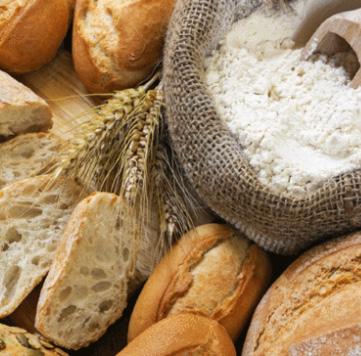
Many of us eat bread on a daily basis. Now, new technologies used within the bread baking process have looked at how breads can be developed with a view to improving blood glucose response.
A new study published in The British Journal of Nutrition has examined how different bread processing techniques, from mixing, proofing and freezing, can alter the glucose and insulin response to bread.
From this work, scientists found that using ‘sourdough fermentation’ instead of the usual leavening process with yeast could help to lower the effect of postprandial insulin response. Further research is now needed.
For more information, see: Stamataki NS et al (2017). British Journal of Nutrition. Vol 117, no 7; pg 1001-12.
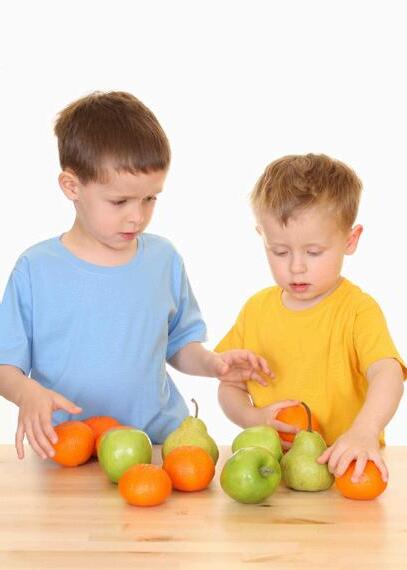
TODDLER FOOD NEEDS WORK
Snack foods amongst toddlers seem to require ongoing innovation and development. Presently, there is an abundance of sweet treats available, with these often being used to ‘treat’, or ‘bribe’ children, or gain the likeability factor. There seems to be some ‘joy’ in giving children unhealthy treats.
It appears that work needs to be done when it comes to what we feed our toddlers as main meals. For example, a new study published in The American Journal of Clinical Nutrition found that 84% of toddler meals and 69% of savoury snacks aimed at toddlers contained high levels of sodium. Furthermore, more than 70% of toddler meals, cereal bars and breakfast pastries, grain or dairy-based desserts contained several sources of added sugar.
So, it seems that more work is needed both when it comes to formulating foods aimed at toddlers and parental awareness of what they are actually feeding their young children.
For more information, see: Maalouf J et al (2017). American Journal of Clinical Nutrition. [Epub ahead of print].
ESTIMATING BODY FAT LEVELS IN CHILDREN AND TEENS
Obesity is an ongoing problem globally especially amongst children and teens. Presently, the most common and basic method for screening is the body mass index (BMI) using weight in kilograms divided by height in metres squared. This is used worldwide to screen whether or not a person is overweight or obese.
During the teenage years weight tends not to be proportionate to height. For these reasons weight-adjusted age and gender ‘BMI z-scores’ have tended to be used, yet the BMI z-score has had its own problems and inaccuracies.
Now, new research published in The Journal of the American Medical Association has introduced as new method known as the ‘triponderal mass index (TMI)’. This is thought to estimate body fat levels in teenagers more accurately than BMI, using the equation weight in kilograms divided by height in metres cubed. The TMI method appears to show promise, especially when used on non-Hispanic white children and teens. Further extended studies on other racial or ethnic groups are now needed to confirm the validity of TMI as universal method. For more information, see: Peterson CM et al (2017). JAMA Pediatr [Epub ahead of print].