REFERENCES: 1. Sampson HA et al. J Pediatr 1991;118(4):520-525. 2. Data on file. Abbott Laboratories Ltd., 2013 (Similac Alimentum case studies). 3. Borschel MW and Baggs GE. T O Nutr J 2015;9:1-4. 4. Koo WWK et al. J Am Coll Nutr 2006;25(2):117-122.
IMPORTANT NOTICE: Breastfeeding is best for babies, and is recommended for as long as possible during infancy. Similac Alimentum is a Food for Special Medical Purposes and should be used under the supervision of a healthcare professional.
Date of preparation: July 2015
SIMILAC ALIMENTUM. FOR BIG LITTLE MOMENTS. THIS IS HUGE
Panel
Chris Rudd, Dietetic Advisor
Neil donnelly, Fellow of the bDA
Ursula Arens, writer, Nutrition & Dietetics
dr Carrie Ruxton, Freelance Dietitian
dr Emma derbyshire, Nutritionist,
Emma Coates, senior Paediatric Dietitian
kaylee Allan, specialist Dietitian, North bristol
kirstine farrer, Consultant Dietitian, salford Royal
dr Isabel skypala, Consultant Allergy
kit kaalund Hansen, Adult Ketogenic
Anne Holdoway,
belinda
Editor Chris Rudd RD
Publishing Director Julieanne Murray
Publishing Editor Lisa Jackson
Publishing Assistant Katie Dawson
Design Heather Dewhurst
Advertisement Sales Richard Mair Tel 01342 824073 richard@networkhealthgroup.co.uk
Address suite 1 Freshfield Hall, the square, Lewes Road, Forest Row, East sussex RH18 5Es
Phone 0845 450 2125 (local call rate) Fax 0844 774 7514
Email info@networkhealthgroup.co.uk www.nHDmag.com www.dieteticJobS.co.uk
fROm THE EdITOR
Welcome to issue 111 and i do hope that the new year has been a happy and healthy one so far.
Many of you may be busy planning for the Nutrition and Hydration week from 14-20 March and I do hope that some of you will be entering into the record breaking world cream tea party on Wednesday 16 March.
2016 for NHD also offers you exciting developments. In a new column from the Parenteral and Enteral Nutrition Group (PENG) of the British Dietetic Association (BDA), Chair, Anne Holdoway shares PENG: because support and influence matter , providing us with an overview of the plethora of projects that are being undertaken by the PENG Committee, Clinical Leads and members.
One of PENG’s resources is the Managing Adult Malnutrition in the Community guide and pathway and that links nicely with another article by Kirstine Farrer that informing us of a pioneering non-medical, non-intrusive tool that is helping health and social care professionals to identify people at risk of malnutrition and signpost them to information and advice. Find out all about it in Malnutrition in the elderly: identifying and signposting with the PaperWeight Armband.
Issue 111 takes us through all the major life stages from pregnancy, infant feeding, adult allergies and into elderly nutrition. We cover obesity too, with Kaylee Allan’s article on Feeding critically ill obese patients which gives us a review of the available evidence and
summarises key points to consider when assessing the nutritional requirements in the critical ill obese. If you are interested in adult food allergy, Dr Isabel Skypala tells us more in Food Allergy in Adults, while keeping with the allergy theme, in our paediatric section we also revisit Infant milk intolerance and allergy: are you sure? by Emma Coates.
Another new section starting in this issue is IMD Watch - in association with the NSPKU. We welcome Kit Kaalund Hansen, the first NHS funded Ketogenic Dietitian for adults with epilepsy in the UK and her article Epilepsy and Ketogenic Diet Therapy: Managing expectations in patients will tell you more.
Finally, as I reflect back over the years, I joined NHD at Issue 41 and have seen the magazine grow and develop over those years. Now is the time for me to say ‘Goodbye’ as I sign off from NHD. I would like to say an enormous thank you to all of you who have accepted my invitation to write for us - there have been seven years of excellent articles.
My thanks also go to the NHD Team for their support. Emma Coates will take over from me from the next issue, so please look out for her invitations to you to write for NHD. I wish you all well and please enjoy our magazine and all the resources on offer for years to come. I feel that I know many of you, so do keep in touch and let me know of all the great work that you are doing.
The NHD Team would like to thank Chris Rudd for all her work, help and advice over the years. Her role as Editor, and Clinical Editor before that, has enabled NHD to forge forward, providing our readers with informative articles from experts in their field and giving the magazine a true dietetic focus. We wish Chris all the best in her retirement.
Chris Rudd NHd Editor
Chris Rudd’s career in continuous dietetic service has spanned 35 years. She is now working part time with the Sheffield PCT Medicines Management Team, as a Dietetic Advisor.
dr Emma derbyshire
Phd RNutr
(Public Health)
Nutritional Insight ltd
FooD FoR THouGHT
In the US, new dietary guidelines are required under the 1990 National Nutrition Monitoring and Related Research Act, which specifies that every five years, the US Departments of Health and Human Services (HHS) and of Agriculture (USDA) must publish a joint report containing nutritional and dietary information and guidelines for the lay public. This report itself must be based on current scientific and medical evidence.
Based on these requirements, the new 2015-2020 Dietary Guidelines for Americans were released this January. These have been developed for policymakers and health professionals and relate to how the general public, aged two years and older, can improve their overall eating patterns.
The guidelines provide five main overarching points developed with the intention of helping to encourage individuals make shifts in their food and beverage patterns. These are to: 1) Follow a healthy eating pattern across the lifespan; 2) Focus on variety, nutrient density, and amount; 3) Limit calories from added sugars and saturated fats and reduce sodium intake; 4) Shift to healthier food and beverage choices, and 5) Support healthy eating patterns for all. Within these, it is also specified that a healthy eating pattern both ‘includes’ and ‘limits’ the inclusion of certain foods. These recommendations are shown below.
A variety of vegetables from all of the subgroups: dark green, red and orange, legumes (beans and peas), starchy, and other. fruits, especially whole fruits. Grains, at least half of which are wholegrains. fat-free or low-fat dairy, including milk, yoghurt, cheese, and/or fortified soy beverages. A variety of protein foods, including seafood, lean meats and poultry, eggs, legumes (beans and peas), and nuts, seeds and soy products. Oils.
saturated fats and trans fats, added sugars, and sodium. key recommendations that are quantitative are provided for several components of the diet that should be limited. These are to: consume less than 10% of calories per day from added sugars; consume less than 10% of calories per day from saturated fats; consume less than 2,300 milligrams (mg) per day of sodium; if alcohol is consumed, consume in moderation - up to one drink per day for women and up to two drinks per day for men and only by adults of legal drinking age.
Overall, most of these guidelines make good common sense. However, we can already see some discrepancies with new UK alcohol guidelines which further advise to spread alcohol intake over three days or more if as much as 14 units per week are being consumed.
Dr Emma Derbyshire is a freelance nutritionist and former senior academic. Her interests include pregnancy and public health.
www.nutritionalinsight.co.uk hello@nutritionalinsight.co.uk
The new report also highlights the need for global consistency when it comes to referring to sugars. We see the term ‘added sugars’ used here, whilst the latest UK Scientific Advisory Committee on Nutrition Carbohydrates and Health report replaces this with ‘free sugars’.
For more information
• US Department of Health and Human Services and US Department of Agriculture (2016). 2015-2020 Dietary Guidelines for Americans. 8th Edition. Available at http://health.gov/dietaryguidelines/2015/guidelines/
• Department of Health (2016). UK Chief Medical Officers’ Alcohol Guidelines Review Summary of the
proposed new guidelines. Available at: www.gov.uk/government/uploads/system/uploads/attachment_data/ file/489795/summary.pdf
• SACN (2015). Carbohydrates and Health. TSO: London https://www.gov.uk/government/uploads/system/ uploads/attachment_data/file/445503/SACN_Carbohydrates_and_Health.pdf
A HEAlTHy EATinG PATTERn incluDES limiTS
lATEST on PREGnAncy
WEiGHT GAin
Excess pregnancy weight gain is a growing problem.
In turn, this has been linked to more challenging deliveries, with more C-sections being required due to the larger birth size of infants. Now, a new systematic review has looked into the role that macronutrients play in this.
After searching eight different scientific databases, 56 articles (46 observational studies and 10 trials) were found, although only 11 (20%) were regarded to be ‘high quality’.
Twelve studies suggested that higher energy intakes could be associated with higher levels of pregnancy weight gain. Some trends were seen for fat, although more work is needed to look into the specific roles of individual types of fat and no trends were found for carbohydrate or protein.
Overall, these findings indicate that energy intakes appear to be associated with levels of pregnancy weight gain, although better quality trials now need to feed into future pooled analyses.
For more information, see: Tielemans MJ et al (2016). Am J Clin Nutr Vol 103, No 1, pg 83-99.
FATTy AciD DiScREPAnciES
A wealth of research has measured levels of fatty acids in relation to disease biomarkers. Now it has come to light that different approaches in doing this affects association patterns.
Using data from two human cohorts, new work examined relationships between blood lipids (TAG, and LDL, HDL or total cholesterol) and circulating fatty acids expressed either as a percentage of total, or as concentration in serum.
Overall, it was found that correlations between stearic acid, linoleic acid, dihomo-γ-linolenic acid, arachidonic acid, docosahexaenoic acid and circulating TAG reversed when fatty acids were expressed as concentrations compared with a percentage of total. This reversal pattern was also seen in blood serum samples from both human cohorts.
In summary, it seems that different methods of expressing fatty acids can lead to dissimilar correlations between blood lipids and certain fatty acids. Worryingly, this study raises important questions about how reversals in association patterns could affect the interpretation of findings from such studies.
For more information, see: Sergeant S et al (2016). Br J Nutr Vol 115, No 2, pg 251-61.
There was much in the public domain last year about sugar, with interest about how to put sugar reduction guidelines into practice. Now, new work has looked into whether we can get used to having less sugar in our diets, in a similar way to how we become used to using less salt.
A sample of healthy adults (n=29) aged 21-54 years were studied for one month and matched across groups for their baseline sugar intake and weight. They were then randomly allocated to: 1) eat a low sugar diet for three months (40% of calories from simple sugars were replaced with fat, protein or complex carbohydrate), or 2) no
change in sugar intake. For the last month of the study they ate as they wished.
Overall, results showed that reducing dietary intakes of simple sugars altered perceived ‘sweet taste intensity’. Interestingly, even when sugar intakes were reduced, perceived ‘pleasantness’ was unaffected. Sweetness variations in beverages, however, were not as well identified.
These results indicate that sugar reduction does appear to influence perceived sweet taste intensity. More work is needed to determine how this may affect long-term consumption habits.
For more information, see: Wise PM et al (2016). Am J Clin Nutr Vol 103, No1, pg 50-60.
GSE FoR HiGH blooD PRESSuRE?
Grape seed extract (GSE) is a rich source of proanthocyanidins (a class of polyphenols with antioxidant properties), but until recently, their potential health benefits has not necessarily been reinforced with scientific evidence. Now, a new study has looked at potential effects on blood pressure.
A 12-week randomised controlled trial allocated 36 middle-aged adults with early stages of hypertension to drink a juice containing 150mg GSE twice daily for six weeks, or a placebo juice (no GSE). This included a two-week placebo run-in period and a four-week no beverage follow-up period.
Results showed that after six weeks, GSE significantly lowered systolic blood pressure by 5.6% and diastolic blood pressure by 4.7%. Unfortunately, blood pressure returned to normal four weeks after the beverage was discontinued. Overall, these results indicate that GSE could help to lower blood pressure in high risk individuals. Further trials are now needed to see if other population groups could also benefit.
For more information, see: Park E et al (2016). Br J Nutr Vol 115, No 2, pg 226-38.
iRon inTAkES oF ToDDlERS
Iron deficiency is common amongst toddlers and children and is regarded as the most common nutritional deficiency worldwide. Now, new work in Australia has measured habitual iron intakes amongst those aged two years and under - a population group that is often overlooked from dietary surveys.
Data from the Melbourne Infant Feeding, Activity and Nutrition Trial Program was analysed from 485 infants (mean age 9.1 months) and 423 toddlers (mean age 19.6 months) and their mums.
Interestingly, mean iron intakes were found to be 9.1mg/day for infants, declining to 6.6mg/ day for toddlers. Subsequently 32.6% of infants and 18.6% of toddlers had inadequate daily iron intakes. The main sources of iron were fortified infant formula and cereals.
This data emphasises the need to support families in helping to maintain and improve children’s iron intakes. The decline in formula use as children get older appears to correlate with the decline in habitual intakes.
For more information, see: Atkins LA et al (2016). Br J Nutr Vol 115, No 2, pg 285-93. imPoRTAnT nEWS FoR
ViTASAVouRyTm 200 Vitaflo® International Ltd wishes to inform you that Vitasavoury 200 has been discontinued from our nutrition support product range. Vitasavoury 300 is available as an alternative in all four flavours.
For more information please contact your local Vitaflo representative or call the nutrition helpline on 0151 702 4937. www.vitaflo.co.uk
mAkinG liFE TASTE GooDWiTH imPRoVED AlTHéRA®
In November 2015, Nestlé Health Science reformulated Althéra®, for the dietary management of mild to moderate cows’ milk allergy. Improved Althéra® has preferred taste and palatability for increased acceptance of the formula. 1
The 100% extensively hydrolysed whey protein source provides a more palatable option compared to casein based eHF.2
• Enhanced level of calcium which is needed for normal growth and development of bone.3
• Contains lactose which significantly increases the absorption of calcium and improves palatability.4,5
• Hypoallergenic for better tolerance - the most extensively hydrolysed formula in the UK.2
• 100% extensively hydrolysed whey protein source facilitates faster gastric emptying.6,7 and provides a more palatable option compared to casein based eHF.2,5
Careline: 0800 0 81 81 80 ROI: 1800 931 832
Email: SMA.Information@uk.nestle.com Website: www.smahcp.co.uk
References: 1. EFsA Journal scientific opinion. 2014. scientific Opinion on the essential composition of infant and follow-on formulae. EFsA Panel on Dietetic Products, Nutrition and Allergies page 40. 2. Abrams sA et al, Am J Clin Nutr. 2002;76(2):442-6. 3. Niggemann b et al. Pediatr Allergy Immunol 2008; 194(4):348-54. 4. Rapp et al. Clin transl Allergy 2013; 3 (suppl 3):132. 5. Fried MD et al. JPediatr 1992; 120:569-572. 6. Khoshoo V et al. Eur J Clin Nutr 2002; 56:656-658. 7. Althéra versus Nutramigen competitive benchmarking test – sweden 2012 (internal data).
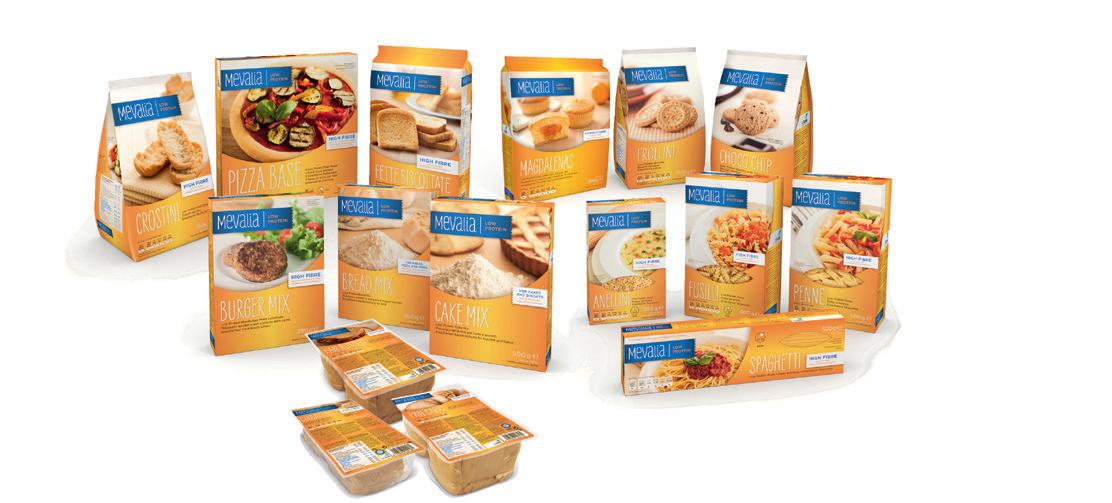
INTRODUCING THE MEVALIA HOME DELIVERY SERVICE
Mevalia and Dialachemist have teamed up to bring you a great home delivery service. Now you can have all of your favourite Mevalia products delivered straight to an address of your choice.
Dialachemist are a Lancashire based, fully General Pharmaceutical Council (GPhC) regulated online pharmacy. We are working with them to bring you this UK based home delivery service.
To register for this service you must speak to your dietitian. They can register you so you can order your favourite Mevalia products whenever you need them. You can find more information about this service on our website: www.mevalia.com
InTRoDuCIng NHD’s nEw EDIToR, EMMA CoATES…
Emma will be taking up the post of NHD Magazine’s Editor from the march issue and here she tells us a bit about her dietetic background and what she hopes for the future of NHD.
It’s great to have you on board Emma. Can you give us a brief outline of your dietetic background? I studied for my BSc (Hons) in Dietetics at Leeds Metropolitan University, graduating in 2006 and was fortunate to find my first job that year, at the Countess of Chester Hospital. For around two and a half years I worked there as a Band 5 Dietitian, completing an excellent rotation through many specialisms, including surgical, cardiology, respiratory, renal, diabetes and my personal dietetic interest, paediatrics.
In 2008, a Band 6 paediatric position opened up at Wrexham Maelor Hospital, part of the Betsi Cadwaladr University Health Board (BCUHB) trust in North Wales, in my hometown. I jumped at the chance and applied. The following six years provided a large and varied paediatric caseload to manage in both the hospital and community setting. Whilst at BCUHB, I embraced many opportunities to develop and expand my skills as a dietitian, including becoming part of the student training team, a BDA trade union representative, writing for NHD Magazine and guest lecturing for the University of Chester.
After eight and half years of working as an NHS dietitian, I moved into industry as metabolic dietitian/ brand manager for Dr Schar - Mevalia Low Protein. This is an exciting and challenging role where I manage the low protein brand for the company in the UK. My first year there been extraordinary, developing so many new skills and expanding my knowledge greatly. I have no doubt that this next year with the company will bring even more opportunities to grow as a dietitian.
What are the hot topics in dietetics at present? Depending on your specialism, anything can be a hot topic! However, the nutritional challenges at either end of the life span are always talking points. Getting the best nutritional start in life is vital, as seen by the evidence from the www.thousanddays.org campaign. In contrast, the management of elderly care nutrition is a key issue to discuss, as the ageing population is ever increasing. Keeping our nation healthy is always a source of great debate, whether
it’s related to malnutrition (under nutrition) or the obesity/metabolic syndrome crisis. Amongst these discussions, there’s always the nitty gritty of how dietetics can offer efficient, effective, safe and value-for-money services. In the future, I see further developments in the use of ketogenic diets and possibly the role of nutrigenomics.
How do you see the NHD community supporting healthcare professionals in the field of nutrition and dietetics?
Over the years, NHD has been a great provider of current and relevant articles for the nutrition and dietetics community. Keeping abreast of hot topics and moving with the current trends, NHD is a good tool for topping up on the most recent information, research and guidelines in all things nutrition and dietetics. It provides an easy way for dietitians and nutritionists to complete some CPD, learn something new, or just reinforce their current knowledge. Now, with excellent regular columns from contributors such as PENG and the NSPKU (IMD watch), as well as the great quality and variety of individual contributors we have, CPD has never been so easy or enjoyable!
What’s your vision for NHD as you take over the role of Editor?
I am keen for all of the magazine’s current accolades to continue, but also to welcome new contributors, giving more dietitians, nutritionists and other healthcare professionals an opportunity to develop their skills as writers and share their information, experiences and best practice. If you have an interest in writing for NHD, please email info@networkhealthgroup.co.uk. We would love to hear from you.
Expanding our readership is important for me. Opening up NHD to students, dietetic assistants/technicians and nutritionists will hopefully encourage a new group of readers to enjoy all that NHD has to offer. Interaction with our readers is important; creating discussion and gaining feedback is key to the magazine’s ongoing success.