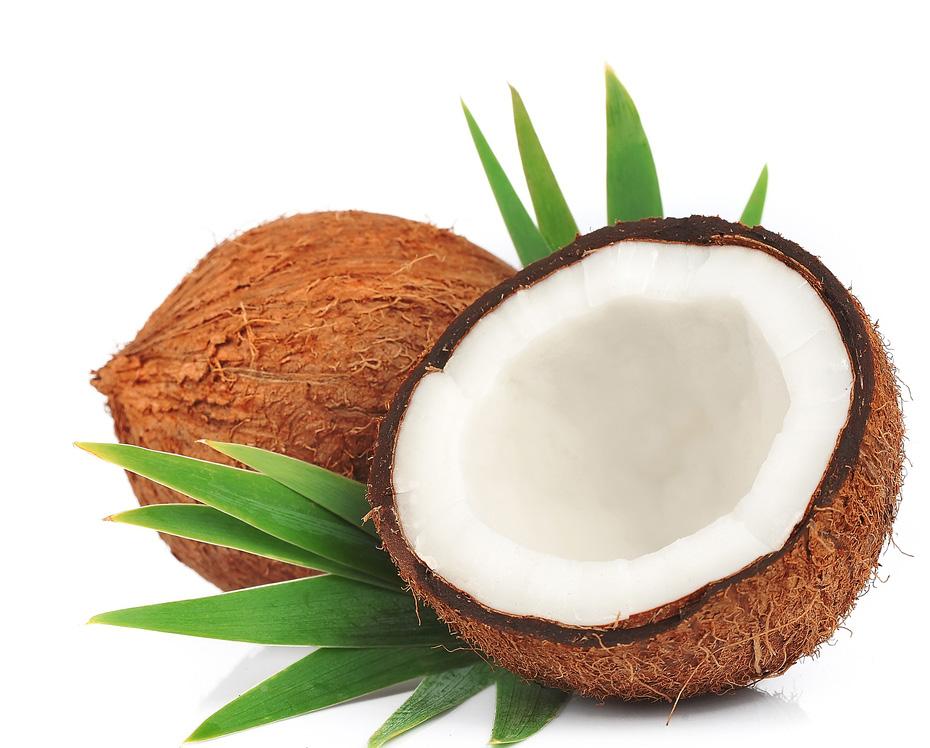
THE NUTRITIONAL VALUE OF COCONUT FOOD
Coconut Oil has been immensely popular over the past year and the coconut trend is set to increase with new coconut products flooding the market. Clean eaters love it; it has been a hit on the paleo diet, it is gluten-free and vegan friendly. So, as nutrition professionals it is important that we have our coconut facts straight.
Being half-Sri Lankan, I have grown up with coconut products being used in cooking and even have a coconut plantation in my family. So I know just what an amazing plant the coconut tree is. It helps restore damaged soil and, despite its size, needs very little water. You can use 100% of the coconut for food and then use the shell as a bowl!
fat containing 92% saturates, this is more than butter or lard. Just two tablespoons provide 20g saturates, the recommended amount for a woman for a day. Its smoke point of 170ºC is due to a high level of saturated fatty acids which makes it resistant to oxidation, and thus is suitable for frying.
TYPES OF COCONUT OIL
For full article references please email info@ networkhealth group.co.uk
Coconut is a highly nutritious food, it provides indigenous people on traditional diets with a rich source of micronutrients. But is it a food that we need to be eating more of in the Western diet?
WHAT IS COCONUT OIL?
A solid fat at room temperature, coconut oil is a highly saturated
Virgin coconut oil is prepared from fresh coconut flesh without drying or processing. The antioxidants and polyphenols are high, equivalent to virgin olive oil and the concentration of medium chain triglycerides (MCTs) are higher than in refined coconut oils.1
Refined coconut oil is extracted from the coconut kernel and processed via
Table 1: Nutrition in coconut flesh
Per 100g coconut meat
heat, bleaching and deodorizing. Hydrogenated coconut oil is used in biscuits and confectionery. It has a higher melting point and does not contain any trans fatty acids due to the processing of it which converts the few unsaturated fats into saturates, making it pretty much 100% saturated fat.
THE SATURATED FAT DEBATE
The big debate has been over the saturated fat content. The principle fatty acid in coconut oil is lauric acid (C12:0). Frequently, lauric acid is referred to as a medium chain fatty acid. If this were the case, it would appear beneficial as MCTs are more water soluble than their longer chain version, so are absorbed faster and do not have the same effect on cholesterol levels. However, MCTs are defined as C8:0-C10:0; the marked difference in solubility occurs at chain lengths >10. When we look at the actions of lauric acid, it acts like the LCFA it is.
Lauric acid does affect blood cholesterol and lipid levels. A large cohort study by Hu and colleagues found that over 14 years of follow-up, lauric acid led to an increased risk of heart disease.2 A meta-analysis on 60 trials3 found lauric acid increased total cholesterol but also increased HDL levels. This may suggest a protective effect on coronary heart disease, but the reality appears to be more complex. The debate is over whether it is good
quality HDL or non-functional HDL (which does nothing for heart disease risk). Looking at how other studies show lauric acid increases the risk of heart disease,4 it is likely that the non-functional HDL is being increased.
Therefore, the evidence currently suggest that coconut oil is a risk factor for heart disease and should only be used in small quantities.
COCONUT WATER
This is the aqueous part of the coconut endosperm, the liquid inside rather than the milk that is extracted from the coconut meat. It is used as a rehydration aid in tropical countries and there has been interest in using is as a sports rehydration drink. Containing B vitamins, C, calcium, magnesium and potassium, it is nutritious and so could be a good replacement for soft drinks. Remember that it also contains some calories (19kcals/100ml) that will add up if drunk regularly.
Containing 3.7-4.8g carbohydrate per 100ml, it is lower in sugars and salt than a sport drink. Small scale studies show that there is little difference between using a sports drink, water and coconut water for performance and rehydration. One recent study suggests that the taste of coconut water led to less being drunk, making it less popular for maintaining hydration in exercise.5
For the average exerciser, there are no benefits over drinking water and it may be harder to drink enough of it. A glass of water plus a banana would be cheaper and contain more potassium than a glass of coconut water.
COCONUT FLOUR
Coconut flour is an interesting addition to the alternative flour and gluten-free flour section. It
Table 2: Culinary oils
Table 3: Coconut sugar nutrition
can be quite dry, so needs more liquid added with it for recipes. Nutritionally it has a good profile as per 100g it provides 320kcals, 19g protein, 12g fat, 9g sugar, 9g carbohydrates plus some iron. It is high in fibre, protein and fat, which lowers the glycaemic index. It is good for flavour and nutritional quality, but expensive and higher in fat; this will likely be popular in new grain-free products and can make a nice variation when mixed with other flours.
COCONUT SUGAR
Coconut Palm sugar is made from the sap of the coconut tree rather than from the actual nut. It is more nutritious than standard table sugar, containing iron, zinc, calcium, potassium, phosphorus, magnesium, polyphenols, fatty acids and inulin. However, you won’t find many of these nutrients in a couple of tablespoons worth. The inulin is the interesting feature as this slows down the absorption rates, so making it lower in GI (35 vs 60 for sucrose). Coconut sugar could be useful as a sugar swap for some people, but not for those wanting to cut down their overall sugar intake.
COCONUT MILK
This has traditionally been used in curries and cooking for years. Now available to buy in cartons, it is becoming a substitute for cows’ milk. However, a comparison shows you that it is lower in protein: 0.2g/100g vs 3g/100g cows’ milk. It is not suitable as a swap for cows’ milk, breastmilk or formula milk for children, or as
the sole milk drink until age two years. It does contain iron, but don’t forget the saturated fat content. Naturally coconut milk lacks calcium and vitamin D, but these are added into some versions.
Other health claims on coconut products are unproven, or have very little evidence. For example, there is one small scale open study6 that showed a significant reduction in waist circumference with coconut oil, but this is not a proven weight loss method! There are a myriad of claims suggesting that it can help, from Alzheimer’s to cancers, but few of these claims are backed up by robust scientific evidence. Often the evidence has been extrapolated. Studies conducted on animals or small scale human studies have then been used as the basis for a claim, but actually this is misleading. So in a coconut-nutshell be wary about the generalised claims that you see described and check the evidence base first.
SUMMARY
The coconut is a very nutritious fruit. It contains fibre, vitamin C and E, B vitamins, iron, selenium, Na, calcium, Mg, phosphorus and potassium. Being lactose-free and gluten-free and suitable for vegans, there are wide ranging applications for some of the products. The sugar could be useful for those with diabetes and the fibre content of the flour is a great option too. However, coconut oil itself is something to use sparingly. All coconut products contain saturated fat that is a risk for heart health.
Table 4: Coconut products and their nutrition