
FROM HOLDING BACK... ...TO




Naomi Johnson Scientific and Regulatory Manager at the British Specialist Nutrition Association
Naomi has a First Class Honours degree in Nutritional Science and an MSc in Public Health Nutrition. She has worked in the nutrition industry for several years. www.bsna.co.uk
ELDERLY CARE HOMES: HYDRATION AND MALNUTRITION
IN ASSOCIATION WITH THE BSNA
Good nutrition is important all through life, but never more so than in old age, when a healthy diet is a vital part of any strategy to help older people stay active, disease-free and independent.
NETWORK HEALTH DIGEST
November 2016: Issue 119
Aging can itself have a large and adverse impact on nutritional status, exacerbating the decline in physiological and psychological functions that occur in later life. Fluid balance alterations can commonly occur in the elderly, leading to a risk of dehydration.1
Malnutrition (which can be both a cause and effect of ill health) and inadequate dietary and fluid intake in old age is a significant risk, which can result in numerous ailments, such as decreased muscle mass, reduced cognitive function, delayed wound healing, constipation, dizziness and increased risk of falls, increased hospital admissions and readmissions and increased mortality.2,3,4 Yet, all too often, malnutrition and dehydration are not recognised, let alone considered a serious and very common problem. Insufficient access to water, poor support with eating and drinking and lack of available oral nutritional supplements (ONS) are unacceptable occurrences that can play a role in the development of malnutrition.5
The National Screening Week (NSW) surveys of UK care settings provide a countywide picture on malnutrition prevalence during 2007 to 2011.6 These surveys included analysis of 474 care homes, which showed that 82-92% had policies for nutritional screening and 91-99% for weighing and recording weight on admission; moreover, 91-96% reported

linking the results to a care plan.6 While these results paint a positive picture, malnutrition is a substantial and ever-growing issue. Estimates suggest that malnutrition affects three million people in the UK,7 with 1.3 million of these being over 65 years of age.
The Magazine for Dietitians, Nutritionists and Healthcare Professionals NHDmag.com
Research shows that 35% of those ≥70 years of age who have recently moved into a care home (within the last six months) are malnourished or are at risk of malnutrition (a figure which is consistent across the UK, although was found to be more prevalent in older residents and in women [38%] compared to men [30%]). In a 2012 Care Quality Commission (CQC) Dignity and Nutrition Inspection, one in six care homes showed a failure to support patients in consuming sufficient amounts of food and fluid8 and, in 2017, it is concerning to note that some care homes are still not meeting the requirements for nutrition and hydration. Research published in 2015 by the Journal of the Royal Society of Medicine, analysed acute admissions in 21,510 patients aged >65 years old; patients admitted from care homes had a 10-fold higher prevalence of dehydration than ‘own home’ admissions.9
EATING DISORDERS
Care home staff should be able to clearly identify signs of malnutrition and dehydration. However, misconceptions still exist even on the definition of ‘malnutrition’; for some elderly patients who present as obese,
NICE has calculated that the delivery of better nutritional care could be the sixth largest potential cost saving available to the NHS.
malnutrition may also be present. Older people, carers and families must be fully informed, supported and educated on the importance of preventing and managing malnutrition. Anyone working with patients must have a clear understanding of nutritional care and be appropriately trained and competent to understand the causes, consequences and signs of malnutrition.
Screening for malnutrition should take place on admission, or where there is a clinical concern, using the Malnutrition Universal Screening Tool (‘MUST’), the use of which is becoming much more prevalent. The NSW surveys showed awareness of the existence of weight scale standards in only 55% of respondents, whilst 73% undertook audits on nutritional screening.6 Greater awareness is also needed of those patients who may require higher levels of support, i.e. in elderly patients where issues such as dysphagia and dementia may be present.
FINANCIAL IMPACT
While the human cost of malnutrition can be great, so too can the financial impact, as costs continue to rise and become increasingly more exacerbated by an ever-aging population. The cost of managing care home residents diagnosed with malnutrition has been shown to be twice that of screening and monitoring the general care home population.10 The health and social expenditure of disease-related malnutrition is estimated to be £19.6 billion per year in England alone.11 NICE has calculated that the delivery of better nutritional care could be the sixth largest potential cost saving available to the NHS.12
The recent report from the British Association for Parenteral and Enteral Nutrition (BAPEN) and the National Institute for Health Research Southampton Biomedical Research Centre (NIHR), states that it costs three times more NOT to treat or manage a malnourished patient compared to one without malnutrition, equating to £5,329 per patient.11 It also found that implementing NICE
Date of preparation: February 2017
HELPING YOU TO UNWRAP THEIR POSSIBILITIES
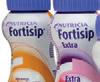
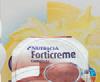
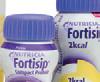
You can support your patients’ recovery by choosing the Fortisip range of oral nutritional supplements and help get them back to cooking up a storm


























Nutritional Support - integral to the continuum of care
Clinical Guidance CG32 and Quality Standard QS24 in 85% of patients at medium and high risk of malnutrition would lead to a net saving of £172.2 to £229.2 million, which equates to £324,800 to £432,300 per 100,000 people.
WHAT STANDARDS AND GUIDANCE ARE IN PLACE?
Following and implementing recognised guidance provides a suitable strategy to combating malnutrition within care homes. NICE’s QS24 and CG32 and the Managing Adult Malnutrition in the Community Pathway13 help support healthcare providers to follow the recommended approach to the management of disease-related malnutrition, as outlined in NHS England’s Commissioning Excellent Nutrition and Hydration (2015-2018).14,15,16 These standards and guidance recommend that all care services take responsibility for the identification of people at risk of malnutrition and provide nutrition support for everyone who needs it.
Nutritional care provision across all care settings must be multidisciplinary, with everyone having a part to play in ensuring that people receive timely nutrition support whatever that may be, from advice on eating well and food fortification, to needing a prescribable nutritional supplement. It is important that care givers are made aware of the tools available to them. However, it seems that awareness of them is often low.
ORAL NUTRITIONAL SUPPLEMENTS IN THE CARE HOME SETTING
Care home teams need to establish key questions, such as: What is the prevalence of malnutrition? Are care plans in place (and, if so, are they actually being followed)? Are those residents who would benefit from ONS both receiving them, and drinking them? Care providers should refer to the Pathway for using ONS in the management of malnutrition to identify and manage individuals at risk of disease-related malnutrition and appropriate ONS use.13
ONS should be prescribed and used when needed and will typically be used in addition to the normal diet, when diet alone is insufficient to meet daily nutritional requirements and offer a clinically and cost effective way to manage malnutrition.17,18,19 When ONS are used for three months or more amongst malnourished patients in care homes and the community, the median cost saving is 5%, as well as improved clinical outcomes, such as improved quality of life, reduced infections, reduced postoperative complications, fewer pressure ulcers, fewer falls and better wound healing.15,19,20,21 Metaanalysis of trials shows that provision of nutritional supplements to malnourished patients reduced wound breakdown by 70% and mortality by 40%.22
THE POTENTIAL IMPACT OF RECENT RESTRICTIONS OF ONS
Despite the benefits associated with ONS in sub-groups of the population, some Clinical Commissioning Groups (CCGs) have introduced
THE MALNUTRITION TASK FORCE HAS DEVISED FIVE BEST PRACTICE PRINCIPLES TO HELP ADDRESS MALNUTRITION:5
1 Raising awareness among residents, relatives and staff to support prevention and early treatment of malnutrition.
2 Working together within the care home and with external members such as relatives, GPs, therapists, and across other care homes.
3 Identifying malnutrition early. Screening and regular assessment must be carried out to establish residents’ nutritional needs.
4 Delivering personalised care, support and treatment.
5 Monitoring and evaluating residents’ weight, improvements and outcomes.
Small but mighty
The only high energy* shot with added protein and 36% RNI# of vitamins and minerals …in just 3 shots per day
Kcal 160 Protein 2g PER 40ML SHOT Added Vits & Mins


Convenient 40ml shots. Recommended daily dose just 3 shots per day. *Containing ≥3kcal/ml #RNI for males >50 years (except
restrictions to prescriptions. Since the end of 2015, some GPs in certain geographical areas have not been able to prescribe ONS (sip feeds) for the majority of residents in catered care and nursing homes, although this policy does not include residents fed via a percutaneous endoscopic gastrostomy tube (PEG tube).
Such restrictions to ONS arise as commissioners try to work within increasingly stringent budgets. These policies are misguided and although well intentioned, both fly in the face of the existing evidence and fail to consider long-term outcomes. The Managing Adult Malnutrition in the Community Pathway13 clearly indicates that ONS should be used in combination with food as part of the management of malnutrition; this is also referenced in the recently launched NHS England Commissioning Excellent Nutrition and Hydration (2015-18).16 Any restrictions to nutrition and hydration standards will
References
necessitate much more stringent monitoring and evaluation within care homes in the months and years to come.
CONCLUSION
Nutritional initiatives and publication of numerous standards, including NICE guidance, play a crucial role in tackling malnutrition; however, the aforementioned figures highlight that there is a lot more still to be done and sadly guidance and standards are frequently ignored in practice. Education, training and support of care givers is crucial and goes hand-in-hand with raising awareness and ensuring that the necessary resources are available. Improved efforts across the board to prevent malnutrition and treat it earlier can potentially have major effects in reducing its clinical and economic burden. It is important that we all work together to make a real difference in nutritional care.
1 Mentes J (2006). Oral hydration in older adults: Greater awareness is needed in preventing, recognising, and treating dehydration. Am J Nursing 106(6): 40-49
2 Ahmed T and Haboubi N (2010). Assessment and management of nutrition in older people and its importance to health. Clinical Interventions in Aging 5:207
3 Stratton RJ, Hackston A, Longmore D et al (2004). Malnutrition in hospital outpatients and inpatients; prevalence, concurrent validity and ease of use of the ‘Malnutrition Universal Screening Tool (MUST) for adults. British Journal of Nutrition
4 Hiesmayr M, Schindler K, Pernicka E et al (2009). Decreased food intake is a risk factor for mortality in hospitalised patients: The Nutrition Day Survey
2006. Clinical Nutrition 28: 484-491
5 Malnutrition Task Force (2013). Malnutrition in Later Life: Prevention and Early Intervention. www.malnutritiontaskforce.org.uk/wp-content/ uploads/2014/07/CH-Prevention_Early_Intervention_Of_Malnutrition_in_Later_Life_Care_Home.pdf
6 Russell CA and Elia M. Nutrition screening surveys in care homes in the UK: A report based on the amalgamated data from the four Nutrition Screening Week surveys undertaken by BAPEN in 2007, 2008, 2010 and 2011
7 Elia M, BAPEN/NIHR. The cost of malnutrition in England and potential cost savings from nutritional interventions, 2015
8 Care Quality Commission. Time to listen: In care homes. Dignity and nutrition inspection programme 2012 www.cqc.org.uk/sites/default/files/documents/ time_to_listen_-_care_homes_summary_tag.pdf
9 Wolff A, Stuckler D and McKee M et al (2015). Are patients admitted from care homes dehydrated? A retrospective analysis of hypernatraemia and in-
hospital mortality J R Soc Med 108(7) 259-65
10 Meijers JMM, Halfens RJG, Wilson L et al (2012). Estimating the costs associated with malnutrition in Dutch nursing homes. Clinical Nutrition 31(1): 65-68
11 Elia M, BAPEN/NIHR. The cost of malnutrition in England and potential cost savings from nutritional interventions, 2015
12 NICE. Cost Savings Guidance 2015
13 Managing Adult Malnutrition in the Community: Including a pathway for the appropriate use of oral nutritional supplements (ONS). Produced by a multiprofessional consensus panel (2012). http://malnutritionpathway.co.uk/downloads/Managing_Malnutrition.pdf
14 National Institute for Health and Care Excellence (NICE) (2012). Nutrition Support in adults. nice.org.uk/guidance/qs24
15 National Institute for Health and Care Excellence (NICE) (2006). Nutritional support for adults: oral nutrition support, enteral tube feeding and parenteral nutrition. www.nice.org.uk/guidance/cg32
16 NHS England. Guidance - Commissioning Excellent Nutrition and Hydration 2015-2018. www.england.nhs.uk/wp-content/uploads/2015/10/nut-hydguid.pdf
17 Managing Adult Malnutrition in the Community: Including a pathway for the appropriate use of oral nutritional supplements (ONS). Produced by a multiprofessional consensus panel (2012). http://malnutritionpathway.co.uk/downloads/Managing_Malnutrition.pdf
18 Elia M, Stratton R, Russell C et al (2005). The cost of disease related malnutrition in the UK and economic considerations for the use of oral nutritional supplements (ONS) in adults. A report by BAPEN. www.bapen.org.uk/pdfs/health_econ_exec_sum.pdf
19 Stratton RJ and Elia M (2007). A review of reviews: A new look at the evidence for oral nutritional supplements in clinical practice. Clinical Nutritional Supplements 2:5-23
20 Cawood AL, Elia M, Stratton RJ (2012). Systematic review and meta-analysis of the effects of high protein oral nutritional supplements. Ageing Research Reviews 11(2): 278-296
21 Elia M et al. A systematic review of the cost and cost effectiveness of using standard oral nutritional supplements in community and care home settings Clin Nutr 2016 35 (1); 125-37
22 Stratton RJ, Green C and Elia M (2003). Disease-related malnutrition; an evidence-based approach to treatment. Oxford: CABI