
















For Dr. Kirk Herrmann, veterinary medicine was a lifelong dream. His passion for animals shaped the path that led him to specialize in veterinary dentistry and oral surgery, where he now helps pets live healthier, more comfortable lives every day.
“What inspires me most is witnessing the transformation in pets after treatment,” says Dr. Herrmann. “When chronic oral pain is relieved, you can see the difference immediately.”
As a board-certified Diplomate of the American Veterinary Dental College, Dr. Herrmann combines advanced surgical expertise with a compassionate, patient-focused approach.
Originally from Bucks County, Dr. Herrmann graduated from Delaware Valley College before earning his Doctor of Veterinary Medicine degree from the University of Florida College of Veterinary Medicine in 2016. After completing a rotating internship at the Veterinary Specialty Center of Delaware, he pursued advanced specialty training through a residency in Dentistry and Oral Surgery in Gaithersburg, Maryland and achieved board certification in 2022.
Today, Dr. Herrmann is proud to work alongside the dedicated team at VDS to provide exceptional specialty care and life-changing treatment for pets throughout the region. When he’s not in the clinic, Dr. Herrmann enjoys spending time outdoors with his dog, Yams, and making memories with his large extended family.
Subscriptions:
The Keystone Veterinarian is mailed to PVMA Members at no charge as a member benefit. Subscriptions are available to non-members for $30/year or $10 for a single issue. Please contact Membership@PaVMA.org if you’re interested in receiving the Keystone Veterinarian magazine.
Neither this publication, Hoffmann Publishing, nor PVMA assumes responsibility for material contained in articles and advertisements published, nor does publication necessarily constitute endorsement or approval of the advertiser, product, service or author viewpoint by the Keystone Veterinarian, its editors and publishers or the Pennsylvania Veterinary Medical Association. In addition, neither this publication nor PVMA guarantees the accuracy, reliability or completeness of any facts, views, opinions, recommendations, information or statements contained within this publication.
Reproduction in whole or in part is prohibited without the permission of the Pennsylvania Veterinary Medical Association.
The Pennsylvania Veterinary Medical Association is dedicated to ensuring the vitality of the veterinary profession by promoting excellence in veterinary medicine, advancing animal health and welfare, and protecting and enhancing human health. PO Box 468, Elizabethtown, PA 17022 717.220.1437 | Info@PaVMA.org | PaVMA.org
EXECUTIVE COMMITTEE
President: Andrea Honigmann, DVM
President-Elect: Jeffrey Dill, DVM
Vice President: Andrea Carr, DVM
Past-President: Rhett Proctor, DVM
Secretary/Treasurer: Thomas Munkittrick, DVM
32 Buck With Broken Back Comes With a Price
35 In Memoriam: Dr. Max Anthony Van Buskirk, Jr.
36 Classified Ads
BOARD OF TRUSTEES
Western Region Trustee: Erin Johnson, DVM
Metro Philadelphia Region Trustee: Jill Stetz, VMD
North Central Region Trustee: Jim Zeliff, DVM
South Central Region Trustee: Stephen Foulke, DVM
Equine Veterinarian At-Large: James Holt, VMD
Production Animal Veterinarian At-Large: William Croushore, DVM
Academic Veterinarian At-Large: Dana Bubka, VMD
Certified Veterinary Technician At-Large: Alyssa Killian, CVT
AVMA Delegate: Tina Dougherty, VMD
AVMA Alternate Delegate: Kate Boatright, VMD
Student At-Large: Christian Nase


Andrea Honigmann, DVM 2025-2026 PVMA President Scientific Committee Chair
In Pennsylvania, winter can be incredibly varied—from mild weather with very little snow to bitter cold and seemingly endless back-to-back snowfalls from December through March. As I write this, it’s not quite spring yet, but I would definitely categorize this winter as the latter—and I am quite tired of it. I am more than ready to welcome spring…and baseball season.
Speaking of baseball, being from western Pennsylvania means it has been a long time since we have seen the Pittsburgh Pirates make it into the playoffs. Though I’m not a Pittsburgh native, I’ve definitely adopted them as my “home team” after living in this area for 20 years. The last time the Pirates made the playoffs was 2015. Now, entering the 2026 season, those who have truly stuck with the team will tell you we’re playing the “long game,” holding onto hope that this will be the year. Ace pitching, some new bats to help score runs, and a new manager—on paper, all the ingredients for a playoff run. That is the theory, anyway. By the time the next President’s Message rolls around, we will see how that theory is playing out.
Fortunately, advances in veterinary medicine move much faster than a baseball rebuild. New developments are often introduced to the veterinary community around major continuing education events such as Veterinary Meeting & Expo (VMX), Western Veterinary Conference (WVC), and meetings hosted by the American Veterinary Medical Association (AVMA). Can you imagine knowing something better for itch was on the horizon—but having to wait 11 years before offering it to your patients and their pet parents? I don’t think any of us could hold onto hope that long, even if die-hard Pirates fans can!
Many of us remember when Apoquel first came onto the market. The veterinary community was so impressed by this new class of drug that Zoetis could barely keep it in stock. While shortages can certainly be frustrating, it’s also a good problem to have when advances are so meaningful that everyone wants them in their practice. Being an early adopter allows us to bring the latest diagnostics and therapeutics to the heart of what we do—caring for the pets (and for my large-animal colleagues, the livestock) that depend on us.
In recent years, one of the most exciting developments for me as a small animal practitioner has been the introduction of monoclonal antibody therapies targeting nerve growth factor in dogs and cats. Two widely recognized examples are Librela and Solensia from Zoetis. First introduced in the European Union, both have shown significant benefits for pets suffering from osteoarthritis. While discussions about safety and monitoring continue, having this added option for pain management is something we did not have just five years ago.
continued on next page >
continued from page 5
Research in this space continues to move forward. Two longer-acting monoclonal antibody options, designed to last three months, are currently approved in the EU and Canada: Relfovetmab for cats and Izenivetmab for dogs. In late 2025, Zoetis received a positive opinion for the feline product that will be marketed as Portela® (relfovetmab). Pre-market research suggests it is well tolerated in cats, including those with IRIS stages 1–3 kidney disease. If brought to market in the United States, this could represent a major win for feline medicine, as so many of our feline patients present with comorbidities, most commonly renal disease. The comparable canine therapy currently prescribed in Canada and the EU is called Lenivia®. In the past, approvals in Europe and Canada have preceded U.S. approval by just over a year, so we may see these injectable options here before the end of 2026, though there is no confirmation of this currently.
Along similar lines, I can’t skip mentioning the parvovirus monoclonal antibody, TrufectTM from Elanco. While I’m thankful not to be practicing in an emergency setting or a geographic hot spot where parvovirus cases are more common, I have had the opportunity to use this therapy in practice, and it truly is a gamechanger. Earlier in my career, a diagnosis of parvovirus often came with a guarded to poor prognosis. Delivering that news to owners was never easy, particularly when treatment required intensive 24/7 care that could cost thousands of dollars.
For many families, that level of care simply was not feasible, and we did the best we could with outpatient management. Today, with TrutectTM, we can offer a treatment option that dramatically improves the prognosis when this devastating virus is diagnosed. It is another example of how advances in veterinary medicine can be life-changing—not only for the pets we treat, but also for the people who love them.
As someone who has always enjoyed integrating technology into veterinary medicine, I have also found the rise of artificial intelligence (AI) tools in practice to be revolutionary. I suspect we will see even broader applications of AI in the coming years as new tools continue to emerge. One application I now use every day is an AI-assisted medical record tool. After trying several options, much like Goldilocks searching for the one that
was “just right,” I settled on VetRec. While I talk through an exam with a client in natural conversation, the app listens in the background. When the visit is finished, one click generates a medical record from the discussion within about a minute. After minimal editing, the record is ready—saving valuable time throughout the day.
Another promising use of AI is in diagnostics. VISTA iQ is a handheld device designed to assist in the early detection of cancer in dogs. Using artificial intelligence combined with Heat Diffusion Imaging (HDI), the device analyzes lumps and bumps to assess the likelihood that they are cancerous. The scan takes about 40 seconds during a routine visit and is completely non-invasive. This technology can help guide our next steps, indicating whether additional diagnostics, such as a biopsy or fine-needle aspirate, are warranted. There have certainly been times when we’ve examined a lump and advised an owner to simply “watch it.” Unfortunately, watching and waiting can sometimes delay diagnosis and treatment. Innovations like this have the potential to make cancer screening faster, more accessible, and less stressful for our patients, while helping practitioners make quicker and more informed clinical decisions.
In baseball, fans often talk about patience and rebuilding— waiting season after season for the right pieces to come together. Thankfully, veterinary medicine rarely moves that slowly. The advances we are seeing in therapeutics, diagnostics, and technology are arriving faster than ever, allowing us to improve the care we provide year after year. And unlike a baseball season, where success is measured in wins and losses, the victories we experience in veterinary medicine happen every day—in healthier pets, empowered clinicians, and grateful families. Those are wins worth celebrating in any season!

PA: Central - New!!! Established, small animal hospital closely located to I-99 which makes it an easy commute to Altoona, State College, Hollidaysburg and on to Pittsburgh and DCBaltimore The practice is housed in a 2,000 sq ft facility that has been well-maintained and is wellequipped. The owner is ready to retire so both the practice and real estate are for sale. (PA435)
PA: Southern - Established, small animal practice located in southern Chester County, PA near the PA-MD border It is housed in an attractive, freestanding, leased facility that has a very good location with excellent visibilty and easy access The owner is ready to retire, so the practice is for sale. The landlord will provide a new long term lease to help the practice going forward. (PA437)
PA: Central - Small animal practice located in the vibrant and growing area of Carlisle with easy access to Harrisburg, Mechanicsburg, Gettysburg and on south to Baltimore and Washington, DC The practice is housed in a 4,800 sq ft facility that is well-equipped and has room for future growth Both the practice and real estate are for sale (PA520)
MD: Northeast - Small animal hospital for sale in northeast Maryland - you can live in MD, PA or DE! The practice is financially healthy with a good cash flow to the owner. It is housed in an attractive, freestanding facility that has been well-maintained and is will equipped. The practice sits on a 1-acre lot so there is room for future expansion Both the practice and real estate are for sale The owner is open to staying part time (MD526) Let’s Talk
OH: Northeast - This is a healthy and growing, companion animal practice located in northeast Ohio - it is just a short hop to Lake Erie, the Celveland area and northeast to Erie, PA. The hospital is financially healthy with terrific cash flow to the owner. It has a balanced work-life schedule and maintains revenues over $1M It is housed in a 4,000 sq ft facility with 4 exam rooms, a large treatment area, with plenty of room for future expansion Both the practice and real estate are for sale (OH521)

By Todd A. Jackson, DVM, DACLAM

This series of articles depicts funny, tragic, terrifying, or otherwise memorable anecdotes from veterinary careers. Some of them might be mine, and some might belong to other people. I’m not telling. In all cases, the names have been changed to protect the innocent and the comically guilty.
Some are completely true, but at minimum, every story has a grain of truth. For those who haven’t been in veterinary medicine long enough to remember when the best available drug to treat arthritis in dogs was aspirin (available in 5-grain tablets), a grain is an obsolete unit based on the mass of an ideal seed. In the Apothecaries’ system, it is equal to 64.79891 milligrams. So, maybe not much, but there is some truth in there.
There’s an adage in show business warning actors never to work with animals or children. I’m not saying veterinary medicine is show business—we use scientific resources to make evidence-based decisions about what to recommend for our patients. That said, there is still a touch of show business in how our professional image gives clients more confidence in our advice.
Obviously, as a veterinarian, I have no problem working with animals. When we use low stress handling techniques, most patients cause no trouble when we are giving injections, doing rectal exams, or just causing general discomfort with all our poking and prodding. For the most dangerous and fractious of our patients, we can use squeeze chutes, muzzles, halters, rabies poles, casting ropes, hog snares, stocks, “tail jacking,” and dart guns with sedatives and anesthetics. Try using one of those on a child—even one who desperately deserves it—and you’ll probably see the inside of a prison cell.
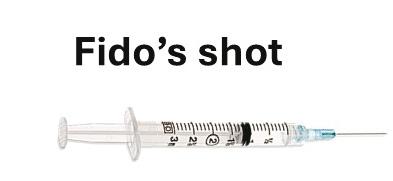
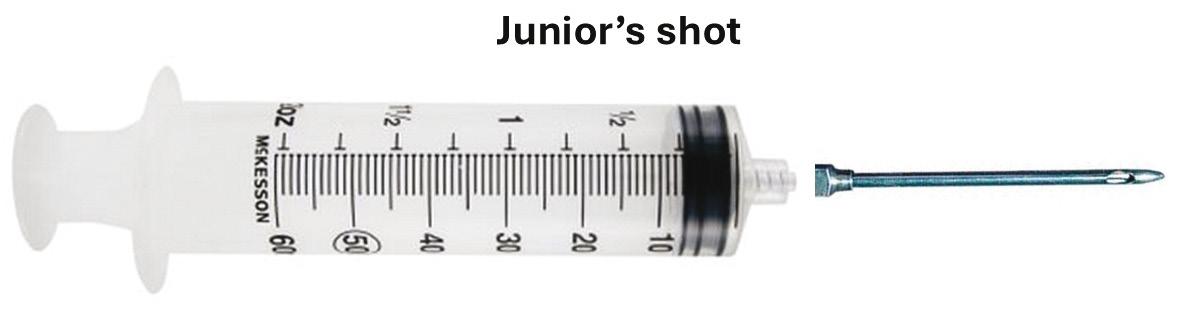
At the mixed-animal clinic that employed me right out of veterinary school, we kept one tool in each exam room for misbehaving brats. You know, the ones bouncing off walls, making excessive noise, and getting in our way while ignoring their parents’ pleas to settle down. In a drawer next to each exam room sink, we kept a 60cc syringe connected to a bovine teat cannula. We would wave around the 3ml syringes ready with pet vaccinations under the little imps’ noses and then pull the cartoonishly large syringe out of the drawer
while asking if the unruly child also needed a shot. It didn’t always work, but most kids would stop and stare at the huge syringe while quietly wondering if we were serious. That gave us enough time to finish the appointment and hustle the family back out into the waiting area, where the underage demons became our receptionist’s problem again. Nowadays, people might sue for emotionally traumatizing their child, but back in the early ‘90s, the parents usually said to stick it in their kids where they sat if they kept acting up.
My biggest failure working with children came on a fall afternoon when the appointment schedule was light enough to be handled by just one vet. As I walked into the clinic after lunch, my boss, Phil Wintertown, surprised me by saying that he arranged for me to speak at the local elementary school’s career day. He normally gave the “what it’s like to be a veterinarian” speech every year, but now it was my turn. I figured that he must be gaining confidence in my growing abilities as his new associate.
I should have taken some props like a stethoscope for the kids to hear heartbeats, or better yet, a cute puppy to pet, but the talk was scheduled to start in just 30 minutes. With no time to prepare, I sped over to the school while pondering what to say.
The teacher, Mrs. Wilson, was surprised when I introduced myself and said that Dr. Wintertown had sent me over in his place. She shrugged and introduced me to the class. For 15 minutes or so, I proudly explained how much I loved being a veterinarian, getting to work with all sorts of animals, giving vaccines to keep puppies and kittens and foals from getting sick, and helping farmers grow food by caring for chickens, cattle, and pigs. I explained that if any of them wanted to be veterinarians, they needed to work really hard at school and get good grades.
My talk seemed to have a sedative effect. Several students yawned like ferrets held by the scruff of the neck.
I asked if they had any questions, and the students acted like they didn’t hear me, except for one kid in the middle of the second row of desks. His hand shot up so fast he must have had a rocket-propelled wristwatch. Mrs. Wilson introduced him as Trevor Tomkins, and he asked, “What happens if a dog’s leg gets broken so badly that you can’t fix it?”
continued on next page >
continued from page 9
I thought that was an odd question, but I explained about amputations anyway. I did my best to give them a positive spin, explaining how dogs and cats do really well on three legs. They are still able to run, jump, and play. When I finished and asked for other questions, Trevor’s arm rocketed up again. “What happens if a dog gets two broken legs and you can’t fix them?”
I briefly wondered about this kid’s family life and whether he was OK before answering that wheelchair carts allow dogs with only two legs to get around and go on walks. I started to ask for other questions, and before I could finish, Trevor’s hand shot up again. This time, I asked if anyone else in the class wanted to ask a question. Although the rest of the class was alert now, only Trevor’s hand was up. I reluctantly called on him a third time. “What if a dog gets three broken legs and you can’t fix them?”
I really didn’t want to go there, but I ended up explaining to a fourth-grade class that when pets get severely hurt, beyond what we can heal, the kindest thing is to stop their suffering and “put them to sleep.” Convinced that would put an end to Trevor’s odd inquisition, I asked for any other questions. Trevor’s hand shot up, and he had the fierce facial expression of a submarine commander about to torpedo and sink his target. I ignored him and looked around, repeating my request for other questions. Finally, one little girl in the third row raised her hand, and I breathed a sigh of relief as I called on her. “Trevor has another question,” she said, pointing at him helpfully.
Cornered into what became a near-fatal public speaking error, I dared to call on Trevor one last time. He leaned forward in his seat, spat venom, and snarled, “After you put them to sleep, why do you stuff them in a trash bag? THEY’RE NOT TRASH!”
Several other students glared at me and growled in unison, “Yah! They’re not trash!”
I stood there, stupidly open-mouthed, with my chin resting on my shoe. I visibly quivered while my brain tried to sort out how a simple career day talk had mutated into a riotous mob of juveniles carrying torches and threatening me with pitchforks. Mrs. Wilson came to my rescue by sternly and loudly exclaiming, “Class, let’s thank Dr. Jackson. He has to go back to work now!” while simultaneously shoving me out the classroom door.

I staggered out to the parking lot and came back to my senses, sitting behind the wheel of my pickup. What was I supposed to have said?
It’s tradition to put dead pets in plastic bags?
It protects us from the urine and feces they sometimes let loose after they die??
It’s not weird because it’s just like how they put dead people in body bags???
I couldn’t come up with an answer to Trevor’s last question that would be age-appropriate for fourth graders, not that I felt good about the things I had already told them.
I drove back to the clinic while gathering up the courage to explain my epic speechmaking failure to my boss. We lived in a very small town, and I figured kids’ parents would be calling to complain about his idiot of an associate vet. I expected him to be angry, but he just got a solemn look on his face and said, “I forgot Trevor Tomkins was a fourth grader. The Tomkins came in last night when I was on call. Their dog had been hit by a car, and it was really bad—three crushed legs. There was nothing I could do but put the dog down. Trevor loved that dog and took it really hard, lashing out and crying. His parents couldn’t console him.”
I started to make sense of what had happened and thought that maybe it wasn’t entirely my fault.
It didn’t matter. Phil went back to giving all the career day talks.
About the Author: Dr. Jackson is a board-certified specialist in laboratory animal medicine and serves as the Director of the Animal Resource Program and a Research Professor in the Office of the Senior Vice President for Research and the Department of Veterinary and Biomedical Sciences at Penn State’s University Park campus. He can be reached via e-mail at taj5330@psu.edu and found at https://vbs.psu.edu/directory/taj5330.


By Julia Shih, VMD, DACVIM (Cardiology)
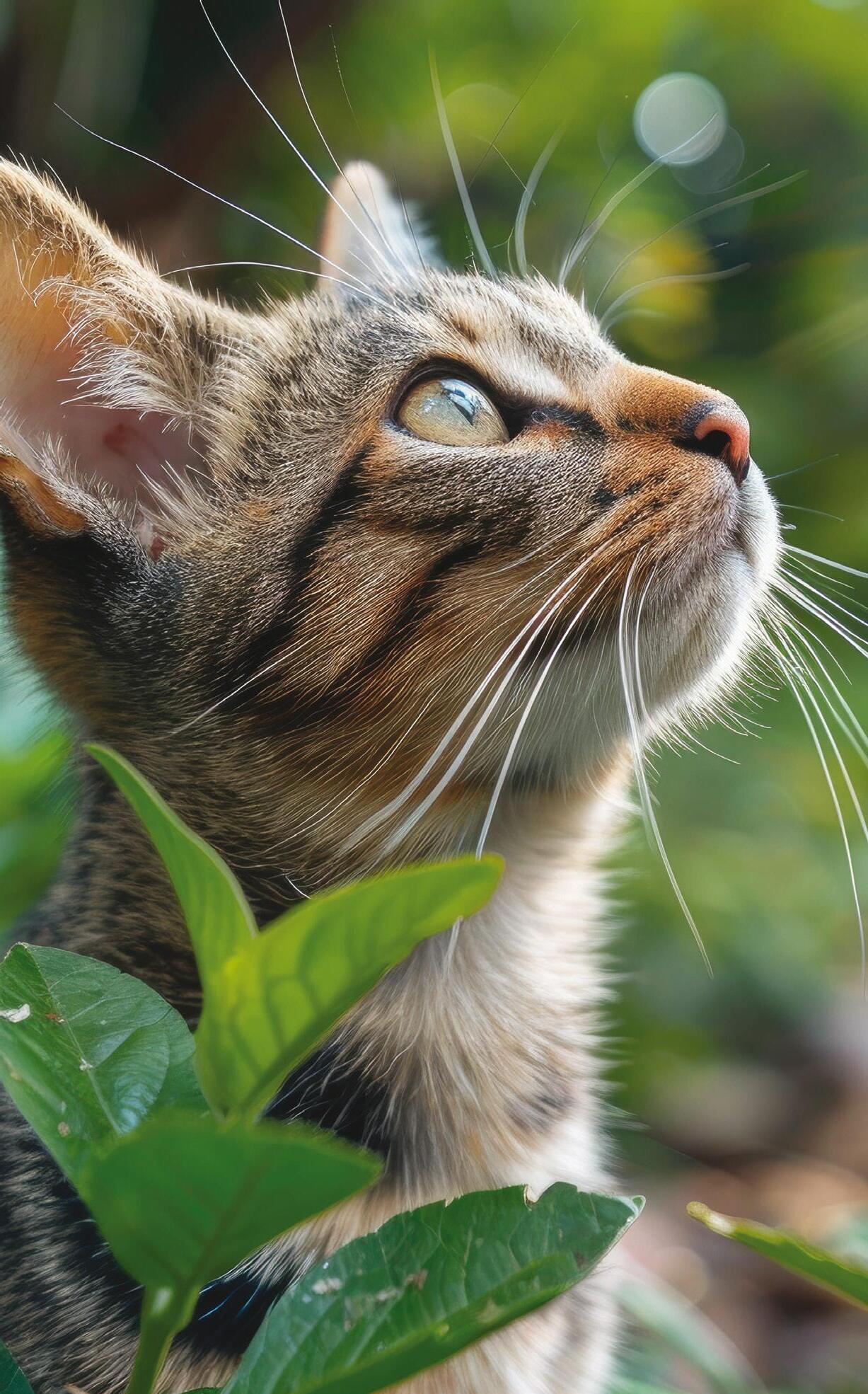
Hypertrophic cardiomyopathy (HCM) affects approximately 15% of the general feline population.1-3 This disease hides in plain sight, and as clinicians, we strive to identify subclinical patients. When we do identify these patients, how do we help them?
Frustratingly, the majority of cardiac therapy is aimed at treating the hemodynamic consequences of HCM rather than the cause. We have limited therapies that target and slow or reverse the disease. But we are living in an exciting time where some novel therapies are being introduced that may allow us to do just that.
Rapamycin (also known as sirolimus) is a macrolide that targets mTOR (mammalian target of rapamycin).4-6 mTOR is a serine threonine protein kinase that forms one of two multiprotein complexes. mTORC1 upregulates protein synthesis and downregulates autophagy, which plays a role in cellular growth. Excessive activation of mTORC1 may lead to pathologic hypertrophy as seen in HCM.4-5 mTORC2 regulates glucose and lipid metabolism and promotes cardiomyocyte cell survival.5 The goal of therapy in HCM cats is to downregulate mTORC1, which is contributing to pathologic hypertrophy without disrupting mTORC2, which is important for cardiomyocyte survival.
The RAPACAT trial investigated the effects of delayed-release rapamycin in cats with HCM. Cats receiving a placebo showed expected progressive left ventricular hypertrophy, whereas cats receiving rapamycin experienced reductions in their left ventricular wall thickness over the same time frame.5 There is an ongoing prospective trial investigating the safety and efficacy of delayed-release rapamycin in slowing (and potentially improving) left ventricular hypertrophy in HCM patients over a one-year time frame. The encouraging results of the RAPACAT trial led to the conditional approval of delayed-release rapamycin, Felycin-CA1, for the management of subclinical HCM.
continued on next page >
continued from page 11
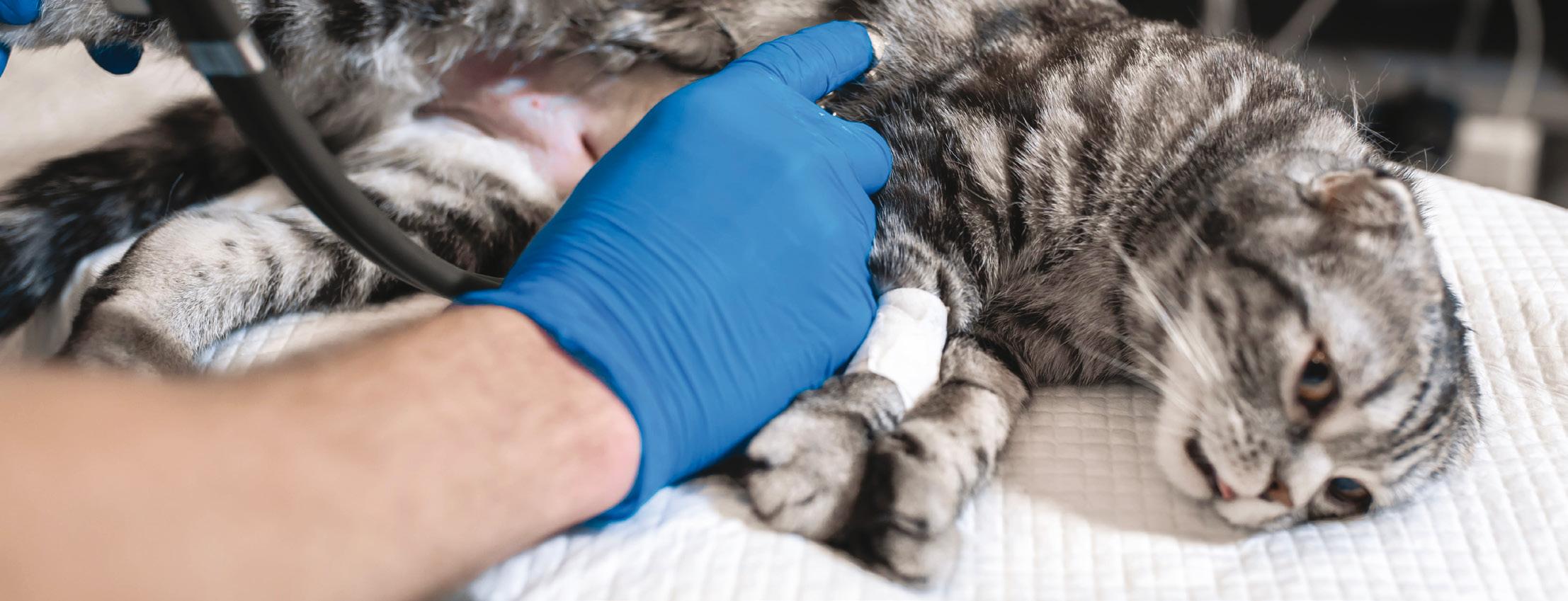
Felycin-CA1 is dosed at 0.3mg/kg once weekly and is available in enteric-coated tablets.6 Tablets must be swallowed whole and cannot be chewed or crushed.6 It should be prescribed for patients with subclinical HCM without a severe outflow tract obstruction and without current or historic symptoms of congestive heart failure or arterial thromboembolism.6 Lab work (complete blood count, blood chemistry profile, urinalysis, fructosamine level) should be obtained at baseline, one month after initiating treatment, and at least every six months thereafter.6
Felycin-CA1 undergoes hepatic metabolism, and treatment should be discontinued if ALT or AST values exceed twice the upper limit of normal.6 This drug may affect mTOR2, with a risk for developing diabetes, and caution should be exercised in overweight patients. It has not been evaluated in patients with chronic kidney disease or hyperthyroidism.6 Serial echocardiographic monitoring is recommended every six months.
Sodium glucose transporter type 2 (SGLT2) inhibitors are oral medications used to treat diabetes. They inhibit the sodium glucose cotransporter 2 located in the proximal convoluted tubule and promote glucosuria to lower blood glucose levels. In human trials, it was incidentally noted that patients with heart failure and diabetes managed with an SGLT2 inhibitor had reduced hospitalizations and reduced cardiovascular death.7 These drugs slowed progression in cardiovascular disease in diabetic as well as non-diabetic human patients.7,8 These results were seen in multiple trials, and SGLT2 inhibitors have become part of the standard treatment for heart failure in people.
The mechanisms by which SGLT2 inhibitors are beneficial for heart disease are not clearly known, but there are several proposed mechanisms. They exert diuretic effects by inhibiting renal sodium and glucose reabsorption, leading
to loss of water from the interstitial space.8 They improve myocardial energetics by shifting the heart away from glucose utilization towards more efficient energy sources (fatty acids, ketone bodies, amino acids).7,8 They have anti-inflammatory and anti-oxidant properties. They attenuate sympathetic tone, leading to lower heart rates and improved cardiac efficiency, betahydroxybutrate levels, fructosamine levels, and urinalyses.7,8
There is a current study looking at an SGLT2 inhibitor in HCM cats with heart failure. As we explore the use of this drug in our feline patients, we anticipate the need for baseline and serial testing of complete blood counts, chemistry profiles, betahydroxybutrate levels, fructosamine levels, and urinalyses. 7,8
In the normal heart, we rely on appropriate actin and myosin interaction to maintain normal cardiac contractility and relaxation. Patients with HCM experience excessive actinmyosin cross-bridge formation resulting in hypercontractility. This leads to the characteristic features of HCM, including compensatory hypertrophy, outflow tract obstructions, and diastolic dysfunction. Hypercontractility also increases myocardial oxygen demand in the face of reduced coronary artery flow. Cardiac myosin inhibitors reduce myosin ATPase activity to reduce excessive actin-myosin cross-bridge formation.9-11 This relieves the hypercontractile state and improves myocardial relaxation.9-11 Mavacamten and aficamten are cardiac myosin inhibitors that reduce left ventricular contractility in cats with HCM and alleviate outflow tract obstructions.9-11 While these drugs are promising, the extreme cost to the client may limit the introduction of cardiac myosin inhibitors into veterinary medicine.
With current active studies investigating these novel therapies, how we manage HCM in our feline patients may be on the brink of changing.

100% manufactured following FDA enforced regulations
Available for dispensing and unlimited hospital administration in PA FDA Federal SEC. 503B. [21 U.S.C. 353b]
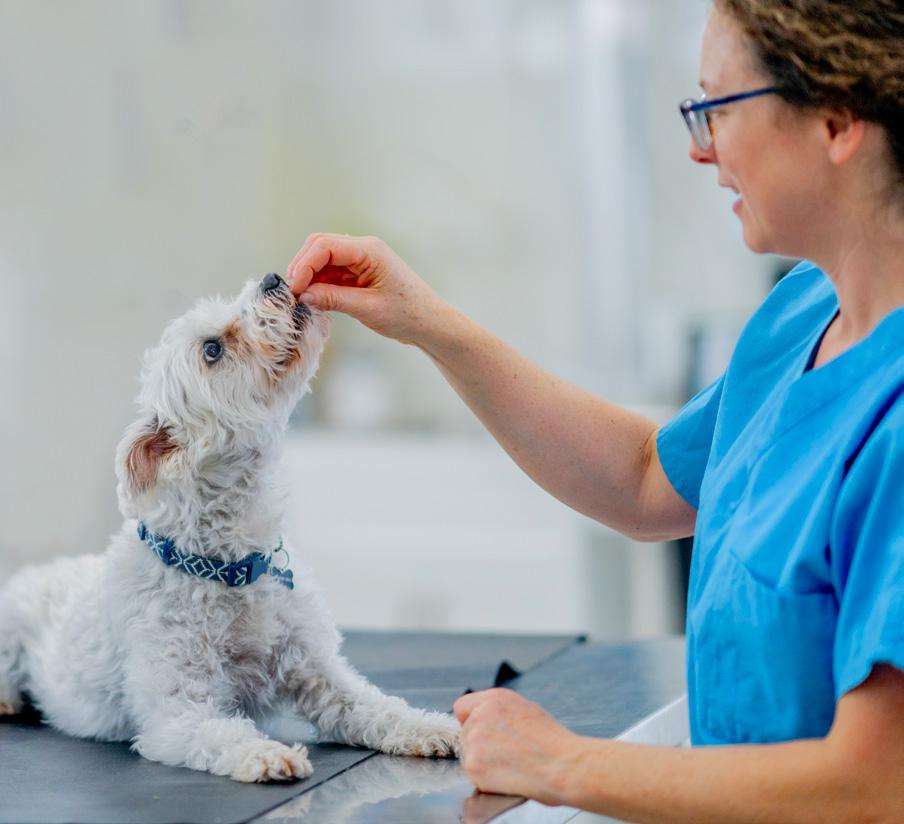
Longer/proven expiration dates on drugs of up to 365 days compared to 503A compounded products
Ready to ship same day with 1 day in transit to PA
Stay stocked and get your medications quickly and easily.
For office orders, call 888.508.5032. For patient orders, call 800.754.5222. View pricing, expiration dates, and order online at iFill.com
References
1. Paige CF, Abbot JA, Elvinger F, Pyle RL. Prevalence of cardiomyopathy in apparently healthy cats. J Am Vet Med Assoc. 2009; 234:1398-1403. doi: 10.2460/javma.234.11.1398.
2. Wagner T, Fuentes VL, Payne JR, McDermott N, Brodbelt D. Comparison of auscultatory and echocardiographic findings in healthy adult cats. J Vet Cardiol. 2010; 12:171-182. doi: 10.1016/j. jvc.2010.05.003.
3. Payne JR, Brodbelt D, Luis Fuentes V. Cardiomyopathy prevalence in 780 apparently healthy cats in rehoming centers (the CatScan study). J Vet Cardiol. 2015;17: S244-S257. doi: 10.1016/j.jvc.2015.03.008.
4. McMullen JR, Sherwood MC, Tarnavski O, et al. Inhibition of mTOR signaling with rapamycin regresses established cardiac hypertrophy induced by pressure overload. Circulation. 2004; 109:3050-3055. doi: 10.1161/01.CIR.0000130641.08705.45.
5. Kaplan JL, Rivas VN, Walker AL, et al. Delayed-release rapamycin halts progression of left ventricular hypertrophy in subclinical feline hypertrophic cardiomyopathy: results of the RAPACAT trial. J Am Vet Med Assoc. 2023;261(11):1628-1637. doi: 10.2460/javma.23.04.0187.
6. Felycin-CA1 (sirolimus delayed release tablets). Package insert. PRN Pharmacal; 2025.
7. Dyck JRB, Sossalla S, Hamdani N, et al. Cardiac mechanisms of the beneficial effects of SGLT2 inhibitors in heart failure: Evidence for potential off-target effects. J Moll Cell Cardiol. 2022; 167:17-31. doi: 10.1016/j.yjmcc.2022.03.005.
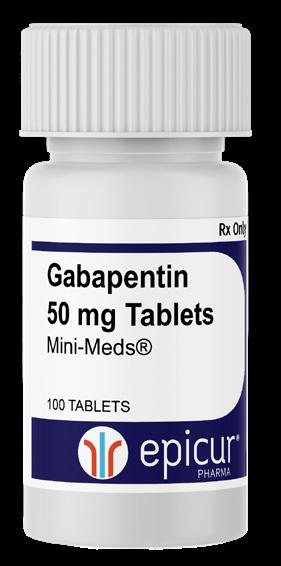

8. Elliott J, Oyama MA. Sodium glucose transporter 2 inhibitors: Will these drugs benefit no-diabetic veterinary patients with cardiac and kidney disease? J Vet Pharmacol Therap. 2025;48 (Suppl. 1):1-18. doi: 10.1111/jvp.13472.
9. Stern JA, Markova S, Ueda Y, et al. A small molecule inhibitor of sarcomere contractility acutely relieves left ventricular outflow tract obstruction in feline hypertrophic cardiomyopathy. PLoS One, 2016;11(12). doi: 10.1371/journal.pone.0168407.
10. Sharpe AN, Oldach MS, Rivas VN, et al. Effects of Aficamten on cardiac contractility in a feline translational model of hypertrophic cardiomyopathy. Sci Rep. 2023;13(1):32. doi: 10.1038/s41598-02226630-z.
11. Sharpe AN, Oldach MS, Kaplan JL, et al. Pharmacokinetics of a single dose of Aficamten on cardiac contractility in a A31P MYBPC3 hypertrophic cardiomyopathy cat model. J Vet Pharmacol Therap. 2023; 46:52-61. doi: 10.1111/jvp.13103.
About the Author: Dr. Julia Shih is a graduate of the University of Pennsylvania School of Veterinary Medicine. She completed a small animal rotating medicine and surgery internship and cardiology residency at Oradell Animal Hospital. She currently works at CVCA Cardiac Care for Pets in Hunt Valley, MD where she diagnoses and manages cardiovascular disease in veterinary patients. She is dedicated to resident training and is an active member on ACVIM committees. She hopes that these novel drugs therapies may change the face of HCM management in the near future.

By Alessandra Pellegrini-Masini, DVM, PhD, Diplomate ACVIM
Though horses don’t typically get high blood glucose, Equine Metabolic Syndrome (EMS) is the equine equivalent of type-2 diabetes in people. It affects horses with generalized obesity or regional fat deposits. It is characterized by a lack of cell response to insulin and the need for increased insulin production to maintain normal blood sugar levels. Some breeds—such as pony breeds, Arabians, Morgans, draft breeds, and some Warmbloods and Quarter Horses—have a genetic predisposition. Just like people, horses can be managed with exercise and by reducing dietary carbohydrates.
Horses very rarely reach the hyperglycemic state typical of diabetes in people, because the consequence of high insulin is deadly for them: insulin higher than 100 µIU/mL causes metabolic stress and vascular changes in the foot laminae, inducing laminitis (founder)—a deadly condition characterized by the loss of connection between hoof wall and the coffin bone.
Older horses are more likely to have Cushing’s disease (a dysfunction of the pituitary gland) that reduces insulin sensitivity, but when corrected for that, age does not play a role in EMS.
As general practitioners in the field, we have relied on measurement of blood insulin to diagnose EMS; however, levels can be affected by time of day, feed, stress, and exercise. Fasting insulin was considered the field test of choice, but since horses are grazers and long periods of fasting are not physiologically included in their diets, testing insulin while the horse is allowed access to hay or pasture (but longer than two hours after a grain meal) can provide more representative and sensitive results.1
The use of leptin and adiponectin (hormones produced by adipocytes) as indicators of EMS has been studied in horses, as in humans. The leptin/adiponectin (L/A)1 ratio seems to be most promising as a marker of insulin dysregulation and risk of future laminitis in horses with normal blood insulin. The van Eps Laminitis and Endocrinology Laboratory at the University of Pennsylvania, School of Veterinary Medicine, performs clinical tests and interpretation of leptin, adiponectin, and L/A ratio.

Diet and exercise are the staples for mild EMS and for longterm management. However, in severe hyperinsulinemic horses, sodium-glucose transport protein 2 inhibitors (SGLT2i) can be used as rescue drugs to quickly lower insulin and reduce the risk of founder.2
SGLT2i are widely used in people with type-2 diabetes. They block glucose reabsorption in the kidney and therefore lower blood sugar and reduce insulin response. A growing number of studies have reported the efficacy of canagliflozin,3 ertugliflozin,4 and velagliflozin5 to lower blood insulin in horses. There are no FDA-approved SGLT2i for horses, but ertugliflozin is available at compounding veterinary pharmacies.
The use of SGLT2i has been associated with a transient, and likely not clinically significant, increase in triglycerides in horses. Bexagliflozin (FDA-approved in cats) seems to induce a much lower increase in triglycerides and could represent a better value option.6
It is important to remember that safety studies are still lacking for these drugs, and their use is not recommended for longterm treatment. Another recent study evaluated the use of pioglitazone, a drug that promotes the synthesis of glucose receptors on cells and therefore glucose uptake. While not as effective as SGLT2i in reducing insulin levels, plioglitazone use may be valuable in milder cases and in long-term treatment once the patient is stable.7
Are intra-articular steroid injections dangerous for horses
Corticosteroids are powerful anti-inflammatory drugs and, therefore, widely used for intra-articular injections in horses with osteoarthritis. However, they markedly reduce sensitivity to insulin. Methylprednisolone and triamcinolone are commonly used for joint injections in horses, and both drugs induce mild insulin increase in the initial 48 hours (triamcinolone8) and two to seven days (methylprednisolone1,9) after injection. While these increases are not to a level associated with clinical laminitis in metabolically normal horses, in horses with insulin dysregulation (EMS or Cushing’s disease), it is recommended to minimize the use of intra-articular steroids, screen their endocrine status before injection, space out multiple injections at two-week intervals, and reduce grass access or dietary grain for 7-10 days after injection. Treatment with ertugliflozin in the peri-injection period has the potential to mitigate the insulin increase secondary to intra-articular corticosteroid administration.10
In summary, EMS is a condition characterized by a precarious endocrine balance. The use of a combination of sensitive screening tests may allow early identification of at-risk patients and the institution of correct management. Horses experiencing
hyperinsulinemia greater than 200 µIU/ml should be considered a medical emergency. Medications that have proven successful at managing type-2 diabetes in human medicine are currently being evaluated, and results from initial studies in horses are promising.
References
1. Lowndes C.R. Endocrine disease in horses: Clinical applications of our recent research. Penn Annual Conference, Equine track, November 6-7, 2025, New Bolton Center, Kennett Square, PA.
2. Menzies-Gow N.J., Knowles E.J. Sodium-glucose transport protein 2 inhibitor use in the management of insulin dysregulation in ponies and horses. J Vet Pharmacol Ther 2025 Jan;48 Suppl 1:31-40
3. Kellon E.M., Gustafson K.M. Use of the SGLT2 inhibitor canagliflozin for control of refractory equine hyperinsulinemia and laminitis. Open Vet J. 2022 Aug 7;12(4):511–518.
4. Sundra T., Kelty E., Rendle D. Preliminary observations on the use of ertugliflozin in the management of hyperinsulinaemia and laminitis in 51 horses: A case series. Equine Veterinary Education 2023, 35(6) 312-320.
5. Thane K., Voth R., Klee R., Warnken T., Chukwu V., Frank N. Effects of the Sodium - Glucose Cotransporter-2 Inhibitor Velagliflozin on Insulin Concentrations in Horses With Insulin Dysregulation. J Vet Intern Med. 2025 Oct 8;39(6).
6. Lowndes C.R. A Randomized, Placebo-controlled Crossover Study of Bexagliflozin Treatment in Horses with Naturally occurring Insulin Dysregulation. ACVIM Forum 2025, Louisville, KY.
7. Lowndes C.R., Boyle A.G., Kulp J., Stefanovski D., Davis J.L., van Eps A. Pioglitazone does not adequately control hyperinsulinemia but does increase serum adiponectin concentrations in equids with severe insulin dysregulation. 2025, 263(10):1-10.
8. Boger BL, Manfredi JM, Loucks AR, Salamey MZ, Kapeller LE, Fricano AG, Winkler A, Yob C, Colbath AC. Intra-articular triamcinolone acetonide injection results in increases in systemic insulin and glucose concentrations in horses without insulin dysregulation. Equine Vet J 2024, 56(2):326-331.
9. Page AE, McPeek JL, Carattini S, McGreevy E, Adam E. Intra-articular methylprednisolone acetate does not induce hyperinsulinemia or hyperglycemia in metabolically normal horses. JAVMA 2026, 264(3):326-331.
10. Page AE, McPeek JL, McGreevyE, Carattini S, Adam EN. Treatment with ertugliflozin mitigates the hyperinsulinemic response to intraarticular triamcinolone acetonide. Eq Vet J 2026 Feb.
About the Author:
Alessandra Pellegrini-Masini DVM, PhD
DACVIM (Large Animal Medicine)
Certified Equine Veterinary Acupuncturist (IVAS)
Dr. Pellegrini-Masini is the owner of Specialized Large Animal Medicine Services, practices in South Central PA, and her professional services are focused on equine internal medicine, reproduction, and rehabilitation. She can be reached at apmasini@gmail.com, on the web https://apmasini.wixsite.com/slams and on social media at https://www.facebook.com/profile.php?id=100089283078970.
The International Society for Companion Animal Infectious Disease (ISCAID) publishes expert guidance on the management of common infectious diseases. Their resources include guidance on management of urinary tract disease, pyoderma (updated 2025), and respiratory disease.
By Nina Mantione, DVM
The idea of developing an antimicrobial stewardship policy for our office seemed like it was going to be a big undertaking. While I had a bit of a nagging feeling that our practice could be doing a better job at prescribing antibiotics, it felt overwhelming to make any changes.
My interest in clinically applicable antimicrobial stewardship was fueled at a One Health conference (sponsored by the PVMA and the Dauphin County Medical Society) I attended with my husband, a human physician, in 2022. We listened to lectures on looming antibiotic resistance, including some excellent lectures from a food animal veterinarian, where she described her role in antimicrobial stewardship. She noted that while there are a lot of guidelines in food animal medicine, there are not as many formal recommendations provided for small animal veterinarians.
As one of the medical directors of my small animal hospital, I paid close attention to this and tried to think of all the ways our hospital could do better. I was inspired to adopt antimicrobial stewardship practices in our small animal practice.
With my naïve enthusiasm, I went home and wrote an antimicrobial stewardship statement for our hospital. I used resources I found on VIN, through the AMVA, and in journal articles. It is not perfect, and we have had to educate ourselves, our staff, and our clients, but I’d like to think that we are slowly making a difference in our small corner of the world.
I started by adopting the AVMA’s recommendations for antimicrobial stewardship.1
The AVMA developed five principles of stewardship that provided a solid basis for my hospital’s antimicrobial stewardship plan. These principles are:
1. Commit to stewardship.
I wrote an official policy and distributed it to all staff members. I asked for input and feedback to make sure everyone was on the same page. In addition, we empowered
staff by educating them on important principles of stewardship. We used this as a framework to educate clients.
2. Advocate for a system of care to prevent common diseases.
We advocate for preventative care for every patient. We don’t only focus on things like vaccines and preventatives. We also discuss pet care tips to try to minimize things like skin, ear, and urinary tract infections.
3. Select and use antimicrobial drugs judiciously.
One example is that we stopped using metronidazole for simple cases of diarrhea. This was the policy that got the most pushback from clients, but over time, they have accepted our new approach. Anecdotally, we have not seen any appreciable difference in clinical outcomes.
4. Evaluate antimicrobial drug use practices.
We now rely more on published guidelines for antimicrobial usage. We also changed some of our practices, such as using shorter durations of antibiotics and rechecking more frequently to evaluate response to therapy. We rarely use 3rd generation cephalosporins or fluoroquinolones without a culture unless it is recommended in the published guidelines.
5. Educate and build expertise.
We spend a lot of time educating clients. We have visual aids posted in the waiting room, and of course, we have done a lot of one-on-one education. In addition, we share a lot of information between the doctors in the hospital so that we can learn from each other’s experiences with stewardship.
Even though it felt daunting at first, developing a stewardship policy and putting it into practice was well worth the effort. As we have become more thoughtful and educated about our antimicrobial usage, our clients have too. While we initially received some pushback, most clients were very receptive to our new policies.
I would encourage other practices to take the step of developing a formal antimicrobial stewardship policy. I think you will find that it is not as overwhelming as you might think, and it is well worth the effort.
Reference
1 AVMA. Antimicrobial stewardship definition and core principles. Accessed February 18, 2026. Available at https://www.avma.org/ resources-tools/avma-policies/antimicrobial-stewardship-definitionand-core-principles.
About the Author: Dr. Nina Mantione received her bachelor’s degree from Franklin and Marshall College and her veterinary degree from the University of Pennsylvania. She works as a small animal veterinarian and is one of the medical directors at her hospital. She loves One Health, client education, and has a passion for geriatric medicine.
Veterinary practice involves a wide variety of legal issues. Tucker Arensberg attorneys have experience working with veterinarians in all of the legal aspects of their practice.
We offer full-service legal representation and consulting services throughout the entire lifecycle of your business from startup to transfer of ownership, including:
• Employment matters
• Business entity formation and governance
• Contract drafting and negotiation
• Real estate
• Purchase or sale of a business
• Succession planning
• Financing transactions, debt, or equity
To learn more visit www.tuckerlaw.com, follow us on LinkedIn , or call 412-566-1212.






By Jacqueline Johnson, BVMS, DABVP (C/F), CCRP, CVPP, ABVP Fellow (Companion Animal Pain Management)
Osteoarthritis (OA) is one of the most common—and often most frustrating— chronic diseases we manage in small animal practice. Most of our canine and feline patients will develop OA during their lifetime, frequently resulting in persistent pain, reduced mobility, and diminished quality of life.
Traditionally, OA has been viewed primarily as a disease of articular cartilage. Increasingly, however, research highlights the synovium as a key driver of disease progression. Joint insults such as hip or elbow dysplasia, ligament injury, articular incongruity, or fracture often initiate chronic synovial inflammation long before radiographic changes are apparent. This synovitis alters the joint microenvironment in ways that perpetuate degeneration and pain.
Consequences of chronic synovial inflammation include:
• Hyperplasia of the joint capsule
• Increased production of proinflammatory mediators and migration of inflammatory cells
• Upregulation of catabolic enzymes that degrade cartilage
• Sensitization of nociceptors, amplifying pain perception
Recognizing the role of inflammatory synovial disease in driving the progression of OA opens the door to therapies aimed directly at the joint environment.
OA management remains multimodal. Weight management, rehabilitation, nutraceuticals, oral medications, and environmental modification all play important roles. Yet even with comprehensive care, many patients experience incomplete relief or develop contraindications to systemic therapy. Intra-articular treatments offer several distinct advantages:
• Targeted therapy at the primary site of pathology
• Reduced systemic exposure and side effects compared with chronic oral medications
• Safer options for patients with hepatic, renal, or GI comorbidities
• Potential for prolonged relief, sometimes lasting a year or more
• Possible disease-modifying effects by improving the synovial microenvironment
• Accessibility in general practice with appropriate training and technique
With a growing number of intra-articular products available, understanding mechanisms of action and evidence supporting each option is essential for appropriate case selection.
Intra-articular corticosteroids remain one of the most familiar options. Their potent anti-inflammatory effects can provide rapid, meaningful short-term pain relief. However, repeated or high-dose intraarticular steroid use may negatively affect cartilage health.
For this reason, corticosteroids are often best used strategically—particularly in patients with severe inflammation requiring immediate relief—while longer-acting or potentially diseasemodifying therapies take effect. Combination protocols with products such as hyaluronic acid or polyacrylamide hydrogels are increasingly common.
Hyaluronic acid (HA) plays a critical role in joint lubrication, viscoelasticity, and modulation of inflammation. In osteoarthritic joints, both the concentration and molecular weight of endogenous HA are reduced, resulting in decreased synovial fluid viscosity and elasticity.
Intra-articular HA supplementation has been used for decades across species, including dogs, horses, and humans. Clinical benefits typically include improved joint lubrication, decreased inflammation, and modest pain relief lasting weeks to months after injection.
HA is particularly useful in patients with evidence of reduced synovial fluid volume—the so-called “dry joint.” It is frequently combined with other therapies such as platelet-rich plasma (PRP), corticosteroids, or polyacrylamide hydrogels to enhance overall efficacy.
PRP is an autologous orthobiologic derived from the patient’s own blood. Centrifugation produces a plasma fraction enriched with platelets, growth factors, and anti-inflammatory mediators that can be injected directly into the affected joint.
PRP has demonstrated encouraging results in both veterinary and human studies, with clinical improvement in dogs typically lasting several months. However, variability in preparation methods means there is still no consensus regarding optimal platelet concentration, leukocyte content, or injection volume.
Clinically, PRP is particularly attractive when soft tissue pathology accompanies joint disease—for example, shoulder OA with concurrent biceps tendinopathy. It is also commonly used following surgical interventions such as OCD lesion debridement or fragmented coronoid process removal to support healing and modulate inflammation.
Mesenchymal stem cells (MSCs) represent another orthobiologic option. They may be harvested from adipose tissue or bone marrow, processed either in-house or by external laboratories, and subsequently injected intra-articularly.
Short-term studies in both dogs and humans demonstrate improvement in pain and function following MSC therapy. However, longer-term follow-up suggests outcomes may not consistently exceed those achieved with corticosteroids or placebo. Some evidence indicates improved durability when MSCs are combined with PRP, likely reflecting complementary biologic effects.
Arthramid® is a 2.5% polyacrylamide hydrogel designed specifically to target synovial pathology. Approximately two weeks after injection, the hydrogel integrates into the synovial membrane, functioning as a scaffold that enhances elasticity, tensile strength, and joint stability while reducing inflammation.
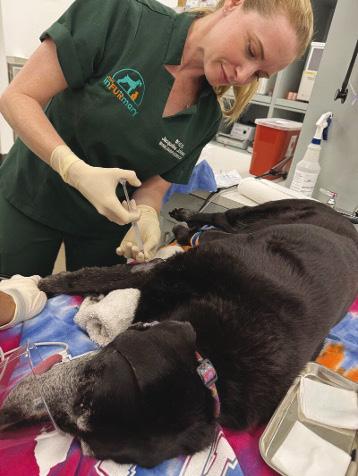
Dr. Johnson injects Arthamid® into the elbow joint. This procedure is simple, quick, and requires no special equipment.
This mechanism suggests potential disease-modifying effects rather than purely symptomatic relief. There is no special equipment—Arthramid® is supplied as a shelf-stable prefilled syringe, simplifying storage and administration. Multiple peer-reviewed studies in dogs, horses, and humans demonstrate safety and sustained clinical benefit.
Human knee OA studies report improvements lasting up to five years, while veterinary data typically show a year or more of meaningful pain relief. Multiple joints can be treated in a single session, and Arthramid® can be used alone or combined with corticosteroids or orthobiologic therapies.
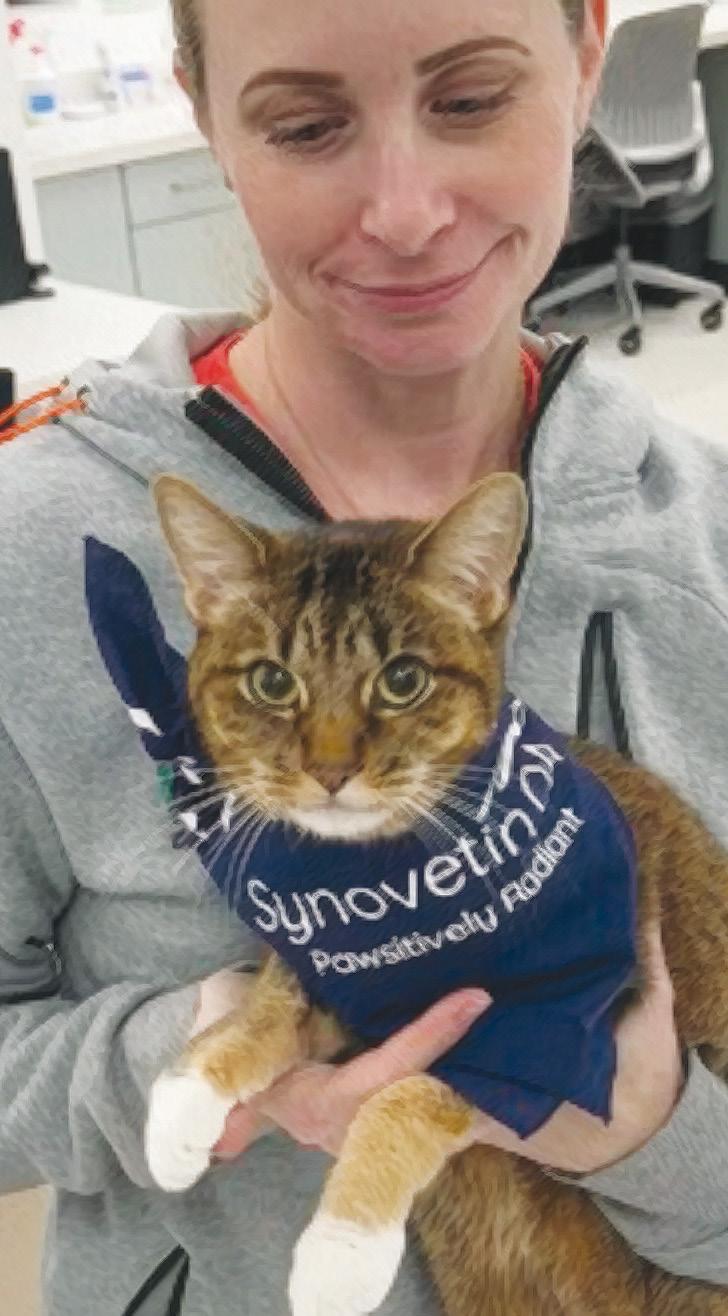
SynovetinOA® is the first veterinarylabeled device for radiosynoviorthesis— the intra-articular injection of a therapeutic radioisotope. This approach has long been used in human medicine for inflammatory joint diseases such as rheumatoid arthritis.
The product contains Tin-117m (Sn117m) in colloidal suspension. Following injection, synovial macrophages and
continued from page 19
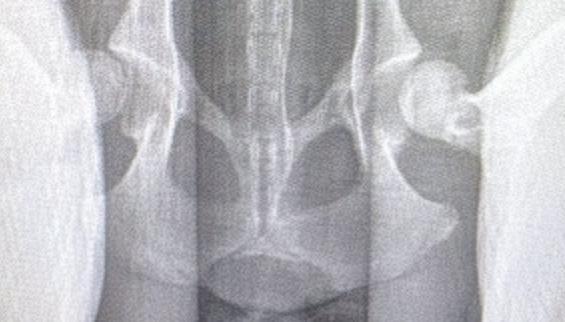
A. PennHip radiograph from a 13-month-old Australian Shepherd showing significant bilateral hip laxity. The owners had noticed mild, transient favoring of the left pelvic limb on three separate occasions over a number of months.
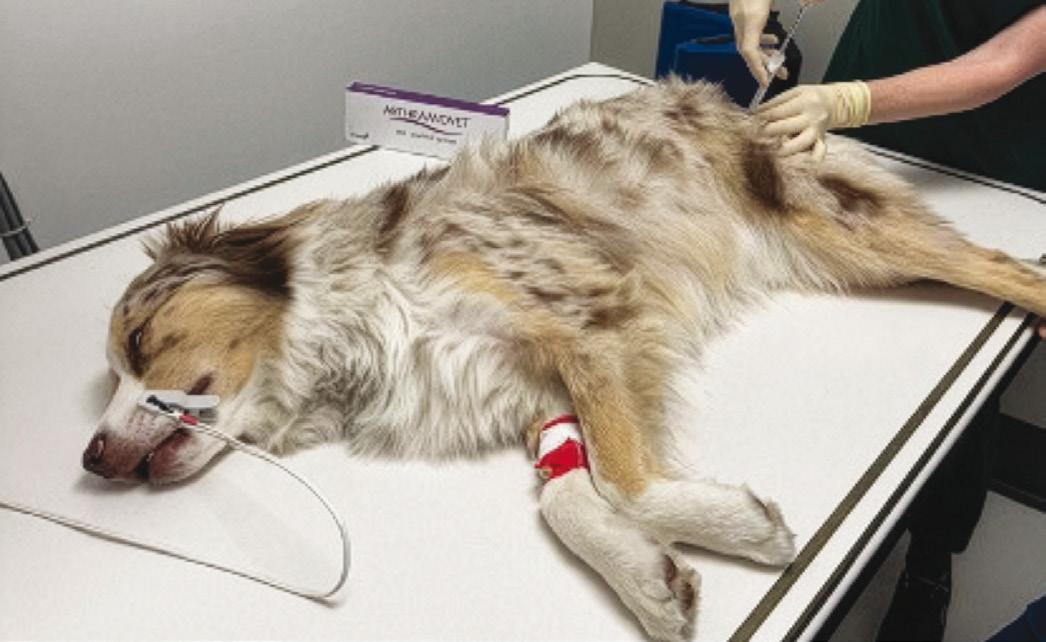
B. Radiographic findings were discussed with the owner while still under sedation, and both hips were treated with Arthramid® prior to reversal.
inflammatory cells uptake the particles, leading to targeted cell death and a subsequent reduction in inflammation and pain.
Sn-117m emits low-energy conversion electrons with minimal tissue penetration, confining therapeutic effects to the treated joint. It decays to a stable, nonradioactive isotope with no significant excretion of radioactive waste, making it a relatively simple, outpatient procedure. Post-treatment contact restrictions vary by state, but clients are generally advised to avoid sharing a bed with their pet for approximately two weeks.
Published studies demonstrate strong safety data, including repeated treatments, along with encouraging efficacy—reported success rates include approximately 92% in mild-to-moderate elbow OA and 71% in severe cases. While currently labeled for canine elbow OA, off-label use in other joints and species is expanding, with clinical benefit often lasting up to a year. Because SynovetinOA® involves a therapeutic radioisotope, its use is restricted to trained providers with appropriate radiation safety training, specialized handling equipment, and a radioactive materials license in accordance with regulatory requirements.
Several additional intra-articular therapies are gaining attention: Noltrex® Vet is a 4% polyacrylamide hydrogel designed to provide long-lasting lubrication and cushioning. It has been used extensively in equine medicine, with small animal adoption increasing despite limited controlled canine trials.
Spryng™ with OsteoCushion Technology combines bovine collagen and elastin with porcine-derived heparin to enhance shock absorption and lubrication. Early studies demonstrate short-term pain relief, though long-term outcome data remain limited.
Intra-articular treatments are not a replacement for multimodal OA management—but they are increasingly becoming a cornerstone of comprehensive care. When used thoughtfully, they can provide meaningful pain relief, reduce reliance on systemic medications, and potentially alter disease progression.
As our understanding of osteoarthritis evolves, so too must our treatment
strategies. Recognizing synovitis as a central component of OA pathophysiology highlights the value of therapies delivered directly into the joint environment. And as with many other chronic diseases, early intervention matters—identifying at-risk patients and addressing joint inflammation sooner can help to preserve comfort, mobility, and long-term joint health.
About the Author: Dr. Jacqueline Johnson is an ABVP Diplomate in Canine/Feline Practice, Certified Veterinary Pain Practitioner, Certified Canine Rehabilitation Practitioner, and Fellow, ABVP-Companion Animal Pain Management. She is the founder of The inFURmary Veterinary Hospital & Pain Center in San Diego, CA, where, along with general practice, she focuses on advanced pain management, osteoarthritis treatment, and collaborative specialty care. She is passionate about educating owners on the importance of early arthritis recognition and intervention.
By Kate Boatright, VMD

Disclaimer: This article is intended as an educational overview of terms used in veterinary medicine to refer to the types of care we provide. Nothing in this article constitutes legal advice. Please contact a licensed attorney or the Pennsylvania State Board to discuss specific questions or concerns about legal liability and board complaints.
Many veterinarians share concerns about their liability in cases, especially when they can’t provide the level of care they learned in vet school or what is considered “gold standard.” Somewhere along the way, the perception in the profession became that pursuing care plans that differed from the “gold standard” increases risk of liability and disciplinary action from the licensing board.
Veterinarians are required to practice at or above a minimum standard of care. This term is ultimately a legal definition. According to Dr. Beth Venit, Chief Veterinary Officer of the American Association of Veterinary State Boards (AAVSB), in a 2025 JAVMA article:
One definition is ‘the same degree of humane care, skill, and diligence in treating patients as are ordinarily used in the same or similar circumstances, including the type of practice, by average members of the veterinary medical profession in good standing in the locality or geographic community in which they practice, or in similar communities.’1
There is no written standard of care available, and there is subjectivity to interpretation of this term. It can vary by location (i.e. urban, rural), jurisdiction (i.e. state, county), and type of practice (i.e. general practice, specialty practice).1 In other words, those practicing in different locations may be held to different standards.1 Additionally, the standard of care can change over time as new information becomes available.
In Pennsylvania, the Veterinary Practice Act does not explicitly define standard of care. It does state that “Incompetence, gross negligence or other malpractice, or the departure from, or failure to conform to, the standards of acceptable and prevailing
veterinary medical practice, in which case actual injury need not be established” as one of the grounds for disciplinary proceedings (Section 21.11).
Standard of care is not equivalent to the most advanced care available, which is often referred to as “gold standard care” or “best practice.”1 This level of practice is often defined by the existing evidence and may not be available in all locations.
For instance, performing an echocardiogram may be considered by some to be the “gold standard” diagnostic for patients presenting with a heart murmur, but it requires extensive training and equipment, limiting its availability. While echocardiography is the most sensitive and specific test for the diagnosis of myxomatous mitral valve disease, radiographs can also be used to identify cardiomegaly and monitor patients and would still be above the minimum standard of care.2 Another valid option, depending on comorbidities or other factors specific to the patient and client, may be simply monitoring the heart murmur over time. The determination for which course to make is one that the informed client should make, with the veterinarian’s assistance.
With increasing concerns around access to care and growing financial barriers for clients, conversations around how to offer care in a flexible way are increasing. Spectrum of care practice encourages veterinarians to offer a range of options to their clients ranging in intensity, expense, and invasiveness.3 Contextualized care is another term for this type of practice that is popular in the United Kingdom and encourages veterinarians to work with the client to determine the best option for the individual family context.4
continued from page 21
One of the things that many veterinarians find scary about the prospect of a Board Complaint is that they don’t know what will happen if/when a complaint is filed or what the probable outcomes will be. This uncertainty can lead to increased fear.
Ultimately, Veterinary Licensing Boards are not entities to be feared. Their role is to protect the public. They are responsible for investigating every complaint that comes through. Some complaints are dismissed outright, either because they are “nonjurisdictional” (i.e. complaints about fees or wait times) or because there is no wrong-doing. Other possible outcomes include instruction for the veterinarian to pay a fine and/or engage in continuing education on a particular topic, license suspension, or loss of license. It is important to remember that the Pennsylvania State Board is the regulatory authority. Clients also have the option to file malpractice suits against a veterinarian.
Learn more about the Board Complaint Process from Dr. Beth Venit on Episode 197 of the Cone of Shame Podcast.
Veterinary organizations around the United States are embracing spectrum of care practice. While this style of practice is not new, the term was first used in 2018.6,7 The last five years have seen marked growth in its recognition and acceptance.
• In 2021, The American Association of Veterinary Medical Colleges (AAVMC) launched the Spectrum of Care Initiative to support spectrum of care education in veterinary schools.8
• In 2024, updates to the AVMA’s Principles of Veterinary Medical Ethics included contextual care.9
• Also in 2024, the American Animal Hospital Association (AAHA) published the Community Care Guidelines, which discuss reframing the gold standard as the best option for each individual patient and client.10
• Finally, in December 2025, the Journal of the American Veterinary Medical Association (JAVMA) published a supplementary issue focused on spectrum of care.
The term standard of care is often misused interchangeably with “gold standard” or “best practice.” I have heard veterinarians at all levels of practice say “that’s below standard of care” when they mean “that’s not gold standard care.”
This misuse of terms perpetuates fear around spectrum of care practice because many options pursued differ from gold standard. This does not mean they are substandard. Veterinary professionals should work to be more mindful of the terms they use to refer to approaches to care.
Regardless of what option a client chooses to pursue, veterinarians must obtain informed consent for the final plan, which requires the following things to happen:1
• Use language that the client understands. Veterinarians should also give the client an opportunity to ask questions for clarification.
• Discuss what the available options are (from minimum standard of care to “gold standard”) including risks, benefits, costs, and prognosis/chances of success for each option.
• Discuss the risks of and prognosis with nontreatment.
• The client agrees to the plan.
All options discussed as well as the client’s final decision must be documented in the medical record. Additionally, if new information becomes available (i.e. pending test results or response to initial therapy), informed consent must be re-established, even if the original care plan is continued.1
We will never be able to fully eliminate the risk of board complaints and lawsuits in the practice of veterinary medicine. Our goal should be to practice in a way that upholds our moral, ethical, and legal obligations to the patient, client, the profession, and ourselves. This means upholding the minimum standard of care, but it does not mean that every case must be managed with the “gold standard” option.
Special thanks to Dr. Beth Venit, Chief Veterinary Officer of the AAVSB, for her review of the content of this article for accuracy with respect to regulatory bodies.
References
1. Venit EL. Informed consent plays an important role when practicing veterinary medicine along the spectrum of care. J Am Vet Med Assoc. Published online August 25, 2025:1-7. doi:10.2460/javma.25.05.0340
2. Hezzell MJ, Boswood A. Using a Spectrum of Care Approach to the Diagnosis and Staging of Canine Myxomatous Mitral Valve Disease. Adv Small Anim Care. 2025;6(1):237-246. doi:10.1016/j.yasa.2025.06.009
3. Fingland RB, Stone LR, Read EK, Moore RM. Preparing veterinary students for excellence in general practice: building confidence and competence by focusing on spectrum of care. J Am Vet Med Assoc. 2021;259(5). doi:10.2460/javma.259.5.463
4. Skipper A, Gray C, Serlin R, O’Neill D, Elwood C, Davidson J. ‘Gold standard care’ is an unhelpful term. Vet Rec. 2021;189(8). doi:10.1002/ vetr.1113
5. Boatright KM. Mentorship supports early-career veterinarians in developing the skills necessary for successful spectrum-of-care practice. J Am Vet Med Assoc. Published online August 4, 2025:1-8. doi:10.2460/ javma.25.06.0362
6. Block G. A new look at standard of care. J Am Vet Med Assoc. 2018;252(11):1343-1344. doi:10.2460/javma.252.11.1343
7. Stull JW, Shelby JA, Bonnett BN, et al. Barriers and next steps to providing a spectrum of effective health care to companion
animals. J Am Vet Med Assoc. 2018;253(11):1386-1389. doi:10.2460/ javma.253.11.1386
8. AAVMC. The Spectrum of Care Initiative. AAVMC.org. Accessed December 27, 2024. https://www.aavmc.org/the-spectrum-of-careinitiative/
9. American Veterinary Medical Association. Principles of Veterinary Medical Ethics of the AVMA. AVMA.org. Accessed December 20, 2024. https://www.avma.org/resources-tools/avma-policies/principlesveterinary-medical-ethics-avma
10. Greenberg M, McCants D, Alvarez E, et al. 2024 AAHA Community Care Guidelines for Small Animal Practice. J Am Anim Hosp Assoc. 2024;60(6):227-246. doi:10.5326/JAAHA-MS-7464
About the Author: Dr. Kate Boatright has been in rural small animal practice since graduating from the University of Pennsylvania in 2013. After nearly 8 years of full-time practice in both general practice and emergency clinics, she moved to part-time clinical work to pursue her passion for educating veterinary professionals as a freelance speaker, author, and consultant. Dr. Boatright enjoys discussing topics that promote connection with colleagues and clients, especially mentorship and the spectrum of care. She currently serves on the PVMA Board of Trustees, AVMA House of Delegates, and the dvm360 Advisory Board. If you’re looking to have a conversation about access to care or mentorship, please reach out at hello@writetheboat.com.


By Tina Dougherty, VMD, Delegate Kate Boatright, VMD, Alternate Delegate
The AVMA House of Delegates (HOD) winter session returned to Chicago, Illinois, on January 9 and 10, 2026, in conjunction with the annual Veterinary Leadership Conference. The meeting kicked off with a keynote on Gentelligence® by Megan Gerhardt, PhD, which encouraged attendees to embrace generational diversity as a workplace strength and to foster connection through curiosity. This was followed by organizational updates, the veterinary information forum, and discussion and voting on two resolutions and several amendments to the AVMA Bylaws.
AVMA’s Biosecurity Policy, which was approved by the HOD in January 2025, requested the development of new resources around biosecurity. A biosecurity center on the AVMA website was launched in early 2026 at https://www.avma.org/resourcestools/one-health/biosecurity-best-practices-disease-prevention.
Dr. Kent McClure, AVMA assistant executive vice president and chief advocacy officer, provided an update on the AVMA’s advocacy activities. Current priorities include the Rural Veterinary Workforce Act, the Combatting Illicit Xylazine Act, the Farm Bill, and maintaining federal funding for programs of importance to veterinary medicine, food safety, and public health.
Additionally, the Government Relations Division (GRD) is monitoring state-level activity on xylazine and other alpha-2 agonists, student loan repayment programs, telemedicine and the veterinary client patient relationship (VCPR), credentialing of veterinary technicians and changes to scope of practice, and introduction of mid-level practitioner positions.
Additionally, there is ongoing monitoring of the issue of noneconomic damages and the status of pets under the law, after two high-profile court cases last year. The GRD continues to monitor emerging issues and legislation pertinent to the veterinary profession at the national and state levels. AVMA Members can get involved in advocacy by signing up for the Congressional Advocacy Network.
An additional way that AVMA members can support advocacy is by donating to the AVMA’s Political Action Committee (PAC). The PAC is non-partisan and provides support to candidates to the United States House of Representatives and Senate who are in support of initiatives.
Veterinary Technician Training and Education
This informational session explored current topics in veterinary technician education, including accreditation best practices, career advancement pathways, and the importance of collaborative models within veterinary teams.
The House was joined by leaders from AVMA staff, the AVMA Committee on Veterinary Technician Education and Activities (CVTEA), and the Association of Veterinary Technician Educators (AVTE), including:
• Dr. Jim Weisman, Chief of Academic Affairs, Research, and Education
• Michelle Smith, MA, Chair, AVMA CVTEA
• Tricia Gorham, FVTE, MA, CVT, President, AVTE, and former member of AVMA CVTEA
Next steps: As a result of this discussion, the AVMA Board of Directors will evaluate whether, and how, the AVMA should expand structured participation of veterinary technicians and select affiliated veterinary organizations within AVMA governance. The goal is to strengthen team-based veterinary medicine, improve policy relevance, and enhance implementation of AVMA initiatives across the profession. The Board will report on the outcome of this evaluation at a future House of Delegates meeting.
As part of the VIF discussion, the House continued its conversation regarding criteria for obtaining and retaining membership in the House as a Constituent Allied Veterinary Organization. The House Advisory Committee (HAC) framed the discussion around four key goals:
1. Environmental scanning across the HOD. Identify concerns, questions, and perspectives from allied organizations and other delegation members.
2. Maintaining key areas of expertise. Consider how important subject-matter voices can remain part of the HOD as membership patterns across the profession evolve.
3. Building a stakeholder group. Identify individuals and organizational representatives to participate in a working group for a deeper examination of these issues.
4. Clarifying standards for representation. Discuss what constitutes fair, reasonable, and sustainable qualifications for HOD representation over the long term.
Next steps: The HAC is working to establish a Working Group to examine membership criteria for Constituent Allied Veterinary Organizations in the House, including eligibility for admission and continued representation.
In addition, the HAC is preparing a proposed Bylaws amendment for the next House session to extend the grace period for meeting eligibility requirements beyond the current one-year period, as outlined in Article VII, Section 4.c of the AVMA Bylaws.
The HOD reviewed seven amendments to the AVMA bylaws that focused on improving clarity around existing procedures.
The following amendments were approved as written:
• Amendment 1: House of Delegates Voting
• Amendment 2: Board of Directors Voting
• Amendment 3: Membership Voting
• Amendment 5: Clarification of referral authority— House of Delegates referrals to the Board of Directors.
The following amendments were amended and approved:
• Amendment 4: Definition of a veterinarian
• Amendment 6: President.
Amendment 7 (Revisions for Clarity) was referred to the Board of Directors for further clarification.




PENNSYLVANIA EASTERN PENNSYLVANIA
TPSG

Bret Halishak Cell: 216.217.7822 Bret@tpsgsales.com
The current bylaws are available at https://www.avma.org/sites/default/ files/2026-02/AVMA-Bylaws_2026.pdf.
The HOD also considered two resolutions during the session.
• Resolution 1: Animal Training and Early Exposure was referred to the Board of Directors for further consideration.
• Resolution 2: Camelid Castration was approved with amendments. The full policy is available at https://www.avma.org/resources-tools/avma-policies/ camelid-castration.
The next meeting of the AVMA House of Delegates will be held prior to the AVMA Convention in Anaheim, California, in July 2026. Elections for the 2026 President-Elect and 2026-2027 Vice President will be held at this meeting. The current candidates are Dr. Robert Knapp for President-Elect and Dr. Elizabeth Boggier for Vice President.
It is our honor to continue to represent the voices of veterinary professionals in Pennsylvania to the AVMA House of Delegates.

You know that running a veterinary practice today means balancing far more than patient care. Recruitment and retention of veterinarians, technicians, and support staff have become increasingly difficult, while employment regulations and employee expectations continue to evolve.
In many small and mid-sized clinics, human resources responsibilities fall to practice managers or owners who already wear multiple hats. Because of that, there are probably many reading this whose HR policies and benefits programs have developed informally.
That’s one reason more practices are beginning to conduct HR audits—structured reviews of employment policies, documentation, and workplace practices. While these audits help identify compliance risks, they often reveal something else as well: opportunities to strengthen employee benefits and workplace wellness programs that support recruitment and retention.
An HR audit is essentially a checkup for your workplace policies. It reviews areas such as hiring documentation, wage and hour practices, employee classifications, workplace policies, and benefits administration.
While large organizations conduct these reviews regularly, they can be just as valuable for smaller veterinary practices. Common issues that show up during HR reviews include:
• Outdated employee handbooks
• Inconsistent overtime or timekeeping practices
• Misclassification of employees or independent contractors
• Lack of documented disciplinary procedures
• Informal or poorly communicated benefits policies
None of these gaps is unusual. Veterinary practices naturally focus on patient care and client service, and HR processes sometimes evolve on an “as-needed” basis. But over time, small inconsistencies can create compliance risks and frustration among staff. That can lead to burnout, and in today’s labor market, workforce stability is more important than ever.
Staffing shortages and burnout continue to challenge veterinary teams across the country.
Research from Merck Animal Health found that about 30% of veterinarians report high levels of burnout, with many technicians and support staff reporting similar levels of emotional exhaustion.1
The financial impact is significant as well. Researchers at Cornell University College of Veterinary Medicine estimate that burnout among veterinarians and technicians costs the profession roughly $2 billion annually in lost revenue due to reduced hours, turnover, and decreased productivity.2
Turnover itself is a major concern. Industry workforce analyses referenced by the American Veterinary Medical Association suggest veterinary technician turnover can exceed 20% annually, with even higher rates among support staff in some practices.3
When positions remain unfilled, the consequences ripple throughout a clinic—longer appointment wait times, heavier workloads for remaining staff, and increased stress across the team.
That’s why many practice owners are starting to view HR audits not just as a compliance exercise, but as part of a broader workforce strategy.
Traditionally, HR audits focused heavily on regulatory compliance. Today, many reviews also include a closer look at employee benefits.
Typical questions that come up include:
• Are benefit eligibility rules clearly documented?
• Are employees informed about benefits during onboarding?
• Do current offerings align with employee needs?
• Are mental health or wellness resources available?
These questions matter because benefits have become an increasingly important factor in hiring and retention decisions.
Many veterinarians and technicians—particularly younger professionals—place high value on work-life balance, mental health resources, and long-term financial security alongside salary.
That’s not surprising given the emotional demands of the profession. Studies examining veterinary mental health suggest more than half of veterinary professionals experience compassion fatigue at some point in their careers.4
As a result, many practices are beginning to expand benefits beyond traditional health insurance.
Some of the offerings gaining traction include:
• Employee assistance programs (EAPs)
• Access to mental health counseling
• Flexible scheduling policies
• Paid parental leave
• Retirement savings plans
• Wellness initiatives focused on stress management
Not every practice can implement every benefit. But even modest improvements—or clearer communication about existing programs—can make a meaningful difference for employees evaluating job opportunities.
Practices that review their benefits during HR audits often discover relatively simple changes that strengthen their ability to compete for talent.
Many veterinary clinics operate with fewer than 25 employees and do not have a dedicated HR department. As employment regulations and benefits options grow more complex, some practices choose to work with outside advisors for guidance. It’s smart to be proactive, and this is where PVMA’s partnership with Alera Group can help!
Our team of knowledgeable HR professionals can help answer your questions and set your practice up for success. AleraHR provides tools that can build and review your employee handbook and job descriptions, as well as create audit, compliance, and onboarding checklists. And should the audit process reveal gaps in your benefits plans, our team has national support to find you the options. Health plans, voluntary benefits, and Employee Assistance Programs, as well as financial planning services for your staff, are all available with the help of Alera Group.
Practice owners don’t need a full HR department to start evaluating their policies. These questions can be a useful starting point:
Is our employee handbook up to date?
Employment regulations change frequently, and outdated policies can create compliance risks.
Are job classifications correct?
Ensure employees are properly classified as exempt, non-exempt, or independent contractors.
Do employees clearly understand their benefits?
Benefits are most effective when eligibility rules and enrollment processes are clearly communicated.
Are workplace policies applied consistently?
Inconsistent scheduling, overtime policies, or disciplinary procedures can create legal and team morale issues.
Are we offering benefits that support employee wellbeing?
Mental health resources, flexible scheduling, and wellness initiatives are increasingly valued by veterinary professionals.
Even small improvements uncovered during an HR review can help strengthen both compliance and team satisfaction.
In a profession built on compassion, it’s important to remember to invest in your team through thoughtful HR policies and meaningful benefits. You may find yourself better positioned to attract and retain the talented professionals who make quality veterinary care possible.
We’d be happy to help you do just that. Visit cloud-aia. aleragroup.com/pvma to learn more.
References
1 Co.Vet (2026, Mar 10). Veterinary Burnout Statistics: Prevalence, Causes, and Impact https://www.co.vet/post/veterinary-burnoutstatistics
2 Cordova, Melanie Greaver (2022, Aug 29). Burnout takes a heavy financial toll on veterinary medicine. https://www.vet.cornell.edu/ about-us/news/20220829/burnout-takes-heavy-financial-tollveterinary-medicine
3 PupPilot (2025, July 2). State of Veterinary Practice Operations: Front Desk and Operational Overview. https://www.puppilot. co/blog/state-of-veterinary-practice-operations-front-desk-andoperational-overview
4 Lindqvist, Thomas (2026, Feb 13). Veterinary Mental Health Statistics. https://gitnux.org/veterinary-mental-health-statistics

The following topics have been the focus of the Legislative Regulative Affairs Committee for the last few months and were included in a recent member survey.
Our current VCPR requires an in-person examination of an animal or medically appropriate and timely visits to the premises where the animal is kept. There is activity in Harrisburg attempting to allow a virtual VCPR (without an in-person exam). Your PVMA is opposed to this change.
PVMA is opposed to the creation of a mid-level practitioner (MLP) position. We do not agree that this will address the perceived shortage of veterinarians in an appropriate manner. There is increasing support for the MLP in Harrisburg. We are working with our advocates to educate legislators on why creating this position is not in the best interest of animals and their owners.
PVMA believes that increasing our utilization of Certified Veterinary Technicians (CVTs) will eliminate the perceived need for an MLP. We are working on guidelines that will clarify the tasks that CVTs can perform under indirect supervision in the large animal ambulatory setting.
Additionally, we are supporting recognition of Veterinary Nurse as synonymous with CVT for individuals who have completed the necessary training and passed the CVT examination.
PVMA is working with legislators on a bill that will clarify the animal cremation process.


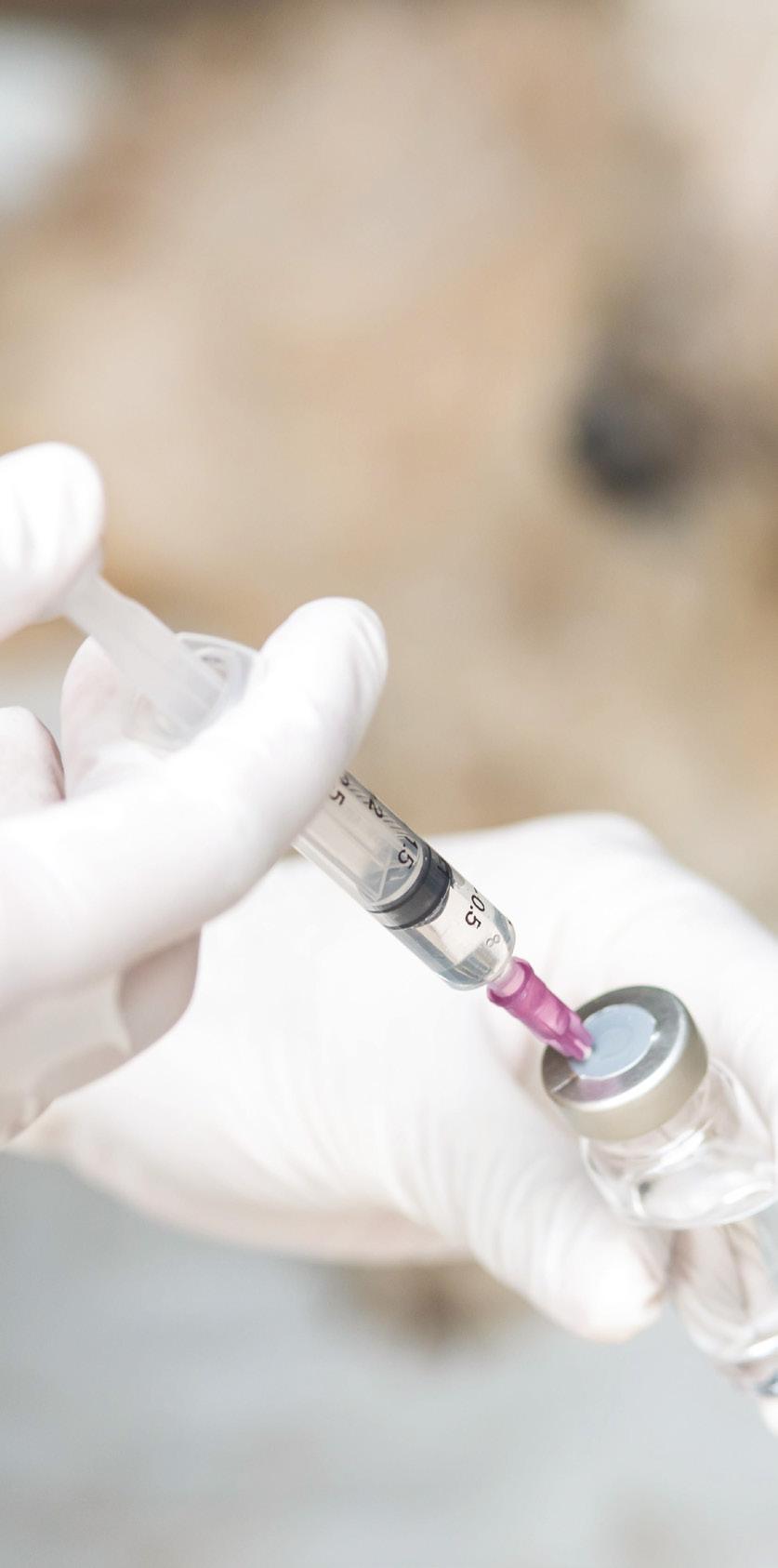
By Courtney Pierce, DVM, MBA, CCFP
Monoclonal antibodies (mAbs) provide powerful therapeutic benefits for veterinary patients. All members of the veterinary healthcare team should understand the mechanism of action behind monoclonal antibody therapy. Through understanding and the ability to navigate the science and solutions, veterinarians can fully leverage their teams in driving awareness and client communication, and maximize success in screening, diagnosis, and treatment.
The therapeutic application of monoclonal antibodies has been variously referred to as antibody therapy, biological/biologic therapy, biotherapy/biotherapeutic therapy, and immunotherapy. The body’s normal response to disease is to create antigen-specific antibodies that bind to and neutralize the disease agent. Monoclonal antibodies target a specific protein or receptor identified as the cause of the disease, for which there is no naturally occurring antibody to address the disease. mAbs work by binding to a specific protein, or to a receptor that the protein binds to, thereby neutralizing the protein’s activity.
Although newer to the veterinary field, with the first mAb approval in 2016, mAbs have been successfully used in human medicine since the 1970s to treat various diseases and conditions, including cancers, asthma, arthritis, infections, and some ocular conditions. Veterinary mAbs have been used to control osteoarthritis pain by targeting nerve growth factor (NGF) and to relieve a dog’s allergic or atopic dermatitis by targeting IL-31, a protein in the itch pathway. There is also a monoclonal antibody for parvovirus.
continued on next page >
continued from page 29
(bedinvetmab injection)
See full Prescribing Information. https://www.zoetisus.com/content/_assets/ docs/vmips/package-inserts/librelaprescribing-information.pdf
Librela is for use in dogs only. Women who are pregnant, trying to conceive or breastfeeding should take extreme care to avoid self-injection. Hypersensitivity reactions, including anaphylaxis, could potentially occur with self-injection. Librela should not be used in breeding, pregnant, or lactating dogs. Librela should not be administered to dogs with known hypersensitivity to bedinvetmab. Adverse events reported post-approval include ataxia (lack of balance/coordination), anorexia (loss of appetite), lethargy (tiredness), emesis (vomiting), and polydipsia (increased drinking). The most common adverse events reported in a clinical study were urinary tract infections, bacterial skin infections and dermatitis (skin irritation/ inflammation).
See the Client Information Sheet for more information about Librela. https://www. zoetisus.com/content/_assets/docs/vmips/ package-inserts/librela-client-informationsheet.pdf
Librela indication
Librela is indicated for the control of pain associated with osteoarthritis in dogs.

An mAb is a precise replica, like a clone of a single or mono antibody, which is generally designed to bind with only one antigen type. This specialization can help direct effective treatment while minimizing adverse effects that come with broader, less focused therapies.
mAbs are designed to mimic natural immune system function and behave like naturally occurring antibodies. In addition to their precise targeting abilities, these antibodies have significant differences, including:
• Administration: mAb therapy is administered via subcutaneous injection at the veterinary practice.
• Duration of effect: By design, mAbs have a long halflife, which means that these are longer-lasting products or solutions that do not rely on the pet owner for daily administration.
Long-acting injectable medications, including mAbs, may enhance client compliance by eliminating the need for at-home medication administration—a common treatment barrier for many pet owners. In addition to forgetting to dose their pet or failing to do so correctly, clients often struggle to safely give oral medication without significant stress and injury risk to themselves or their pet.1 In this way, injectable medications may potentially help preserve the pet-owner bond.
In addition to relieving the pet owners’ burden of care, the consistent long-duration effect of injectable medications may improve patient outcomes, which may inspire clients to continue treatment and be more proactive about their pet’s veterinary care. This enhanced engagement may be further reinforced each time the client returns to the practice for follow-up injections.
Although only veterinarians can prescribe mAb-based therapies for pets, each team member has an important part in mAbs’ adoption, application, and success for veterinary patients. These roles include:
• Client service representatives (CSRs): As the first point of contact, a CSR can start by keying in on presenting complaints such as itching, slowing down, reduced mobility, difficulty administering daily medications, and sharing pre-appointment screening materials and checklists. Alternatively, a CSR can flag potentially suitable mAb appointments by noting them on the schedule or in a patient’s chart. The CSR can also reschedule the next visit and send reminders for upcoming visits.
• Practice managers: It’s recommended that practice managers understand mAbs’ efficacy, safety, and administration. The adoption of these injectable therapies can protect the practice’s pharmacy by improving client satisfaction, creating recurring visits and revenue, and preventing profit loss to third-party pharmacies.
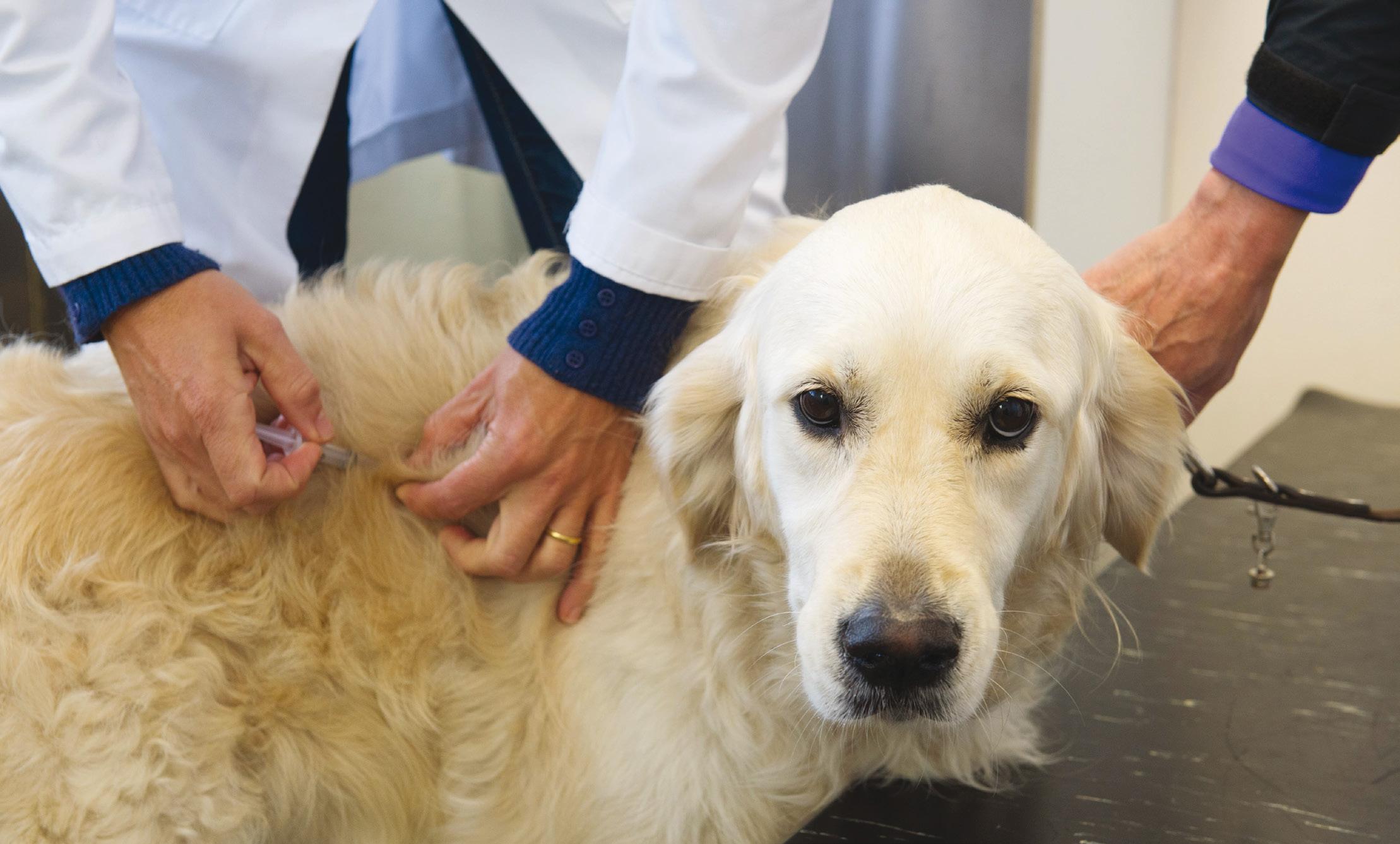
• Veterinary technicians and assistants: Technicians and assistants can review with the clients the results of the screening checklists and provide educational materials on the specific disease. A technician or assistant should ask the client to describe the issues if a patient’s chart indicates the client has had difficulties with previous treatments (such as forgetting to administer daily medications). In addition, a technician or assistant should let a client know that the veterinarian may recommend mAbs as a potential option and explain the benefits. Because follow-up injections may be conducted as technician appointments, the veterinary technician plays a key role in client education, support, and continued compliance. They will also conduct follow-up calls to assess response to treatment and uncover any issues.
• Veterinarians: The veterinarian will also educate clients about mAb benefits, highlighting the treatment’s targeted nature, how the products are approved as safe and effective, convenient, as well as other treatment options. Discussions with the pet owner regarding their ability to comply with treatment recommendations and an assessment of the dog’s temperament and overall condition should be taken into consideration when determining if an mAb is the right medication for the patient. They should remain up to date on advances and changes in disease states to ensure innovative solutions are prescribed. It’s important to keep in mind that the
team approach is critical to success when implementing treatments with mAbs.
Monoclonal antibodies are an exciting and evolving area of veterinary pharmacology. As additional target markers are discovered and the potential for more precise disease management grows, each veterinary team member should gain a thorough understanding of mAbs. They should recognize that mAbs provide dogs and cats with enhanced treatment options, increase client compliance and satisfaction, and improve patient and practice health.
Reference
1. Taylor, Samantha, et al. “Online Survey of Owners’ Experiences of Medicating Their Cats at Home.” Journal of Feline Medicine and Surgery, vol. 24, no. 12, 28 Mar. 2022, p. 1098612X2210837, https://doi.org/10.1177/1098612x221083752.
About the Author: Dr. Courtney Pierce is a graduate of North Carolina State University, where she earned her undergraduate degree in Animal Science and her doctorate in veterinary medicine. She spent 12 years in small animal general practice before joining the team at Zoetis, where she is the medical lead for Canine Pain. Dr. Pierce earned an MBA in 2022 and is a Certified Cat-Friendly Veterinarian.
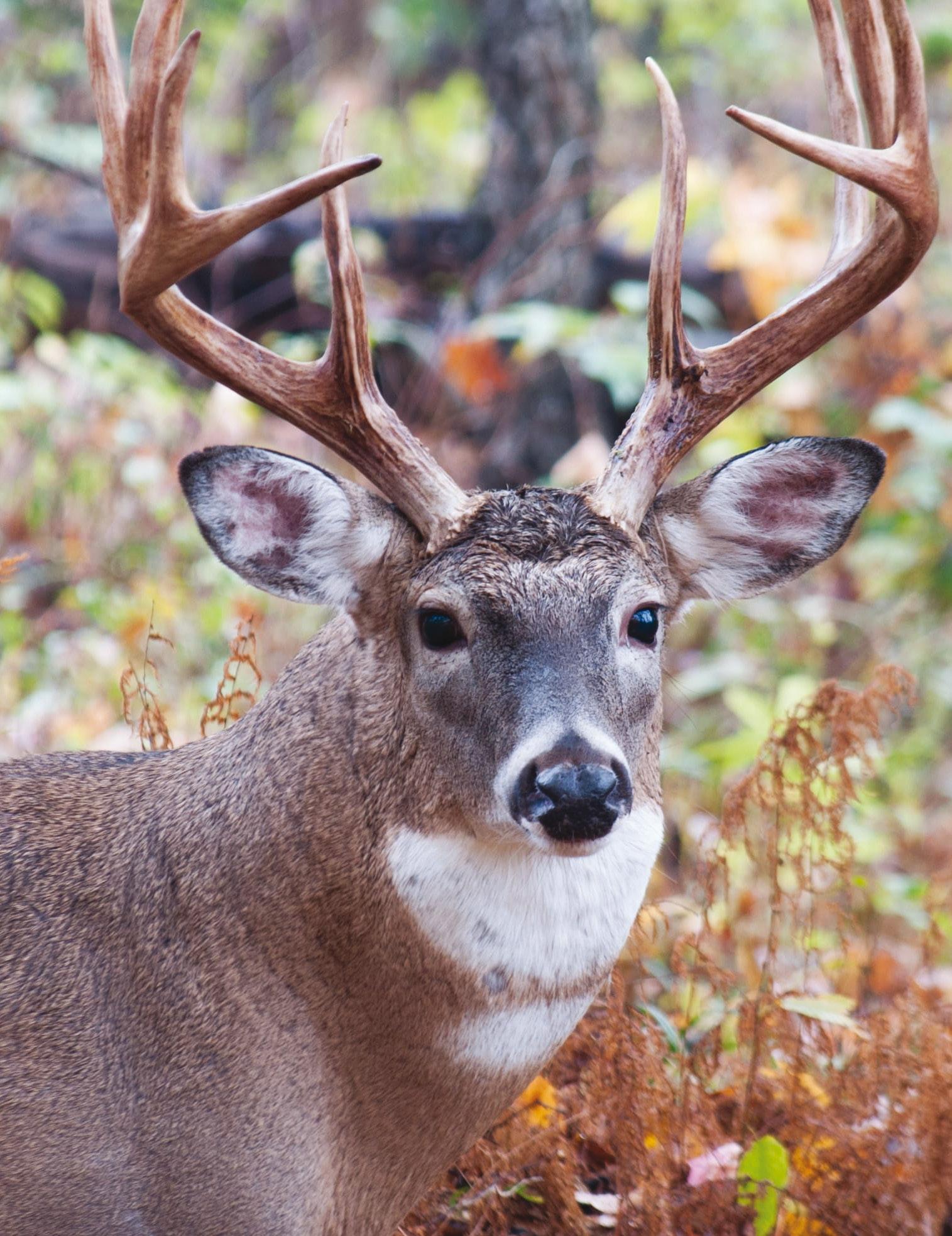

By James F. Wilson, DVM, JD
On a dark early morning in November 2025, an eight-point buck ran into my hunting partner’s ATV. The startled early-bird driver stopped and discovered a buck in the ditch with its back legs paralyzed from a broken back. He drove home in his virtually undamaged ATV, picked up his rifle, and “euthanized” the buck, thinking he had made the morally and ethically appropriate decision. He ended the poor animal’s life before it could suffer more painful consequences and, that evening, processed and froze the meat for personal consumption.
This scenario reflects a situation few Pennsylvania veterinarians encounter during their careers. However, it also points out how little most of us know about Pennsylvania laws. With the expansion of human development into wildlife habitats, incidents involving injured wild animals—particularly deer or turkeys struck by vehicles—have become more frequent. In fact, in 2024-2025, Pennsylvania was number five on the list of states with the most animal-related collisions and reported the highest number of injury claims of any state.1
Veterinarians who hunt or whose clients hunt or simply drive a car may encounter legal issues unexpectedly. This story aims to inform readers about Pennsylvania wildlife laws and outline professional responsibilities, helping to prevent inadvertent violations.
Well-known Pennsylvania regulations allow licensed veterinarians to accept injured wildlife for emergency treatment and care for up to 48 hours without the need for a wildlife rehabilitation permit.2 This authority exists to prevent unnecessary suffering when animals arrive at veterinary practices in acute distress. It permits triage, pain control, stabilization, and assessment of prognosis. Veterinarians must, however, arrange for ongoing treatment at a wildlife rehab location for care beyond 48 hours unless extended by the district wildlife conservation officer for completion of the emergency treatment. The law does not explicitly permit euthanasia. Instead, it uses the term wildlife must “not be kept alive” when it becomes evident that rehabilitation and release are impossible. It appears to everyone I have talked to that this odd verbiage means legally authorizing euthanasia.
continued on next page >
continued from page 33
A lesser-known Pennsylvania law pertaining to the deceased buck in this story says it is illegal for any person to “kill” or “possess or use any game or wildlife contrary to [this law].”3 Further sections of this law say that “authorized individuals” may euthanize critically injured game or wildlife when it is reasonable to believe that the chance of survival is minimal or the injured wildlife poses a threat to human safety. The surprise here is that “authorized individuals” includes veterinarians along with wildlife conservation officers. This provides licensed veterinarians with a second legal source for legally euthanizing wildlife.
Why am I aware of this law? Several days after my hunting partner harvested the buck, a warden stopped by asking him to describe the event. An accurate story of the buck running into the ATV was provided. As hunters will attest, this is one of those rare “deer rams ATV” stories to be told around the hunting camp. The ATV was barely damaged. However, the ethical hunter’s pride was smashed when the warden issued a ticket and confiscated the antlers and vacuum-packed venison in his freezer. Lots of work for nothing—and a painful fine to boot.
What neither of us knew was that after legally terminating the life of the buck, further Pennsylvania law addresses possession of the carcass.4 If the motorist who hits a deer or the veterinarian who euthanizes it intends to keep the deer, process it, and keep it for personal use, they must first call the PA Game Commission at 1-833-PGC-HUNT within 24 hours for permission. During that call, assuming someone answers the phone, they can request a free authorization number with a permit to possess and harvest the dead animal. As my startled ATV buddy discovered, failure to do this was a violation of PA law.
1. Veterinarians are authorized to euthanize injured wildlife.
This is a great example of doing what was morally and ethically right for the injured buck, but being unaware of the legal consequences. The same legal requirements apply to wild turkeys.
So, if any of you PVMA members who hunt white-tailed deer and love venison and those tough, dry, wild turkey breasts want to preserve these protein sources without risking the wrath of a warden, please spread the word.
References:
1. CarPro. State Farm: Worst states for animal collisions in 2024-2025. Published Oct 8, 2025. Accessed March 13, 2026. Available at https:// www.carpro.com/blog/state-farm-worst-states-for-animal-collisionsin-2024-2025.
2. PA Code § 147.302. b and 3.
3. Title 34 Pa. C.S.A § 2307(a), (d) and (f).
4. PA Code § 247.142 Wildlife Disposition.
About the Author: Dr. Wilson graduated with a DVM from Iowa State University in 1967 and a JD from UCLA in 1973. His experiences range from farm boy and deer hunter (70 years) to practice owner and medical director (Penn). He has served as an expert witness, an itinerant professor at 22 schools, and a proud member of the PVMA Legislative and Regulatory Affairs Committee for 22 years. He enjoys educating his profession about veterinary and animal law.
2. If a deer or turkey is euthanized (or killed in an accident) and an individual wants to process the carcass for personal consumption, they must contact the PA Game Warden to obtain permission.
Published online at https://www.buhrig.com/obituaries/dr-max-van-buskirk-jr
Dr. Max Anthony Van Buskirk, Jr., 93, completed his life journey at Messiah Village, Mechanicsburg, PA, on December 26, 2025.
Born on June 27, 1932, in Winfield, PA, Max was the son of Janet Geise Van Buskirk and Max A. Van Buskirk, Sr. In his formative years, he learned to hunt, fish, and trap, pastimes he subsequently shared with some of his children. He helped his mother run a small turkey farm and later found work with his grandfather's construction business, where he developed an aptitude for woodworking and carpentry.
Upon completing 8th grade at the one-room schoolhouse in Kelly Township (Union County), Max attended Lewisburg High School, where he was active in sports and choral music, often as a featured vocalist. The coincidence of alphabetical seating in the classroom sparked a lifelong friendship for Max with the young woman seated behind him, Mary Jane Webber.
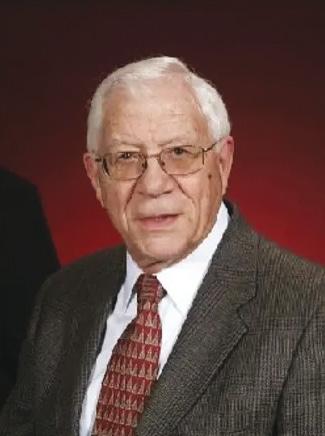
An avid outdoorsman interested in wildlife preservation and land management, Max planted thousands of trees and built miles of trails over his lifetime. In 1965, he purchased land in western Union County with a vision for what it might become. Beginning with nothing more than fields and trees, Max worked tirelessly with family members to create a place where four generations have gathered to celebrate birthdays, a wedding, reunions, holidays, and, most often, time together. It was indeed Max’s “happy place.”
Max cherished his time with each family member, demonstrating an uncanny ability to be present for young and old alike. A great storyteller, he was always available for a game of cards and remained a formidable Scrabble player until the end. He was also an accomplished woodworker and made furniture/ toys for each of his children, grandchildren, and most of his greatgrandchildren, much of it from wood he harvested himself.
Max and Mary enrolled at Bucknell University in 1949. The first in his family to attend college, Max commuted by bicycle and worked part-time while majoring in biology. Both he and Mary participated in the Chapel Choir. Max left Bucknell after three years to enter the University of Pennsylvania’s School of Veterinary Medicine. He and Mary were married on August 30, 1953.
In 1956, Max completed his veterinary studies at Penn and returned to Lewisburg, where he was instrumental in building and then owning the Lewisburg Veterinary Hospital, a mixed practice for large and small animals.
Max proved to be an able and curious surgeon, often employing state-of-the-art procedures to care for sick or disabled pets. He was active in professional associations, serving as president of both the United States Animal Health Association and the Pennsylvania Veterinary Medical Association. In 1965, he traveled with a group of veterinarians on a People-to-People Tour of veterinary establishments in Europe and the USSR.
In 1980, Max was appointed the Director of the Bureau of Animal Industry for the state of Pennsylvania, a position he held for 17 years. In 1983-1984, he successfully addressed a serious avian influenza outbreak as co-director of the state/federal task force, earning him recognition as PVMA Veterinarian of the Year. He later served on the USDA Secretary’s Advisory Committee on Foreign Animal Diseases and, at retirement, was honored with the PVMA Distinguished Veterinary Service Award.
Through the years, Max remained active musically, singing in the Susquehanna Valley Chorale, performing in a barbershop quartet, and lending voice to the church choirs at St. John’s UCC in Lewisburg and the Colonial Park UCC in Harrisburg.
Max always appreciated Frank Sinatra’s rendition of “My Way.” Reflecting on his life in his later years, he found comfort in knowing he had done it “his way.”
Max is survived by five children: Peter (Mischelle) of Lancaster, Margaret of Lemoyne, Ruth Skonecki (Edmund) of Mechanicsburg, John (Laurence) of Worton, MD, and Mark (Michelle) of Richmond, IN; fifteen grandchildren: Jennifer Eaton (Jeff), Heidi Van Buskirk (Liz Peitzman), Kyle Van Buskirk (Krista), Taiyo Asano (Karena), Mori Asano, Aaron Skonecki, Owen Skonecki, Rachel Skonecki, Leo Van Buskirk, Luc Van Buskirk, Tess Van Buskirk, Ethan Van Buskirk, Christian Max Van Buskirk, Maia Van Buskirk, and Danielle Dafler; nine great-grand-children: Callen Wendler, Sophia Eaton, Carys Eaton, Avery Peitzman-Van Buskirk, Juniper Peitzman-Van Buskirk, Niko Asano, Rumi Asano, Otis Van Buskirk, and Noah Callahan; a brother, William Van Buskirk (Conesus, NY) and sister, Annette Weiser (Lewisburg, PA); and a brother-in-law, William R. Webber (Burlington, NC).
Max was preceded in death by his wife of 68 years, Mary Jane Webber Van Buskirk, sister Joan Gemberling, brother Clayton (“Cork”) Van Buskirk, and grandson Jonathan Skonecki.
A celebration of Max’s life took place at 11:00 AM on January 31 at the Colonial Park United Church of Christ in Harrisburg, preceded by a visitation with family at 10:00 AM.
In lieu of flowers, contributions in Max Van Buskirk’s memory may be made to Messiah Lifeways Endowment for Benevolent Care.

Conestoga, PA | Full or Part-Time
We are looking for an enthusiastic full or part-time veterinarian to join our vibrant one to two-veterinarian small animal practice. Excellent pay and benefits (benefit packages can be tailored to meet your needs). Great hours (no weekends, no after-hours emergencies). We can make a schedule to fit your life. Fantastic location in Lancaster County, PA, near major metropolitan areas. We practice high-quality medicine in a country setting with a highly experienced staff. This job offering is perfect for a new graduate or an experienced veterinarian. There is as much mentorship as you need and want. We are not corporate. We enjoy our time off to enjoy life. This is the perfect practice to grow as a veterinarian and to practice veterinary medicine the way you always wanted. You have to meet us to see all the possibilities.
Contact: Email deblandis@yahoo.com or call 717-917-3249.
Ottsville, PA | Full Time
Retiring veterinarians in two separate practices located in Bucks County, PA, are looking for the right person to take over these two practices and provide services for small and large animals, with a vision to develop one integrated business. This person needs the following qualities: Two+ years of experience, an interest in nutrition, and competency in medical and surgical skills. For service to small animal clients, experience or willingness to learn skills in acupuncture, chiropractic, and laser therapy. Strong people skills and the desire to provide highquality services. For more detailed information, contact Ron Feindt, VMD, at 215-669-0890 or drronvmd@ptd.net.
Pittsburgh, PA | Full Time
Managing Veterinarian opening at Pittsburgh Premier Veterinary Care. Join our newly renovated, state-of-the-art facility in Penn Hills as a Managing Veterinarian! Lead a skilled team at our two-doctor practice offering advanced diagnostics, surgery, dentistry, and rehab services. You’ll guide medical protocols, mentor staff, and collaborate on growth initiatives while enjoying a flexible caseload tailored to your interests. No weekends or on-call. Salary: $115K–$135K + production bonus. Full benefits: health, CE, licenses, liability, 401K match, and more. Be part of Pittsburgh’s veterinary future. Just 15 minutes from downtown. Please call Kelli Dowhaniuk at 818-309-3709 and/or email Kelli.Dowhaniuk@nva.com.
Monroeville, PA | Full Time
Murrysville Veterinary Associates (Monroeville, PA). Join our AAHA-accredited, Fear Free-focused hospital in Pittsburgh’s eastern suburbs. Murrysville Veterinary Associates seeks
another veterinarian to practice high-quality medicine alongside a collaborative, six-doctor team. Interested in urgent care? We offer optional prompt care appointment blocks—ideal for vets who enjoy fast-paced cases without the chaos of ER work. Enjoy a four-day work week, flexible scheduling, and opportunities in exotics, acupuncture, and mentorship. Compensation: $120K–$135K base, production bonuses, signing bonus, full benefits, CE support, and relocation assistance. Thrive in a supportive environment where your skills and schedule are respected.
Please call Kelli Dowhaniuk at 818-309-3709 and/or email Kelli.Dowhaniuk@nva.com.
St. George Hunt Memorial Veterinary Hospital has proudly served the Villanova, PA community for over 25 years and is seeking a dedicated Associate Veterinarian to join our Fear Free, cat-friendly team. Our newly renovated, state-of-the-art hospital supports exceptional patient care and collaboration. We prioritize compassionate medicine, client education, and outstanding service. We offer competitive compensation with production opportunities, sign-on and retention bonuses, CE allowance, paid parental leave, and a 401(k) with match. Located near the Main Line and Radnor Trail, our practice blends innovation, comfort, and community for veterinarians to thrive. Please call Kelli Dowhaniuk at 818-309-3709 and/or email Kelli.Dowhaniuk@nva.com.
We are looking for an enthusiastic full or part-time veterinarian to join our vibrant one to two-veterinarian small animal practice. Excellent pay and benefits (benefit packages can be tailored to meet your needs). Great hours (no weekends, no after-hours emergencies). We can make a schedule to fit your life. Fantastic location in Lancaster County, PA, near major metropolitan areas. We practice high-quality medicine in a country setting with a highly experienced staff. This job offering is perfect for a new graduate or an experienced veterinarian. There is as much mentorship as you need and want. We are not corporate. We enjoy our time off to enjoy life. This is the perfect practice to grow as a veterinarian and to practice veterinary medicine the way you always wanted. You have to meet us to see all the possibilities. Contact: Please call Deborah Landis at 717-917-3249 and/or riverhillsvet@comcast.net.
Join our compassionate, capable, and collaborative team at the Animal Hospital on the Golden Strip! We’re a respected small-animal practice in a brand-new facility, offering flexible scheduling and strong mentorship for any career stage. Enjoy a supportive technical team, modern equipment, and the

opportunity to expand services based on your interests. We offer a $25,000 sign-on bonus, competitive salary, and the potential for future joint ownership through our JV Pathway to Partnership. No on-call, a typical four-day workweek, and excellent benefits make this a rewarding, balanced career opportunity in a friendly Pennsylvania community.
Contact: Please call Kelli Dowhaniuk at 818-309-3709 and/or email Kelli.Dowhaniuk@nva.com.
Join our Team at Camboro Veterinary Hospital! Located in Edinboro, PA, near scenic Lake Erie, Camboro Veterinary Hospital is seeking a Managing Veterinarian/Medical Director to lead our dedicated team. Joint ownership opportunities are available for interested candidates. In this role, you’ll oversee medical practices, manage a team of veterinarians, ensure regulatory compliance, and contribute to the financial success of the hospital. You’ll enjoy a competitive salary, management bonus, four-day work weeks, health benefits, 401(K) matching, and more. Edinboro offers small-town charm with access to outdoor activities and nearby cities like Pittsburgh, Cleveland, and Buffalo. Join us for a rewarding career! Contact: Please call Kelli Dowhaniuk at 818-309-3709 and/or email Kelli.Dowhaniuk@nva.com.
Chambersburg Animal Hospital, a full-service pet hospital, is seeking a full-time Associate Veterinarian with an interest in dentistry, surgery, or emergency. Join our six-doctor team in our state-of-the-art facility, offering in-house labs, digital X-ray, ultrasound, and laser surgery. We prioritize collaboration, mentorship, and continuing education. Enjoy limited evening/ weekend hours, no emergency shifts, and a competitive salary with excellent benefits including health insurance, 401(K), and paid time off. Licensure in PA required. Come be a part of our compassionate team!
Contact: Please call Kelli Dowhaniuk at 818-309-3709 and/or email Kelli.Dowhaniuk@nva.com.
Pittsburgh, PA | Full Time
Holiday Park Animal Hospital, located on the Golden Mile Highway, is a full-service animal hospital providing comprehensive healthcare services. Our facility includes inhouse testing for accurate diagnosis, digital x-ray, ultrasound, surgical suite, dental suite, pharmacy, and more. We are looking for an enthusiastic and passionate Veterinarian to help us continue to grow. Our ideal candidate has strong communication skills, is team-oriented, and excited to help our vibrant practices excel in our community. If you want a place where your passion and skills are valued, where your feedback, input, and ideas are heard, then apply today! Contact: Please
call Kelli Dowhaniuk at 818-309-3709 and/or email Kelli.Dowhaniuk@nva.com.
Chambersburg, PA | Full Time
Join our Team at Best Friends Animal Hospital! Are you a compassionate veterinarian looking to make a difference in the lives of pets? Best Friends Animal Hospital is seeking a dedicated vet to join our dynamic, three-doctor team. We offer state-of-the-art facilities, including five exam rooms, digital x-rays, ultrasound, and more. Enjoy a supportive work environment focused on collaboration and care. Benefits include a competitive salary, health coverage, 401K, paid vacation, student loan assistance, and continuing education. If you're passionate about providing exceptional care and building relationships with pets and owners, we’d love to hear from you. Apply today!
Contact: Please call Kelli Dowhaniuk at 818-309-3709 and/or email Kelli.Dowhaniuk@nva.com.
Wellsboro Small Animal Hospital, a privately owned multidoctor practice, seeks a dedicated Associate Veterinarian to join our team, delivering exceptional care through services like routine care, surgery, dentistry, digital radiography, ultrasound, and CT scans. Partnered with board-certified specialists, we offer mentorship or independence, a collaborative environment, and support for your professional growth. Enjoy a competitive salary, sign-on bonus, flexible schedule, generous vacation, fully paid health/dental/vision insurance, 401K match, CE stipend, and covered licensing/memberships. New grads and experienced vets welcome. Submit your resume to Dr. Jonathan Salevsky at mgmtwsah@ptd.net or jonathan.salevsky@wsahvmc.com. 12043 Route 287, Middlebury Center, PA 16935. Call (570) 376-2800.
Spay Neuter Veterinarian for Wellness practice near Pittsburgh. If you love surgery, this is the spot for you! Spays, neuters, vaccinations, and dental procedures to promote the health and well-being of our community’s pets. Work with experienced technicians and support staff. Day shift Monday through Friday. No emergencies. Requirements: DVM from an accredited institution, current and valid veterinary license in PA. Commission-based salary with a guaranteed minimum. Benefits—PTO for vacation, holidays, and C.E. Health Insurance includes medical, dental, vision, life, and accident. Retirement plan matched 401K and IRA. Paid licensing and liability insurance. Employee discount. Preferred contact: email Dr. Thompson. Contact Dr. Mike Thompson by email at spaygod@gmail.com or by phone at 928-699-2195.
classified ads continued from page 37

Trucksville, PA | Full or Part Time
Busy, small animal and exotics practice is looking for a full or part-time veterinarian to help us with our busy caseload. We have a capable and friendly staff, dedicated clients who want the best for their pets, and a hospital equipped with digital x-ray, ultrasound, laser surgery and therapy, and in-house lab. Benefits include paid time off, healthcare, paid sick days, bonuses, and a higher-than-average salary. The schedule will be as flexible as needed to meet your and our needs. We are close to many outdoor recreational areas as well as entertainment venues. Looking forward to meeting you! Call Dr. Stair at 570-407-3925 or contact us at firstchair@aol.com.
Huntingdon, PA | Full Time
Associate Veterinarian (one-two Positions)
Huntingdon Veterinary Service and Spruce Street Animal Clinic seeks one to two Associate Veterinarians to join our established, client-focused practice near Raystown Lake and State College. Choose a mixed animal role with large animal on call (no small animal emergencies) or a small animal only position with no on call. Large animal service focuses on dairy, but includes small ruminant, equine, and beef clients. We offer competitive salary, flexible scheduling, strong mentorship, PTO, CE allowance, licensing coverage, health stipend, and retirement contributions. Enjoy a supportive team, loyal clients, and an affordable, outdoor friendly community. Please call John Brockett at 814-644-5118 and/or email huntingdonvetservice@gmail.com.
York, PA | Full or Part Time
Petz R Us Express Care in York, PA, is seeking a Full-Time or Part-Time Associate Veterinarian to join our growing team! We are a privately owned urgent care facility offering walk-in services, surgery, and wellness care, including spays, neuters, and vaccinations. Our modern, state-of-the-art facility features four fully equipped exam rooms, digital X-rays, ultrasound, and a surgical suite. We are open Thursday–Monday, 8 am–8 pm, with no overnight shifts, supporting excellent work-life balance and flexible scheduling. Competitive compensation ranges from $60K (1 -12 shift) to $180k (3-12hr Shifts) annually. Join a collaborative team dedicated to high-quality, compassionate community pet care. Please call Sabrena at 443-676-8132 and/or email sabrenavt@aol.com.
Danville, PA | Full Time Full-Time Veterinarian Wanted
Join our progressive small animal hospital and become part of a supportive, team-oriented environment. We offer modern equipment, experienced staff, and a loyal client base. Enjoy practicing high-quality medicine with the autonomy to grow your skills and interests. Competitive salary, benefits package, continuing education, and excellent work-life balance are
included. New graduates and experienced veterinarians welcome. Strong communication skills and compassion for patients and clients are essential.
Apply today to join a practice that values excellence, teamwork, and exceptional patient care. Please call Stacey at 570-275-6064 and/or email practicemanager.acc@gmail.com.
Bucks County, PA
Highly profitable general SA practice, with over $800k in collections and very strong profit margins over 303%. Strong history of quality veterinary care since the 1980s. Strong brand and reputation. Growing rapidly at 15 patients per month, with room to expand service offerings. Efficient clinical support team. Hospital building is the newest and most modern in the area due to its recent move in 2025. Don’t miss your opportunity to own this well-established and growing veterinary practice! Contact Rohit Malhotra at 234-353-3268 or rohit@omni-pg.com for more information. (Omni Practice ID: PAV101)
Upper Darby Township, PA
Offered at $700,000, this turn-key veterinary hospital includes RE, equipment, a rare 1,500-sf exercise yard, and an established client database from a retiring single owner. Highly visible central location with ample parking. Stand-alone facility. Multiple revenue streams, including comprehensive medical care, professional grooming services (with sedation), and airconditioned boarding facilities capable of serving both small and exotic pets. Currently operating below capacity; room for growth. Fully staffed seven days per week.
Contact Jeff Haas at 206-280-5997 or jeff.haas@omni-pg.com for more information. Lic.#RS374763 (Omni Practice ID: PAV102)
Centre County, PA
Thriving small animal hospital in an excellent location along a major east-west highway with over 13,000 vehicles passing daily! 2,600-square-foot leasehold facility with two exam rooms and potential for a third. Full X-ray suite, an isolated surgery suite, and advanced diagnostic, ultrasound, and dental capabilities. Steady year-over-year growth. Current gross revenue over $744K with a solo DVM and appointments offered only on weekdays. Room for multiple doctors. Negotiable post-sale employment available. With proximity to Penn State University, the surrounding region offers a stable, educated population, toprated schools, abundant outdoor recreation, and a high quality of life. (Listing PA12). Contact PS Broker: 800-636-4740 | info@psbroker.com | https://go.psbroker.com/PA12







When a pet’s condition is difficult to diagnose or manage, internal medicine provides the answers needed to move forward with confidence.
Led by Dr. Damon B. Rodriguez, DVM, DACVIM, the Internal Medicine department focuses on identifying the underlying causes of illnesses and providing targeted treatment plans, not just treating symptoms. Through careful history taking, a detailed physical exam, and a thoughtful diagnostic approach utilizing cutting edge technology, Dr. Rodriguez is able to find solutions and a plan for families desparately looking for answers for their loved ones.
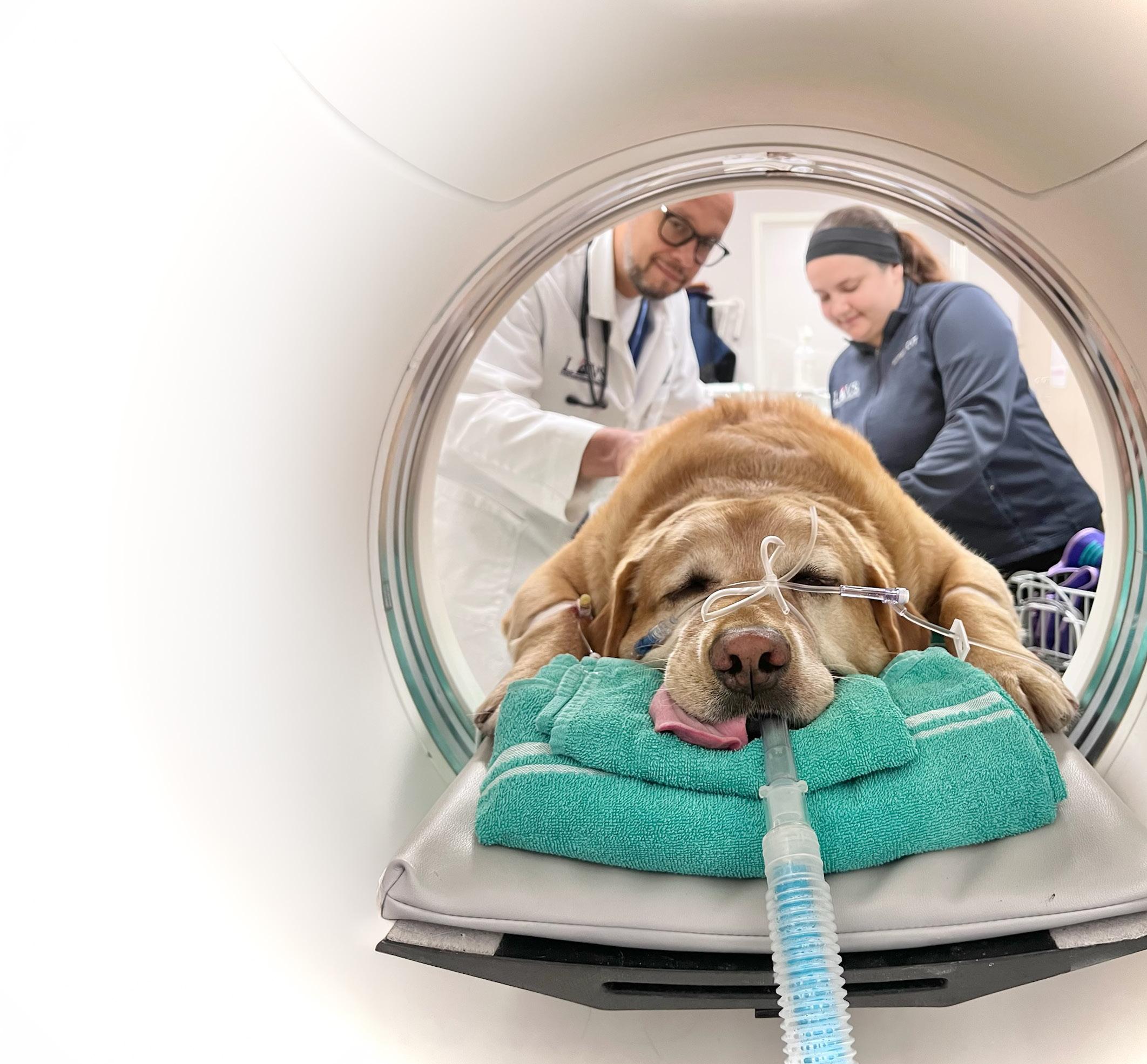
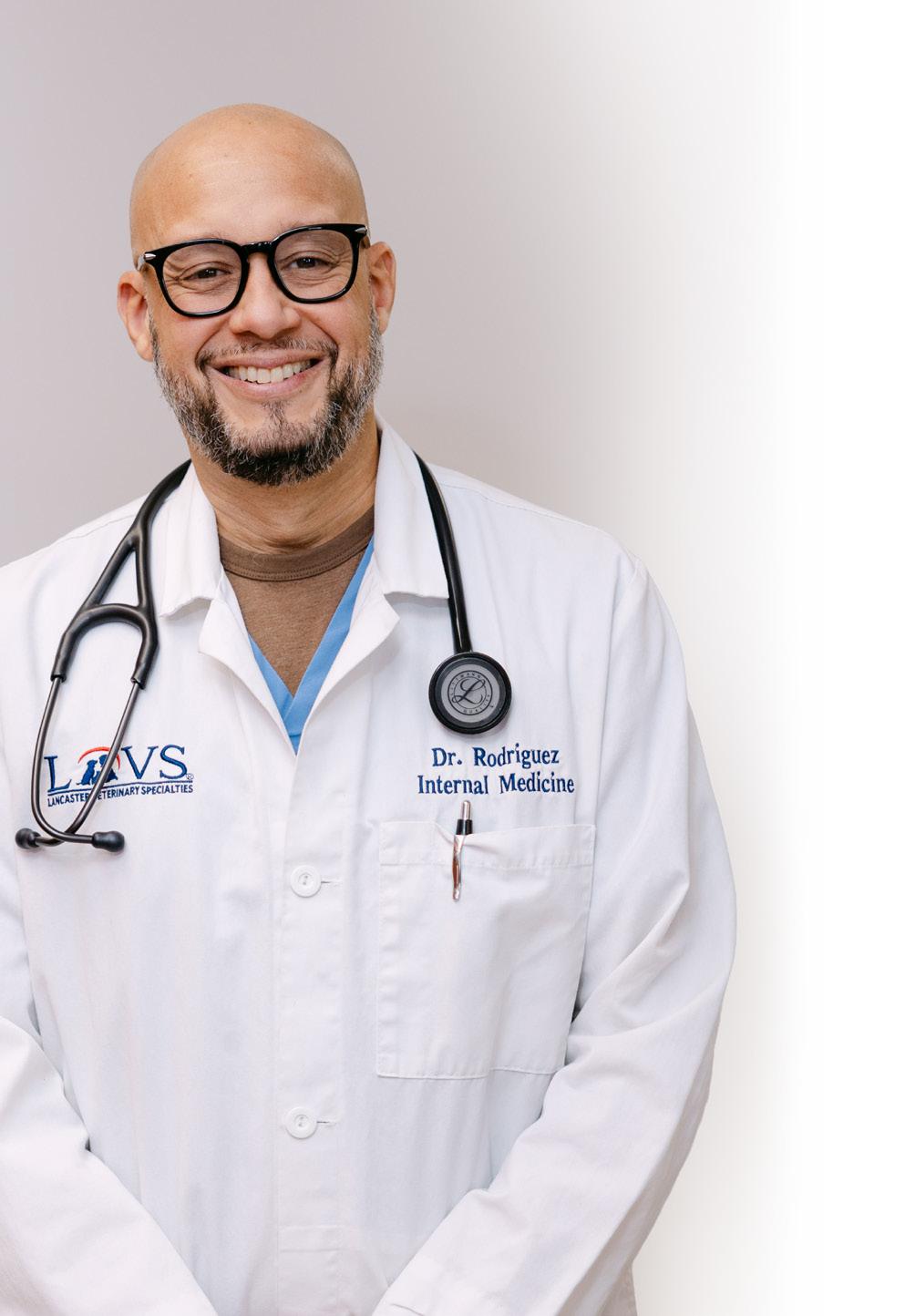
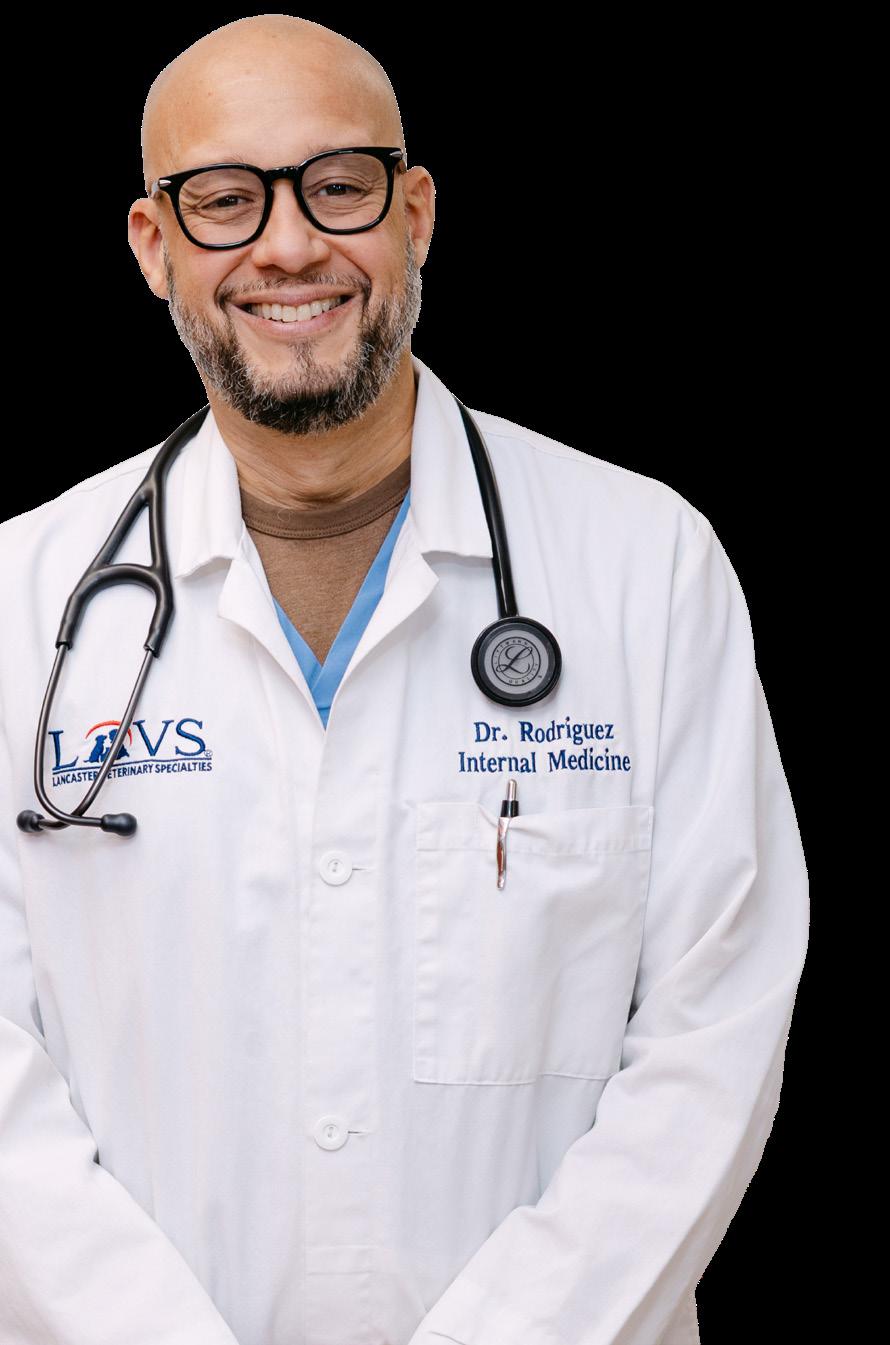
OUR SERVICES INCLUDE:
• Advanced diagnostic imaging, including abdominal and thoracic ultrasounds, CT scans, and contrast digital radiographic studies
• Specialized diagnostic procedures such as GI endoscopy, bronchoscopy, rhinoscopy and uroscopy
• Ultrasound guided fine needle aspirates and biopsies
• Expert medical management for chronic and concurrent complex conditions
• CT guided tissue sampling
• Feeding tube placement
• Bone Marrow aspirates and biopsies
With a commitment to precision, collaboration, and compassionate care, we partner with referring veterinarians and pet owners to ensure every patient receives the highest level of specialized treatment.
For referring veterinarians, LVS serves as an extension of your practice. We prioritize collaboration, timely communication, and detailed medical reporting to ensure continuity of care and confidence at every step.
Call 717-347-0838 to consult or refer today.