WINTER 2026
Medical record BERKS COUNTY MEDICAL SOCIETY
Your Community Resource for What’s Happening in Healthcare
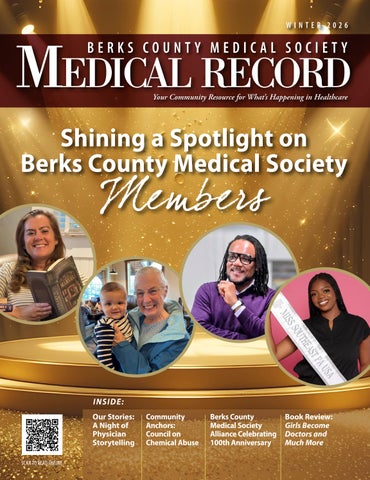
Shining a Spotlight on Berks County Medical Society
Members
INSIDE: Our Stories: A Night of Physician Storytelling SCAN TO READ ONLINE
Community Anchors: Council on Chemical Abuse
Berks County Medical Society Alliance Celebrating 100th Anniversary
Book Review: Girls Become Doctors and Much More
DISCOVER
Your new digital gateway to the latest WellSpan advances. With articles, research updates and exclusive insights tailored for physicians, MacroScope is our new content platform to inform and inspire. We look forward to sharing medical innovations, clinical research and new technologies that will empower and inform your professional journey. • Stay up to date: Keep abreast of the latest developments across various specialties. • Gain insights: Benefit from expert analyses and studies that can directly impact your practice. • Expand your network: Connect with other experts shaping the future of healthcare.
Magazine
For another healthy dose of valuable medical content, subscribe to our companion publication. Complete the subscription form on MacroScope online for delivery to your home or office three times a year.
MacroScope.WellSpan.org
GROW YOUR
MEDICAL YOUR PATH TO GROWTH STARTS PRACTICE WITH A TRUSTED PARTNER. WITH PROVEN RESULTS
WHAT WE CAN DO FOR YOUR PRACTICE:
At MADJ, we specialize in helping medical practices and health systems of all sizes thrive in competitive landscapes. From small beginnings to significant success, our tailored strategies have transformed healthcare providers into community cornerstones. CASE STUDY HIGHLIGHTS: 3x Growth in Practice Size: From 2 physicians and 6 staff to 4 physicians, 3 PAs, and 15 support staff. 59,000+ Annual Website Visits: A leap from just 1,500 visits annually pre-strategy. Enhanced Reputation: Built trust and recognition as a leading name in patient care. SPONSORED ADVERTORIAL CONTENT
01
Modern Website Design & SEO to connect you with more patients.
02
Targeted Digital Advertising to focus on the conditions and procedures you specialize in.
03
Reputation Management to showcase your excellence and build trust in your community.
97
04
Social Media Engagement to create a personal connection with patients.
1k
If you’re ready to iMADJine the possibilities for your medical practice, let’s start the conversation today.
SCAN HERE FOR THE FULL CASE STUDY
marketing 484-336-4341 success@madjmarketing.com madjmarketing.com
Contents
Medical record BERKS COUNTY MEDICAL SOCIETY
A Quarterly Publication
To provide news and opinion to support professional growth and personal connections within the Berks County Medical Society community.
Features
WINTER 2026
Berks County Medical Society MEDICAL RECORD D. Michael Baxter, MD, Editor
8
Editorial Board
D. Michael Baxter, MD Lucy J. Cairns, MD Daniel Forman, DO Shannon Foster, MD William Santoro, MD Raymond Truex, MD Beth E. Gerber, IOM
Shining a Spotlight on Berks County Medical Society Members
Berks County Medical Society Officers Ankit Shah, MD President Olapeju Simoyan, MD President Elect Daniel Edwards, DO Treasurer William Santoro, MD Immediate Past President Secretary & Delegation Chair
Directors Advocacy Chair: D. Michael Baxter, MD Collegiality Chair: Pauletter Dreher, DO Early Career Physician Chair: Caitlyn Moss, MD Education Chair: Lucy Cairns, MD Medical Record Editor: D. Michael Baxter, MD Medical Student Chair: Peter Aziz (one-year term) Residency Chair: Fatima Khalid, MD (one-year term) Eve Kimball, MD Jacob Lucas, DO Amogh Nagol, student (one-year term) Osadebamwen ‘Deb’ Osaghae, MD, resident (one-year term) Wei Shaw, DO Mansi S. Vasconcellos, MD*, BCMS Alliance President
Staff Beth E. Gerber, IOM Executive Director * designates non-voting member
Berks County Medical Society 2669 Shillington Rd., Suite 501, Sinking Spring, PA 19608 (610) 375-6555 • (610) 375-6535 (FAX) info@berkscms.org • www.berkscms.org The opinions expressed in these pages are those of the individual authors and not necessarily those of the Berks County Medical Society. The ad material is for the information and consideration of the reader. It does not necessarily represent an endorsement or recommendation by the Berks County Medical Society.
7
Berks County Medical Society 1824 Journal Club
In Every Issue
12 Advocacy Update
5
President’s Message
13 The Foundation of the Pennsylvania Medical Society: 70 Years of Support
6
Editor’s Notes
14 Our Stories: A Night of Physician Storytelling
22 Resident Rounds
16 Community Anchors 24 Student Vital Signs
18 The Pennsylvania Non-Opioid Directive: Empowering Patients to Say No 20 Berks County Medical Society Alliance Celebrating 100th Anniversary 21 Book Review: Girls Become Doctors and Much More 23 Welcome New Member 26 In Memoriam 29 Summer 2026 Berks County Medical Society’s Pat Sharma President’s Scholarship 30 BCMS News & Events
Berks County Medical Society – BECOME A MEMBER TODAY! Go to our website at www.berkscms.org and click on “Join Now.”
Content Submission: Medical Record magazine welcomes recommendations for editorial content focusing on medical practice and management issues, and health and wellness topics that impact our community. However, we only accept articles from members of the Berks County Medical Society. Submissions can be photo(s), opinion piece or article. Typed manuscripts should be submitted as Word documents (8.5 x 11) and photos should be high resolution (300dpi at 100% size used in publication). Email your submission to info@berkscms.org for review by the Editorial Board. Thank YOU!
Manuscripts offered for publication and other correspondence should be sent to 2669 Shillington Rd, Sinking Spring, PA 19608, Ste 501. The editorial board reserves the right to reject and/or alter submitted material before publication.
Hoffmann Publishing Group 2669 Shillington Road, #438, Sinking Spring, PA 19608
The Berks County Medical Record (ISSN #0736-7333) is published four times a year by the Berks County Medical Society, 2669 Shillington Rd, Sinking Spring, PA 19608, Ste 501. Subscription $50.00 per year. Periodicals postage paid at Reading, PA, and at additional mailing offices.
w w w. H o f f p u b s. co m
POSTMASTER: Please send address changes to the Berks County Medical Record, 2669 Shillington Rd, Sinking Spring, PA 19608, Ste 501.
©2026 All right reserved. No portion of this publication may be reproduced electronically or in print without the expressed written permission of the publisher.
Hoffmann Publishing is the official publisher of the Berks County Medical Society’s Medical Record magazine. For advertising opportunities contact: Ad Sales at Sales@HoffPubs.com or 610.685.0914 x715
President’s Message
The Power of Participation:
Why Your BCMS Membership Matters Ankit Shah, MD, FACEP, FAAEM, FAMIA President
B
efore I begin, I would like to offer a gentle reminder to renew your Berks County Medical Society (BCMS) membership and to encourage your colleagues to renew or join as well. Please note that Pennsylvania Medical Society (PAMED) has moved the renewal deadline to February 1st, so I encourage everyone not to delay. One of the questions I am asked most frequently when speaking with friends and colleagues is a simple but fair one: “Why?” Why should I spend my money to join BCMS, and what do I gain from membership? This question is especially understandable given the competing demands on both CME funds and personal resources. My response usually begins with the most tangible benefit. First and foremost, BCMS membership provides access to high-quality, no-cost CME from the comfort of your own home. Whether it is mandatory training such as child abuse reporting or opioid education, or more specialized offerings like physician journal clubs, these opportunities are both practical and time efficient. Being able to complete CME requirements remotely—sometimes quite literally in your pajamas—can significantly improve work-life balance in an increasingly demanding profession. Beyond these direct benefits, BCMS offers something more abstract but equally important: a collective voice for Berks County physicians. Pennsylvania is heavily influenced by its two largest cities, in sports and otherwise, and this reality extends into physician advocacy and policymaking. Increasing BCMS membership numbers strengthens our representation at the state level, including within the Pennsylvania legislature and PAMED’s House of Delegates. Without a strong and unified county medical society, the voices of our two teaching hospitals, as well as the many satellite practices of other health systems throughout Berks County, risk being overlooked. Another critical benefit of membership is support related to medical liability and legal education. While malpractice is an unfortunate reality of practicing medicine, recent changes—such as the 2023 Change in Venue rules—have increased the importance of having reliable legal resources readily available. Through partnerships between BCMS and PAMED, members have access to educational tools and guidance designed to help physicians navigate these stressful and high-stakes situations. Additional benefits include timely public health advisories, opportunities to engage directly with legislators, and access to broader professional resources. However, one of the most meaningful advantages of BCMS membership is collegiality. In an era where administrative burdens and productivity demands limit our interactions with one another, BCMS provides a rare opportunity to build relationships across specialties and health systems—connections that might not otherwise exist. Finally, given the challenging financial and regulatory outlook of healthcare, having a strong local organization that amplifies our needs at the state and national levels is more important than ever. The BCMS executive board, me included, is always available to listen, guide, and support our members. Emails, texts, or phone calls are always welcome—whether you are a current member or considering joining—whenever support or guidance is needed.
WINTER 2026
|
5
Editor’s Notes
SACRED HONOR by D. Michael Baxter, MD, FAAFP Editor, the Medical Record
I
n this issue of the Medical Record, we celebrate us, members of the Berks County Medical Society (BCMS), and well we should. As we celebrated this past year, during the 200th Anniversary of the BCMS, we are one of the very first medical societies formed in America and we have a rich tradition of serving our Berks County patients. From promoting the adoption of the new smallpox vaccine in the early 1800s to organizing polio immunization clinics in the early 1960s to leadership creating an organized county wide response to the COVID-19 pandemic in our most recent history, members of the BCMS have led the way for improved health in our community. These efforts continue as we, with our partners, work with county officials to develop a plan that improves our public health infrastructure. The members highlighted in this issue represent the full range of our medical society from our local medical students to retired physicians who have served our community for decades. One can think of our history not as a sprint but as a marathon relay with one generation handing off the “baton” of knowledge, experience and compassionate care to the next. And as experience has shown, each 6 | www.berkscms.org
generation of young physicians arrives with better tools than the ones before. An additional group not mentioned and yet of fundamental importance to our legacy of care is that proud assembly of deceased Berks County physicians from our first BCMS President, Isaac Hiester, to those commemorated in the “In Memoriam” section in this issue, Drs. Dick Bell, Scott Duffy and George Strobel, all masters of their disciplines, outstanding physicians for their patients and highly respected colleagues. As Editor of the Medical Record, one of my responsibilities is to periodically write one of these “In Memoriam” articles and often it is for a dear friend, a close colleague and always for a most respected member of our medical community. These tasks are never a chore, for I always reflect fondly on cherished memories or learn something new about my former colleague, e.g. that George Strobel grew up 30 miles from where I did along the banks of the Ohio River. Indeed, reflecting on the distinguished lives and grand accomplishments of those who paved a path before us, who dedicated their lives to our grand profession with all its satisfactions and challenges, is never a duty of the position, it is a sacred honor.
M e d i c a l R e c o r d F e at u r e
Berks County Medical Society
1824 Journal Club T
he Berks County Medical Society Fall “1824 Journal Club” was held at the Highlands of Wyomissing on October 23rd with 22 attendees. Following dinner, there was a wide variety of topics discussed.
Lee Radosh, MD, Section Chief of Addiction Medicine, Reading Hospital/Tower Health, presented “The Impact of Artificial Intelligence on Medical Care: Rewards and Risks.” Dr. Radosh introduced the potential time-saving benefits of AI for busy clinicians, while noting some of the challenges ahead.
Richard Lukose, DO, Chair Department of Neurology, Reading Hospital/Tower Health, discussed “Advancements in the Treatment of Chronic Brain Diseases.” Dr. Lukose included a review of a recent report by Harvard researchers in Nature, describing the potential “breakthrough” findings of the impact of lithium on Alzheimer’s Disease prevention and treatment. Andrew Waxler, MD, Director of Cardiac Rehabilitation, Penn State Health St. Joseph Medical Center, Penn State Medical Group, Berks Cardiology, presented “Progress in Preventive Cardiology: Can We Prevent Cardiovascular Disease?” Dr. Waxler reviewed the most recent cardiology guidelines for preventing the development and progression of cardiovascular disease. It was a most enjoyable evening, discussing challenging topics and enjoying the company of colleagues and friends. Future “1824 Journal Clubs” are planned and all members (and guests) are encouraged to attend.
WINTER 2026 | 7
M e d i c a l R e c o r d F e at u r e
Shining a Spotlight on Berks County Medical Society
Members by Caitlyn Moss, MD, FACP
For this edition of the Berks County Medical Record, we are shining a spotlight on what truly makes the Berks County Medical Society (BCMS) so exceptional—our members! We reached out to a selection of practicing physicians and trainees in Berks County to learn more about what they love about practicing medicine here and why being part of our medical society is so important to them. This feature is our way of expressing gratitude for the contributions of every one of our members.
Alexis Ezeanii: Second-Year Medical Student, Drexel University College of Medicine—West Reading Campus I am currently interested in pursuing a career in child neurology, driven by my fascination with the brain and neurological disorders that impact children. I am passionate about community outreach and public health education. This past summer, I worked at Lighthouse Women and Children’s Center, where I taught children about dental hygiene and provided counseling on smoking cessation and cardiovascular health. I also read the first draft of a children’s book I wrote, Amara’s Great Prevention, which teaches kids the importance of taking care of their health. Outside of medicine, I am involved in pageantry and use it as a platform for medical advocacy. I placed as a semi-finalist at Miss Pennsylvania USA this summer and continue to develop my Community Service Initiative, which focuses on humanizing healthcare and inspiring the next generation to pursue careers in medicine. Membership in BCMS is important to me as it represents an opportunity to engage with a network of physicians and students committed to advancing health and well-being across Berks County. The society’s dedication to mentorship, advocacy, and service aligns closely with my own goals as a future physician to bridge the gap between medicine and the communities it serves.
8 | www.berkscms.org
Josette Graves, MS: Fourth-Year Medical Student, Drexel University College of Medicine— West Reading Campus I am currently applying to otolaryngology-head and neck surgery (ENT) residency programs this year for the 2026 Match cycle. Due to a personal history of chronic migraine and severe dizziness in childhood, I am passionate about treating disorders of the vestibular system. During my research year in Drexel’s MD-MS program, my thesis examined staged interventions for vocal fold paresis and paralysis in patients who received a type 1 thyroplasty. There is no shortage of projects, so I have enjoyed sharing research opportunities with pre-medical and medical students. Mentoring has been by far the most fulfilling role I have had in medical school. Outside of ENT, my passion for the arts prior to medical school led to an interest in the medical humanities. I currently serve on the editorial board for Reading Hospital’s medical humanities journal, Silver Linings. Whether it is writing a poem to reflect on a particular experience, freestyling on the piano, or dancing in the kitchen listening to my favorite songs while I am making my own version of a recipe, I love exploring creative outlets. I also enjoy playing pickleball, the board game Catan, re-watching all the Harry Potter and Lord of the Rings films (extended edition, of course), and spending time with family and friends.
Sijan Basnet, MD: PGY-6, Chief Cardiology Fellow at Reading Hospital/Tower Health, Vascular Medicine Specialist, Assistant Professor of Medicine at Drexel University College of Medicine Berks County has been my home since 2016. I completed my internal
medicine training here and went on to serve as a hospitalist during the COVID-19 pandemic. The county offers a unique sense of community, with a diverse patient population and a collaborative spirit among healthcare professionals that allows you to make a meaningful impact. I also value the academic opportunities available here, which support both professional growth and high-quality patient care. When I am not working, I enjoy staying active at the gym, playing pickleball, traveling, and spending time with friends and family. Now, my specialty is Cardiovascular Medicine and Vascular Medicine. I am passionate about medicine and patient care, with a strong commitment to balancing clinical practice, education, and research. My research interests focus on outcomebased studies in cardiology, particularly those leveraging large databases to generate insights that improve patient care. I value opportunities to mentor and teach, as I believe training the next generation of healthcare providers is an essential part of our profession. I am especially proud to have played a role in establishing the Cardiology Clinic at the Hope Rescue Mission, expanding access to care for an underserved community.
h t i w e n c a F w o i e s i N V A ear
a Cl
Eye Consultants of Pennsylvania welcomes Tianyu (Tom) Liu, MD, an award-winning, board-certified retinal specialist. Fellowship-trained in vitreoretinal surgery, he treats retinal detachments, diabetic retinopathy, and age-related macular degeneration. A Perelman School of Medicine graduate, Dr. Liu has earned national honors and trained at the top programs in the country. Whether you’re facing a complex retinal condition or seeking expert guidance on your eye health, you can trust Dr. Liu to provide compassionate, personalized care to protect and preserve your vision. NOW ACCEPTING NEW PATIENTS IN WYOMISSING AND POTTSVILLE Call 1-800-762-7132 or visit eyeconsultantsofpa.com.
Michaela Gartman-Kingsbury, DO: Anesthesiology PGY-4 Resident at Reading Hospital/Tower Health The people of Berks County have stolen my heart since coming here for residency, and I am exceptionally blessed for the opportunity to continue my career here after graduation. The diversity found in the area and various cultures continue to humble me and emphasize the lifelong learner aspect of medicine. In my short time here, I have grown to feel like Berks County is the nation’s largest small town. The ability to be involved in the community is endless, and
everyone knows everyone else, making every patient personal. When not at work, I am kept busy with my family and involvement in my church. My time outside of work, albeit busy, is what keeps me grounded and energized as an individual and as a physician. The priority in my life is and will forever be God and my faith in Him. All I have and will ever be is for His glory. My family is my second priority, followed then by my
role as a physician. I have learned that my life in general, and my role as a physician specifically, only thrive when I maintain this balance. As a family, we love to patronize the local markets, explore local trails and parks, and venture to the many historical museums and sites in the area. As a mother of young children, I have appreciated how Berks County has become a playground of adventure, growth and learning for the entire family. continued on next page > WINTER 2026 | 9
Shining a Spotlight on Berks County Medical Society Members continued from page 9 Involvement in the Berks County Medical Society (BCMS) provides another level of support for professional practice within Berks County. Participation with BCMS deepens the professional bond to the community and broadens the level of accountability the physician has to the people of the community by providing connections and the unique perspective needed to address aspects of care unique to our population.
Filip Moshkovsky, DO, FACOS, MHCI: Trauma Surgery, Surgical Critical Care and Emergency Surgery at Reading Hospital/Tower Health, Assistant Professor of Surgery at Drexel University College of Medicine As a trauma surgeon and surgical intensivist at a level 1 trauma center, I work closely with and teach medical students, residents and fellows. Almost three years ago I was given an opportunity to be the first to train and use the surgical robotic system within the trauma division. This was, at the time, cutting-edge technology within the trauma and emergency surgery spheres and we were at the forefront of utilizing this technology. We now have five trauma surgeons that are fully trained in robotic surgery and have done several hundred operations utilizing this technology. In addition to teaching and learning new technologies, I am also involved with the Ethics committee as the physician liaison for the local organ donation program, Gift of Life. I choose to be a BCMS member as I think it is important to stay connected and involved with the community where I live. I live in Berks County and enjoy practicing here, as it is a wonderful place to have a family. The people here are friendly, and we enjoy the proximity of other major metropolitan areas. When I am not working, I enjoy spending time with my wife Nataliya, and our two boys, Moses and David, who are busy with school, violin, and soccer. We are active with our church at Crossway Berks where we worship and share fellowship with many other people from Berks County.
Shawn E. White, MD, FACS: Urologist, Center for Urologic Care of Berks County; Assistant Professor of Surgery at Drexel University College of Medicine I joined the Center for Urologic Care of Berks County in 2011 and I am incredibly proud of how our independent practice has evolved to meet the urologic needs of our patients. We are on active staff at both area medical centers (Reading Hospital and Penn State Health-St. Joseph) and perform a high volume of outpatient surgeries at Berks Urologic Surgery Center. 10 | www.berkscms.org
My partners and I are motivated to stay at the cutting edge of our specialty. Within the past few years we have built a comprehensive urologic oncology program, supported by a medical oncologist and our in-office drug dispensing program. We are the first practice in the region to offer the latest and greatest robotic and Artificial Intelligence-driven Aquablation program for the treatment of benign prostatic enlargement. We also now offer High Intensity Focused Ultrasound (HIFU) focal therapy for the primary and salvage treatment of prostate cancer. At CUC, we will continue to serve the community by participating in free prostate cancer screening events and raising funds and awareness for Men’s Health issues. I grew up in nearby Lititz, PA and have found a home in Berks County. I believe Berks Countians are some of the kindest people in the world. It is a privilege to meet them and care for their urologic needs on a daily basis. Outside of work, my wife, Meghan, and I have three busy children: Teddy (16), Winn (14), and Jane (11). Nothing brings me greater joy than cheering them on from the sidelines of a baseball, softball, football or field hockey field...or basketball court...or cross-country course...or tennis court...etc.! I am an avid cyclist and enjoy an early morning ride through our beautiful county. For me, the importance of membership in Berks County Medical Society is quite simple: “If you’re not at the table, you’re on the menu.” While I have not prioritized my personal participation in advocacy at this stage of my career, I am incredibly grateful for my colleagues who do serve in this way. Membership in the Berks County Medical Society allows me to support these colleagues by being a voice of support.
Ogbugo Emeh, MD: Nephrologist, Reading Nephrology As a Nephrologist, I specialize in the diagnosis, treatment and management of various kidney diseases and conditions, including chronic kidney disease, hypertension, kidney stones, those on dialysis, and those who have received a kidney transplant. I work for Reading Nephrology, and we provide nephrology care at both St. Joe’s and Reading Hospital. I am also involved in teaching and mentoring young physicians in residency and medical school. Lastly, I am passionate about using my knowledge to help people with kidney disease in Africa. I enjoy practicing in Berks County because of its unique blend of outdoor activities, cultural attractions, and diversity with highlights including hiking and nature exploration, a thriving arts and music scene, historic landmarks like the Reading Pagoda, and charming areas like West Reading and Wyomissing, all within easy reach of larger cities. Outside of work, I enjoy spending time with family, working out to stay fit, and writing screenplays for my movies.
Jessica Schwartz, DO: Ambulatory Internal Medicine, Muhlenberg Internal Medicine— Tower Health I serve as a Primary Care Physician in addition to my roles as Division Chief for the Ambulatory Internal Medicine Reading Hospital and Regional Medical Director, Primary Care Service Line, Tower Health Medical Group. I like practicing in Berks County, as I enjoy the collegiality of the area and the sense of community. I trained here. I live here. I can use the connections I have to assist my patients. Running into people at the grocery store or a kid’s soccer game adds a human element to who we are for our patients. Outside of work, I enjoy reading medical history. I’m a big user of the Berks County Library System and have made that part of my kids’ routine since they were little. We enjoy traveling as a family. I enjoy being a part of BCMS, as I feel this is a group that seeks to better themselves through education, sharing information, and building the community. I see our members use their knowledge to assist each other and to better the patient experience. Margaret S. Atwell MD, FACP, FACOEM: Internal Medicine, Occupational Medicine (Retired 2020) I am a Berks County native. After graduating from the Reading School District, I obtained my bachelor’s in science at Albright. I did several rotations at Reading Hospital as a Penn medical student, and I am a graduate of the Reading Hospital Internal Medicine residency. It was a welcoming, academically rigorous place to learn and grow in confidence with mostly one-on-one teaching, and frequent opportunities for leadership. After, I served as the Medical Director at AT&T, then worked in ambulatory practice at Western Berks Medical Associates. I then spent the next 14 years at Reading Hospital, first as a Staff Physician and later as the Medical Director and Chief of Occupational Medicine, before retiring in 2020. An oddly secret advantage of Berks County is that the cost of living is low. Philly, New York and Boston are a brief car ride away, and the area is replete with beautiful parks, a fabulous museum, and a first-rate Symphony Orchestra and Jazz Fest, to name a few. My husband, Jerry, and I, now with four adult daughters and seven grandchildren ages one to 20, love living here still and cannot imagine moving away. I am busier now than ever. I read constantly, immersing myself in American history and politics and learning about the American Indigenous people and slavery. I am a retired professional church organist with a sizable electronic organ and grand piano at home. I lease a beautiful former Philly carriage horse, with whom I train in dressage.
I joined BCMS as an intern, as it was what many physicians did for fellowship and activism. During my career, I founded the Berks County Business-Medical coalition. I then held multiple leadership positions in BCMS, the Pennsylvania (PA) Chapter of the American College of Physicians, and the PA Medical Society. As a result of this engagement, I have made many friends, had an excellent leadership experience, and played a small part in making Pennsylvania a fairer and more equitable place to practice. I highly recommend it!
J. Michael Eager, MD, FACOG: Obstetrics and Gynecology (Retired 2013) Dr. Eager working with his church mission team to construct a wheelchair ramp for someone who typically could not afford to pay for it.
After graduating from The College of Wooster in Ohio, I attained my doctorate in medicine at Temple University School of Medicine in 1972. I then completed a fouryear residency in obstetrics and gynecology at Reading Hospital and remained in Reading, actively practicing as a board-certified OB/GYN until my retirement in 2013. During my career, I served as the section chief of Gynecology at Reading Hospital. One of the most satisfying aspects of being an obstetrician is caring for mothers during their pregnancies and then feeling the miraculous sensation of that little, seemingly inert newborn baby in your arms tense its muscles and give its first cry. In the 28 years I spent delivering babies, I estimate that I delivered about 4,000 children. I also enjoyed laparoscopic surgery, assisting Dr. Richard Kleppinger in 1974 during my residency. He was a pioneer in laparoscopic surgery and developed the Kleppinger bipolar forceps. This experience led me to continue to perfect my skills in laparoscopy, resulting in the satisfying opportunity to perform outpatient surgery for many of my patients, replacing inpatient laparotomy, which had been the standard of care. After retirement, it was very important to me to continue serving the community as a volunteer physician at the Western Berks Free Medical Clinic until 2020. I have continued my membership in the Berks County Medical Society, as it has helped keep me connected with the local medical community and has provided licensure support as a retired physician. Outside of medicine, my wife, Joyce, and I have three children and seven grandchildren. We are both active in our church, singing in an ensemble group and serving on local and overseas missions teams. Our oldest son is a missionary doctor in Tanzania, East Africa. We make visits to Africa and have enjoyed photo safaris to view a multitude of animals in the wild. I also enjoy playing piano for residents at The Highlands at Wyomissing, where we reside, as well as at church. I play tuba in the Wyomissing Band. Doubles tennis is my favorite sport, when I am not tinkering with various projects around the house or participating in committees and activities at The Highlands.
WINTER 2026 | 11
M e d i c a l R e c o r d F e at u r e
Advocacy PAMED 2025 House of Delegates:
Shaping the Future
T
he Pennsylvania Medical Society (PAMED) recently hosted its hybrid House of Delegates (HOD) meeting, welcoming participants both virtually and in person. Over the course of the weekend, October 17-19, delegates engaged
in meaningful discussions and cast votes on key issues that will shape PAMED’s future policies. Beyond the formal sessions, attendees enjoyed networking opportunities, continuing education programs, and entertainment designed to foster community and collaboration among Pennsylvania’s physicians. Resolutions debated during the meeting have been categorized as “adopted,” “not adopted” or referred back to PAMED’s Board of Trustees for further study. This transparent process ensures that members can review the outcomes and understand the direction of PAMED’s policy work in the year ahead. To view the resolutions, visit the Resolutions section of the PAMED website at pamedsoc.org/news. A full list of PAMED’s newly elected Trustees is available, with candidates set to take office in January 2026. For those who missed the leadership remarks during HOD weekend, video messages from PAMED’s leadership and valued partners are available to watch at https://www.pamedsoc.org/house-of-delegates/leadership-remarks. The Speakers and PAMED leadership extend heartfelt thanks to all who participated, recognizing the dedication and insight that members bring to advancing medicine in Pennsylvania.
12
|
www.berkscms.org
M e d i c a l R e c o r d F e at u r e
The Foundation of the Pennsylvania Medical Society:
70
Years of Support
T
his year marks a very special milestone for The Foundation of the Pennsylvania Medical Society, its 70th anniversary. For seven decades, The Foundation has worked to support medical students, physicians and their families, and nowhere is that support more visible than in the growth and impact of our Peer Assistance Monitoring Programs, beginning with the first program, the Physicians’ Health Program (PHP). When The Foundation was established in 1955, the health care landscape looked very different. Yet one truth has remained constant: physicians need care, too. In the 1970s, the PHP began as a small but vital effort to address substance use and mental health challenges among physicians. In 1989, the State Boards of Medicine and Osteopathic Medicine entered into an agreement with The Foundation to provide peer assistance monitoring for their licenses. Over time, the program has grown into a comprehensive initiative that provides confidential assistance, monitoring, advocacy, and (most importantly) hope. Today, the PHP is recognized across the nation as a leader in supporting physician wellness and recovery. Thousands of physicians and trainees have turned to the PHP for help in times of need, and many have returned to practice healthier and stronger, serving patients and communities with renewed purpose. Building on its foundational belief in the medical model, the PHP has expanded its services to include licensees served by the
Boards of Dentistry, Podiatry, Pharmacy and Nursing. We are proud of the strides we have made—expanding services, increasing outreach, and building trust. Time and again, our work has shown that caring for the healer protects the patient, the health care system, and the future of medicine itself. As we celebrate 70 years, we also recognize the unique challenges physicians face today: burnout, stress, mental health struggles, and the ever-increasing demands of modern medicine. The Foundation and its Peer Assistance Monitoring Programs remain deeply committed to meeting these challenges head-on. We are investing in prevention, resilience-building, and wellness resources so that we can continue to serve safety-sensitive health care professionals not only in moments of crisis, but also throughout their careers. None of this would be possible without the generosity of our donors, the dedication of our Board of Trustees, and the trust of our health care community. Your partnership ensures that The Foundation’s Peer Assistance Monitoring Programs can continue to grow, adapt, and provide the lifeline so many health care professionals rely on. As we celebrate the 70th anniversary of The Foundation and the 36th year of the Physicians’ Health Program, we invite you to join us in reflecting on how far we have come and to join us in shaping the future of health care professional wellness in Pennsylvania. Together, we can continue to protect the health of healers and the patients they serve.
WINTER 2026 | 13
M e d i c a l R e c o r d F e at u r e
OU R ST OR I E S :
A Night of Physician Storytelling by Caitlyn Moss, MD, FACP
A
s physicians, many parts of our work can make someone feel uncomfortable—bodily fluids, discussing sensitive elements of one’s social history, giving bad news, differences in opinion about the “right” plan of care, and much more. However, navigating these situations with grace, humility, and patience is an important part of successful practice. On November 12th, 88 Drexel University College of Medicine (DUCOM) medical students, along with current and retired attending physicians, fellows, and residents from Reading Hospital/ Tower Health, gathered at DUCOM’s West Reading campus to reflect on just this: How do we get comfortable with the uncomfortable parts of being a physician? Sponsored by the Reading Hospital Foundation as part of the Medical Humanities curriculum, this annual event brings together physicians at every stage of training to share their stories. Four physicians took the stage to recount uncomfortable clinical encounters that challenged them in meaningful ways and to describe what they learned. Their talks were followed by guided smallgroup discussions, allowing participants to explore these themes more deeply with one another and recount their own personal and professional experiences. We are very grateful to the Reading Hospital Foundation for continuing to support this event. As a physician, having the opportunity to interact with colleagues and trainees from other specialties, training levels, and backgrounds, provides an invaluable opportunity to continue to grow and learn from one another.
With the help of trusted colleagues, I brought this idea to Reading Hospital after attending a similar event in residency in Boston. I am grateful for the connections I have made over the past four years to many physician colleagues in Berks County that I would otherwise have not gotten to spend time with.
Dr. Eve Kimball, retired pediatrician, tells her story on stage. She was accompanied by her husband of sixty years, Dr. Dan Kimball. They both faithfully served the Berks County population for many years and continue to give back.
Trainees from the Reading Hospital Internal Medicine residency program.
14
|
www.berkscms.org
PRESCRIPTION PHARMACY
West Reading Drug Store Seats are carefully selected at this event, ensuring that attendees can sit with those in different departments that they may not get a chance to regularly interact with.
For the youngest to the oldest person on your list unique gifts, crafts, games, toys & much more!
Mon-Fri: 8am - 7pm Sat: 9am - 2pm Sun: 9am -1pm
Pain?
Internist Alan Levine, MD, and PGY-3 internal medicine resident Janny Chun, DO, who will also be joining Tower Health Medical Group Internal Medicine – Exeter.
We Can Help... Resident and attending physicians from the Emergency Department enjoy the evening together.
Dr. Monisha Bindra displaying her silent auction winning—a gorgeous handmade leather bag created by Dr. Tom Geng Jr. from the Department of Surgery.
Do you have patients with: • Chronic Headaches • Tinnitus • Jaw Pain • Insomnia • Ear Pain without signs of infection • Dizziness • Clicking, popping, or grating in the jaw joint • Limited jaw opening or locking • Swallowing difficulty • Snoring • Pain when chewing • Sleep issues • Facial pain • Neck pain or stiffness • Tired jaws • CPAP Intolerance
If so, they may be suffering from TMJ Dysfunction and/or Sleep Disordered Breathing, such as snoring and obstructive sleep apnea. We offer comprehensive diagnosis and treatment. Our many years of experience have resulted in a high rate of successful outcomes. Our philosophy involves a conservative, non-surgical, non-pharmaceutical approach to management with an emphasis on multidisciplinary care. Tammy Balatgek, DDS, MS Diplomate, American Board of Dental Sleep Medicine Fellow, American Academy of Craniofacial Pain
2433 Morgantown Road (Route 10) Suite 200, Reading, PA 19607 www.TMJSleepCenter.com • 610.796.2835 WINTER 2026 | 15
M e d i c a l R e c o r d F e at u r e
COMMUNITY ANCHORS:
COUNCIL ON CHEMICAL ABUSE (COCA) Who We Are The Council on Chemical Abuse, known as COCA, provides Berks County with leadership in preventing substance use and connecting people to resources for treatment and recovery from addiction. Established as a non-profit in 1971, COCA is designated by the County Commissioners as the Single County Authority (SCA) for Berks County. As the Single County Authority, COCA is responsible for the administration and management of publicly funded alcohol, tobacco, and drug services throughout the county, and is governed by a volunteer Board of Directors reflective of the local community.
COCA’s work includes: • Offering free prevention education and programming to schools and community groups • Raising awareness about prevention, treatment, recovery, and intervention resources in Berks County • Serving individuals and their loved ones navigating addiction treatment and recovery • Operating the RISE Recovery Center in support of individuals in recovery • Helping to lead the SOS Berks Opioid Coalition, which works to reduce opioid overdose deaths in Berks County • Providing NARCAN® opioid overdose reversal medication free upon request to county residents and businesses • Promoting medication safety by providing free resources and information online and at outreach events • Offering professional training to drug and alcohol service providers • Evaluating the efficiency and standard of care within COCA-funded services
maintaining an online presence with information about available resources relevant to Berks County residents. In the last fiscal year (June 30, 2024 June 30, 2025), COCA reached over 7,000 people at health fairs and other community events. In addition, COCA participates annually in numerous national and international awareness campaigns. This includes organizing a Berks Recovery Walk to recognize National Recovery Month in September. For over 20 years, this walk has engaged hundreds of people in celebrating those who have recovered from substance use disorder. Other awareness campaigns COCA participates in include National Problem Gambling Month in March, which draws attention to the often-hidden issue of problem gambling; Take Down Tobacco National Day of Action in April, and the Great American Smokeout (GASO) in November. For Take Down Tobacco Day, our prevention specialists partner with Reading Senior High School’s JROTC students to organize schoolwide activities, empowering students to speak out against the tobacco industry. For GASO, COCA prevention staff embarked on a Quit Kit Tour across Berks County in 2024, handing out 1,000 Quit Kits filled with items such as hard candy and fidget toys to help people quit smoking or vaping.
Raising Awareness
Prevention Education
COCA is dedicated to raising awareness about issues and services related to prevention, treatment, and recovery of addiction. This includes running periodic multimedia messaging campaigns, handing out literature and resources at community events, and
COCA’s staff includes a team of six Prevention Specialists who offer educational programs to schools in Berks County. In Fiscal Year 2024-25, COCA reached over 2,000 students with its Escape the Vape program, educating elementary through high school students on vaping health risks, deceptive advertising, and skills to avoid
16 | www.berkscms.org
substance use. They reached another 1,079 students with COCA’s Kids/Teens and Technology program, teaching students to become responsible digital citizens. That curriculum, developed by COCA, is now offered statewide as a PA Department of Drug and Alcohol Programs certified prevention program. In addition, the prevention team offers an evidence-based Too Good for Drugs program that reached over 1,800 students in Berks County schools last fiscal year. They also brought free programs to over 1,400 youth in summer camps last year.
Harm Reduction Over the past several years, COCA has embraced several harm reduction initiatives in order to save lives and reduce some of the risks associated with substance use. The primary focus of our Harm Reduction efforts revolves around raising awareness of and distributing the overdose reversal medication NARCAN® and offering training that teaches people how to administer this lifesaving drug. COCA provides Narcan free upon request to people who live or work in Berks County. In the spring of 2025, COCA ran an eight-week Narcan Saves Lives multimedia campaign that included billboards, bus ads, social media and digital messaging aimed at encouraging people to order free Narcan.
SOS Berks Opioid Coalition Since 2016, COCA has helped lead the SOS Berks Opioid Coalition which works to reduce opioid overdose deaths in Berks County. SOS Berks is co-chaired by Berks County Commissioner Michael Rivera and COCA Executive Director Kathleen Noll. Its membership consists of citizens and community stakeholders who work in committees to evaluate overdose data, raise awareness, and organize community outreach and educational events, offer presentations and community outreach. In addition, the coalition’s editorial board publishes two issues of The Response magazine each year. The magazine is available online and in print, and focuses on topics related to prevention, treatment, and recovery of addiction in Berks County.
coalition also partnered with the City of Reading to hold a flagraising ceremony at City Park in honor of International Overdose Awareness Day in August. Members have organized several Recovery Simulation events that demonstrate the challenges faced by those in early recovery. Visit sosberks.org to learn more about the work of SOS Berks.
RISE Recovery Center The Council on Chemical Abuse operates the RISE Recovery Center, located in the Big Mill Apartment Building at 702 N. 8th St. in Reading. The center, which opened in 2019, provides meeting space for a variety of support and mutual aid groups, and sponsors numerous activities for people in recovery and their families. Events such as football parties, Taco Tuesdays, movie matinees, and holiday luncheons help people in recovery build positive social networks that nurture a sense of belonging, accountability, and resilience.
Treatment COCA helps connect Berks County residents to treatment and recovery resources available in our community. For people in need of help for drug or alcohol use, finding treatment services, paying for treatment, and knowing what steps to take can all be confusing. COCA’s website lists information about trusted providers and payment options to help people start their recovery journey.
Learn more about COCA at cocaberks.org.
Over the past year, SOS Berks’ projects included hosting a luncheon for African American community leaders to discuss how to reverse inequities in treatment among the Black population. The WINTER 2026 | 17
M e d i c a l R e c o r d F e at u r e
The Pennsylvania Non-Opioid Directive: Empowering Patients to Say No by William Santoro, MD, FASAM, DABAM
S
everal years ago, while attending a national addiction medicine conference, I started my day the same way I often do—by going for a run. It was early and the streets were busy as I reviewed my talk in my head, a presentation focused on how healthcare providers should prescribe buprenorphine for opioid use disorder. Then, in a single misstep, I tripped and fell hard onto the pavement. My wrist throbbed, my palms were scraped and bleeding, and an abrasion stretched across my forehead and knee. Embarrassed and in pain, I got up and finished my five-mile run, because I knew I would be in too much pain to run the next day. Runners think differently from other human beings. I ended my run in front of a nearby hospital emergency department where I walked in and asked to be evaluated. As I checked in, I explained that I was a physician specializing in Addiction Medicine, that I was in town to speak about the opioid crisis, and most importantly, that I did not want to receive or be prescribed any opioid medication. I repeated that request several times to every person who asked about my pain level. Yet by the time I left, after x-rays, cleaning, bandaging, and casting, I counted five separate times that someone offered me an opioid prescription. And five times, I declined.
repeatedly, and sometimes even that is not enough. The Pennsylvania Non-Opioid Directive (PNOD) was created to fix this exact problem. PNOD is a voluntary legal document that allows a patient to formally declare that they do not wish to be offered, prescribed, or administered opioid medications. Authorized under Title 35 Pa. C.S. § 5204 and implemented by the Pennsylvania Department of Health, the directive acts as a standing order of refusal. It’s similar in concept to an advance directive for end-of-life care, but instead of refusing resuscitation or intubation, it refuses opioids. The goal is not to vilify opioids or deny them to those who need them. Rather, it gives patients control over their own exposure and helps providers honor that decision, especially in busy care settings where one clinician may not know the patient’s full history. Patients can download the official form from the Pennsylvania Department of Health website. The form has two key sections:
1. Section A lets a patient state their intent not to receive any opioid medication.
When I returned to the hotel, I opened my discharge packet, and there it was: a prescription for oxycodone.
2. Section B outlines exceptions—acknowledging that in rare cases (for example, surgery, severe trauma or end-of-life care), a clinician may determine that an opioid is medically necessary. In that situation, the provider can override the directive but must document the reason.
That experience, although minor compared to the struggles of many of my patients, underscored a glaring problem. Despite all we know about the dangers of opioids, our healthcare system is still designed to default to them. Patients who wish to avoid opioids, especially those in recovery, often must advocate for themselves
The directive can be revoked or amended at any time by the patient or their designated healthcare proxy. Once completed, it should be placed in the patient’s medical record and, ideally, uploaded to any electronic health record system that communicates across hospitals and clinics.
18 | www.berkscms.org
The directive is not absolute; it respects medical judgment. But it creates a default of caution, forcing the system to pause and verify rather than automatically prescribing them. One part of the PNOD deserves careful examination, particularly by those of us who care for patients with opioid use disorder. In Section B, the form requires clinicians who override the directive to document “an explanation of the increased risk of reoccurrence and relapse with the use of such medications.” While the intention is to underscore the importance of caution, this wording can unintentionally reinforce a common misconception: that any opioid exposure—even when clinically appropriate and tightly supervised— is inherently “high risk” for relapse. The risk is far more nuanced. Both research and clinical experience show that inadequate pain control may increase stress, destabilize recovery, and worsen outcomes, while properly dosed, medically indicated opioid analgesia does not automatically precipitate relapse. If anything, OUD patients are often underdosed out of fear or stigma. Modifying the language to “the inappropriate use of such medications” would more accurately capture the true source of relapse risk while still preserving the directive’s protective intent. It’s a small wording change, but one with significant clinical meaning for a population that already struggles to have their pain taken seriously. Nevertheless, it is fair to acknowledge that for individuals in recovery from opioid use disorder, opioid exposure—such as after surgery or an injury—can trigger cravings or relapse. The risk is real, though generally low when opioids are used appropriately, in adequate but not excessive doses, and within a supervised medical context. It is the inappropriate or poorly managed use of opioids— not the careful, medically indicated treatment of acute pain—that carries the higher risk of destabilization. For patients with a personal or family history of addiction, the directive provides reassurance that their preferences will be honored and that conversations about risk, pain control and alternatives will occur rather than being assumed. From a public health standpoint, it also empowers patients to be active participants in their care. Addiction Medicine has taught us that treatment outcomes improve when patients are informed, engaged and involved in decision-making. The PNOD helps us do this.
Yet, as my own story illustrates, awareness among clinicians remains limited. Many emergency departments and surgical teams are unfamiliar with the directive or fail to ask whether a patient has one on file. Until it becomes a routine part of the medical intake process, just like allergy and medication checklists, the risk of unintended opioid exposure will persist. The opioid crisis has taught us many lessons, but one of the most important is that prevention starts long before addiction develops. Every unnecessary opioid prescription written for an acute, shortterm condition is an opportunity for harm. The Pennsylvania Non-Opioid Directive helps shift the culture of prescribing by firmly placing the patient’s preference front and center. It reinforces the idea that “pain control” does not automatically mean “opioid,” and that shared decision-making is a clinical and ethical responsibility. Pennsylvania joins a growing number of states— such as Massachusetts, Maine and Minnesota— that have enacted similar directives. As awareness grows, the hope is that these tools will be integrated into electronic health systems, so they automatically appear when a patient’s chart is opened, ensuring continuity of care across settings. As an Addiction Medicine physician, I support the Pennsylvania Non-Opioid Directive not only as a legal form but as a conversation starter. It invites patients and clinicians to talk openly about pain, addiction risk, and alternative treatments. If a patient wants to avoid opioids, that preference deserves the same respect as a DNR order or allergy warning. The system should support that, not override it by default. For anyone who, like me, wants to make sure their wishes are honored the next time they end up in an emergency room, I encourage you to download and complete the form. Bring a copy to your doctor, your dentist, and your pharmacist. Keep one with your identification. Completing the directive takes only a few minutes, but its impact on your care can be profound. The form can be found at: https://www.pa.gov/content/dam/copapwp-pagov/en/health/ documents/topics/documents/opioids/Pennsylvania%20NonOpioid%20Directive.pdf Sometimes the most powerful prescription is the one we choose not to fill.
WINTER 2026 | 19
M e d i c a l R e c o r d F e at u r e
Berks County Medical Society Alliance
Celebrating 100th Anniversary by Mansi Vasconcellos, MD President, The Berks County Medical Society Alliance
T
he Berks County Medical Society Alliance celebrated its Centennial at an event on November 1st. We had an amazing turnout with many past presidents and active members in attendance. We had a lot to celebrate, and the numbers reflecting on our hard work are truly inspiring. Since we started keeping accessible records, we have raised $440,000 to support so many important causes in our community. This includes $230,000 in scholarship aid to health care students in a variety of fields who live in and attend school in Berks County. We have also supported many local health related agencies with over $200,000 of philanthropy. The Doctor’s Grove is very near and dear to our hearts, and with the support of the Alliance, there are over 80 trees in place with plans to plant even more very soon. Like we said during the event, we are so grateful to a century’s worth of hardworking women, rolling up their sleeves and getting so much good work done!
Past Presidents of the Berks County Medical Society Alliance gather to celebrate its 100th Anniversary.
20
|
www.berkscms.org
Over the course of our busy Fall season, we also collected used children’s books to promote childhood literacy. We outstripped our goal of 100 books for 100 years and ended up with over 200 books. We donated the books to three local medical offices in Berks County that primarily serve Medicaid patients, including the Children’s Health Center, All About Children Pediatrics, and the Berks Community Health Center. Our next effort will be to provide holiday care packages to low-income senior citizens living in Berks County. We look forward to a wonderful year ahead as we begin a new century of charitable giving!
M e d i c a l R e c o r d F e at u r e
Book Review: Girls Become Doctors and Much More Review by William Santoro, MD, FASAM
I
was truly excited to read Girls Become Doctors and Much More, the latest book by my friend, colleague, and co-author, Dr. Peju Simoyan. At first glance, this is a book about women in medicine, but as I turned the pages, I realized it is so much more than that—it’s a book about dreams, determination, and the courage to follow one’s calling. Peju introduces us to an incredible range of women, each with her own story to tell. Some are wellknown trailblazers, others are everyday physicians working quietly in their communities, yet every single one is remarkable. Their stories span across continents and generations, from the very first women physicians to those practicing medicine today. Reading them reminded me of something we all know but don’t often stop to appreciate: everyone has a story, and every story is unique and worth telling. As I read, I found myself waiting for Peju’s own story to come through—and she does weave pieces of it throughout the book. At times, I sensed her modesty, as if she wasn’t sure her journey measured up to the others she was highlighting. But to me, that’s exactly why her story belongs here. The same passion and perseverance she celebrates in others shines in her own life as well. One of the most beautiful aspects of this book is how it highlights the importance of bringing one’s whole self—music, art, and the humanities—into medicine. These elements, often seen as “extras,” are shown here as central to healing and human connection. I was especially moved by the story of a physician who sang to her patient in hospice as the patient was dying. That moment of tenderness was as much a part of medicine as any prescription or procedure. It reminded me that medicine is not only about treating illness, but also about bearing witness, offering comfort, and sharing the gifts that make us fully human. When I first picked up the book, I thought it would mainly inspire young women to become doctors. By the middle, though, I realized it reaches far beyond that. This isn’t just a book for women, and it isn’t just a book for people interested in medicine. It’s for anyone who has a dream, anyone who needs encouragement to take that leap of faith and pursue it. Yes, Girls Become Doctors and Much More celebrates women in medicine, but in the end, it speaks to all of us. It’s a reminder that no dream is too small, no path too difficult, and no story—or song—too ordinary to matter. Girls Become Doctors and Much More by Olapeju Simoyan, MD, MPH, is available through Amazon.com.
WINTER 2026 | 21
M edical R ecord F eature
Resident Rounds:
Embracing Self Compassion by Deba Osaghae, MD, PGY 2, Internal Medicine Residency Program, Reading Hospital/Tower Health Most physicians I know are fueled by a quiet, relentless voice. It keeps us sharp. It keeps us prepared. It whispers, you could have done better. Self-criticism is not accidental in medicine, it is cultivated. Medical training rewards perfectionism, precision, and intolerance for error. A 2021 Stanford study found that nearly a third of physicians harshly condemned themselves after making mistakes. That number feels unsurprising to anyone who has ever replayed a patient interaction at 2 a.m., dissecting every missed word, every delayed decision, every imperfect outcome. For many of us, self-criticism becomes a motivator. It pushes us to read one more article, stay one more hour, double-check one more lab. For a long time, that voice feels like discipline. Like excellence. Until it isn’t. Somewhere along the way, that same voice starts turning on us. Instead of sharpening our practice, it begins to erode our sense of worth. It shifts from, “Do better next time,” to “You are the problem.” And when perfectionism meets exhaustion, the result is not improvement, it is burnout. In one of her books, British psychologist Dr. Julie Smith offers a simple but profoundly uncomfortable thought experiment. She asks us to imagine that our inner critic is an actual person. Not a concept, an actual human being who follows us through the day, commenting on our every move. Would you want to spend time with them? Would you turn to them when you messed up?
22 | www.berkscms.org
Would you trust their advice? For most of us, the answer is an immediate and uneasy no. And yet, this is the “person” we consult most often. This is the voice we allow the closest access to our doubt, our fear, and our perceived failures. Now imagine a different person. Someone encouraging. Someone who sees your effort as clearly as they see your outcome. Someone who reminds you that being human was never a disqualification for being good. For many of us, this person sounds like our parent or spouse. Or a mentor. Or the one friend who never lets us spiral without gently pulling us back. That voice…that is self-compassion. And here is the uncomfortable truth: it’s not that physicians don’t understand compassion. We practice it daily. We sit at bedsides. We hold hands as we present bad news. We soften our voices even when our own hearts feel heavy. We offer patients grace for nonadherence, for fear, for anger, for delay. What we often do not know how to do is turn that same compassion inward. Somewhere along our training, many of us absorb the belief that being kind to ourselves will make us complacent. That if we ease up, we will become careless. That self-compassion is the enemy of excellence. But the evidence suggests the opposite. Self-criticism may produce short bursts of performance, but self-compassion sustains longevity. It allows us to learn without being crushed by learning. It lets us hold complexity without reducing ourselves to our worst moment. It transforms mistakes from verdicts into data. Self-compassion does not mean we lower our standards. It means we stop equating our standards with our worth. When we speak to ourselves with
compassion, we are not excusing errors, we are creating the emotional safety required to grow from them. Because shame narrows the mind. Compassion expands it. And perhaps most importantly, selfcompassion allows us to stay human in a system that often rewards emotional armor. I have learned, slowly and imperfectly, that self-compassion is not a personality trait. It is not something you either have or don’t have. It is a practice. A conscious choice. A “person” you intentionally develop within yourself. We worry constantly about losing empathy for our patients. We talk less openly about losing empathy for ourselves. But the two are deeply connected. The physician who cannot forgive their own humanity will eventually struggle to tolerate it in others. The doctor who believes rest is a moral failure will quietly judge their patients’ inability to change. The clinician who survives only on self-criticism will one day find that same sharpness turned toward the people they care for most. This is why I invite you, not just to think about self-compassion, but to personify it. Give it a voice. A face. A presence. Ask yourself what it would sound like if your inner dialogue spoke to you the way you speak to your favorite patient. Or your sibling. Or your best friend. Because the “person” you choose to become internally, shapes the physician you become externally. References Trockel, M., Bohman, B., Lesure, E., Hamidi, M., Welle, D., Roberts, L., Shanafelt, T., & Sinsky, C. (2021). Self-valuation challenges in the culture and practice of medicine and physician well-being. Mayo Clinic Proceedings, 96(8), 2123–2132. https://doi. org/10.1016/j.mayocp.2021.03.010 Smith, J. (2022). Why has nobody told me this before? Harper One.
M e d i c a l R e c o r d F e at u r e
Welcome New Member Tianyu (Tom) Liu, MD
T
he Berks County Medical Society is pleased to welcome new member Tianyu (Tom) Liu, MD, a board-certified Retinal Specialist who recently joined Eye Consultants of Pennsylvania. Dr. Liu completed his Vitreoretinal Surgery fellowship at Associated Retinal Consultants in Royal Oak, MI, where he was awarded the Ronald G. Michels Fellowship Foundation Award, one of the highest honors for vitreoretinal surgery fellows in the United States. He earned his medical degree from the Perelman School of Medicine at the University of Pennsylvania, where he received multiple awards and honors, including the Alpha Omega Alpha Honor Society, the Gold Humanism Honor Society, and the Research to Prevent Blindness Medical Student Fellowship Award. Dr. Liu was an Intern in Medicine at Reading Hospital/ Tower Health and completed his ophthalmology residency at the Scheie Eye Institute at the University of Pennsylvania. He received his undergraduate degree from Swarthmore College. Dr. Liu’s clinical interests include the management of complex retinal diseases such as retinal detachments, diabetic retinopathy, and age-related macular degeneration. He has made significant contributions to ophthalmic research, publishing numerous peerreviewed articles in leading medical journals and earning multiple awards and recognitions. To get to know Dr. Liu better, we asked him to respond to the following questions: Describe the focus of your practice and any areas of special interest/expertise. At Eye Consultants of Pennsylvania, I have the privilege of taking care of patients with all kinds of retinal disorders, including diabetic retinopathy, age-related macular degeneration, retinal vascular disorders, epiretinal membranes, macular holes, floaters, and retinal tears and detachments. I have a particular interest in novel and emerging treatments for retinal conditions that can potentially provide better visual outcomes while requiring less treatment burden, and I am passionate about helping my patients learn about and access these treatment options. What brought you to Berks County?
(who is a family physician at Tower Health in Kenhorst) and I both completed a year of our medical training at Reading Hospital. During that time, we grew to love the culture and strong sense of community in Berks County, and I had the opportunity to learn from the excellent ophthalmologists at Eye Consultants of Pennsylvania who I now have the privilege to work with. What do you find most rewarding about being a physician? The most rewarding part of being a physician for me is the lasting positive impact I can have on my patients’ lives, whether that’s by restoring a patient’s vision after they experience a retinal detachment, improving their vision by treating a chronic condition such as diabetic retinopathy or macular degeneration, or sometimes simply reassuring them that the symptoms they are experiencing are not visionthreatening and will improve over time. Each patient has a unique perspective and experience, and I’m excited about the opportunity to learn about each patient’s story and help them along their healthcare journey. If you could change one thing about the current practice environment, what would it be? There are a lot of exciting and effective treatment options for retinal diseases today, but along with that come costs that can be burdensome for some patients, depending on their insurance and financial situation. I want to provide the best treatment option for all my patients, but sometimes the patient and I have to consider their out of pocket costs when deciding on a treatment option that’s best for them. My practice and I are working closely with insurance companies, industry partners, and ophthalmology associations to help alleviate the cost burden for our patients and ensure that they have access to the best treatment options available. Please tell us a little about your family and the activities you enjoy outside of work. I am happily married to my high school sweetheart, and we are grateful to be back in Pennsylvania close to both of our families and many friends who we grew up with. We have a very friendly cat named Mew who has traveled with us throughout our training and is now enjoying settling in Berks County with us. During the past few years, my wife and I have been taking horseback riding lessons, and we have continued that hobby in Berks County by riding at Shady Hollow Assisted Riding. We also enjoy traveling, hiking, and exploring the many excellent restaurants in the area!
I grew up one county over, in Montgomery County, and completed most of my training close by in Pennsylvania. In fact, my wife WINTER 2026 | 23
M edical R ecord F eature
Student Vital Signs Winter Reflections by Amogh Nagol, MS III, Drexel University College of Medicine
A
s the days darken earlier, winter has always been a season that demands our attention. Everything familiar slows just enough for us to notice what we may have ignored during the busier months. This winter, as I continue my medical school journey, I’ve become increasingly aware that the lessons of the season mirror the lessons of medicine itself—quiet, unassuming, and often revealed only when we are finally still enough to listen. Now having gone through about half of my 3rd-year clerkship rotations, I am beginning to see how my viewpoint towards medicine has changed. At the beginning of my 3rd year, I expected to be challenged by complex pathologies, unexpected patient questions, and the weight of clinical decision-making. What I did not anticipate was how deeply the pace and intensity of medicine would affect my sense of self. Somewhere between pre-rounding in the dark before sunrise, and charting long after daylight had faded, I began to understand why burnout rarely arrives with theatrics. It comes gradually—quietly—like winter frost spreading across a windowpane. At first, I tried to outrun it. I told myself to work harder, read more, answer faster, and anticipate everything. But the harder I pushed, the more medicine began to feel like something happening to me rather than something I was choosing. My days became transactional tasks that had to be completed rather than experiences to be absorbed. It was only when I noticed that I could recall lab values more easily than patient names, that I realized something vital had gone missing.
24 | www.berkscms.org
That realization became impossible to ignore during one week of my internal medicine rotation. I had been following a patient whose medical problems initially seemed straightforward enough, but over the days, something deeper unfolded. She looked forward to our morning visits, greeting me with a smile so warm it made me forget how early it was. We would discuss how she slept, how her symptoms evolved, and what the team was planning next—but soon our conversations drifted into parts of her life that had nothing to do with her diagnosis. She told me stories about her daughter, who checked on her every evening; her granddaughters, who sent her pictures from school; and her great-granddaughters, whose laughter she described as “the kind of sound that brings color back into the world.” She spoke not as a patient under hospital room lights, but as a whole person—rooted in relationships, history, and hope. Somewhere in the repetition of these conversations, I stopped seeing her as “the patient in bed one” and began seeing her as someone whose life I was being allowed to enter, however briefly. On her discharge day, she stood up slowly, reached out, and wrapped me in a hug. She shook my hand with surprising firmness for someone who had spent days in a hospital bed and wished me luck on my journey to becoming a doctor. It was a small gesture, but one that landed with the weight of everything I had been missing. I walked away realizing that while lab values can guide treatment, they can never replace connection. Ironically, it was winter that helped me recognize the importance of that moment. I started asking myself not just “what” I was doing, but “why.” Why did certain patient encounters linger in my mind long after I left the room? Why did I feel invigorated by some clinical moments and hollowed out by others? What parts of this profession were shaping me, and what parts were I allowing to shape me without question? The truth I uncovered was simple but profound: Meaning in medicine is not delivered like a lab result. We must seek it, protect it, and sometimes rebuild it. That meaning lives in small spaces—the patient who trusted me enough to share their fear, the attending who took an extra minute to teach, the moment when the pathophysiology finally aligned with the patient’s story. None of those things occur in haste. As the season continues, I find myself leaning into that quiet. I’m learning that burnout isn’t merely a professional hazard—it’s a signal. It tells us we’ve drifted from our purpose, and it invites us to return to it. The cold, the dark, the stillness—they aren’t obstacles. They’re reminders. Winter slows the world so that we might slow ourselves, and in that slowing, medicine becomes human again.
It comes gradually— quietly— like winter frost spreading across A windowpane. WINTER 2026 | 25
M edical R ecord F eature
In Memoriam Scott S. Duffy, MD by Barry Avella, MD (Retired Internal Medicine, Reading Hospital)
S
cott S. Duffy was born June 8,1945, in Astoria, Oregon, where his father was stationed as an army officer. After the war, he and his parents returned to Minersville, Pennsylvania, where he lived until he started medical school. Scott often talked about his youth, especially his experiences playing football and baseball for the Minersville High School team. He identified fondly as a “Skook,” i.e., a person from Schuylkill County. Scott passed away August 2, 2025, at his home in Cumru Township. He is survived by his loving wife, Elizabeth “Liz,” and three sons, Jeffrey and his wife Lina, Matthew, and Jonathan, two stepsons, Sean Wallace and Ryan Wallace, and three grandchildren. After graduating from Bucknell University, Scott attended Jefferson Medical School, graduating in 1971. He served as a medical intern and resident at the Reading Hospital from June of 1971 until completion in 1975, serving as chief resident his final year. Scott passed the Internal Medicine Boards and started at Reading Diagnostic Clinic as the fourth partner. There he practiced in-patient and out-patient medicine for the next 35 years. Scott put a lot of energy into and derived much satisfaction from teaching interns and residents and won “Teacher of the Year Award” three times. Scott retired for several months before deciding to return to the Reading Hospital as a part-time hospitalist, which he did for several years after which he retired for a final time. Scott spent his leisure time reading, rooting for Philadelphia teams, gardening, traveling, and most importantly, being with family. Much of his reading was nonfiction, with a particular interest in military history. He had an almost encyclopedic knowledge of WW II.
26
|
www.berkscms.org
Of the Philadelphia teams, the Phillies were probably Scott’s favorite. He often recalled players from when he grew up in the late ’50s and early ’60s. The Sixers were next favored. He attended a fair number of games, especially during the Allen Iverson era. Scott’s travels were somewhat limited in the early years of practice largely because his boys were young and in school. In the last 30 plus years, Scott and Liz traveled a lot more. Their destinations included many trips to Mexico as well as England, Ireland, Italy, Greece, Singapore, Nova Scotia, Hawaii, and France. The France trip included several days in Normandy which he especially valued. Perhaps what Scott loved the most were family times. He and Liz had extended family in Cape May where they bought a second home. They spent a lot of time with nieces and nephews and, most special to Scott, were the children of those nieces and nephews. He seemed most joyous when he interacted with these children. Scott and Liz would spend weeks at a time in Cape May. Their son Ryan and their two grandchildren live in Kauai, Hawaii, so they subsequently enjoyed many trips to Kauai, often staying weeks at a time. In short, Scott had a very full, exuberant life and touched the lives of many others. None of these details define his one special attribute—his irreverent, outrageous sense of humor. Perhaps that will be what those of us who knew Scott well will remember best in addition to his exceptional mind. Memorial donations may be made to the Reading Hospital Foundation.
Richard “Dick” T. Bell, MD by Daniel Kimball, MD (Retired Chair of Internal Medicine, Reading Hospital)
Compassionate Healer, Tireless Medical Advocate, and Friend
I
t is with profound sadness that we share the news of the passing of our physician colleague, Dick Bell, on October 10, 2025, at the age of 79, at Reading Hospital, where he served as a pulmonary disease specialist for nearly 35 years. He was the loving husband of Karen (Taylor) Bell, and they celebrated more than 56 years of marriage together. In addition to Karen, Dick is also survived by his daughters, Kristin Elizabeth Bell of Wyomissing, Allison Jean Barrett (Sean) of Springfield, Virginia, Lauren Bell Isaacs (Michael) of Raleigh, North Carolina, and granddaughters, Evelyn and Margaret Isaacs. Dick was born in Baltimore, Maryland, in 1946, and earned his BA in Biology from Lehigh University in 1968. As an undergraduate at Lehigh University, he was a very active member of campus life and maintained a lifelong connection with the university, serving as a proud member of the 50+ Game Club. He attended every Lehigh-Lafayette football game since his freshman year in 1964, and received the Lehigh Alumni Award in 1988 for outstanding dedication and service to the university. Dick received his MD from Thomas Jefferson University Medical College in Philadelphia in 1972 and completed an Internal Medicine Residency at Lankenau Hospital in Wynnewood, Pennsylvania. He served two years as a Major in the US Air Force, specializing in Internal Medicine at the Myrtle Beach Air Force Base in South Carolina. After completing his military service, Dick completed a Fellowship in Pulmonary Medicine at the Albert Einstein Medical Center in Philadelphia. He practiced Pulmonary and Critical Care
Medicine at Reading Hospital for more than 34 years, retiring in 2013. Professionally, Dick was very involved in organized medicine, including the PA Medical Society for 45 years and the AMA for 34 years. He served in multiple leadership roles at the local and national levels and multiple terms as a delegate to the AMA House of Delegates representing PA, delegate to the PA Medical Society House of Delegates representing our county Medical Society, and as President of our Berks County Medical Society in 1988. He served on the PA Medical Society committee, nominating delegates and alternate delegates for service at the AMA. He was a longtime member of the American Lung Association and served as Board Chair of the Berks County Chapter of the American Red Cross in the 1990s. Music, family, travel, and reading were Dick’s passions. He played the saxophone, clarinet, and oboe and appreciated both classical music and classic rock, especially Bob Dylan, Fleetwood Mac, and the Rolling Stones. He was also an accomplished cook. Contributions in Dick’s honor may be made to the Lehigh University Marching 97 Band (www.marching97.org) or the Lehigh County Historical Society (www.lehighcountyhistoricalsociety.org). We mourn Dick’s loss deeply, but we celebrate the life he lived: one of purpose, compassion and quiet brilliance. May Dick rest in Peace.
WINTER 2026 | 27
In Memoriam continued from page 27
George Elwood Strobel, Jr., MD by D. Michael Baxter, MD (Editor, Medical Record) and James Mathis, MD (Retired Staff Anesthesiologist, Reading Hospital)
G
eorge Elwood Strobel, Jr., born on November 9, 1936, passed away on October 26, 2025, at Country Meadows of Wyomissing. Dr. Strobel was a fixture in the Berks County medical community with a long career as an anesthesiologist at Reading Hospital and then as a Pain Management specialist in Shillington, PA. George was born in Wheeling, West Virginia, a largely workingclass community on the banks of the Ohio River. His parents, George E. Strobel, Sr. and Lou Olive Strobel, saw to it that he received an optimal education, enrolling him in the Linsly Military Academy in Wheeling. Following graduation in 1954, he attended Harvard University as an undergraduate and then as a medical student graduating Cum Laude in 1962. George subsequently completed his Anesthesiology Residency at the University of Pennsylvania and served as an Air Force officer during the Vietnam War, stationed at Camp Zama in Japan. Following his military service, Dr. Strobel returned to the department of Anesthesiology at the University of Pennsylvania. During the early 1970s, he authored or co-authored several scientific papers which helped establish the relationship between inhalational anesthetics, muscle relaxants, and malignant hyperthermia. He was also among the first to demonstrate that cardiac arrest following administration of succinylcholine in patients with motor neuron injuries is due to sudden massive hyperkalemia.
28
|
www.berkscms.org
A few years later, George joined the staff at the Reading Hospital where he served for many years prior to establishing his Pain Management Practice. In addition to his patient care, a highlight of his career was the opportunity to teach student CRNAs in the Anesthesia Department and his interactions with many residents and medical students. He was beloved by his students in the Reading Hospital School of Nurse Anesthesia, many of whom became his lifelong colleagues and friends. Other interests besides George’s medical career included gardening, classical music, and skiing. He was an excellent skier, traveling to resorts across the United States and indeed around the world. He also greatly enjoyed his relationships with his patients and the staff at Reading Hospital and was known for his jolly role playing as Santa Claus at various Hospital events. Indeed, George was an engaging, warm, and caring soul, both as a physician, colleague, and as a person. He treated his patients with dignity, respect, and the greatest of care—what more can be expected of a physician? George was predeceased by his spouse, Tom Tyson, and his sister Mary Elizabeth Shenk. He is survived by family in West Virginia and Iowa. A Celebration of George’s Life was held at the Klee Funeral Home, Shillington, on November 15th , a time when George was fondly remembered by his colleagues and friends. Contributions in Dr. Strobel’s name can be made to Tower Health At-Home Hospice or to the Country Meadows Coworker Foundation.
M e d i c a l R e c o r d F e at u r e
Summer 2026 Berks County Medical Society’s Pat Sharma President’s Scholarship
A
pplications are now being accepted for this paid summer internship. The program is designed to allow college students to explore careers in healthcare through mentorship and clinical observing experiences with practicing physicians and leaders in local government and nonprofit organizations working to advance healthcare in our community. Time commitment: Six weeks full-time, Monday through Friday. Exact dates will be matched with those of the 2026 Reading Hospital Student Summer Internship Program, which usually has a start date during the first week of June. Stipend: $2000 for each of two students. Eligibility: Students who will have completed at least two years of college at the end of the Spring 2026 academic term, and who have demonstrated an interest in a career in medicine or other field in the realm of healthcare, public health, or health policy. Priority will be given to students who are from the Berks County area or who are attending college in Berks County Primary activity: To research and write an article on a clinical topic or public policy issue in the healthcare field. The topic will be chosen in consultation with the scholarship program committee, and close supervision and mentorship will be provided by BCMS physicians and community experts. The article will be published in the quarterly magazine of the BCMS, the Medical Record. Articles written by past scholarship recipients can be found on the BCMS website (berkscms.org) in the Fall editions of the Medical Record. Pat Sharma scholars join with the Reading Hospital Student Summer Interns on the final day of the program to give short presentations on their work to faculty and their fellow students. Additional activities will be determined by the intern’s interests and may include: • Observing clinical practice, including surgery.
and with medical students, to gain insight into the process of becoming a physician and the variety of career paths available. • Attending didactic sessions at Reading Hospital offered in the Student Summer Internship program. Application materials: 1) Resume (please include home mailing address). 2) Personal statement of no more than 500 words, describing your career interests and how this experience would further those interests. 3) A writing sample such as an essay or research paper written solely by yourself. 4) Letters of recommendation are not required but will be considered. 5) Please indicate whether you are related to a Berks County Medical Society member and let us know how you learned of this internship. Deadline to submit applications: Monday, March 2, 2026. (Notification will be by March 20) Forward applications to Lucy J. Cairns, MD (program coordinator) at ljanetcairns@gmail.com.
• Participating in panel discussions with practicing physicians The BCMS thanks Pat Sharma, MD, and Ray Truex, MD, for their support of this program through gifts to the BCMS Educational Trust.
WINTER 2026 | 29
BCMS N e w s & E v en t s
FRONTLINE GROUPS » WINTER 2026 Frontline Practice Groups have made a 100% membership commitment to BCMS and PAMED. We thank them for their unified support of our efforts in advocating on your behalf and facilitating an enviroment for physicians to work collaboratively for the benefit of the profession and patients.
n Allergy & Asthma Specialists-Wyomissing
n Integrated Medical Group-Green Hills
n Arthritis & Joint Replacement Center of Reading
n LA Rotenberg MD
n Arthritis & Osteoporosis Center Inc
n Laboratory Medicine Association
n Berks Colorectal Surgical Associates
n Nader Rahmanian MD LLC
n Berks Eye Physicians & Surgeons Ltd
n Patient First-Wyomissing
n Berks Genesis Family Medicine PC
n Reading Dermatology Associates PC
n Berks Ortho
n Reading Nephrology Ltd
n Berks Plastic Surgery
n Reading Pediatrics Inc
n Berks Radiation Oncology Associates
n SJMG-Wound Care Center
n Center For Pain Control
n Spring Ridge Plastic Surgery
n Center for Urologic Care of Berks County
n Tower Health Medical Group Family Medicine- Hamburg
n Childrens Clinic of Wyomissing Inc n Digestive Disease Associates Ltd n Emkey Arthritis & Osteoporosis Clinic n ENT Head & Neck Specialists n Eye Consultants of PA n Family Medicine Associates of Wyomissing n FocusedHealth PC n Integrated Medical Group PCOley Medical Associates
30 | www.berkscms.org
n Tower Health Medical Group GynecologyExeter DeMoss Rd n Tower Health Medical Group Internal MedicineExeter n Tower Health Medical Group Maternal Fetal Medicine n Tower Health Medical Group Wound Healing & Hyperbaric Medicine-Wyomissing n West Reading Radiology Associates
NEW MEMBERS » Residents & Students* Arjola Agoll MD
Sam Jedd MD
Bailey Arias Pechner DO*
Muhammad Zain Ali MD
Madhavi Devi Kakarlapudi MD
Udit Roy MD*
Darius Argentinis*
Jade Kerr DO*
Pallab Sarker MD
Megan Christine Barrett DO*
Fatima Khalid MD
Alexander Keith Smaniotto DO*
Brett Bentkowski MD*
Alexander Abraham Kuruvilla MD
Anastasia Smirnoff*
Meha Bilkhu MD
Jason William Leonardo DO*
Jesly Solaman DO*
Raesham Bukhari MD
Amogh Nagol*
Emily Tran DO*
Vincent Edmund DeVito MD
Zachary Louis Nobile DO
Jami Truong Van landingham MD*
Rohan Dhamsania DO*
Osadebamwen Winifred Osaghae MD
Divya Venkat DO*
Justice Dove DO*
Prakash Patel DO*
Kevin Scott Viera MD*
Laurel Finson MD*
Thayjas Patil MD*
Berks County Medical Society:
Upcoming Events “1824 Journal Club” April 2026 (date and location to be announced) Annual Drug Take Back Event Saturday, April 25, 8 - 11 a.m. Reading Fightin’ Phils, FirstEnergy Stadium parking lot, 1950 Centre Avenue, Reading BCMS Night at the Reading Fightin’ Phils Thursday, August 13 FirstEnergy Stadium continued on next page >
To register contact: bgerber@berkscms.org L E A R N M O R E AT B E R K S C M S . O RG
WINTER 2026 | 31
We are happy to make time for your patients
Eye Emergencies Cataracts Glaucoma Diabetic Eye Exams Macular Degeneration
Yes, we can see your patients same day for emergencies and often same week for consults. At At BERKS BERKS EYE EYE PHYSICIANS PHYSICIANS AND AND SURGEONS, SURGEONS, we we are are happy happy to to offer offer state-of-the-art state-of-the-art and and efficient efficient care. Our doctors provide appropriate diagnosis and treatment, and fast feedback to you. Whether care. Our doctors provide appropriate diagnosis and treatment, and fast feedback to you. Whether your your patient patient has has aa sudden sudden change change in in vision, vision, cataracts, cataracts, diabetes diabetes impacting impacting vision, vision, or or even even has has aa family family history of glaucoma or macular degeneration, we would be honored to monitor and react to issues history of glaucoma or macular degeneration, we would be honored to monitor and react to issues related related to to your your patient’s patient’s eye eye health. health.
Left Left to to Right: Right: Benjamin Nicholas, Benjamin Nicholas, MD, MD, Francisco Francisco L. L. Tellez, Tellez, MD, MD, FACS, FACS, Michael C. C. Izzo, Izzo, MD, MD, Michael Peter D. Calder, MD, Peter D. Calder, MD, Kasey Kasey L. L. Pierson, Pierson, MD, MD, Guri Guri Bronner, Bronner, MD MD
610-372-0712 610-372-0712 || berkseye.com berkseye.com || 1802 1802 Paper Paper Mill Mill Road, Road, Wyomissing, Wyomissing, PA PA 19610 19610 ||