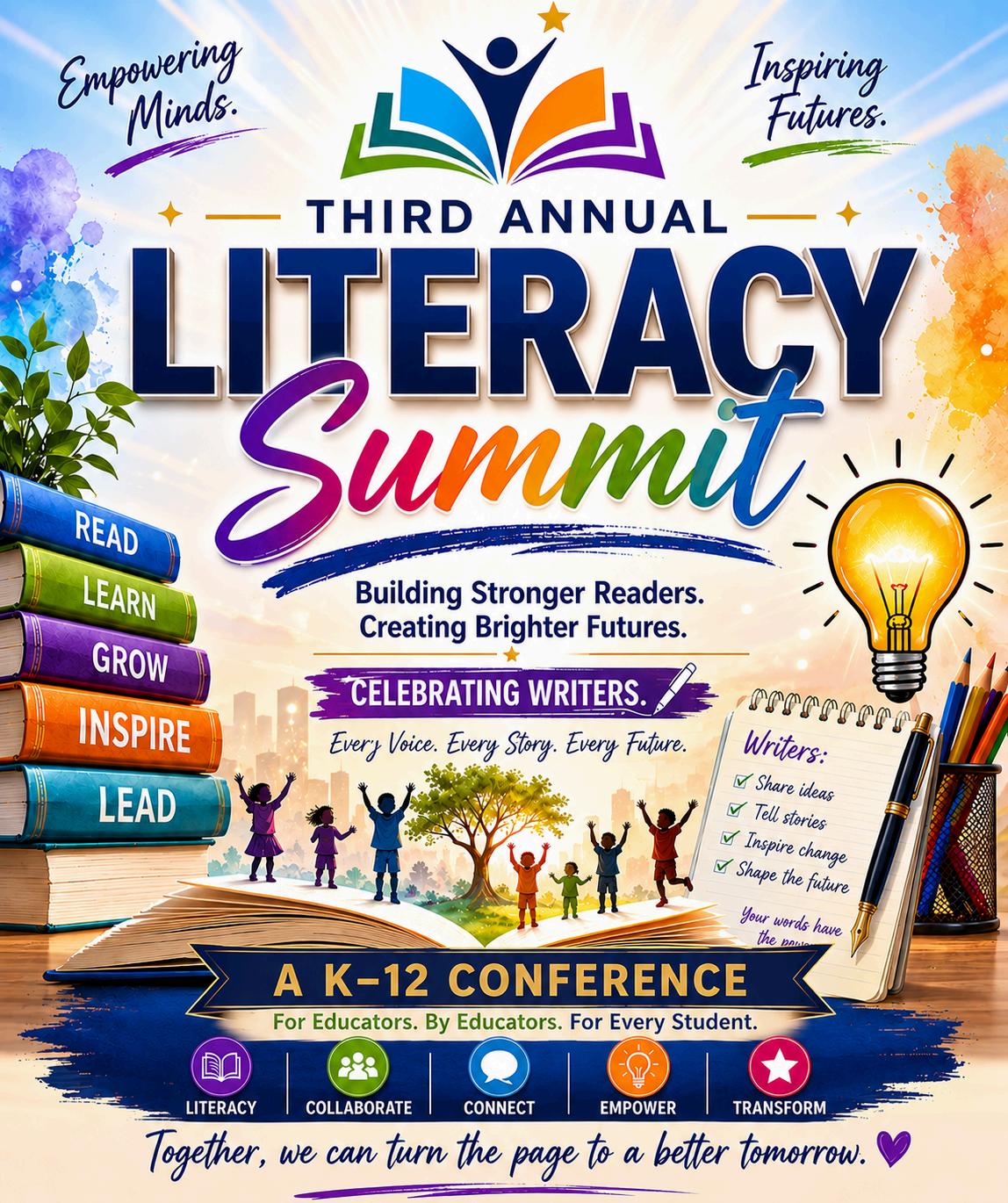

October 6, 2026
Conference Center
Grappone
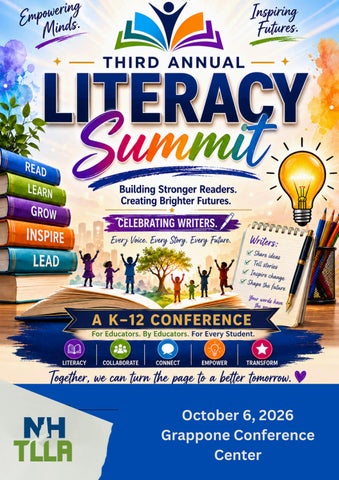
October 6, 2026
Conference Center

Tracie A. Berry holds a Master of Education in Bilingual, English as a Second Language, and Multicultural Education from the University of Massachusetts and a Bachelor’s degree in Secondary English Education from Keene State College. She spent 16 years in urban public schools serving as a classroom educator, interventionist, Reading Specialist, Effective Educator Coach, and Instructional Coach. Tracie believes literacy is freedom for students. Her professional focus has been empowering teachers, leaders, and instructional coaches to build culturally and linguistically sustaining systems that meet the needs of all learners. Throughout her career, she has demonstrated collaborative leadership and a commitment to strong literacy practices grounded in data-driven decision-making and student equity.
Dr. Michelle Burns is a National Content Specialist at HMH with more than fifteen years of experience supporting Humanities instruction and multilingual learners. A proud product of New York City public schools, she brings deep expertise in language learning, equity, and instructional support to educators nationwide.
Dr. Katy Cortelyou worked for 20 years in Florida schools as a classroom teacher, literacy coach, reading interventionist, and professional developer. Katy earned her EdD in Curriculum and Instruction from the University of Central Florida. Her research efforts focused on the role of teacher knowledge and the teaching of primary-level at-risk readers. She also holds National Board Certification as an Early Childhood Generalist. Katy is passionate about working alongside educators to deepen professional practices that inspire student learning.
Kellee Joseph is a Curriculum & Content Manager at HMH, supporting K-5 Literacy. With 15 years of experience as an educator, including roles as a classroom teacher and interventionist, she specializes in early literacy and evidence-based instruction. Partnering with districts around the region, Kellee focuses on helping educators translate the Science of Reading into effective classroom instruction and improved student outcomes
Lisa Klein is Vice President at Keys to Literacy, a national organization that provides literacy professional learning and coaching to teachers, educational leaders, and education programs at institutions of higher education. She co-edited Keys to Early Writing and Keys to Content Writing and has contributed to numerous other Keys to Literacy resources. In her current role, Lisa directs the Relationship Management team and leads strategic partnerships with state education agencies and institutions of higher education. Committed to strengthening literacy instruction for all students, she develops and delivers professional learning focused on literacy practices and regularly presents at state, national, and literacy conferences.
Emily Russin, Ed.M. is a literacy consultant and facilitator with HILL for Literacy, where she partners with schools and districts to strengthen literacy outcomes through evidence-based instructional practices. With extensive experience supporting educators in grades PreK–12, Emily specializes in adolescent literacy, Multi-Tiered Systems of Support (MTSS), data-informed decision-making, and implementing sustainable systems that improve student achievement. Emily works alongside educators and leaders to build capacity for high-quality literacy instruction, helping schools develop effective practices that support all learners. She is a frequent presenter and facilitator on topics related to adolescent literacy and has collaborated with national literacy organizations to advance researchbased approaches to reading instruction. Emily earned her Master of Education degree and is passionate about empowering educators with practical, research-aligned strategies that lead to meaningful and lasting improvements in student learning.
Meaghan Geisler-Tubridy, M.Ed. has more than 15 years of experience working in and alongside urban school districts. Her professional focus is helping school districts build systems and structures that meet the needs of all learners. Meaghan earned her undergraduate degree from the University of Massachusetts Amherst and a Master’s in Special Education from American International College. She began her career as an elementary classroom teacher in Lawrence Public Schools, where she earned her Sheltered English Immersion Endorsement. Her passion for supporting students with disabilities, including those who are deaf and hard of hearing, led her to pursue graduate studies and later serve as a special education teacher in Somerville Public Schools for seven years. In addition to her formal education, Meaghan is trained in the Science of Reading and the Lindamood Phoneme Sequencing Program (LiPS), and is a certified Wilson Dyslexia Practitioner (W.D.P.).
Danielle Boutin has devoted her career to teaching multilingual learners in the Nashua School District. For thirteen years, she taught elementary school ELL teacher at Ledge Street Elementary School. She then worked alongside teachers for one year as a districtwide ELL coach, before transitioning into her current role as the Assistant Director of ELL which she has held for the past two years. In addition to teaching, connecting and advocating for families is a large part of Boutin's love for this field. Over the past decade, Boutin has worked to build a strong community network which she can lean on to help support students and their families.
Karen Kariger has taught middle school in Nashua for over two decades. As an ELL teacher of 18 years she became passionate about creating an inclusive, language-enriched classroom. Kariger has worked with diverse student populations across various grade levels, supporting learners with academic and social language acquisition while celebrating their unique cultural backgrounds.
Erin Putnam has spent the last sixteen years working in education in the Nashua, NH School District. She began her career in special education at Ledge Street Elementary School and later moved into roles as a classroom teacher, ELA coach, and ELL teacher. She now works as an ELL Coordinator. Throughout all of her roles in education, her passion for supporting multilingual learners and her dedication to literacy instruction have remained at the heart of her work.
How Do We Build the Reading Brain? Evidence-Based Instruction Backed by Science with Kellee Joseph (Grades K-5)
In this session, we will explore scientific research on how children learn to read and the cognitive processes involved We will discuss key principles and evidence-based strategies for supporting reading development in the elementary classroom Educators will gain practical techniques to implement these insights, enhancing their students’ reading abilities
Improving Adolescent Literacy: Effective Classroom and Intervention Practices with Lisa Klein (Grades 5-12)
Are your upper-grade students reading and writing at their full potential? This dynamic session reveals how to unlock literacy success for every student in grades 5-12! Grounded in cutting-edge research, you'll discover what adolescent literacy really means and why it demands a different approach than elementary reading instruction
Learn powerful, practical strategies for content literacy that work in any subject (science, mathematics, social studies, history) including vocabulary development, comprehension techniques, and writing about content Understand why some older students struggle, including the roles of dyslexia and executive function, and discover research-backed interventions that target individual student needs Watch struggling readers and writers gain confidence as you learn how to scaffold these strategies across multiple tiers of instruction Best of all, you can weave these engaging practices directly into your existing curriculum to supercharge student success Presented in partnership with Reading Universe, this session equips you with research-backed strategies and free resources you can implement tomorrow. Whether you teach in a traditional classroom or work with diverse learners, you'll leave with practical, ready-to-use tools to transform adolescent literacy instruction and watch your students shine as readers, writers, and critical thinkers
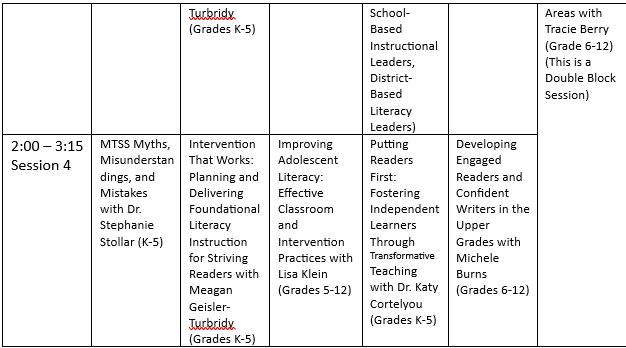
MTSS Myths, Misunderstandings, and Mistakes with Dr. Stephanie Stollar (K-5) Is your district using Multi-Tiered Systems of Support (MTSS)? If you aren't improving reading outcomes for all students, there might be some myths or misunderstandings about the model that need to be clarified Common examples include thinking Tier 1 should only include grade-level instruction in whole-group, using a different program in each tier, and requiring students to move through tiers before getting intensive support Participants in this session will learn how to use the MTSS model of service delivery as the framework for implementing the science of reading to prevent reading failure and improve reading outcomes for all elementary students
One Size Doesn't Fit All: Making the Case for Differentiated Small-Group Reading Instruction with Dr Katy Cortelyou (Grades K-2, School-Based Instructional Leaders, District-Based Literacy Leaders)
This interactive session for K-2 teachers highlights the transformative power of differentiated small-group instruction in helping young children master foundational reading skills While whole-class instruction builds essential literacy foundations, targeted small-group instruction is proven to address individual needs and accelerate growth effectively
Participants will:
Discuss the impact of small-group instruction and how intentional, differentiated support empowers students to build readding skills at their own pace
Watch and evaluate small-group lessons to identify strategies that engage students, boost confidence, and guide progress from decoding to fluent reading
Review examples of texts that support early readers as they transition to reading focusing on how various text types strengthen foundational skills.
Teachers will leave the session with a deeper understanding of why "one size doesn't fit all' in foundational skills instruction and practical strategies for implementing differentiated small-group instruction to meet the unique needs of every reader
Small Groups, Big Gains: Foundational Literacy for Striving Teens (A Case Study) with Emily Russin (Grades 4 - 12) Educators who teach adolescent students will be able to:
Identify the key components of an intervention - targeted skill-building, high-interest decodable texts, and structured small group instruction - and explain how each contributed to student growth
Explain student assessment data and attitudinal shifts from the pilot program to understand the impact of evidence-based practices
Evaluate how this model can be adapted or scaled for diverse educational contexts to support equitable literacy development
Apply insights from the case study to plan actionable steps for integrating similar strategies into their own instructional settings.
Discover how a targeted summer intervention transformed the reading trajectories of striving adolescent readers This case study highlights a pilot program that combined explicit skill-building with high-interest, decodable texts to accelerate foundational literacy growth Participants will explore the program’s design, examine compelling assessment data and student feedback, and unpack the instructional levers that drove measurable gains in both performance and motivation With this model now being replicated across multiple settings in Massachusetts, attendees will leave with actionable insights for implementing similar small-group interventions to support equitable literacy outcomes
Structured Literacy for Multilingual Learners: Lessons from Nashua's Middle Schools with Danielle Boutin Erin Putnam, (Grades 6-12)
Discover how Nashua School District empowered middle school multilingual learners through structured, inclusive literacy practices Presenters share how explicit, scaffolded instruction and culturally responsive teaching improved decoding, fluency, and confidence Learn practical strategies for integrating foundational literacy within EL programs while honoring students' languages, identities, and academic potential
Developing Engaged Readers and Confident Writers in the Upper Grades with Michele Burns (Grades 6-12)
In this session, we will explore practical routines, mentor-text moves, discussion structures, and writing opportunities to build student confidence as they read closely, think critically, and transfer what they have learned into their own writing
Increase Student Engagement Through Retrieval Practice, Unison Response, and Partner Work at All Grades with Dr Stephanie Stollar (All Grades)
One way to improve the effectiveness of core reading instruction is to increase student engagement. In all grades, teachers can set the stage for unison and partner responding that provides feedback about how well students have learned what you've taught and whether they are ready for independent practice This session will provide the rationale for increasing opportunities to respond and include examples of how unison and partner responding can be integrated into instruction across the grade levels
Putting Readers First: Fostering Independent Learners Through Transformative Teaching with Dr Katy Cortelyou (Grades K-5)
The ability to read is a fundamental right and a gateway to success, but becoming a reader means more than acquiring skills it's about fostering independence, curiosity, and a lifelong love of learning. How can educators help students build the confidence and competence to tackle complex academic tasks, explore diverse ideas, and take ownership of their learning?
In this session, we'll explore transformative practices that put "readers first" by building confident, self-directed learners Participants will:
Connect the science of reading with the science of learning to deepen instructional impact
Experience evidence-based lessons that integrate social skills development with comprehension instruction
Learn strategies to create an environment where students view literacy as a tool for academic success, personal growth, and understanding the world
Quick and Transformative: Writing That Fits Into Any Class Period with Lisa Klein (Grades 4-12) - Want to harness the power of writing across every subject without overwhelming your schedule? This dynamic session reveals how quick writes transform students into active thinkers and learners Grounded in research on writing's role in deepening comprehension and retention, you'll discover powerful, scaffolded writing techniques that help students process, remember, and apply what they learn across all content areas Watch struggling writers build confidence as you learn how to craft brief, manageable writing opportunities that fit seamlessly into any class period Best of all, you can integrate these engaging practices directly into your existing lessons (science, social studies, mathematics) to supercharge student thinking and learning without adding extra prep work Presented in partnership with Reading Universe, this session equips you with research-backed strategies and free resources you can implement tomorrow Whether you teach in a traditional classroom or work with diverse learners, you'll leave with practical, ready-to-use quick write templates and techniques to transform your students into confident writers and critical thinkers!
Small Groups, Big Gains: Foundational Literacy for Striving Teens (A Case Study) with Emily Russin (Grades 4 - 12) Educators who teach adolescent students will be able to:
Identify the key components of an intervention - targeted skill-building, high-interest decodable texts, and structured small group instruction - and explain how each contributed to student growth
Explain student assessment data and attitudinal shifts from the pilot program to understand the impact of evidence-based practices
Evaluate how this model can be adapted or scaled for diverse educational contexts to support equitable literacy development
Apply insights from the case study to plan actionable steps for integrating similar strategies into their own instructional settings
Discover how a targeted summer intervention transformed the reading trajectories of striving adolescent readers This case study highlights a pilot program that combined explicit skill-building with high-interest, decodable texts to accelerate foundational literacy growth Participants will explore the program’s design, examine compelling assessment data and student feedback, and unpack the instructional levers that drove measurable gains in both performance and motivation With this model now being replicated across multiple settings in Massachusetts, attendees will leave with actionable insights for implementing similar small-group interventions to support equitable literacy outcomes
Structured Literacy for Multilingual Learners: Lessons from Nashua's Middle Schools with Danielle Boutin, Karen Kariger, & Erin Putnam, (Grades 6-12)
Discover how Nashua School District empowered middle school multilingual learners through structured, inclusive literacy practices Presenters share how explicit, scaffolded instruction and culturally responsive teaching improved decoding, fluency, and confidence Learn practical strategies for integrating foundational literacy within EL programs while honoring students' languages, identities, and academic potential
How Do We Build the Reading Brain? Evidence-Based Instruction Backed by Science with Kellee Joseph (Grades K-5)
In this session, we will explore scientific research on how children learn to read and the cognitive processes involved We will discuss key principles and evidence-based strategies for supporting reading development in the elementary classroom Educators will gain practical techniques to implement these insights, enhancing their students’ reading abilities
How to Decide If You Should Implement a Program with Fidelity with Dr. Stephanie Stollar (K-5)
Many educators are being told to implement their core reading programs "with fidelity" But what does that slogan mean, and where did it originate? This session will support teachers, coaches, and administrators to think critically about the role of core reading instruction in MTSS, the needs of their students as revealed through universal screening, and whether a mandate to implement with fidelity is a good idea Participants will explore alternatives when implementing with fidelity is not the right approach
Intervention That Works: Planning and Delivering Foundational Literacy Instruction for Striving Readers with Meagan Geisler-Turbridy (Grades K-5)
In this practical hands-on session, participants will:
Identify and apply strategies focusing student attention, verbal cues, think time, and response signals to enhance foundational skill instruction for striving readers
Understand the structure and purpose of a 10-step Foundational Skill Lesson Plan, with a deeper dive into word level accuracy & automaticity
Use backward planning and a procedure for recording errors to design responsive interventions that support skill mastery for striving readers
This session offers a practical, evidence-based structured literacy framework for delivering effective intervention to striving readers who have not yet mastered early literacy skills Participants will explore a 10-step Foundational Skill Lesson Plan model and learn how to use backward planning to design responsive, evidence-based instruction with any decodable text Key instructional moves focusing student attention, verbal cues, think time, and response signals will be modeled and practiced to support student engagement and success The session also addresses how to capture and analyze student errors to plan targeted follow-up instruction This session is ideal for elementary educators delivering small-group intervention and seeking to strengthen their planning and instructional delivery for students with foundational literacy needs
One Size Doesn't Fit All: Making the Case for Differentiated Small-Group Reading Instruction with Dr Katy Cortelyou (Grades K-2, School-Based Instructional Leaders, District-Based Literacy Leaders)
This interactive session for K-2 teachers highlights the transformative power of differentiated small-group instruction in helping young children master foundational reading skills While whole-class instruction builds essential literacy foundations, targeted small-group instruction is proven to address individual needs and accelerate growth effectively
Participants will:
Discuss the impact of small-group instruction and how intentional, differentiated support empowers students to build reading skills at their own pace
Watch and evaluate small-group lessons to identify strategies that engage students, boost confidence, and guide progress from decoding to fluent reading
Review examples of texts that support early readers as they transition to reading focusing on how various text types strengthen foundational skills
Teachers will leave the session with a deeper understanding of why "one size doesn't fit all' in foundational skills instruction and practical strategies for implementing differentiated small-group instruction to meet the unique needs of every reader
The Reflective Reader, The Expressive Writer: Building the Reading-Writing Connection in the Content Areas with Tracie Berry (Grade 6-12) This is a double block session. If you select it, do NOT select a breakout in session 4.
Educators who teach adolescent students will be able to: describe the connections between reading, writing and discussion and the critical role writing plays in developing literate adolescents. recognize the fundamentals of strong writing instruction and identify actions that can be employed to support more equitable literacy instruction for all students pinpoint the key elements of teaching writing and how to incorporate these into writing instruction using Self-Regulated Strategy Development (SRSD) as an exemplar model
This session explores the dynamic interplay between reading, writing, and discussion as essential practices for developing literate adolescents across content areas Participants will examine how writing serves as a powerful tool for deepening comprehension, fostering critical thinking, and promoting equity in literacy instruction Through an introduction to the fundamentals of effective writing pedagogy, educators will identify actionable strategies to strengthen student engagement and achievement The session highlights Self-Regulated Strategy Development (SRSD) as an exemplar framework for teaching writing, offering practical approaches to scaffold student independence and confidence Attendees will leave equipped with versatile structures such as quick writes, quotation-response activities, guided responses, and the SRSD-DEFEND model that can be seamlessly integrated into daily instruction to build meaningful reading-writing connections and support diverse learners
The Writing Rope: A Framework for Explicit Writing Instruction with Lisa Klein (Grades K-12)
Wondering why some of your writing instruction isn't creating the results you expect? This dynamic session reveals the complete picture of effective writing instruction through The Writing Rope framework!
Grounded in cutting-edge research, you'll discover that powerful writing instruction requires addressing five essential strands working together: critical thinking (generating ideas through the writing process), syntax (sentence elaboration and punctuation), text structure (narrative, informational, and opinion writing), writing craft (word choice, audience awareness, and literary devices), and transcription (spelling and handwriting fluency) Watch your students grow as writers as you learn how to weave all five strands into explicit, systematic instruction. Best of all, you can integrate these interconnected components directly into your classroom instruction to supercharge student writing across all grades Presented in partnership with Reading Universe, this session equips you with a complete framework and practical strategies you can implement tomorrow Whether you teach grades K-5 or 6-12, you'll leave with a comprehensive understanding of what complete writing instruction looks like and ready-to-use tools to transform your writing program
Developing Engaged Readers and Confident Writers in the Upper Grades with Michele Burns (Grades 6-12)
In this session, we will explore practical routines, mentor-text moves, discussion structures, and writing opportunities to build student confidence as they read closely, think critically, and transfer what they have learned into their own writing
Improving Adolescent Literacy: Effective Classroom and Intervention Practices with Lisa Klein (Grades 5-12)
Are your upper-grade students reading and writing at their full potential? This dynamic session reveals how to unlock literacy success for every student in grades 5-12! Grounded in cutting-edge research, you'll discover what adolescent literacy really means and why it demands a different approach than elementary reading instruction
Learn powerful, practical strategies for content literacy that work in any subject (science, mathematics, social studies, history) including vocabulary development, comprehension techniques, and writing about content Understand why some older students struggle, including the roles of dyslexia and executive function, and discover research-backed interventions that target individual student needs Watch struggling readers and writers gain confidence as you learn how to scaffold these strategies across multiple tiers of instruction Best of all, you can weave these engaging practices directly into your existing curriculum to supercharge student success
Presented in partnership with Reading Universe, this session equips you with research-backed strategies and free resources you can implement tomorrow. Whether you teach in a traditional classroom or work with diverse learners, you'll leave with practical, ready-to-use tools to transform adolescent literacy instruction and watch your students shine as readers, writers, and critical thinkers
Intervention That Works: Planning and Delivering Foundational Literacy Instruction for Striving Readers with Meagan Geisler-Turbridy (Grades K-5)
In this practical hands-on session, participants will:
Identify and apply strategies focusing student attention, verbal cues, think time, and response signals to enhance foundational skill instruction for striving readers
Understand the structure and purpose of a 10-step Foundational Skill Lesson Plan, with a deeper dive into word level accuracy & automaticity.
Use backward planning and a procedure for recording errors to design responsive interventions that support skill mastery for striving readers
This session offers a practical, evidence-based structured literacy framework for delivering effective intervention to striving readers who have not yet mastered early literacy skills Participants will explore a 10-step Foundational Skill Lesson Plan model and learn how to use backward planning to design responsive, evidence-based instruction with any decodable text Key instructional moves focusing student attention, verbal cues, think time, and response signals will be modeled and practiced to support student engagement and success The session also addresses how to capture and analyze student errors to plan targeted follow-up instruction This session is ideal for elementary educators delivering small-group intervention and seeking to strengthen their planning and instructional delivery for students with foundational literacy needs.
MTSS Myths, Misunderstandings, and Mistakes with Dr Stephanie Stollar (K-5)
Is your district using Multi-Tiered Systems of Support (MTSS)? If you aren't improving reading outcomes for all students, there might be some myths or misunderstandings about the model that need to be clarified Common examples include thinking Tier 1 should only include grade-level instruction in whole-group, using a different program in each tier, and requiring students to move through tiers before getting intensive support Participants in this session will learn how to use the MTSS model of service delivery as the framework for implementing the science of reading to prevent reading failure and improve reading outcomes for all elementary students
Putting Readers First: Fostering Independent Learners Through Transformative Teaching with Dr Katy Cortelyou (Grades K-5)
The ability to read is a fundamental right and a gateway to success, but becoming a reader means more than acquiring skills it's about fostering independence, curiosity, and a lifelong love of learning How can educators help students build the confidence and competence to tackle complex academic tasks, explore diverse ideas, and take ownership of their learning?
In this session, we'll explore transformative practices that put "readers first" by building confident, self-directed learners Participants will:
Connect the science of reading with the science of learning to deepen instructional impact
Experience evidence-based lessons that integrate social skills development with comprehension instruction
Learn strategies to create an environment where students view literacy as a tool for academic success, personal growth, and understanding the world
The Reflective Reader, The Expressive Writer: Building the Reading-Writing Connection in the Content Areas with Tracie Berry (Grade 6-12) This is a double block session - the continuation from Session 3. If you selected this in Breakout Session 3, do not select a session in Breakout 4.
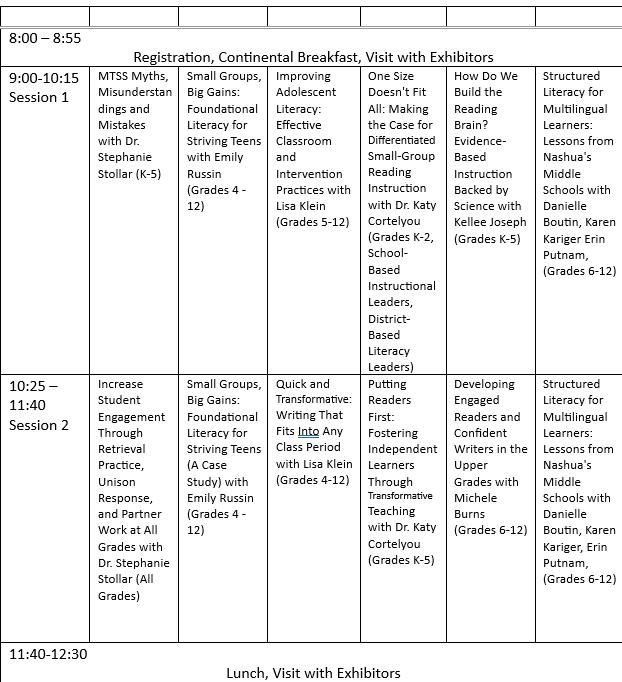
Time Session Room
Registration (8:15 - 8:55 AM)
Breakout Session 1 (9:00 - 10:15 AM)
Breakout Session 2 (10:25 -11:40AM)
Lunch (11:40 AM - 12:30 PM
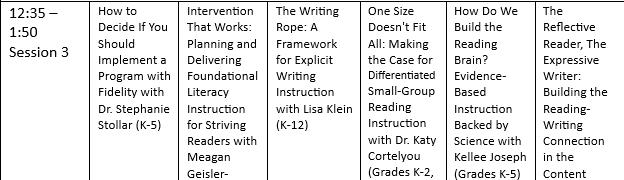
Breakout Session 3 (12:35 - 1:50 PM
Breakout Session 4 (2:00 - 3:15 PM)
Photographs will be taken throughout the K-12 Literacy Summit. These will be used by NHTLLA in our electronic newsletter, on our website, and on social media
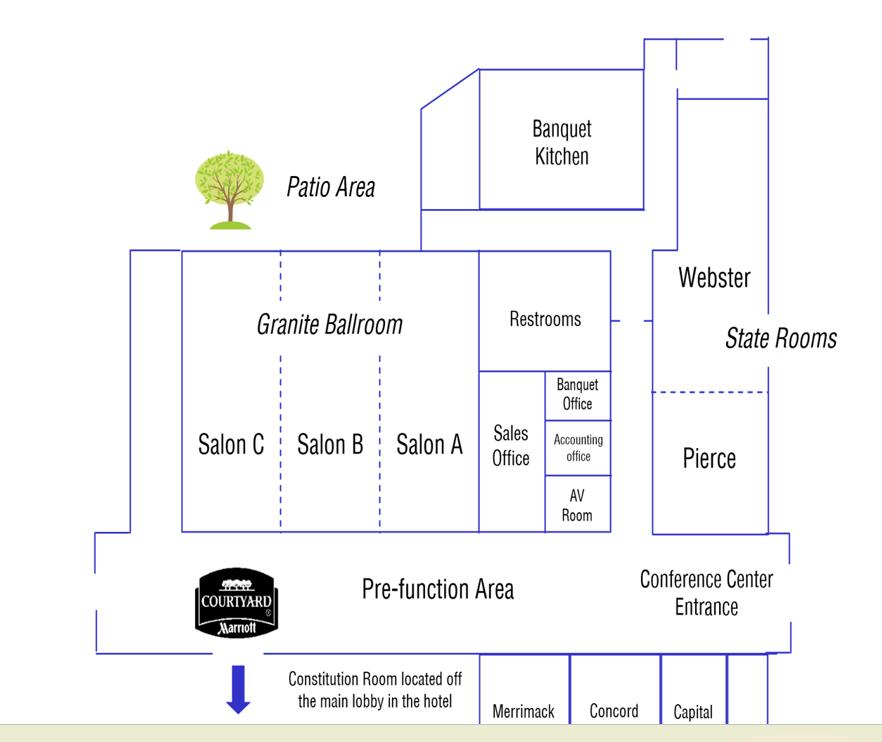
Parking: There is parking in front of the Grappone Conference Center and across the street from the Courtyard Marriott.
Registration will open at 8:00 AM in the Pre-Function Area of the Grappone
A Continental Breakfast and Buffet Lunch will be provided as part of your registration fee
If you have dietary restrictions, please contact Jan Yost at janyost@nhtlla.org. We will do our best to accommodate your needs.
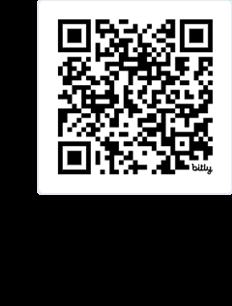
There will be sheets with a link and QR Code to access your Certificate of Attendance as well as a link for a Feedback Survey. The survey will open at 2:45 PM
For those who register, you will receive a link to pre-register for your breakout sessions.

We extend our sincere gratitude to all exhibitors for their participation and support Your contributions play a vital role in making this event a success, providing valuable insights, products, and services that benefit our attendees.
Attendees: Explore with Purpose: Connecting Learning to Practice
The presence of exhibitors at this event does not constitute an endorsement by NHTLLA of any specific products, services, or companies
Attendees are encouraged to evaluate offerings independently based on their needs
As you visit our exhibitors, we encourage you to reflect on the insights gained throughout the conference especially the principles and research behind the Science of Reading Consider how the evidence-based practices discussed today align with the tools, resources, and solutions presented by our exhibitors
Engage thoughtfully, ask questions, and evaluate how these offerings support effective literacy instruction and student success Let your learning guide your exploration!